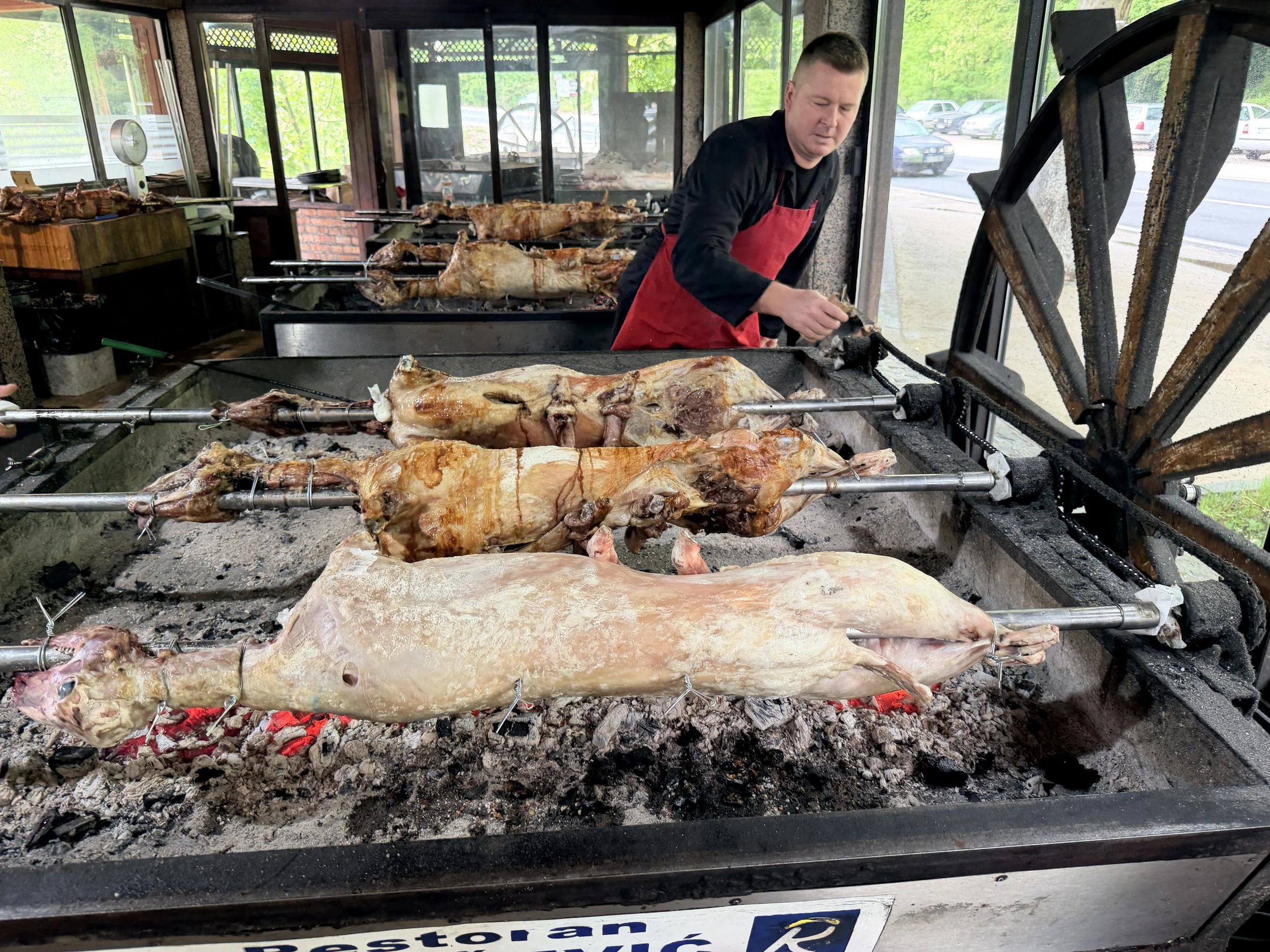
Spit-roasted Lamb 炭火烤全羊
April 30, 2026
Apparently, we still were not fully satisfied with the lamb……
今天又将前往一个新的国家——黑山。。。
April 30, 2026
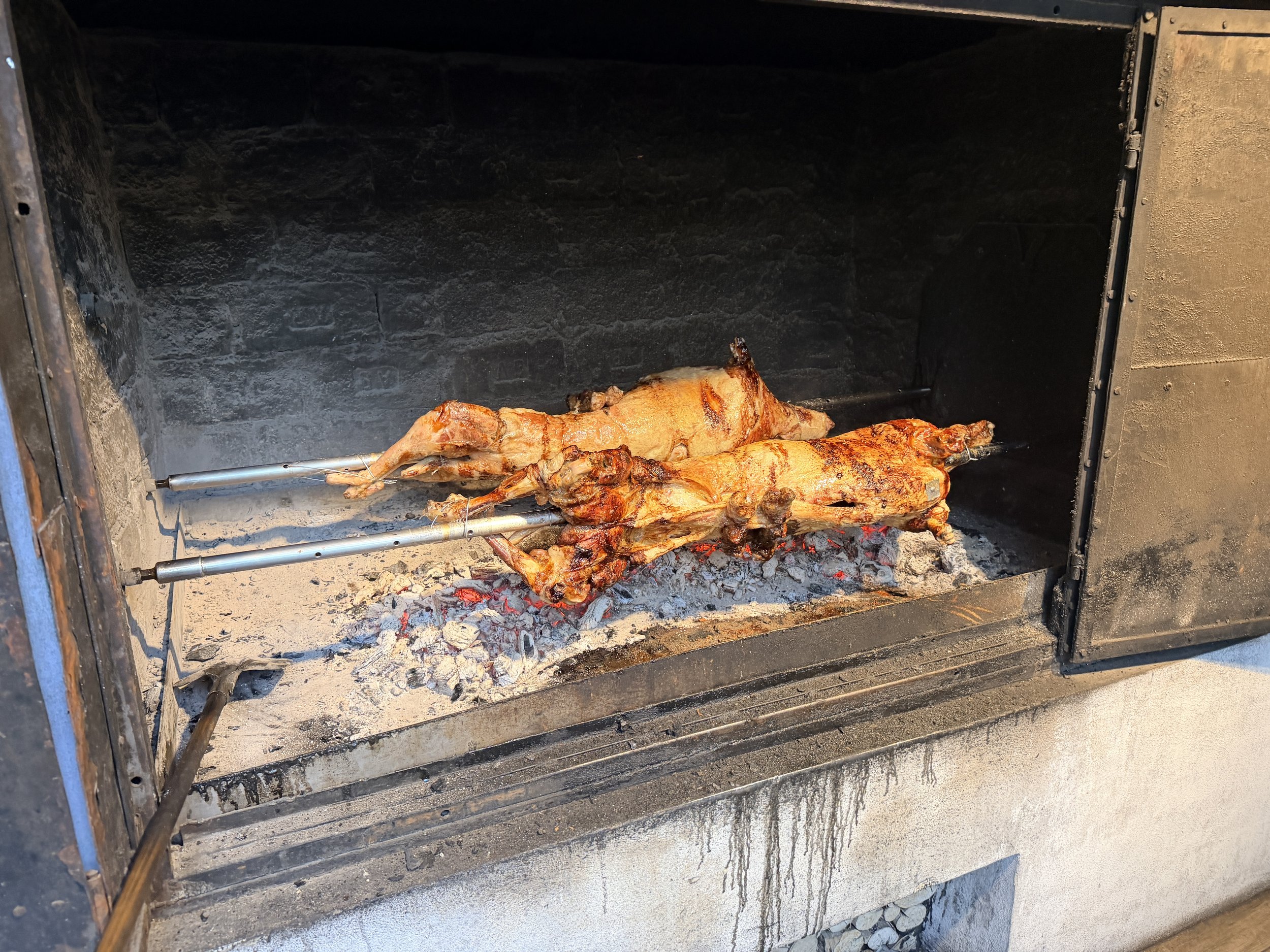
Apparently, we still were not fully satisfied with the lamb we had the day before. When we learned that we would pass through Jablanica, a small town famous for spit-roasted lamb, on our way to Kotor, we specifically asked for a lunch stop there.
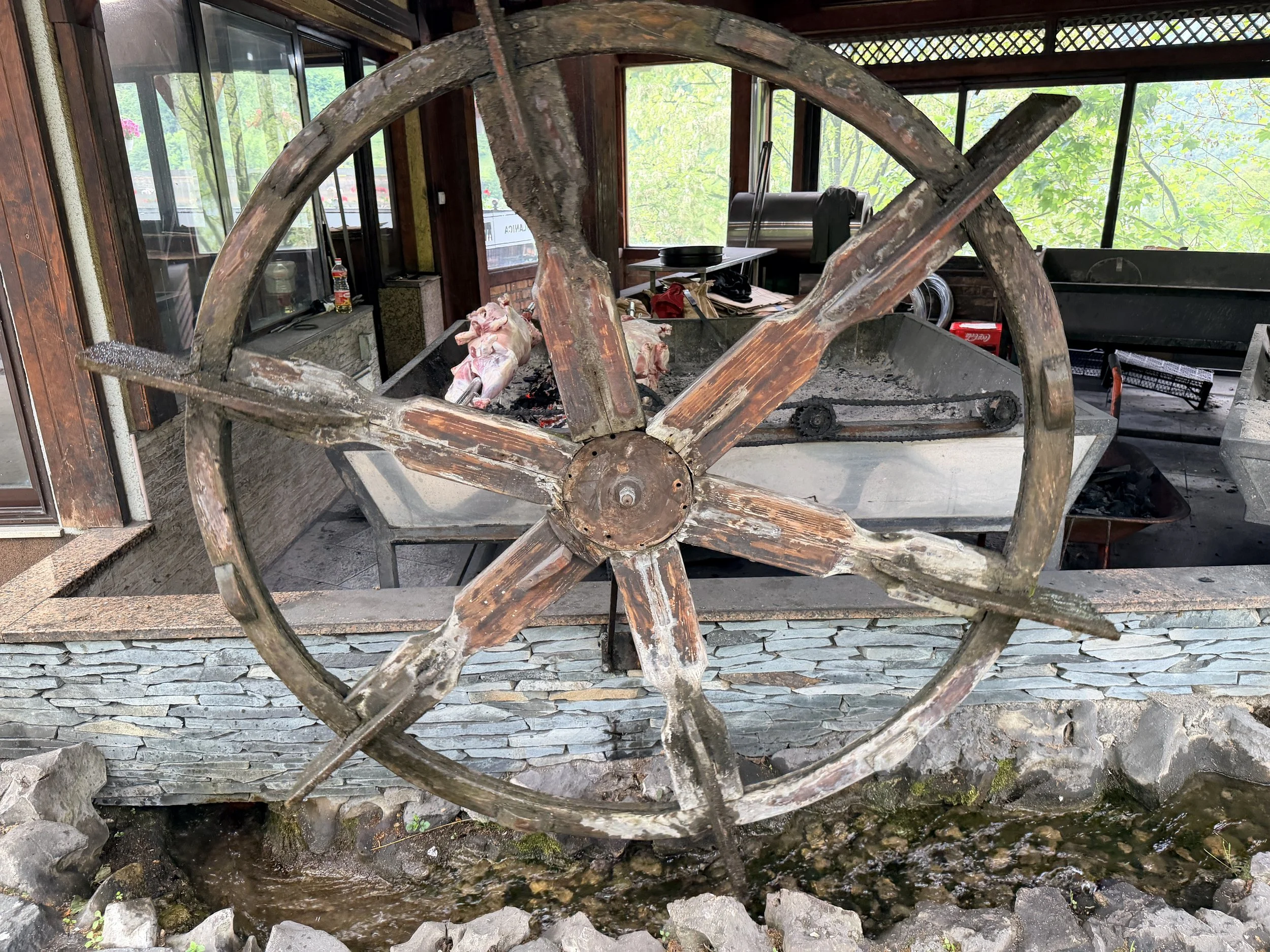
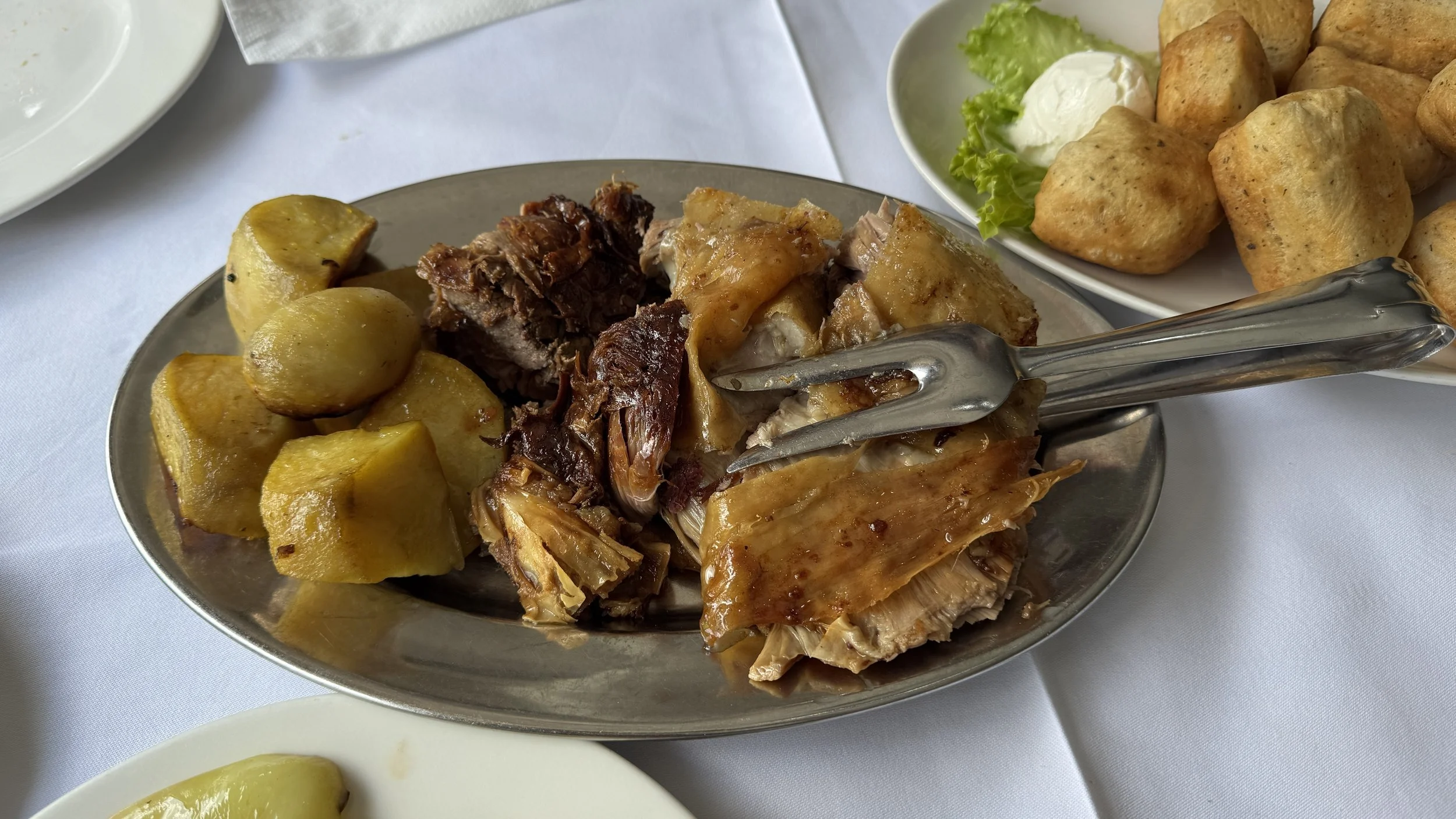
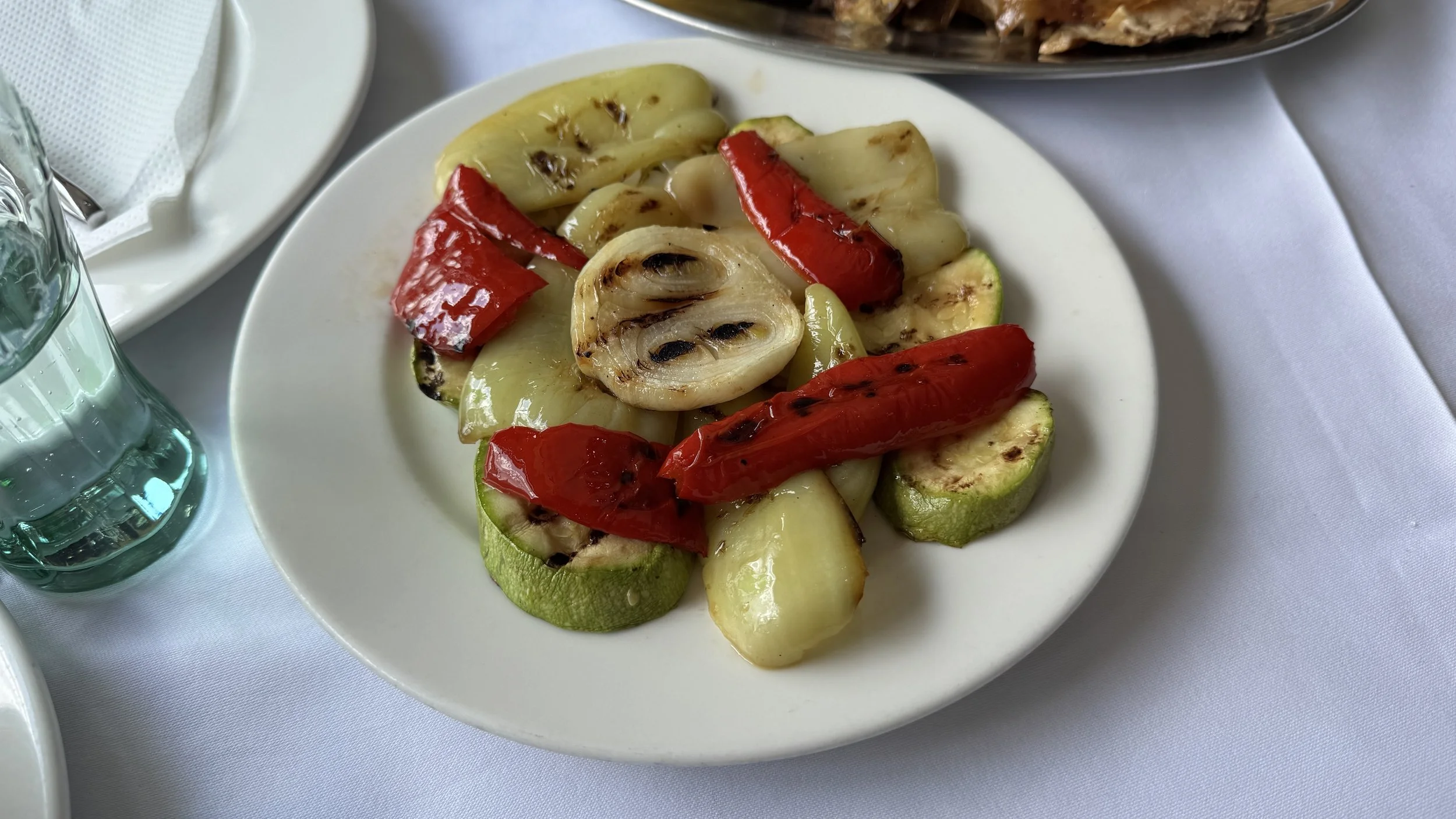
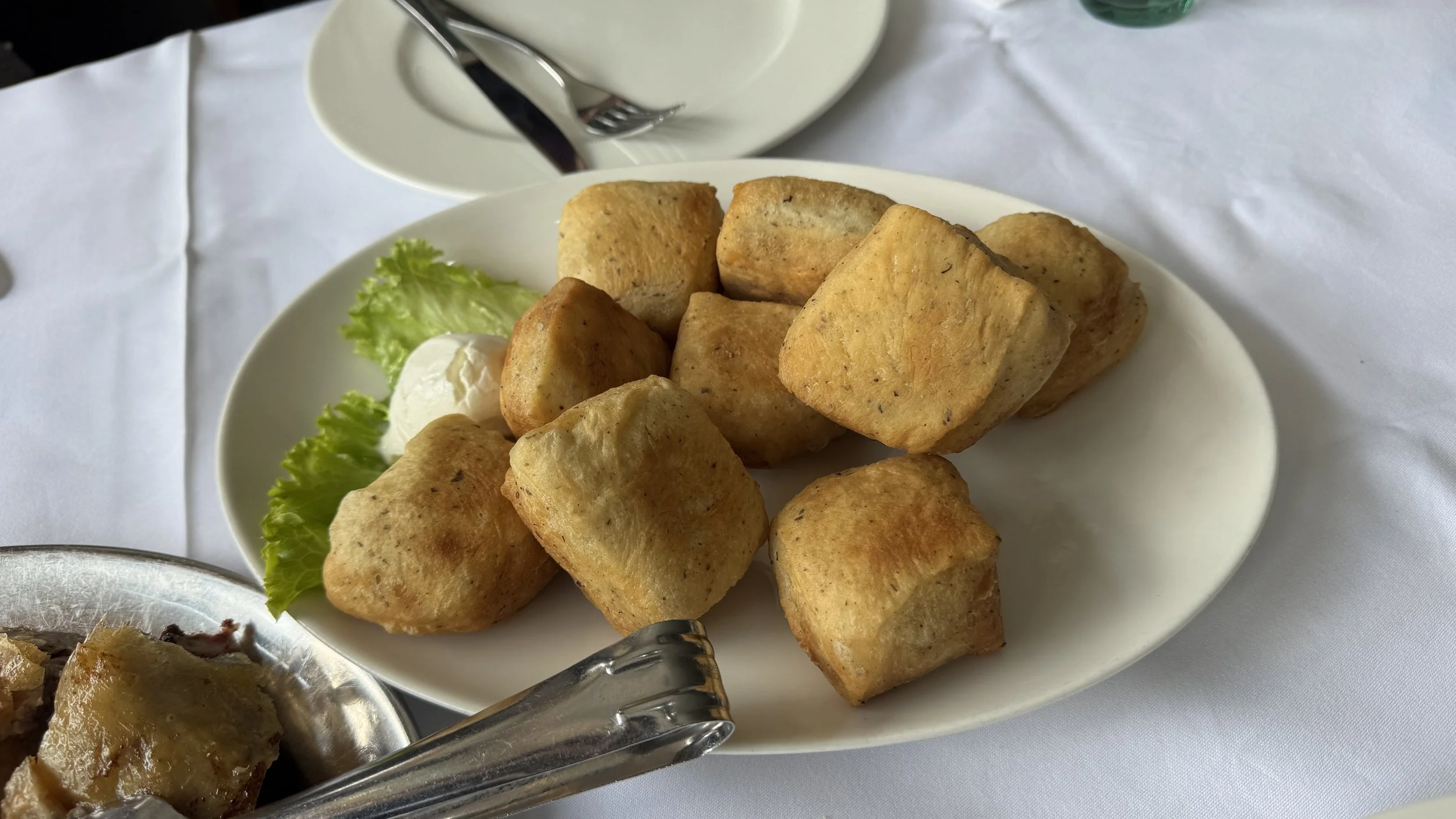
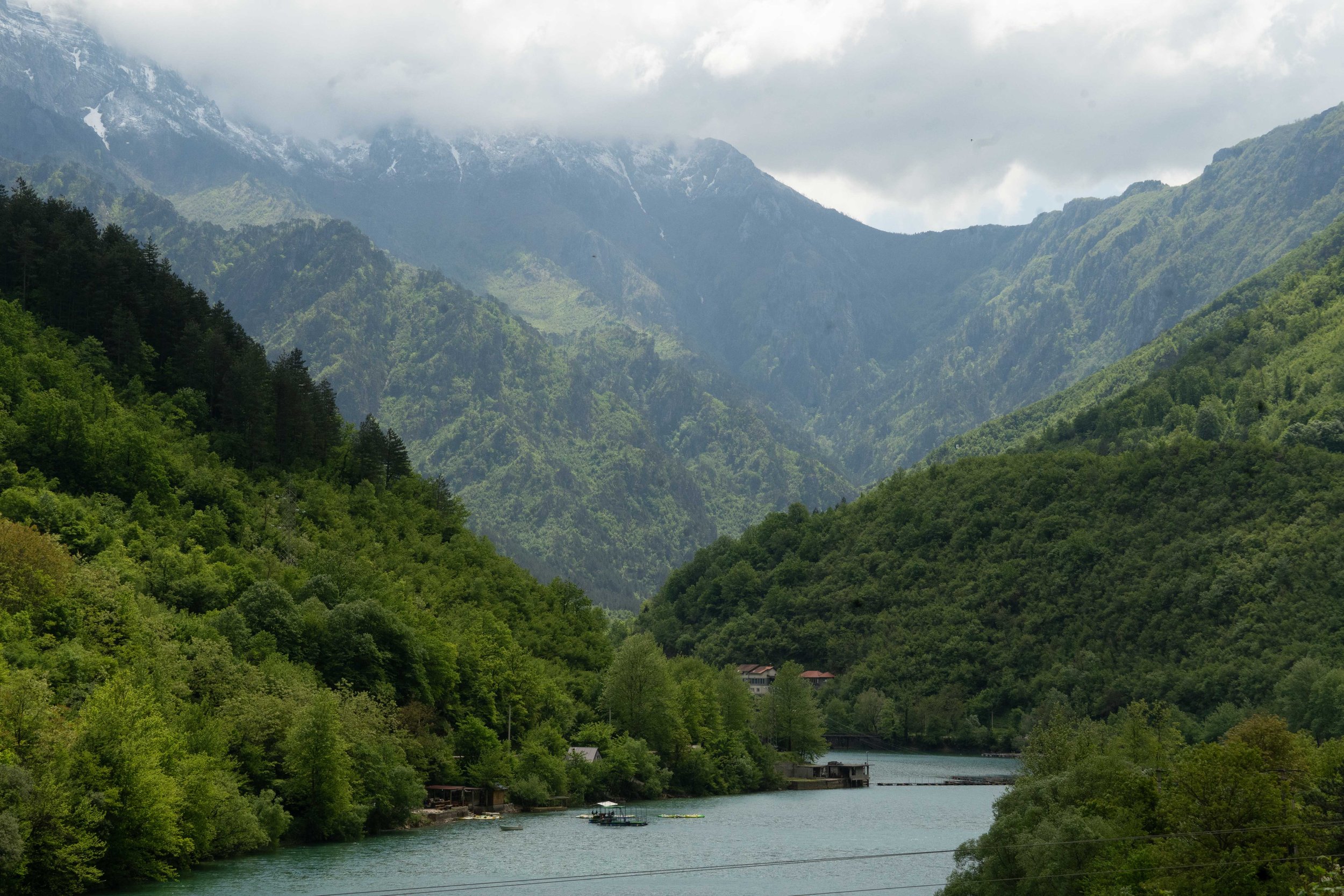
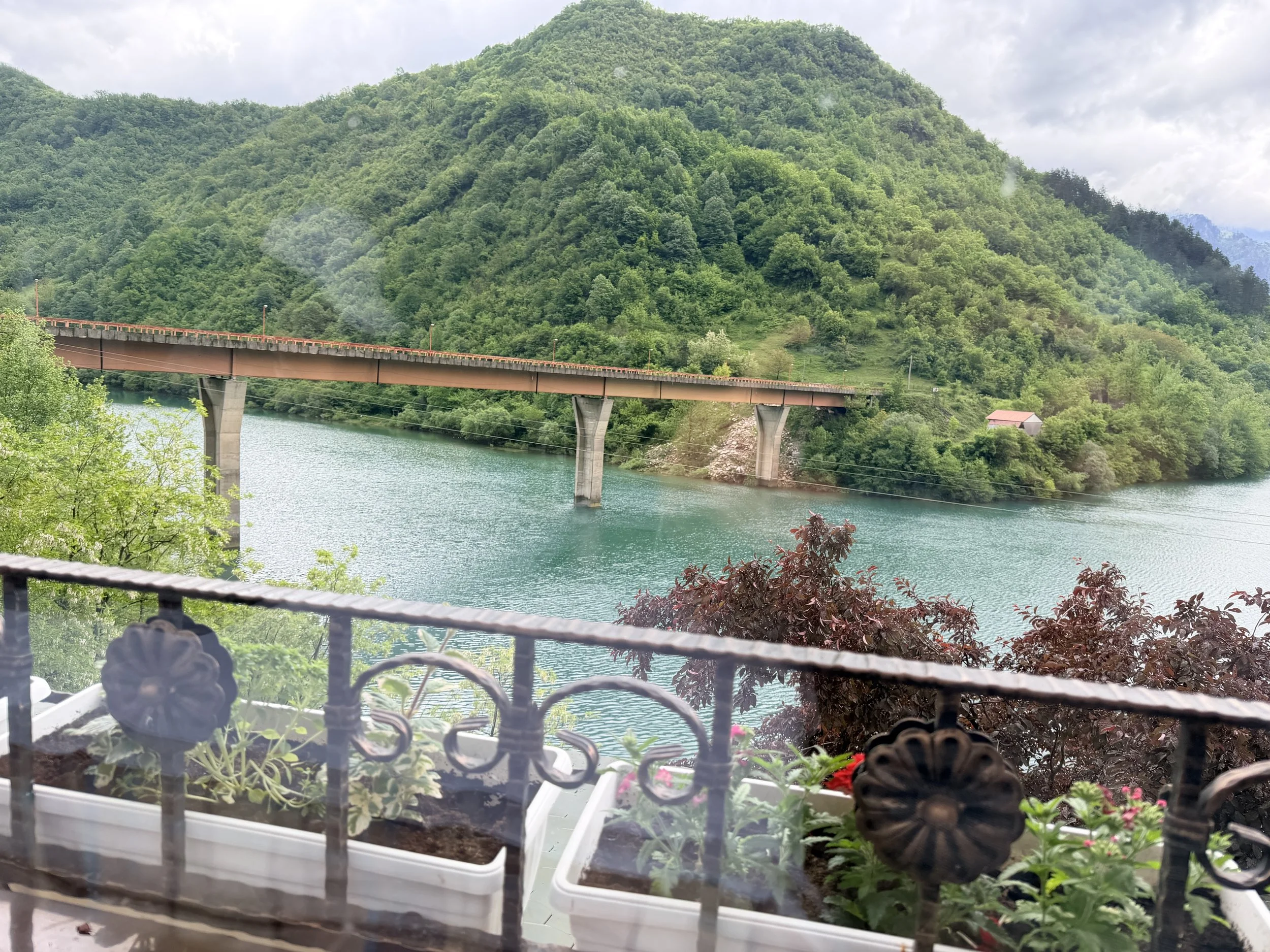
We stopped at Restoran Kovačević, perched on a cliff overlooking the emerald-green river below. Several small lambs were slowly roasting over charcoal outside, and the entire place smelled of grilled meat and smoke. This time, we were more cautious and ordered only 500 grams of lamb along with a few other dishes. The lamb looked beautifully roasted — crispy on the outside and tender inside — but the strong lamb flavor was still a bit more than I expected. As we ate, we even started wondering whether all the effort to try the famous specialty had really been worth it. Still, the experience itself was memorable. Sometimes in travel, the most interesting meals are not necessarily the most delicious ones, but the ones tied most closely to a place and its identity.
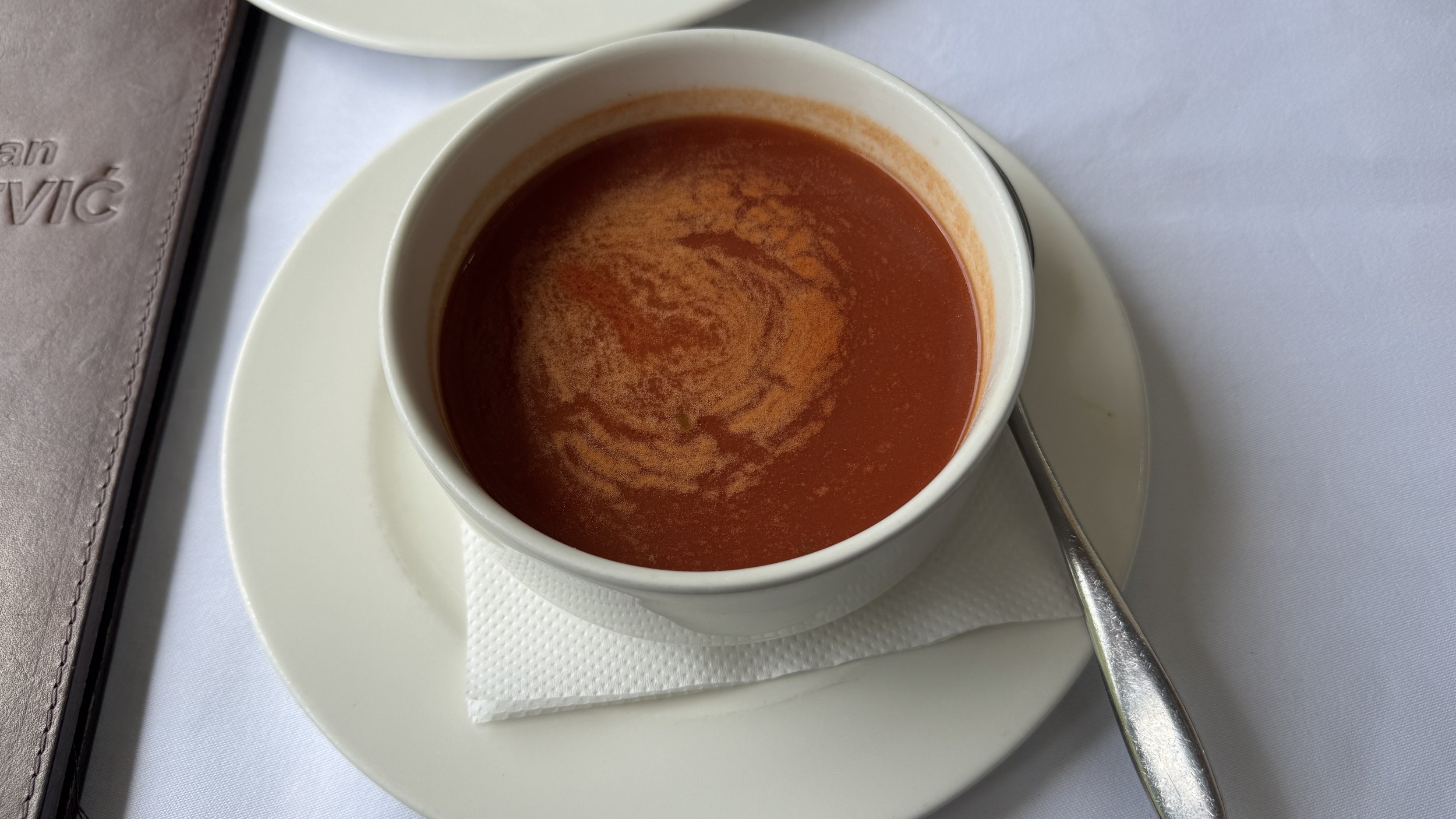
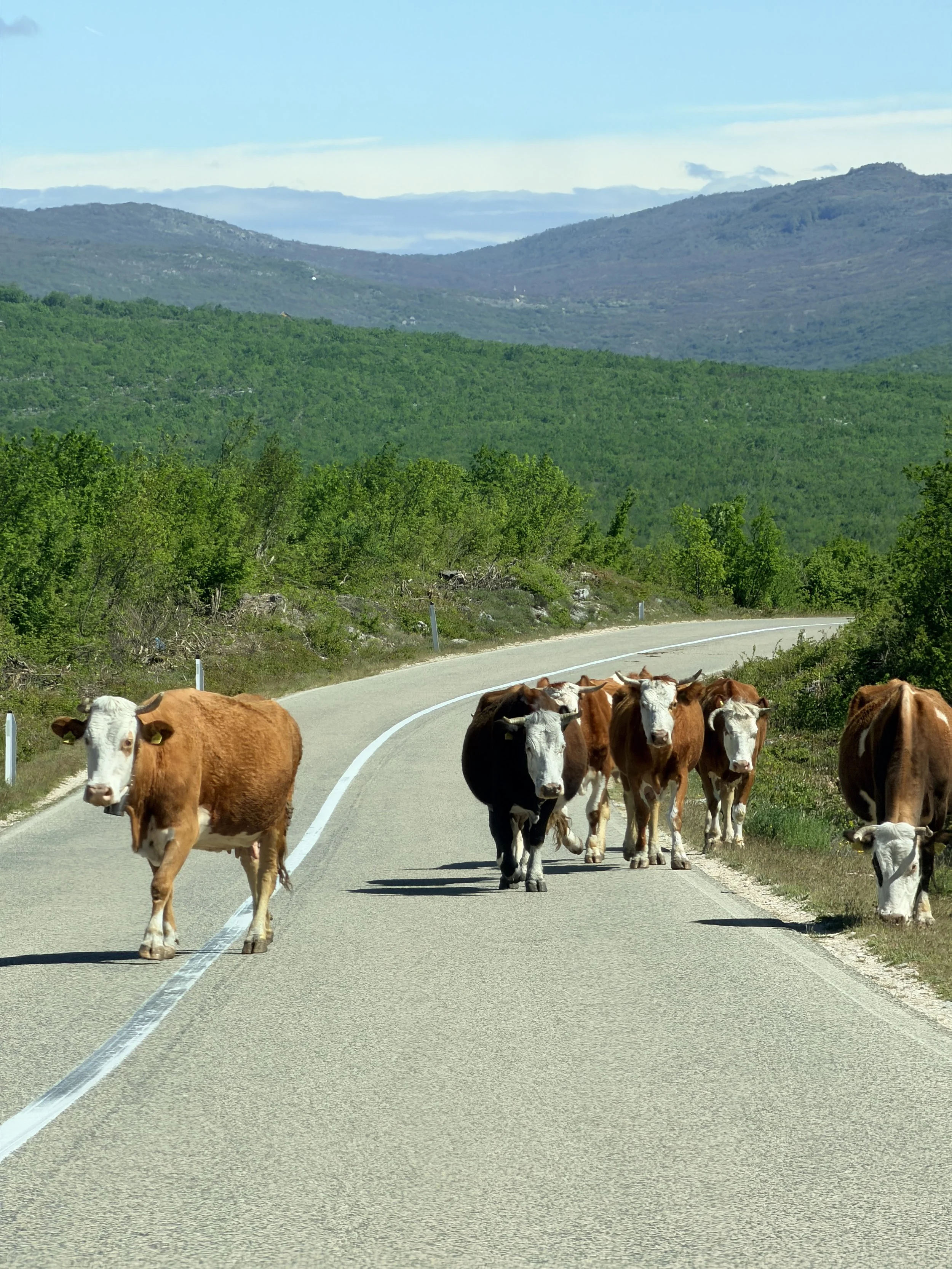
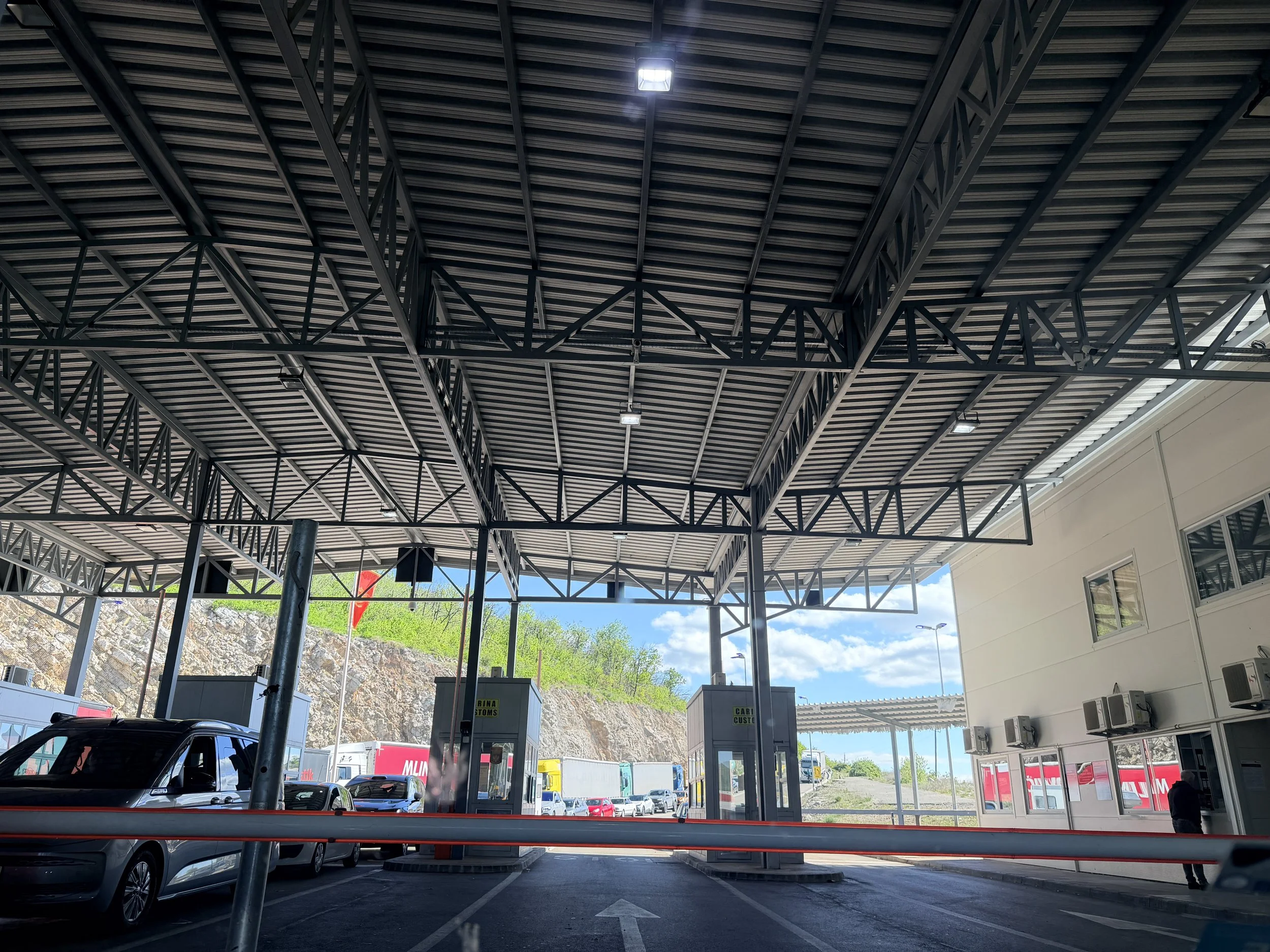
After lunch, we continued south and entered Montenegro. The border crossing was surprisingly casual. We simply handed over our passports through the car window without even getting out of the vehicle. Oddly enough, the officer stamped only two of the passports before waving us through.
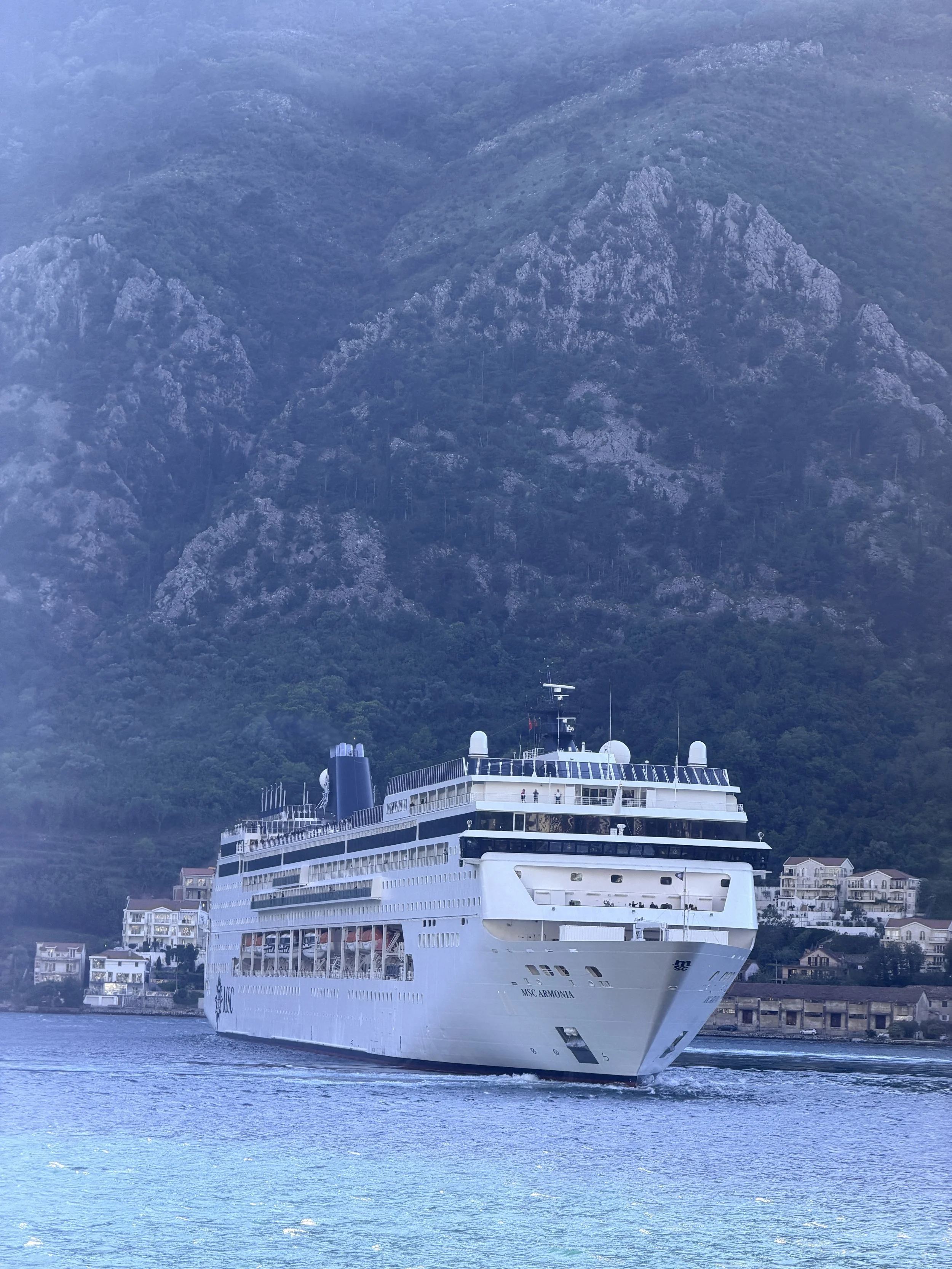
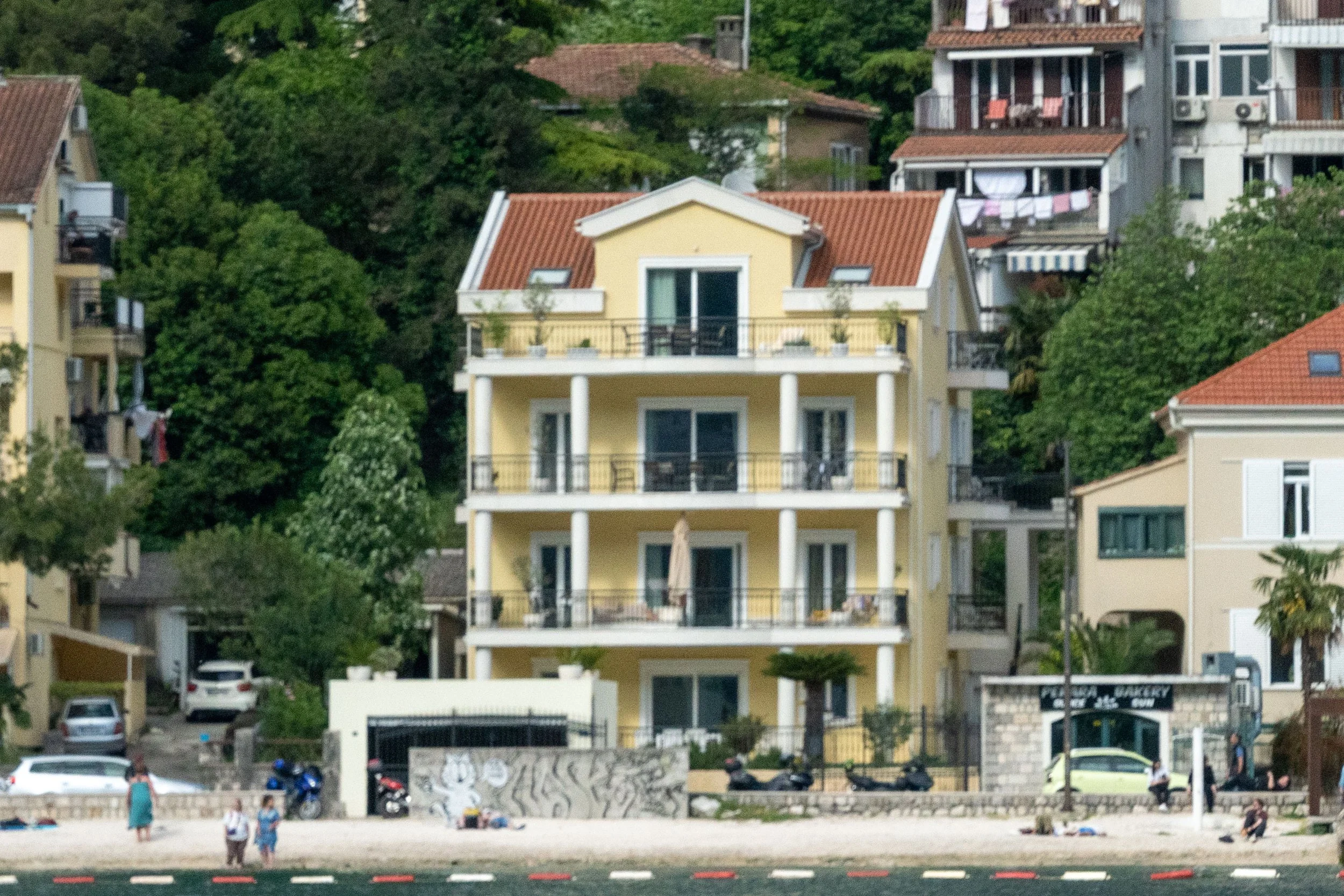
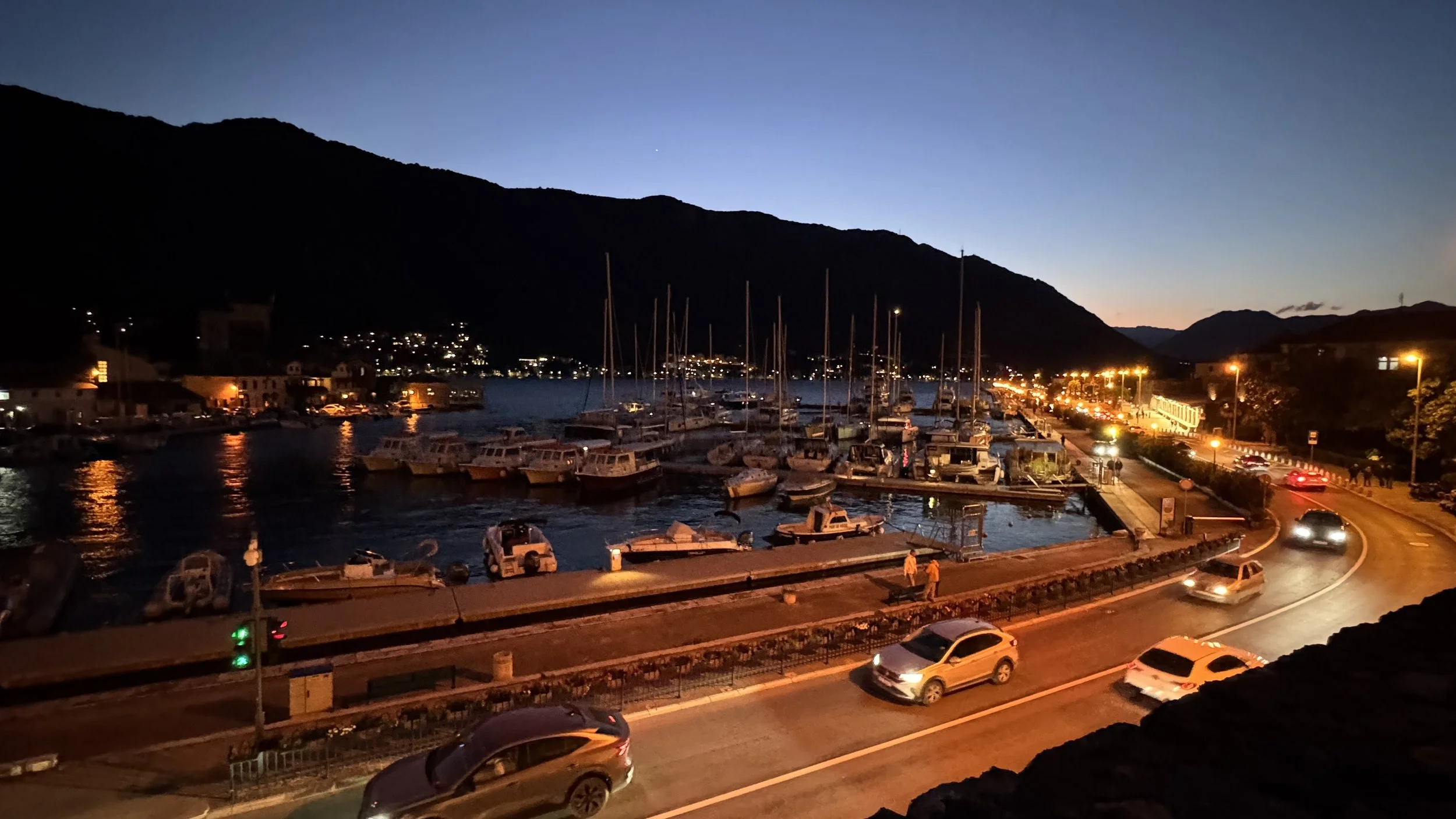
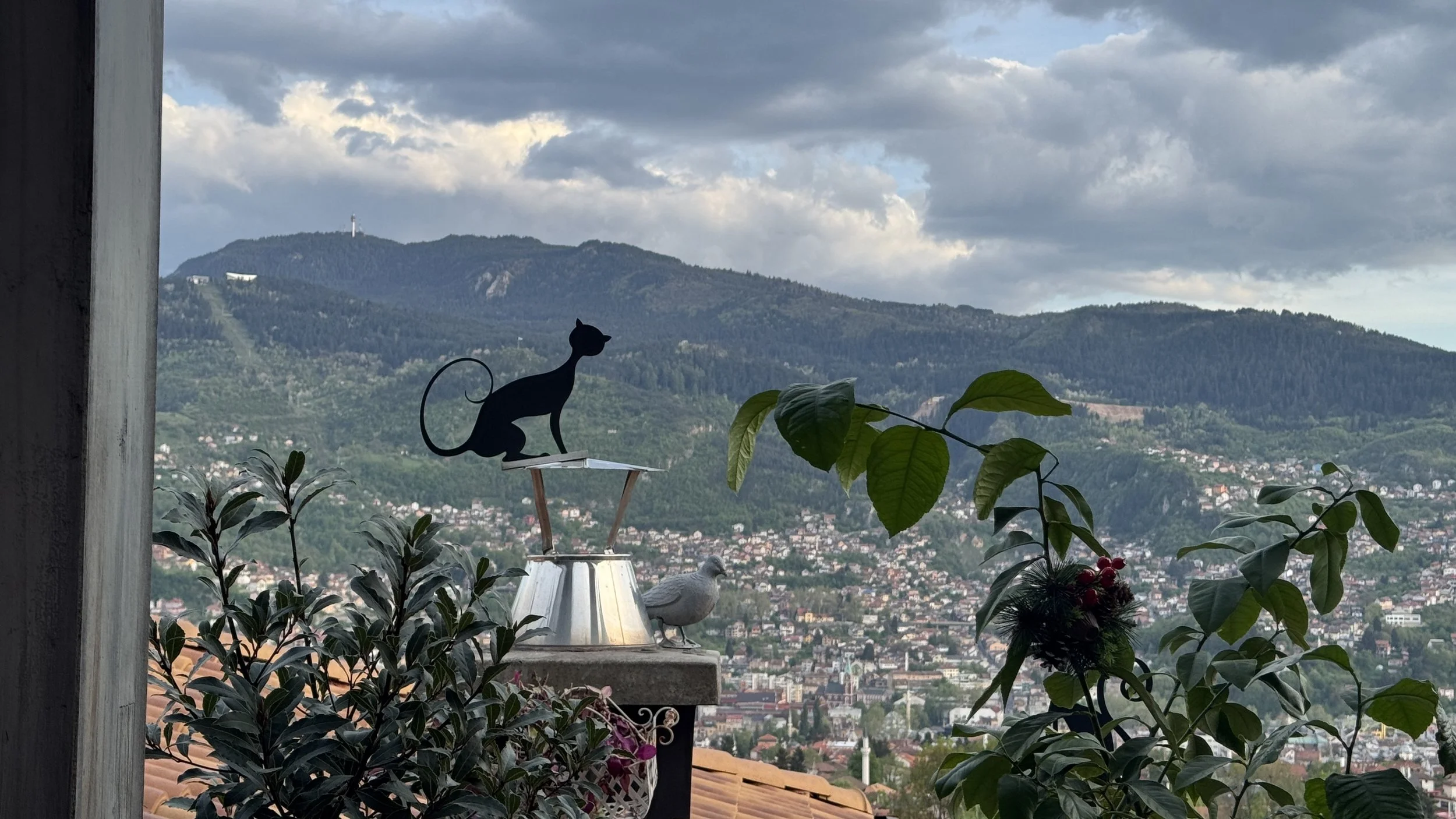
By late afternoon, we arrived in Kotor. Our rented apartment was located just outside the Old Town in a four-story villa facing the bay. The Bay of Kotor was calm and beautiful, surrounded by steep mountains that reflected softly on the water. In the distance, an MSC cruise ship was docked near the cruise terminal, adding a touch of activity to the otherwise peaceful harbor.
Our host reminded us that many stores would be closed for the upcoming May Day holiday over the next three days, so we should buy groceries that evening if we needed anything. We stopped by a nearby market to pick up some basic supplies for the coming days.
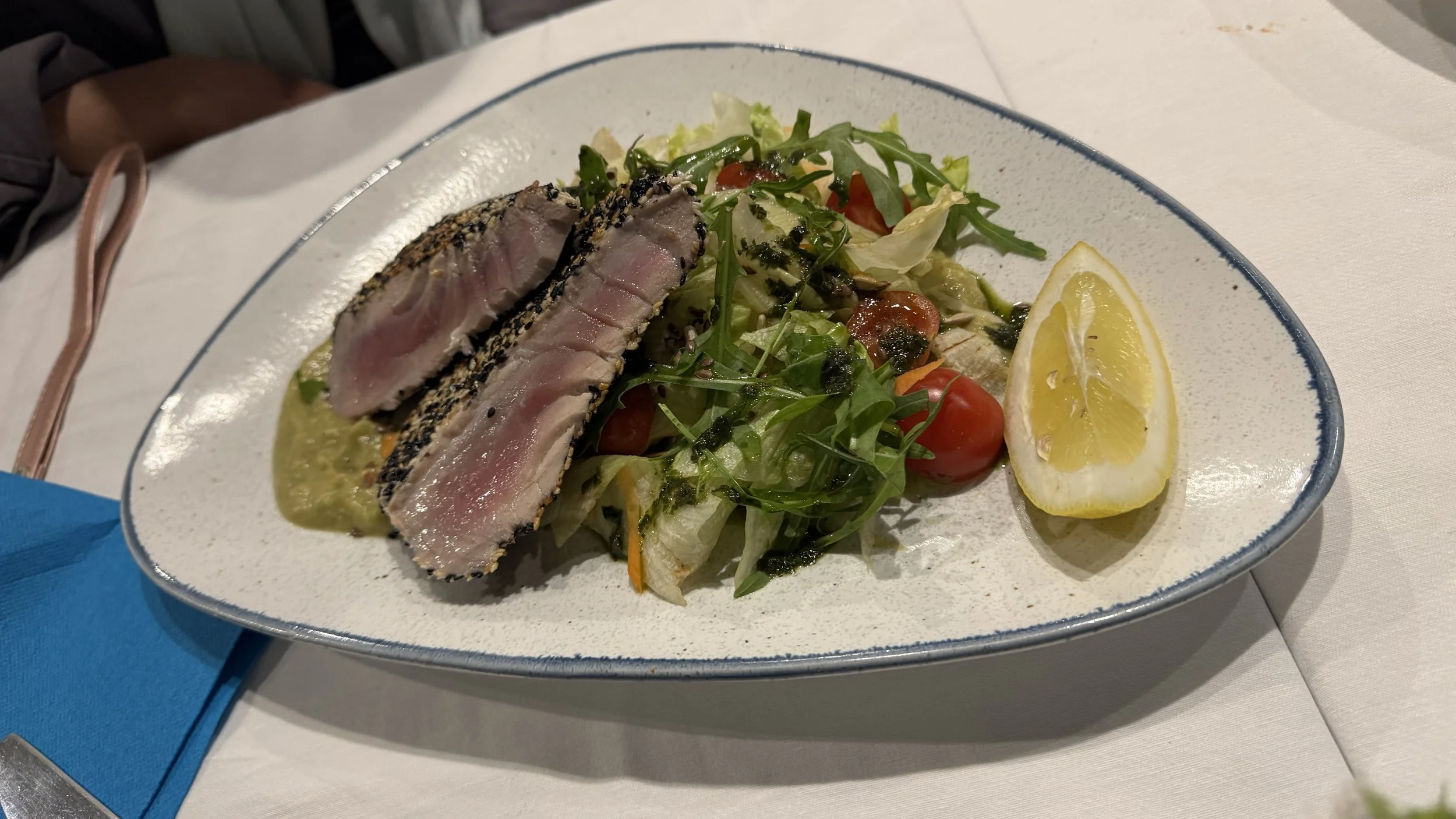
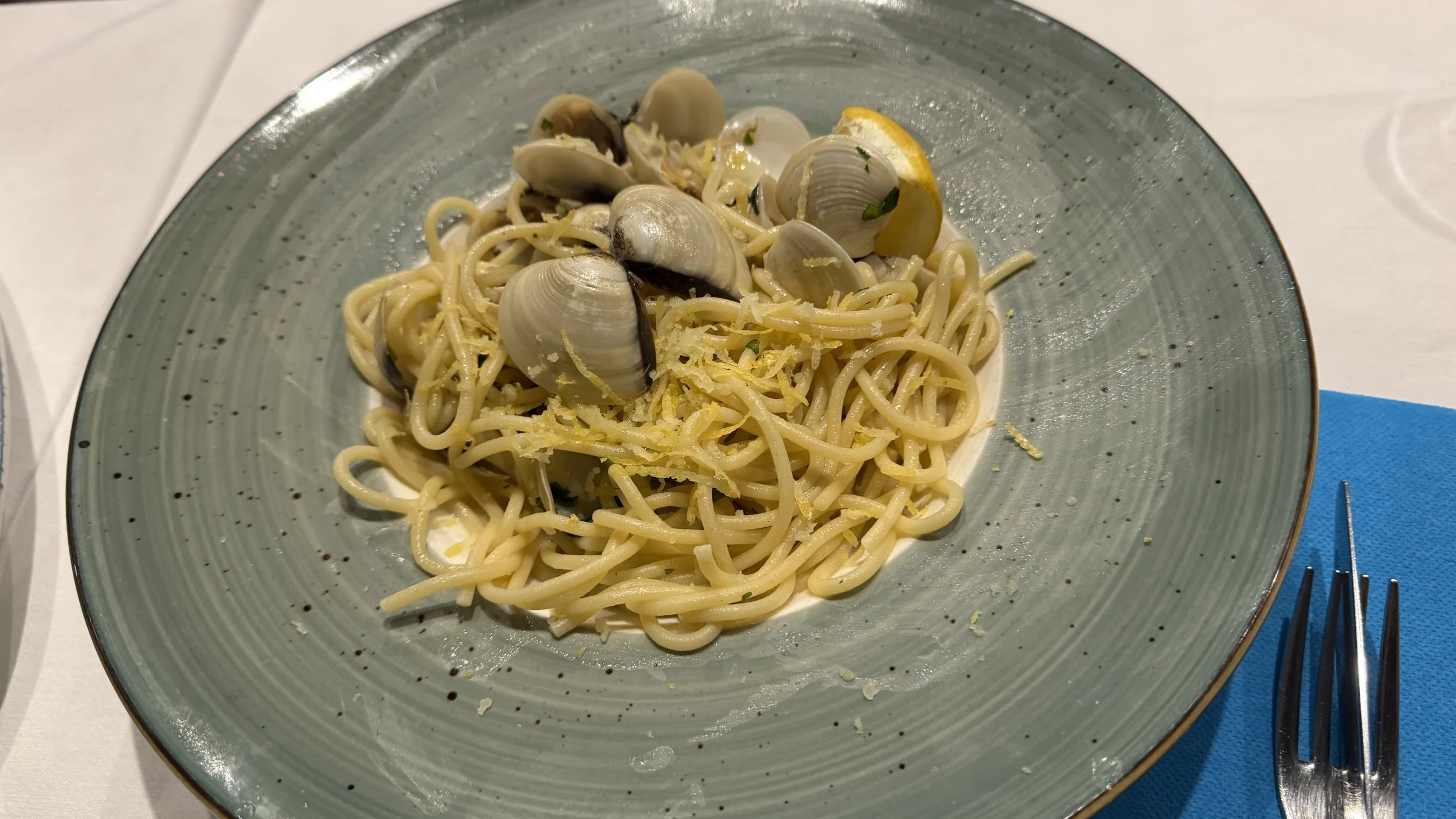
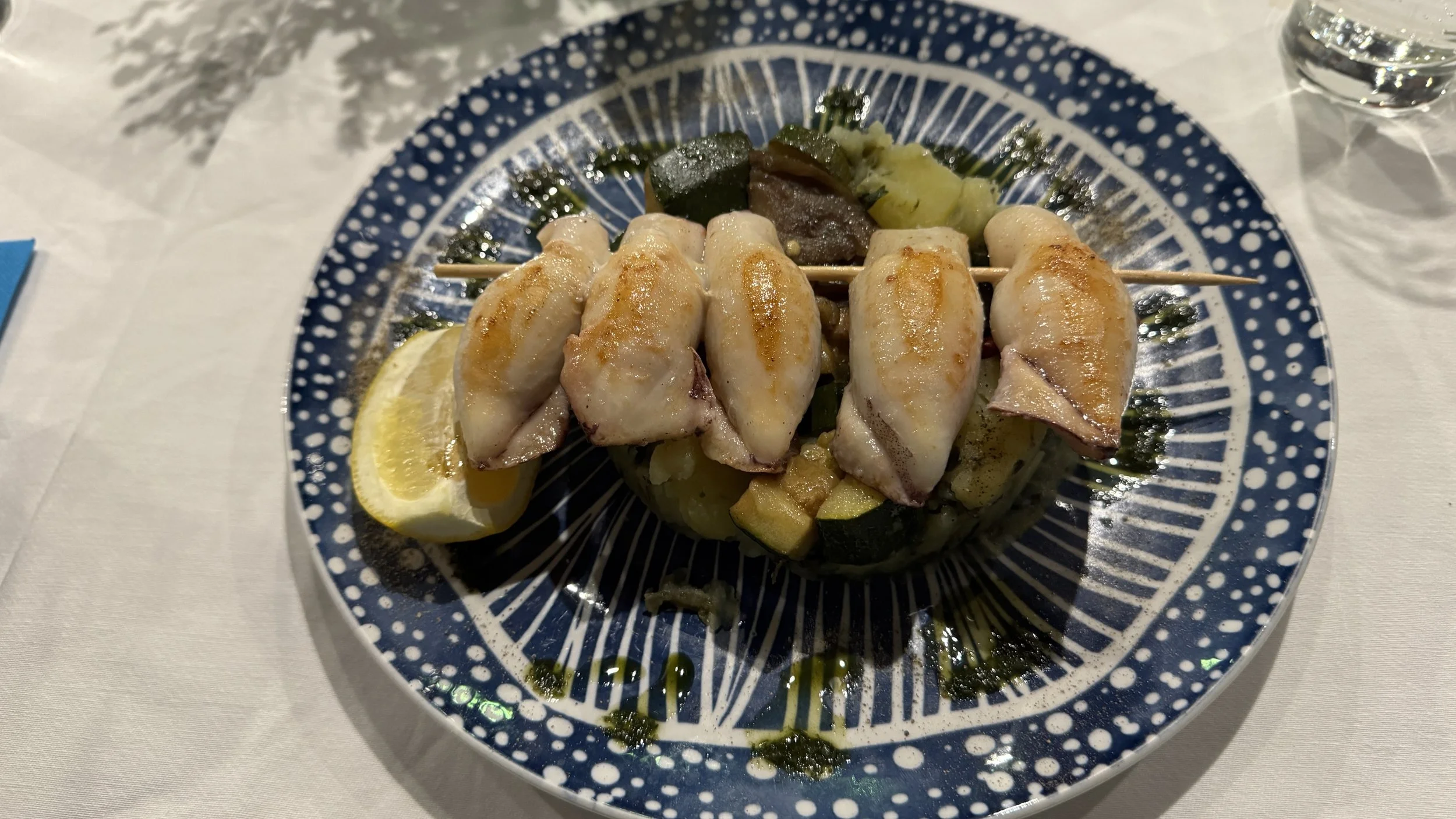
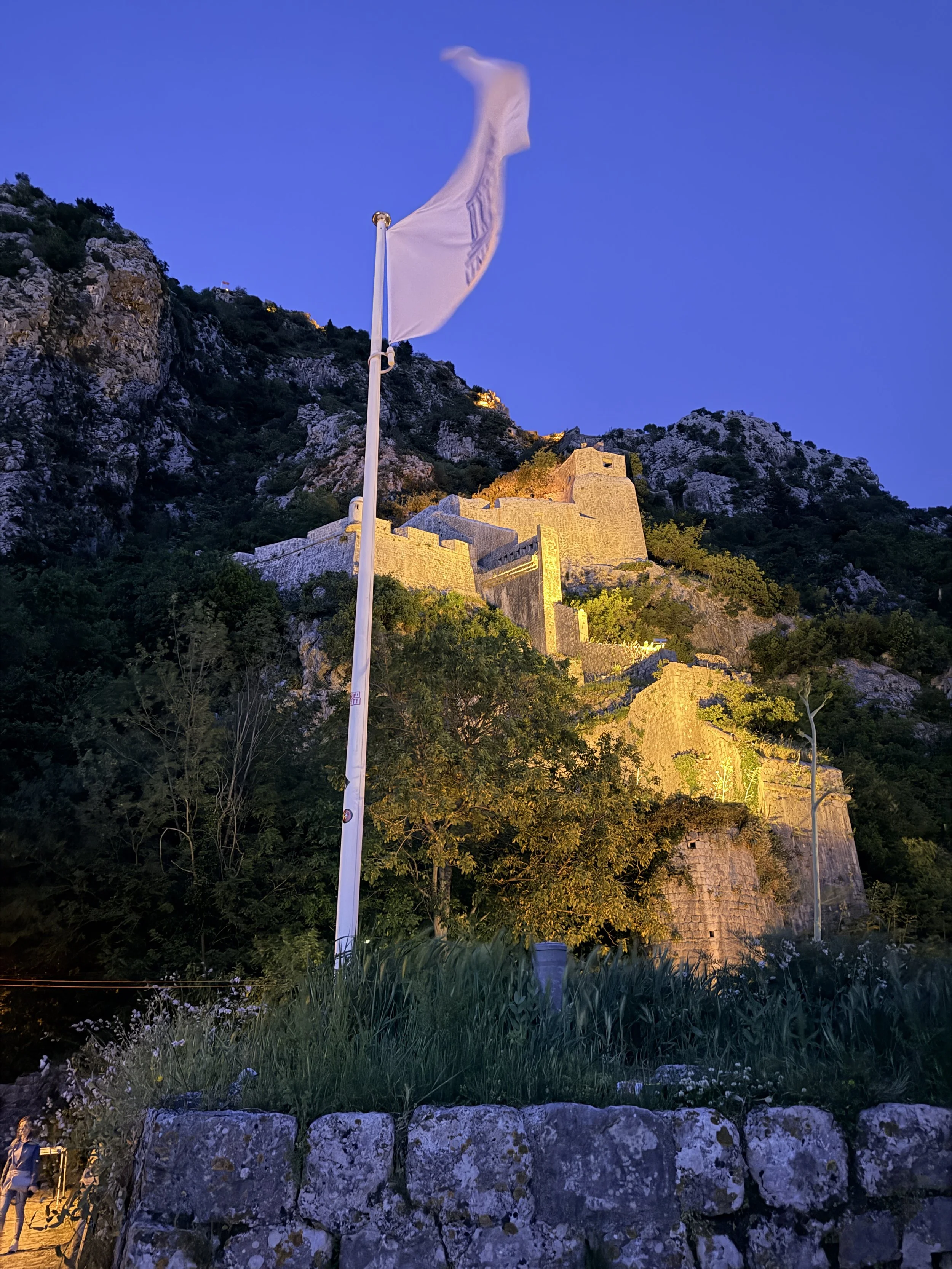
Later, we walked into Kotor Old Town for dinner and, as had become our routine during this trip, took an initial evening stroll through the city. Dinner was satisfying, and the Old Town was certainly beautiful, with its narrow stone alleys, old churches, heavy medieval walls, and lively little squares.
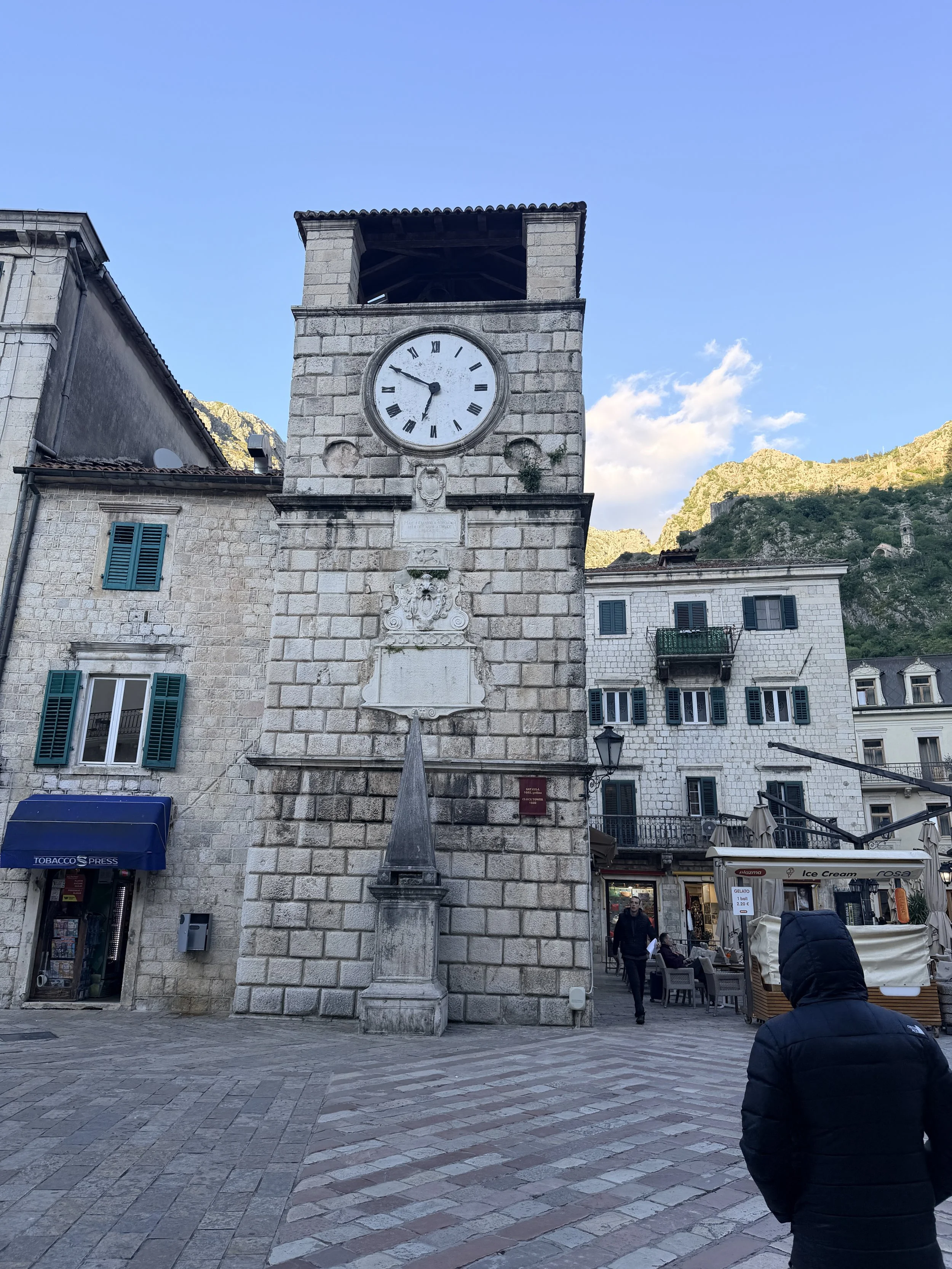
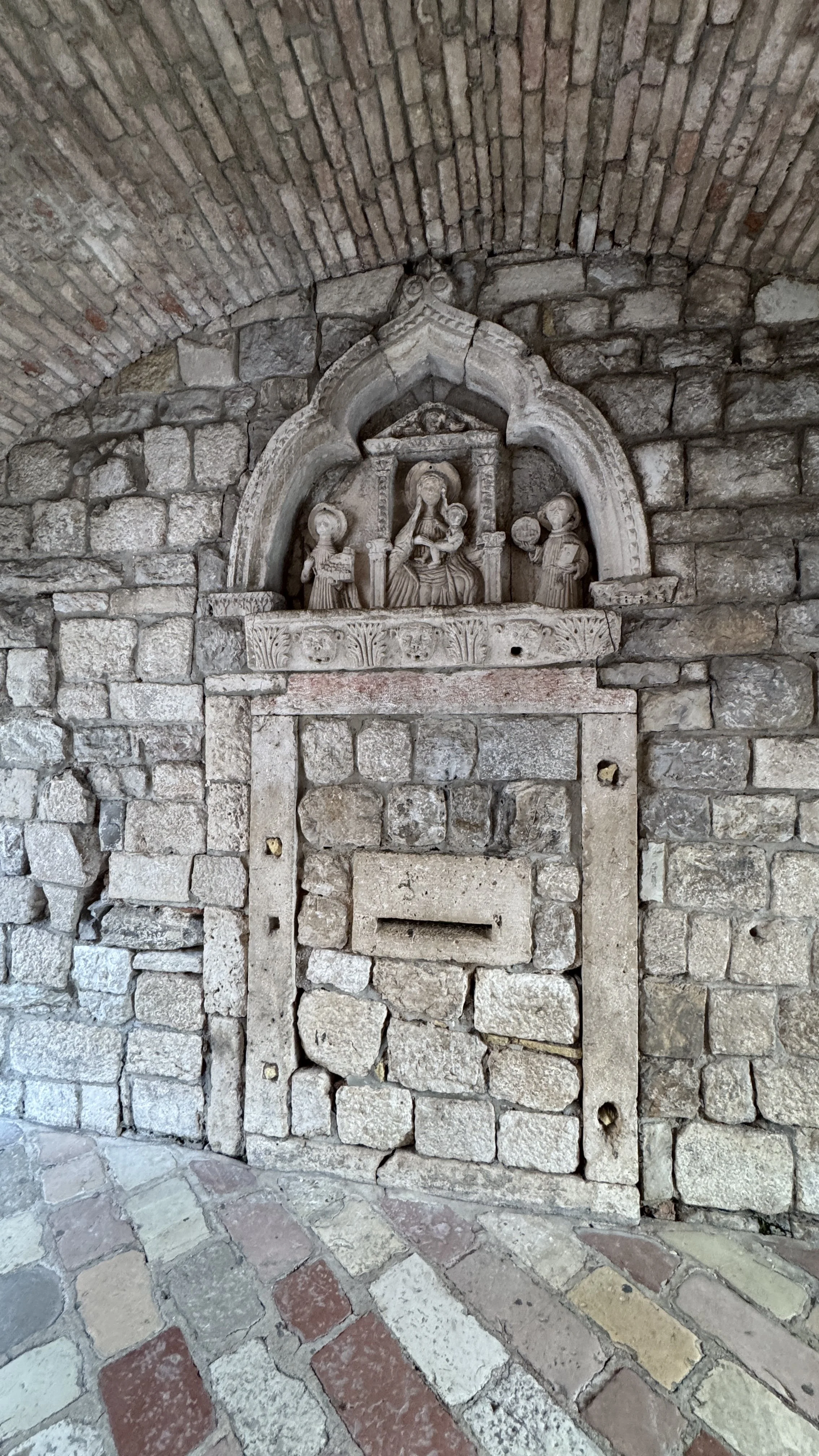
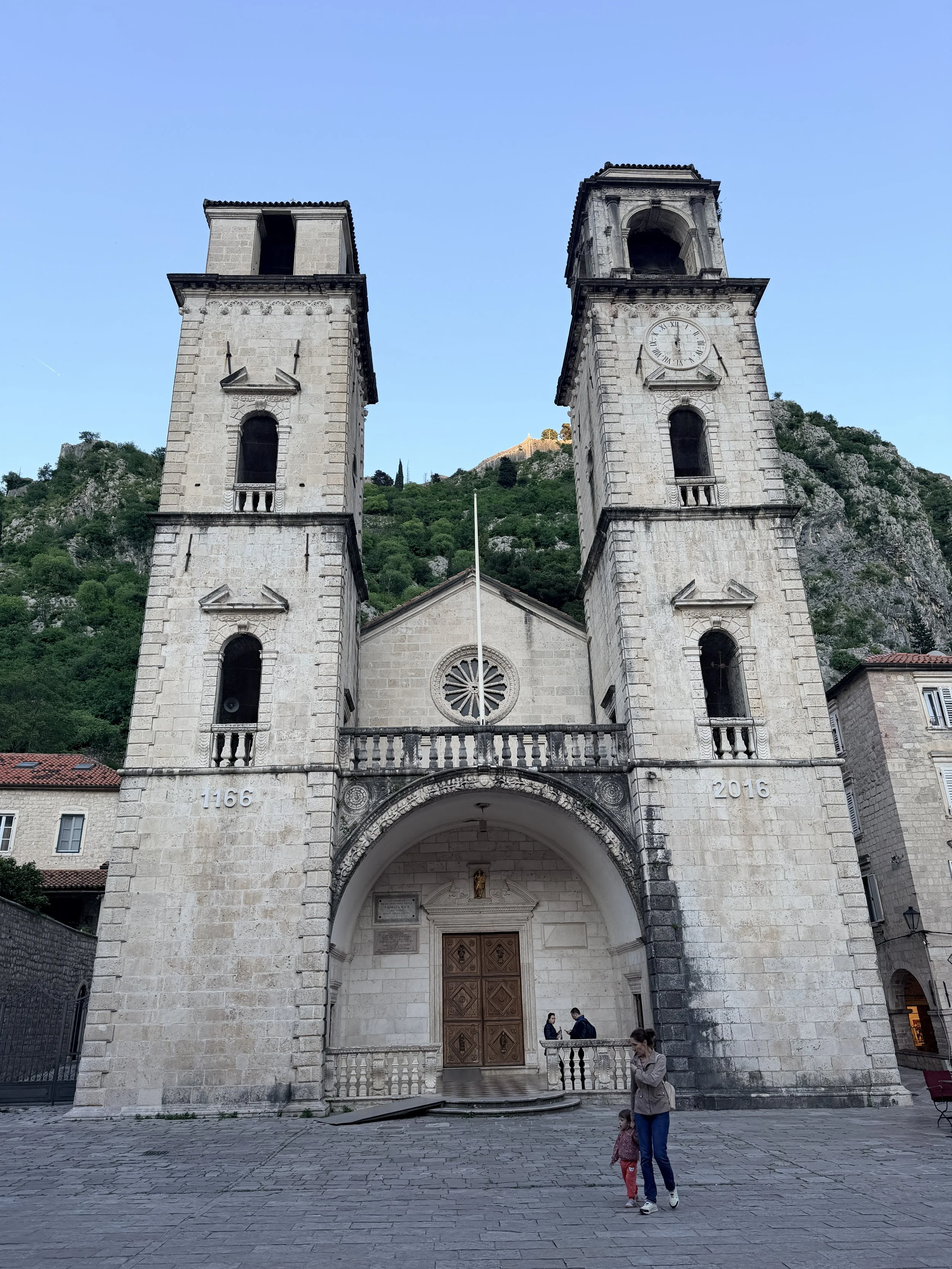
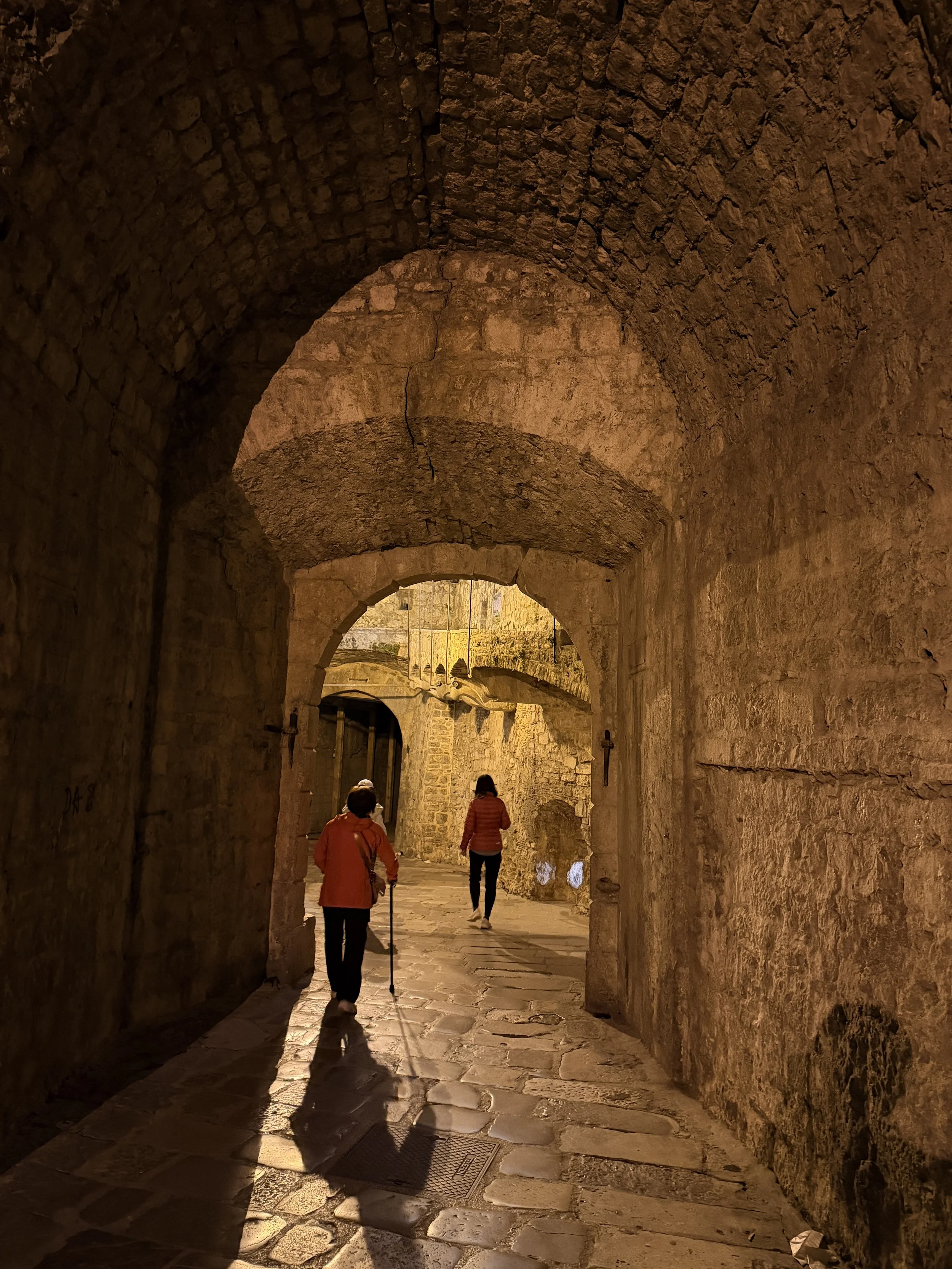
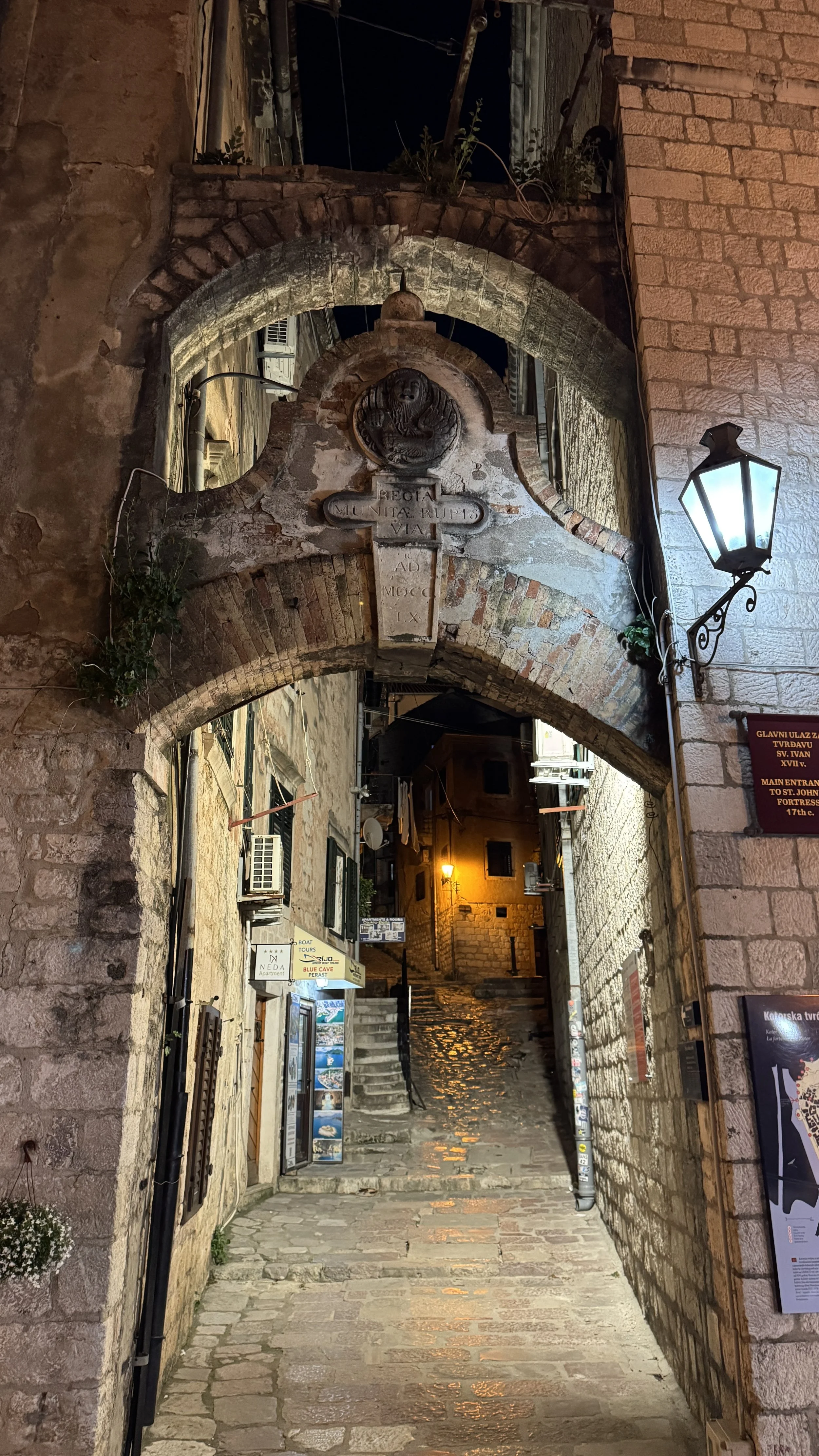
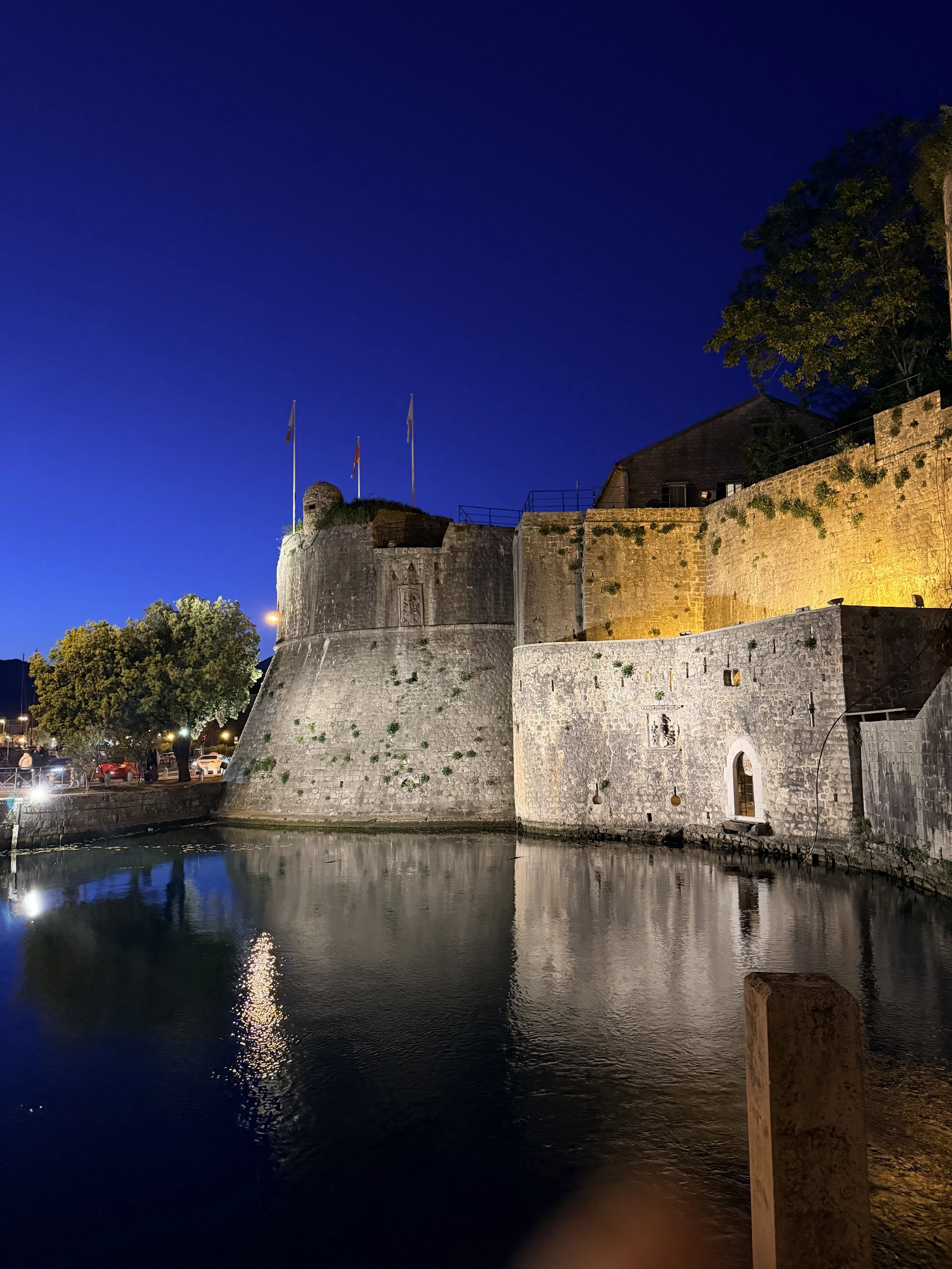
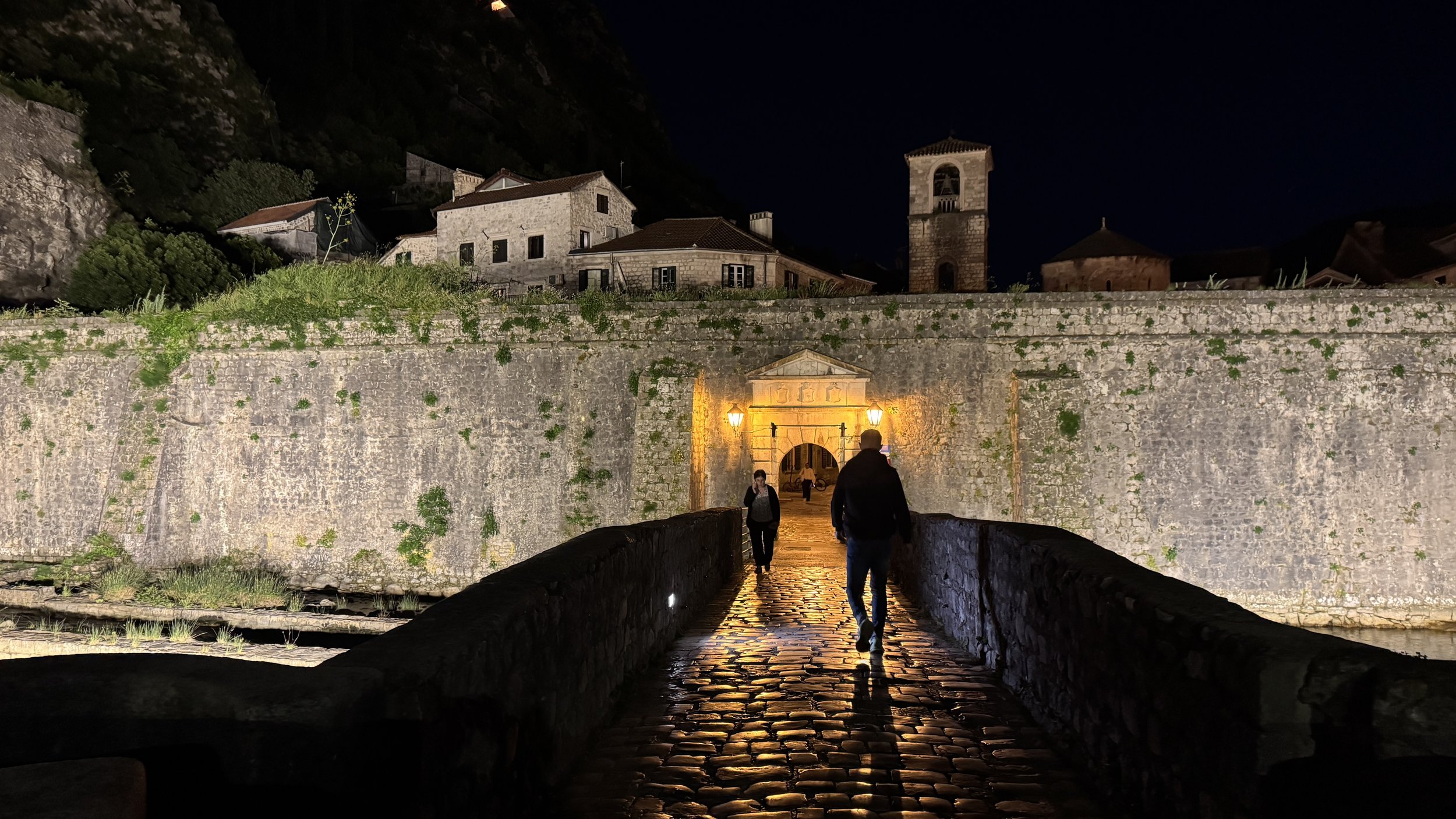
But by this point in the journey, after visiting so many historic European old towns, the sense of excitement was no longer quite as strong as it had been earlier in the trip.
2026年4月30日
今天又将前往一个新的国家——黑山。从萨拉热窝到黑山的港湾小镇科托尔(Kotor)交通不是很方便。朋友在网上找了个萨拉热窝的包车司机。
显然,我们对前一天吃到的烤羊肉并不算完全满意。当得知前往科托尔的途中会经过以炭火烤全羊闻名的小镇亚布拉尼察(Jablanica)时,我们特地要求司机安排一个午餐停留。
我们来到河边悬崖上的科瓦切维奇餐厅(Restoran Kovačević)。餐厅俯瞰着翠绿色的河水,景色相当不错。门口几只小羊正在炭火上缓慢旋转烤制,空气中弥漫着浓浓的烤羊香味,让人一下子就感受到这里对于羊肉的执着。
这一次,我们学乖了,只点了500克烤羊肉,再加上一些其它菜。羊肉外表烤得金黄诱人,皮脆肉嫩,但羊膻味还是比我们预想中更重一些。对我们这些吃猪肉的,Split 那里的烤乳猪更配我们的胃口。这一顿羊肉口味虽然未能十分满足,但这样的体验本身倒也十分难忘。旅行中,有时最有趣的并不一定是“最好吃”的,而是那些带着地方特色与记忆点的经历。
午饭后,我们继续南下进入黑山(Montenegro)。边境手续意外地简单,我们甚至不需要下车,只是把护照递给边检人员。结果他们只在其中两本护照上盖了章,随后便挥手让我们通过了,整个过程顺利的有些不可思议。
从萨拉热窝开车到科托尔,司机没有走最短的路线,因为那是一条非常糟糕的路,对车损害很大。司机宁愿饶道多开近一个小时。但即便如此,进入黑山之后有一段路况还是不太好,坐在车里很不舒服。
傍晚时分,我们抵达科托尔。租住的公寓位于老城墙外不远处,是一栋面朝海湾的四层别墅。朋友特地选了最好的带大阳台的套间,一个海景房。科托尔湾(Bay of Kotor)平静而优美,四周群山环抱,海面几乎没有波浪。远处的邮轮码头停靠着一艘MSC邮轮,让这个宁静海湾多了几分热闹。
房东提醒我们,因为即将到来的“五一劳动节(May Day)”假期,未来三天许多商店都会关门,如果需要买些食品的话,最好今天去。于是我们先去附近超市买了一些基本食品。
安顿好后,我们步行前往科托尔老城(Kotor Old Town)吃晚饭,也顺便进行了像往常一样的“第一轮熟悉城市散步”。因为前几天在波黑每顿都是肉,今天终于又回到亚得里亚海边,主打海鲜,晚餐令人满意。老城依旧是典型的欧洲中世纪古城:狭窄石板路、古老教堂、厚重城墙,以及热闹的小广场,一切都很漂亮。
只是旅行进行到这个阶段,在看过太多类似的欧洲古城之后,最初那种强烈的新鲜感,似乎已经慢慢减弱了。
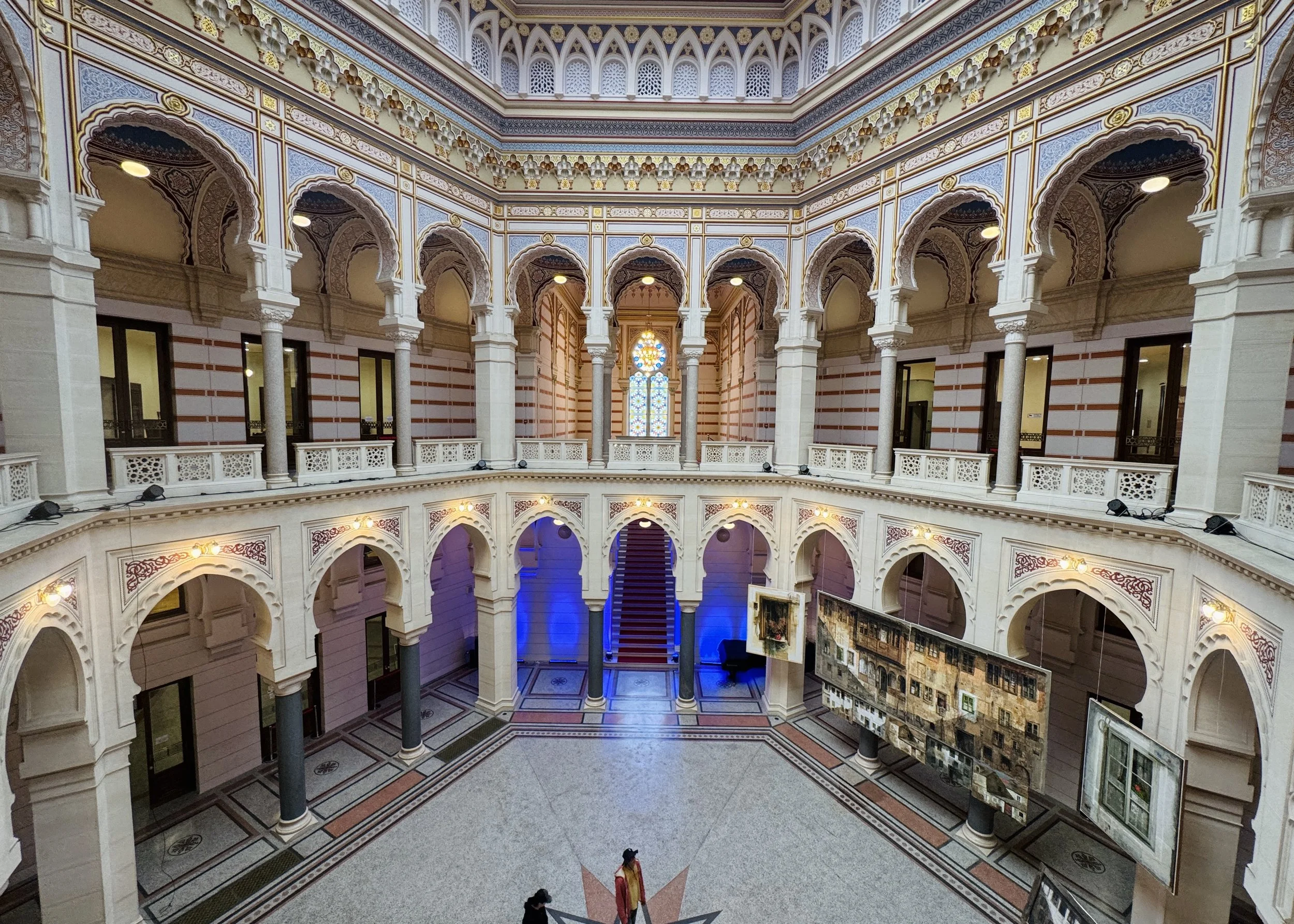
Sarajevo City Hall萨拉热窝市政厅
April 29, 2026
Today we continued exploring Sarajevo……
今天继续逛萨拉热窝。
April 29, 2026
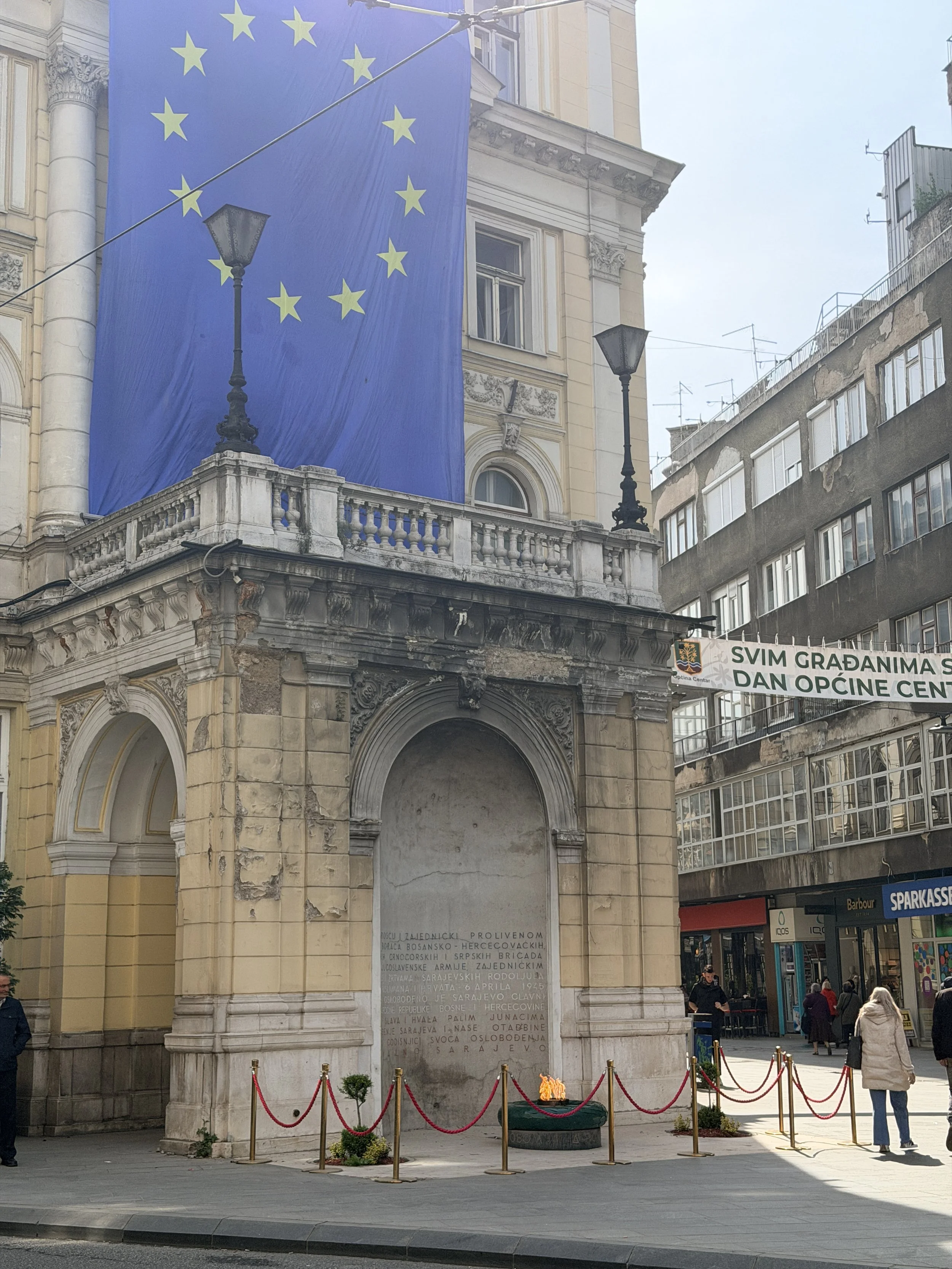
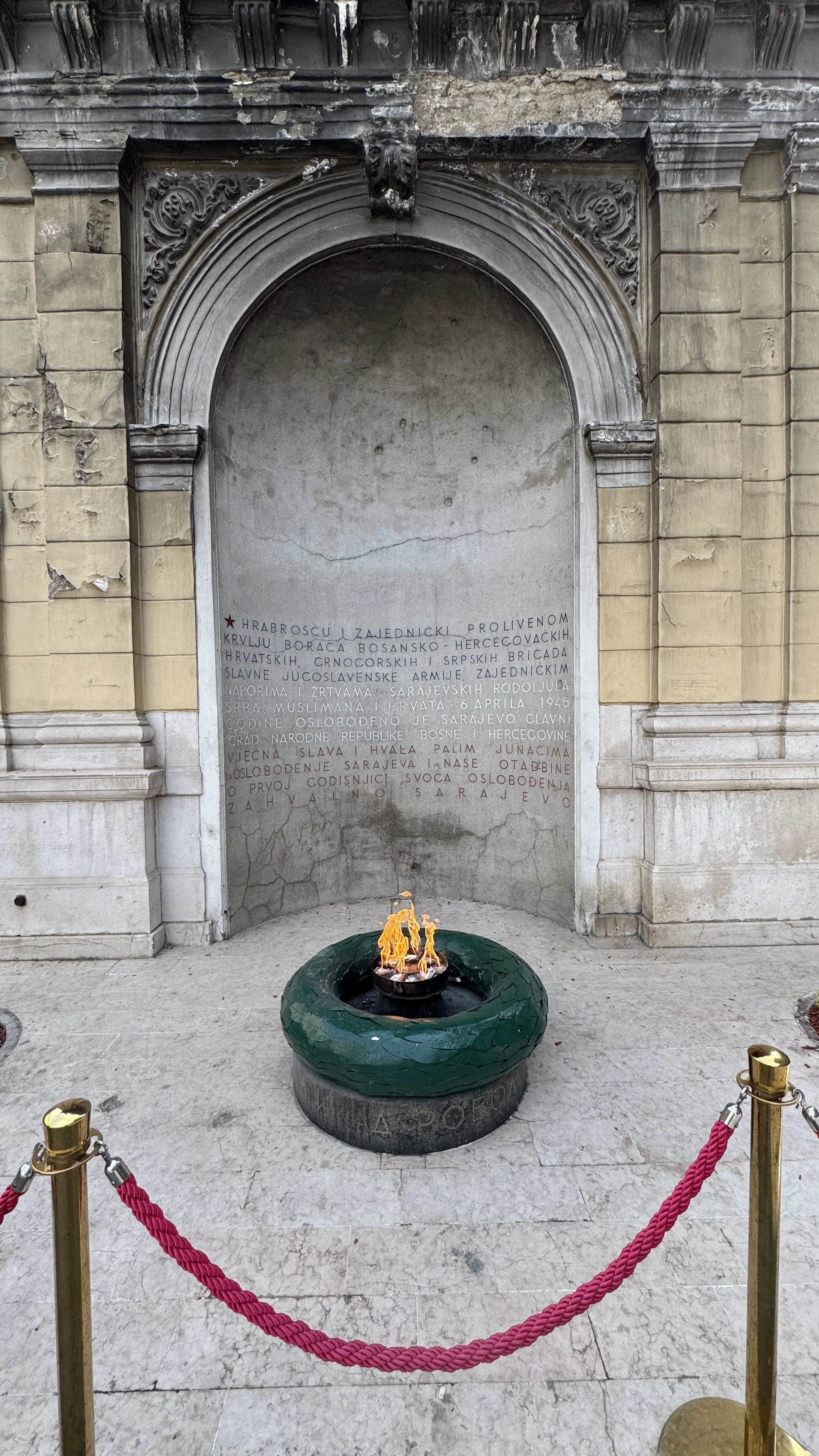
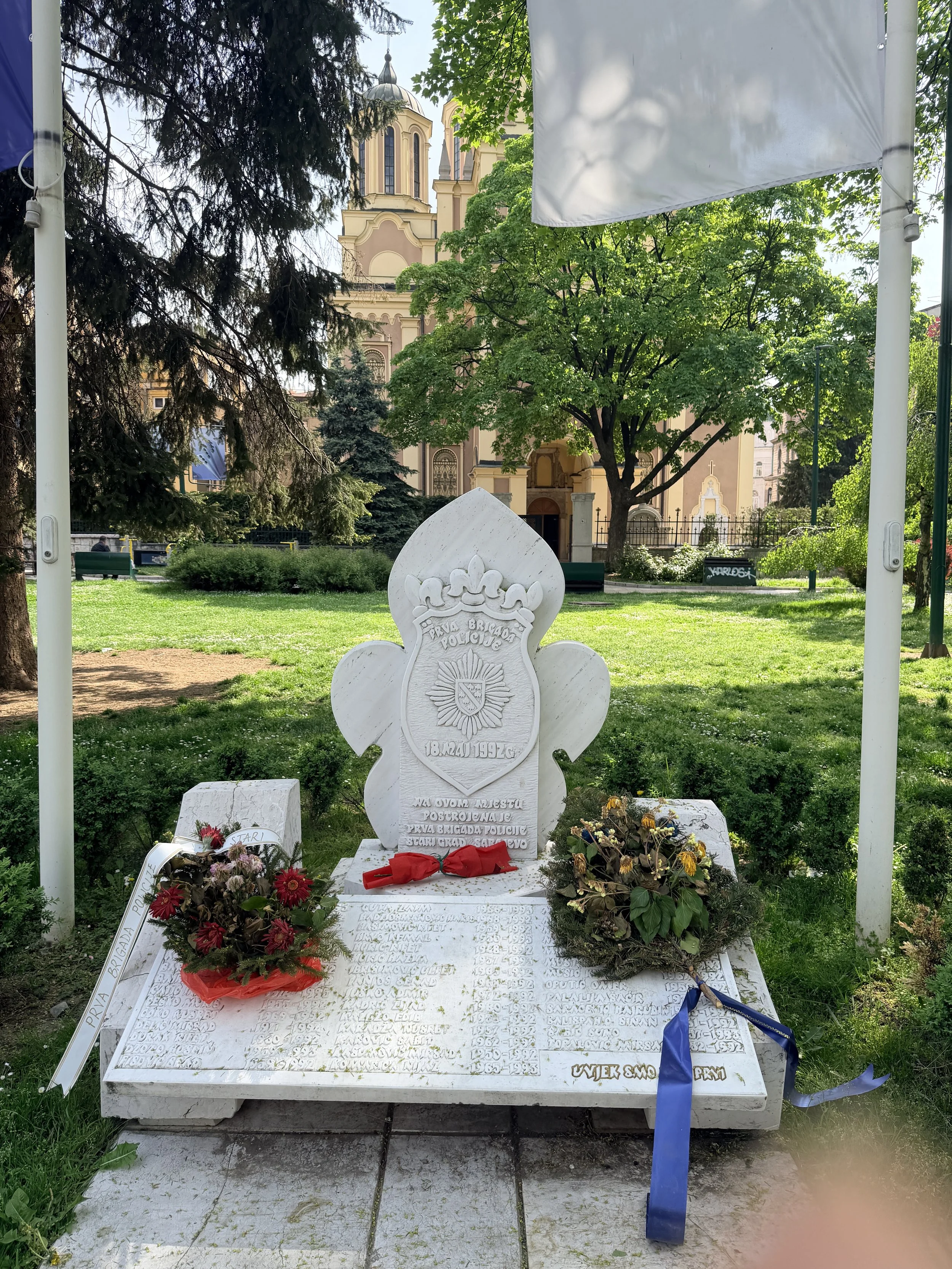
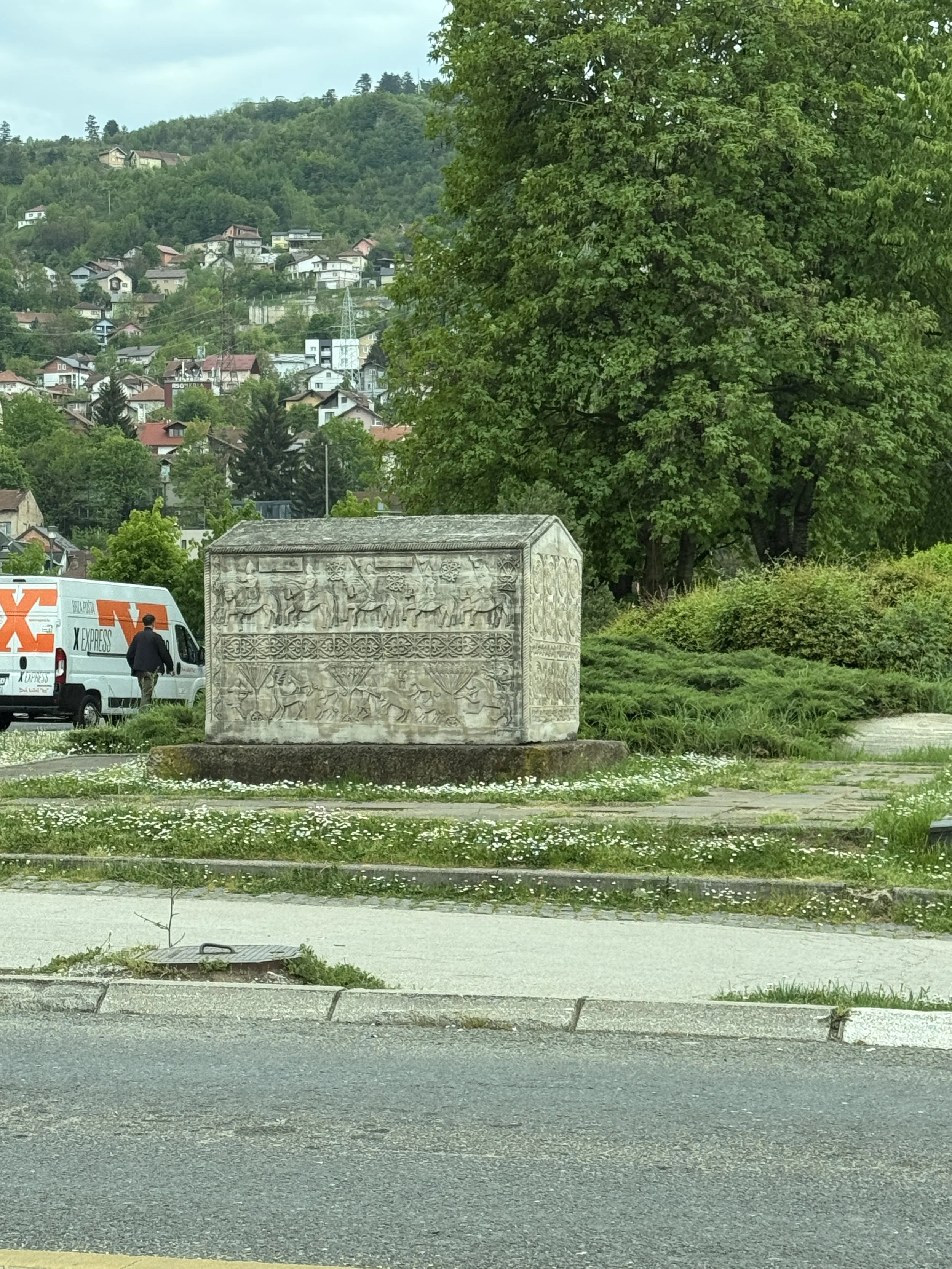
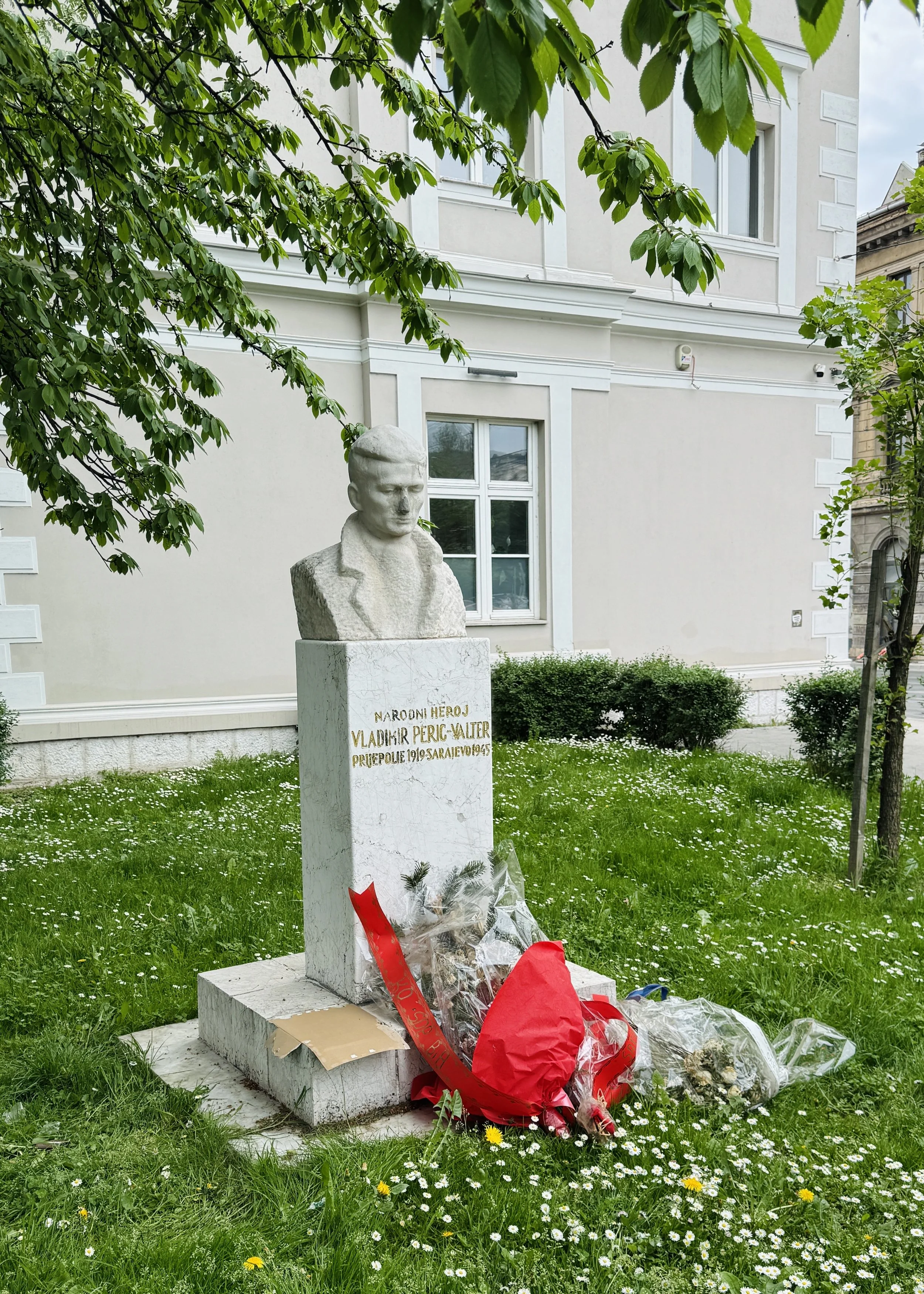
Today we continued exploring Sarajevo. Our first stop was the city’s famous Eternal Flame (Vječna Vatra), a memorial built after World War II. The flame burns continuously in honor of those who lost their lives during the war and remains one of Sarajevo’s most meaningful monuments.
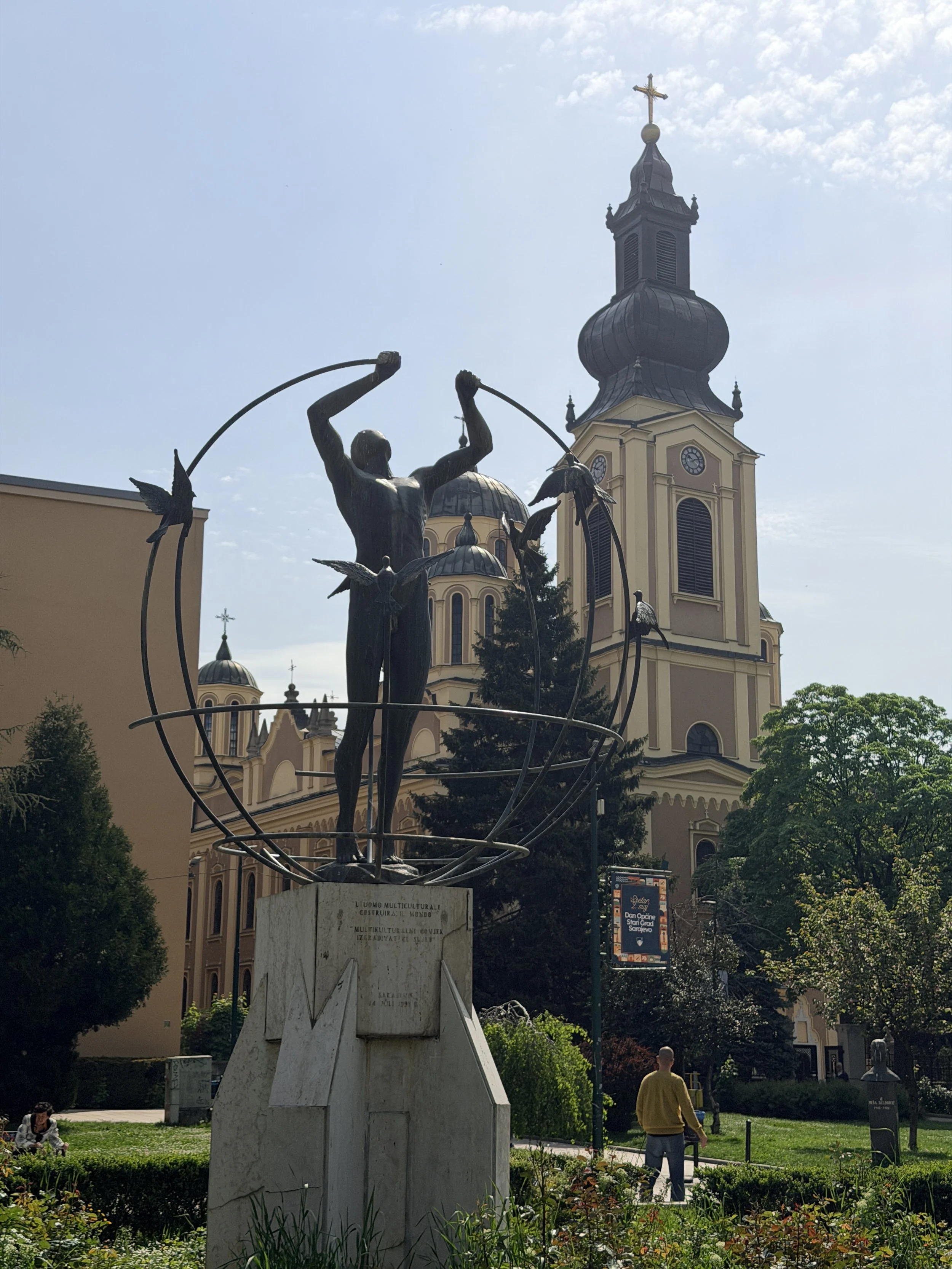
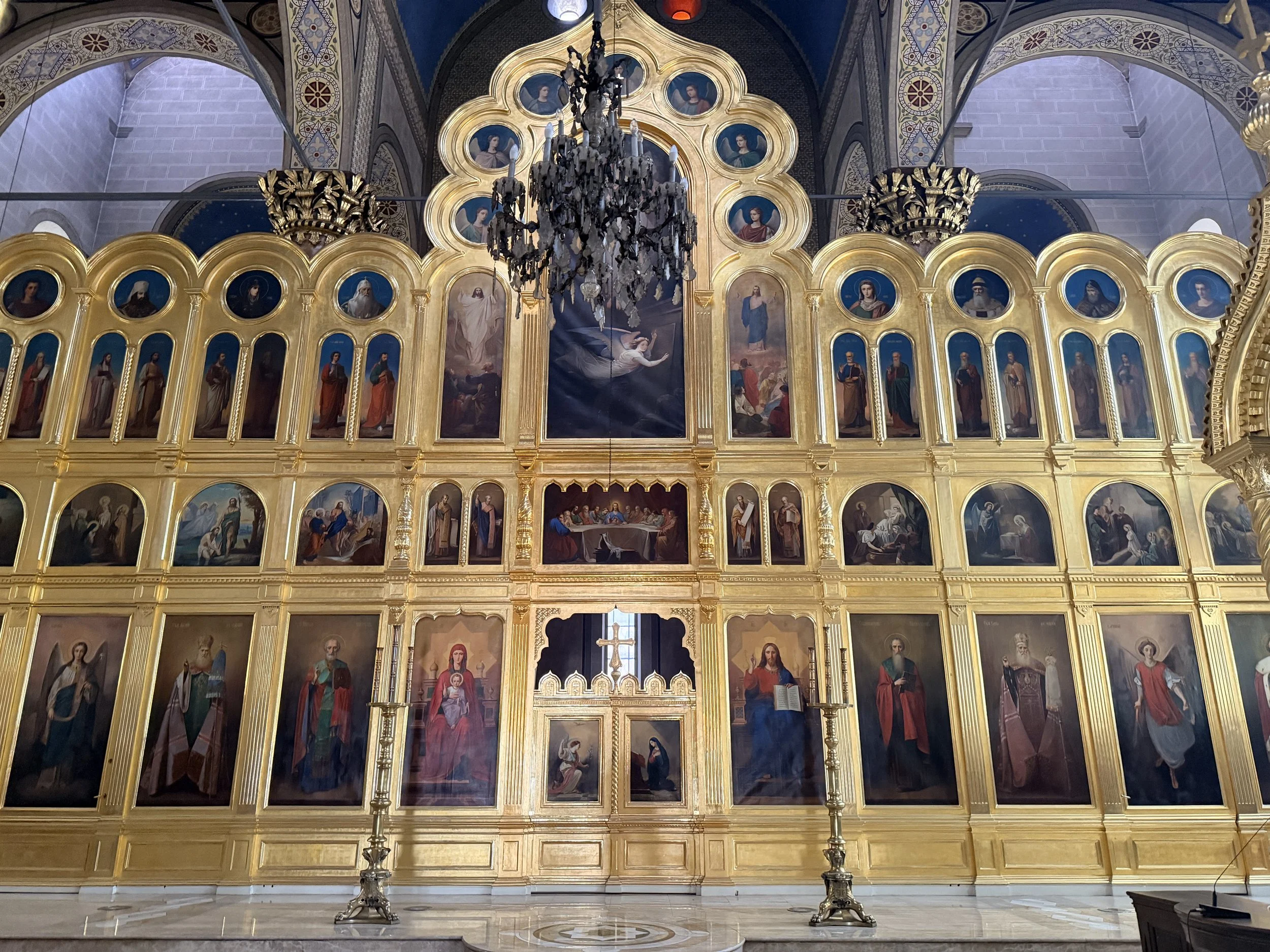
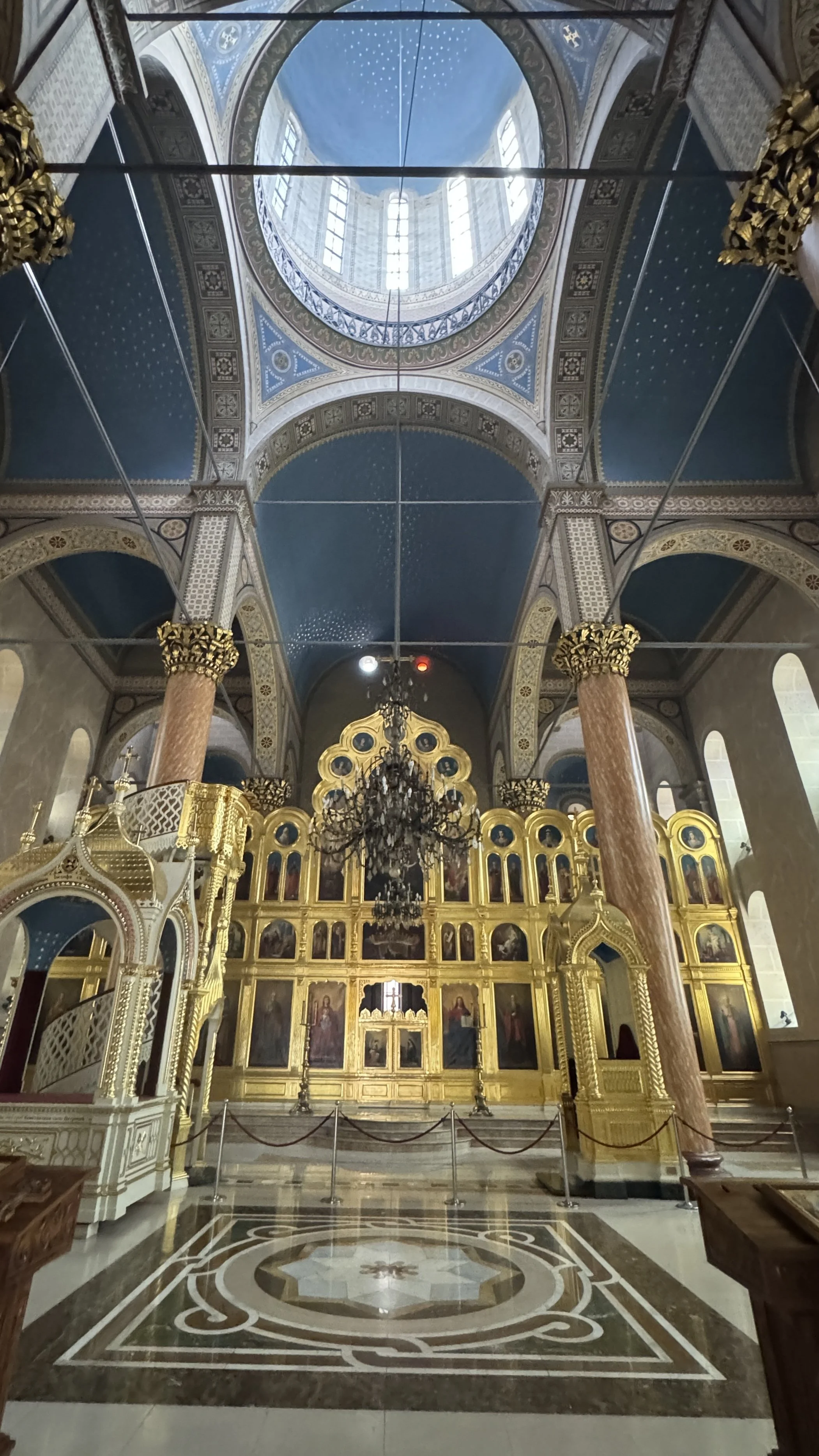
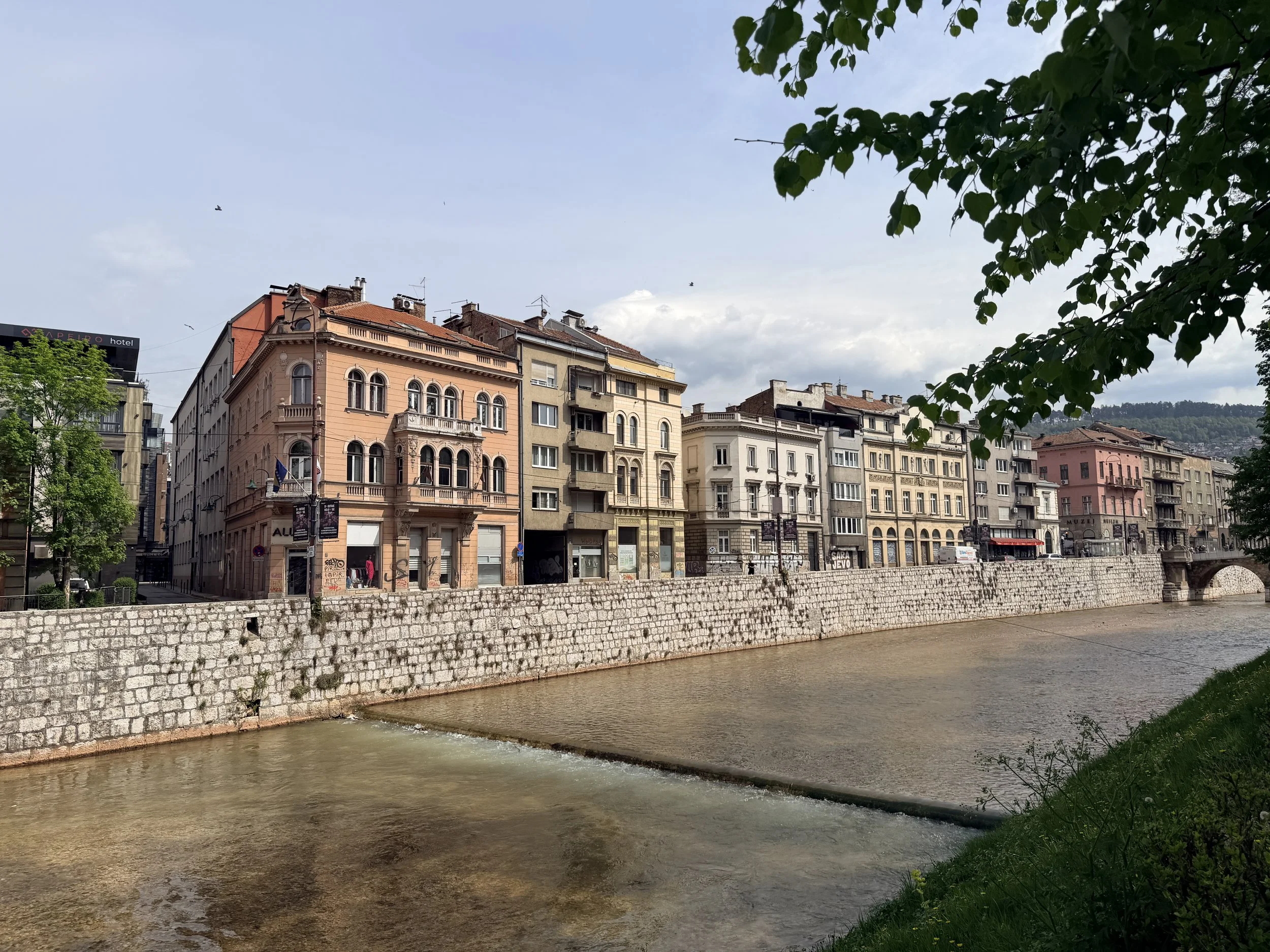
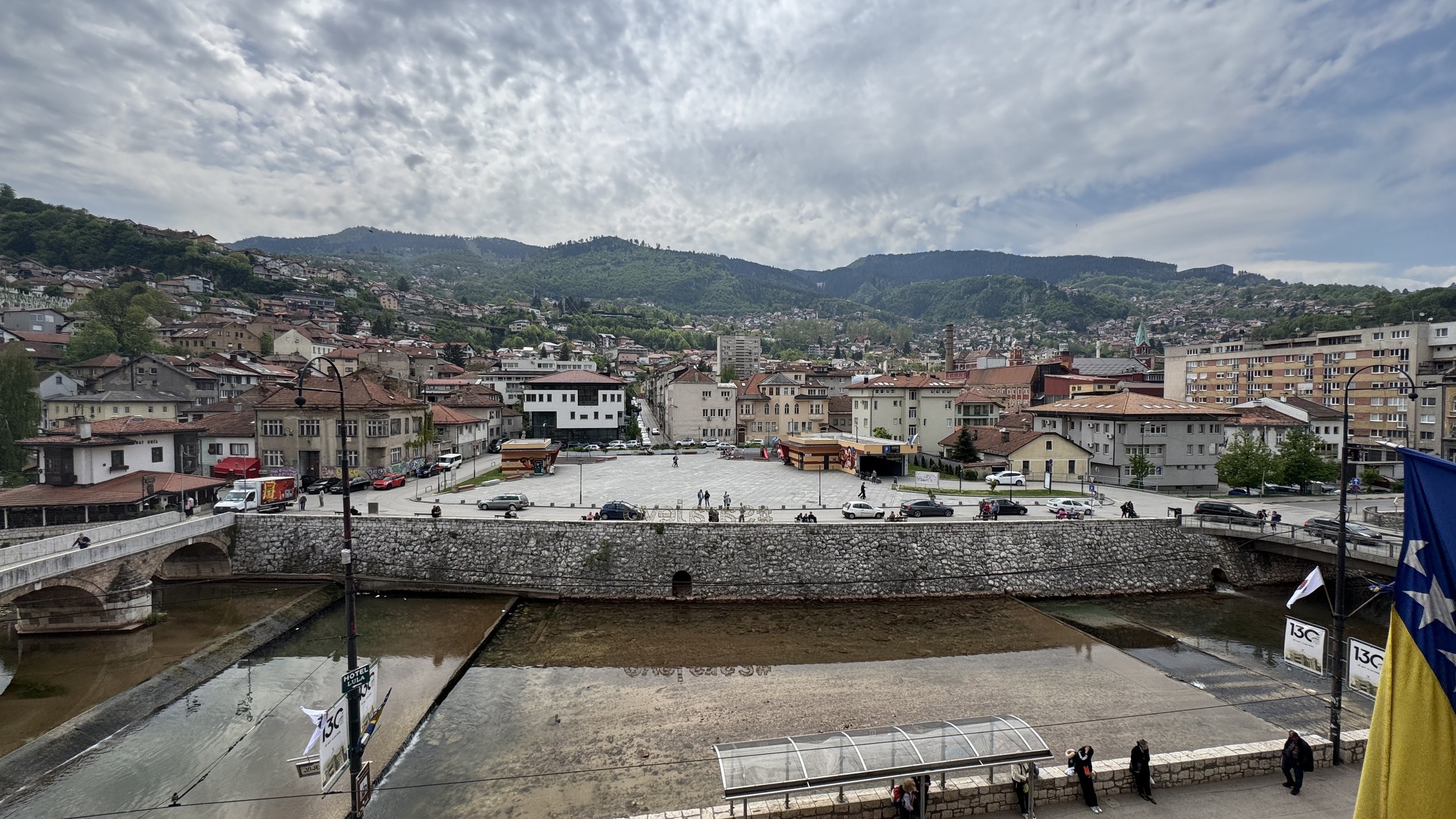
From there, we walked to the Orthodox Church, admiring its distinctive architecture and the important role it plays in the city’s religious and cultural heritage. We then spent some time strolling back and forth across several bridges spanning the Miljacka River, enjoying views of the old town and the mix of Ottoman, Austro-Hungarian, and modern influences that give Sarajevo its unique character.
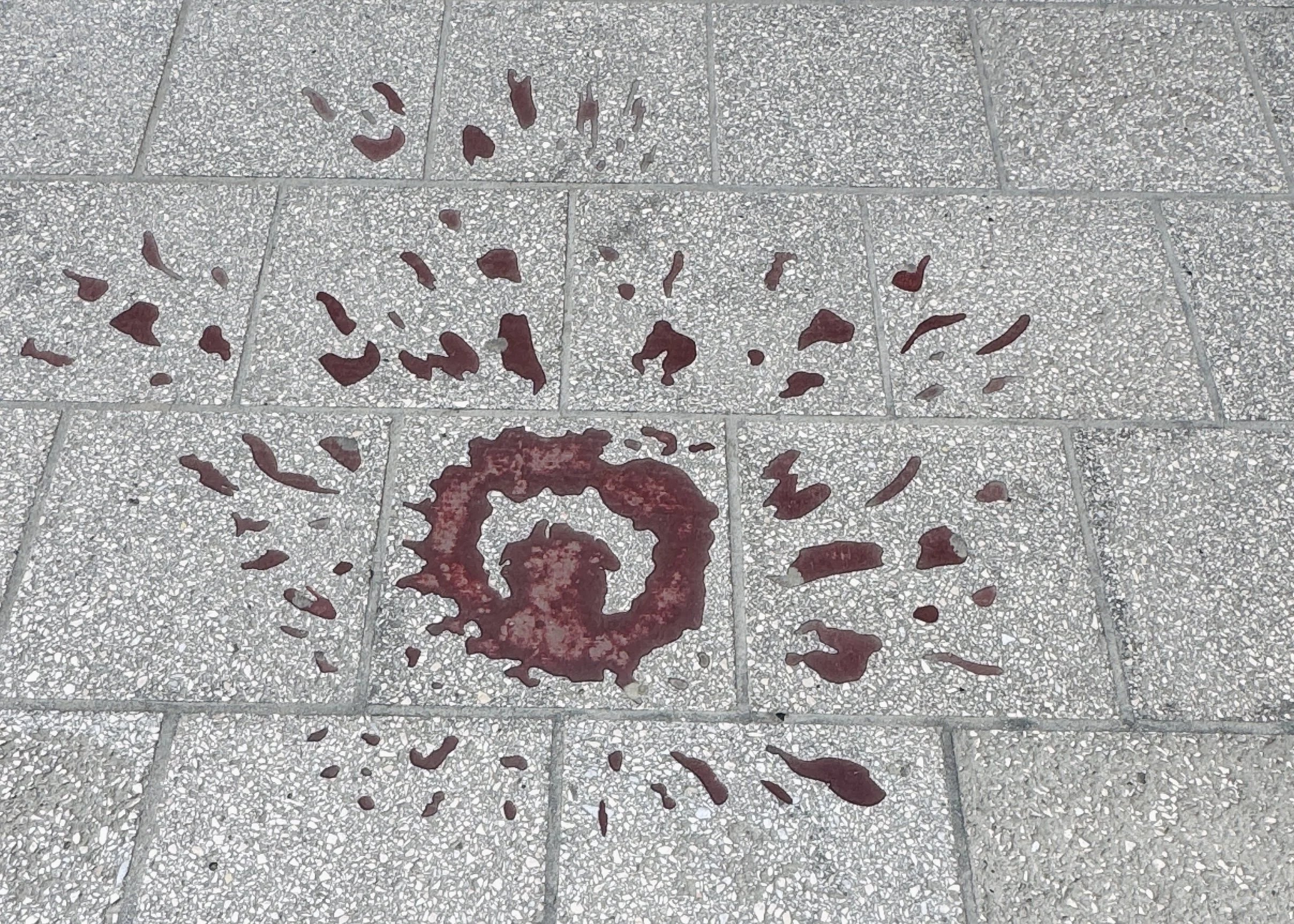
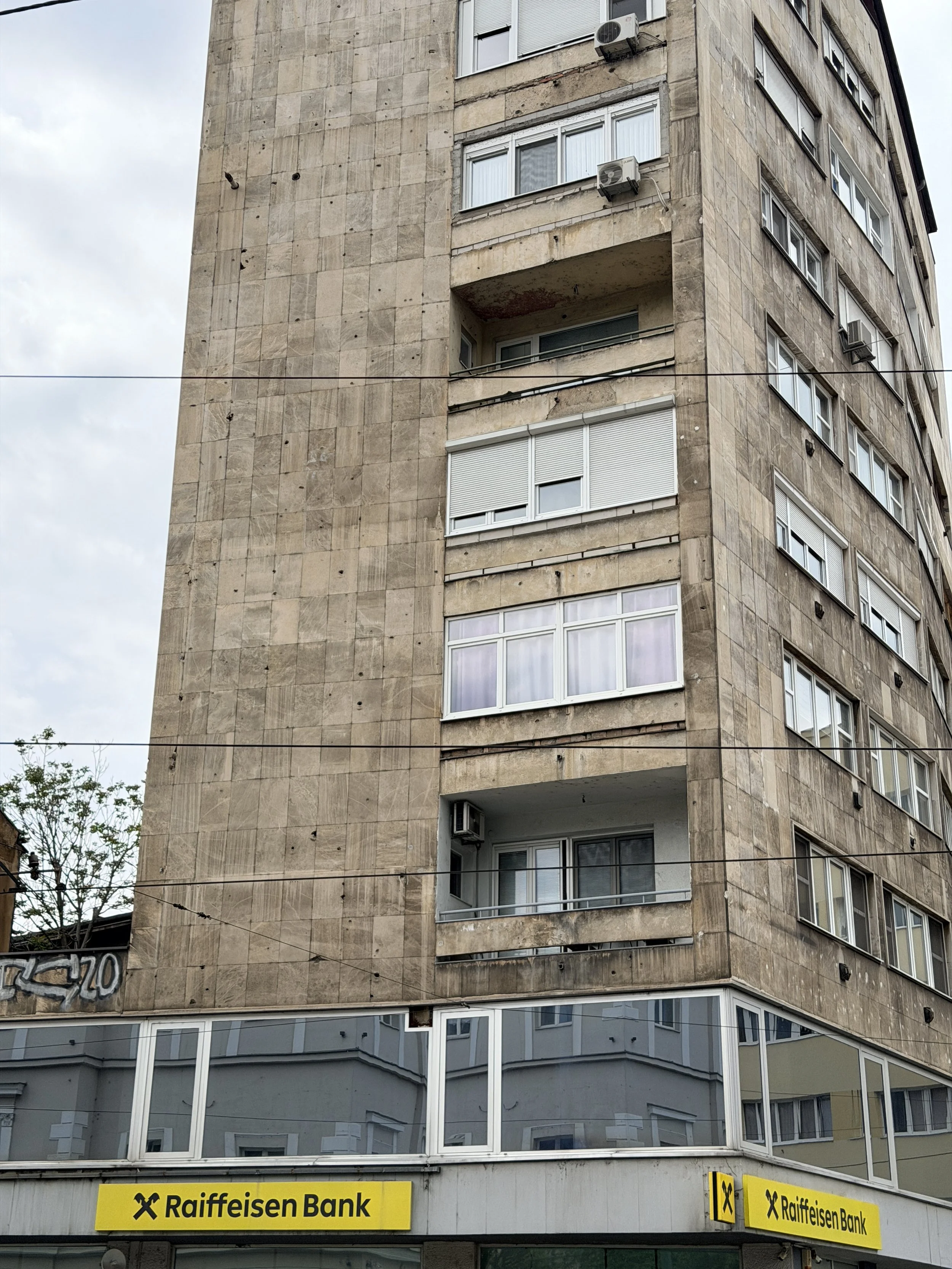
Throughout the city, we frequently noticed the so-called “Sarajevo Roses.” These are scars left by mortar explosions during the Bosnian War that have been filled with red resin to resemble flower petals. Each “rose” marks a place where people were killed during the conflict, serving as a silent and poignant reminder of the suffering endured by the city and its residents. Even decades later, these memorials remain woven into the streets of Sarajevo, ensuring that the memories of those tragic years are not forgotten.
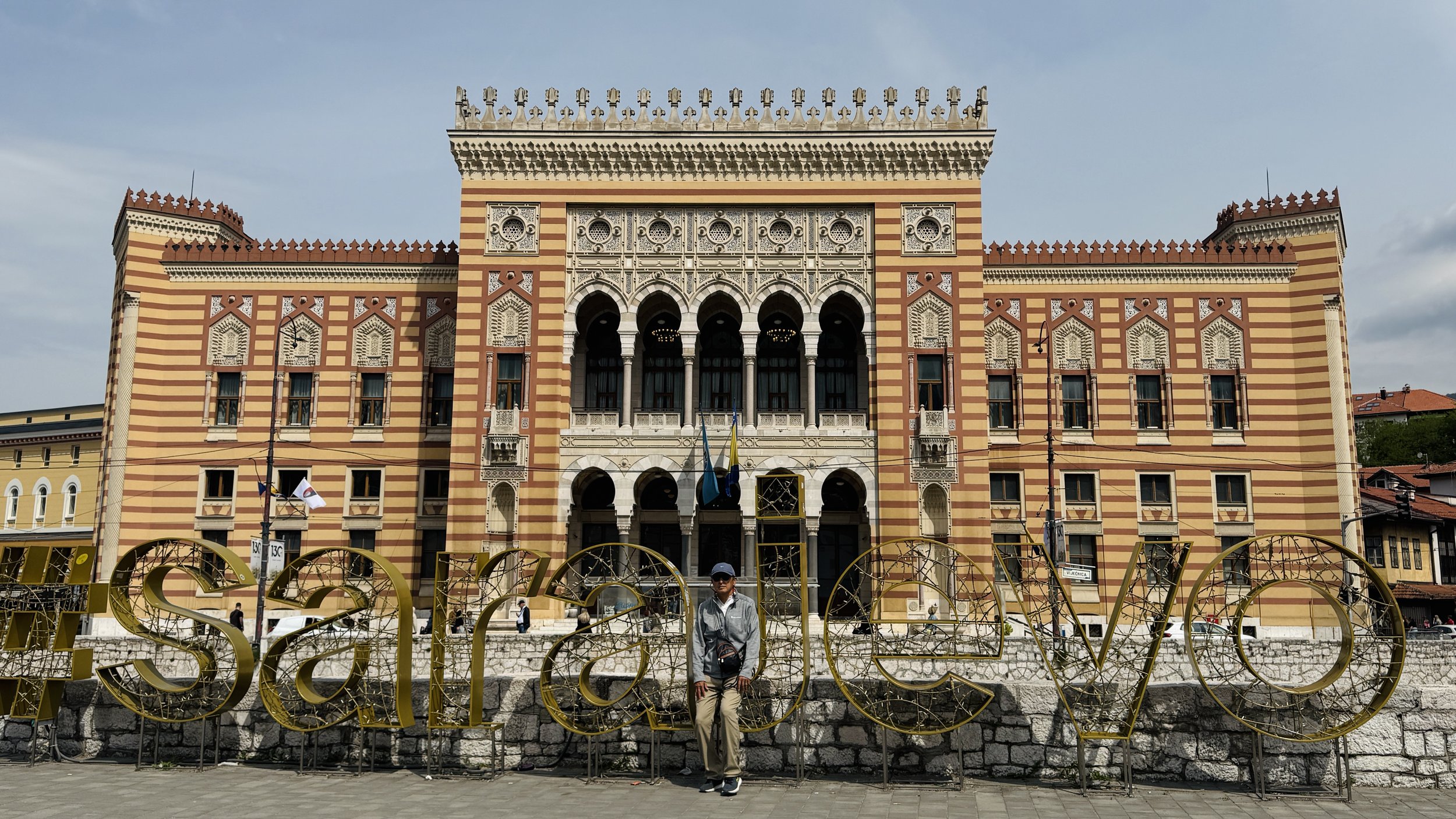
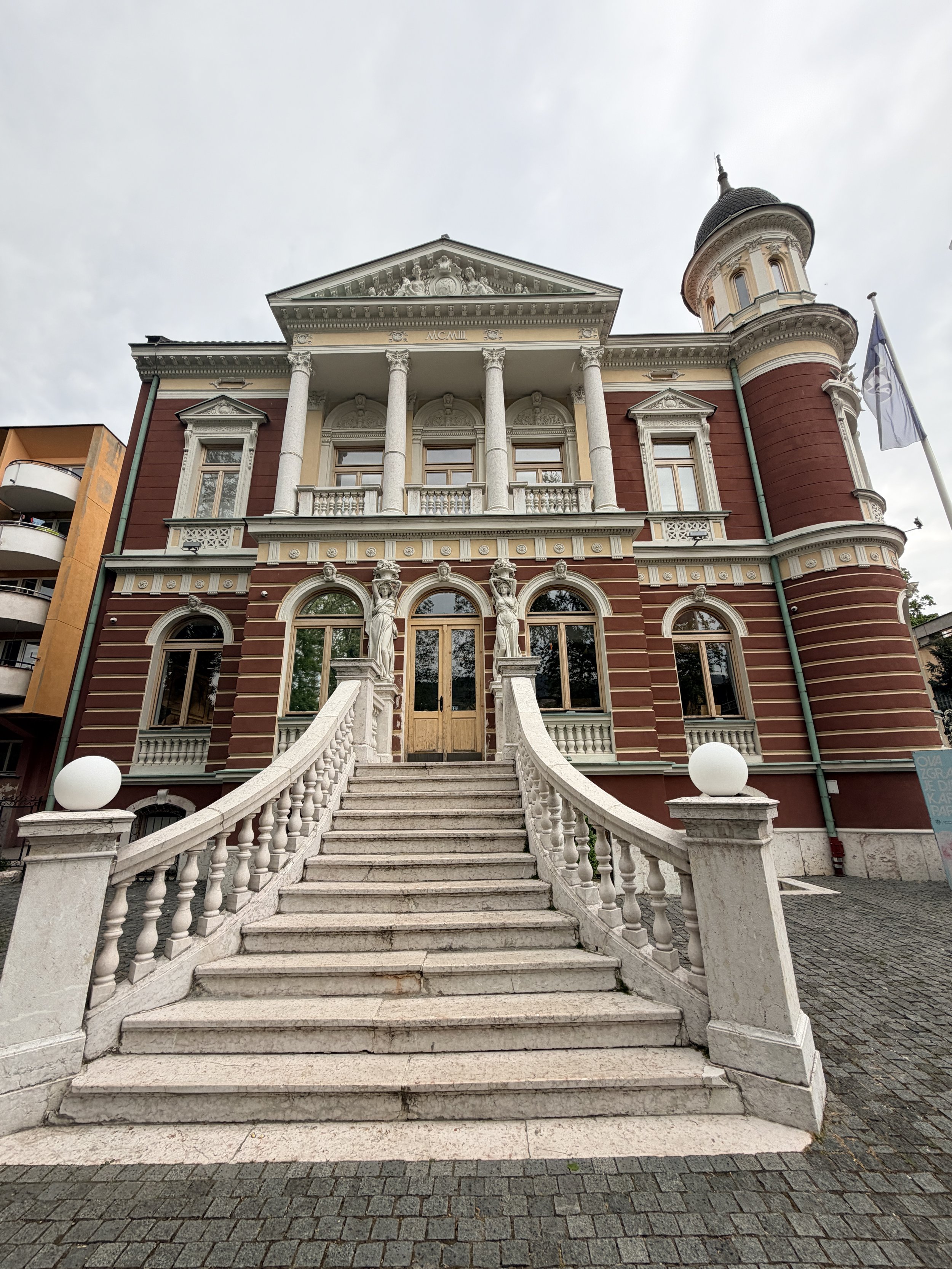
During the Bosnian War in the 1990s, much of Sarajevo was heavily damaged and thousands of civilians were killed during the long siege of the city. One of the most tragic losses was Sarajevo’s City Hall, known as Vijećnica, which was destroyed by shelling and fire in 1992. The building later underwent a long reconstruction, carefully integrating surviving original elements with newly restored sections. Today, the reborn City Hall stands once again as one of Sarajevo’s most beautiful landmarks and a symbol of the city’s resilience.
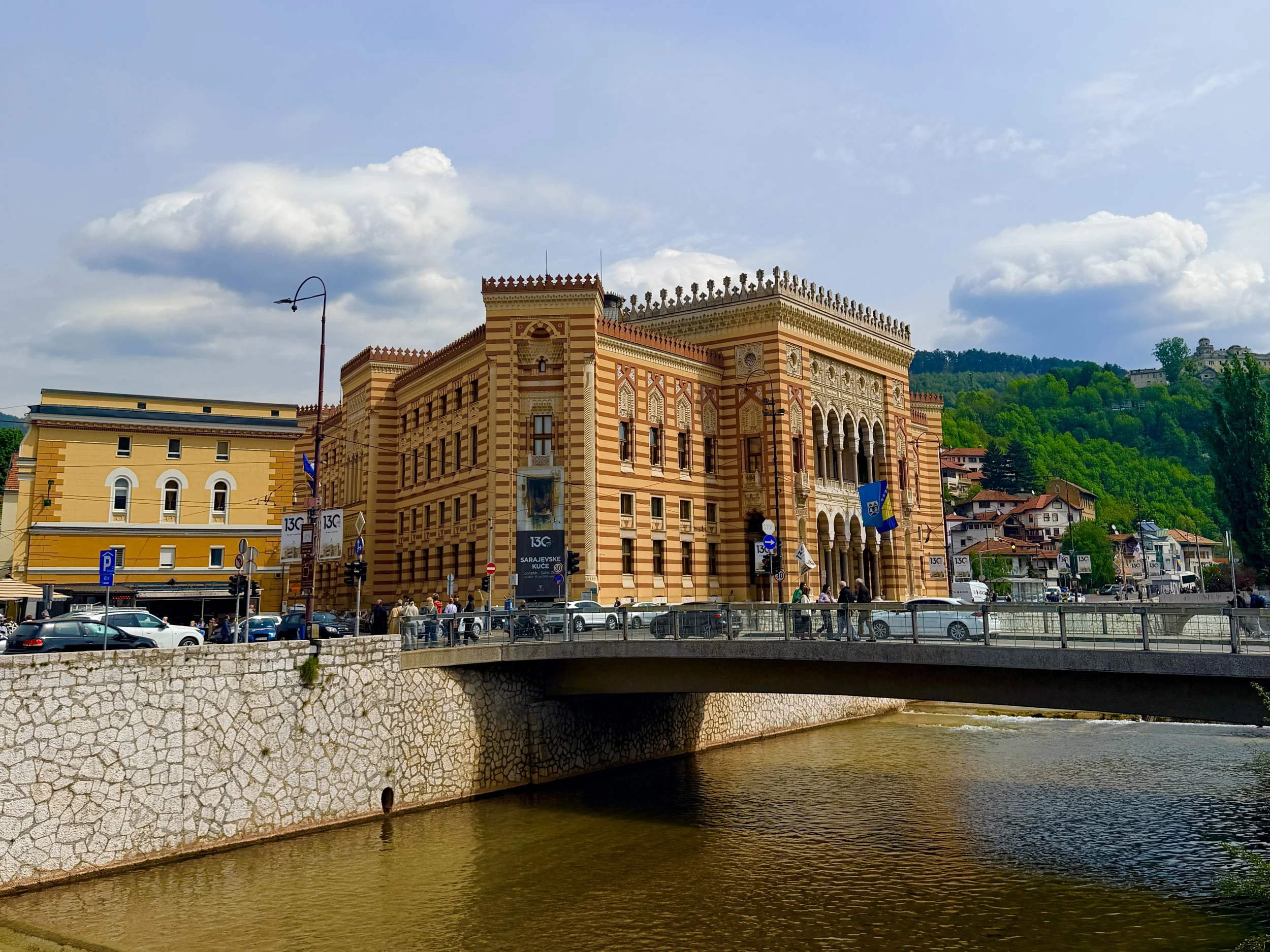
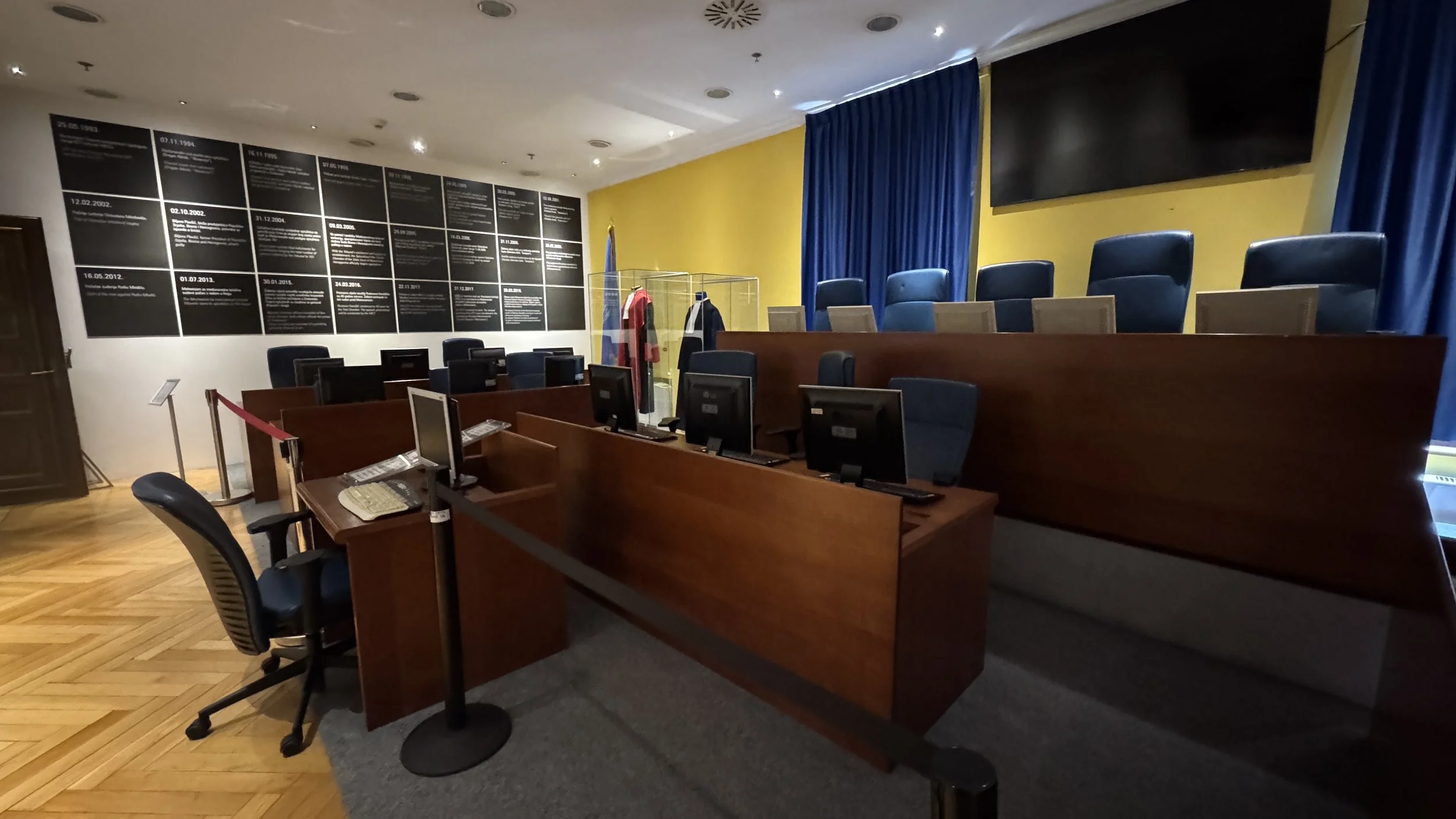
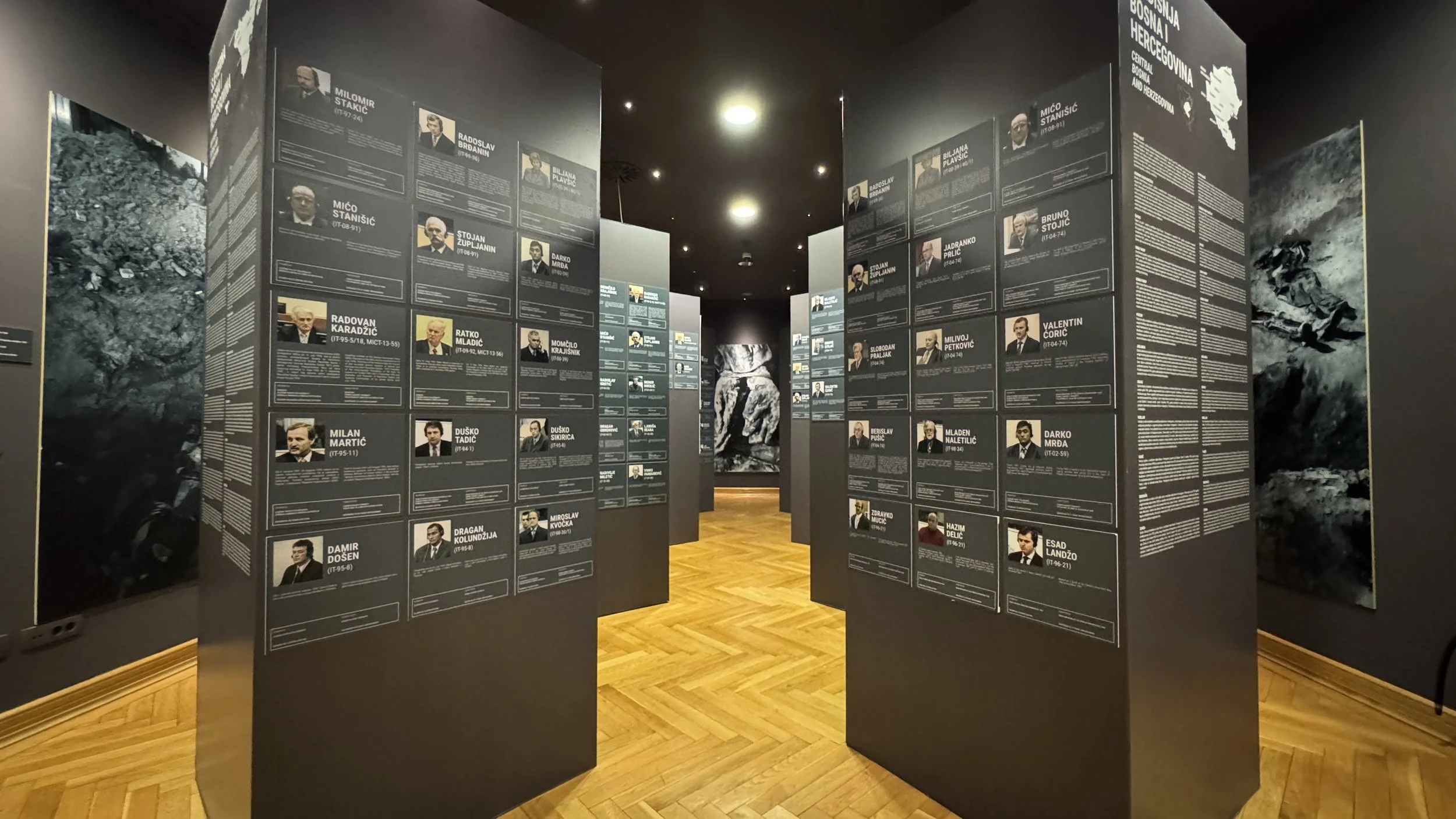
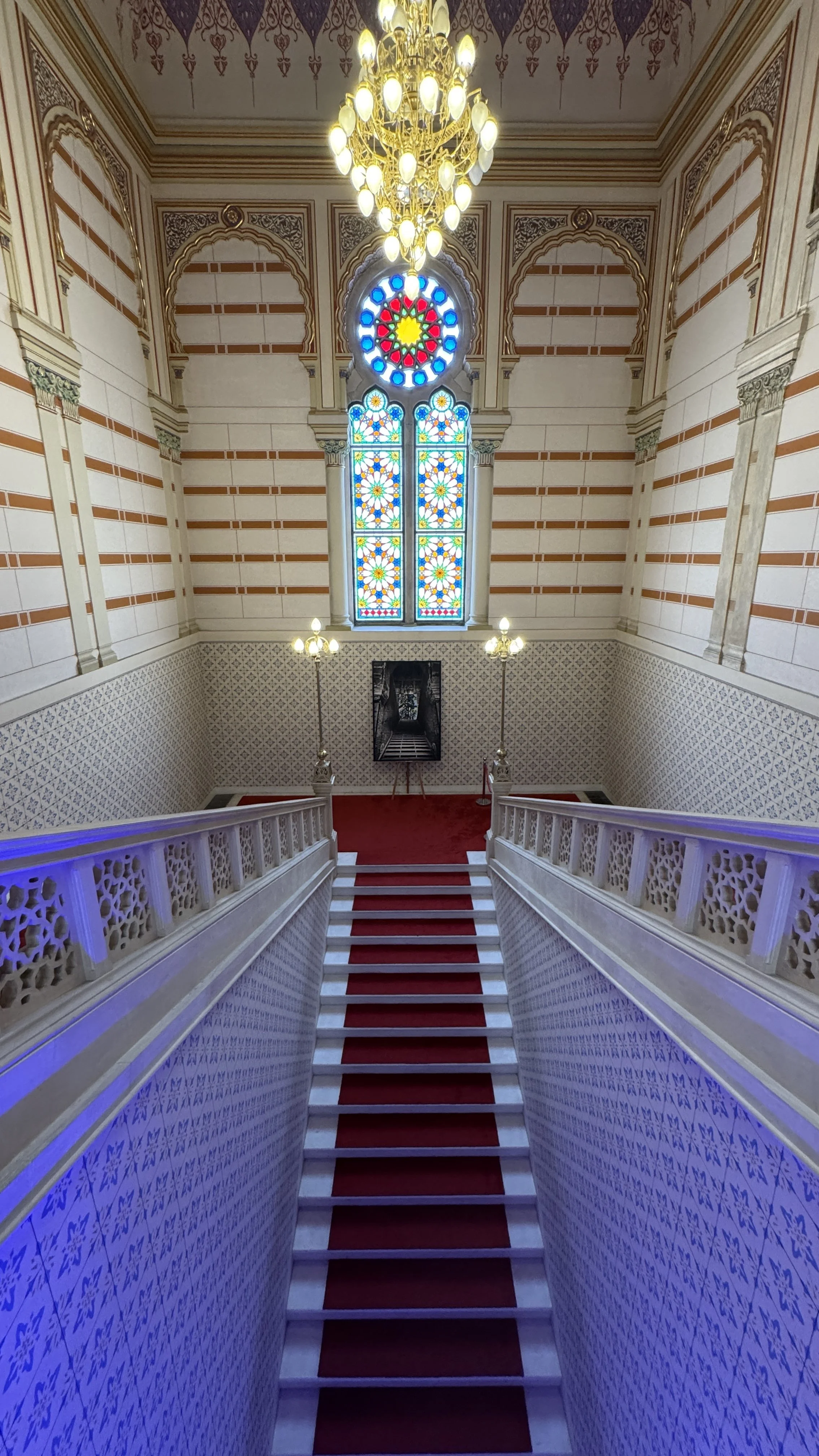
The architecture of the building was stunning. Built during the Austro-Hungarian period in a pseudo-Moorish style, the exterior was decorated with colorful geometric patterns, arches, and ornate details that immediately stood out from the surrounding buildings. Inside, the grand central hall rose several stories high beneath a glass roof, filled with symmetrical staircases, intricate painted decorations, and richly colored walls and ceilings. The combination of Islamic, Byzantine, and European influences created a unique atmosphere unlike any other city hall we had visited. During our visit, an exhibition about war crimes trials was being displayed inside, adding another emotional reminder of the suffering Sarajevo endured during the war.
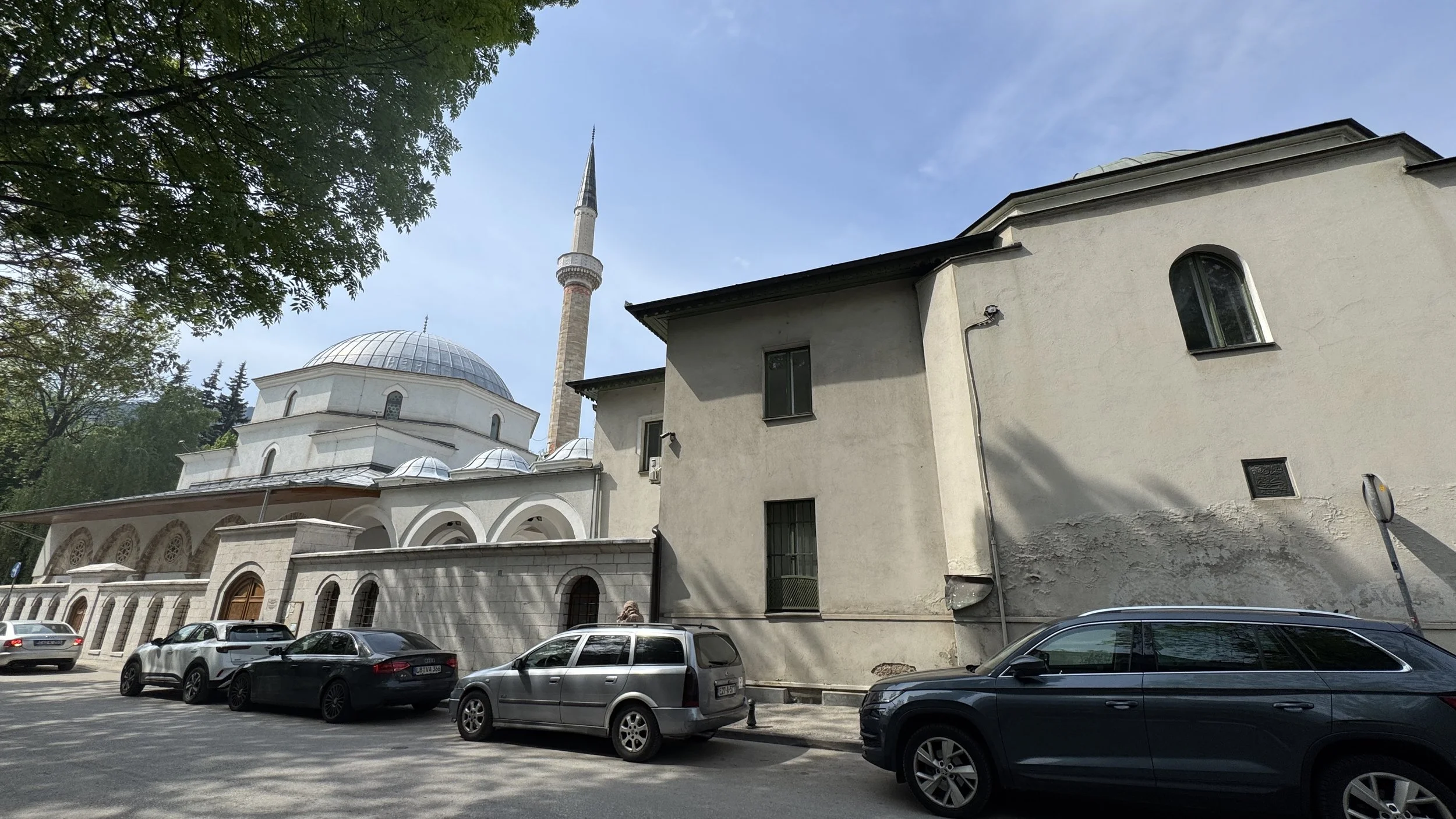
We then made a short photo stop at the Emperor’s Mosque before continuing our walk toward the lower station of the cable car. A few blocks before reaching the station, however, we realized there was still a steep uphill climb ahead. Considering our friend’s knee injury, we decided it would be wiser to take a taxi up the mountain instead.
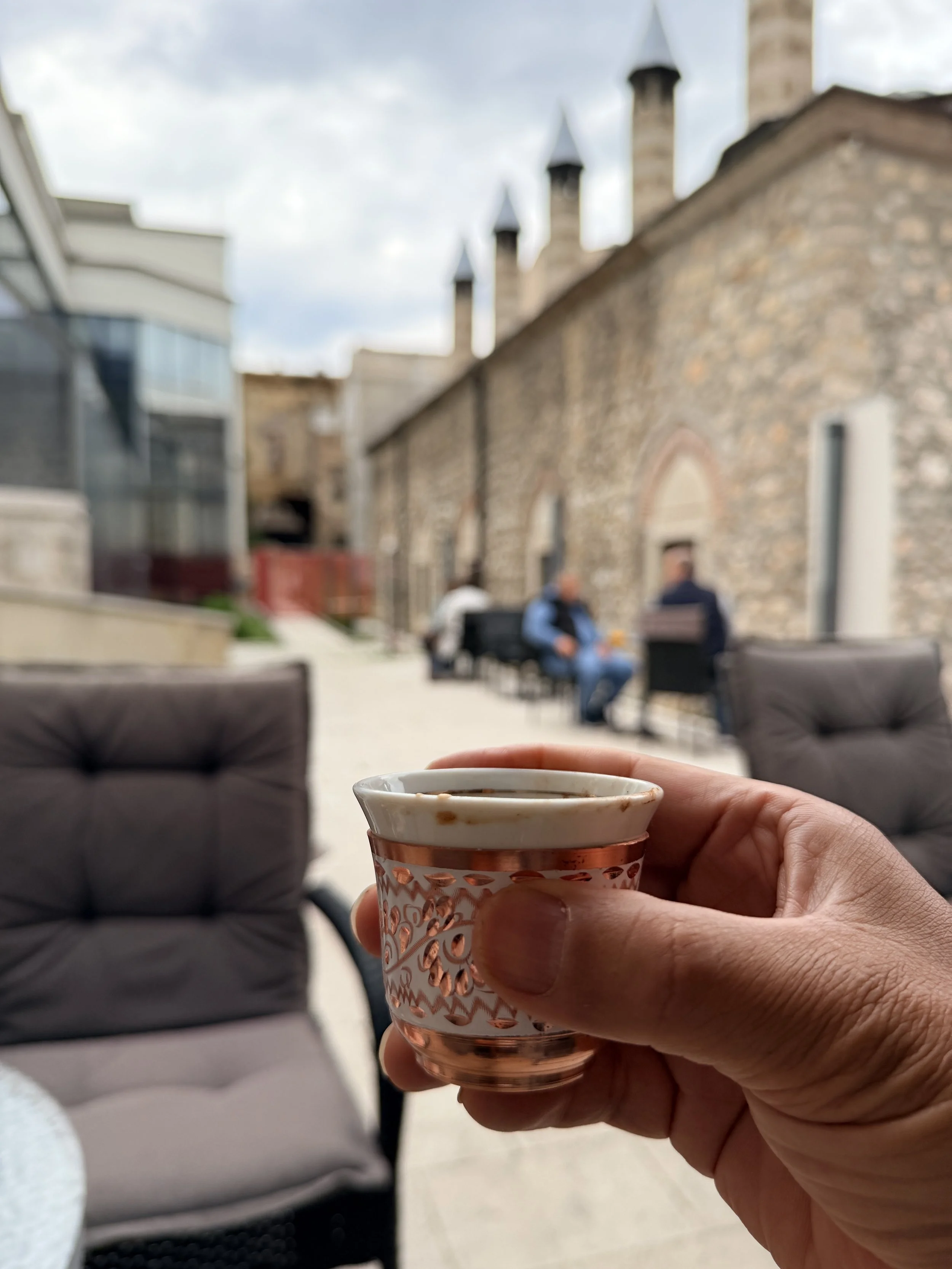
But first things first — we took a break at a small local café for a light lunch. There we tried burek once again, and surprisingly, it turned out to be the best burek we had during the entire trip.
After lunch, we took a taxi to the 1984 Olympic site. Our driver was talkative, friendly, and clearly proud of his city. When we asked him where to find good spit-roasted lamb, he immediately recommended a restaurant, even calling ahead to confirm they still had lamb available.
At the top of the mountain, he kindly drove us farther along a rough path directly to the old Olympic bobsleigh track, saving us about ten minutes of walking. He then waited patiently while we explored the area.
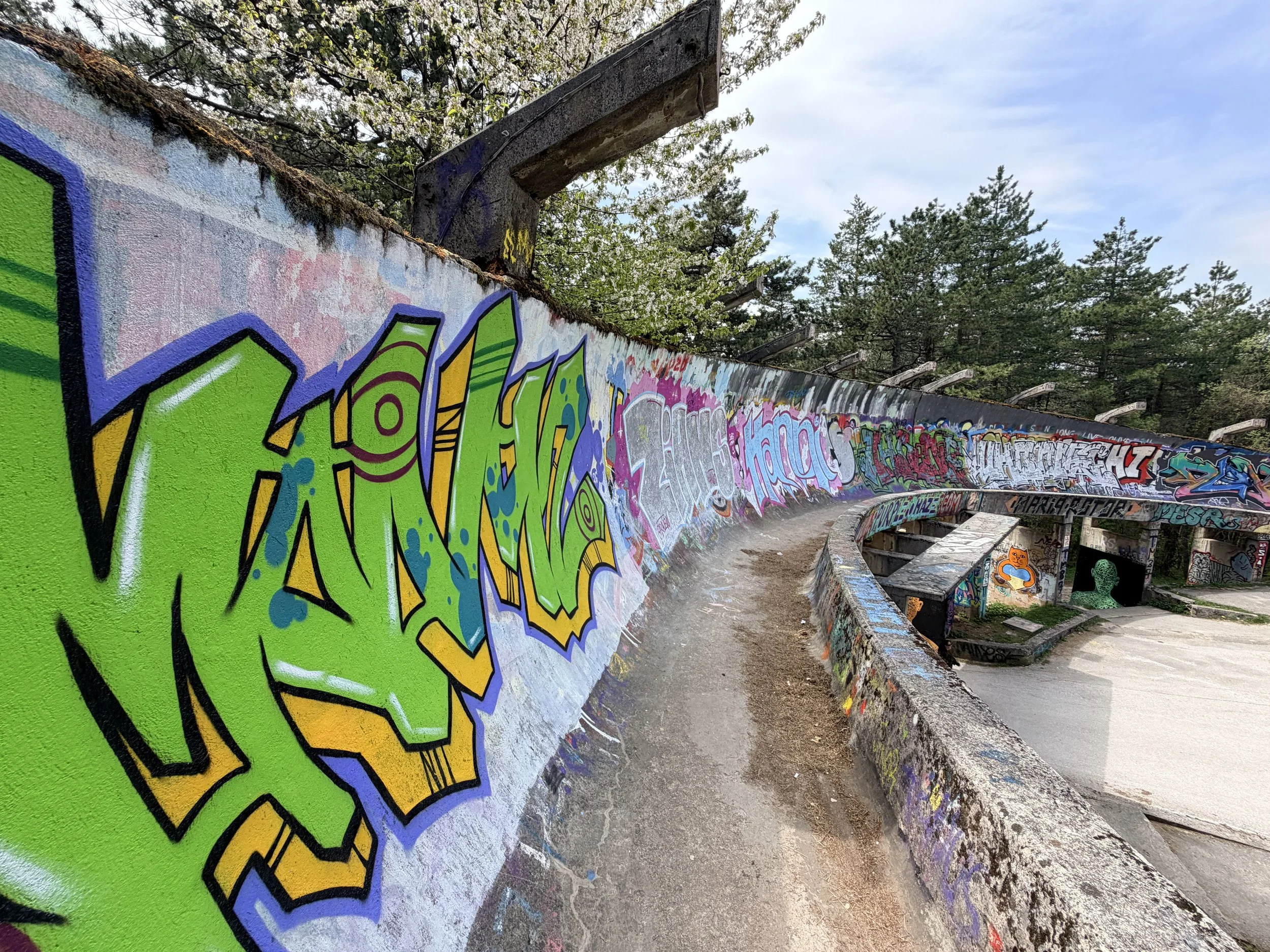
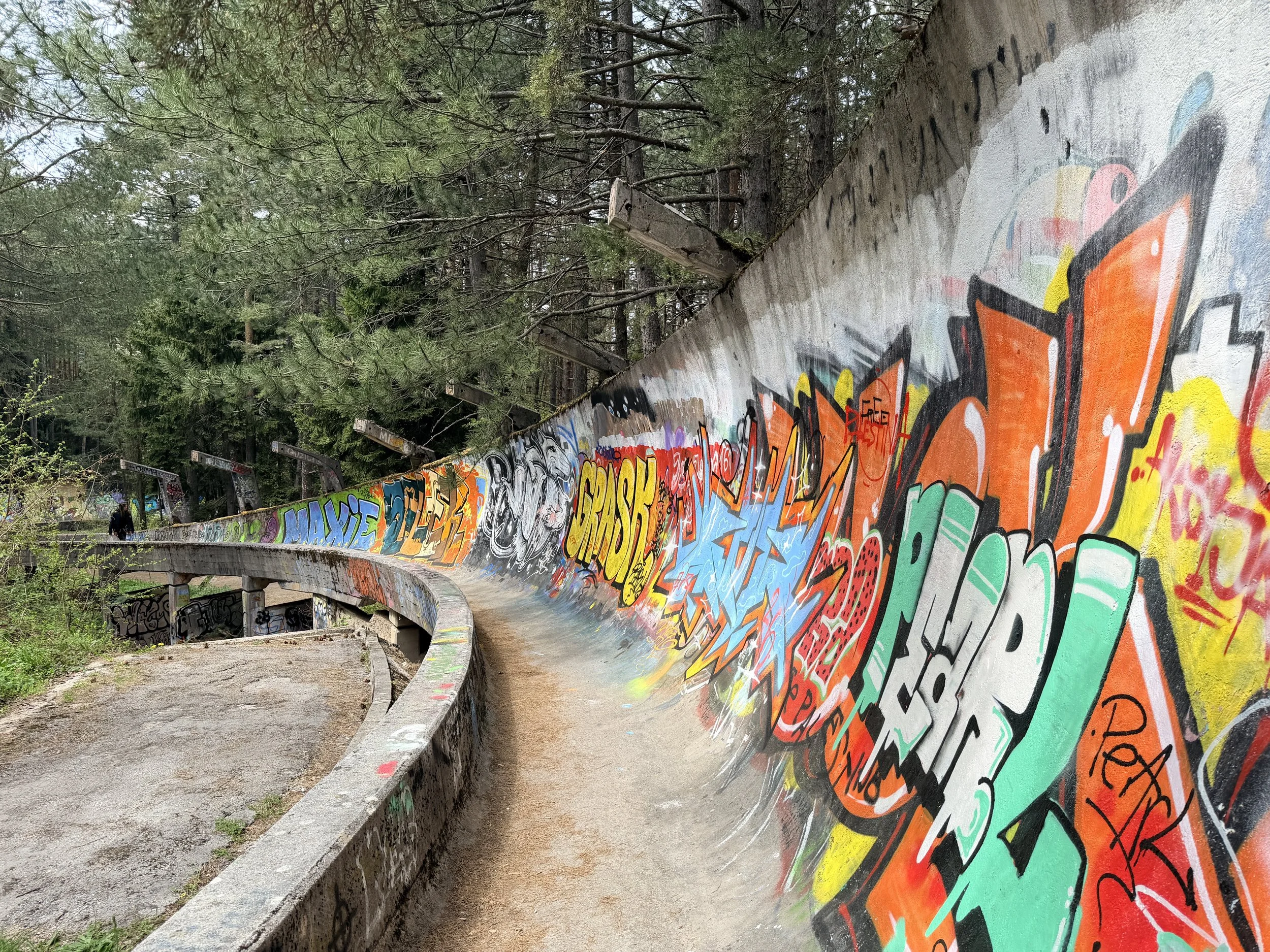
The abandoned bobsleigh track was another haunting reminder of Sarajevo’s wartime history. Originally built for the 1984 Winter Olympics, it was later heavily damaged during the siege and used as a military position. Today the concrete track is covered with colorful graffiti from artists around the world, transforming a former war-scarred site into something strangely artistic and alive again.
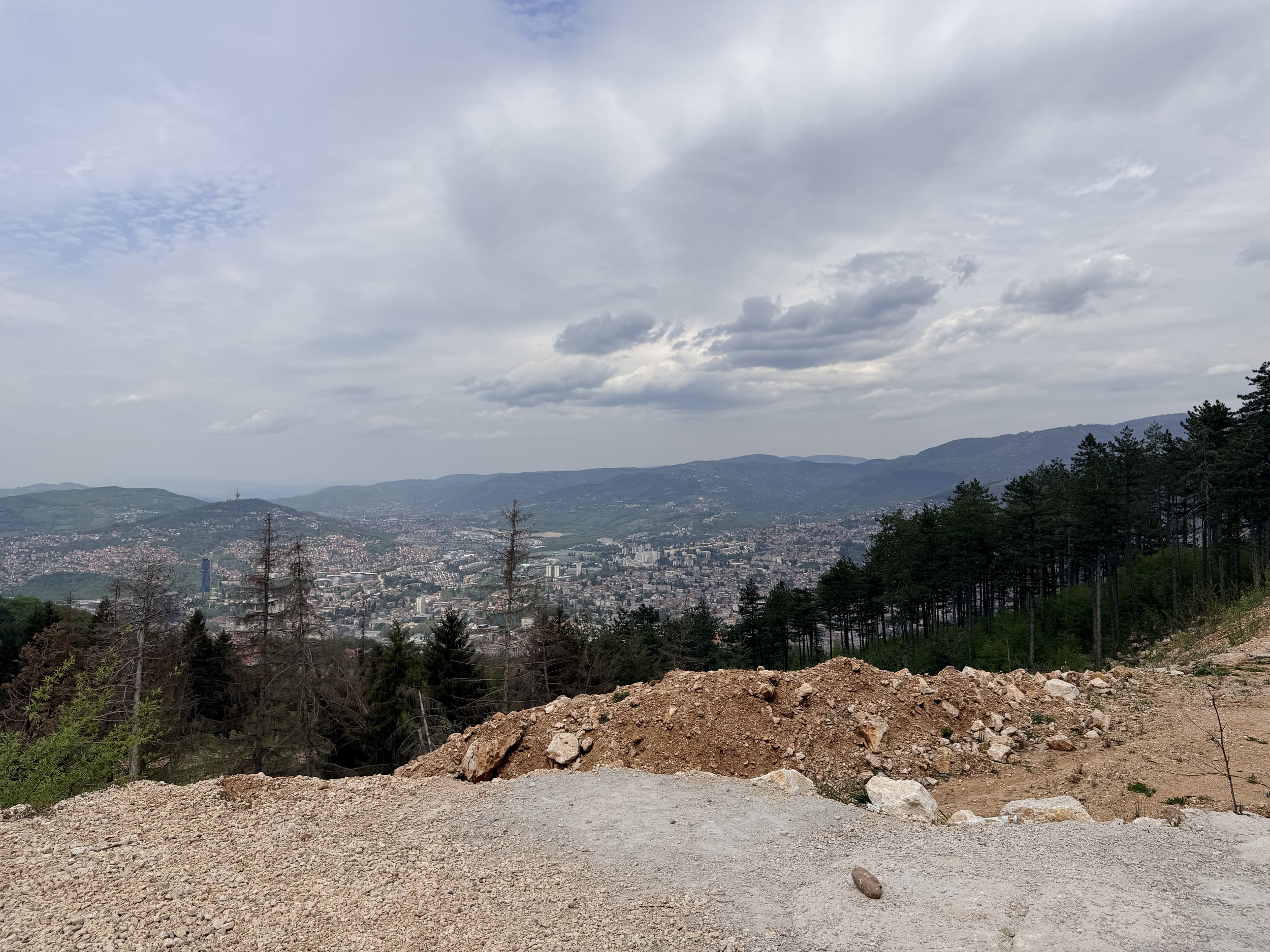
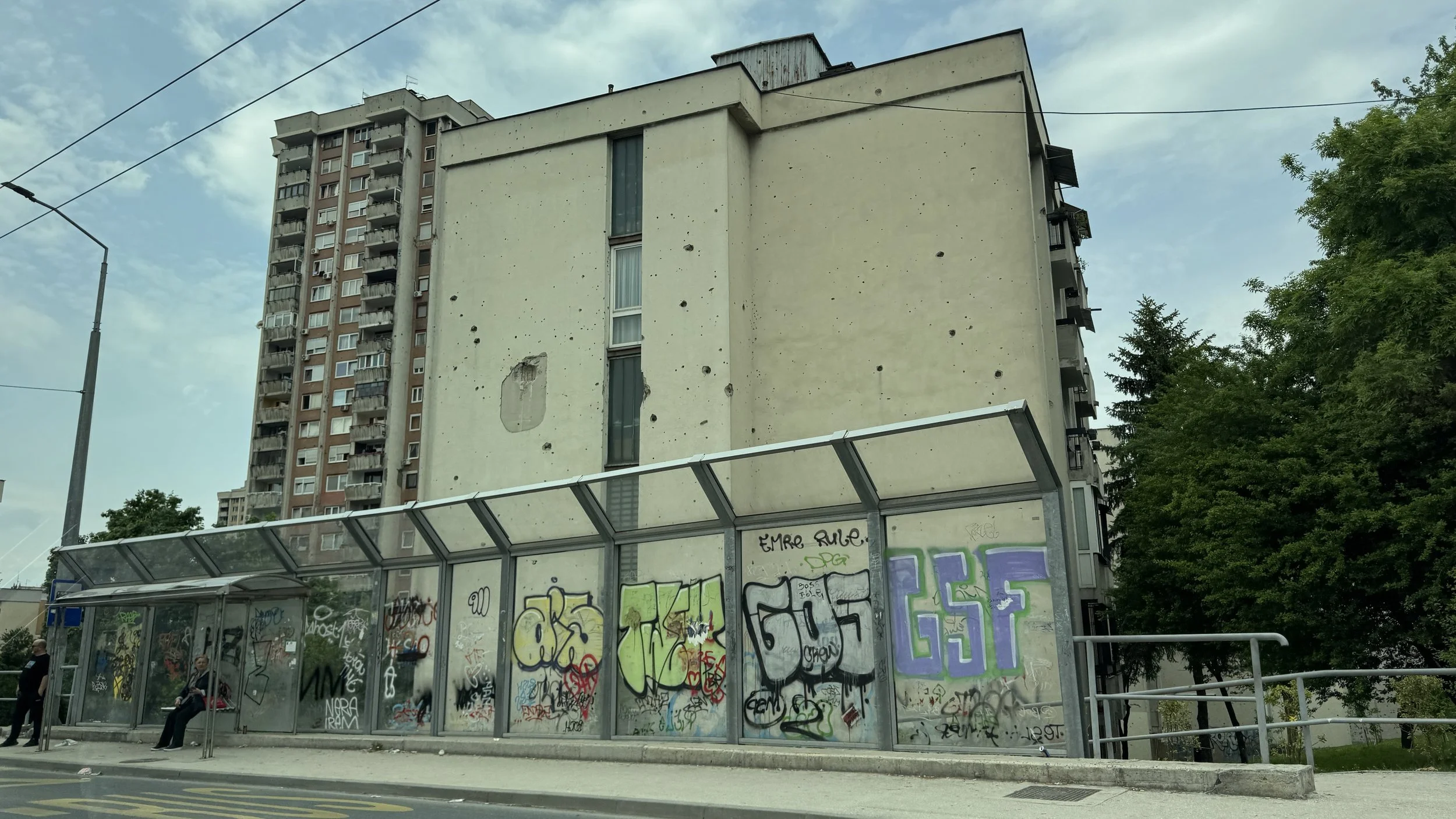
Afterward, the driver took us to the lamb restaurant. Along the way, he pointed out former sniper positions and hills from which the city had been bombarded during the siege. Once again, we were reminded how terrible and senseless the war had been.
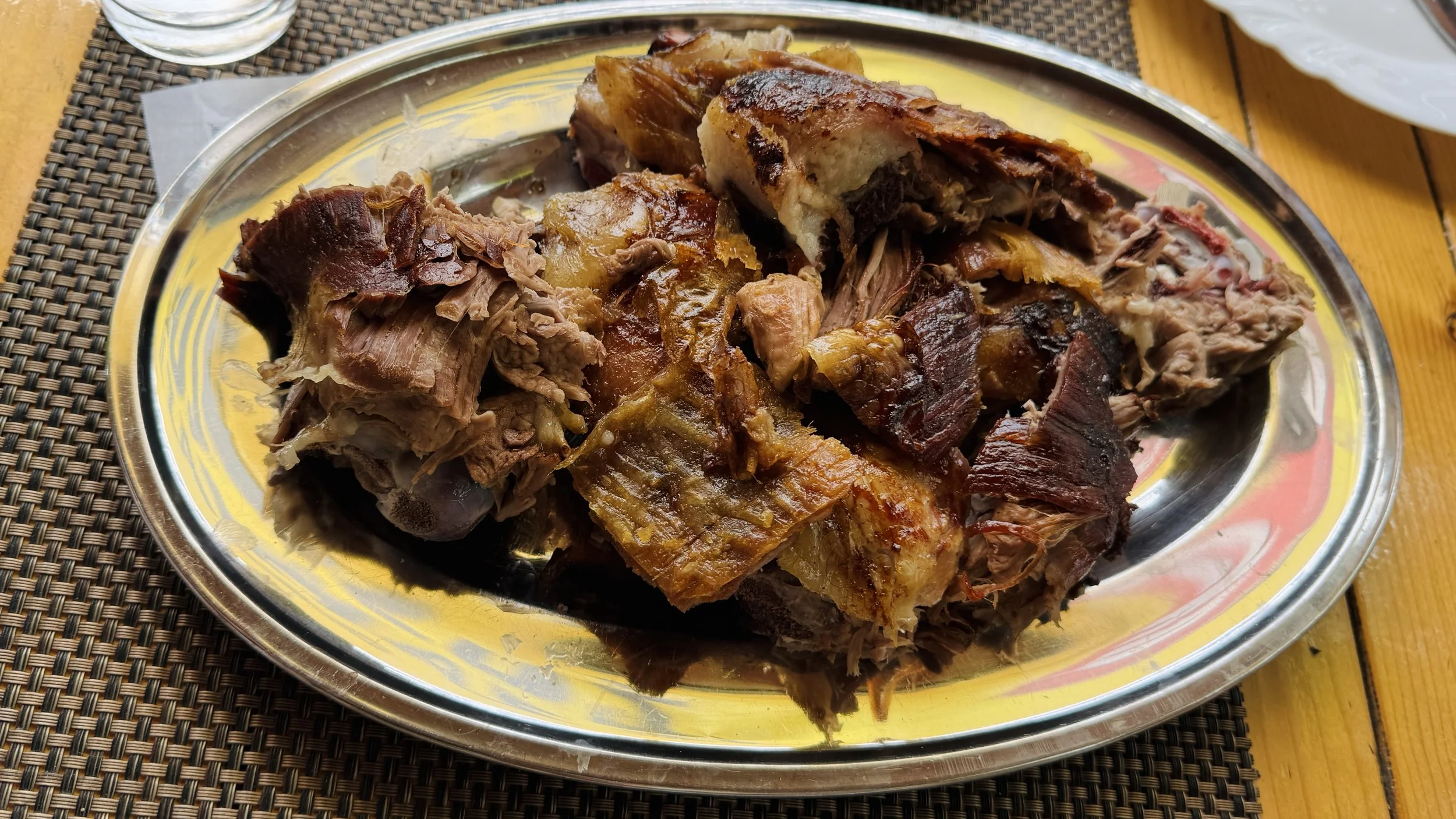
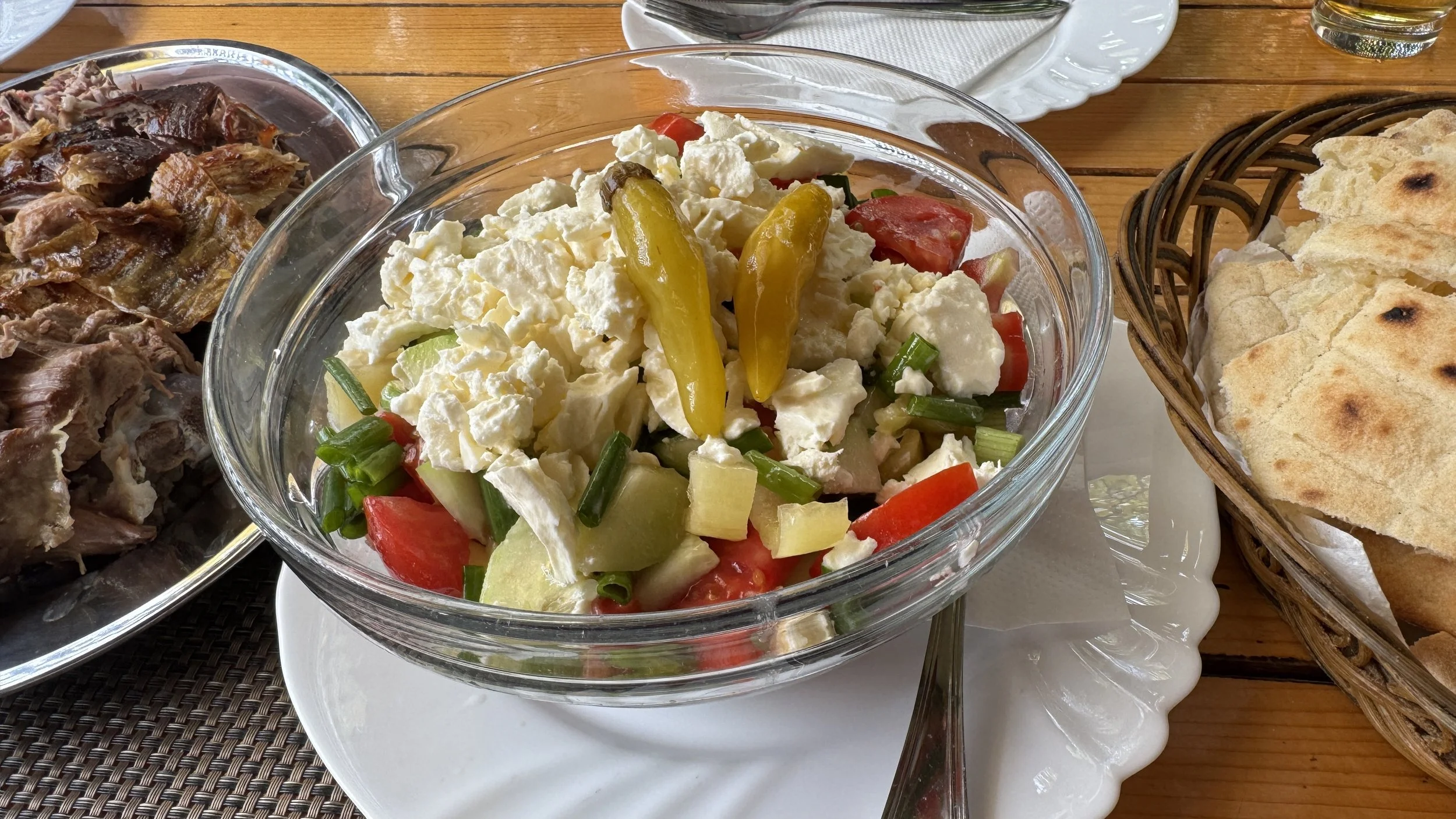
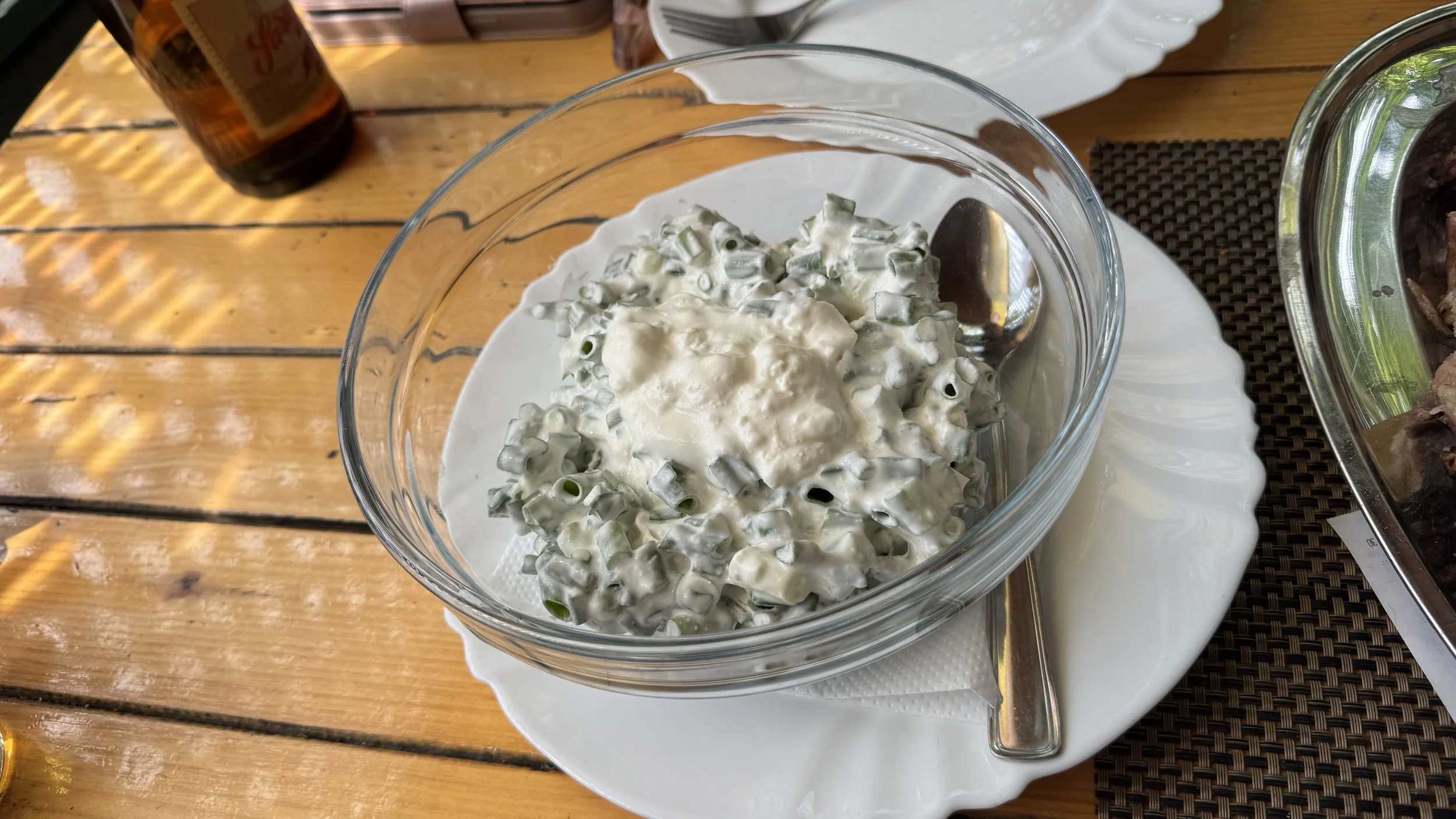
The restaurant, Stari Orah, was a century-old establishment located in an older residential neighborhood outside the tourist center. We ordered one kilogram of spit-roasted lamb along with several salads. The lamb itself was mild and simple in flavor, without heavy seasoning, letting the natural taste of the meat stand out. The atmosphere there felt completely different from the busy Old Town. Almost all the customers were older local men quietly eating and chatting together. In the end, we managed to finish the entire kilogram of lamb.
The same driver later picked us up and brought us back to the Old Town once again. Before ending the day, we visited the library of the mosque, our final landmark in Sarajevo. Tomorrow, we would move on once again.
2026年4月29日
今天继续逛萨拉热窝。我们先去了萨拉热窝著名的“永恒之火”(Vječna vatra)。这座纪念碑建于二战结束后,火焰长年燃烧,纪念在战争中牺牲的人们。然后走到东正教教堂(Orthodox Church),随后沿着米利亚茨卡河(Miljacka River)上的几座桥来回散步,欣赏老城区景色。城里地面上常能看见”萨拉热窝玫瑰”(Sarajevo Roses),每一处“玫瑰”都代表波黑战争中曾有人在这里遇难,是这座城市对战争伤痛的无声纪念。
在1990年代的波黑战争期间,萨拉热窝遭受了严重破坏,长期围城造成大量平民伤亡。其中最令人痛惜的建筑之一,就是萨拉热窝市政厅(Vijećnica)。这座建筑在1992年的炮火中被焚毁,后来经过多年修复,才重新恢复昔日风貌。修复过程中,建筑尽量保留并整合了原有的部分结构,如今重新开放的市政厅,不仅是萨拉热窝最美丽的地标之一,也象征着这座城市经历战争后的重生与坚韧。
整座建筑的设计极为华丽。它建于奥匈帝国时期,采用伪摩尔式(Pseudo-Moorish)建筑风格,外墙布满鲜艳的几何图案、拱门与繁复装饰,在周围建筑中显得格外醒目。走进内部,中庭高高挑起,顶部是巨大的玻璃天窗,两侧对称楼梯向上延伸,墙壁与天花板上布满精细彩绘与装饰图案。伊斯兰、拜占庭与欧洲建筑元素融合在一起,形成一种非常独特的气氛,与我们以往参观过的任何市政厅都不太一样。馆内还举办了一场关于战争罪审判的展览,再次提醒人们这座城市曾经历过的苦难。
之后我们在皇帝清真寺(Emperor’s Mosque)稍作停留拍照,然后继续步行前往缆车站准备去山上。可走到距离车站还有几条街时,我们才发现前方还需要爬一段相当陡的上坡台阶。考虑到朋友的膝盖受伤,我们决定改乘出租车上山。
不过,第一件事还是先满足一下自己的胃,于是我们就近在一家小餐厅吃了简单午餐,点了一些不同口味的波黑传统馅饼(Burek)。没想到,这竟成了我们整个旅途中吃到最好吃的一次Burek。
午餐后,我们搭乘出租车前往山上的1984年冬奥会遗址。司机非常健谈,也很热情,对自己的城市显然十分自豪。到达山顶后,他又特意沿着一条小路直接把我们送到冬奥会雪车滑道(Bobsleigh Track)旁边,替我们省去了大约十分钟的步行路程。之后他就在原地等我们慢慢参观。
废弃的雪车滑道同样是战争留下的伤痕之一。这里原本是1984年萨拉热窝冬奥会的重要比赛场地,后来在围城期间被军队占据并遭到严重破坏。如今,整个混凝土滑道上布满了来自世界各地的涂鸦艺术作品,让这个曾经充满战争痕迹的地方,又重新带上了一种奇特而鲜活的生命力。
当我们问起司机哪里能吃到烤全羊时,他立刻推荐了一家餐厅,甚至还主动帮我们打电话确认当天是否还有羊肉供应。之后,司机载我们前往那家烤羊餐厅。一路上,他不断指着山坡与建筑,告诉我们当年哪些地方是狙击手位置,哪些地方曾用来炮击城市。战争虽然早已结束,但这些痕迹依然存在,也再次提醒我们那段历史有多么残酷。
这家名为“Stari Orah”的小餐厅已有一百多年历史,位于一片远离游客区的老社区里。我们点了一公斤烤羊肉以及几份沙拉。羊肉的味道比较清淡,没有太多调味,更强调肉本身的风味。餐厅里的气氛也与热闹的老城区完全不同,几乎所有顾客都是当地年长男性,大家吃饭,喝咖啡聊天,充满了一种真实的日常生活气息。最后,我们竟然把整整一公斤羊肉全部吃完了。接着司机又赶来餐厅,把我们送回老城区。
当天最后我们参观了清真寺的图书馆,这也是我们在萨拉热窝参观的最后一个景点。明天,我们又将继续踏上新的旅程。
Mosque, Baščaršija and Tunnel of Hope 清真寺, 老城 和 希望隧道
April 28, 2026
Sarajevo was already a very familiar name to many of us who grew up in China……
对于许多在上世纪七十年代中国长大的人来说,。。。
April 28, 2026
Sarajevo was already a very familiar name to many of us who grew up in China during the 1970s because of the famous Yugoslav war movie Walter Defends Sarajevo. Long before we ever arrived here, the city already carried a certain sense of mystery and history in our minds.
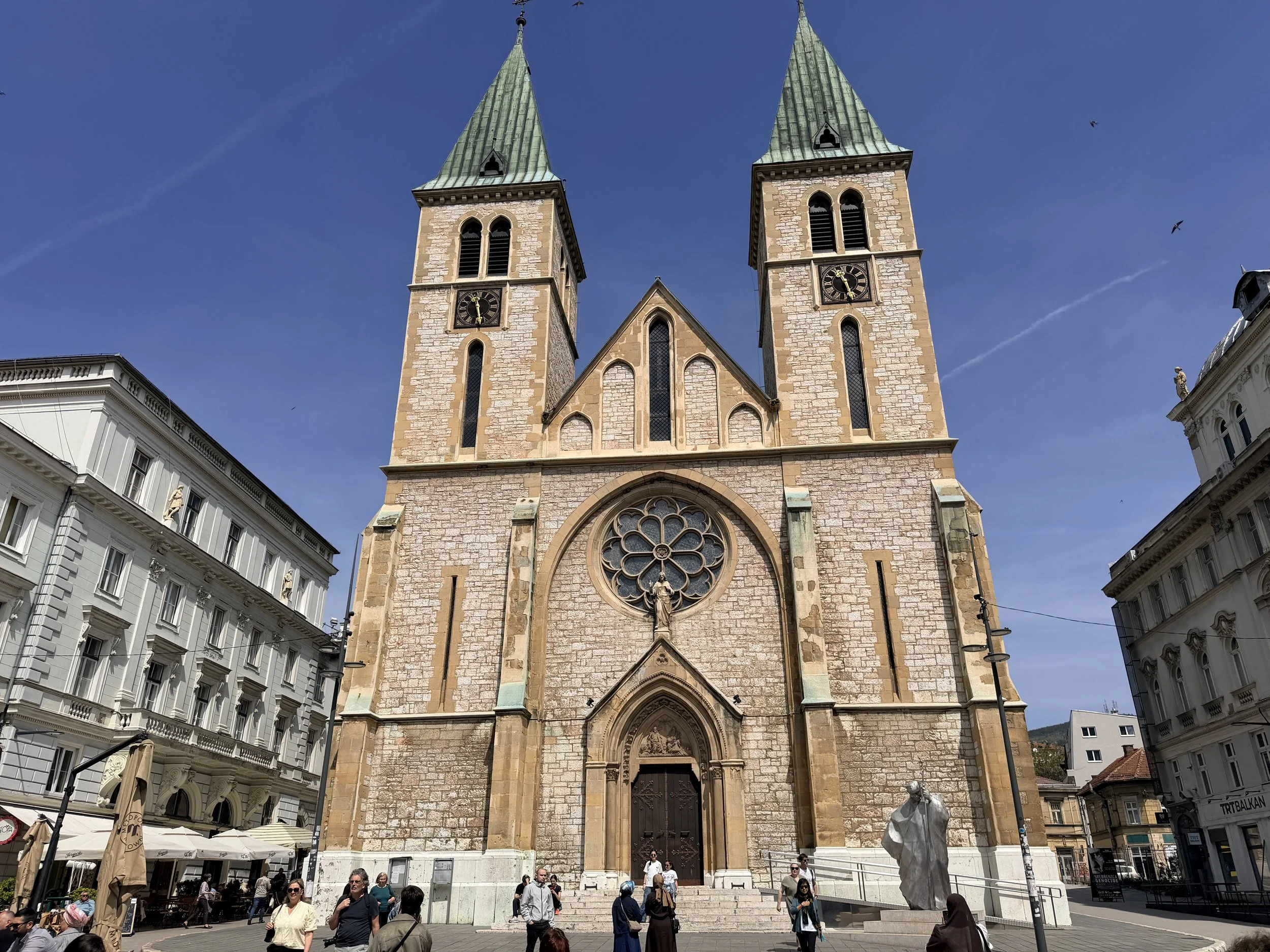
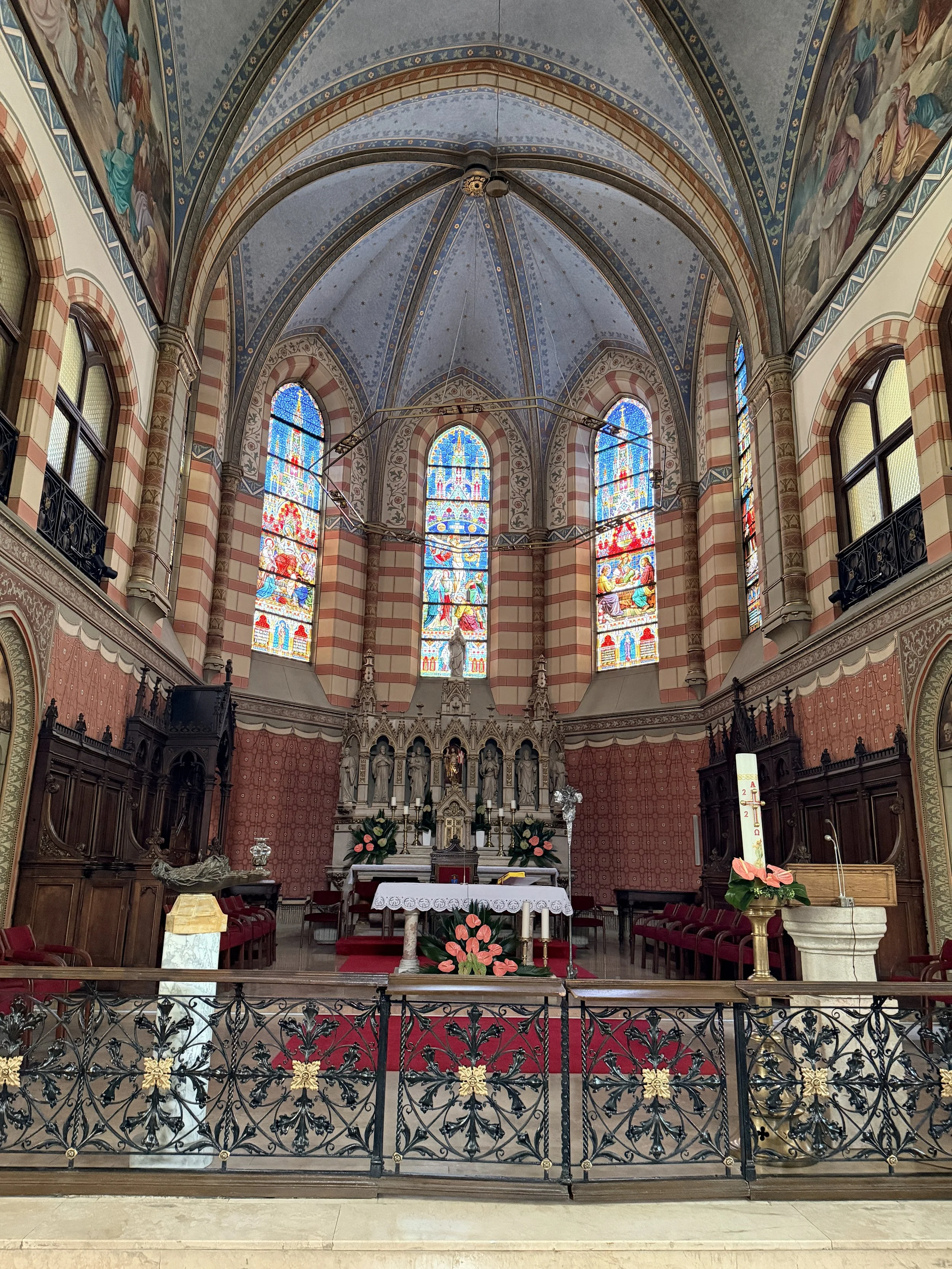
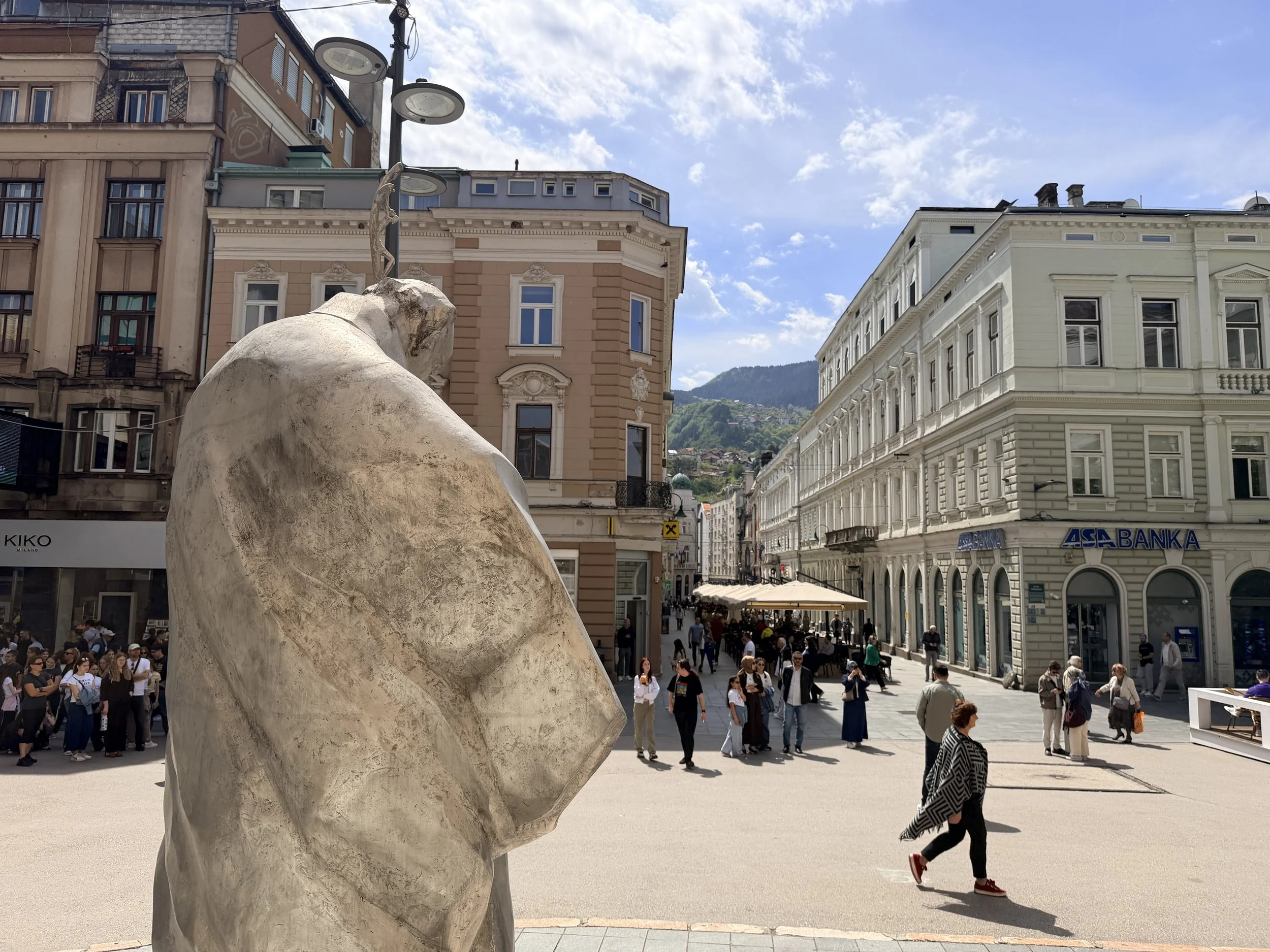
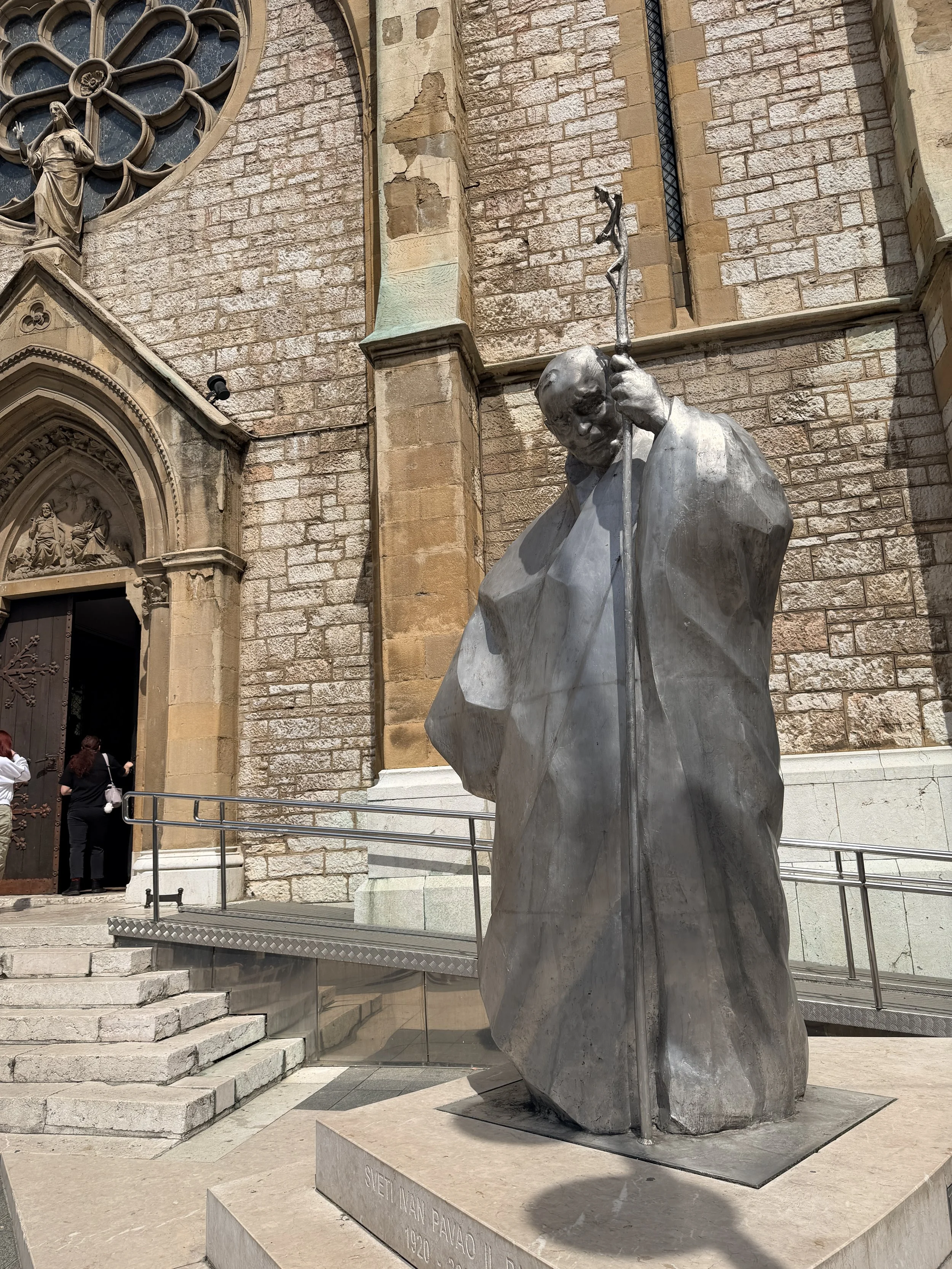
This morning, we began our sightseeing near our accommodation with a visit to the Sacred Heart Cathedral, the most important Catholic church in Sarajevo. Built in a Neo-Gothic style, the cathedral is distinguished by its twin bell towers, which have become one of the city’s most recognizable landmarks.
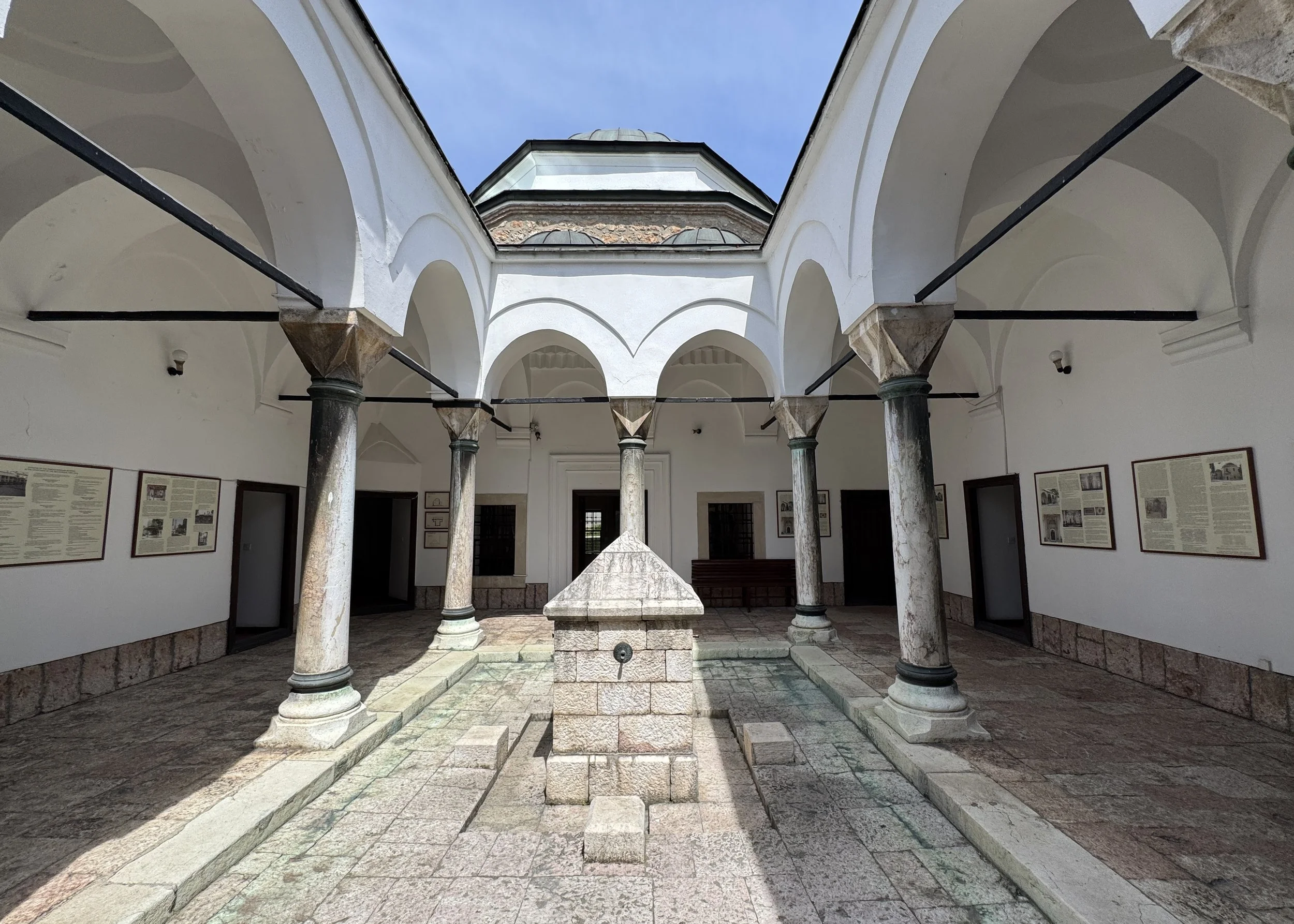
Next, we visited the Gazi Husrev-beg Mosque and its museum. Gazi Husrev-beg was an influential Ottoman governor and military leader whose contributions played a major role in the development of Sarajevo. Through the Islamic tradition of waqf (charitable endowment), he donated much of his wealth and land to support the mosque as well as various public institutions, educational facilities, and charitable projects throughout the city.
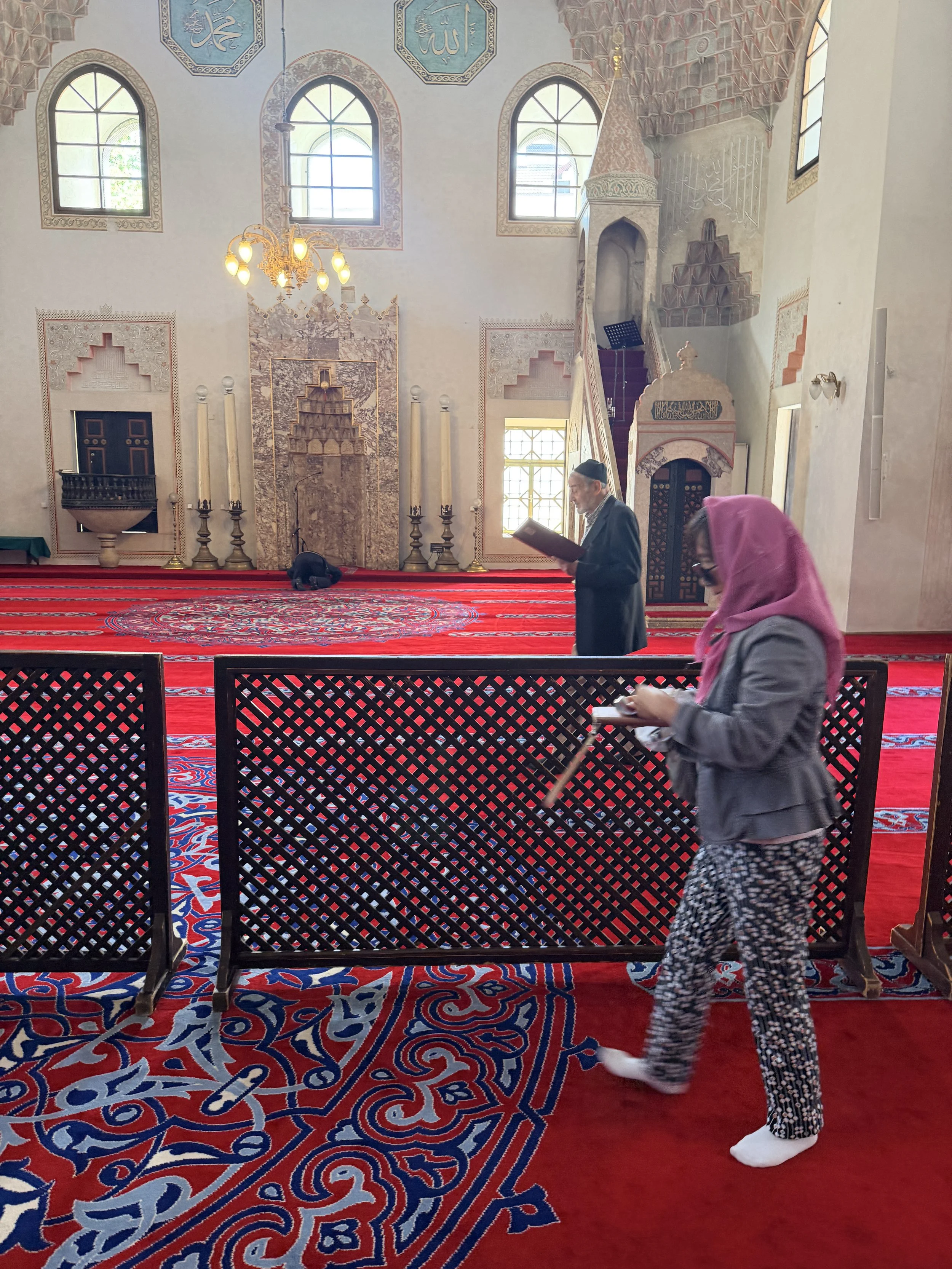
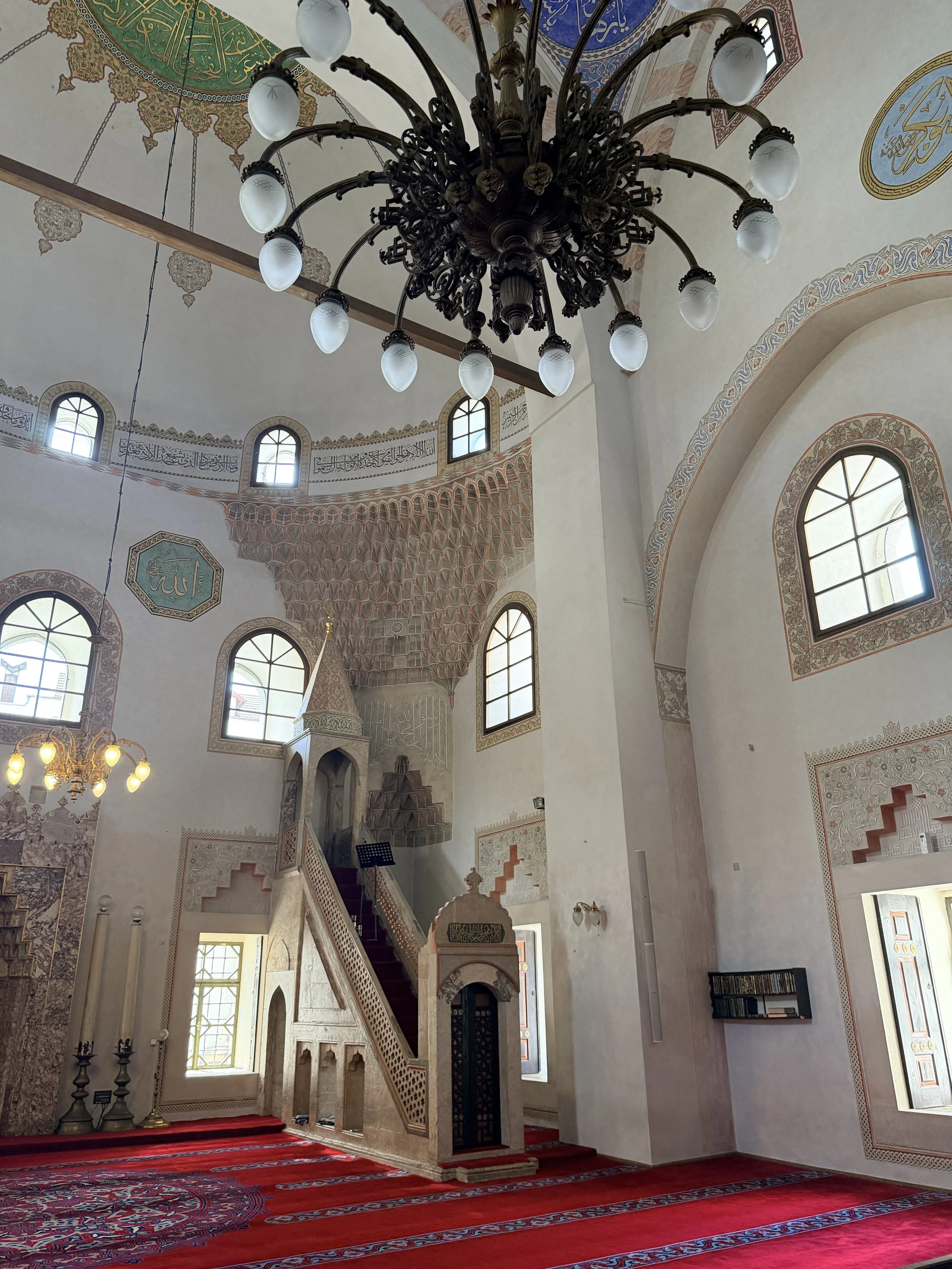
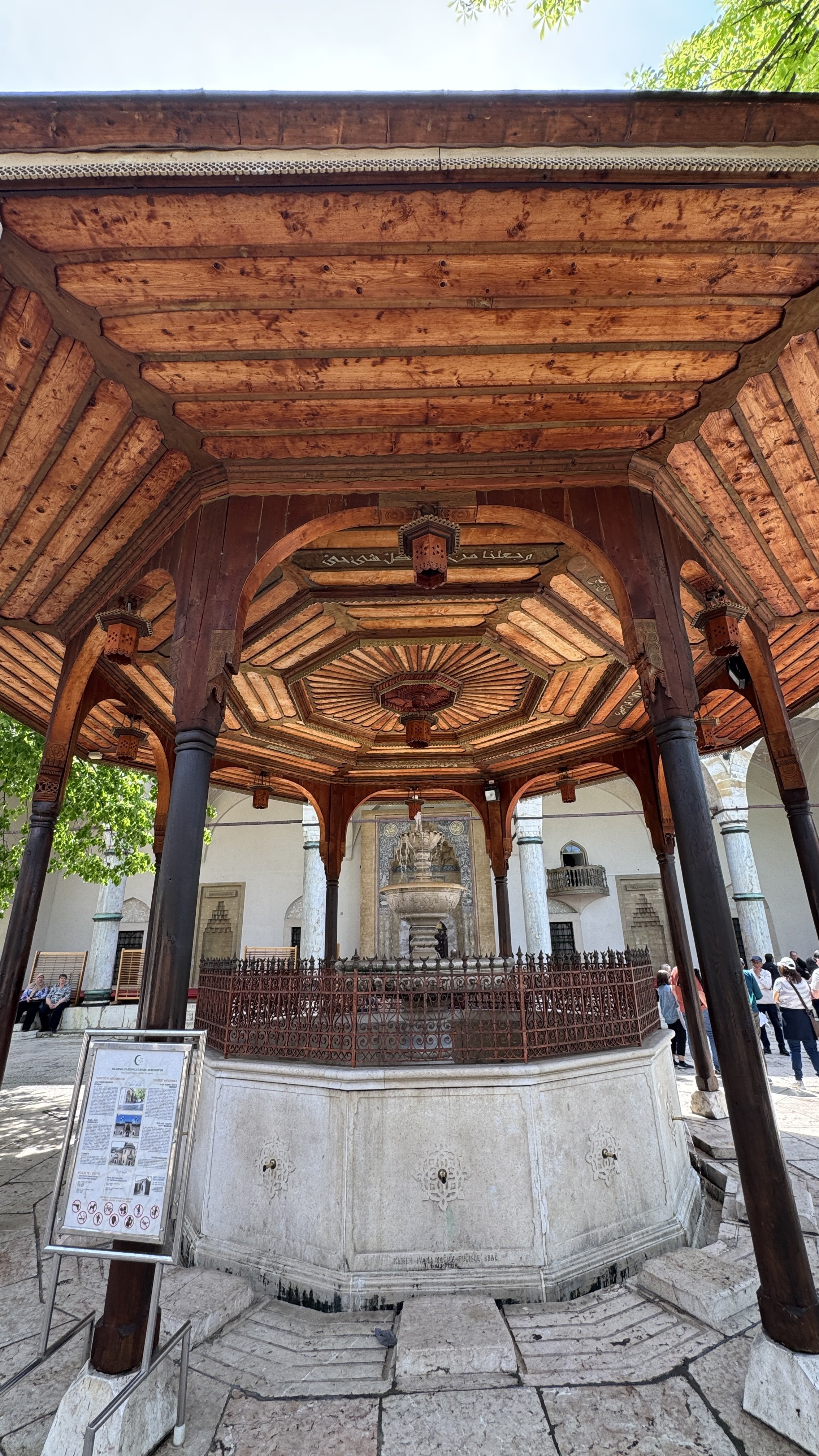
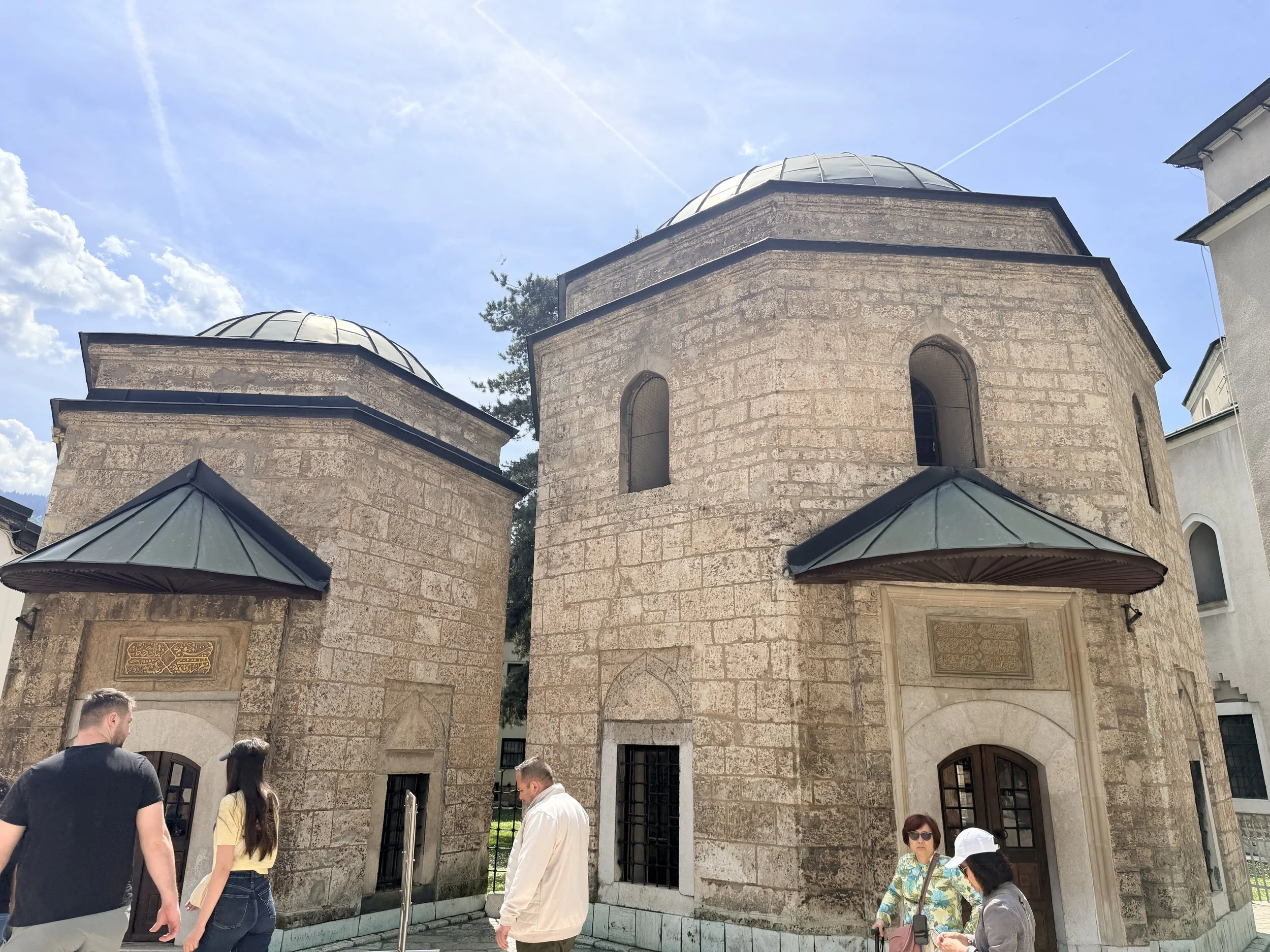
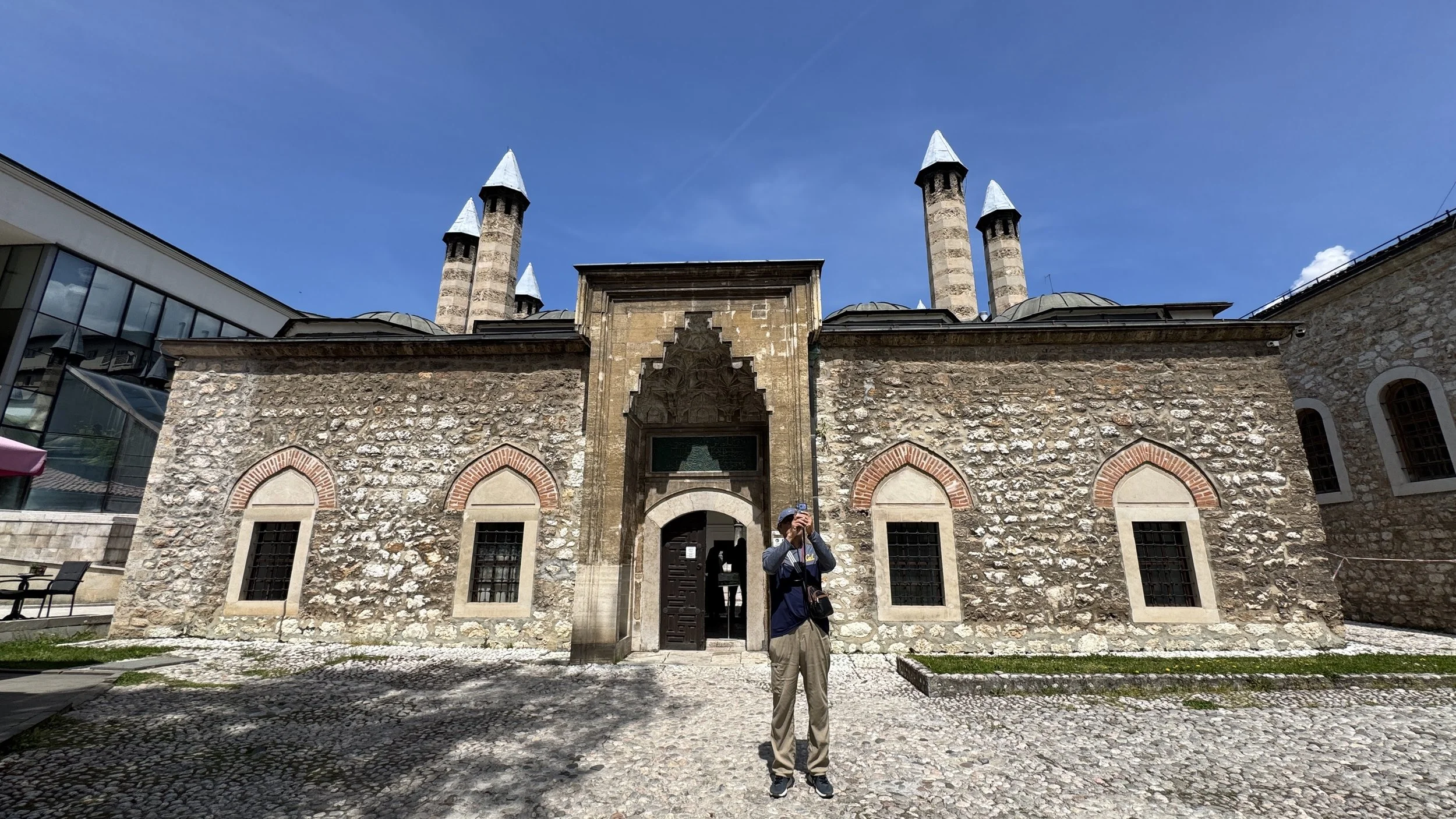
The museum, located directly across from the mosque, occupies a building that originally served as a school founded by Gazi Husrev-beg. Today, it houses exhibits on his life, legacy, and the history of Sarajevo during the Ottoman period, providing valuable insight into the man whose vision helped shape the city for generations.
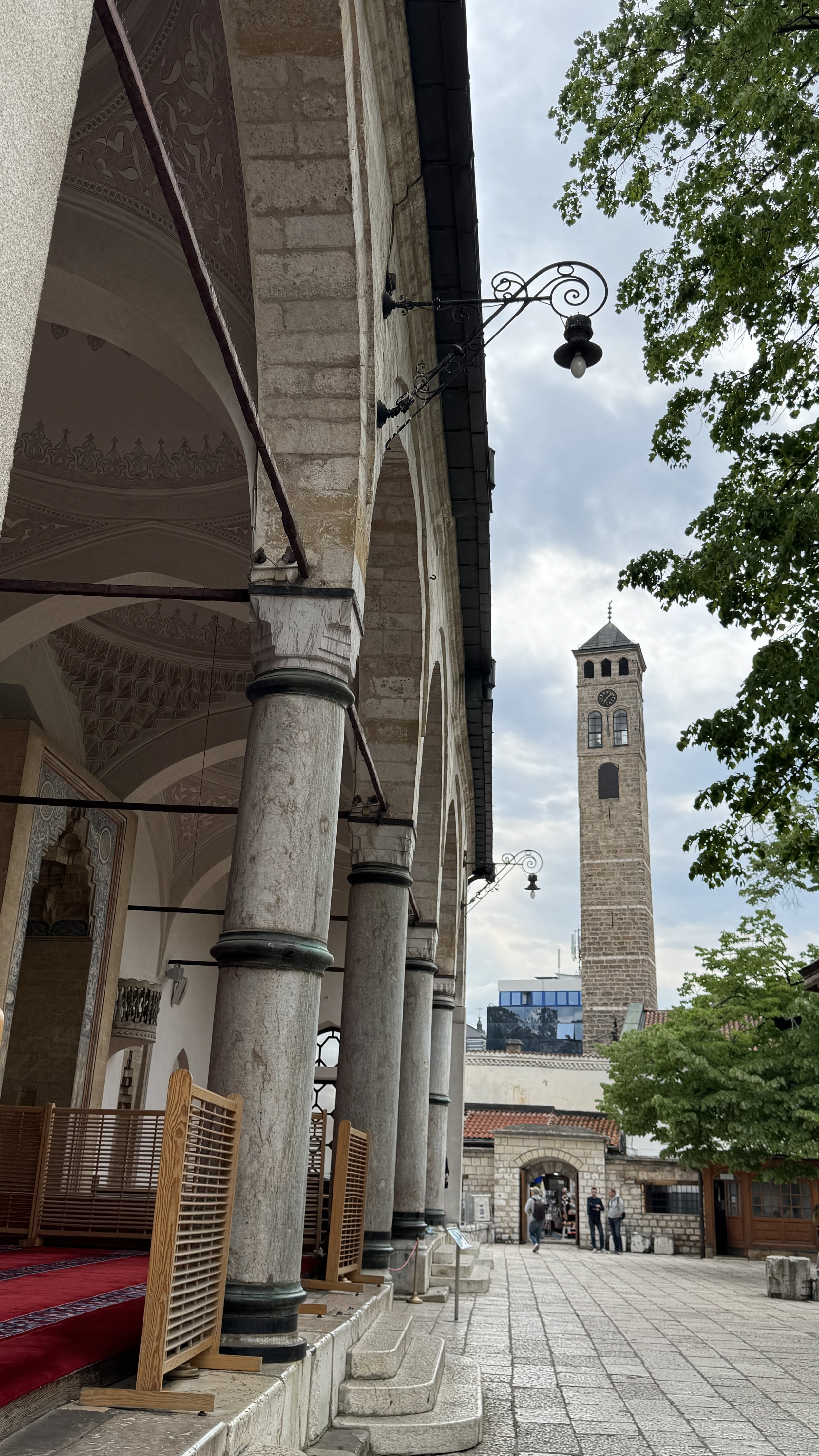
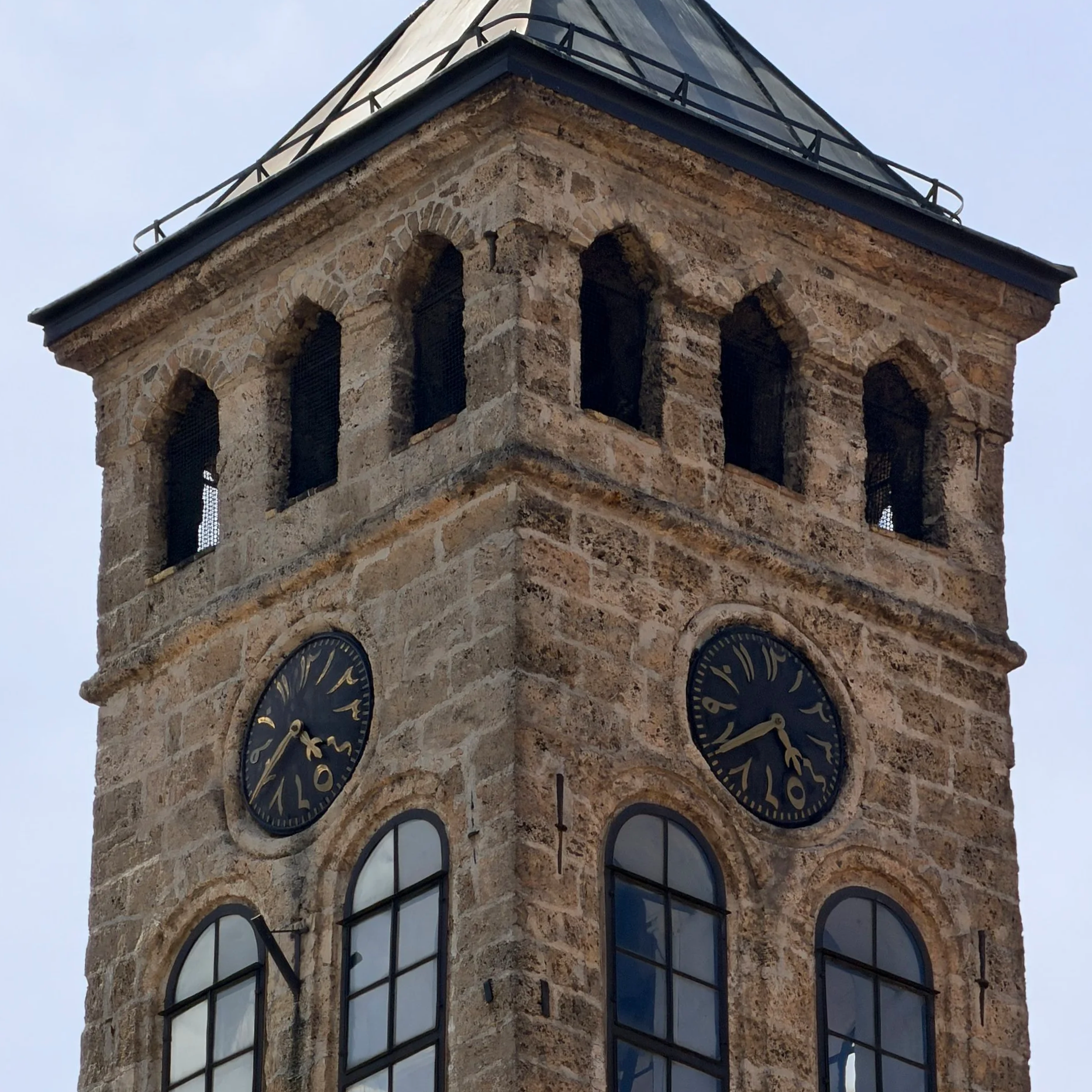
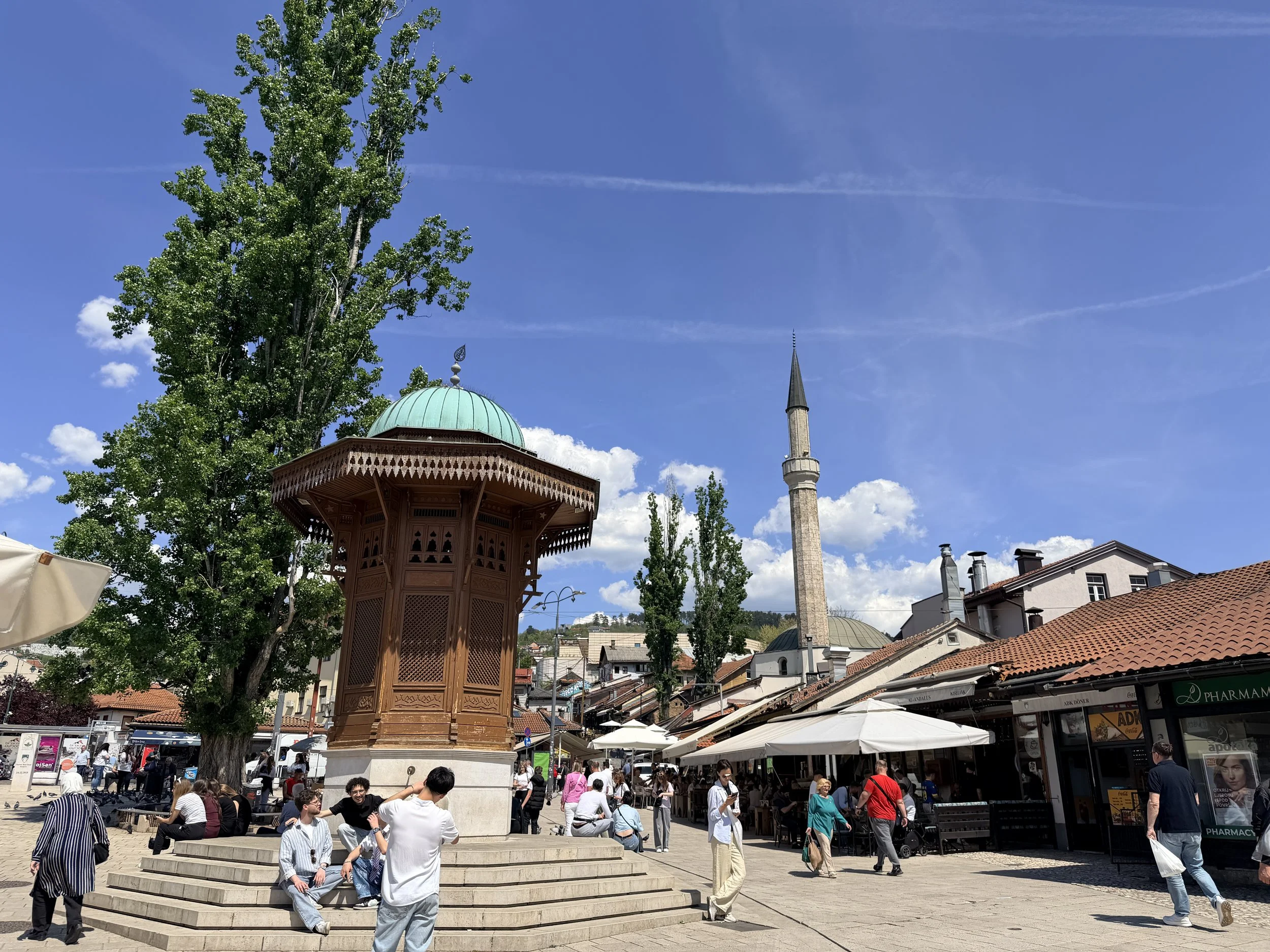
Next to the mosque stands Sarajevo’s old clock tower, known as the Sahat-kula. Although it looks like an ordinary clock tower at first glance, it is believed to be the world’s last publicly operating lunar clock, still manually adjusted according to sunset time just as it was during the Ottoman era. In this old system, sunset marks the beginning of a new day. The picture below on the right was taken at 12:31 pm and the lunar clock should be 16:14 since the sunset time on 4/28/2026 was 7:46 pm.
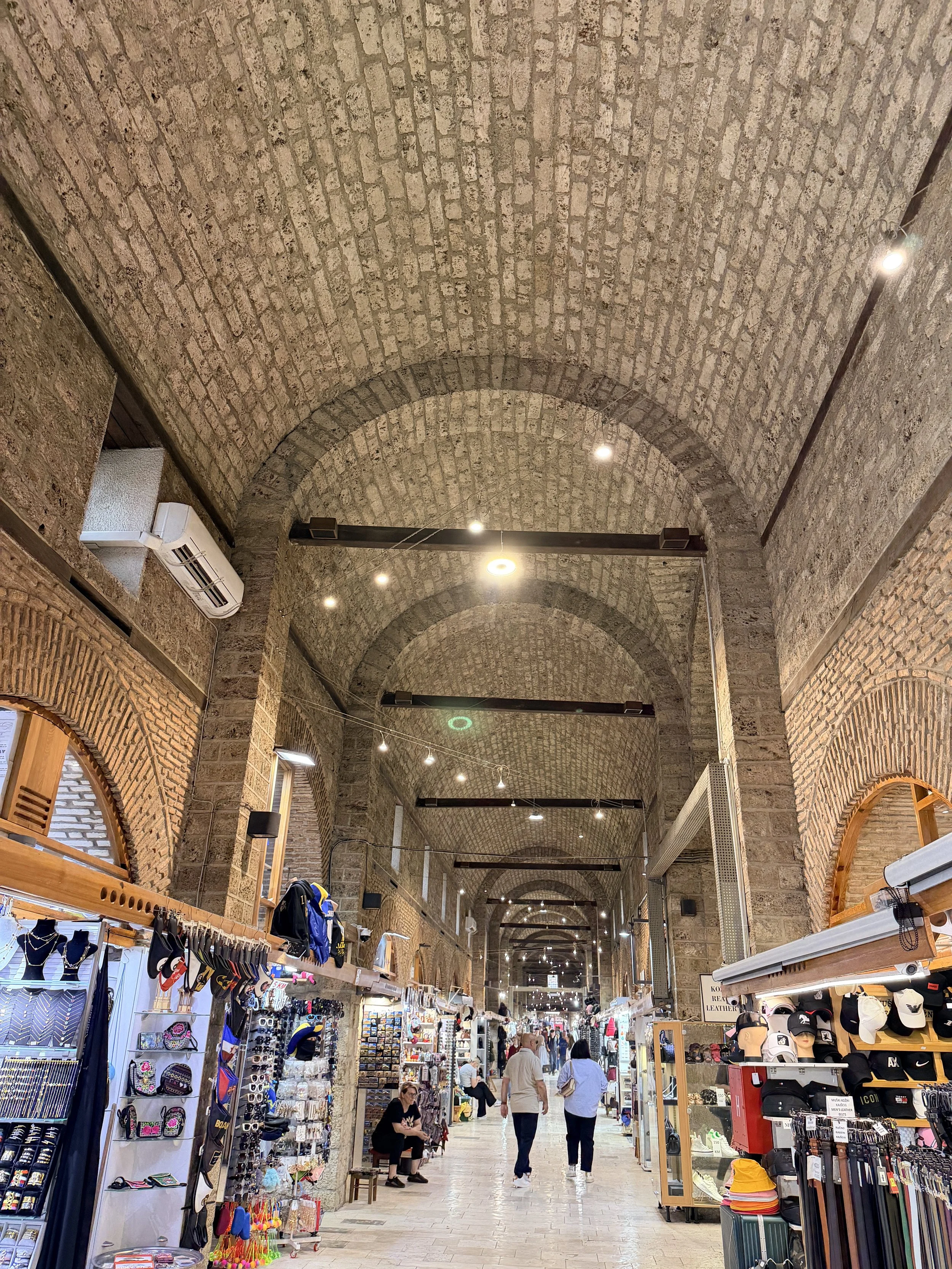
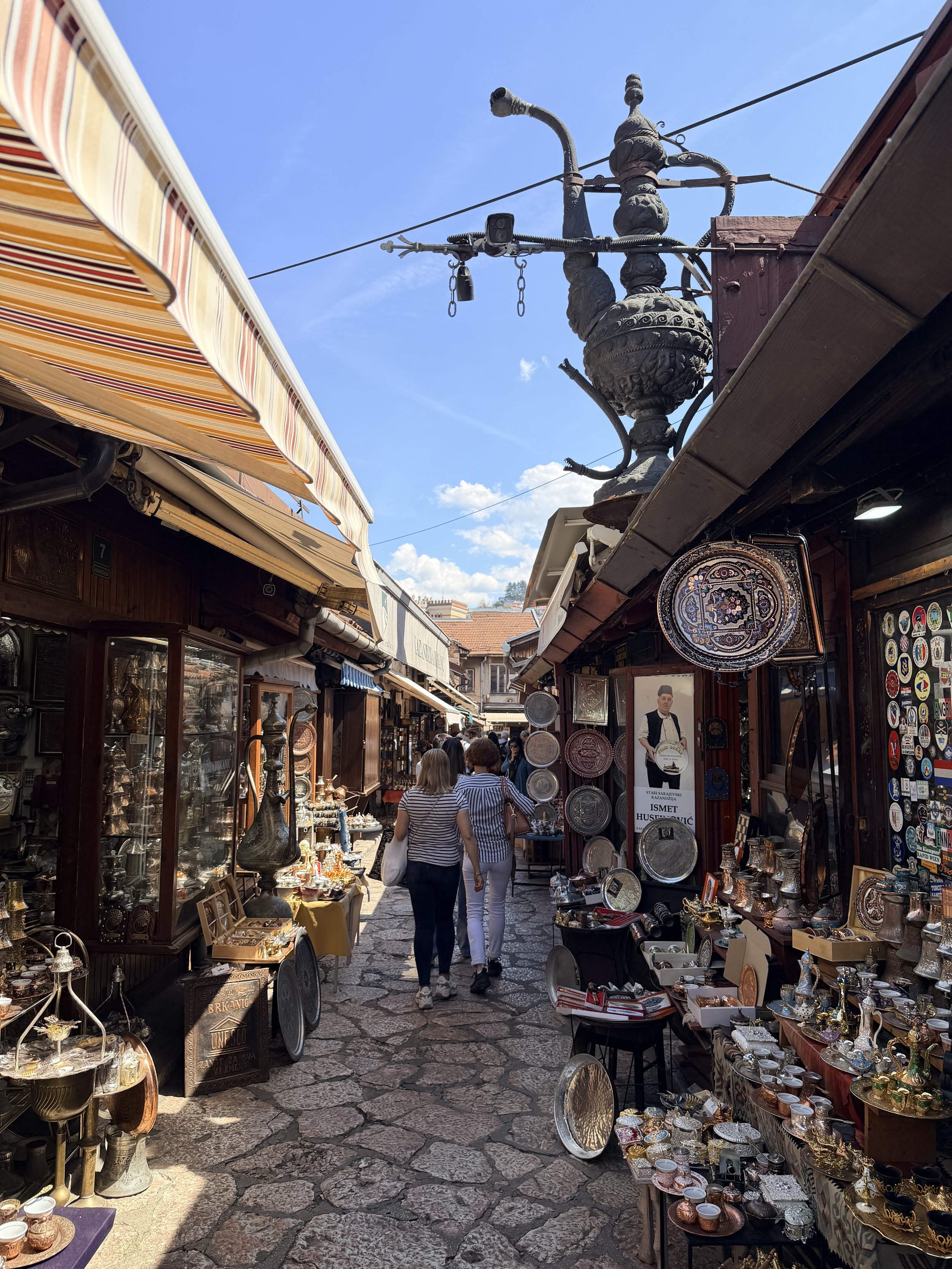
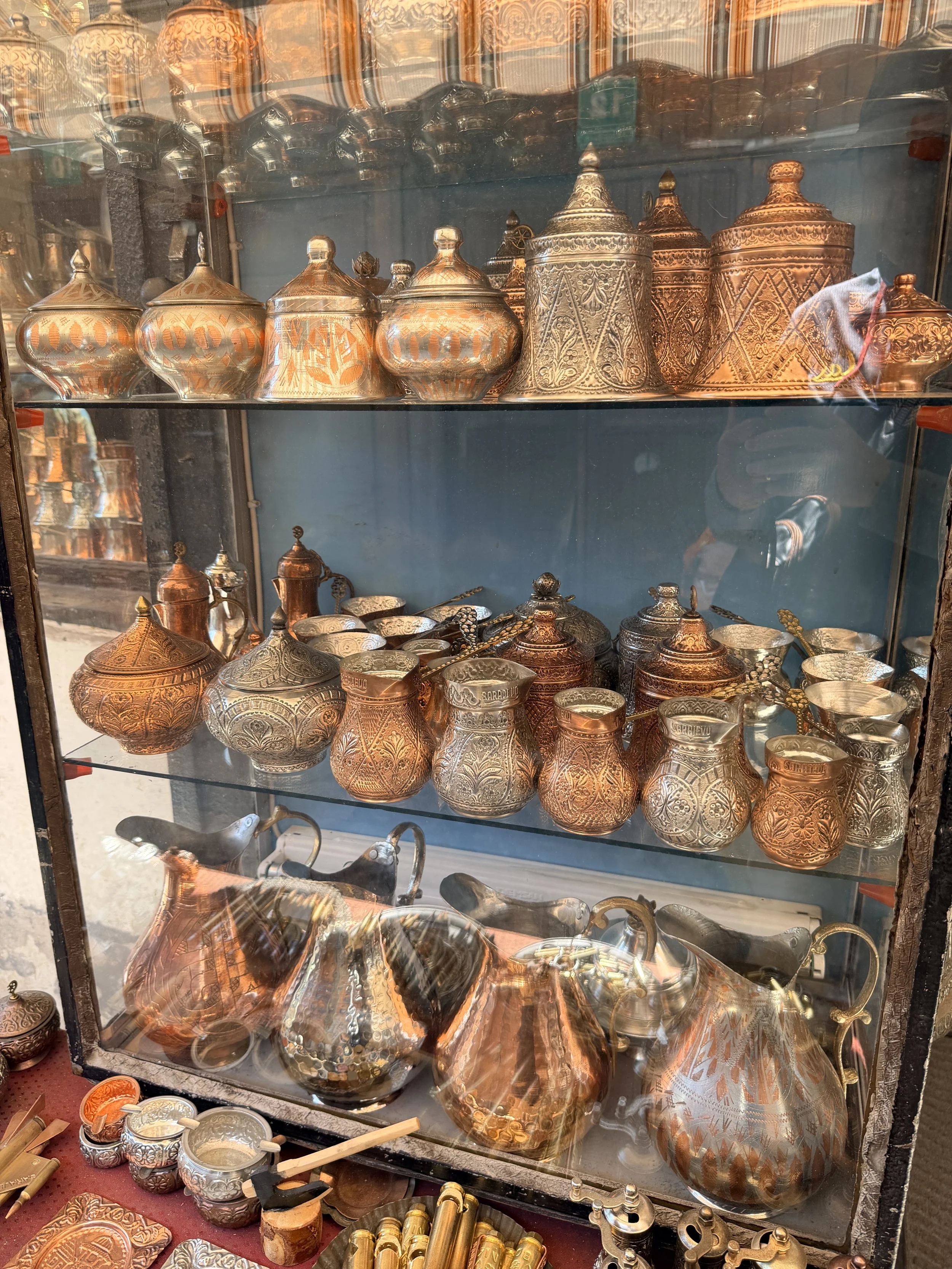
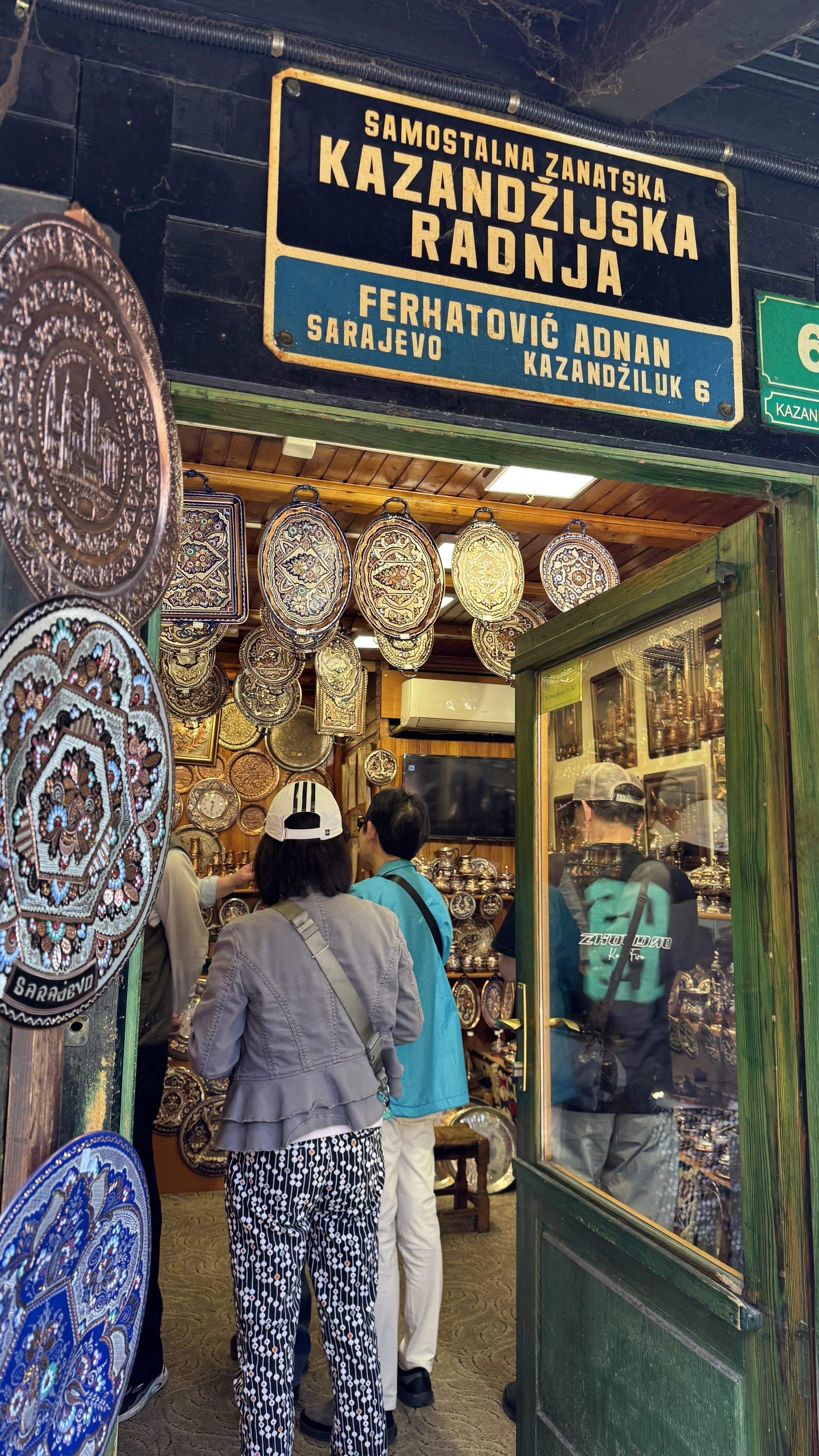
We then walked through the old copperware streets of Baščaršija. In earlier times, the district would have been filled with the constant rhythmic hammering of craftsmen shaping copper by hand. Today, much of that sound has disappeared, replaced instead by neatly manufactured coffee sets and souvenirs displayed for tourists.
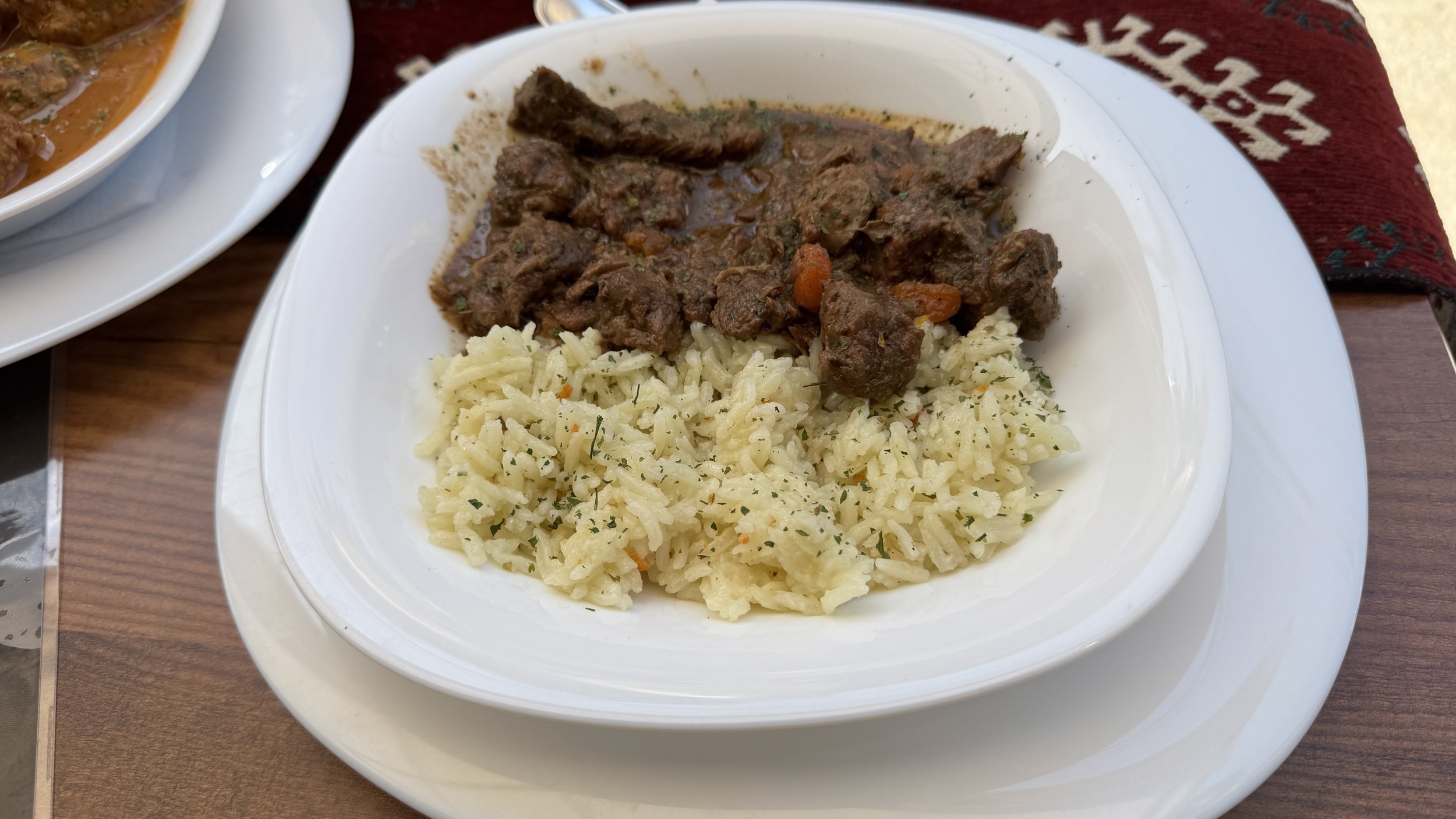
For lunch, we had a simple meal at a small street-side restaurant before taking a taxi to the Tunnel of Hope.
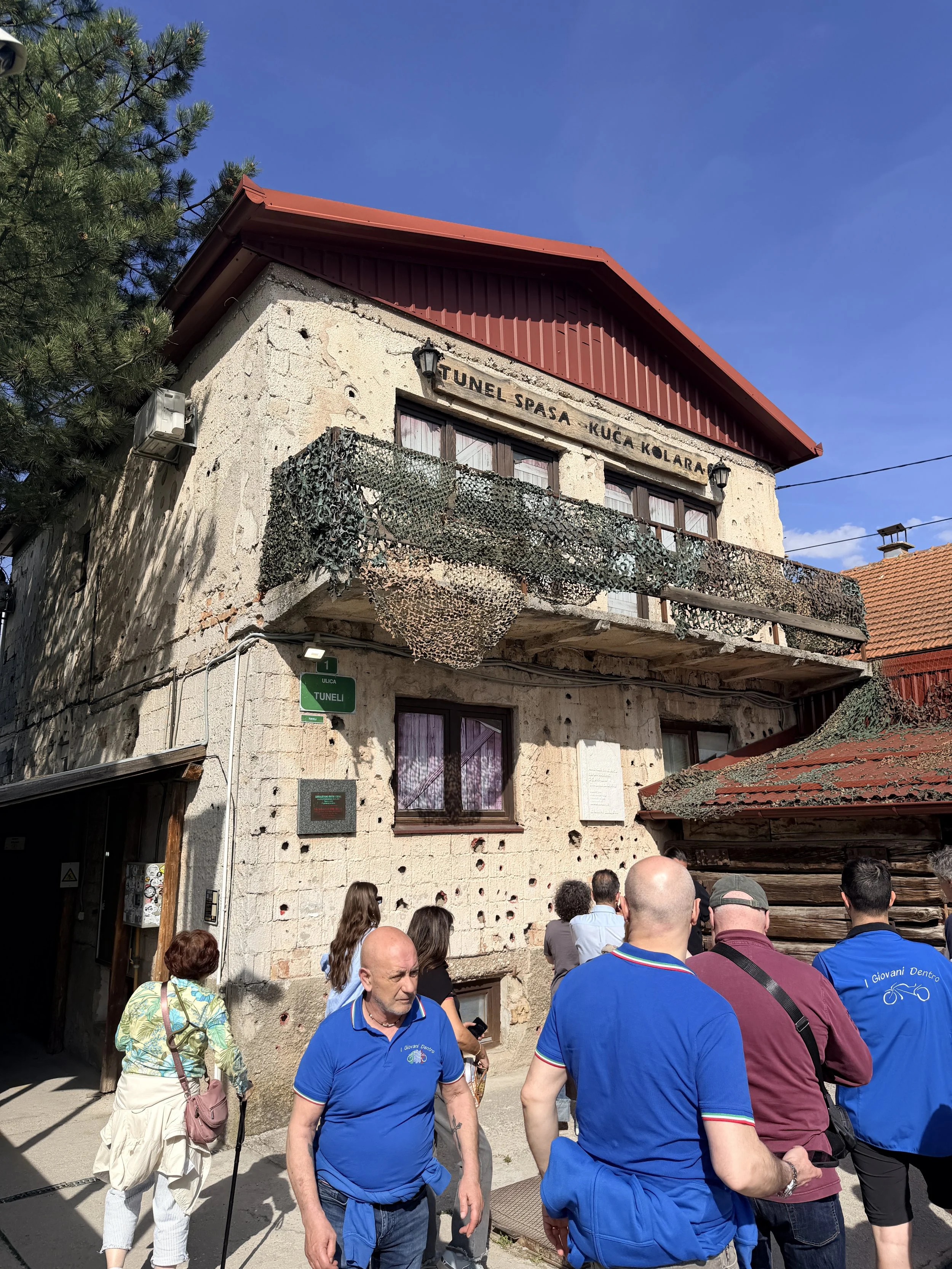
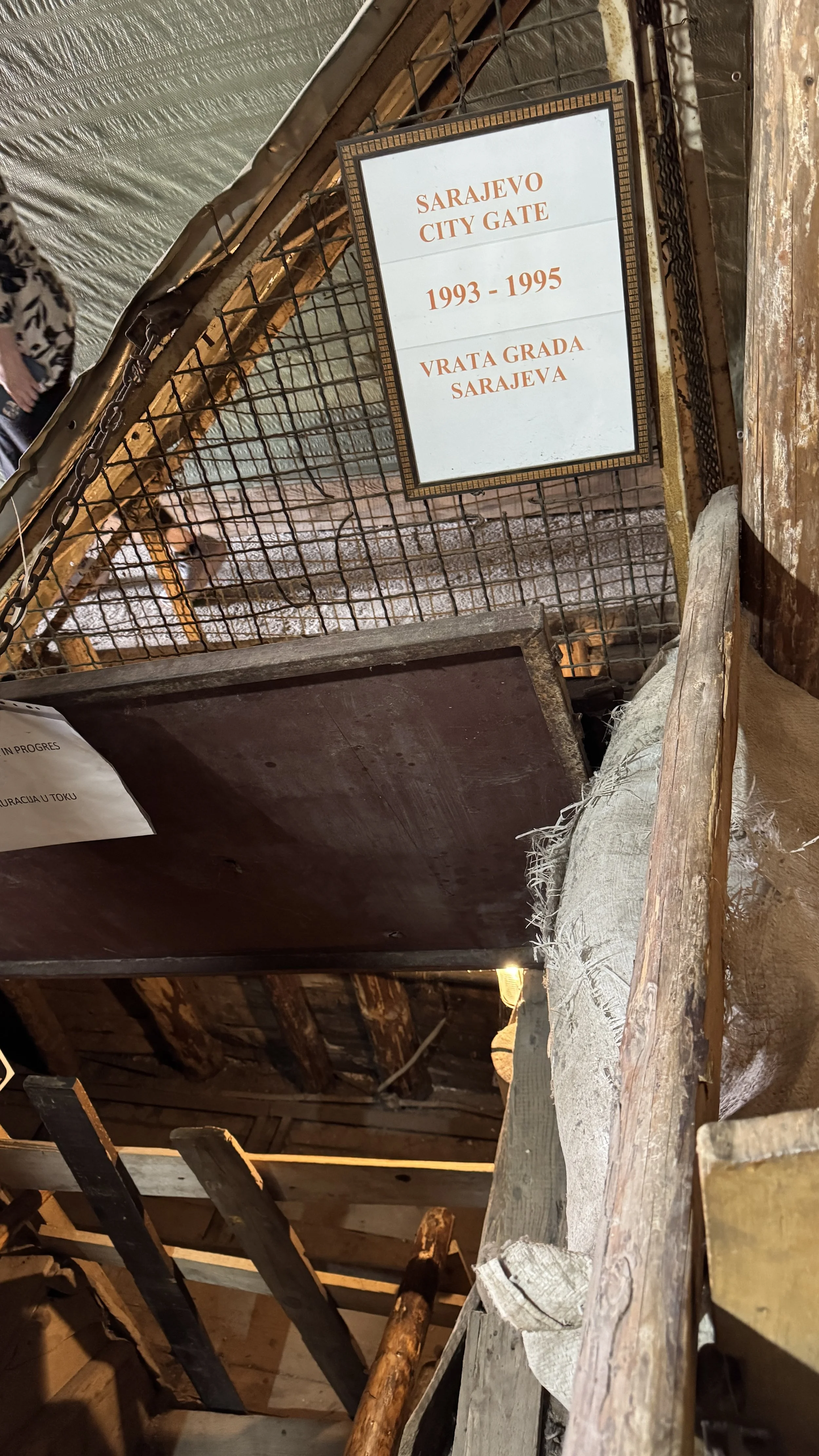
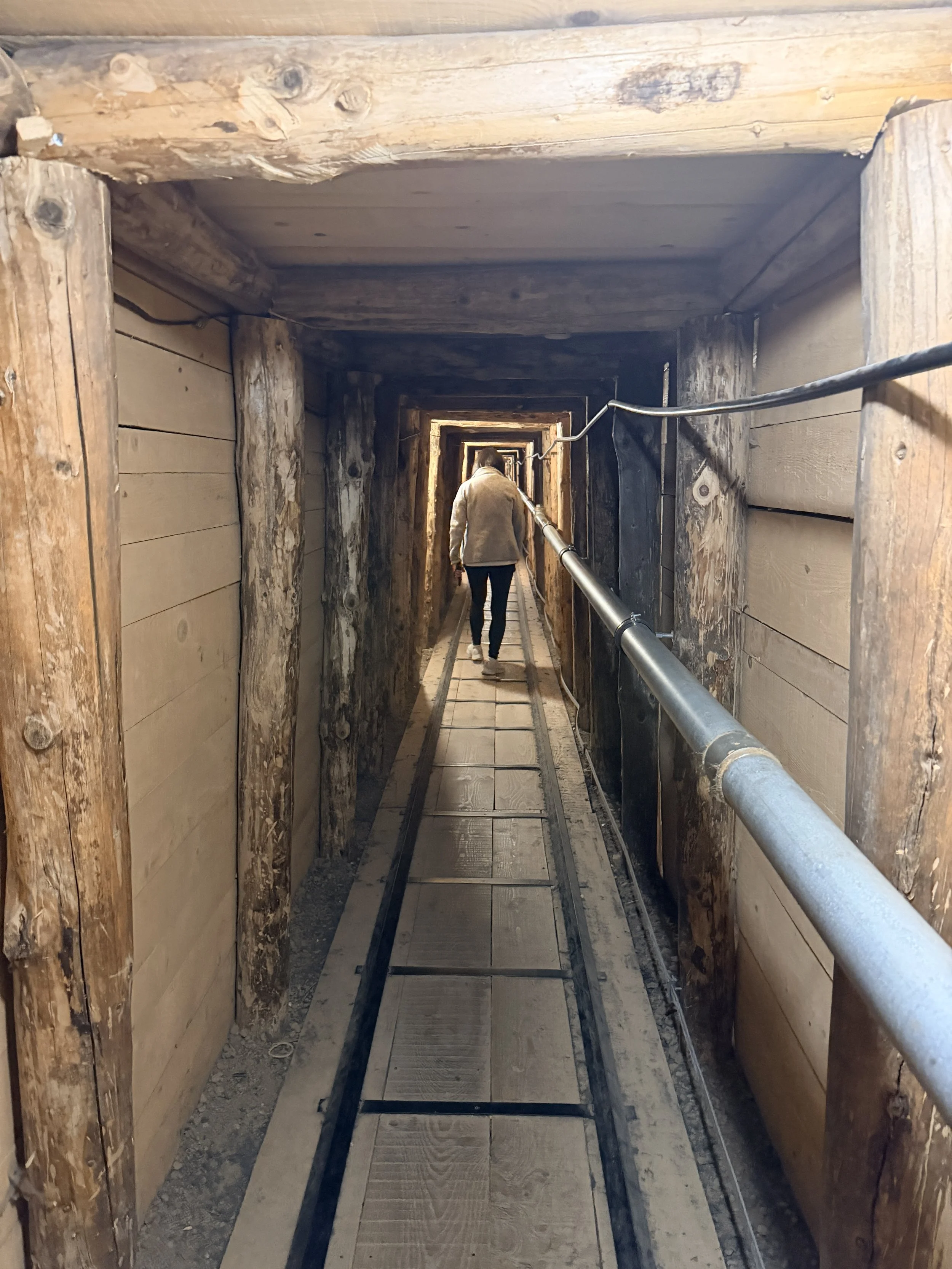
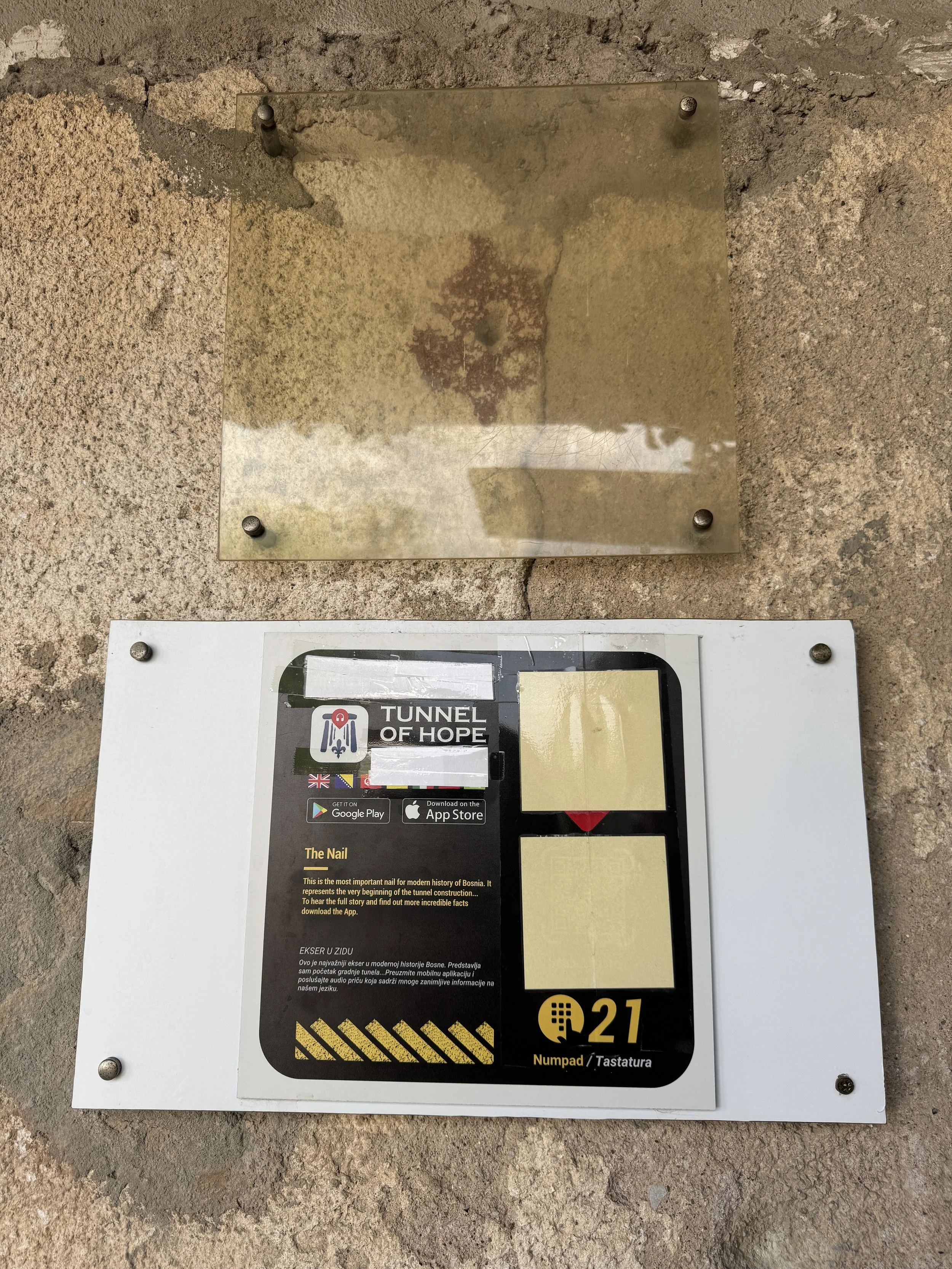
During the Siege of Sarajevo in the 1990s, the city was almost completely surrounded. The tunnel was secretly dug underneath the UN-controlled airport runway to connect the besieged city with Bosnian-held territory outside the blockade. Through this narrow underground passage came food, medicine, weapons, fuel, and people. It became Sarajevo’s lifeline during the war. Even today, many buildings nearby still bear visible bullet scars, silent reminders of the conflict.
After visiting the tunnel, we returned to the old town determined to finally try Bosnia’s famous spit-roasted lamb. Earlier, while driving from Mostar to Sarajevo, our Bosnian driver told us that spit-roasted lamb was one of the country’s most beloved traditional foods. He mentioned that a small town along the route was especially famous for it. Ever since then, we had been searching for a place to try it in Sarajevo.
Our first restaurant claimed on its website to serve spit-roasted lamb, but when we arrived, we discovered they no longer offered the dish. Still determined, we called another taxi and headed uphill to Kibe Mahala.
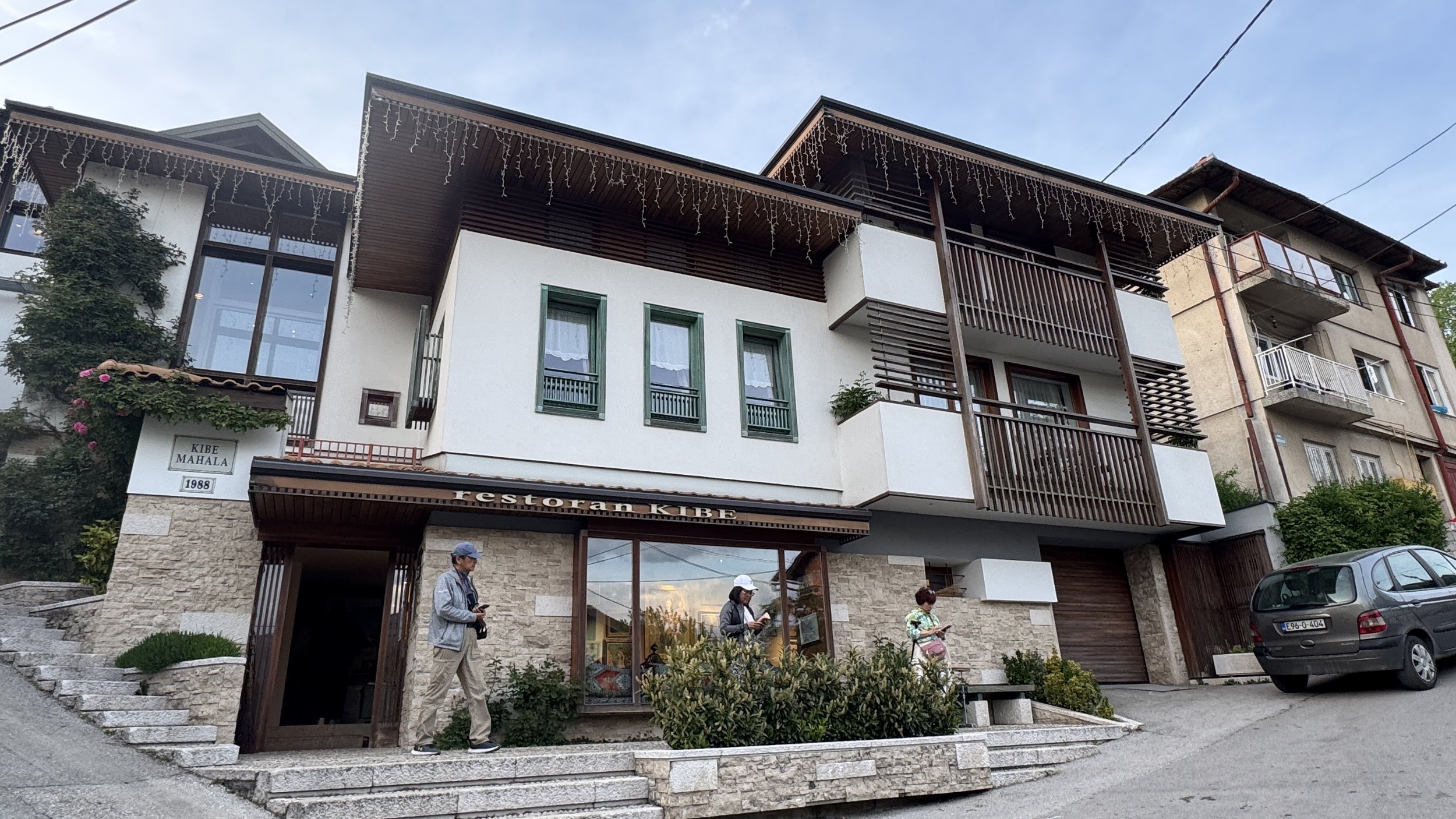
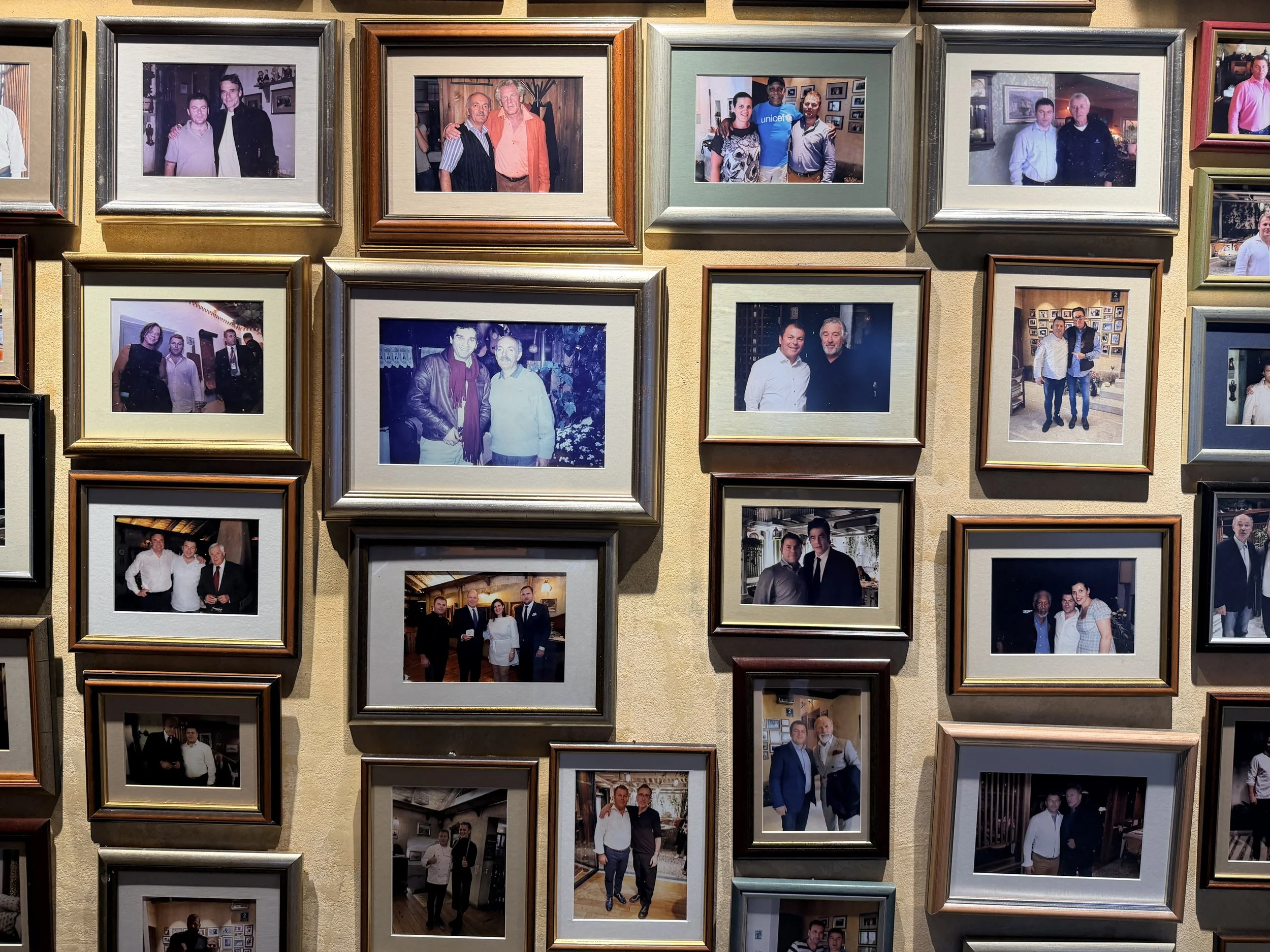
Kibe Mahala was highly rated, and photographs of well-known visitors and celebrities lined the walls. Fortunately, a table for four was still available. As we entered the dining area, we immediately saw whole lambs roasting slowly on spits and became excited that we might finally get to taste the famous dish. But when we asked, we were told the lamb had already sold out for the evening. Apparently, reservations and advance orders were necessary.
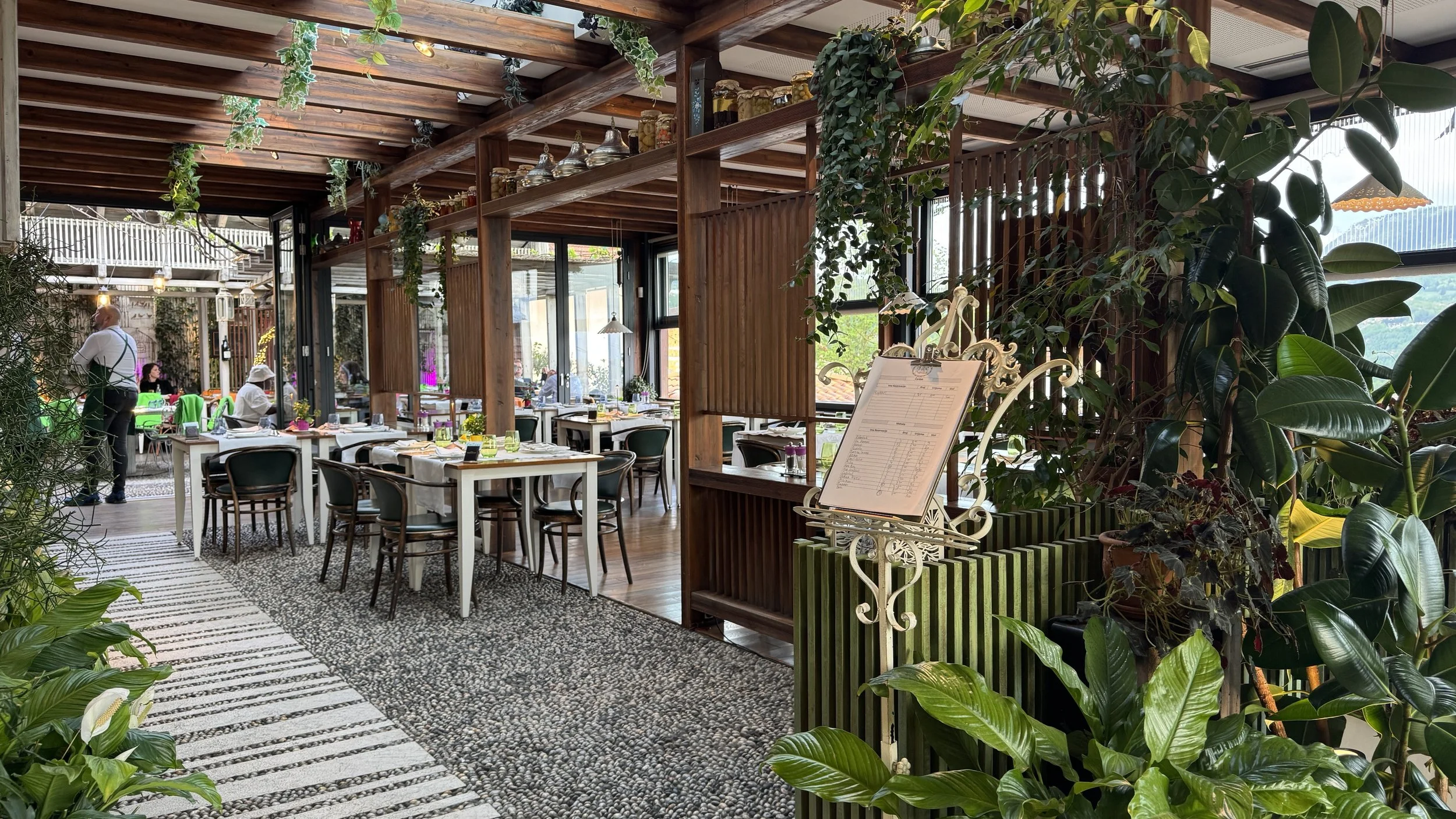
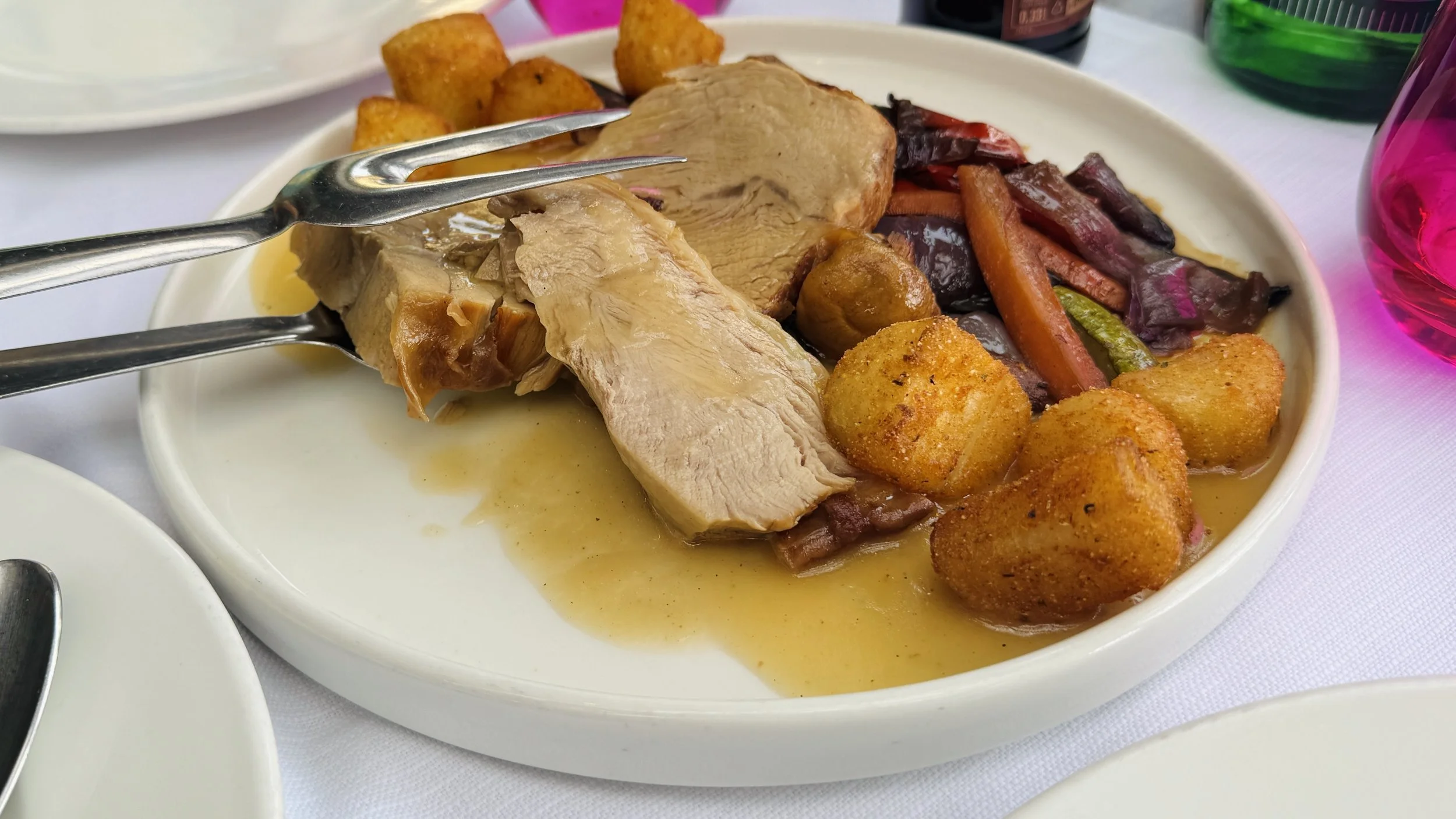
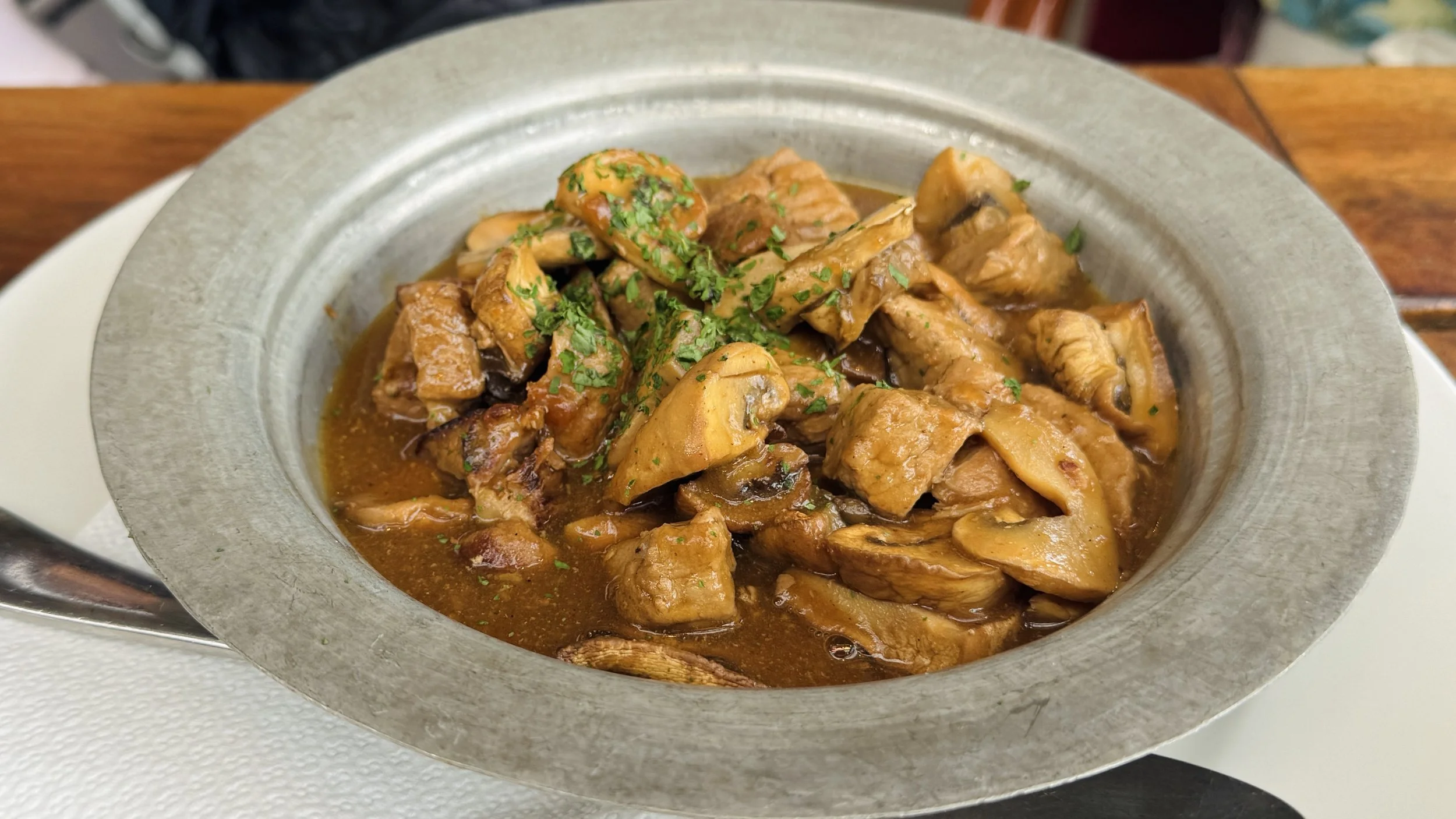
Disappointed but hungry, we stayed and ordered several other dishes from the menu, which turned out to be excellent. The panoramic view over Sarajevo from the restaurant was also spectacular.
After dinner, we took another taxi to the Yellow Fortress to watch the sunset. Unfortunately, the weather was poor, and the sun never really appeared through the clouds.
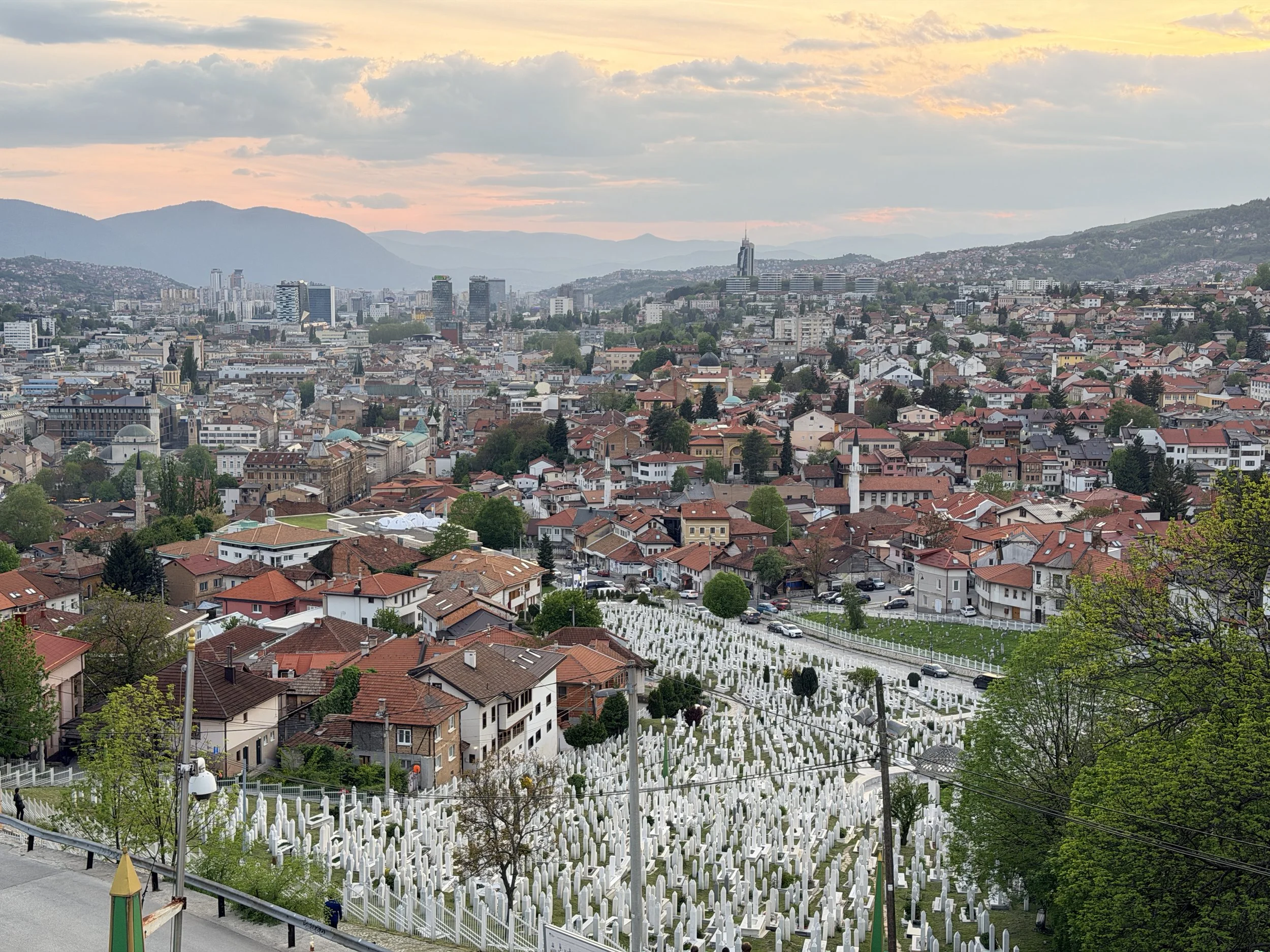
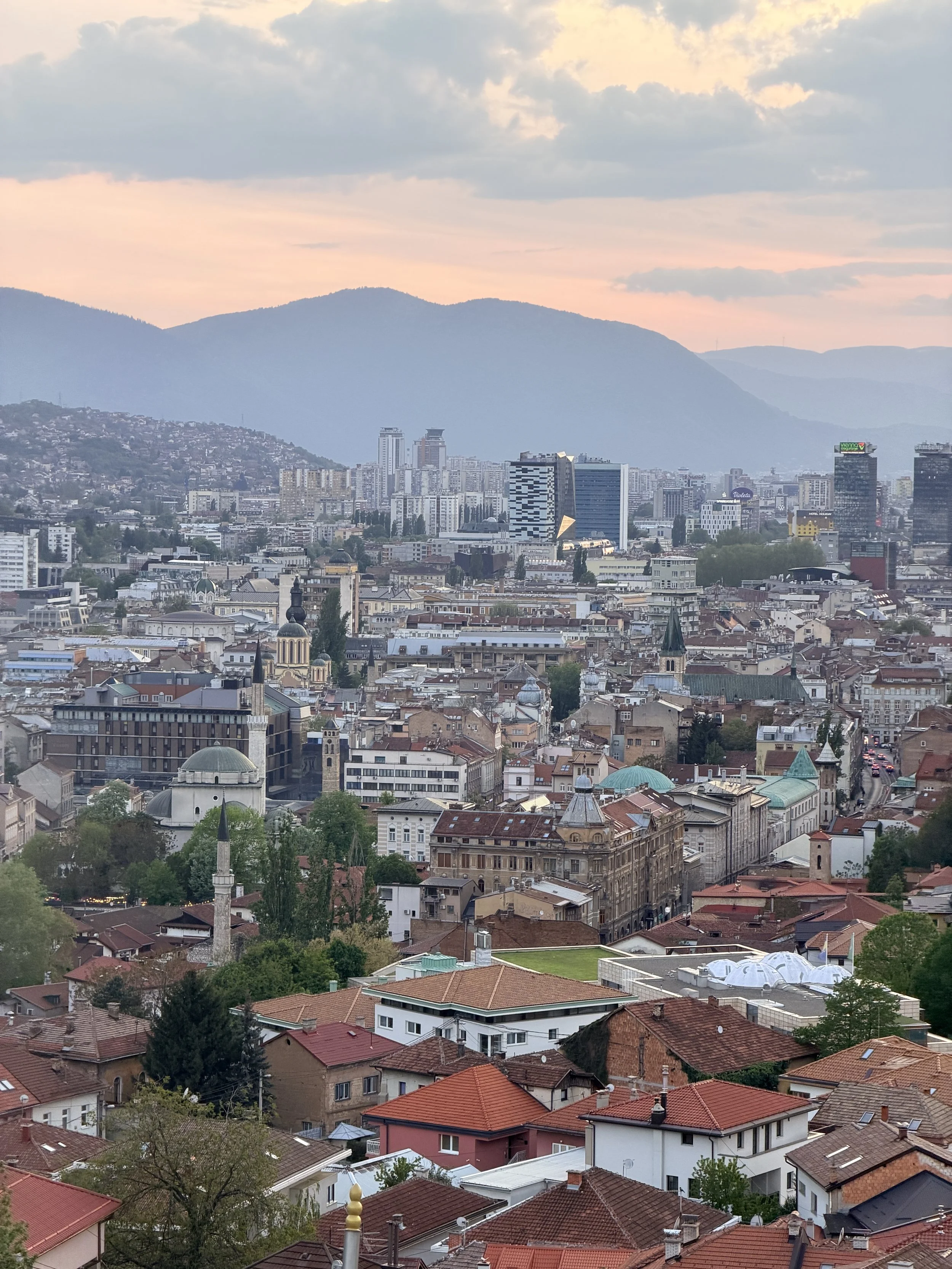
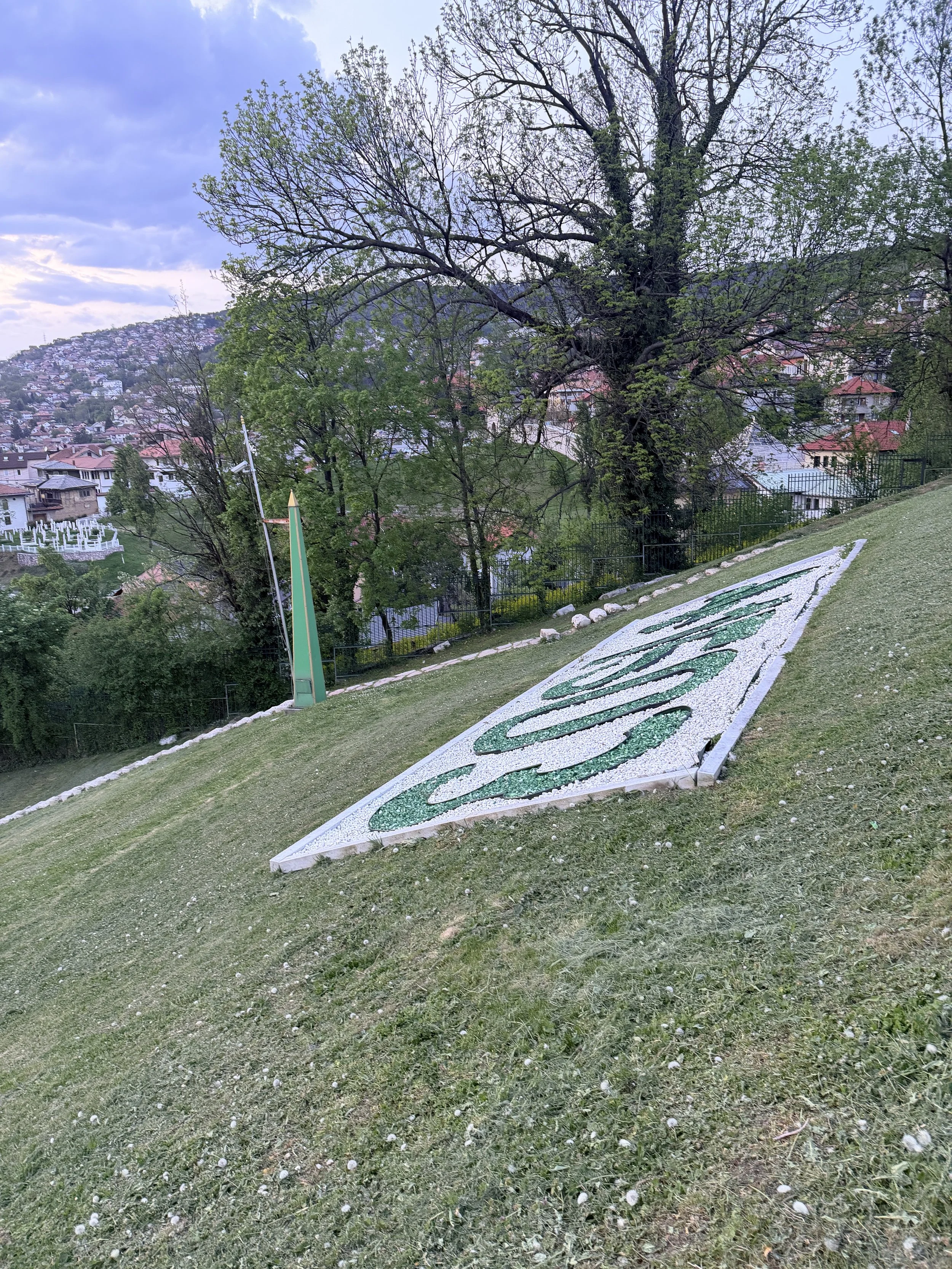
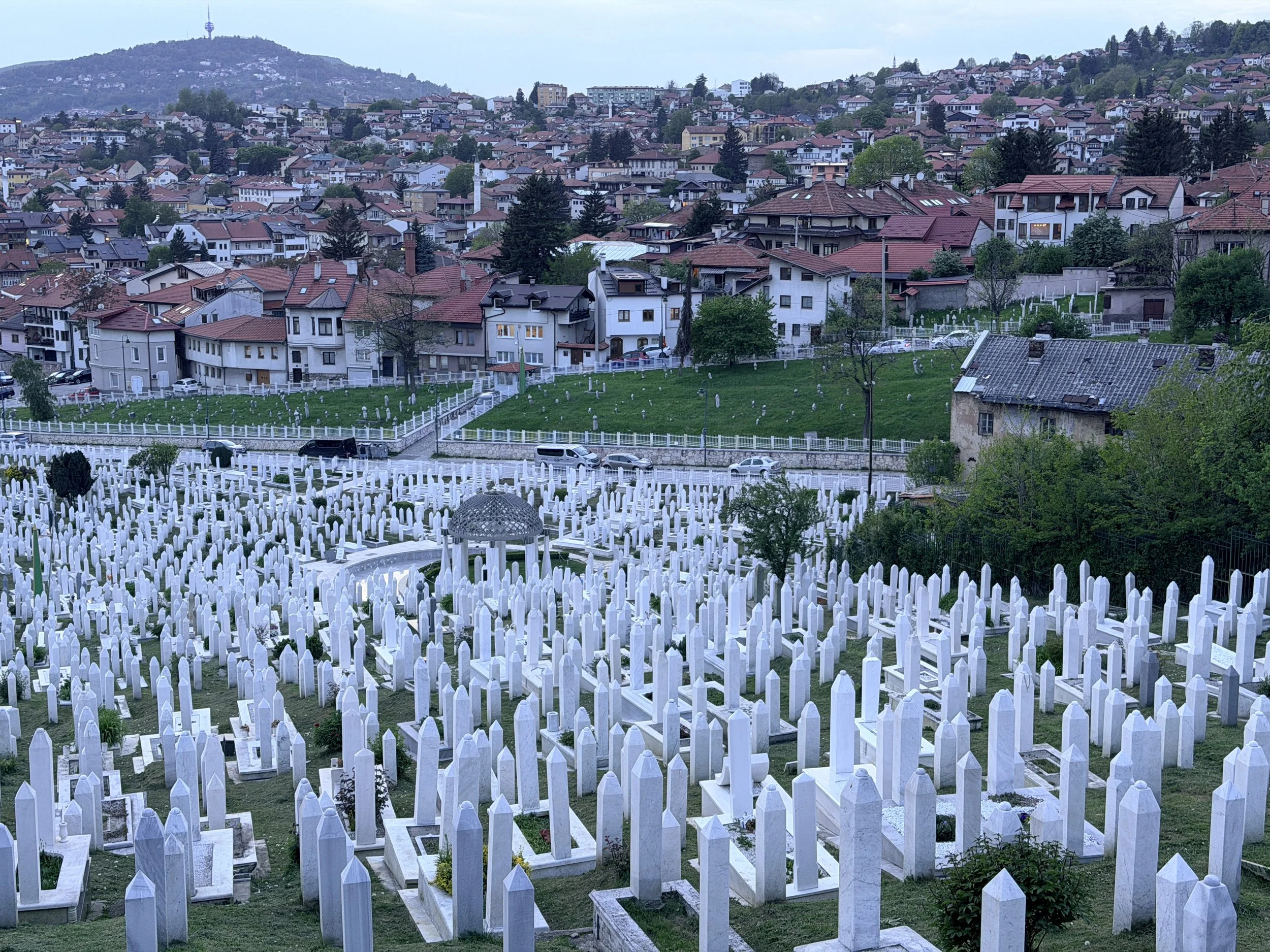
We then slowly walked downhill past the vast Kovači Memorial Cemetery, where 1,503 soldiers killed during the Bosnian War are buried. Row after row of white gravestones stretched across the hillside. It was a sobering reminder of the sacrifices and suffering brought by war.
2026年4月28日
对于许多在上世纪七十年代中国长大的人来说,萨拉热窝这个名字并不陌生。早在来到这里之前,我们就已经通过那部著名的南斯拉夫电影《瓦尔特保卫萨拉热窝》认识了这座城市。它在记忆中一直带着一种神秘而特殊的历史感。
今天上午,我们先参观住宿附近的萨拉热窝圣心主教座堂(Sacred Heart Cathedral Sarajevo)。它是萨拉热窝最重要的天主教堂,正面有两座钟楼。接下来我们参观了加齐·胡斯雷夫贝格清真寺(Gazi Husrev-beg Mosque)和博物馆。加齐·胡斯雷夫贝格是奥斯曼时期一位重要的总督和军事领袖,对萨拉热窝的发展贡献巨大。他通过伊斯兰传统中的“瓦克夫”(waqf)制度,将自己大量的财产和土地捐献出来,用于支持清真寺以及城市中的各种公共设施和慈善事业。而博物馆就在清真寺对面,当初是加齐·胡斯雷夫贝格所创办的一所学校,如今展示着有关他的生平及历史。
清真寺旁边矗立着萨拉热窝著名的钟楼——萨哈特库拉钟楼(Sahat-kula)。它外表看起来像一座普通的古老钟楼,但实际上却极为特别,被认为是世界上最后一座仍在公开运行的“月亮钟(lunar clock)”。这座钟至今仍按照奥斯曼时代的传统,根据每天日落时间进行人工调整。在这种古老计时方式中,日落便意味着新一天的开始。
随后,我们漫步穿过老城巴什察尔希亚(Baščaršija)的铜器街。过去这里曾经回荡着铜匠们敲打铜器的清脆声响,而如今,那种叮叮当当的声音已经少了许多,取而代之的是摆放整齐、专门面向游客出售的精美波斯尼亚咖啡器具和纪念品。
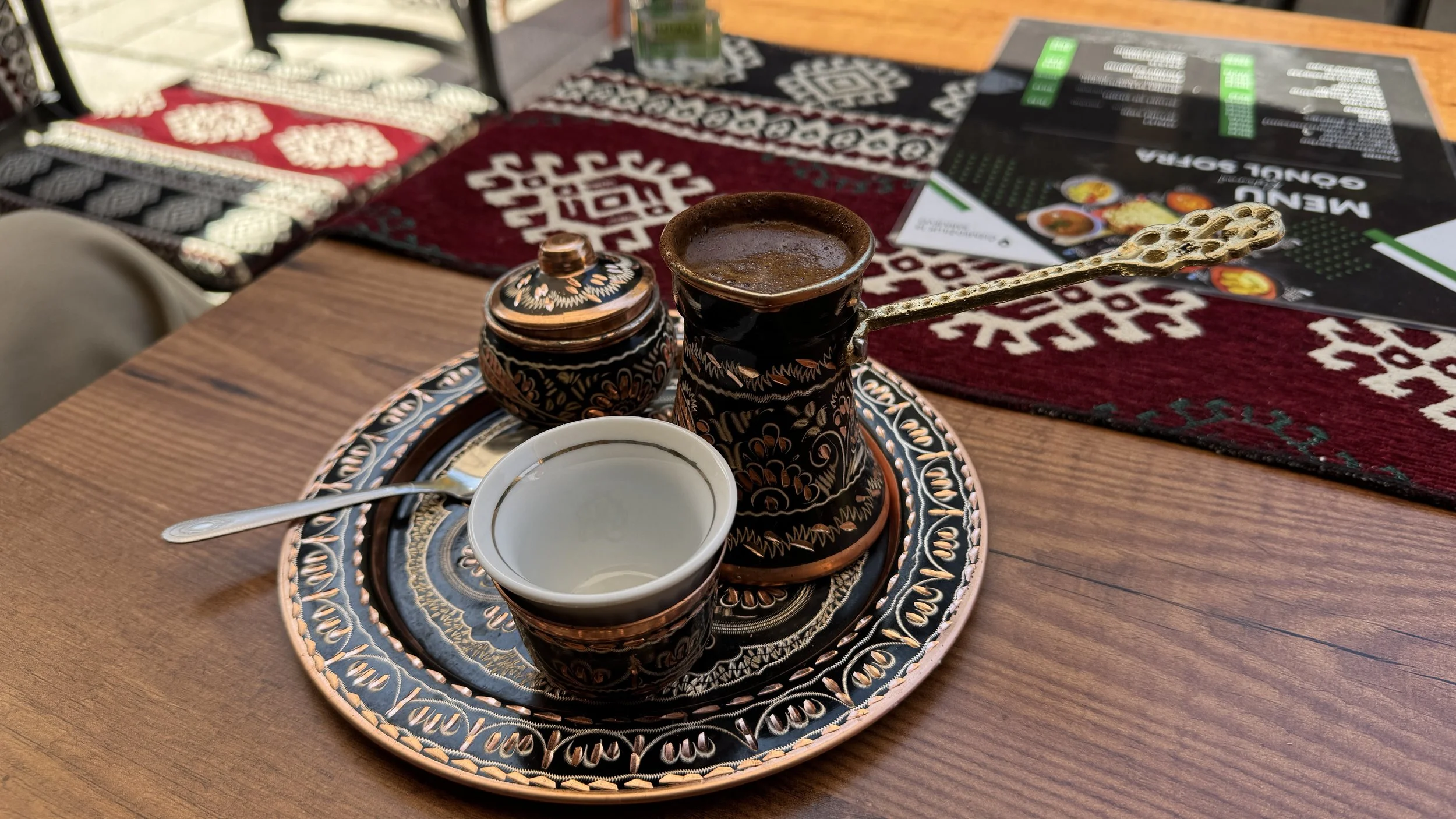
中午,我们在街边简单吃了顿当地午餐以及波斯尼亚咖啡,然后乘出租车前往希望隧道(Tunnel of Hope)。1990年代波黑战争期间,萨拉热窝长期遭到围困,几乎与外界完全隔绝。这条秘密修建的地下隧道从联合国控制的机场跑道下方穿过,将被围困的城区与外部控制区连接起来。食物、药品、燃料、武器以及人员都通过这条狭窄的通道进入城内,它成为当时萨拉热窝维持生存的重要生命线。直到今天,附近许多房屋墙面上仍然留着密密麻麻的弹痕,无声地提醒着人们那段战争岁月。
之前从莫斯塔尔(Mostar)前往萨拉热窝途中,我们的波斯尼亚司机告诉我们,当地人最喜欢的传统食物之一就是炭火慢烤的转炉羊肉(spit-roasted lamb)。他说沿途有个小镇甚至专门以烤羊闻名。从那以后,我们便一直惦记着一定要在萨拉热窝尝尝。参观完希望隧道后,我们回到老城,去了网上找的一家餐厅。网站上说有波斯尼亚著名的烤全羊,但到了之后却被告知早已不再提供这道菜。我们依旧不死心,继续上网查,又叫了一辆出租车,前往另一家在山上的基贝·马哈拉餐厅(Kibe Mahala)。
这家高级餐厅评价很高,墙上挂满了许多我们所熟悉的名人与老板的合影。幸运的是,当晚还有四人桌空位。刚走进用餐区时,我们立刻看到几只整羊正在火炉上缓慢旋转烤制,顿时兴奋起来,以为终于可以吃到了。然而服务员却告诉我们,当晚的烤羊已经全部售罄,需要提前预订。
虽然非常失望,但我们还是坐下点了几道菜单上的其它菜肴,结果味道都相当不错。而且餐厅位于山坡高处,可以俯瞰整个萨拉热窝,景色非常漂亮。
晚饭后,我们又乘出租车前往黄色堡垒(Yellow Fortress)观看日落。可惜天气不佳,厚厚的云层始终遮住了太阳。
之后,我们沿着山路慢慢步行下山,经过了规模巨大的科瓦契纪念公墓(Kovači Memorial Cemetery)。这里埋葬着1503名在波黑战争中阵亡的士兵。山坡上一排排白色墓碑密密麻麻地延伸开去,让人强烈感受到战争带来的伤痛。
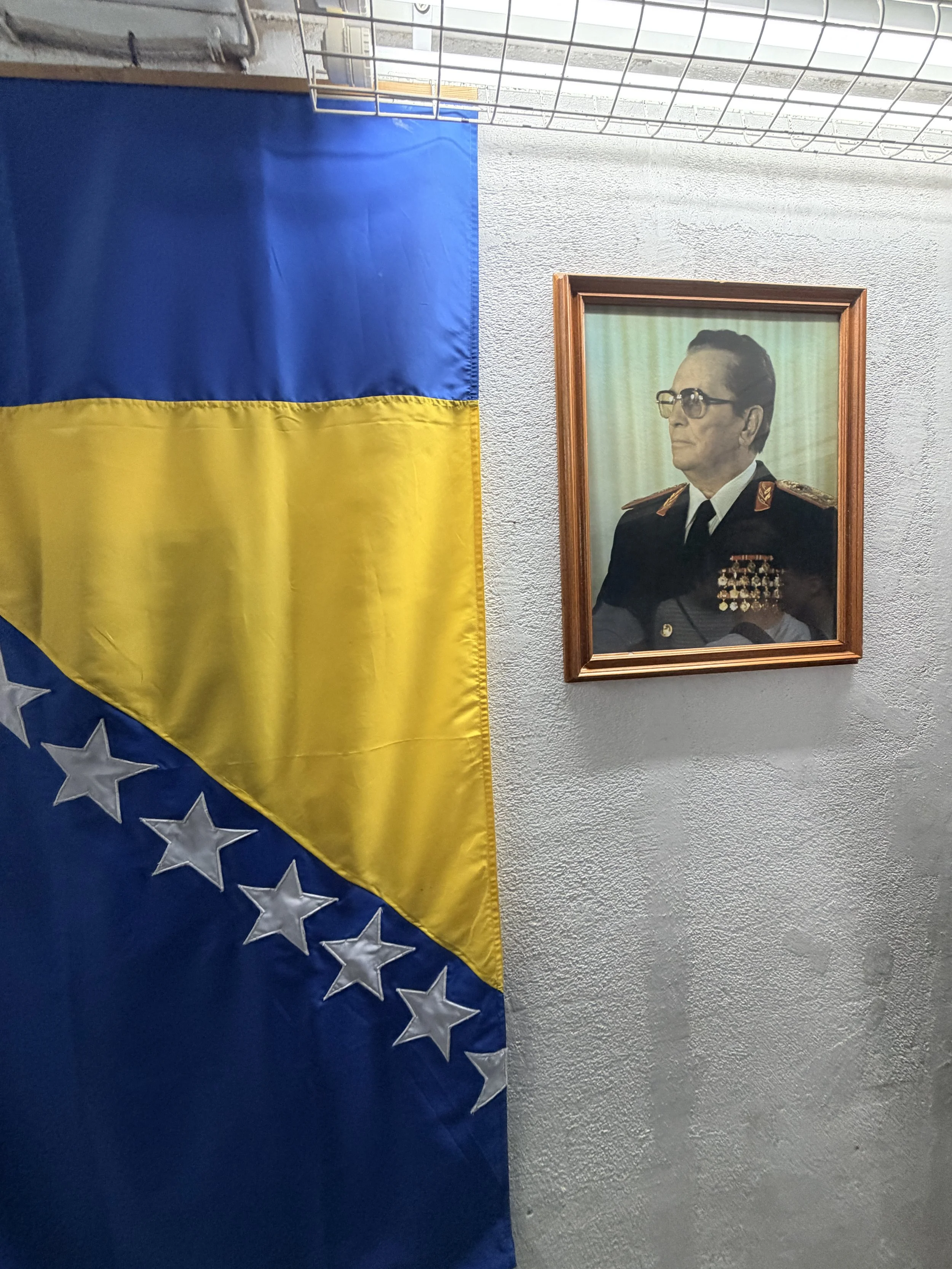
Tito’s Bunker 铁托地堡
April 27, 2026
After breakfast, the same private driver who had brought us here……
早餐后还是二天前送我们来的包车司机来接我们。。。
April 27, 2026
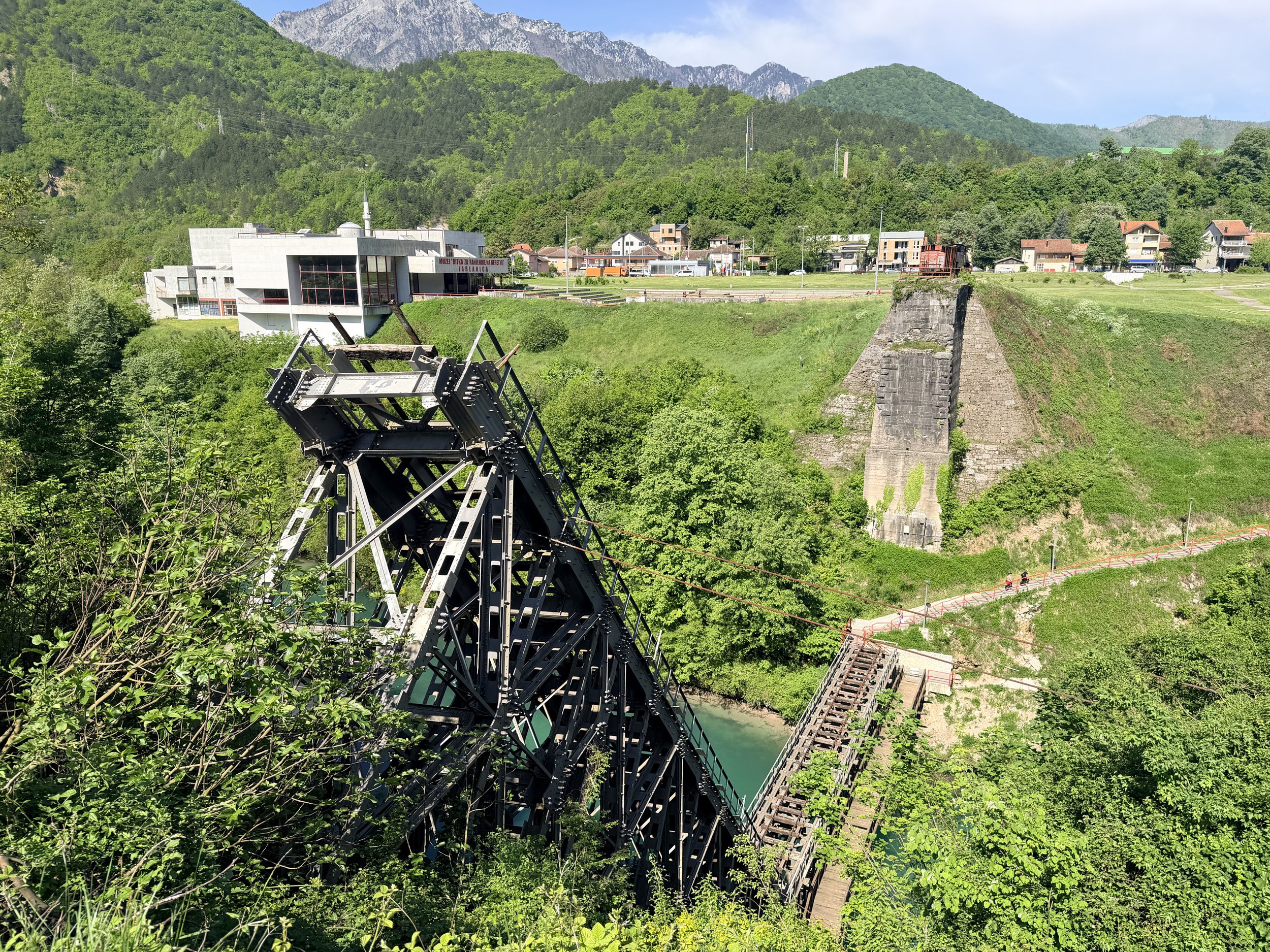
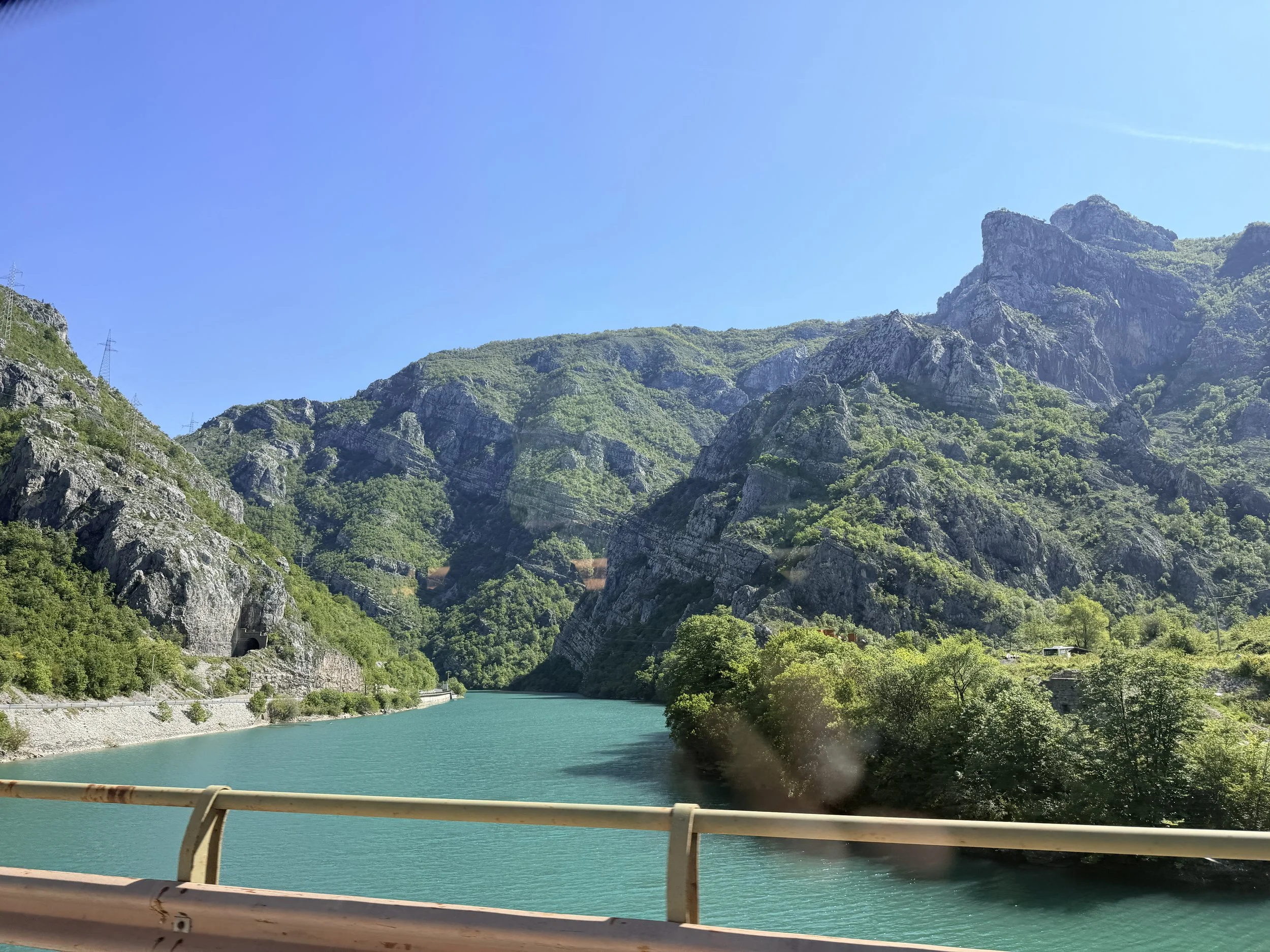
After breakfast, the same private driver who had brought us here two days earlier came to pick us up. Leaving Mostar, we continued north along the Neretva River, passing through the town of Jablanica.
Nestled between rugged mountains and the river valley, this quiet town is best known for its role in the famous Battle of the Neretva during World War II. One of the most striking reminders of that history is the old railway bridge spanning the gorge. Partially destroyed and left leaning at an angle, the bridge remains suspended above the river as a massive wartime relic, silently preserving the memory of the battle that once unfolded here.
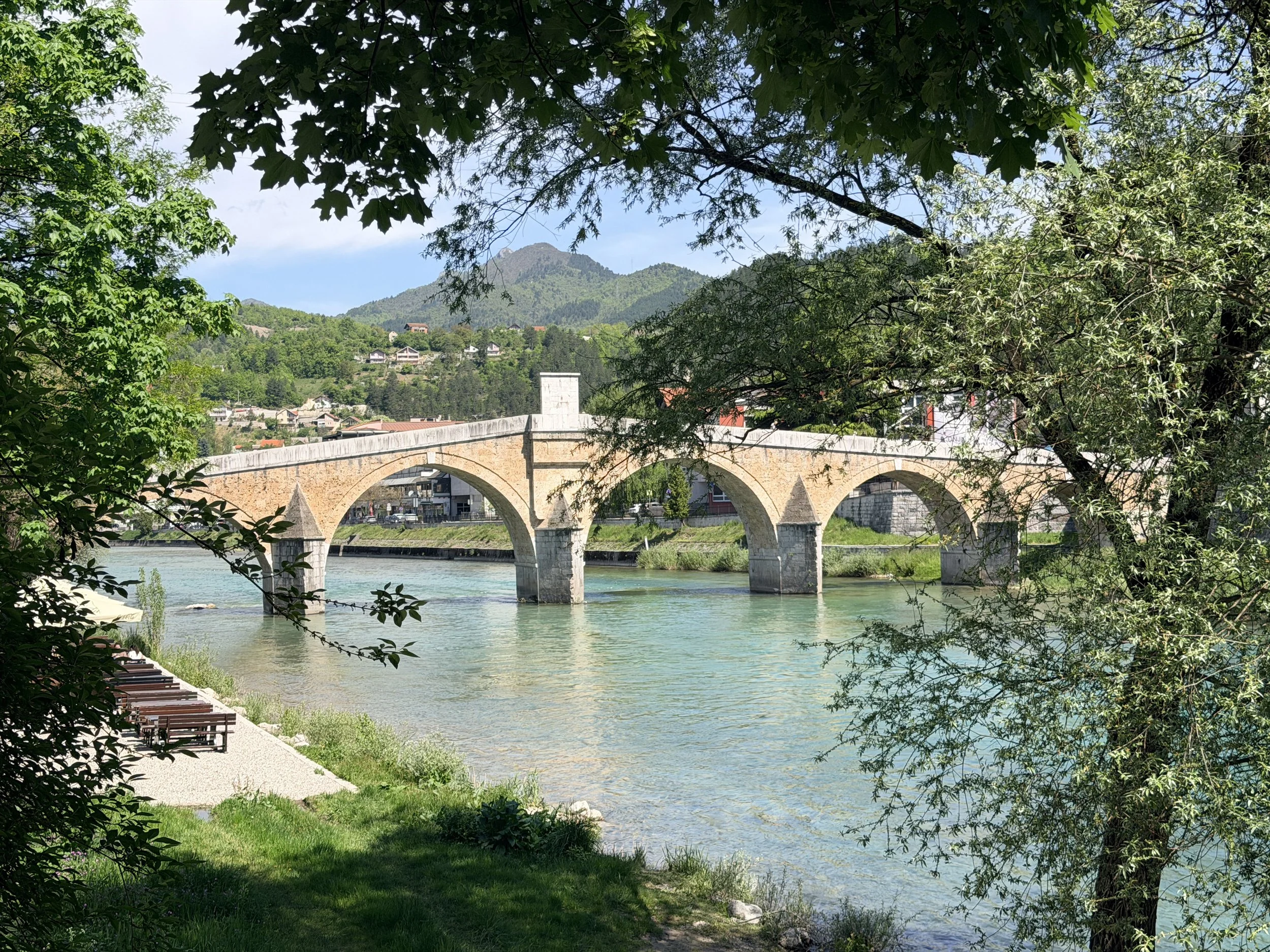
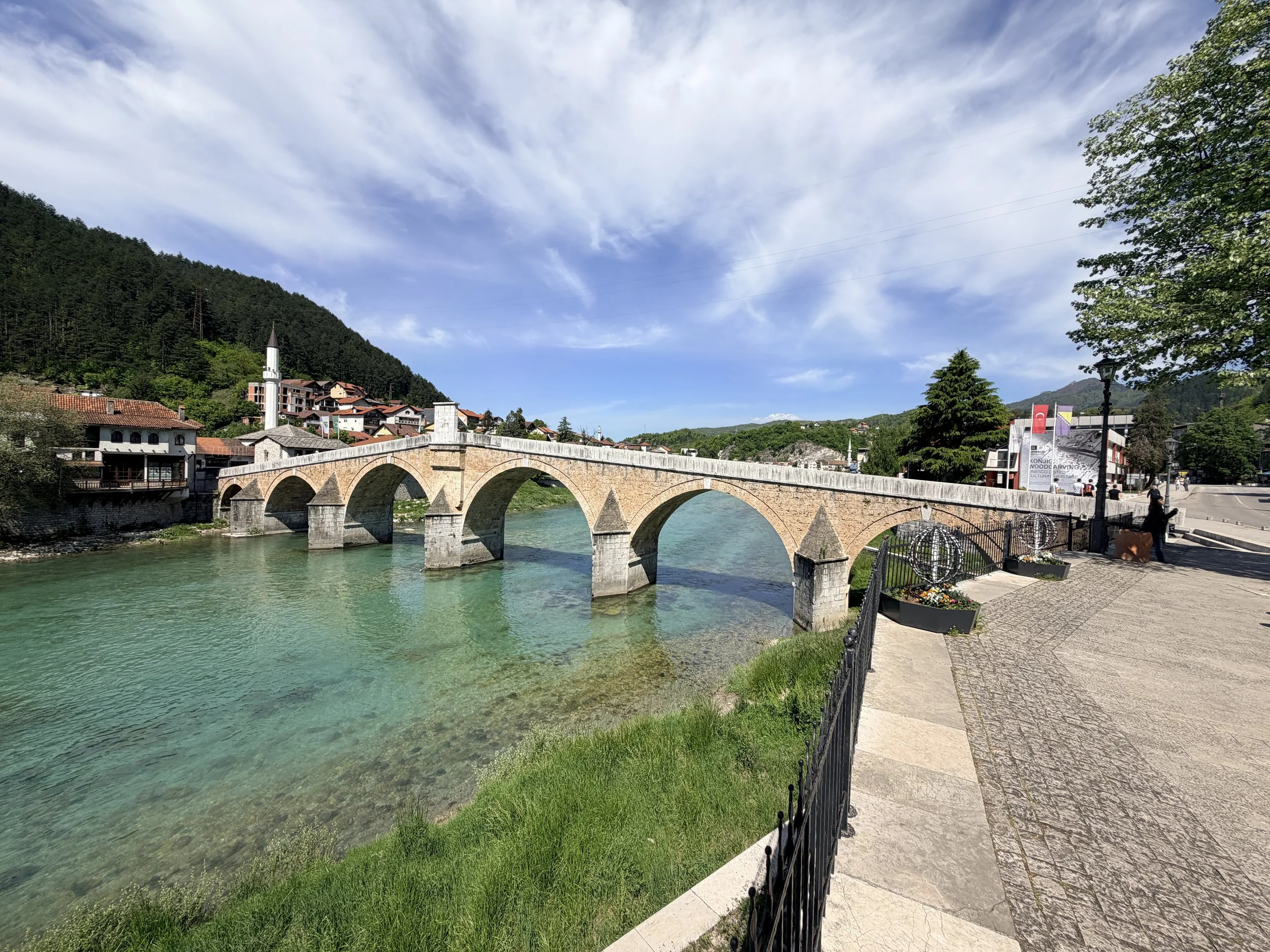
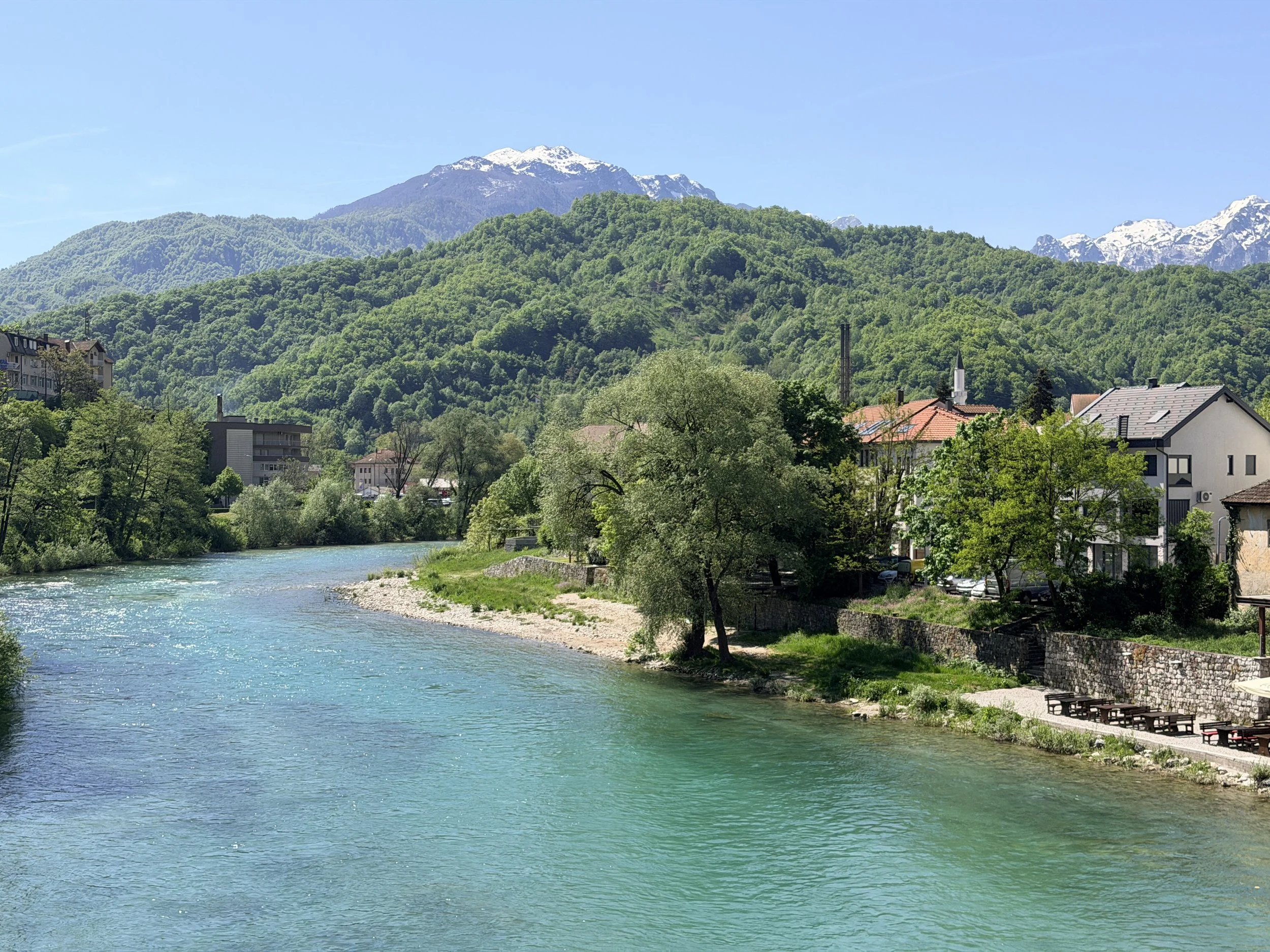
Continuing toward Sarajevo, we made a stop in the town of Konjic to admire another picturesque Ottoman-era stone bridge crossing the emerald-green Neretva River. Smaller and less famous than the iconic bridge in Mostar, the Konjic Bridge possesses a charm of its own. Surrounded by mountains, historic stone buildings, and the swift-flowing river below, it offered a peaceful and scenic glimpse into Bosnia and Herzegovina’s rich cultural heritage.
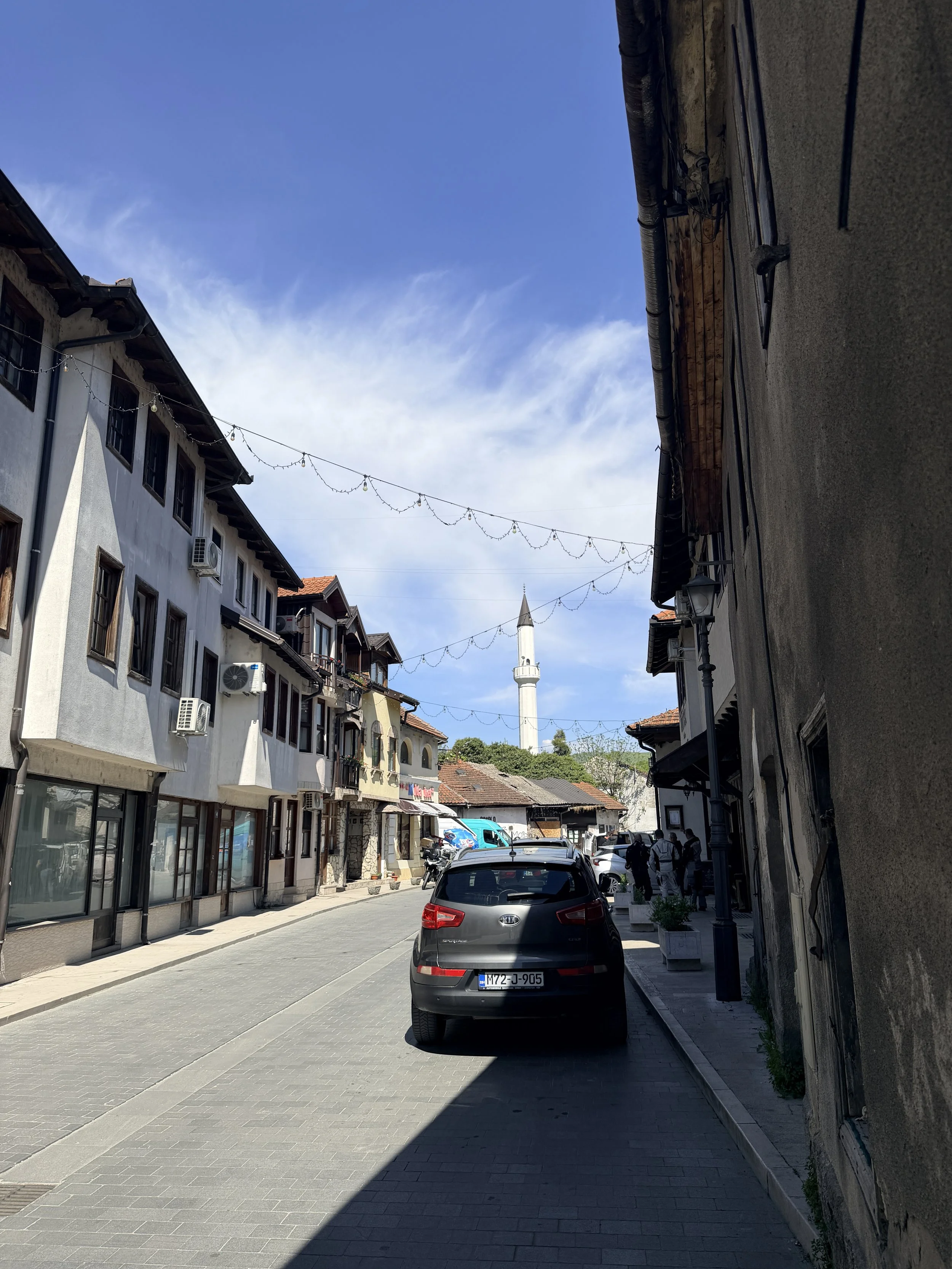
We spent some time strolling through the old town and along the riverbanks before continuing our journey toward Sarajevo.
From there, we continued to one of the most unusual places we visited in the Balkans — Tito’s Bunker. Officially known as the ARK D-0 Atomic War Command bunker, the massive underground facility was secretly built during the Cold War to protect Yugoslav leader Josip Broz Tito and selected government officials in the event of a nuclear war. Construction reportedly lasted for decades and cost an astonishing 4.6 billion U.S. dollars at the time. The bunker remained one of Yugoslavia’s top military secrets for many years. Ironically, Tito himself never set foot inside after its completion. Hidden deep inside the mountains near Konjic, the bunker was designed to sustain around 350 people for up to six months in complete isolation from the outside world.
We had booked our tickets online in advance. First, we drove to a small travel office in town to pay and collect the tickets, then continued another five kilometers into a remote mountain valley. There, we parked between steep forested mountains and walked toward a small entrance hidden behind an iron gate. At the beginning, we were instructed not to take photos because the surrounding area was still considered a military facility.
Later, we boarded a small bus that transported us farther into the restricted area before finally entering the bunker itself. Ironically, once inside the bunker, photography was completely allowed, which made the earlier camera restriction feel rather unnecessary and somewhat amusing.
The bunker itself was surprisingly impressive in both size and quality. Hidden behind an ordinary-looking entrance was a vast underground complex filled with long corridors, conference rooms, communication centers, dormitories, offices, kitchens, fuel systems, and Tito’s private quarters. Everything had been built with remarkable attention to detail and durability.
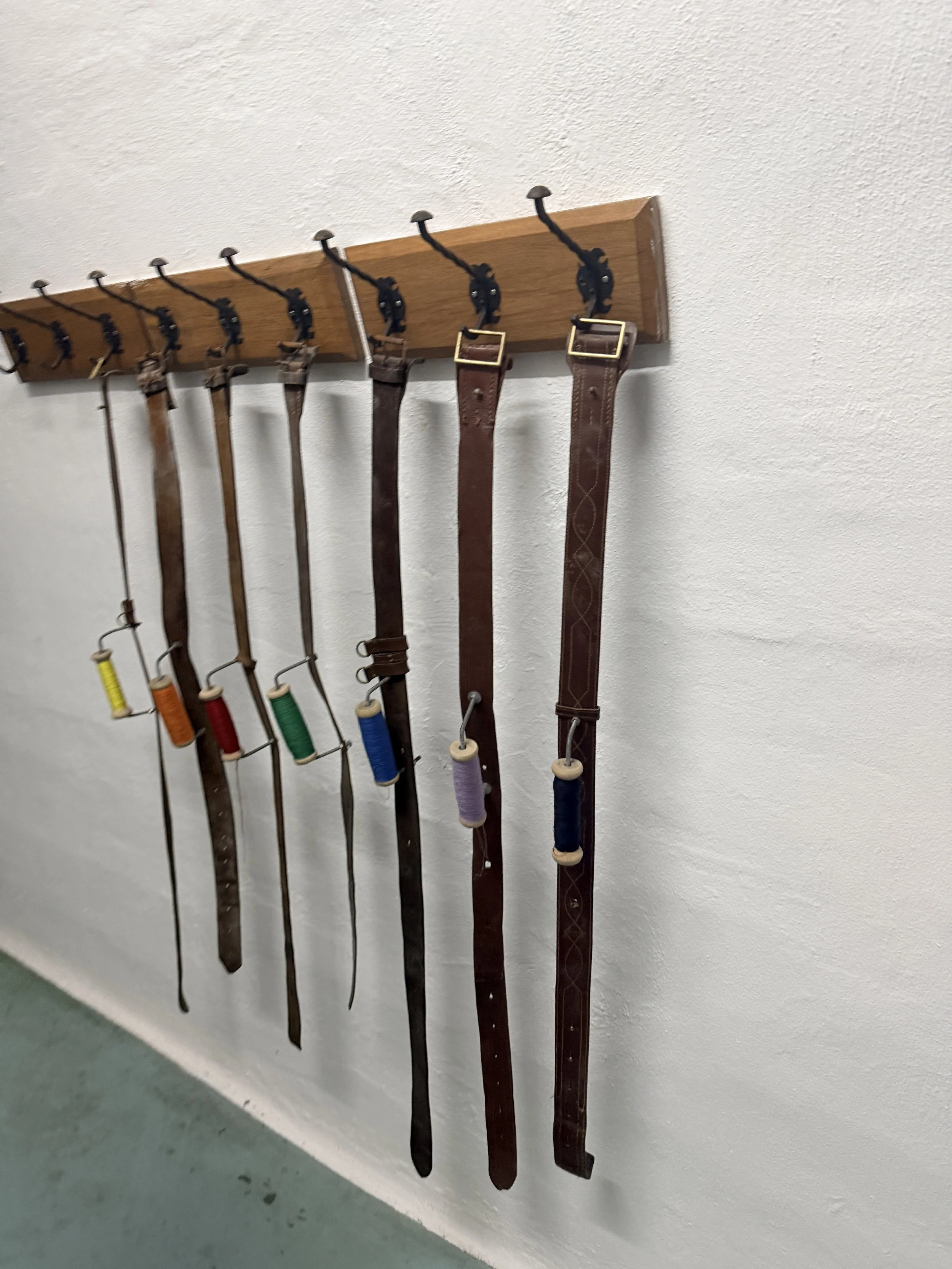
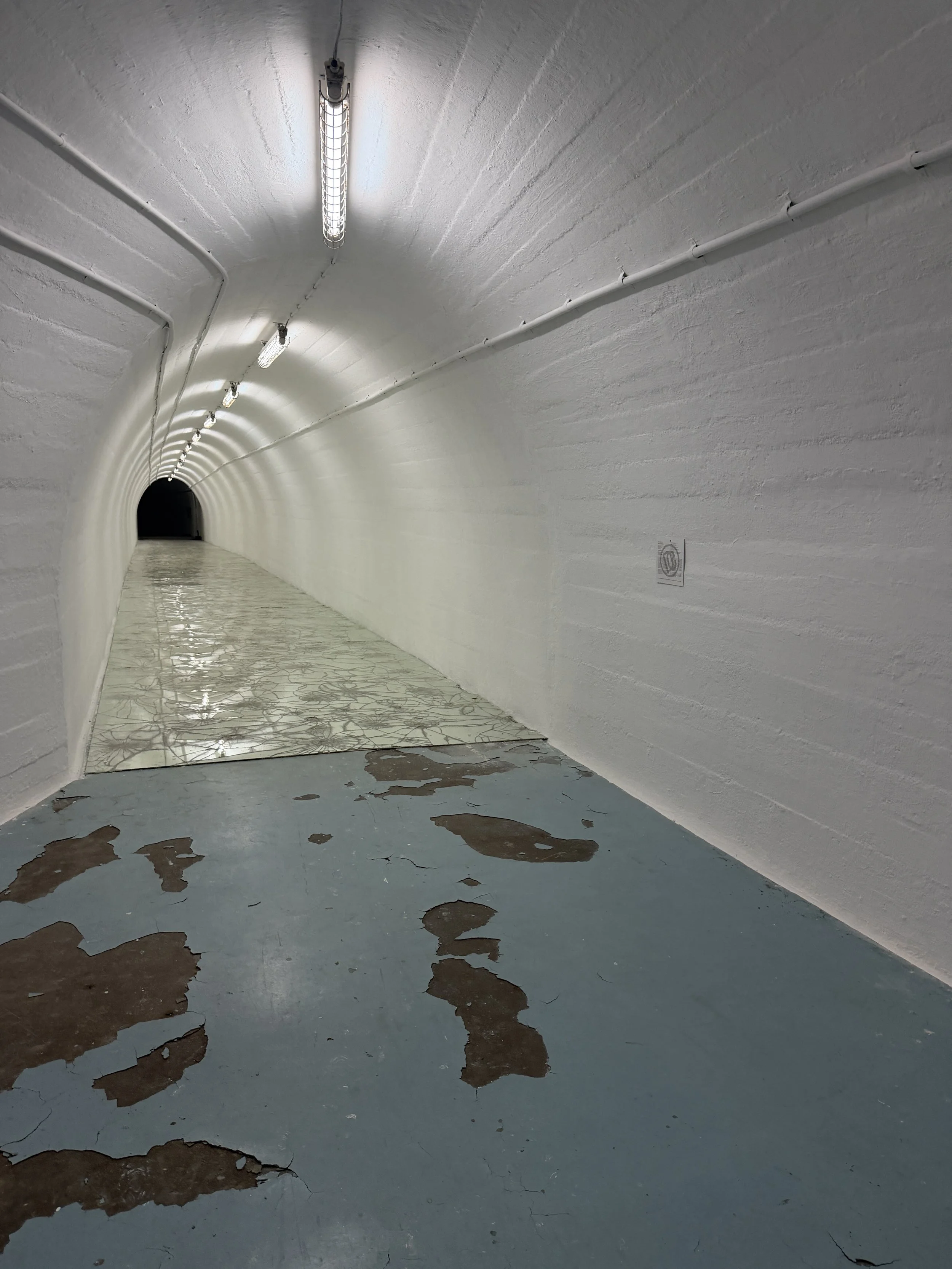
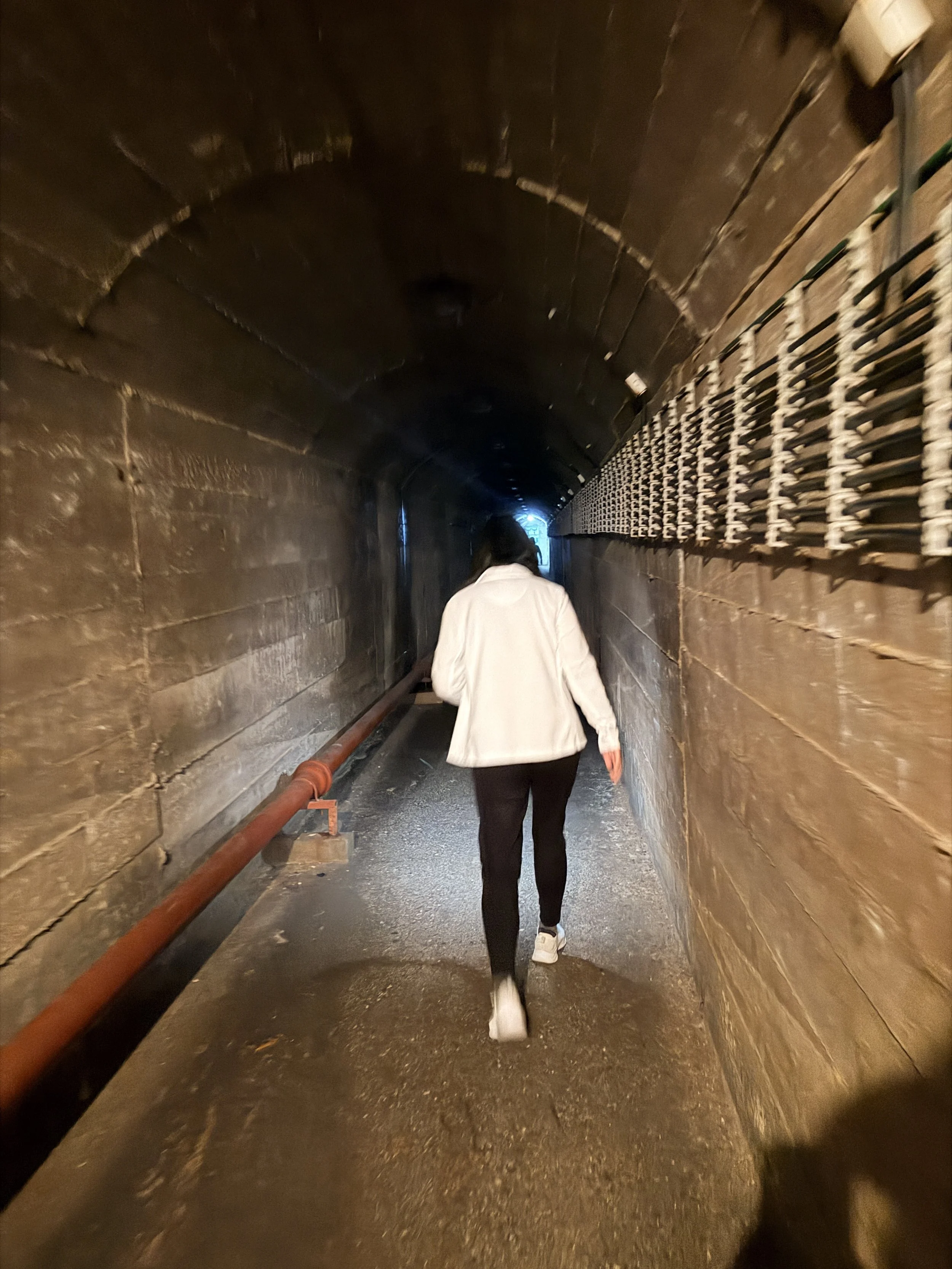
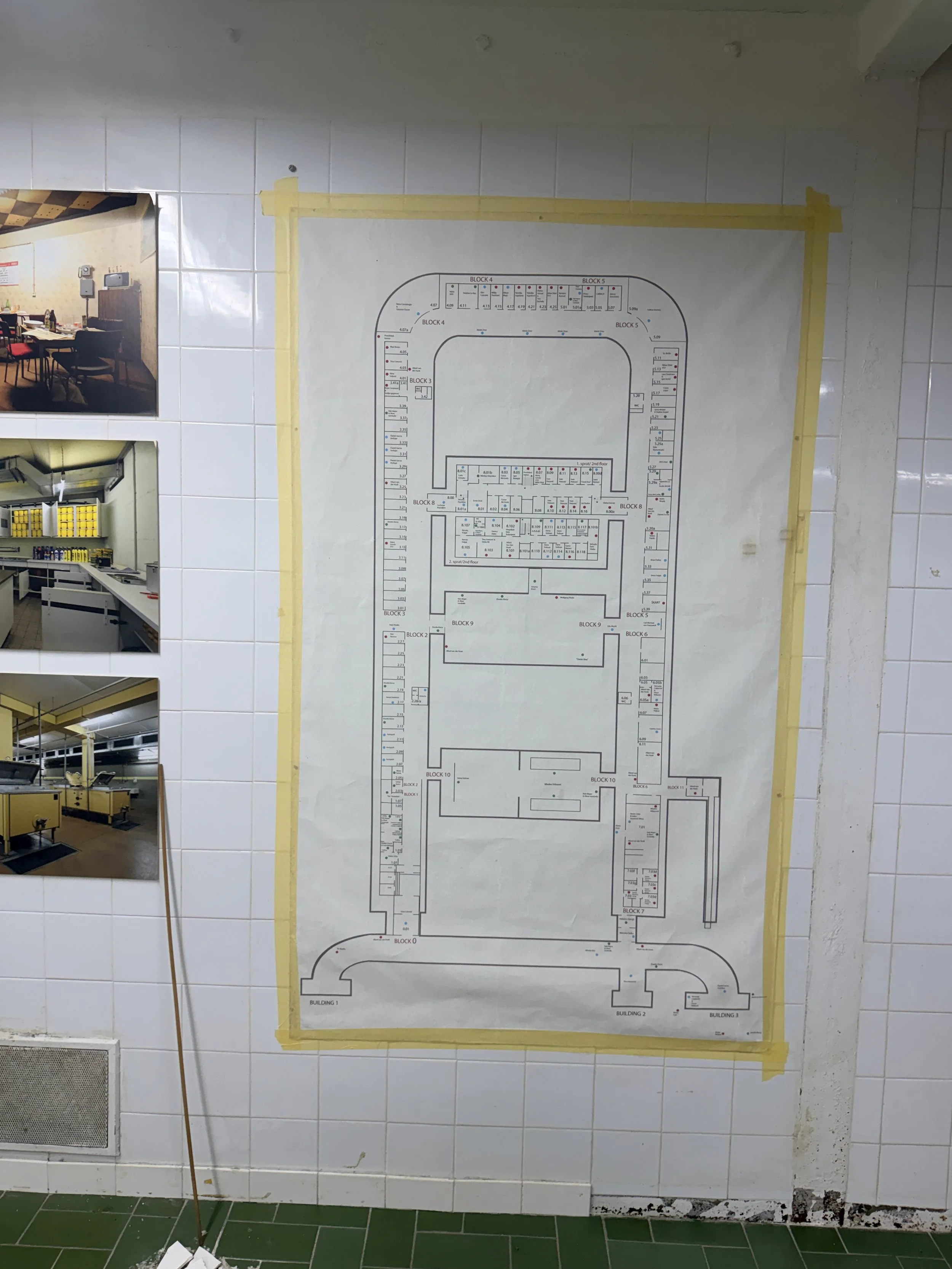
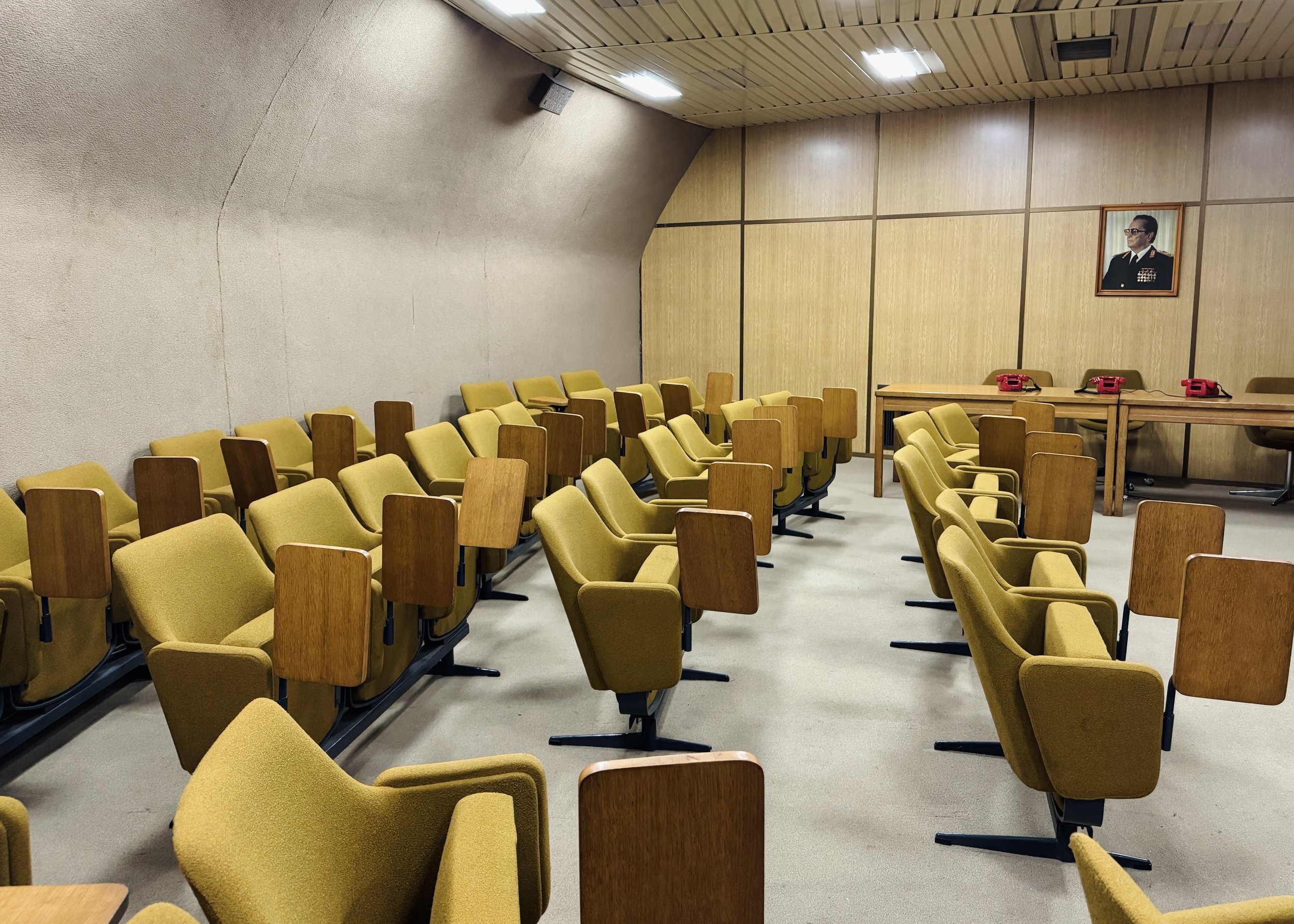
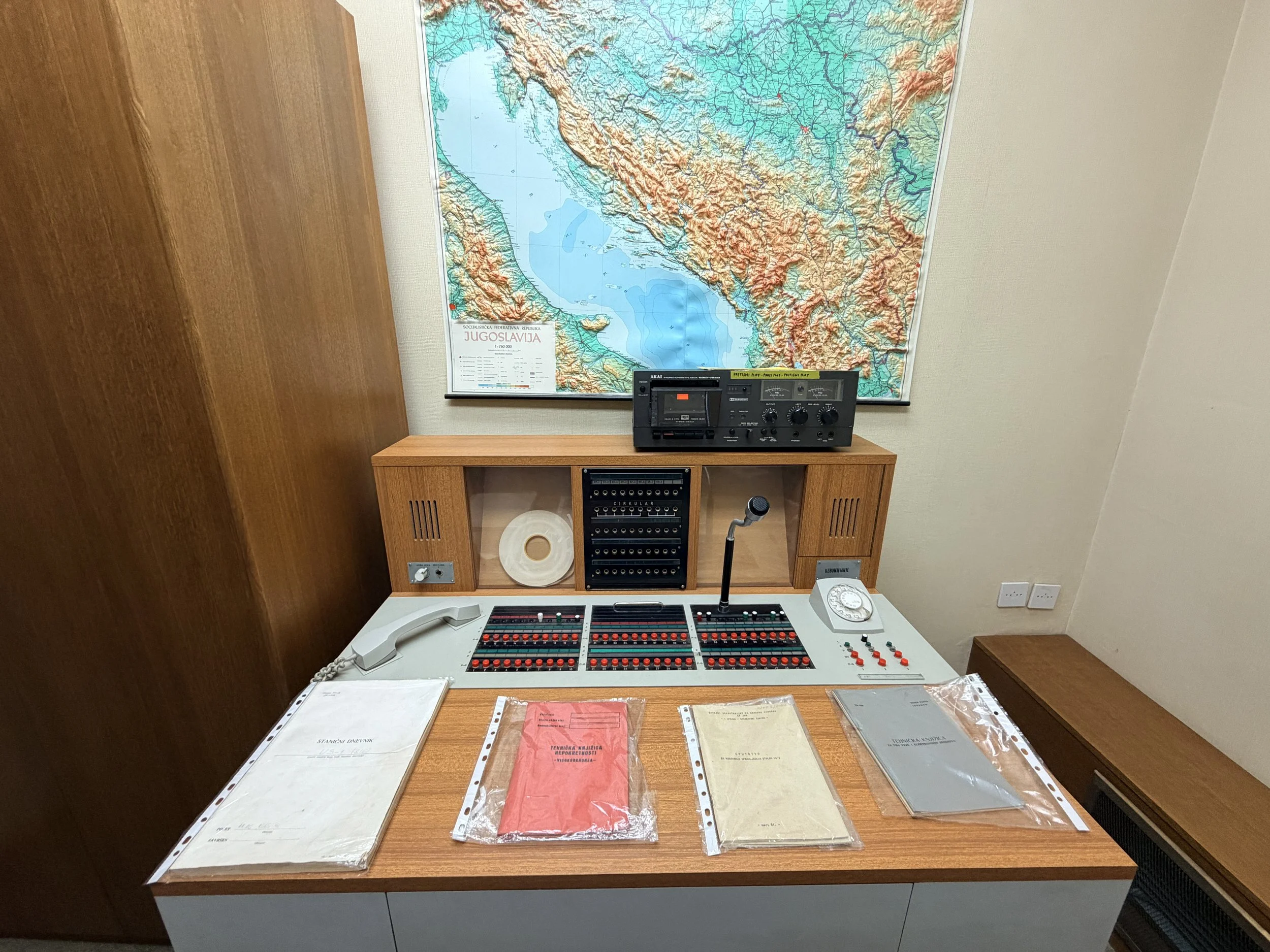
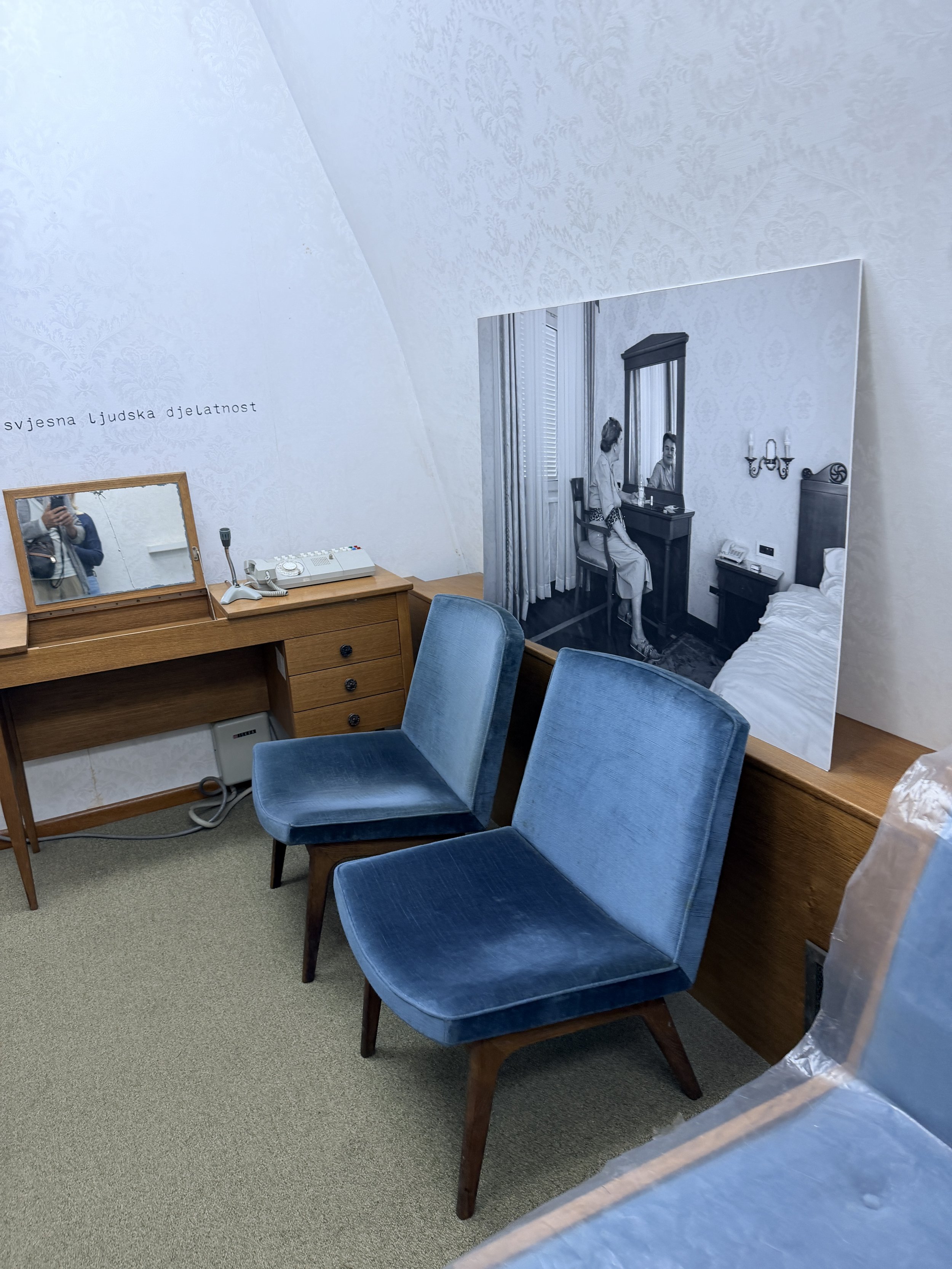
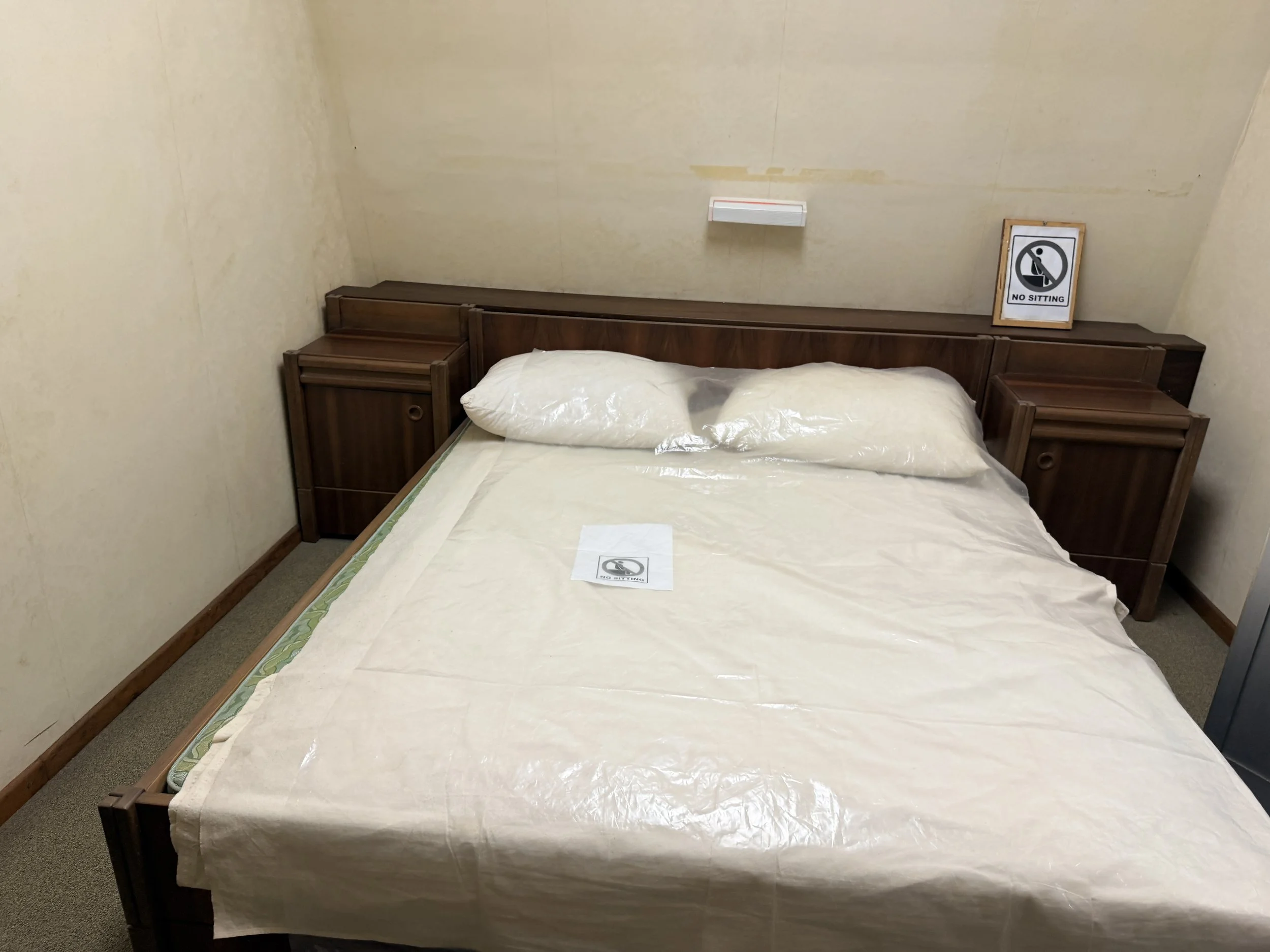
What impressed us most was the condition of the equipment. Even though more than forty-five years had passed since its completion, much of the machinery, furniture, and infrastructure still looked solid and functional. According to the guide, most of the equipment had been manufactured domestically within the former Yugoslavia. The guide spoke with a certain nostalgia, noting that many of those industrial and technological capabilities disappeared after the breakup of the country.
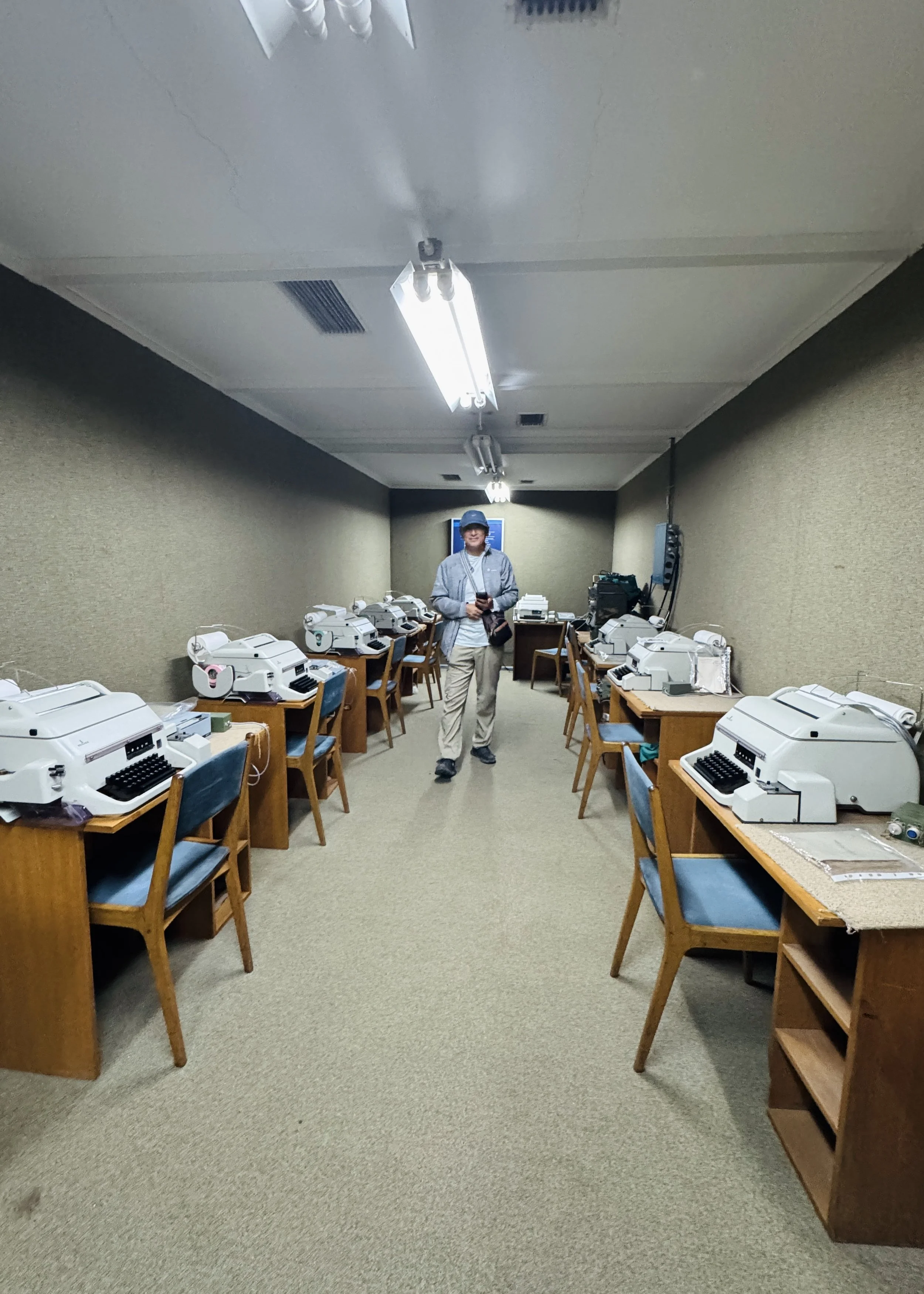
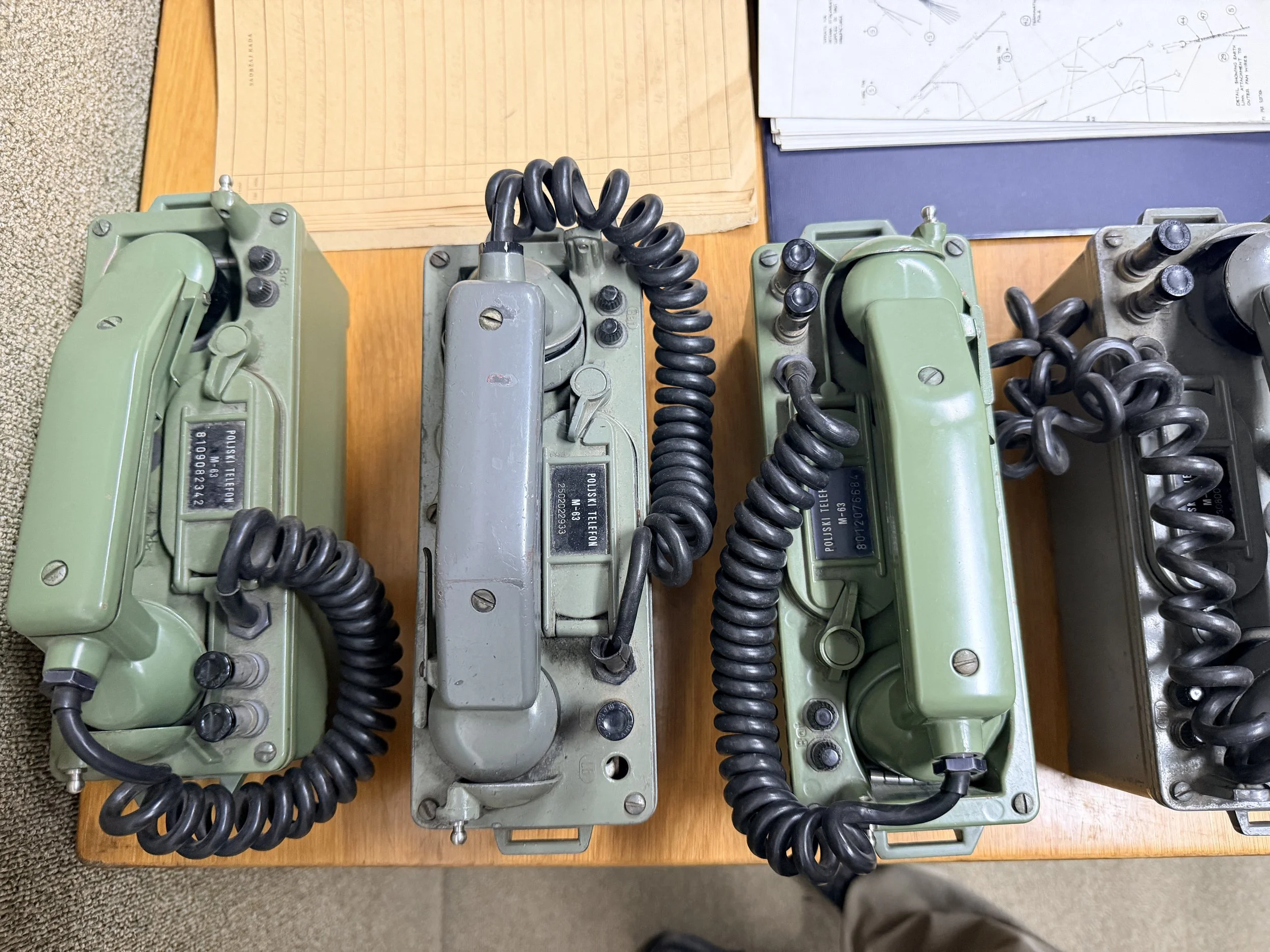
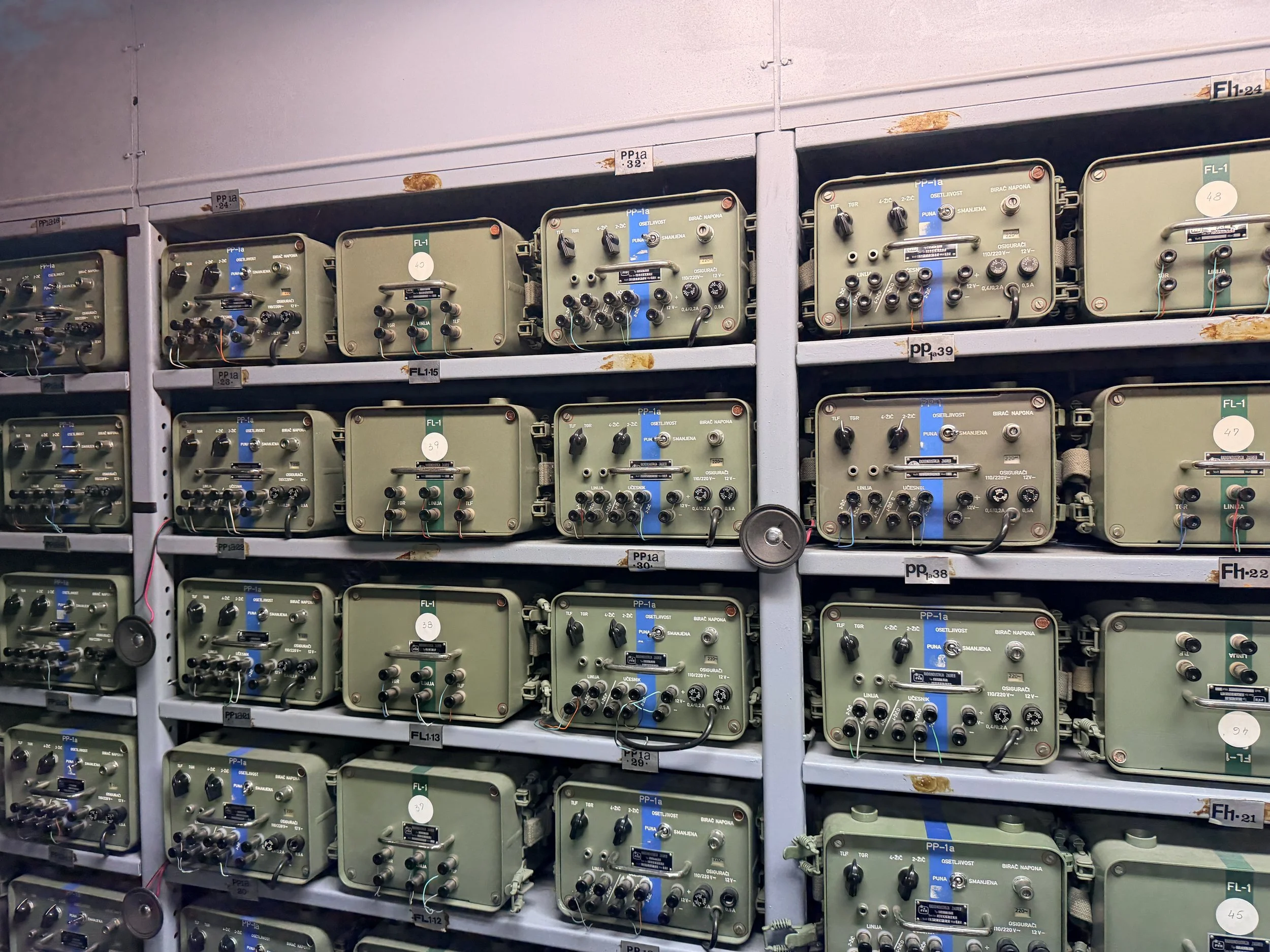
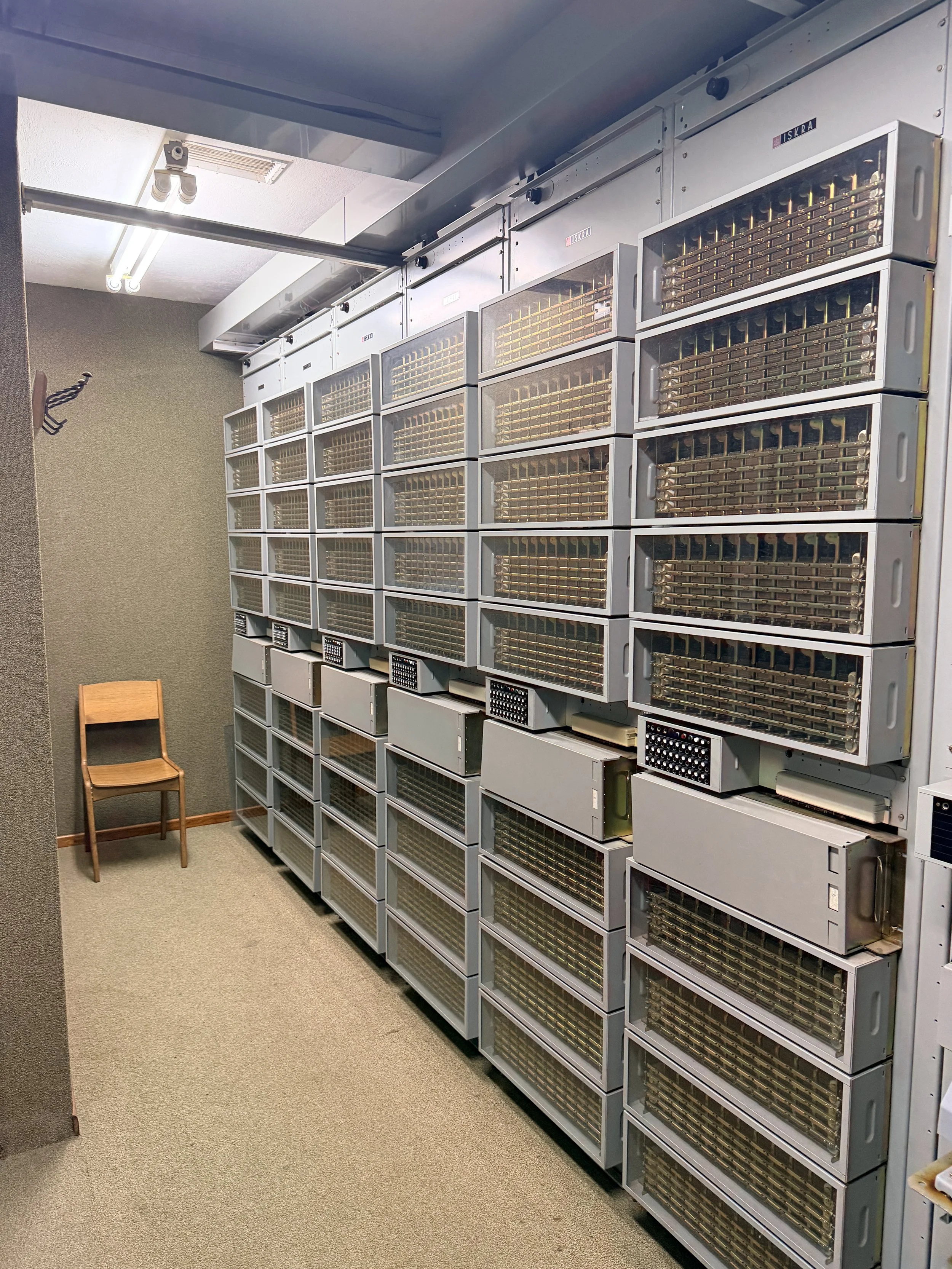
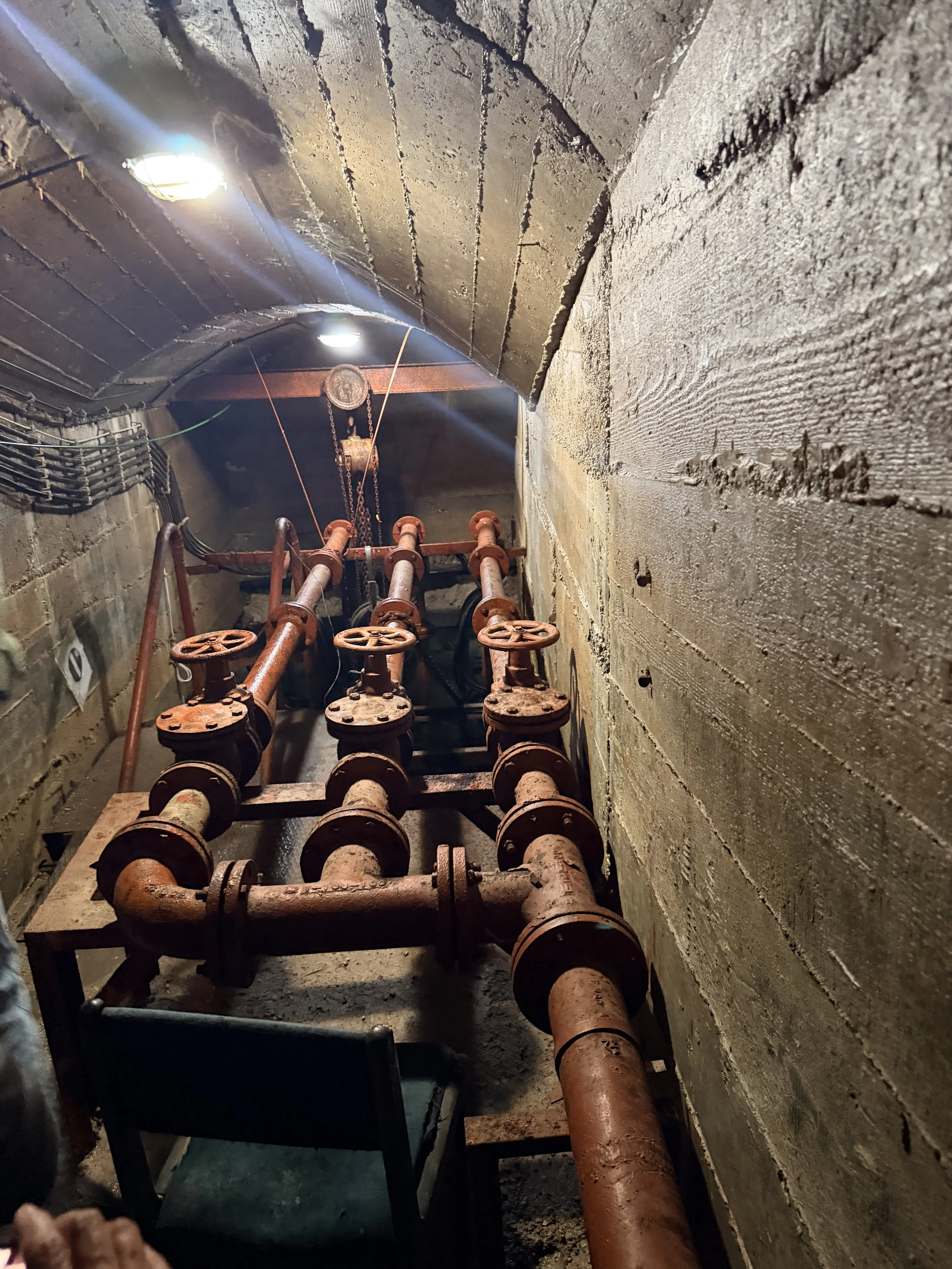
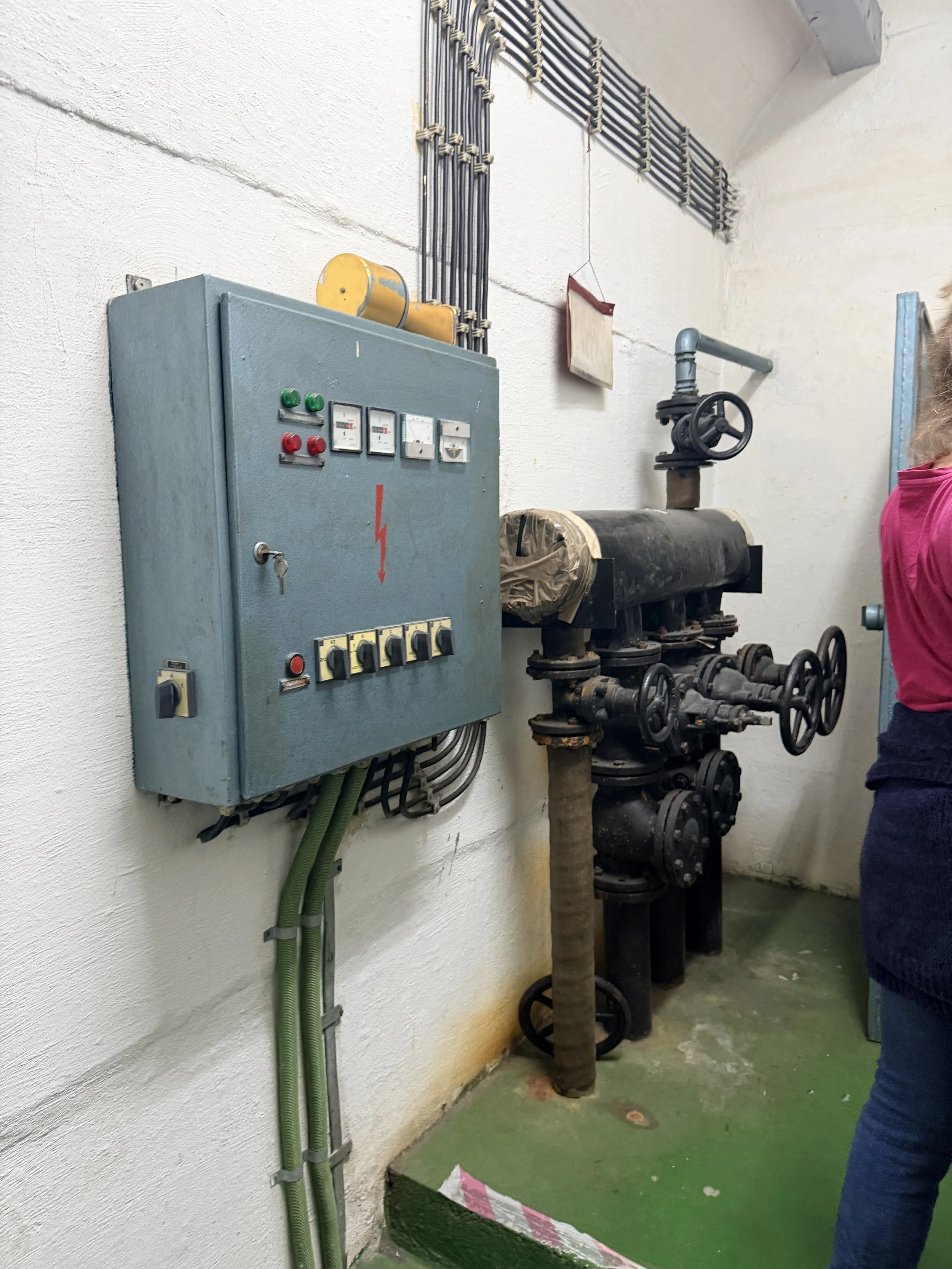
Walking through the bunker felt like stepping into a preserved Cold War time capsule hidden deep beneath the mountains.
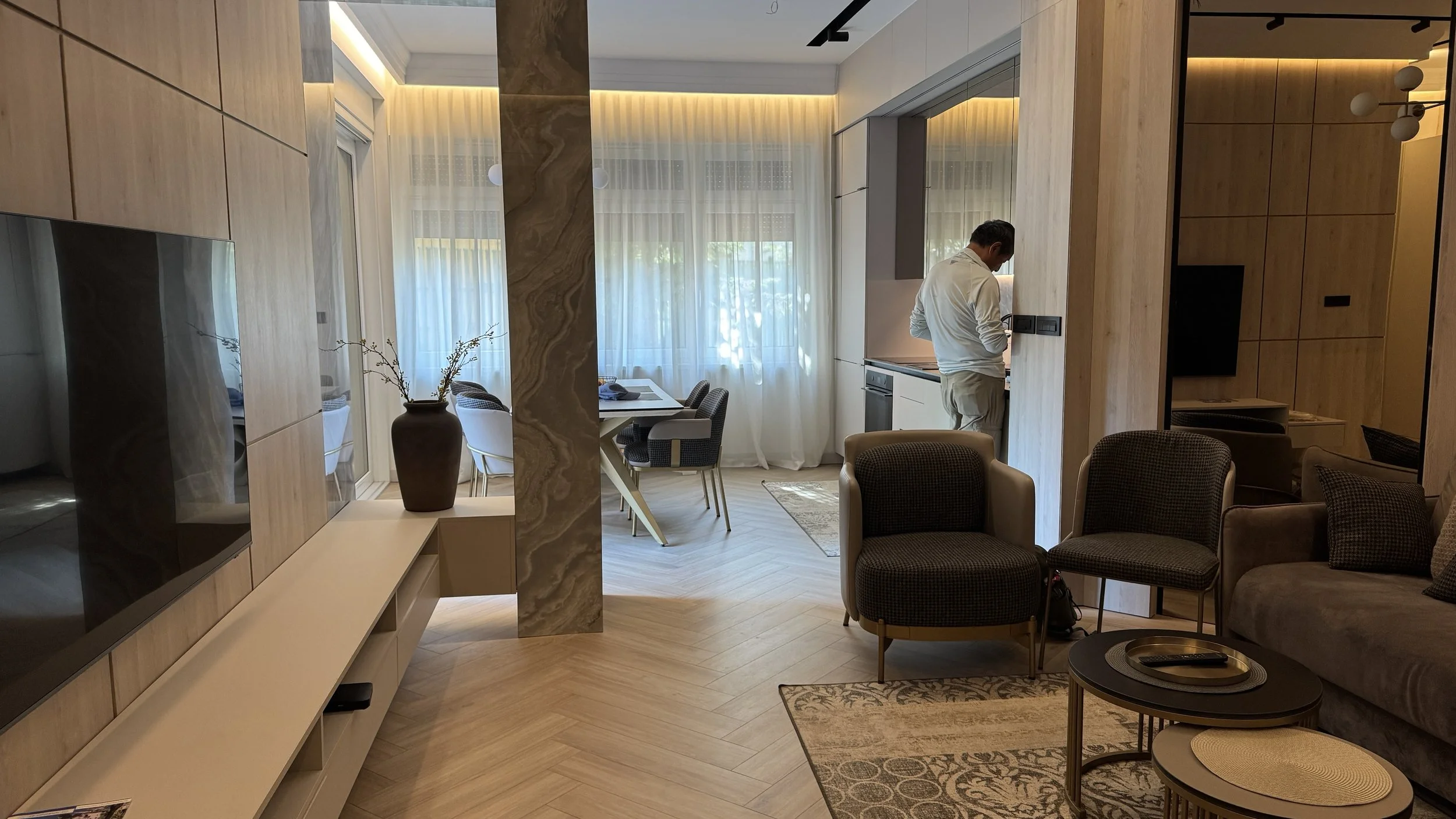
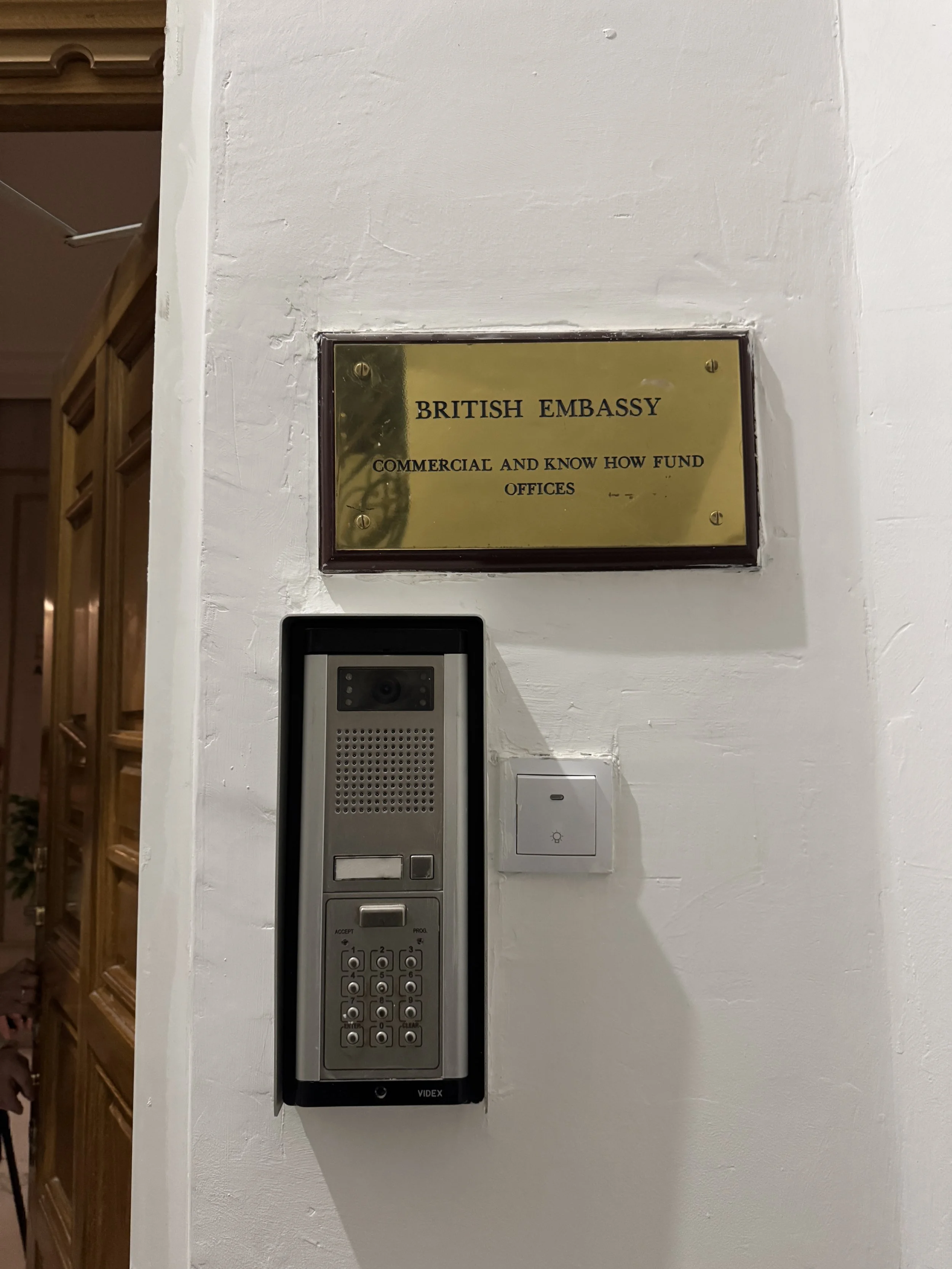
Later that afternoon, we arrived in Sarajevo and checked into a rented apartment housed in an old building with a faded British Embassy sign still hanging on the wall — a curious reminder of the city’s layered past.
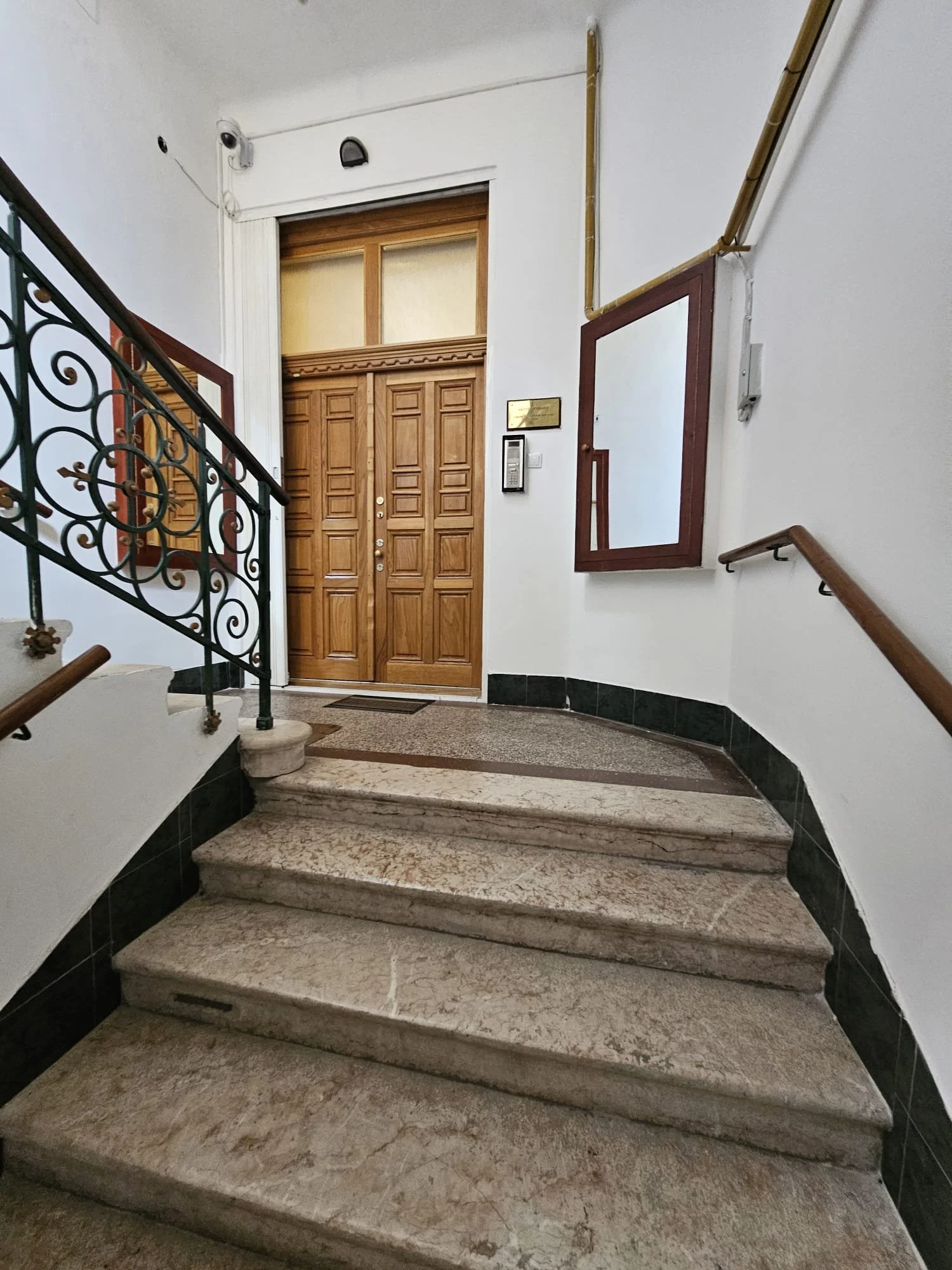
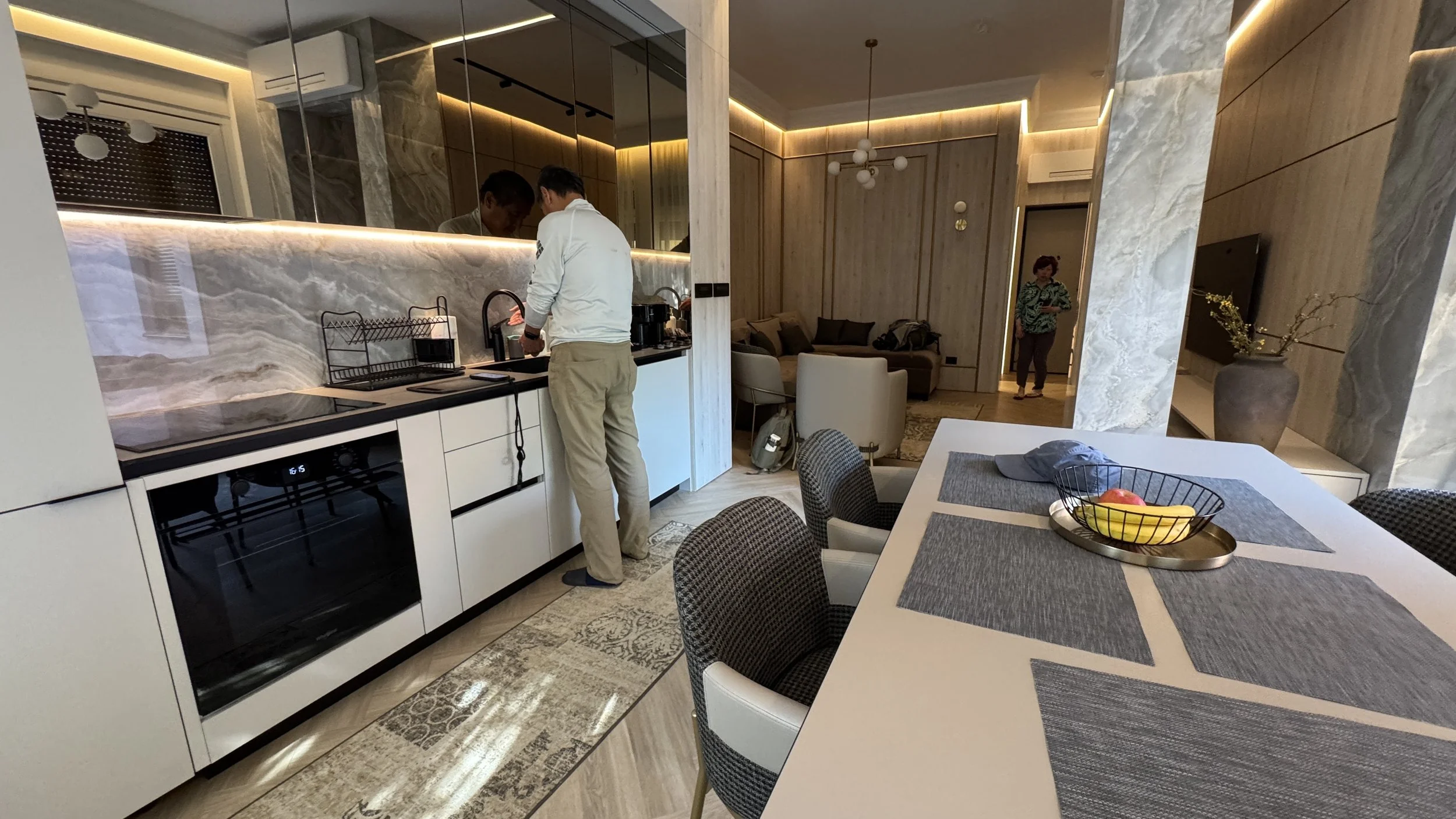
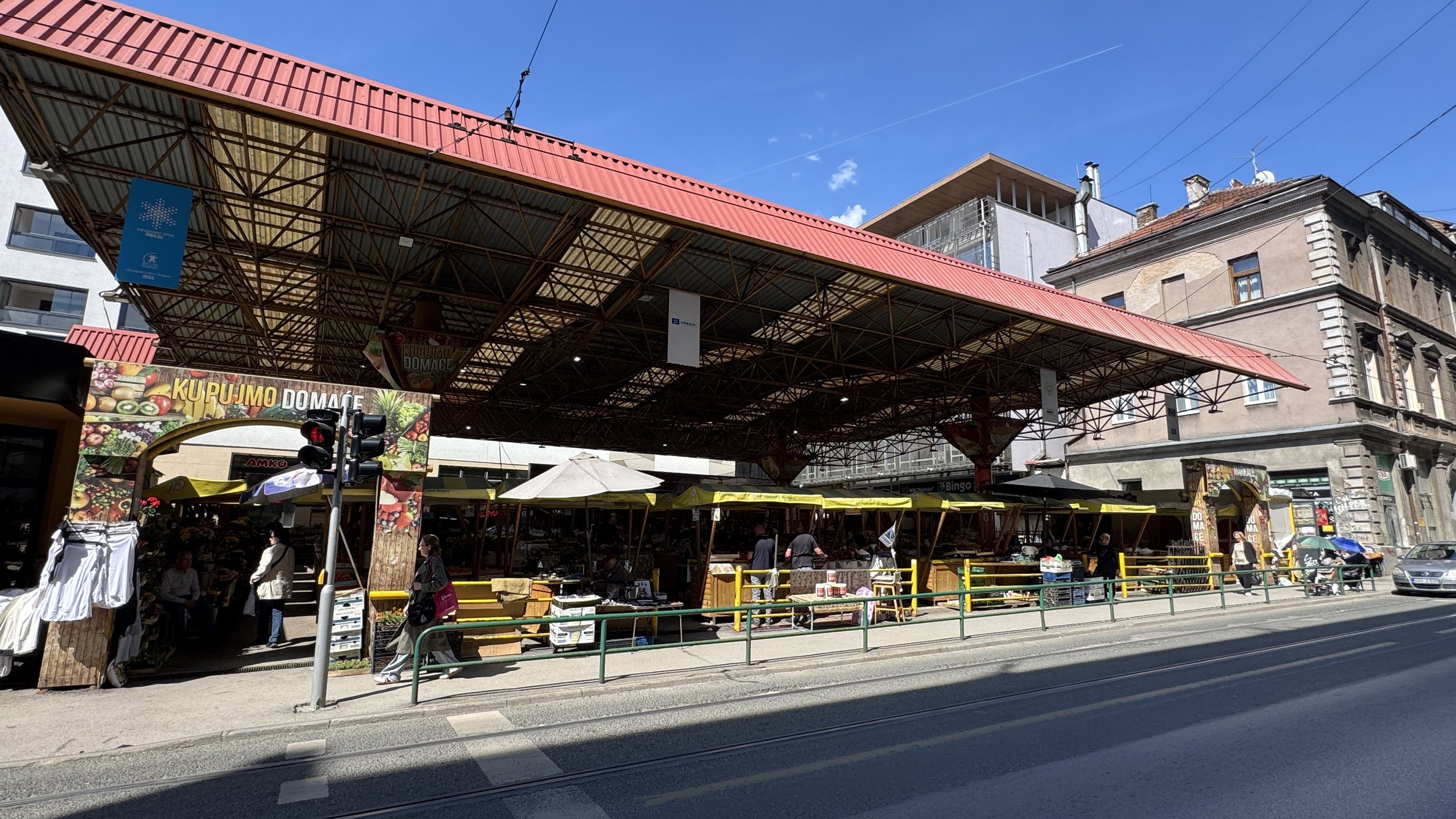
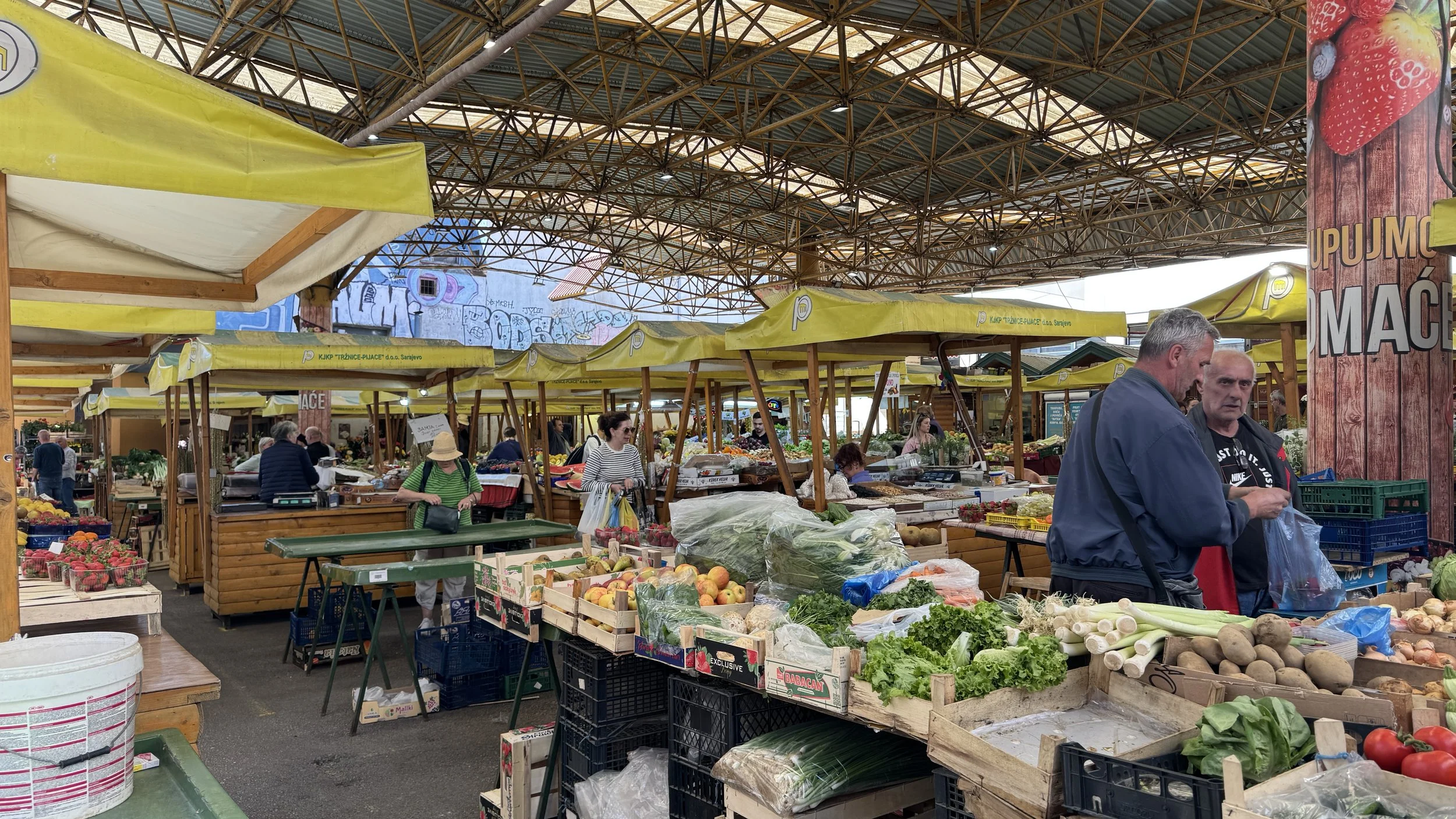
After settling in, we walked to a nearby open-air market and grocery store to buy strawberries, tomatoes, eggs, and a few other essentials for a simple dinner that evening and breakfast the next morning.
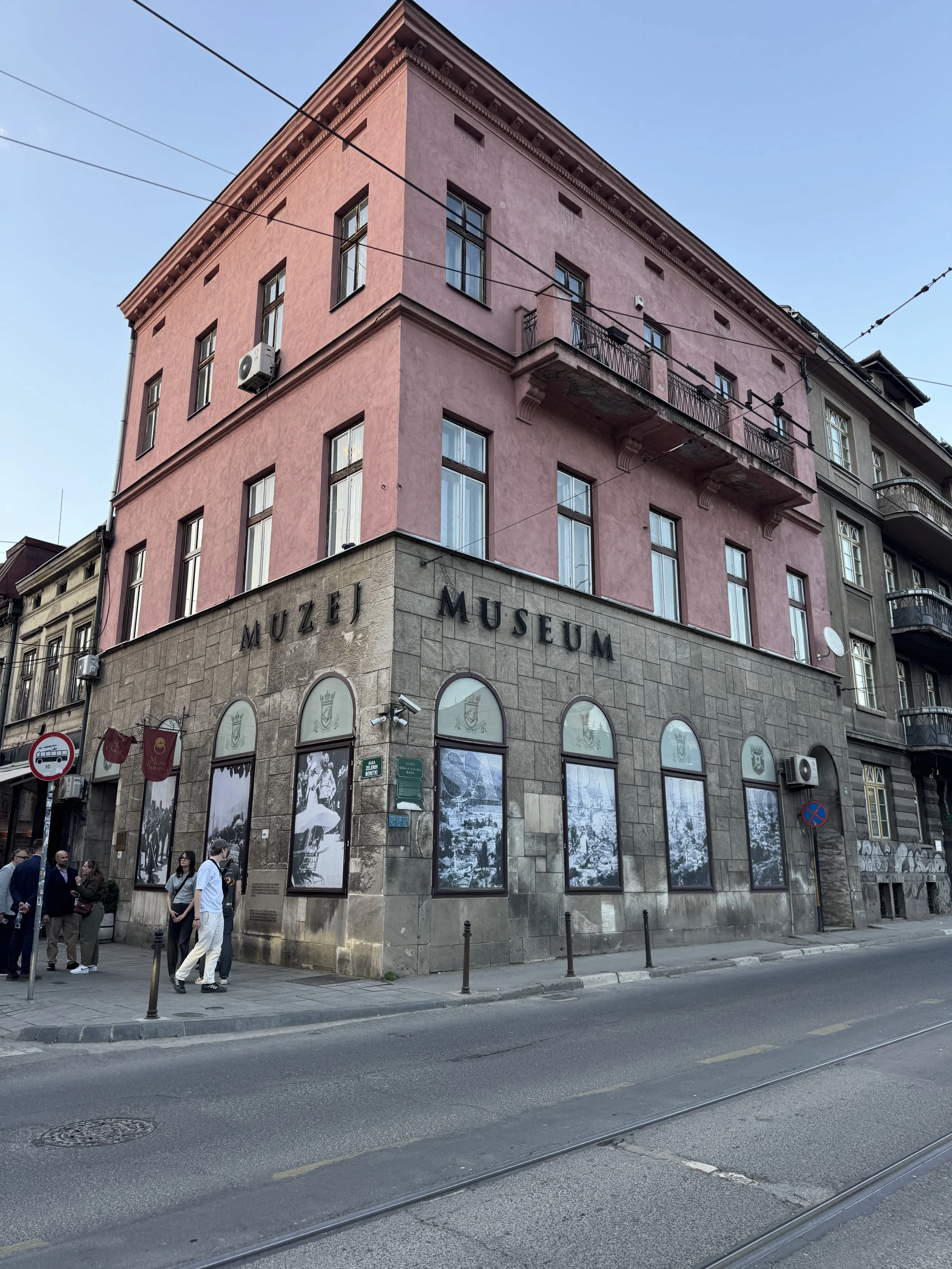
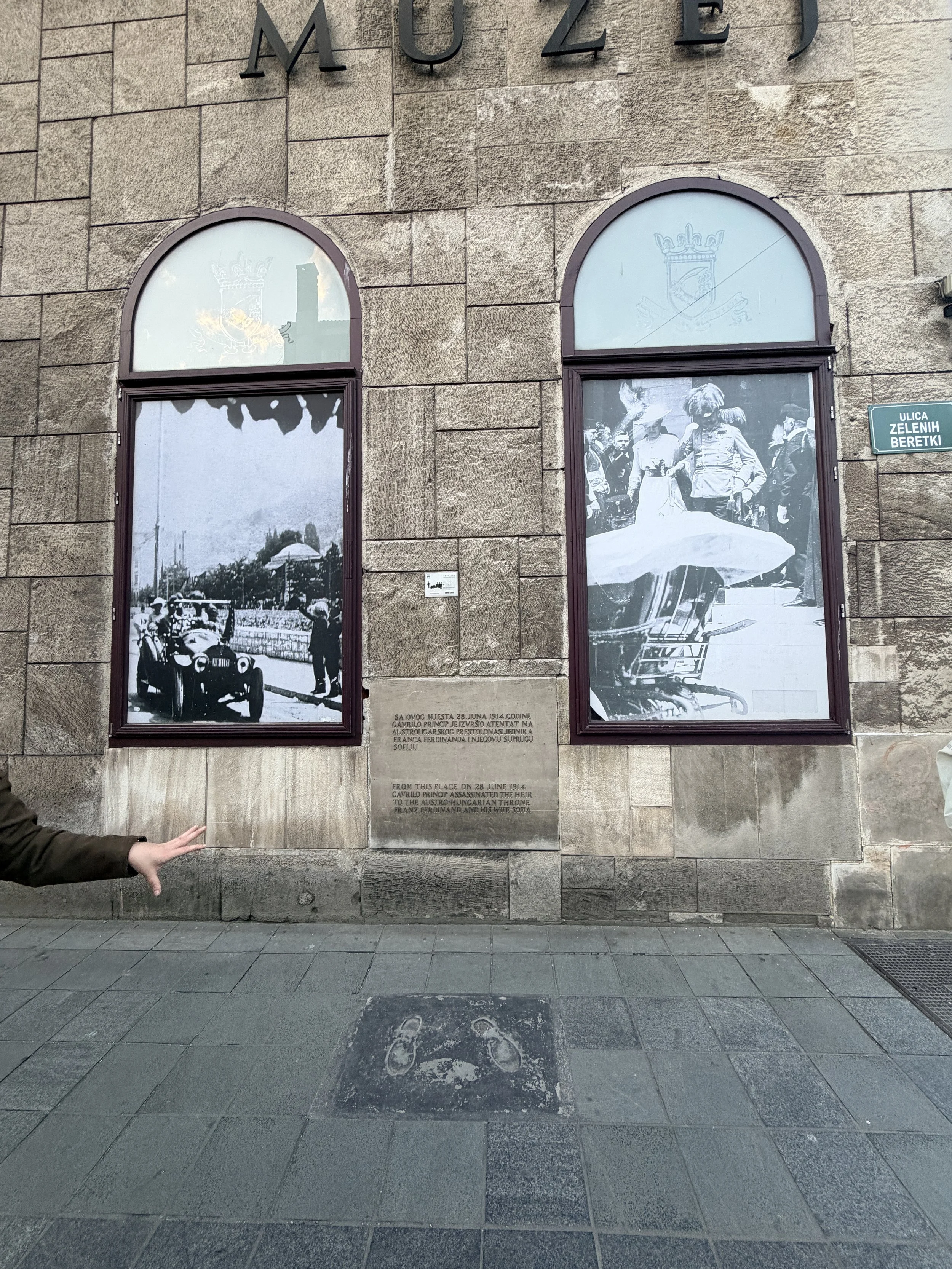
Following our quiet dinner at the apartment, we ventured out toward the city center. We visited the Latin Bridge and the nearby assassination site of Archduke Franz Ferdinand, whose death in Sarajevo triggered the beginning of World War I. Standing there at night, it was remarkable to think how one small corner of the city had become tied to such a pivotal moment in world history.
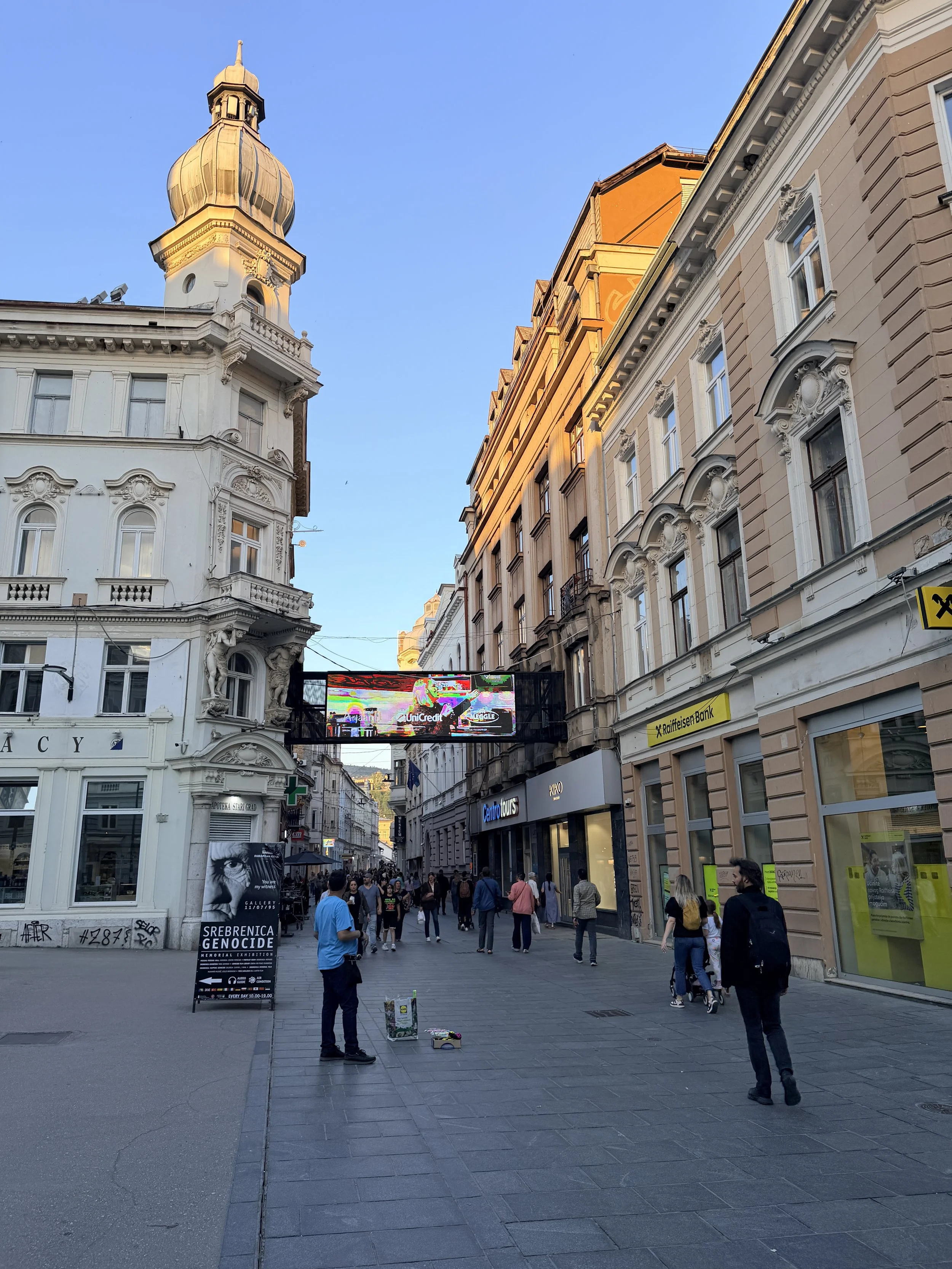
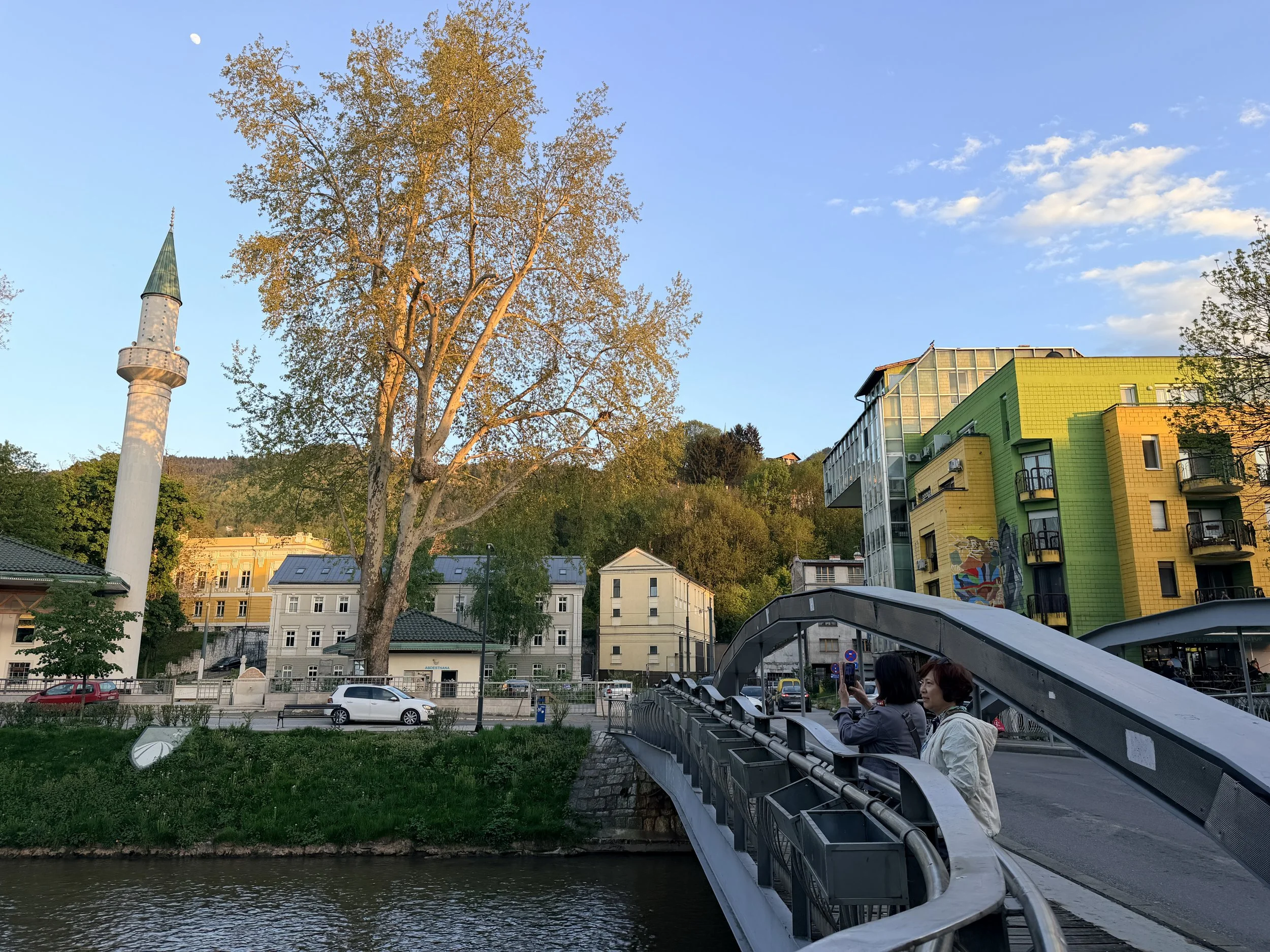
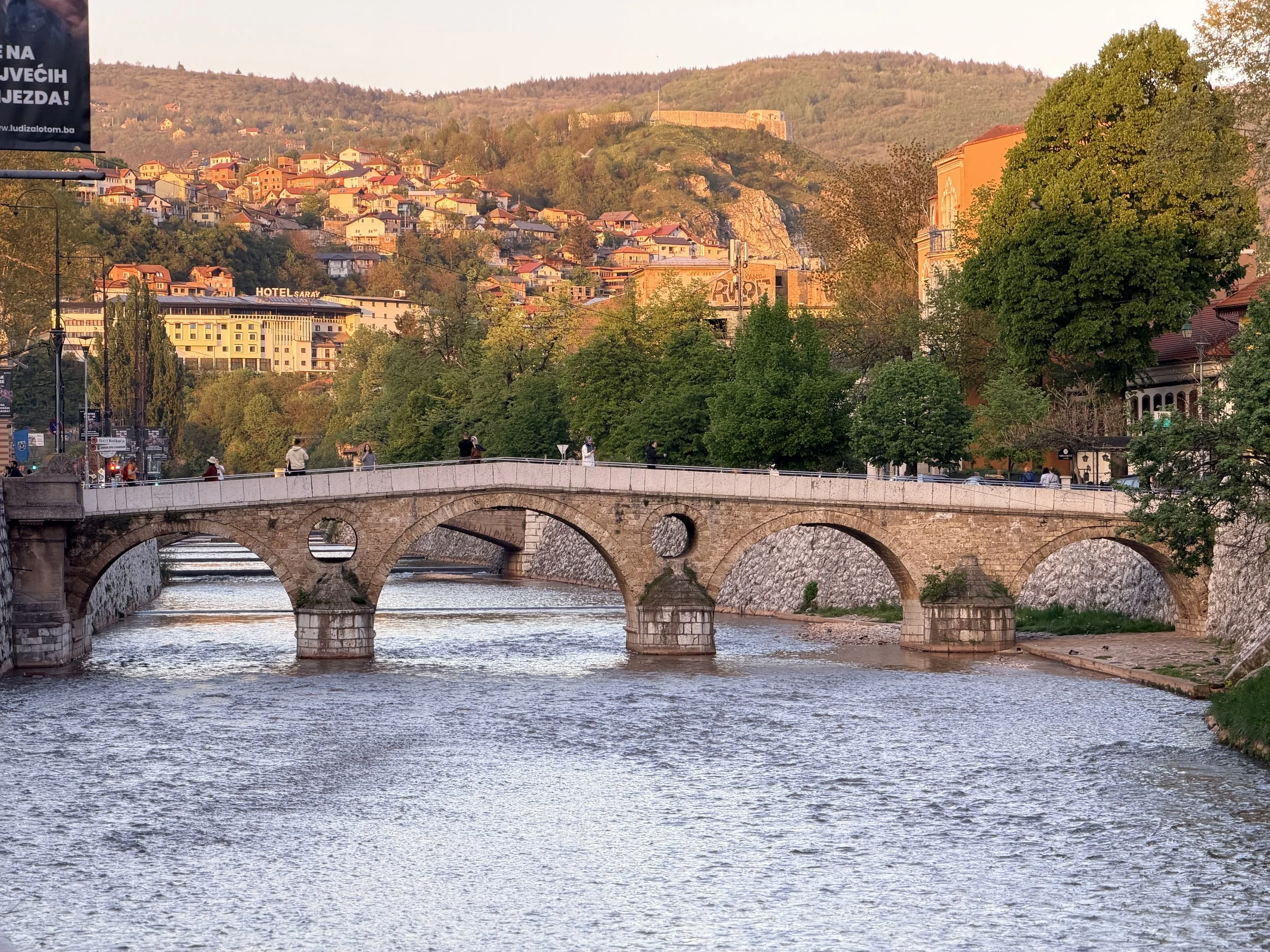
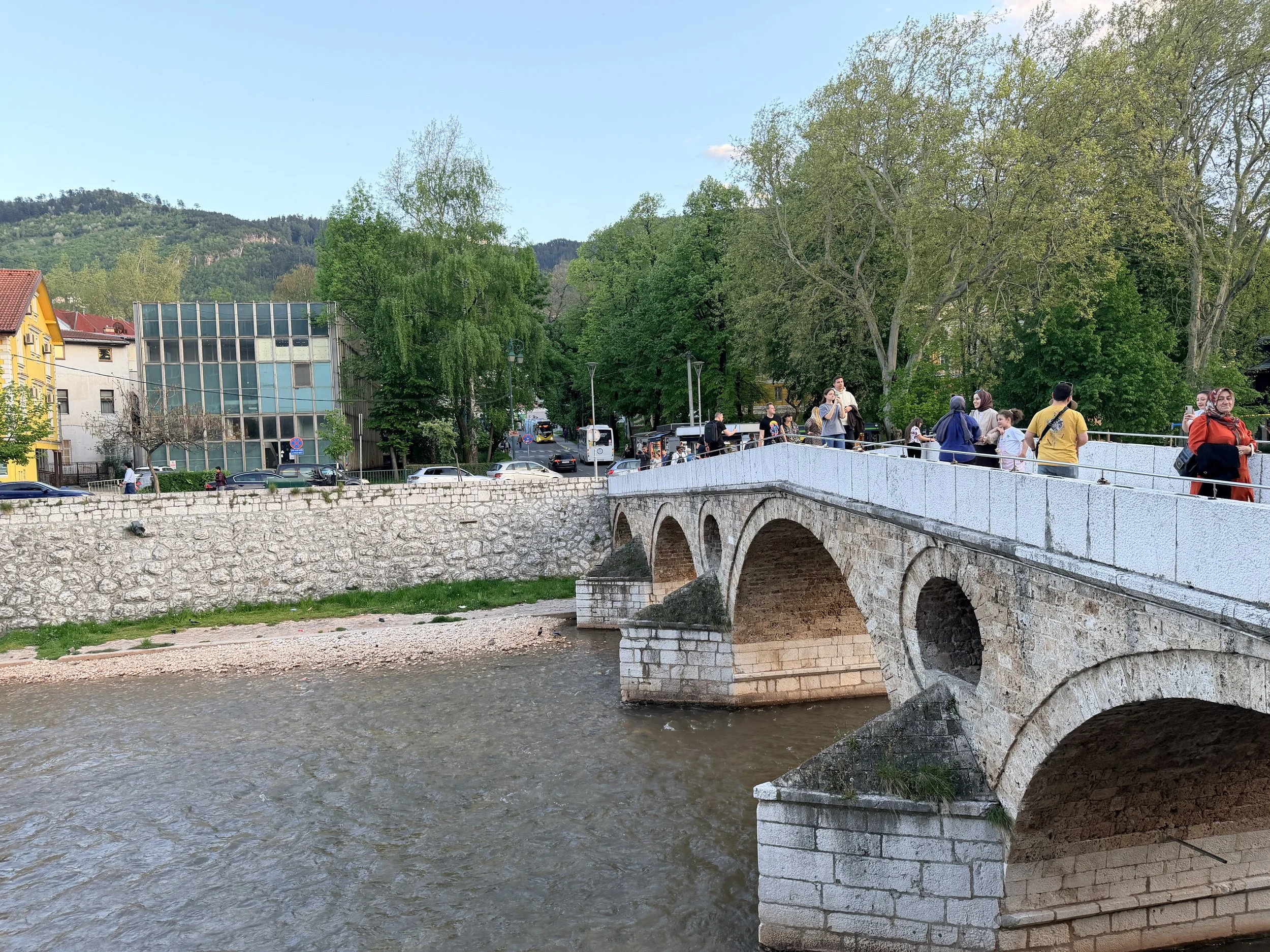
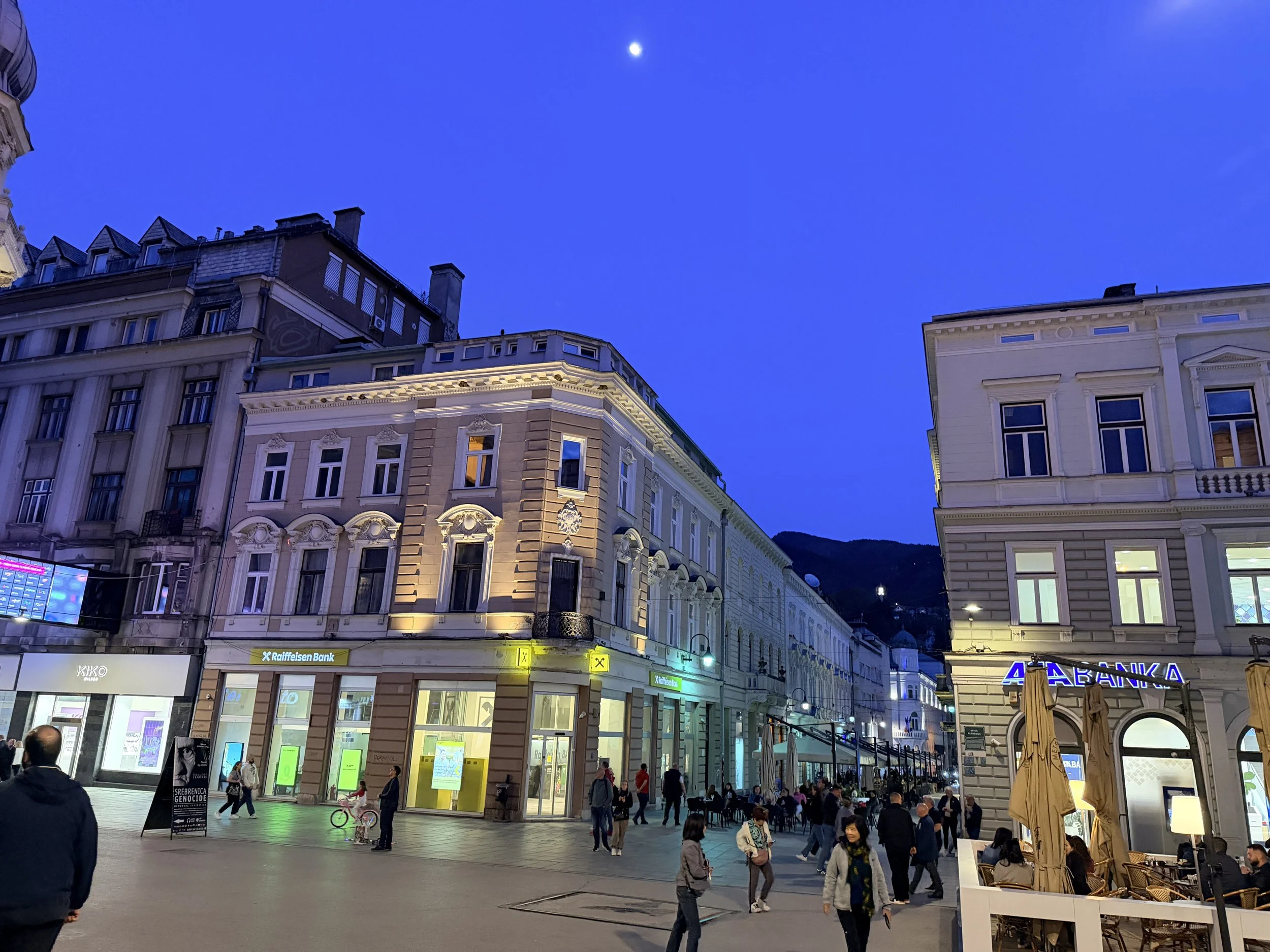
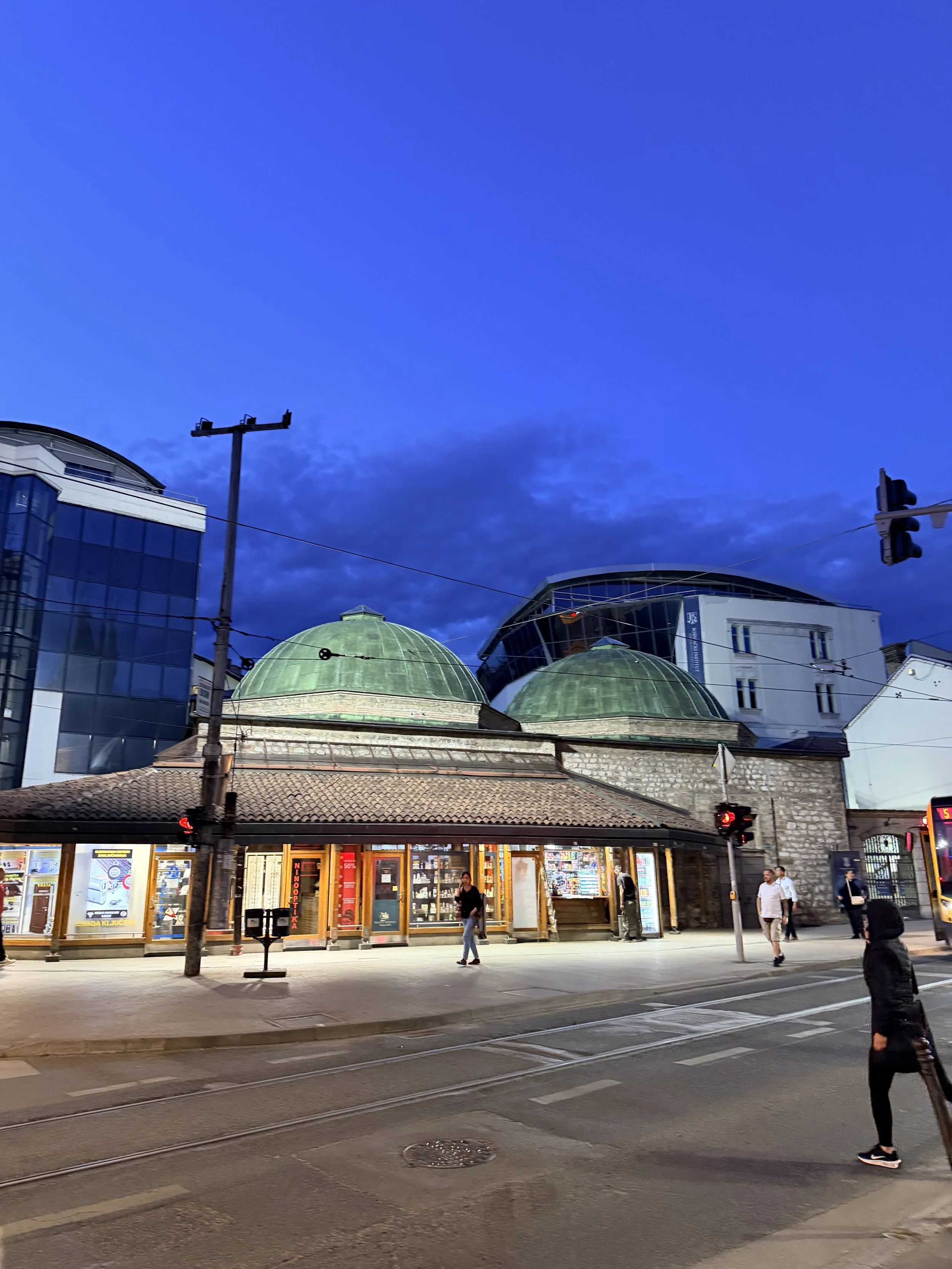
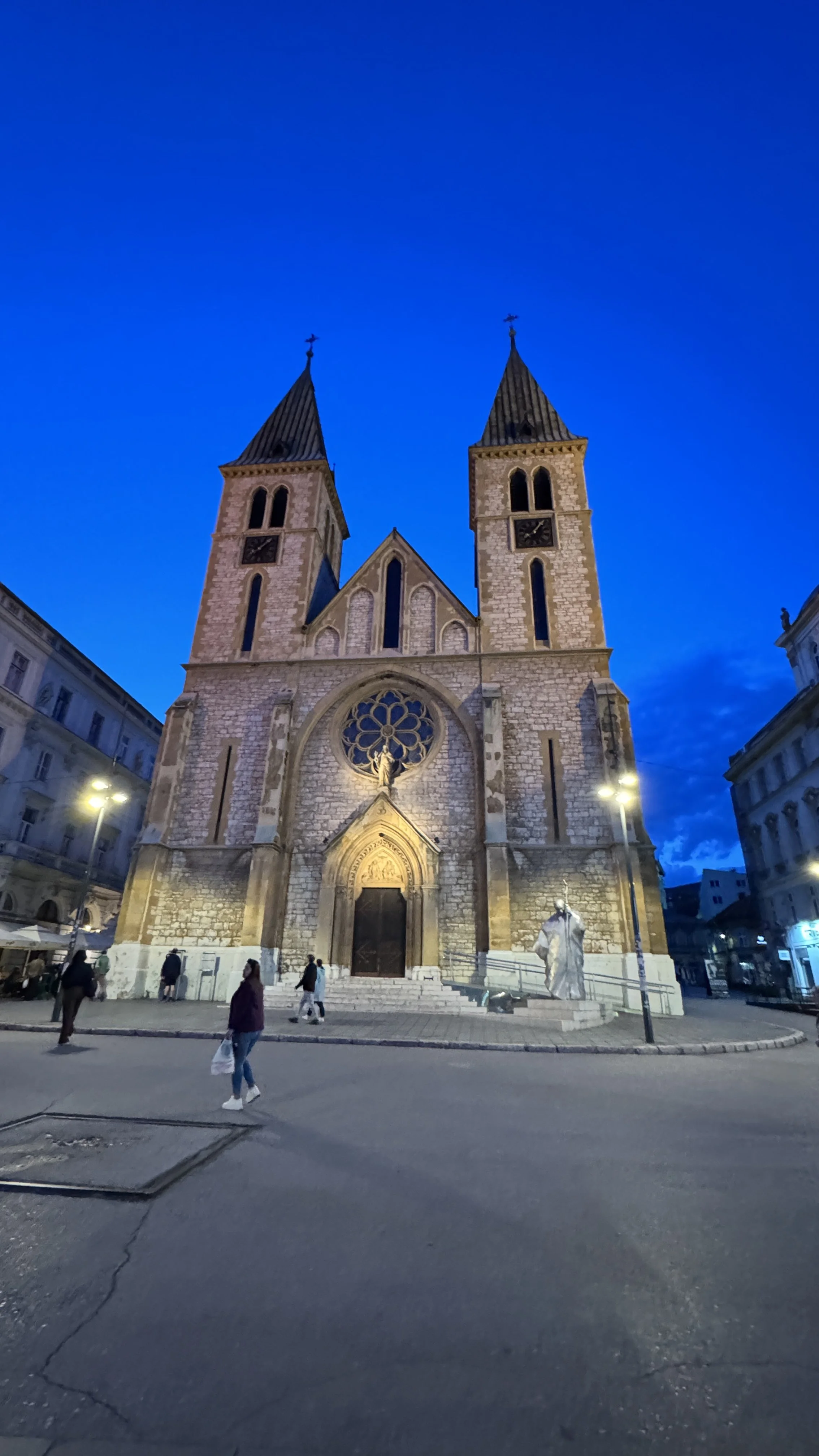
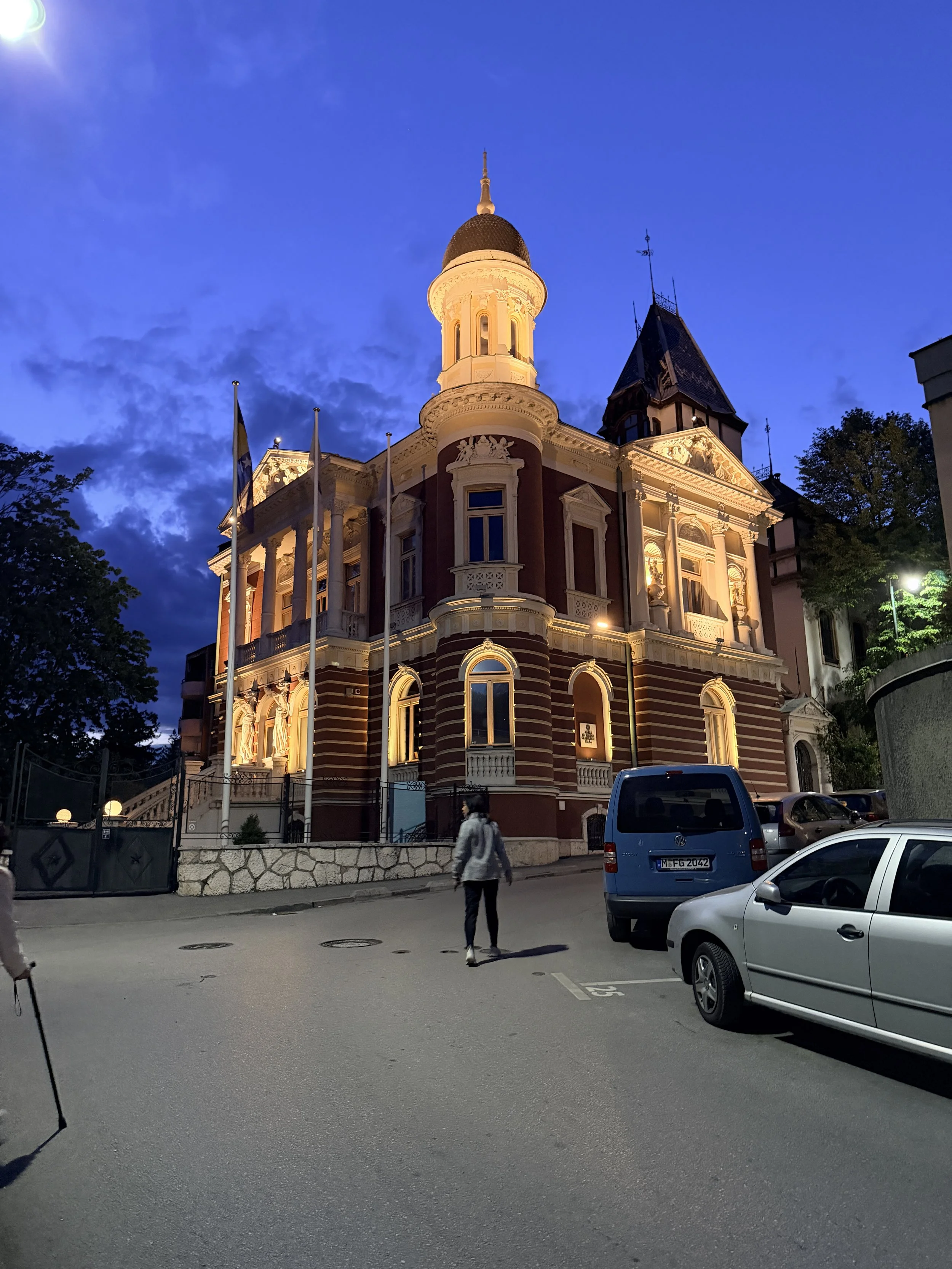
We would have a few more days to explore Sarajevo.
2026年4月27日
早餐后还是二天前送我们来的包车司机来接我们。离开莫斯塔尔(Mostar), 我们沿着内雷特瓦河(Neretva River)继续北上,途中经过亚布拉尼察(Jablanica)。这座安静的小镇坐落在群山与河谷之间,却因二战时期著名的“内雷特瓦战役(Battle of the Neretva)”而被历史铭记。河边那座倾斜断裂的旧铁路桥,一件巨大的战争遗物, 至今仍静静横跨在河谷上方。
接下来我们又去了科尼茨(Konjic),看另一座风景如画的奥斯曼时期石桥。石桥横跨在翠绿色的内雷特瓦河(Neretva River)之上。虽然它没有莫斯塔尔(Mostar)那座著名古桥那么壮观热闹,但科尼茨的桥也自有一番宁静的魅力,四周被群山、老石屋和平静清澈的河水所环绕。
随后,我们继续前往这次巴尔干之旅中最特别的地点之一——铁托地堡(Tito’s Bunker)。这座正式名称为ARK D-0原子战争指挥地堡(ARK D-0 Atomic War Command bunker)的巨大地下设施,建于冷战时期,目的是在核战争爆发时保护南斯拉夫领导人铁托(Josip Broz Tito)以及部分政府高层官员。据说工程持续了数十年,耗资高达当时的46亿美元,并长期被列为南斯拉夫最高级别的军事机密之一。讽刺的是,地堡完工后,铁托本人却从未踏足这里。它隐藏在科尼茨附近的群山深处,设计上可供约350人在完全与外界隔绝的情况下生存长达六个月。
我们提前在网上预订了门票。先到镇上一家小旅行社付款并领取门票,然后继续驱车约五公里进入偏僻山谷。我们必须把车停在两侧陡峭森林山坡之间,步行前往铁门入口。因为这一带至今仍属于军事管制区域,工作人员特别叮嘱不能拍照。
之后,我们又搭乘一辆园区巴士继续深入限制区域,最终才真正进入地堡内部。颇为有趣的是,一旦进入地堡后,却可以随意拍照,这让之前的禁拍规定显得有些多余,甚至有点好笑。
地堡本身的规模与建造质量都令人惊讶。普通隐避的入口后面,竟隐藏着庞大的地下世界:长长的走廊、会议室、通讯中心、宿舍、办公室、厨房、空调与燃料系统,以及铁托的私人区域一应俱全。整个设施无论设计还是施工,都体现出极高的耐久性与细致程度。
最让我们印象深刻的,是设备保存的状况。虽然地堡完工至今已过去四十多年,但许多机械设备、家具与基础设施看上去依然坚固且功能完整。导游介绍说,大部分设备当年都是由前南斯拉夫本国制造的。她带着几分怀旧感叹道,随着国家解体,那些曾经拥有的工业与技术能力,如今大多已经消失。仔细想想,除了世界上少数几个国家之外,现在又何尝不是如此呢?走在这座深藏于山体中的地下设施里,仿佛进入了一座被完整封存下来的冷战时代时间胶囊。
下午晚些时候,我们抵达萨拉热窝(Sarajevo),入住了我们租的公寓。这是一栋奥匈帝国时期的别墅,内部装饰设计风格非常现代化。这是曾经的英国驻萨拉热窝大使馆,具有浓厚的中欧风格和历史价值,紧贴着奥林匹克博物馆(Olympic Museum)。我们房间门外的墙上竟还挂着一块“英国大使馆(British Embassy)”旧招牌,仿佛无声提醒着人们,这座城市曾经历过怎样复杂而动荡的历史。
安顿下来后,我们去了附近的露天市场和食品店,买了草莓、西红柿、鸡蛋等食材,准备当晚的简单晚餐以及第二天的早餐。
晚饭后,我们步行前往市中心。来到拉丁桥(Latin Bridge)以及附近刺杀奥匈帝国皇储弗朗茨·斐迪南大公(Franz Ferdinand)的地点。这场发生在萨拉热窝的刺杀事件,最终引发了第一次世界大战(World War I)。站在那里,也让我们想起之前在维也纳(Vienna)博物馆里听到的相关历史介绍。旅行有时就像是在“把点连成线(connecting the dots)”,那些原本零散存在于书本、博物馆与记忆中的历史片段,突然在现实中的某个地点彼此连接起来。
夜晚站在桥边,很难不感慨:这座城市里一个看似普通的街角,竟与改变世界历史进程的重大事件紧密相连。
Old Bridge 老桥
April 26, 2026
Visiting Mostar was really all about the Old Bridge (Stari Most)……
来到莫斯塔尔,最重要的事情几乎就是围绕着老桥。。。
April 26, 2026
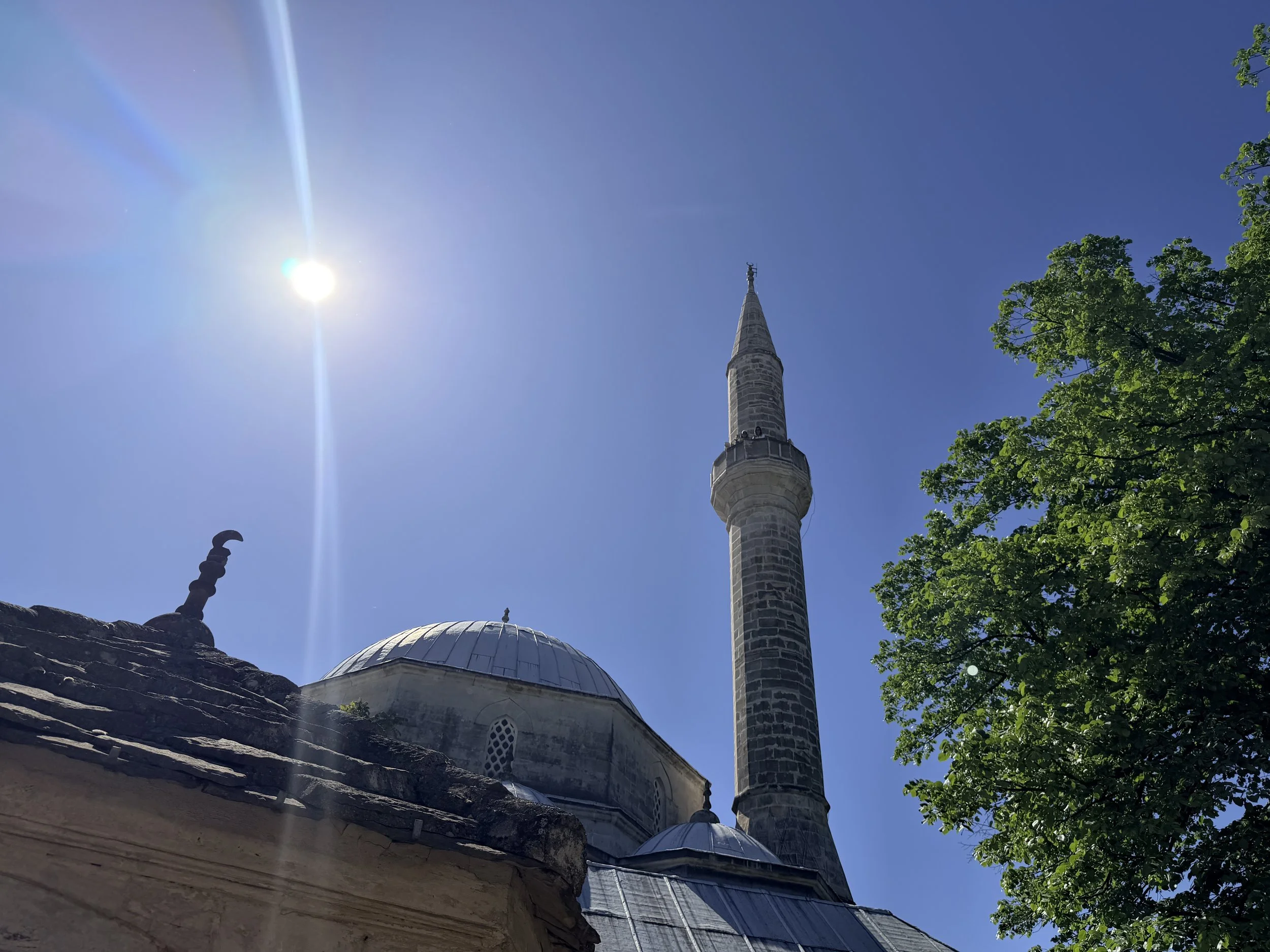
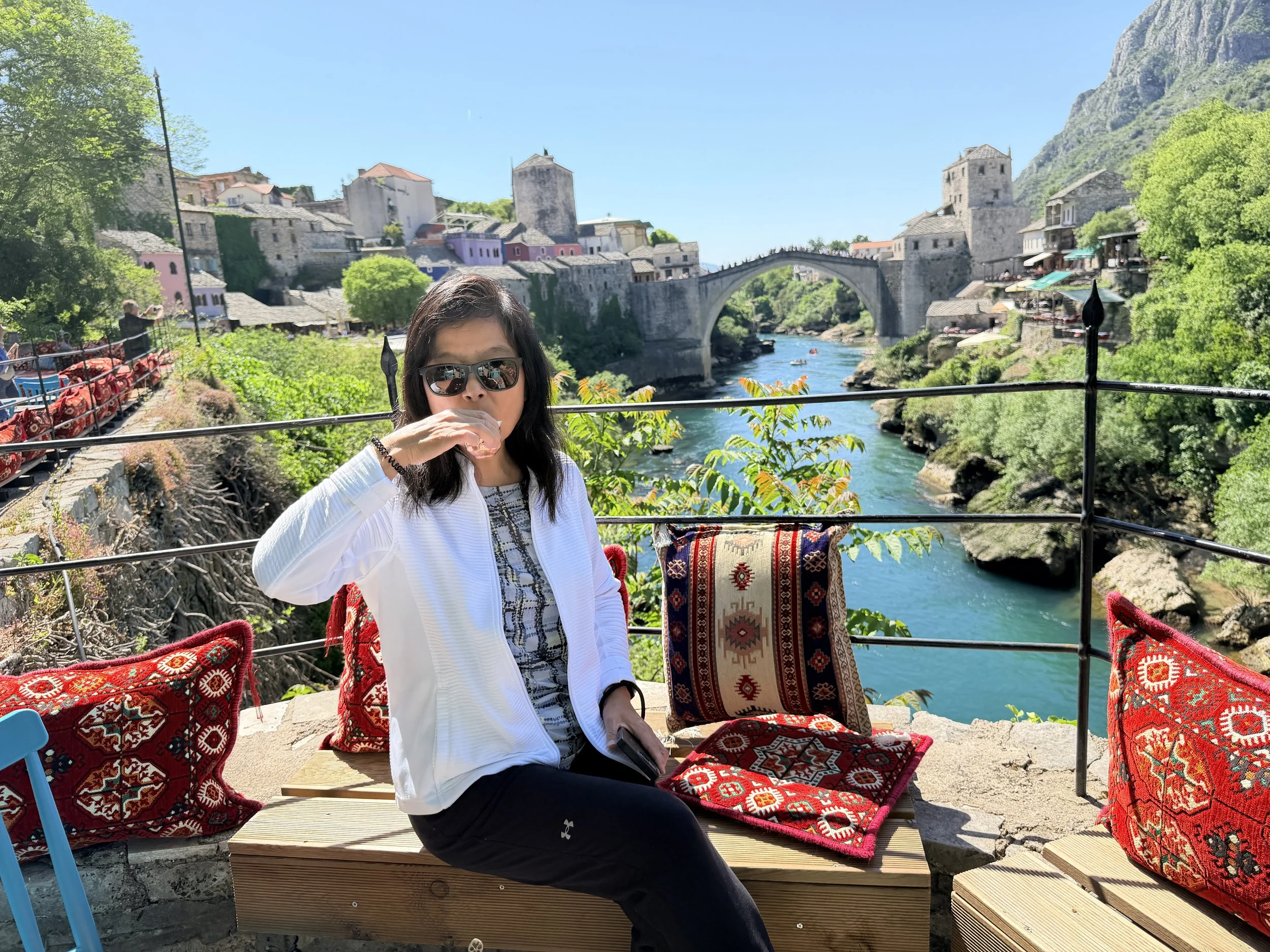
Visiting Mostar was really all about the Old Bridge (Stari Most). Early in the morning, we visited Koski Mehmed Pasha Mosque, one of the best places to admire the famous bridge from above. We climbed up the mosque’s minaret for the panoramic view. It was the first time we had ever gone up a minaret in a mosque
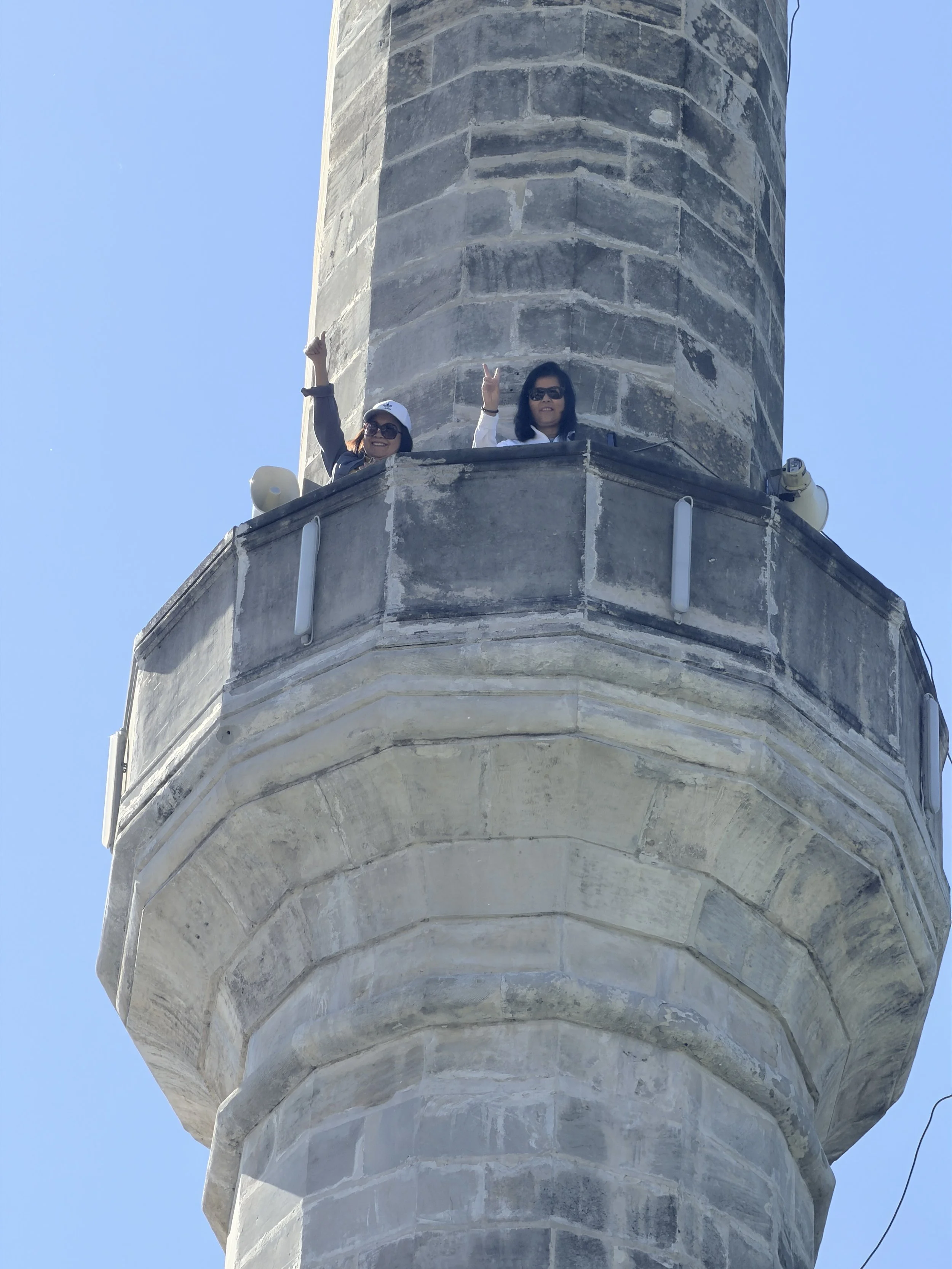
Compared with the bell towers of European cathedrals, the minaret was much narrower and more compact. The spiral staircase inside was tight and steep, and the small balcony at the top could hold only a few people at a time. Fortunately, there were not many visitors when we arrived, so we were able to enjoy the space quietly.
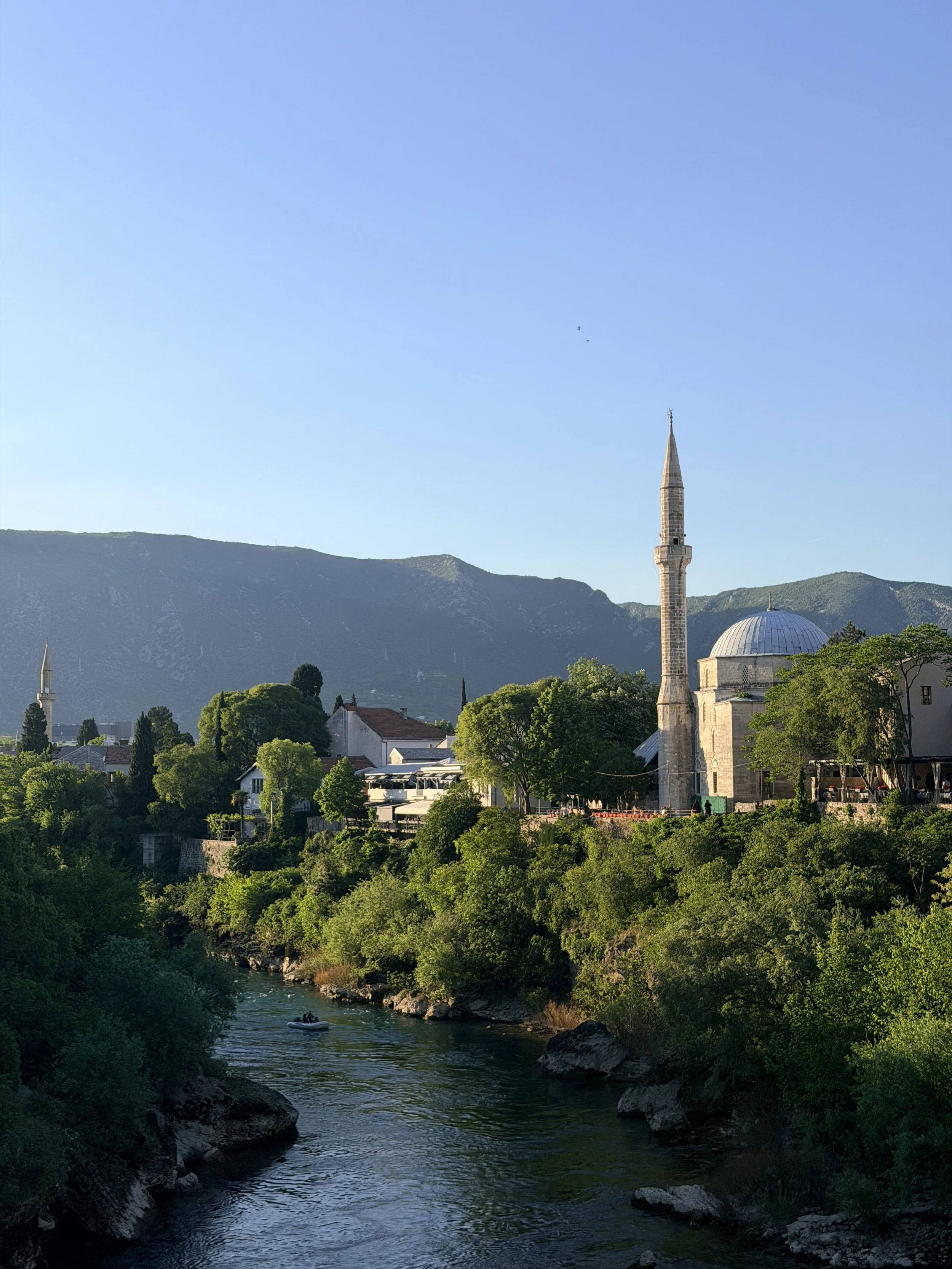
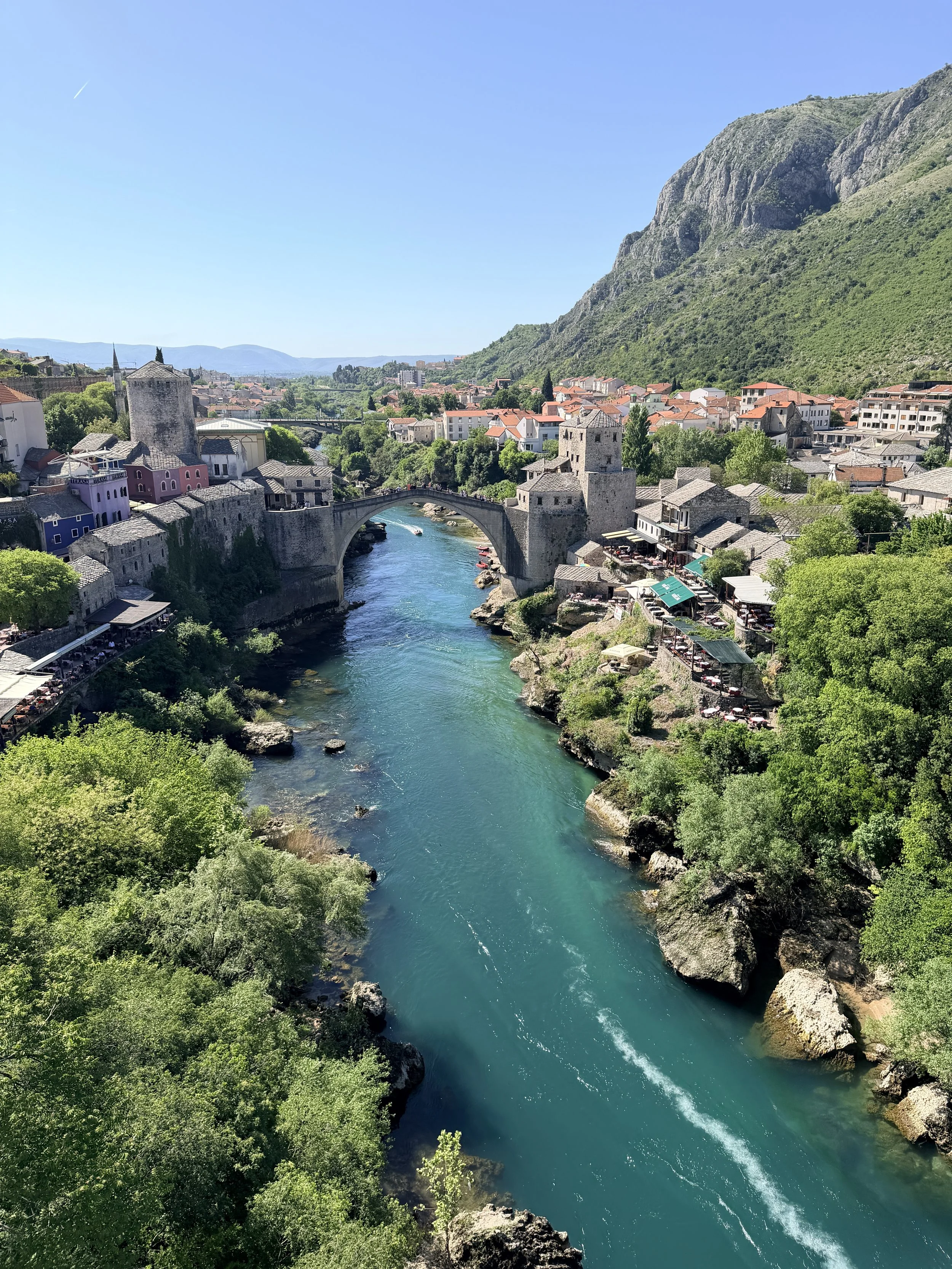
The view from the top was absolutely stunning. Below us, the elegant stone arch of the Old Bridge stretched gracefully across the emerald-green Neretva River, connecting the two sides of the old Ottoman town. The red rooftops, stone houses, mosque domes, and slender minarets together created one of the most beautiful scenes we had seen in the Balkans.
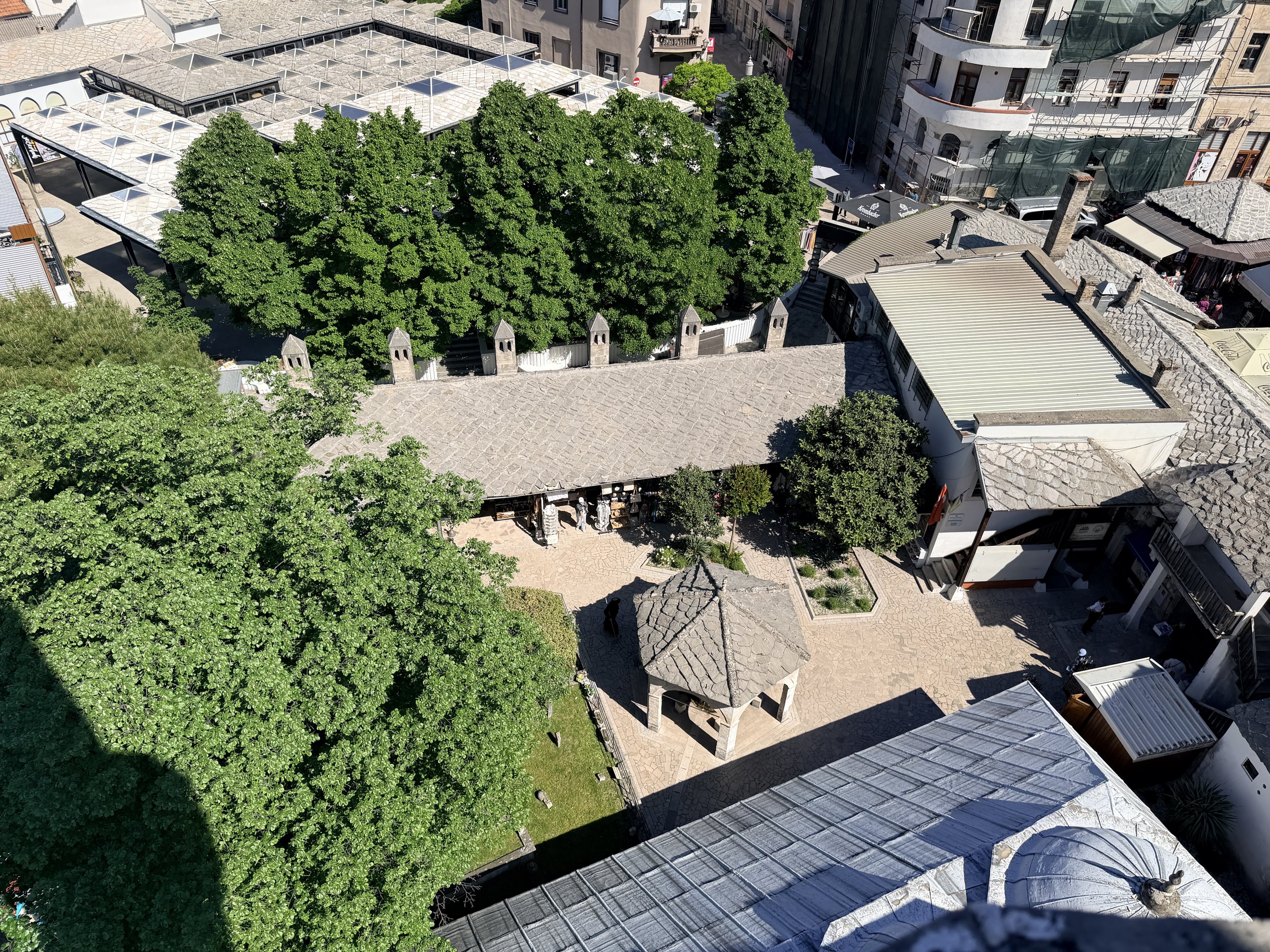
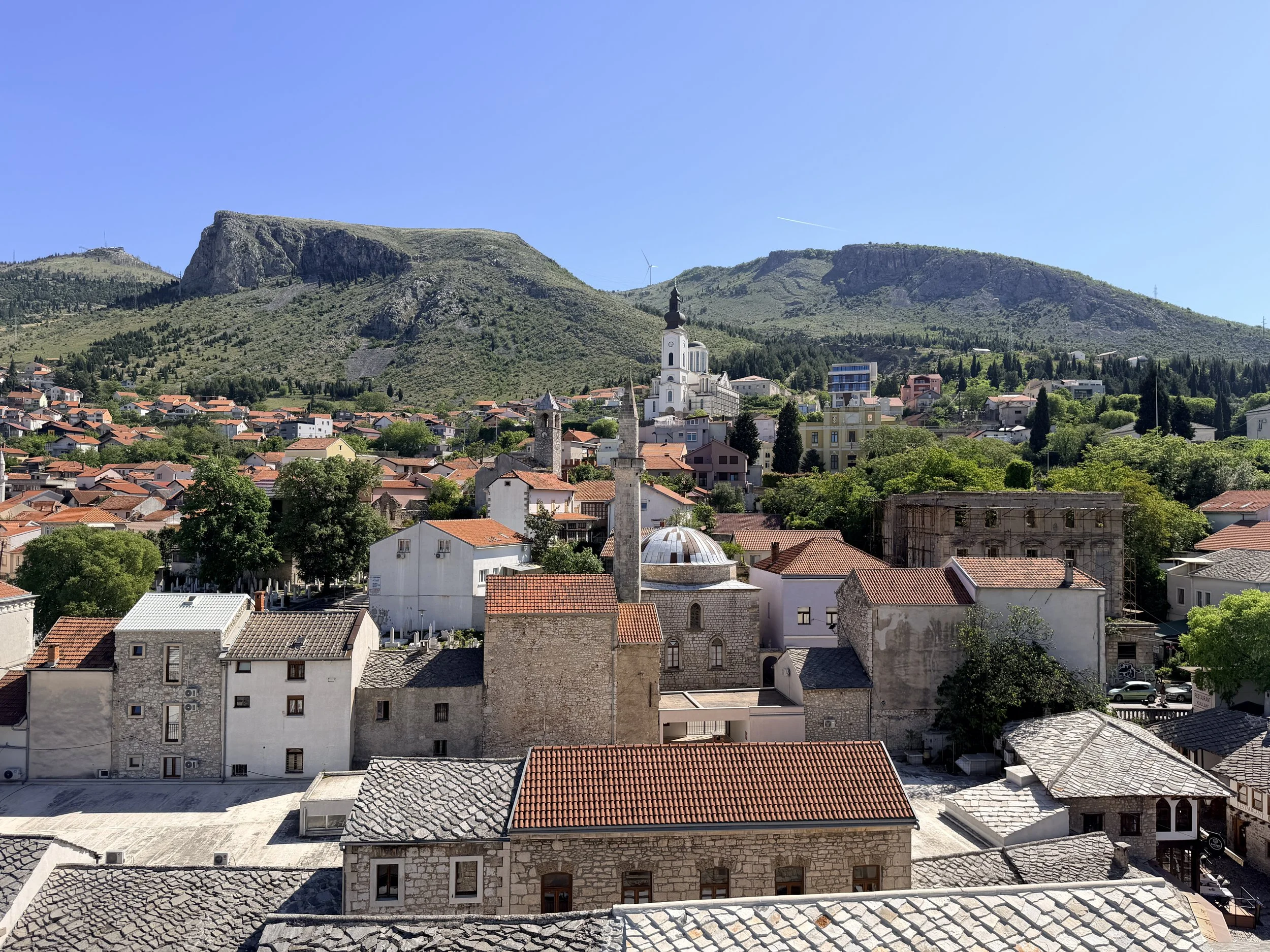
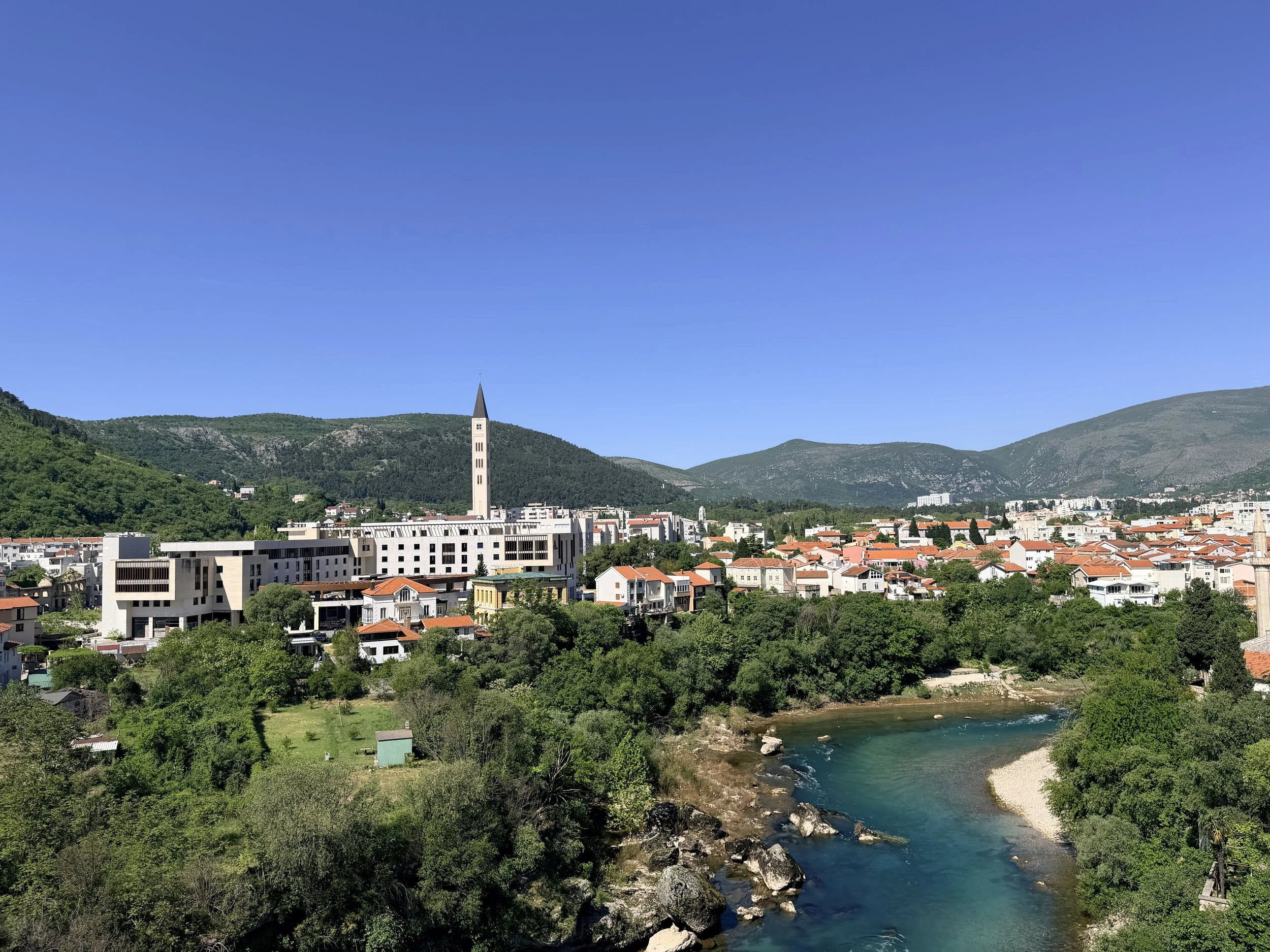
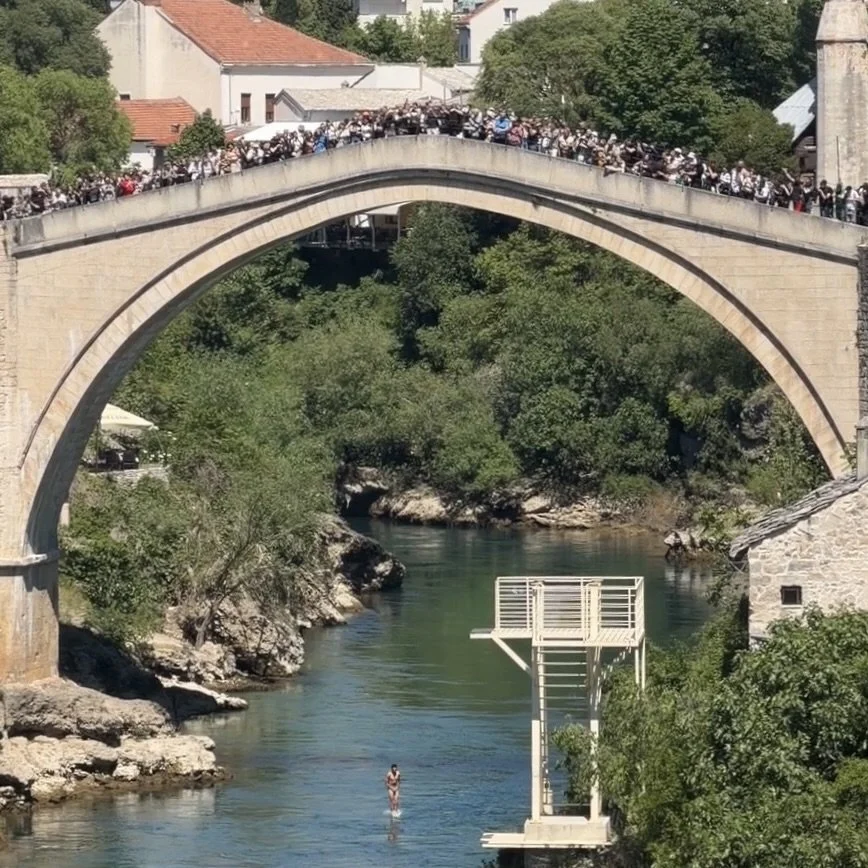
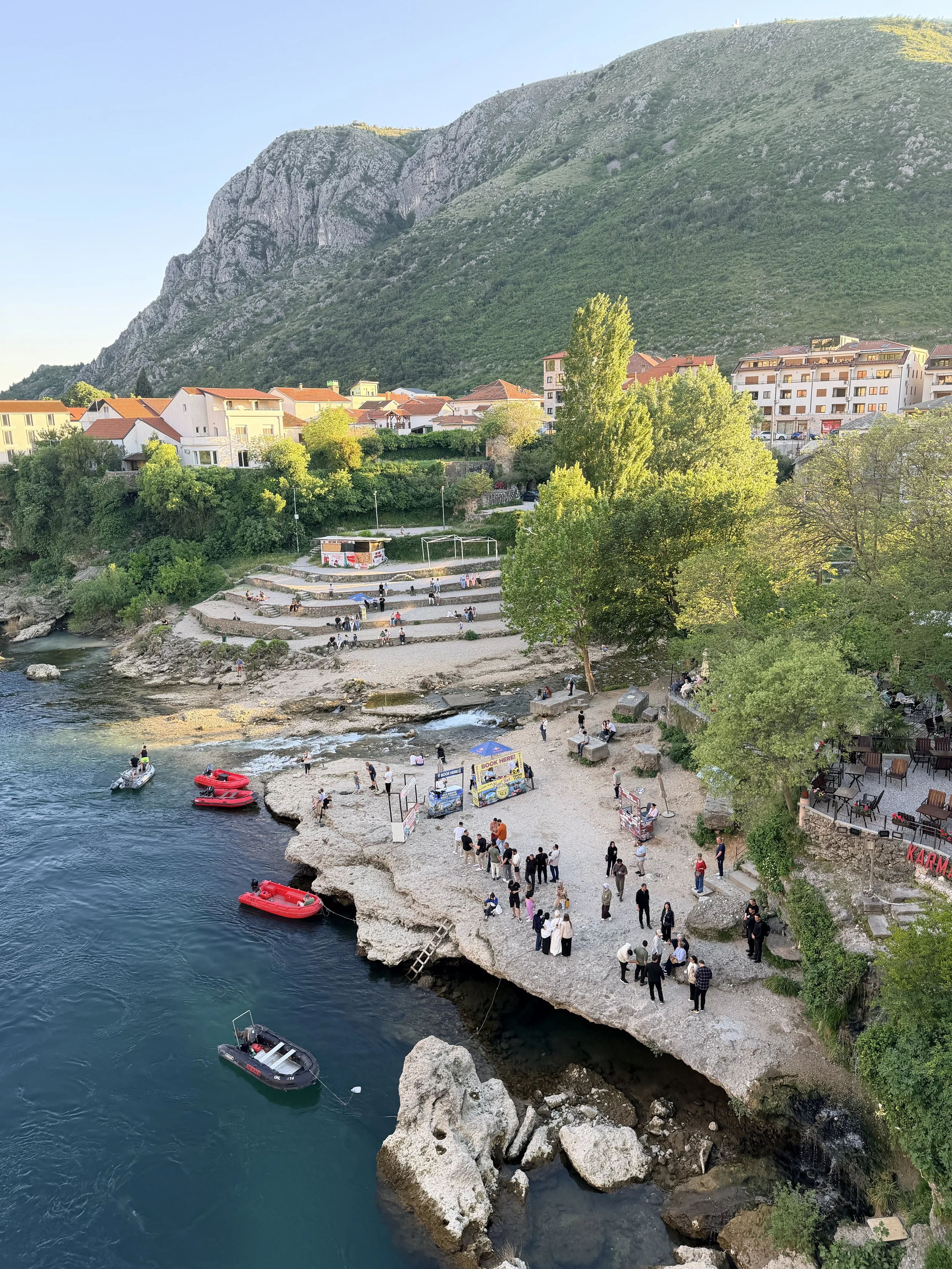
Later, we walked to Lučki Most, a newer bridge farther down the river. From there, we waited more than twenty minutes, hoping to witness the famous bridge divers jumping from the Old Bridge into the cold river below. The divers stood on top of the bridge for a long time, collecting donations and building suspense while tourists gathered along both sides of the river with cameras ready. Finally, one diver leaped dramatically into the water far below, drawing cheers from the crowd.
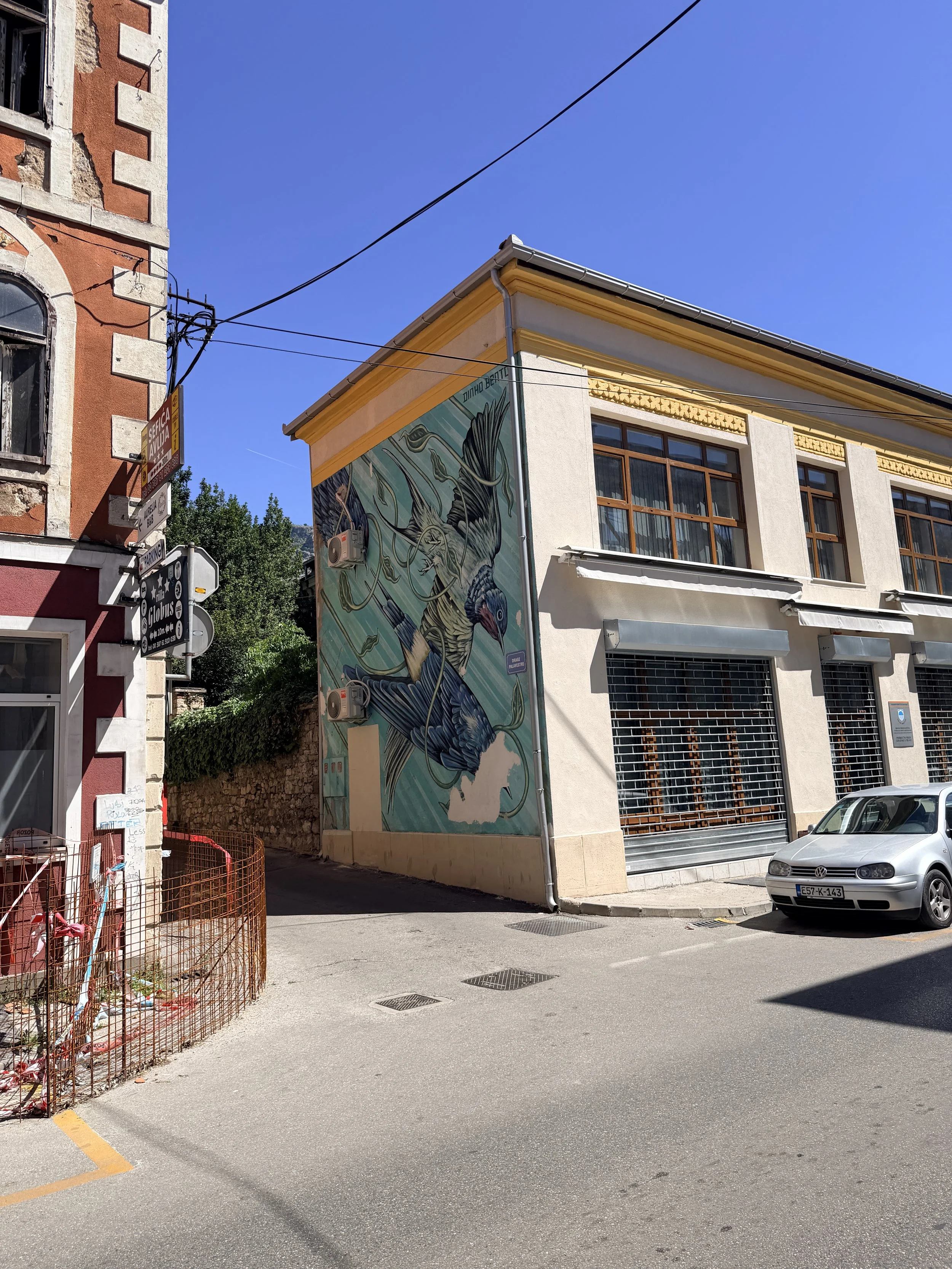
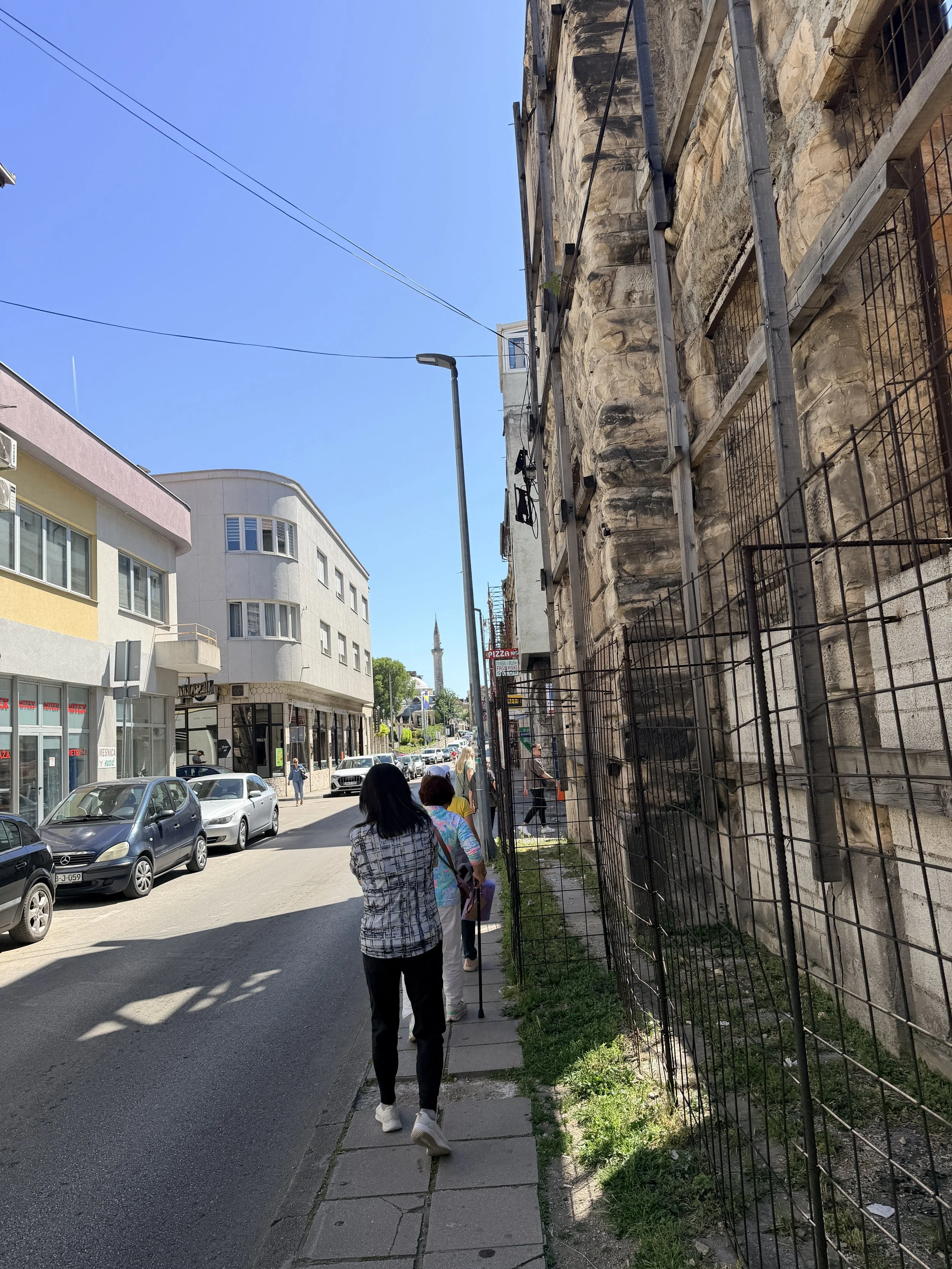
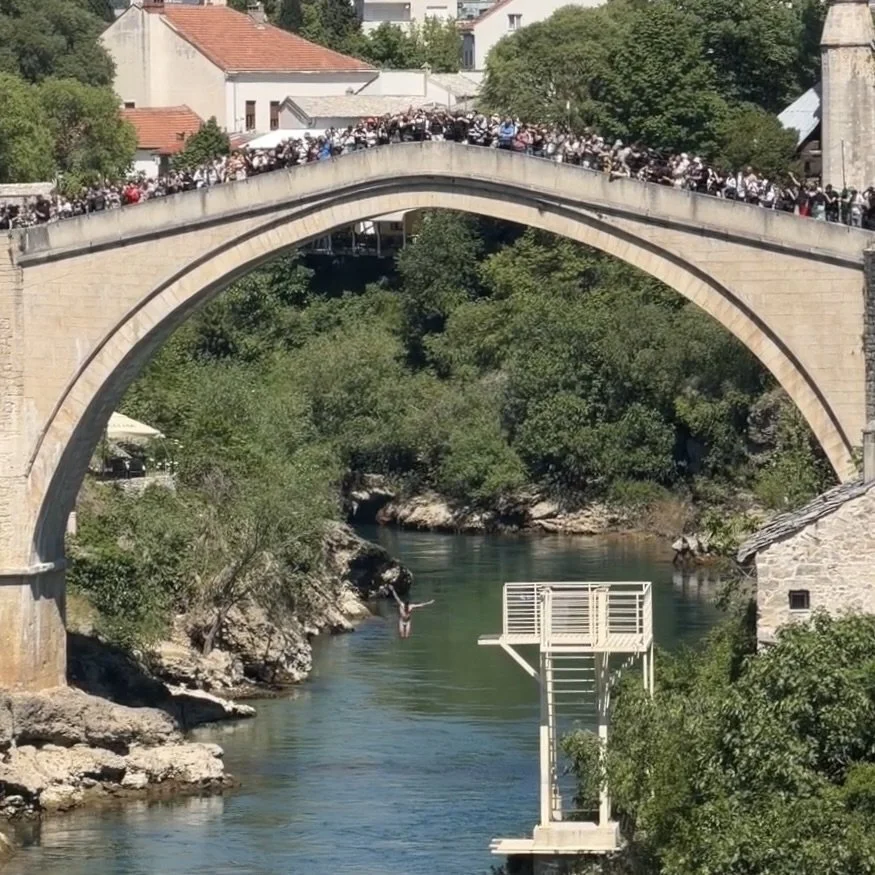
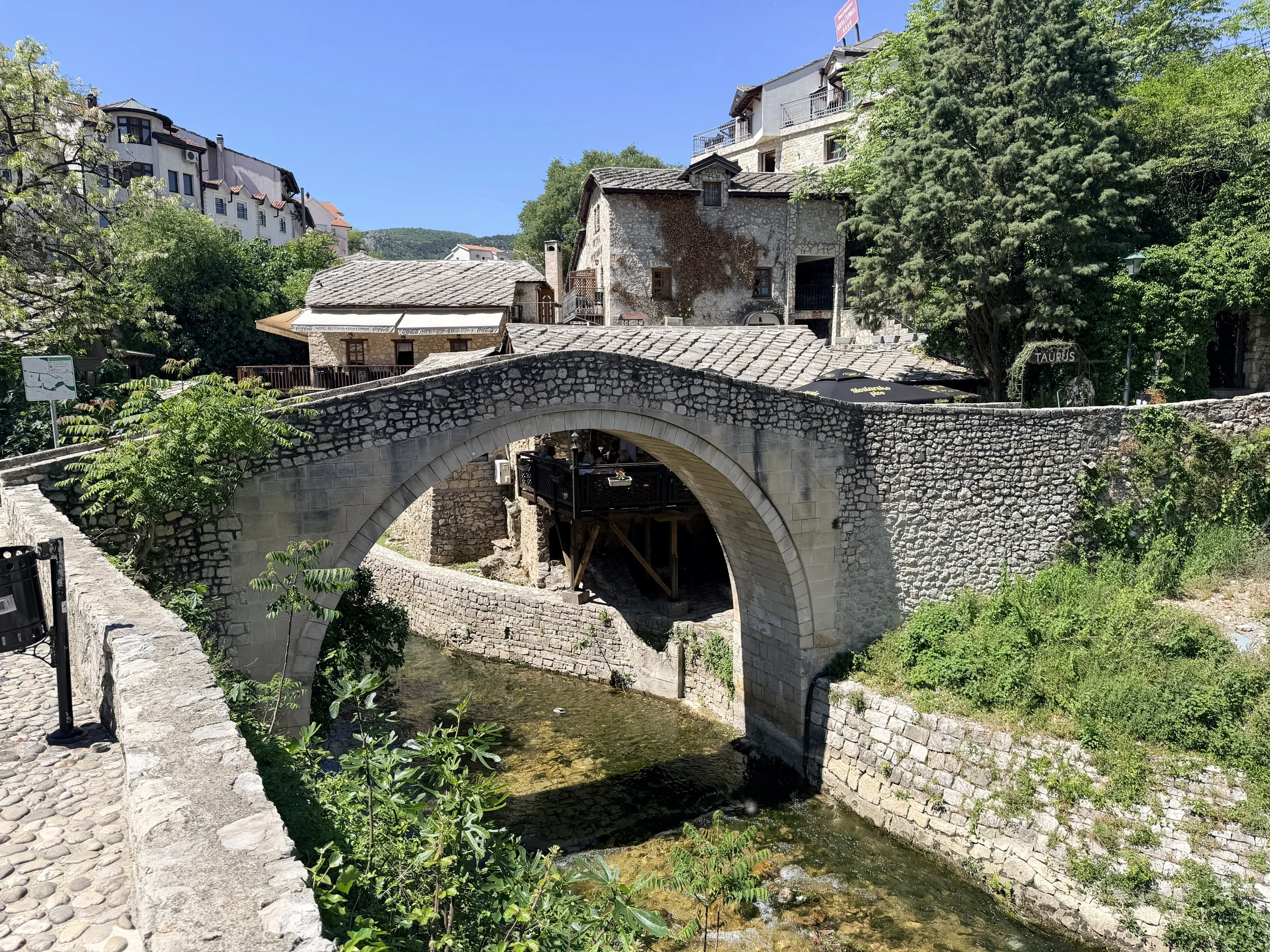
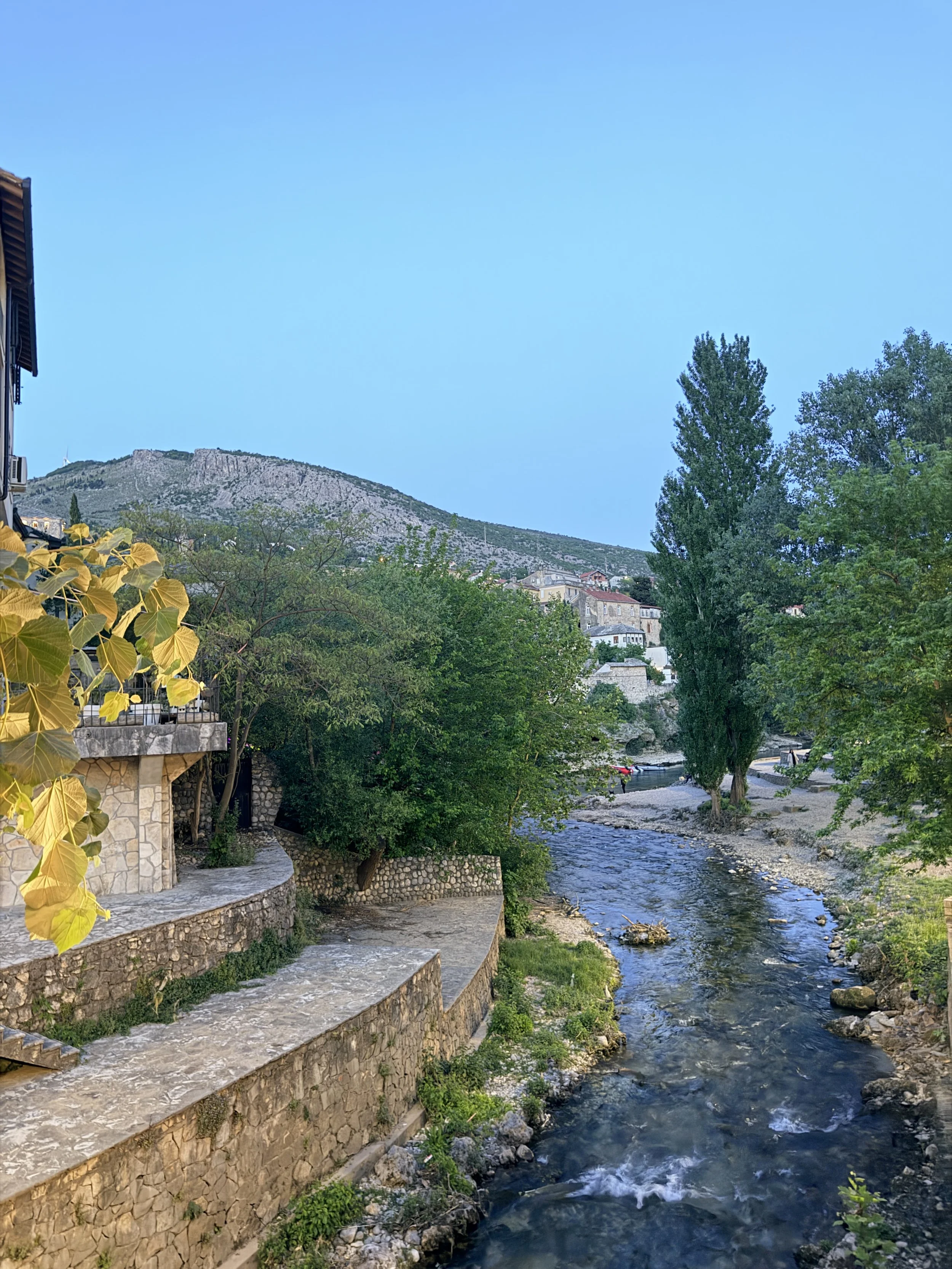
For the rest of the day, we found ourselves crossing the Old Bridge again and again. Every time we walked across it, the bridge revealed a different atmosphere depending on the light, the crowds, and the angle of the river below. Sometimes lively and crowded, sometimes peaceful and reflective, the bridge felt not only like the symbol of Mostar, but also a reminder of the city’s resilience and history.
2026年4月26日
来到莫斯塔尔(Mostar),最重要的事情几乎就是围绕着老桥(Stari Most)。
一早,我们先参观了科斯基·穆罕默德帕夏清真寺(Koski Mehmed Pasha Mosque)。我们登上了清真寺的宣礼塔(minaret),这里是俯瞰老桥最经典的位置之一。这也是我们第一次爬上清真寺的宣礼塔。
相比欧洲教堂常见的钟楼,宣礼塔要纤细得多,内部空间也非常狭窄。塔内是盘旋而上的狭窄楼梯,走起来有些陡,而顶部的小阳台面积也很有限,只能容纳少数几个人。幸运的是,当时游客不多,我们得以安静地欣赏古城和老桥的风景。
优雅的老桥横跨在翠绿色的内雷特瓦河(Neretva River)之上,两岸则是典型奥斯曼风格(Ottoman-style)的老城区。从来没见过一个小镇会有大大小小这么多的清真寺,这么多的宣礼塔竖在那里。几乎是任何角度都能看到一个。
随后,我们又走到下游的新桥——卢茨基桥(Lučki Most)。这里是观看老桥跳水表演最好的位置之一。我们站在桥上等了二十多分钟,想亲眼看到著名的“老桥跳水”。
跳水员们一直站在老桥顶端,一边故意制造悬念,一边向游客募捐。桥边和河岸两侧聚满了游客,大家都举着手机等待。终于,其中一位跳水员突然纵身跃下,从高高的石桥跳入冰冷的河水之中,现场立刻爆发出欢呼声。
接下来的一整天,我们一次又一次地走过老桥。每一次经过,它都呈现出不同的氛围。随着阳光角度、人群和河水颜色的变化,这座桥时而热闹,时而宁静。它不仅仅是莫斯塔尔最重要的地标,更像是这座城市历史与重生的象征。镇上的许多建筑墙面上密密麻麻的弹孔时刻提醒着我们波斯尼亚战争对这里所造成的损害。
Ston, Pocitelj, Bunski, Blagaj 斯通 波奇泰利 布恩斯基 布拉加伊
April 25, 2026
We said goodbye to my little sister and her husband,…….
今天妹妹,妹夫与我们道别,。。。
April 25, 2026
We said goodbye to my little sister and her husband, who would continue their journey back to Italy. The four of us would travel onward together through Bosnia, Montenegro, and Albania.
Since the driver did not have a permit to pick us up near the Old Town, we once again had to drag our luggage about 400 meters uphill to meet the car.
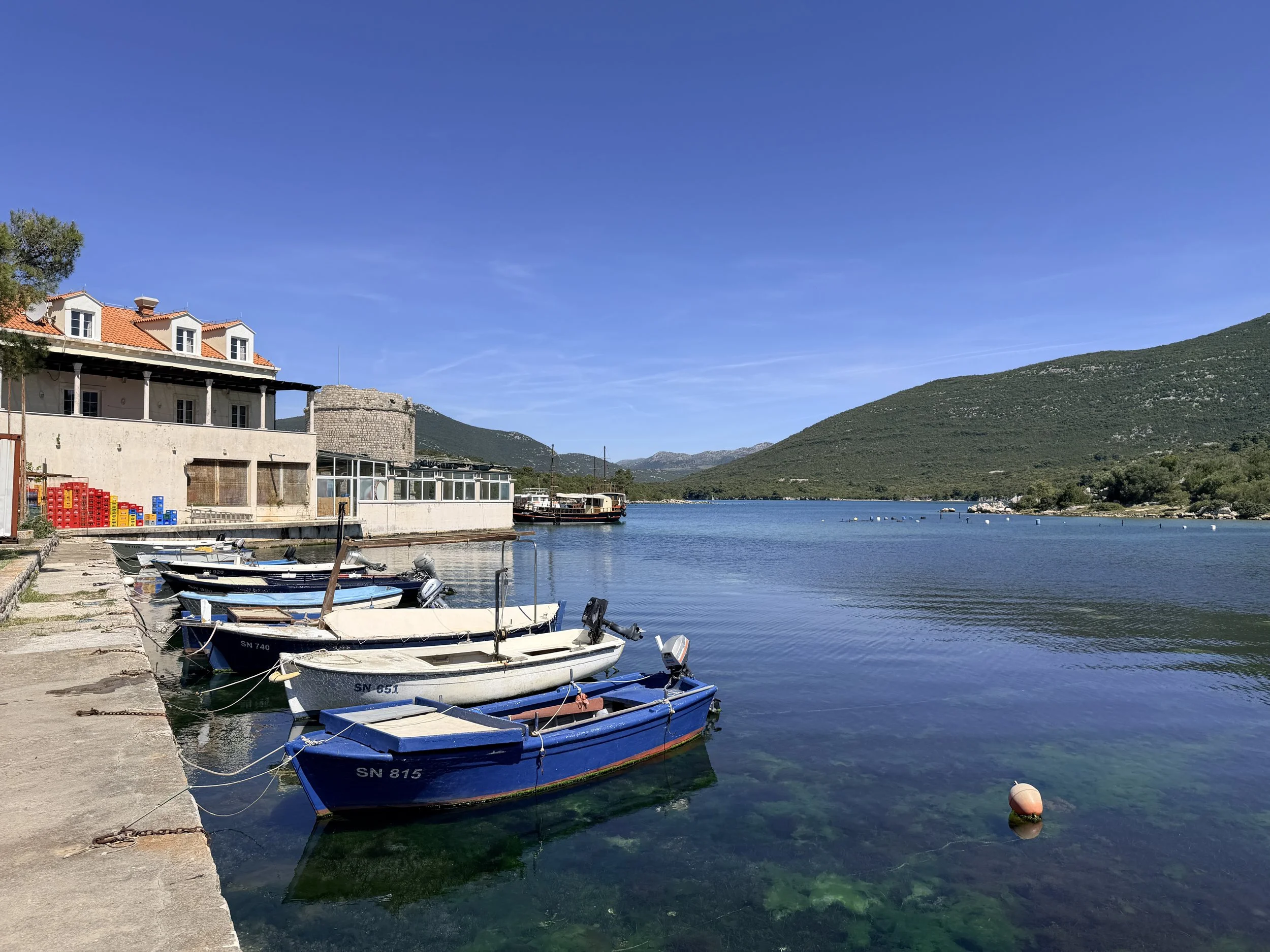
As we drove away from Dubrovnik, I could not stop thinking about the Ston oysters we had eaten the night before. I later learned that the famous “Ston oysters” actually came from nearby Mali Ston, not far from the town itself. I checked the map and realized that Ston and Mali Ston were only slightly off our route, requiring perhaps just ten extra minutes. We asked the driver whether we could make a stop there, and he happily agreed.
We drove straight to a restaurant beside the bay at Mali Ston. Unfortunately, it would not open until 11 a.m., another thirty minutes away. The staff pointed us instead to a small roadside oyster bar nearby.
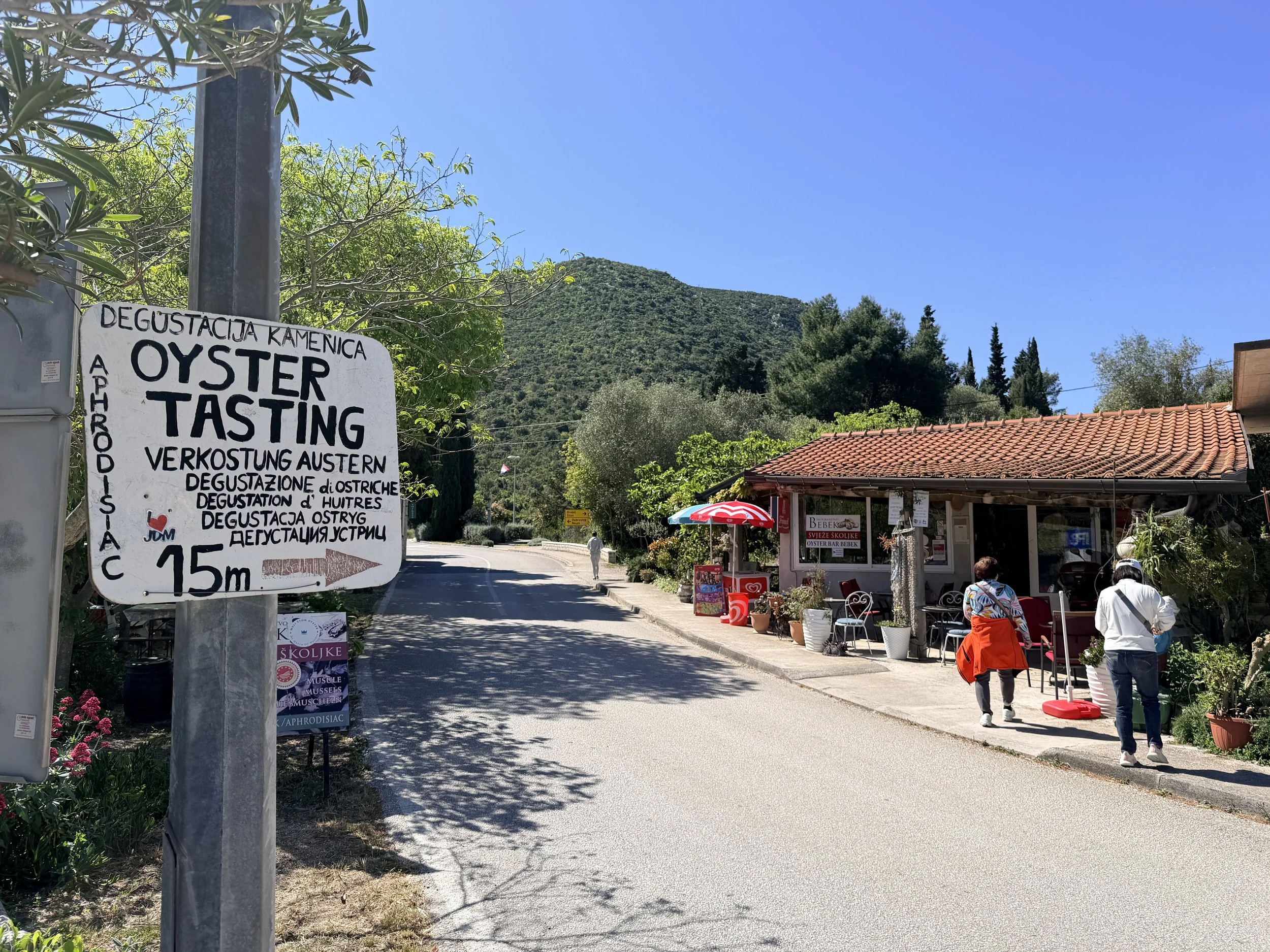
The oyster bar was nothing more than a simple roadside shed, but it was already open. They offered oysters of different ages and prices: €2 each for two-year-old oysters, €3 for three-year-old, €4 for four-year-old, and €5 each for seven-year-old oysters. The older the oyster, the larger it became. This was the first time we had ever heard oysters described and sold by age.
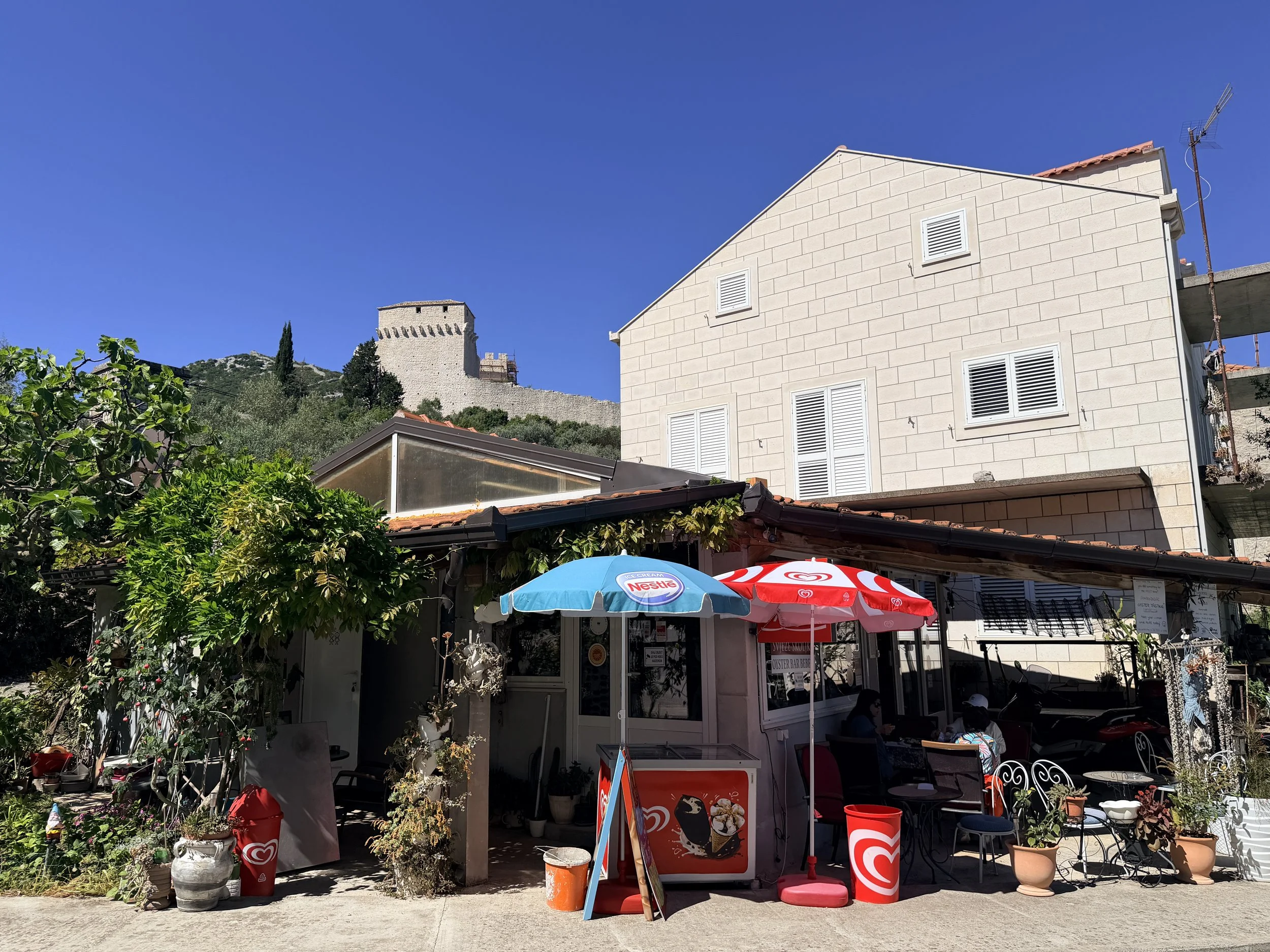
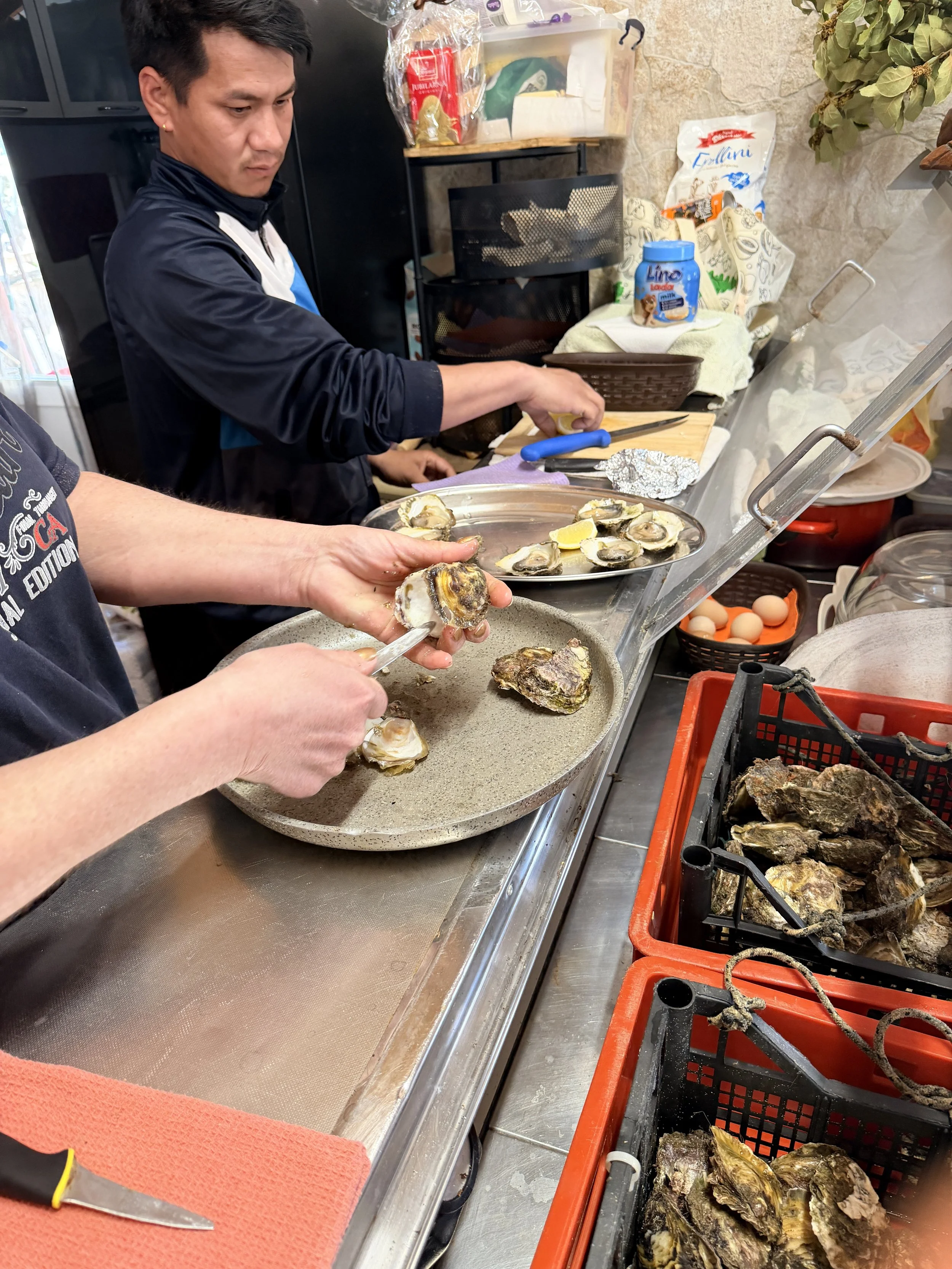
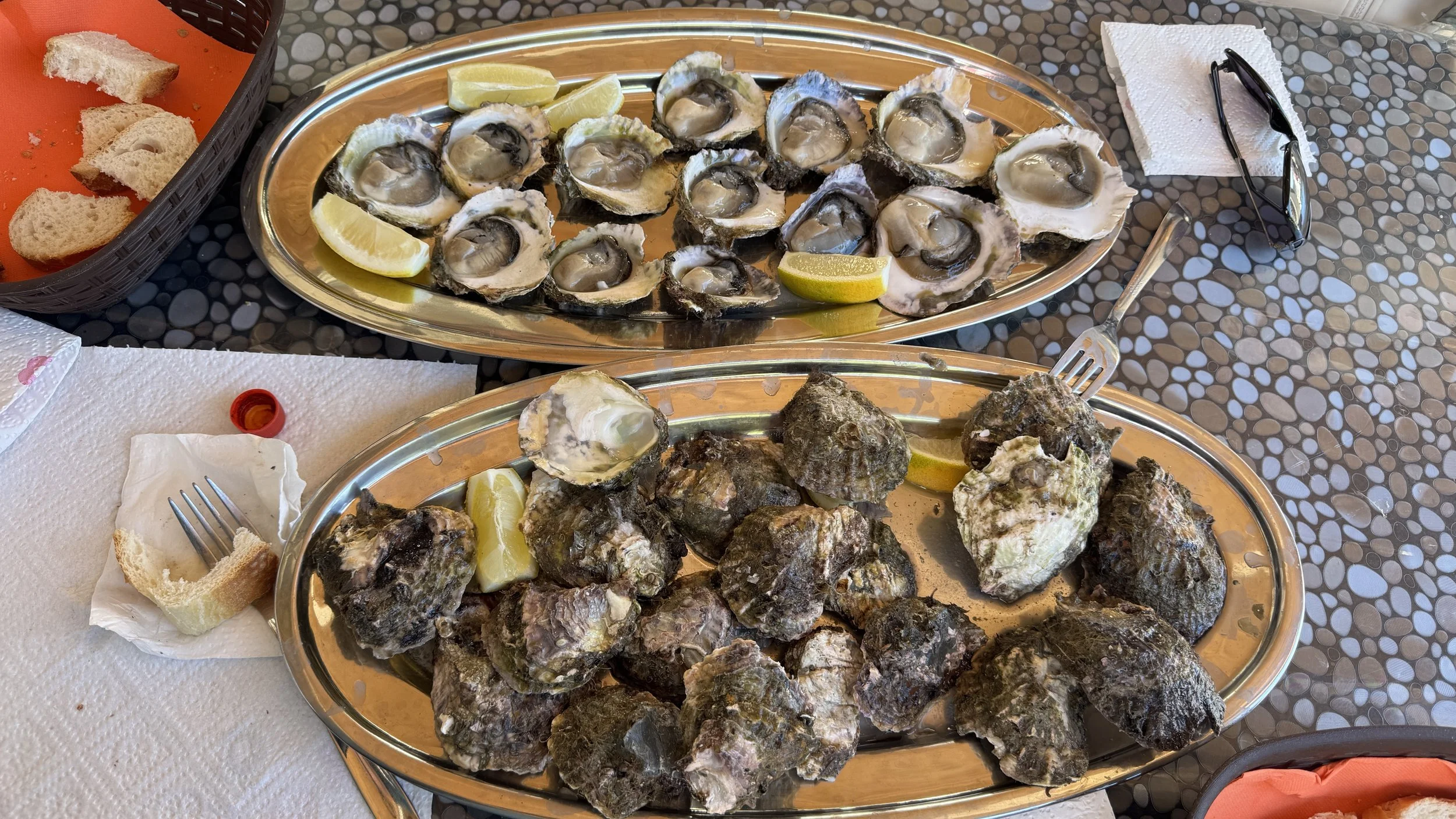
We ordered ten two-year-old oysters, three three-year-old, three four-year-old, and three seven-year-old oysters. They were excellent. The seven-year-old oysters, especially, were incredibly large, meaty, and flavorful. I am not usually a big fan of raw oysters, so I only tried some of the smaller ones, but even I could tell how fresh they were.
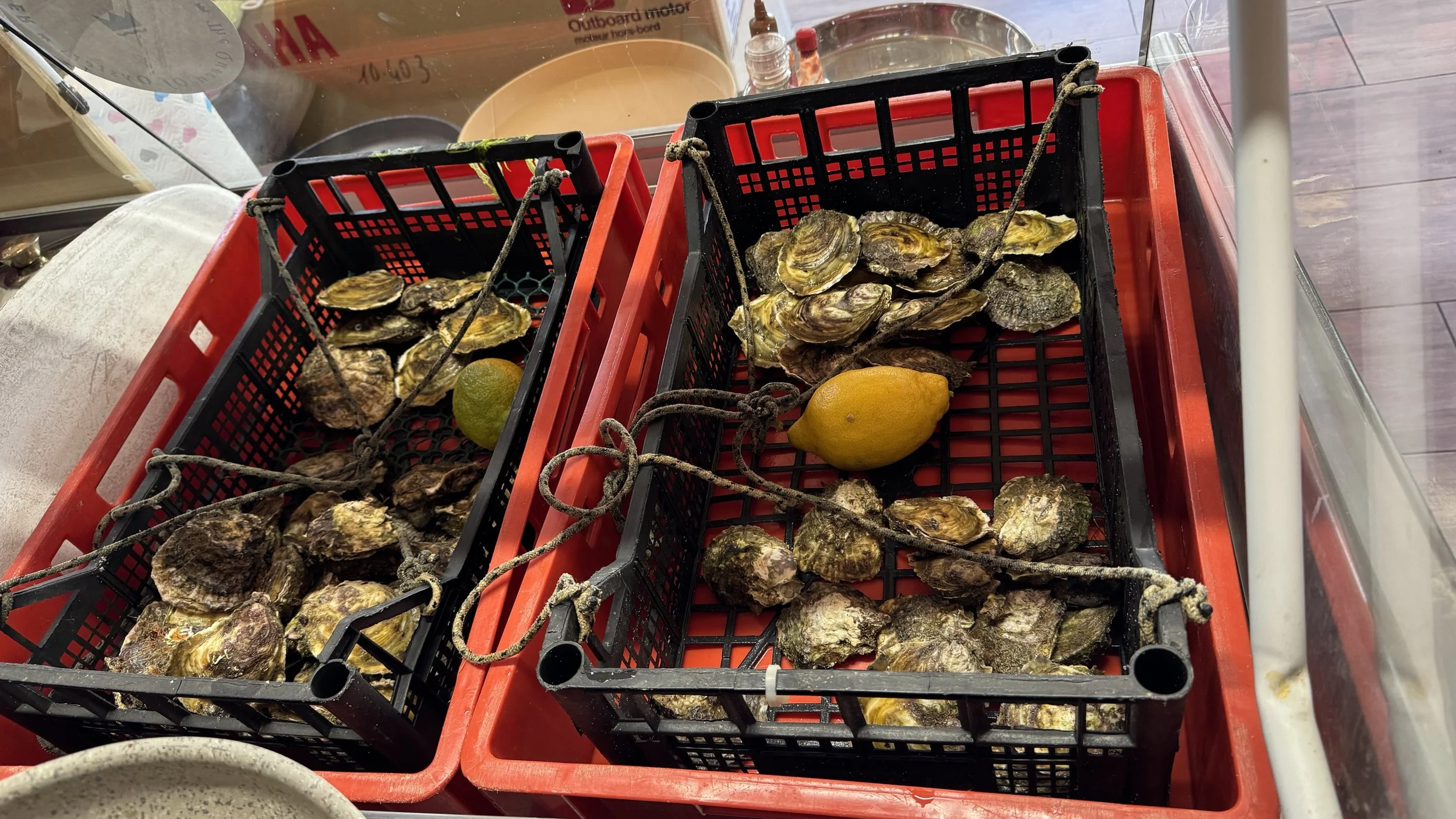
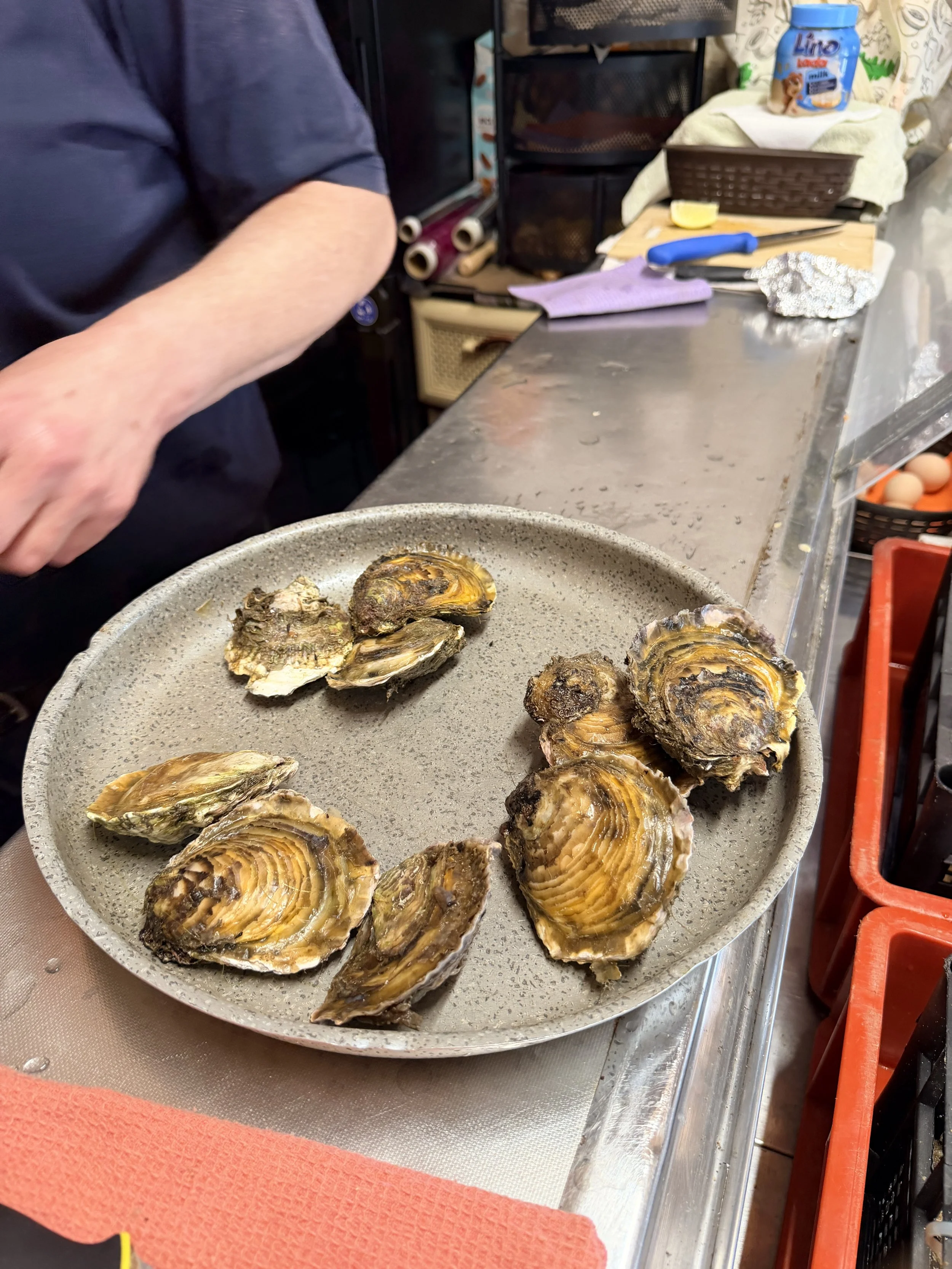
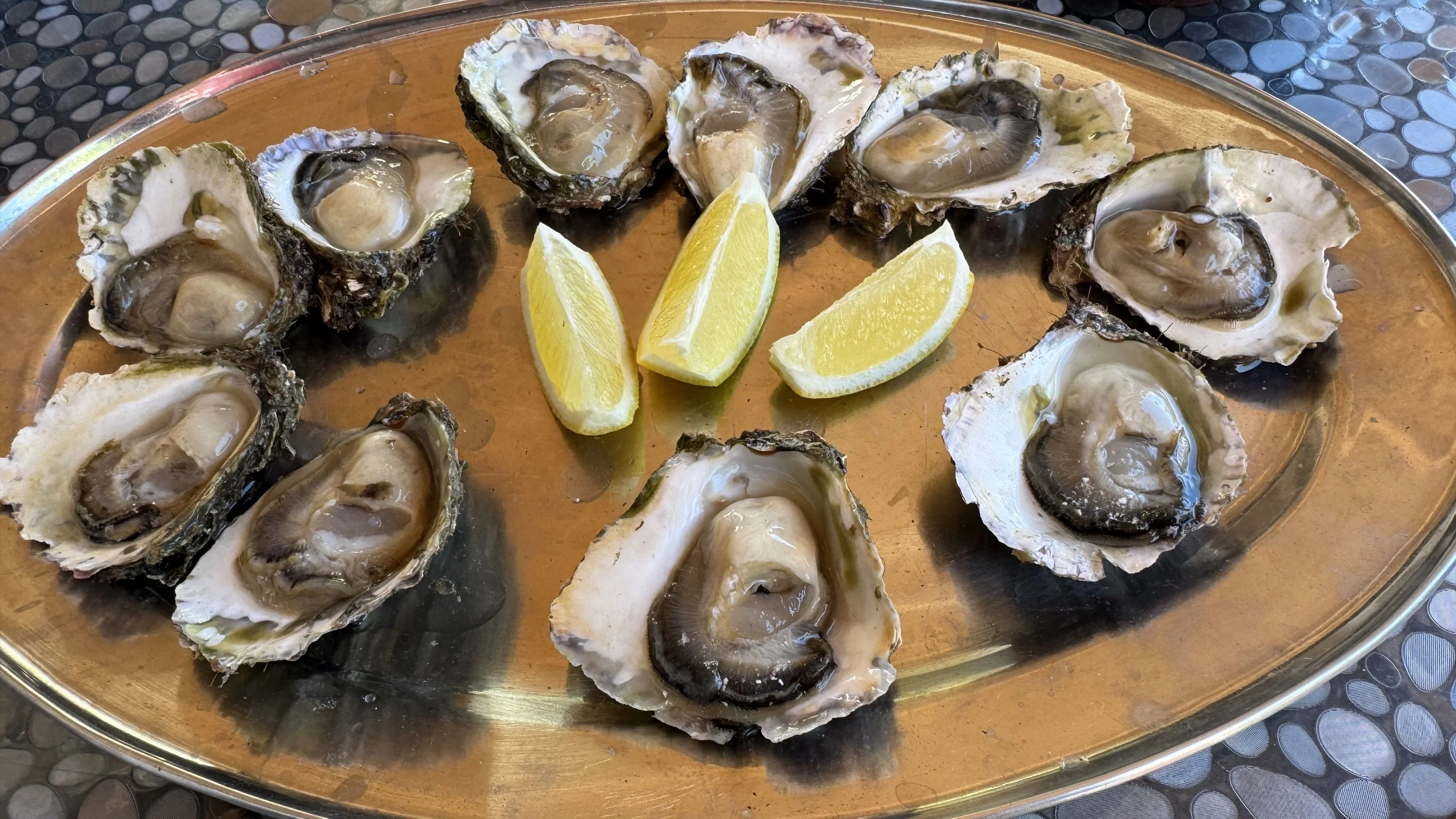
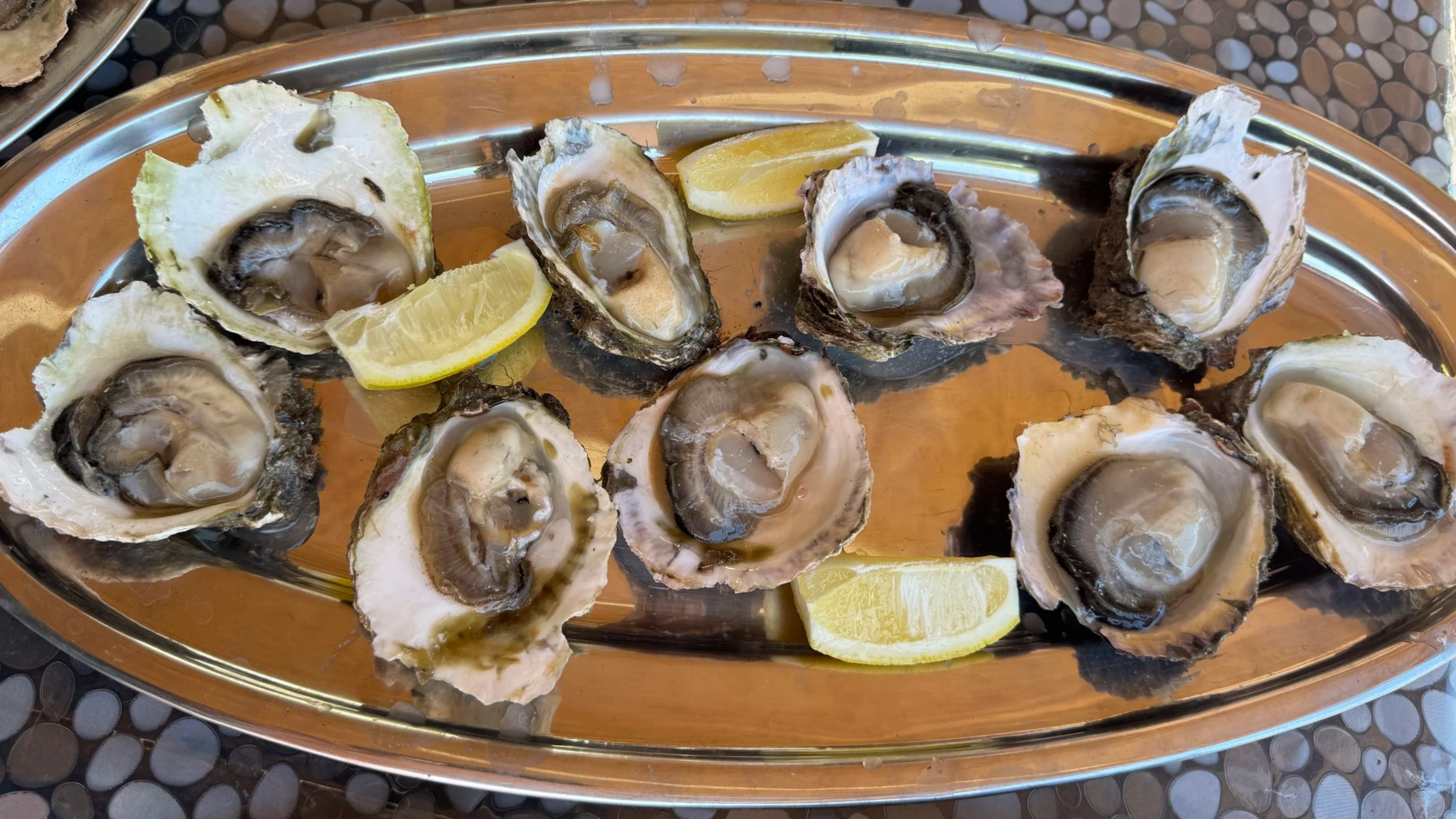
The oysters still were not enough for the ladies, so we ordered eight more two-year-old oysters and three additional seven-year-old ones. After thirty-two oysters altogether, everyone finally seemed satisfied, and we continued on our journey.
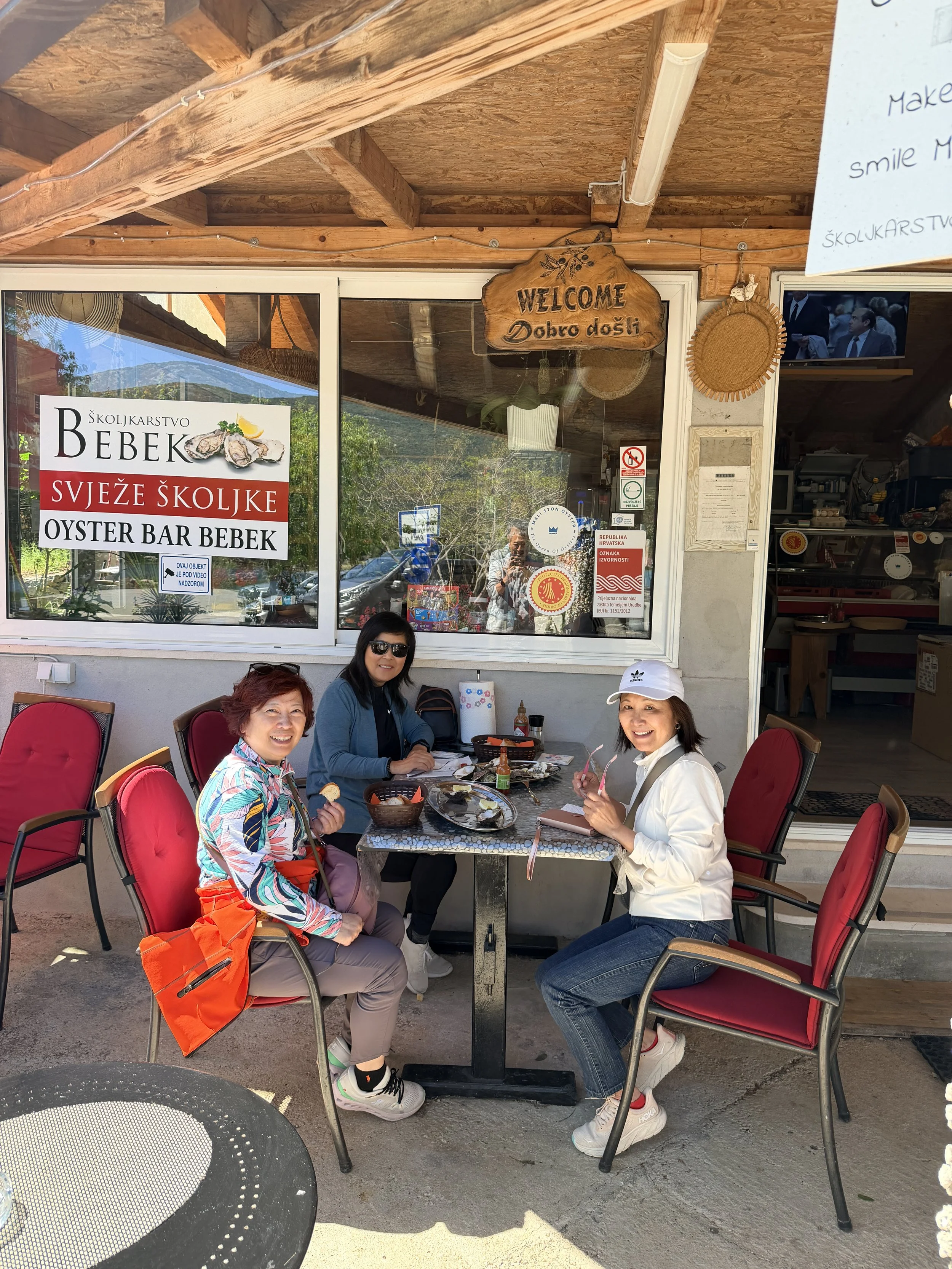
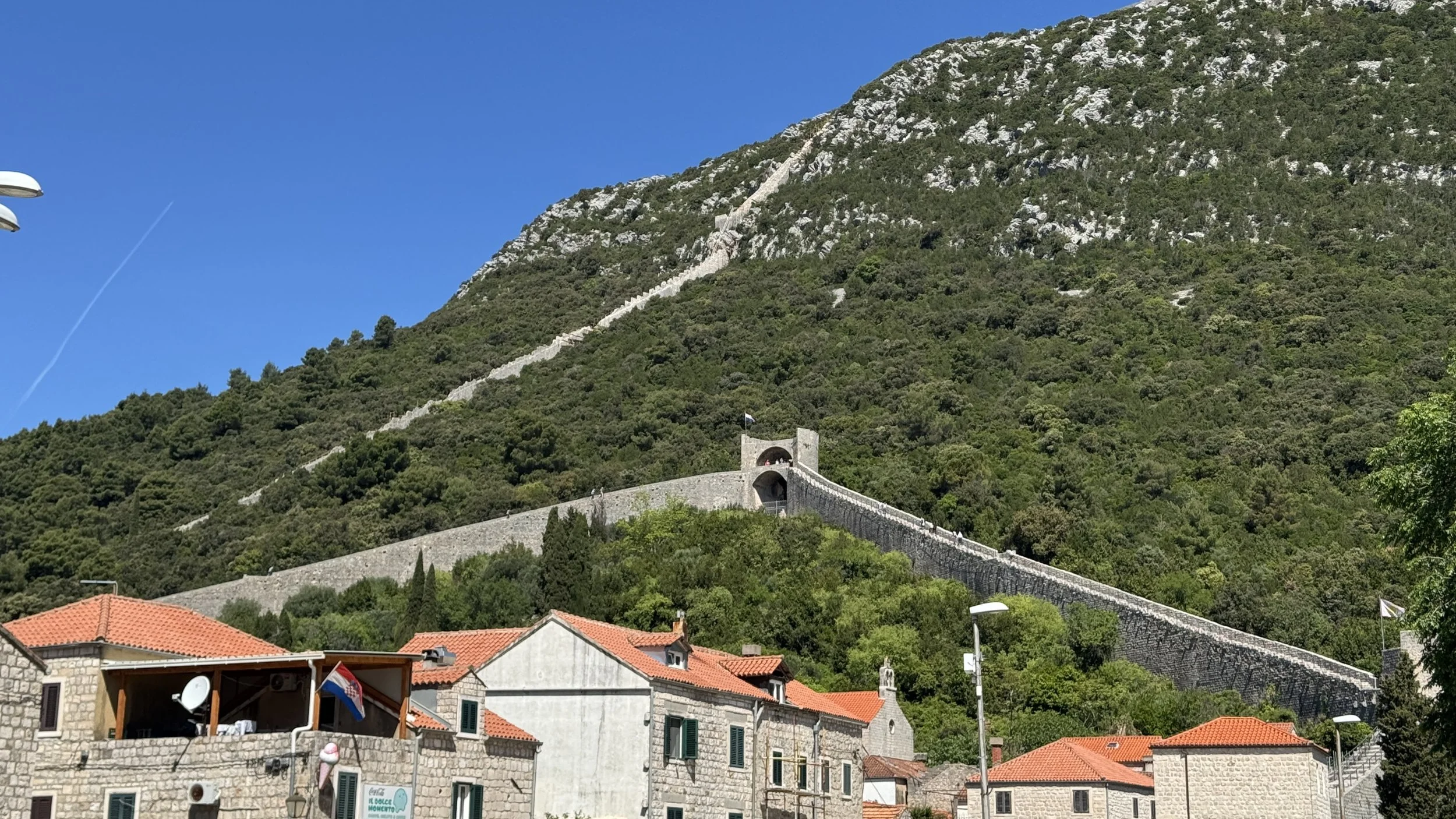
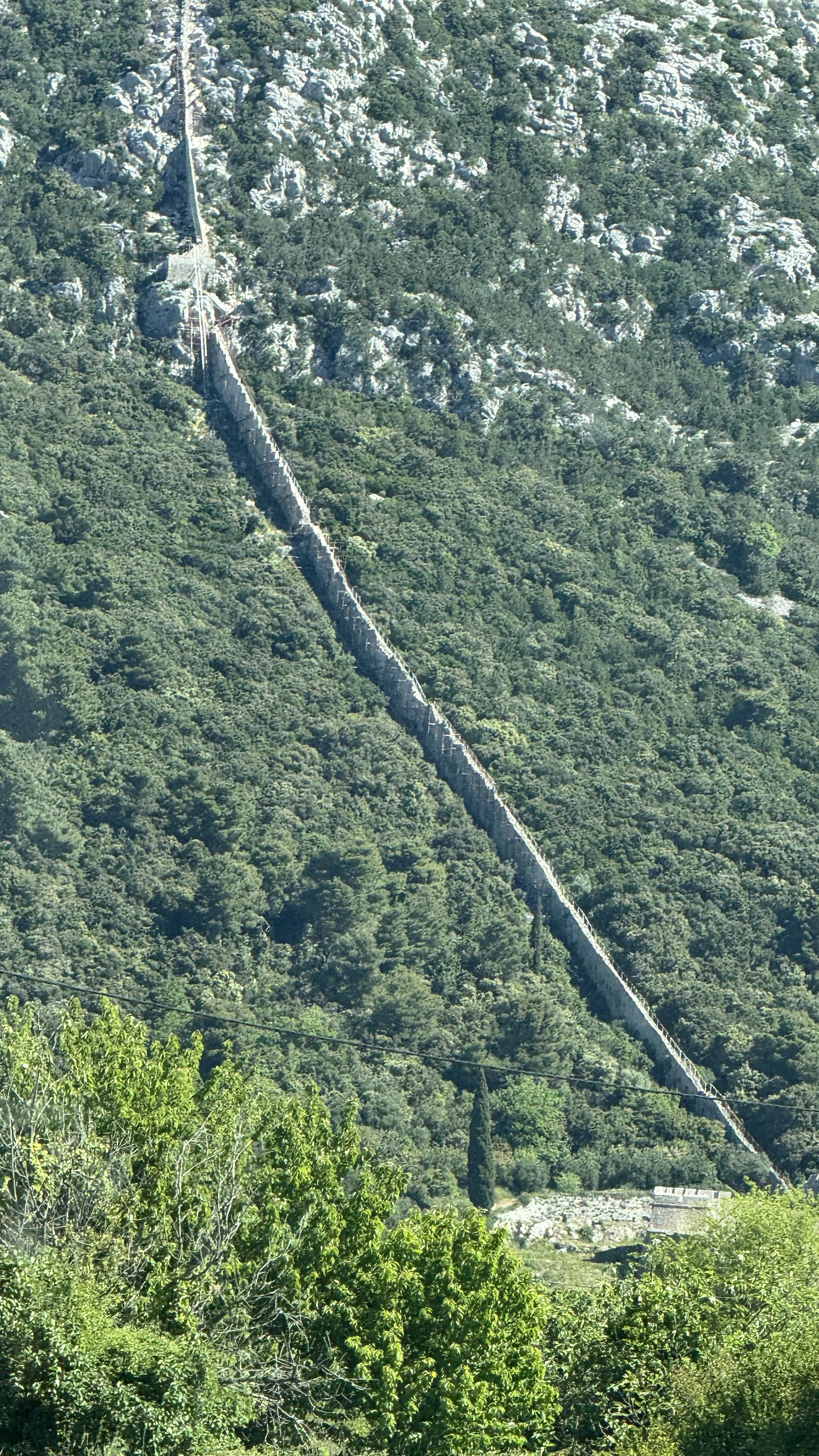
The town of Ston itself was also historic, famous for its massive defensive walls, sometimes nicknamed the “Great Wall of Europe.” We stopped briefly for photos before continuing.
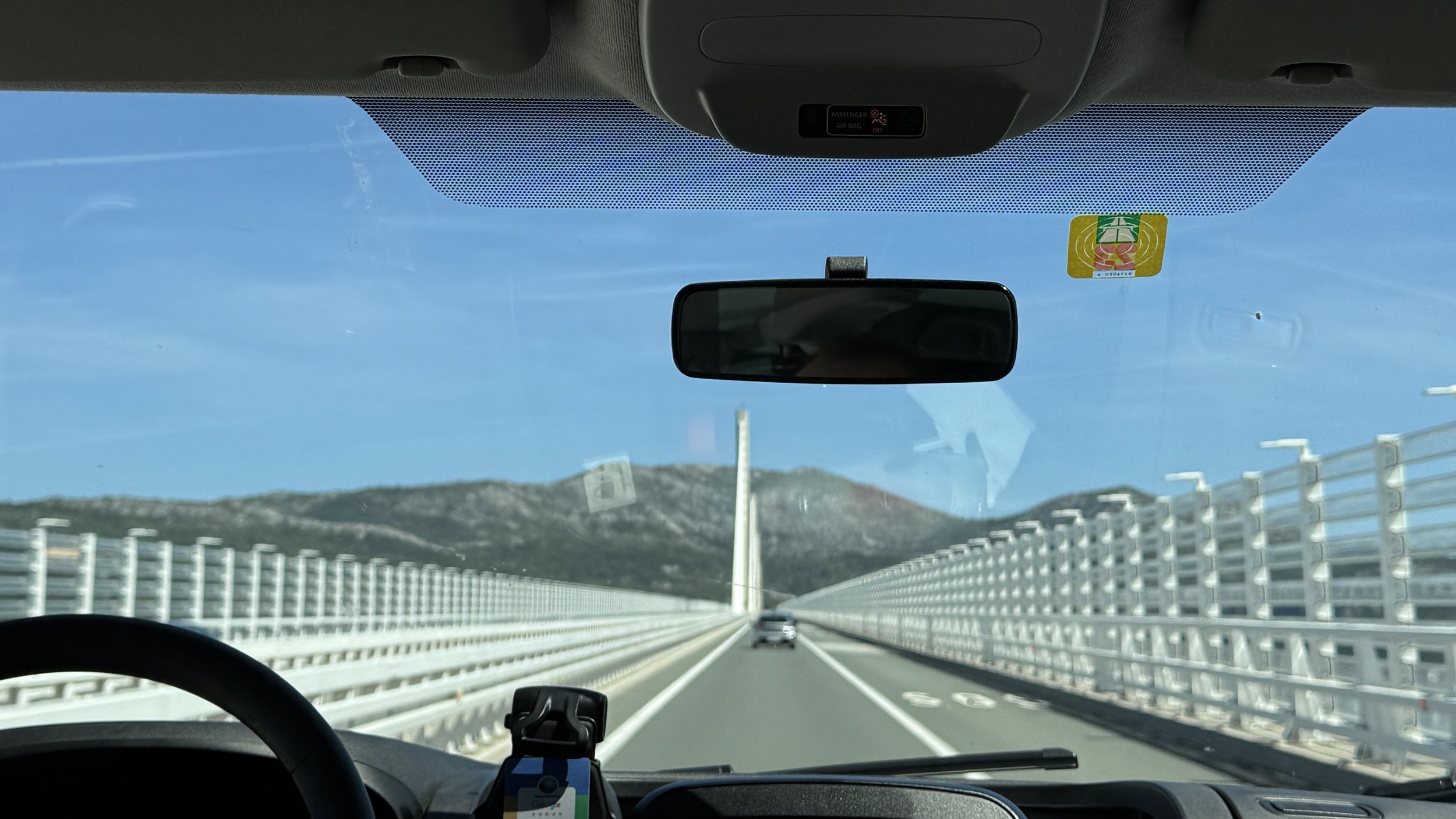
Crossing from Croatia into Bosnia and Herzegovina was completely uneventful. We simply showed our passports, stepped out of the car for a few photos, and continued on. The only amusing part was that the border camera was mounted unusually high, forcing some of us to stand farther back and awkwardly look upward.
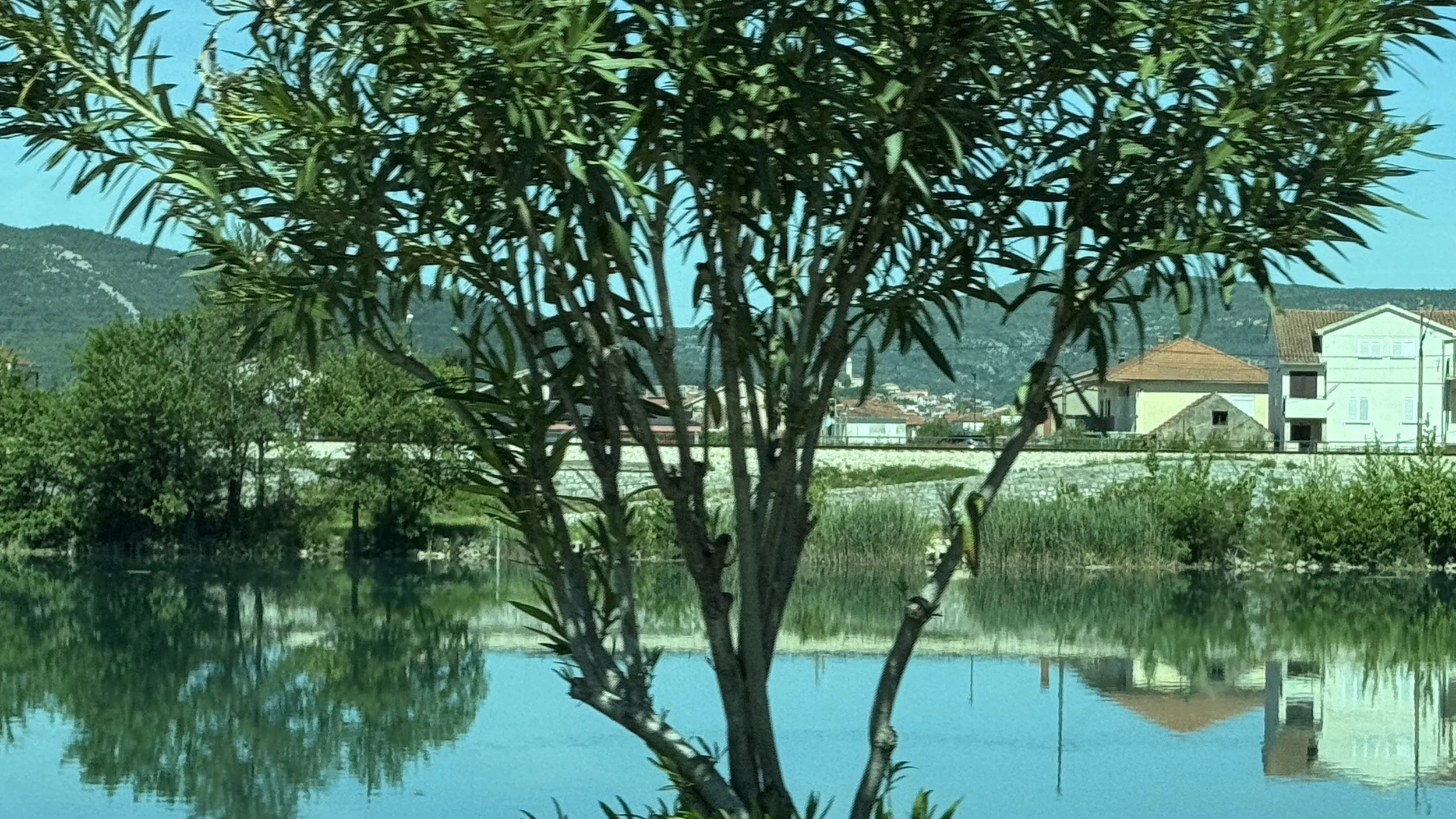
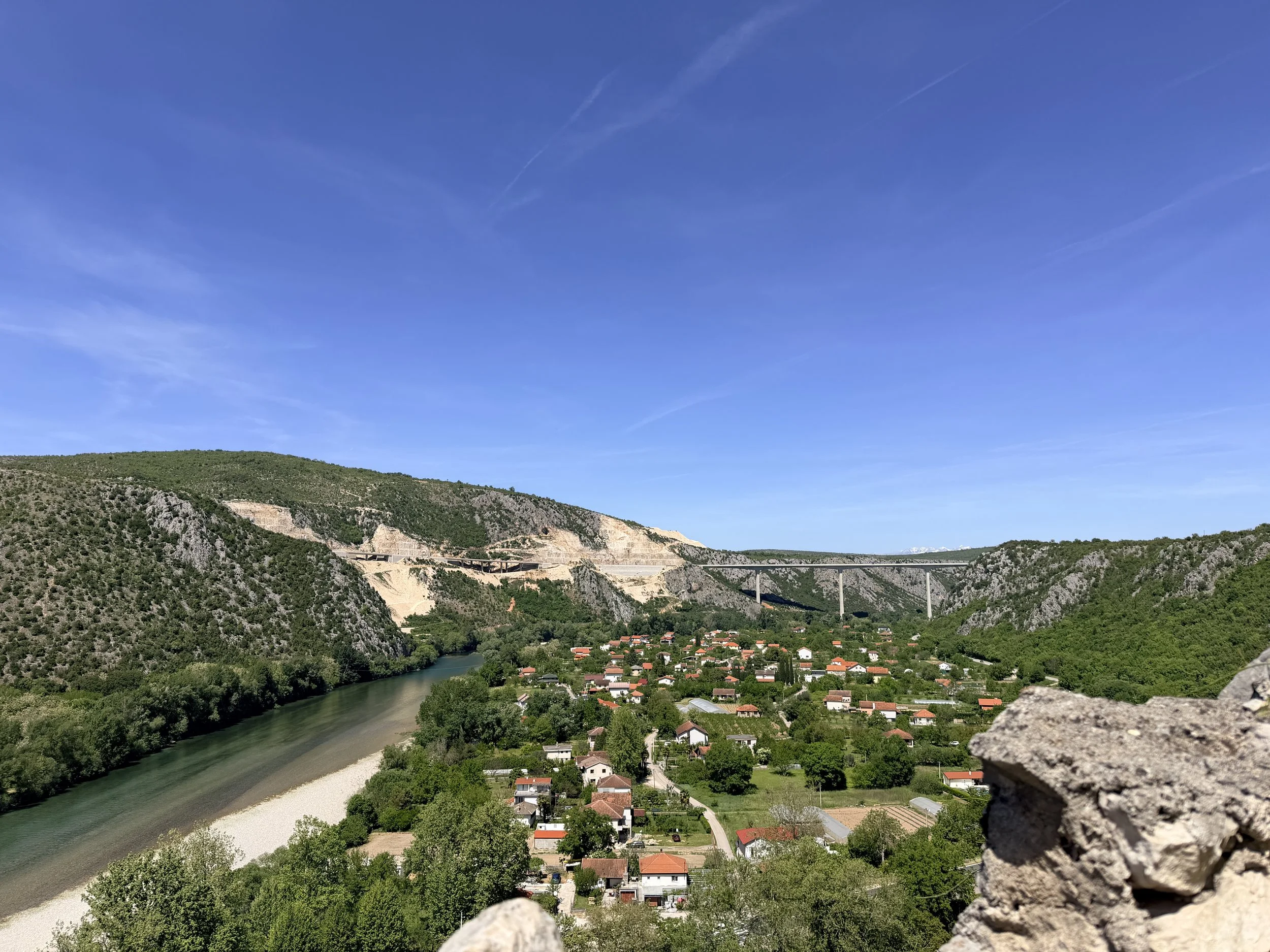
Driving through Bosnia was beautiful and peaceful. Crystal-clear rivers wound through forested mountains, and the scenery immediately made us feel this was a country we would like to explore more deeply in the future.
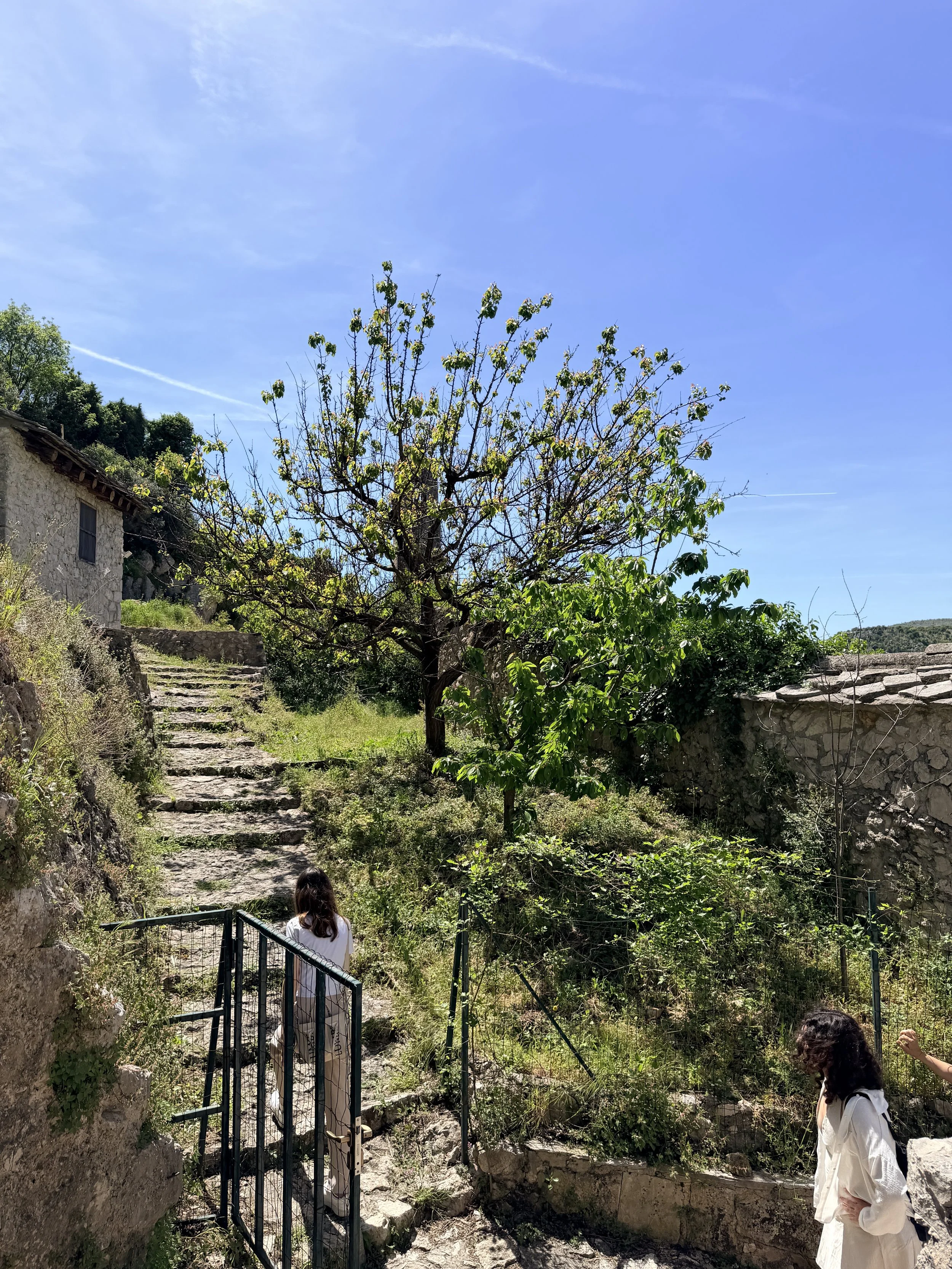
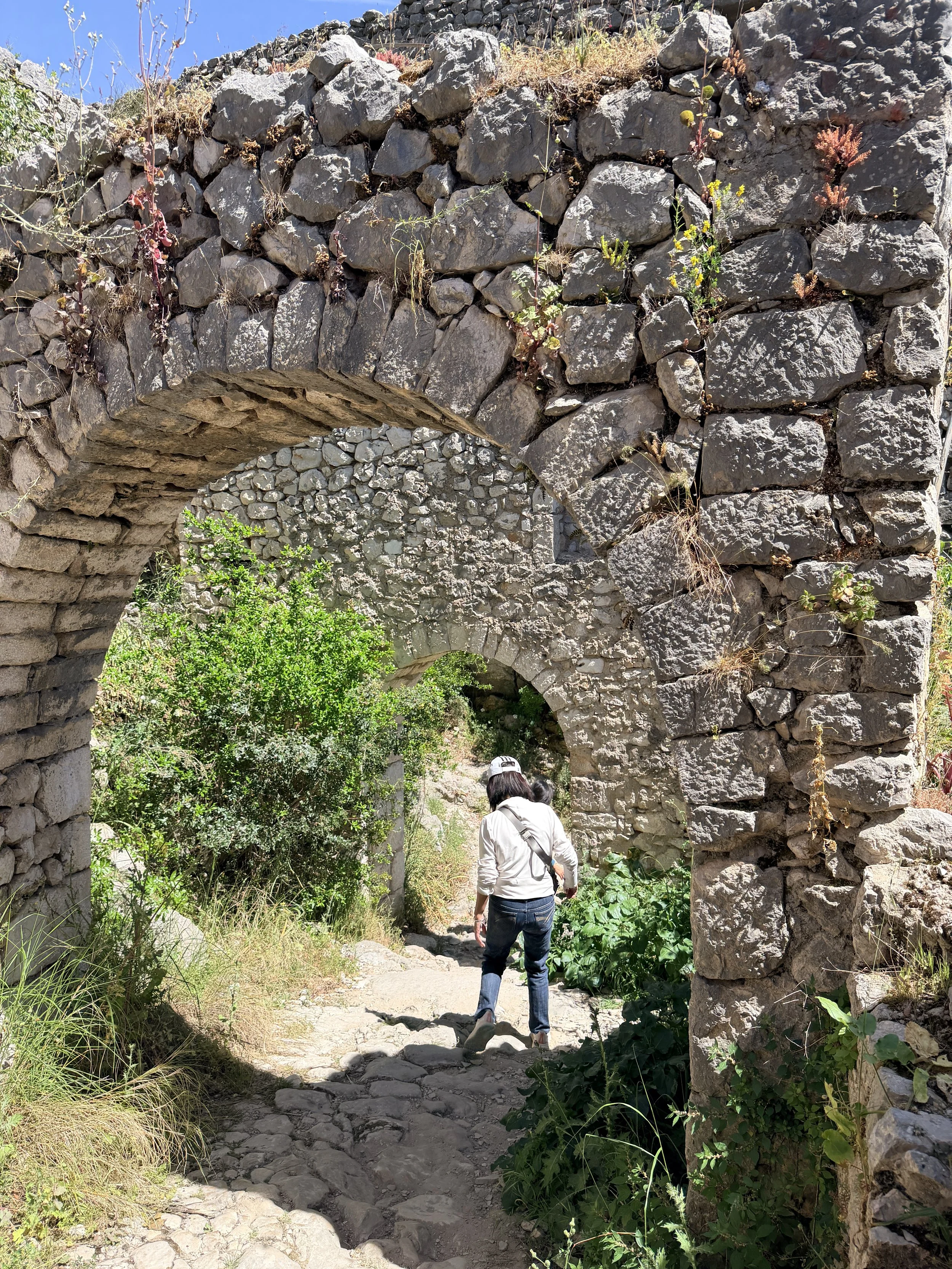
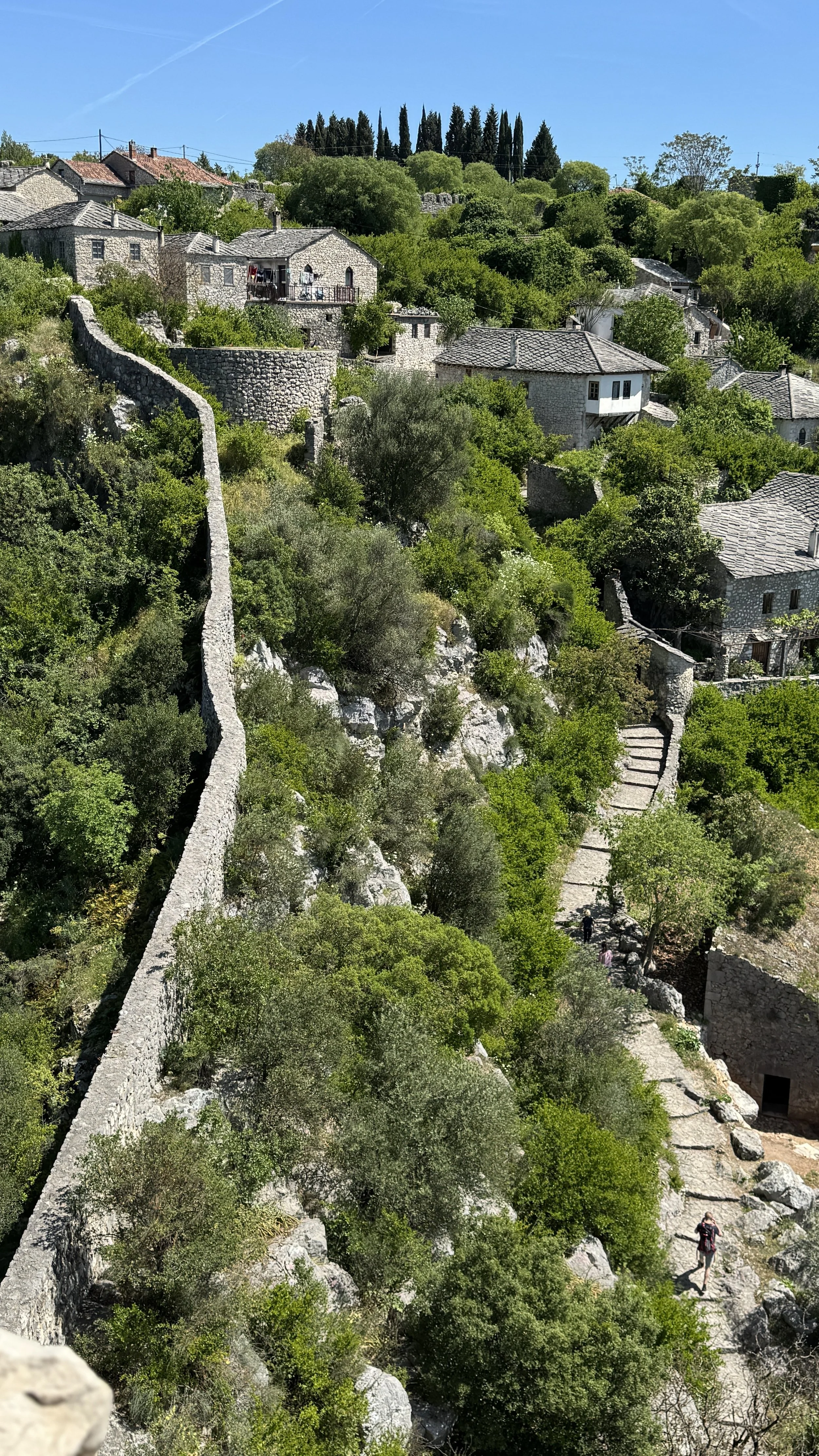
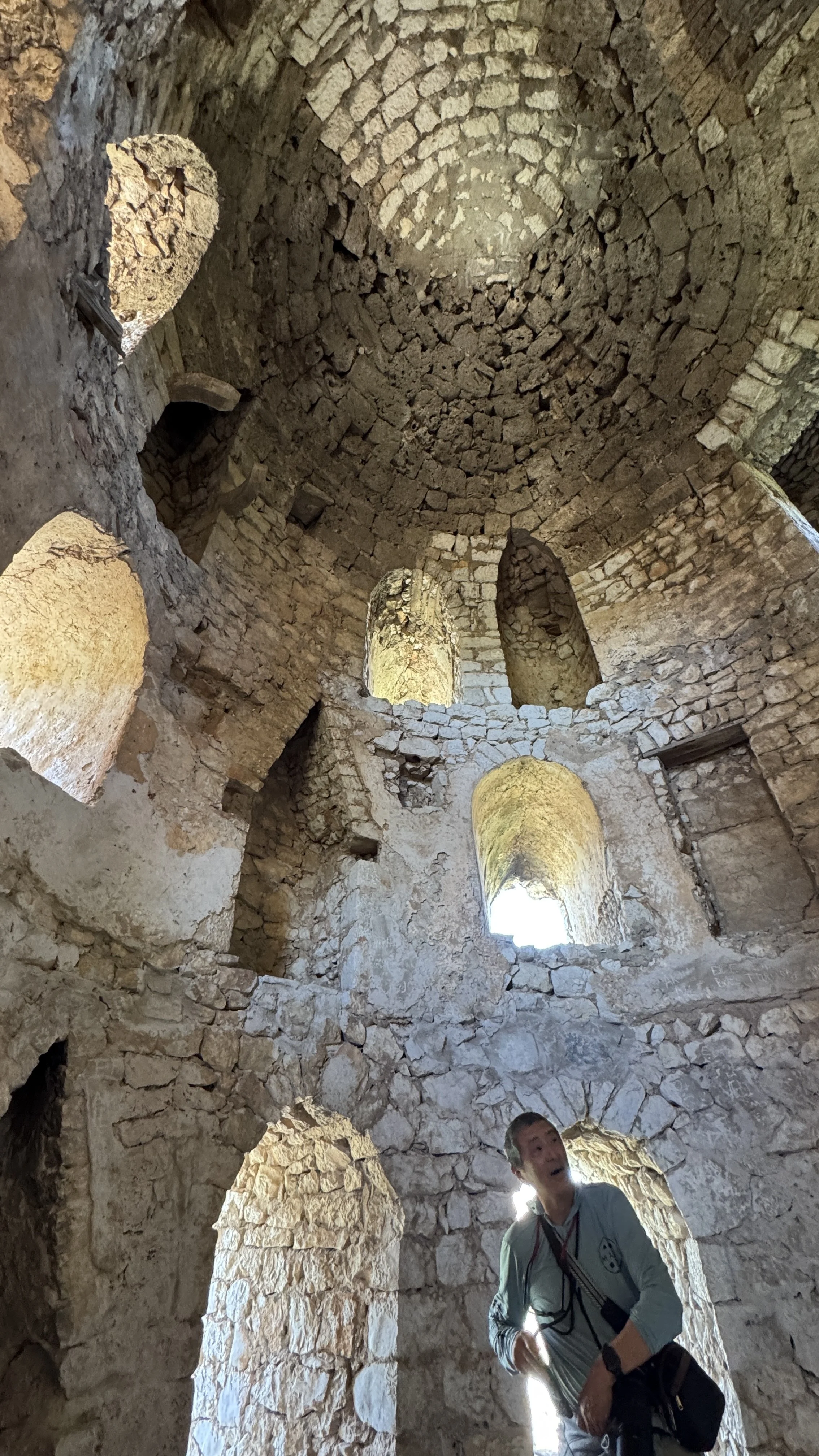
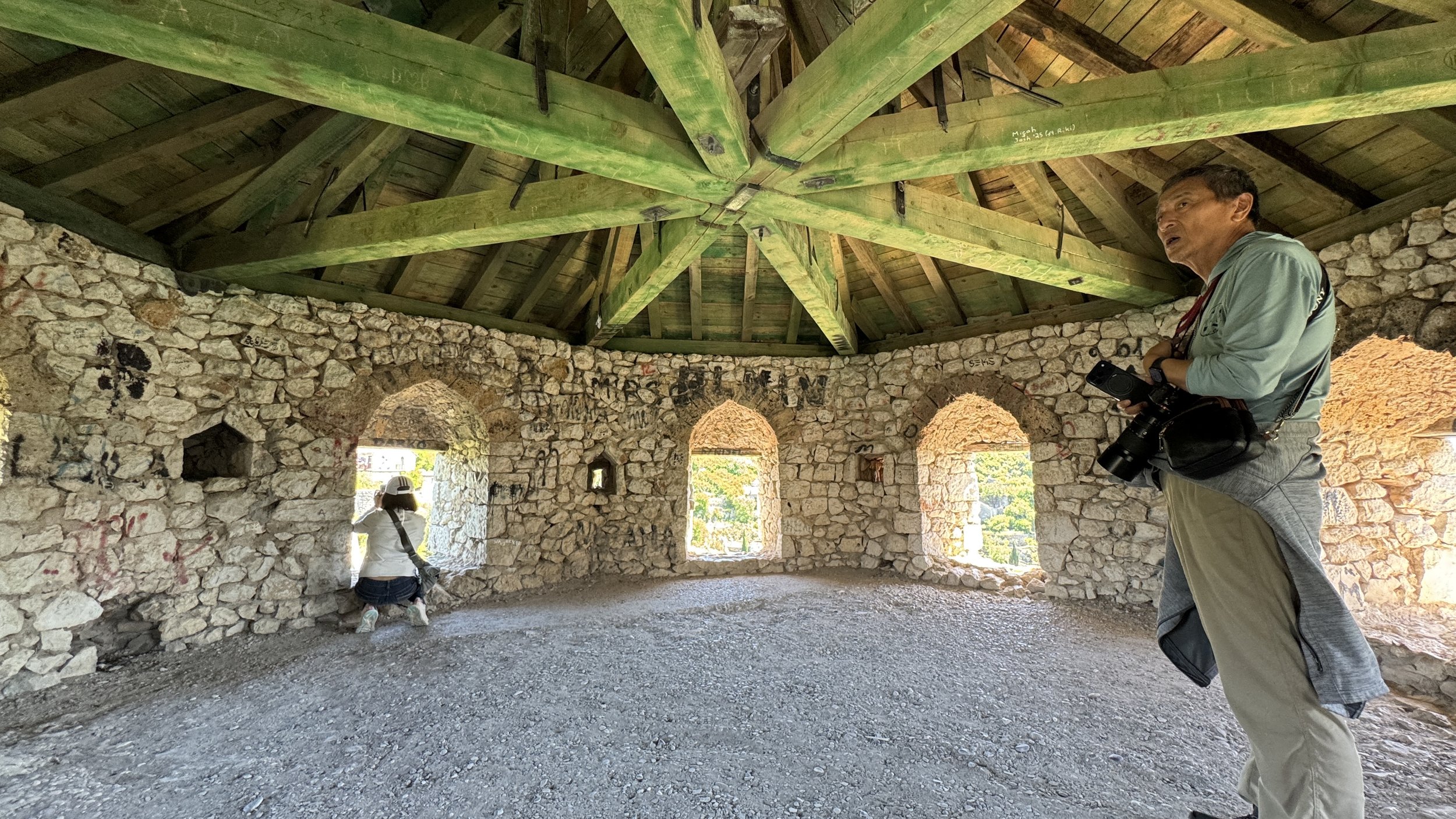
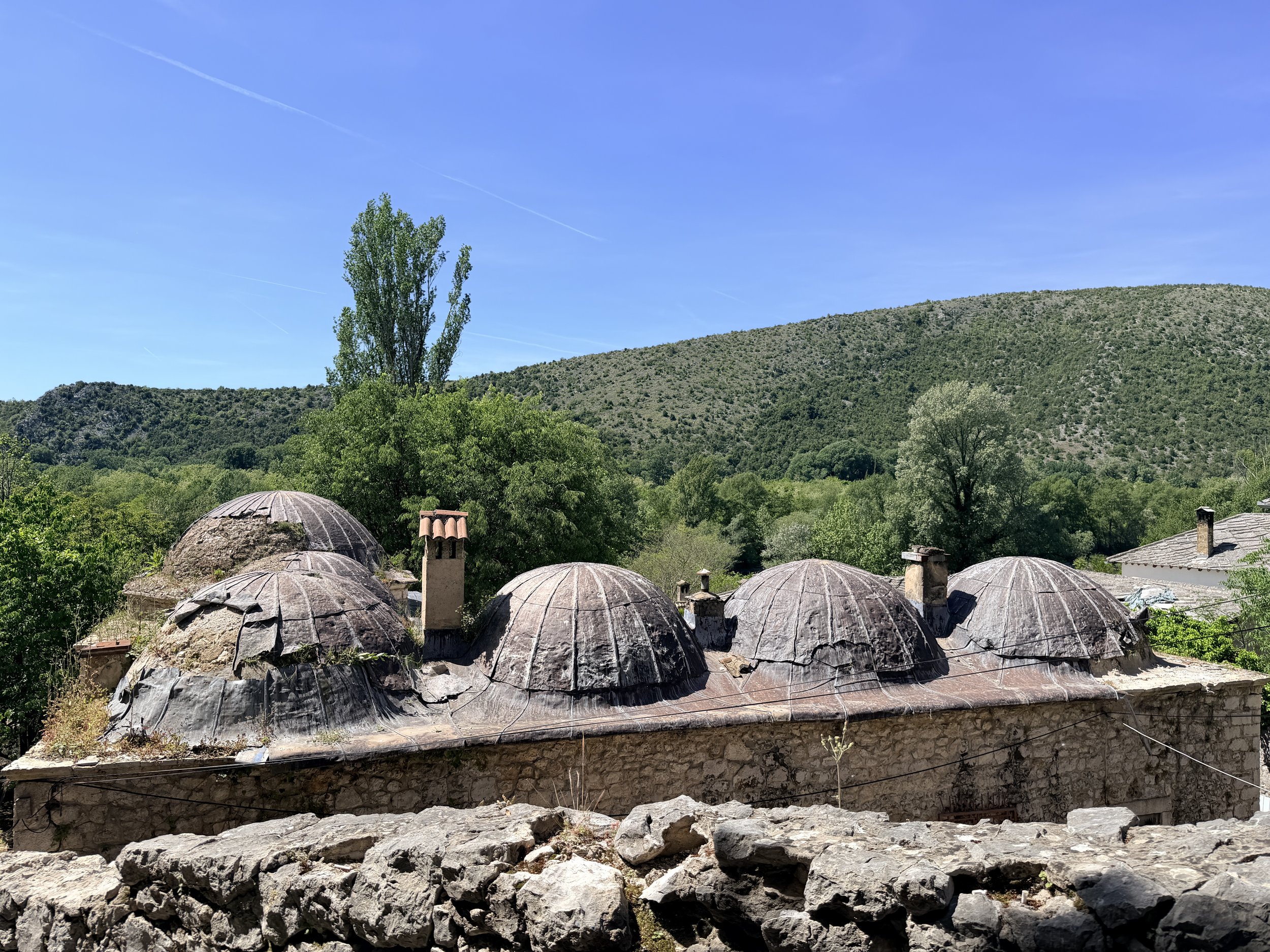
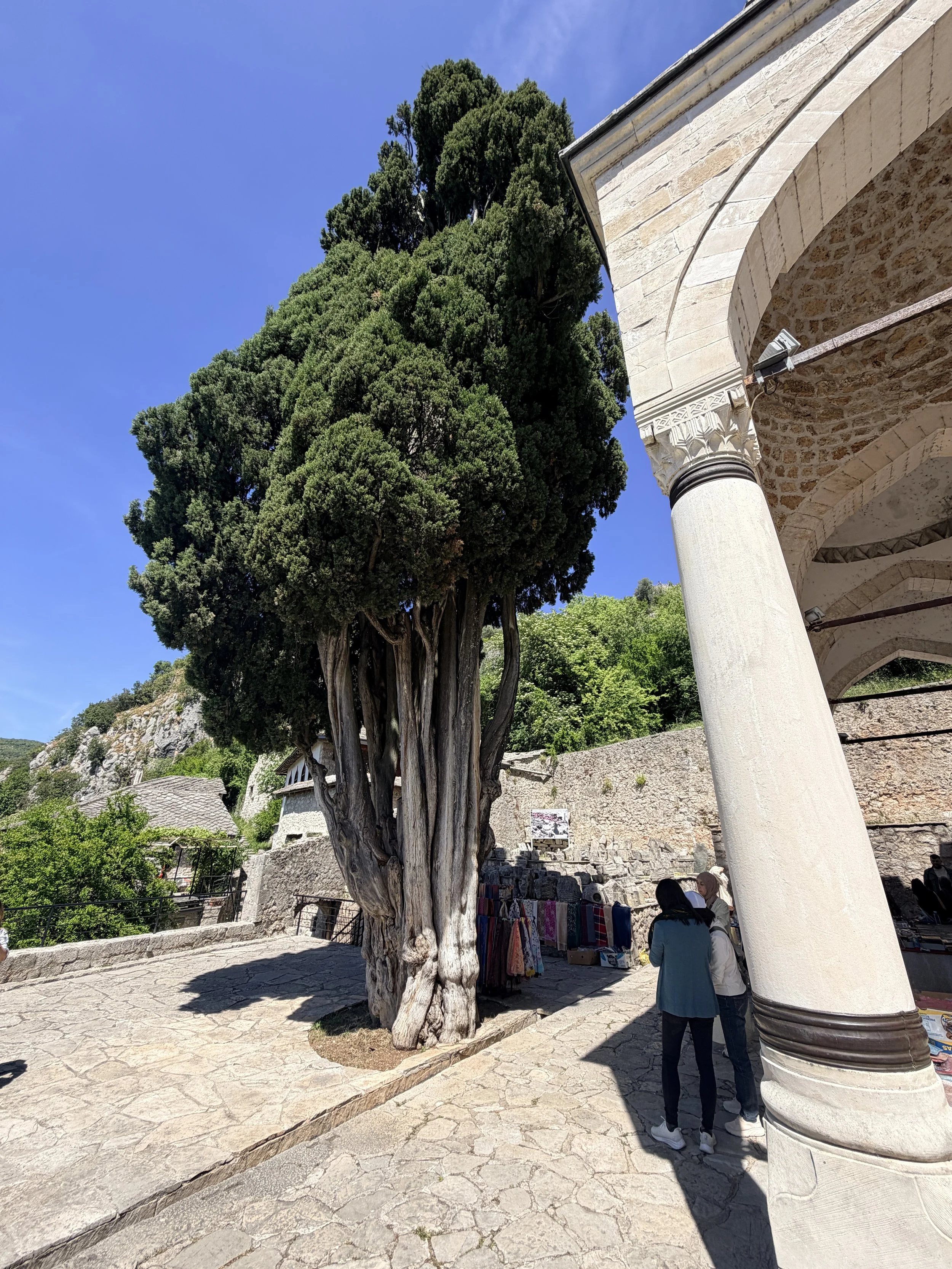
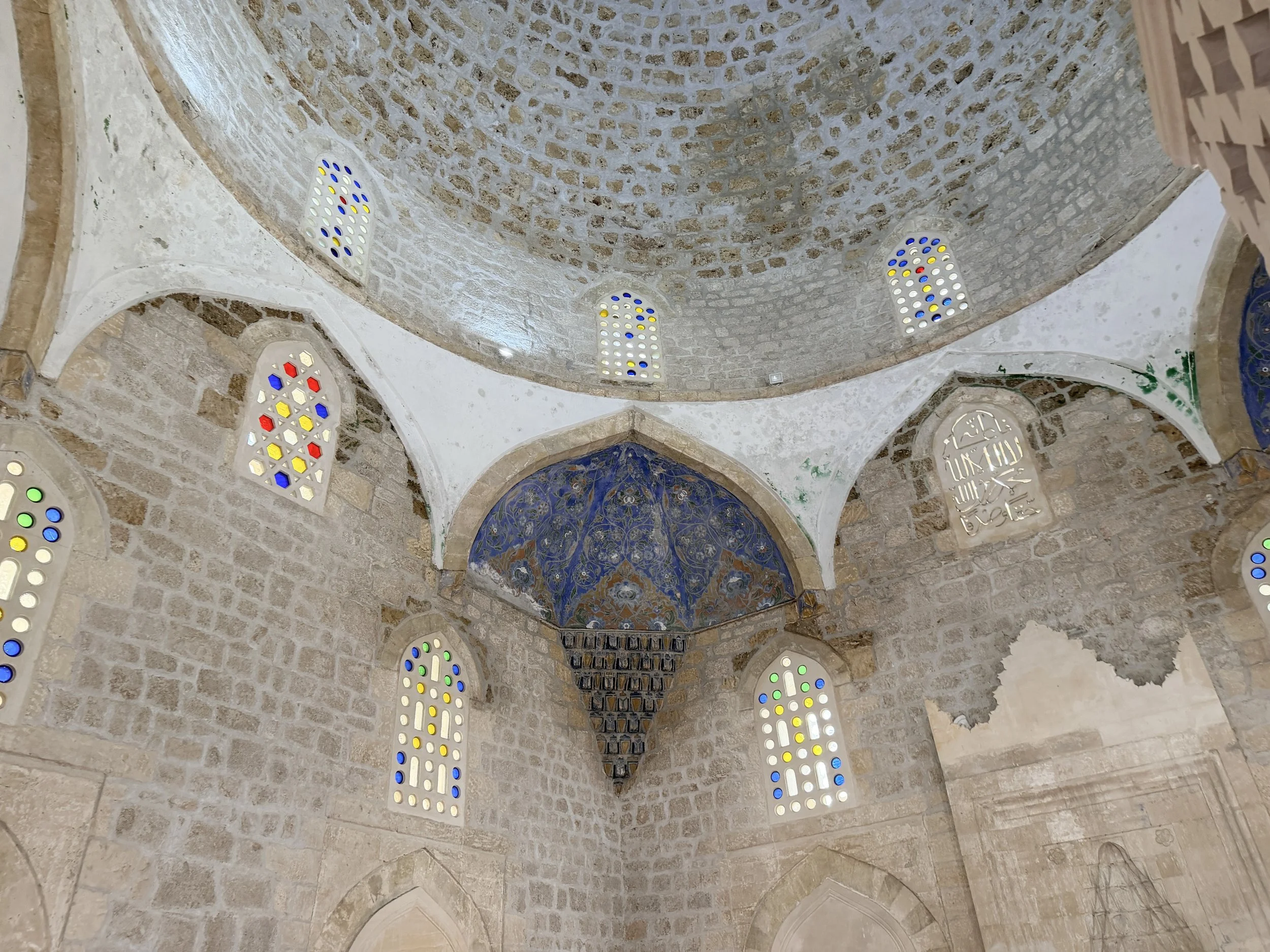
Our next stop was the historic stone village of Počitelj. Built on a steep hillside overlooking the Neretva River, Počitelj felt almost frozen in time. We climbed the ancient stone stairways all the way up to the old watchtower, carefully exploring the structure along the way. The tower remained in very original condition, with narrow passages, uneven steps, and almost no modern safety protections. We joked that in the United States visitors would probably never be allowed inside under such conditions. There were very few tourists, which made the experience even more atmospheric. The stone roofs, old Ottoman-style houses, and quiet pathways gave the village an authentic feeling that we rarely encounter anymore.
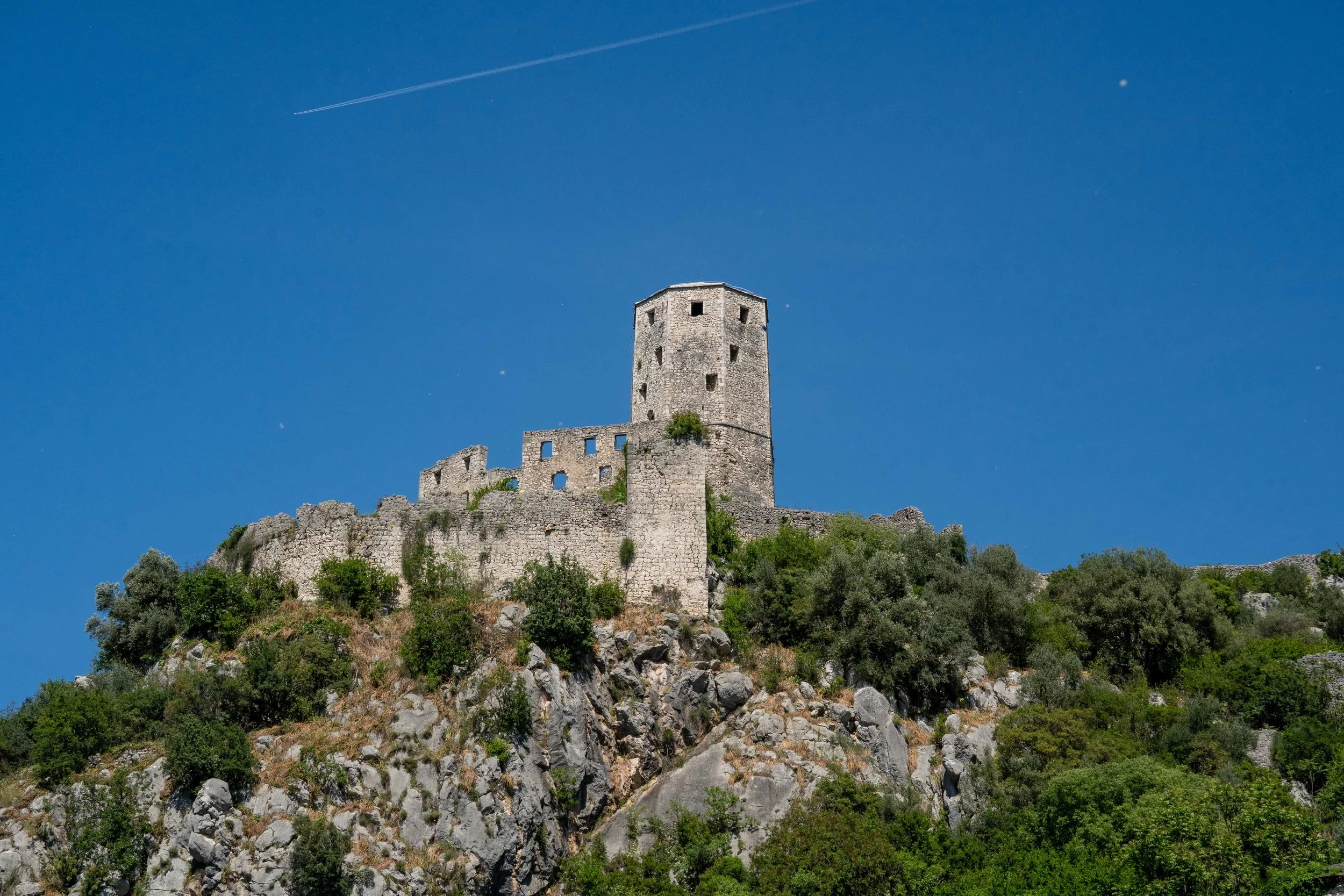
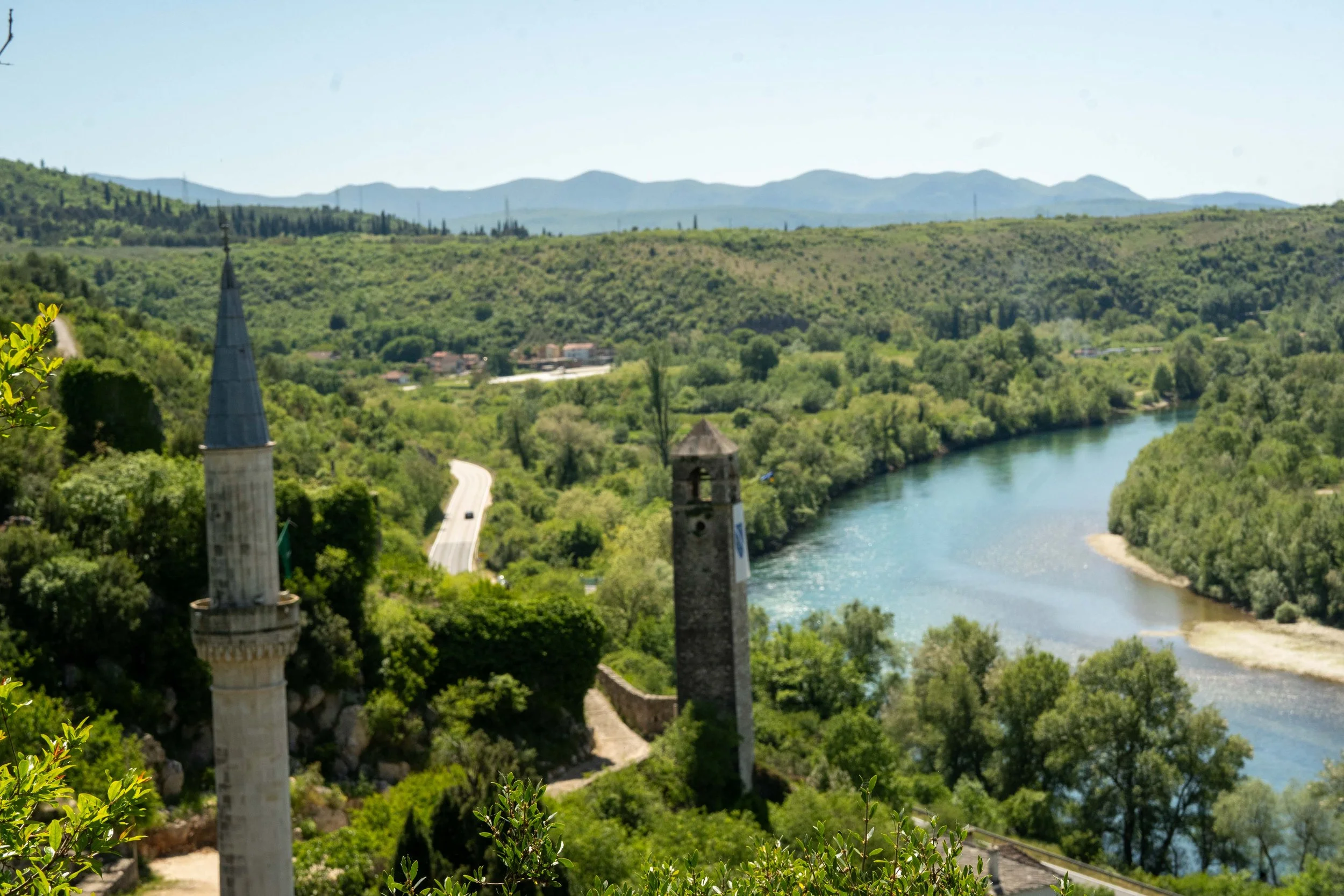
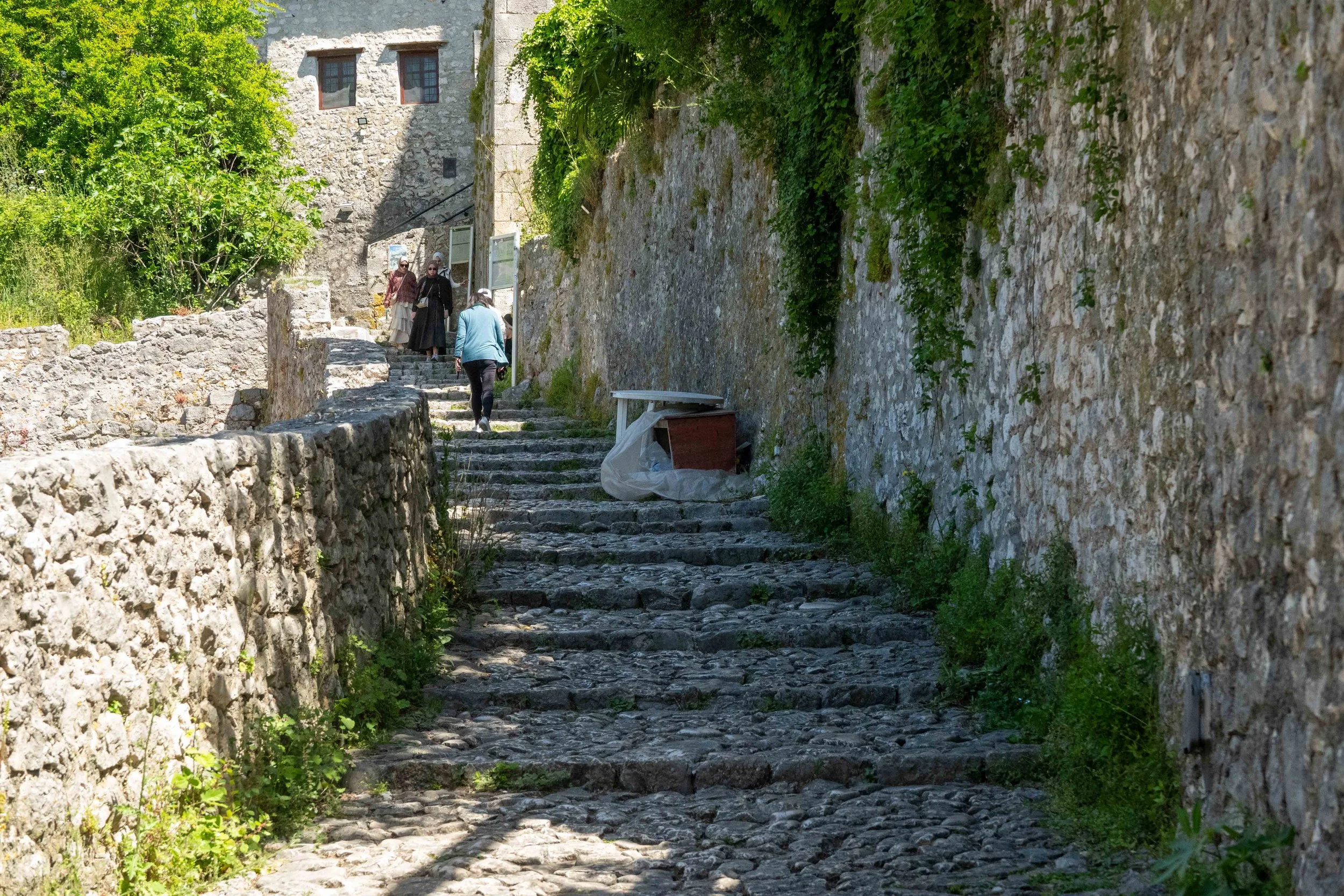
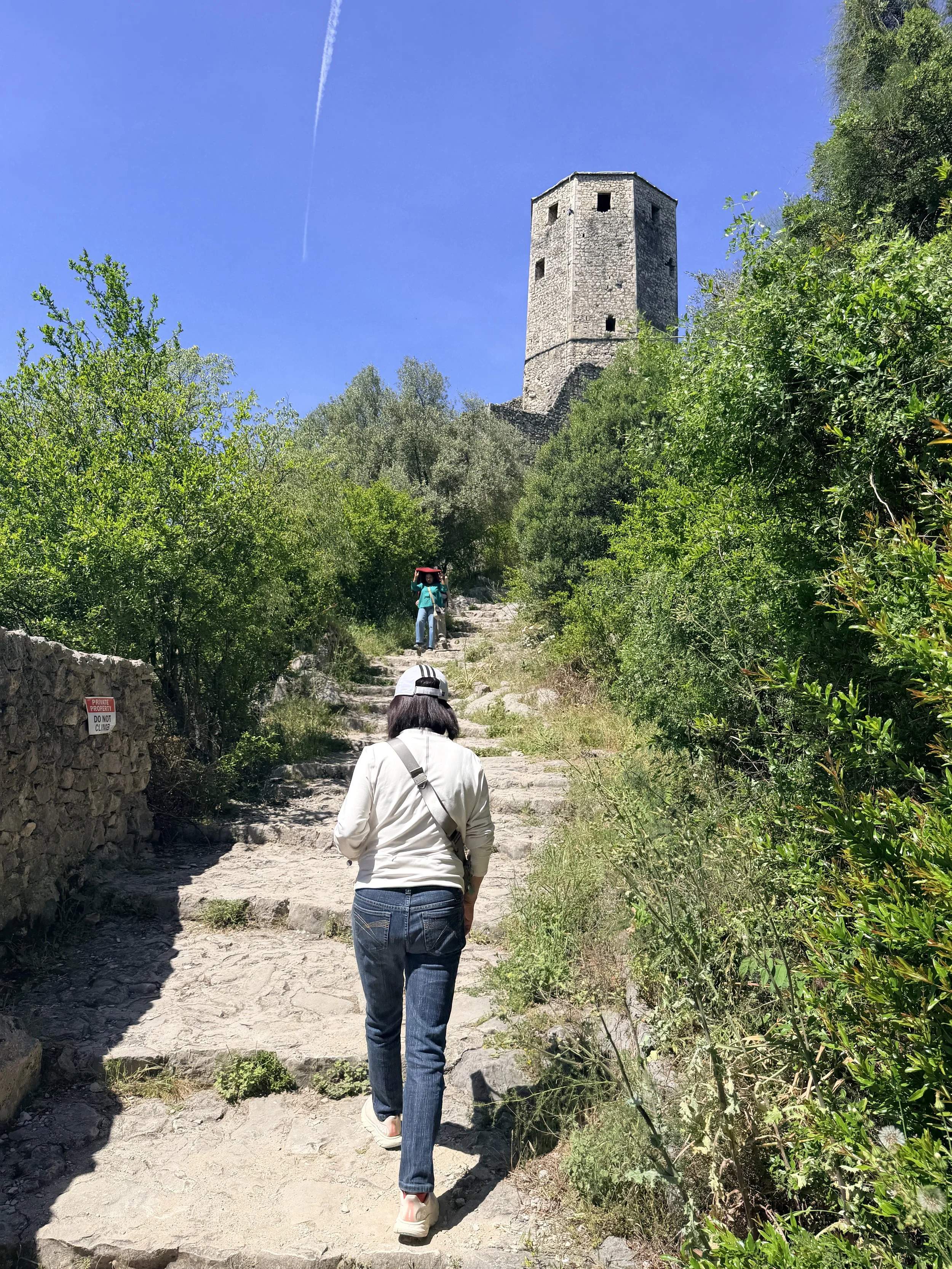
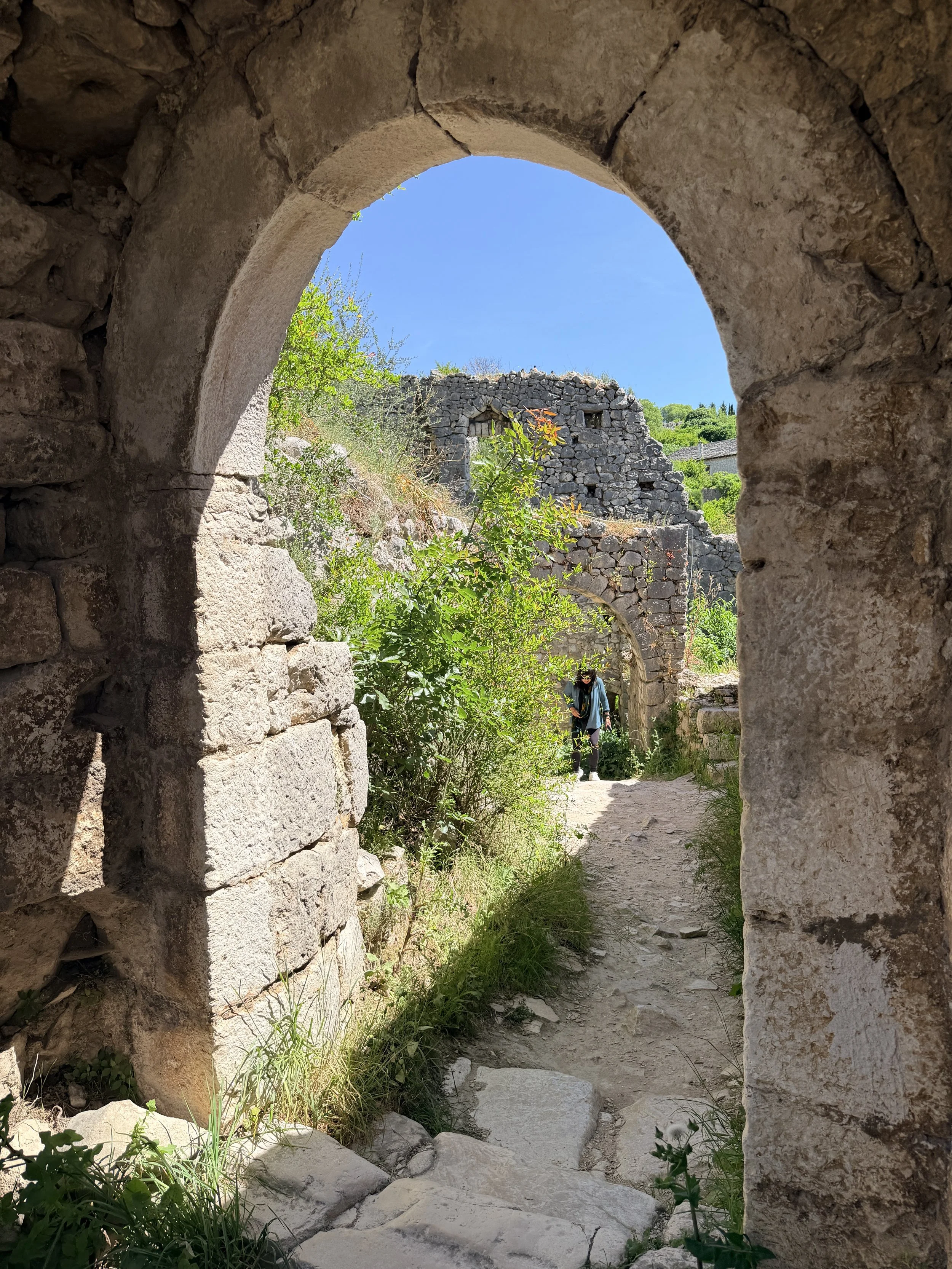
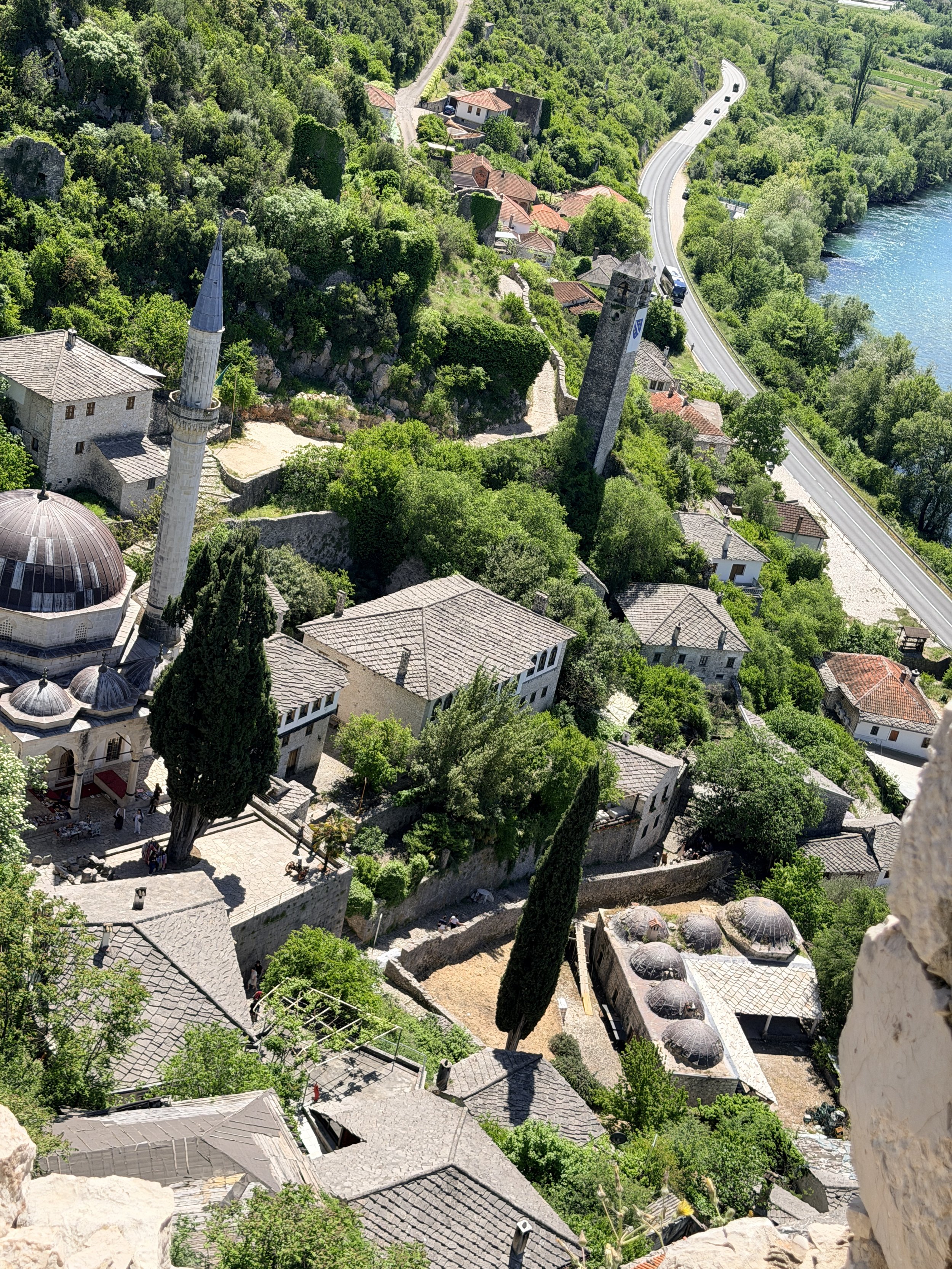
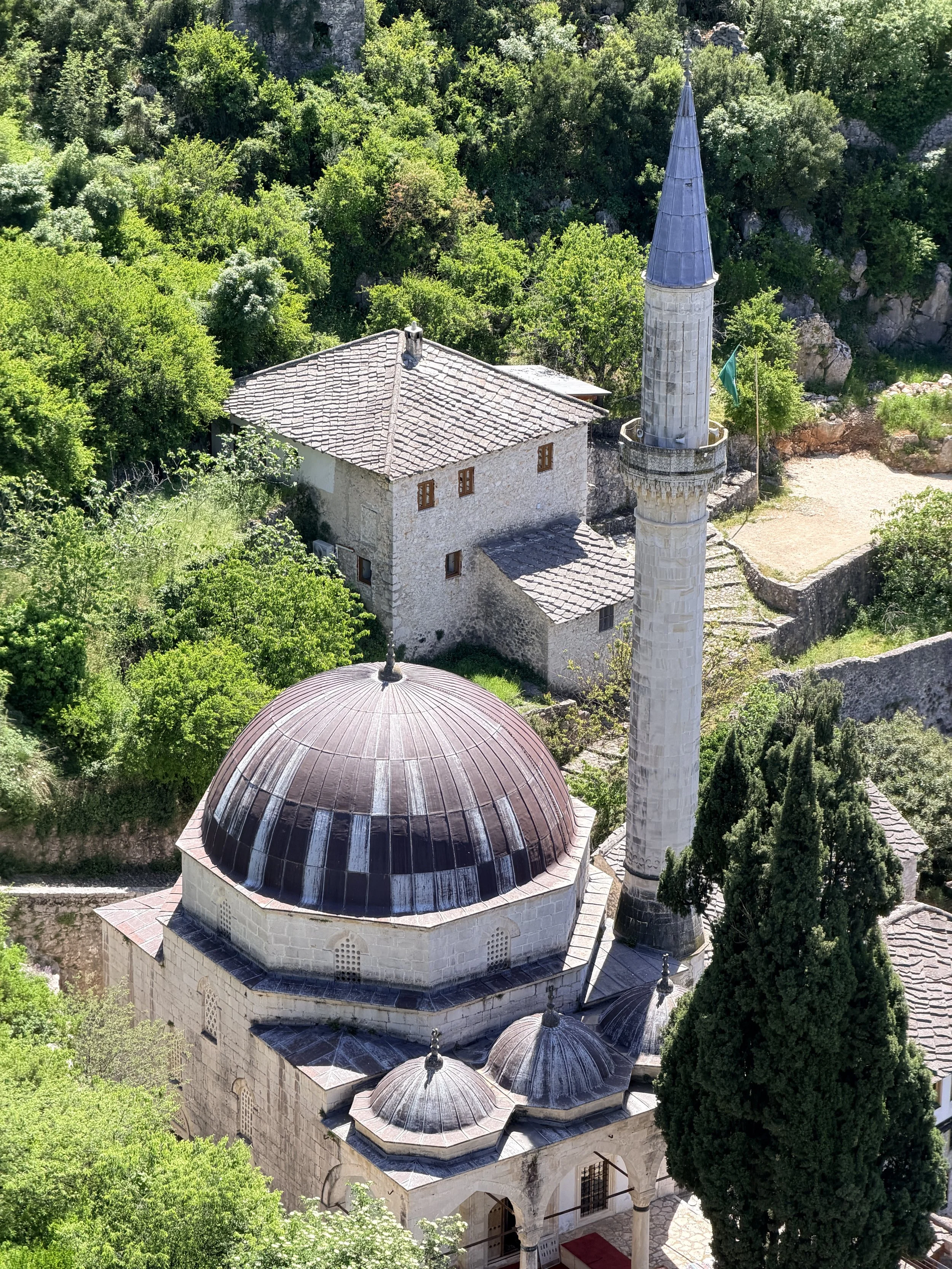
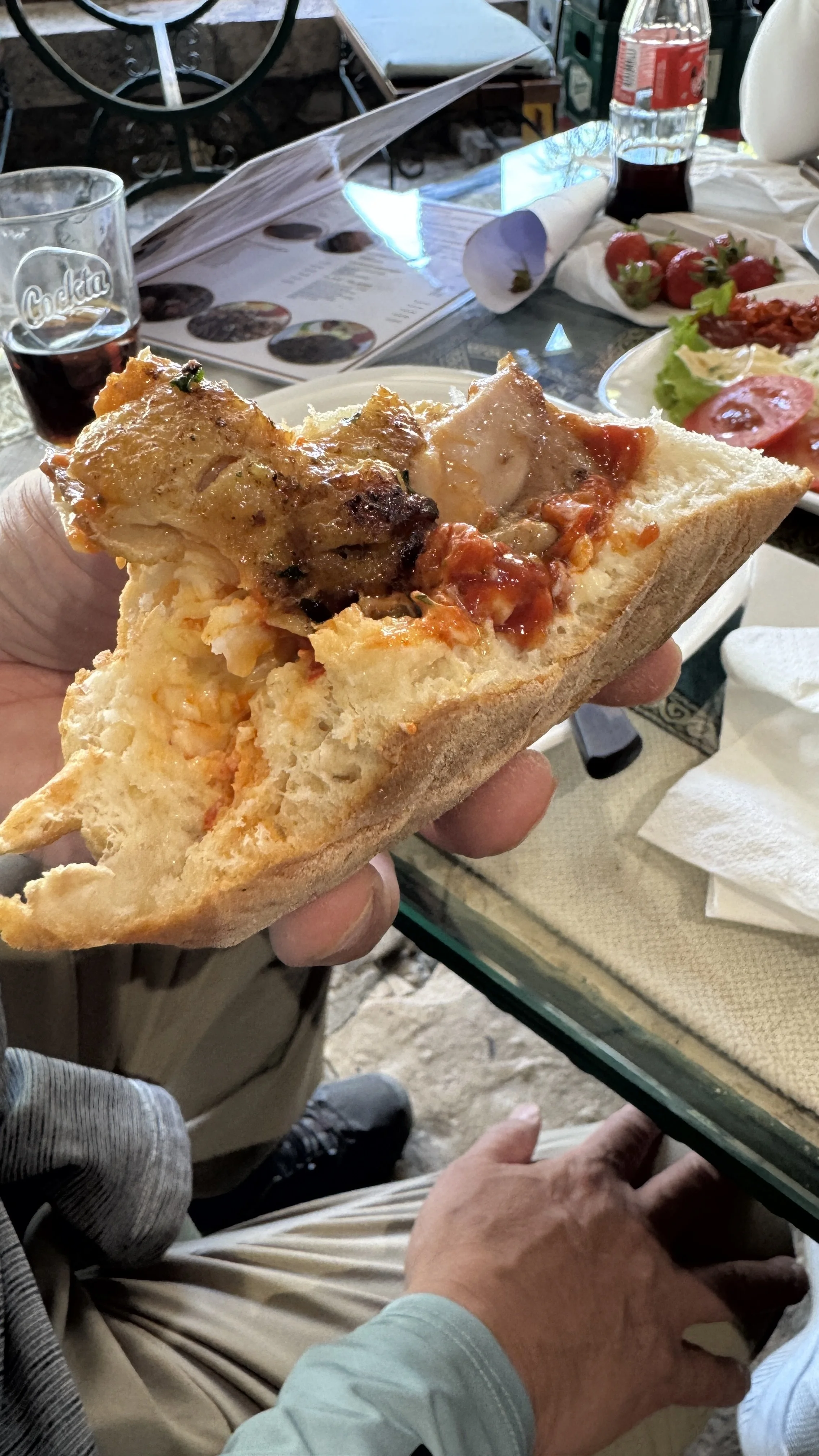
On the way back down, we visited the old mosque before stopping for lunch. We had a delicious chicken dish along with fried Bosnian donuts. Although Počitelj was not the grandest or most elegant historic town we had ever visited, it felt incredibly genuine and untouched.
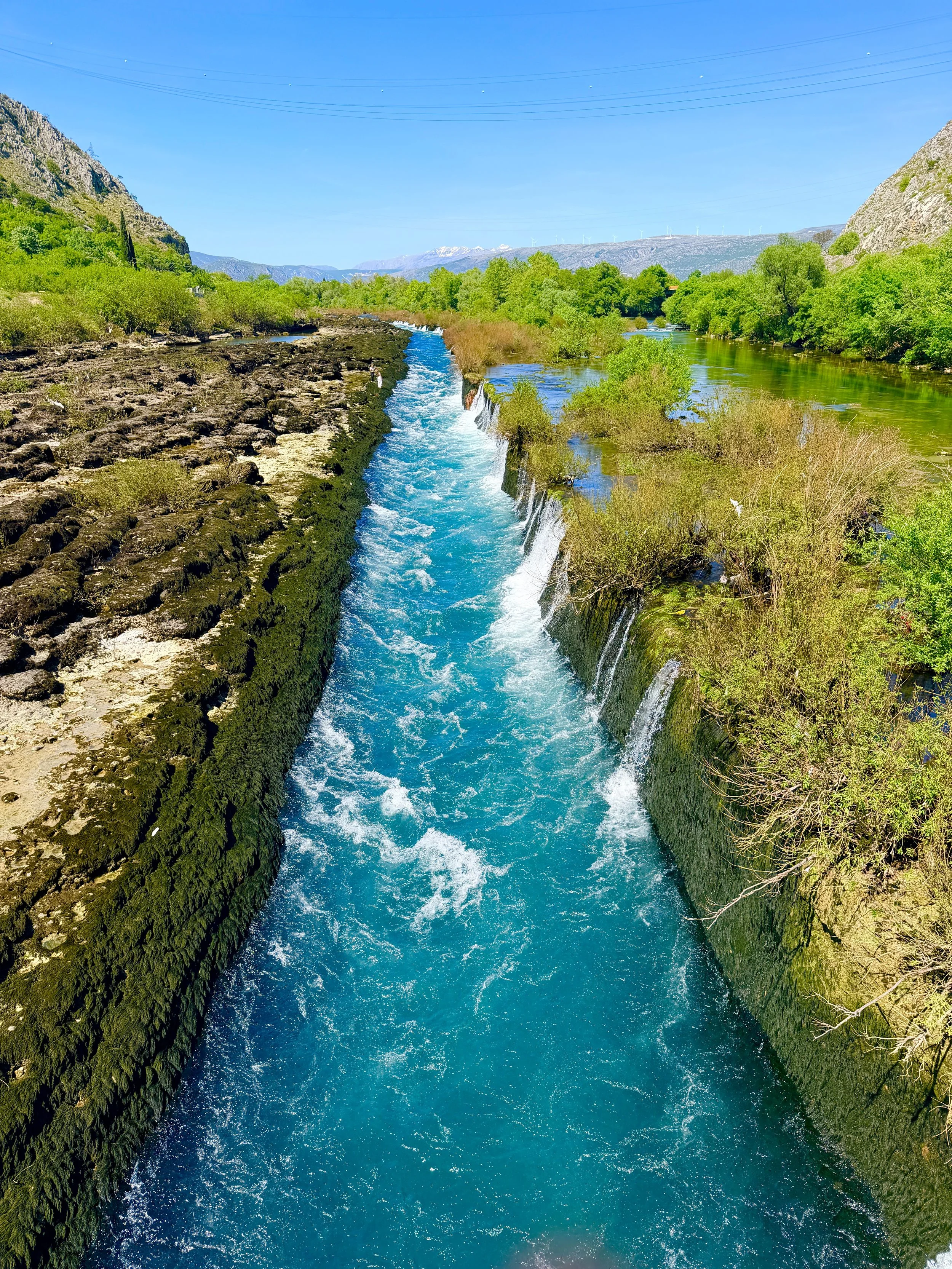
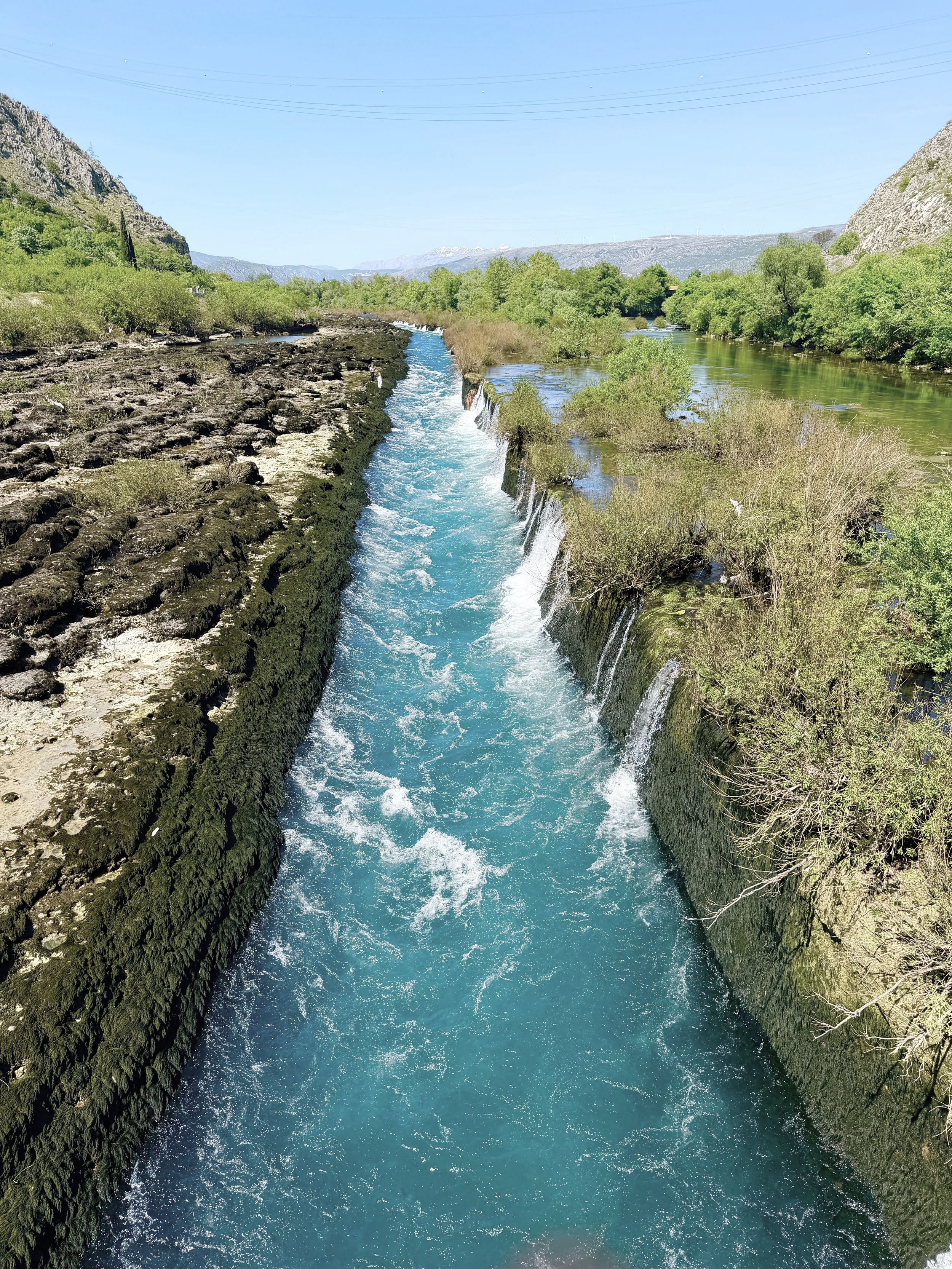
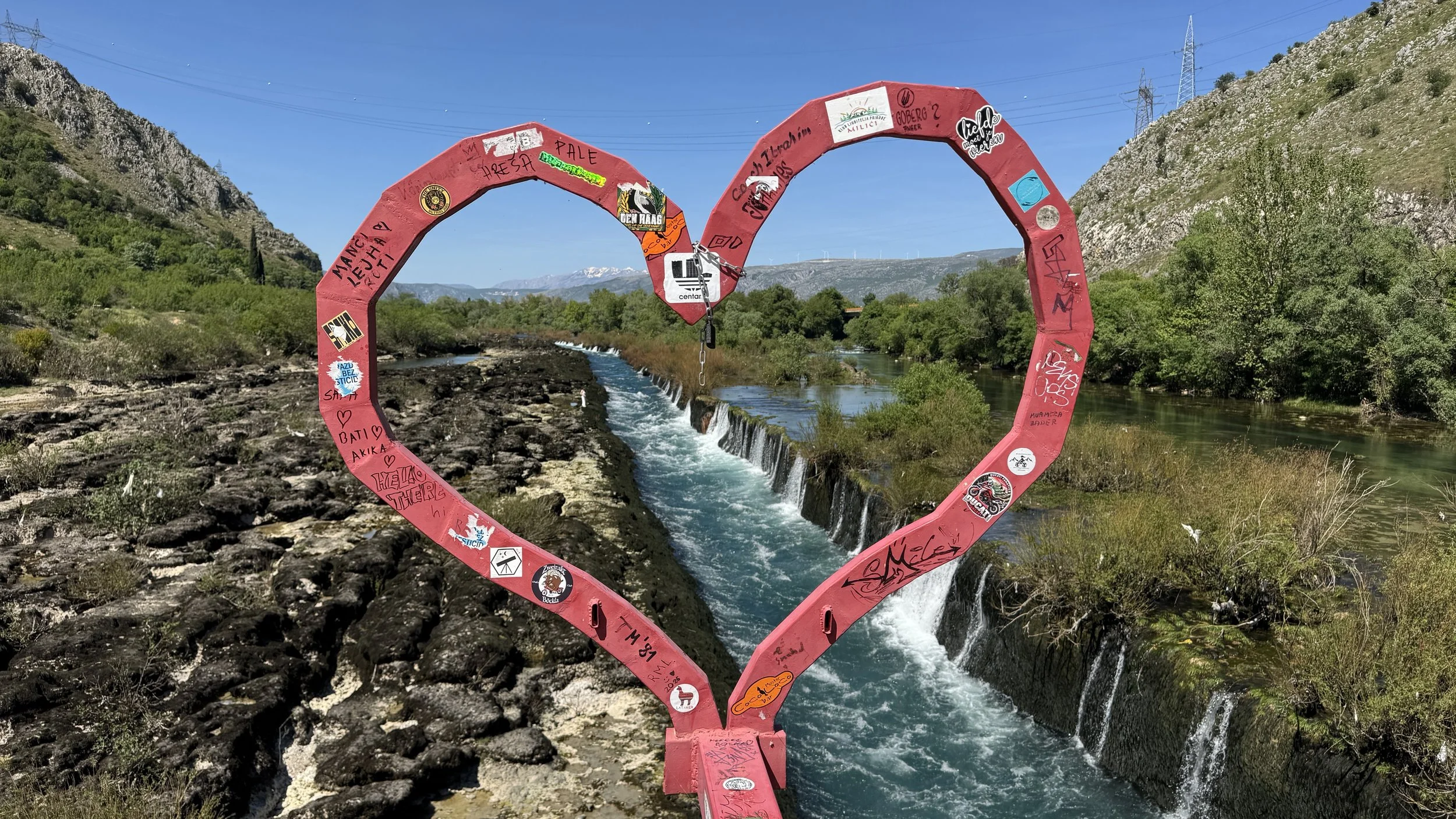
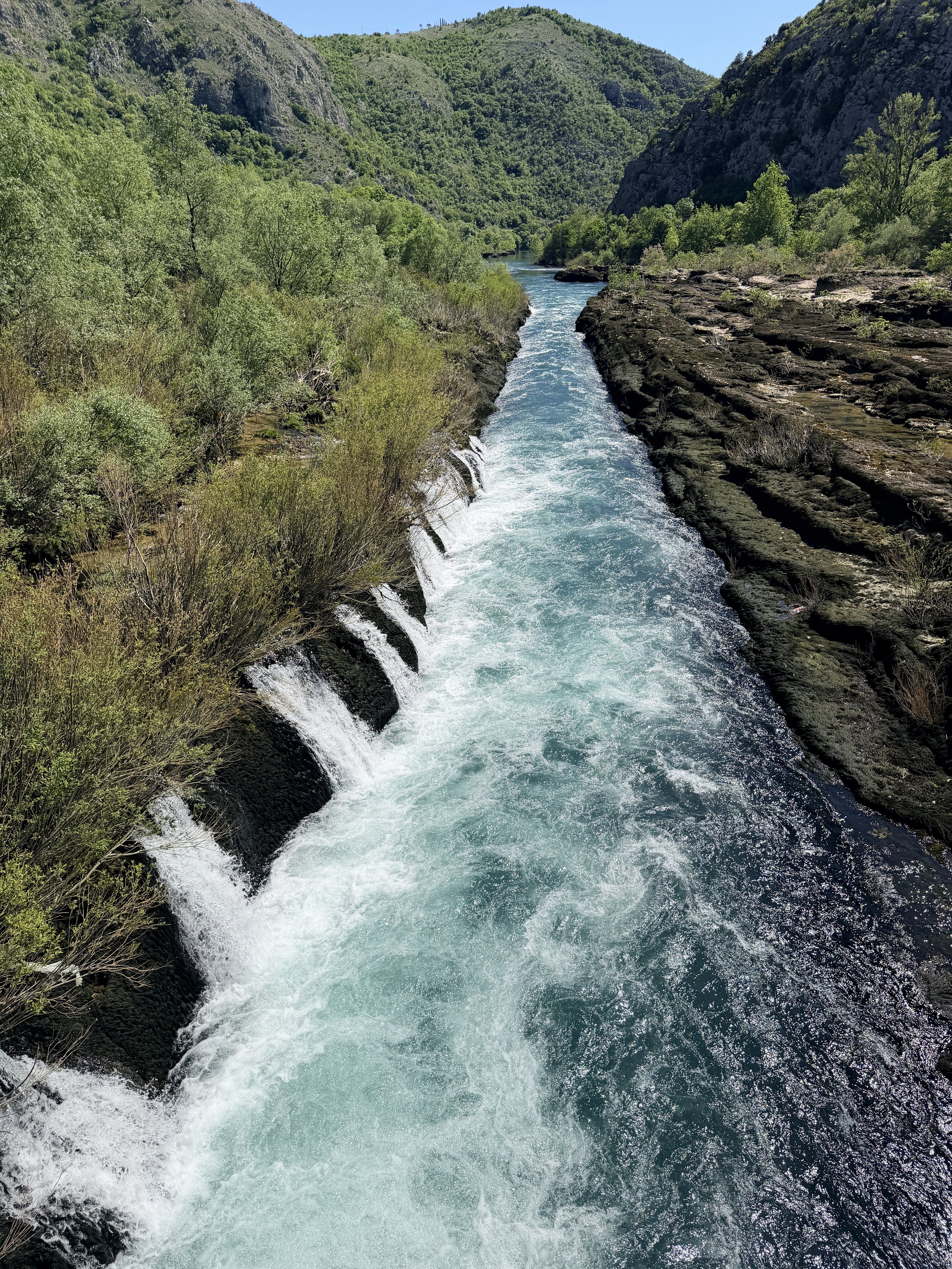
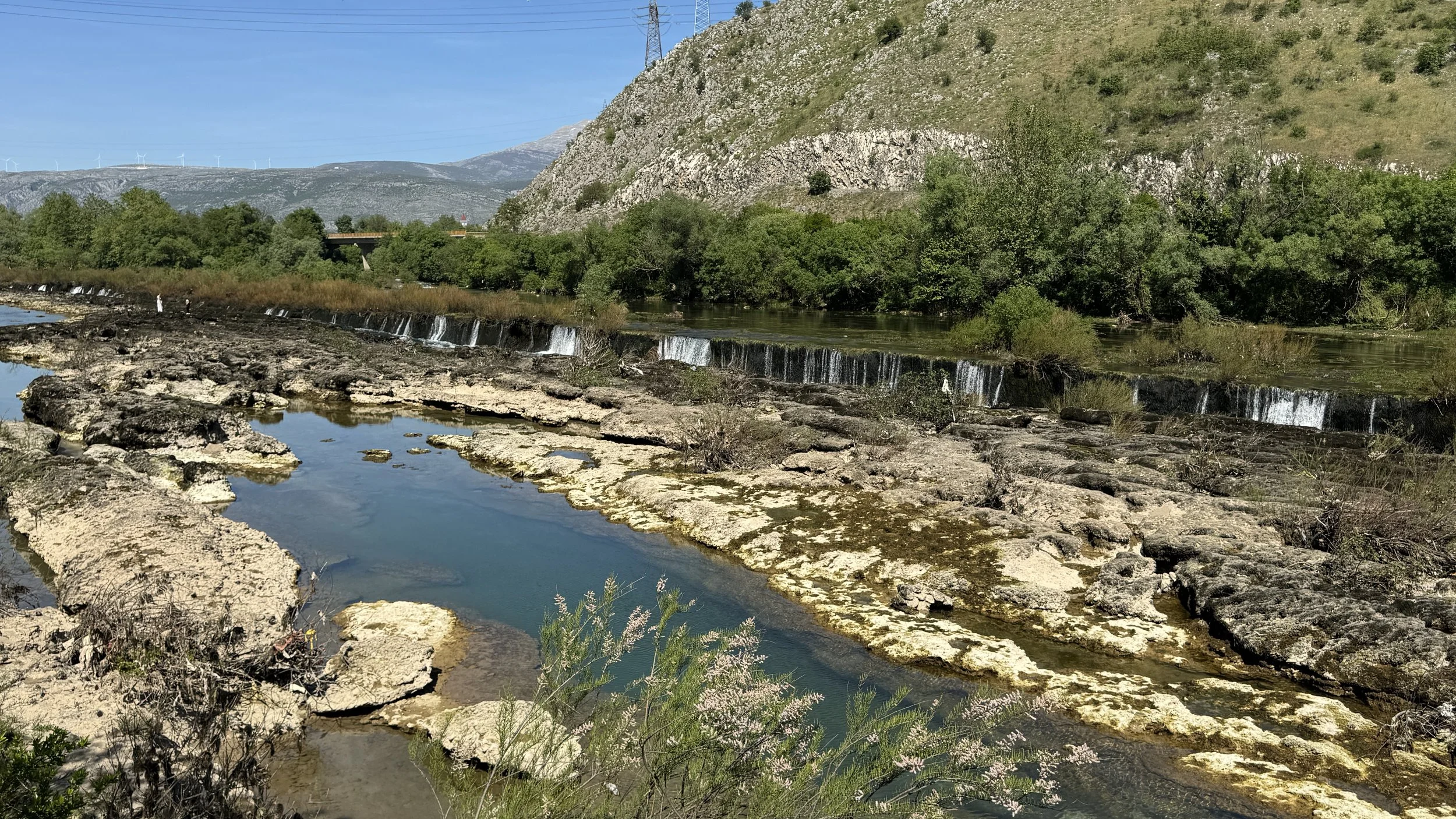
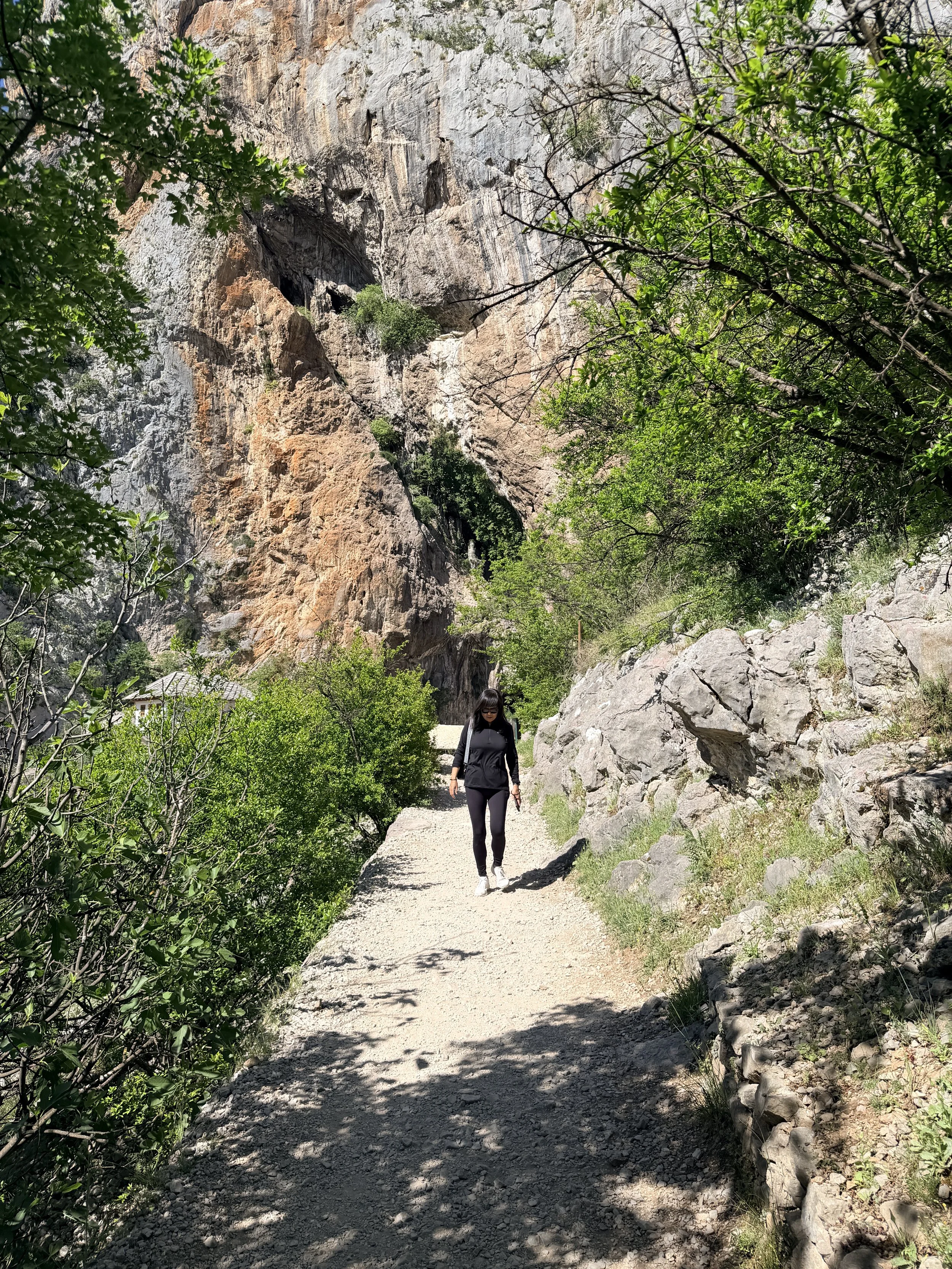
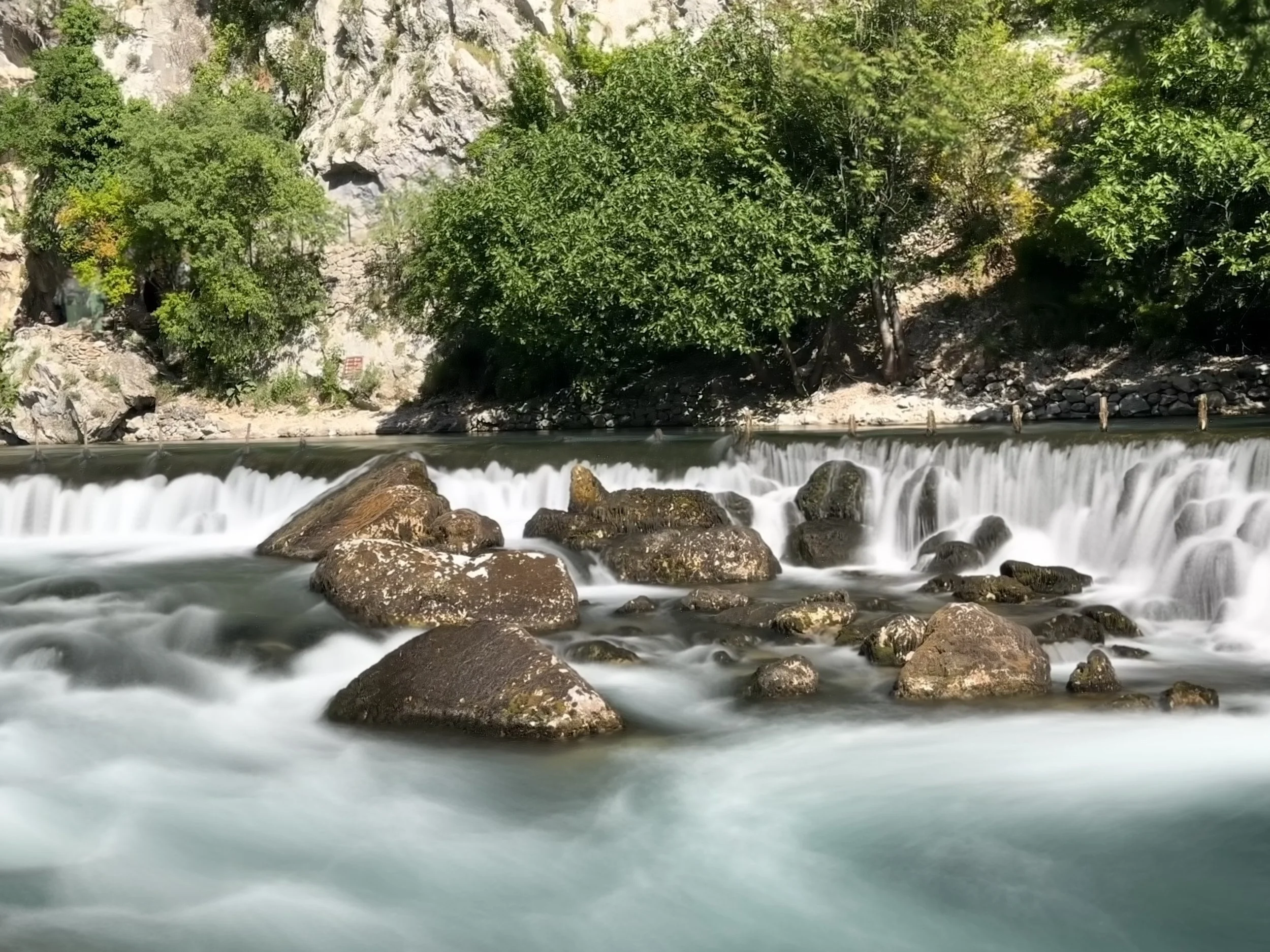
Another stop that completely surprised us was Bunski Kanal. At first glance it looked almost like a man-made canal, but it was entirely natural. Clear turquoise water rushed powerfully through the narrow rock channel while small waterfalls from another river cascaded down the sides. It was unlike anything we had seen before.
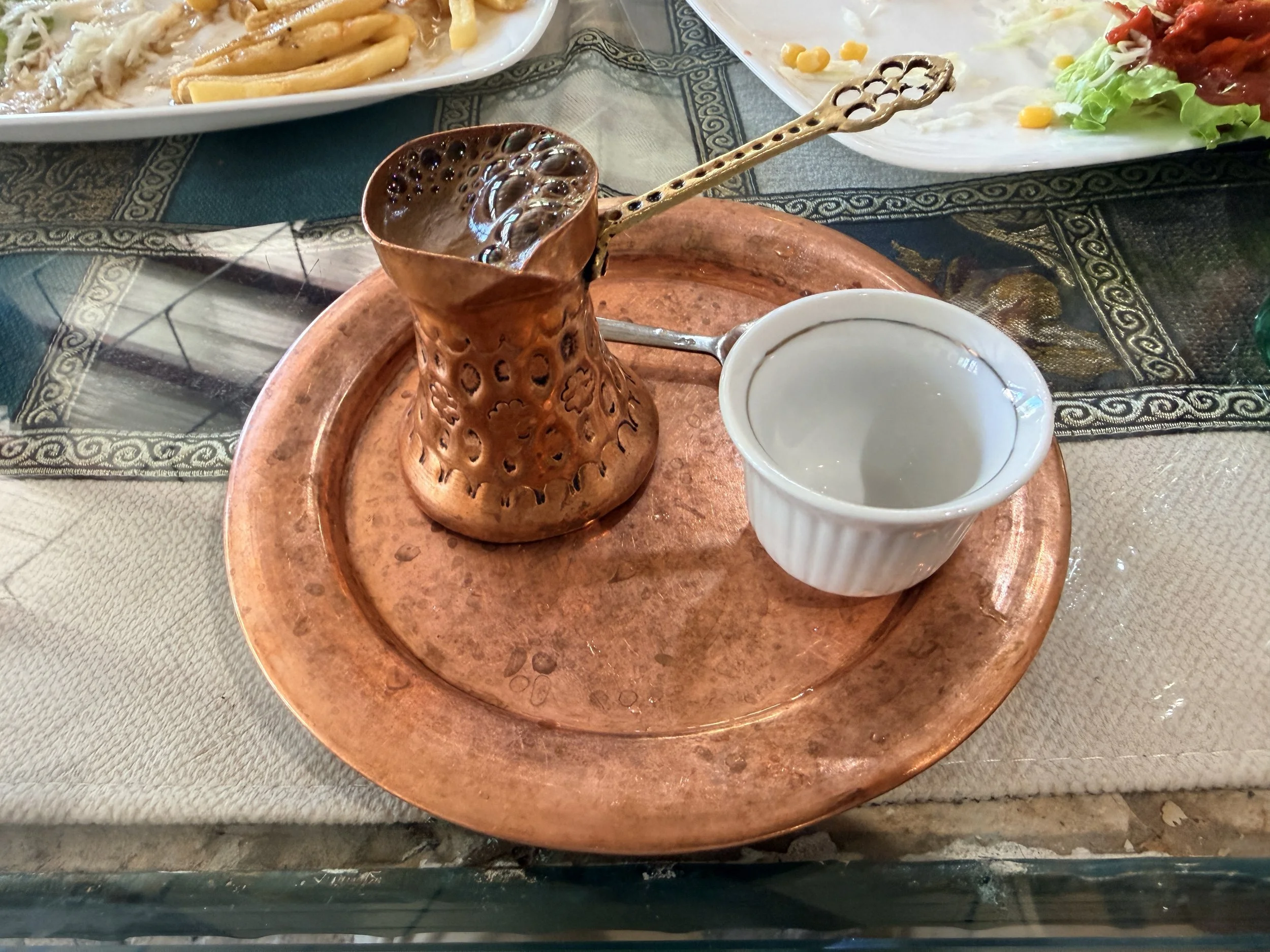
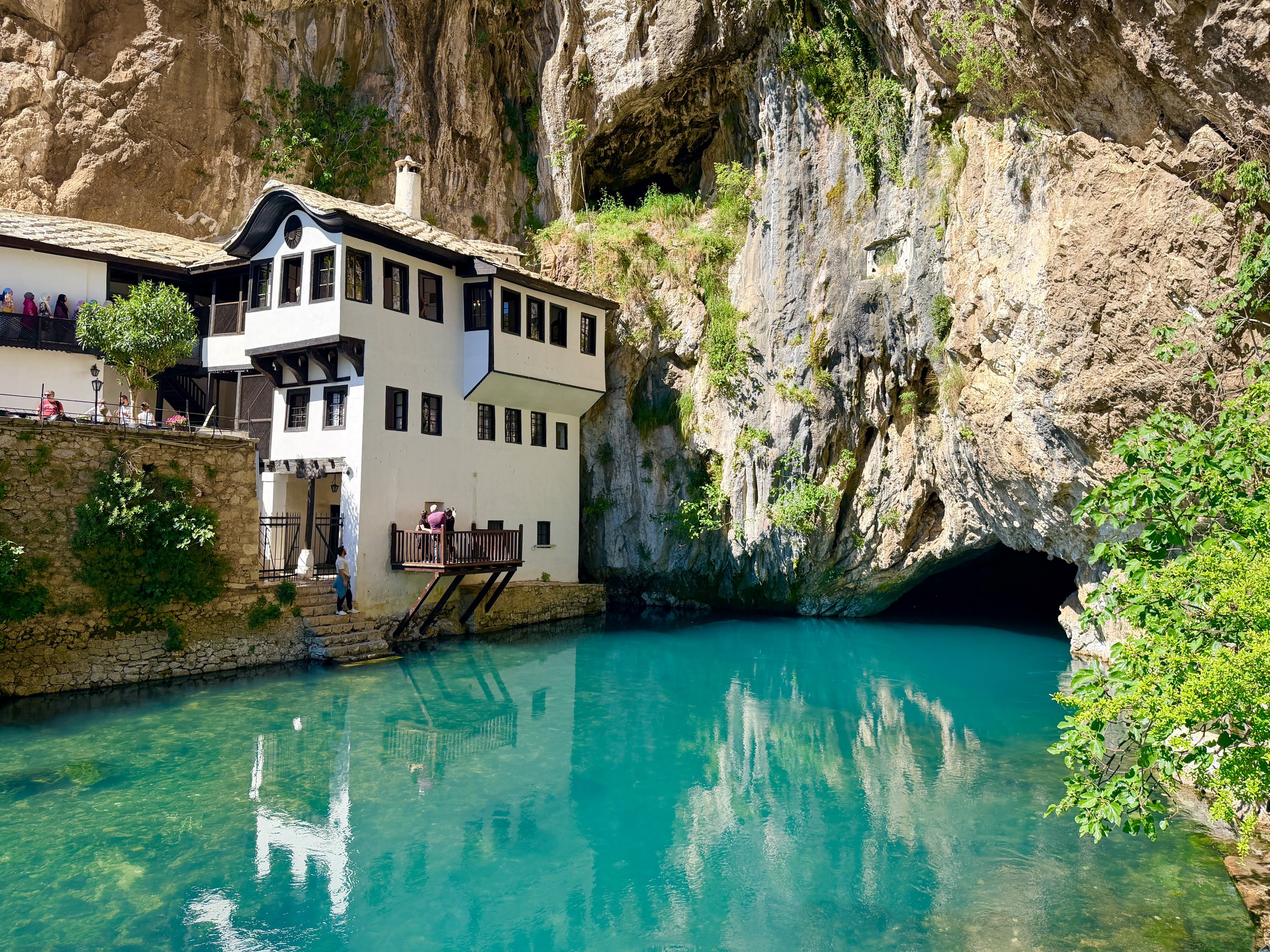
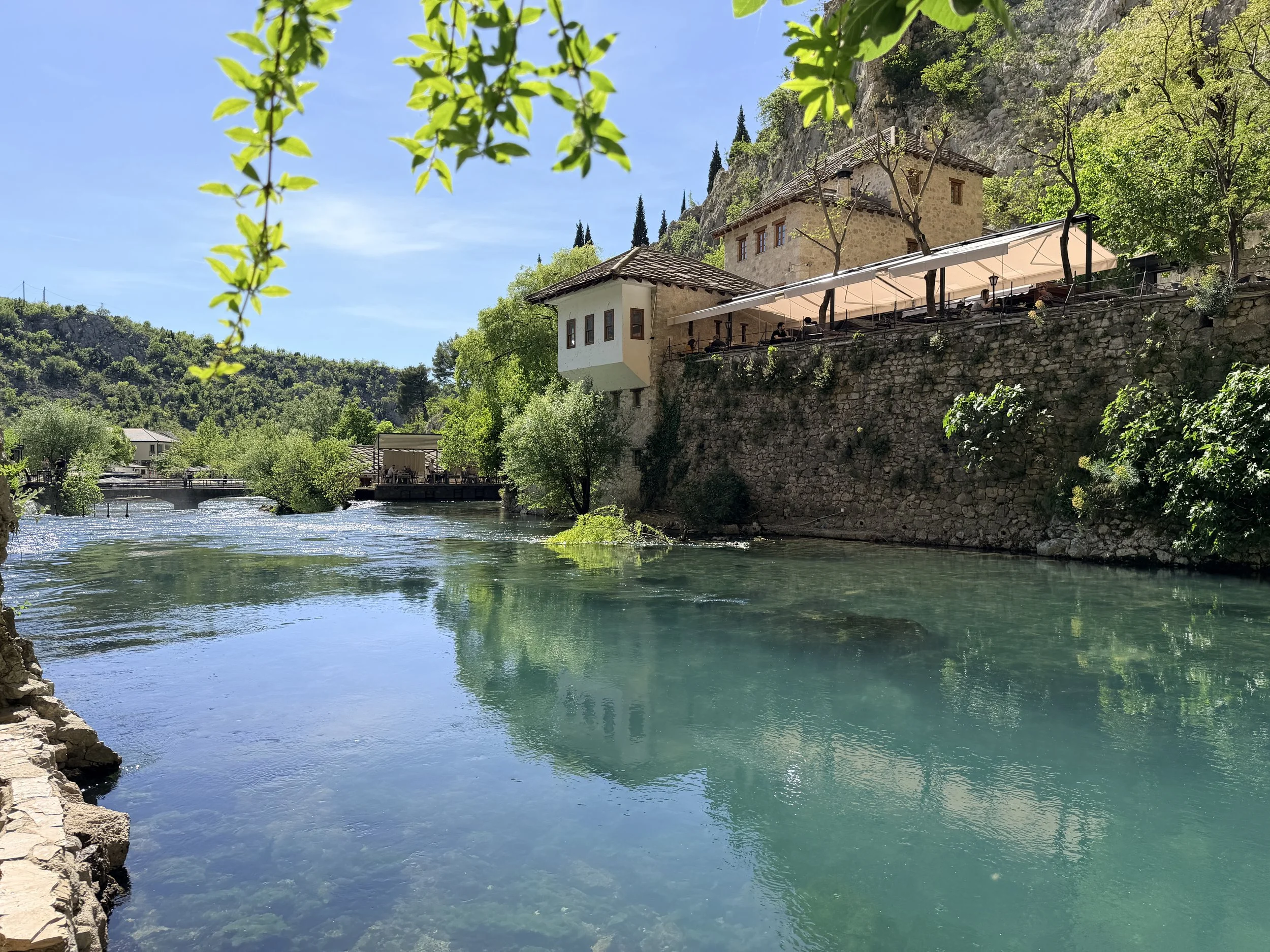
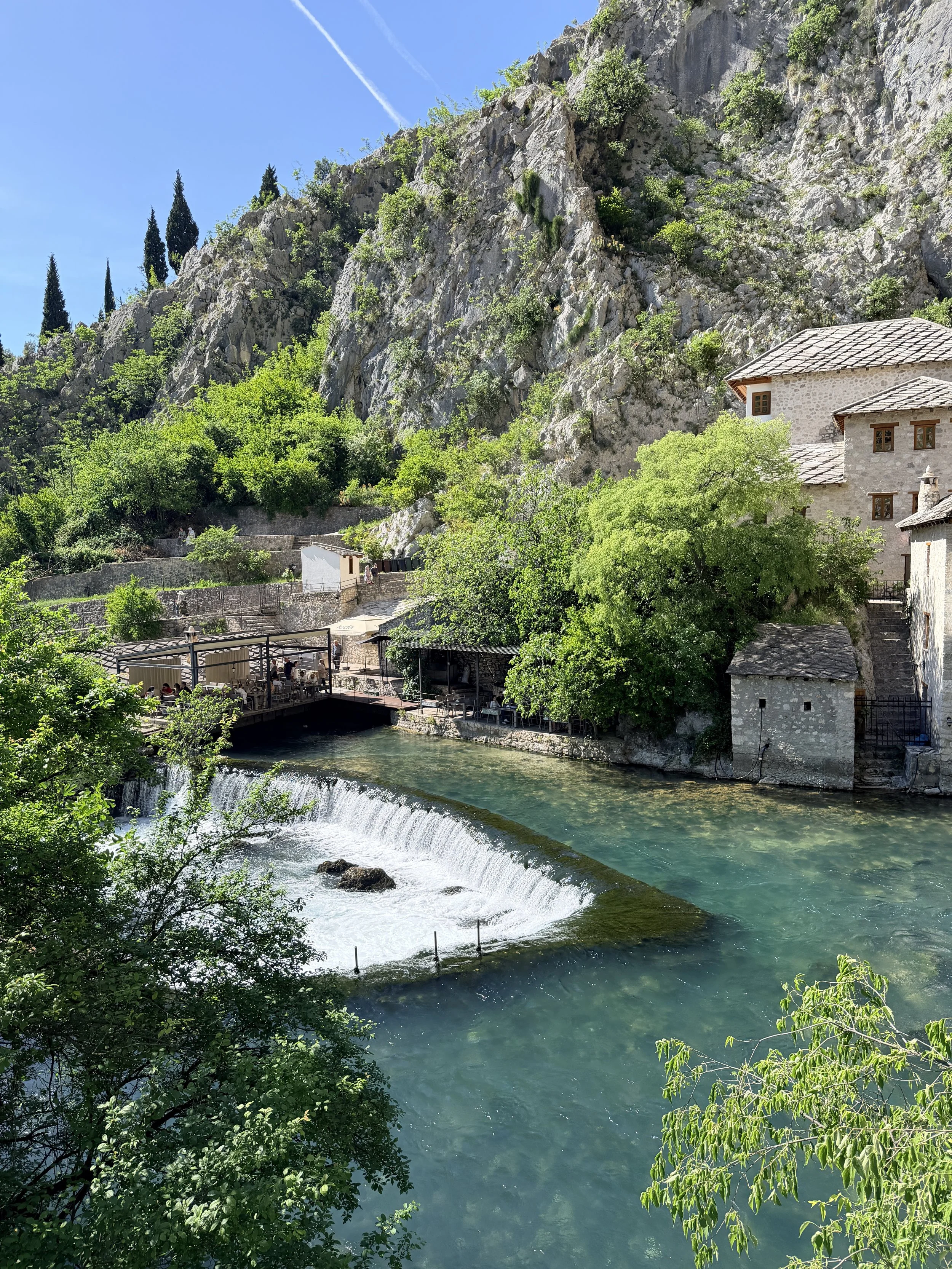
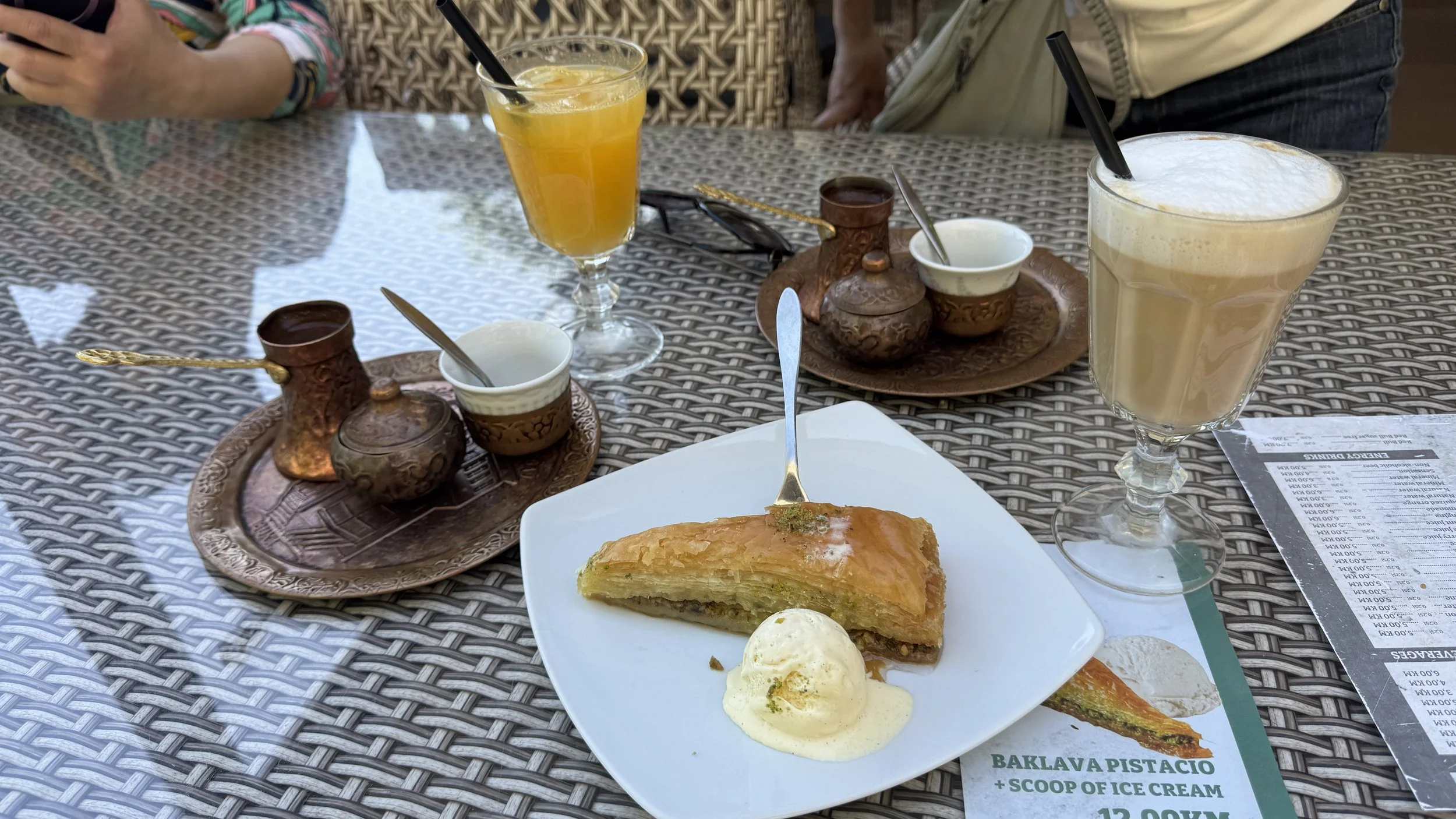
Nearby was Blagaj Tekke, located beside one of Europe’s largest karst spring sources. A powerful river emerges dramatically from a dark cave beneath towering cliffs. Next to the cave stood the historic Dervish monastery, originally built during the Ottoman period as a place for spiritual retreat and worship. The white building, tucked beneath the massive rock wall beside the rushing river, created an unforgettable setting. We did not go inside the monastery itself. Instead, we sat at a riverside café, slowly sipping Bosnian coffee while enjoying the peaceful view and the sound of the water flowing out of the cave.
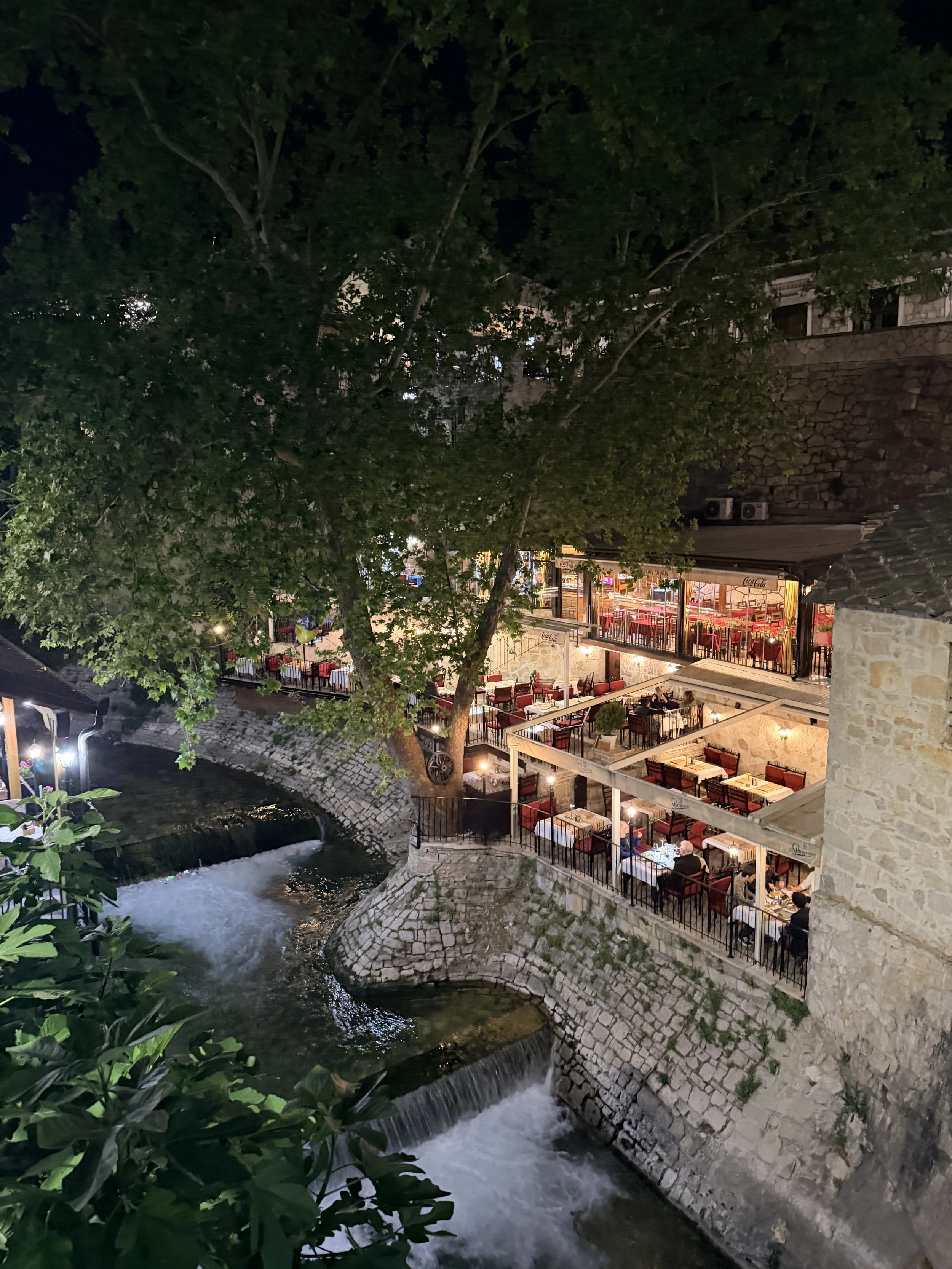
By evening we arrived in Mostar and checked into two recently remodeled studio apartments that were both modern and comfortable.
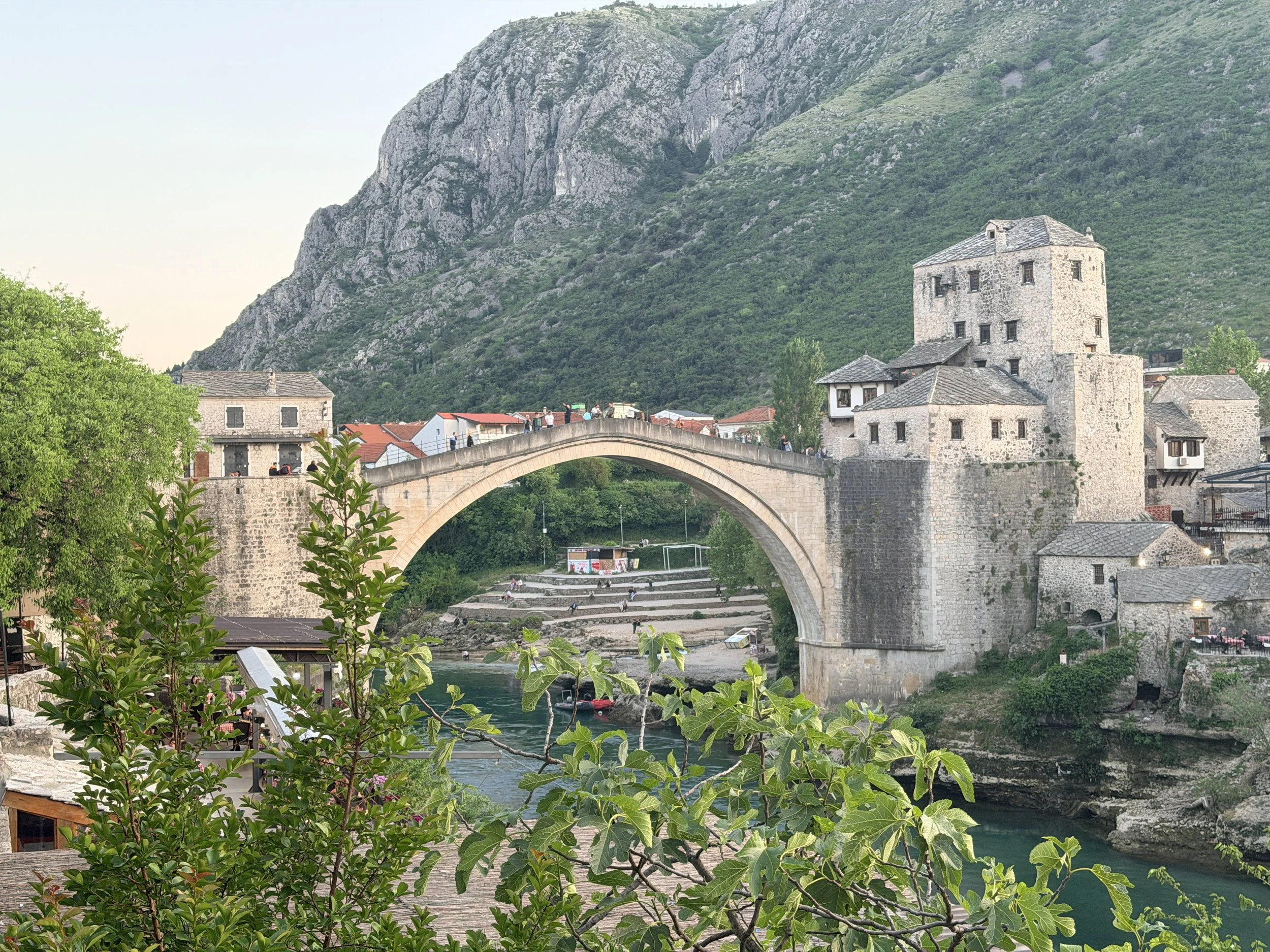
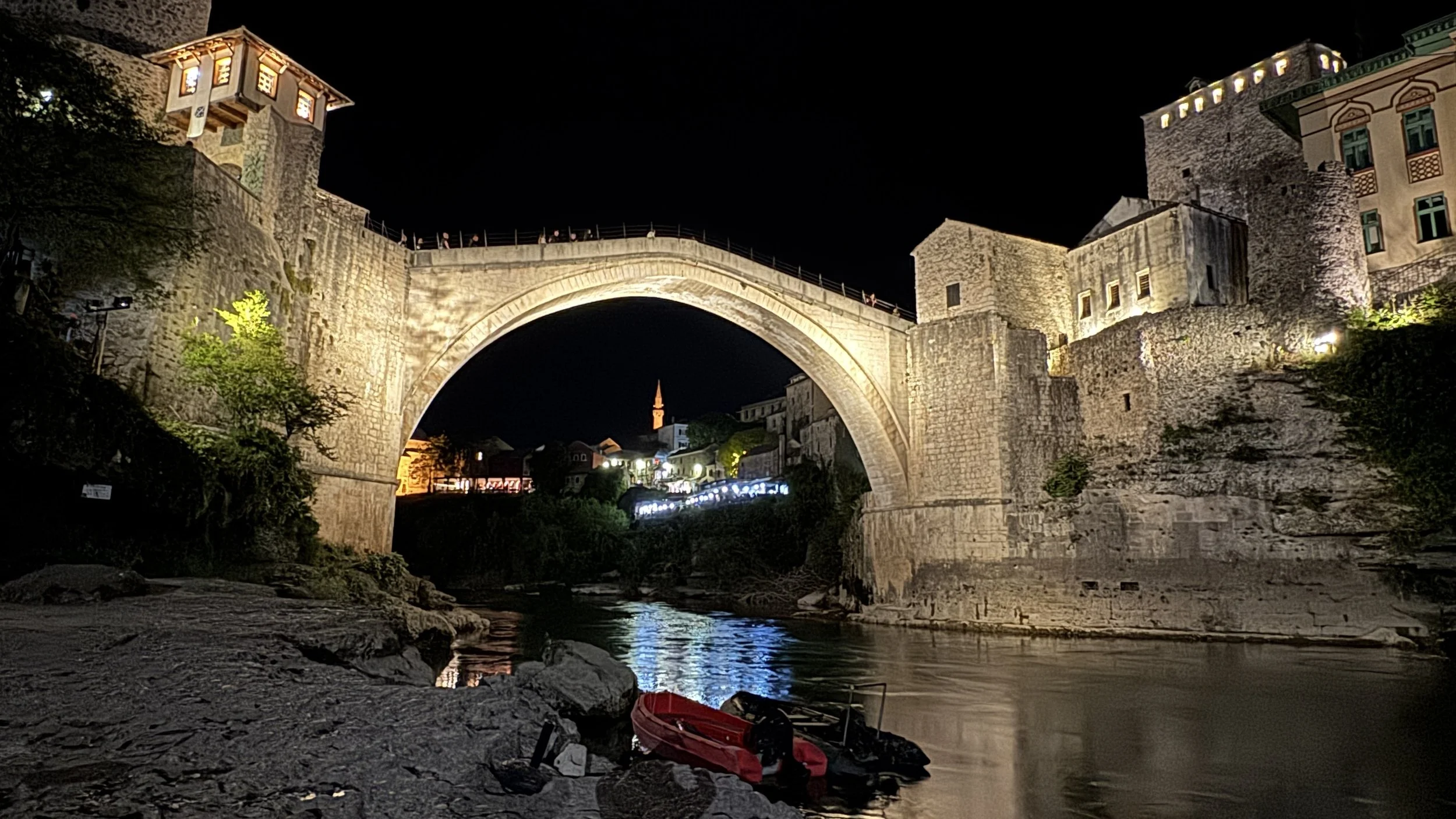
After settling in, we headed out to see the city’s most famous landmark, the Old Bridge (Stari Most). Originally built by the Ottomans in the 16th century, the bridge was destroyed during the Bosnian War in 1993 and later reconstructed using many original stones and traditional building techniques. Standing there at sunset, watching the elegant stone arch span the emerald Neretva River once again, felt both beautiful and deeply symbolic.
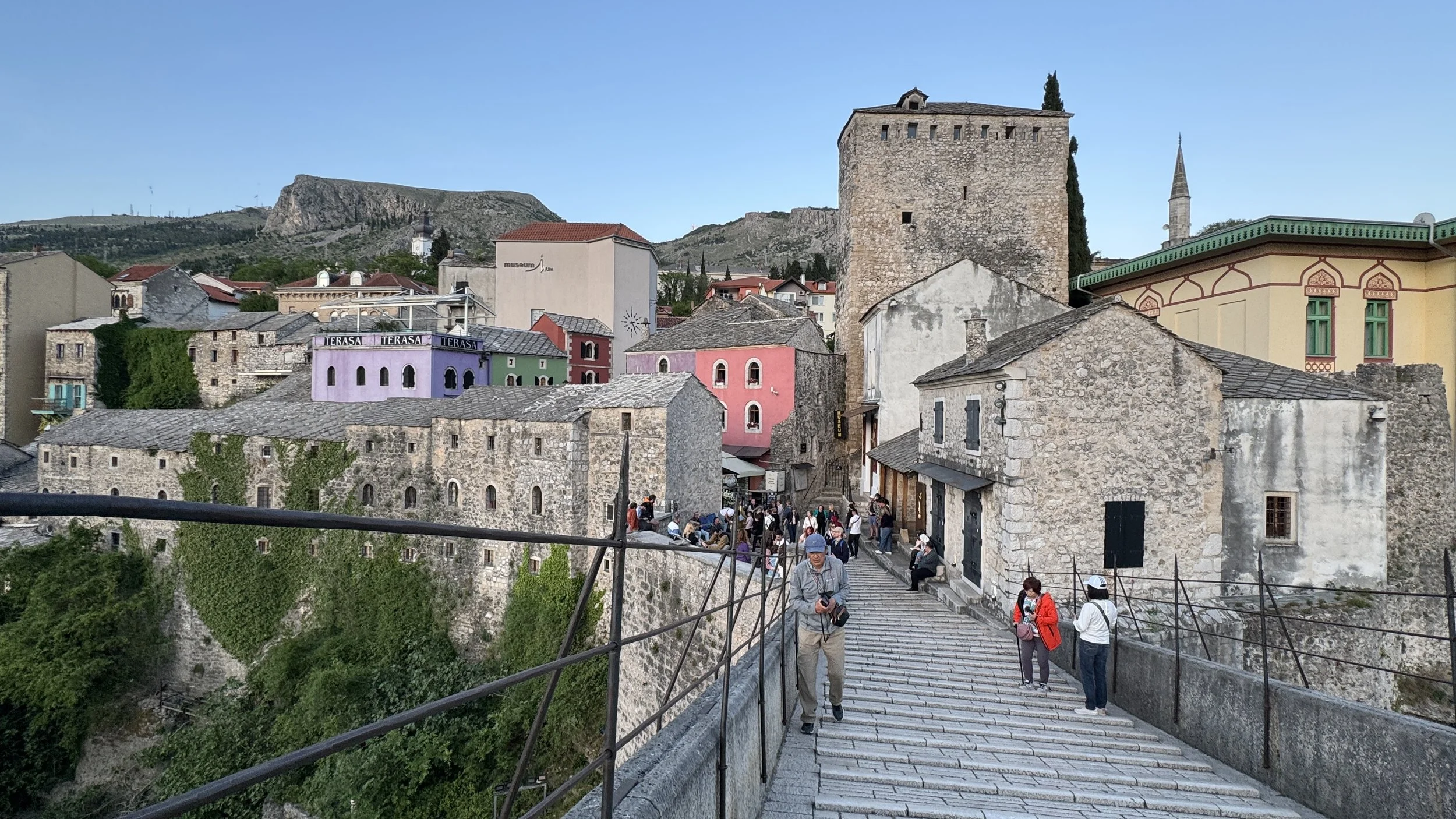
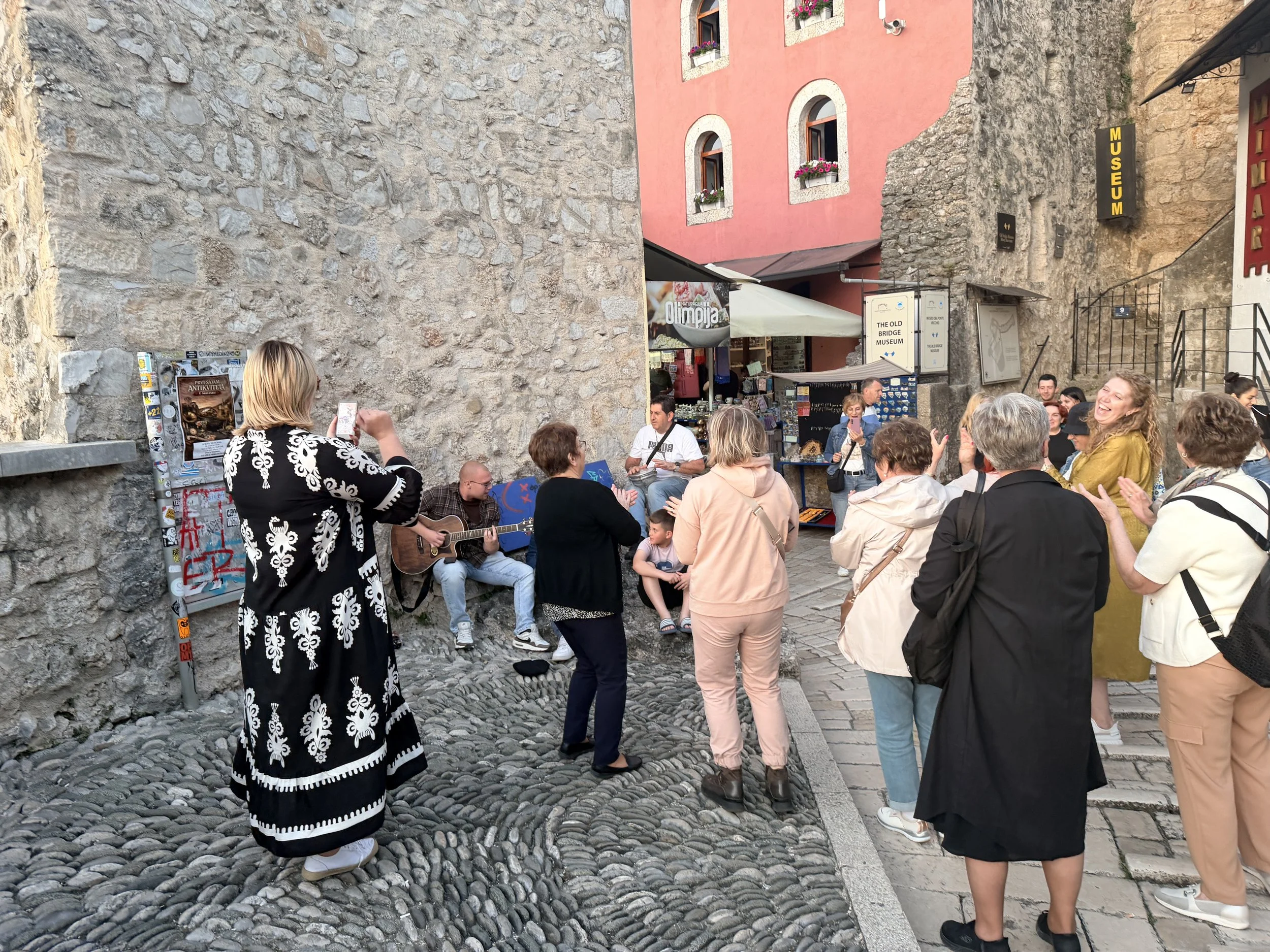
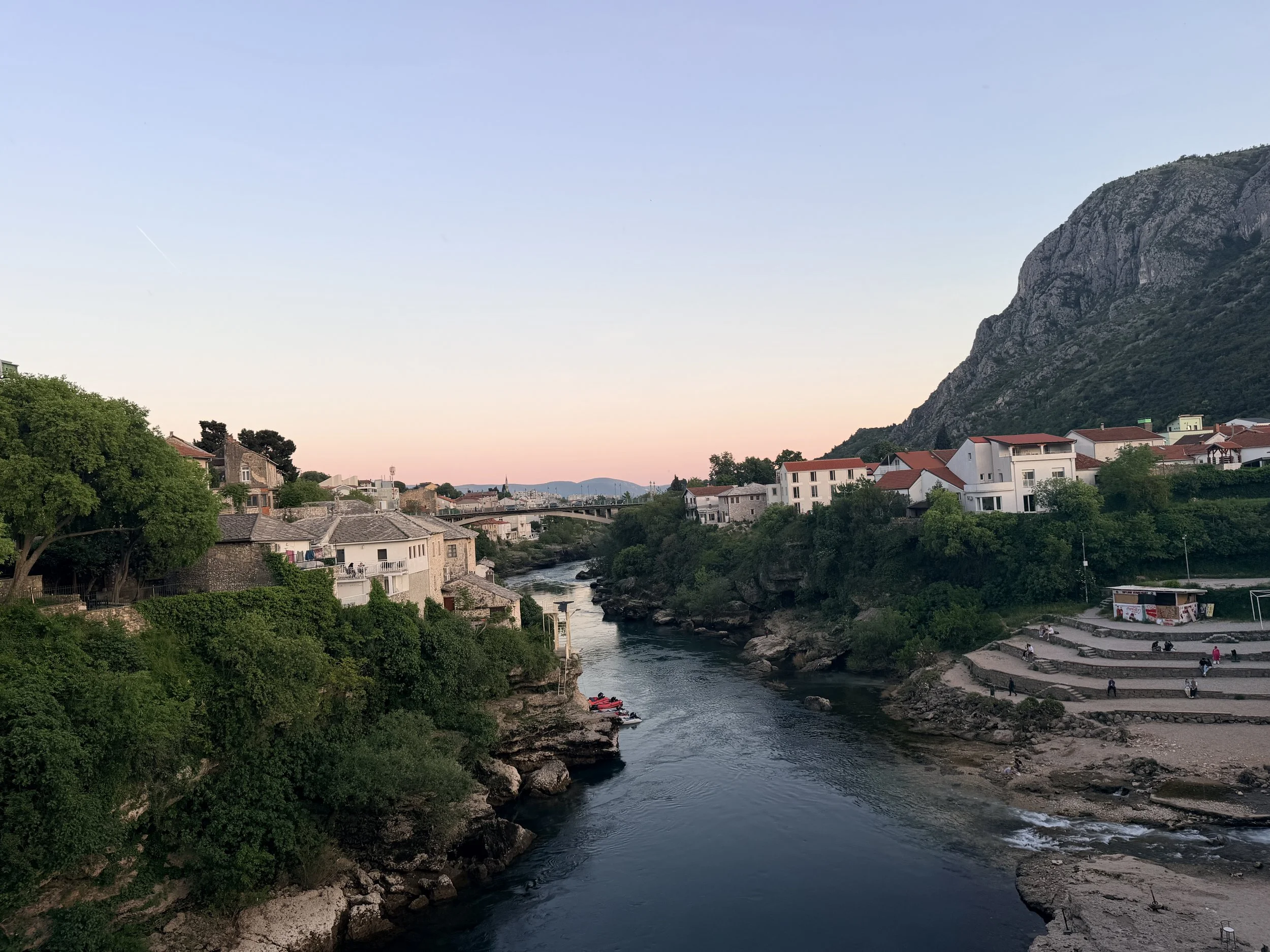
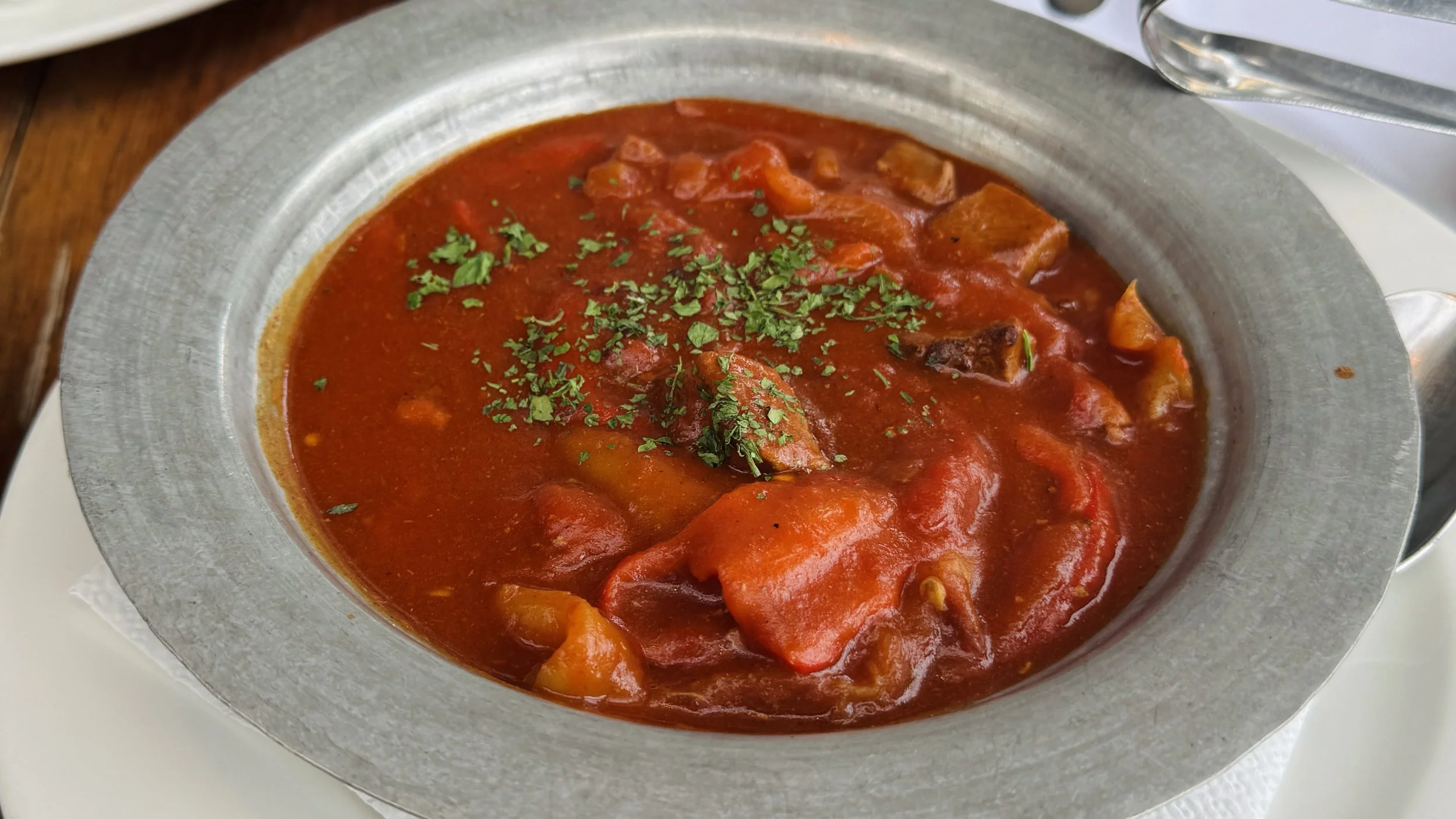
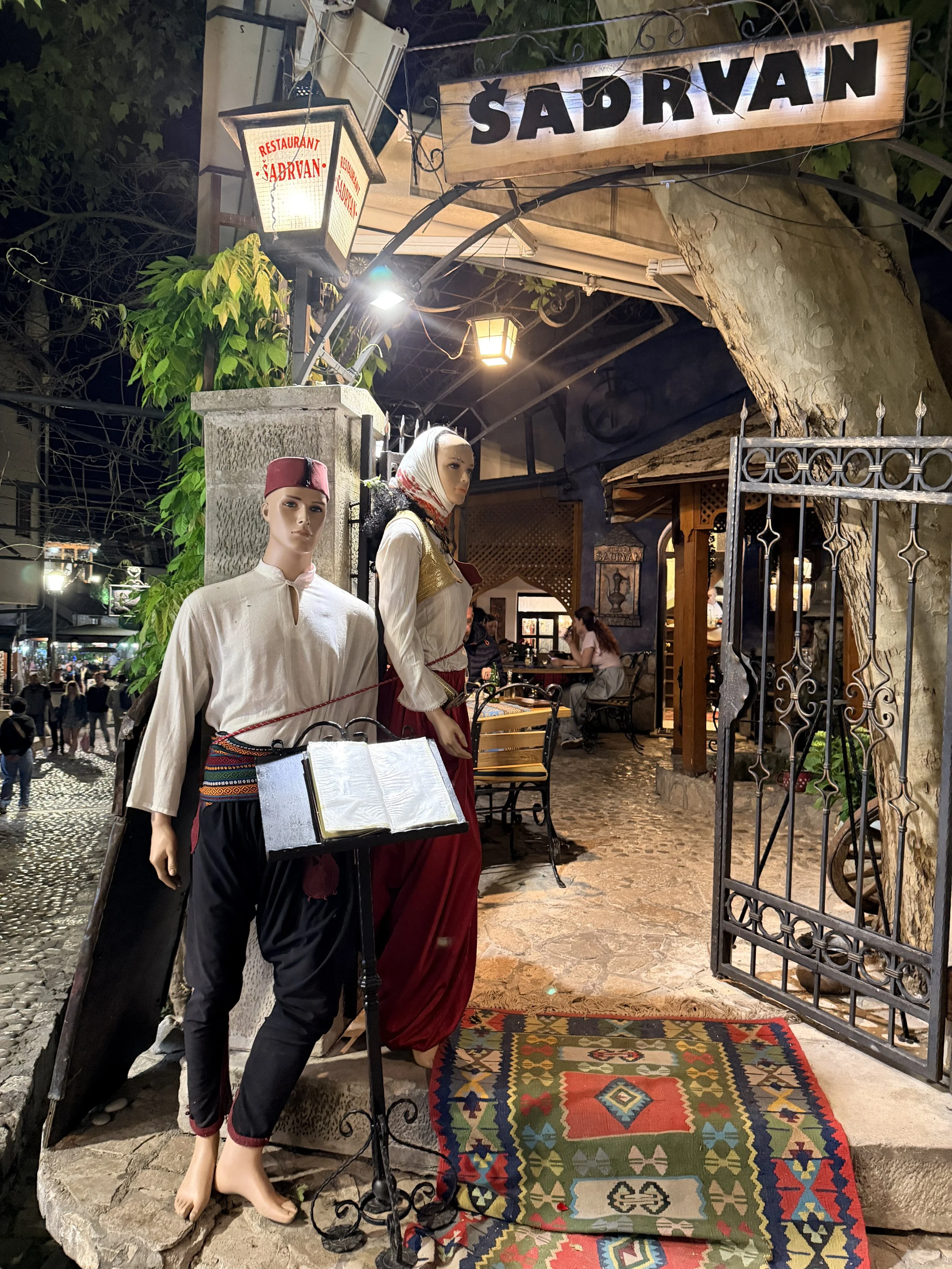
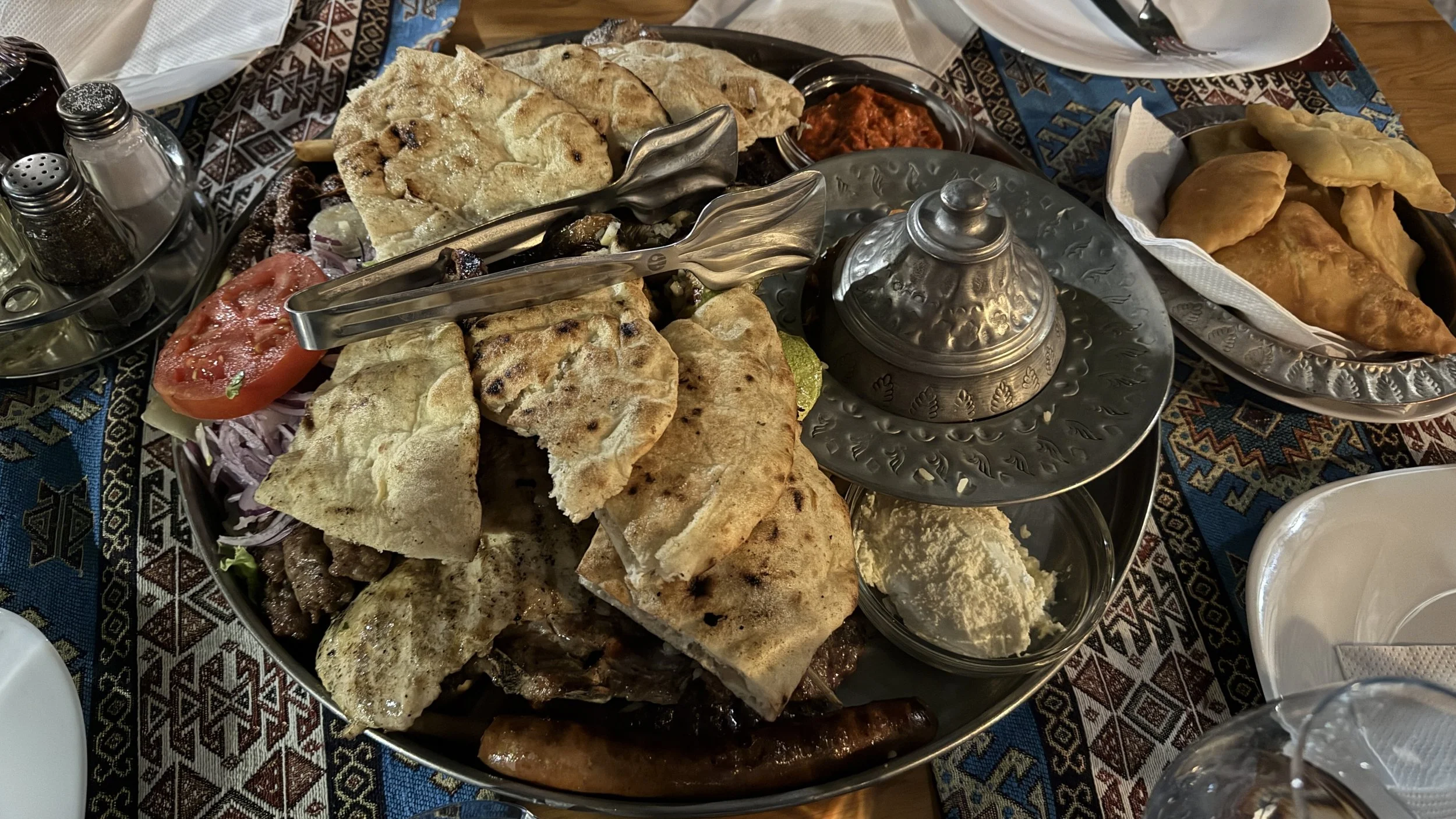
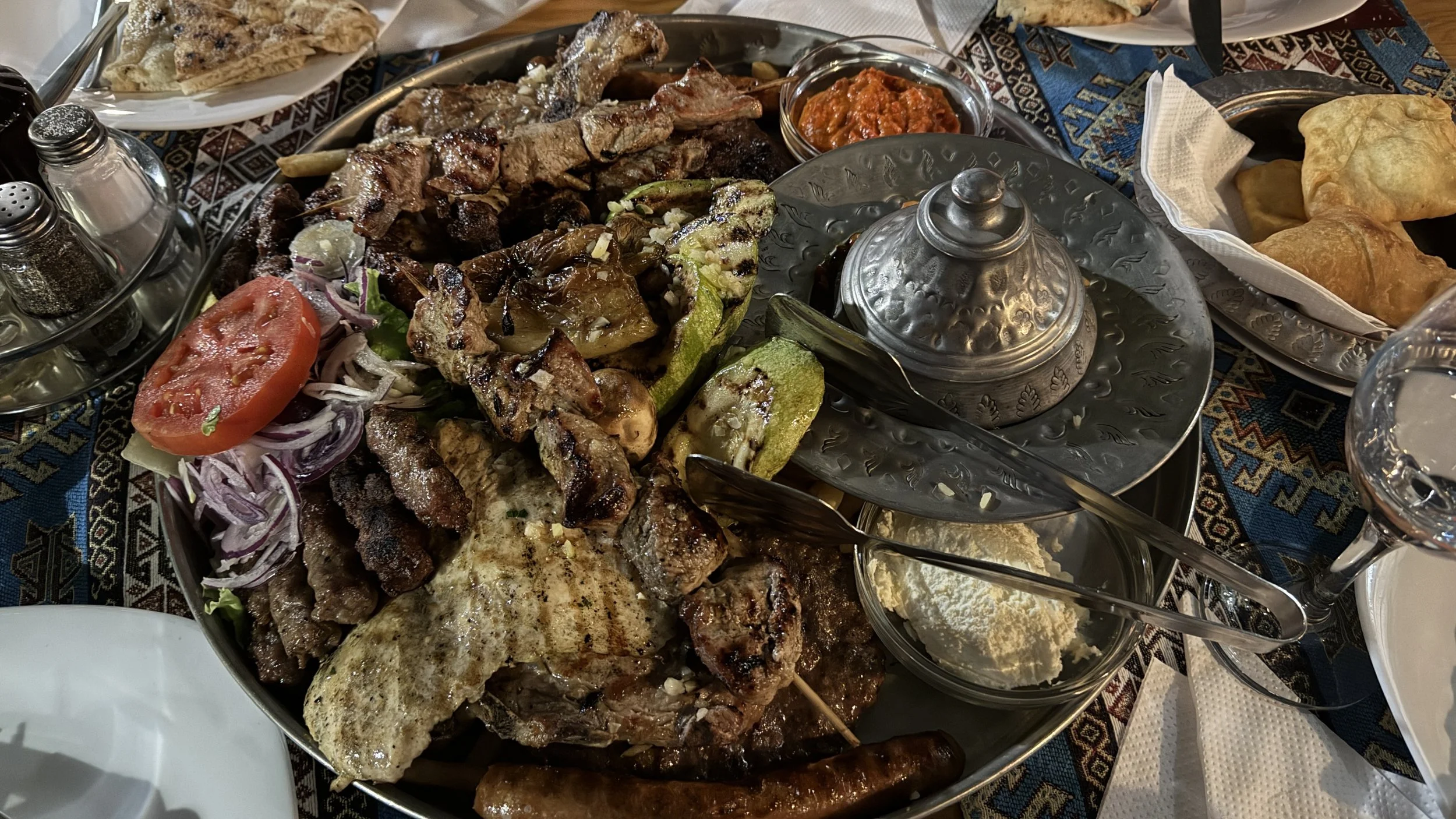
That evening we had our first Bosnian meal—large platters of grilled meats served with flatbread and local side dishes. Everything was hearty and delicious, leaving us with an excellent first impression of Bosnia and Herzegovina.
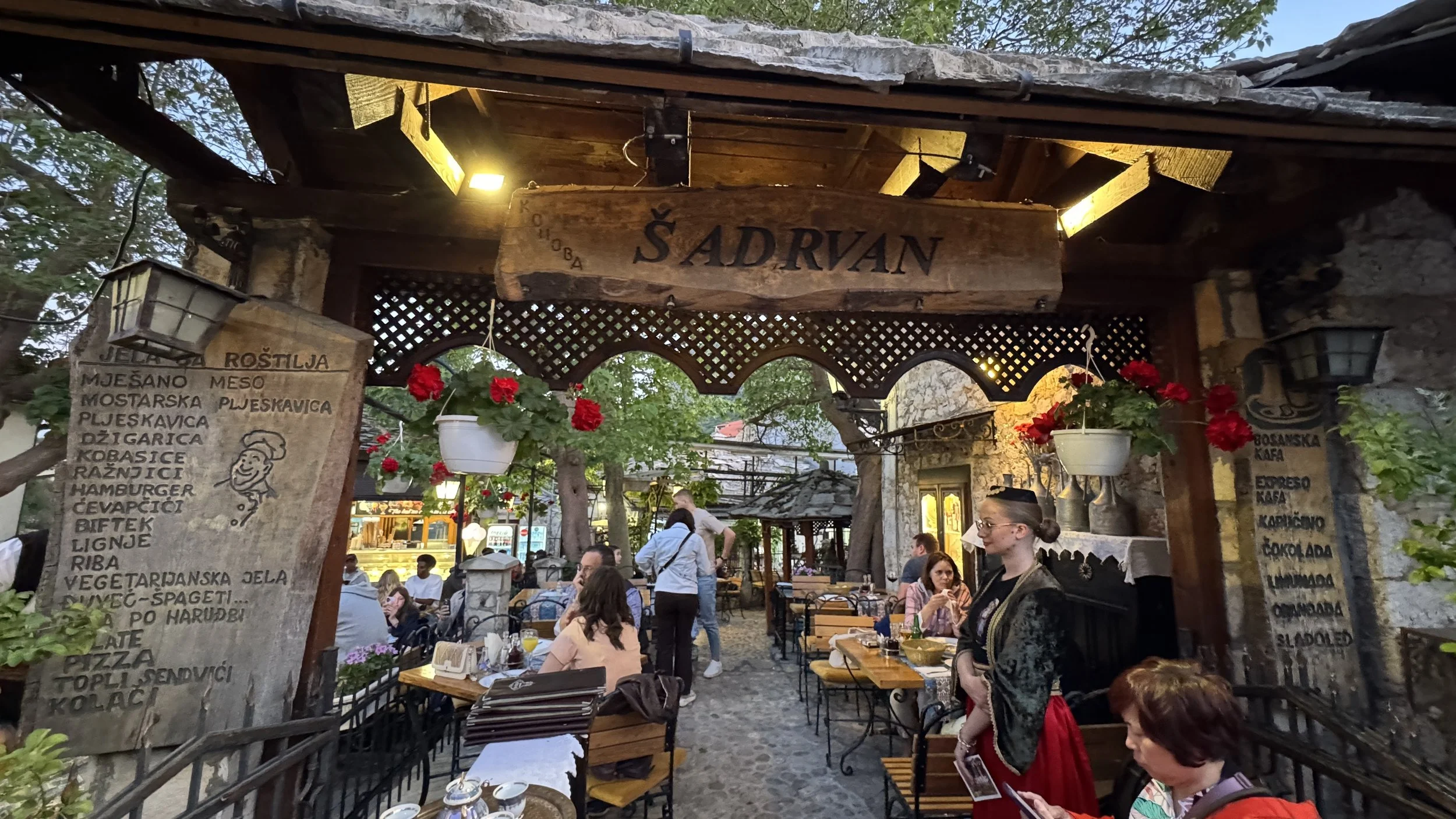
2026年4月25日
今天妹妹,妹夫与我们道别,他们将返回意大利继续他们的旅程。而我们四个人则前往我们的下一站——波黑(Bosnia and Herzegovina)的Mostar(莫斯塔尔)。
我们四人包了一辆车,是朋友在网上找的。由于司机来自波黑,没有许可进入老城区附近接人,我们拖着行李,沿着上坡路走了大约400米,才终于上了车。
离开杜布罗夫尼克(Dubrovnik)后,我脑子里一直想着前二天吃到的斯通生蚝(Ston oysters)。后来我才发现,著名的“斯通生蚝”其实主要来自附近的小镇马里斯通(Mali Ston),距离并不远。查看地图,虽然稍微偏离今天去莫斯塔尔的路线,但也不过多花十分钟左右。于是我们问司机能否顺路停一下,他很爽快地答应了。
我们直接开到马里斯通海湾边的一家餐厅,可惜餐厅要到上午11点才营业,还得再等三十分钟。工作人员于是推荐我们去路边一家小小的生蚝吧。
那家生蚝吧其实只是一个简陋的路边小店,但已经开始营业了。他们按照生蚝的“年龄”来定价:两年的2欧元一个,三年的3欧元,四年的4欧元,而七年的则要5欧元一个。生蚝年份越久,个头也越大。这还是我们第一次听说生蚝按“年龄”出售。
我们四人一开始每一种都叫了些,想尝试一下有什么不同。10个二年,3个三年,3个四年的和3个七年的。味道都非常好,尤其是七年的生蚝,个头大,肉质肥厚鲜美。我平时其实并不算特别喜欢吃生蚝,所以只尝了小一点的,但即使如此,也能明显感受到它们的新鲜。
不过这些生蚝明显对三位女士来说还不够,于是我们又追加了10个二年和3个七年的。总共吃下三十二个生蚝后,大家终于满足了,重新踏上旅程。
斯通(Ston)本身也是一座历史小镇,以巨大的城墙闻名,甚至有人称它为“欧洲长城(Great Wall of Europe)”。我们短暂停车拍了几张照片后继续前行。
从克罗地亚(Croatia)进入波黑(Bosnia and Herzegovina)的边境过程非常顺利。我们只是出示护照、下车拍了几张照片便继续前进。唯一让人发笑的是,边境摄像头安装得特别高,有些人不得不仰着头才能拍到。
一路穿行,波黑的景色非常美,清澈见底的河流蜿蜒流过森林覆盖的群山之间,让我们立刻觉得这是一个值得以后更深入探索的国家。
我们的下一站是历史石头小镇波奇泰利(Počitelj)。这座古老小镇建在俯瞰内雷特瓦河(Neretva River)的山坡上,仿佛时间被冻结了一般。我们沿着古老的石阶一路向上,爬到山顶的瞭望塔,小心地探索着塔内结构。整座塔仍保持着非常原始的状态:狭窄的通道、不平整的石阶,几乎没有任何现代安全措施。我们忍不住开玩笑说,如果是在美国,这种地方大概根本不会允许游客进入。
这里游客很少,石头屋顶、奥斯曼风格(Ottoman-style)的老房子,以及安静的小巷,都让这里显得格外真实而古朴,这是如今已经很少能感受到的氛围。
下山途中,我们参观了古老的清真寺(mosque),随后停下来吃午餐。我们点了一道非常好吃的鸡肉,还有香肠以及波黑炸面团甜点。虽然波奇泰利并不是我们见过最宏伟、最精致的古城,但它那种原始而未经商业化的感觉,却令人印象深刻。
另一个让我们非常惊艳的地方是布恩斯基卡纳尔(Bunski Kanal)。第一眼看上去,它几乎像是一条人工开凿的运河,但其实完全是天然形成的。碧绿色的河水在狭窄岩石之间急速奔流,而另一条河流则从旁边形成一道道小瀑布倾泻而下。这种景象我们以前从未见过。
最后停的一站是布拉加伊清真寺修道院(Blagaj Tekke),坐落在欧洲最大的喀斯特地下泉水源之一旁边。一条河流从巨大岩洞中奔涌而出,岩壁高耸陡峭。洞口旁边便是历史悠久的托钵僧修道院(Dervish monastery),最早建于奥斯曼时期,用作修行与静修场所。白色建筑依山傍水,紧贴着巨大岩壁,景色极其震撼。
我们并没有进入修道院参观,而是坐在河边咖啡馆里,一边慢慢喝着波黑咖啡(Bosnian coffee),吃着甜品,一边欣赏河水从洞穴中奔流而出的景象,十分惬意。
傍晚时分,我们抵达莫斯塔尔(Mostar),入住了两套刚刚翻新过的 studio 公寓,现代又舒适。主人非常热情,不仅介绍了小镇的情况,还推荐了饭店。
稍作休息后,我们便前往参观这座城市最著名的地标——老桥(Stari Most)。这座桥最初由奥斯曼帝国于16世纪建造,在波黑战争期间于1993年被毁,后来又使用部分原始石材和传统工艺重新修复完成。傍晚时分,站在桥边,看着这道优雅的石拱再次横跨翠绿色的内雷特瓦河,既美丽,又充满象征意义。
波黑不是欧洲联盟的成员,使用自己的货币,汇率是欧元的一半左右。但欧元也基本通用。走在小镇上满大街全是卖冰激凌的,都会标二个价。在这里吃到了这次行程以来最便宜的冰激凌,一块五欧元。
当晚,我们品尝了第一顿波黑料理——大盘烤肉配面饼和当地配菜。丰盛的晚餐非常美味,也让我们对波黑留下了极好的第一印象。