Tito’s Bunker 铁托地堡
April 27, 2026
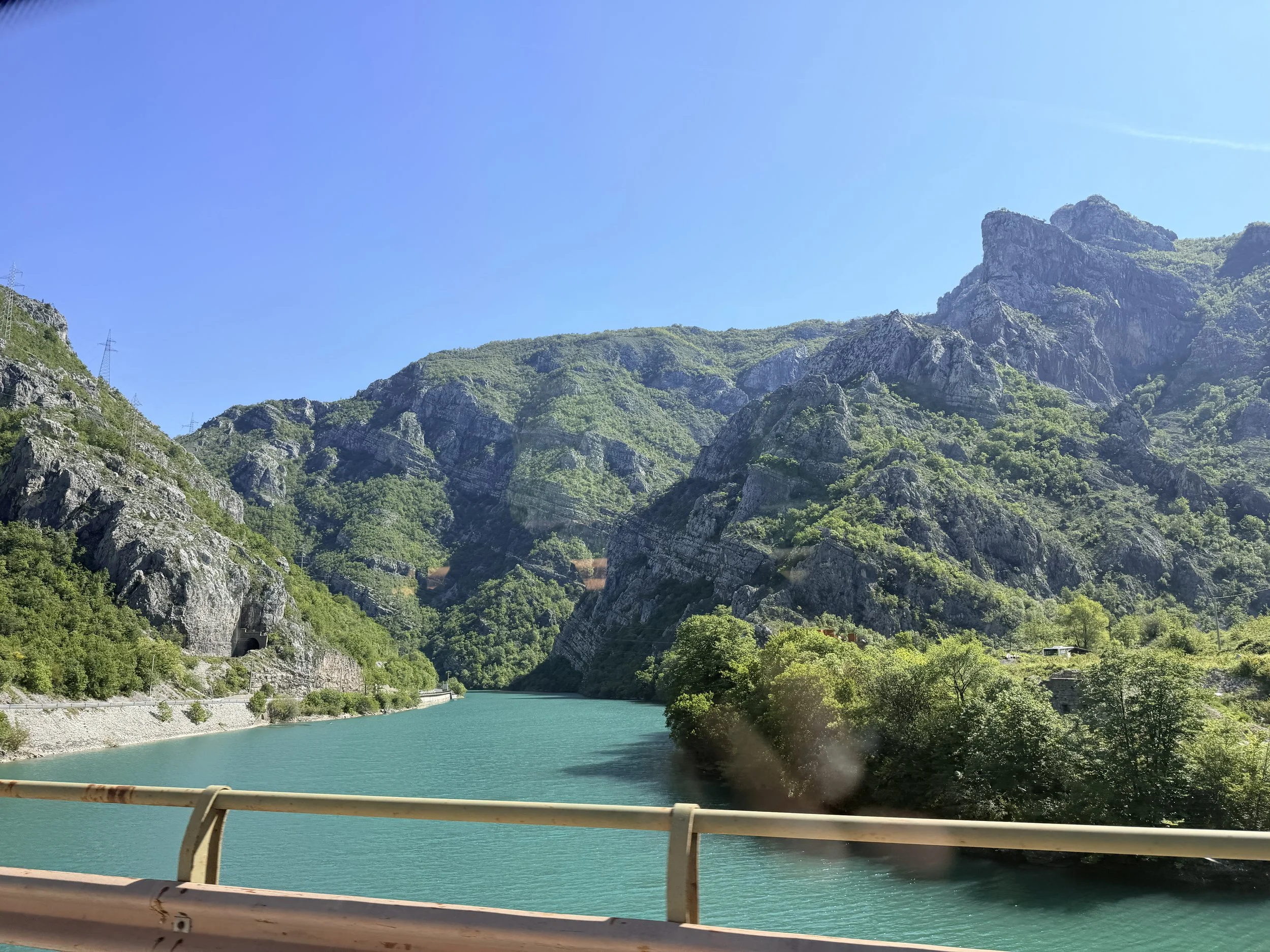
After breakfast, the same private driver who had brought us here two days earlier came to pick us up. Leaving Mostar, we continued north along the Neretva River, passing through the town of Jablanica.
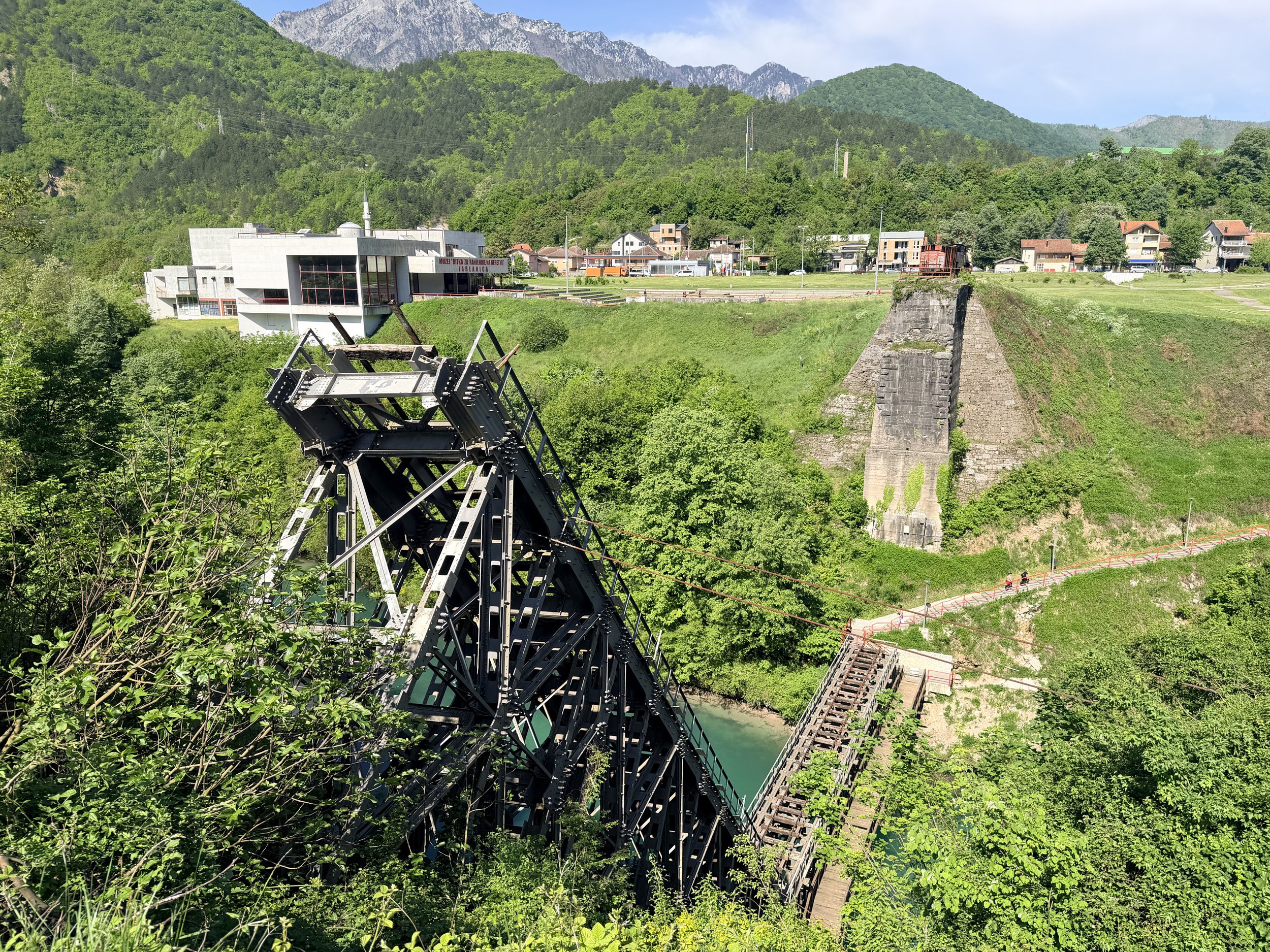
Nestled between rugged mountains and the river valley, this quiet town is best known for its role in the famous Battle of the Neretva during World War II. One of the most striking reminders of that history is the old railway bridge spanning the gorge. Partially destroyed and left leaning at an angle, the bridge remains suspended above the river as a massive wartime relic, silently preserving the memory of the battle that once unfolded here.
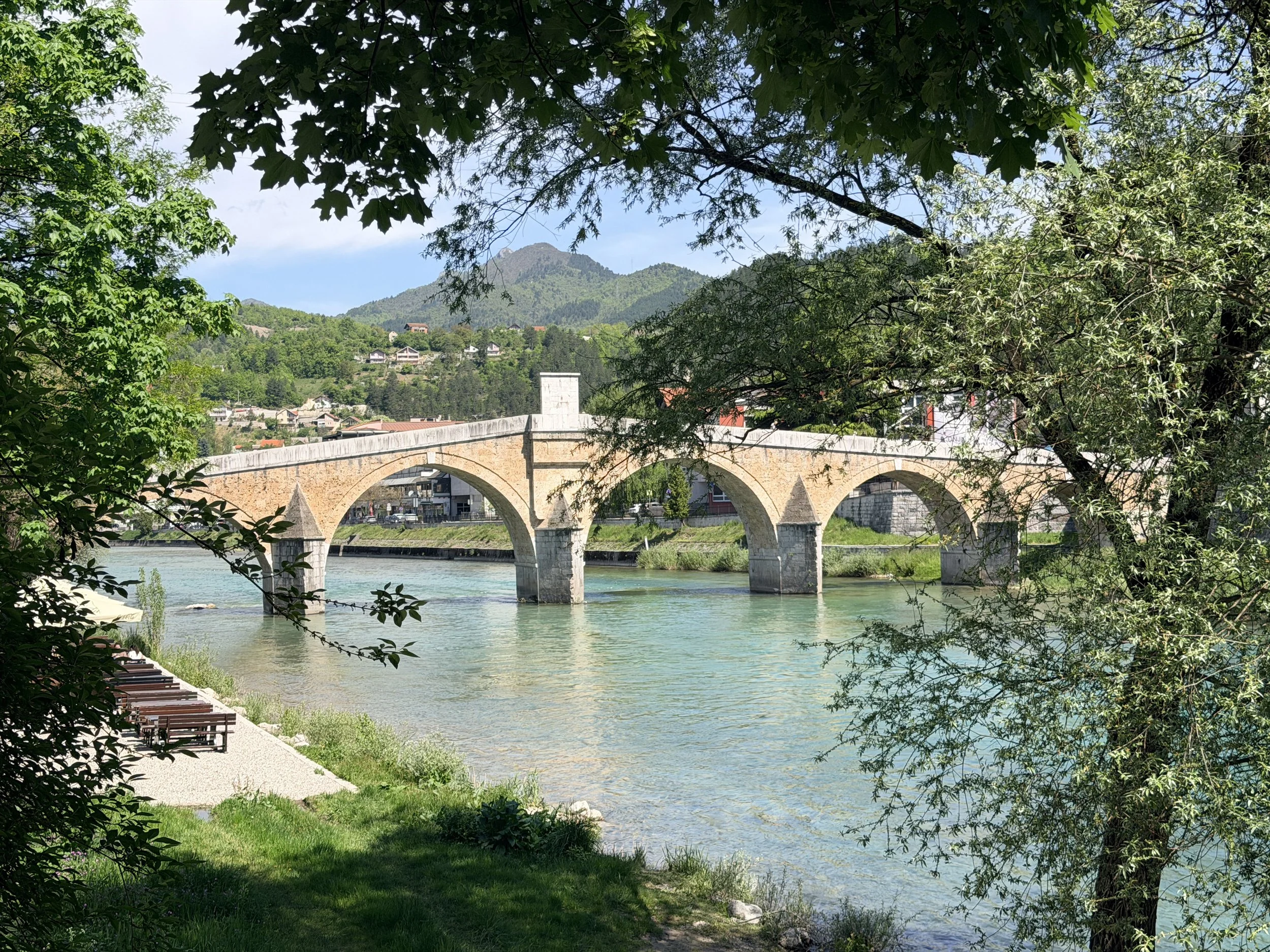
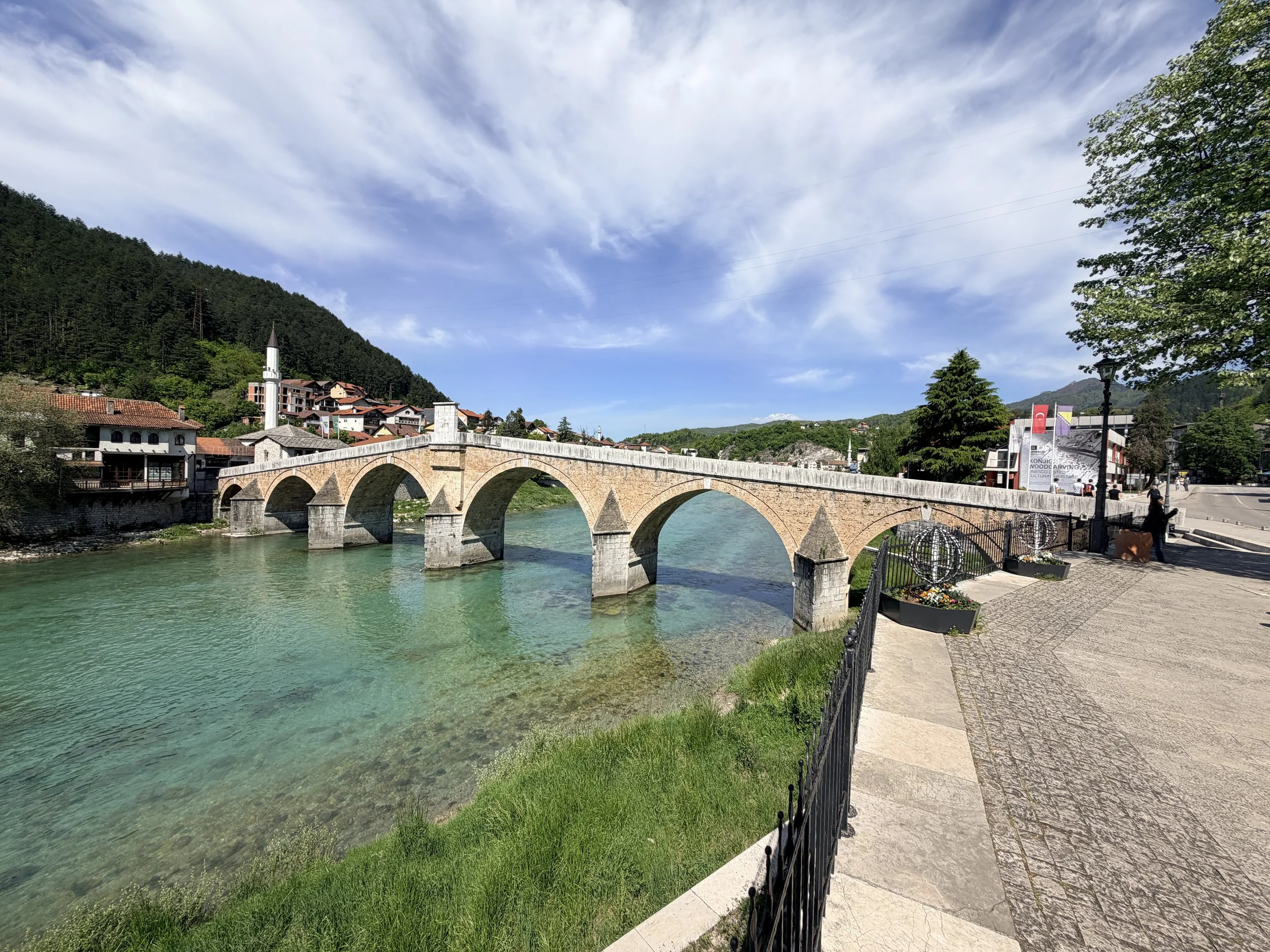
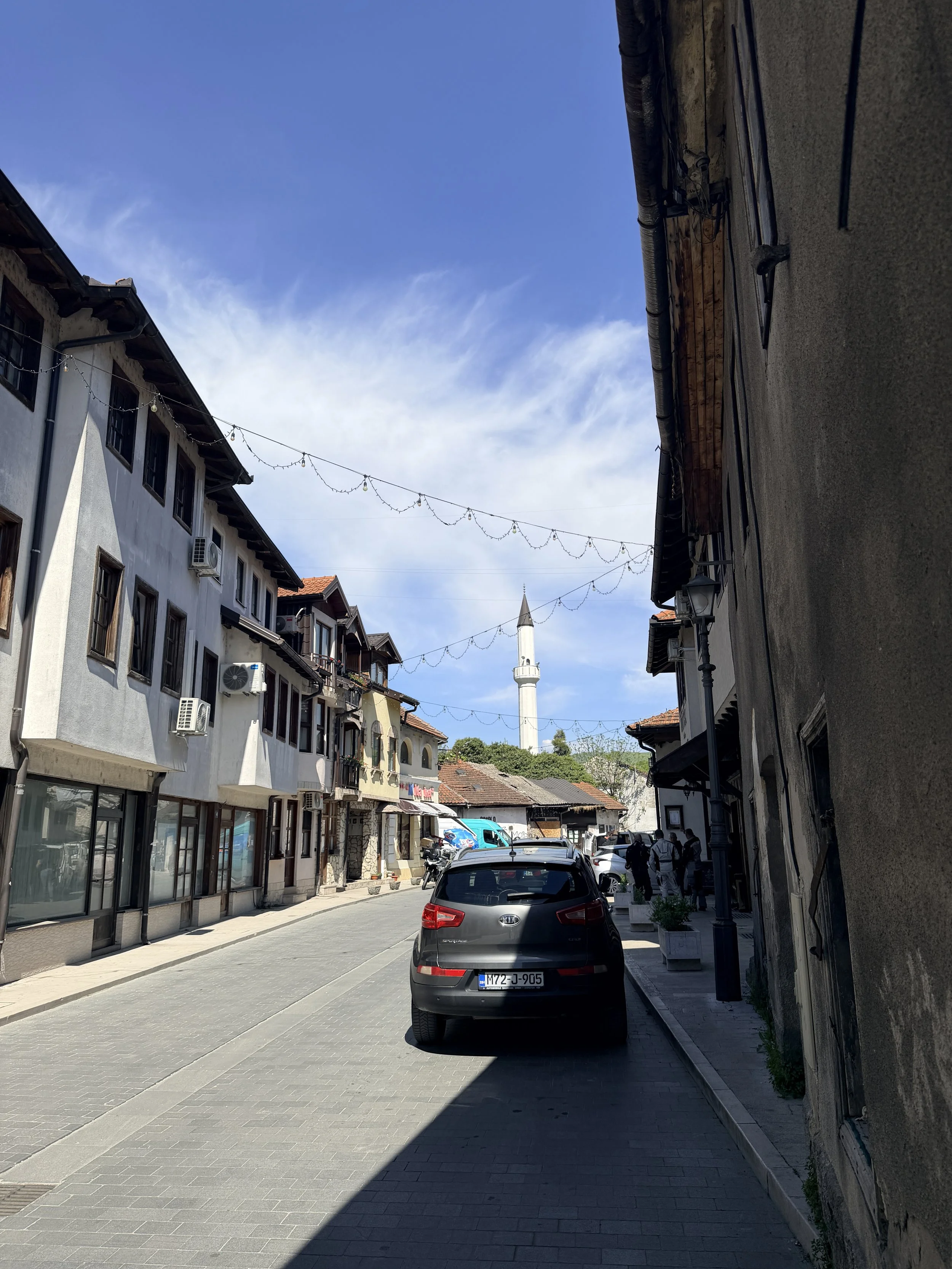
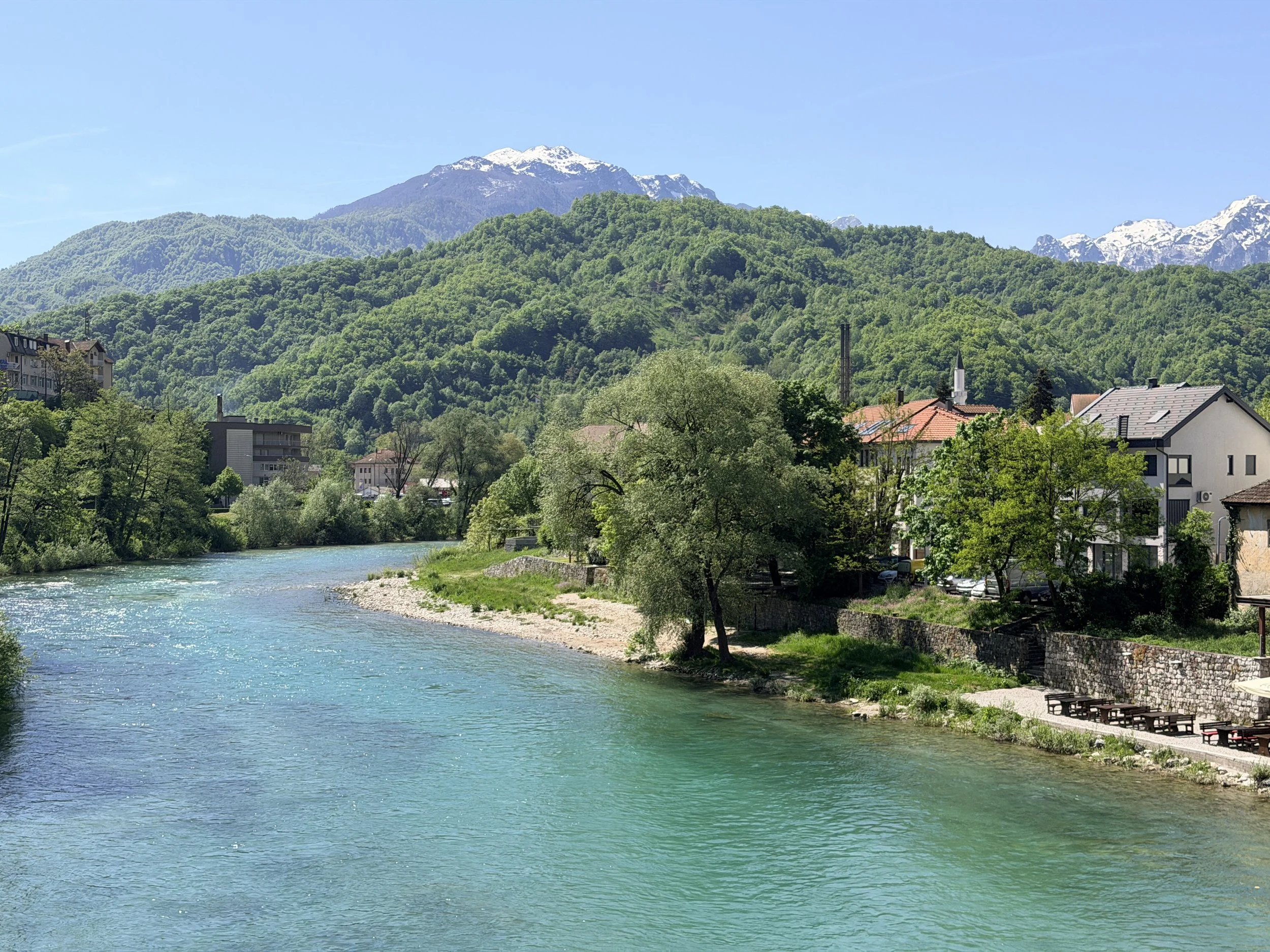
Continuing toward Sarajevo, we made a stop in the town of Konjic to admire another picturesque Ottoman-era stone bridge crossing the emerald-green Neretva River. Smaller and less famous than the iconic bridge in Mostar, the Konjic Bridge possesses a charm of its own. Surrounded by mountains, historic stone buildings, and the swift-flowing river below, it offered a peaceful and scenic glimpse into Bosnia and Herzegovina’s rich cultural heritage.
We spent some time strolling through the old town and along the riverbanks before continuing our journey toward Sarajevo.
From there, we continued to one of the most unusual places we visited in the Balkans — Tito’s Bunker. Officially known as the ARK D-0 Atomic War Command bunker, the massive underground facility was secretly built during the Cold War to protect Yugoslav leader Josip Broz Tito and selected government officials in the event of a nuclear war. Construction reportedly lasted for decades and cost an astonishing 4.6 billion U.S. dollars at the time. The bunker remained one of Yugoslavia’s top military secrets for many years. Ironically, Tito himself never set foot inside after its completion. Hidden deep inside the mountains near Konjic, the bunker was designed to sustain around 350 people for up to six months in complete isolation from the outside world.
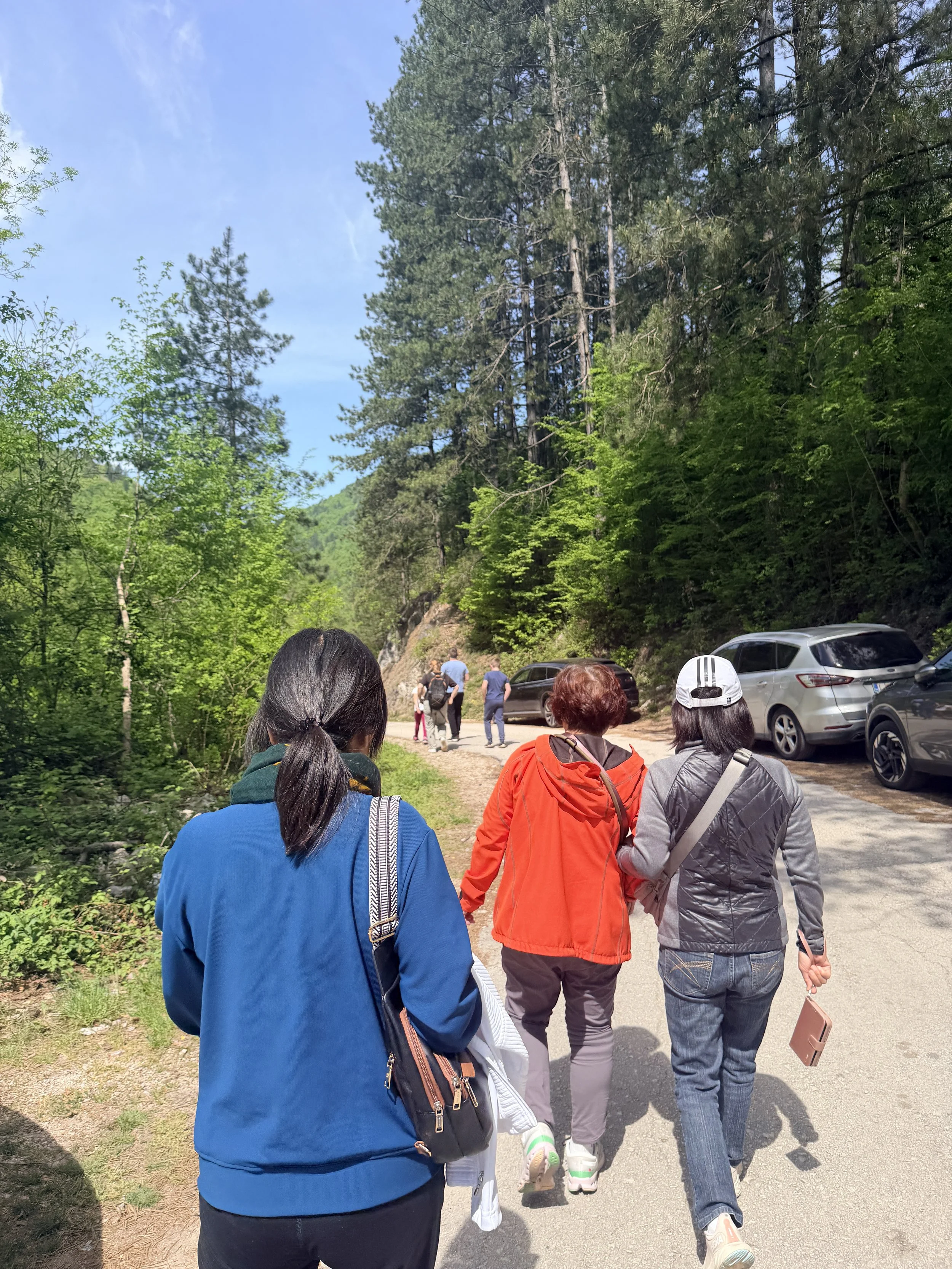
We had booked our tickets online in advance. First, we drove to a small travel office in town to pay and collect the tickets, then continued another five kilometers into a remote mountain valley. There, we parked between steep forested mountains and walked toward a small entrance hidden behind an iron gate. At the beginning, we were instructed not to take photos because the surrounding area was still considered a military facility.
Later, we boarded a small bus that transported us farther into the restricted area before finally entering the bunker itself. Ironically, once inside the bunker, photography was completely allowed, which made the earlier camera restriction feel rather unnecessary and somewhat amusing.
The bunker itself was surprisingly impressive in both size and quality. Hidden behind an ordinary-looking entrance was a vast underground complex filled with long corridors, conference rooms, communication centers, dormitories, offices, kitchens, fuel systems, and Tito’s private quarters. Everything had been built with remarkable attention to detail and durability.
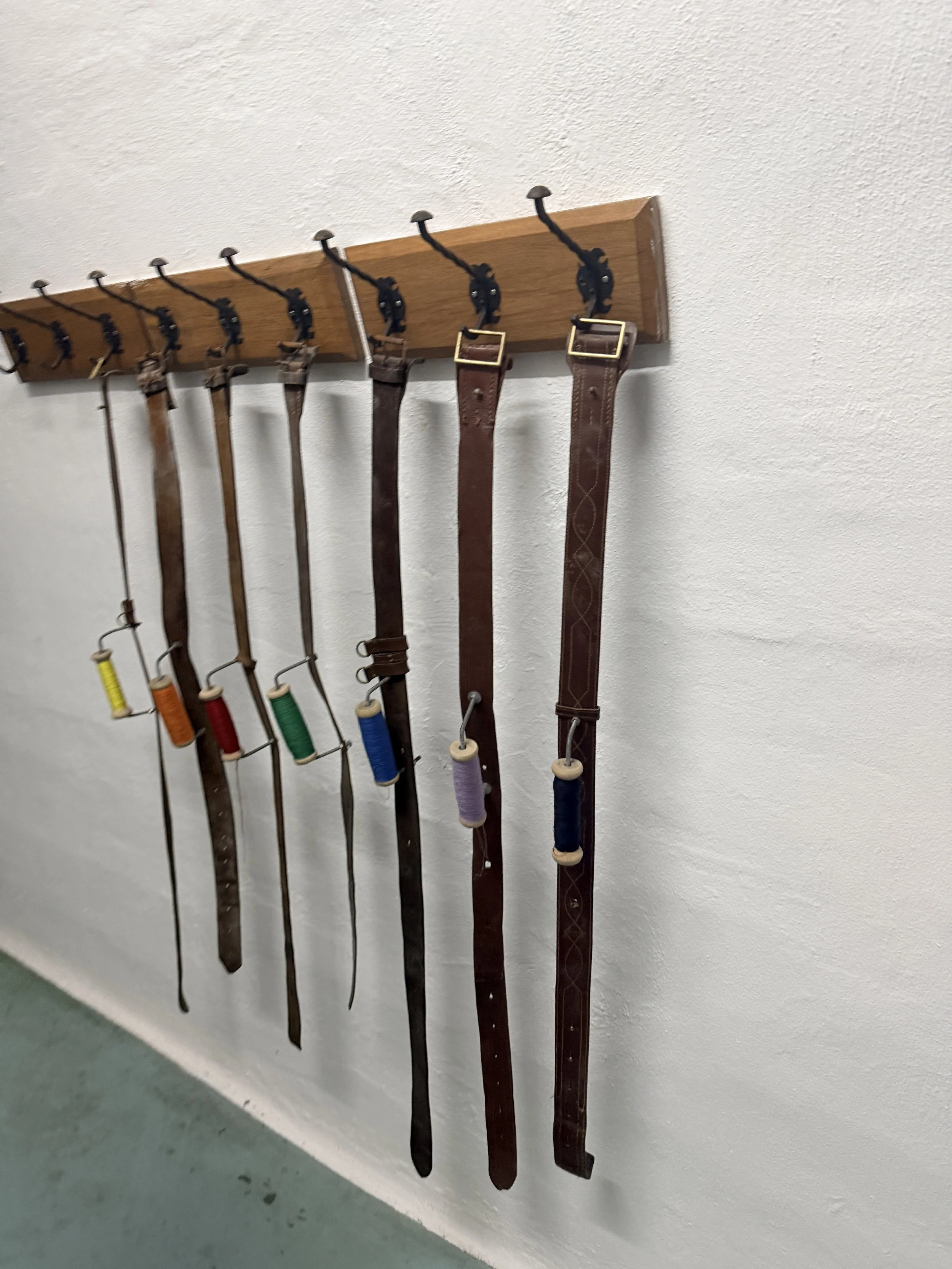
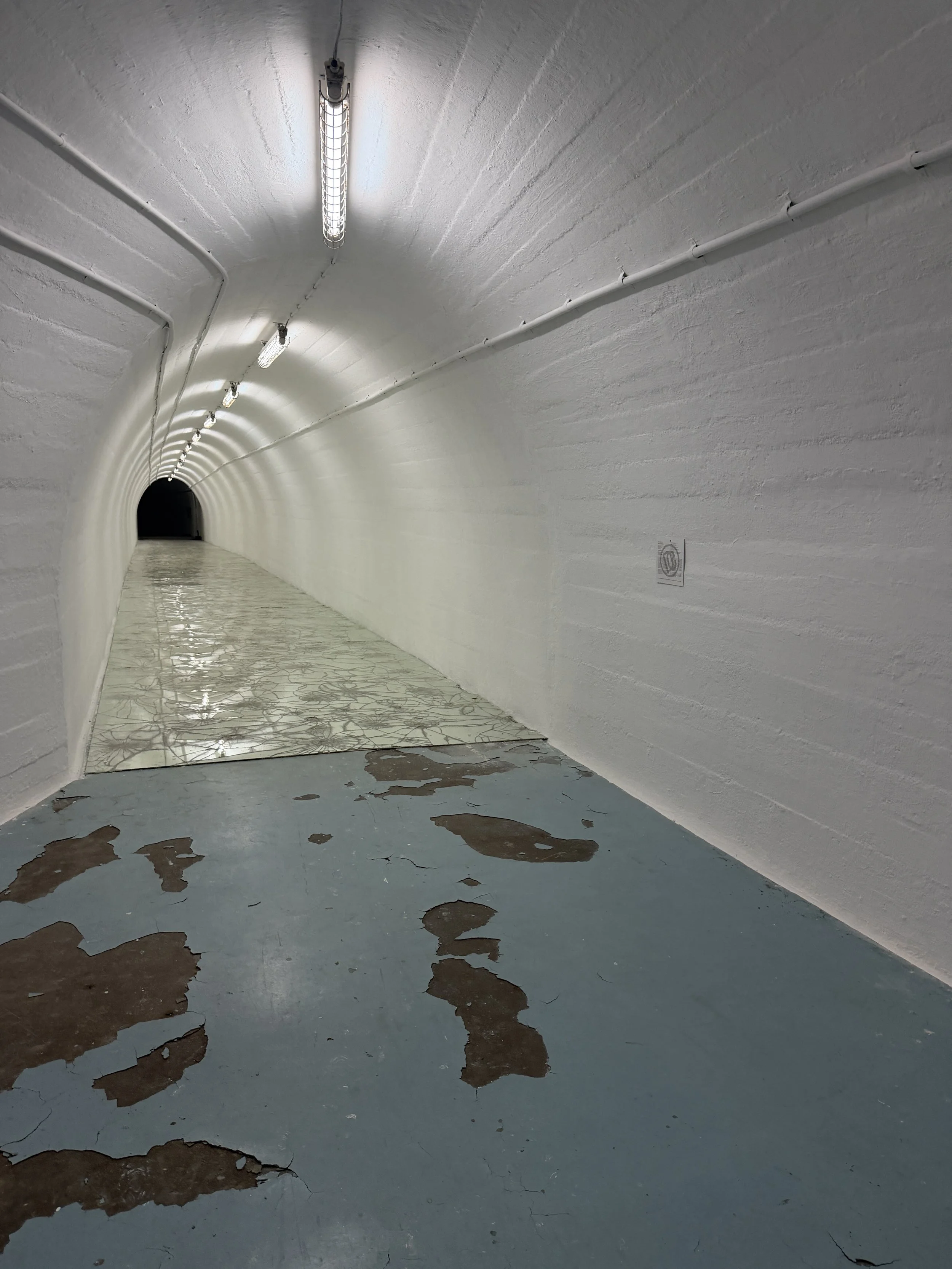
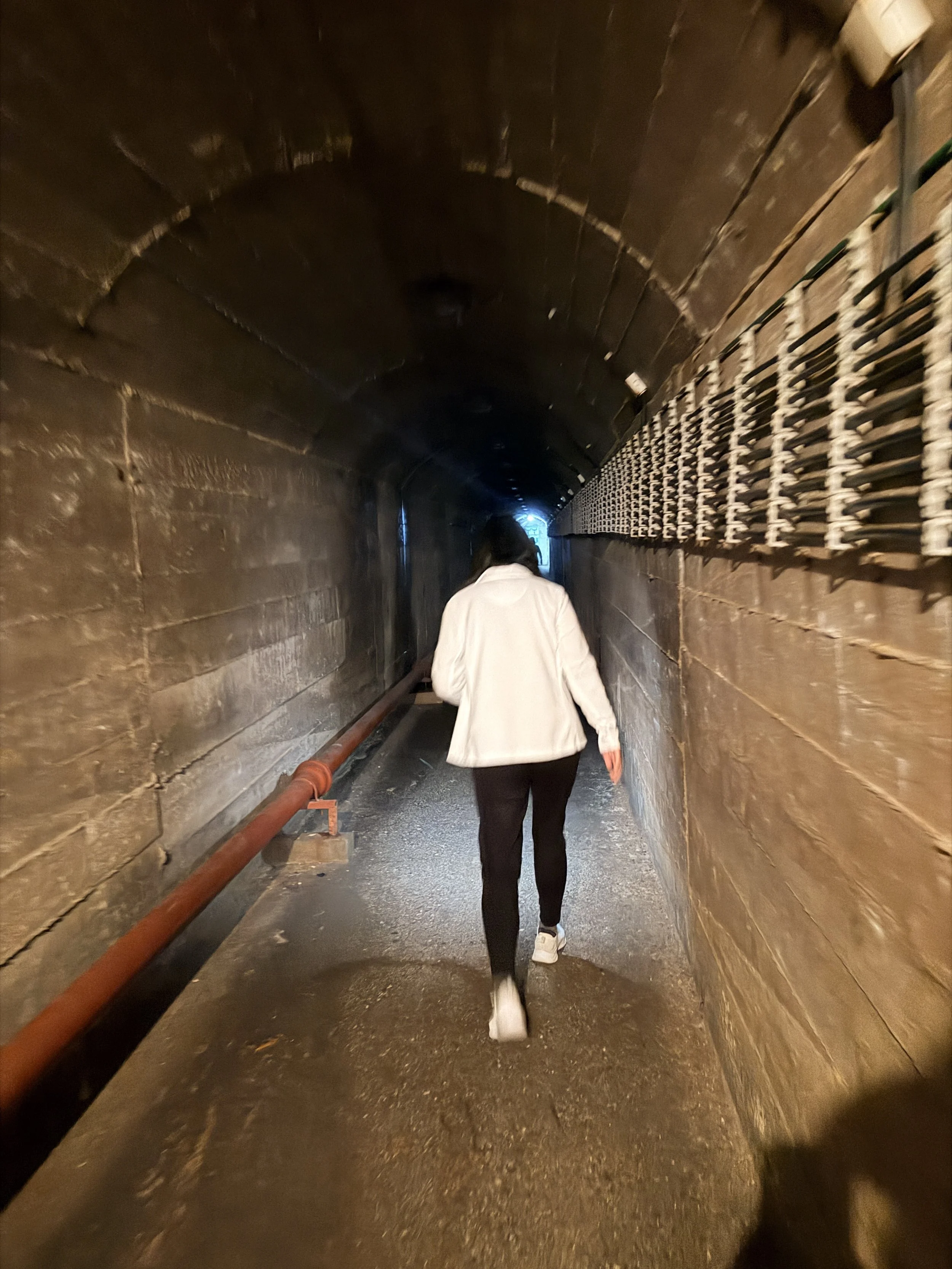
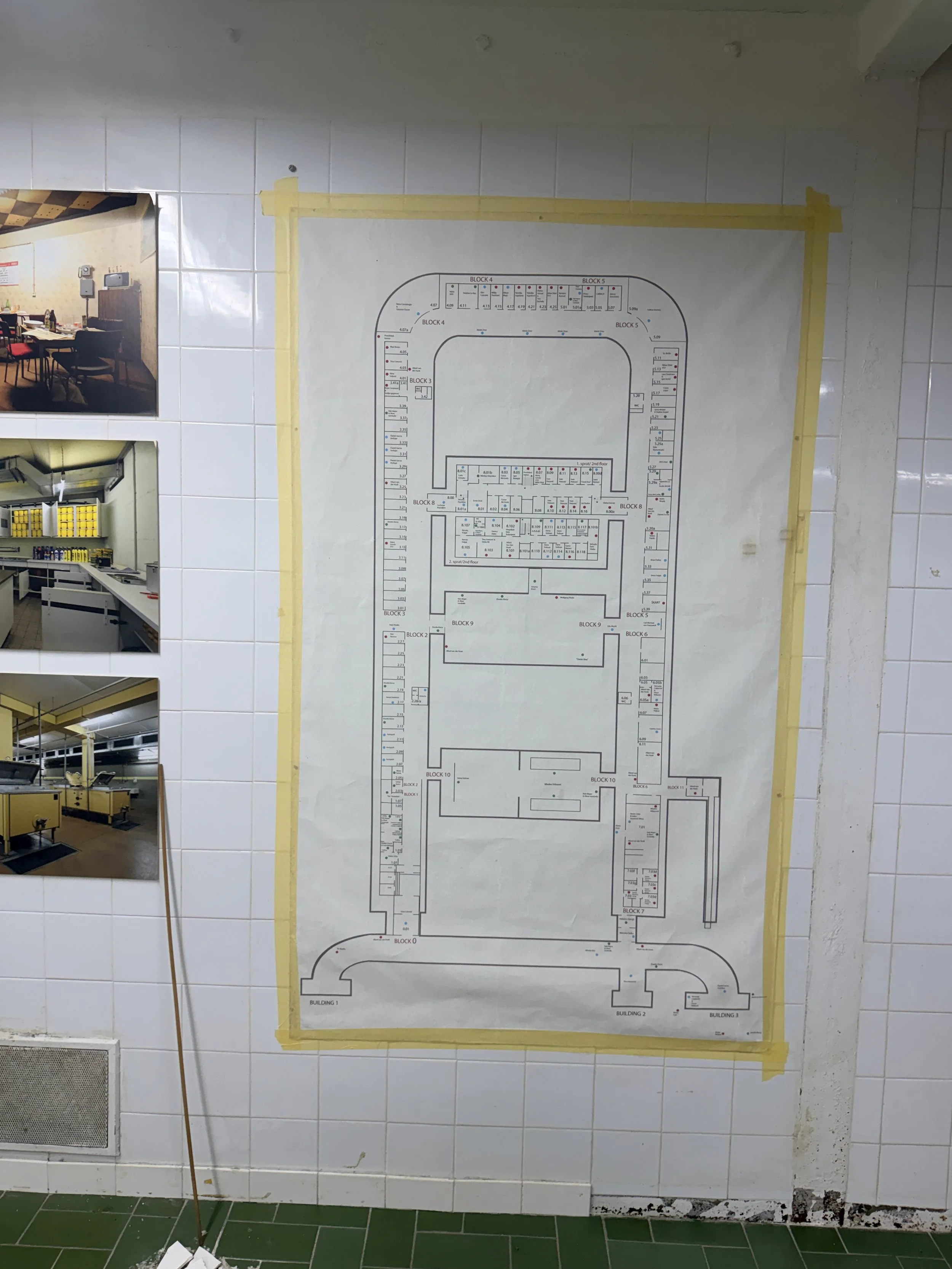
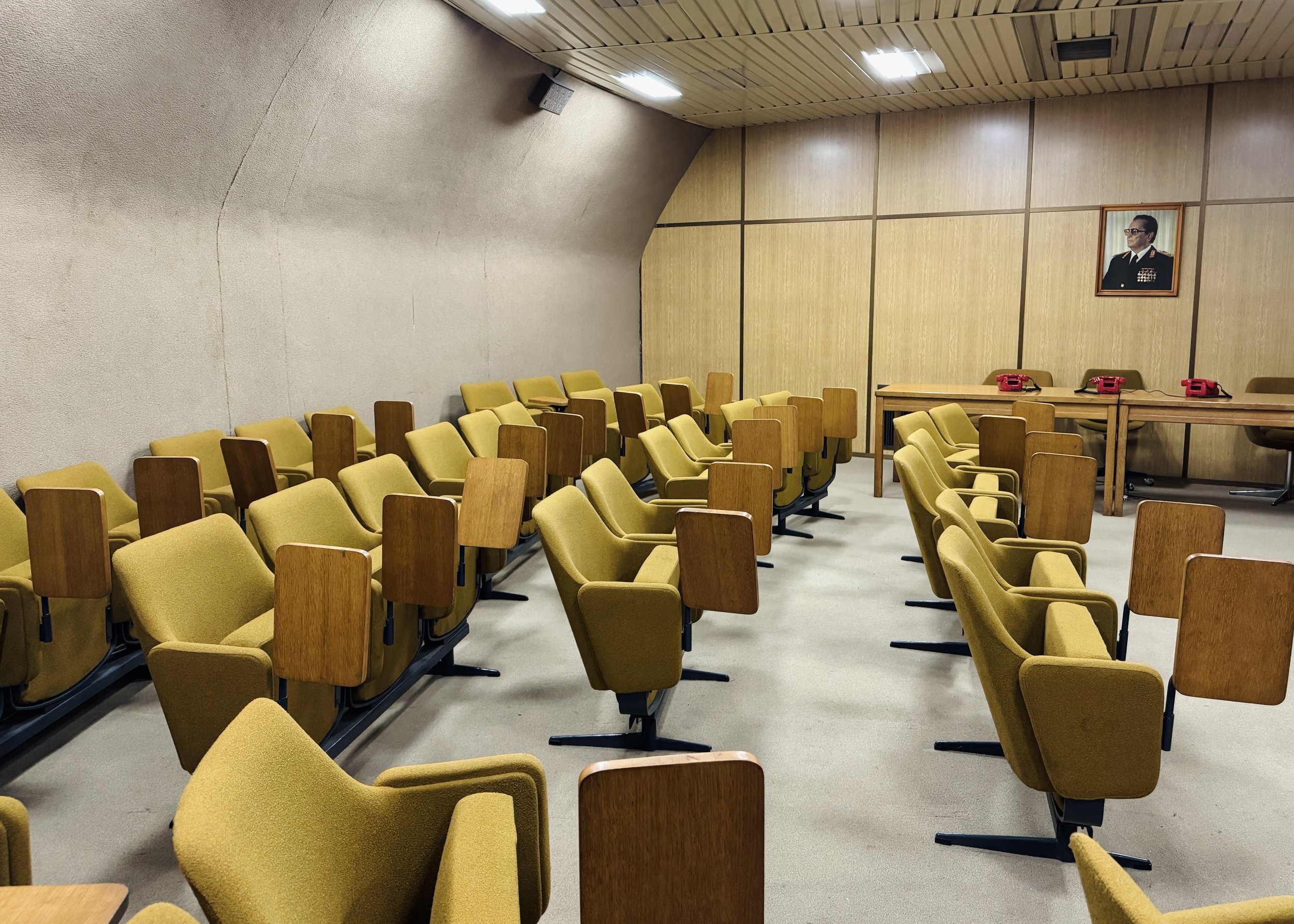
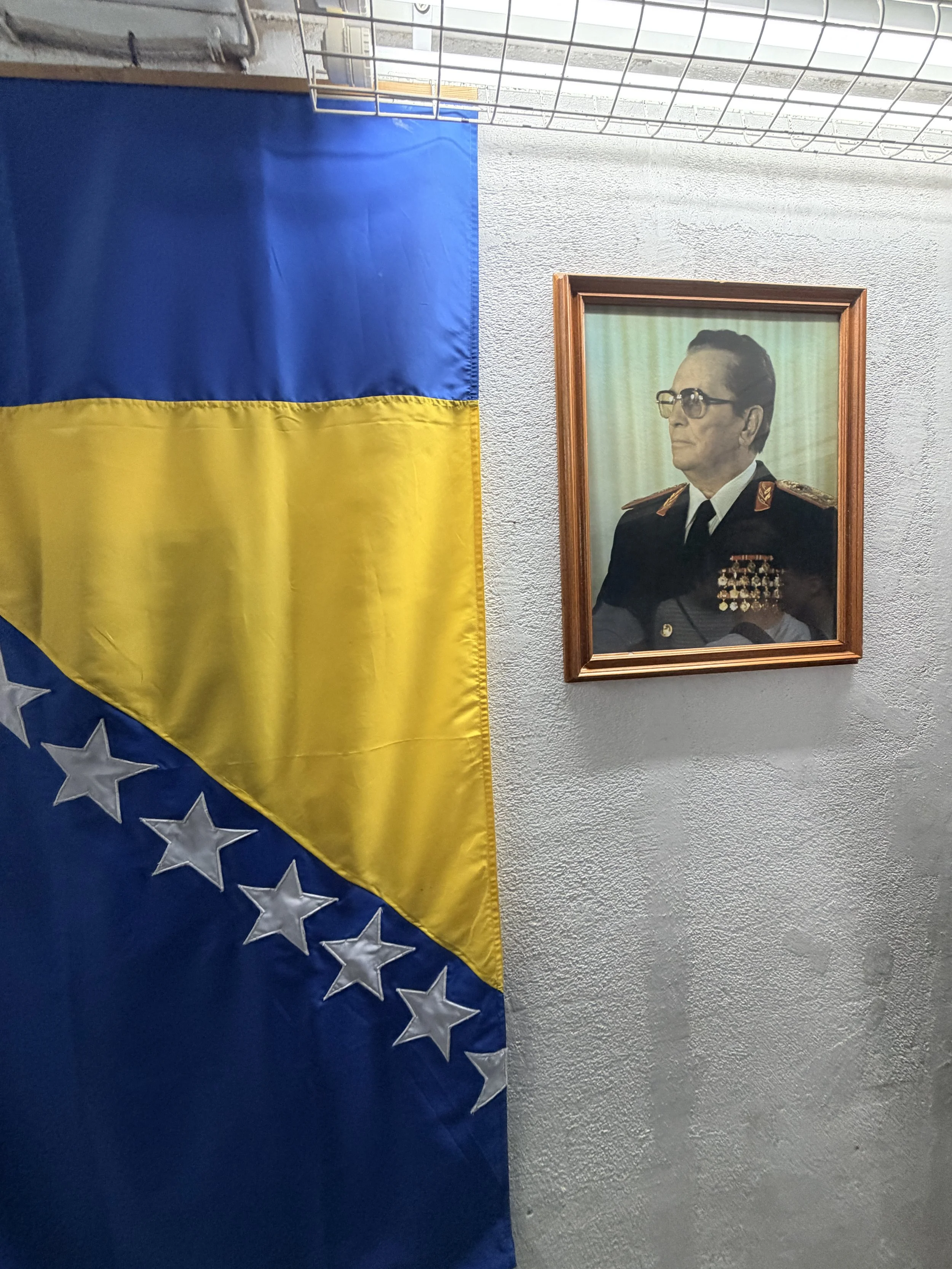
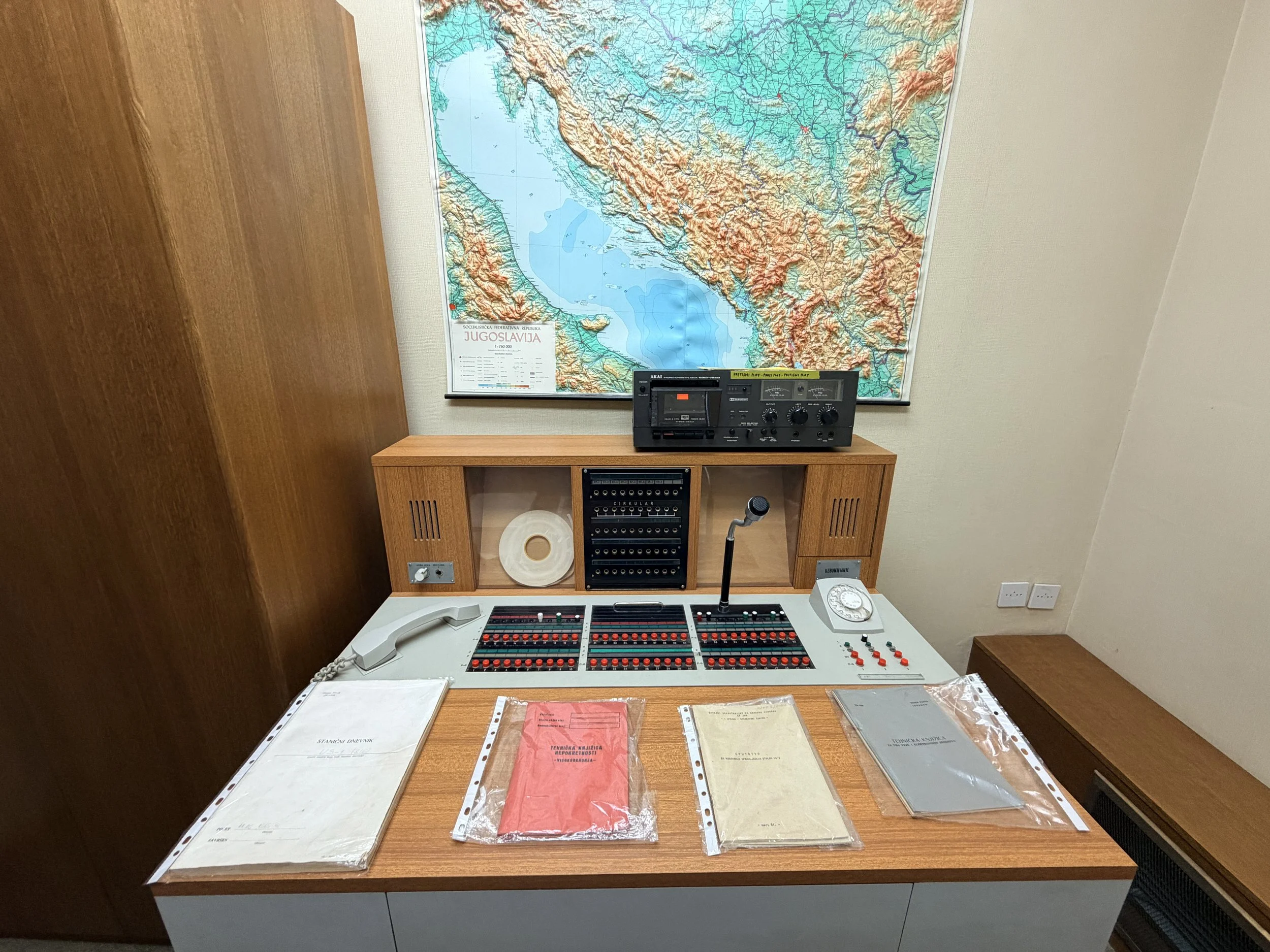
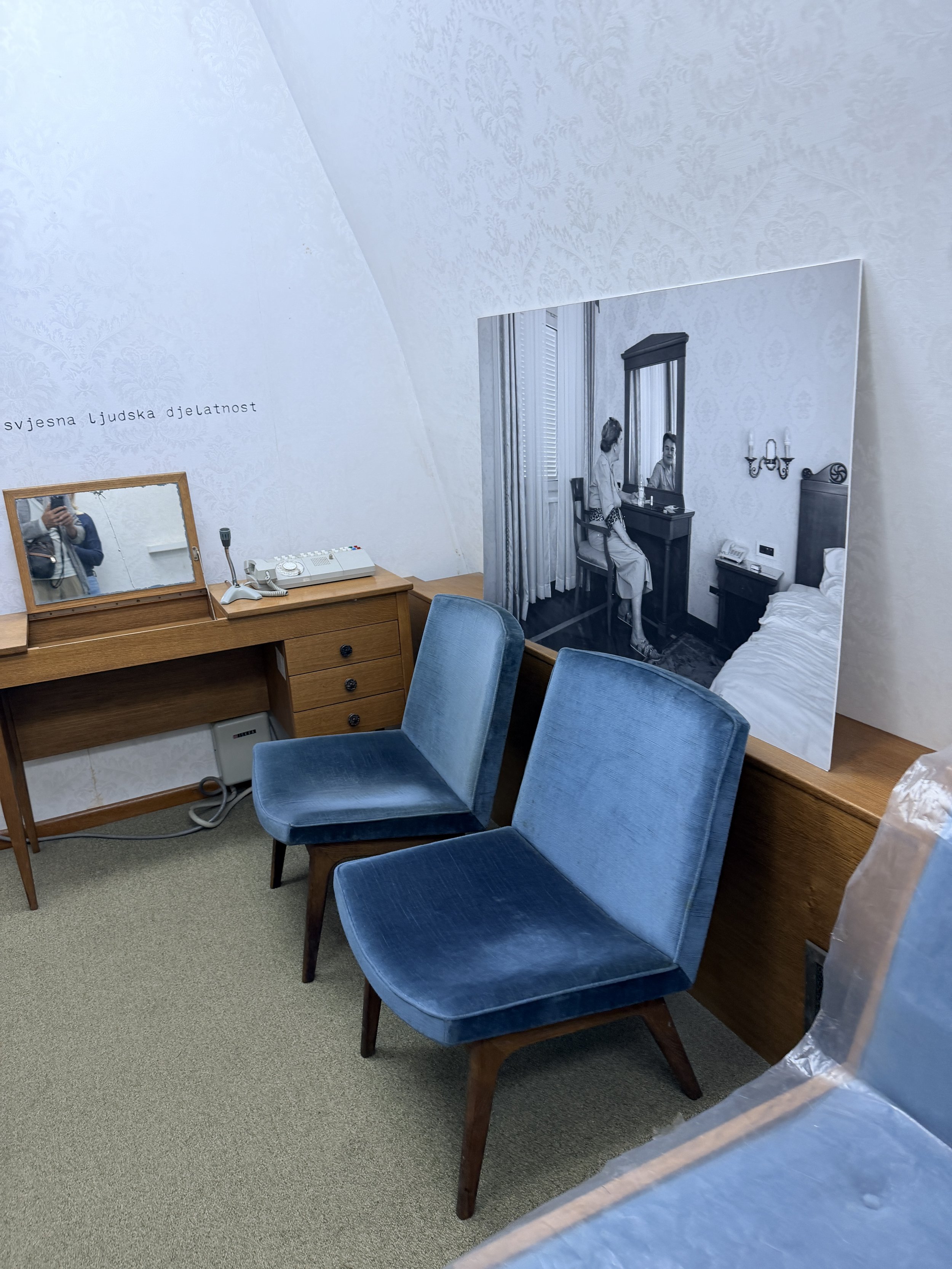
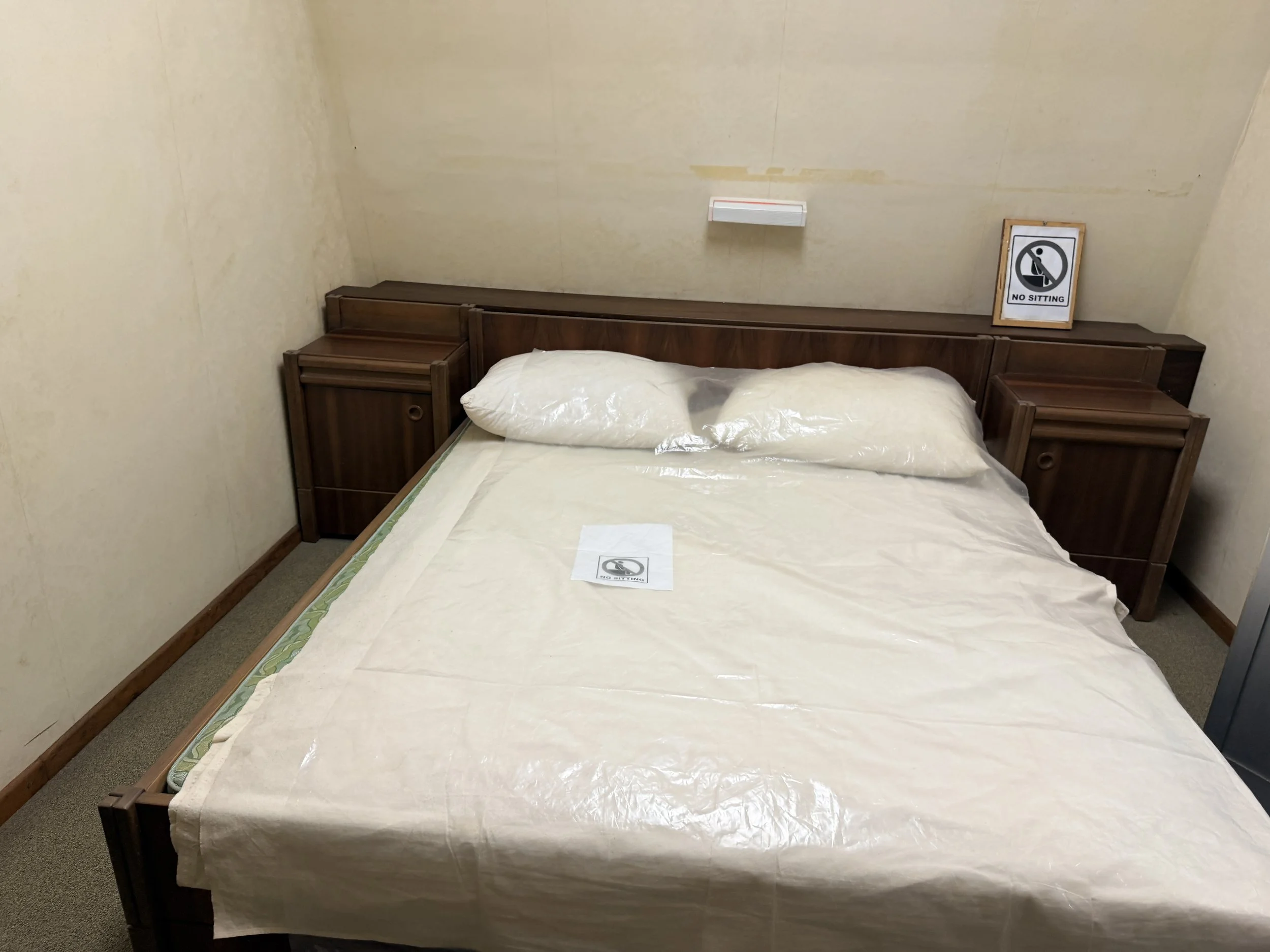
What impressed us most was the condition of the equipment. Even though more than forty-five years had passed since its completion, much of the machinery, furniture, and infrastructure still looked solid and functional. According to the guide, most of the equipment had been manufactured domestically within the former Yugoslavia. The guide spoke with a certain nostalgia, noting that many of those industrial and technological capabilities disappeared after the breakup of the country.
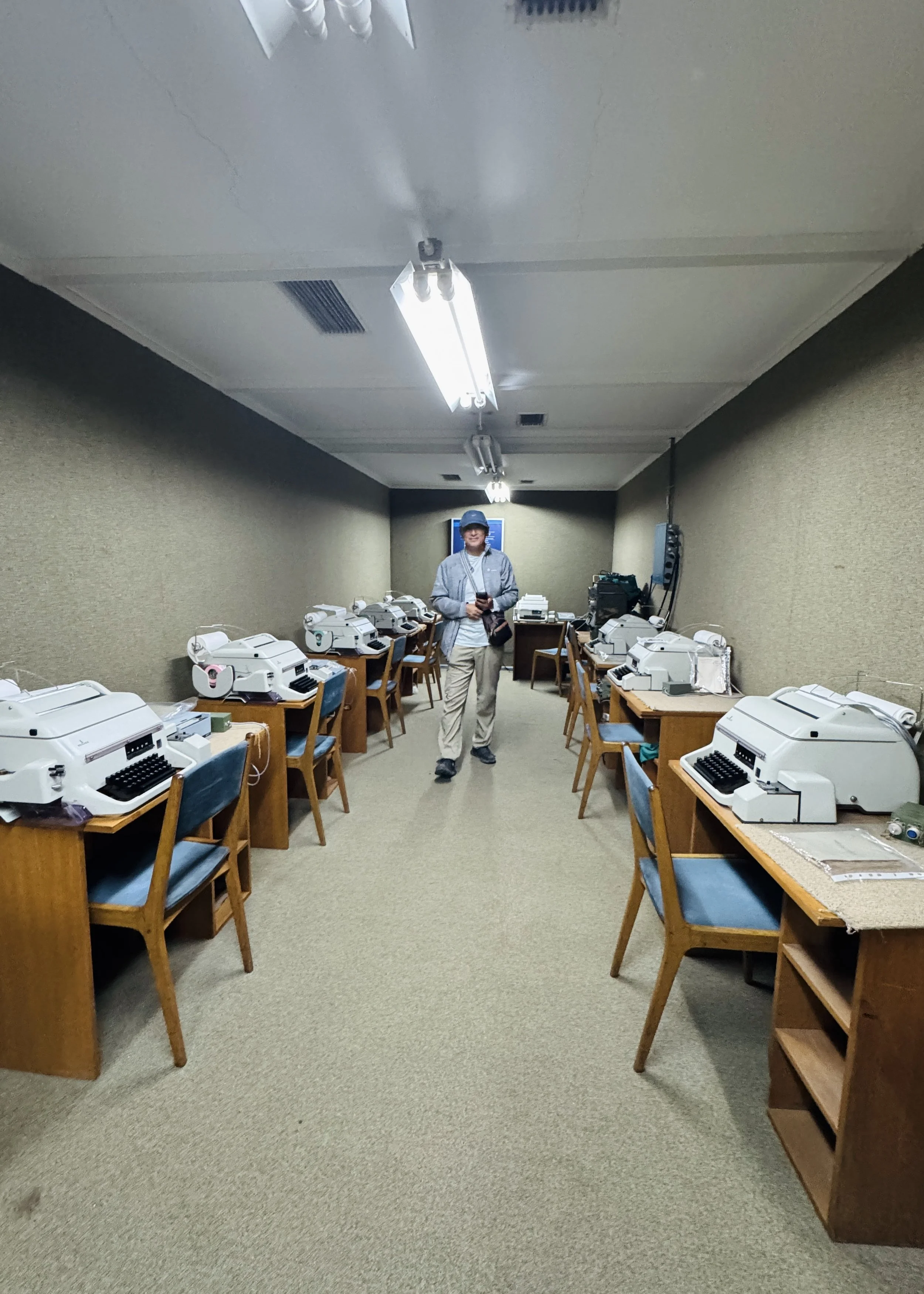
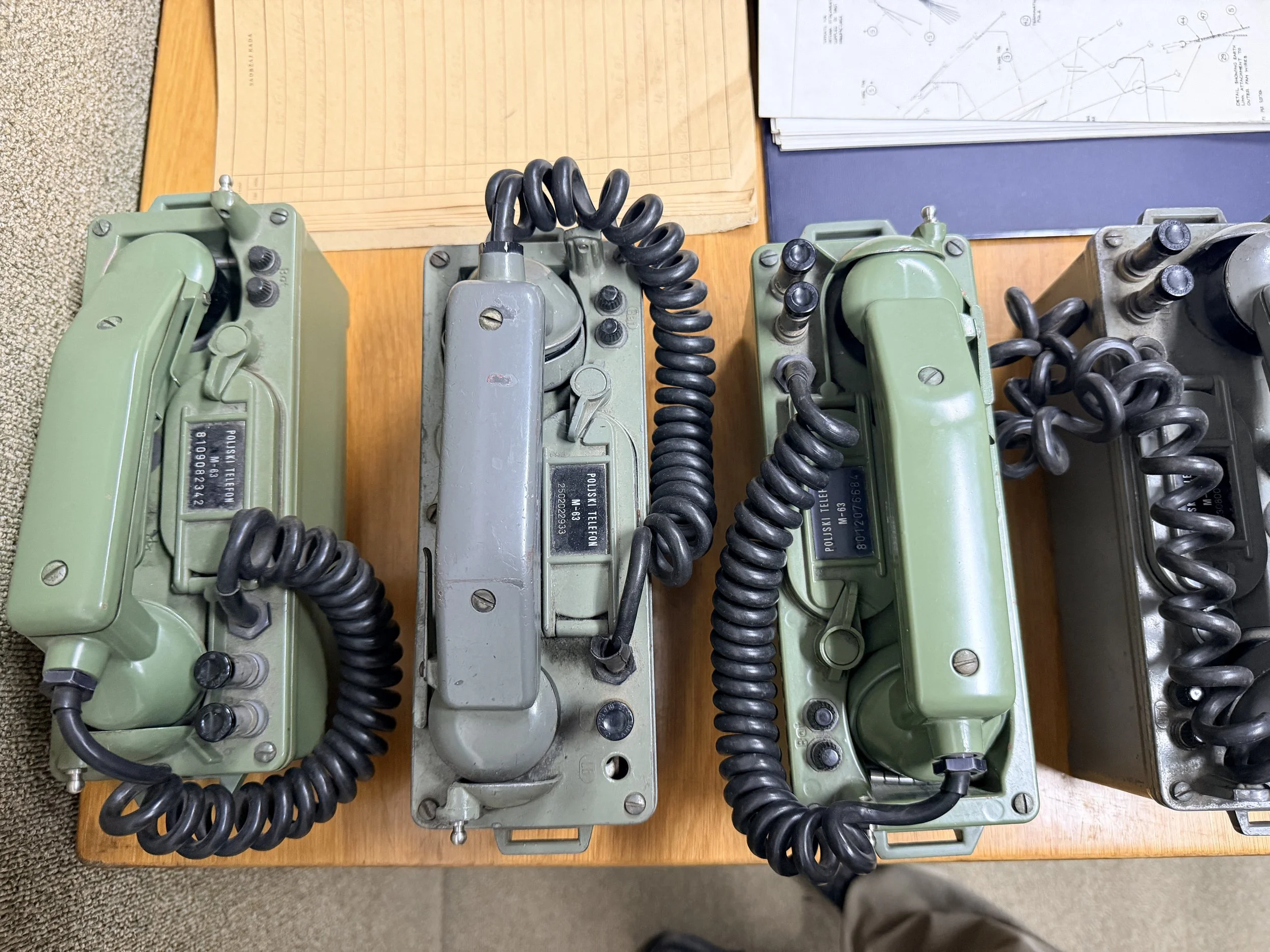
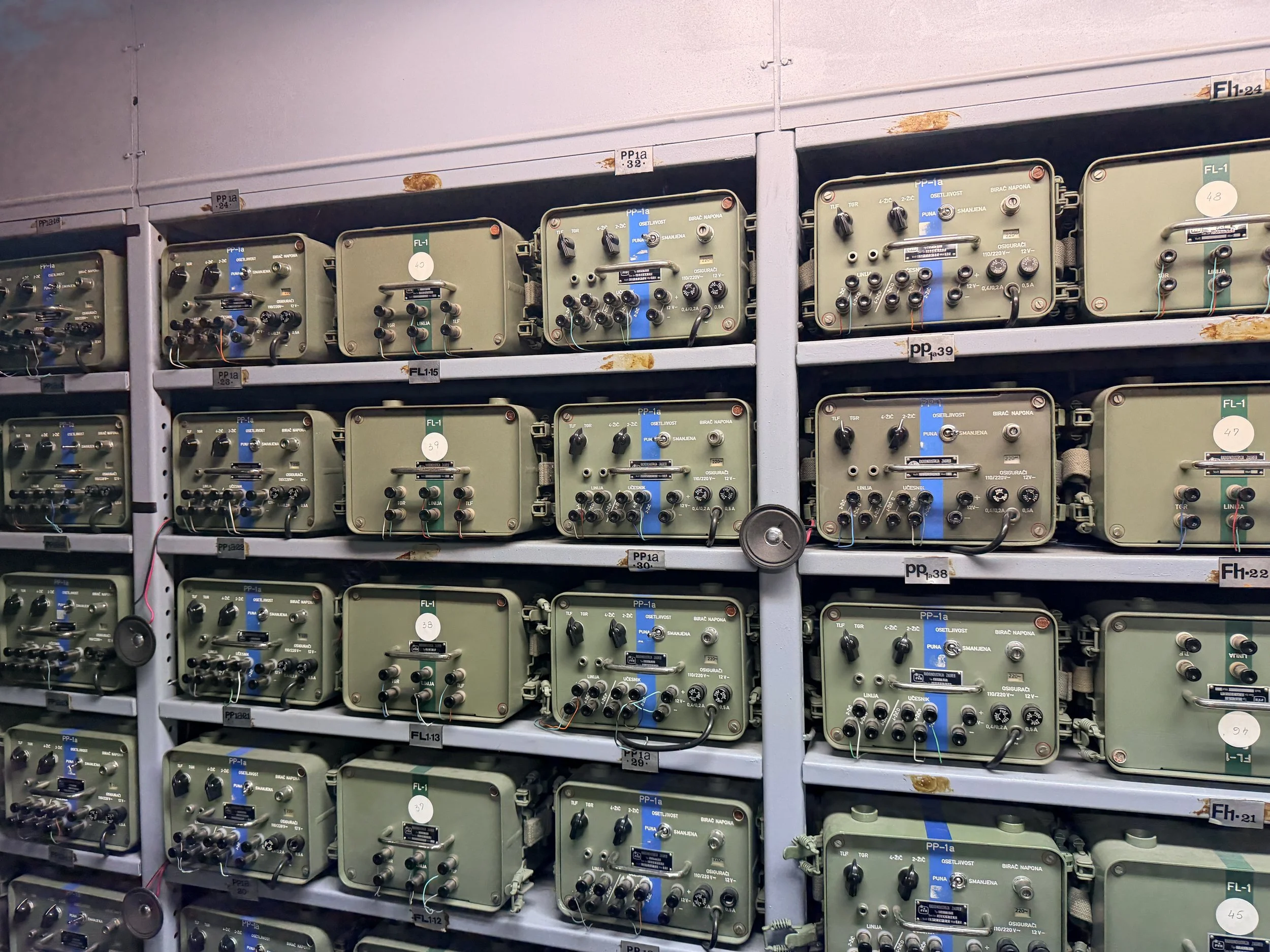
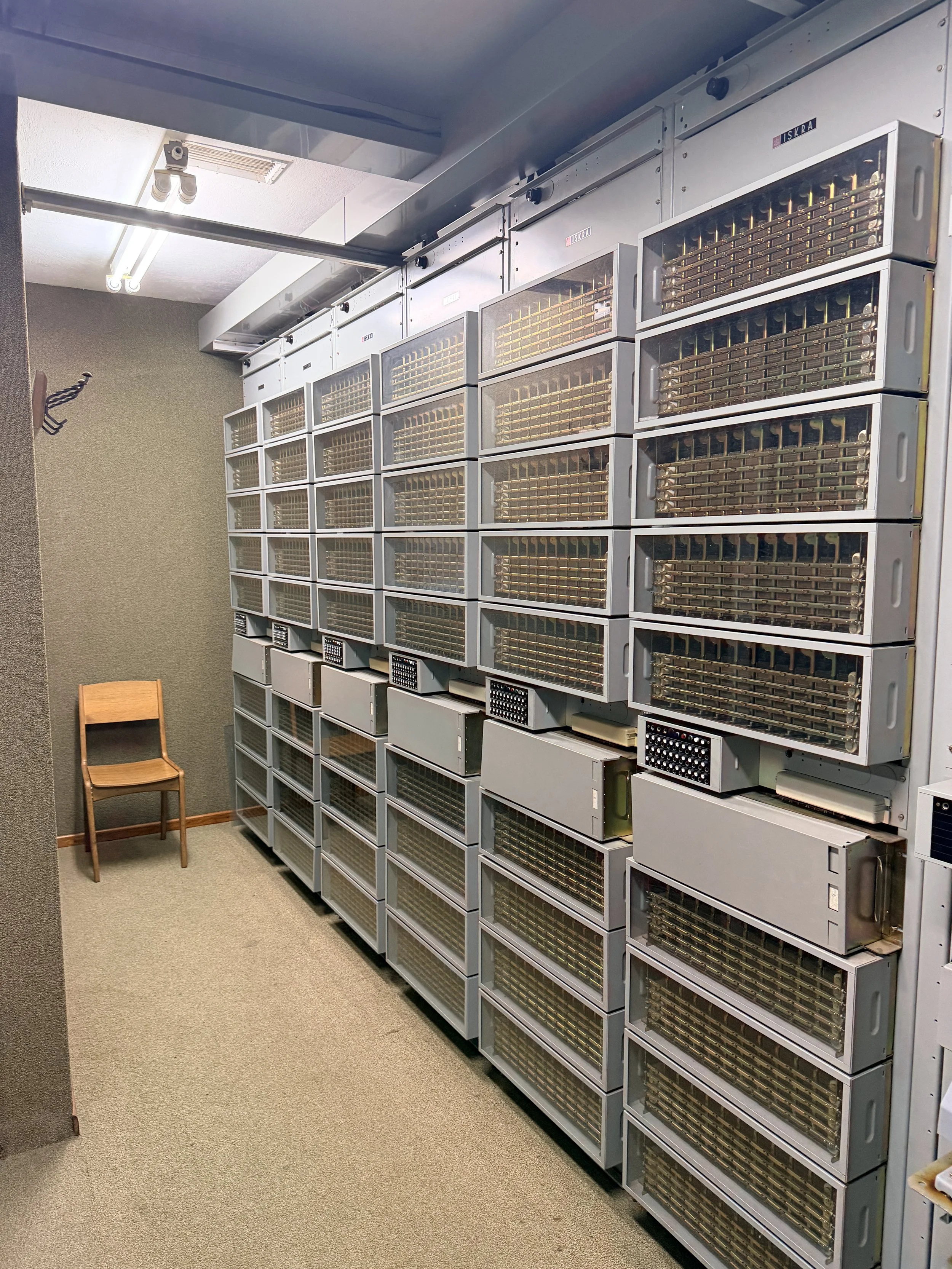
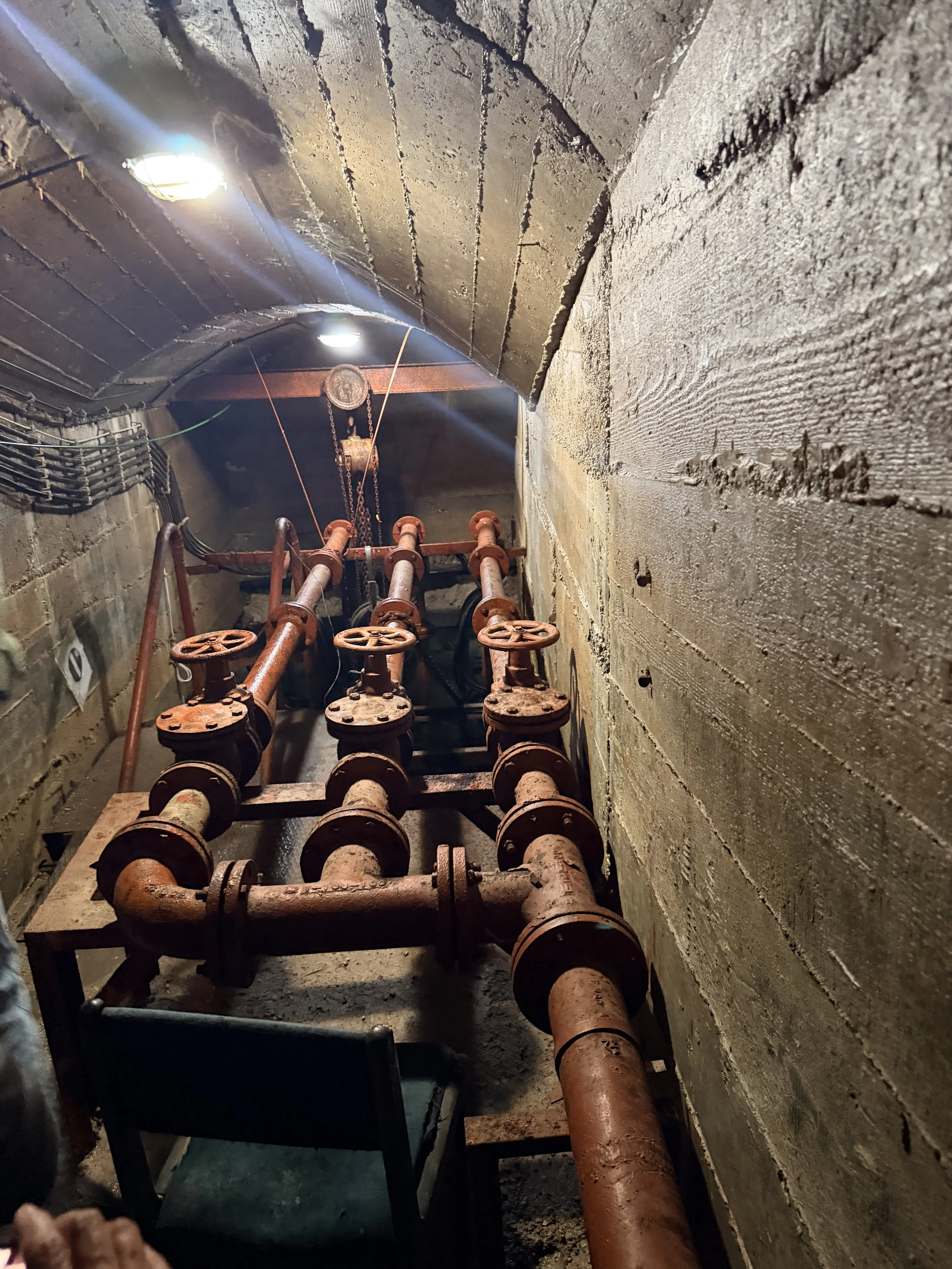
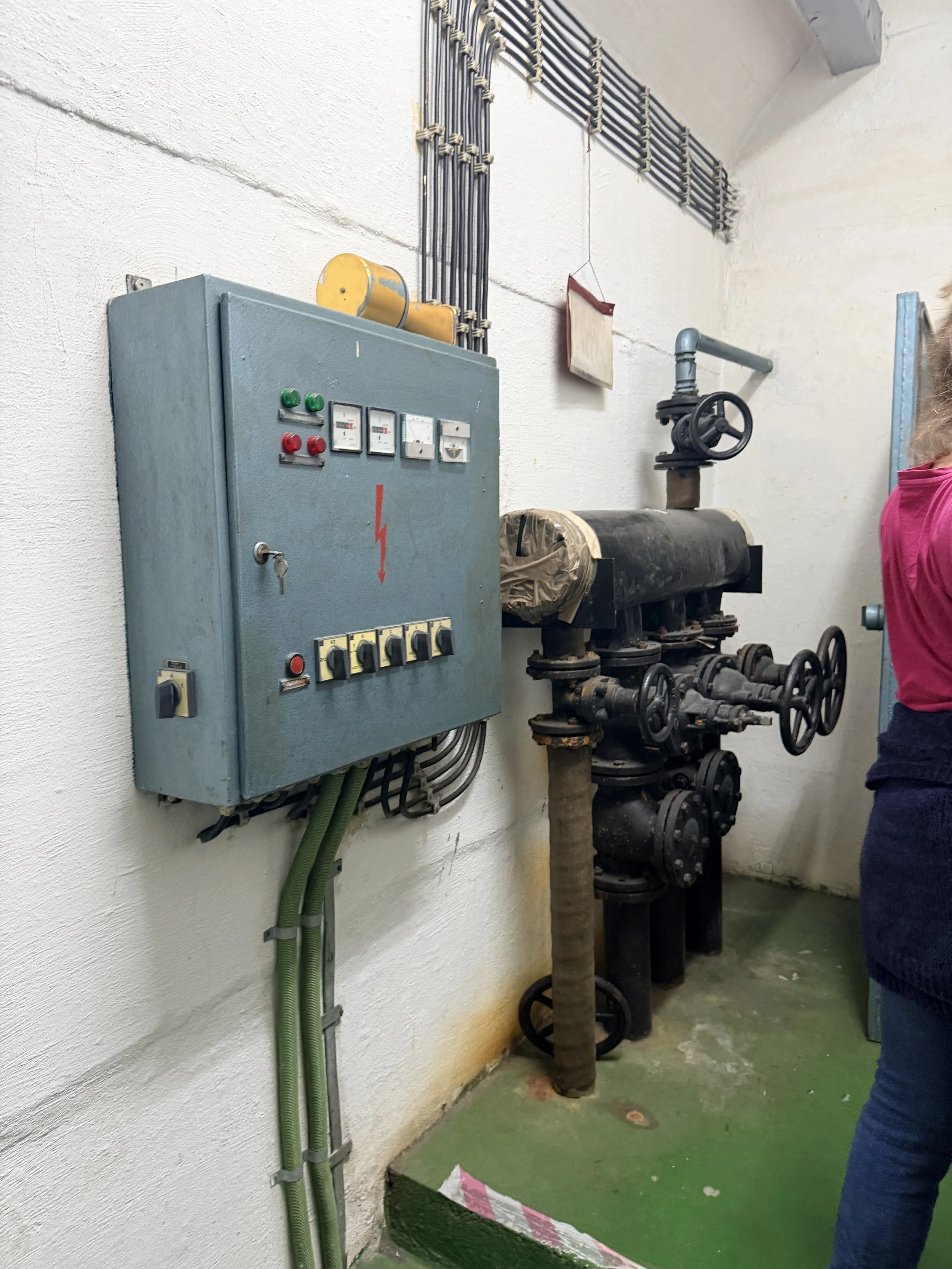
Walking through the bunker felt like stepping into a preserved Cold War time capsule hidden deep beneath the mountains.
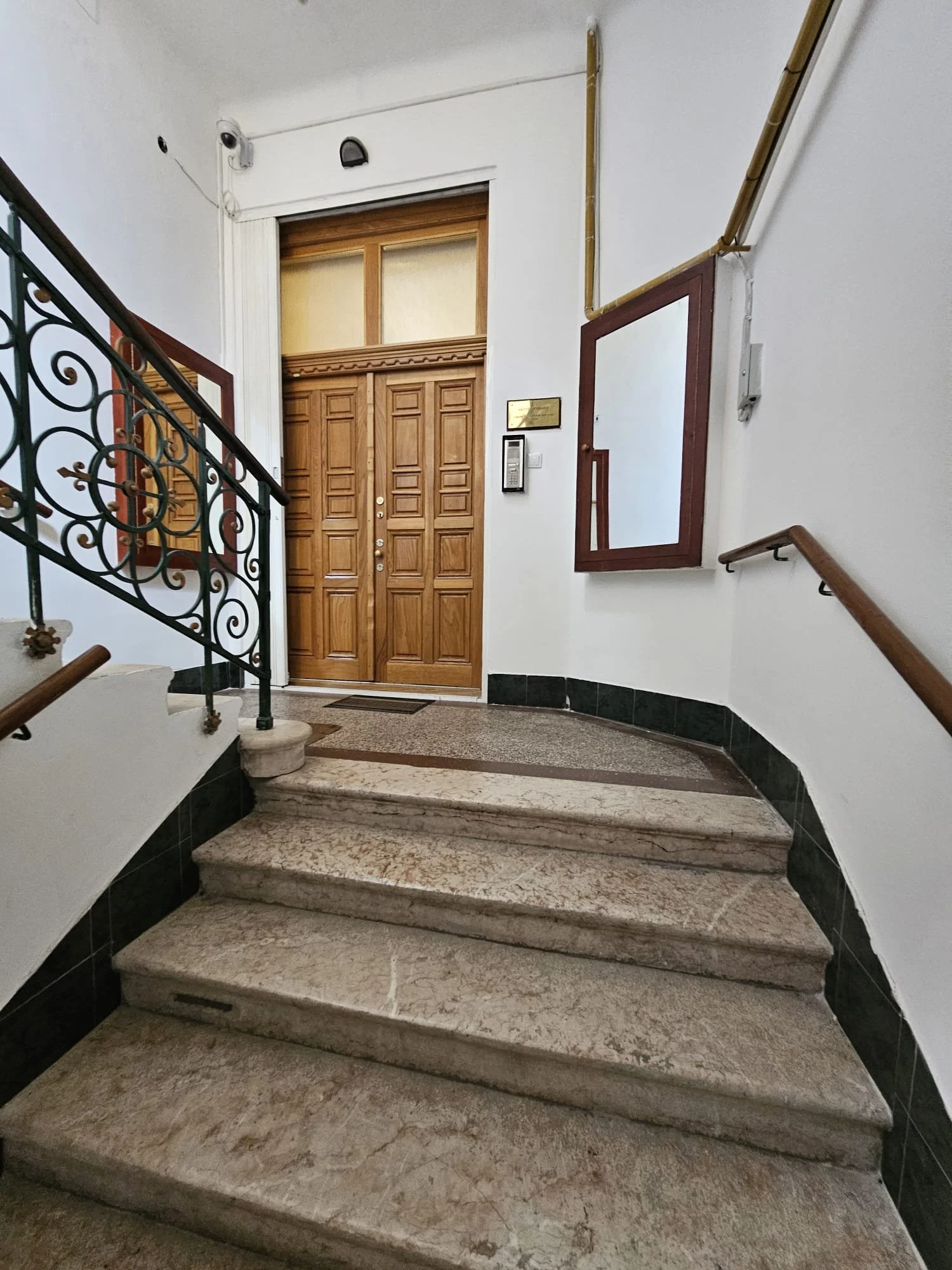
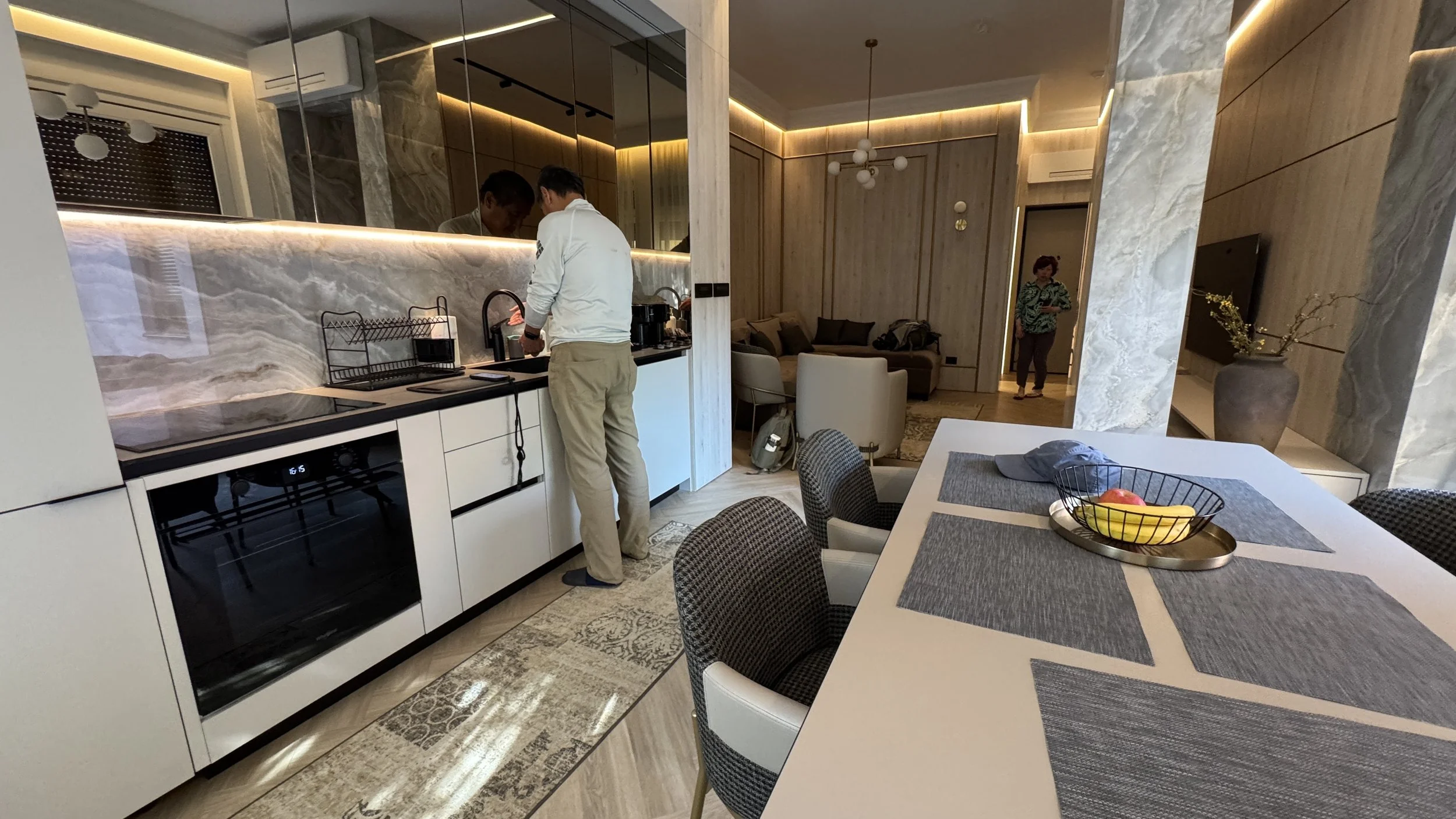
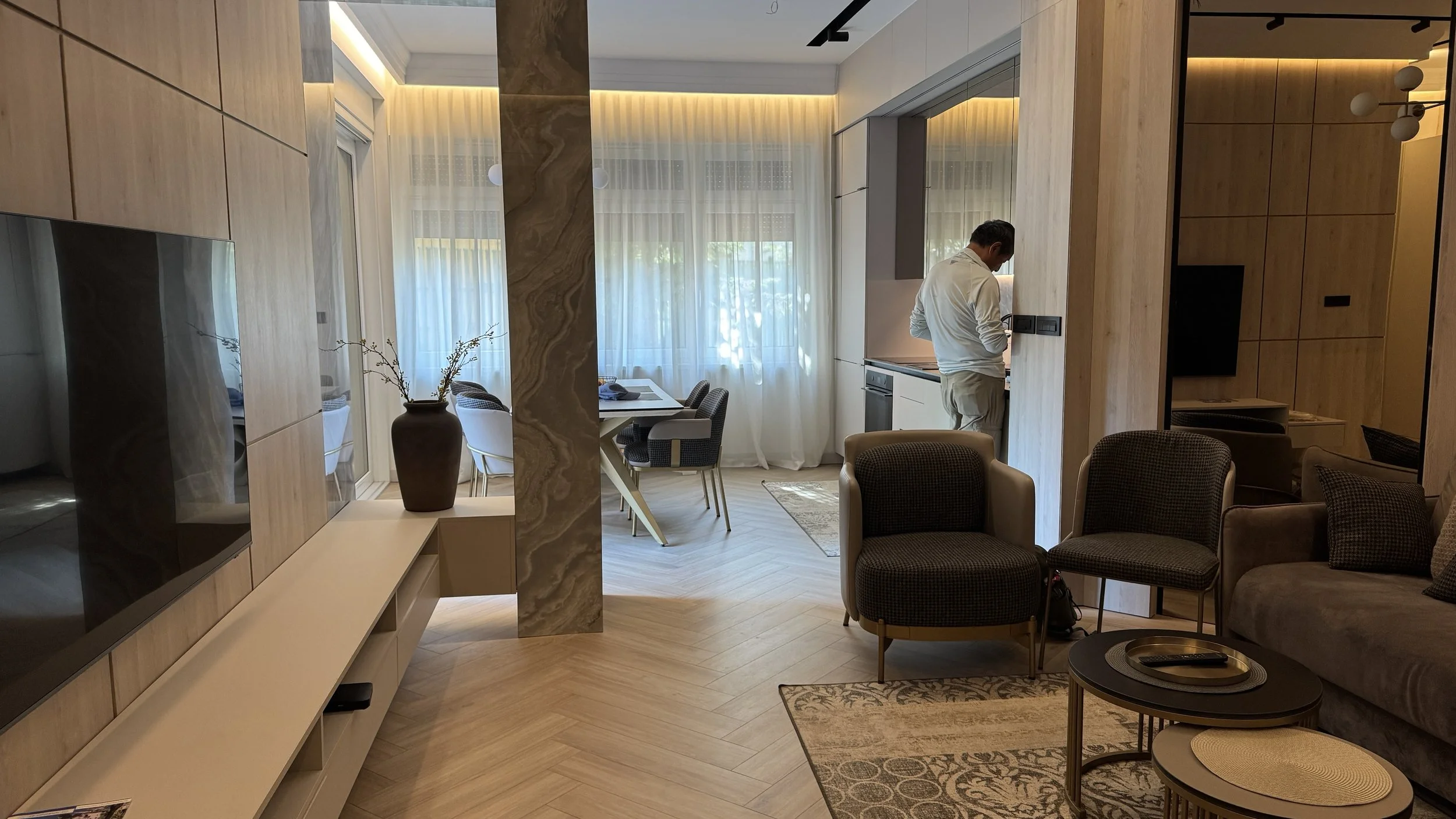
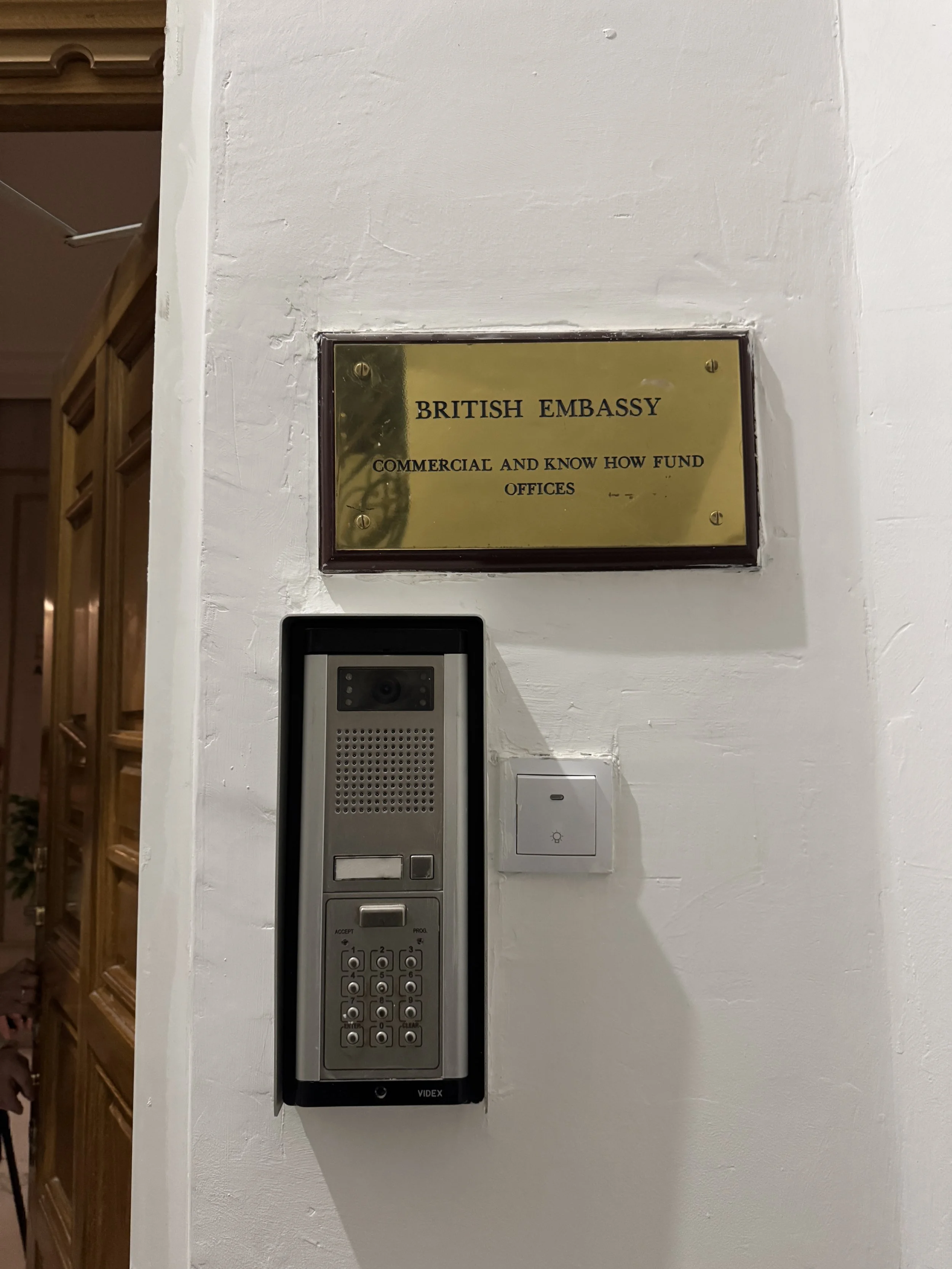
Later that afternoon, we arrived in Sarajevo and checked into a rented apartment housed in an old building with a faded British Embassy sign still hanging on the wall — a curious reminder of the city’s layered past.
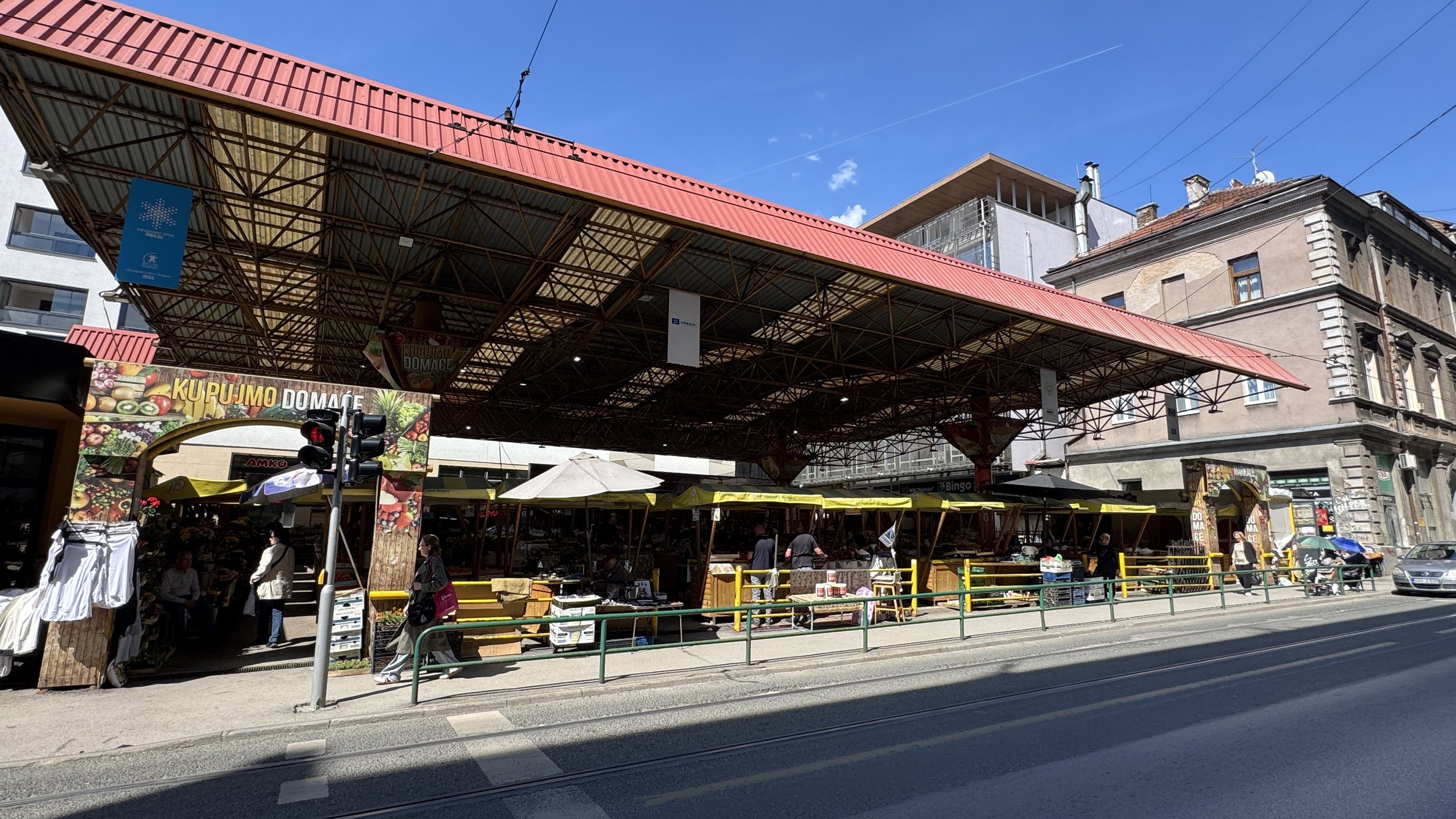
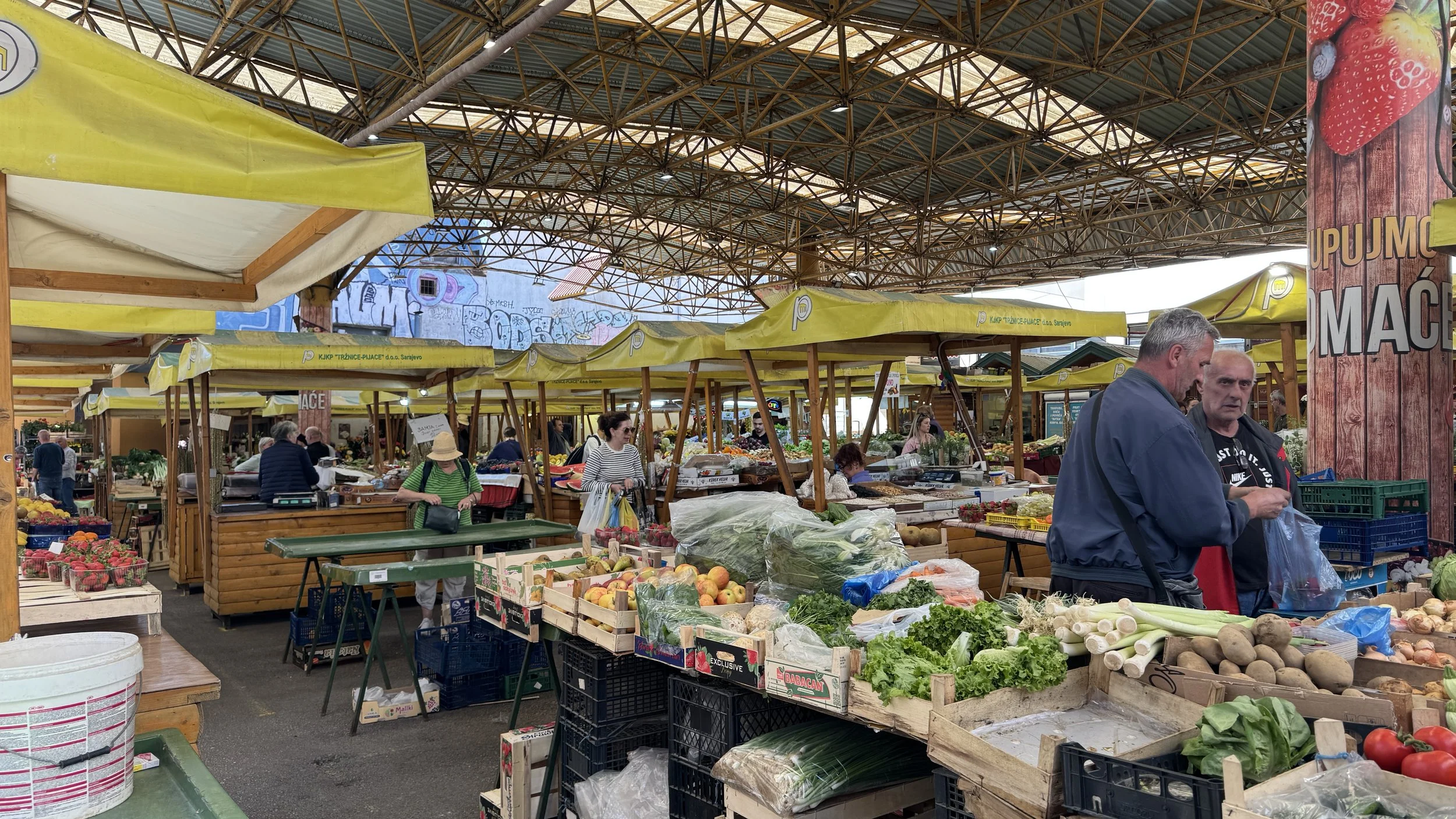
After settling in, we walked to a nearby open-air market and grocery store to buy strawberries, tomatoes, eggs, and a few other essentials for a simple dinner that evening and breakfast the next morning.
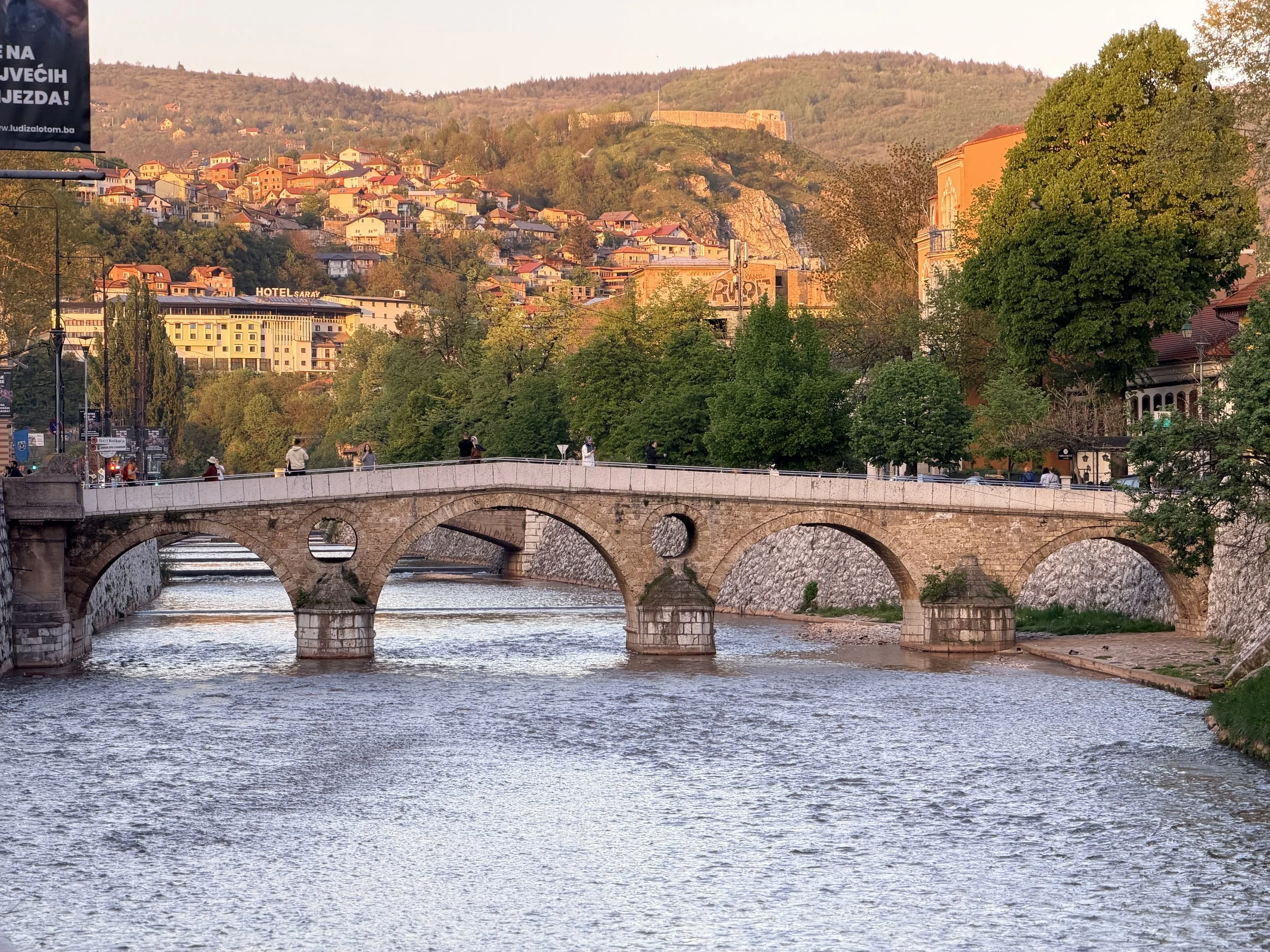
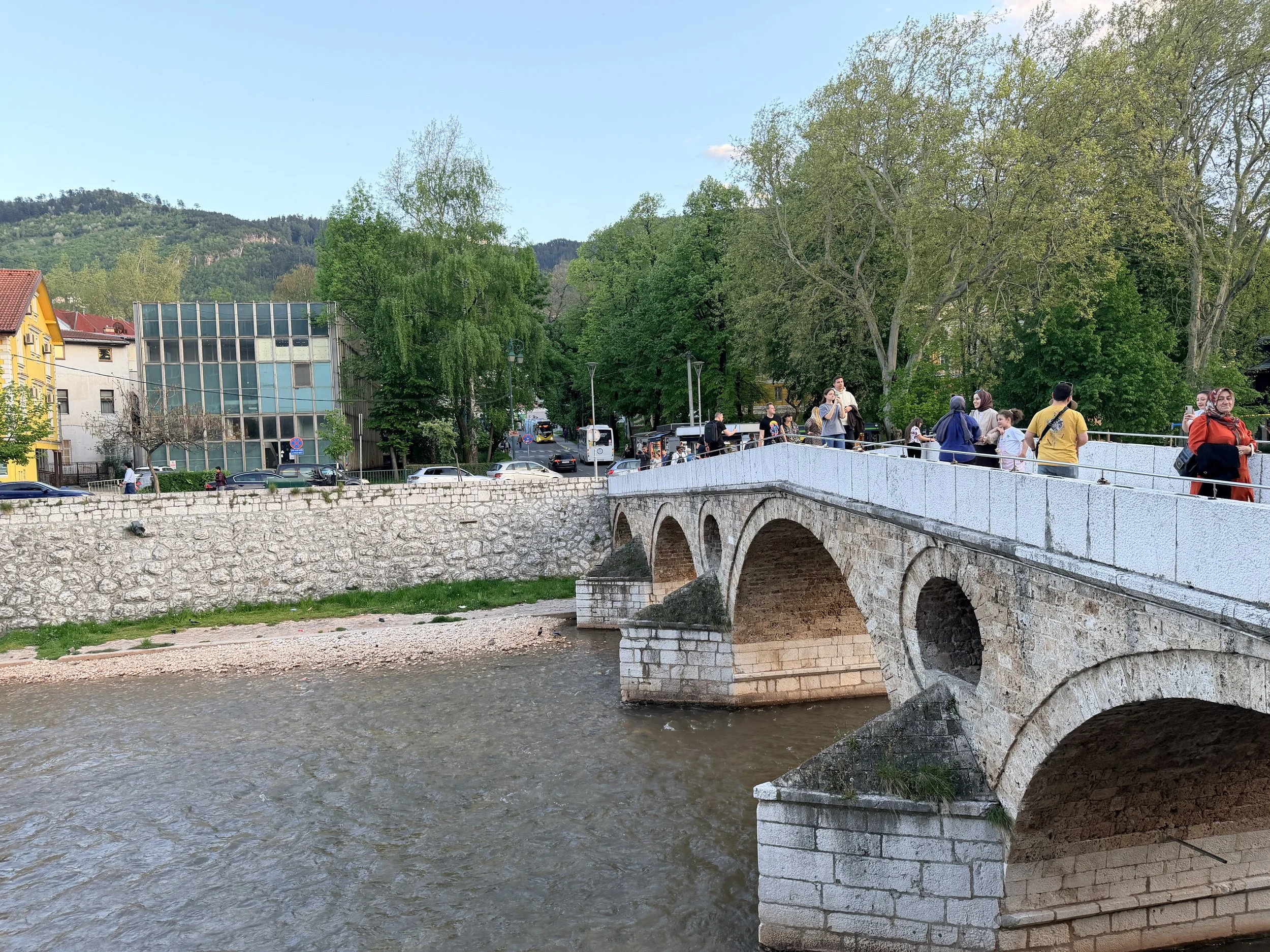
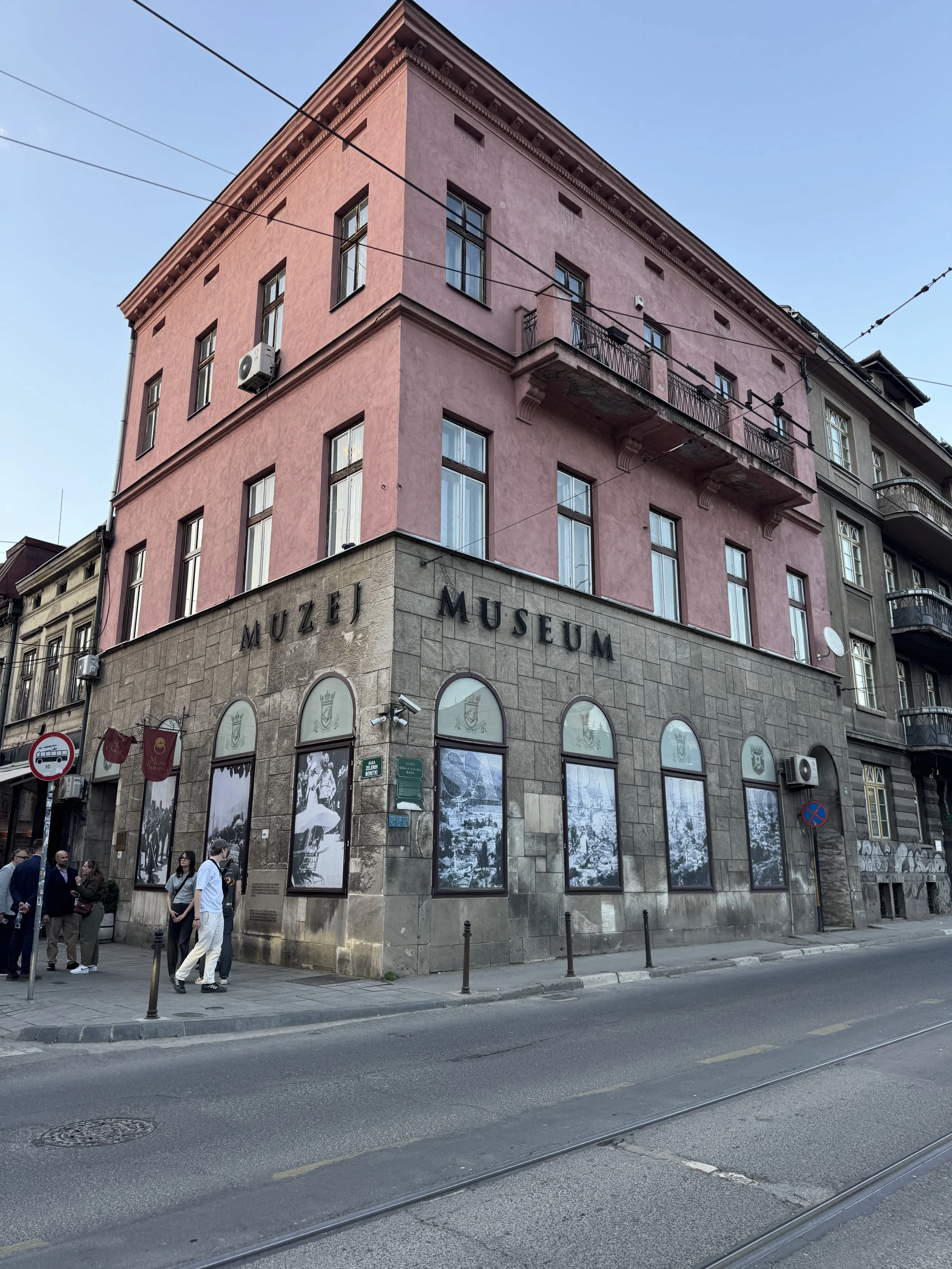
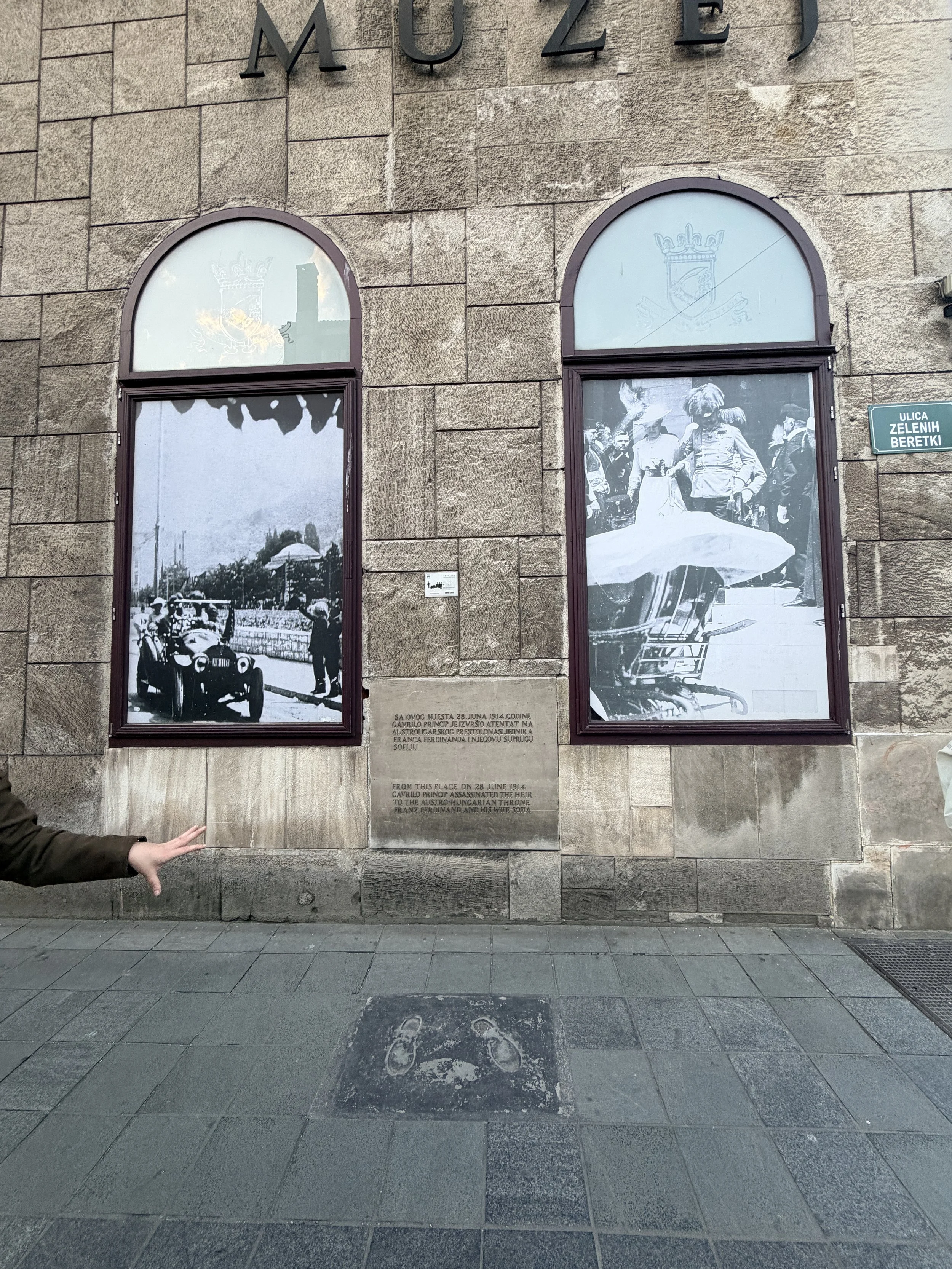
Following our quiet dinner at the apartment, we ventured out toward the city center. We visited the Latin Bridge and the nearby assassination site of Archduke Franz Ferdinand, whose death in Sarajevo triggered the beginning of World War I. Standing there at night, it was remarkable to think how one small corner of the city had become tied to such a pivotal moment in world history.
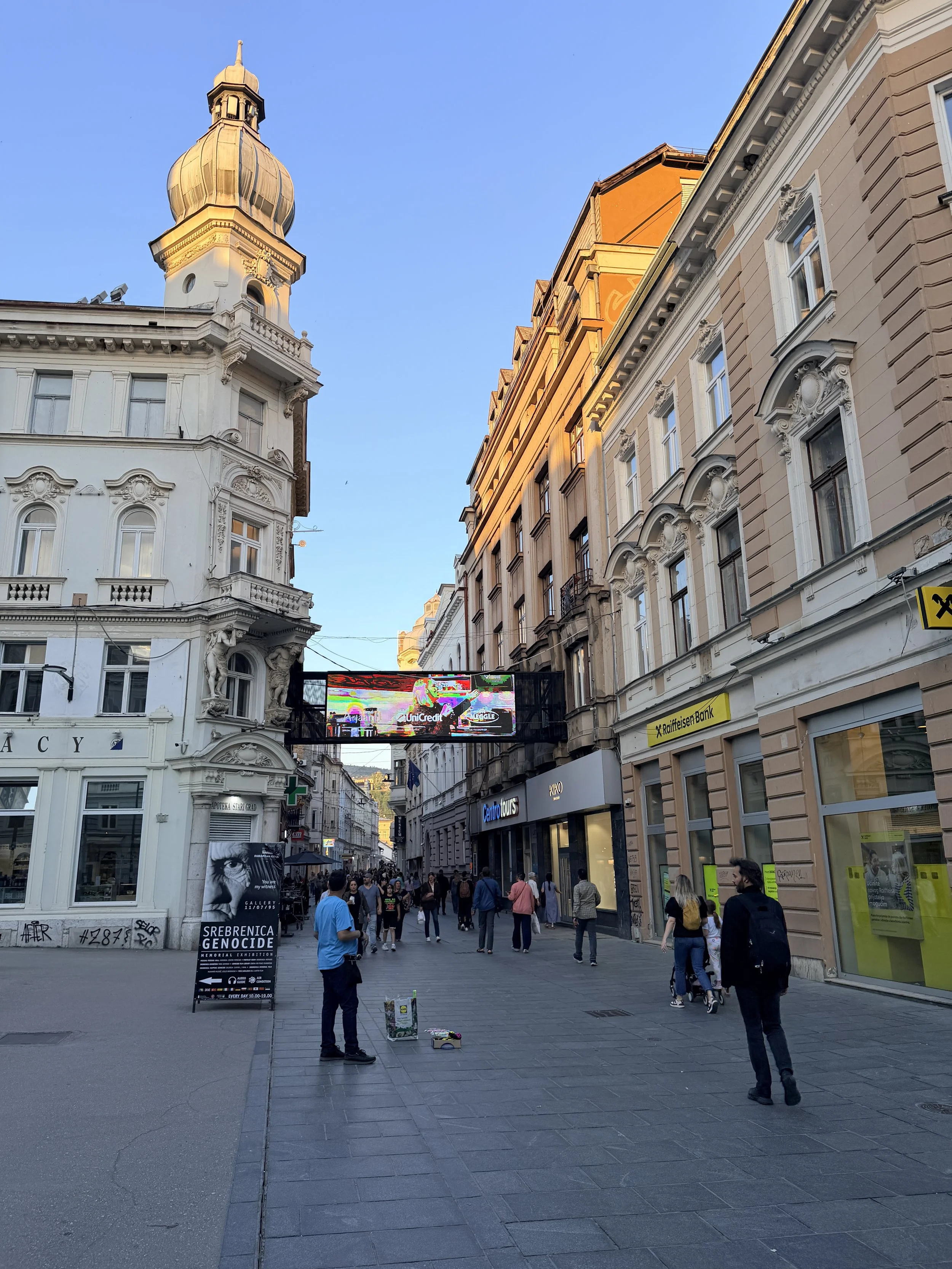
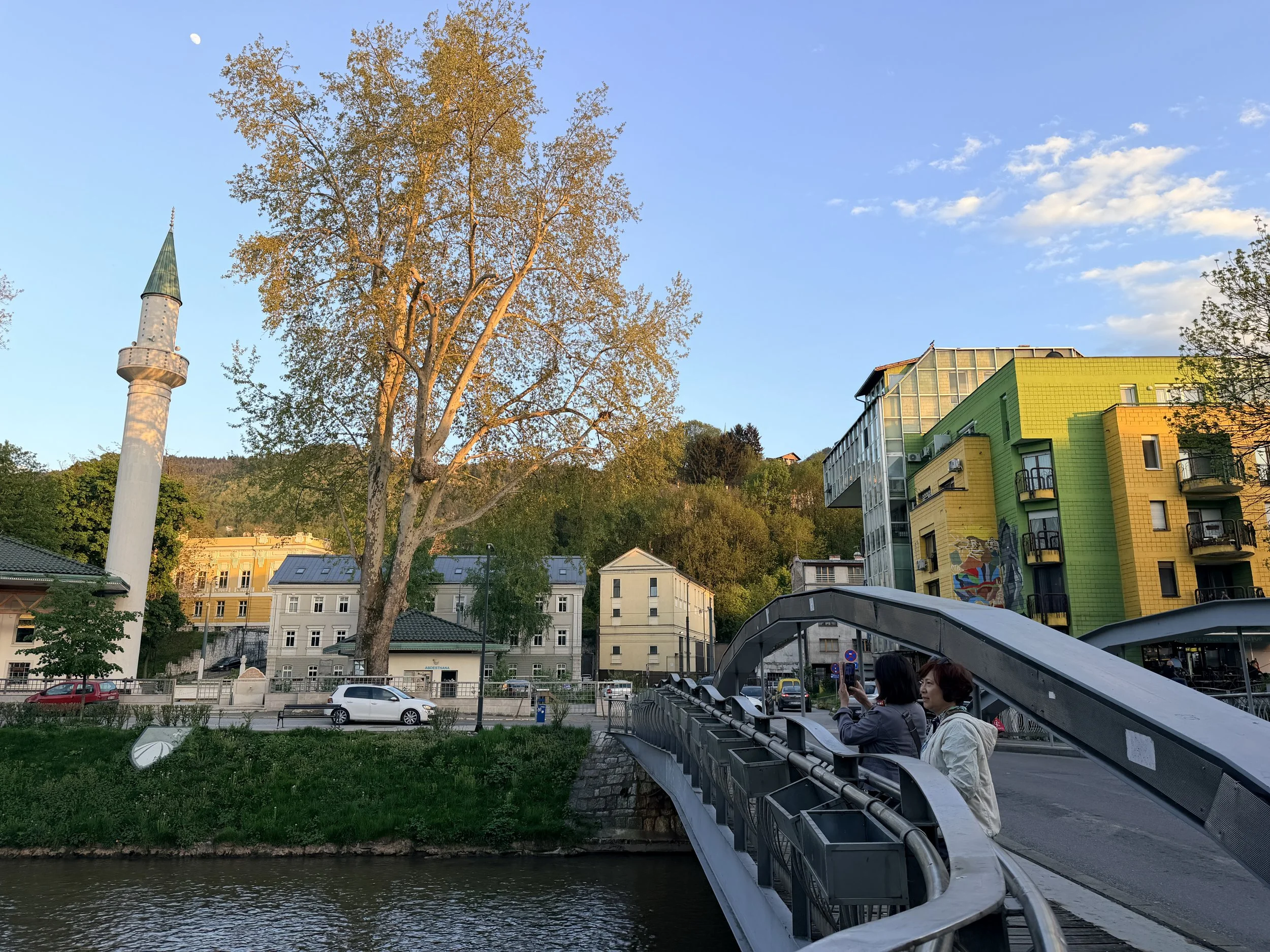
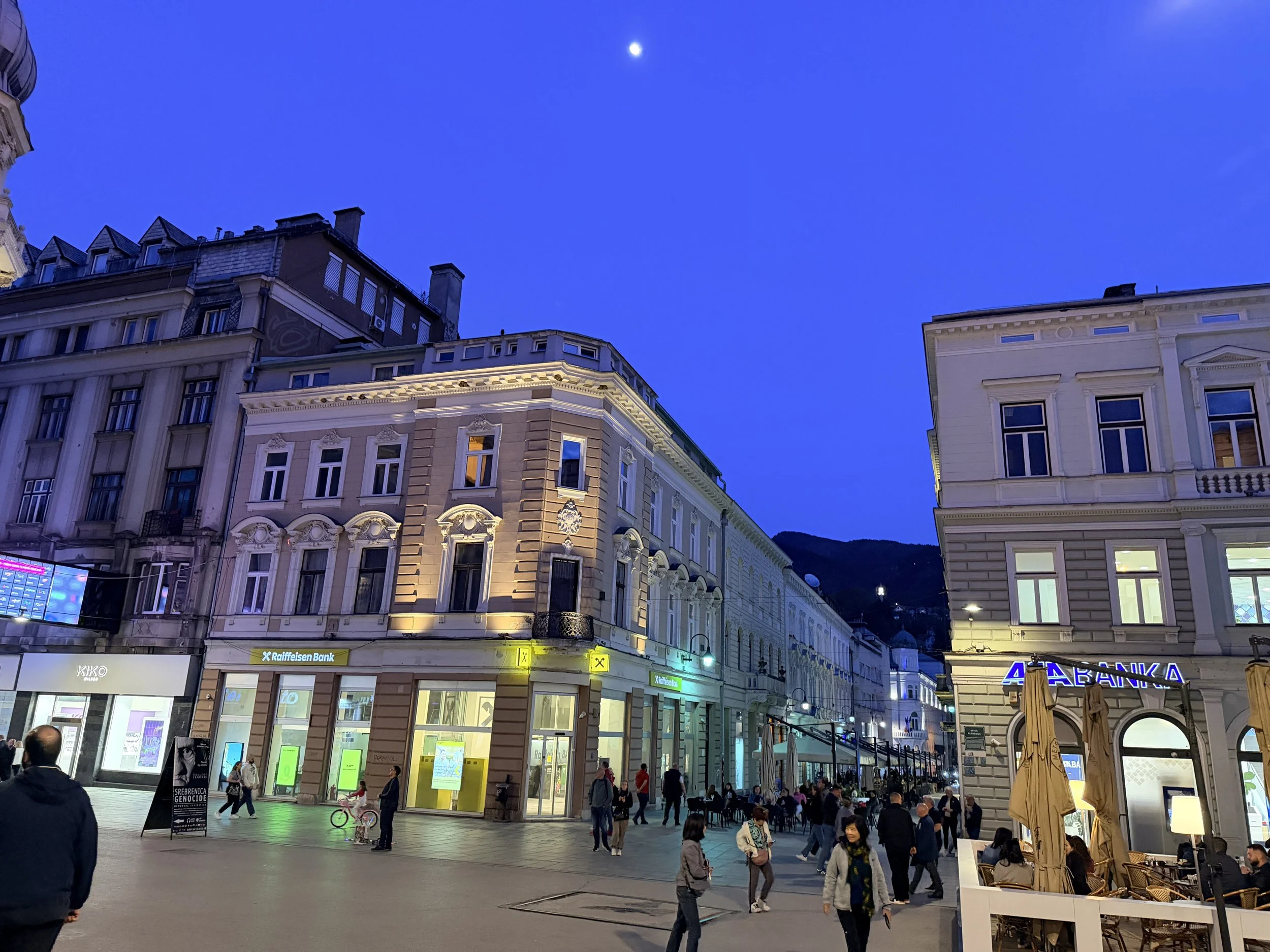
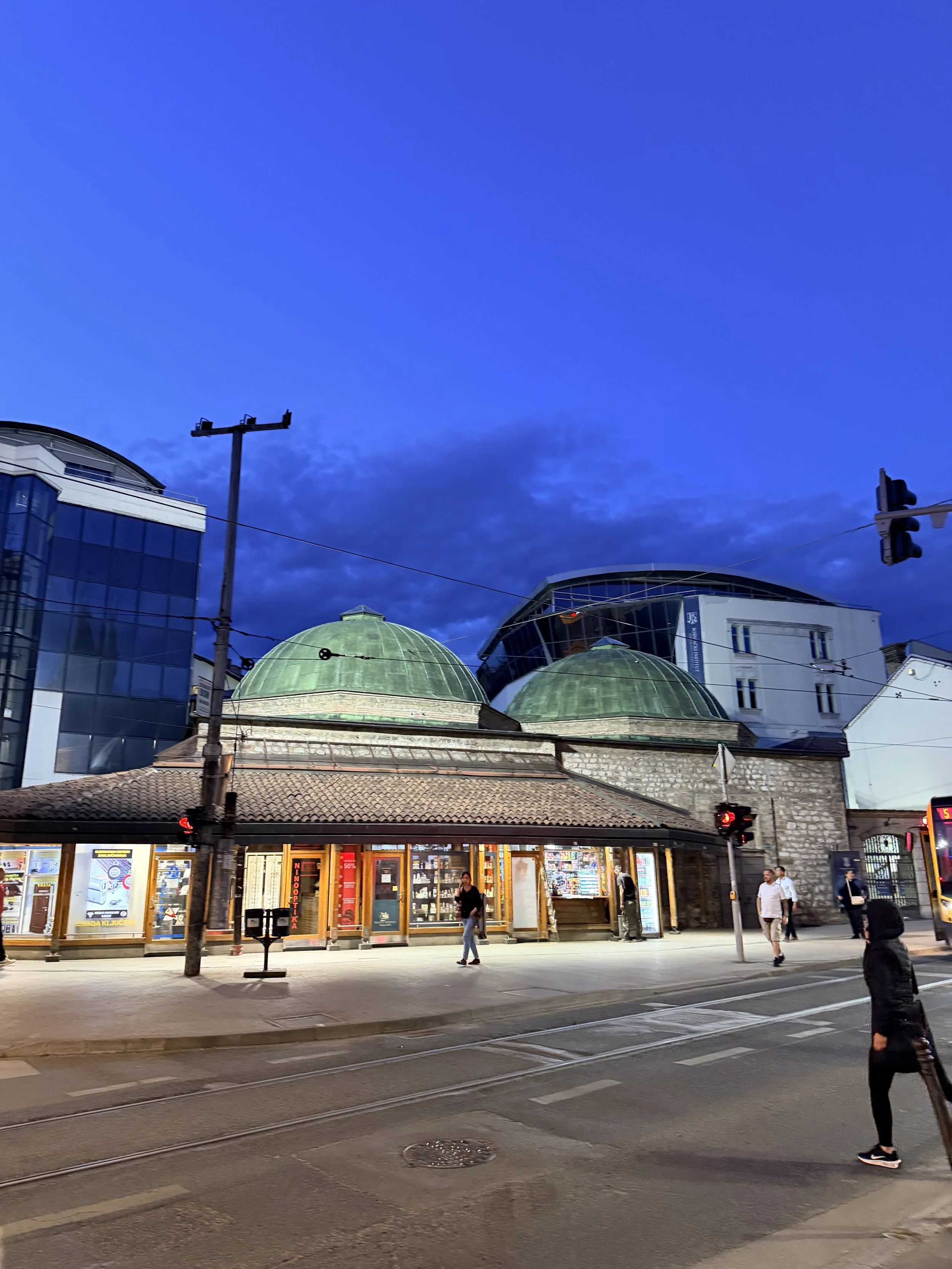
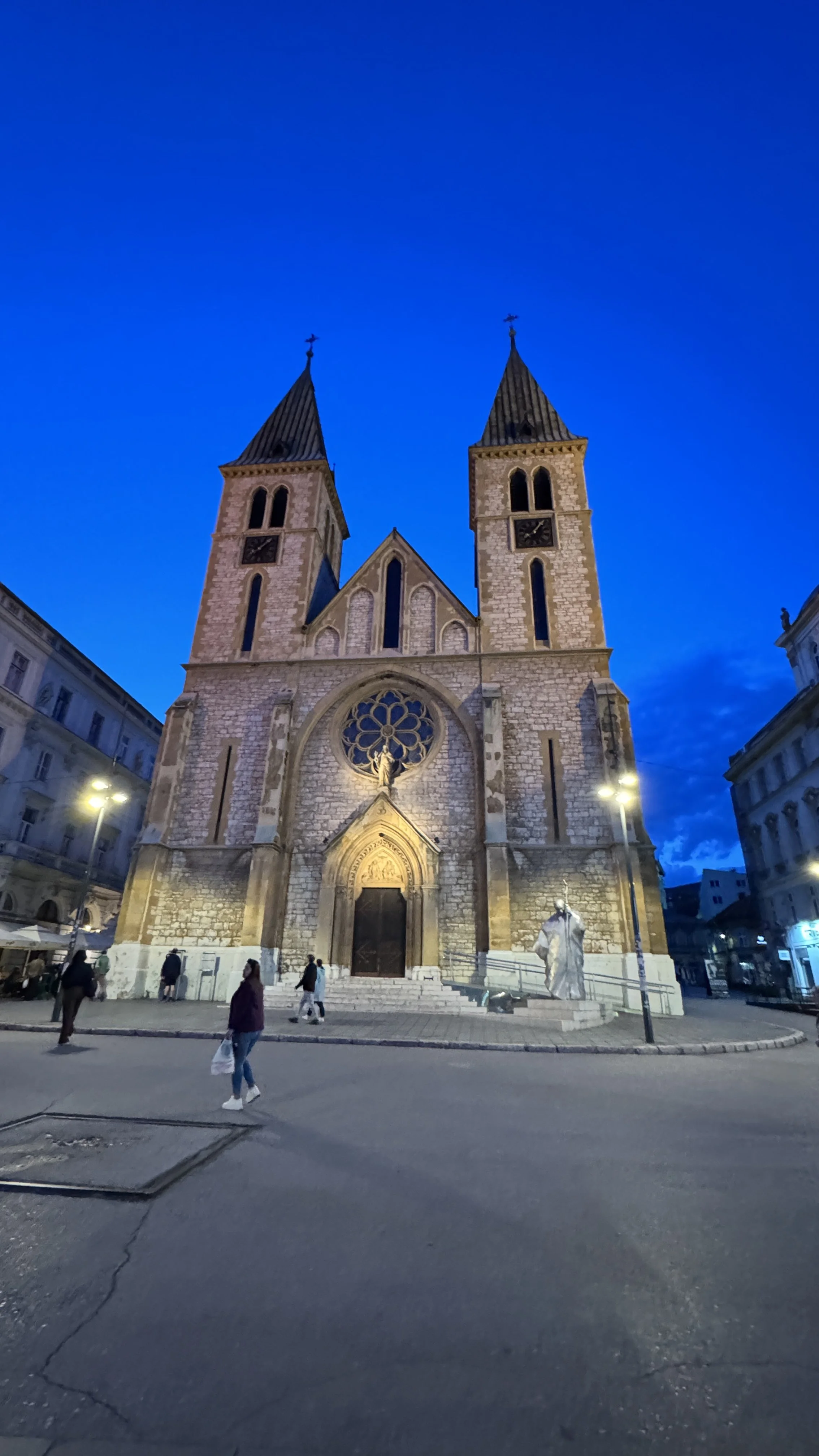
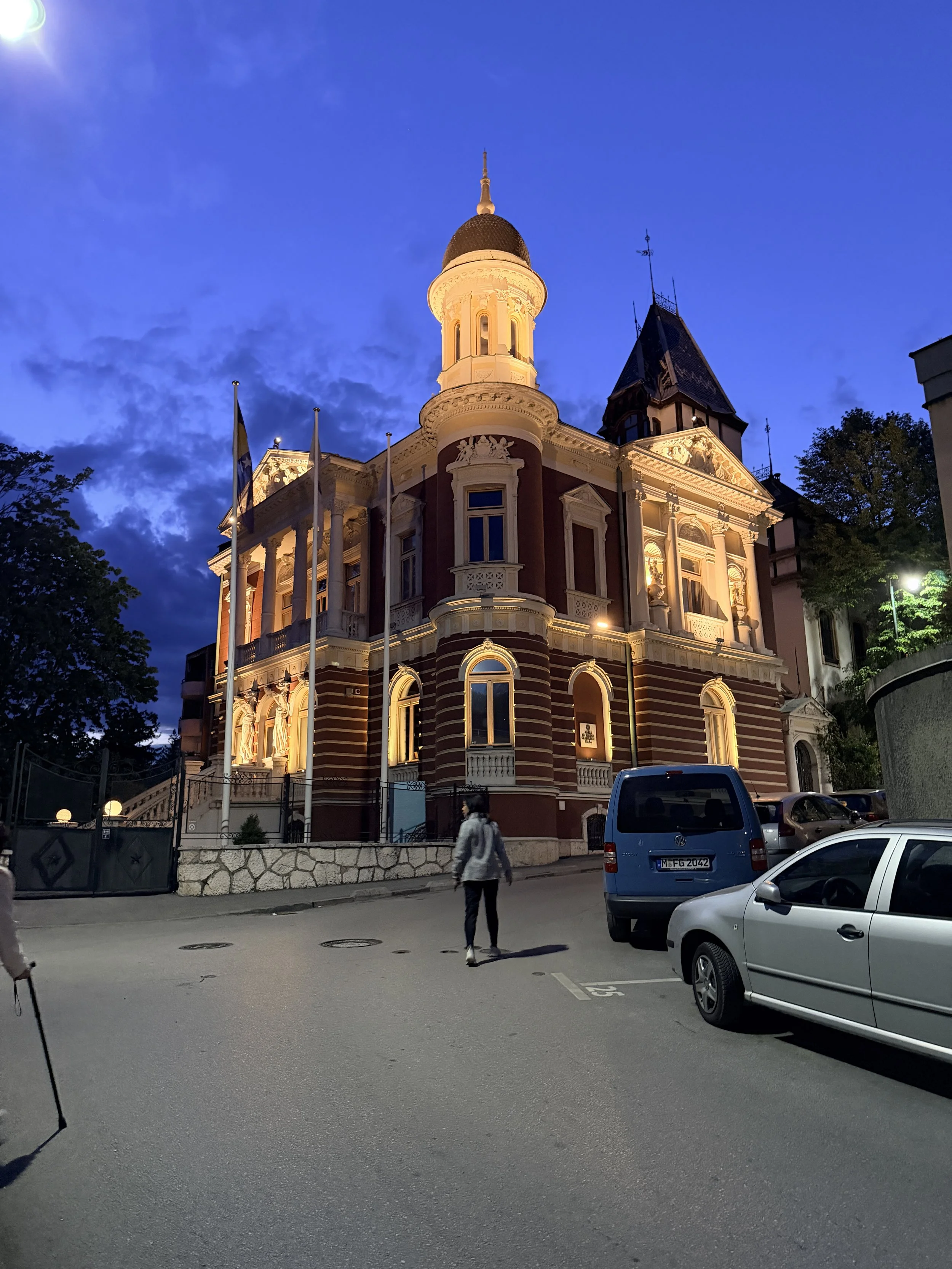
We would have a few more days to explore Sarajevo.
2026年4月27日
早餐后还是二天前送我们来的包车司机来接我们。离开莫斯塔尔(Mostar), 我们沿着内雷特瓦河(Neretva River)继续北上,途中经过亚布拉尼察(Jablanica)。这座安静的小镇坐落在群山与河谷之间,却因二战时期著名的“内雷特瓦战役(Battle of the Neretva)”而被历史铭记。河边那座倾斜断裂的旧铁路桥,一件巨大的战争遗物, 至今仍静静横跨在河谷上方。
接下来我们又去了科尼茨(Konjic),看另一座风景如画的奥斯曼时期石桥。石桥横跨在翠绿色的内雷特瓦河(Neretva River)之上。虽然它没有莫斯塔尔(Mostar)那座著名古桥那么壮观热闹,但科尼茨的桥也自有一番宁静的魅力,四周被群山、老石屋和平静清澈的河水所环绕。
随后,我们继续前往这次巴尔干之旅中最特别的地点之一——铁托地堡(Tito’s Bunker)。这座正式名称为ARK D-0原子战争指挥地堡(ARK D-0 Atomic War Command bunker)的巨大地下设施,建于冷战时期,目的是在核战争爆发时保护南斯拉夫领导人铁托(Josip Broz Tito)以及部分政府高层官员。据说工程持续了数十年,耗资高达当时的46亿美元,并长期被列为南斯拉夫最高级别的军事机密之一。讽刺的是,地堡完工后,铁托本人却从未踏足这里。它隐藏在科尼茨附近的群山深处,设计上可供约350人在完全与外界隔绝的情况下生存长达六个月。
我们提前在网上预订了门票。先到镇上一家小旅行社付款并领取门票,然后继续驱车约五公里进入偏僻山谷。我们必须把车停在两侧陡峭森林山坡之间,步行前往铁门入口。因为这一带至今仍属于军事管制区域,工作人员特别叮嘱不能拍照。
之后,我们又搭乘一辆园区巴士继续深入限制区域,最终才真正进入地堡内部。颇为有趣的是,一旦进入地堡后,却可以随意拍照,这让之前的禁拍规定显得有些多余,甚至有点好笑。
地堡本身的规模与建造质量都令人惊讶。普通隐避的入口后面,竟隐藏着庞大的地下世界:长长的走廊、会议室、通讯中心、宿舍、办公室、厨房、空调与燃料系统,以及铁托的私人区域一应俱全。整个设施无论设计还是施工,都体现出极高的耐久性与细致程度。
最让我们印象深刻的,是设备保存的状况。虽然地堡完工至今已过去四十多年,但许多机械设备、家具与基础设施看上去依然坚固且功能完整。导游介绍说,大部分设备当年都是由前南斯拉夫本国制造的。她带着几分怀旧感叹道,随着国家解体,那些曾经拥有的工业与技术能力,如今大多已经消失。仔细想想,除了世界上少数几个国家之外,现在又何尝不是如此呢?走在这座深藏于山体中的地下设施里,仿佛进入了一座被完整封存下来的冷战时代时间胶囊。
下午晚些时候,我们抵达萨拉热窝(Sarajevo),入住了我们租的公寓。这是一栋奥匈帝国时期的别墅,内部装饰设计风格非常现代化。这是曾经的英国驻萨拉热窝大使馆,具有浓厚的中欧风格和历史价值,紧贴着奥林匹克博物馆(Olympic Museum)。我们房间门外的墙上竟还挂着一块“英国大使馆(British Embassy)”旧招牌,仿佛无声提醒着人们,这座城市曾经历过怎样复杂而动荡的历史。
安顿下来后,我们去了附近的露天市场和食品店,买了草莓、西红柿、鸡蛋等食材,准备当晚的简单晚餐以及第二天的早餐。
晚饭后,我们步行前往市中心。来到拉丁桥(Latin Bridge)以及附近刺杀奥匈帝国皇储弗朗茨·斐迪南大公(Franz Ferdinand)的地点。这场发生在萨拉热窝的刺杀事件,最终引发了第一次世界大战(World War I)。站在那里,也让我们想起之前在维也纳(Vienna)博物馆里听到的相关历史介绍。旅行有时就像是在“把点连成线(connecting the dots)”,那些原本零散存在于书本、博物馆与记忆中的历史片段,突然在现实中的某个地点彼此连接起来。
夜晚站在桥边,很难不感慨:这座城市里一个看似普通的街角,竟与改变世界历史进程的重大事件紧密相连。