Luoyang — Longmen Grottoes and “Phoenix Dance of the Divine Capital” 洛阳——龙门石窟与《凤舞神都》
October 15, 2025
The high-speed train from Yinchuan to Shanghai would have taken more than ten hours, ……
我们很喜欢在中国坐高铁,干净,舒适且很方便。。。
October 15, 2025
The high-speed train from Yinchuan to Shanghai would have taken more than ten hours, which felt a bit too long for us. So, we decided to break the journey into two segments and spend a night in Luoyang (洛阳).
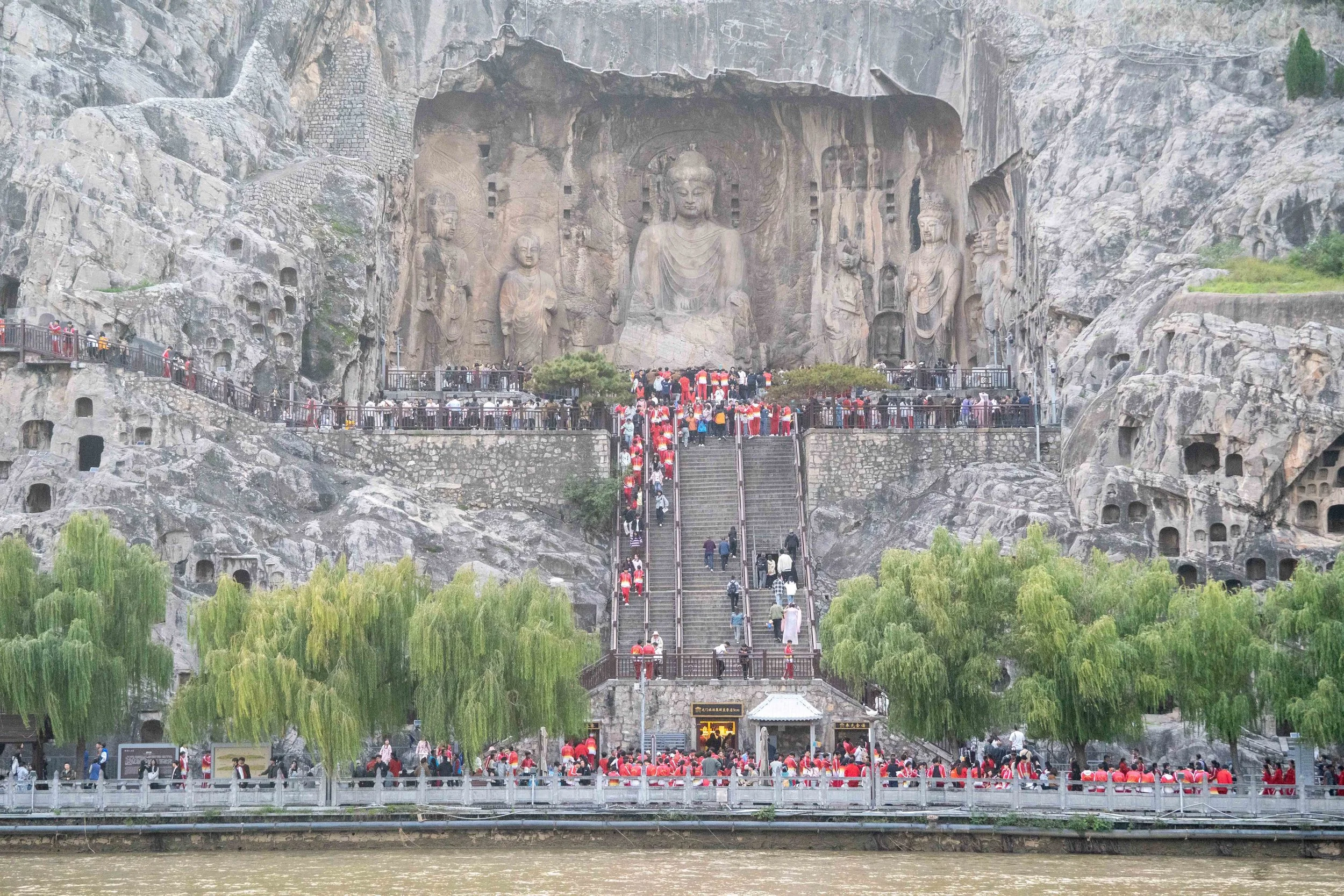
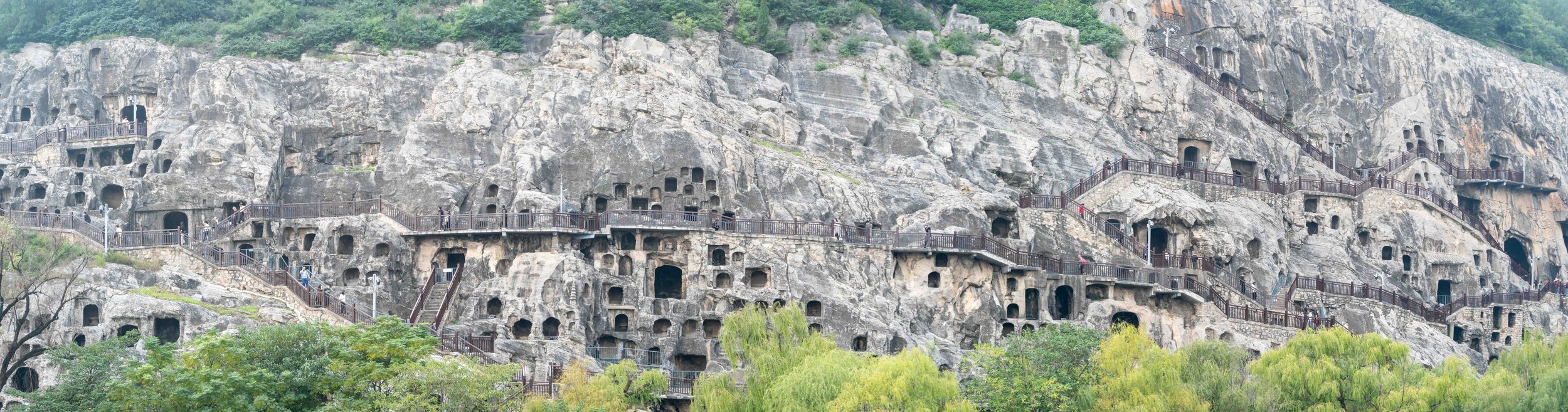
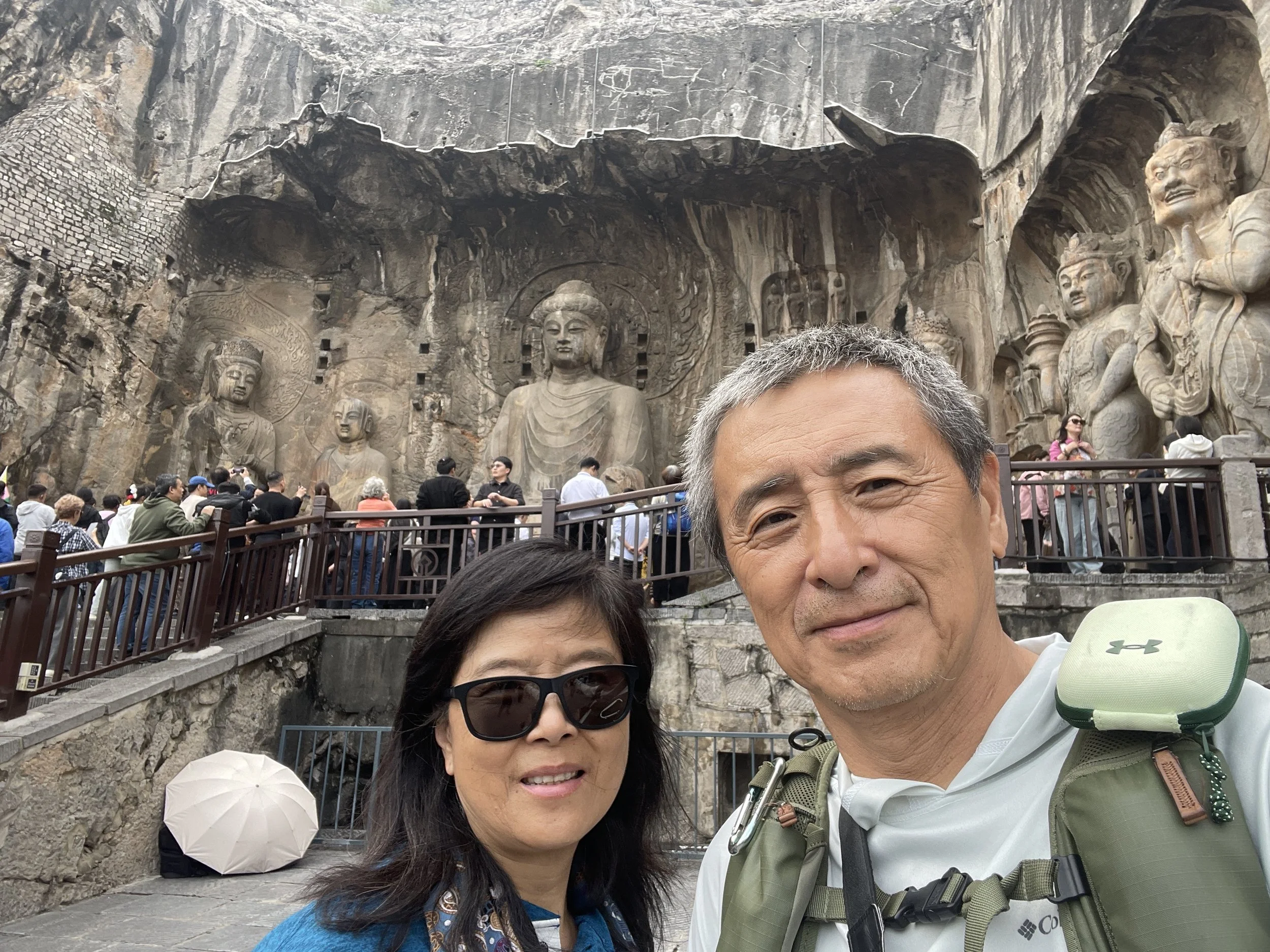
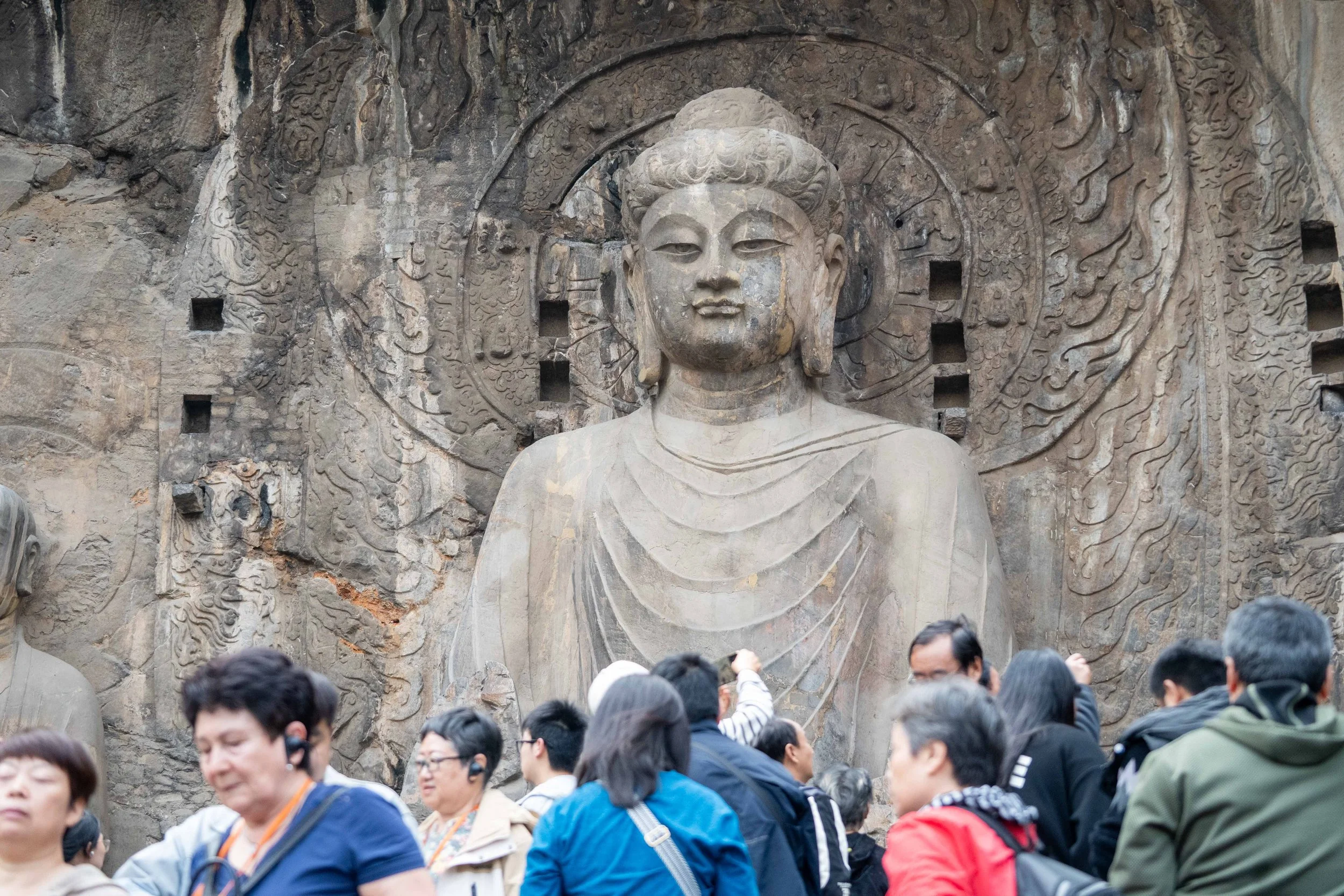
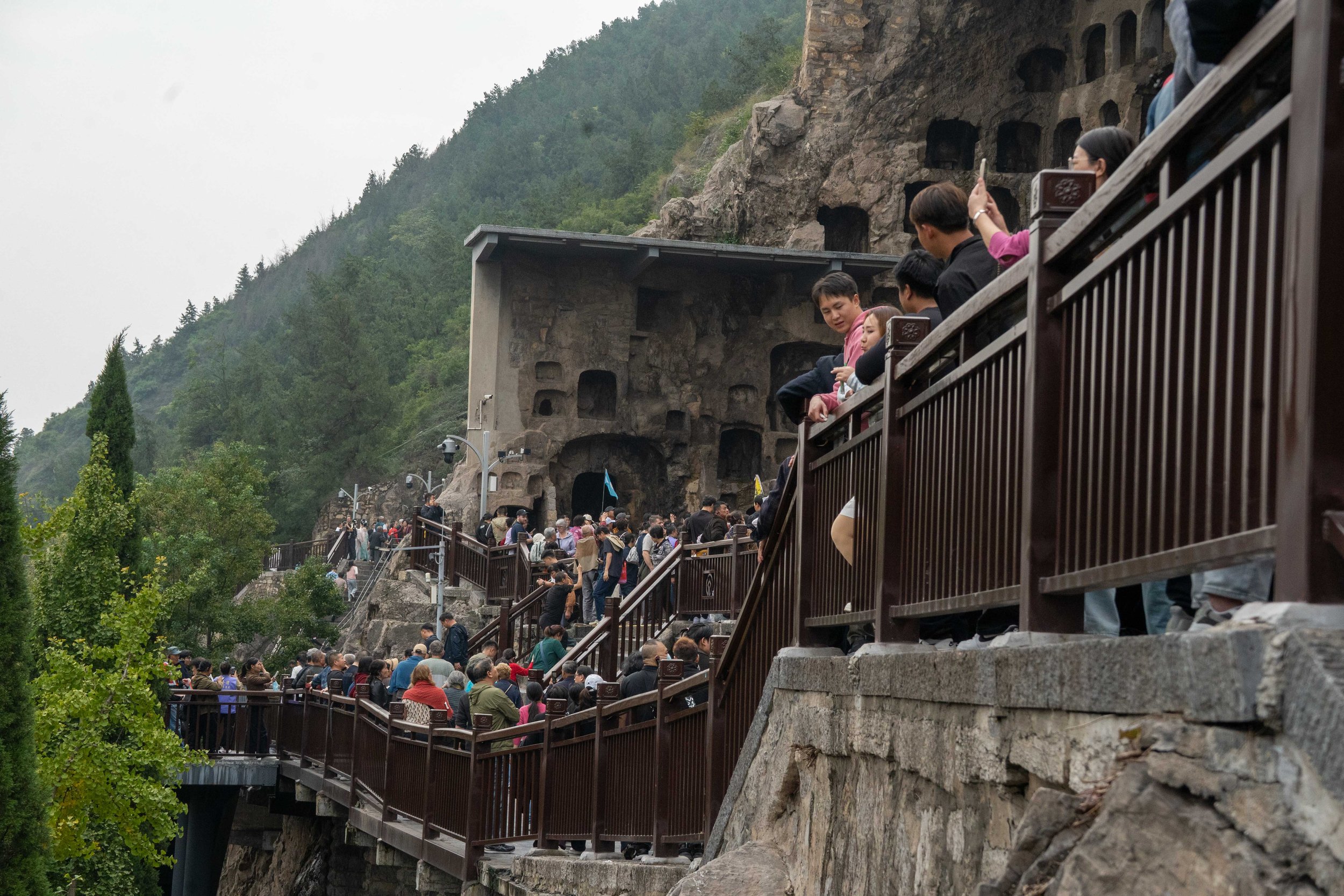
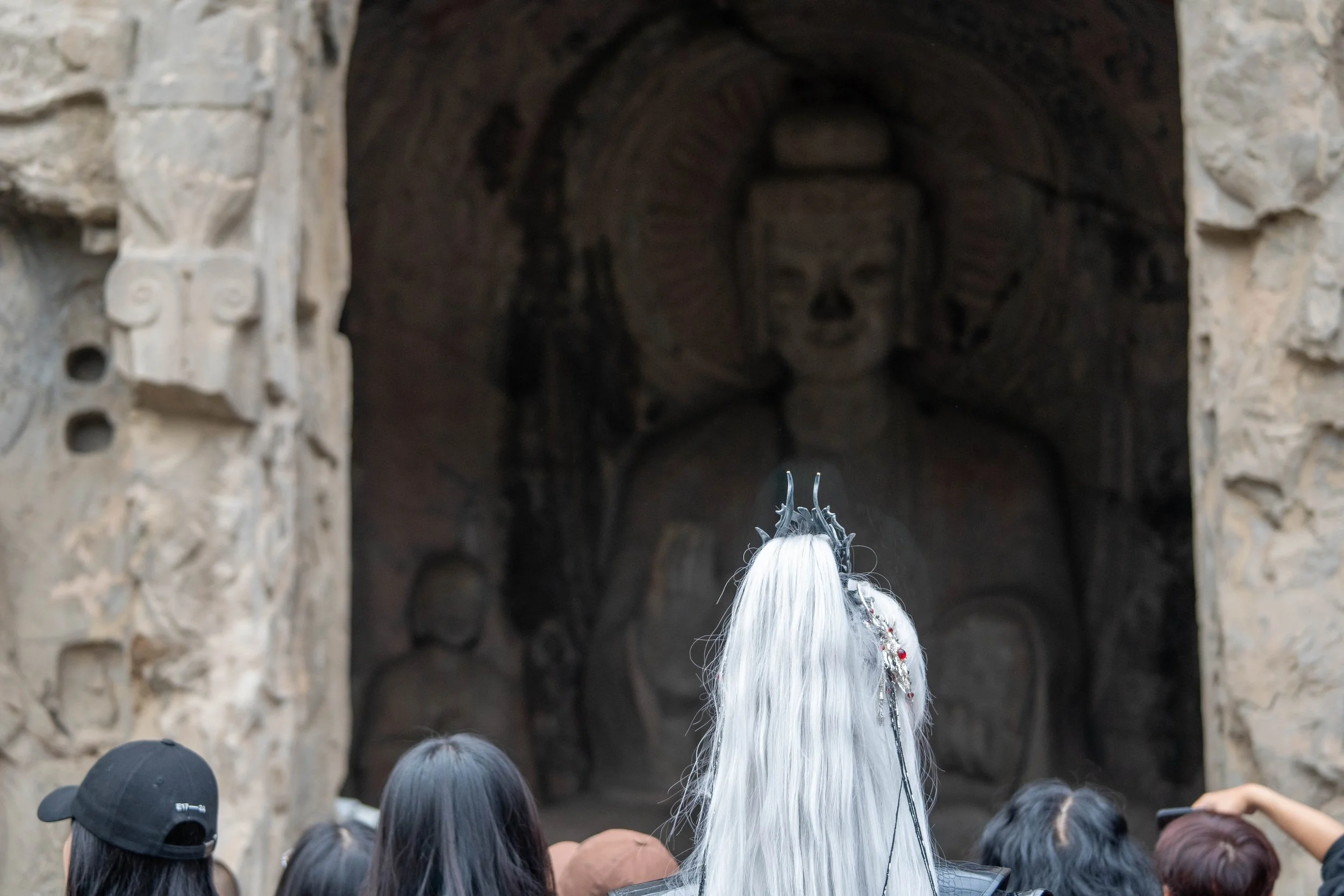
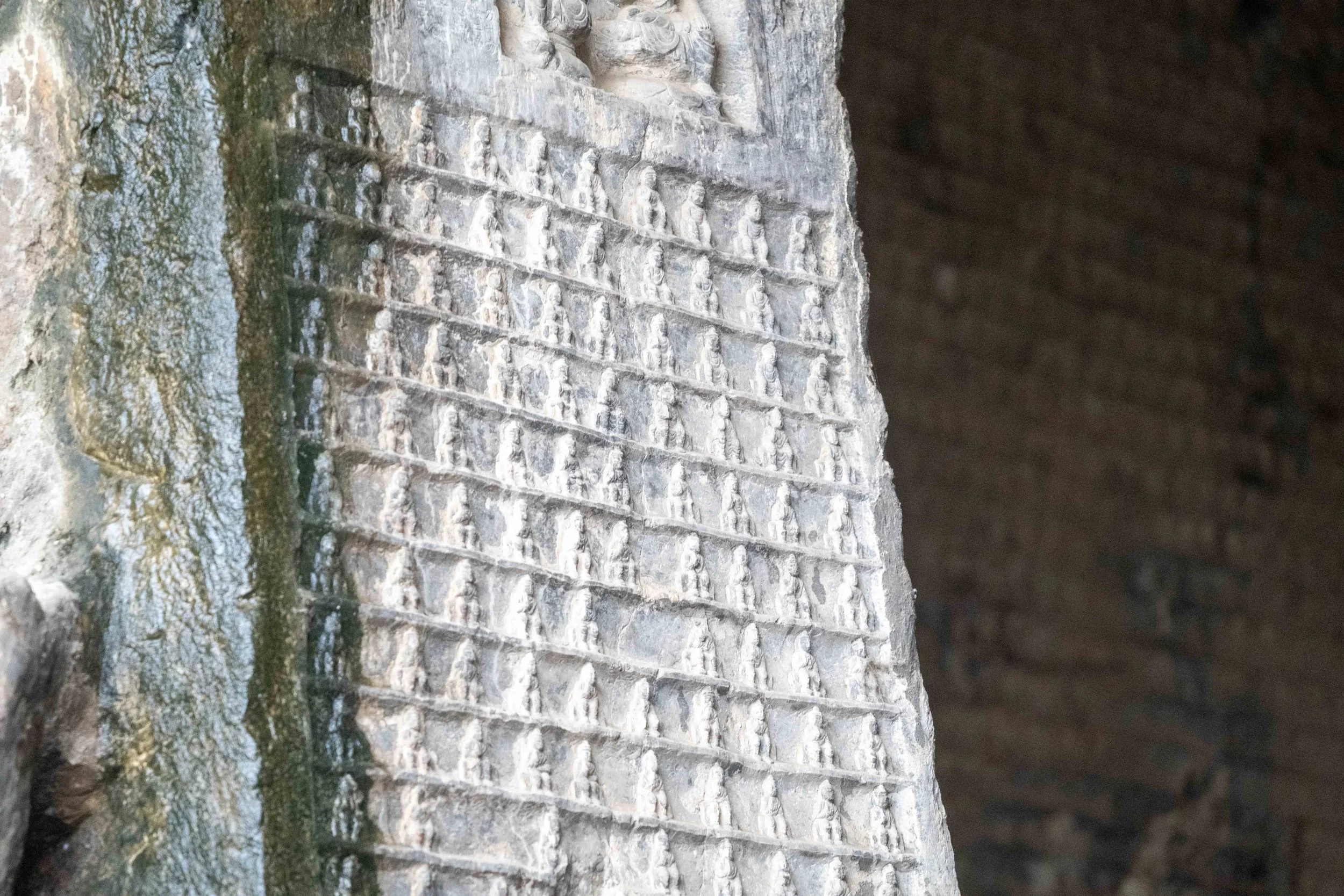
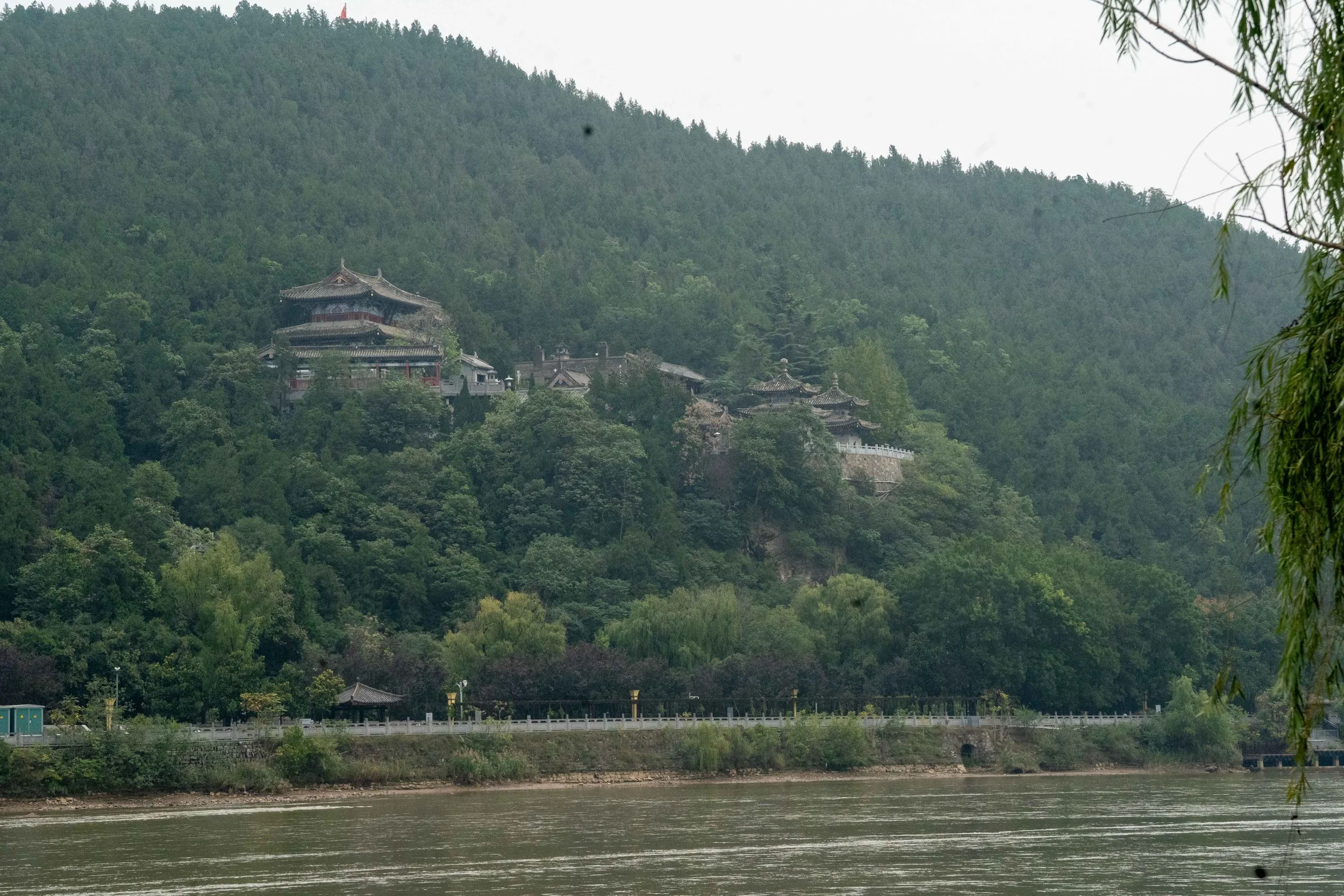
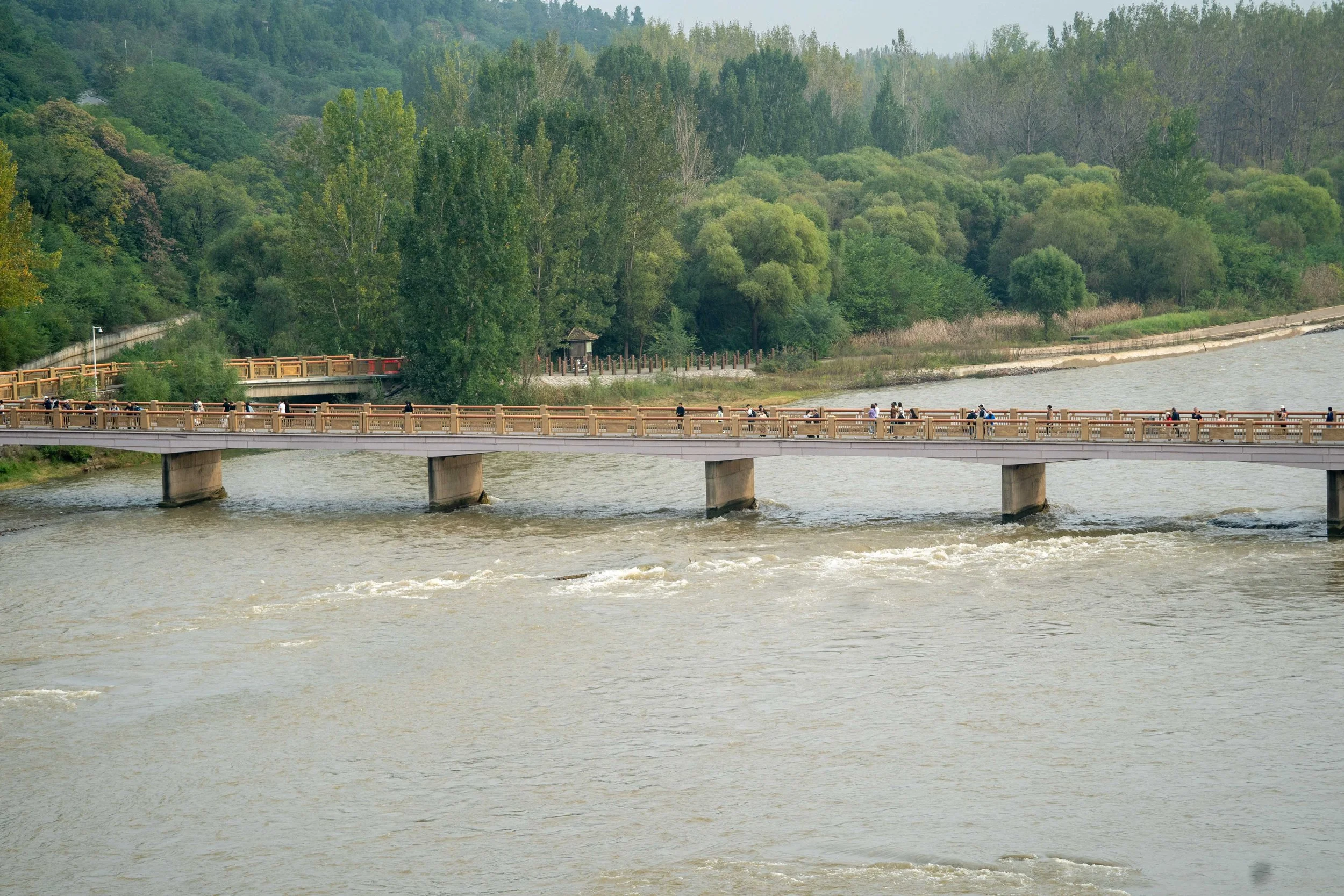
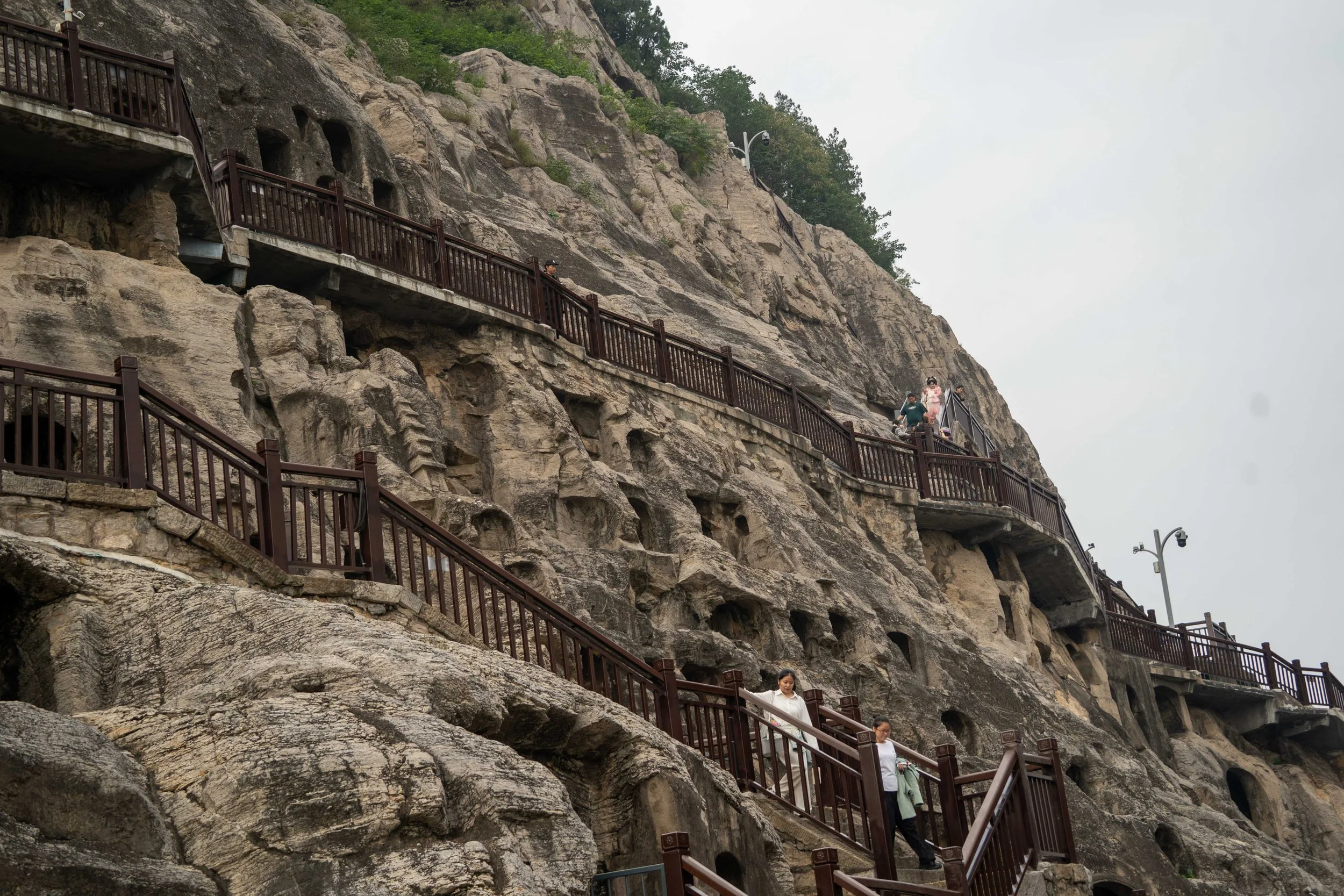
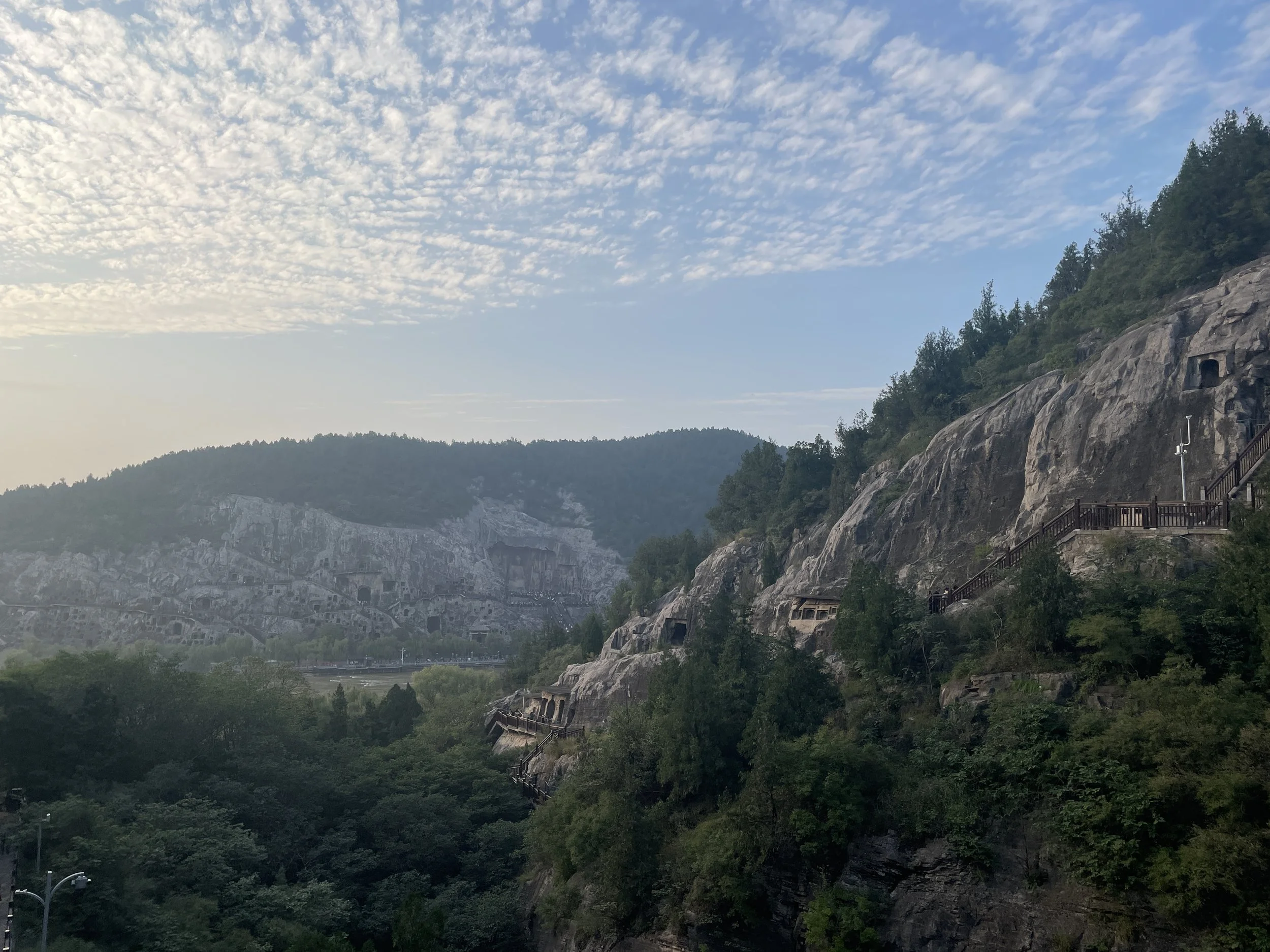
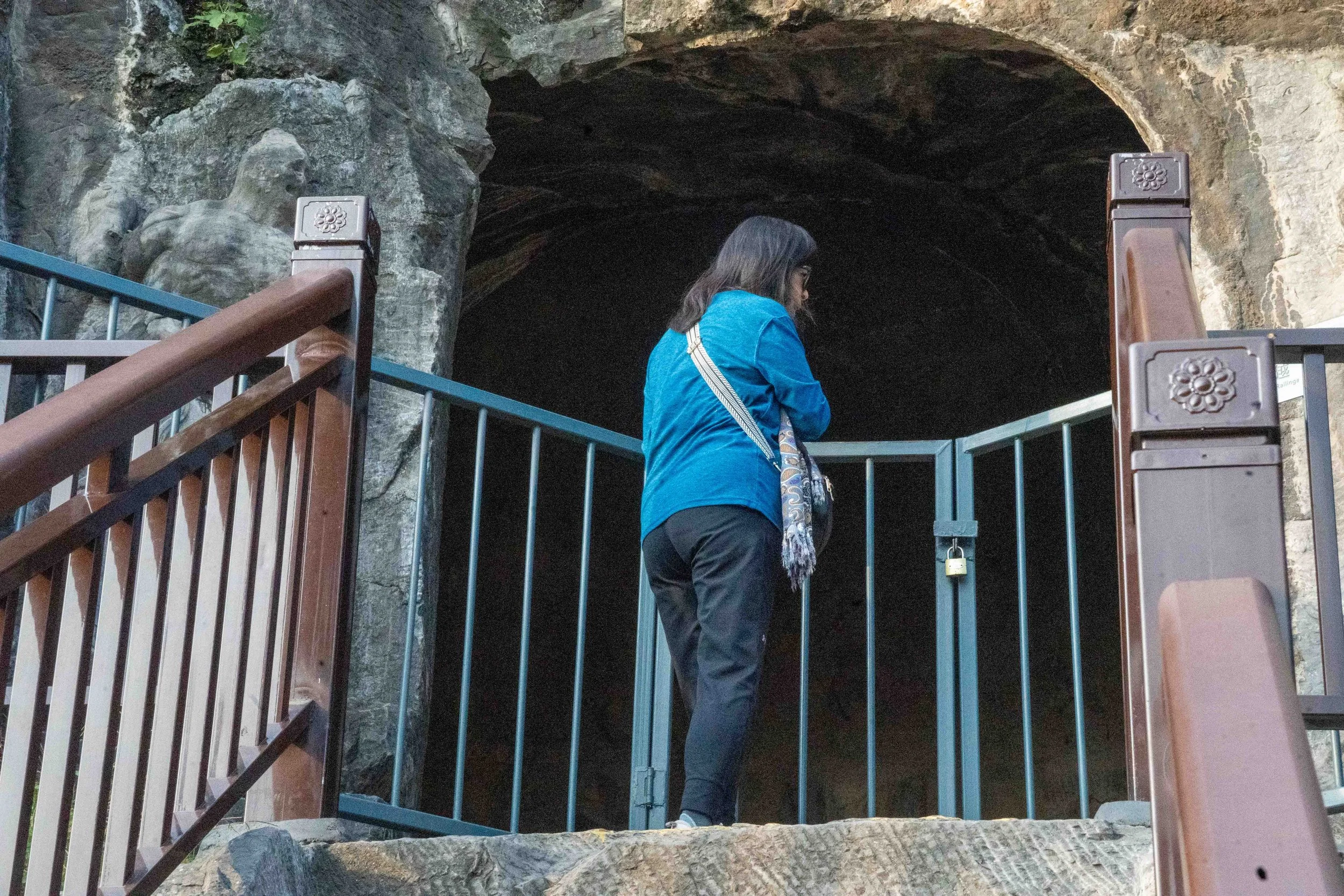
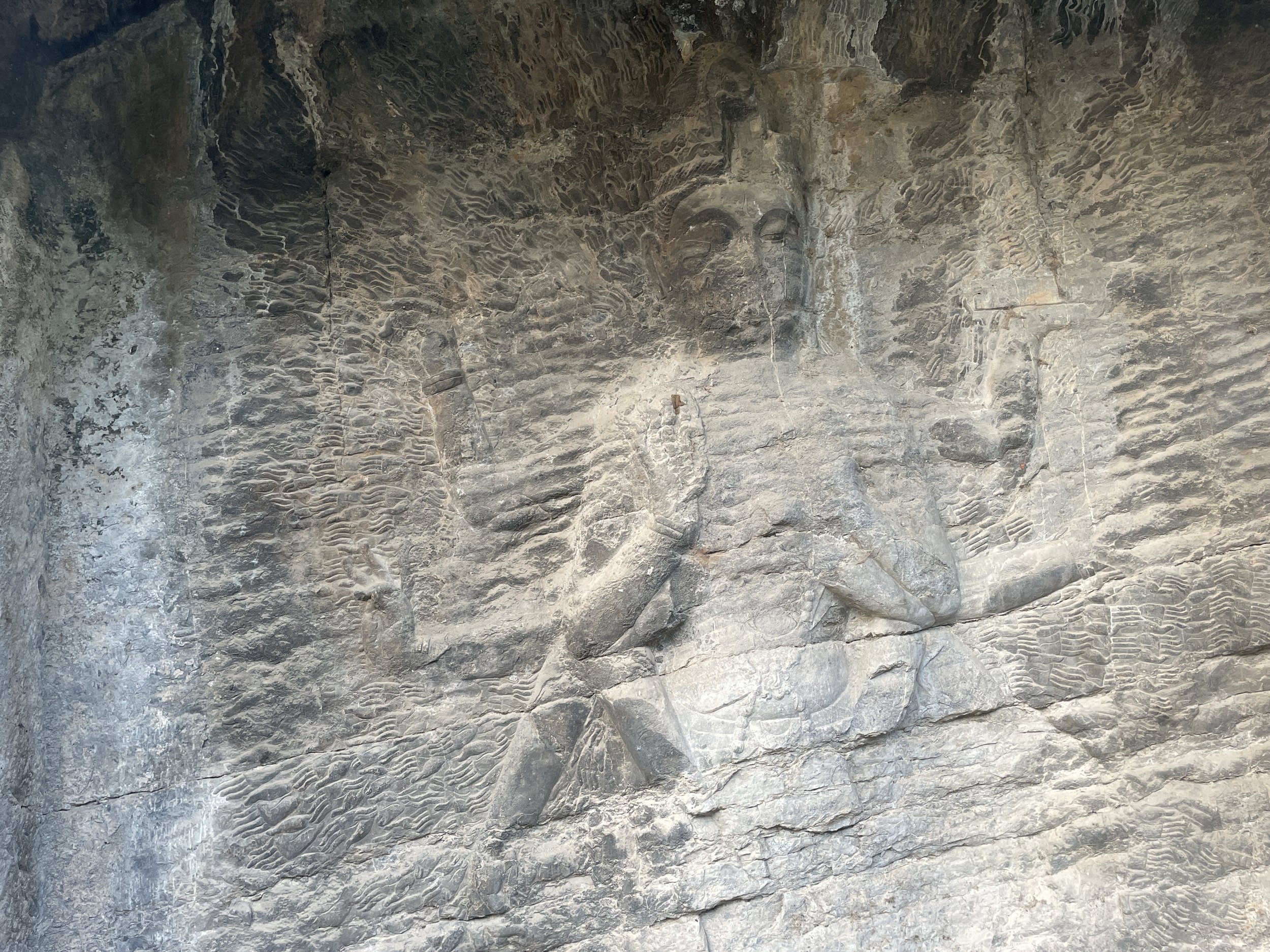
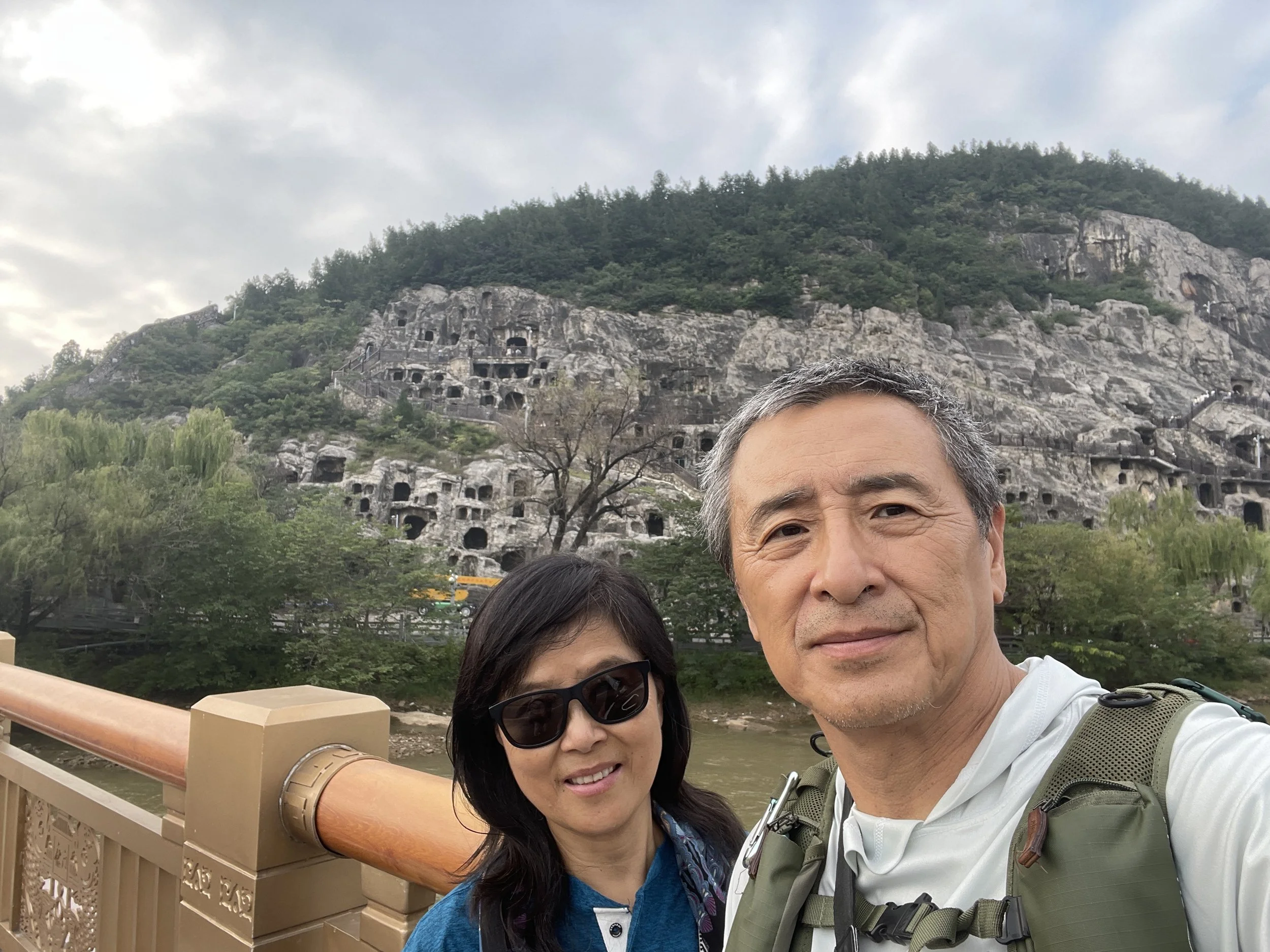
After a four hour ride, we arrived in Luoyang and checked into a hotel. In the afternoon, we visited the Longmen Grottoes (龙门石窟) — a UNESCO World Heritage Site that began during the Northern Wei Dynasty and expanded over several centuries. The site contains more than 2,300 caves and over 100,000 Buddha statues, representing the pinnacle of Chinese Buddhist stone carving and artistry. The scenic area was quite busy with tourists, but we climbed up and down the stairs to admire the highlights and appreciate the scale and beauty of the carvings. Unlike the grottoes in Dunhuang, which were mostly sponsored by private patrons, most of the Longmen carvings were commissioned by the state. After exploring both sides of the river, we took a Didi ride back to our hotel.
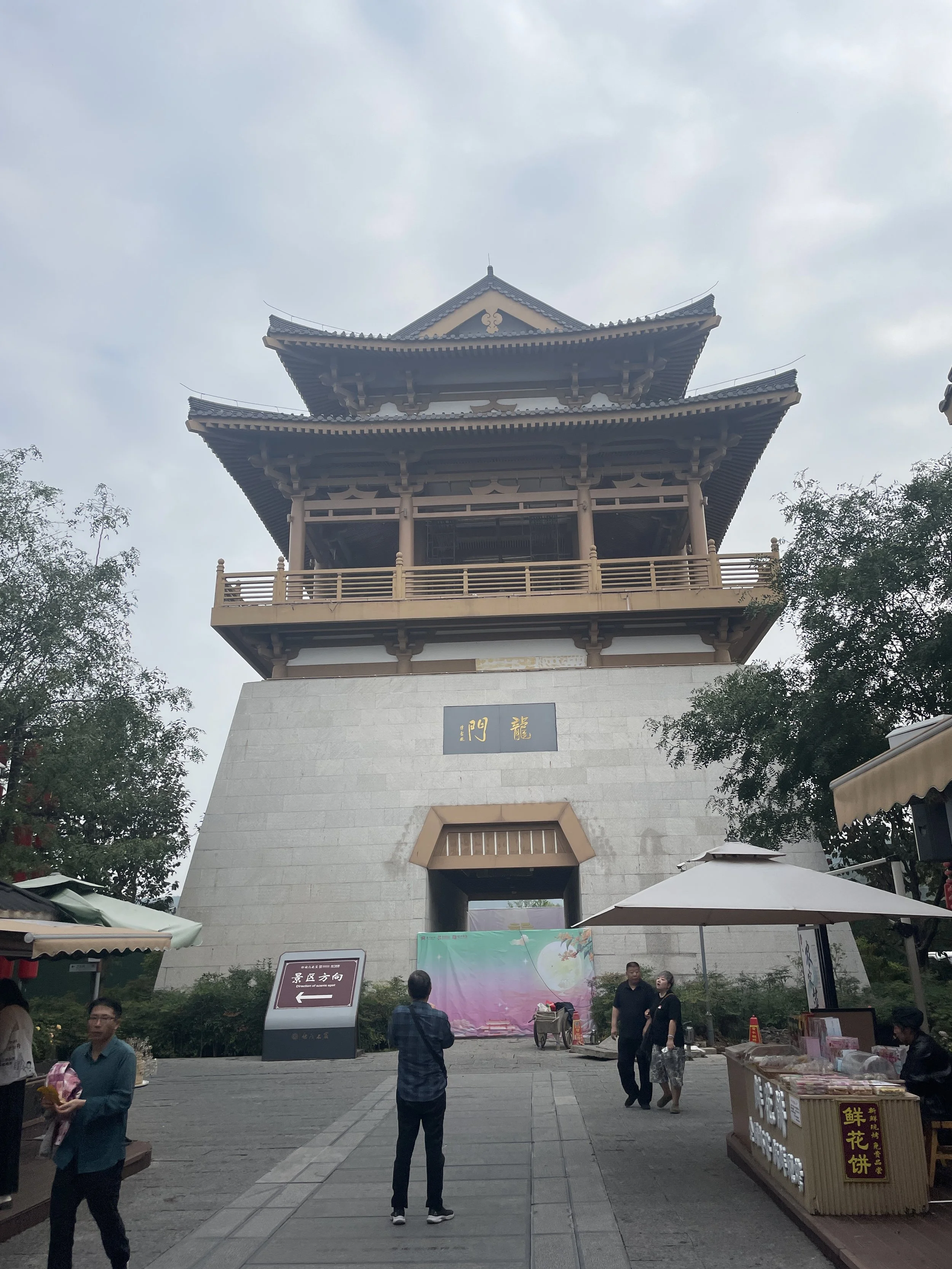
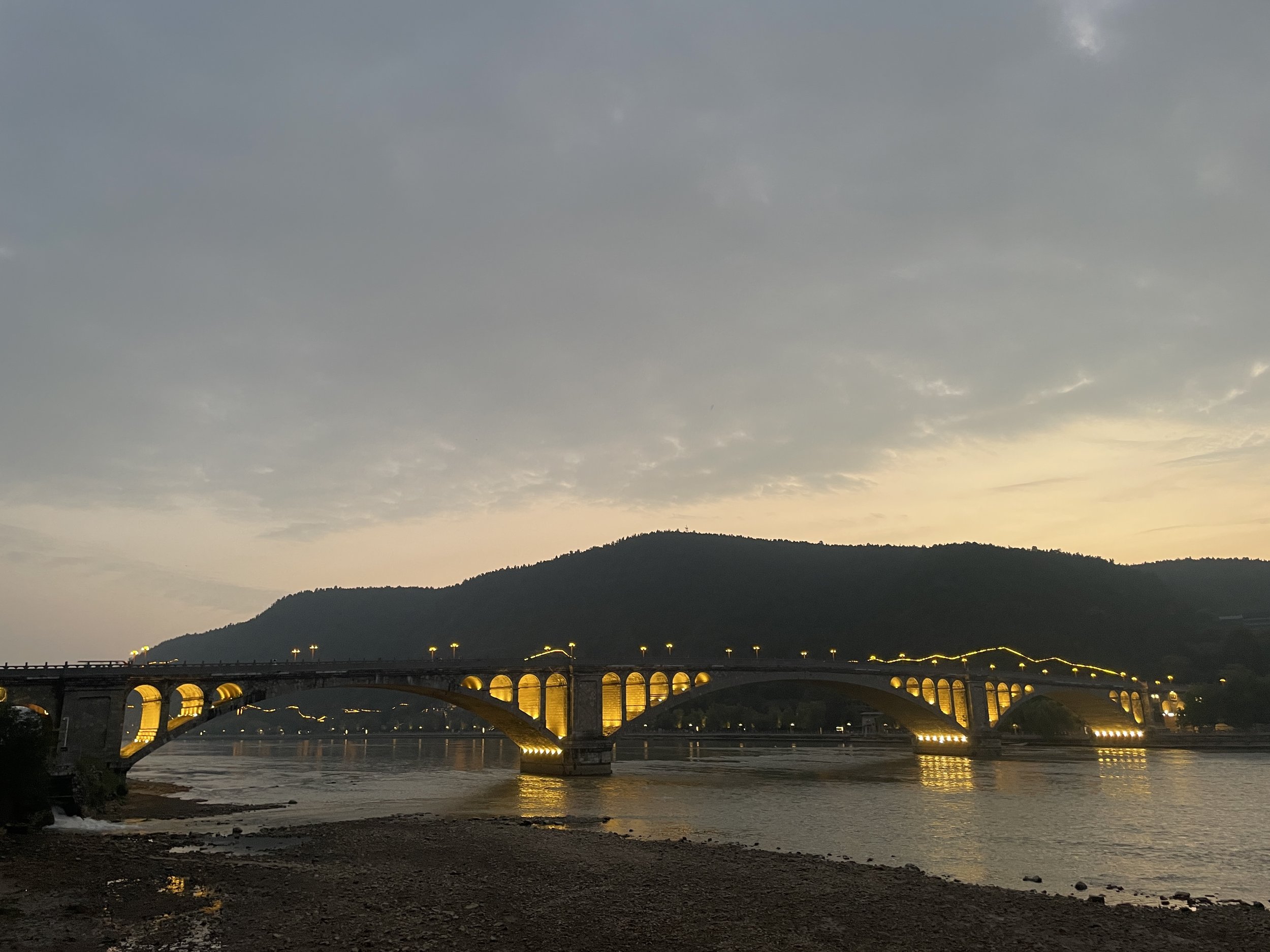
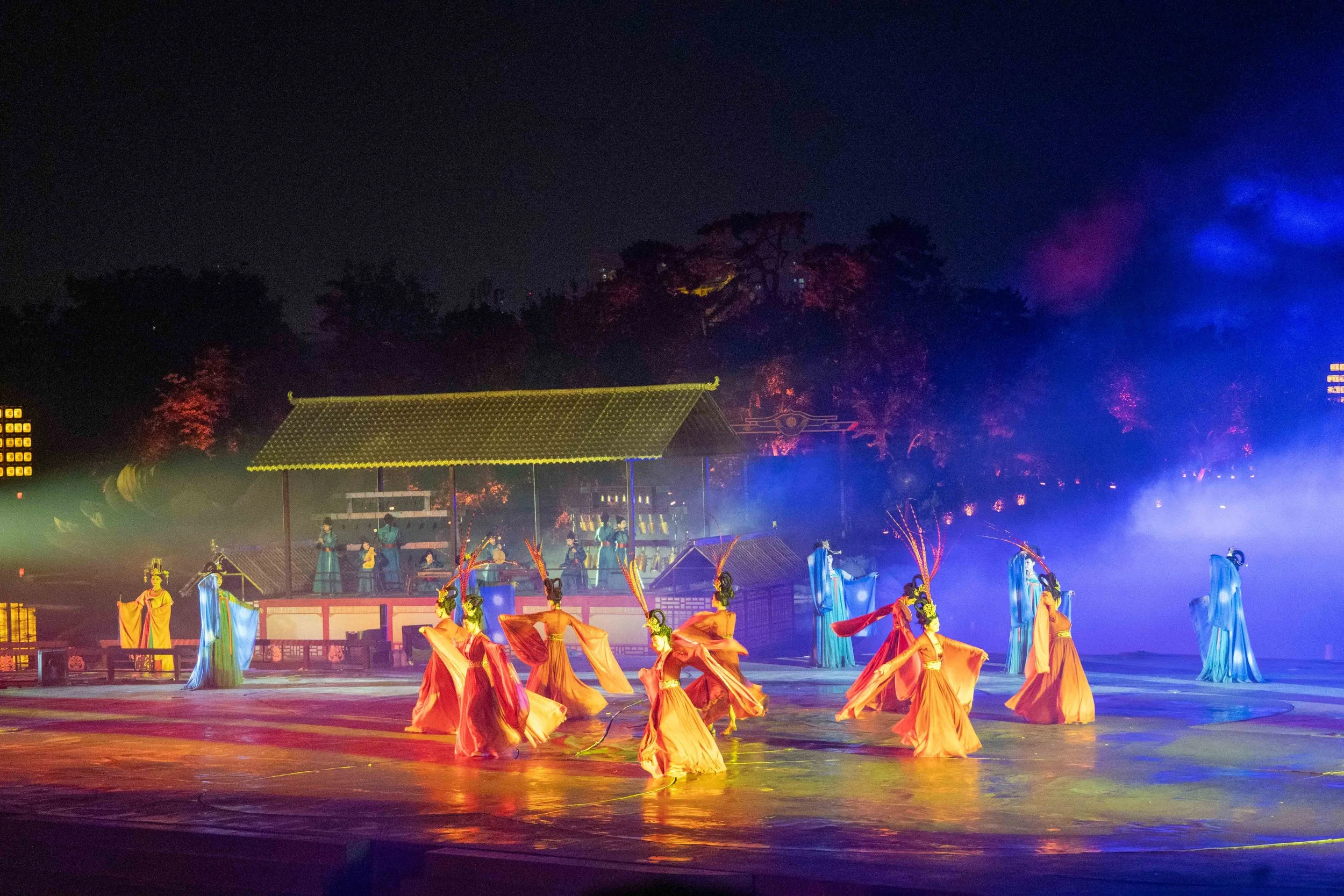
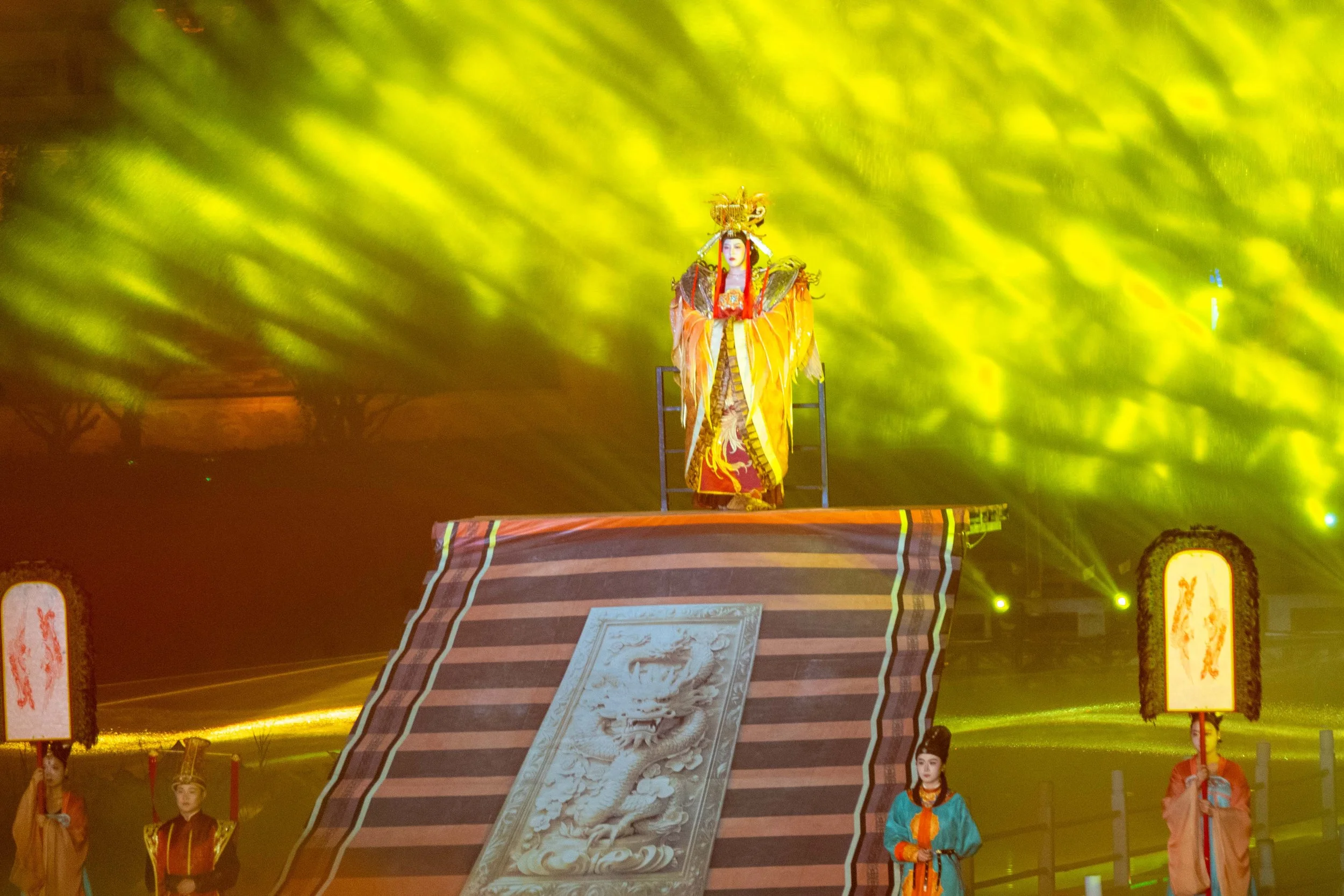
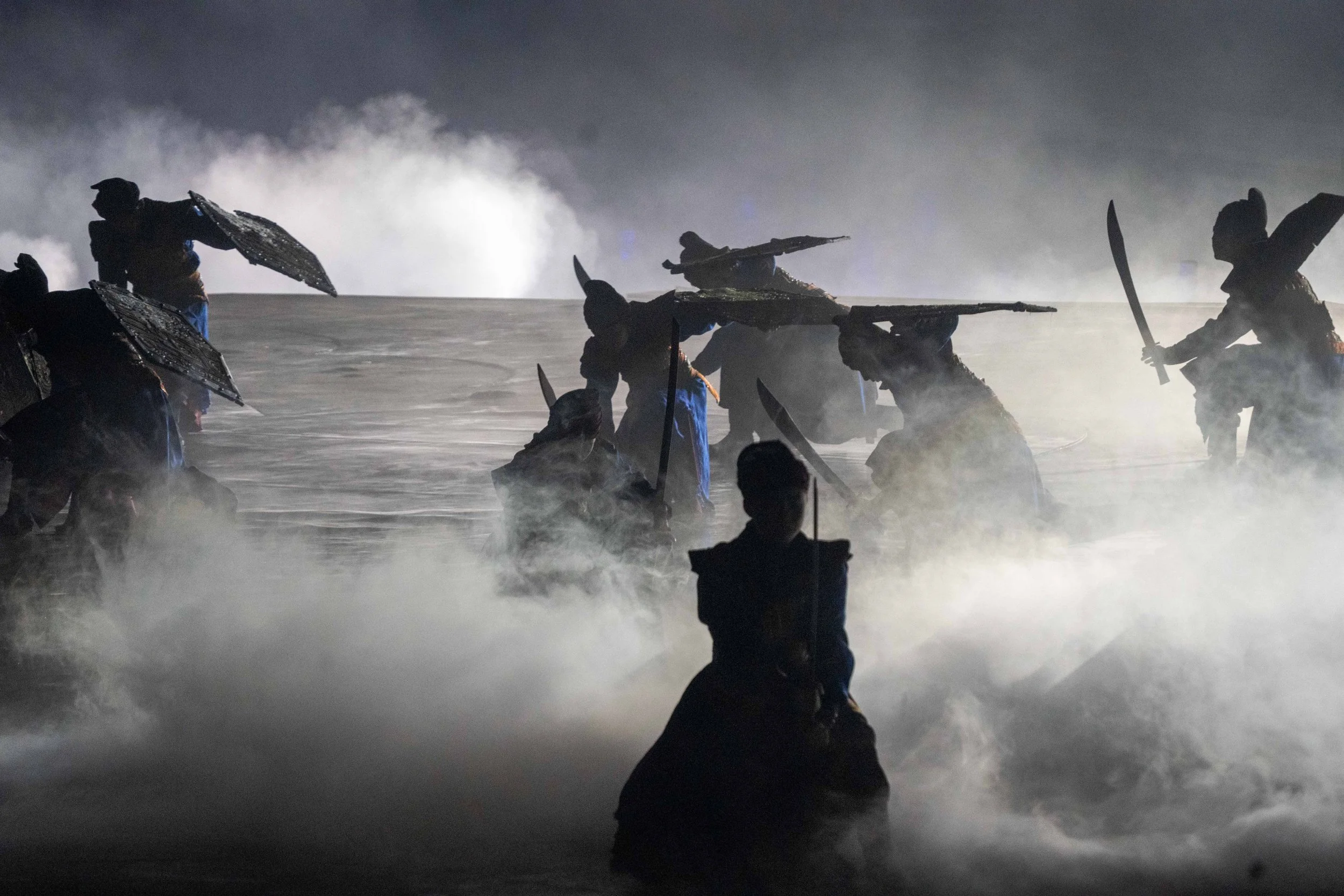
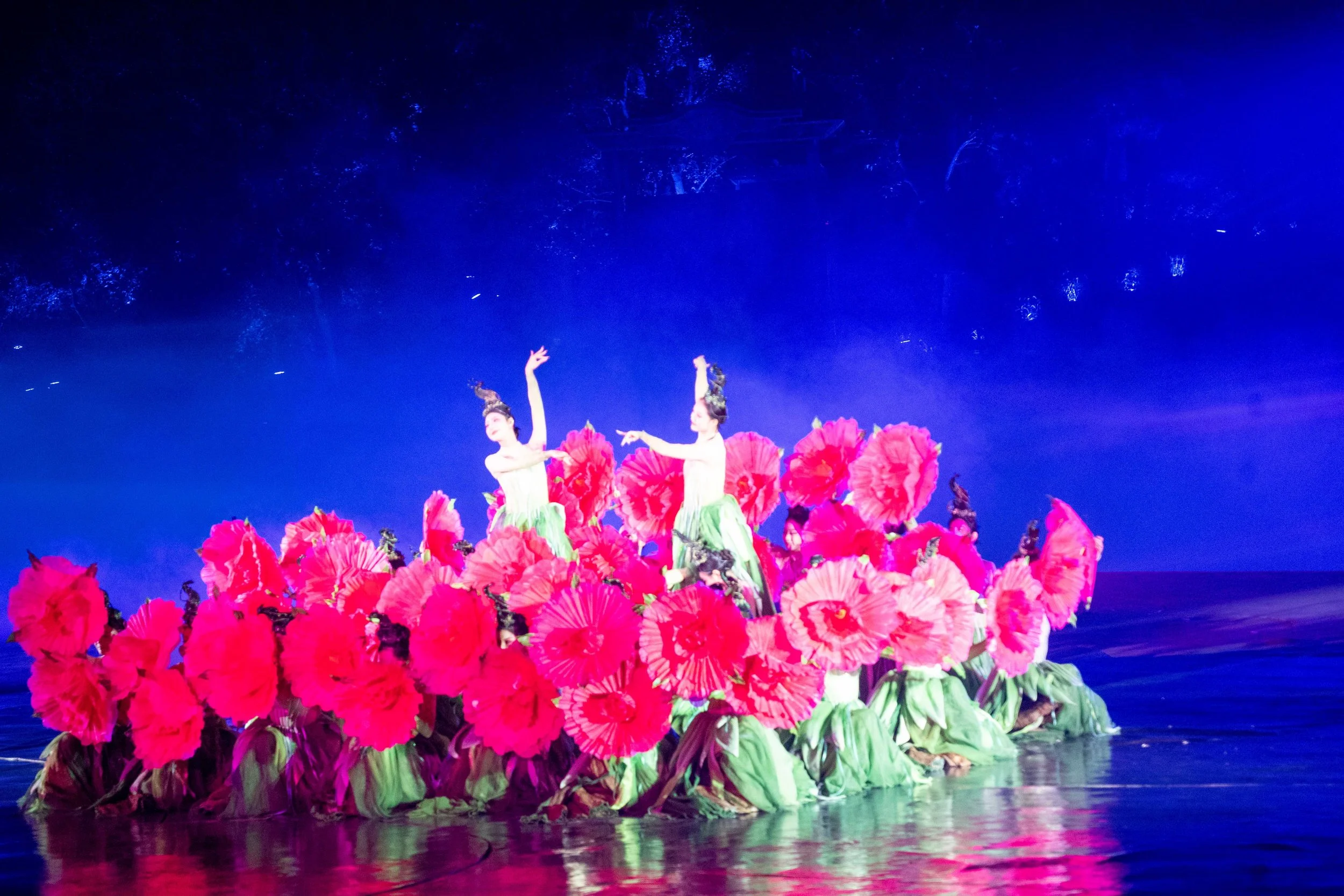
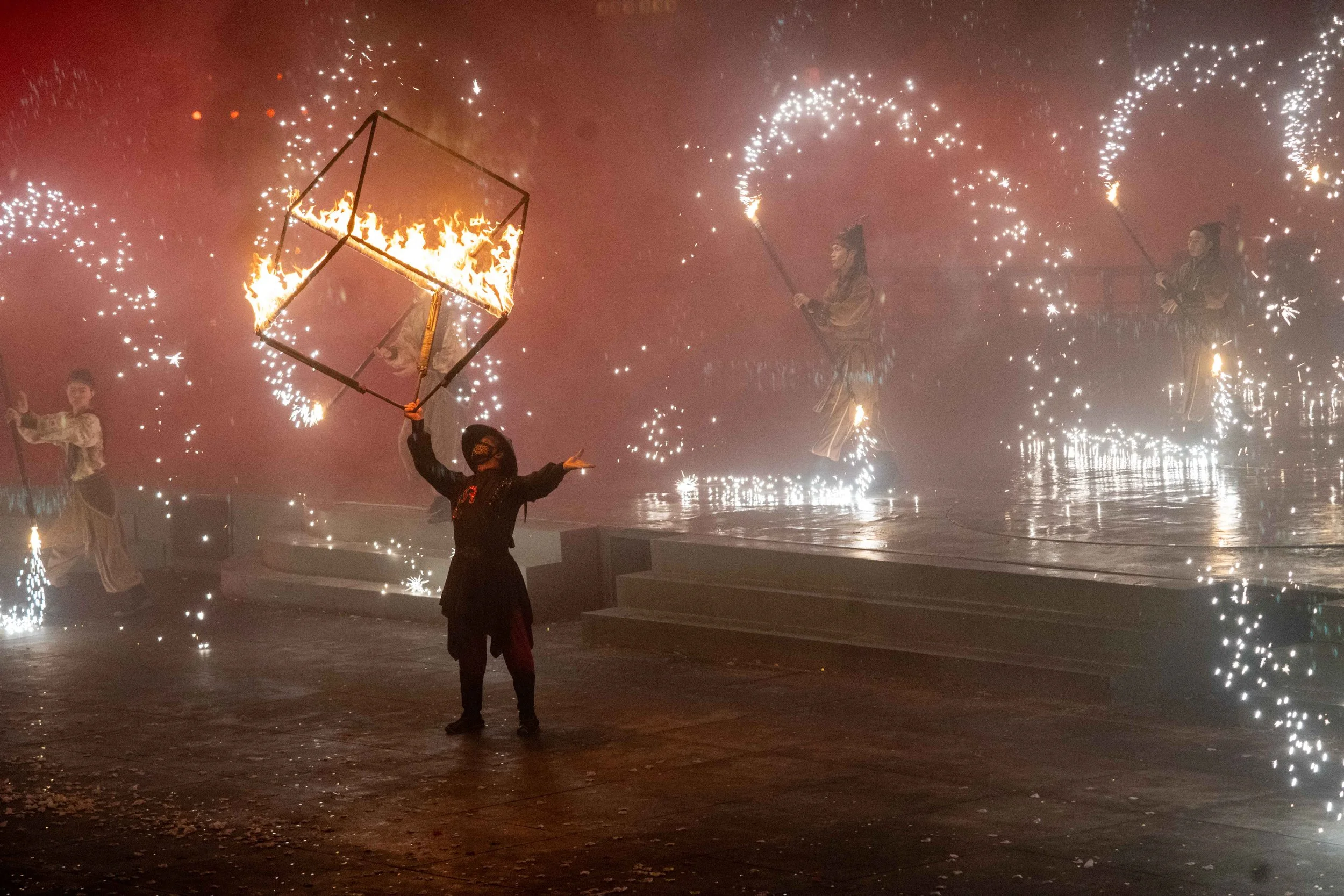
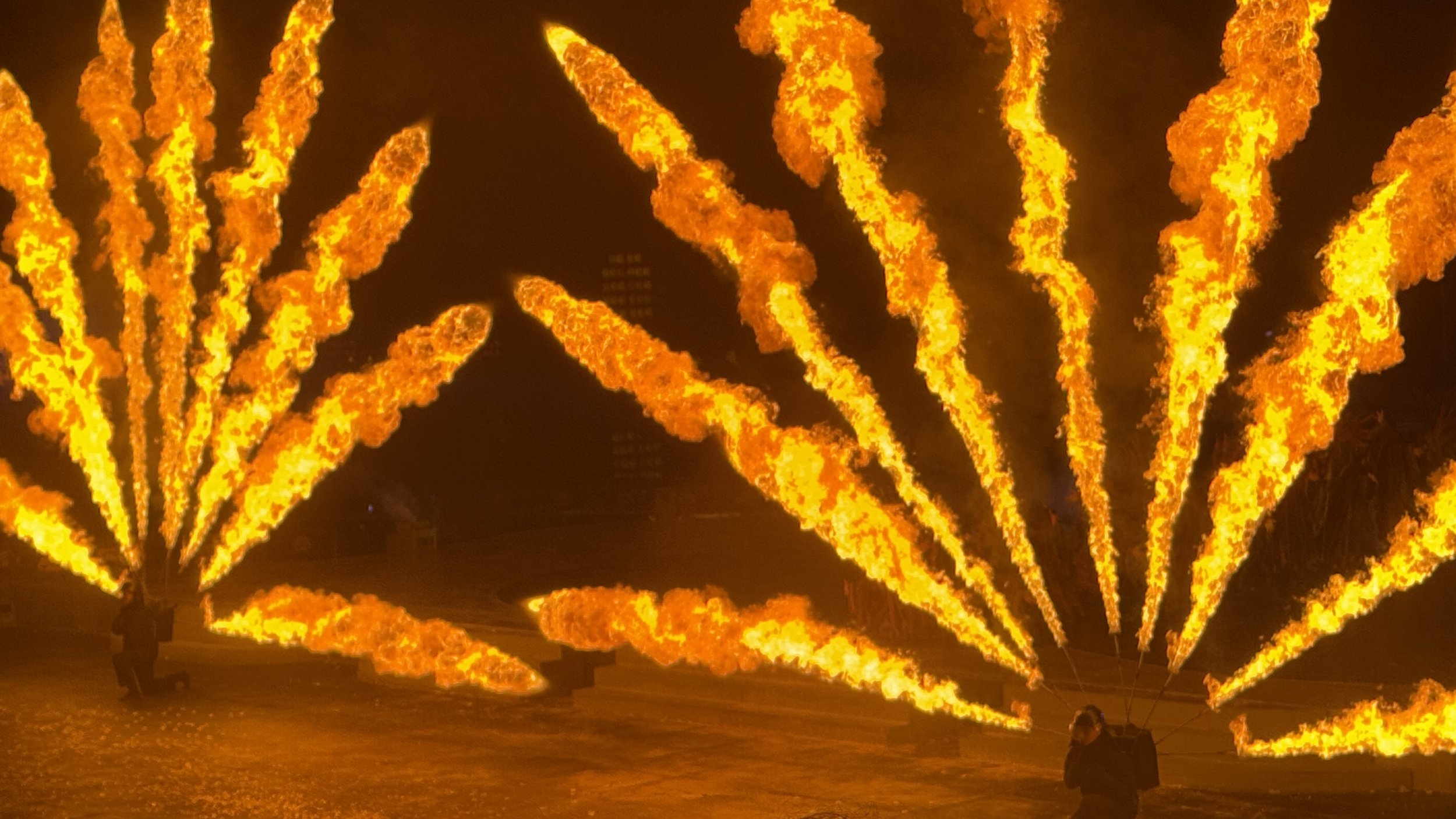
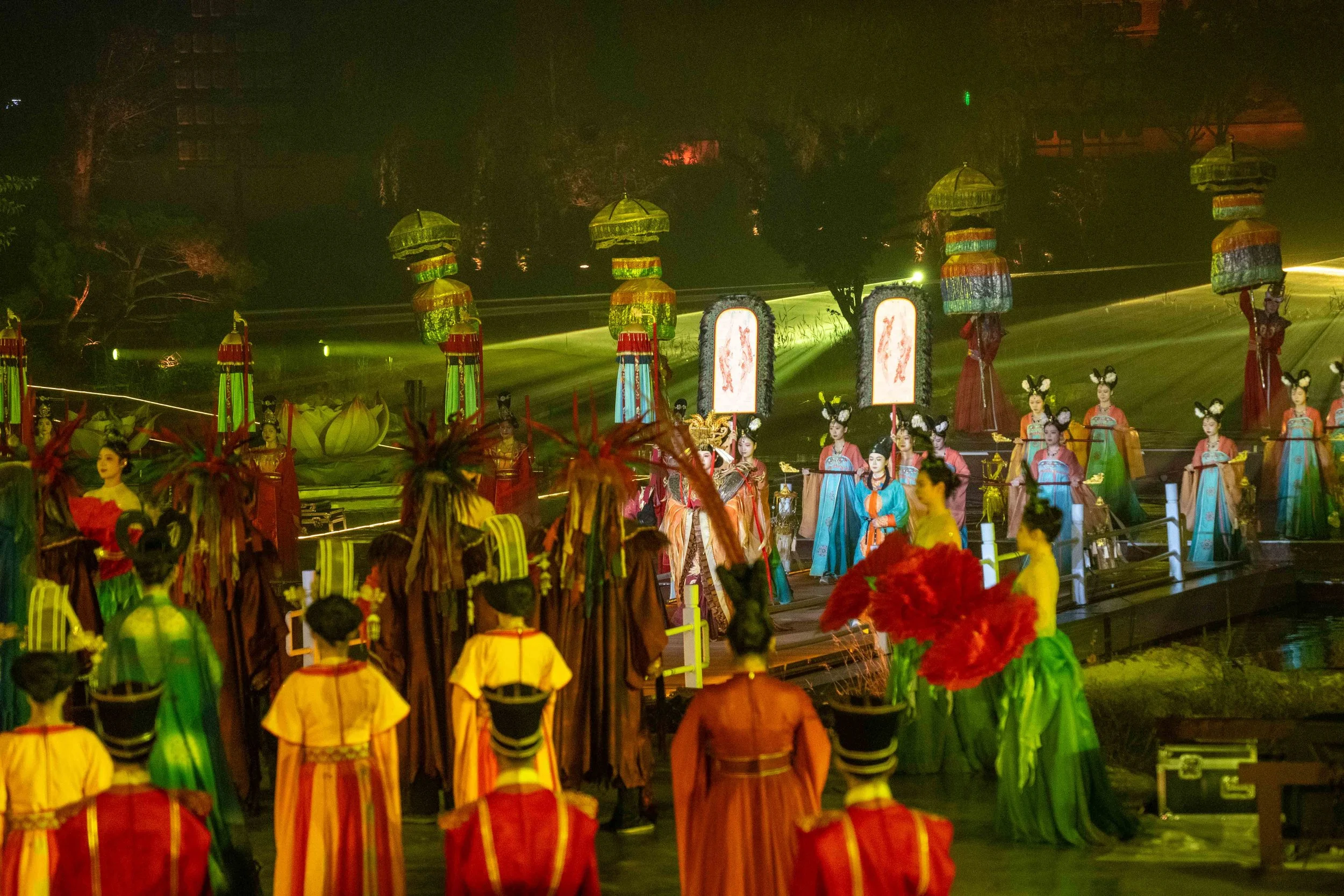
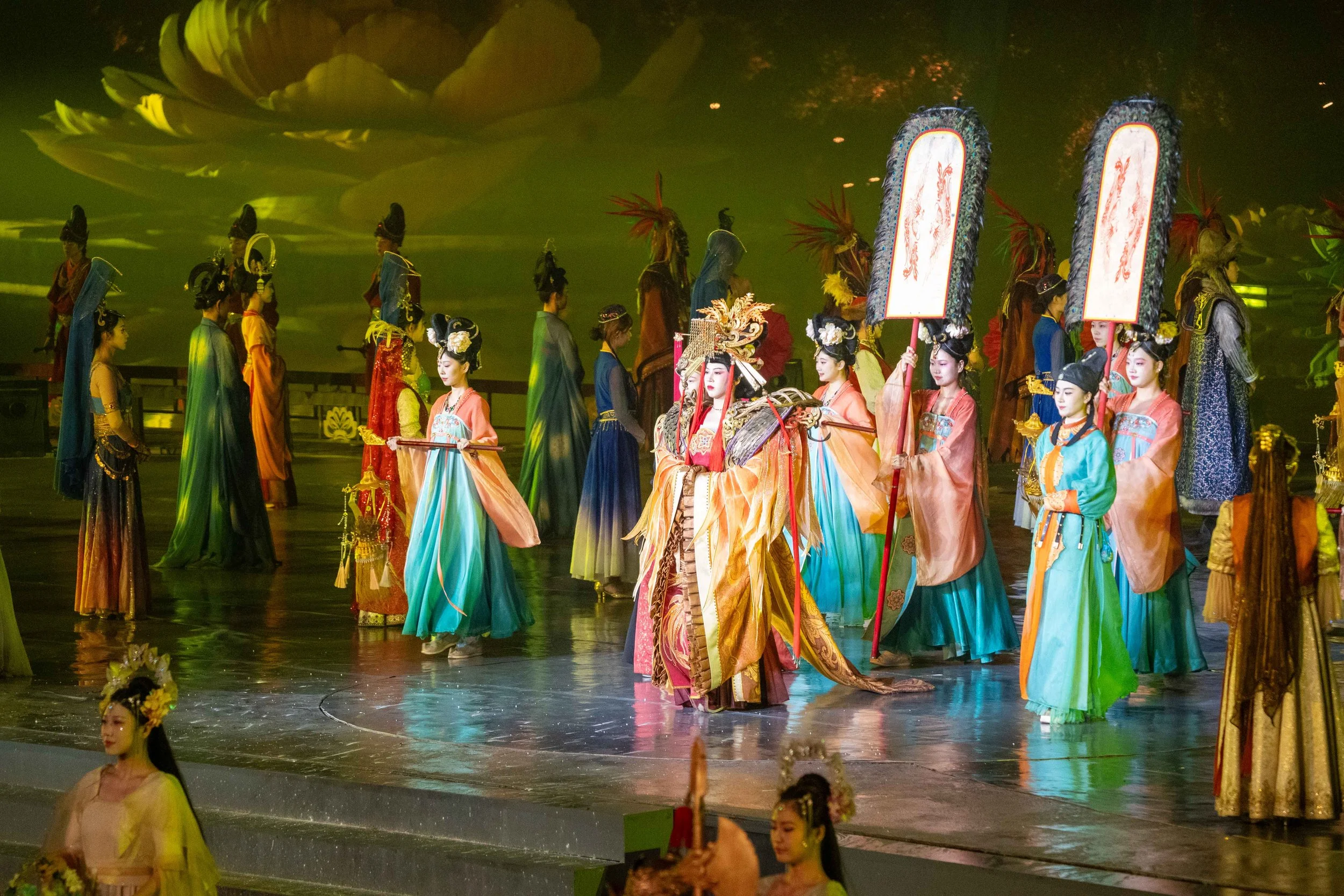
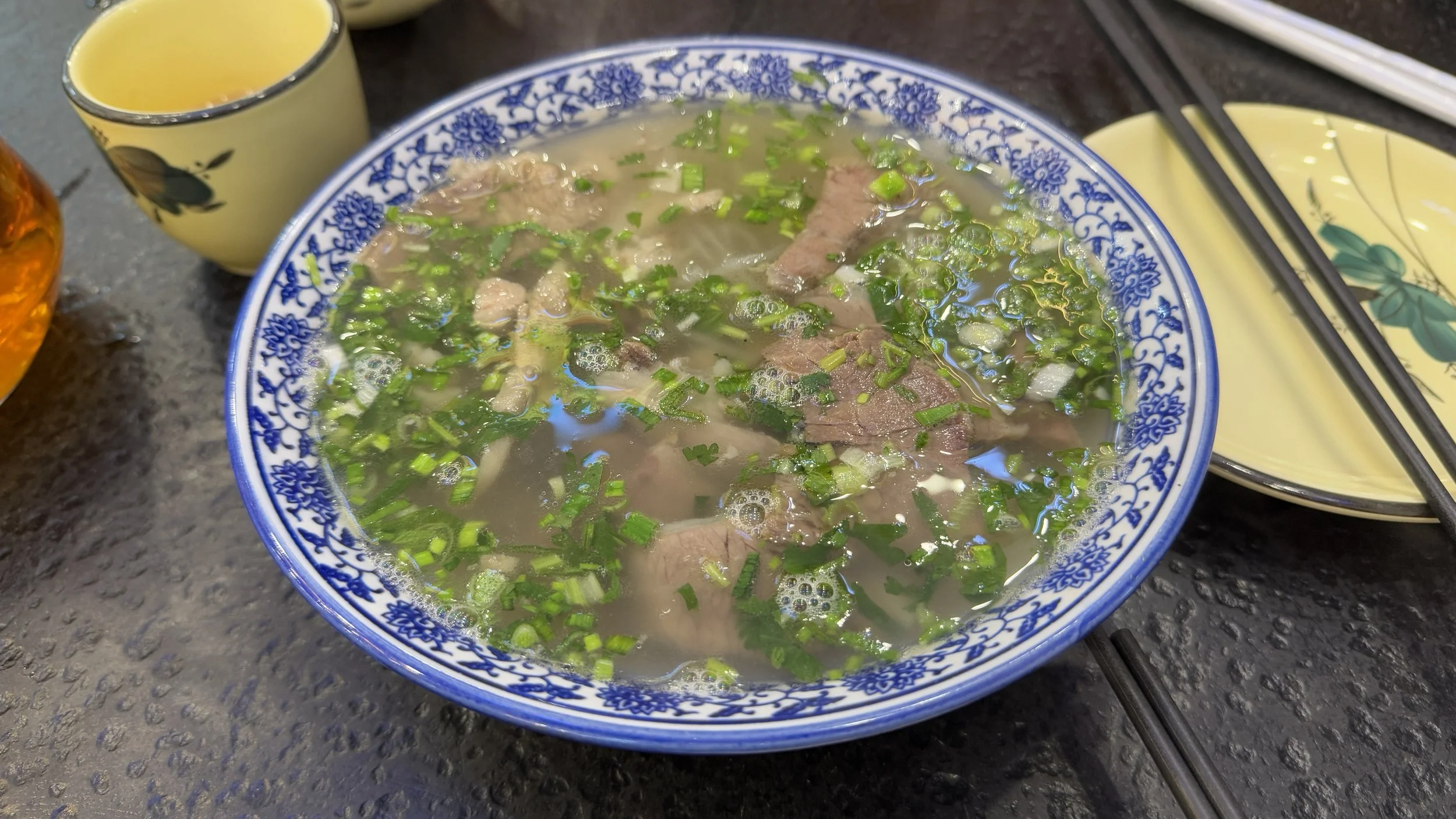
After a short rest, we went to the Sui-Tang Grand Canal Cultural Park (隋唐历史文化公园) to watch the large-scale outdoor performance “Phoenix Dance of the Divine Capital” (凤舞神都), which tells the story of Empress Wu Zetian (武则天) — the only female emperor in Chinese history. The open-air show was spectacular, and the weather was perfect, making the experience even more enjoyable. Before the performance, we stopped by a small street café for beef noodles (牛肉面) and roujiamo (肉夹馍) — both were simple but tasty.
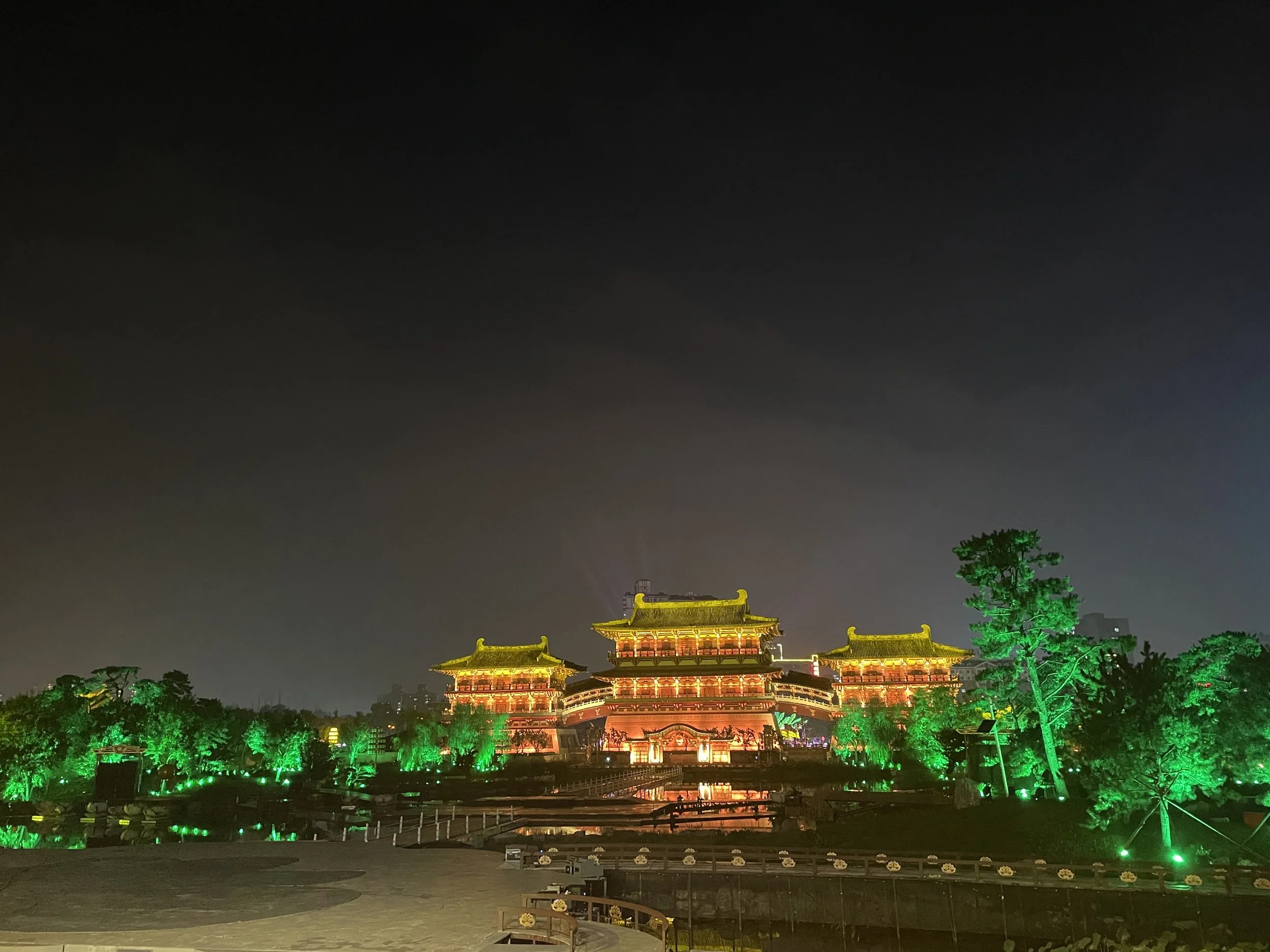
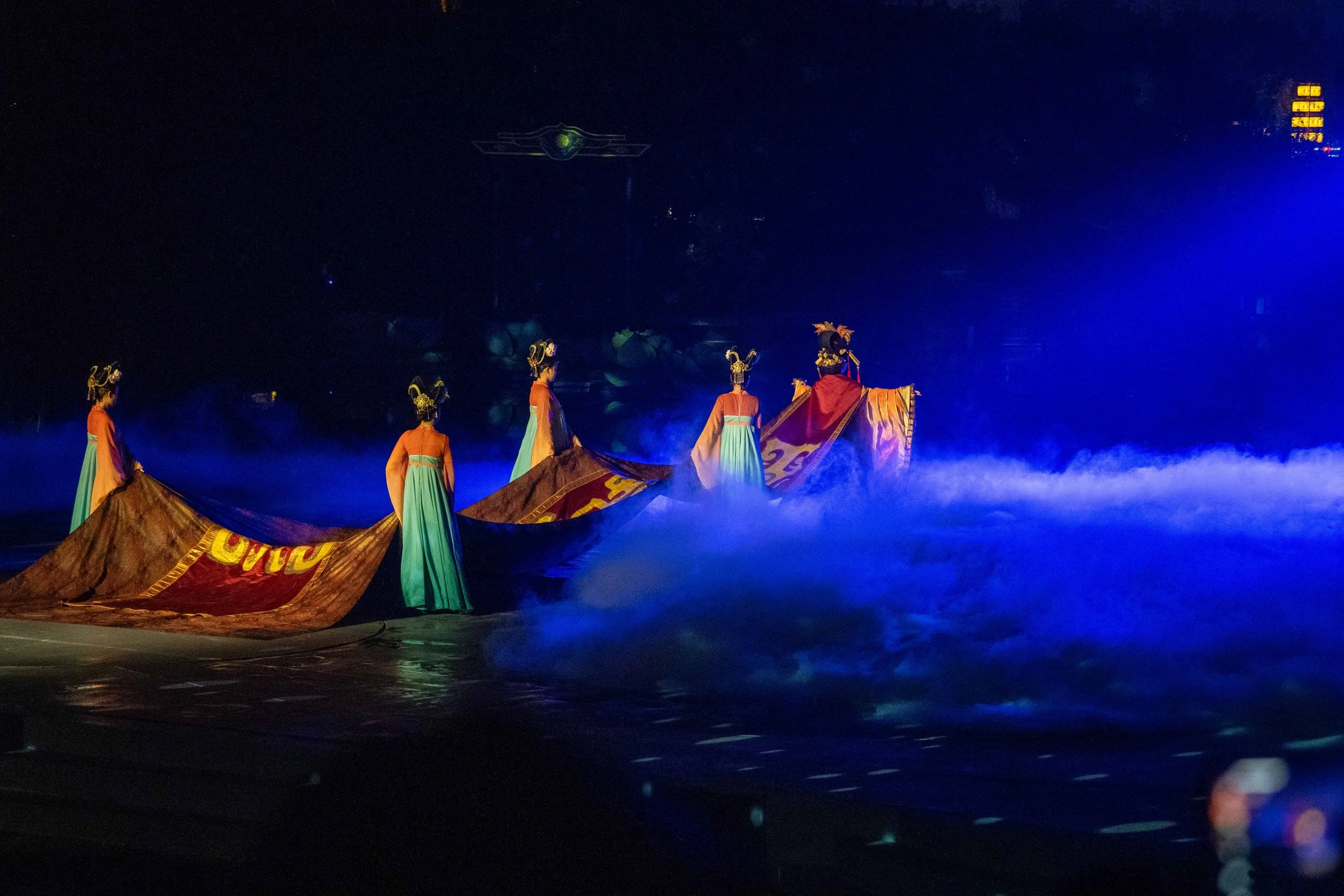
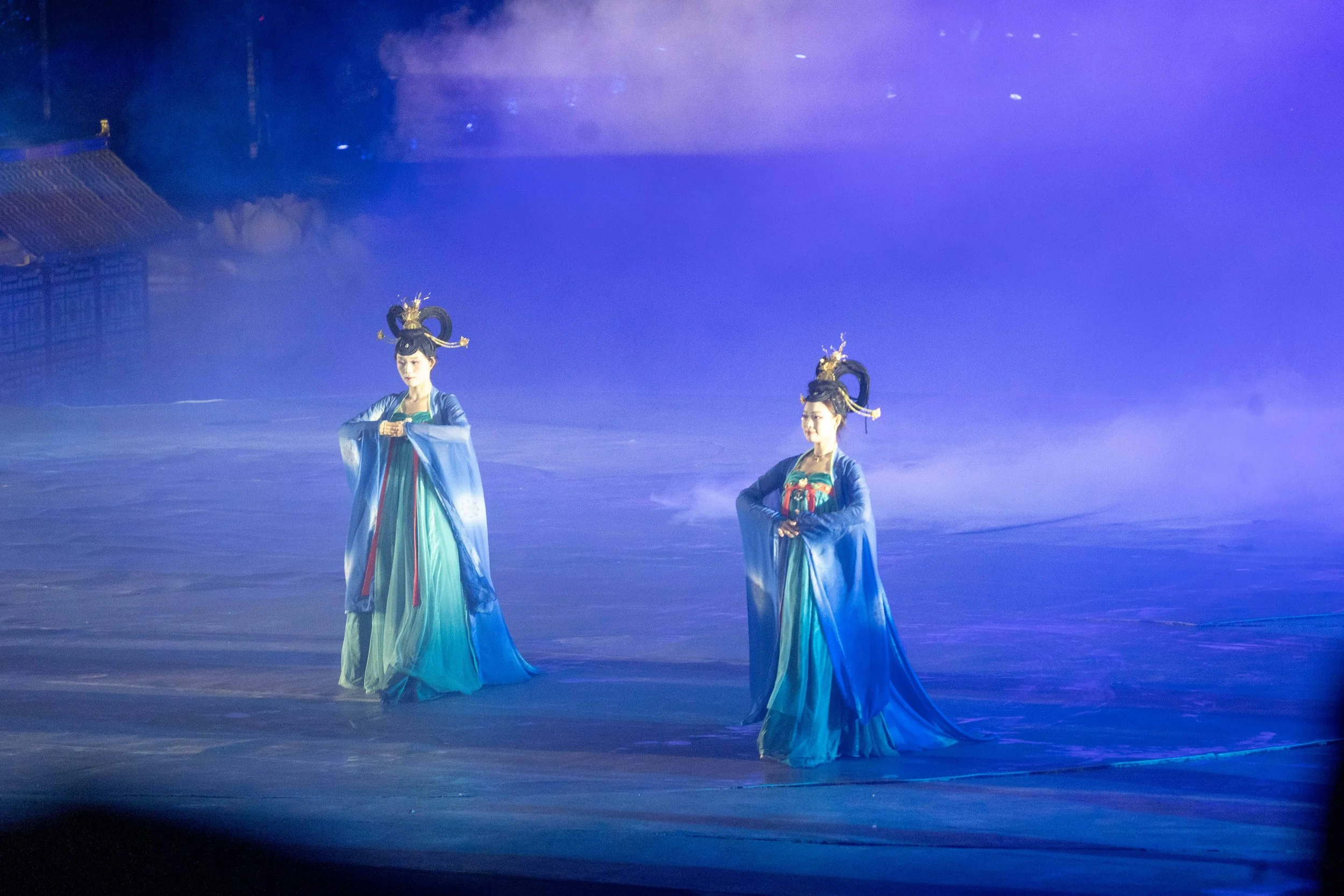

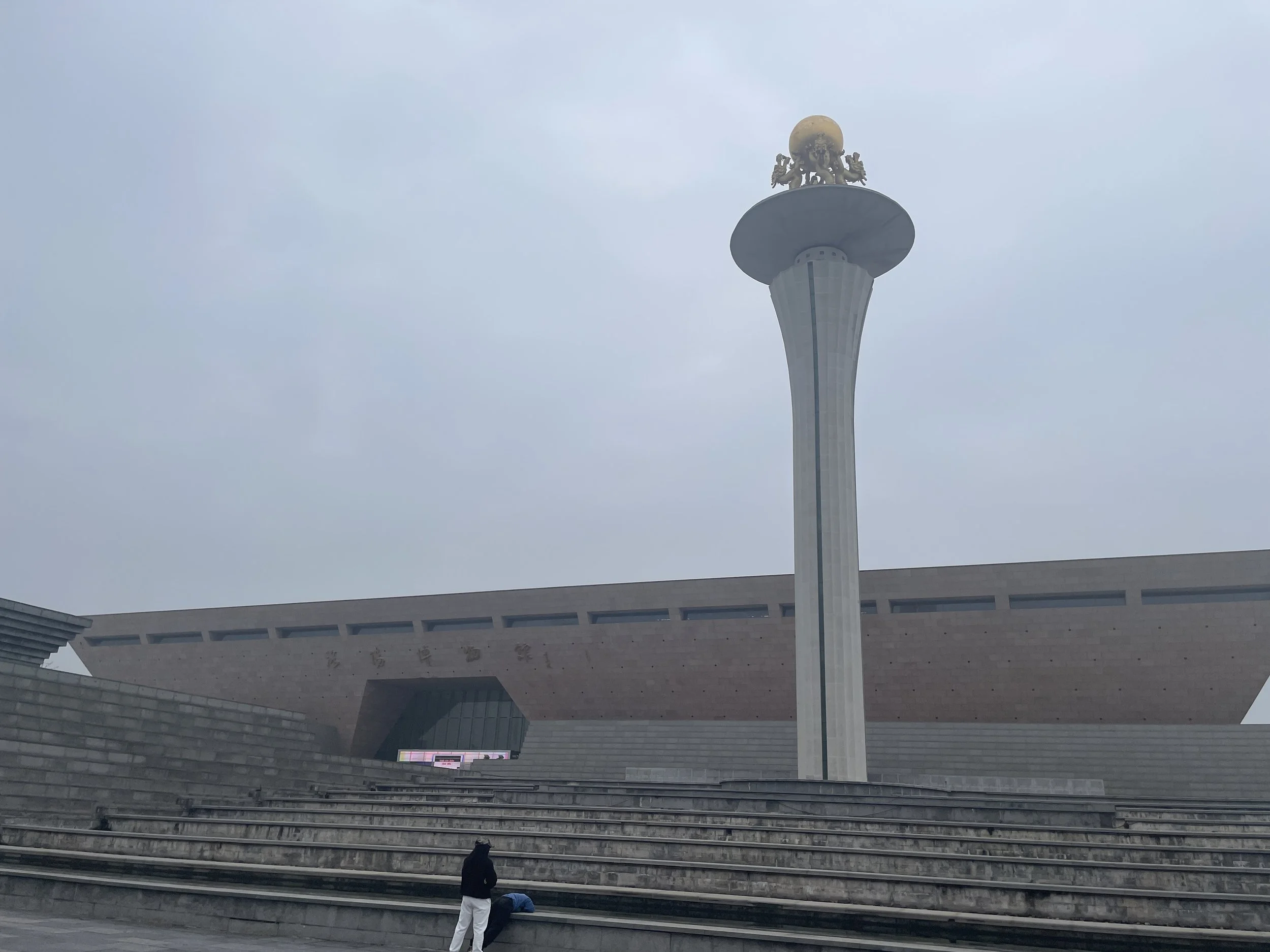
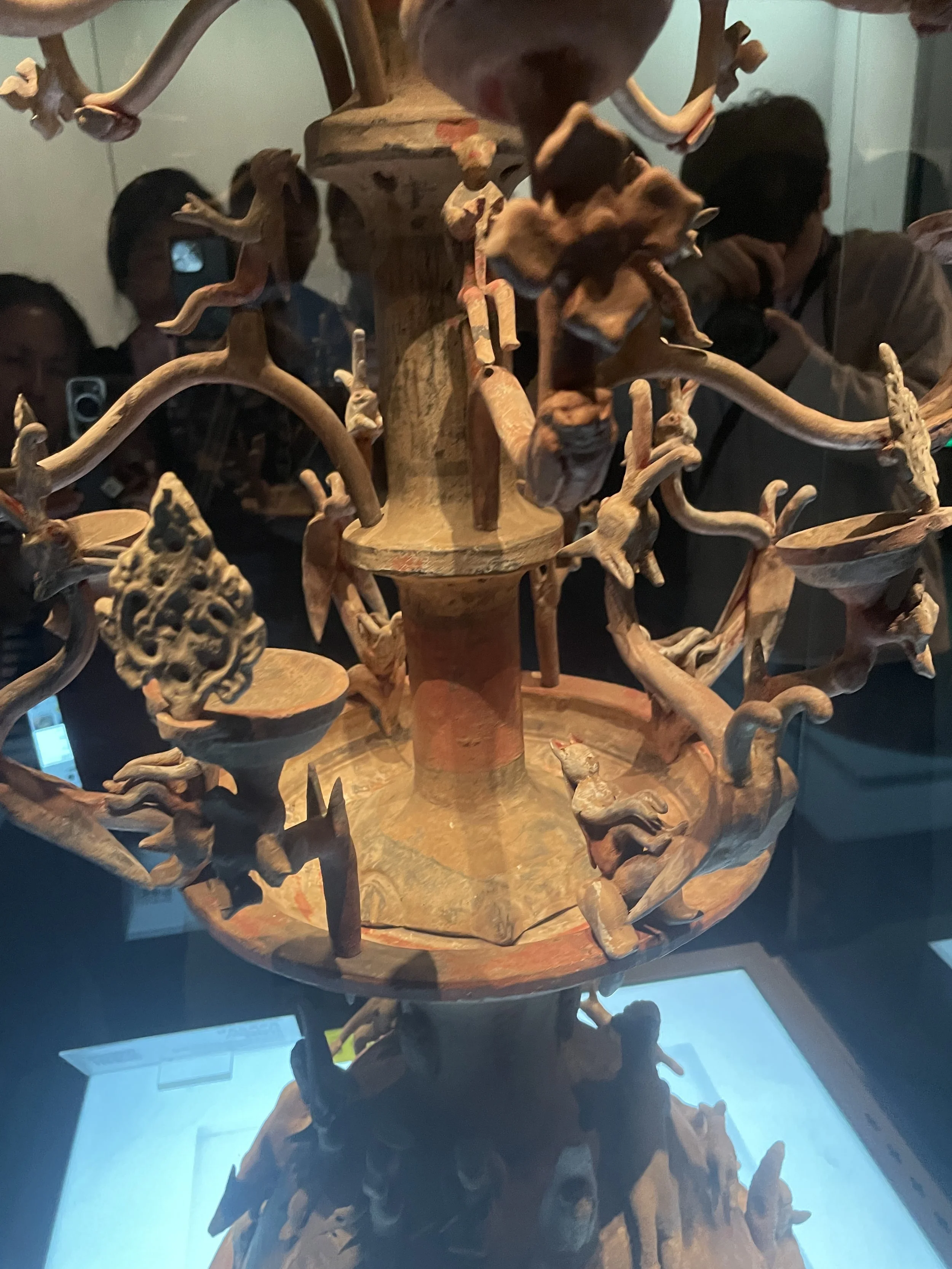
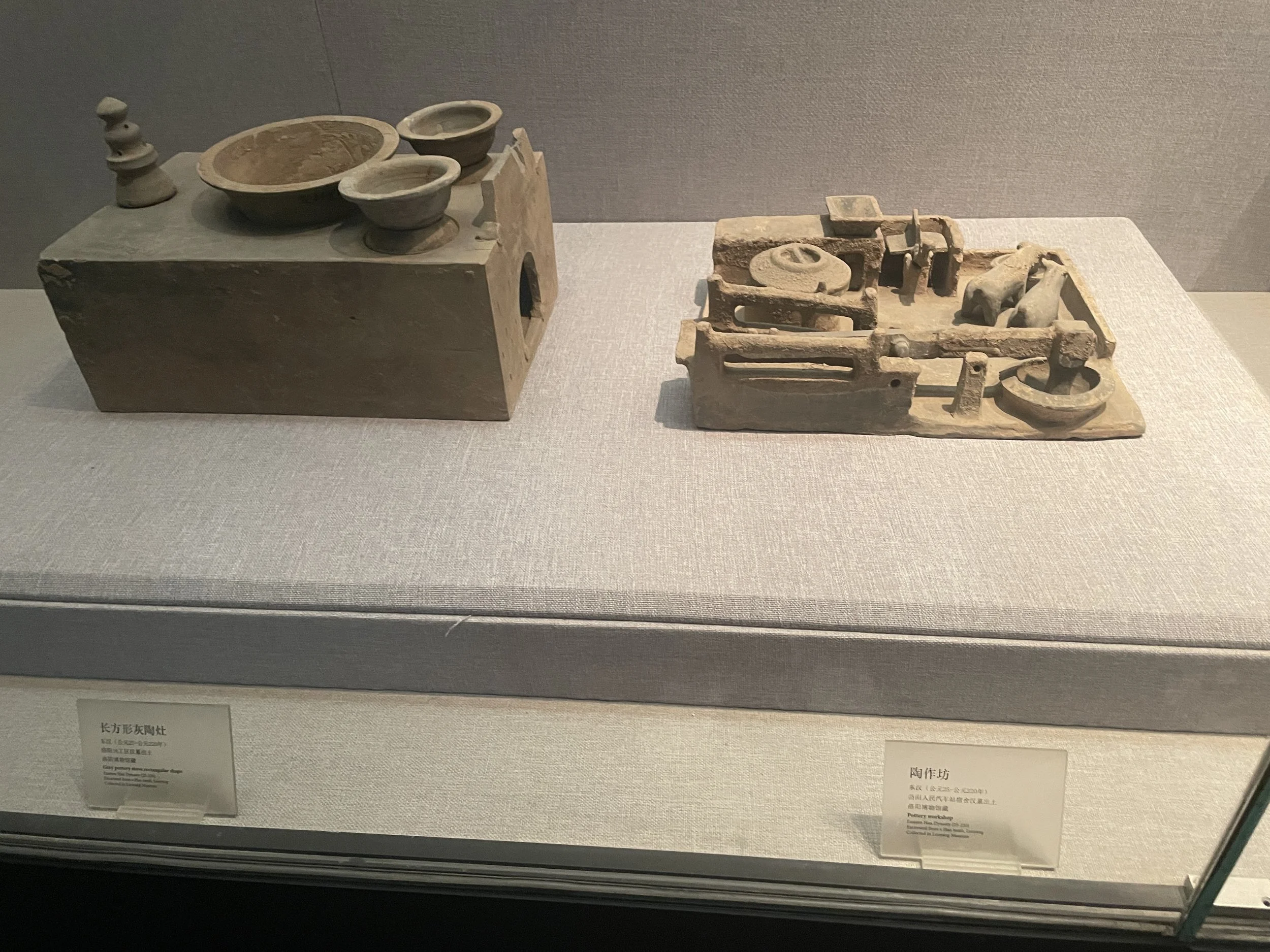
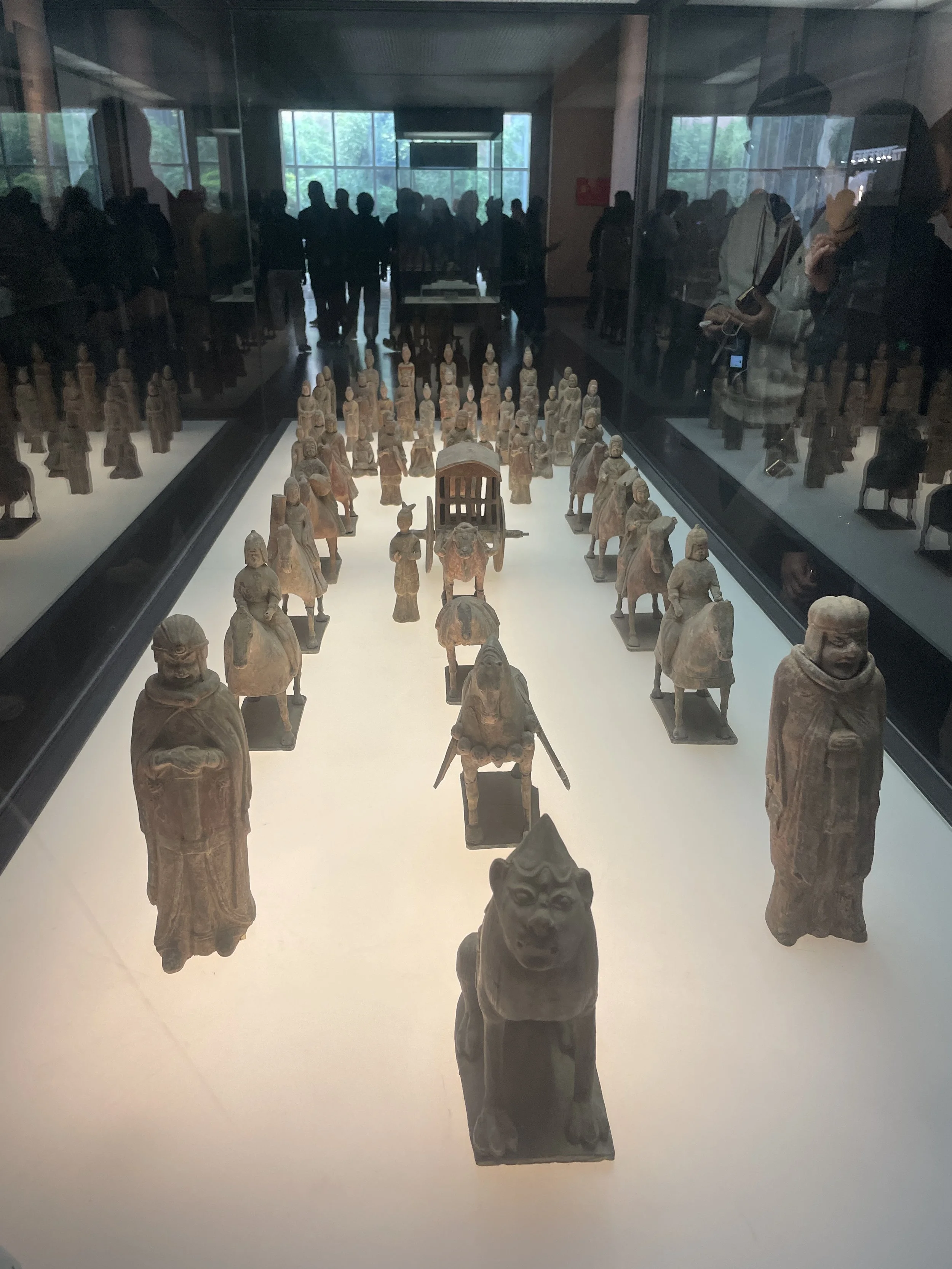
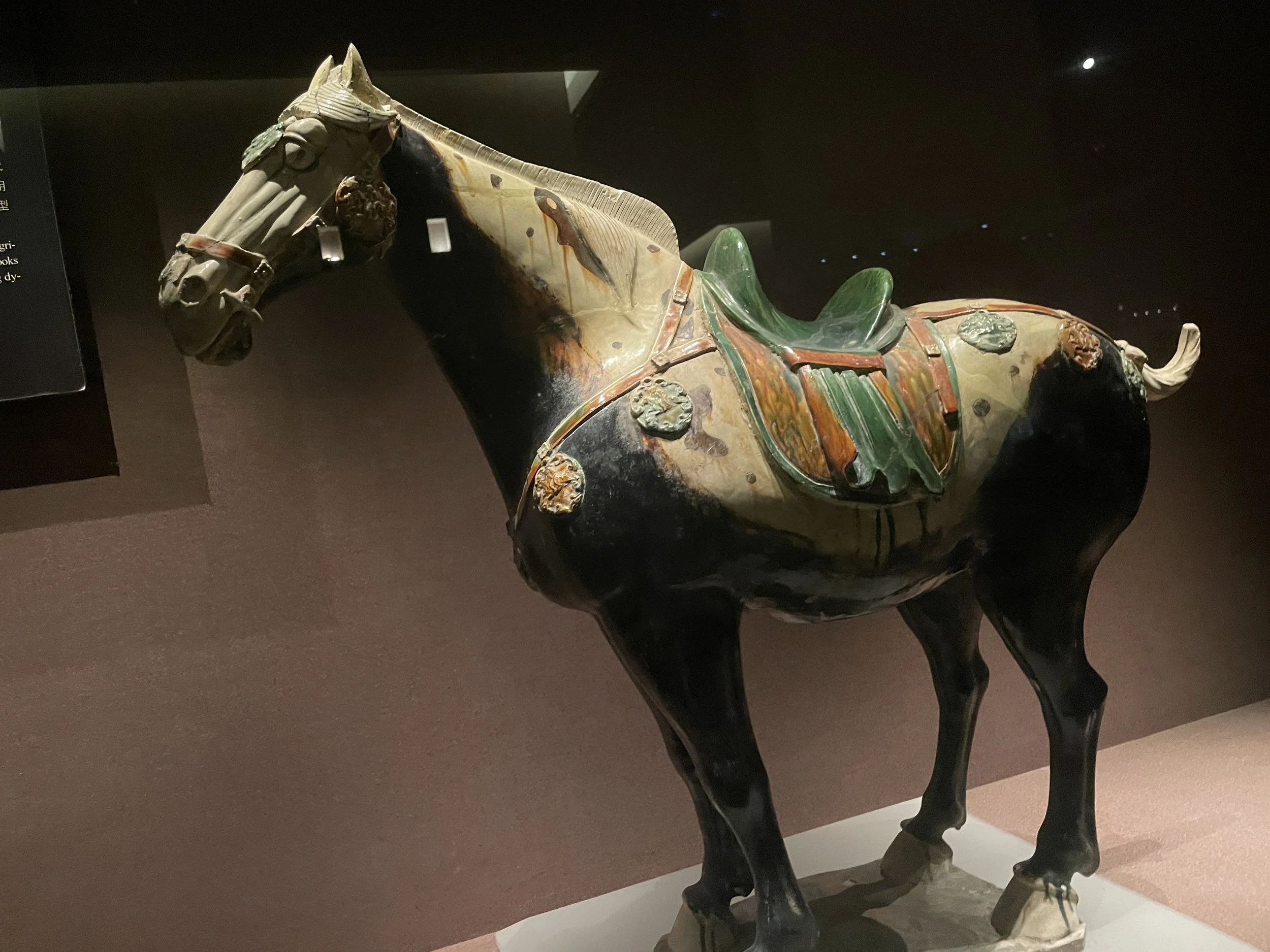
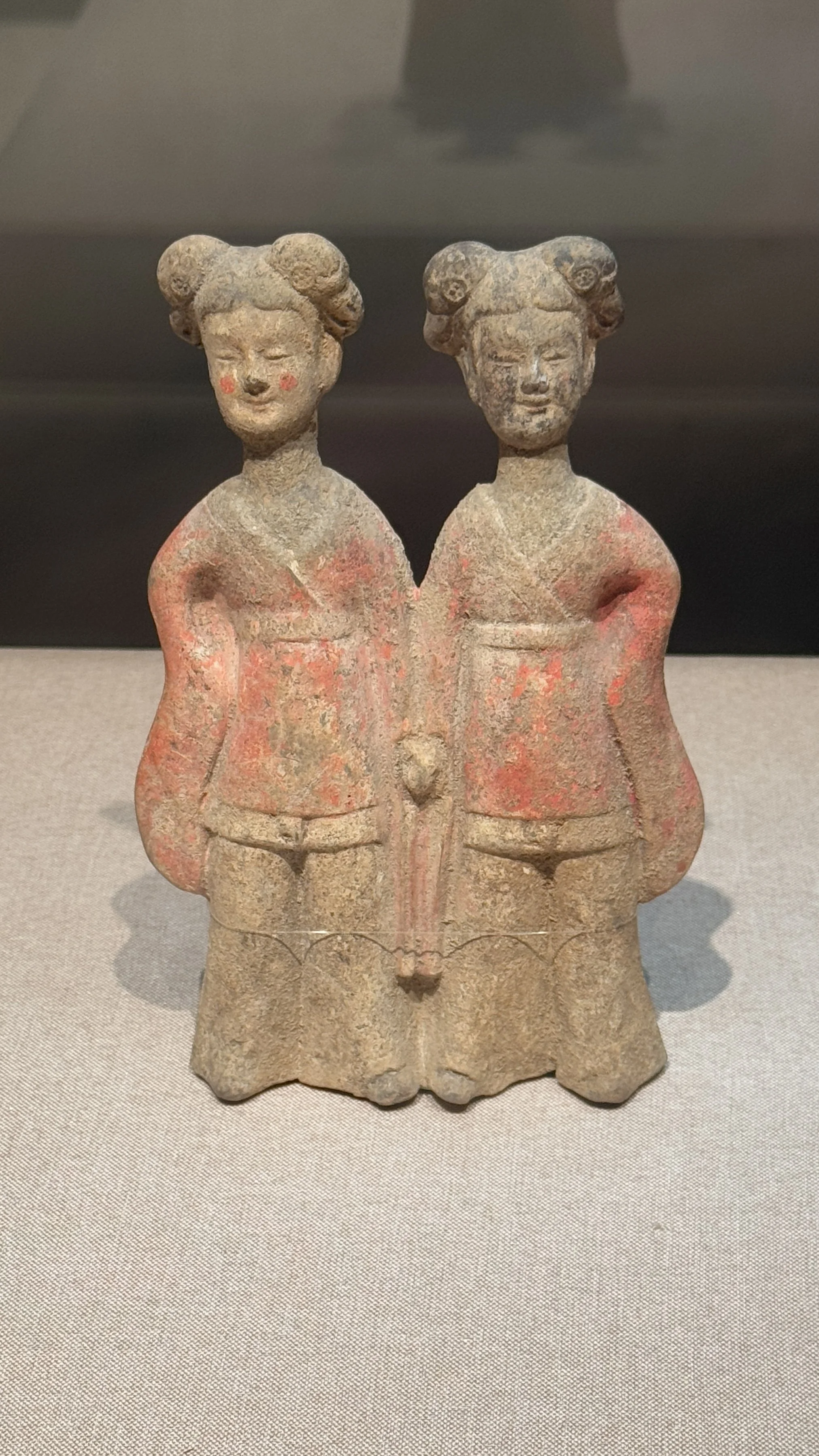
The next day, we visited the Luoyang Museum, an impressive world-class museum where we learned a great deal about the city’s long and rich history. In the afternoon, we boarded the train back to Shanghai, enjoying some salted duck we ordered on board.
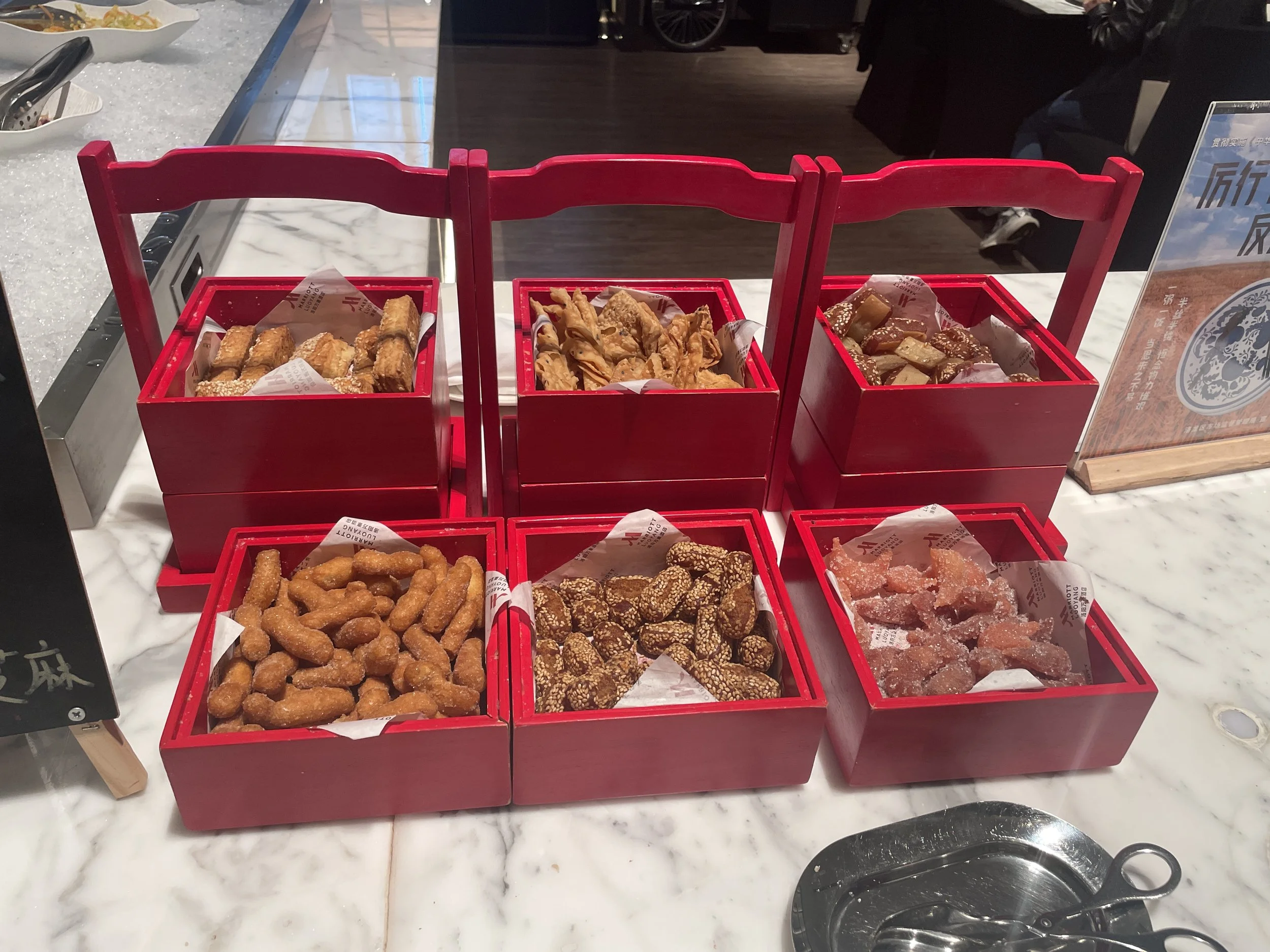
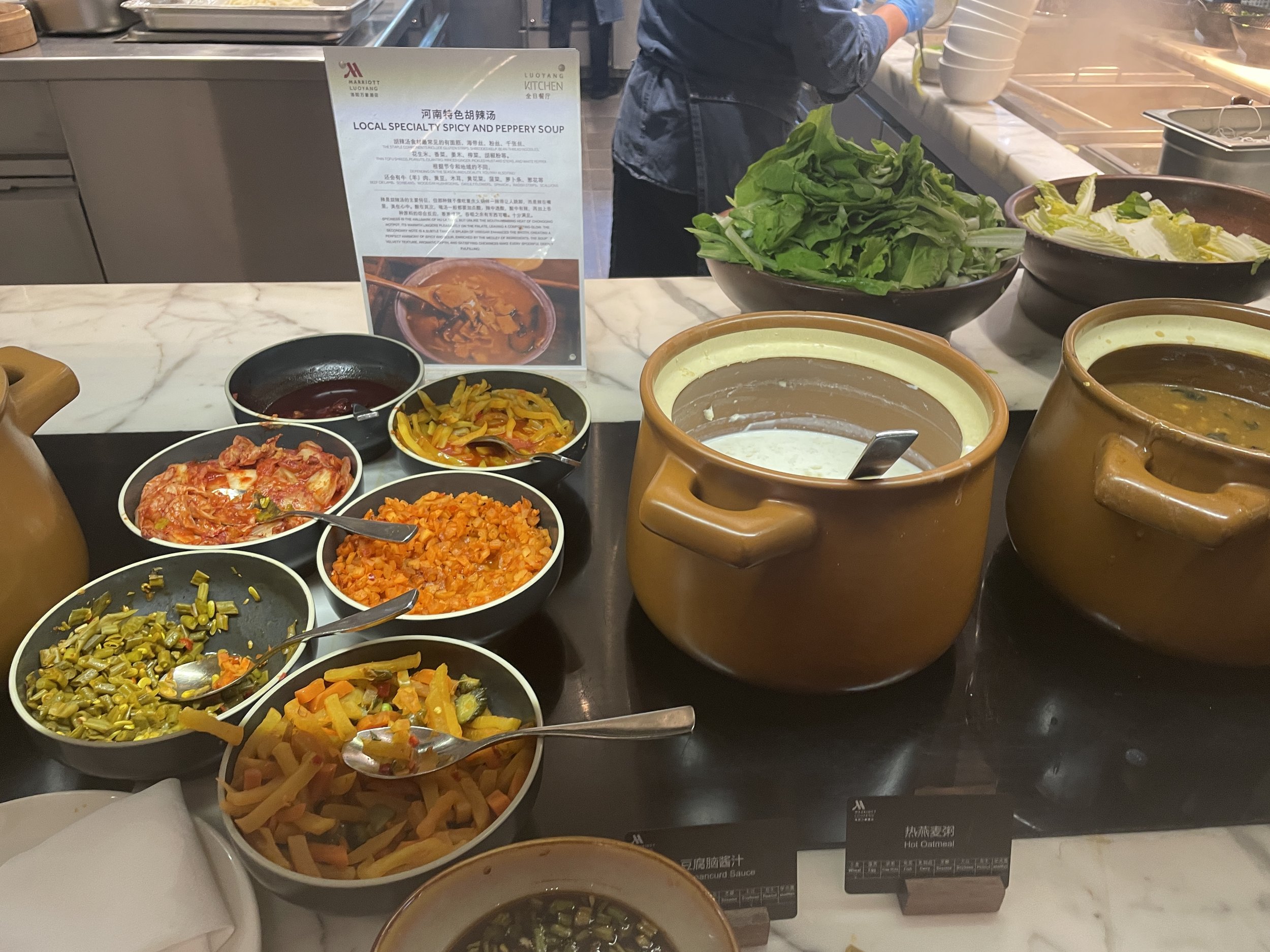
Thus ended our eight-day journey across China’s great northwest, a trip filled with culture, history, and unforgettable memories — a truly satisfying conclusion.
洛阳——龙门石窟与《凤舞神都》
2025年10月15日
我们很喜欢在中国坐高铁,干净,舒适且很方便。从银川到上海的高铁需十多个小时,我们觉得时间太长,便决定在中途的洛阳停留一晚。
经过四个半小时的车程,我们抵达洛阳并入住酒店。下午前往参观著名的龙门石窟(Longmen Grottoes)——一处联合国教科文组织世界文化遗产。石窟始建于北魏时期,历经数个朝代扩建,现有洞窟两千三百余个、佛像十万余尊,被誉为中国石刻艺术与佛教艺术的巅峰。景区内游客众多,我们沿着石阶上下攀行,仔细欣赏各个主要洞窟的造像,感叹其规模与精美。与之前由民间供养人建造的敦煌石窟不同,龙门石窟的主要造像多由朝廷主持开凿。不过石窟内外的佛像损坏严重,主要是自然侵蚀,人为盗凿和战争破坏所造成。
游览了伊河两岸的景点后,乘滴滴返回酒店稍作休息,接下来我们前往隋唐历史文化公园观看大型户外演出——《凤舞神都》。节目以中国历史上唯一的女皇武则天为主线,场面宏大、灯光绚丽,天气也恰到好处,让我们观赏得格外尽兴。演出前,我们在街边一家小餐馆用餐,点了牛肉面和肉夹馍,味道都很不错。
第二天早上我们参观了洛阳博物馆。这是一座内容非常丰富、陈列精美的世界级博物馆,让我们对洛阳厚重的历史有了更深入的了解。因为时间有限,我们只能匆匆看一遍。下午我们乘高铁返回上海,在车上直接点了南京站的外卖盐水鸭作为晚餐。
至此,我们的八天大西北之行画上了圆满的句号——一次充实而愉快的旅程。
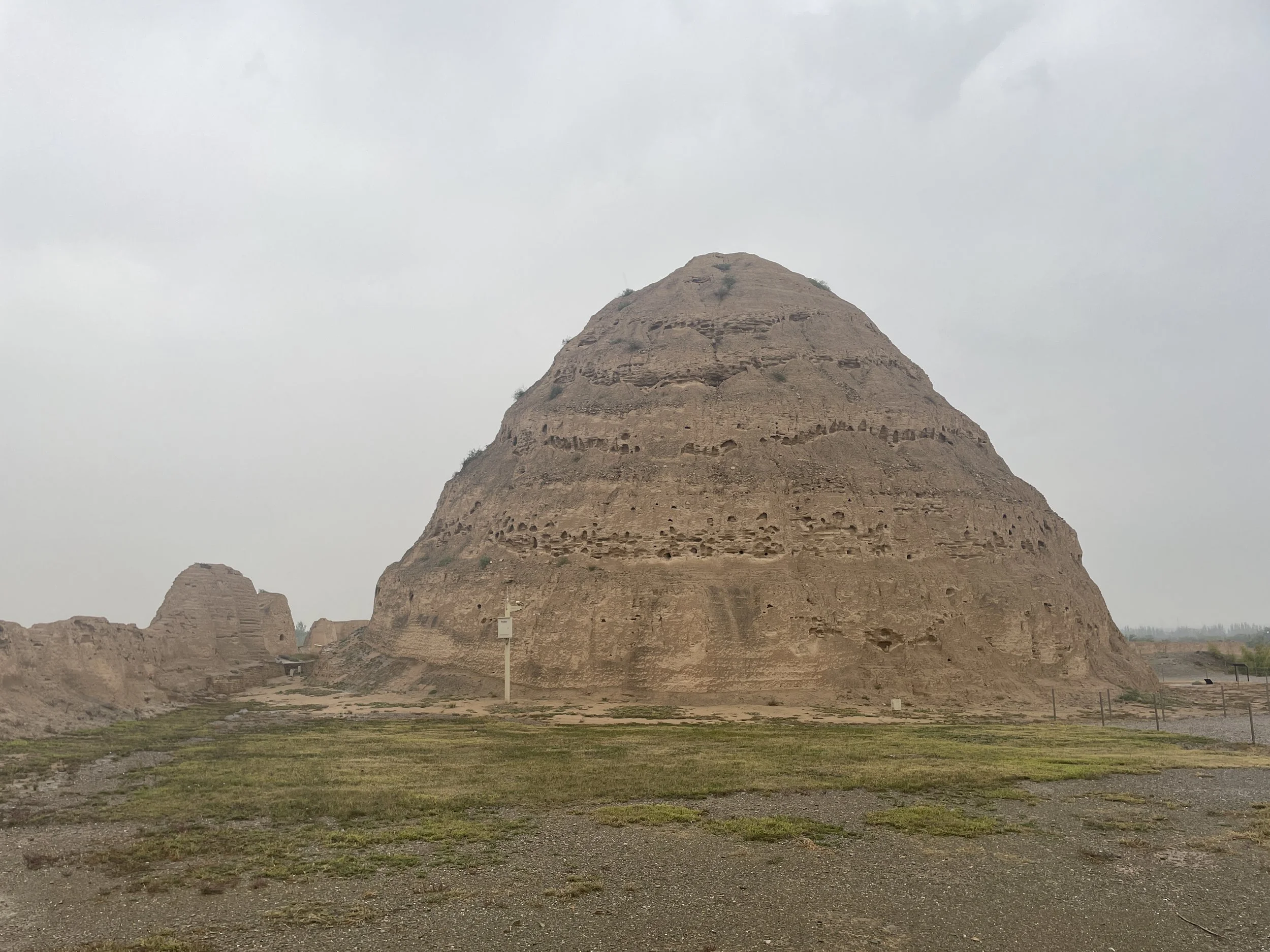
Giant Buddha Temple, Western Xia Dynasty 大佛寺,西夏王陵
October 13-14, 2025
After spending the night in Zhangye,……
在张掖住了一晚,第二天早晨我们参观了大佛寺。。。
October 13-14, 2025
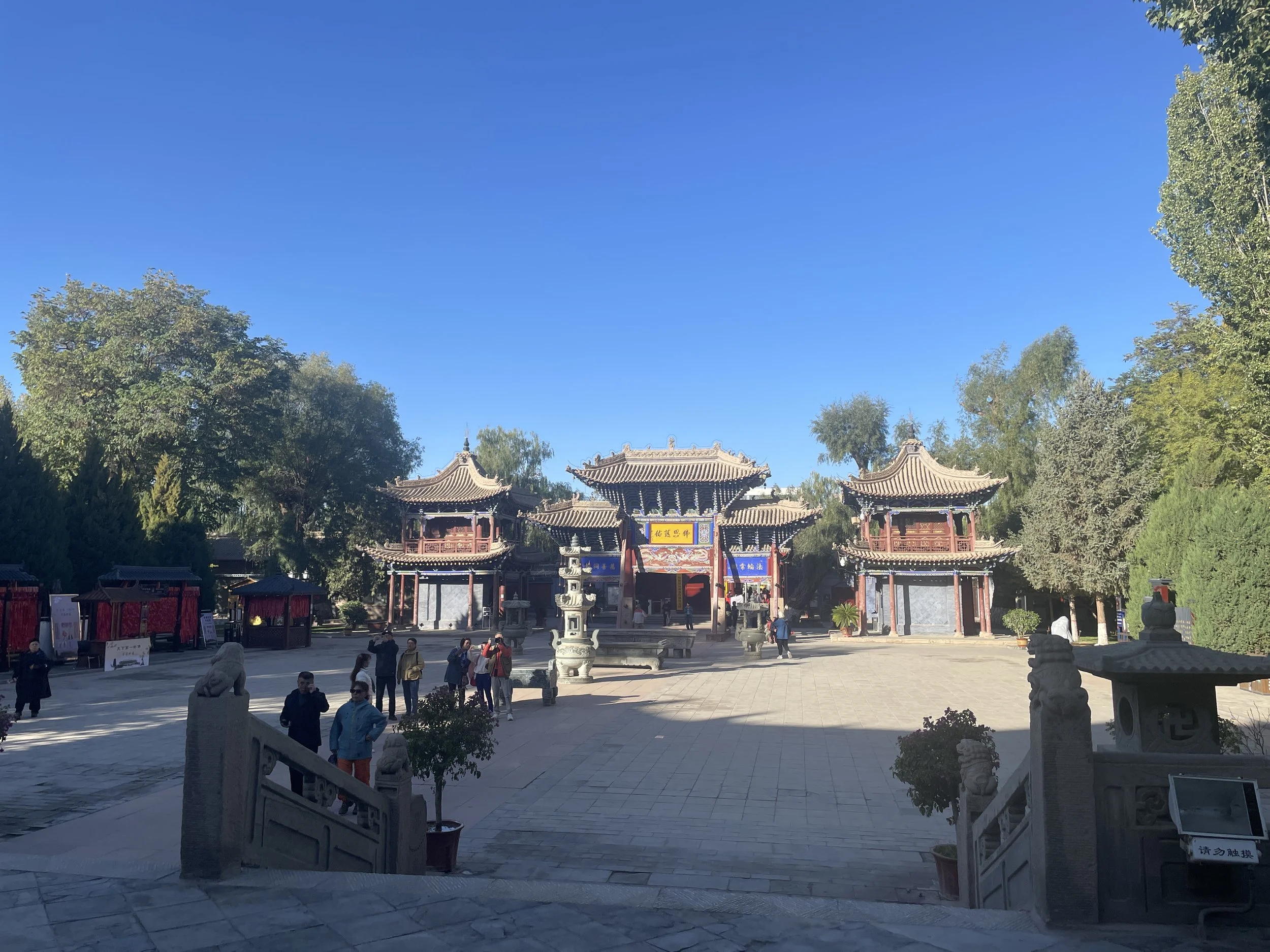
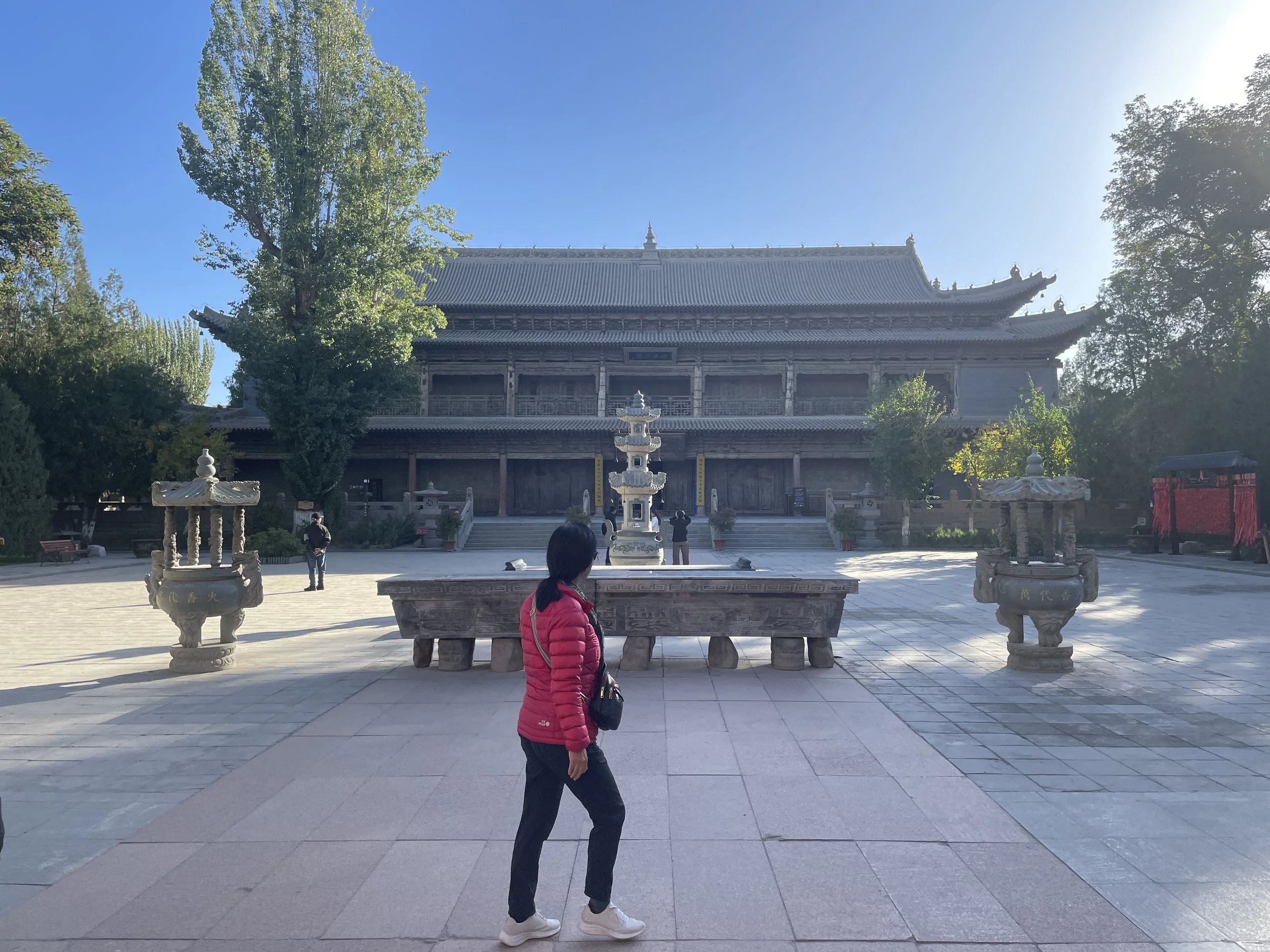
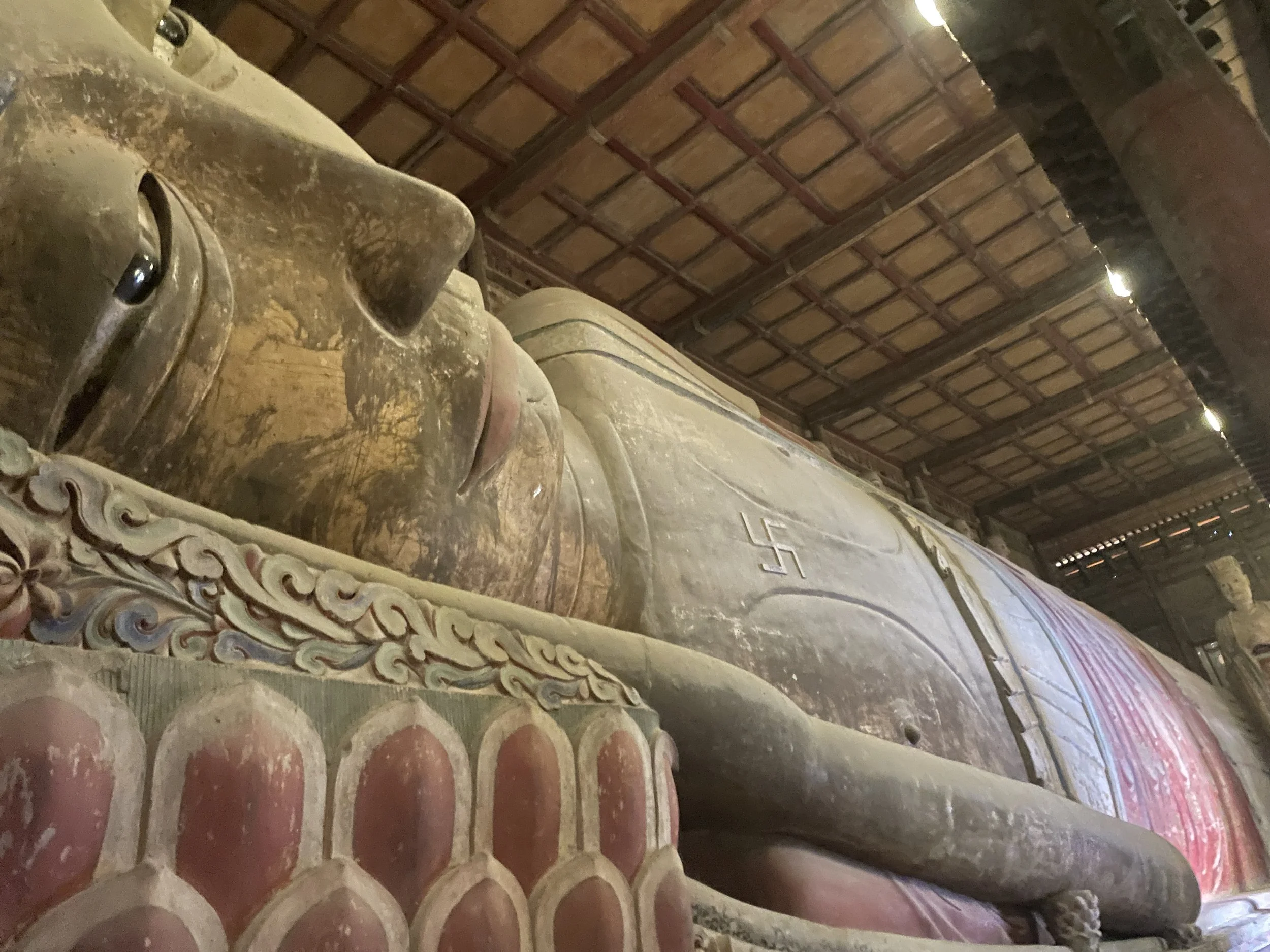
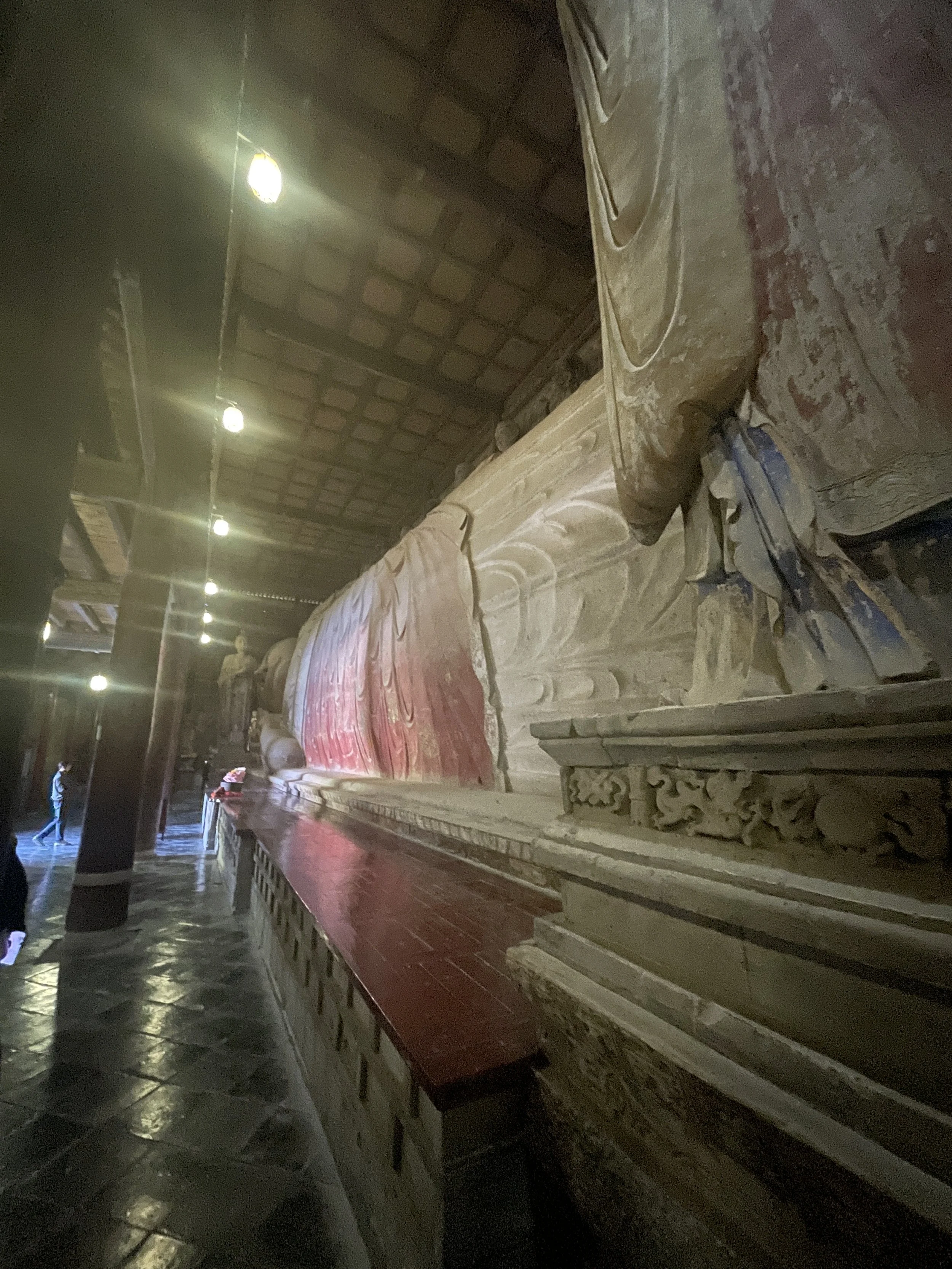
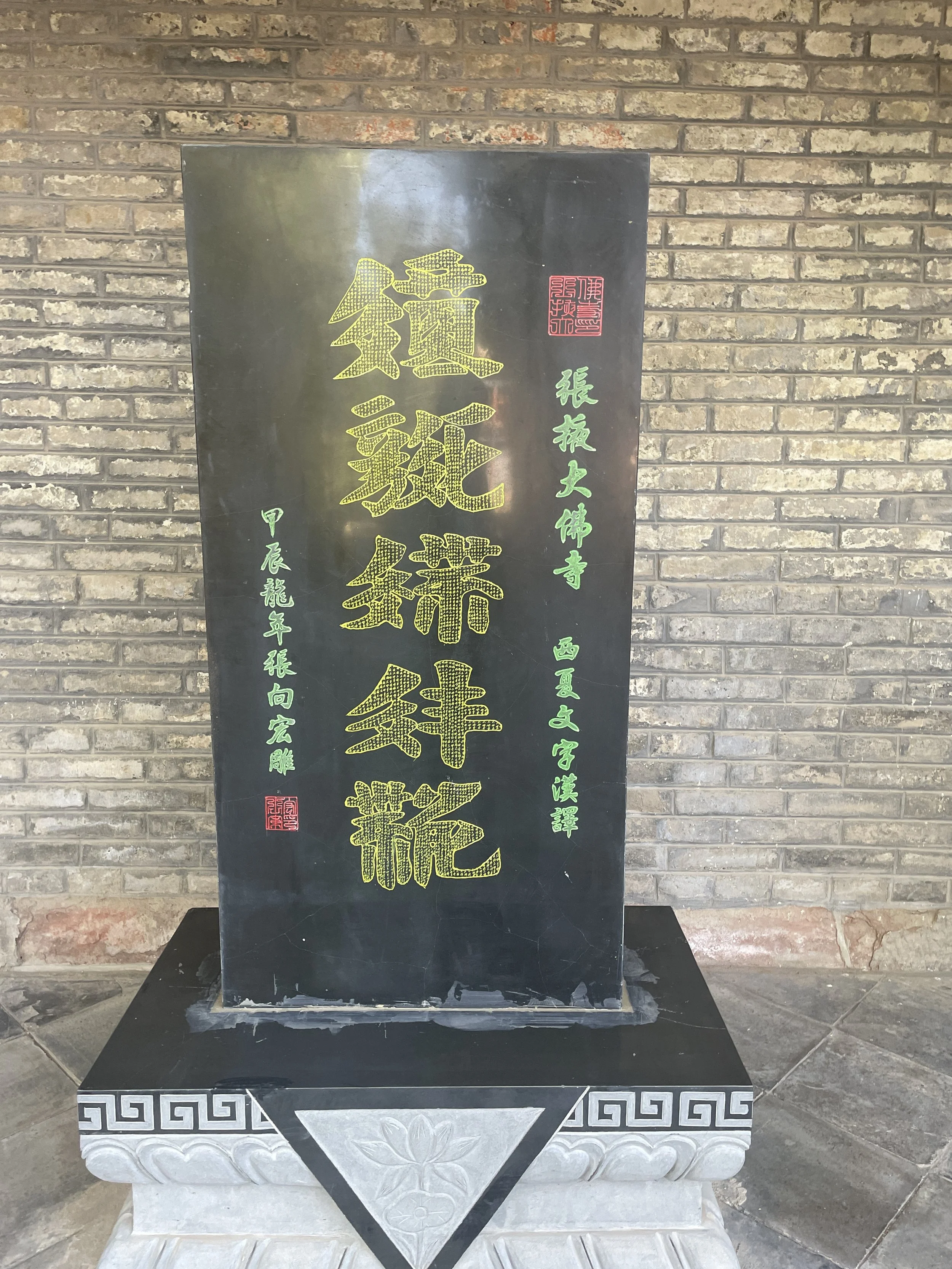
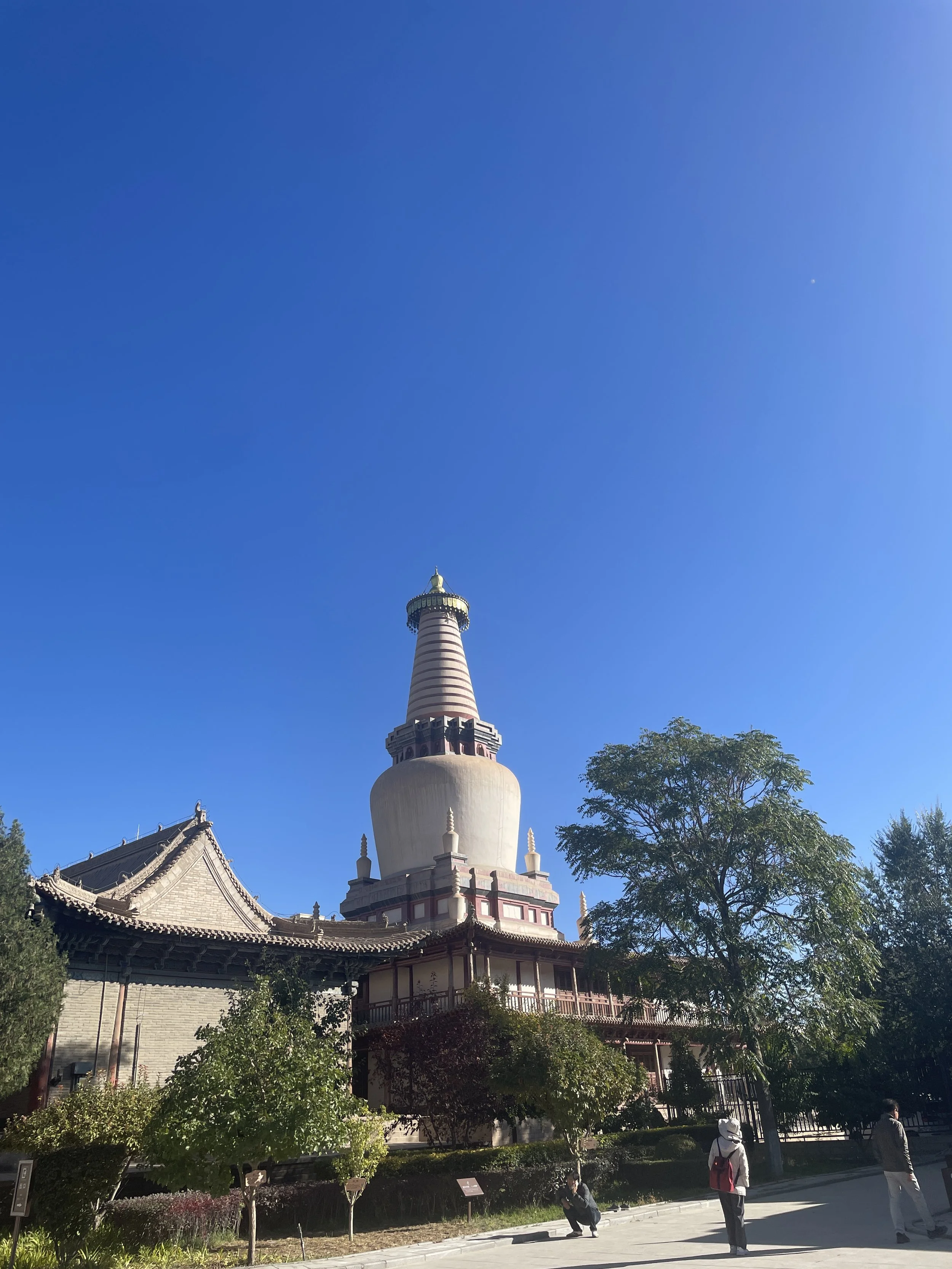
After spending the night in Zhangye, we visited the Giant Buddha Temple (大佛寺 Dàfó Sì) in the morning. Originally built during the Western Xia Dynasty, the temple houses an enormous reclining Buddha—about 35 meters long—which is the largest indoor clay reclining Buddha in China.
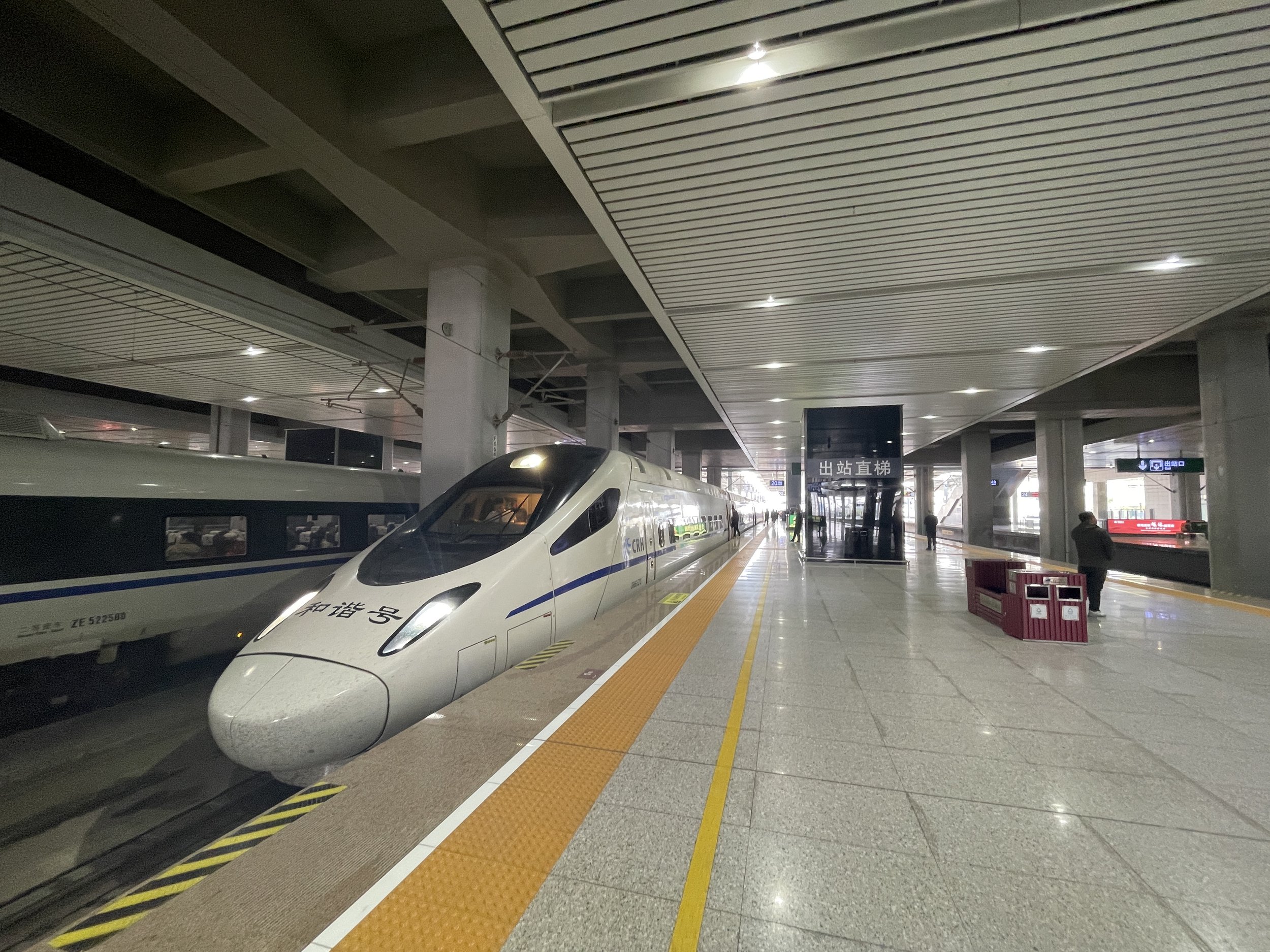
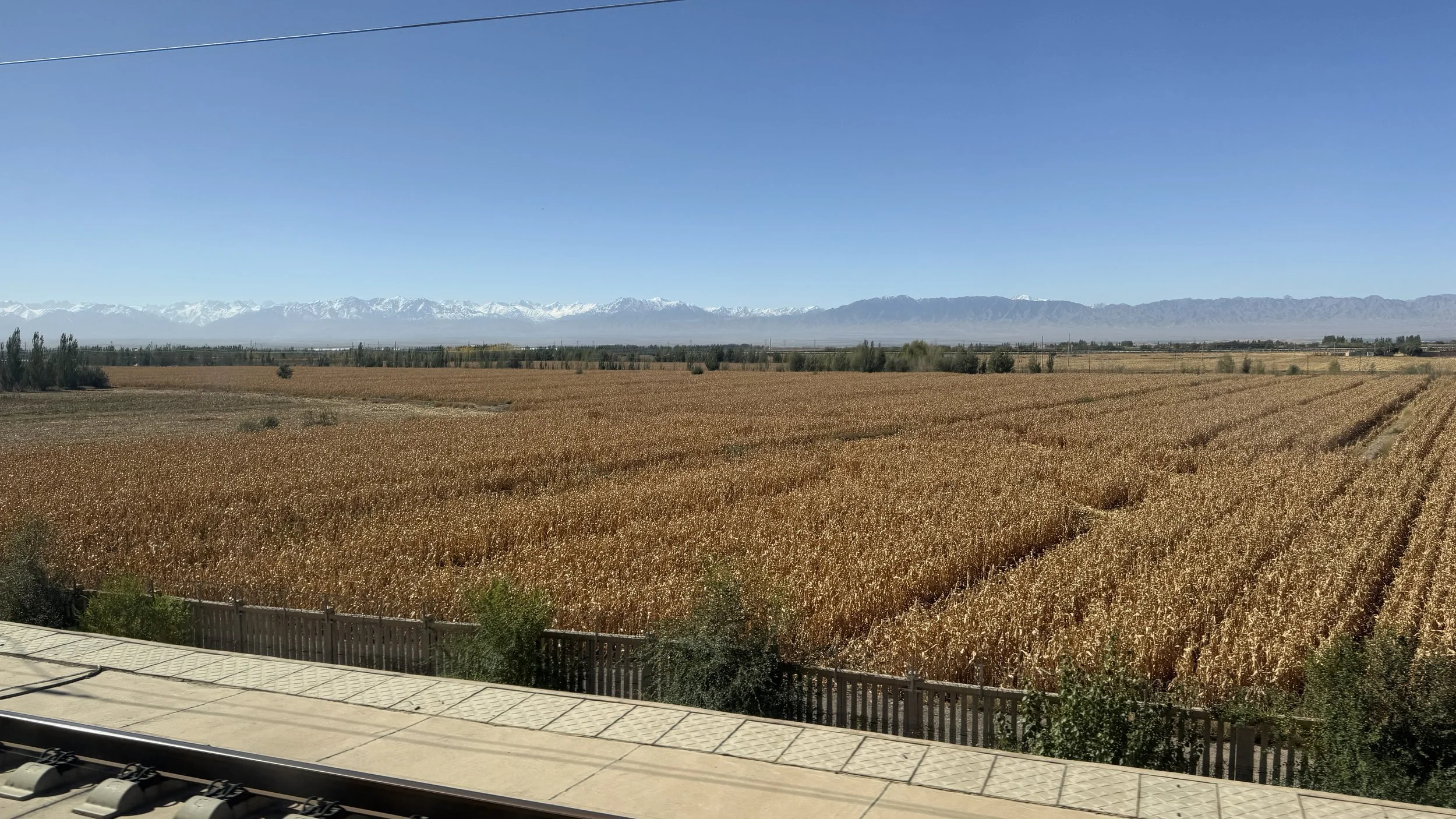
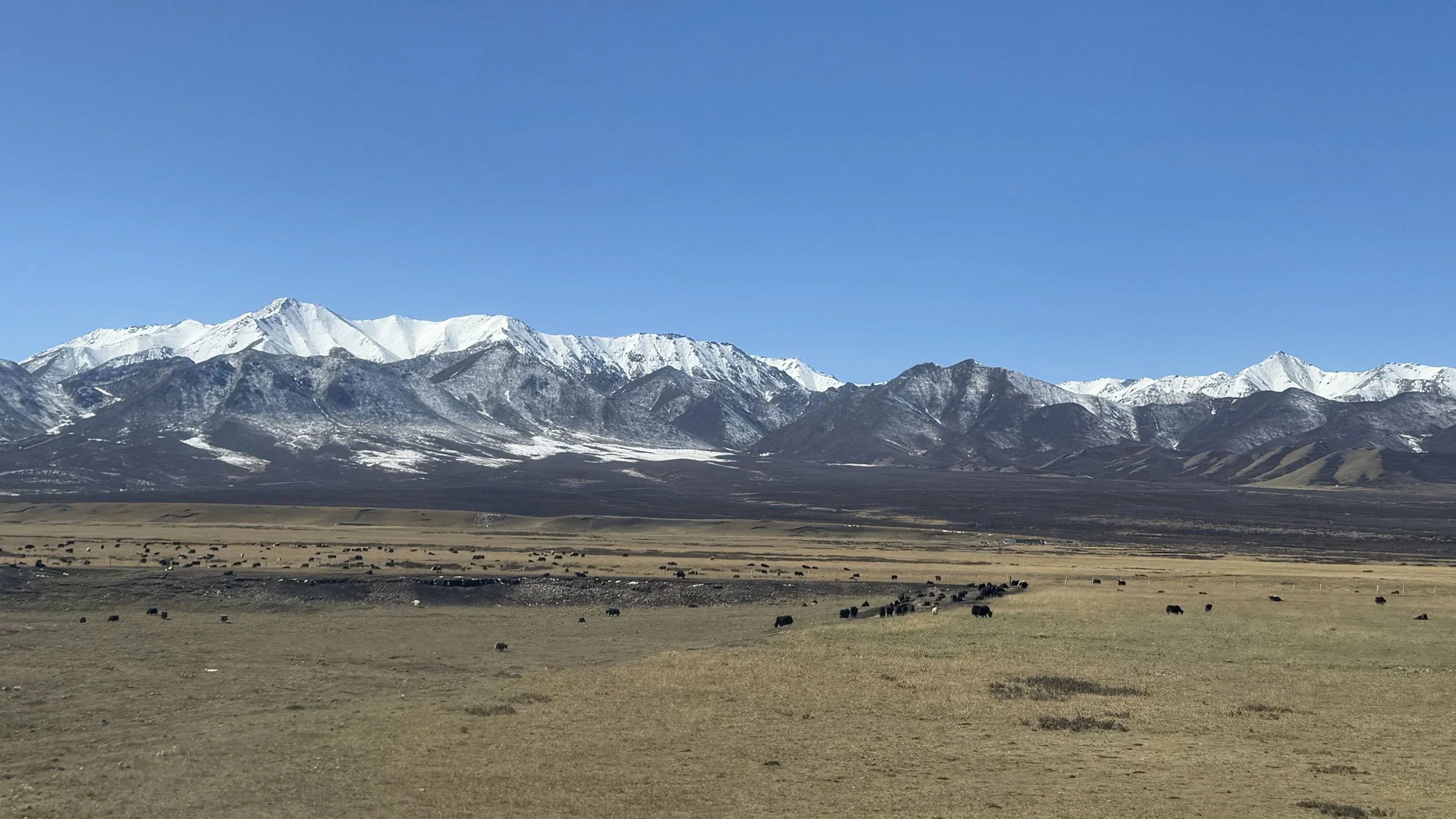
After that, we headed to the high-speed rail station and took a train to Yinchuan. On board, we first bought the braised pork clay-pot rice offered on the train for lunch, but it was quite disappointing—almost all white rice but little meat. Fortunately, we discovered that nowadays in China you can order food delivery on high-speed trains, which is brought directly to your seat when the train stops at a station. Of course, this service is available only at some of the larger stations, and the choice of vendors is limited. We ordered two roujiamo from a shop at Lanzhou West Station. Just a few minutes after the train departed, a crew member arrived at our seats carrying the takeout bags. The roujiamo were hot and delicious—this service is truly fantastic.
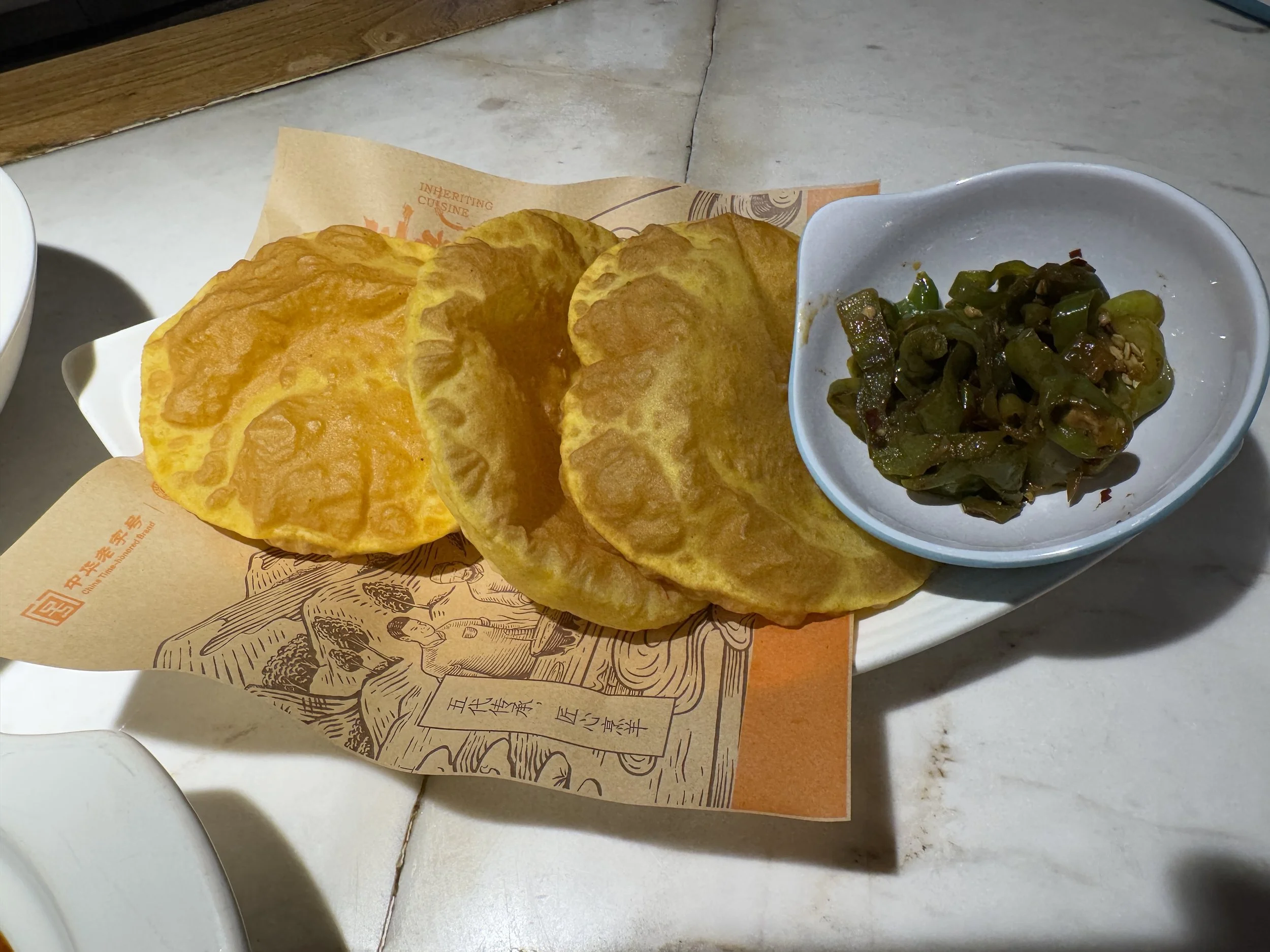
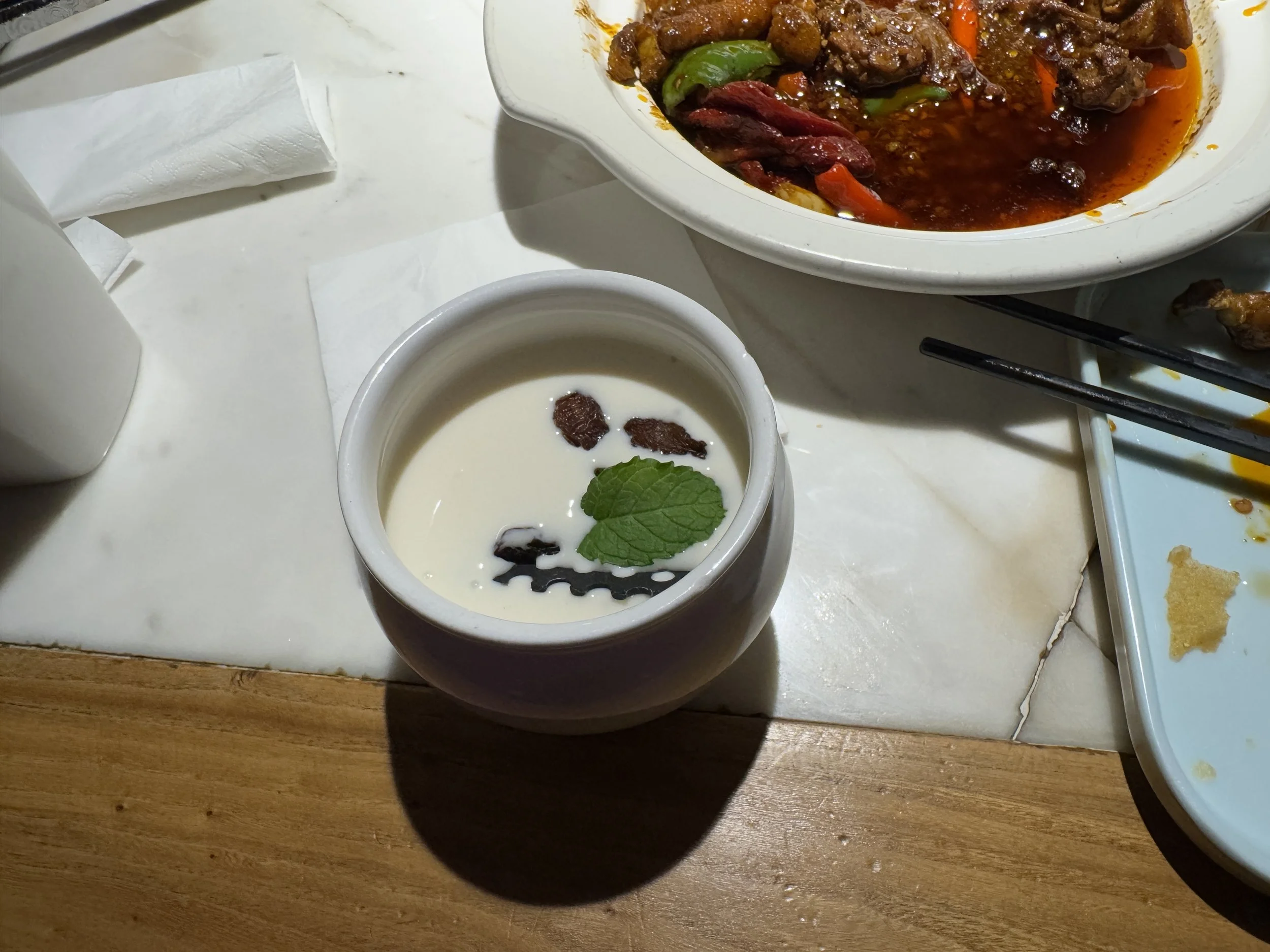
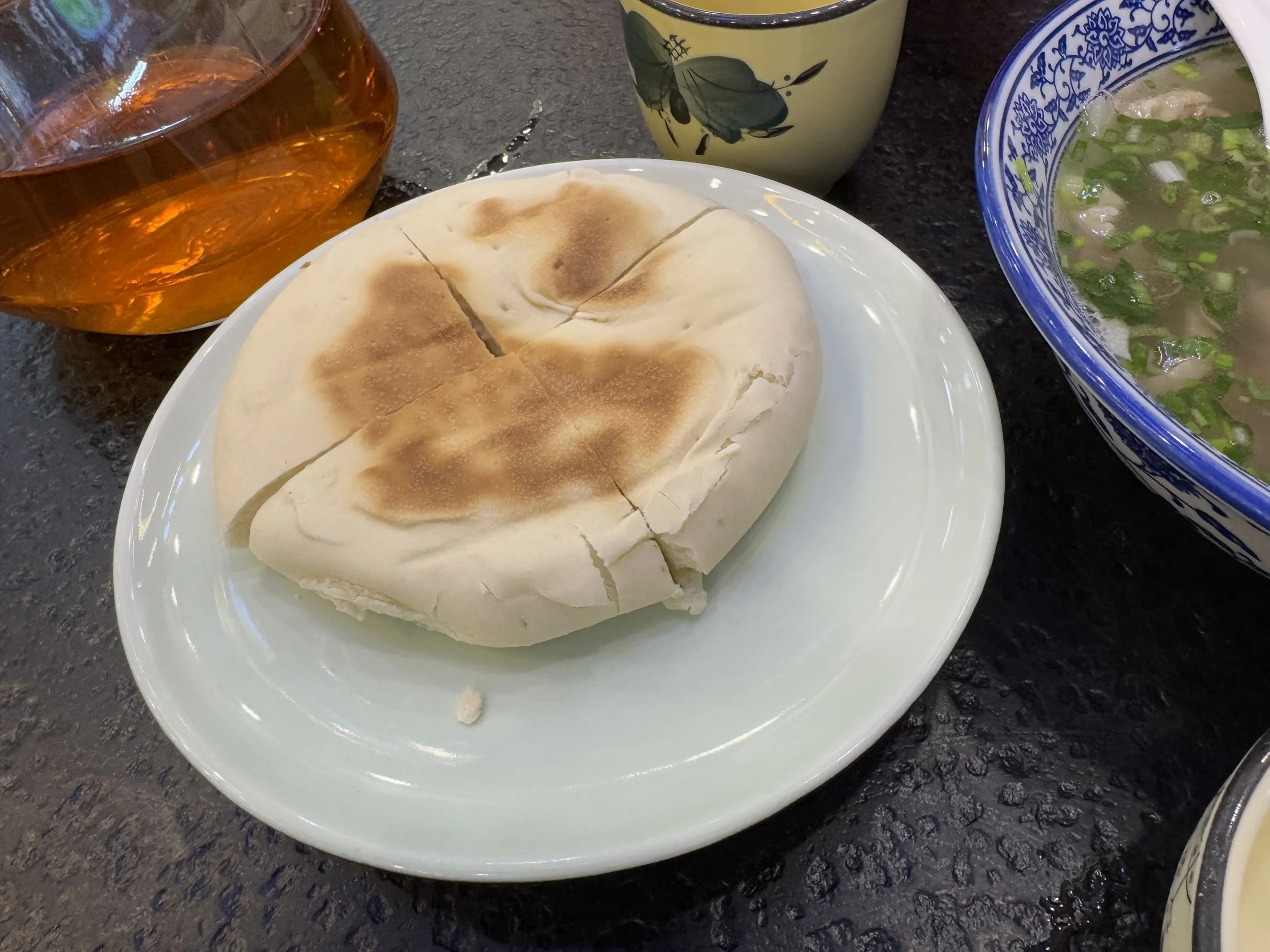
After arriving in Yinchuan and checking into our hotel, we had dinner at a restaurant next to the hotel, where we enjoyed the best yóuxiāng flatbread and traditional aged yogurt we’d had.
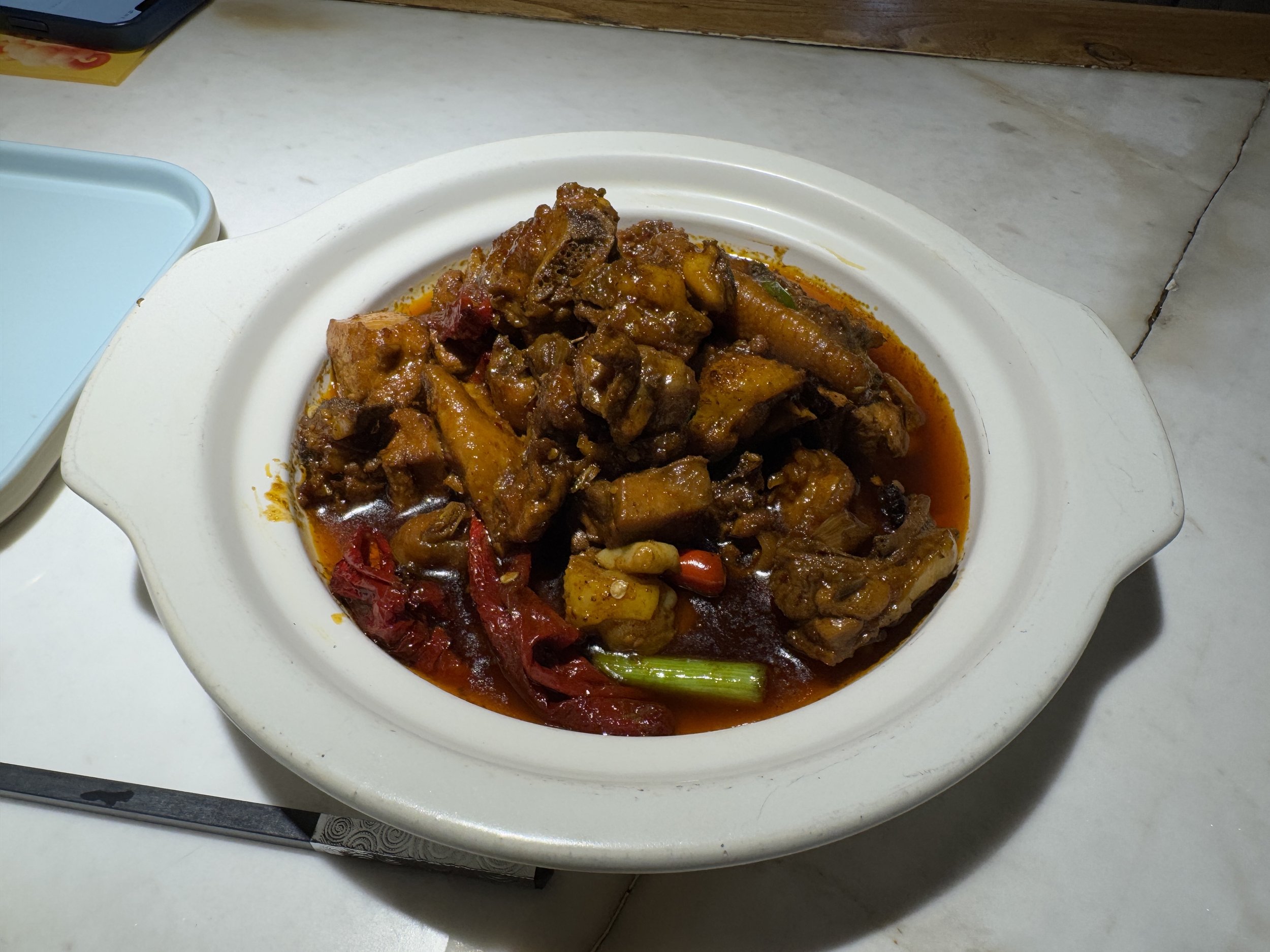
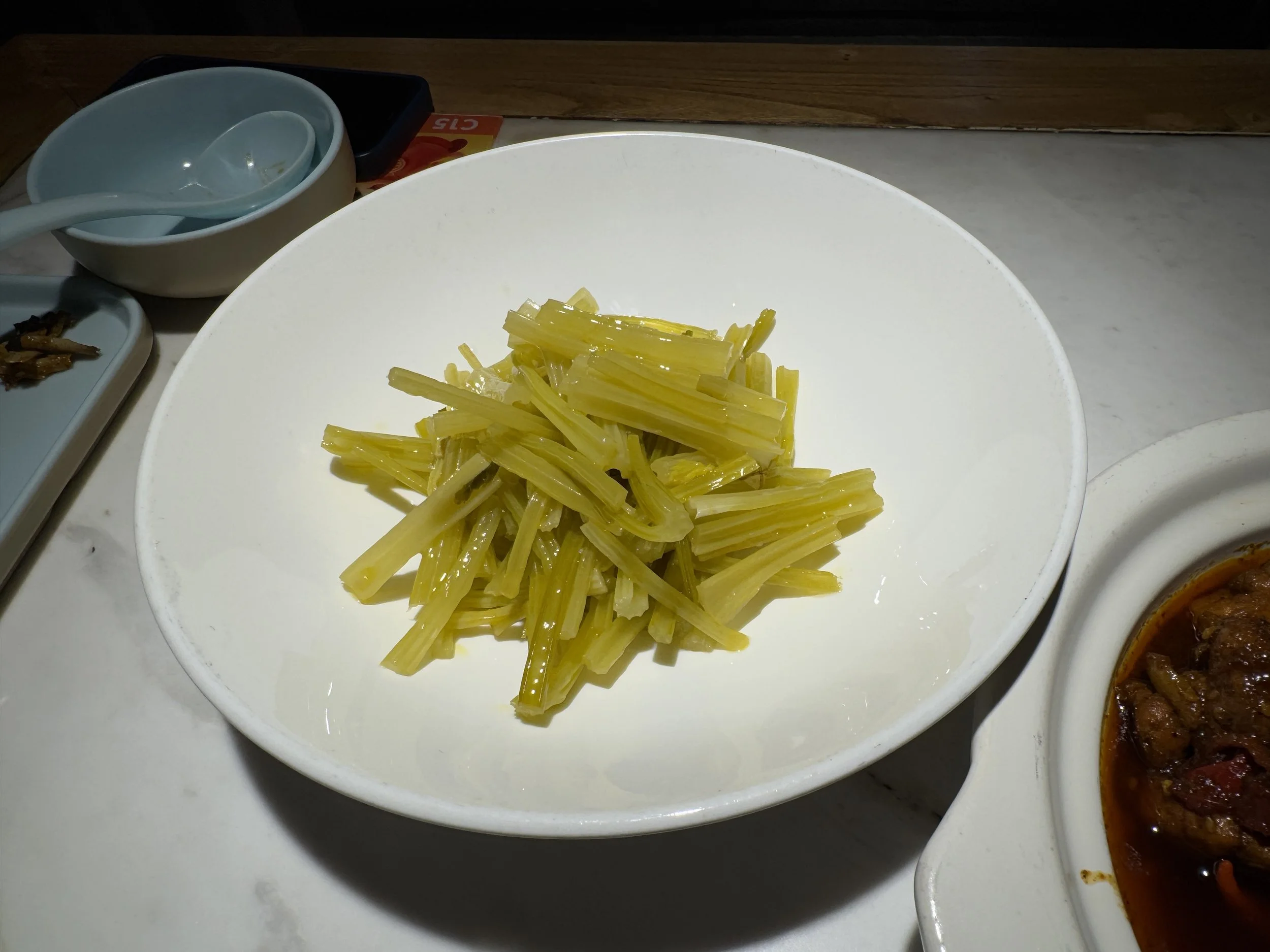
The next day, we first visited an aunt who, together with her husband, had moved to China’s northwest and devoted her entire life to helping build a university there more than 65 years ago. We shared lunch together, and our thoughtful cousin chose a restaurant featuring southern Chinese flavors; the authentic dishes were no less impressive than those in Shanghai.
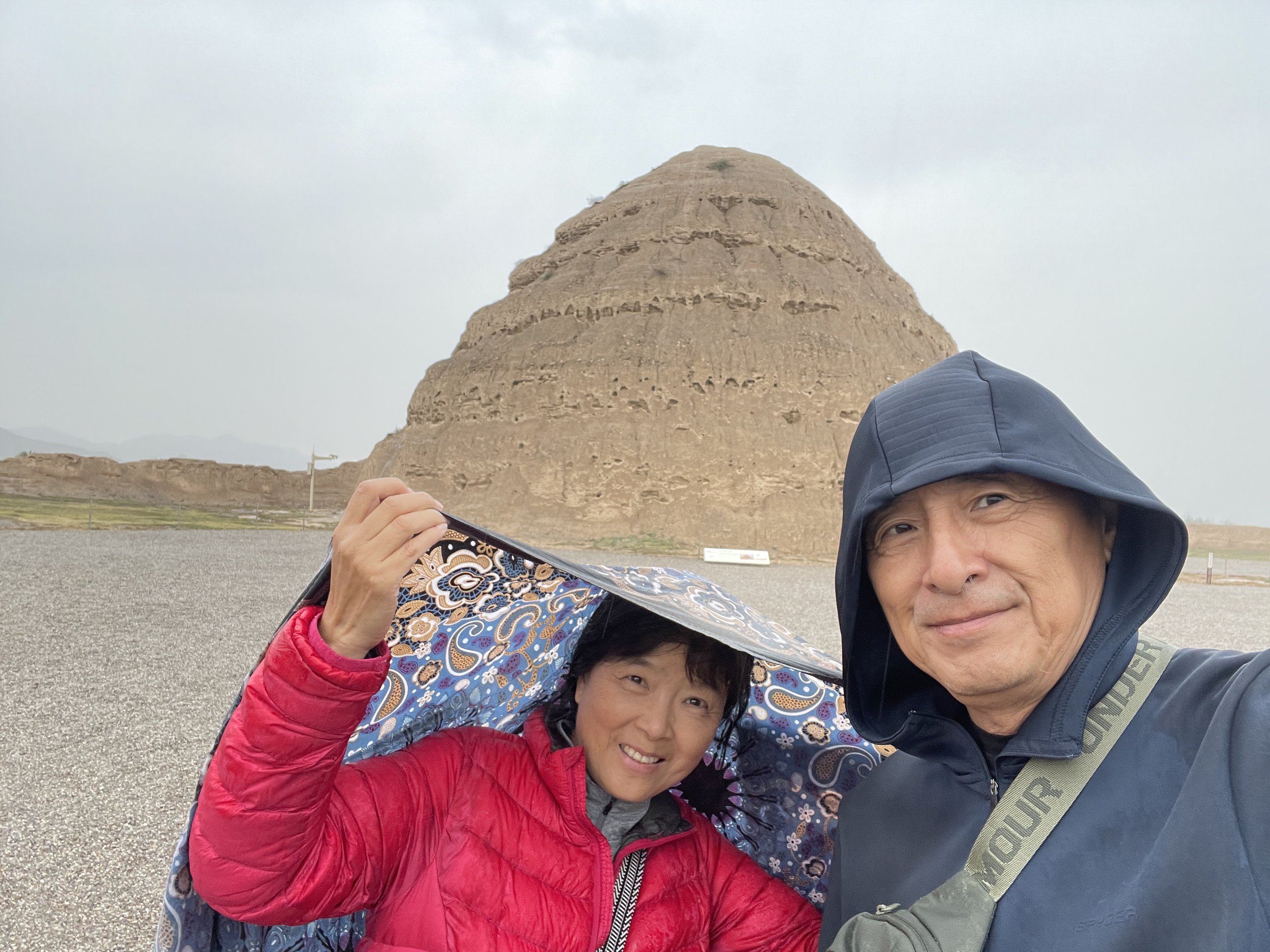
In the afternoon, we visited the Western Xia Tombs, often referred to as the “Pyramids of the East.” We had known very little about the history and culture of the Western Xia beforehand, so starting with the Western Xia Museum gave us a foundational understanding of this dynasty, which emerged after breaking away from the Song dynasty, and deepened our appreciation for its unique contributions to Chinese civilization. We then took a shuttle bus to visit the tombs themselves. Although a light drizzle accompanied our visit to Tomb No. 3, the experience still felt thoroughly worthwhile.
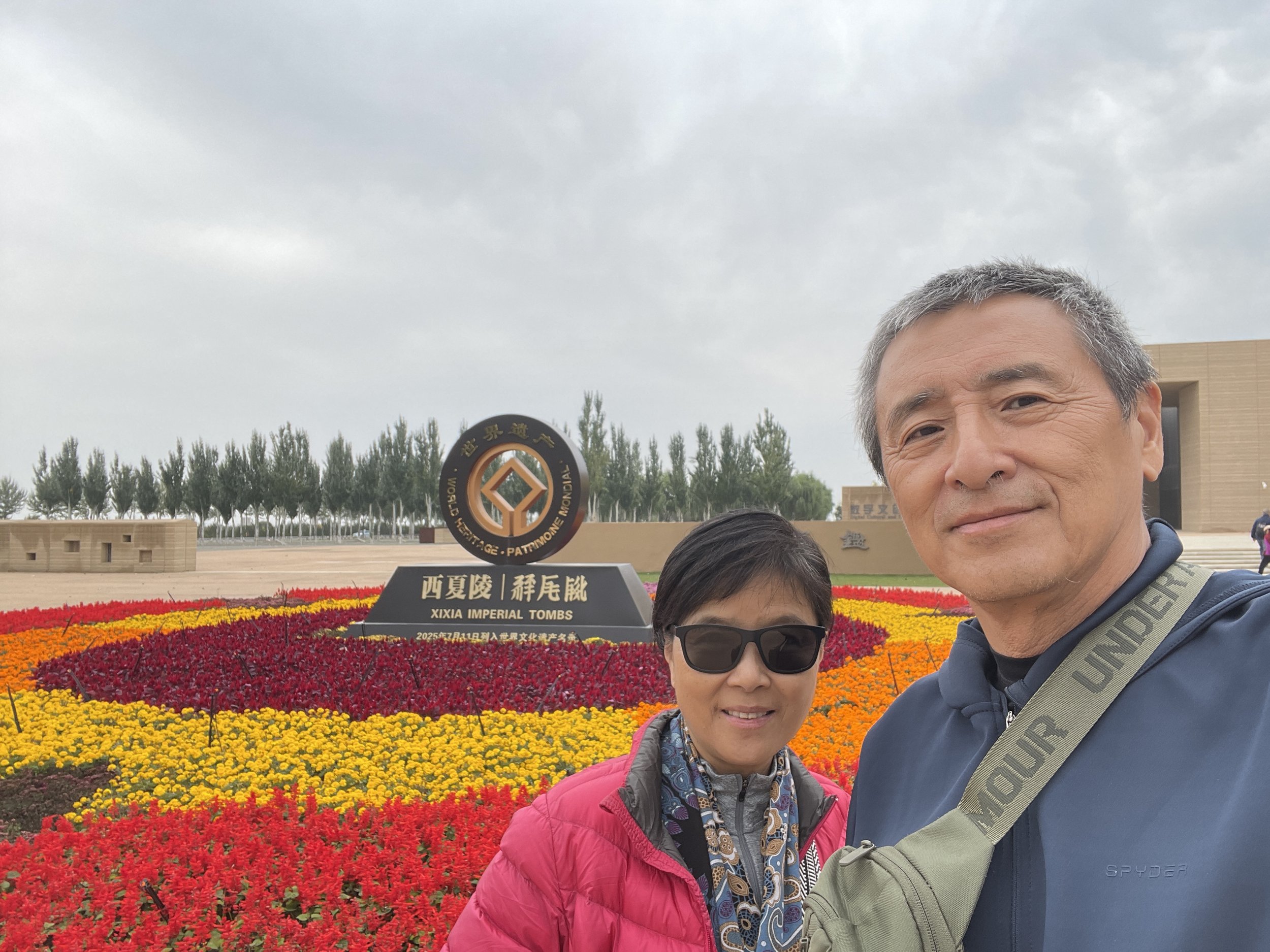
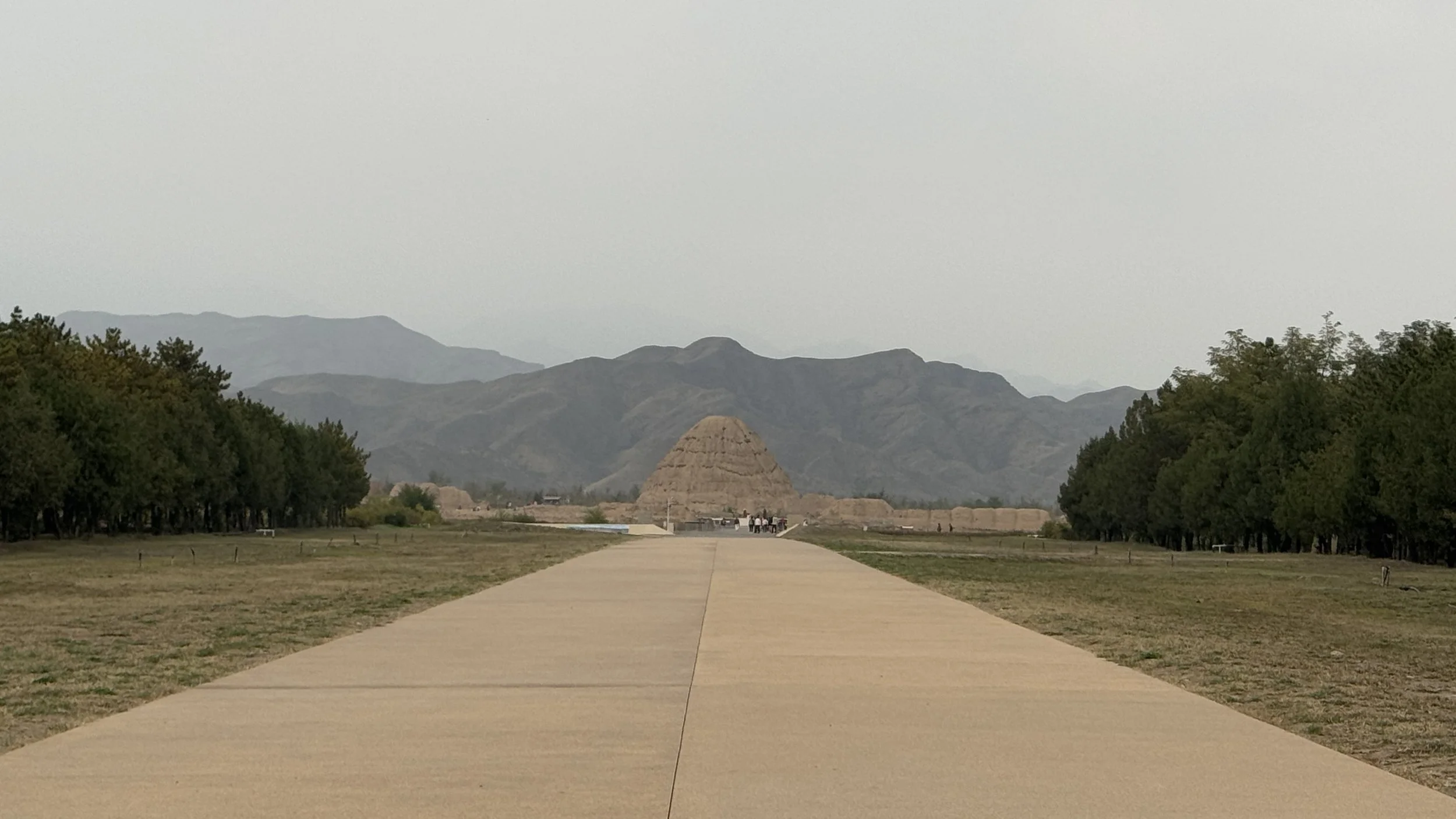
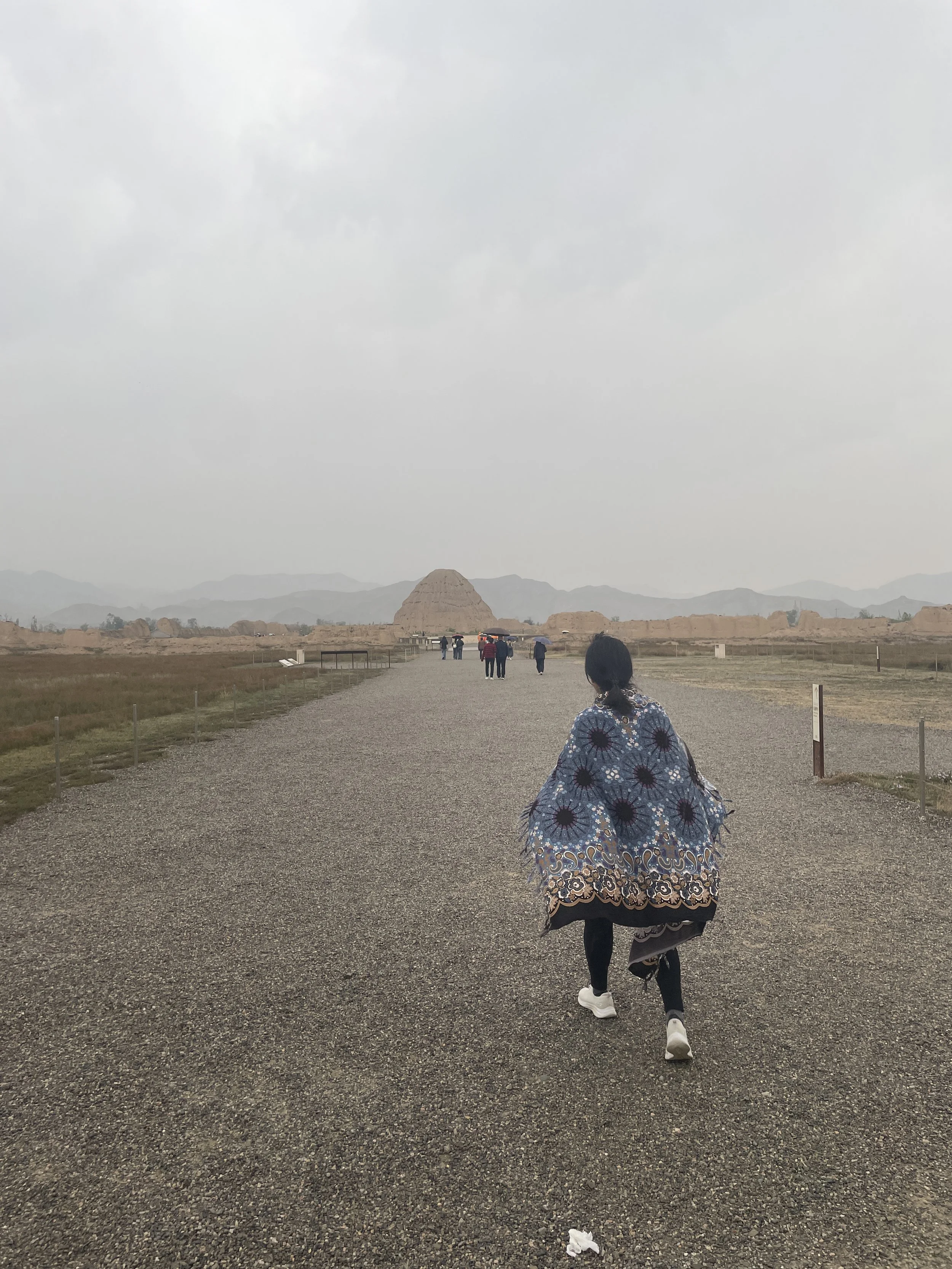
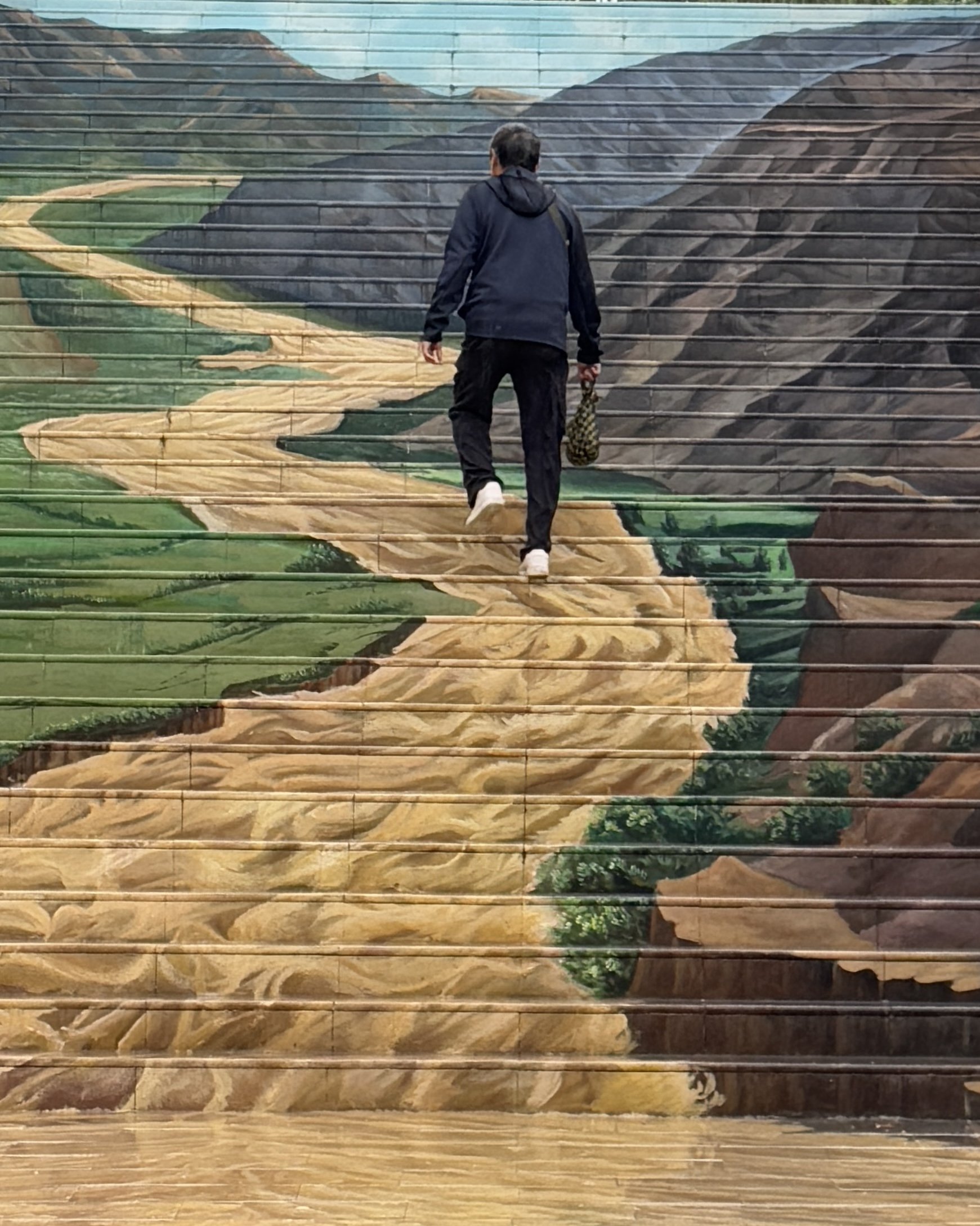
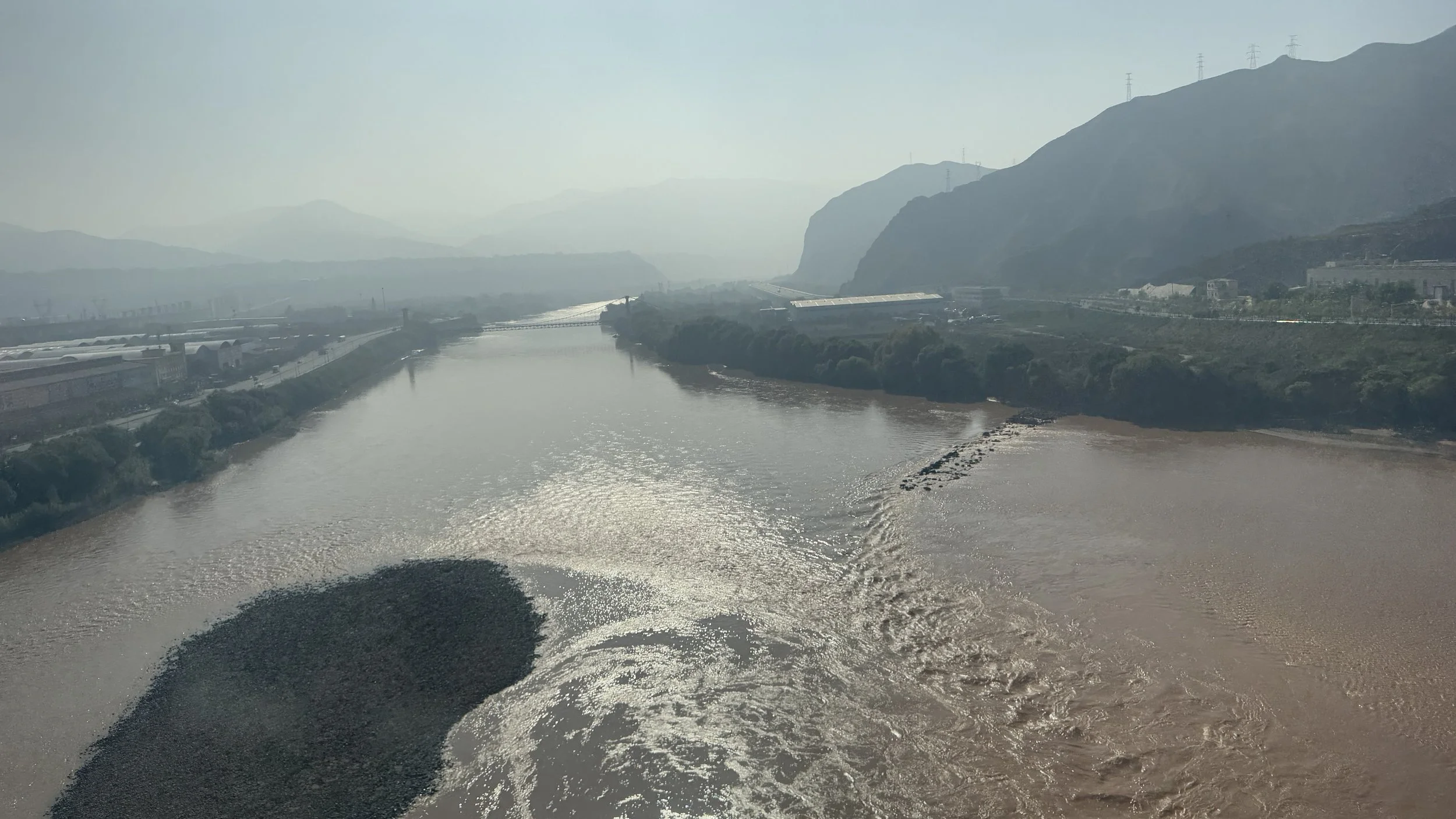
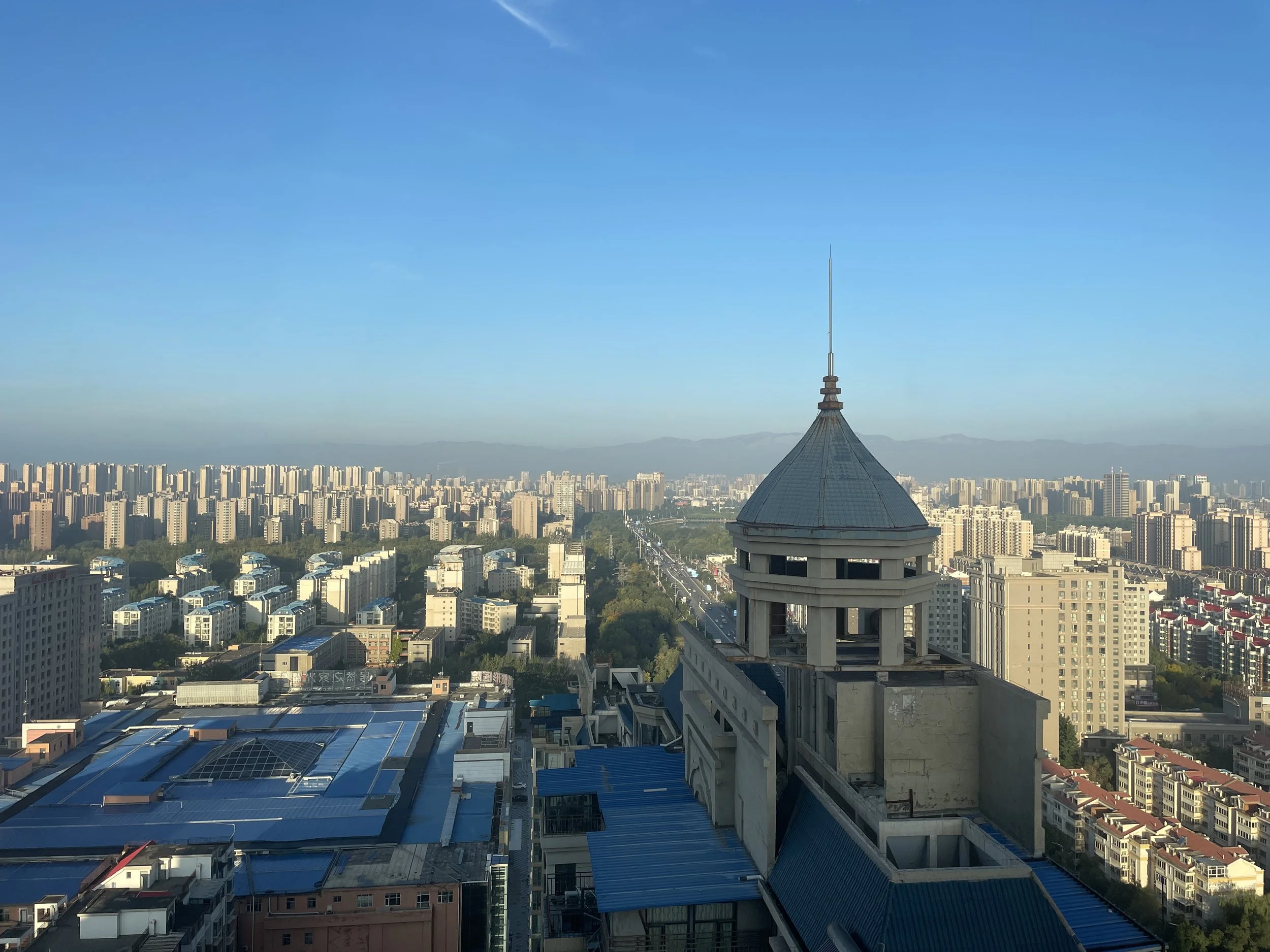
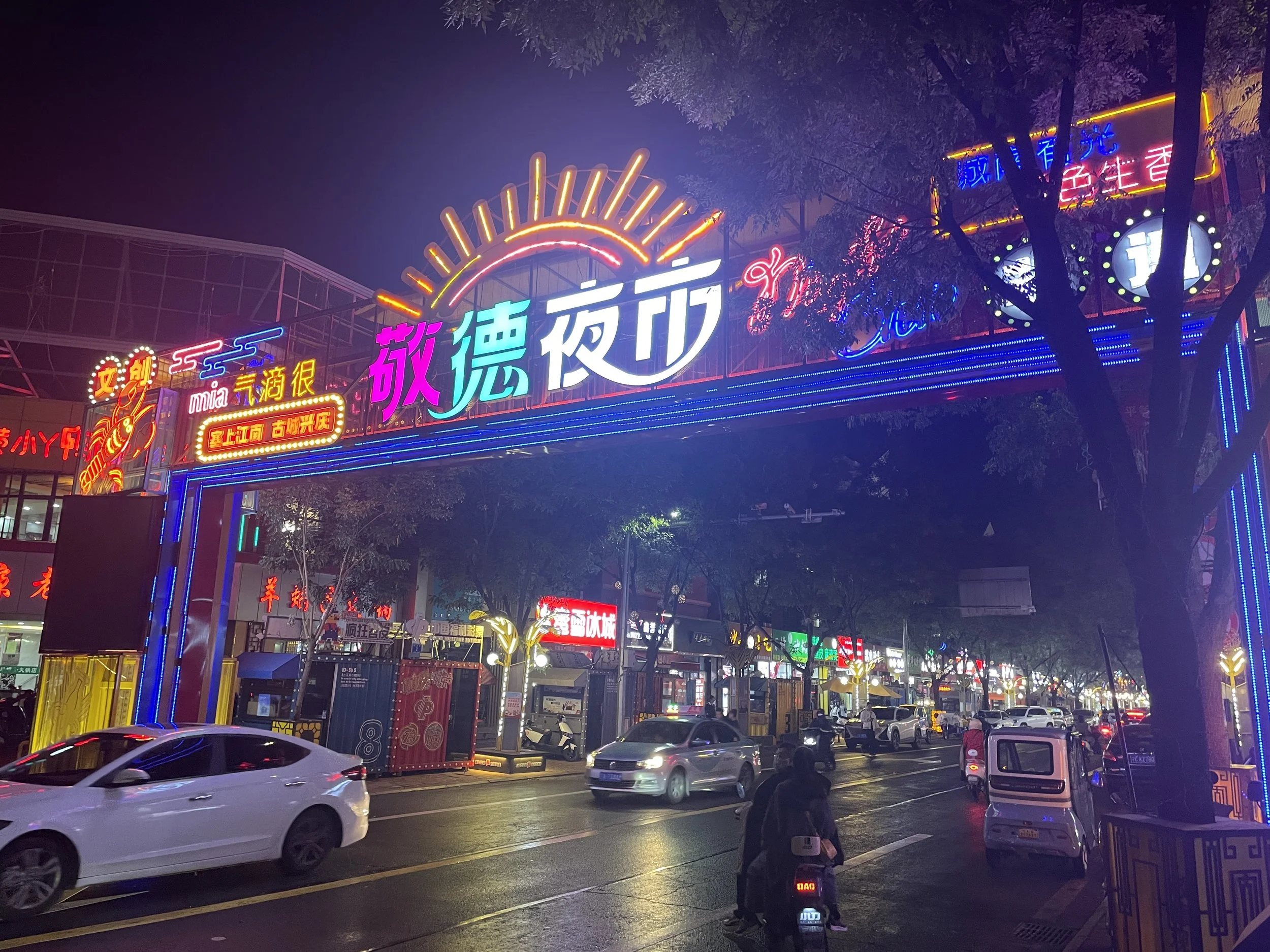
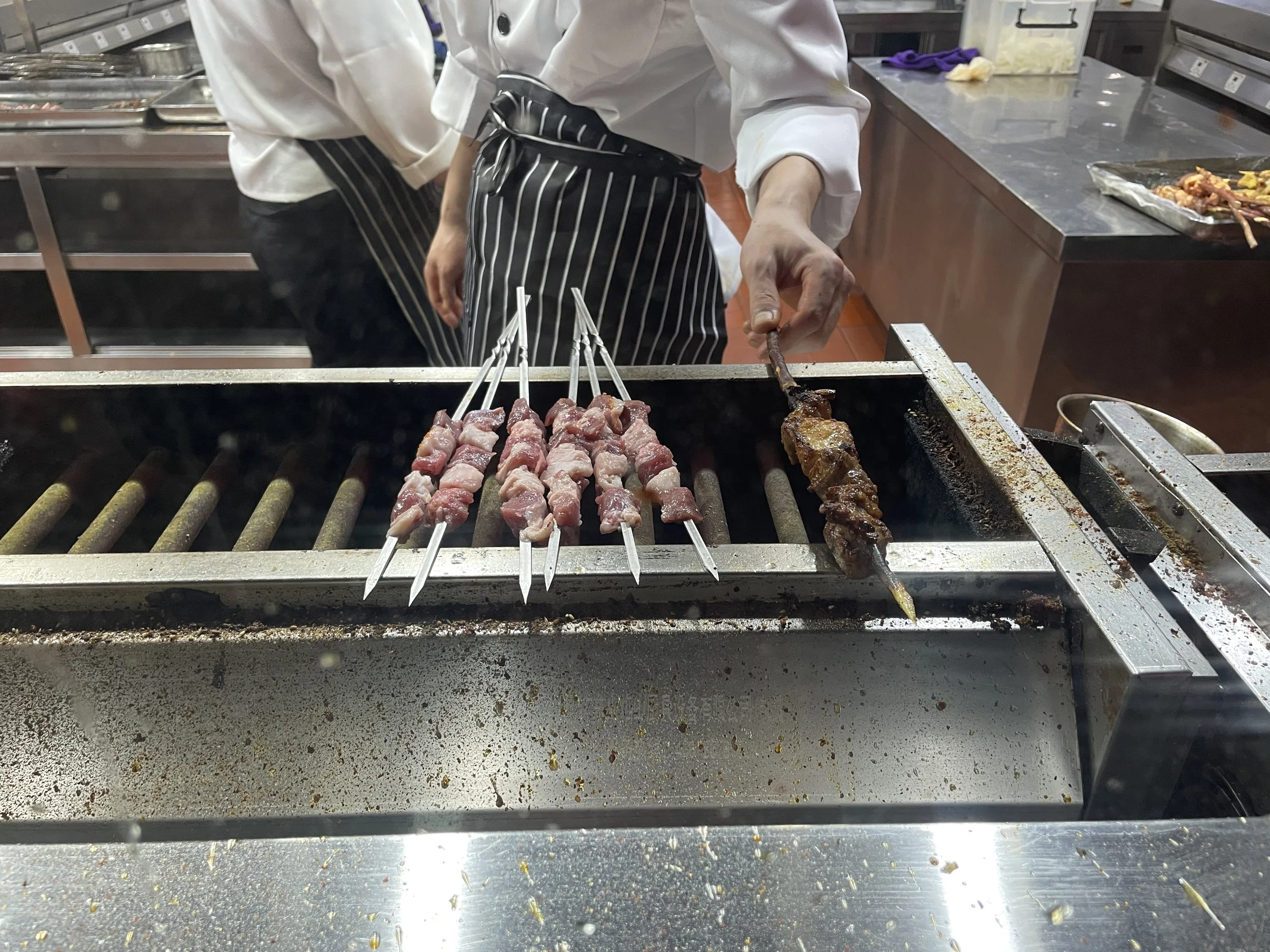
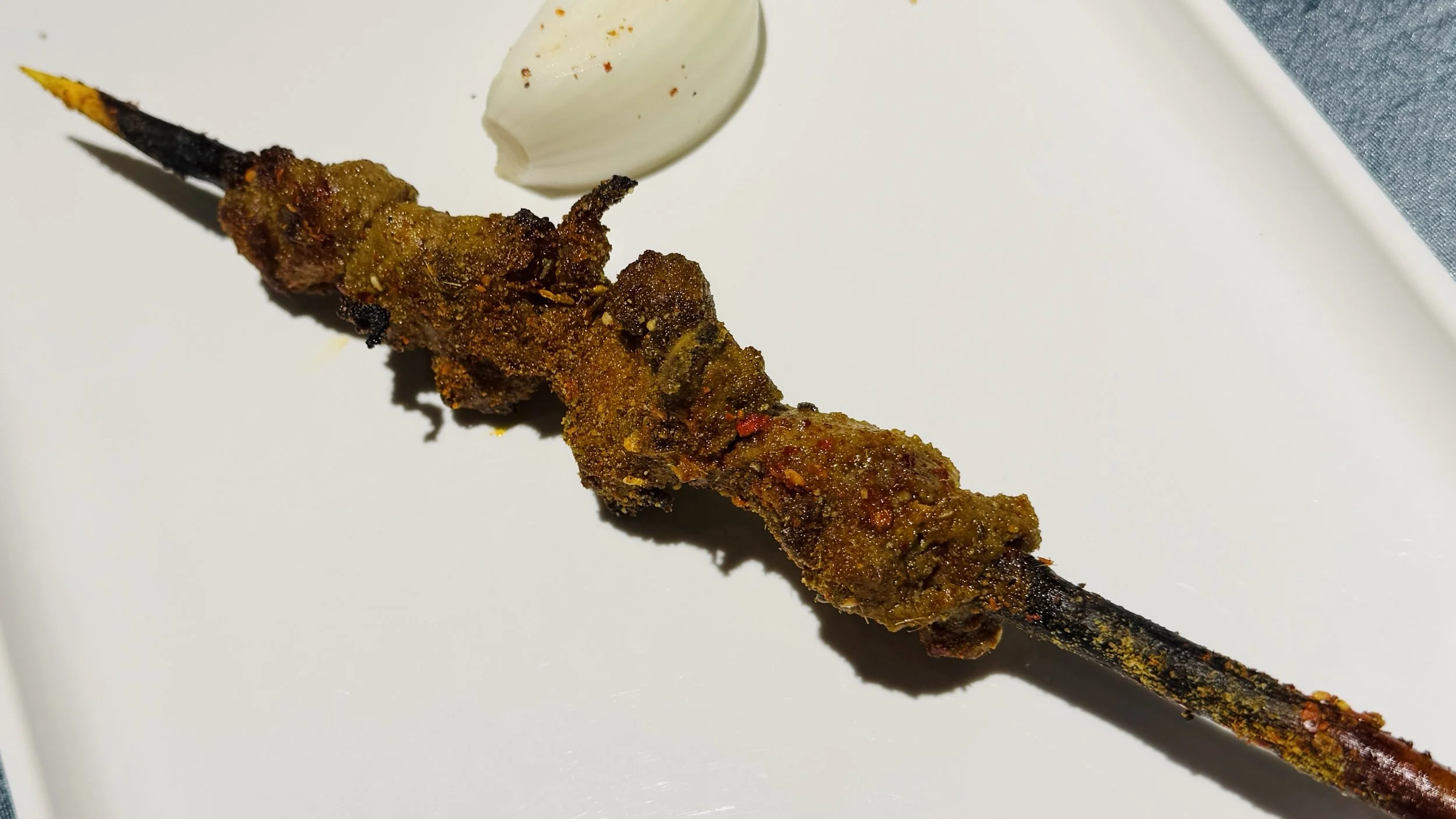
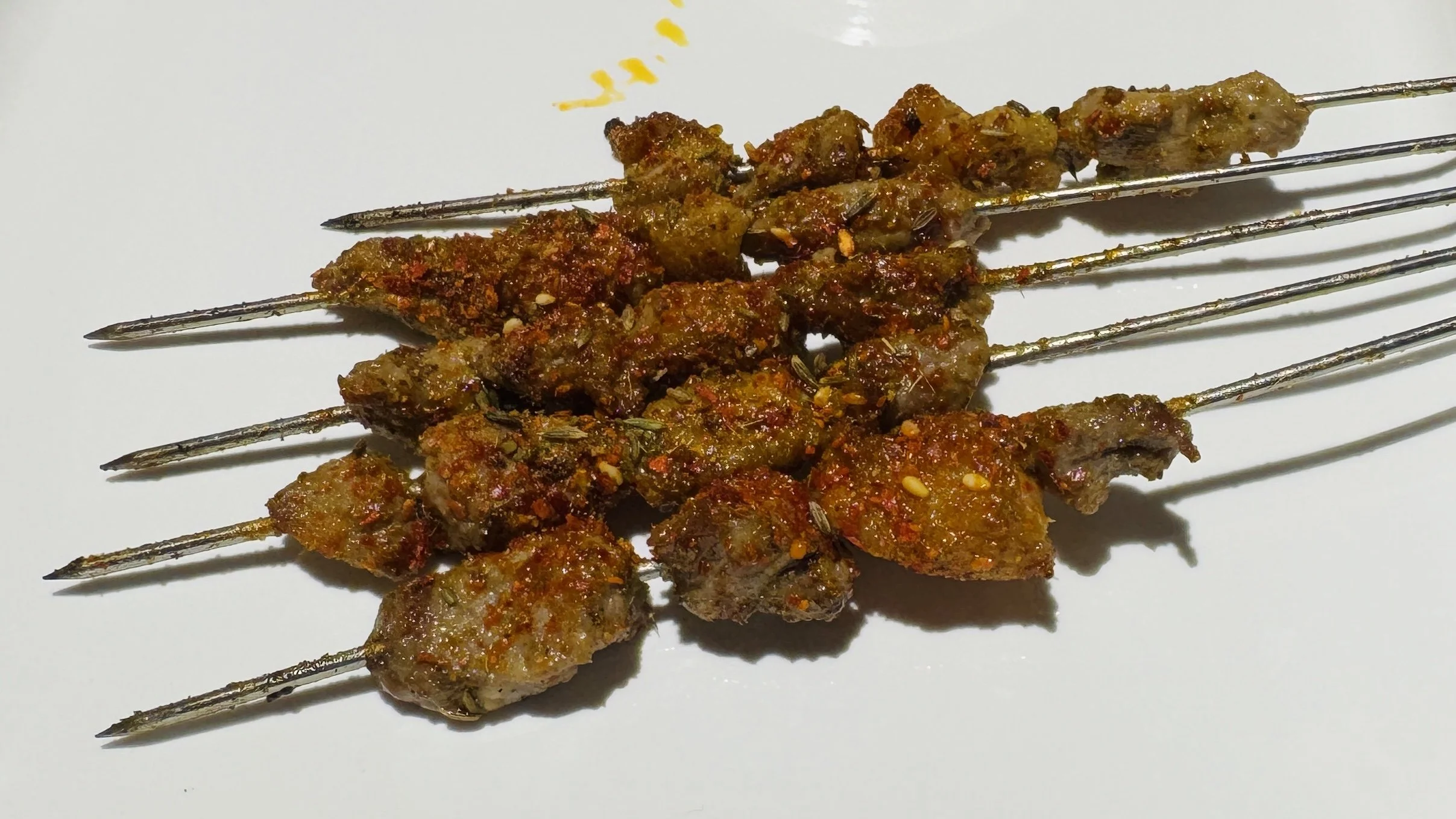
Yinchuan is clean and orderly, with modern, well-designed architecture. For dinner, we enjoyed local specialty barbecue—very authentic and delicious. The only regret was that our stay was too short; we didn’t even have time to visit the banks of the Yellow River. That will have to wait until our next visit.
大佛寺,西夏王陵
2025年10月13-14日
在张掖住了一晚,第二天早晨我们参观了大佛寺(Giant Buddha Temple)。这座寺庙最早建于西夏时期,寺内供奉着一尊长约35米的巨大卧佛,是中国最大的室内泥塑卧佛,气势宏伟,令人叹为观止。
随后我们前往高铁站,坐火车前往银川。在火车上首先买了车上提供的腊肉煲仔饭作为午餐,很失望,几乎全是白米饭。幸运的是,我们发现如今中国在高铁上都可以订外卖,到站时会送上火车。当然只是一些稍大的火车站提供这项服务,并且店家也是很有限的。我们从兰州西站的一家肉夹馍店订了二份肉夹馍,火车离开兰州西站没几分钟,乘务员便拎着外卖袋送到我们的坐位,热乎乎的肉夹馍非常好吃,这个服务真的是超级棒。
抵达银川,入住酒店之后,在酒店旁的一家餐馆就餐。吃到了最好吃的油香饼和老酸奶。
第二天,我们首先拜访了从上海去大西北扎根办学工作一辈子的阿姨,姨父一家并且与他们共聚午餐。周到的表弟特地选了家南方口味的饭店,地道美食不比上海差。下午参观了被誉为“东方金字塔”的西夏王陵(Western Xia Tombs)。原本对西夏的历史与文化知之甚少,先参观西夏博物馆的展览,让我们初步了解这个从宋朝分裂出来的王朝,并对其在中华文明中的独特贡献有了新的认识与敬意。然后坐接驳车去看王陵,虽然参观三号陵时天公不作美,细雨纷纷,但这次行程依然让人觉得不虚此行。
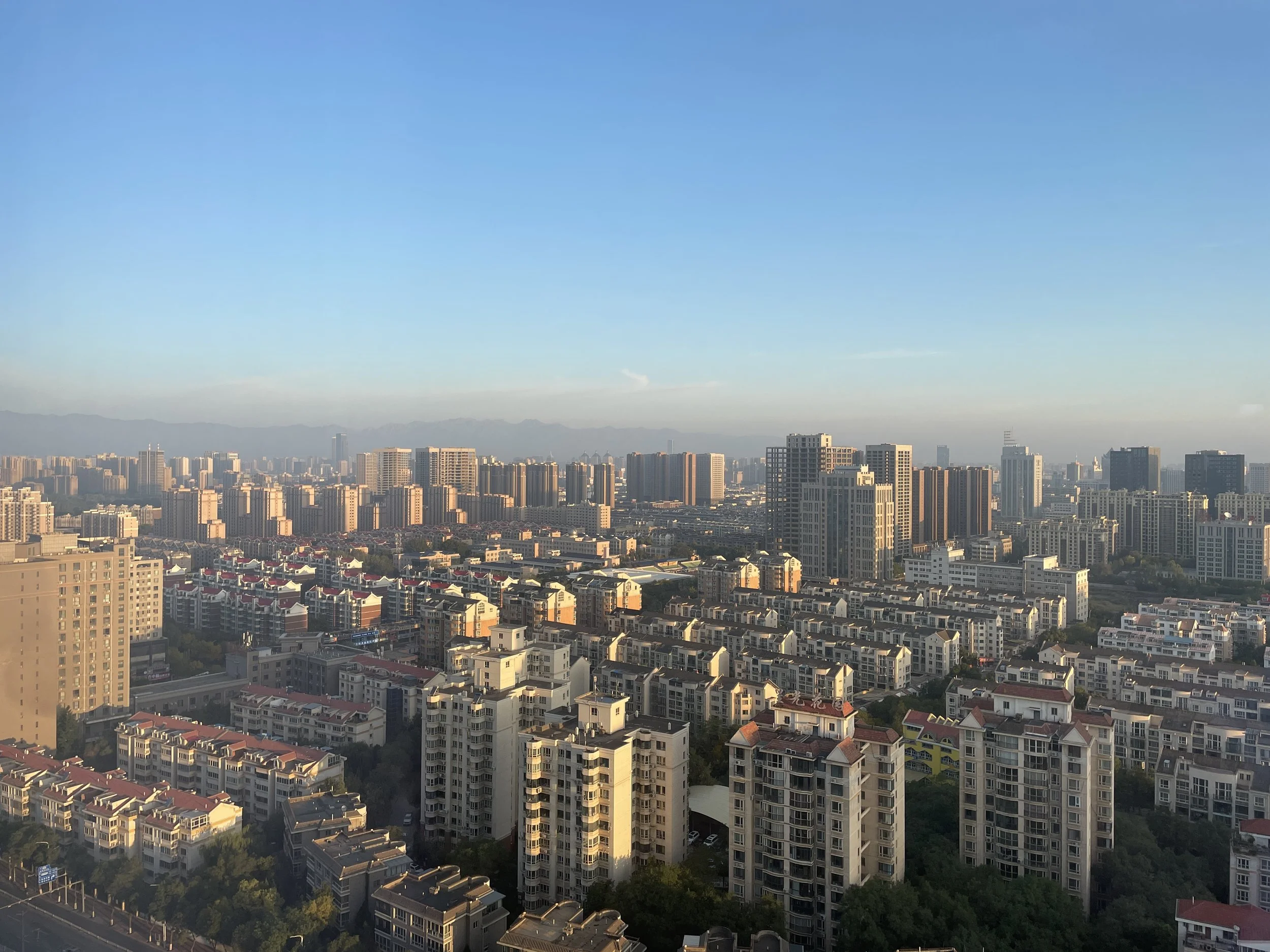
银川市区干净整洁,城市建筑现代大方。晚餐吃了当地的特色烧烤,十分地道,美味可口。唯一的遗憾是停留时间太短,连黄河边都没能去看看——只能留待下次再访了。
Jinta Populus Euphratica Forest and Rainbow Mountains 金塔胡杨林与七彩丹霞
October 12 2025
Our driver recommended that we visit the Jinta Populus Euphratica Forest,……
今天原定的计划是离开嘉峪关,。。。
October 12 2025
Our driver recommended that we visit the Jinta Populus Euphratica Forest(金塔胡杨林), another magnificent desert oasis along the Hexi Corridor, just as the autumn colors were reaching their peak. Although it was not part of our original itinerary and required an extra 100-kilometer detour from Jiayuguan Pass, we gladly agreed to pay the additional cost for the chance to experience it.
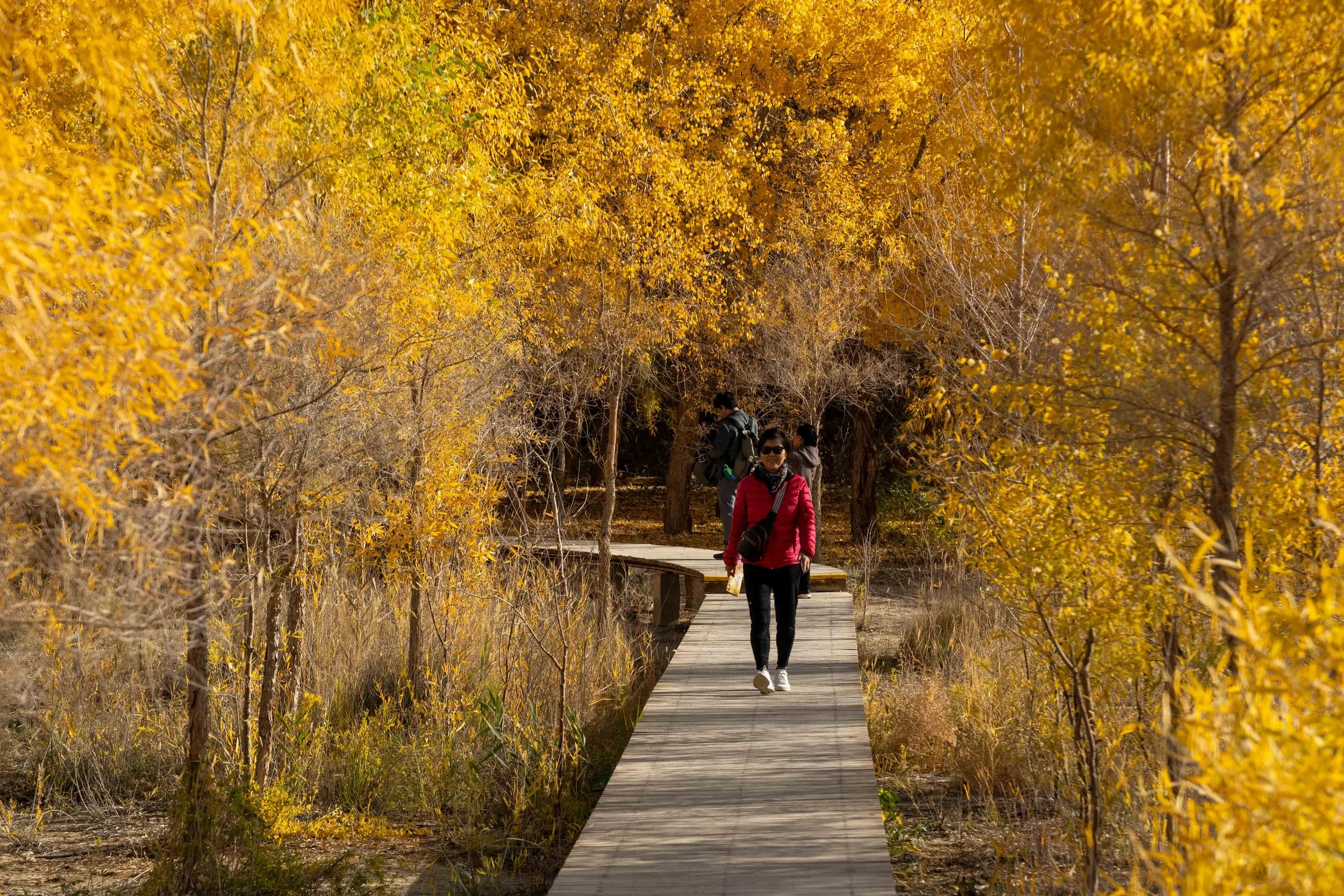
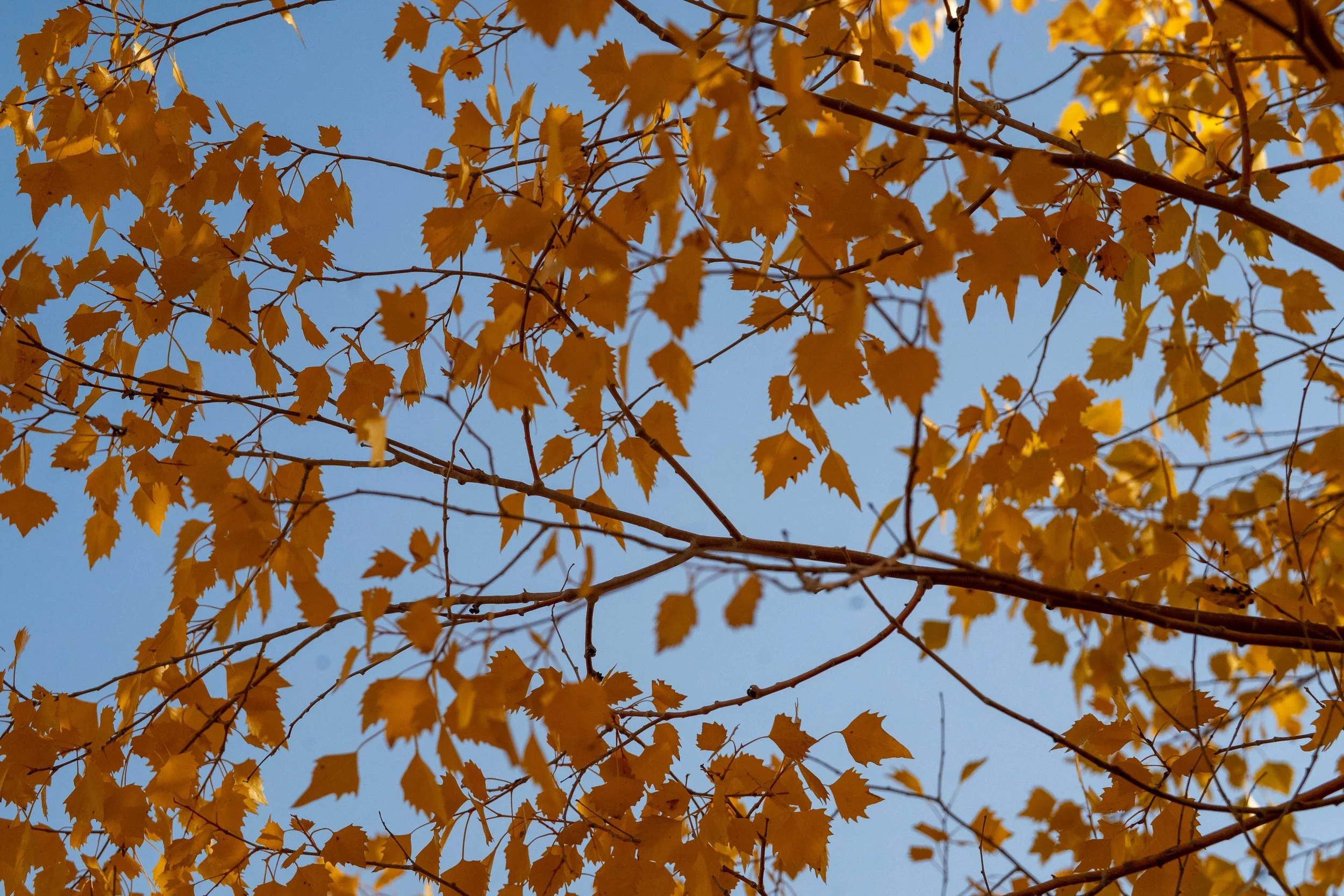
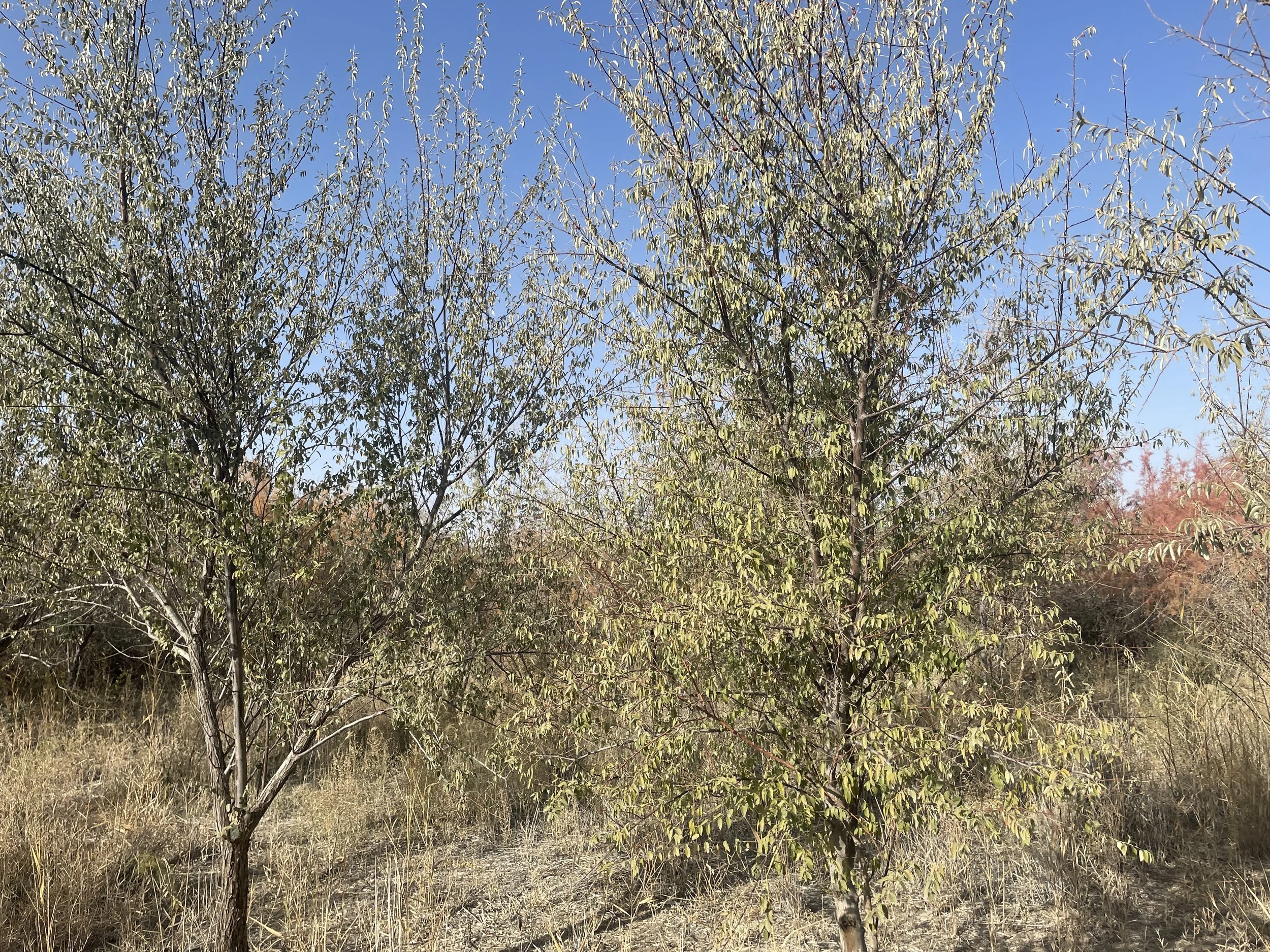
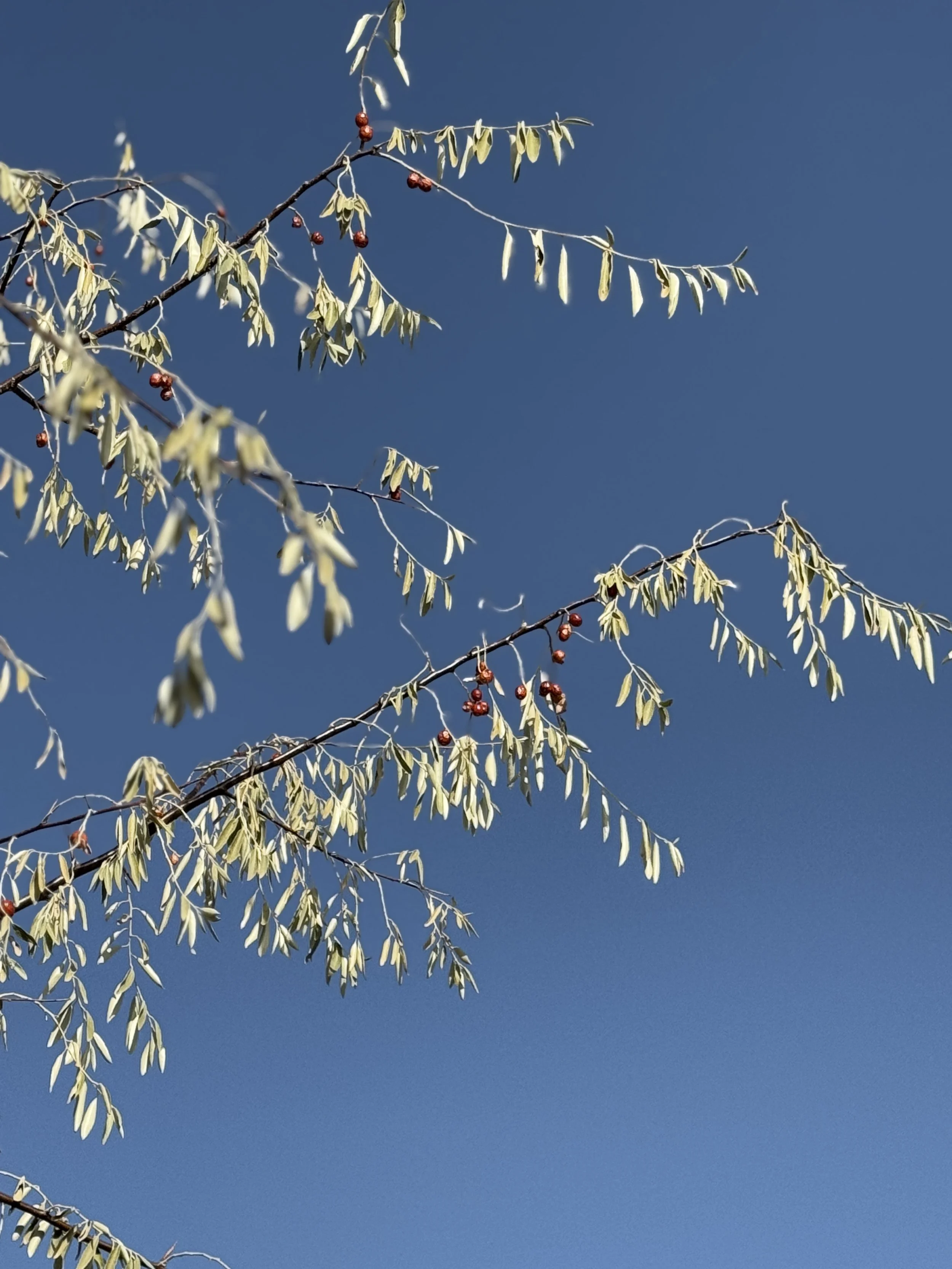
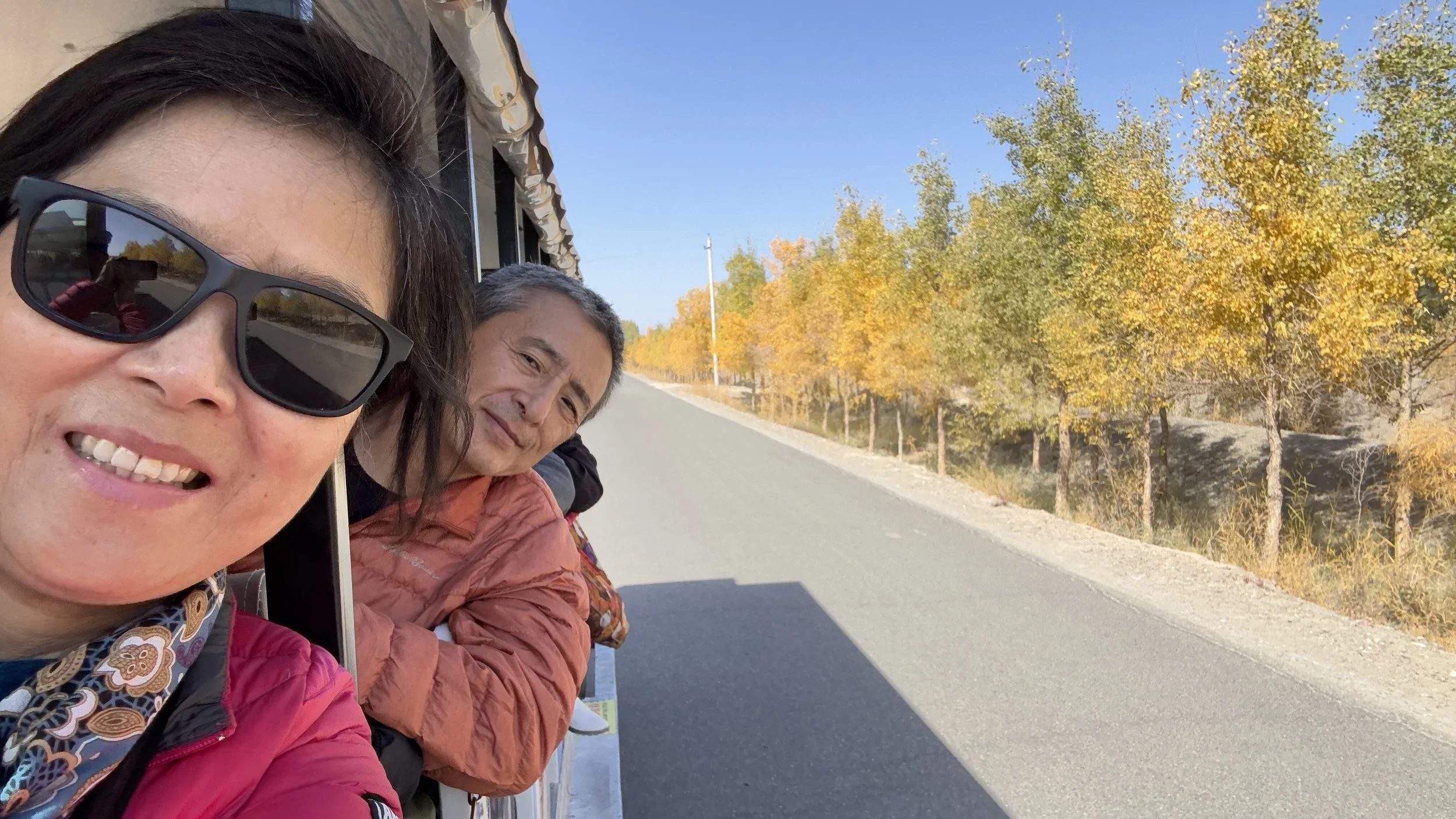
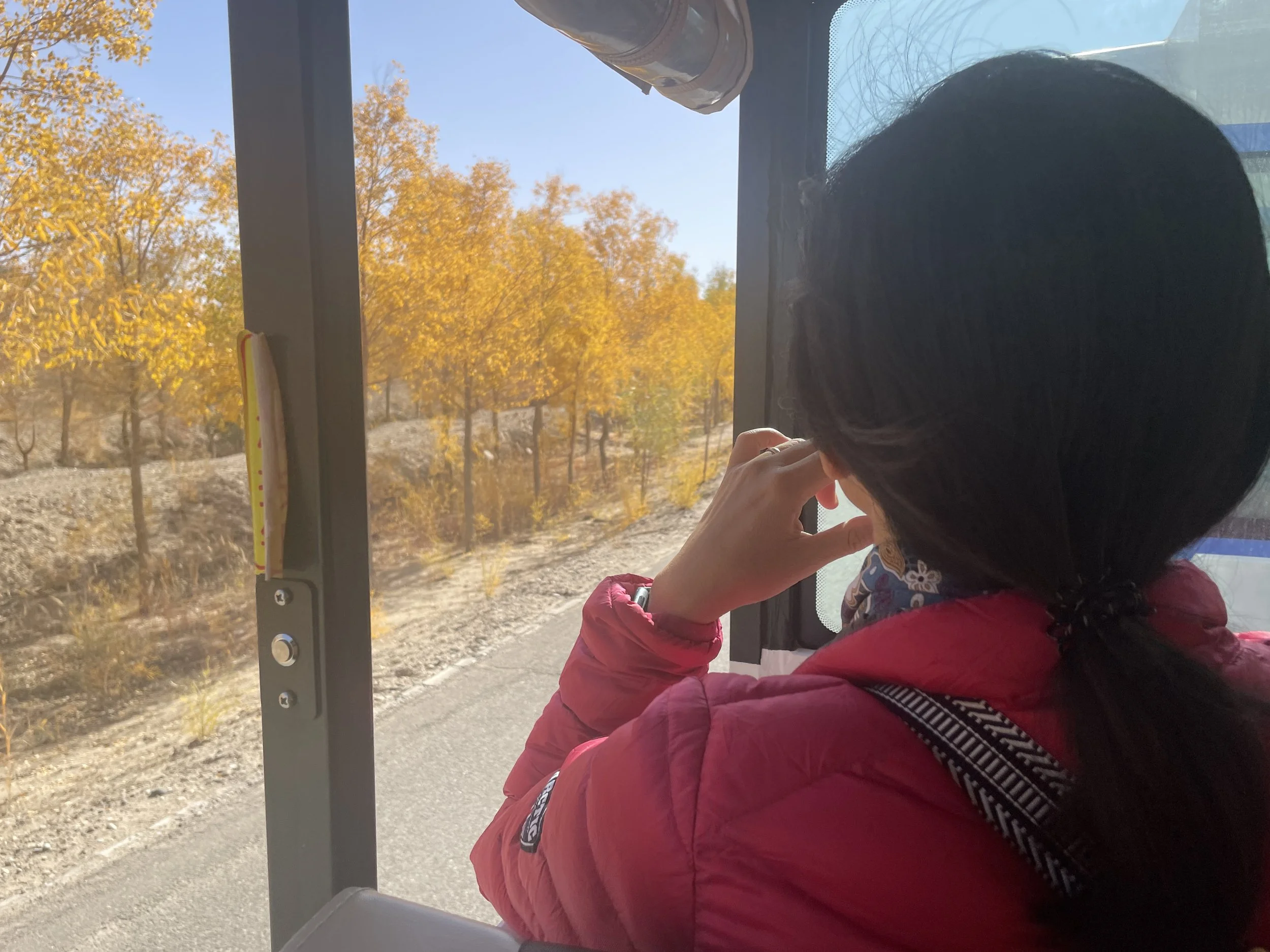
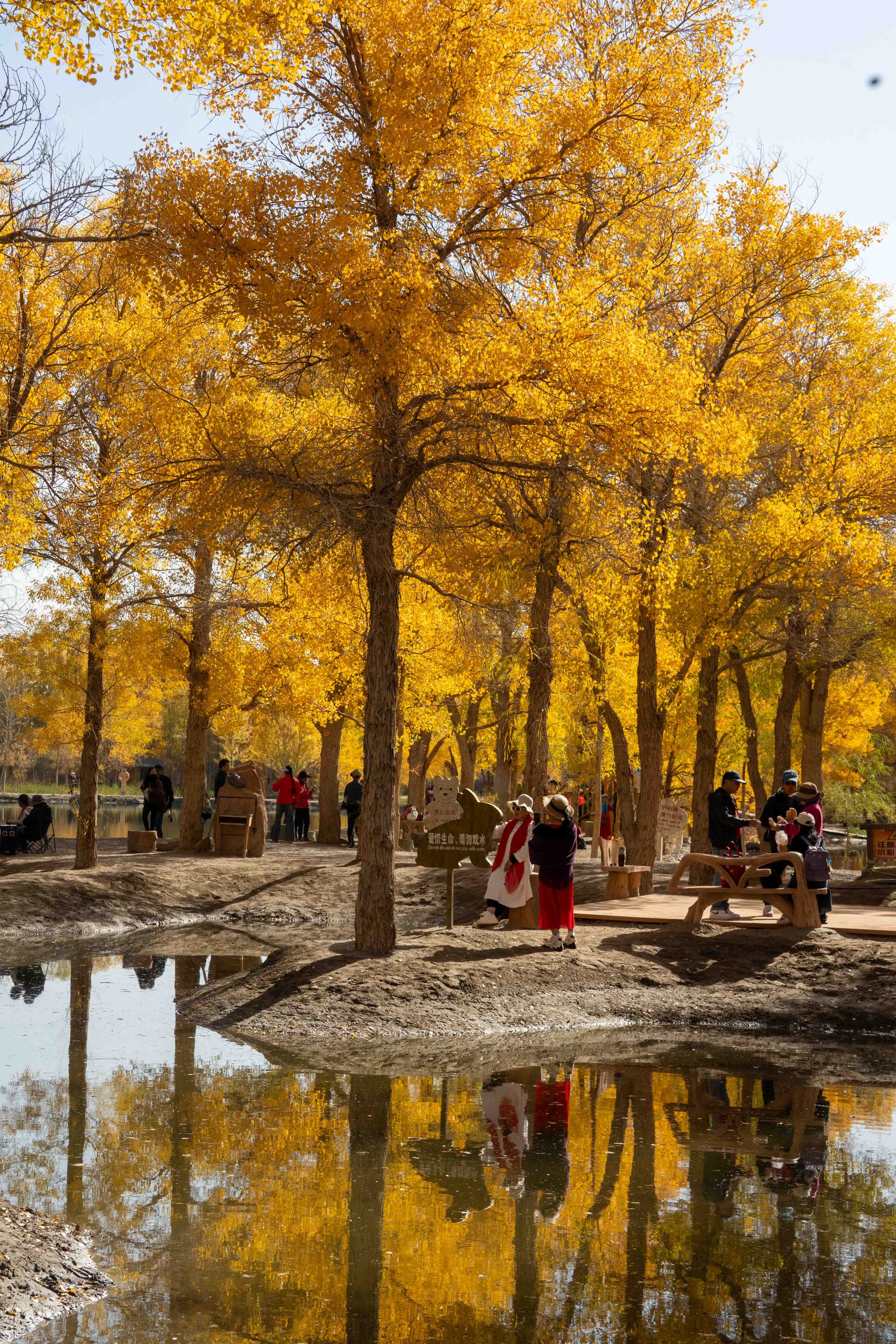
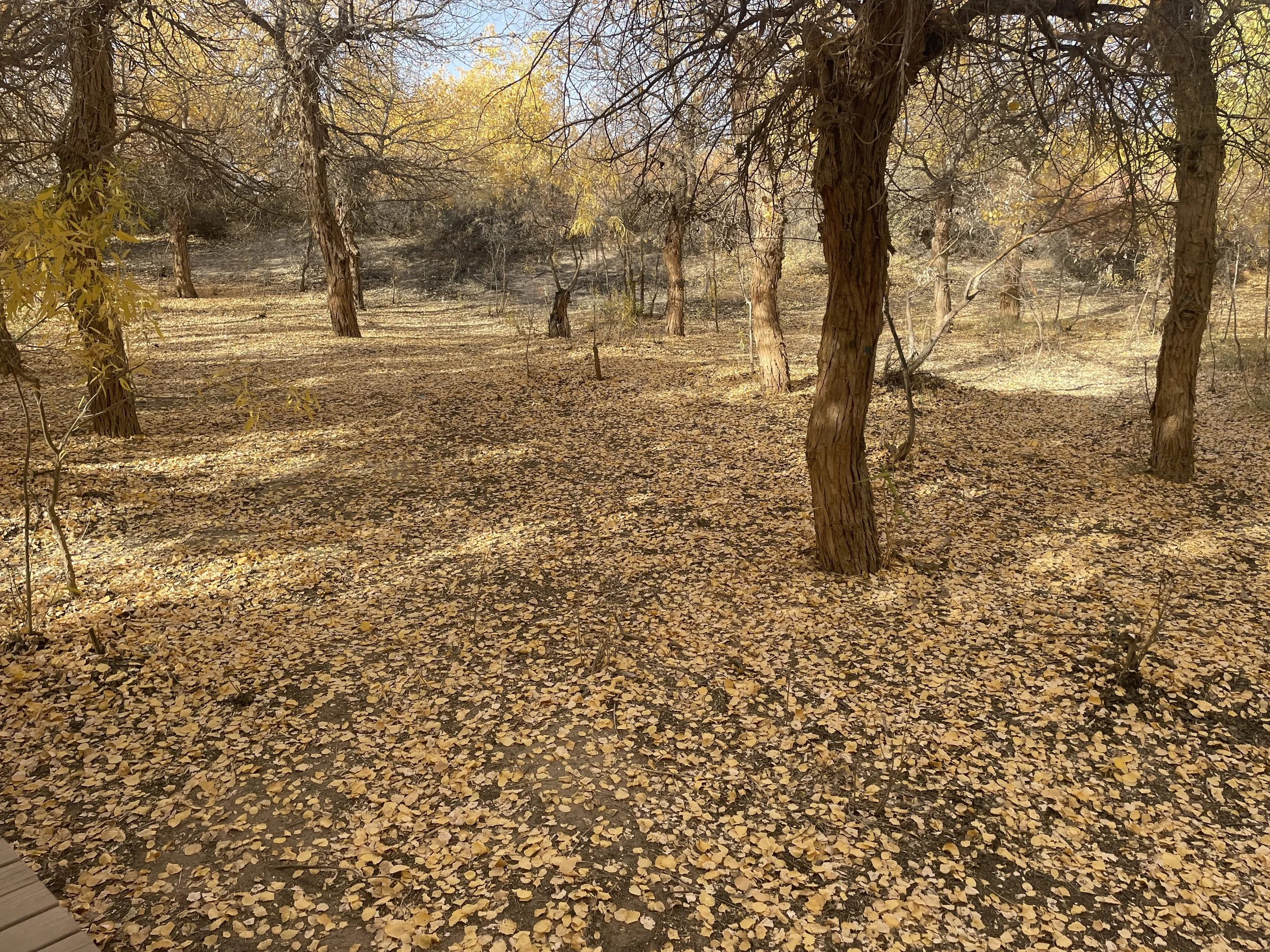
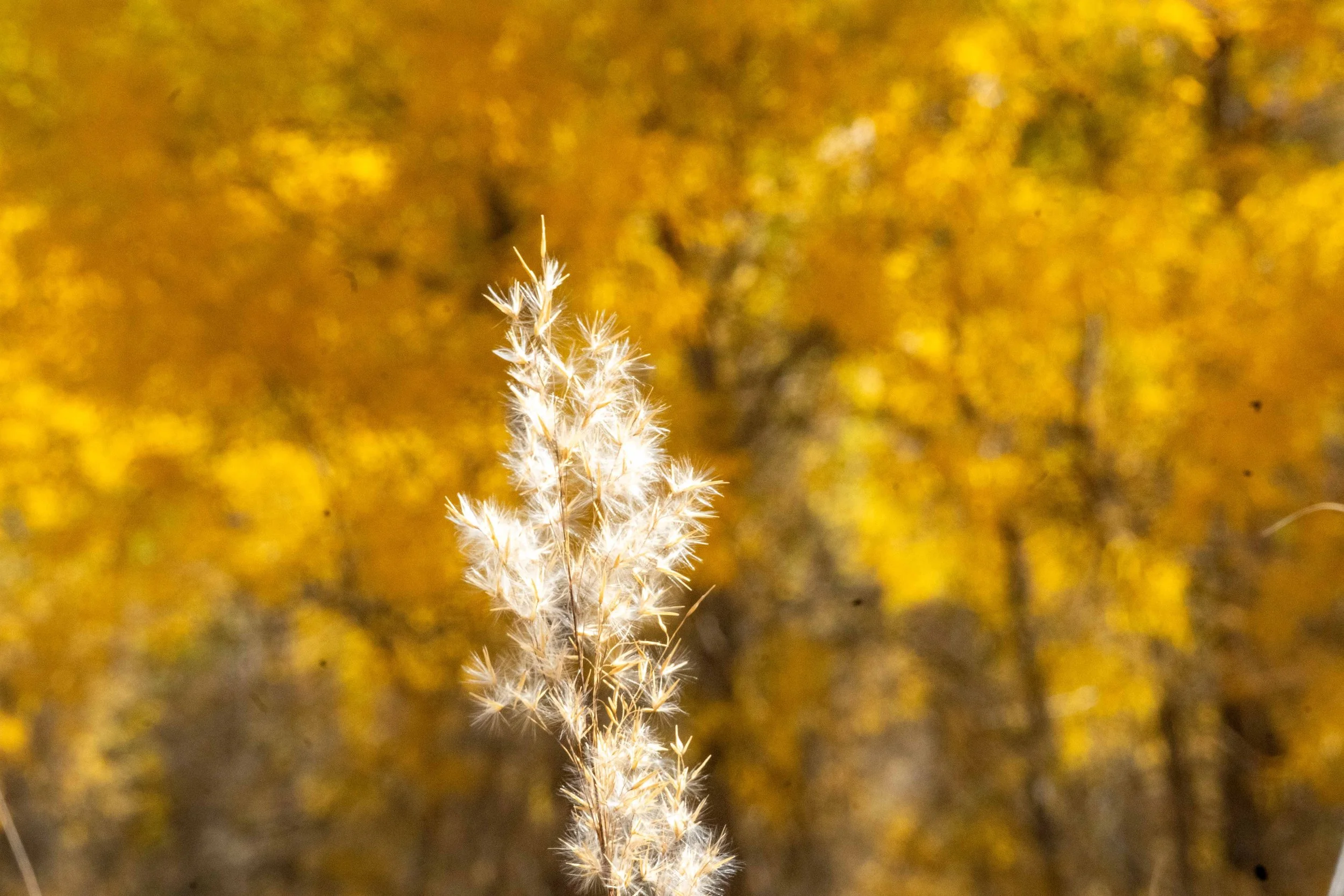
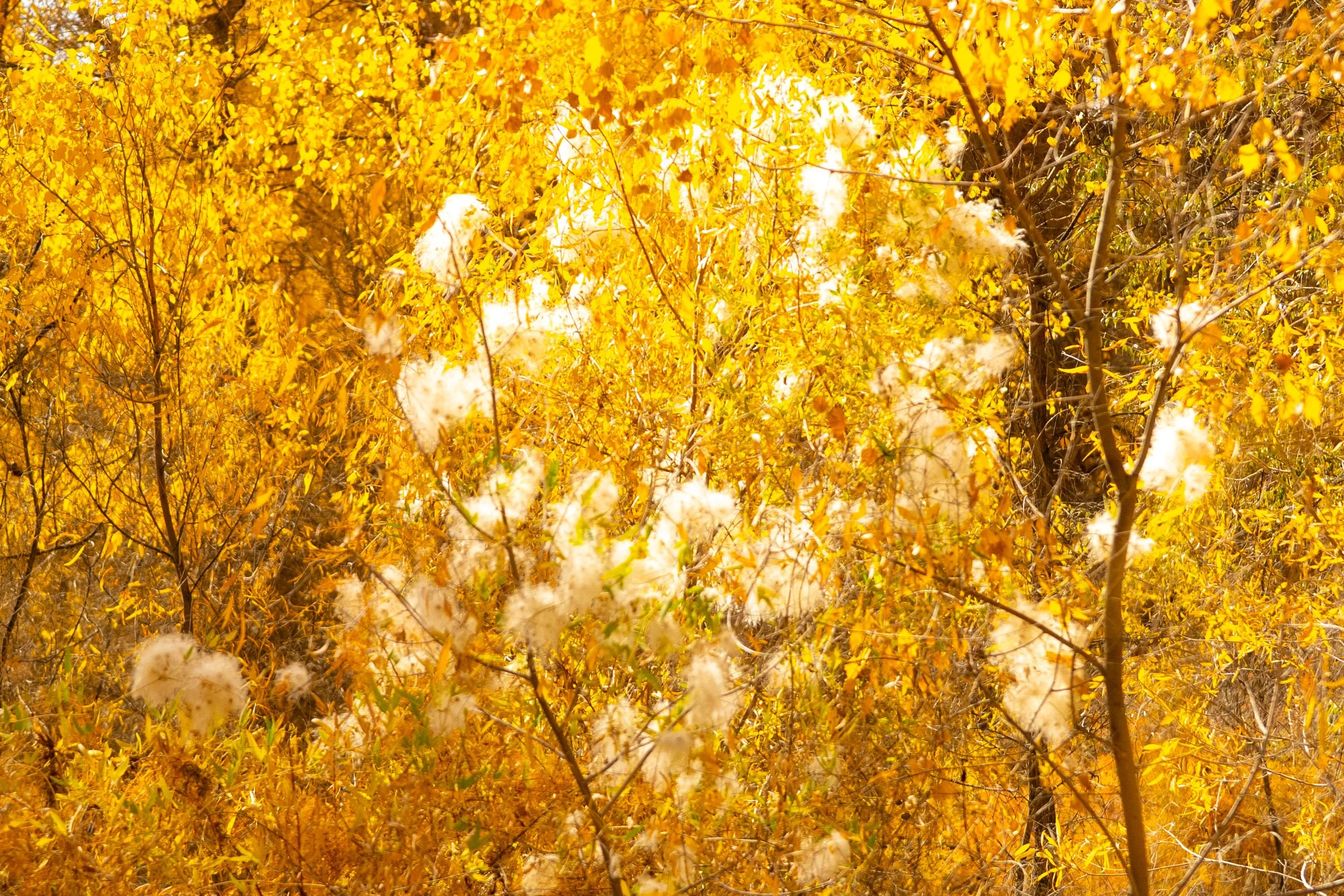
After being dropped off at the entrance, we boarded the park shuttle and got off at the third stop—the main Euphratica Forest area. As sunlight streamed through layers of golden leaves, we followed a winding boardwalk deep into the grove. The Populus euphratica trees stood tall and proud, their gnarled trunks and radiant canopies forming a dazzling contrast against the endless blue sky. We admired the various distinct shapes of their leaves, each glimmering in the warm afternoon light.
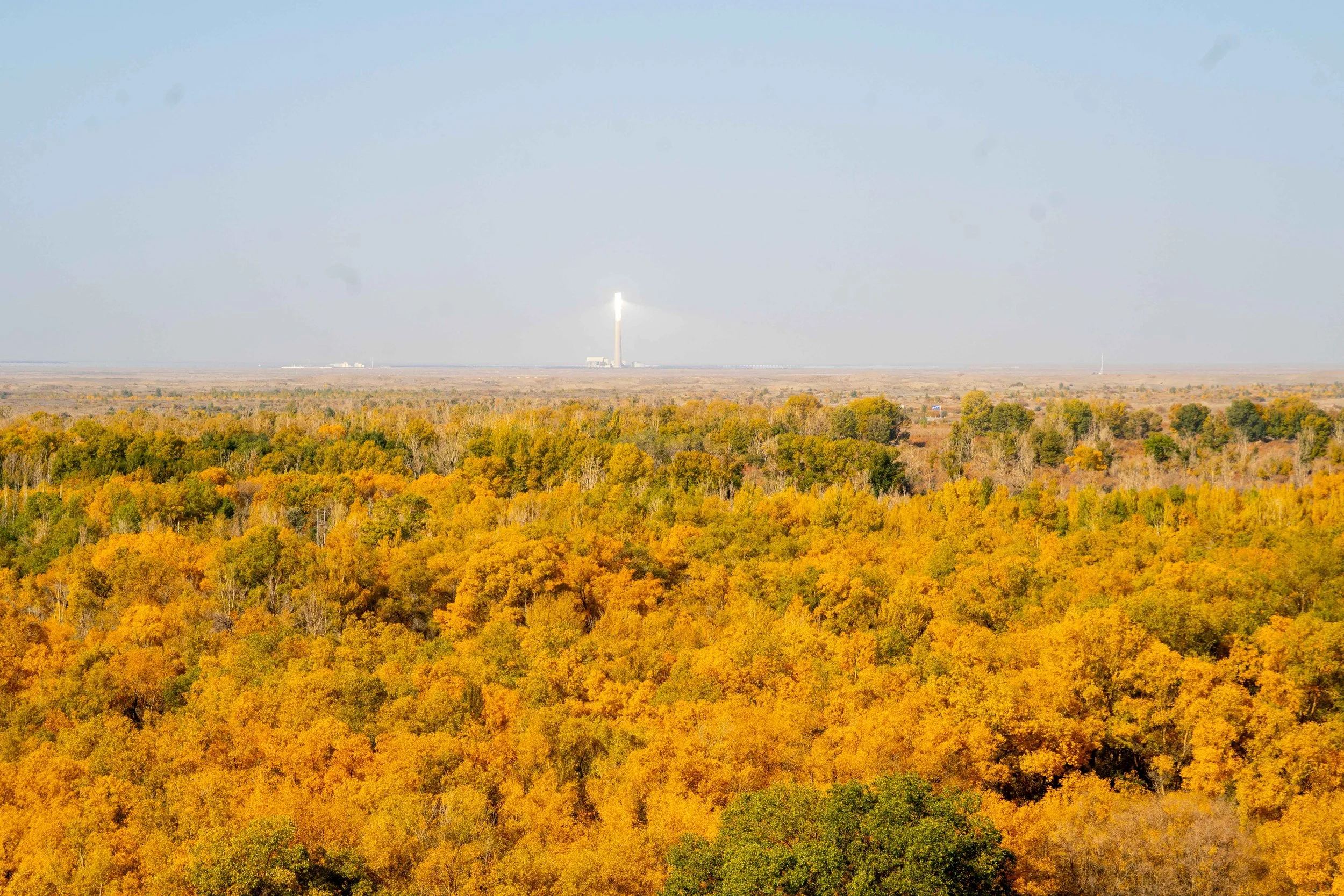
Next, we took another shuttle to the observation tower and paid ¥20 to ride the elevator to the top. From there, a sweeping panorama of the golden forest unfolded beneath us, with a distant view of a solar-power tower shimmering in the desert.
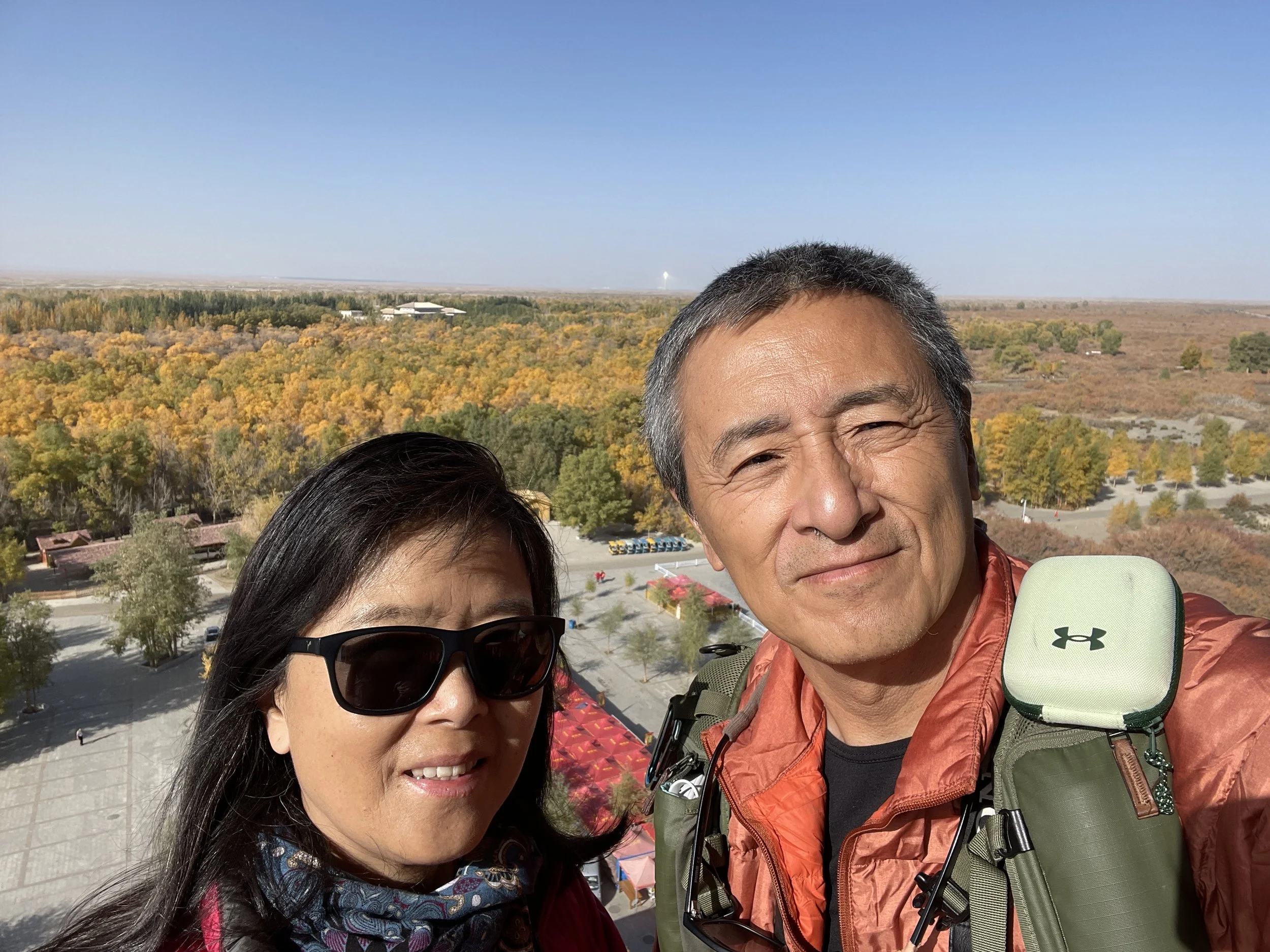
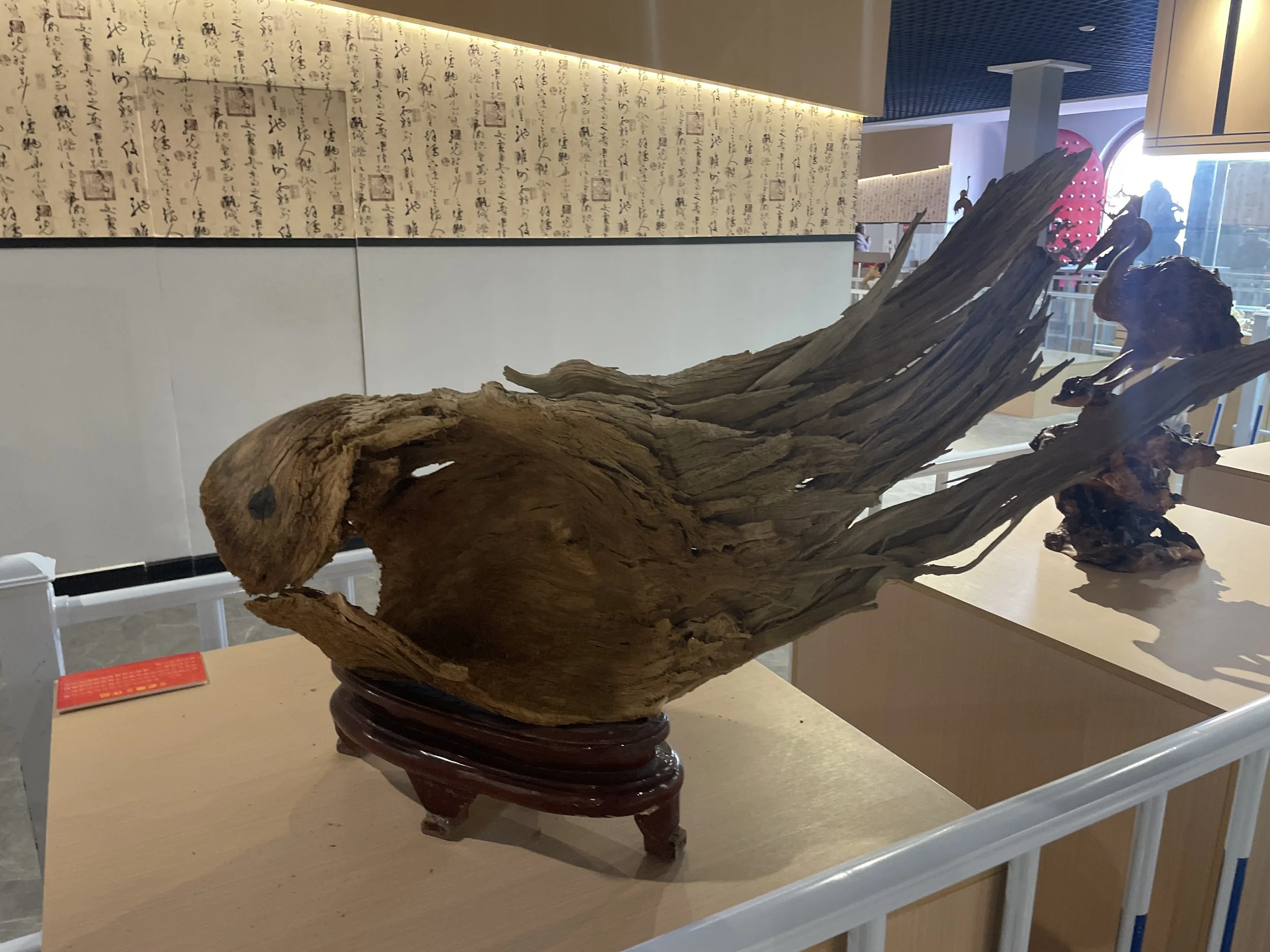
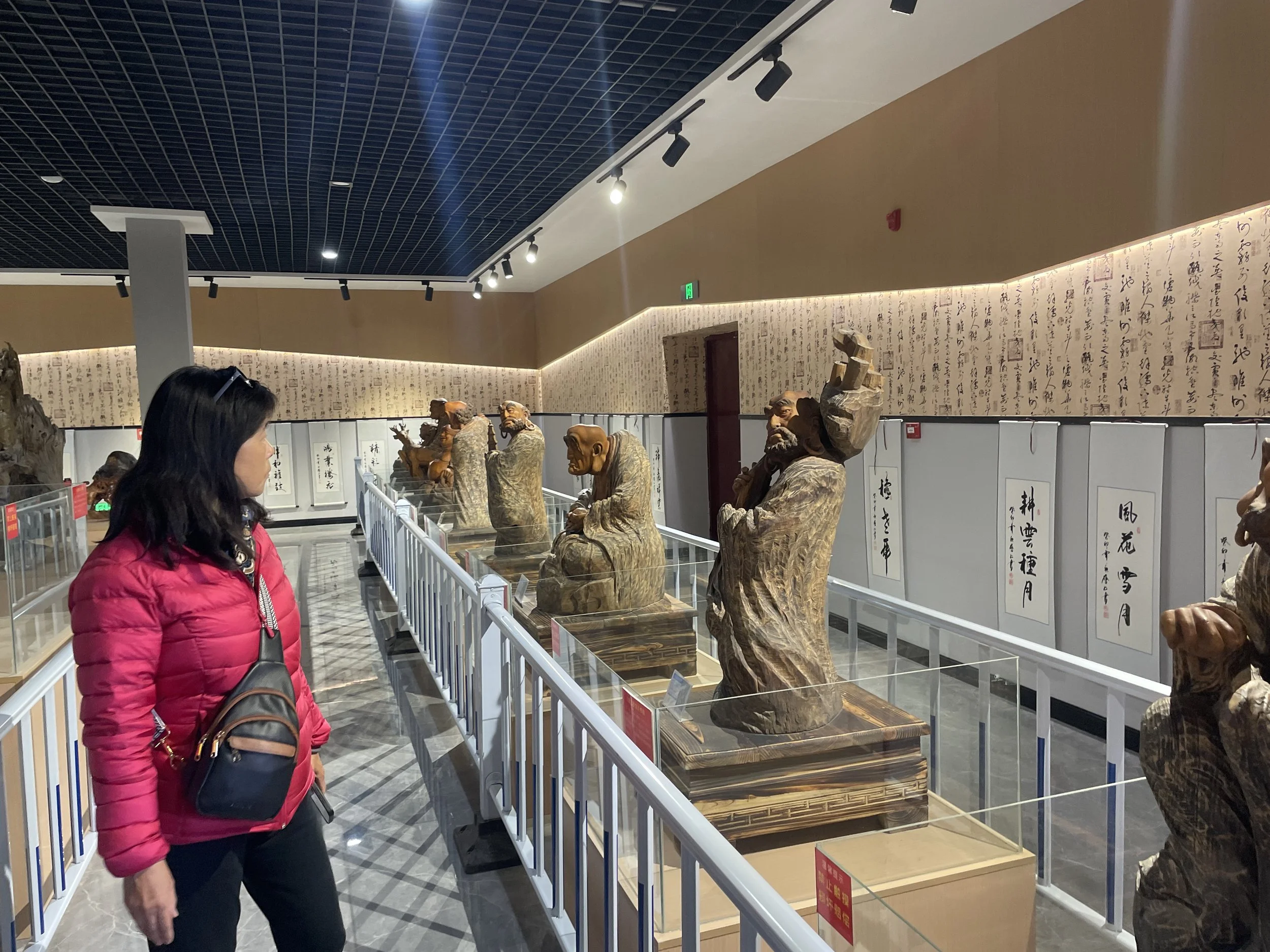
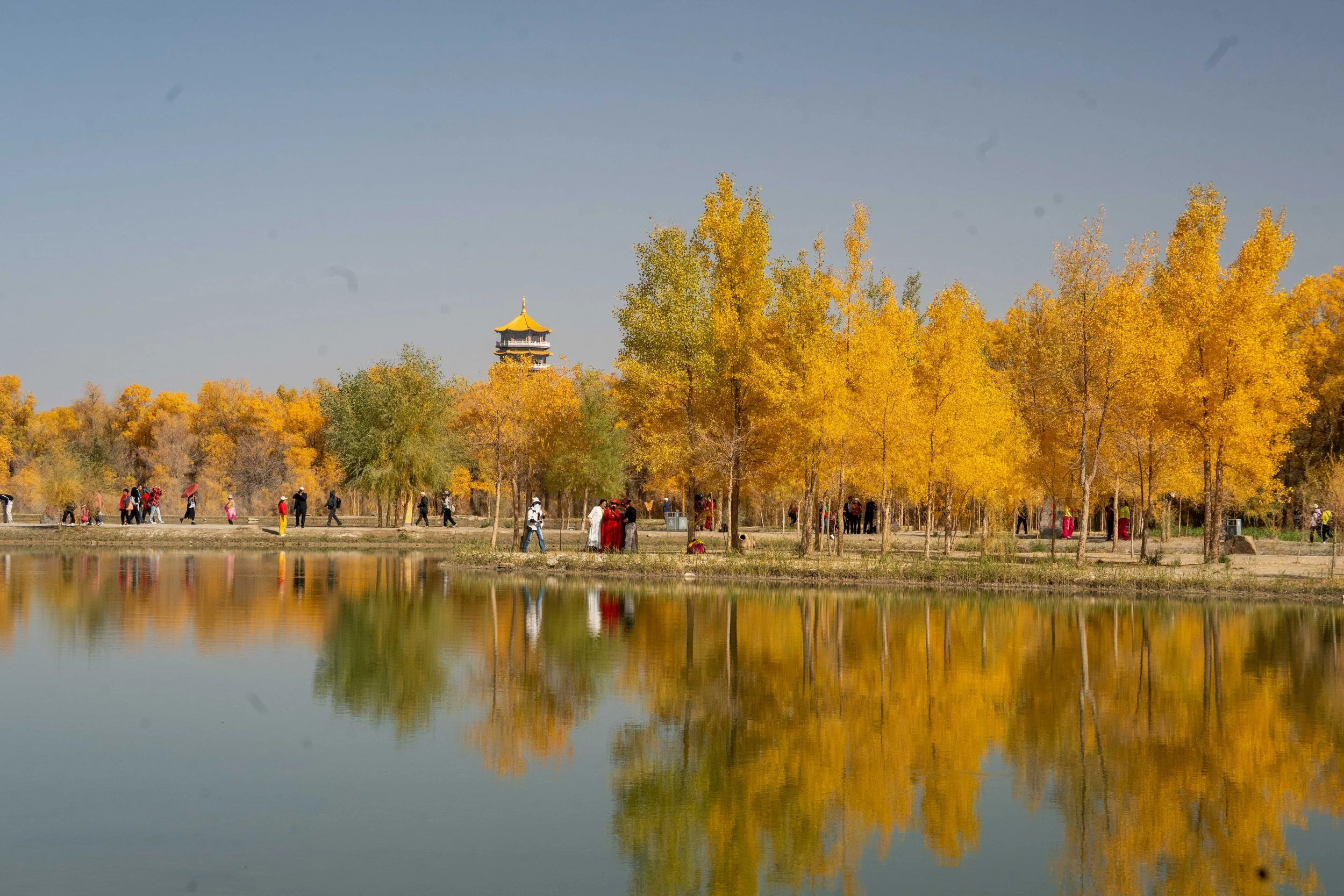
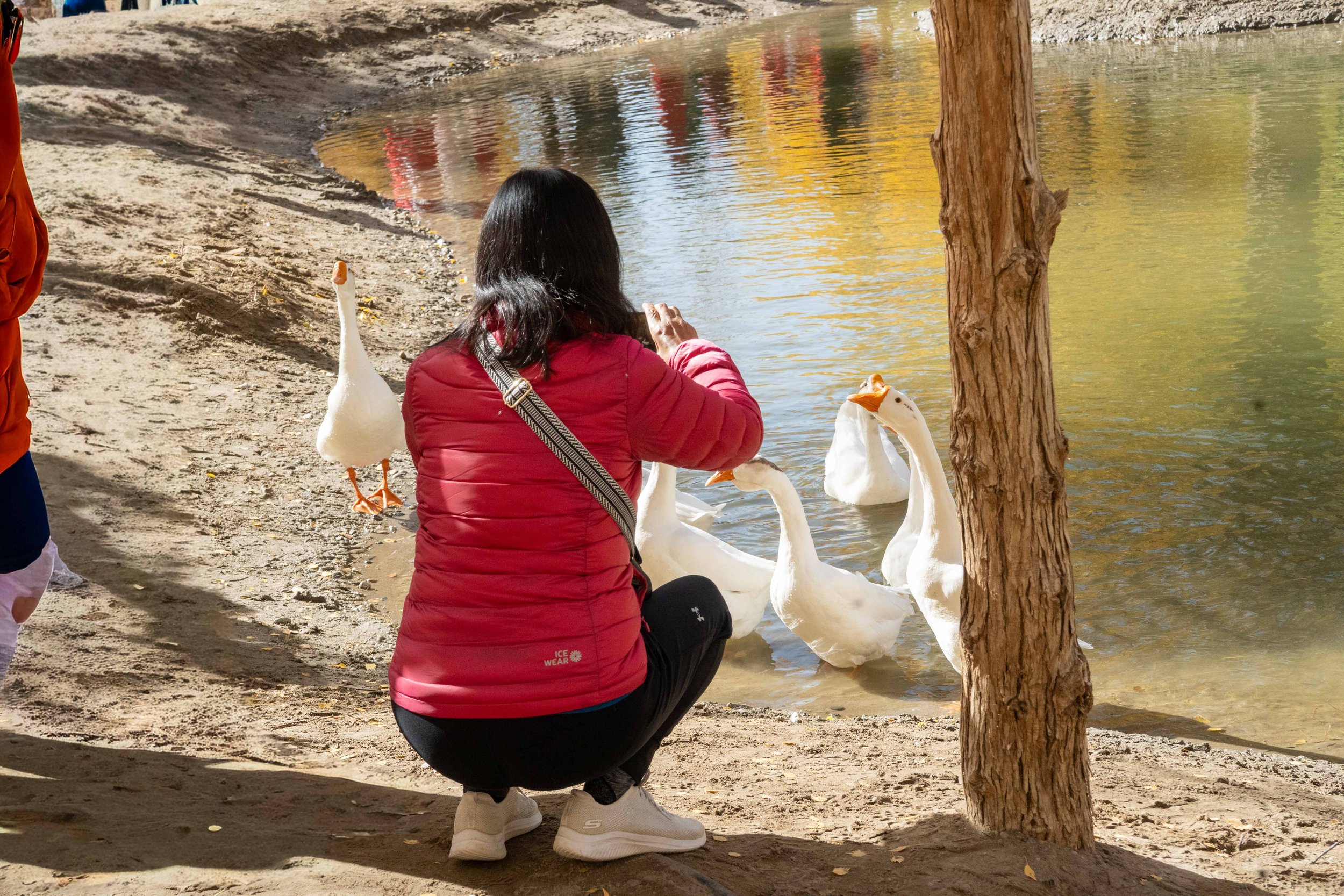
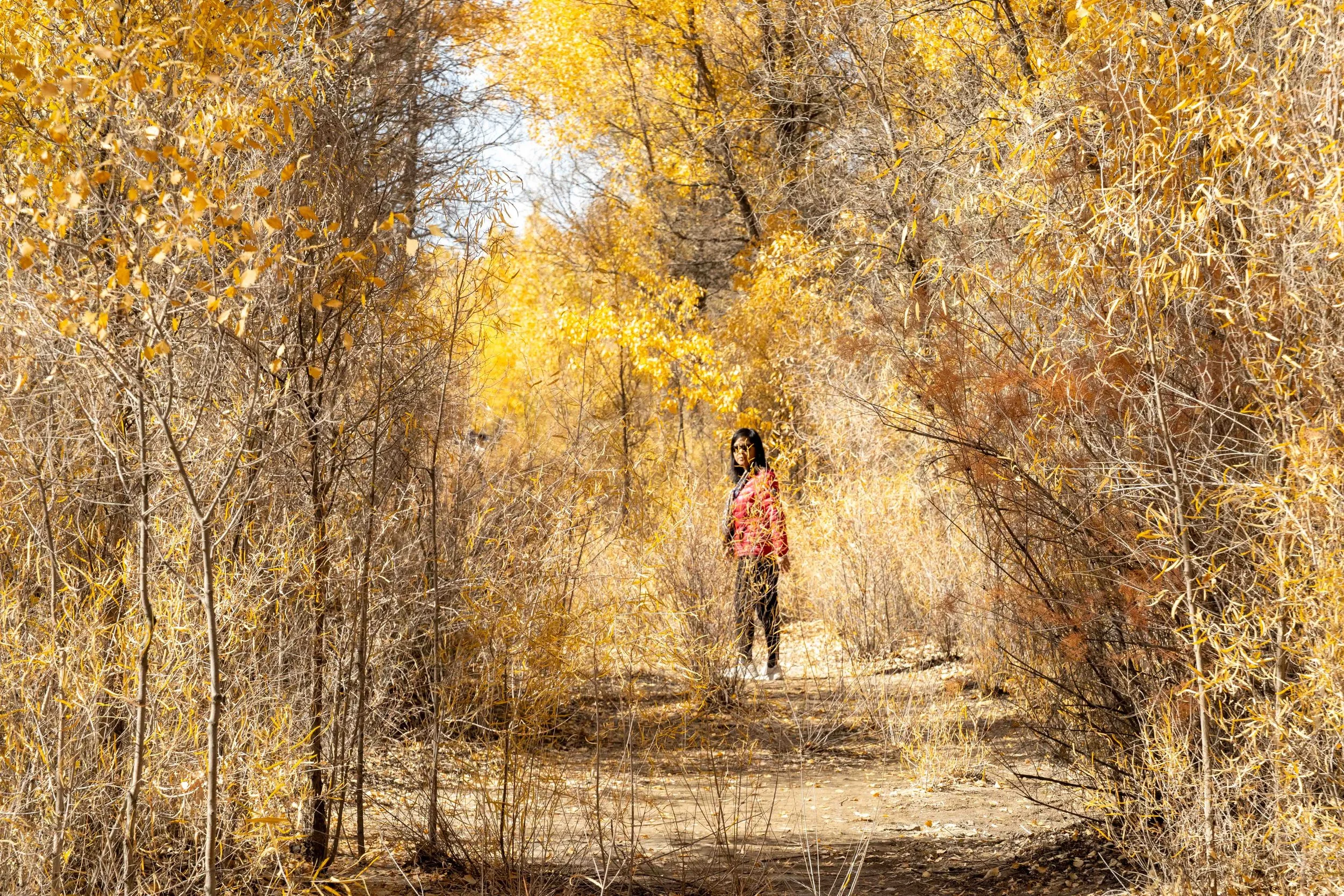
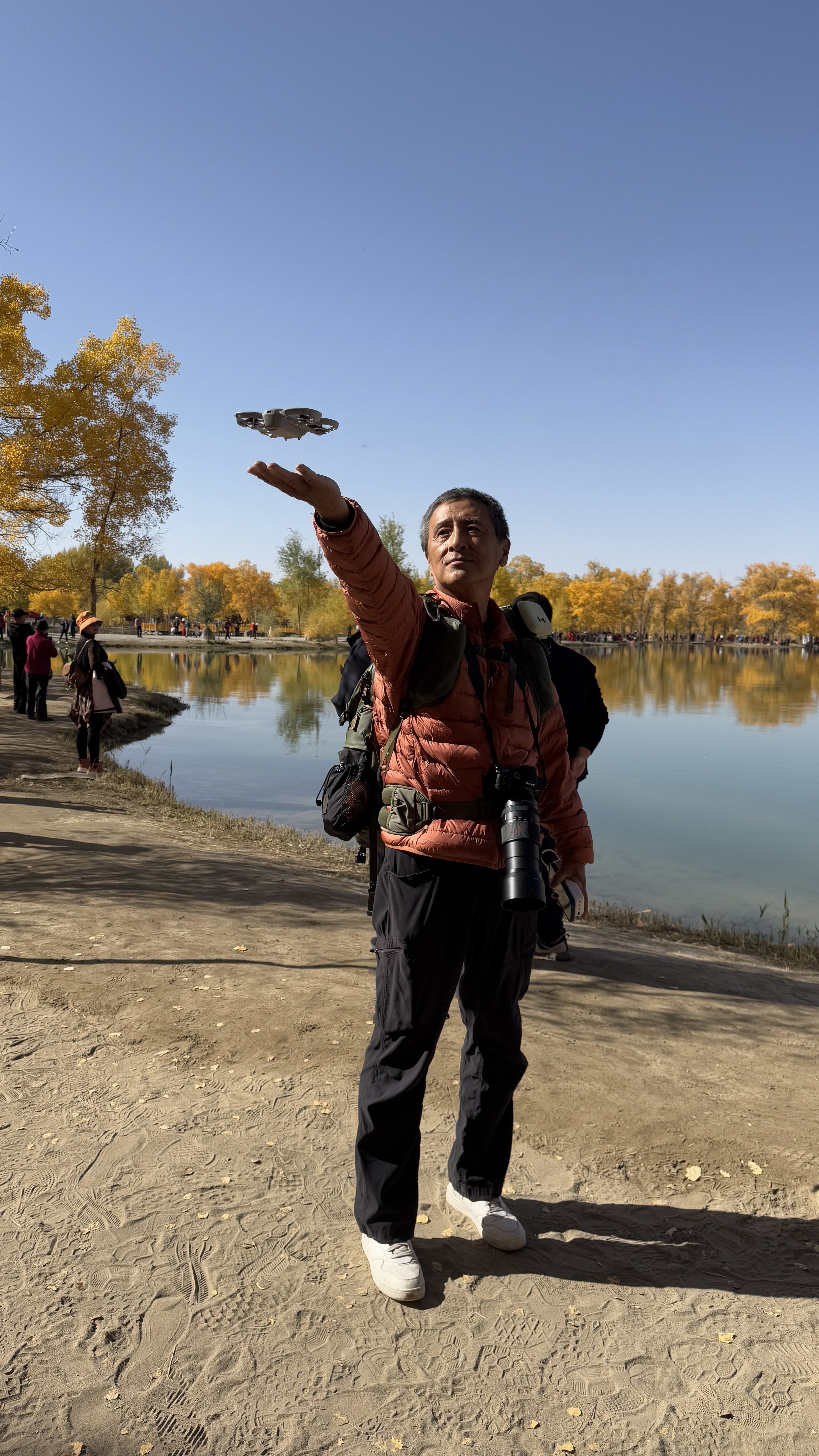
Finally, we arrived at the main lake. The still water mirrored the golden trees so perfectly that the entire scene felt dreamlike and ethereal. While many visitors gathered by the lakeshore for photos, we wandered farther into the quieter parts of the forest and launched our DJI drone to capture aerial footage of ourselves walking beneath the glowing canopy. The golden hues, tranquil reflections, and vast desert backdrop created a truly magical and unforgettable experience.
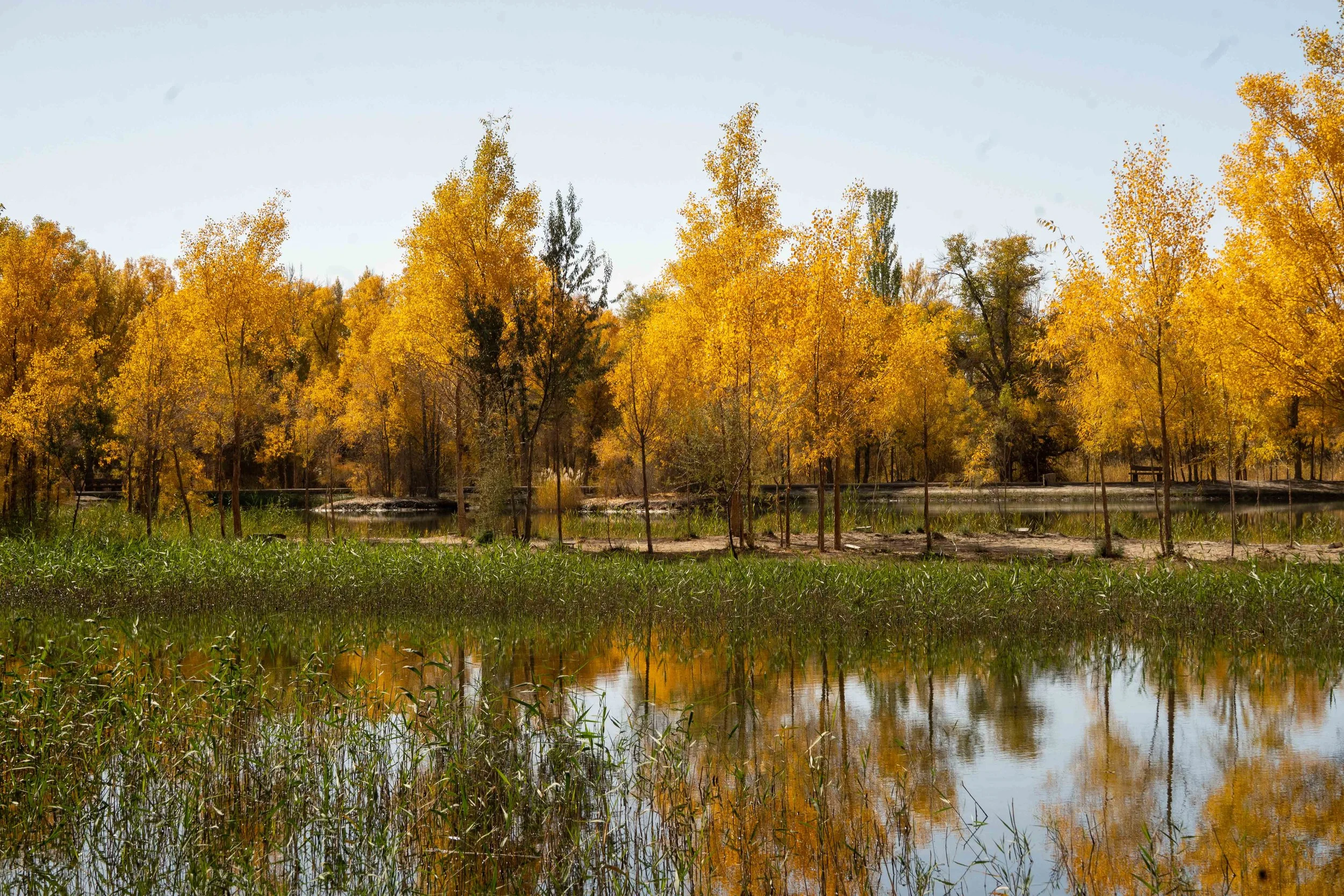
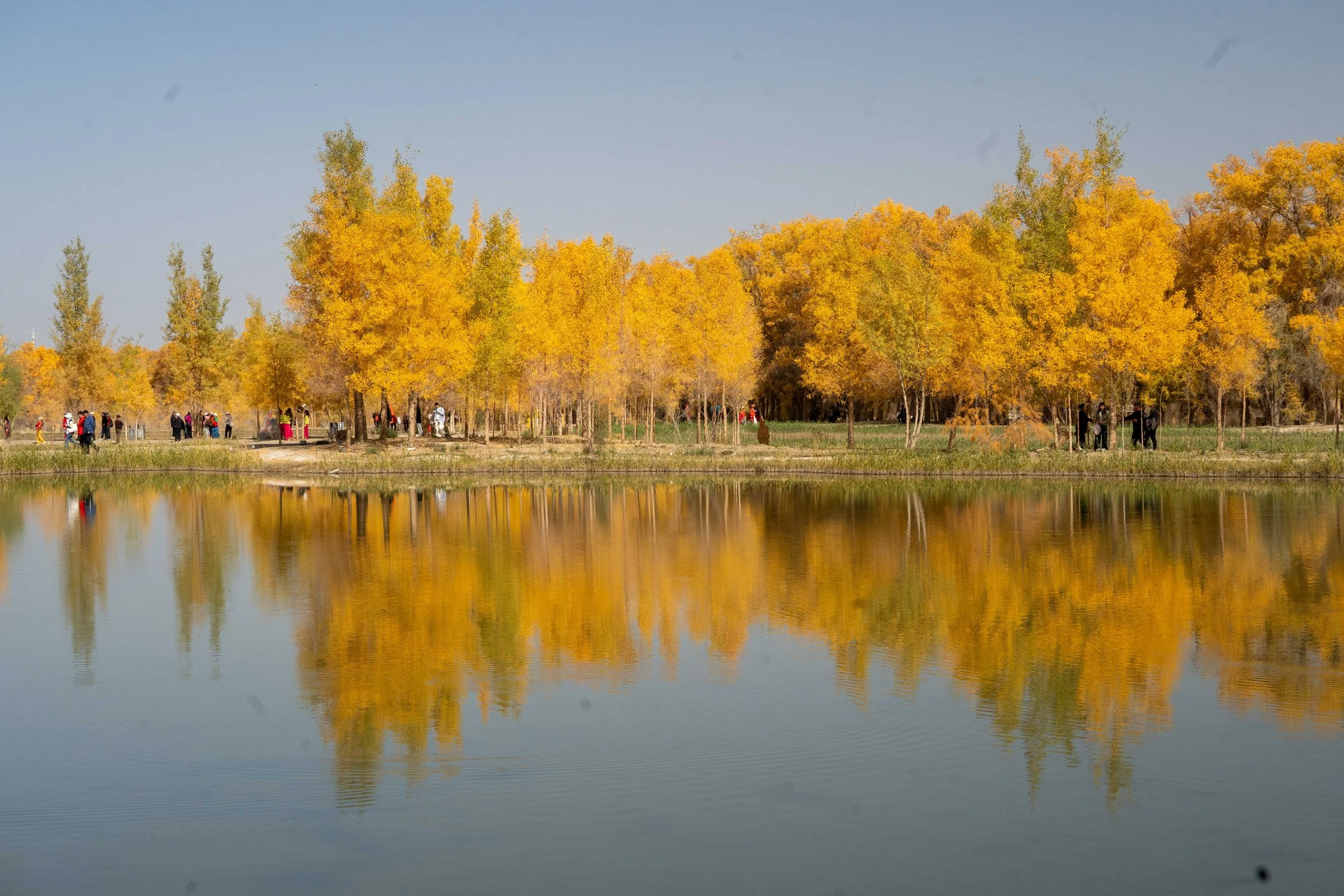
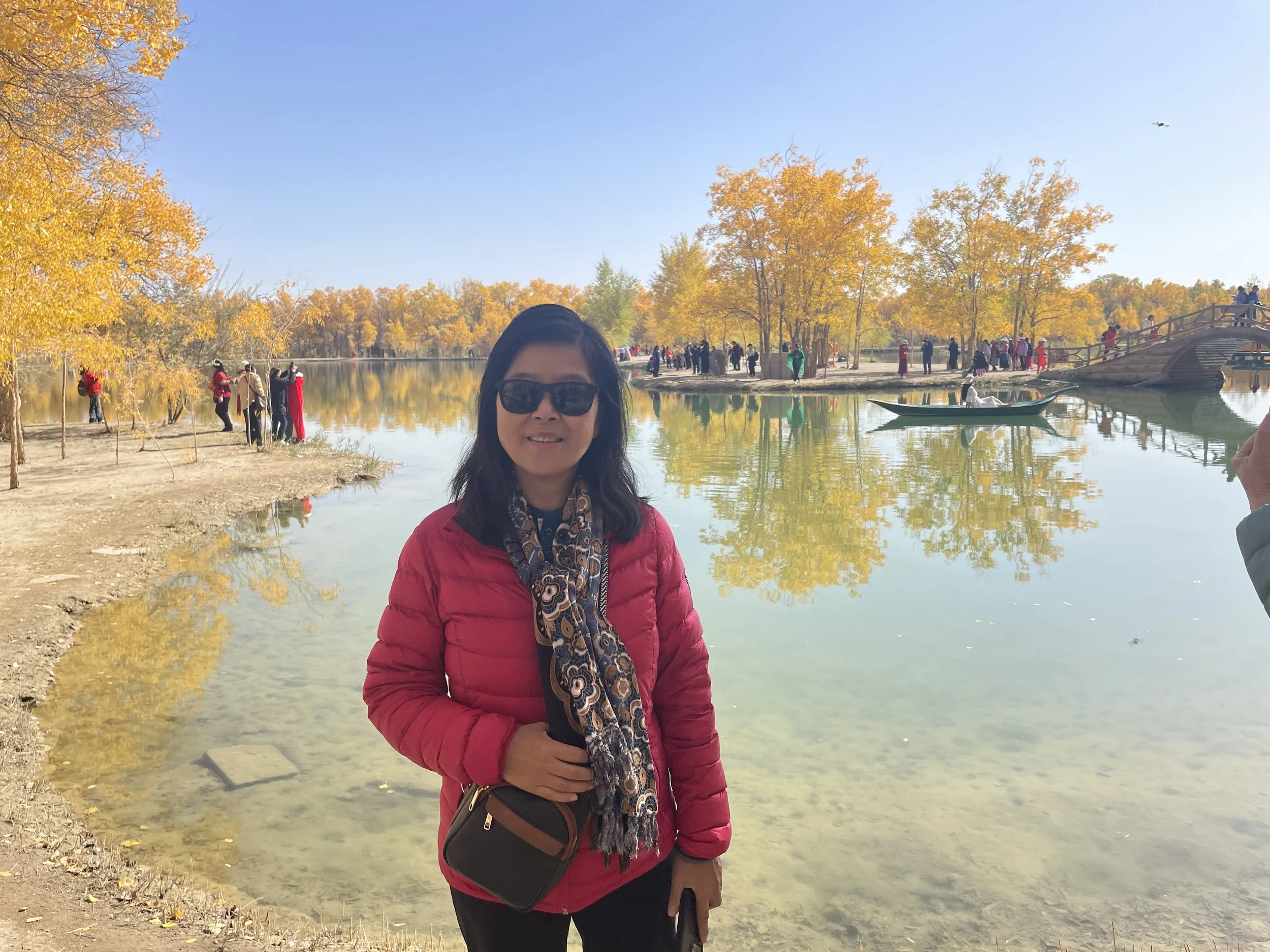
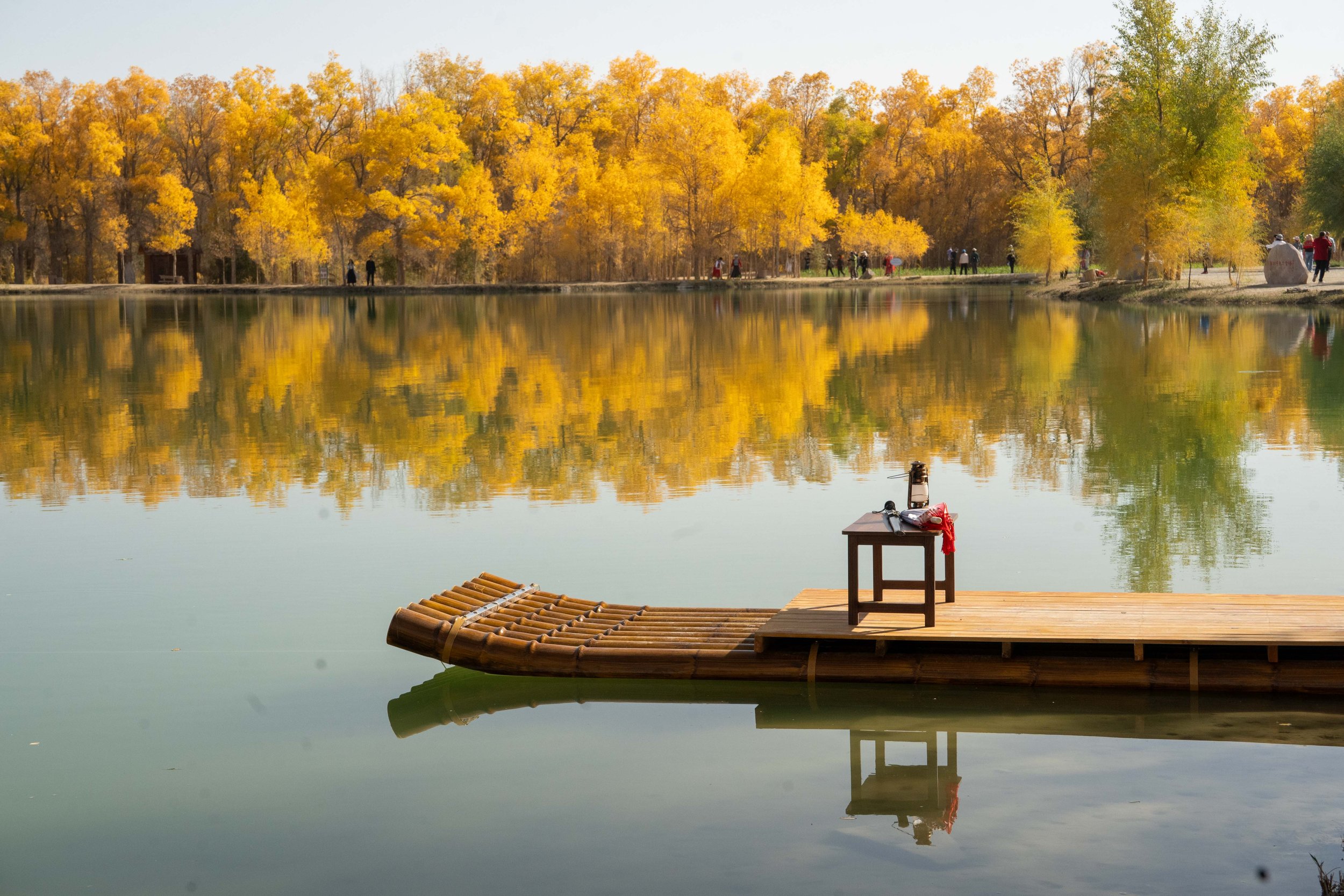
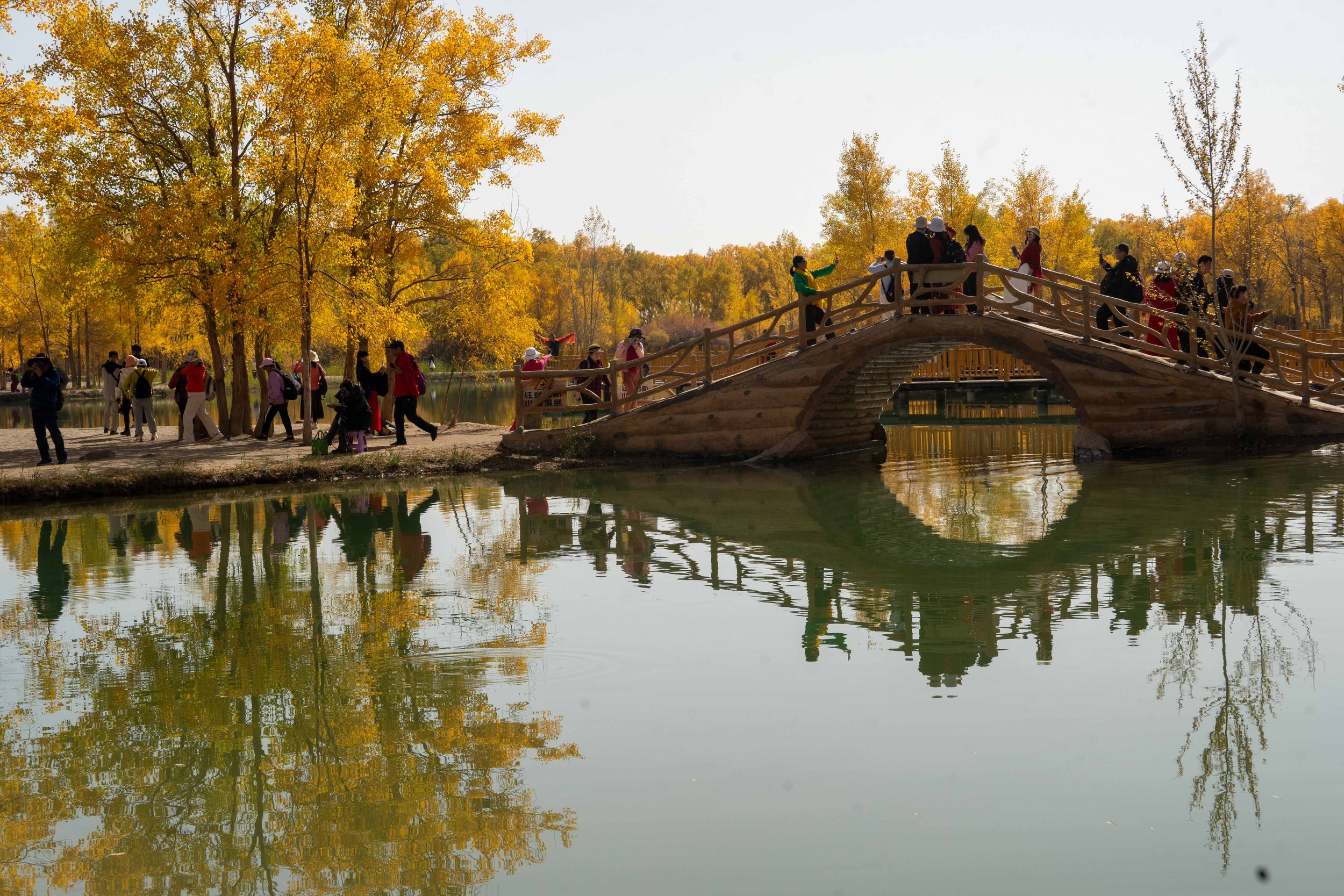
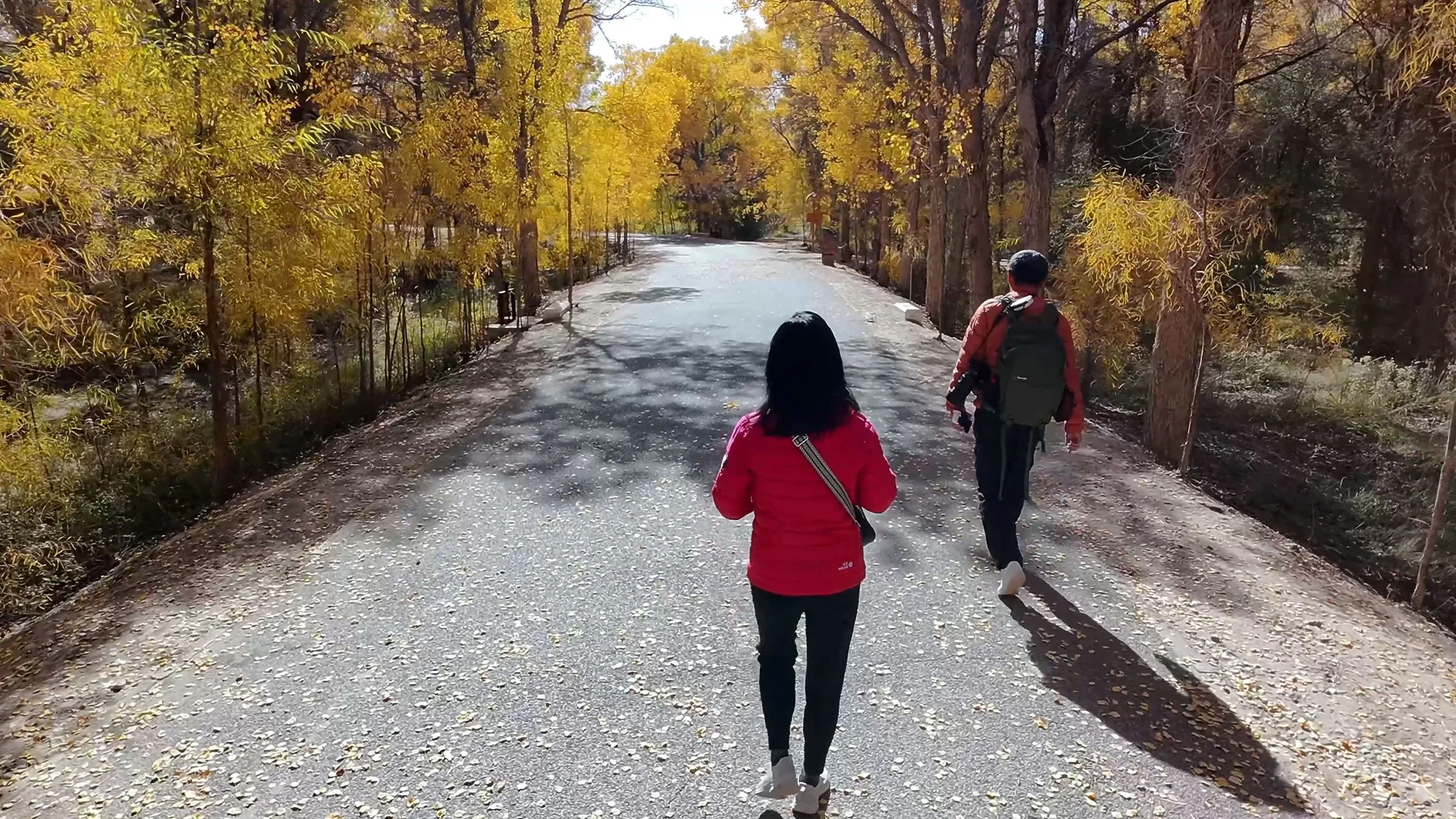
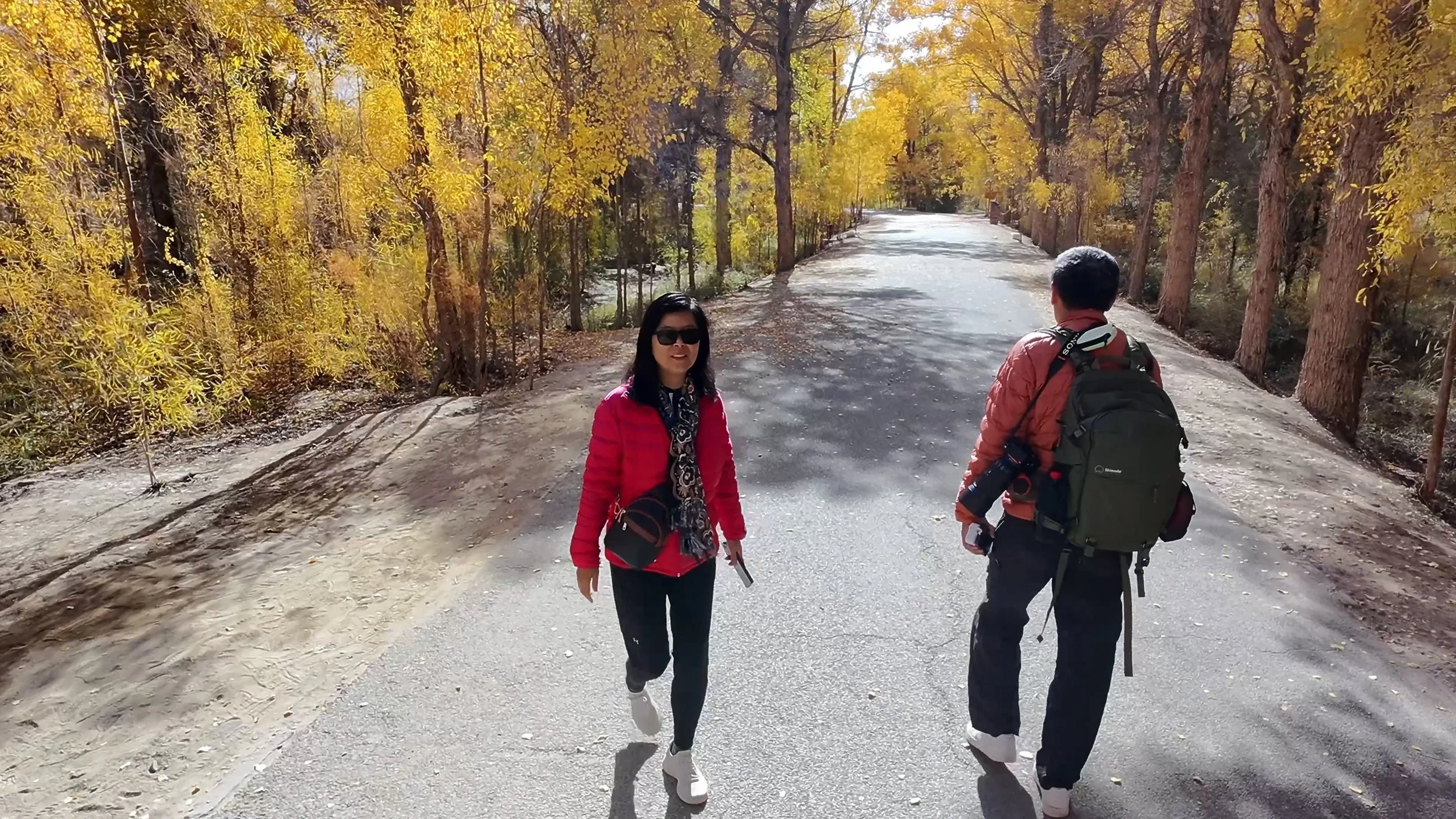
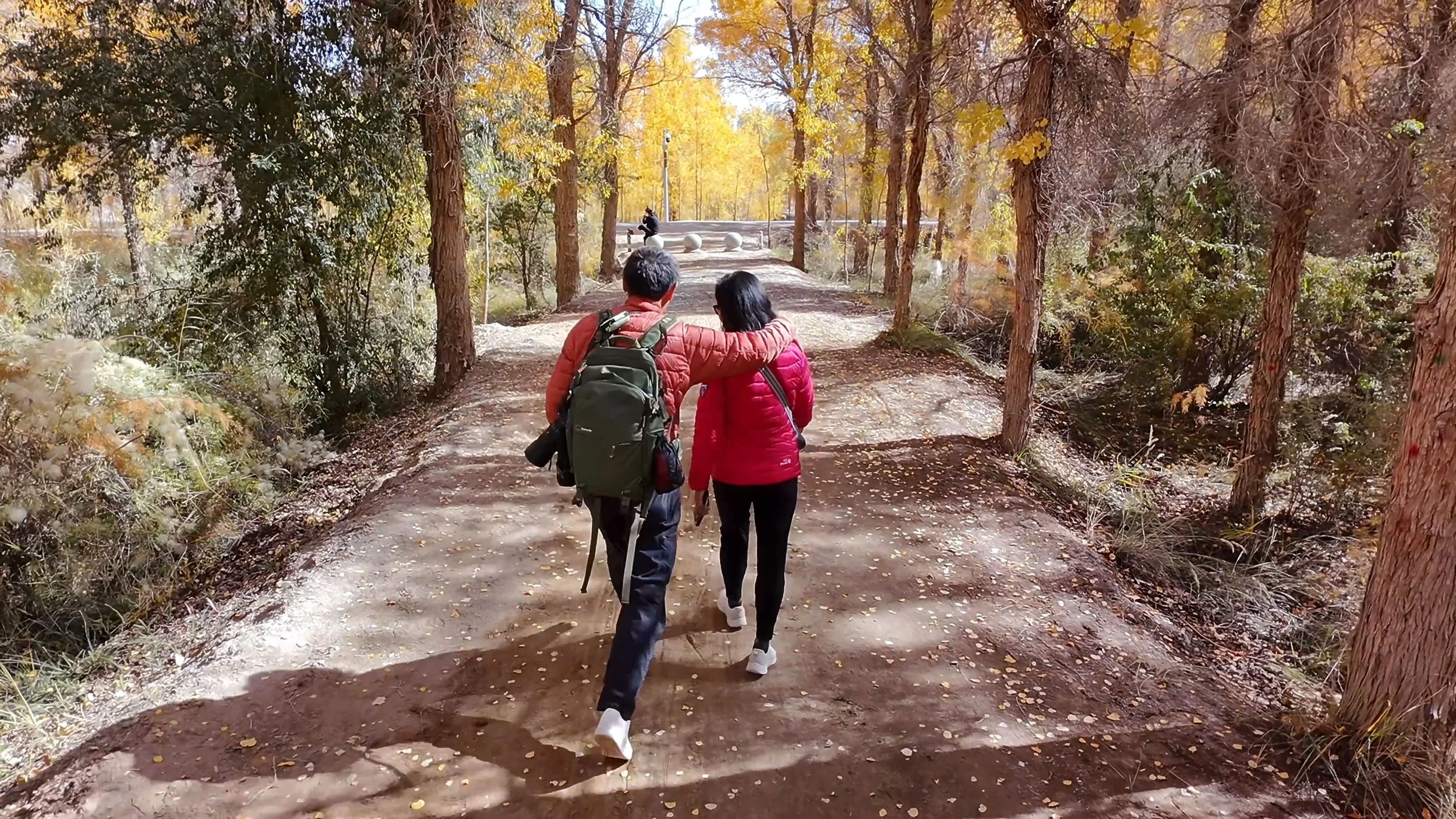
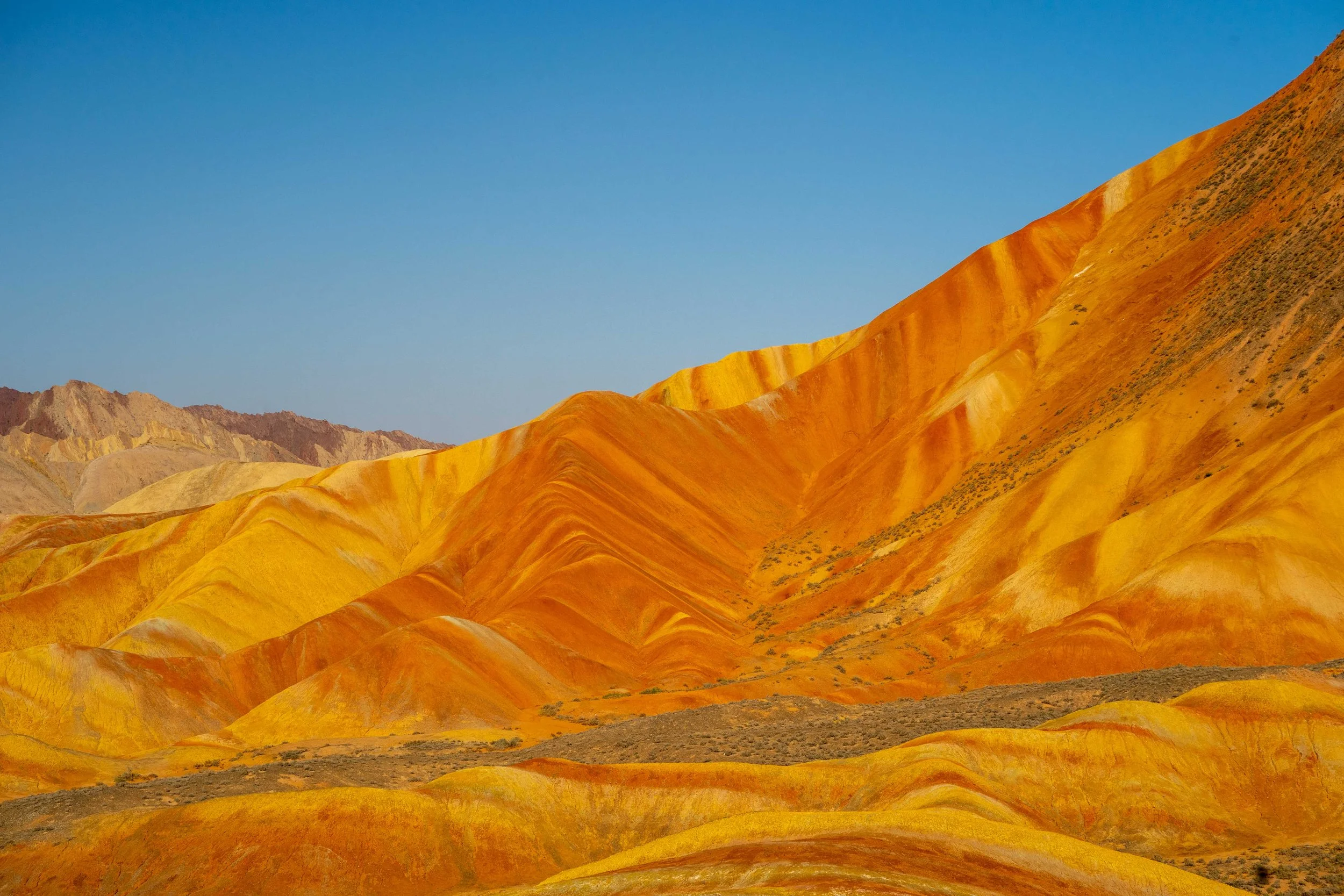
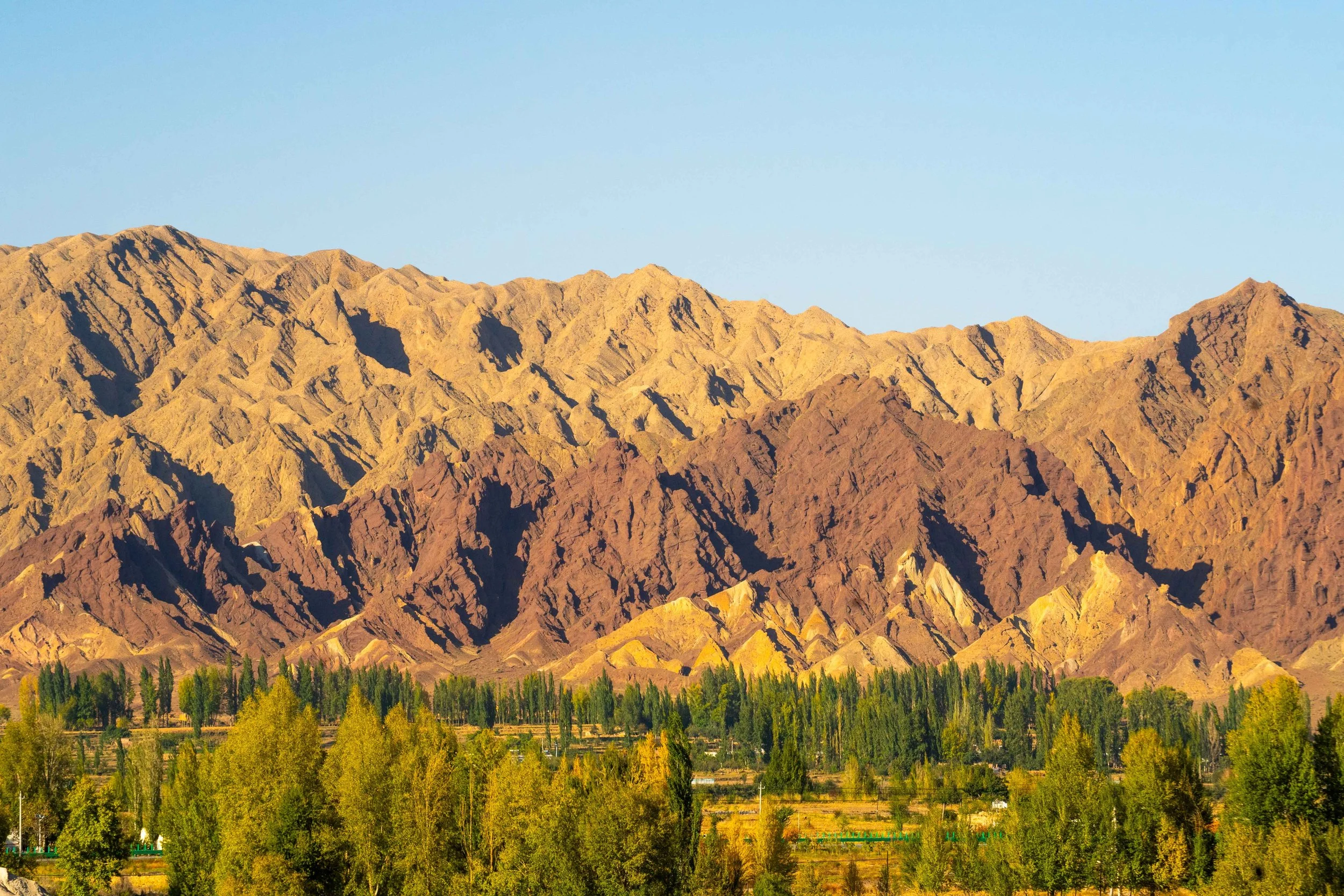
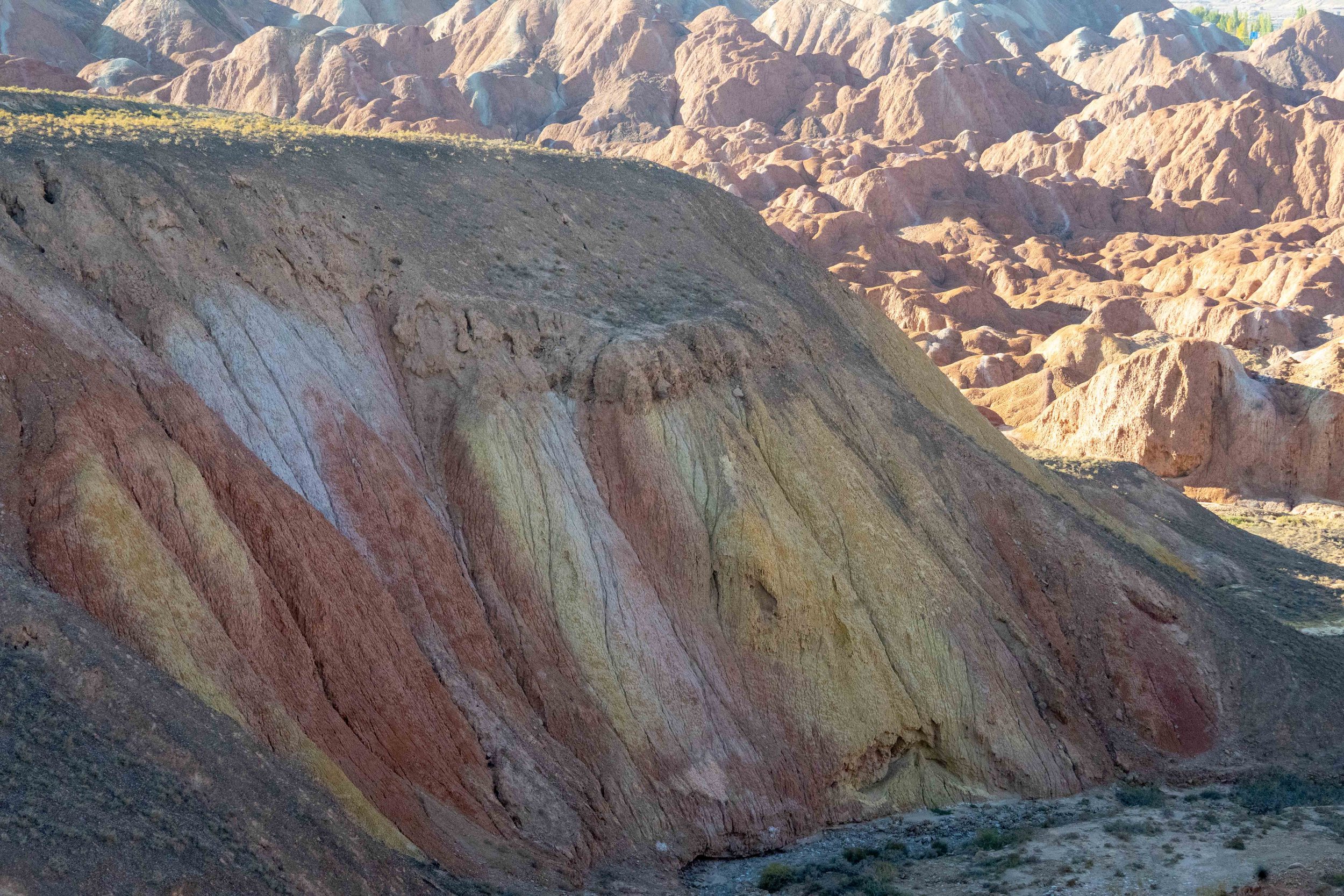
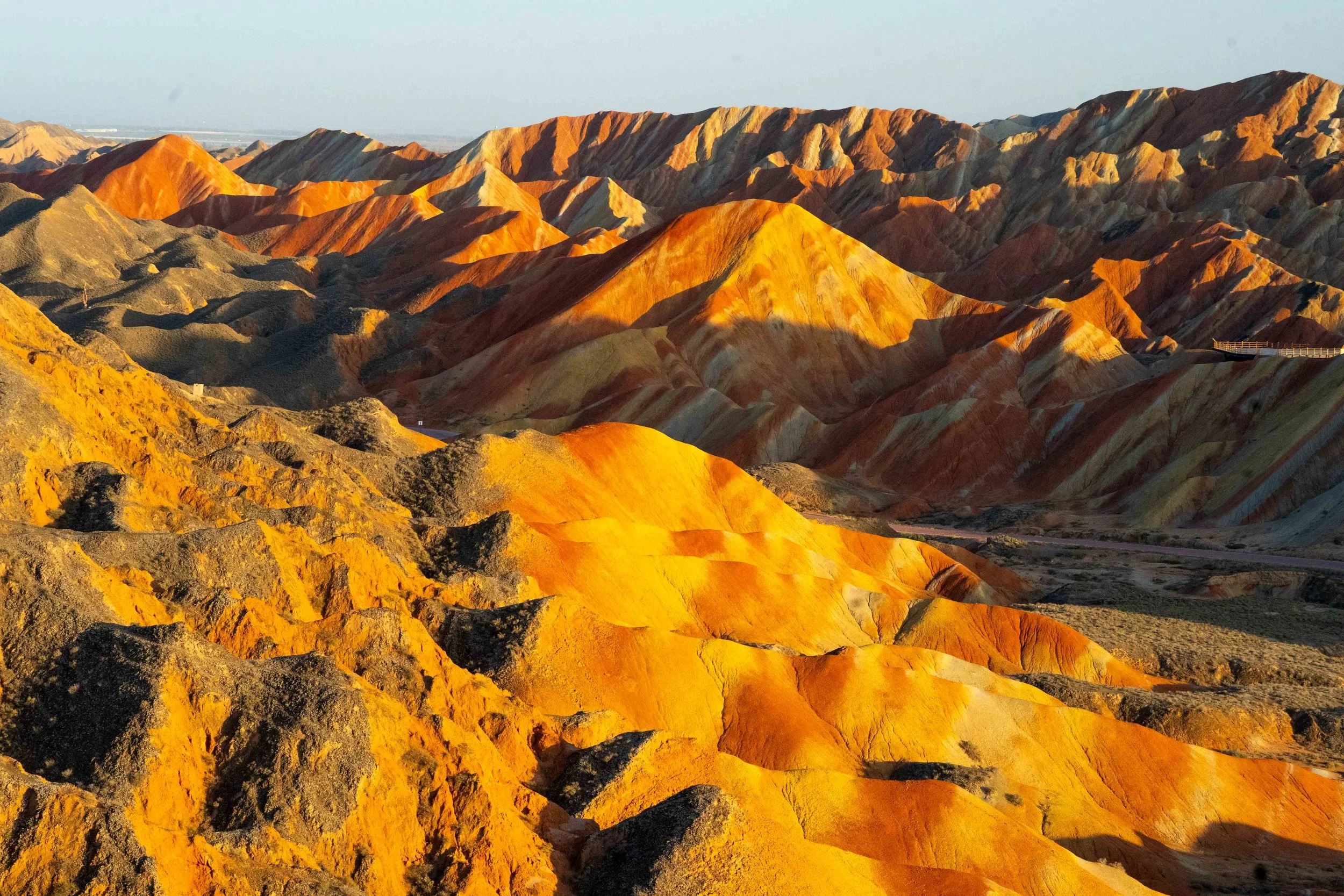
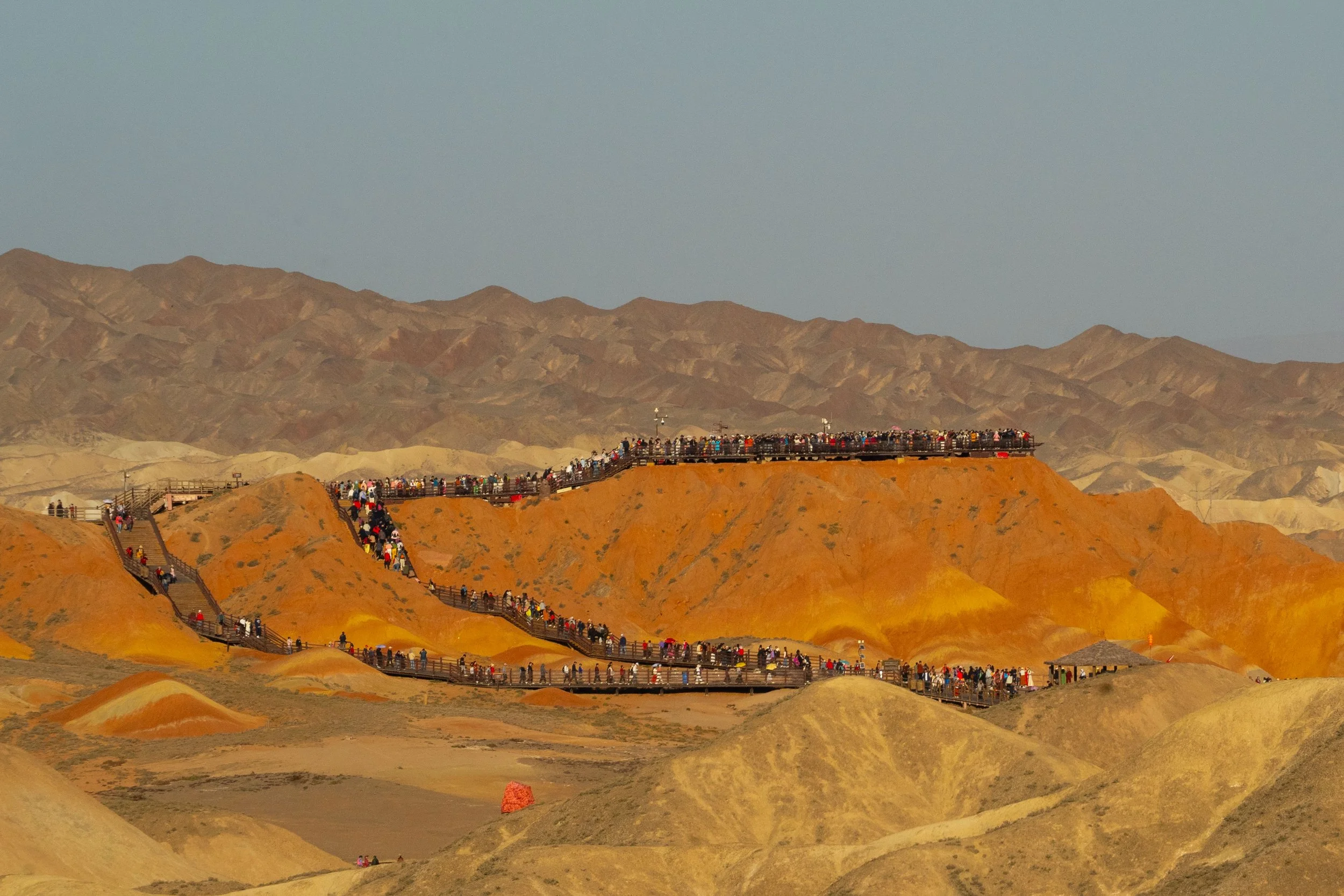
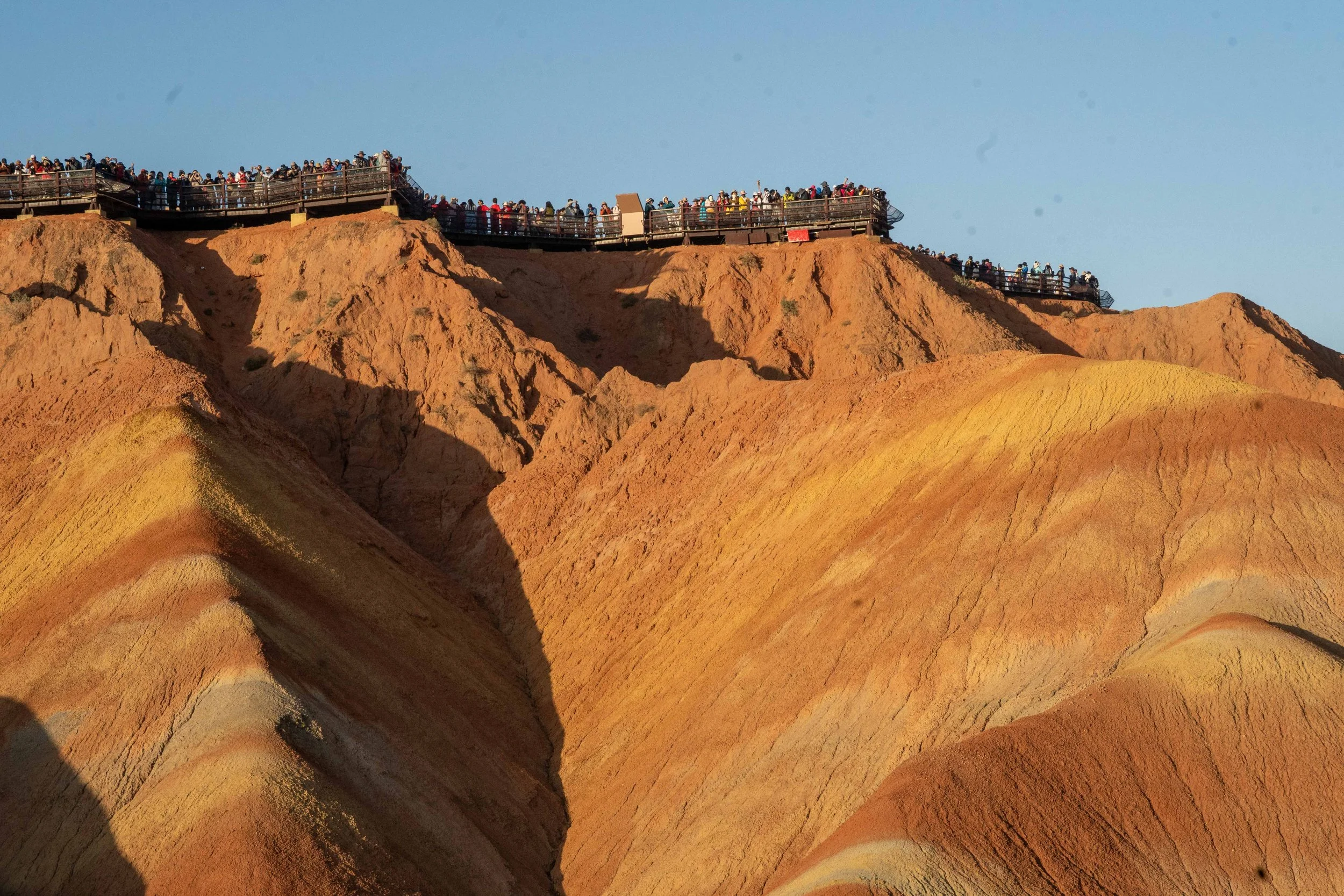
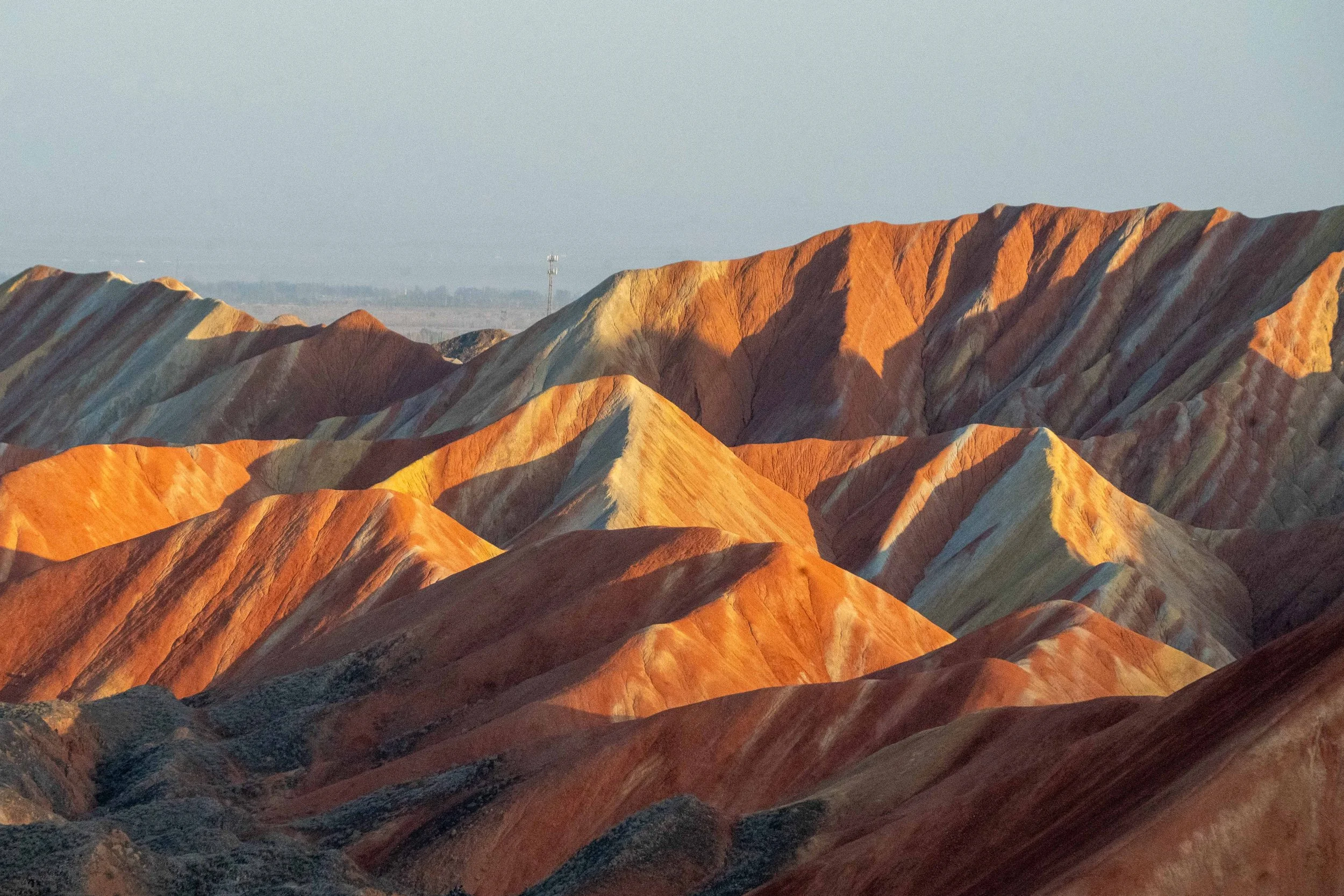
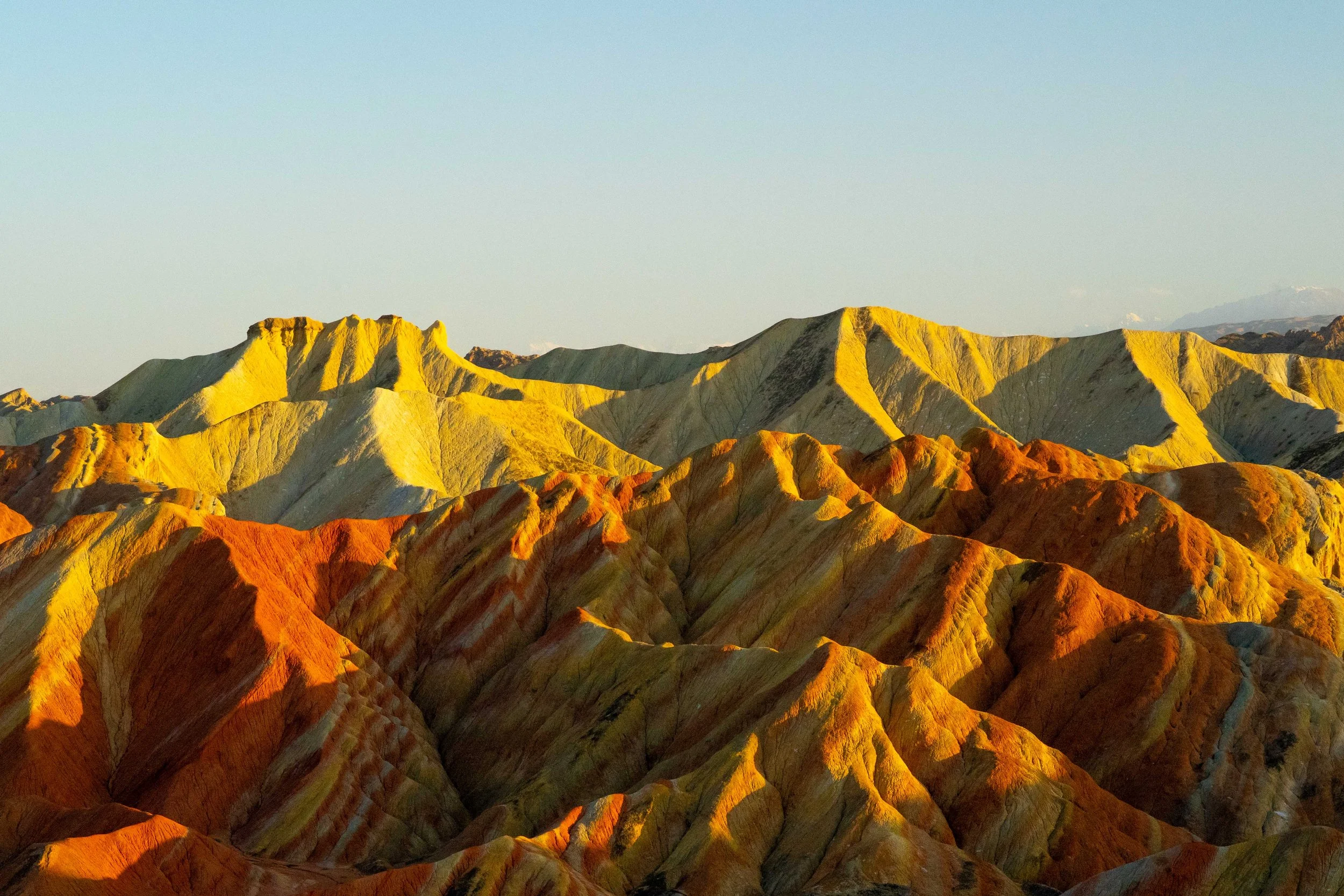
After spending about three hours exploring the park, we drove 200 kilometers to Zhangye National Geopark(张掖国家地质公园), also known as the Rainbow Mountains(七彩丹霞). We entered the park in the late afternoon, when the low sun illuminated the hills in their most vivid hues. The shuttle bus took us to several viewing platforms, each requiring a short walk and offering breathtaking panoramic vistas. The landscape was spectacular—layers of red, orange, yellow, and white sandstone rippled across the terrain like waves of color painted by nature herself.
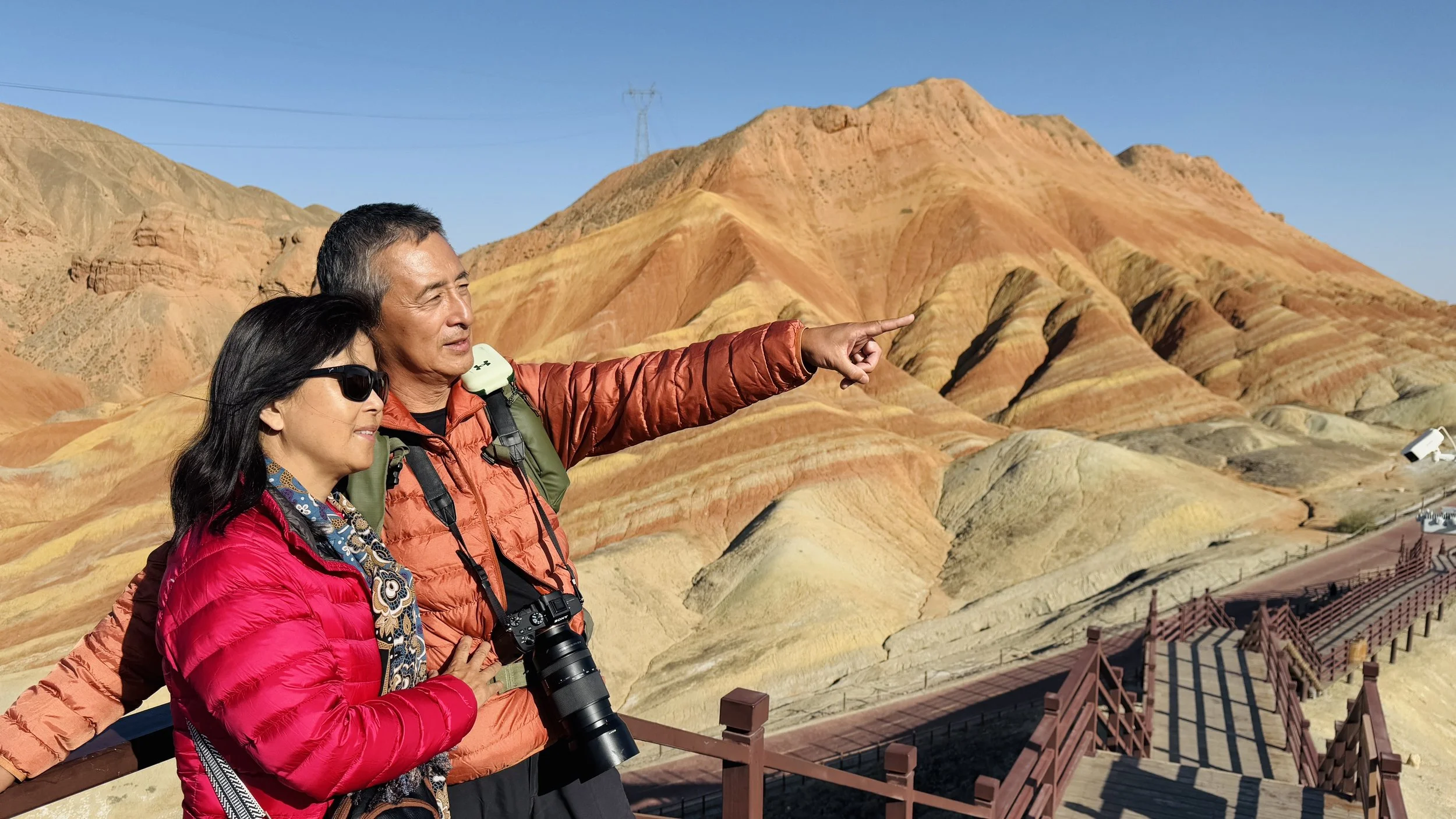
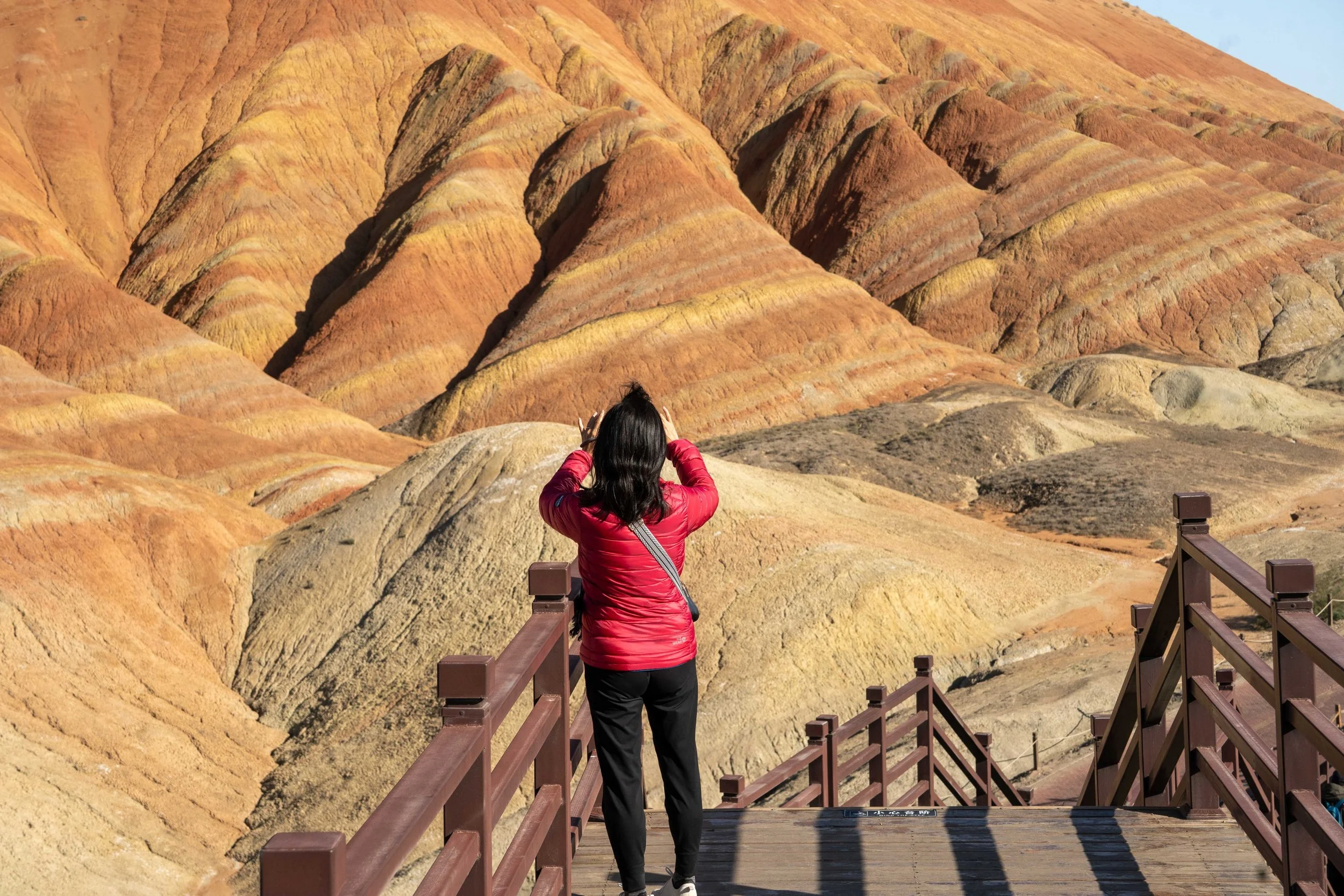
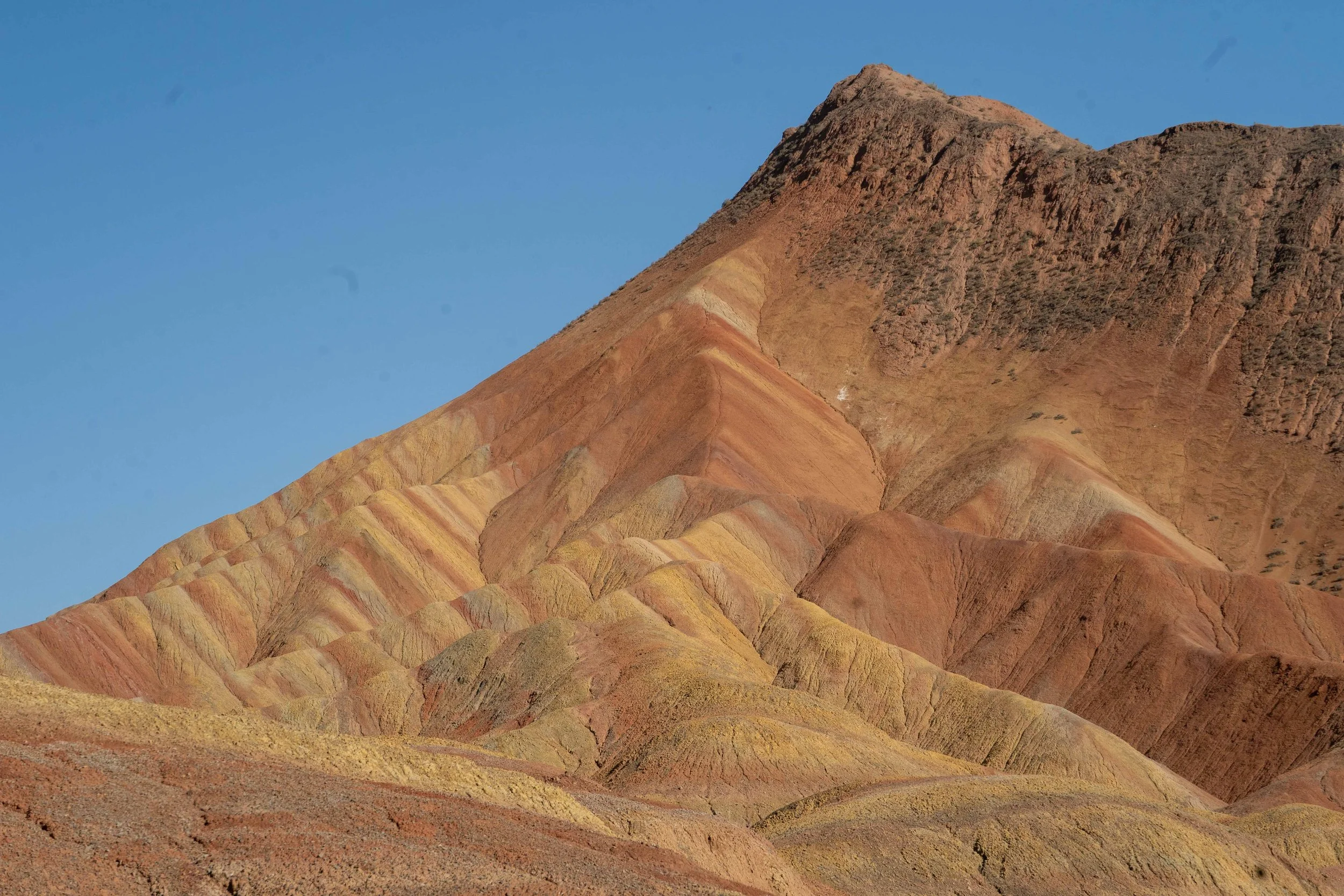
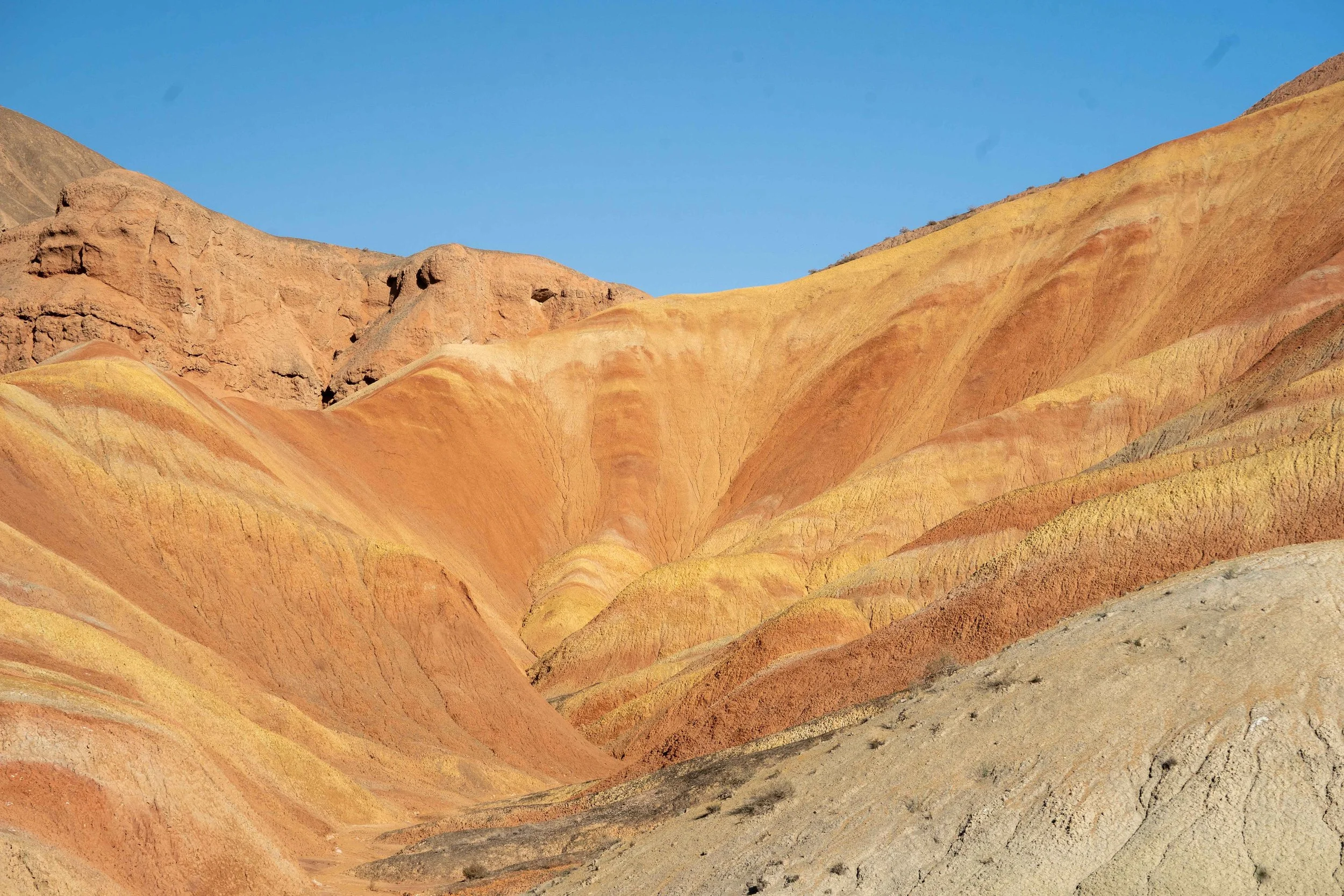
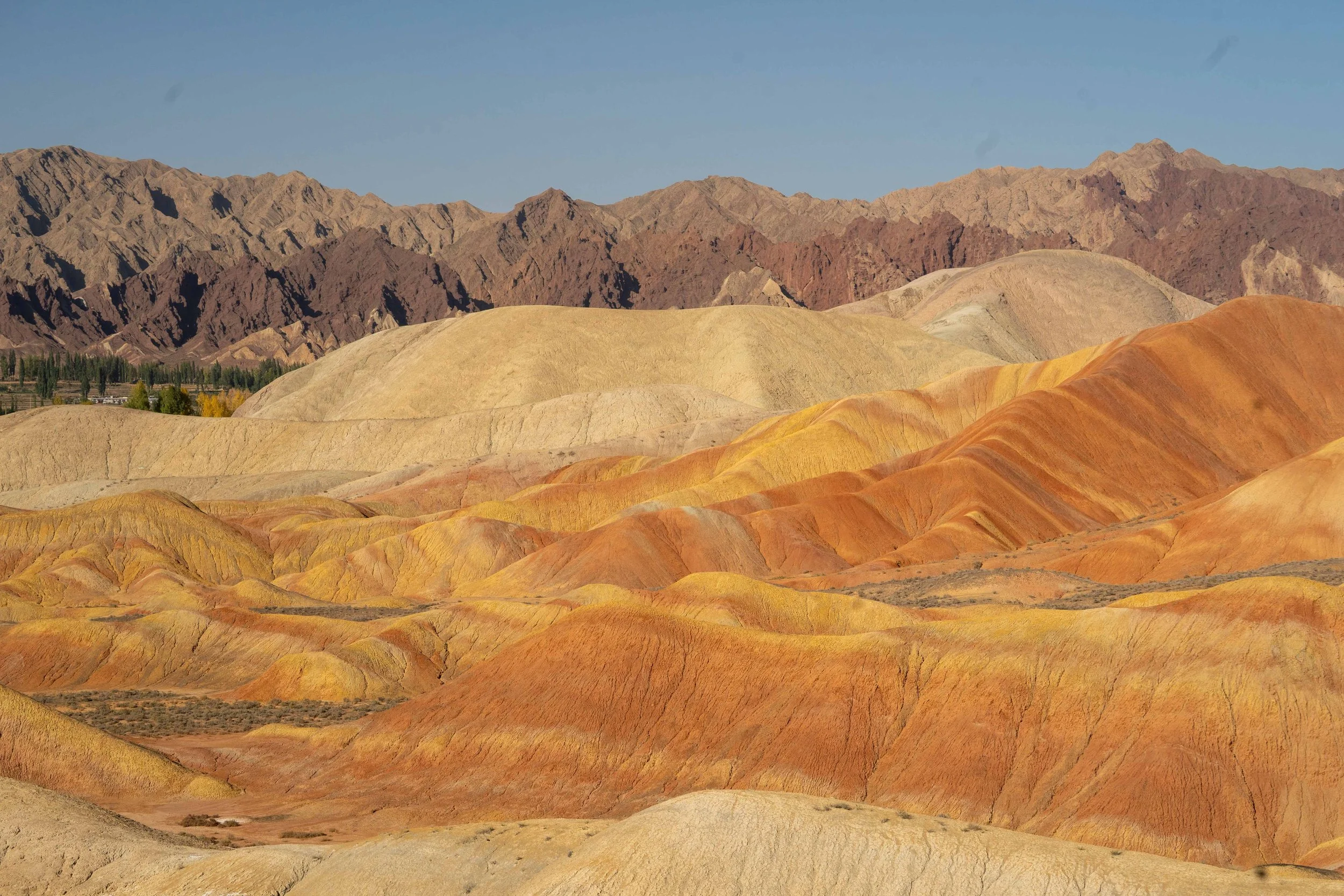
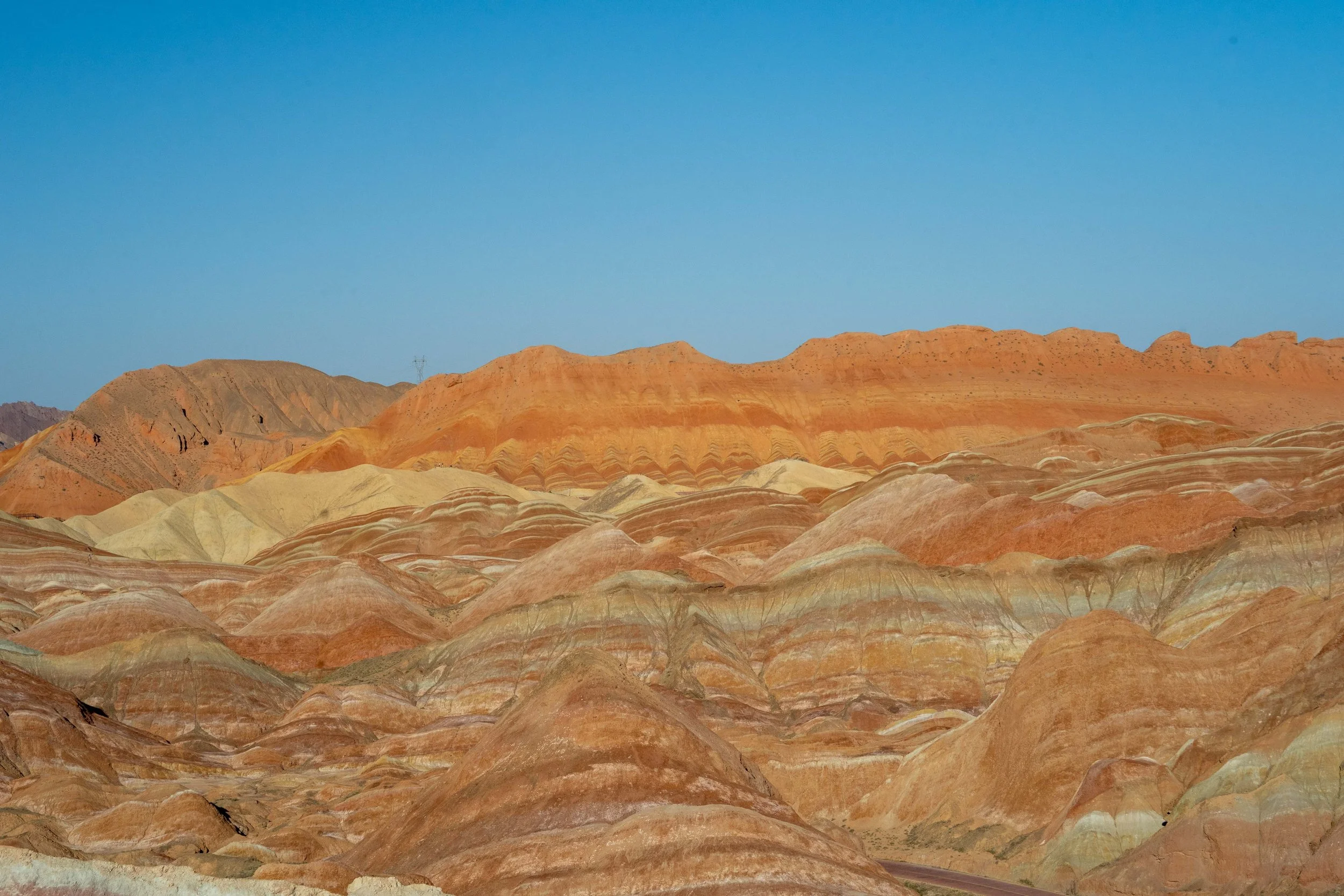
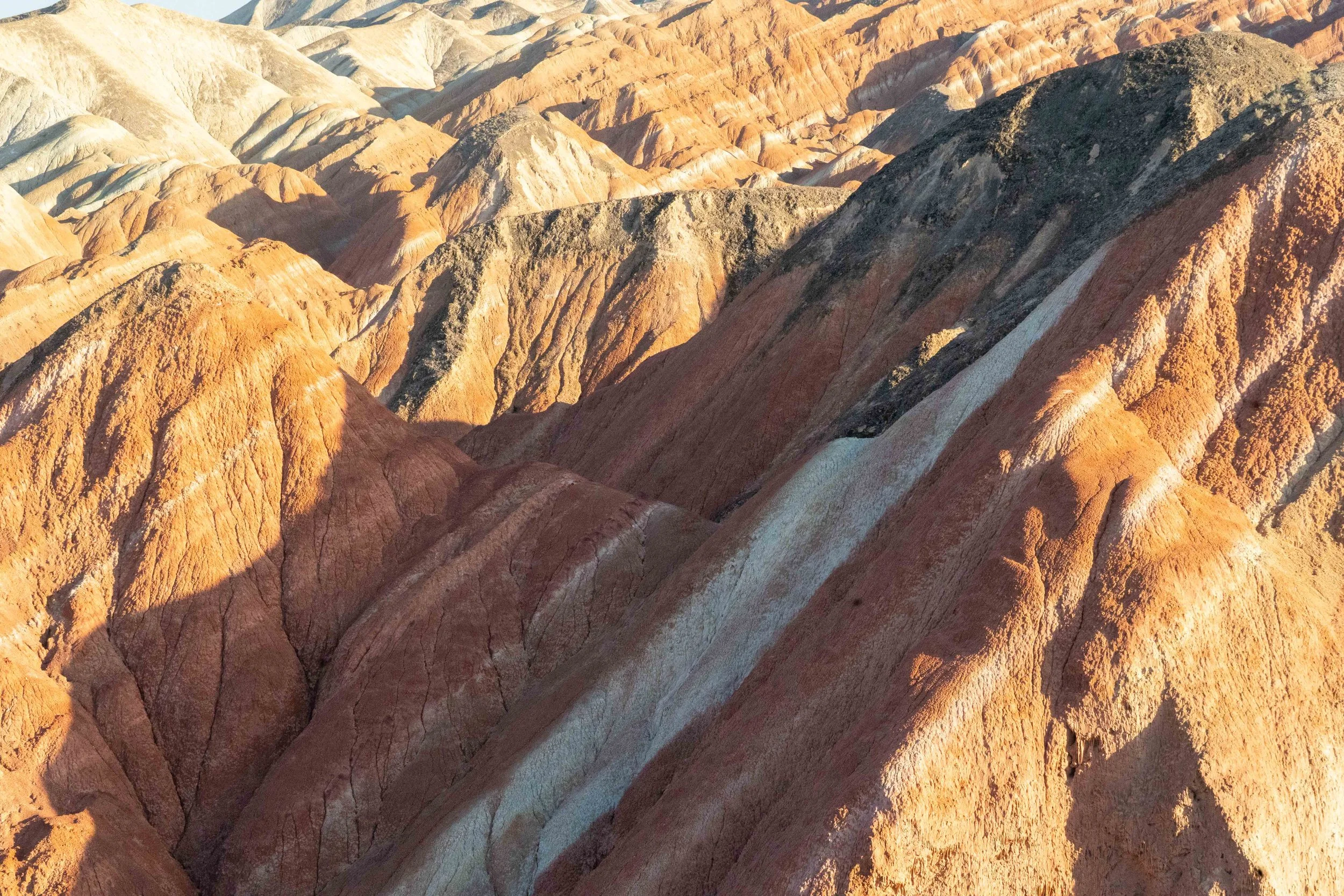
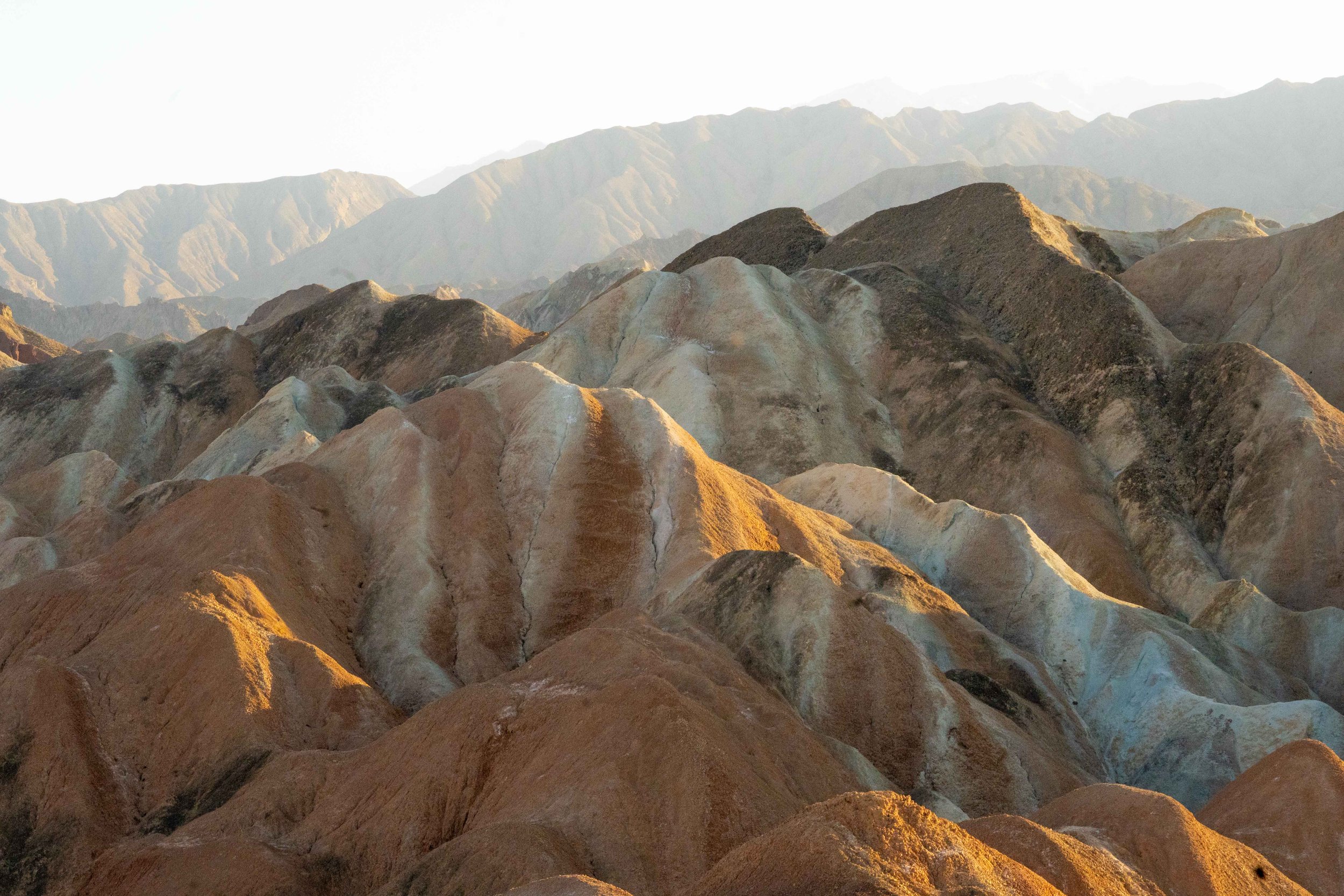
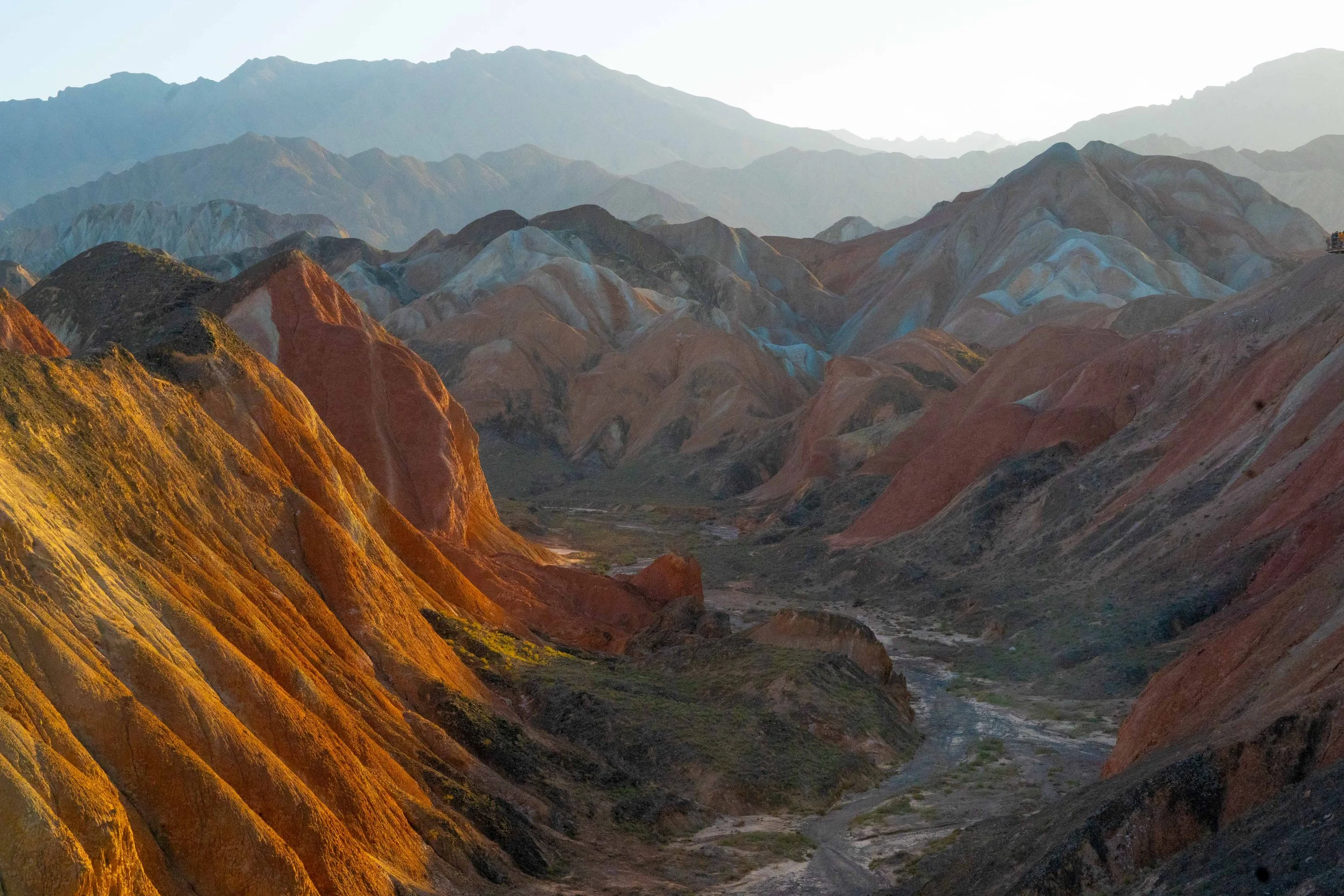
Our final stop was the Seven-Color Terrace(七彩观景台), where the crowds gathered to witness the sunset. As the sun dipped toward the horizon, the hills blazed in fiery shades of gold and crimson, casting a surreal glow over the landscape. We had just ten precious minutes to savor the view before the light faded behind the mountains.
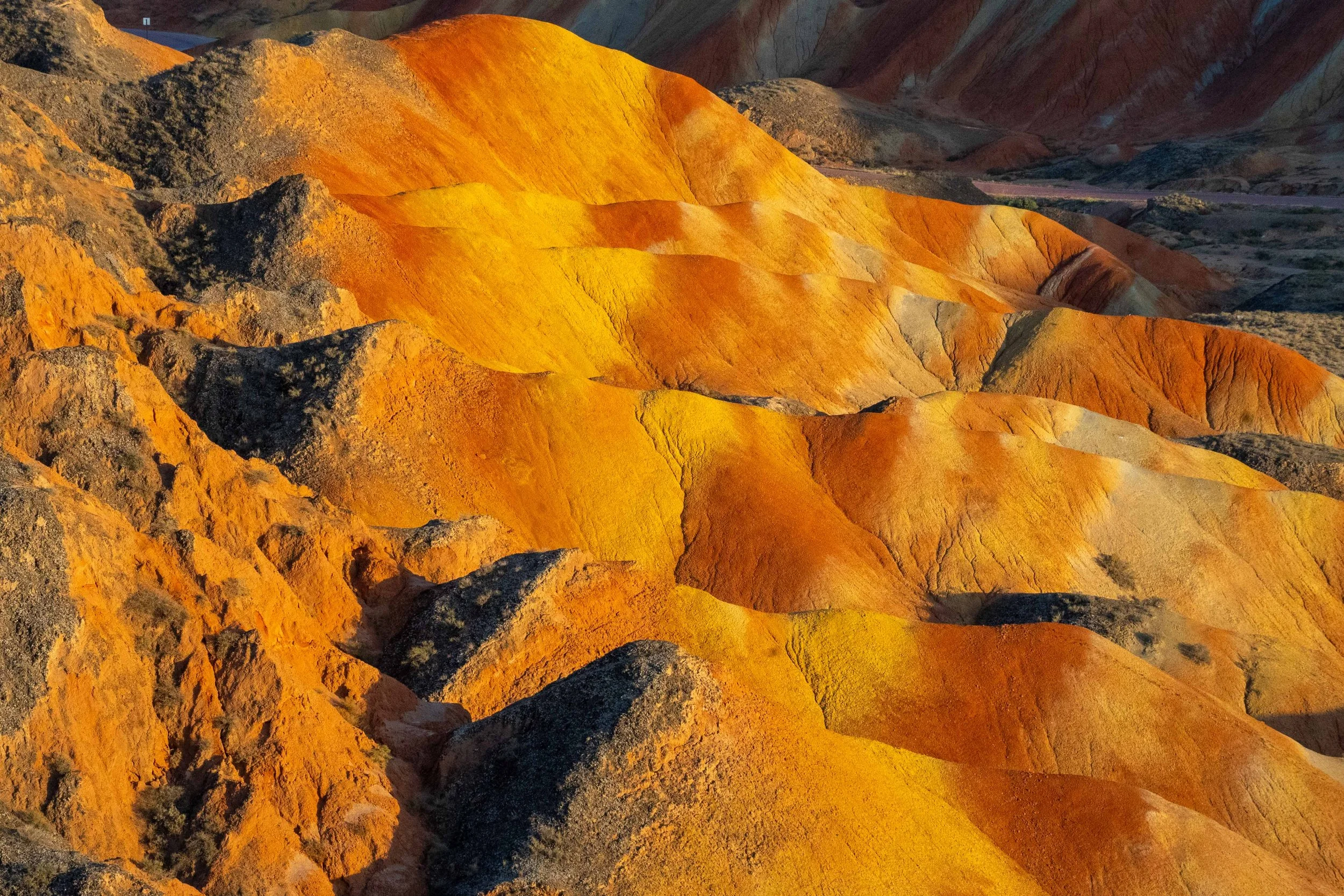
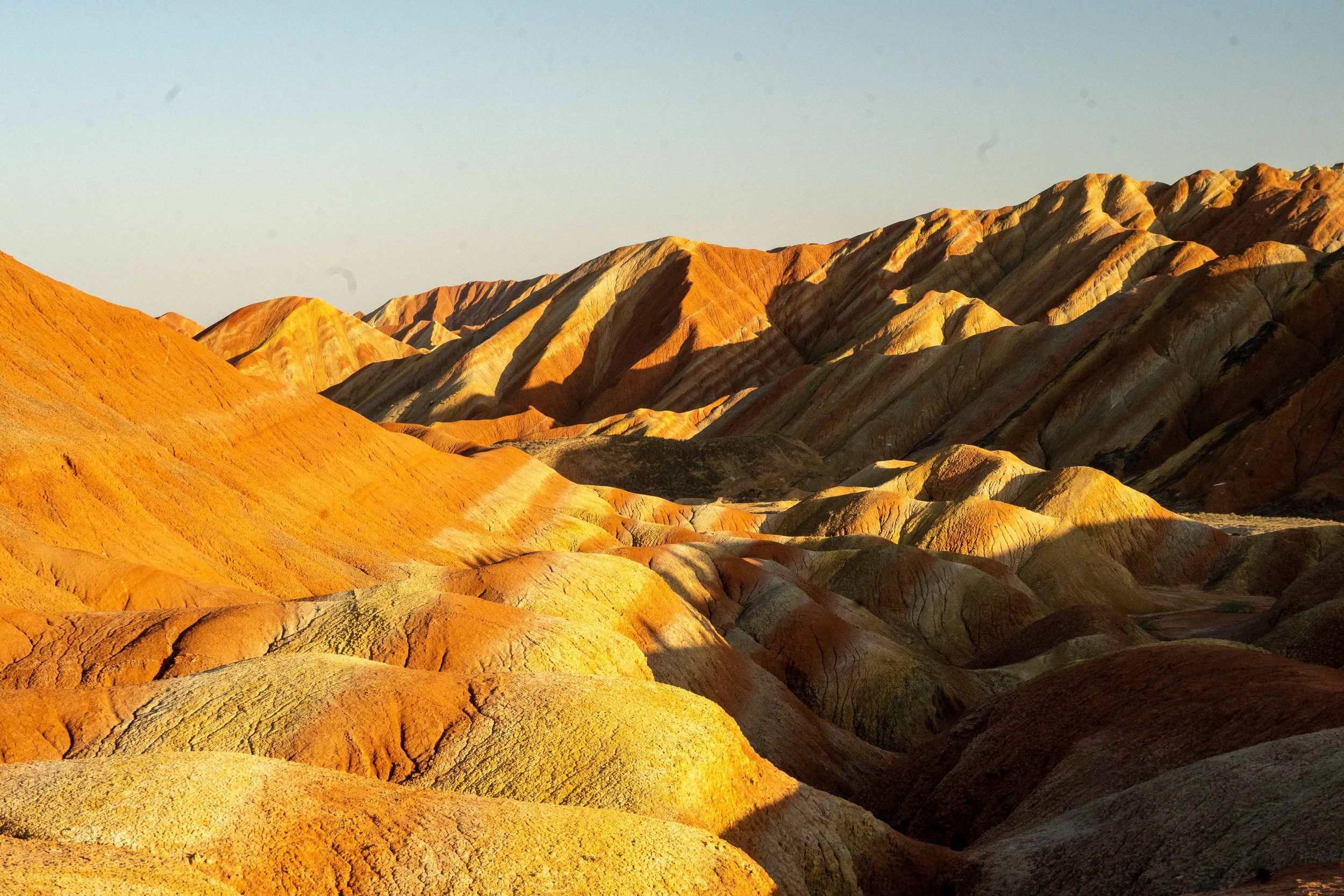
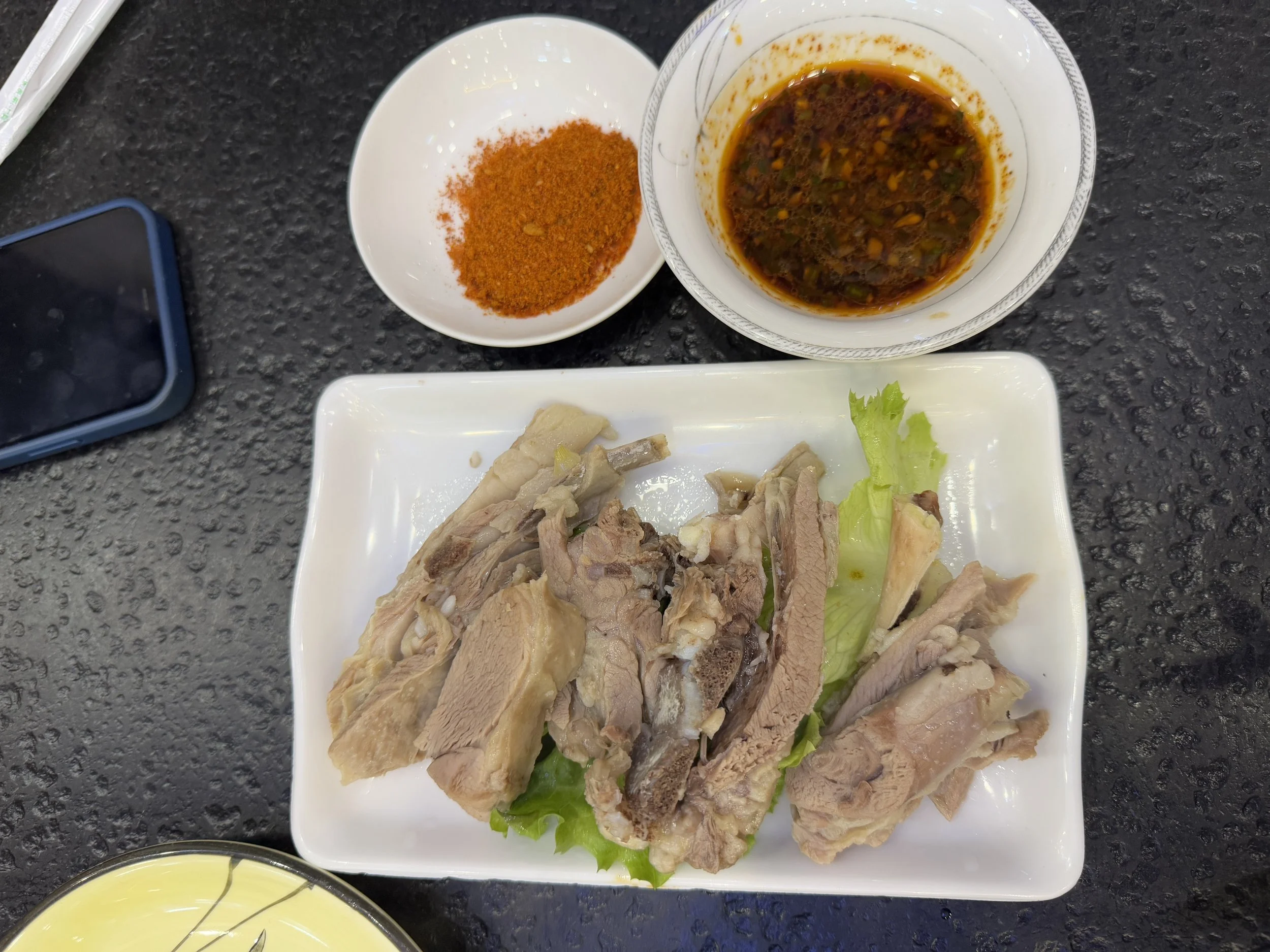
That evening, we stayed overnight in Zhangye and enjoyed a hearty dinner of 手抓羊肉 (hand-pulled mutton)—tender, flavorful, and perfectly satisfying after a long and rewarding day of travel.
2025年10月12日
今天原定的计划是离开嘉峪关,前往下一站张掖国家地质公园,但司机建议我们应该去金塔胡杨林(Jinta Populus Euphratica Forest)看看,那是河西走廊上又一处壮丽的沙漠绿洲,而现在正值胡杨林的金秋盛景。虽然这并不在原定行程中,还需从嘉峪关额外绕行一百多公里,但机会难得,为了能亲眼目睹这片秋色,我们欣然决定支付额外费用前往。
抵达景区入口后,我们换乘景区摆渡车。景区很大,而我们时间有限,只能挑几个点下车。首先我们来到原始胡杨林站,阳光透过层层金黄的树叶洒落下来,我们沿着曲折的木栈道深入林中。成片的原始胡杨树形态各异。我们边走边细细观察胡杨叶——圆的、椭圆的、长条的、三角的、心形的——每一片都在阳光下闪耀着金色光泽。
接着我们乘景区摆渡车前往胡杨塔,每人花二十元乘电梯登顶。俯瞰之下,整片金色林海尽收眼底,远处的发电塔在沙漠中闪烁着耀眼的白光。
最后一站是胡杨湖,也是整个景区最漂亮的地方。湖面如镜般平静,将金黄的树林倒映得如梦似幻。游客们纷纷在湖畔拍照留念,而我们则走向林中较为宁静的区域,放飞 DJI 无人机,从空中记录我们漫步林间、欣赏秋色的画面。那一刻令人陶醉,成为此行最难忘的回忆之一。
在林中流连忘返了三个多小时后,我们驱车两百多公里前往张掖国家地质公园(Zhangye National Geopark),也就是著名的七彩丹霞(Rainbow Mountains)。抵达时已近黄昏,低斜的阳光将山体的色彩渲染得格外浓烈。景区总共有四个观景台,风景各异。景区巴士载着游客穿梭于各个观景台之间,每一处观景台都需步行一小段路,上许多台阶,登高后皆可俯瞰令人震撼的地貌全景。那起伏的山峦,层叠的红、橙、黄、白相间,如同大自然挥洒的调色板,瑰丽无比。
最后一个观景台是人气最旺的七彩观景台(Seven-Color Terrace)。夕阳缓缓西沉,丹霞山体在金红色的余晖中熠熠生辉,宛如燃烧的彩霞,梦幻又永恒。当我们赶到时,仅有十几分钟的时间欣赏这绝美一幕,随后夕阳便隐没在远山之后。
夜幕降临,我们留宿张掖。晚餐在酒店附近的一家餐馆点了当地特色菜——手抓羊肉(hand-pulled mutton)。鲜嫩多汁、香气四溢。正好为这充实而难忘的一天画上完美的句号。
Yulin Grottoes, Jiayuguan Pass, and the Hanging Great Wall 榆林窟、嘉峪关与悬壁长城
October 11, 2025
On the morning of the third day, after checking out of the hotel,……
第三天早晨,我们退房后,。。。
October 11, 2025
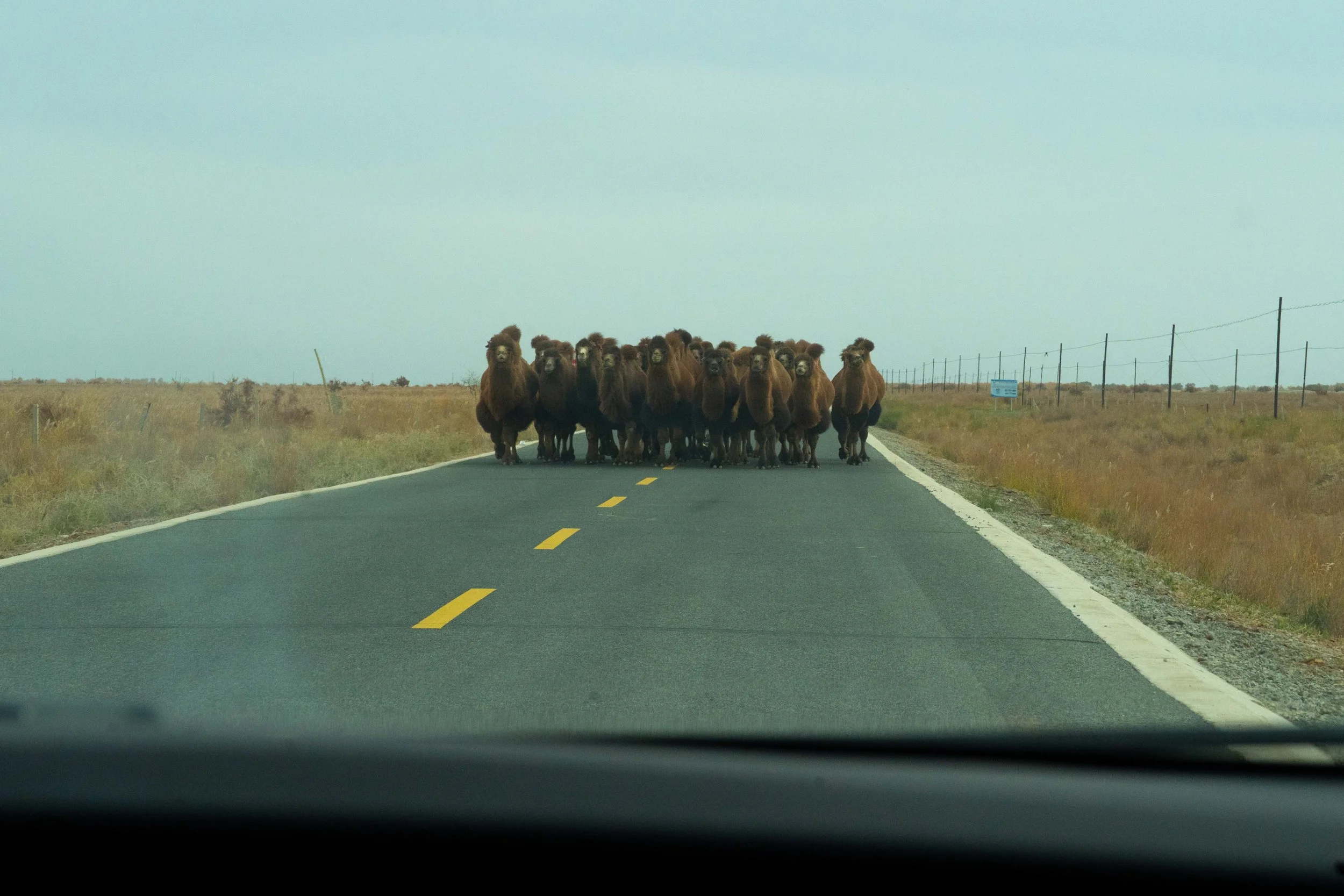
On the morning of the third day, after checking out of the hotel, our driver arrived on time to pick us up and we set off for the day’s itinerary. Our first stop was the Yulin Grottoes, about a little over two hours away by car. Along the way, we made brief stops at two large-scale sculptures—Han Emperor’s Mighty Presence and Son of the Earth—to take photos and admire these grand and striking works of art rising from the Gobi Desert.
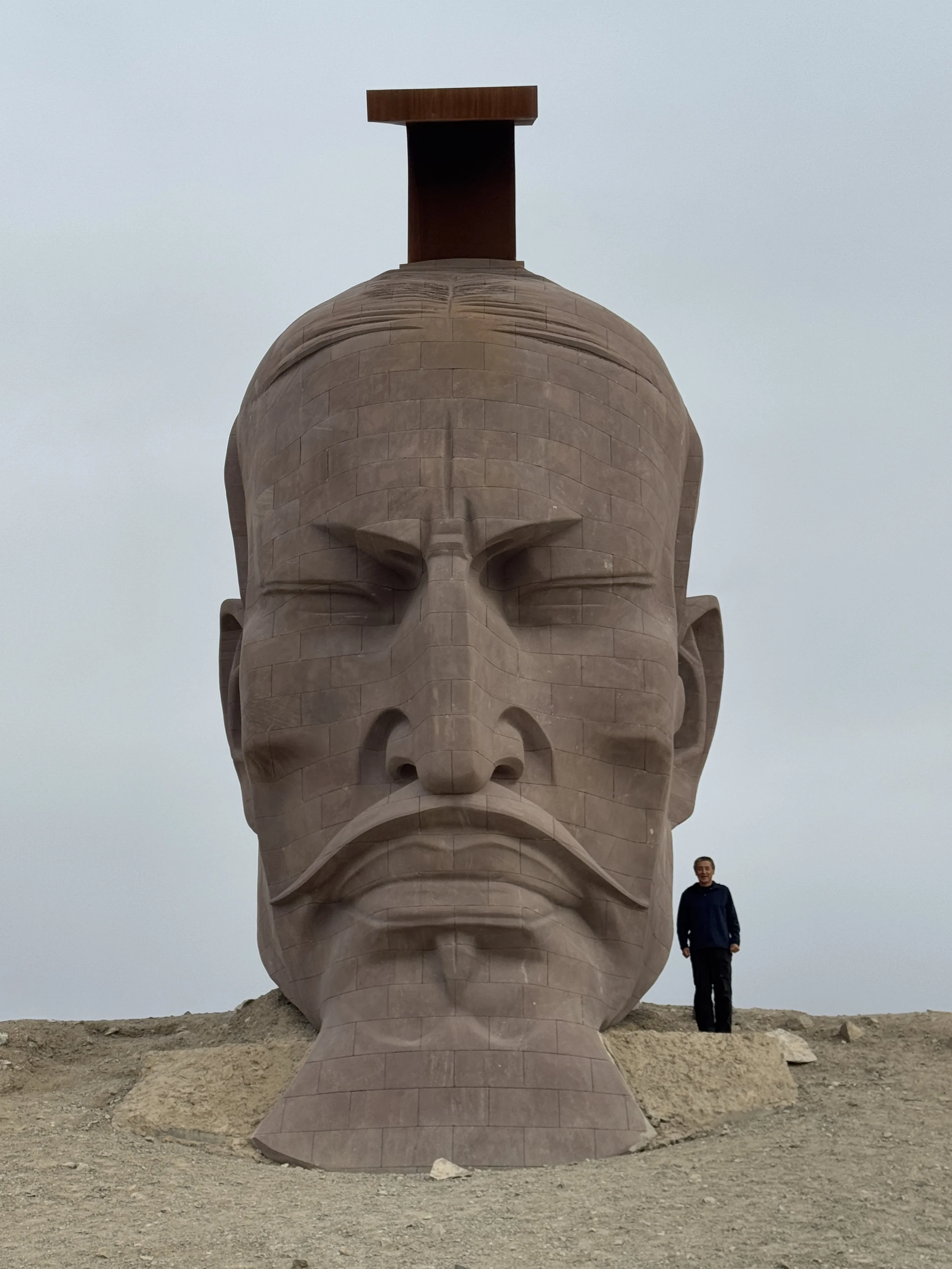
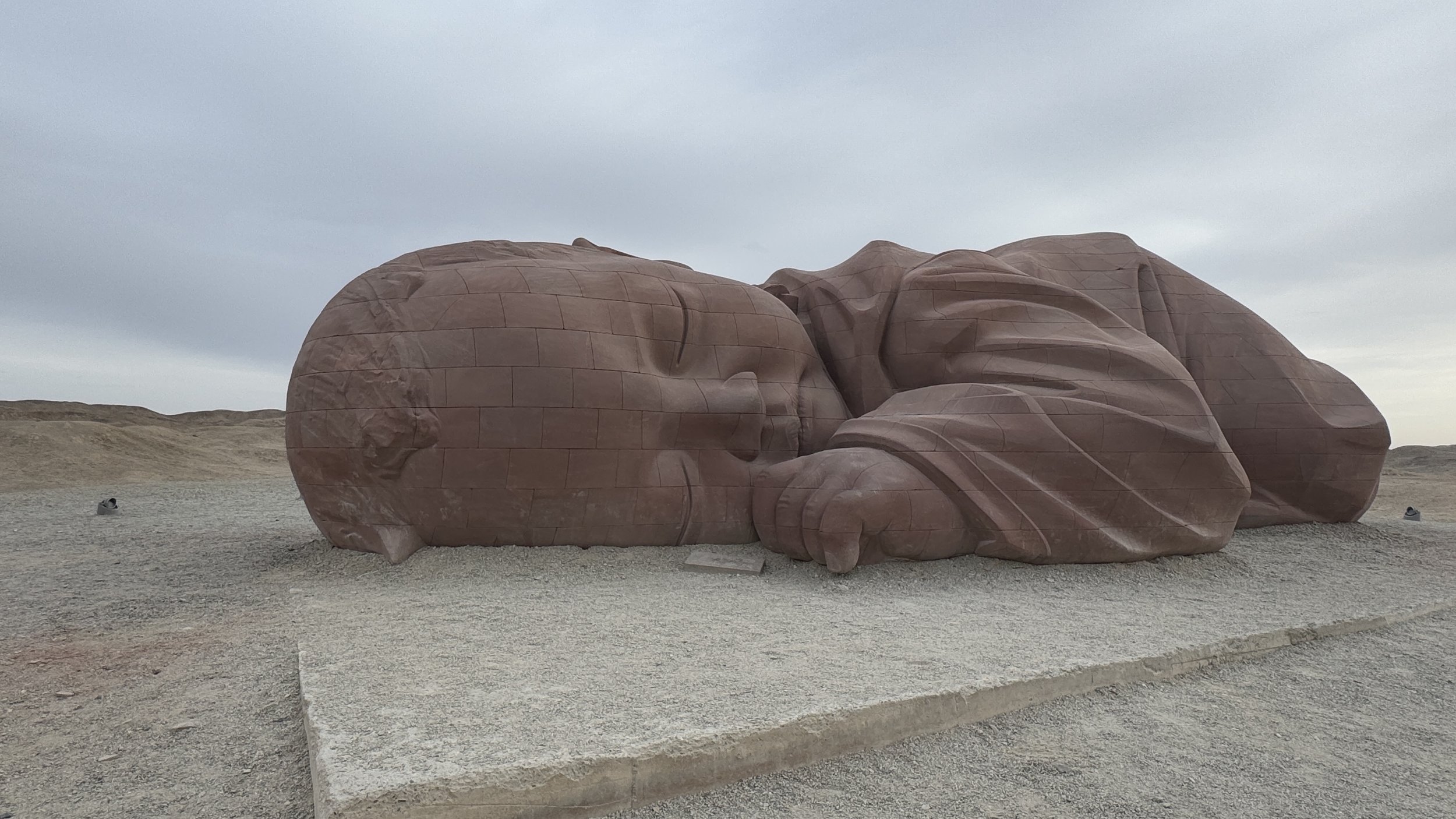
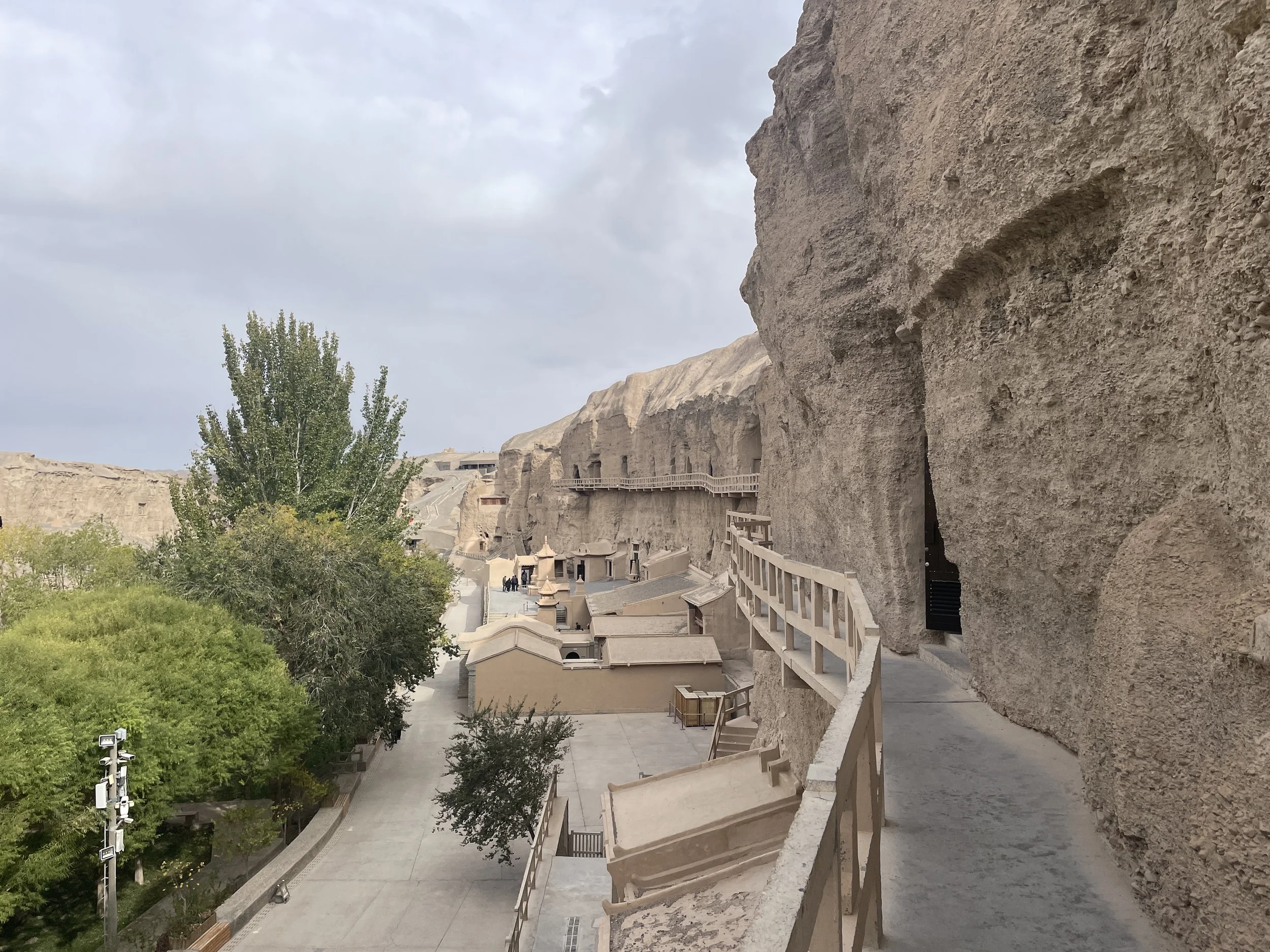
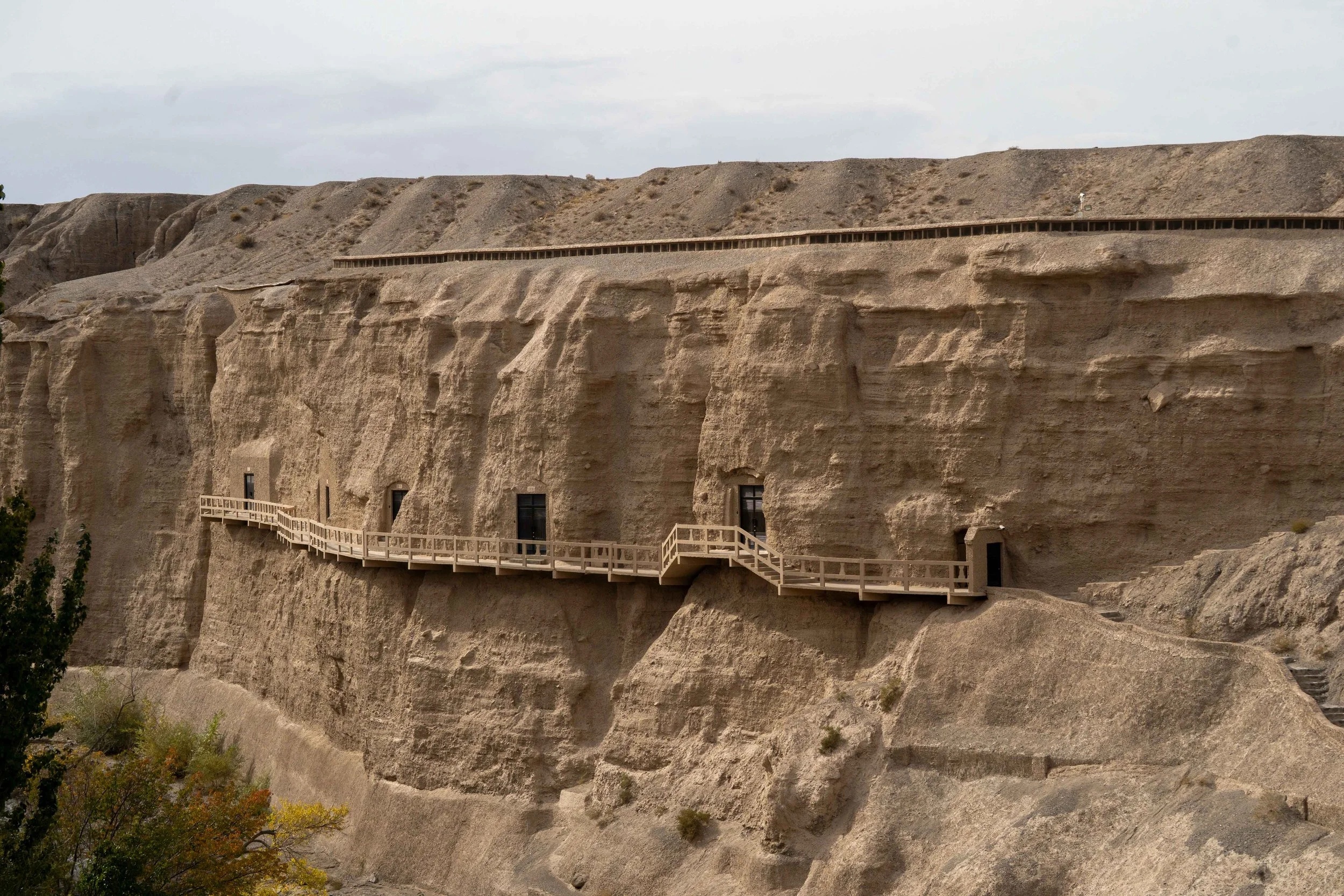
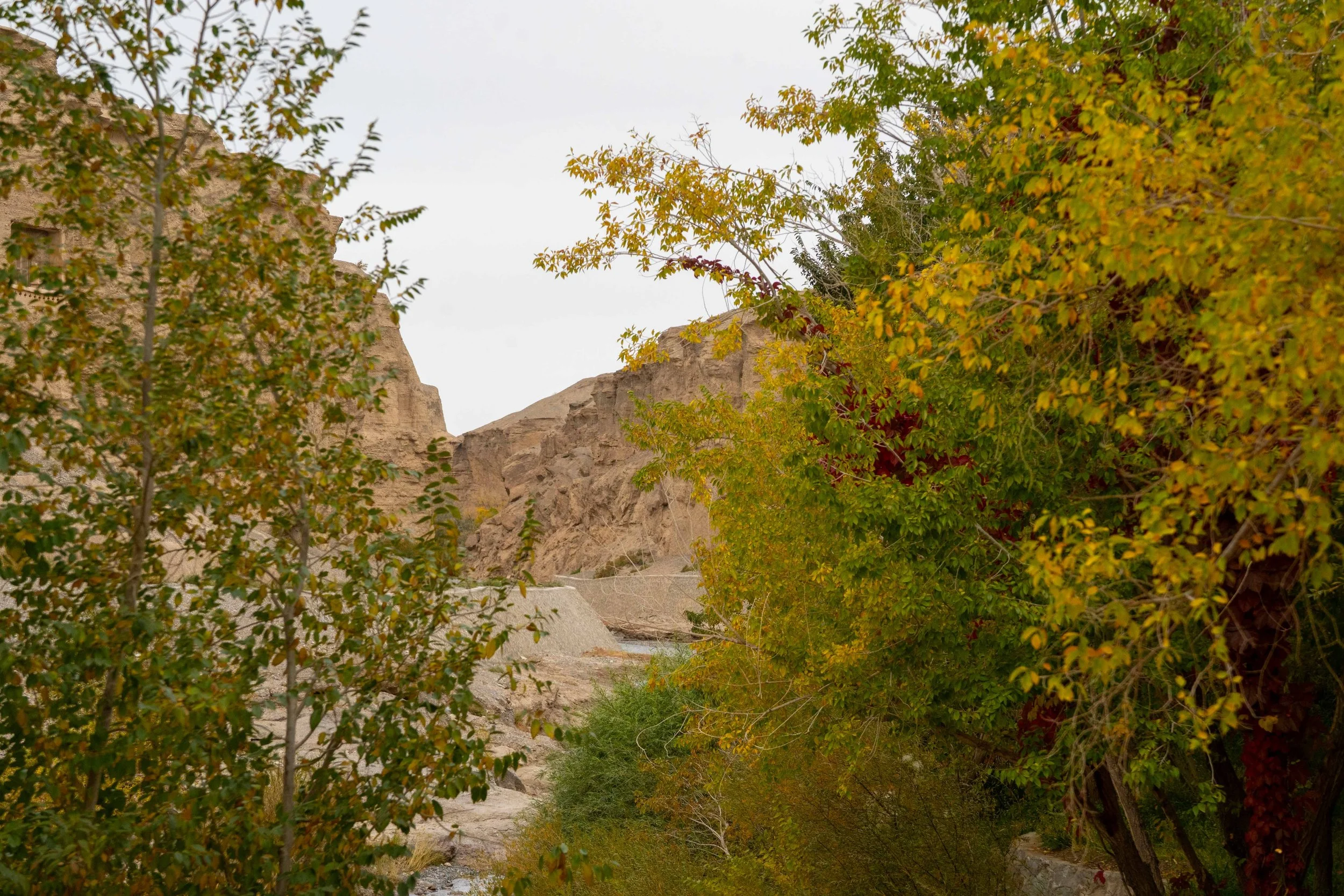
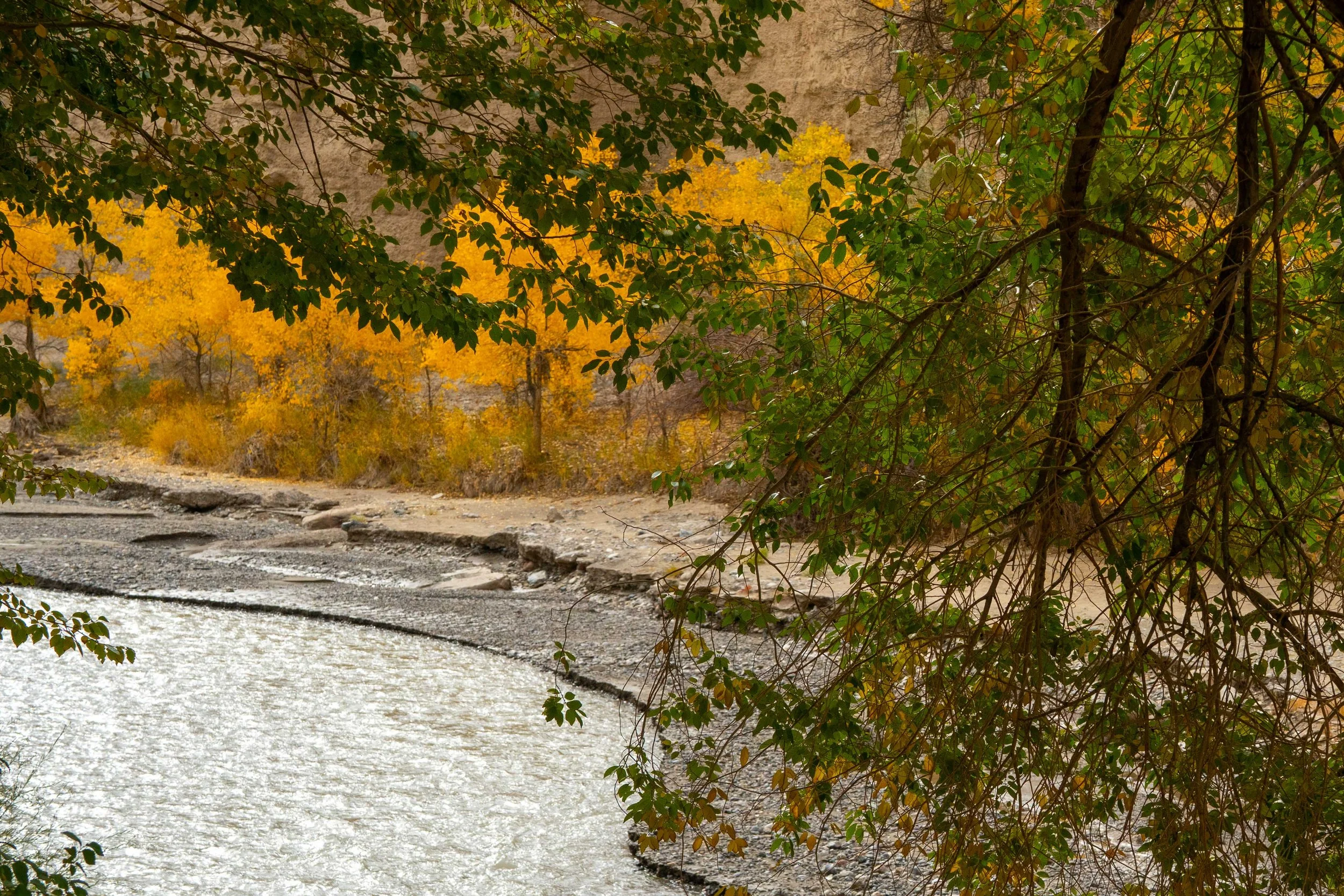
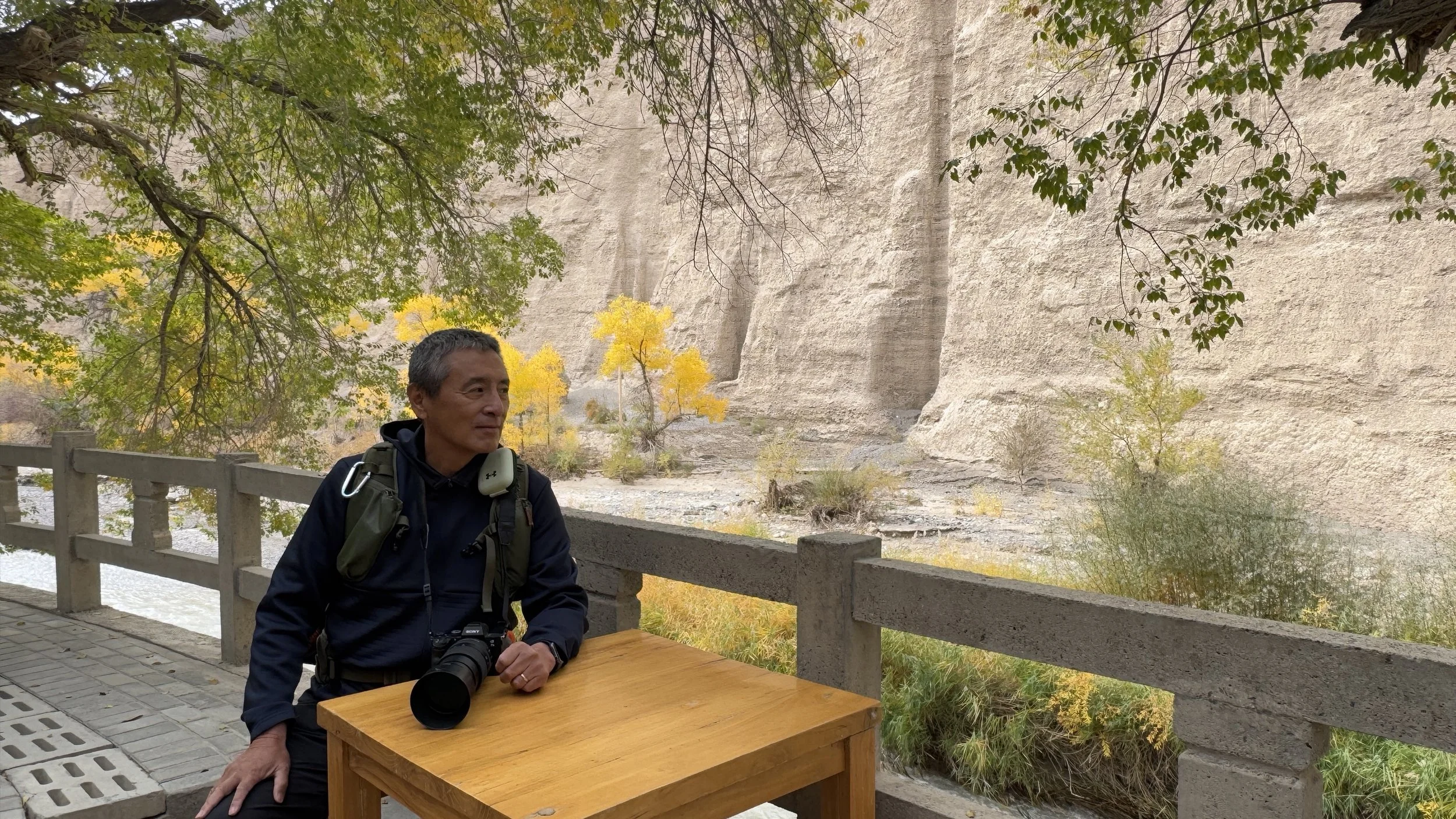
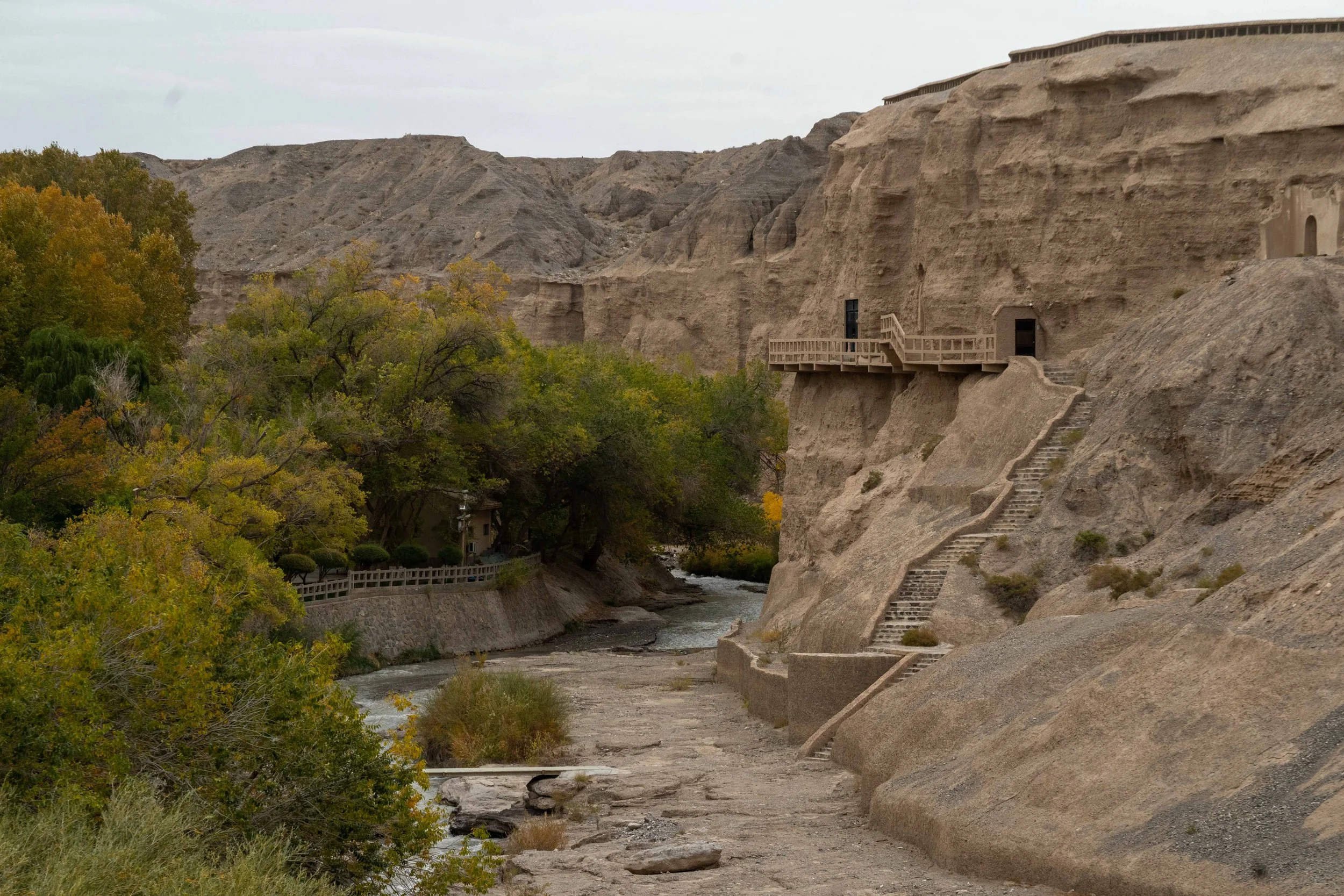
Nestled in a deep, narrow canyon surrounded by wind-carved cliffs and sparse desert vegetation, Yulin felt serene and contemplative, a striking contrast to the often-crowded Mogao Caves. The vivid murals and statues inside the caves, preserved in near-original condition, reflected the same Buddhist devotion seen in Dunhuang but with a quieter, more intimate atmosphere. We thoroughly enjoyed this tranquil visit.
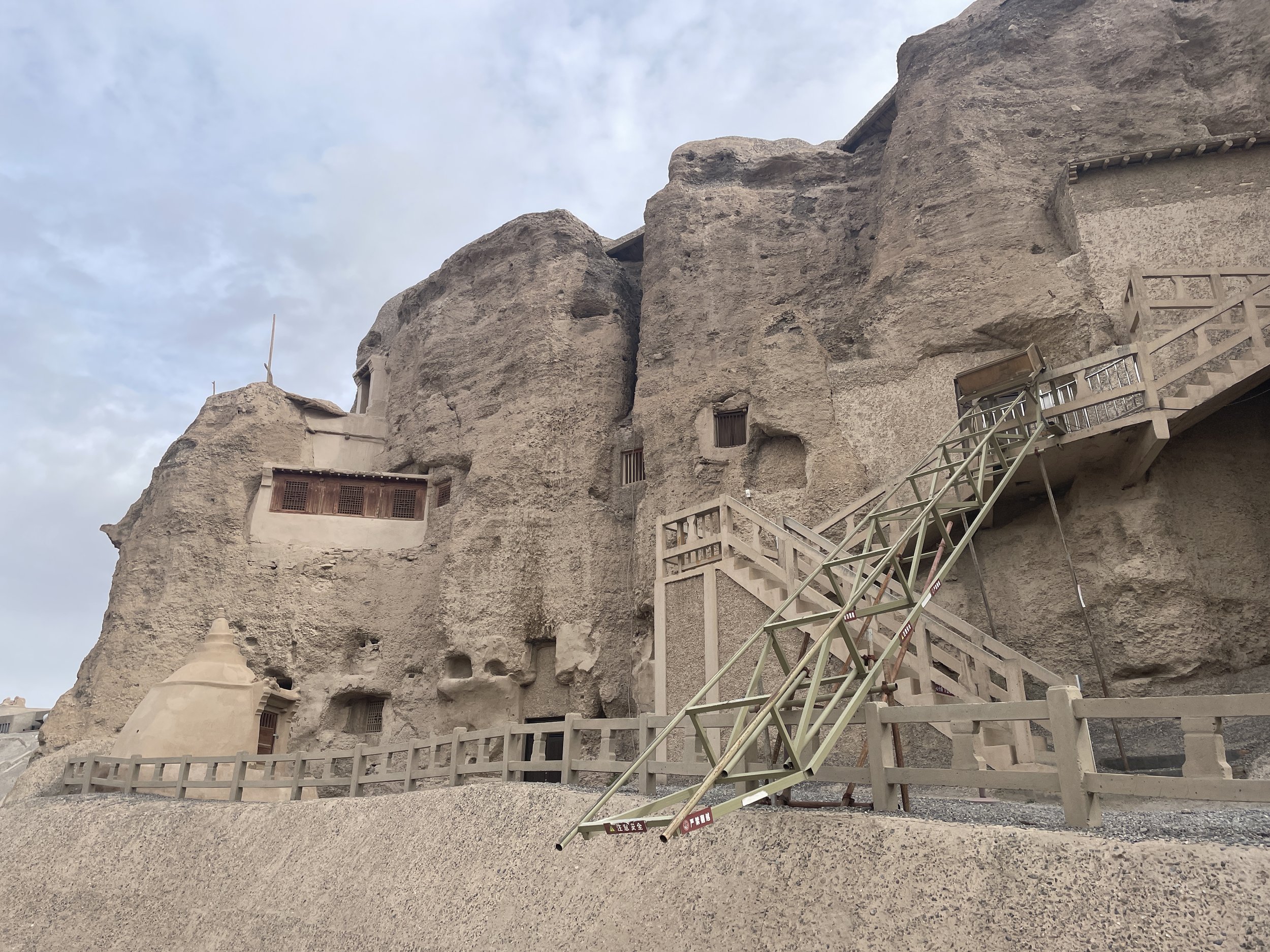
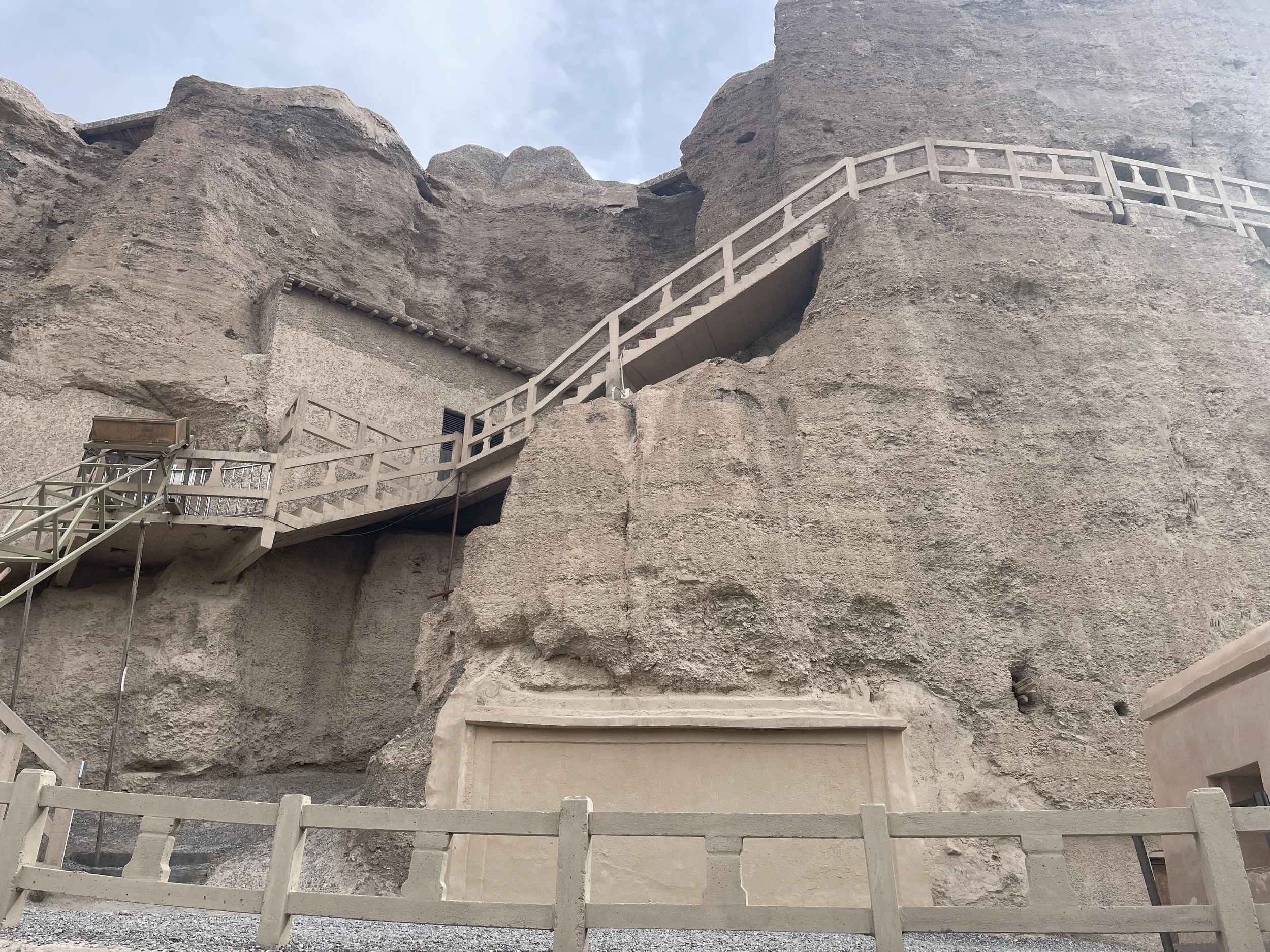
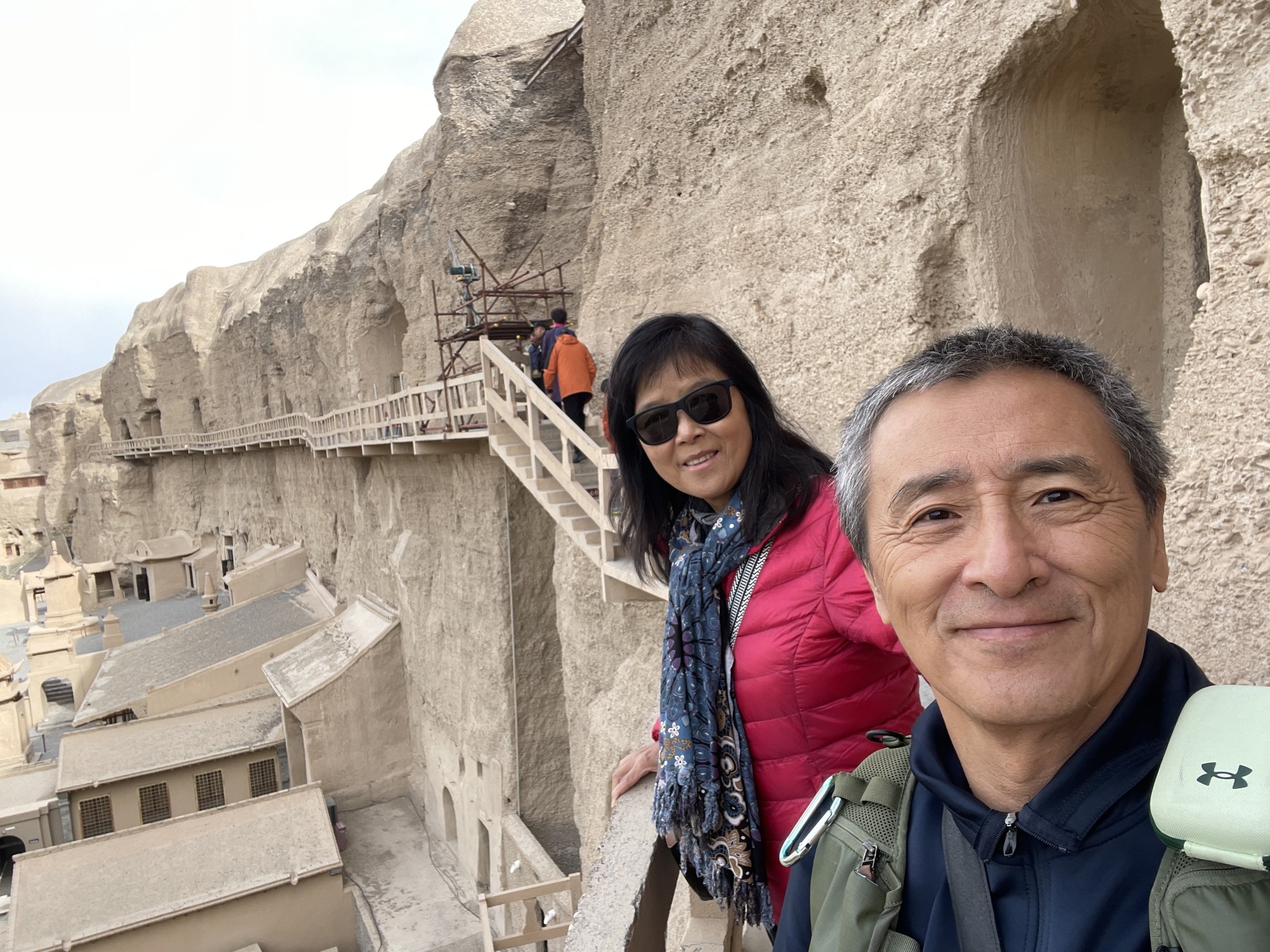
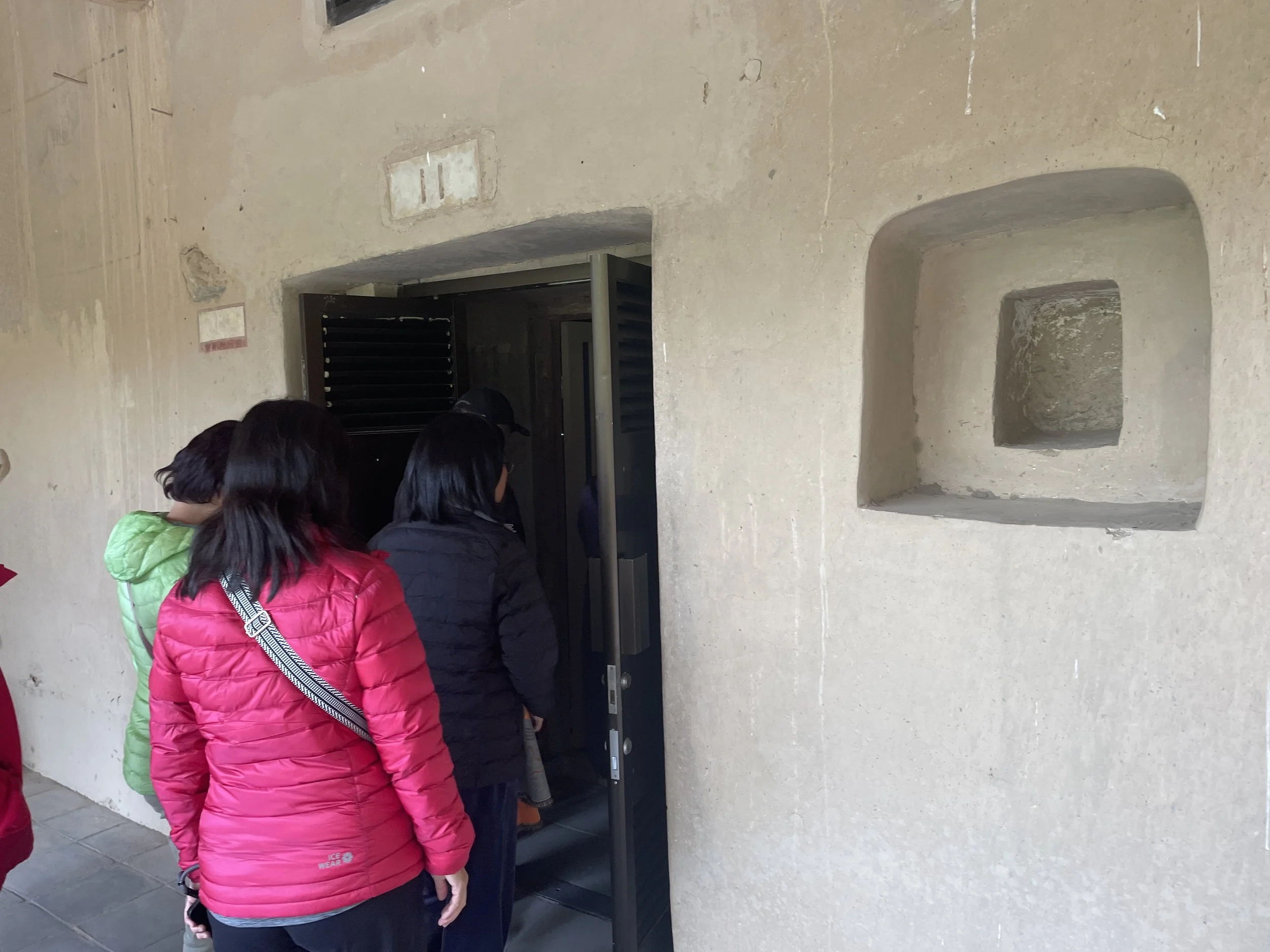
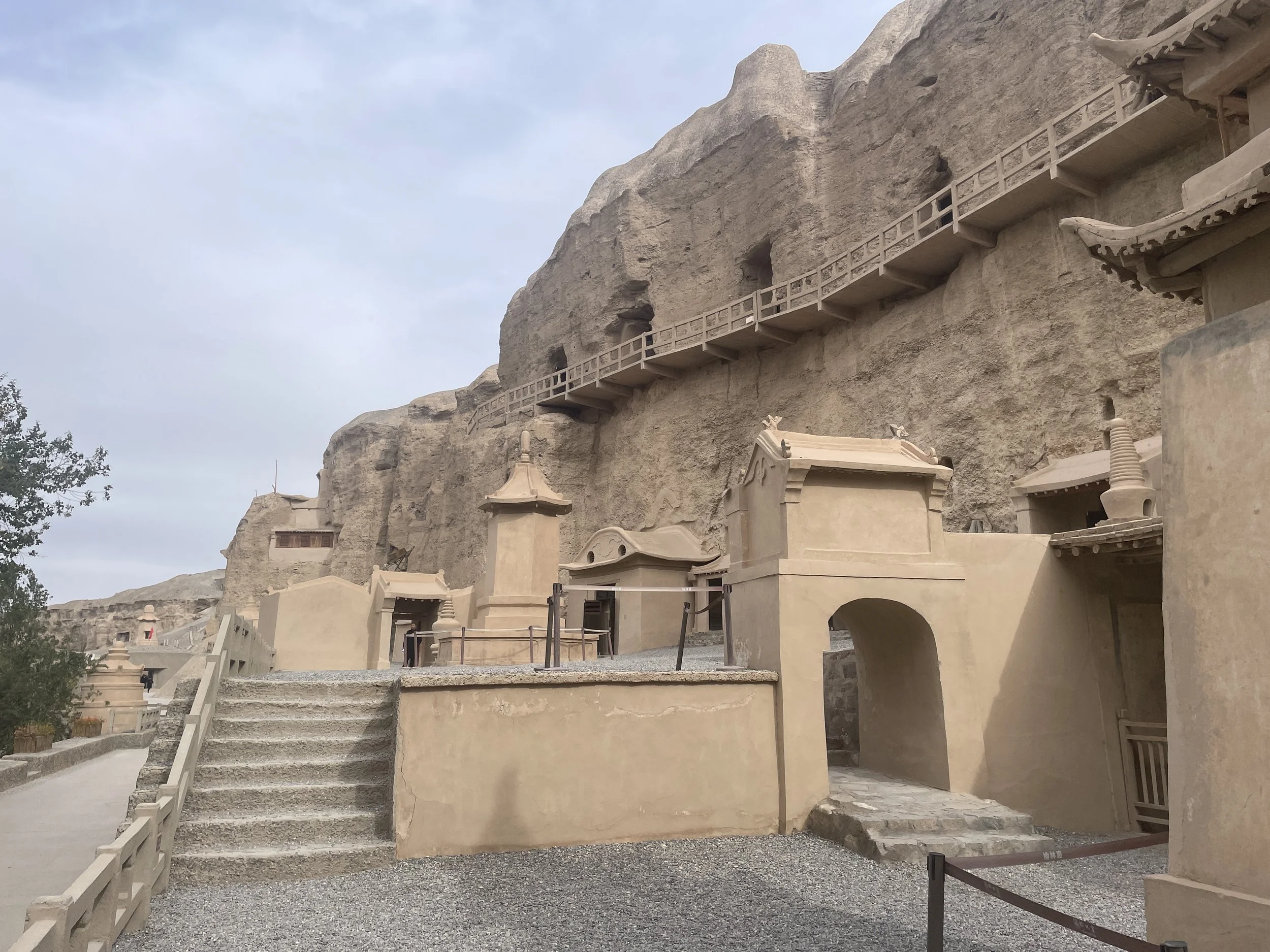
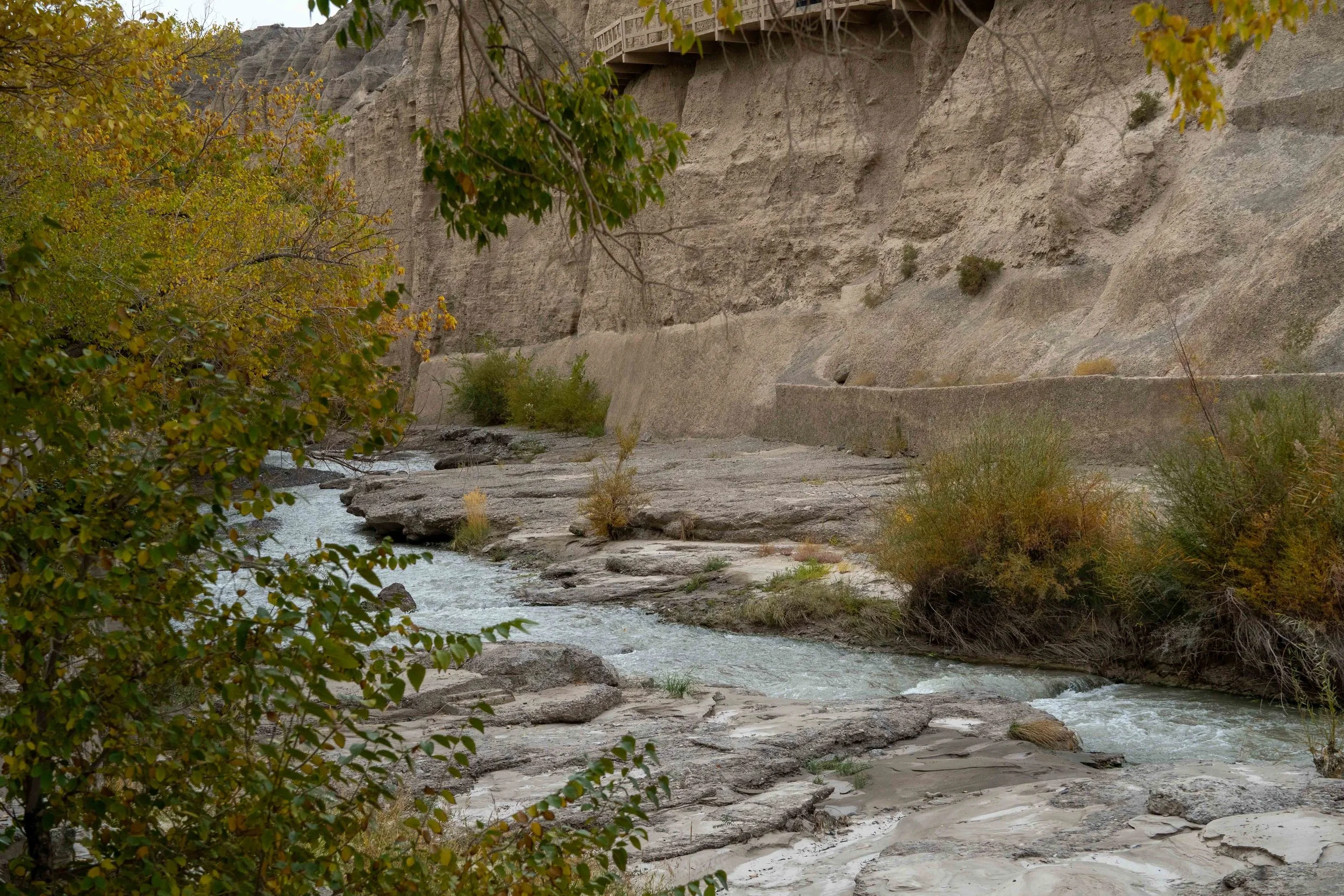
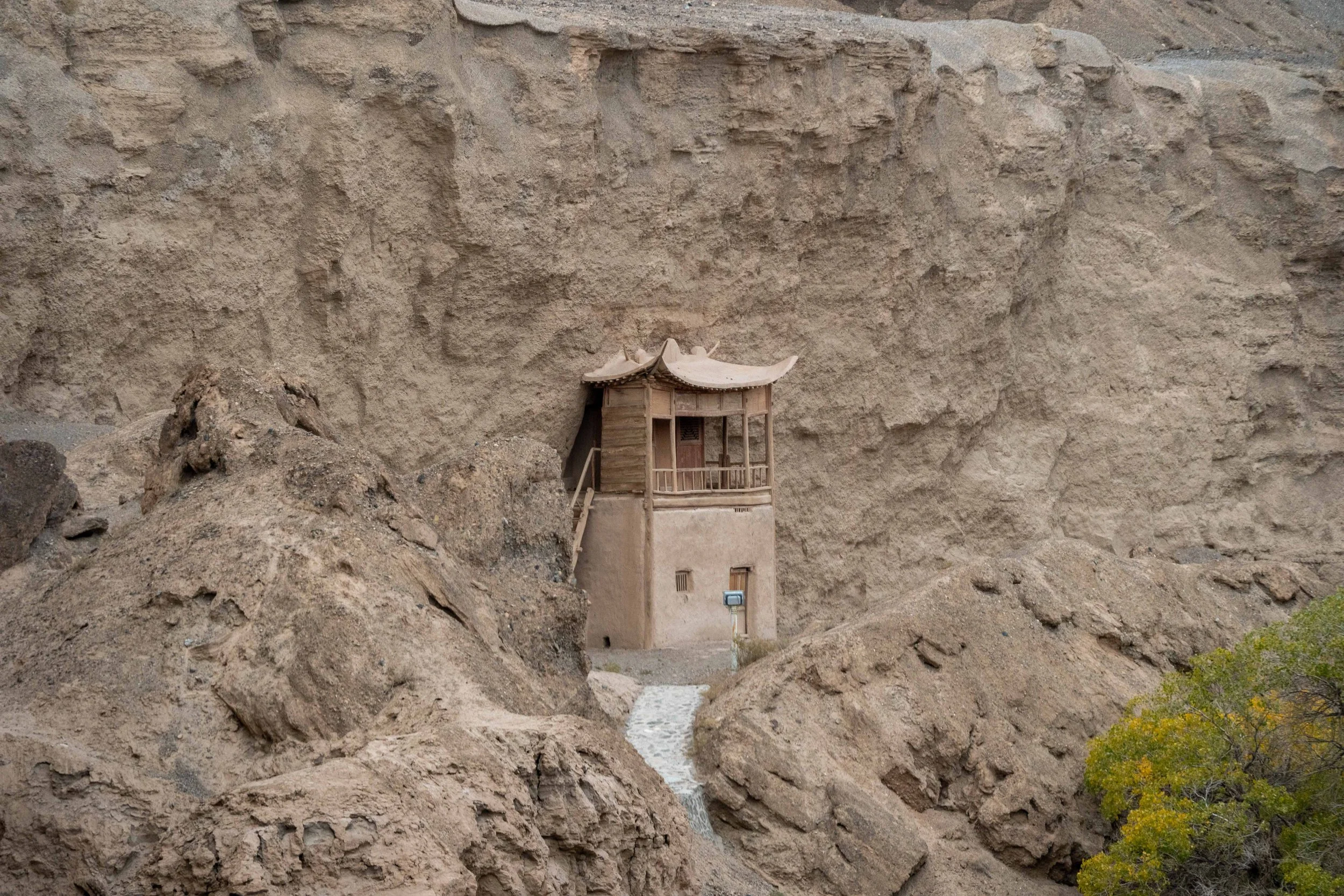
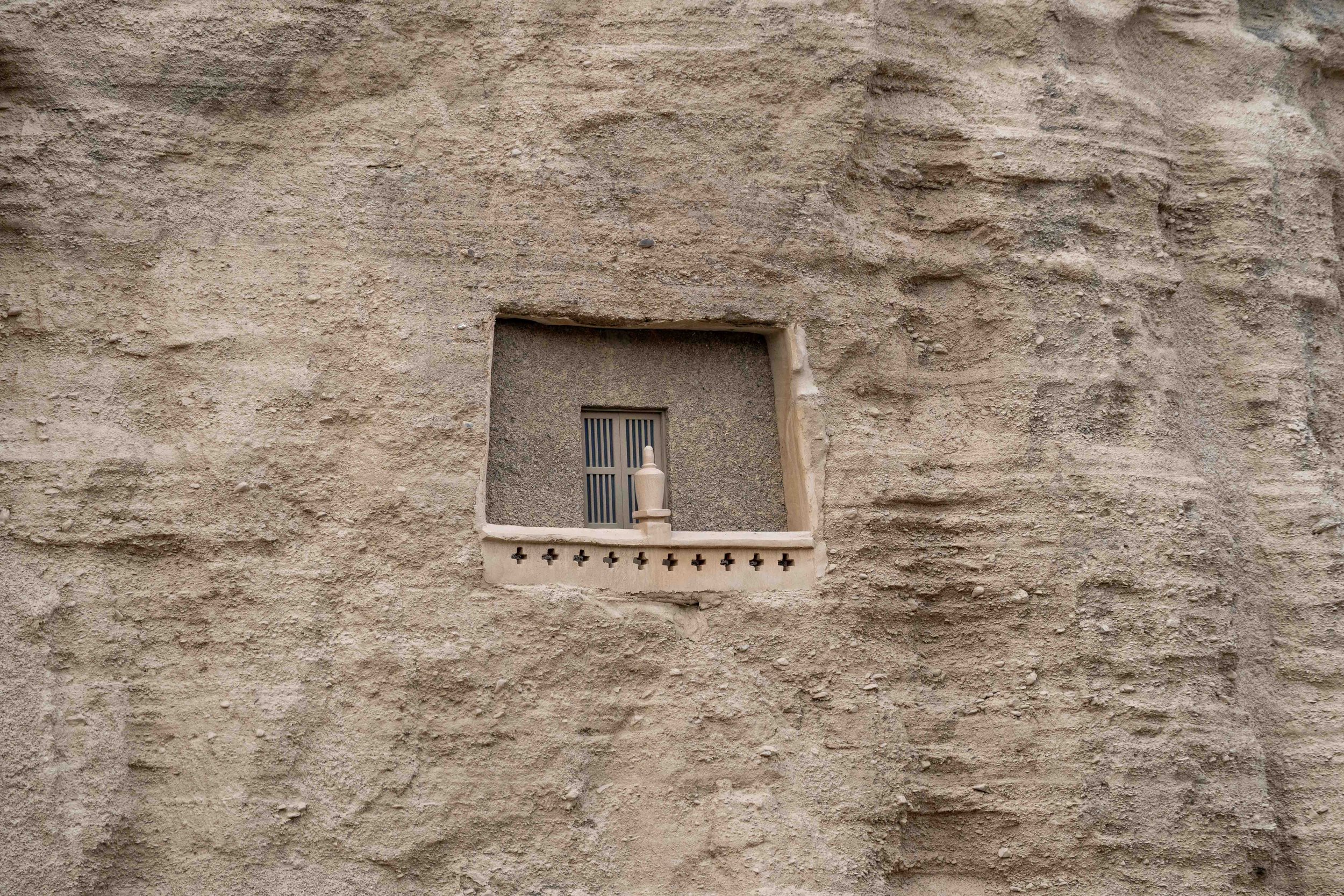
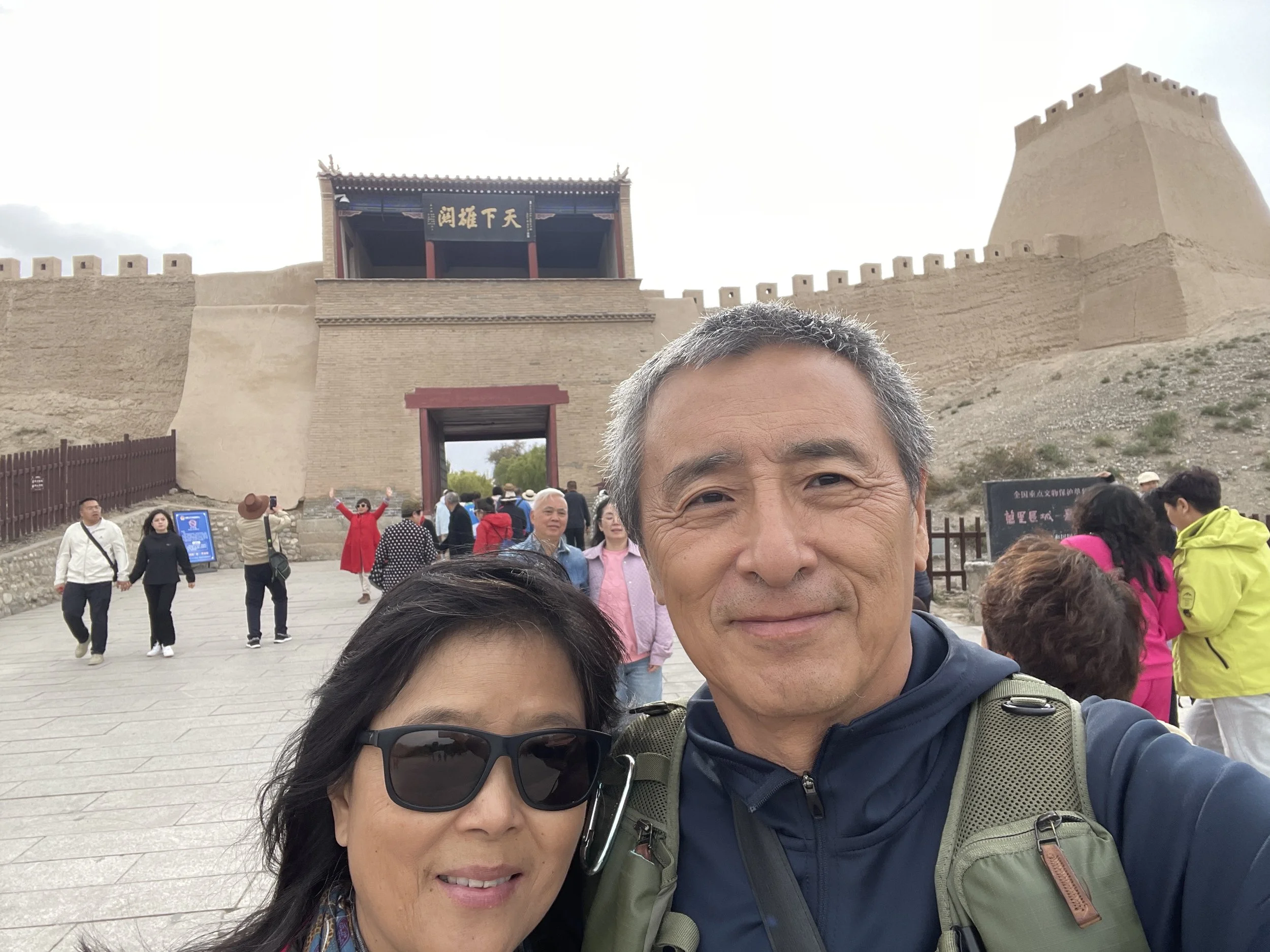
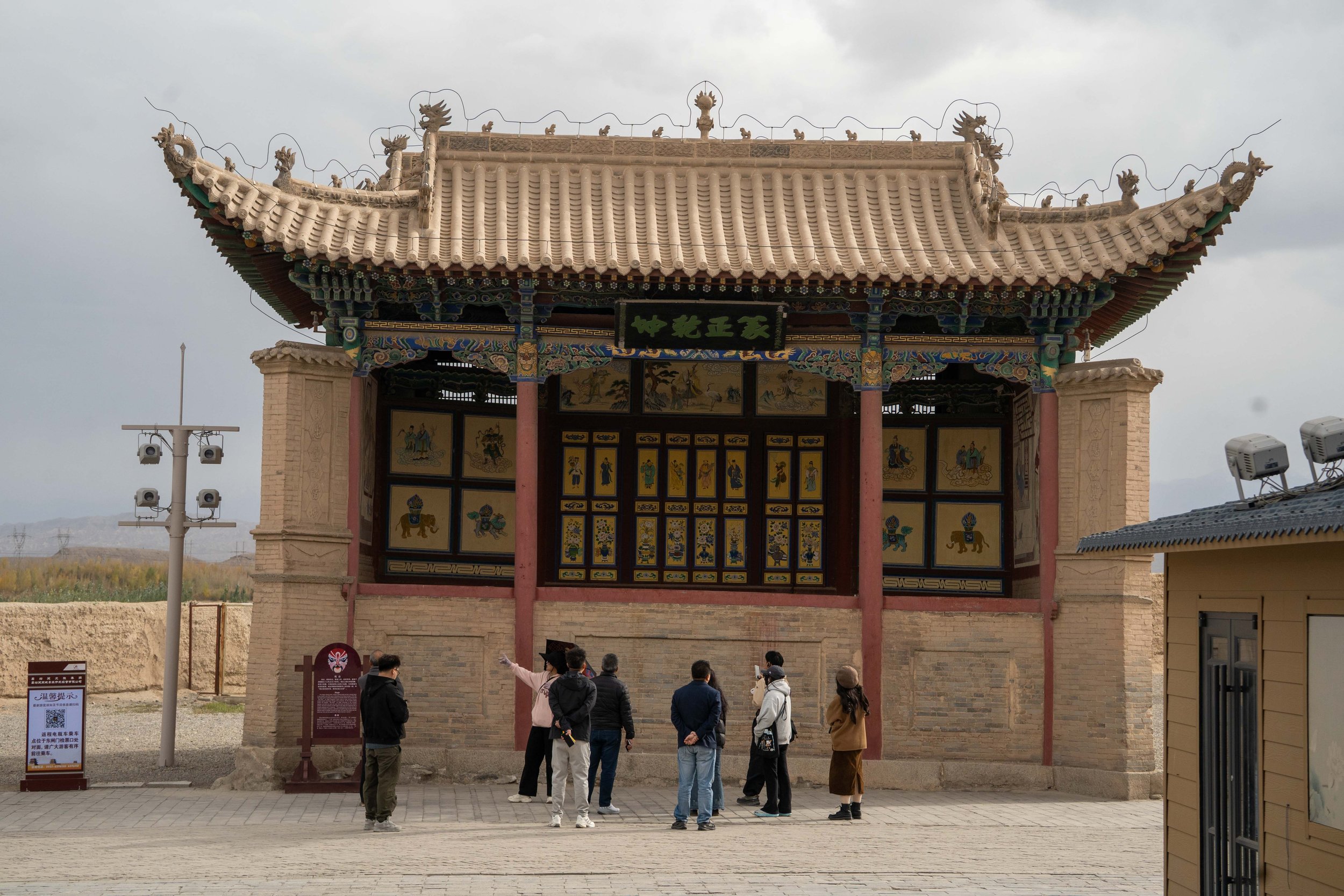
After leaving Yulin, we drove about three hours to Jiayuguan Pass (嘉峪关), known as the “First and Greatest Pass under Heaven” (天下第一雄关)—the western terminus of the Ming Dynasty Great Wall. The scenic area was well maintained and offered sweeping views of the desert landscape.
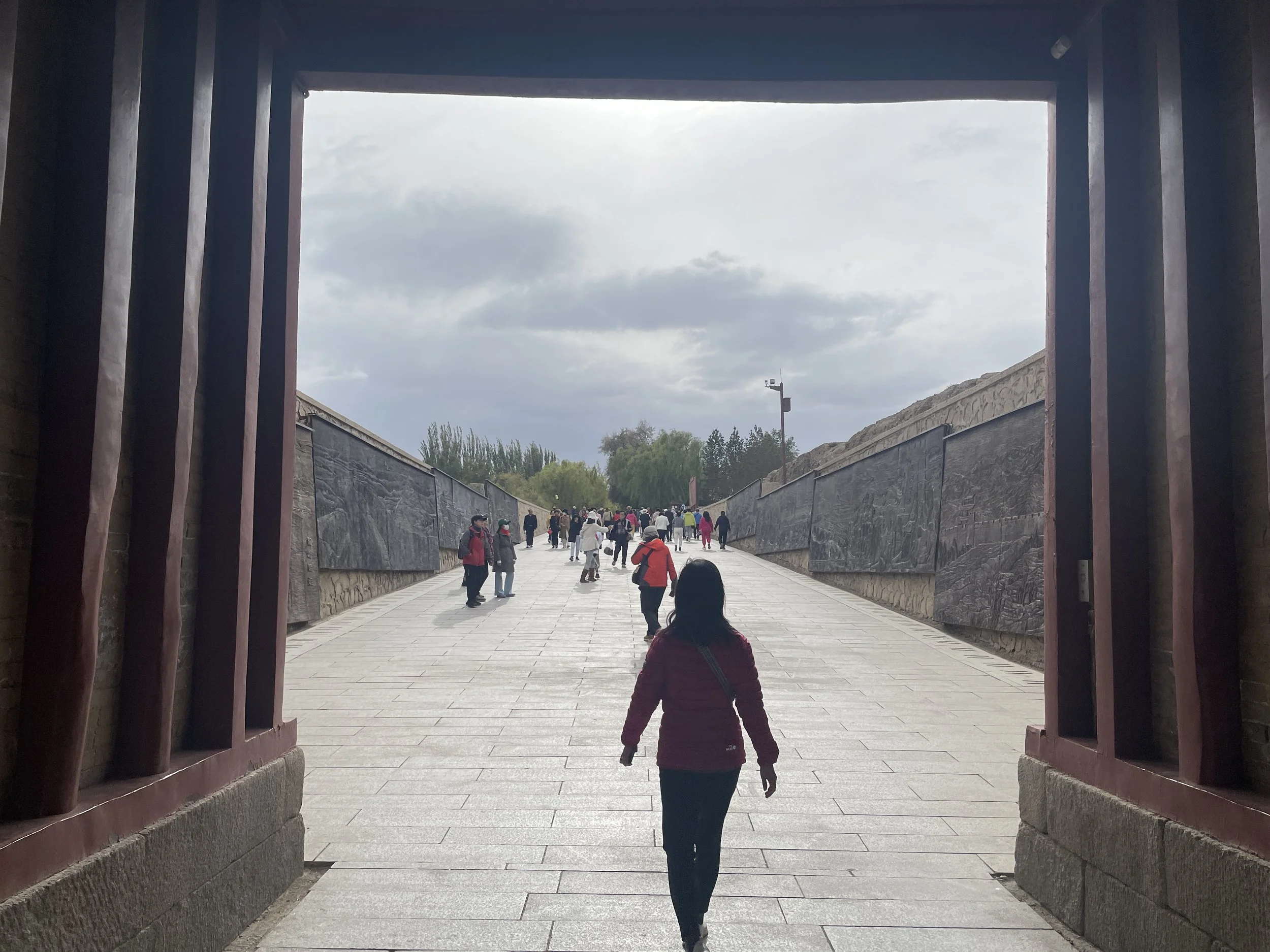
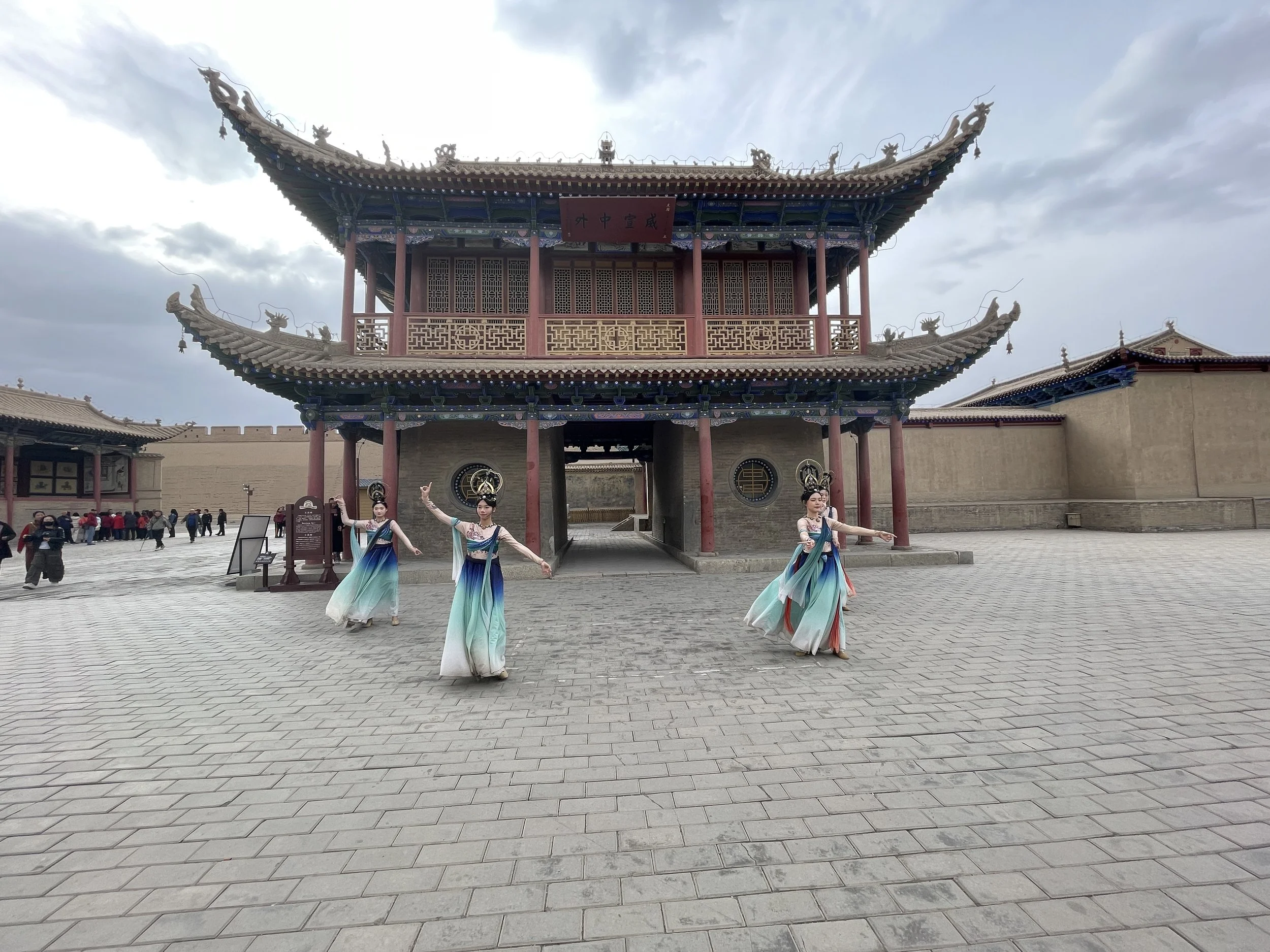
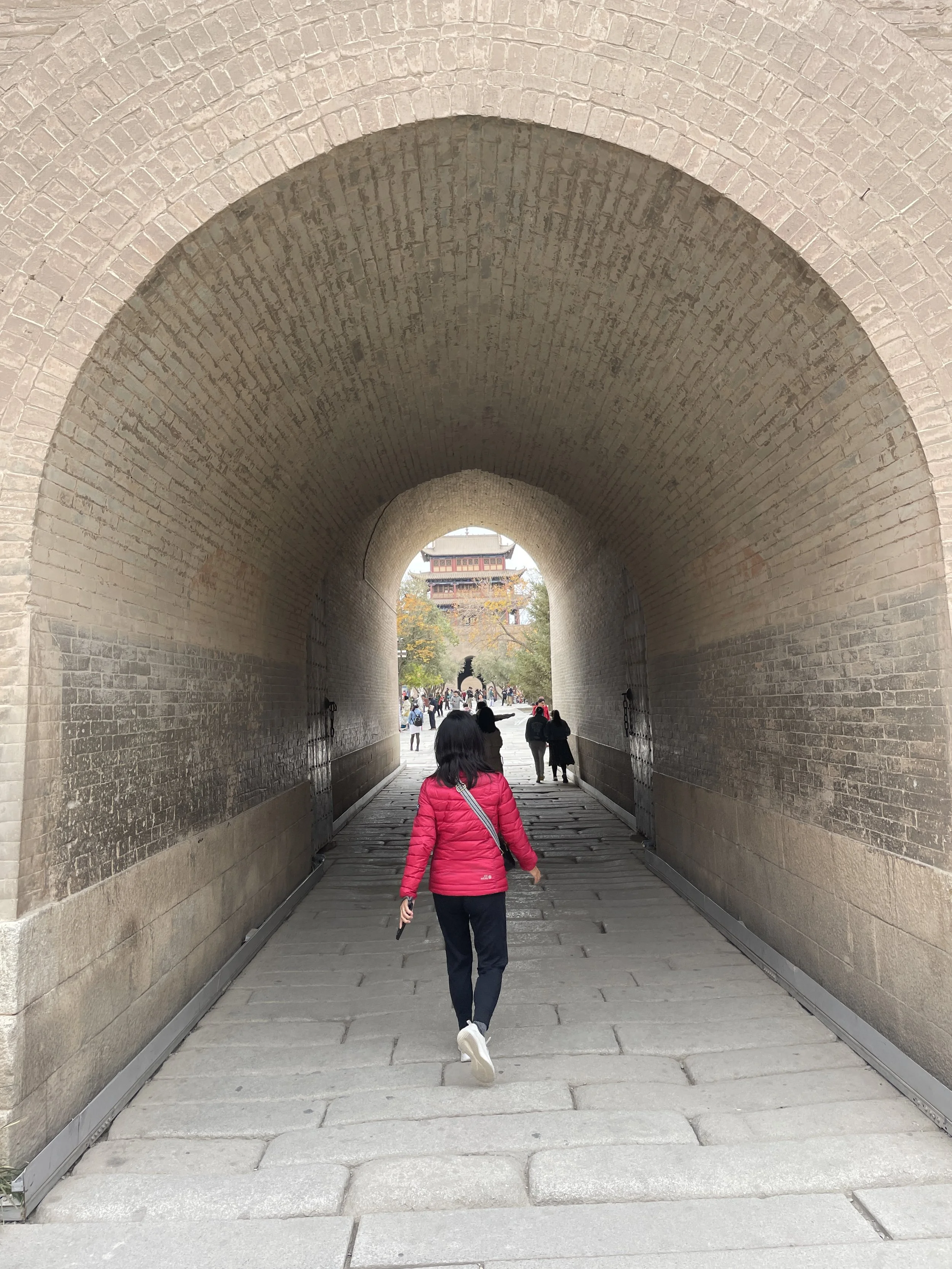
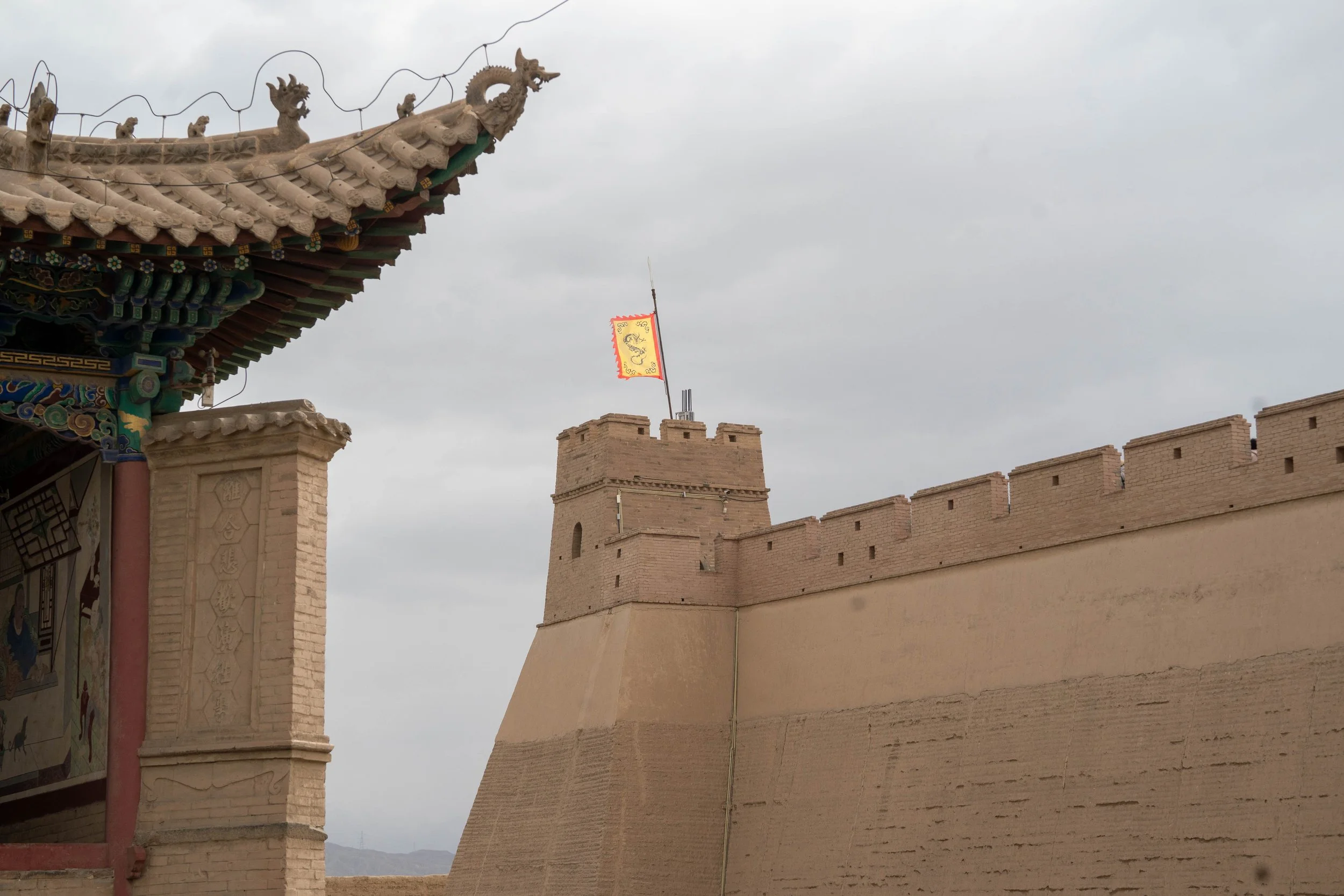
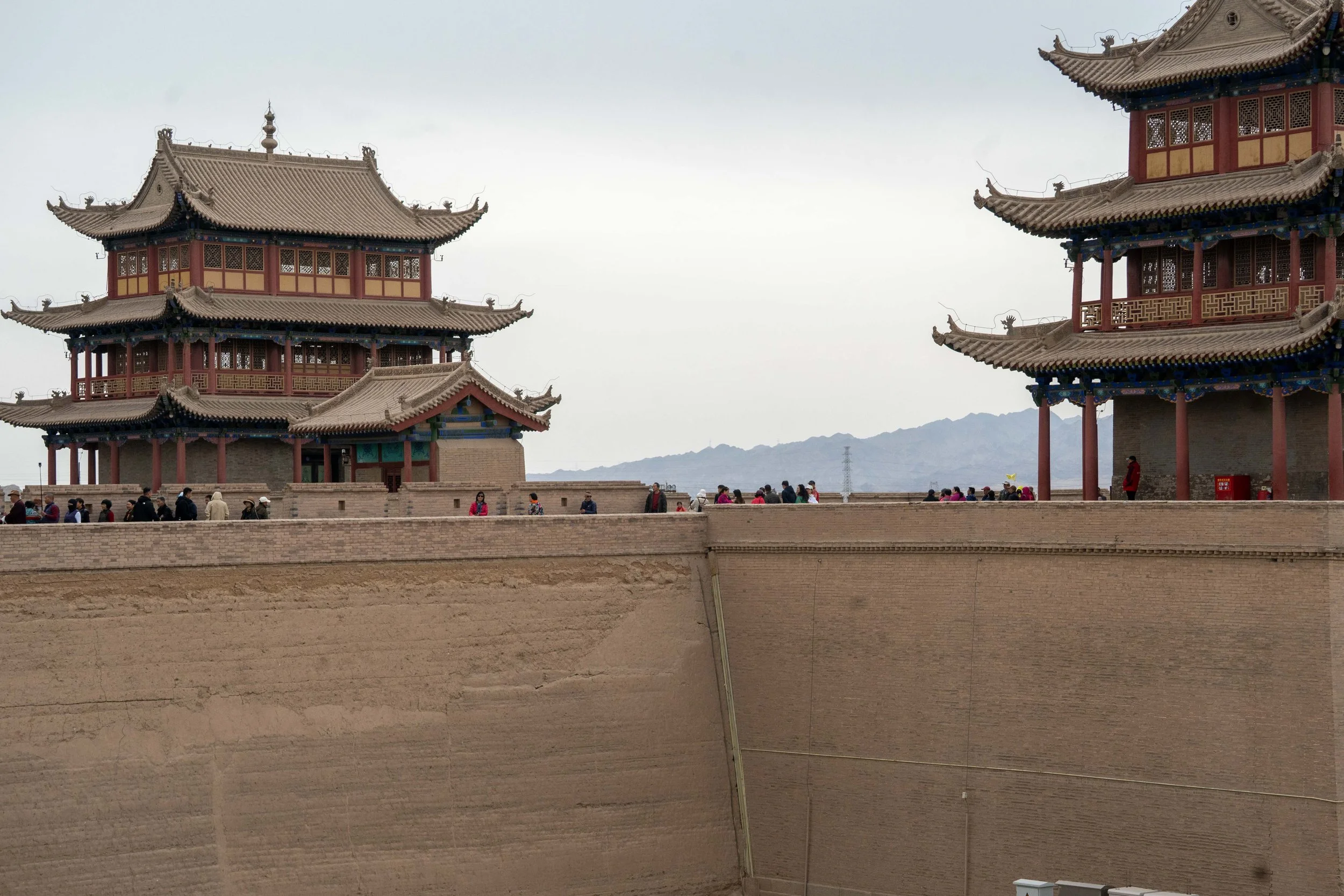
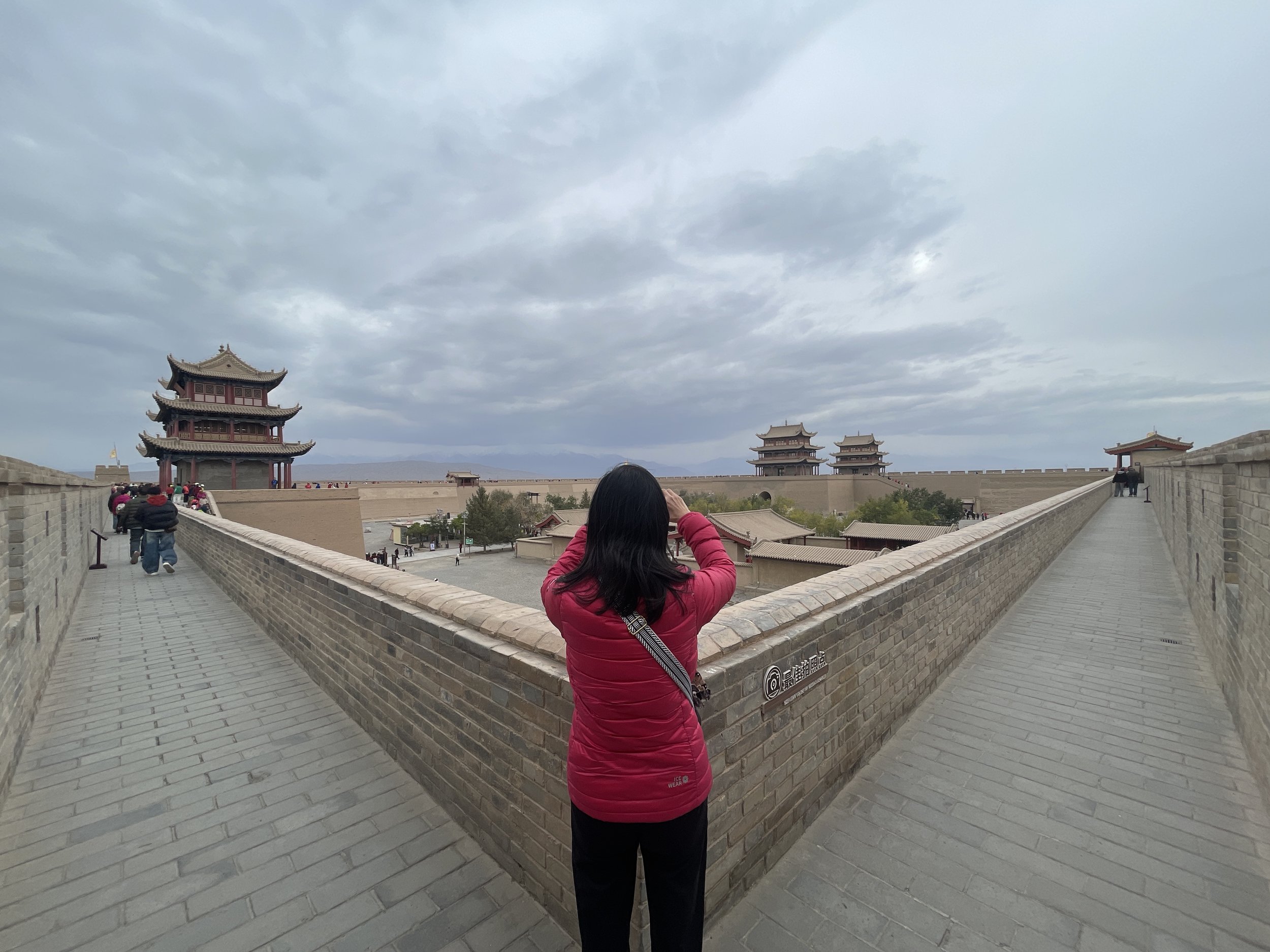
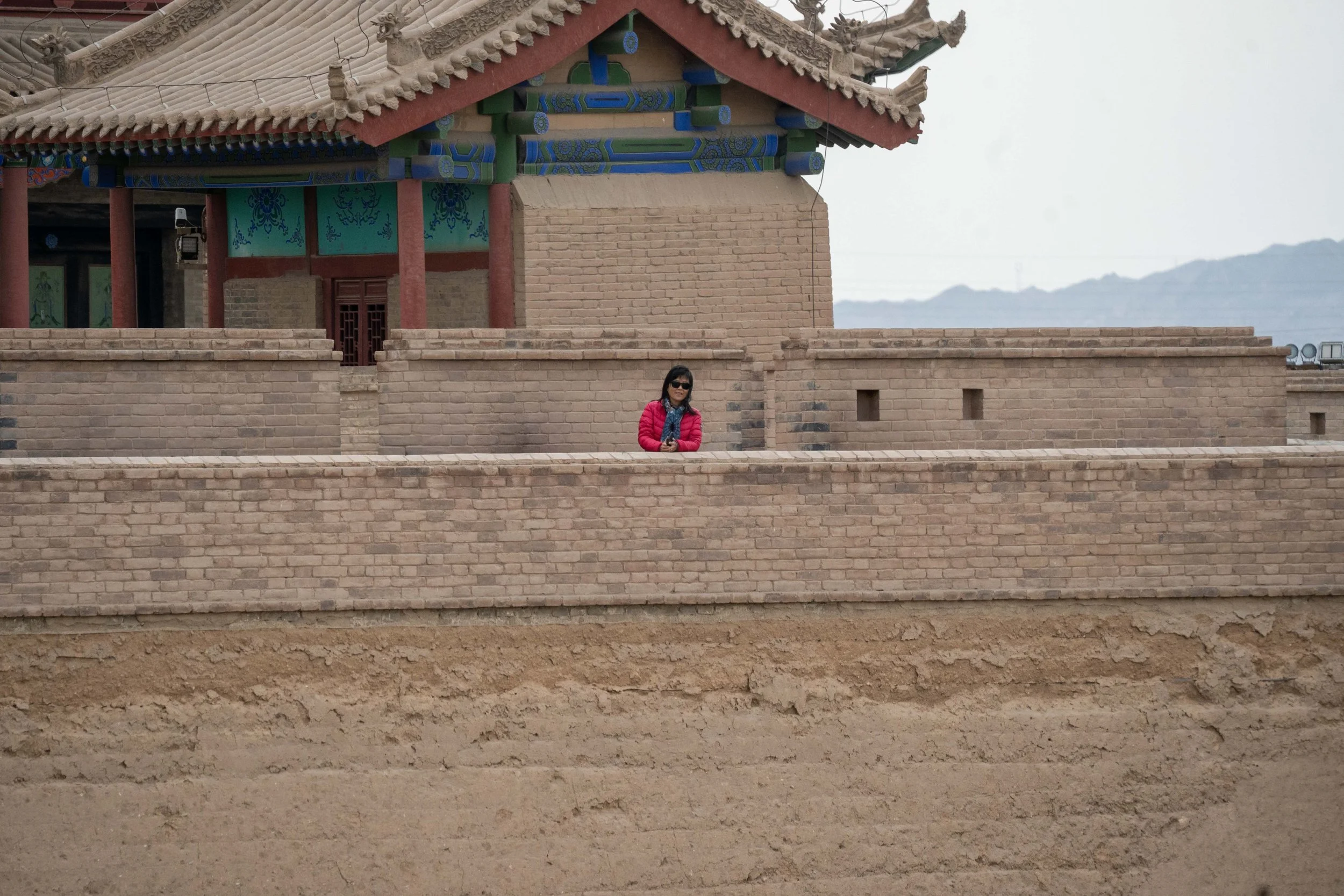
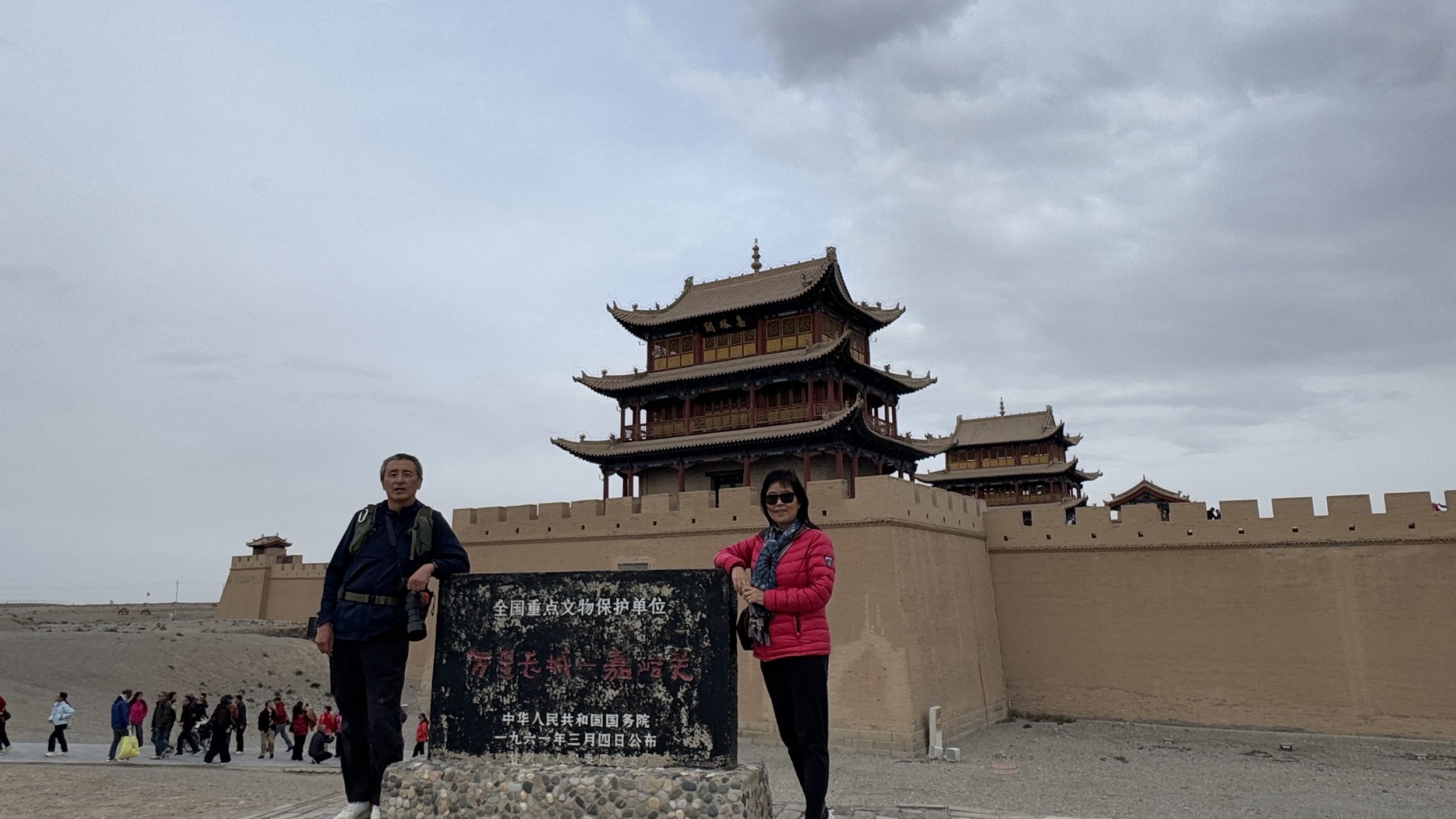
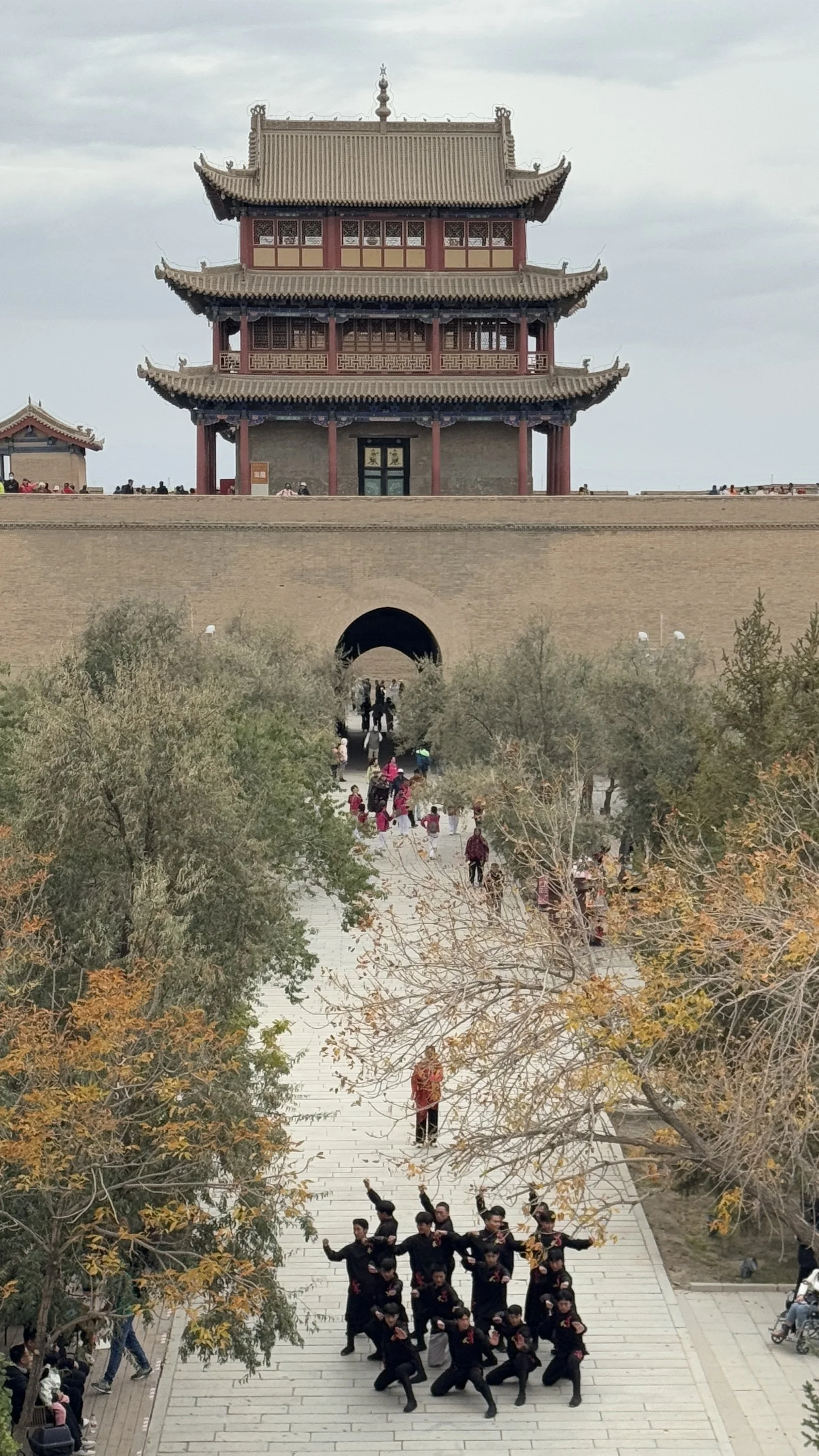
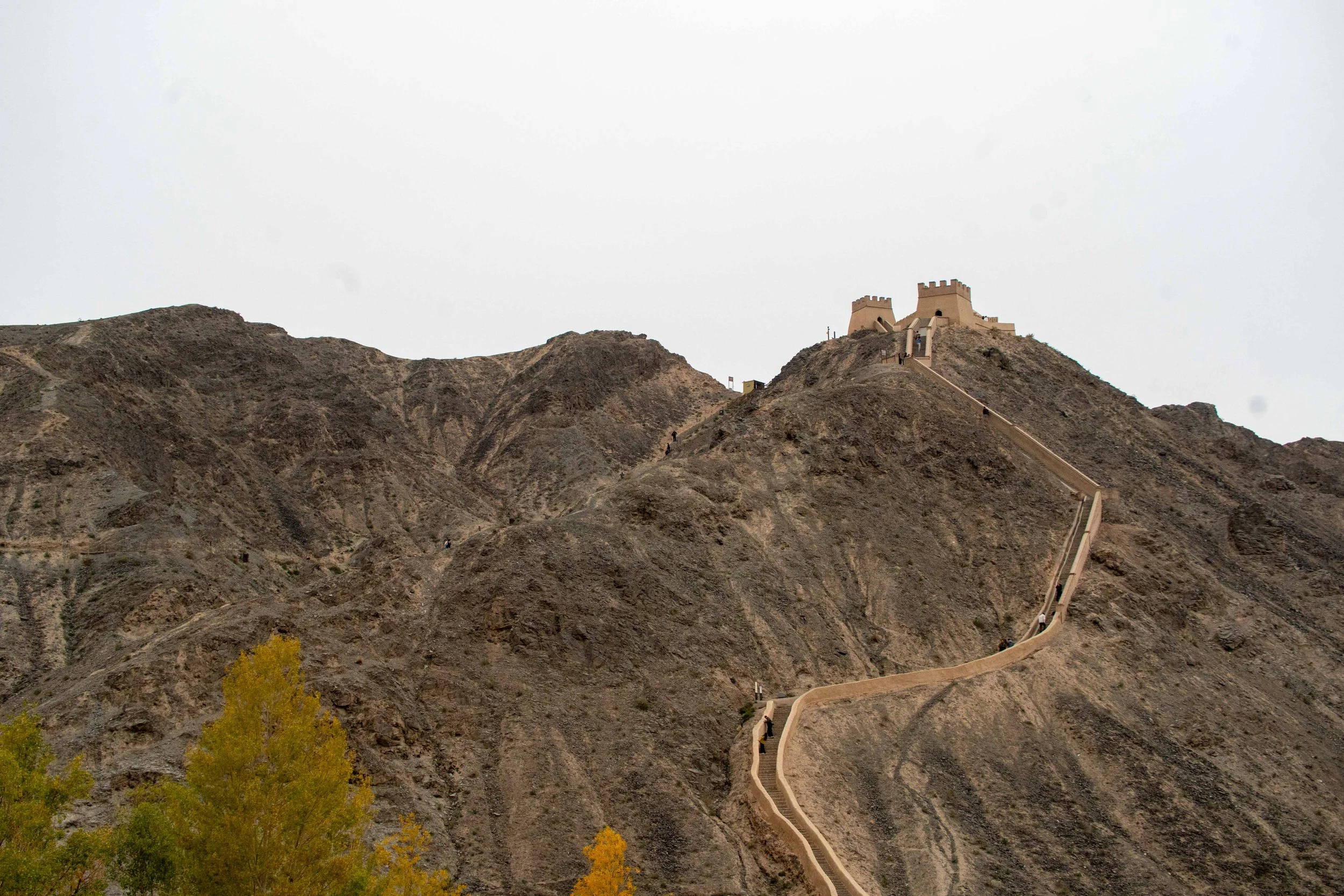
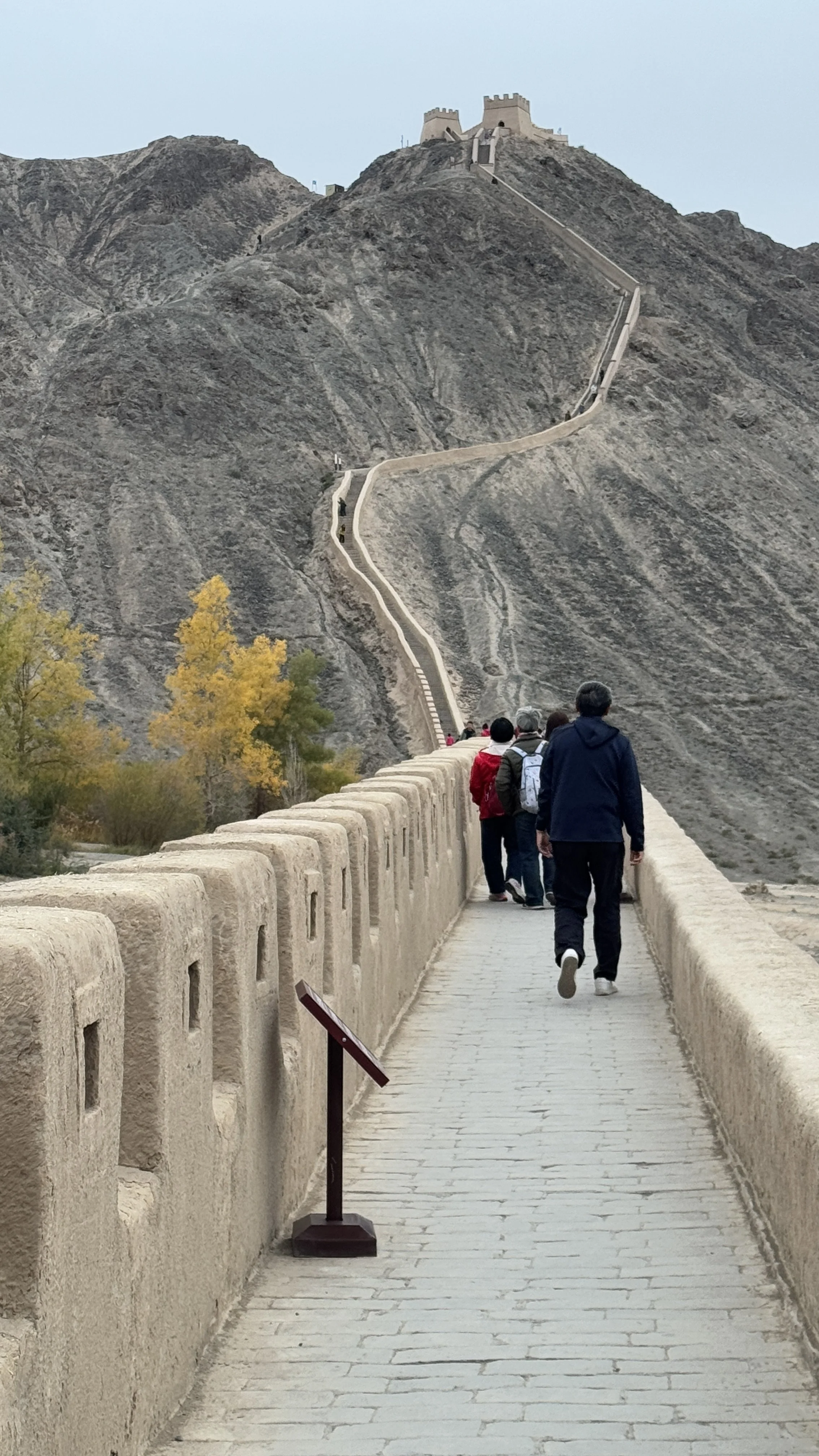
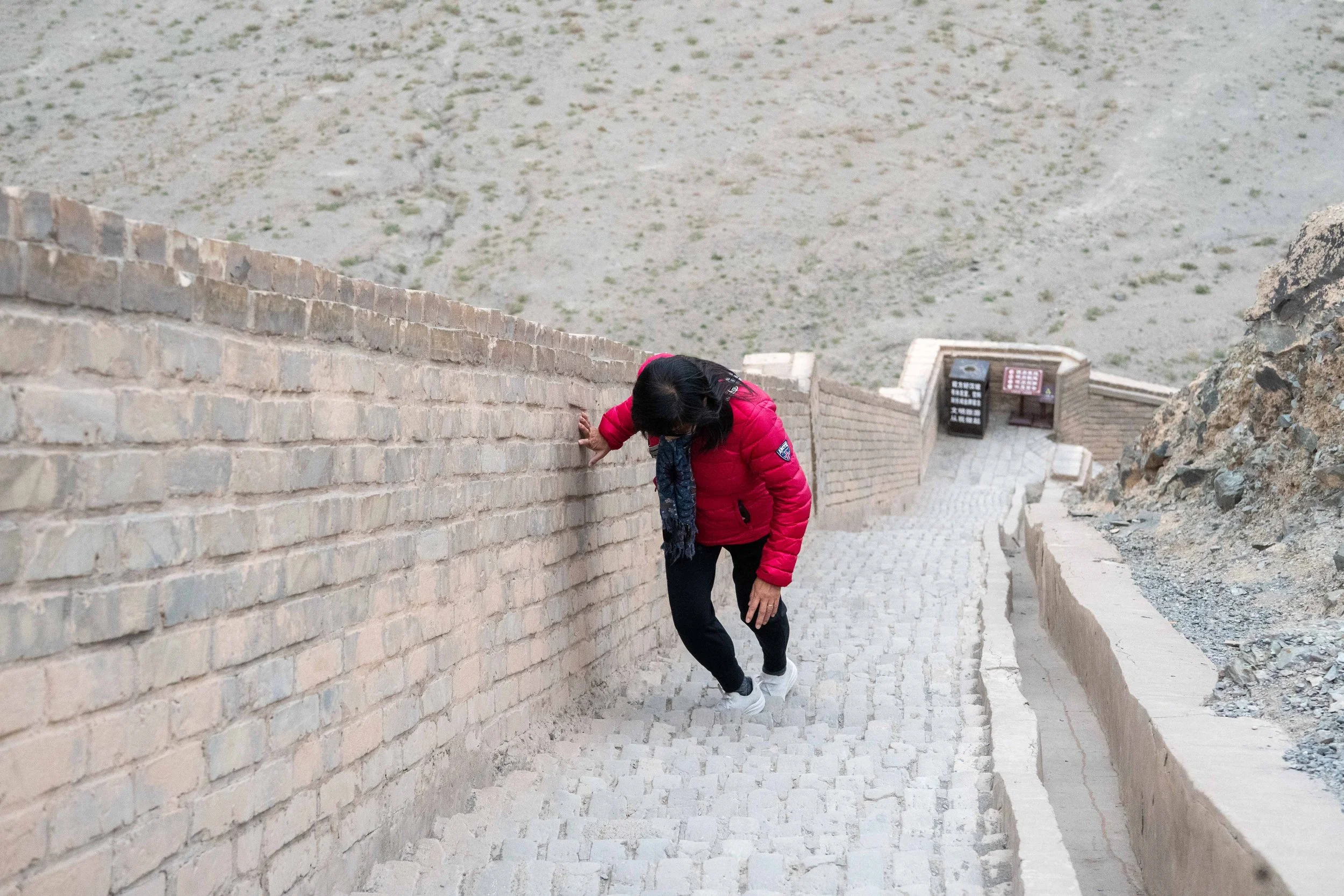
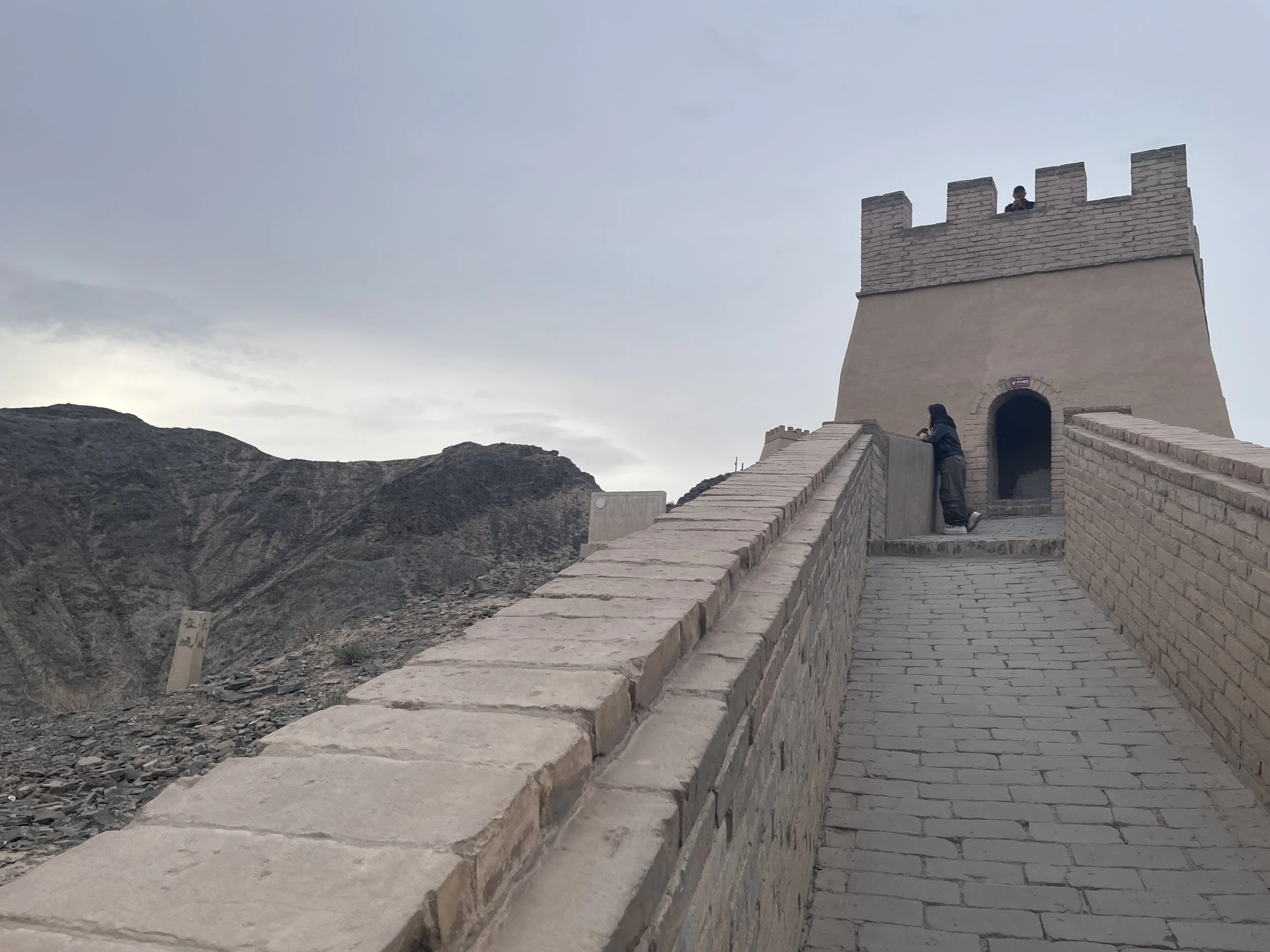
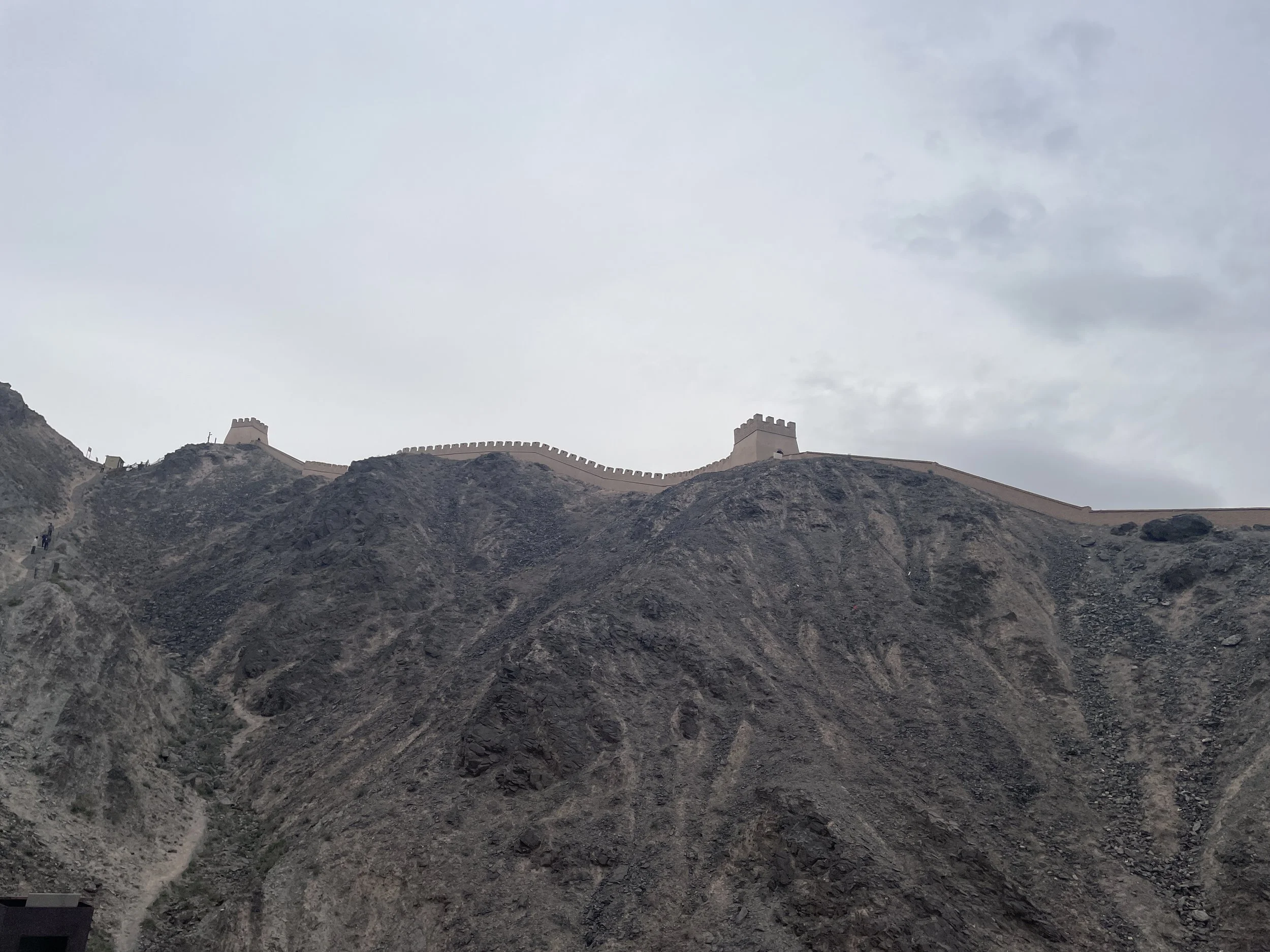
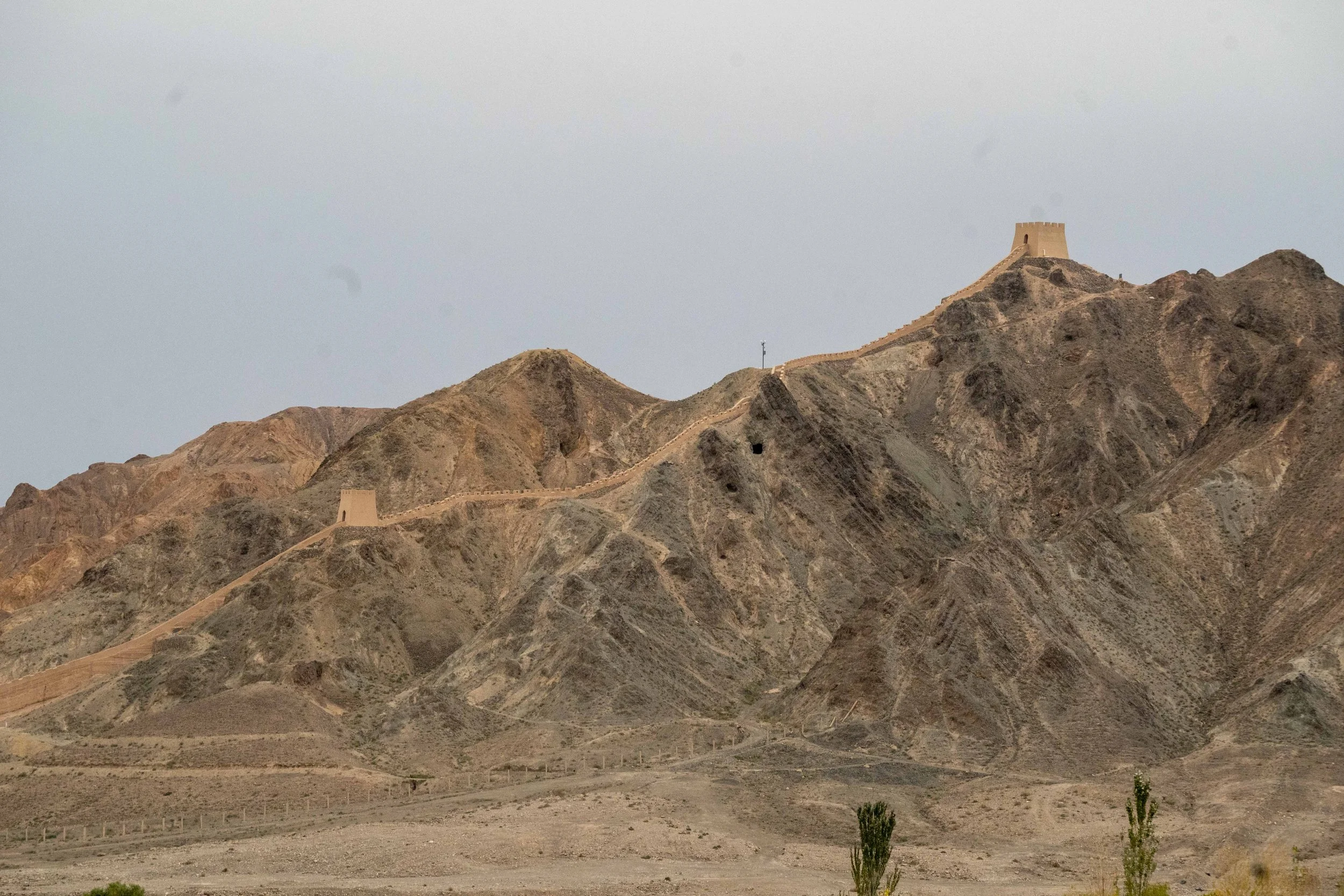
What impressed us most, however, was the nearby Hanging Great Wall (悬壁长城), dramatically built along the steep cliffs north of the pass. We eagerly climbed to the top, standing at the symbolic end of the Ming Great Wall, and marveled at the breathtaking views stretching endlessly toward the west.
During the long hours on the road, the driver shared many stories from his life. He told us about his previous assignment as a driver for the “800 Li of Flowing Sands” (八百流沙) — a grueling 400-kilometer desert ultramarathon. Before picking us up, he had just completed that job. The first-place runner, an American, finished the entire 400 km in only 69 hours, with almost no sleep. In fact, sleeping more than two hours was considered a violation of race rules. For that event, he was assigned to drive a professional photographer who followed one of the competitors throughout the race.
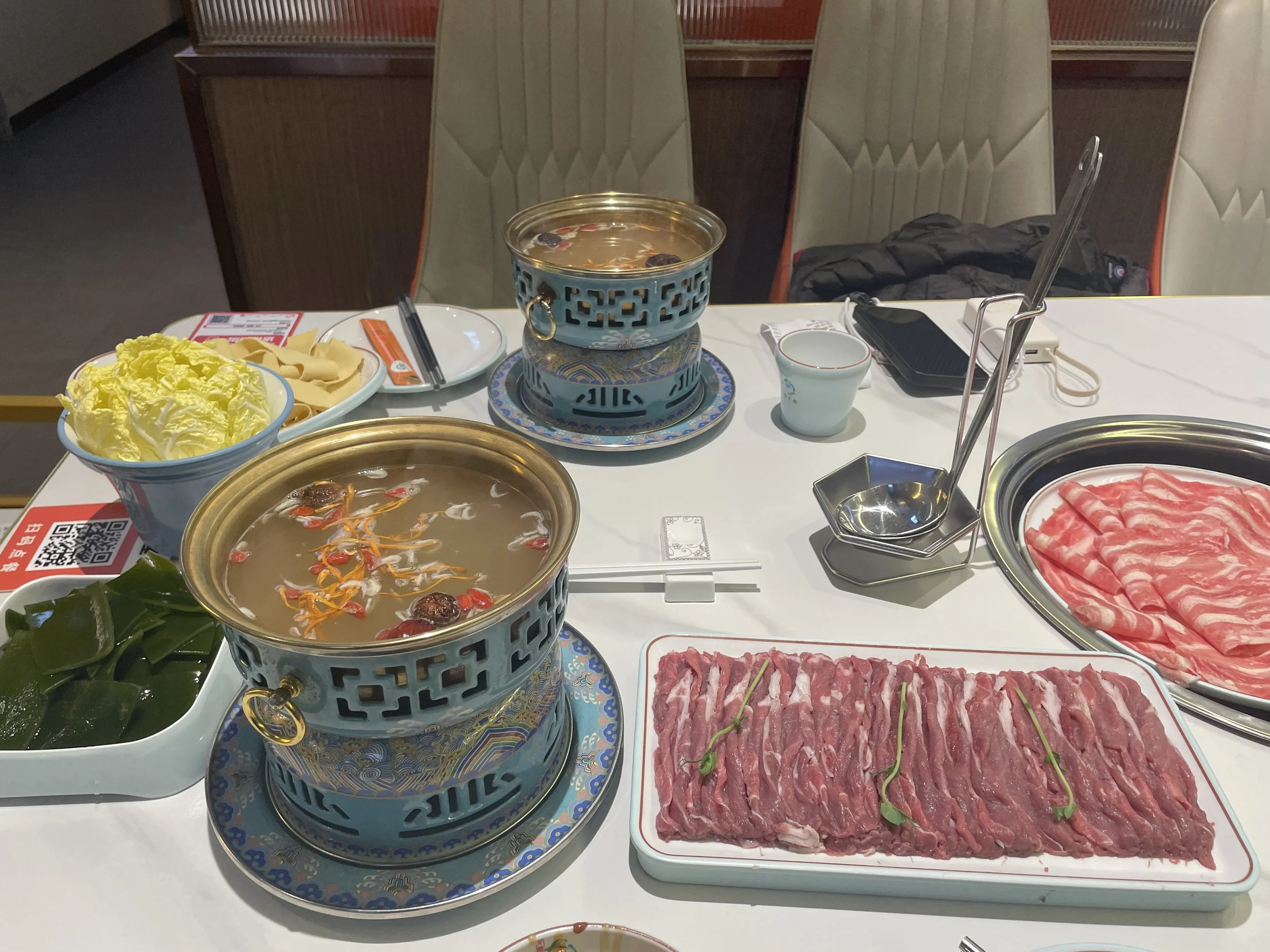
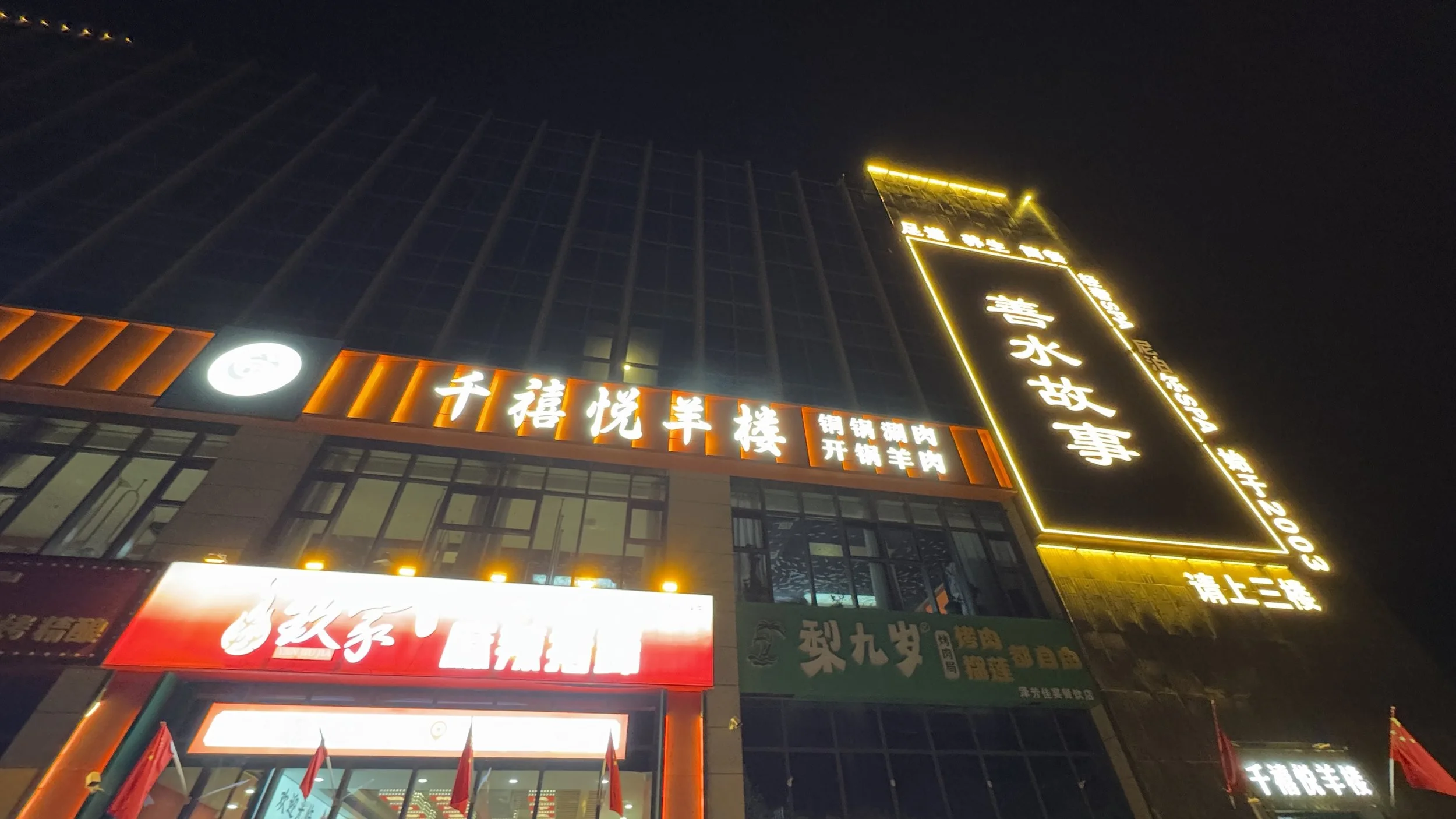
That evening, we stayed overnight in Jiayuguan and enjoyed a hearty hot pot dinner featuring tender lamb and beef—rich, flavorful, and the perfect way to end a long day of adventure.
2025年10月11日
第三天早晨,我们退房后,司机准时来酒店接我们,开始当天的行程。第一站是榆林窟,大约二个多小时的路程,途中我们在《汉帝雄风》和《大地之子》两座大型雕塑前短暂停留,拍照留念,欣赏这些戈壁滩上宏伟壮观 的艺术作品。
榆林窟位于一条幽深狭长的峡谷中,四周环绕着被大风雕刻的陡峭岩壁与稀疏的沙漠。这是我们此次旅程中参观的第三处石窟群,却同样令人难忘。与游客众多的莫高窟相比,这里格外宁静而庄重,令人自然生出一份敬意。因为地势环境的原因,这里许多洞窟内的壁画与彩塑保存完好,色彩依然鲜艳明丽,展现出千年前人们的信仰与艺术追求。
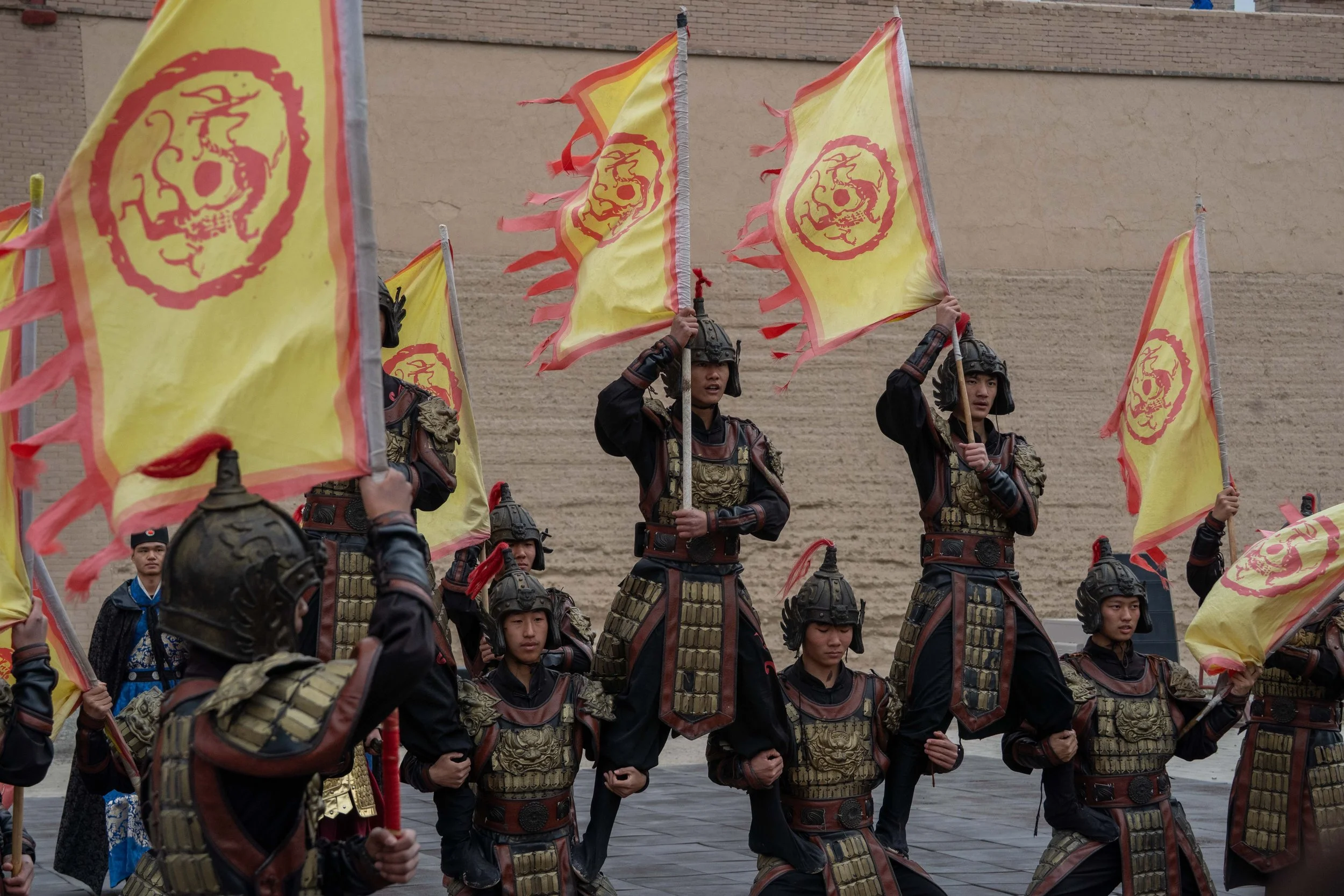
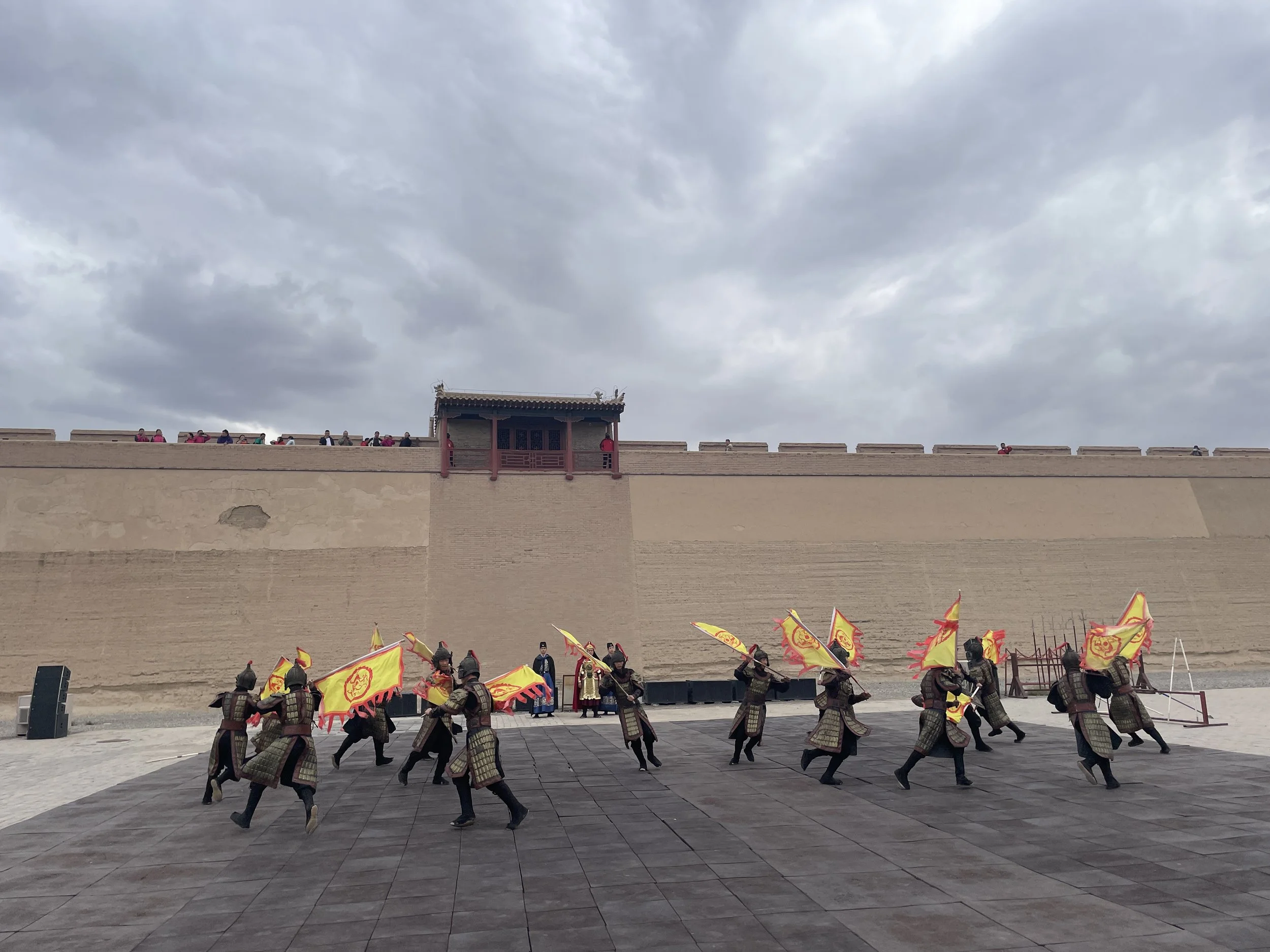
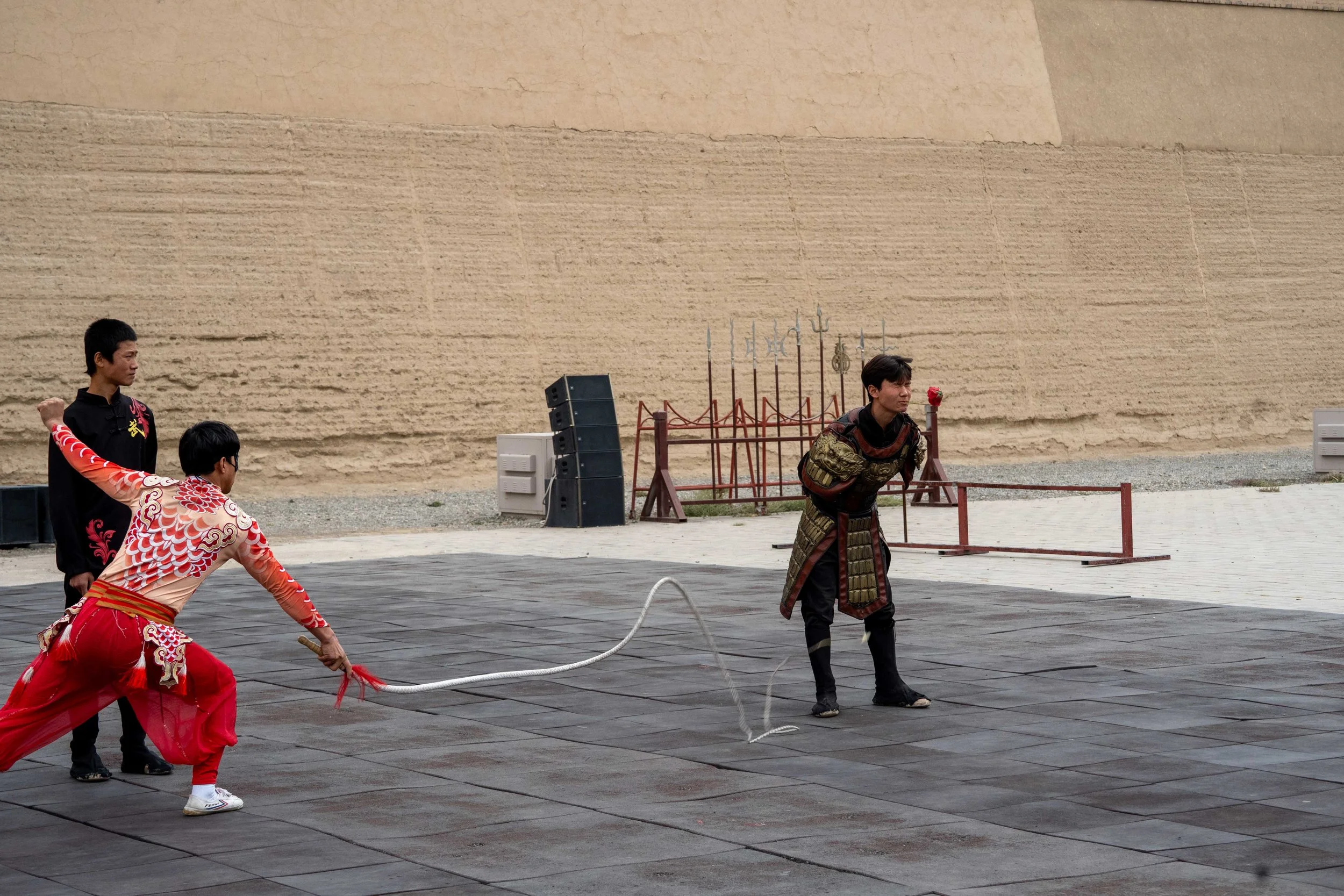
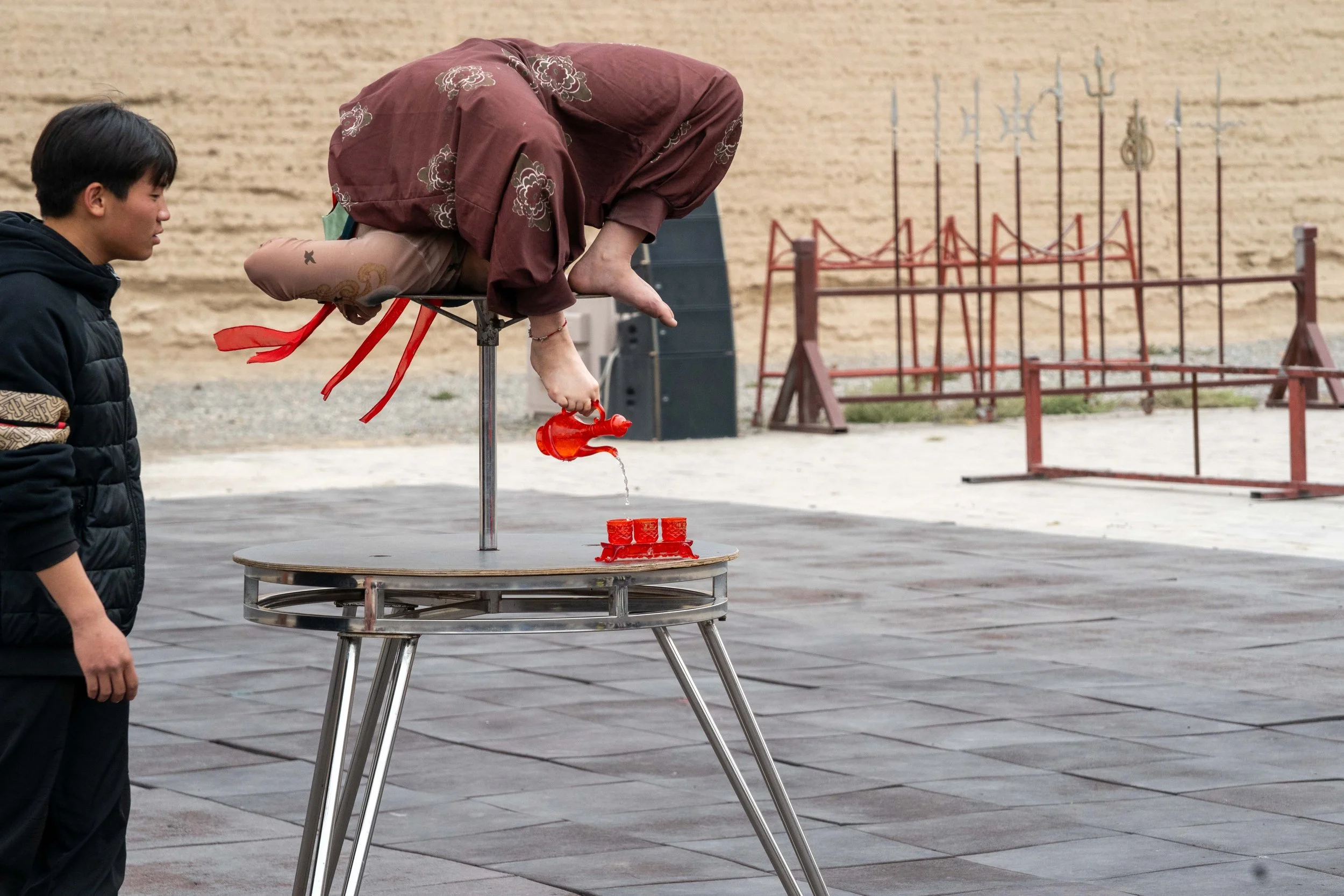
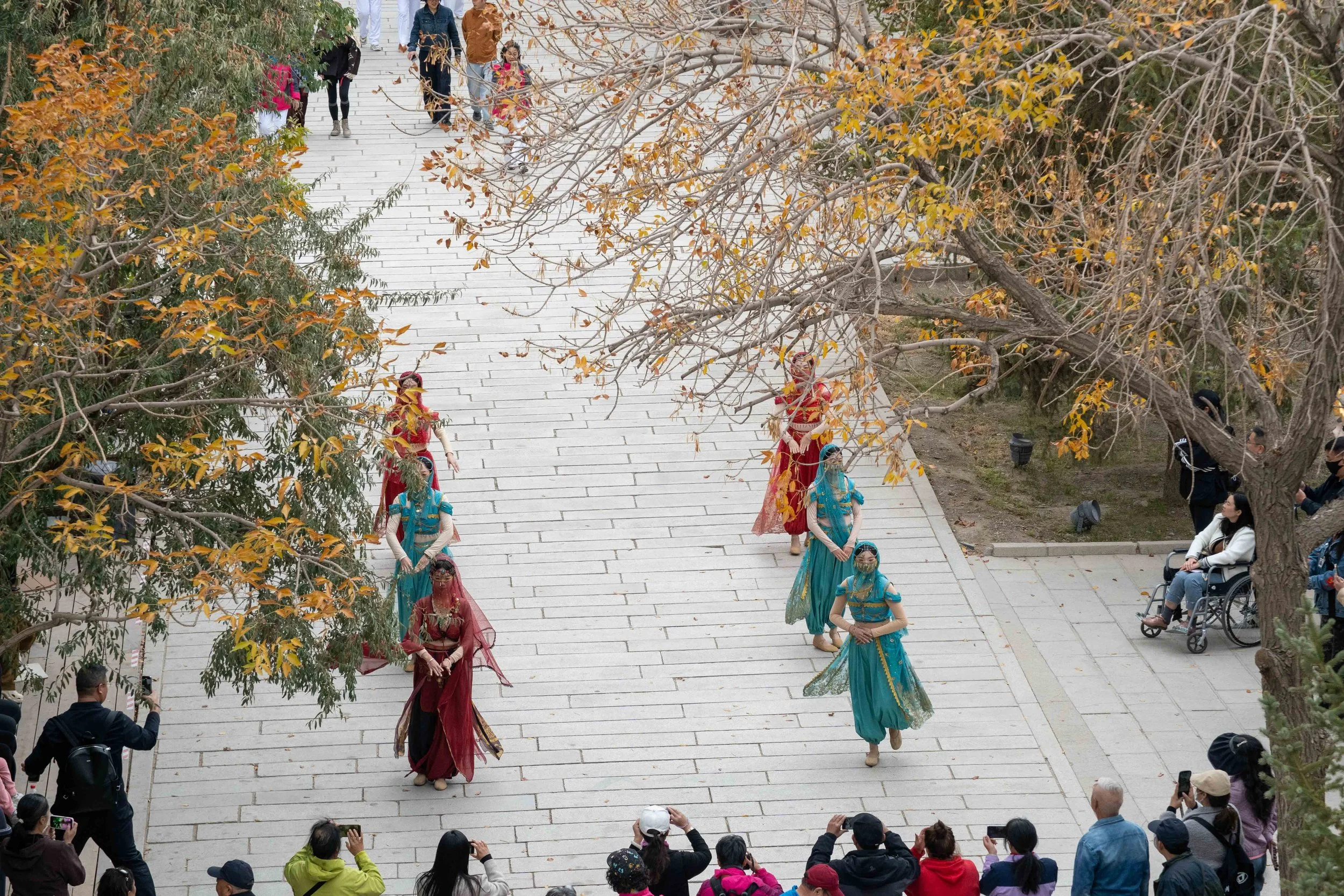
离开榆林后,我们驱车约三小时前往嘉峪关。来到“天下第一雄关”的嘉峪关景区,是明长城的最西端。景区修复良好,我们还赶上了练兵,杂技和各种舞蹈表演。而更令我们印象深刻的,则是位于嘉峪关北侧的悬壁长城。它依山势而建,蜿蜒于陡峭的崖壁之间。我们沿着石阶一路攀登至顶端,站在明长城的尽头,心中涌起一种难以言喻的激动与敬畏。
我们的包车司机在行车途中常常会与我们分享他的许多人生经历。而今天我们前前后后在戈壁滩上开车有三百多公里, 在漫长的行车途中,司机讲途了他刚刚完成的工作——为“八百流沙”这一极限耐力赛事担任司机。这是一场横跨沙漠的400公里超级马拉松,距离几乎是正常全马的十倍,但八百流沙的赛道要艰巨得多,跑者需穿越戈壁、沙漠和荒野。而我们今天沿途开过的一些地方正是这场比赛路线的一部分。第一名选手是一位美国人,仅用69小时便跑完全程,几乎没怎么睡觉。据说,睡觉超过两小时就会被视为违规。我们的司机在这次比赛中被分配为一位随行拍摄选手的专业摄影师开车。去年夏天在欧洲走勃朗峰时我们听说了超级勃朗峰跑步比赛(UTMB),这次又听说了戈壁滩上的八百流沙超长距离极限赛,我们十分钦佩这些参赛者超凡的毅力。
当晚我们留宿嘉峪关,在当地餐馆享用了地道的羊肉、牛肉火锅。大西北的羊肉的确好吃,没有一点膻味。鲜嫩的肉片在滚烫的汤底中翻涌,香气扑鼻,又是充实而精彩的一天。
Buddhist Cave, Han Great Wall and etc 千佛石窟、汉长城及其他
October 10, 2025
Our driver came to pick us up for the second day of the tour……
October 10, 2025
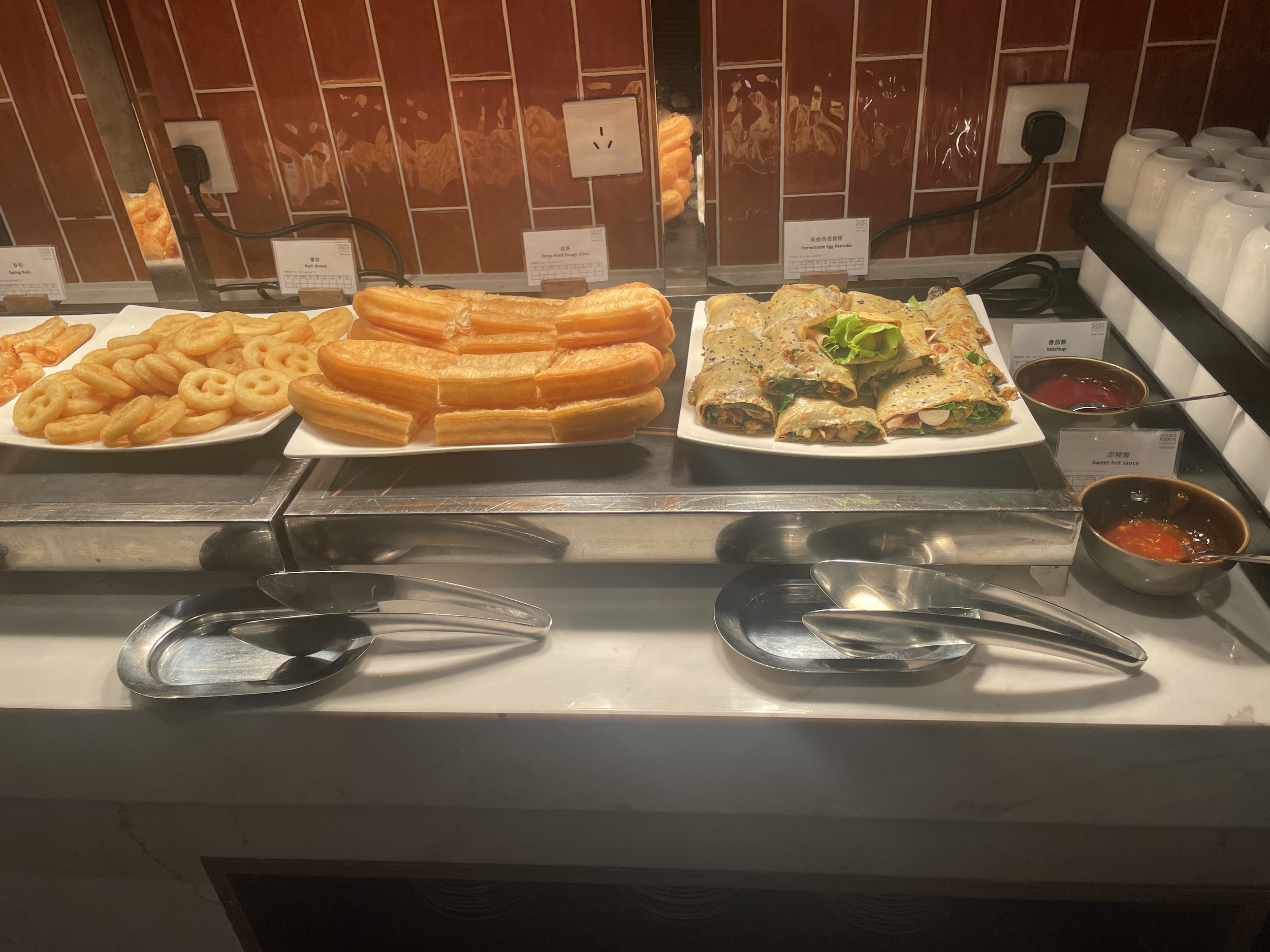
Our driver came to pick us up for the second day of the tour. The hotel breakfast offered a wide variety of options and was quite decent.
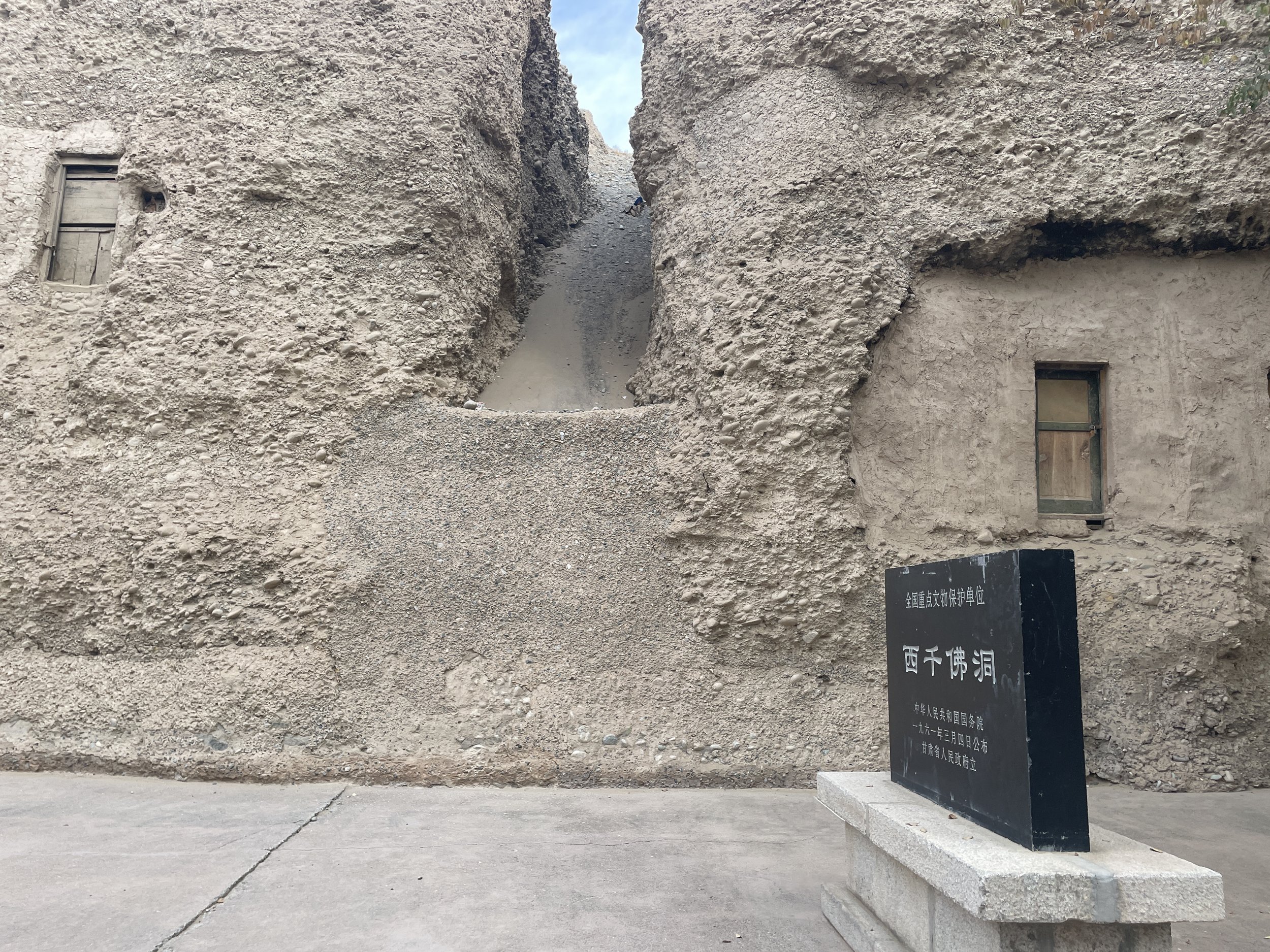
The first destination was Western Thousand Buddha Caves (西千佛洞), located on the opposite side of the mountain from the Mogao Caves. The site contains sixteen caves in total, and our Chinese-only guided tour took us to see four of them. Though smaller and less ornate than Mogao, these caves had far fewer visitors, allowing us to enjoy the visit in peace and take in the art and atmosphere. We tried to absorb all we could about the history, the murals, and the people who created them more than a thousand years ago.
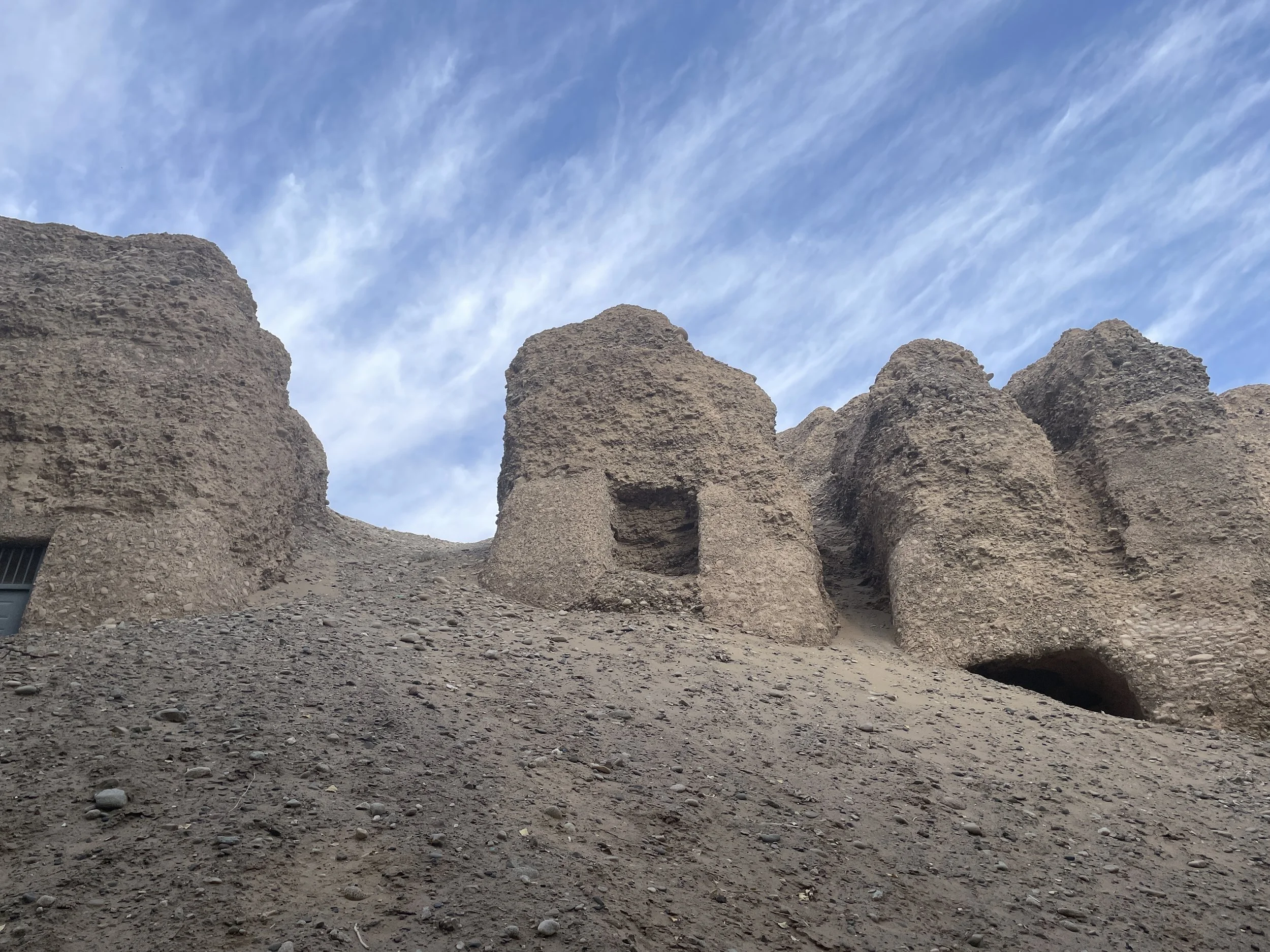
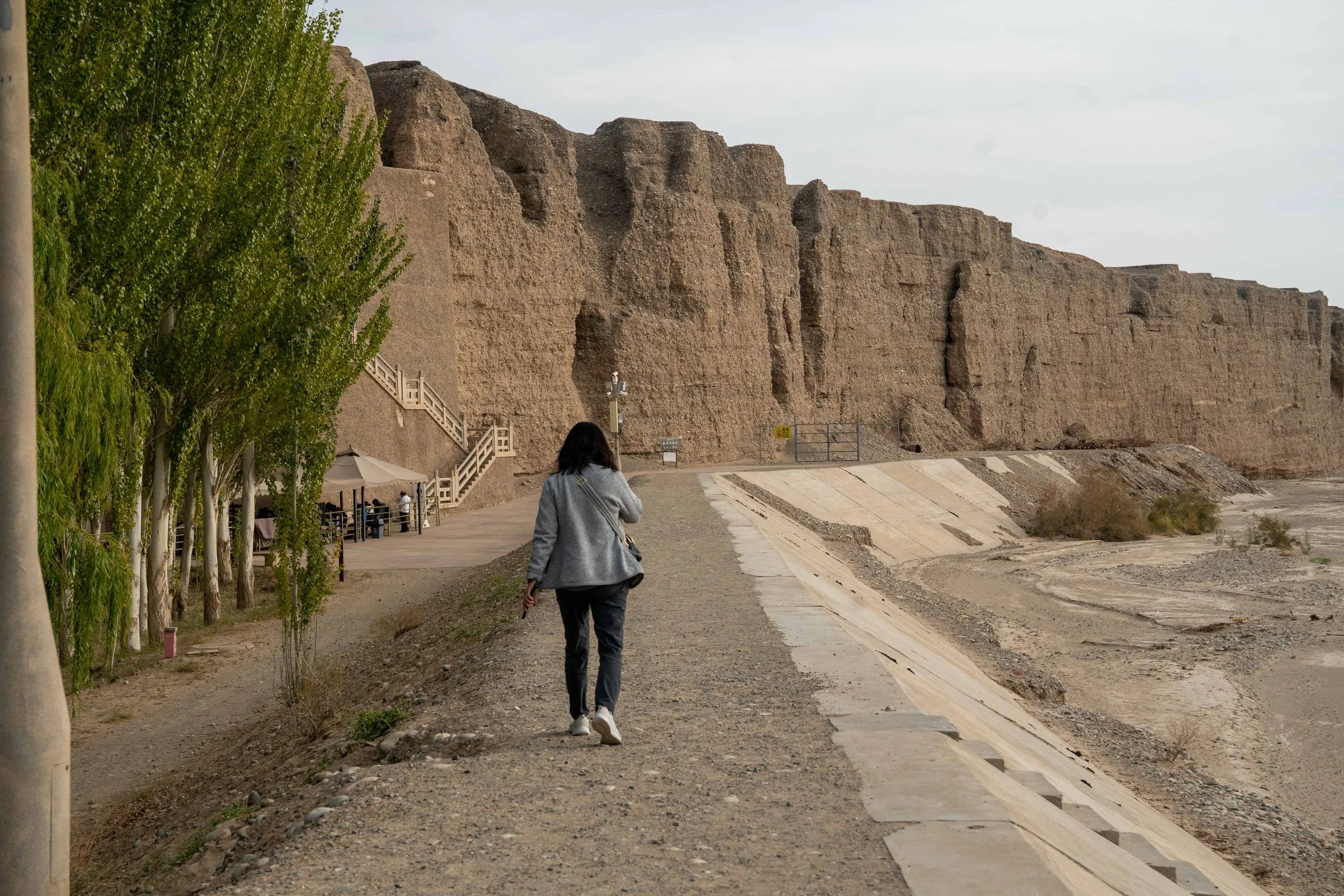
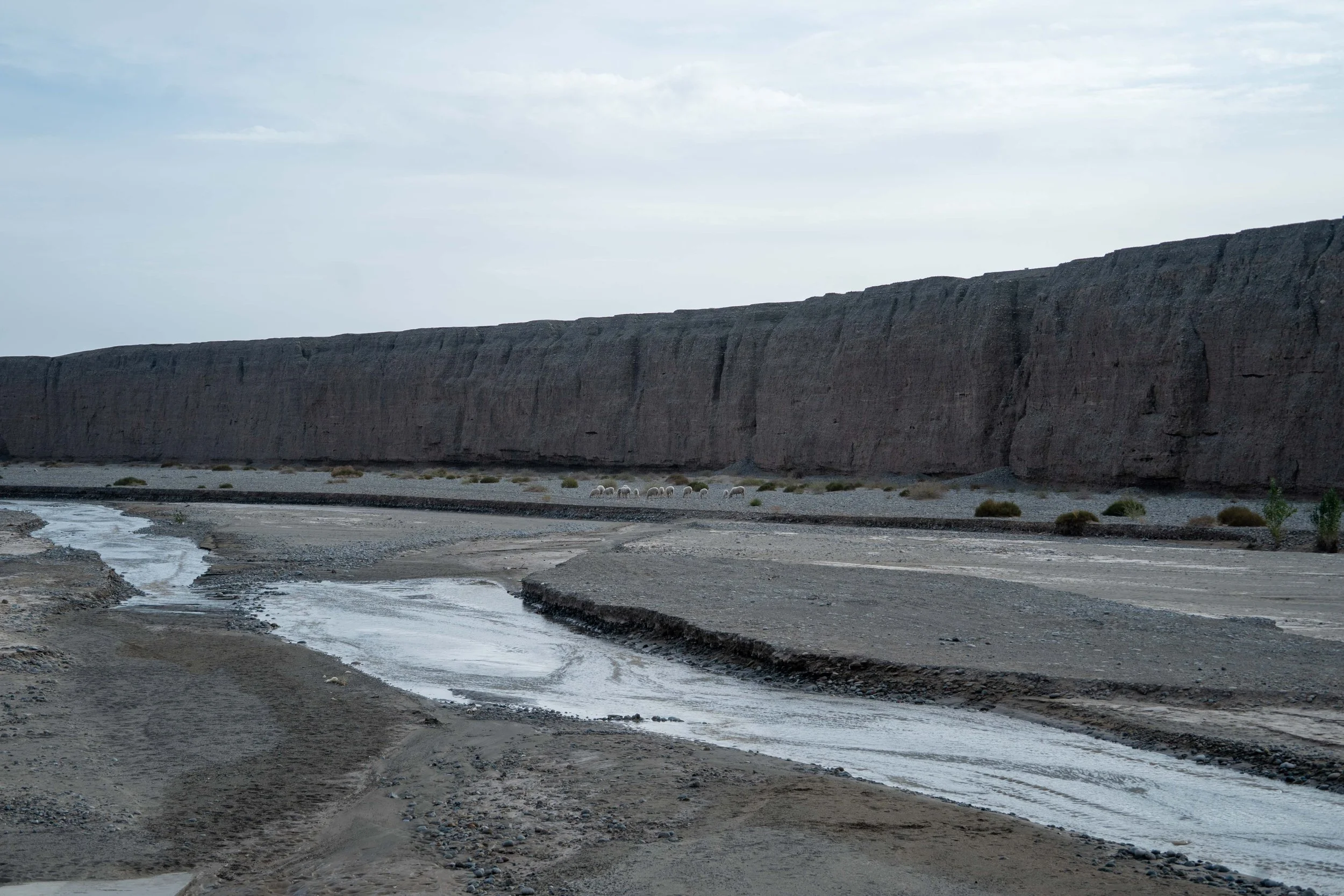
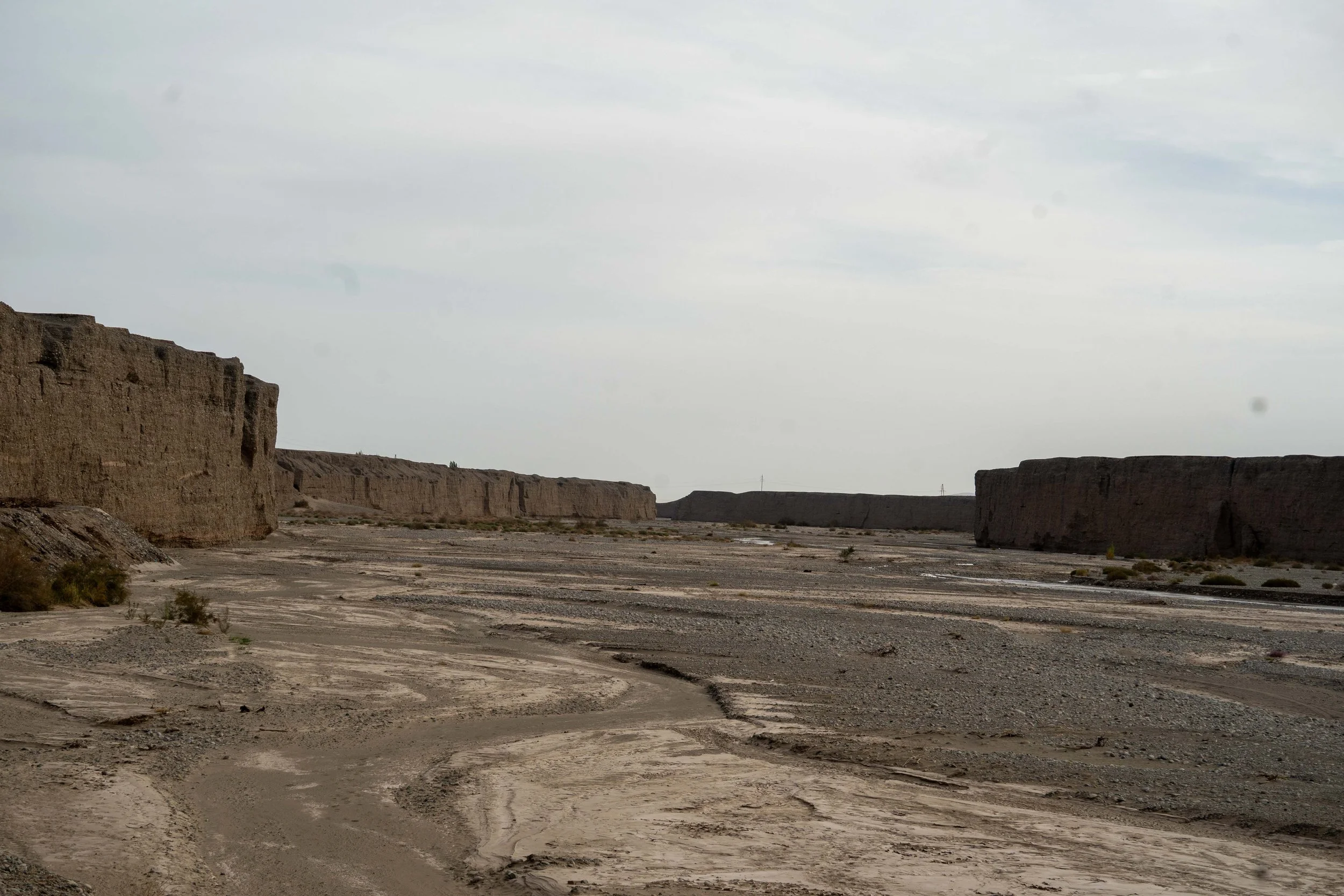
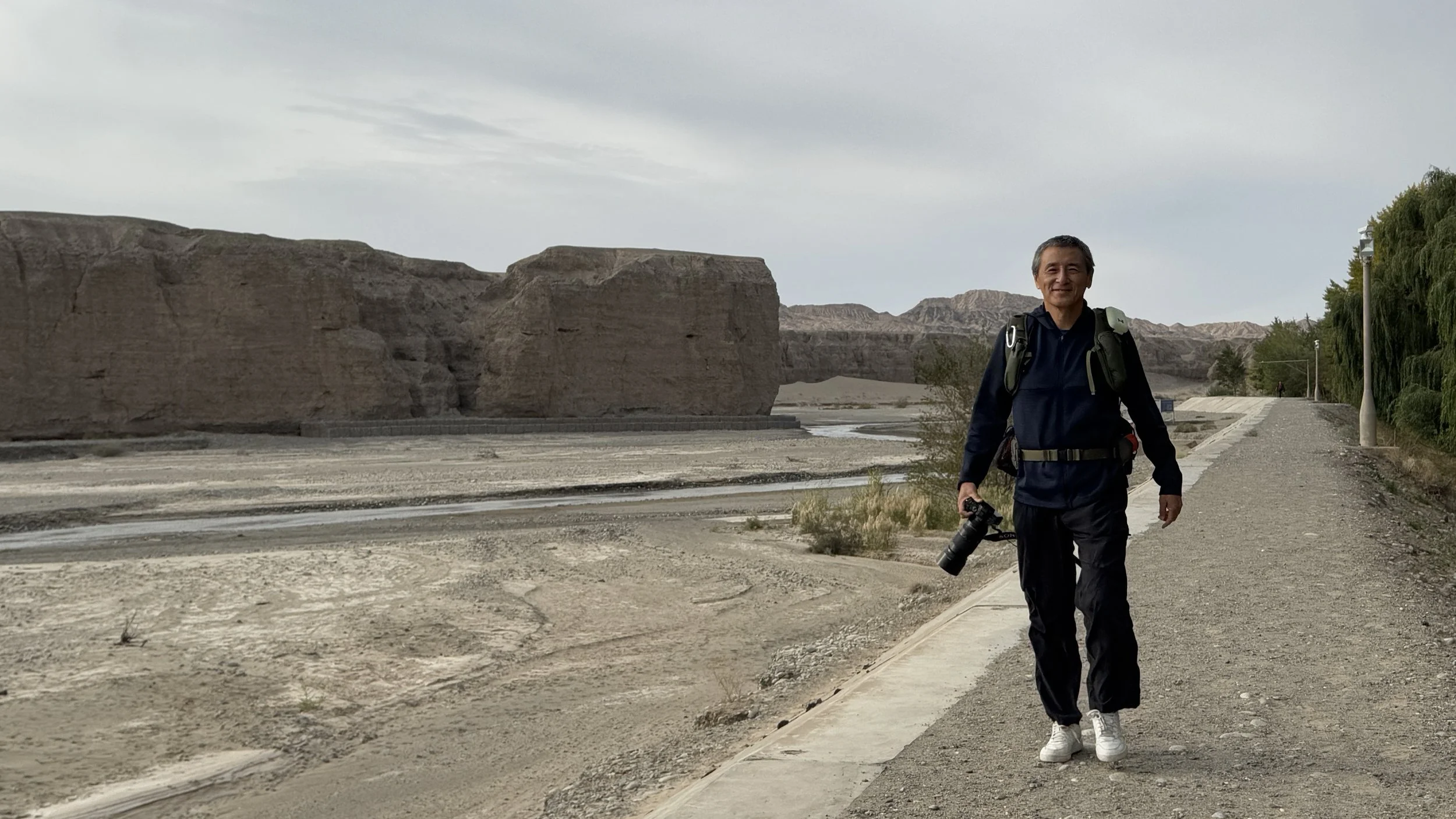
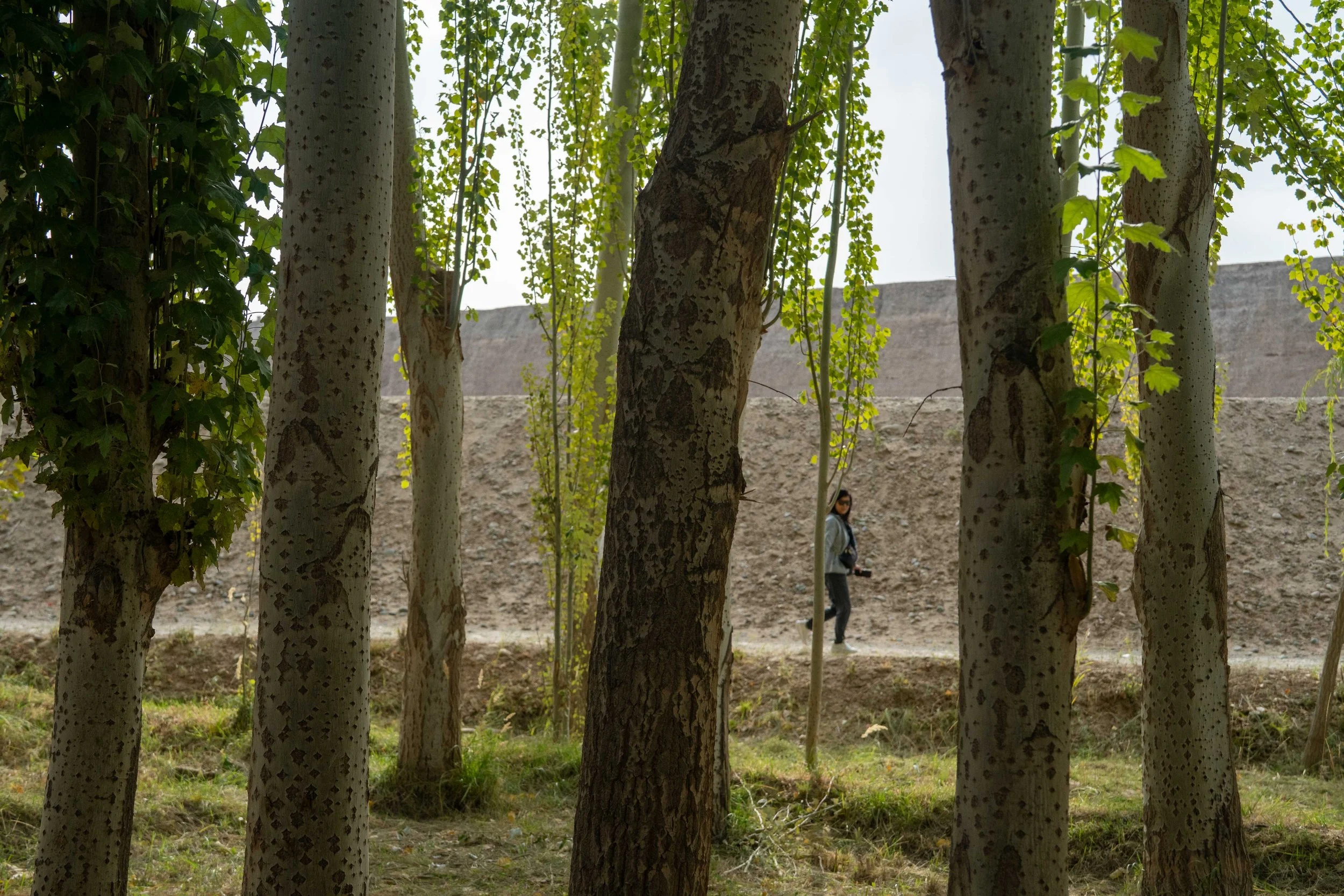
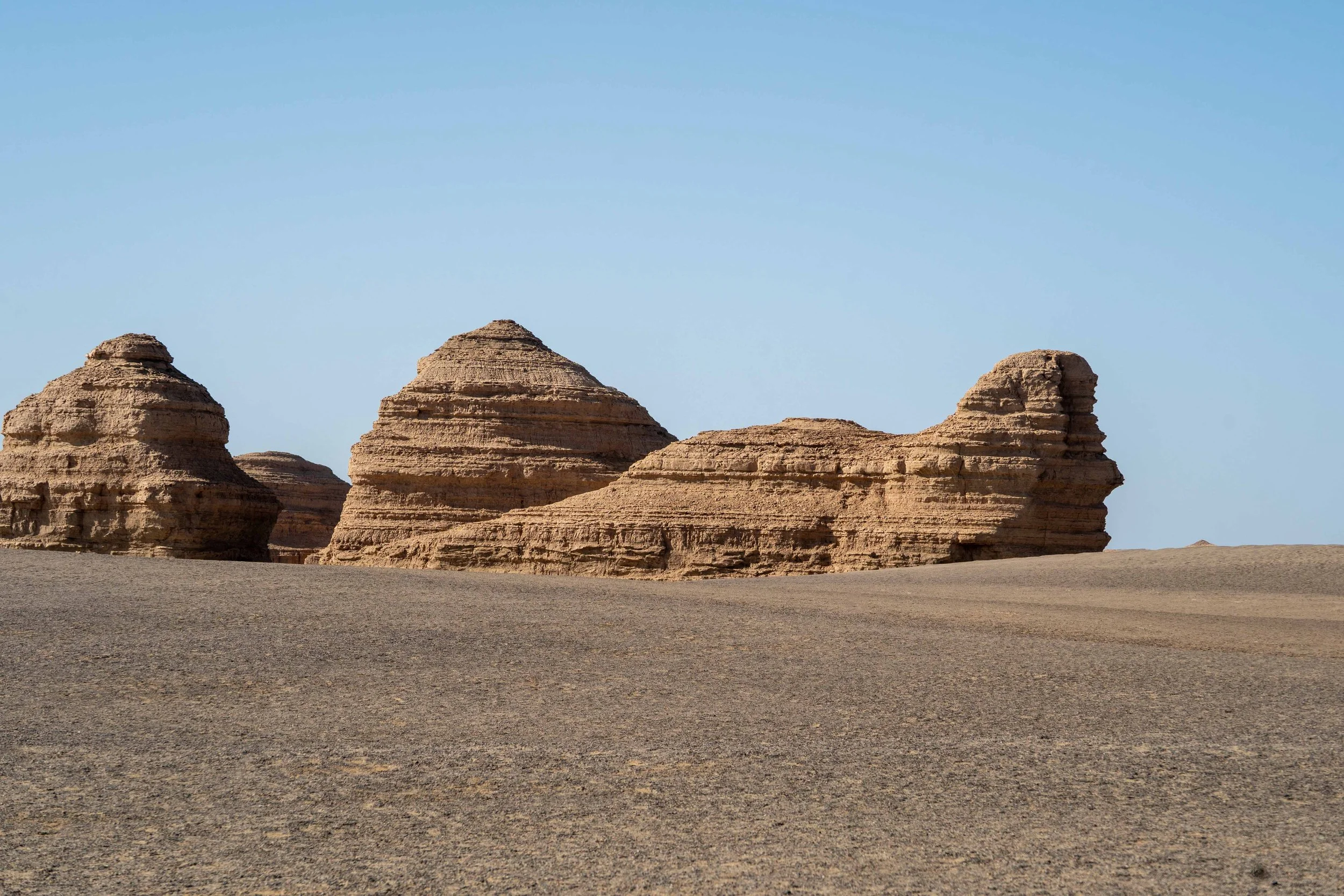
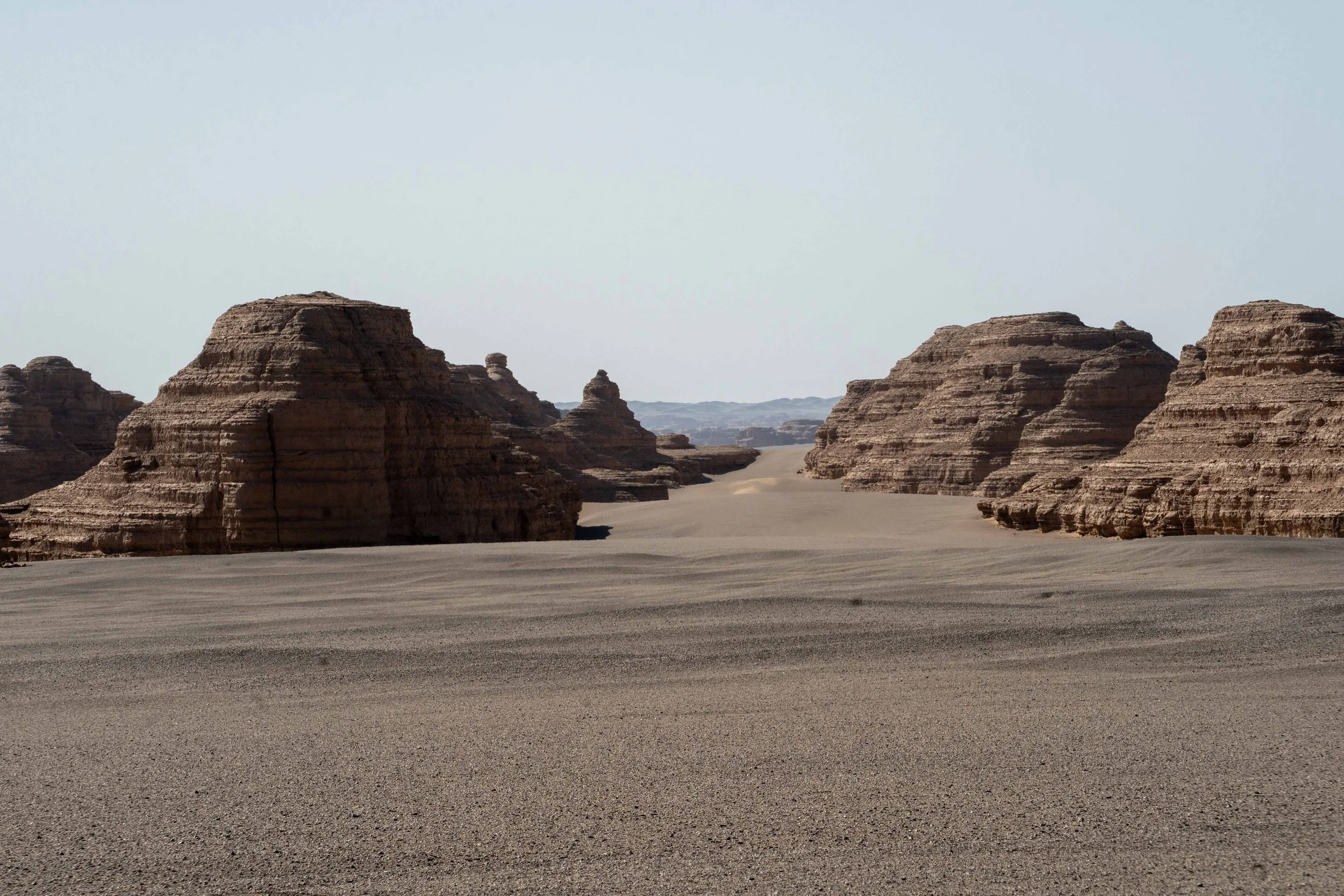
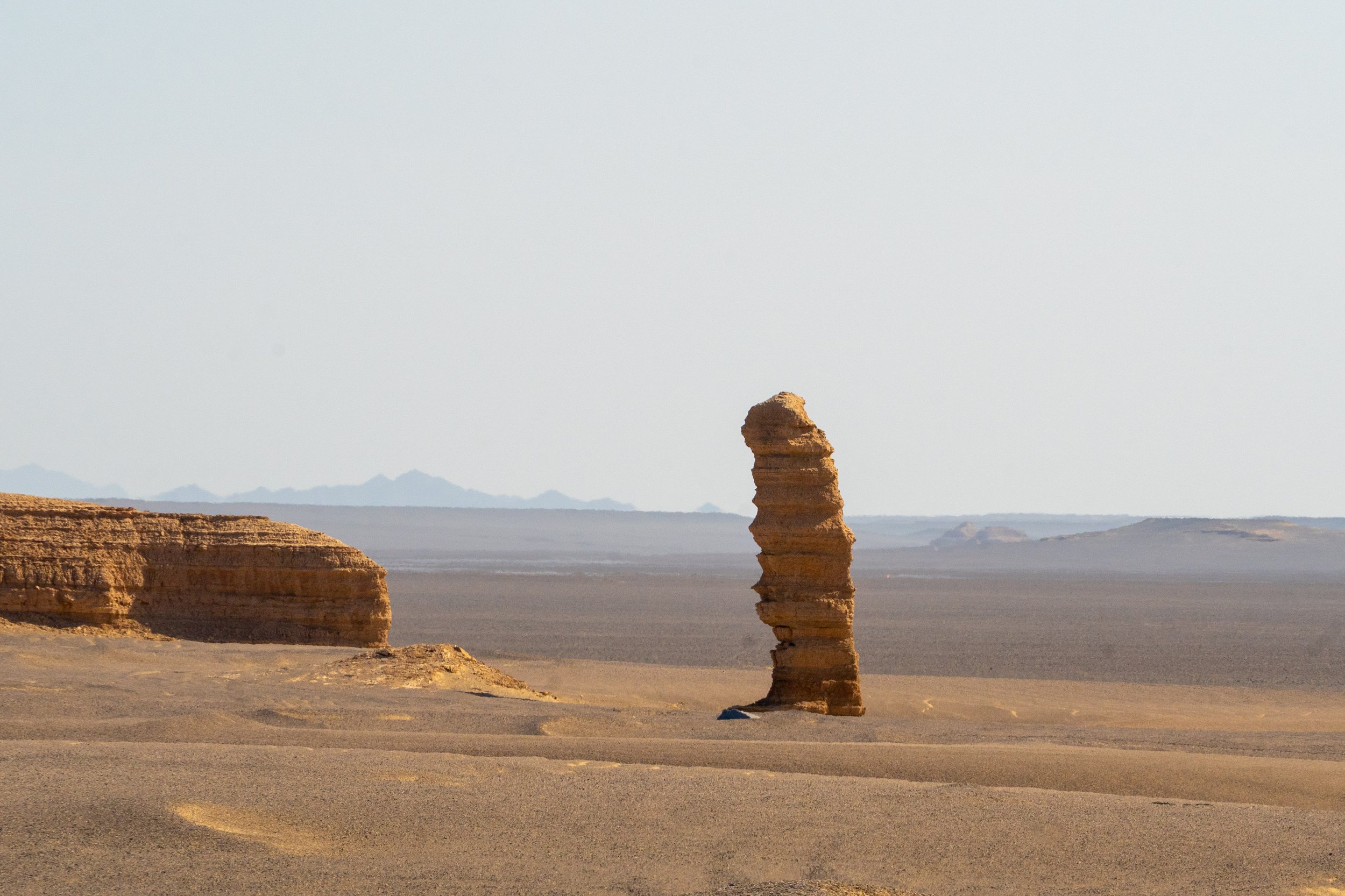
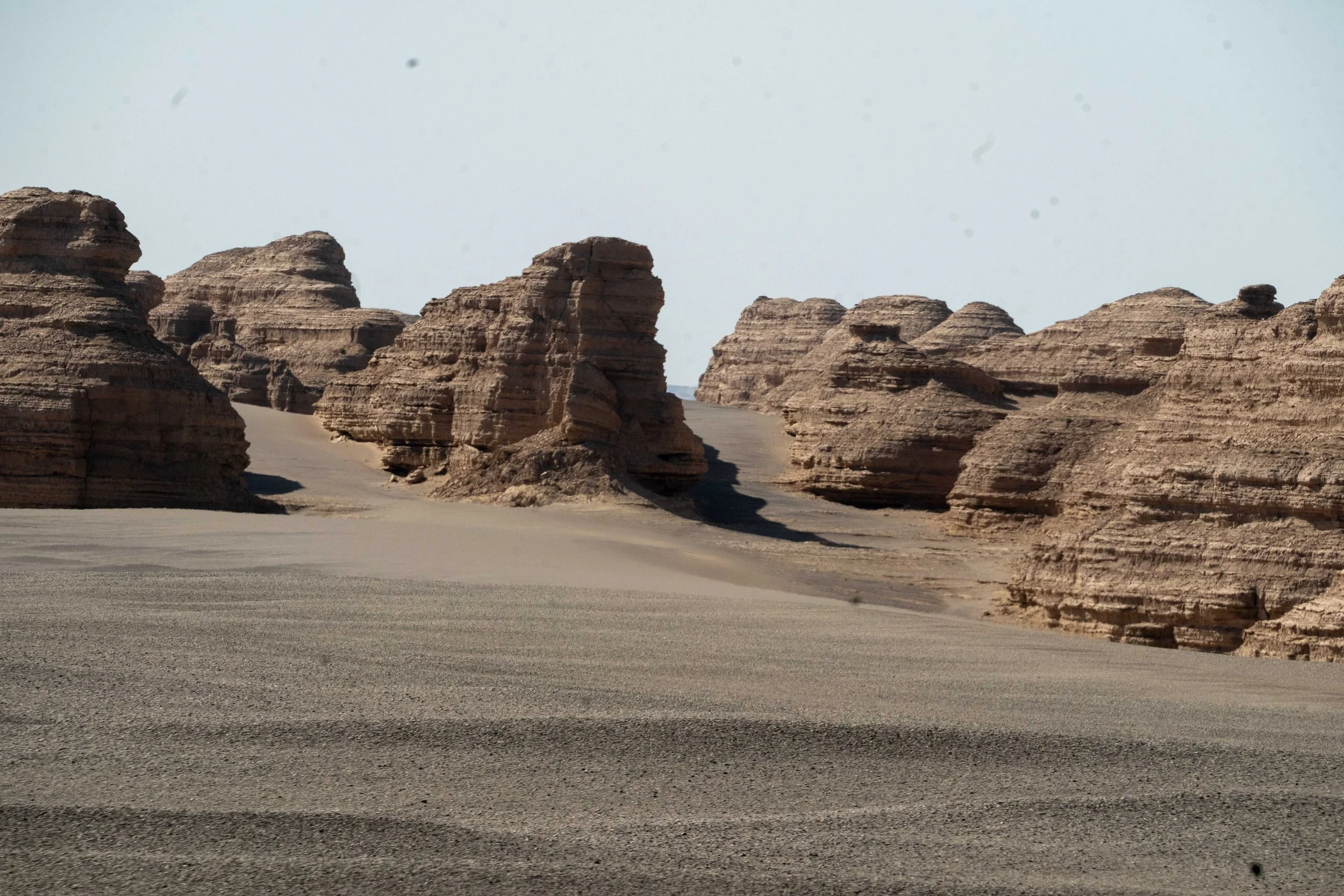
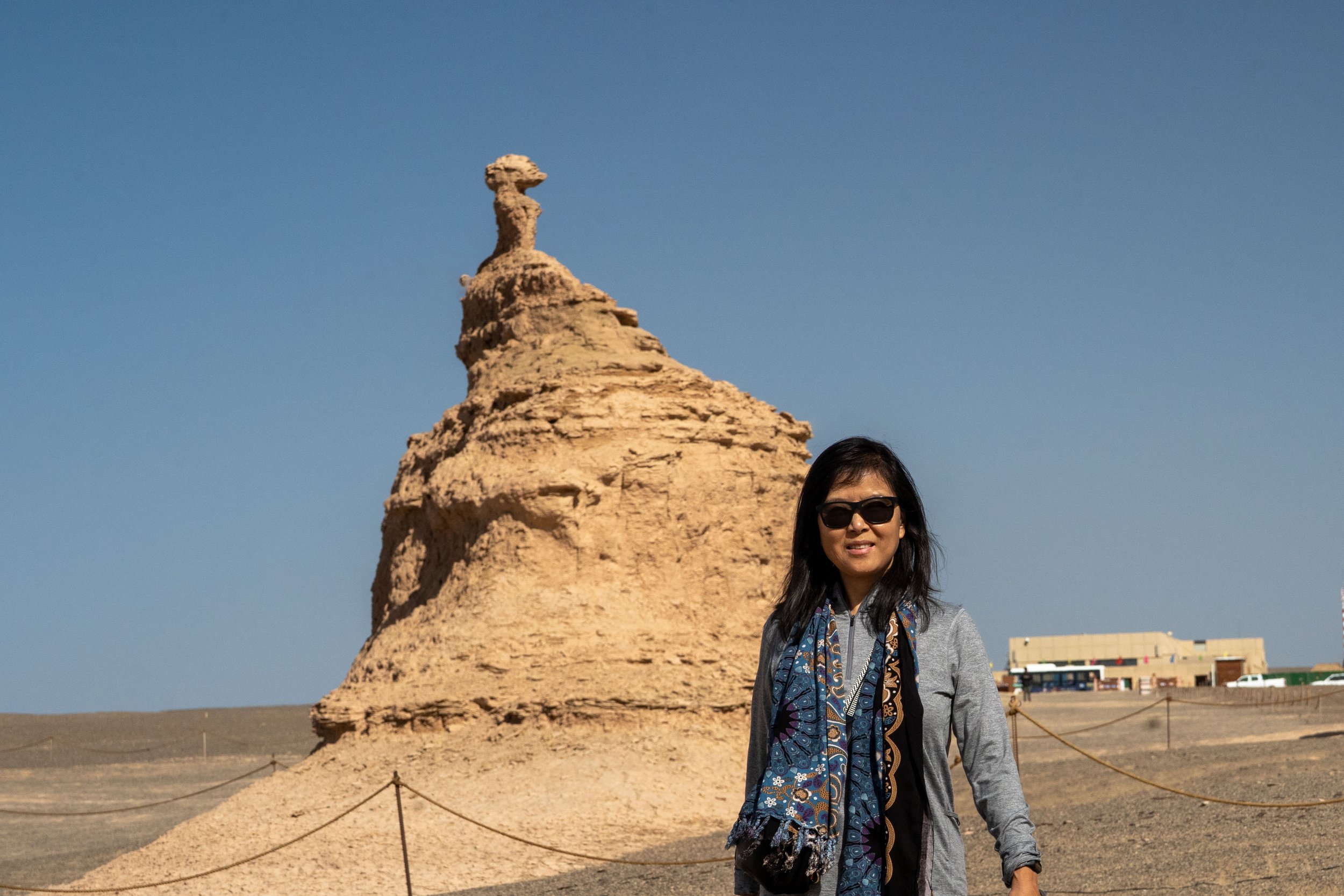
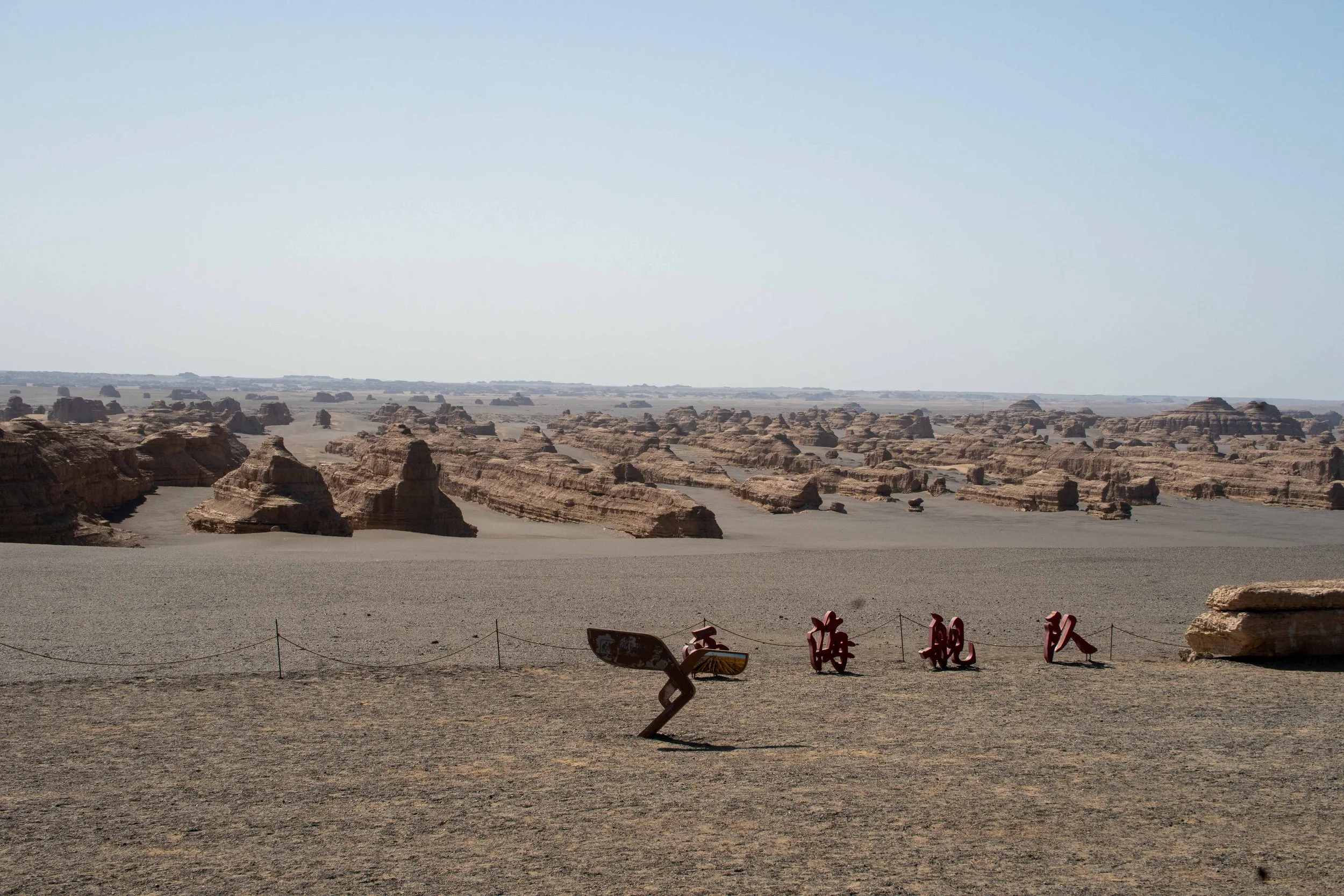
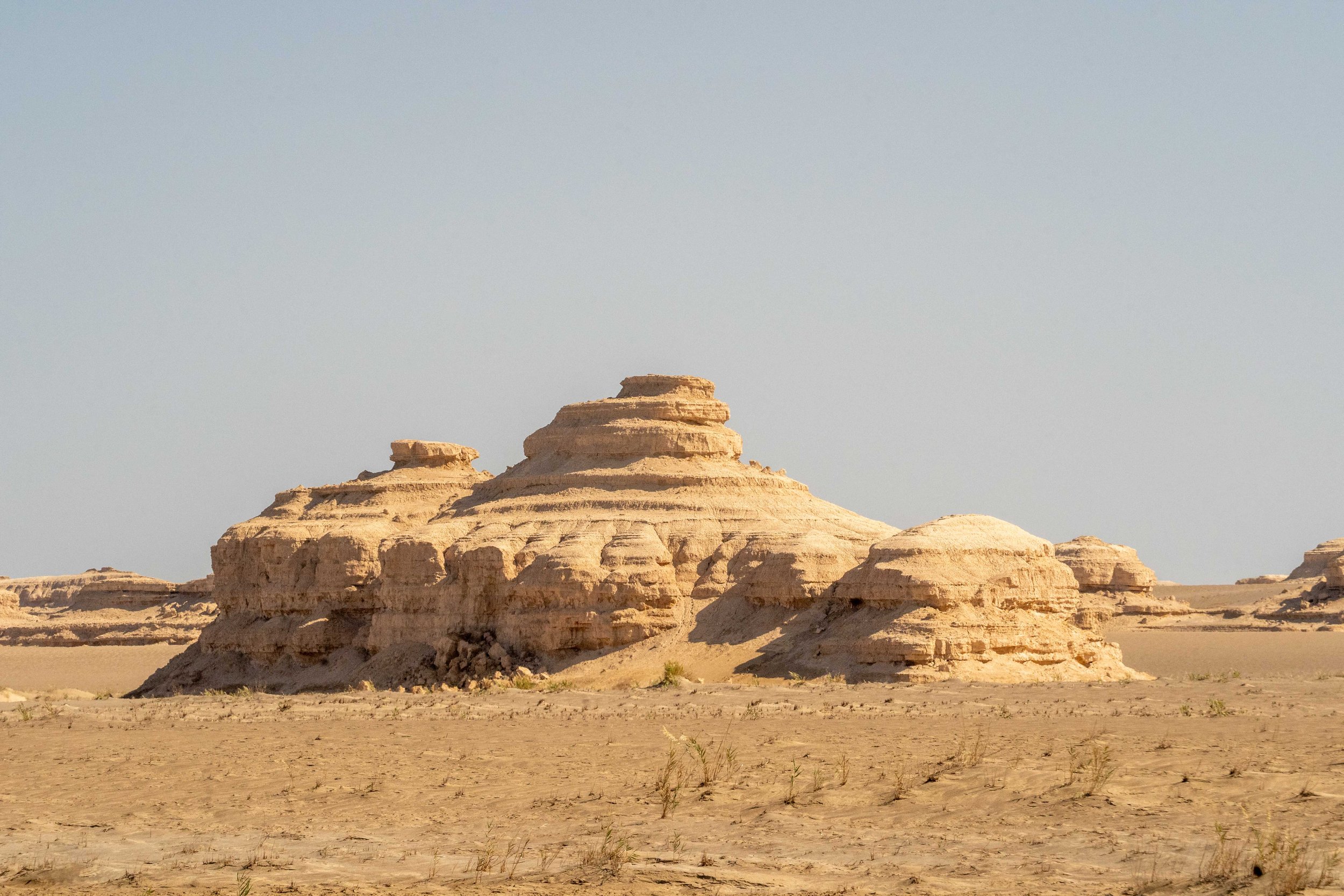
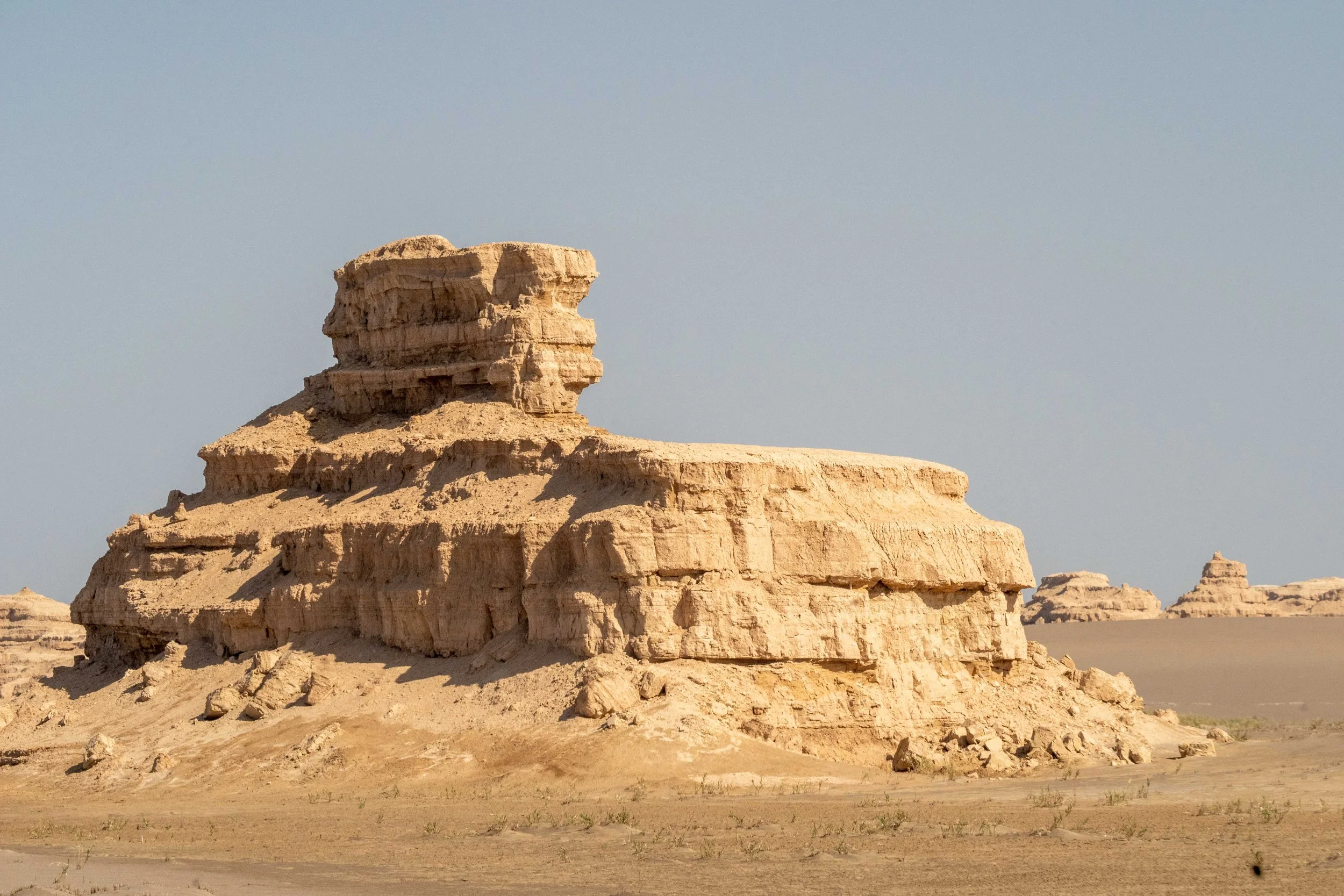
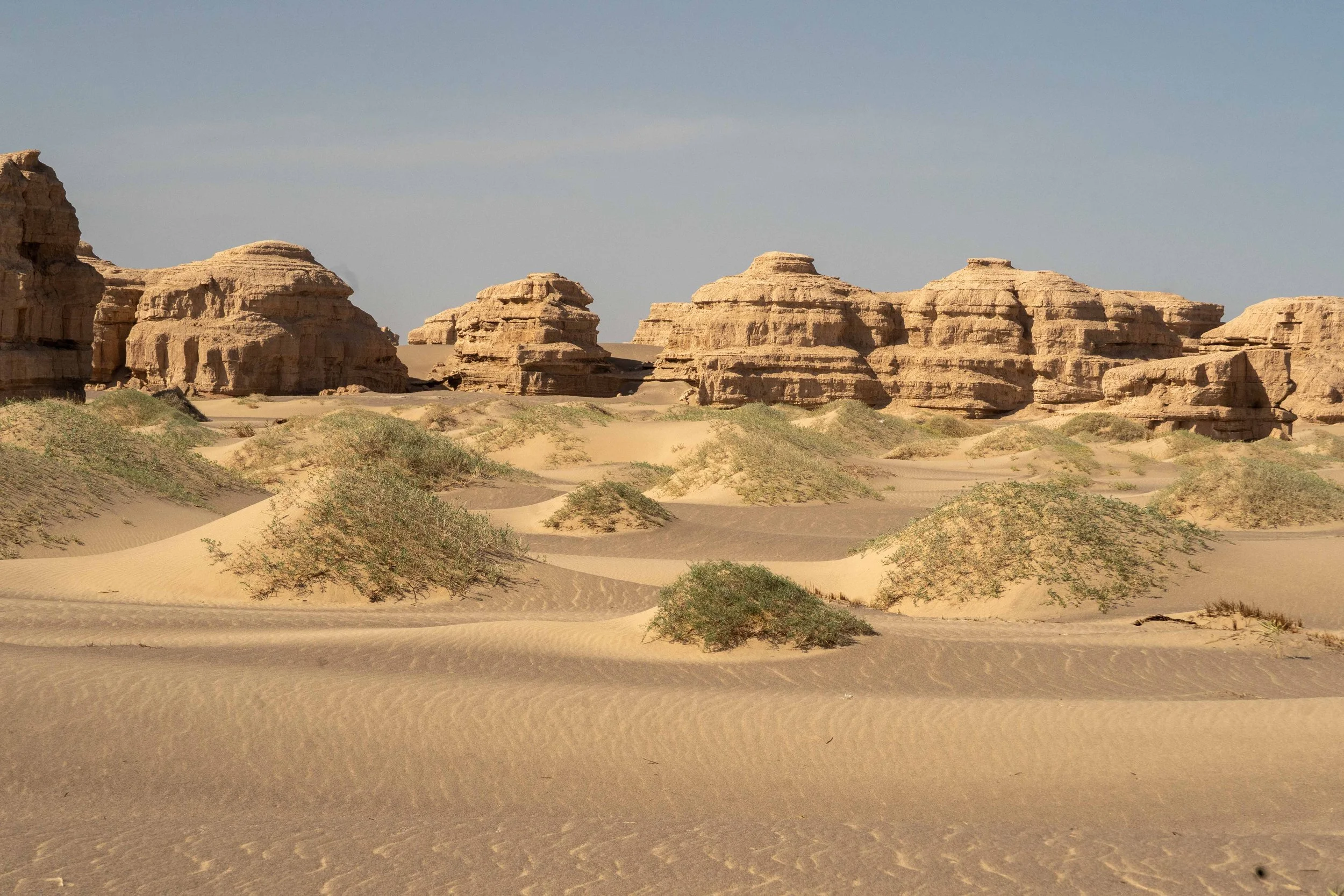
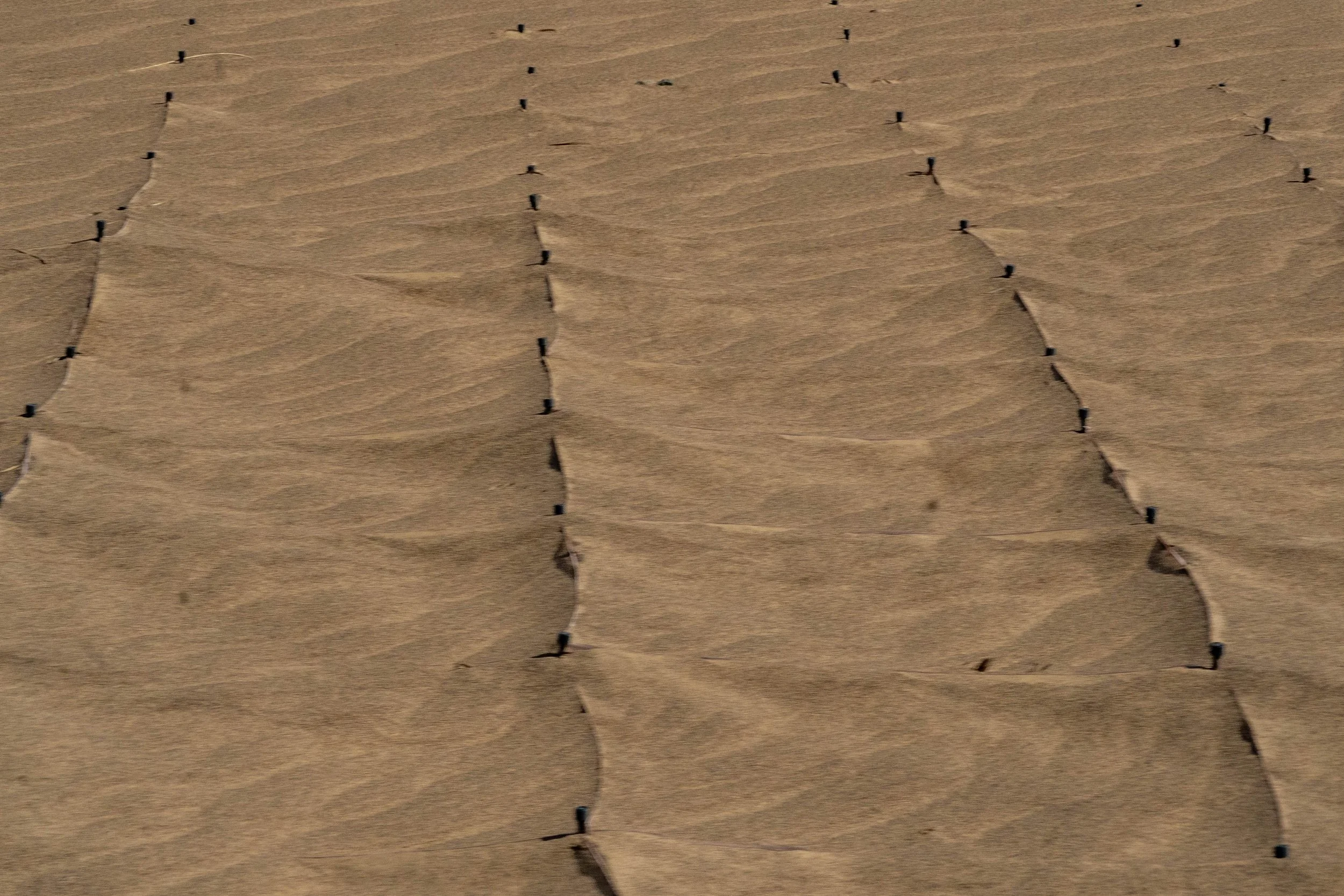
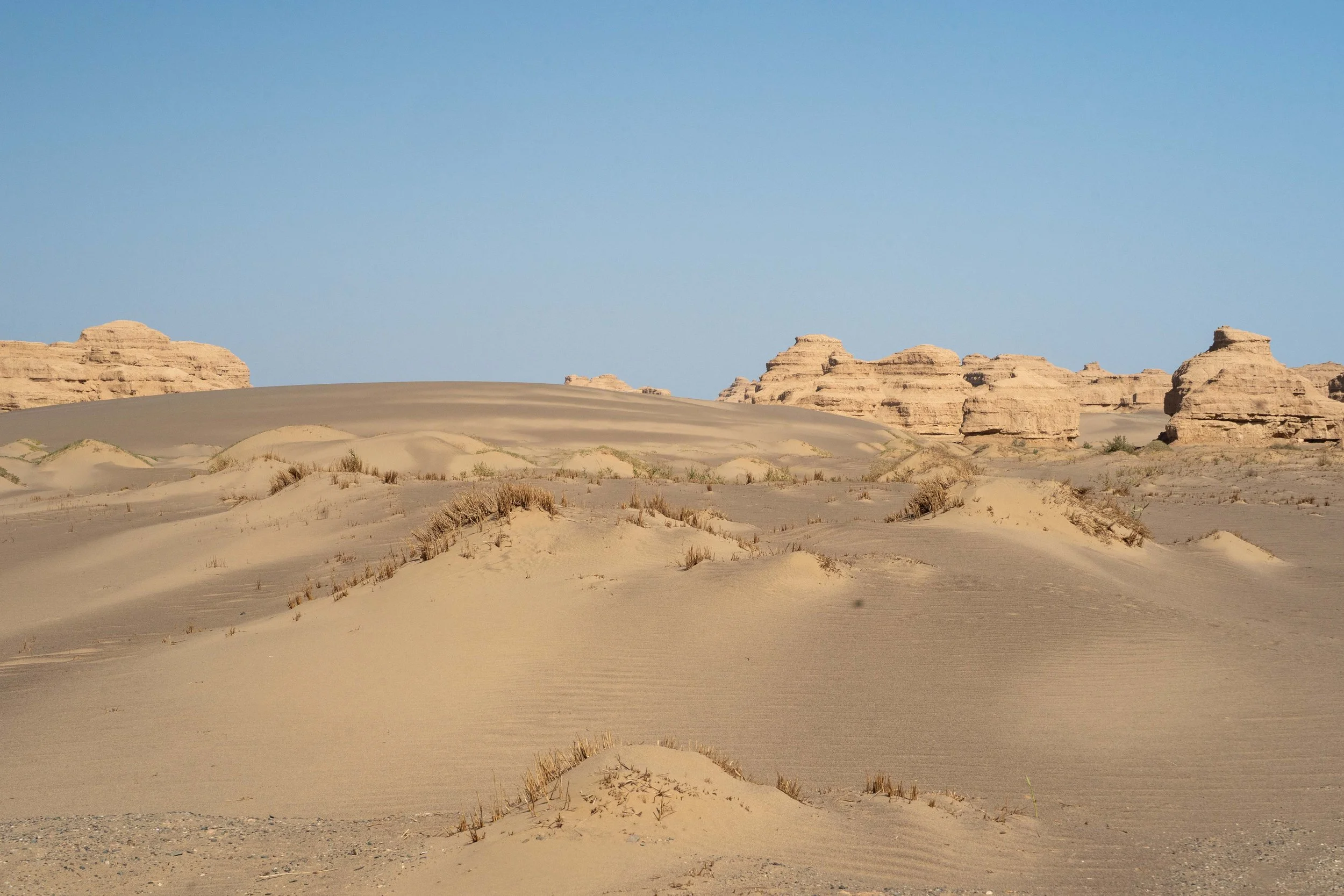
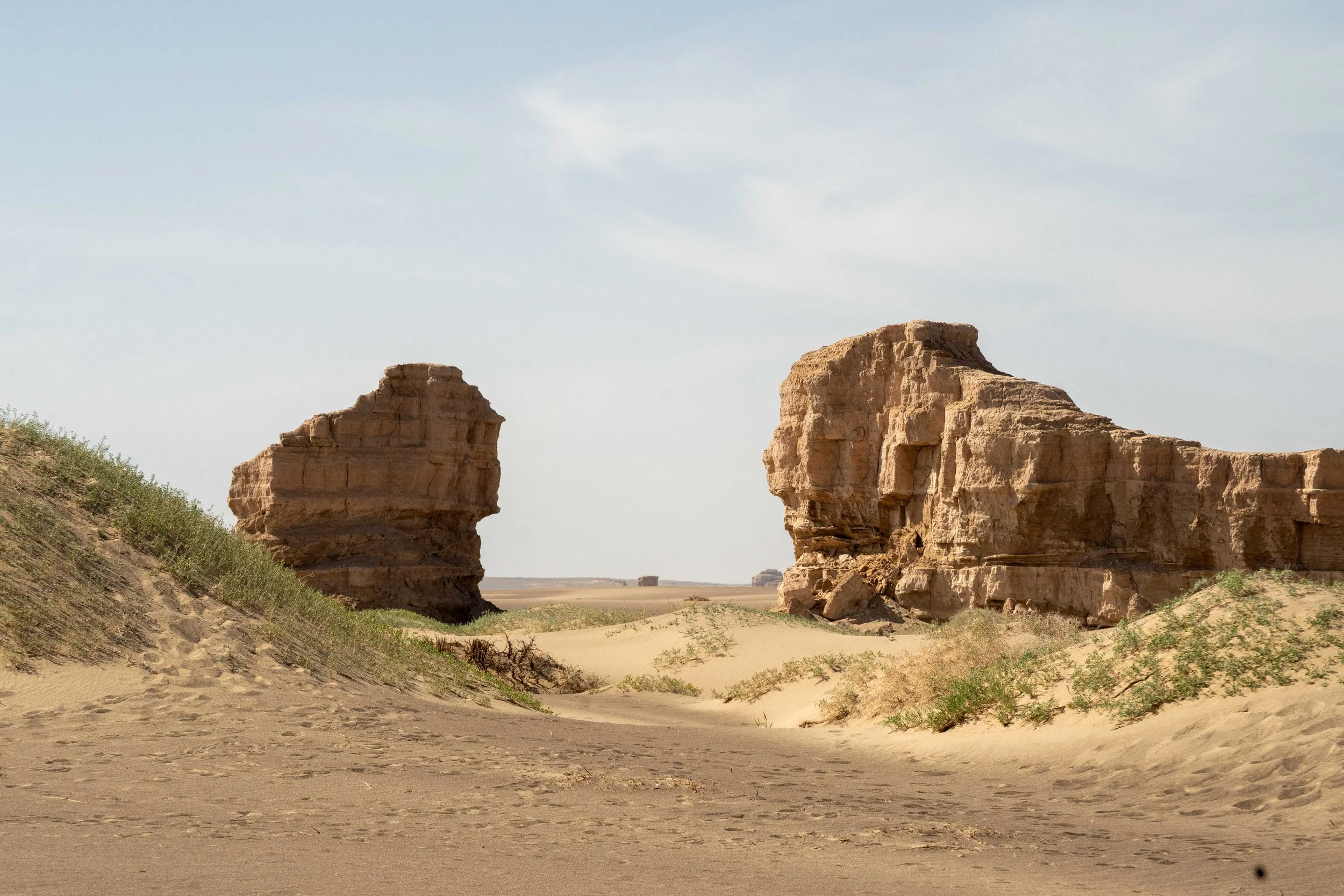
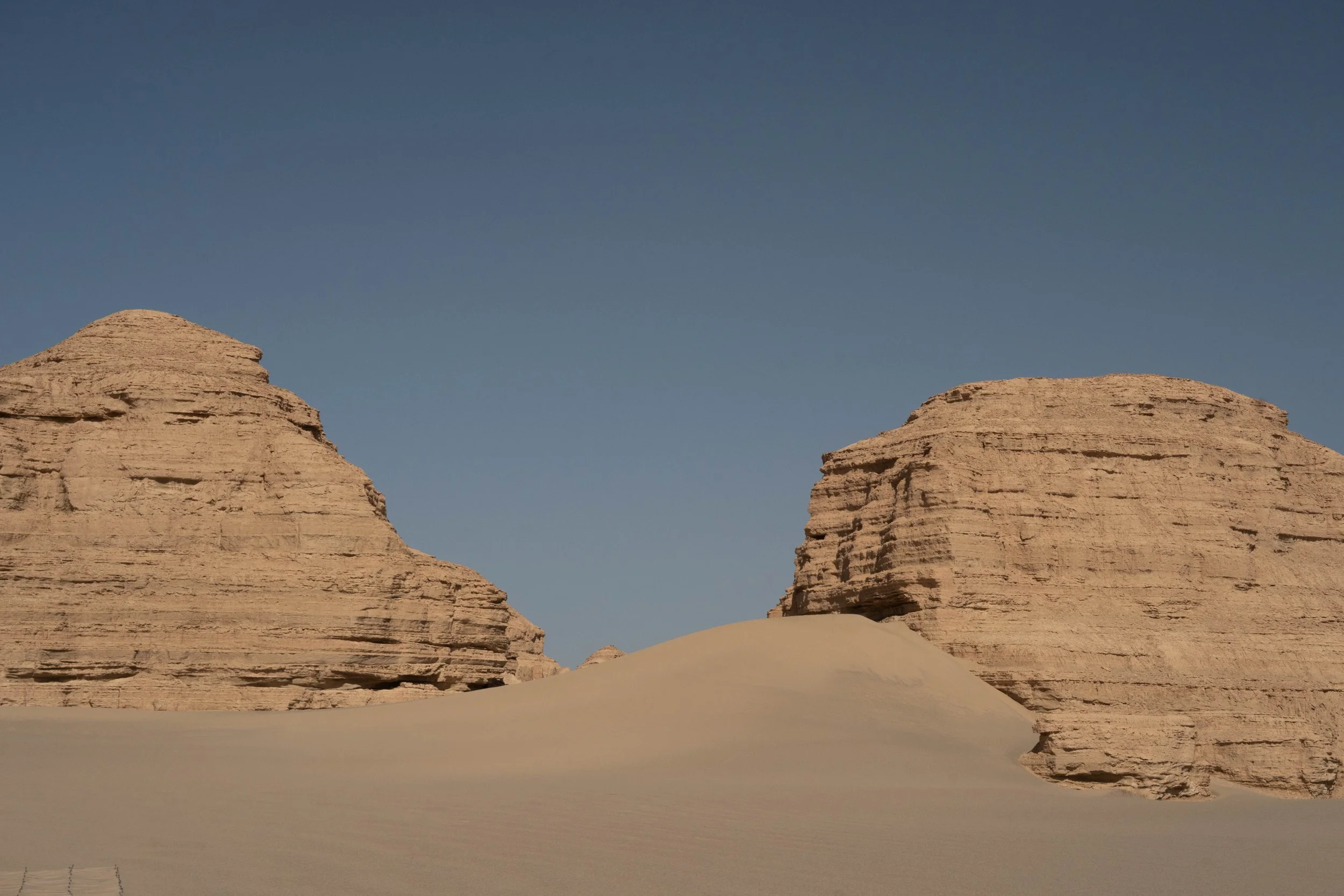
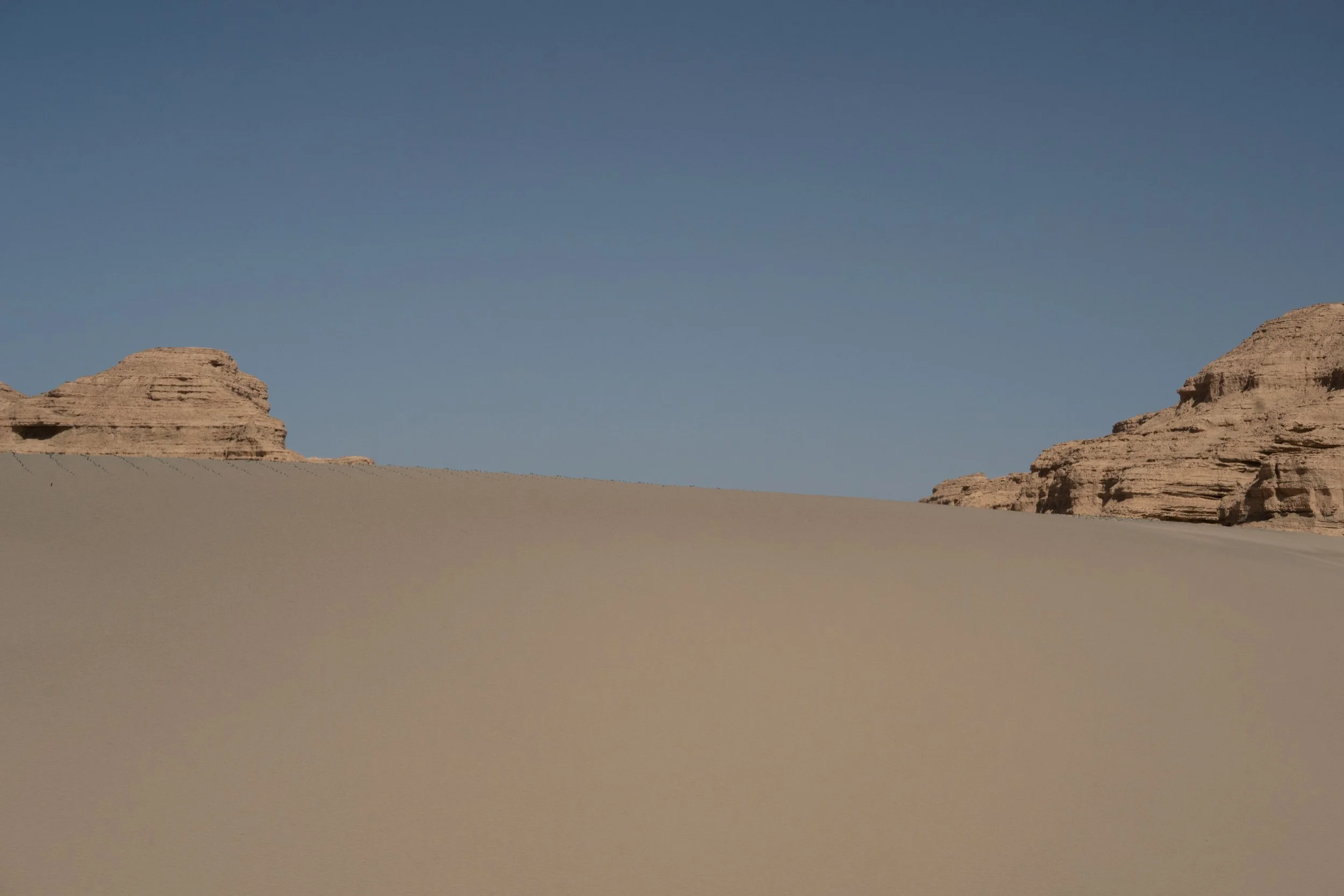
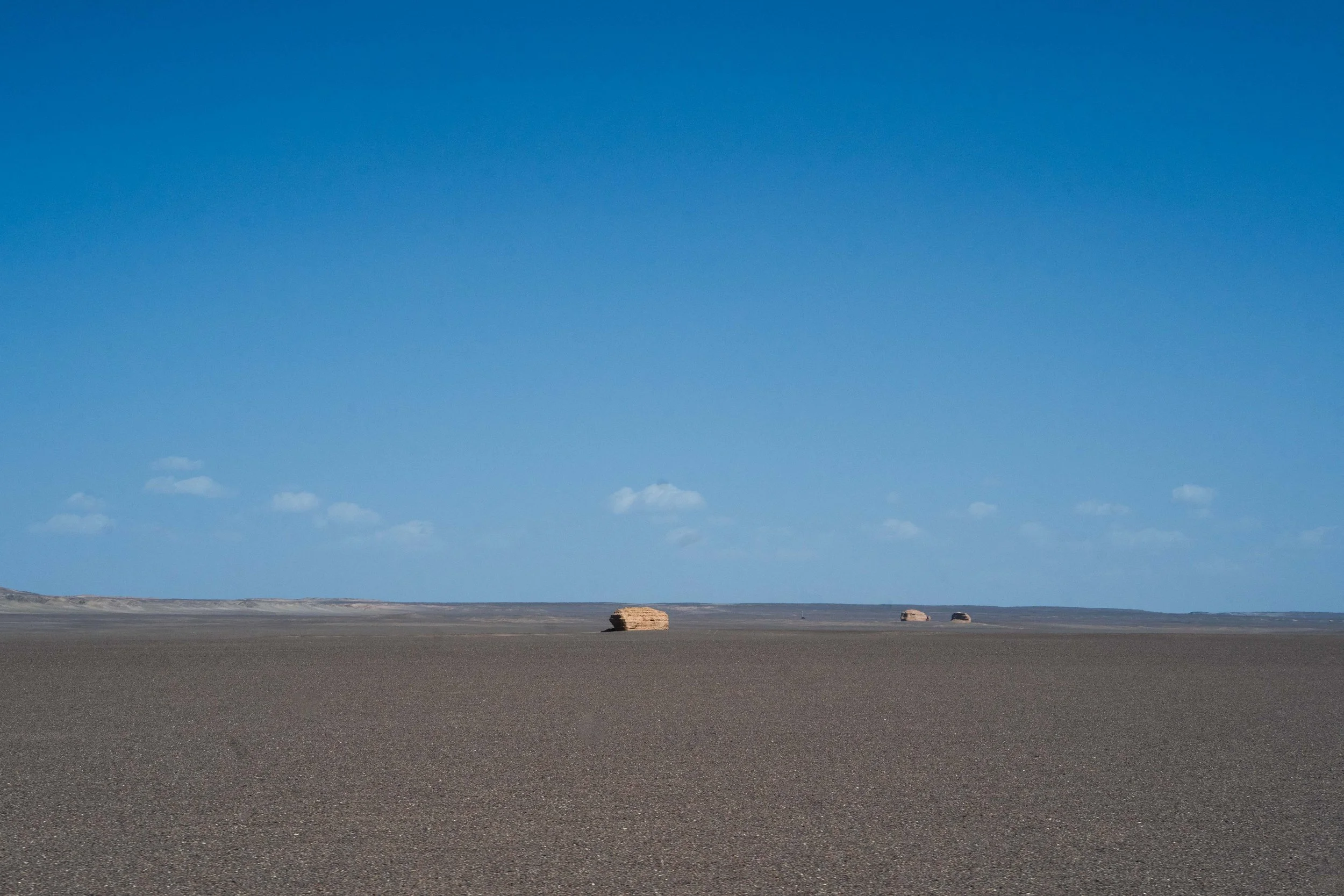
Afterward, we drove about 160 kilometers to Yadan National Geologic Park (雅丹地质公园), near the border between Gansu and Xinjiang. Inside the park, the shuttle bus made several stops for photos and short walks. The scenery was spectacular—vast and wind-sculpted—reminding us of the landscapes in Arizona, Colorado, and Utah, which we were already familiar with.
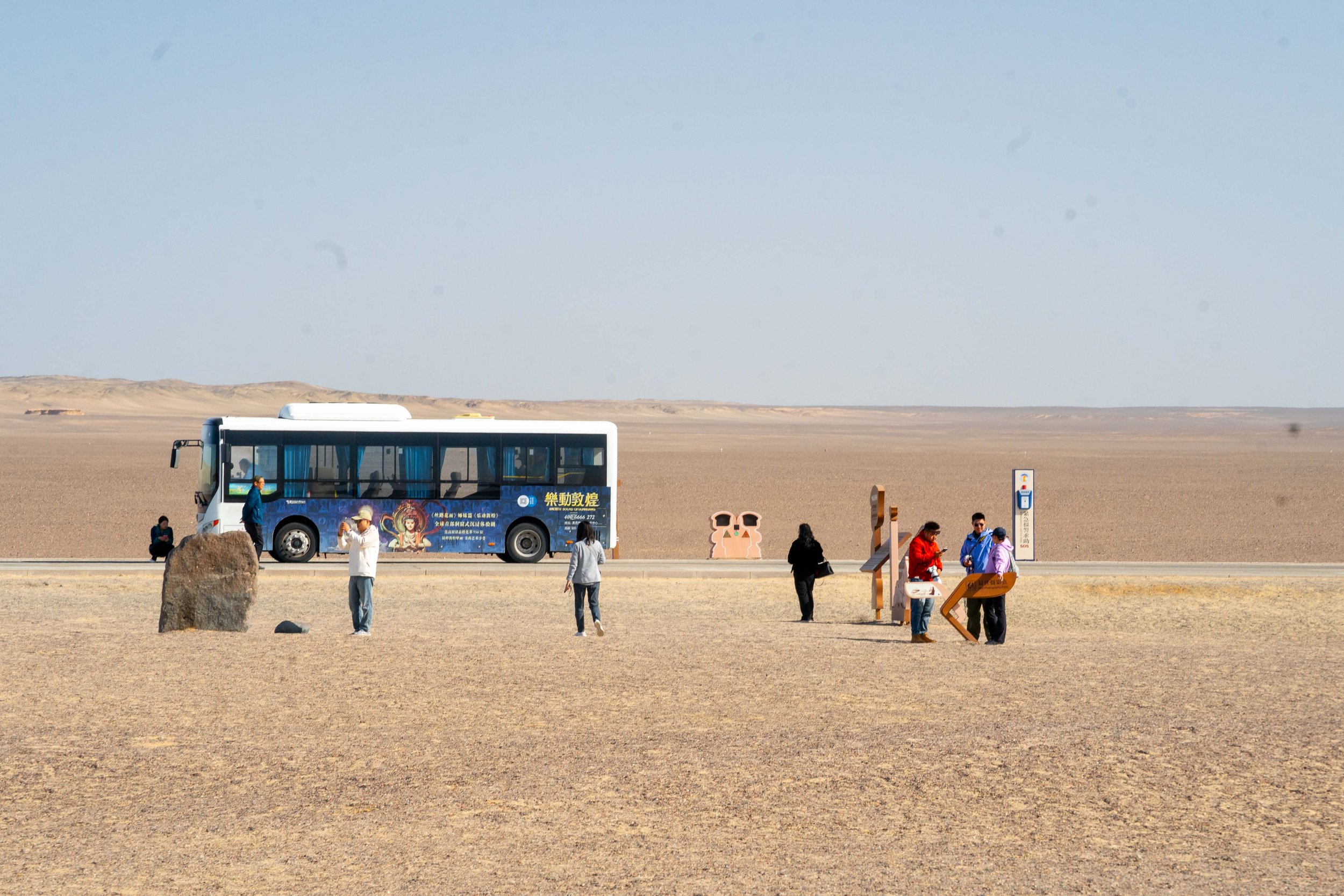
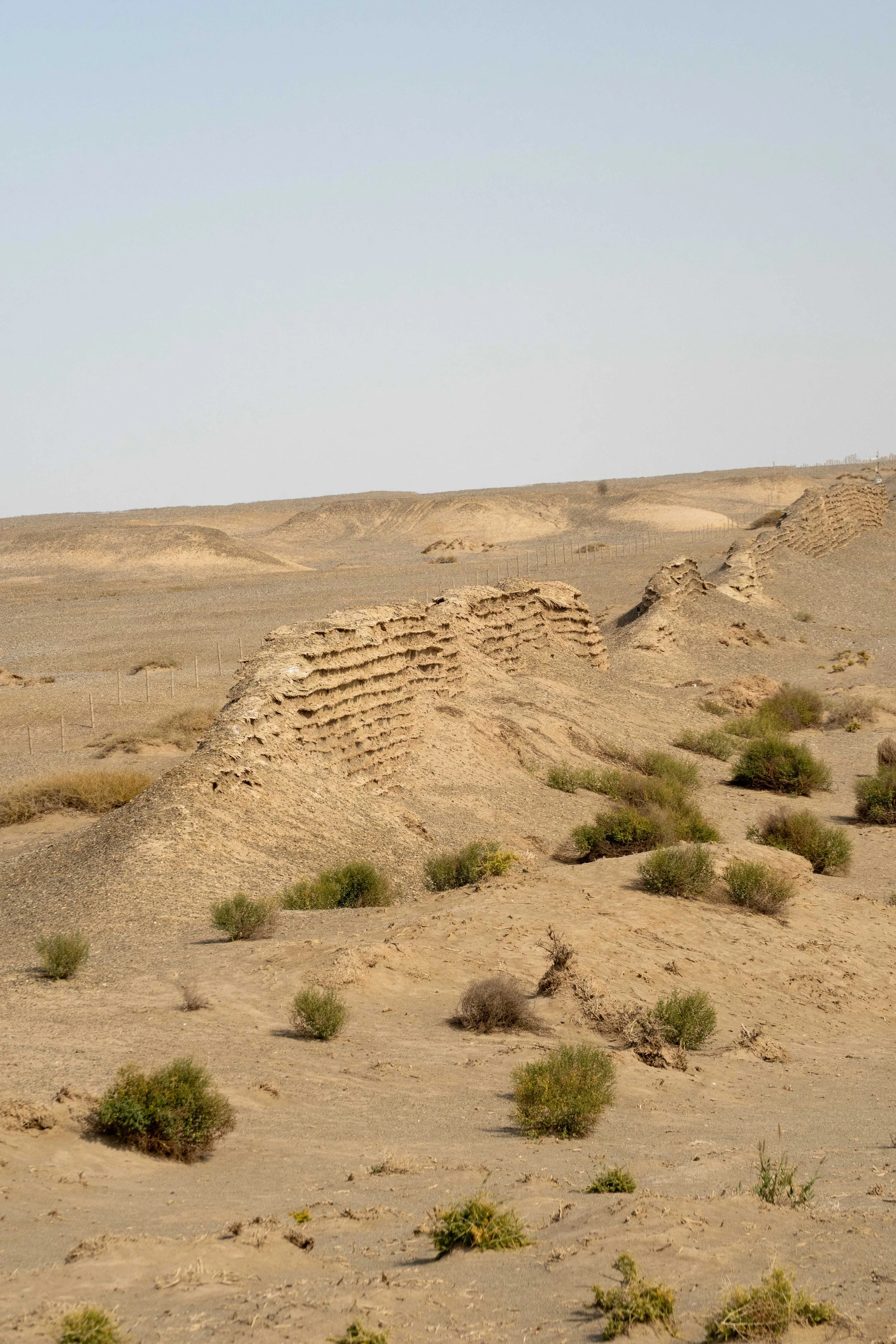
Next, we continued to the Yumen Pass (玉门关) Scenic Park, which includes three major historical sites: the Small Square Castle (小方盘城), the Large Square Castle (大方盘城), and the Han Great Wall (汉长城). We were surprised to find that the park identifies Yumen Pass with the so-called Small Square Castle, a name originally given by two foreign explorers in the early twentieth century.
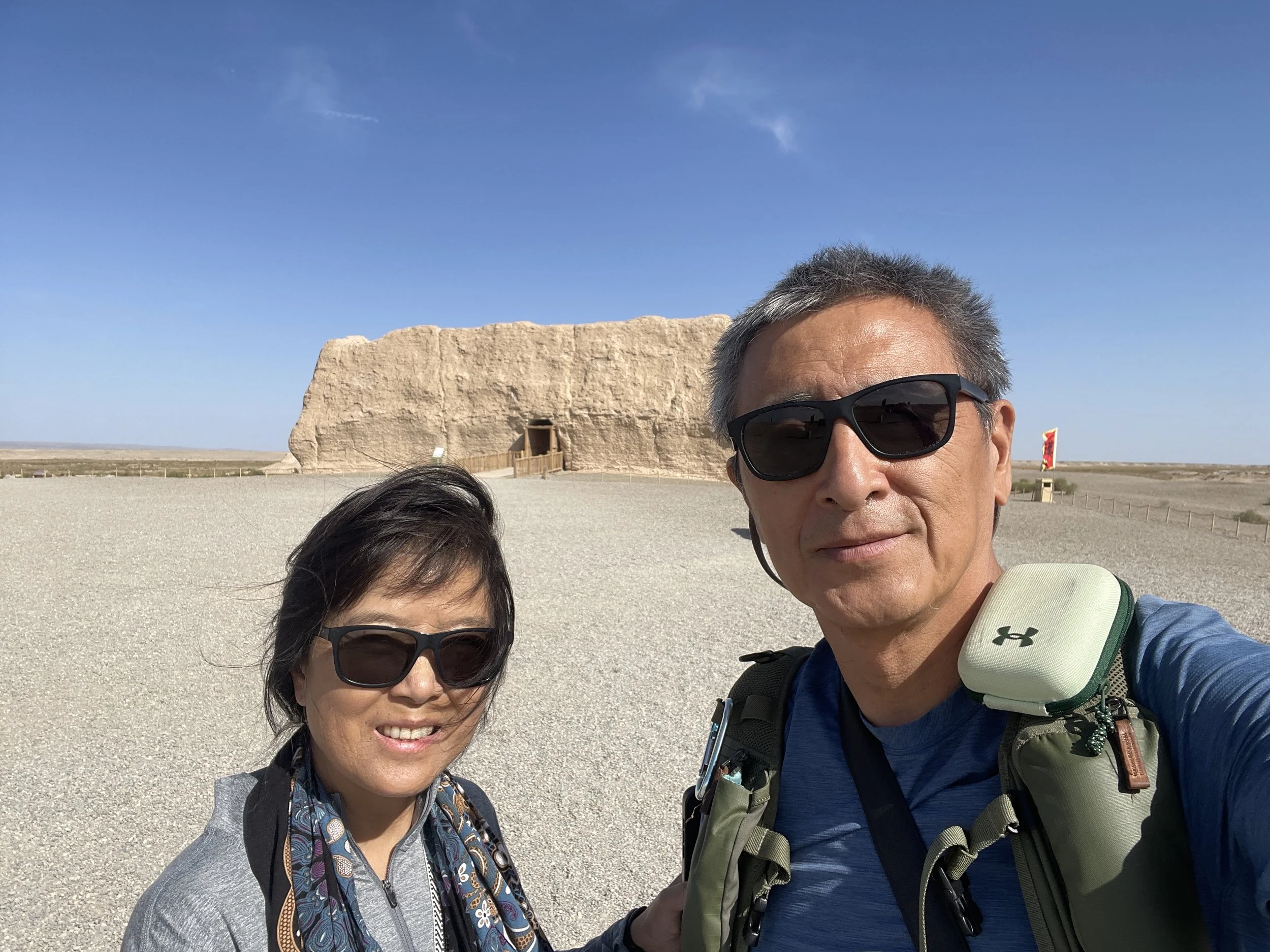
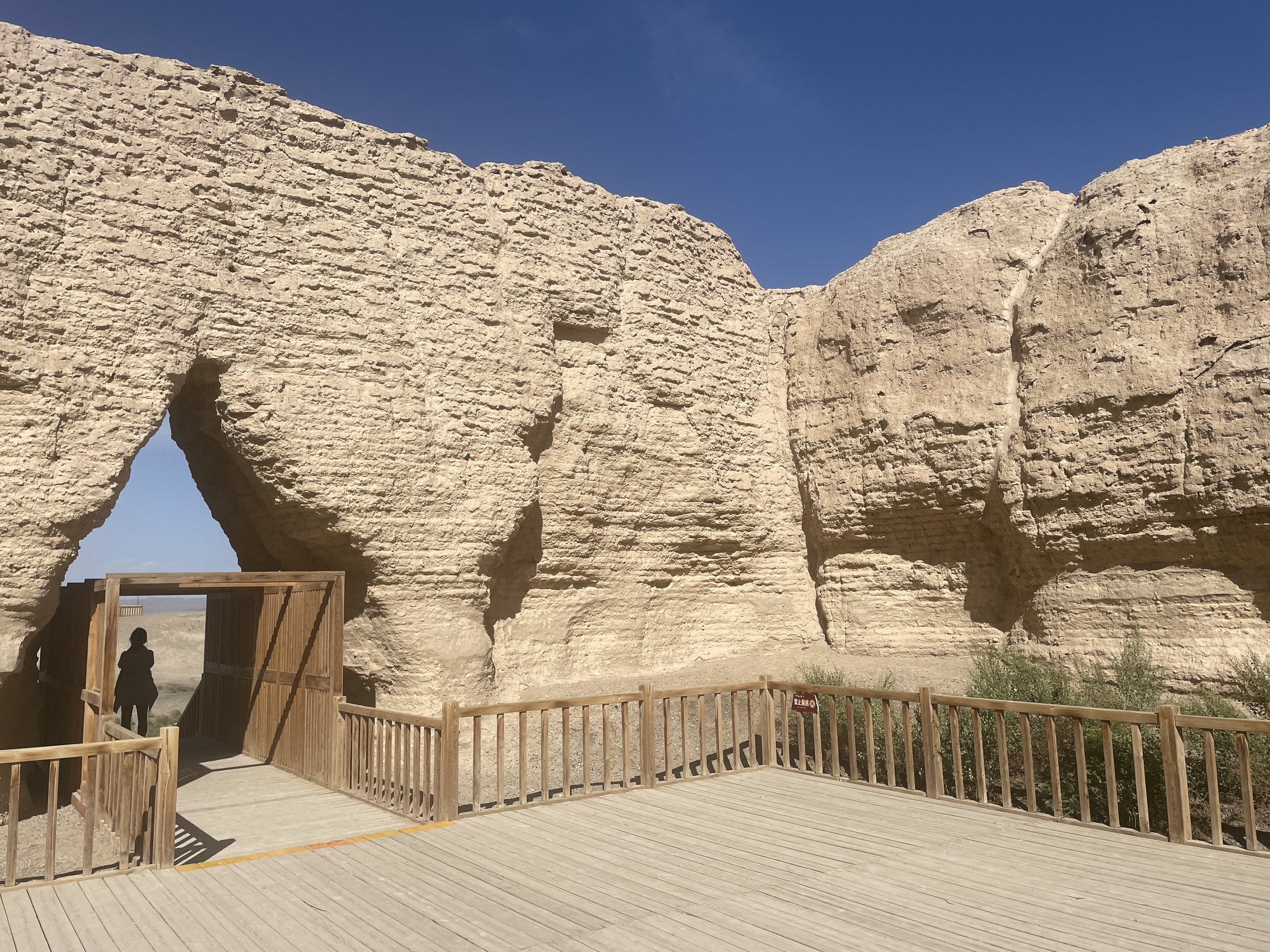
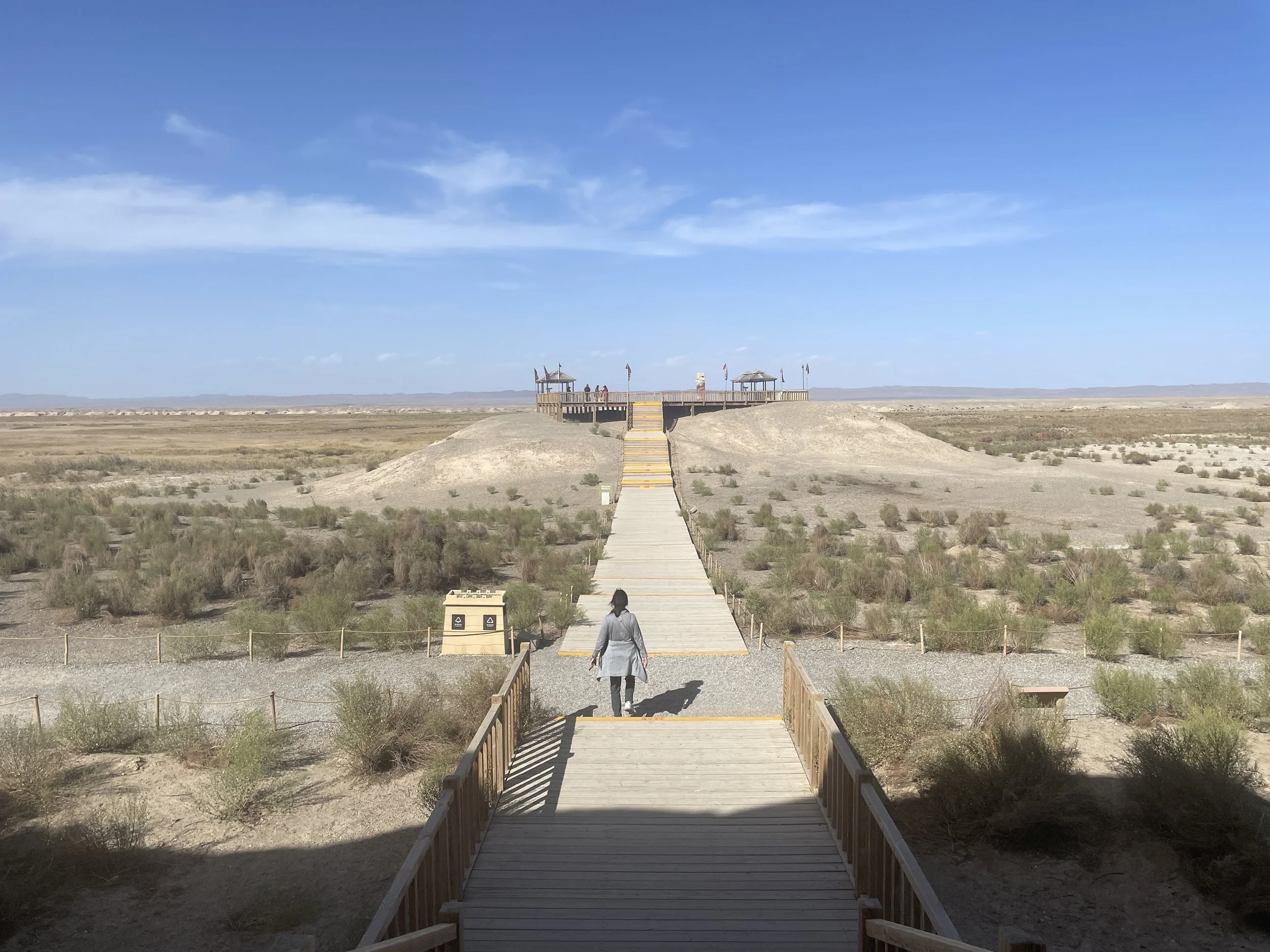
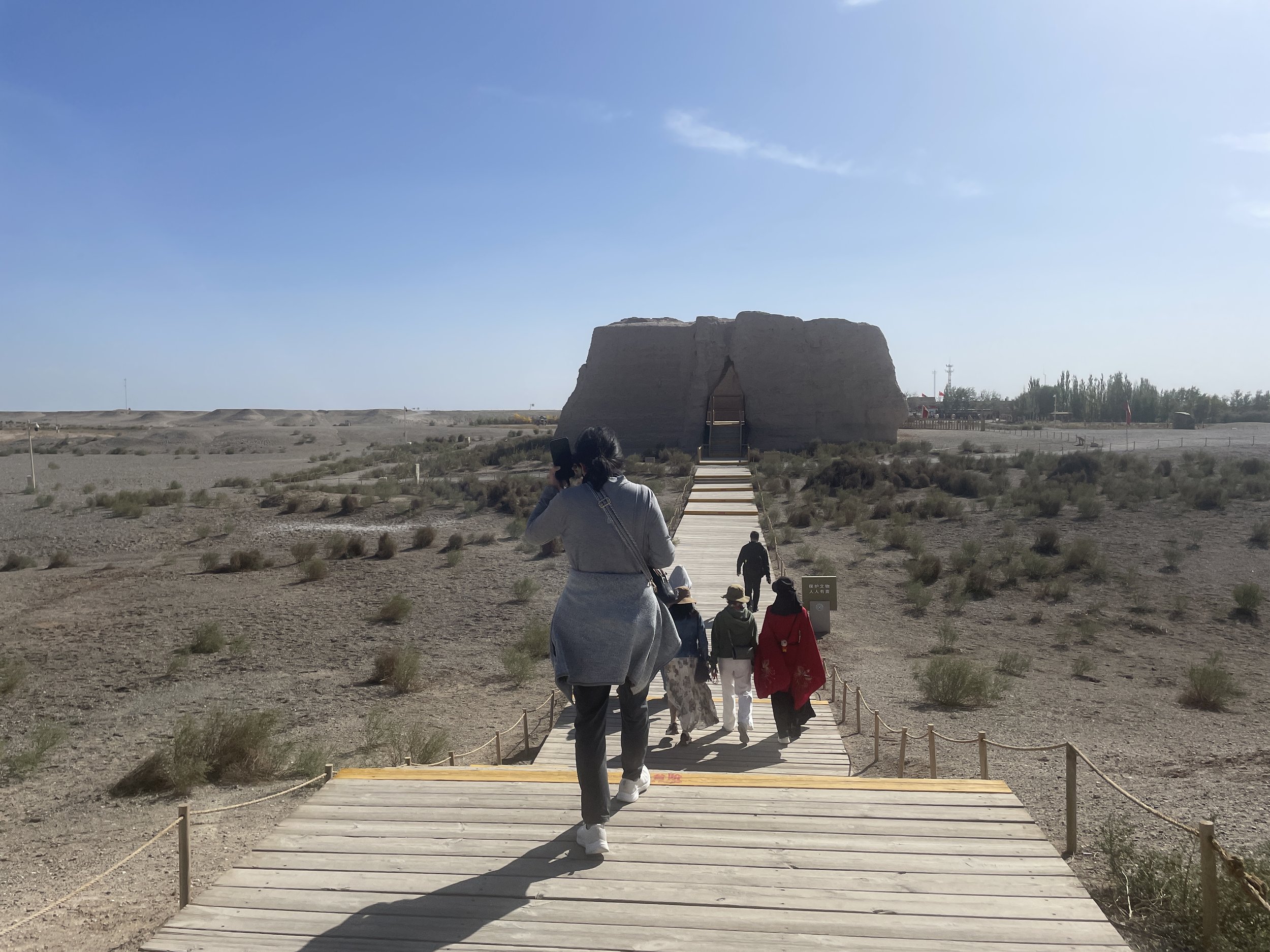
A shuttle took us to the Han Great Wall and the Large Square Castle, which lie at opposite ends of the park. It was astonishing to see portions of the Han-era Great Wall still standing after more than two thousand years—preserved by the dry desert climate and minimal human interference.
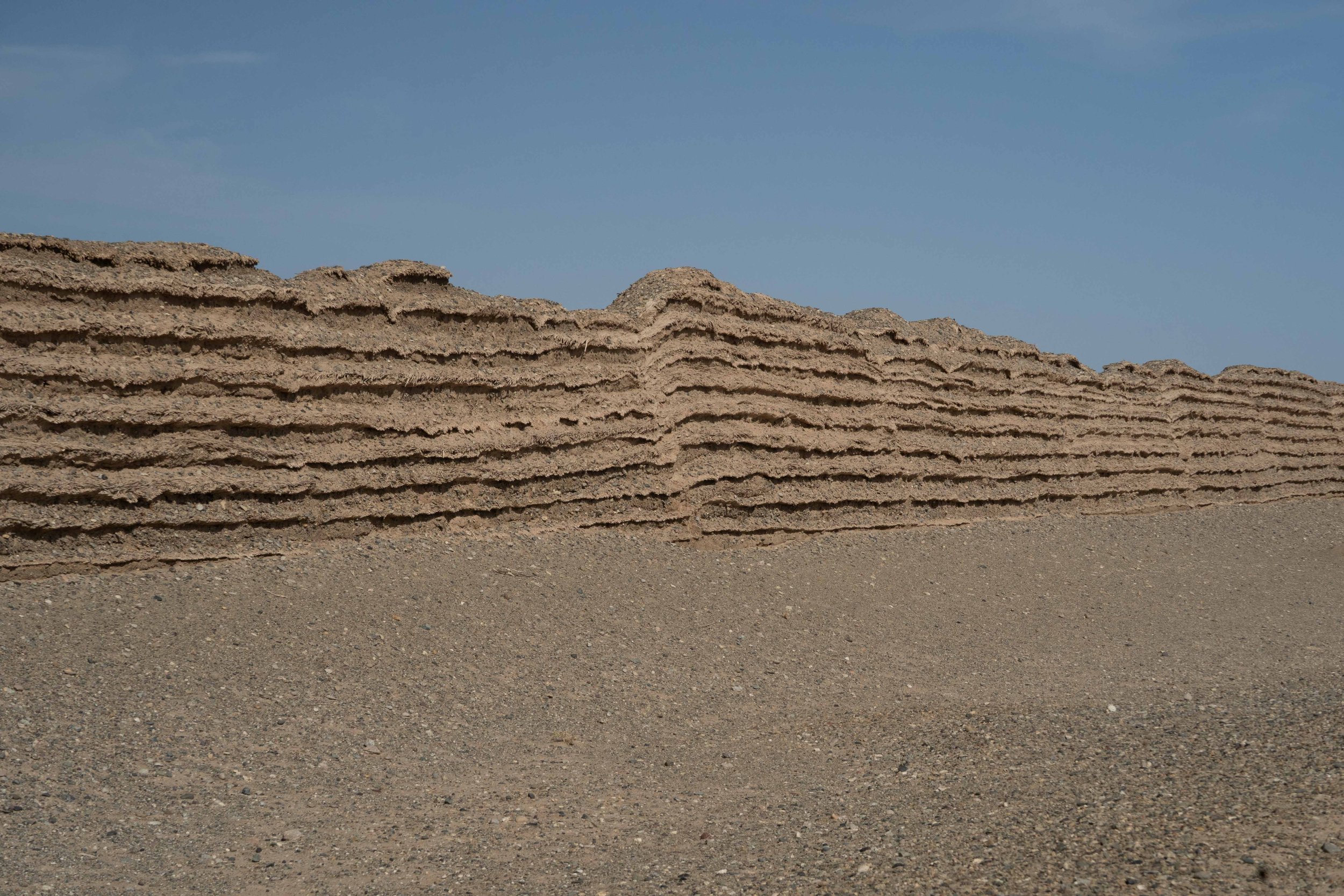
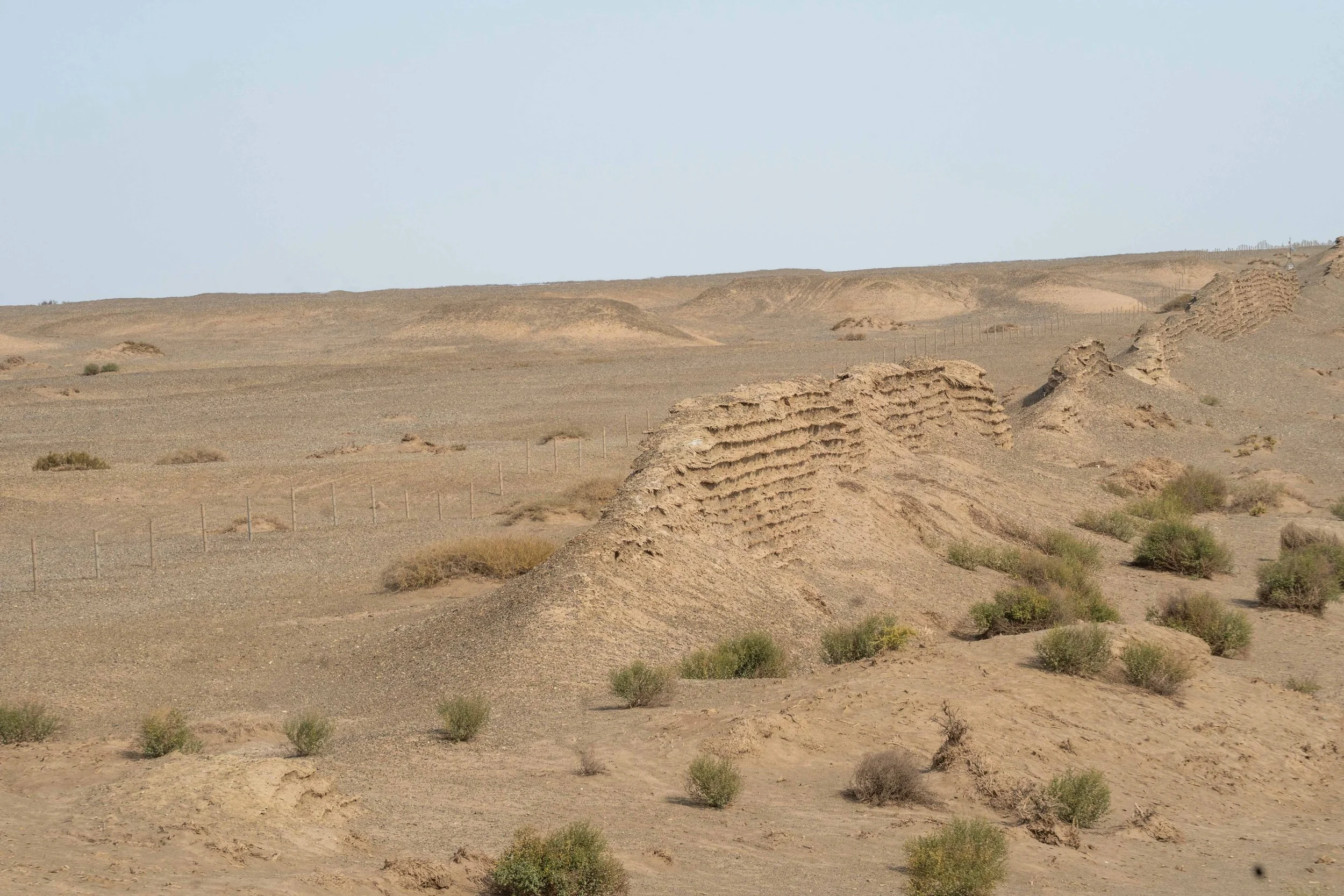
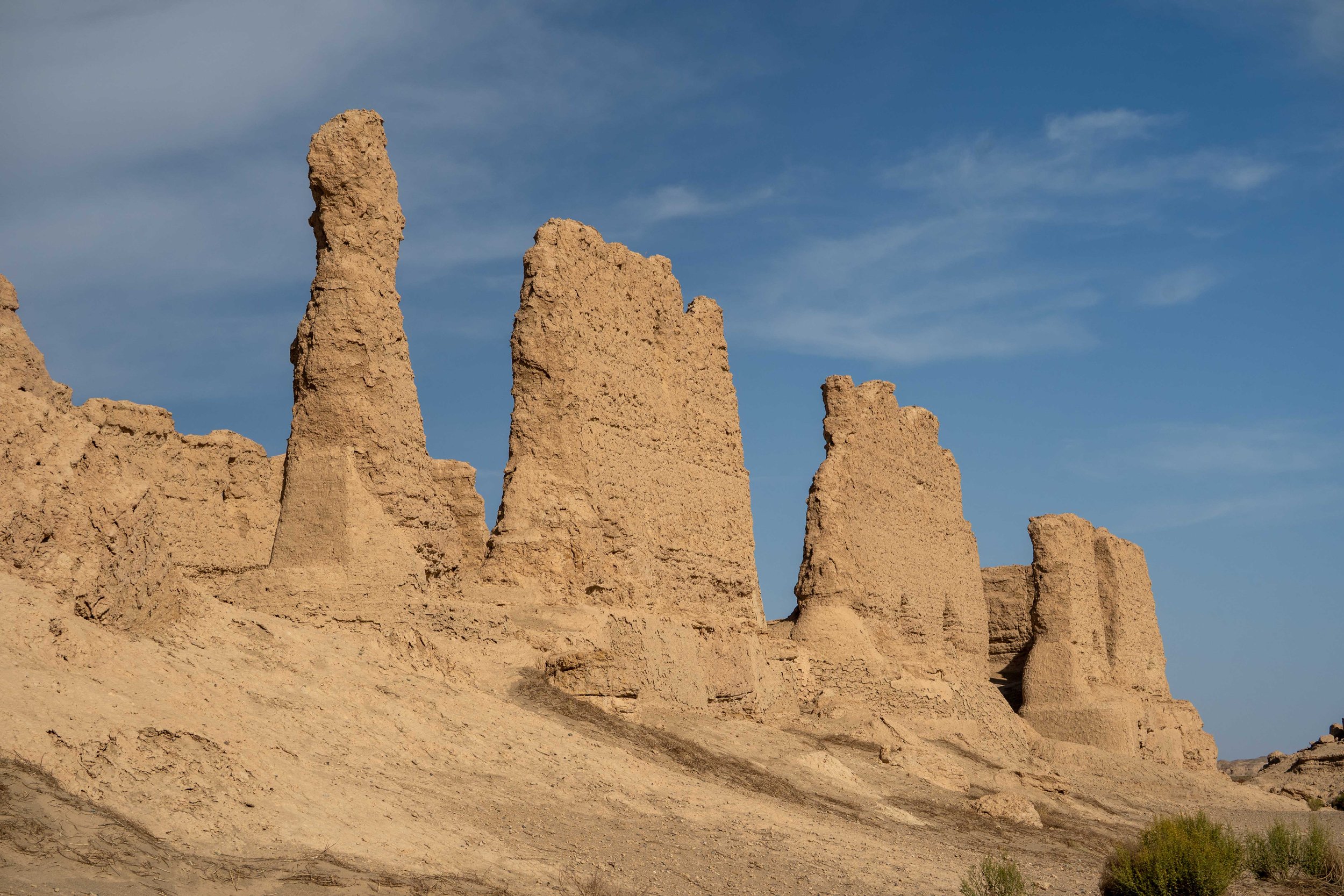
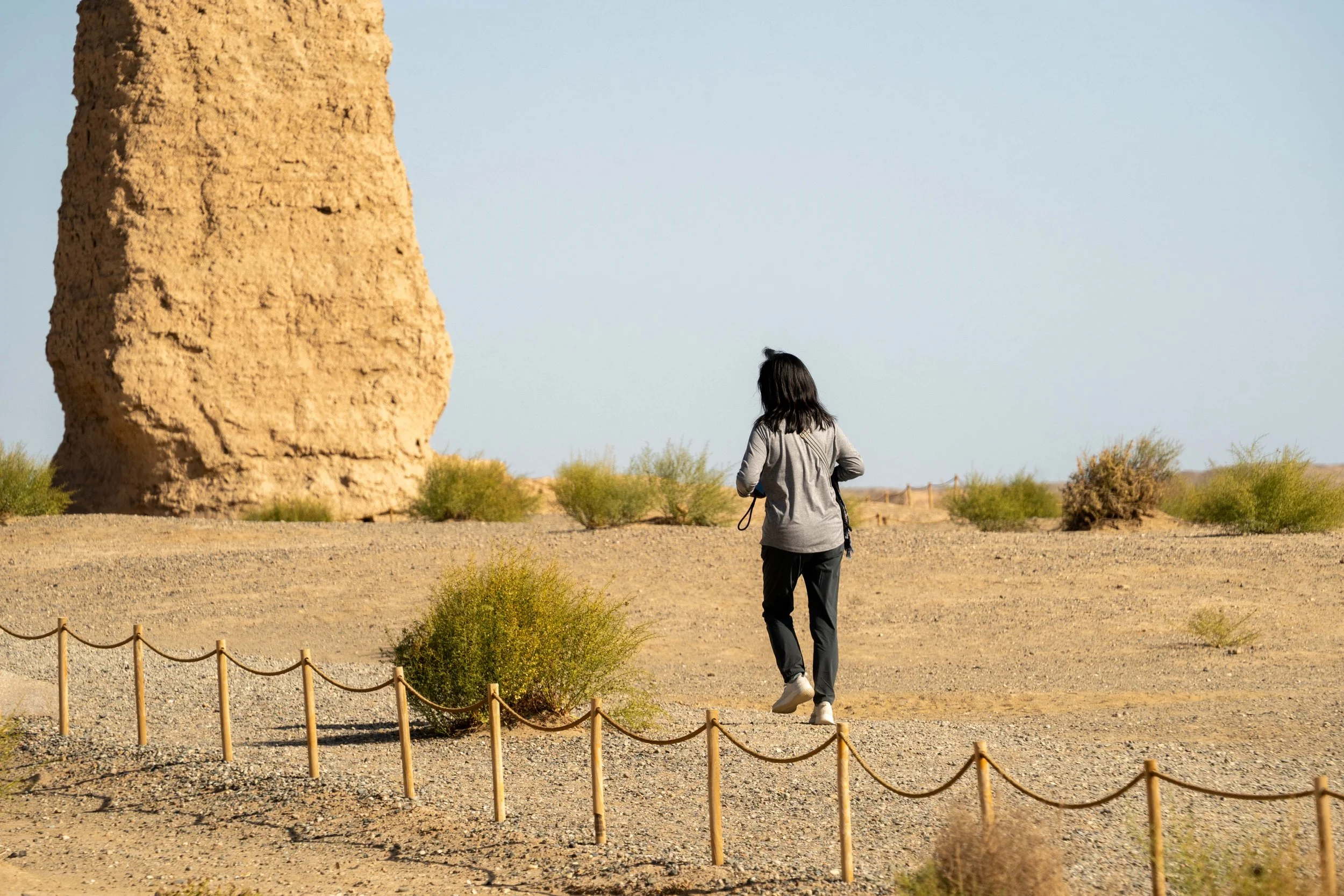
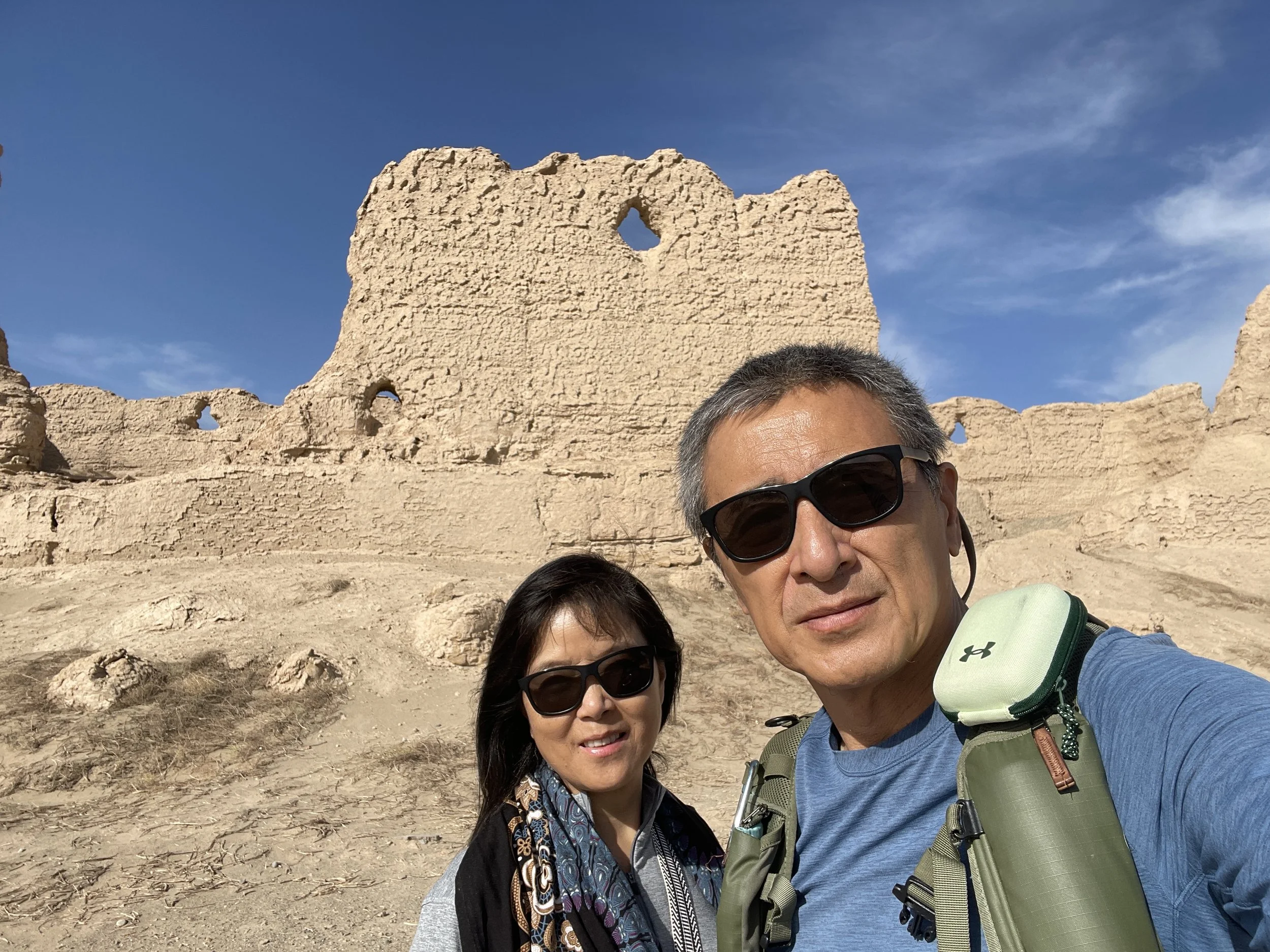
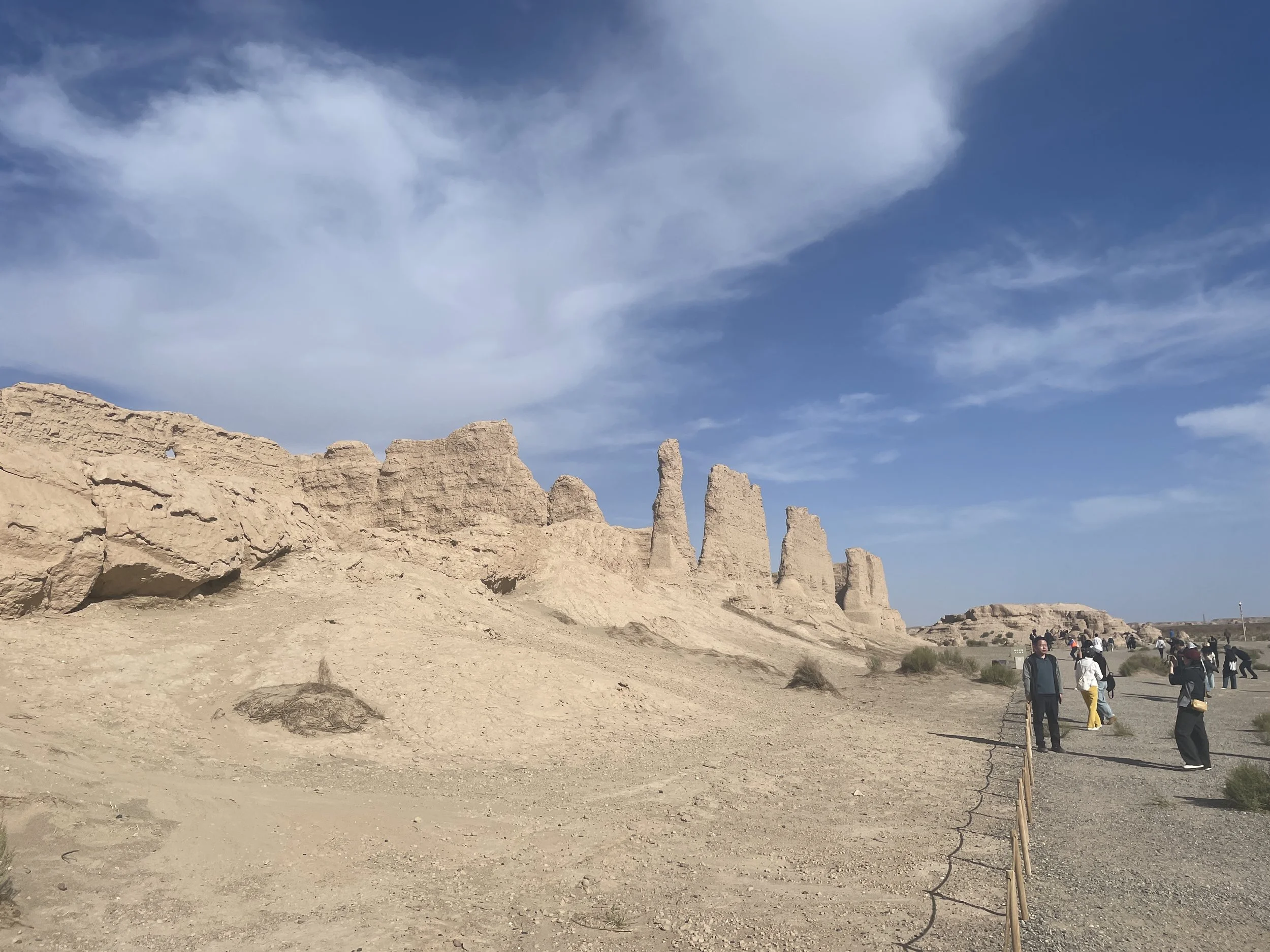
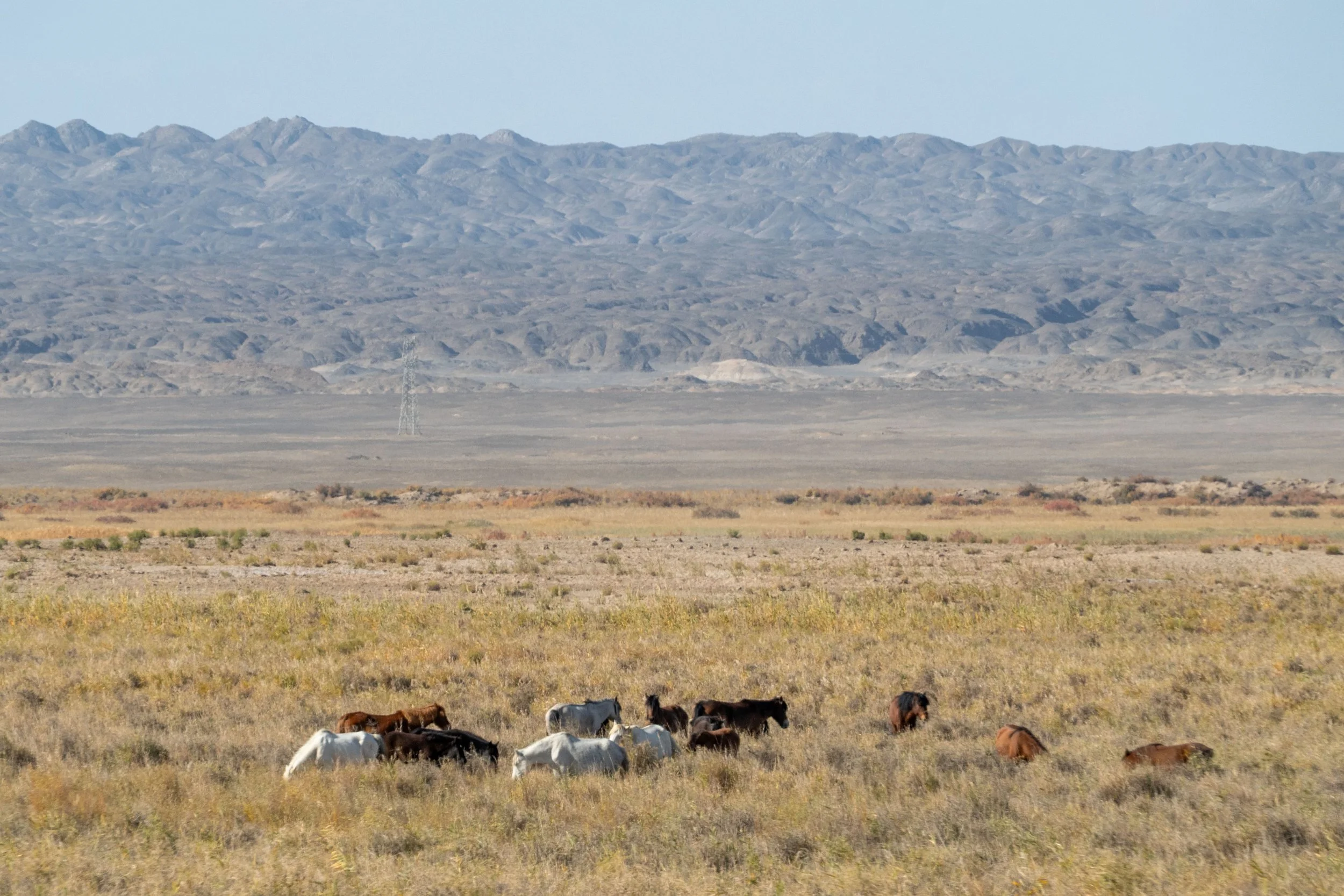
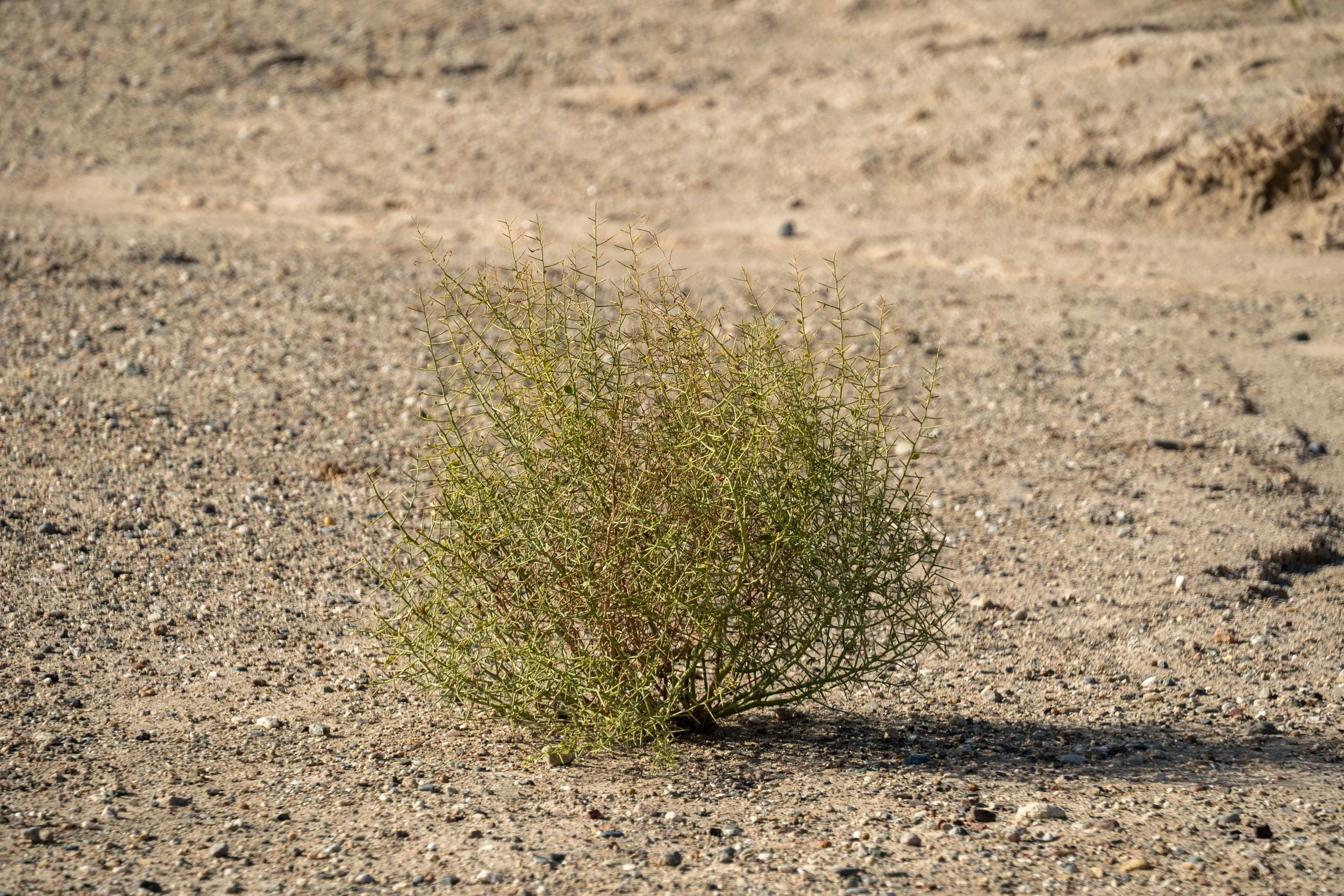
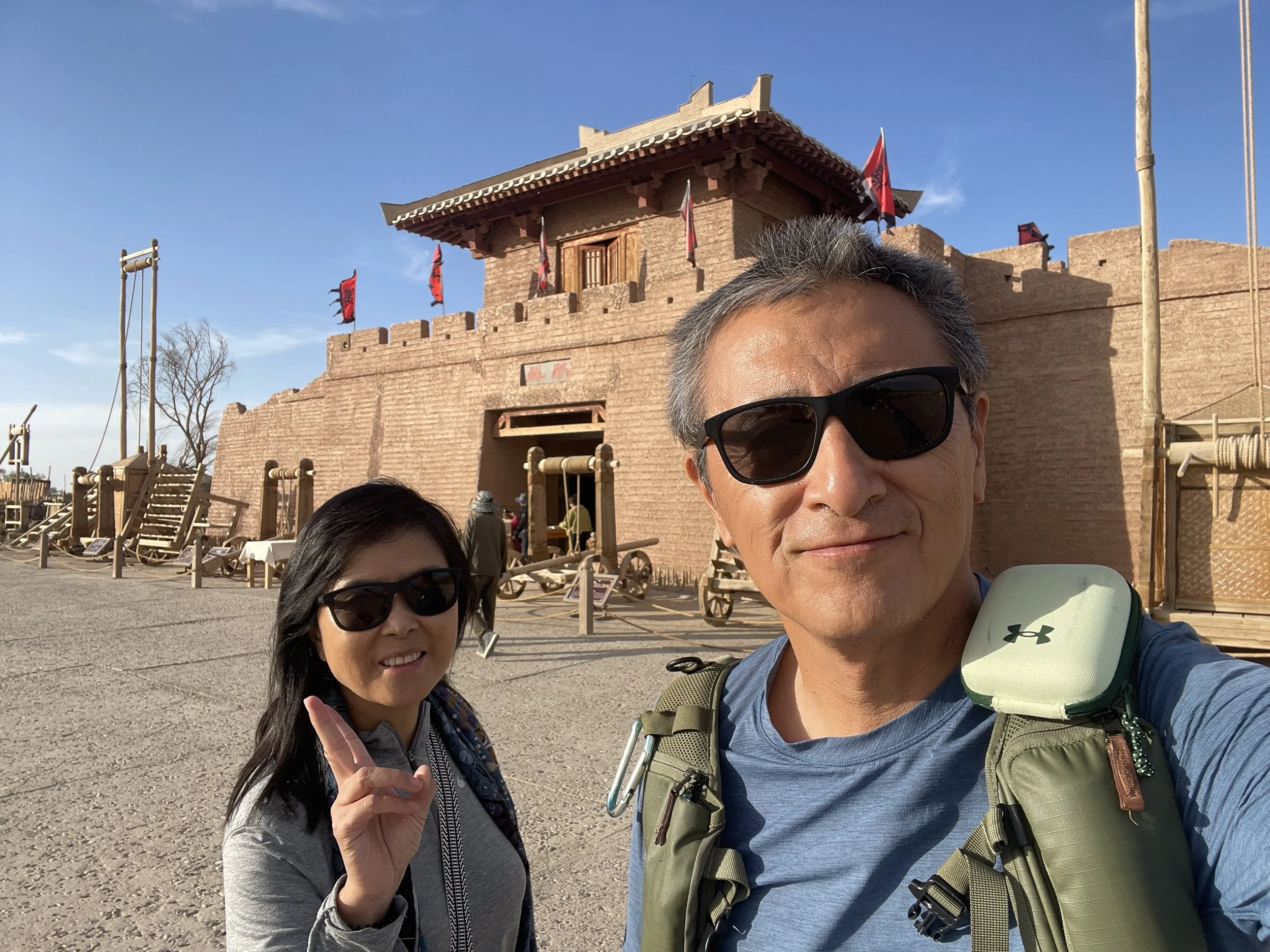
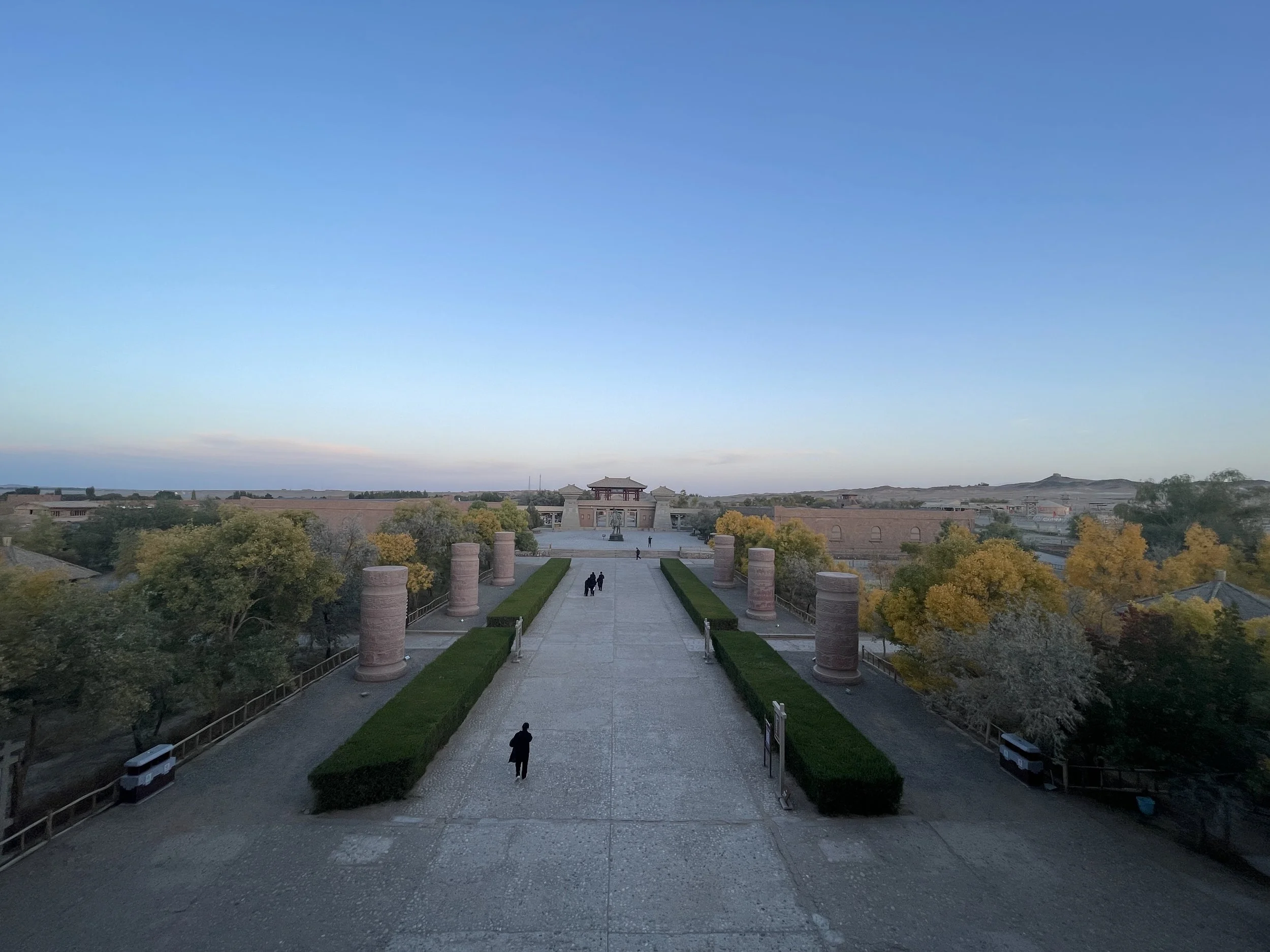
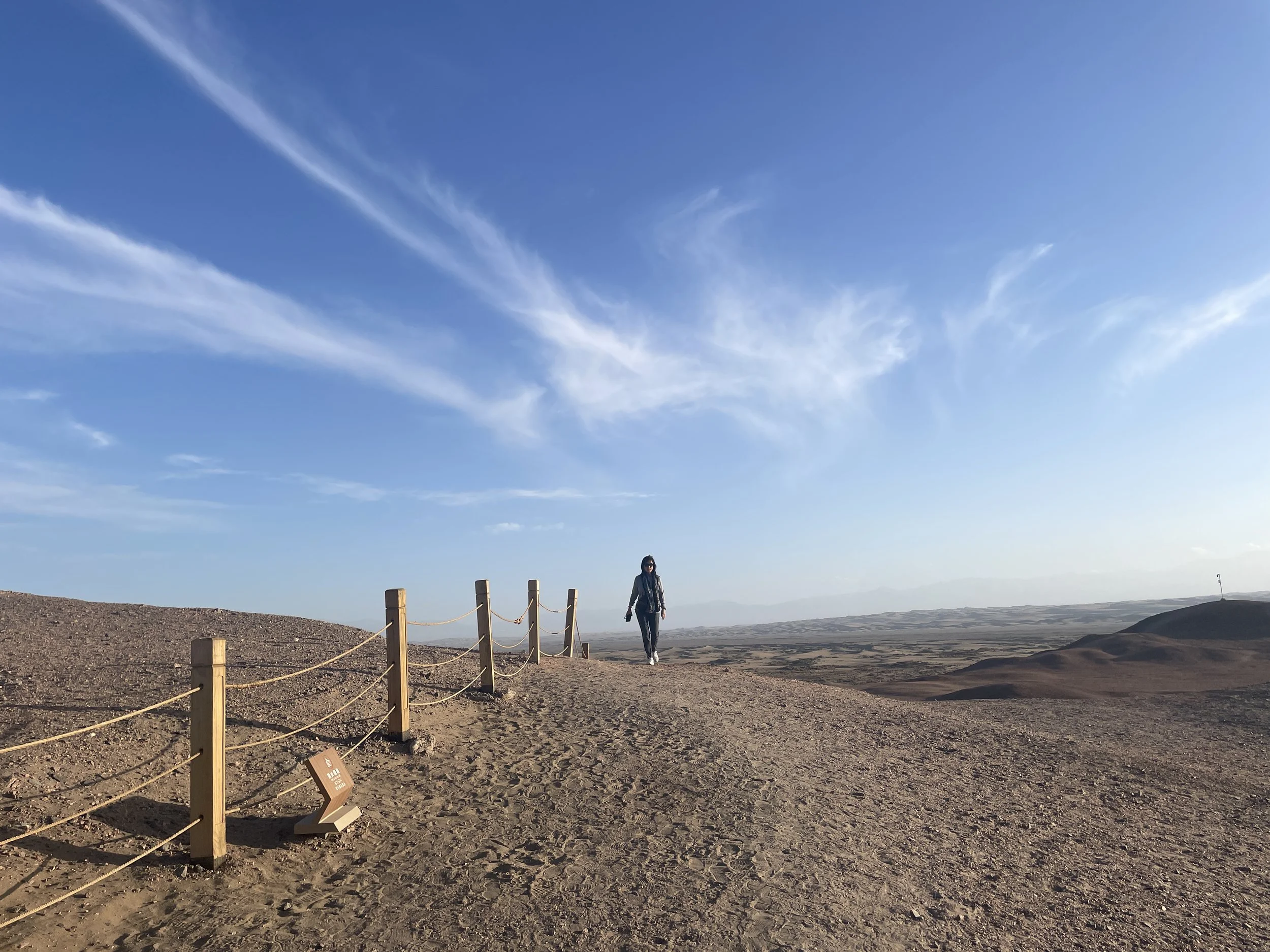
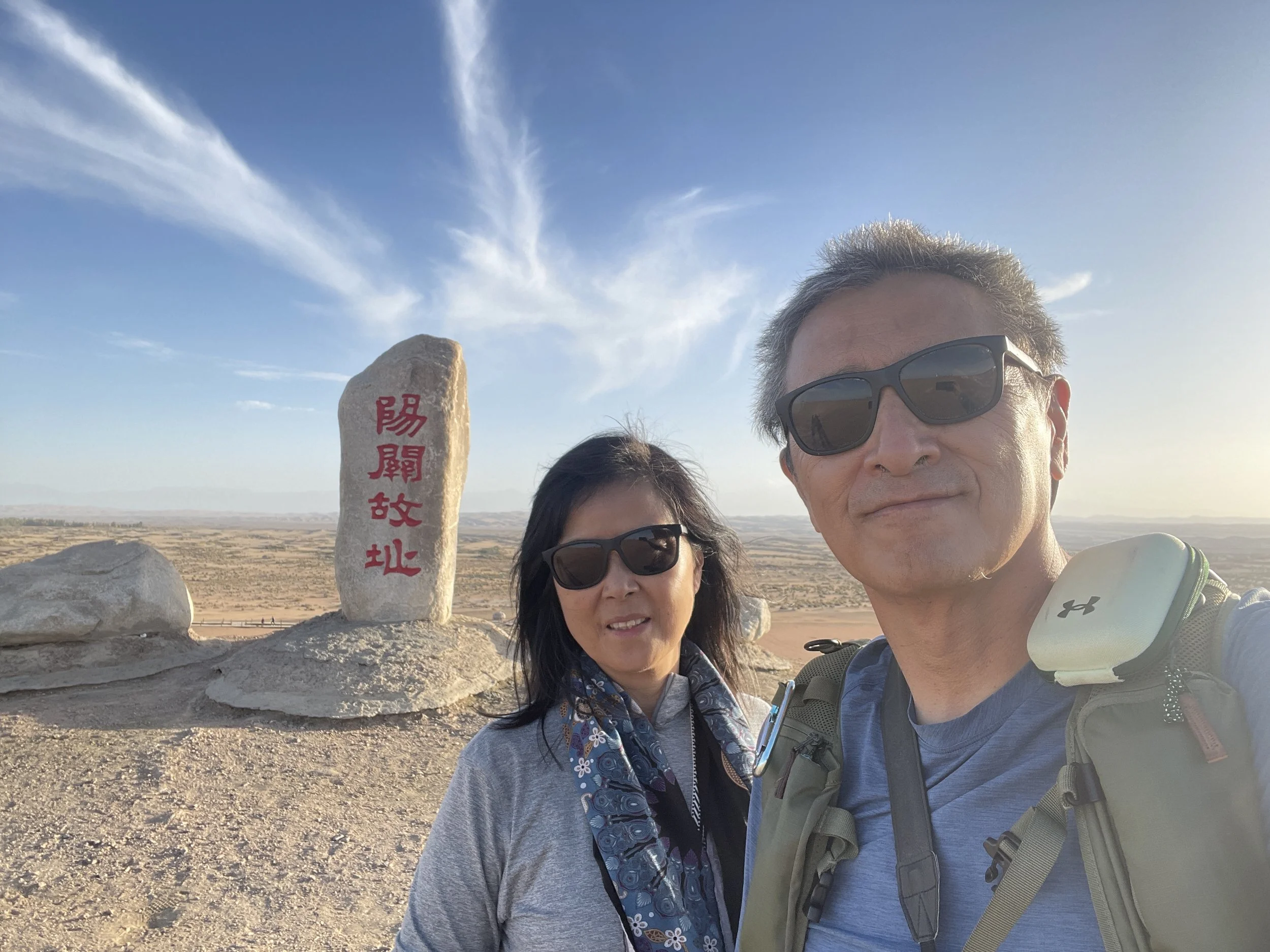
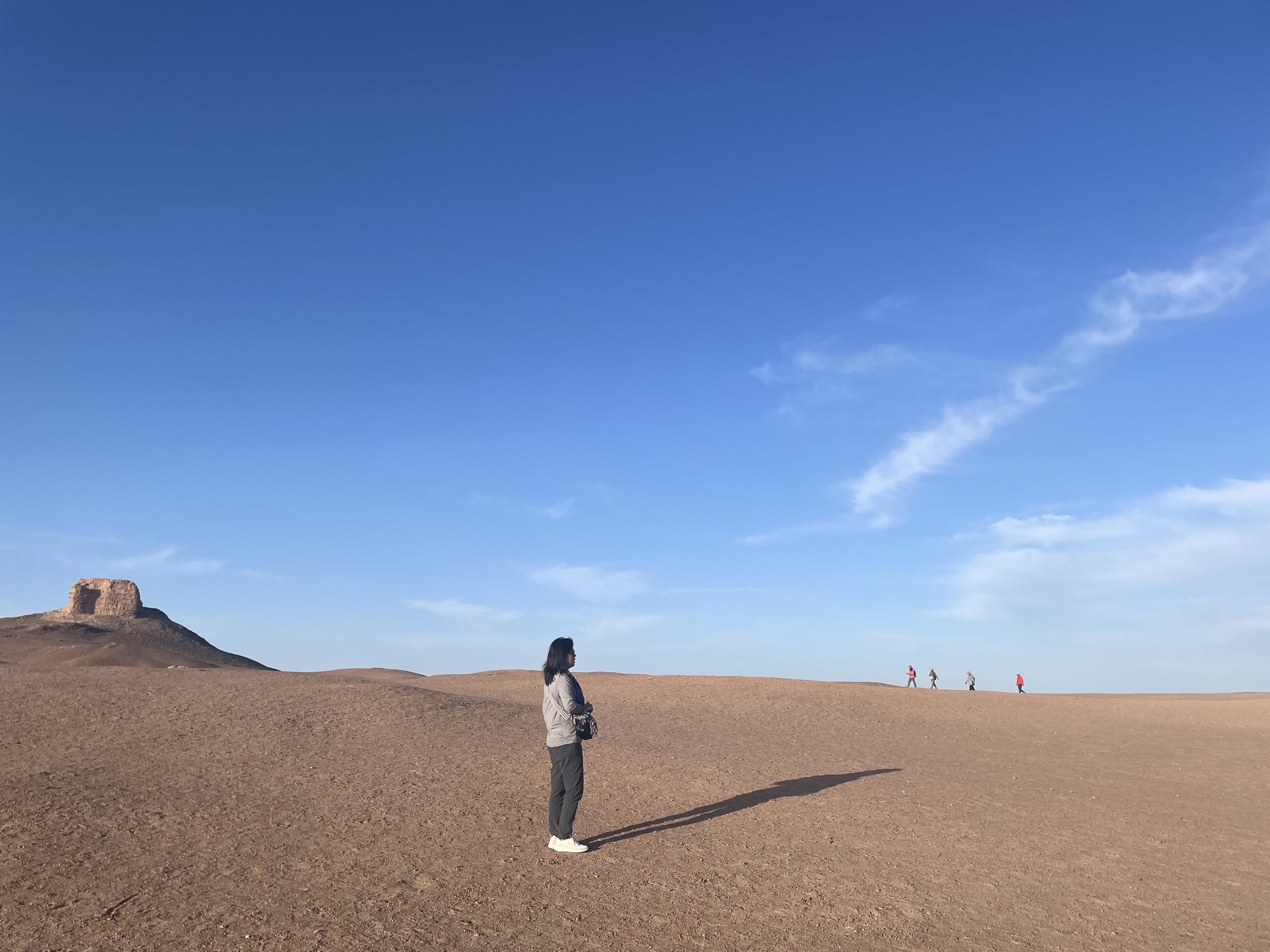
Our final stop of the day was Yang Pass (阳关). As one tourist in the park remarked, almost everything there, except for a pile of earth believed to be the remains of an ancient beacon tower (烽火台), is newly rebuilt. Yet it still felt surreal to walk along the Ancient Yangguan Avenue (阳关大道), imagining caravans and travelers setting out westward on the Silk Road.
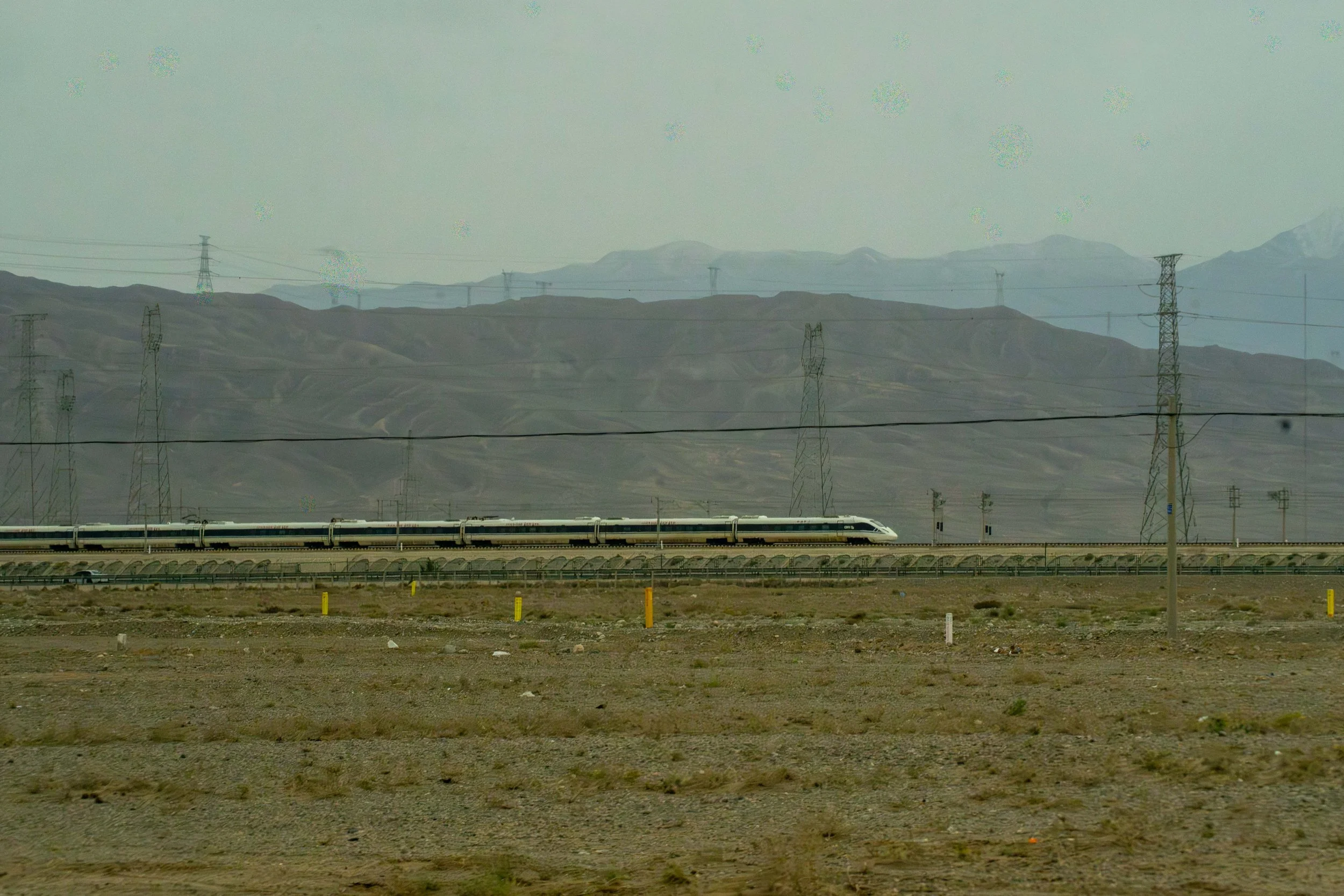
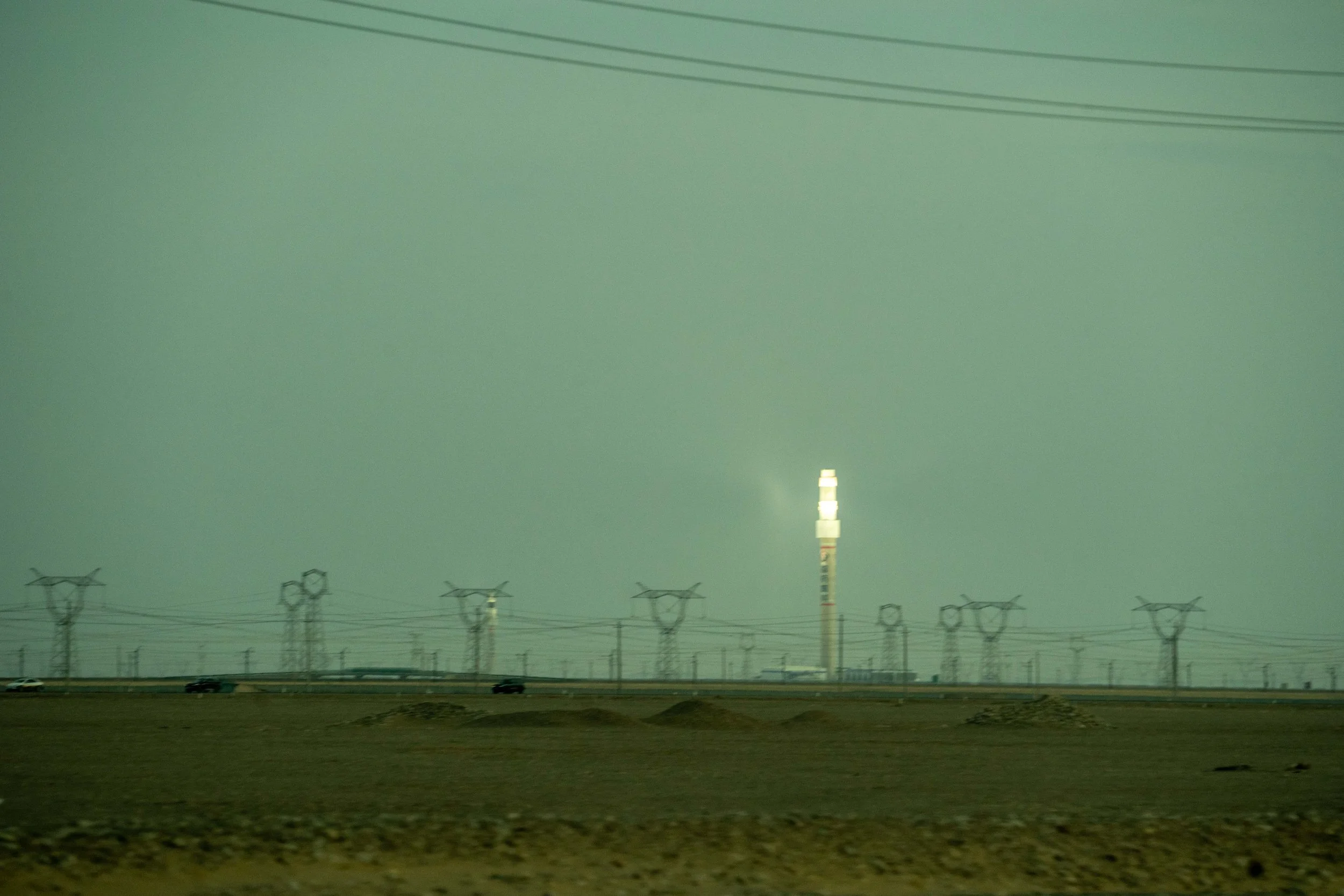
On the way to the scenic area, we could see from a distance a dazzling solar power tower rising from the desert—China’s first 100-megawatt-class solar thermal power station in Dunhuang. Beyond it, across the vast and boundless Gobi, rows of photovoltaic panels stretched endlessly, wind turbines spun steadily in the breeze, and high-voltage transmission towers and communication lines crisscrossed the landscape, forming a magnificent panorama of modern energy development.
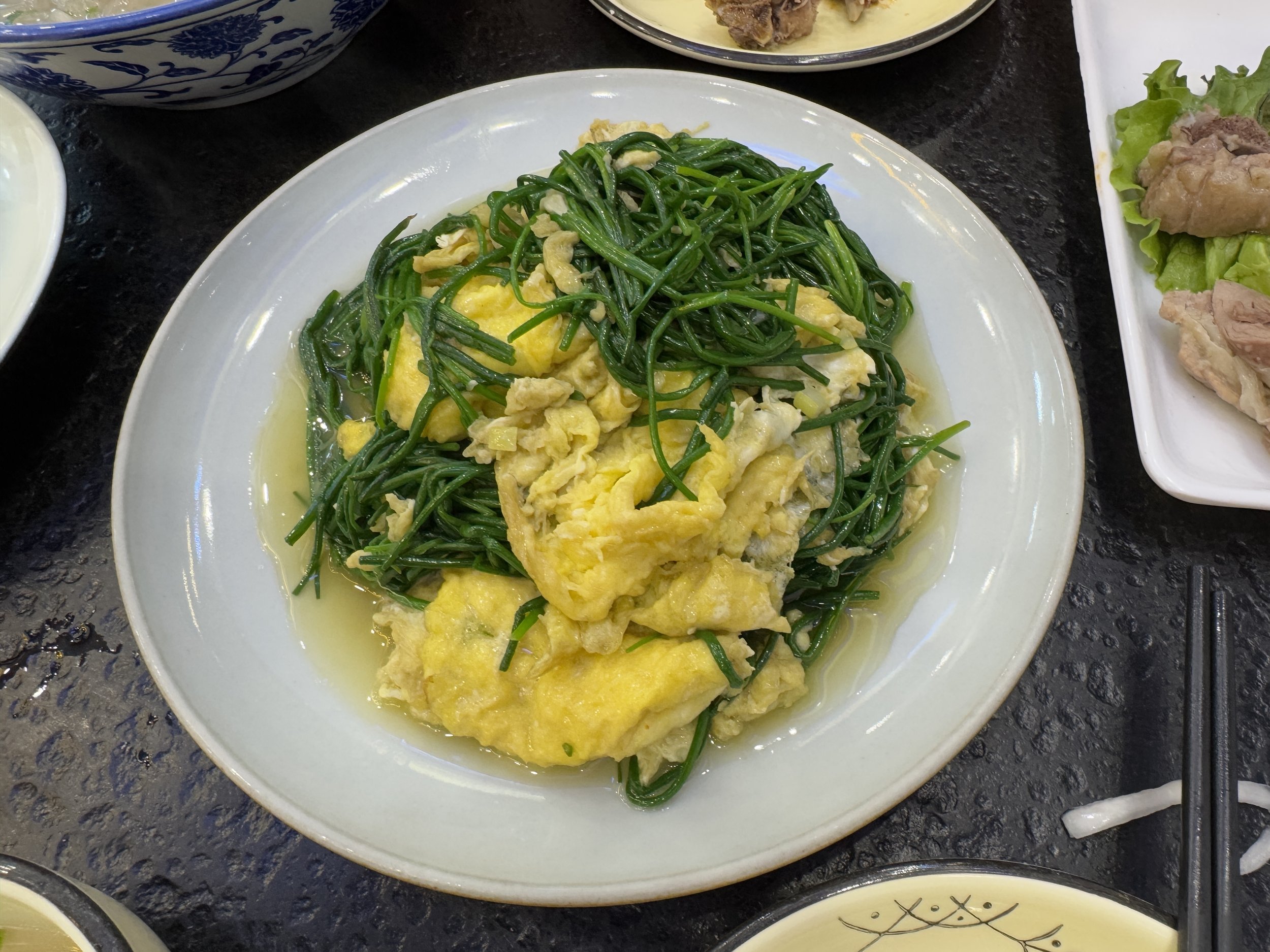
For dinner, we went to a restaurant recommended by our driver and ordered beef and wild chive dumplings, stir-fried elm samara shoots, and a dish called Hu-yang menbing (胡杨焖饼). At first, we assumed the name had something to do with mutton, but later learned that it was actually Hu-yang menbing, named after the desert poplar (hu-yang) wood that was traditionally used as fuel to bake the flatbread—though this primitive method is no longer used today.
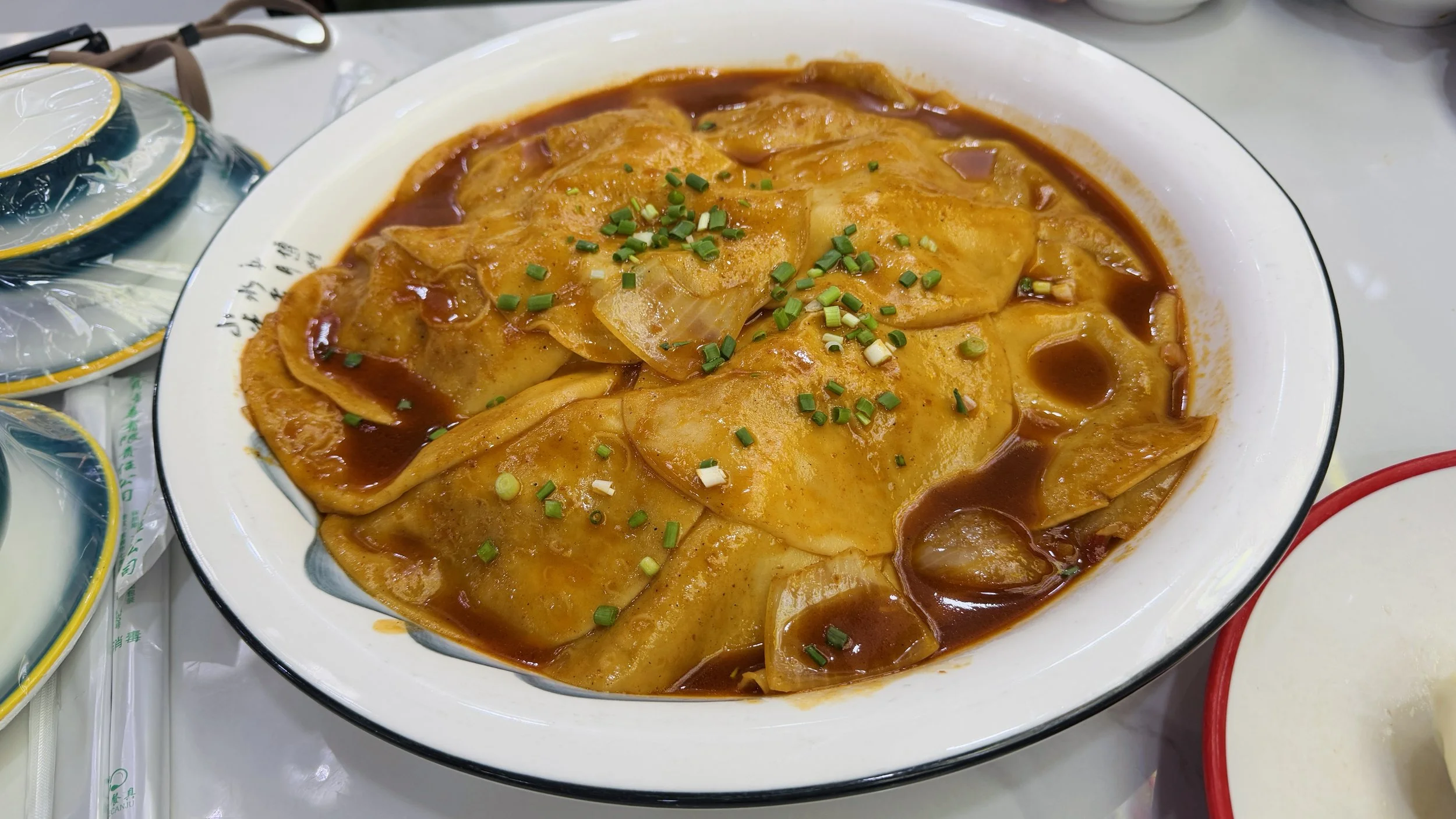
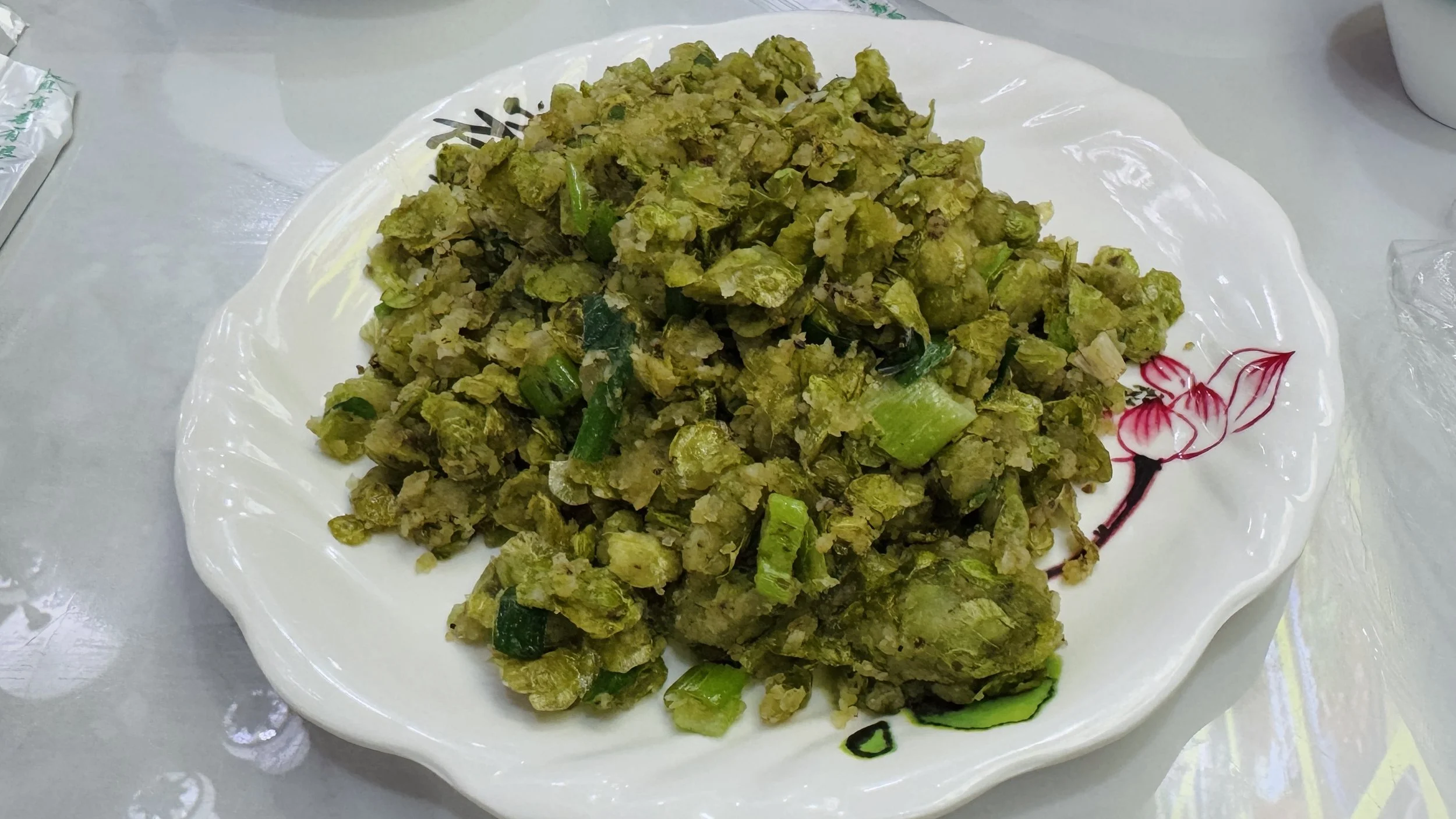
Menbing can be served with a variety of toppings. Locals usually pair it with lamb, but beef, chicken, or pork ribs are also common. We chose a small portion of pork-rib hu-yang menbing. It was rich and flavorful, but even the “small” portion was far too generous for the two of us. We were completely full after finishing barely half of it.
It was a long, fascinating day—each stop offered so much history to absorb that by evening, our minds were full and our hearts deeply moved.
2025年10月10日
今天一早,司机来酒店接我们,开始当天漫长的行程。第一站是西千佛洞,它位于莫高窟所在山体的另一侧。在党河一边的洞窟共有十六个,我们随中文讲解团参观了其中四个。虽然规模和装饰远不如莫高窟宏大精美,但游客寥寥无几,使得参观过程格外安静从容。我们仔细聆听讲解,努力去了解当年开凿这些洞窟的人们及其信仰世界。
随后我们驱车约160公里前往雅丹地质公园,靠近甘肃与新疆的交界地带。进入景区后,换乘观光车,在多个观景点下车拍照、短暂步行。广阔无垠的雅丹地貌在风蚀作用下形成奇特的地形,景色壮丽而荒凉,与我们居住地附近—美国的亚利桑那州、科罗拉多州和犹他州的荒漠景观,颇有几分相似。
接着我们前往玉门关景区。园内主要有三处重要遗迹:小方盘城、大方盘城和汉长城。景区将玉门关遗址命名为“小方盘城”,这一称呼源自二十世纪初两位外国探险家的命名方式,而不是直接称为玉门关。
然后乘坐观光车带我们前往位于景区两端的汉长城遗址和大方盘城。看到两千多年前修筑的汉代长城依然屹立在戈壁滩上,我们感到无比震撼——这全得益于干燥的气候和几乎没有人为破坏的环境。
当天的最后一站是阳关。正如一位游客所说,除了那个古老的烽火台遗迹外,景区里的建筑几乎都是后人重建的。然而,当我们踏上阳关大道时,仍然感到一丝不真实的震撼,仿佛能看见昔日的使者与商旅从这里踏上通往西域的漫漫征途。
在前往景区的路上,远远就能看到一座闪耀夺目的光热发电塔——这正是国内首座100兆瓦级的敦煌光热发电站。除了光热发电外,放眼那无边无际的戈壁滩,光伏电板整齐铺展,风力发电机迎风旋转,高压输电塔与通信电缆纵横交织,构成了一幅壮观的现代能源画卷。
晚餐我们去了司机推荐的一家餐馆,点了沙葱牛肉水饺,风味炒榆钱和胡羊焖饼。原本以为“胡羊焖饼”与羊肉有关,后来才弄明白,其实应为“胡杨焖饼”——最初是用胡杨木生火烙制的饼,如今当然已不再采用这种原始做法。焖饼可以搭配多种底菜,当地人以羊肉为主,但也可以是牛肉、鸡肉或猪排。我们点的是小份排骨胡杨焖饼,味道香浓可口,只是小份对我们俩来说份量也还是太大,吃了一半就已经饱到吃不下了。
这一天的行程漫长而充实,每一处遗迹都蕴含着丰富的历史信息,让人目不暇接、回味无穷。
Mogao Caves and Mingsha Mountain 莫高窟与鸣沙山月牙泉
October 9, 2025
We had booked a four-day private car with a driver through Ctrip.com……
我们在携程上预订了为期四天的包车游。。。
October 9, 2025
We had booked a four-day private car with a driver through Ctrip.com. Our first day’s itinerary included the Mogao Caves (莫高窟) in the morning and Mingsha Mountain (鸣沙山) in the afternoon.
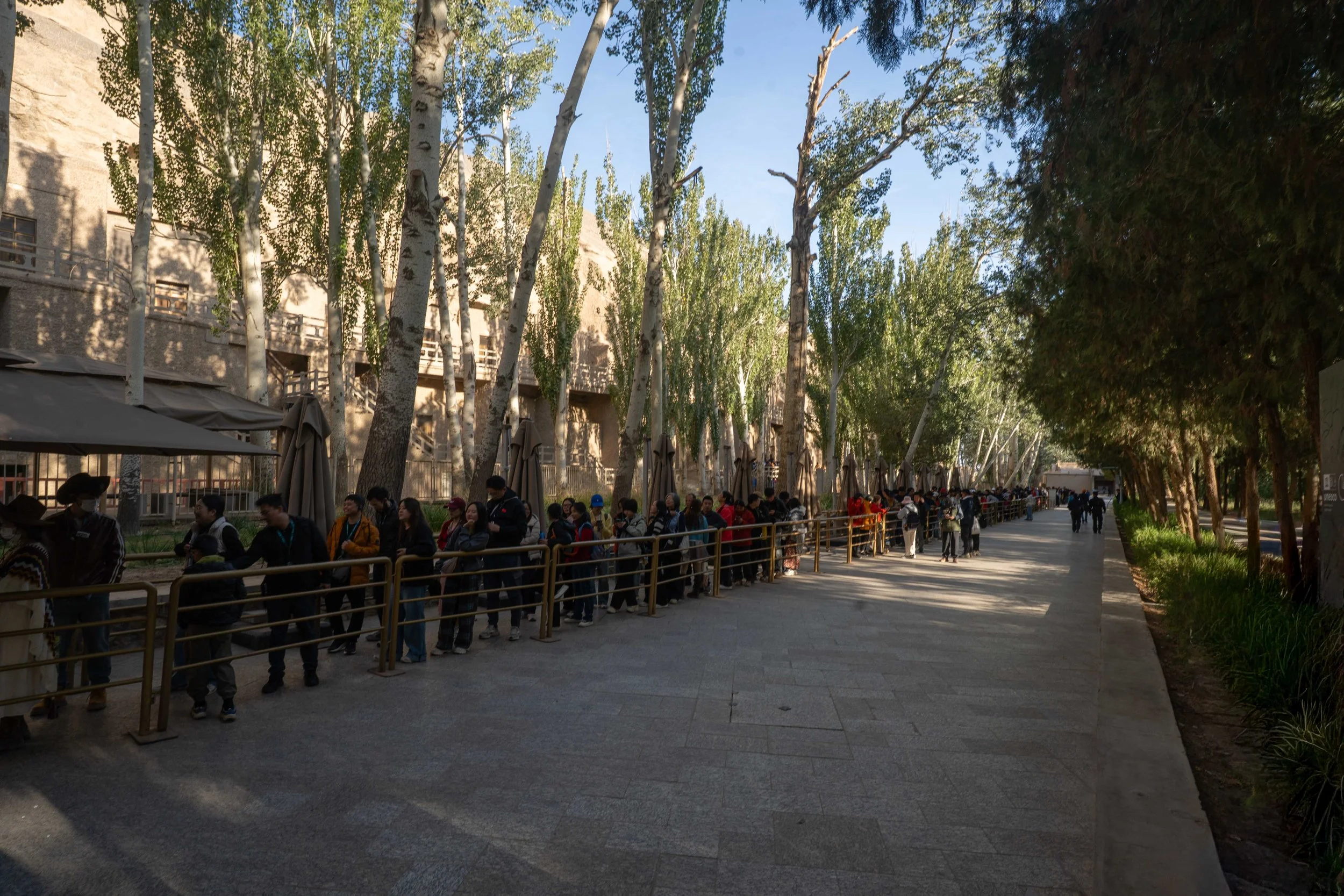
At 7:50 a.m., the driver’s wife picked us up from the hotel, as our tour for the Mogao Caves was scheduled at 8:30 a.m. For foreign passport holders, tickets must be purchased via Trip.com, with an additional ¥20 service fee for non-Chinese guided tours. Initially, we queued up for the regular Chinese-language tour, but the line was extremely long since most of the standard tickets were sold out. Eventually, we decided to wait for the English-language tour — and it turned out to be a wise choice.
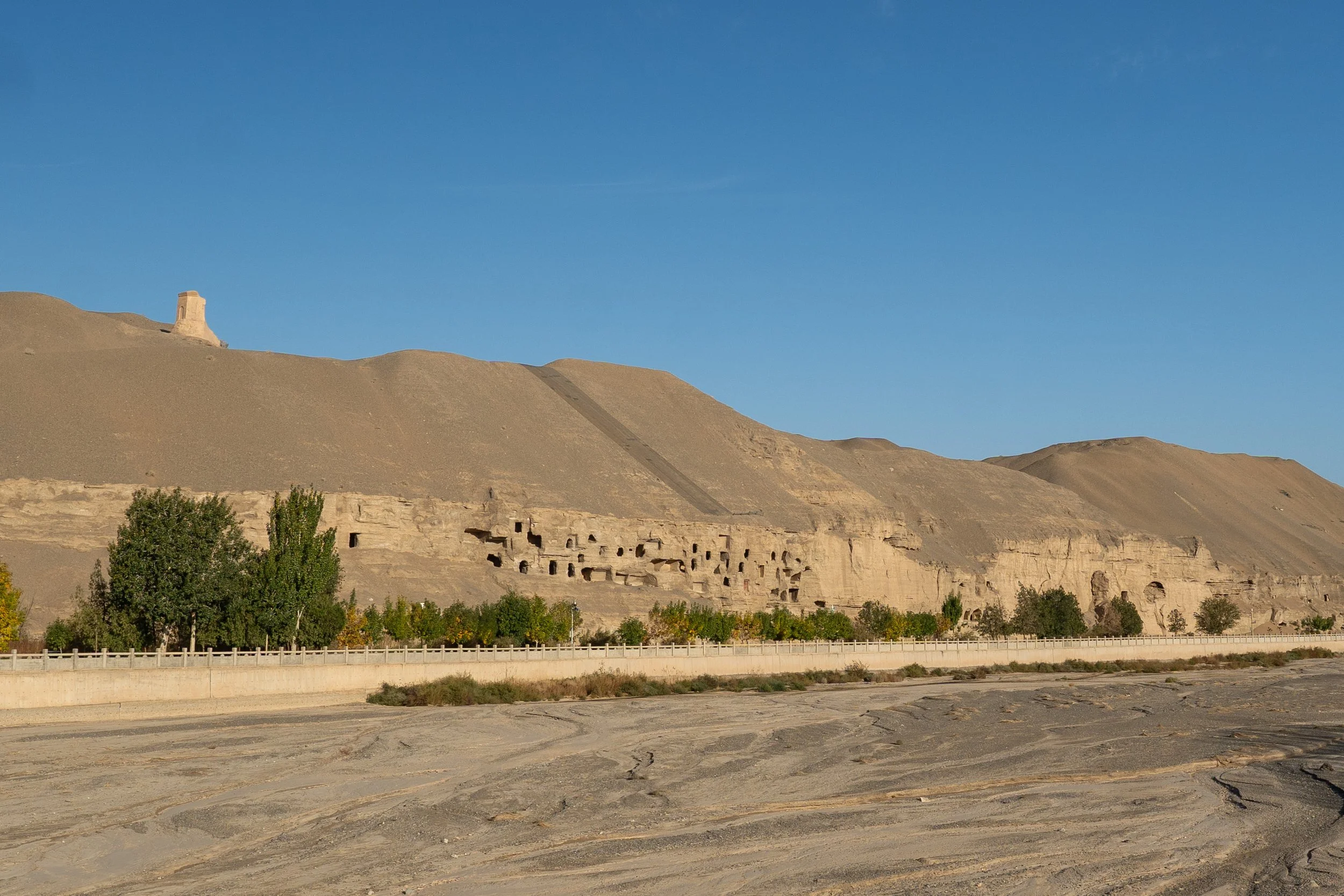
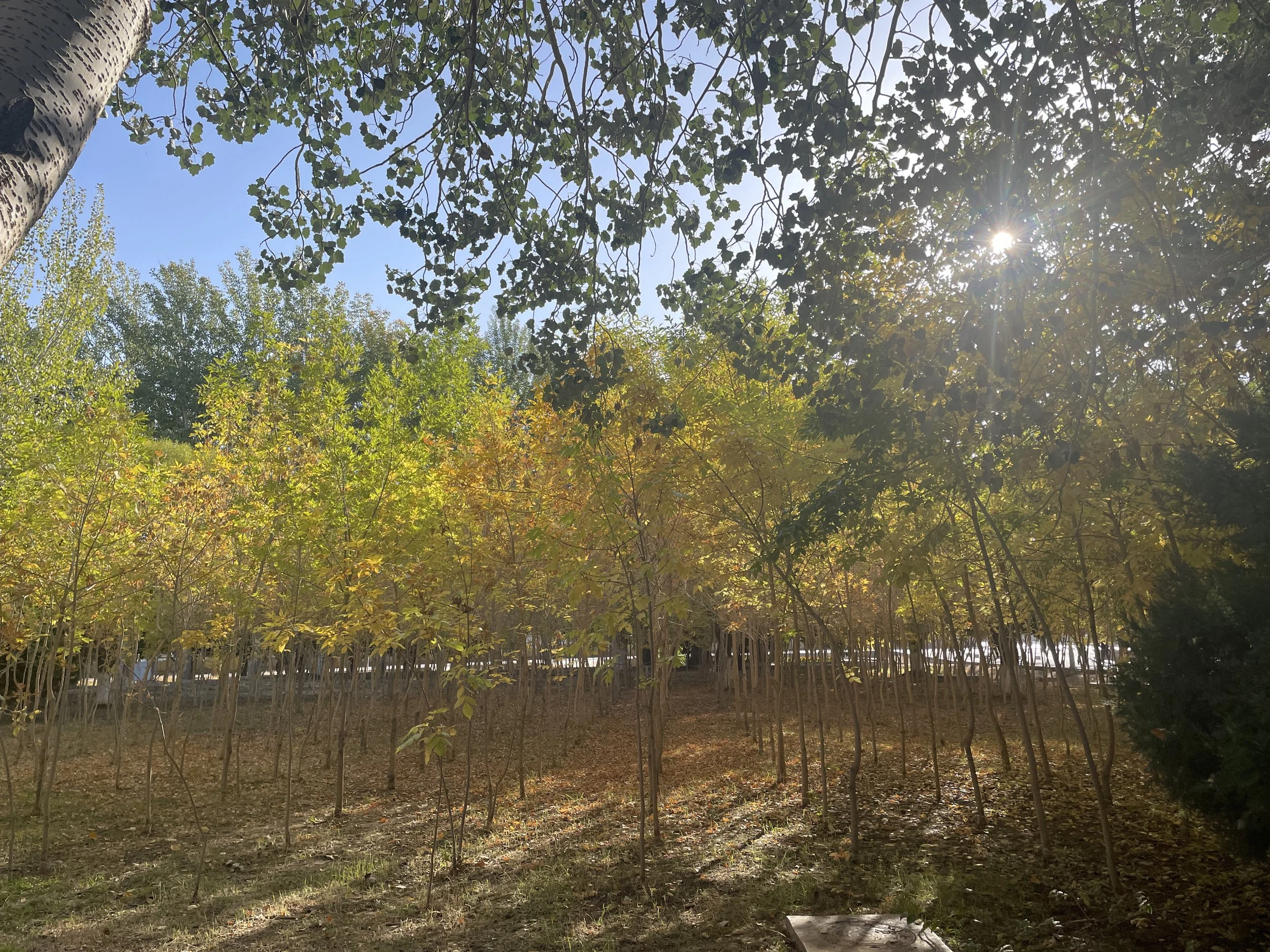
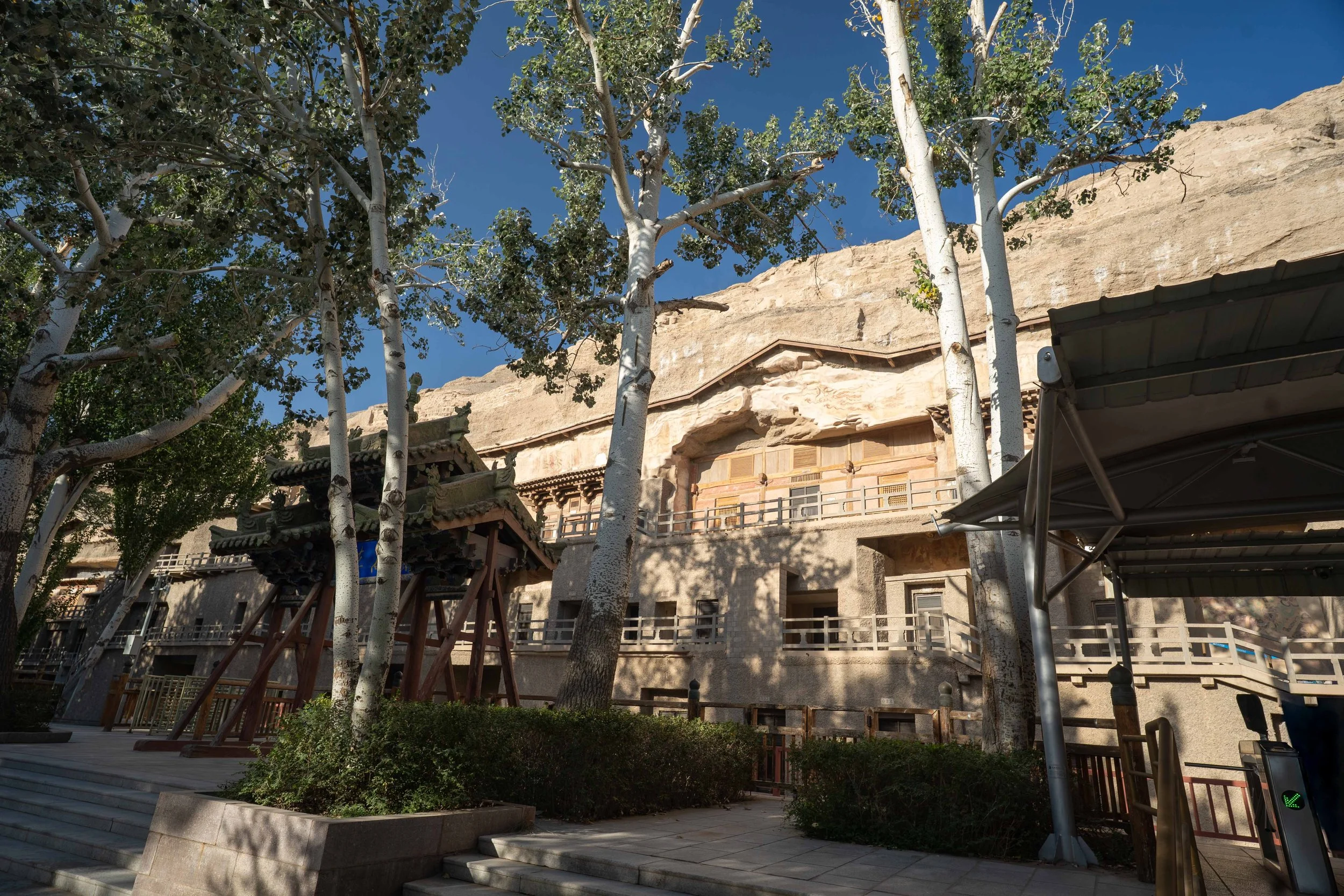
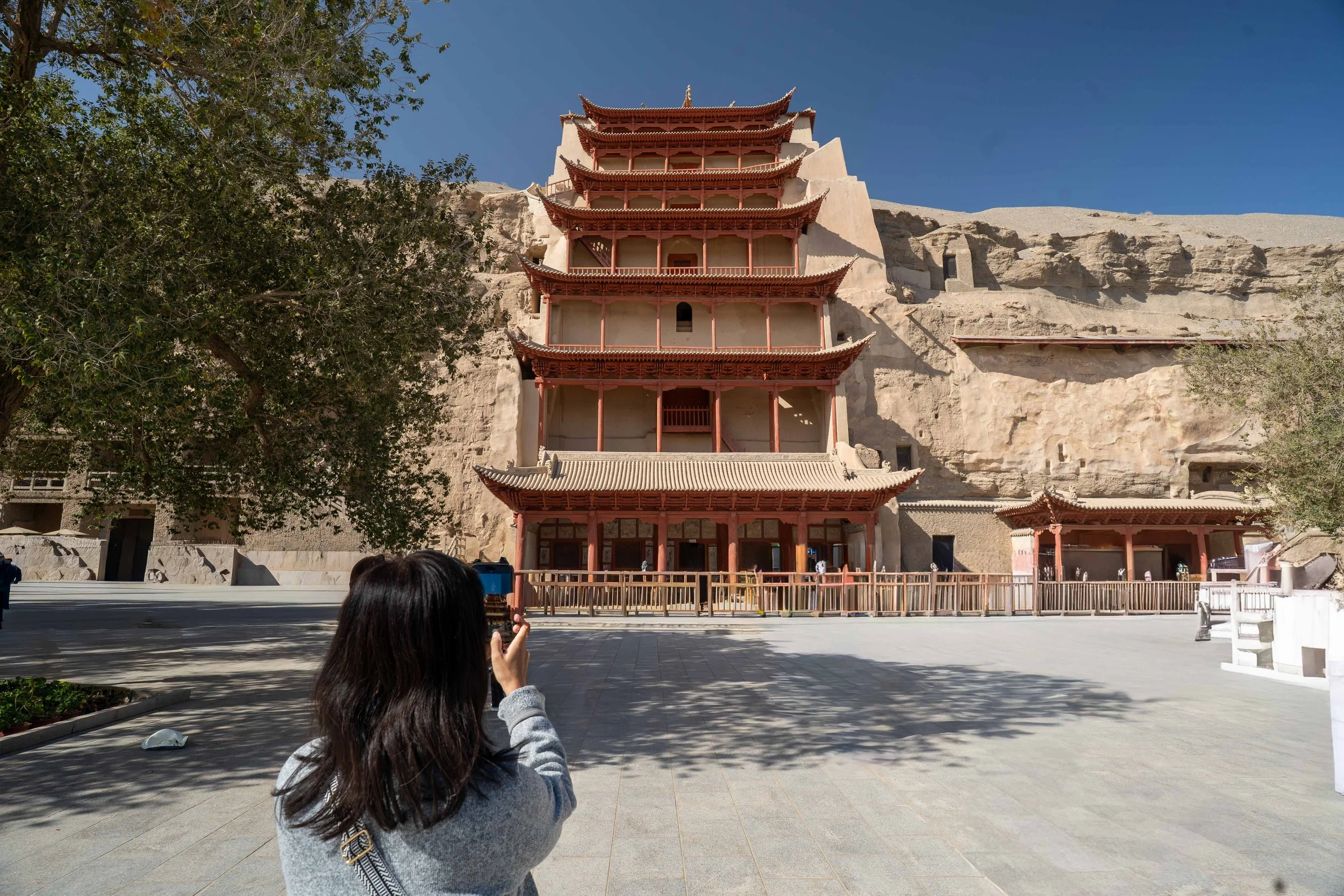
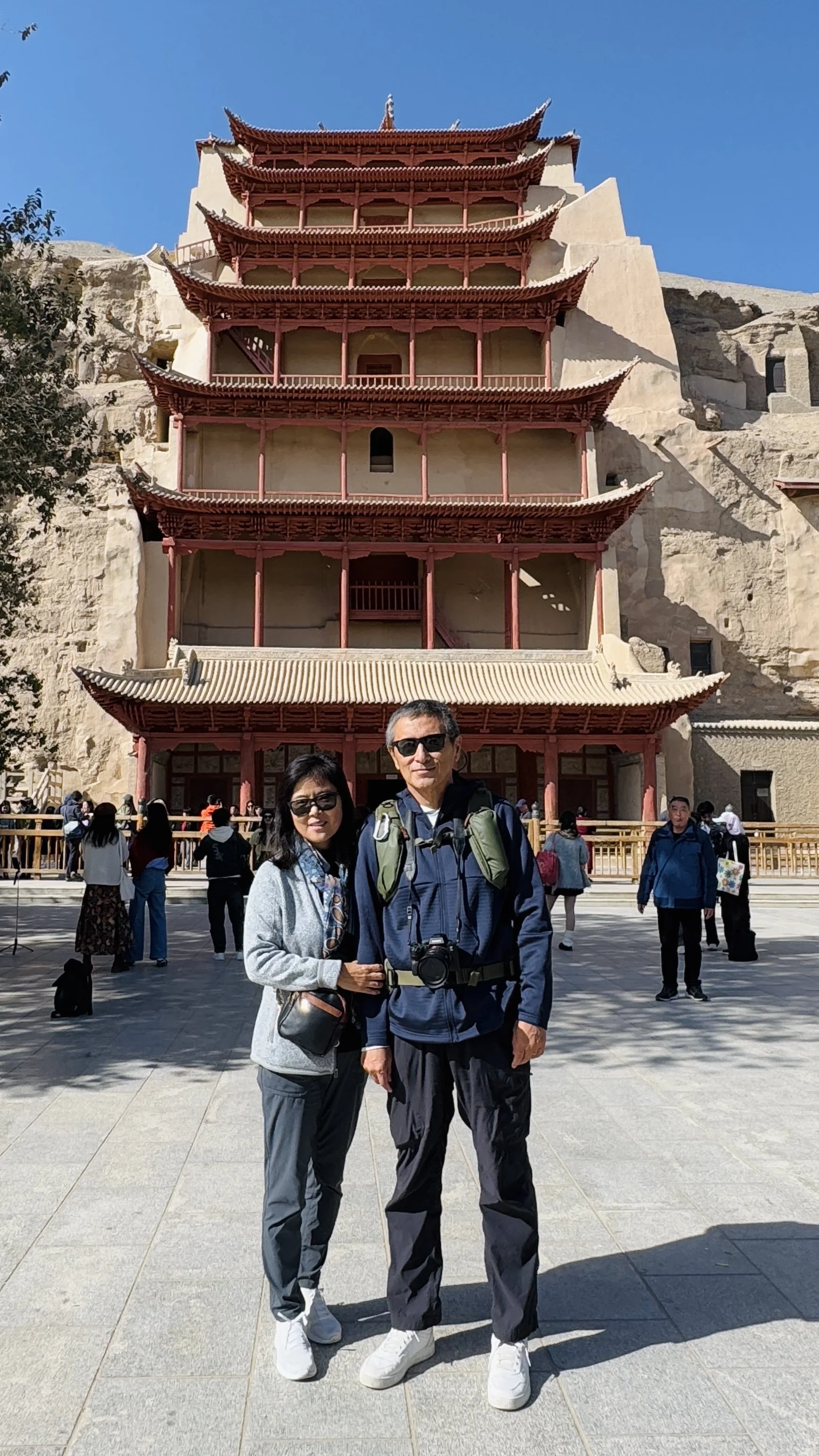
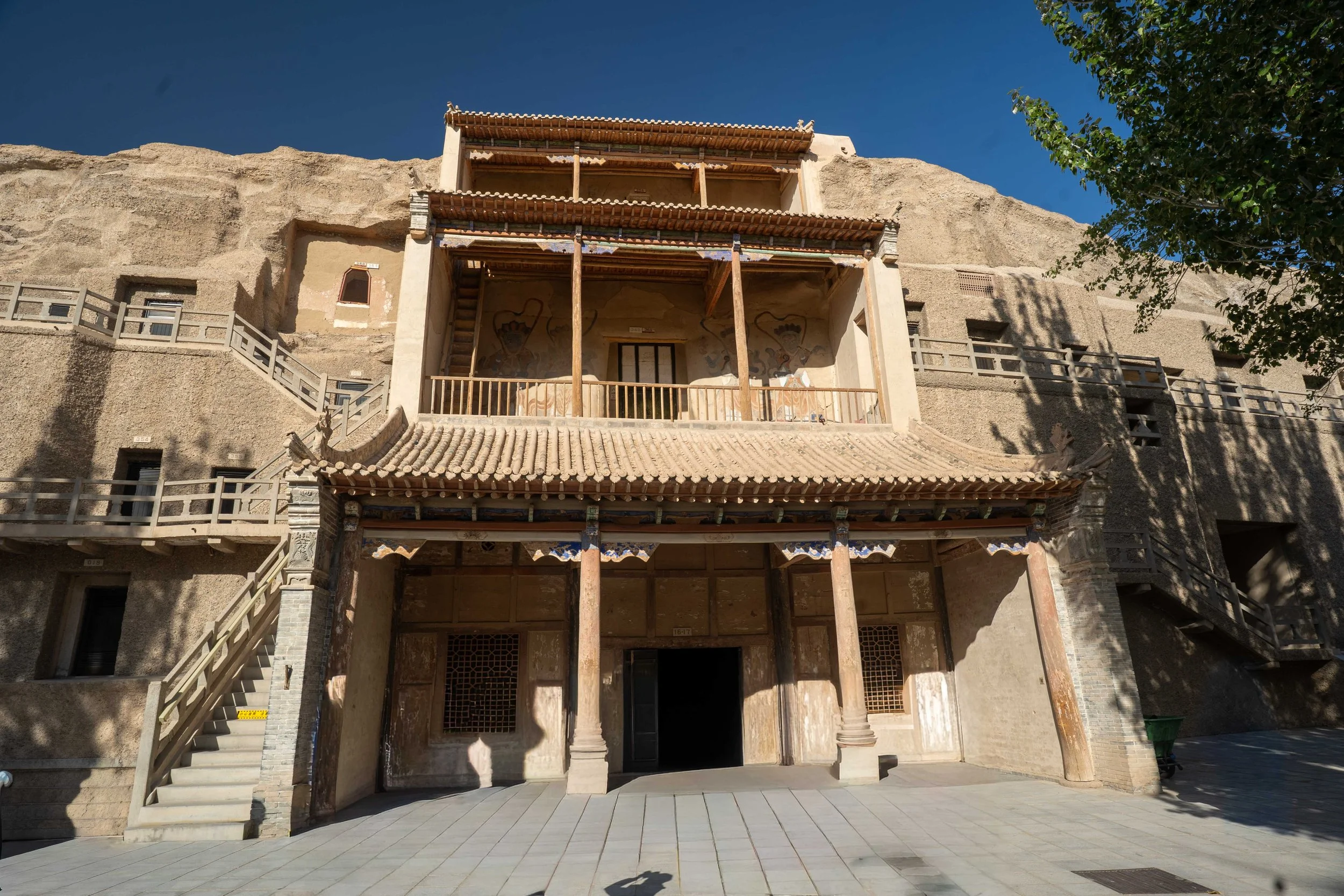
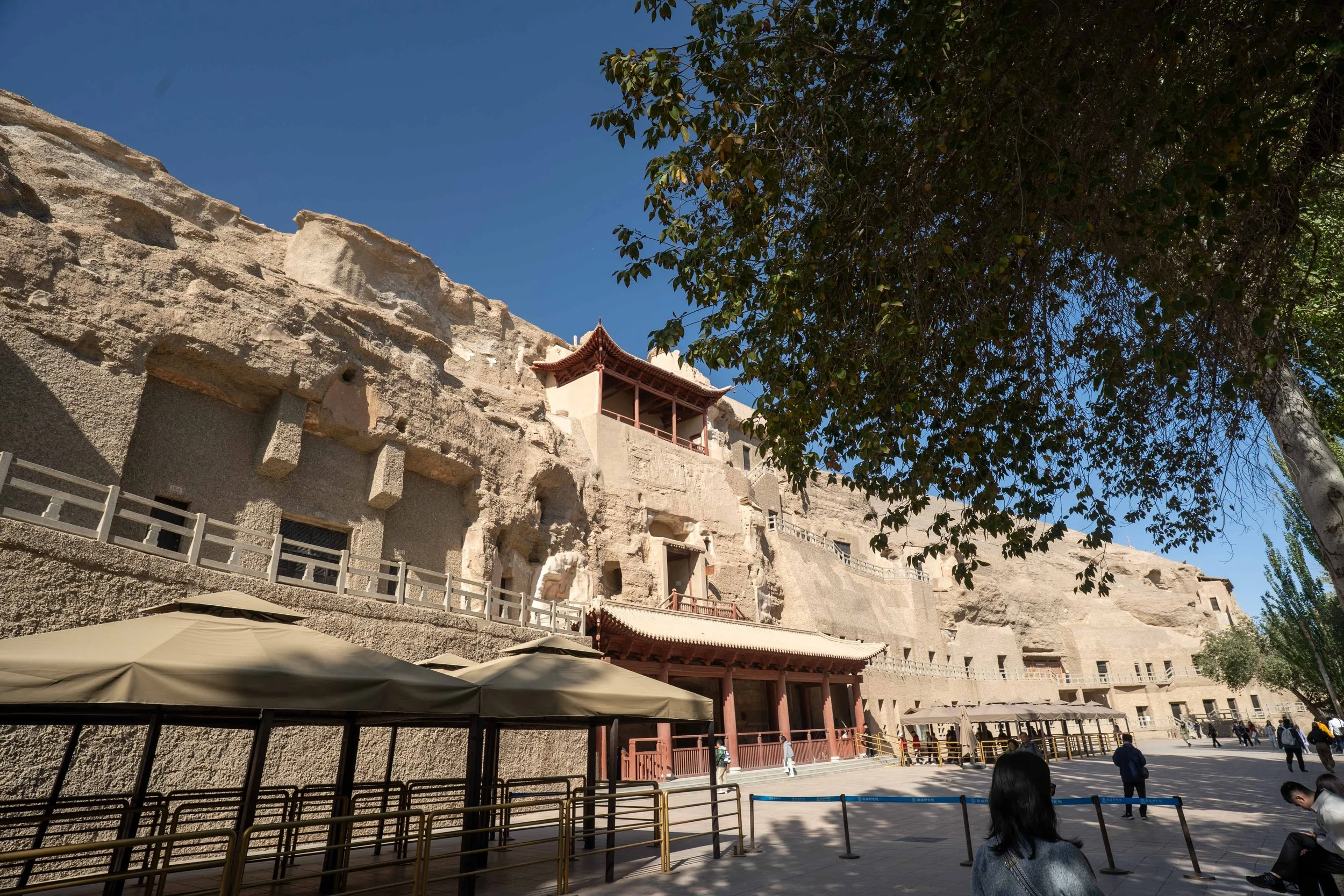
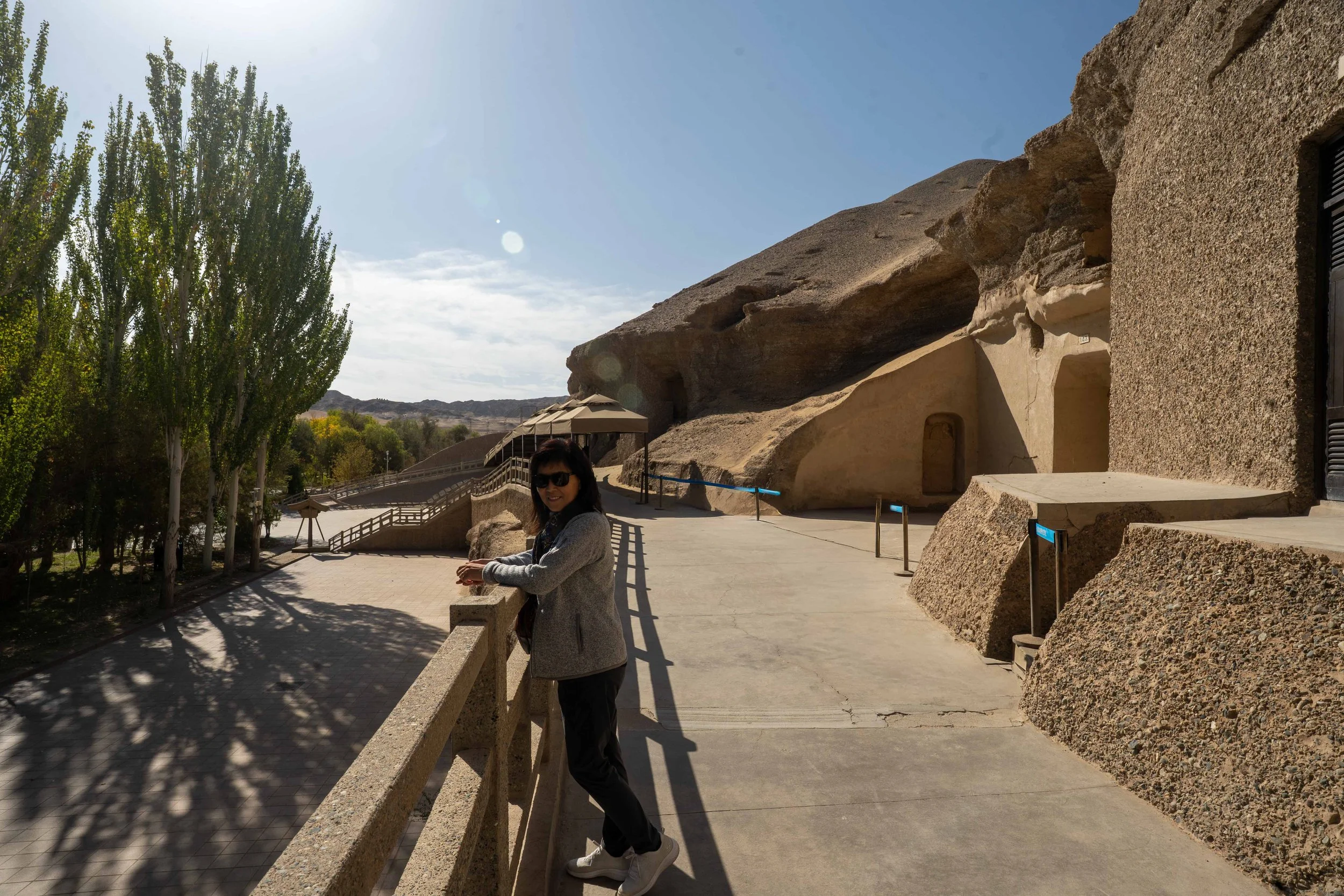
Our small group consisted of only four people, compared with the usual 15–20 in the Chinese groups. The intimate setting allowed us to fully appreciate the artistic details and historical atmosphere. In total, we visited eight caves, each one a masterpiece of Buddhist murals and sculptures, radiating an aura of serenity and devotion. Later, we visited three additional caves that featured giant Buddha statues, open to visitors who couldn’t get regular tour tickets.
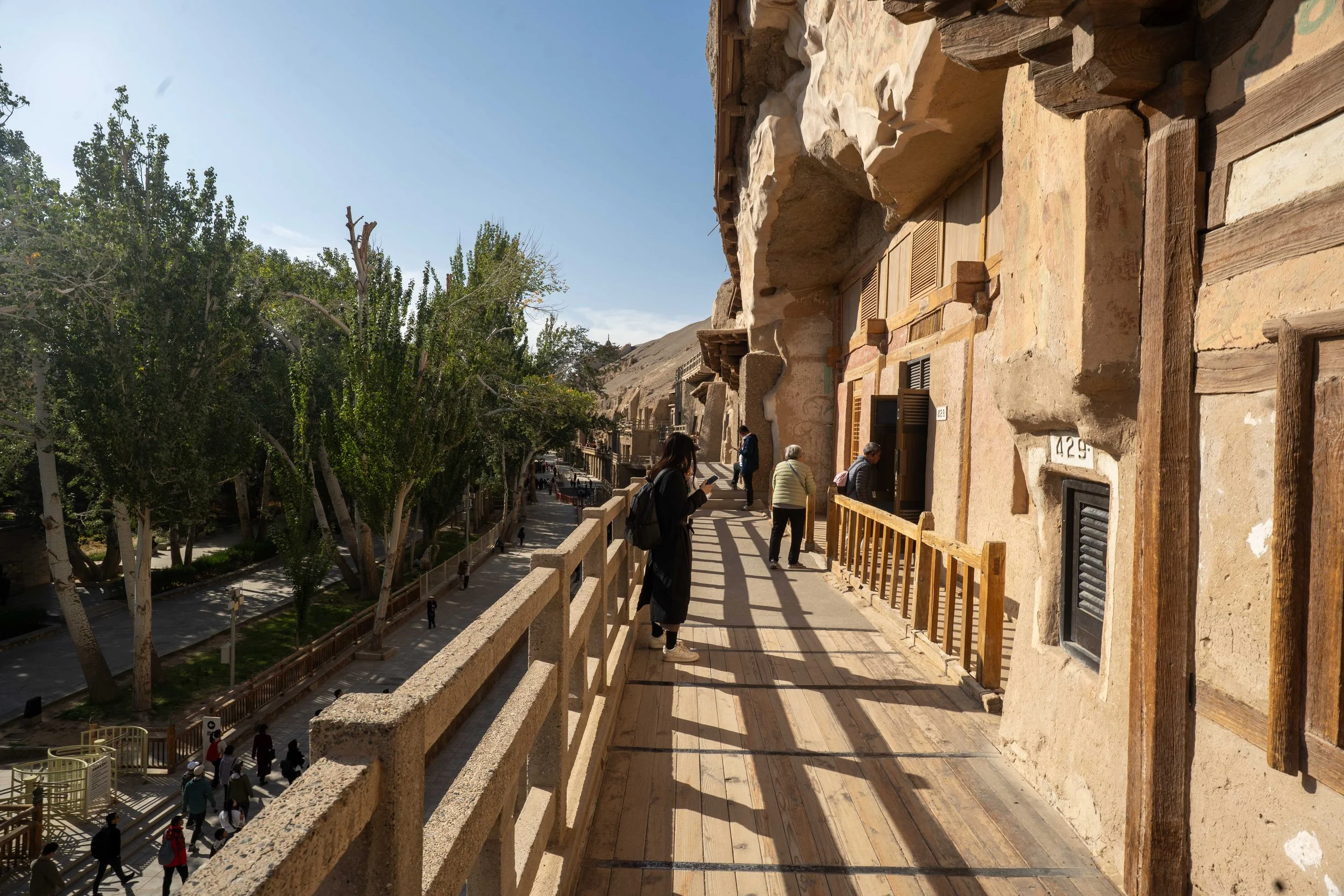
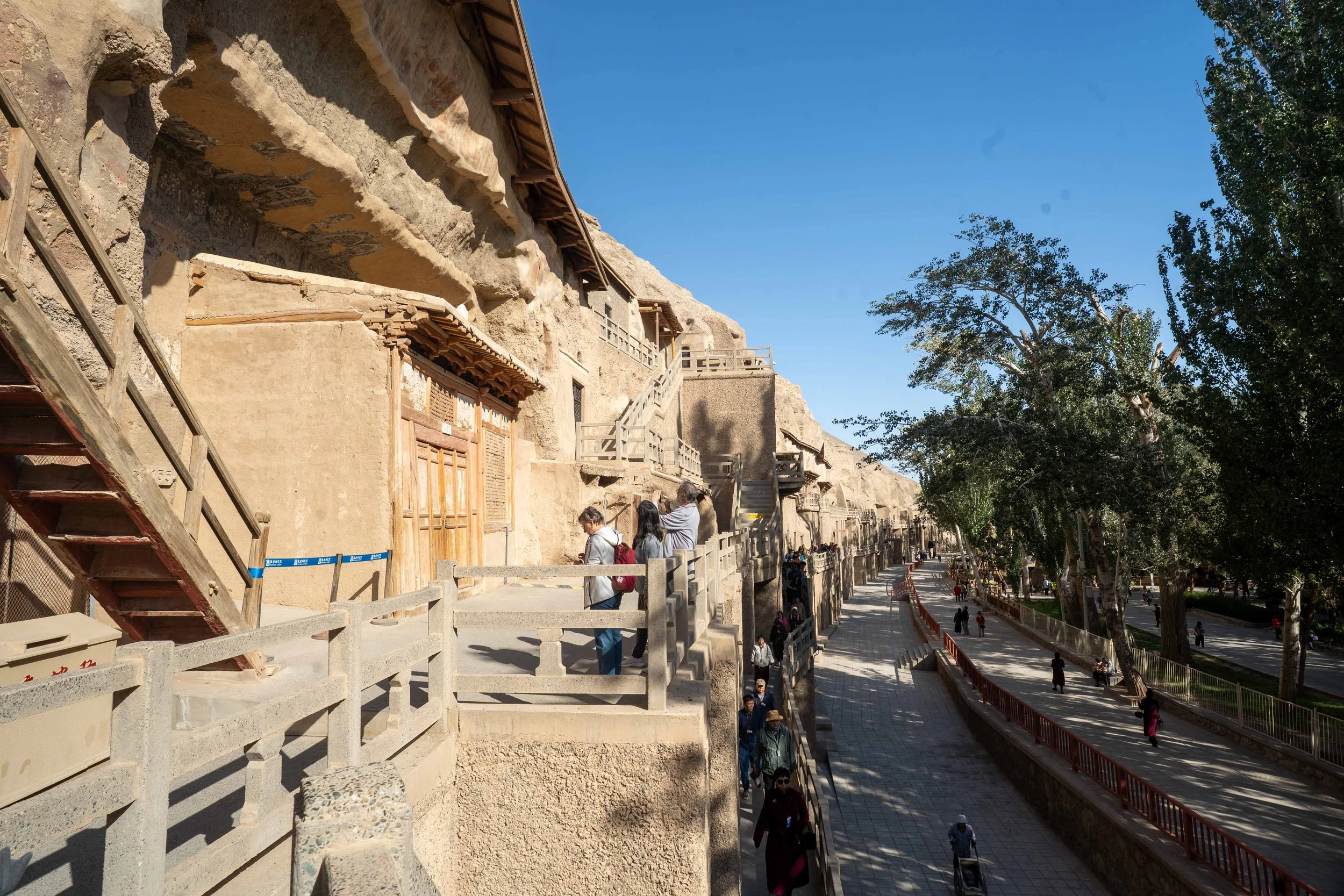
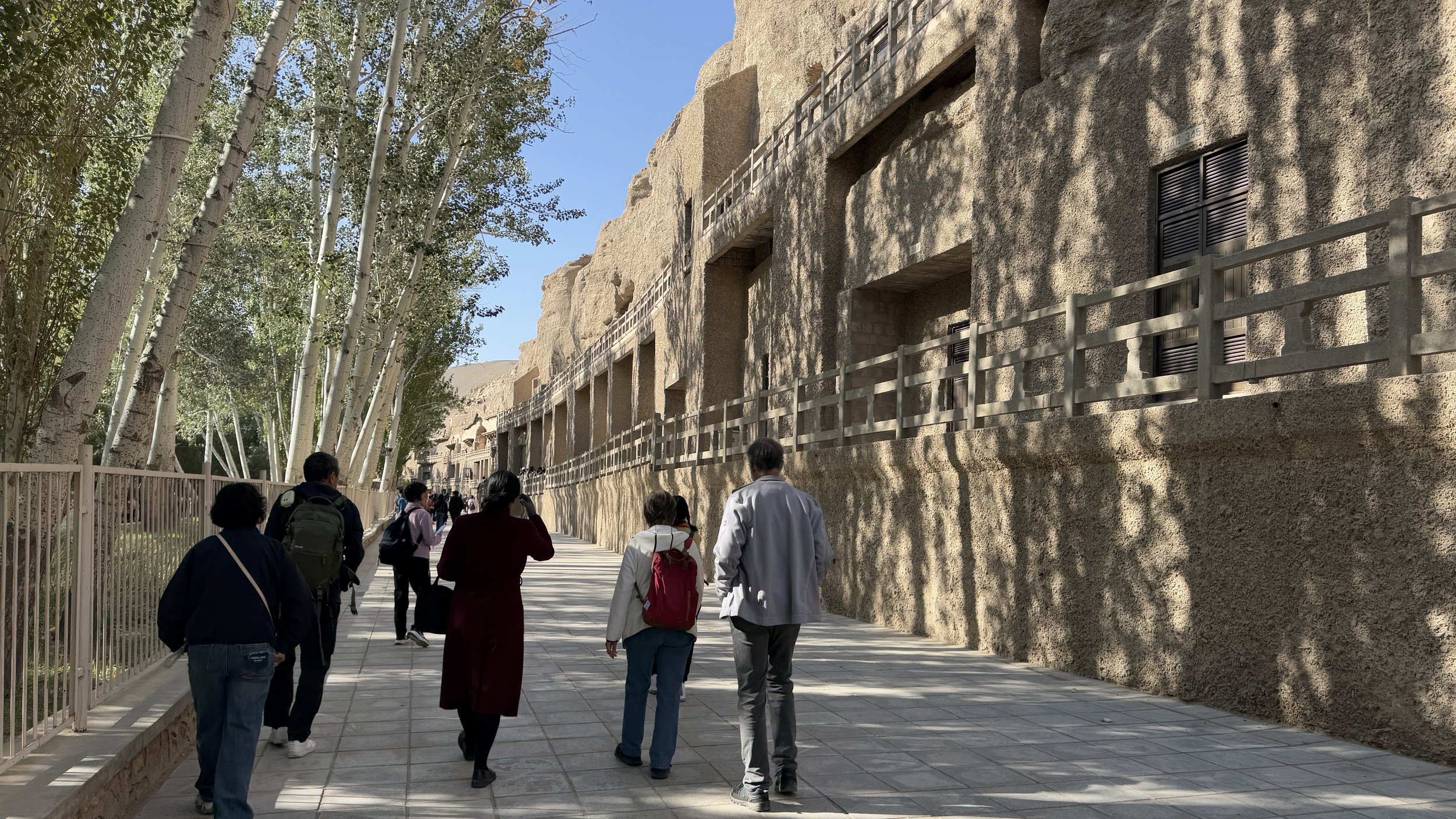
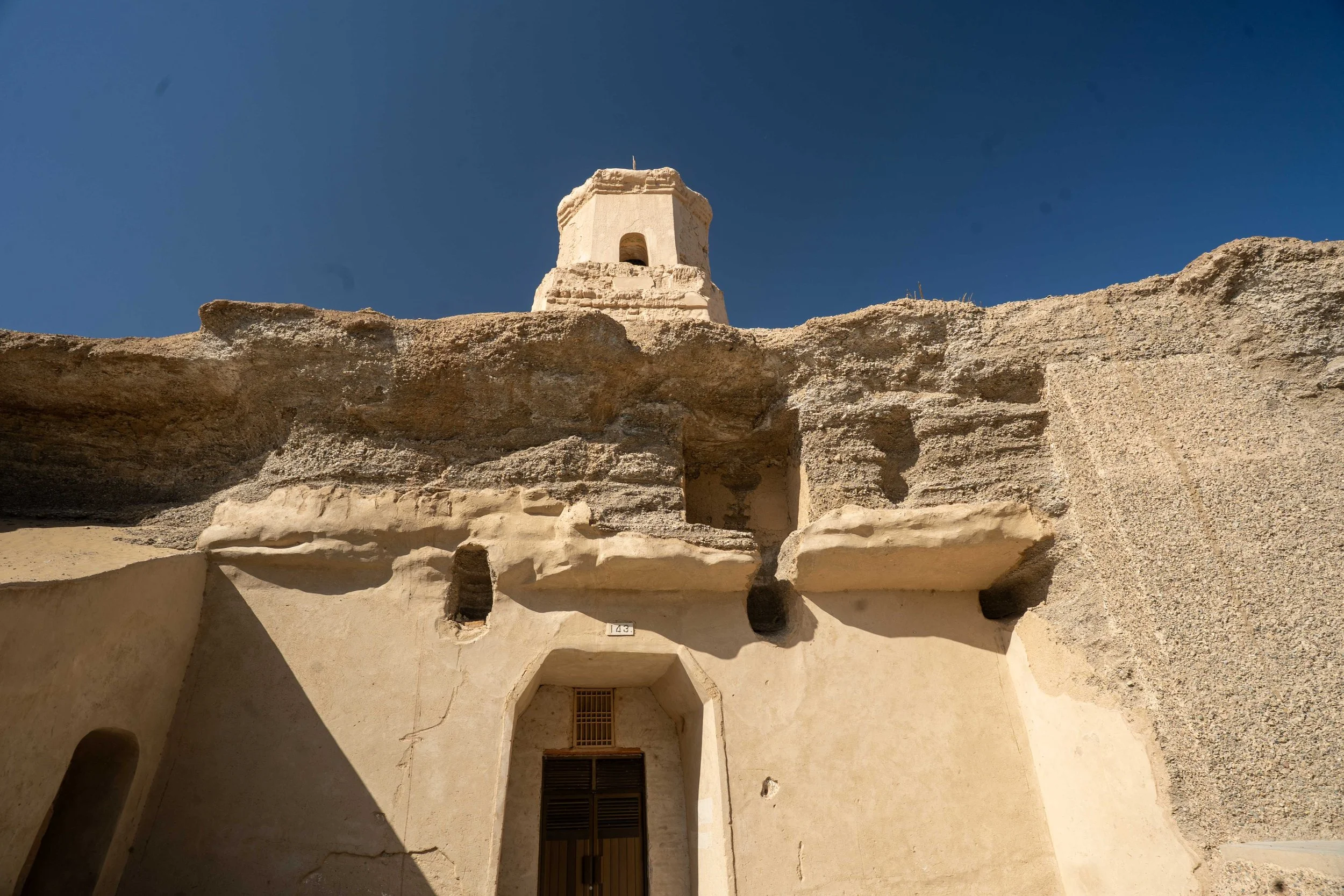
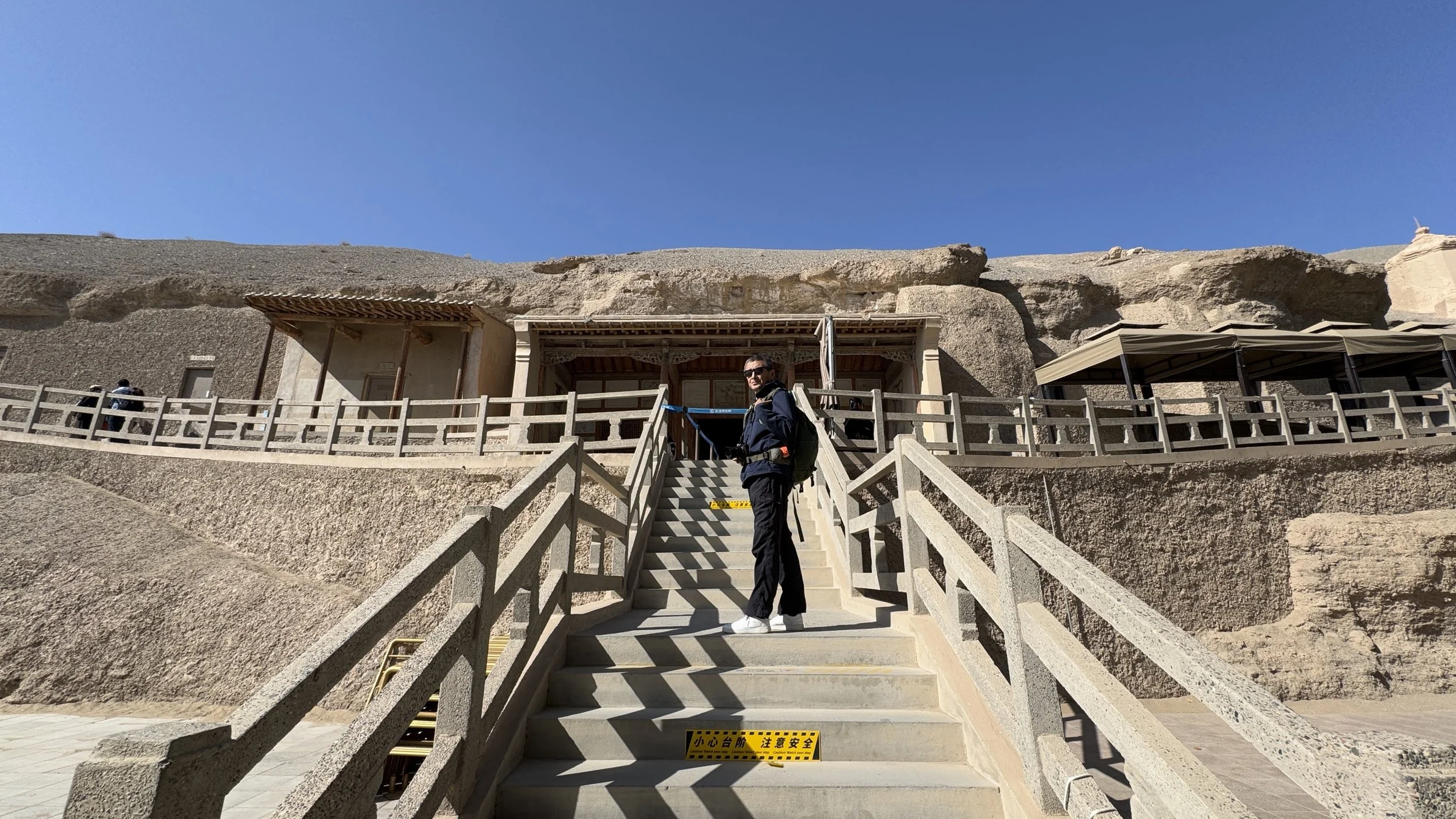
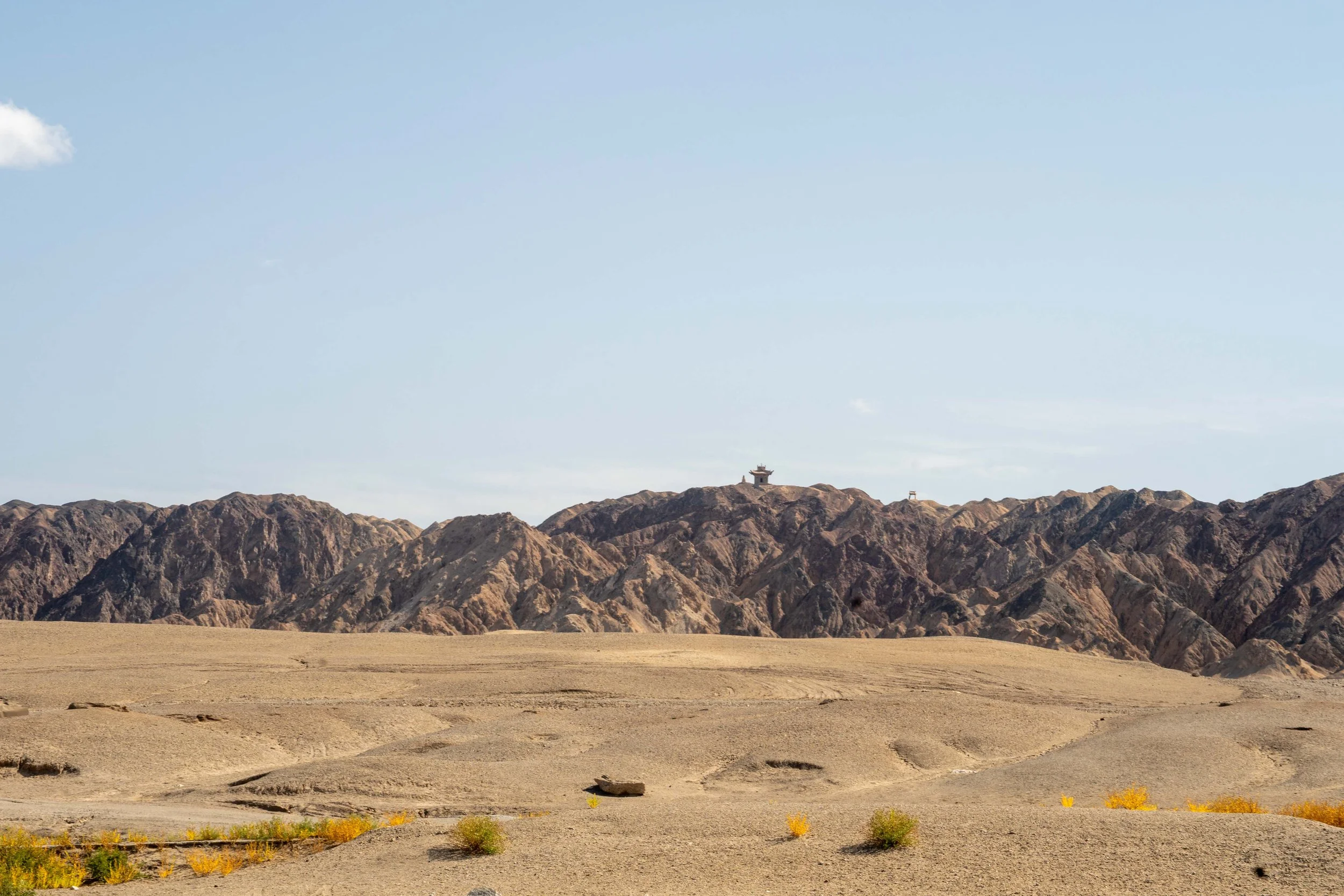
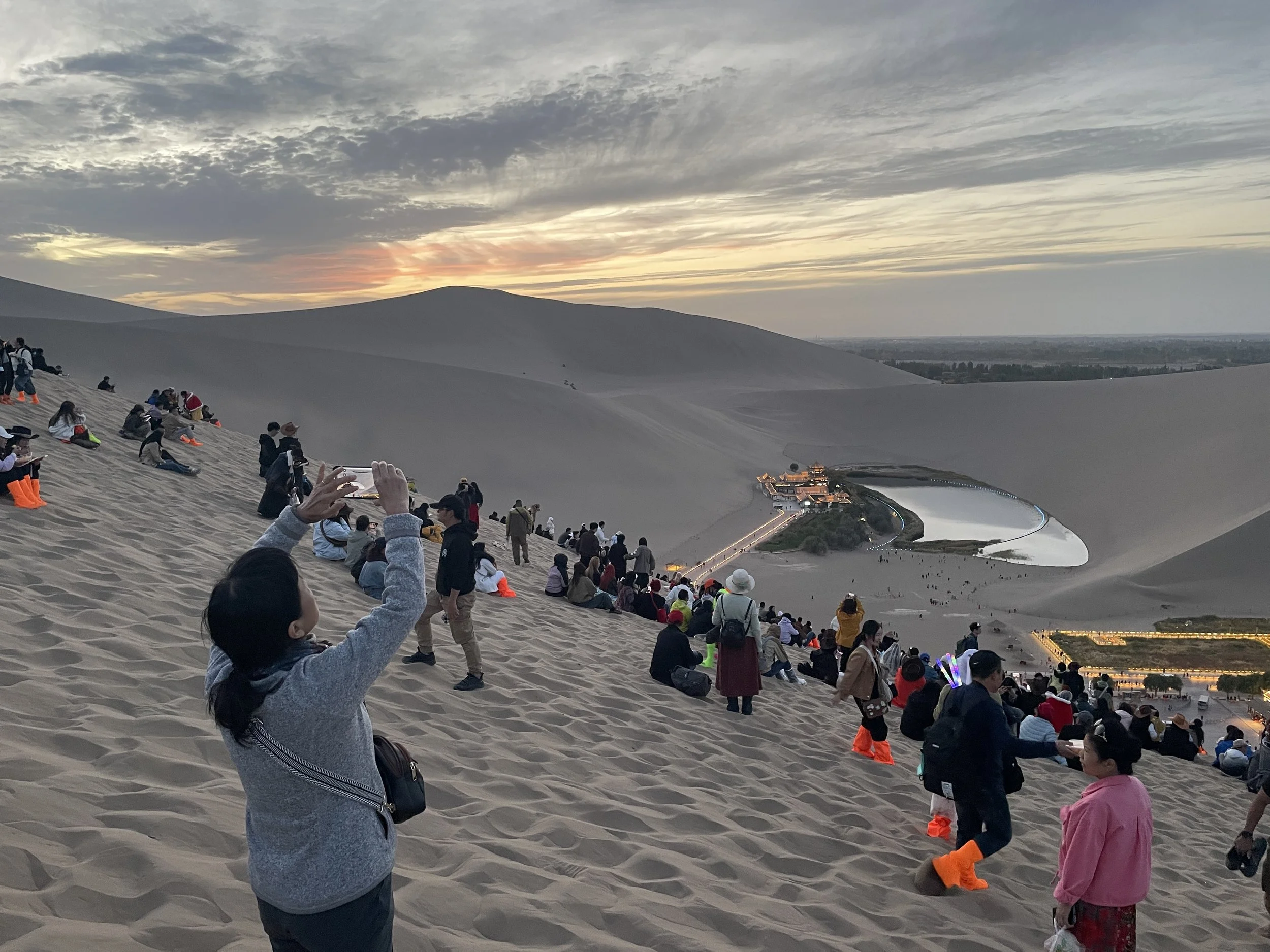
After the cave visit, our driver picked us up and drove us to the Mingsha Mountain Scenic Area, famous for its vast golden dunes. At the entrance, we bought protective sand shoes — successfully bargaining the price down to ¥8 each. The mountain is made up of fine, soft sand that glows under the desert sun, while at its base lies the picturesque Crescent Moon Lake (月牙泉), a natural spring surrounded by dunes.
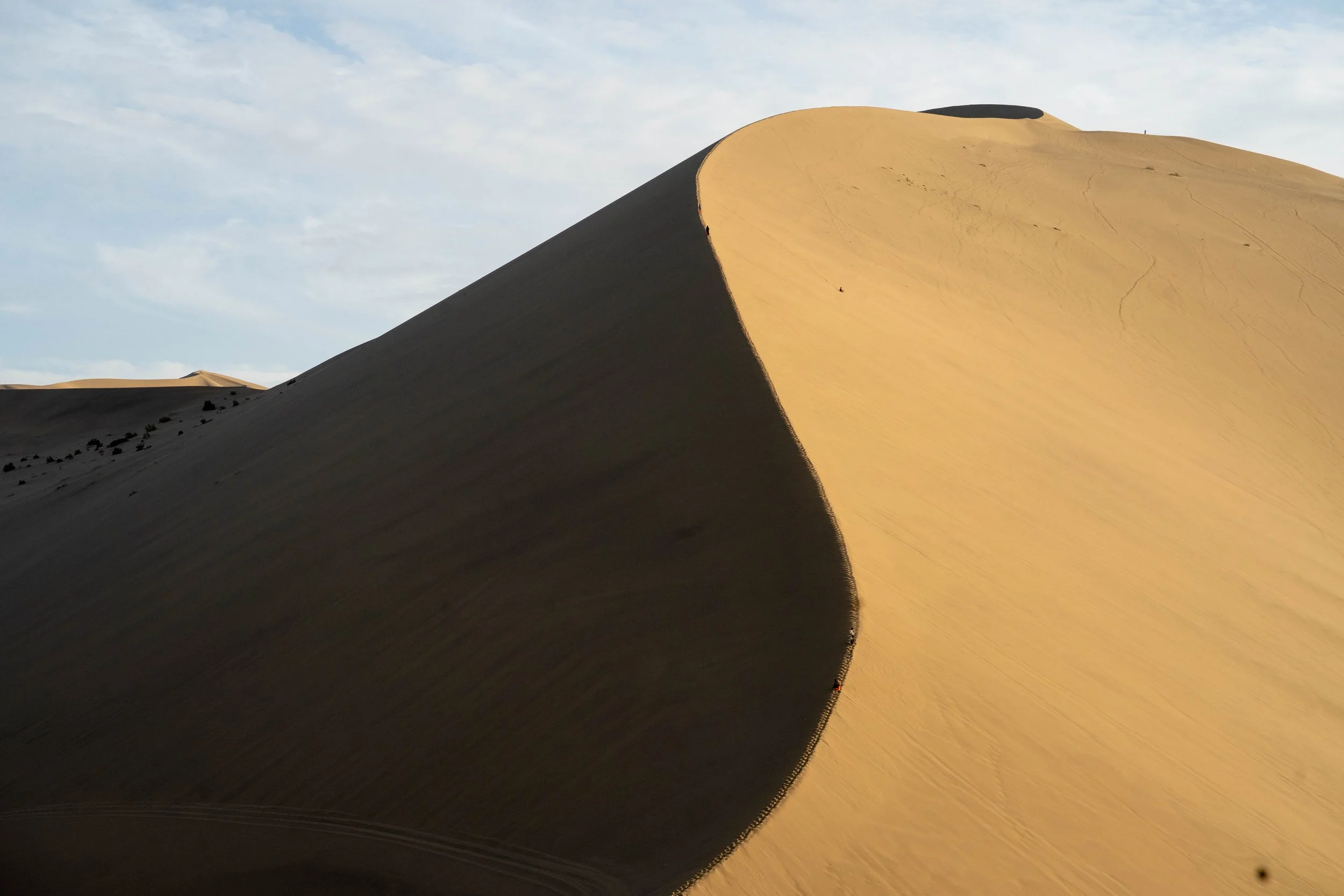
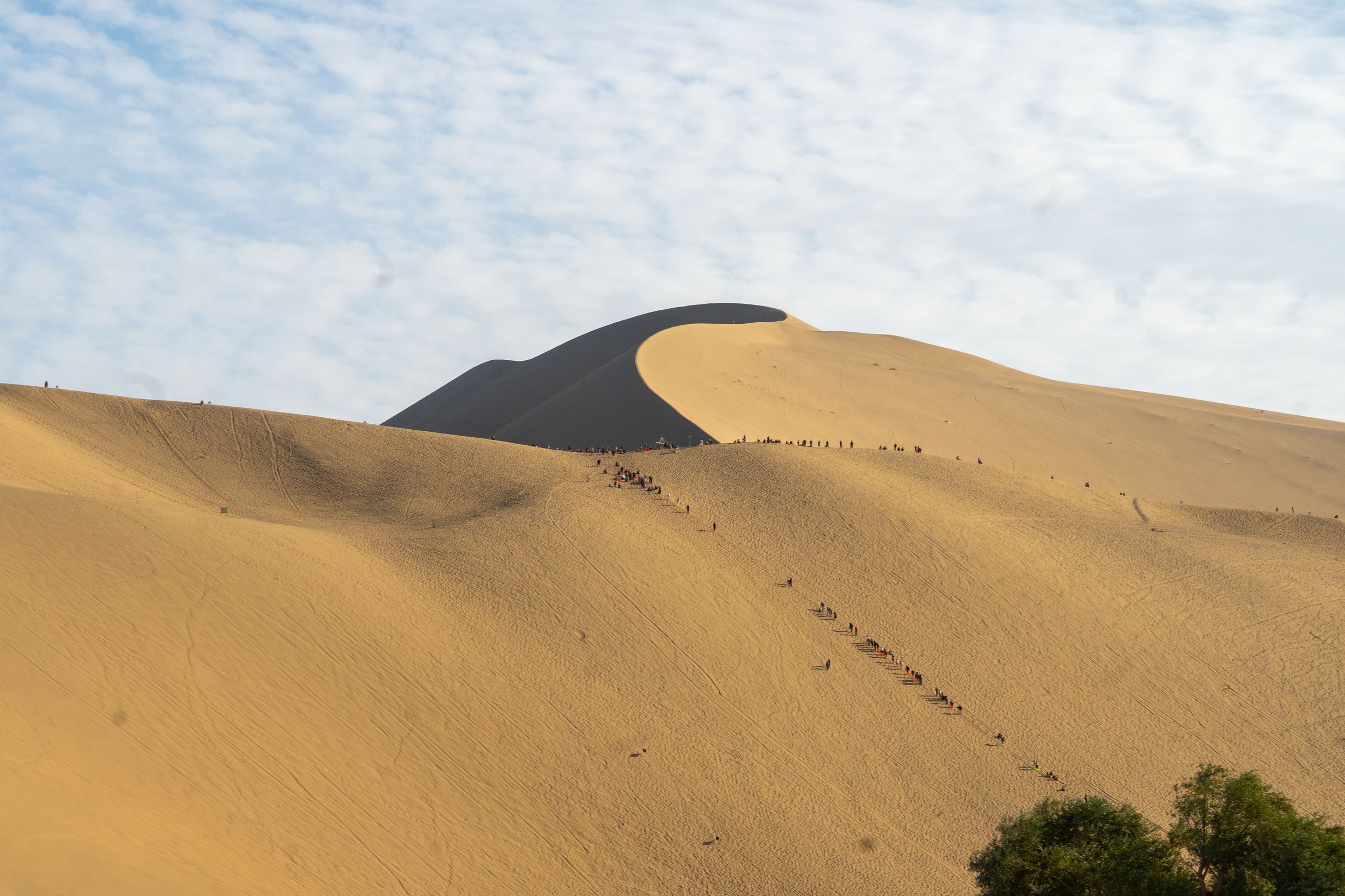
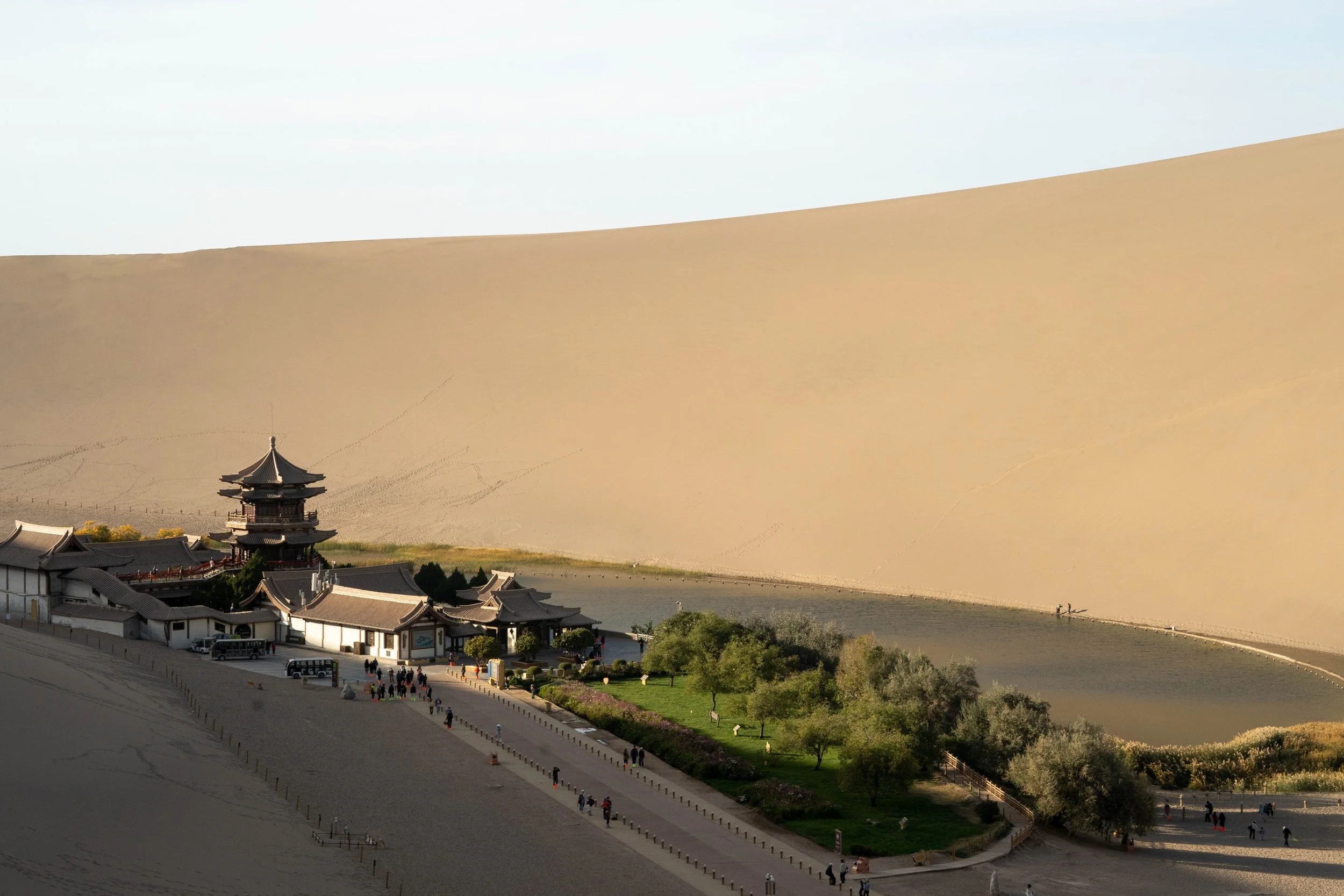
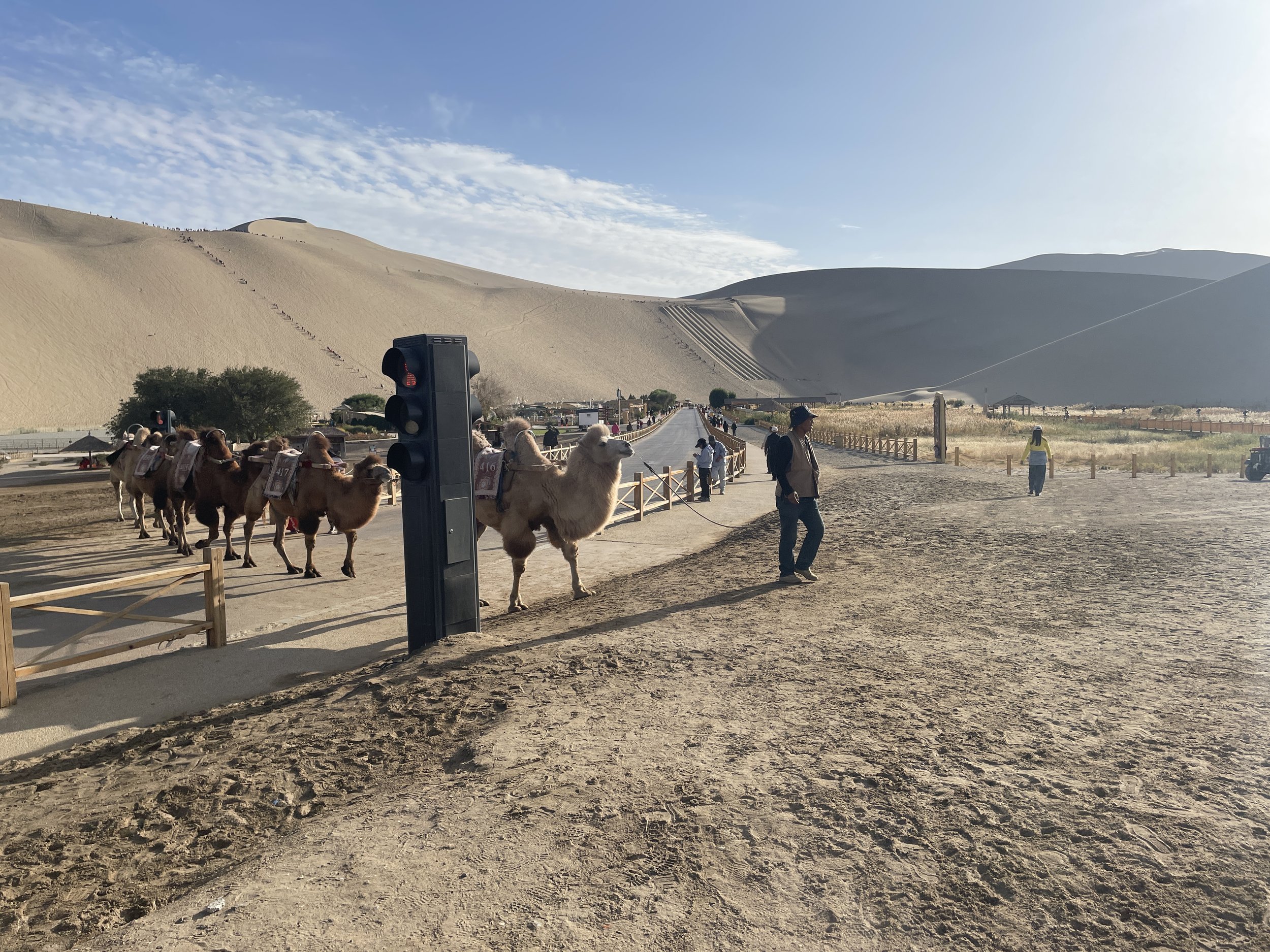
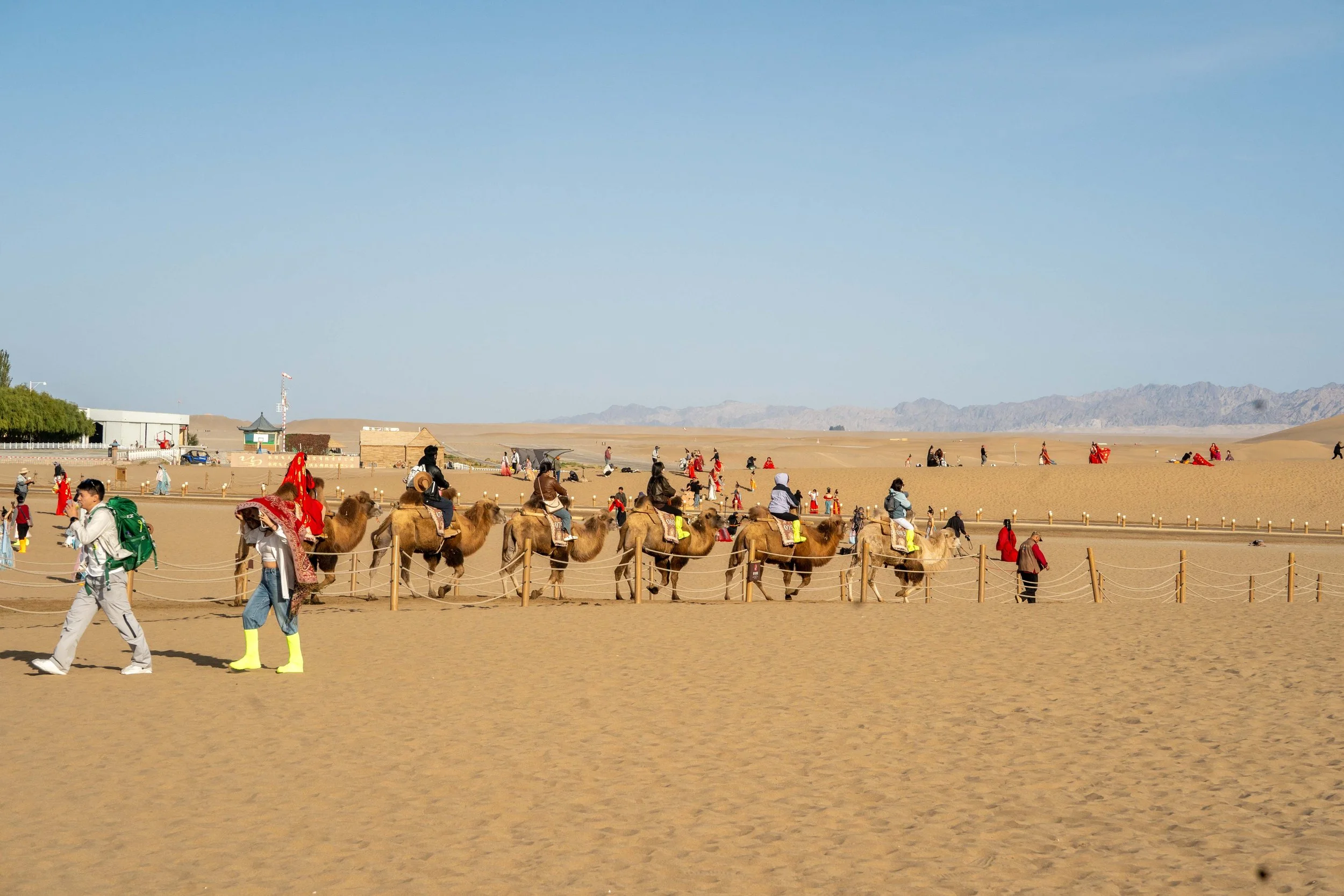
Camel riding is one of the park’s signature attractions, but we preferred to hike — our favorite way to explore nature. To help visitors climb, the park had set up two long wooden ladders across the steep slopes. We first tried to ascend directly on the sand but soon switched to the ladders, which, though easier, still demanded effort.
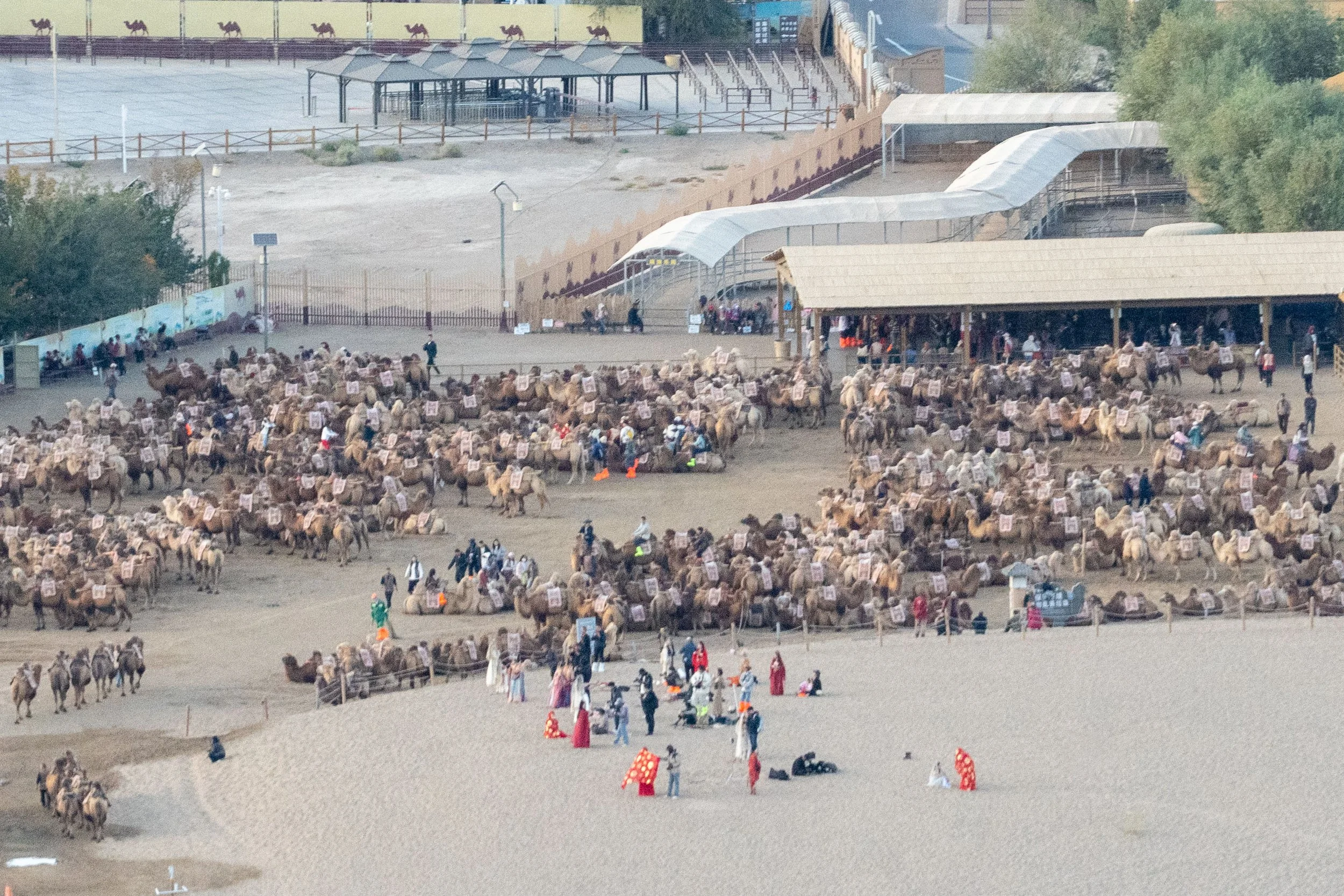
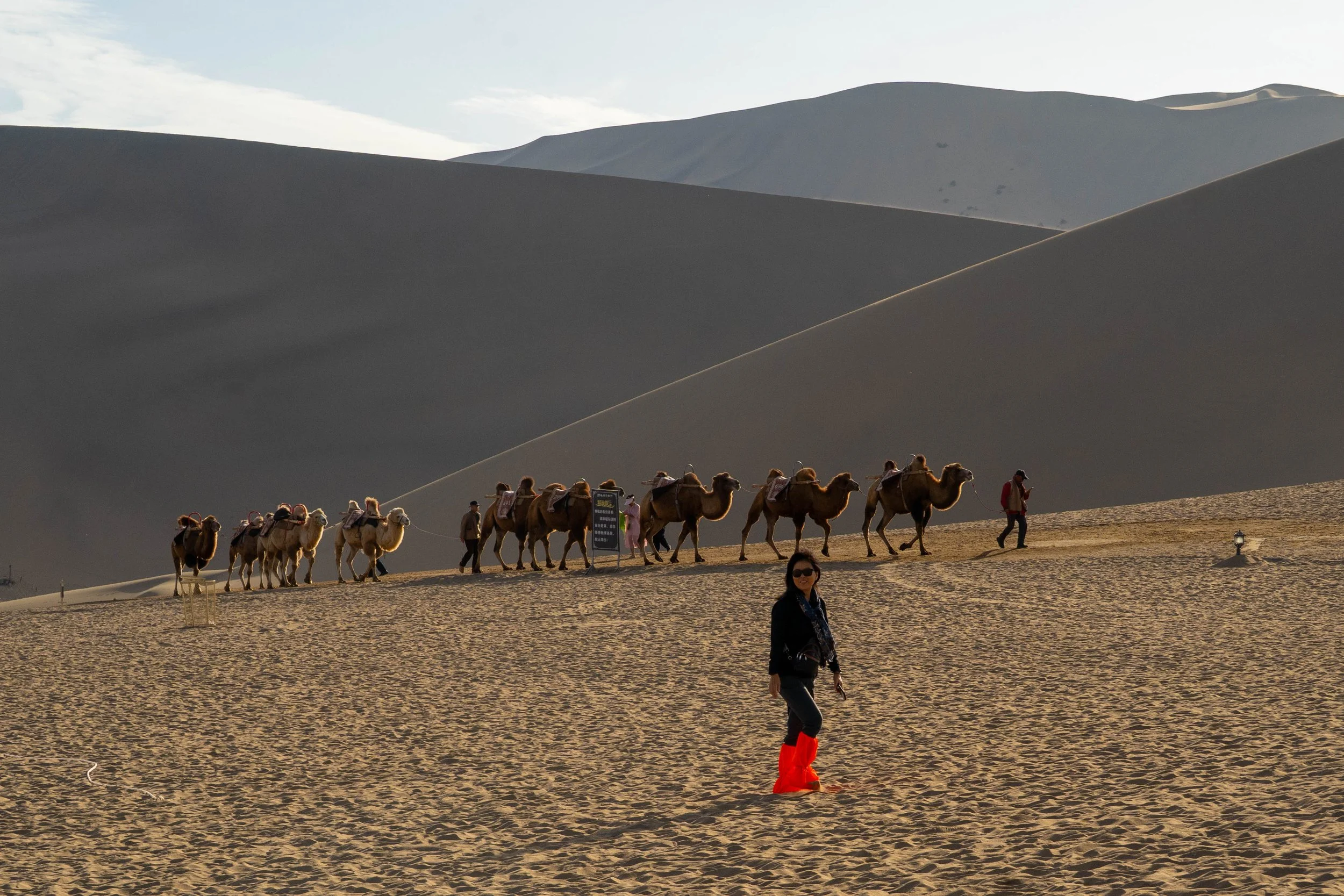
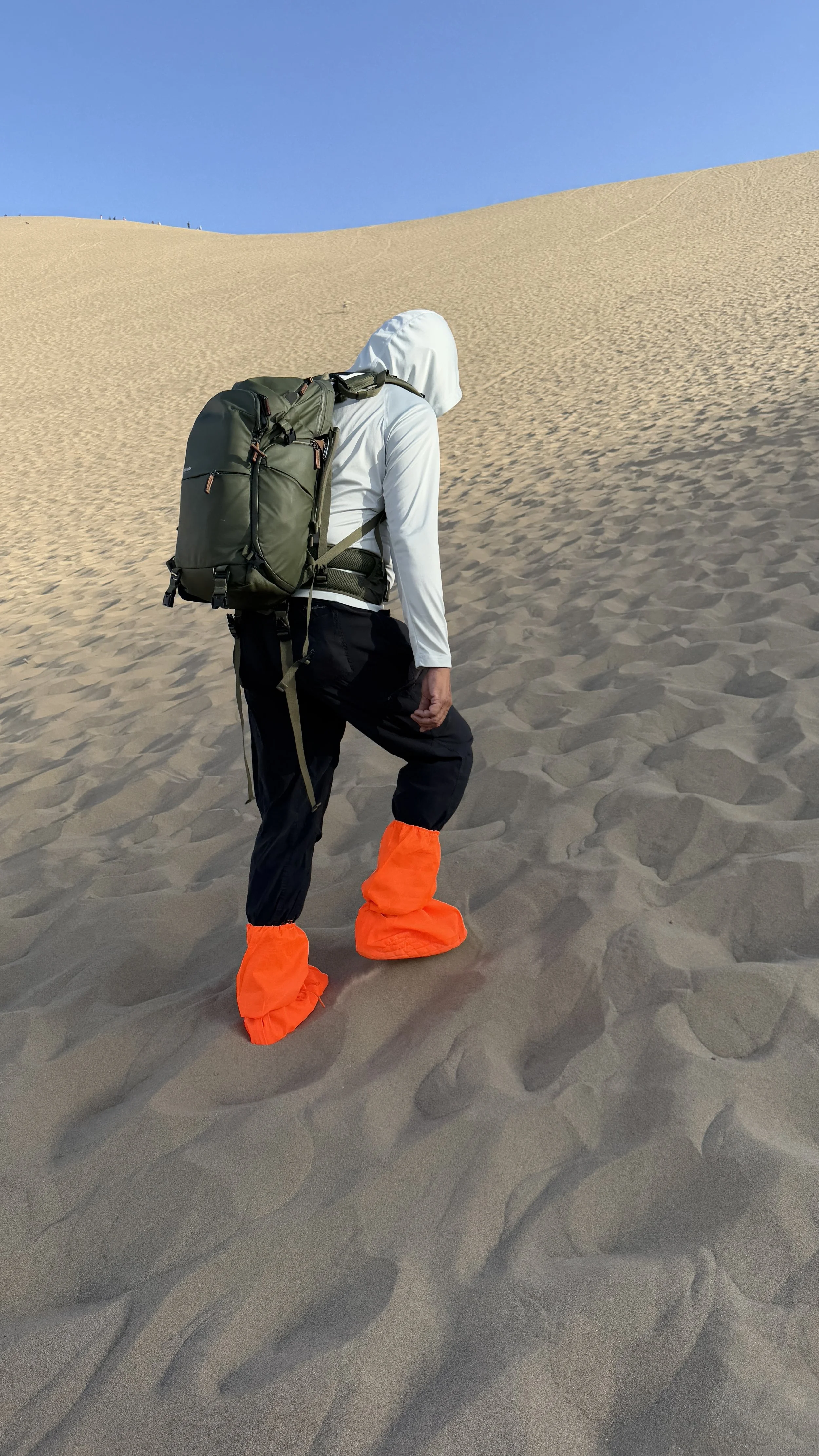
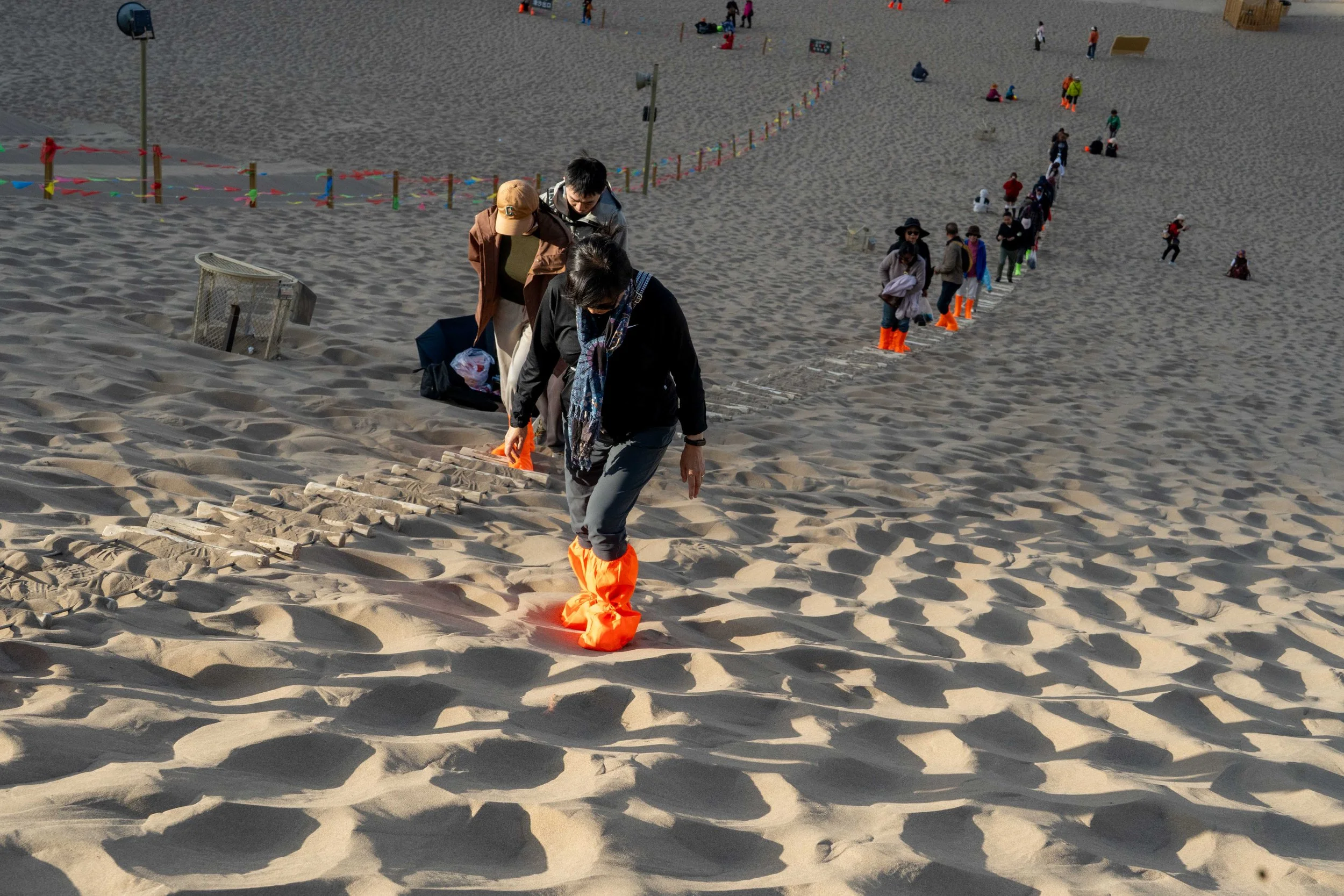
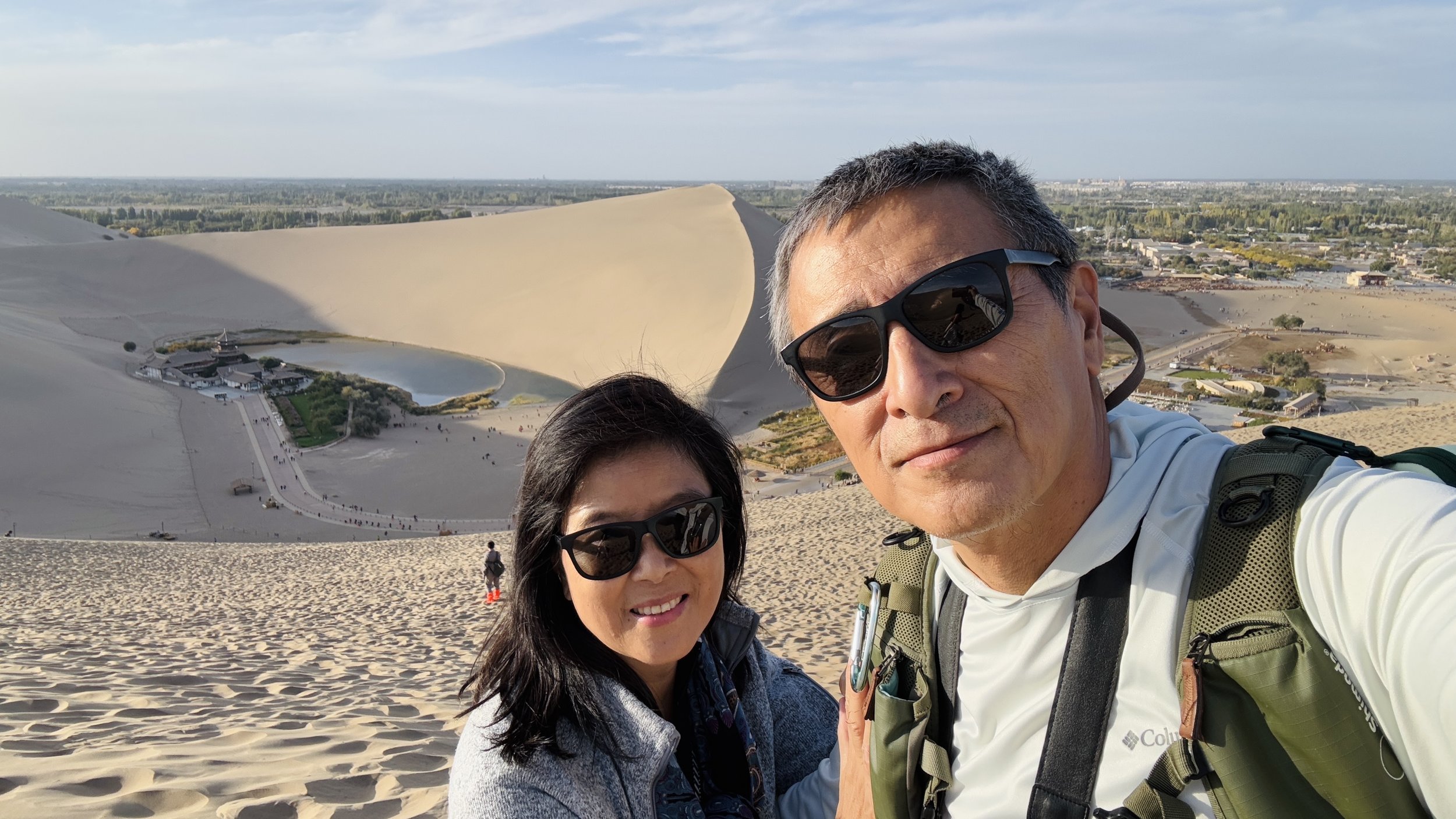
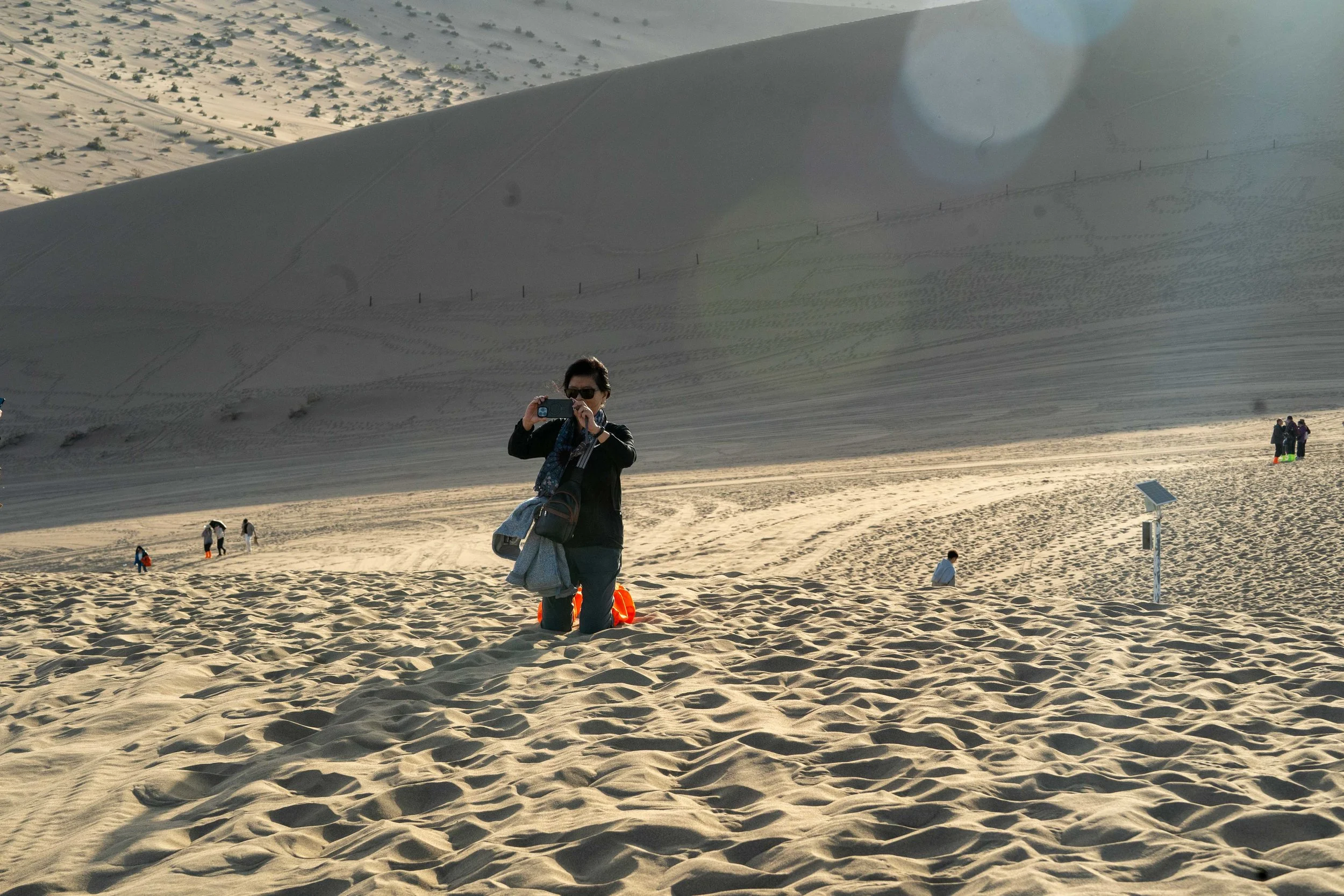
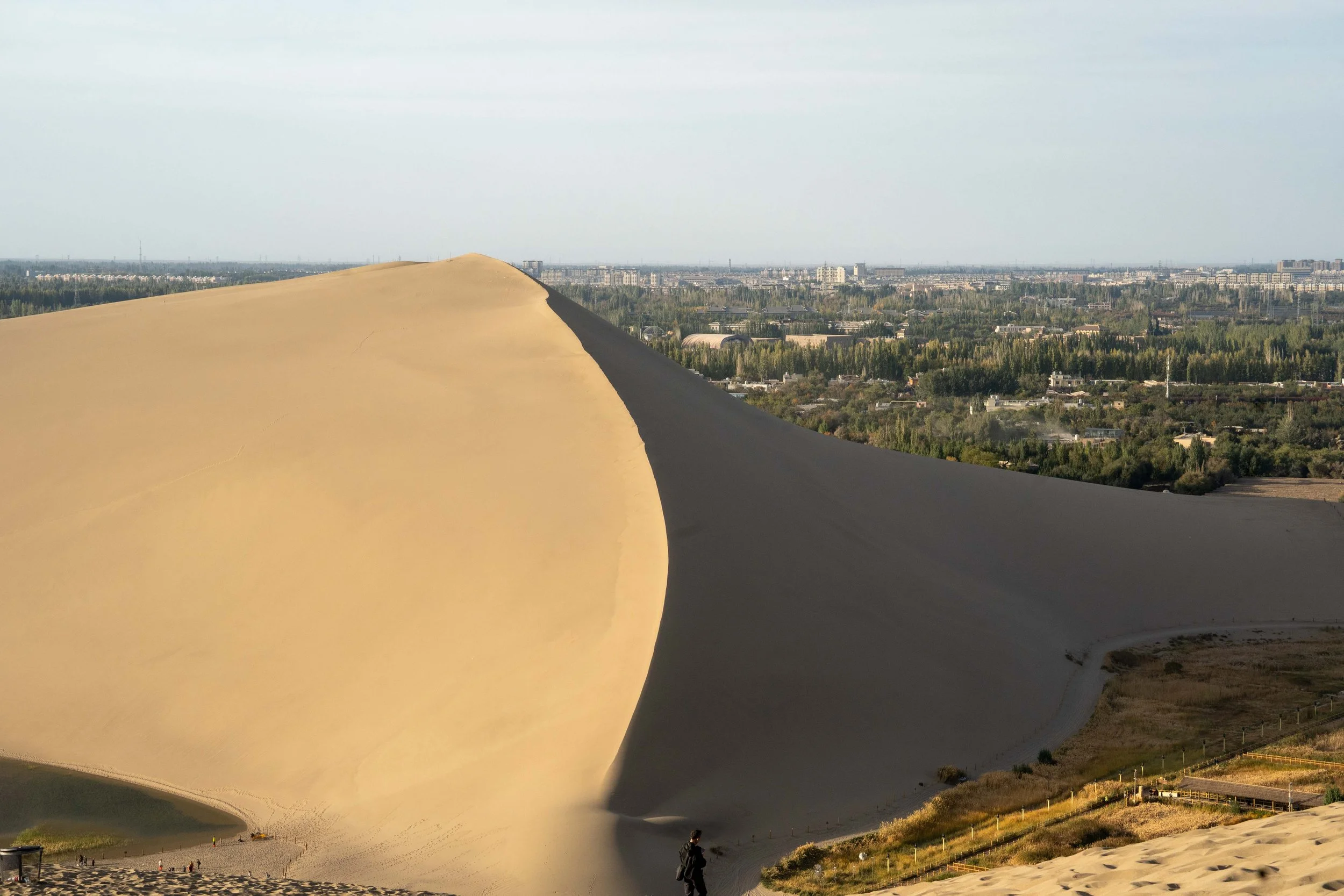
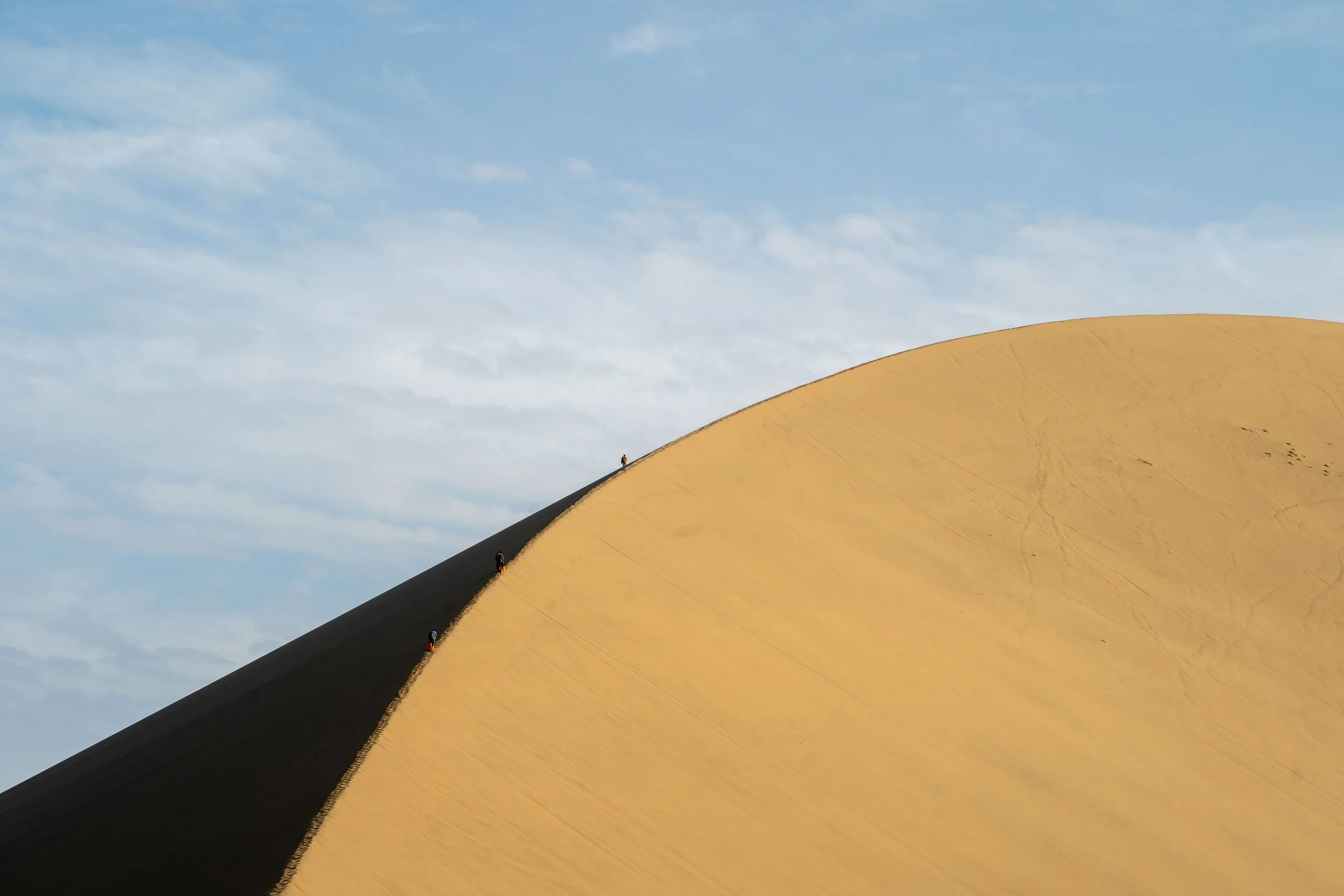
Reaching the summit was immensely rewarding — the panoramic desert views under the afternoon light were stunning.
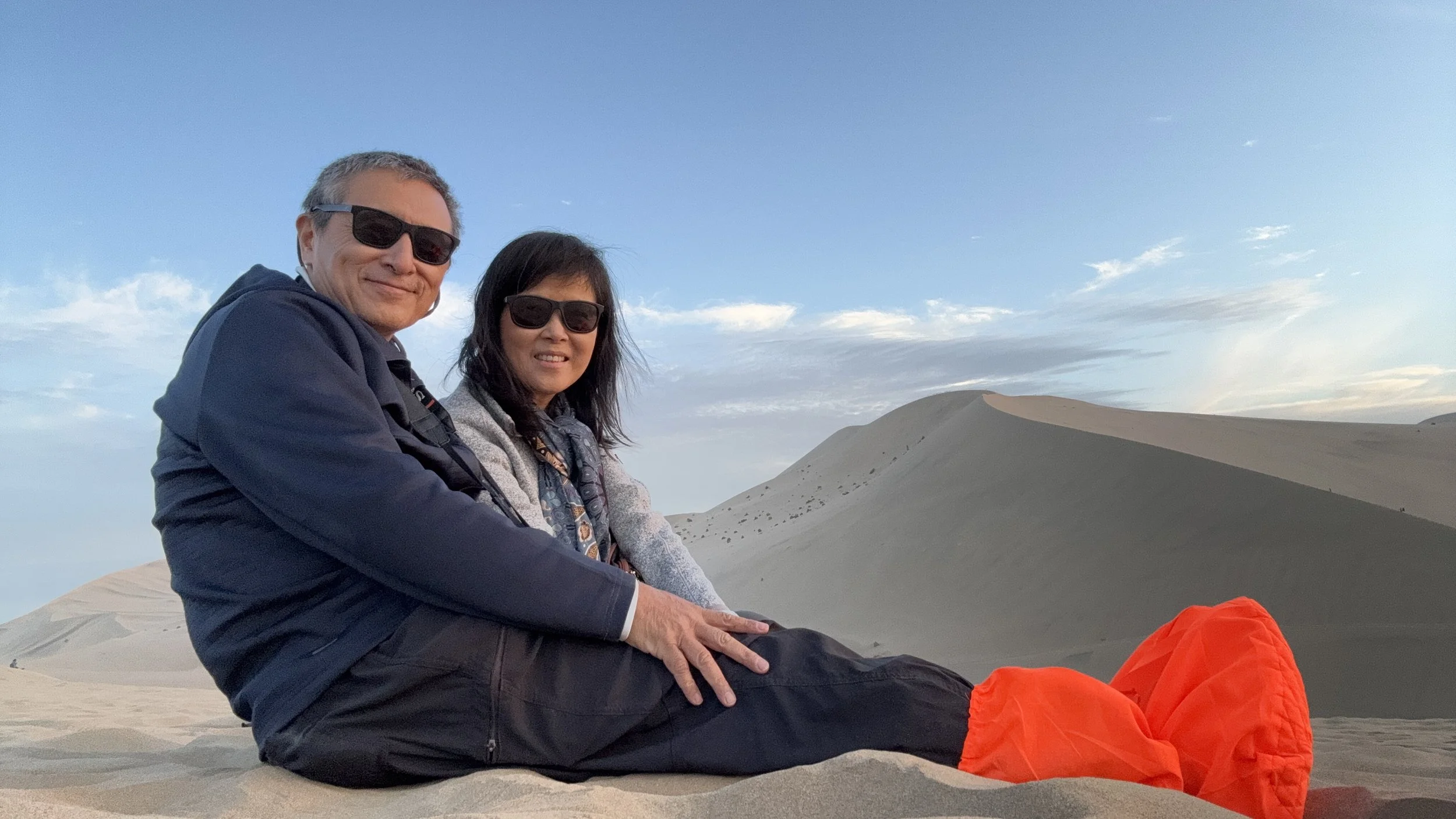
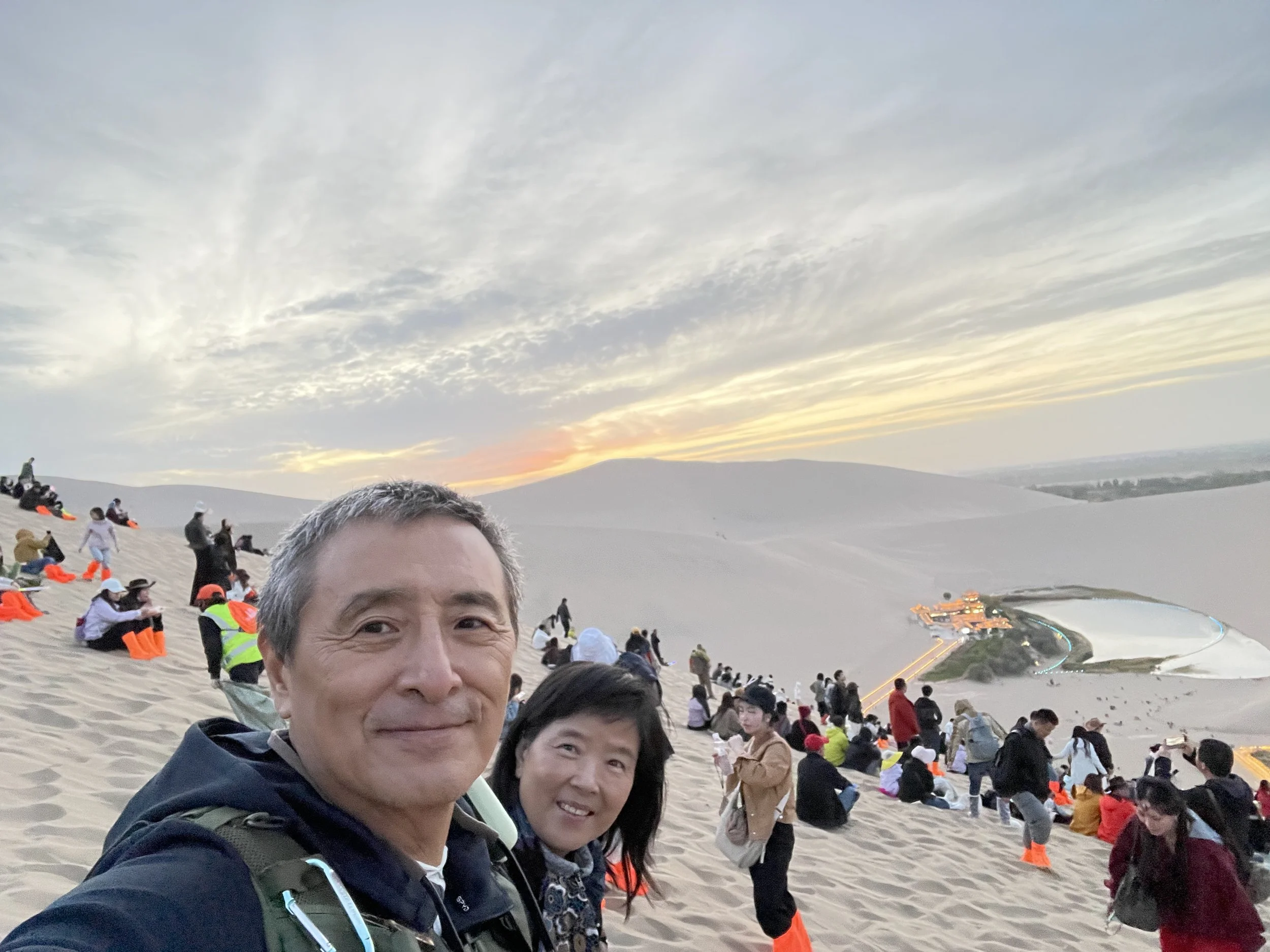
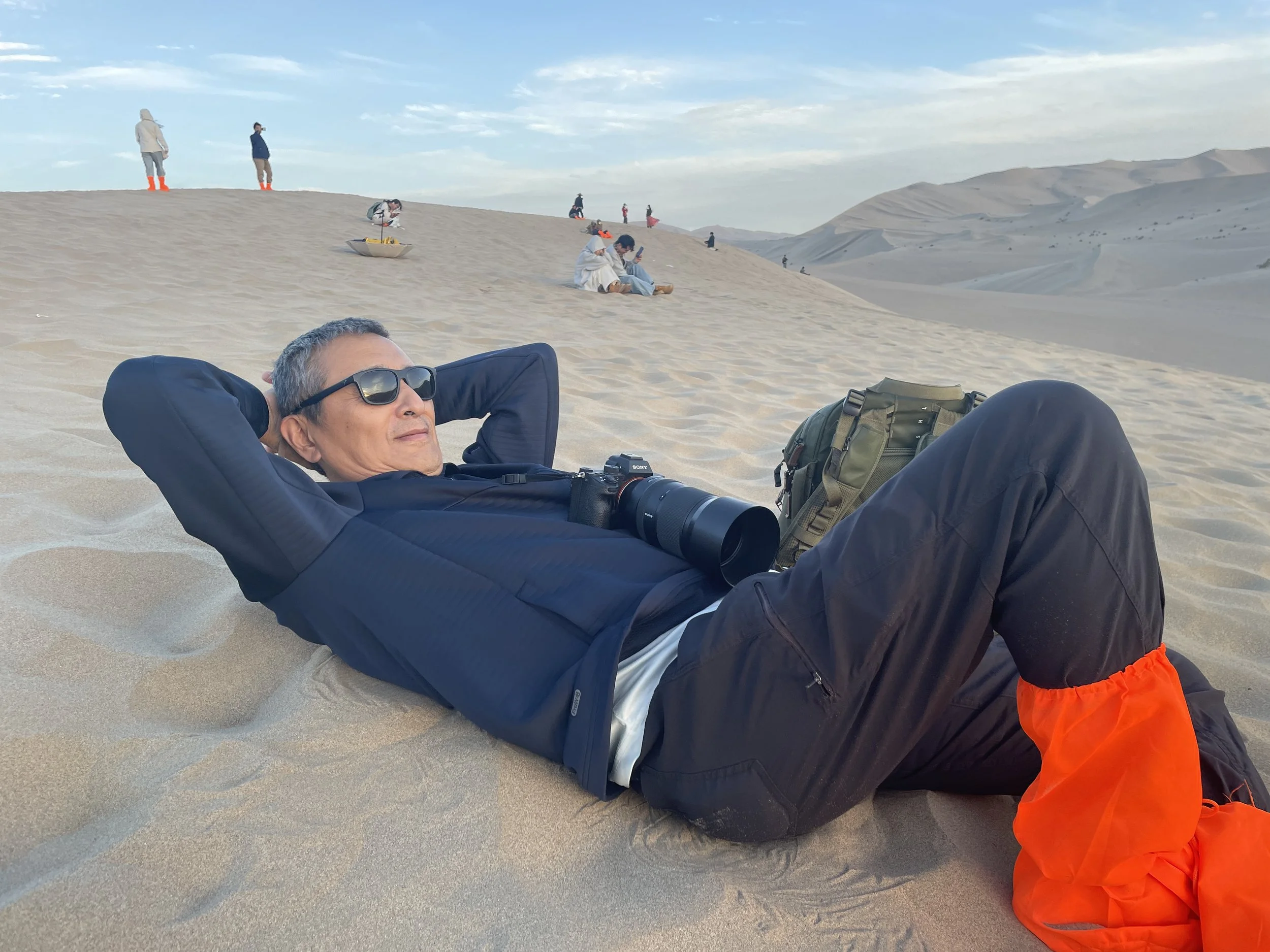
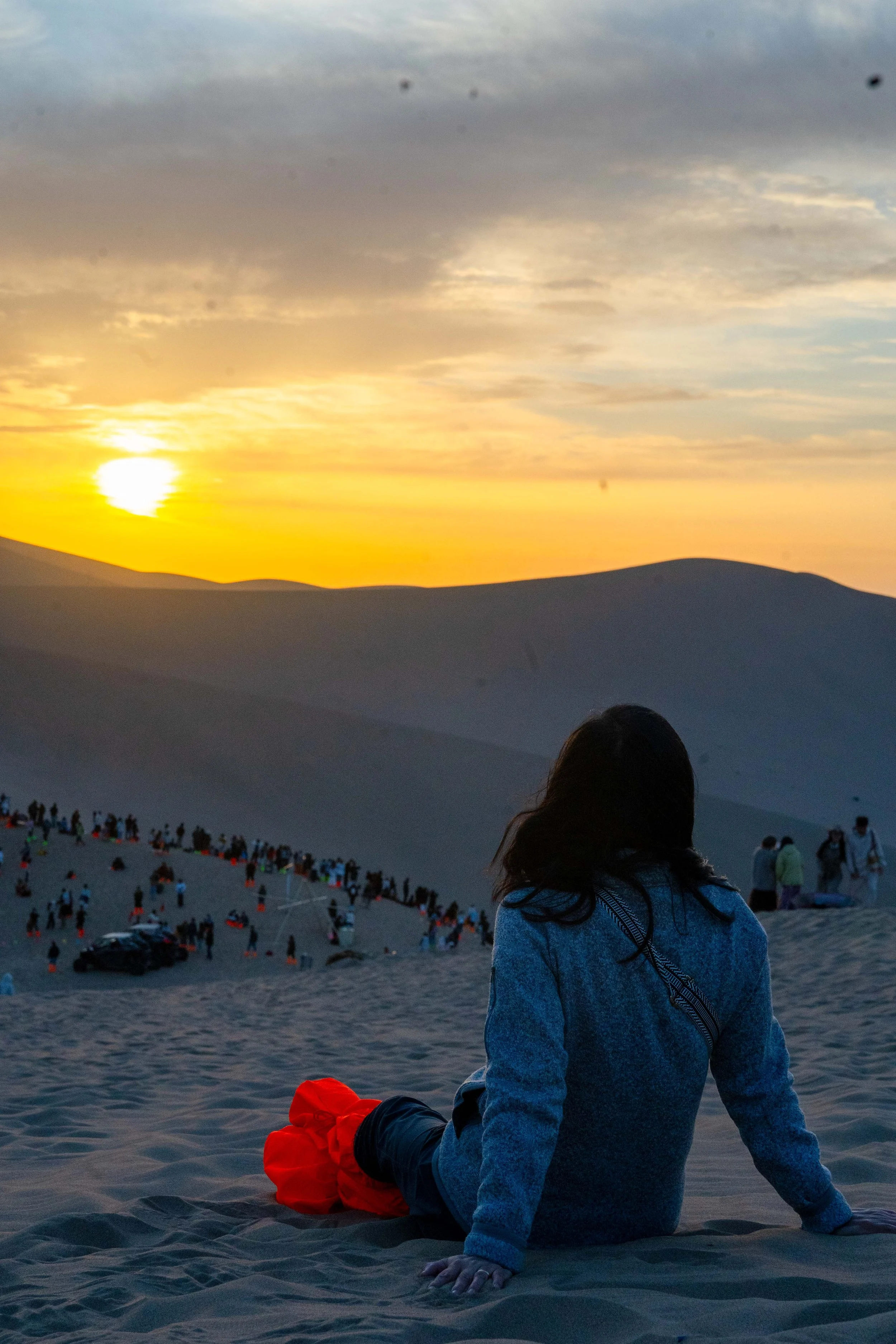
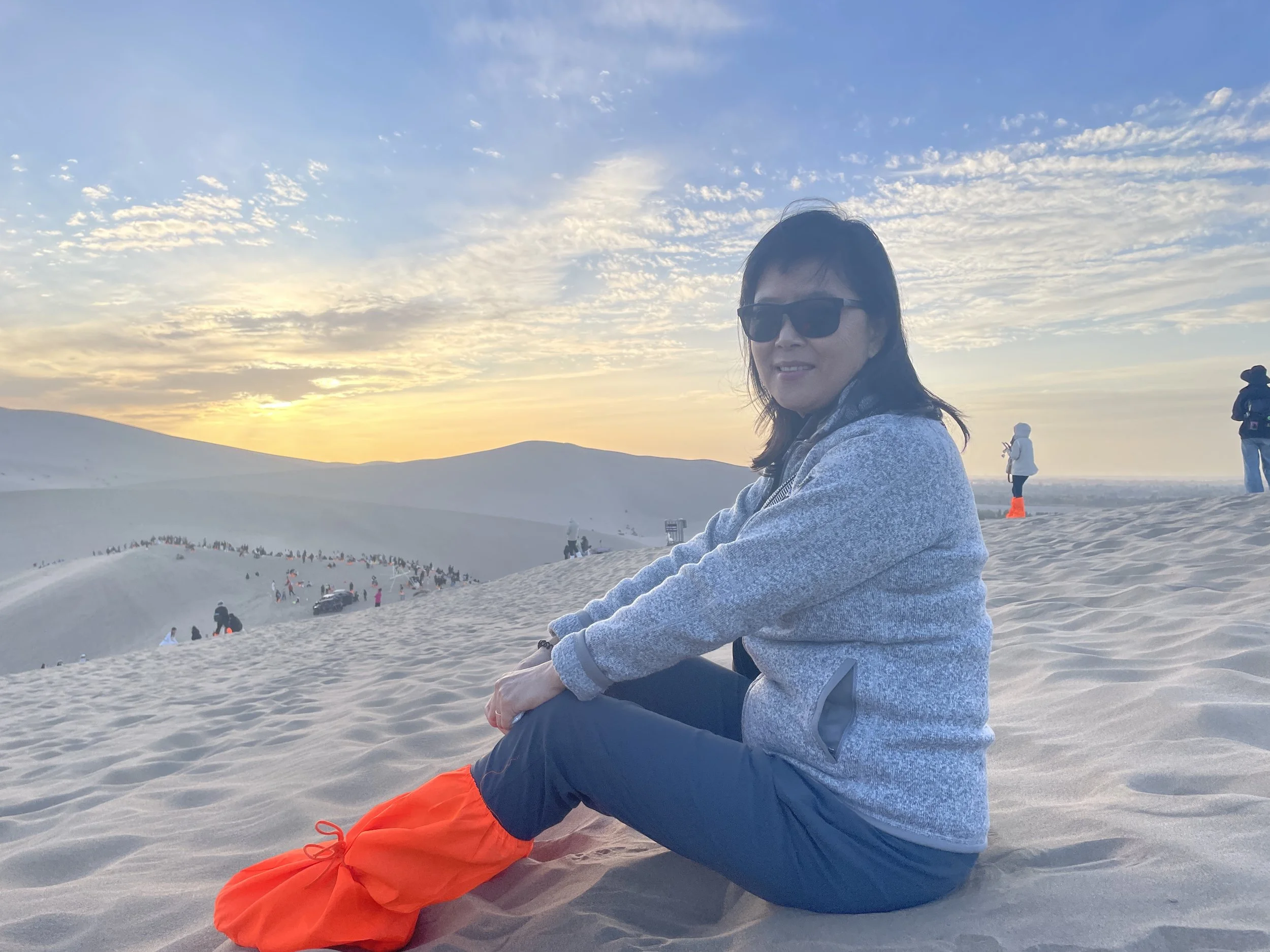
We stayed until nightfall as more visitors gathered on the dunes. At 8 p.m., an extraordinary scene unfolded — a massive open-air singalong began, with thousands of people sitting on the sand, waving glow sticks and phone lights. Lyrics were projected onto the dune itself, turning the desert into a giant karaoke stage. Locals told us that during peak season, as many as 10,000 people join this nightly singing event.
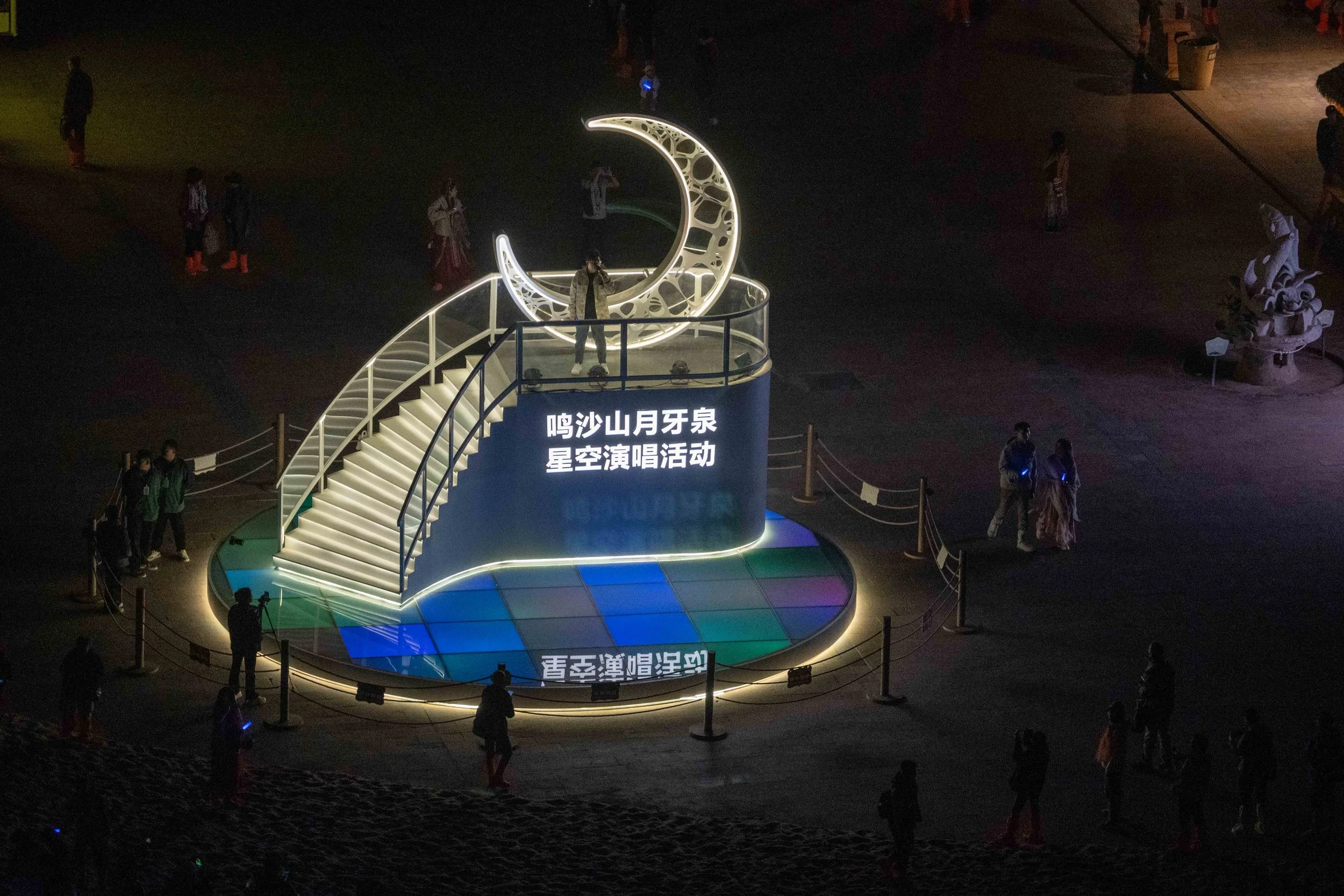
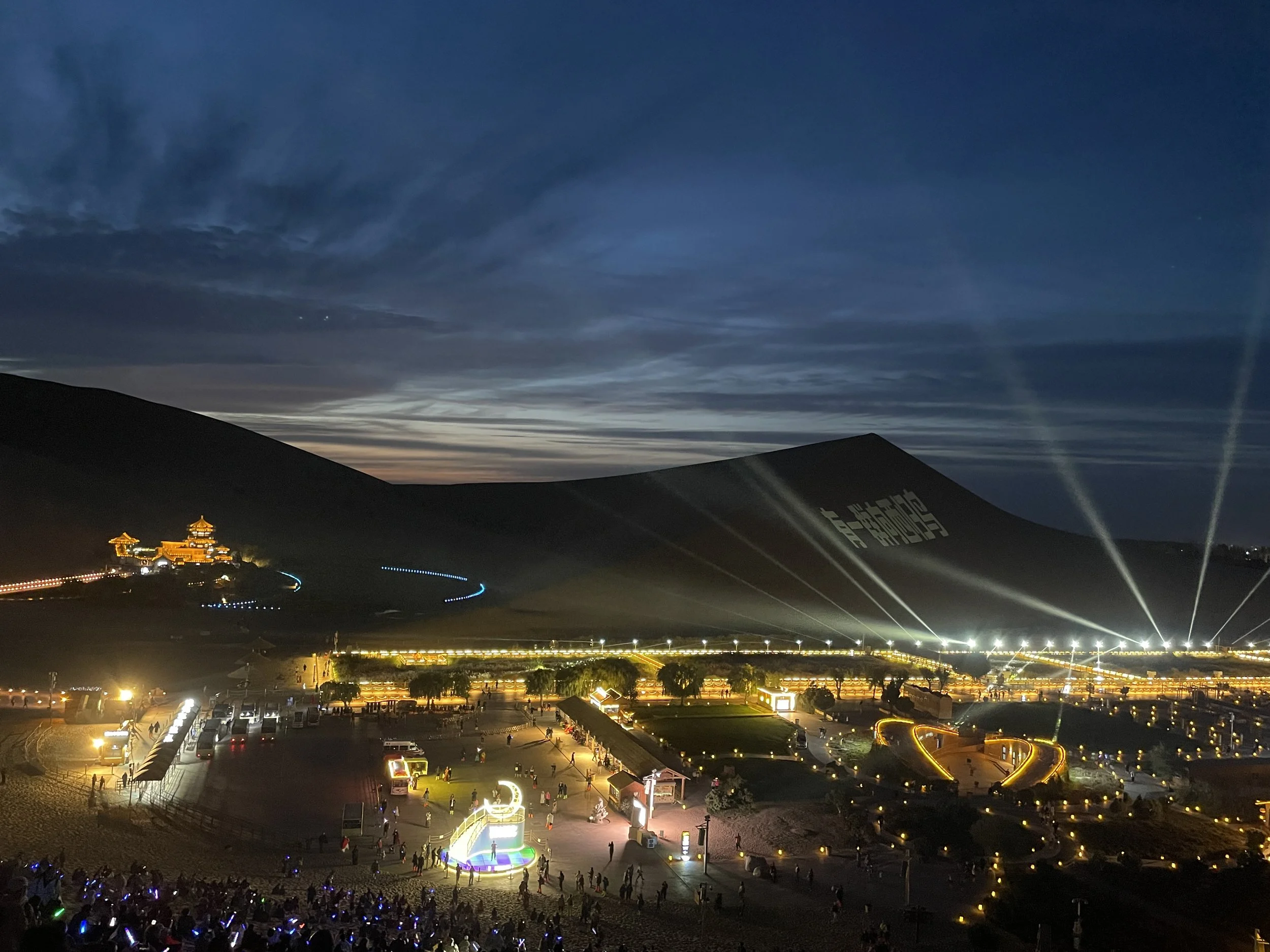
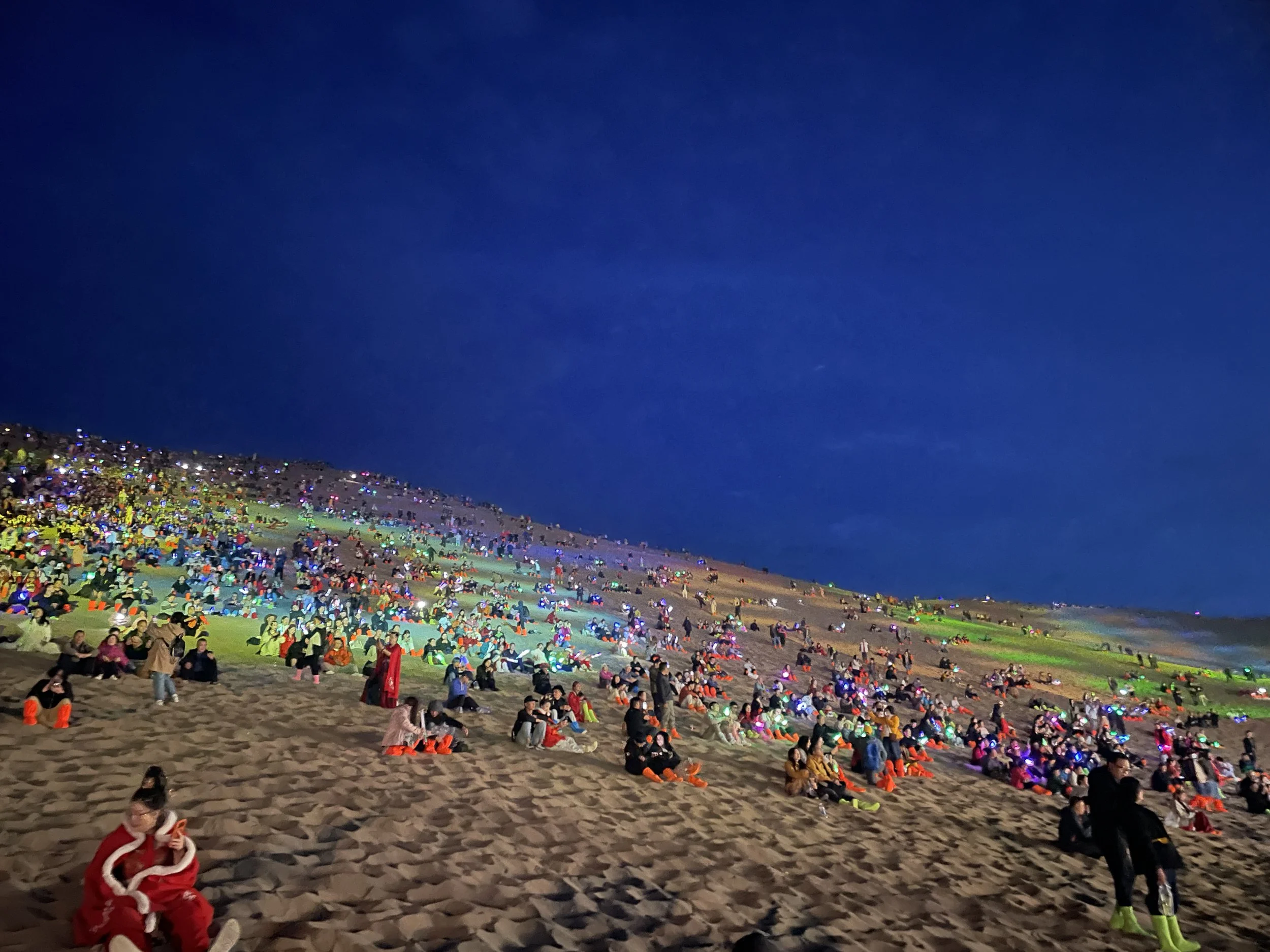
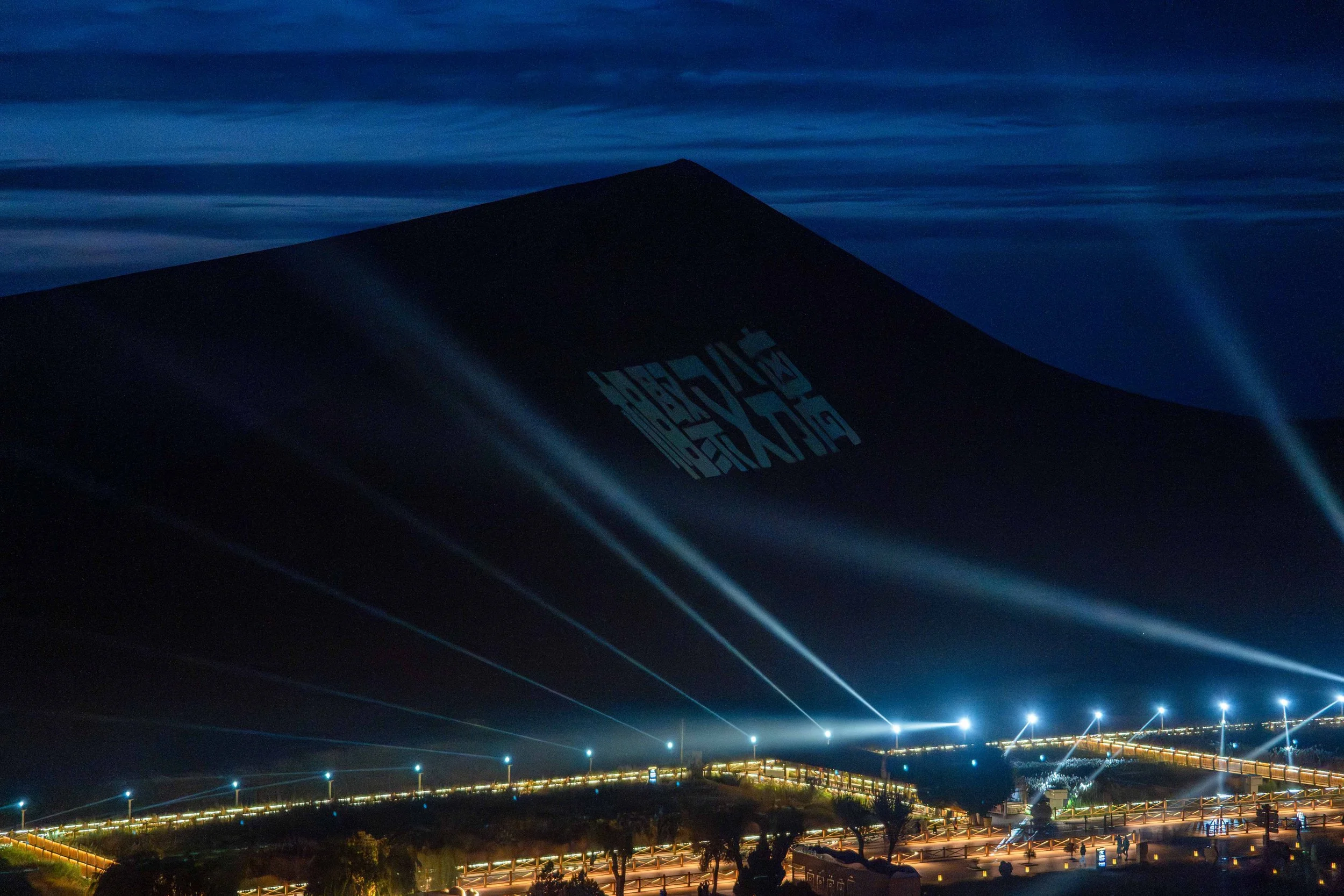
As songs echoed across the sands, we slowly descended the hill under the soft desert breeze, where our driver awaited us at the exit.
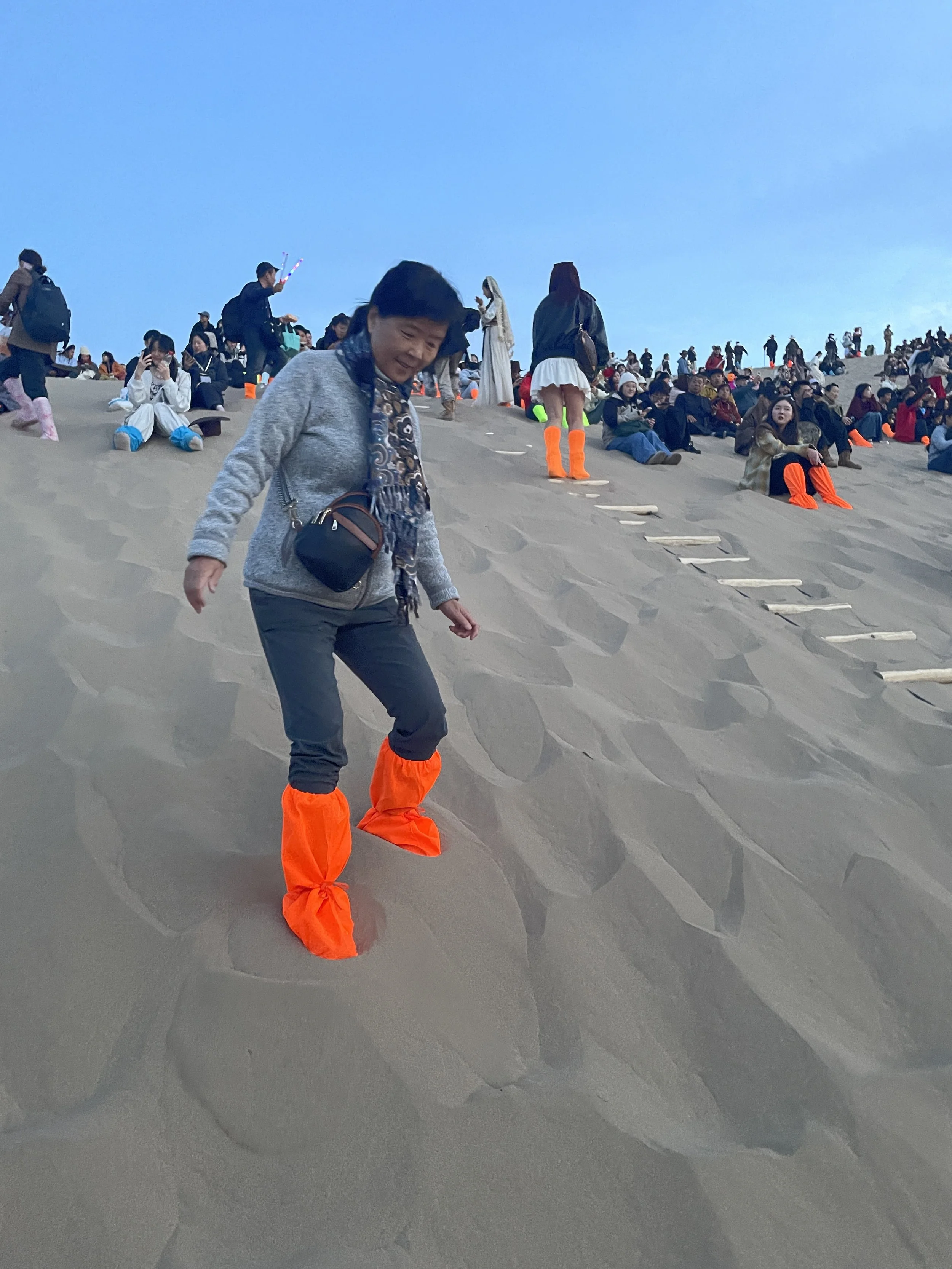
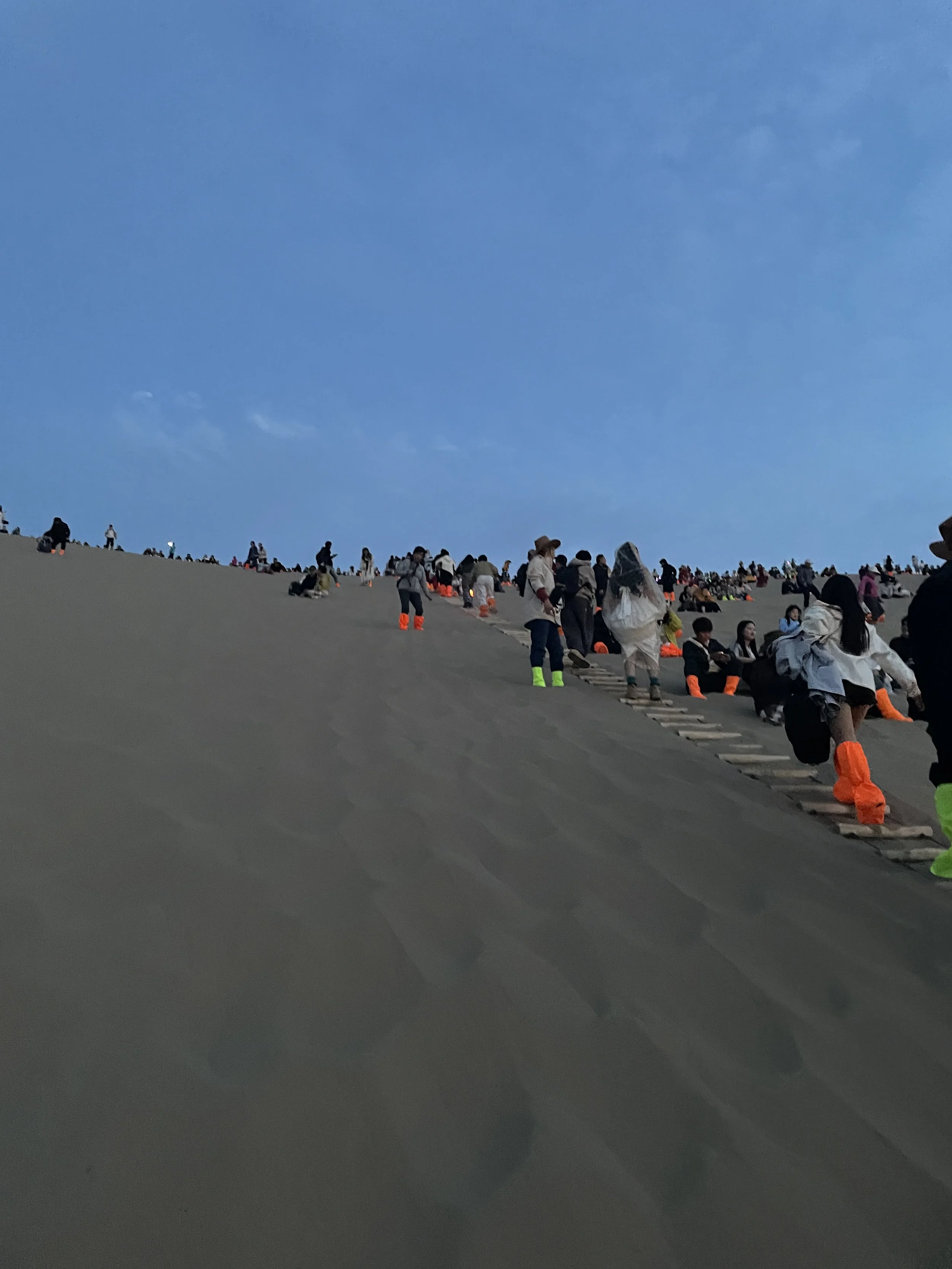
The driver dropped us off at the night market again for another taste of local cuisine. It was a full and unforgettable day — a perfect blend of art, history, and the magic of Dunhuang’s desert landscape.
莫高窟与鸣沙山月牙泉
2025年10月9日
我们在携程上预订了为期四天的包车游。第一天的安排是上午参观莫高窟,下午游览鸣沙山月牙泉。
早上七点五十分,司机的妻子准时到酒店接我们,因为我们的莫高窟参观票是八点半的场次。外国护照游客必须通过 Trip.com 购票,并额外支付二十元的服务费,以安排非中文讲解的团队。当天的正常票全部售罄,景区里的游客特别多,排着长队进入参观。起初我们排在中文团的长队中,后来决定等待英文讲解团,事实证明这是一个明智的选择。
我们的英文团只有四个人,而中文团通常有十五至二十人。这样的小团体让我们能更专注地欣赏壁画和雕塑的细节。我们共参观了八个洞窟,每一座都令人叹为观止:精美的壁画、庄严的佛像、巧妙的结构,无不展现出古代艺术的辉煌与宗教虔诚的力量。随后,我们又参观了三个大型佛像洞窟,这些是为没有买到普通票的游客开放的。
参观结束后,司机在出口接上我们,驱车前往鸣沙山月牙泉景区。在入口处,我们以八元的议价价买到了防沙鞋套。鸣沙山由细腻的黄沙组成,远望金光闪闪,山脚下的月牙泉清泉环沙而成,犹如沙漠中的一弯碧玉。骑骆驼是这里最受欢迎的活动之一,但我们更喜欢徒步登山。景区在沙丘上铺设了两条登山梯,以便游客攀登。我们一开始尝试直接踩沙上坡,几分钟后便放弃,改用木梯。即便如此,登顶依然颇为吃力。然而,当我们站在山顶,俯瞰连绵起伏的沙丘与夕阳映照下的湖水,所有的辛苦都变得值得。
我们一直待到夜幕降临。八点整,一场盛大的“沙漠卡拉OK”在山脚展开——上千人坐在沙地上,挥舞着荧光棒或手机灯,齐声高唱。歌词被投影在沙丘上,气氛热烈而震撼。据说在旅游旺季,参加者多达一万人。
伴随着歌声和夜风,我们缓缓从沙丘上走下,司机早已在出口等候。那一天的行程充实而难忘,既有艺术与历史的洗礼,又有自然与人文的融合,完美展现了敦煌的独特魅力。
Arrival at Dunhuang 抵达敦煌
October 8, 2025
We had long dreamed of exploring China’s vast northwest,……
我们早已向往中国西北的辽阔风光,。。。
October 8, 2025
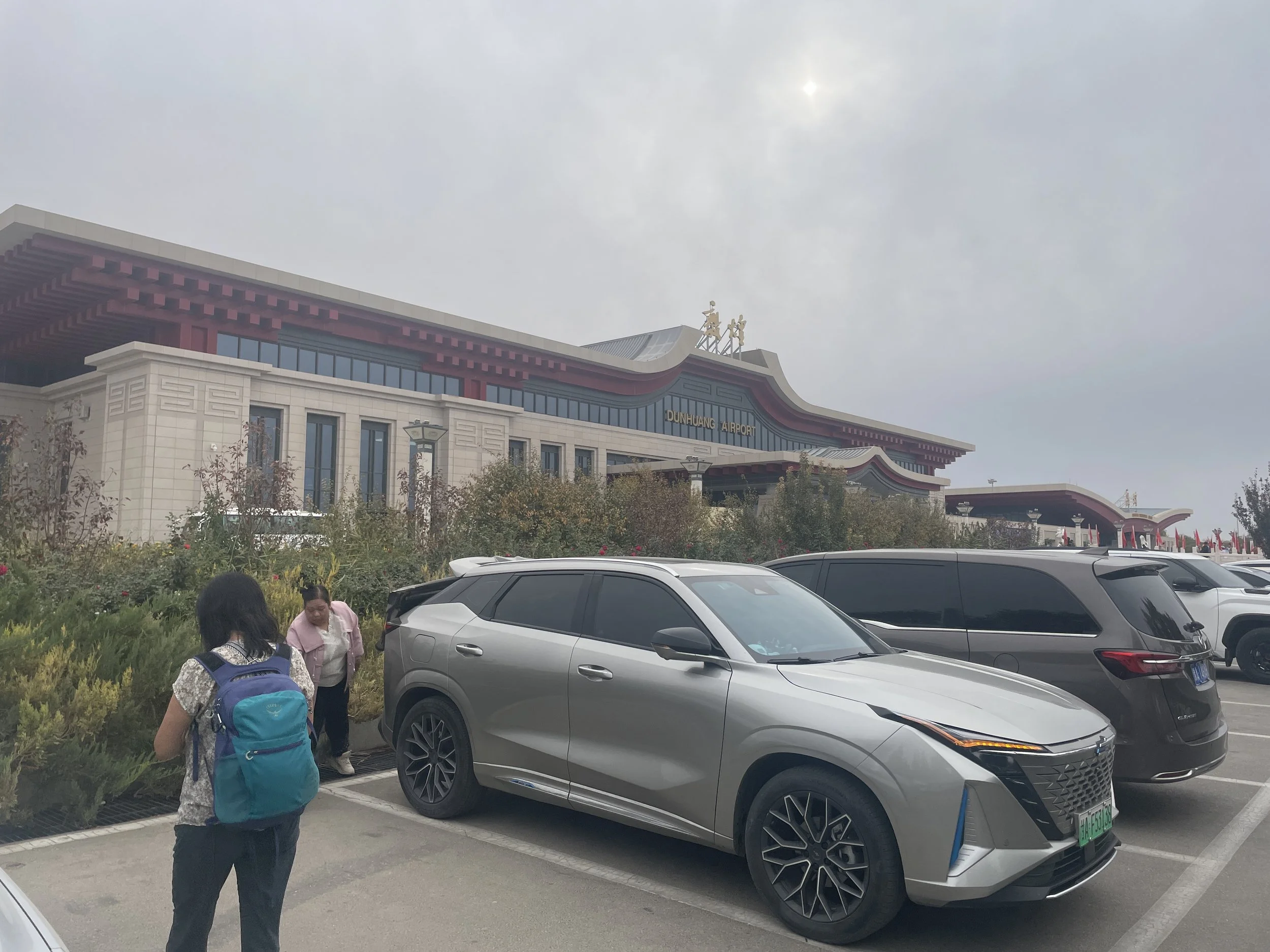
We had long dreamed of exploring China’s vast northwest, and at last, the dream came true. Escaping Shanghai’s lingering October heat and humidity, we boarded a direct four-hour flight to Dunhuang on the final day of the National Day “Golden Week.” The plane was full, but the flight was smooth, and soon we stepped into the crisp, dry air of a Dunhuang autumn.
At the airport, our driver—booked through Ctrip—was already waiting for us. On the way to the hotel, she enthusiastically introduced local sights and even offered us a discount for the tickets for the evening’s show Again See Dunhuang (又见敦煌).
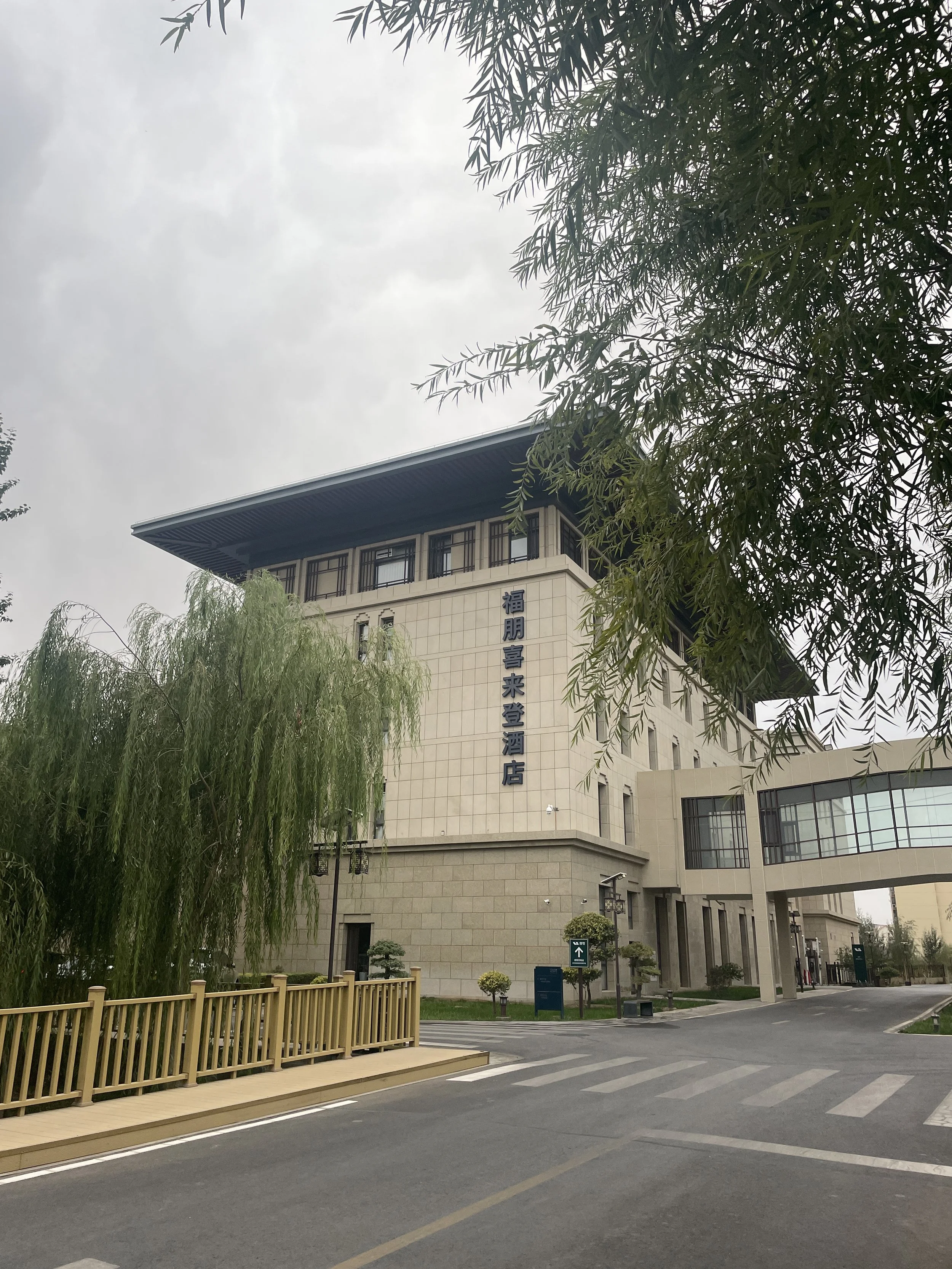
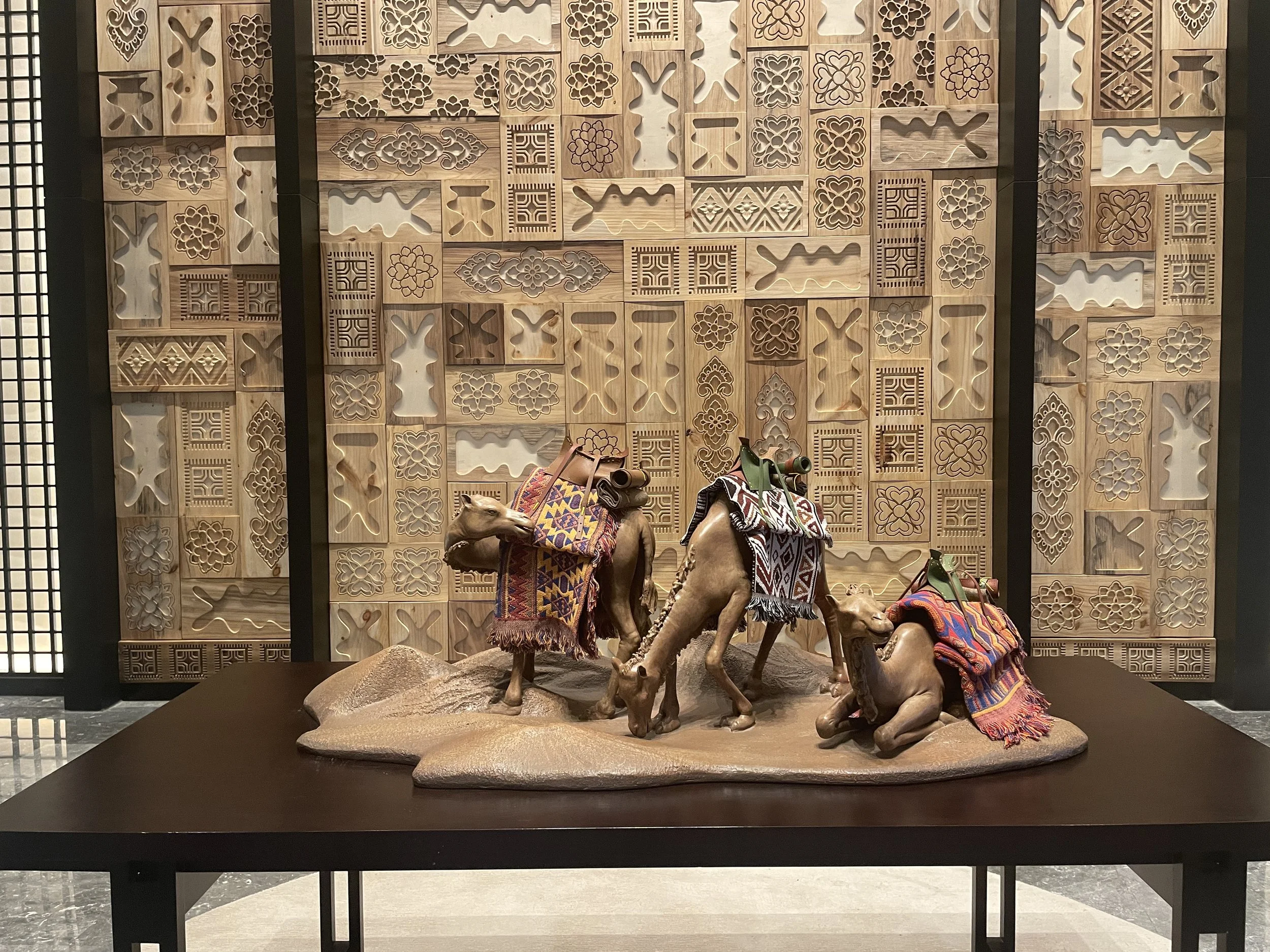
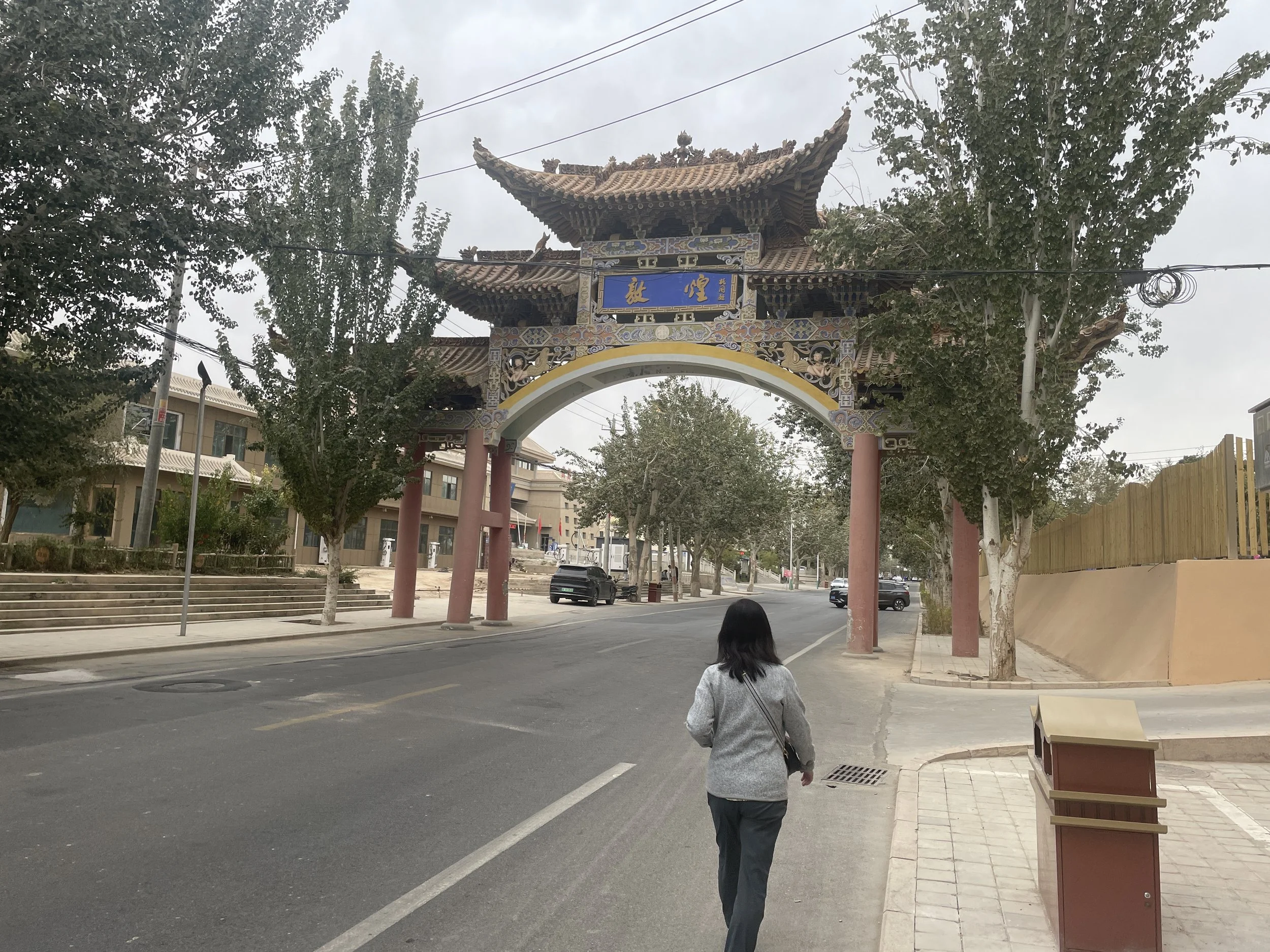
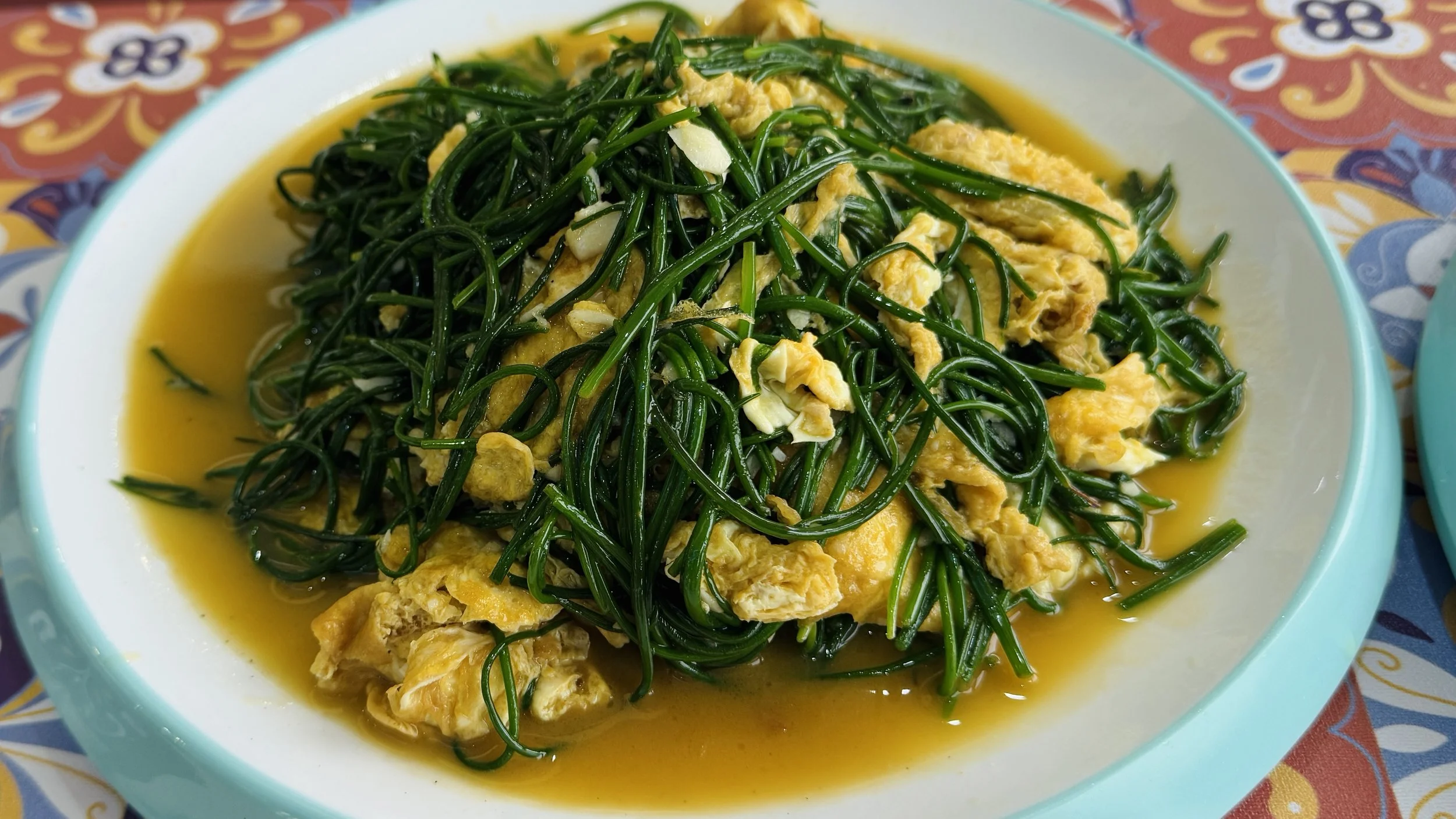
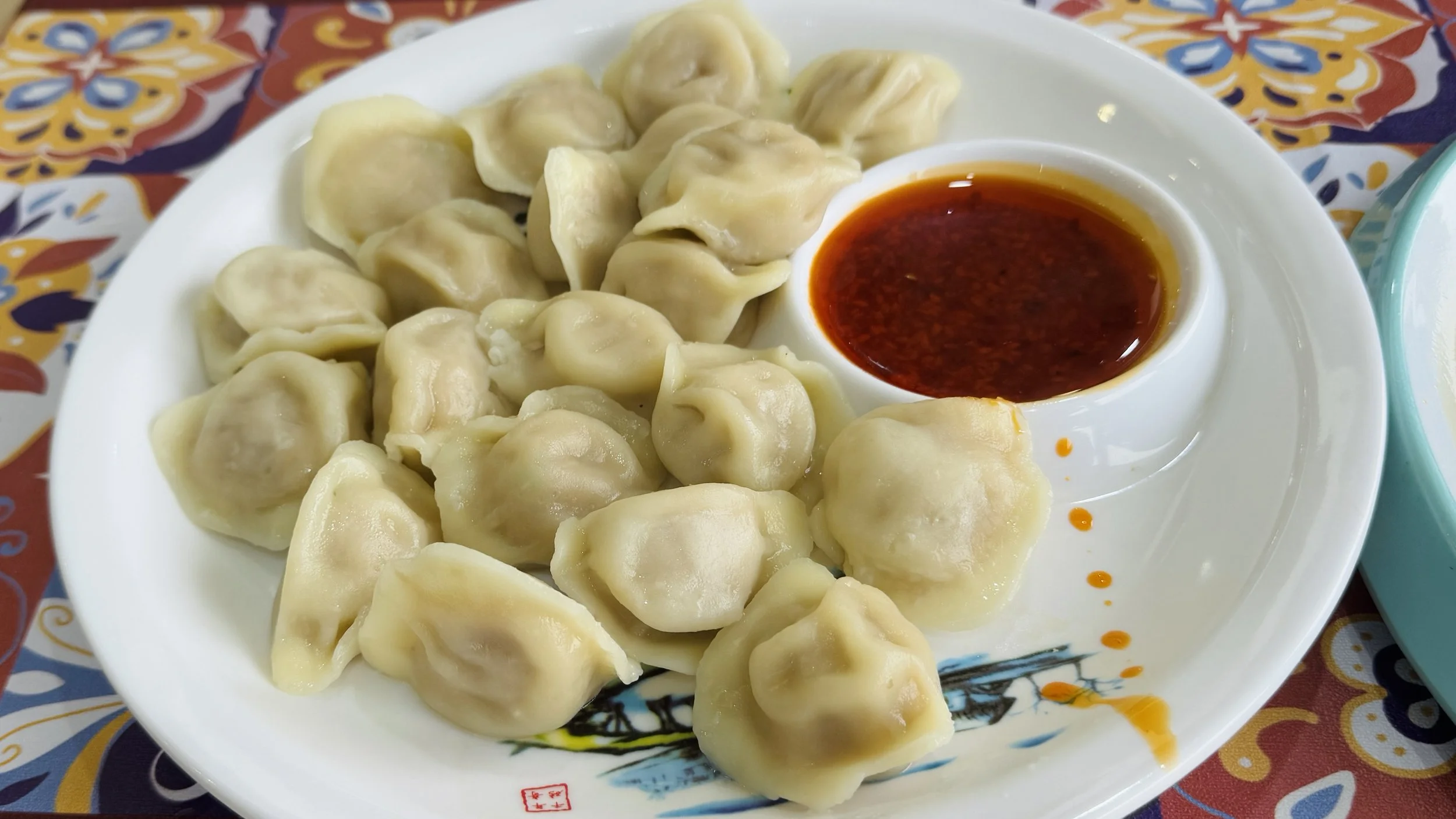
After settling into our hotel, we ventured out for dinner. Our first taste of northwestern cuisine—shacong scrambled eggs (沙葱炒鸡蛋) and beef dumplings (牛肉水饺)—was delightful, both dishes flavorful and hearty.
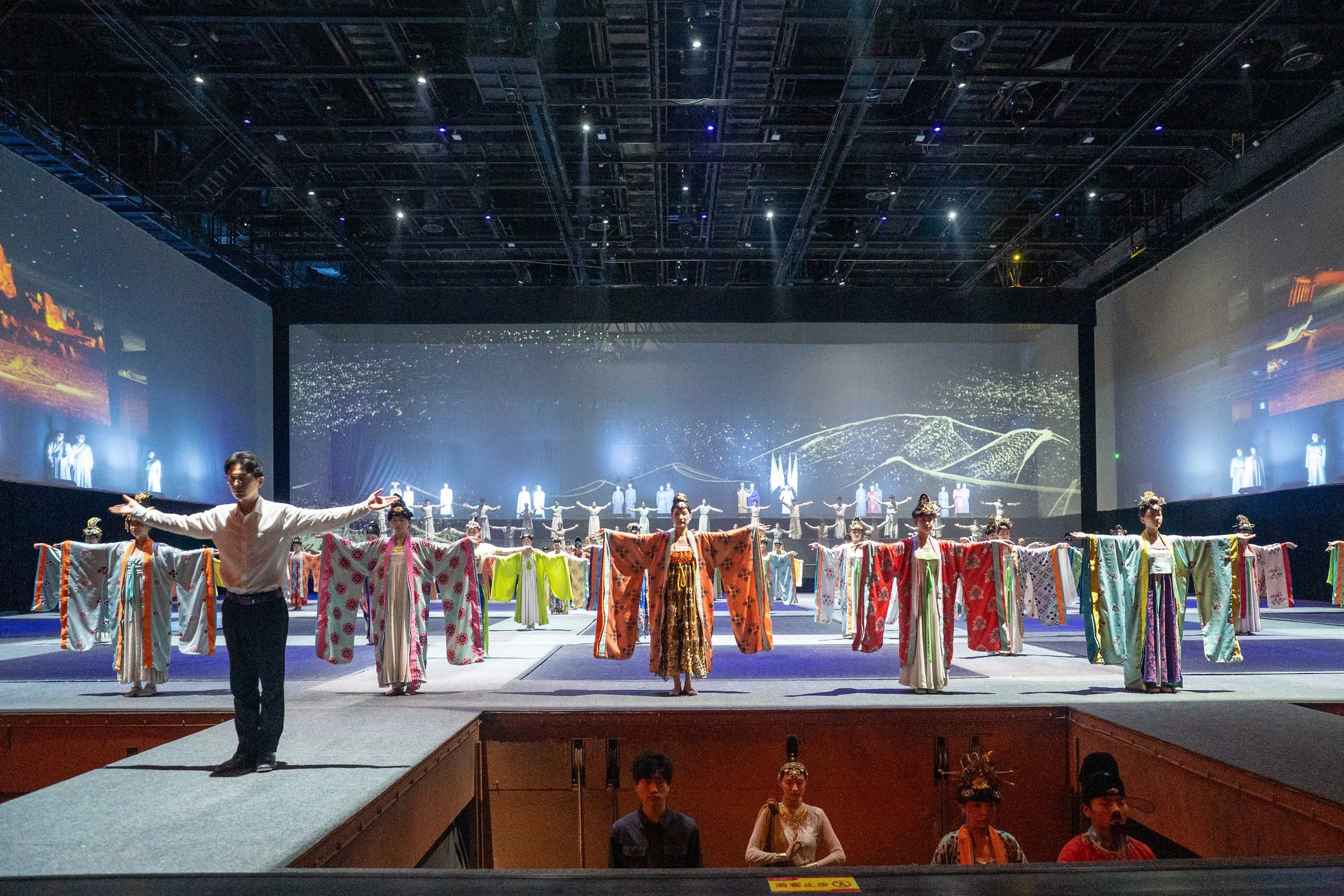
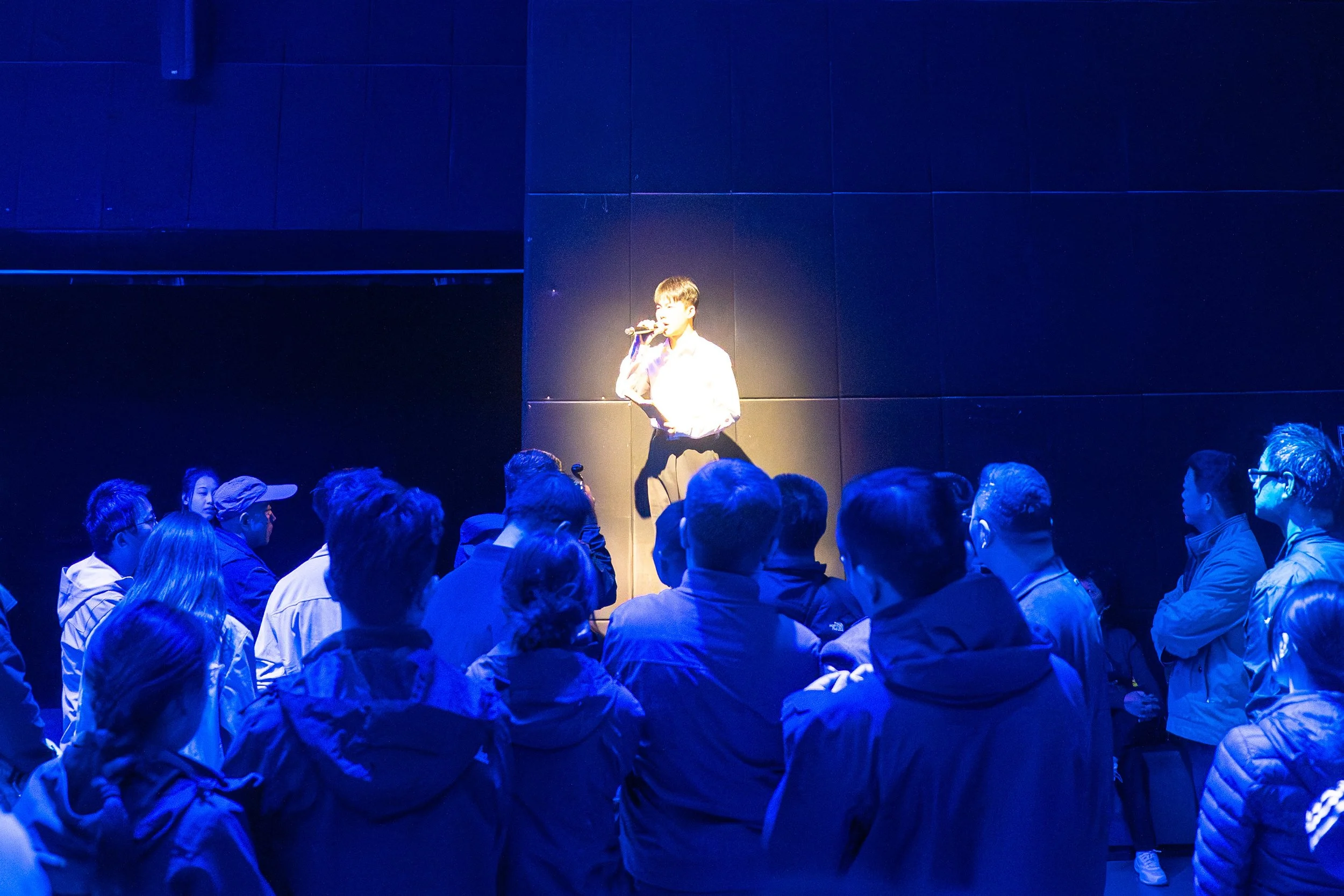
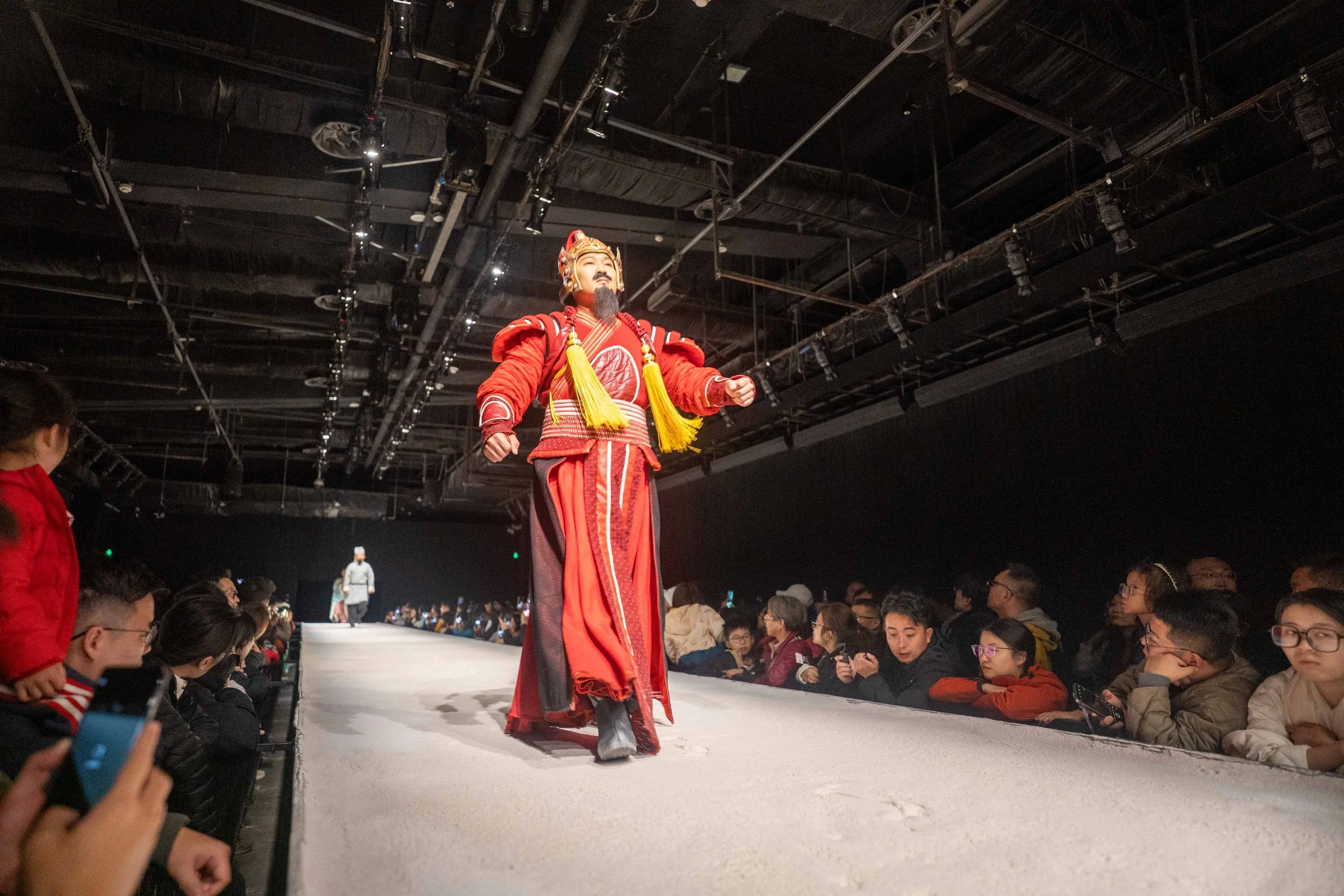
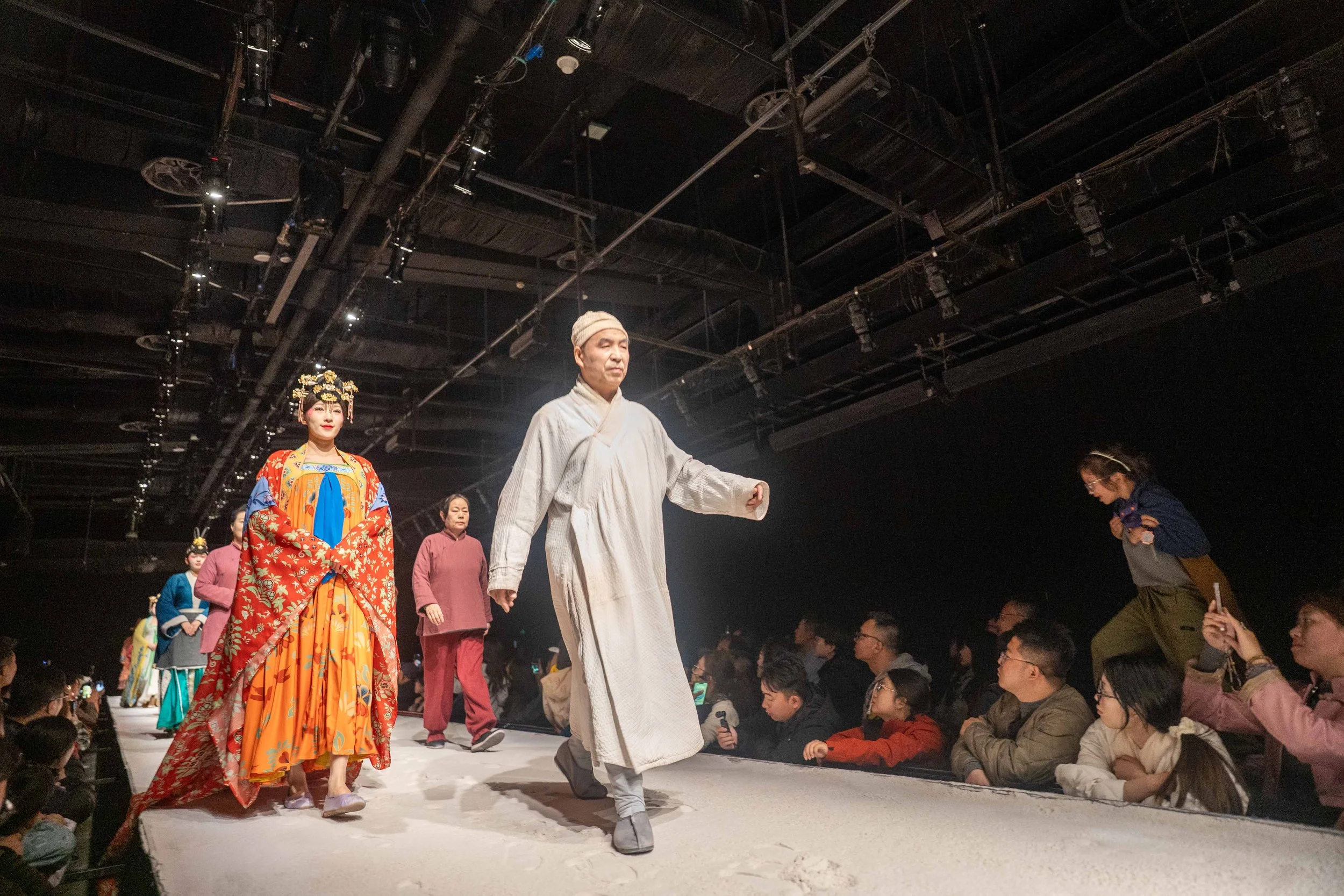
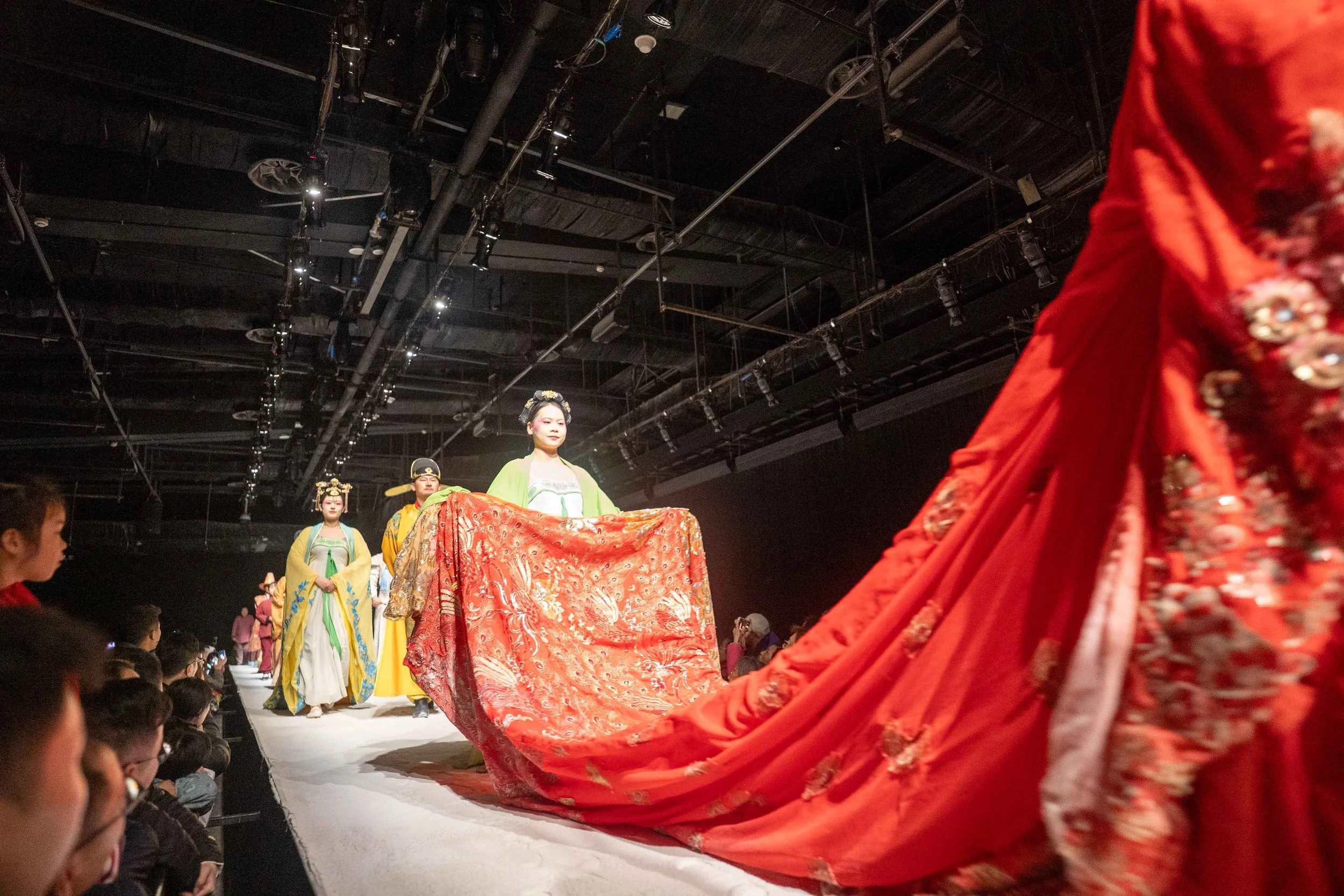
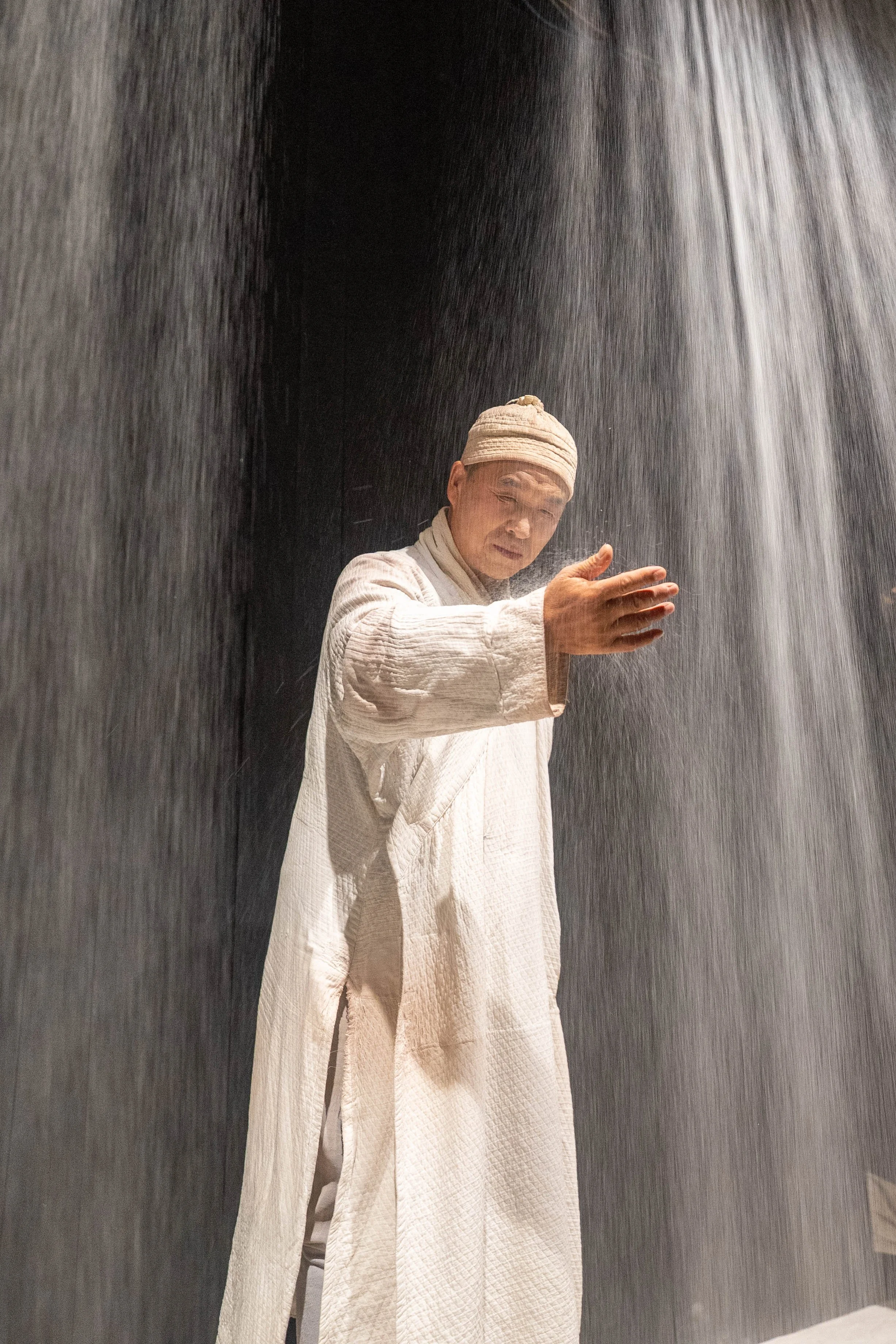
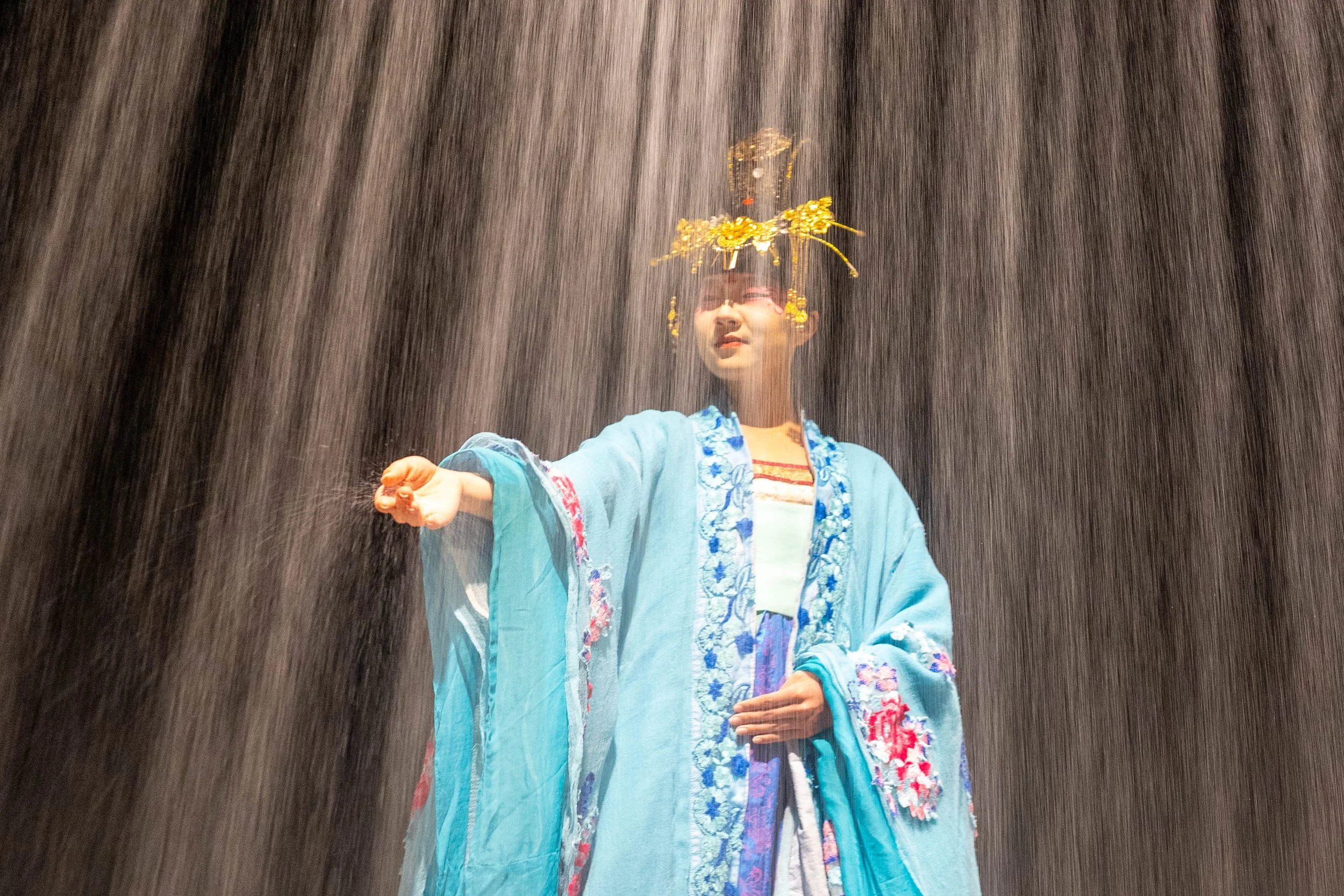
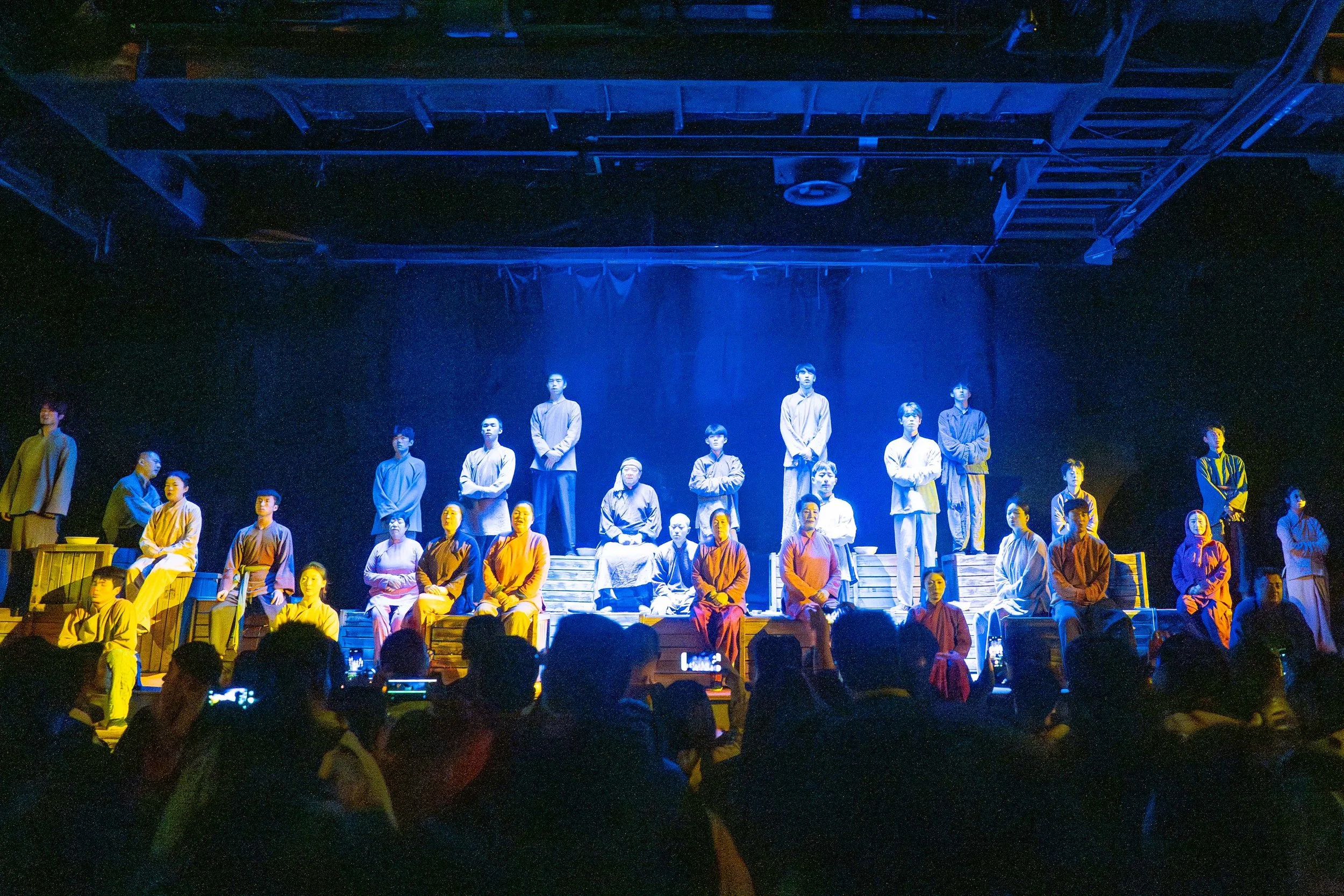
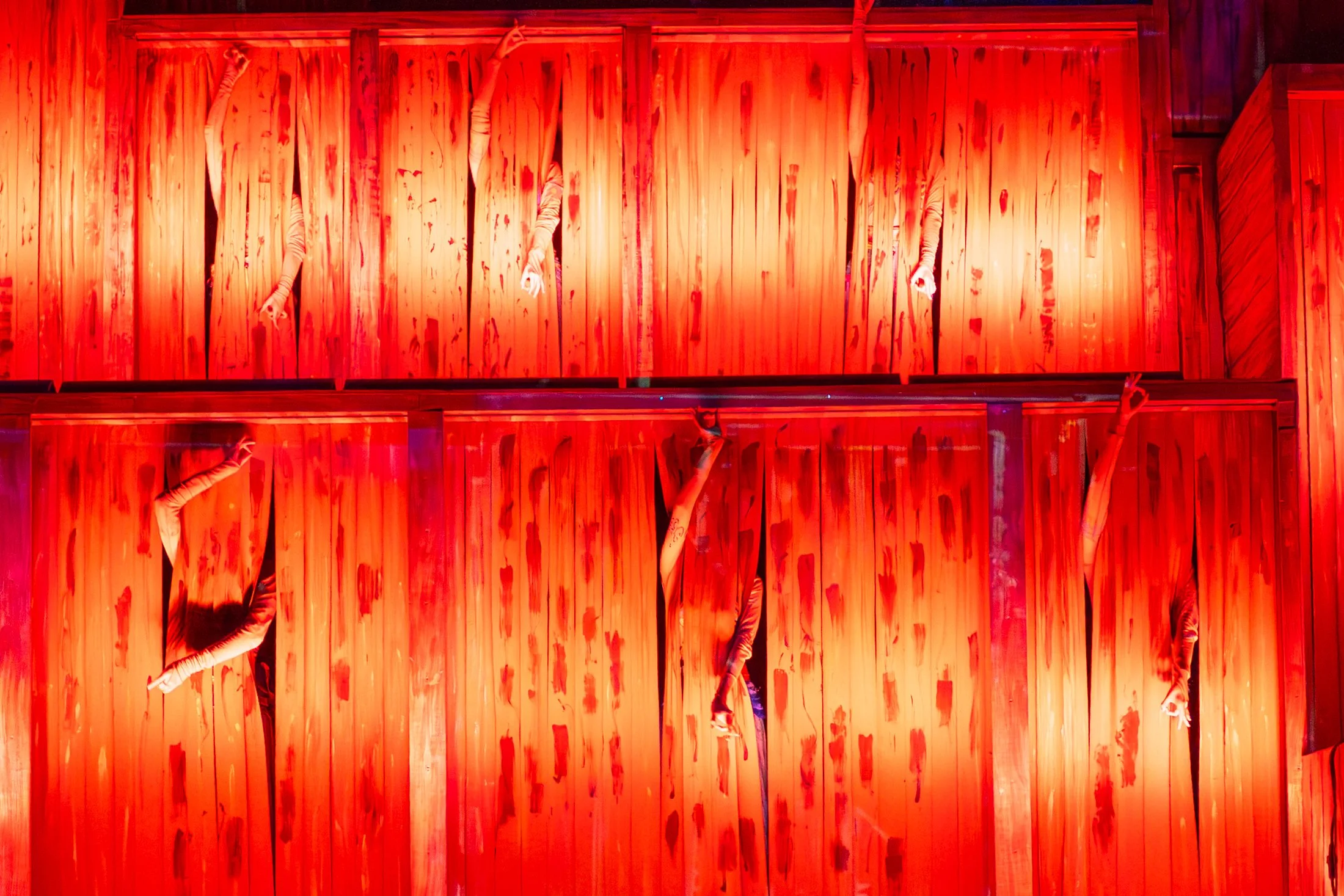
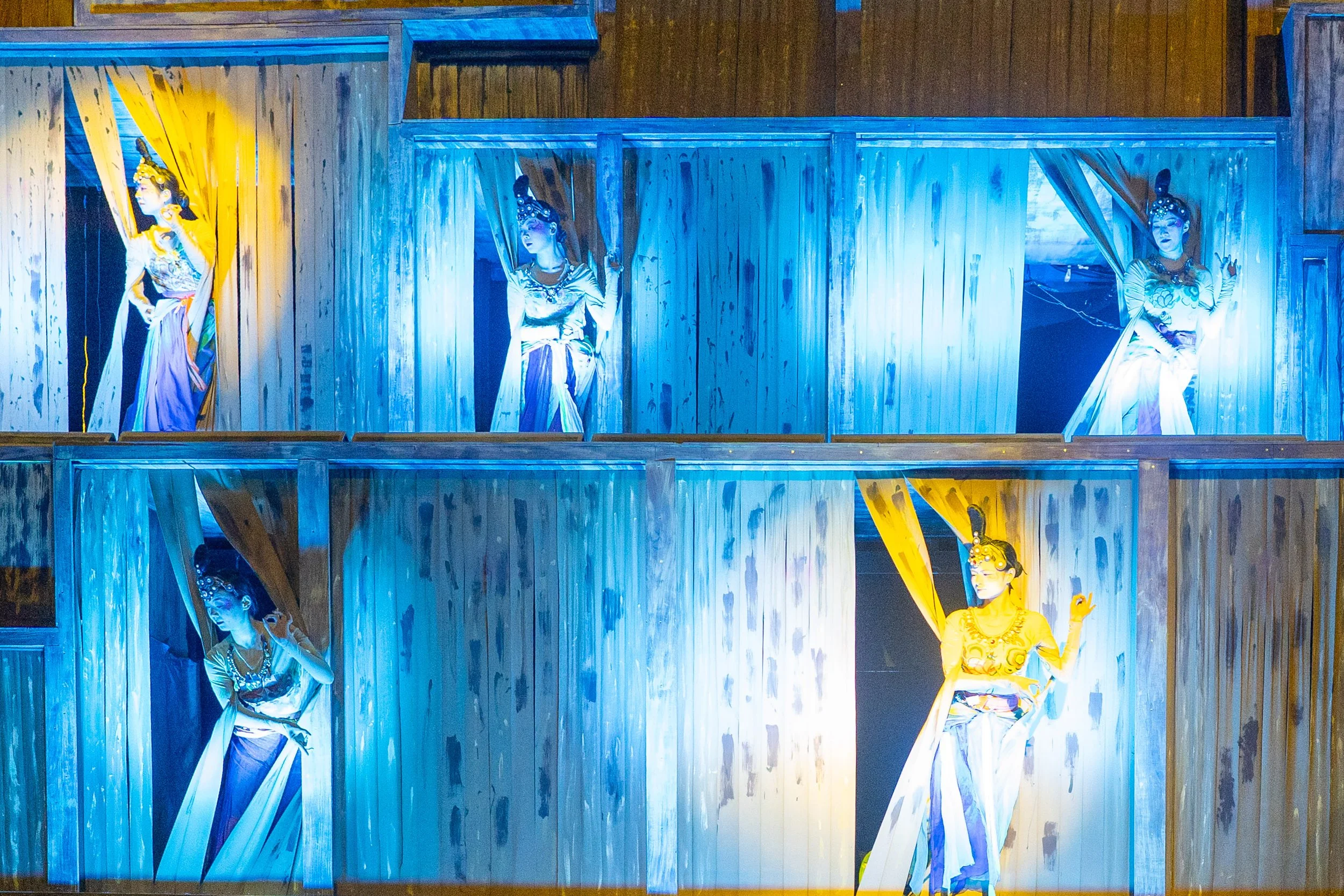
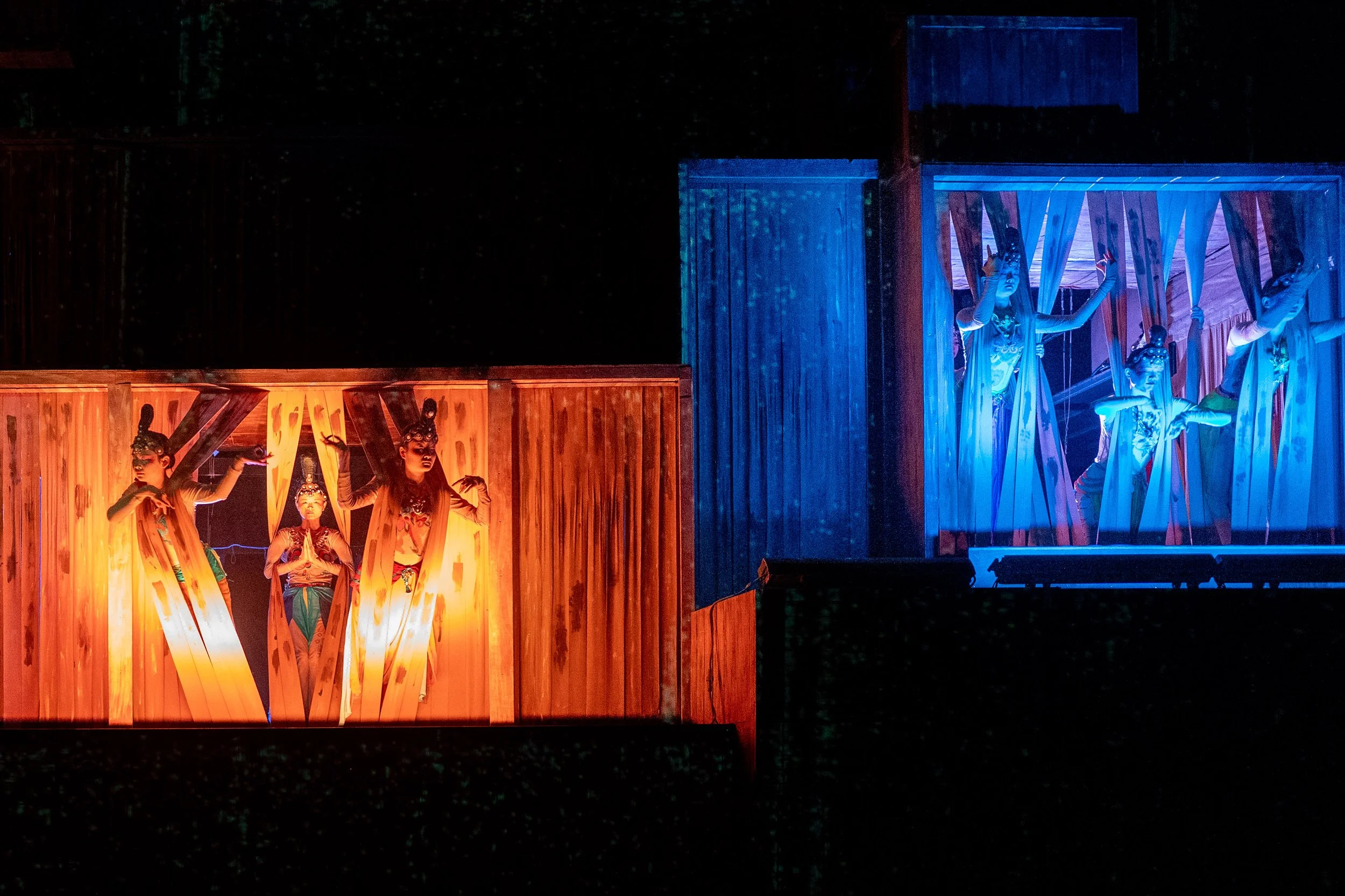
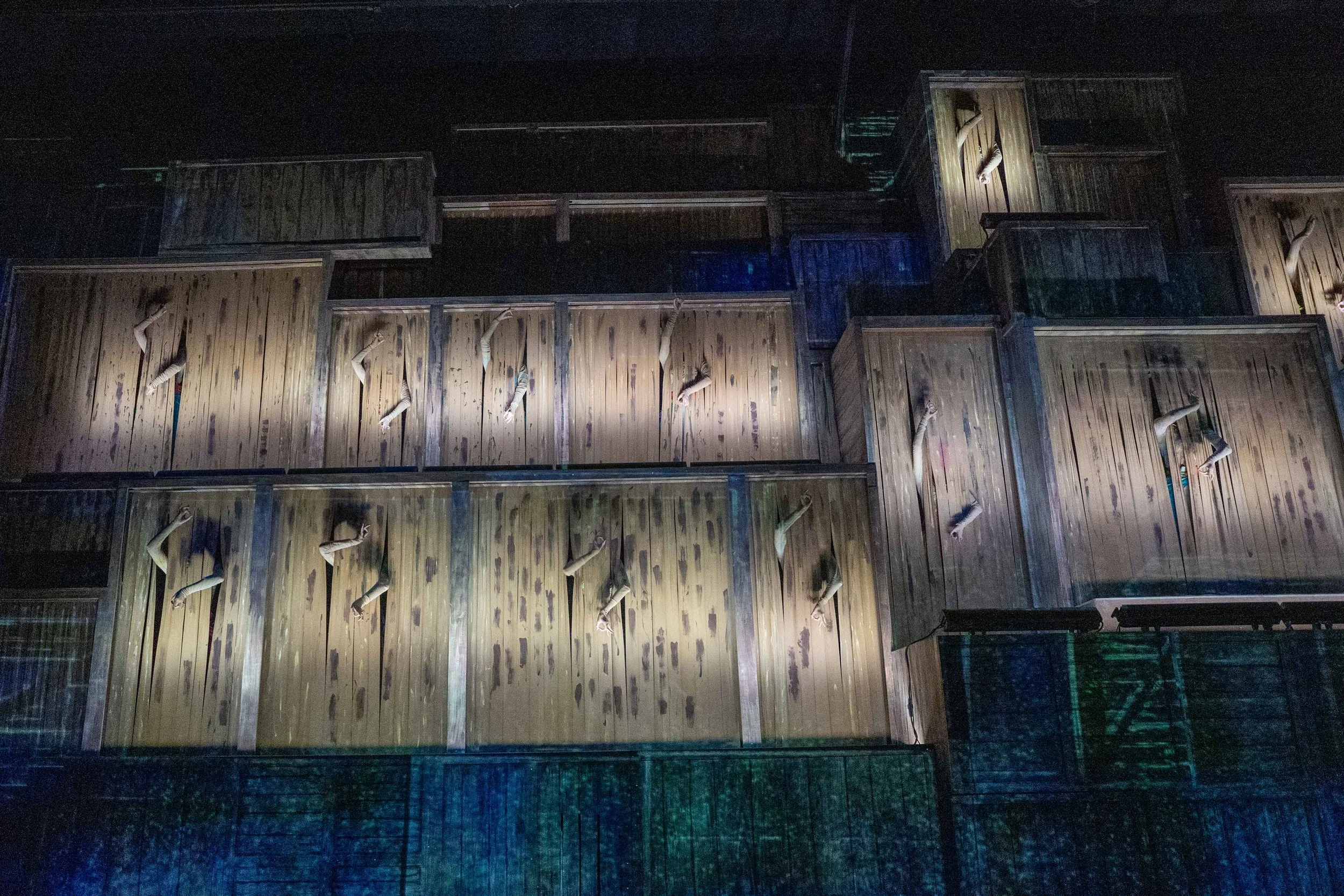
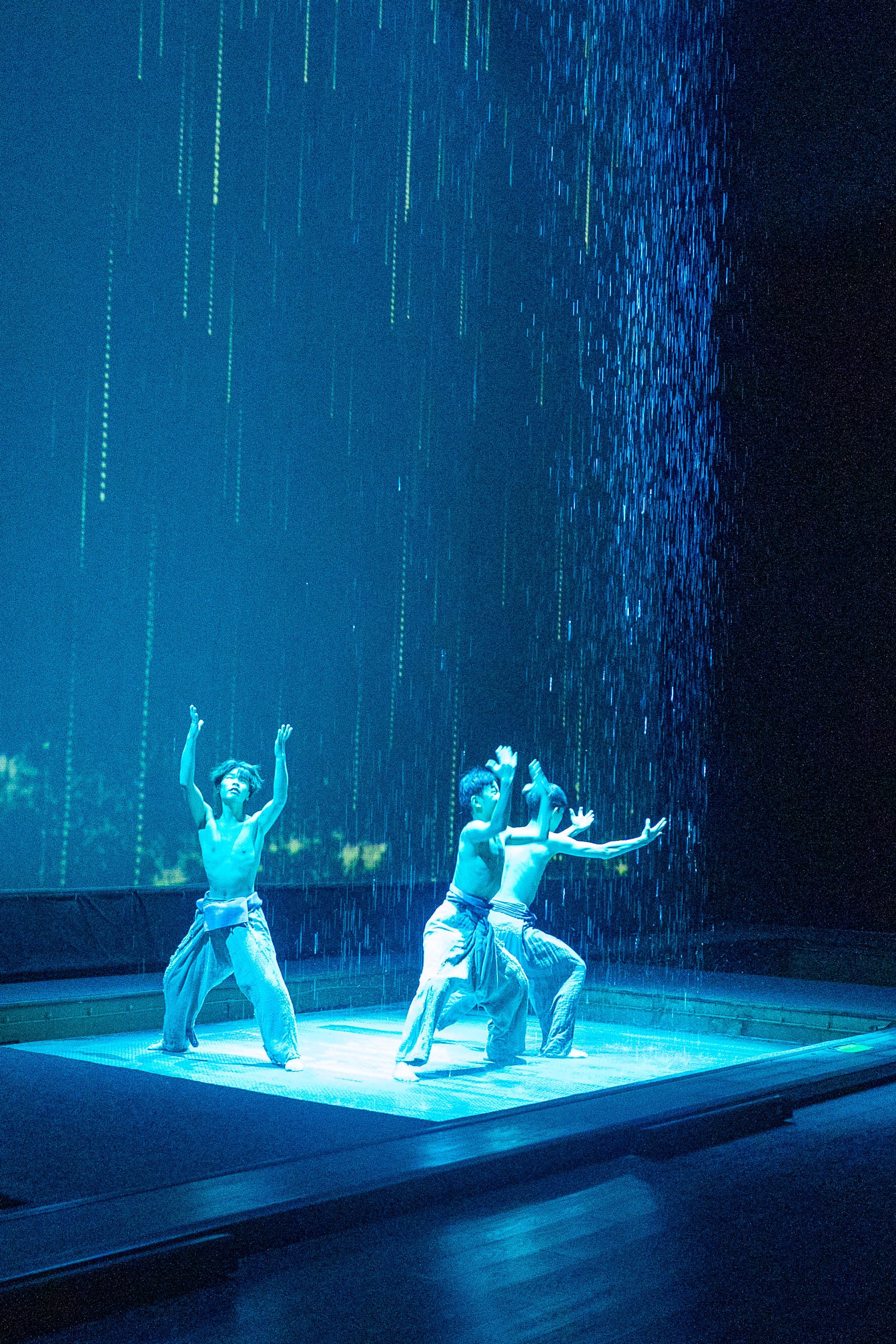
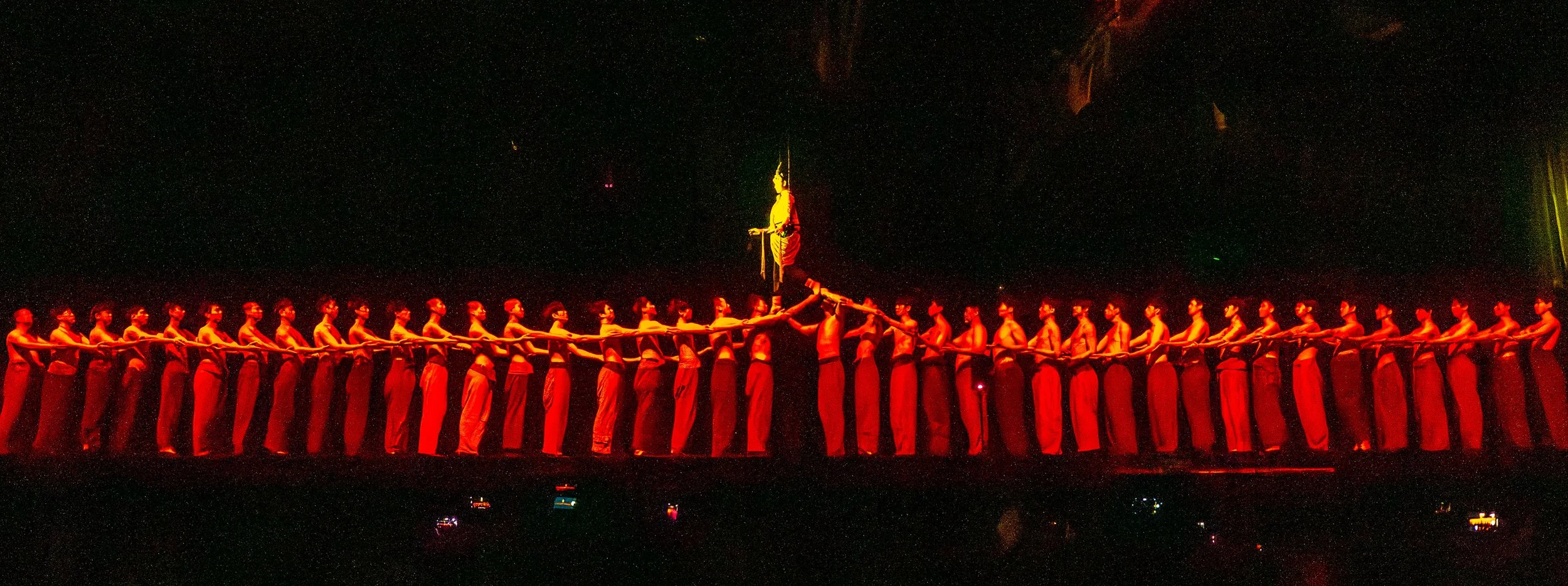
That evening, we attended the 8 p.m. show. It lasted about 90 minutes, the first hour featuring immersive performances where the audience followed actors through several themed stages that told ancient Silk Road stories. In the final half hour, everyone took seats in a theater for the grand finale. The production was unique in concept and scale, though it leaned more on spectacle than artistic depth.

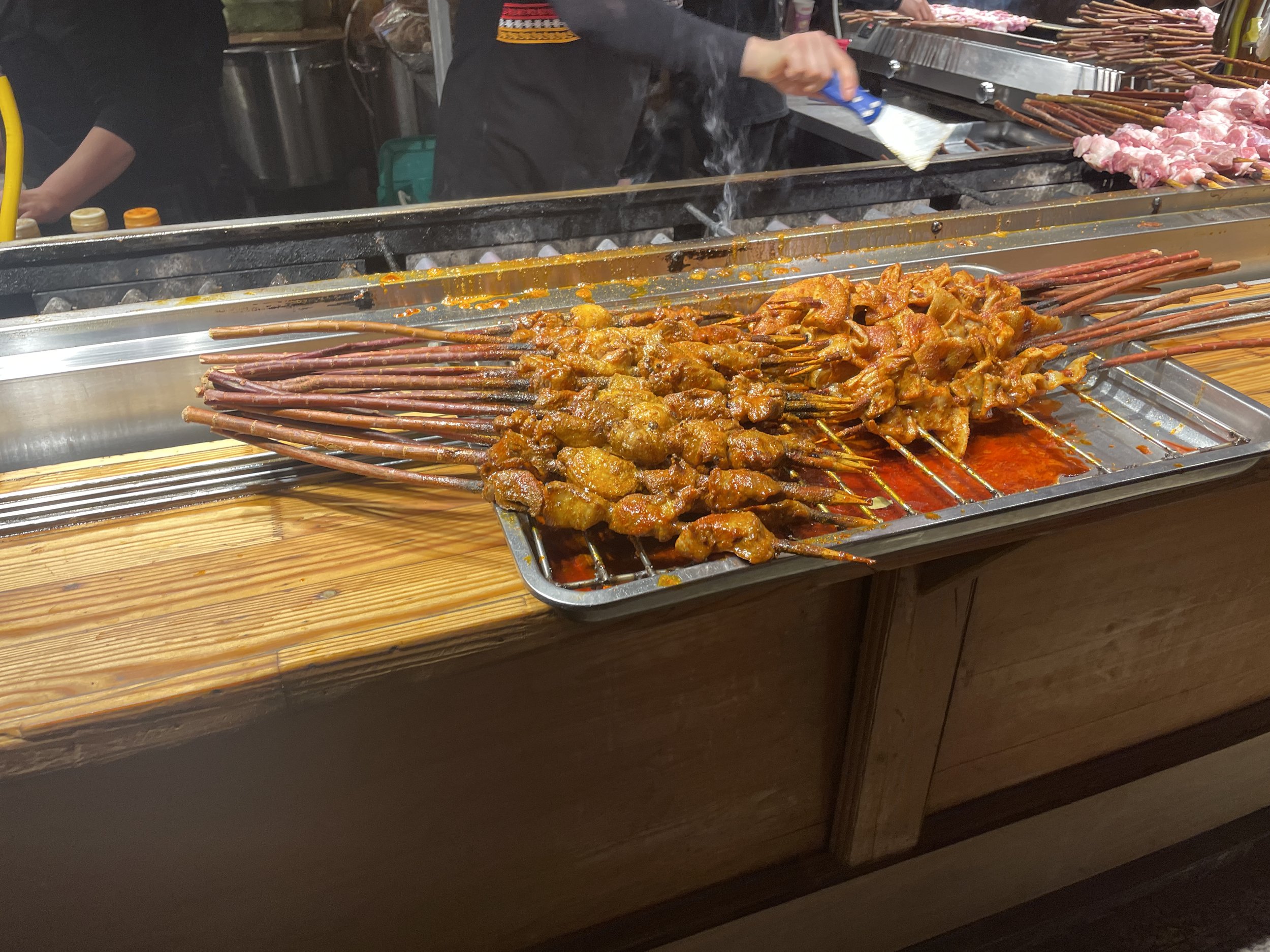
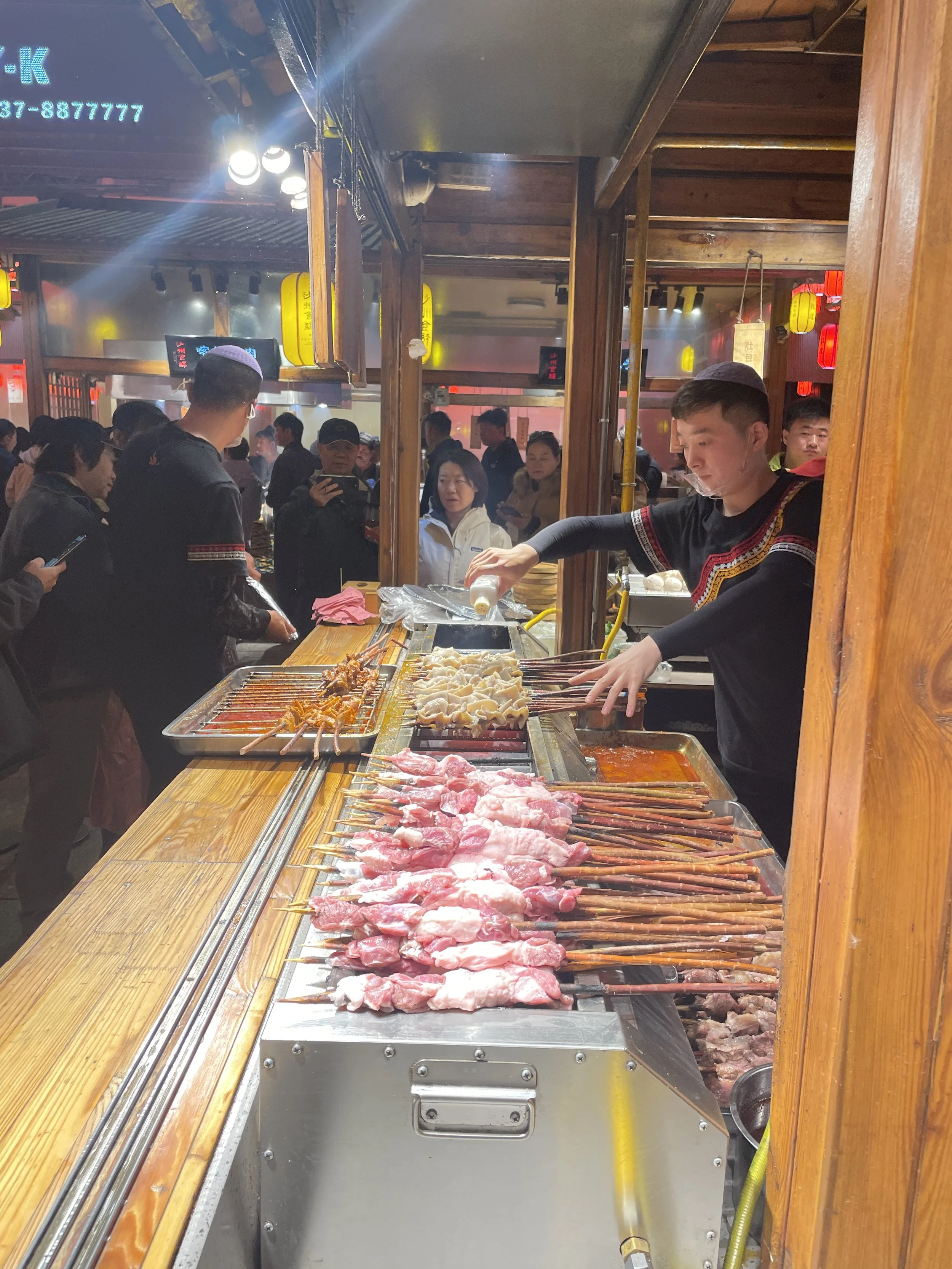
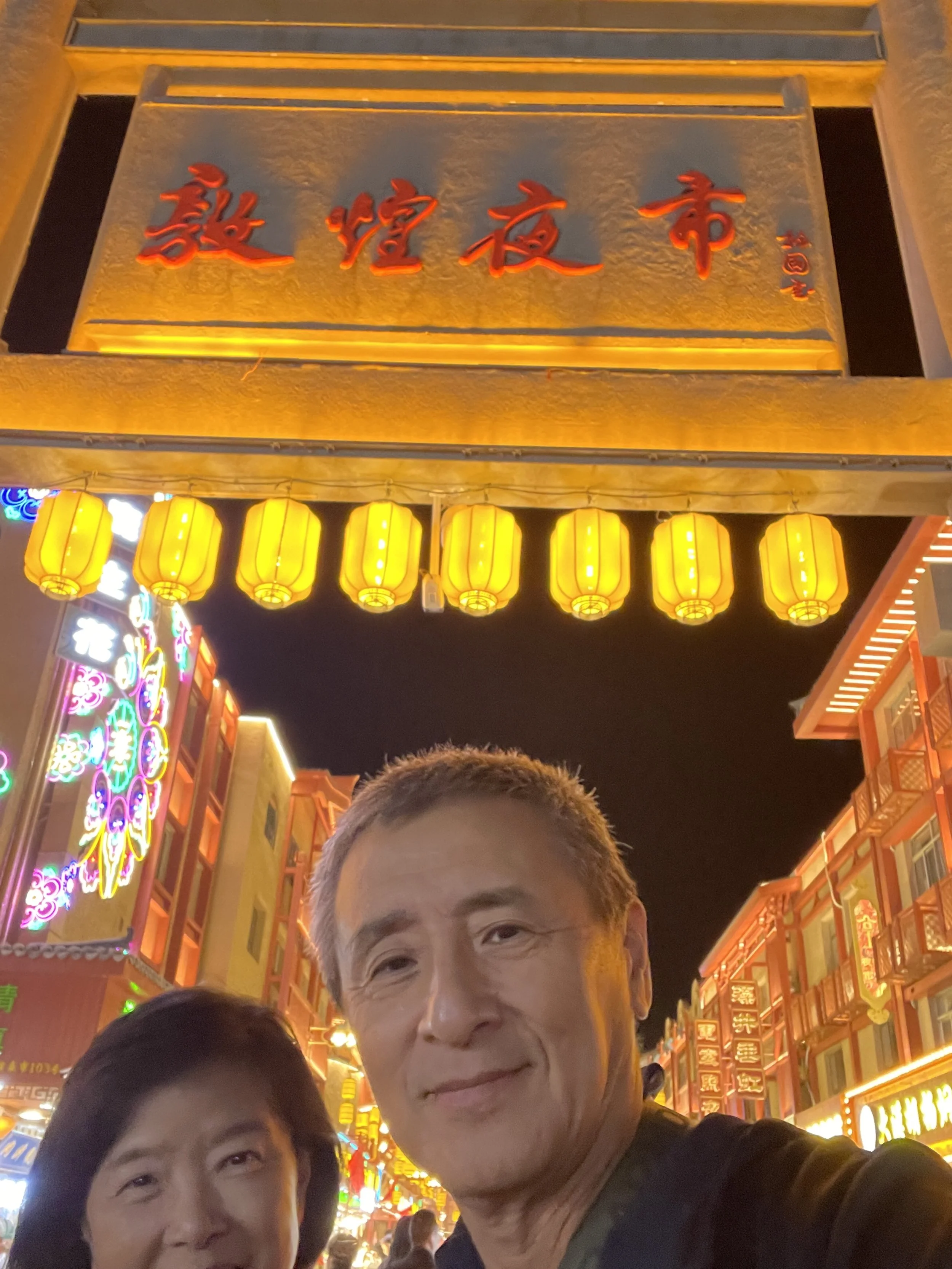
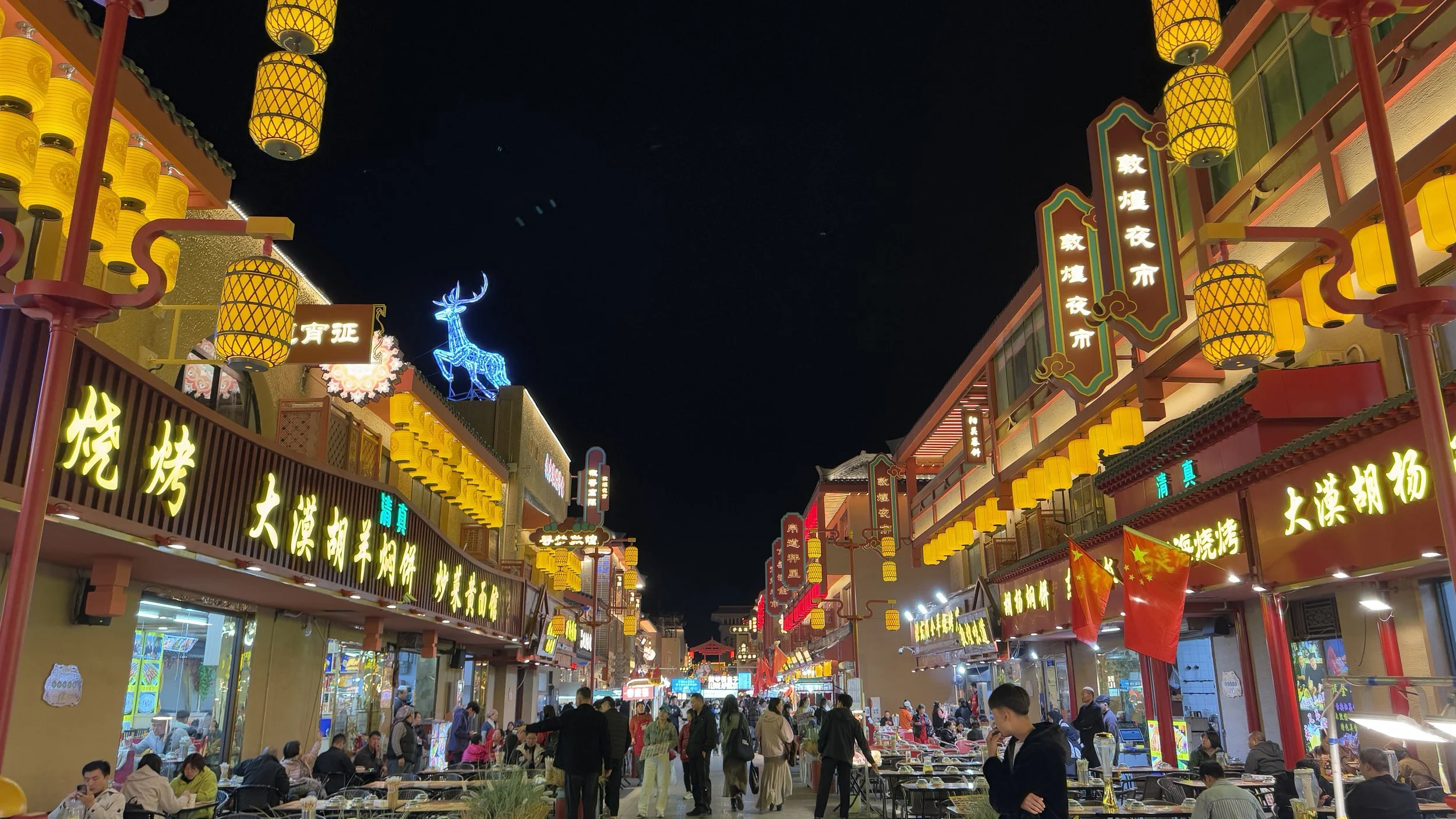
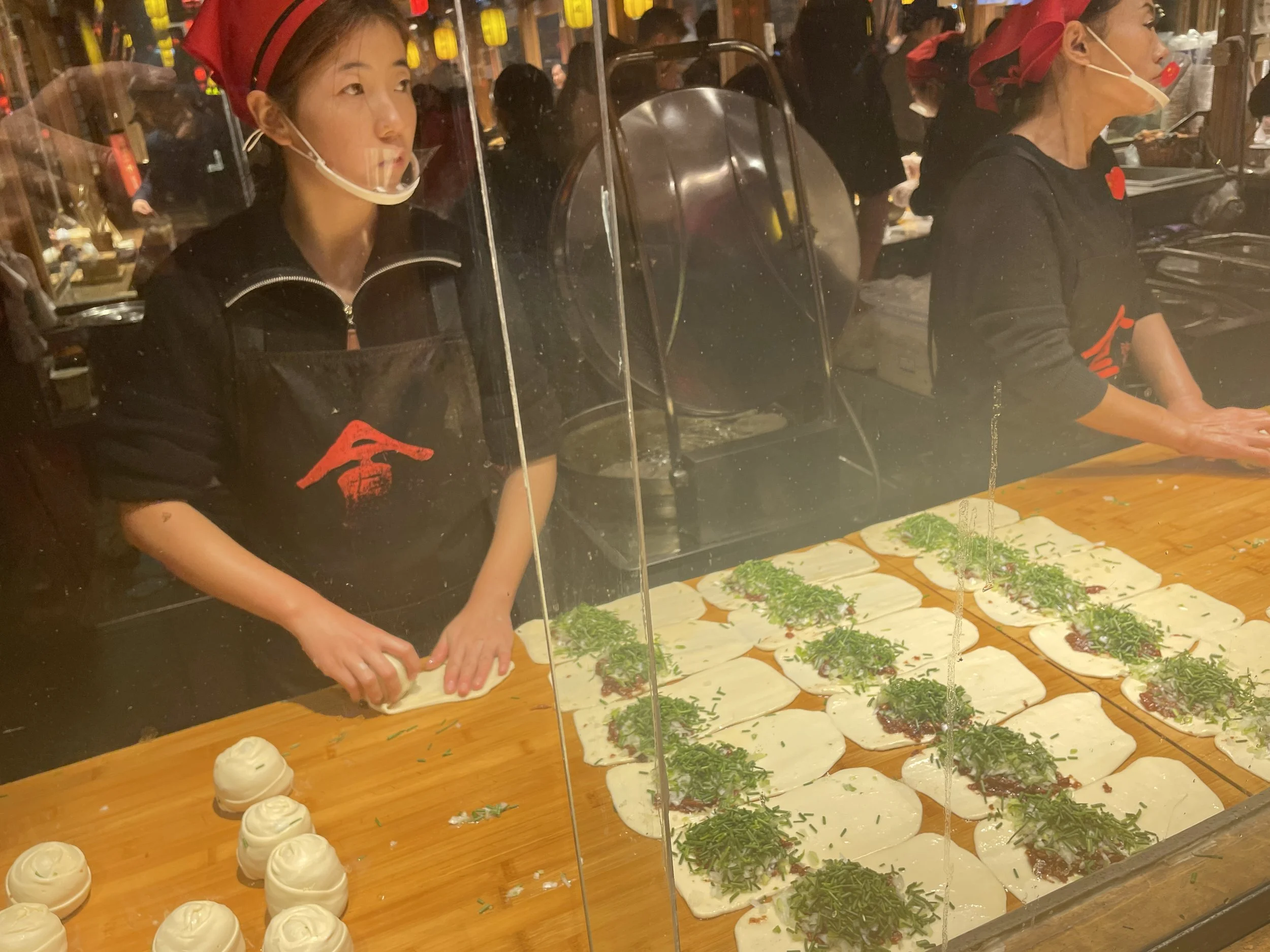
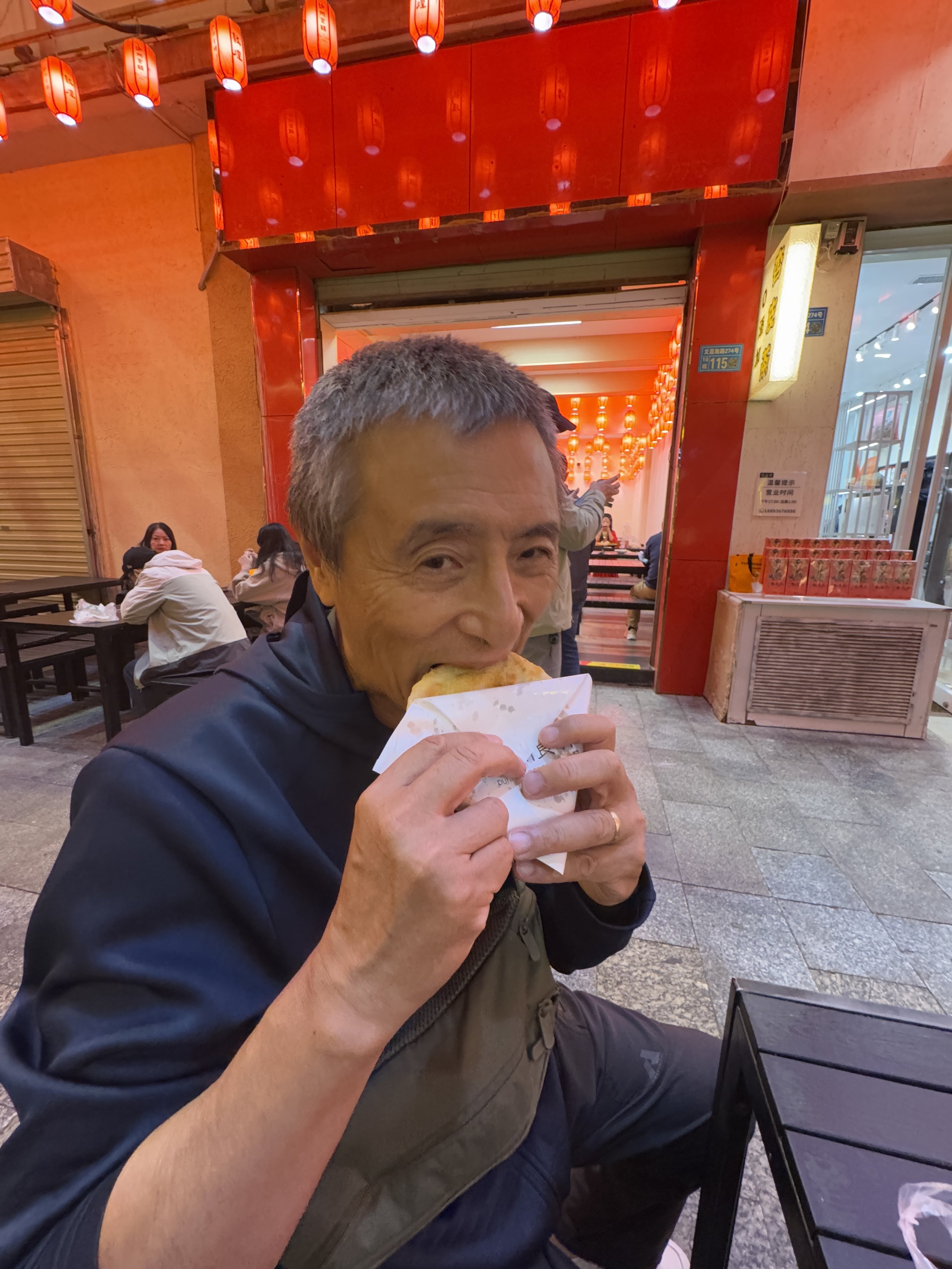
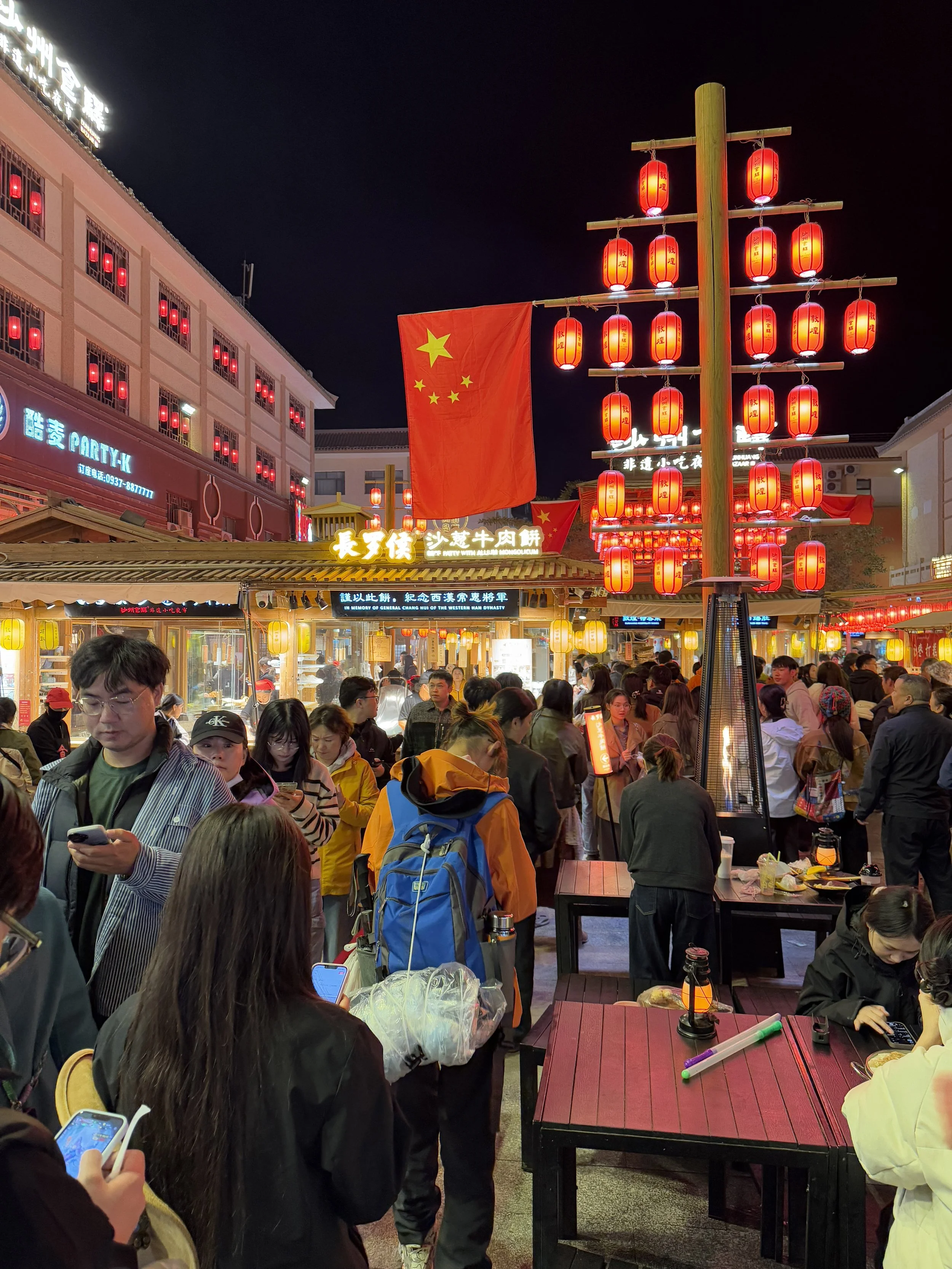
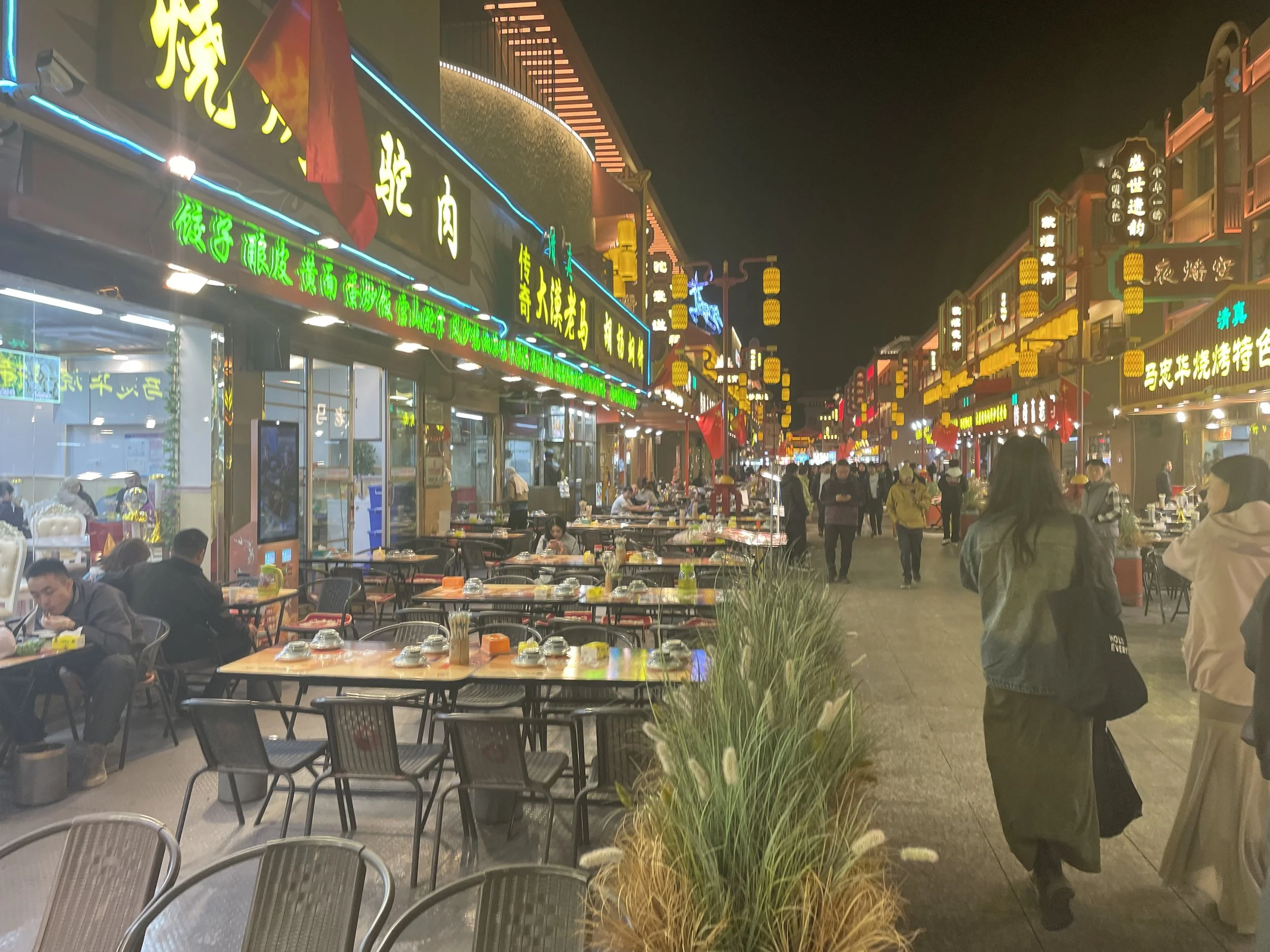
After the show, we strolled through the bustling Dunhuang Night Market—advertised as one of the best in China. The lively stalls, glowing lanterns, and aromas of grilled skewers filled the air. We sampled a shacong beef pie (沙葱牛肉饼), juicy and flavorful, a perfect late-night snack.
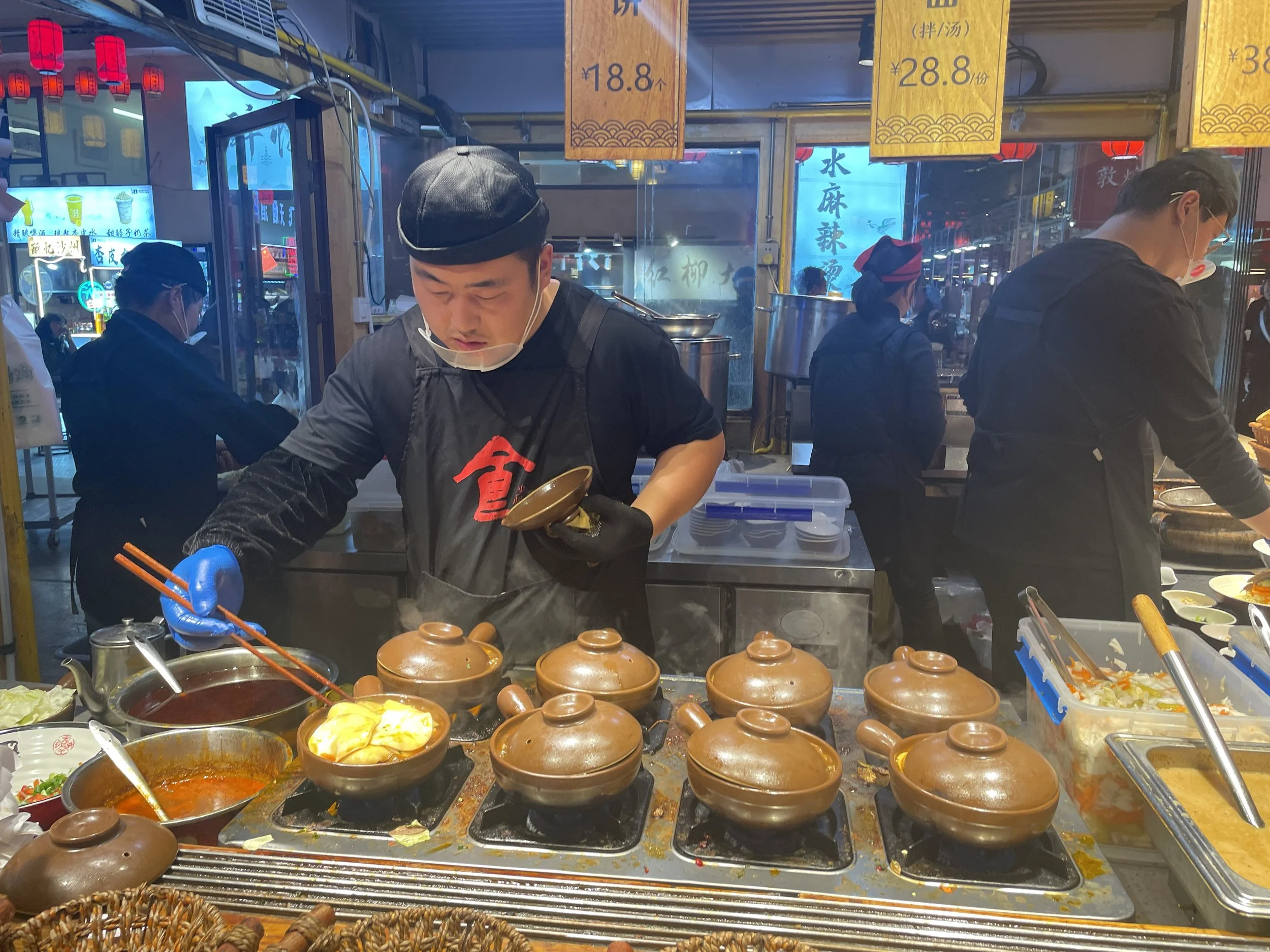
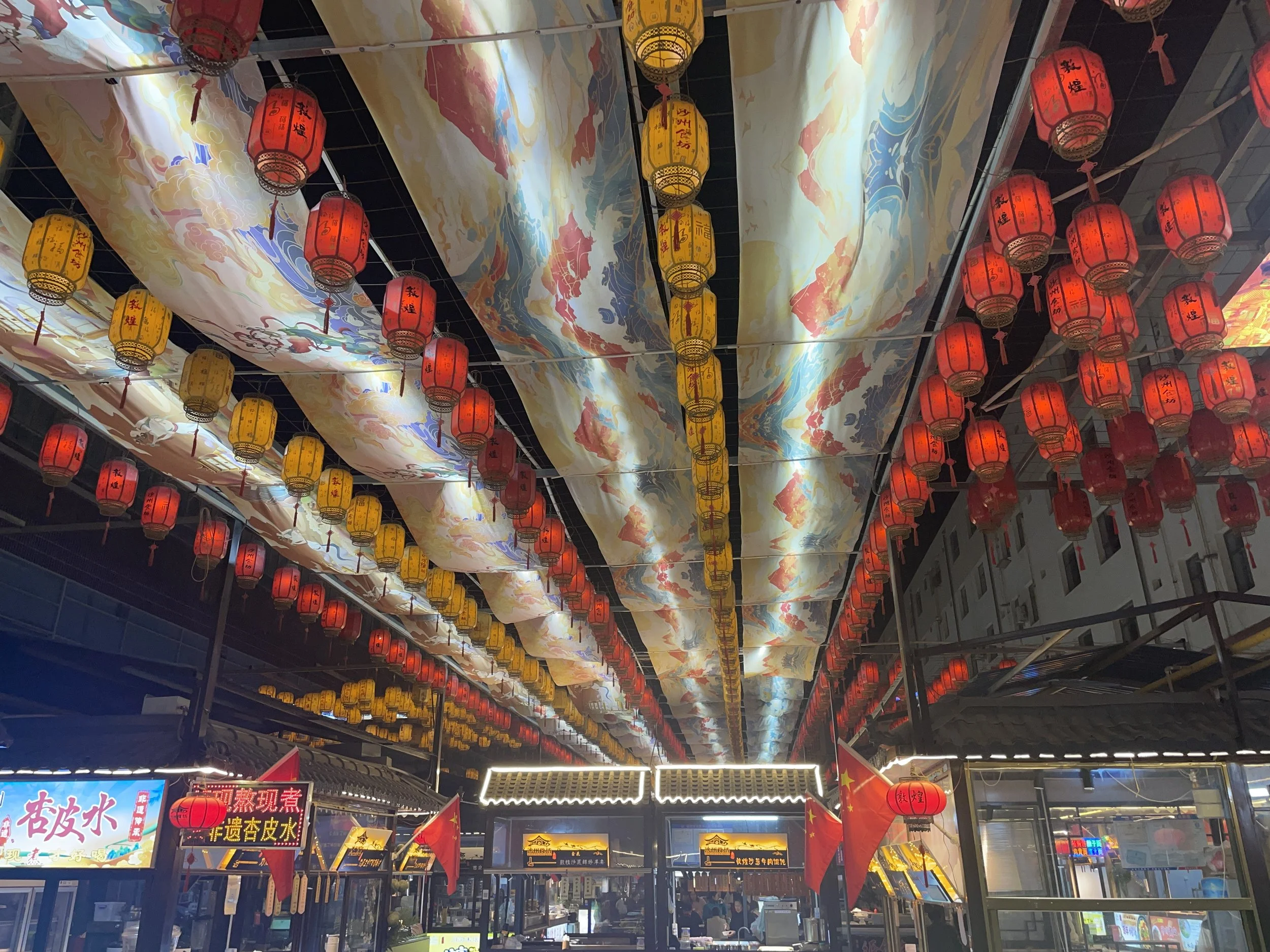
Satisfied and tired, we returned to our hotel to rest, ready for the next day’s long-awaited visit to the Mogao Caves and the Singing Sands of Mingsha Mountain.
2025年10月8日
我们早已向往中国西北的辽阔风光,这次终于梦想成真。躲避上海十月初依然闷热潮湿的天气,我们在国庆“黄金周”的最后一天,搭乘了直飞敦煌的航班。四个小时后抵达敦煌,走出机场时,迎面而来的秋风清爽宜人,令人心情顿时舒畅。
机场出口处,提前在携程预订的司机已经等候我们多时,在去酒店路上,我们从她那里购买了当晚的演出票——《又见敦煌》。
入住酒店稍作休息后,我们便外出用餐。第一次品尝当地美食:沙葱炒鸡蛋和牛肉水饺,味道都十分出色,鲜香浓郁,颇具西北风味。
晚上八点,我们前往观看《又见敦煌》。这是一场融合了敦煌壁画、丝绸之路文化和佛教艺术的现代舞台艺术演出,整场演出约九十分钟,前一个小时观众需跟随演员穿梭于多个舞台,敦煌莫高窟文物遗失的情节重现眼前。最后三十分钟则在剧场中落座观赏舞台表演,观众仿佛亲历古丝绸之路的传奇故事。演出形式新颖,规模宏大,虽然艺术表现略显平淡,但依然别具特色。
演出结束后,我们前往热闹非凡的敦煌夜市——据说是全国最有名的夜市之一。摊位林立、灯火通明、香气四溢,我们品尝了沙葱牛肉饼,外酥内嫩、汁多味美,令人回味无穷。
饱餐一顿后,我们回到酒店休息,为明天期待已久的莫高窟与鸣沙山之行养精蓄锐。

Macau 澳门
March 8, 2024
Yesterday, I visited my maternal uncle and his family in Panyu……
March 8, 2024
Yesterday, I visited my maternal uncle and his family in Panyu. The journey from Shenzhen took about 2.5 hours door-to-door via high-speed train and two subway transfers. I hadn’t seen them for decades, making the reunion both emotional and heartwarming.
Today was another packed travel day as I set out to visit Macau. Before heading to the ferry terminal at Shekou, I made a detour to Talent Park, where I took a leisurely stroll. The park was beautiful, and I wished I had more time to enjoy it.


From there, I called a Didi to the ferry terminal. Initially, I was seated in second class on the lower deck, where the seats were narrow and somewhat cramped. After a few minutes, I decided to upgrade to first class on the upper deck for ¥170. The upgrade was well worth it—there were only four passengers in the spacious and comfortable section, and the service included hot coffee and snacks. The sea crossing to Macau took about an hour.


Upon arrival, I took a free casino shuttle—amusingly called the “Getting Rich Shuttle”—to MGM Cotai. From there, I transferred to MGM Macau on Macau Island. The casino was bustling, the air filled with excitement, but since I wasn’t interested in gambling, I headed straight to the food court. I had clay pot rice (煲仔饭), which was delicious and suited my taste perfectly.

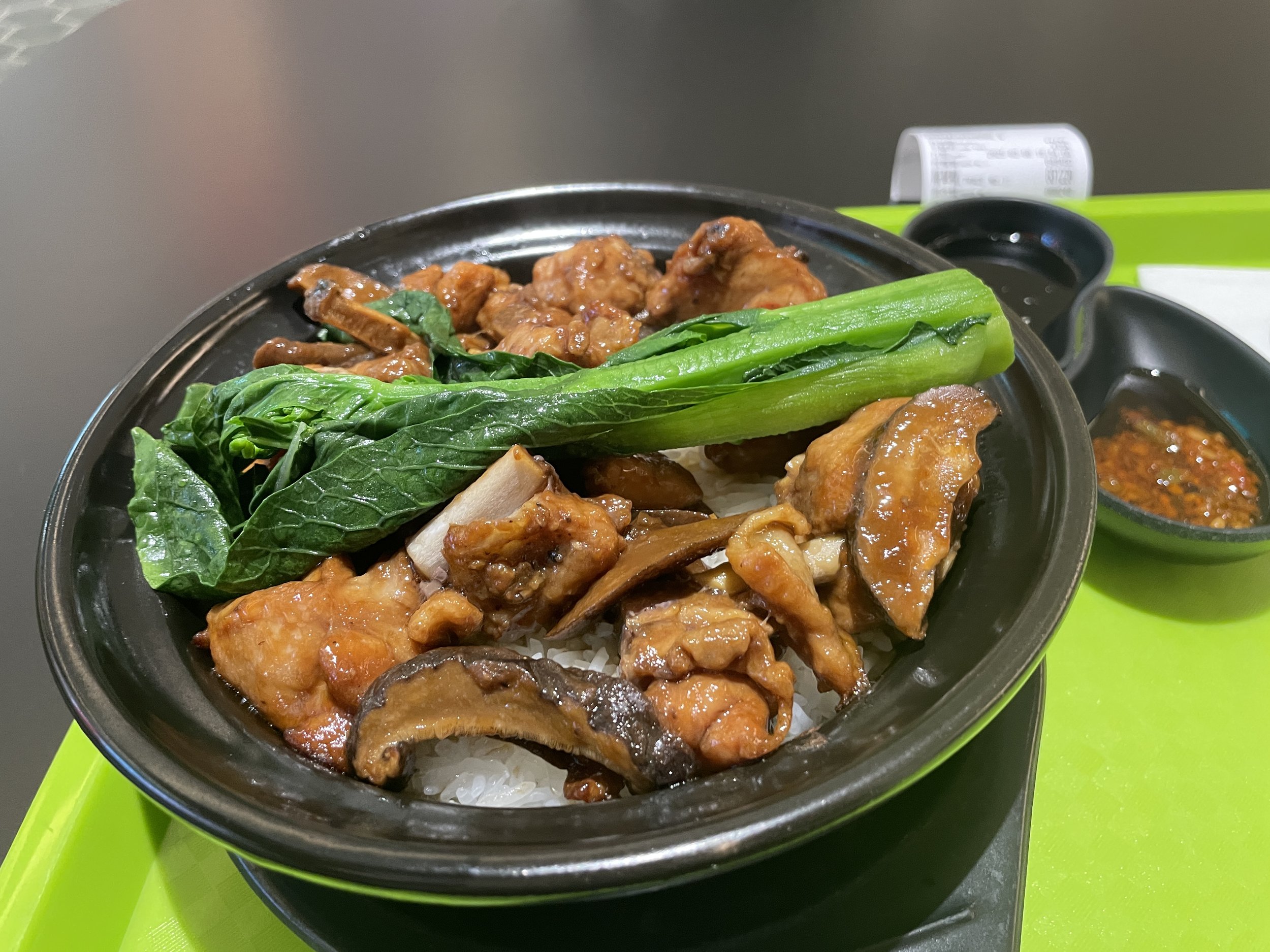
Afterward, I wandered around the area. Compared to Las Vegas, Macau’s casino district felt less glamorous. I took another free casino shuttle from Grand Lisboa back to Lisboeta in Taipa island. Then, I strolled from Lisboeta to MGM Cotai, passing by the impressive Wynn Cotai water fountain. The area around Wynn was noticeably more upscale and scenic.


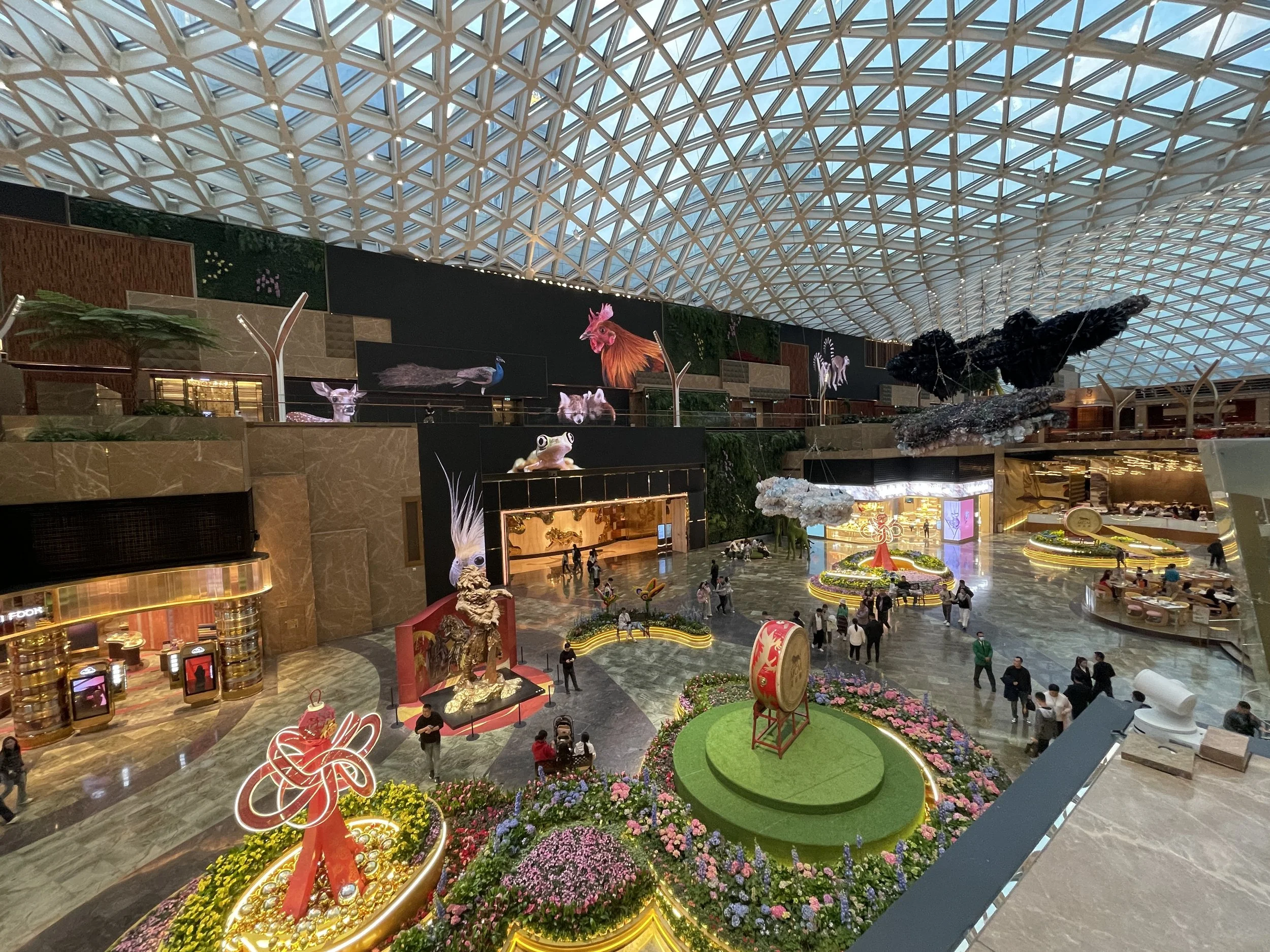

After five hours in Macau, during which I visited four casinos across two different islands, I returned to the ferry terminal.
With this trip, I have now visited all of China’s territories: Mainland China, Taiwan, Hong Kong, and Macau—fulfilling one of my lifelong dreams.
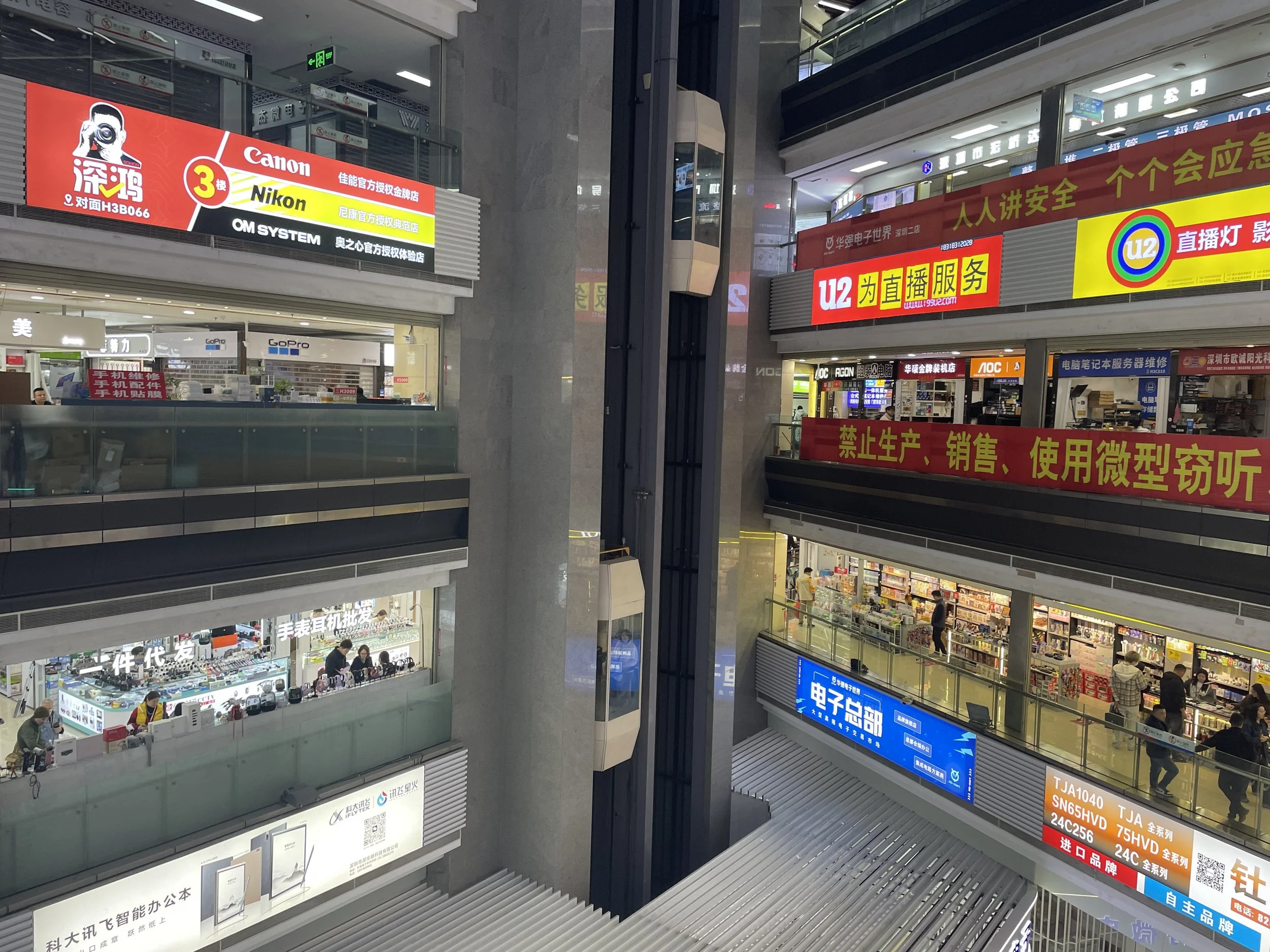
In Shenzhen, I stayed at the Atour Hotel next to Huaqiangbei, the world’s electronics capital. I explored several massive, multi-level malls offering everything from surface-mount resistors and capacitors to drones and laptops. I was blown away by the sheer scale and diversity of electronic systems and components available. Huaqiangbei is truly a global hub for electronic supply and innovation.