Buddhist Cave, Han Great Wall and etc 千佛石窟、汉长城及其他
October 10, 2025
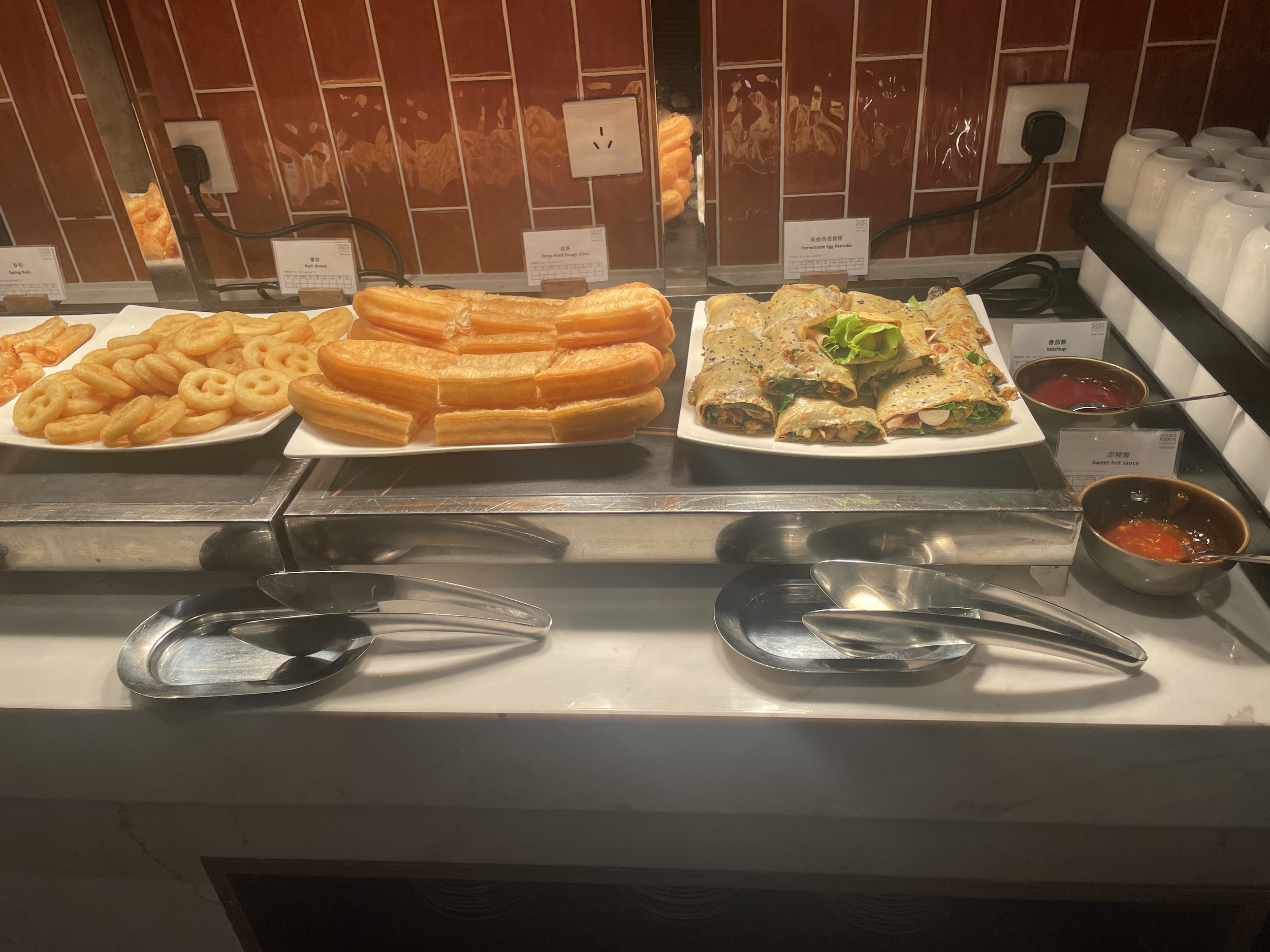
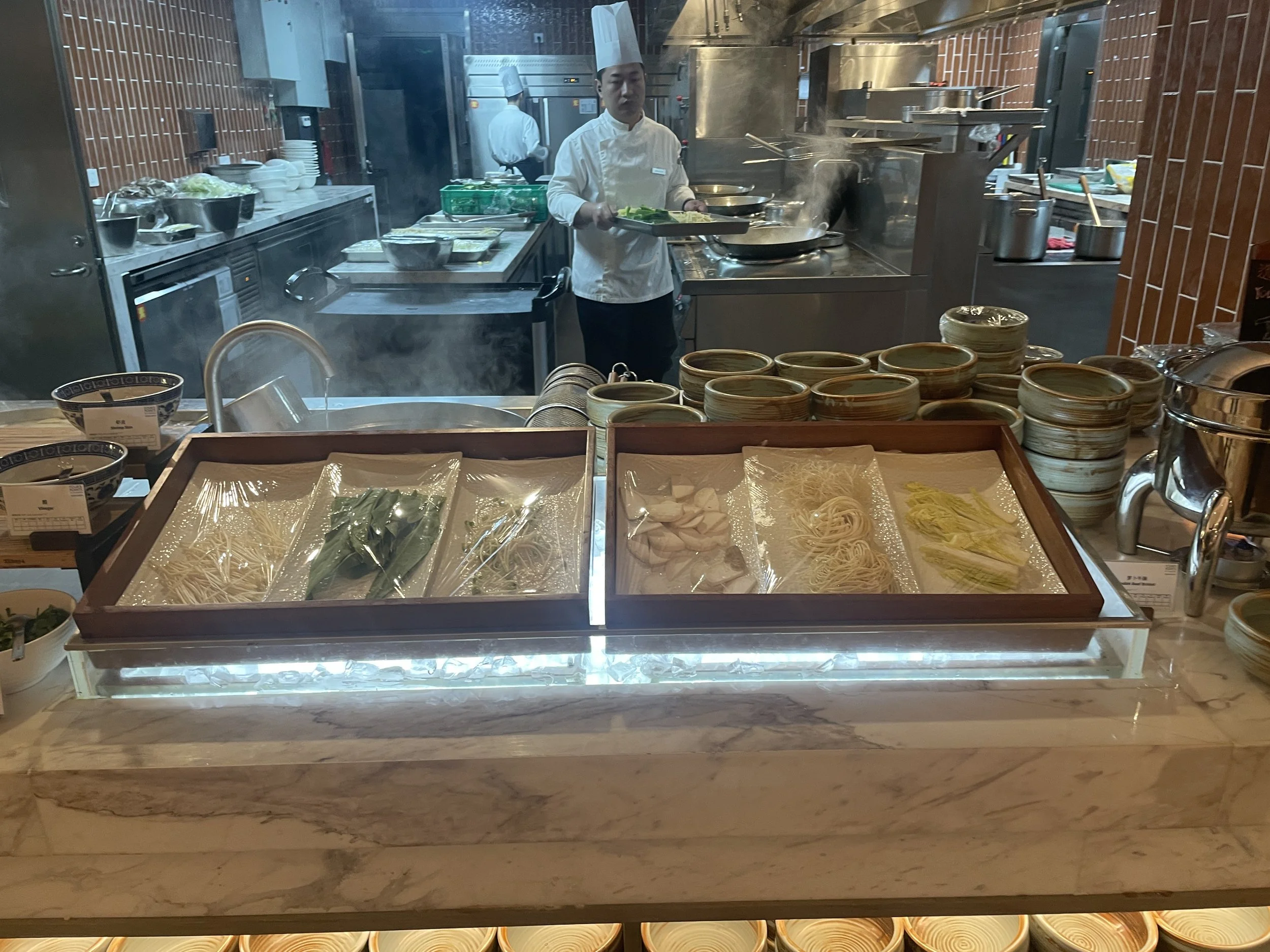
Our driver came to pick us up for the second day of the tour. The hotel breakfast offered a wide variety of options and was quite decent.
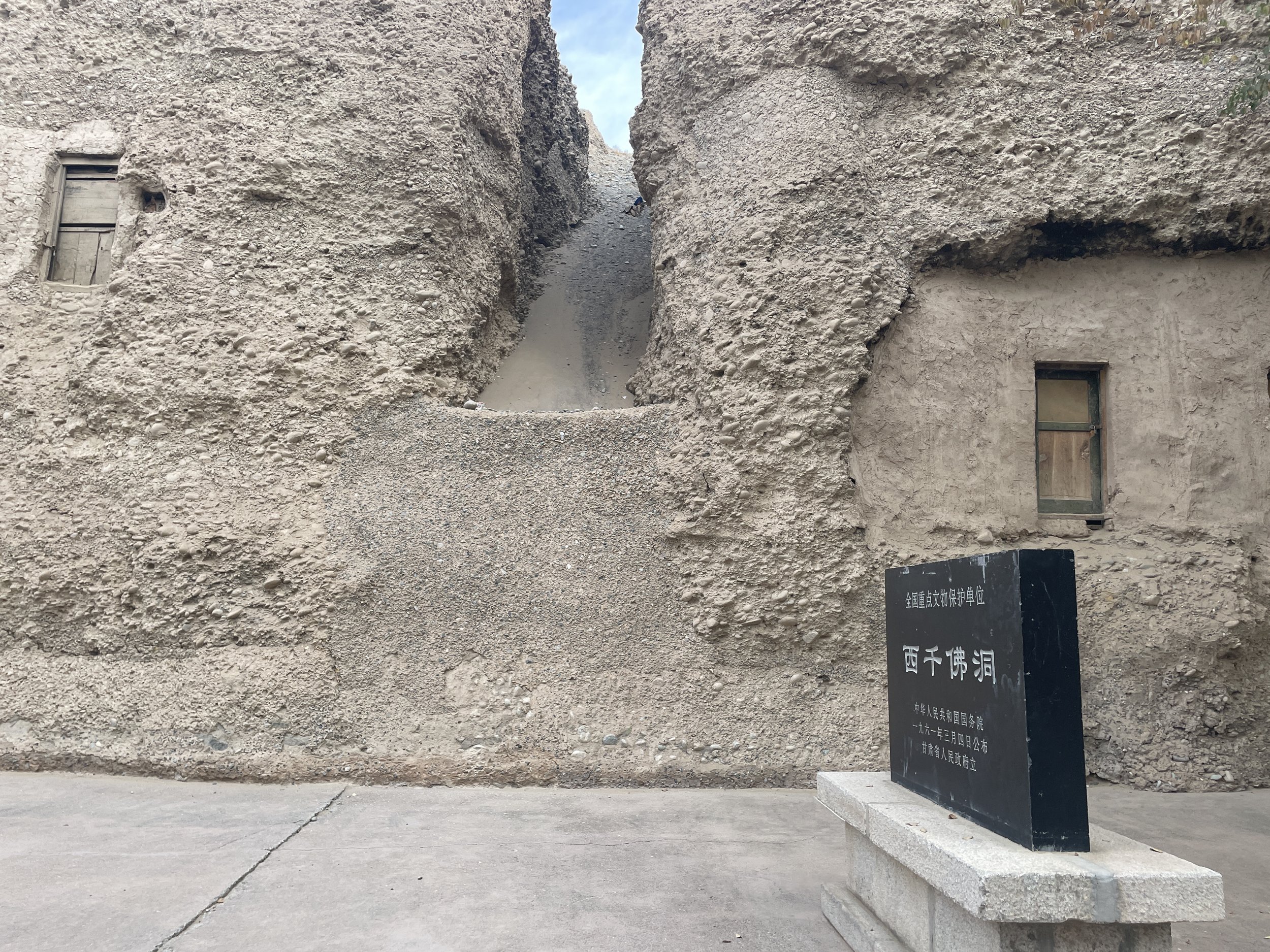
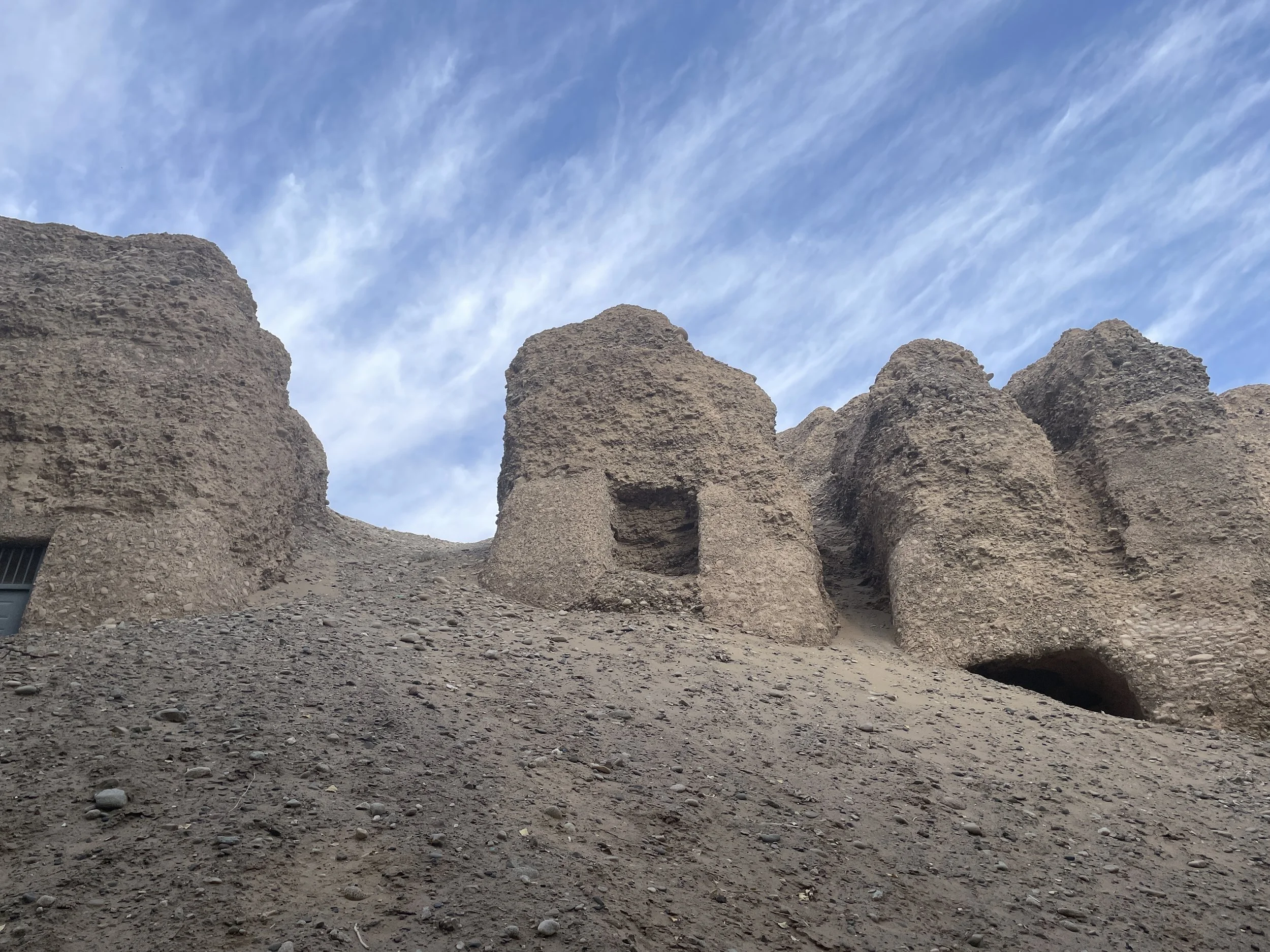
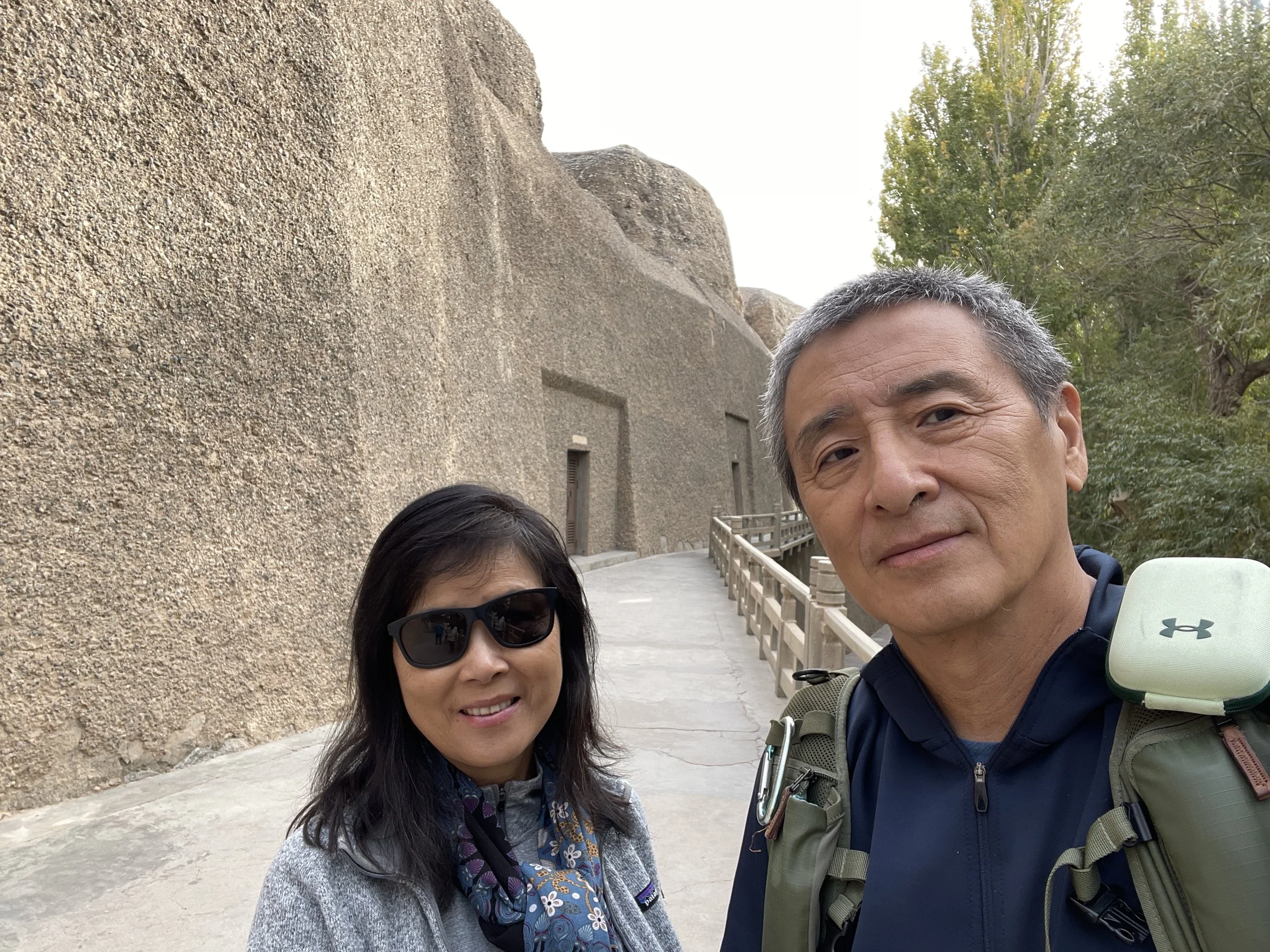
The first destination was Western Thousand Buddha Caves (西千佛洞), located on the opposite side of the mountain from the Mogao Caves. The site contains sixteen caves in total, and our Chinese-only guided tour took us to see four of them. Though smaller and less ornate than Mogao, these caves had far fewer visitors, allowing us to enjoy the visit in peace and take in the art and atmosphere. We tried to absorb all we could about the history, the murals, and the people who created them more than a thousand years ago.
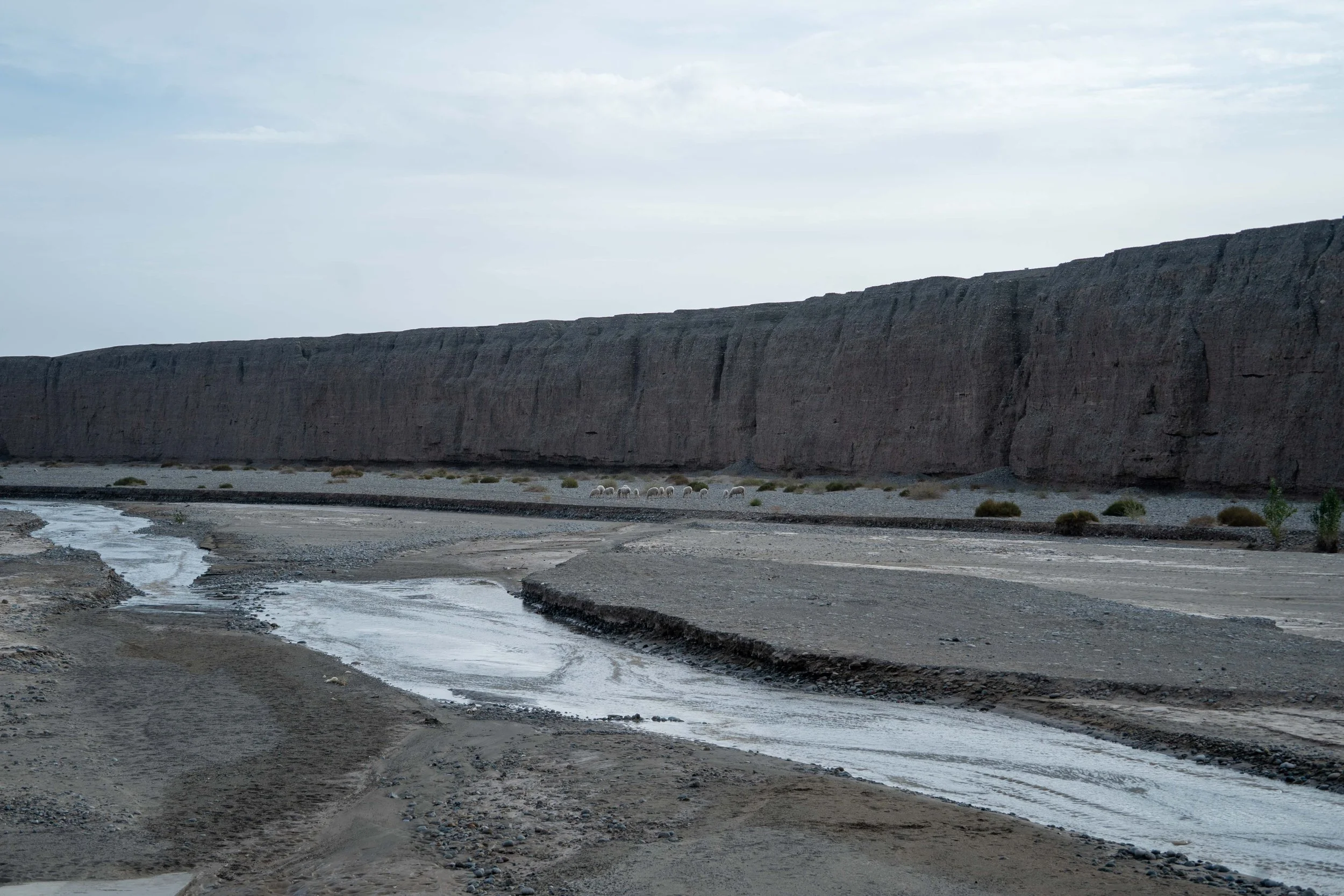
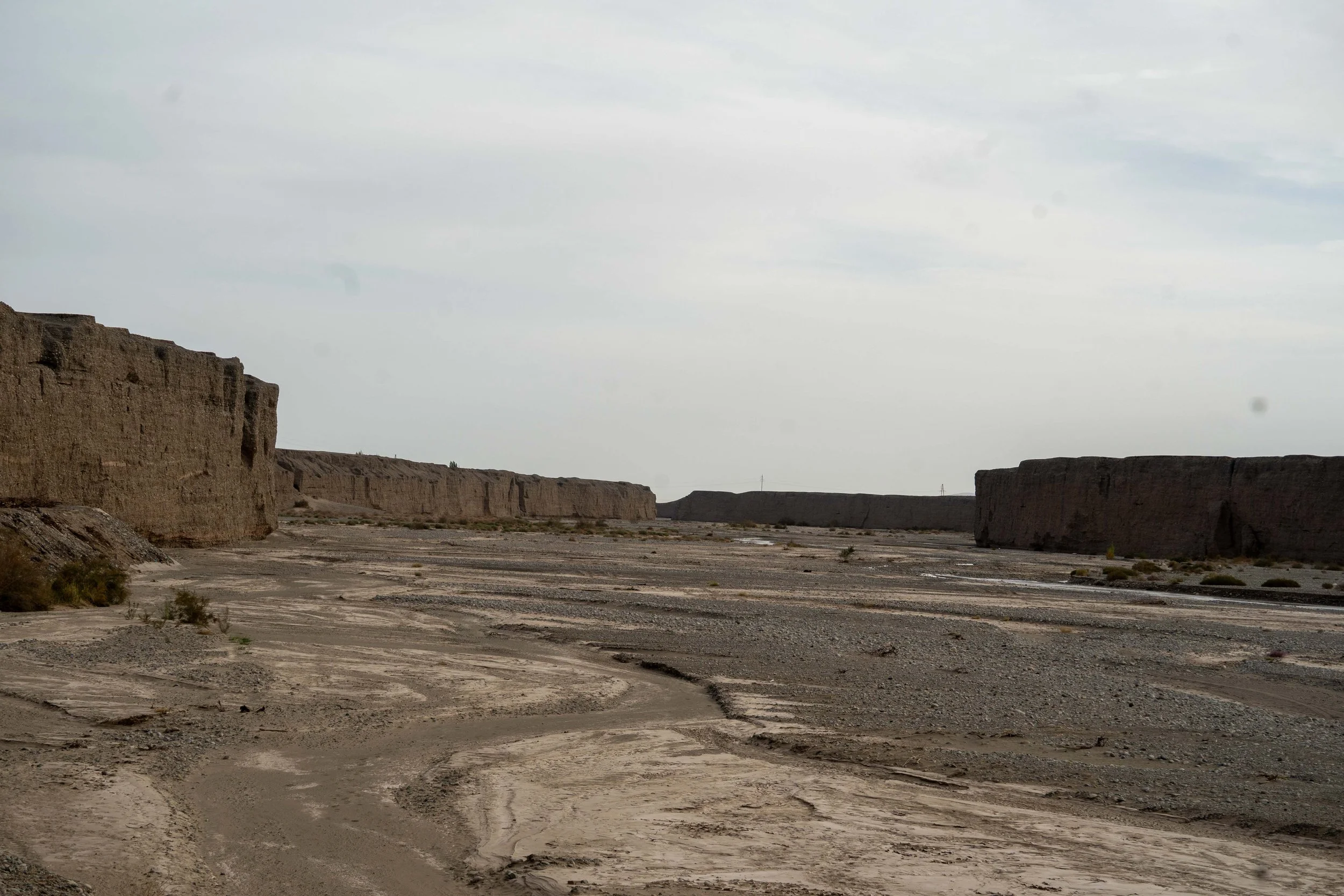
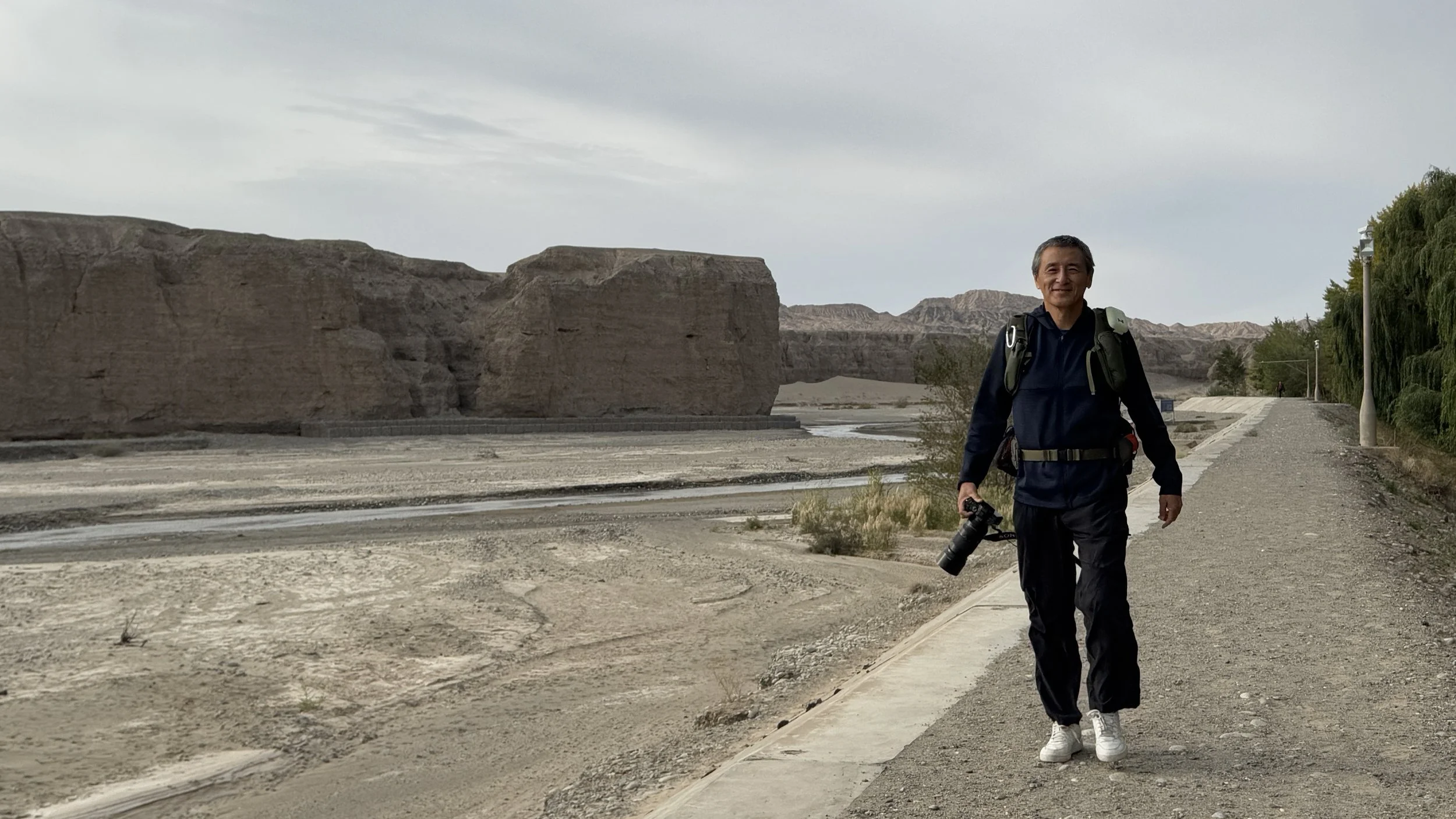
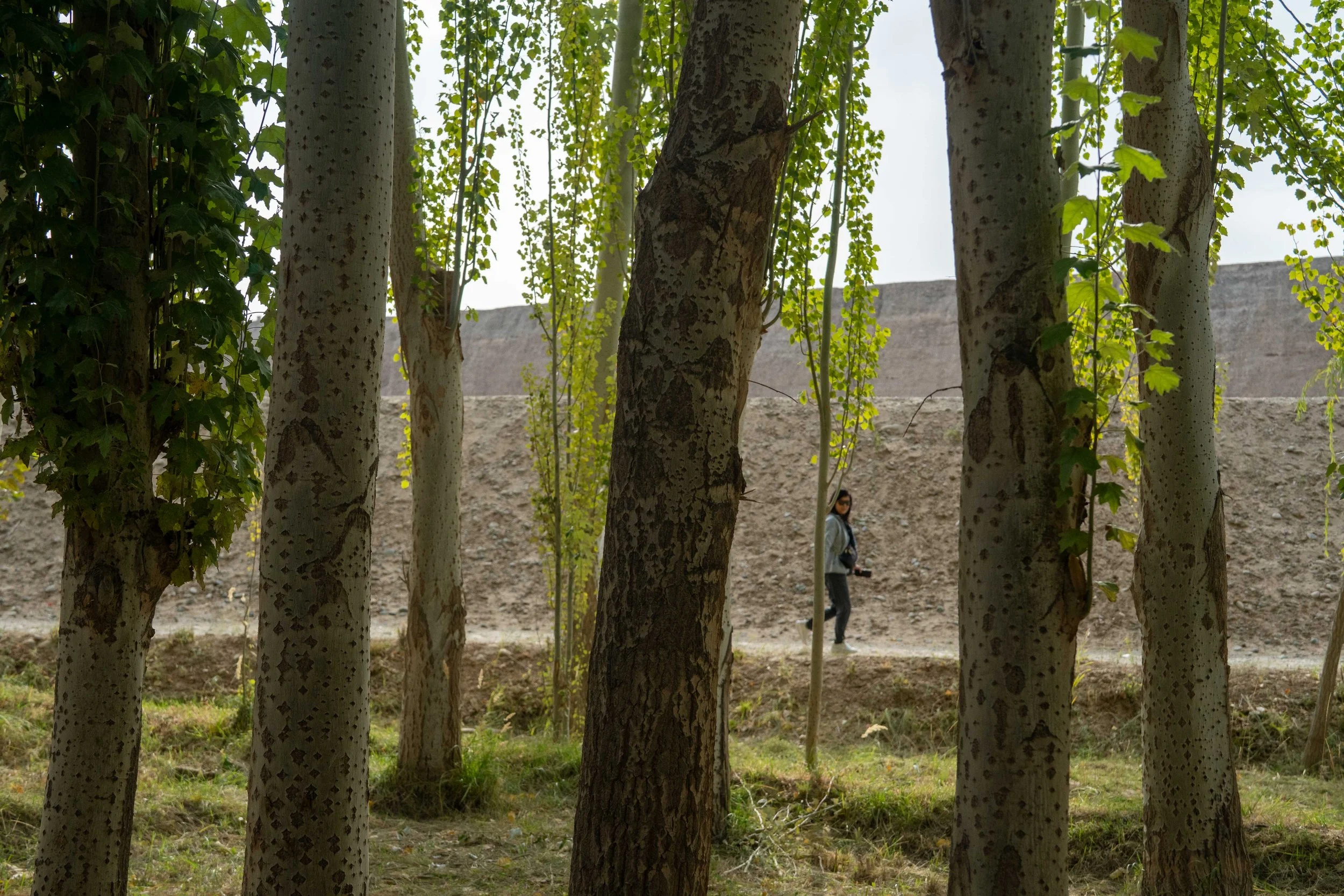
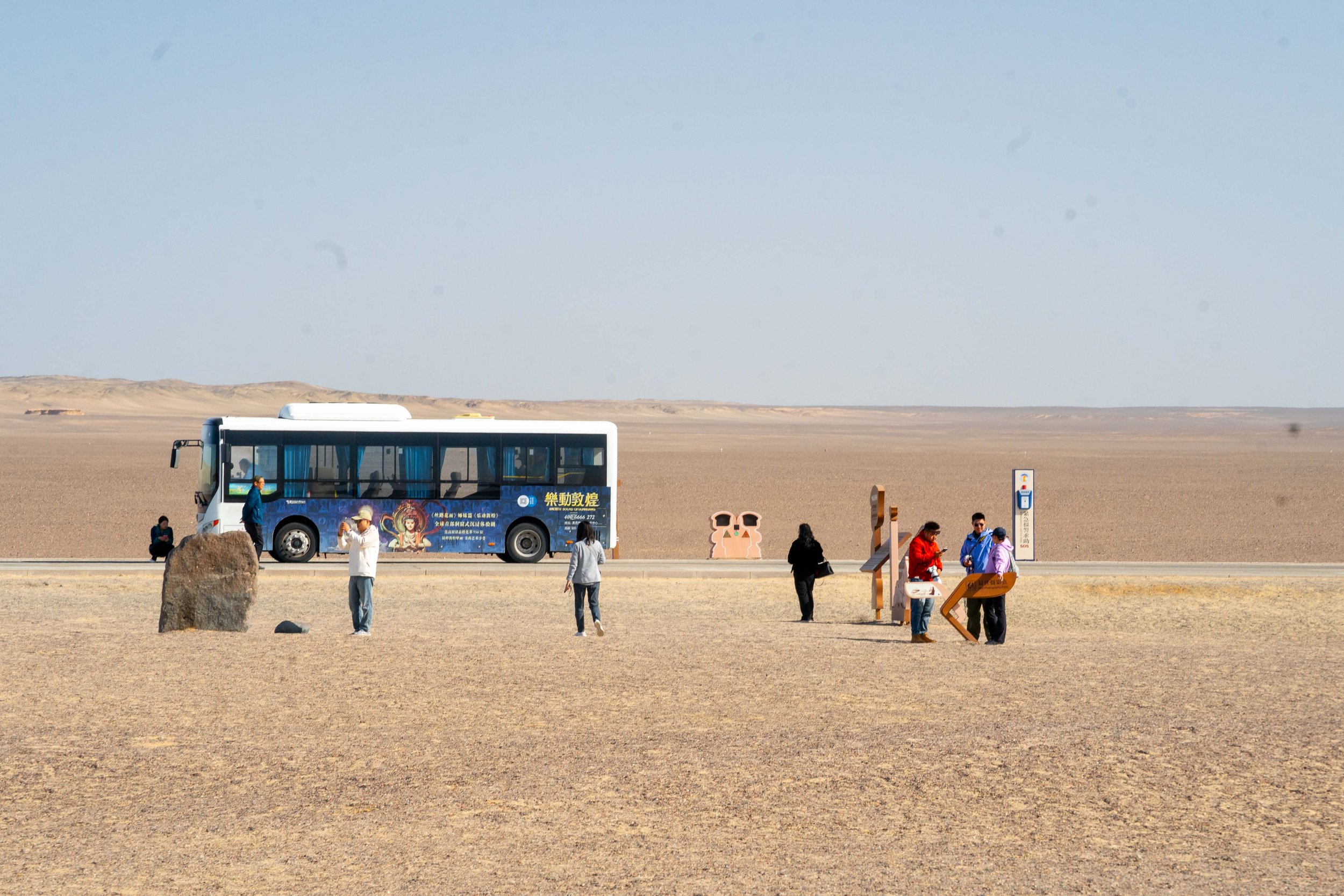
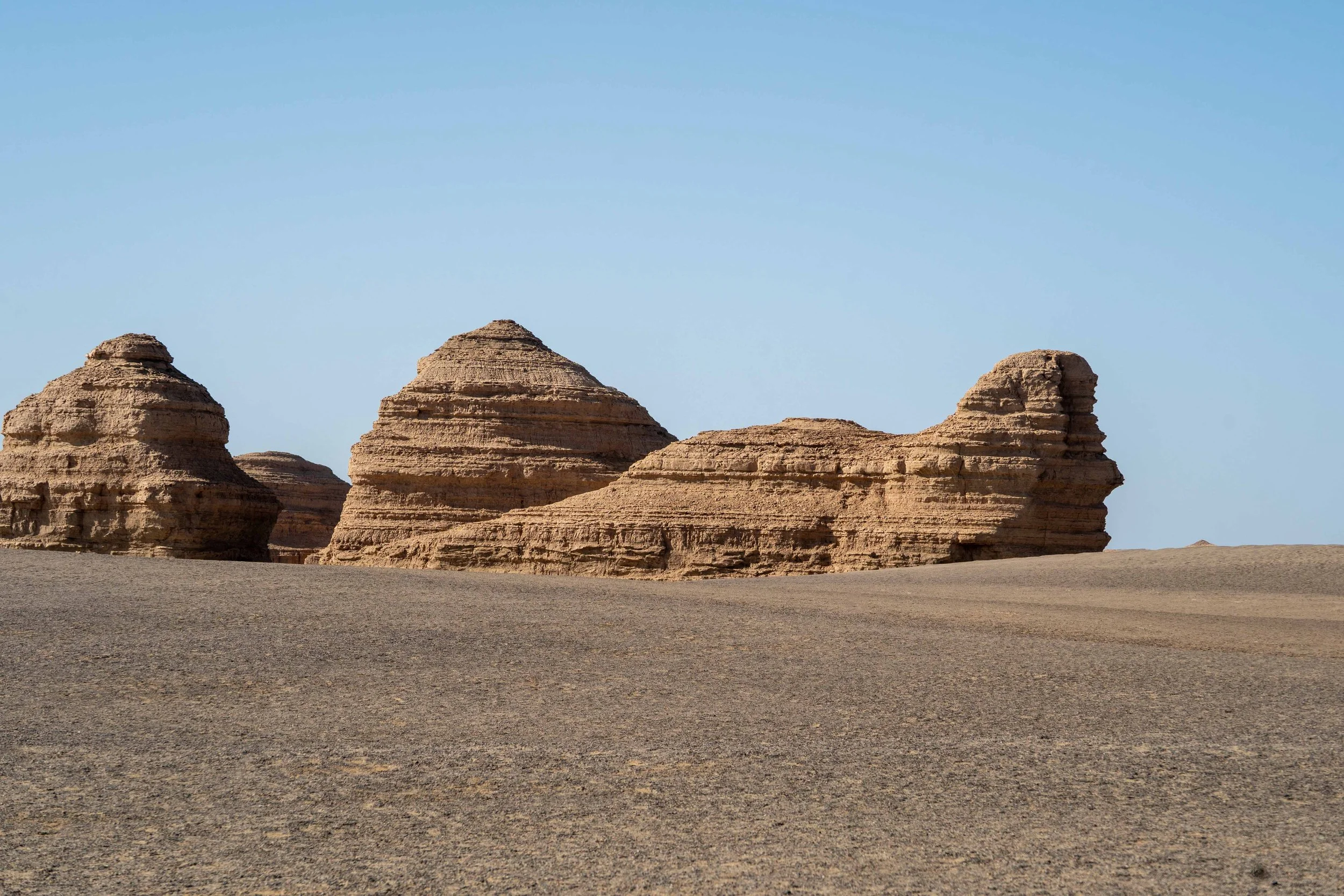
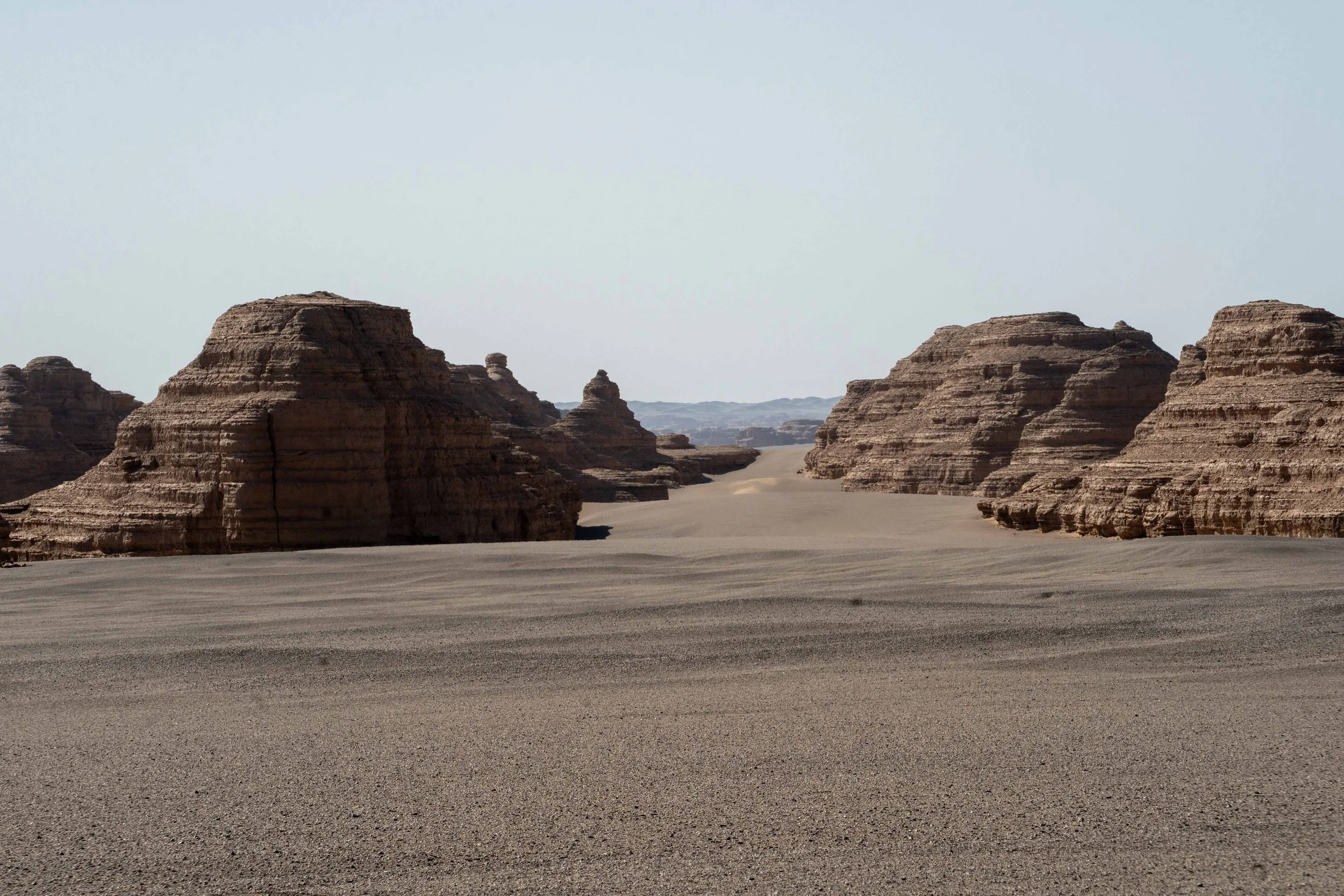
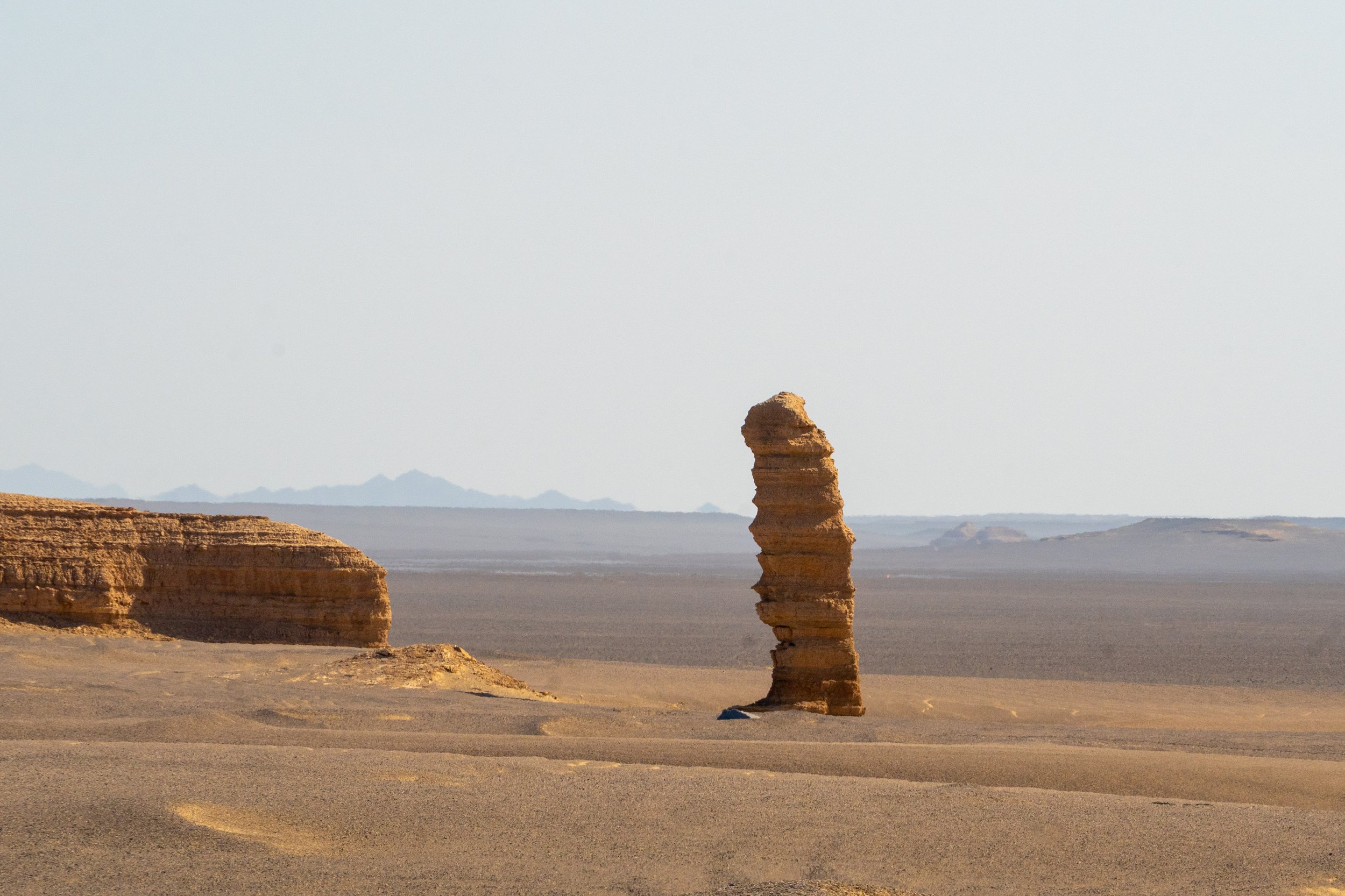
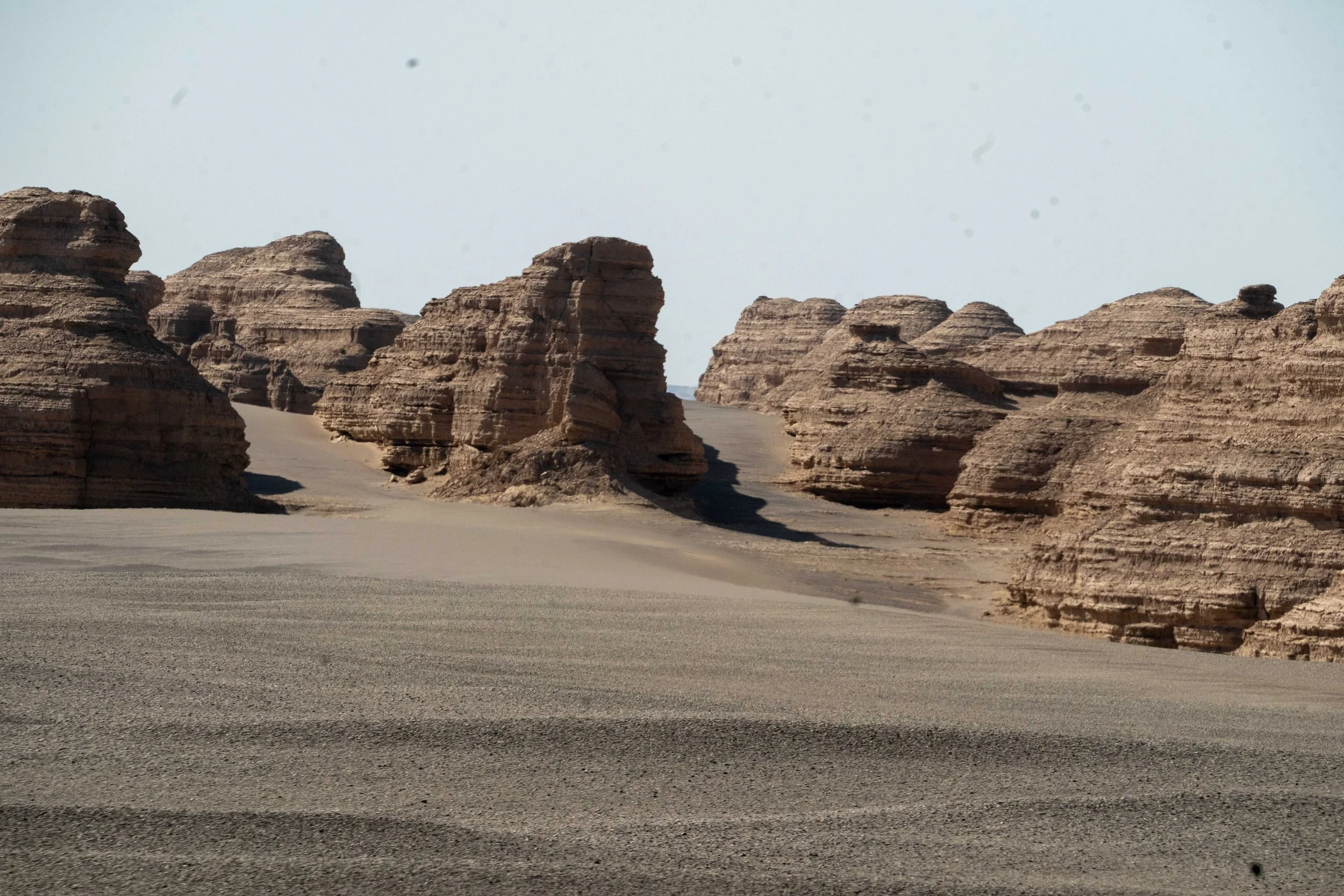
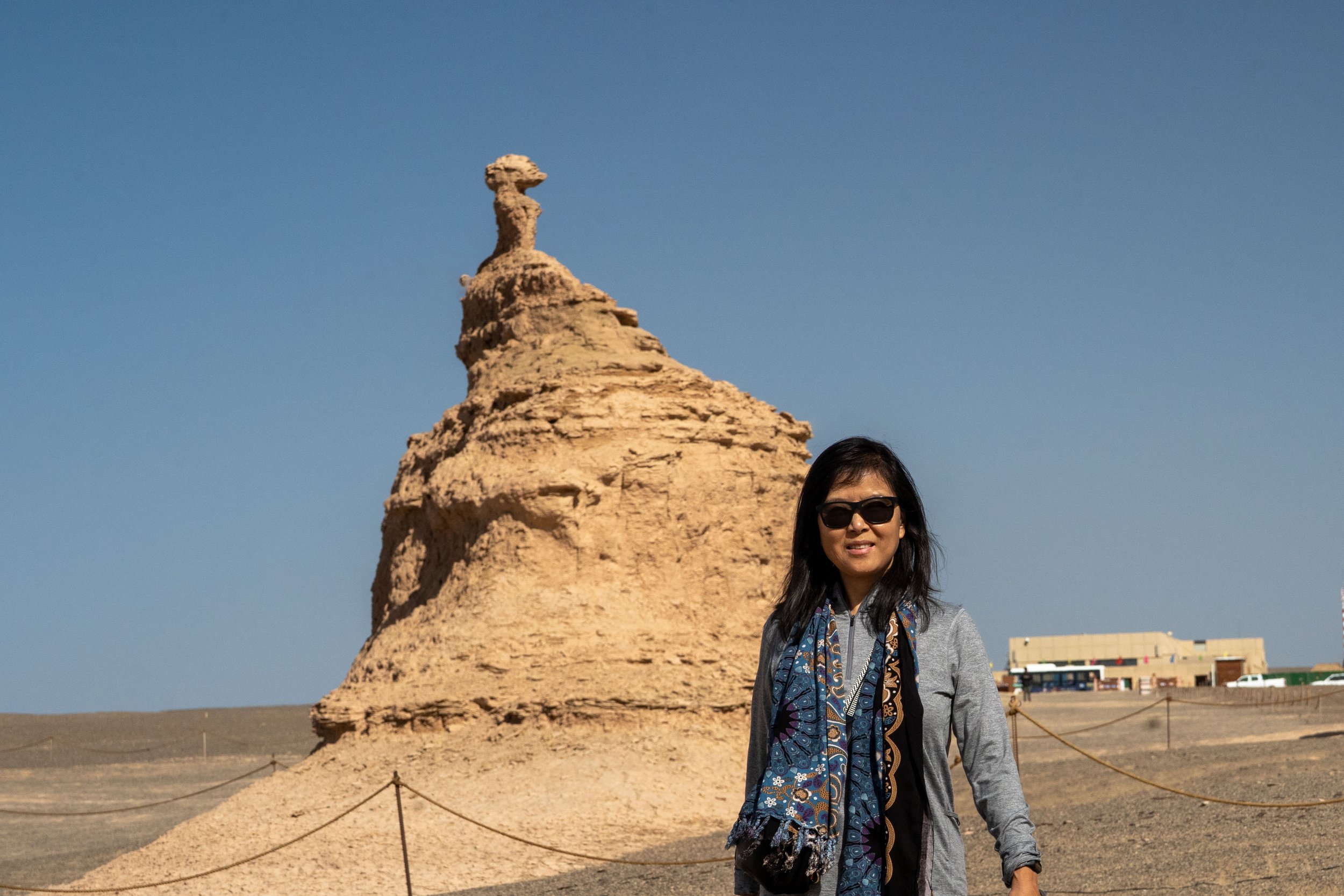
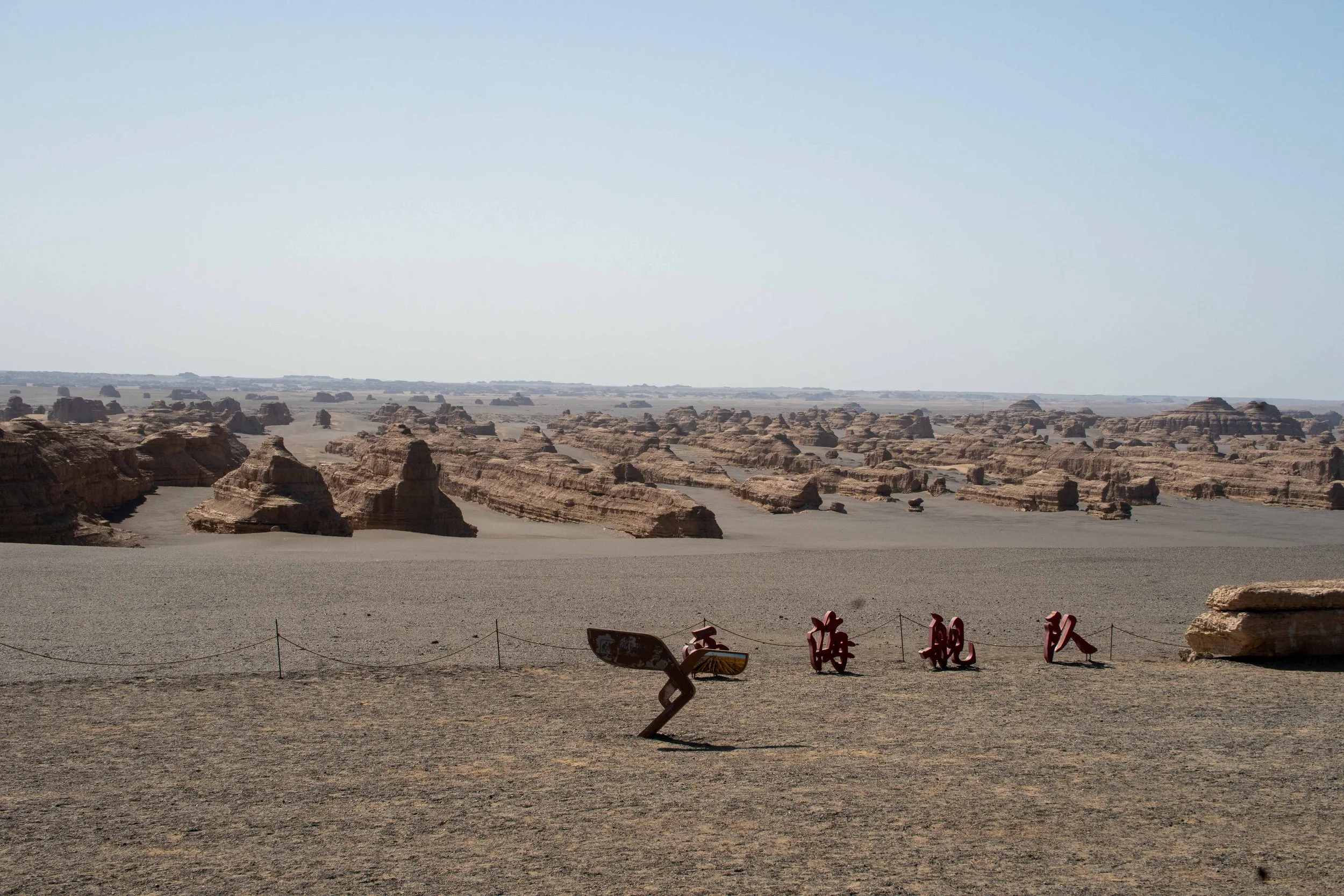
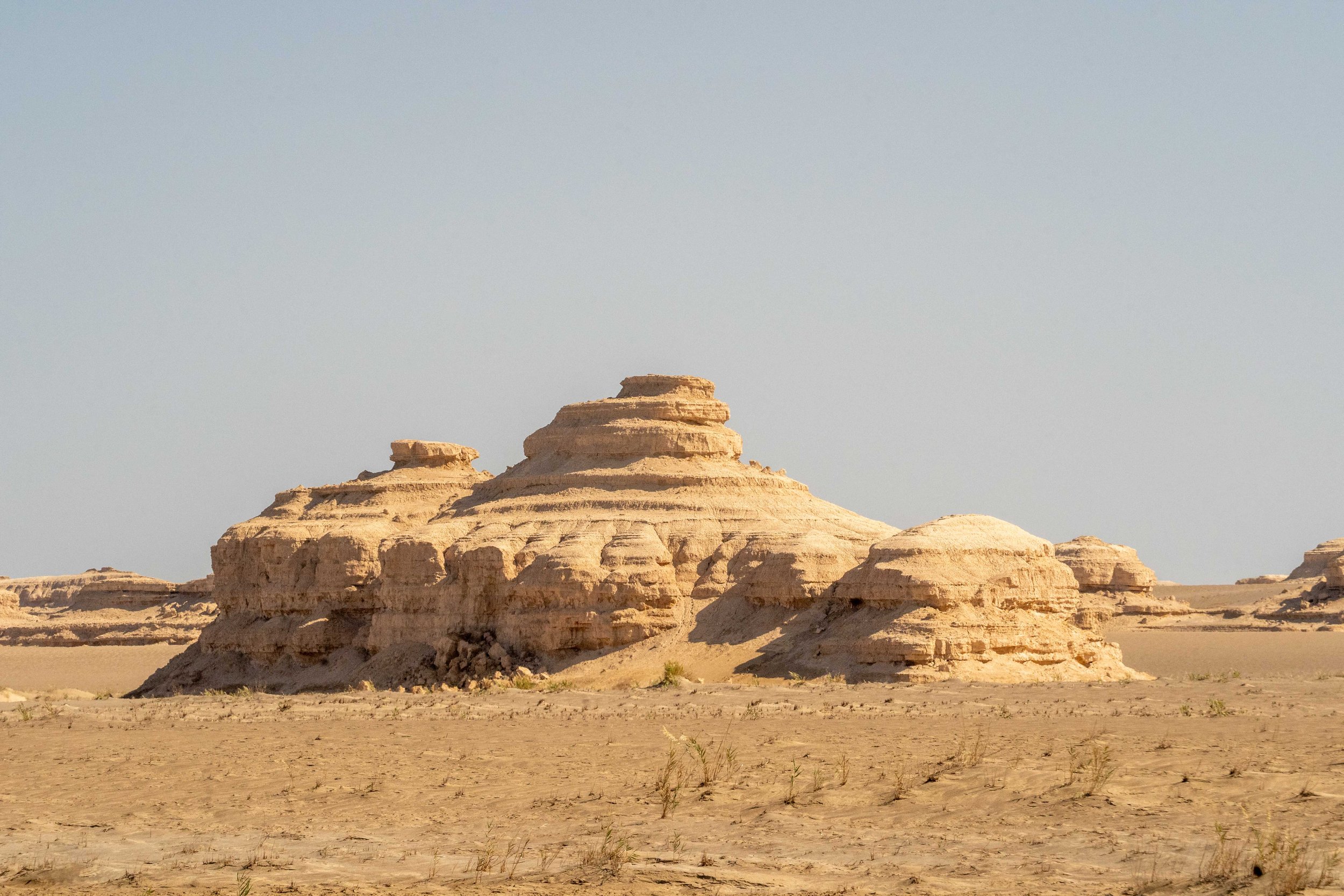
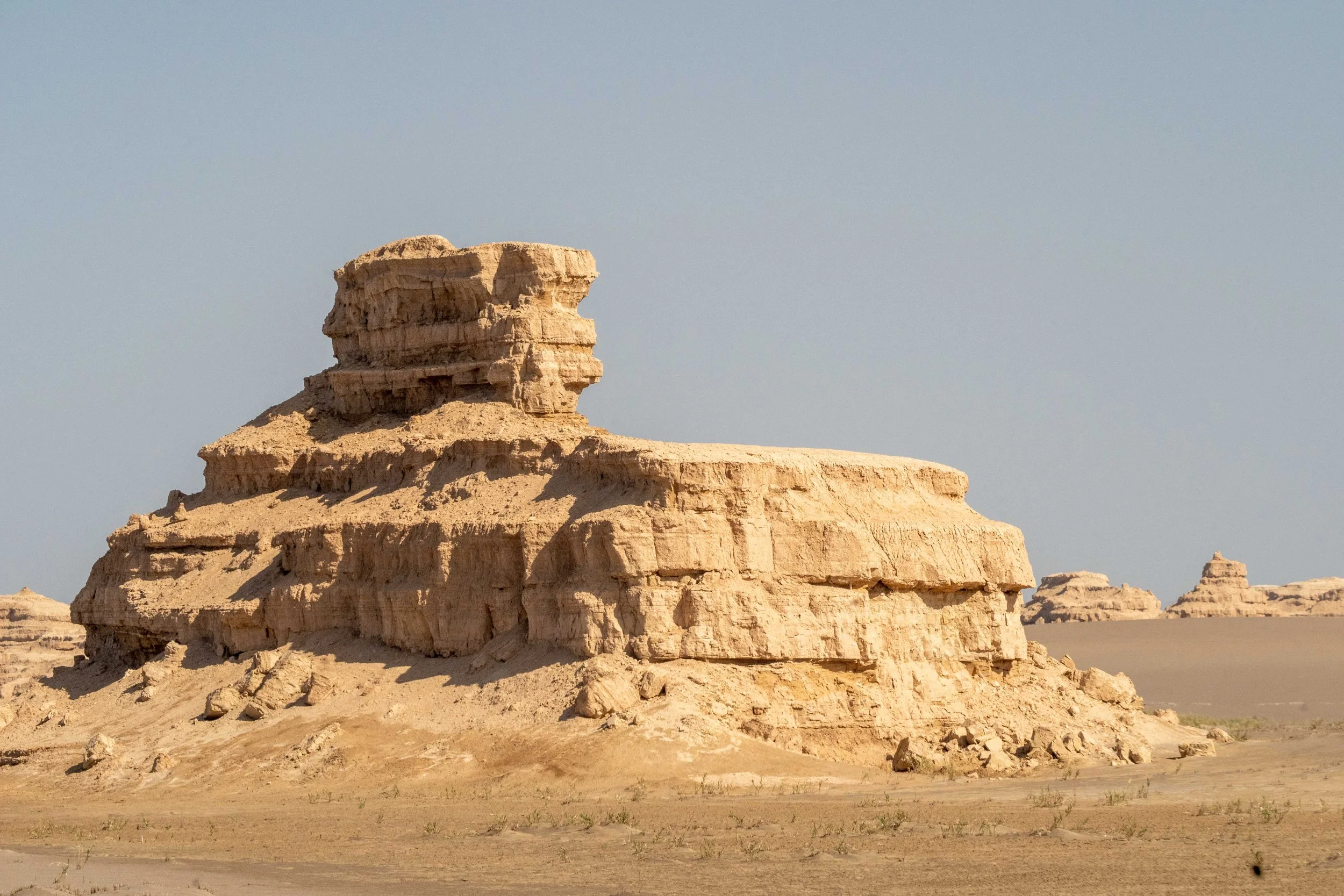
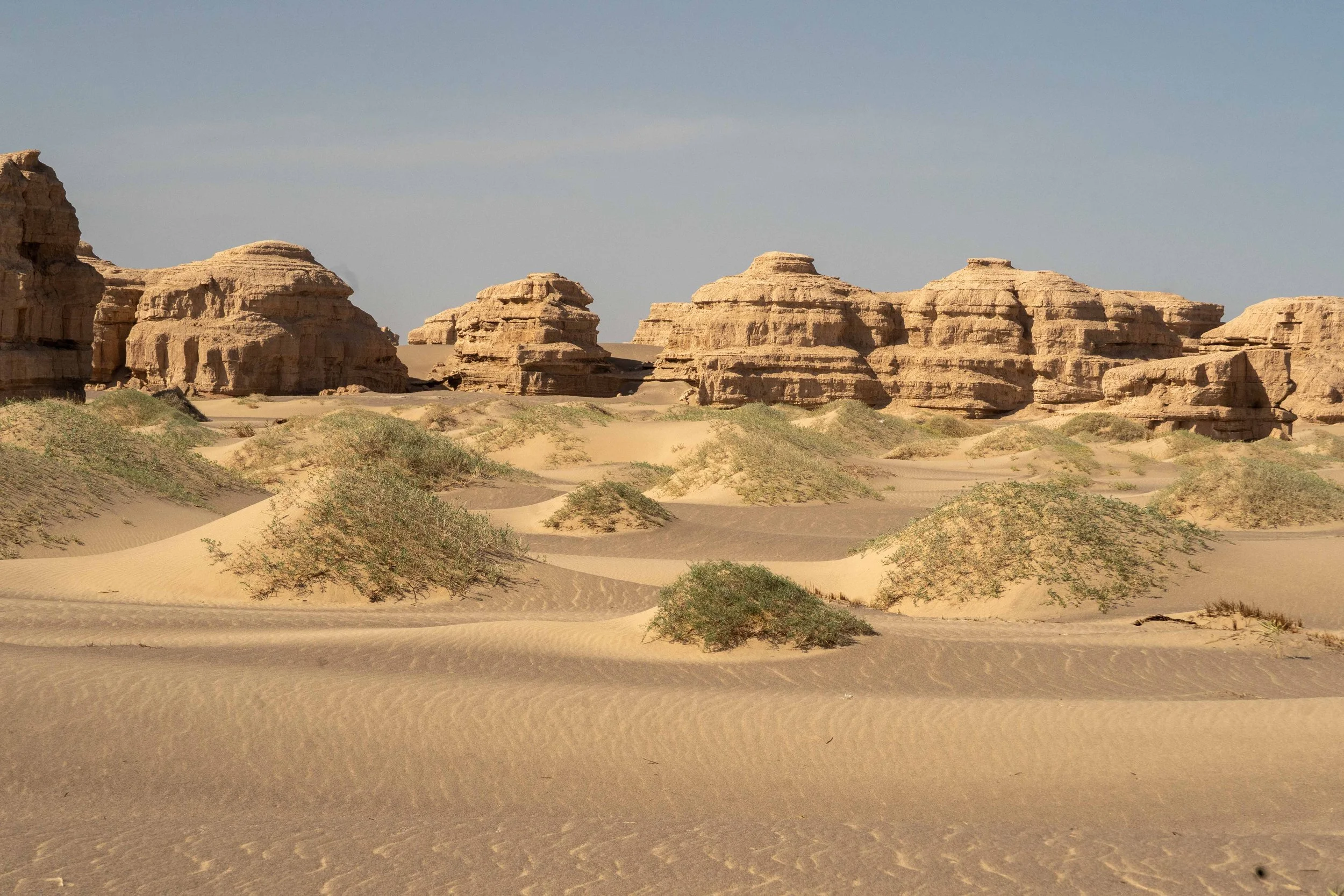
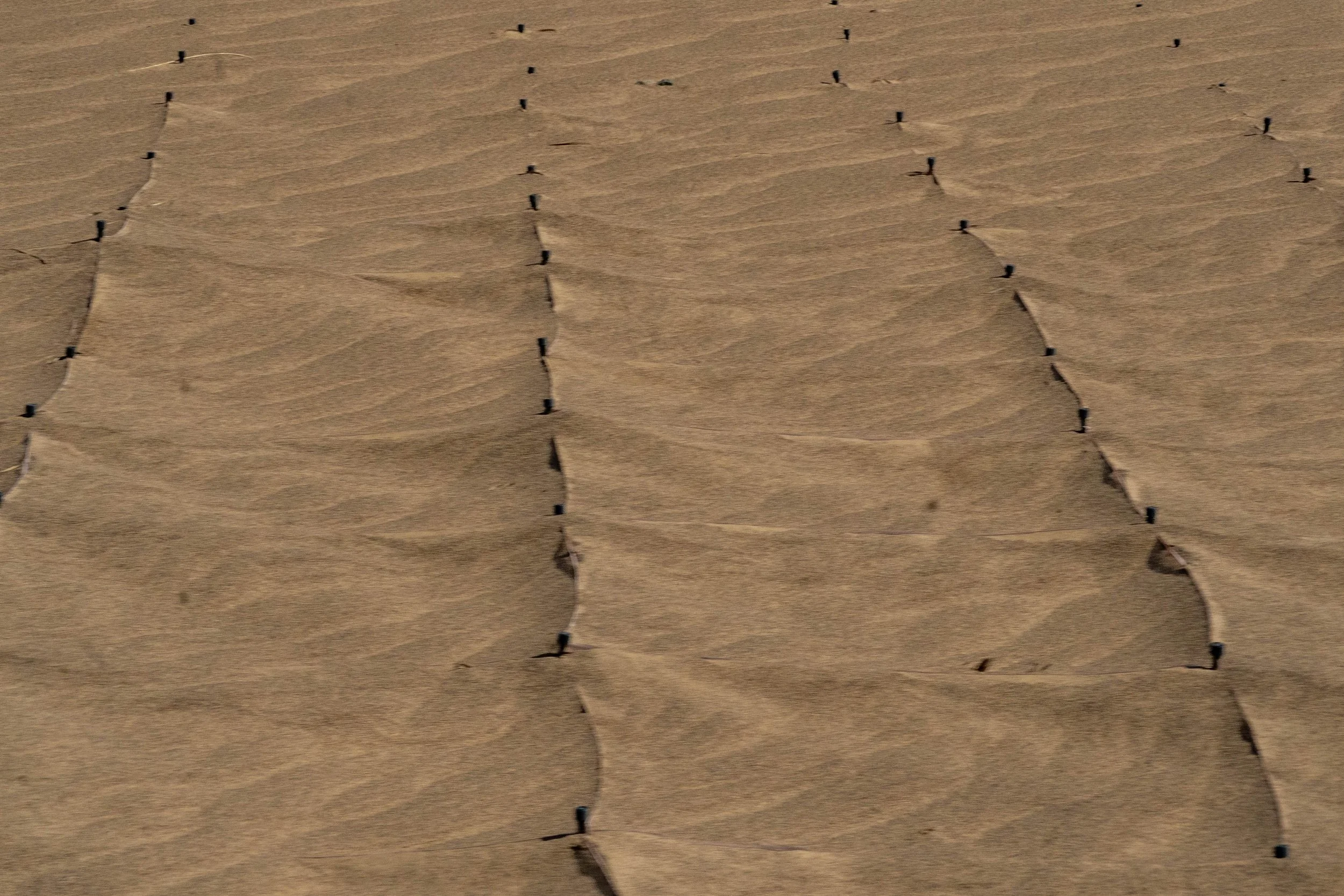
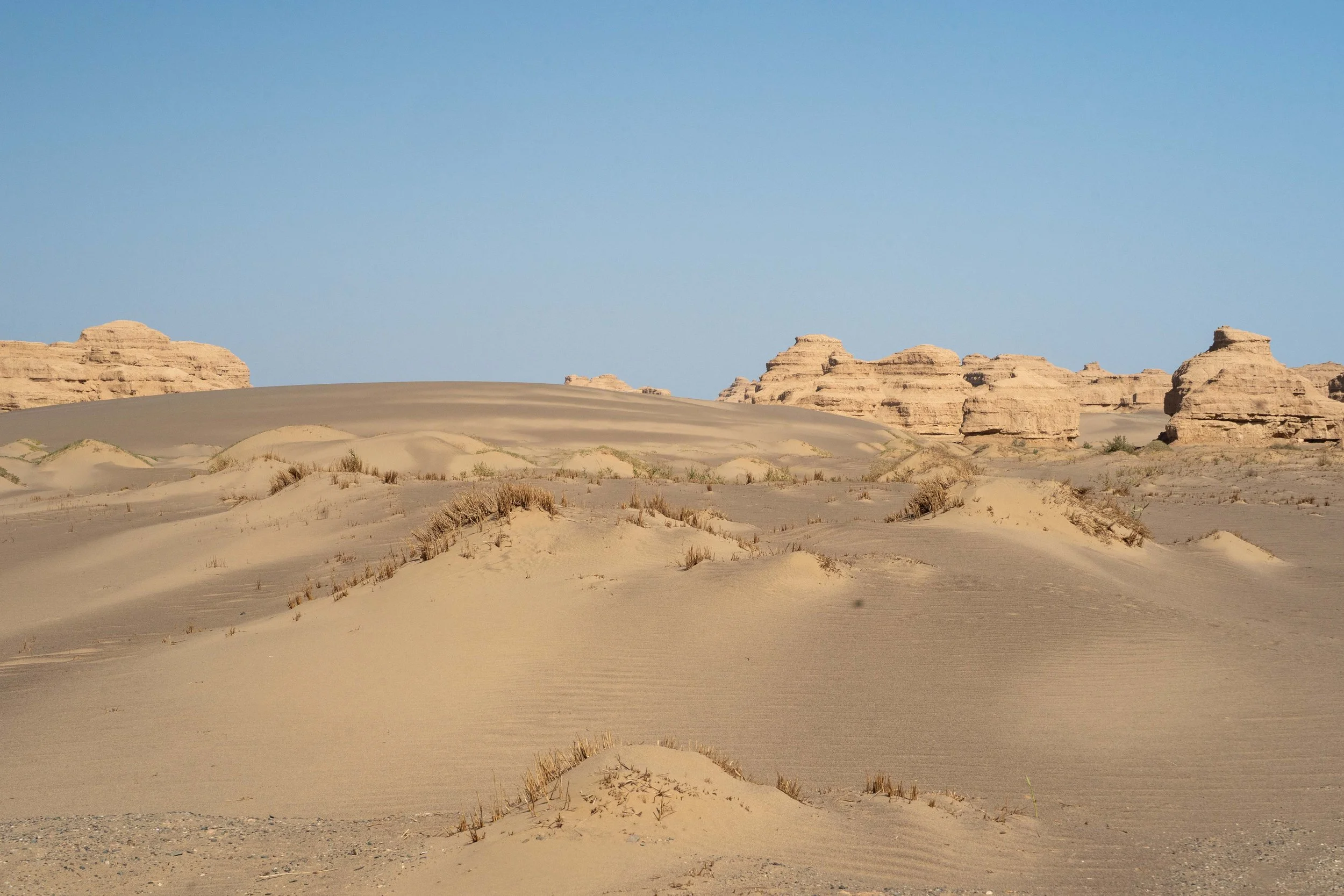
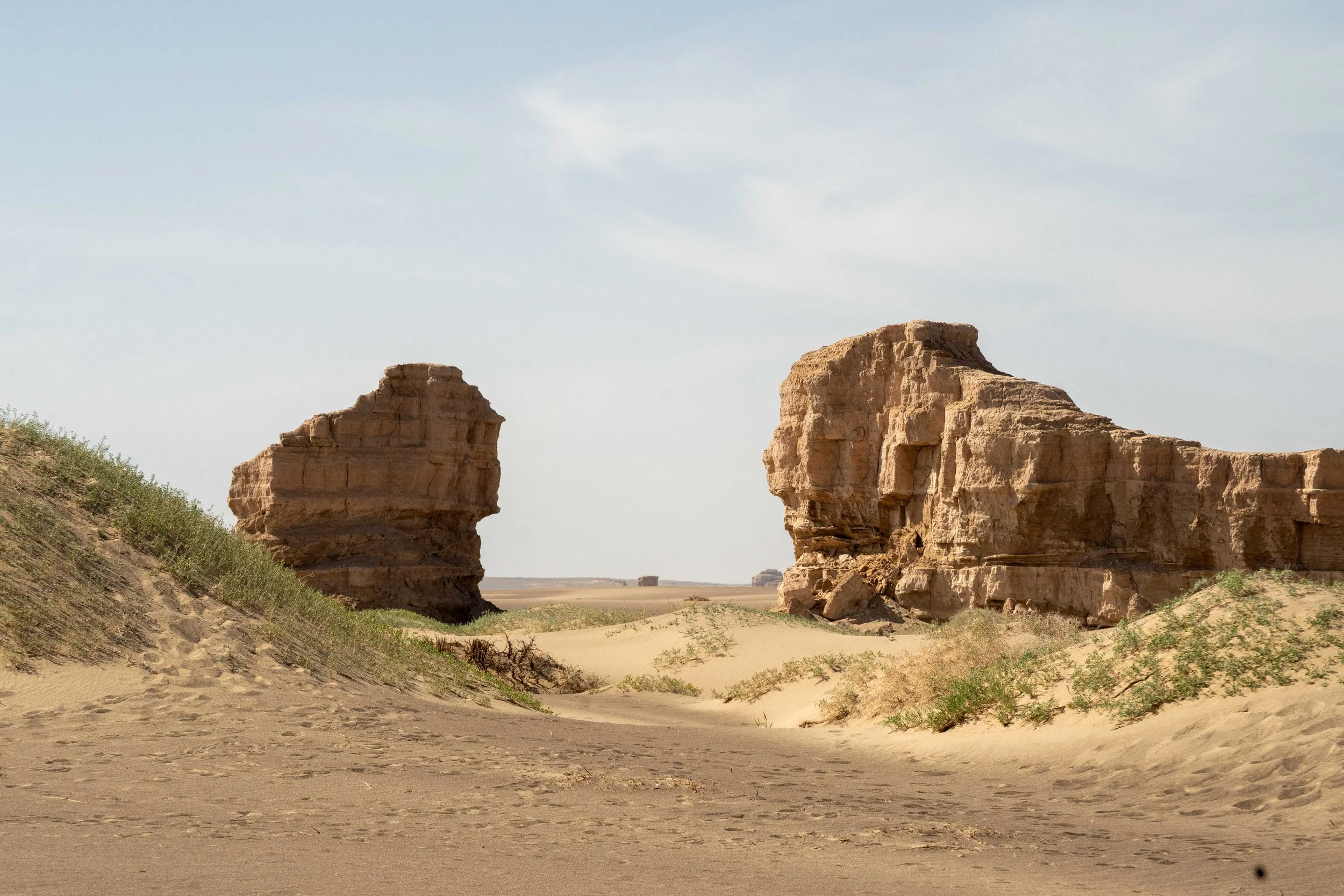
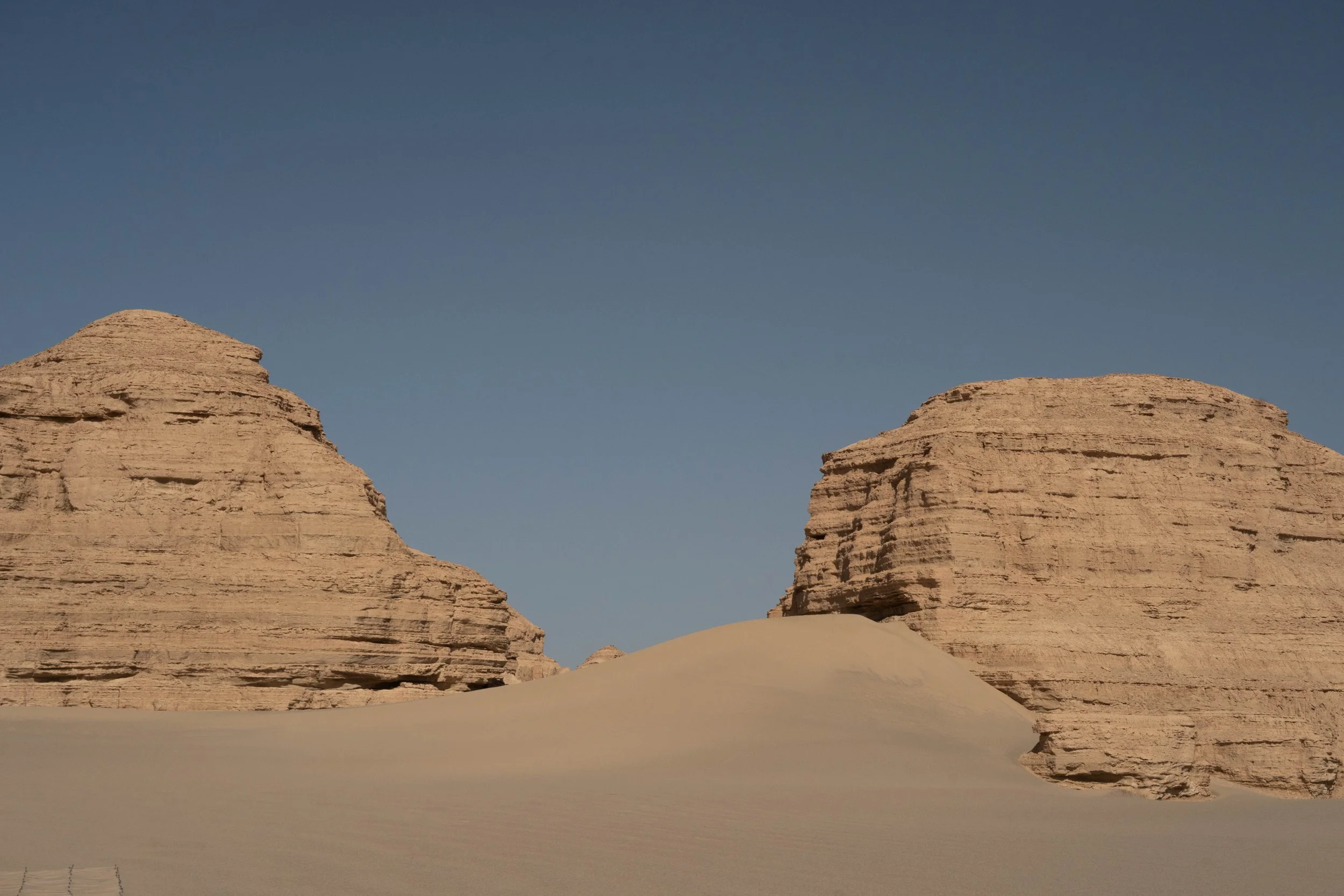
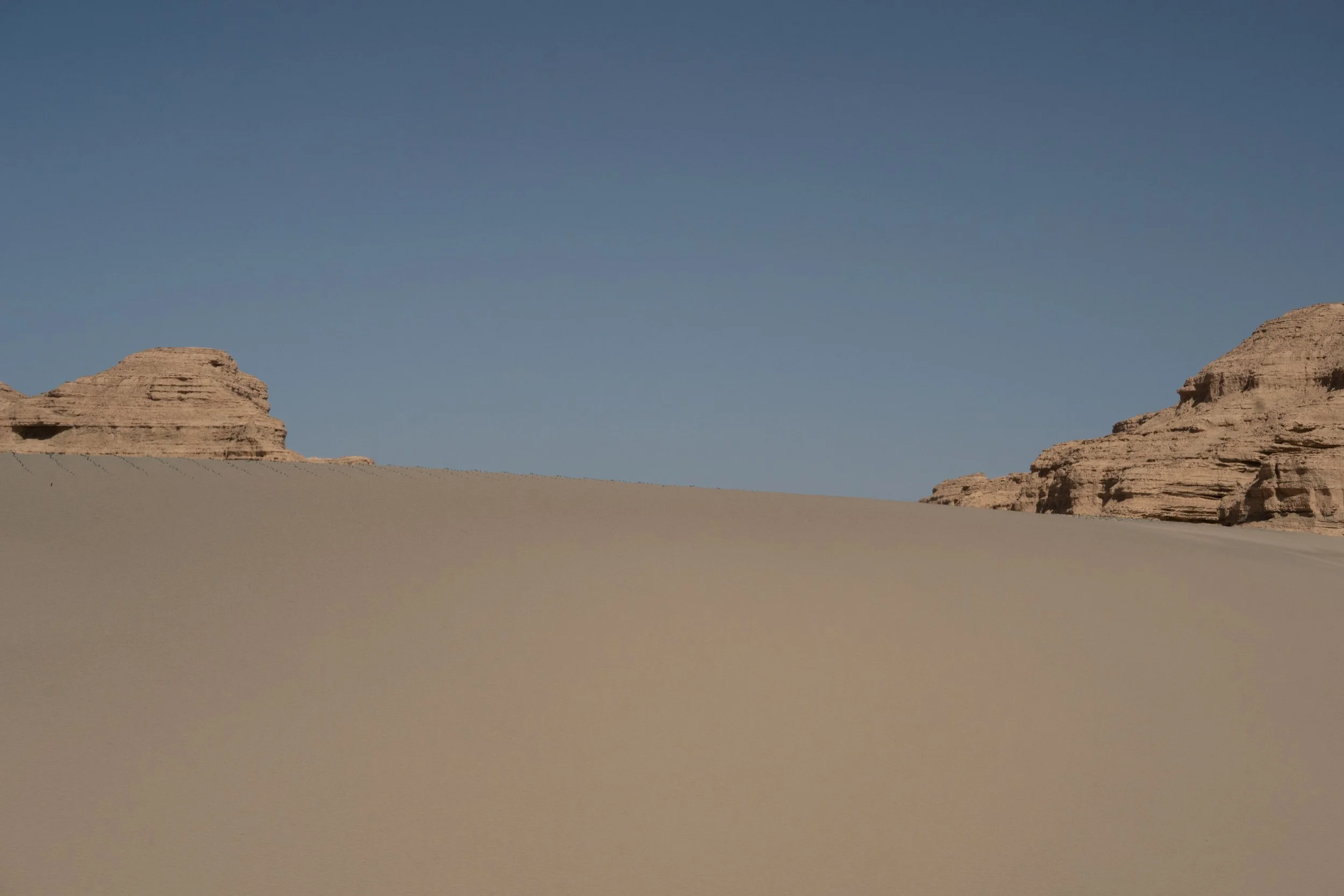
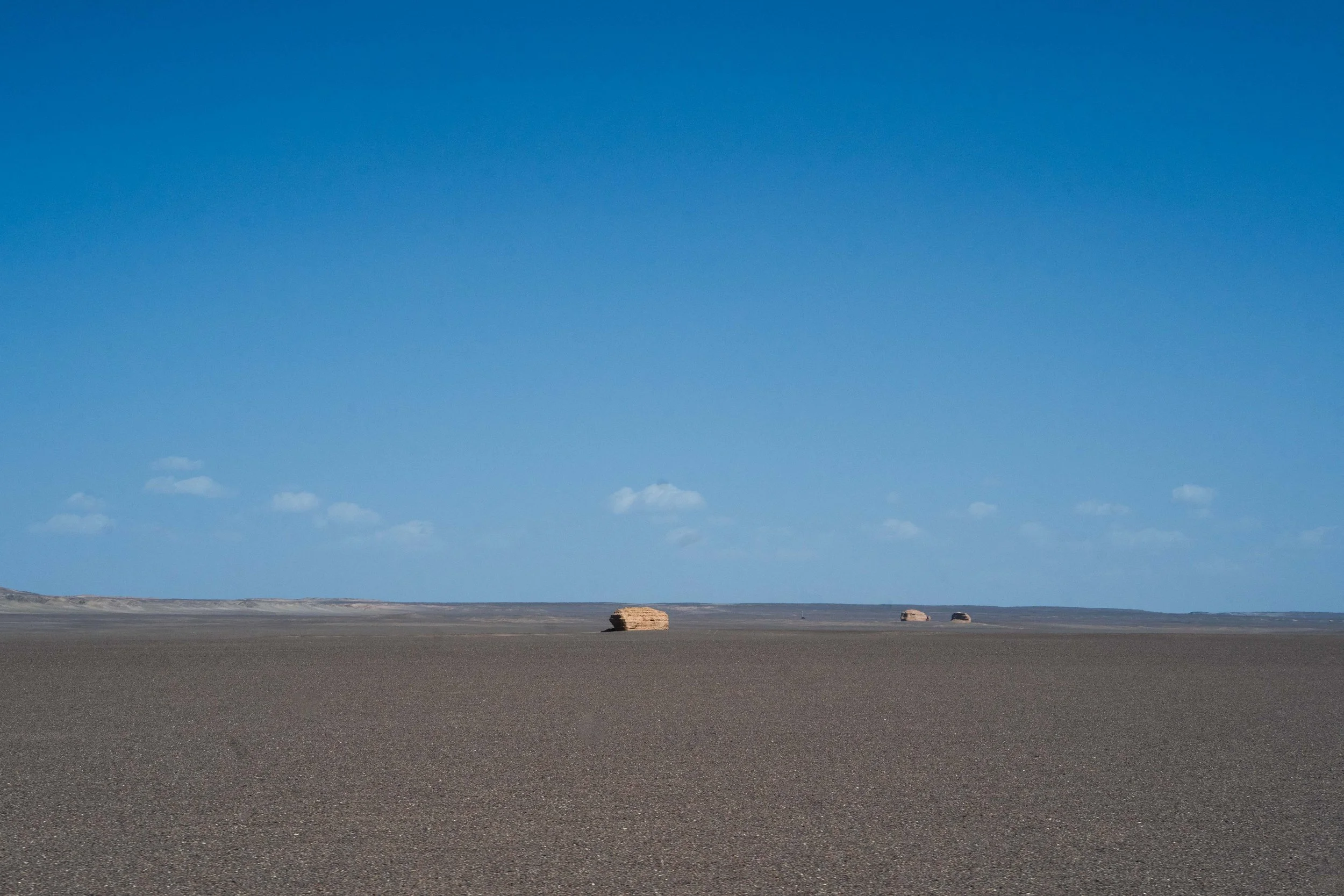
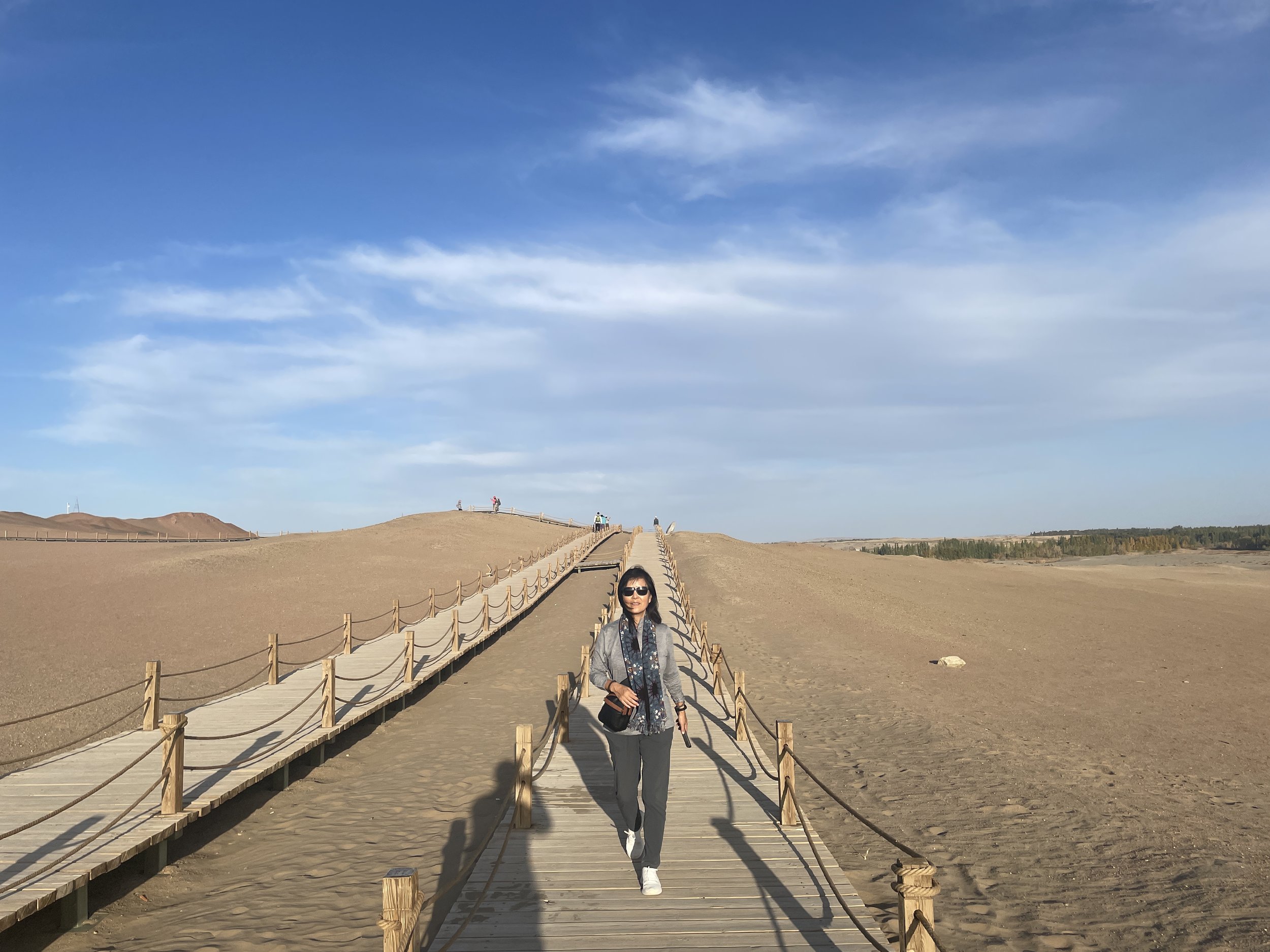
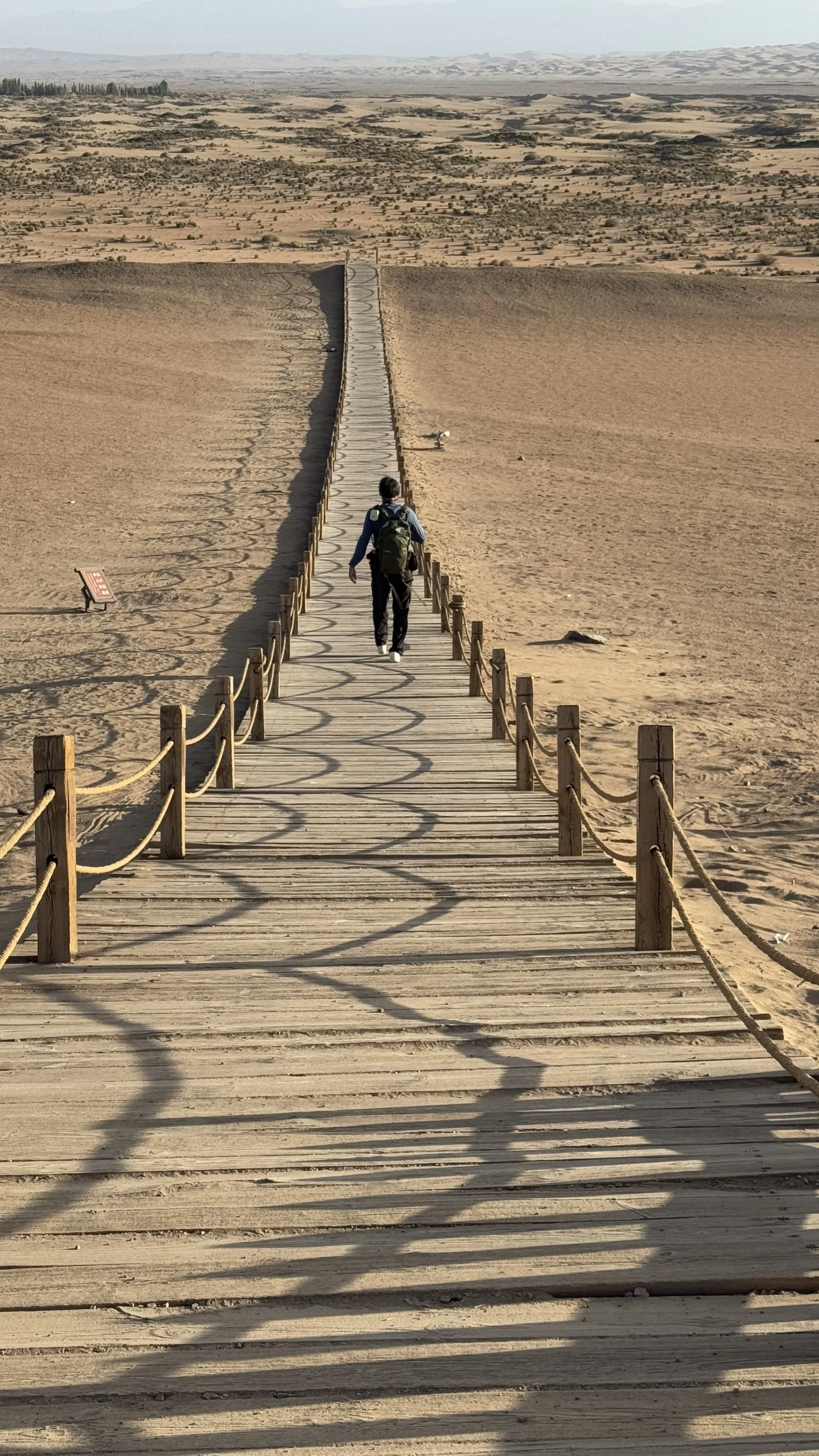
Afterward, we drove about 160 kilometers to Yadan National Geologic Park (雅丹地质公园), near the border between Gansu and Xinjiang. Inside the park, the shuttle bus made several stops for photos and short walks. The scenery was spectacular—vast and wind-sculpted—reminding us of the landscapes in Arizona, Colorado, and Utah, which we were already familiar with.
Next, we continued to the Yumen Pass (玉门关) Scenic Park, which includes three major historical sites: the Small Square Castle (小方盘城), the Large Square Castle (大方盘城), and the Han Great Wall (汉长城). We were surprised to find that the park identifies Yumen Pass with the so-called Small Square Castle, a name originally given by two foreign explorers in the early twentieth century.
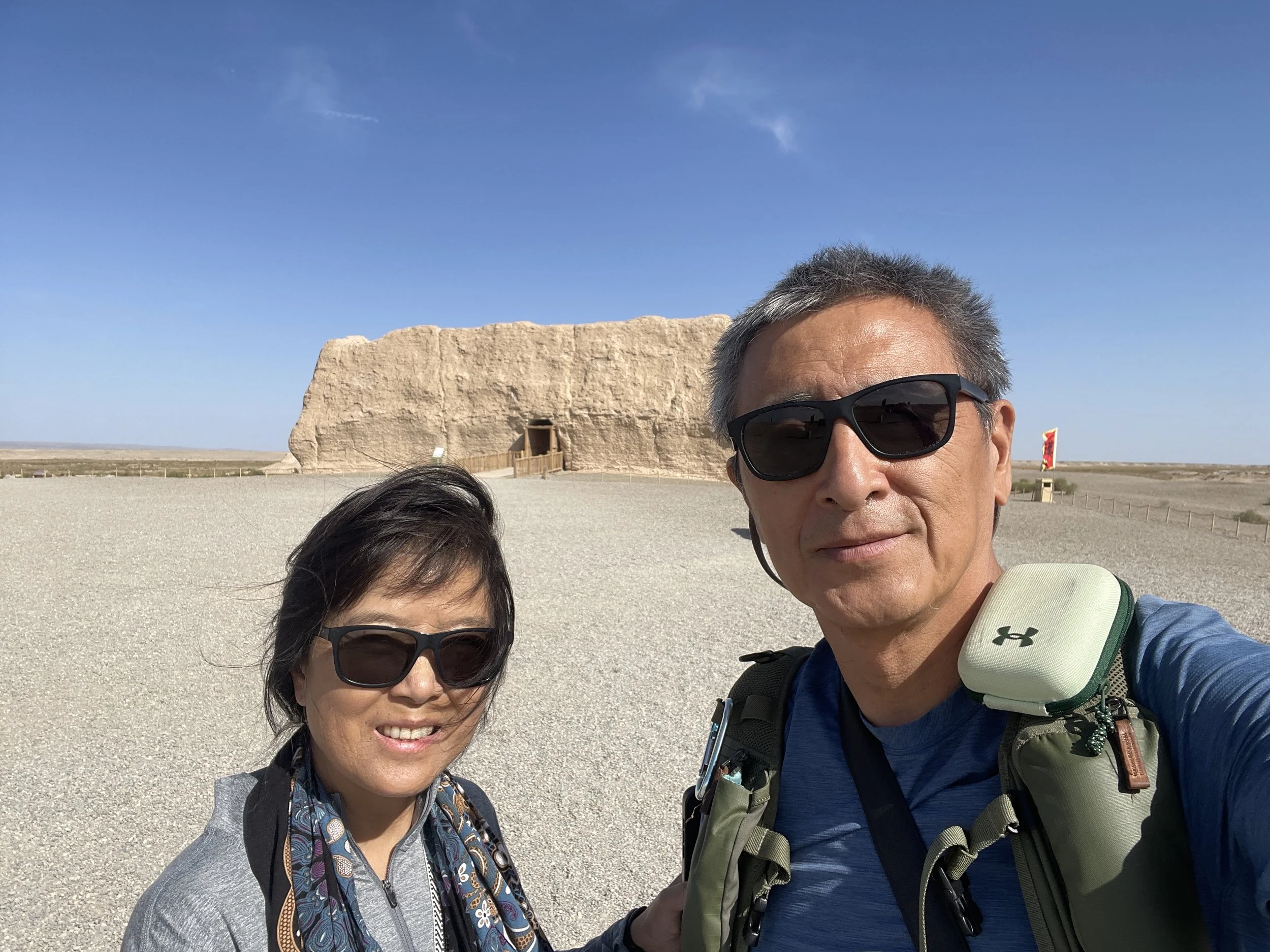
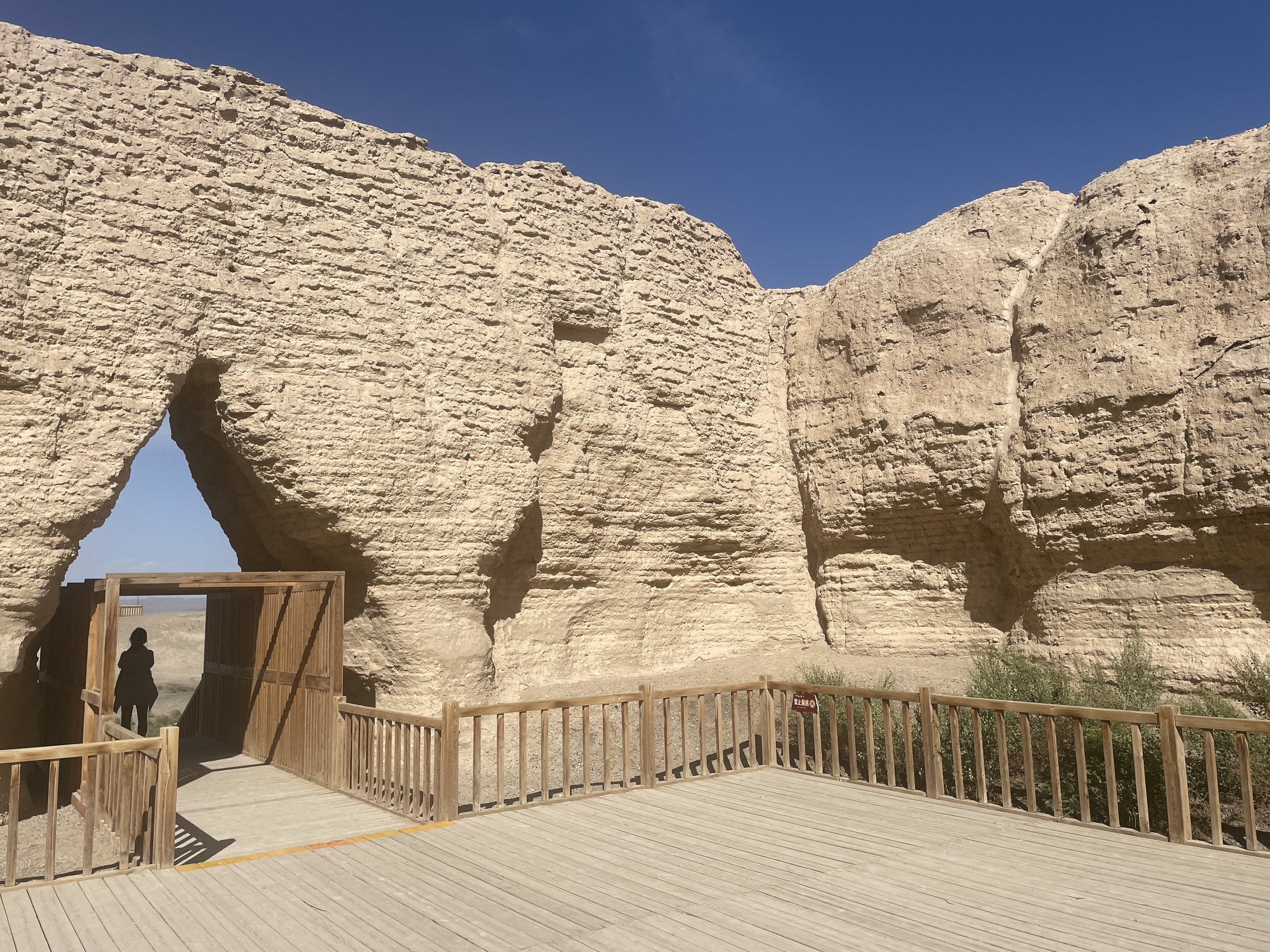
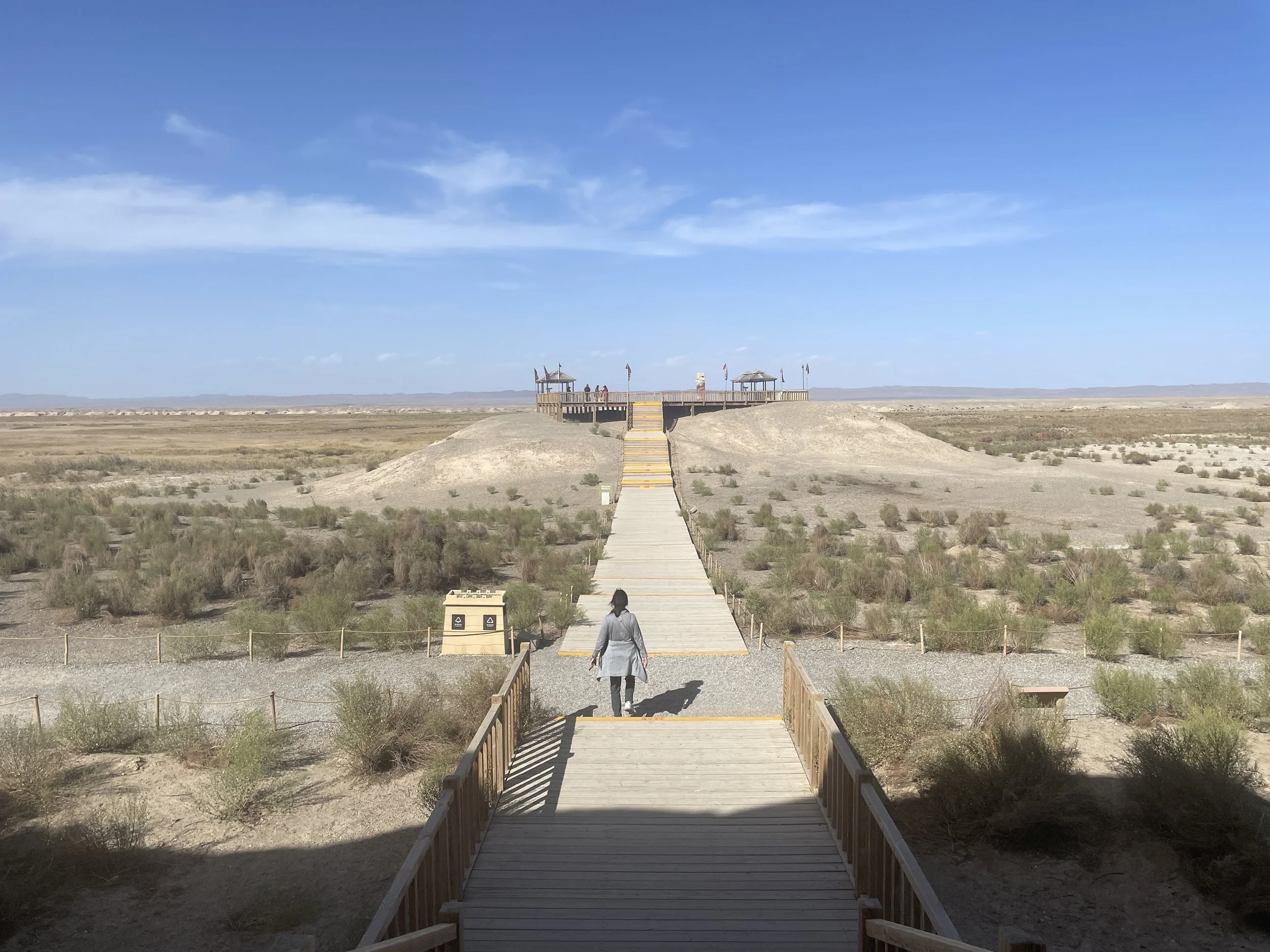
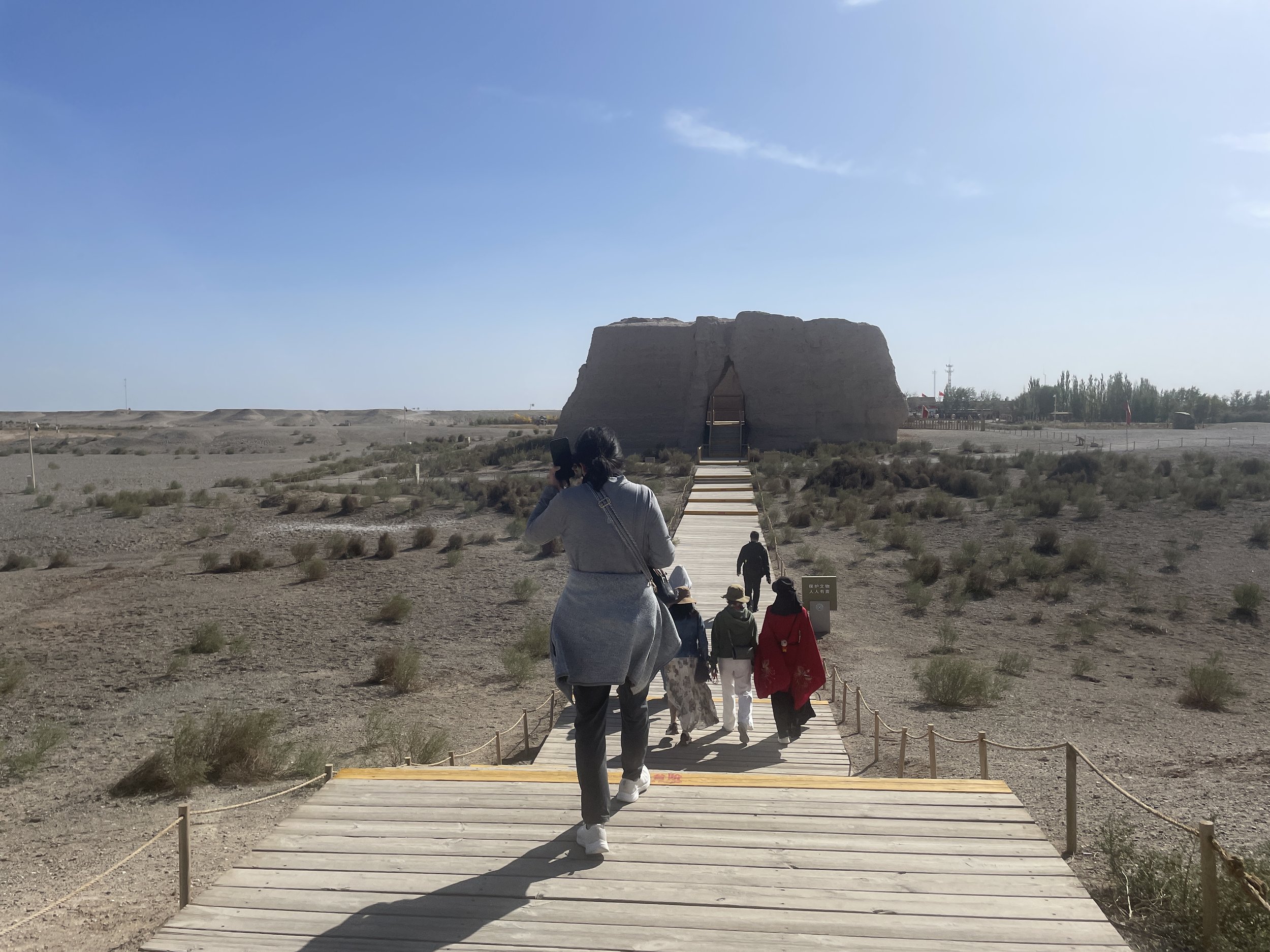
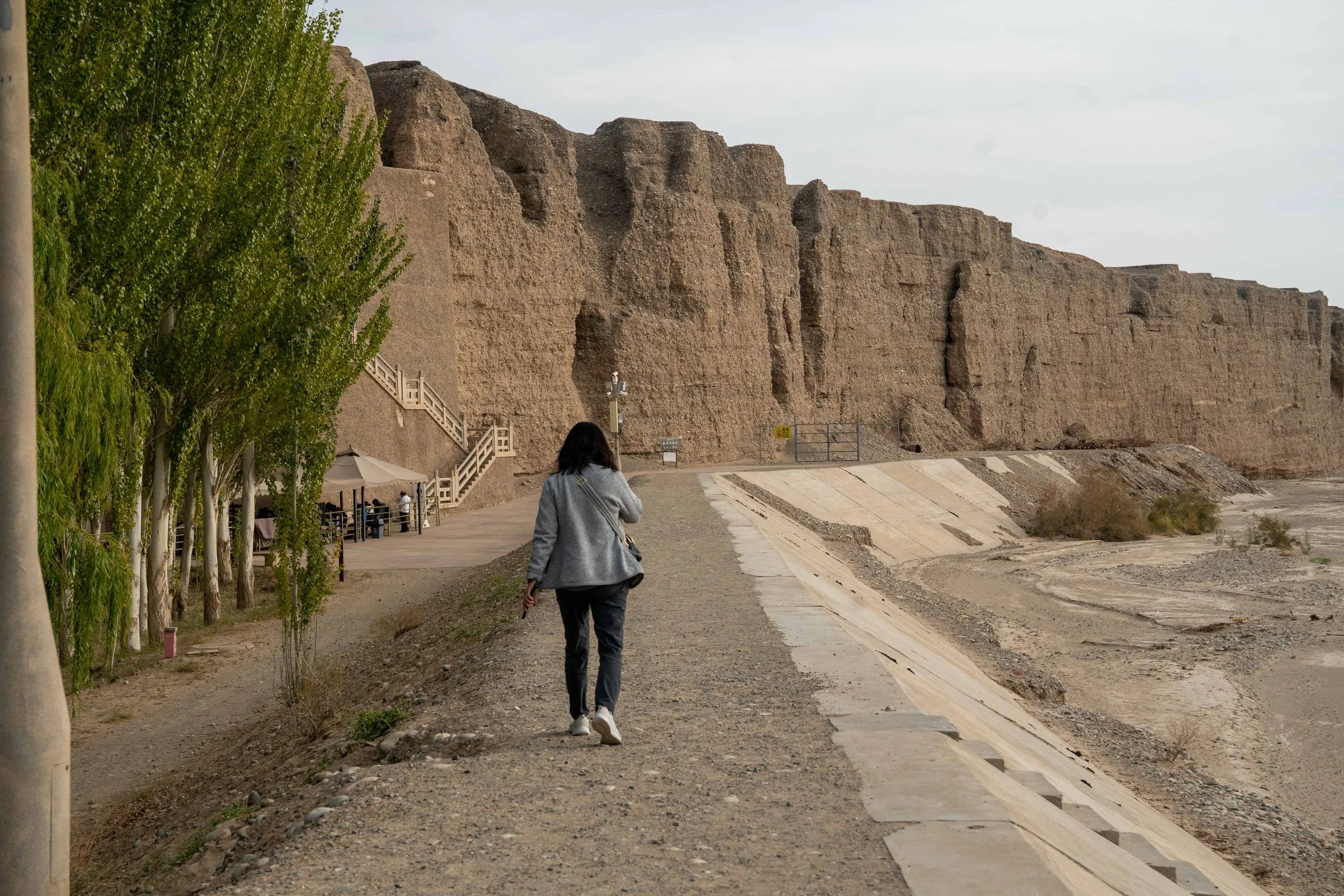
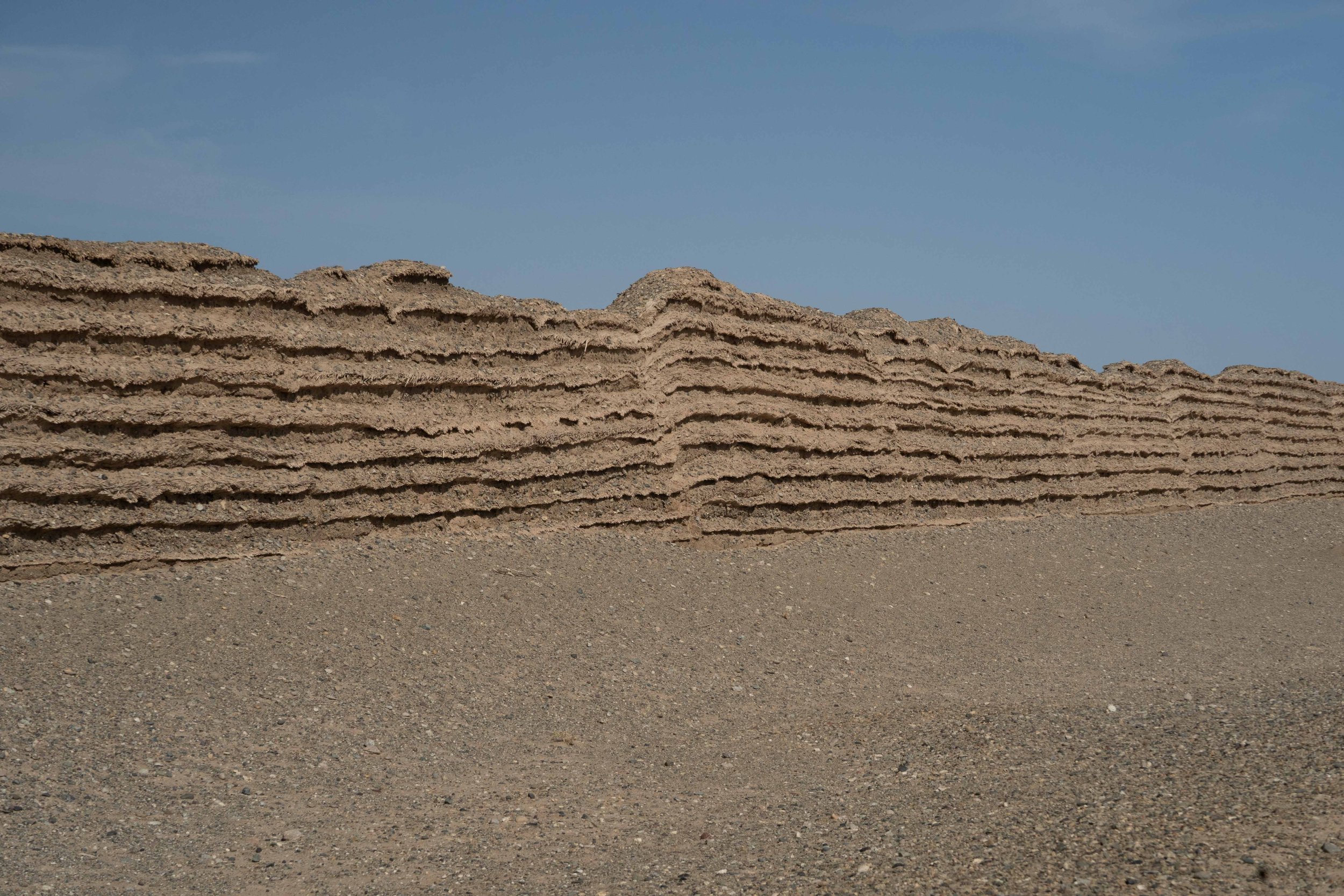
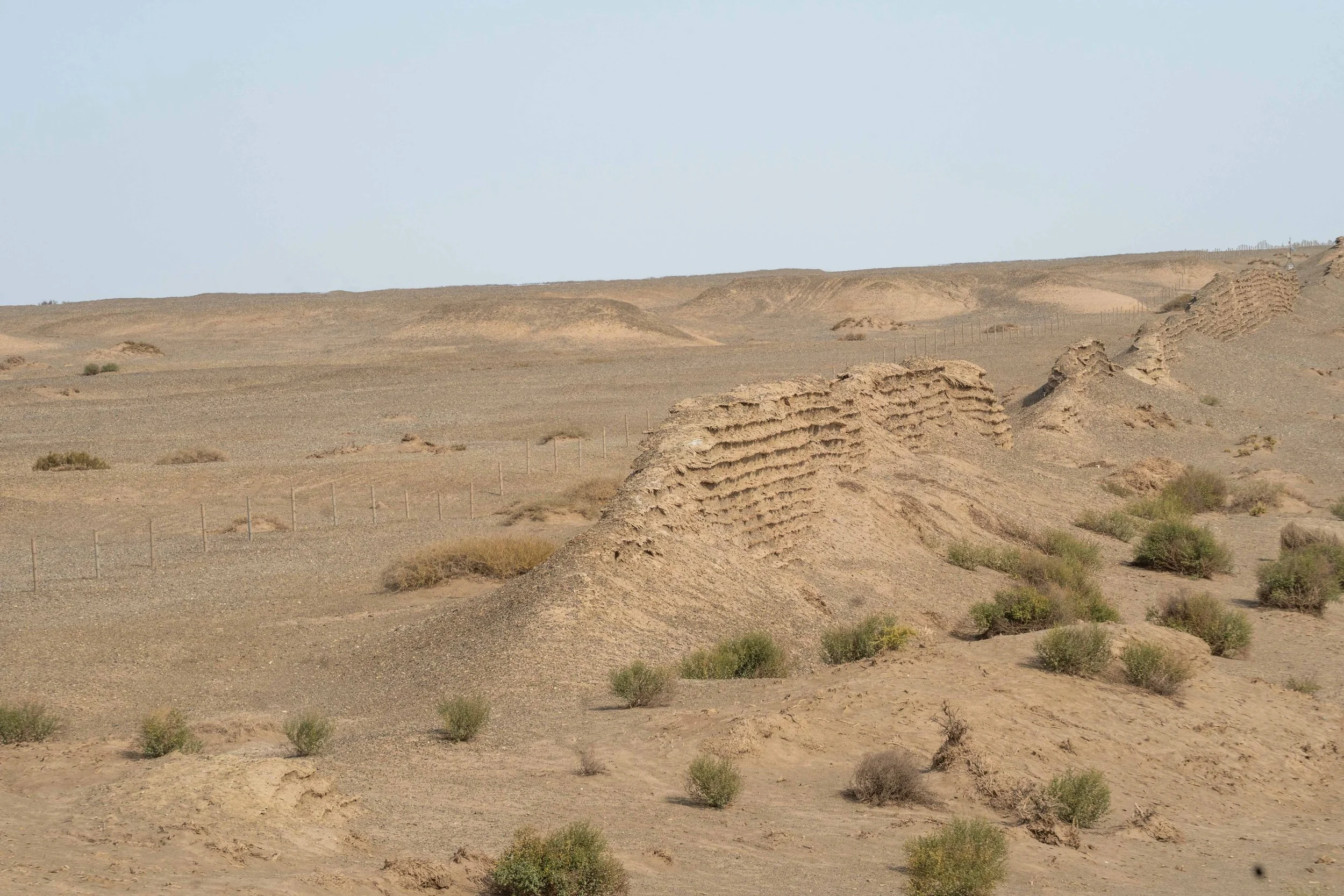
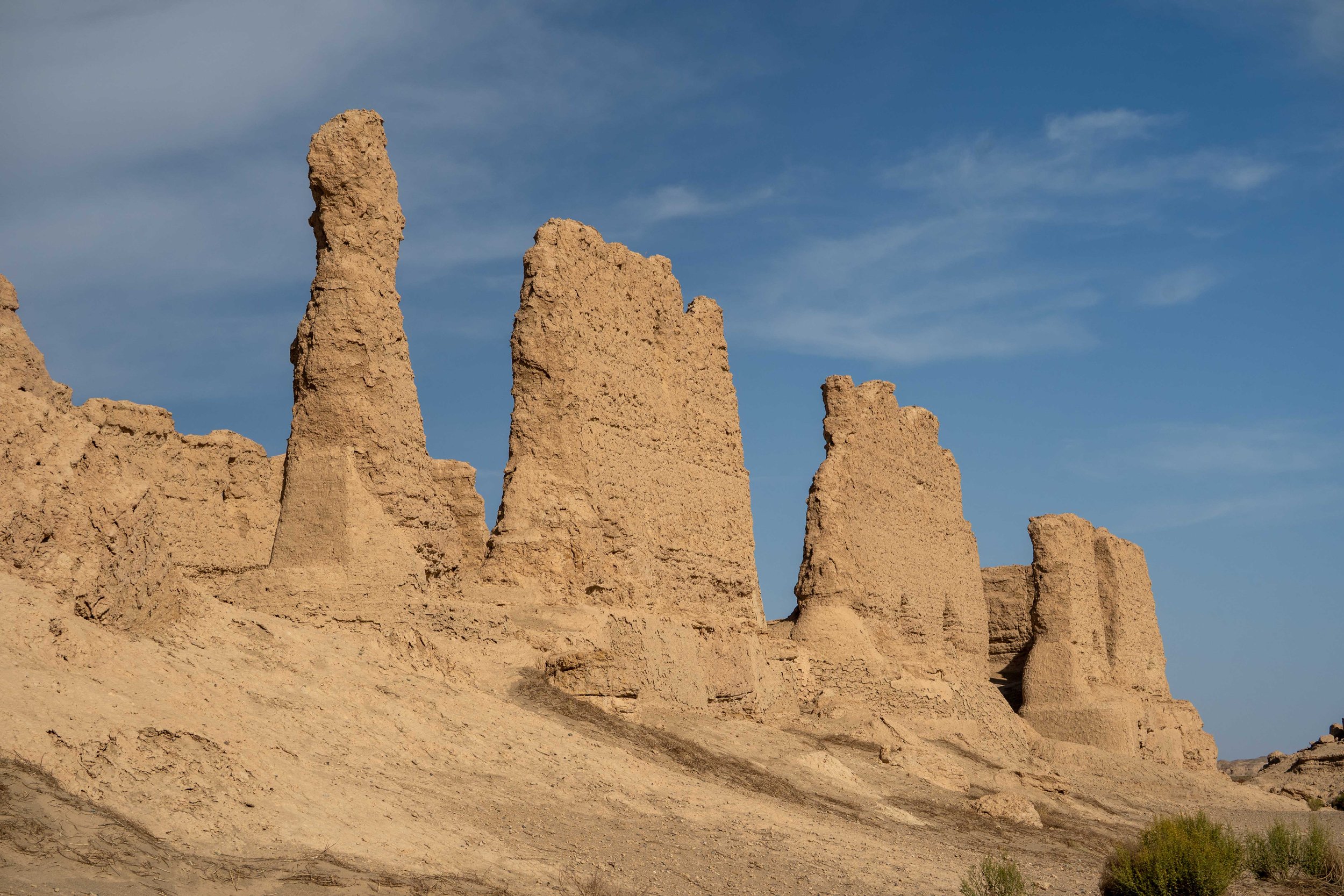
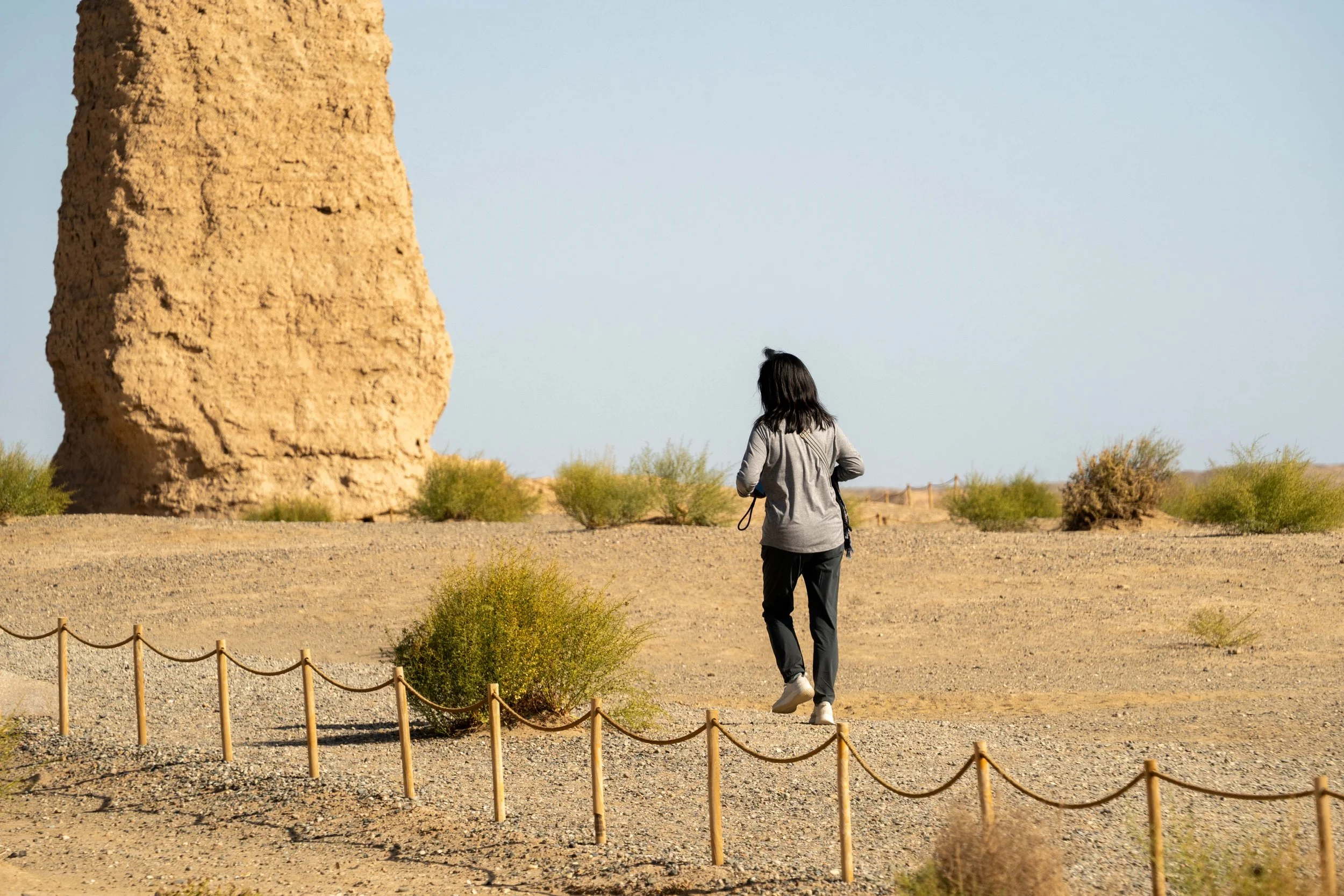
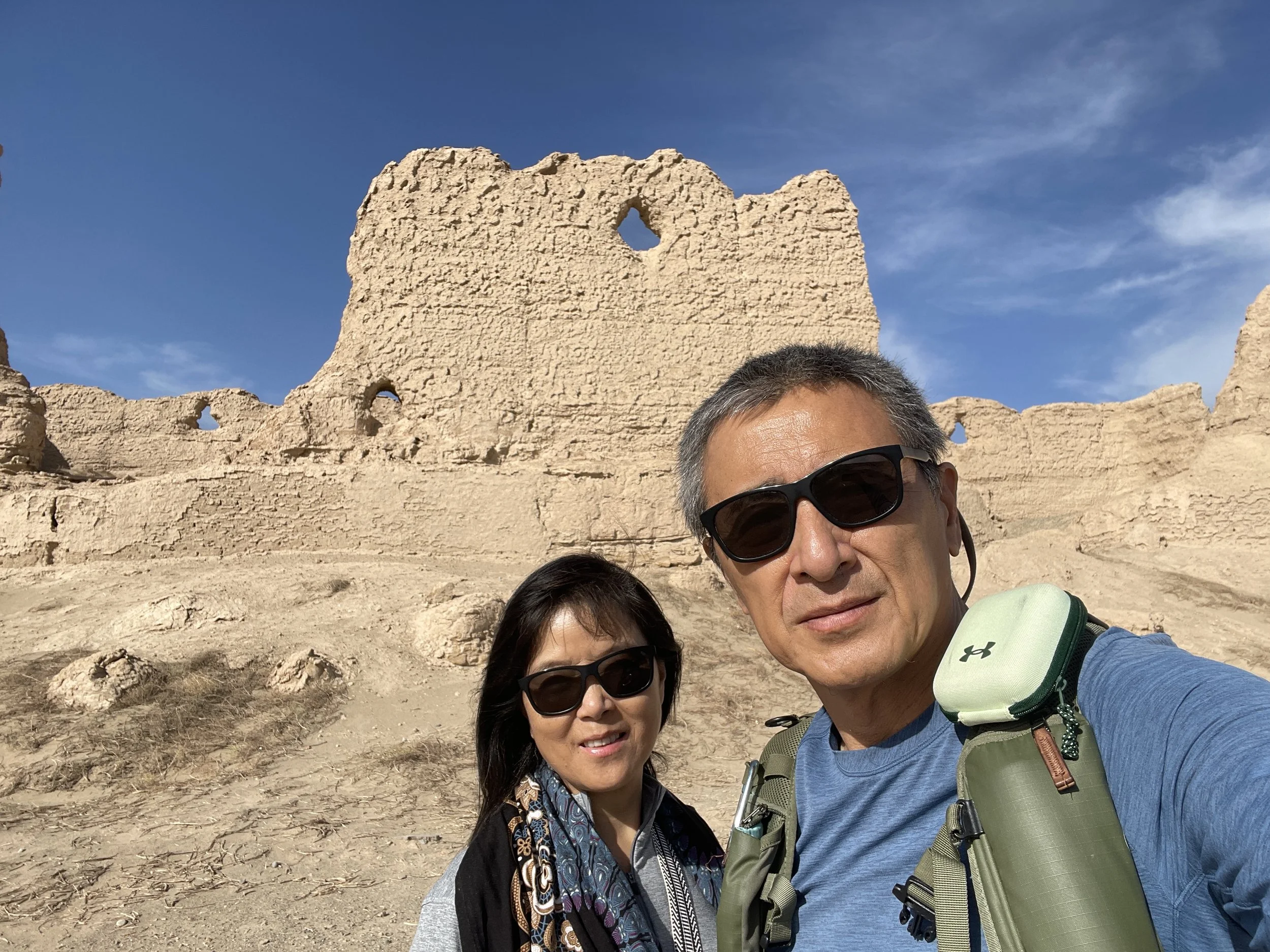
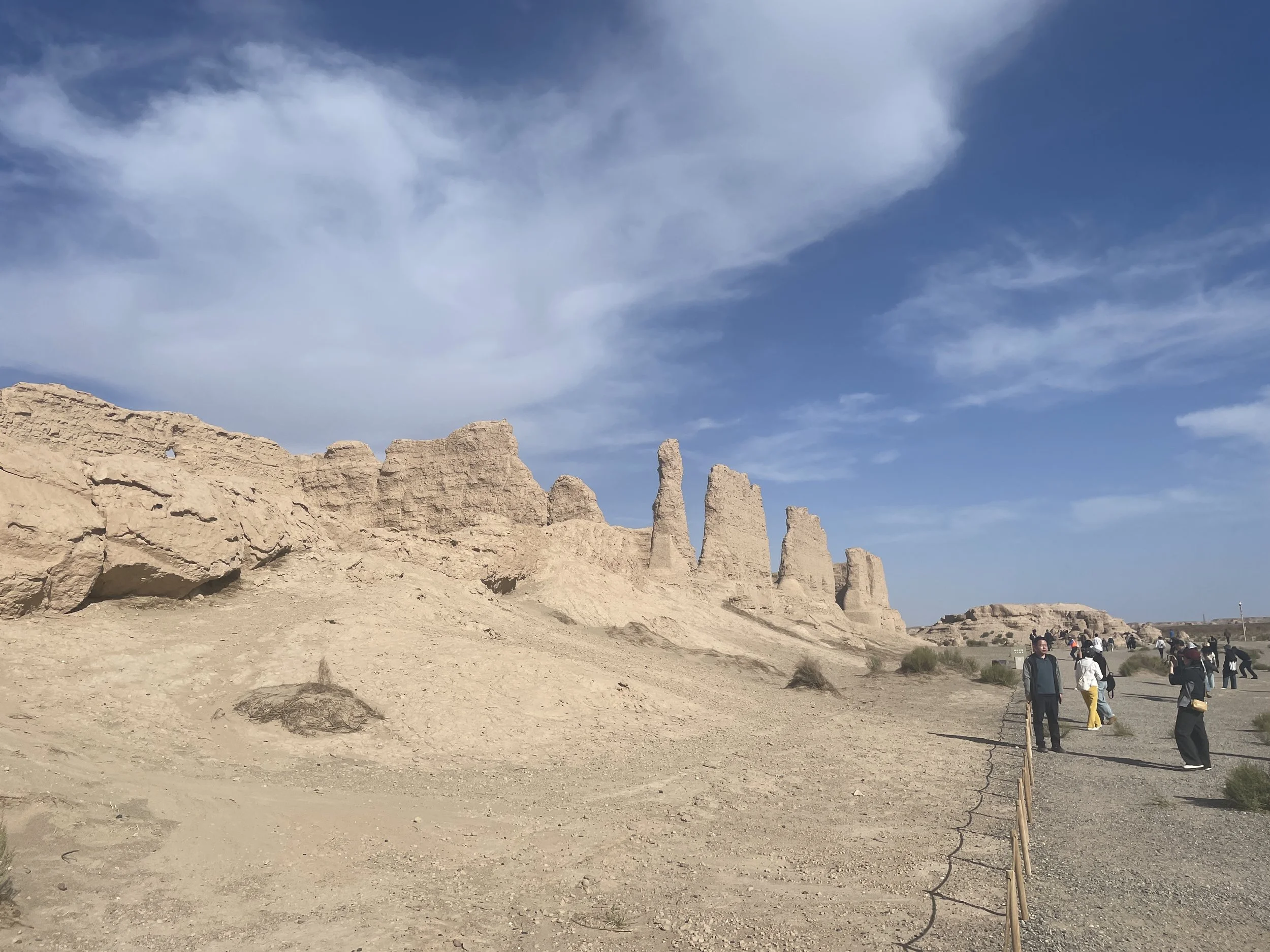
A shuttle took us to the Han Great Wall and the Large Square Castle, which lie at opposite ends of the park. It was astonishing to see portions of the Han-era Great Wall still standing after more than two thousand years—preserved by the dry desert climate and minimal human interference.
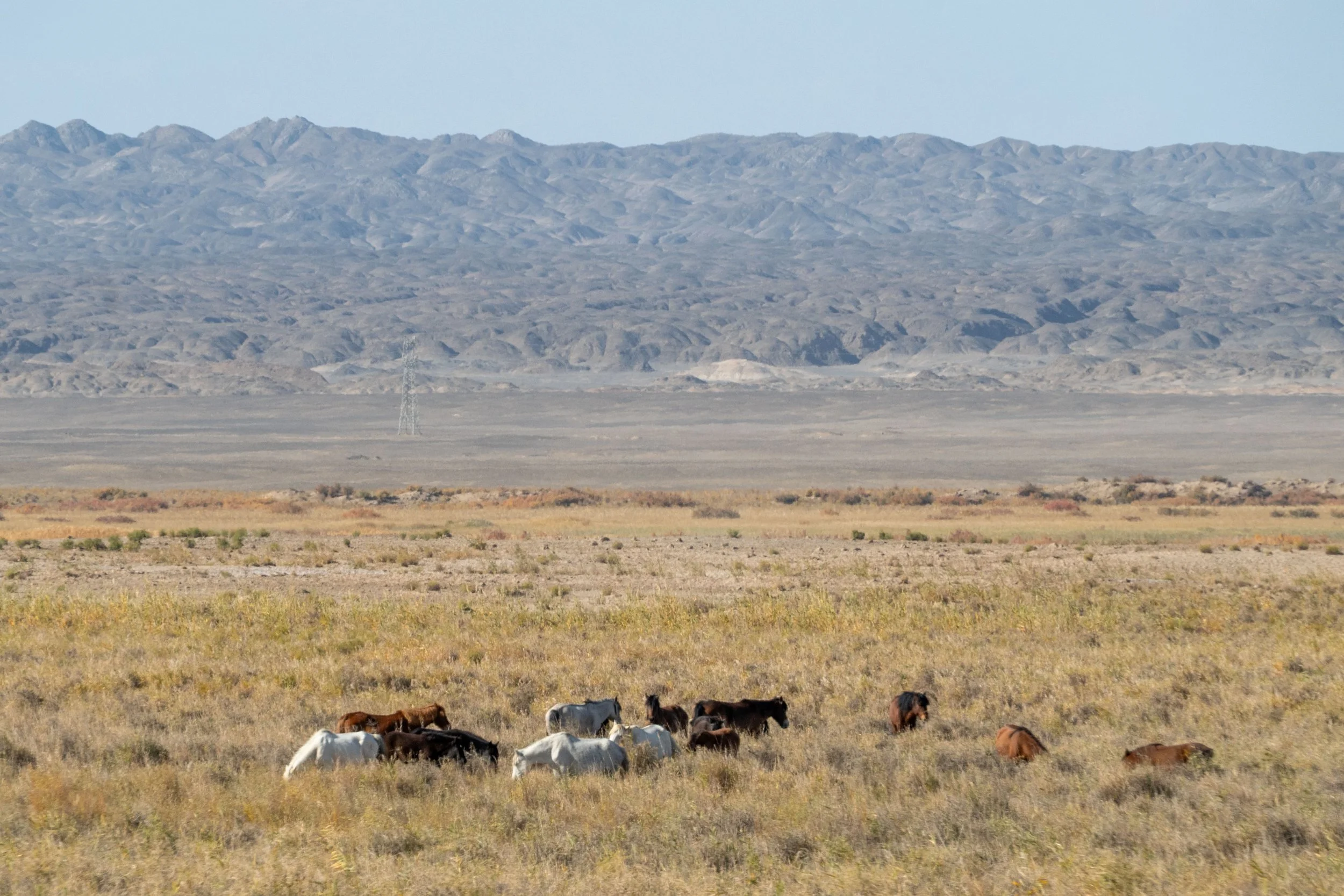
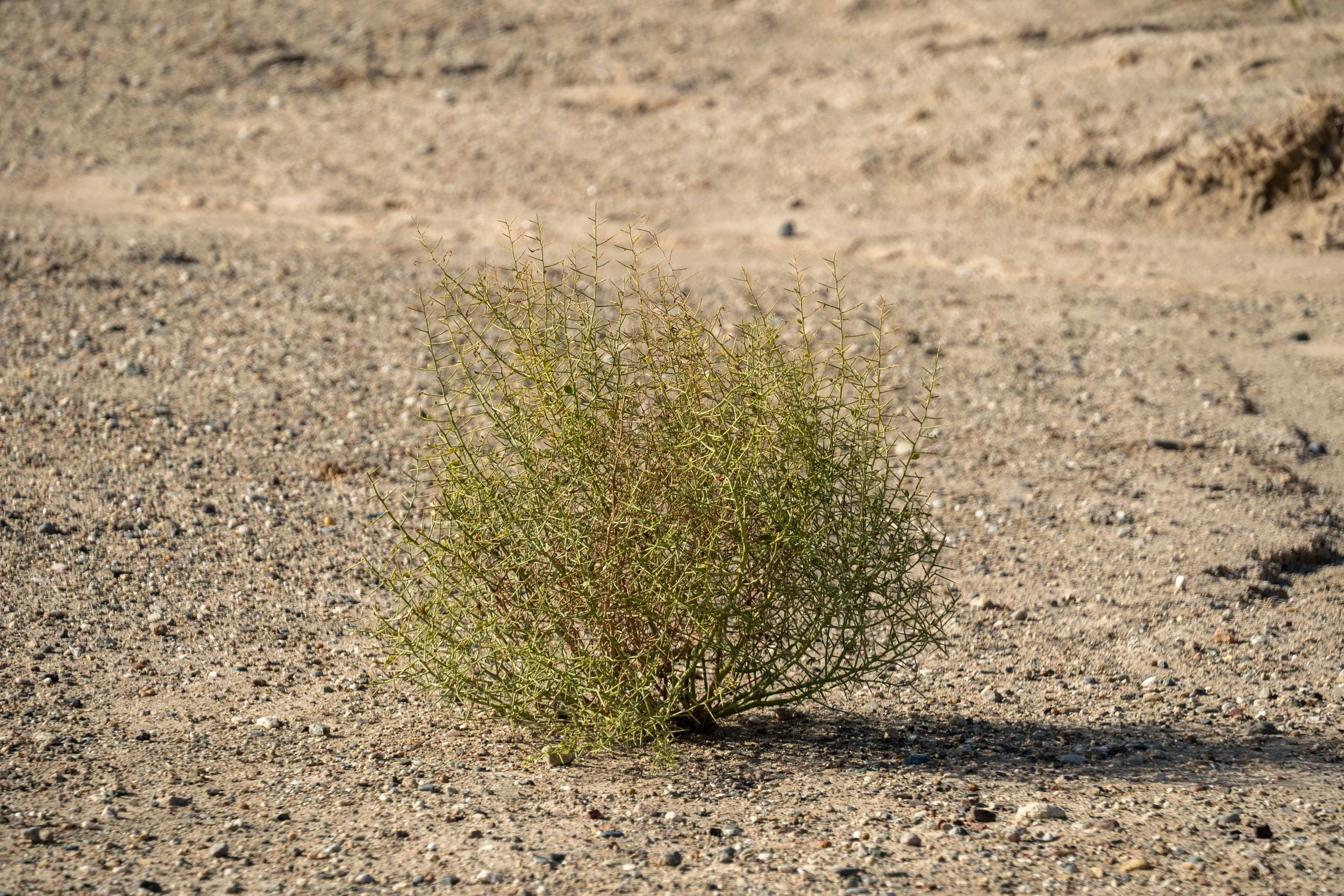
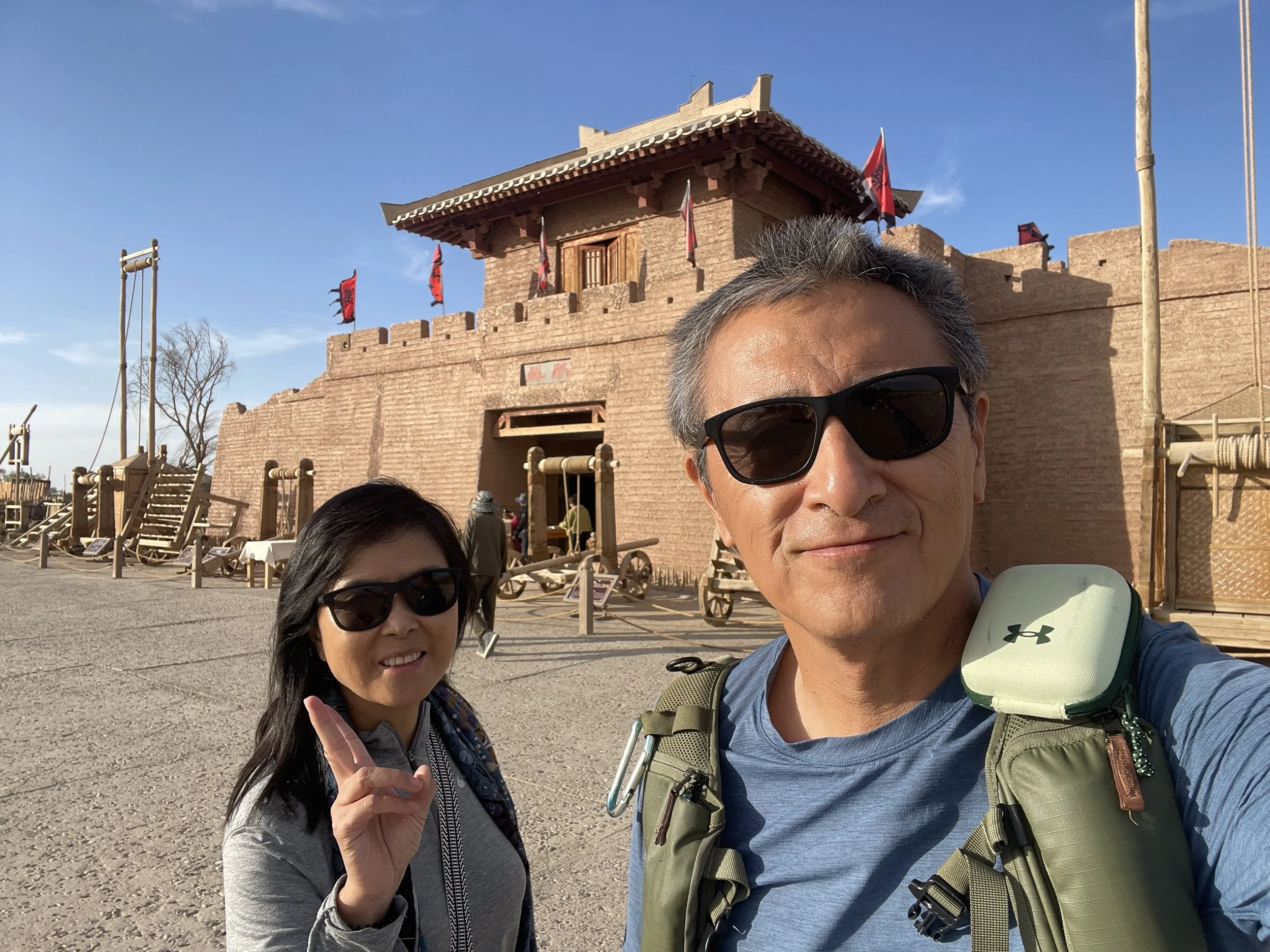
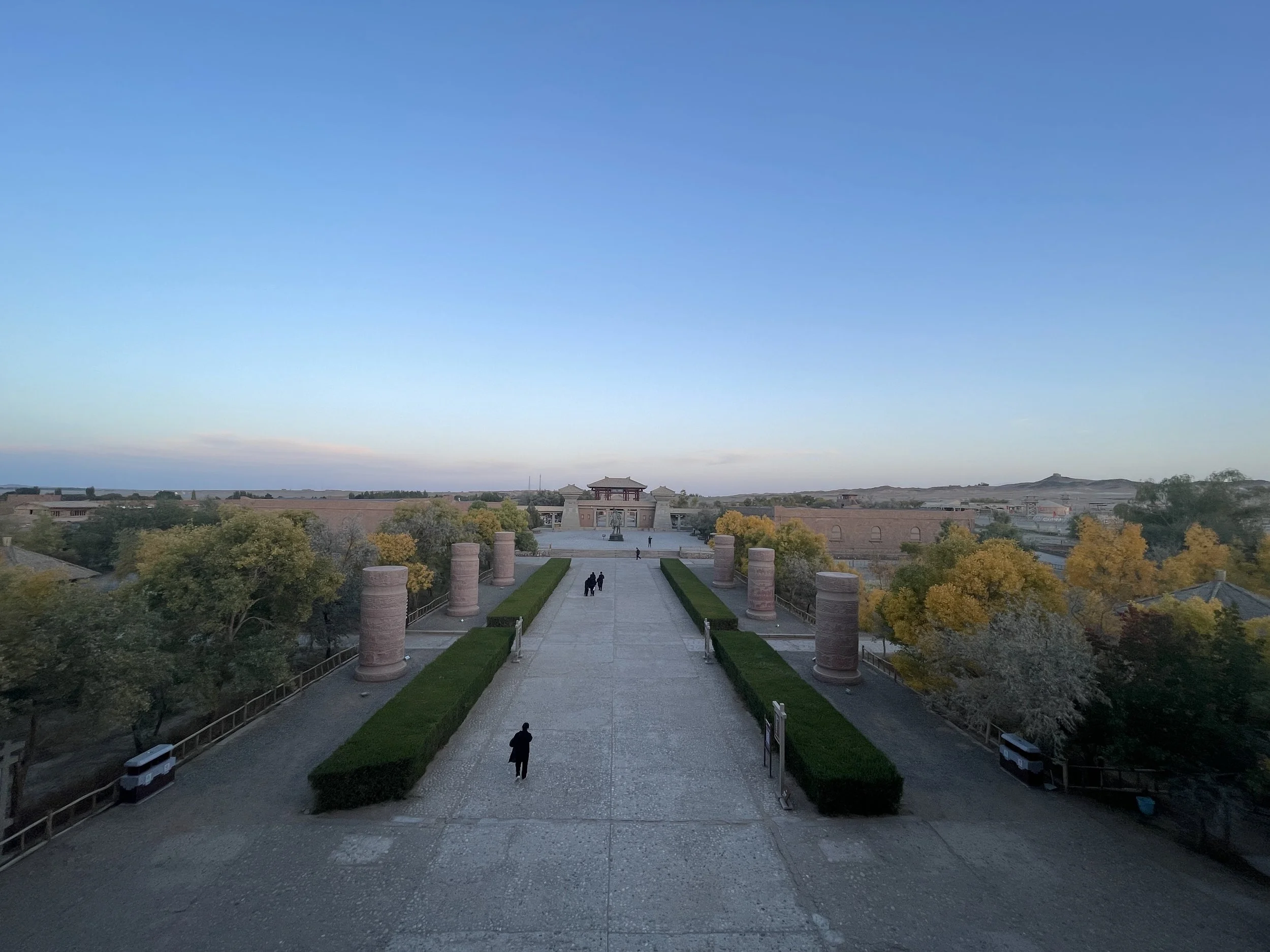
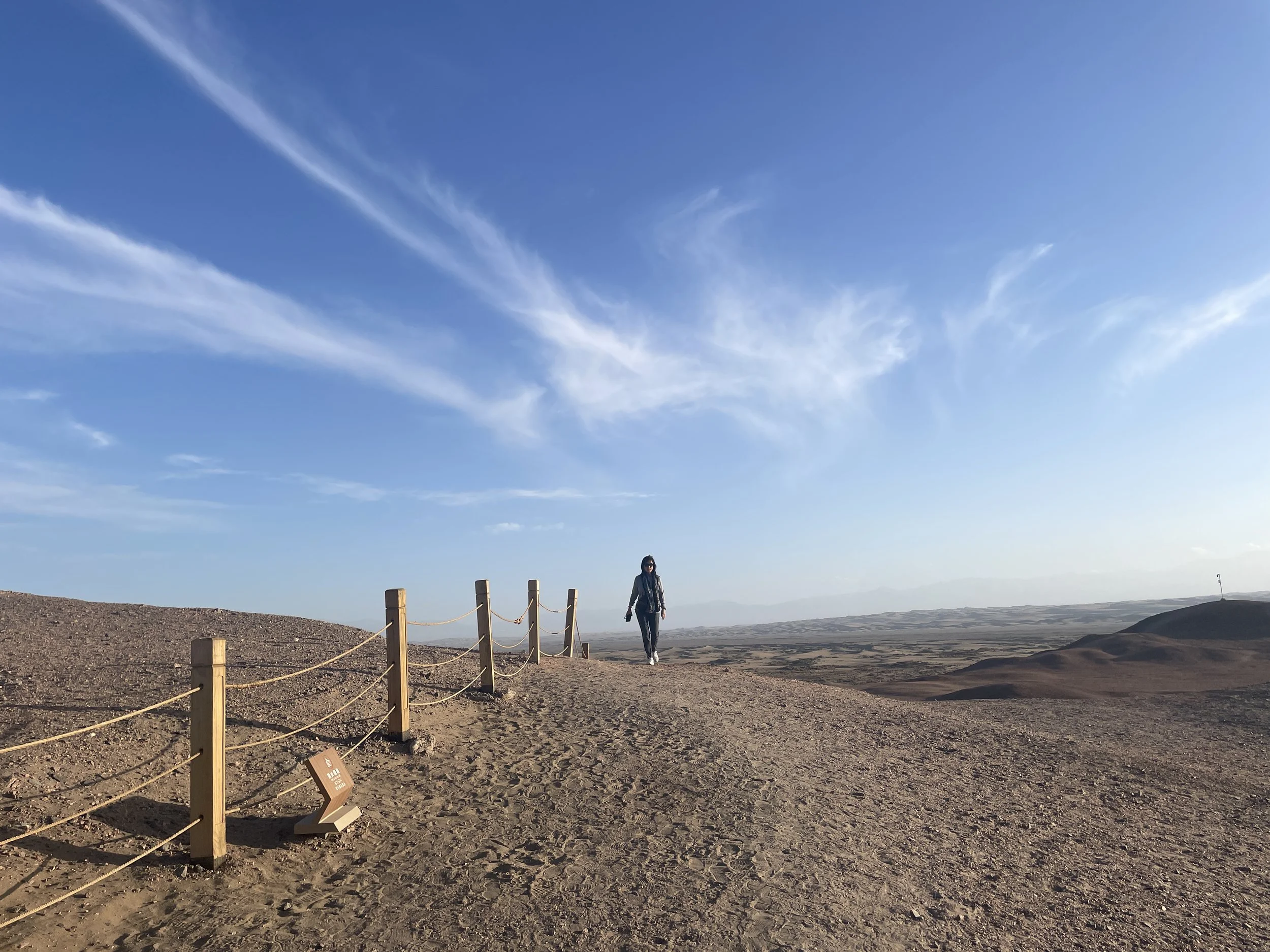
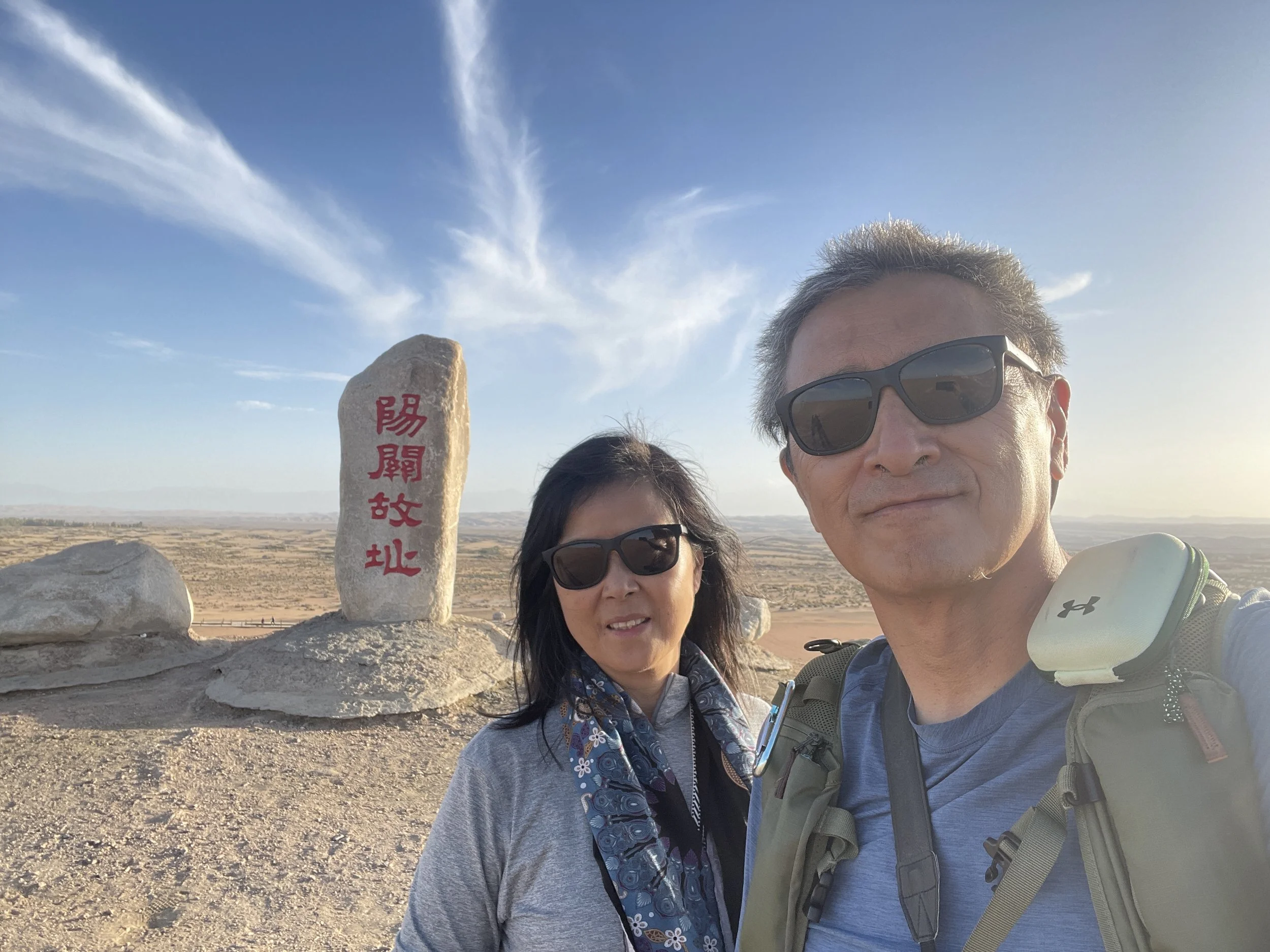
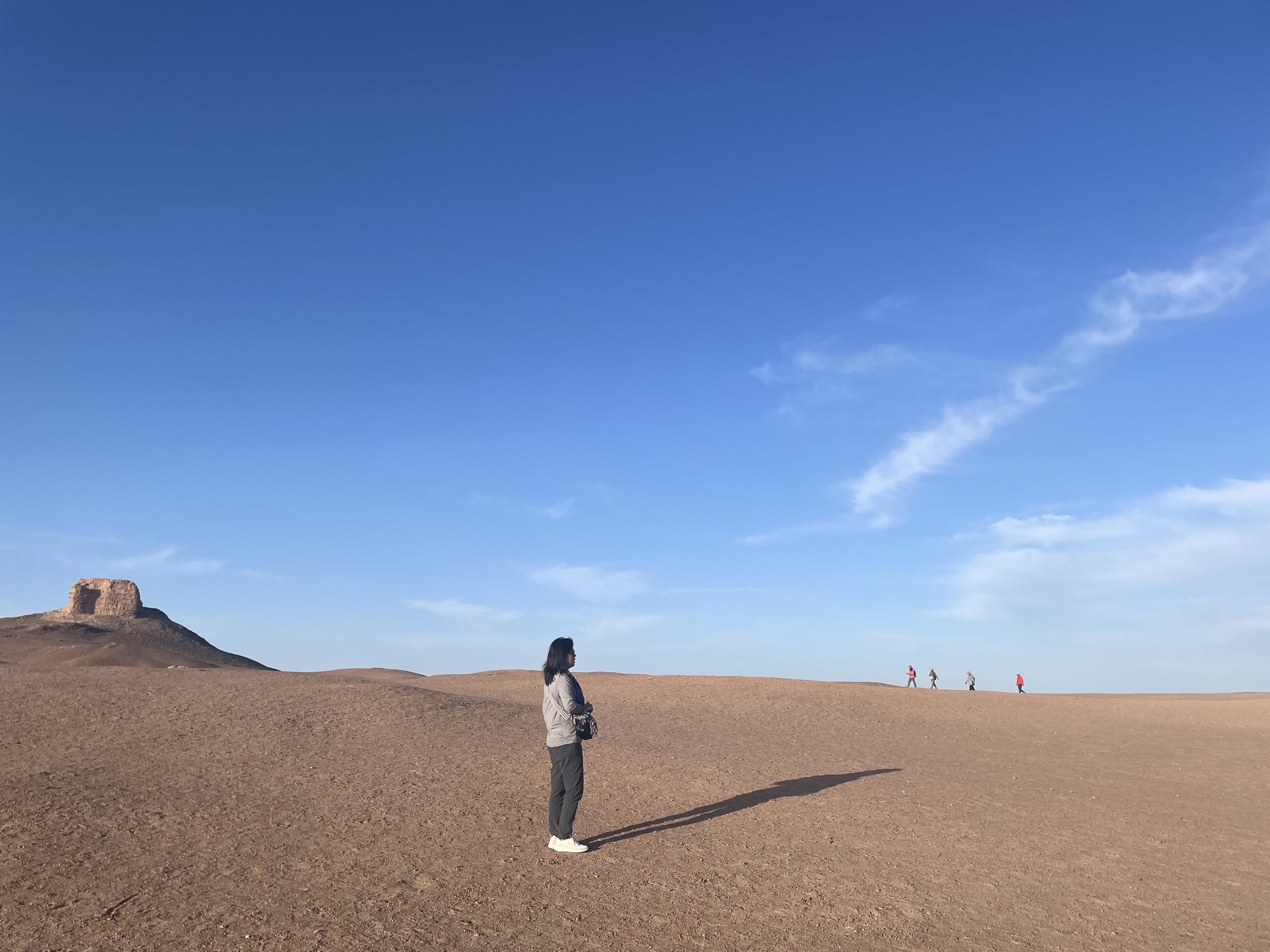
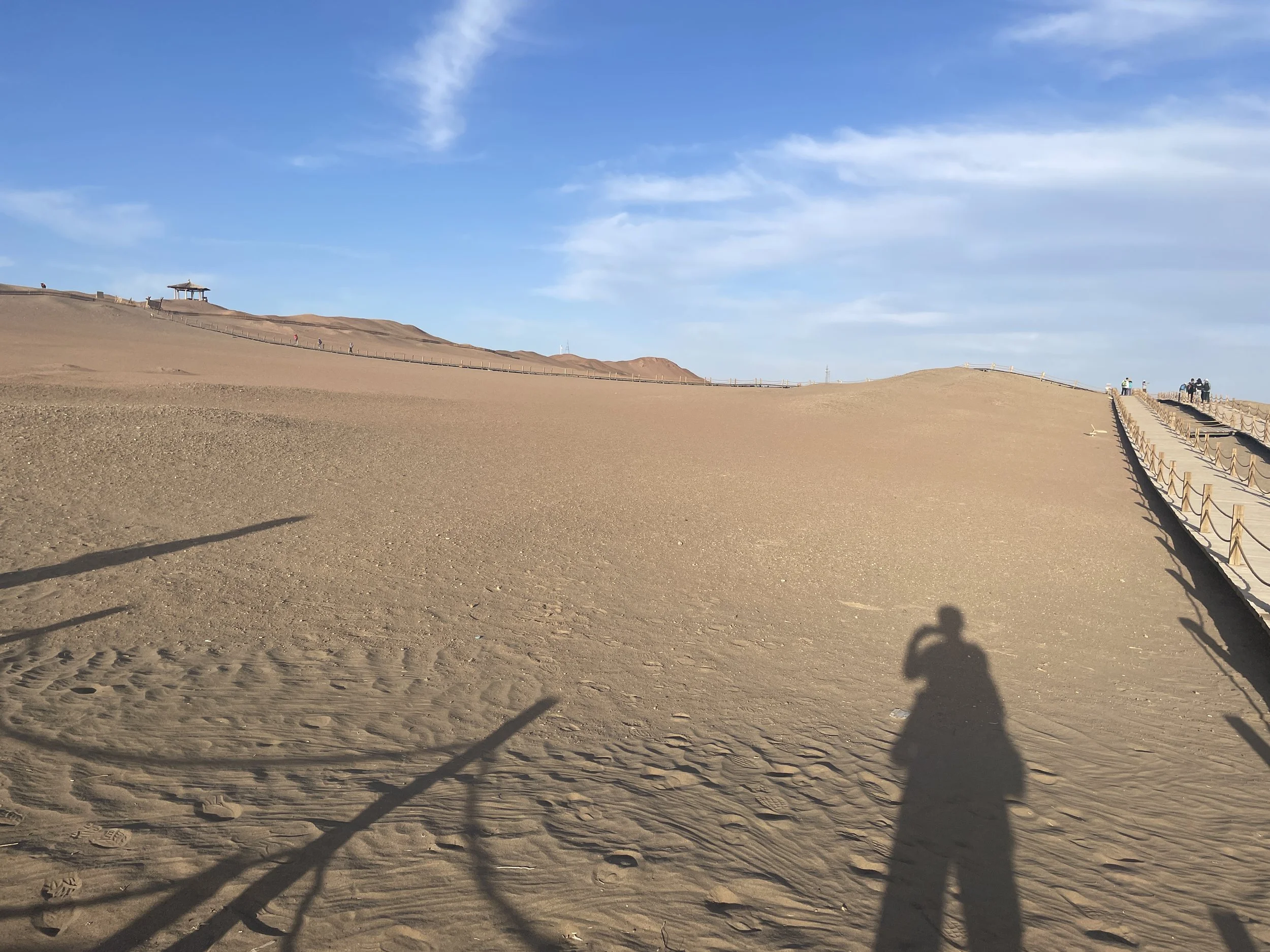
Our final stop of the day was Yang Pass (阳关). As one tourist in the park remarked, almost everything there, except for a pile of earth believed to be the remains of an ancient beacon tower (烽火台), is newly rebuilt. Yet it still felt surreal to walk along the Ancient Yangguan Avenue (阳关大道), imagining caravans and travelers setting out westward on the Silk Road.
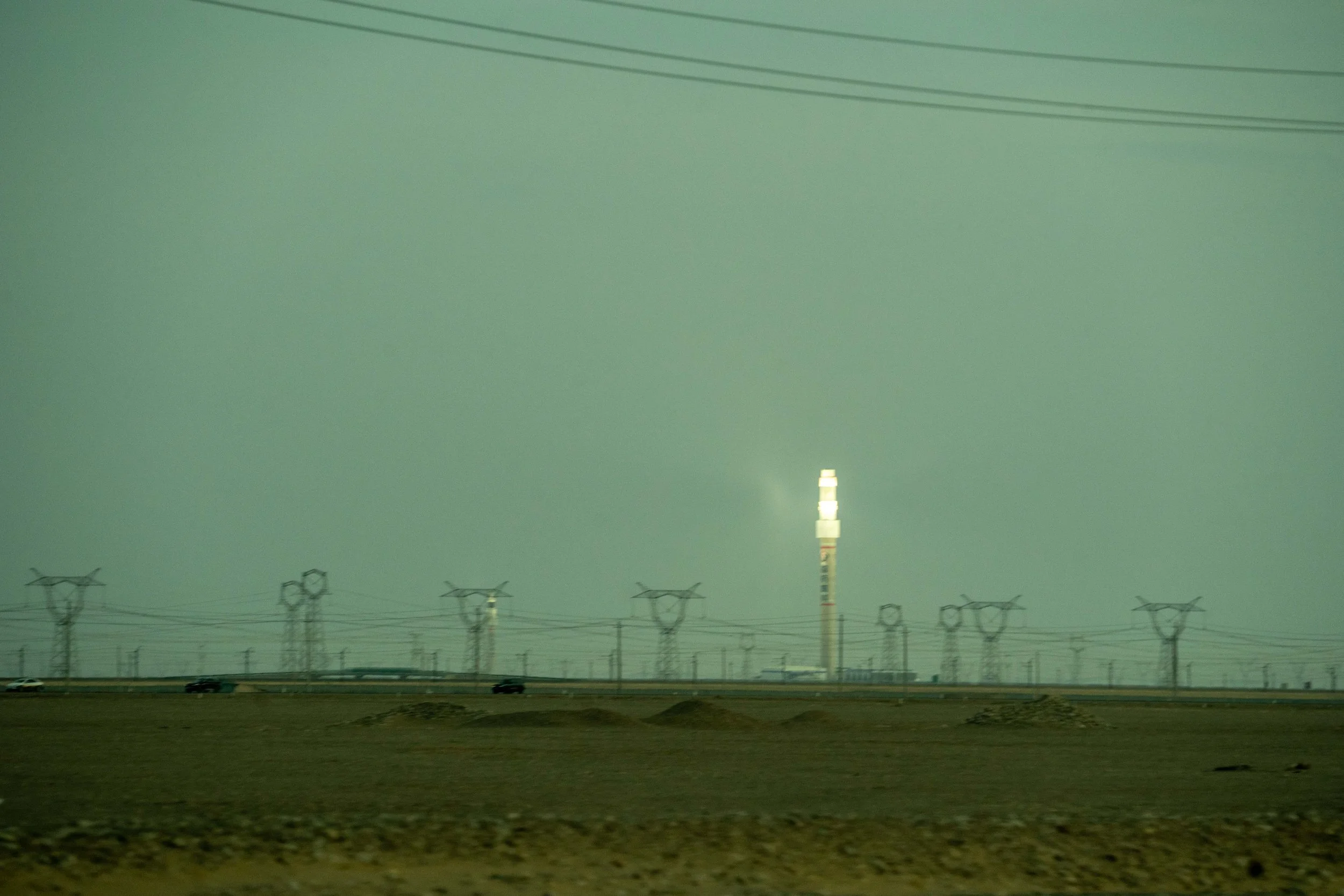
On the way to the scenic area, we could see from a distance a dazzling solar power tower rising from the desert—China’s first 100-megawatt-class solar thermal power station in Dunhuang. Beyond it, across the vast and boundless Gobi, rows of photovoltaic panels stretched endlessly, wind turbines spun steadily in the breeze, and high-voltage transmission towers and communication lines crisscrossed the landscape, forming a magnificent panorama of modern energy development.
For dinner, we went to a restaurant recommended by our driver and ordered beef and wild chive dumplings, stir-fried elm samara shoots, and a dish called Hu-yang menbing (胡杨焖饼). At first, we assumed the name had something to do with mutton, but later learned that it was actually Hu-yang menbing, named after the desert poplar (hu-yang) wood that was traditionally used as fuel to bake the flatbread—though this primitive method is no longer used today.
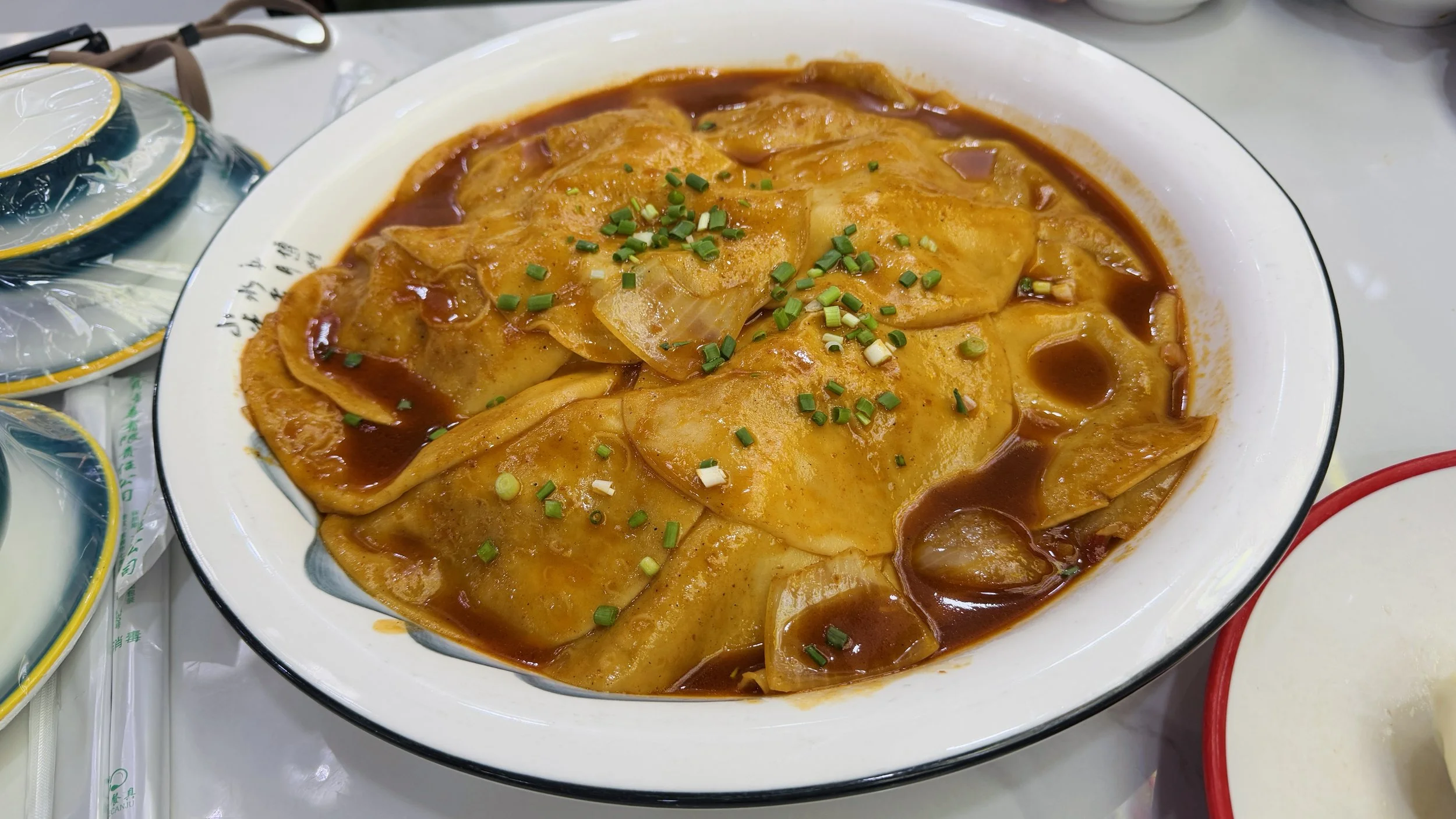
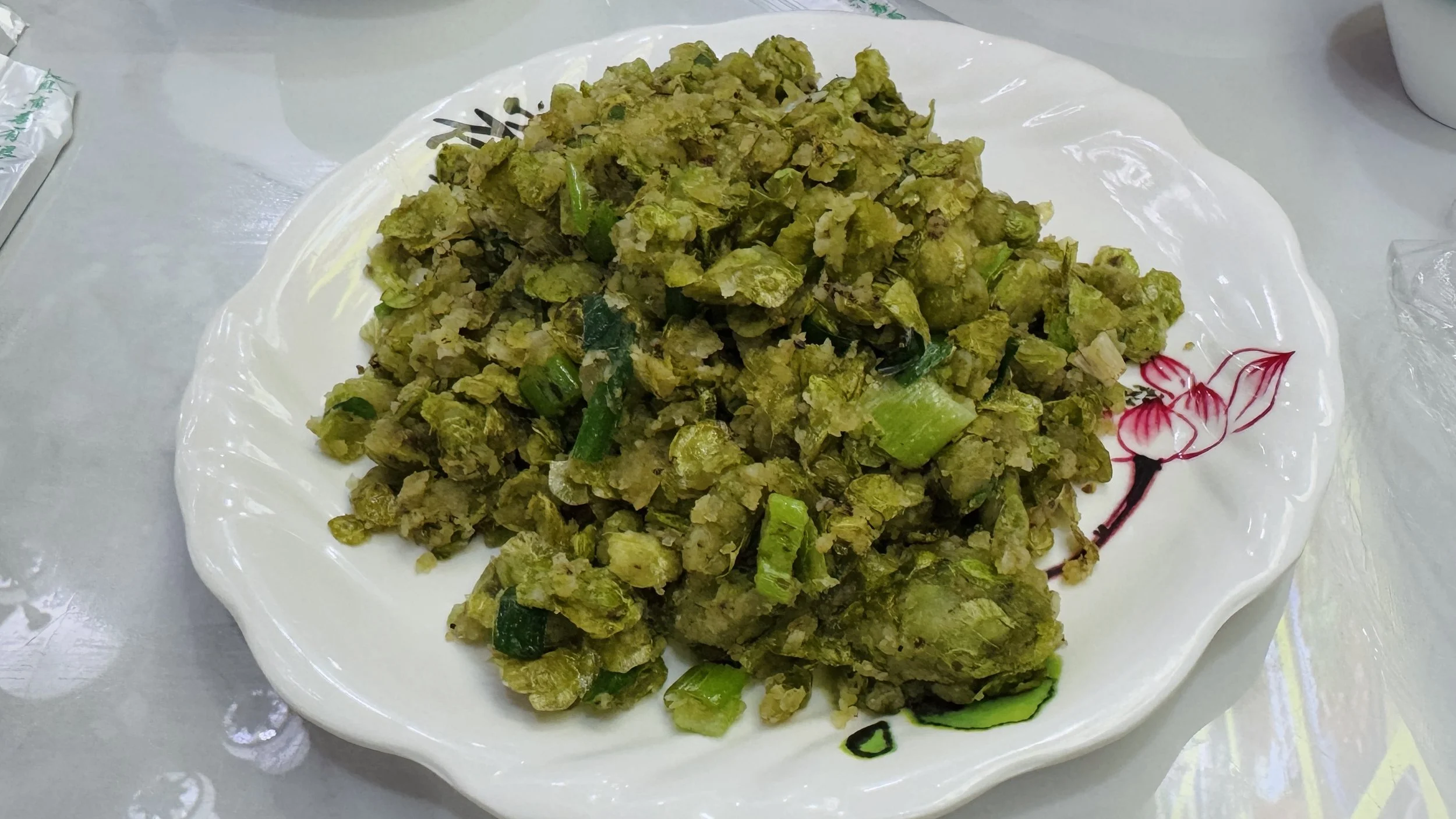
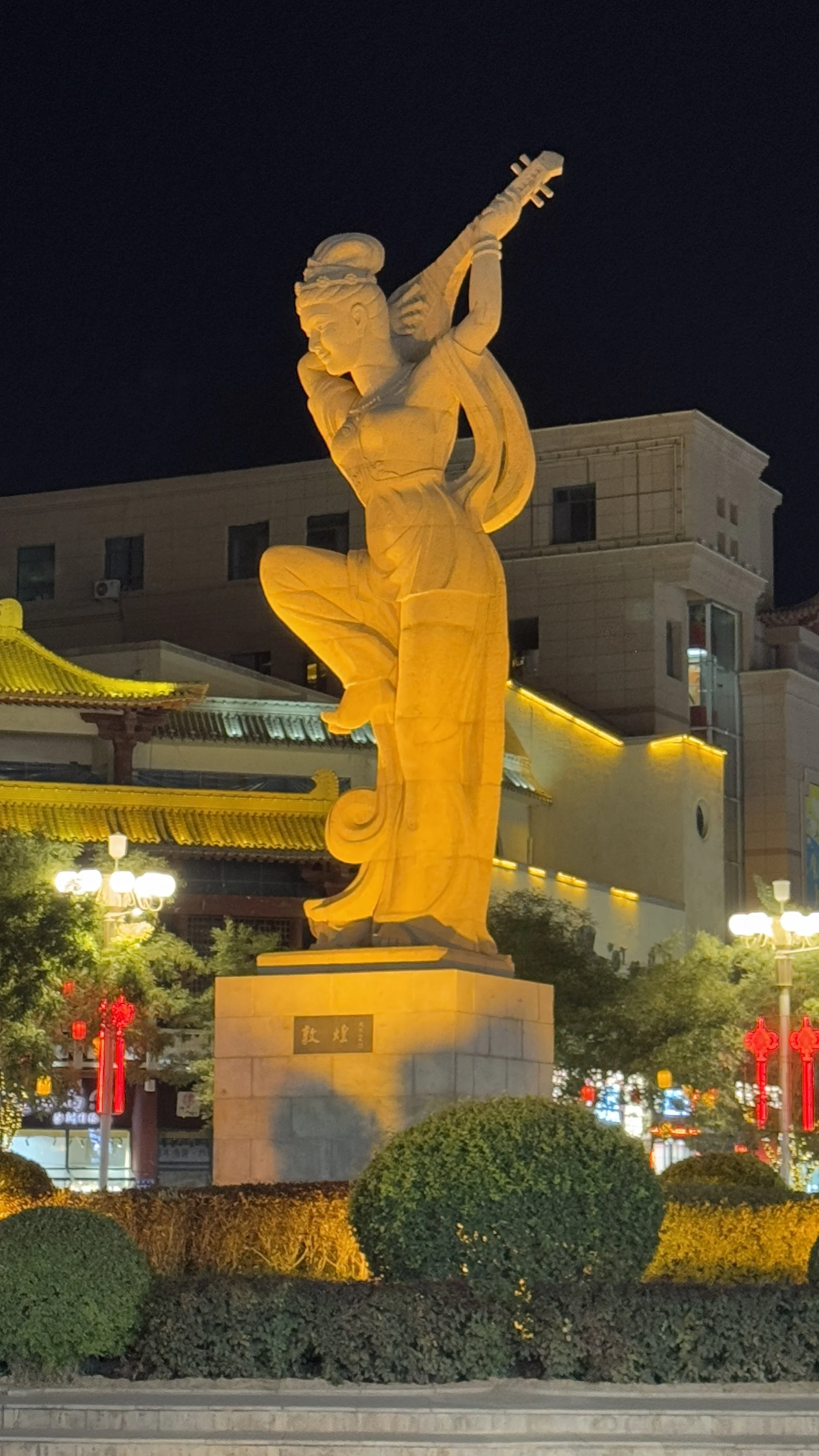
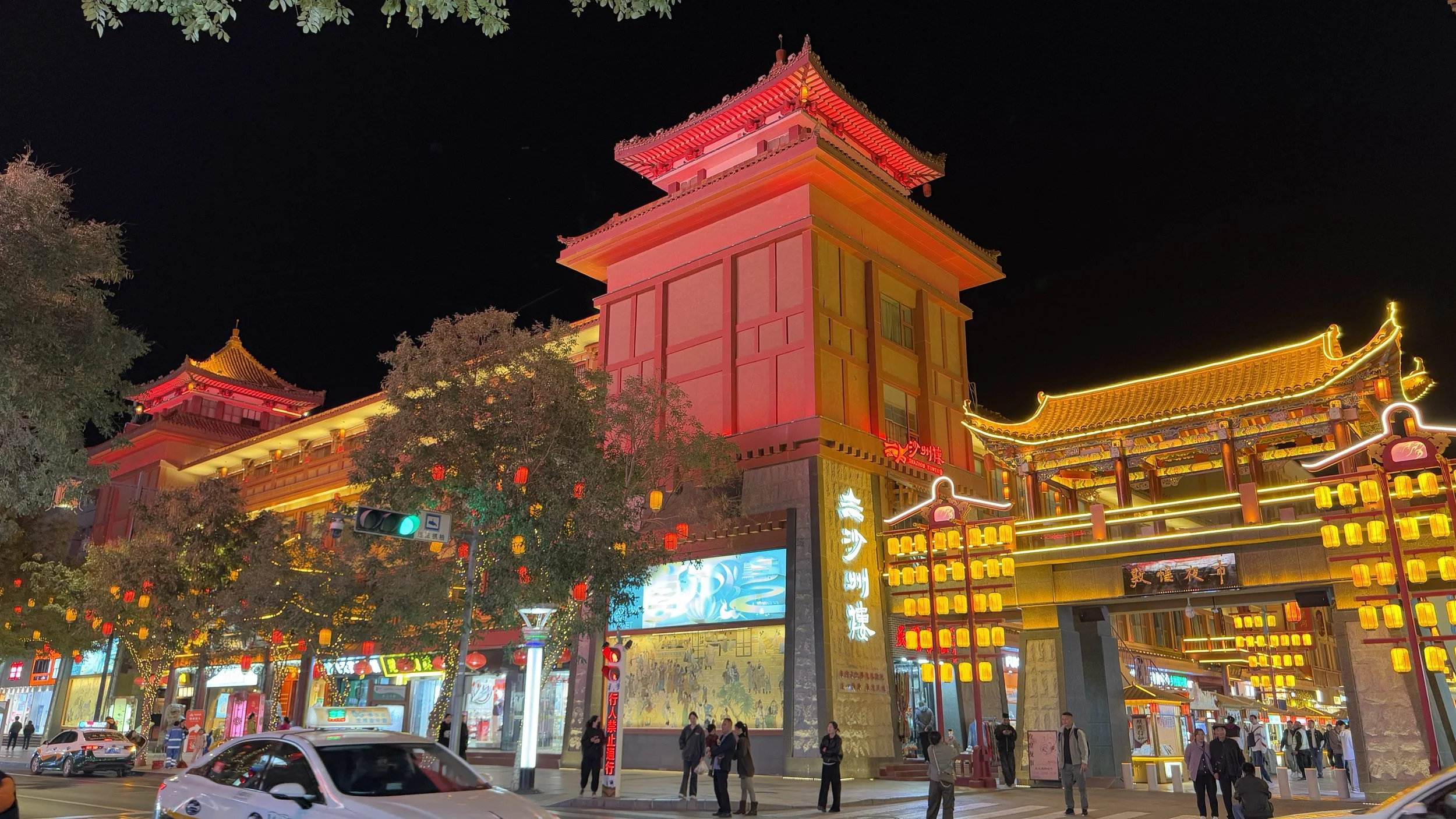
Menbing can be served with a variety of toppings. Locals usually pair it with lamb, but beef, chicken, or pork ribs are also common. We chose a small portion of pork-rib hu-yang menbing. It was rich and flavorful, but even the “small” portion was far too generous for the two of us. We were completely full after finishing barely half of it.
It was a long, fascinating day—each stop offered so much history to absorb that by evening, our minds were full and our hearts deeply moved.
2025年10月10日
今天一早,司机来酒店接我们,开始当天漫长的行程。第一站是西千佛洞,它位于莫高窟所在山体的另一侧。在党河一边的洞窟共有十六个,我们随中文讲解团参观了其中四个。虽然规模和装饰远不如莫高窟宏大精美,但游客寥寥无几,使得参观过程格外安静从容。我们仔细聆听讲解,努力去了解当年开凿这些洞窟的人们及其信仰世界。
随后我们驱车约160公里前往雅丹地质公园,靠近甘肃与新疆的交界地带。进入景区后,换乘观光车,在多个观景点下车拍照、短暂步行。广阔无垠的雅丹地貌在风蚀作用下形成奇特的地形,景色壮丽而荒凉,与我们居住地附近—美国的亚利桑那州、科罗拉多州和犹他州的荒漠景观,颇有几分相似。
接着我们前往玉门关景区。园内主要有三处重要遗迹:小方盘城、大方盘城和汉长城。景区将玉门关遗址命名为“小方盘城”,这一称呼源自二十世纪初两位外国探险家的命名方式,而不是直接称为玉门关。
然后乘坐观光车带我们前往位于景区两端的汉长城遗址和大方盘城。看到两千多年前修筑的汉代长城依然屹立在戈壁滩上,我们感到无比震撼——这全得益于干燥的气候和几乎没有人为破坏的环境。
当天的最后一站是阳关。正如一位游客所说,除了那个古老的烽火台遗迹外,景区里的建筑几乎都是后人重建的。然而,当我们踏上阳关大道时,仍然感到一丝不真实的震撼,仿佛能看见昔日的使者与商旅从这里踏上通往西域的漫漫征途。
在前往景区的路上,远远就能看到一座闪耀夺目的光热发电塔——这正是国内首座100兆瓦级的敦煌光热发电站。除了光热发电外,放眼那无边无际的戈壁滩,光伏电板整齐铺展,风力发电机迎风旋转,高压输电塔与通信电缆纵横交织,构成了一幅壮观的现代能源画卷。
晚餐我们去了司机推荐的一家餐馆,点了沙葱牛肉水饺,风味炒榆钱和胡羊焖饼。原本以为“胡羊焖饼”与羊肉有关,后来才弄明白,其实应为“胡杨焖饼”——最初是用胡杨木生火烙制的饼,如今当然已不再采用这种原始做法。焖饼可以搭配多种底菜,当地人以羊肉为主,但也可以是牛肉、鸡肉或猪排。我们点的是小份排骨胡杨焖饼,味道香浓可口,只是小份对我们俩来说份量也还是太大,吃了一半就已经饱到吃不下了。
这一天的行程漫长而充实,每一处遗迹都蕴含着丰富的历史信息,让人目不暇接、回味无穷。