October 7, 2026
Our second day of exploring Kathmandu Valley’s UNESCO World Heritage Sites began in Bhaktapur, an ancient city that was once the capital of an independent kingdom.
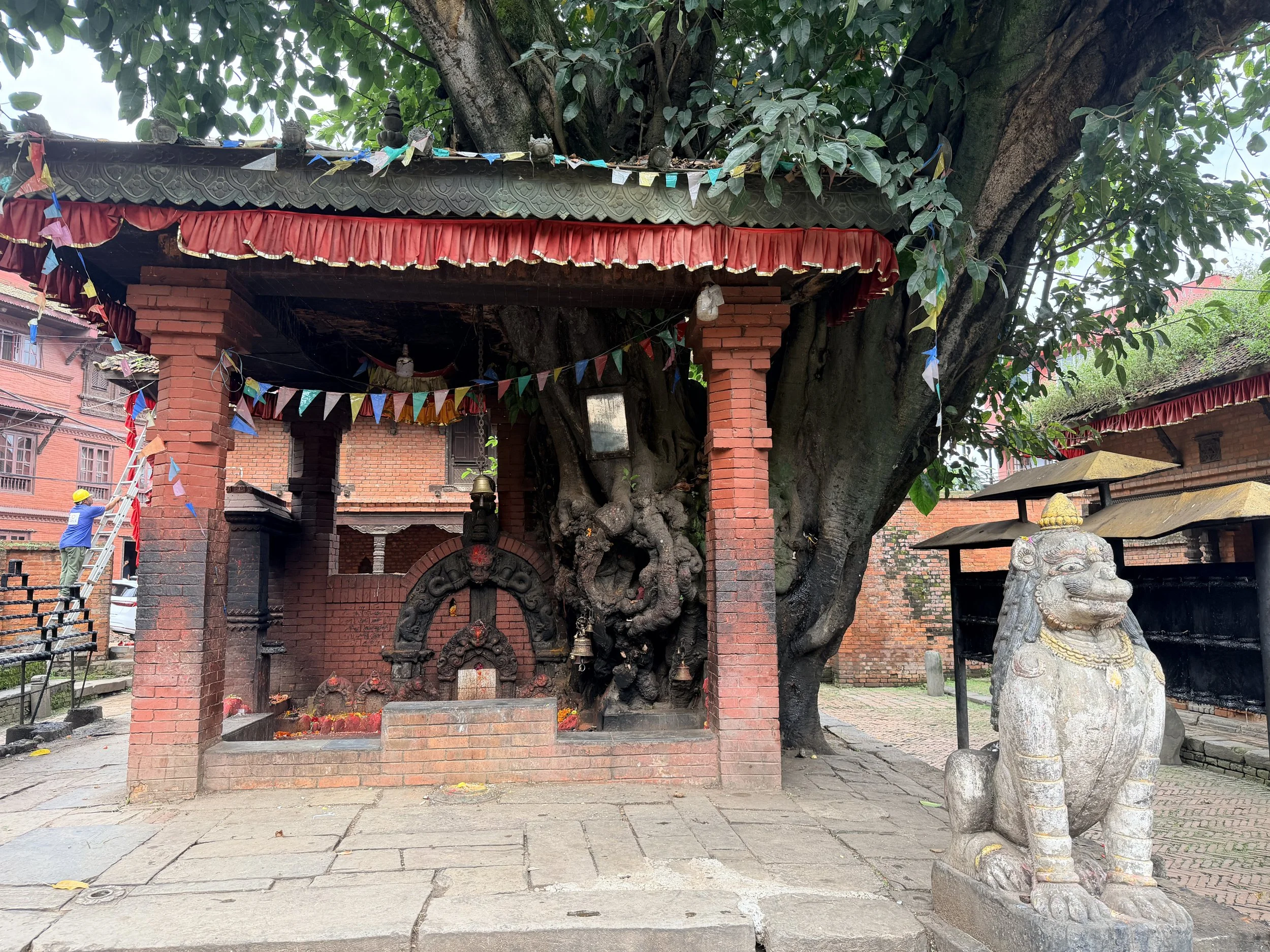
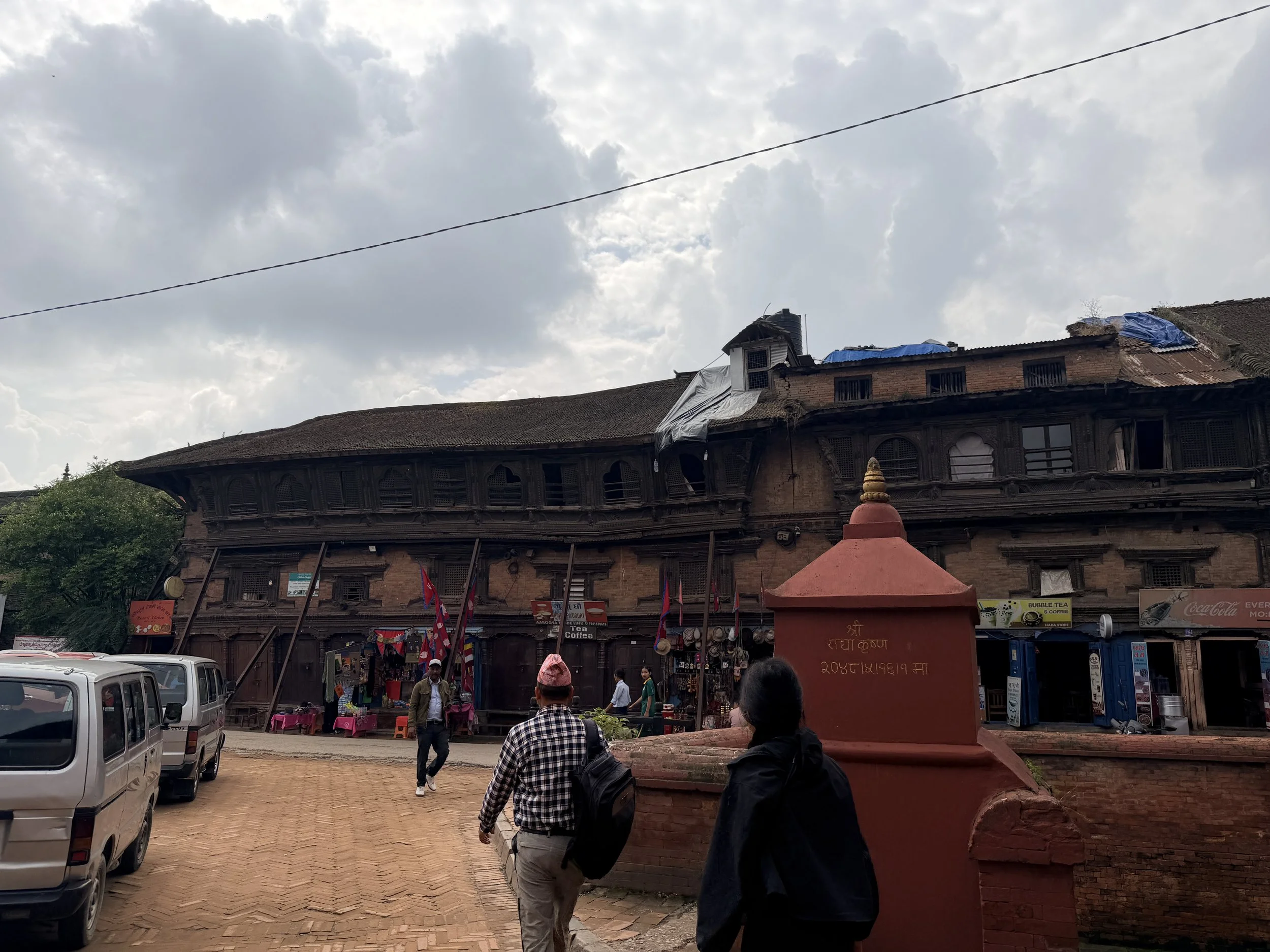
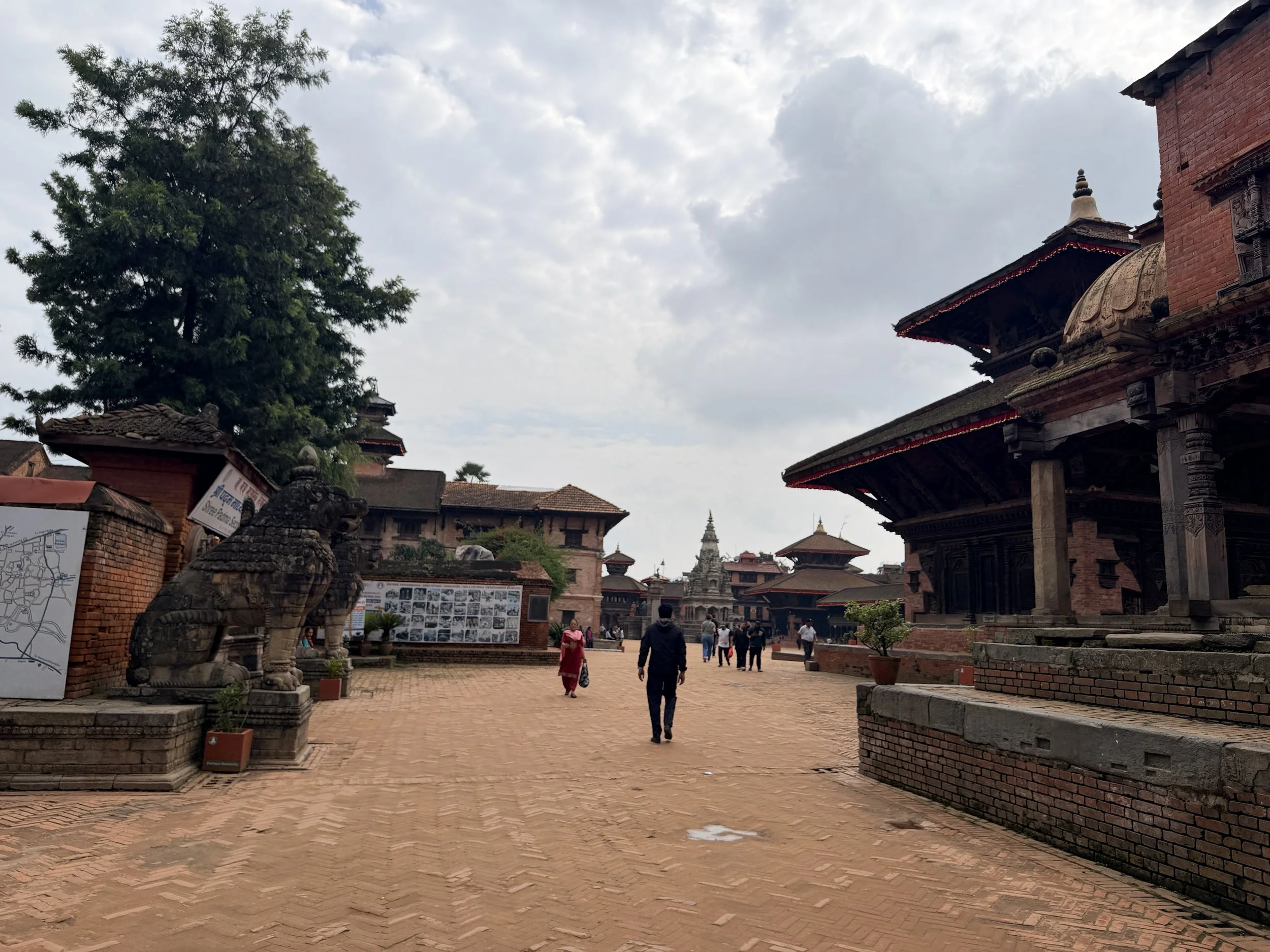
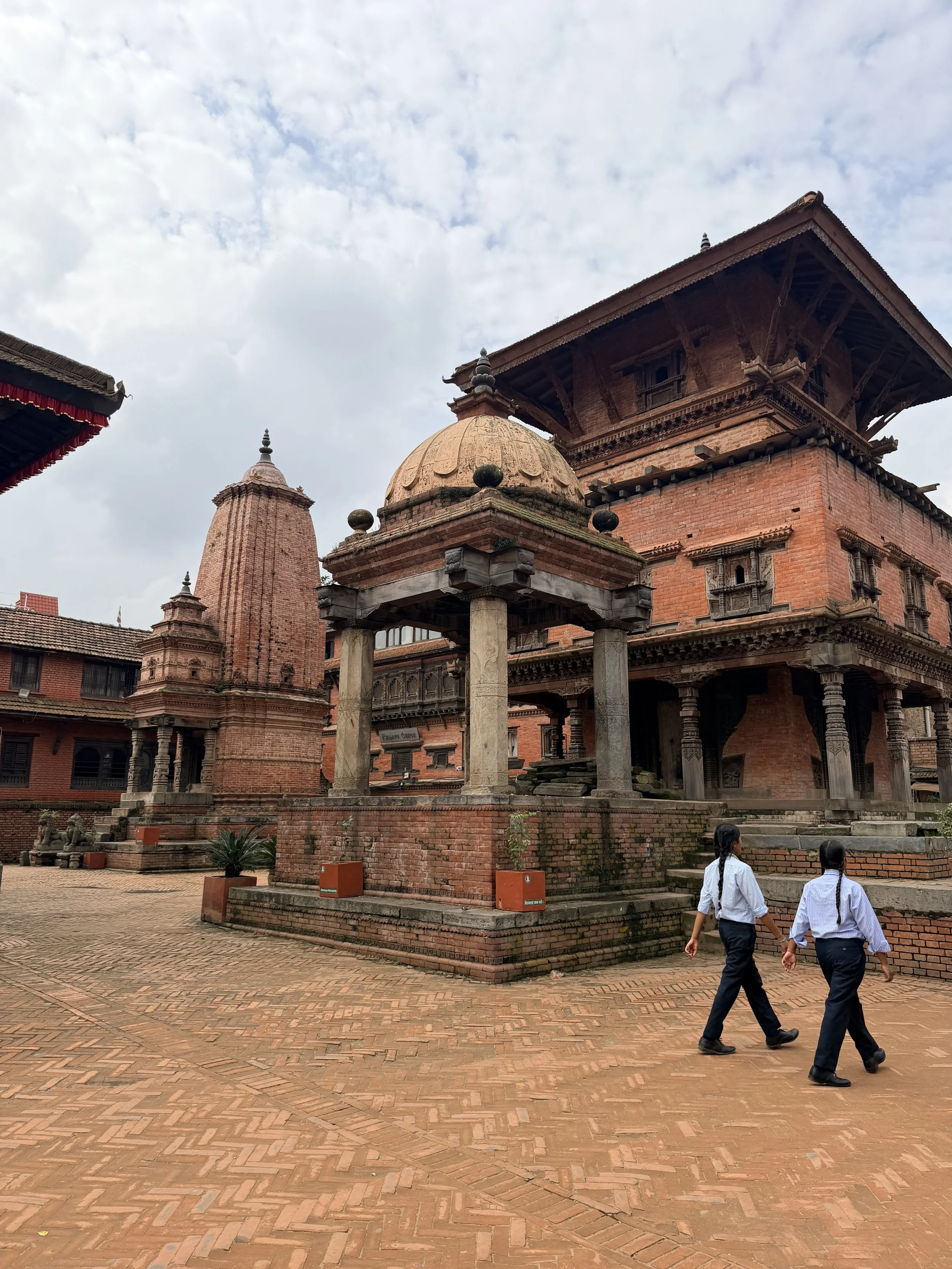
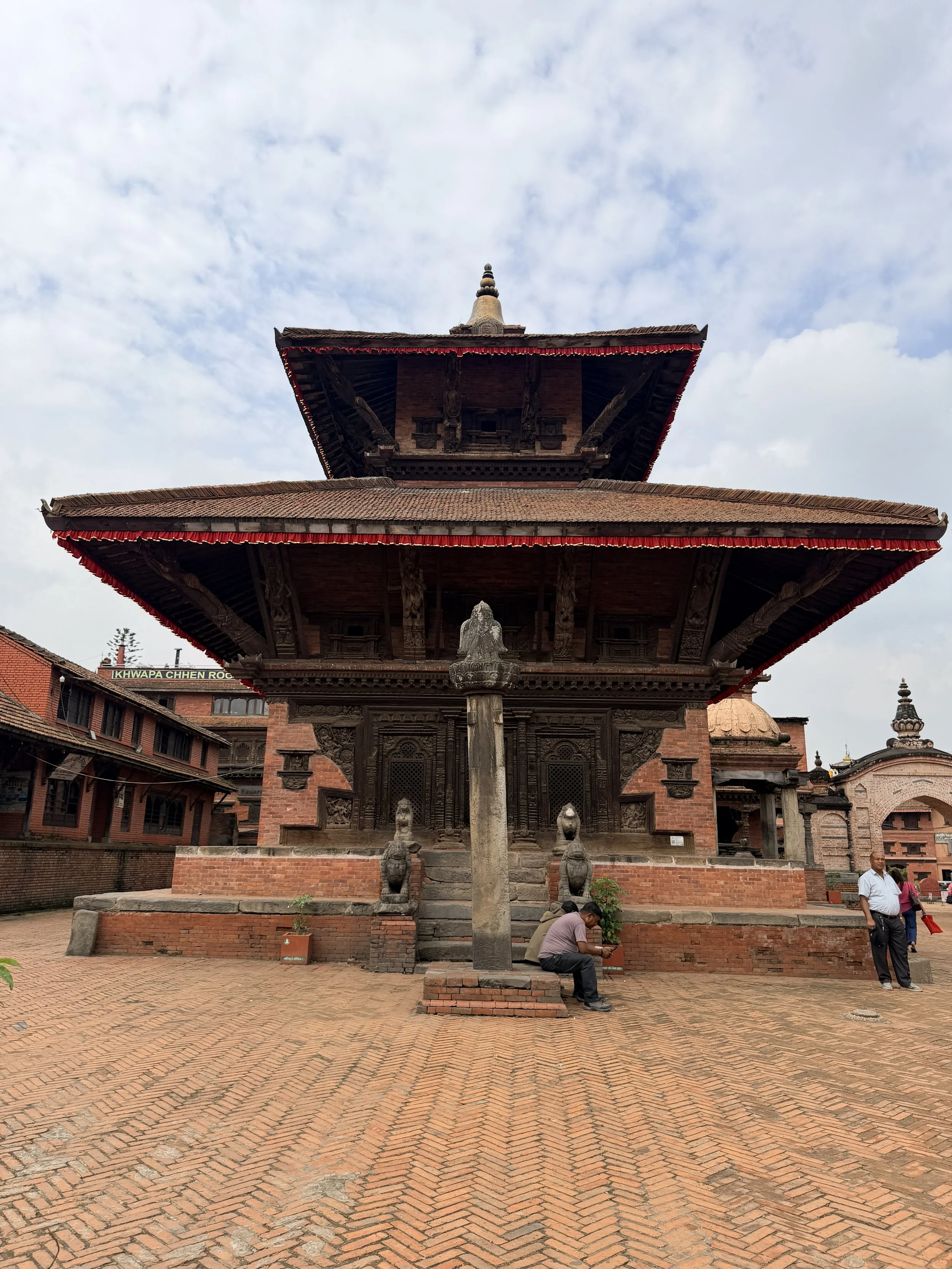
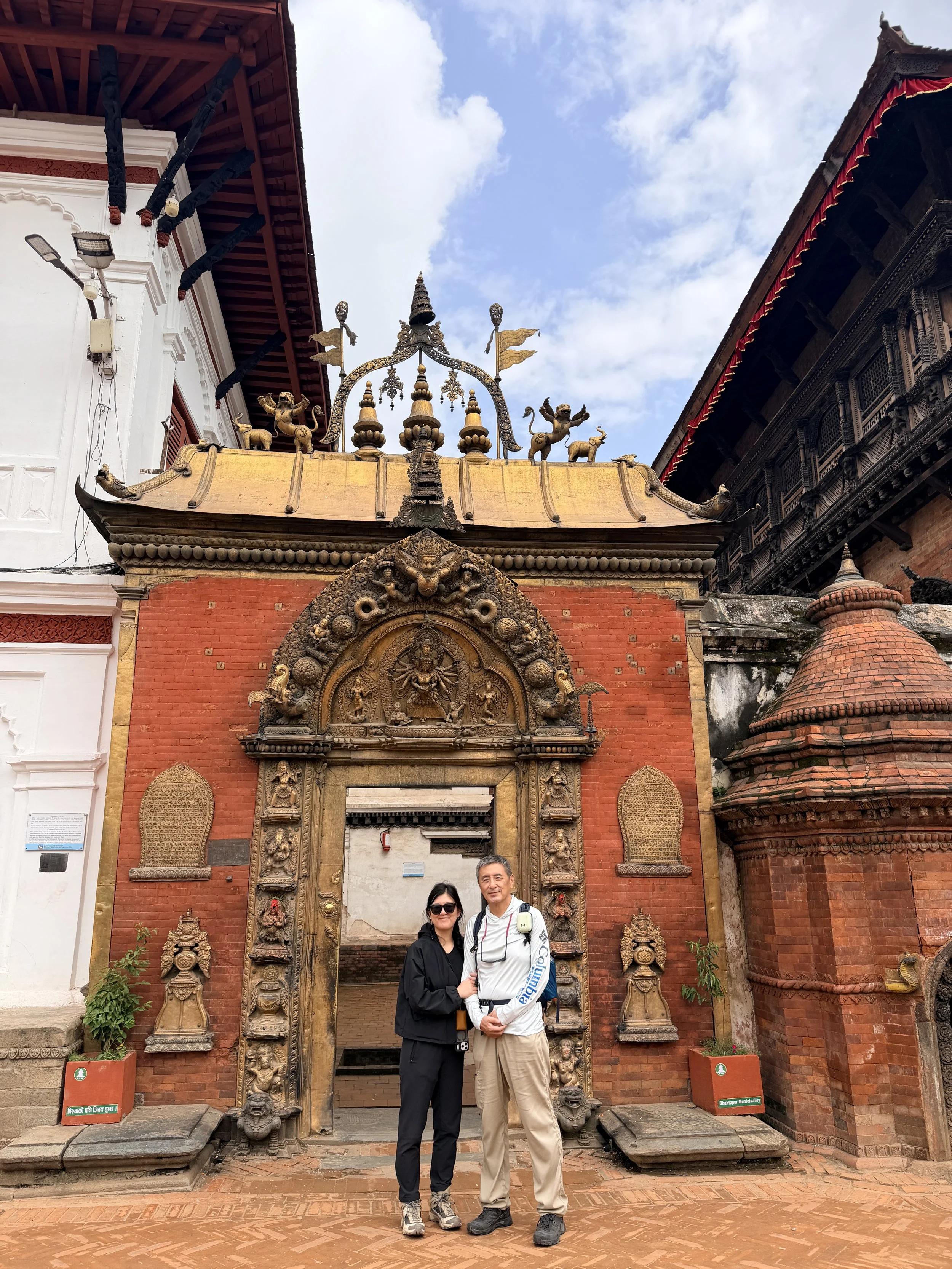
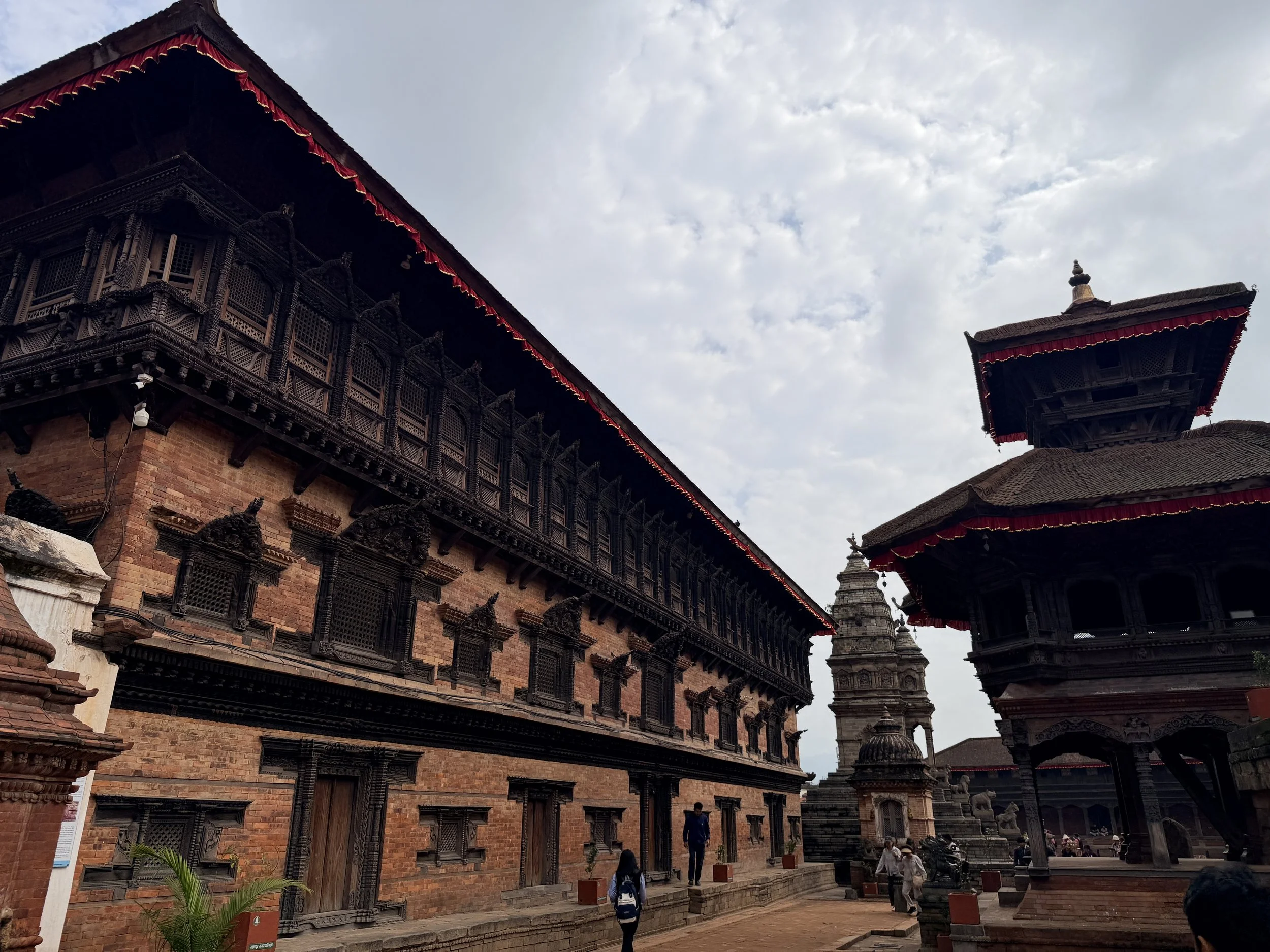
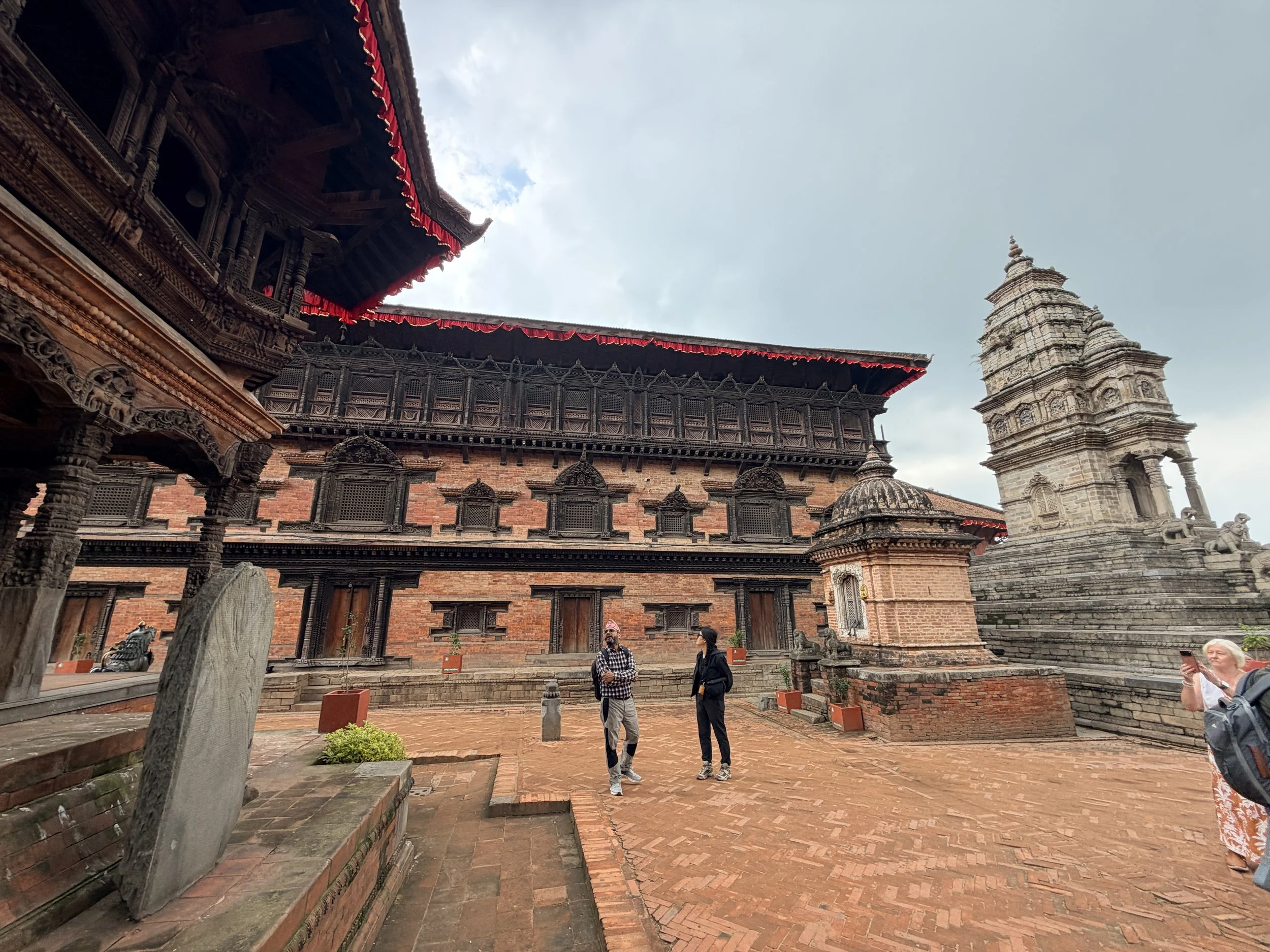
We started at Bhaktapur Durbar Square, where the magnificent Golden Gate immediately caught our attention. Its elaborate gilded metalwork was extraordinary. Nearby stood the famous 55-Window Palace, with its beautifully carved wooden windows stretching across the upper floor. We passed through a low doorway into one of the historic royal palace courtyards, where photography was not permitted. The traditional Newari architecture and intricate carvings offered a fascinating glimpse into the city’s royal past.
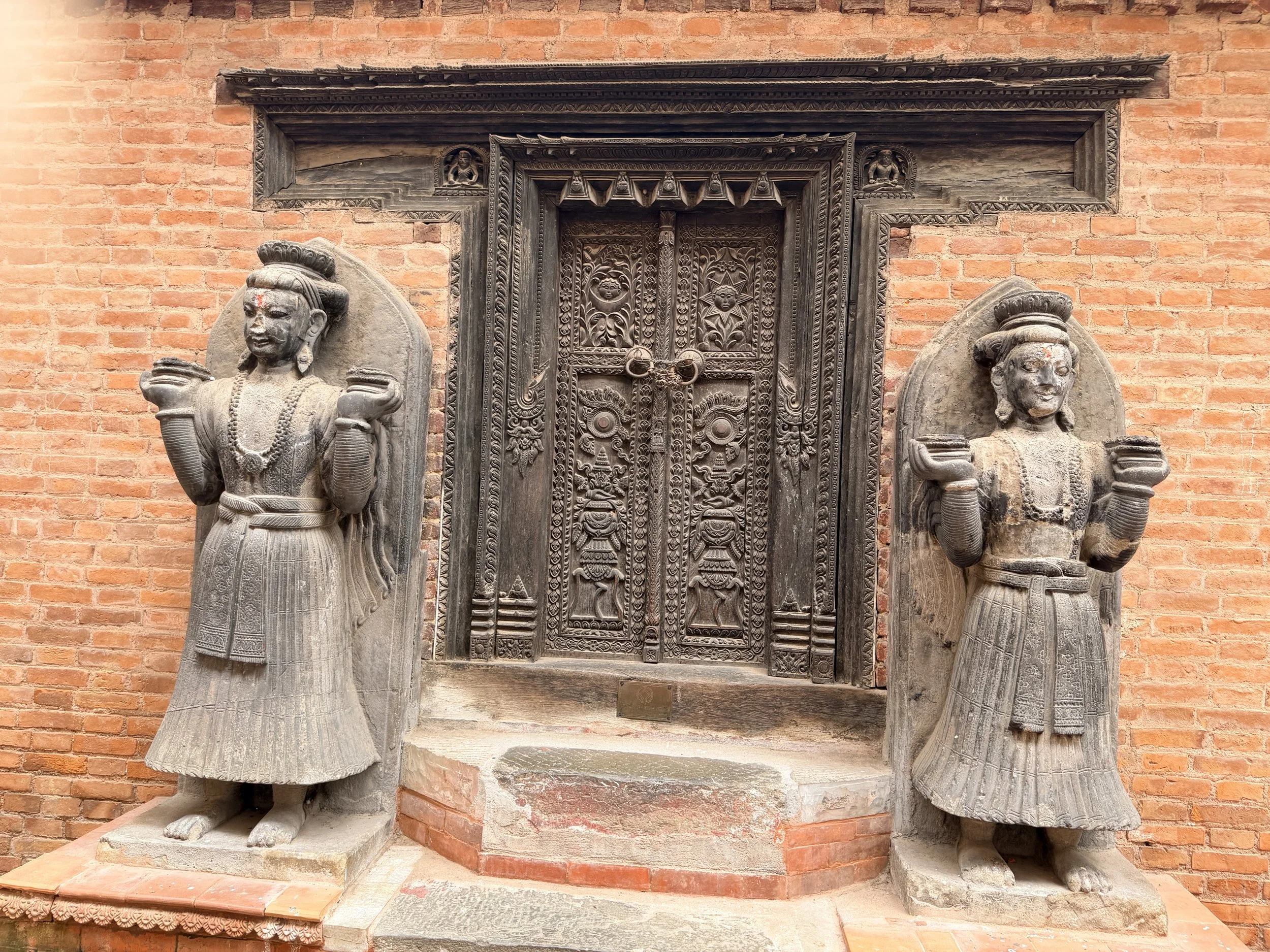
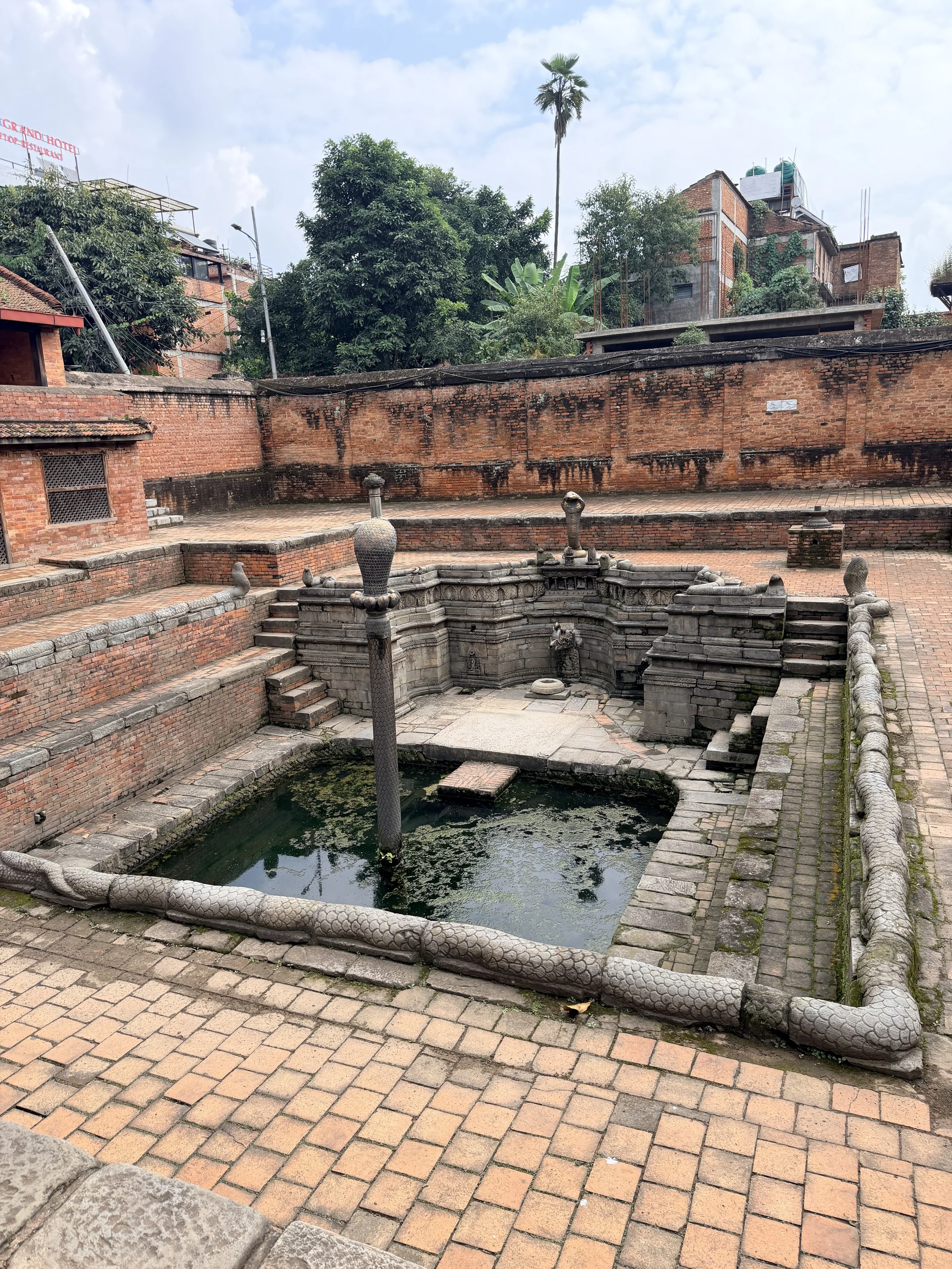
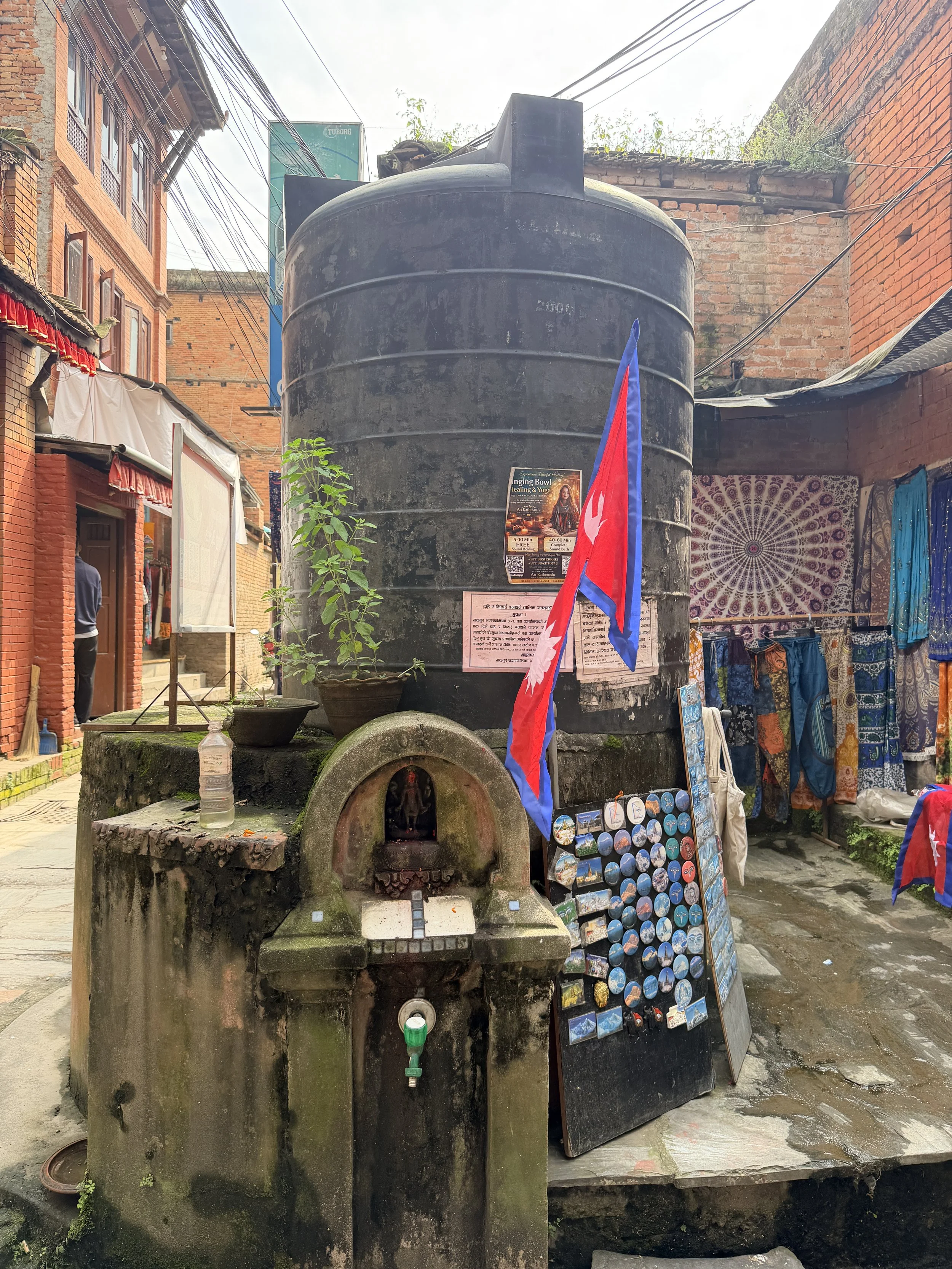
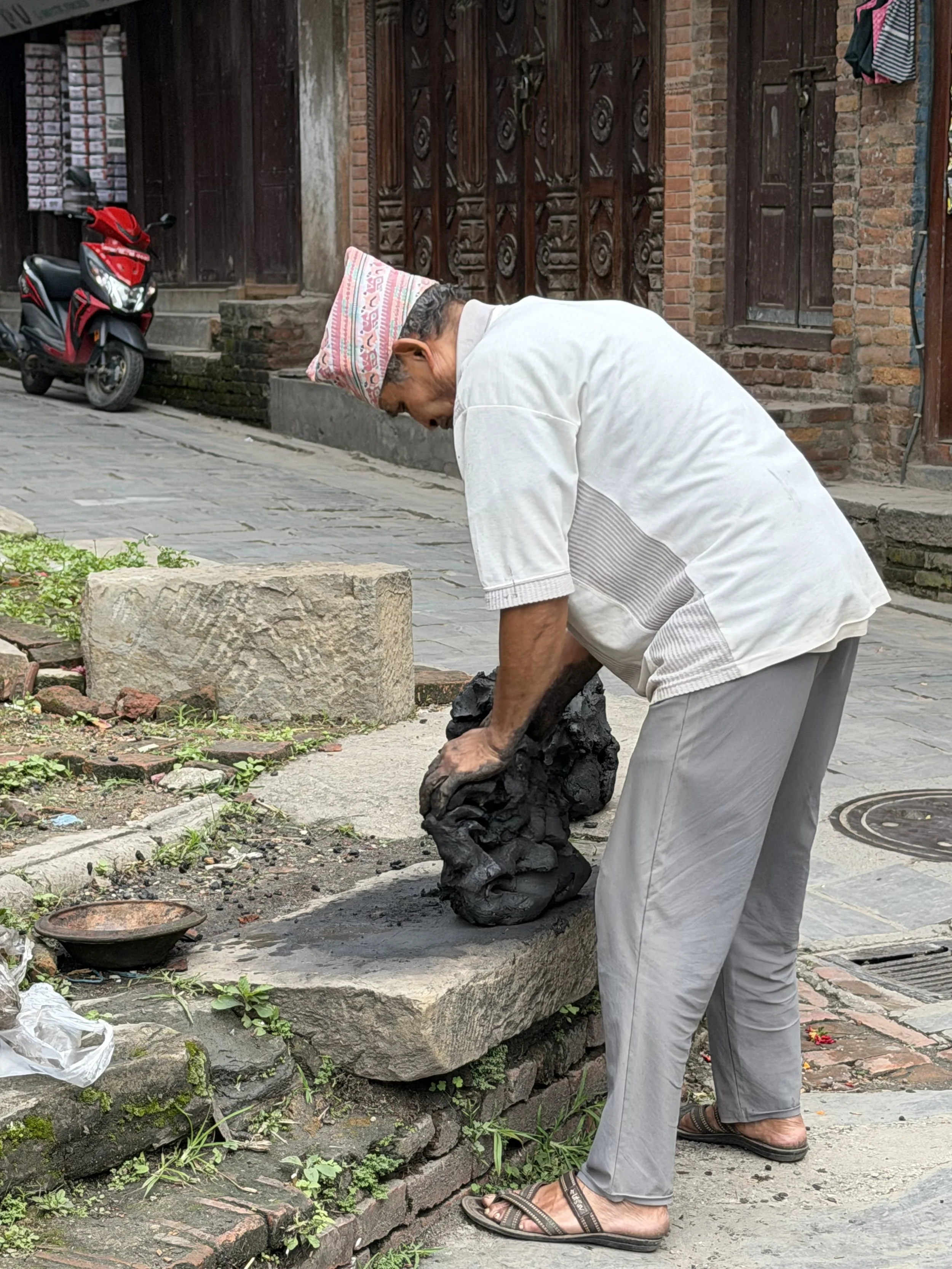
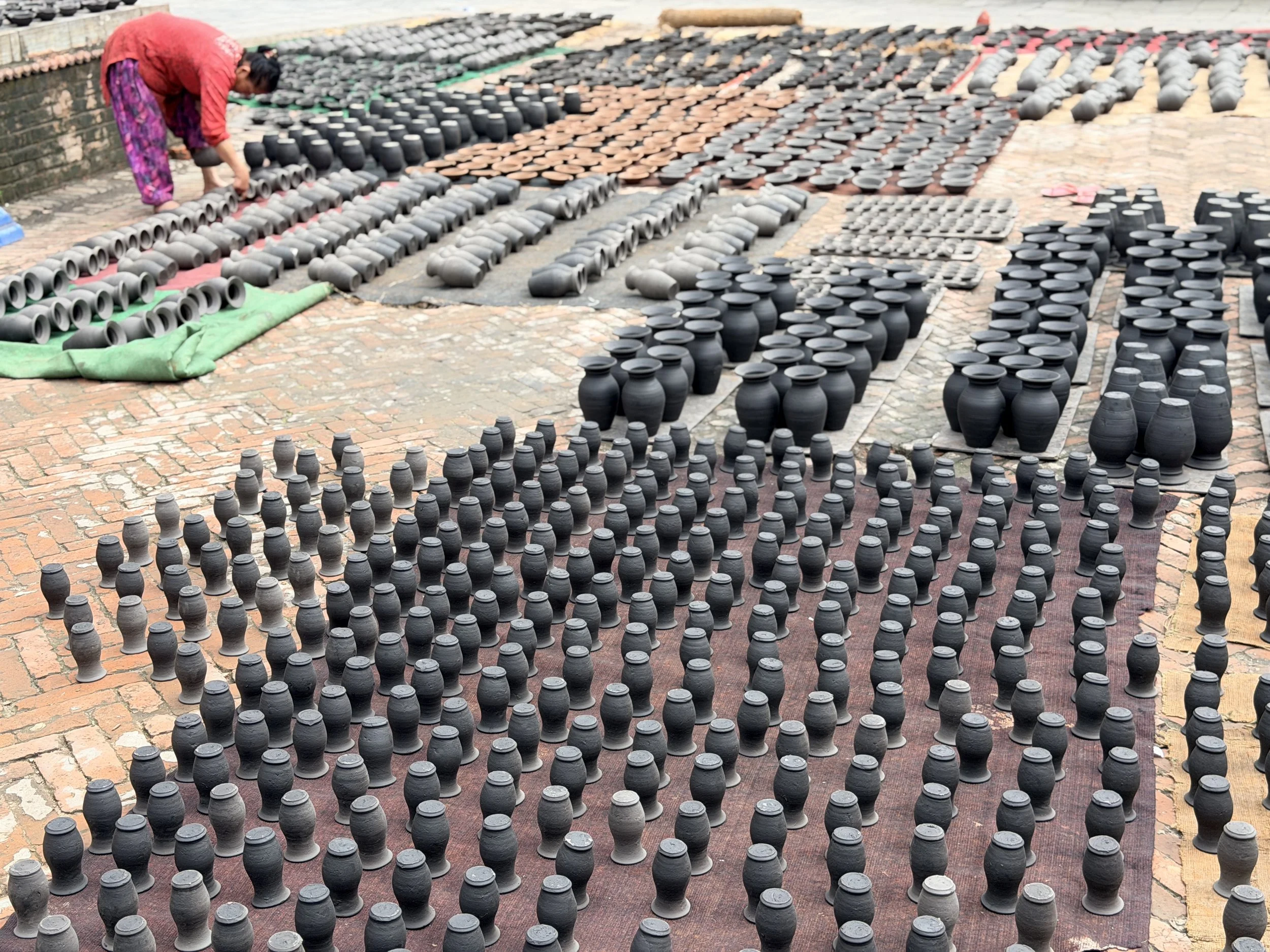
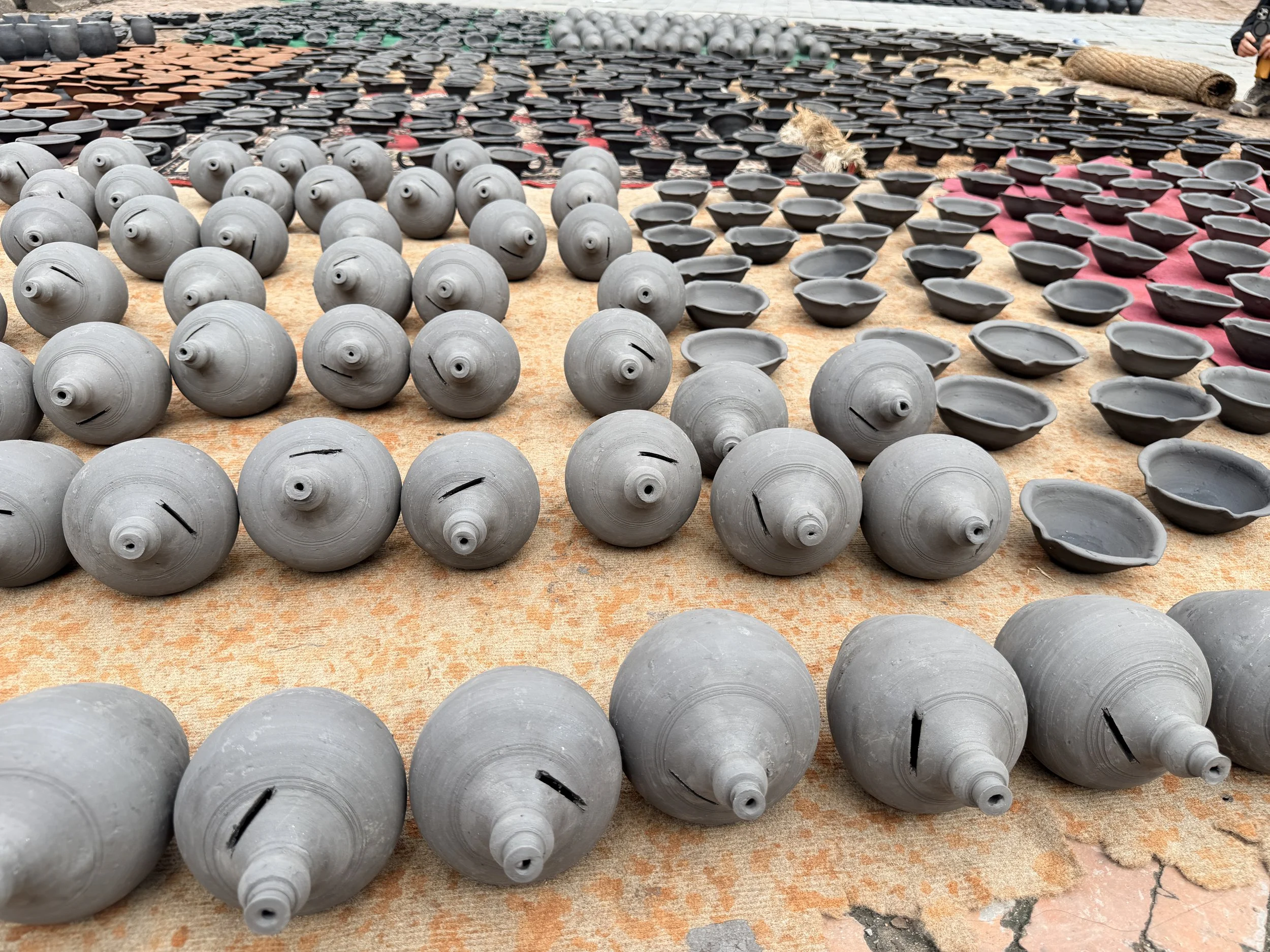
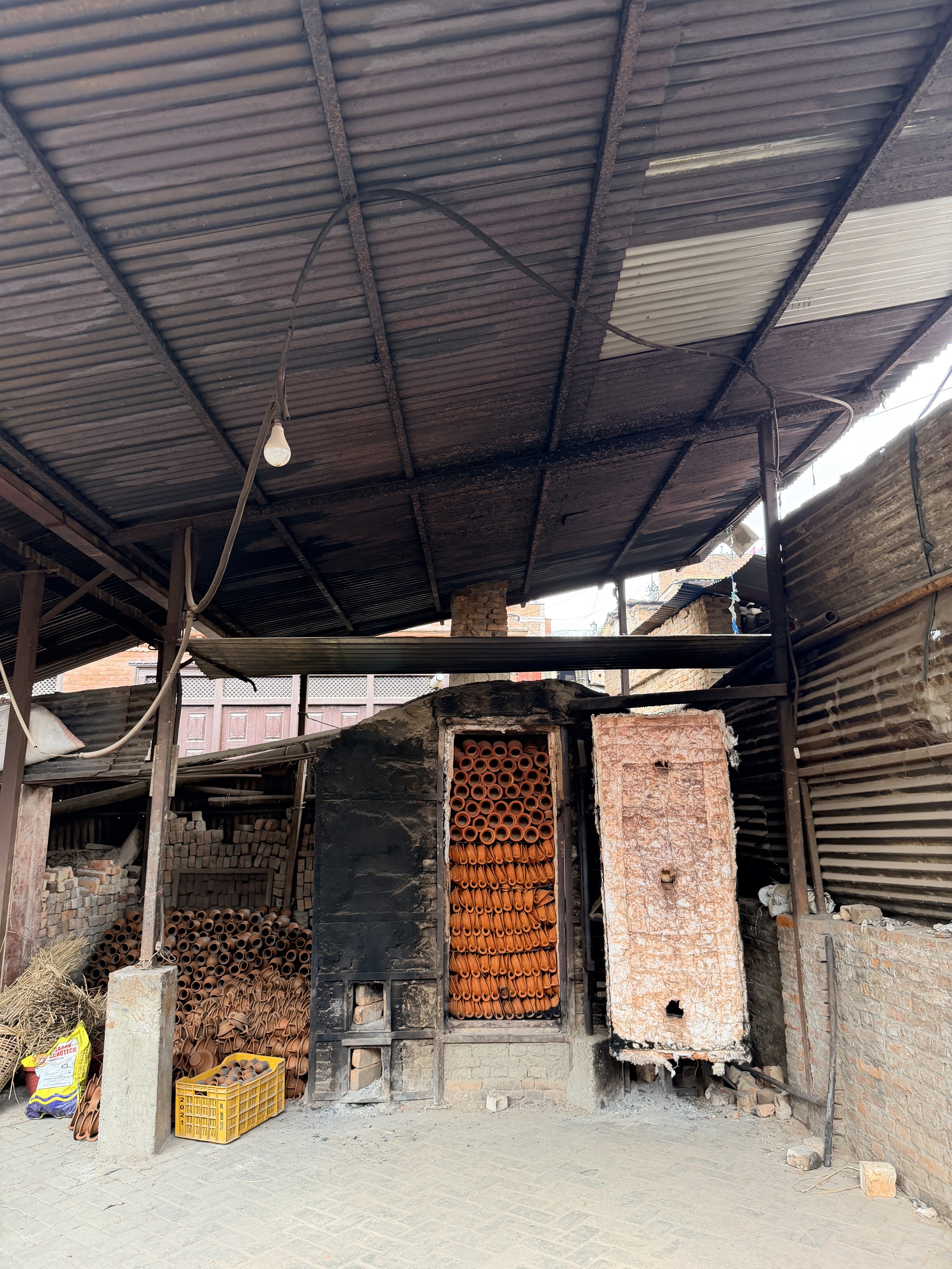
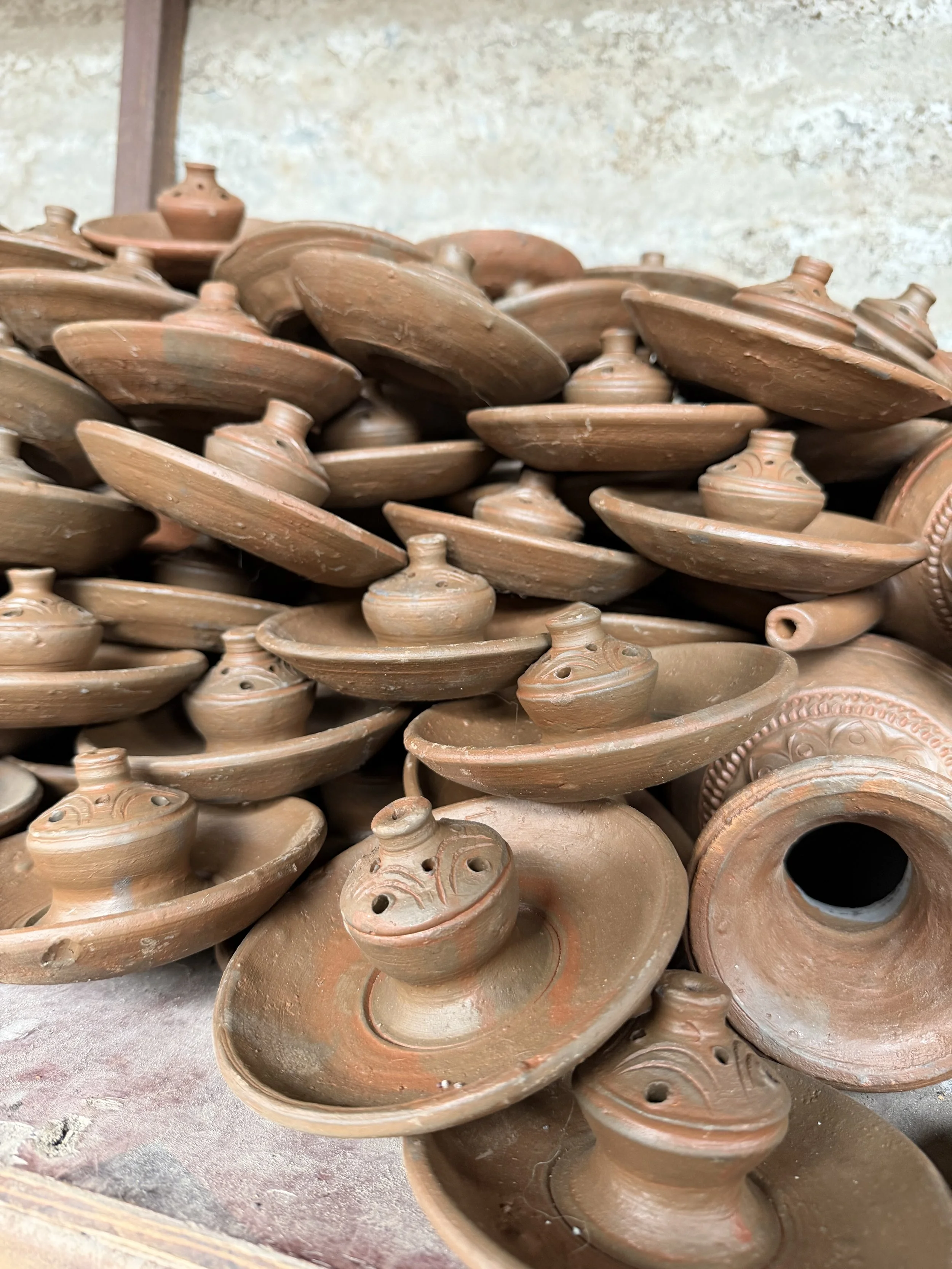
Our next stop was Pottery Square, where traditional pottery-making remains part of everyday life. We examined a recently opened kiln, still filled with stacks of fired pottery, and saw rows of freshly made clay pots laid out on the ground to dry. The workshops and handmade pottery offered a fascinating glimpse into a craft passed down through generations.
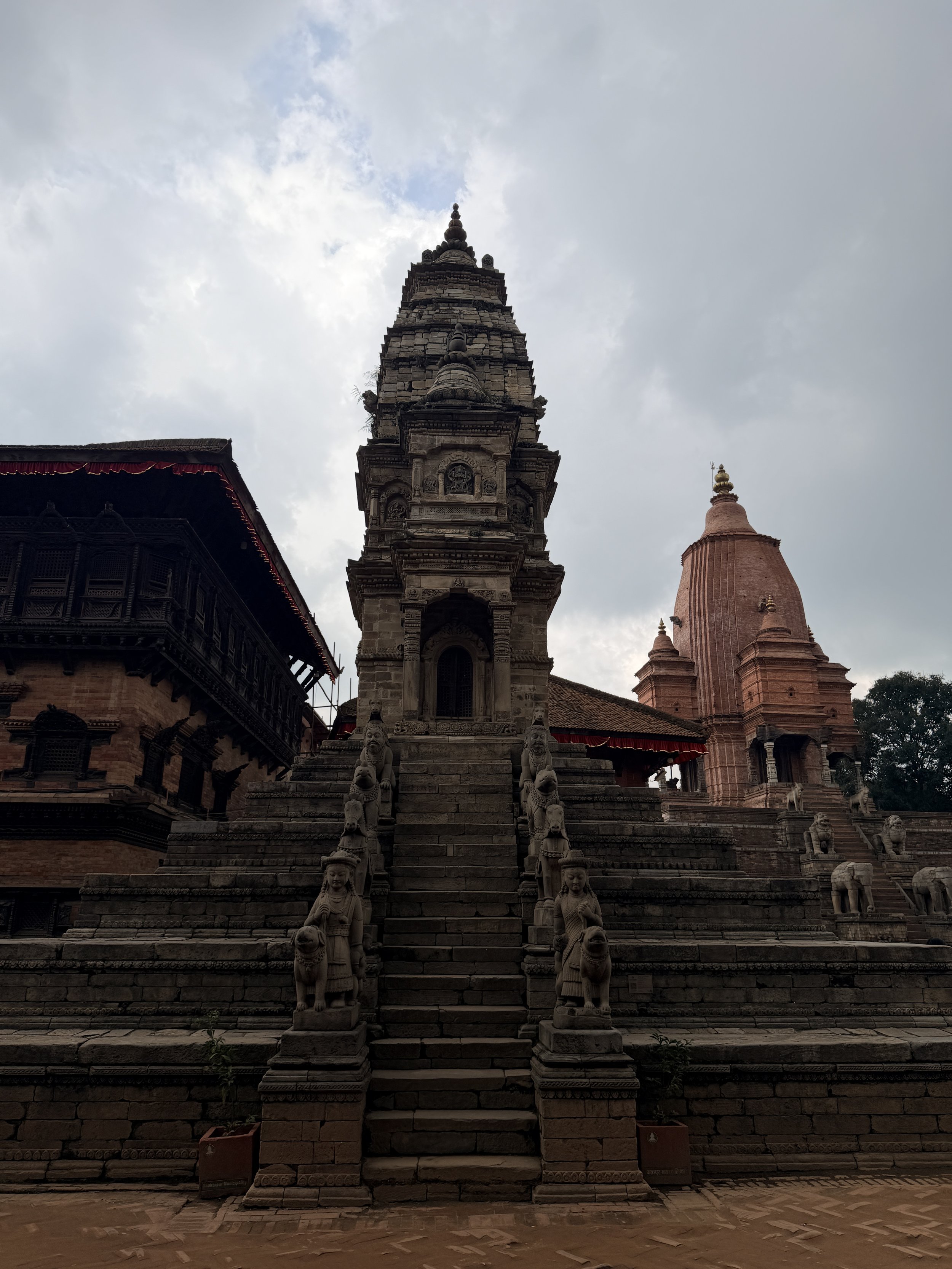
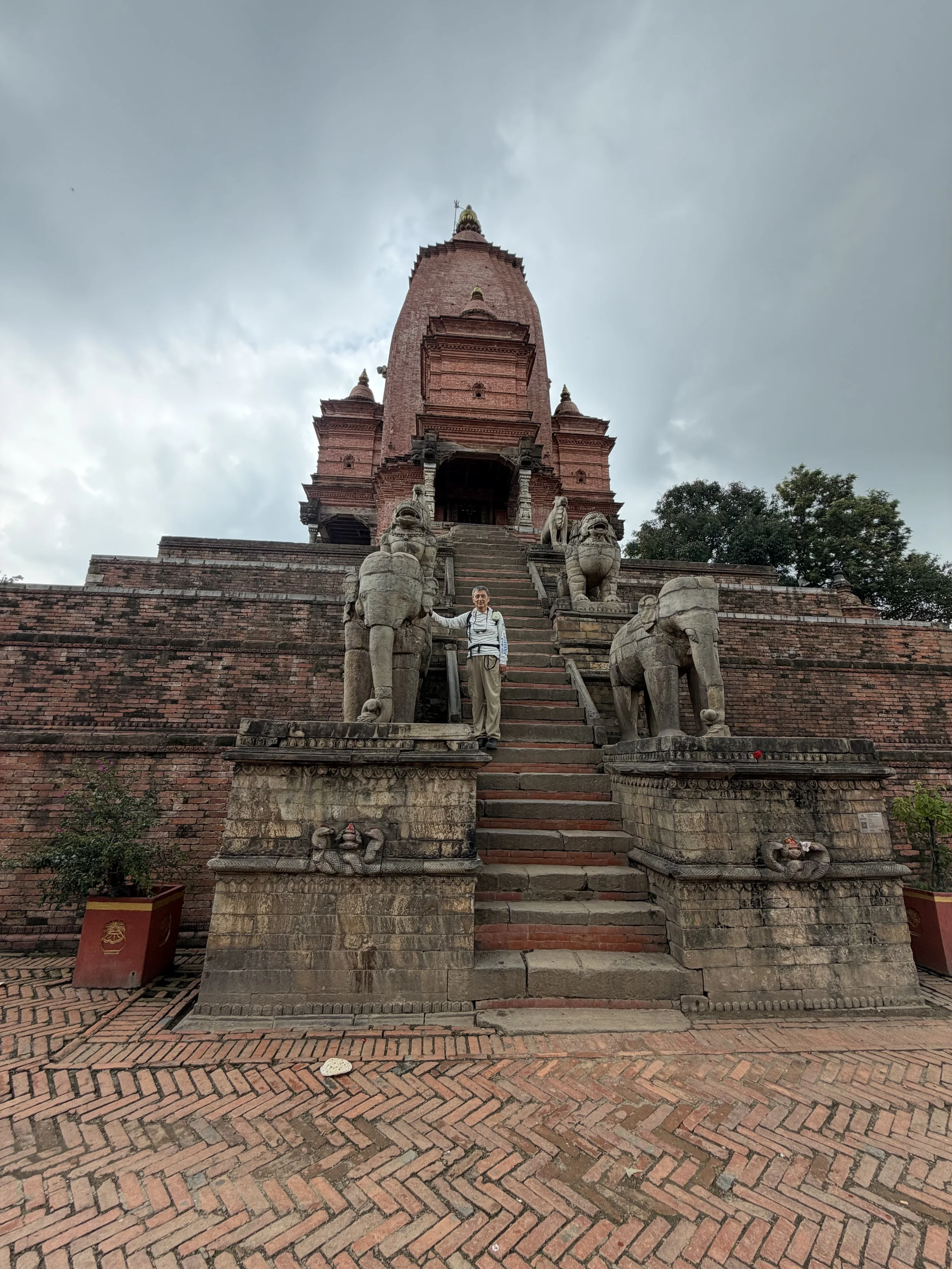
From there, we walked to Taumadhi Square, dominated by the impressive Nyatapola Temple . Built in 1702, this five-story pagoda is one of Nepal’s tallest traditional temples. Pairs of stone guardians line the steep staircase, each representing increasingly powerful beings. We climbed the steps and enjoyed panoramic views of the surrounding square and rooftops. The temple’s elegant proportions and intricate craftsmanship were remarkable.
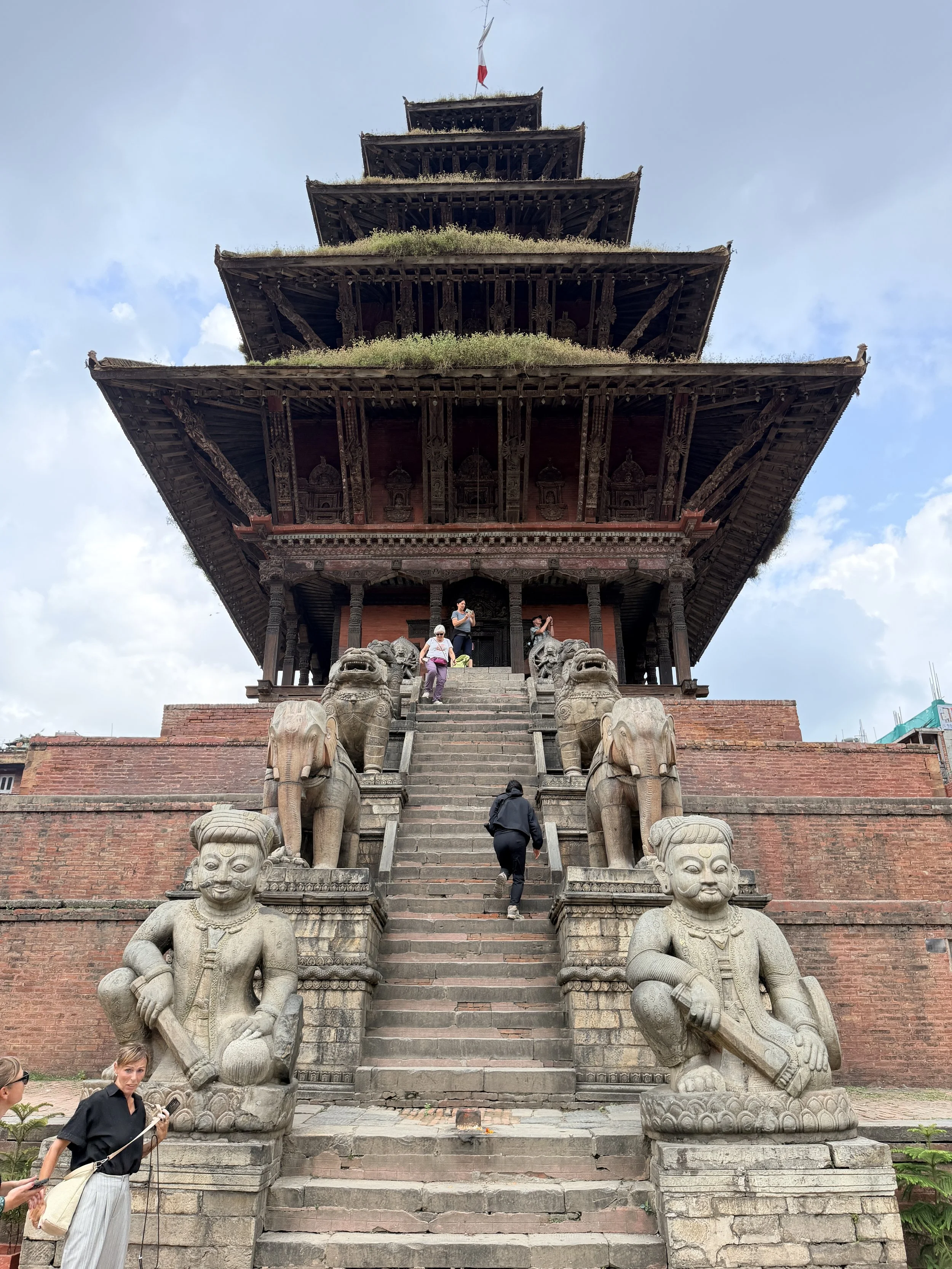
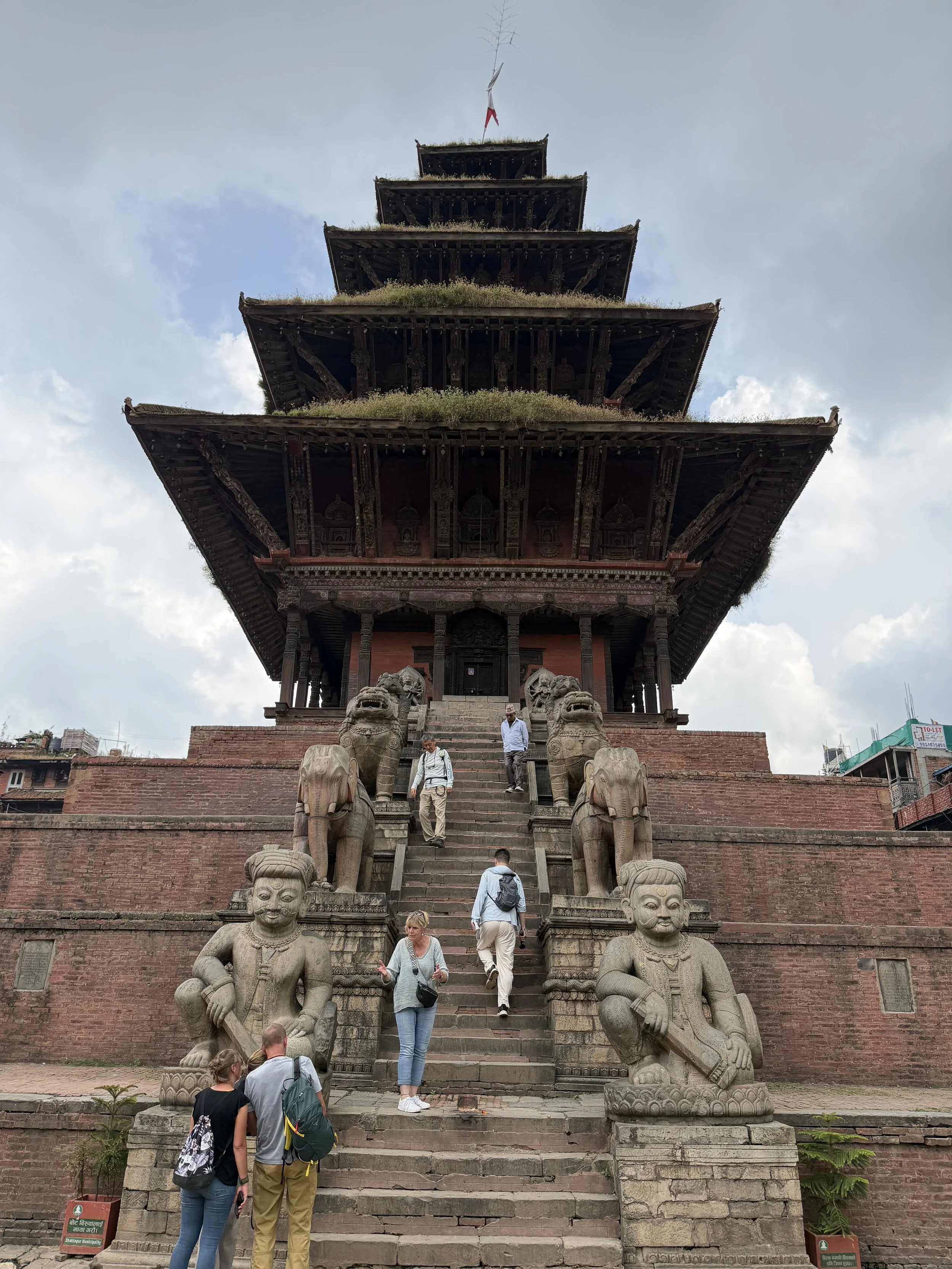
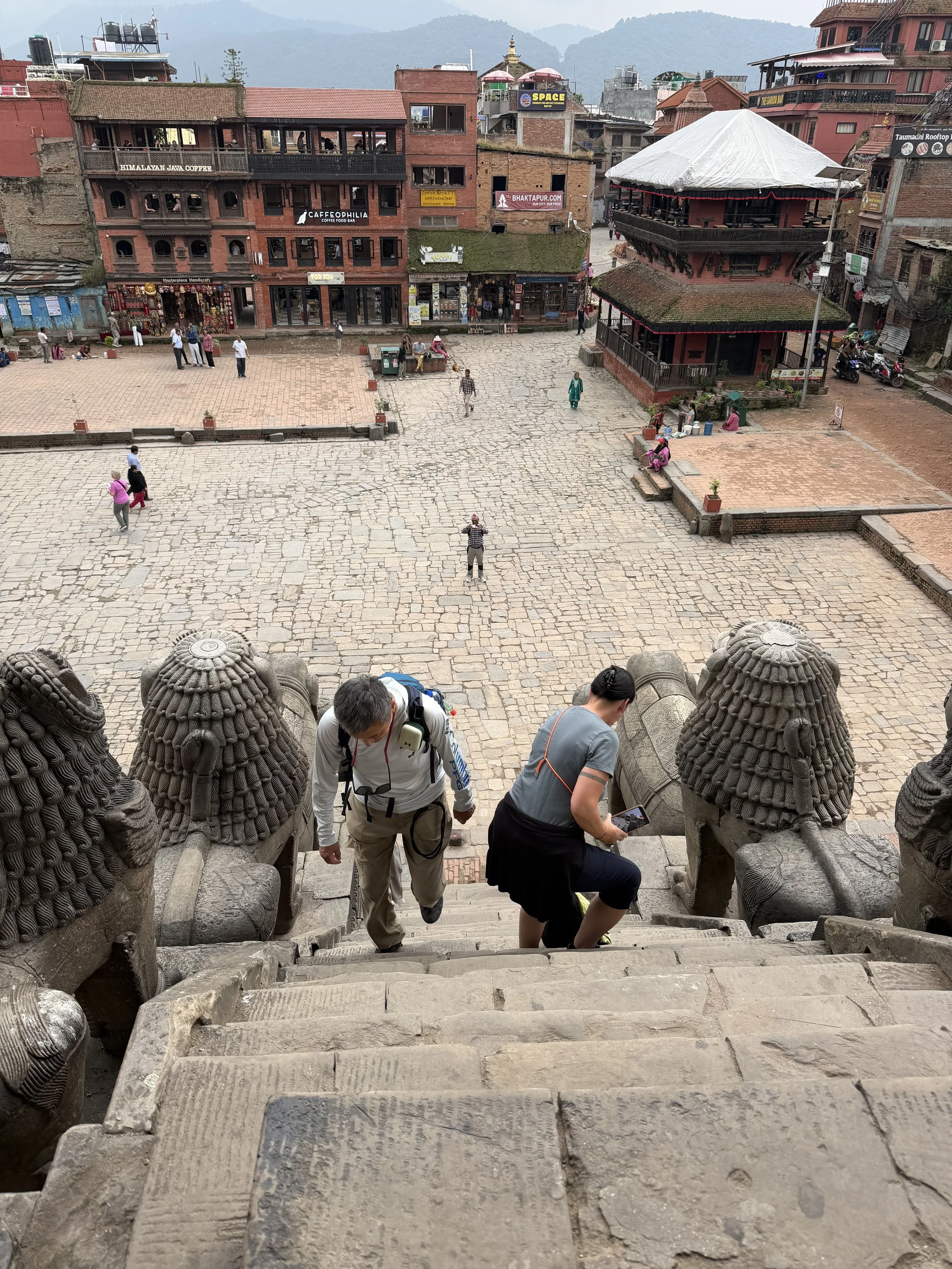
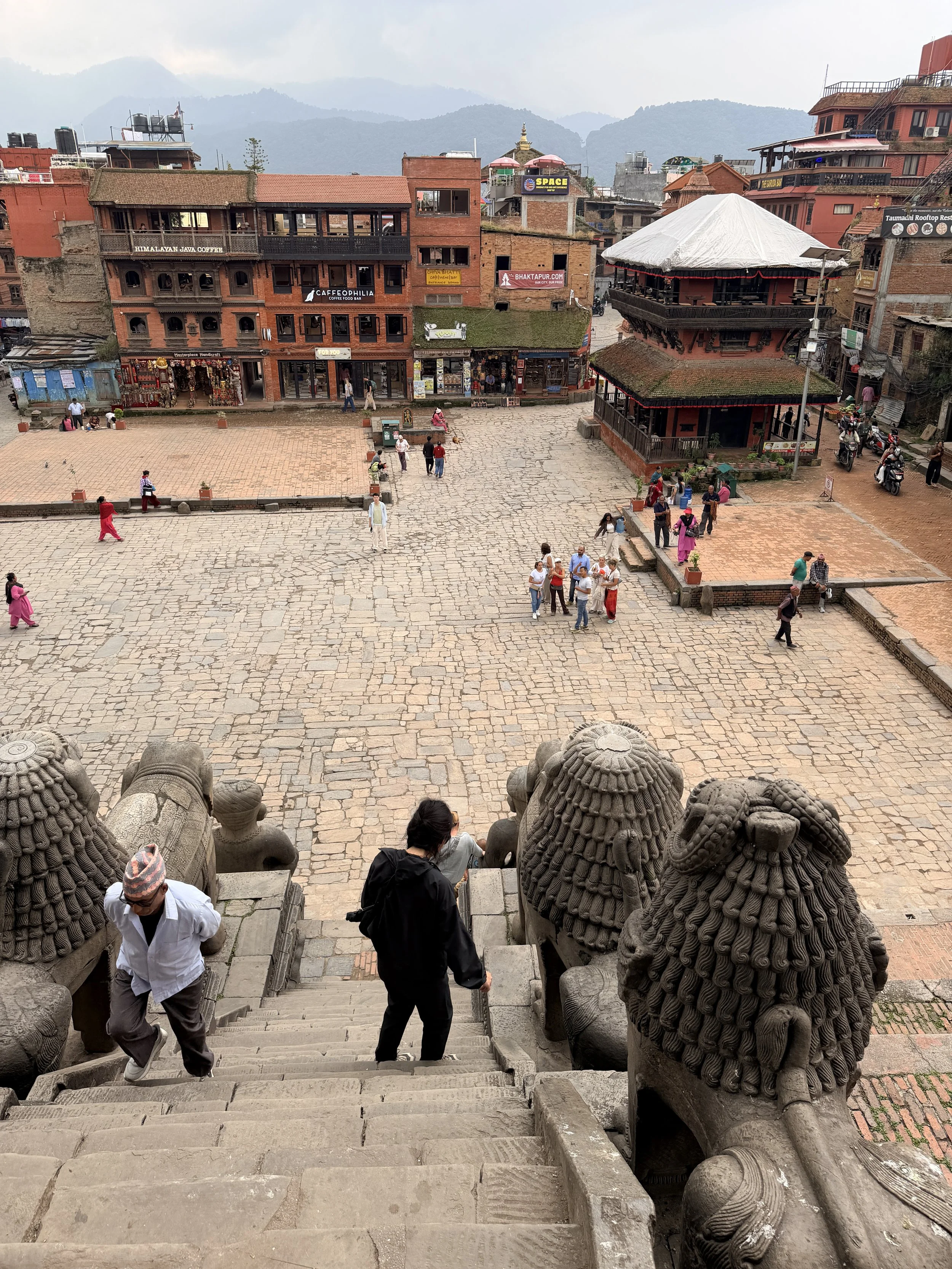
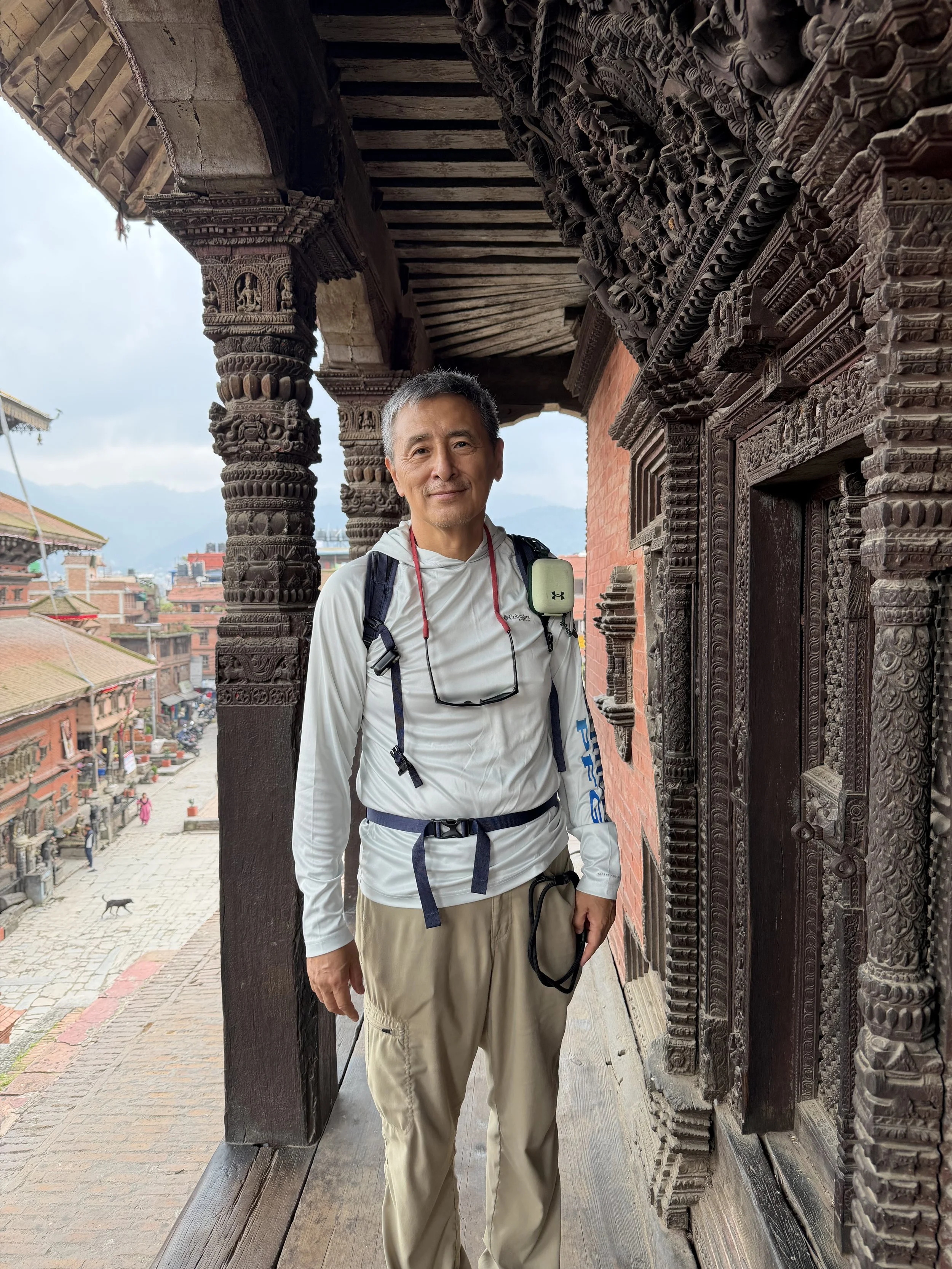
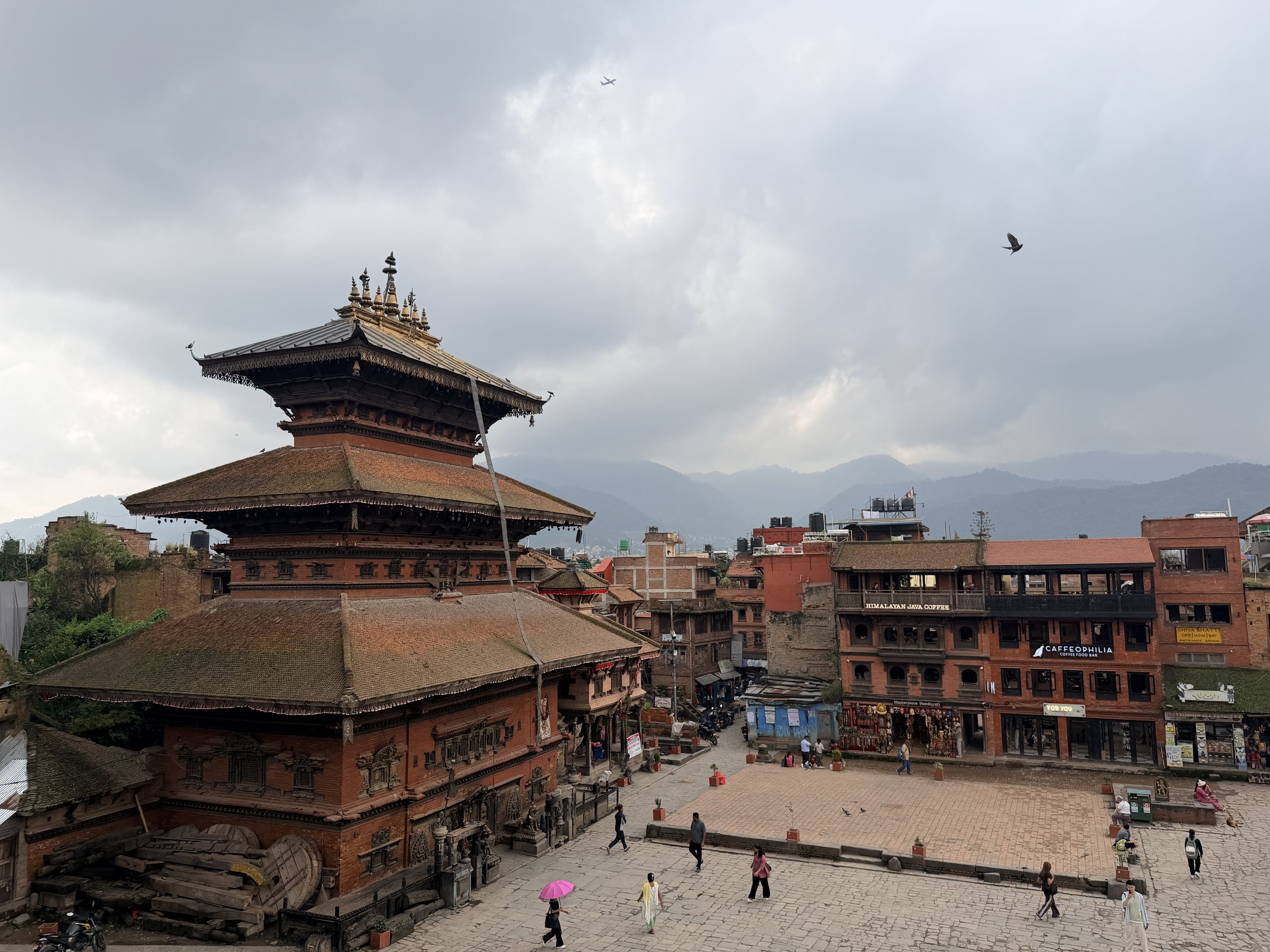
Bhaktapur Durbar Square (巴克塔普尔杜巴广场), with its beautifully preserved temples, royal palaces, and traditional Newari architecture, made us feel as though we had stepped back in time.
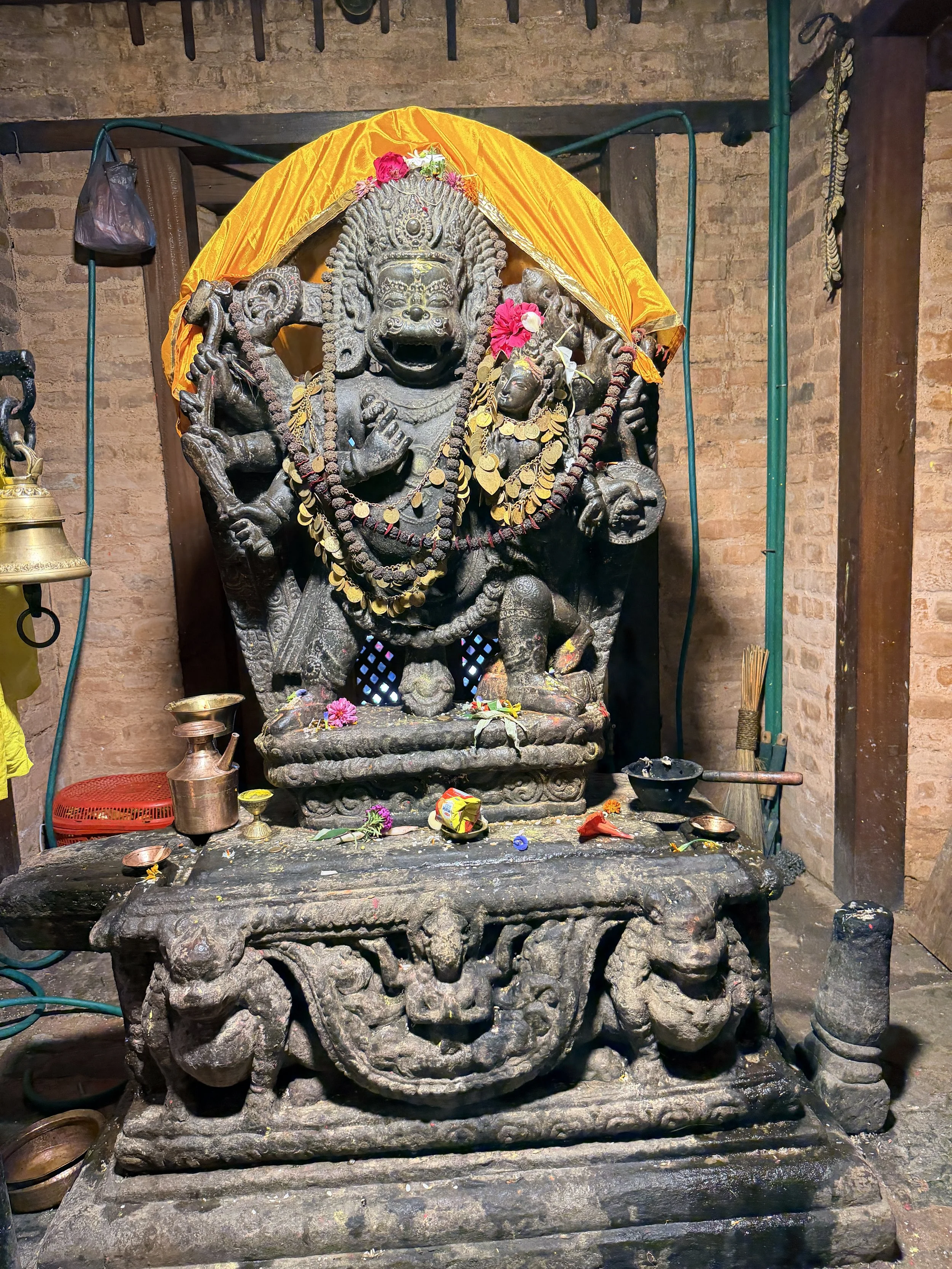
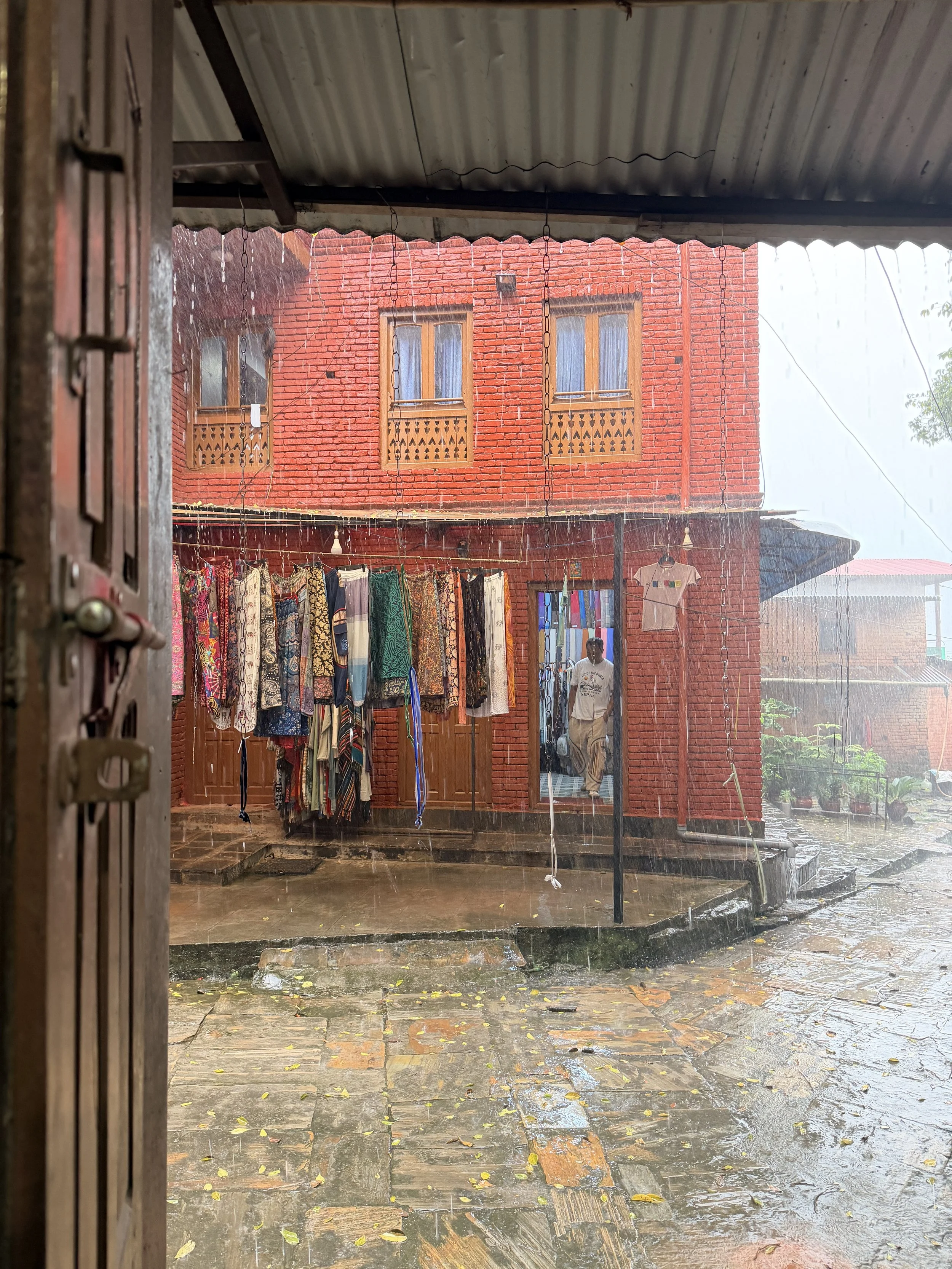
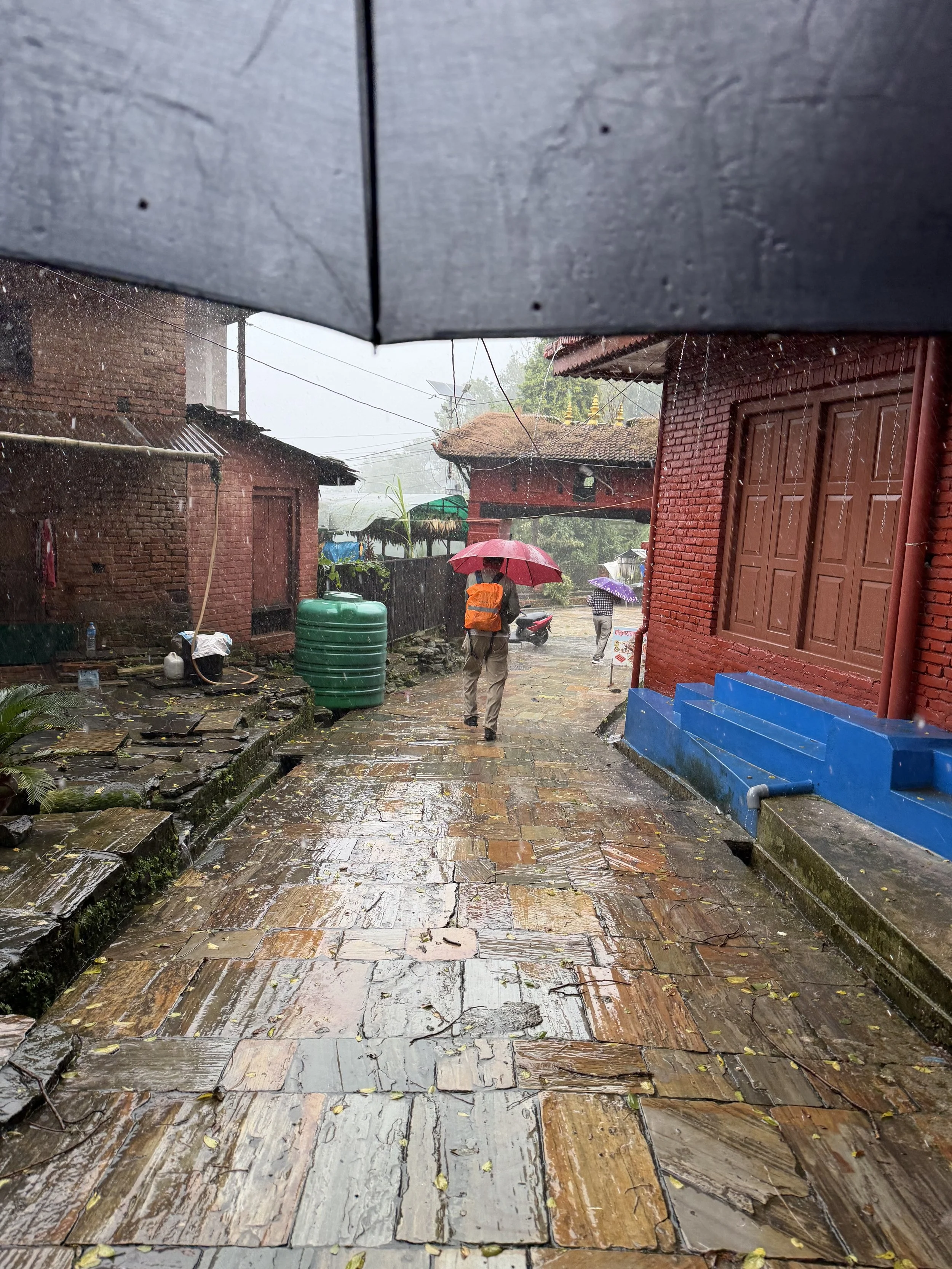
We then headed to Changu Narayan Temple, one of Nepal’s oldest Hindu temple sites, dedicated to Vishnu. After paying the entrance fee of 400 Nepalese rupees each, we started walking toward the temple. Unfortunately, it suddenly began raining cats and dogs. We took shelter in a small shop along the narrow alley and waited more than fifteen minutes, hoping the rain would stop. When it showed no sign of letting up, we reluctantly gave up and skipped the temple. It was disappointing to come so close without actually seeing it.
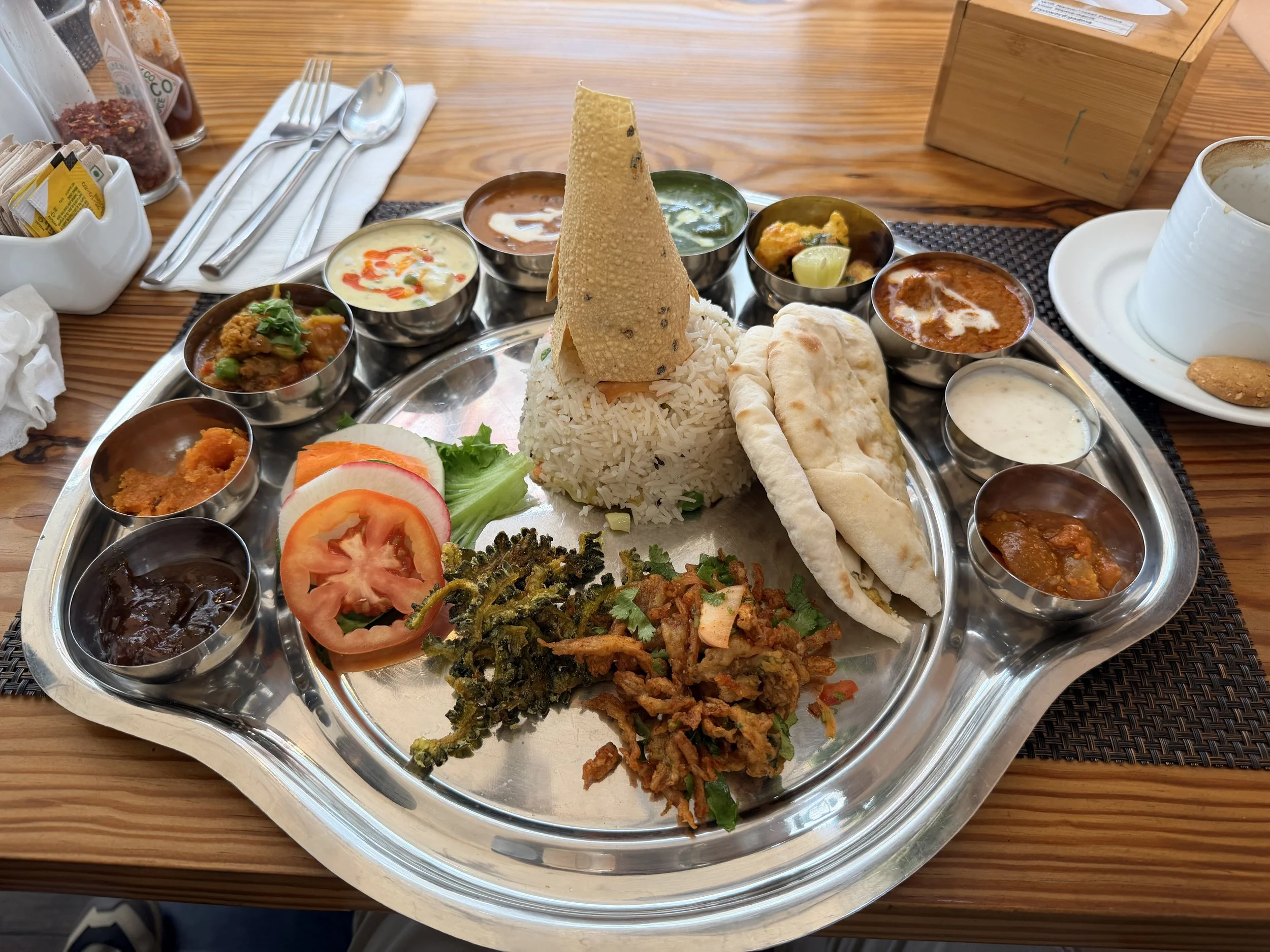
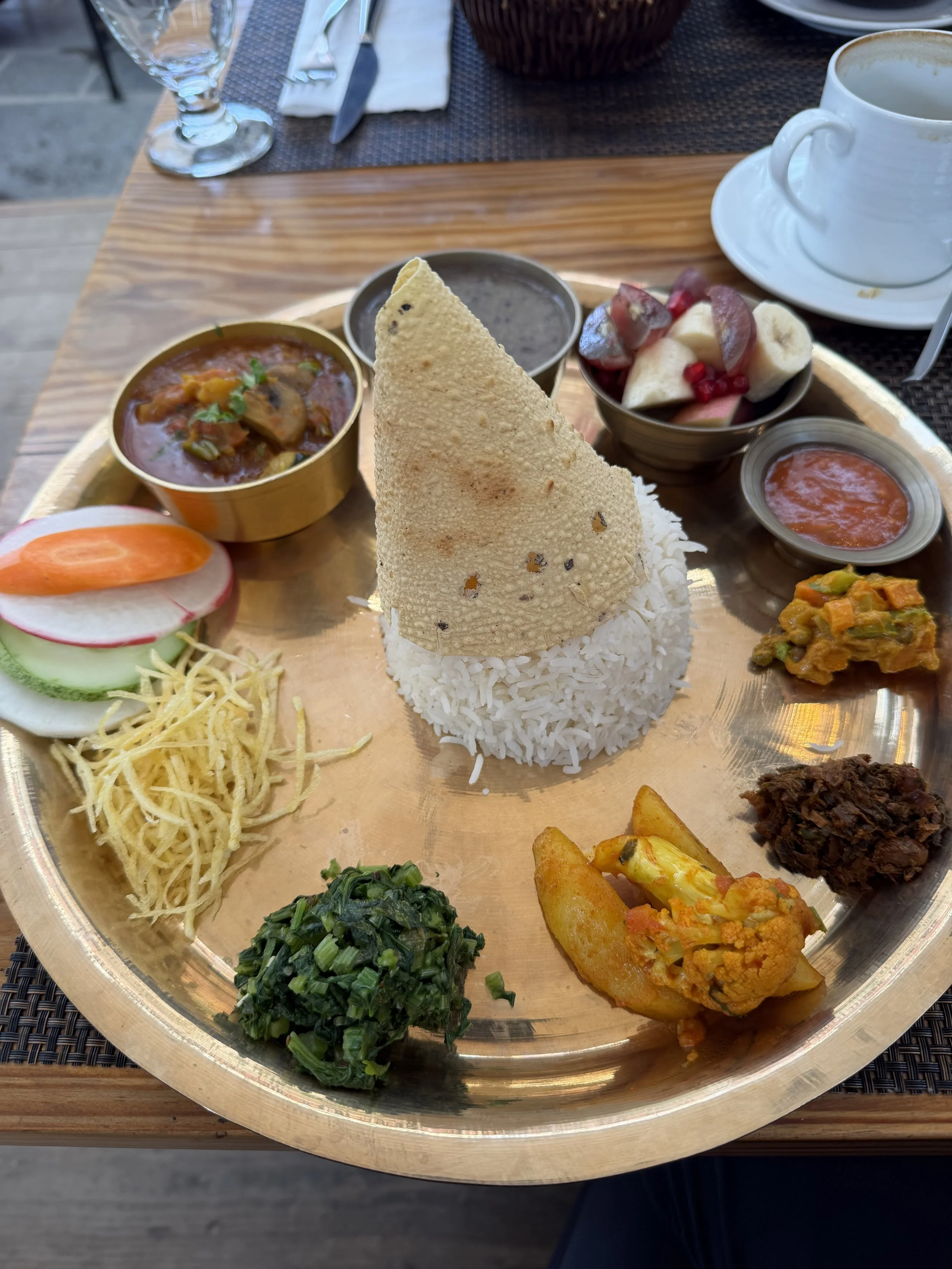
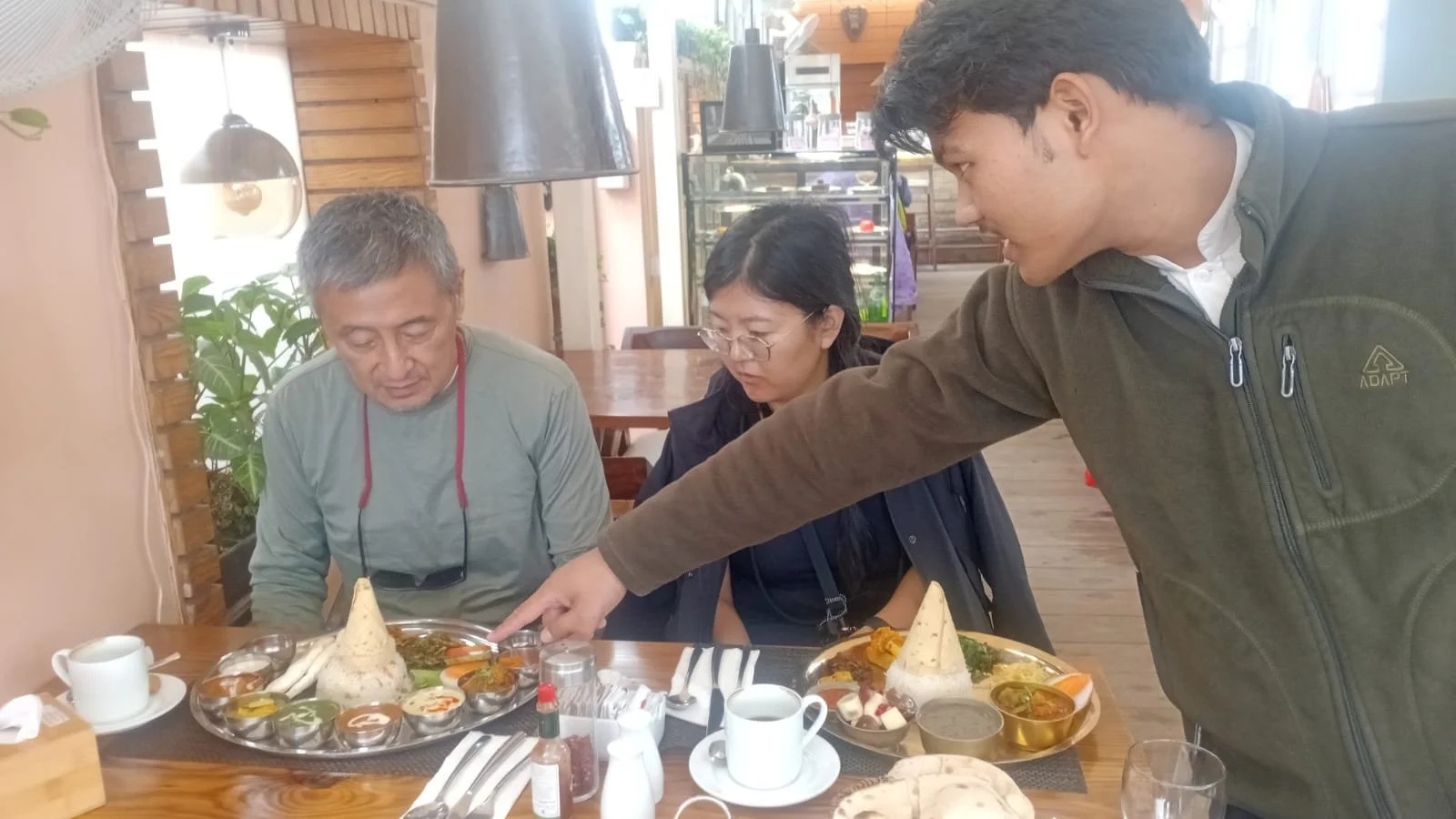
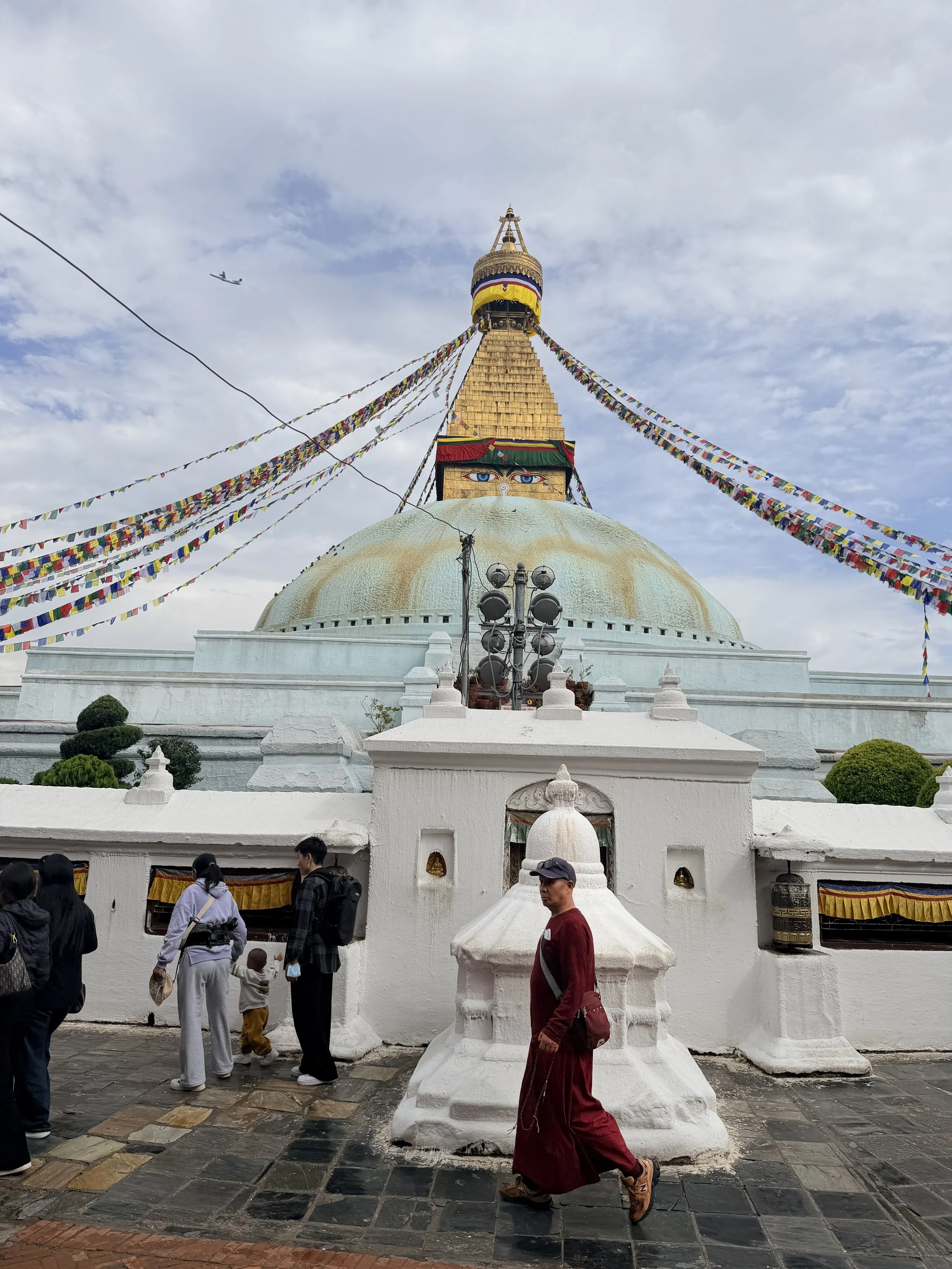
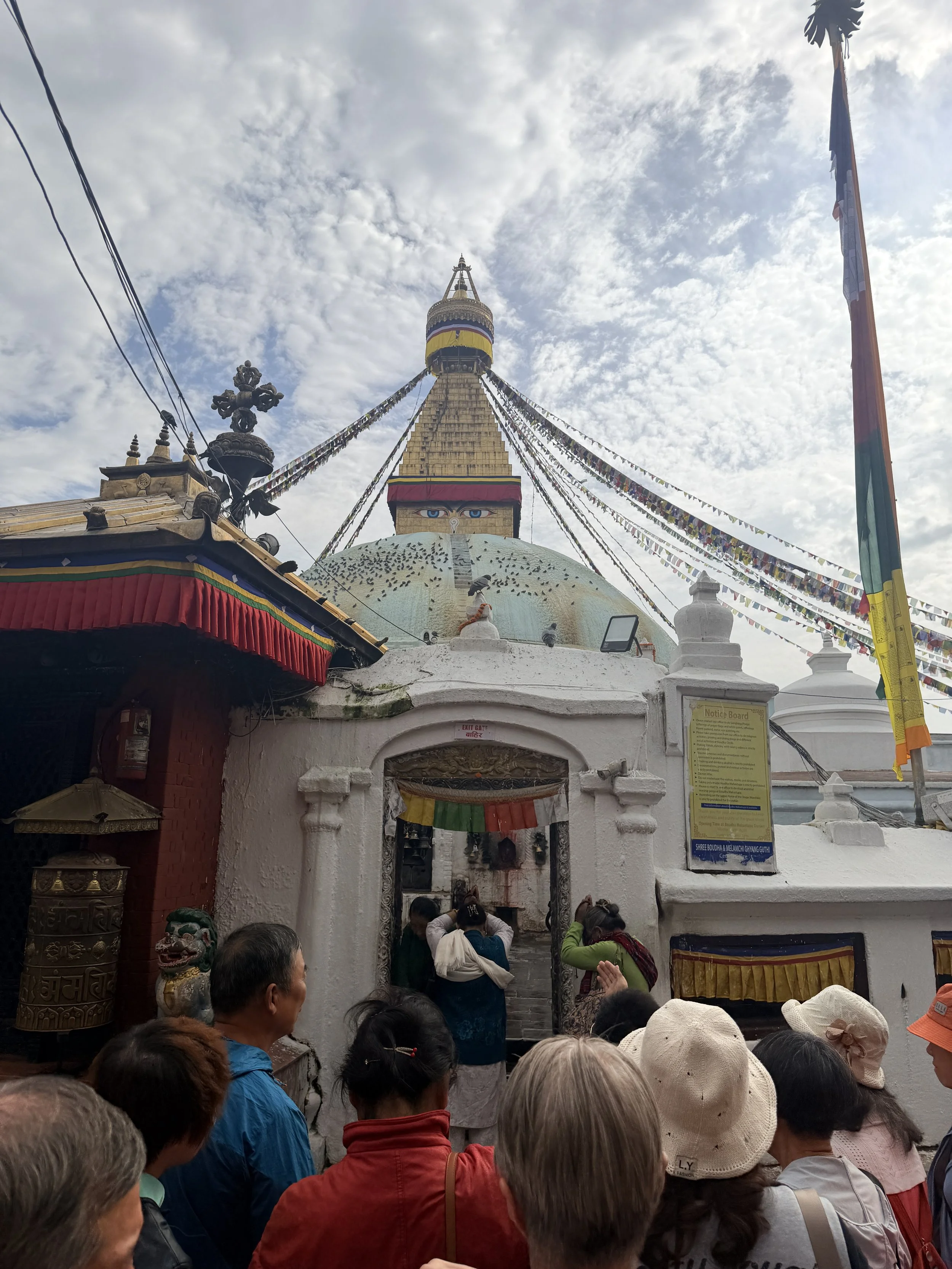
Our final sightseeing destination was Boudhanath Stupa, one of the most important centers of Tibetan Buddhism outside Tibet. Before visiting the stupa, we stopped for lunch at a rooftop restaurant overlooking it. From above, we enjoyed a wonderful view of the enormous white dome, golden spire, and the steady stream of pilgrims circling below. It was a relaxing break after a busy morning.
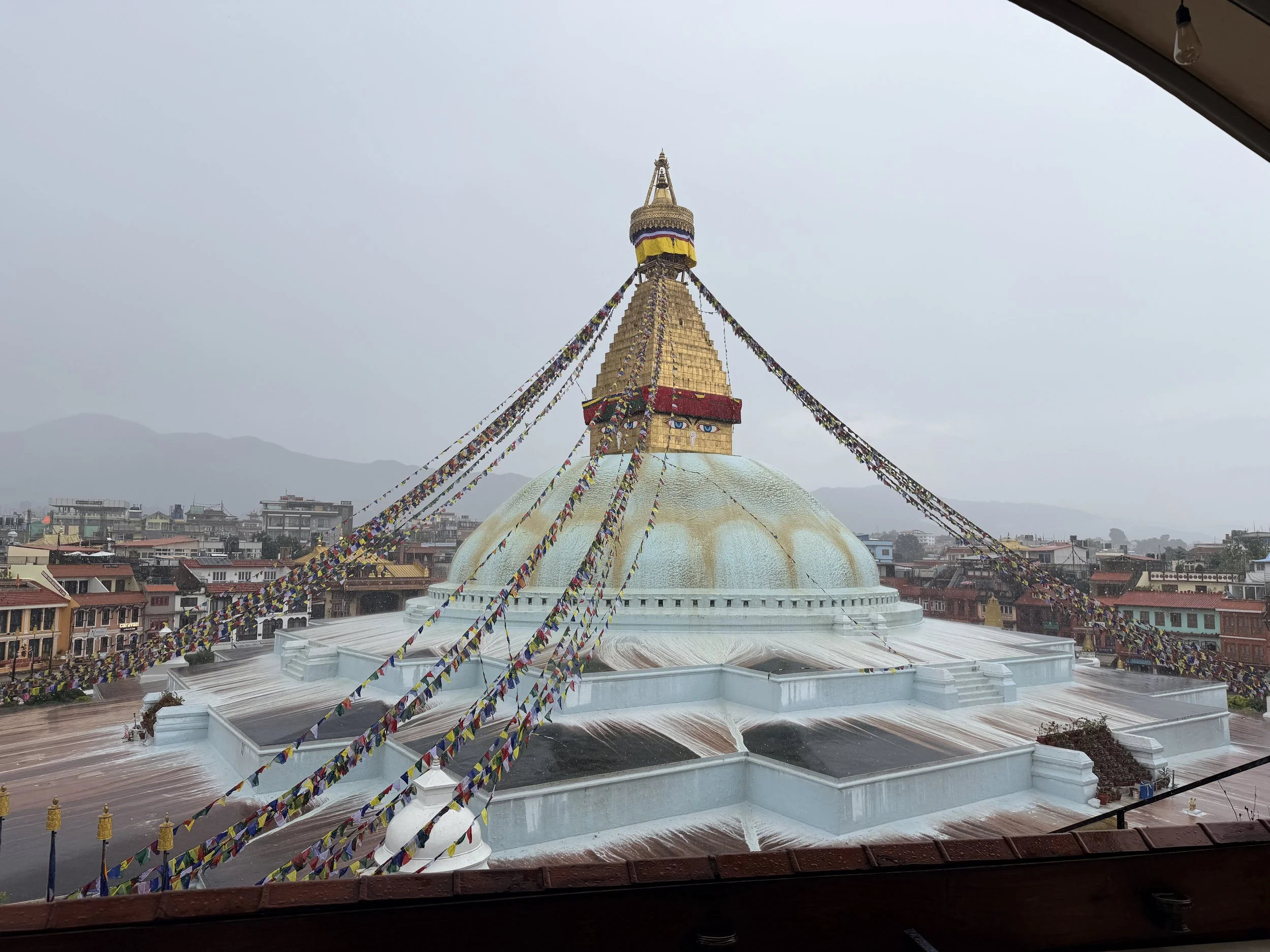
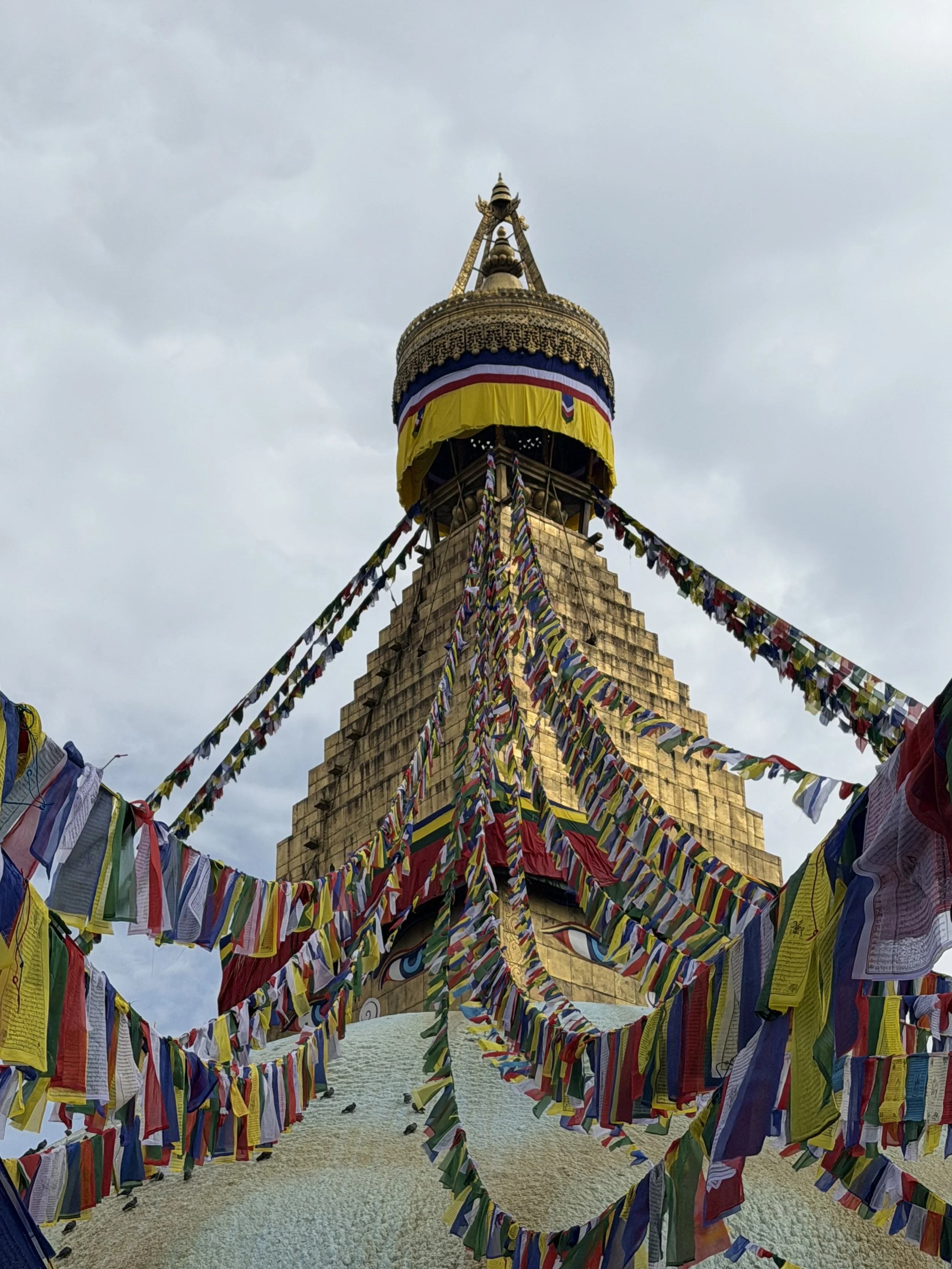
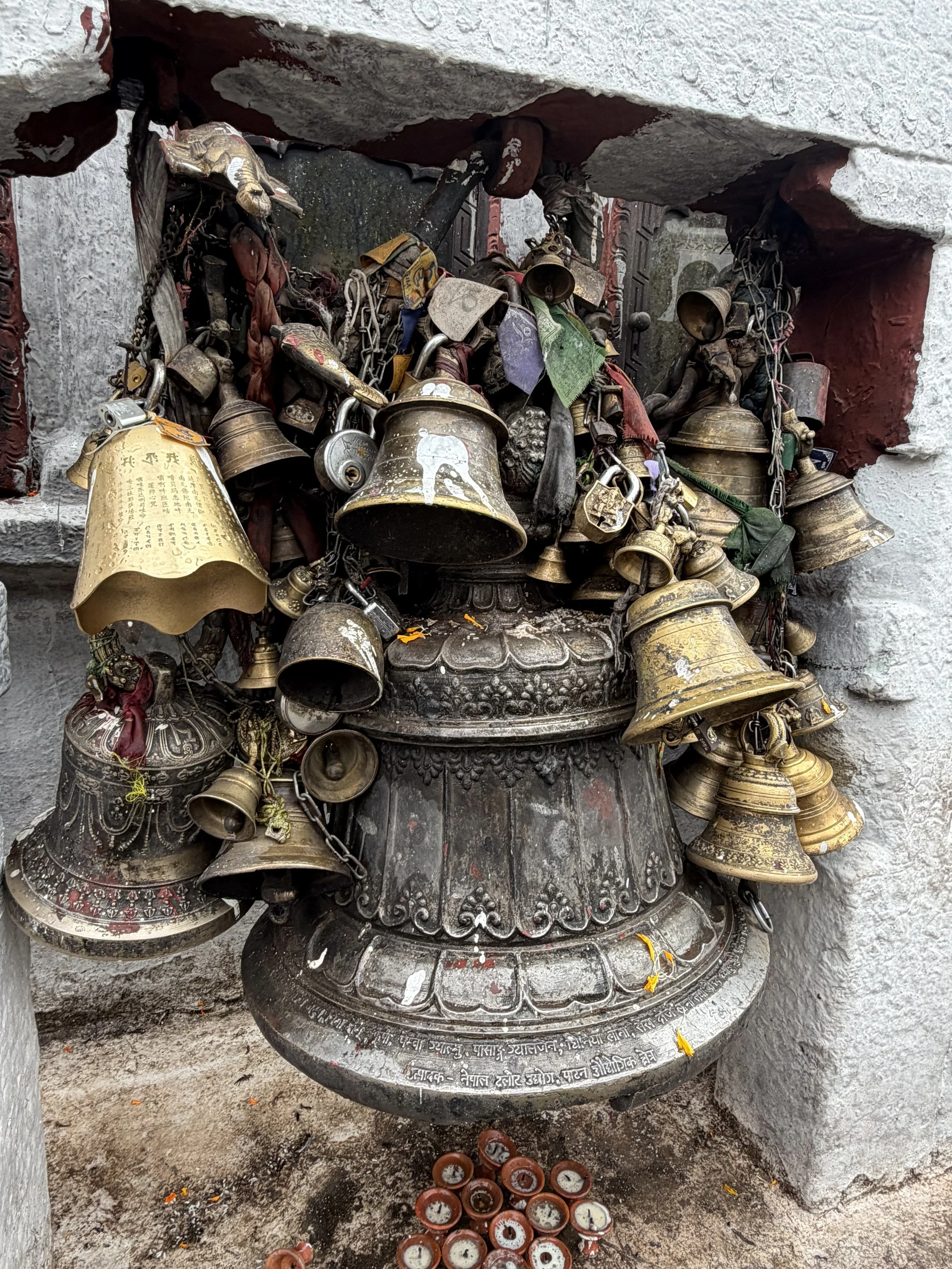
After lunch, by then, the sky had cleared and we explored the stupa and its surroundings. The enormous white dome, topped by a golden spire with the Buddha’s watchful eyes, dominated the square. Colorful prayer flags stretched overhead, while monasteries, shops, and restaurants surrounded the sacred monument. We walked clockwise around the stupa and performed kora.
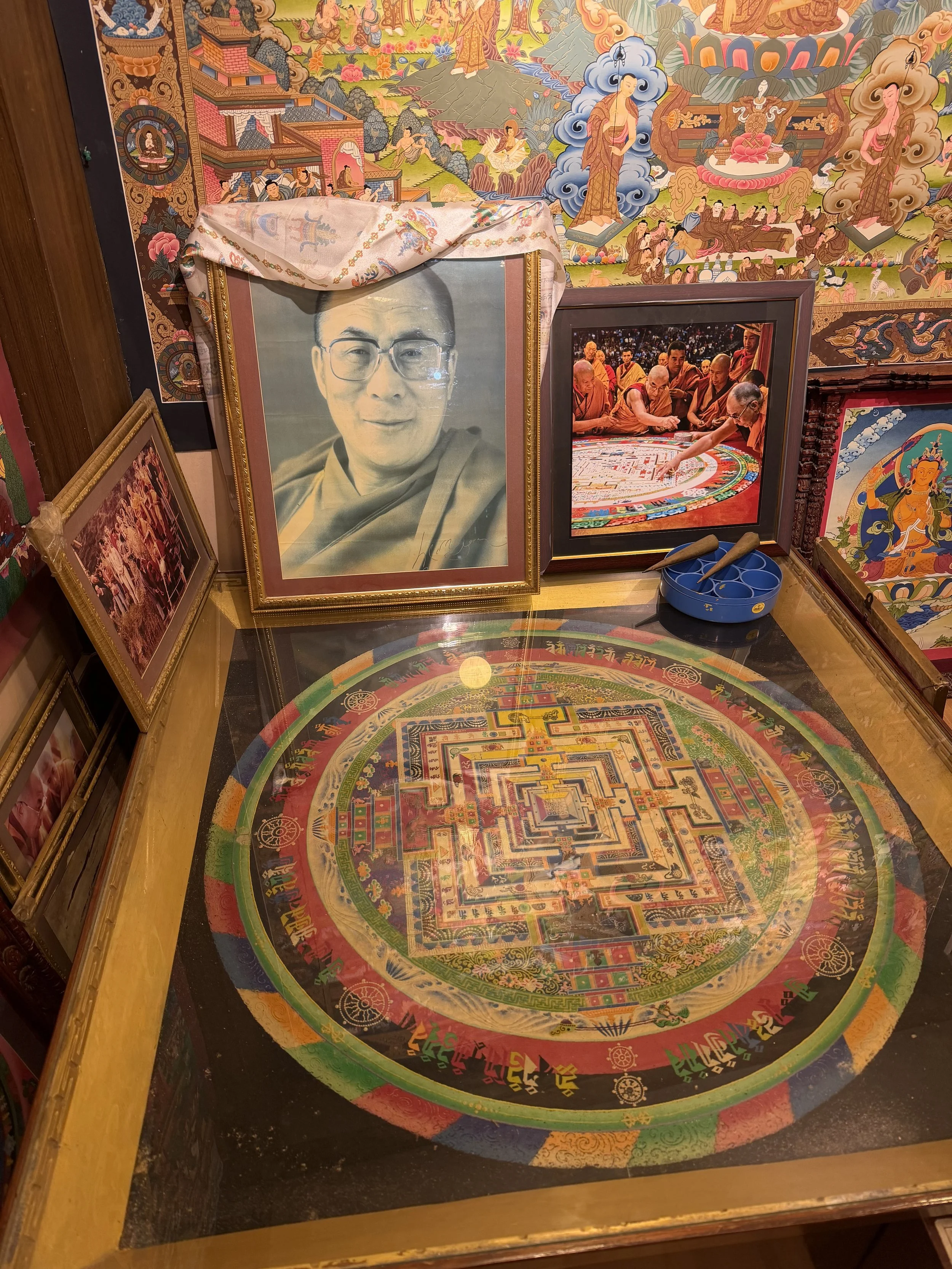
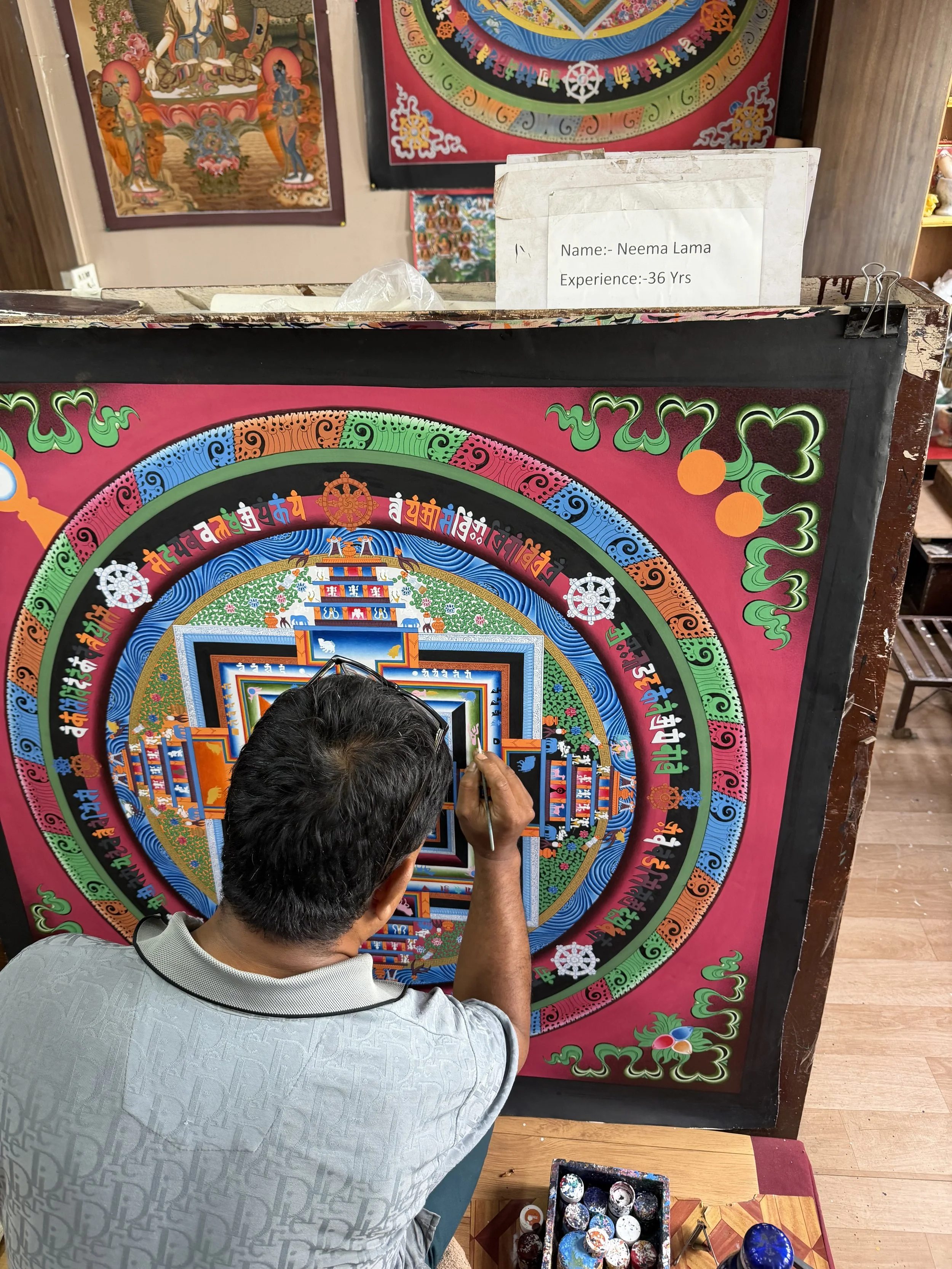
We also explored shops selling traditional Tibetan religious art. Having learned about Mandala paintings at a Thangka school the previous day, we were particularly interested in their intricate geometric patterns and spiritual symbolism. This time, we decided to purchase a Mandala painting as a souvenir of our Nepal adventure.
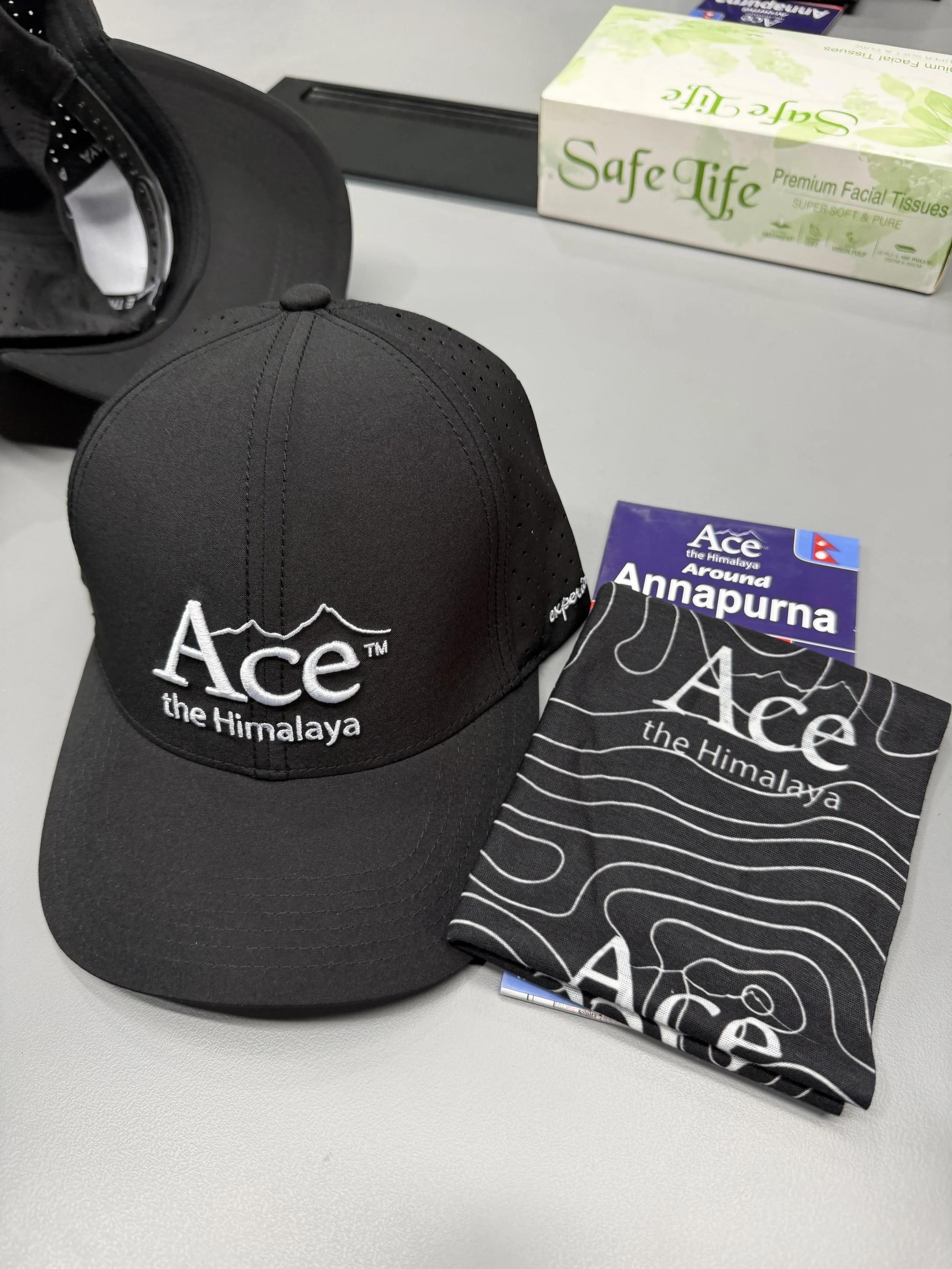
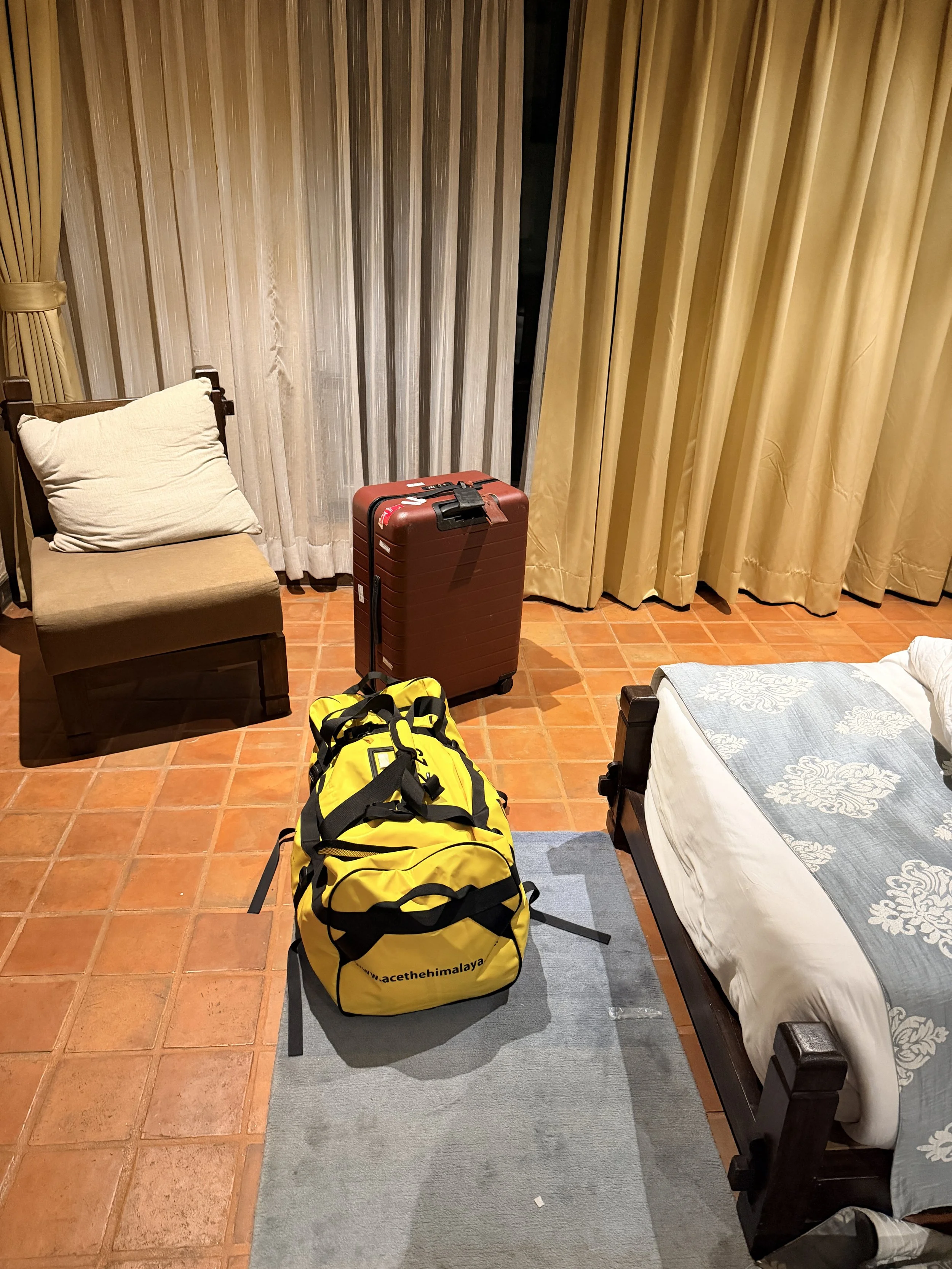
By the evening, all our fellow trekkers had arrived in Kathmandu. We gathered at the tour company’s office for a pre-trek meeting, made our final payment, and met our guide. After months of planning and preparation, our Annapurna Base Camp adventure was finally about to begin!
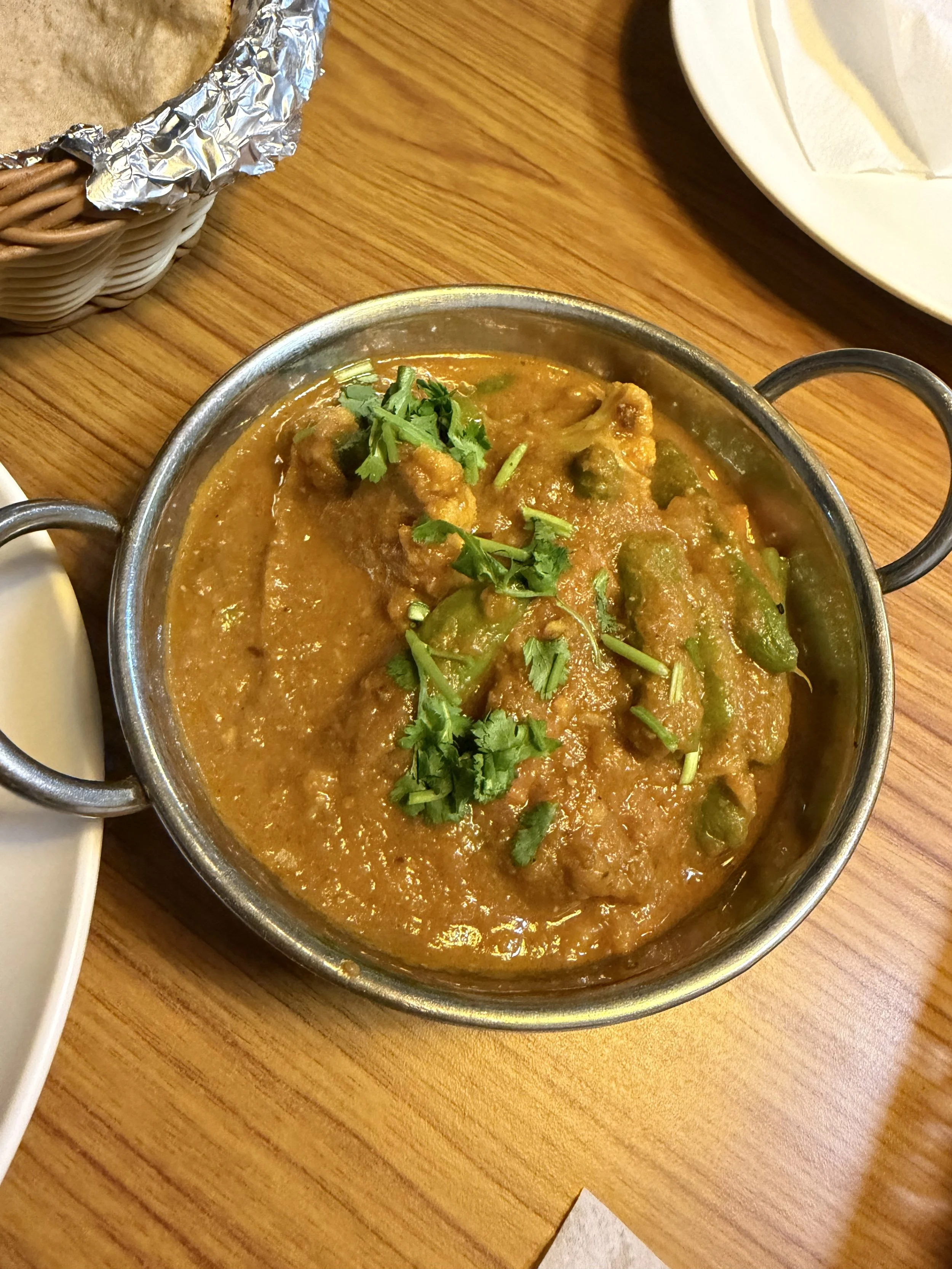
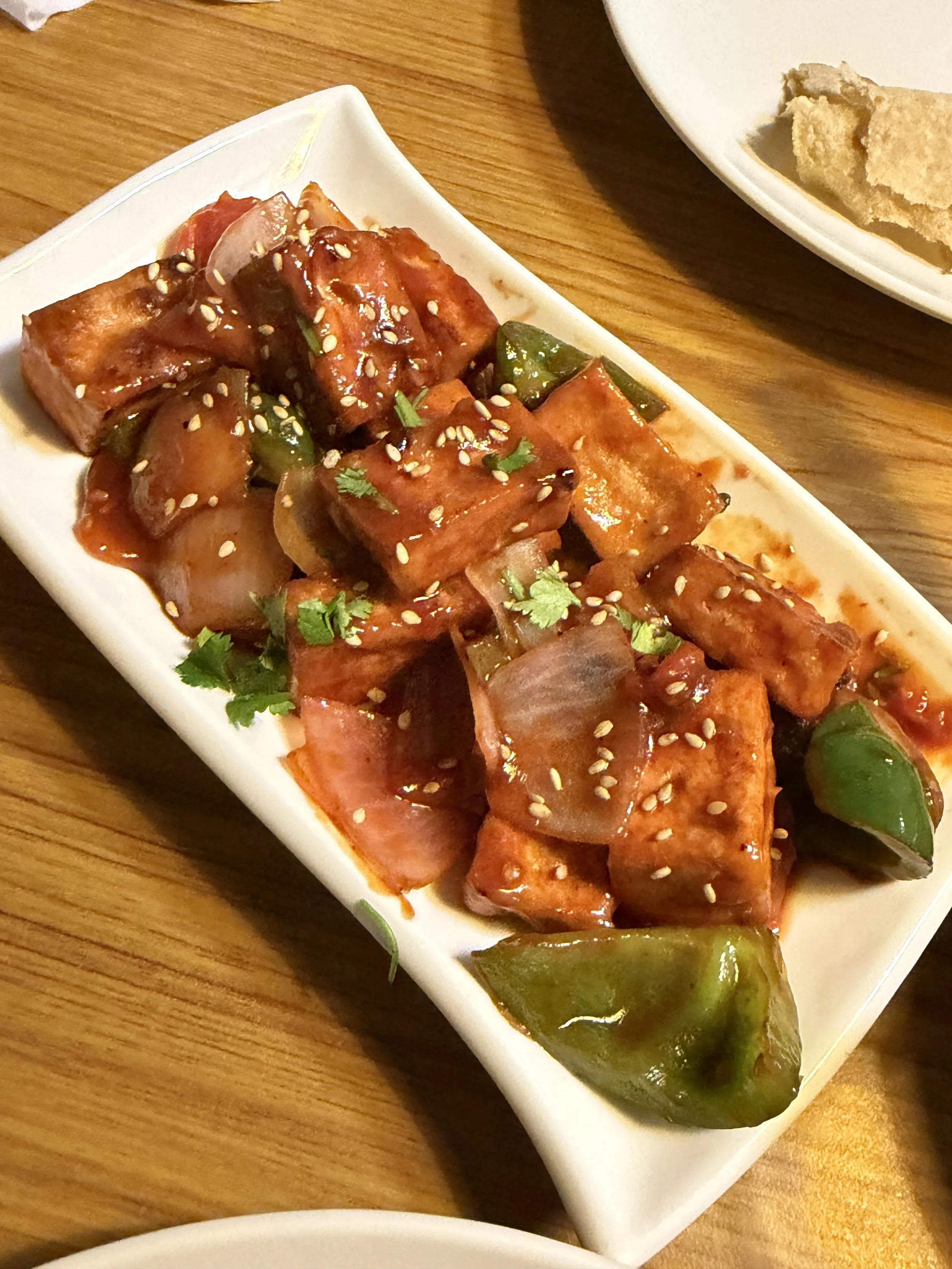
For dinner, we checked out the menu at another restaurant but eventually decided to return to the little vegan restaurant we had discovered on our first evening in Kathmandu. Once again, we enjoyed a delicious and satisfying meal.
It was a memorable conclusion to our two-day exploration of Kathmandu and a wonderful beginning to our Nepal adventure. Tomorrow, we would leave the bustling city behind and head toward the mountains.
2026年10月7日
今天是我们探访加德满都谷地世界文化遗产的第二天。第一站是巴克塔普尔,这座古城曾经是一个独立王国的首都。我们首先来到巴克塔普尔杜巴广场。广场上金碧辉煌的金门立刻吸引了我们的目光,门上精美繁复的鎏金雕饰令人赞叹。旁边便是著名的五十五窗宫,上层一整排雕刻精美的木窗格外引人注目。随后,我们穿过一道低矮的门洞,进入王宫内部的一座古老庭院。这里不允许拍照,但传统的尼瓦尔建筑和精美的木雕,依然给我们留下了深刻印象,也让我们得以一窥昔日王宫的历史风貌。
下一站是陶器广场,这里至今仍保留着传统的制陶工艺。我们仔细观看了一座刚刚打开的陶窑,里面还整齐地堆放着烧制完成的陶器。广场地面上,一排排刚制作好的陶坯正在晾晒。眼前的作坊和手工陶器,让我们得以近距离感受这项世代相传的传统技艺。
随后,我们步行来到陶玛迪广场。广场上最醒目的建筑是雄伟的尼亚塔波拉神庙。这座建于1702年的五层宝塔式神庙,是尼泊尔最高的传统寺庙建筑之一。通往神庙的陡峭台阶两侧,排列着一对对石雕守护神,象征着逐级增强的力量。我们沿着台阶登高,俯瞰周围的广场和屋顶,欣赏古城的景色。神庙优美匀称的建筑比例和精湛的雕刻工艺,给我们留下了深刻印象。
离开巴克塔普尔后,我们前往昌古纳拉扬神庙。这座供奉印度教保护神毗湿奴的古老神庙,是尼泊尔历史最悠久的印度教寺庙遗址之一。我们每人支付了400尼泊尔卢比的门票,沿着通往神庙的小巷向前走。没想到,天空突然下起了倾盆大雨。我们赶紧躲进巷子旁的一家小店避雨,盼望雨势能够减弱。等了十五分多钟,大雨仍然没有停歇的迹象。无奈之下,我们只好放弃参观。明明已经到了神庙门口,却没能亲眼看看这座古老的世界文化遗产,实在有些遗憾。
当天最后一个观光目的地是博达哈大佛塔,这里是西藏以外最重要的藏传佛教中心之一。
参观佛塔之前,我们先来到一家可以俯瞰佛塔的屋顶餐厅吃午饭。从高处望去,巨大的白色佛塔、金色塔顶,以及下方络绎不绝的转经信众尽收眼底。经过一上午的奔波,能够坐下来一边享用午餐,一边欣赏眼前的景色,实在是一种享受。
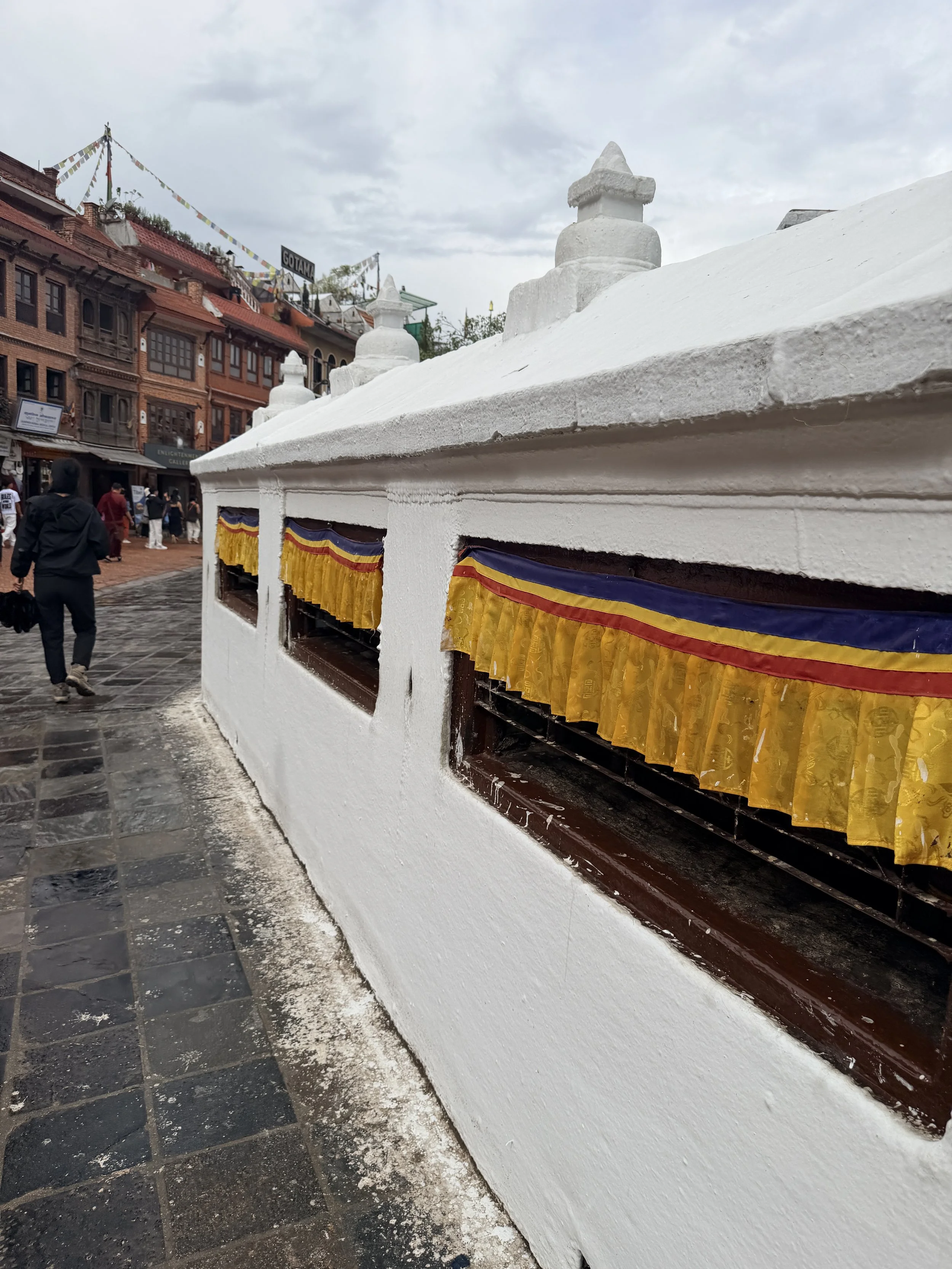
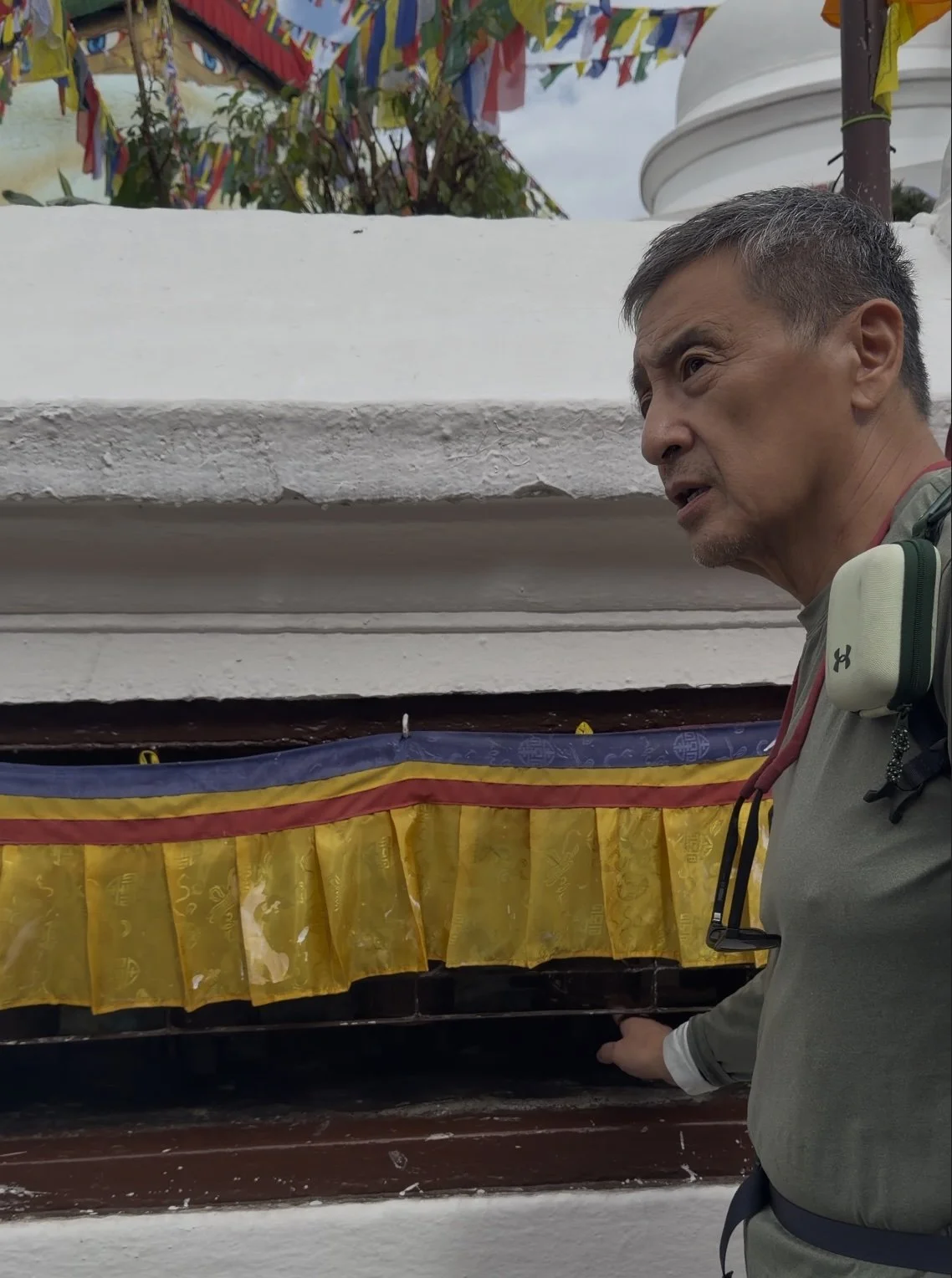
午饭后,天空已经放晴。我们走近佛塔,只见巨大的白色塔身上方,金色塔顶四面绘有佛眼,庄严而醒目。五彩经幡在空中飘扬,佛塔四周环绕着寺院、商店和餐馆,热闹之中又透着浓厚的宗教气息。我们沿着佛塔顺时针方向绕行,体验藏传佛教传统的转经。有趣的是,沿途许多转经筒都被布包裹着,我们猜想可能是为了防止雨水侵蚀。
前一天参观唐卡绘画学校时,我们对曼荼罗精细复杂的几何图案及其宗教象征意义产生了浓厚兴趣。这一次我们一家唐卡绘画学校里,买了一幅尺寸不大的曼荼罗画,作为这次尼泊尔之旅的纪念。
傍晚时分,参加此次徒步的团友们都已抵达加德满都。大家在旅行社办公室集合,参加徒步出发前的说明会。我们付清了剩余团费,也见到了即将带领我们徒步的向导。经过几个月的计划和准备,期待已久的安纳普尔纳大本营徒步之旅终于就要开始了!
晚饭时,我们先看了另一家餐馆的菜单,最后还是决定回到抵达加德满都第一晚发现的那家小小的素食餐厅。果然没有让我们失望,又享用了一顿美味而满足的晚餐。
至此,我们为期两天的加德满都世界文化遗产之旅画上了圆满的句号,也为接下来的尼泊尔探险之旅拉开了序幕。
明天,我们将告别喧闹的城市,向着群山出发。