Exploring Kathmandu’s UNESCO World Heritage Sites 1 探访世界文化遗产(上)
October 6, 2026
Kathmandu Valley has seven UNESCO World Heritage monument zones, and we wanted to visit them all. Most tour companies offered either four or all seven sites in a single day, but we felt that would be too rushed. After some searching, we found a two-day private tour on Viator that suited our pace.
After breakfast, our guide and driver picked us up at the hotel, and we set off to explore Kathmandu’s rich history and culture.
Kathmandu Durbar Square
Our first stop was Kathmandu Durbar Square, once the royal and ceremonial center of the Kathmandu Kingdom. The square was filled with magnificent temples, each with its own history and religious significance. There were so many unfamiliar names, gods, and stories that I found it difficult to remember them all.
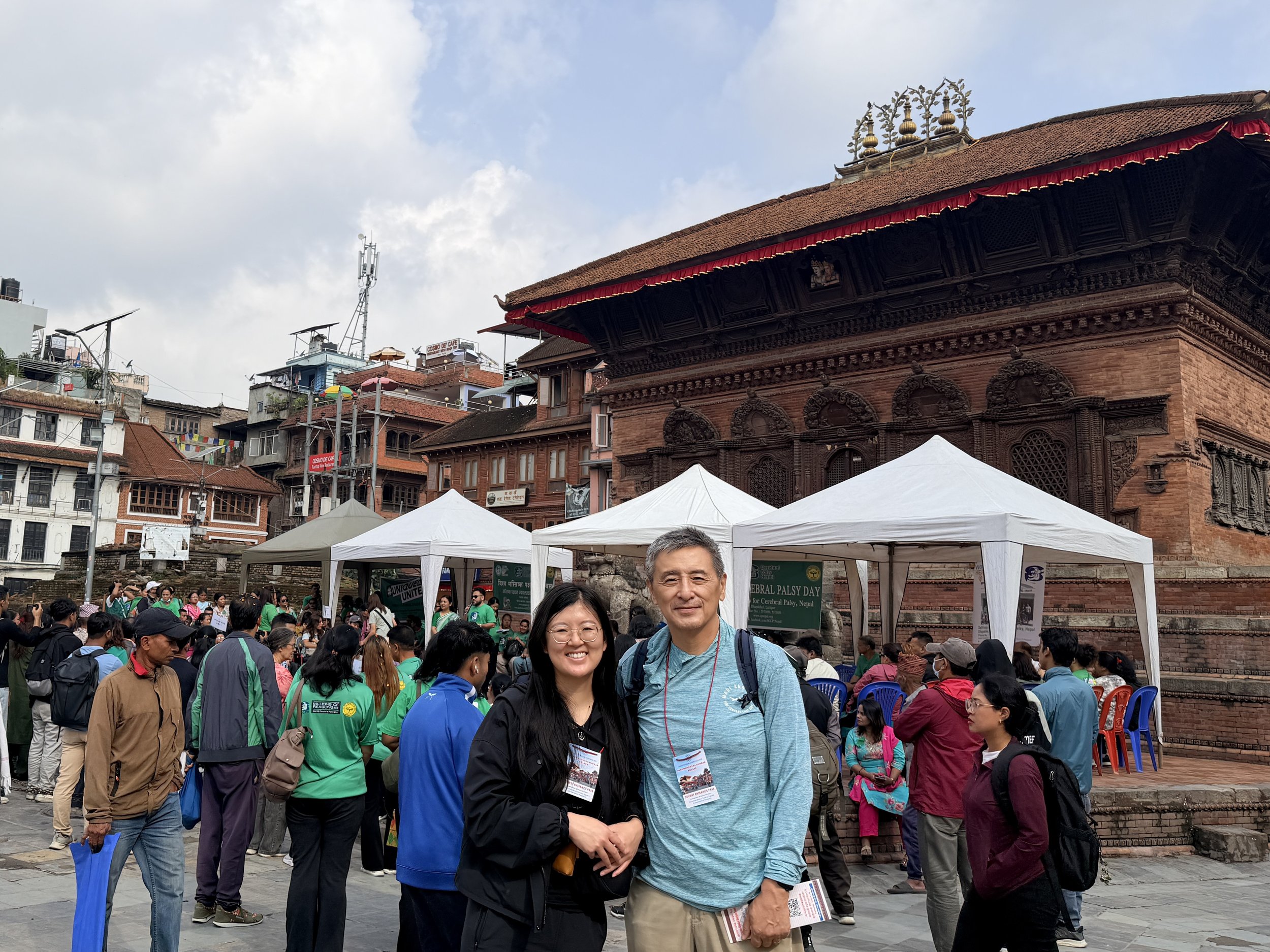
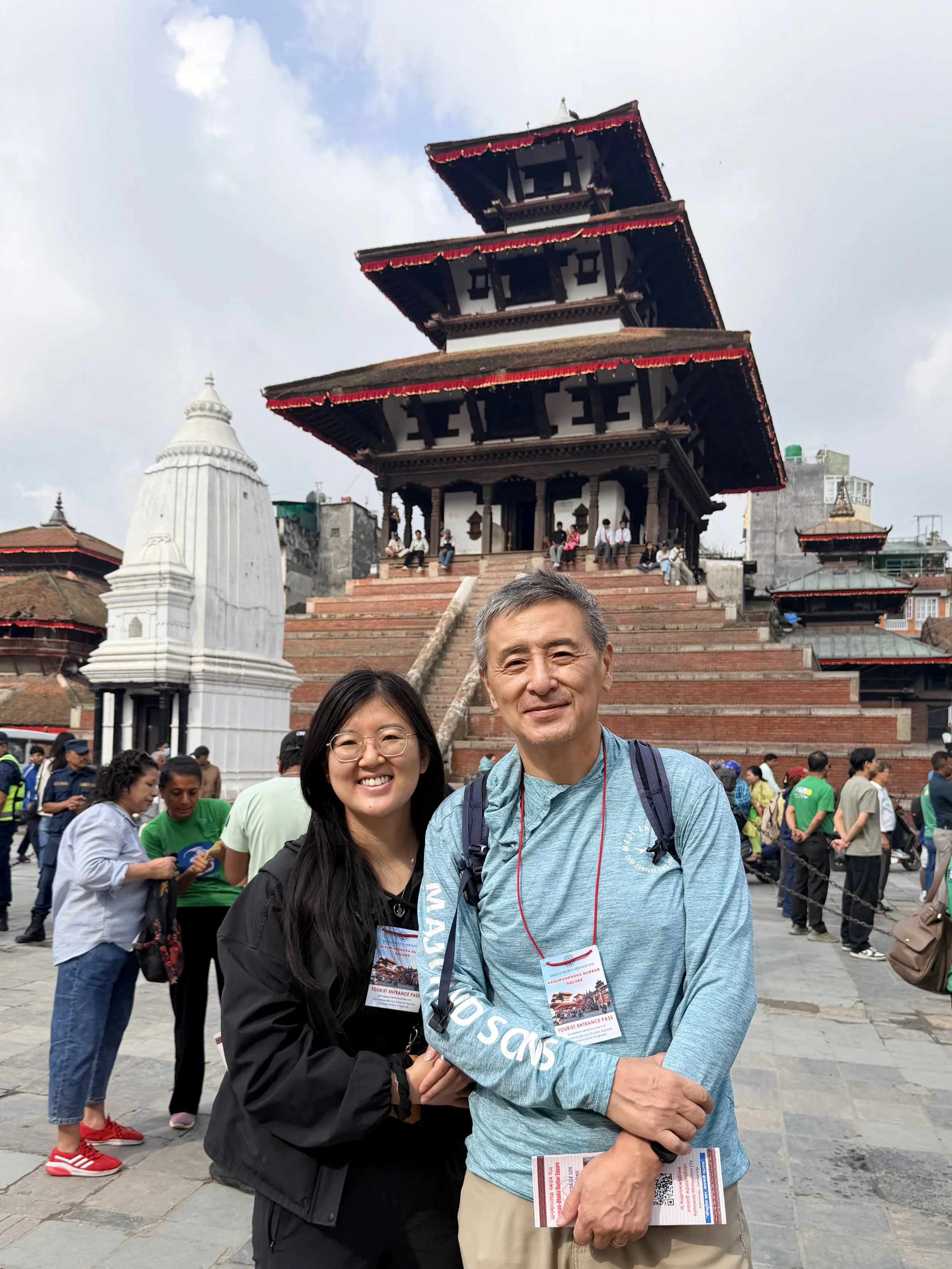
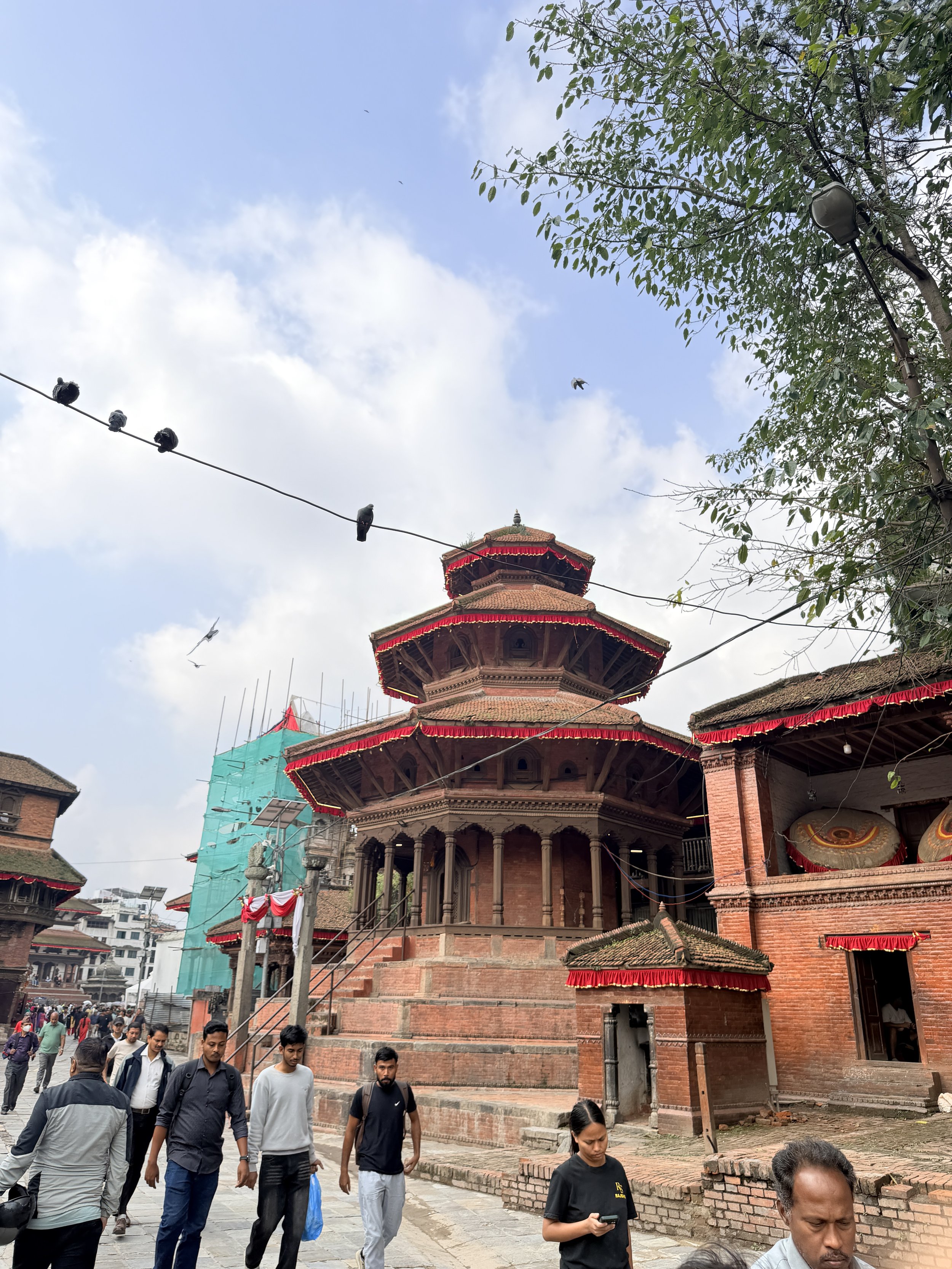
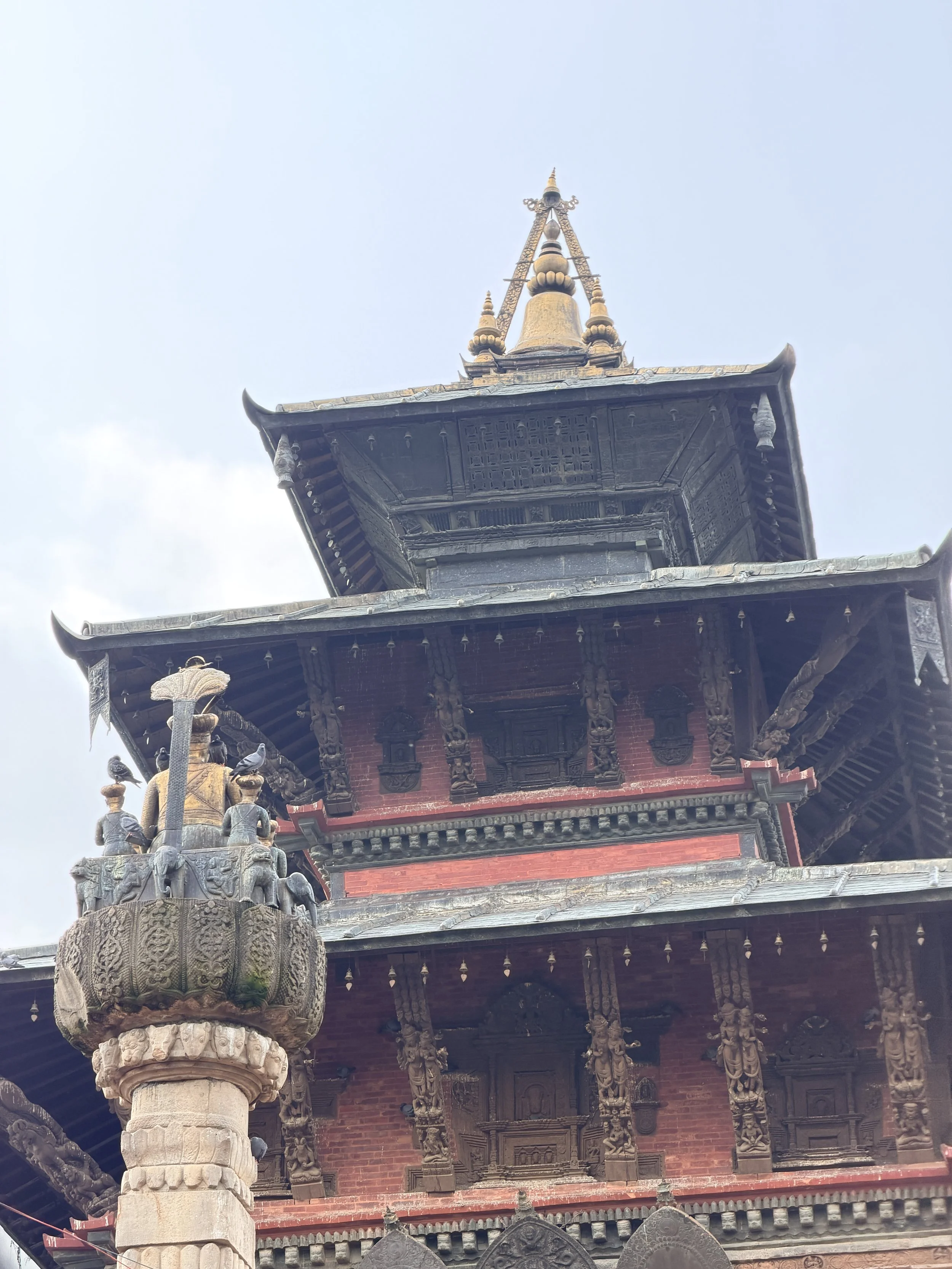
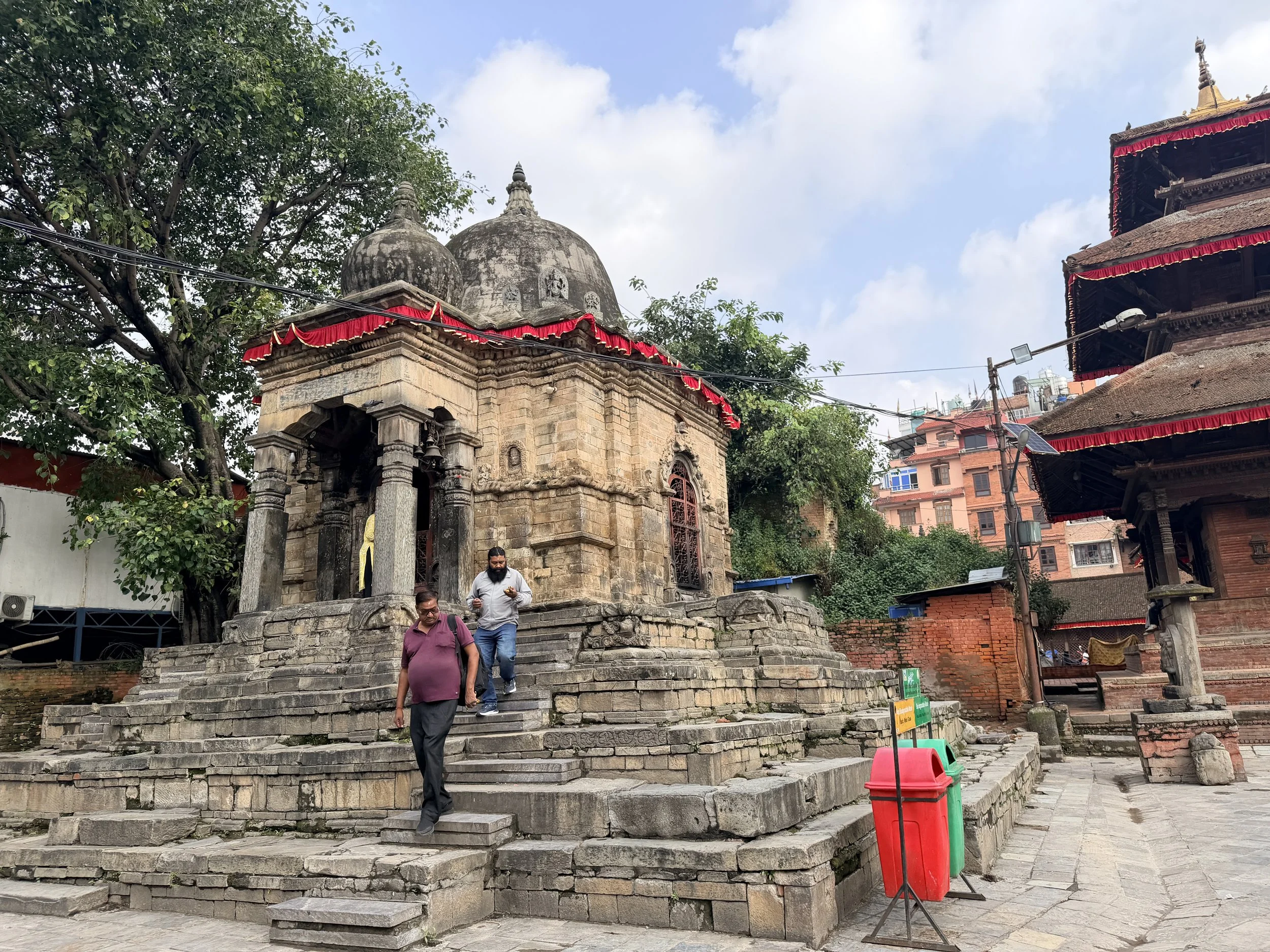
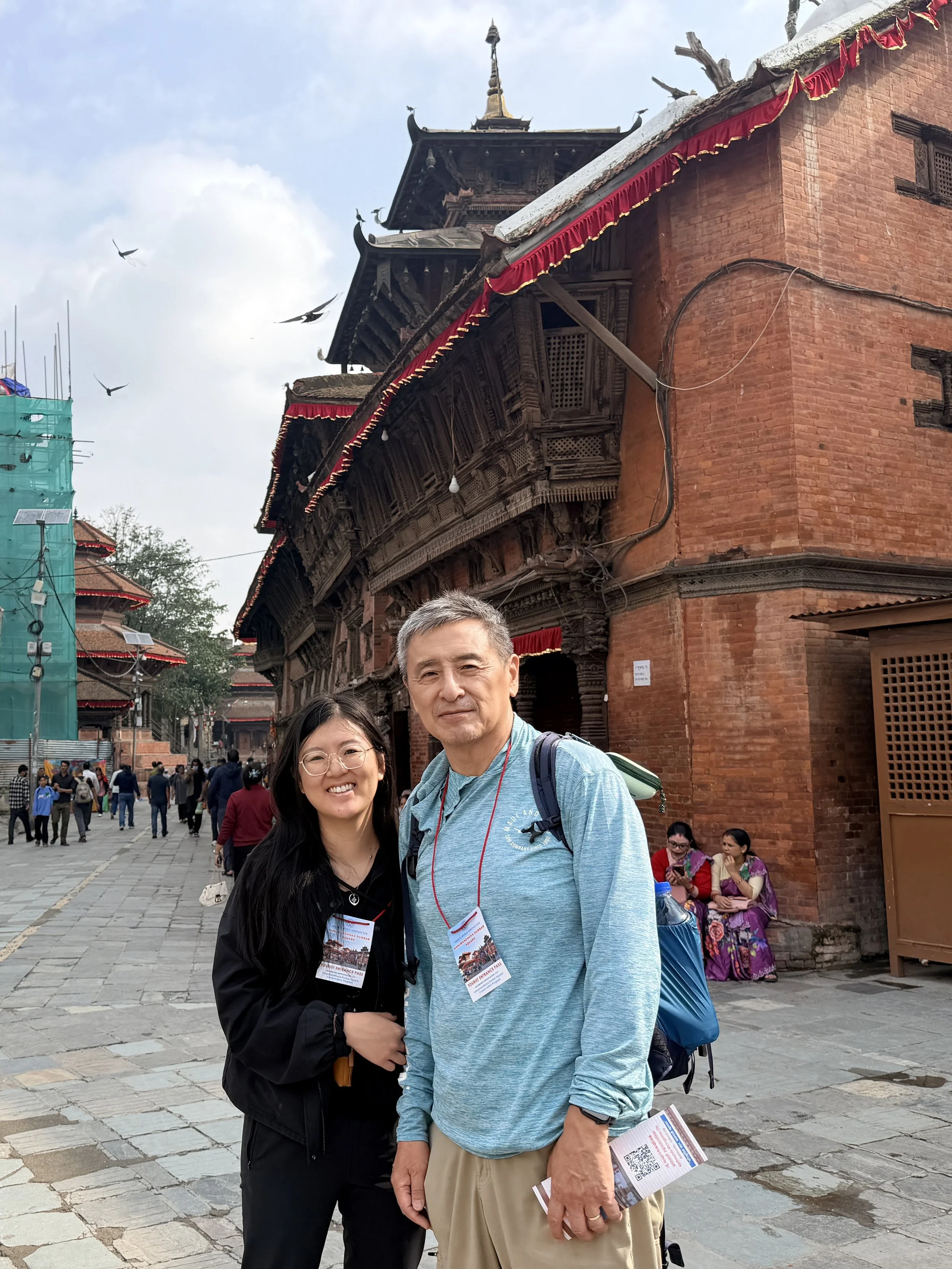
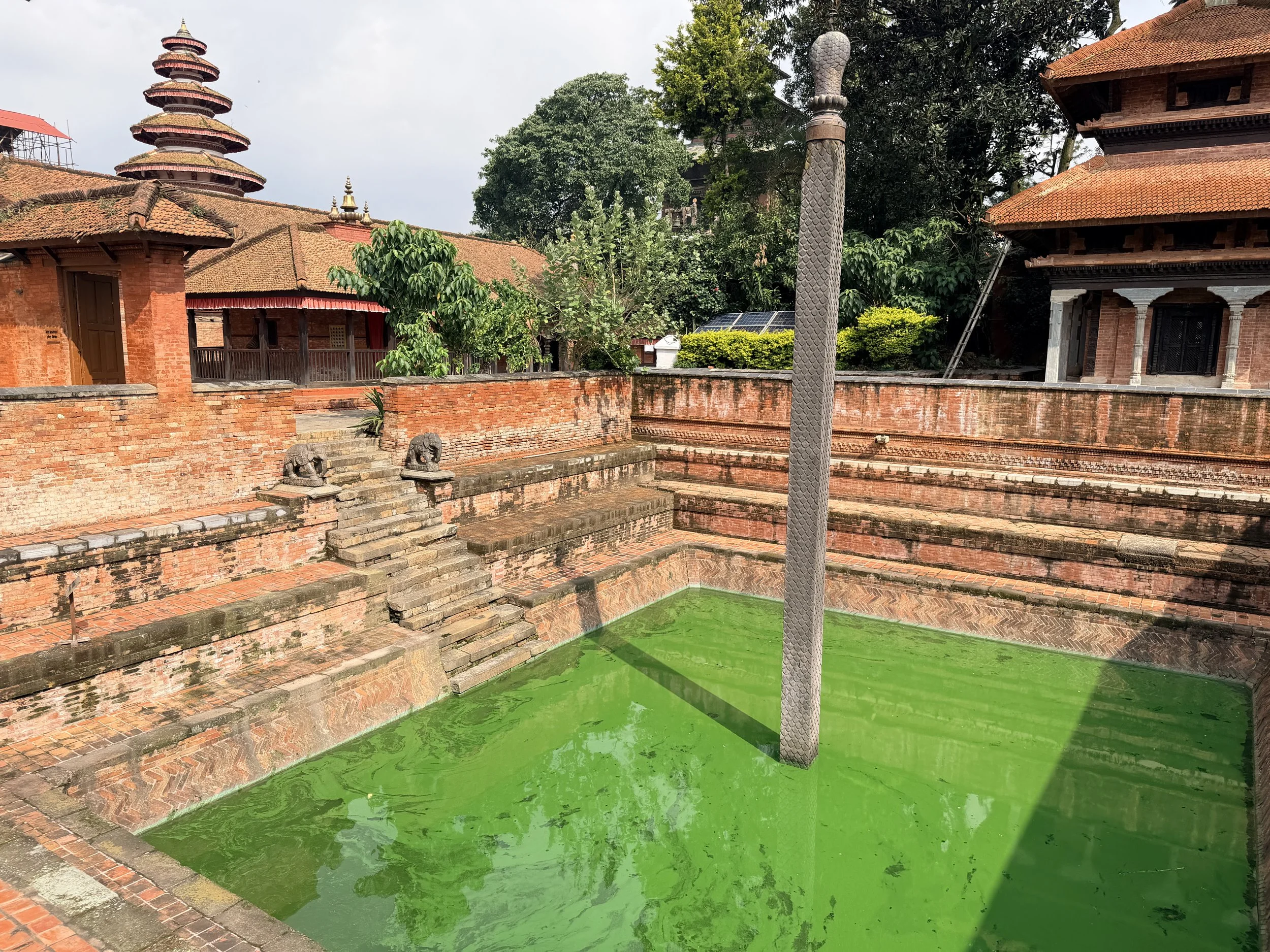
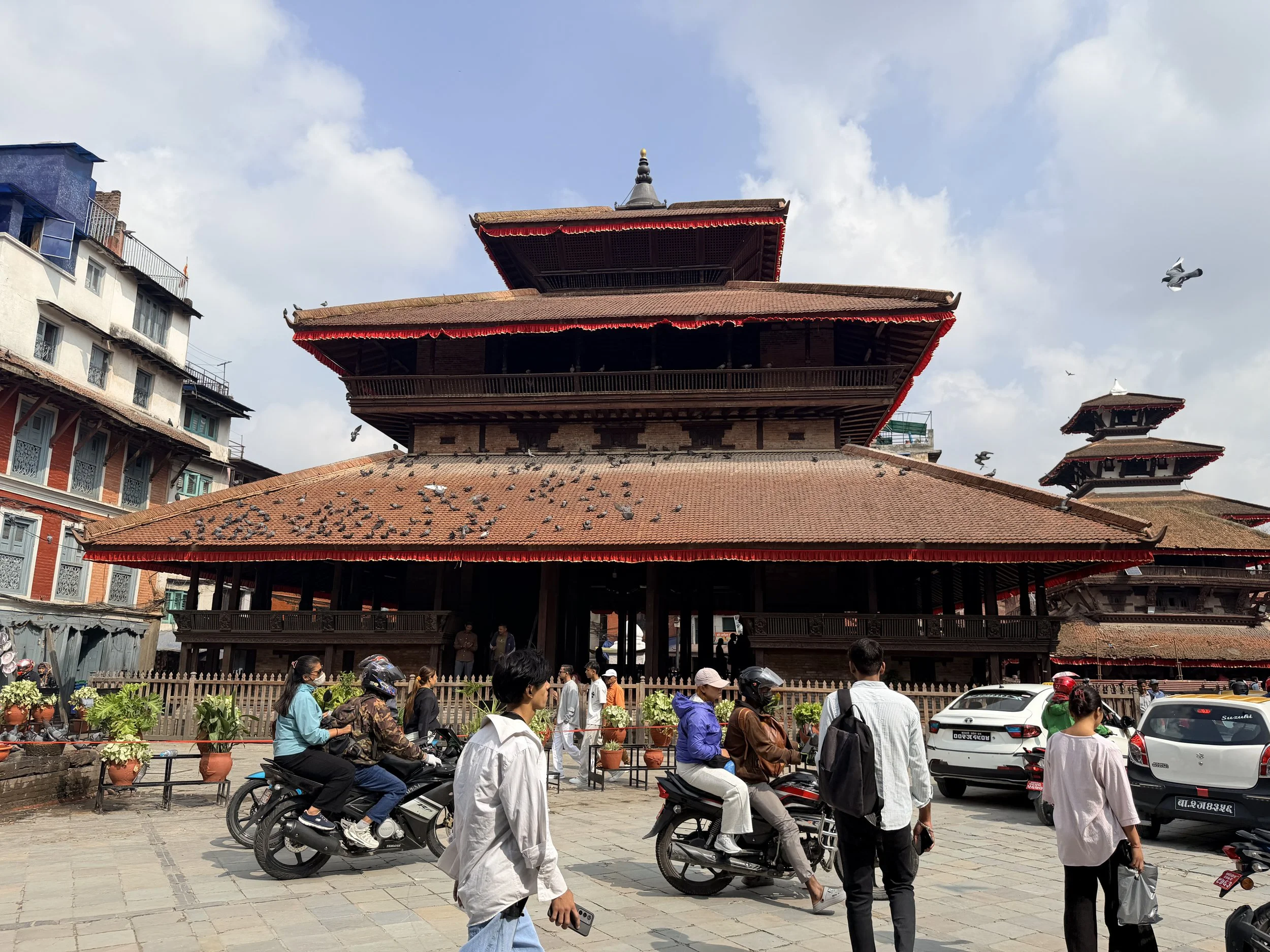
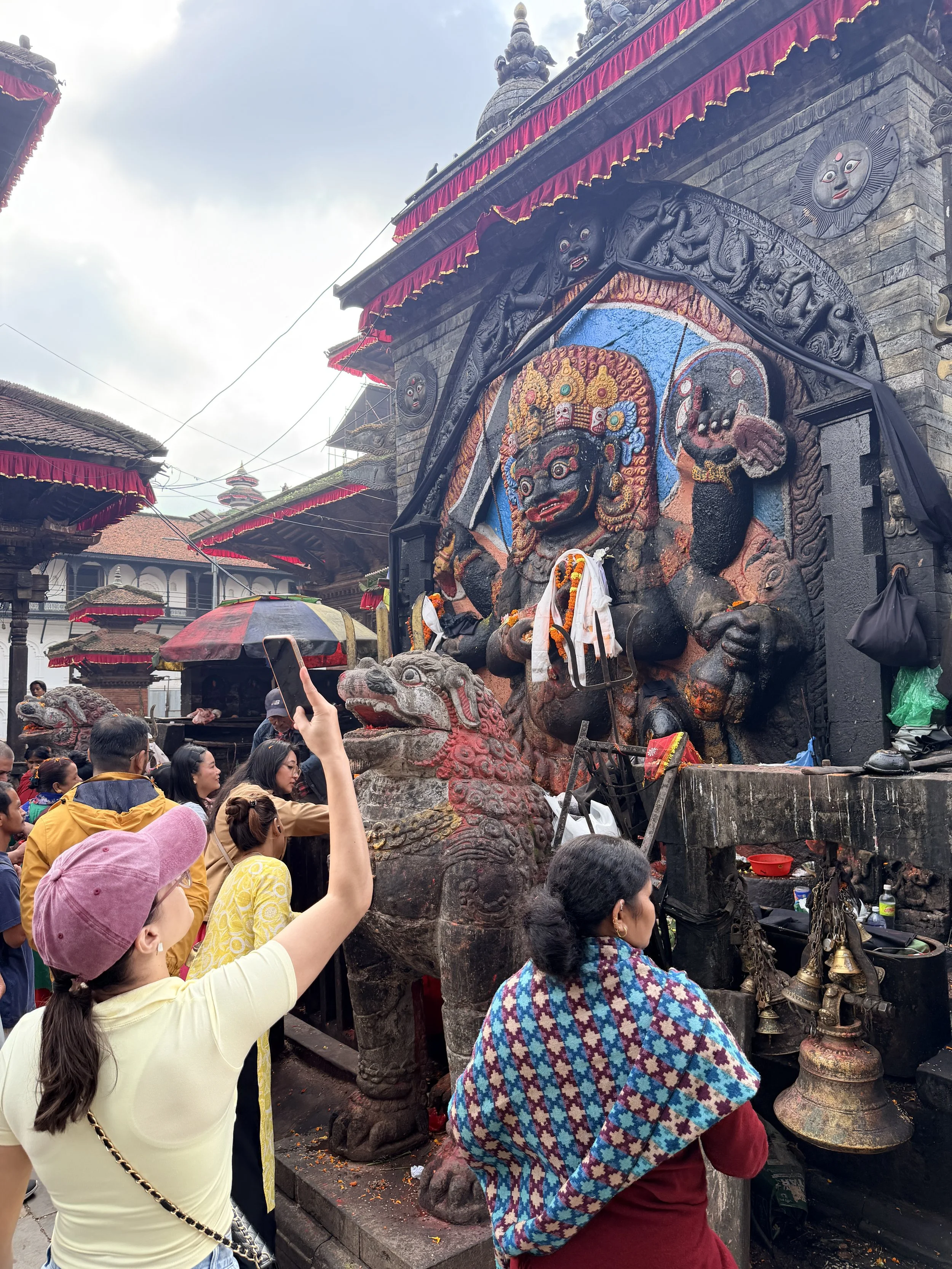
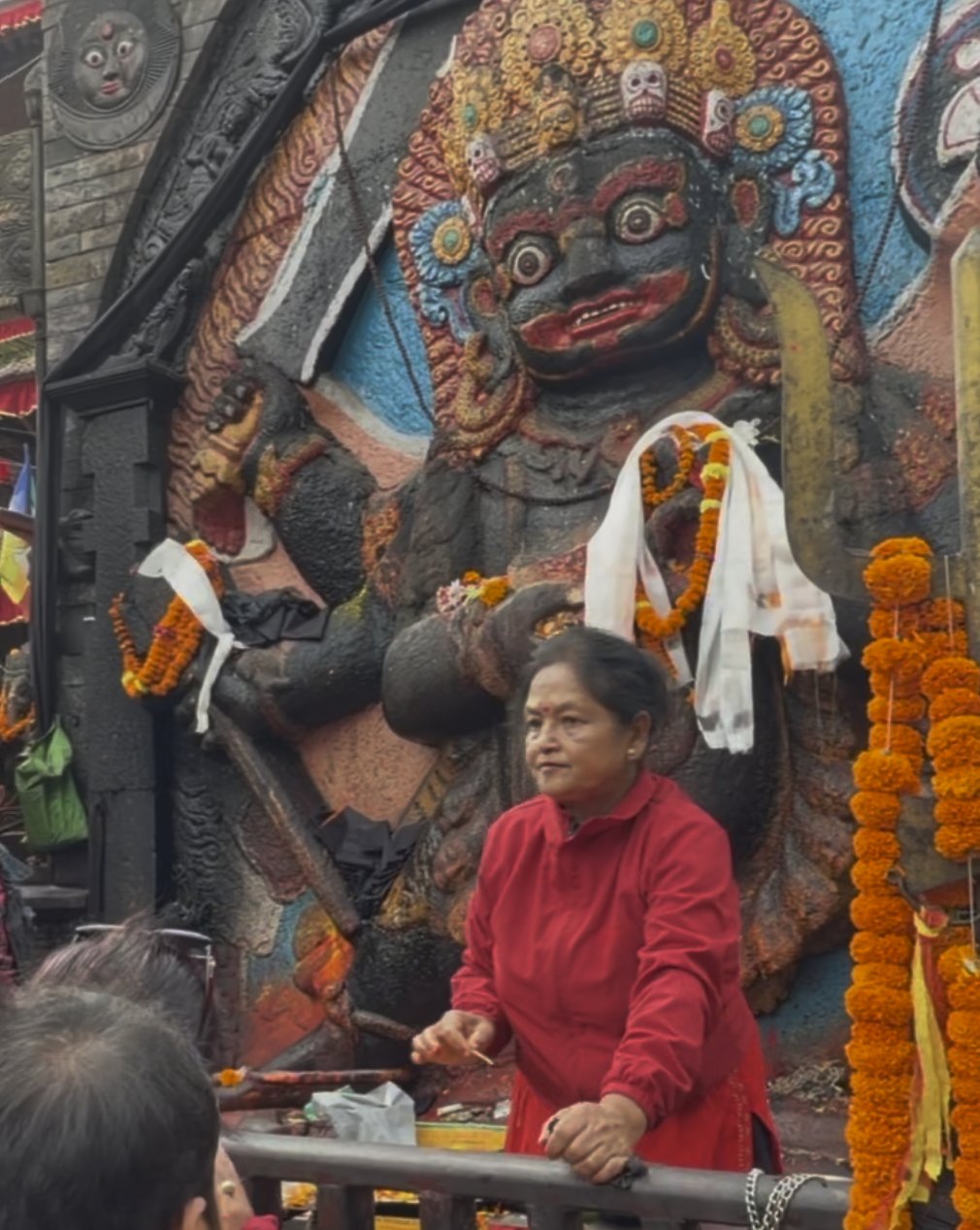
We first stopped at Kal Bhairav, a colorful, approximately 3.7-meter-tall stone sculpture depicting a fierce manifestation of Shiva. Many worshippers gathered in front of it to offer prayers.
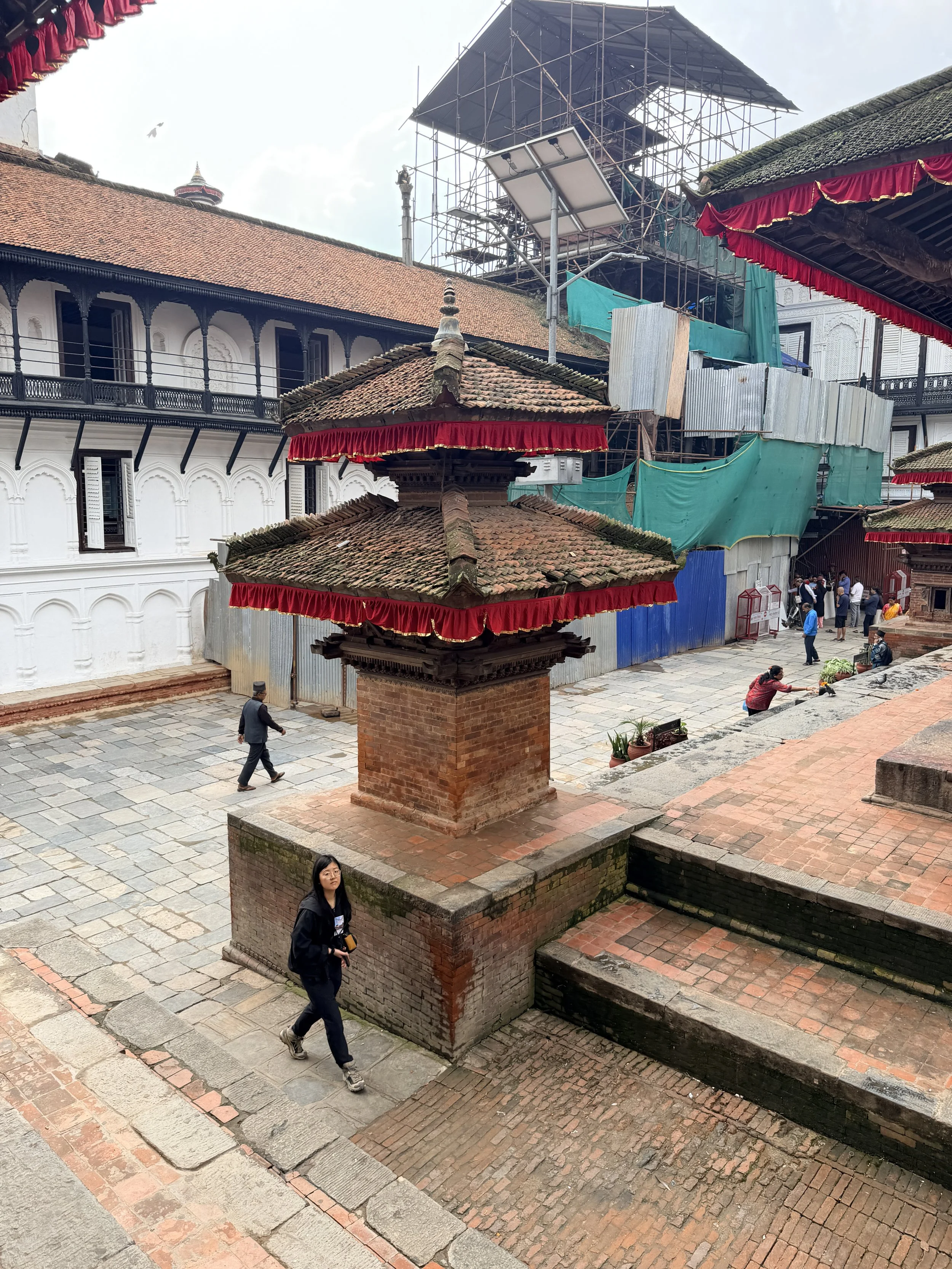
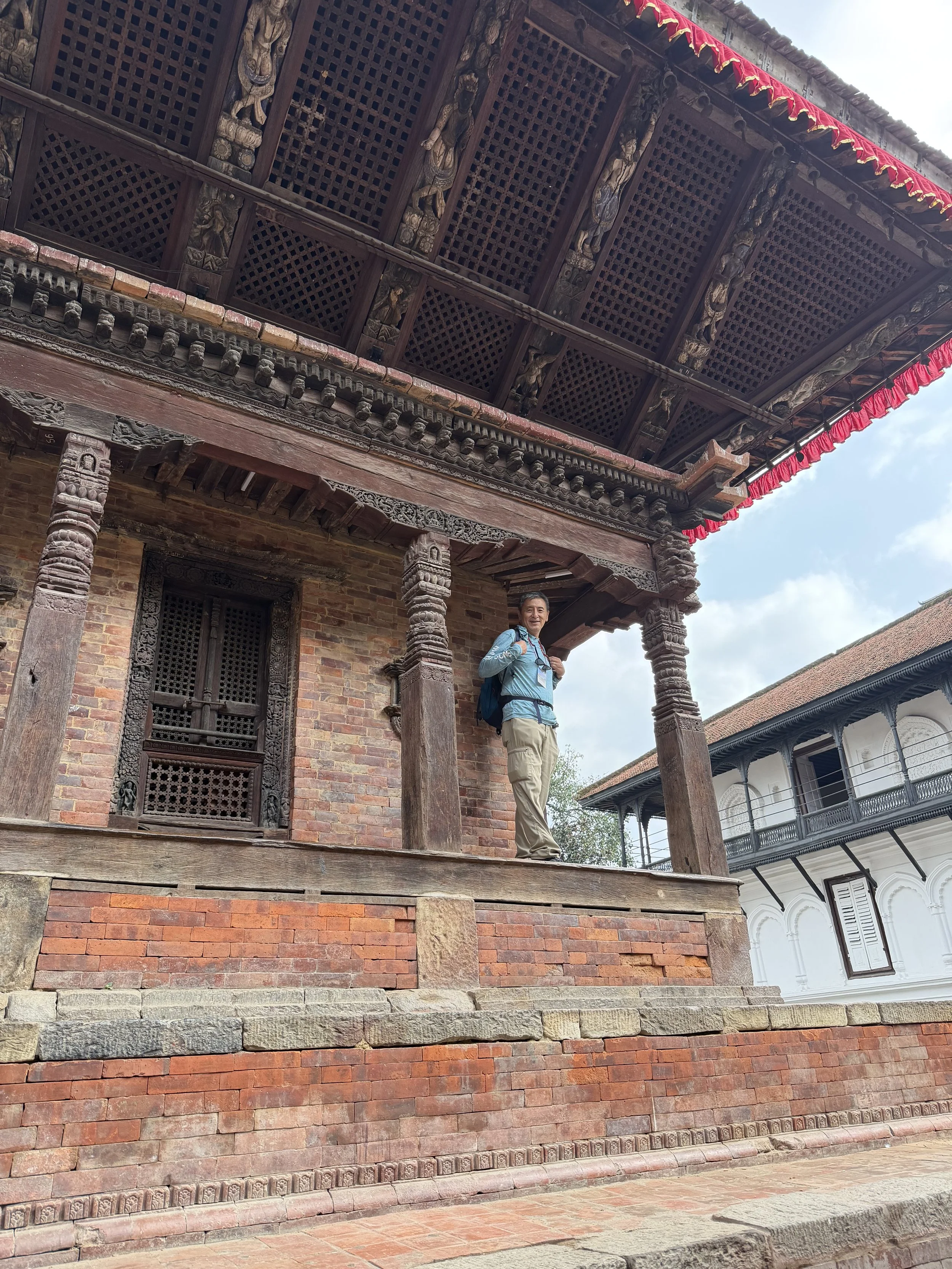
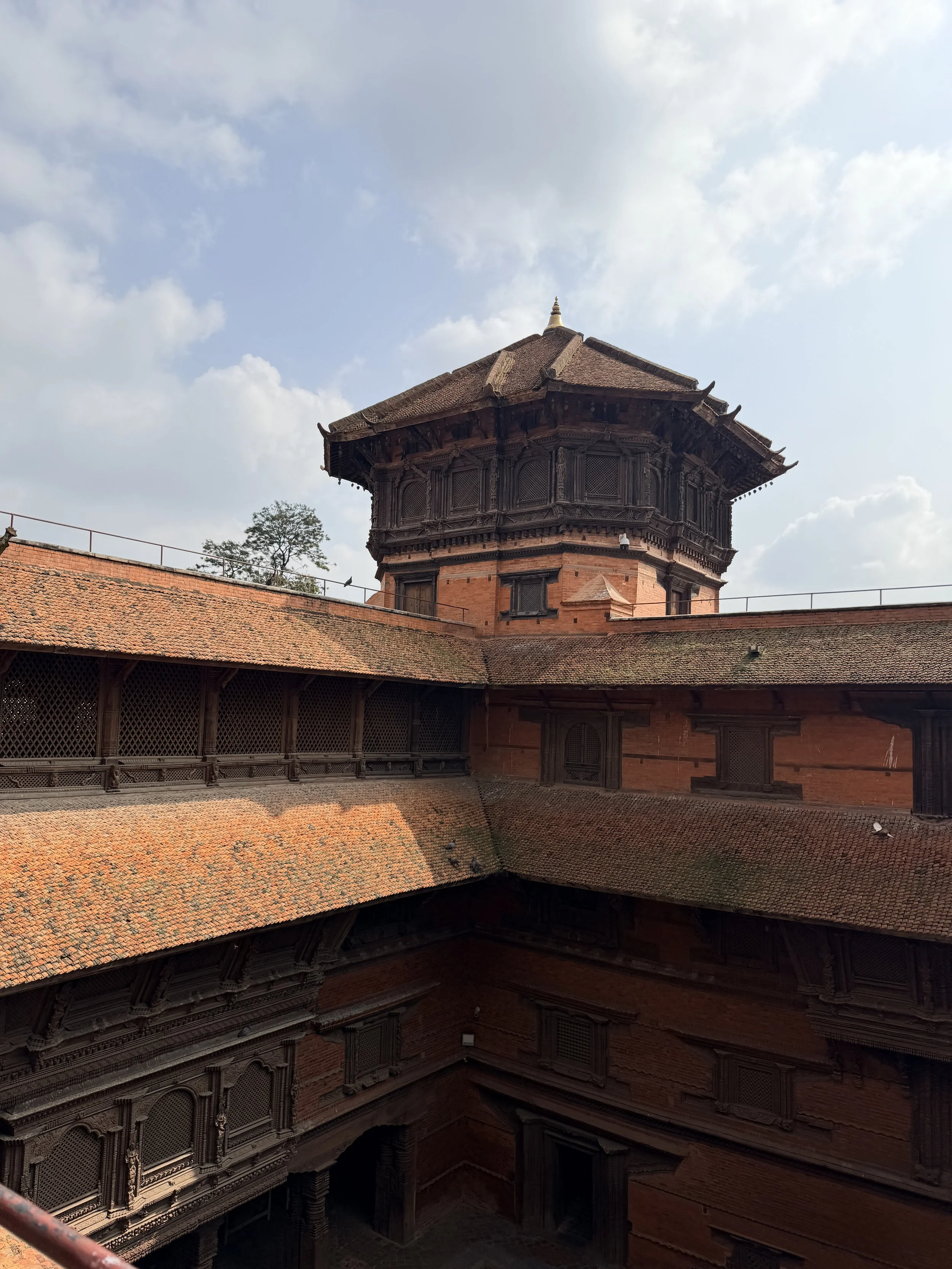
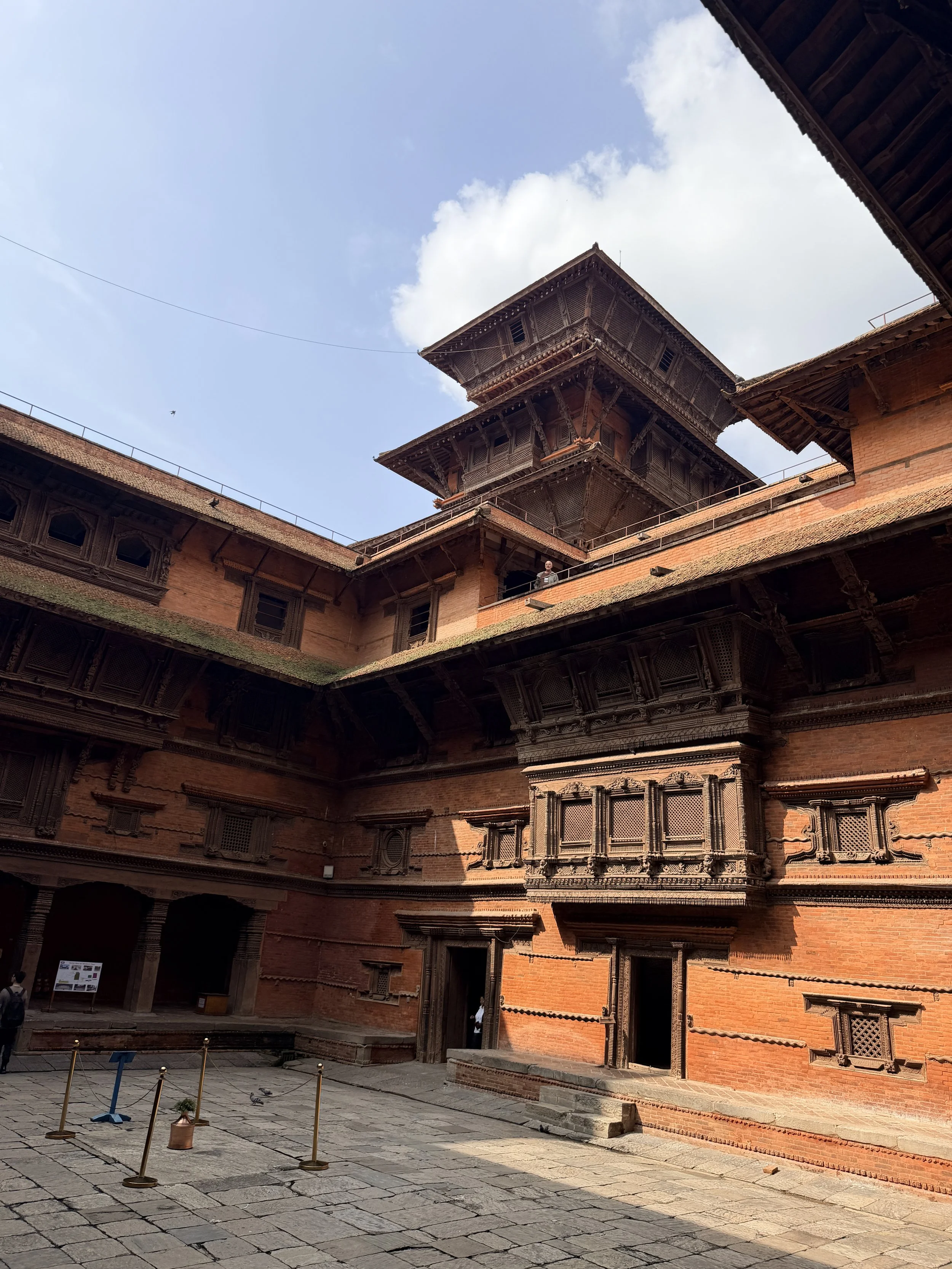
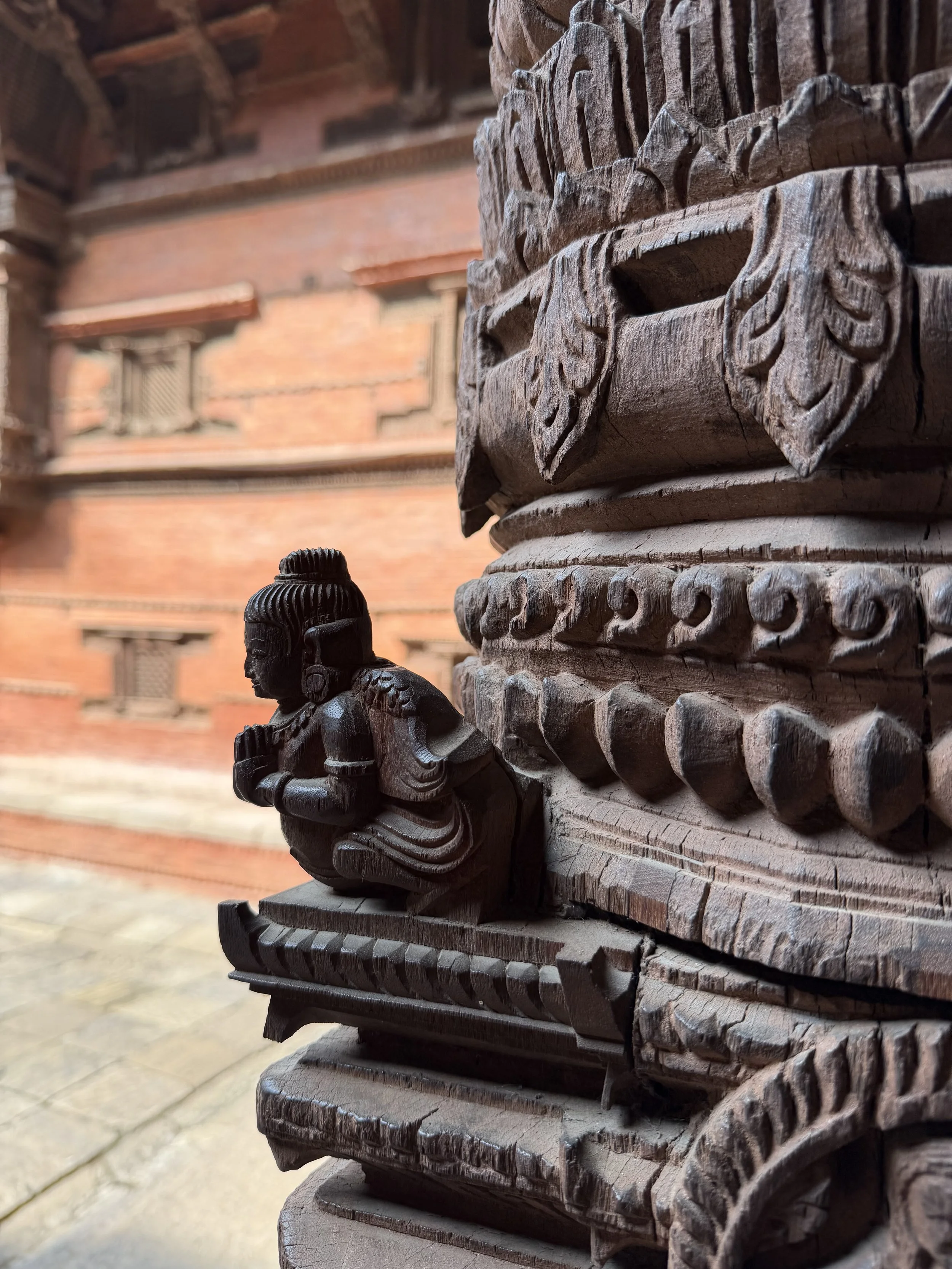
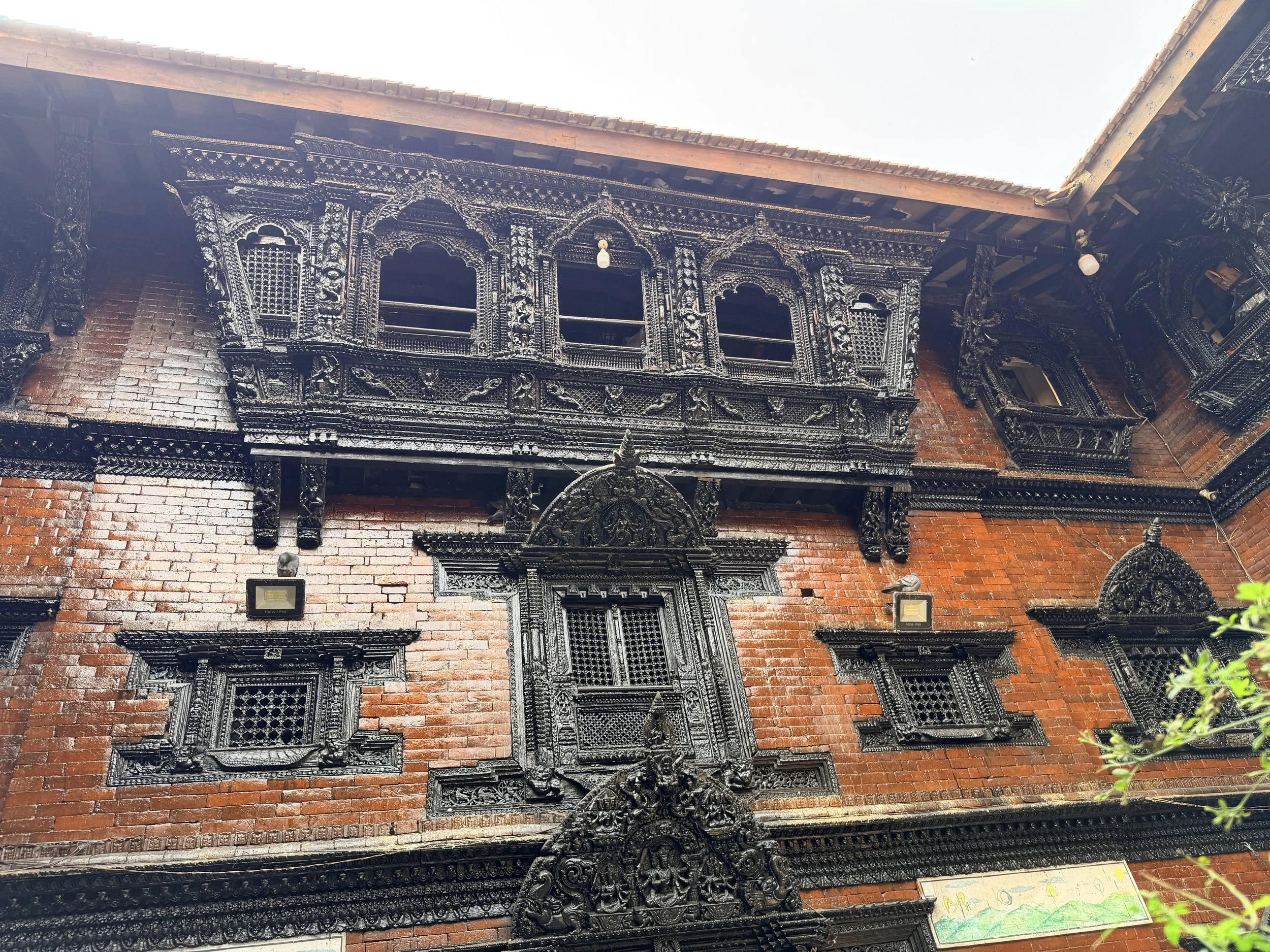
Walking through Nasal Chowk, one of the main courtyards of Hanuman Dhoka Royal Palace, we were struck by the contrast between traditional Newari architecture and European-influenced buildings. Red-brick structures with intricate wooden windows and tiered roofs stood alongside white buildings with distinctly European features.
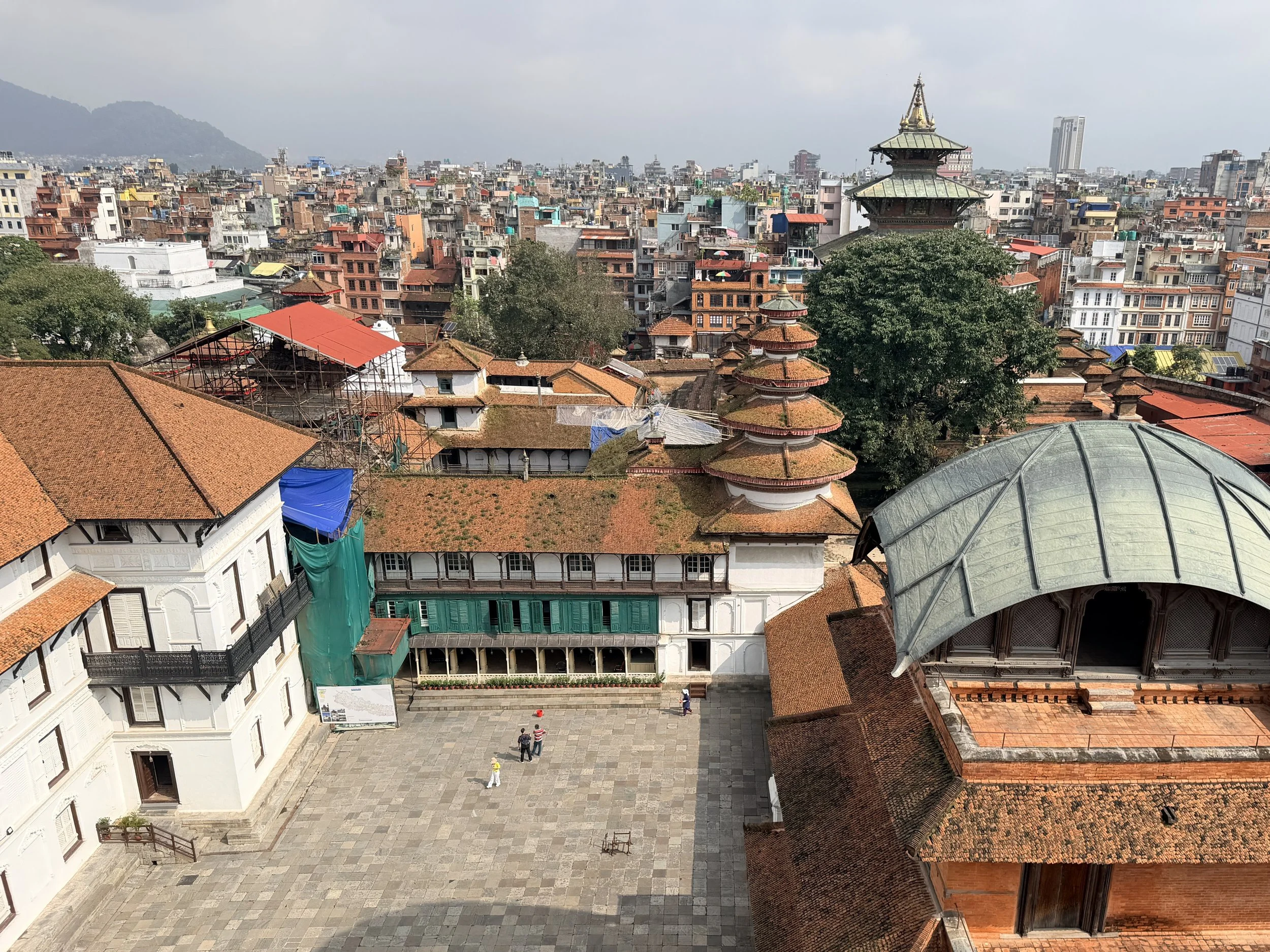
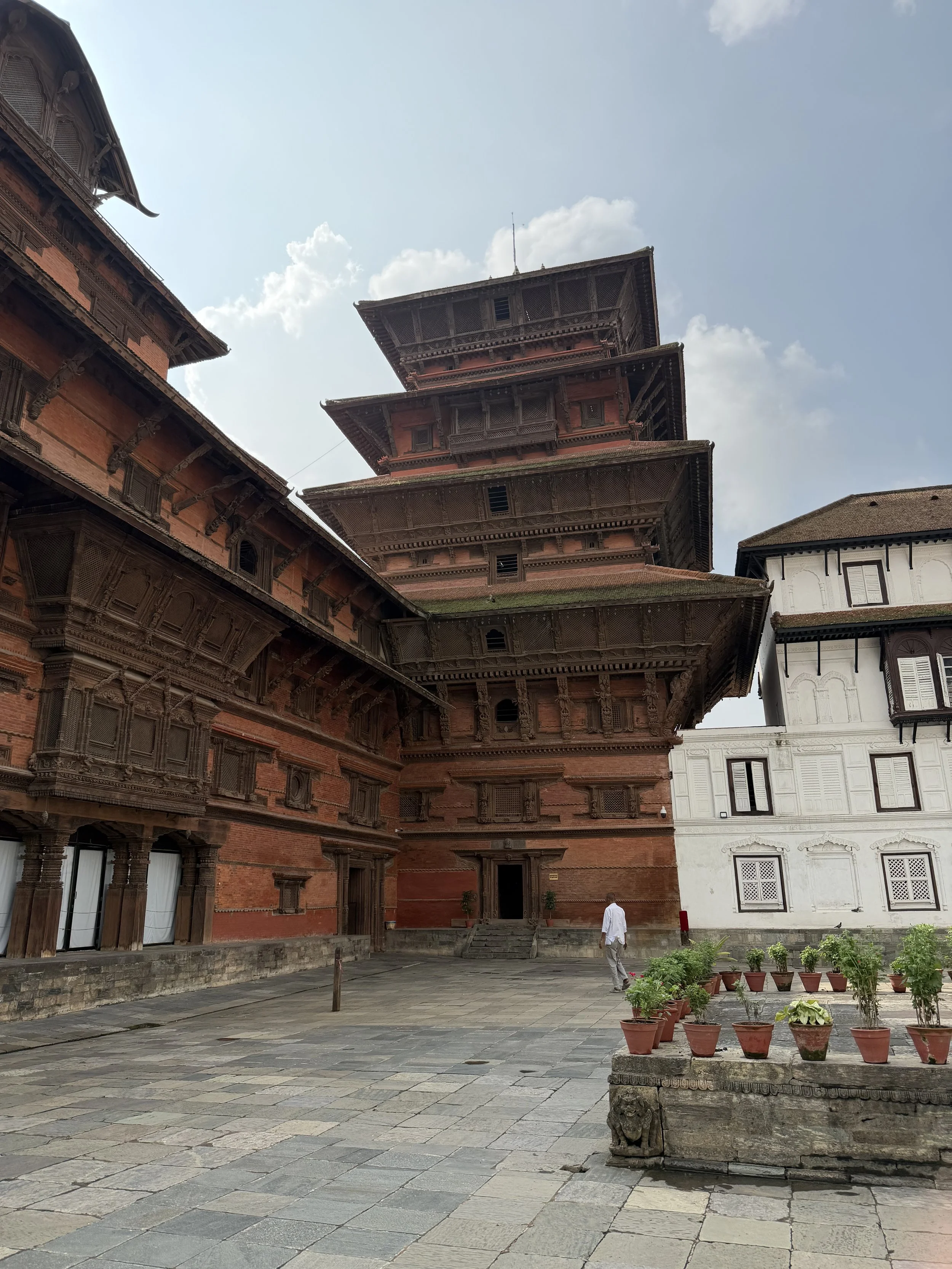
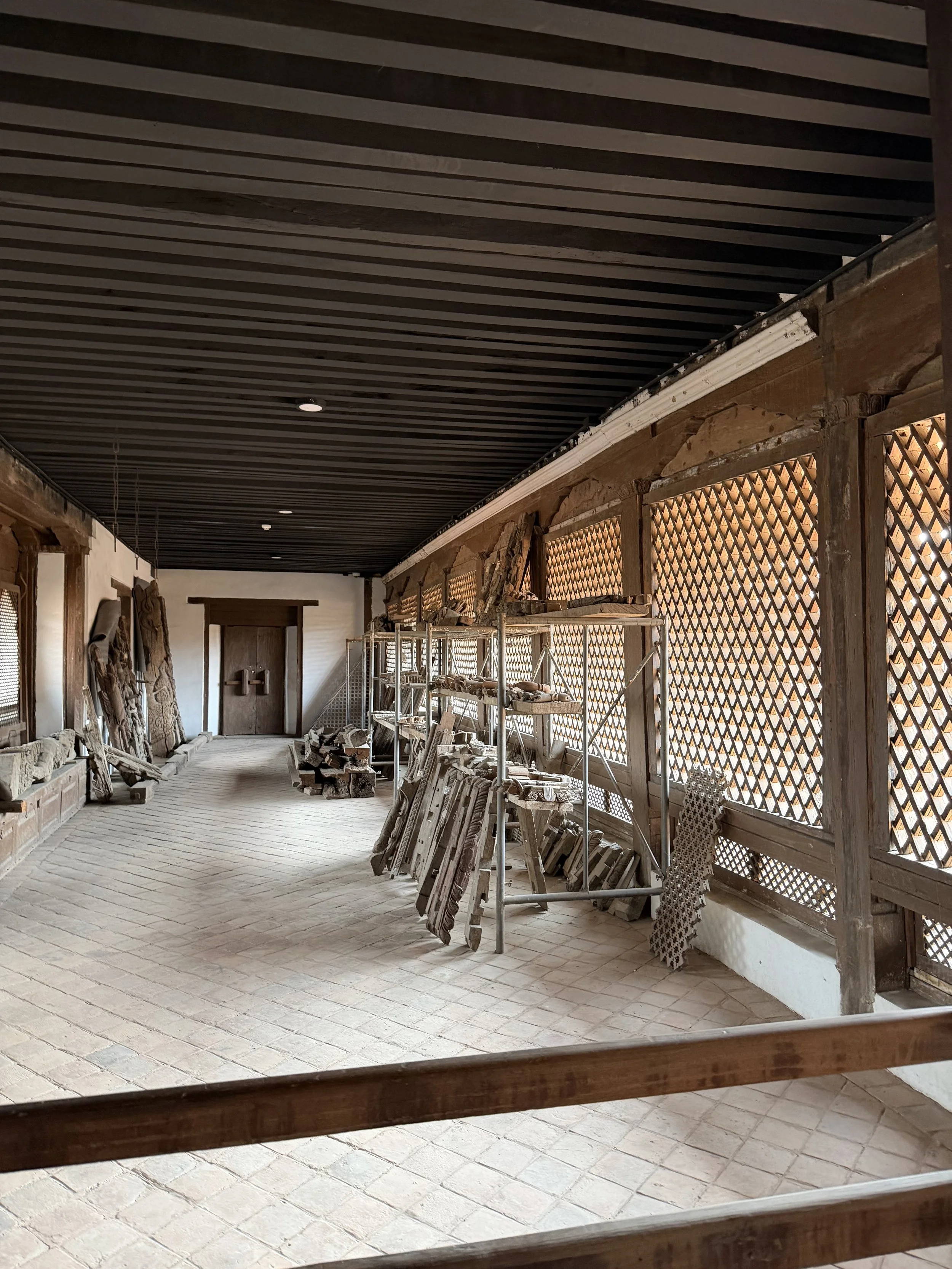
We climbed Basantapur Tower, also known as the Nine-Storey Palace, and enjoyed panoramic views of the surrounding city and Nasal Chowk below. The tower, with its elaborate woodcarvings and brick construction, had suffered severe damage during the 2015 earthquake. Its restoration was supported by the Chinese government.
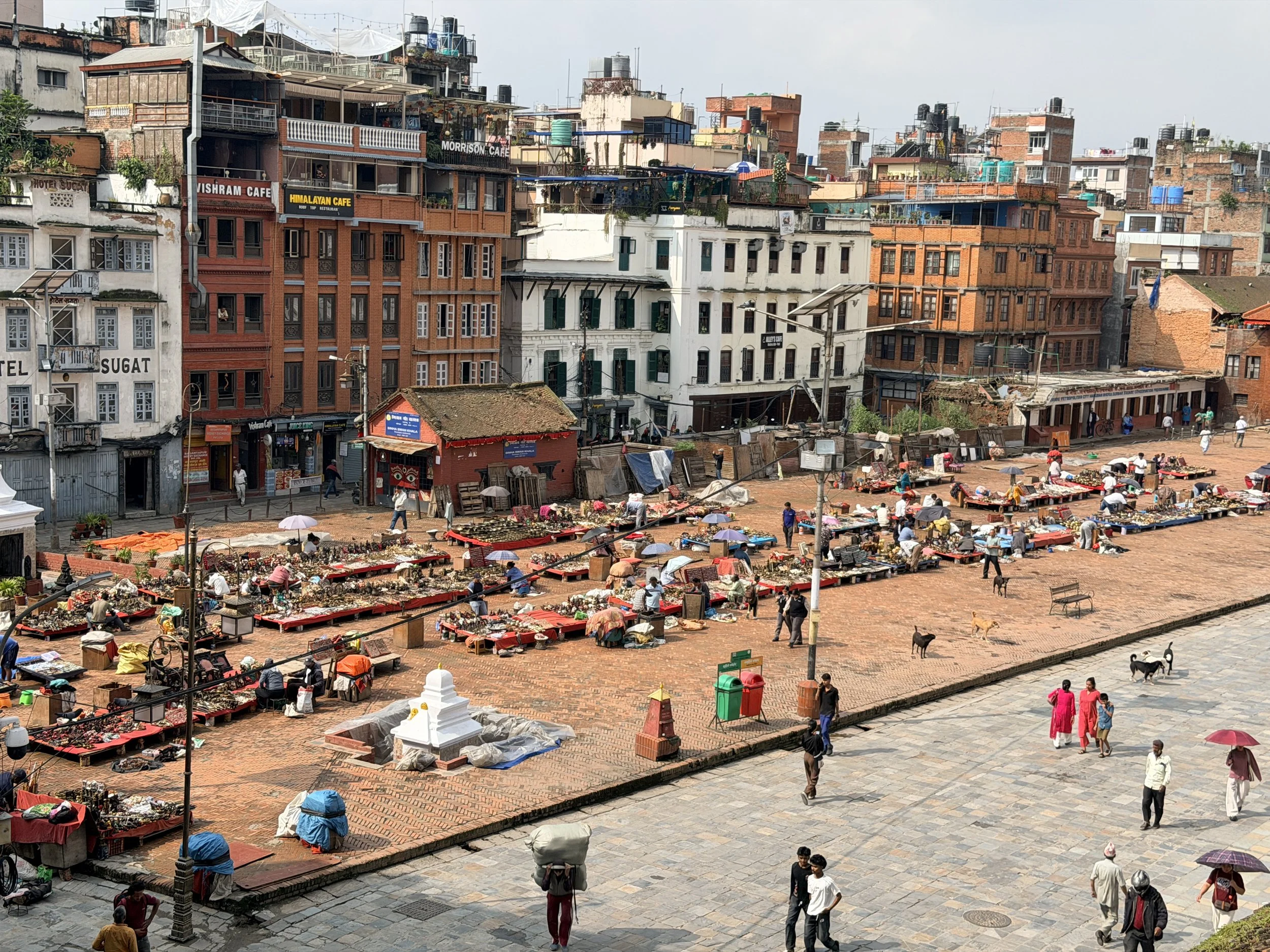
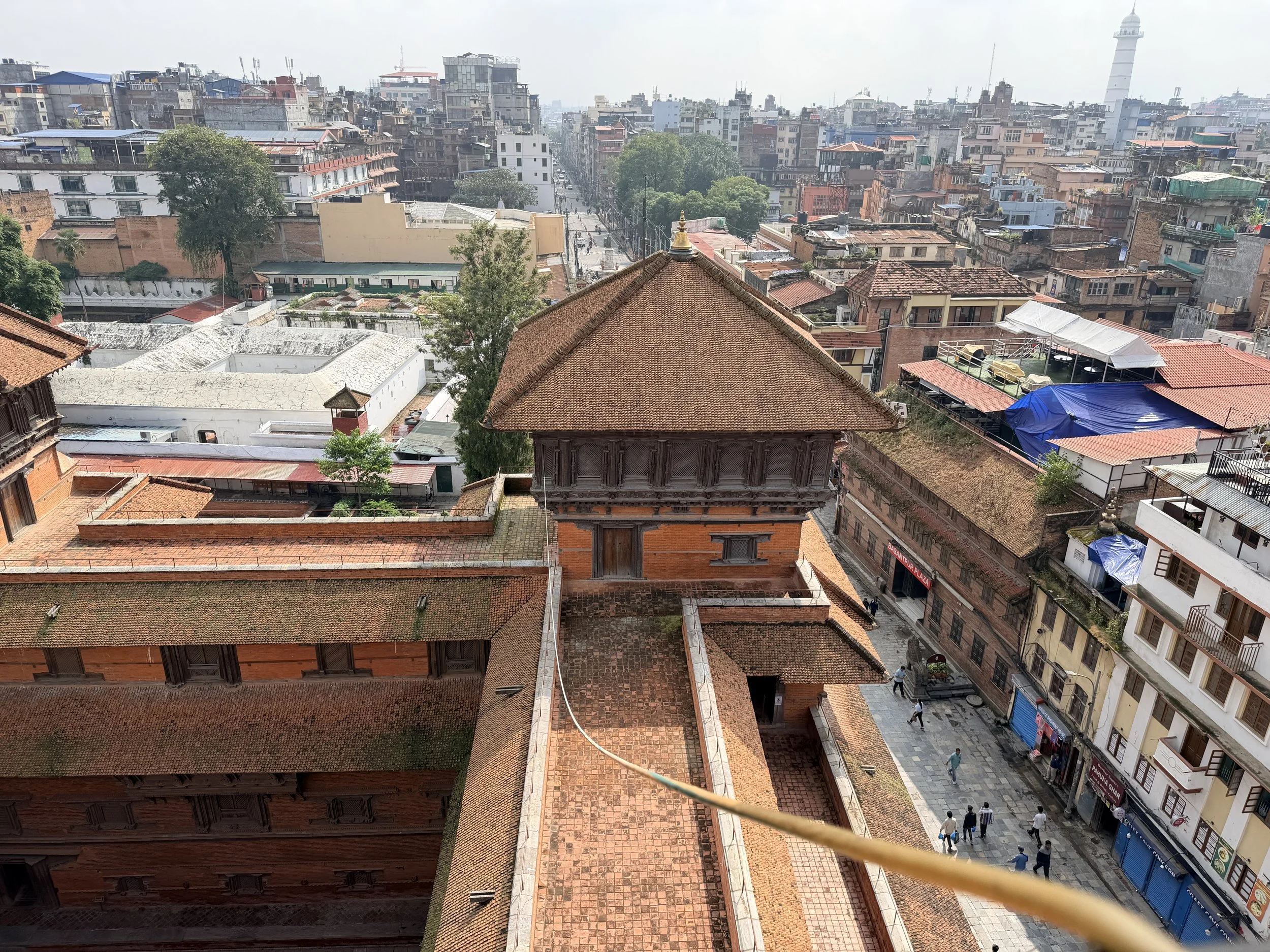
After descending, we visited a nearby white palace building and took a photograph in its grand hall. We were surprised by the strong European architectural influence within the traditional Nepalese palace complex.
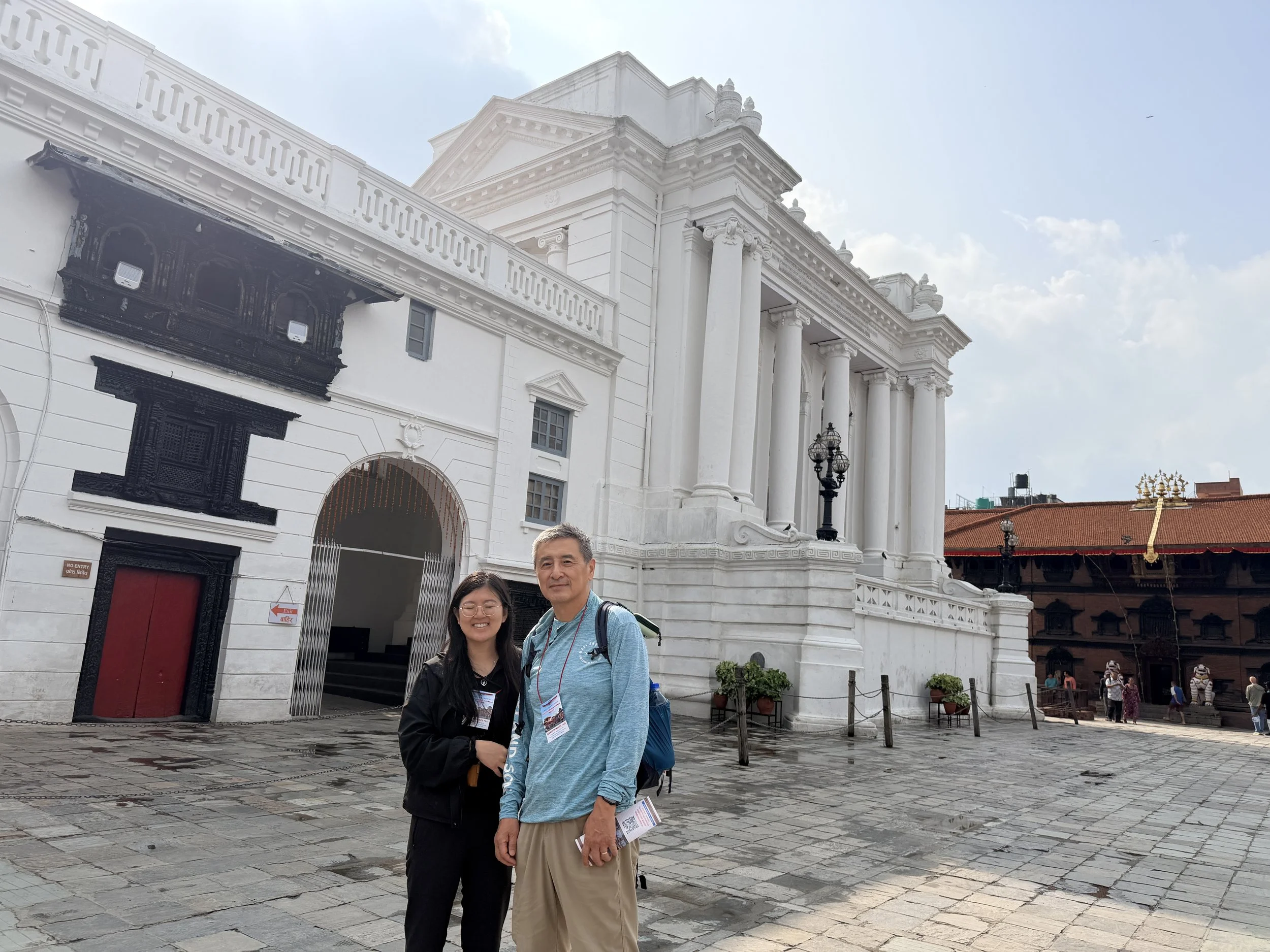
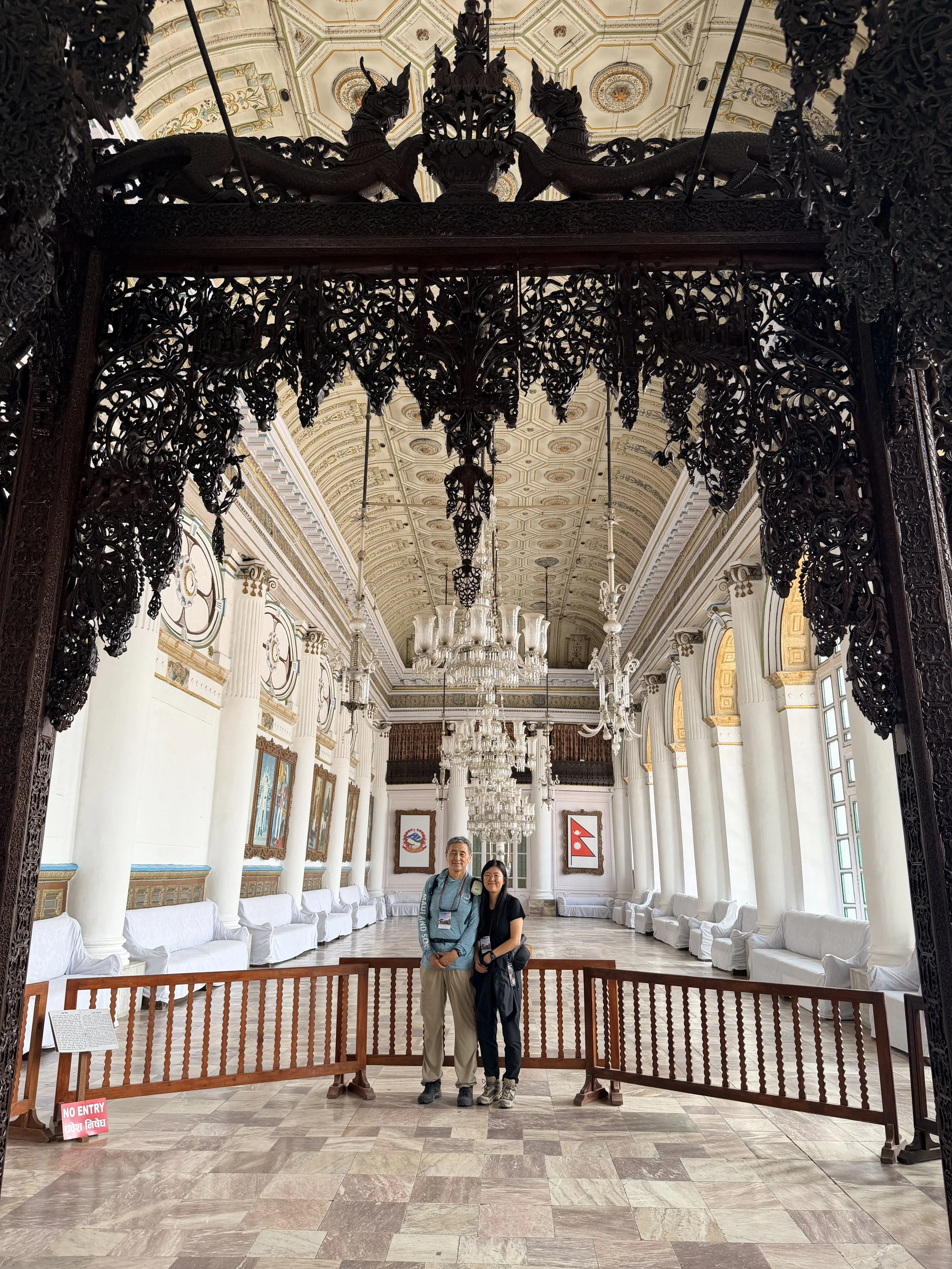
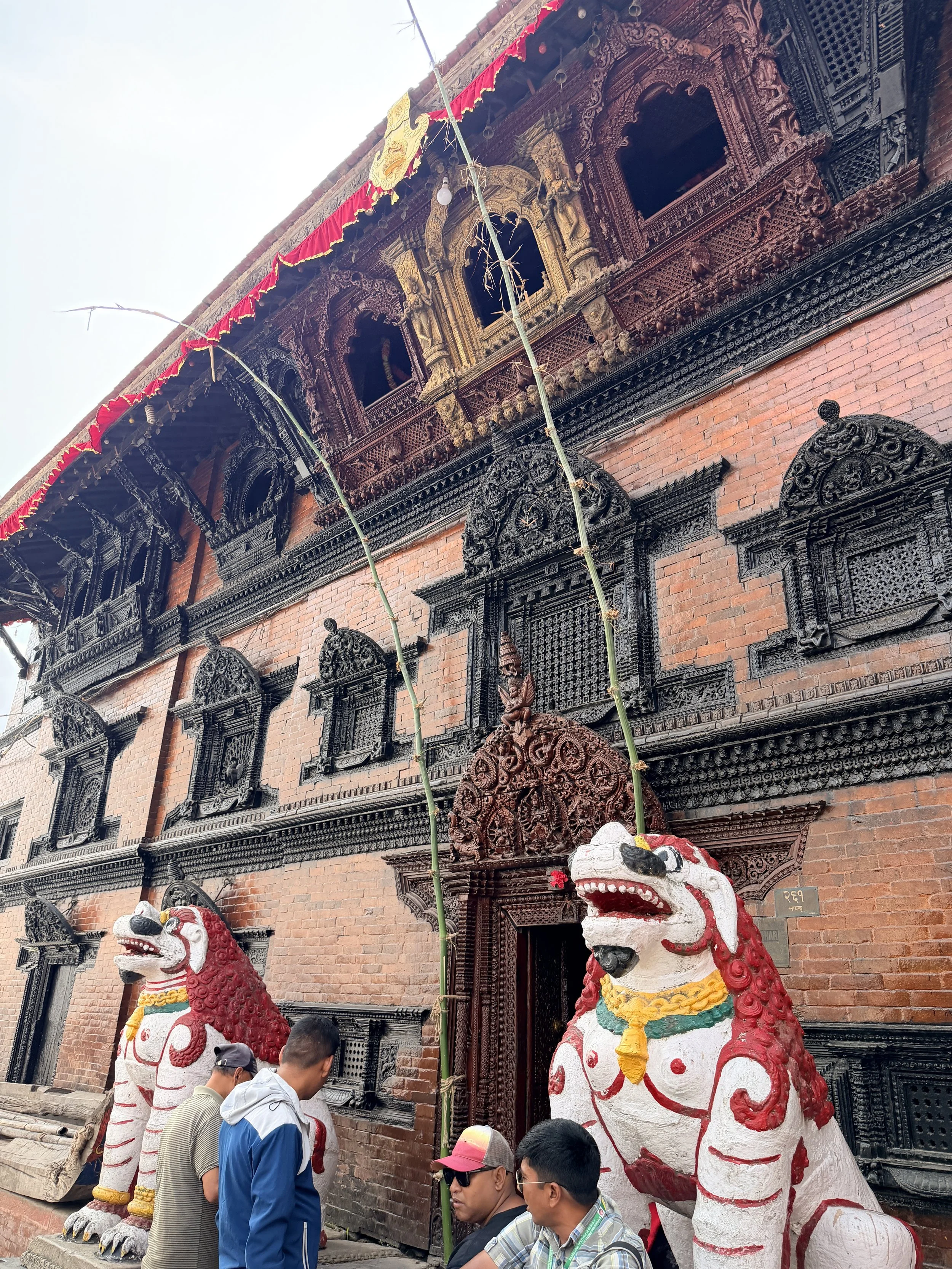
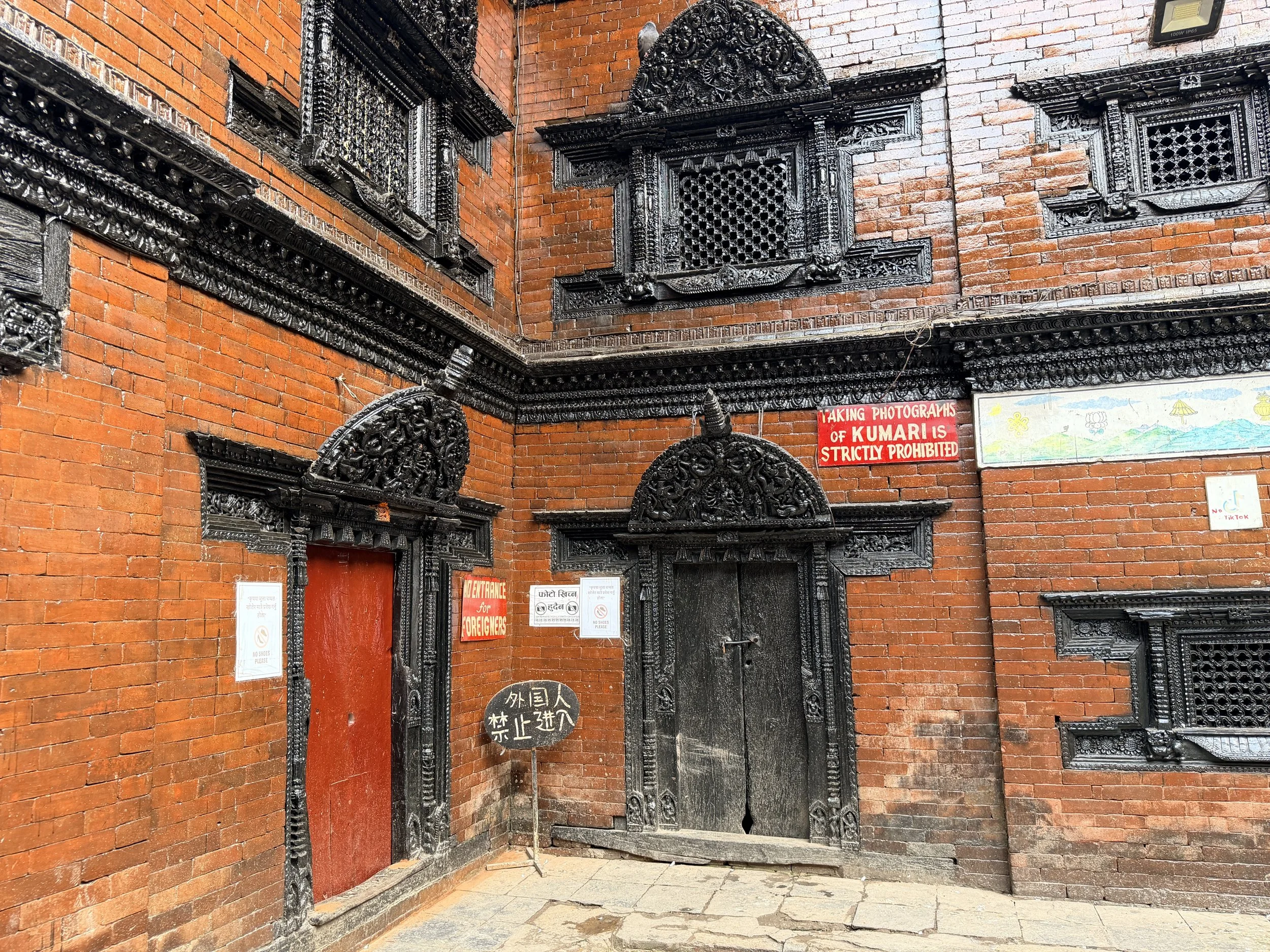
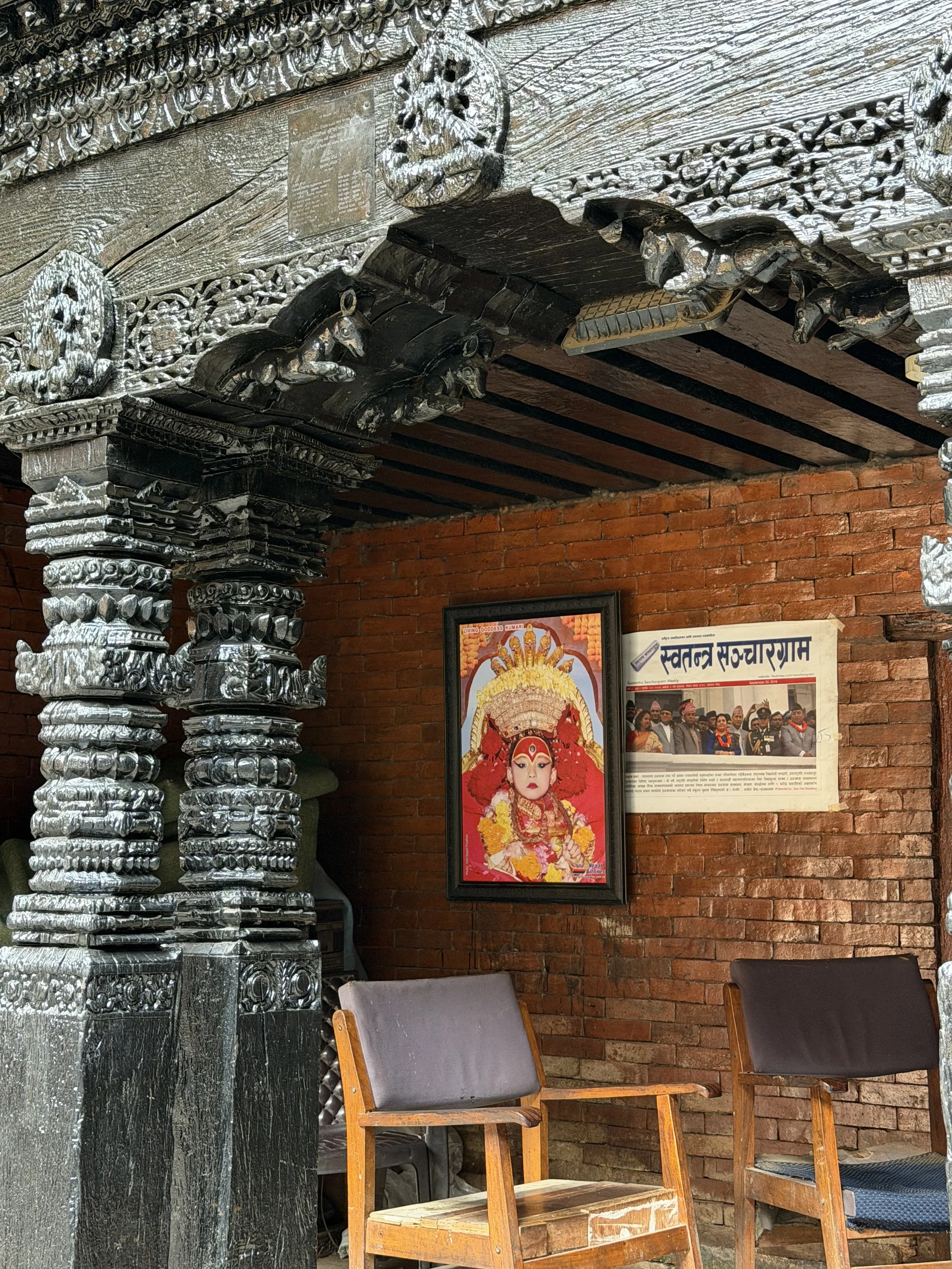
We also visited Kumari Ghar, the residence of Kathmandu’s Living Goddess, but unfortunately, she did not appear at her window.
Swayambhunath — Monkey Temple
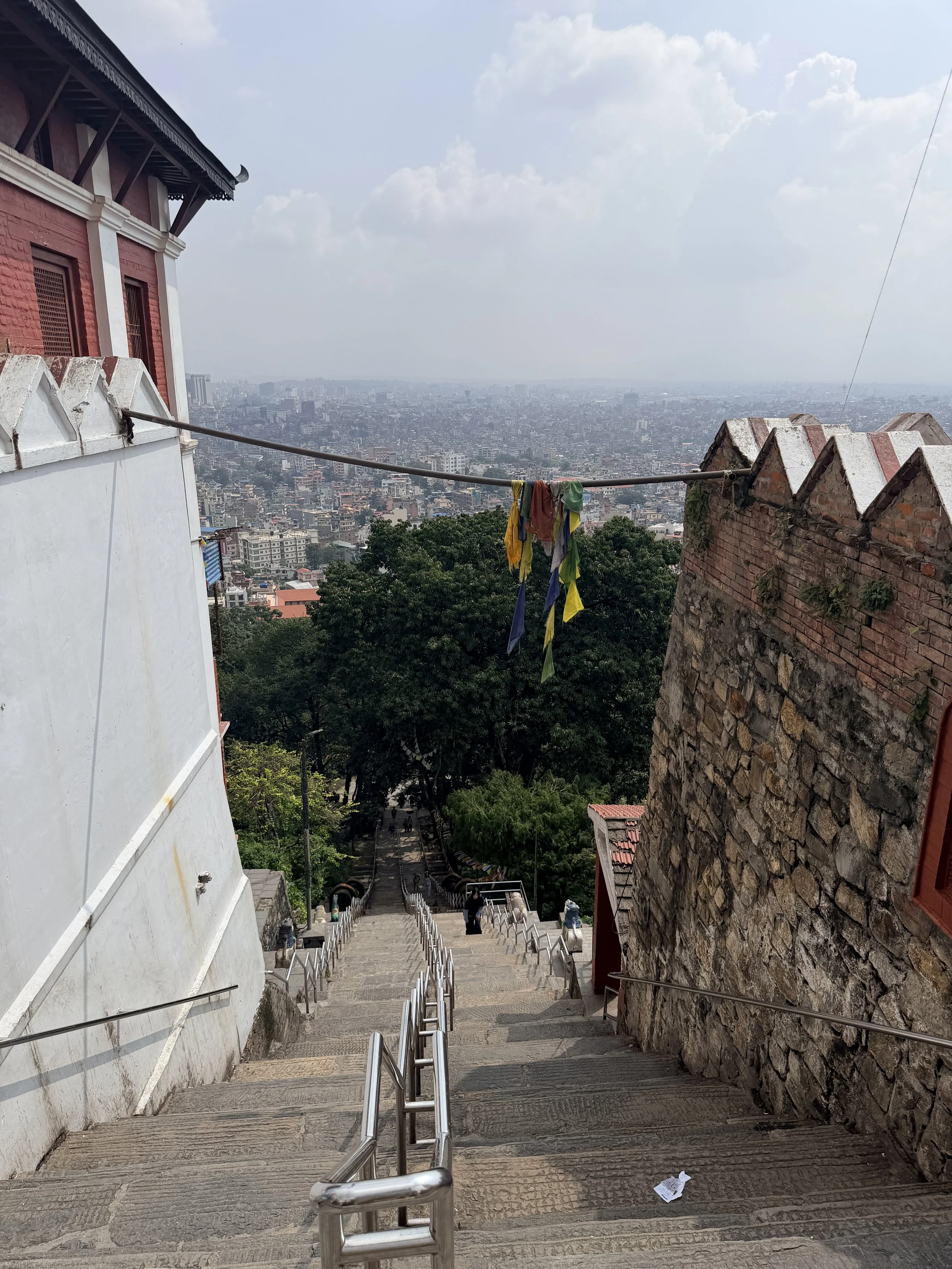
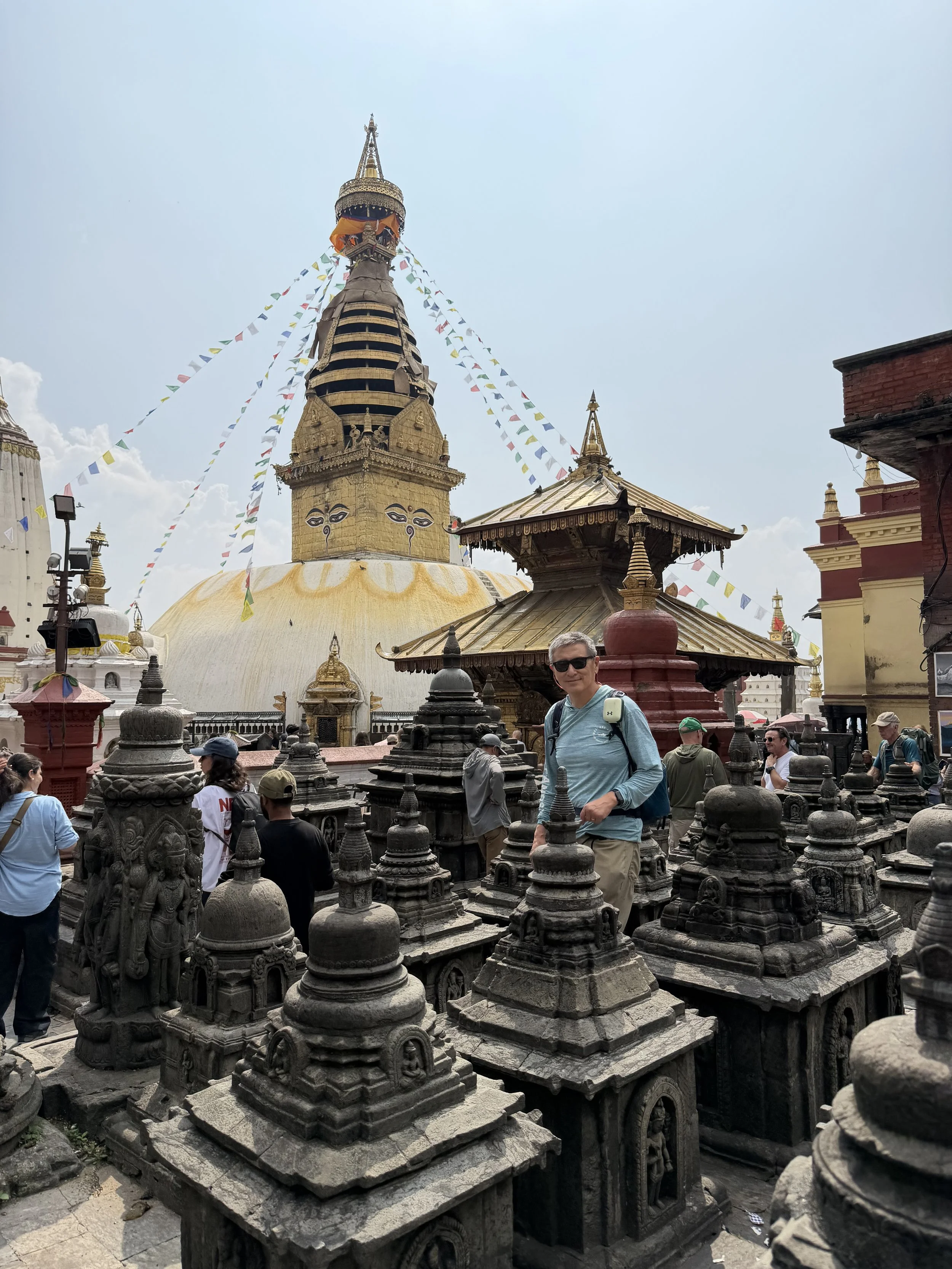
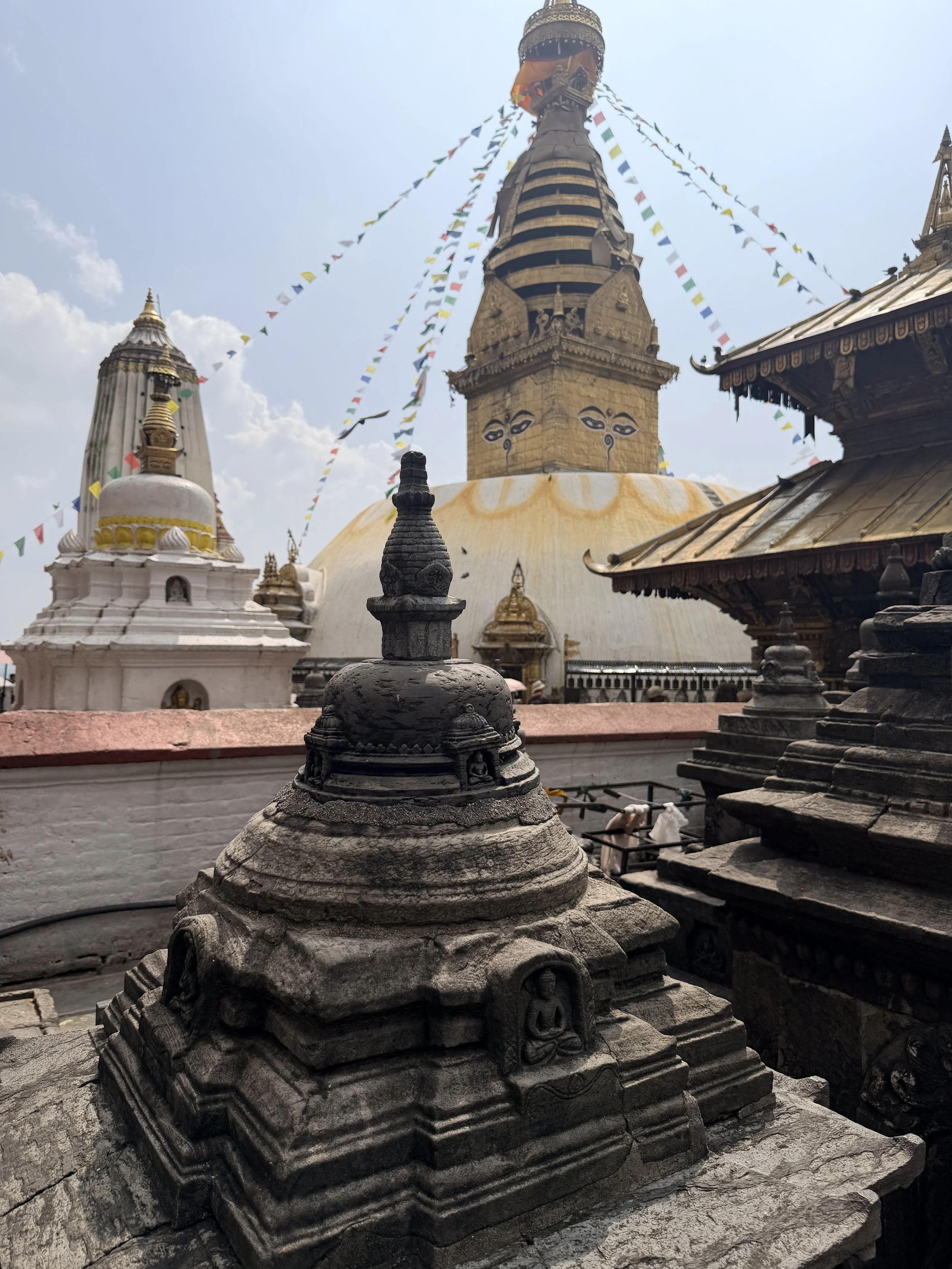
Our next stop was Swayambhunath, commonly known as the Monkey Temple, one of Nepal’s oldest and most sacred Buddhist sites.
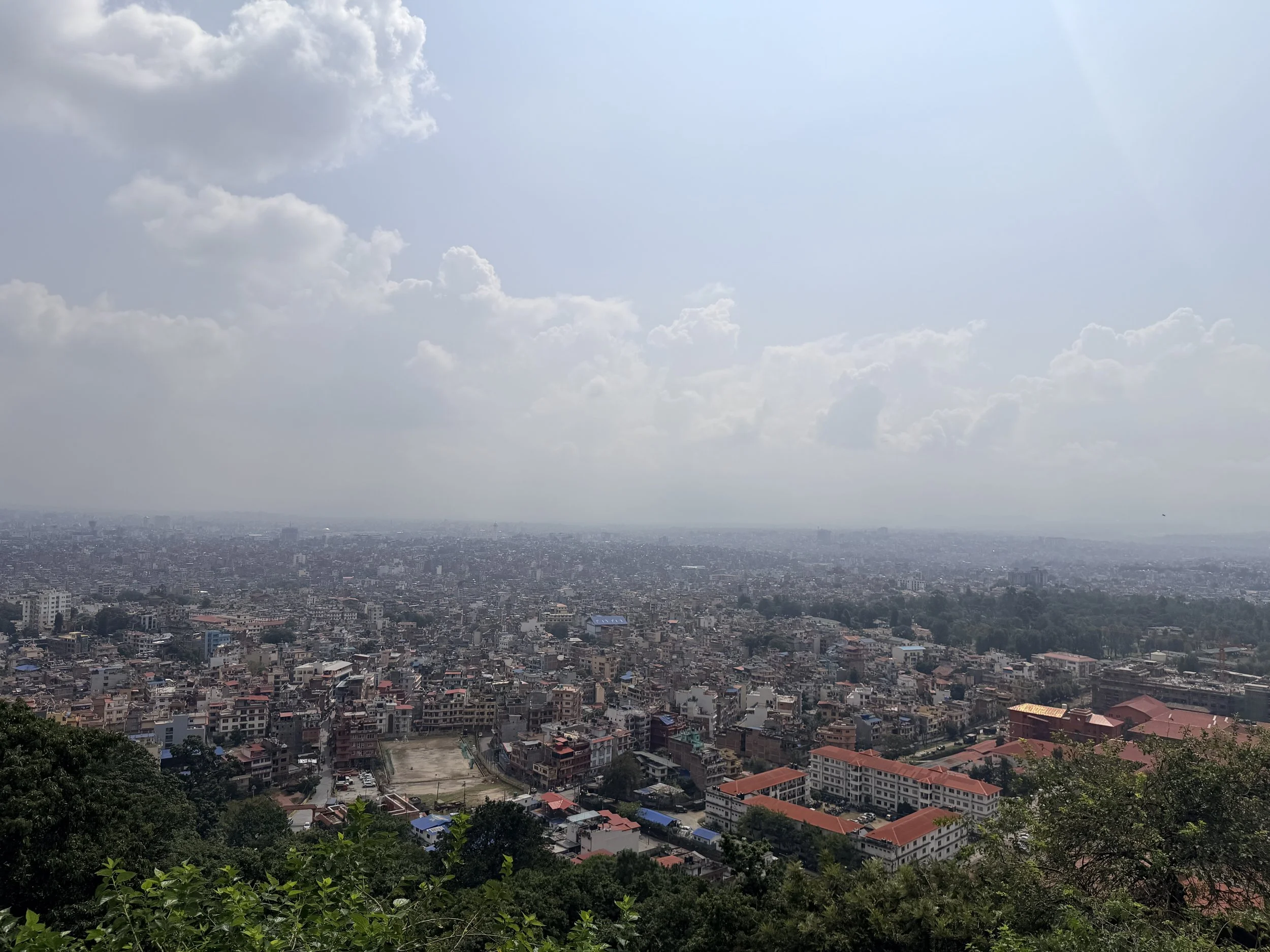
Perched on a hill overlooking Kathmandu, the temple has a fascinating origin legend. According to Buddhist tradition, the valley was once a vast lake in which a miraculous lotus appeared, radiating divine light. The sacred site eventually developed around this miraculous manifestation.
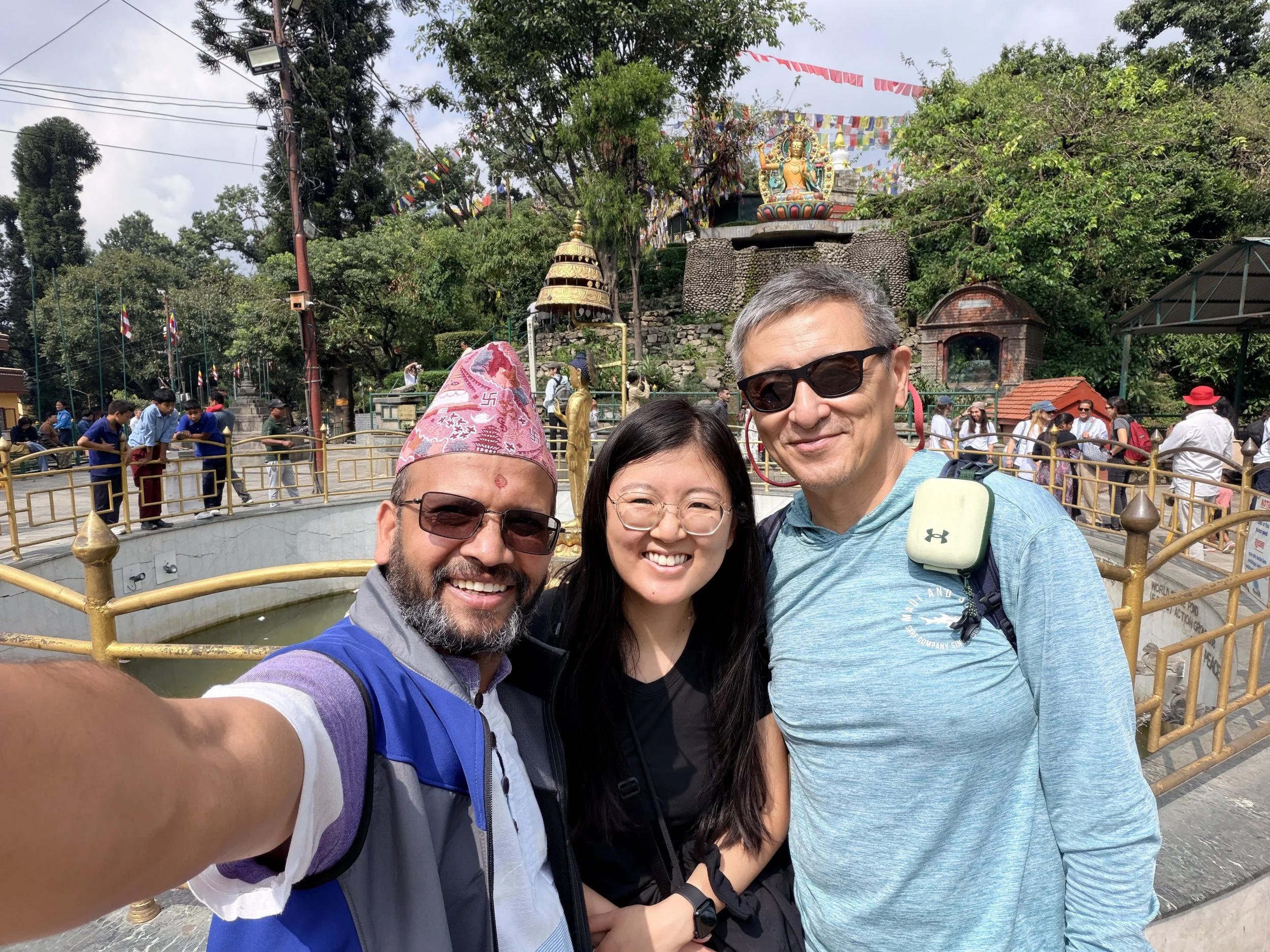
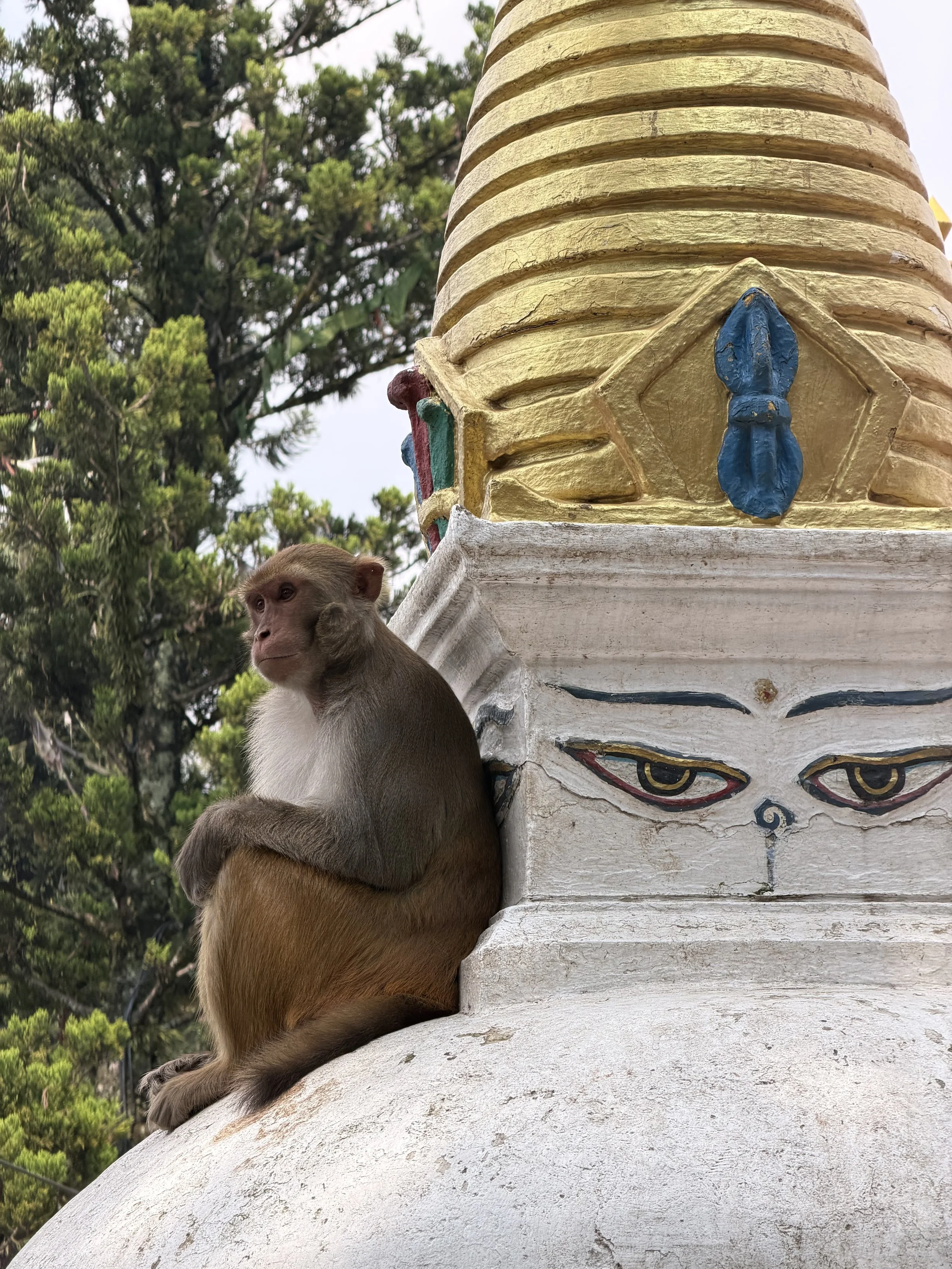
The most striking feature was the enormous white hemispherical stupa, topped by a golden structure with the famous Buddha Eyes painted on all four sides. This distinctive Buddhist architecture was quite new to us.
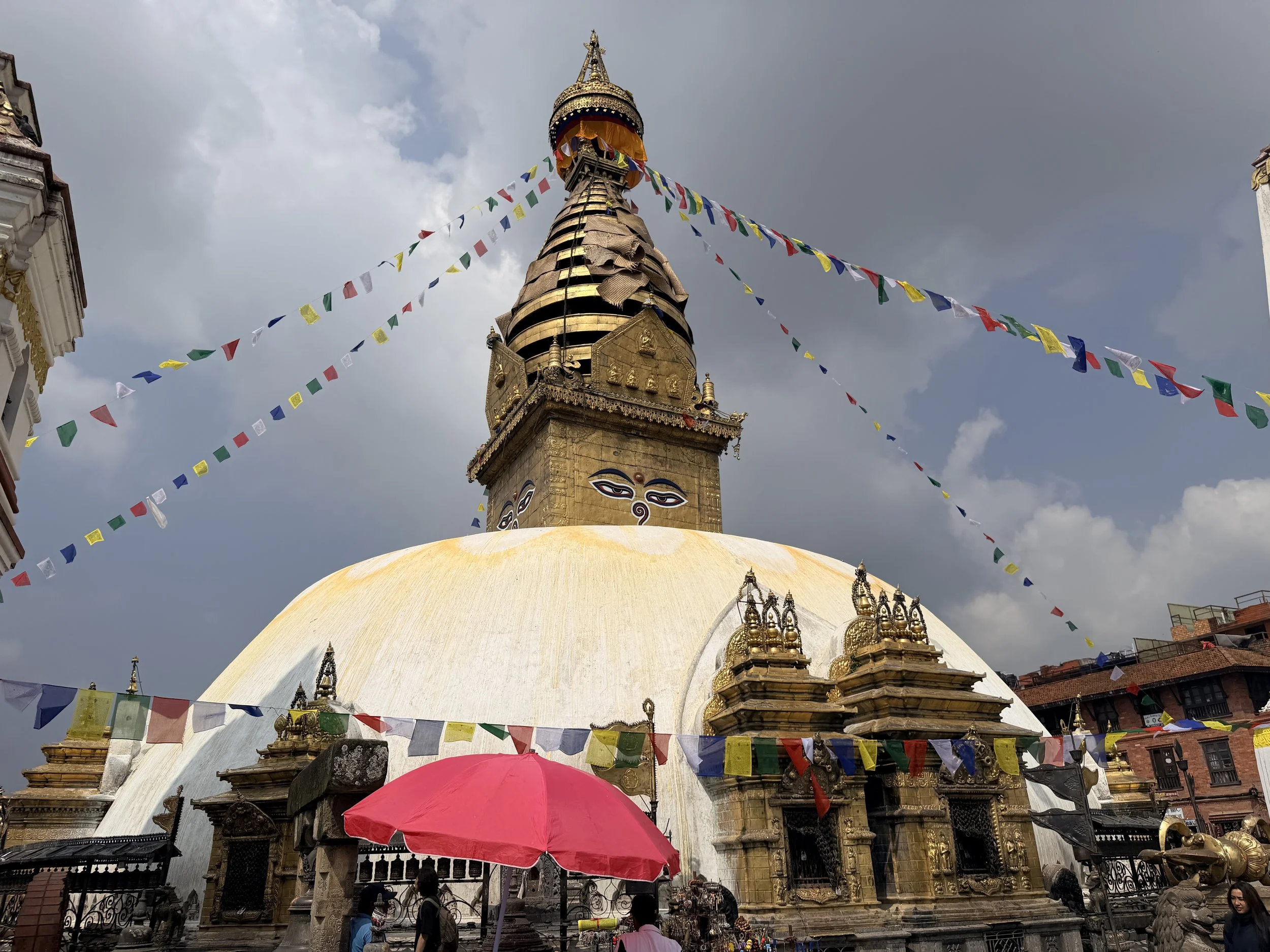
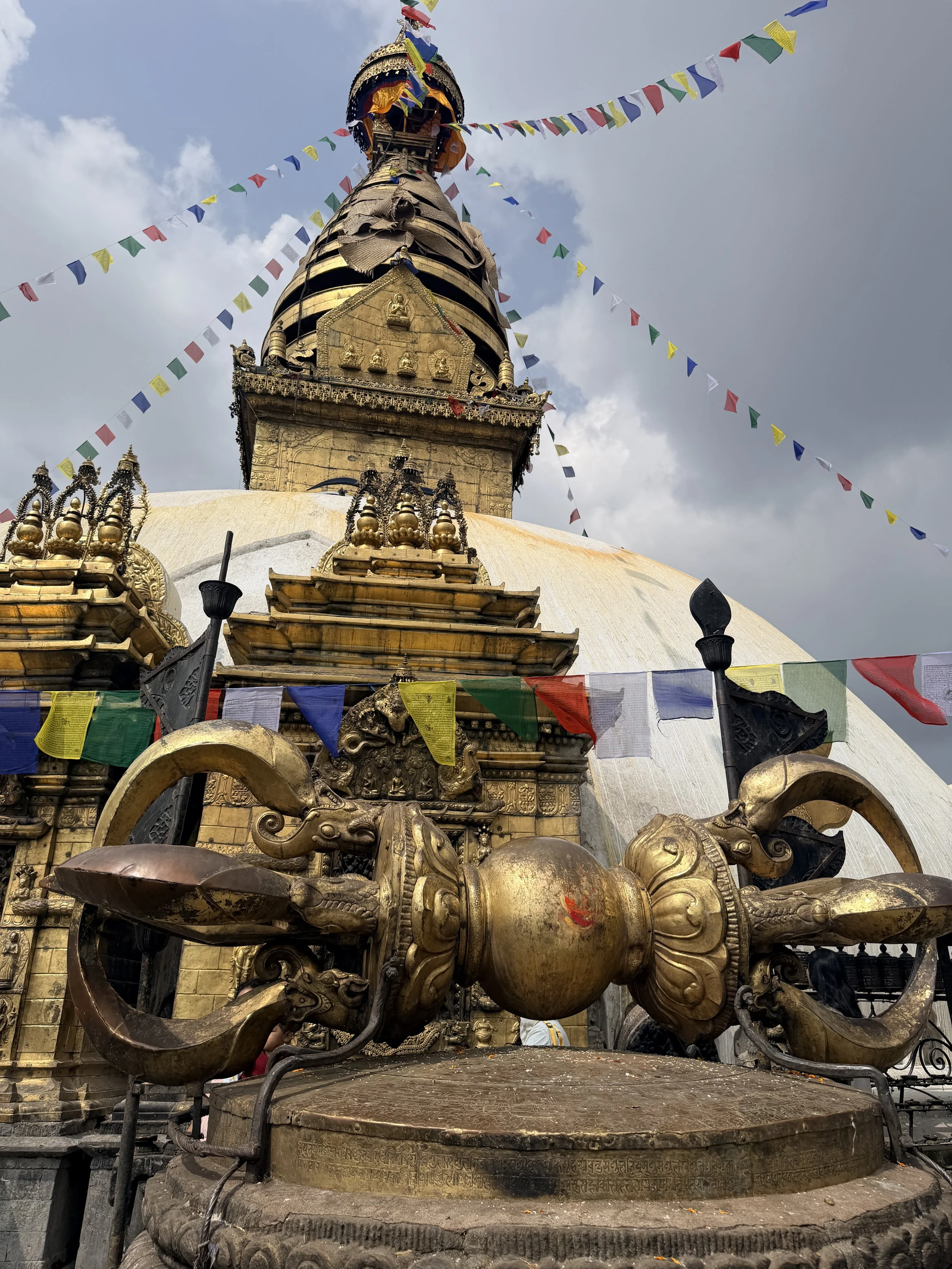
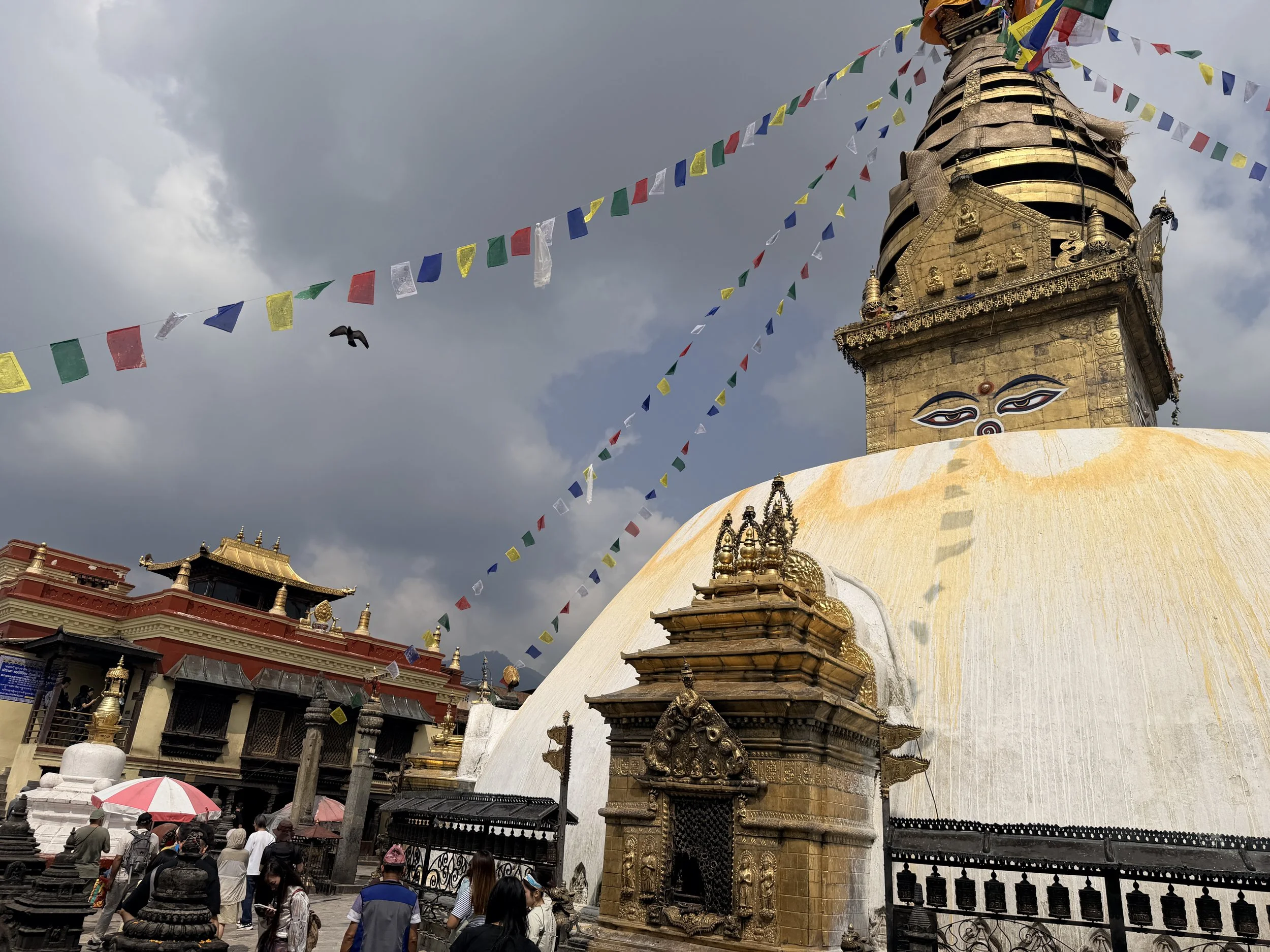
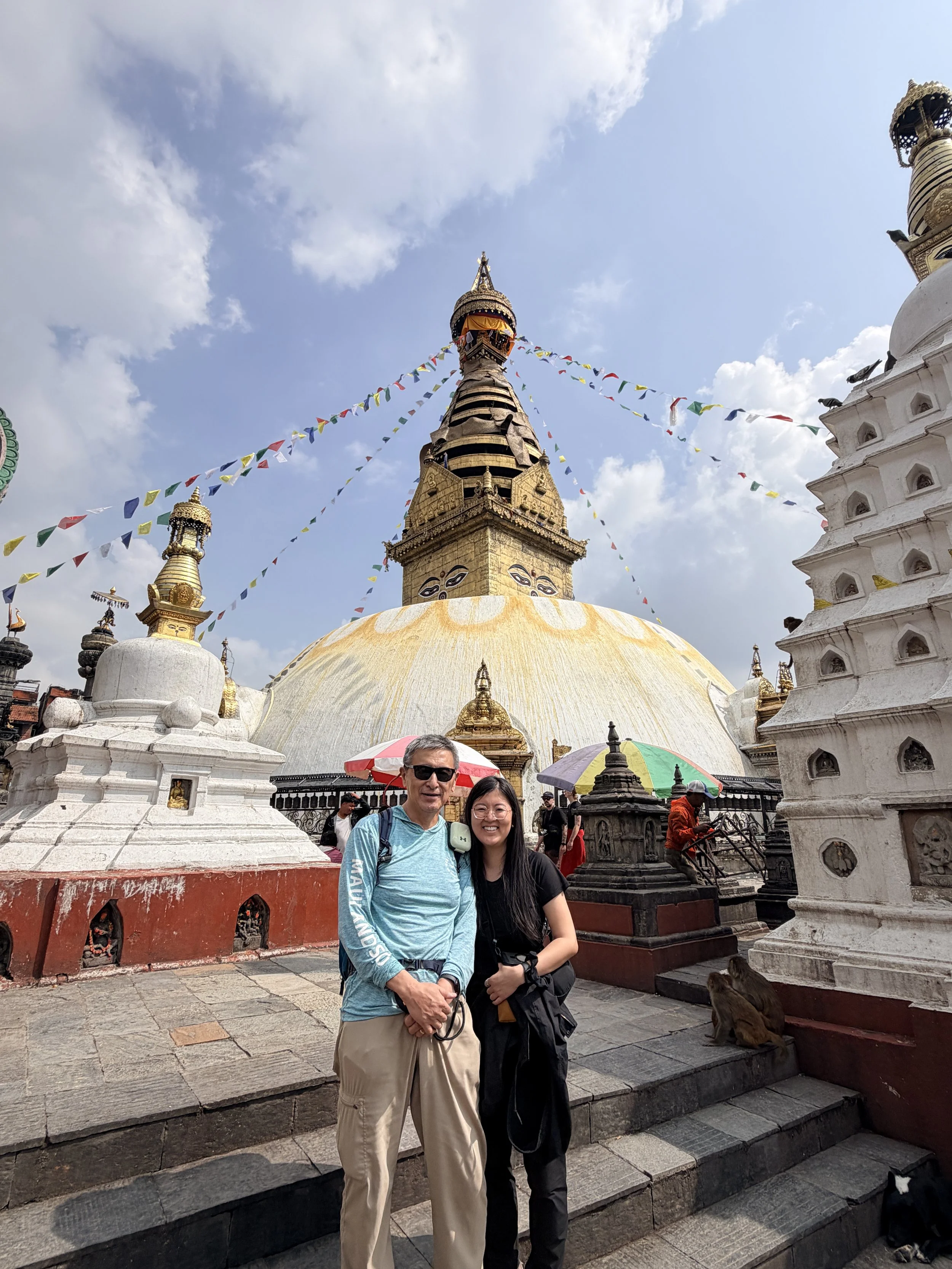
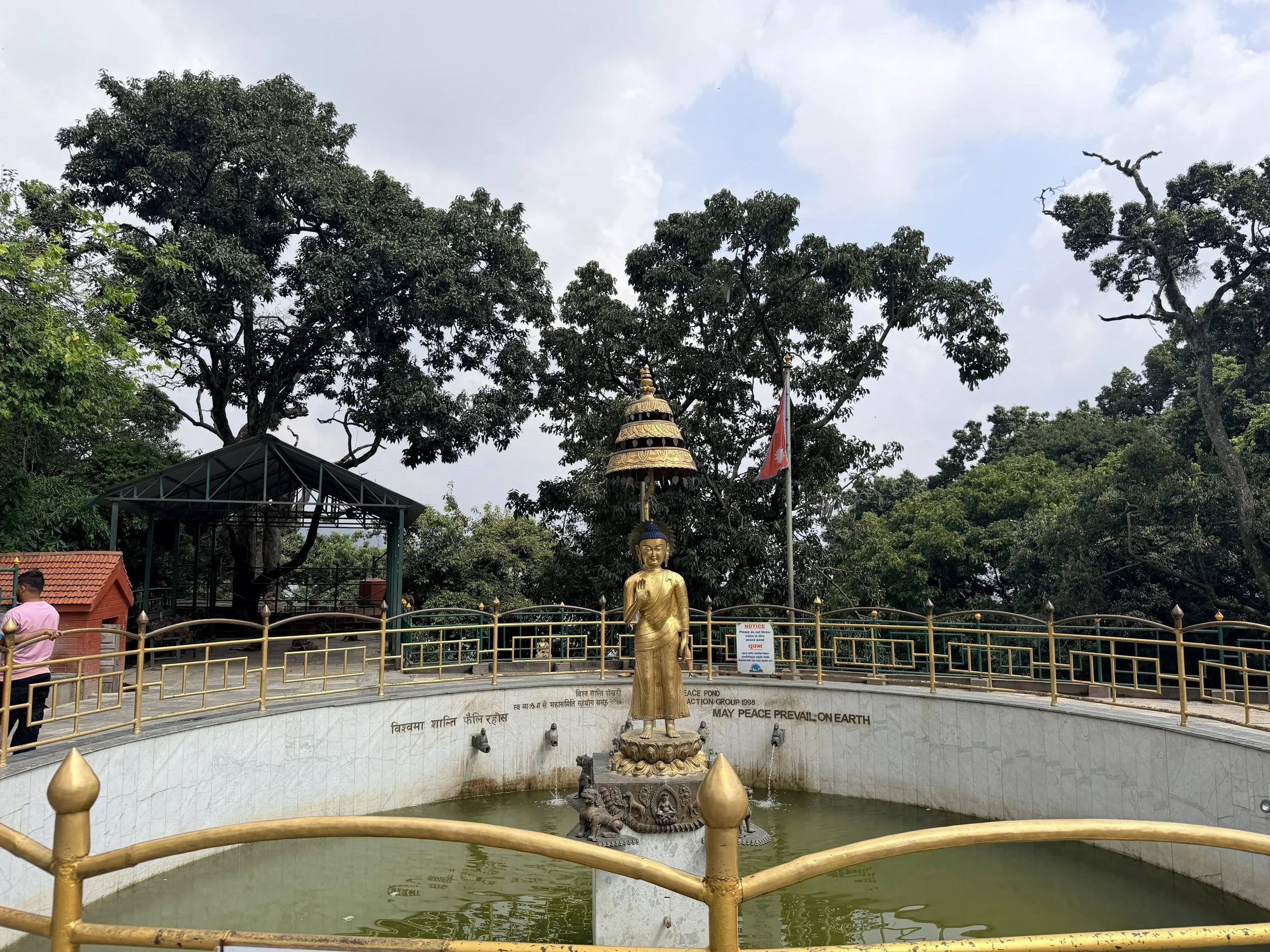
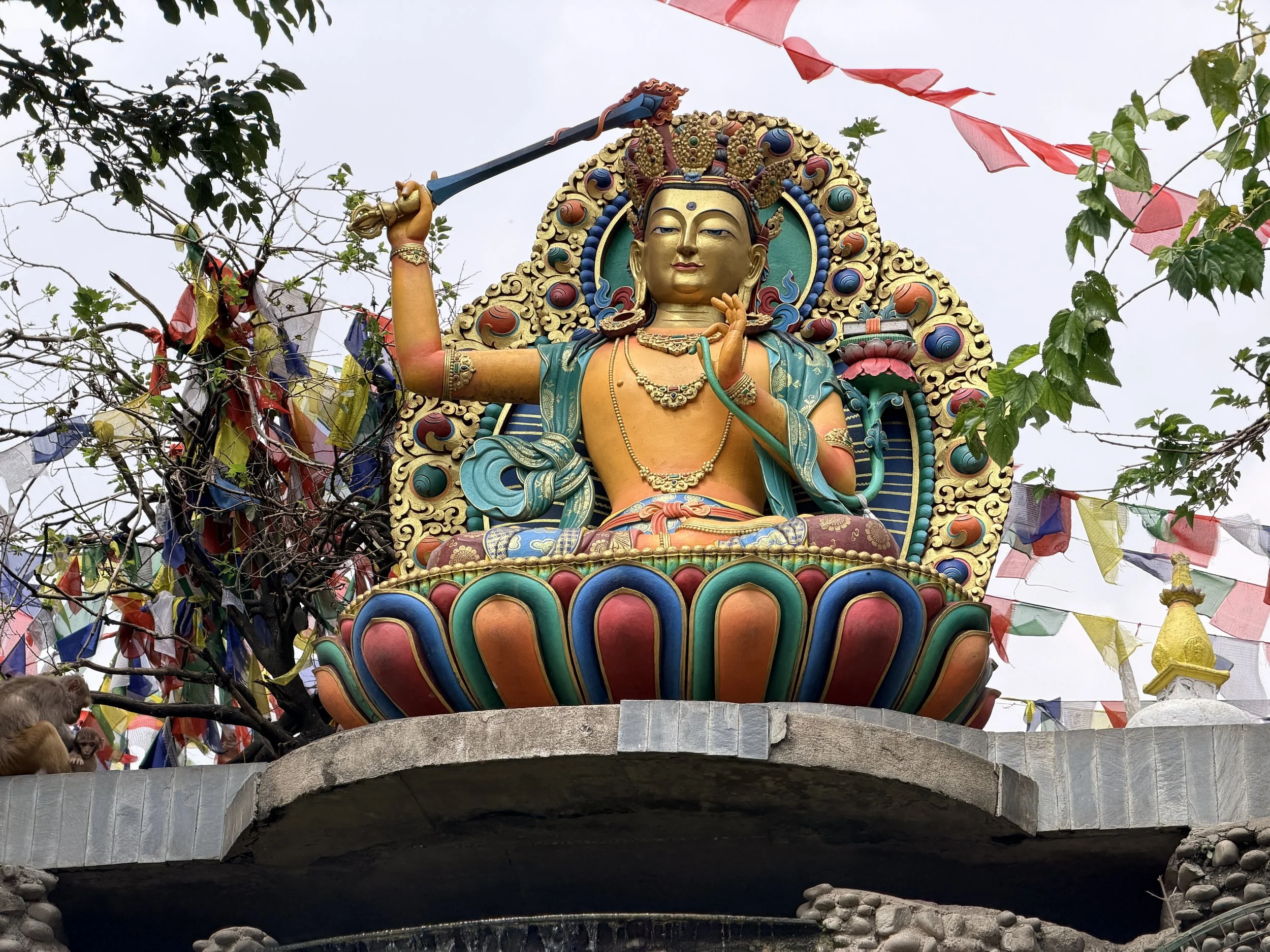
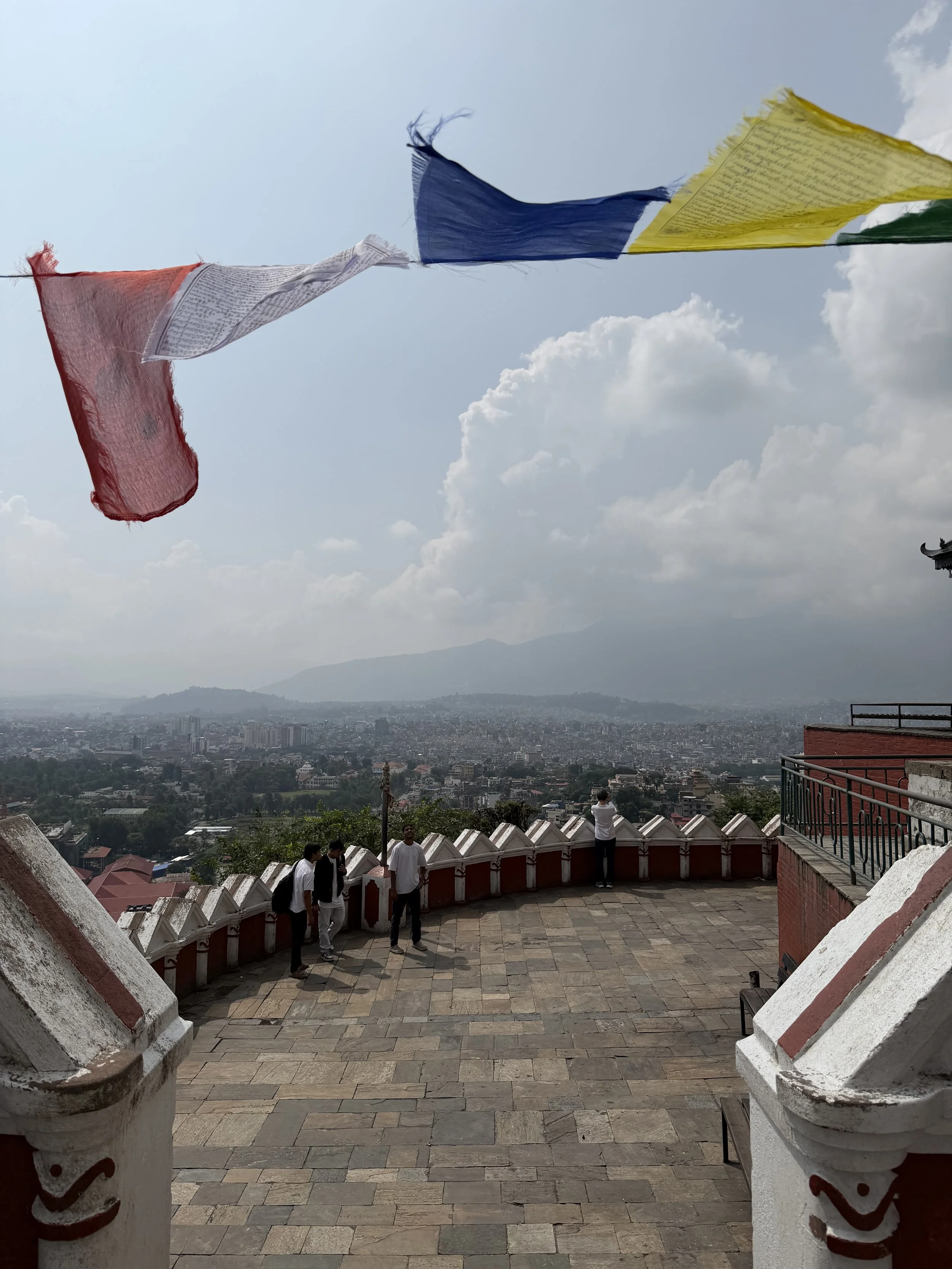
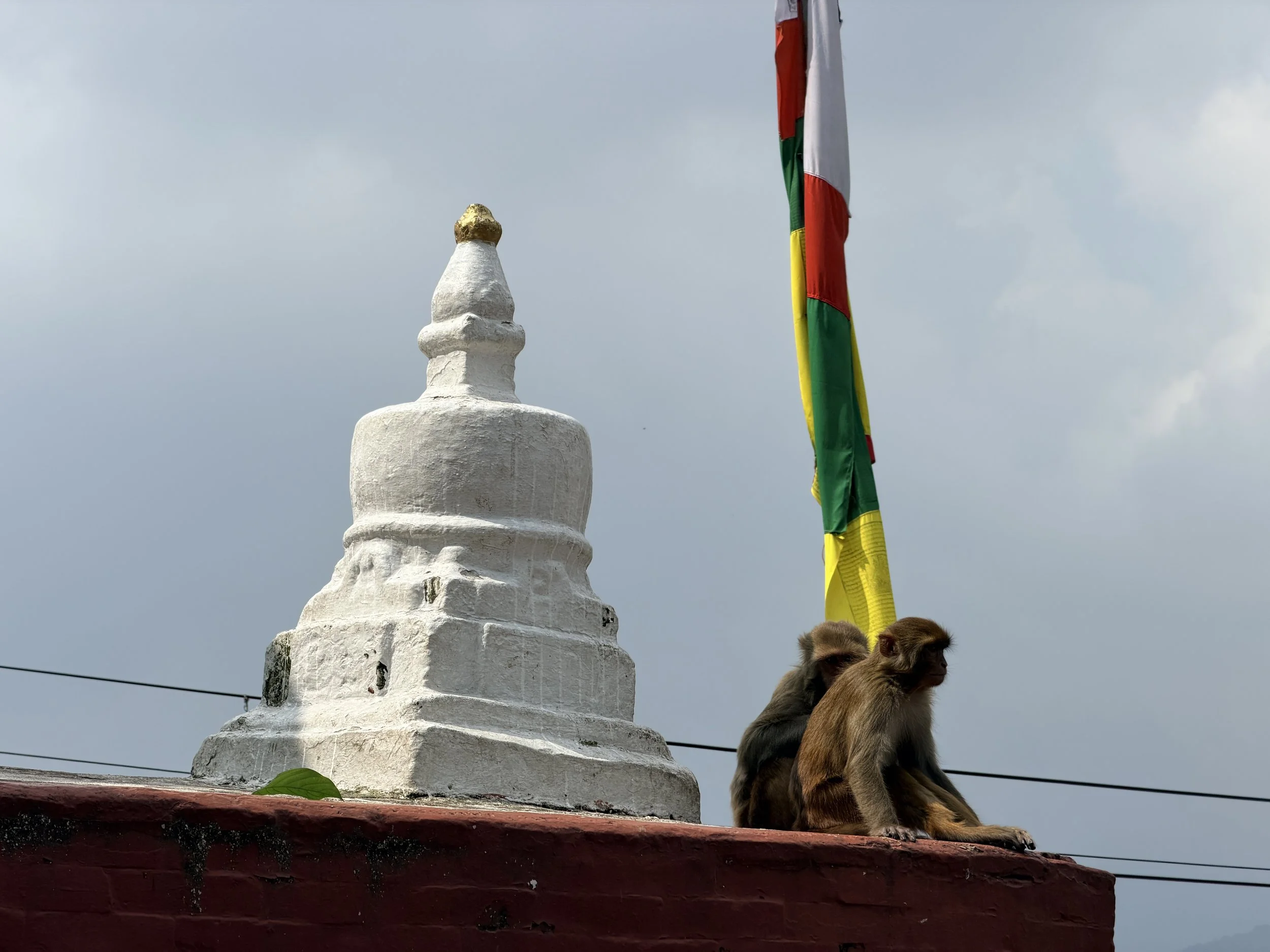
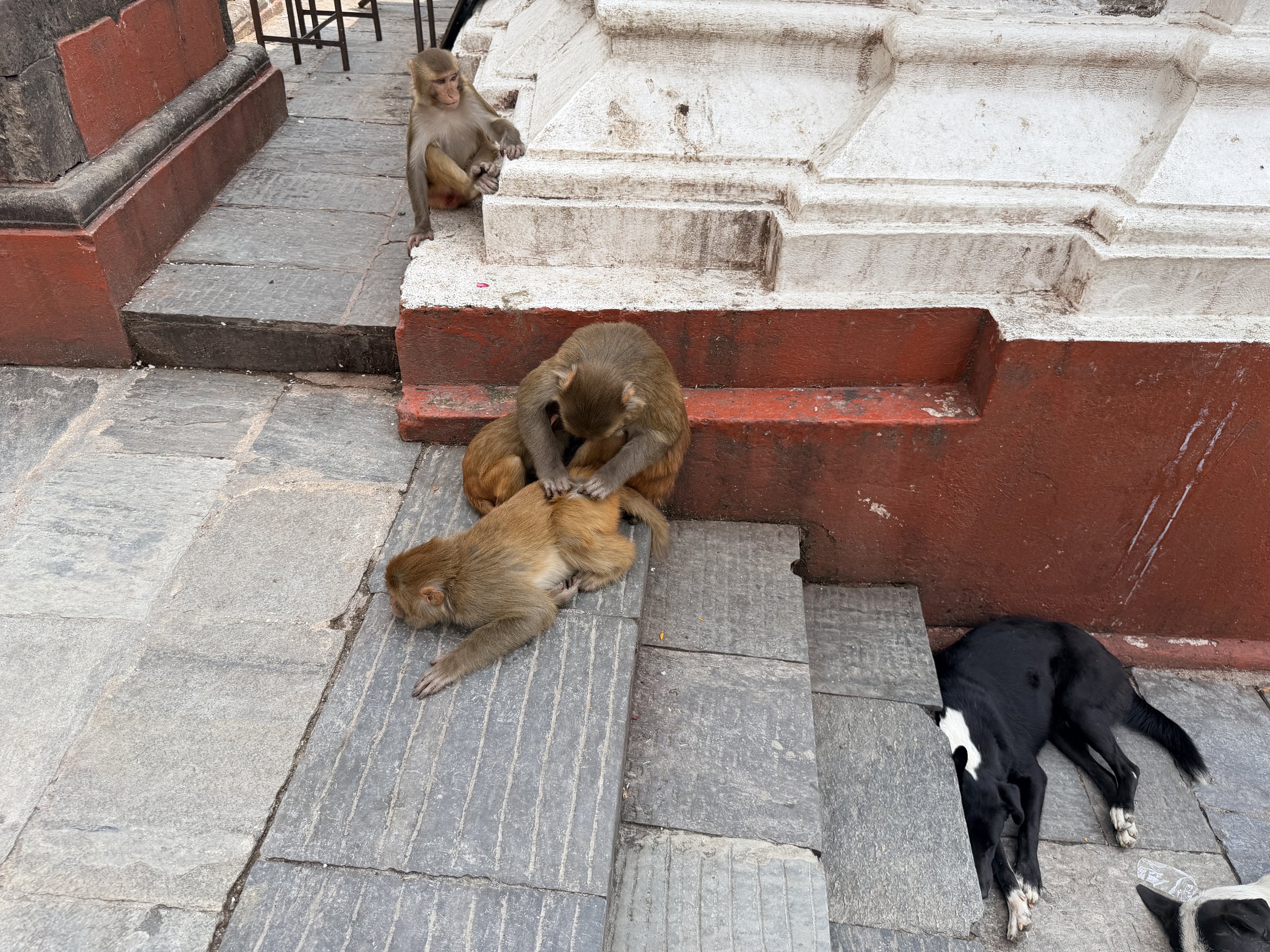
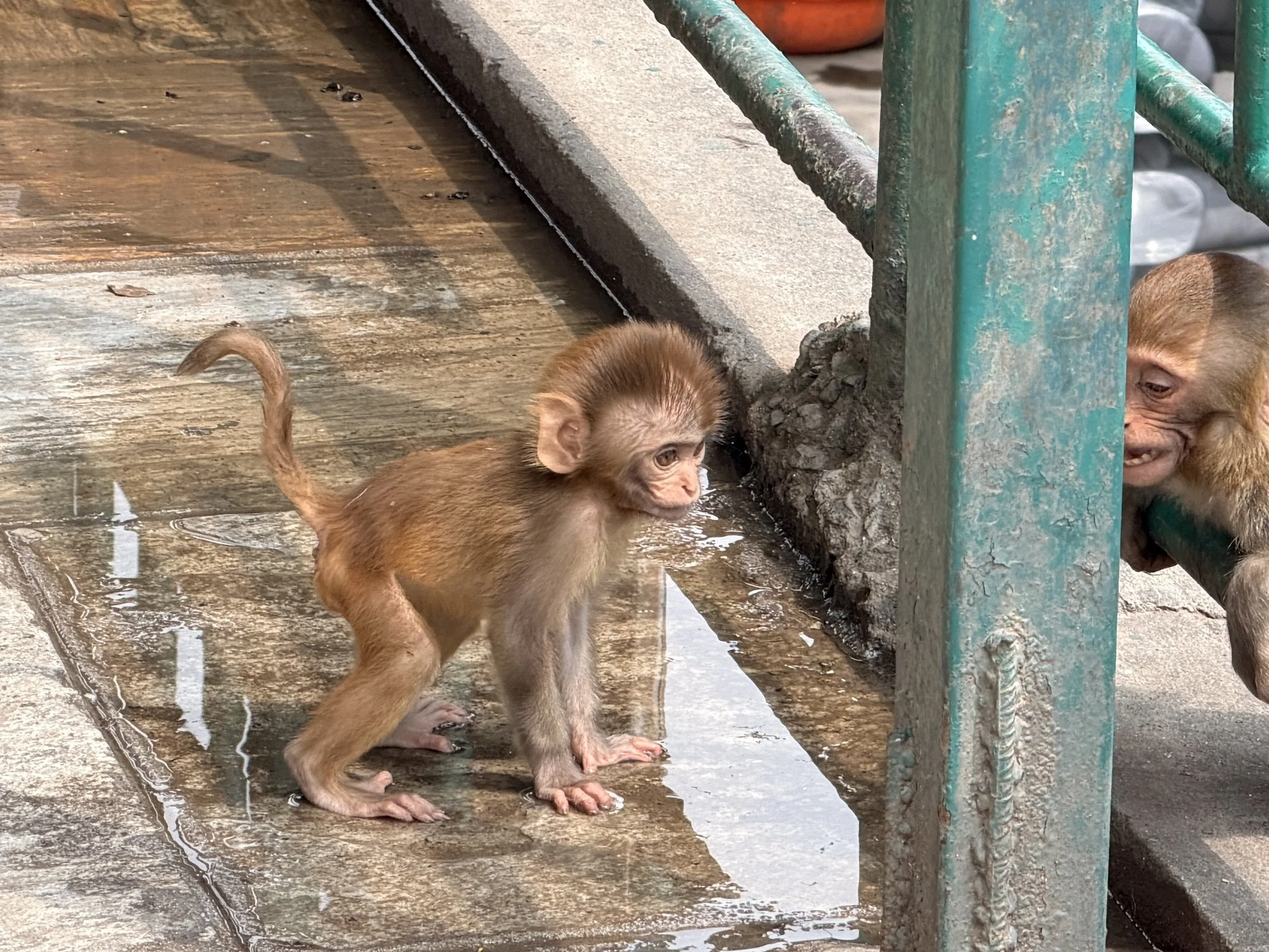
Smaller Buddhist shrines and Hindu temples surrounded the main stupa, reflecting the close relationship between Buddhism and Hinduism in Nepal. Monkeys and dogs roamed freely around the temple grounds, while we enjoyed sweeping views of Kathmandu spreading across the valley below.
We also visited a Thangka painting school, where we learned a little about this traditional Tibetan Buddhist art form. We were particularly fascinated by the intricate Mandala paintings and the symbolism behind their geometric patterns. The presentation made us appreciate the extraordinary patience and skill required to create them. Although we were tempted, we eventually decided not to buy one.
Patan Durbar Square
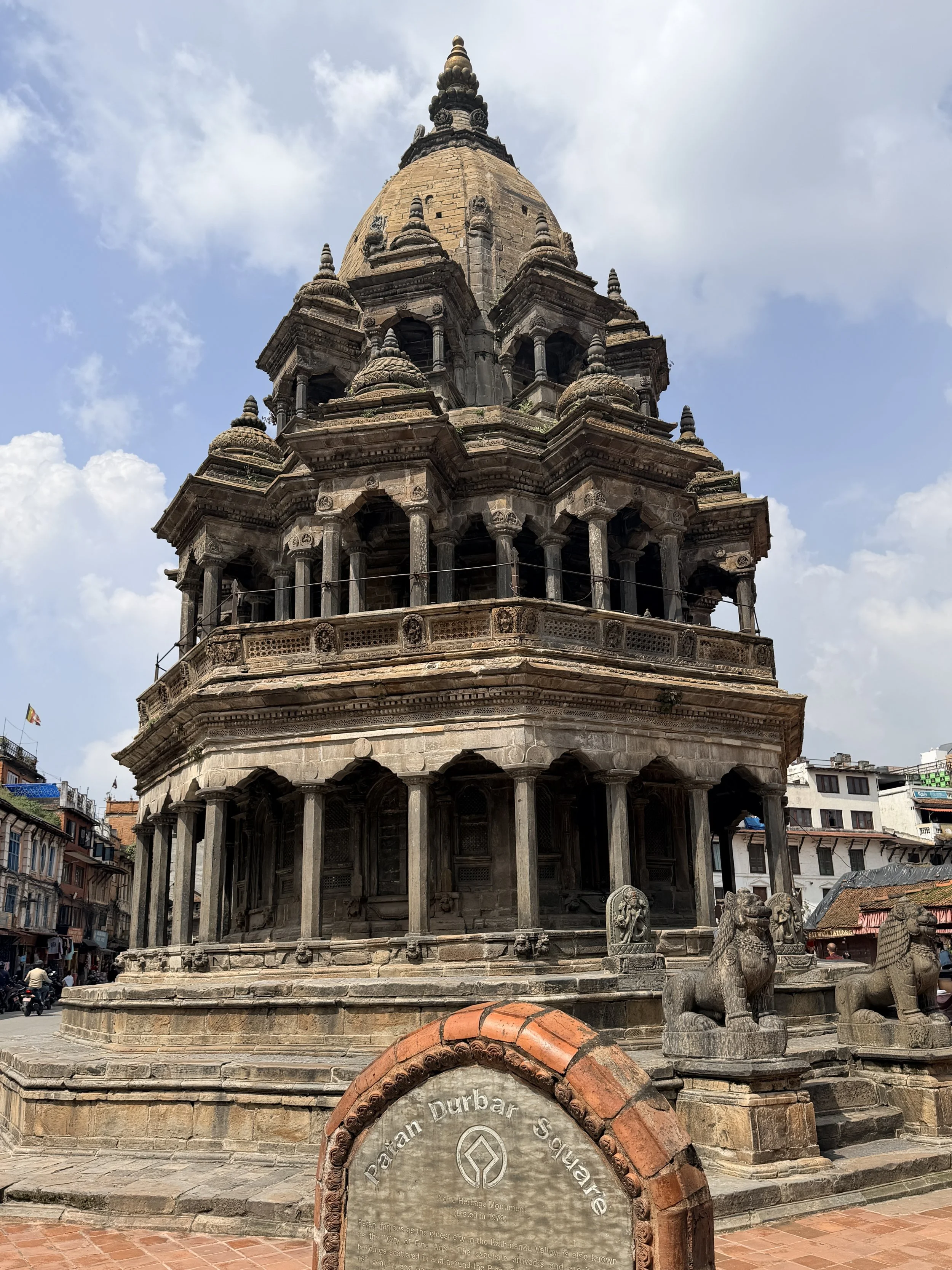
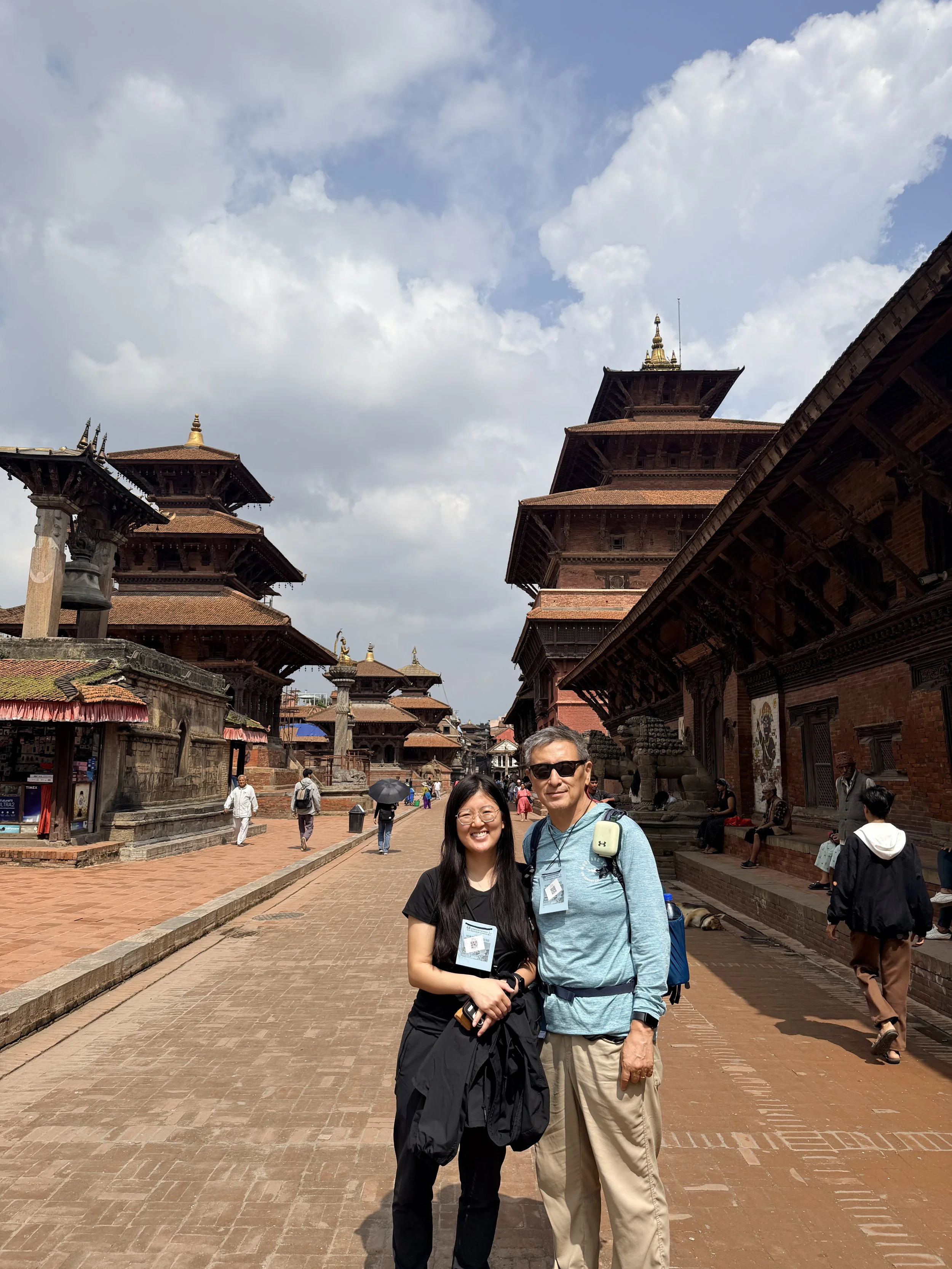
We then visited Patan Durbar Square, another UNESCO World Heritage monument zone.
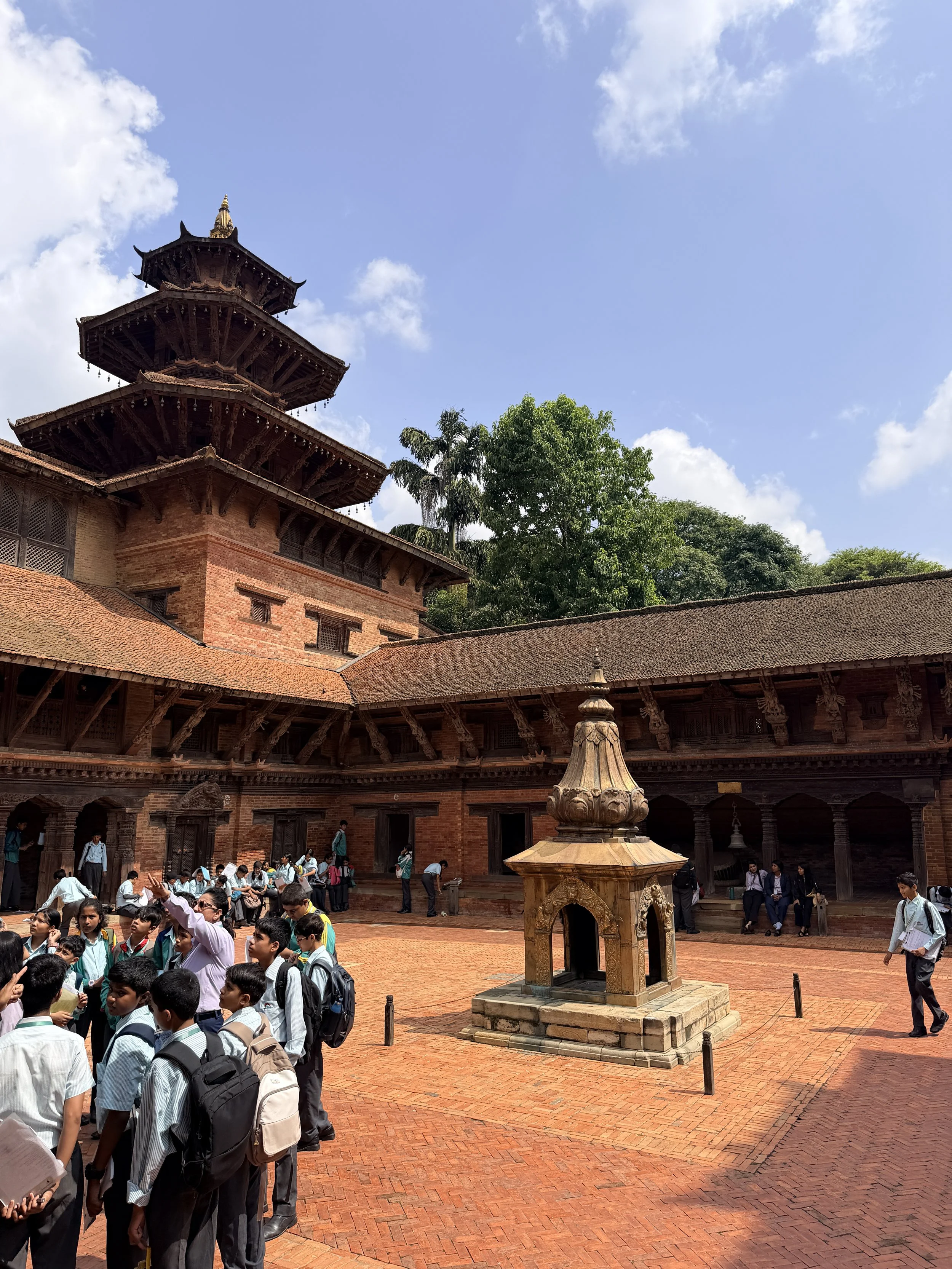
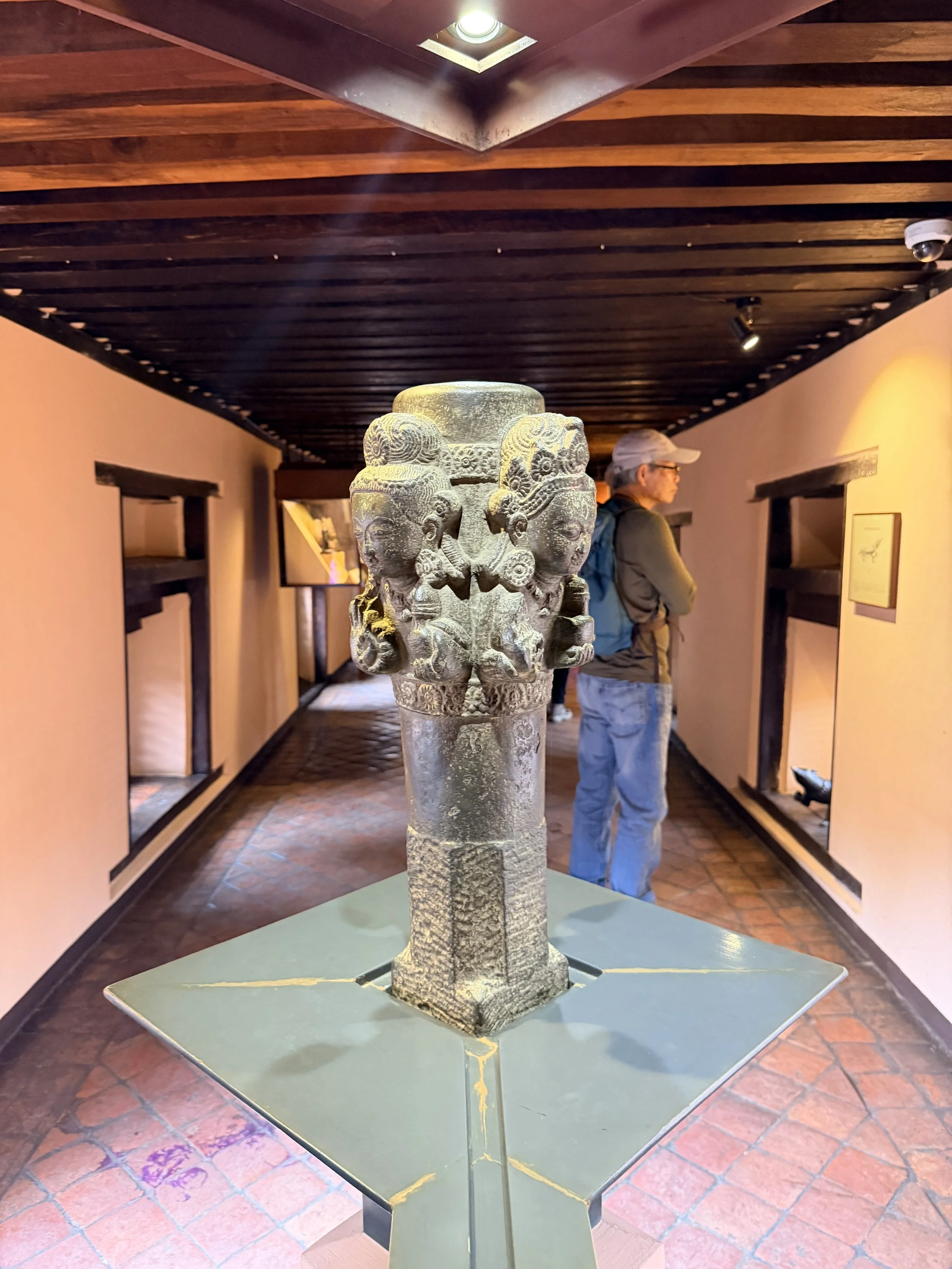
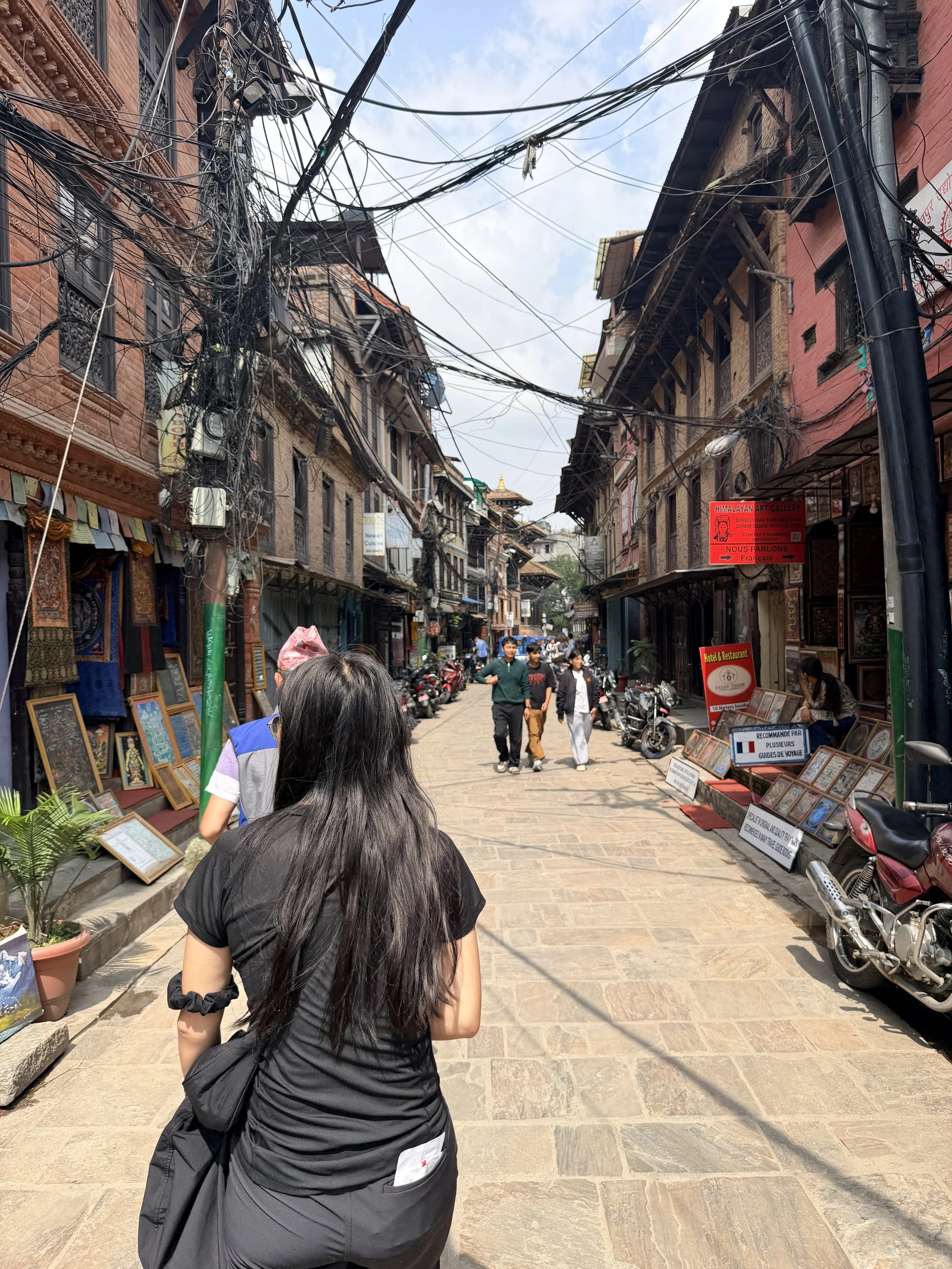
Patan, also known as Lalitpur, was once the capital of an independent kingdom. Its magnificent temples, royal courtyards, intricate wooden windows, and elaborate stone carvings reflect the extraordinary craftsmanship of the Newar people.
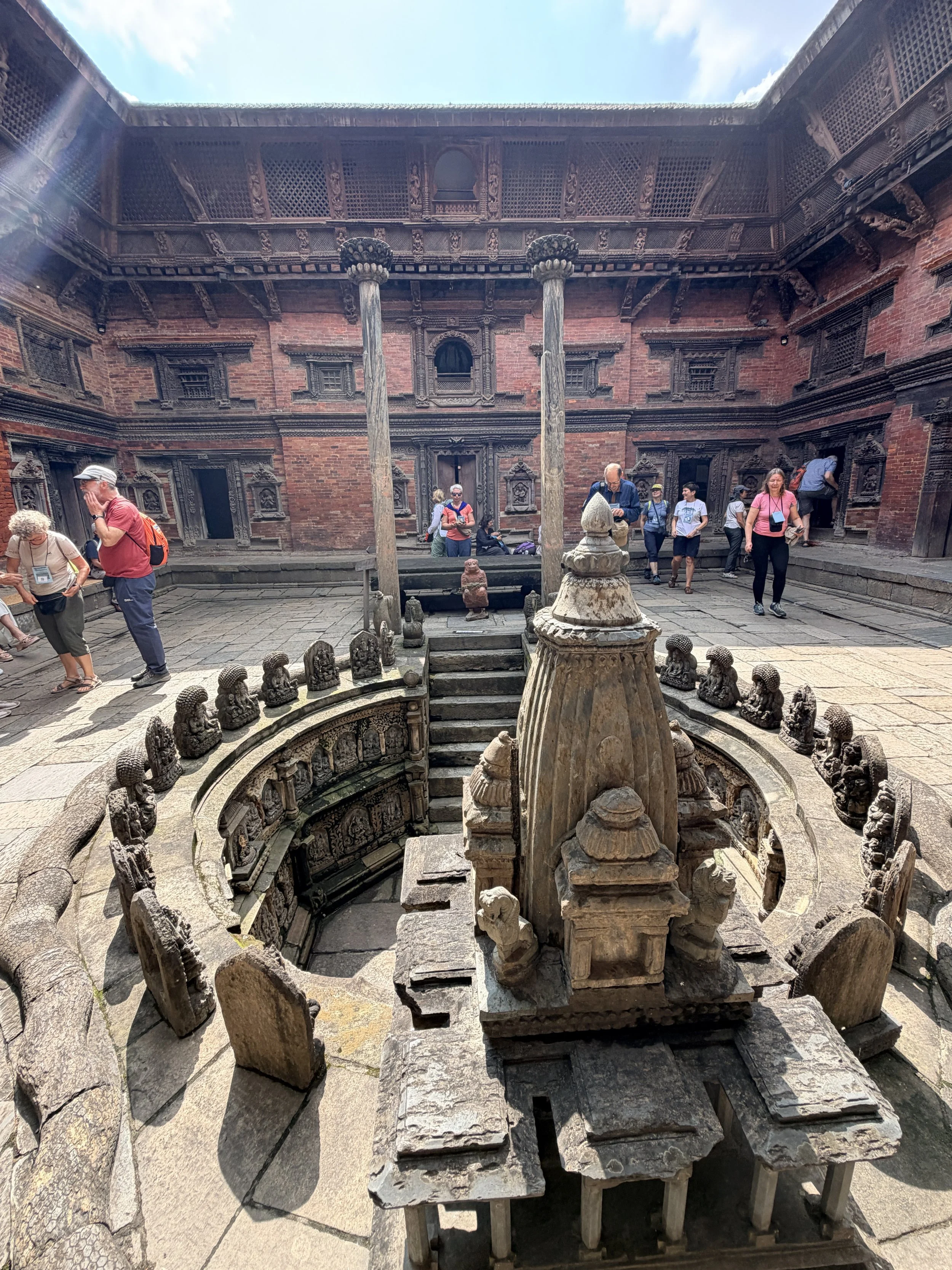
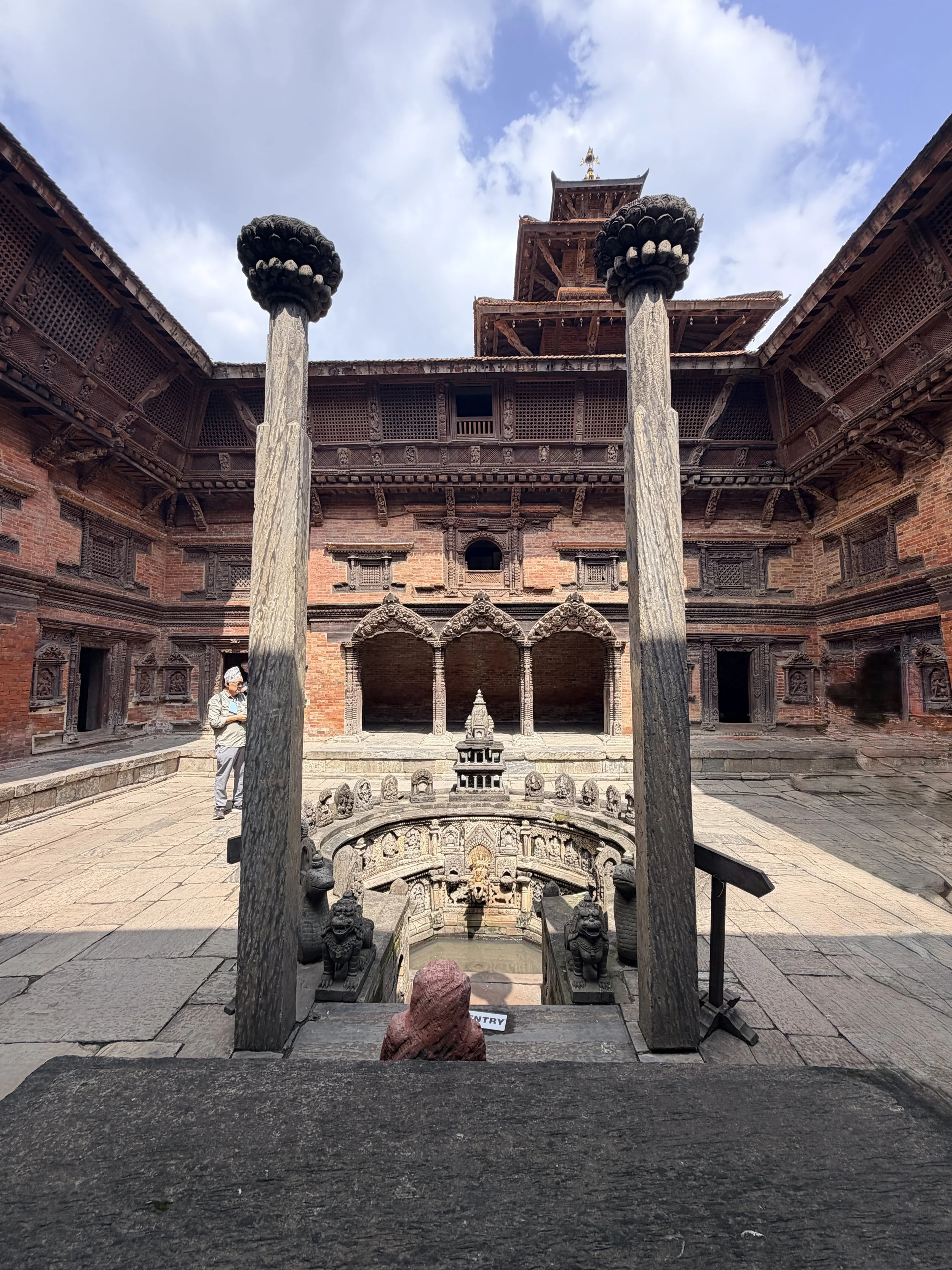
It was fascinating to learn that Kathmandu, Patan, and Bhaktapur had once been separate kingdoms, each developing its own royal palaces, temples, and artistic traditions. Although they share much of the same cultural heritage, each has its own distinctive character.
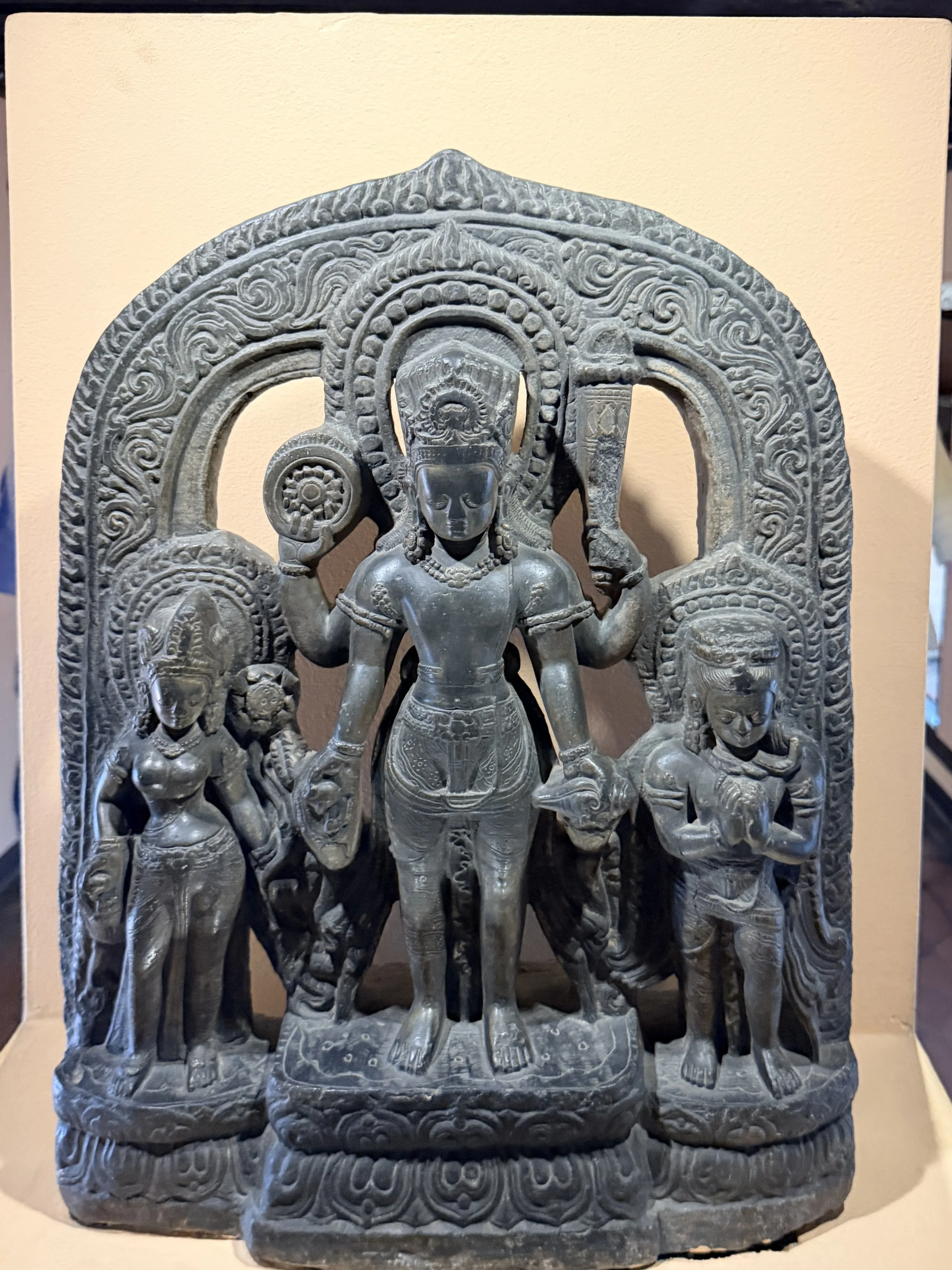
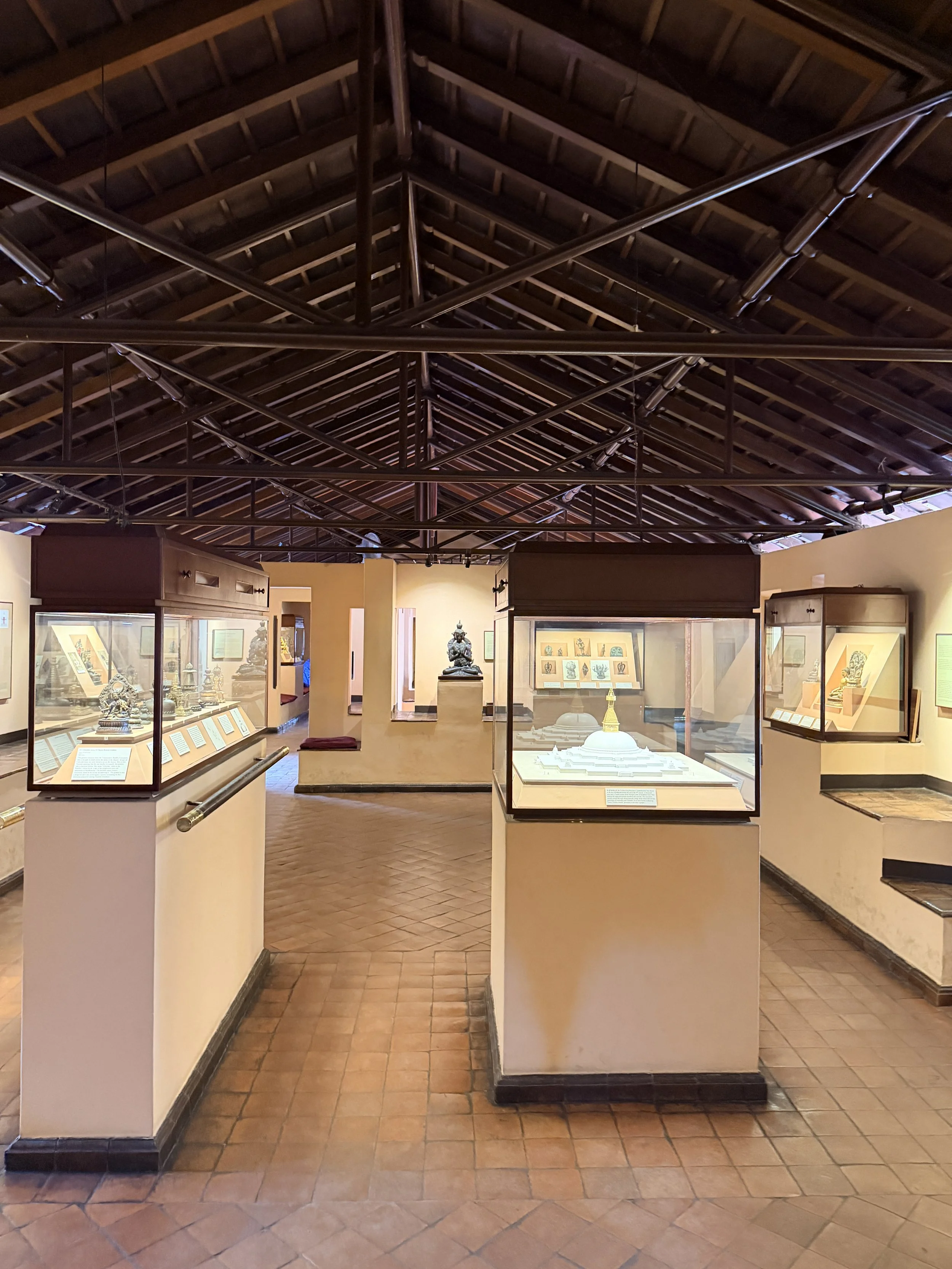
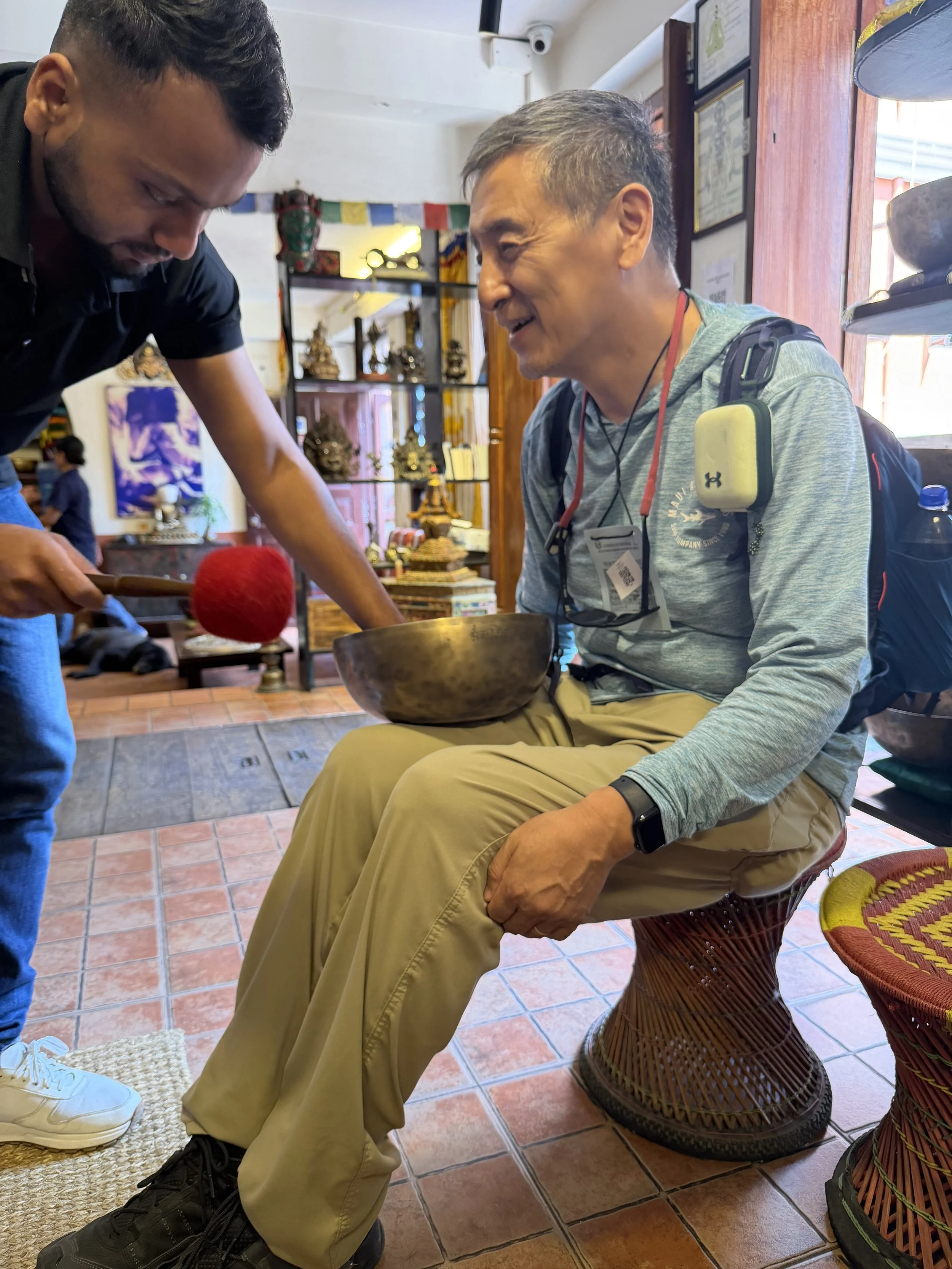
Before leaving, our guide took us to a Tibetan singing bowl shop for a sound therapy demonstration. It was interesting, but we weren’t convinced of its claimed therapeutic benefits, especially for my knee.
Pashupatinath Temple
Our final UNESCO site of the day was Pashupatinath Temple, one of Nepal’s most sacred Hindu temple complexes.
We walked around the temple grounds and along the Bagmati River. Surprisingly, there wasn’t much activity during our afternoon visit. We saw a few groups sitting along the riverbank, eating together, and wondered whether they were participating in rituals honoring deceased family members.
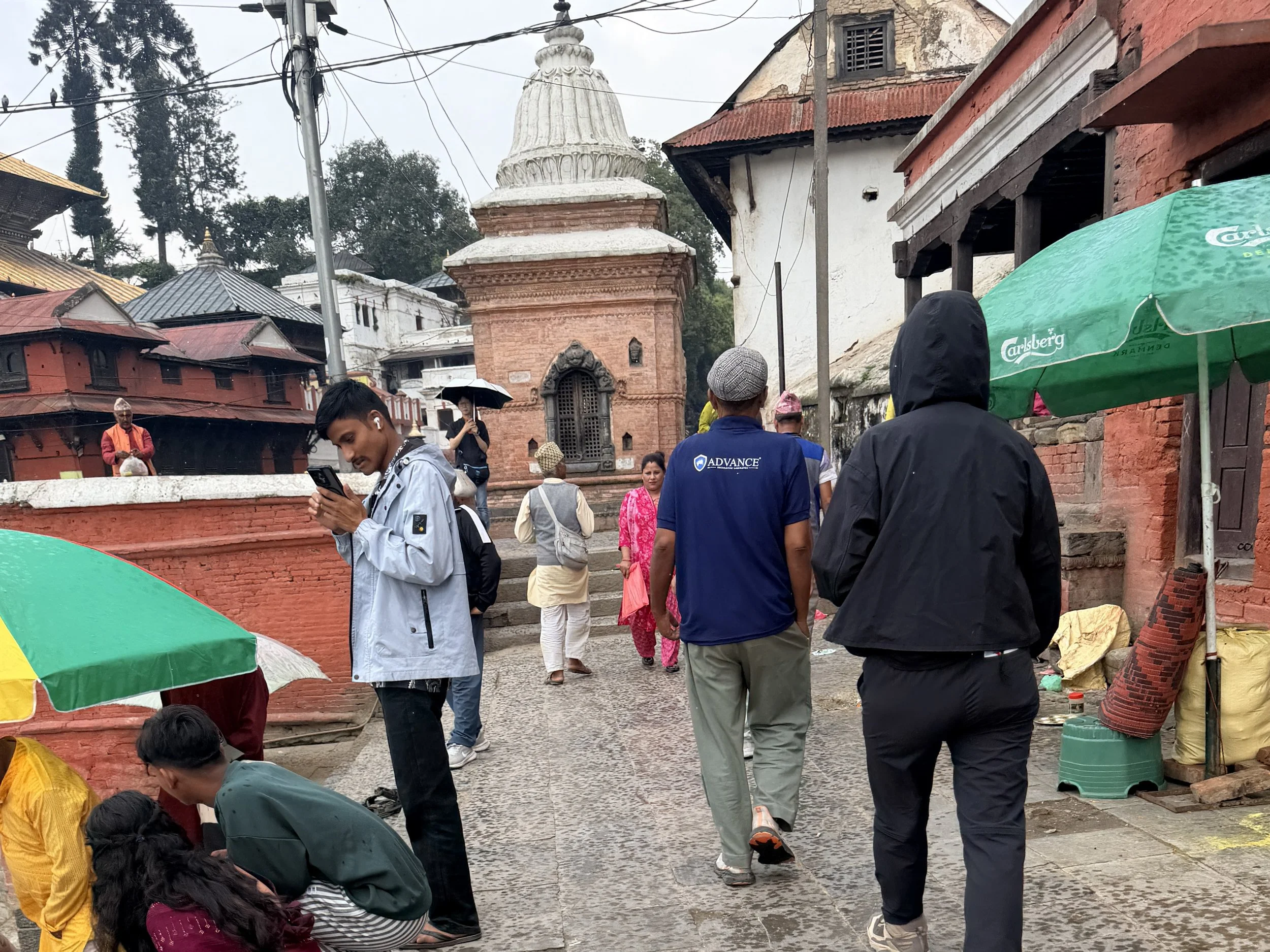
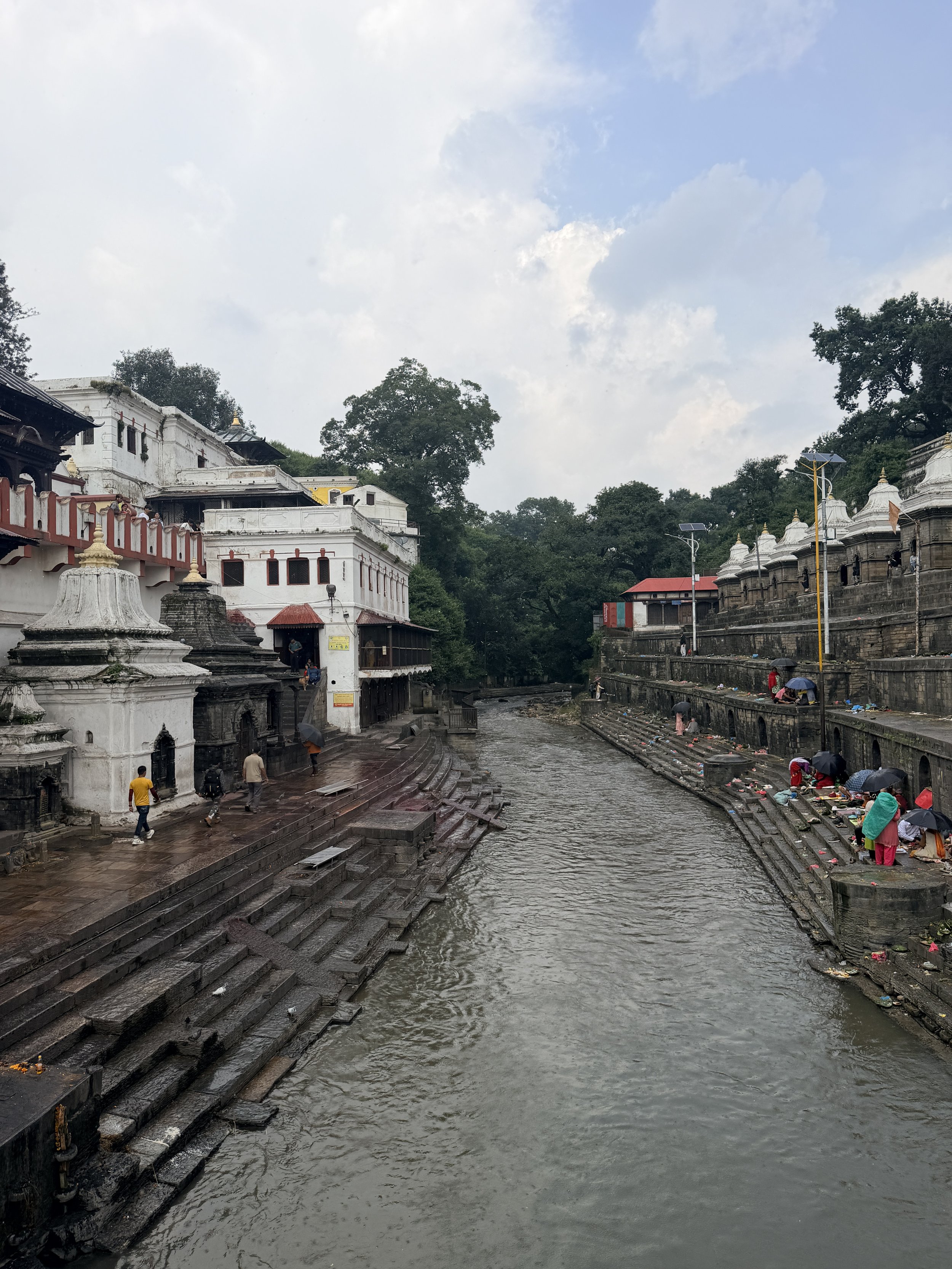
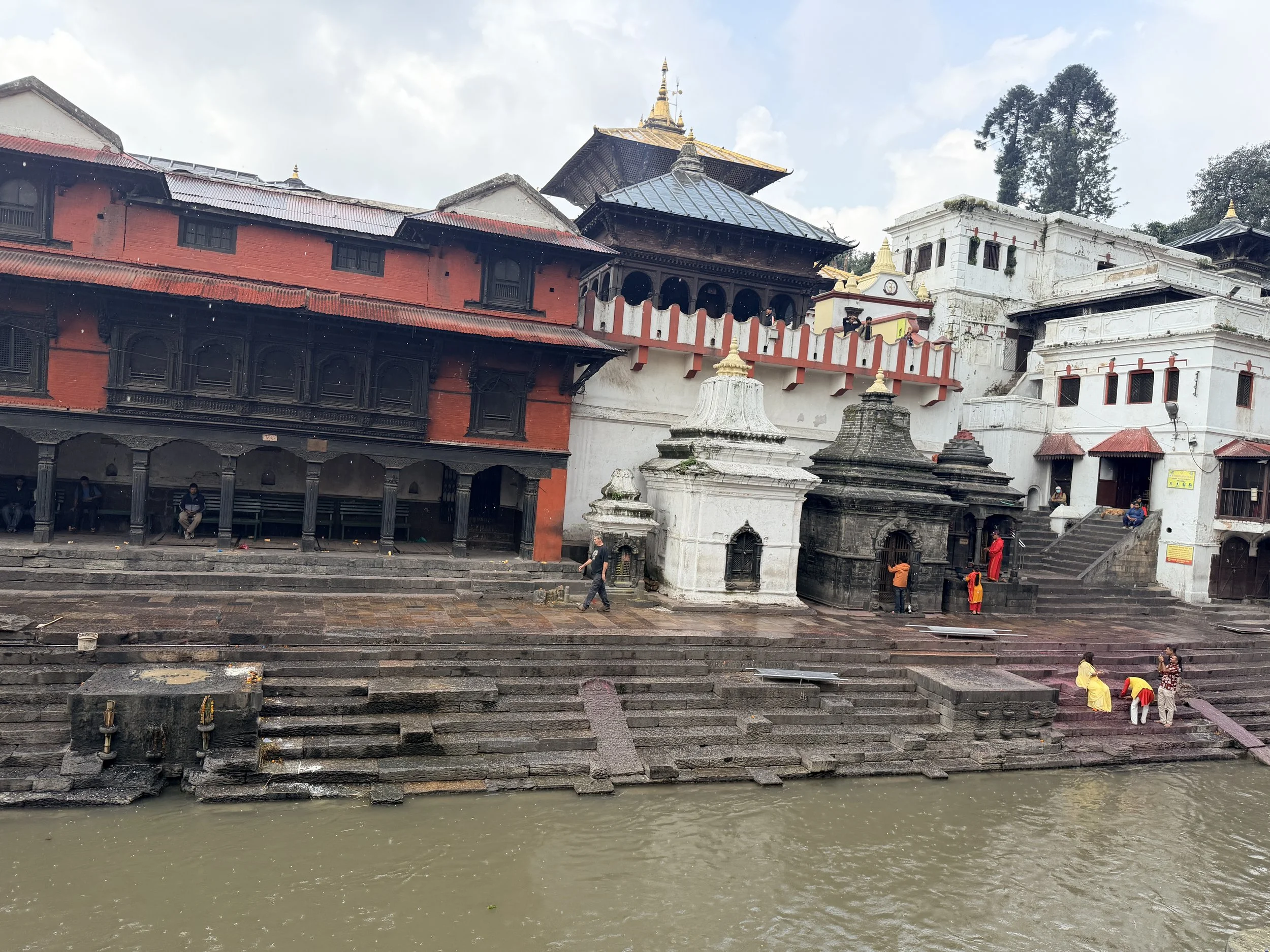
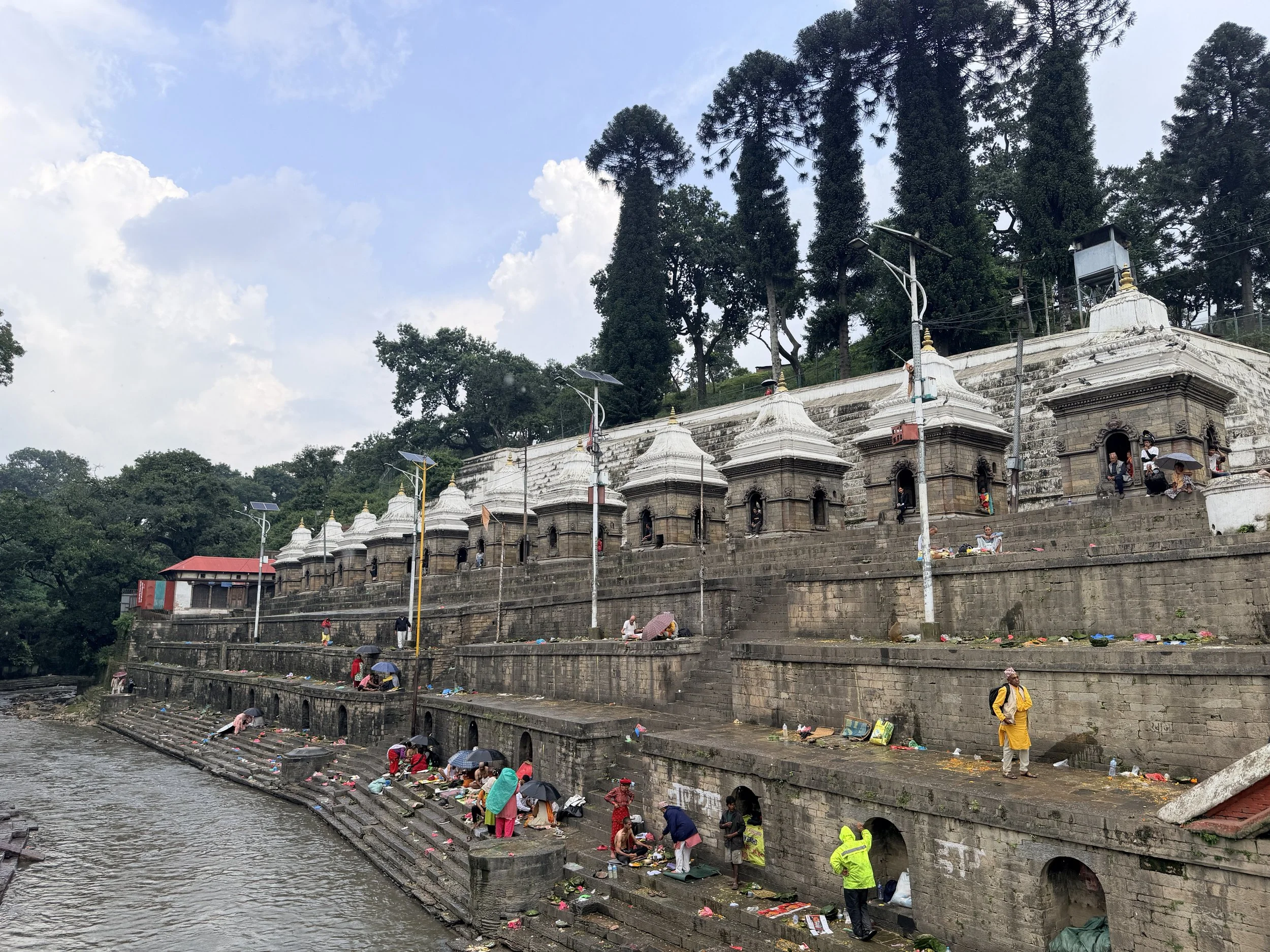
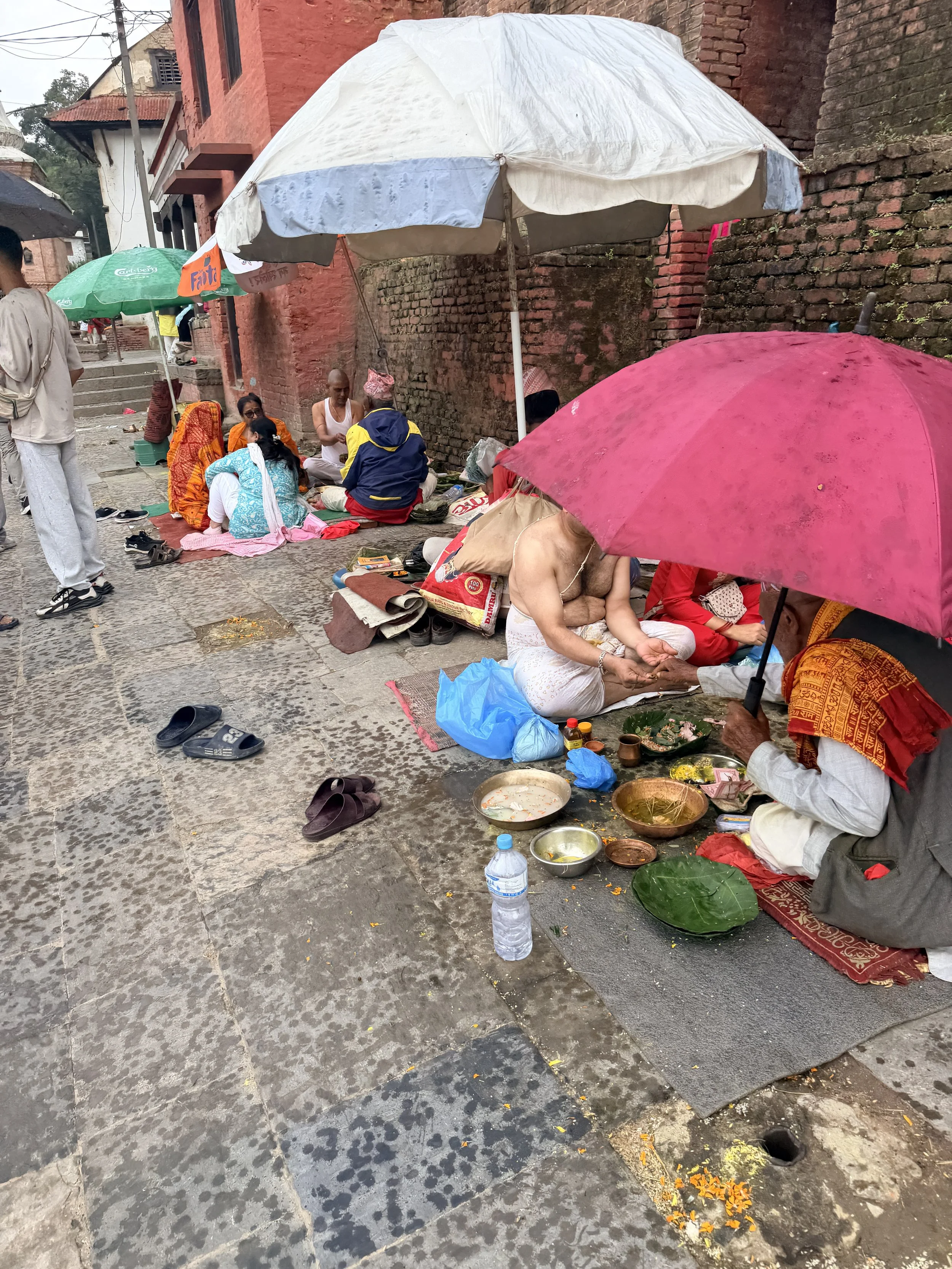
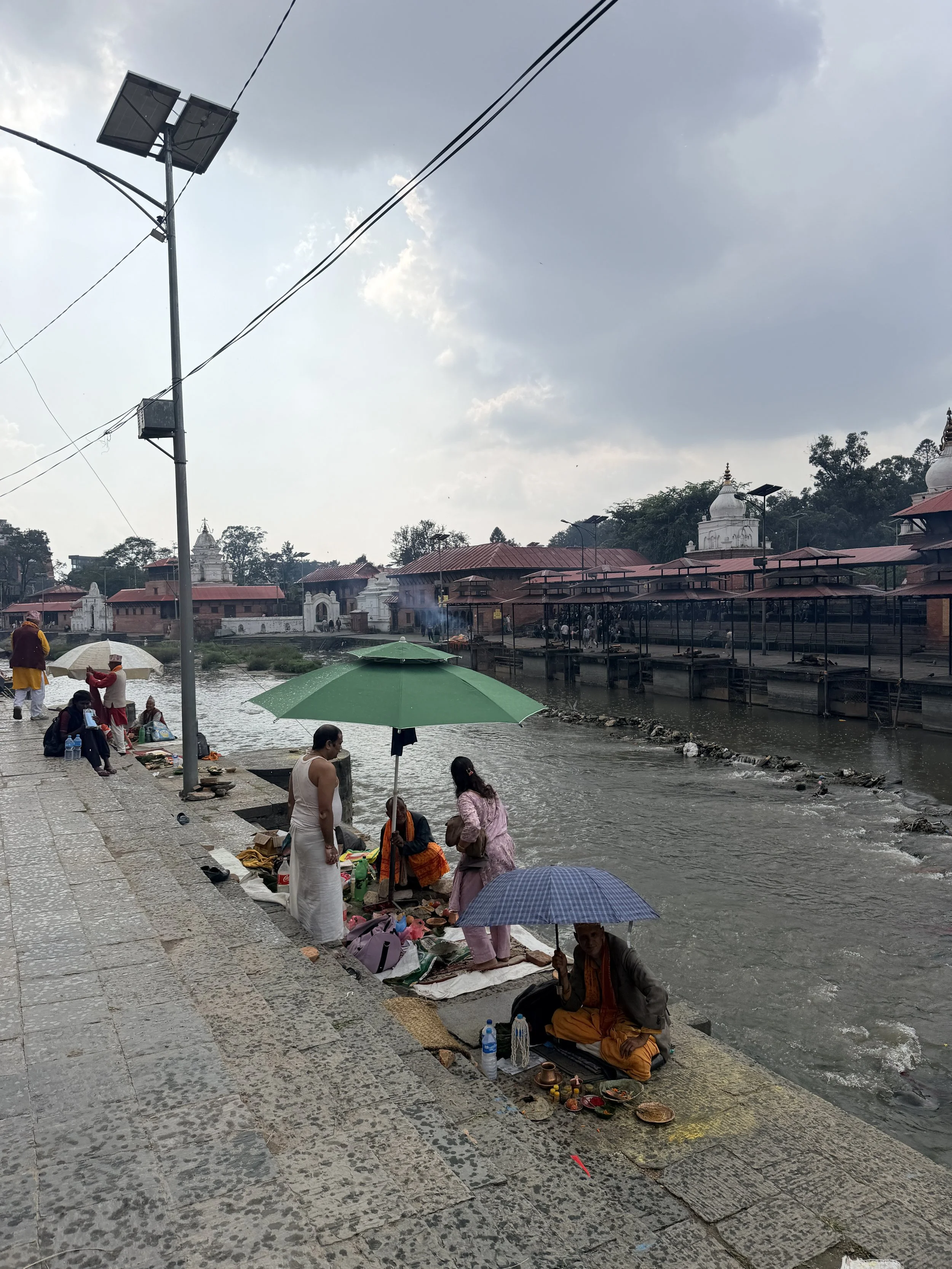
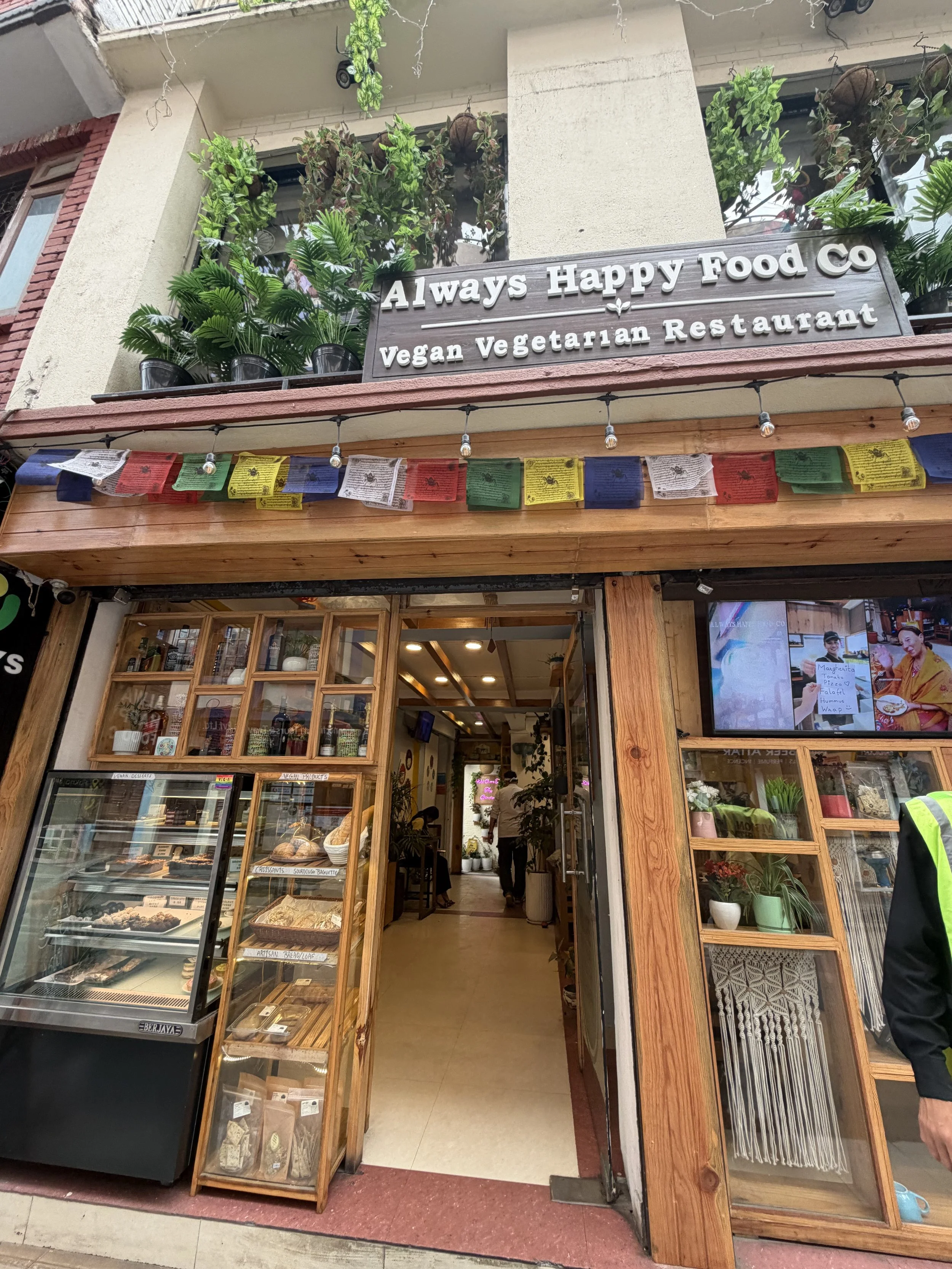
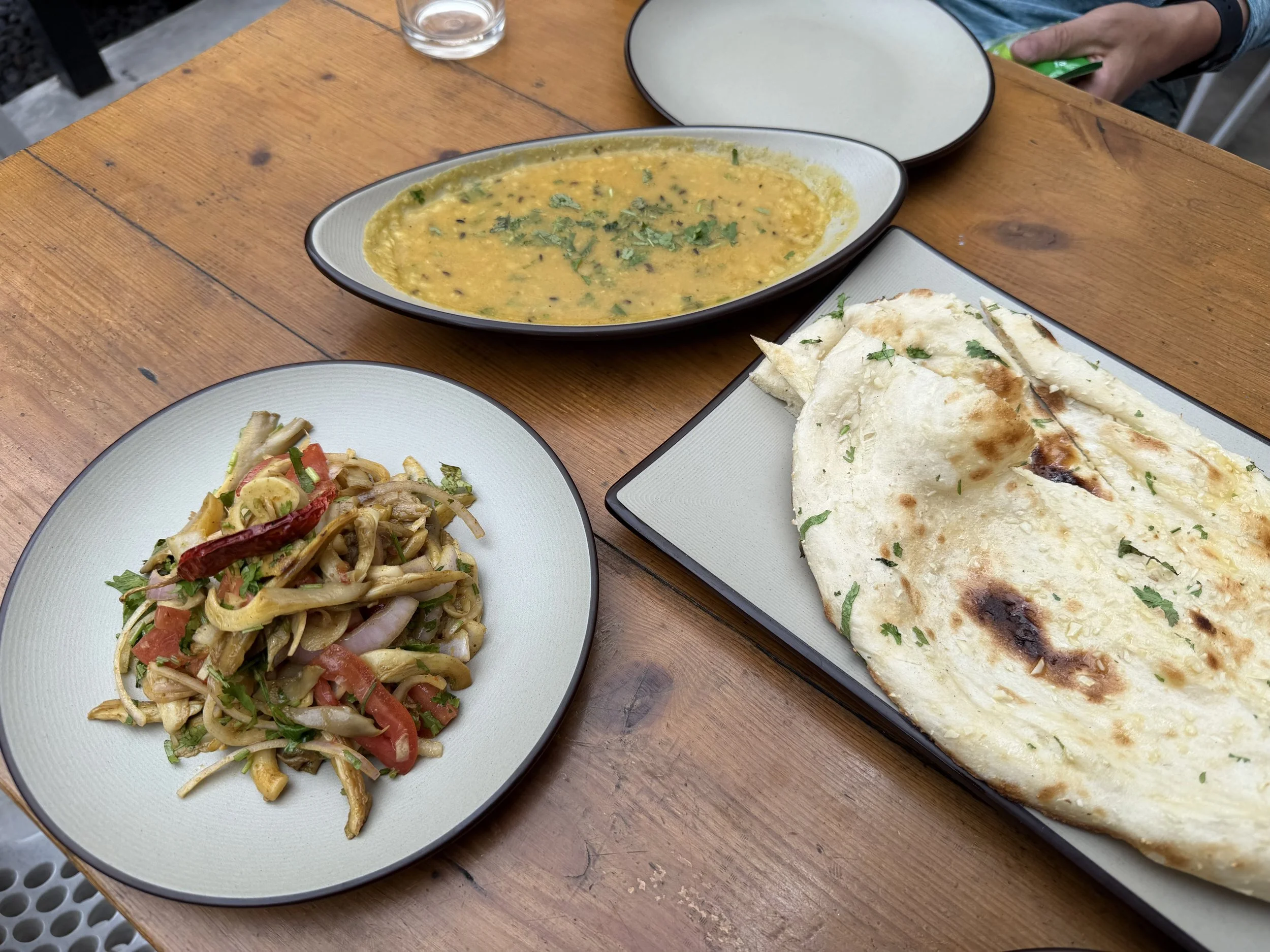
Since we planned to return for the evening Aarti ceremony, we didn’t stay long. Instead, we headed back toward the city center for a delicious vegan lunch, much to Christine’s delight.
Evening Bagmati Aarti Ceremony
In the evening, we returned to Pashupatinath for the Bagmati Aarti, a Hindu religious ceremony performed along the sacred Bagmati River. Since we had already purchased admission tickets earlier in the day, we were able to reenter without paying again, saving 1,000 Nepalese rupees per person.
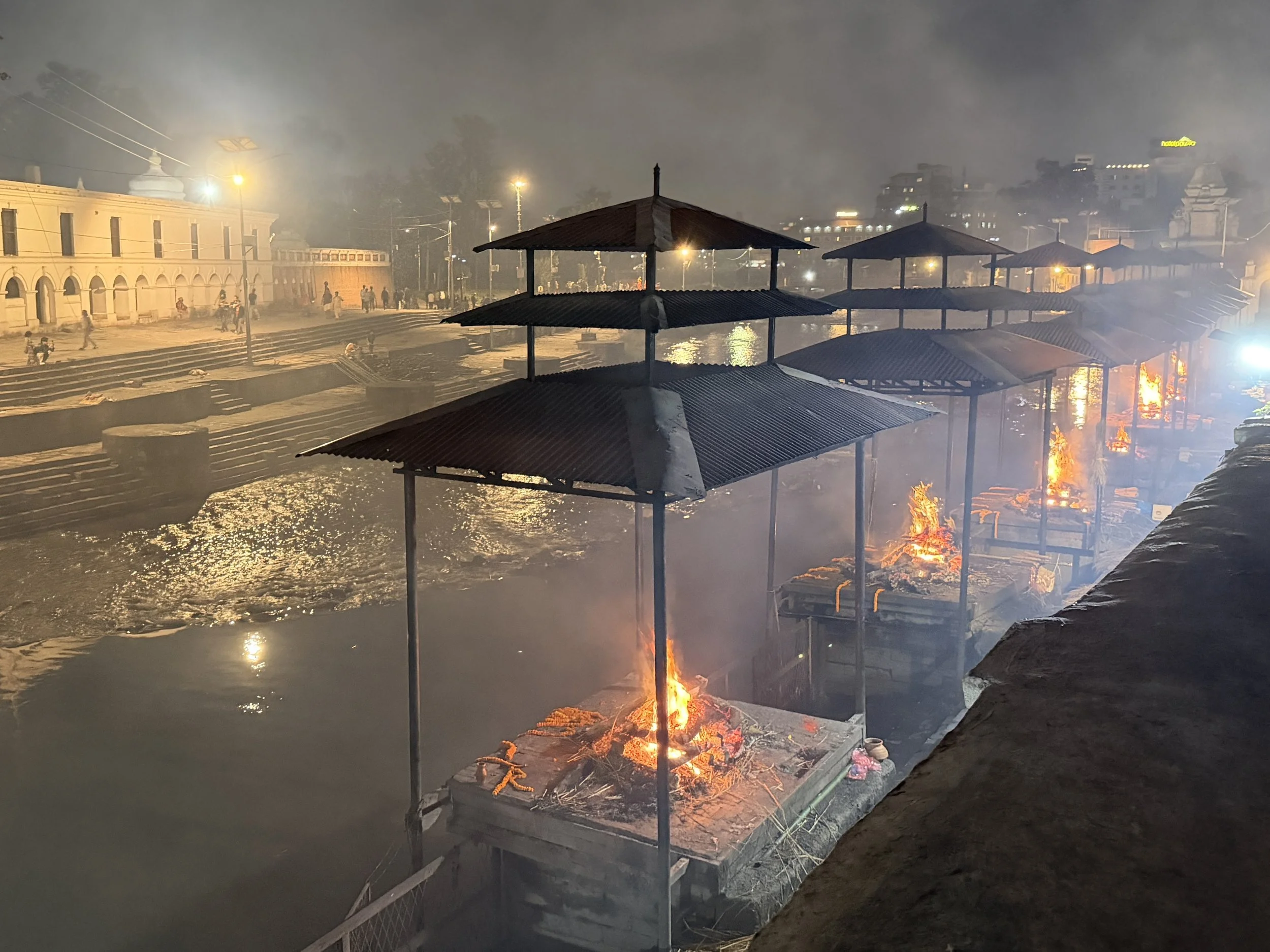
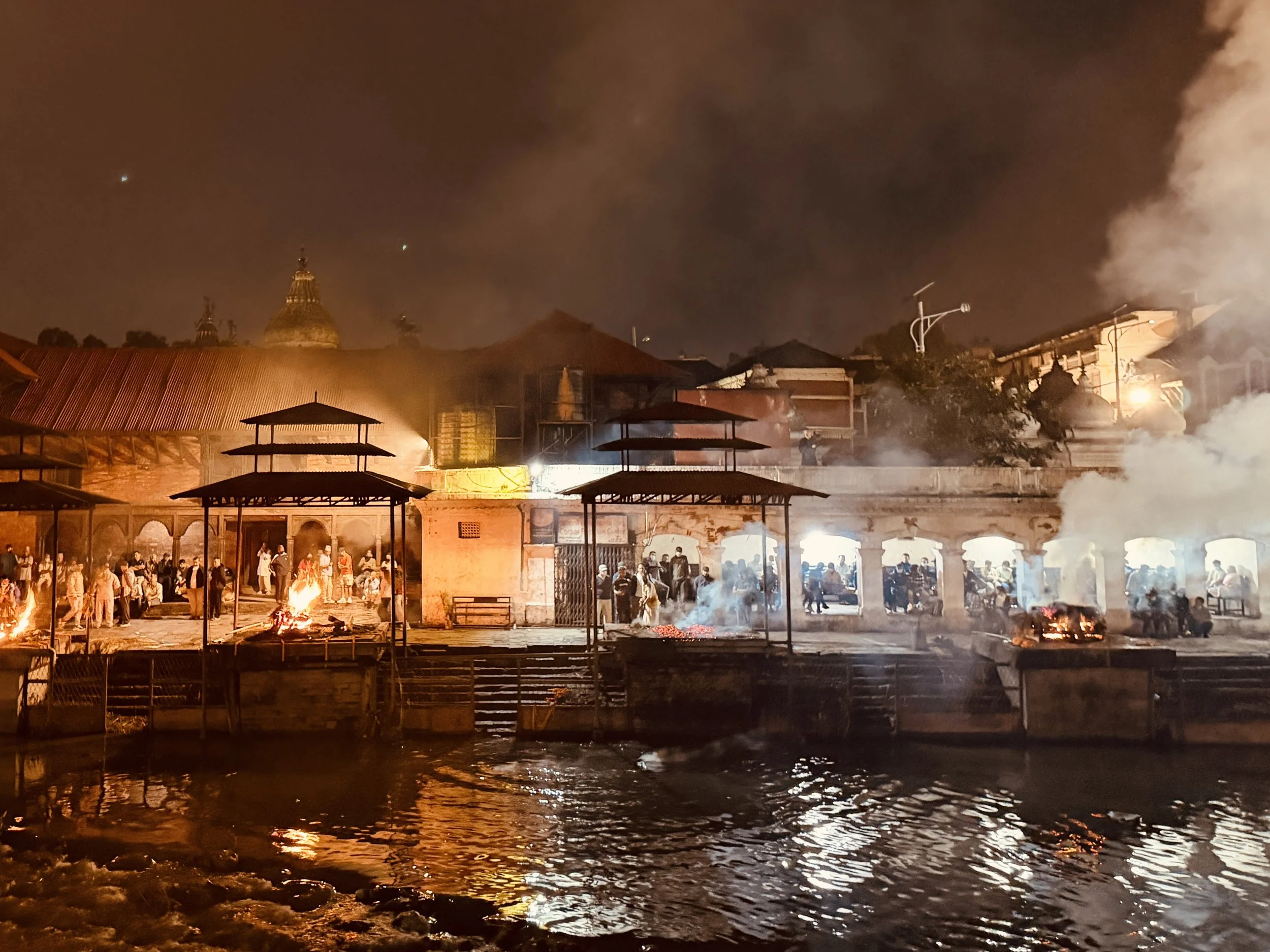
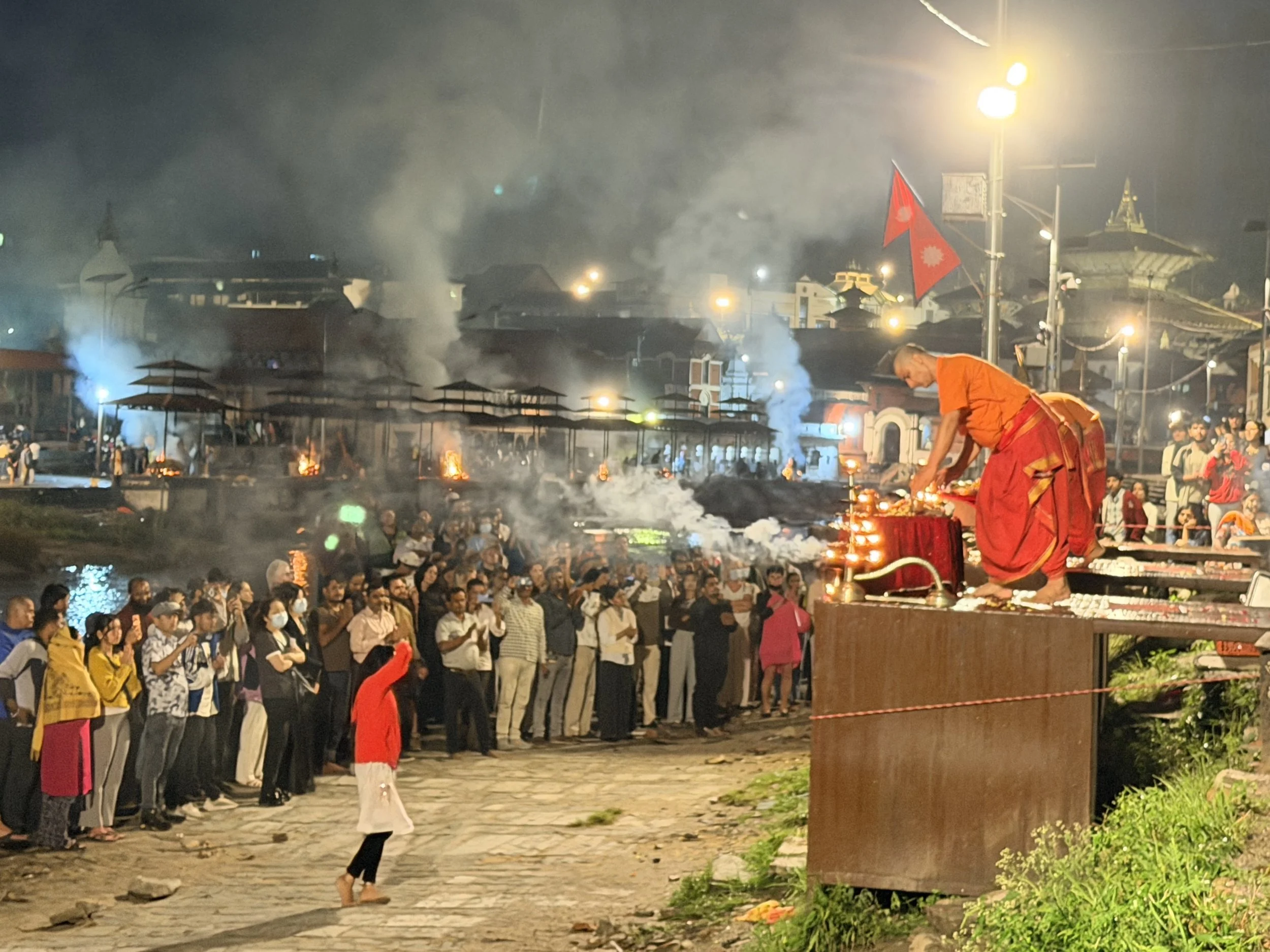
As we entered the temple grounds, we were stunned by smoke and flames rising from four cremation platforms along the river. It was our first time witnessing open-air Hindu cremations. In our own cultural experience, funerals are generally private family occasions, so seeing them conducted so publicly was both startling and deeply moving.
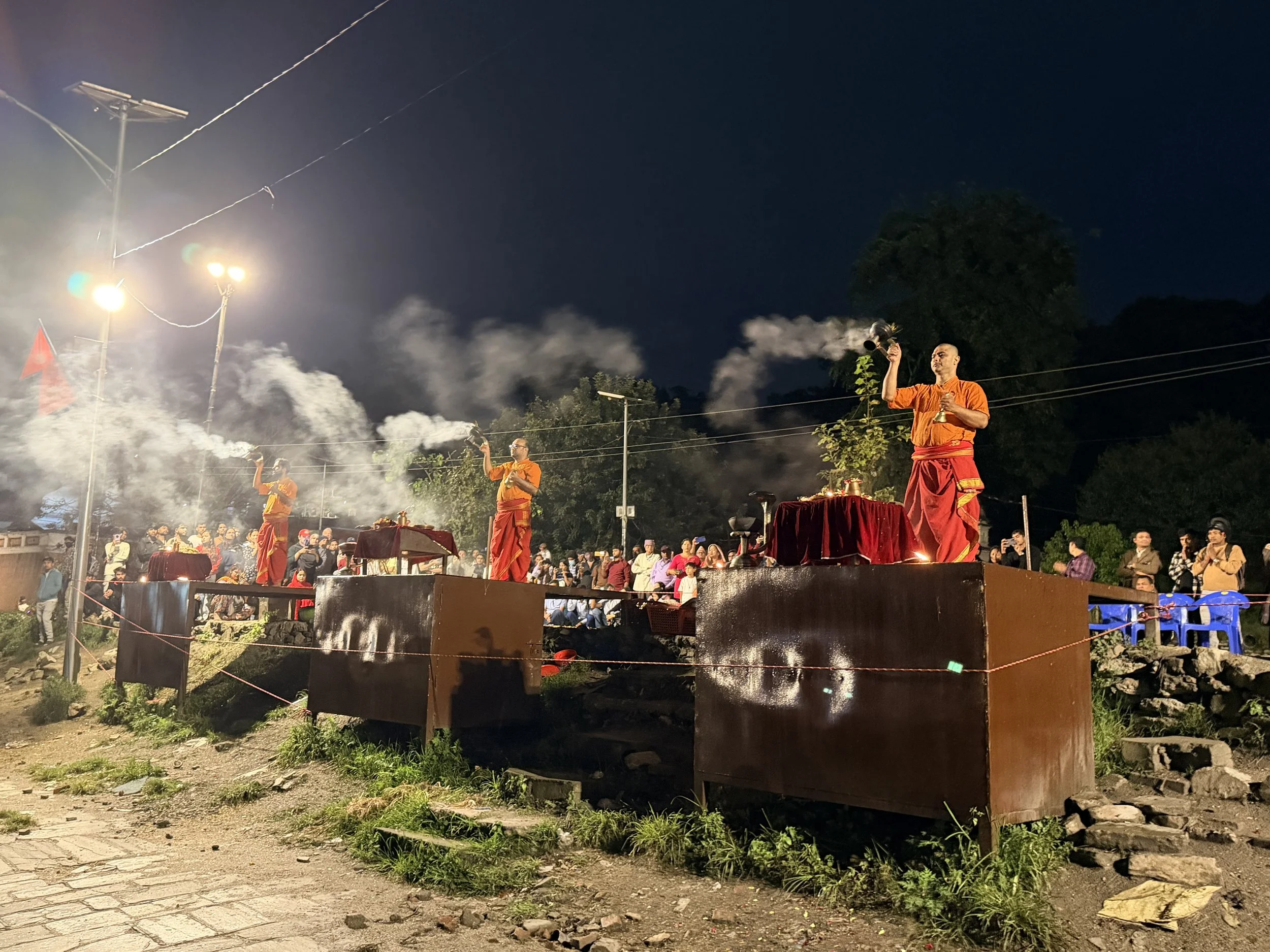
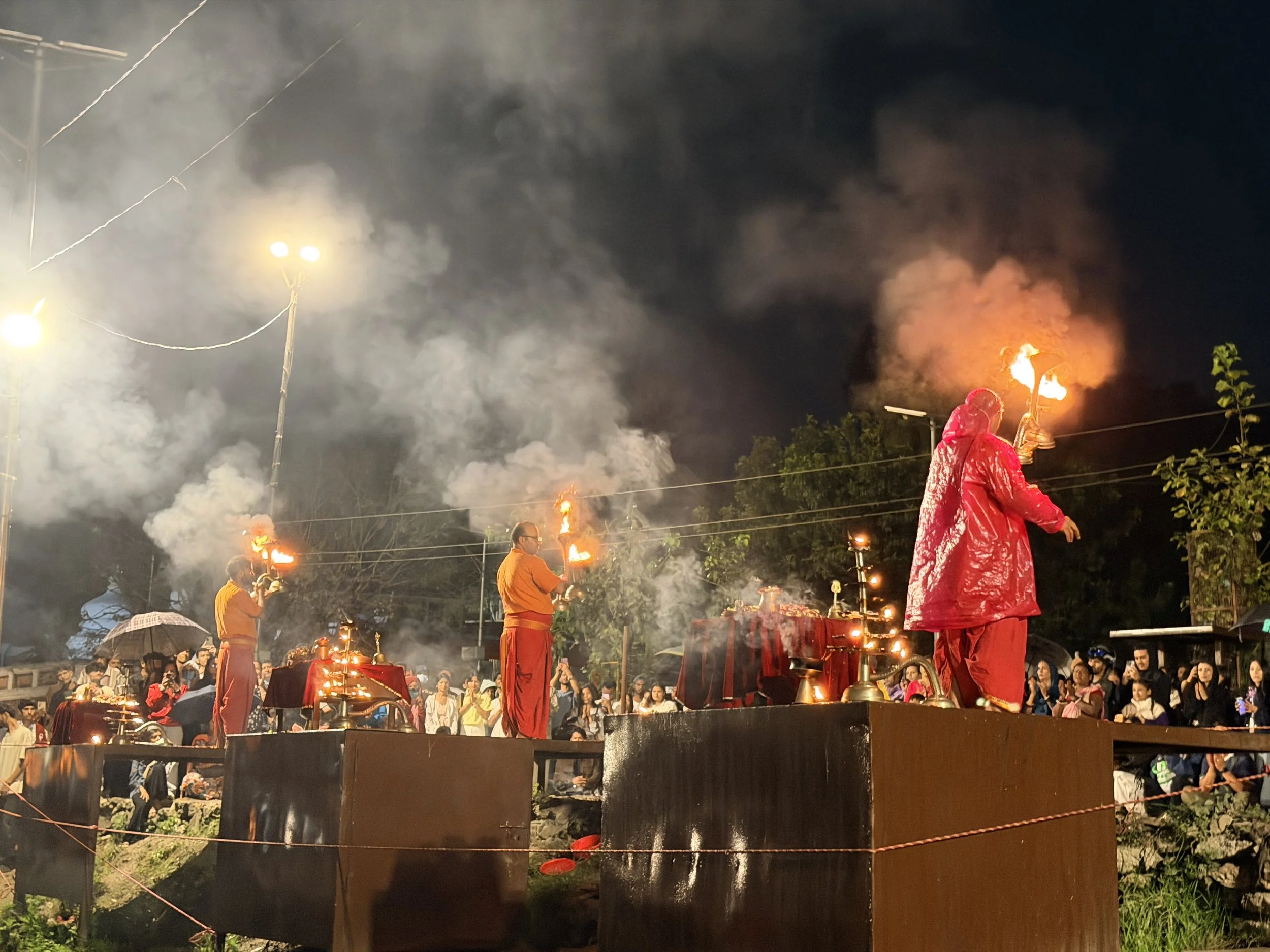
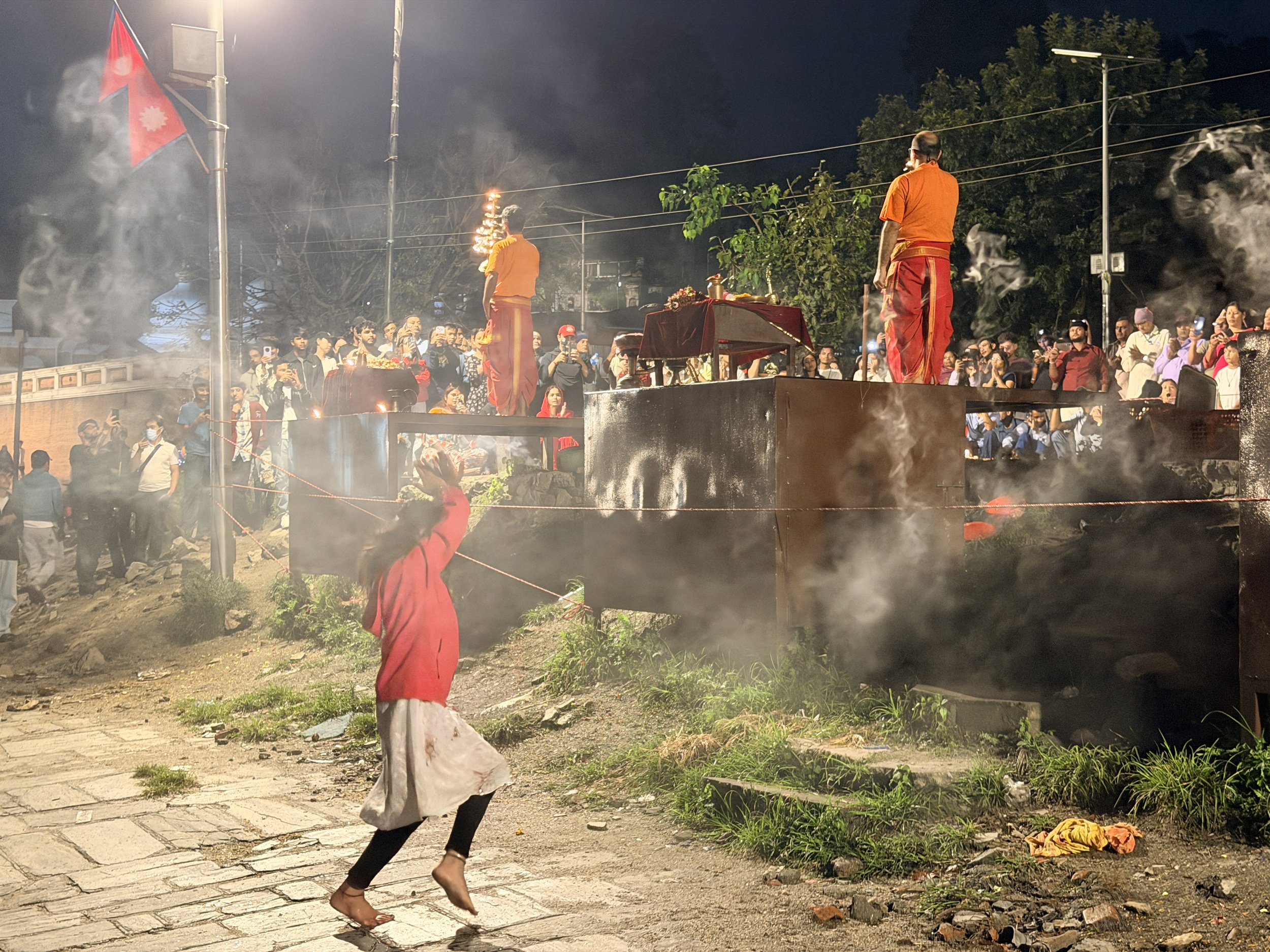
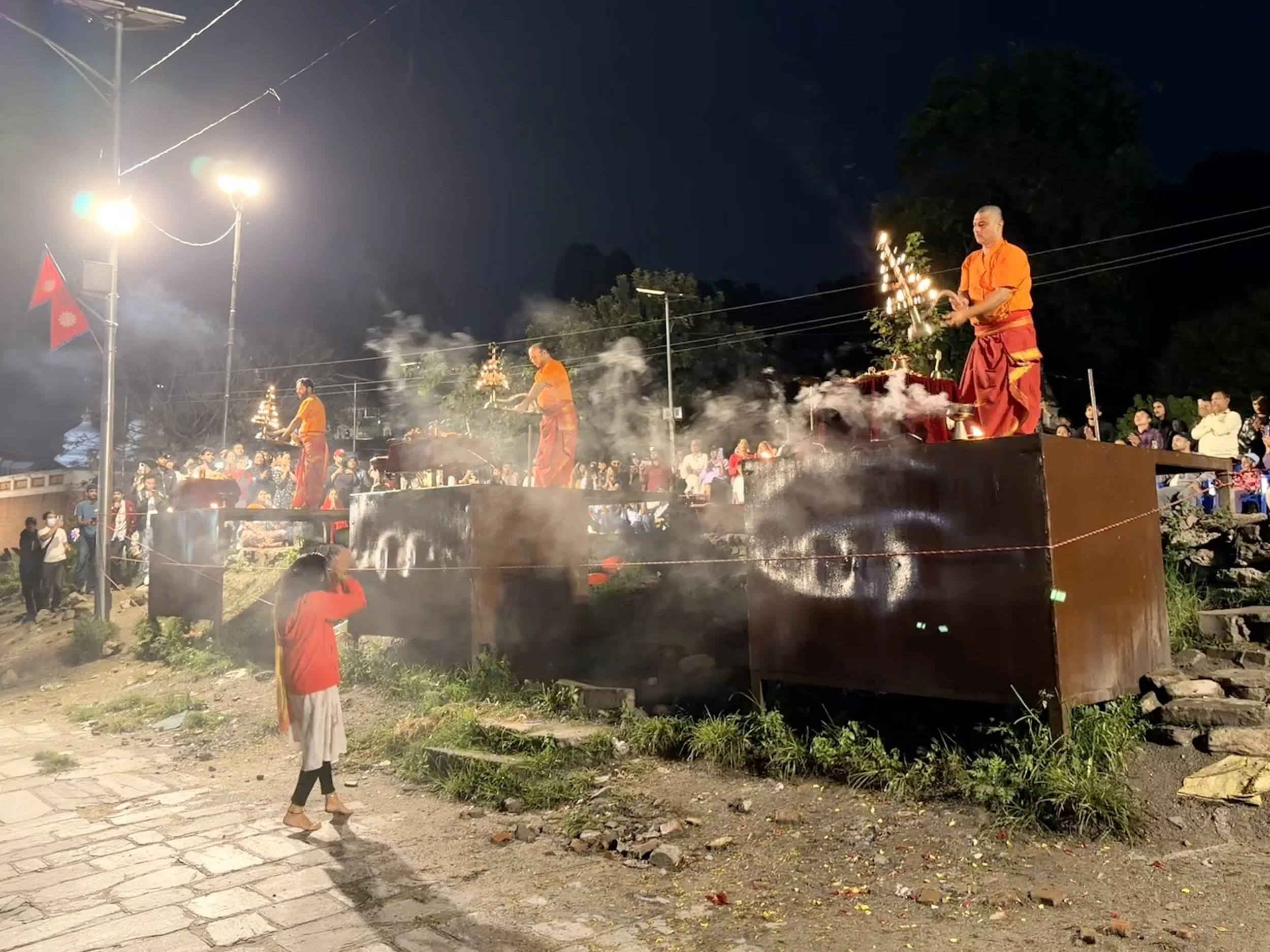
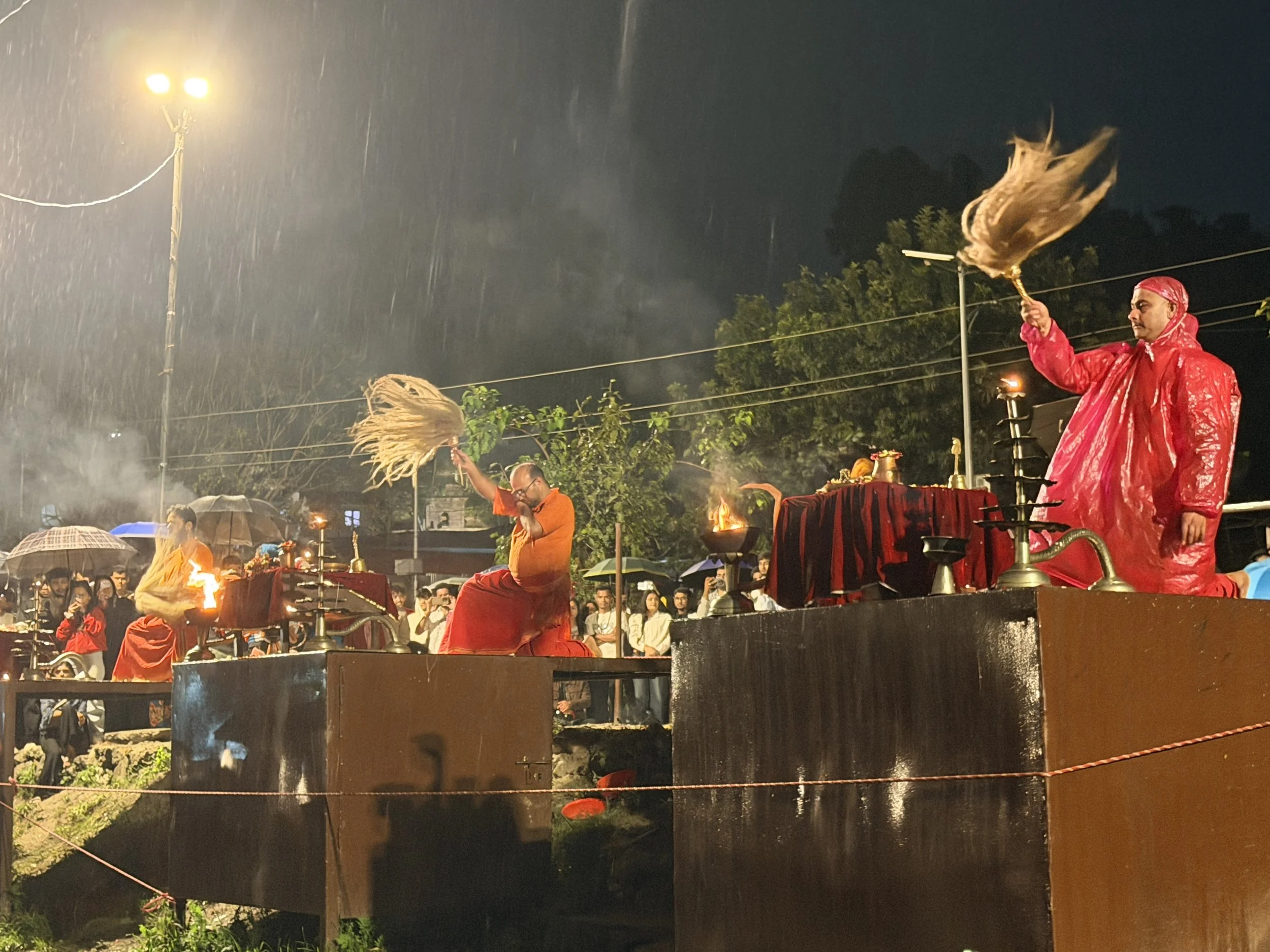
We then walked to watch the Aarti ceremony. Three priests performed synchronized rituals with large oil lamps, raising and circling the flames in graceful movements. Religious chanting, ringing bells, and devotional music filled the air. A woman dressed in red danced gracefully to the music as the priests continued their fire rituals. The flickering flames, rhythmic chanting, and graceful movements created a mesmerizing yet solemn atmosphere. Meanwhile, just across the river, flames and thick smoke continued to rise from the cremation platforms. The contrast between the vibrant celebration of faith on one side and the solemn farewell to life on the other was striking and unforgettable.
After the ceremony, we walked closer to the cremation area and observed some of the preparations for a funeral. For Hindus, cremation along the sacred Bagmati River is an important religious tradition, closely connected with beliefs about death, purification, and rebirth.
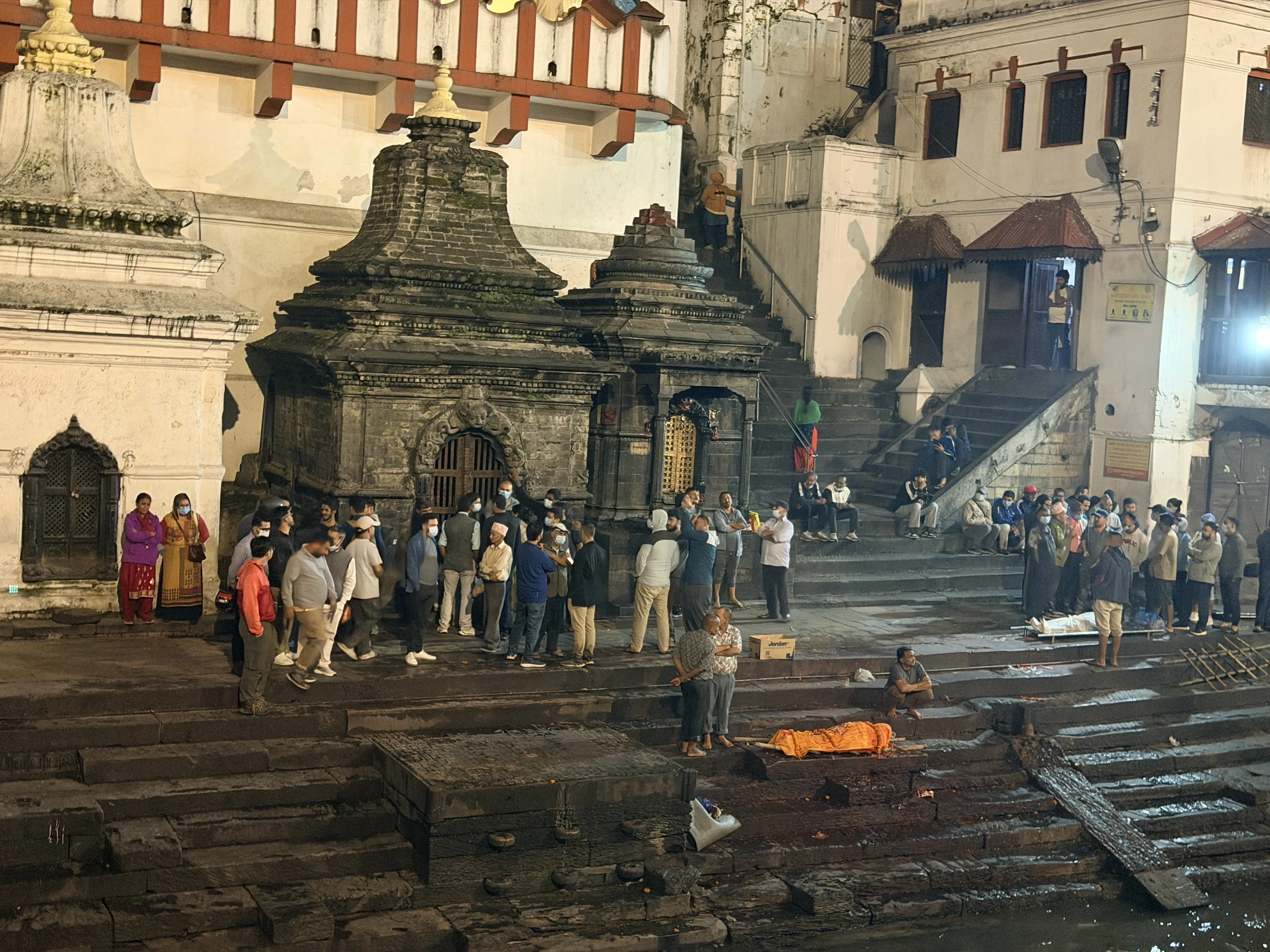
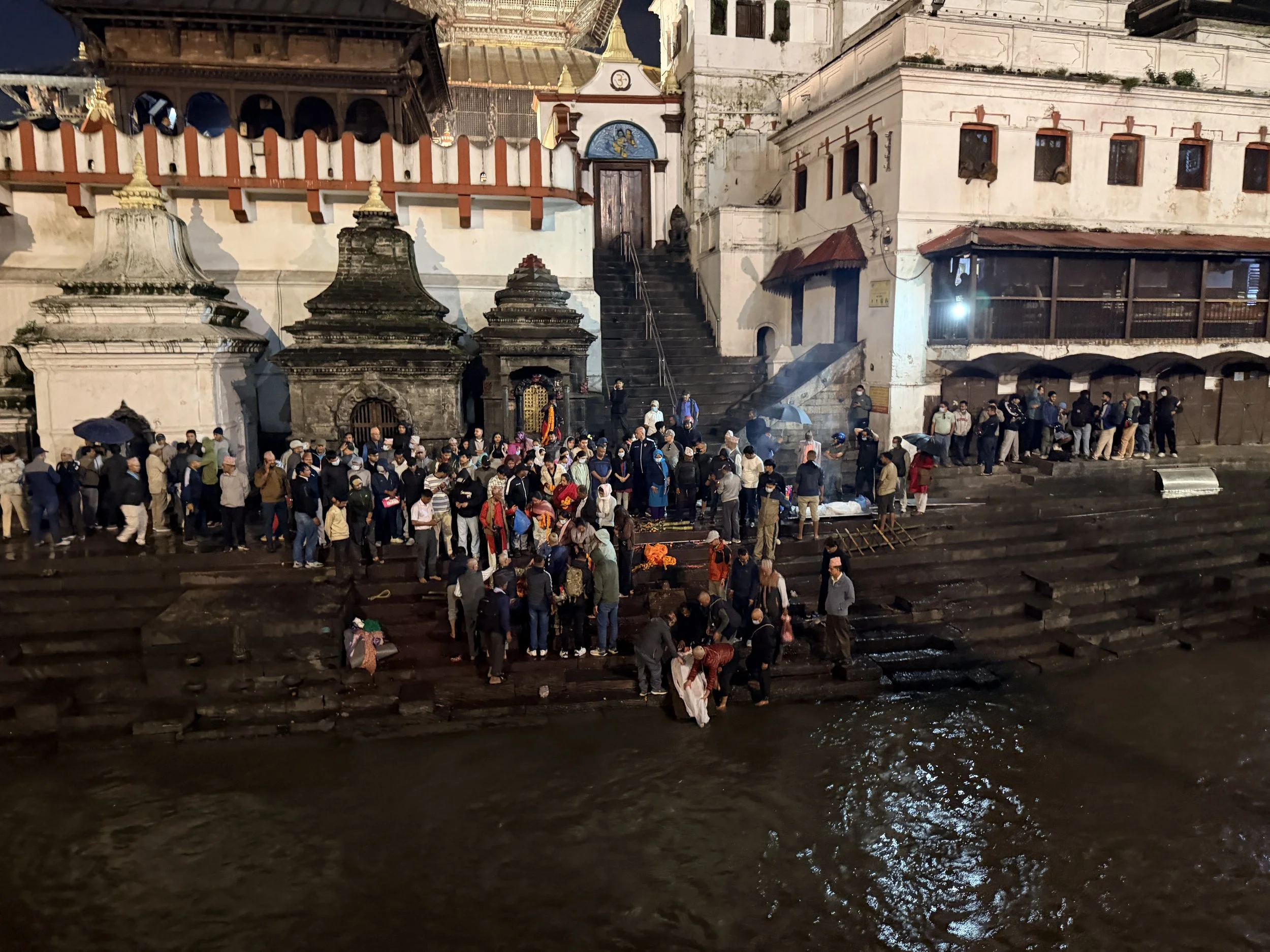
Still, witnessing these deeply personal moments in such a public setting was difficult for us to process. The experience left us emotionally shaken and almost speechless.
It had been a long day, filled with unfamiliar names, religious traditions, and extraordinary sights. There was far more to absorb than we could possibly remember.
From ancient royal courtyards and Buddhist stupas to evening prayers and cremation rituals, we witnessed how deeply religion remains woven into everyday life in Nepal. Some experiences were beautiful, others unsettling, but all gave us a deeper appreciation of the country’s rich cultural and spiritual traditions.
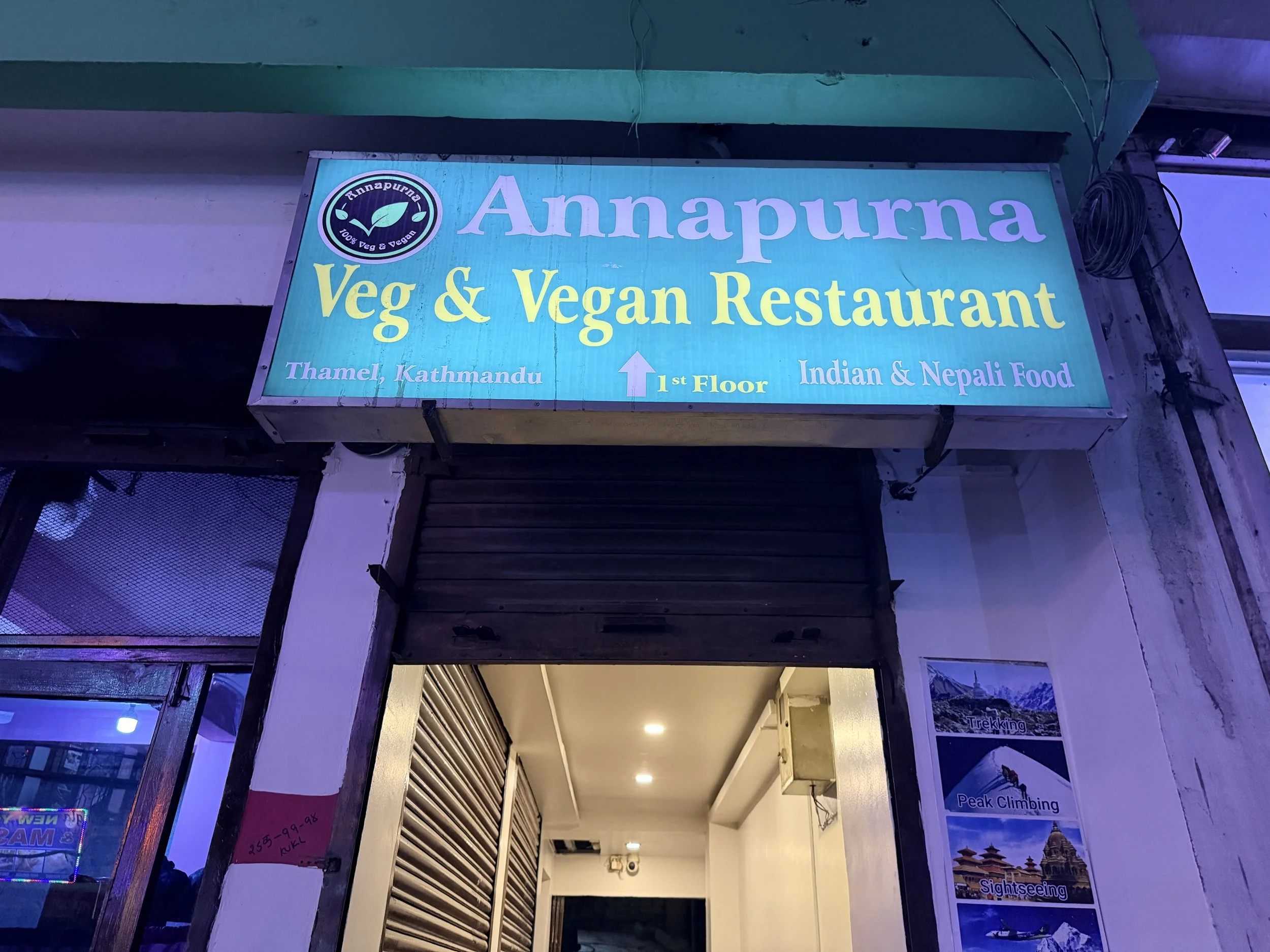
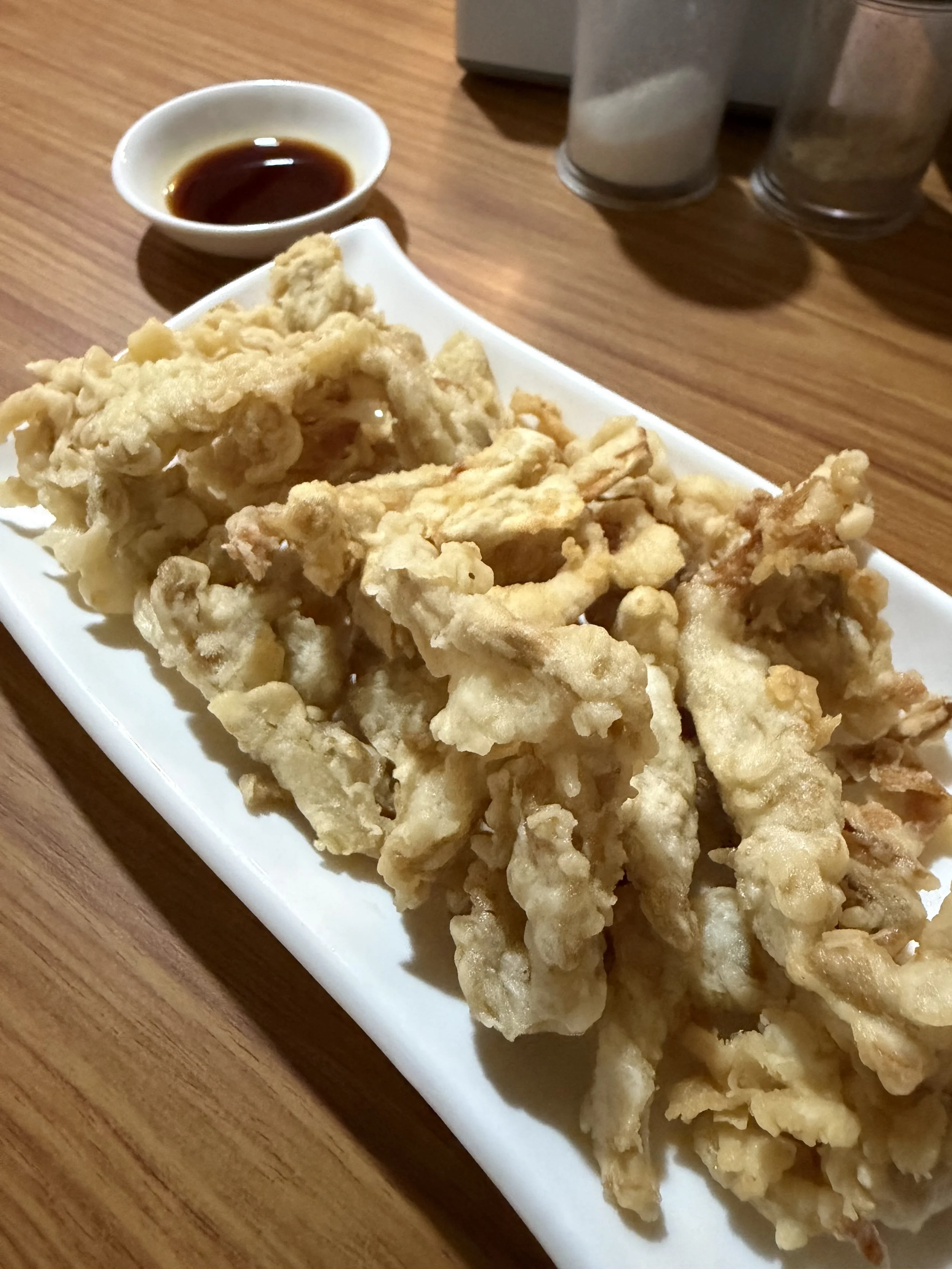
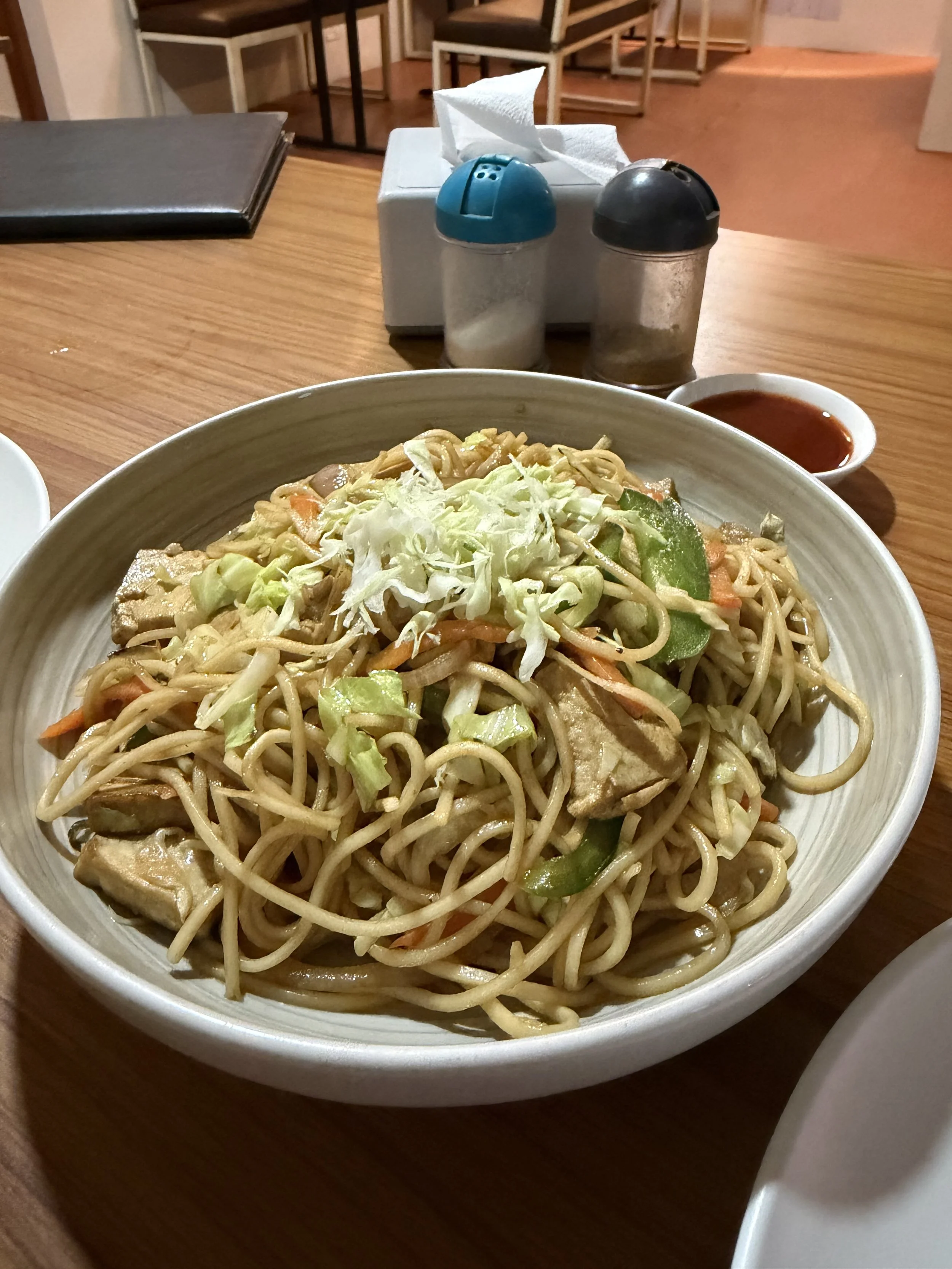
We went back to the same Vegan restaurant again and had a satisfying meal.
It was an exhausting but fascinating day, and one we would not soon forget.
2026年10月6日
加德满都谷地拥有七处联合国教科文组织世界文化遗产区。大多数旅行社提供一天参观四处甚至全部七处遗产的行程,但我们觉得这样未免太过匆忙。经过一番寻找,终于在 Viator 上找到一家提供两天私人游的旅行社,正好符合我们希望悠闲游览的节奏。
早餐后,导游和司机来到酒店接我们,开始了探索加德满都历史与文化的一天。
加德满都杜巴广场 (Kathmandu Durbar Square )
第一站是加德满都杜巴广场,这里曾是加德满都王国的王宫和宗教仪式中心。广场上寺庙林立,每一座都有自己的历史和宗教故事。面对这么多陌生的神灵、名字和传说,我实在难以一一记住。
我们首先来到卡尔·拜拉瓦神像(Kal Bhairav)前。这是一尊高约3.7米、色彩鲜艳的石雕,表现的是印度教湿婆神威严而凶猛的化身。许多信徒聚集在神像前虔诚祈祷。
走进哈努曼多卡王宫(Hanuman Dhoka Royal Palace)的纳萨尔庭院(Nasal Chowk),传统尼瓦尔建筑与欧洲风格建筑形成的鲜明对比令我们印象深刻。红砖砌成的宫殿、精美的木雕窗户和层叠的屋顶,与白色的欧式建筑并立,呈现出独特的建筑风貌。
我们登上了巴桑塔普尔九层塔(Basantapur Tower),从高处俯瞰周围的城市和脚下的王宫庭院。九层塔的红砖建筑和精致木雕令人赞叹。
下塔后,我们穿过一座白色的欧式宫殿,并在宽敞的大厅里拍照留念。没想到在传统的尼泊尔王宫建筑群中,竟然能看到如此浓厚的欧洲建筑风格,令人颇感意外。
随后,我们来到库玛丽女神庙(Kumari Ghar),这里是加德满都“活女神”的住所。可惜当天女神没有出现在窗口,我们无缘一睹她的风采。
斯瓦扬布纳特猴庙(Swayambhunath)
第二站是斯瓦扬布纳特佛塔,俗称猴庙,是尼泊尔最古老、最神圣的佛教圣地之一。
猴庙坐落在俯瞰加德满都的一座山丘上,关于它的起源还有一个有趣的传说。据佛教传说,加德满都谷地原本是一片巨大的湖泊,湖中出现了一朵散发神圣光芒的莲花,后来人们围绕这一神迹建立了圣地。
最引人注目的是一座巨大的白色半球形佛塔,顶部金色塔身的四面都绘有一双巨大的佛眼。这种独特的佛教建筑风格,对我们来说十分新奇。
主佛塔周围分布着许多小型佛教圣殿和印度教寺庙,体现了佛教与印度教在尼泊尔长期共存、相互交融的传统。猴子和狗在寺庙周围自由自在地走动,我们则从山顶欣赏了加德满都谷地的壮丽全景。
我们还参观了一所唐卡绘画学校(Thangka Painting School),初步了解了这种传统的藏传佛教绘画艺术。尤其是曼荼罗(Mandala)绘画,精细复杂的几何图案及其背后的宗教象征意义,让我们十分着迷。听完介绍后,更加佩服画师创作这些作品所需要的耐心和技艺。虽然有些心动,最后还是没有购买。
帕坦杜巴广场(Patan Durbar Square)
接着,我们来到帕坦杜巴广场,这也是加德满都谷地的世界文化遗产之一。
帕坦又称拉利特普尔(Lalitpur),曾是一个独立王国的首都。广场上宏伟的寺庙、王宫庭院、精美的木雕窗户和细致的石雕,充分展现了尼瓦尔工匠高超的建筑与艺术水平。
有趣的是,加德满都、帕坦和巴克塔普尔曾经是三个相互独立的王国,各自建造王宫、寺庙,并发展出独特的艺术传统。虽然它们拥有许多共同的文化特色,但每座城市又有自己的风格。
离开前,导游还带我们参观了一家藏式颂钵店,体验所谓的声音疗法。演示倒是挺有意思,不过对于它宣称的治疗效果,我们仍然半信半疑,尤其不相信它能改善我的膝盖问题。
帕斯帕提那寺(Pashupatinath Temple)
当天参观的最后一处世界文化遗产是帕斯帕提那寺,这是尼泊尔最神圣的印度教寺庙之一。
我们沿着寺庙周围和巴格马蒂河(Bagmati River)散步。出乎意料的是,下午这里并没有太多活动。只看到几群人坐在河边一起吃东西,我们猜想他们可能正在举行纪念逝去亲人的某种仪式。
因为晚上还要回来观看阿尔蒂祈福仪式,我们没有久留,而是返回市中心,享用了一顿美味的素食午餐。这自然让 Christine 十分开心。
巴格马蒂河晚间祈福仪式(Bagmati Aarti)
傍晚,我们再次来到帕斯帕提那寺,观看在神圣的巴格马蒂河畔举行的印度教阿尔蒂祈福仪式。由于白天已经购买了门票,晚上再次入园无需付费,省下了每人1000尼泊尔卢比的门票钱。
刚进入寺庙区域,我们就被眼前的景象震惊了:河边四,五座露天火葬台上,火焰熊熊燃烧,浓烟不断升起。
这是我们第一次亲眼目睹印度教的露天火葬仪式。在我们熟悉的文化中,葬礼通常是家人和亲友之间较为私密的事情,因此看到火葬仪式如此公开地进行,让我们既感到震惊,也深受触动。
随后,我们来到河边观看晚间祈福仪式。三位祭司手持大型多层油灯,随着宗教吟唱、铃声和音乐,有节奏地挥动灯火,动作整齐而优美。一位女士随着音乐翩翩起舞,祭司们则继续挥舞着火焰。摇曳的灯光、悠扬的吟唱和优美的舞姿交织在一起,营造出一种令人陶醉的氛围。
然而,就在河的对岸,火葬台上的烈火仍在燃烧,浓烟不断升起。一边是充满热情与活力的宗教祈福,另一边却是庄严肃穆的生命告别。两种截然不同的场景同时展现在眼前,给我们留下了难以磨灭的印象。
仪式结束后,我们又走近火葬区,观看了部分遗体火化前的准备过程。对于印度教徒来说,在神圣的巴格马蒂河畔举行火葬,是一项重要的宗教传统,与死亡、净化和生命轮回的信仰密切相关。
然而,亲眼目睹这些原本在我们看来极为私密的生死时刻,如此公开地展现在众人面前,仍然让我们一时难以接受。那种强烈的情感冲击,使我们久久说不出话来。
这一天的行程很长,接触了太多陌生的名字、宗教传统和历史知识,也见识了许多前所未见的景象,实在难以全部消化和记住。
从古老的王宫庭院、佛教佛塔,到夜晚的宗教祈福和河边的火葬仪式,我们深切感受到宗教信仰如何融入尼泊尔人的日常生活。有些经历令人赞叹,有些则让我们震撼甚至不安,但都使我们对这个国家丰富的文化和精神传统有了更深的认识。
这是漫长而疲惫的一天,却也是充满新奇、令人难忘的一天。