Beyond the palaces 王宫之外
August 2, 2026
We began the day at Christiansborg Palace,……
前二天参观皇家马厩的时候被告知每天早上9点到下午2点,。。。
August 2, 2026
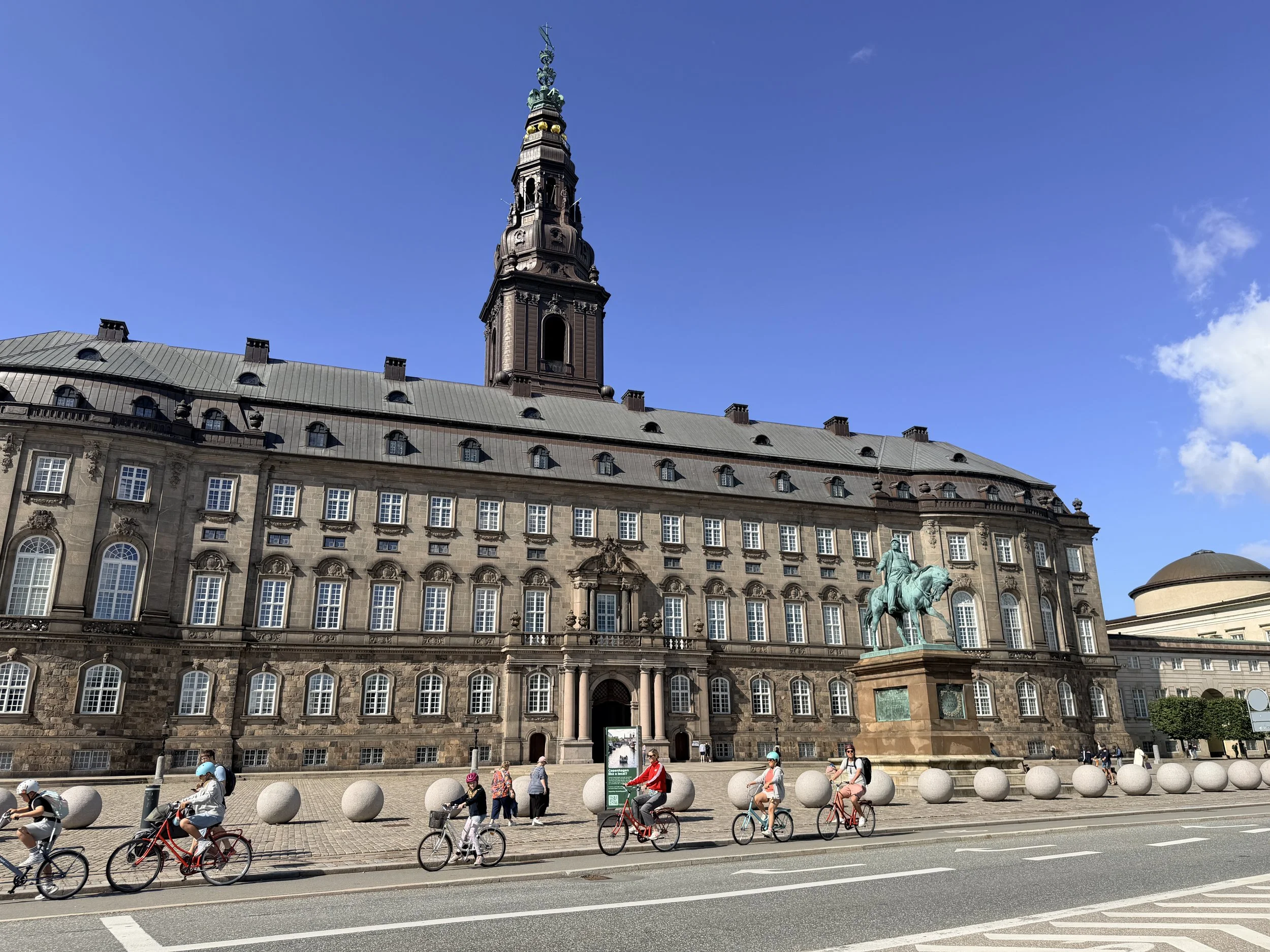
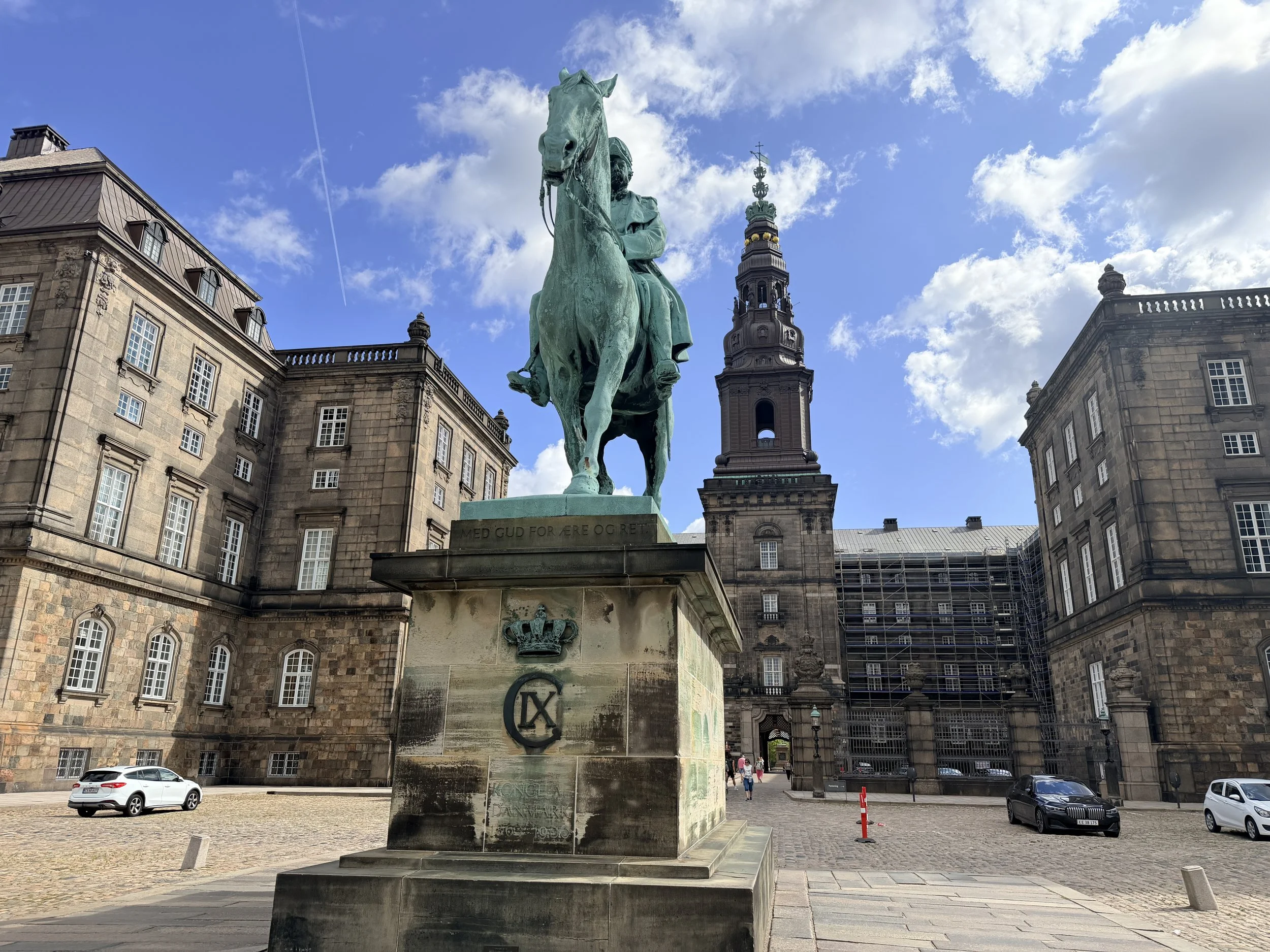
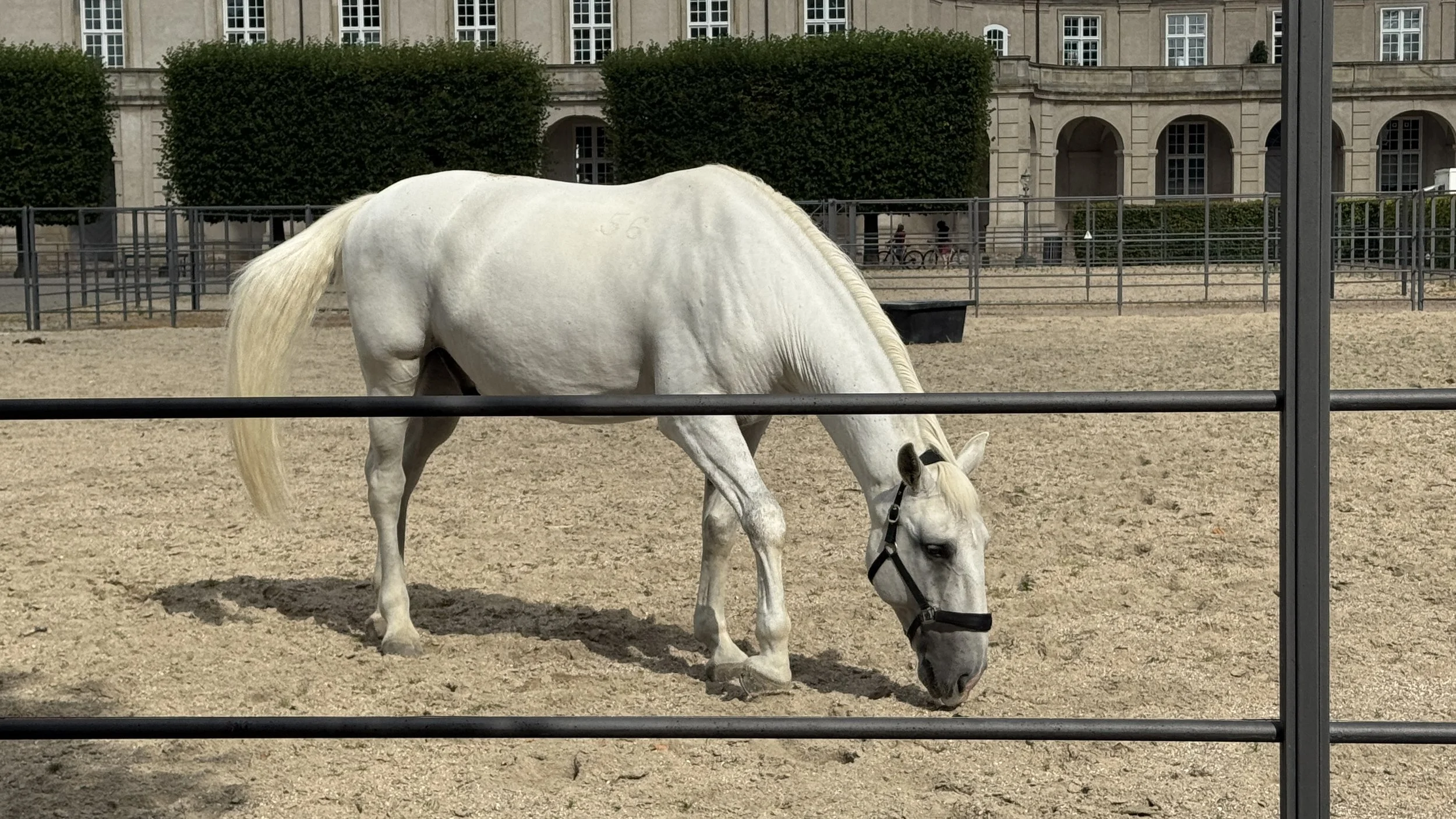
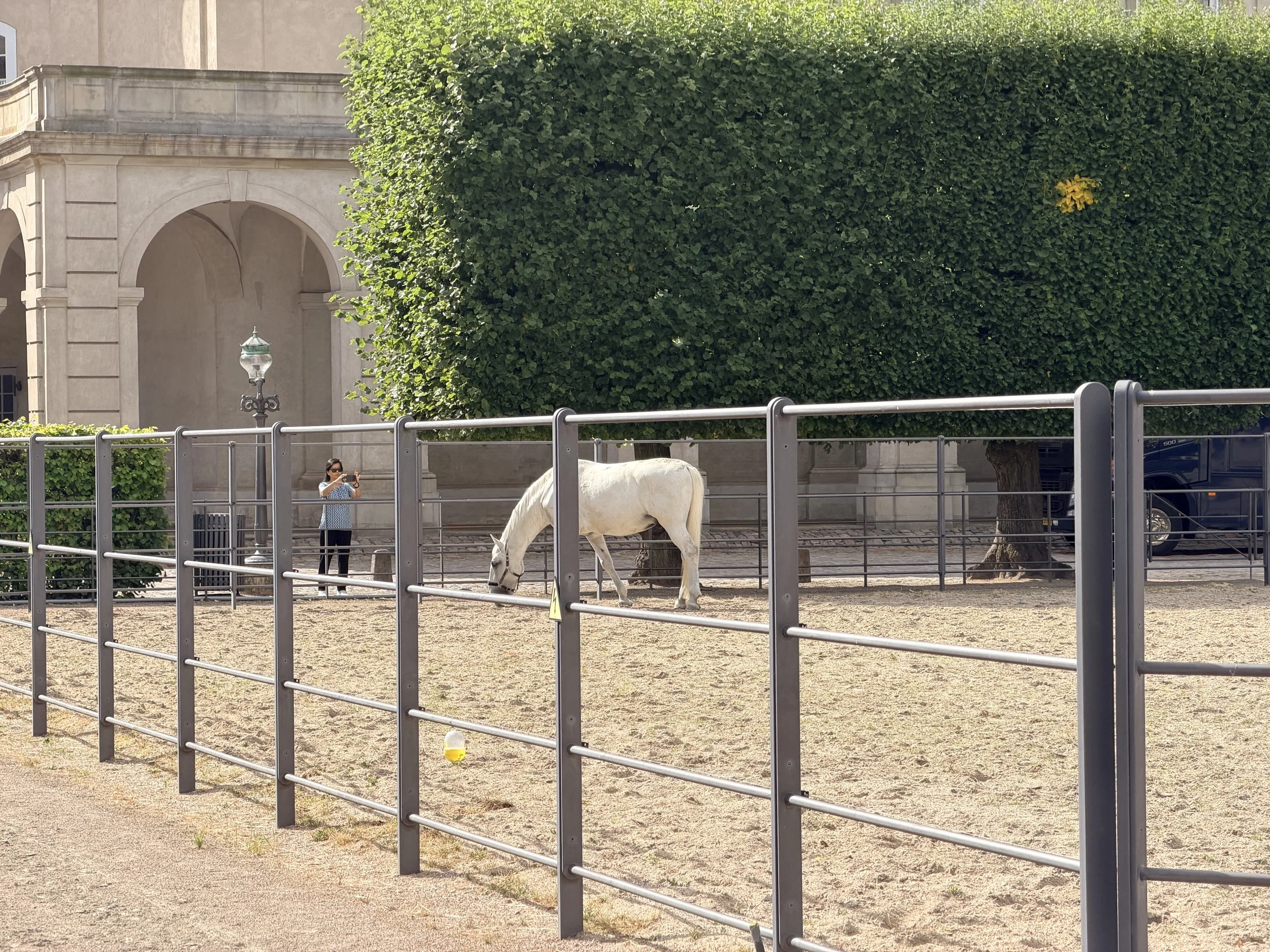
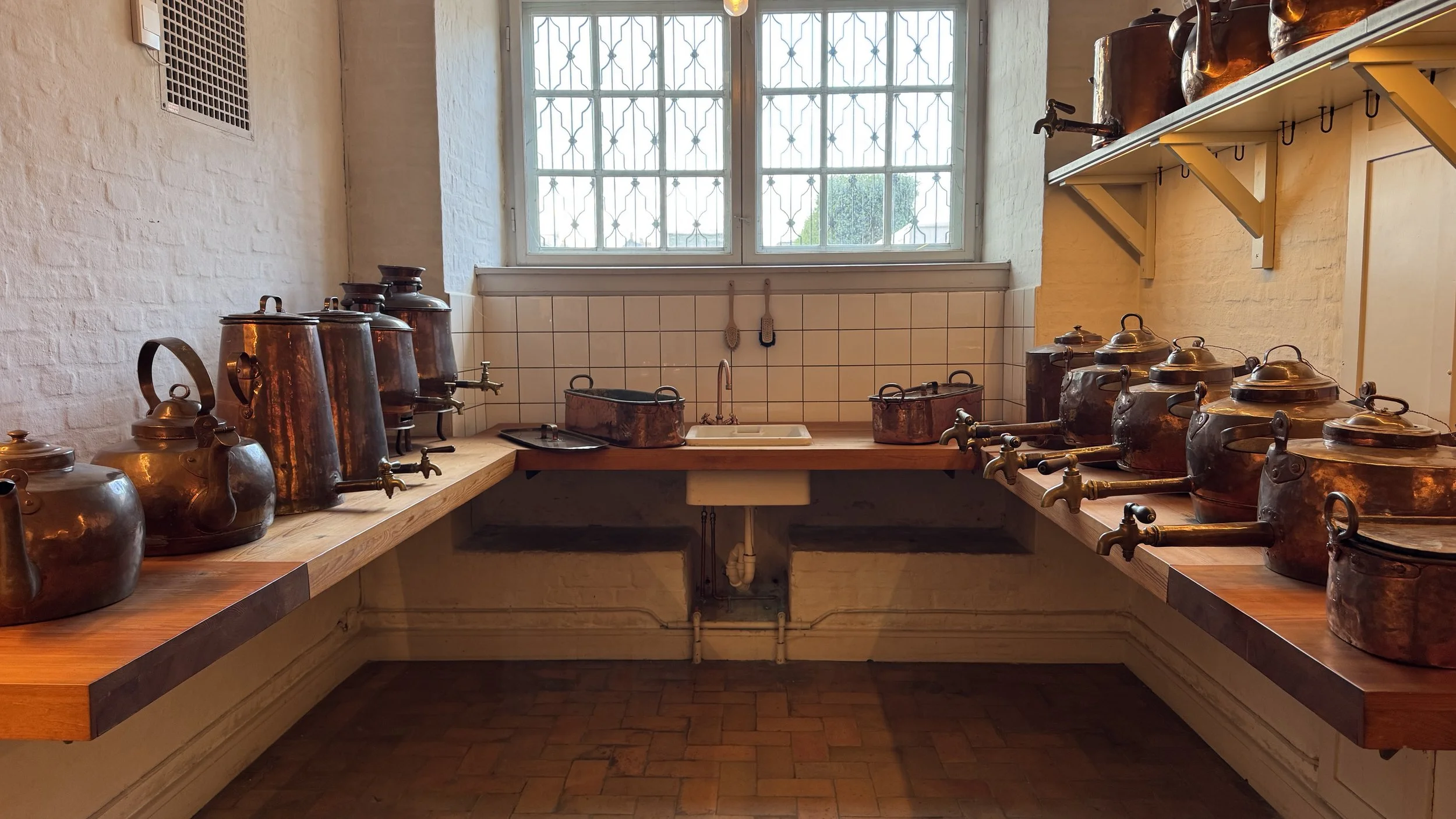
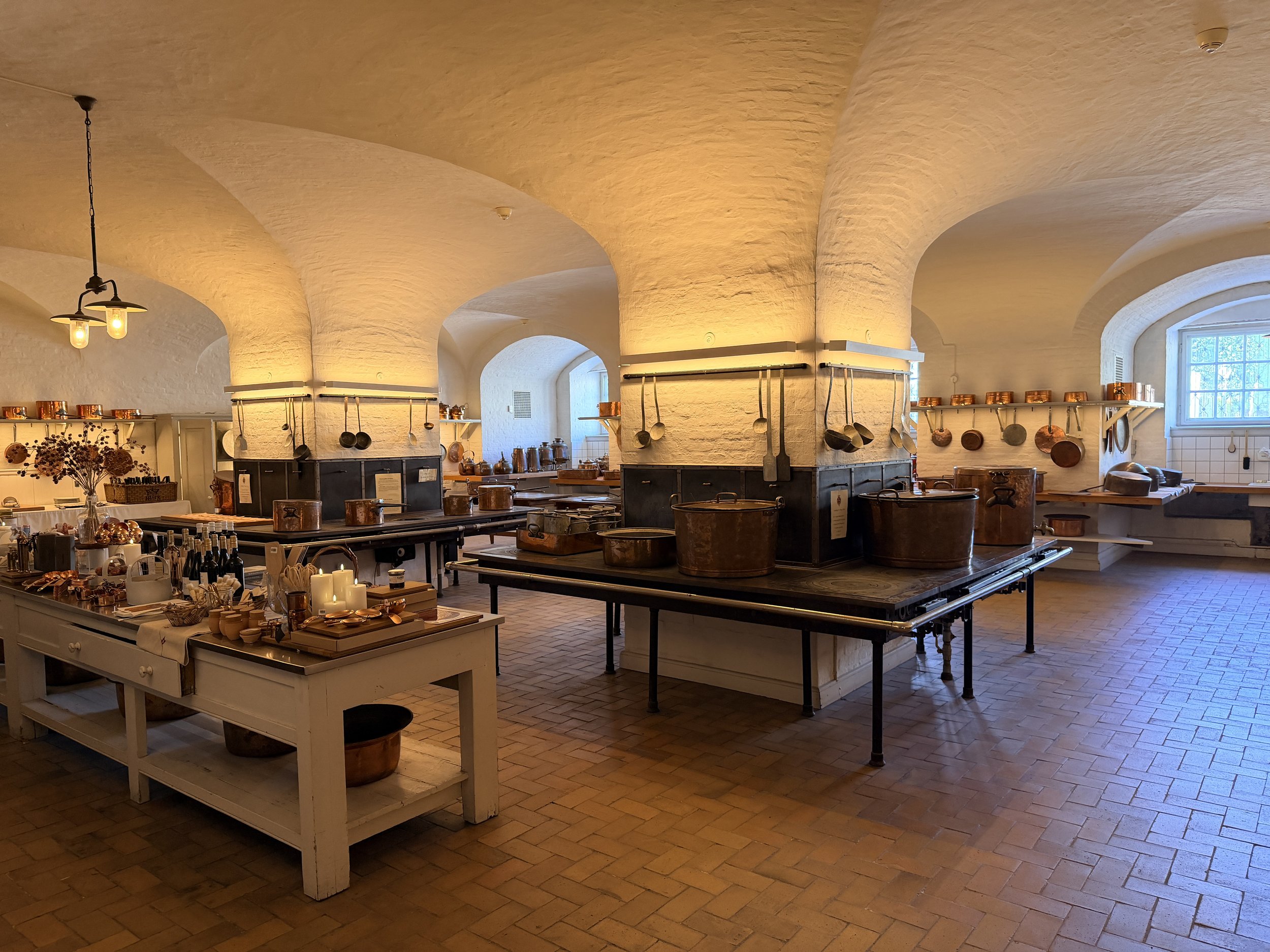
We began the day at Christiansborg Palace, where we visited the Royal Stables to see the white horses before touring the Royal Kitchen. The kitchen offered an interesting glimpse into how lavish banquets were once prepared for the Danish royal family.
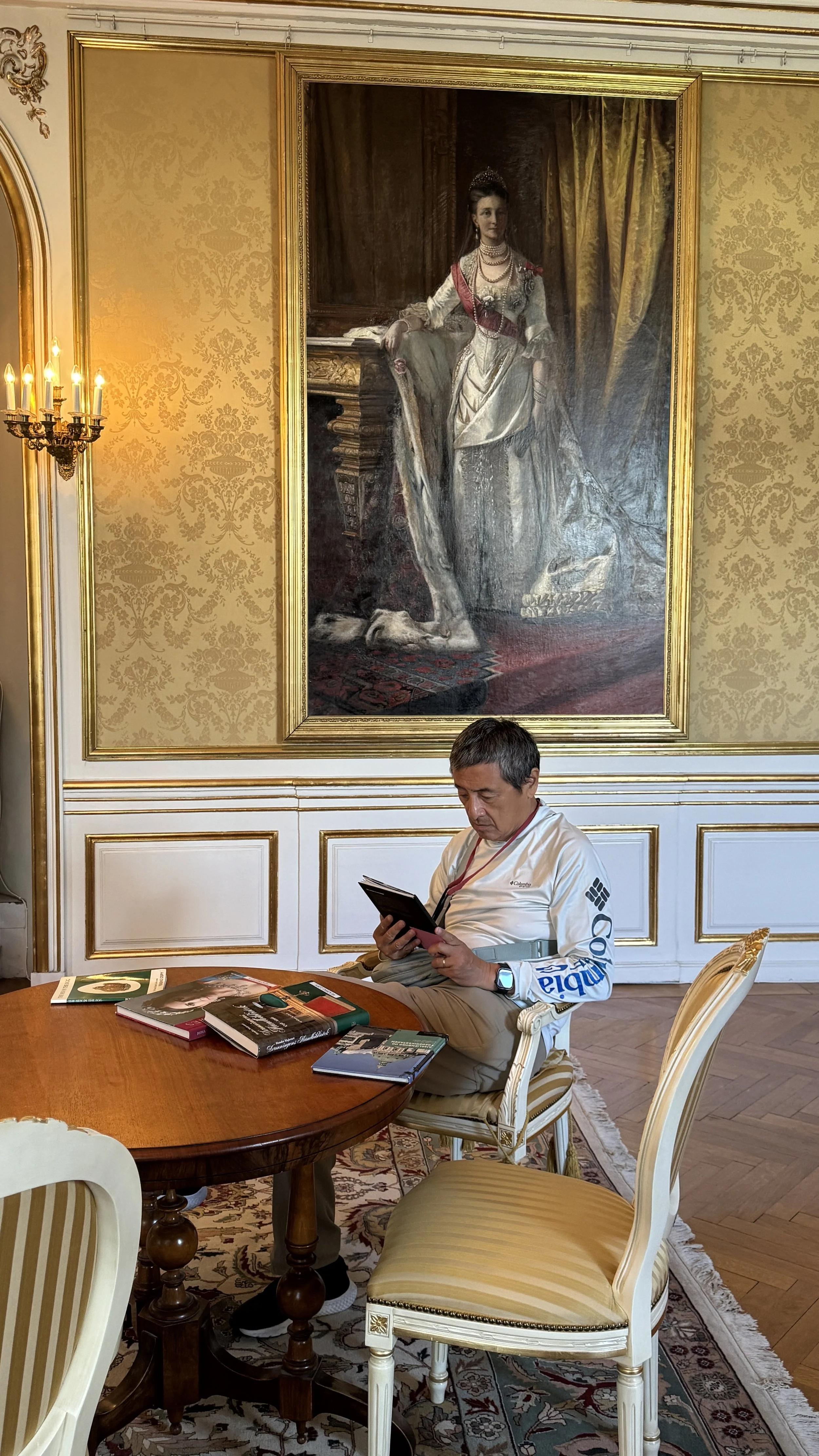
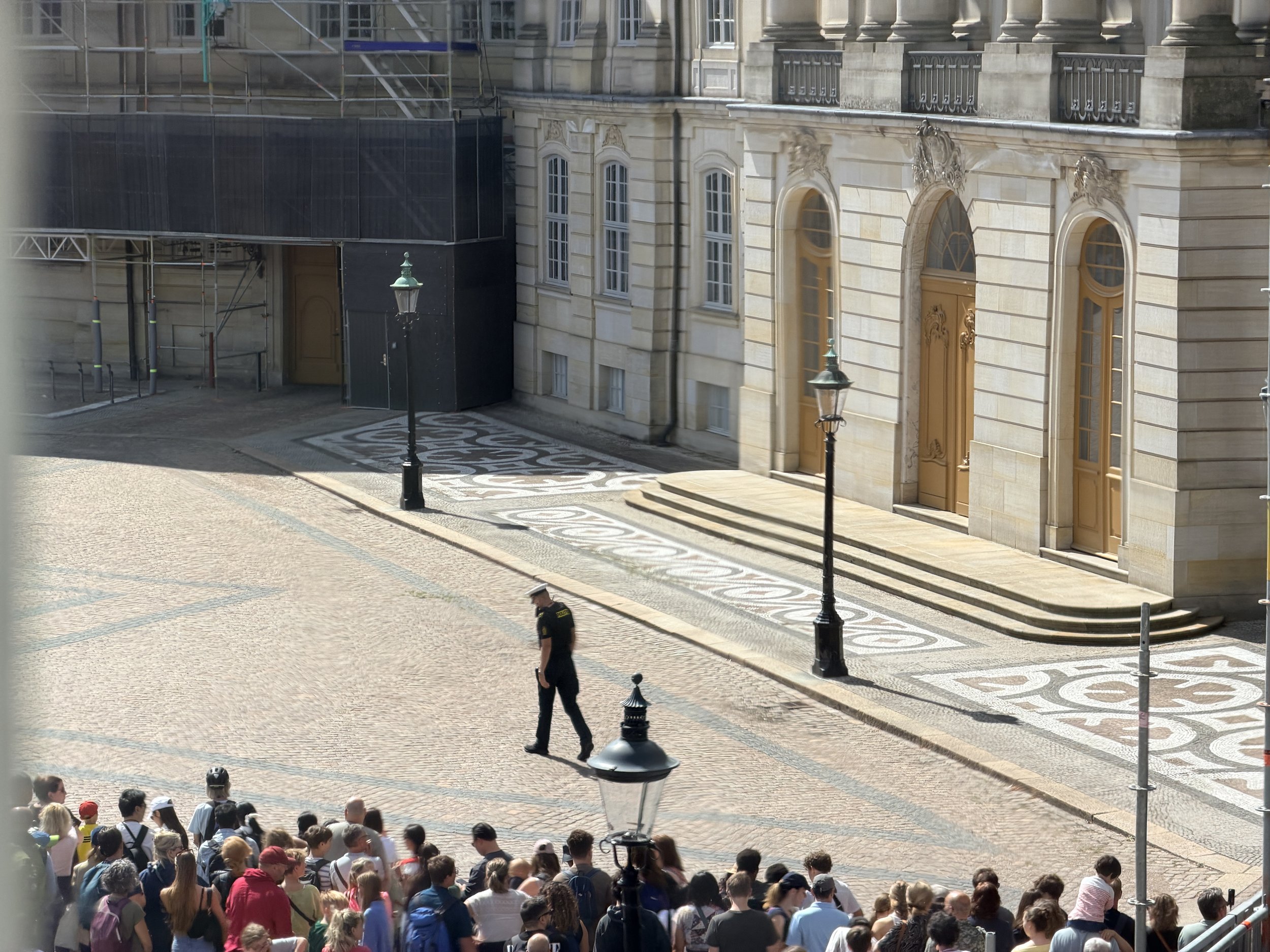
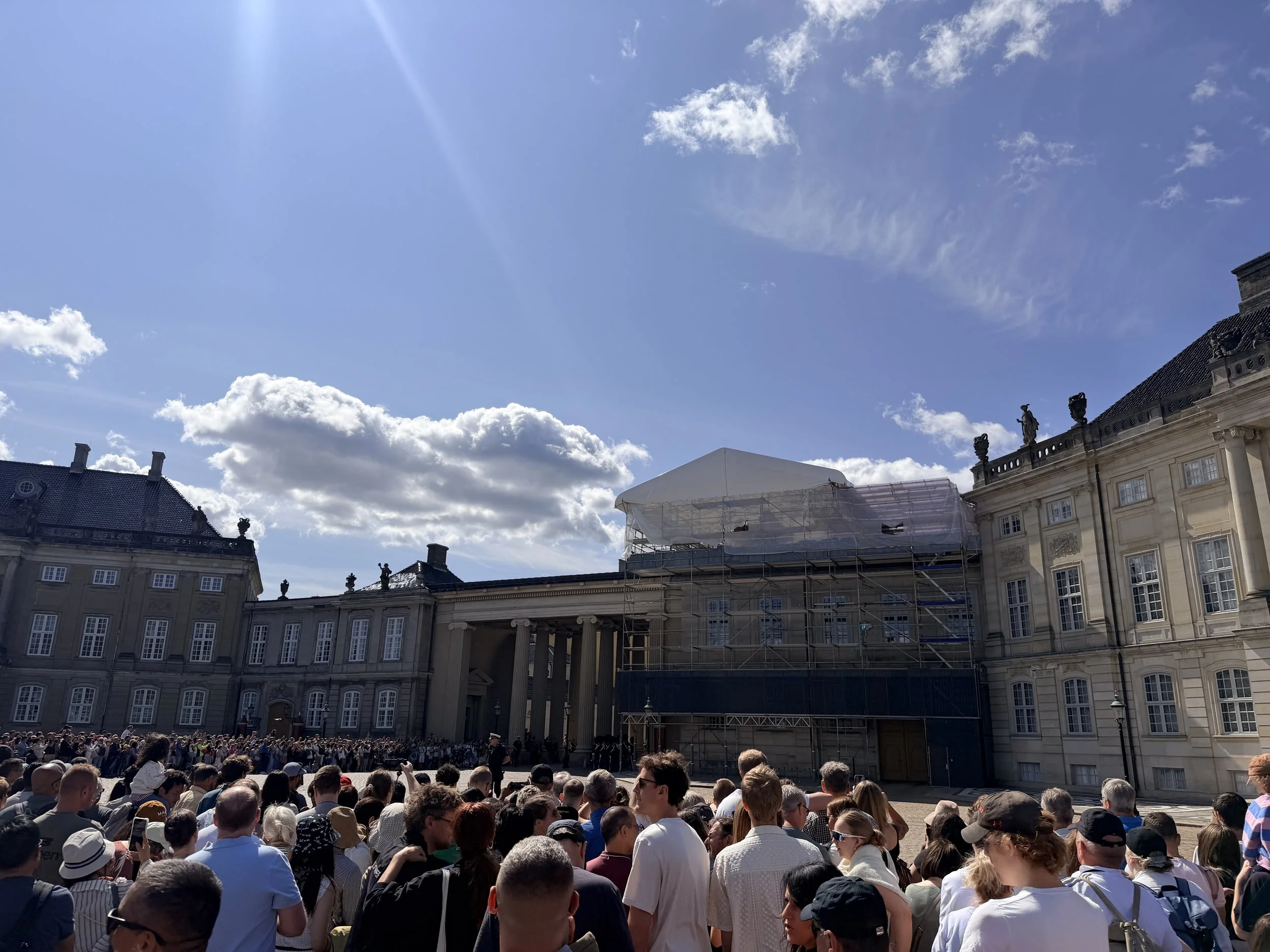
The third royal residence we visited during our stay in Copenhagen was Amalienborg Palace, the current home of the Danish royal family. The museum focuses on the history of the monarchy, particularly the reigns of the kings named Christian and Frederik. By this point, however, we felt we had reached our limit on Danish royal history—there was simply too much information to absorb after visiting so many palaces.
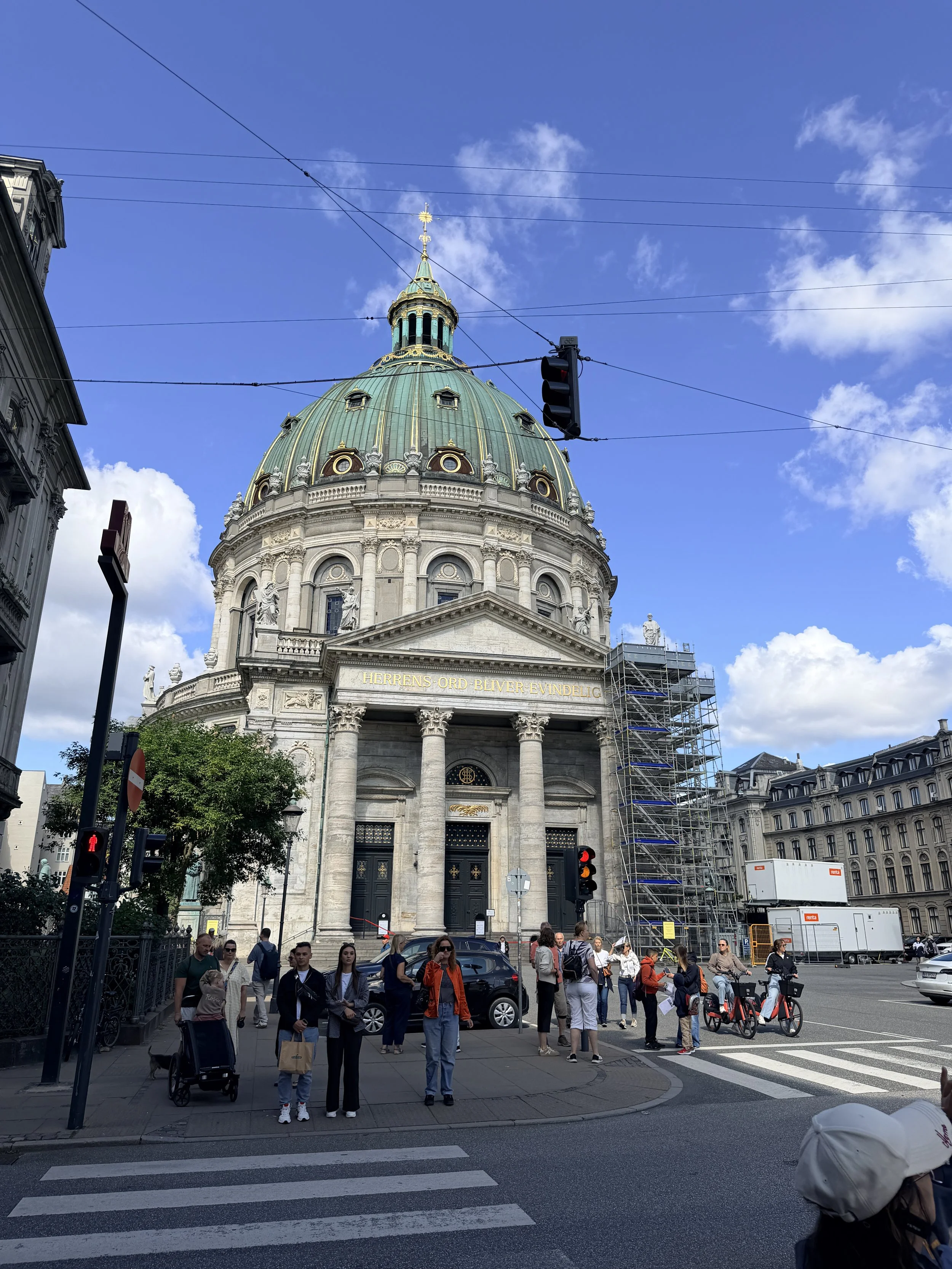
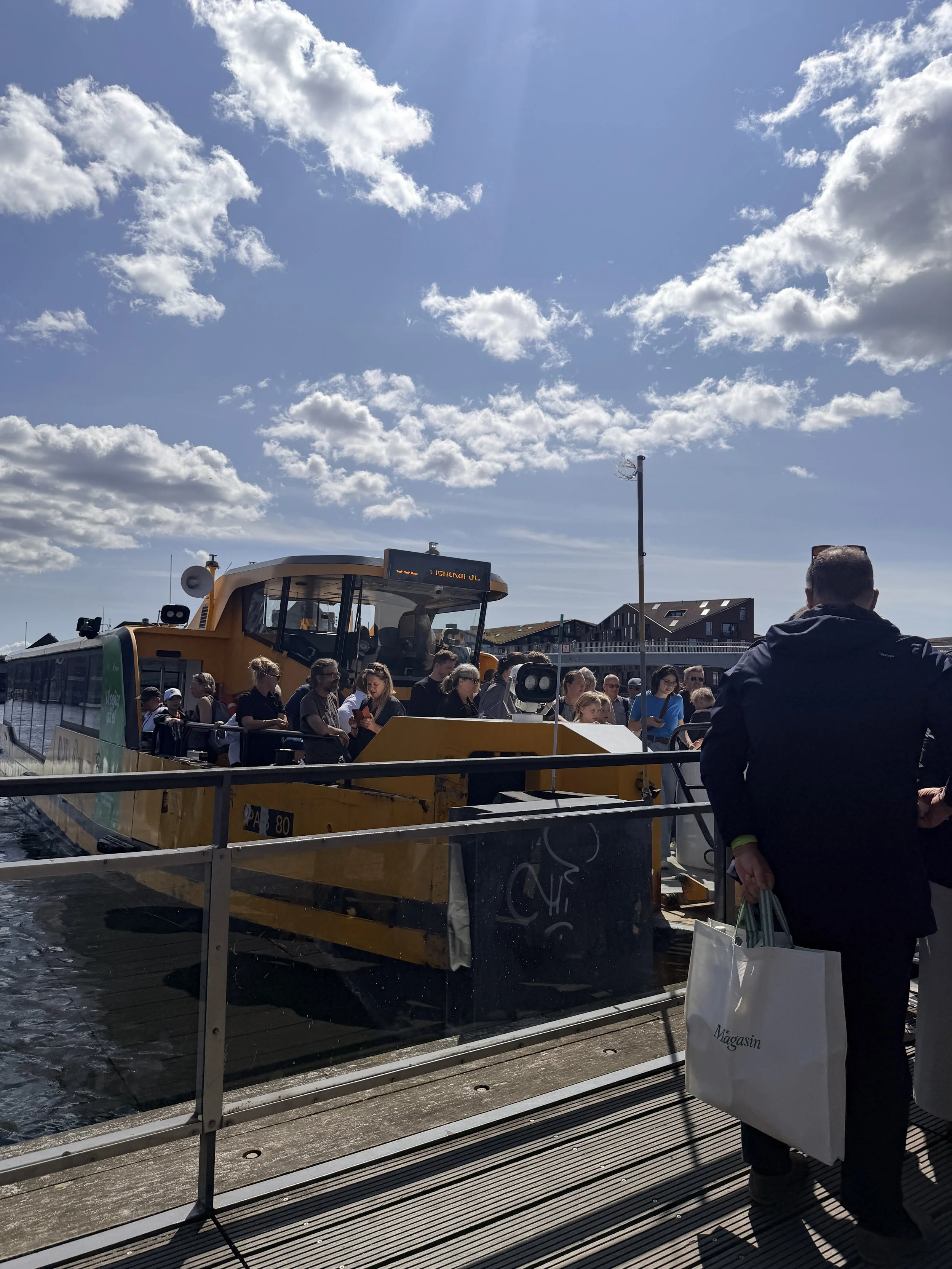
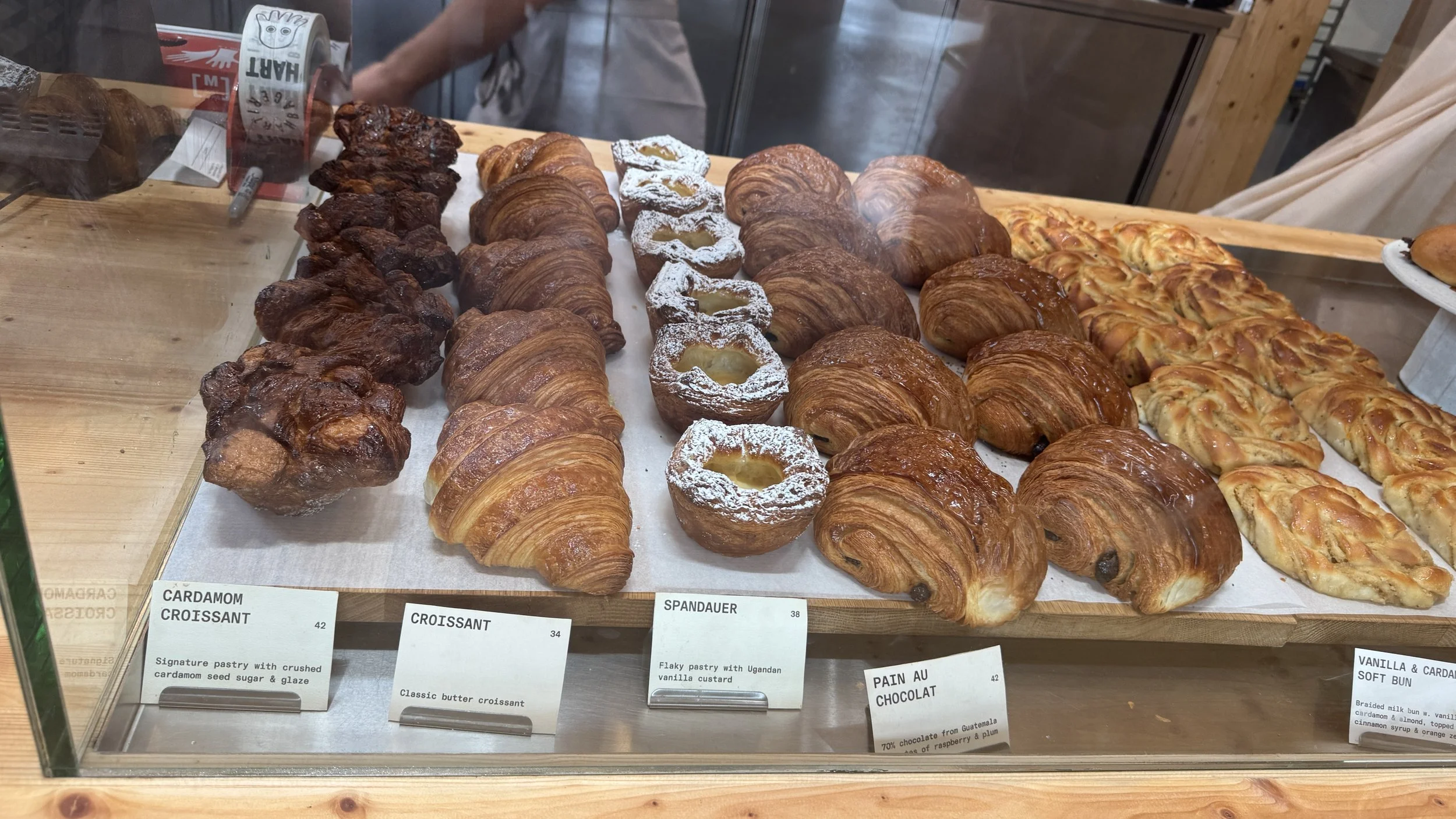
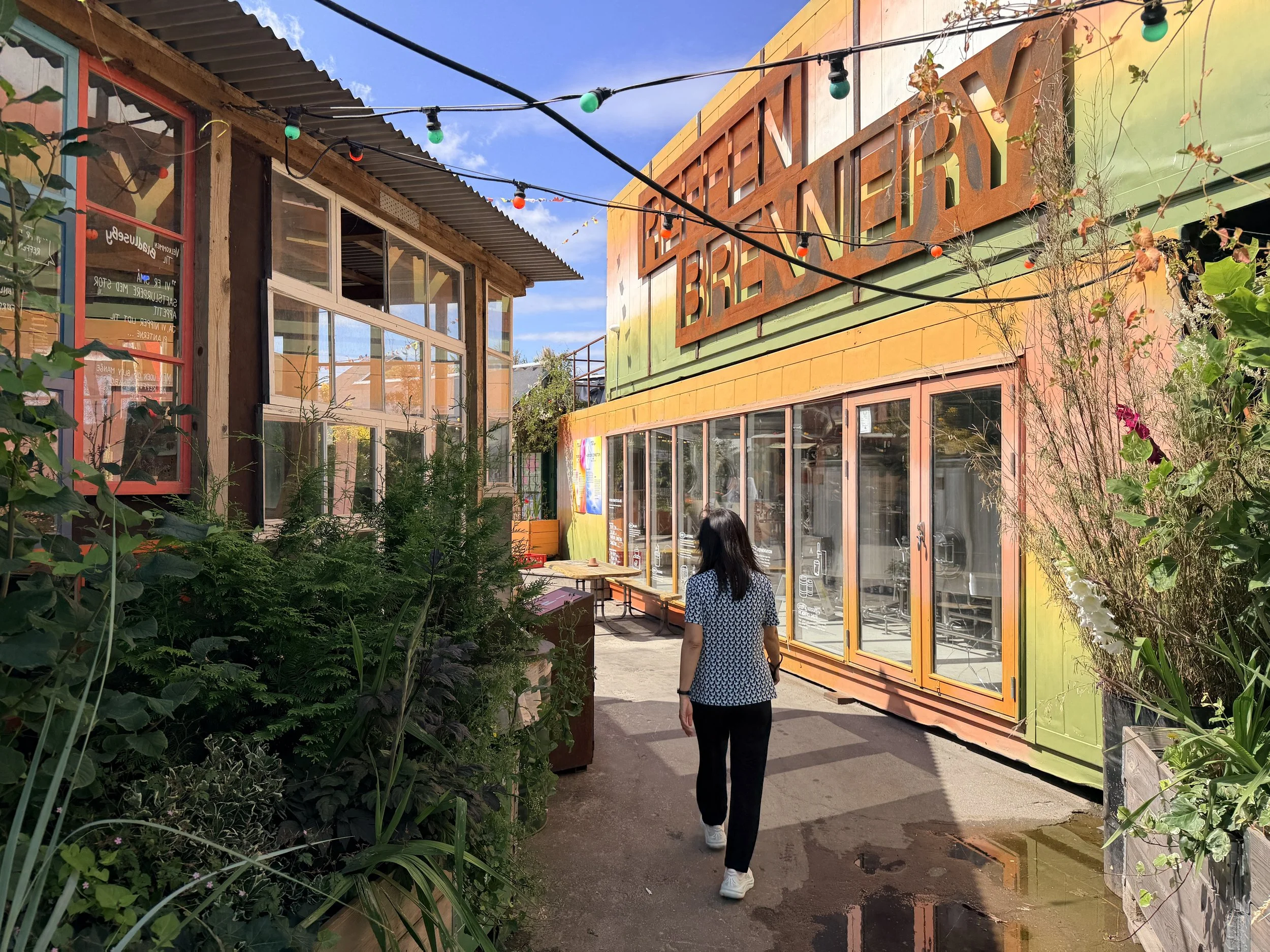
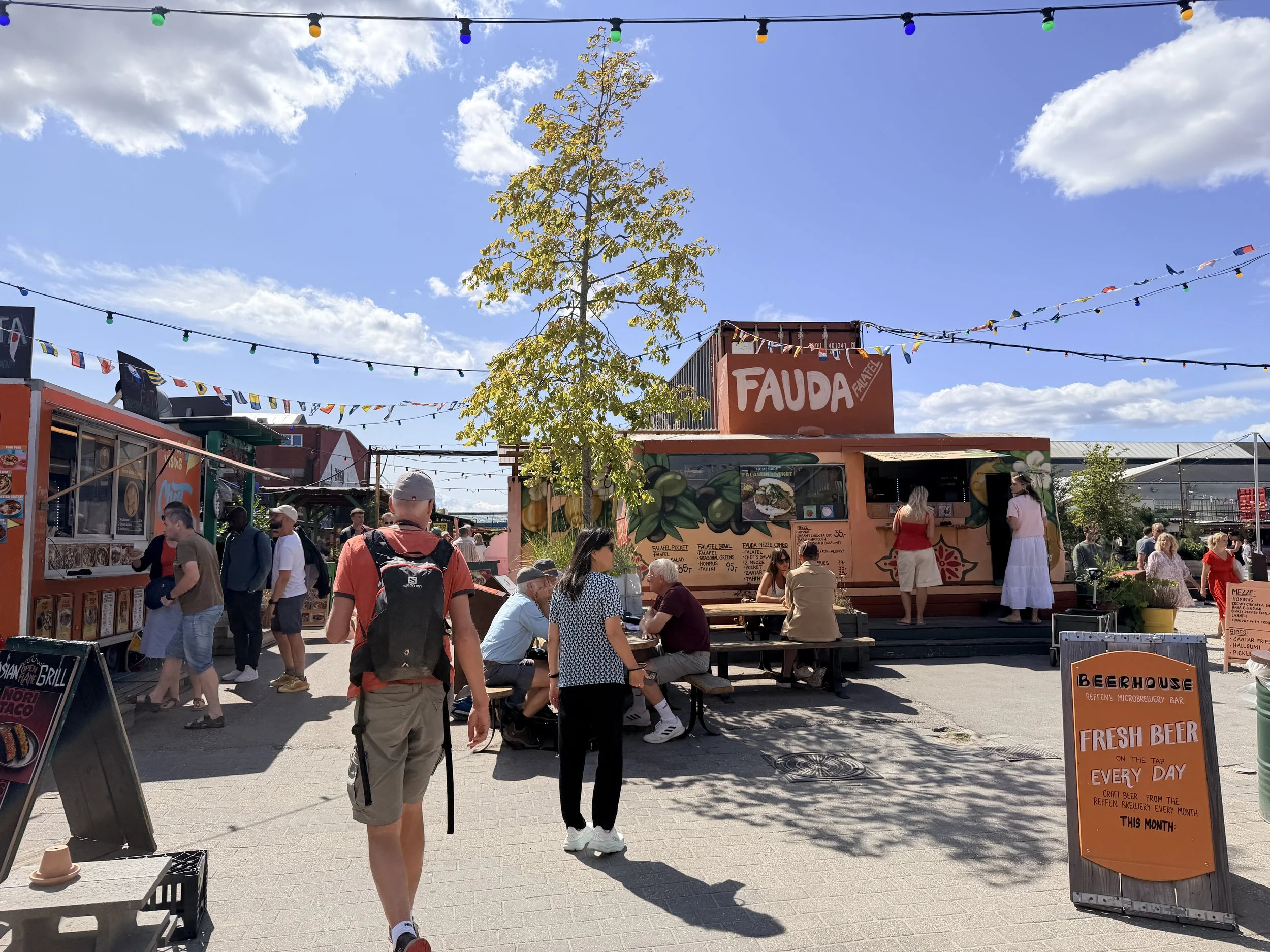
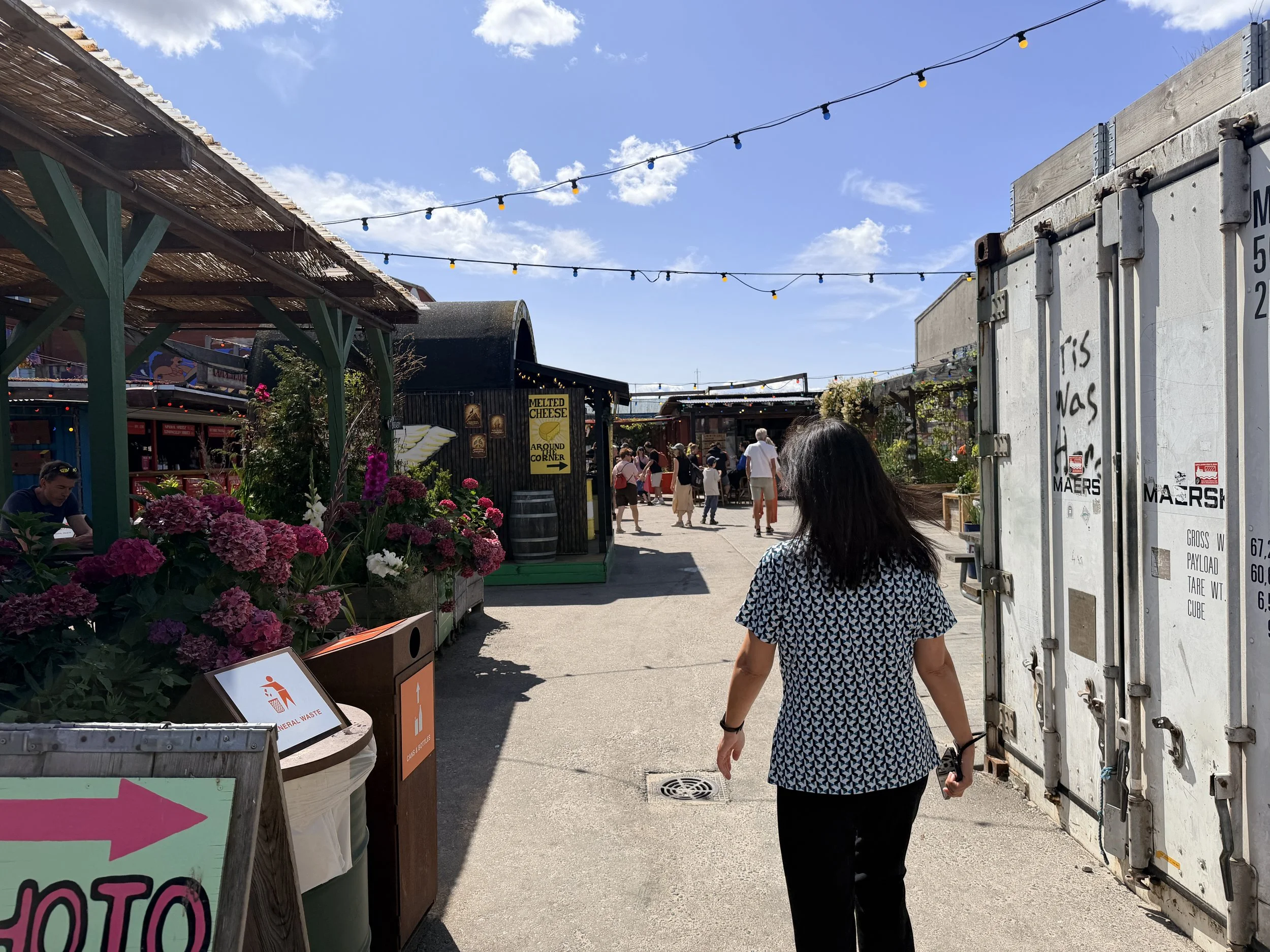
From there, we boarded the yellow harbor bus and crossed the canal to Reffen Street Food Market for lunch. On the way, we stopped at Hart Bakery to try its famous cardamom bun. It was so delicious that we bought another one before leaving the area.
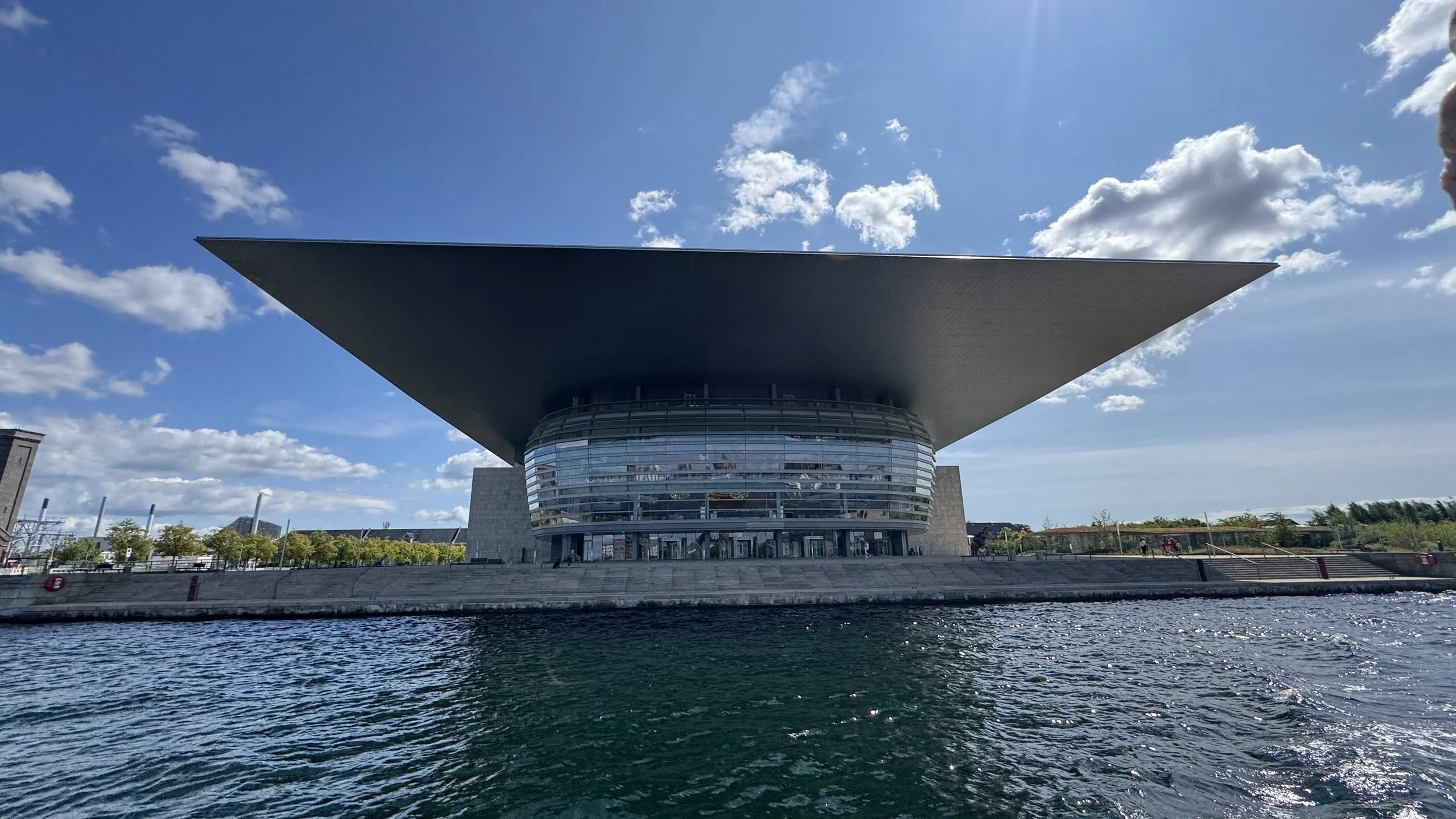
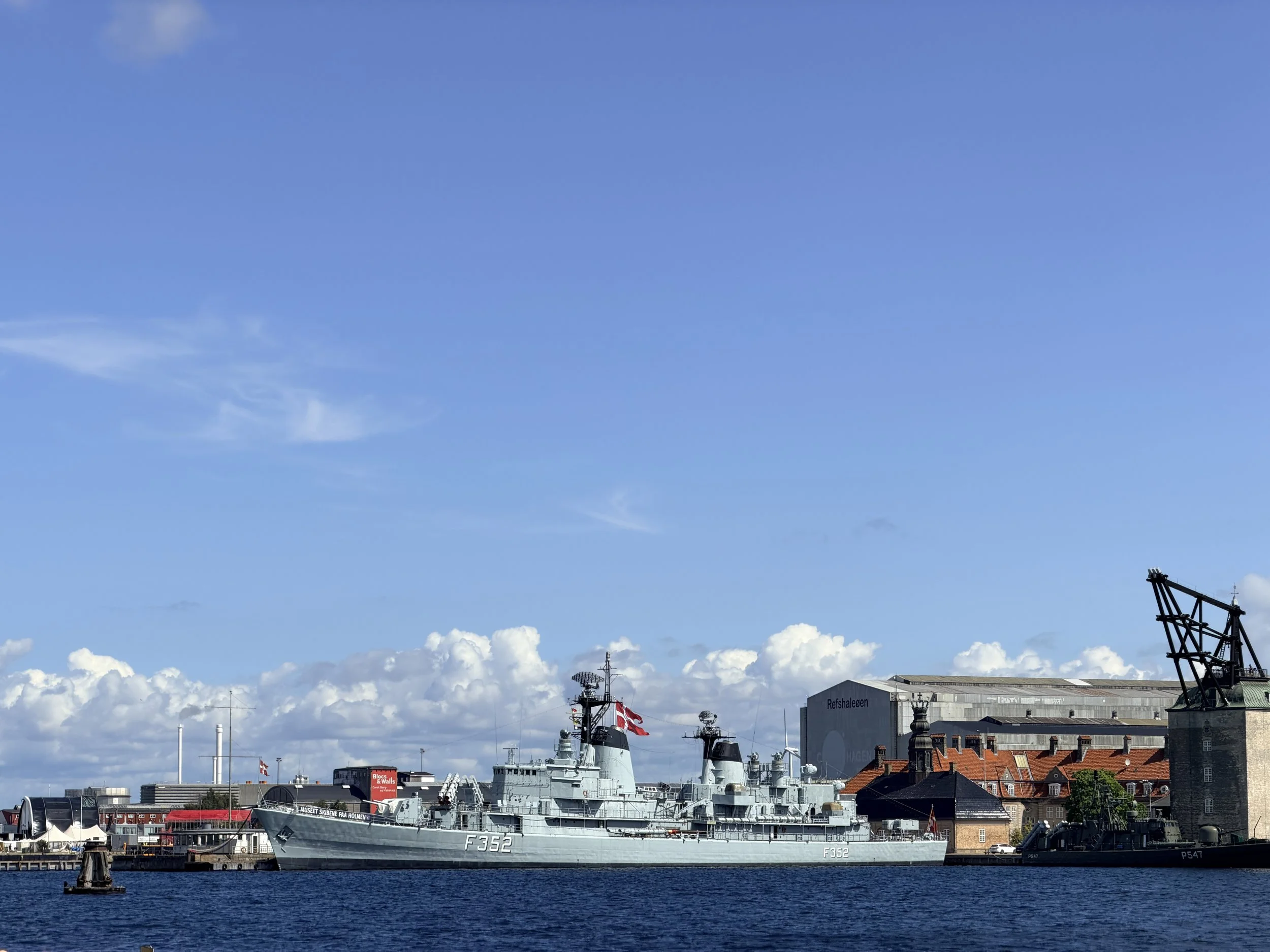
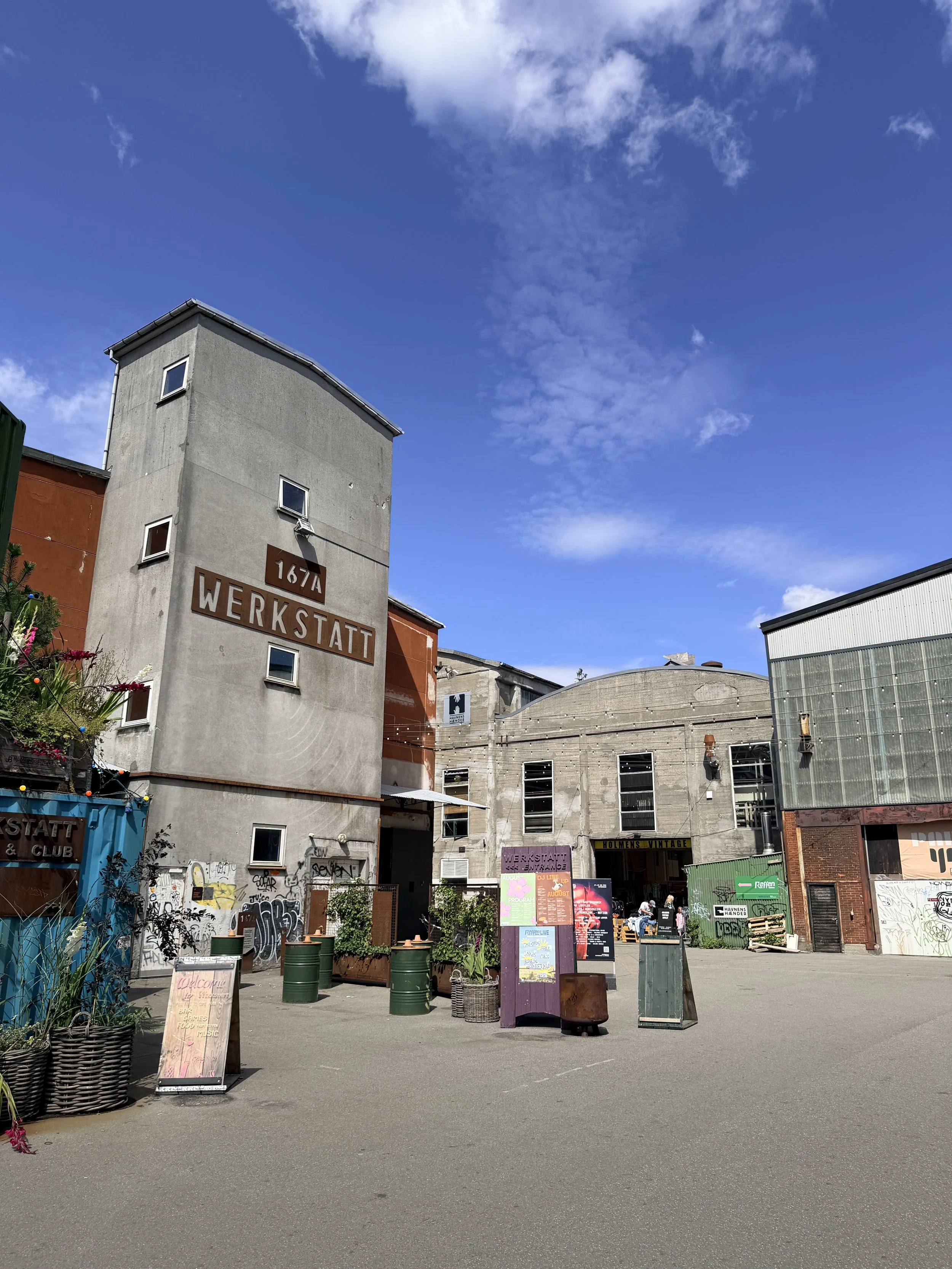
Reffen offered an impressive variety of cuisines from around the world. We finally sampled a traditional Danish hot dog, but at nearly $10 for such a small hot dog, it was hardly a bargain.
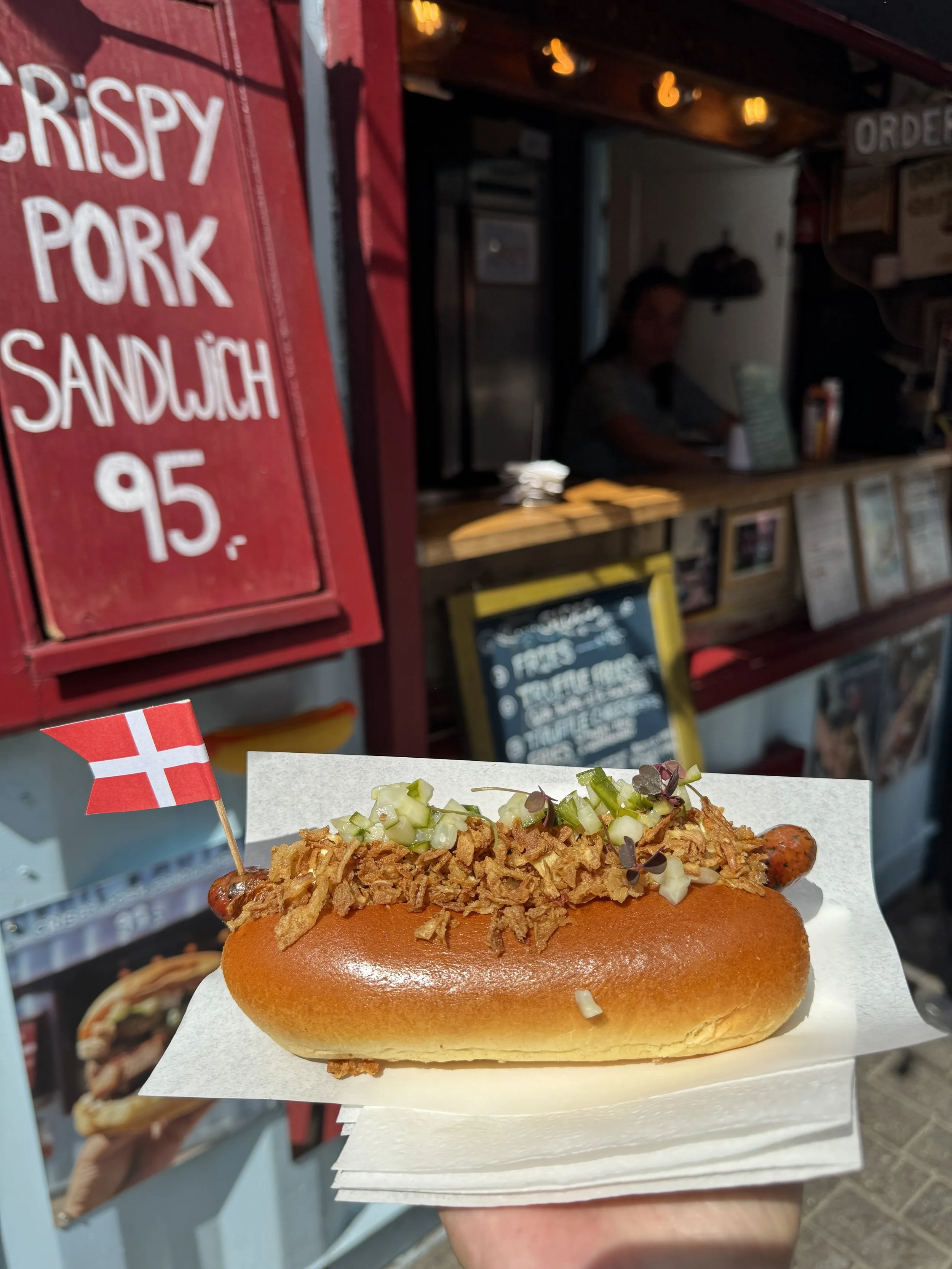
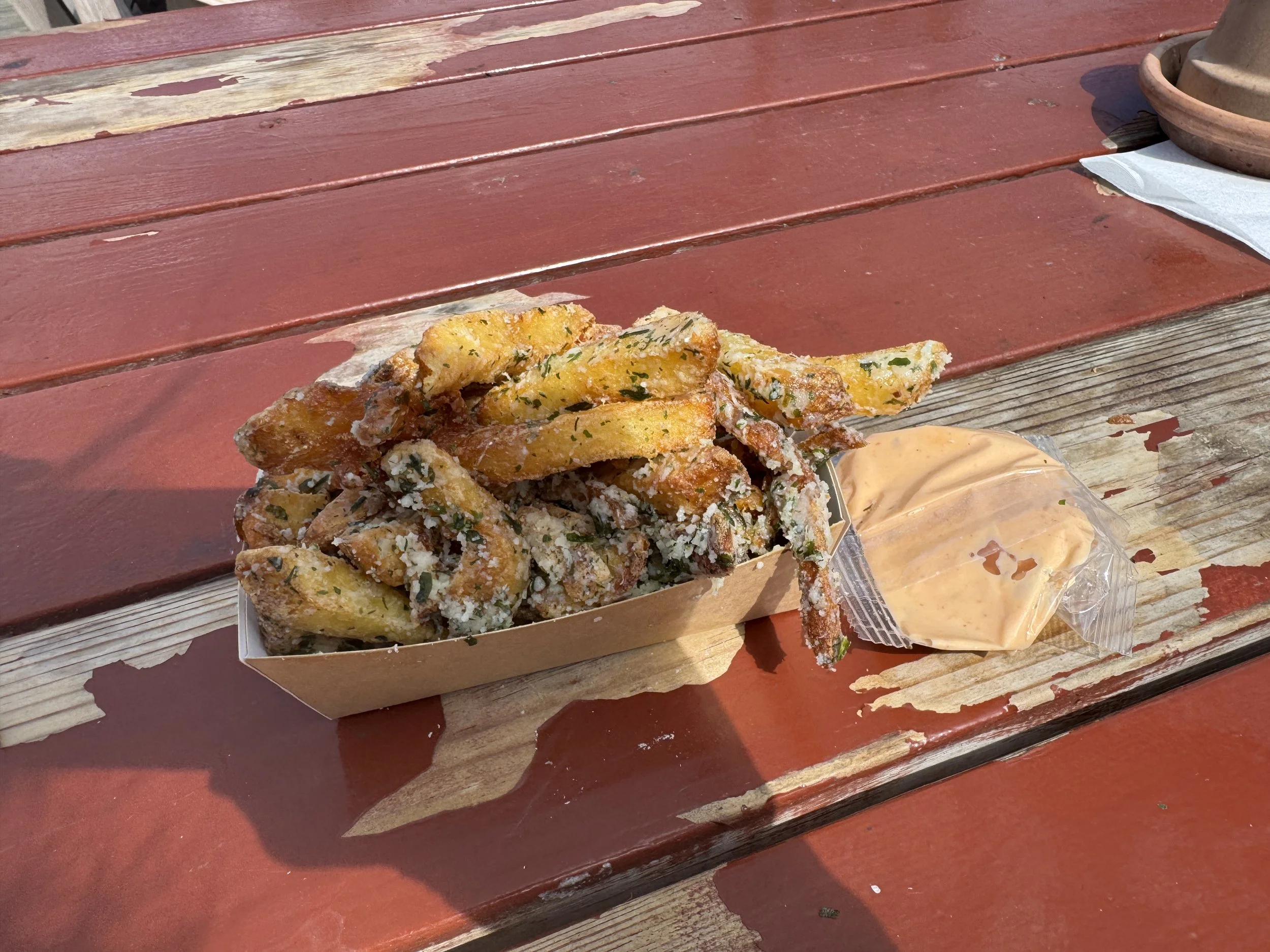
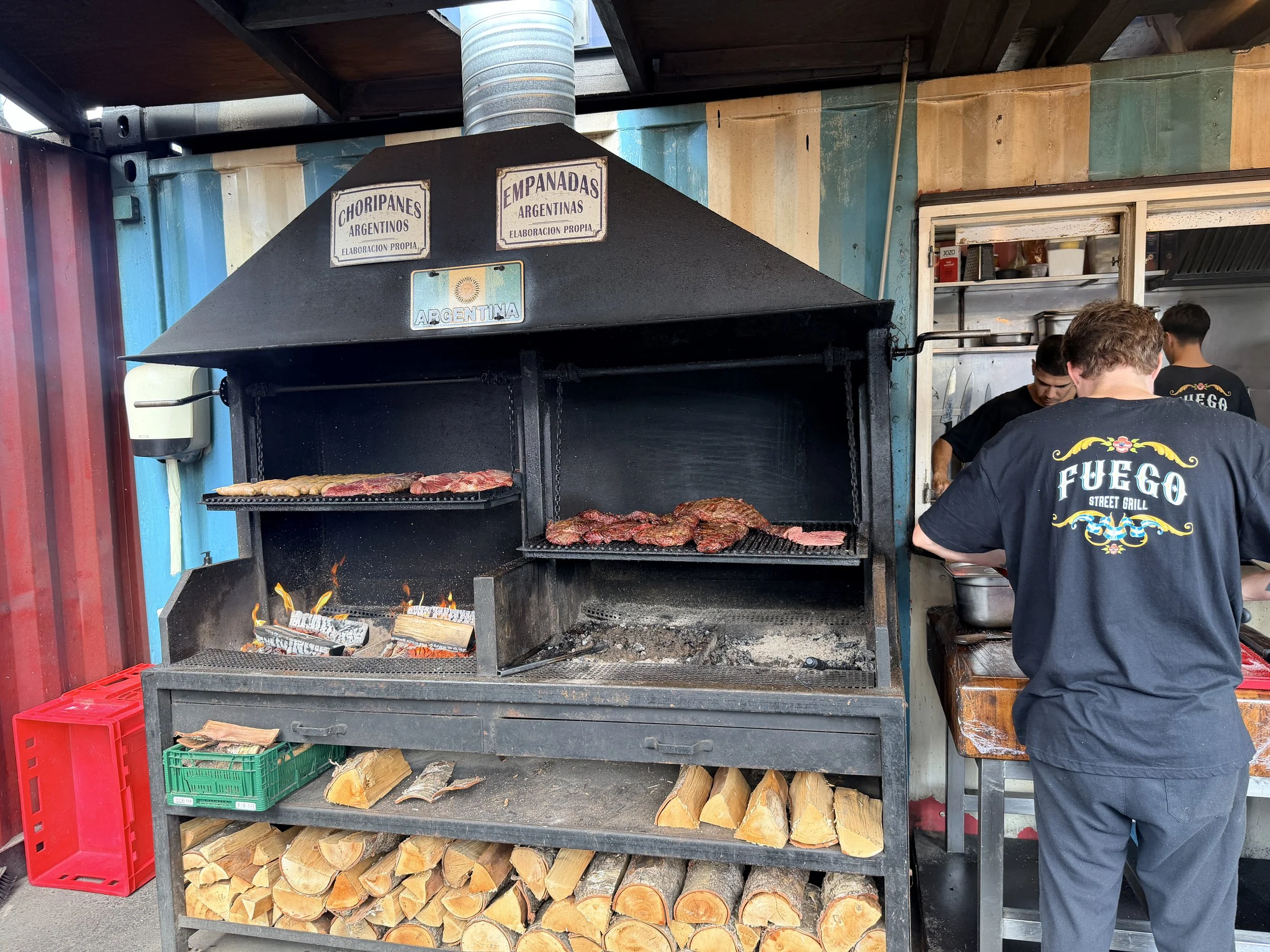
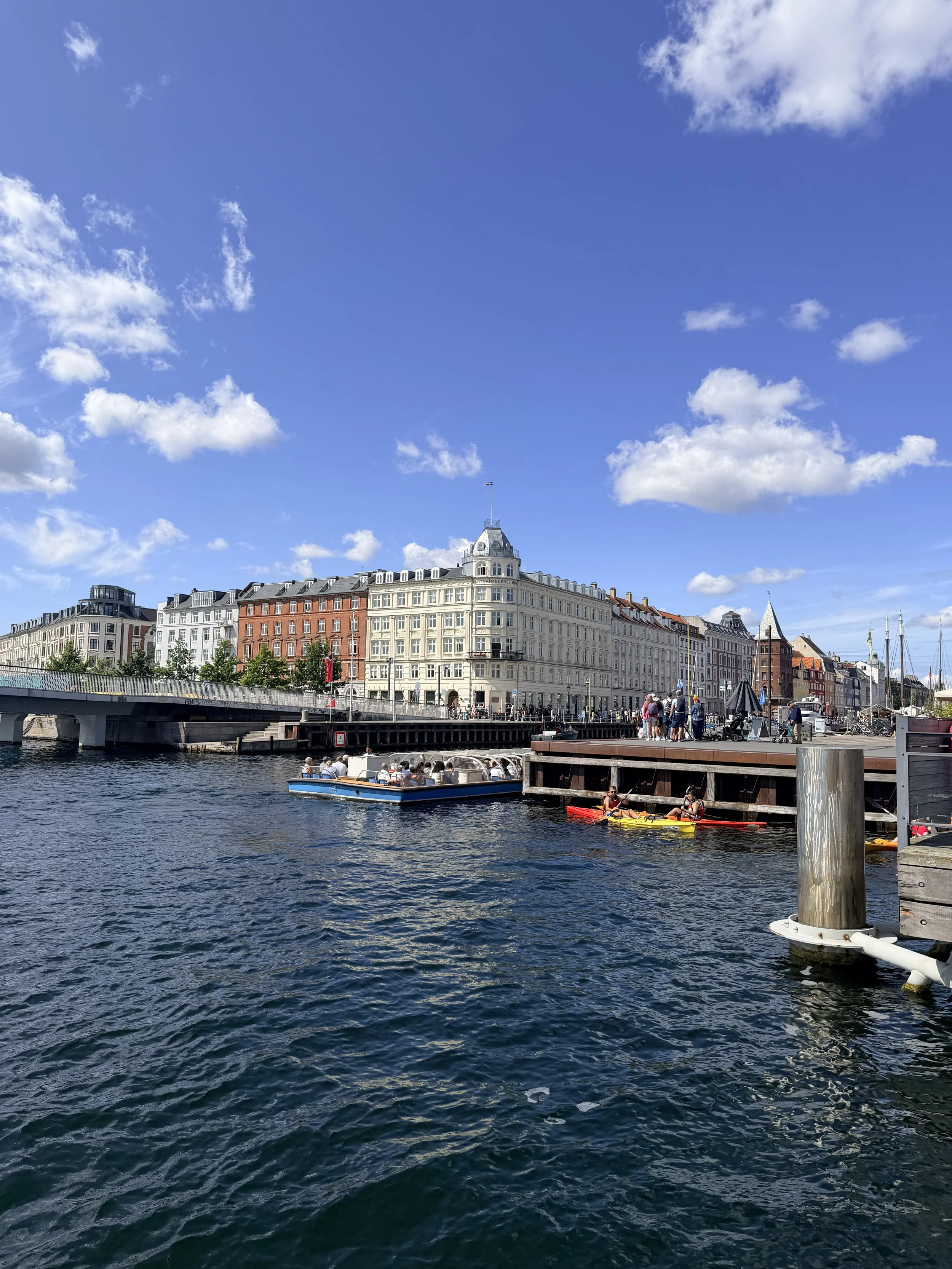
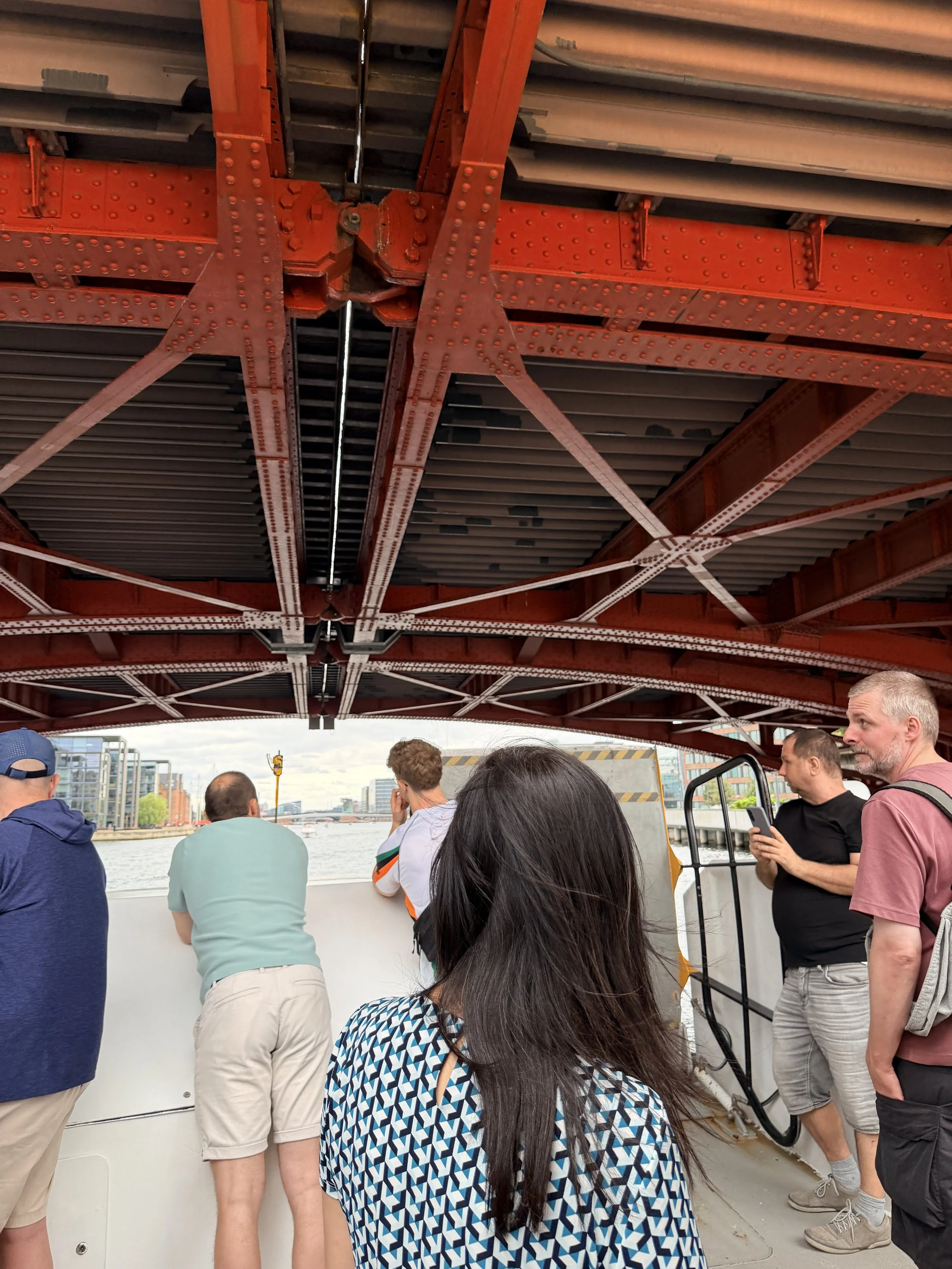
After lunch, we took the harbor bus back toward our hotel, enjoying another relaxing cruise through Copenhagen's scenic canals.
As usual, we returned to the hotel for a short rest before heading out again. In the afternoon, we visited the Danish Architecture Center to learn more about Denmark's renowned architecture, urban planning, and furniture design.
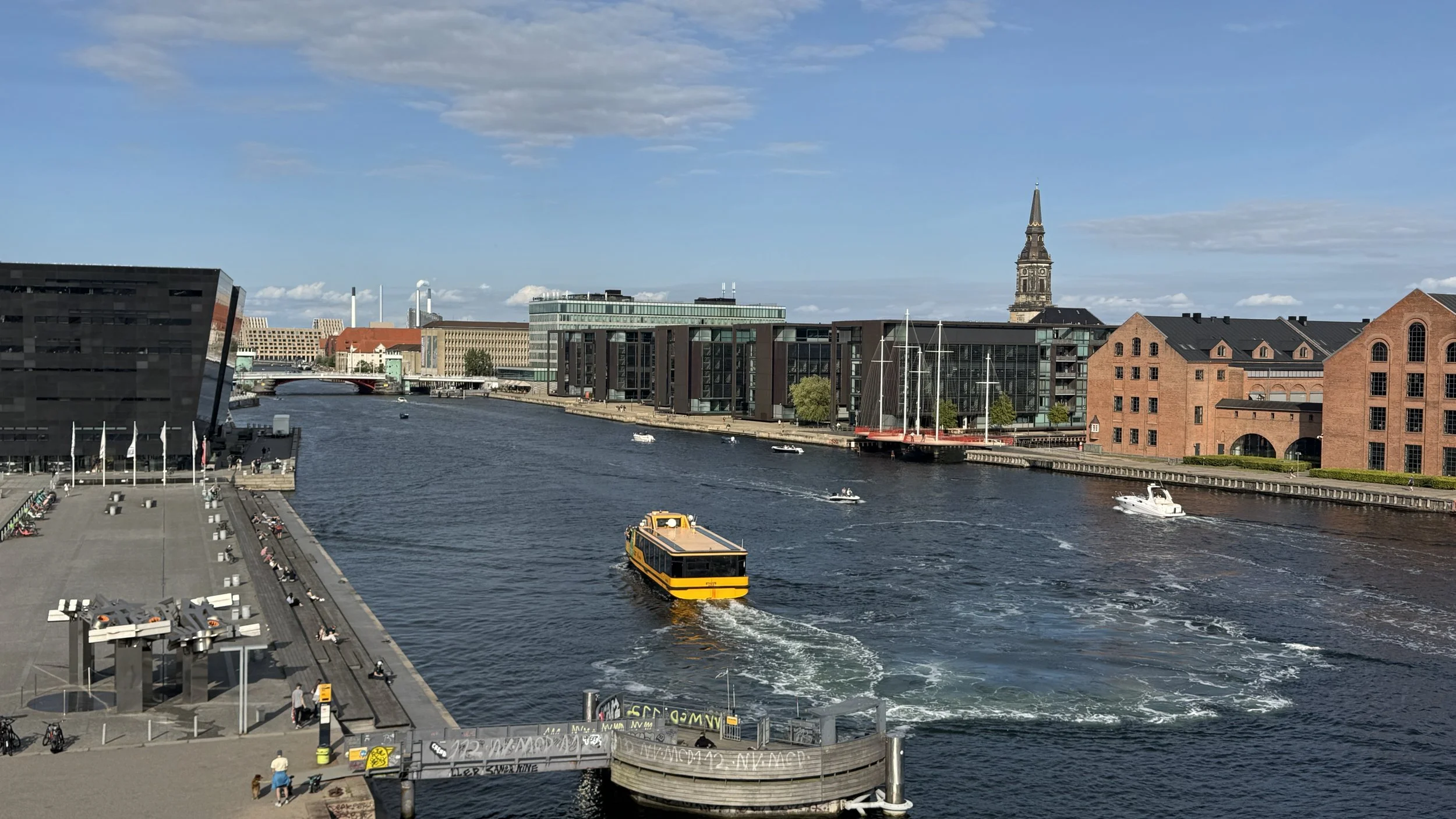
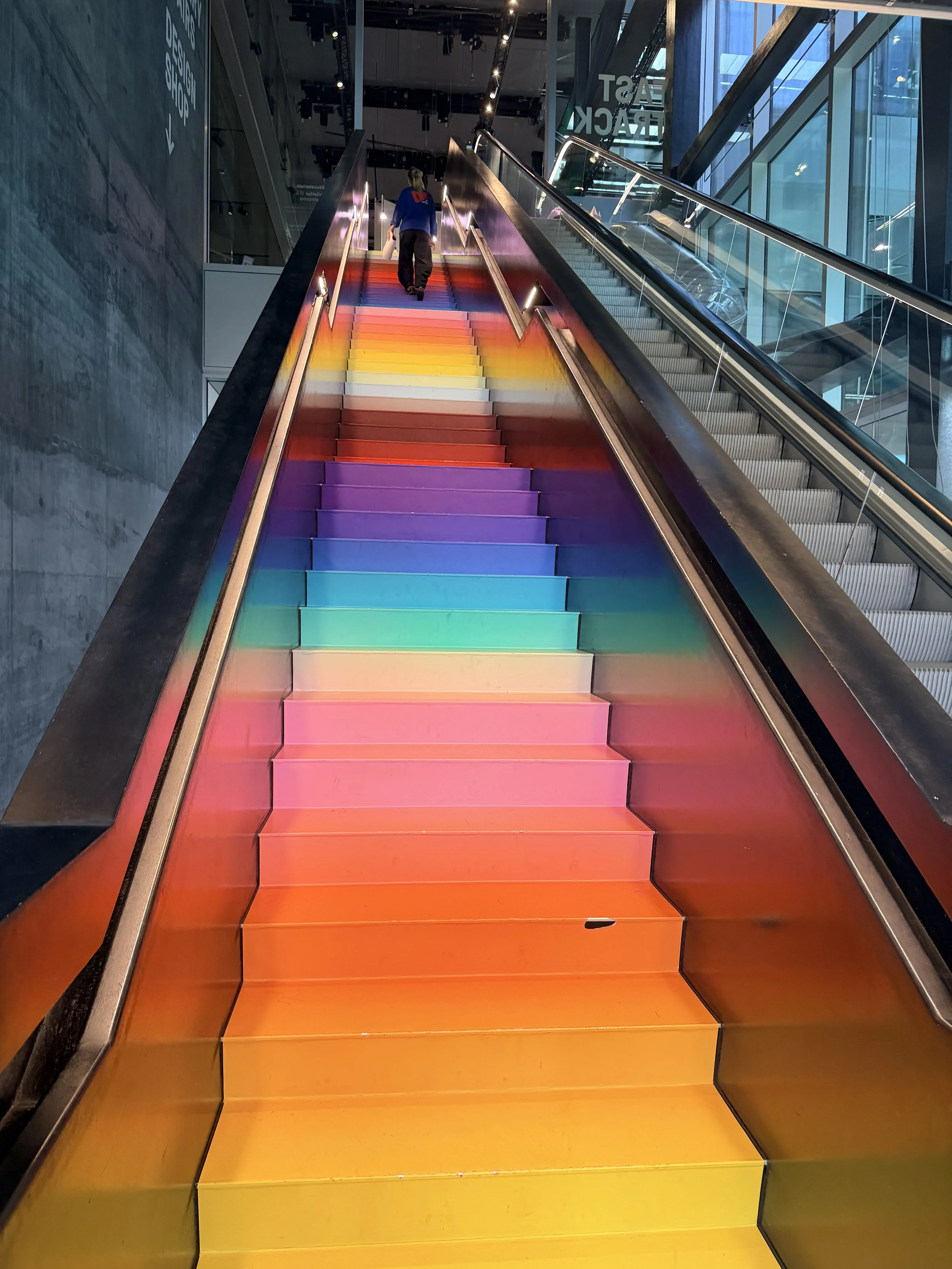
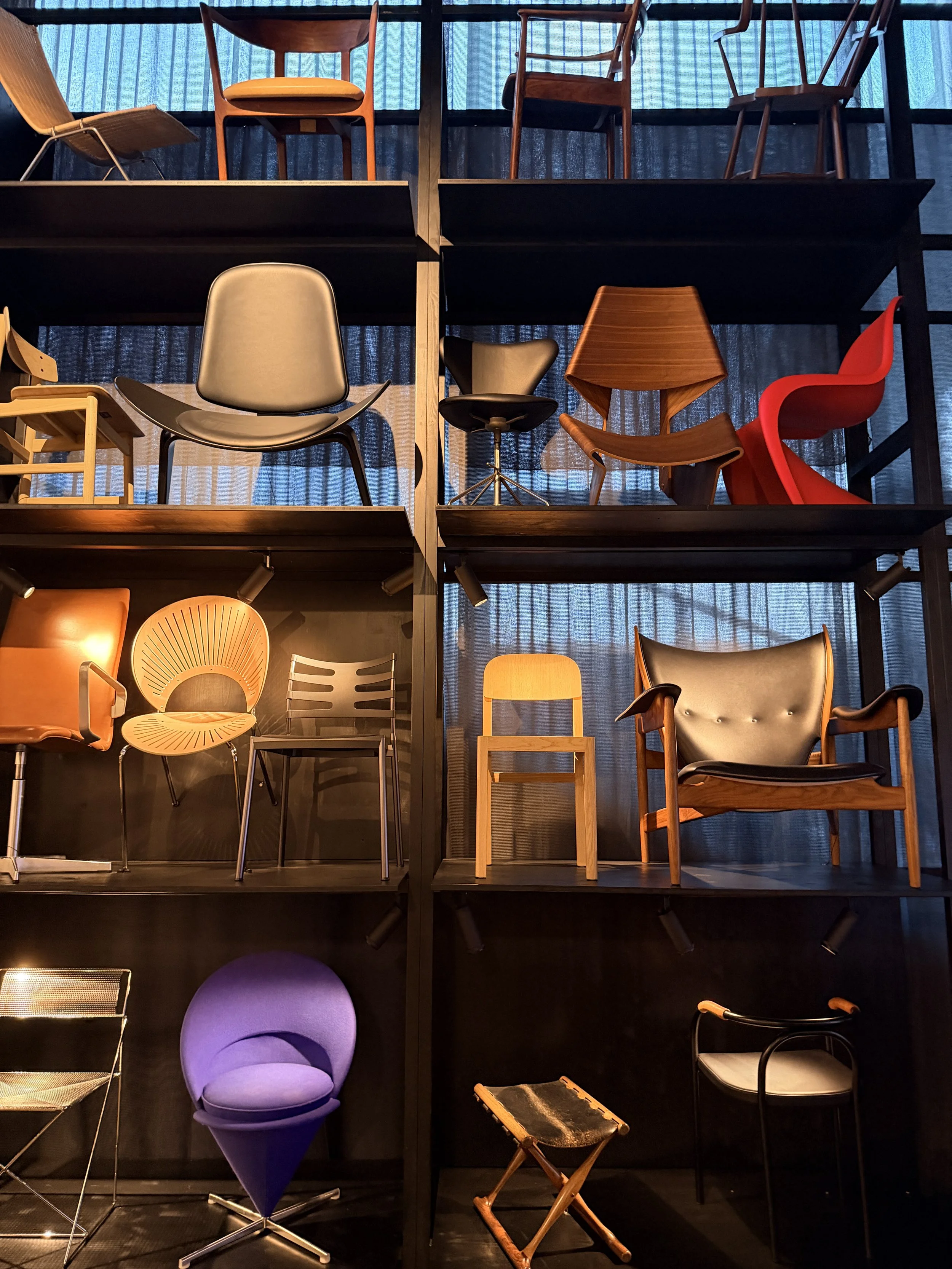
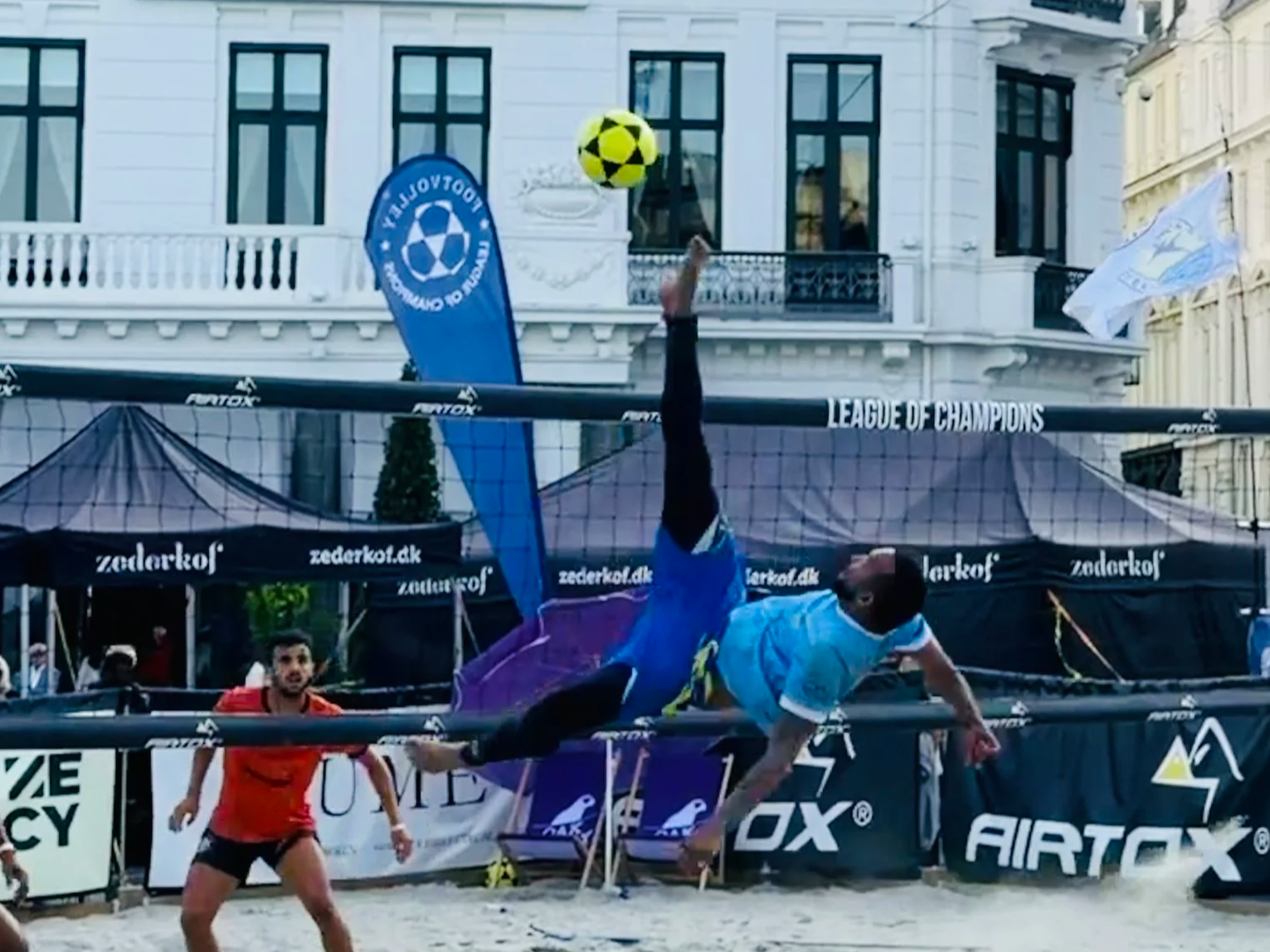
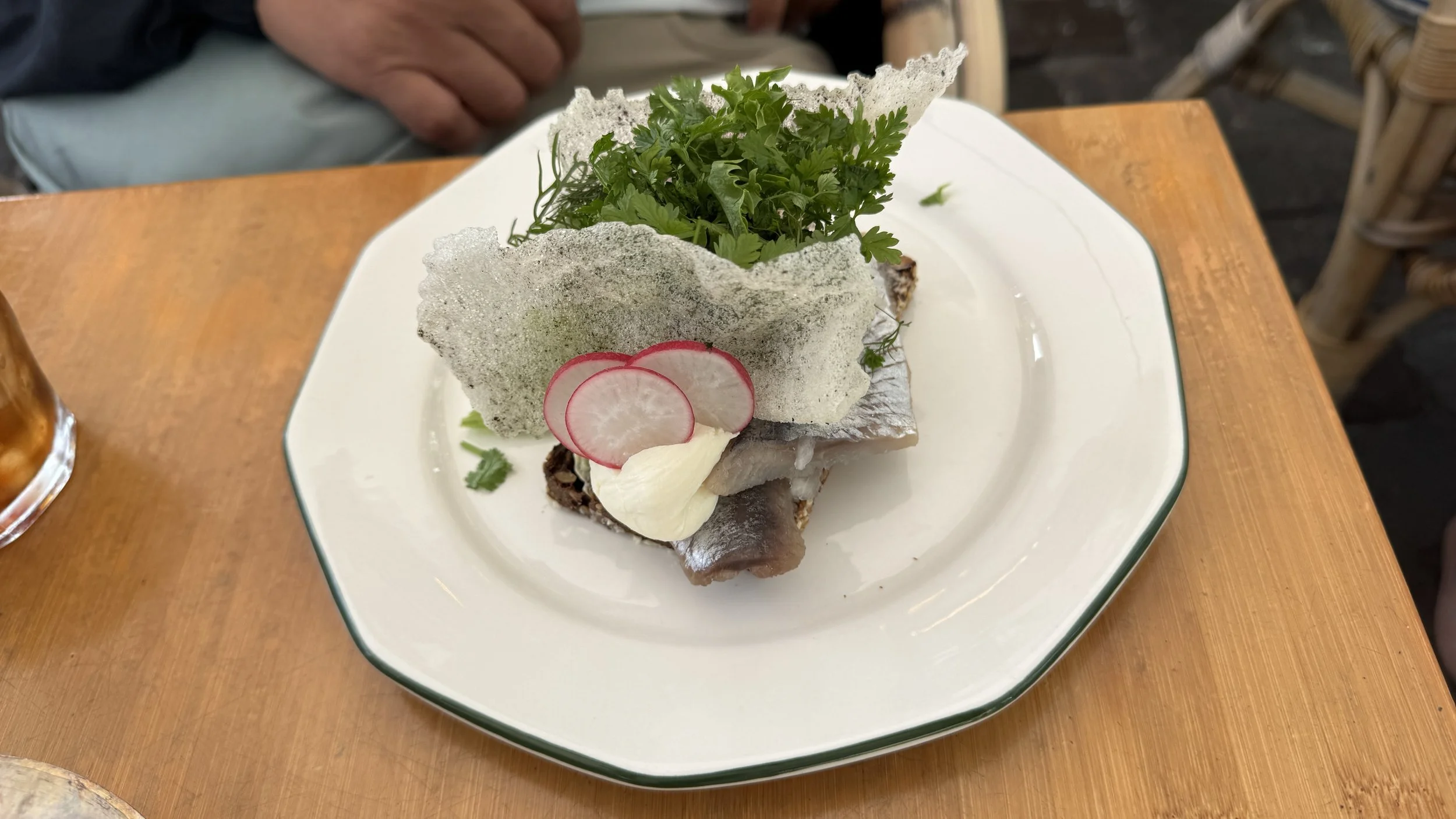
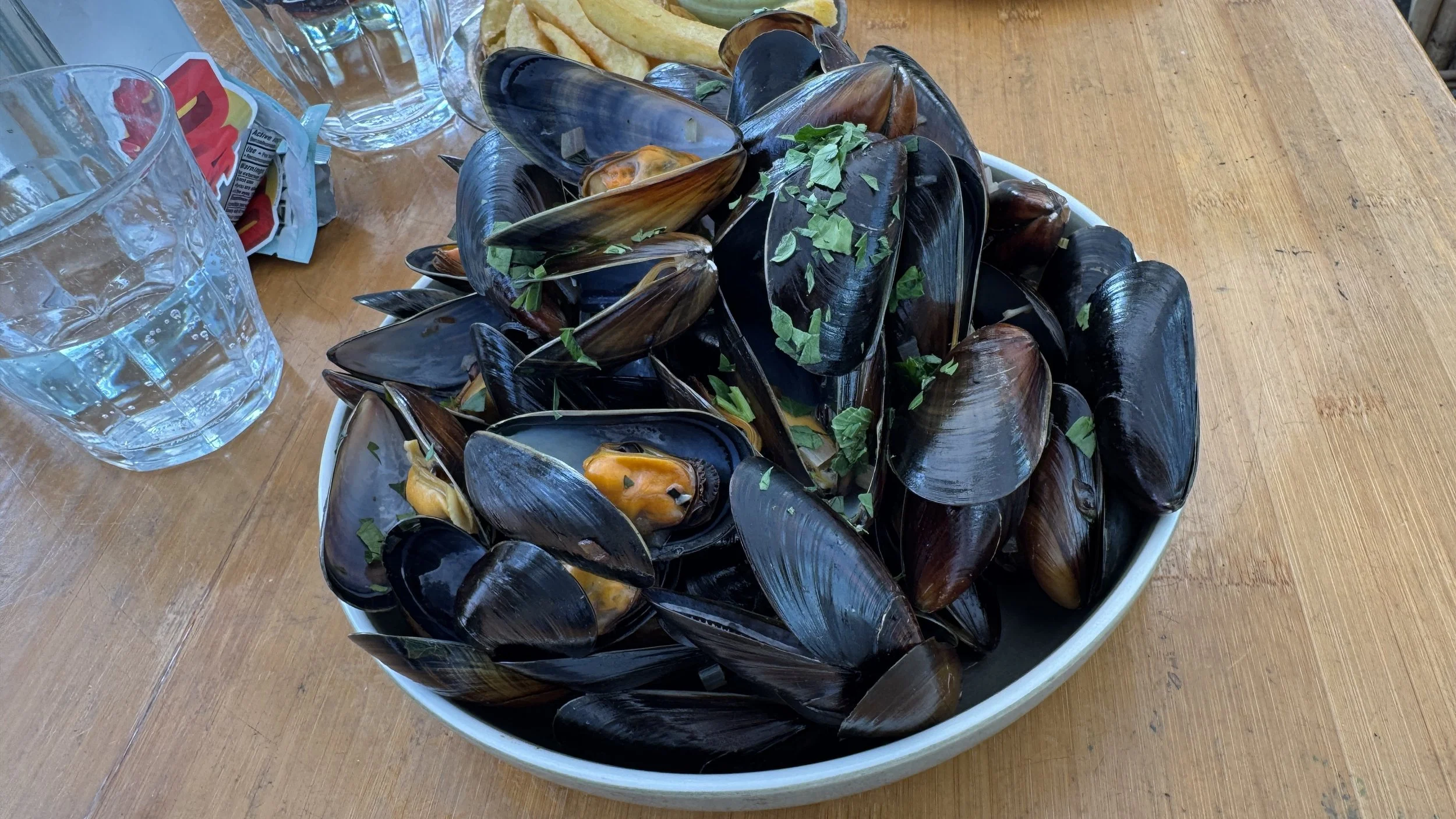
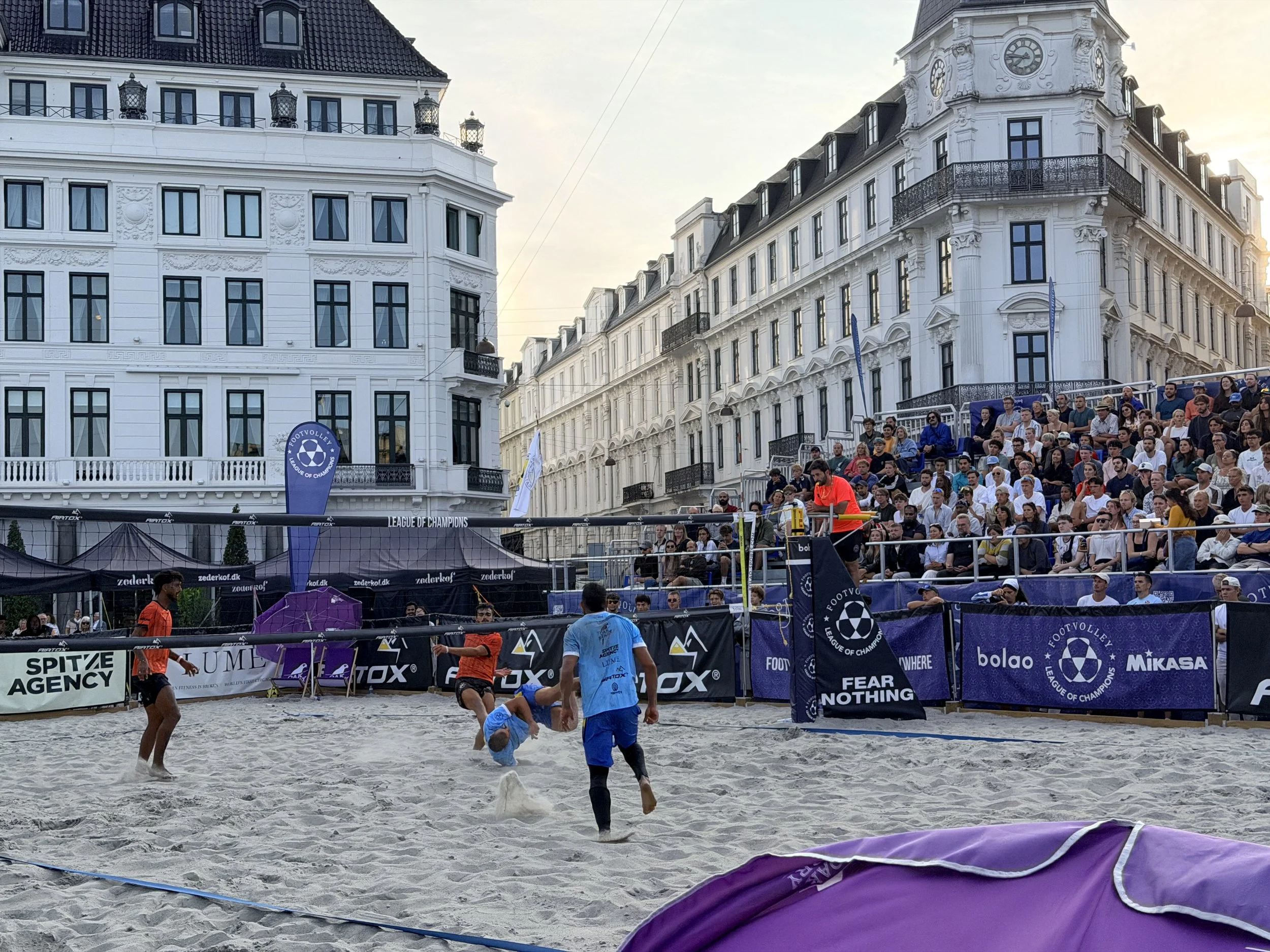
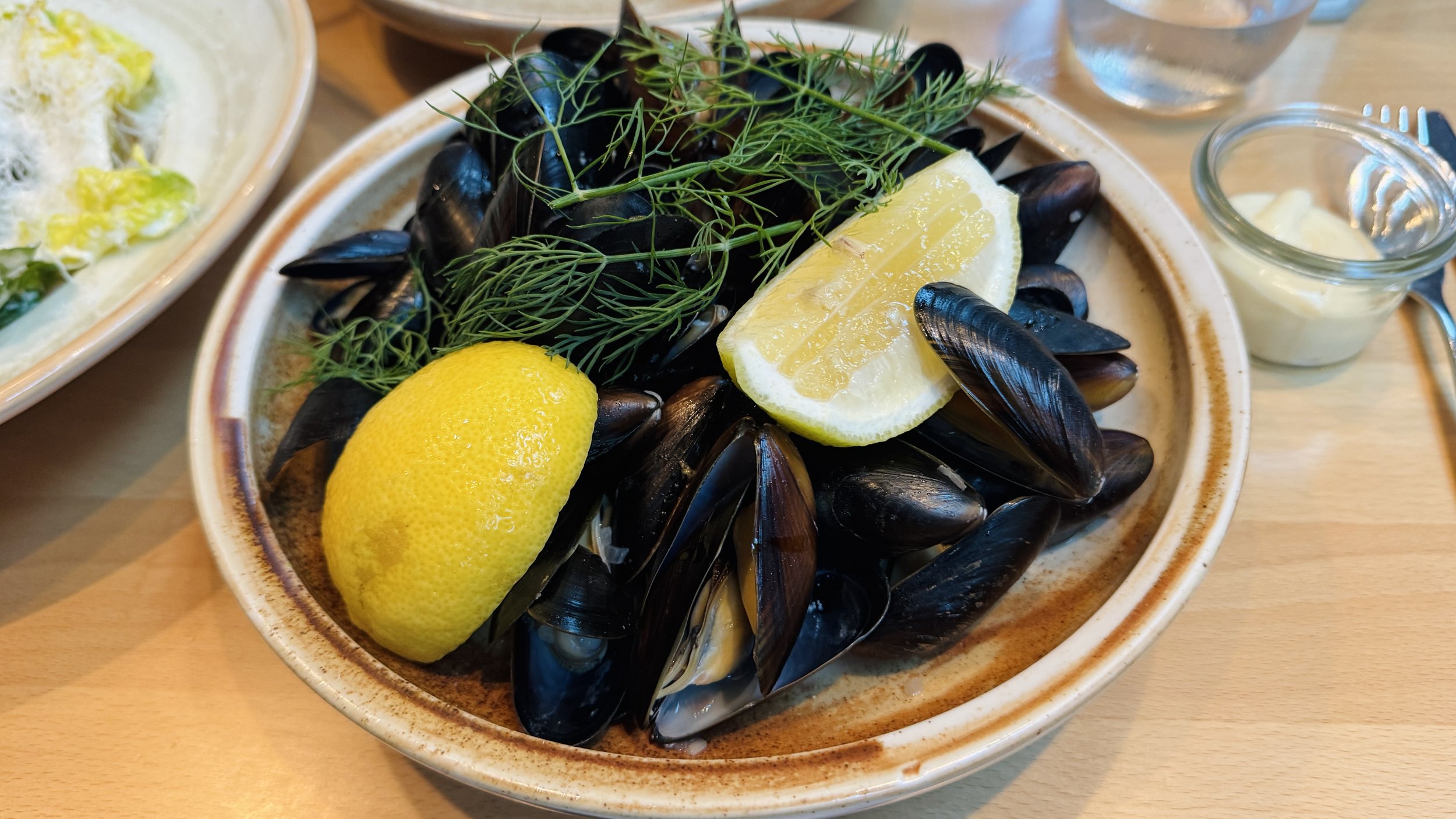
In the evening, we walked to Nyhavn for dinner, enjoying traditional open-faced sandwiches and a bowl of mussels. As we passed through Kongens Nytorv, we came across a lively footvolley match being played in the square. It was the first time we had ever seen or even heard of the sport. Combining the skills of soccer with the rules of beach volleyball, the players kept the ball in the air using only their feet, legs, chest, shoulders, and head. We were especially impressed by one player's spectacular bicycle kicks over the net. It was an unexpected and entertaining discovery—another reminder that travel is often about stumbling upon experiences you never knew existed.
August 3, 2026
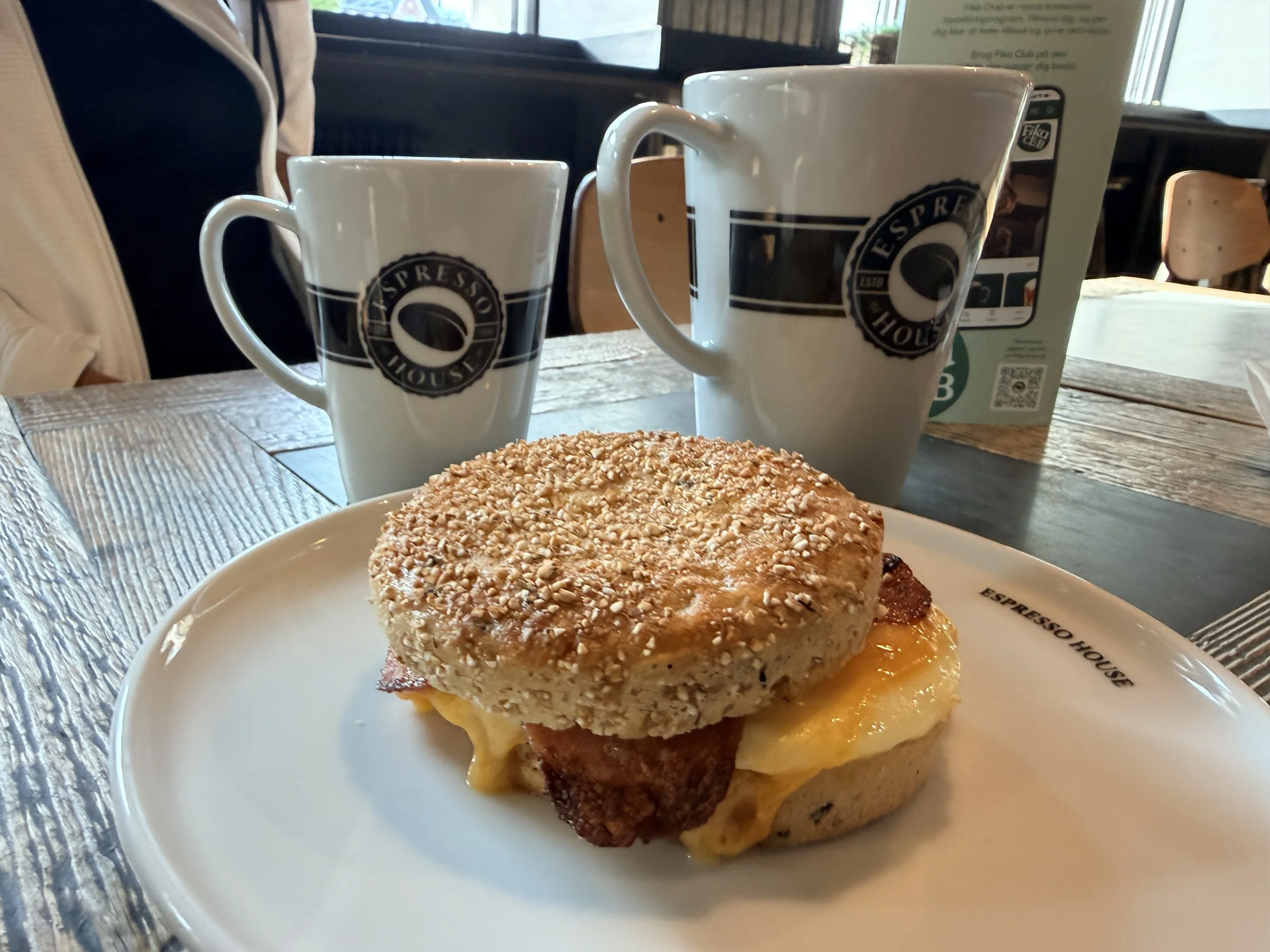
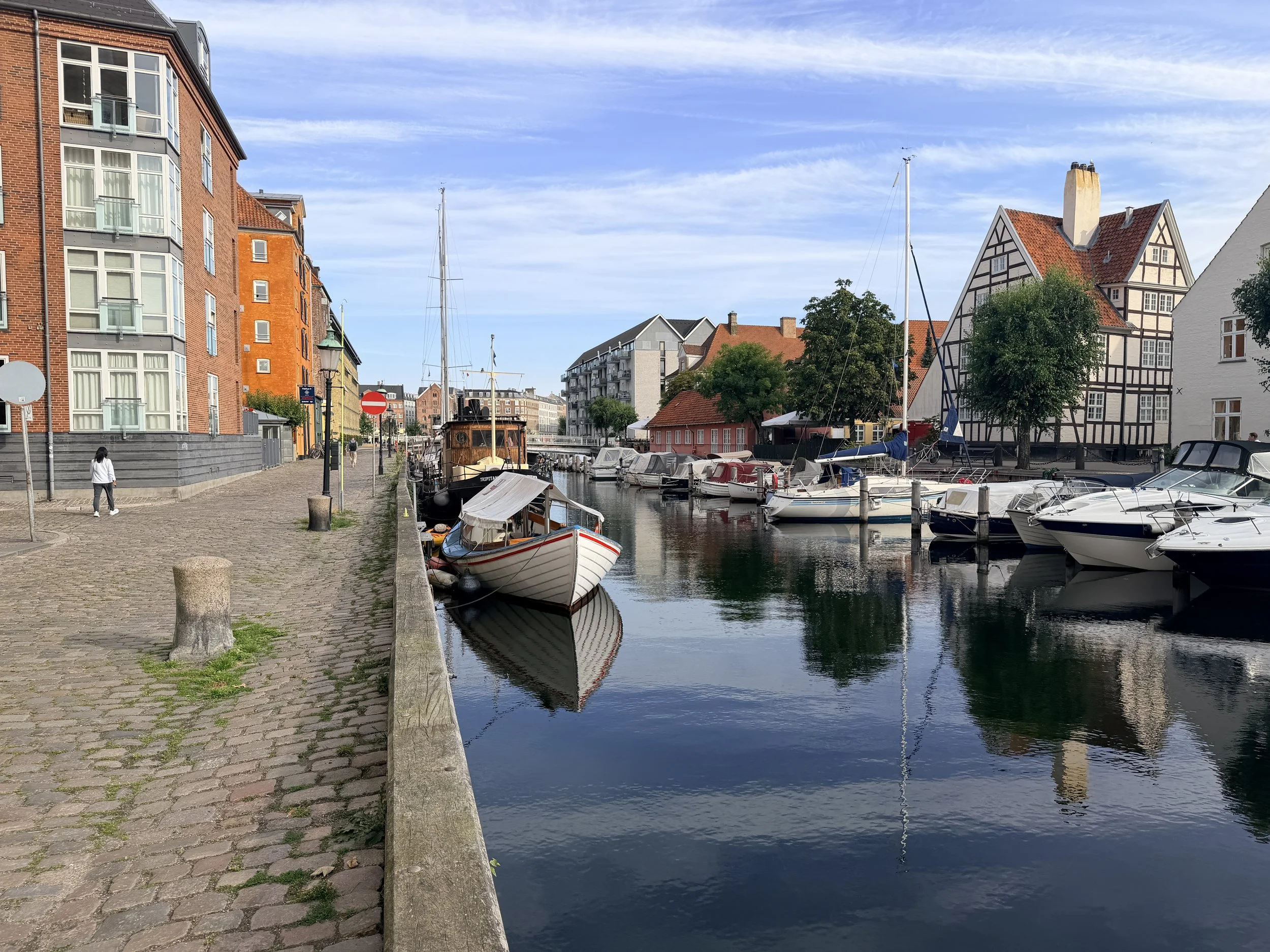
Today, it was time to head home. We had breakfast at a nearby café before making our way to the airport.
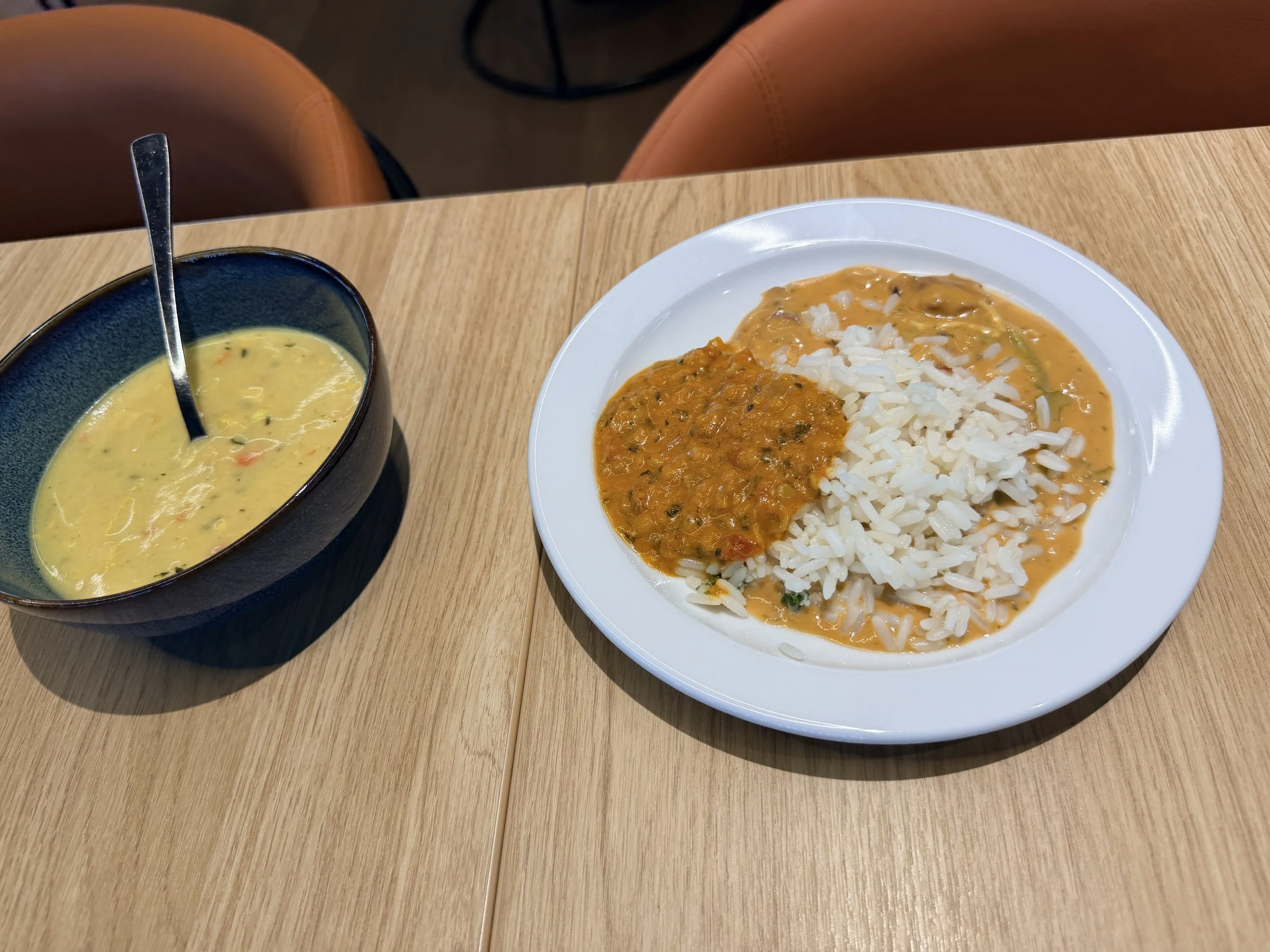
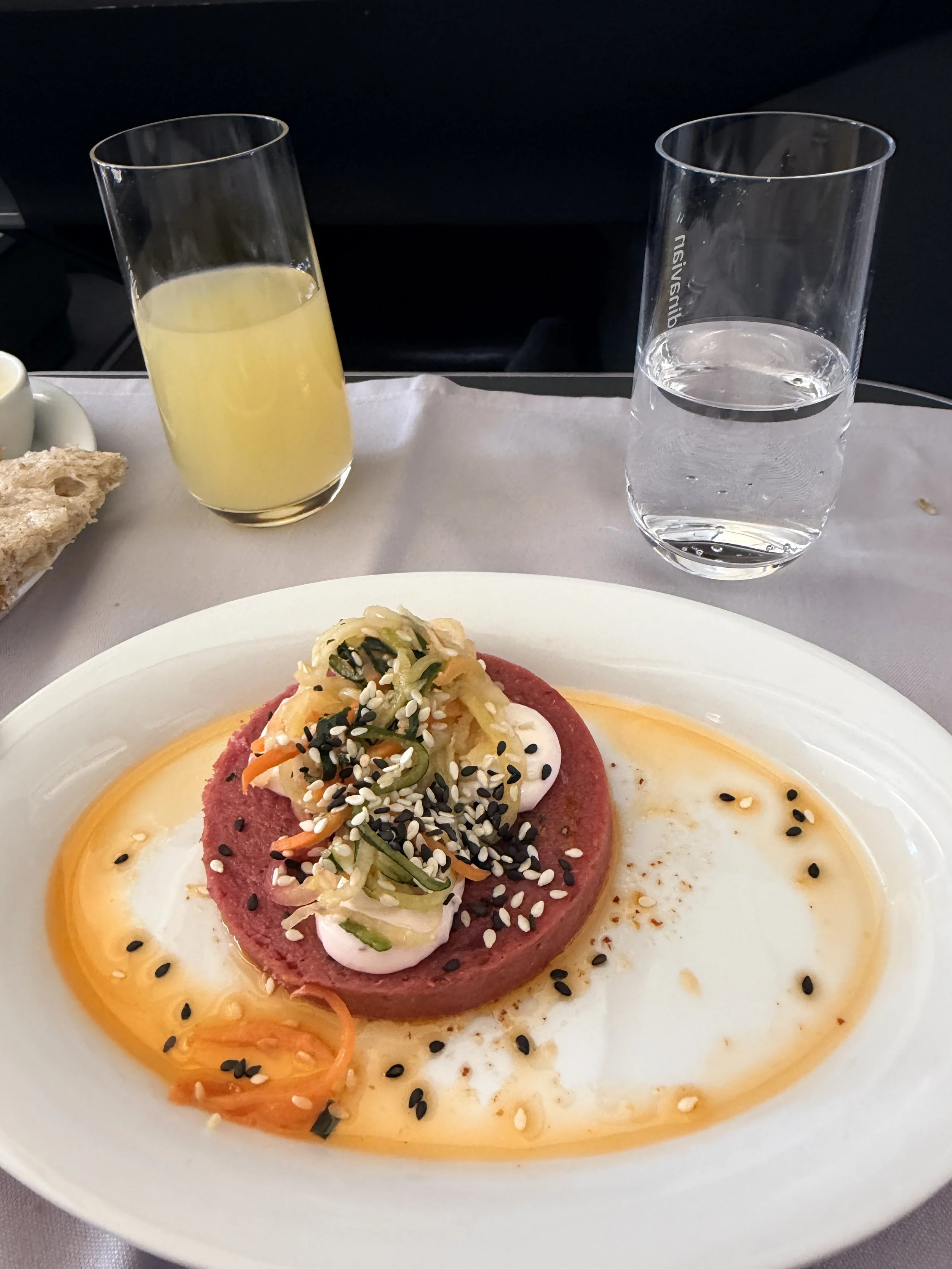
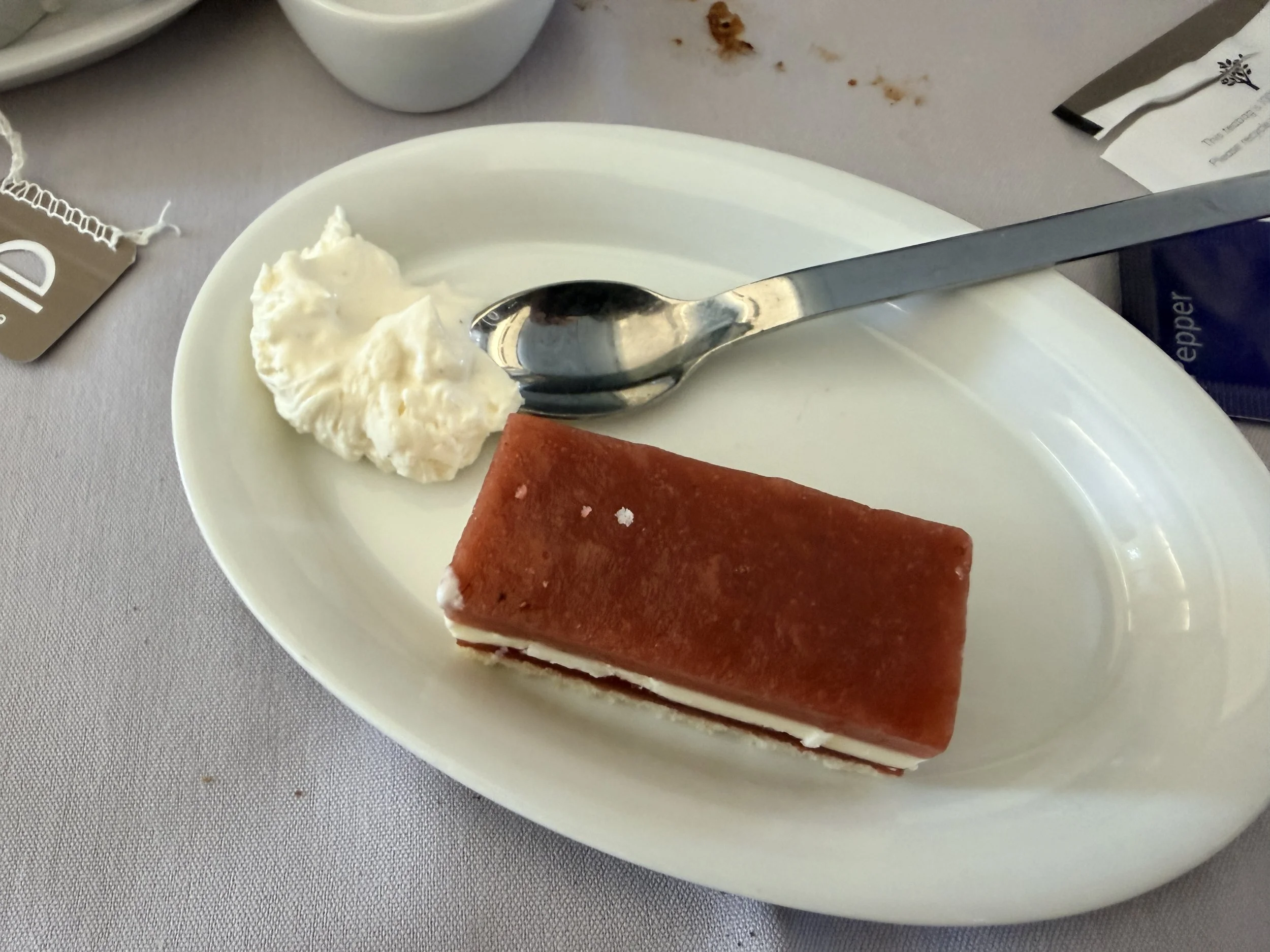
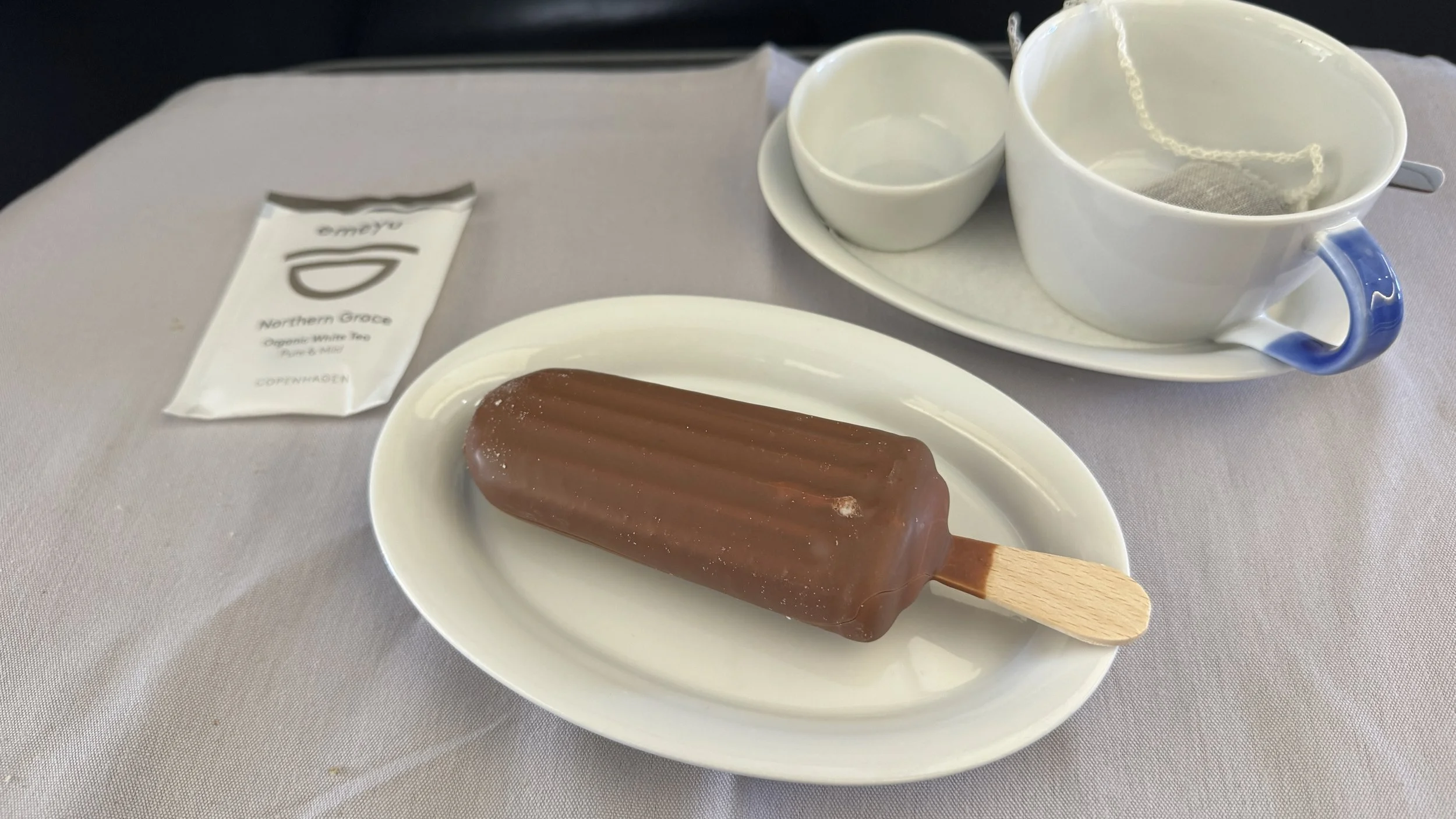
Between the airport lounge and the meals on the flight, we were very well fed. We finally got to try the famous Danish open-faced sandwich topped with egg and shrimp, something we had somehow missed during our stay in Denmark.
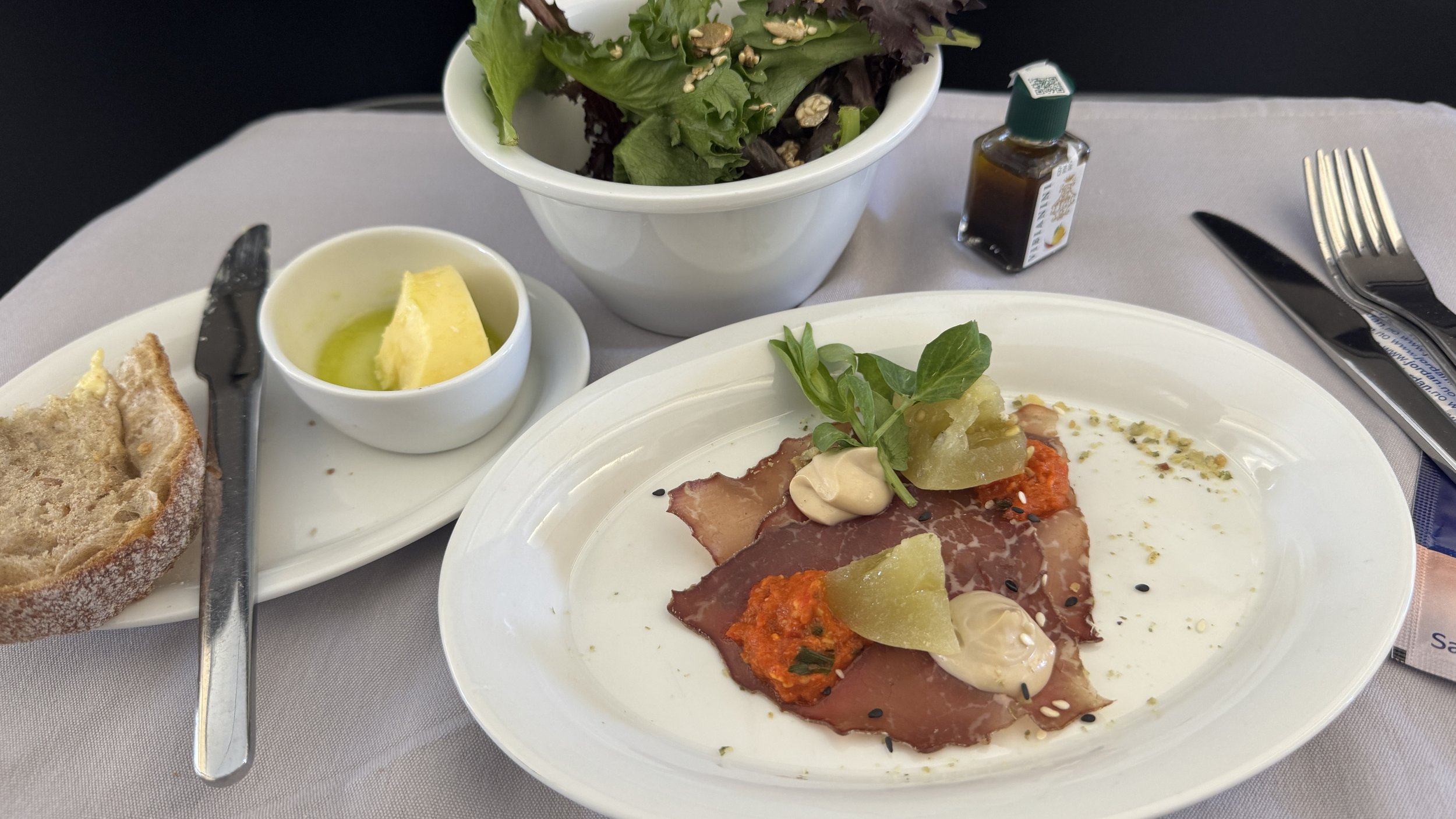
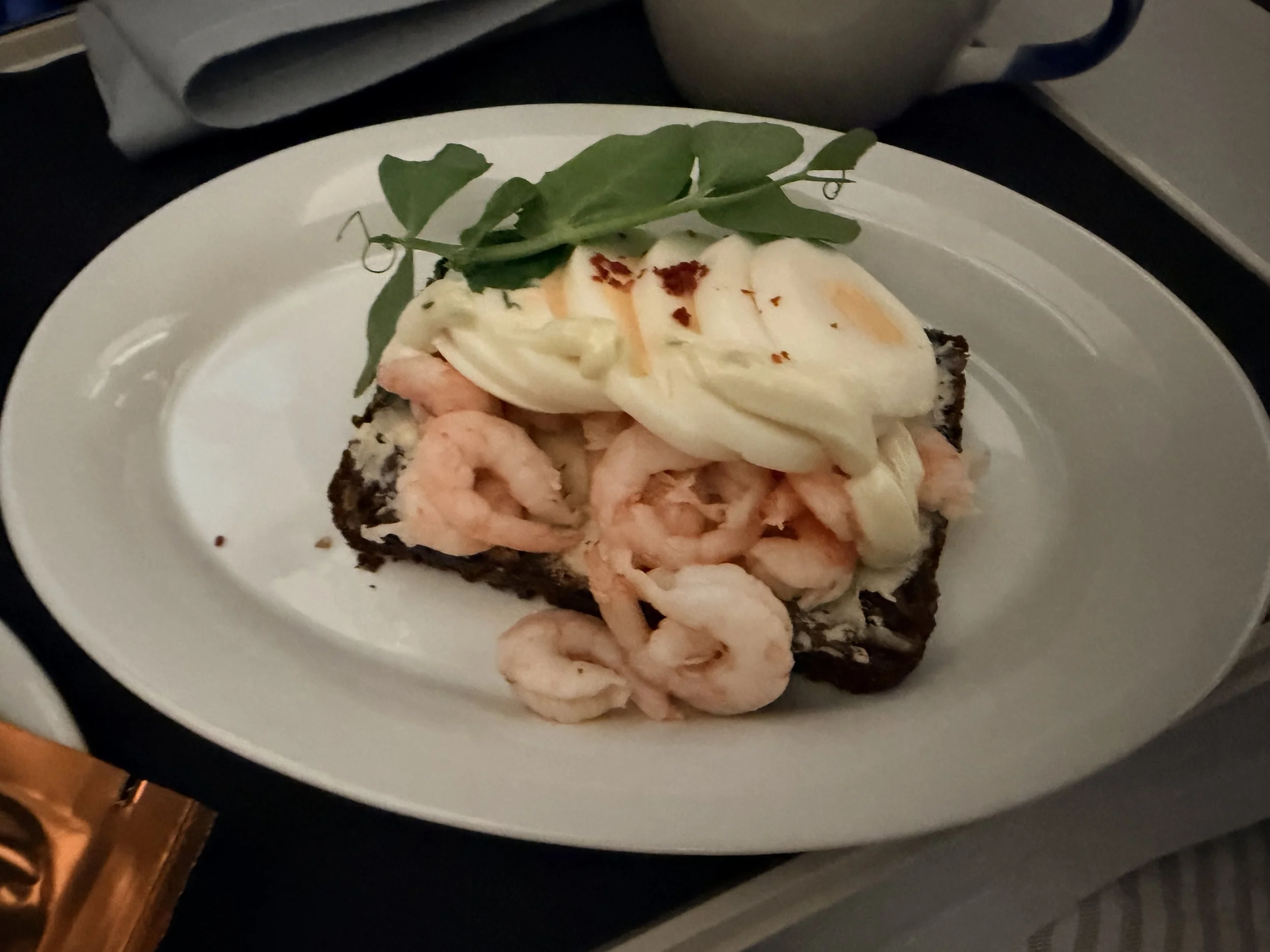
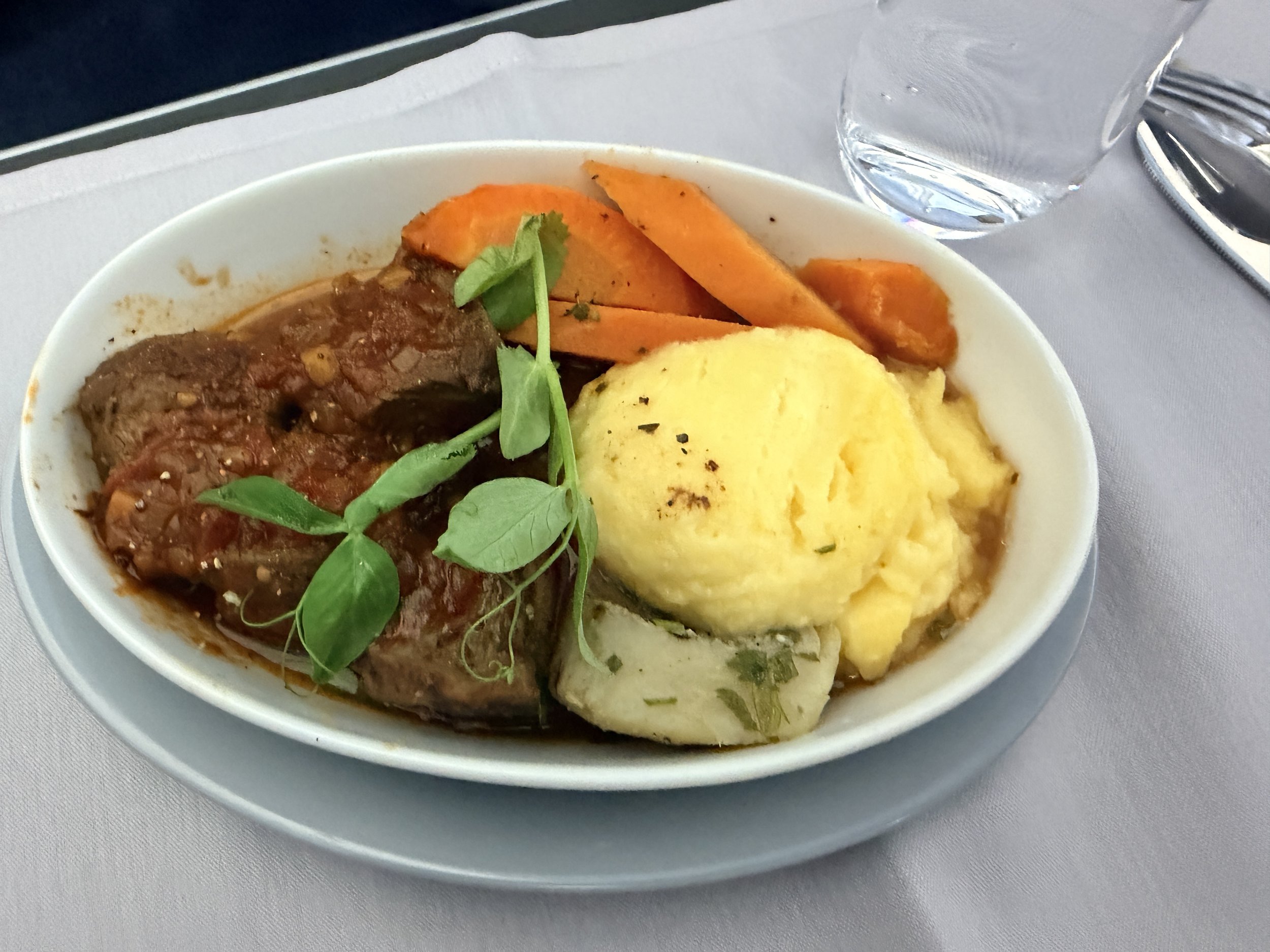
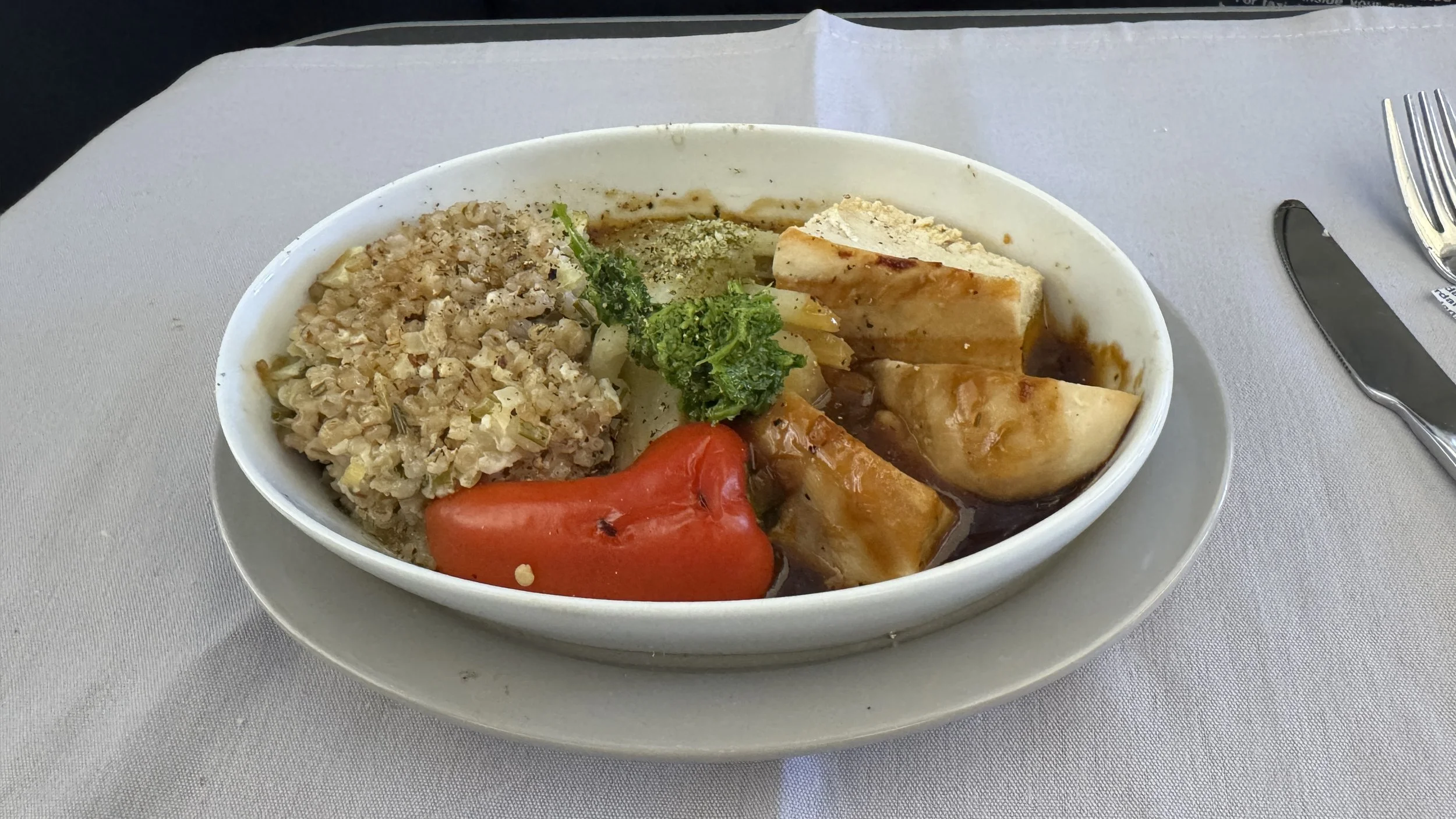
Because of a schedule change, we were able to move our connecting flight from JFK to the following day. This unexpected change turned out to be a wonderful bonus, giving us the next morning to spend some time with our son before continuing our journey home.
2026年8月2日
前二天参观皇家马厩的时候被告知每天早上9点到下午2点,马厩里的马会到外面来放风。今天一早,我们来到克里斯蒂安堡宫(Christiansborg Palace),欣赏那一匹匹优雅的白马。随后又参观了皇家厨房。从宽敞的灶台、巨大的铜锅到各种烹饪设备,不难想象当年为丹麦王室举办盛大宴会时的繁忙景象。
接着,我们来到此次哥本哈根之行参观的第三座王宫——阿美琳堡宫(Amalienborg Palace),也是现今丹麦王室的居所。博物馆主要介绍丹麦王室的历史,尤其是历代名为“克里斯蒂安”(Christian)和“腓特烈”(Frederik)的国王。连续参观了几座王宫之后,我们感觉自己已经被大量的王室历史“淹没”了,实在有些消化不过来。
离开王宫后,我们搭乘黄色港口水上巴士,穿越运河前往 Reffen 街头美食广场。途中顺道来到 Hart Bakery,品尝了招牌豆蔻面包(Cardamom Bun)。香气扑鼻,口感松软,实在太好吃了,离开前又忍不住买了一个。
Reffen 汇集了来自世界各地的美食。我们终于尝到了传统的丹麦热狗,不过一根细细的热狗竟然要价近十美元,实在称不上物有所值。
午餐后,我们再次搭乘水上巴士返回酒店,顺便悠闲地欣赏哥本哈根运河两岸的景色,为这座城市增添了另一番风情。
照例回酒店小憩片刻后,我们又出发前往丹麦建筑中心(Danish Architecture Center)。展览介绍了丹麦在建筑、城市规划以及家具设计等方面的发展,也让我们对这个以设计闻名的国家有了更多了解。我们还了解到澳大利亚最具代表性的地标 — 悉尼歌剧院(Sydney Opera House)出自于 丹麦建筑师 约恩·乌松(Jørn Utzon)。
傍晚,我们步行来到热闹新港(Nyhavn)享用晚餐,点了丹麦传统开放式三明治和一锅青口贝。前几天来的时候是看景,今天是坐在那里看人。经过国王新广场(Kongens Nytorv)时,广场上正举行一场足排球(Footvolley)比赛。这是我们第一次看到、也是第一次听说这项运动。它融合了足球技巧和沙滩排球规则,球员全程不能用手,只能利用双脚、头部、胸部和肩膀控球,在球网两侧来回对抗。其中一位球员连续几次腾空倒挂金钩,将球精准踢过球网,精彩的动作赢得现场观众阵阵掌声,我们也看得目不转睛。
旅行的乐趣,往往不只是那些早已规划好的景点,更在于这些不经意间的发现。走出王宫,我们看到的是哥本哈根充满活力的另一面。
A Day of Hamlet and Modern Art 《哈姆雷特》与现代艺术的一天
August 1, 2026
We were planning a day trip outside the city……
今天,我们乘火车前往城外的克伦堡城堡。。。
August 1, 2026
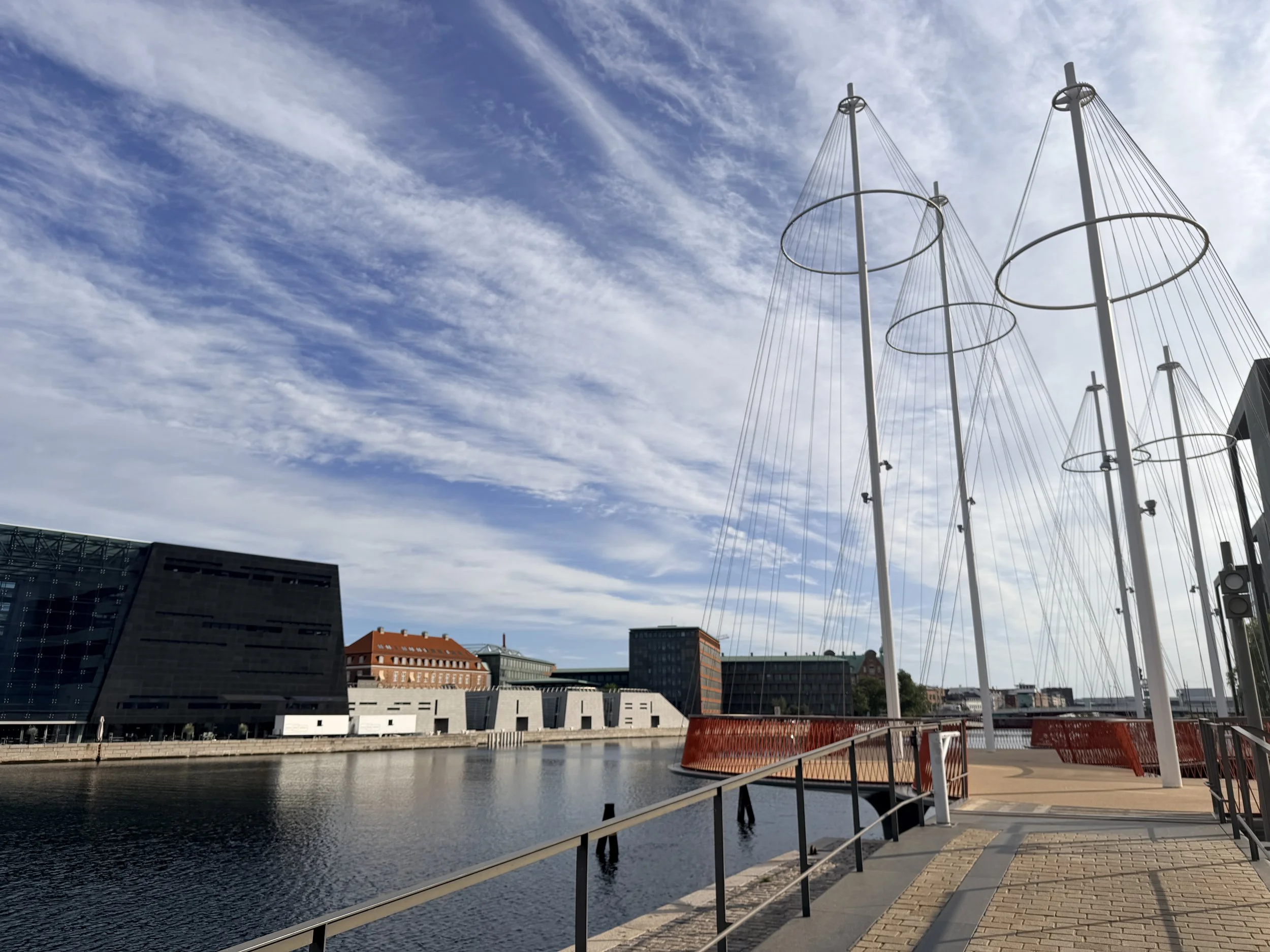
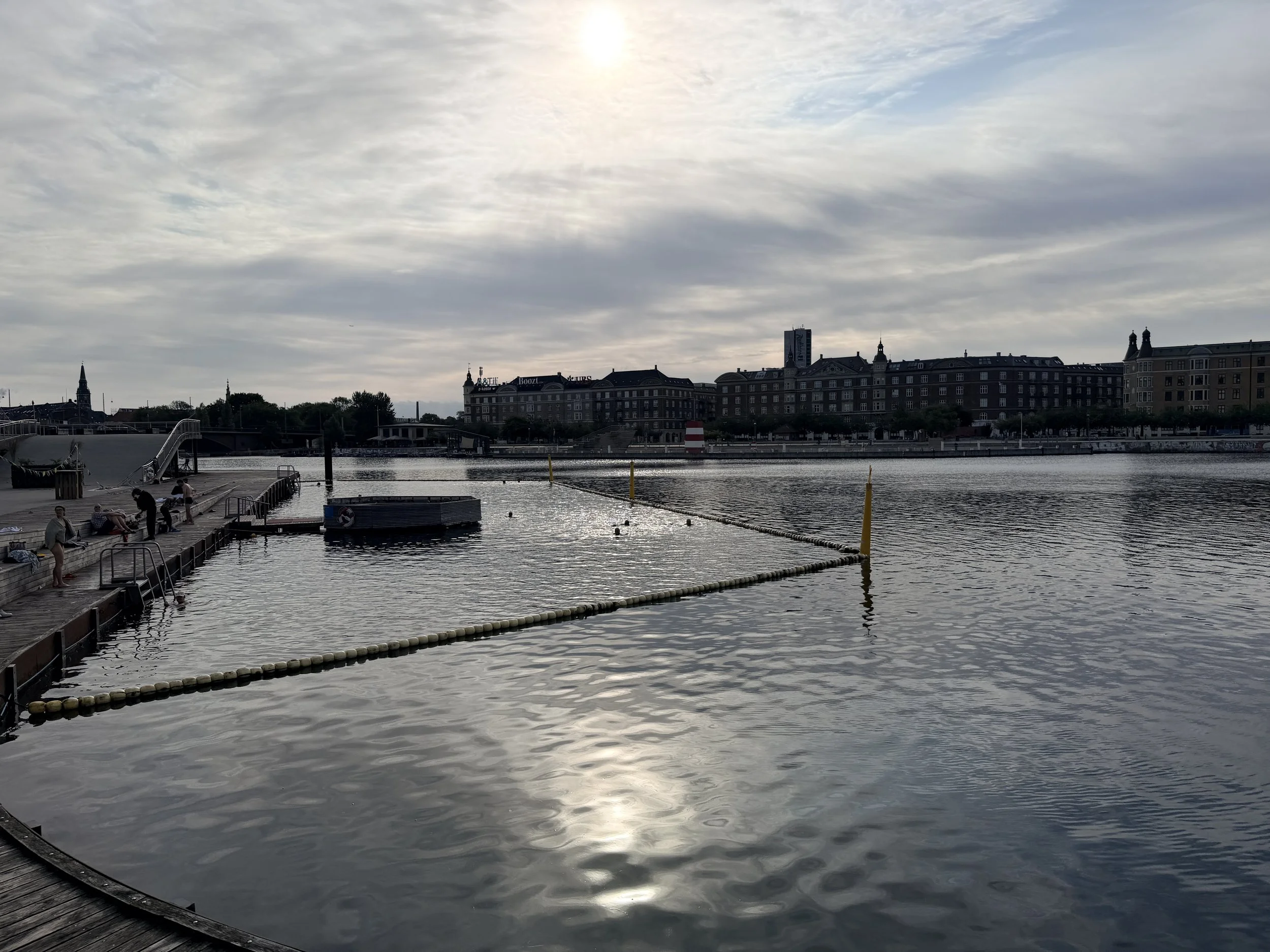
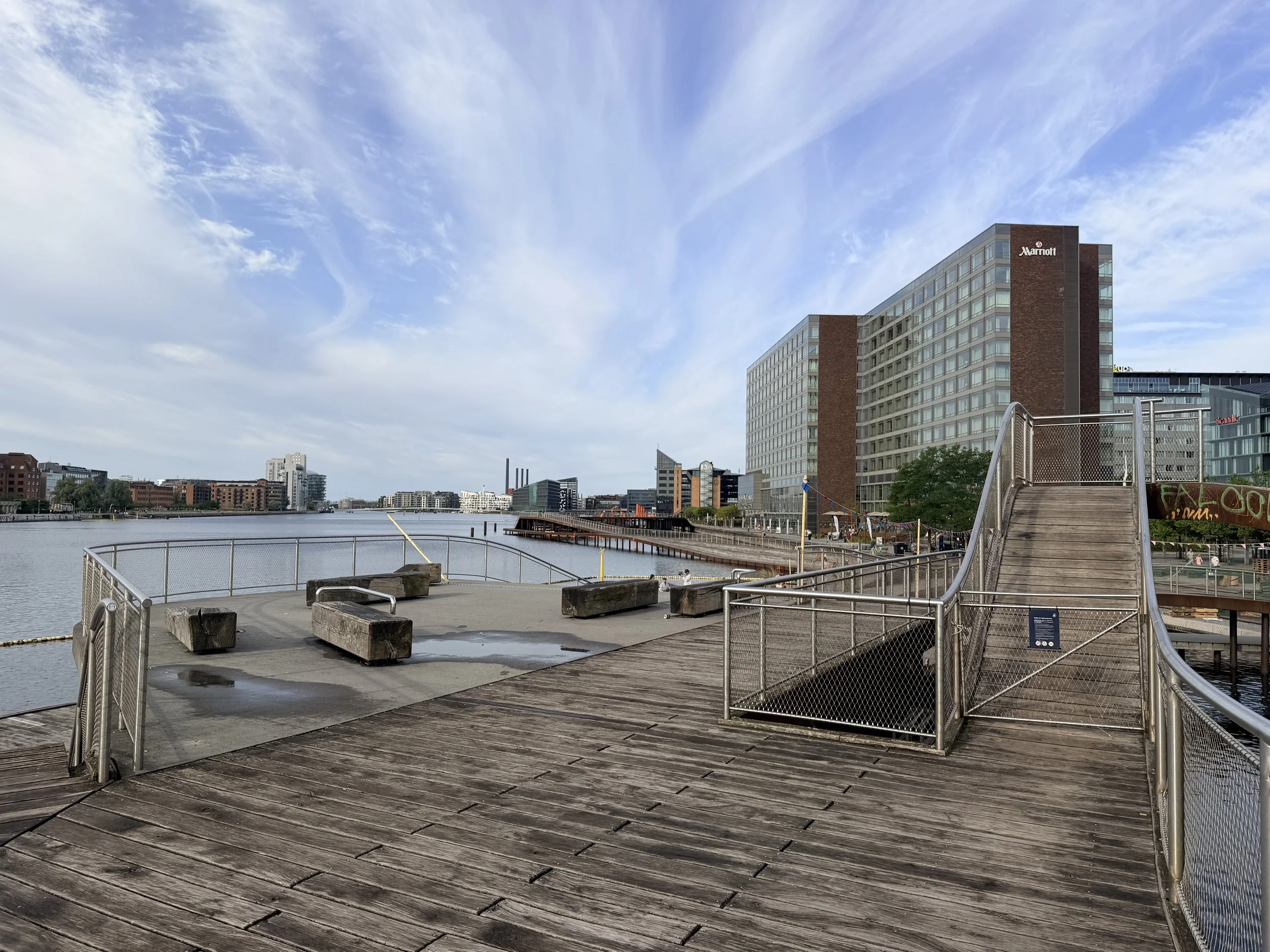
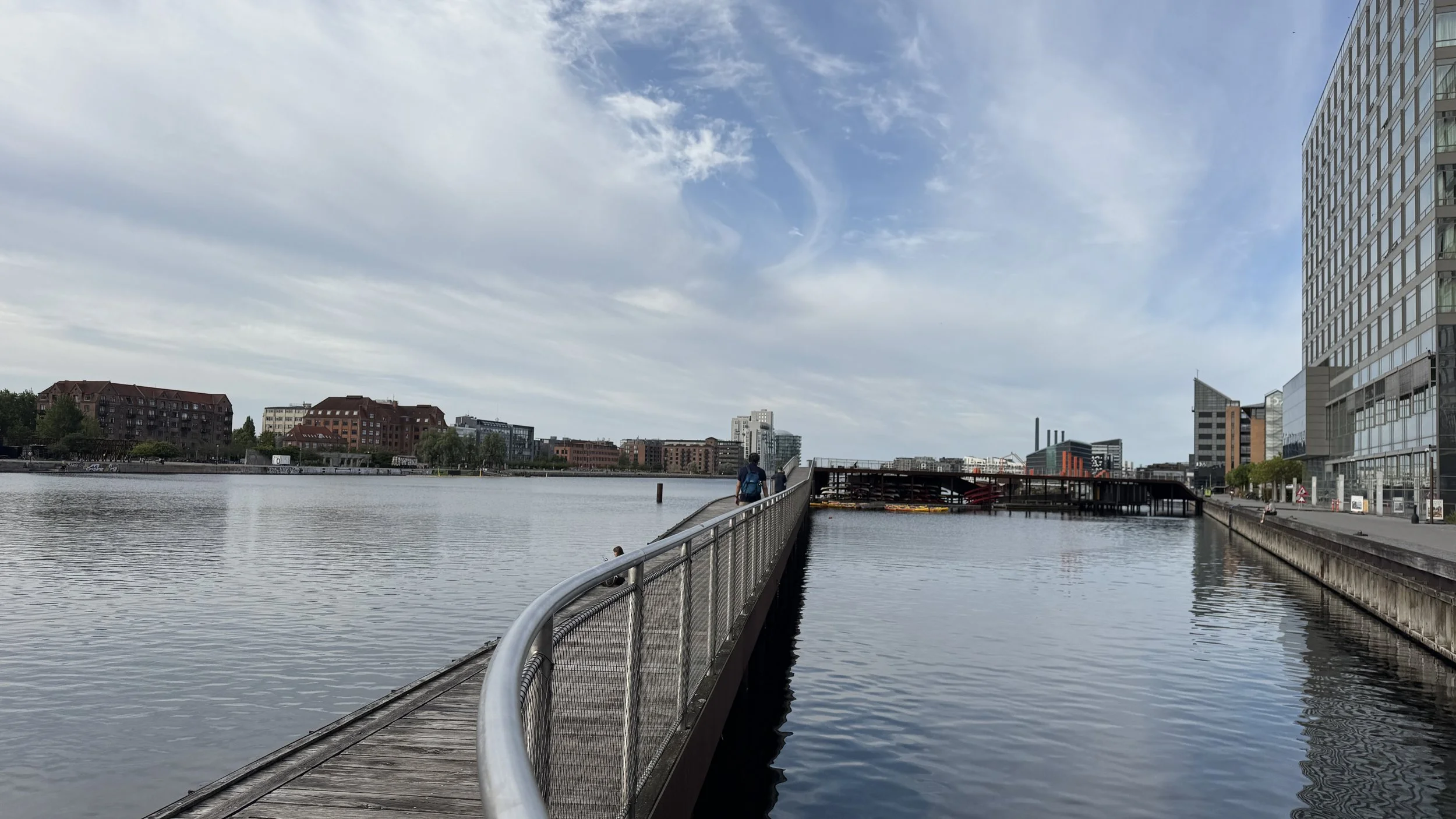
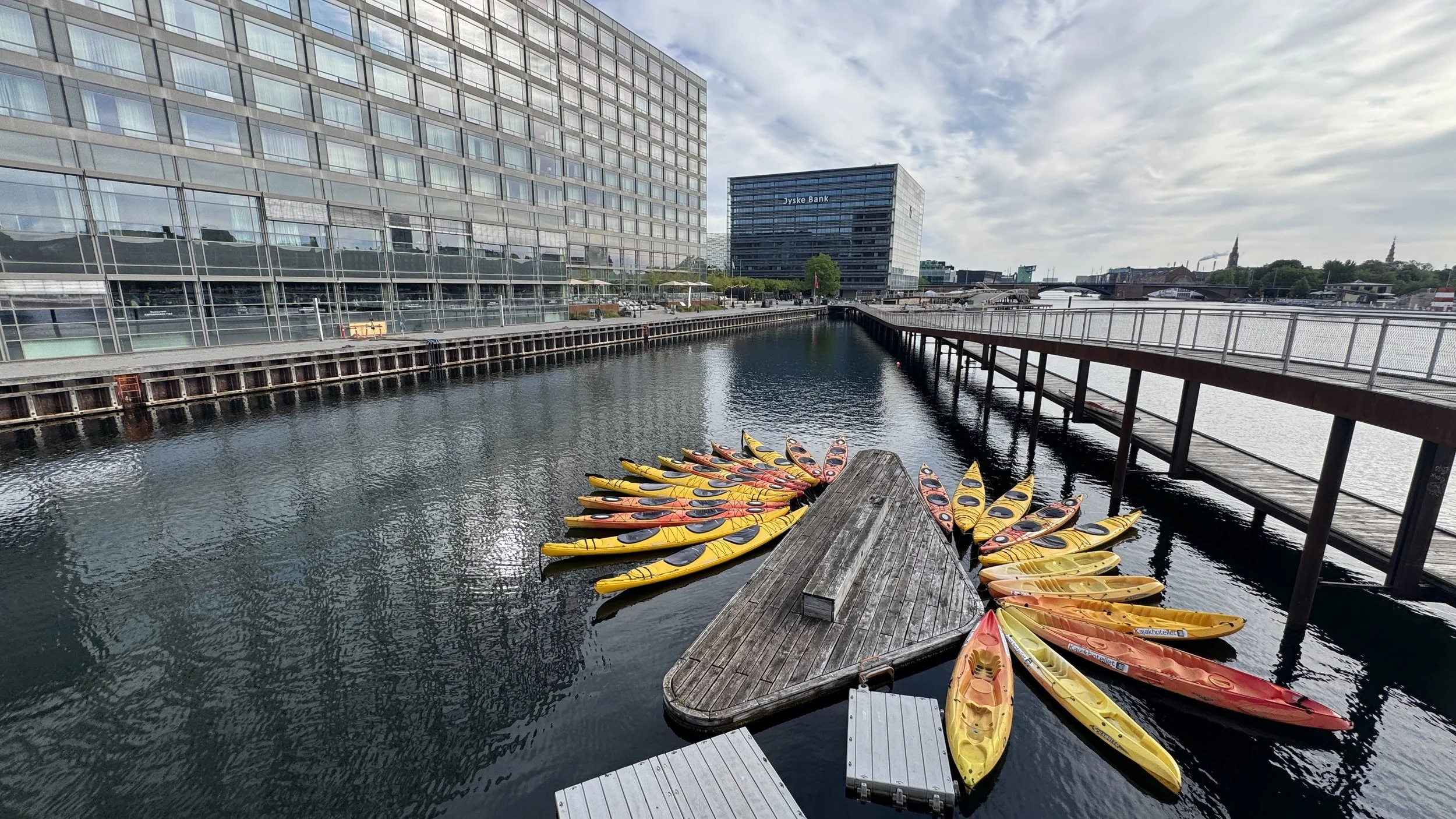
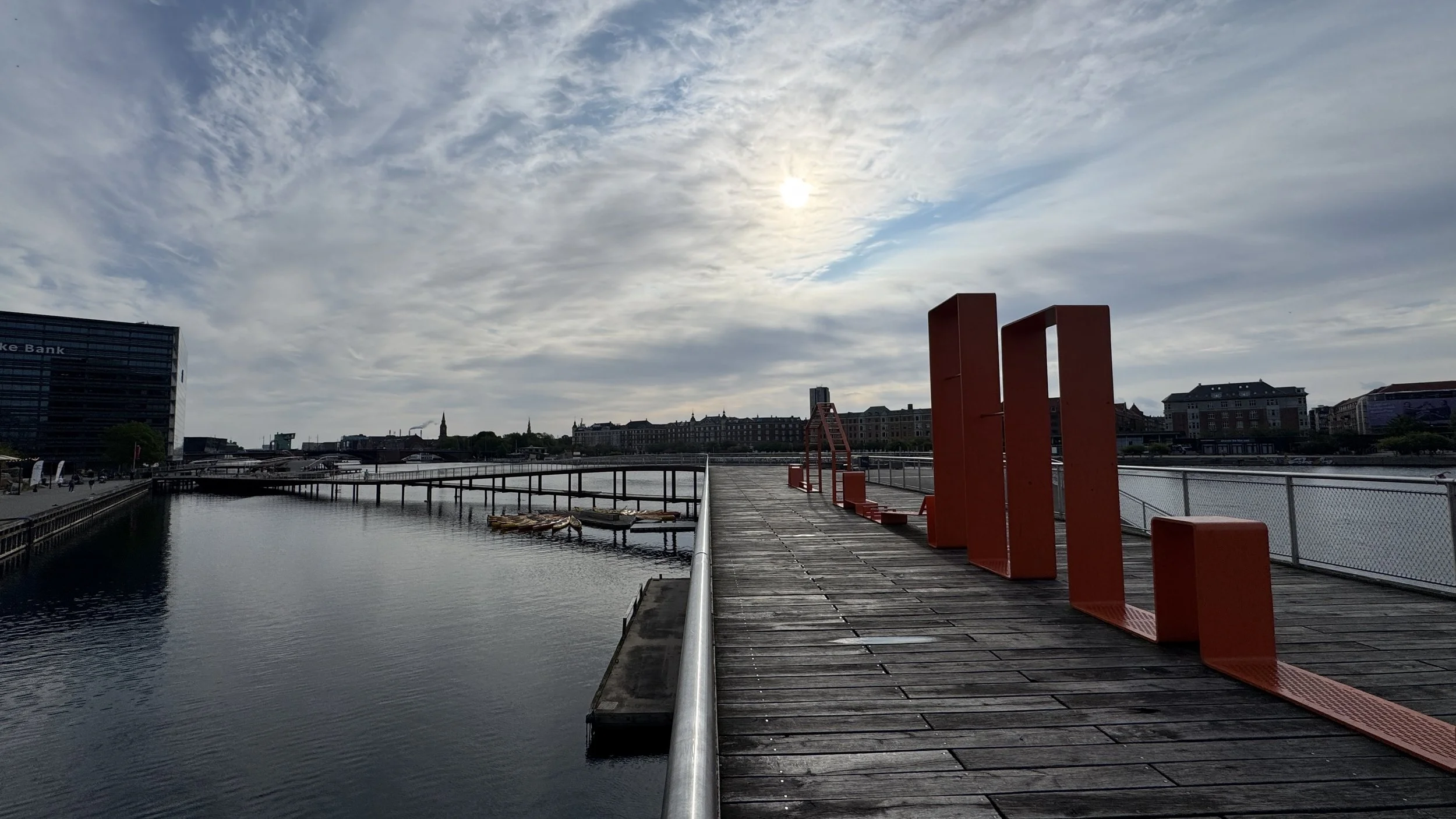
We were planning a day trip outside the city. After breakfast, we had plenty of time before our train, so we decided to walk to the main train station along the river. This stretch of the waterfront was lined with swimming areas and broad promenades for walking and cycling. There were noticeably fewer tourists here, giving us a chance to experience another side of Copenhagen and get a glimpse of everyday local life.
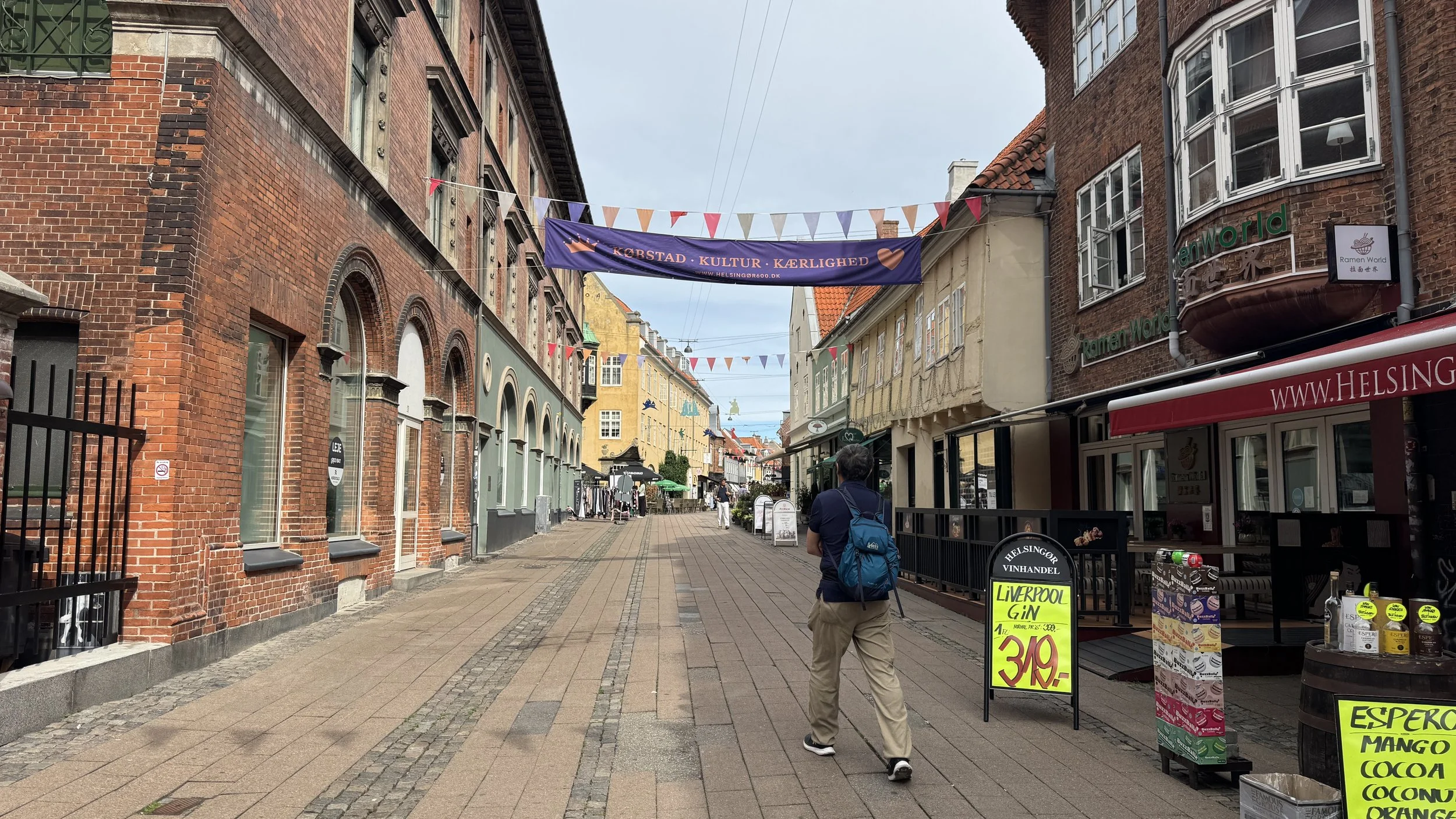
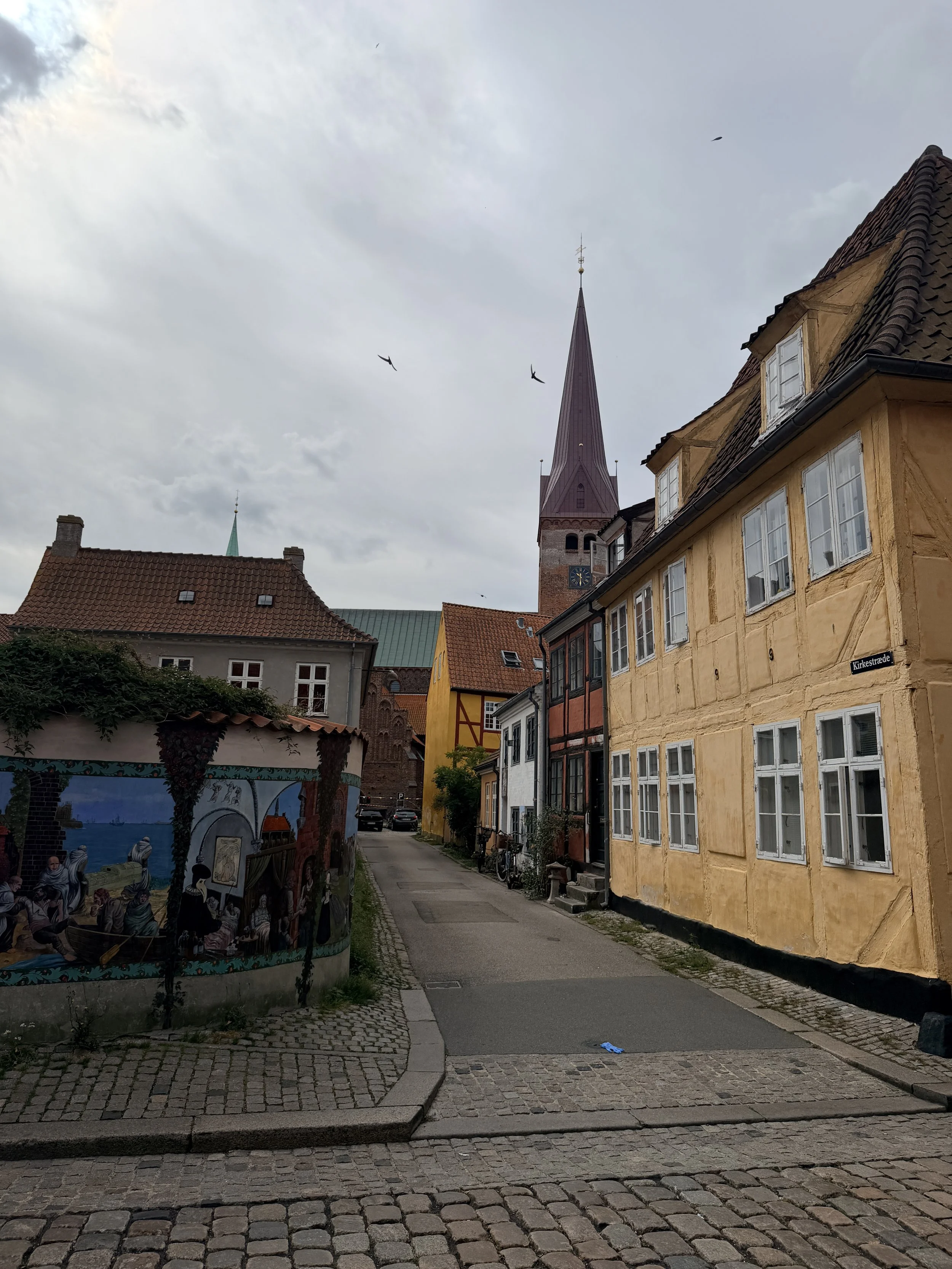
We took a train out of Copenhagen to visit Kronborg Castle. After about an hour, we arrived in the seaside town of Helsingør. The town was especially peaceful in the morning, with hardly anyone on the streets. On our way to the castle, we happened upon St. Mary’s Church (Sct. Mariæ Kirke). Originally built in the 15th century as part of a Carmelite monastery, the church and its adjoining monastery are considered one of the best-preserved medieval monastic complexes in Northern Europe.
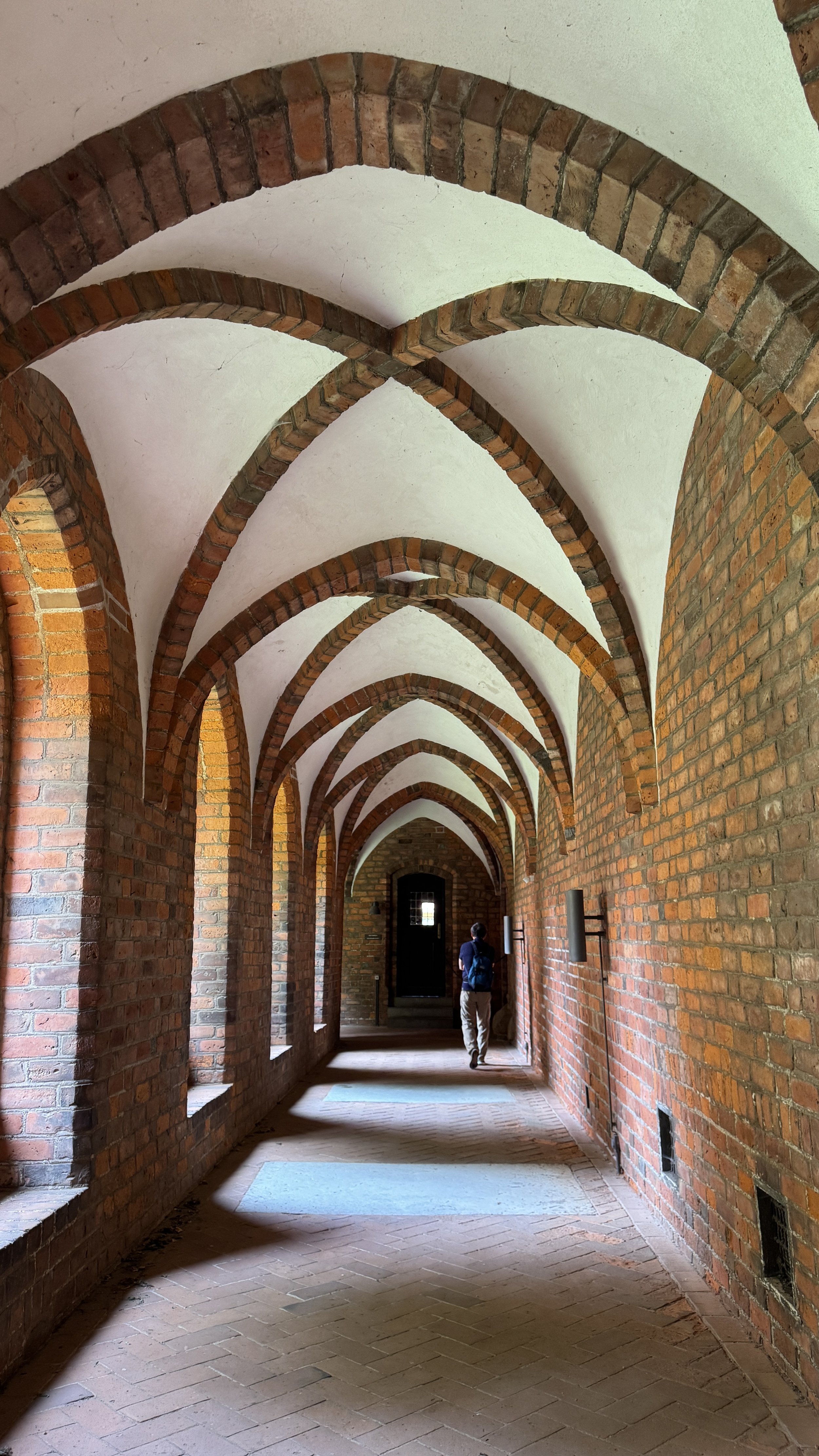
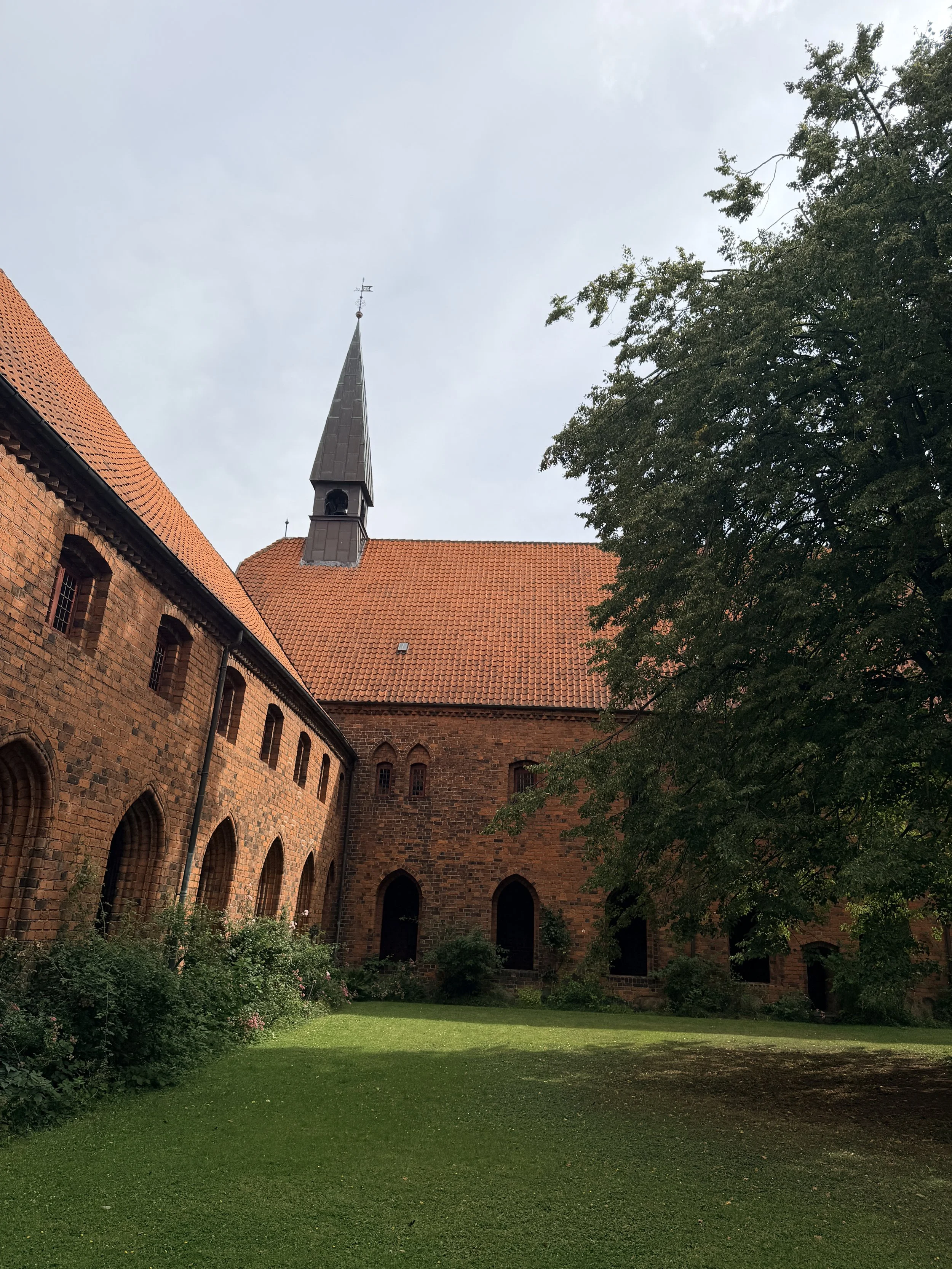
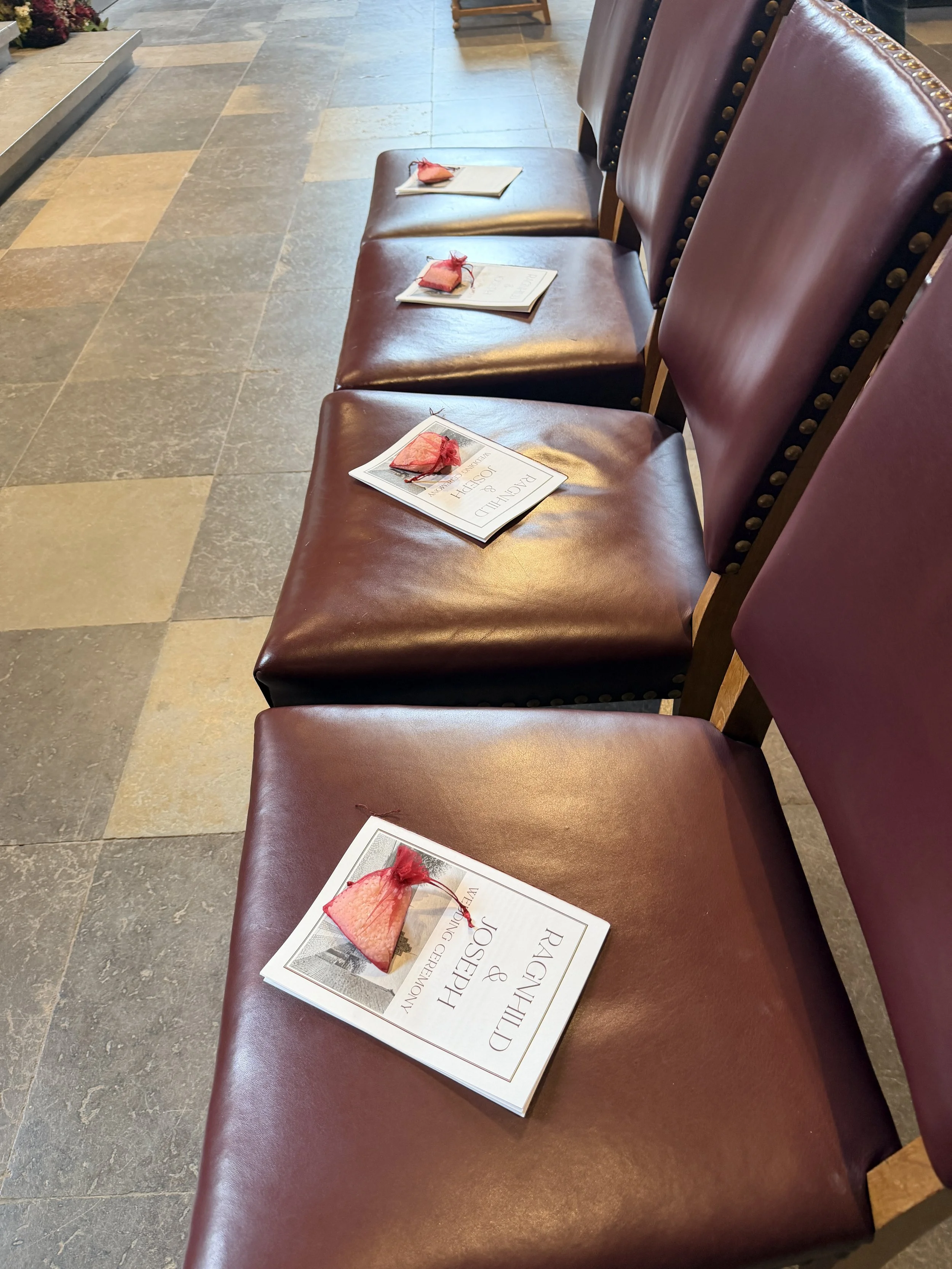
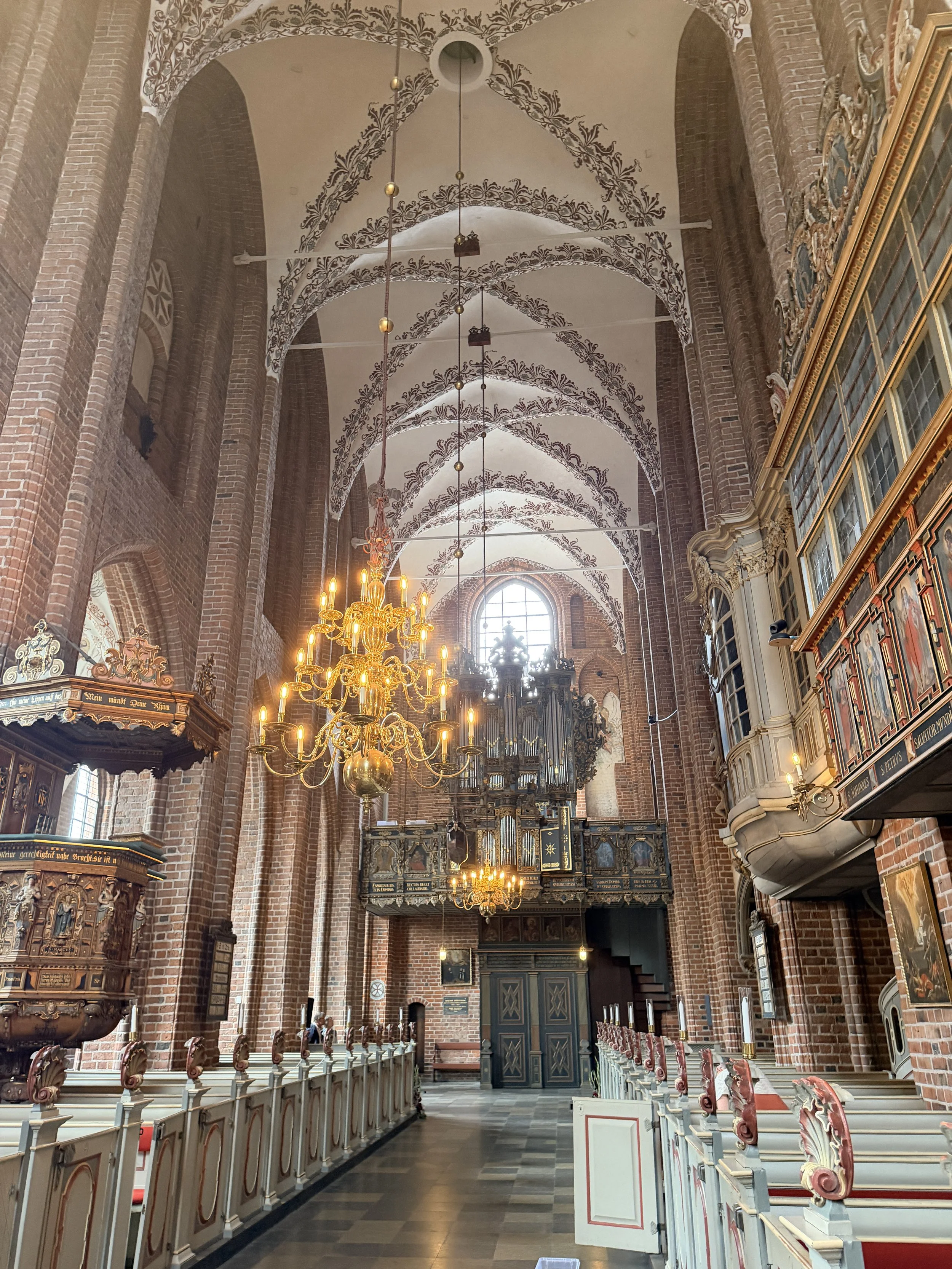
The interior of the church was both solemn and elegant, with painted vaulted ceilings, centuries-old wood carvings, and an ornate altar that reflected its long history. The deep, resonant sound of the pipe organ echoed through the church. We soon realized that the staff were making final preparations for a wedding to be held there at noon.
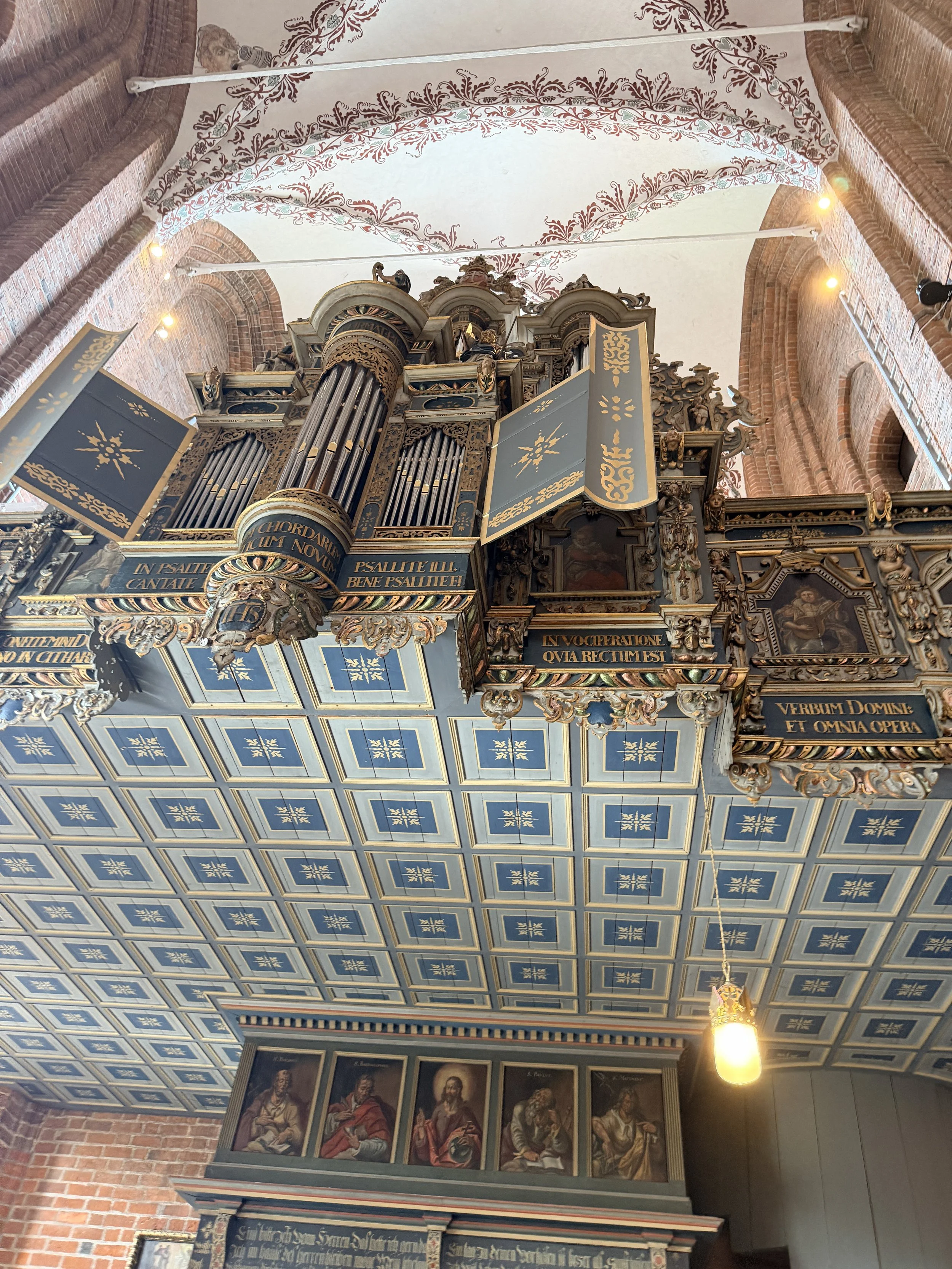
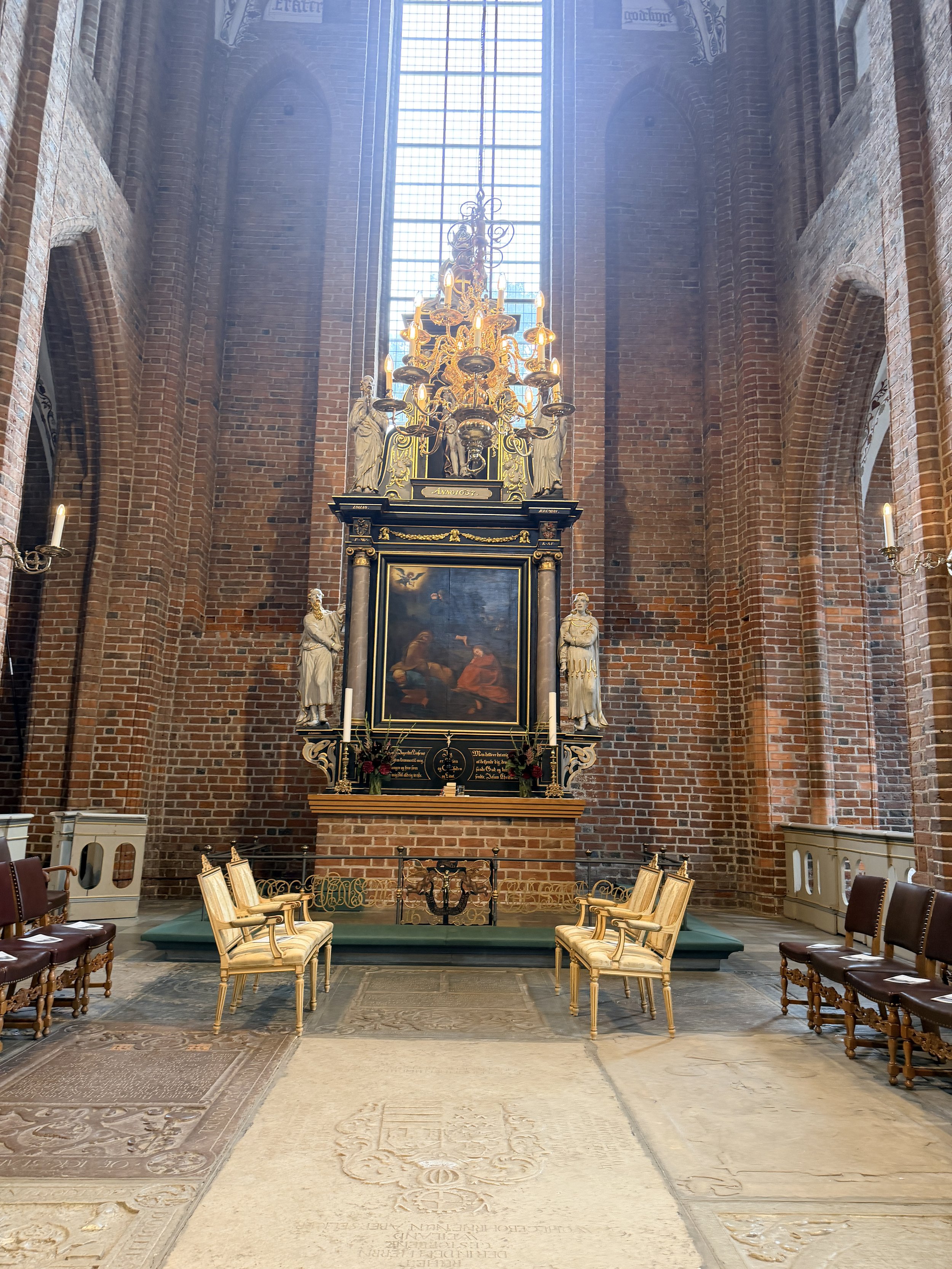
The church also has a fascinating connection to music history. The renowned 17th-century organist and composer Dieterich Buxtehude once served as organist here. He later moved to Lübeck, Germany, where his extraordinary playing and compositions greatly impressed the young Johann Sebastian Bach. In 1705, at just 20 years old, Bach famously traveled more than 400 kilometers on foot to Lübeck to hear Buxtehude perform and to learn from him. The experience had a lasting influence on Bach’s own musical development. Standing inside this historic church and listening to the deep, majestic tones of the organ, it was easy to imagine that remarkable musical connection spanning more than three centuries.
From the town of Helsingør, it was only a 10- to 15-minute walk to Kronborg Castle. A UNESCO World Heritage Site, Kronborg is renowned for its magnificent Renaissance architecture and its important role in Northern European history. Yet for many visitors today, the castle is just as famous for its connection to Shakespeare’s Hamlet, one of the best-known plays in the world.
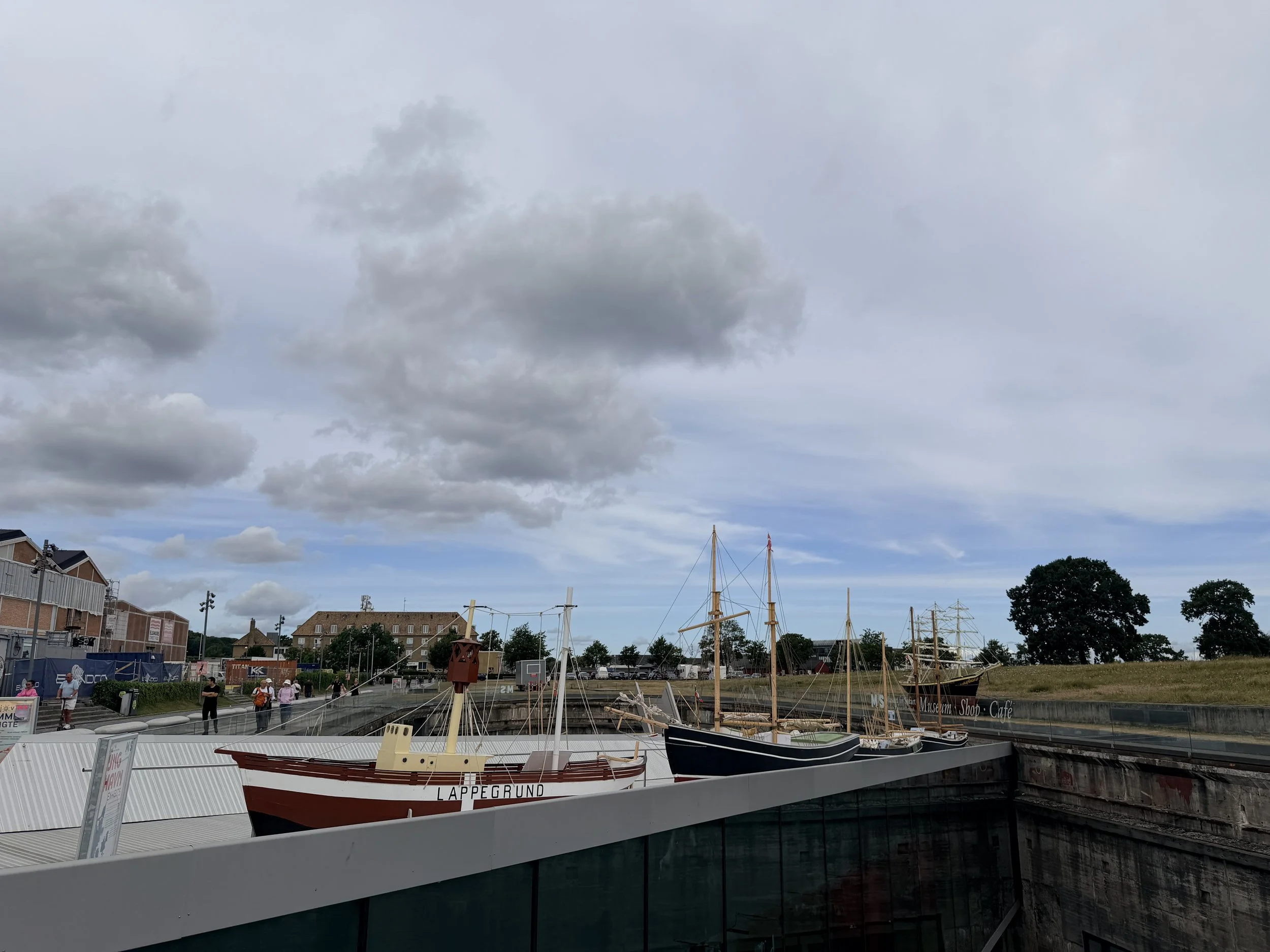
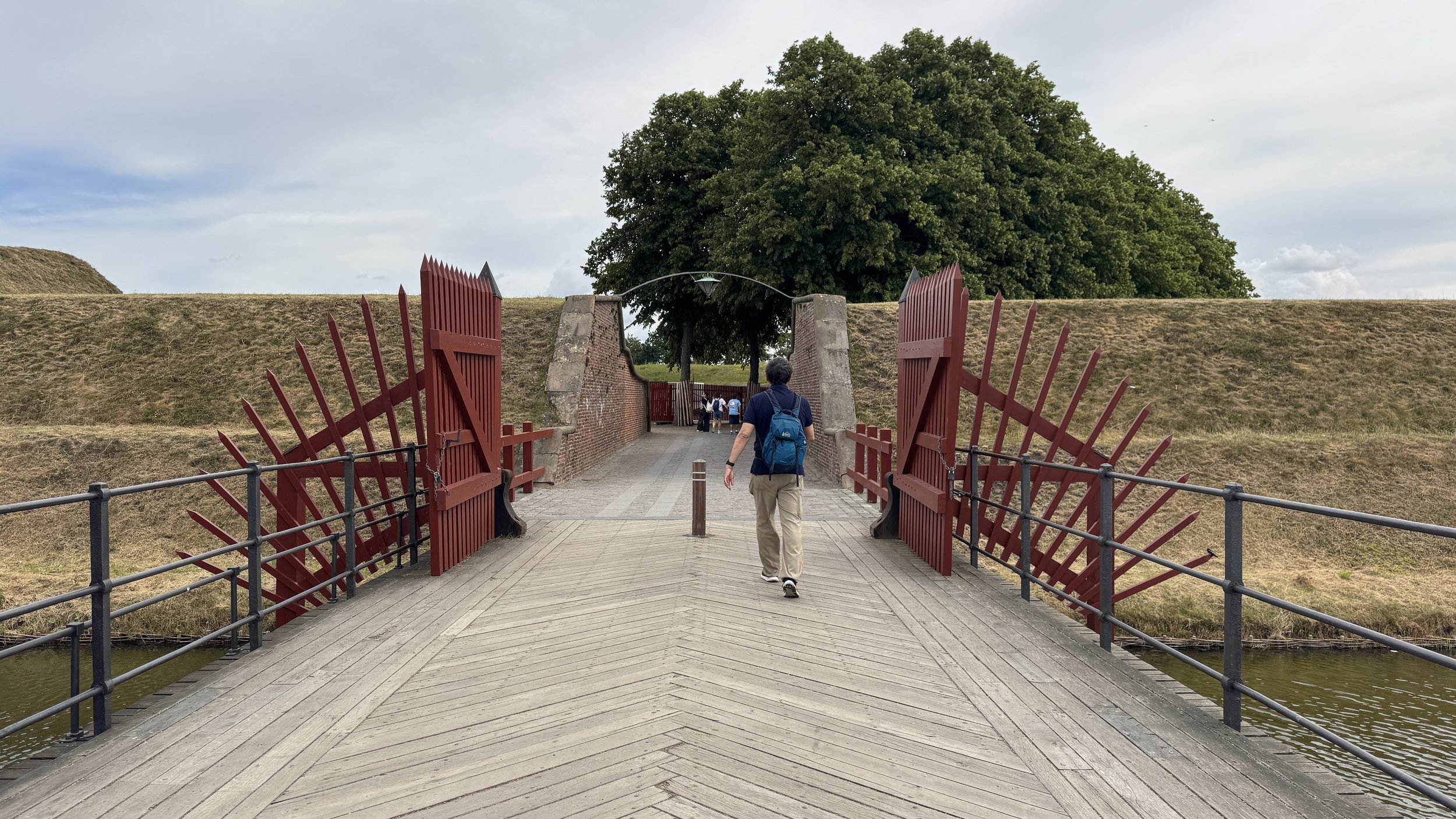
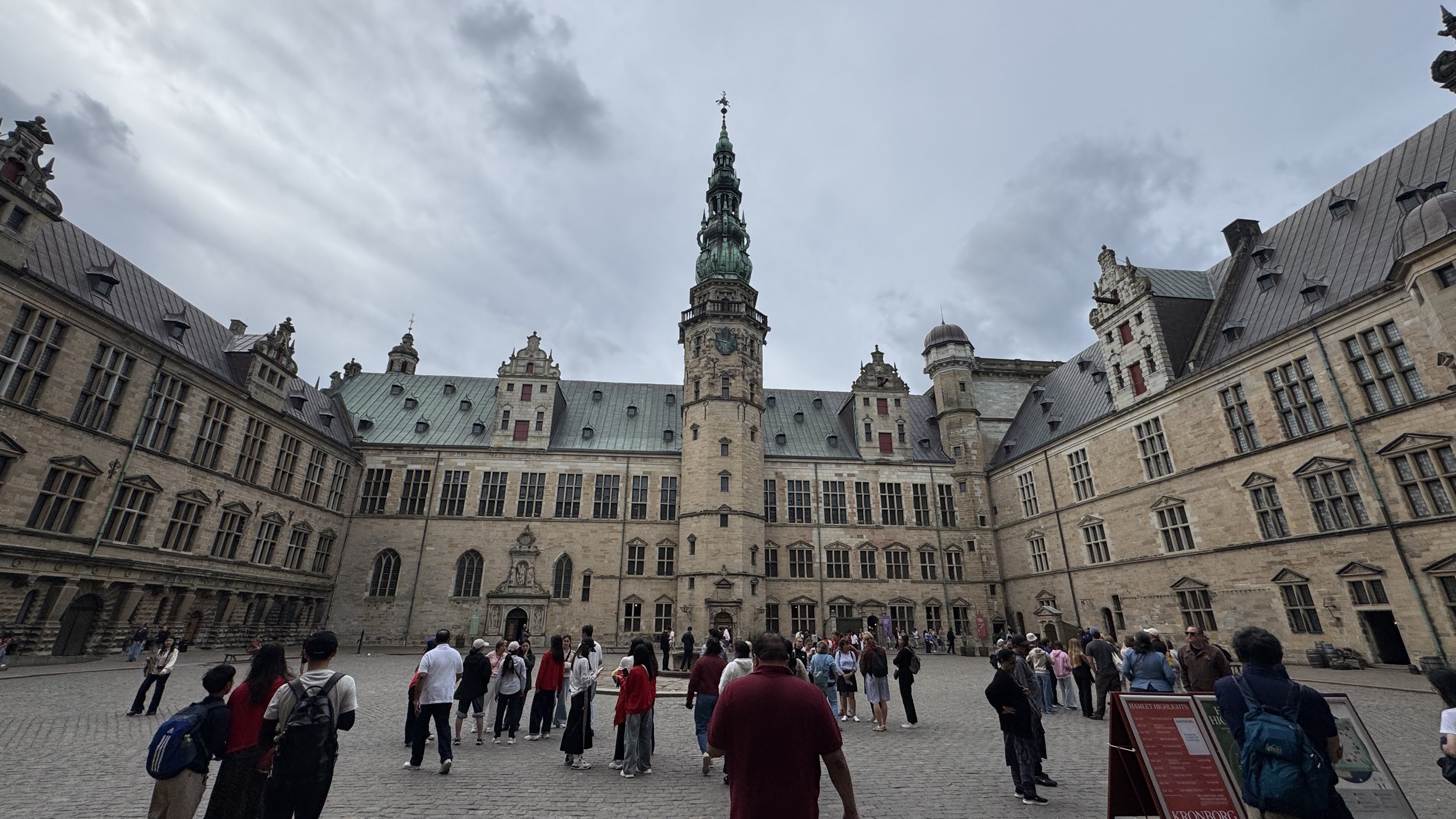
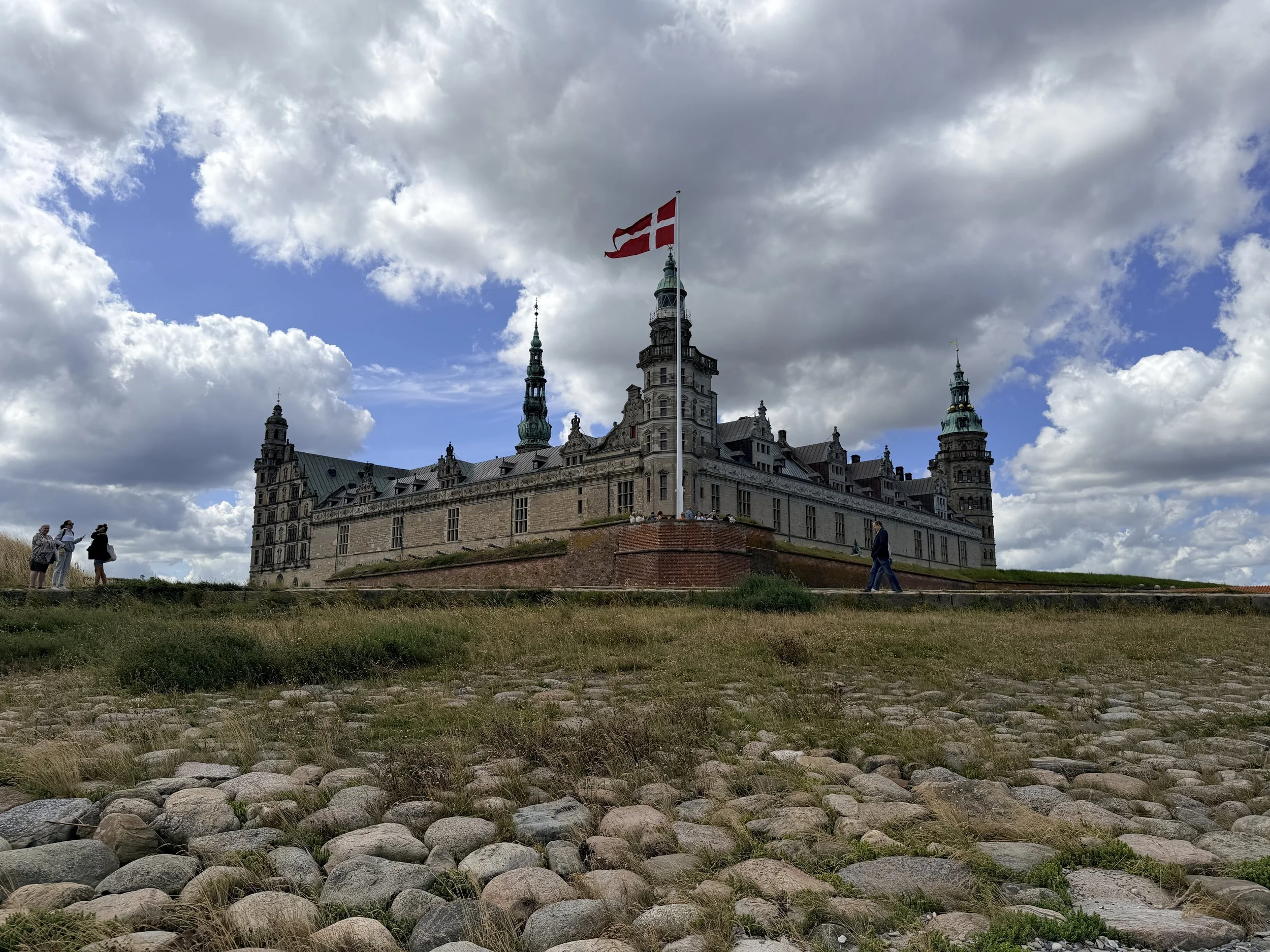
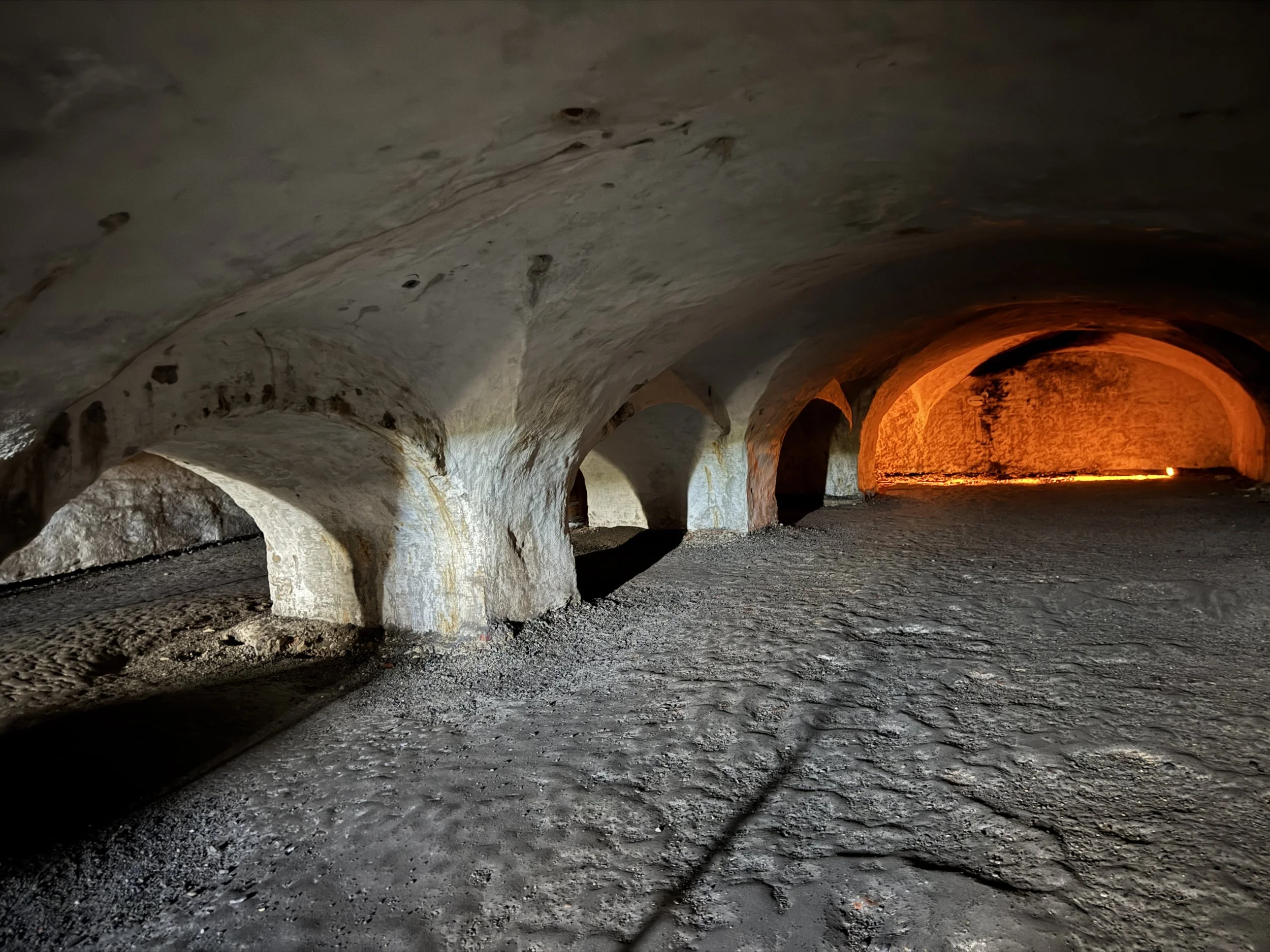
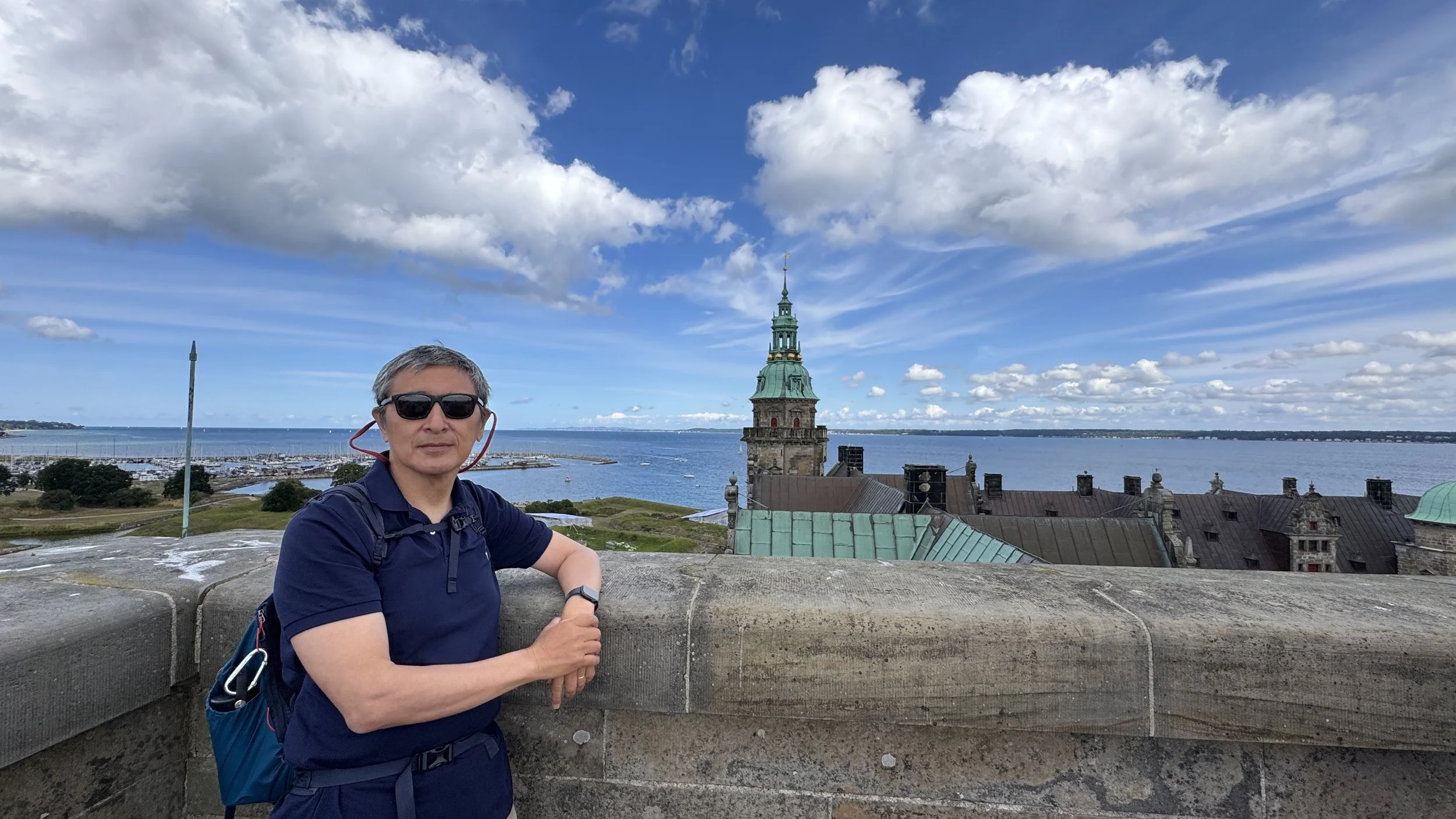
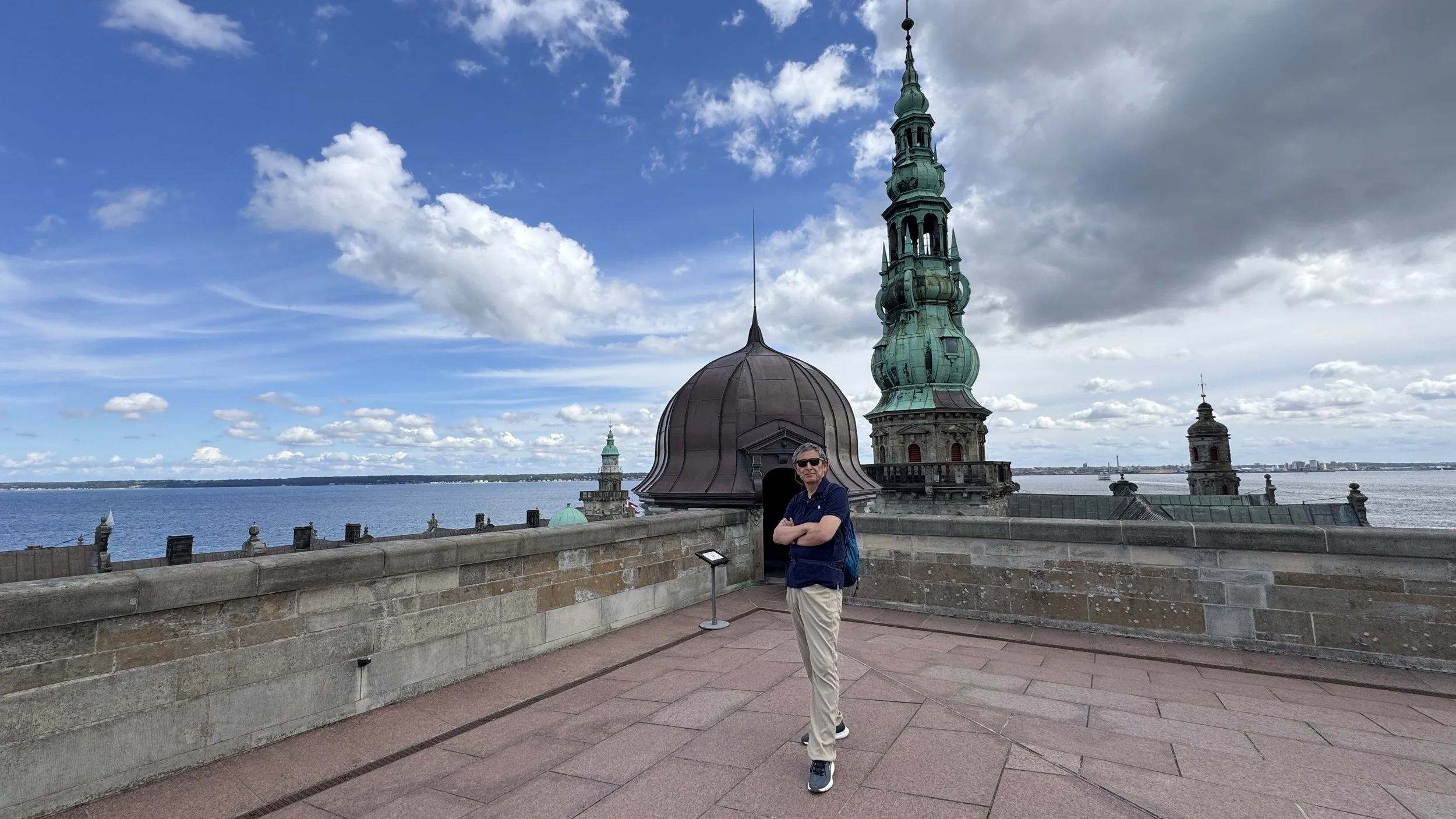
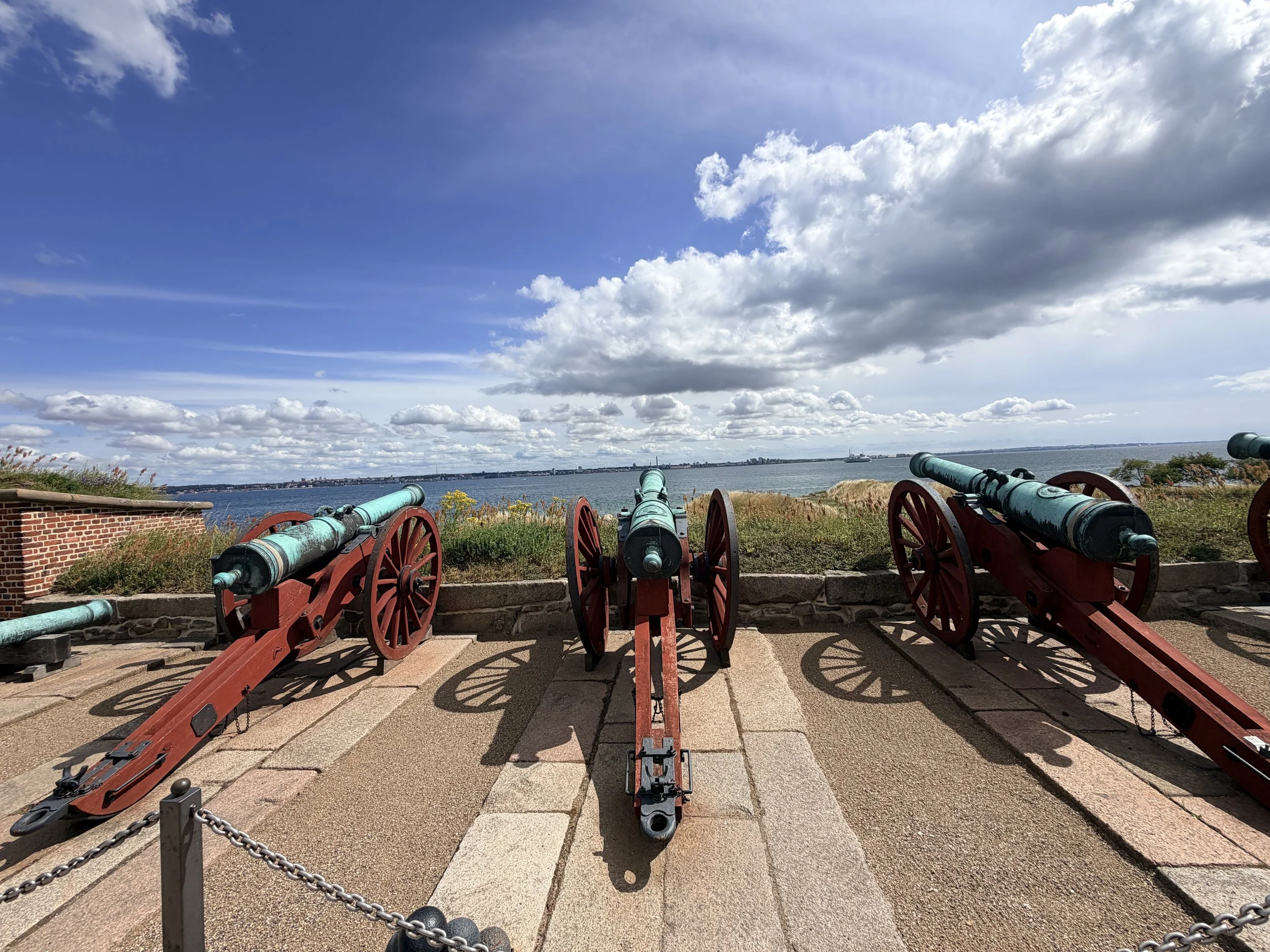
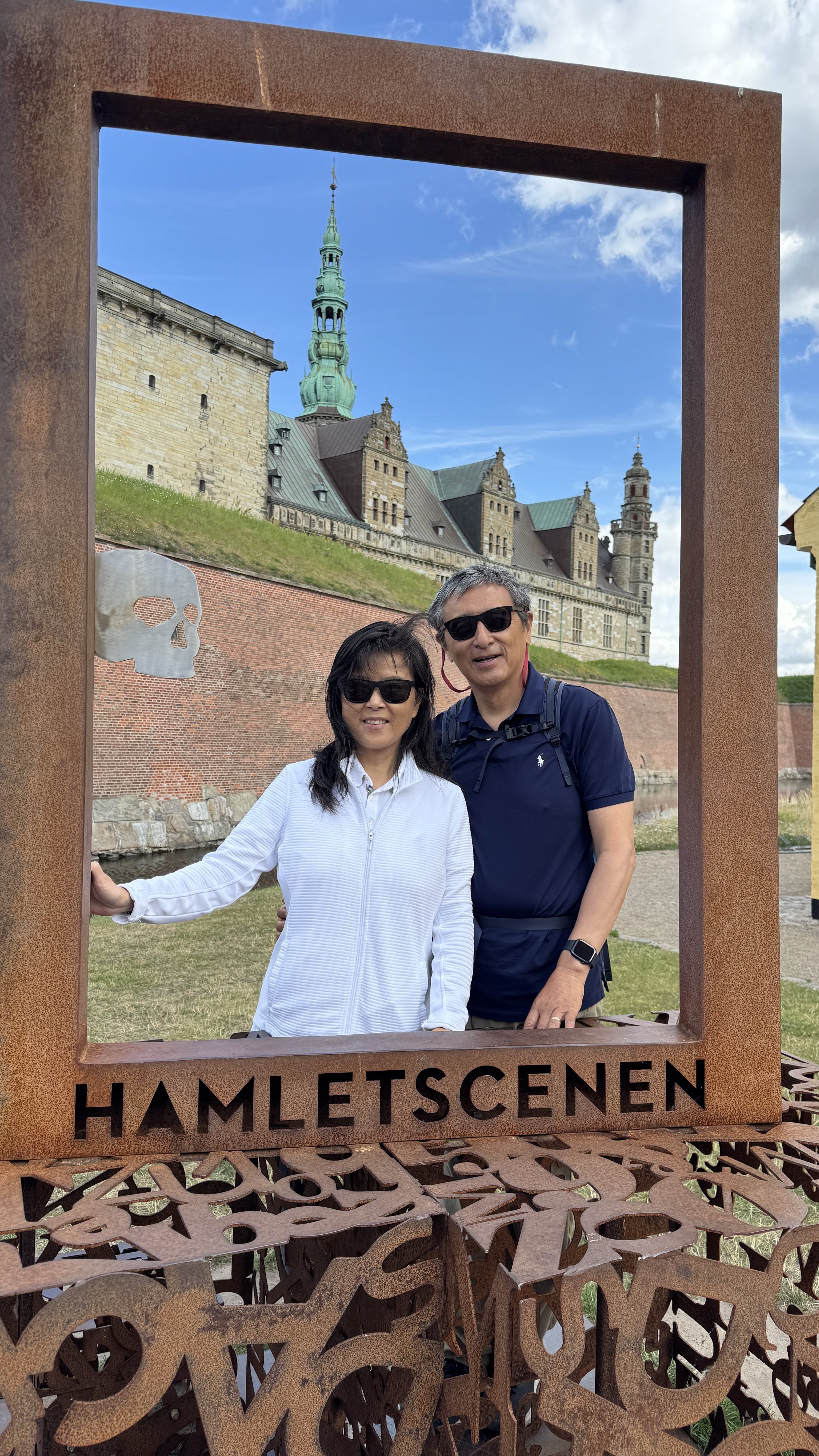
The story of Hamlet was inspired by the legendary Danish figure Amleth, and Shakespeare set his tragedy at Kronborg Castle. We joined a short English-language guided tour that introduced us to the castle’s history and its literary connection. We also learned an interesting bit of trivia: the name “Hamlet” looks almost like “Amleth” with the letter H moved from the end to the beginning.
Shakespeare himself never visited Denmark, let alone Kronborg Castle, but his play forever linked this Danish fortress with one of the greatest tragedies in world literature. That connection remains very much alive today. Throughout the day, actors staged short scenes from Hamlet in the castle courtyard, bringing Shakespeare’s timeless tragedy to life within the very walls where he imagined the story taking place.
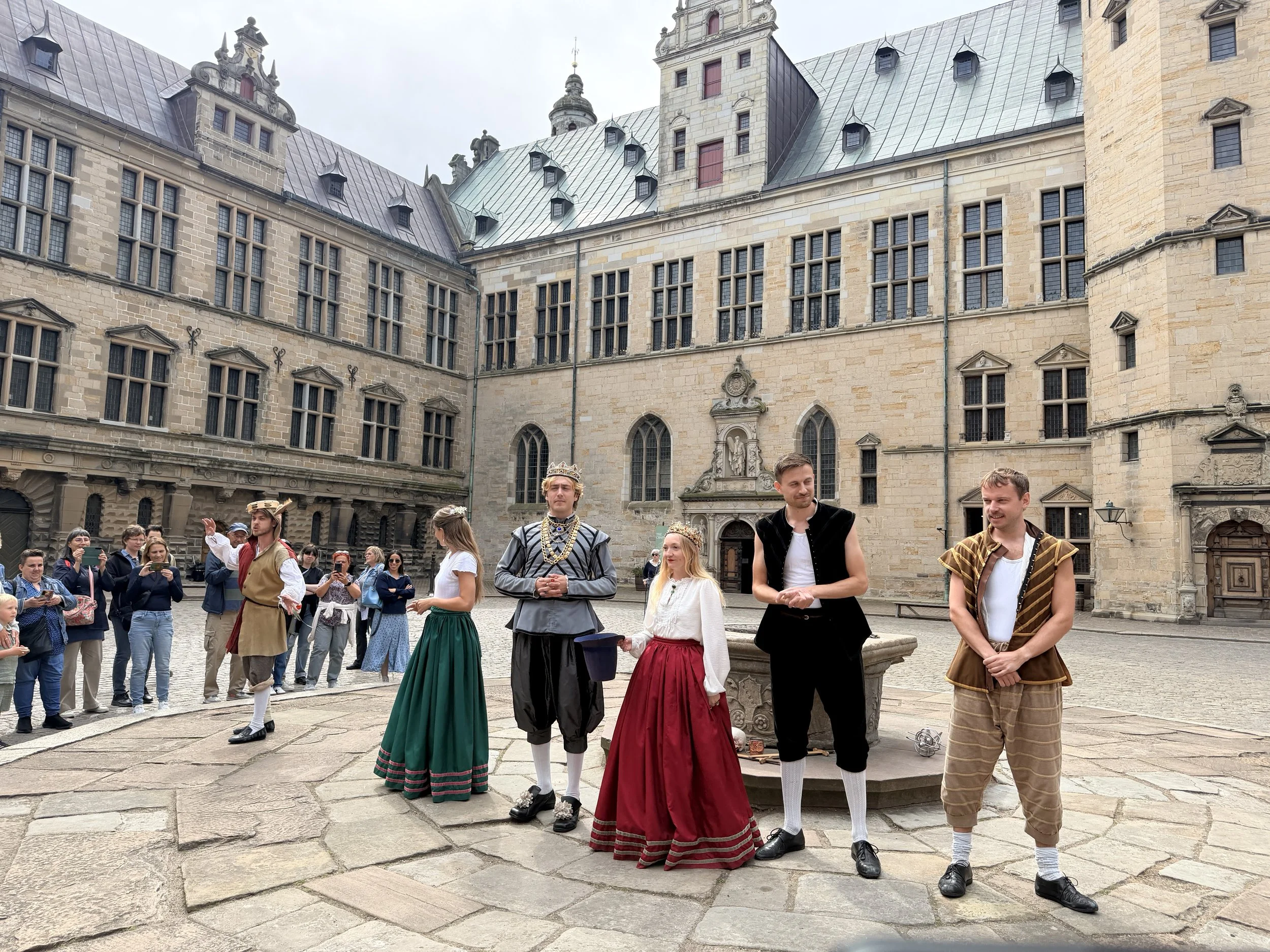
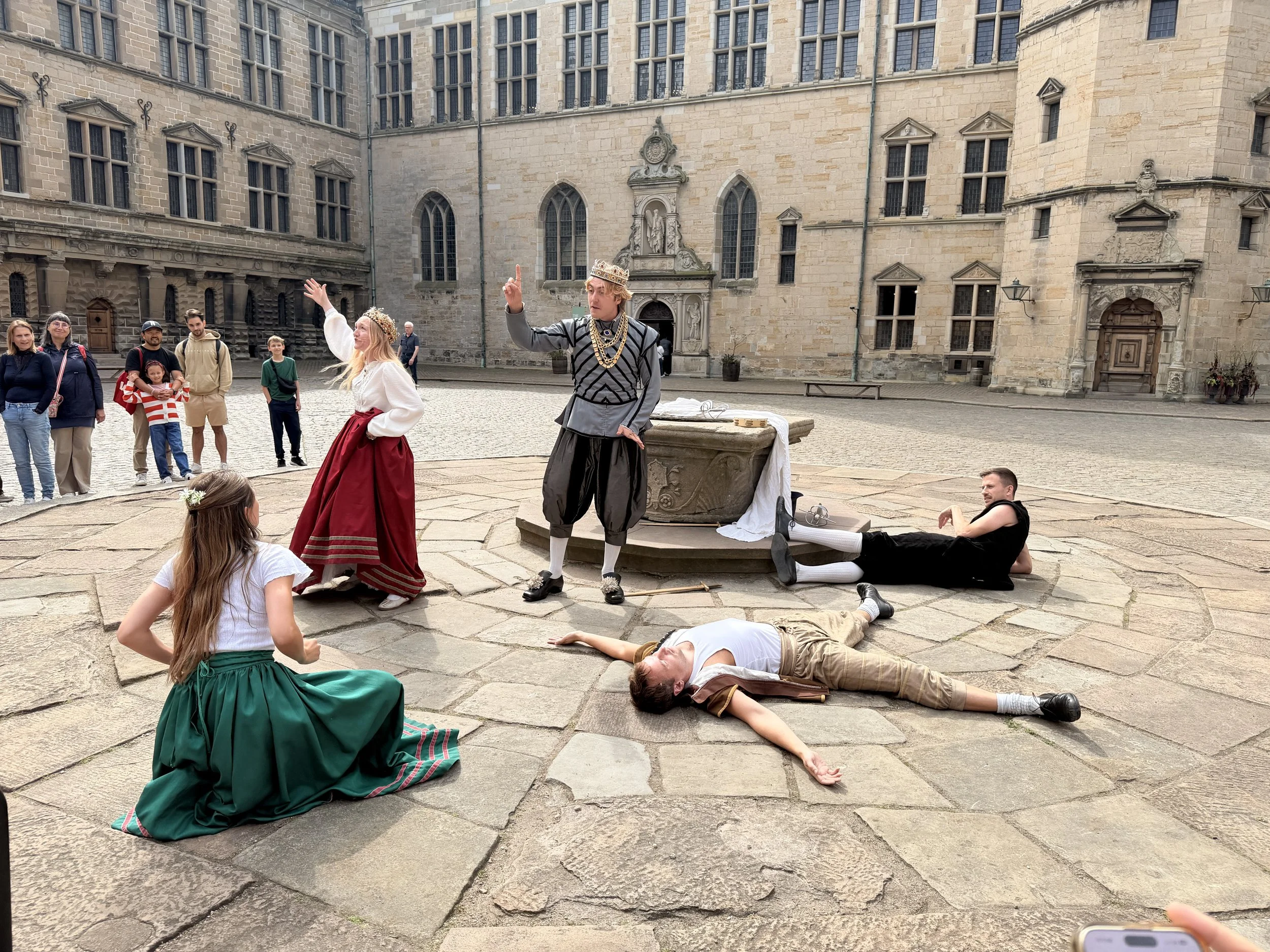
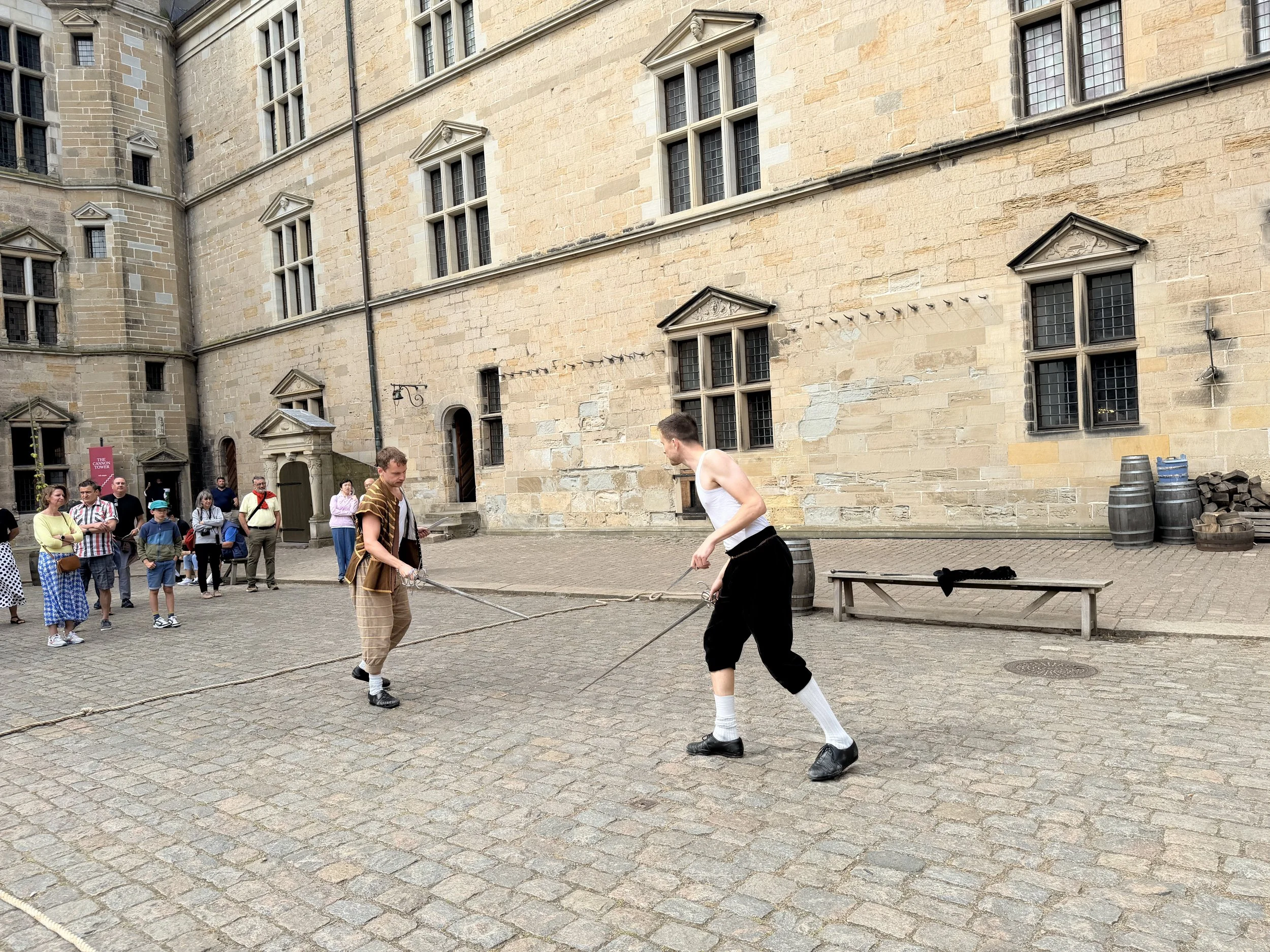
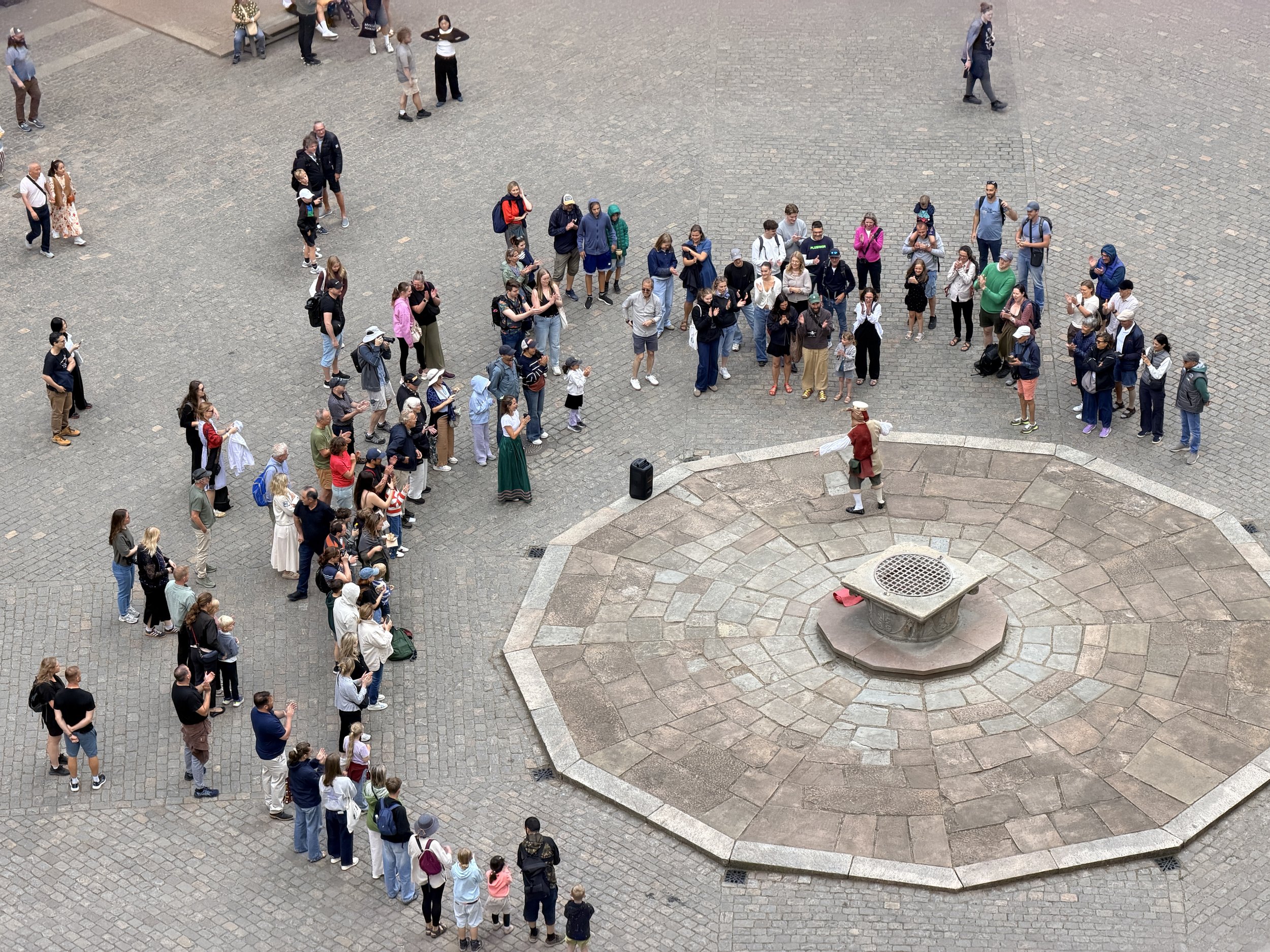
The performances added a unique dimension to our visit, allowing us to appreciate not only Kronborg’s remarkable history and architecture but also its enduring place in the world of literature.
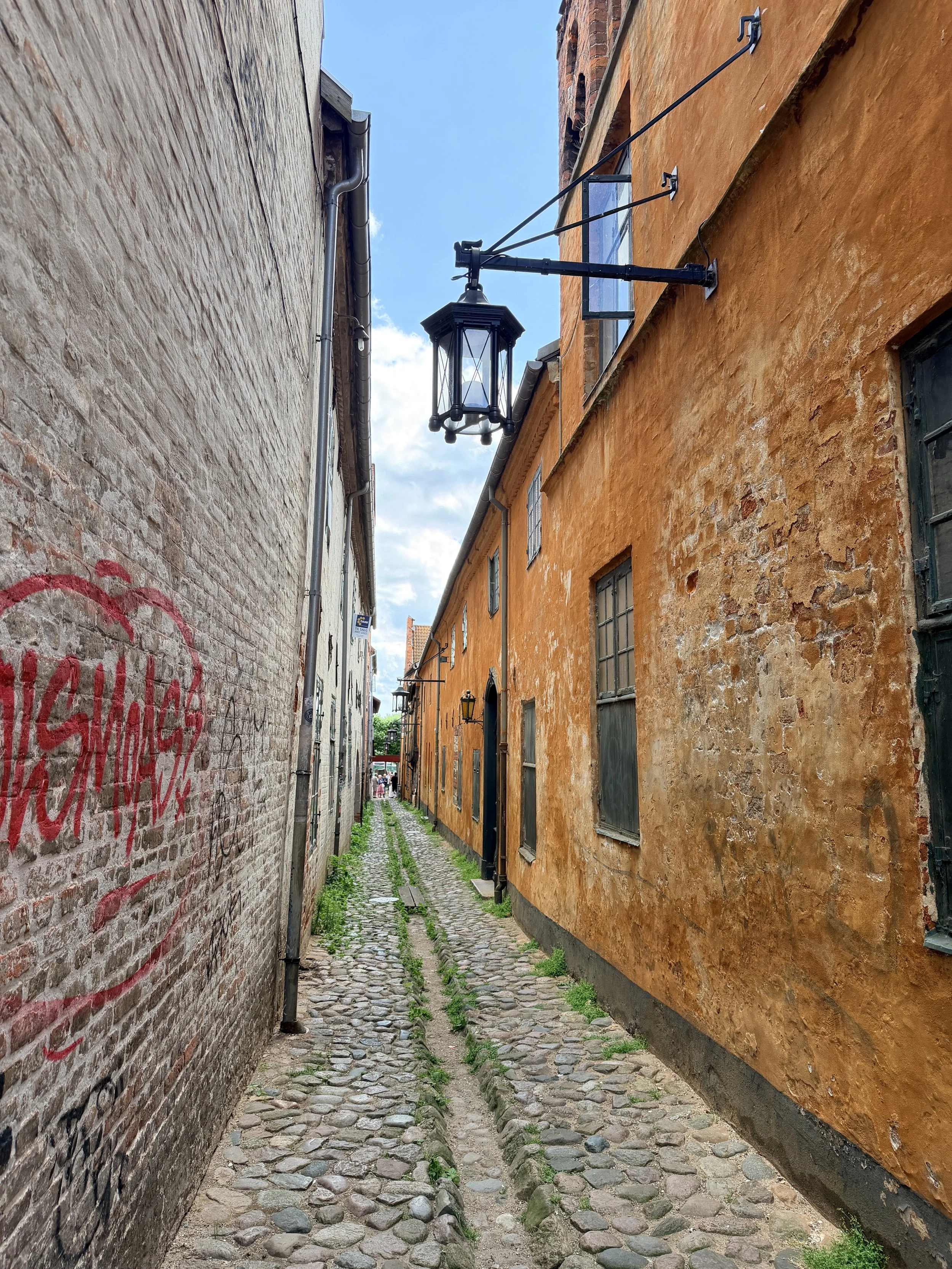
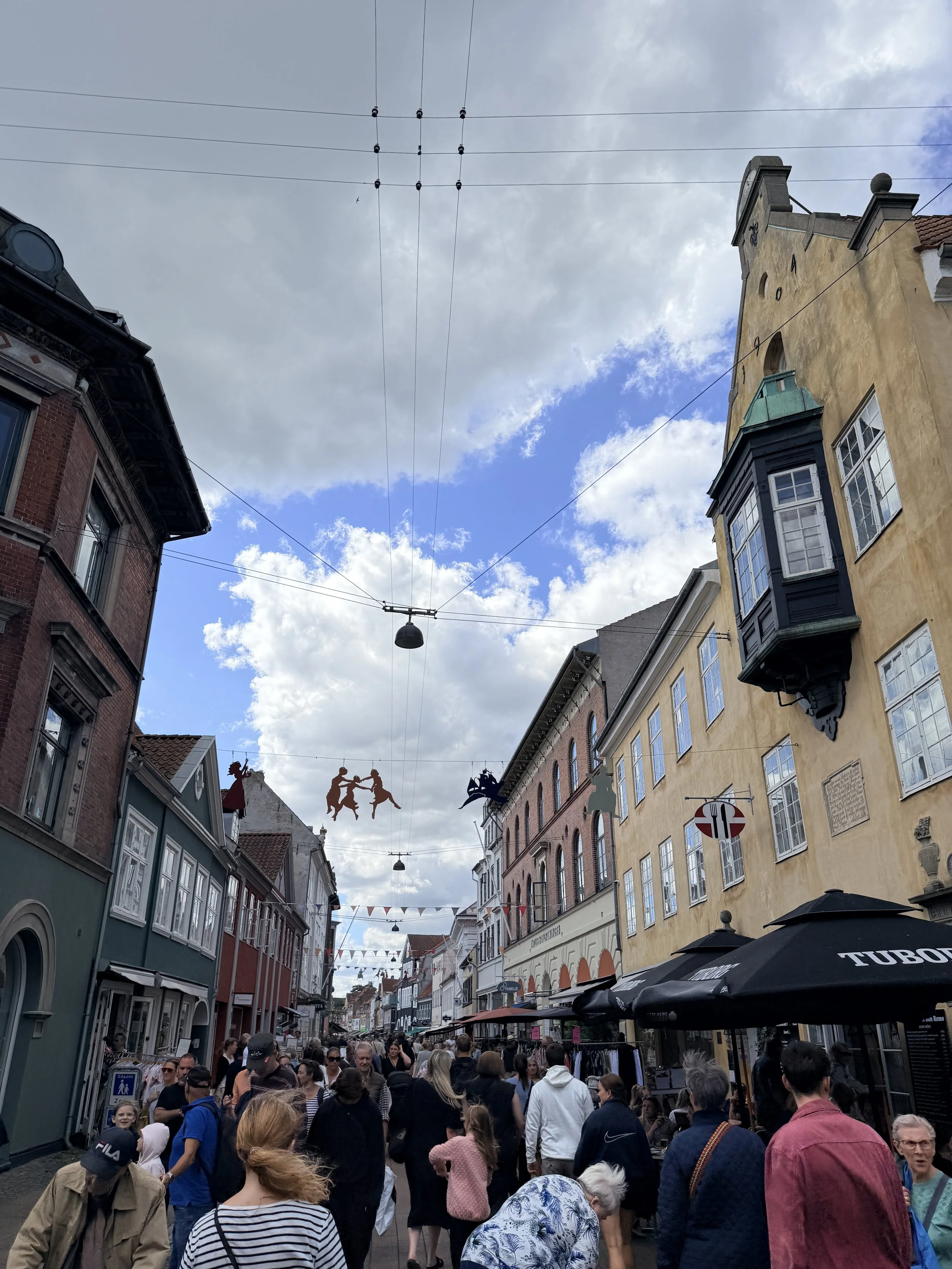
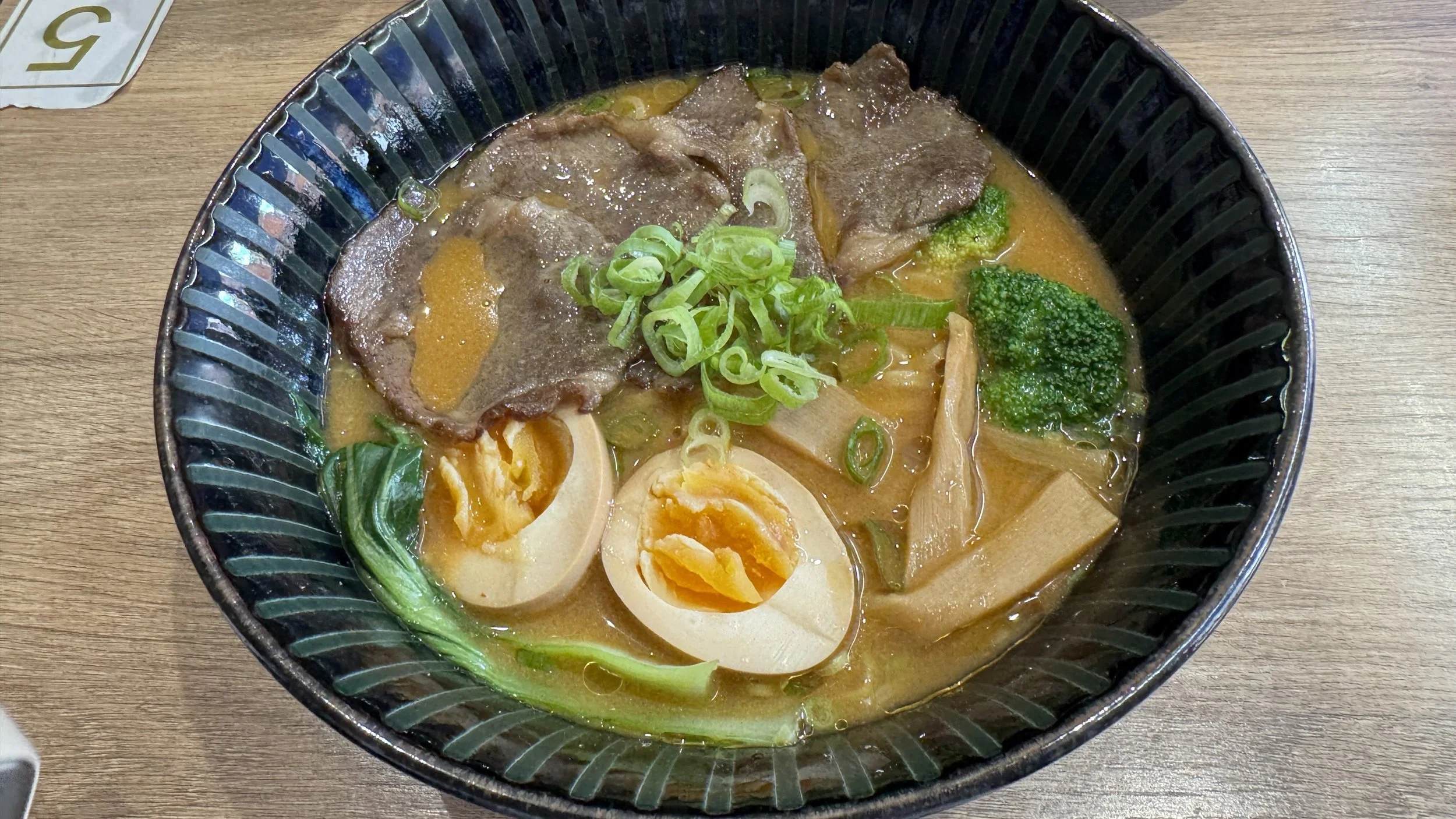
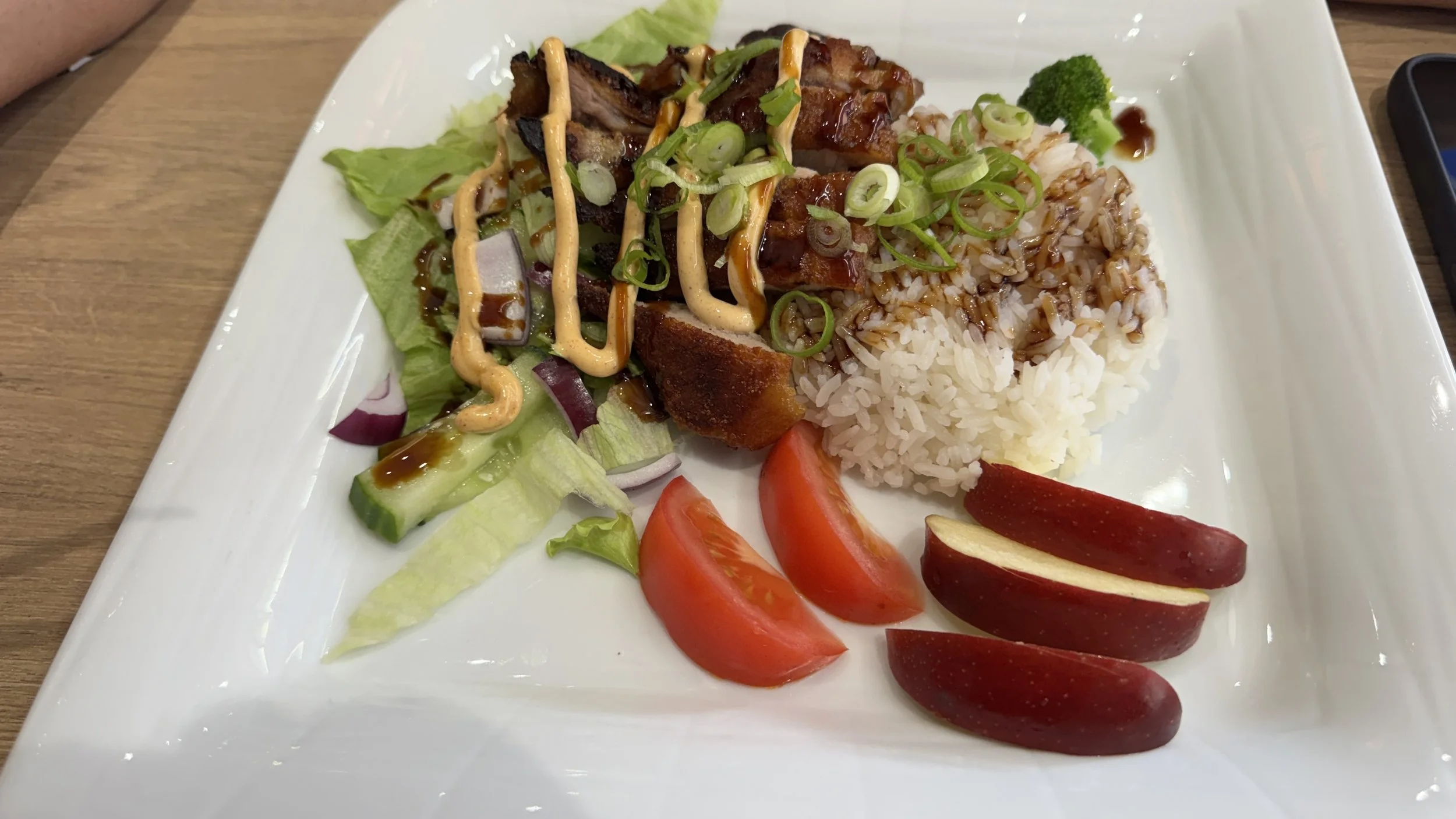
Back in the town of Helsingør, we found the streets much livelier, crowded with both locals and tourists. We came across a ramen restaurant and stopped there for a delicious and satisfying lunch.
From the world of Shakespeare and a Renaissance fortress, we traveled just ten minutes by train to the Louisiana Museum of Modern Art. The contrast could not have been greater. Louisiana seamlessly blends exceptional architecture, world-class modern art, sculpture gardens, and breathtaking views of the Øresund, creating one of the most beautiful museum settings we have ever experienced.
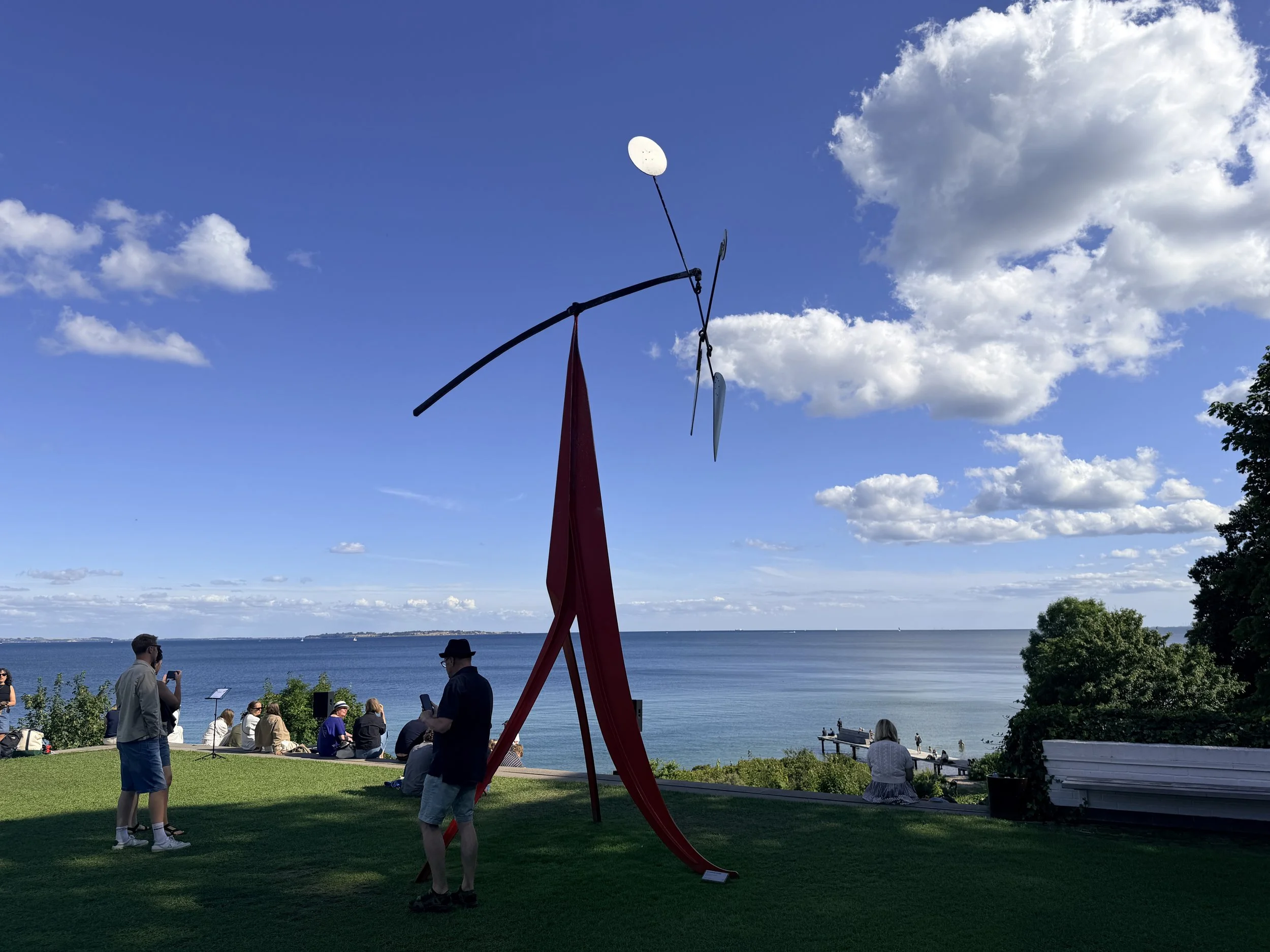
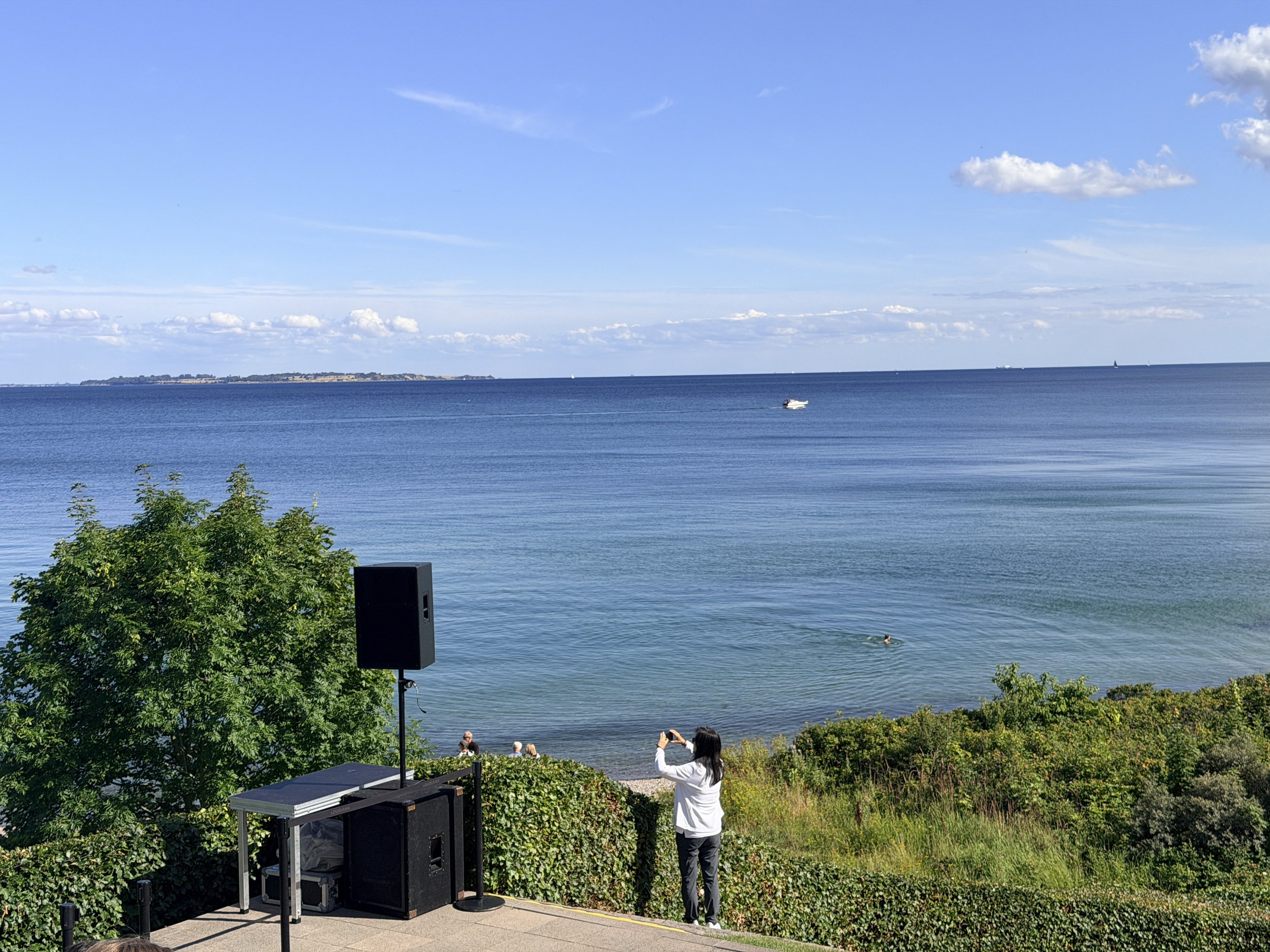
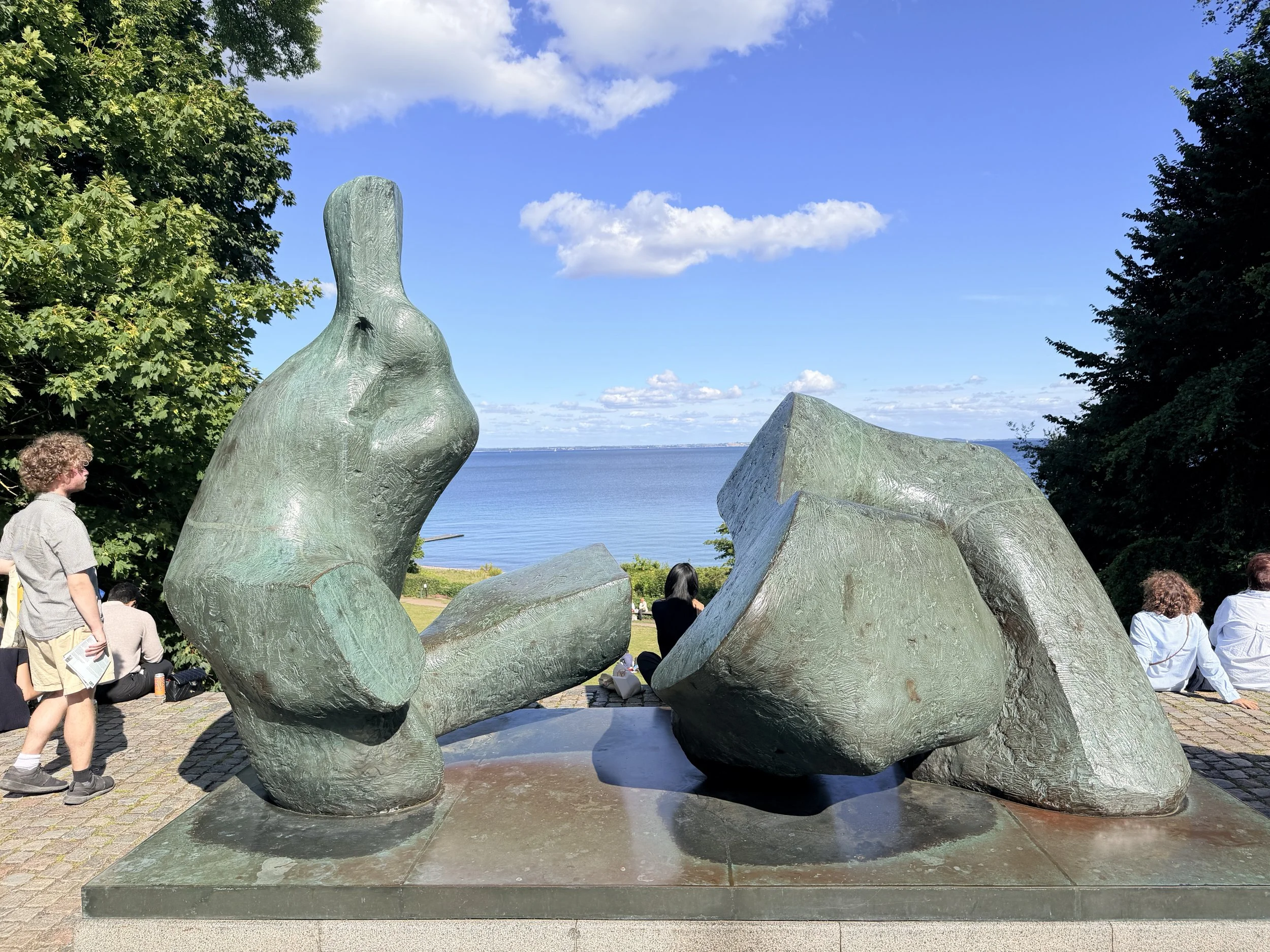
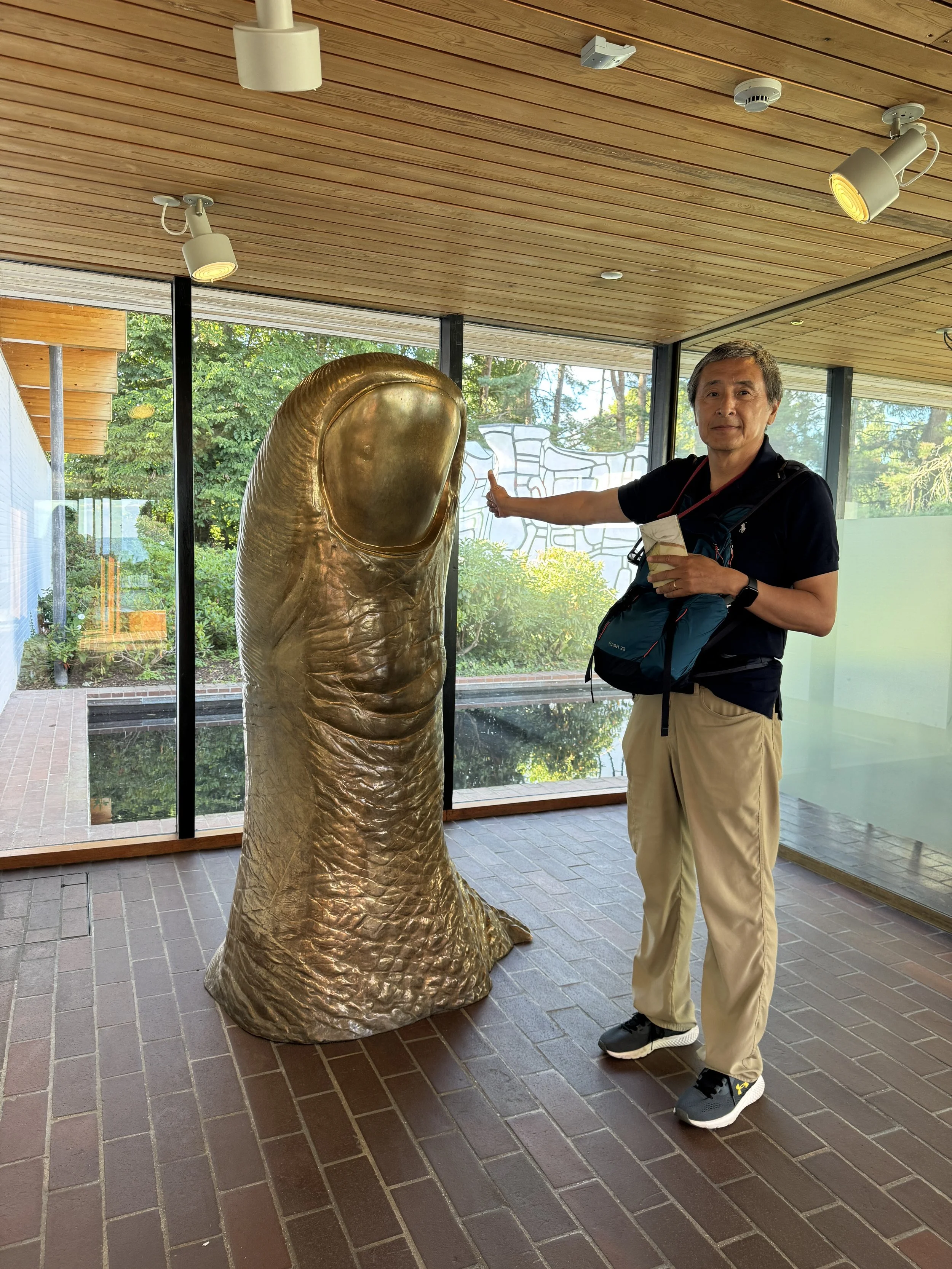
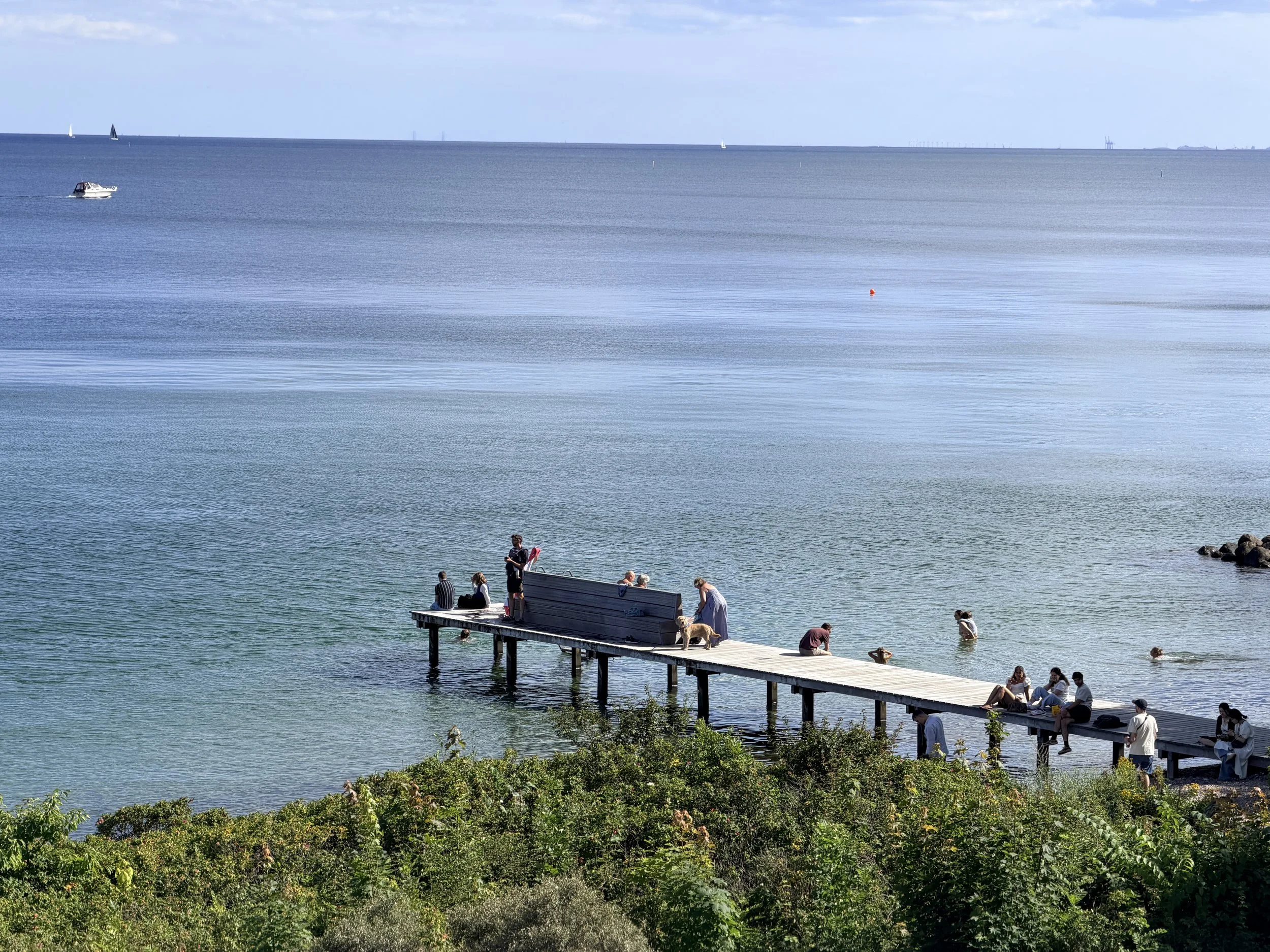
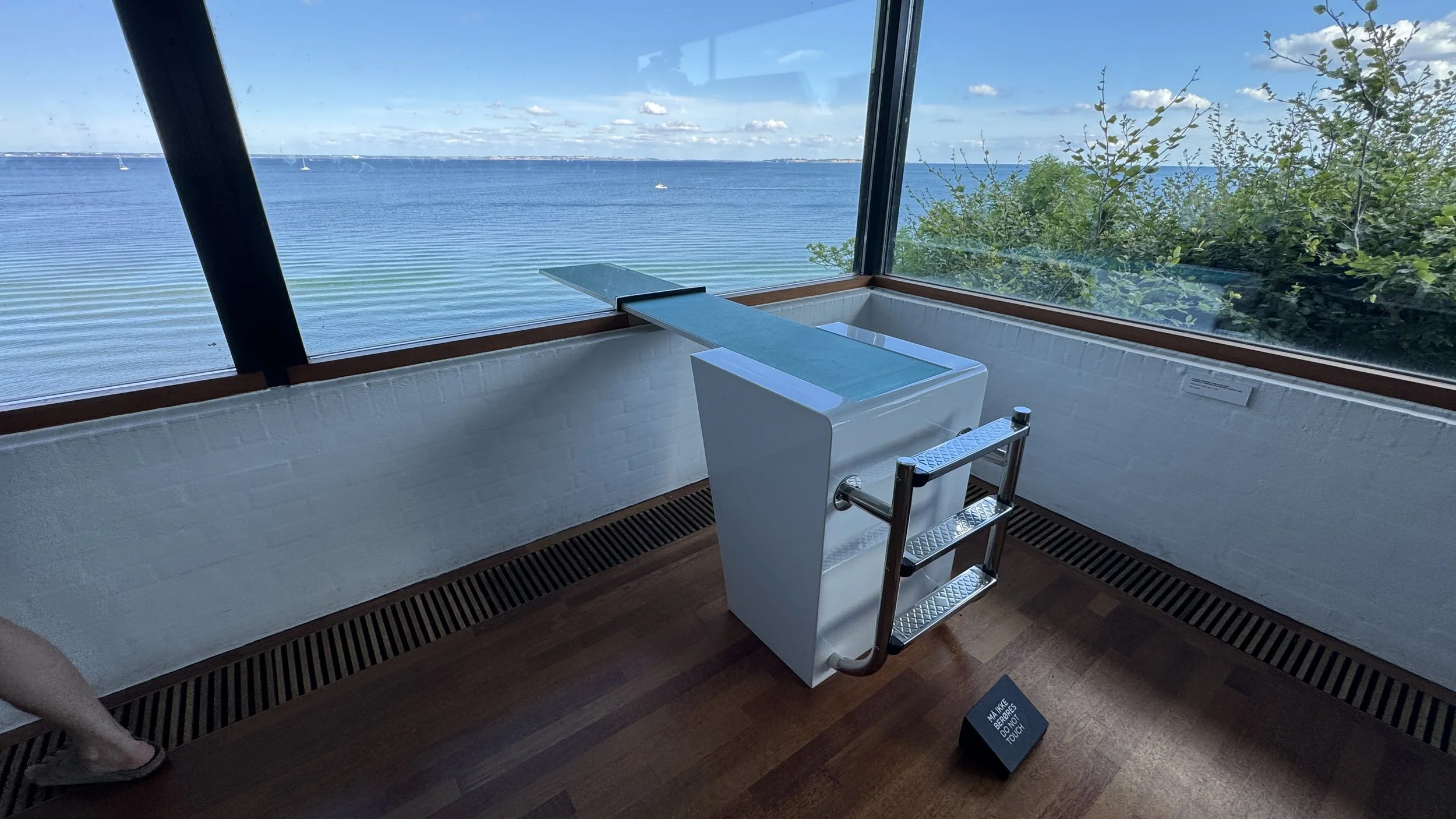
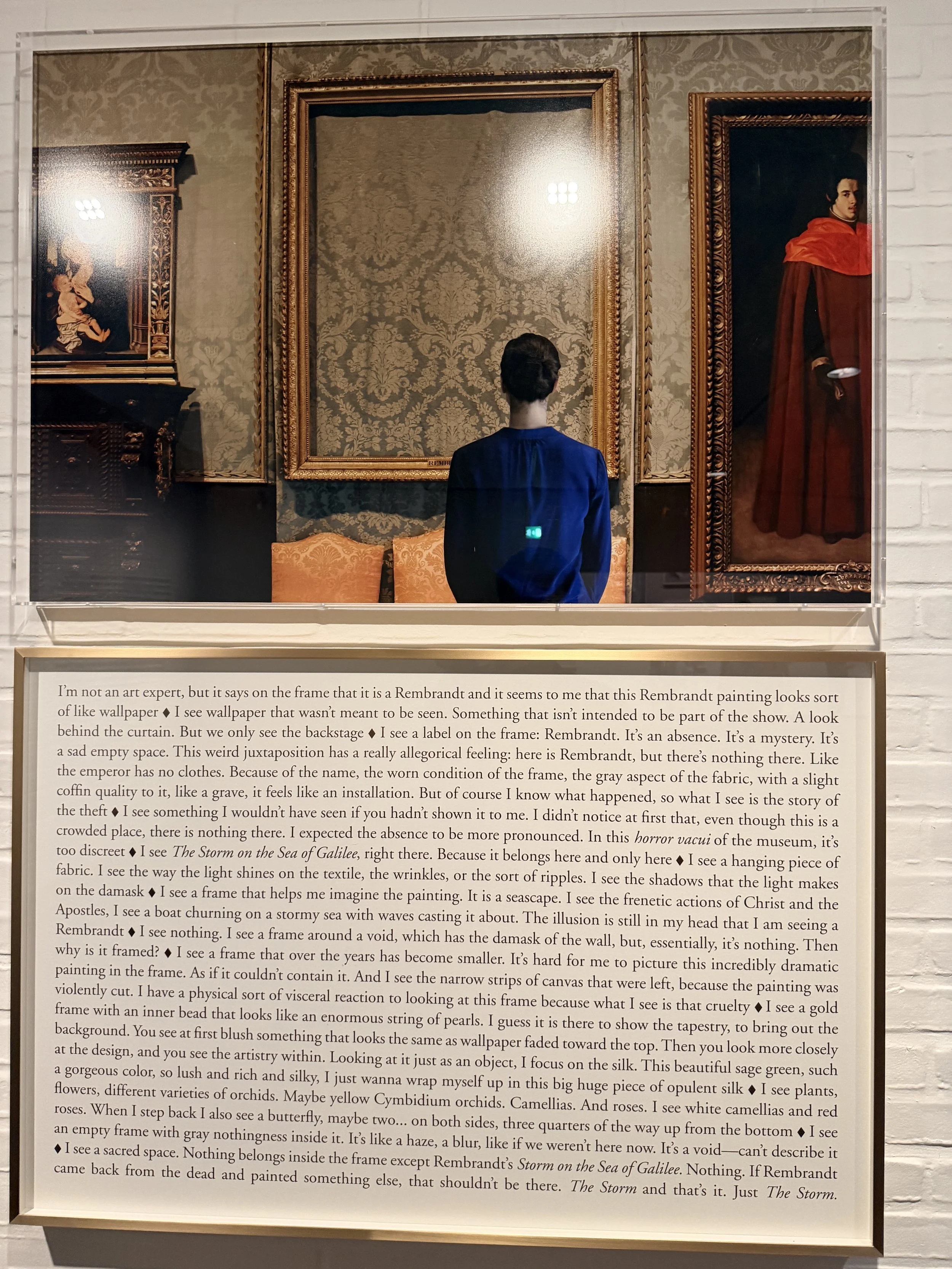
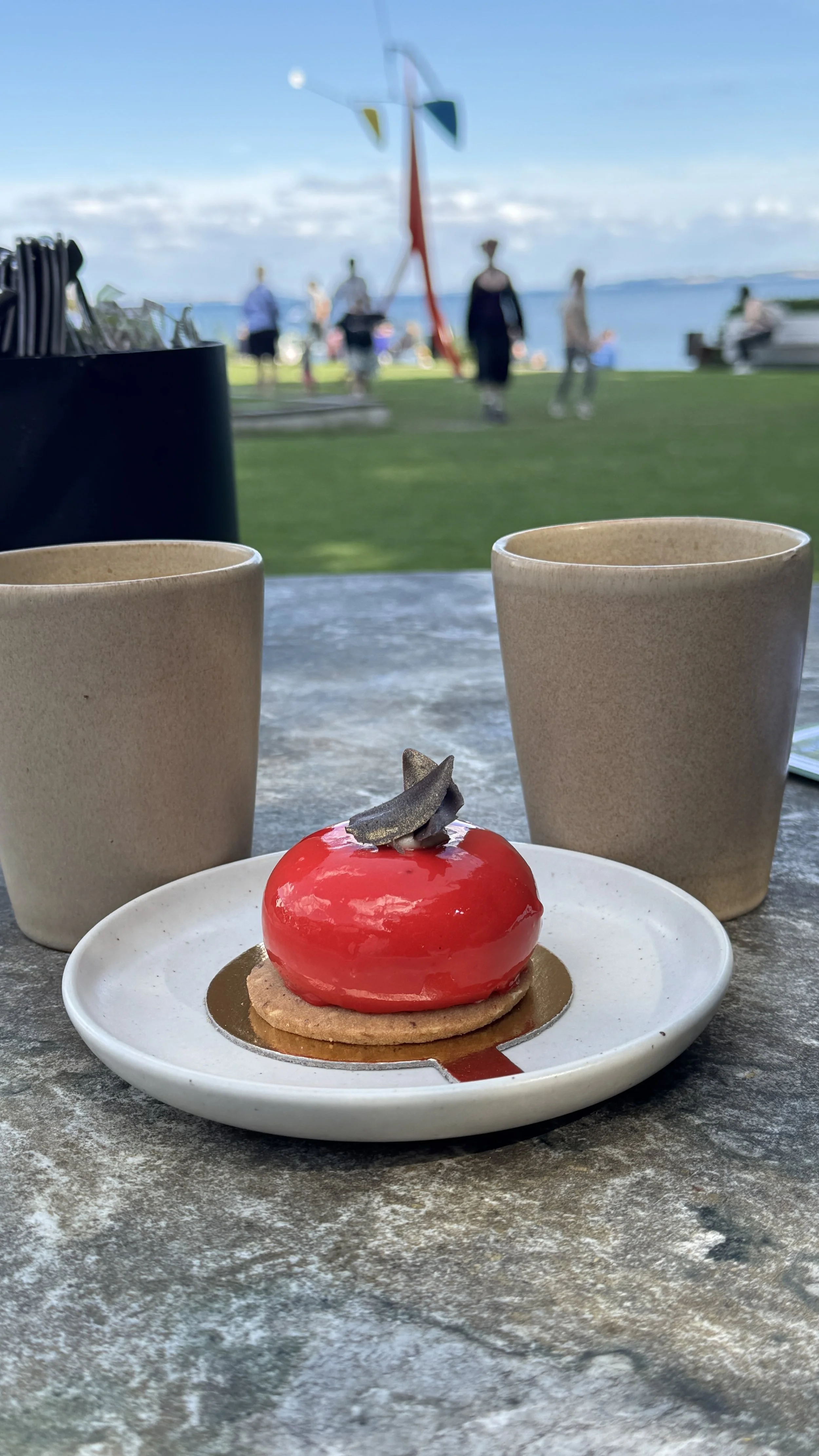
Unlike some modern art museums where we struggle to connect with the exhibits, many works at Louisiana invited us to pause, reflect, and think. Sophie Calle's installation Something Missing? was especially thought-provoking. We also stepped into Yayoi Kusama's immersive Gleaming Lights of the Souls, where countless reflections of light created the illusion of an infinite universe. A relaxing coffee break at the museum's seaside café completed the experience.
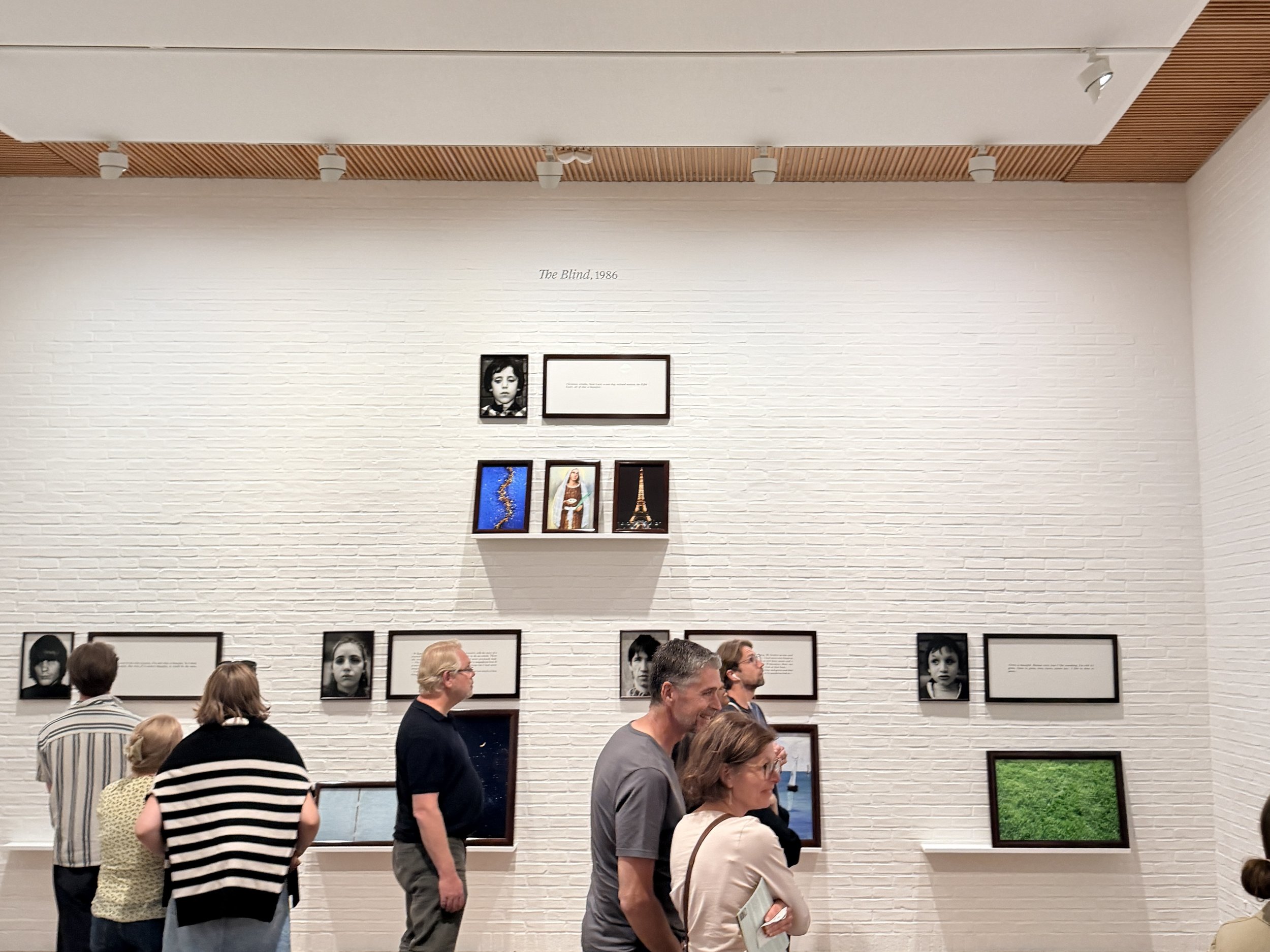
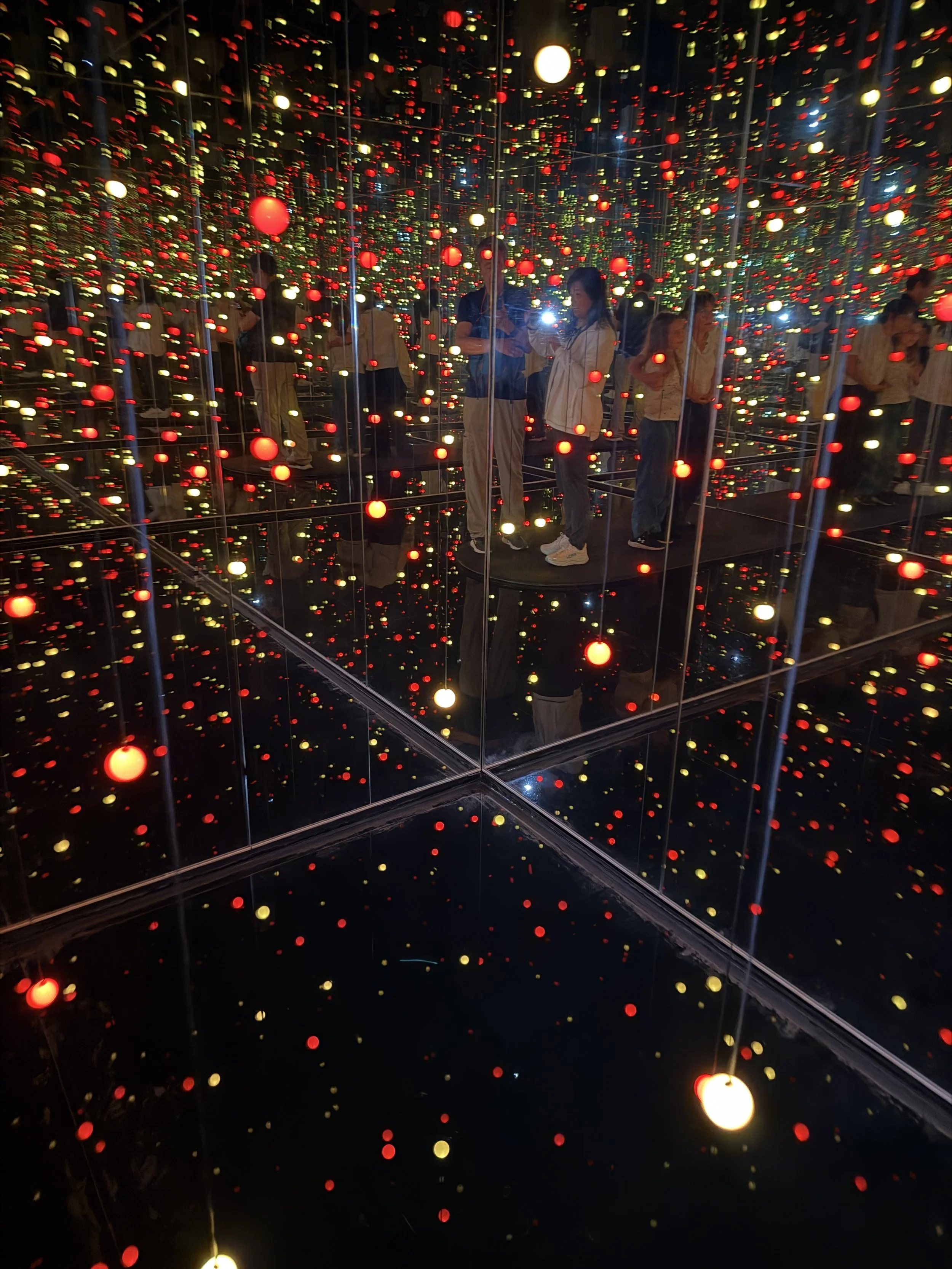
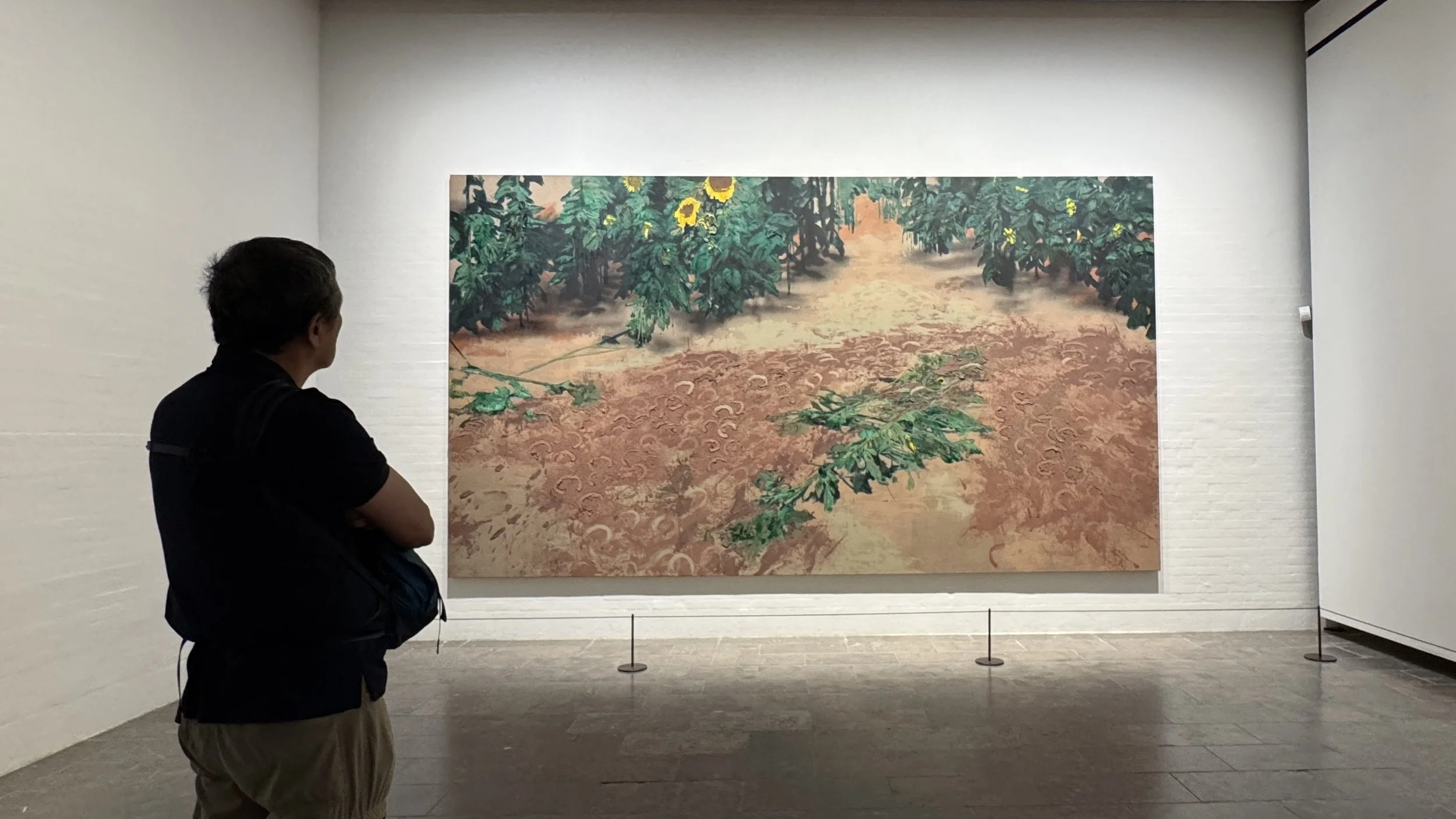
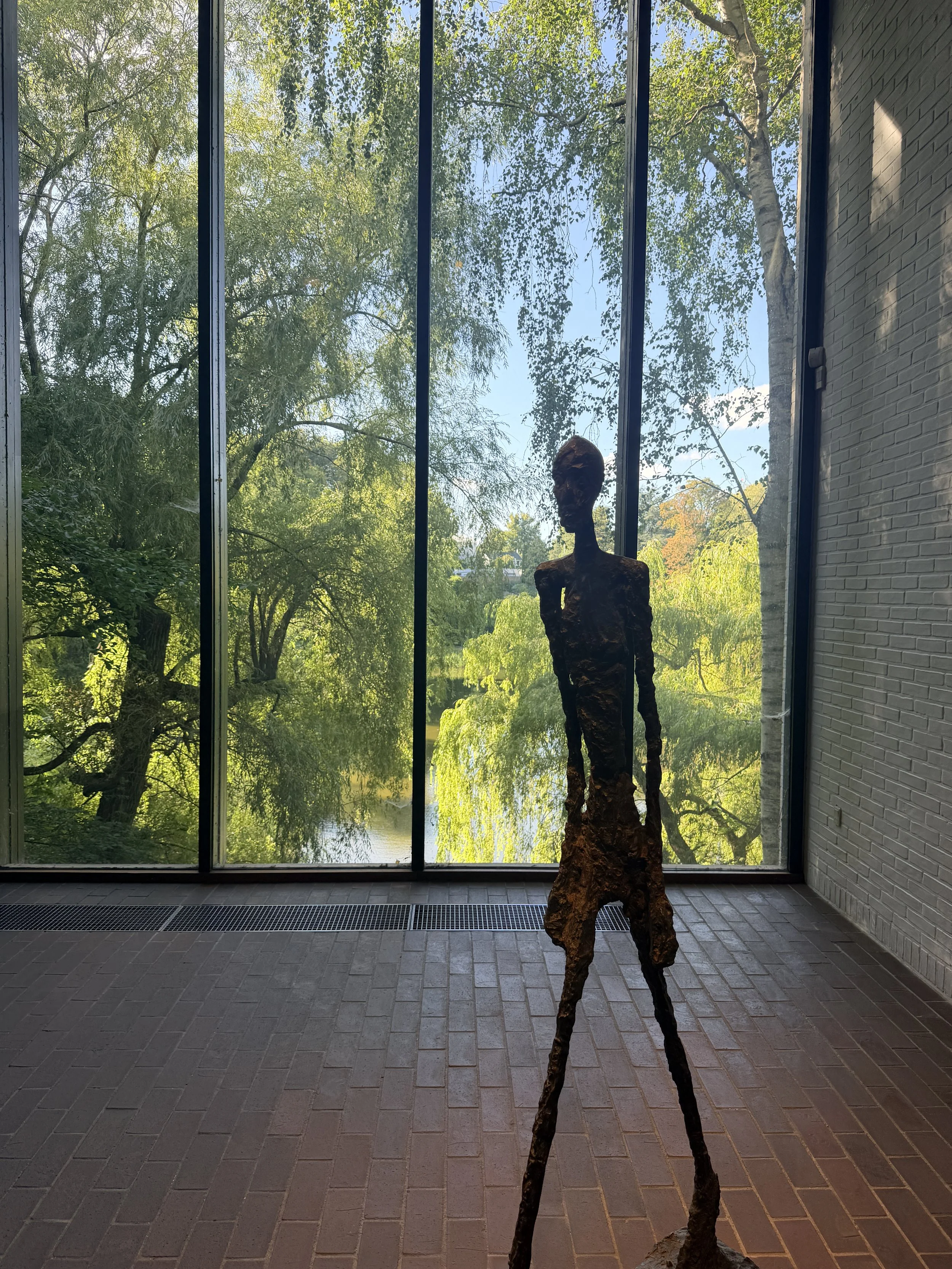
It was a day of striking contrasts—Renaissance and modern, literature and visual art, history and contemporary creativity, fantasy and reality. Yet somehow, both places celebrated the enduring power of human imagination.
On our way back to Copenhagen, we made a small detour in search of a traditional Danish hot dog. Unfortunately, we arrived just after the stand had closed, and none of the nearby restaurants appealed to us. We returned to our hotel and ended the day on a much more satisfying note.
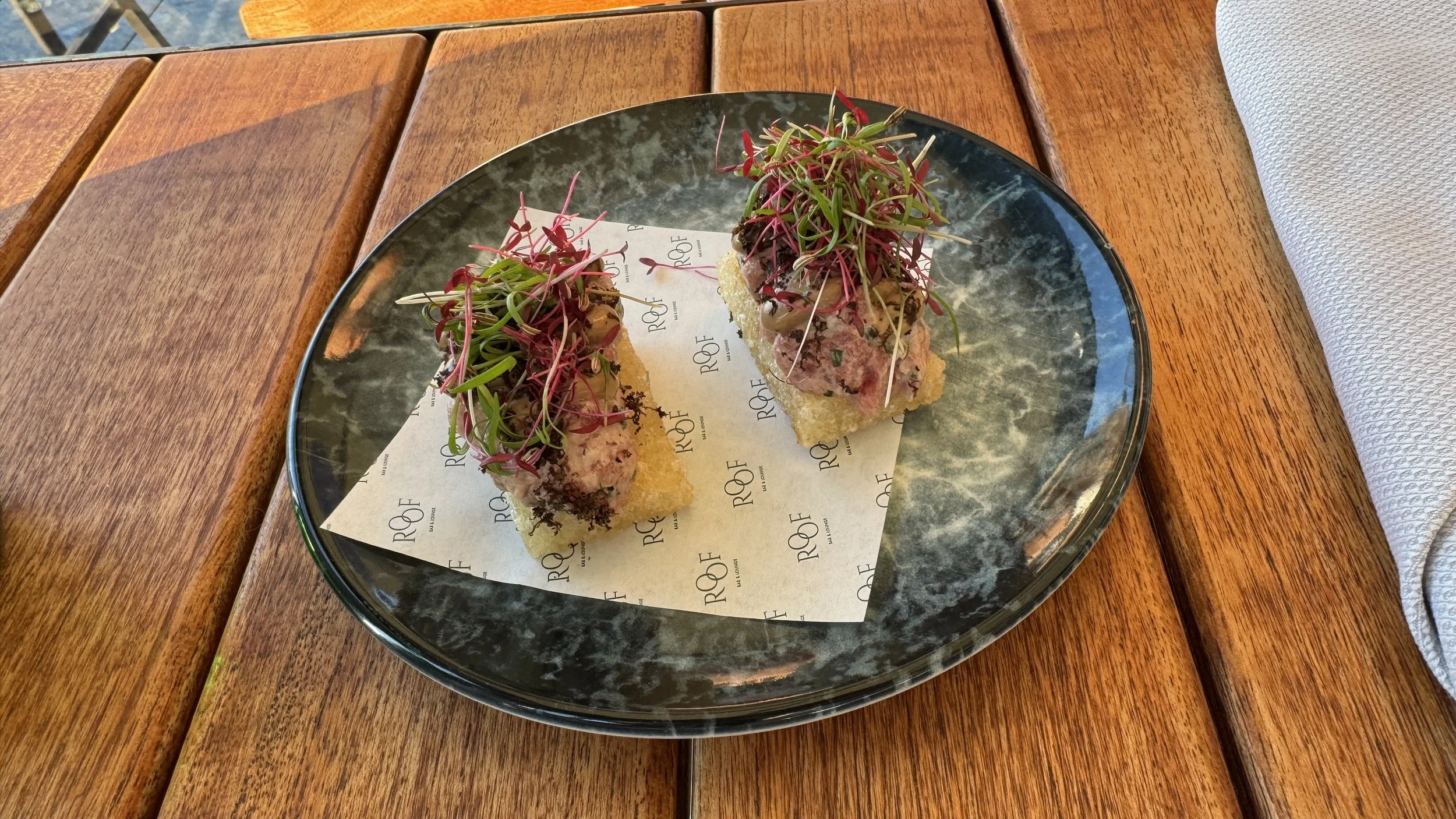
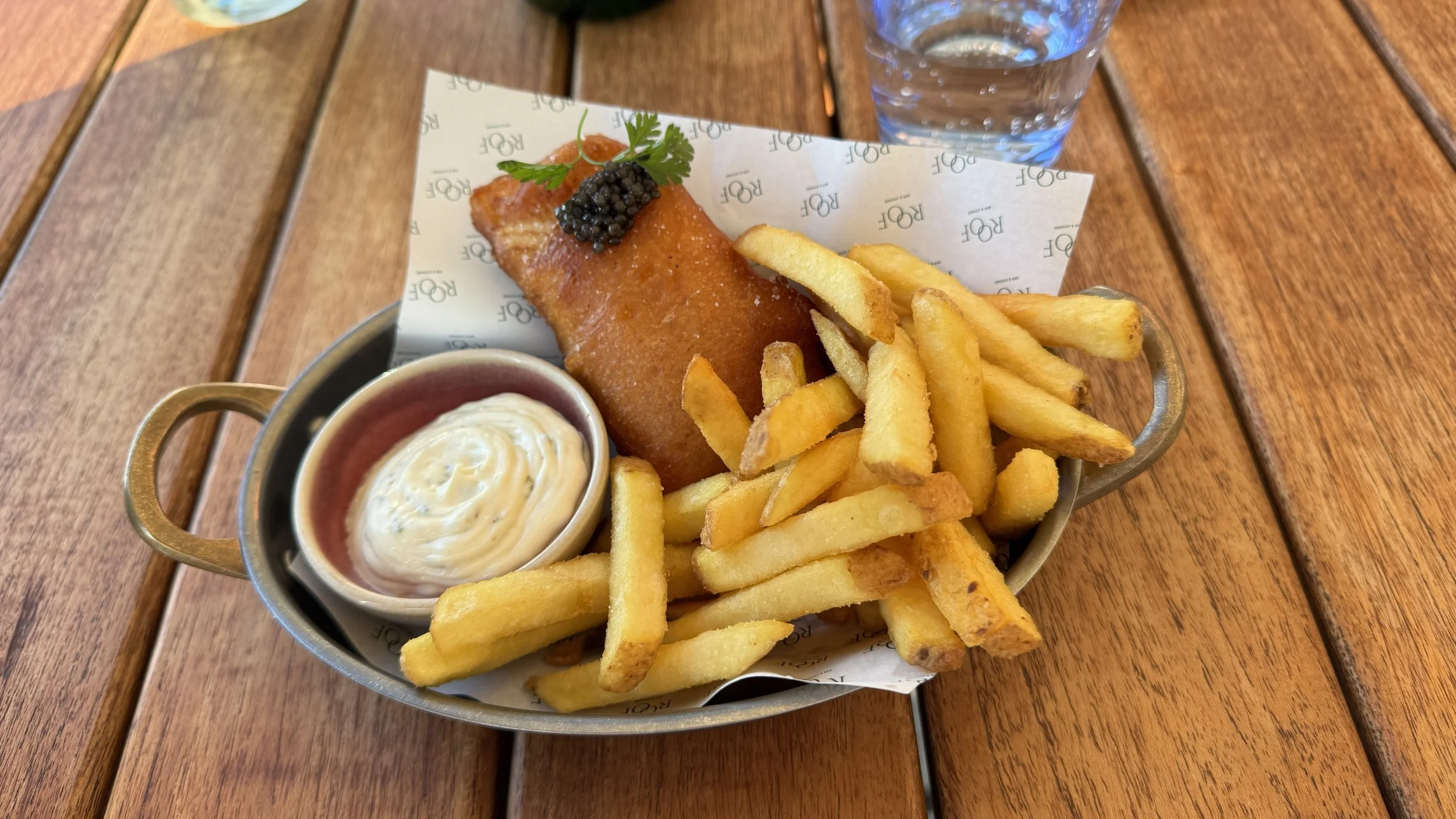
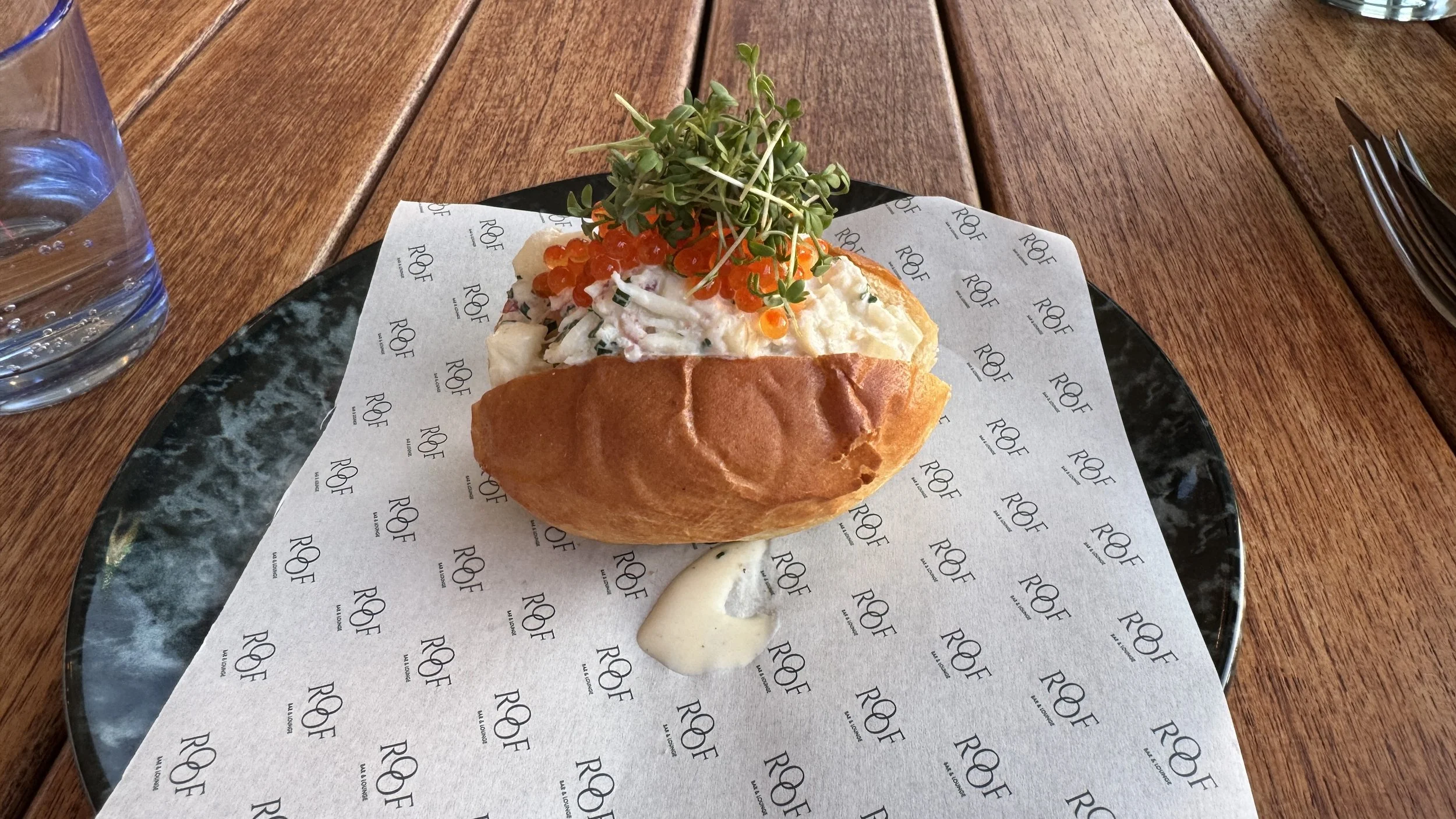
At the rooftop café, we shared several small but beautifully prepared dishes—a tuna tartare, a lobster roll, and fish and chips—while watching the sun set over Copenhagen. It was a simple yet memorable ending to another wonderful day.
2026年8月1日
今天,我们乘火车前往城外的克伦堡城堡(Kronborg Castle)。约一个小时后,便抵达了海边小镇赫尔辛格(Helsingør)。清晨的小镇格外宁静,街道上几乎看不到行人。
在前往城堡的路上,我们无意间走进了圣玛利亚教堂(Sct. Mariæ Kirke)。这里原是建于十五世纪的加尔默罗会修道院教堂,与相邻的修道院一起,被认为是北欧保存最完整的中世纪修道院建筑群之一。
教堂内部庄严而典雅,彩绘穹顶、古老木雕和祭坛散发着浓厚的历史气息。浑厚而悠扬的管风琴声在大厅中回荡,原来工作人员正在为中午举行的婚礼做最后准备。
这座教堂还有一段与音乐史相关的故事。十七世纪著名的管风琴家兼作曲家布克斯特胡德(Dieterich Buxtehude)曾在这里担任管风琴师。后来,他前往德国吕贝克任职,其卓越的演奏与创作深深吸引了年轻的约翰·塞巴斯蒂安·巴赫(Johann Sebastian Bach)。1705年,年仅二十岁的巴赫不惜徒步四百多公里前往吕贝克,只为聆听布克斯特胡德演奏,并向他学习。这段经历对巴赫日后的音乐创作产生了深远影响。站在这座教堂里,听着管风琴低沉而庄严的音色,不禁让人联想到三百多年前那段薪火相传的音乐传奇。
从Helsingør小镇走十几分钟就到克伦堡城堡。莎士比亚的《哈姆雷特》这部世界名剧大家早已耳熟能详。《哈姆雷特》的故事灵感源自丹麦维京传奇人物阿姆雷斯(Amleth), 并把故事背景设在我们今天参观的克伦堡城堡。我们参加了一个简短的英语导览,主要介绍了一些关于城堡的历史,也学到一个有趣的小知识:Hamlet 看起来就像是把 Amleth 的字母 H 从最后移到了最前面。 莎士比亚本人也从未到访过丹麦,更没有来过克伦堡城堡,但他的作品却让这座城堡与世界文学史上最伟大的悲剧之一永远联系在一起。
克伦堡城堡因其宏伟的文艺复兴建筑和在北欧历史上的重要地位,被联合国教科文组织列为世界文化遗产。城堡对面就是瑞典,近的都能游过去,渡轮才几分钟就能到达。如今《哈姆雷特》似乎已经和城堡本身一样引人注目。当天,城堡庭院里不断上演《哈姆雷特》的精彩片段,让莎士比亚笔下的不朽悲剧仿佛在真实的城堡中重现。这样的安排为参观增添了独特的体验,也让我们同时领略了城堡的历史价值和它深厚的文学意义。
离开莎士比亚的文学世界和这座文艺复兴时期的古堡,我们搭乘火车,仅十分钟便来到路易斯安那现代艺术博物馆(Louisiana Museum of Modern Art)。博物馆将建筑、世界级现代艺术、户外雕塑花园以及厄勒海峡(Øresund)的迷人海景完美融合,营造出我们在其它美术馆从未体验过的独特氛围。
与一些让人难以理解的现代艺术馆不同,路易斯安那的许多作品都值得驻足思考。Sophie Calle 的作品展《Something Missing?》尤其发人深省。我们还走进日本艺术家草间弥生(Yayoi Kusama)的沉浸式作品《Gleaming Lights of the Souls》,无数灯光倒映在镜面之中,仿佛置身于无边无际的宇宙。之后,我们在临海餐厅小憩,一边品尝咖啡和点心,一边欣赏宁静的海景。
这是充满鲜明对比的一天——文艺复兴与现代、文学与视觉艺术、历史与当代创作、幻想与现实。然而,两处截然不同的景点,却都展现了人类丰富而永恒的想象力。
返回哥本哈根途中,我们特意绕了一点路,希望品尝一份传统的丹麦热狗。可惜抵达时热狗摊已经打烊,附近也没有找到让我们满意的餐馆,只好返回酒店。
最后,我们来到酒店的屋顶酒吧,一边欣赏哥本哈根的落日,一边分享几道精致的小食:金枪鱼塔塔、龙虾卷和炸鱼薯条。虽然分量不大,却道道美味,又是充实而美好的一天。
Palace Visits 从王宫到自由城
July 31, 2026
We began the day at Rosenborg Castle,……
今天一早,我们首先来到罗森堡宫。。。
July 31, 2026
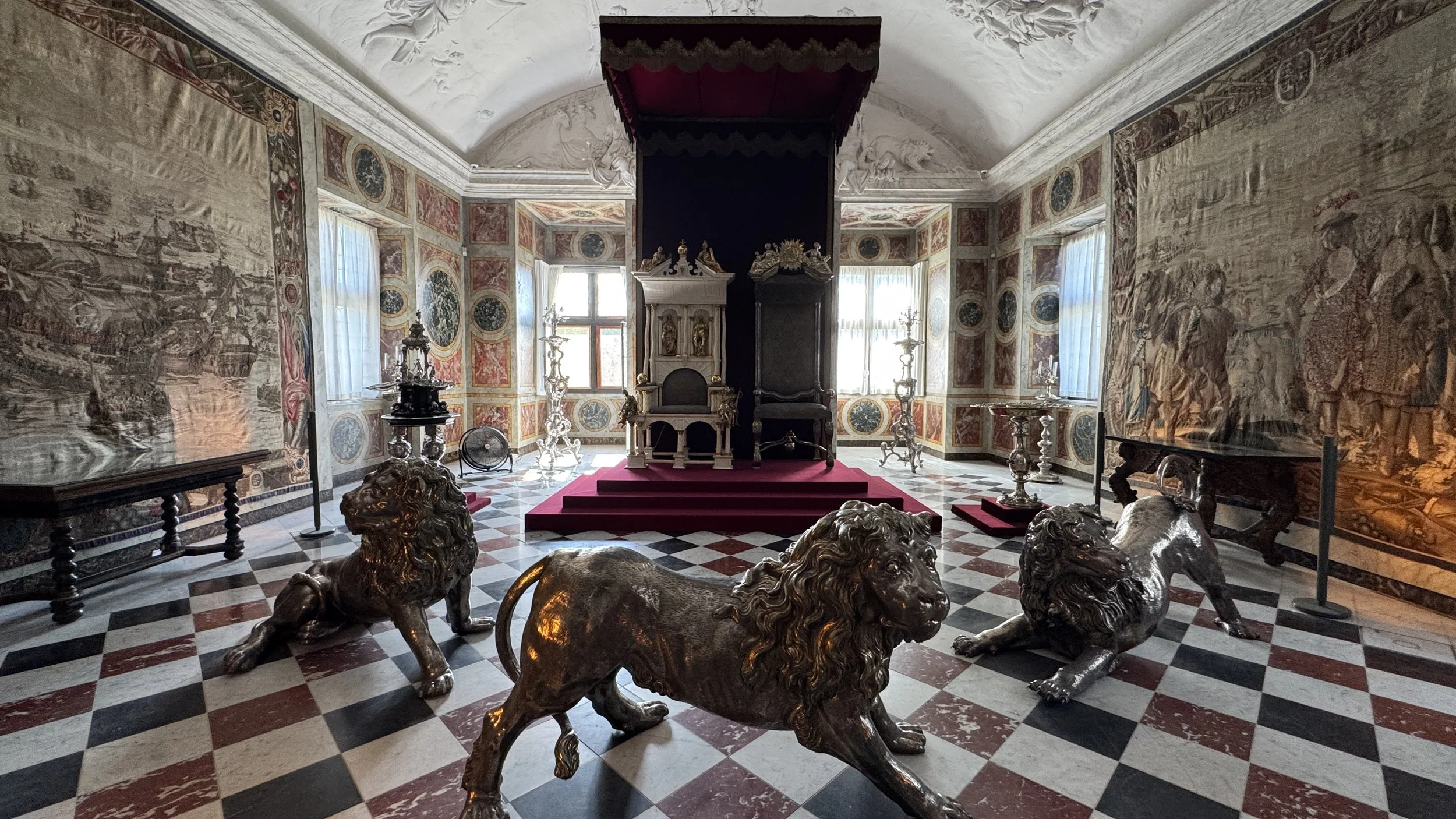
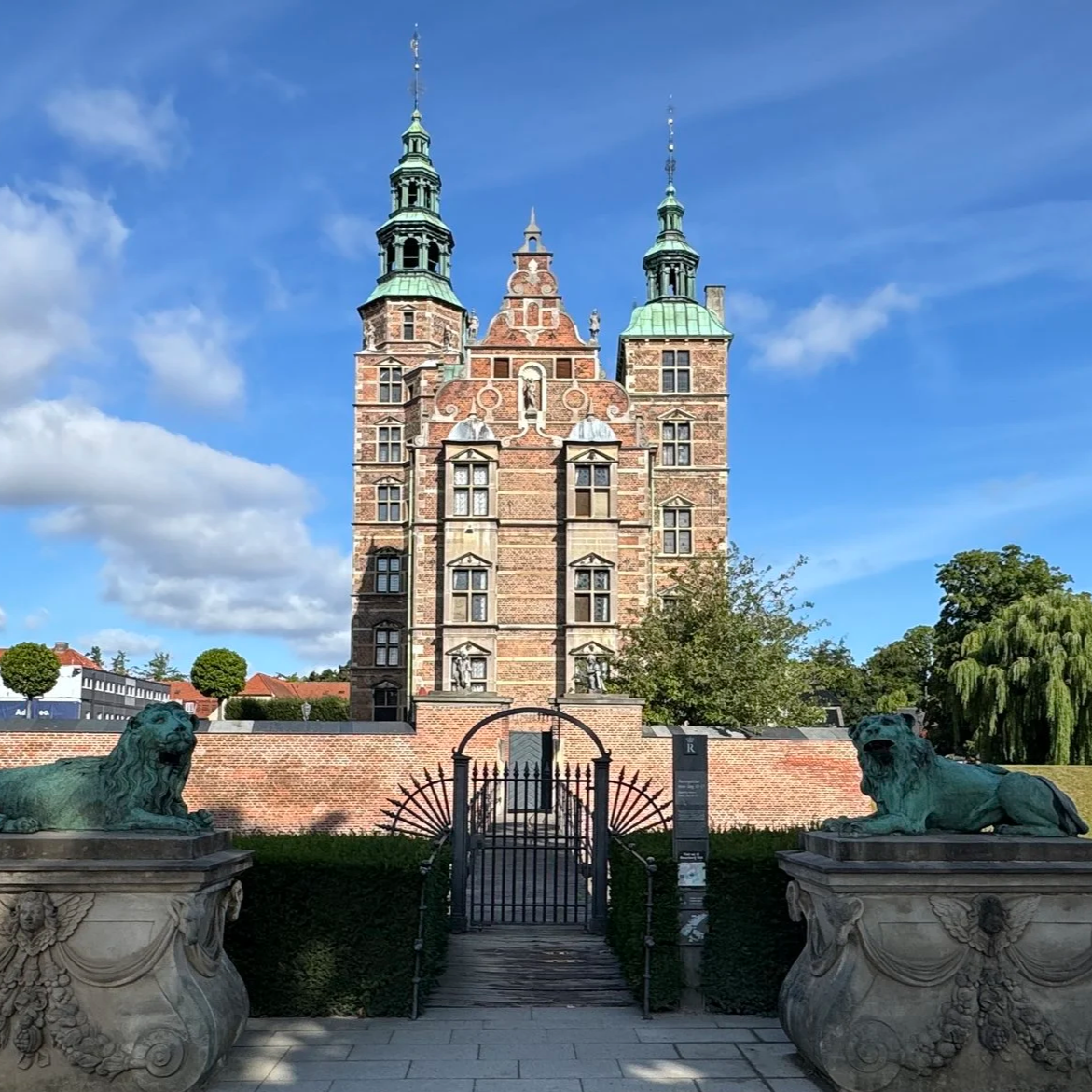
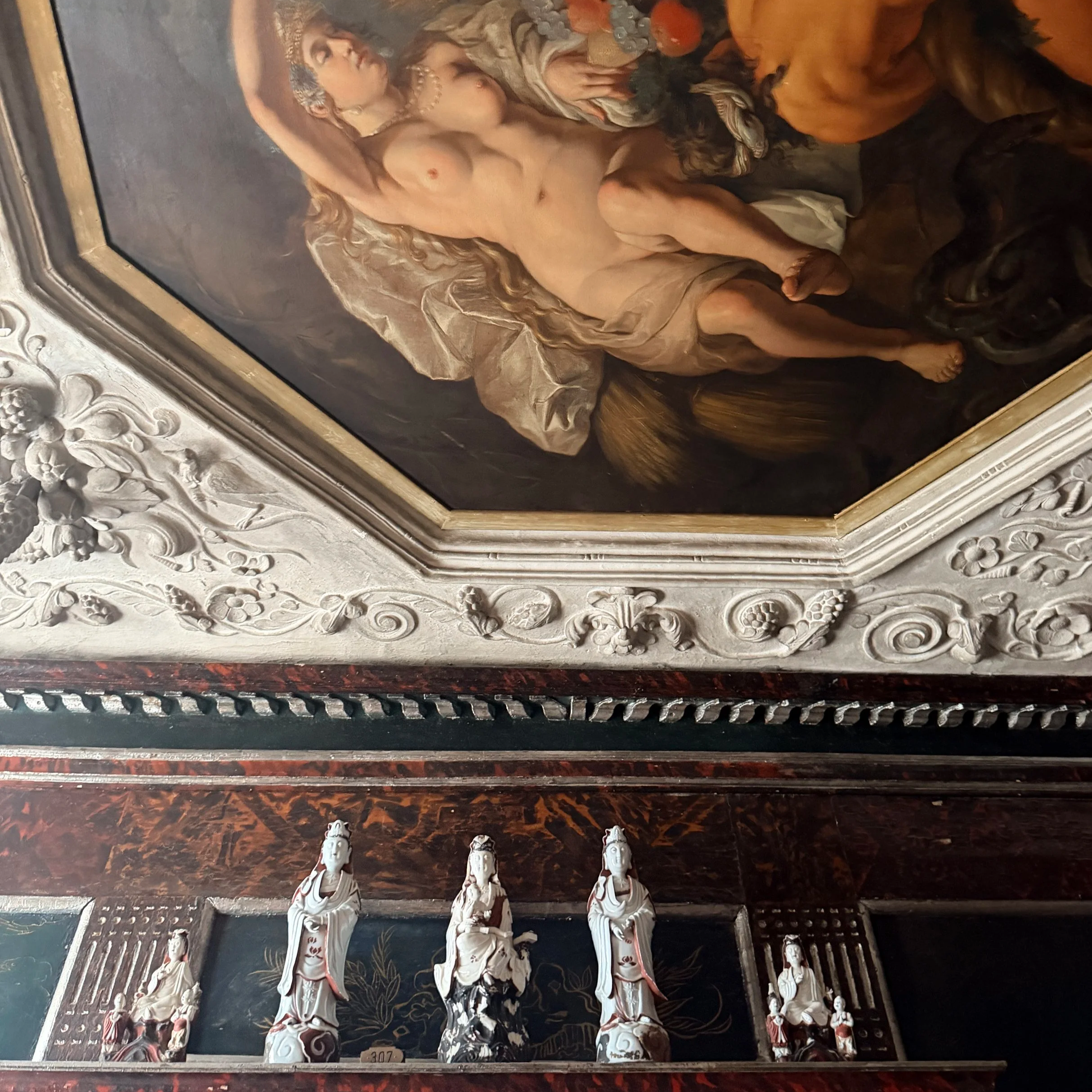
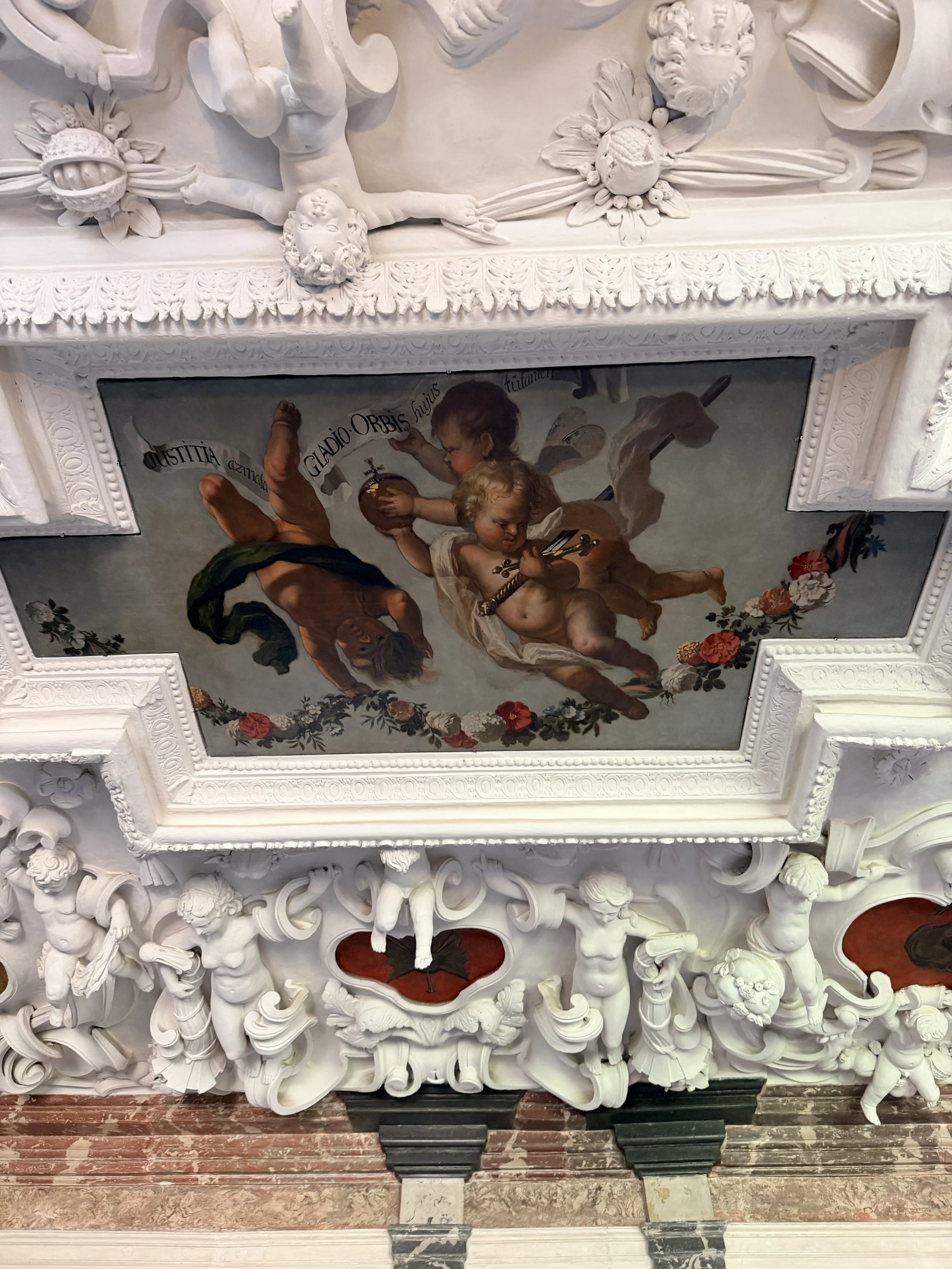
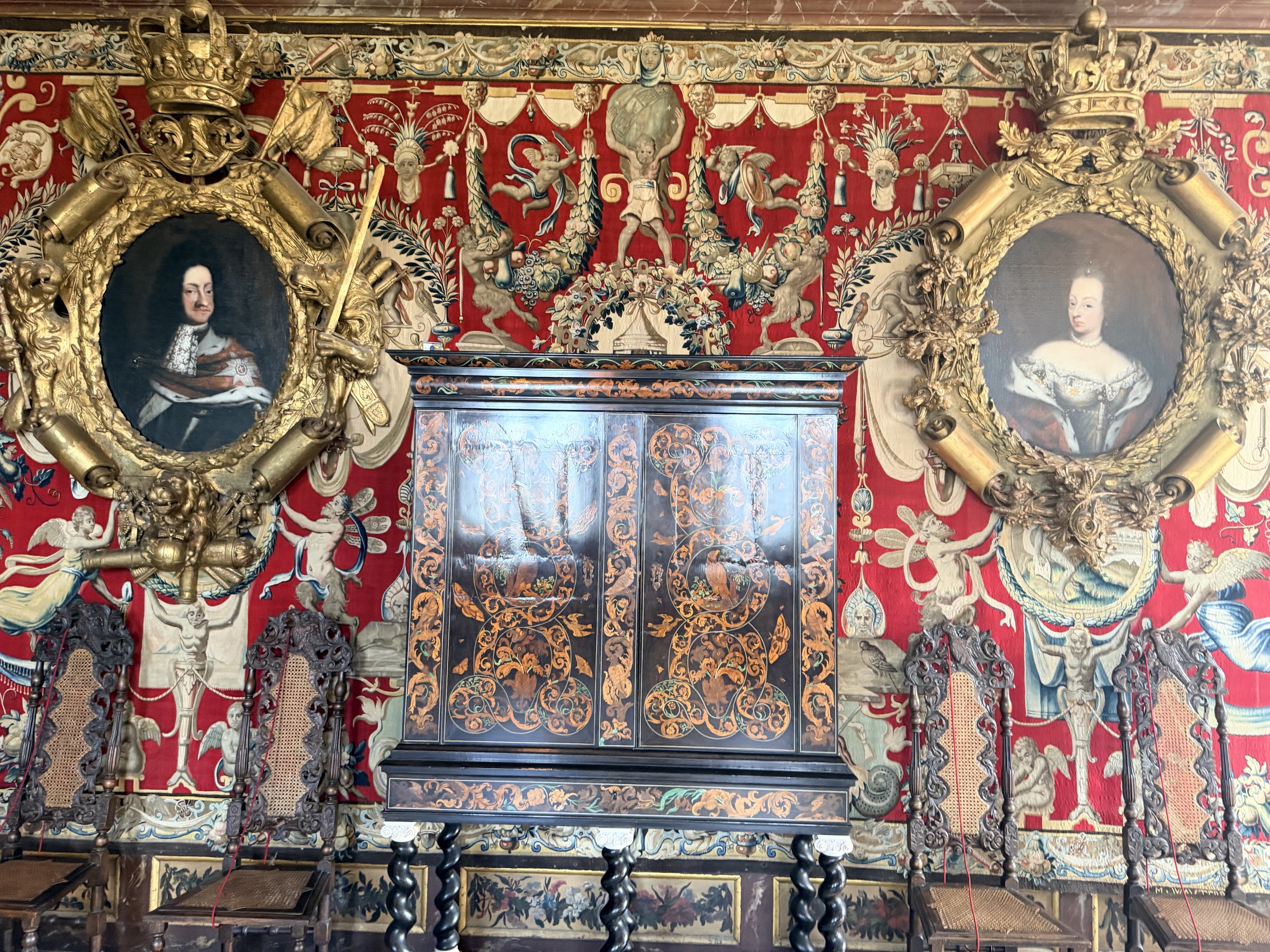
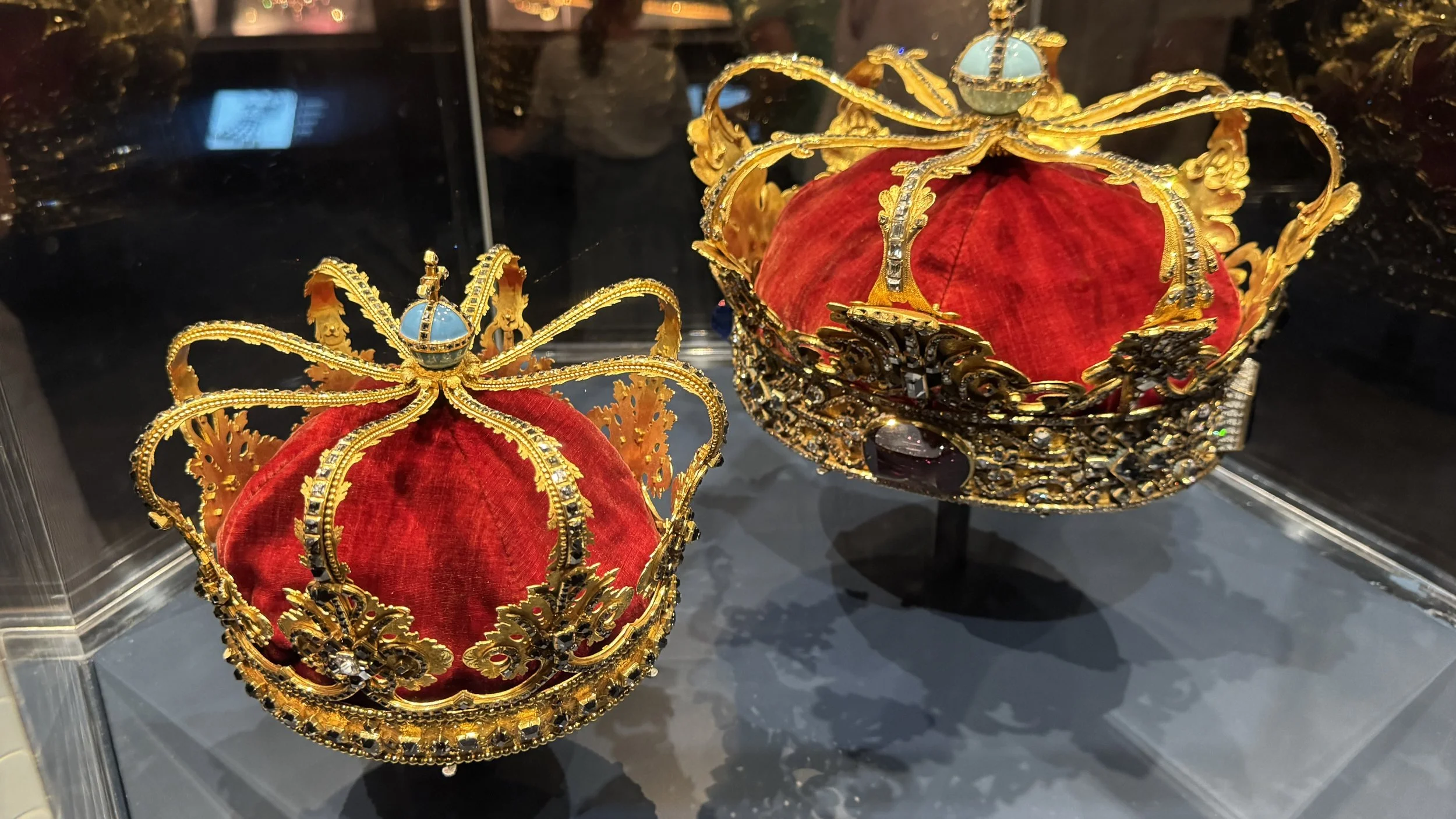
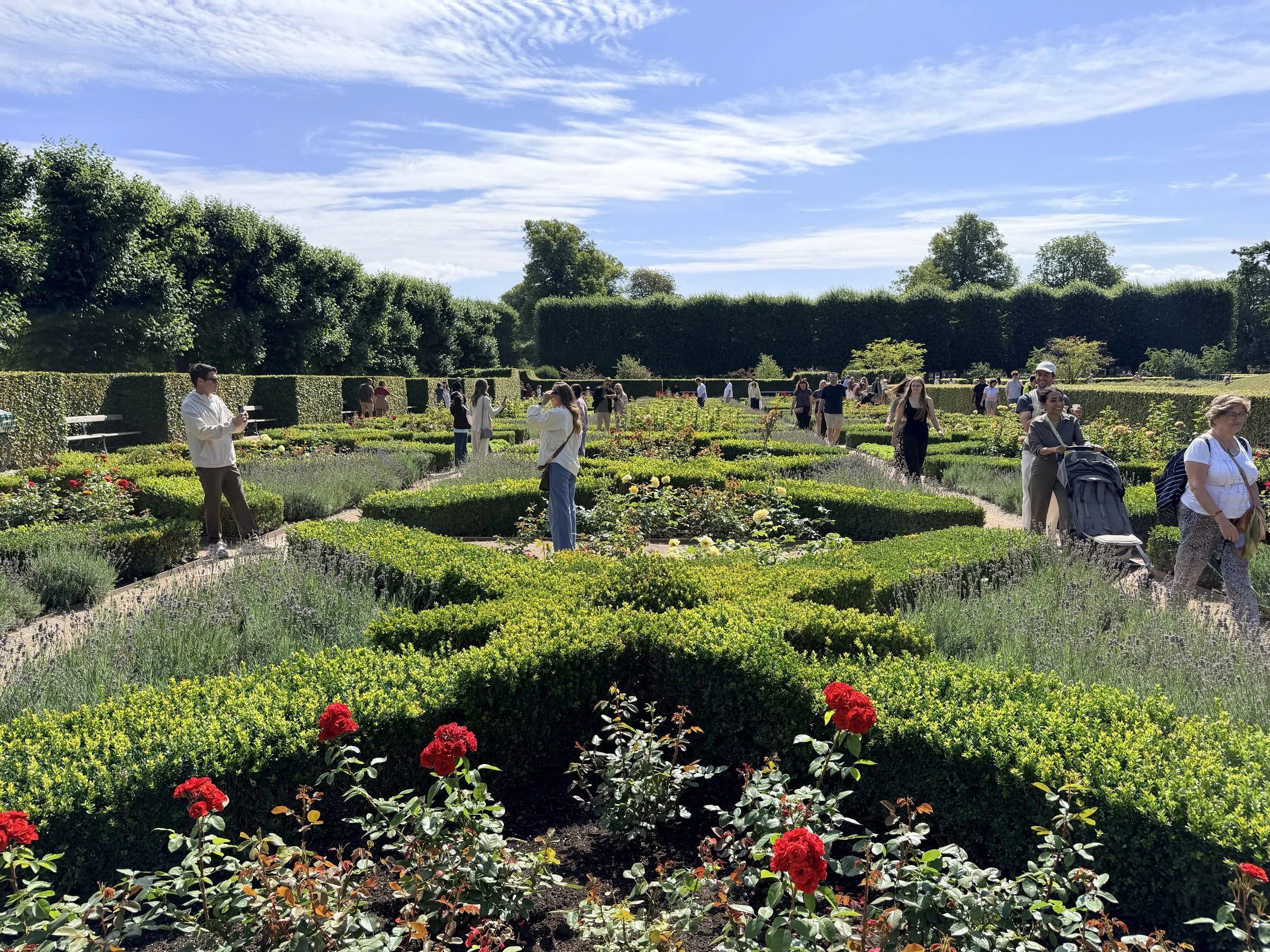
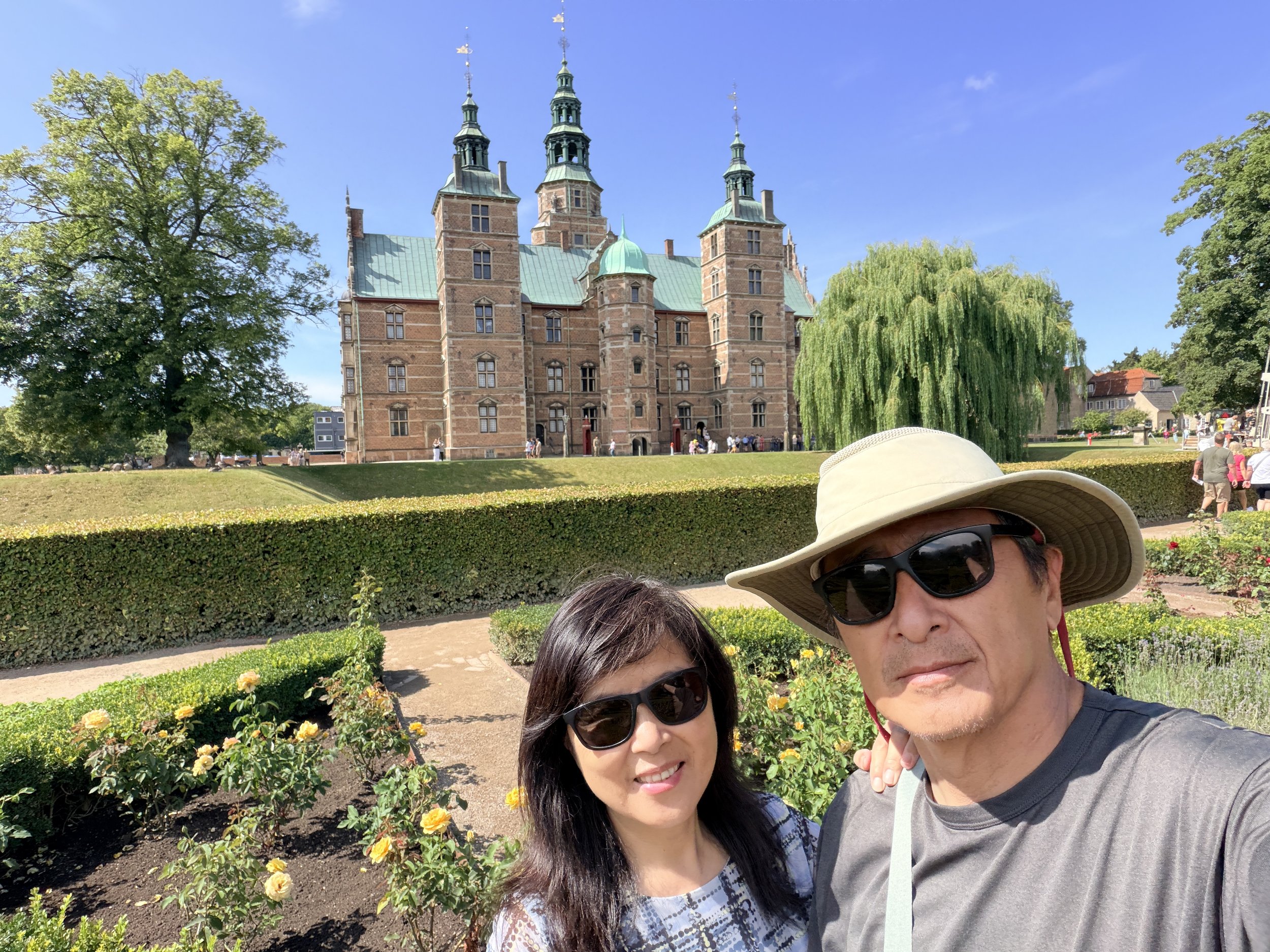
We began the day at Rosenborg Castle, the historic home of the Danish monarchy during the reign of King Christian IV. Today, it serves as a museum housing the Danish Crown Jewels, the royal regalia, and an impressive collection of royal treasures. Rosenborg may hold the richest collection of historical artifacts of the Denmark monarchy.
After a quick Thai lunch, we returned to the hotel for a short break and enjoyed an hour-long afternoon nap.
Refreshed, we headed to Christiansborg Palace, which served as the principal royal residence until a devastating fire destroyed it in 1794. Today, the palace is unique in that it houses all three branches of the Danish government, while the King still uses the Royal Reception Rooms for state banquets, audiences, and other official ceremonies.
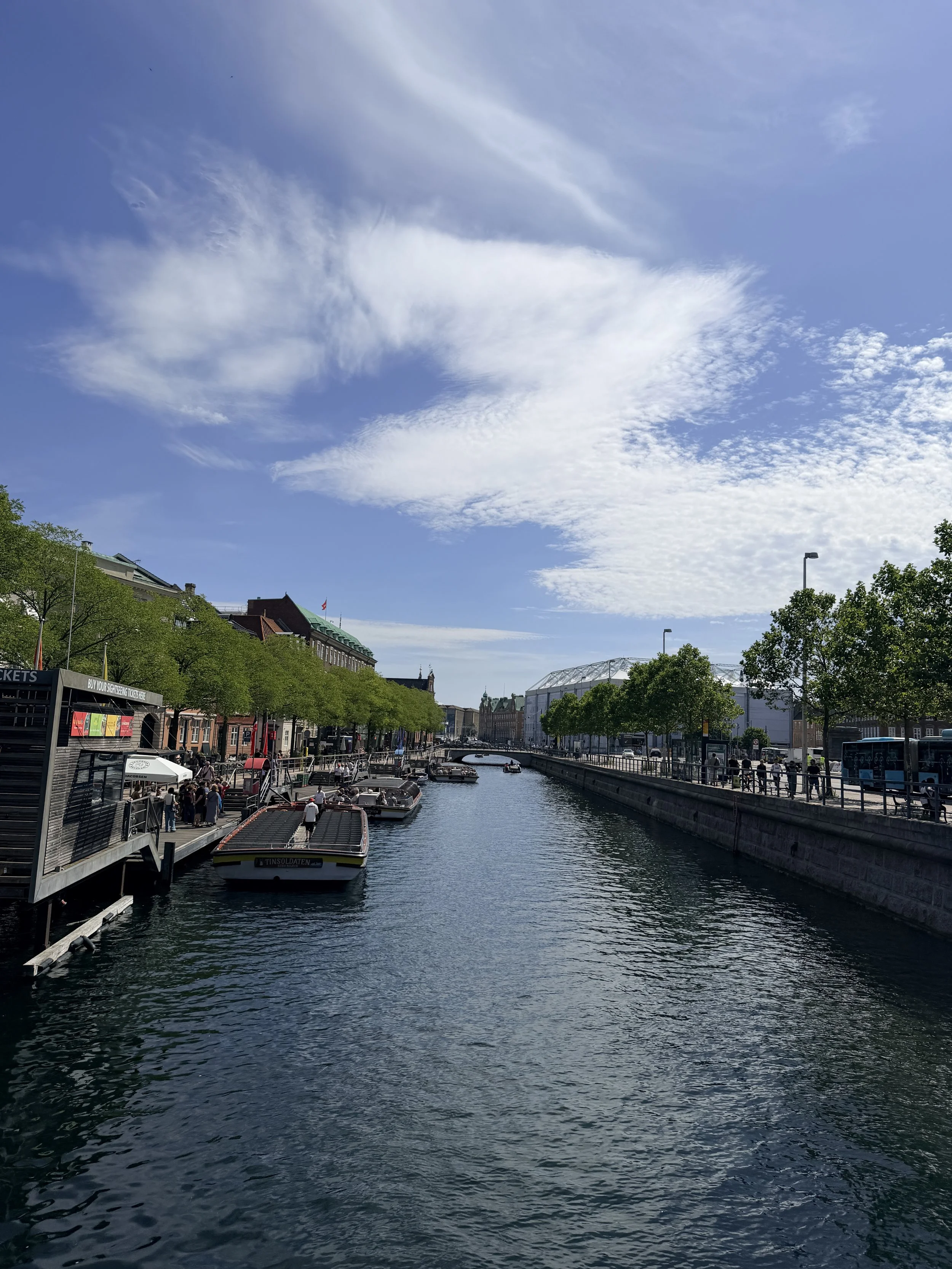
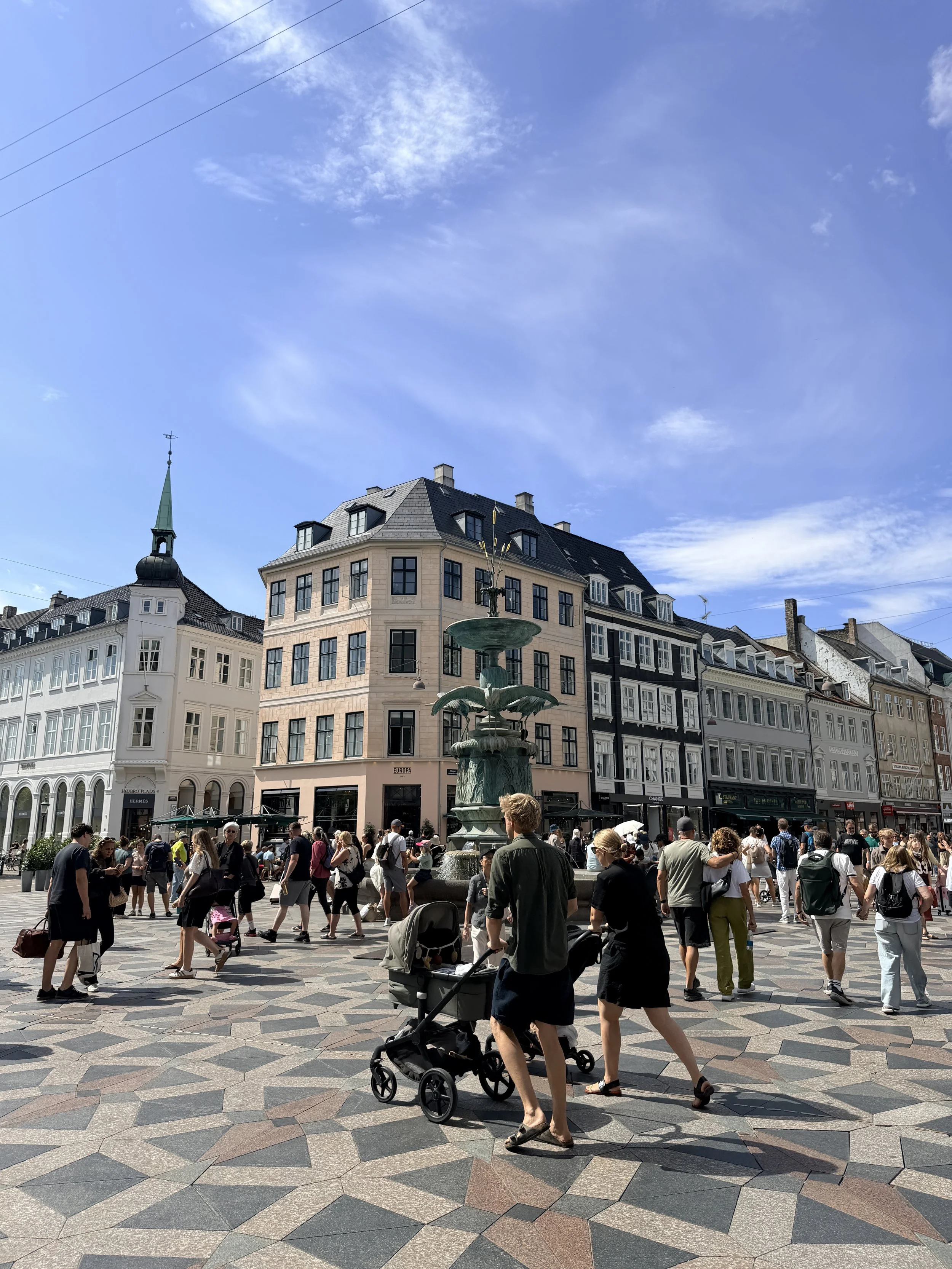
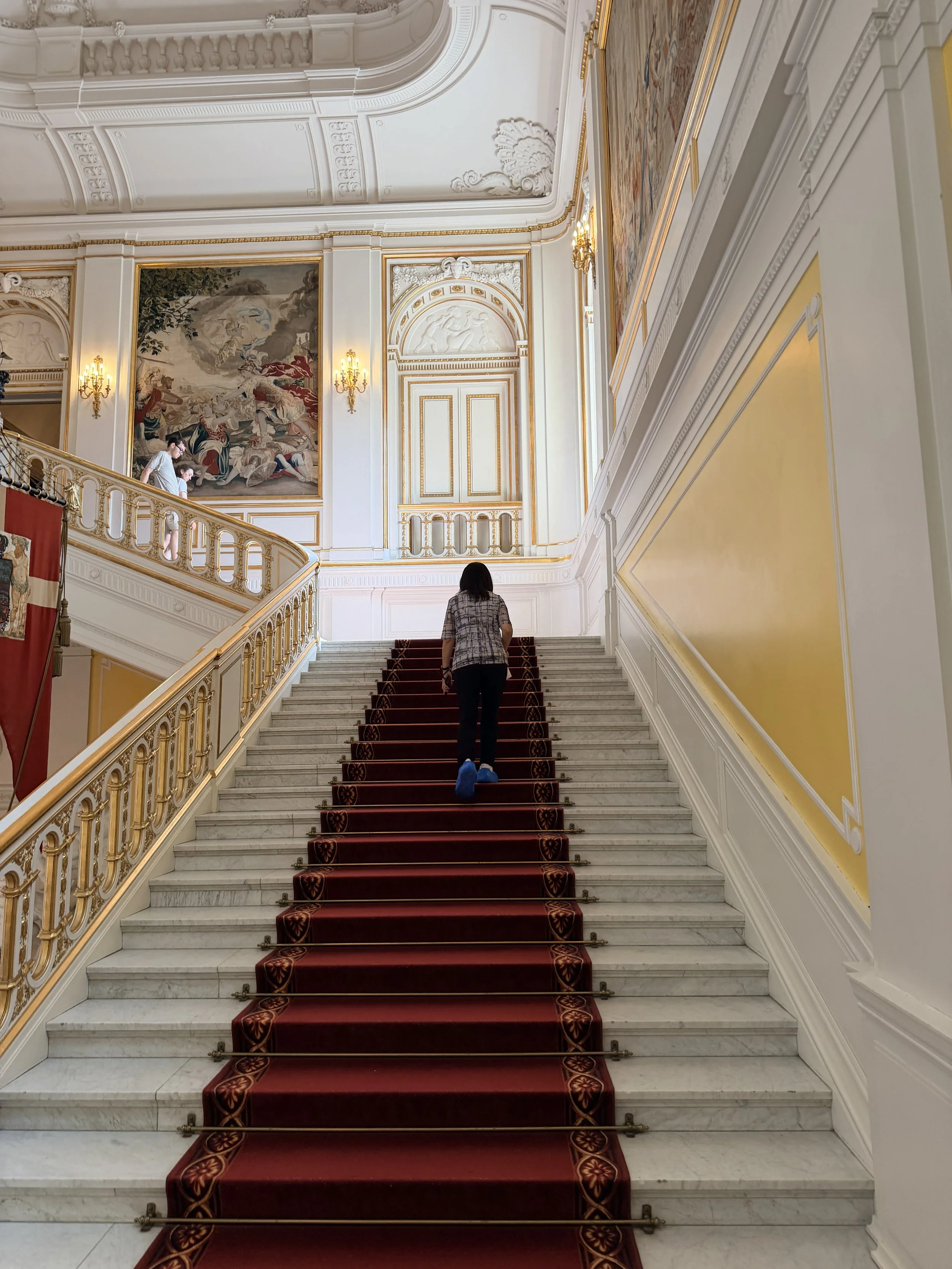
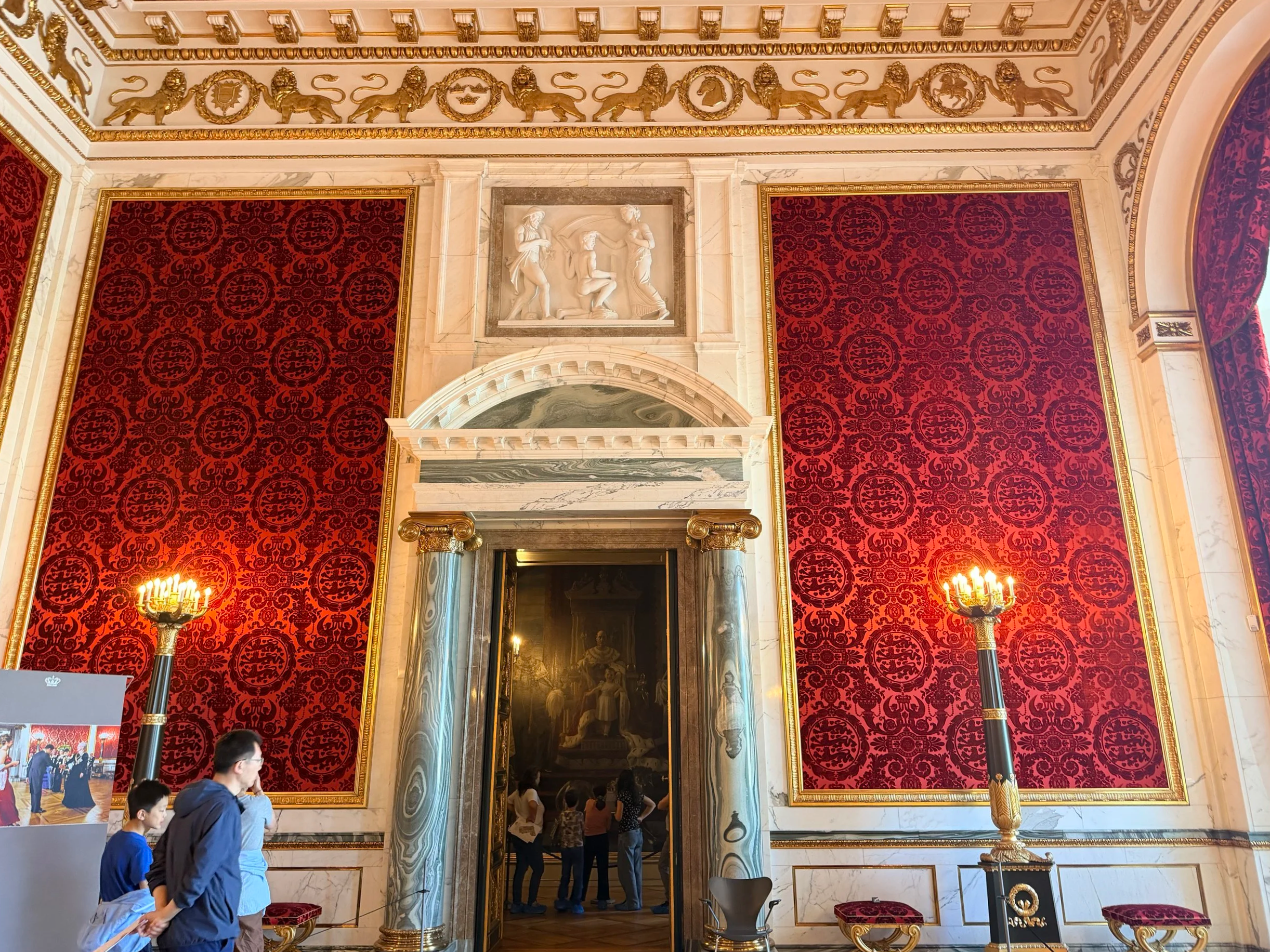
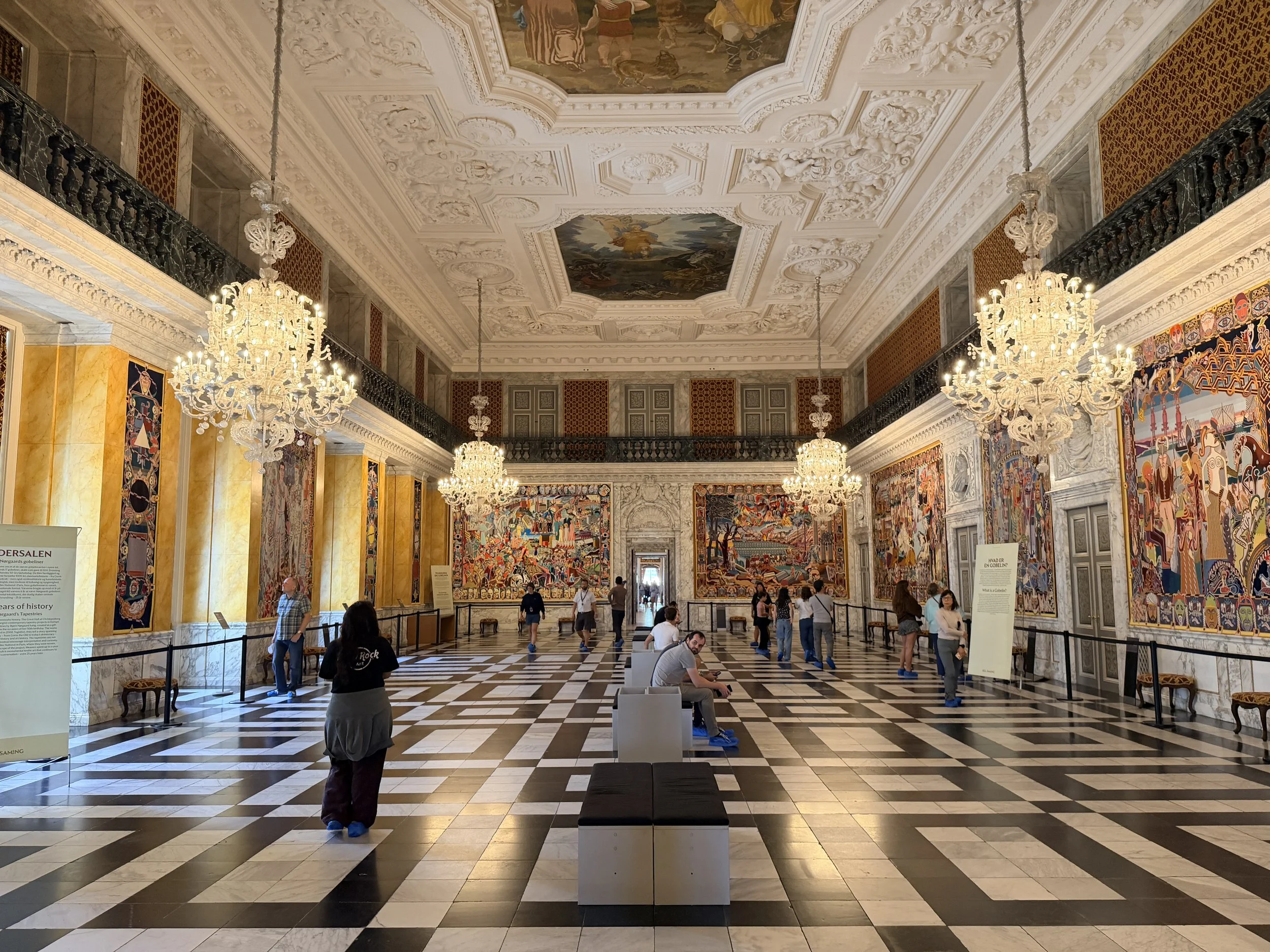
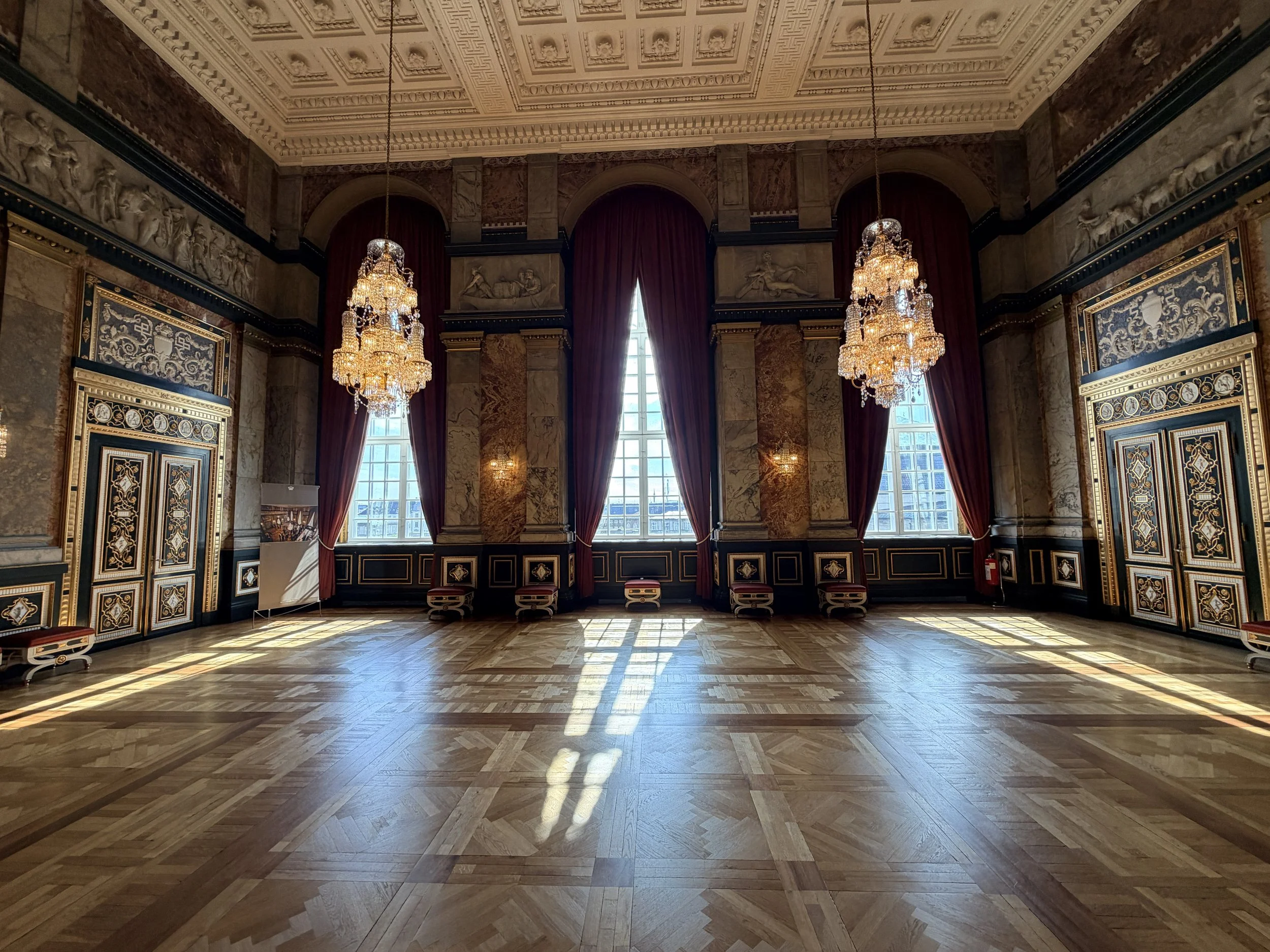
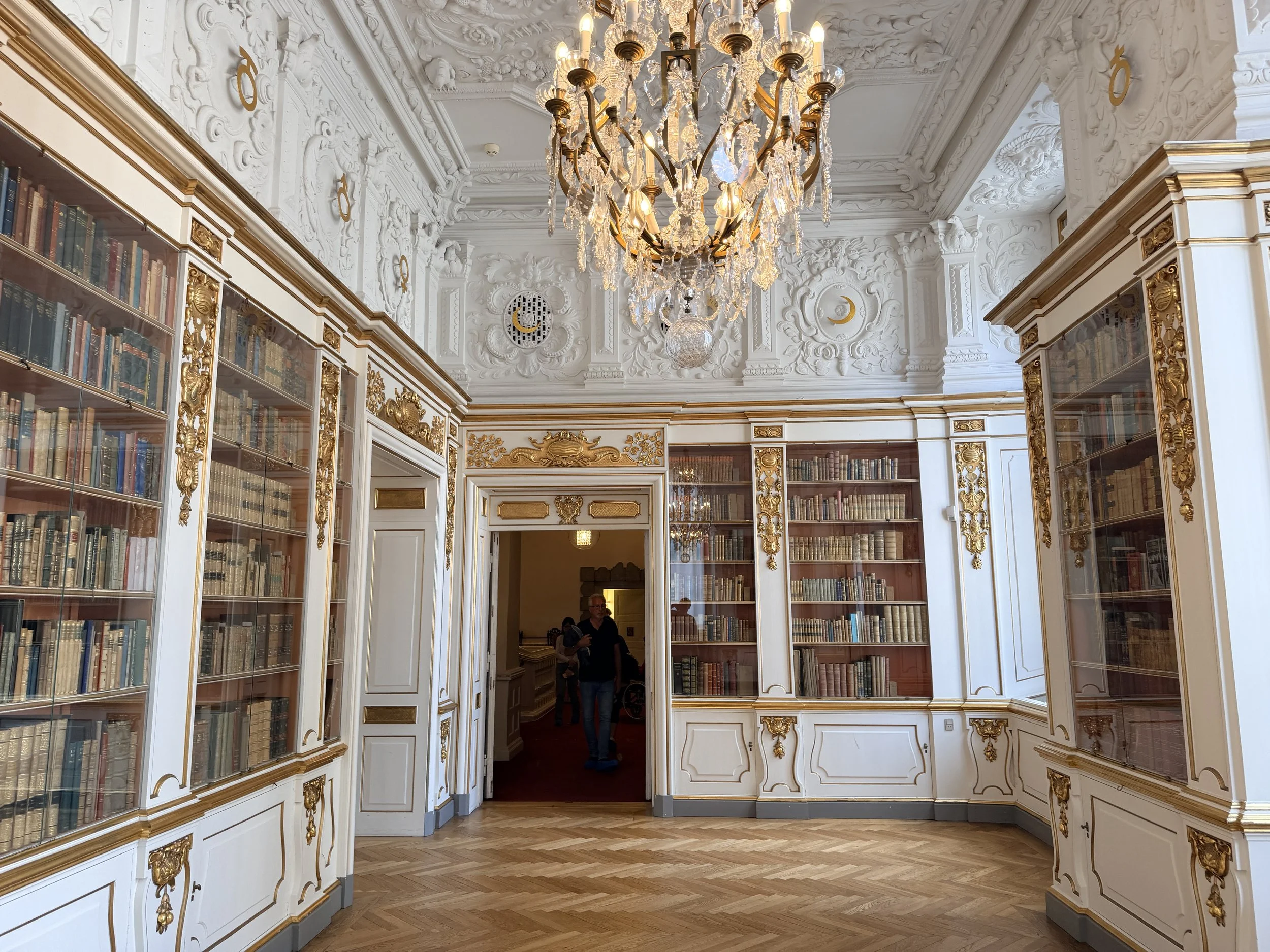
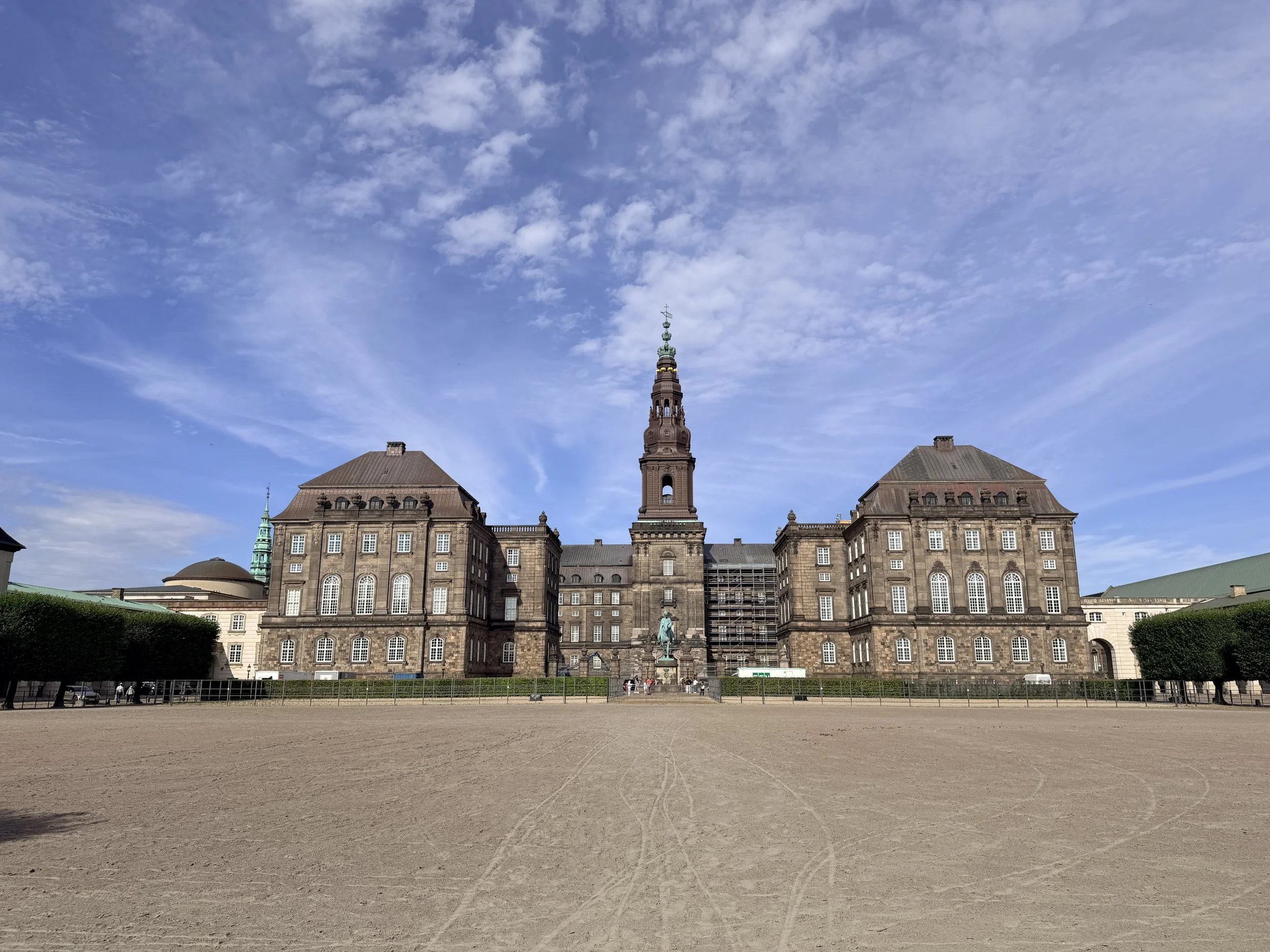
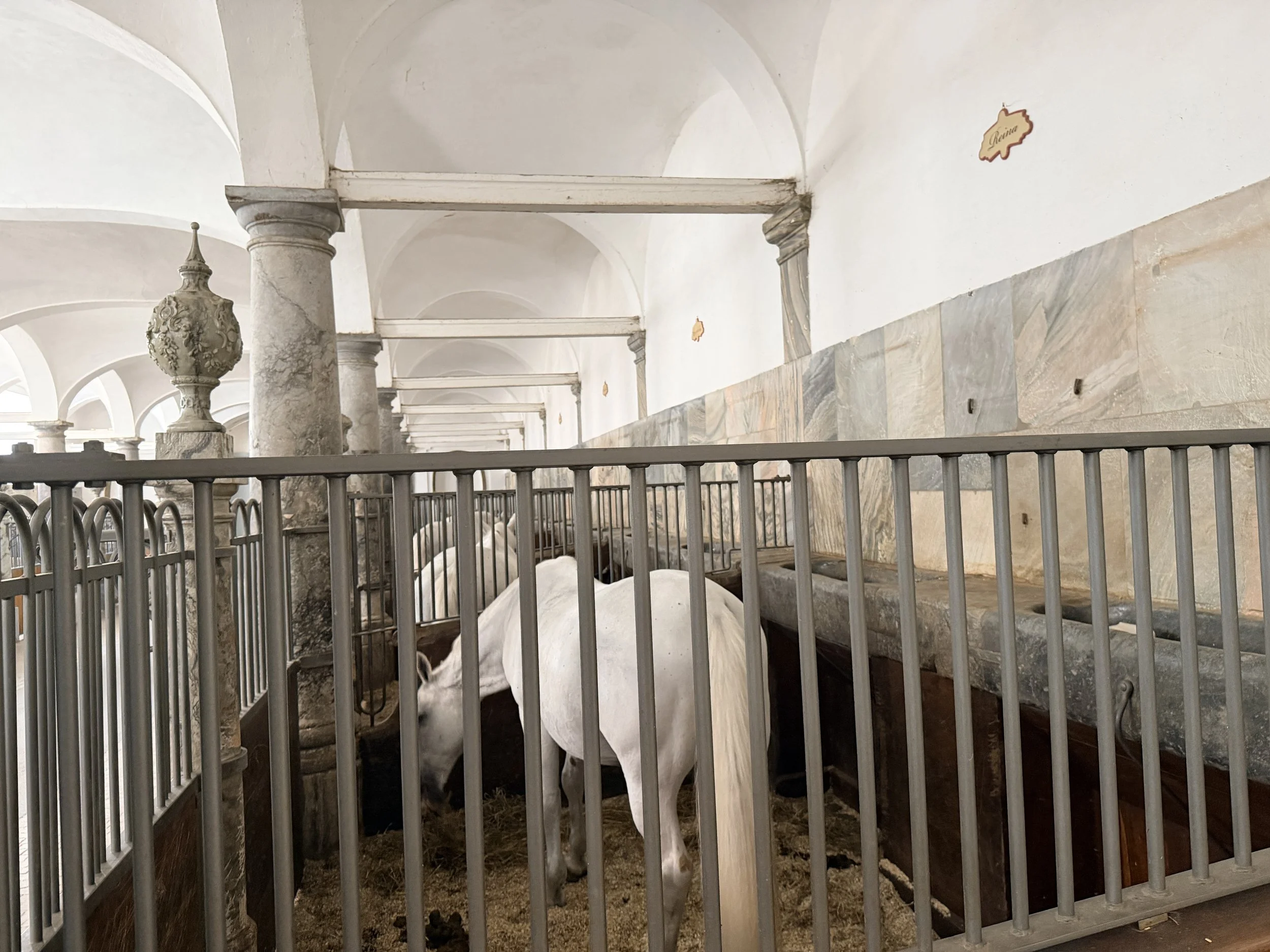
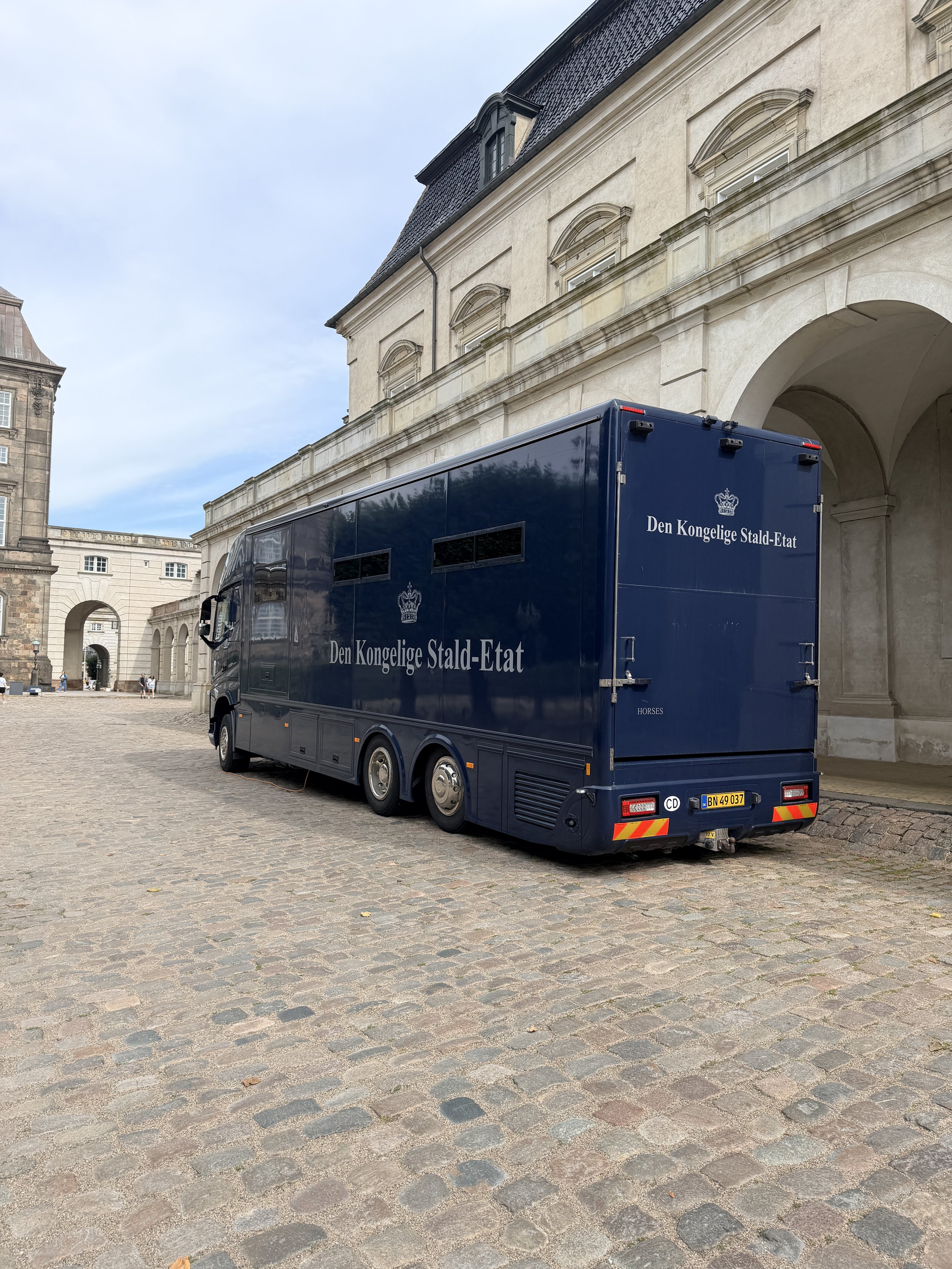
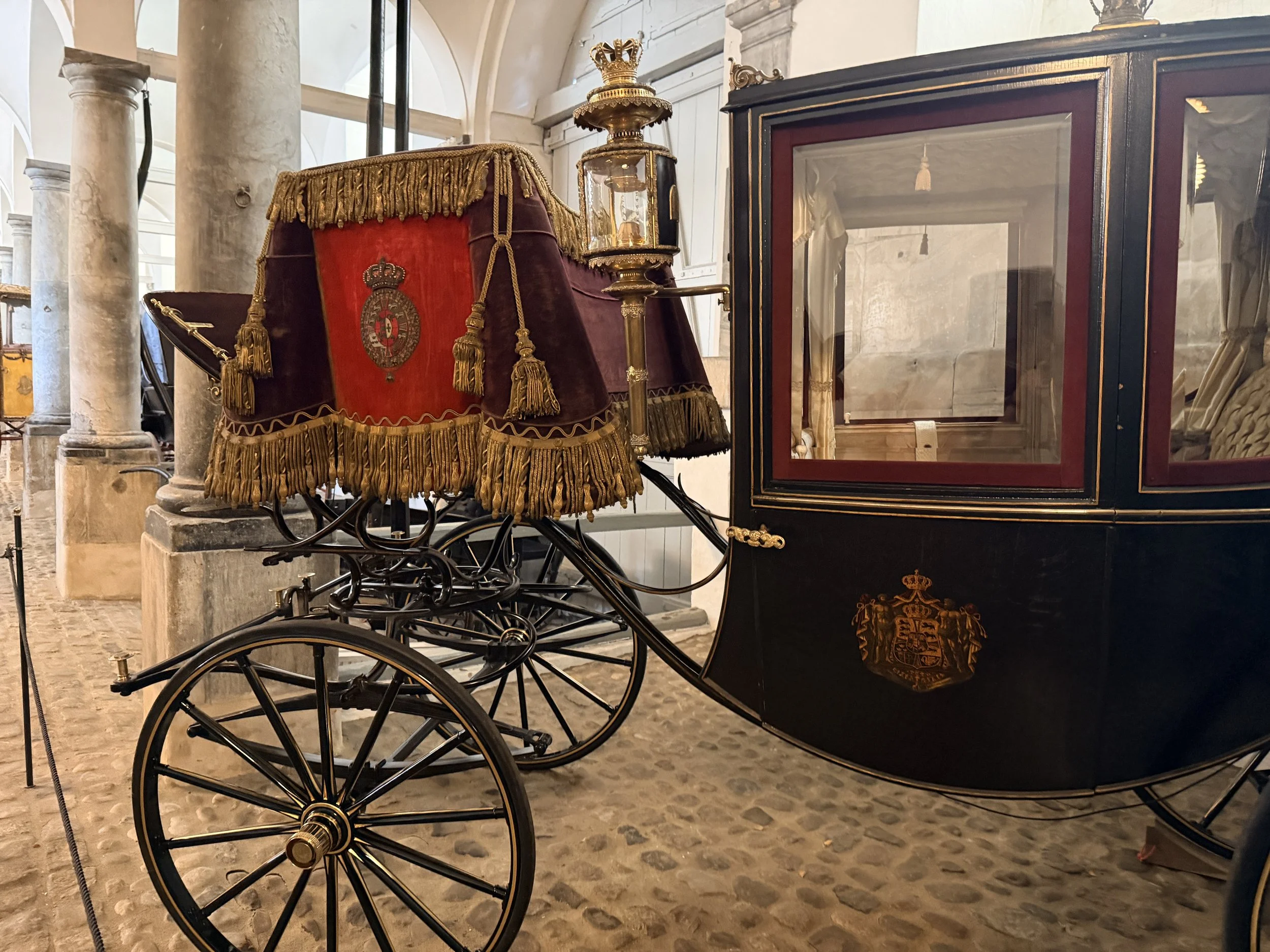
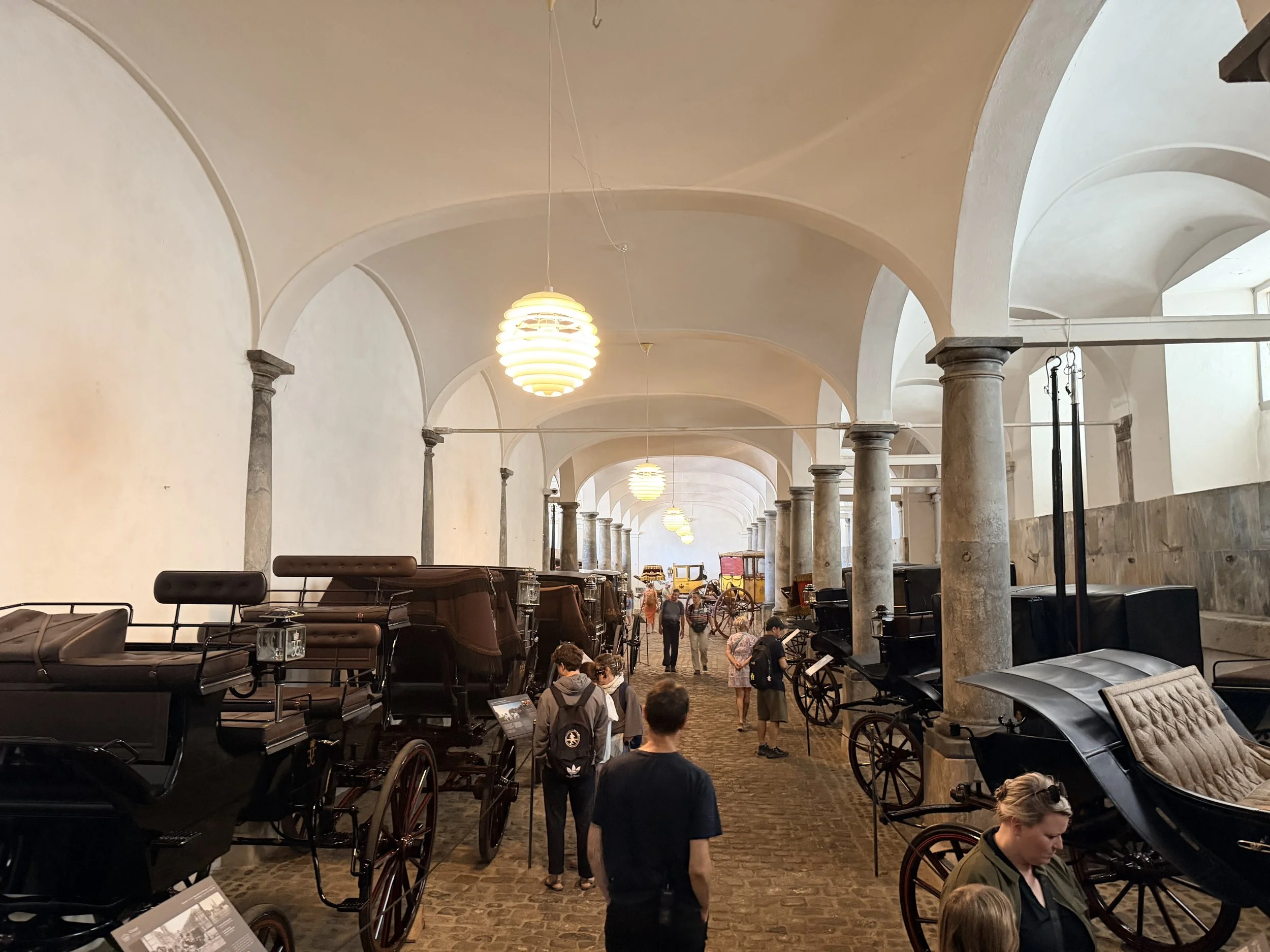
Christiansborg offers five attractions open to visitors. We had already visited the tower on a previous day, so our first stop was the Royal Stables, where we saw both the current royal horses and historic state carriages. We then toured the elegant Royal Reception Rooms, which were similar to many other royal apartments we have seen throughout Europe.
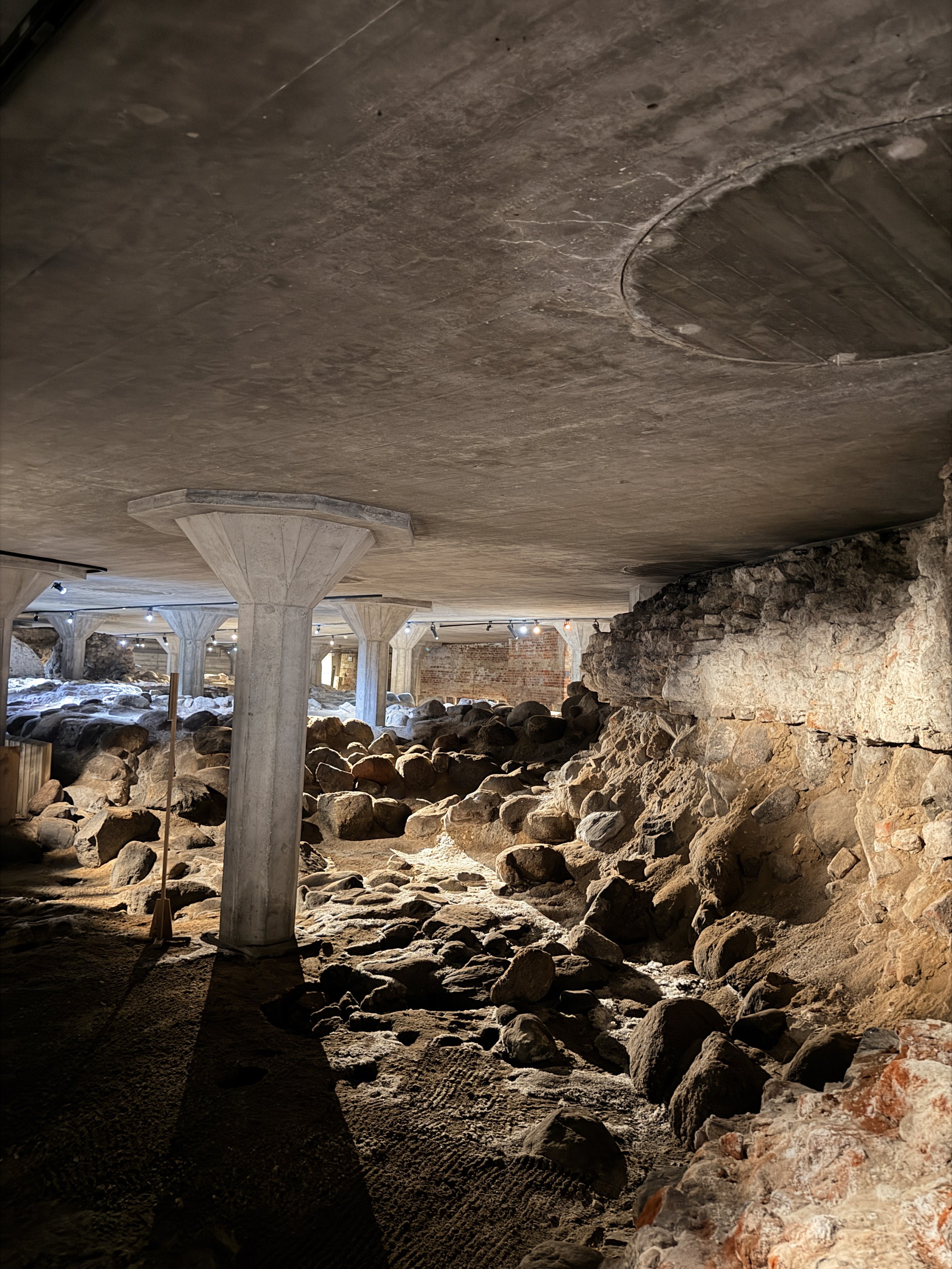
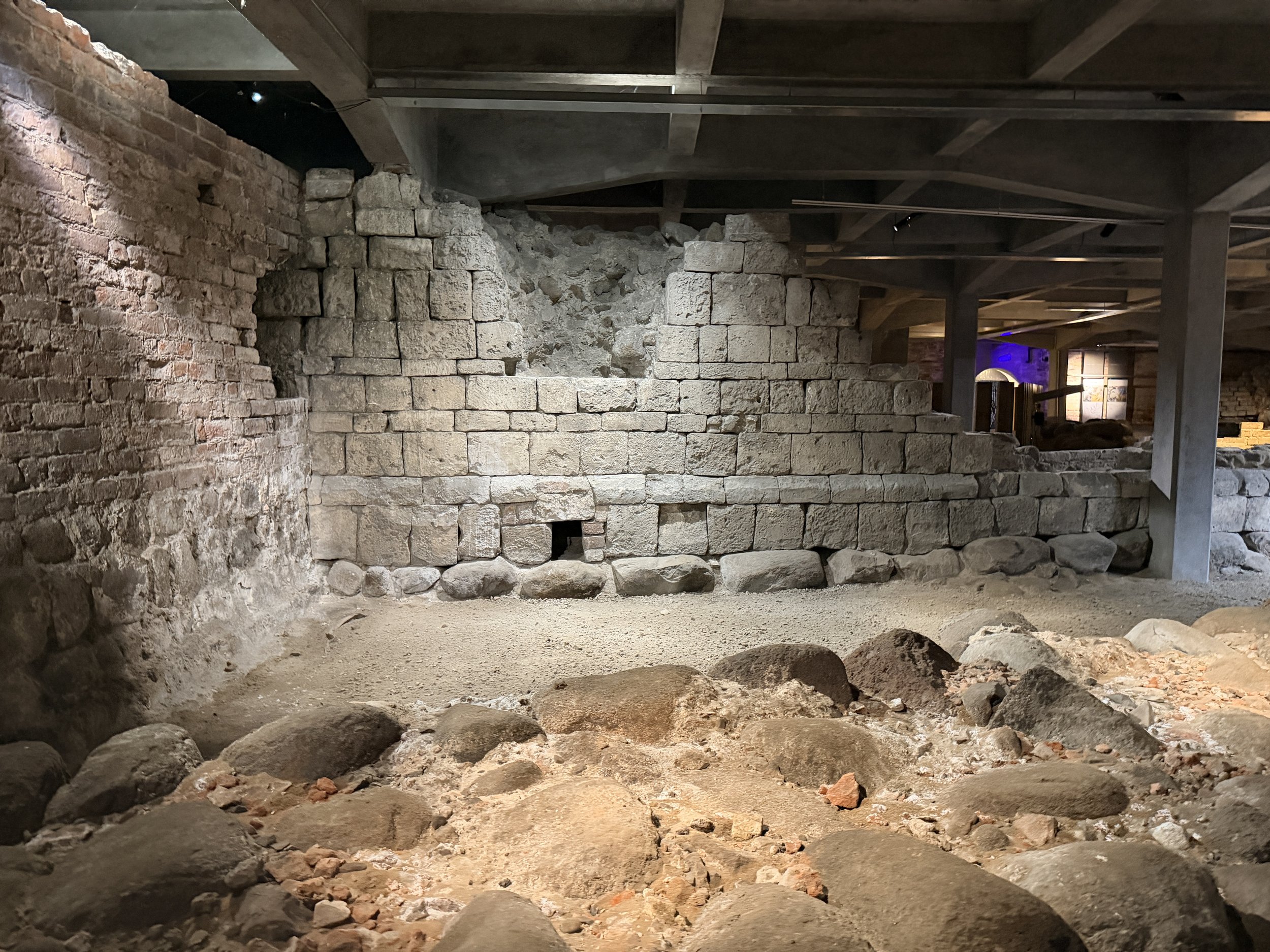
The highlight for us was the Ruins beneath the palace. Christiansborg stands on the site of Copenhagen's original medieval castle, and an underground archaeological exhibition preserves the remains of two earlier castles. Walking among their ancient foundations offered a fascinating glimpse into more than 800 years of Danish history. Unfortunately, we ran out of time and had to skip the final attraction, the Royal Kitchen.
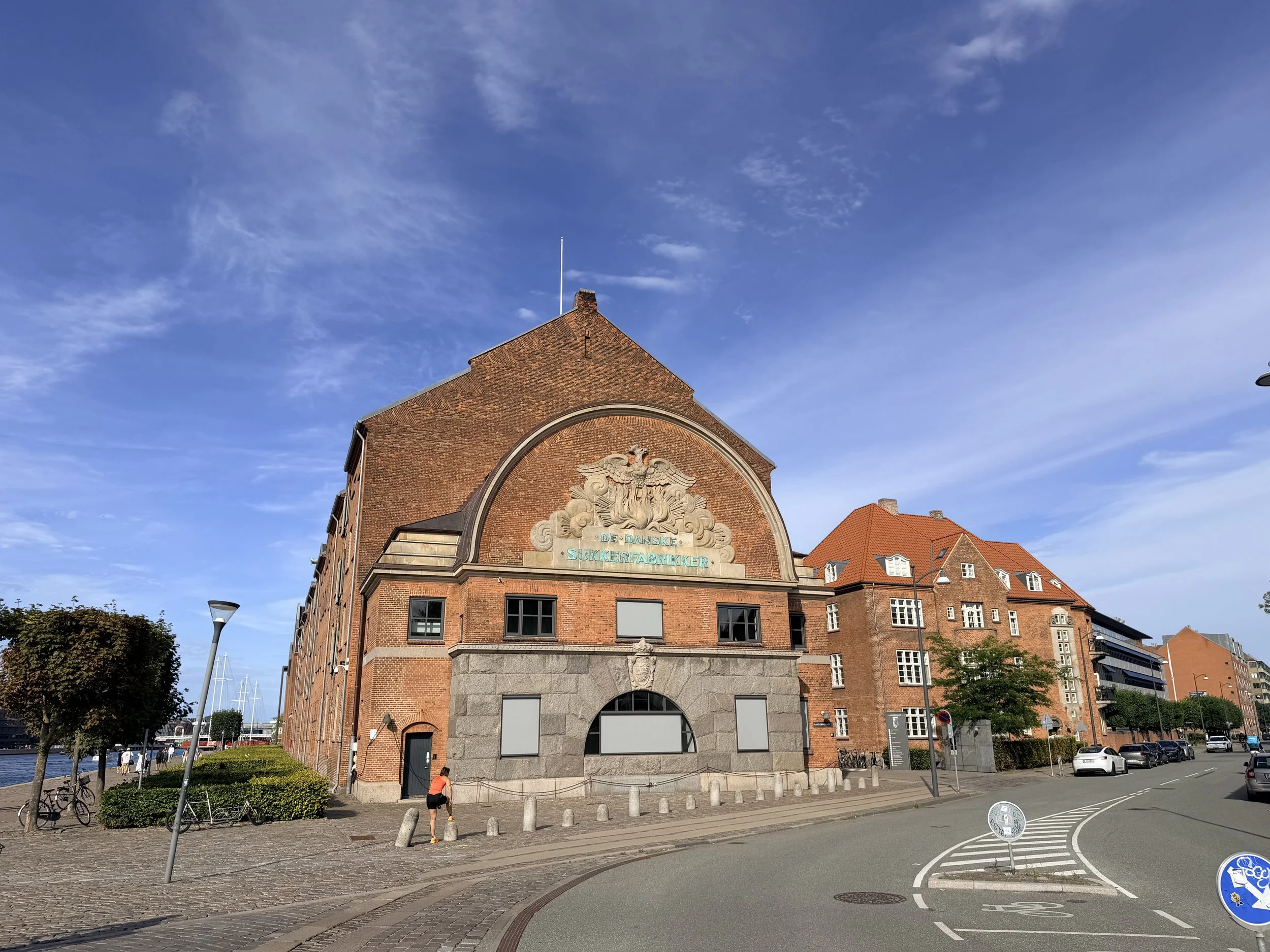
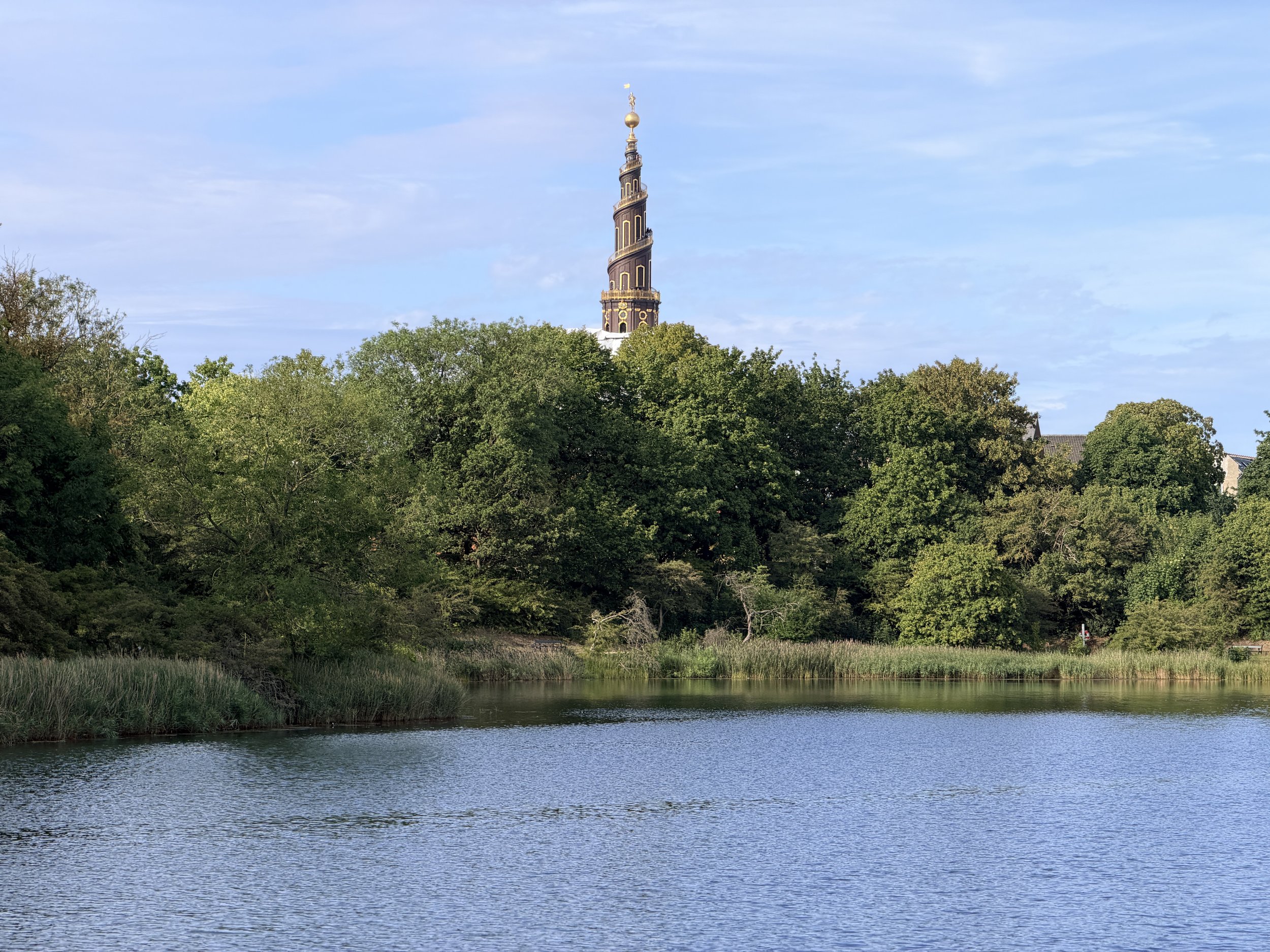
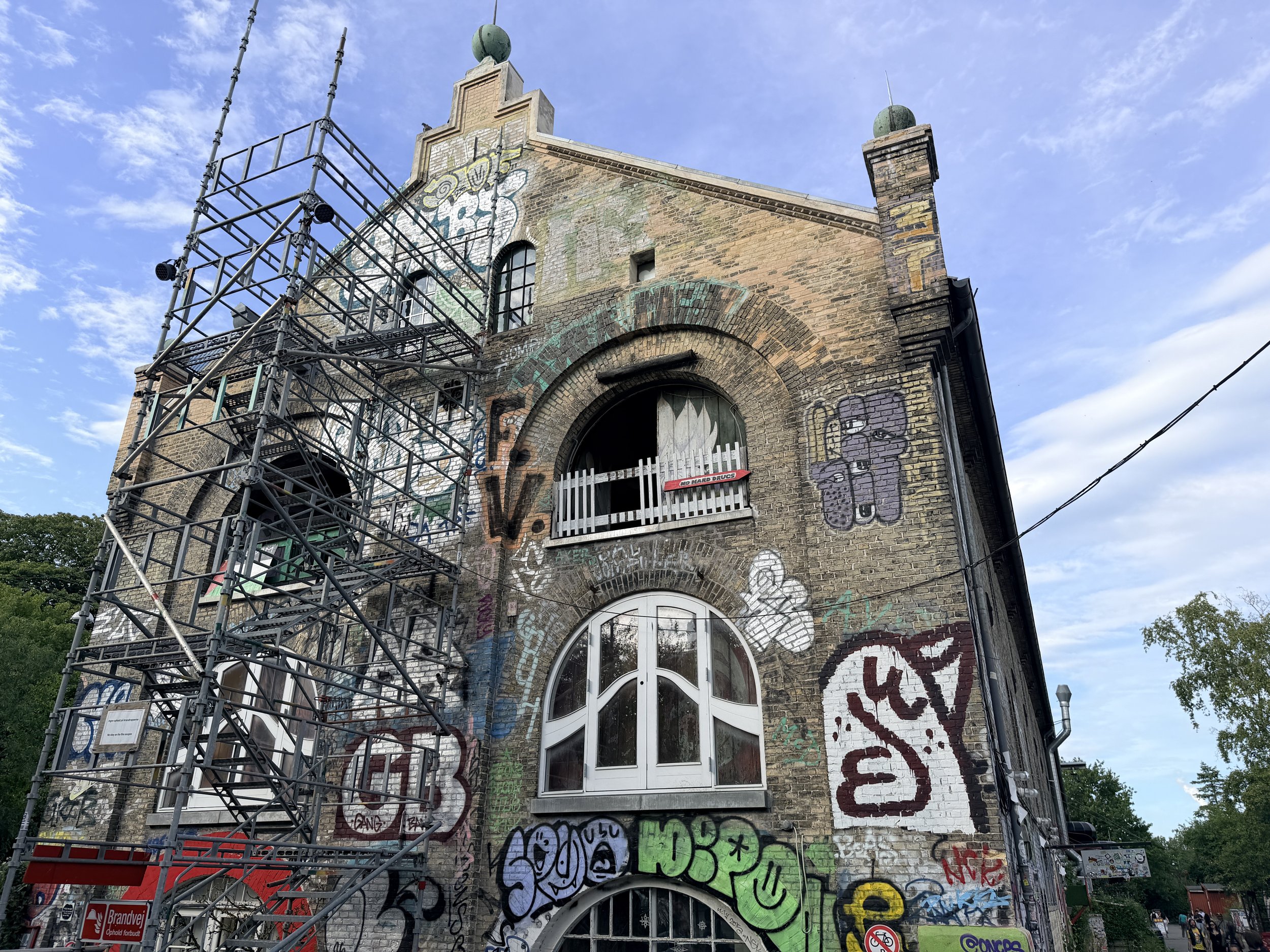
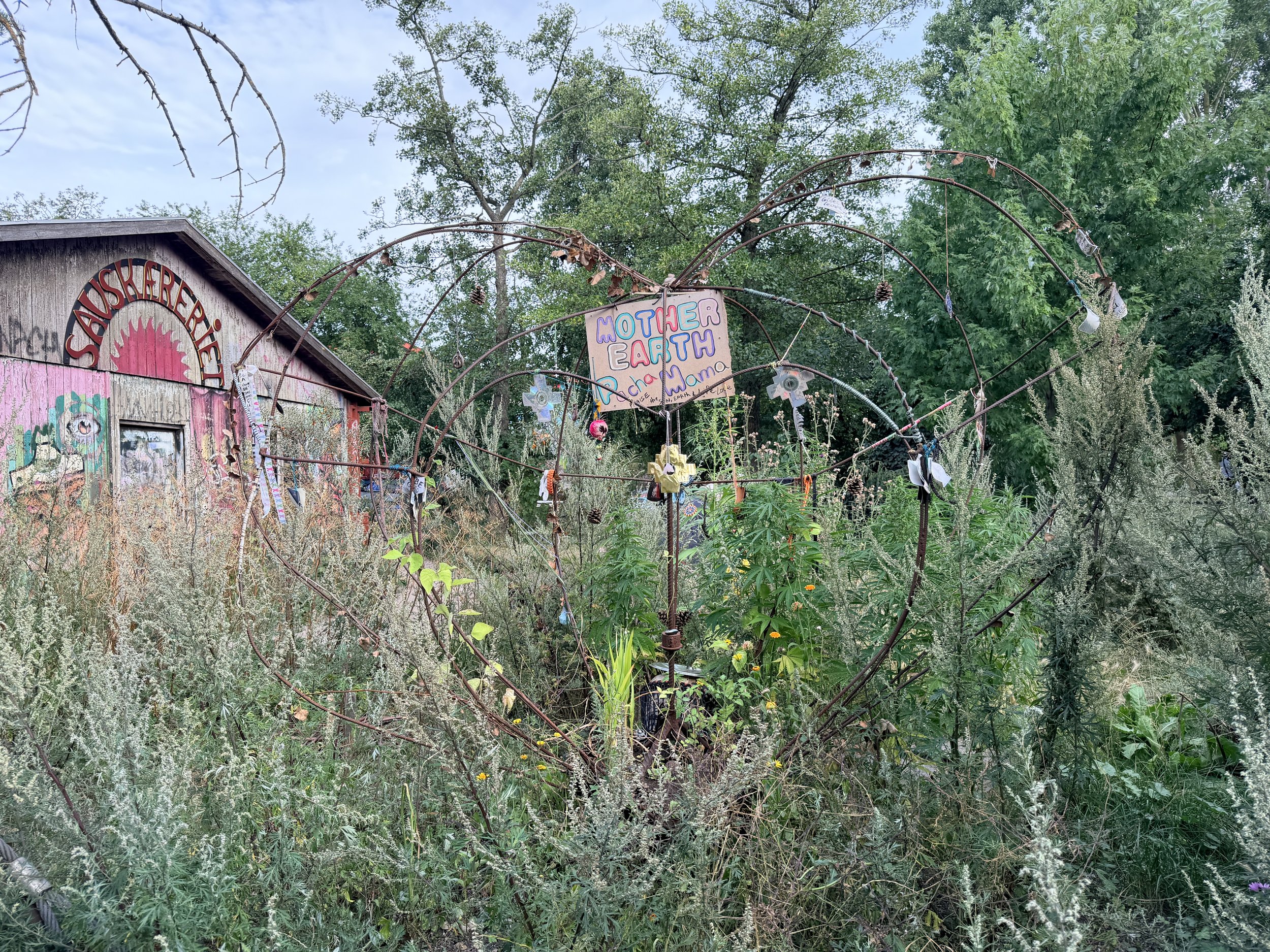
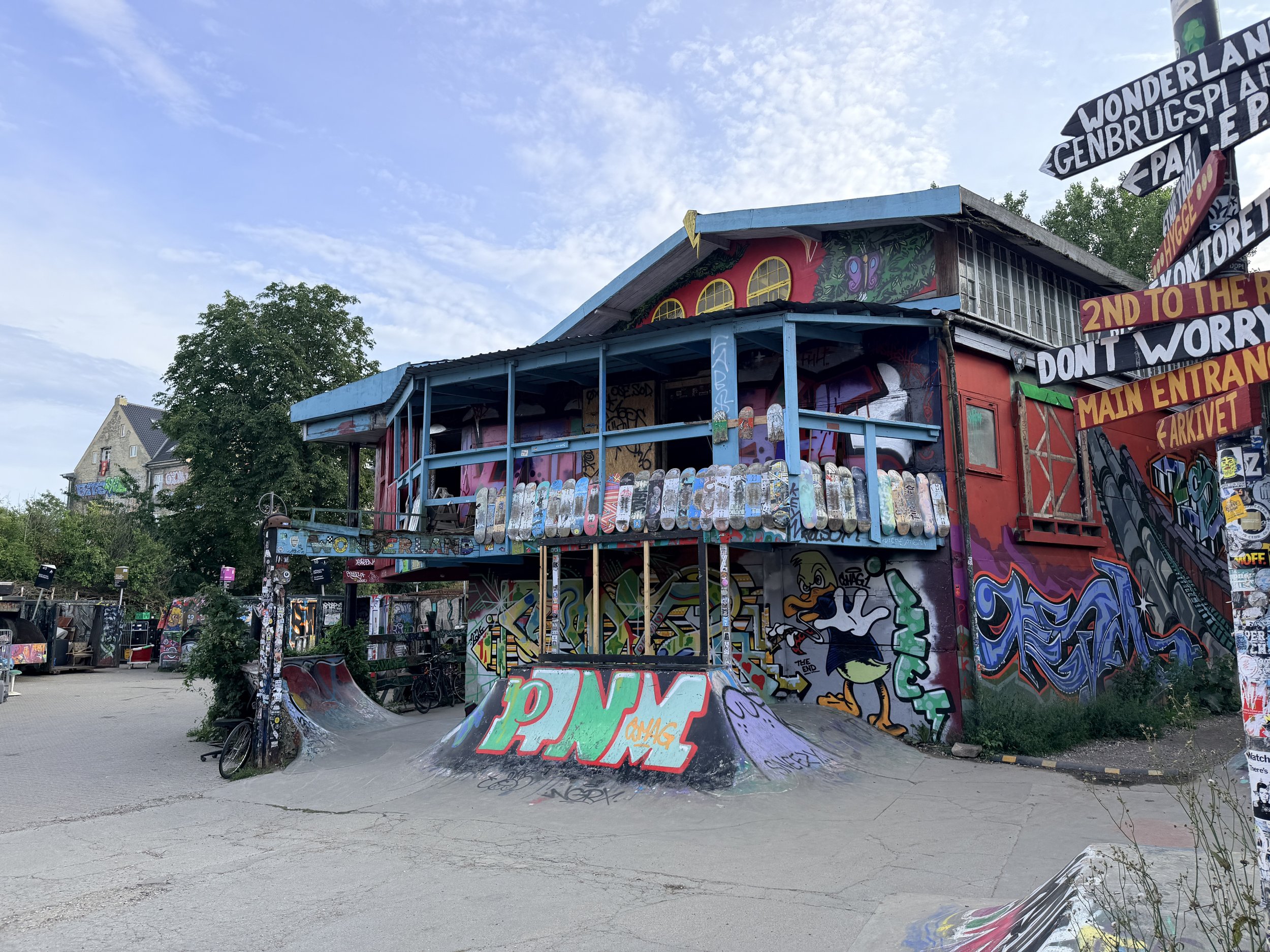
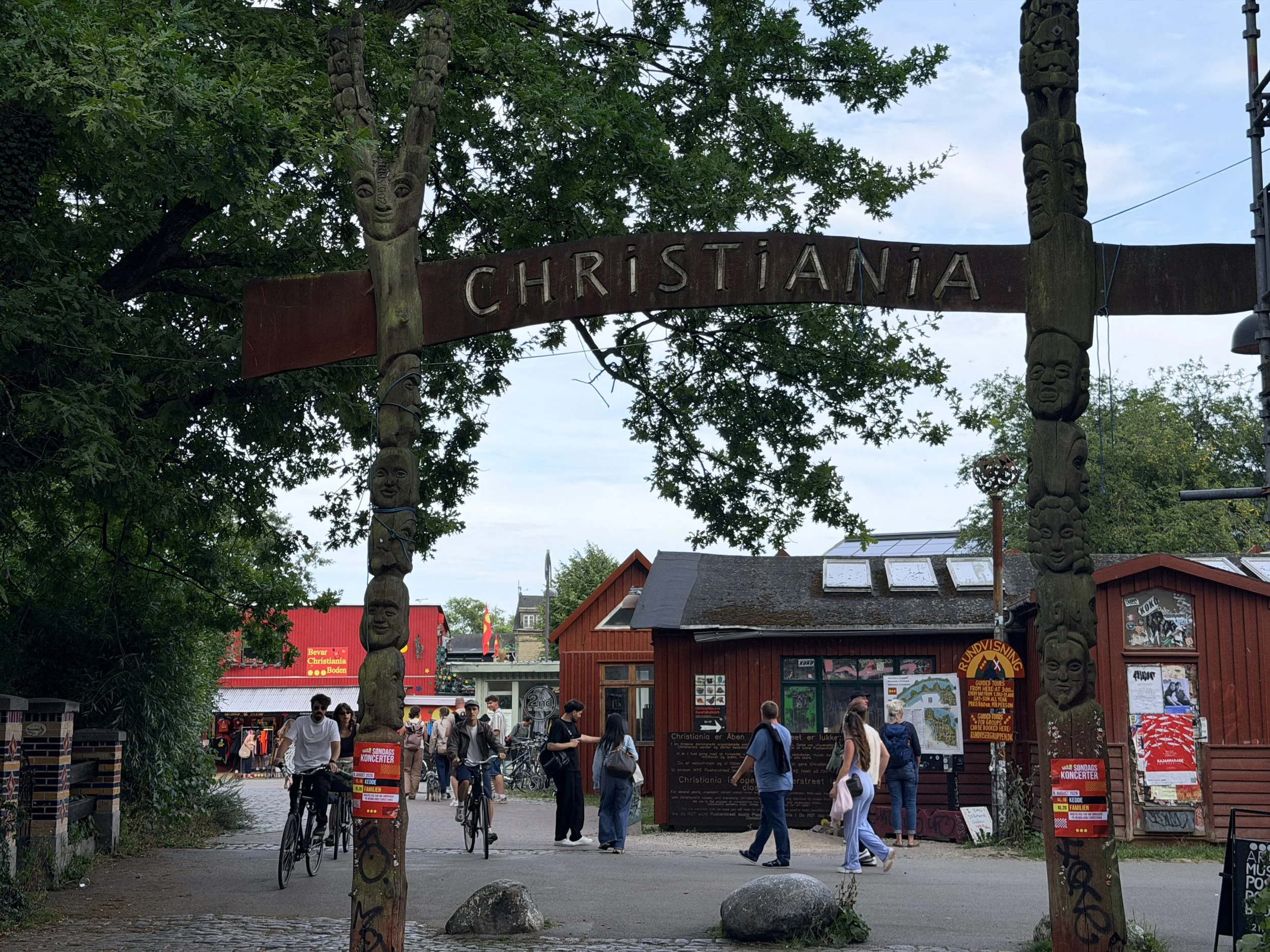
We then crossed the canal into Christianshavn to visit Freetown Christiania. If the royal castles represent elegance, wealth, and the structured authority of the Danish monarchy, Christiania offers a striking contrast—a community built on creativity, freedom, and self-governance. Colorful graffiti and weathered, makeshift buildings were everywhere, creating a distinctly bohemian atmosphere. At the same time, live music, food stalls, and a relaxed pace of life gave the neighborhood its unique charm. Whether one sees it as an inspiring social experiment or simply an unconventional way of living, Christiania is unlike anywhere else in Copenhagen.
2026年7月31日
今天一早,我们首先来到罗森堡宫(Rosenborg Castle)。这座城堡是丹麦国王克里斯蒂安四世时期的王室居所,如今已成为博物馆,珍藏着皇冠,珠宝、权杖、御用礼器,以及其它大量珍贵的收藏,堪称丹麦王室的宝库。
中午简单吃了一顿泰国菜后,我们回到酒店休息,为身体充点电。
下午精神饱满地前往克里斯蒂安堡宫(Christiansborg Palace)。这里曾是丹麦王室的主要居所,直到1794年一场大火将宫殿烧毁,王室才迁往今天的阿美琳堡宫。如今,克里斯蒂安堡宫是世界上少数同时容纳国家三大政府机构的宫殿——国会、最高法院和首相办公室都设于此,而国王仍会在这里举行国宴、接见外宾及其他重要国事活动。
克里斯蒂安堡宫共有五个参观景点。由于昨天我们已经登过宫殿塔楼,这次首先参观的是皇家马厩,欣赏现役皇家御马以及历代保存下来的华丽皇家马车。随后参观了皇家接待厅,金碧辉煌、装饰典雅,与我们在欧洲其他王宫见过的皇家居室风格相近。
最令我们印象深刻的是宫殿地下的「遗址展区」(The Ruins)。克里斯蒂安堡宫建在哥本哈根最早的中世纪城堡遗址之上,考古学家将地下发掘出的两座早期城堡遗迹完整保留下来,供游客近距离参观。漫步在古老的石墙与地基之间,仿佛穿越回八百多年前的丹麦王国,亲身感受这座城市悠久的历史。可惜时间不够,我们没能参观最后一个展区——皇家厨房。
随后,我们穿过运河来到克里斯蒂安港(Christianshavn),造访著名的自由城克里斯蒂安尼亚(Freetown Christiania)。如果说几座皇家宫殿象征着丹麦王室的优雅、富裕与井然有序的权威,那么克里斯蒂安尼亚则呈现出另一种截然不同的面貌——一个崇尚创意、自由与自治的社区。
这里随处可见色彩鲜艳的涂鸦、极为破旧的自建房屋,散发着浓厚的波西米亚艺术气息。街头不时传来现场音乐,路边摆着简朴的餐车和小摊,人们悠闲地享受着简单自在的生活。无论把它视为一场大胆的社会实验,还是一种另类的生活方式,克里斯蒂安尼亚都称得上是哥本哈根最独特、最令人难忘的地方之一。
从罗森堡宫收藏的皇家珍宝和克里斯蒂安堡宫承载的国家权力,到克里斯蒂安尼亚追求自由与自治的生活方式,我们在短短一天之内,看见了哥本哈根二种截然不同的面貌。它们彼此对比,却又共同构成了这座城市丰富而多元的文化与历史,也让这一天成为我们此次哥本哈根之旅最具层次感的一天。
A Surprise Hello at the Little Mermaid 美人鱼前的巧遇
July 30, 2026
Today, we planned to spend the day exploring Copenhagen on foot……
今天,我们计划在哥本哈根市区随便走走。。。
July 30, 2026
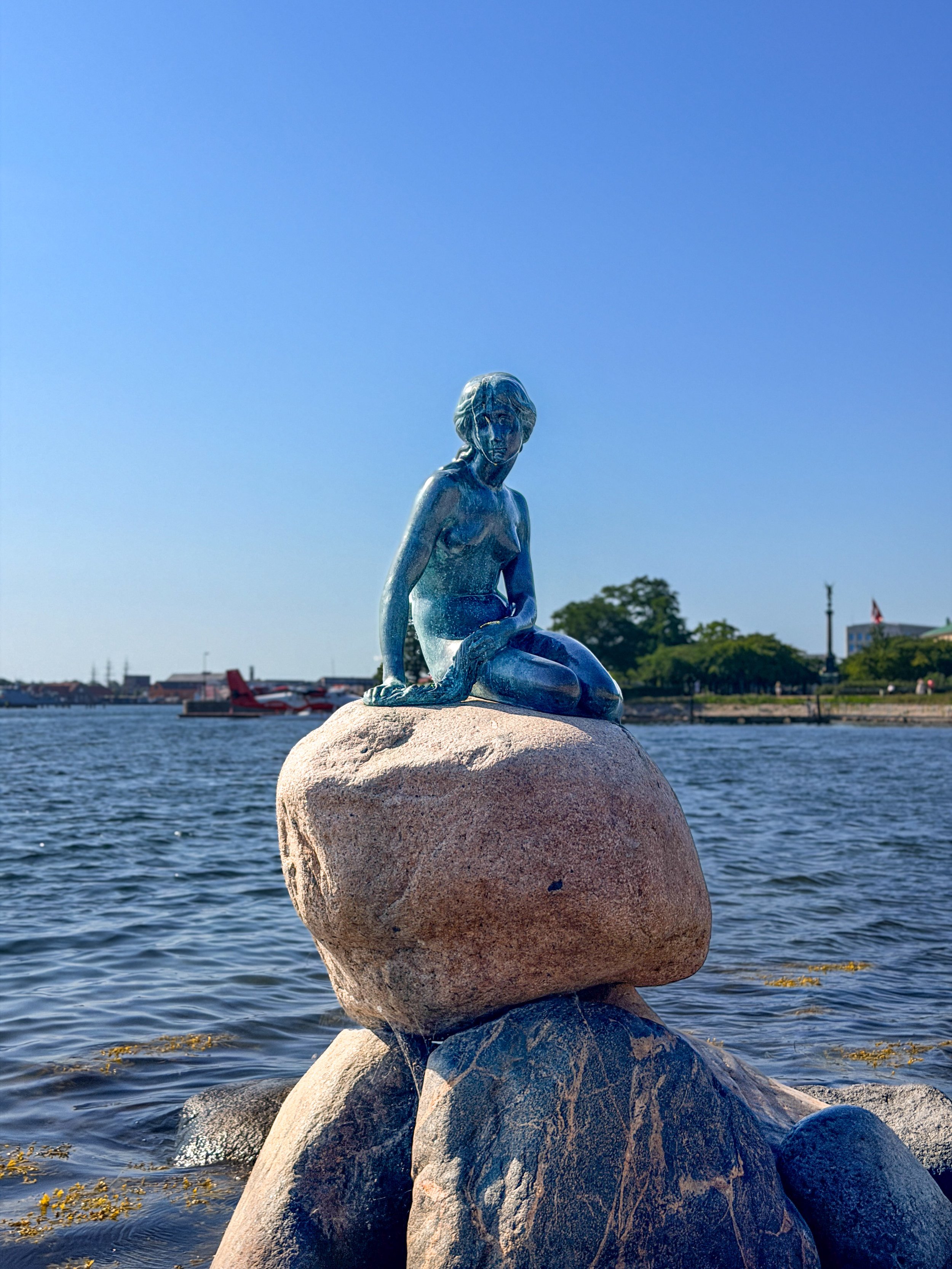
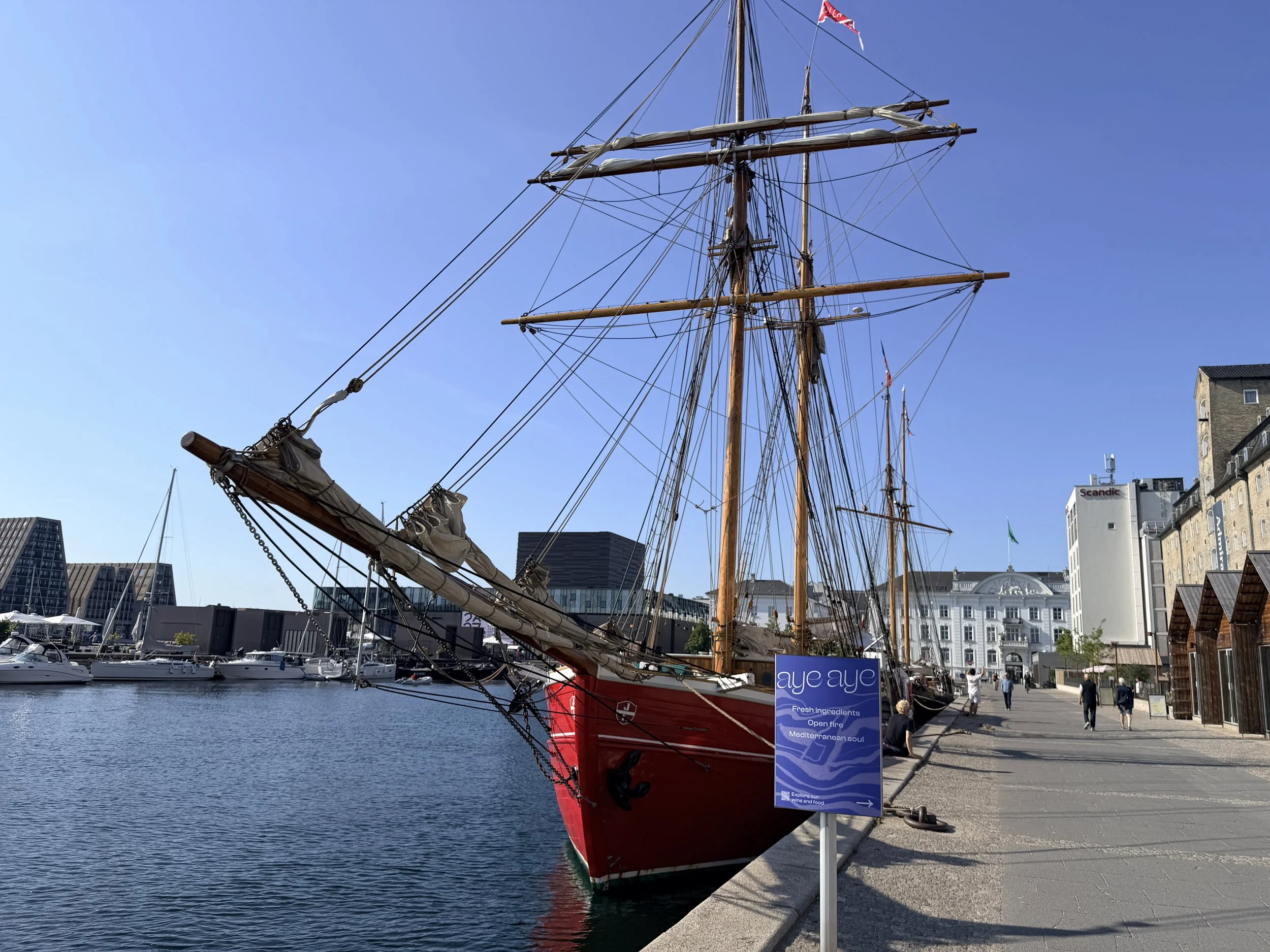
Today, we planned to spend the day exploring Copenhagen on foot. Our first destination was the famous Little Mermaid statue, perched on its rock by the waterfront. Along the way, we made countless photo stops, enjoying the city's beautiful streets and harbor views.
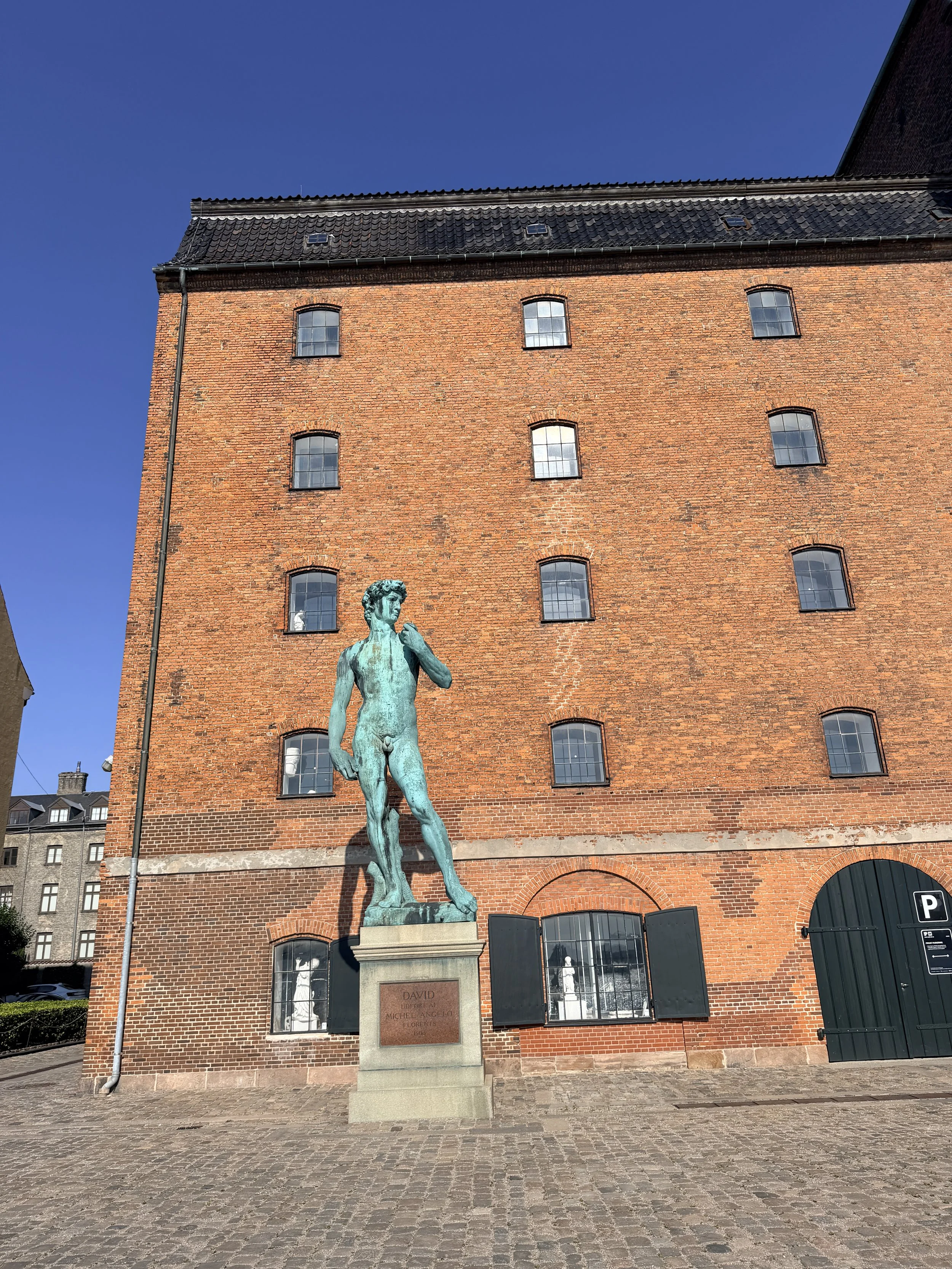
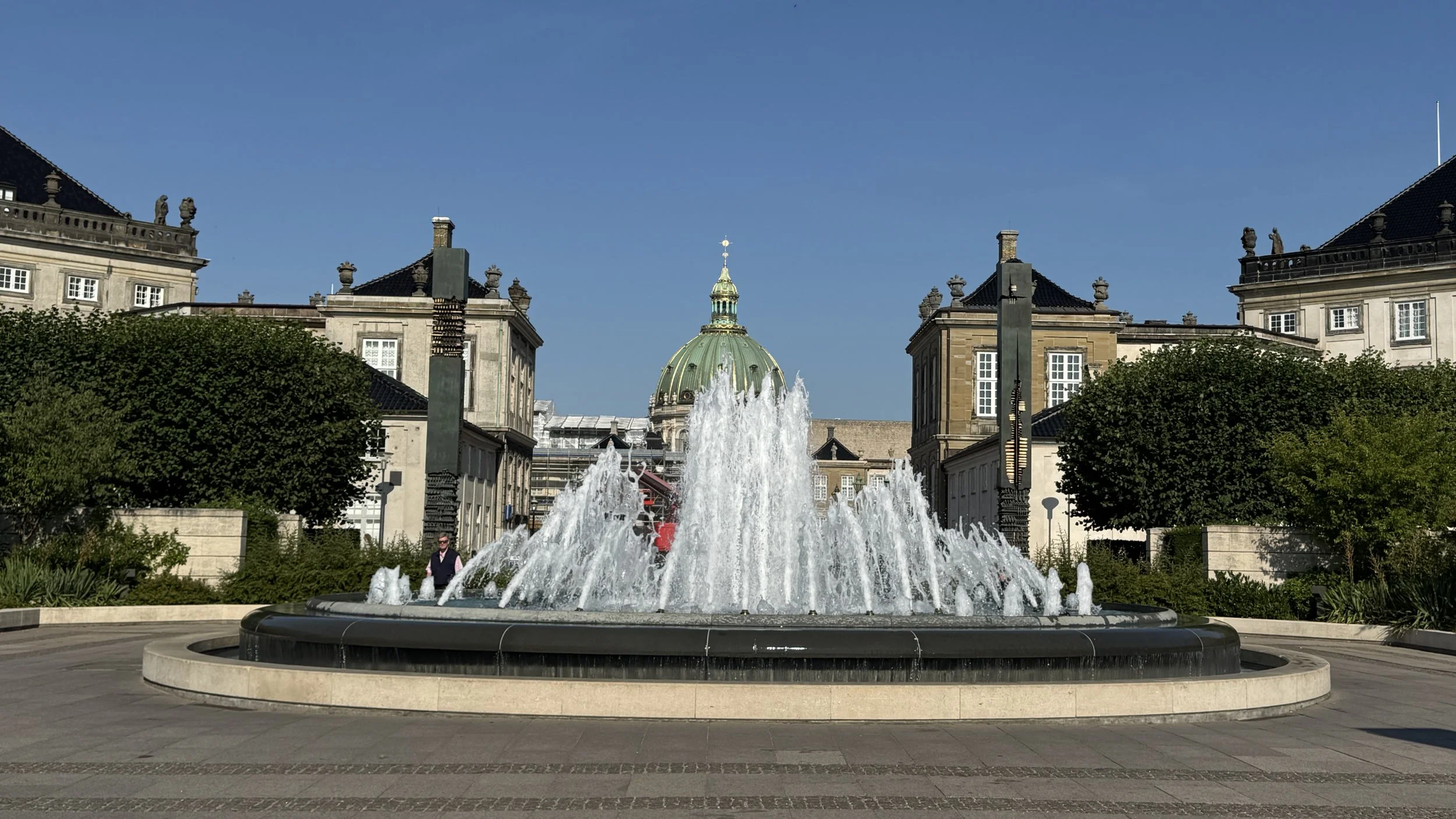
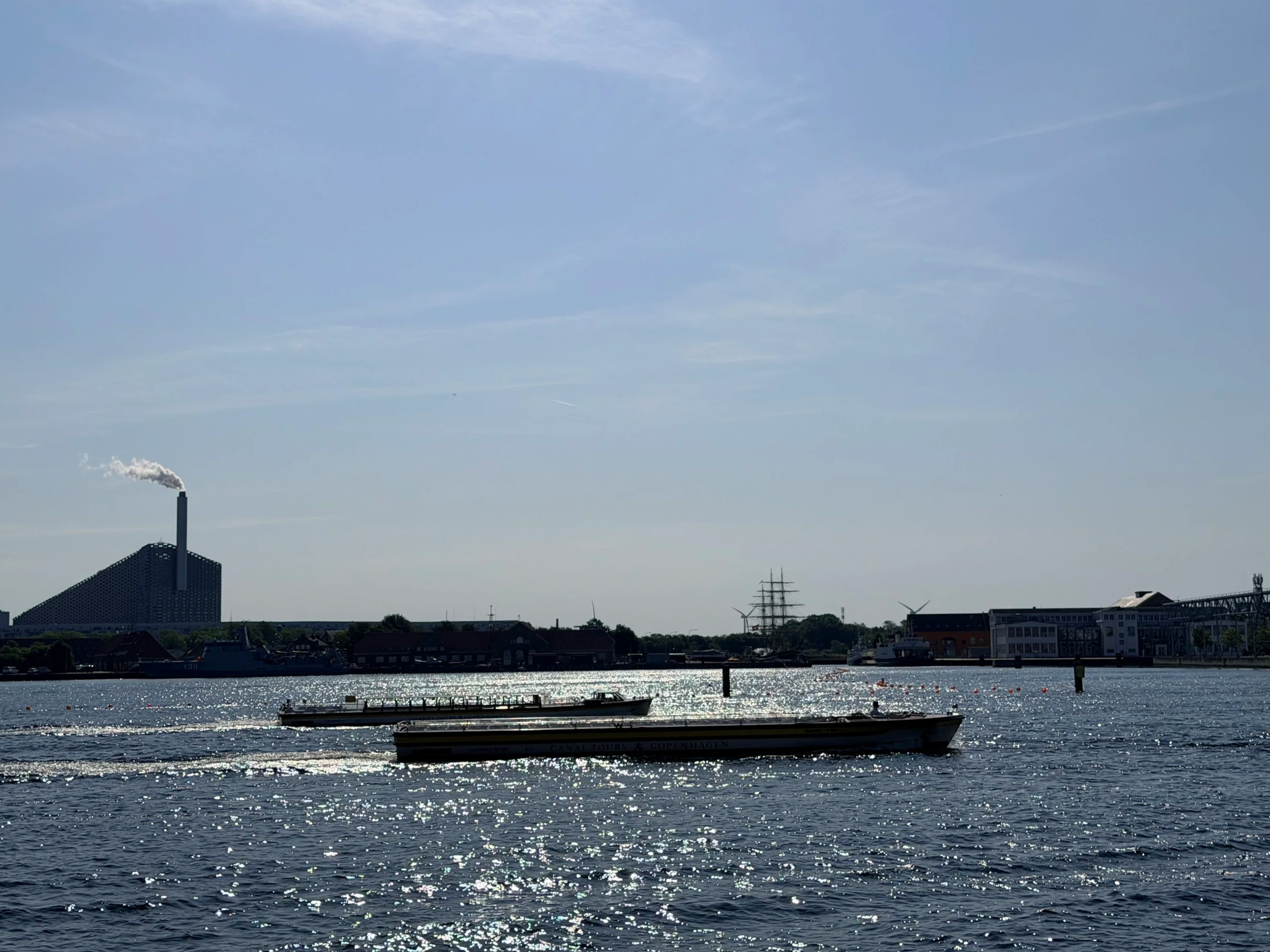
As we approached the Little Mermaid, we suddenly heard a familiar voice. To our astonishment, it was our friend! Although we knew she was also visiting Copenhagen, neither of us knew the other's sightseeing plans. She was traveling with an organized tour and following a fixed itinerary, making our chance encounter at one of the city's most iconic landmarks even more remarkable. We only had a few minutes to chat before her tour moved on, but it was enough to make us smile. It truly is a small world.
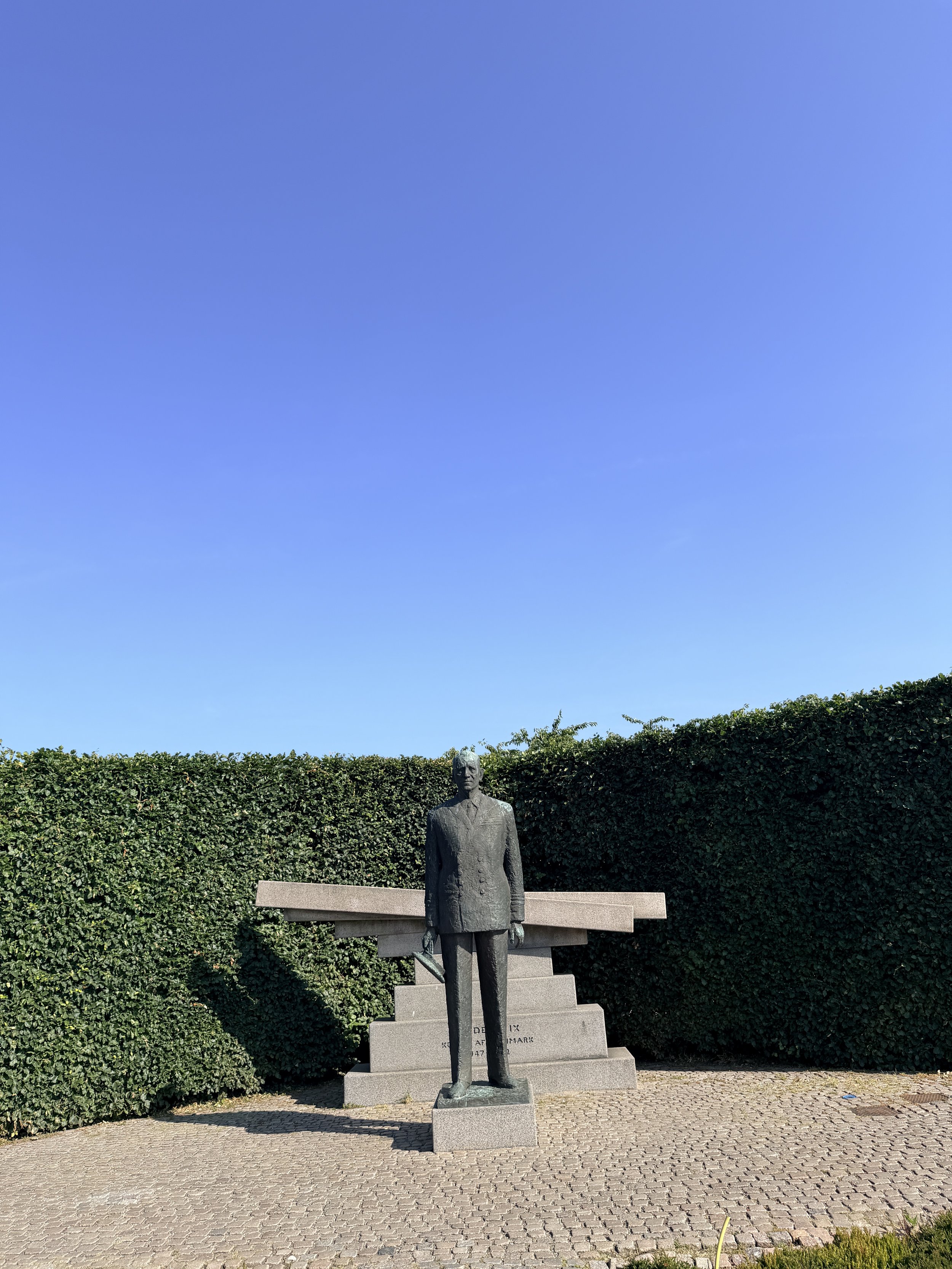
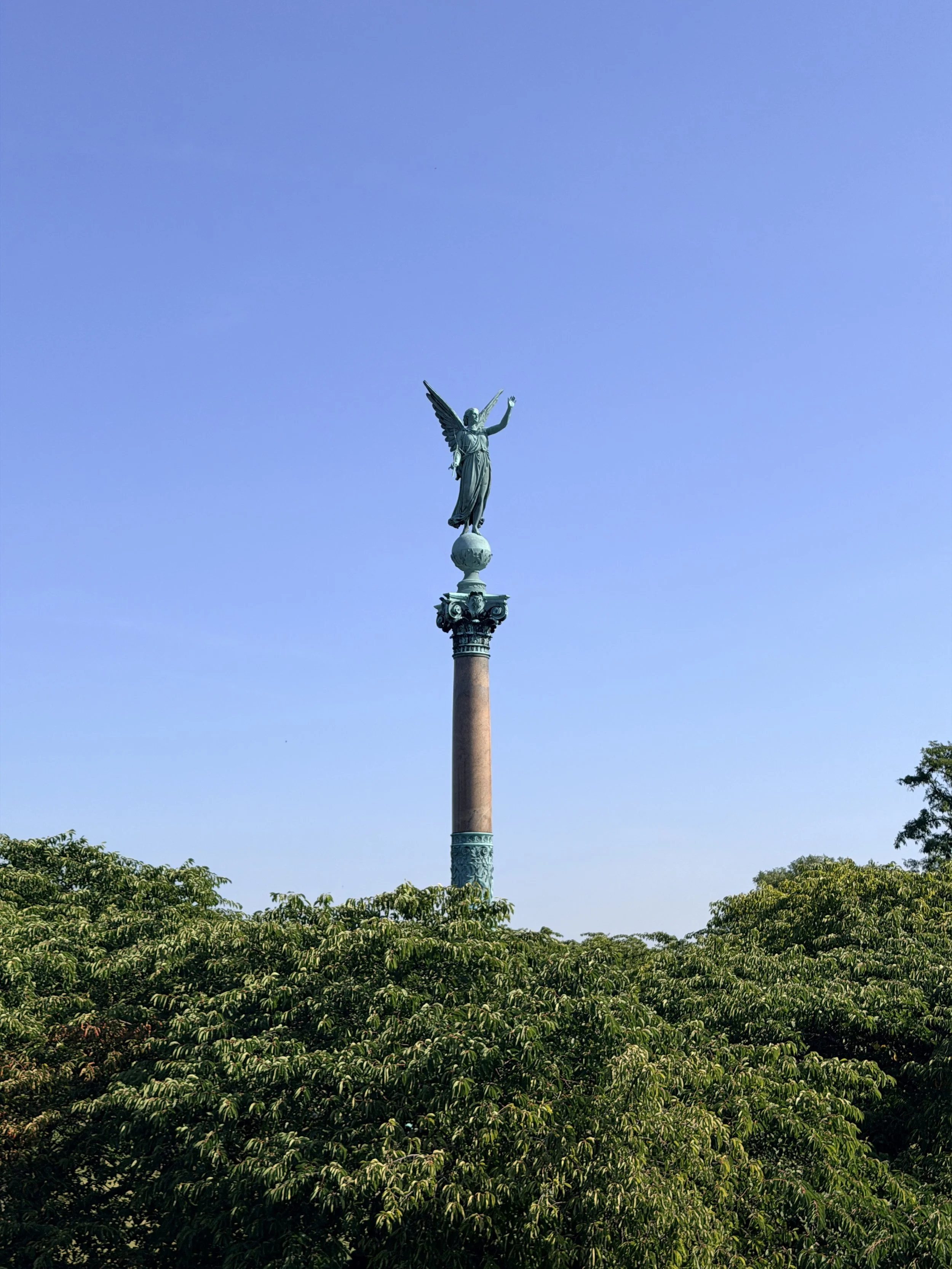
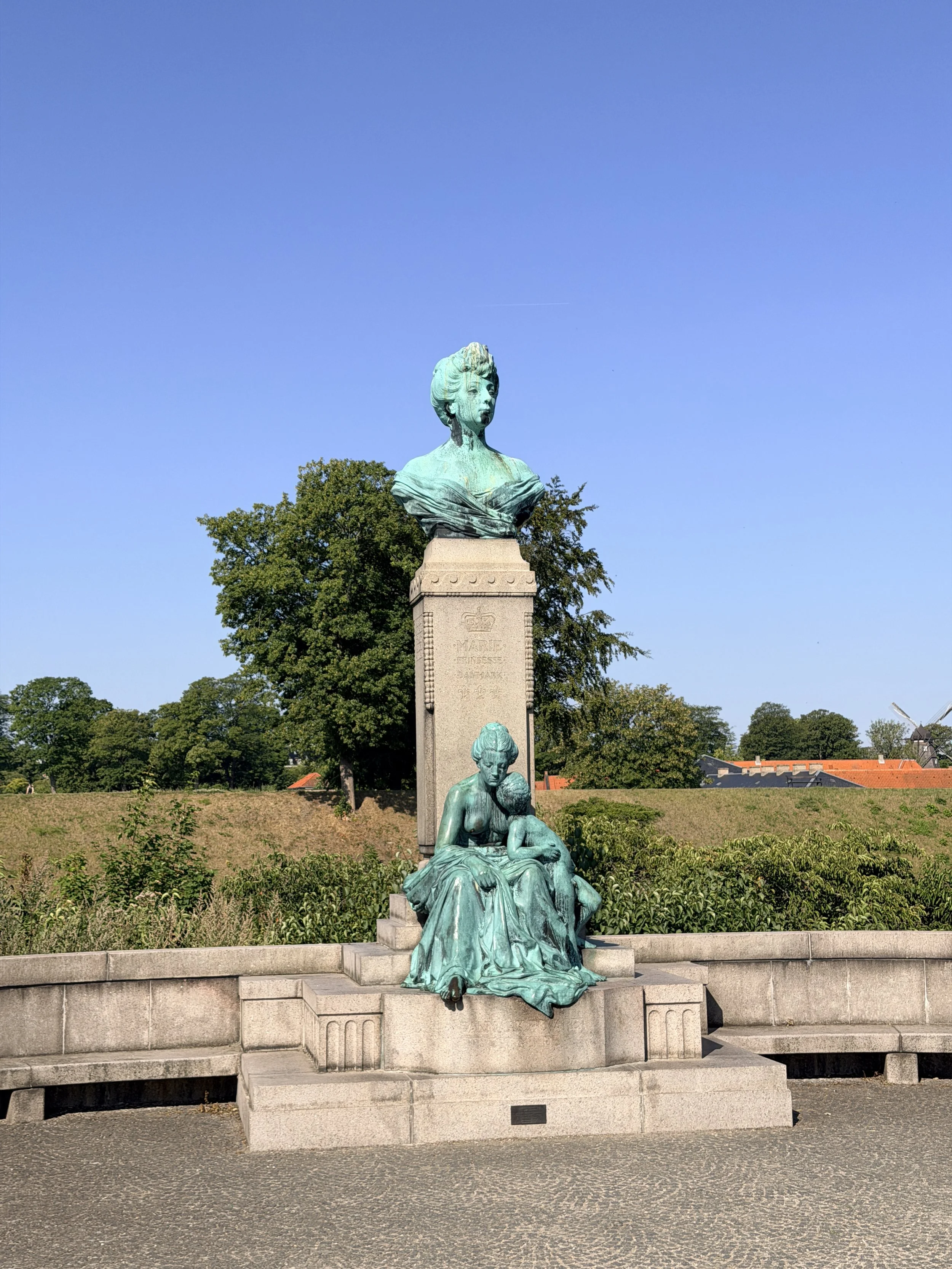
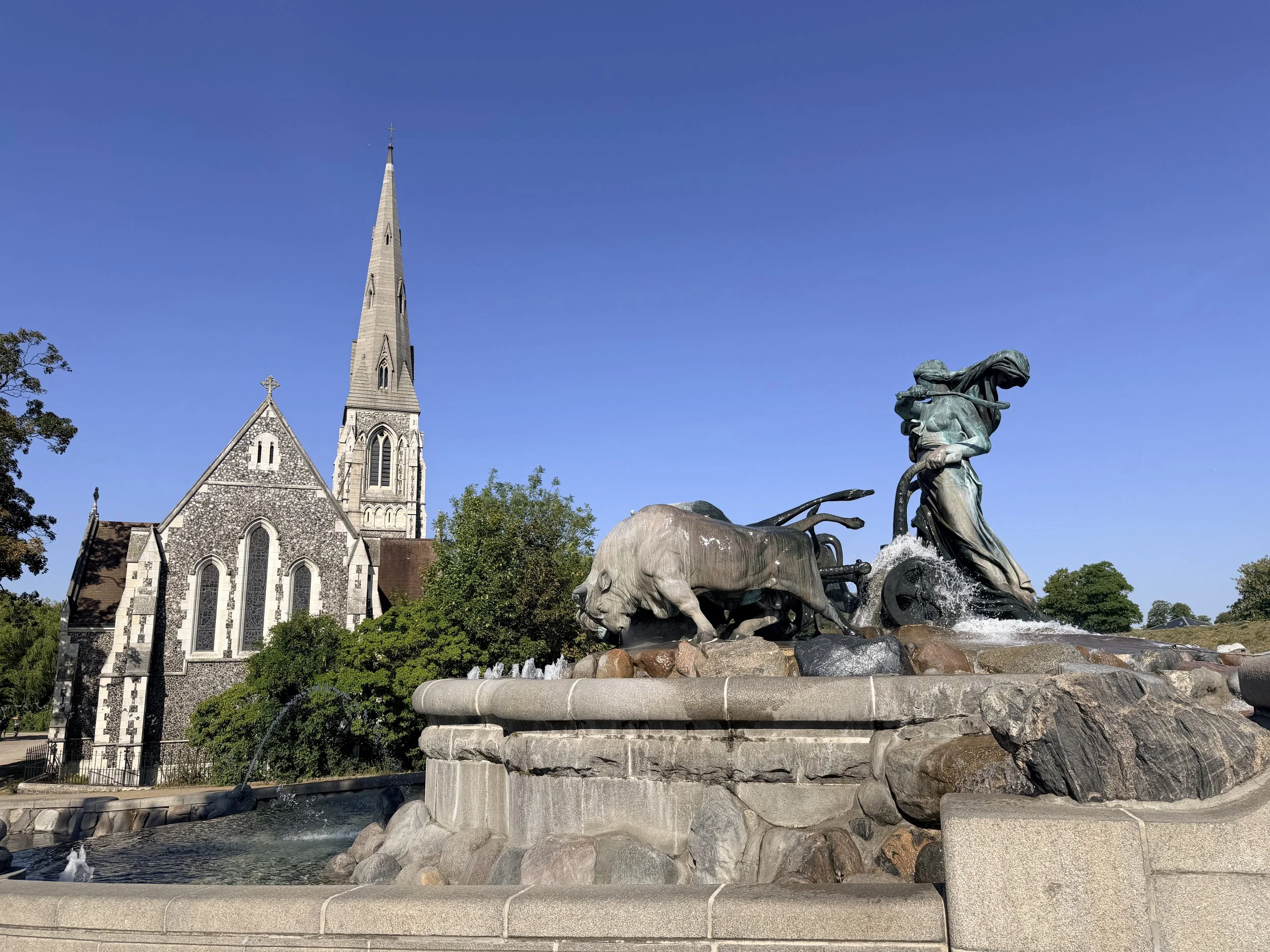
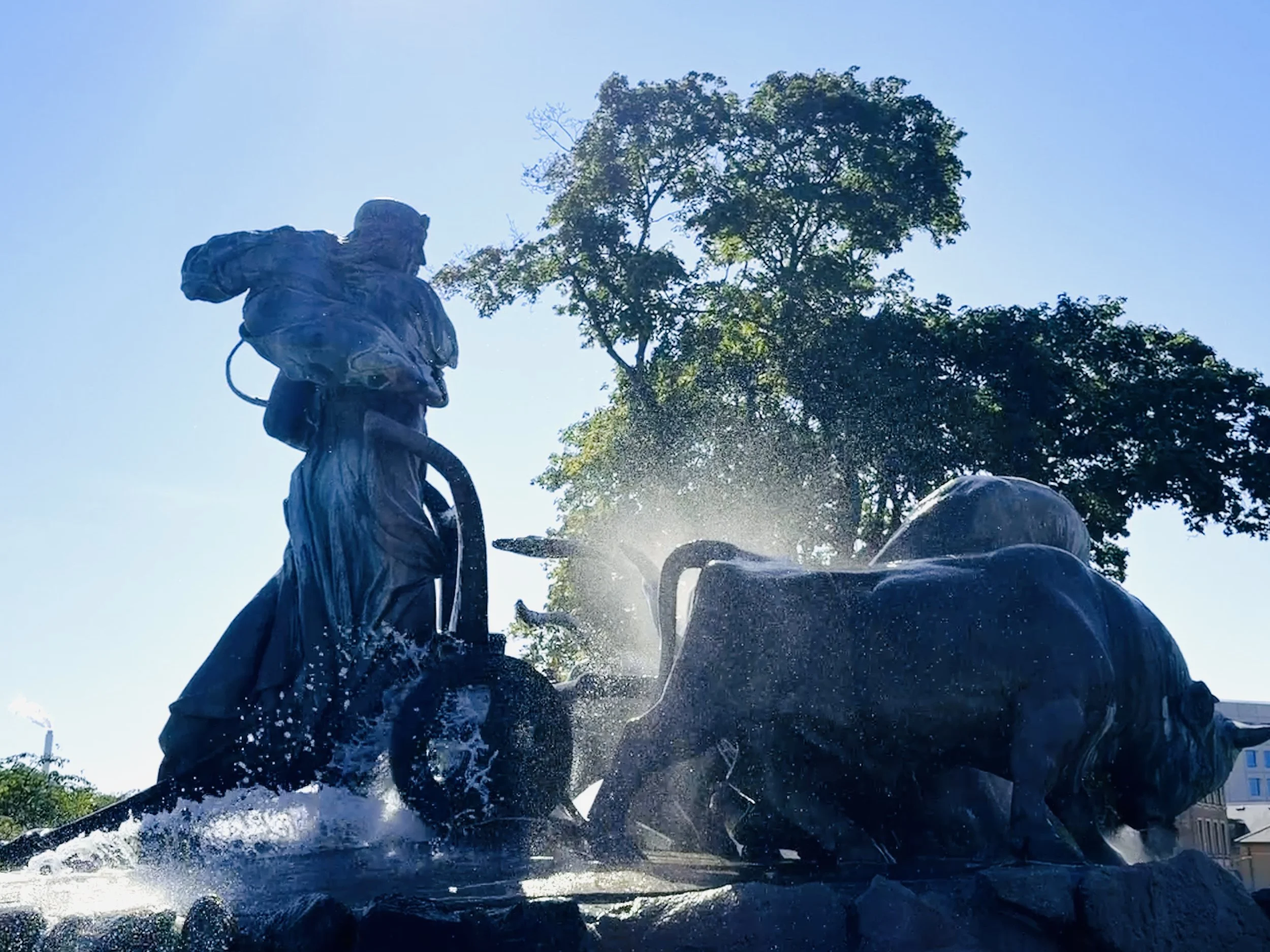
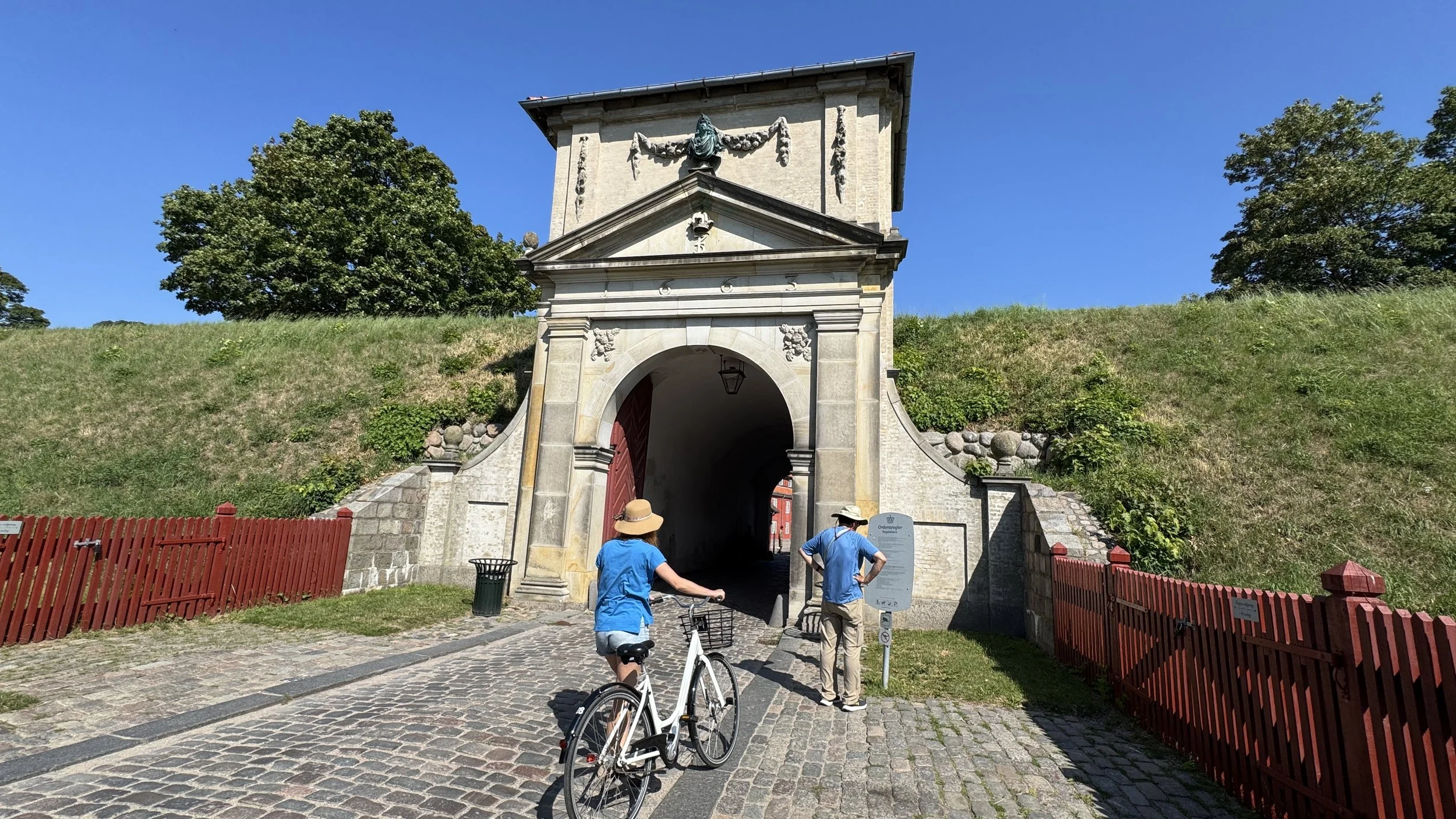
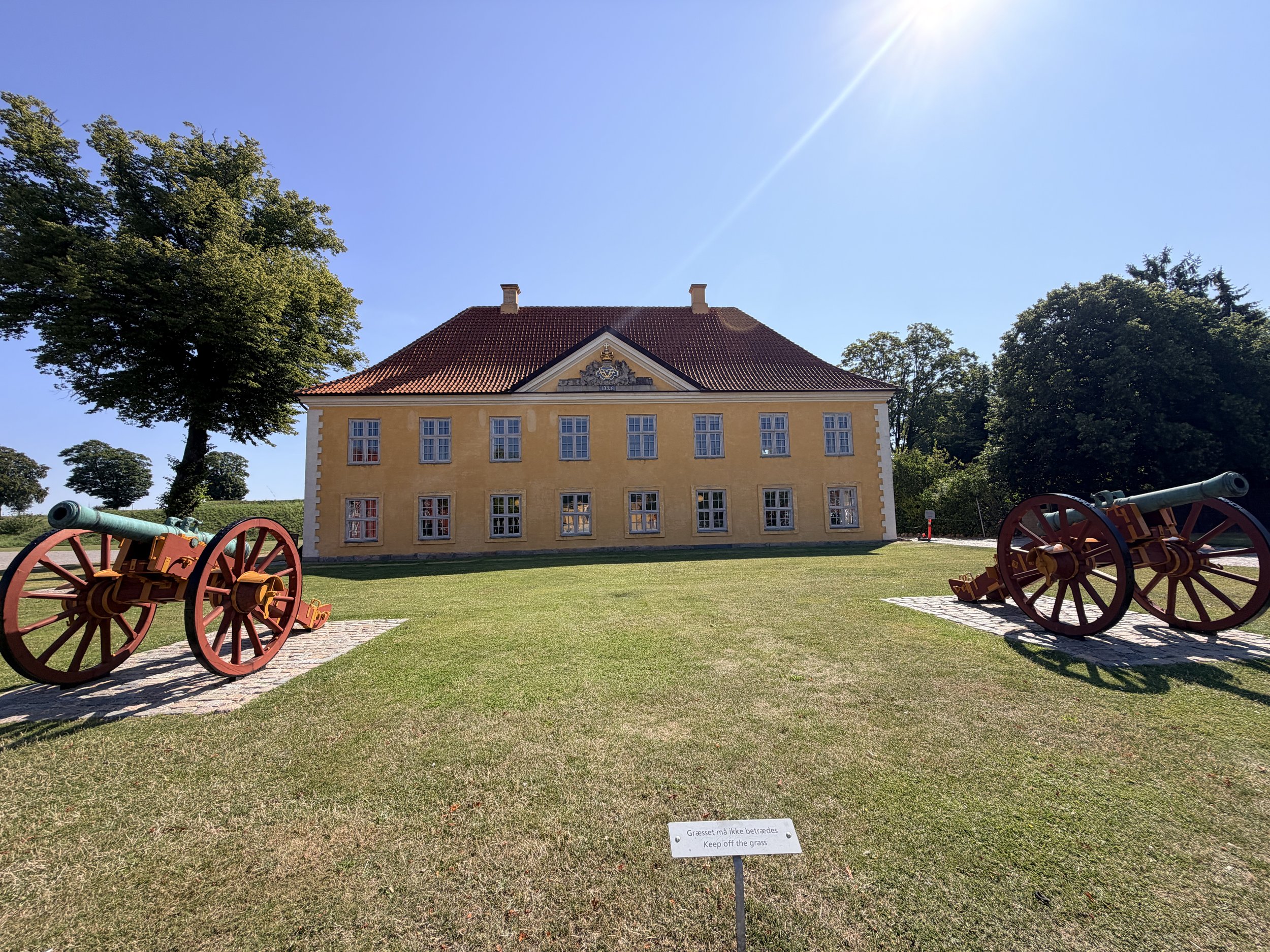
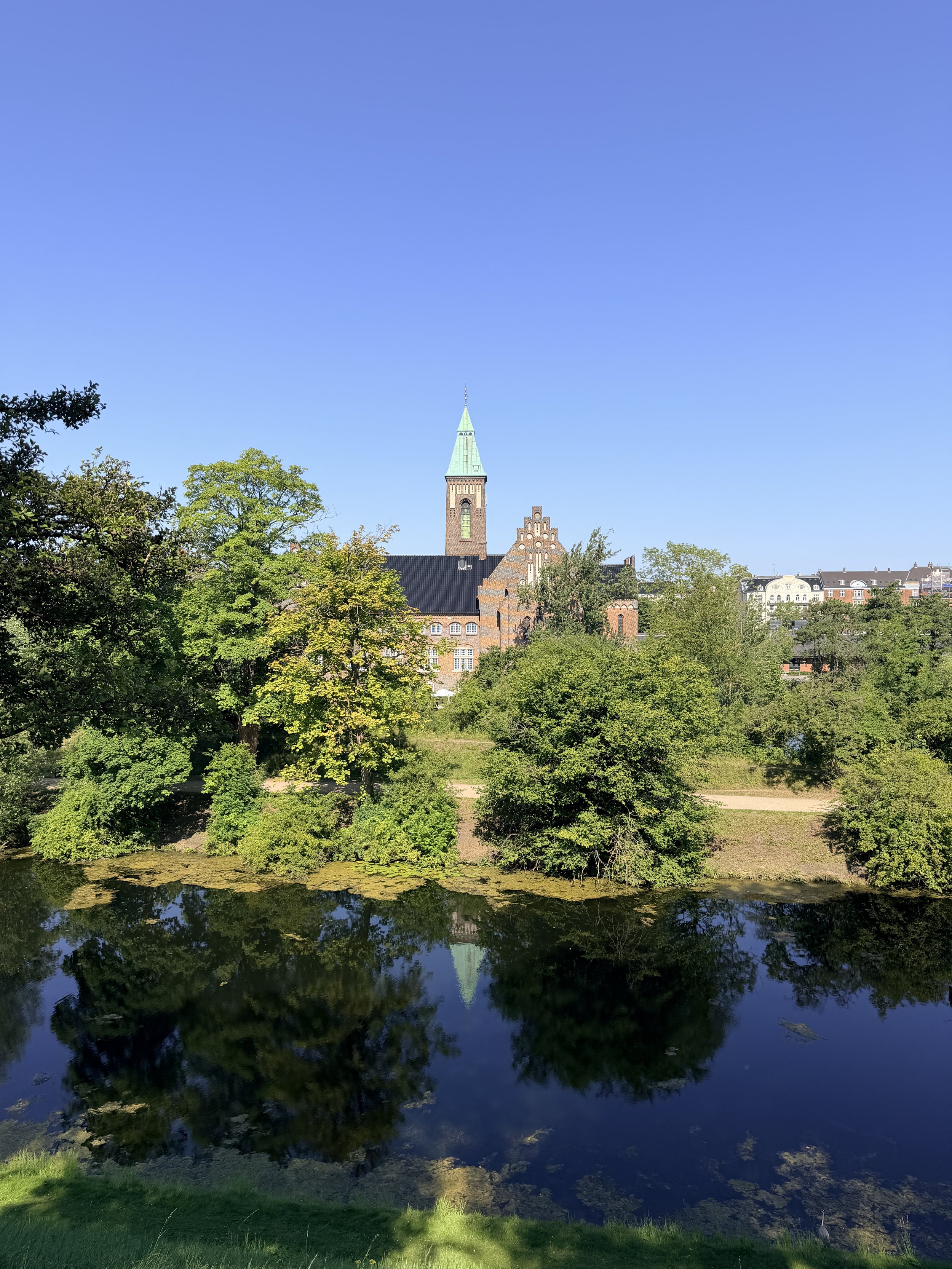
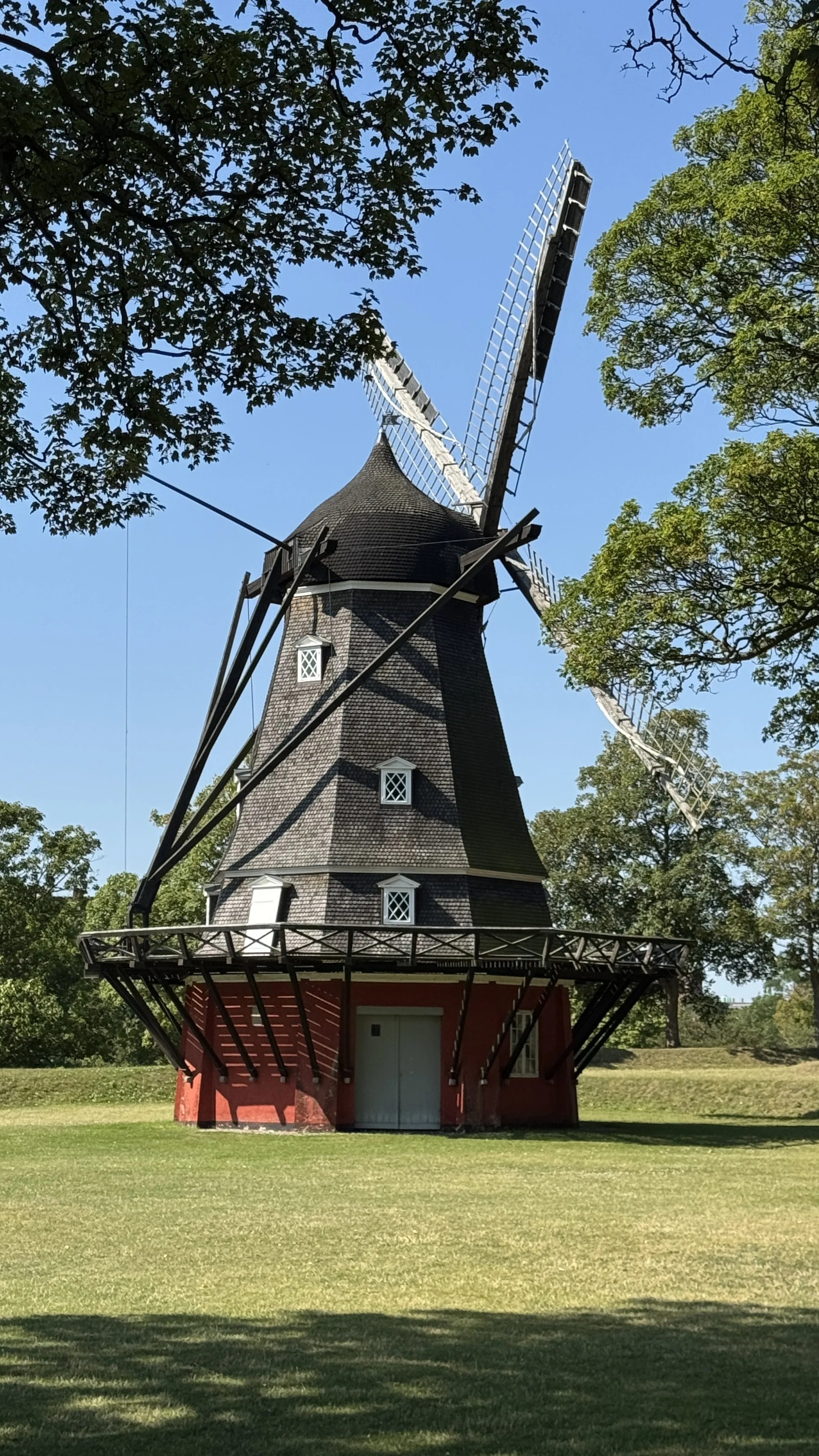
From there, we continued to Kastellet, one of the best-preserved star fortresses in Europe. Still an active military area as well as a public park, it was peaceful and beautifully maintained. Walking along the pentagon-shaped ramparts, with views of the moat and surrounding greenery, was one of the most enjoyable strolls of the day.
When we arrived at Amalienborg Palace, the Changing of the Guard ceremony was about to begin. People gradually gathered in the palace square, and we managed to find an excellent spot in the shade. The ceremony was interesting to watch, although it was simpler and less elaborate than we had expected.
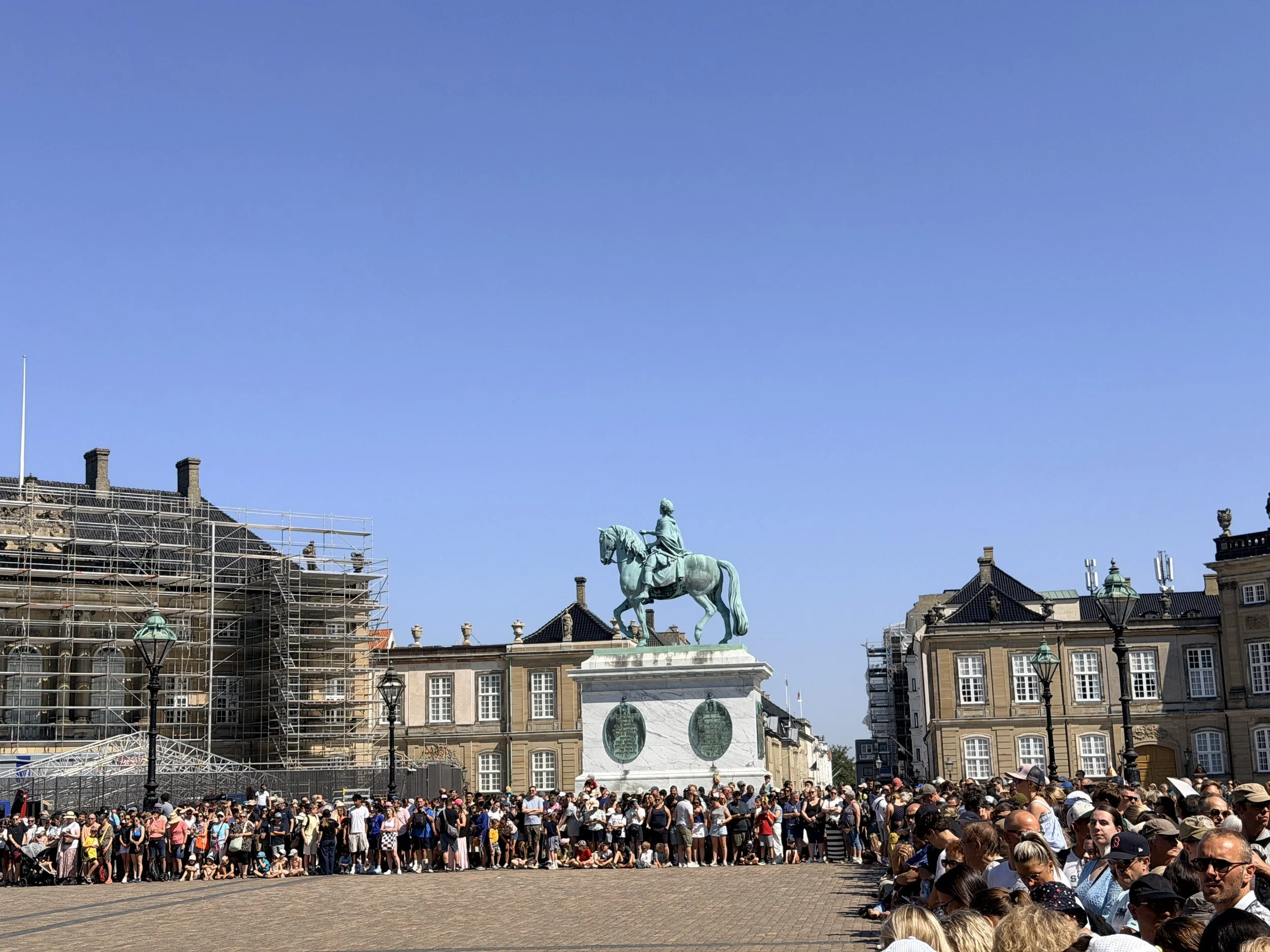
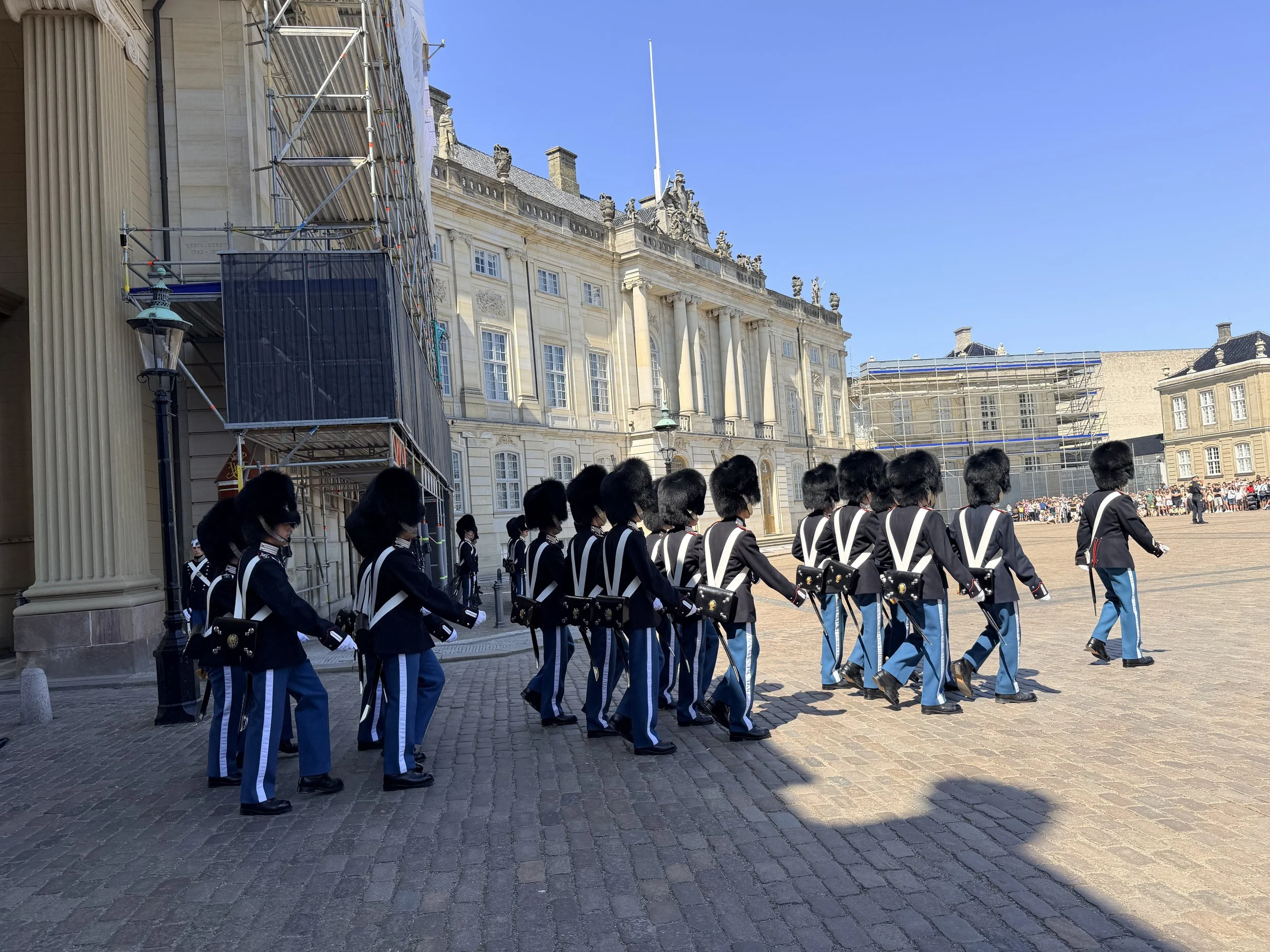
We then walked back toward our hotel for lunch and a short rest. Along the way, we came across a Chinese restaurant and couldn't resist. We ordered three familiar dishes—water-boiled fish, crispy duck, and water spinach—and thoroughly enjoyed every bite. After nearly two weeks in Northern Europe, it was comforting to savor authentic Chinese flavors again.
Feeling quite tired after the morning's sightseeing, we returned to the hotel and took a two-hour nap before having dinner there.
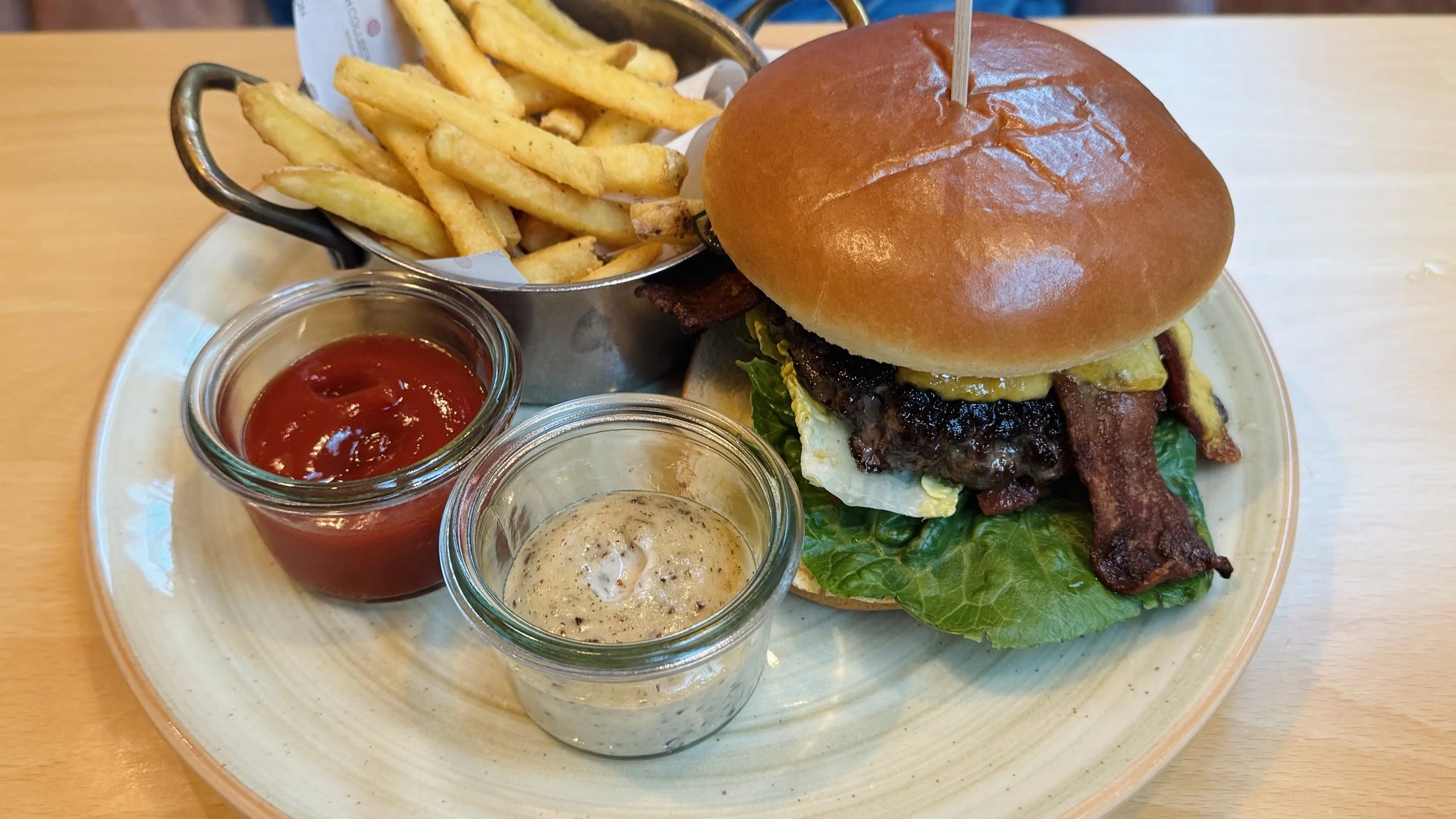
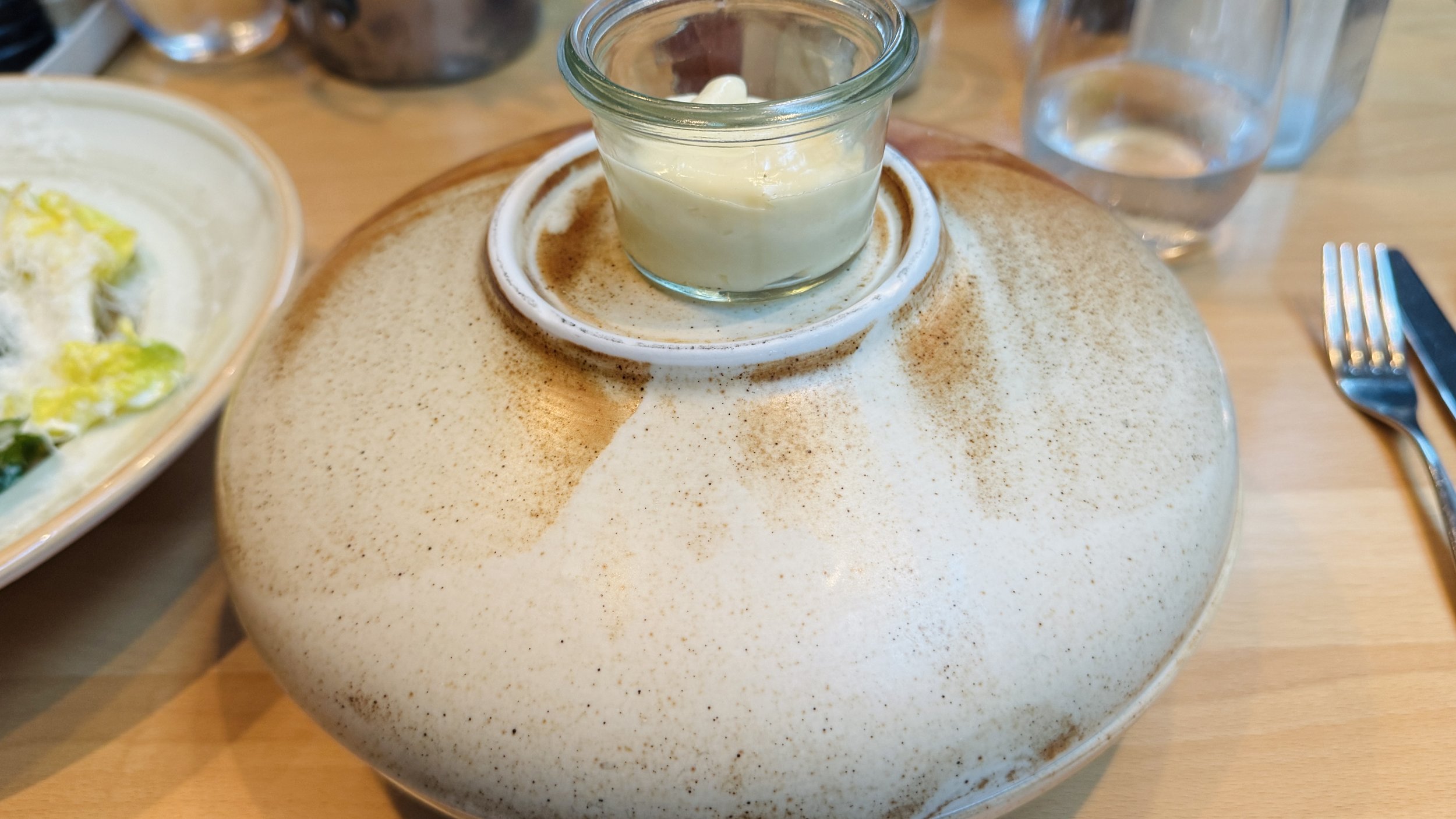
In the evening, we had dinner at the hotel to use the €100 dining credit that came with our credit card. The food was excellent, and the restaurant had a comfortable and relaxing atmosphere.
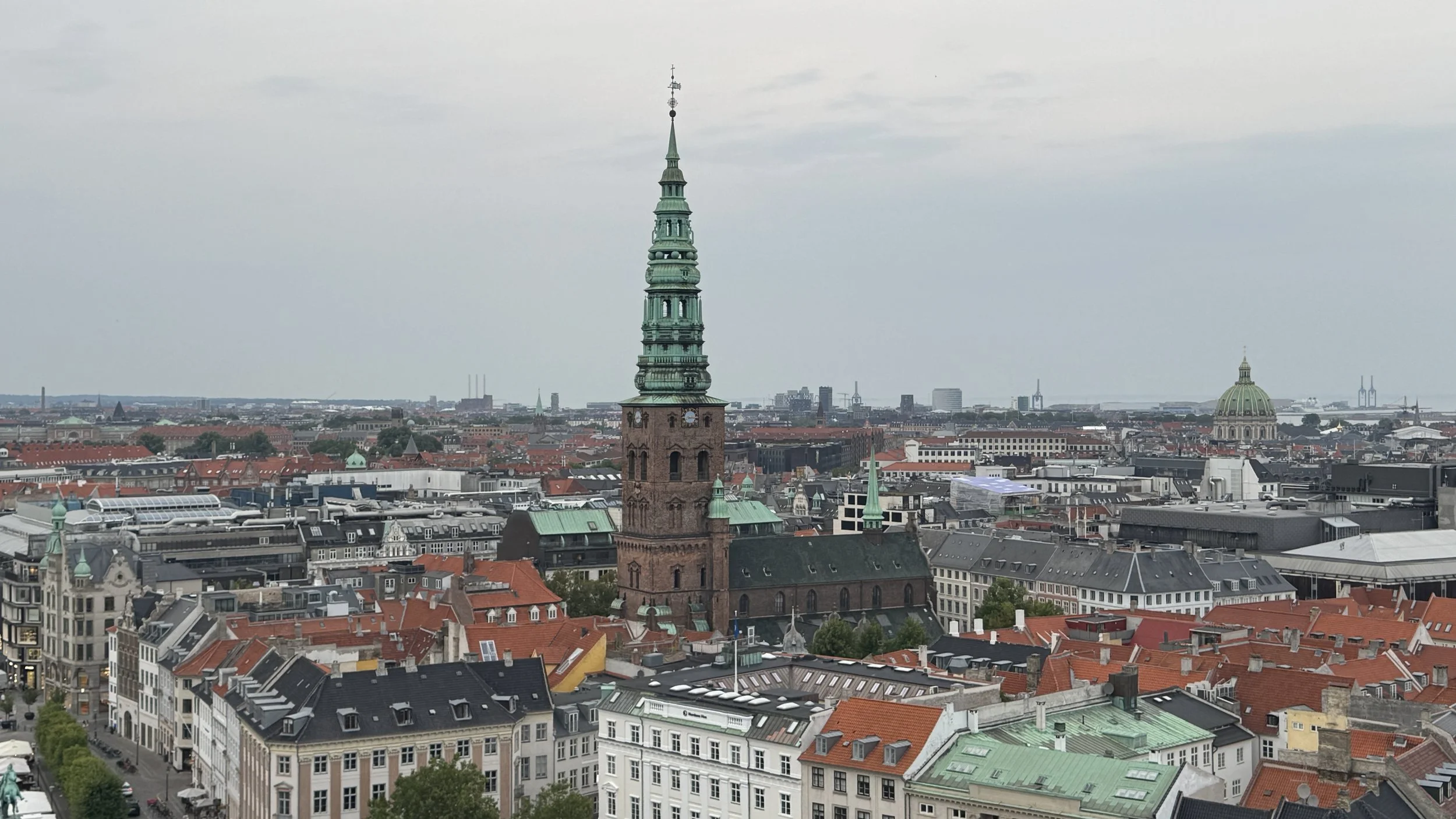
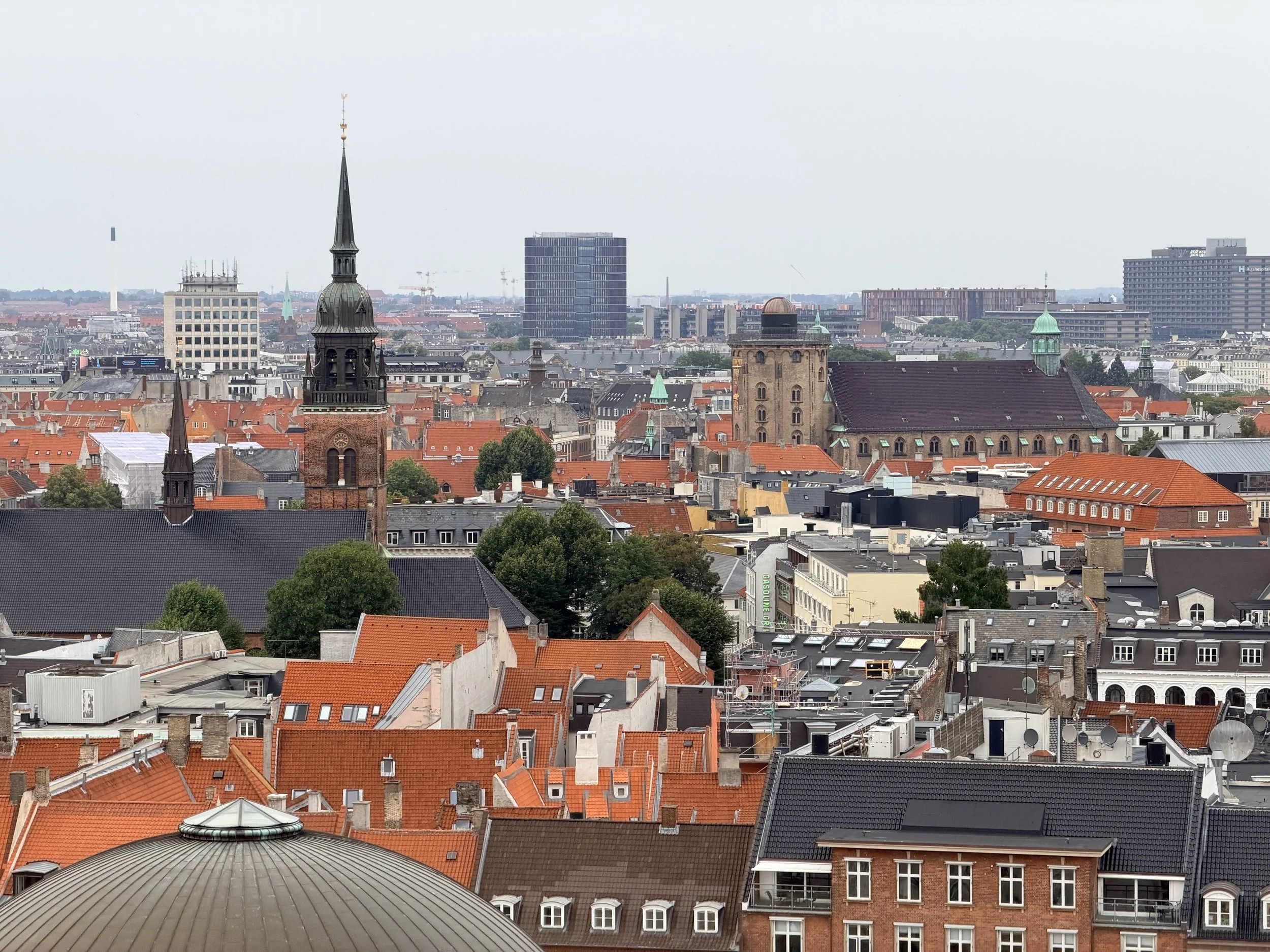
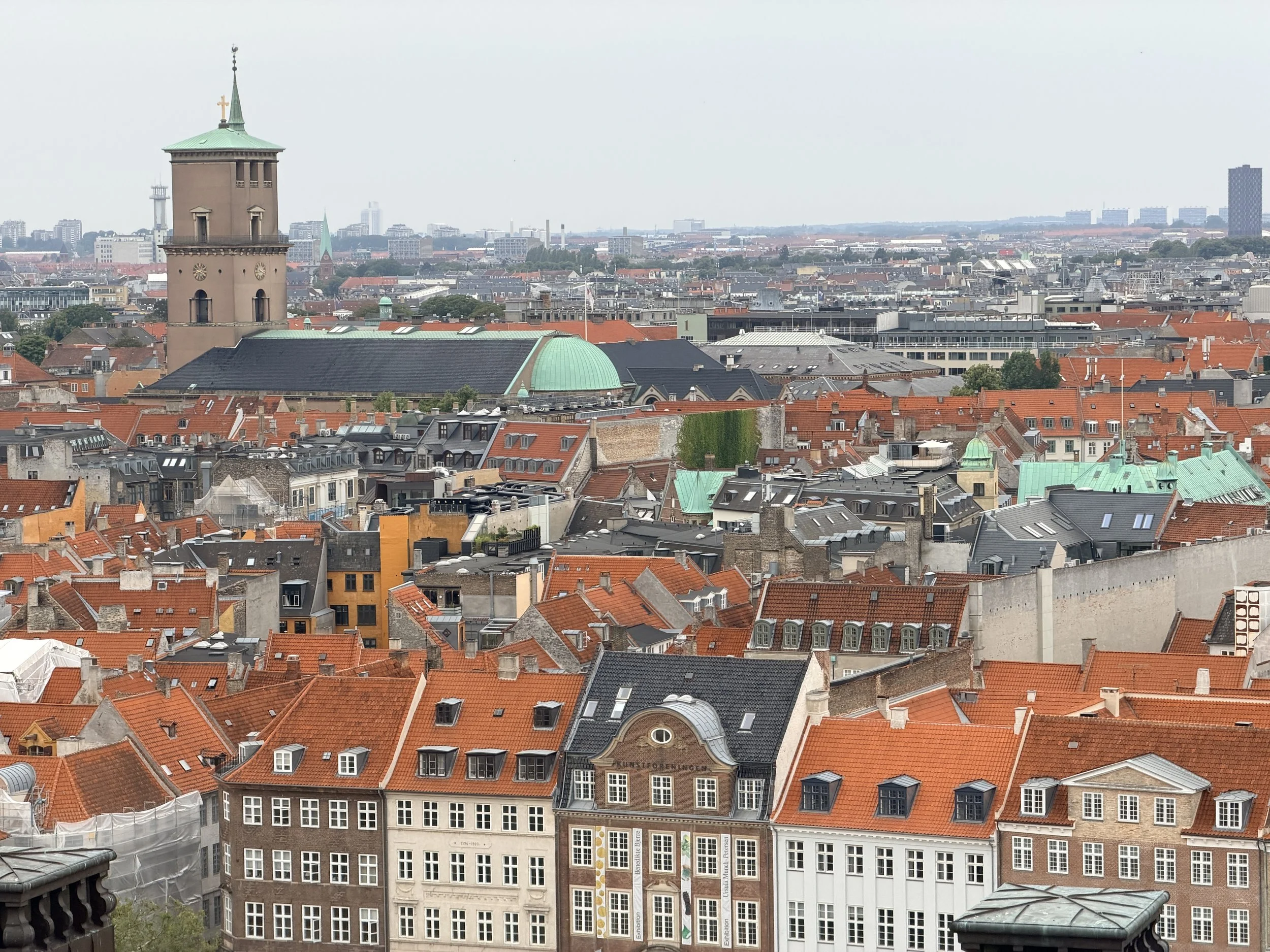
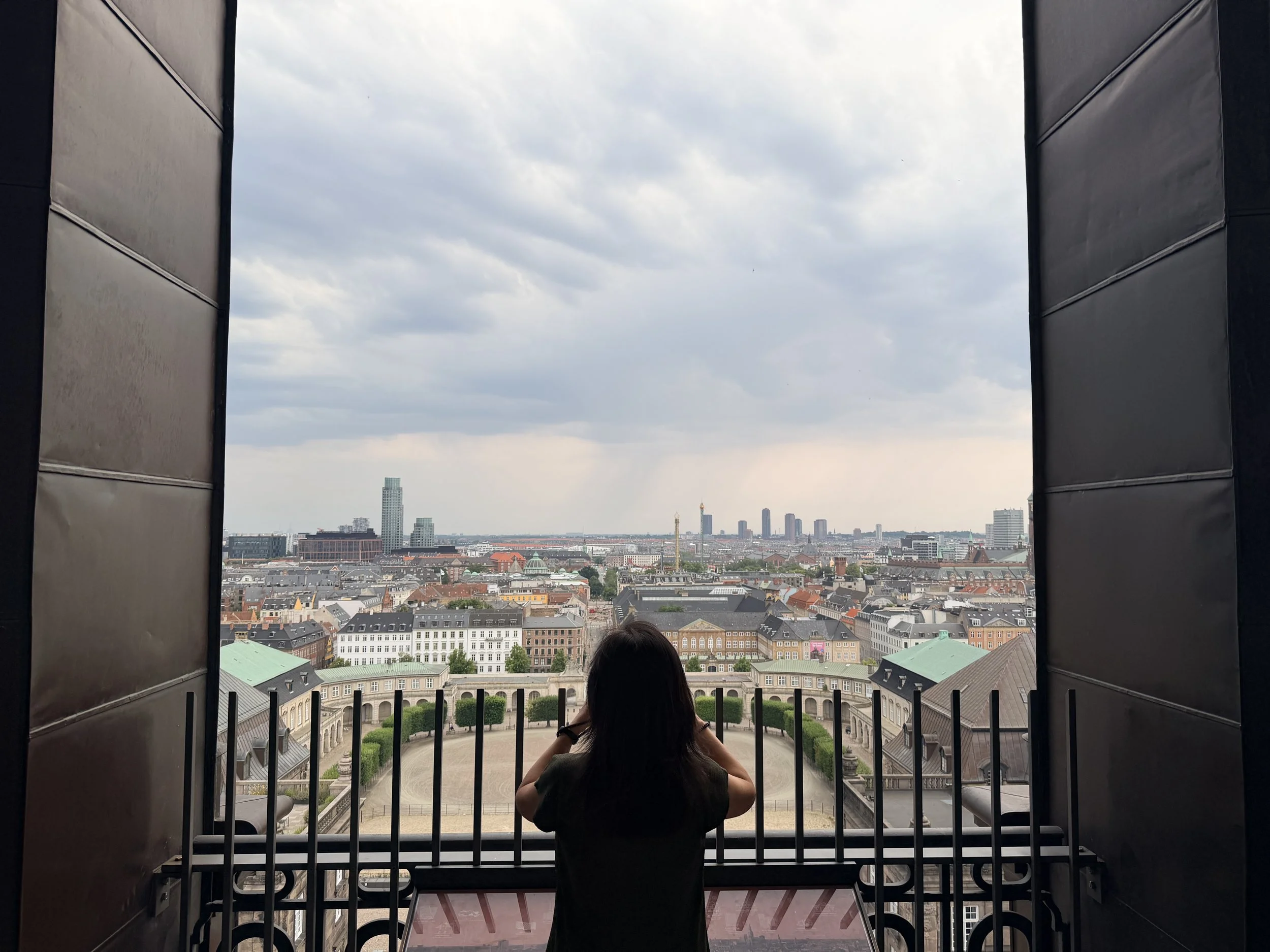
Then we visited the tower at Christiansborg Palace. Admission was free, and to our surprise, there was no waiting line. Unfortunately, the sky was overcast, so we missed the sunset we had hoped to see. Even so, the panoramic view of Copenhagen from the top was a wonderful way to end another enjoyable day in the Danish capital.
2026年7月30日
今天,我们计划在哥本哈根市区随便走走。大清早在酒店用完早餐便出门开始了一天的行程。第一站是著名的小美人鱼雕像。一路上风景优美,我们不时停下来拍照,悠闲地欣赏这座城市迷人的街景与港湾风光。
当我们走近小美人鱼雕像时,忽然听见一个熟悉的声音。定睛一看,竟然是我们的朋友!虽然昨晚上才知道她也在哥本哈根旅行,但彼此都不知道对方当天的行程。她参加的是跟团旅游,一切都按照旅行社固定行程进行,没想到竟然会在这座城市最著名的景点不期而遇。我们只来得及寒暄几分钟,她便随着旅游团继续前往下一站。短短几分钟的相聚,却让人倍感温暖,也再次印证了世界真的很小。
离开小美人鱼后,我们继续前往卡斯特雷特城堡(Kastellet)。这里至今仍属于军事设施的一部分,同时也是一座对外开放的公园。沿着五角星形城墙漫步,俯瞰护城河和绿意盎然的草地,环境宁静舒适,是当天最惬意的一段散步时光。
接着来到阿美琳堡宫(Amalienborg Palace)时,中午的皇家卫兵换岗仪式即将开始。广场上的游客越来越多,我们幸运地占到了一个有荫的的好位置。整个仪式规模比我们原先想象的简单一些。
随后,我们步行返回酒店准备午餐,途中路过一家中餐馆,实在禁不起诱惑,便进去坐了下来。点了水煮鱼、香酥鸭和空心菜三道菜。在外旅游近40天了,总共没吃过几顿中餐/亚洲餐,基本都是北欧料理,能再次吃到熟悉的中餐,味道还可以,格外满足。
上午走了不少路,回到酒店后,我们舒舒服服地睡了两个小时午觉,晚上则在酒店享用了晚餐。
晚餐后,我们来到酒店附近的克里斯蒂安堡宫塔楼(Christiansborg Tower)。塔楼免费开放,不知是否因为是晩上,完全不用排队。可惜天空云层很厚,没能欣赏到期待中的日落,也看不清远处的瑞典。不过能登高俯瞰哥本哈根市景,也心满意足了。
Leaving for Copenhagen 前往哥本哈根
July 29, 2026
Before leaving for Copenhagen, we spent the morning exploring a few more of Helsinki's highlights,……
离开赫尔辛基前,我们利用上午的时间参观了几处还未造访的景点,。。。
July 29, 2026
Before leaving for Copenhagen, we spent the morning exploring a few more of Helsinki's highlights, including Oodi Central Library, the Rock Church, and the Old Church.
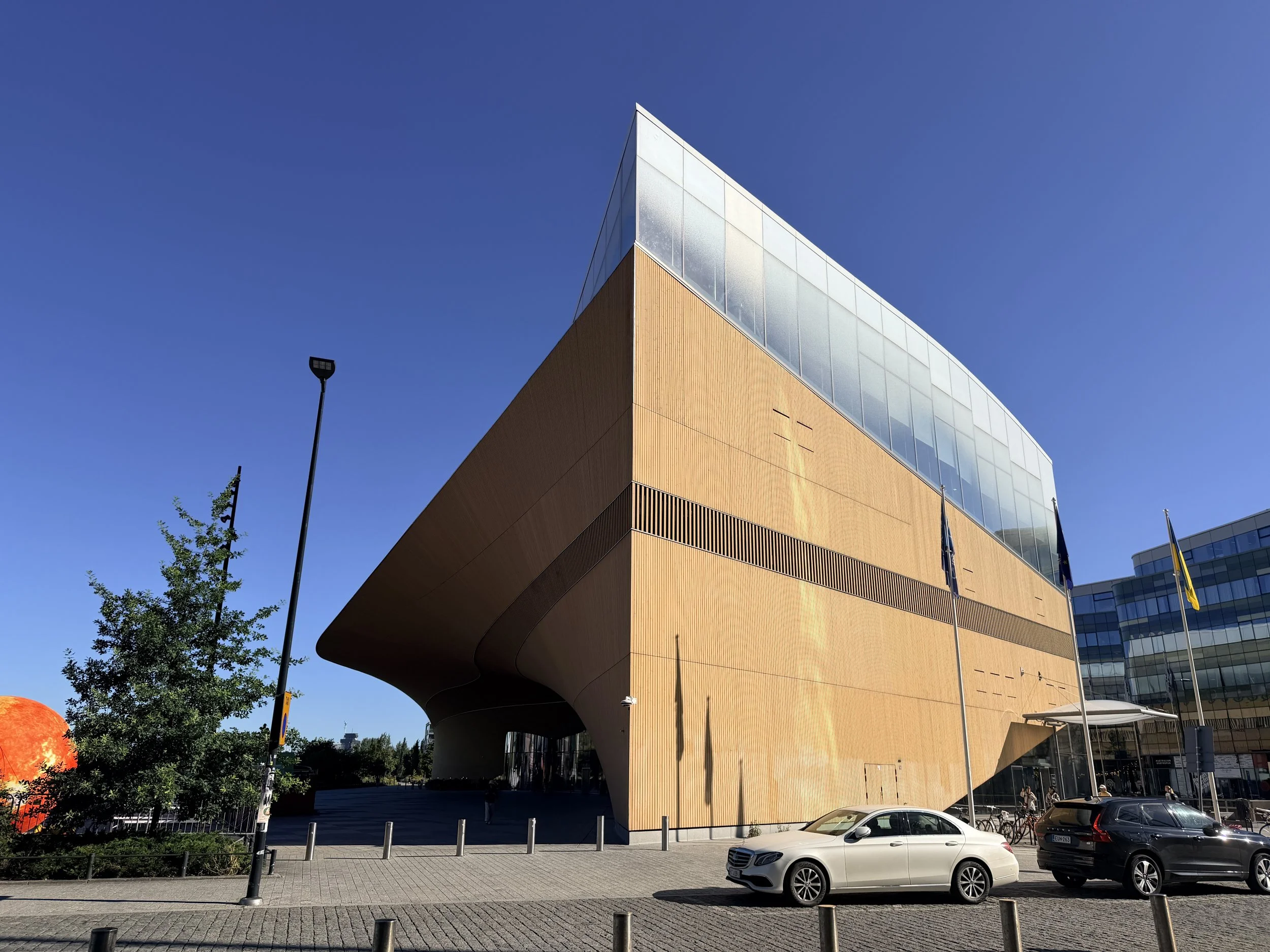
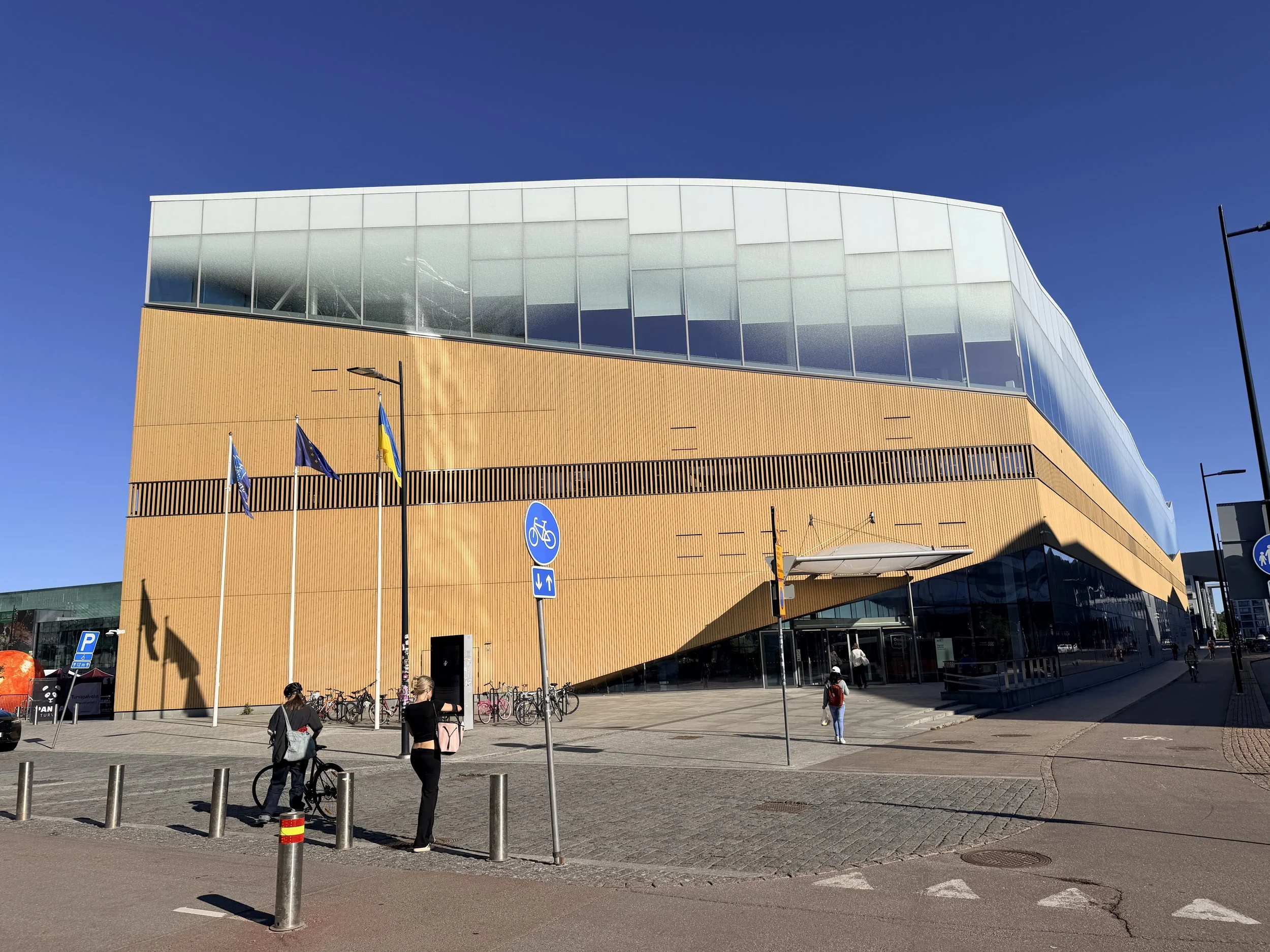
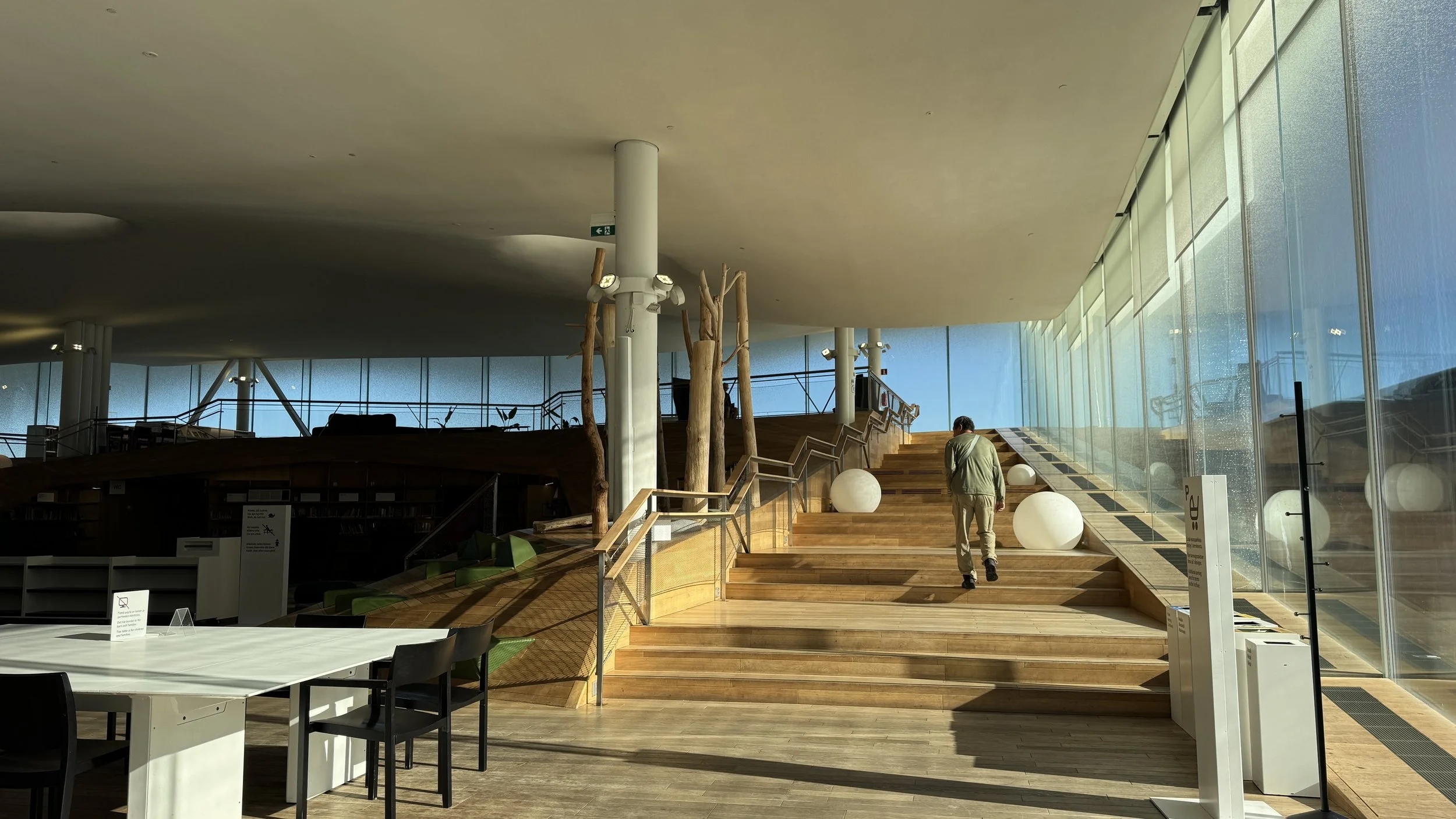
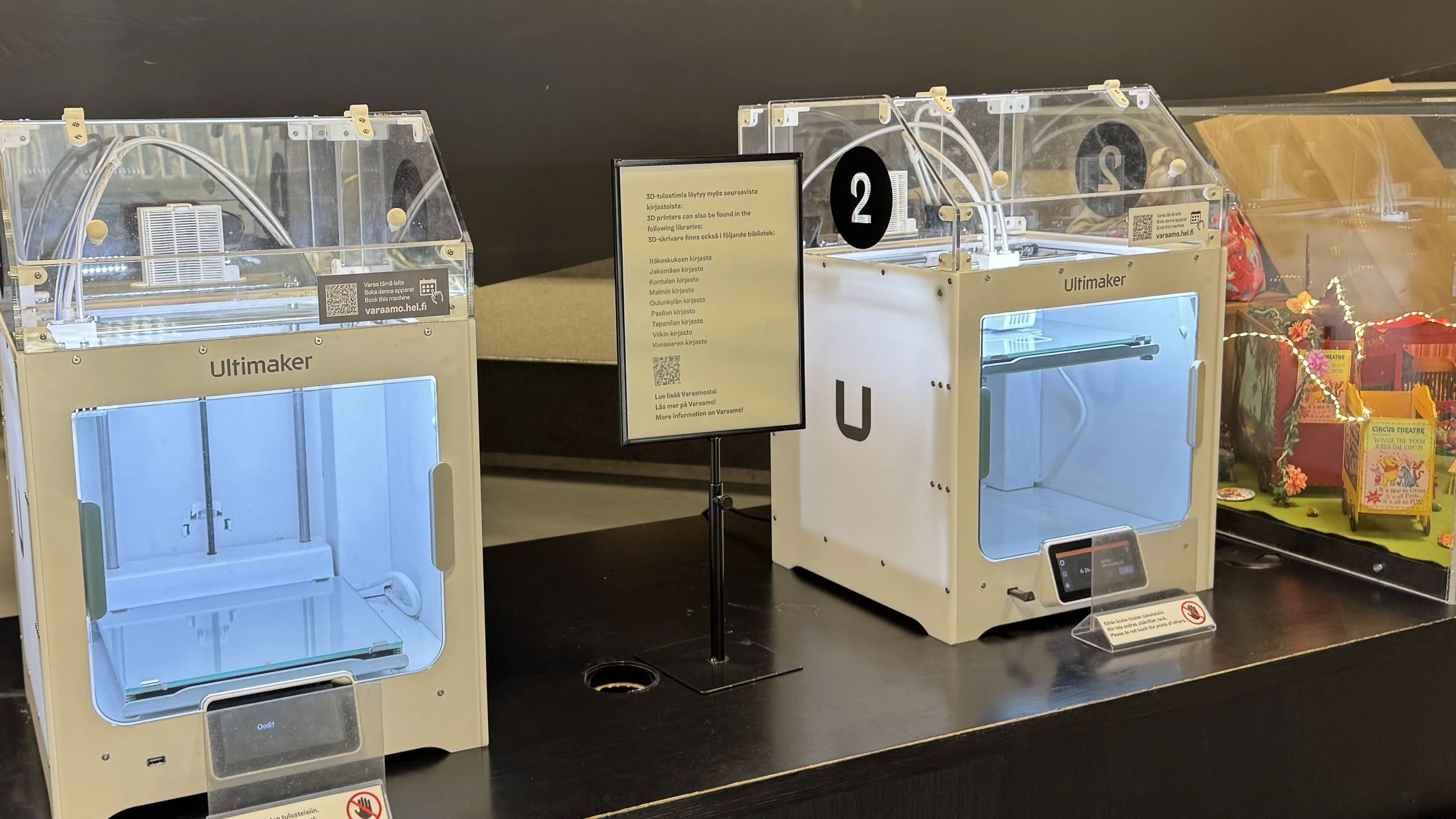
Of the three, Oodi Central Library impressed us the most. Its sweeping wooden façade resembles a floating ship, while the bright, open third floor is flooded with natural light from expansive glass walls. The gently sloping floor, flowing white ceiling, and rows of bookshelves create an inviting space that encourages people to relax and read. The second floor is unlike any library we have visited. It is filled with creative spaces and workshops equipped with 3D printers, music studios, sewing machines, laser cutters, and other tools. Oodi is much more than a place to borrow books—it is a community center where people can learn through books, computers, technology, and hands-on activities. We couldn't help wishing that our local library offered some of these features.
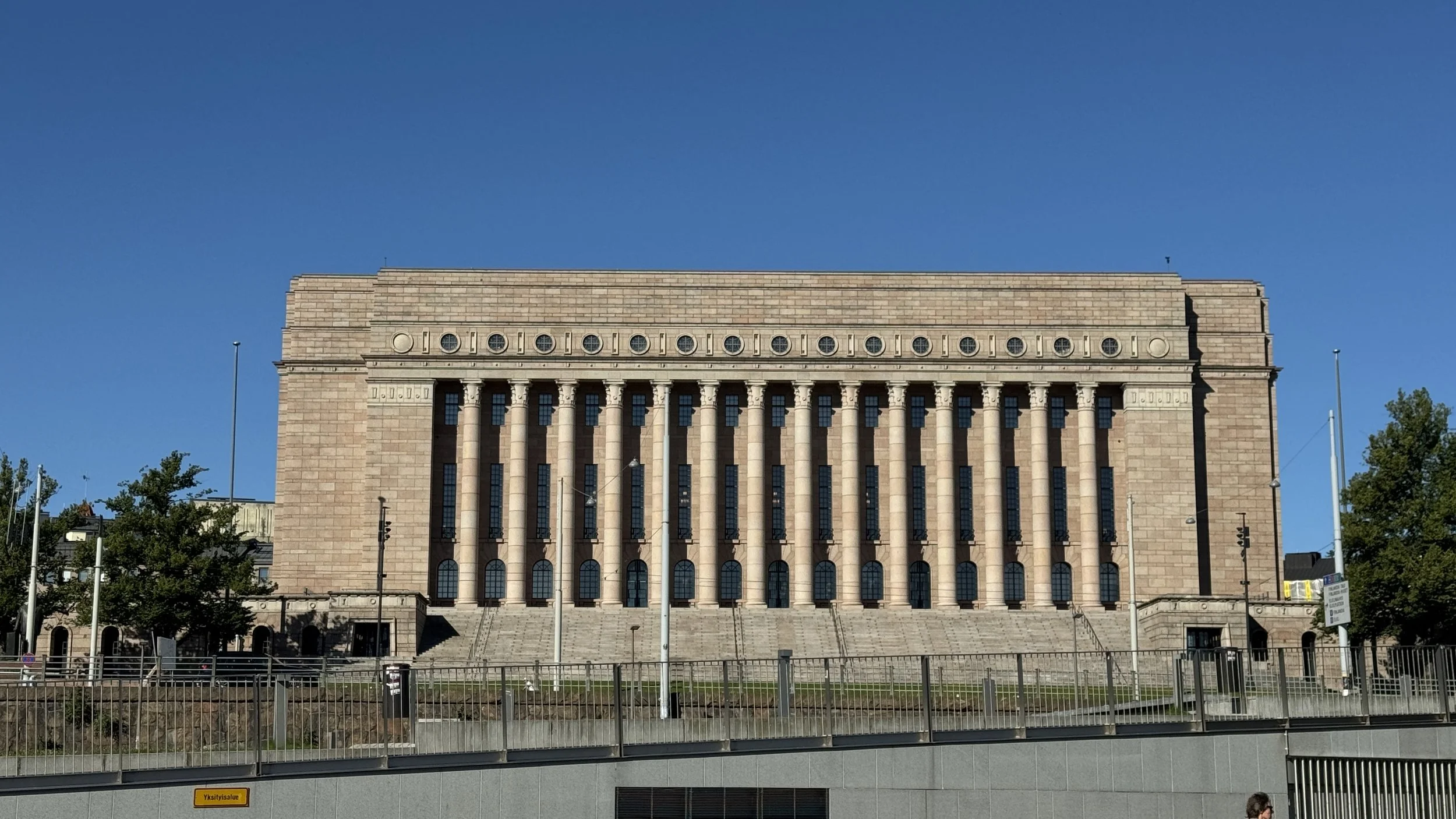
Finland’s Parliament House stood just across the highway. We also took a leisurely stroll through the nearby park, enjoying the outdoor art exhibits along the way.
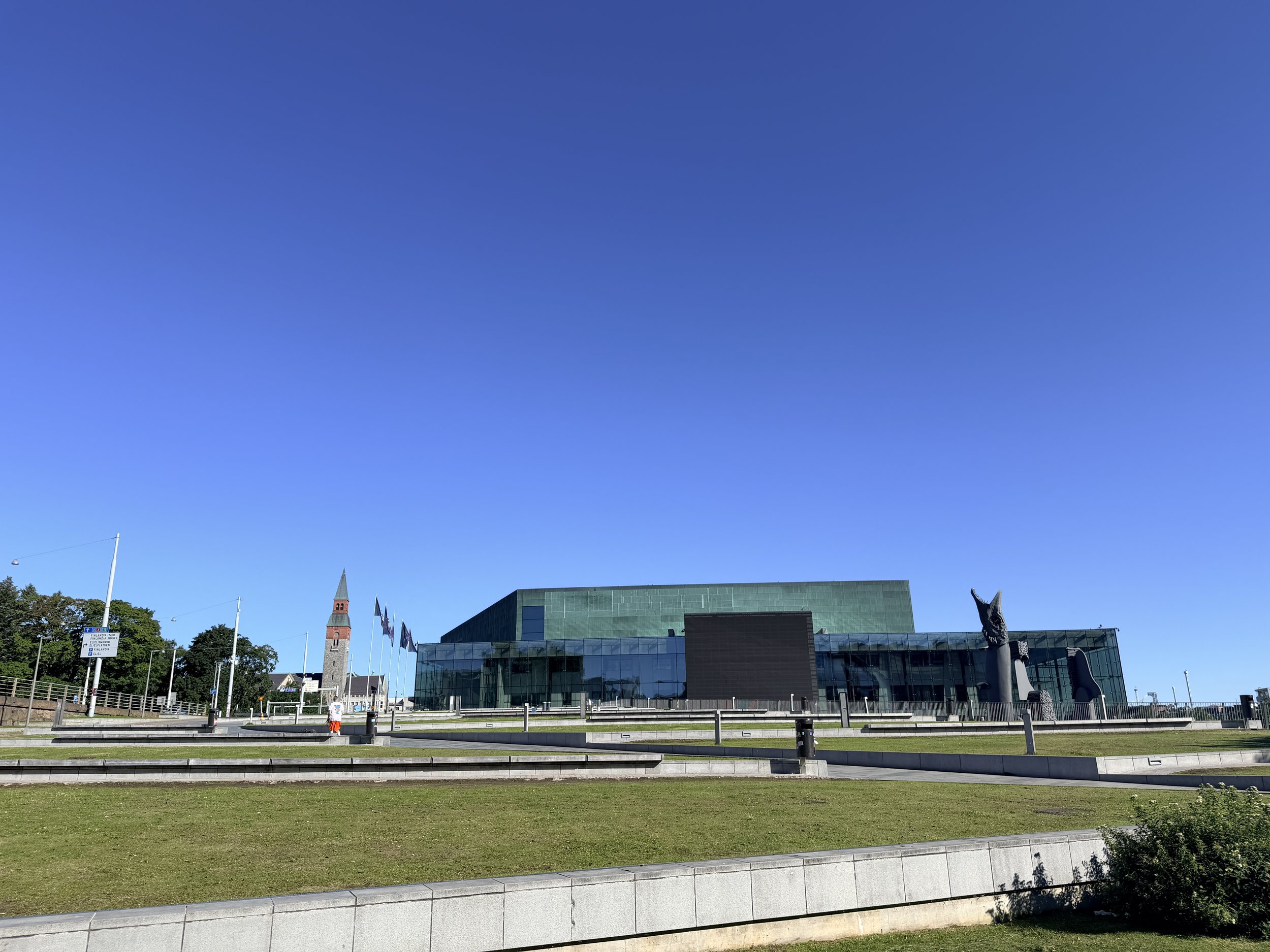
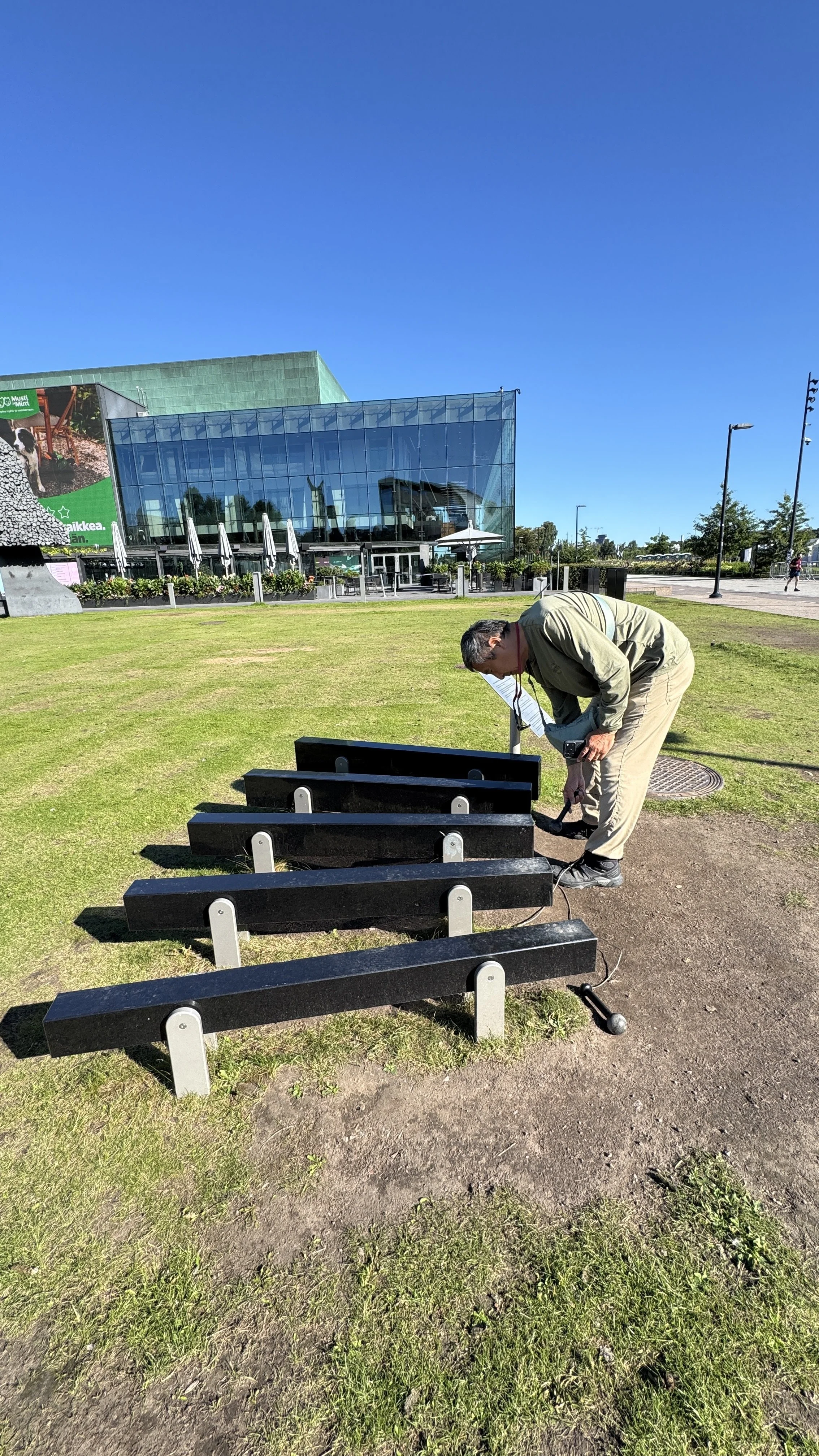
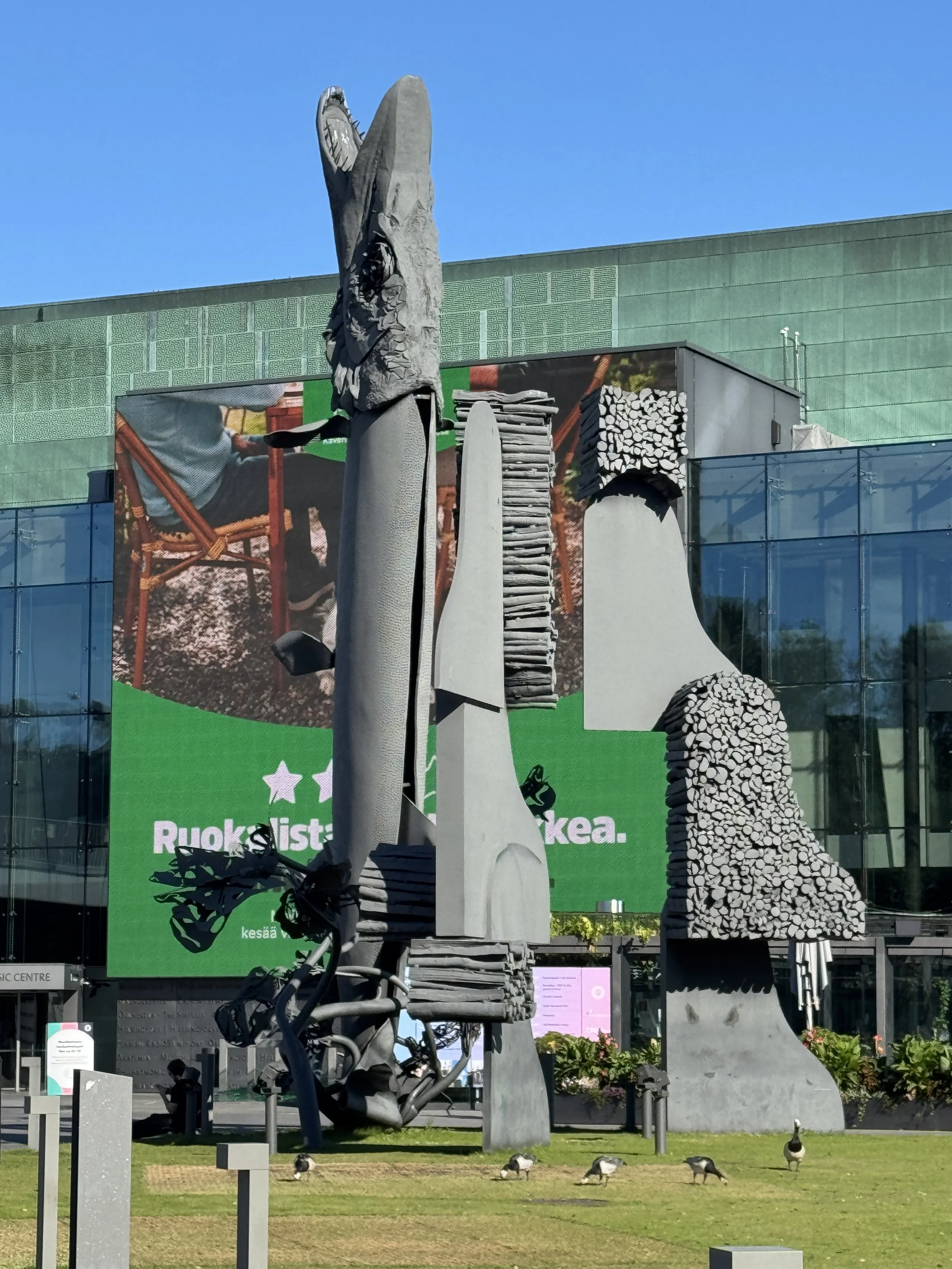
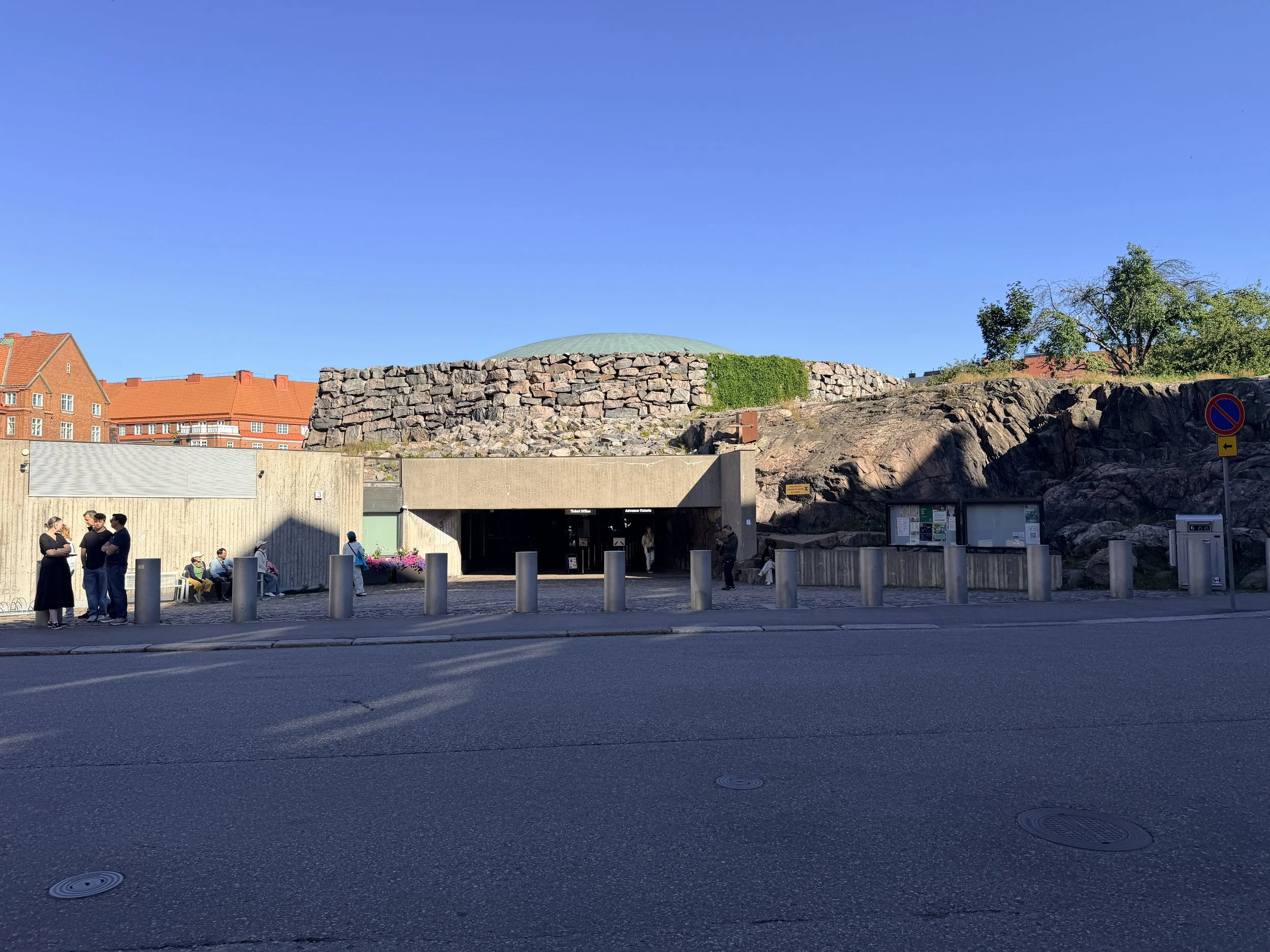
The Rock Church, carved directly into solid bedrock and topped with a circular copper dome, was also fascinating. Its simple yet distinctive design creates a peaceful and unique atmosphere.
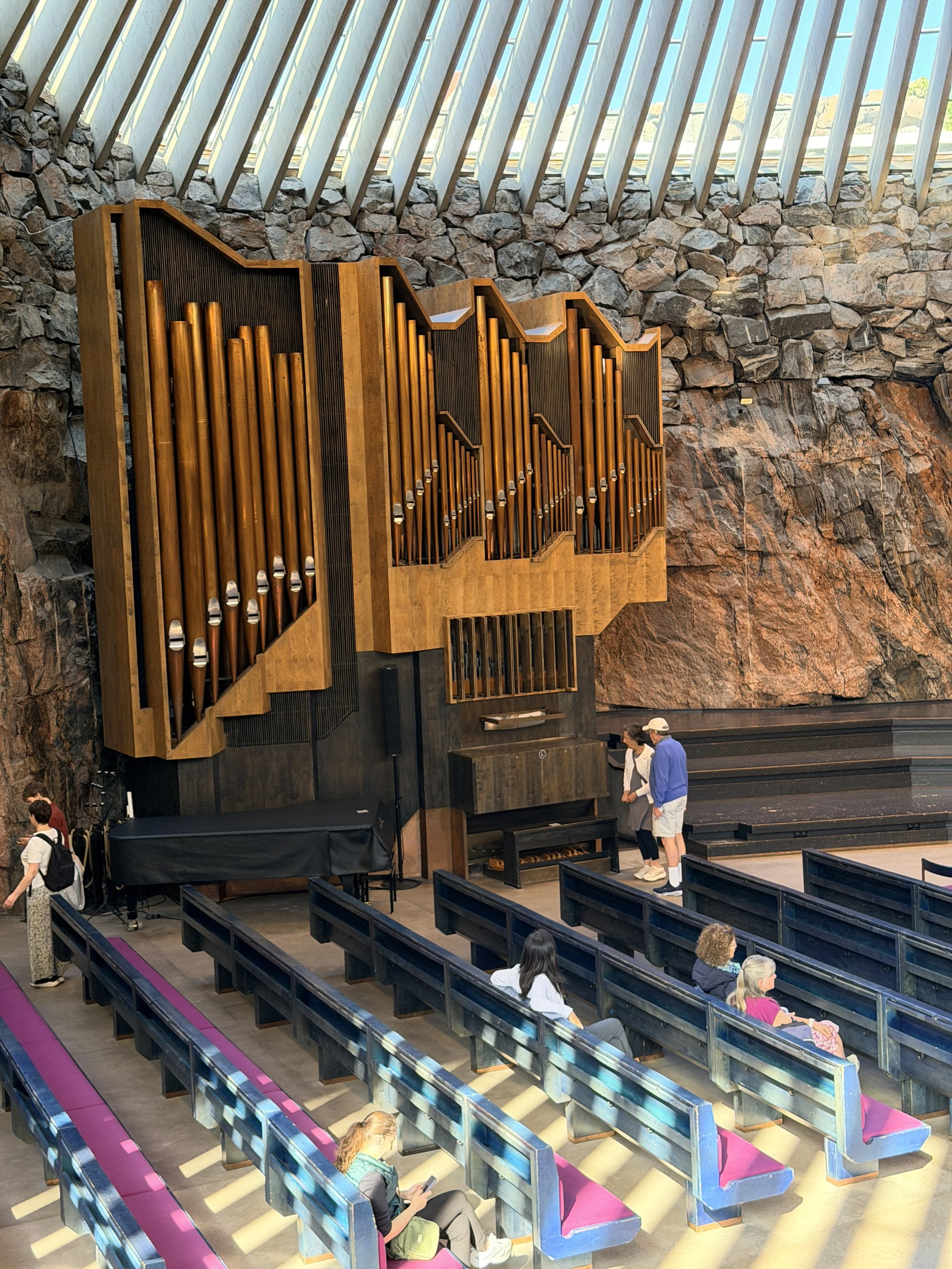
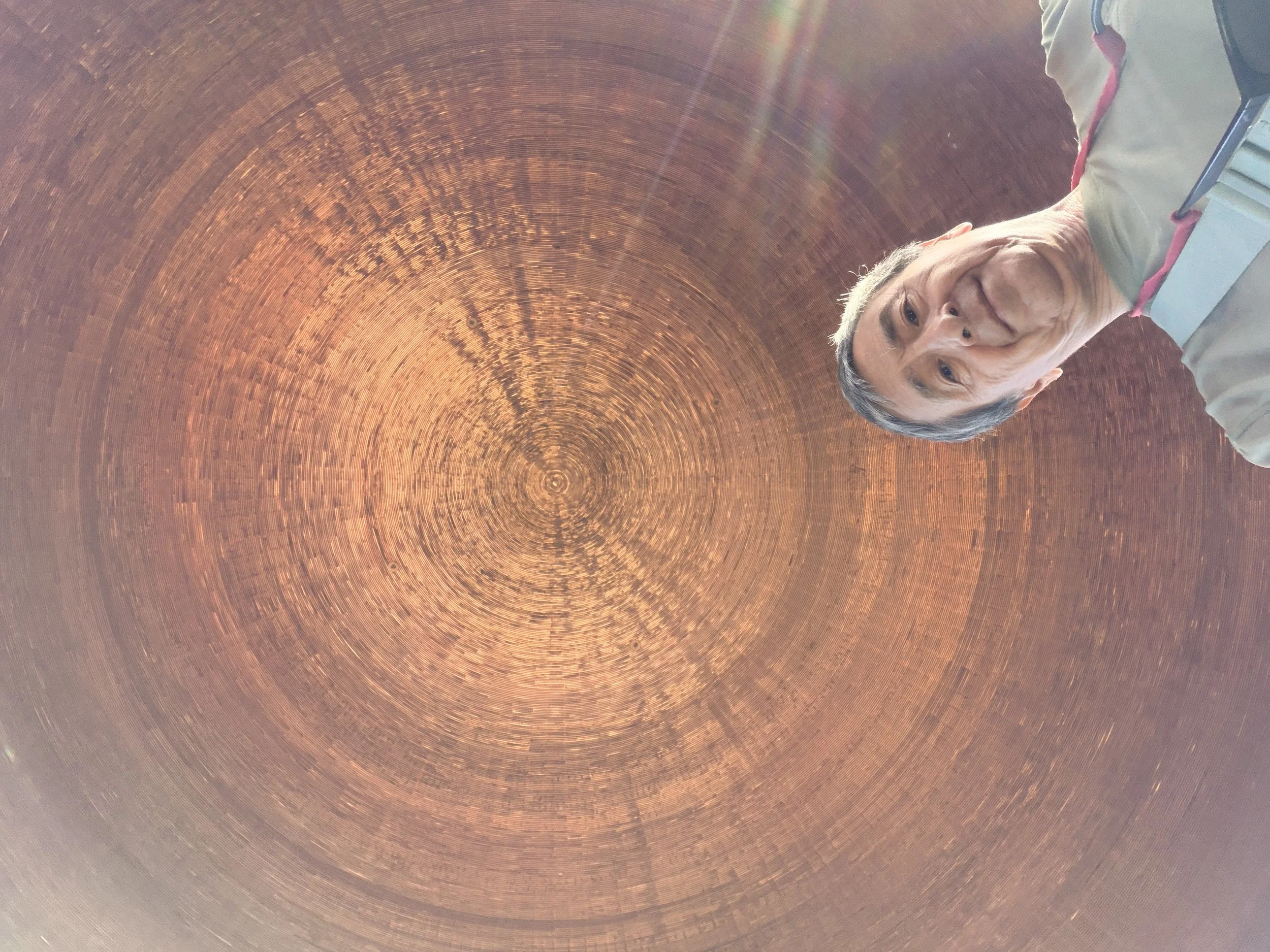
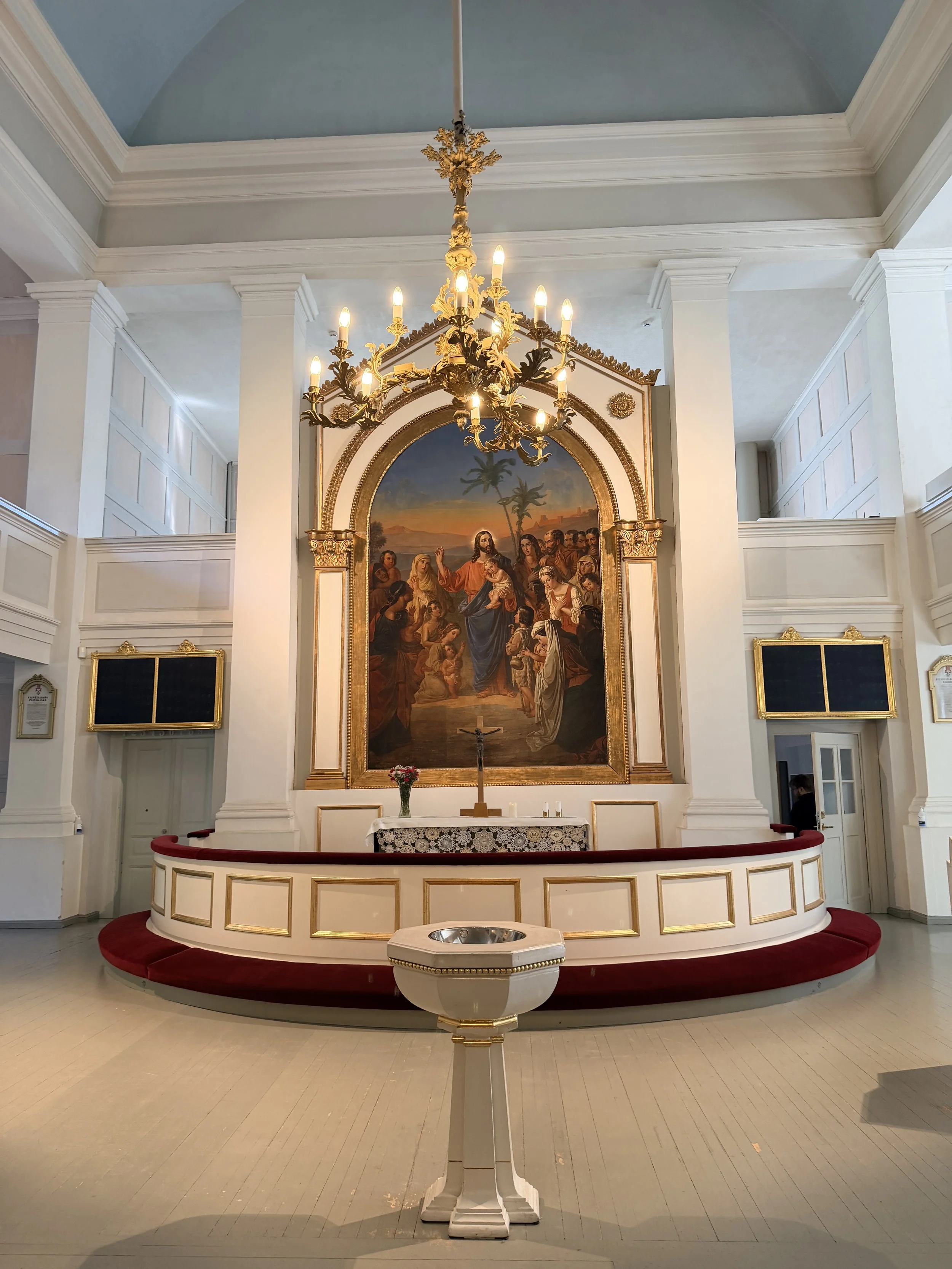
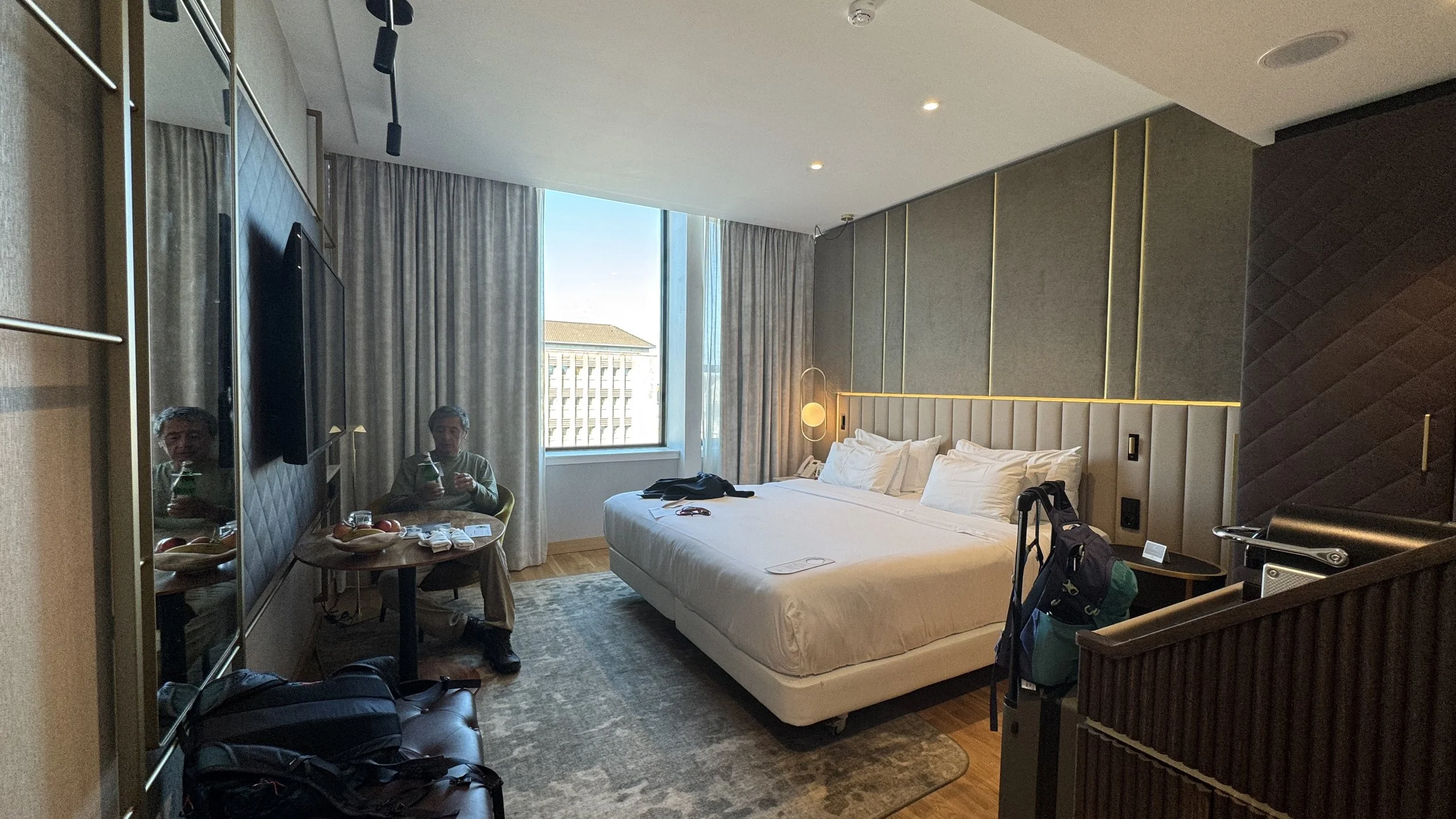
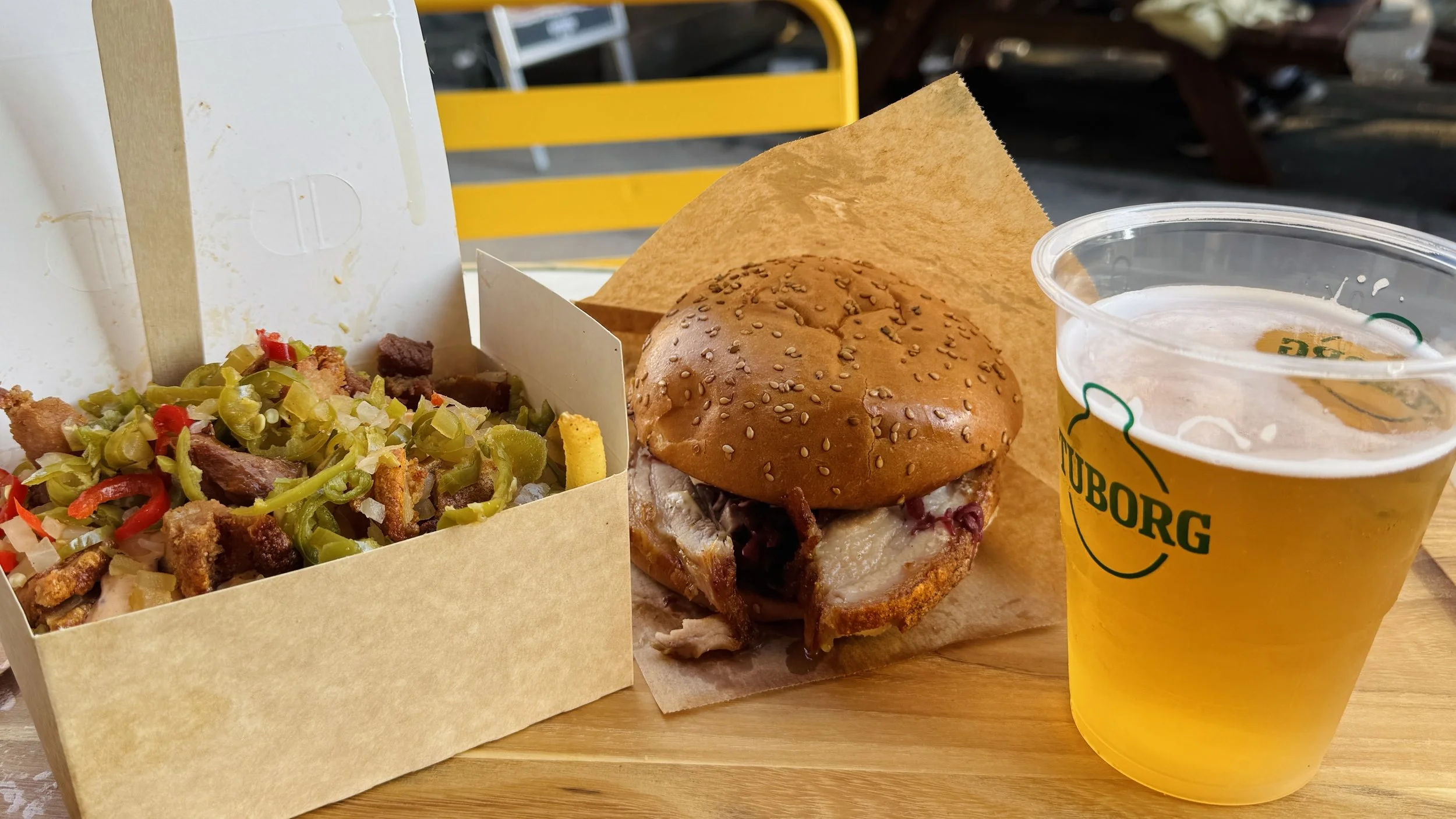
In the afternoon, we flew to Copenhagen. After checking into our hotel, we set out in search of traditional Danish food. We eventually chose a restaurant serving crispy pork sandwiches, and they turned out to be excellent.
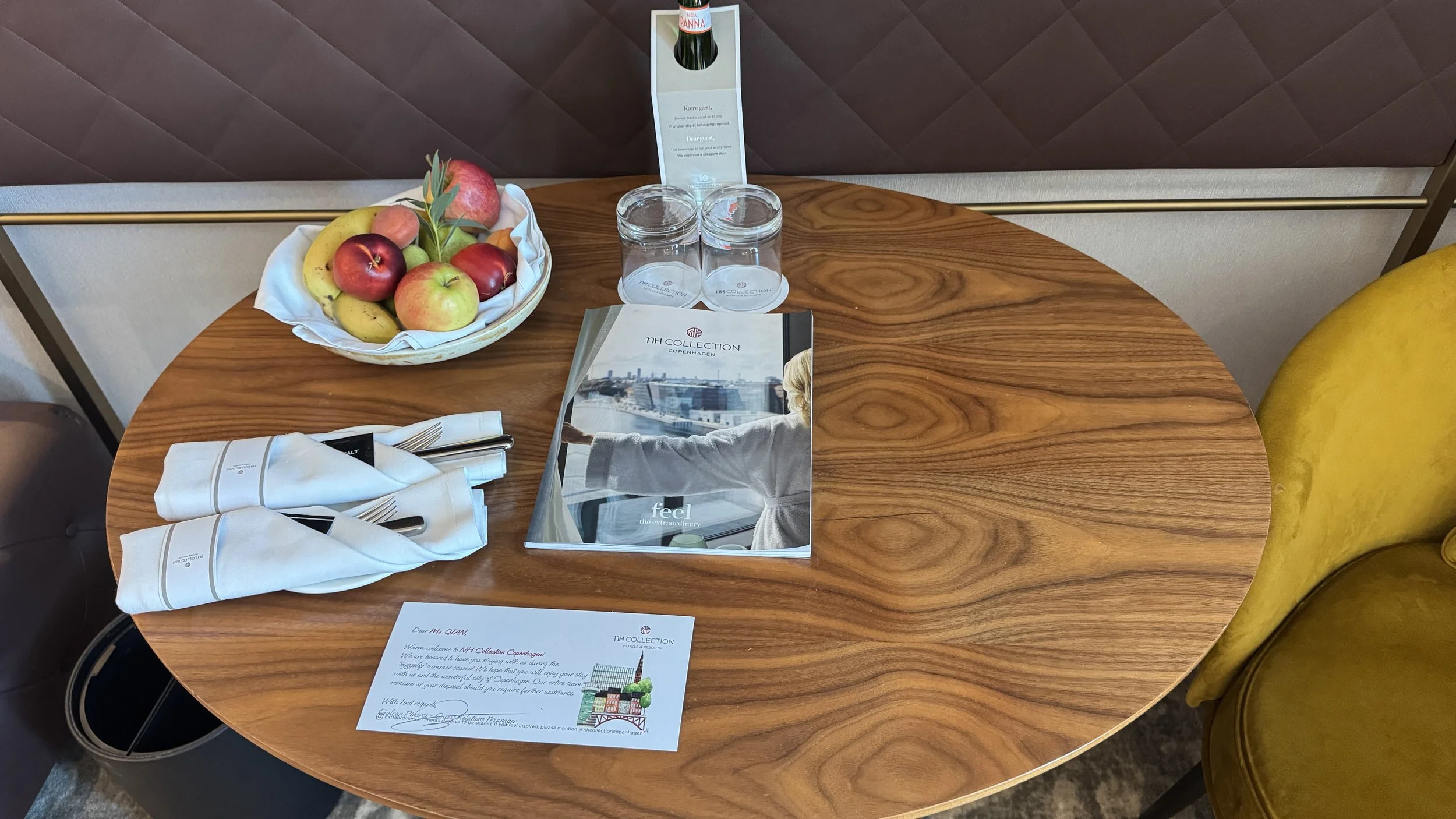
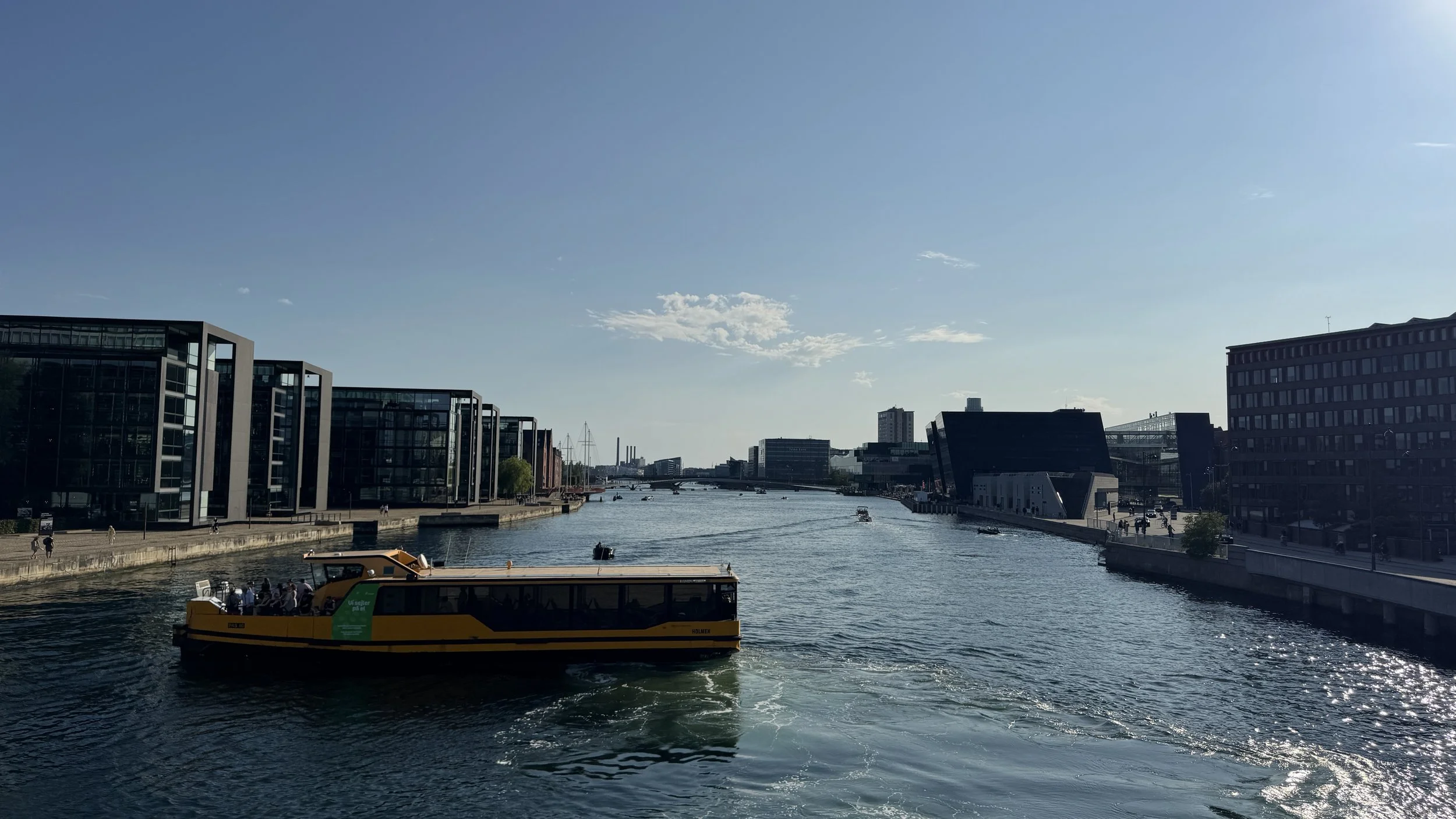
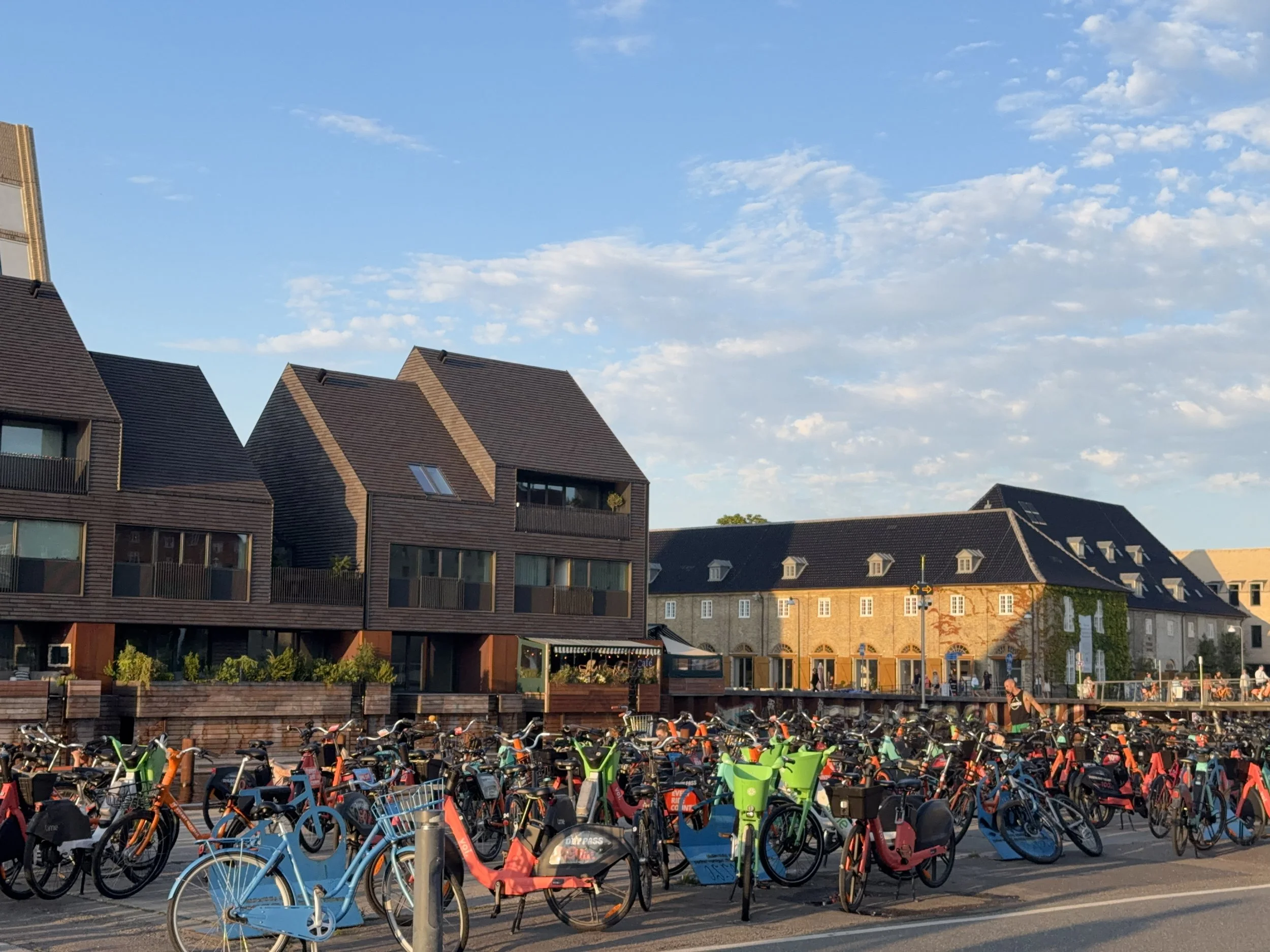
Next, we decided to do a little scouting for the next few days, getting a general feel for Copenhagen’s city center. Along the way, we were surprised by just how many people were riding bicycles—and by the countless bikes parked along the streets.
Before long, we arrived at Nyhavn, one of Copenhagen’s most iconic postcard scenes. With its colorful buildings lining the canal and restaurants everywhere, it was every bit as picturesque as we had imagined. Of course, it was also packed with tourists.
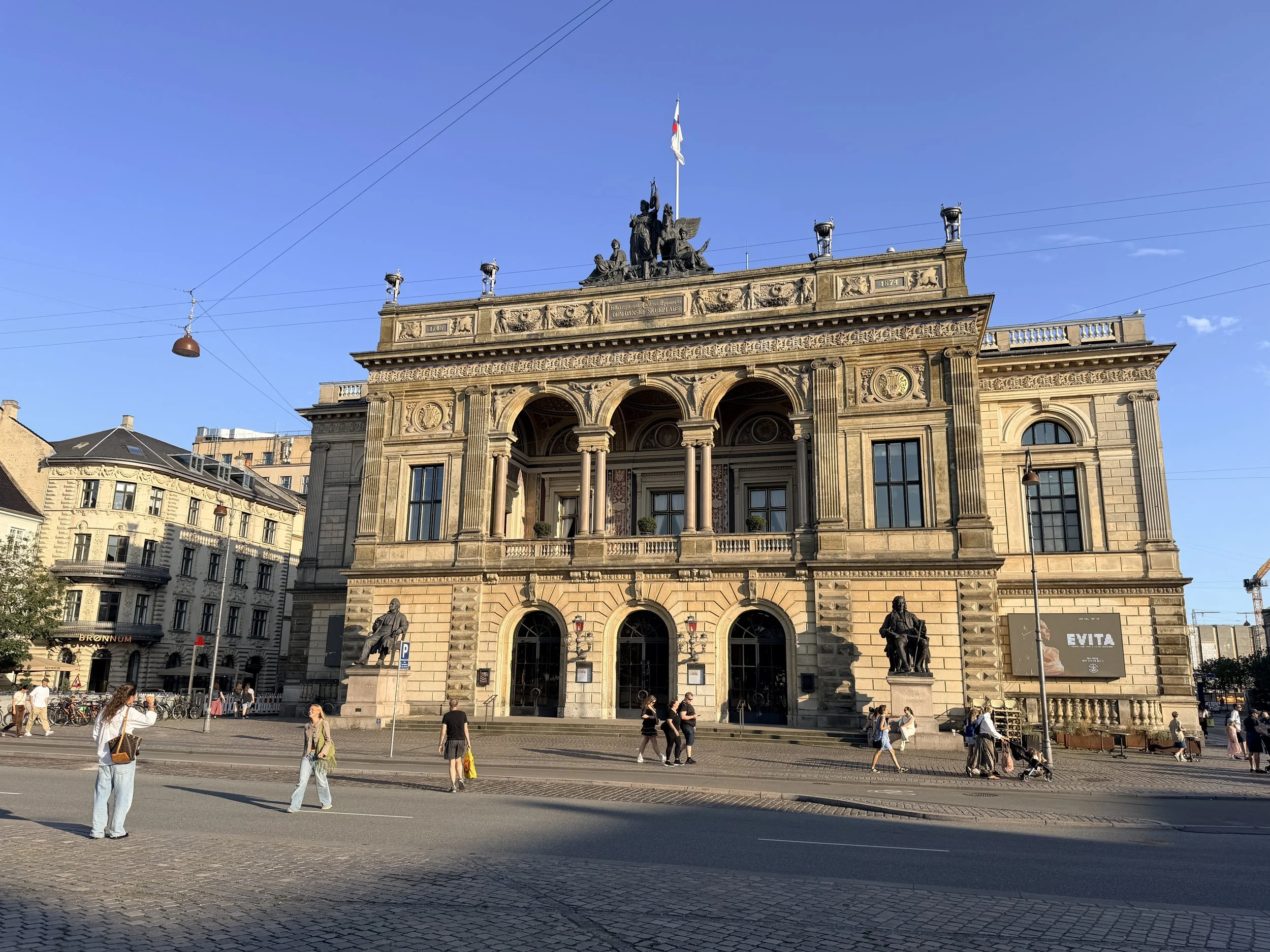
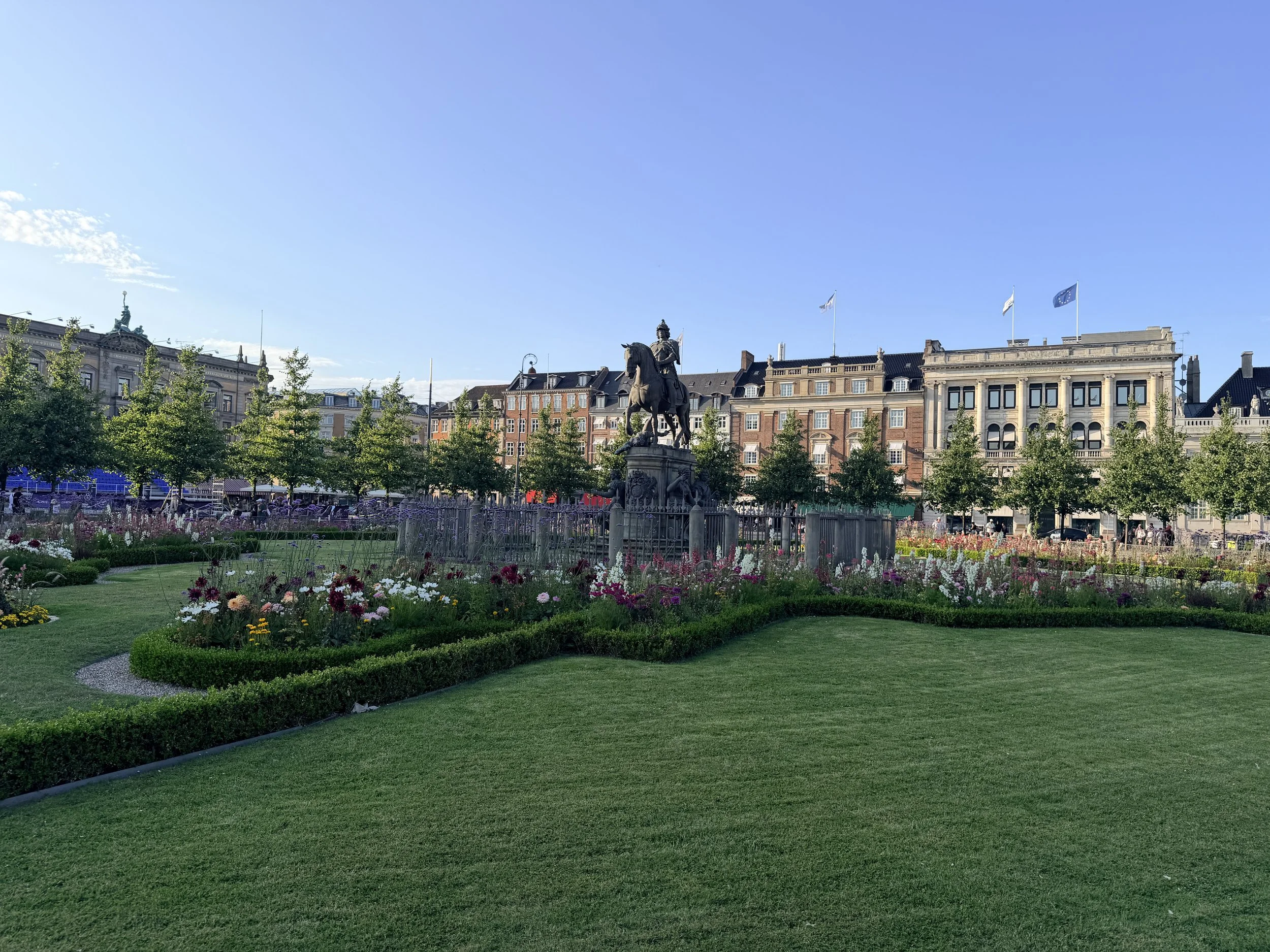
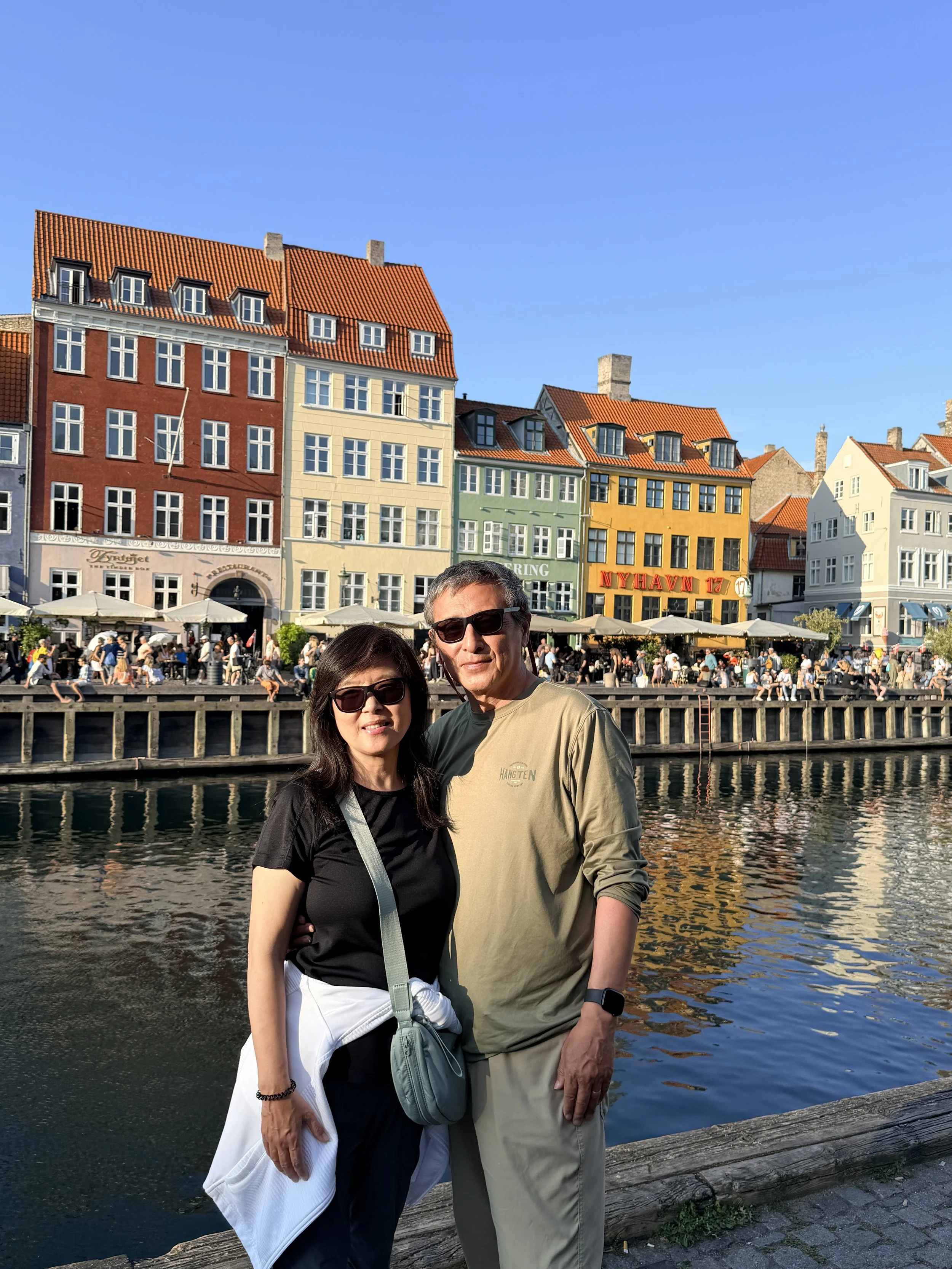
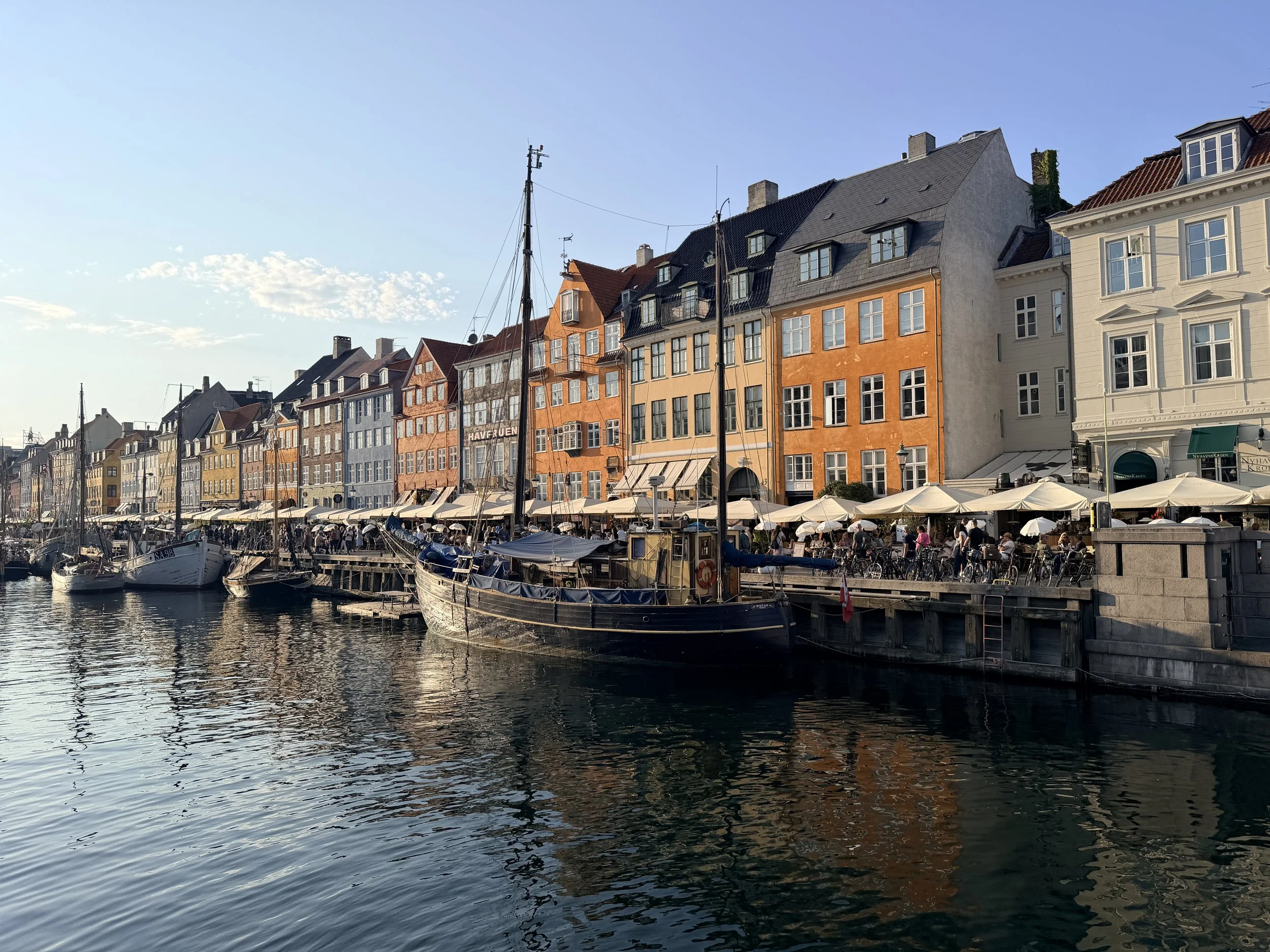
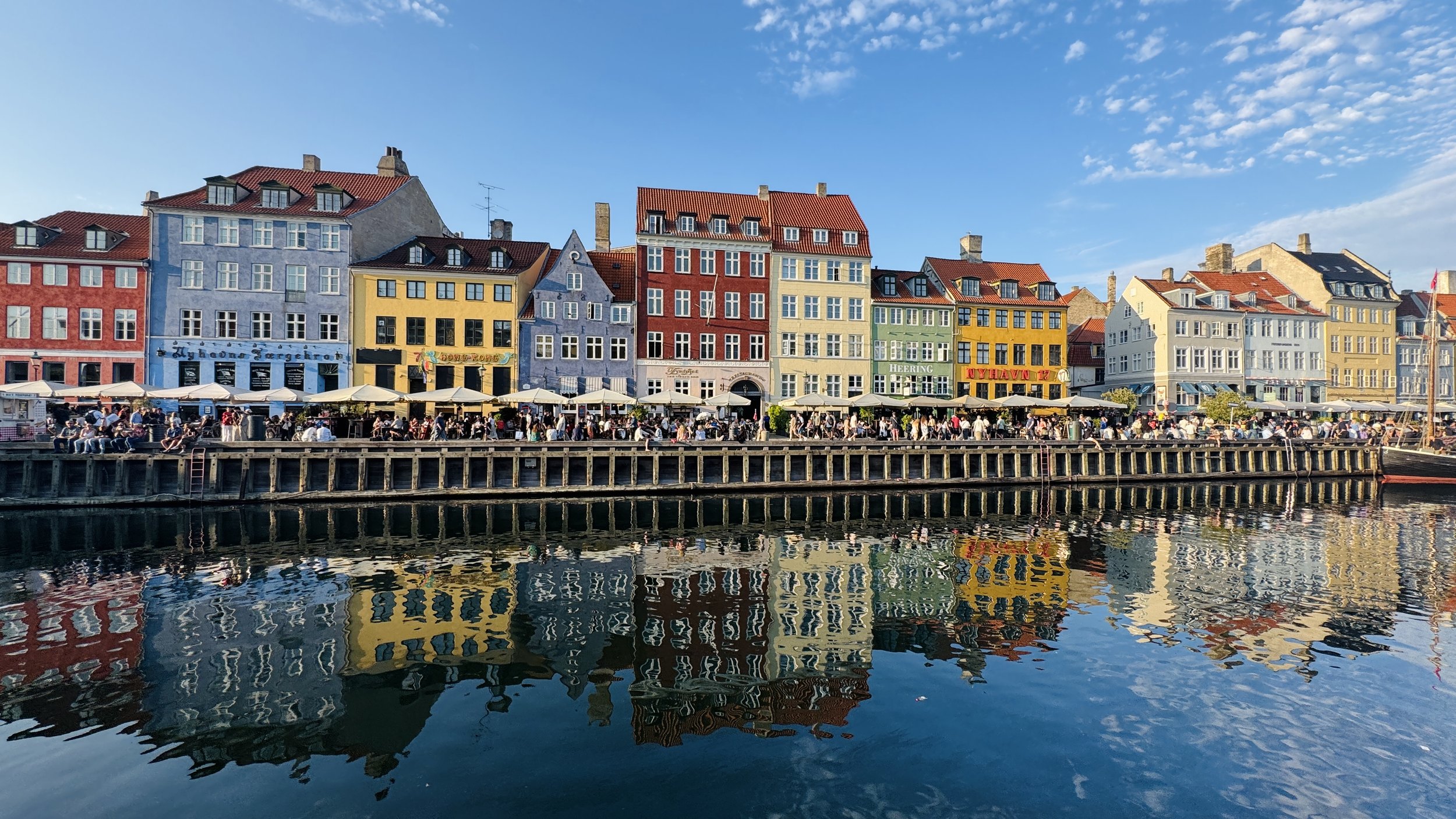
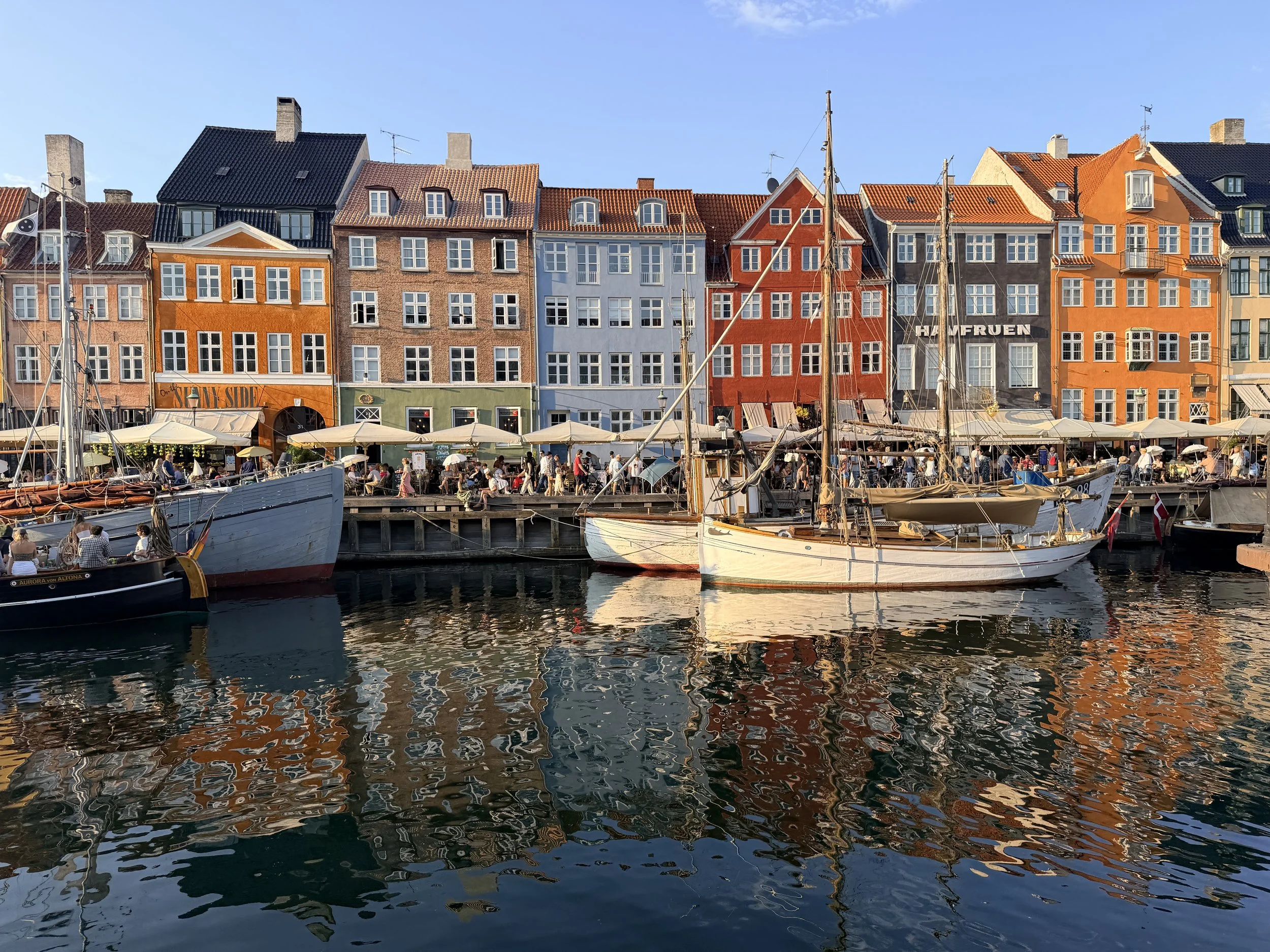
After spending nearly two weeks in Finland, where most of the places we visited had been remarkably quiet except for our last few days in Helsinki, it felt strange to suddenly find ourselves surrounded by so many people again. We had almost forgotten what a busy tourist destination felt like!
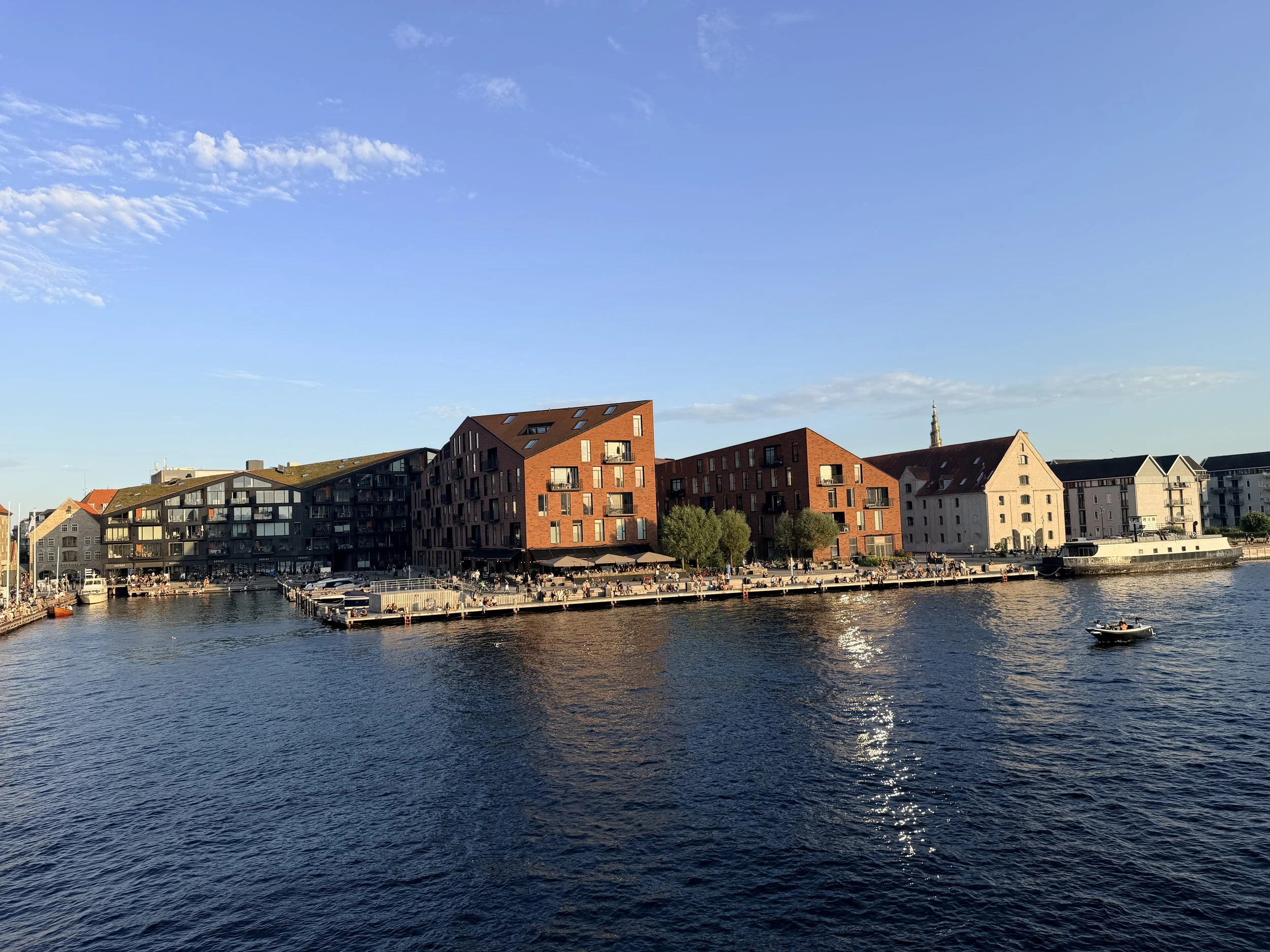
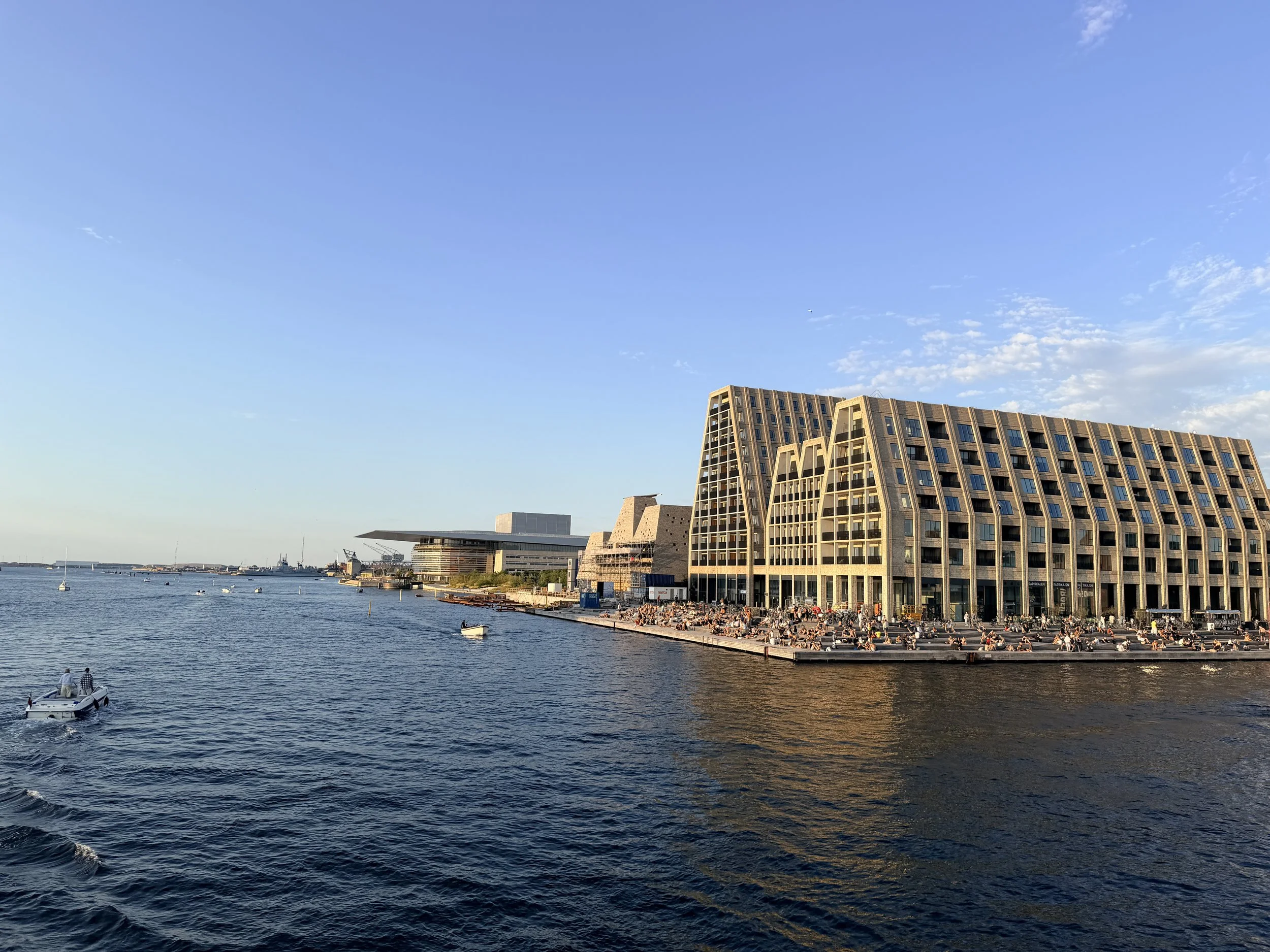
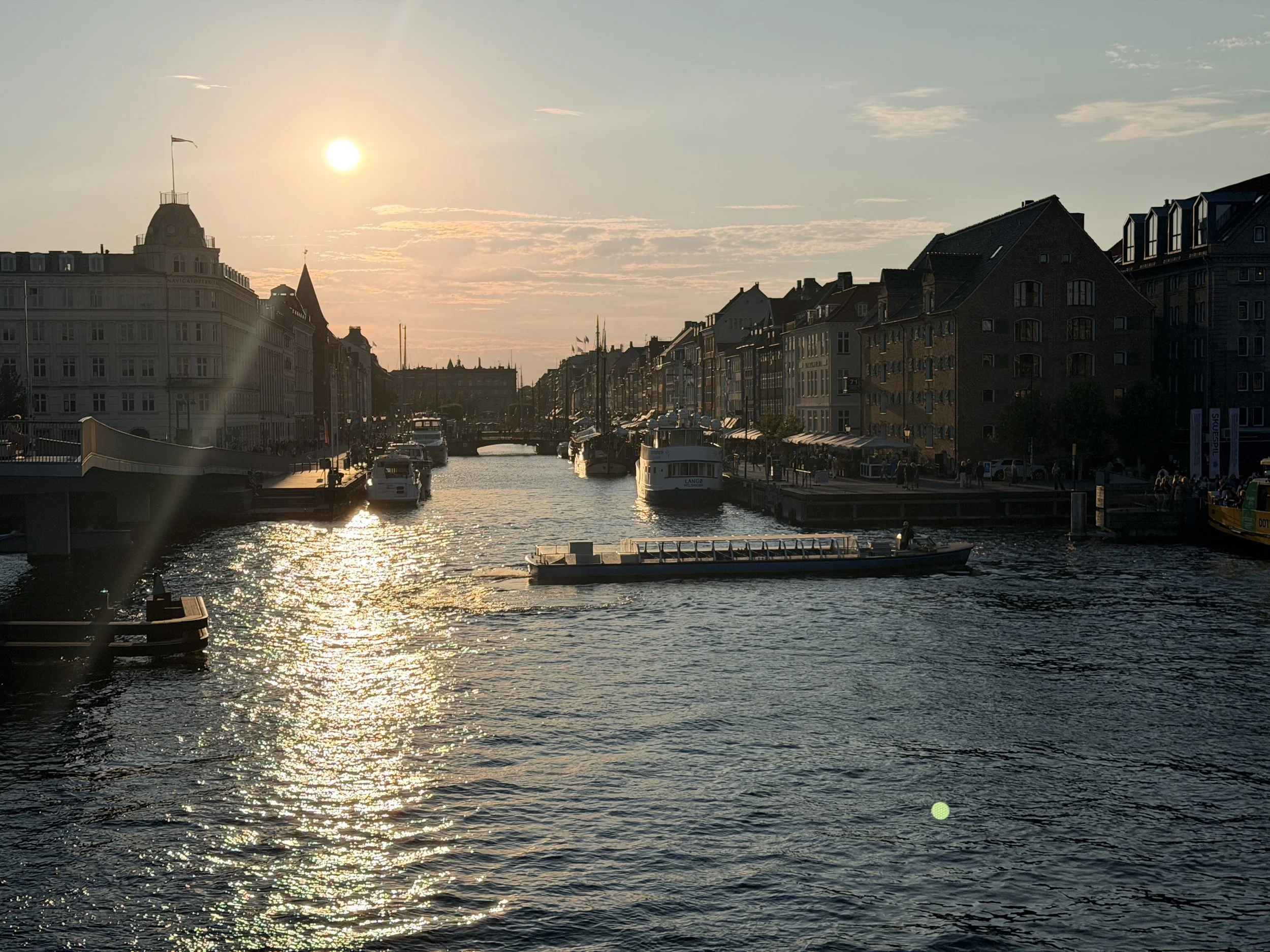
Before nightfall, we wandered leisurely through the streets around our hotel, admiring Copenhagen’s elegant architecture and pleasant cityscape. It was a relaxing introduction to the city and left us looking forward to exploring more of Copenhagen over the next few days.
2026年7月29日
离开赫尔辛基前,我们利用上午的时间参观了几处还未造访的景点,包括 Oodi 中央图书馆、岩石教堂和赫尔辛基老教堂。
三者之中,最令我们印象深刻的是 Oodi 中央图书馆。整栋建筑以木质外墙包覆,外形宛如一艘停泊在城市中的巨轮。三楼宽敞明亮,大片玻璃帷幕将自然光引入室内,缓缓起伏的地板、流线型的白色天花板,以及整齐排列的书架,共同营造出舒适宁静的阅读空间。
二楼则完全颠覆了我们对图书馆的想象。这里设有各种创意工作坊,配备 3D 打印机、音乐录音室、缝纫机、雷射切割机等设备,供市民免费学习和使用。Oodi 不只是借阅书籍的地方,更像是一座开放的学习中心,让人们通过书籍、电脑、先进科技和动手实践不断探索与成长。我们不禁希望,自己家乡的图书馆未来也能拥有这样的功能。
岩石教堂同样令人赞叹。整座教堂直接凿建于天然花岗岩之中,上方覆盖着圆形铜制穹顶。简洁而独特的设计,与岩石浑然一体,营造出宁静祥和的氛围,让人印象深刻。
下午,我们搭机前往丹麦首都哥本哈根。办理完酒店入住手续后,我们便迫不及待地外出寻找传统丹麦美食。最后选了一家供应丹麦脆皮猪肉三明治(Crispy Pork Sandwich)的小餐厅,味道出乎意料地好,也为我们对丹麦美食留下了美好的第一印象。
接下来就是为后面几天的行程先探个路,大概了解一下城中心的情况。路上骑自行车的人以及大量停在路边的自行车让我们有些惊讶。没走多远便来到新港(Nyhavn),这是哥本哈根最经典的明信片景色。彩色房屋、运河、餐厅林立,当然游客也非常多。之前在芬兰的半个月,除了最后在赫尔辛基的那几天,其它都是没人的地方。很久没见到这么多的人,感觉都有些不习惯了。夜幕降临前,我们漫步在酒店周围的街道,欣赏这座城市优雅的建筑与宁静的街景。满怀期待地迎接接下来在哥本哈根的旅程。
Tallinn, Estonia 爱沙尼亚塔林
July 28, 2026
This morning, we walked to the ferry terminal,……
今天,我们搭乘维京渡轮前往爱沙尼亚首都塔林。。。
July 28, 2026
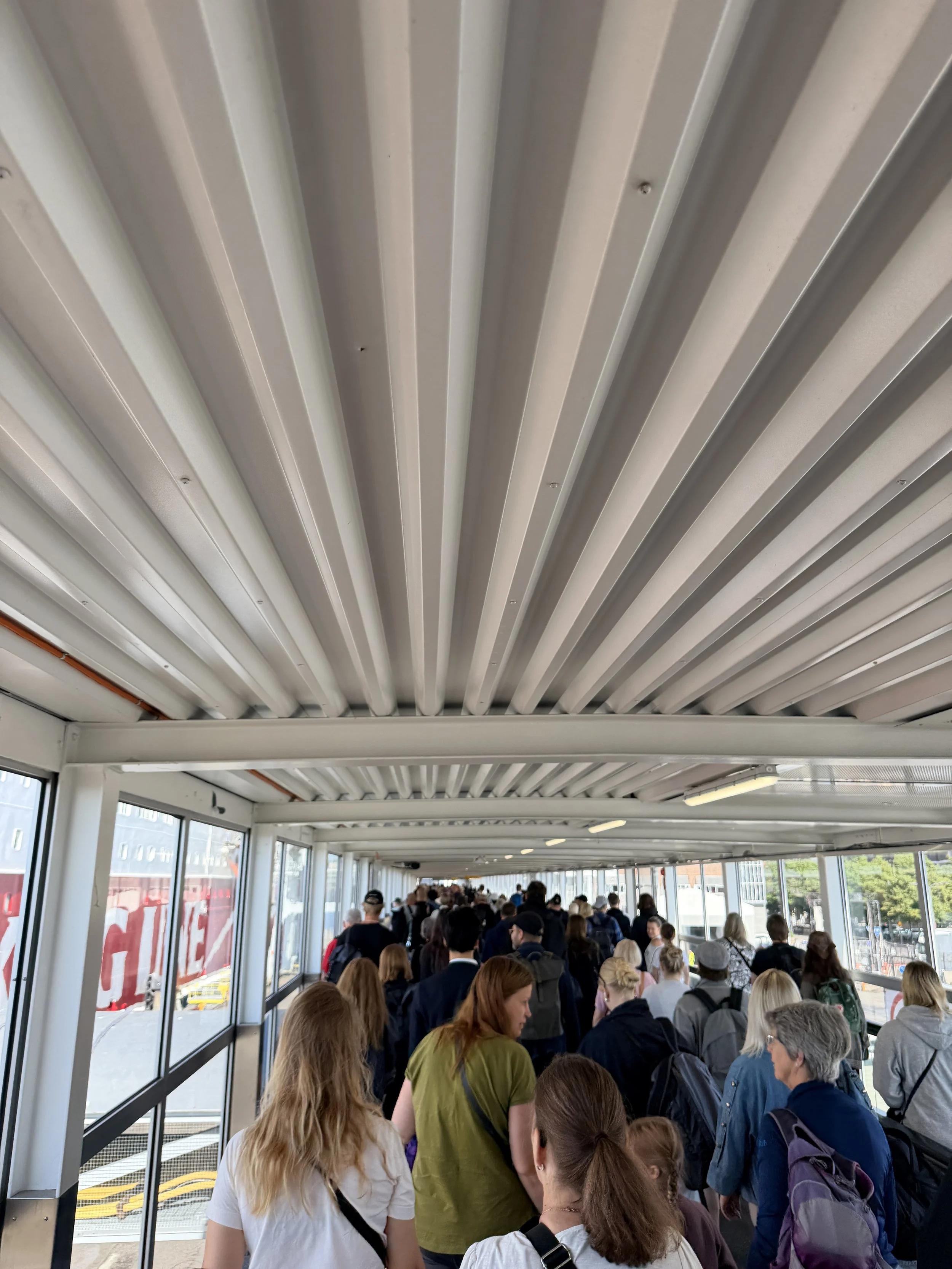
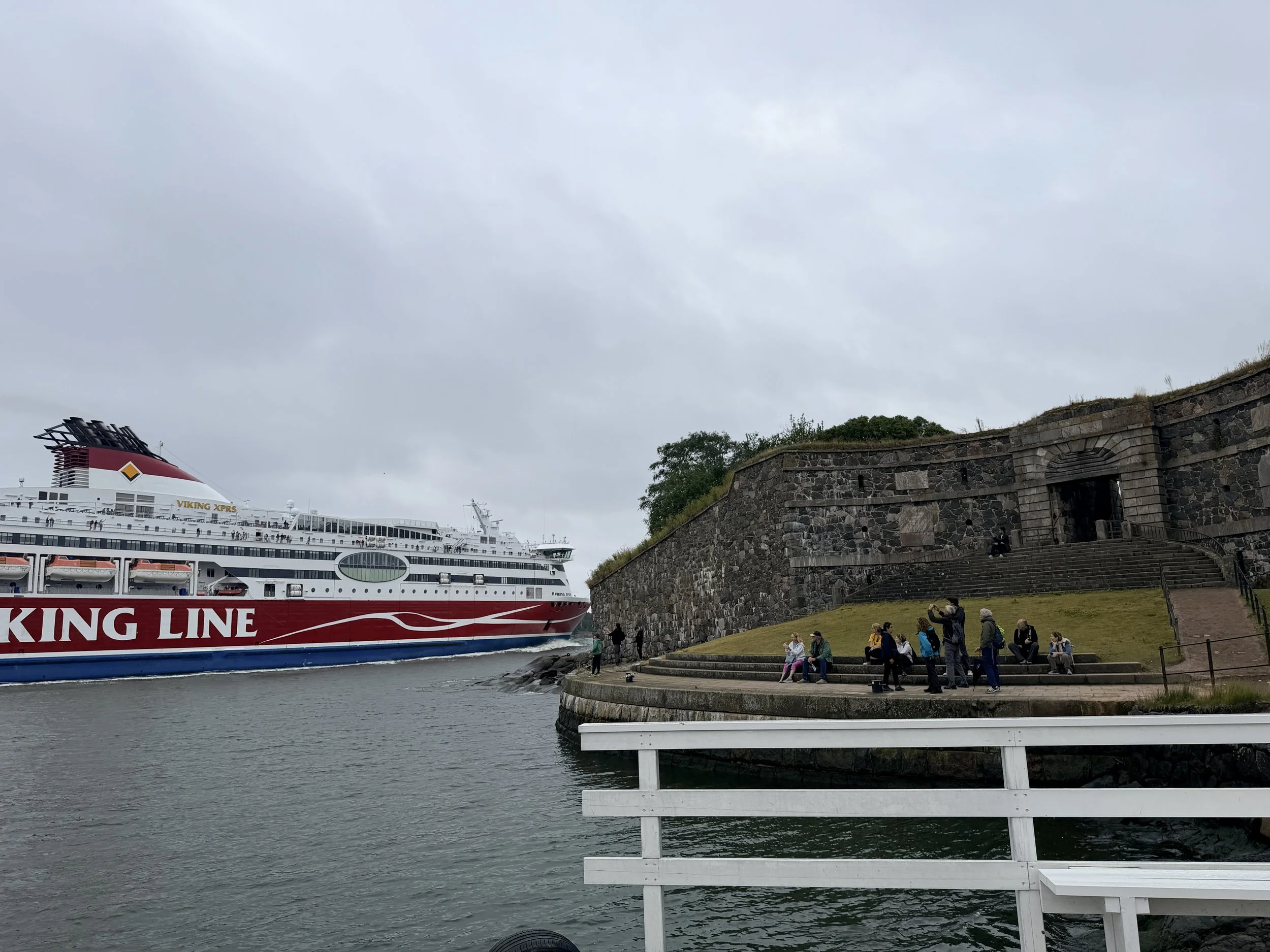
This morning, we walked to the ferry terminal, enjoying the quiet streets of Helsinki along the way. We boarded a Viking Line ferry bound for Tallinn. Interestingly, we had seen this very same ferry two days earlier, sailing through the narrow channel near the King’s Gate at Suomenlinna. The vessel was enormous—more like a mid-sized cruise ship than a typical ferry—and it was packed with passengers.
The sailing out of Helsinki was especially scenic. From the upper deck, we had panoramic views of the city and the surrounding islands as we made our way through the beautiful Helsinki archipelago.
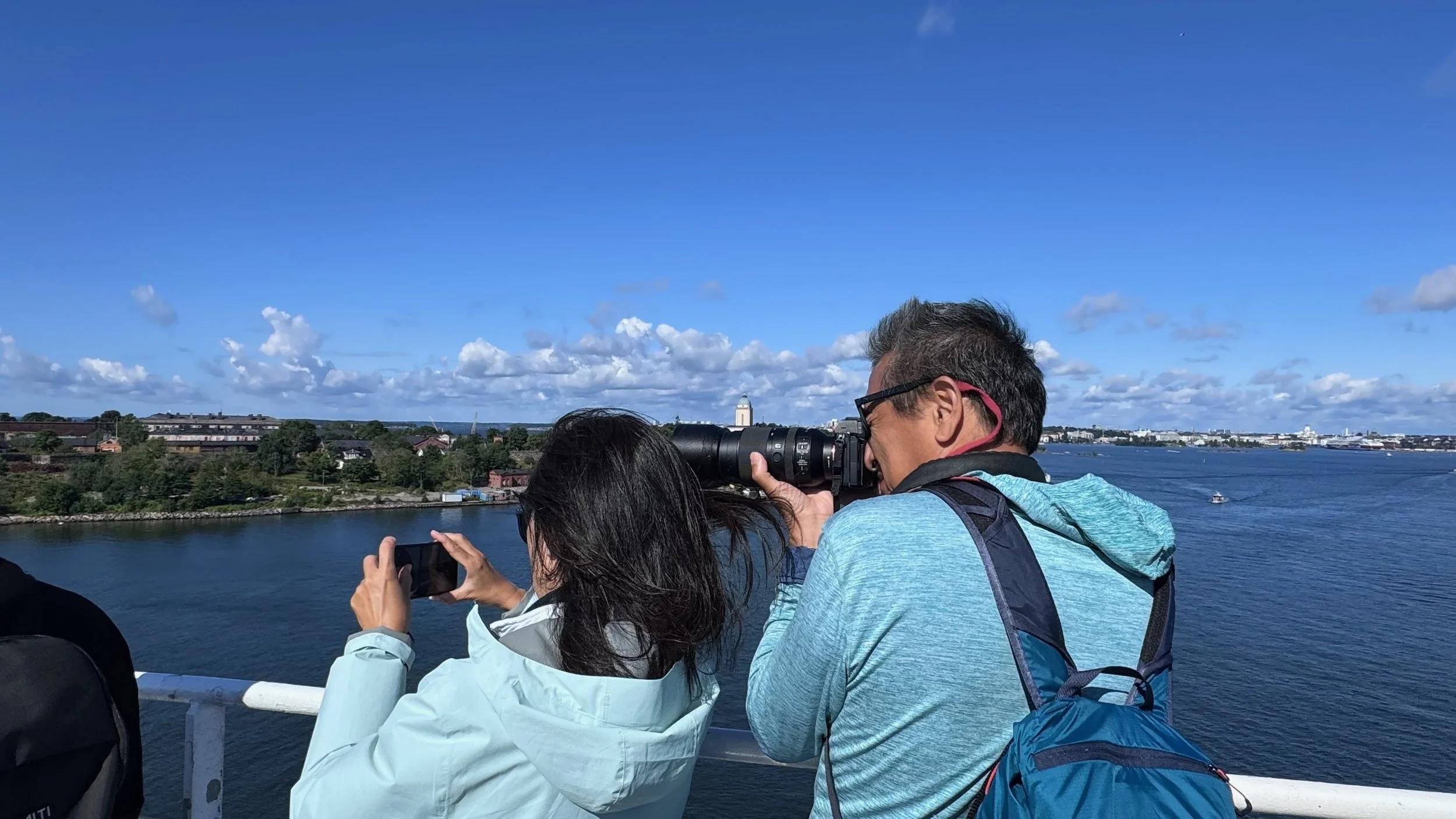
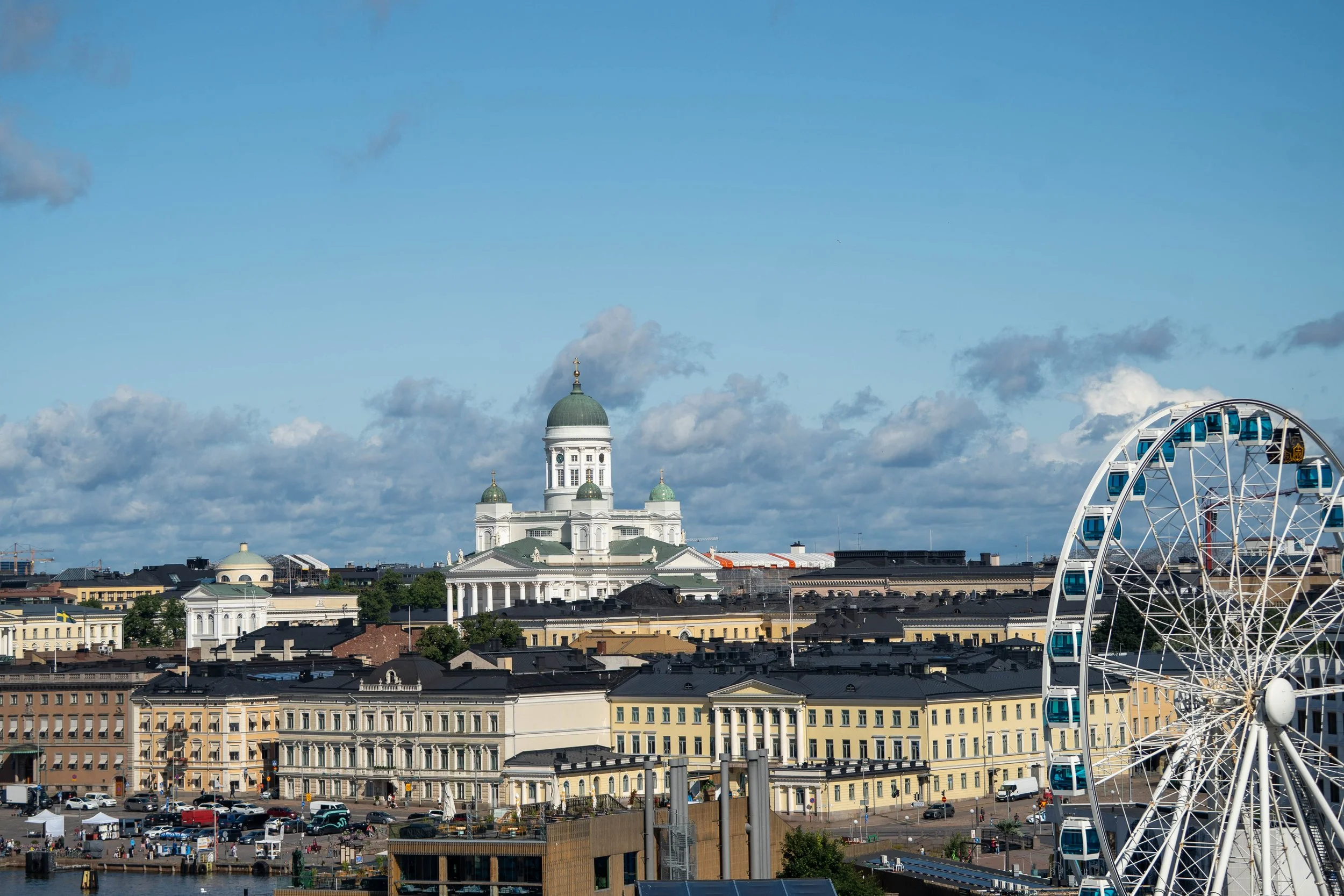
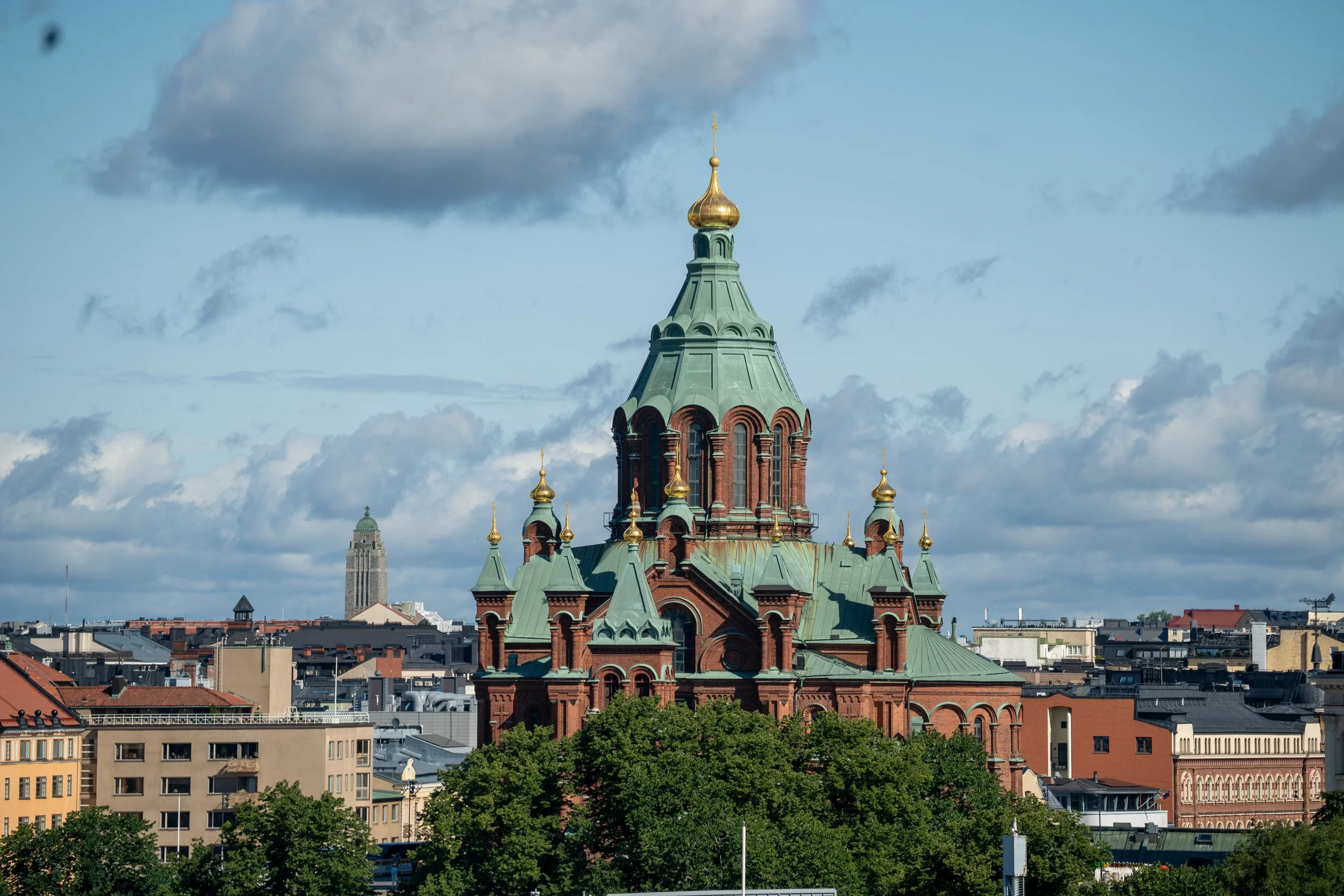
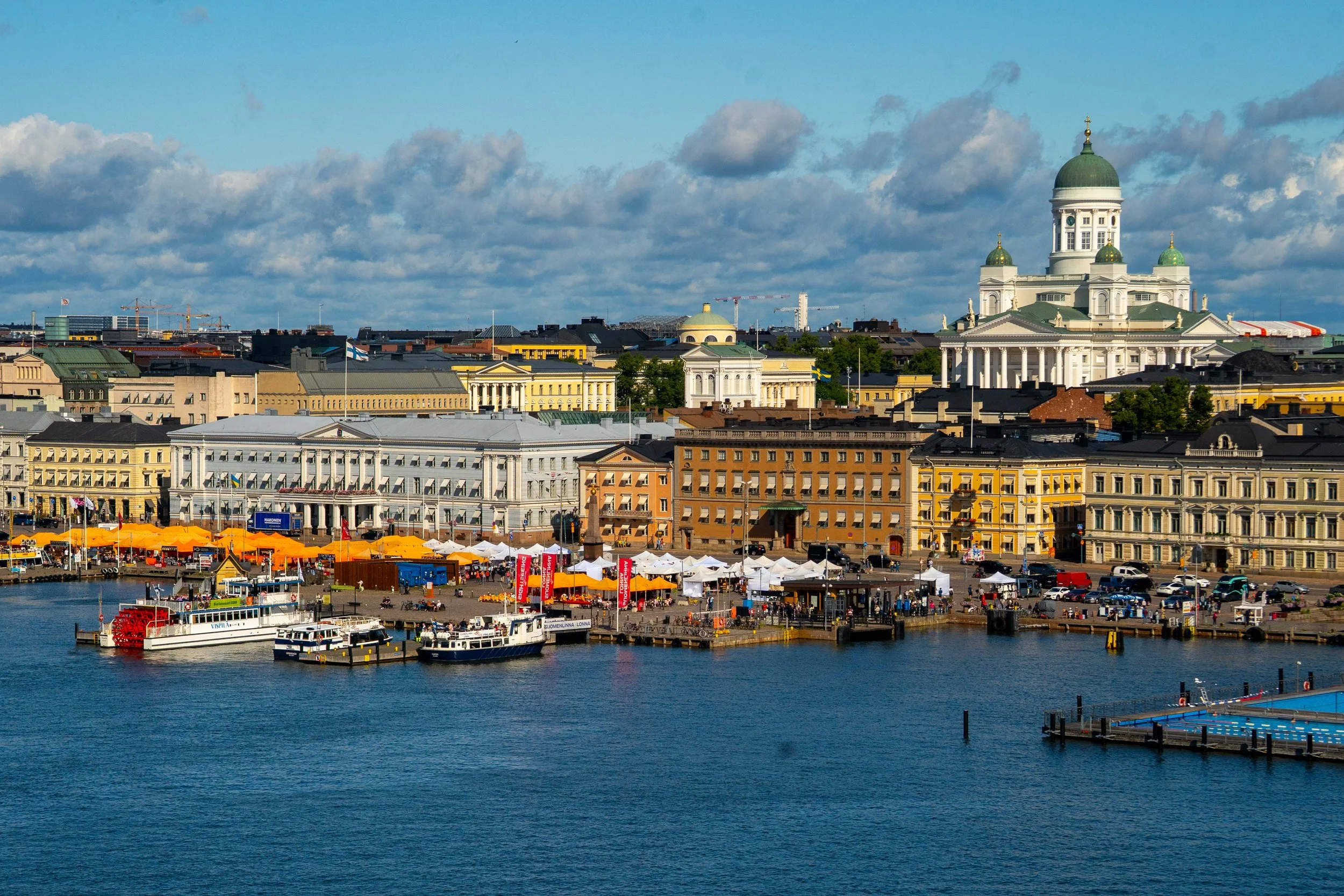
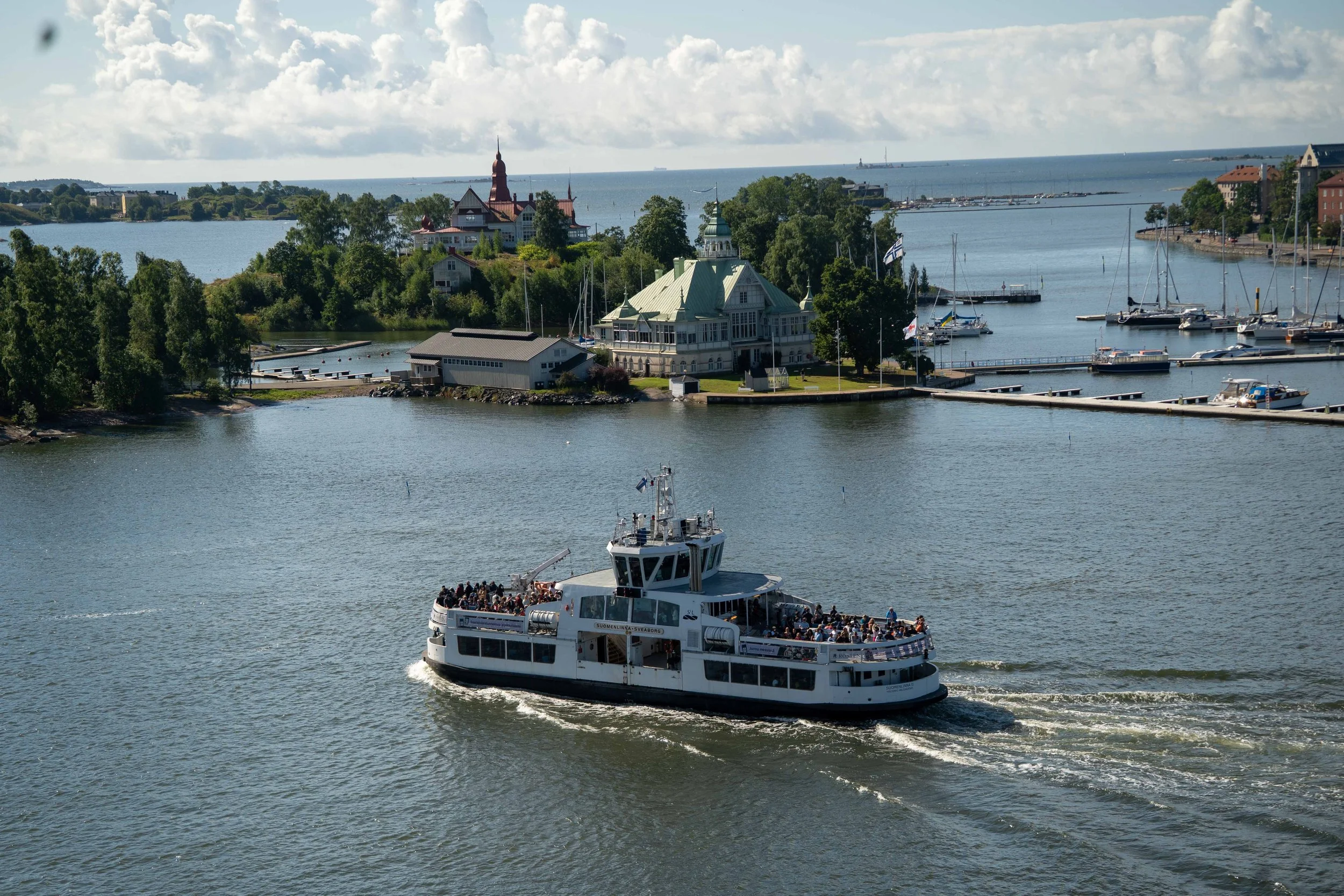
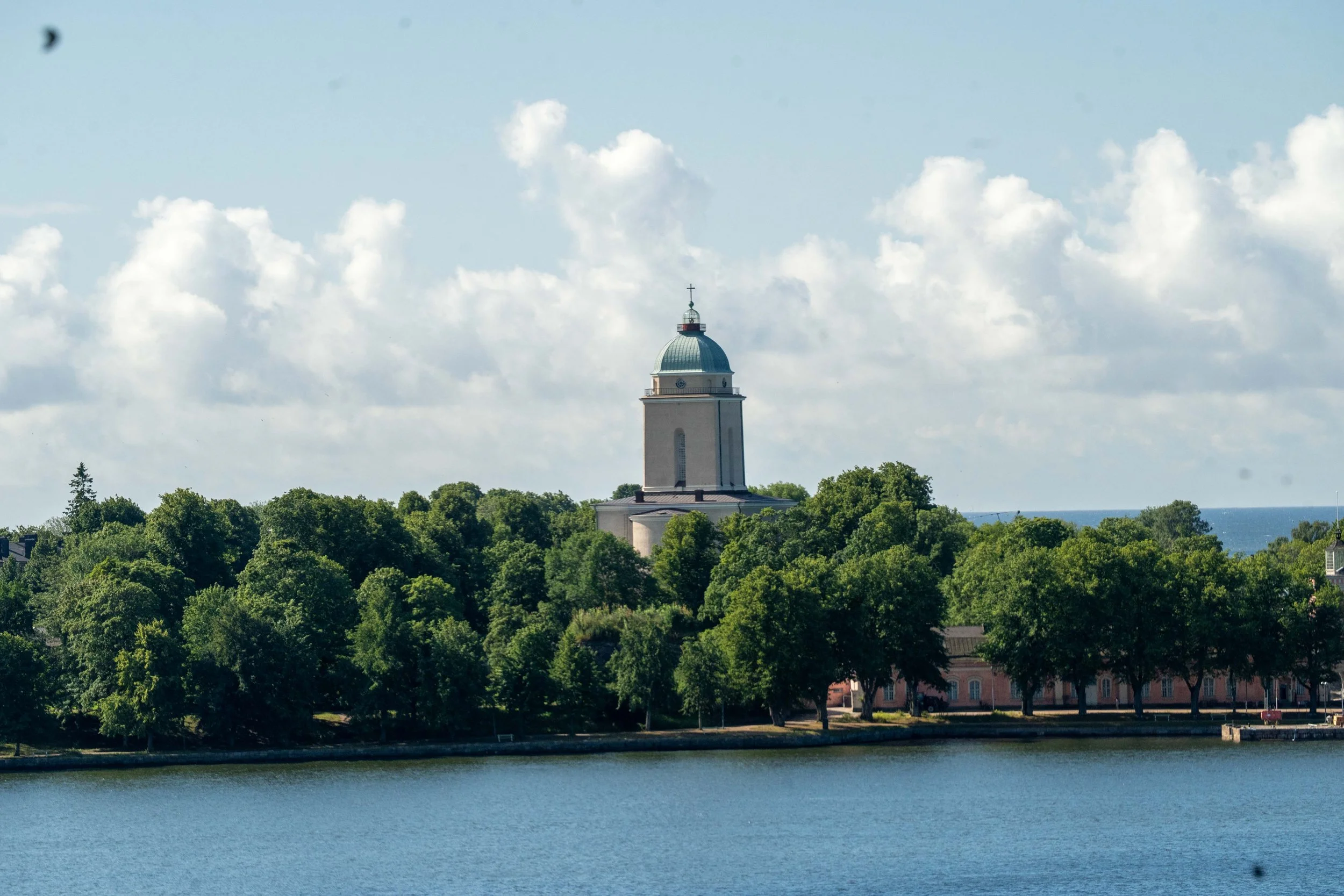
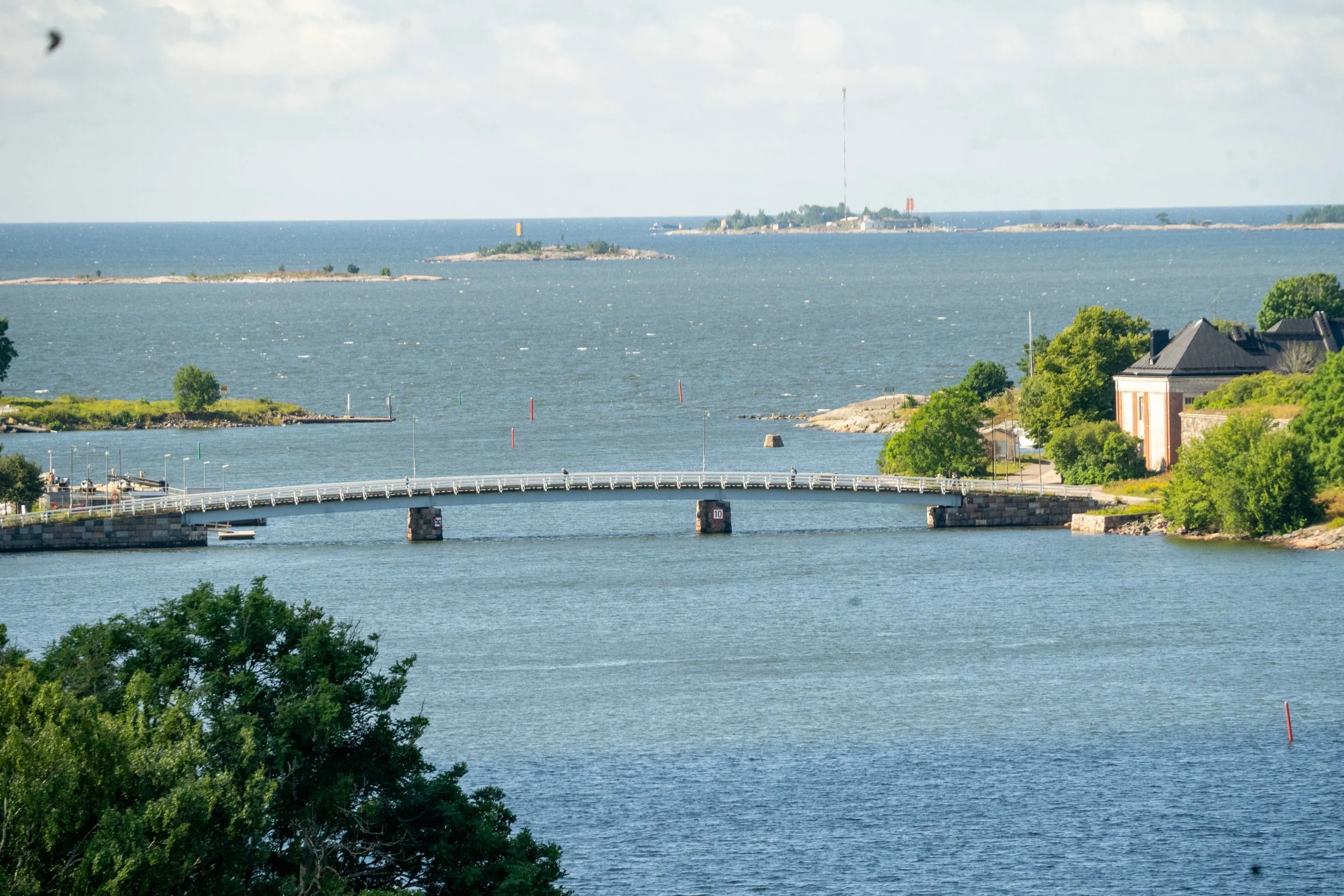
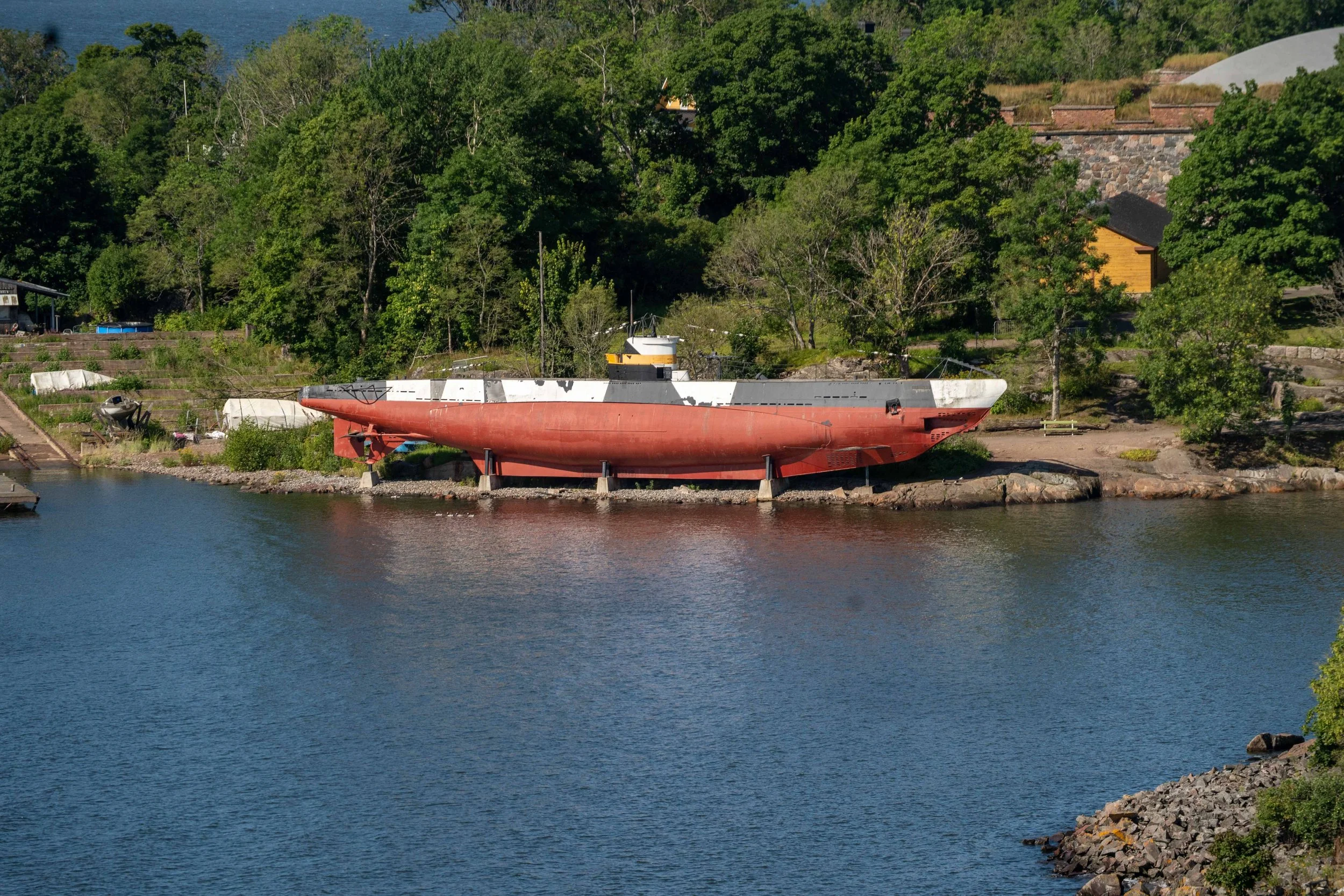
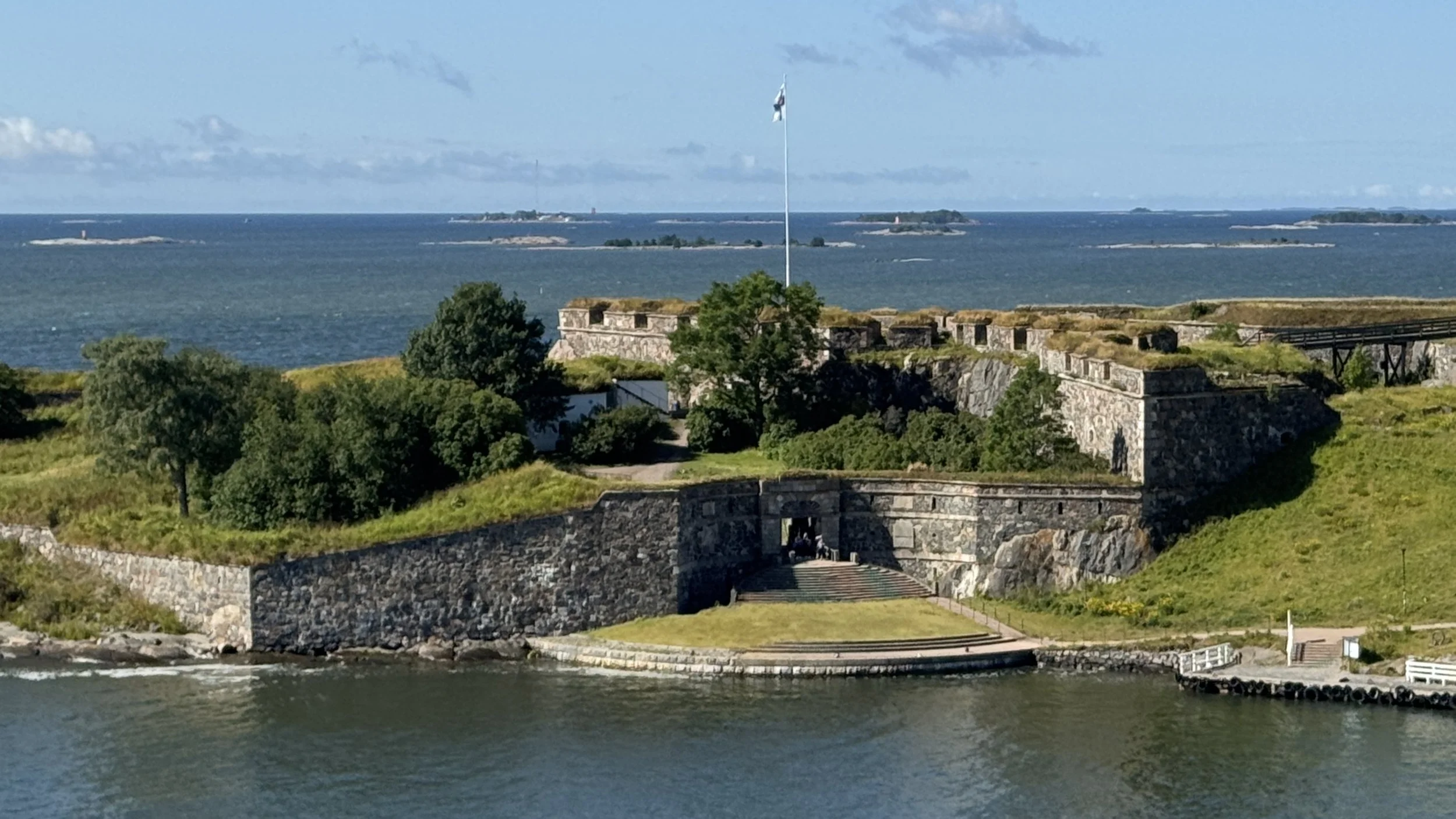
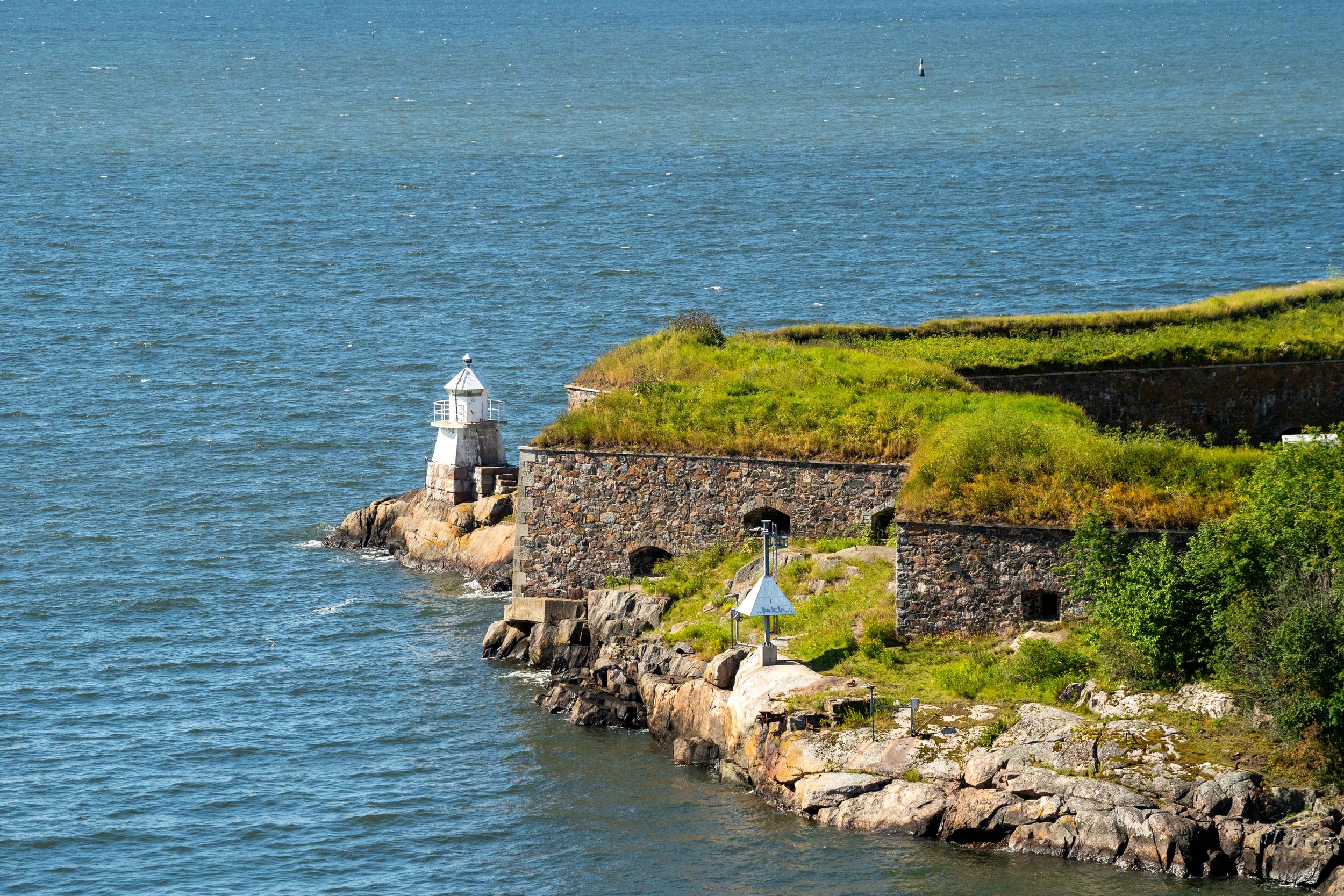
After taking in the views, we went back inside but couldn’t find any available seats. Instead, we decided to have lunch at the buffet, which cost €33 per person. The food was decent, but more importantly, the restaurant gave us a quiet and comfortable place to sit and relax during the 2-hour-and-45-minute crossing.
As we approached Tallinn, we went back out onto the deck to enjoy our first views of the city. Seeing Tallinn come into view from the sea was an exciting introduction to Estonia and the beginning of our visit to another new country.
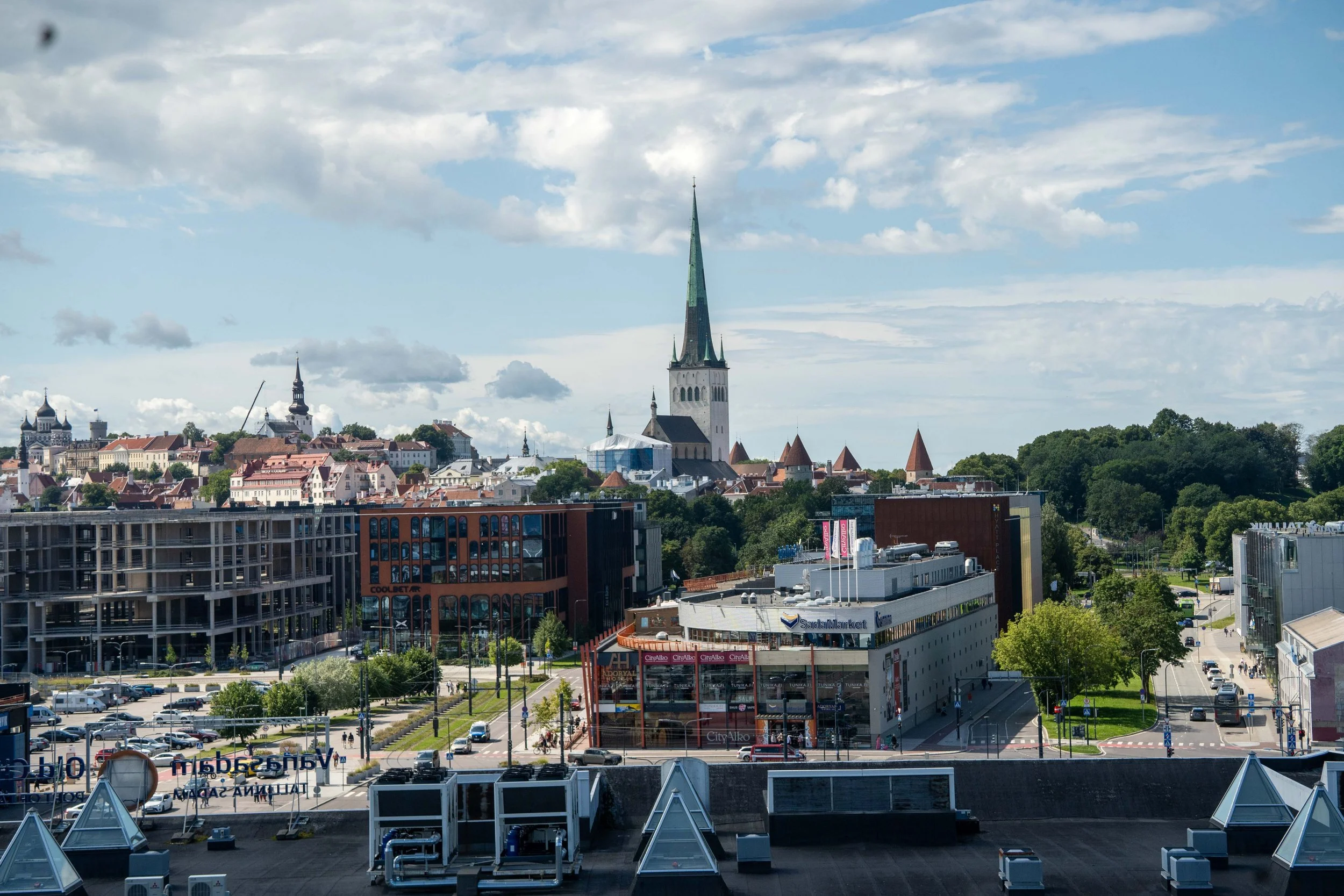
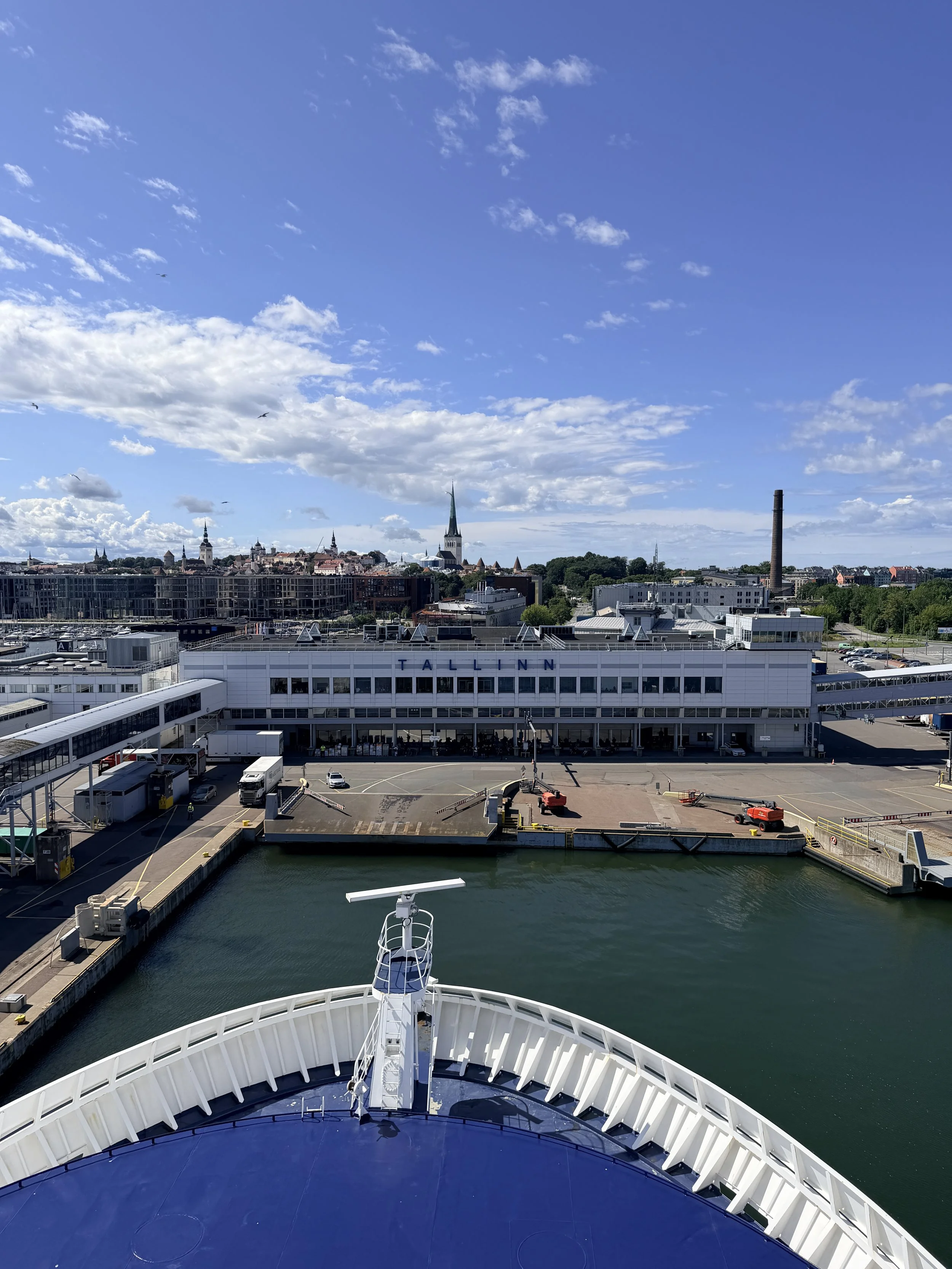
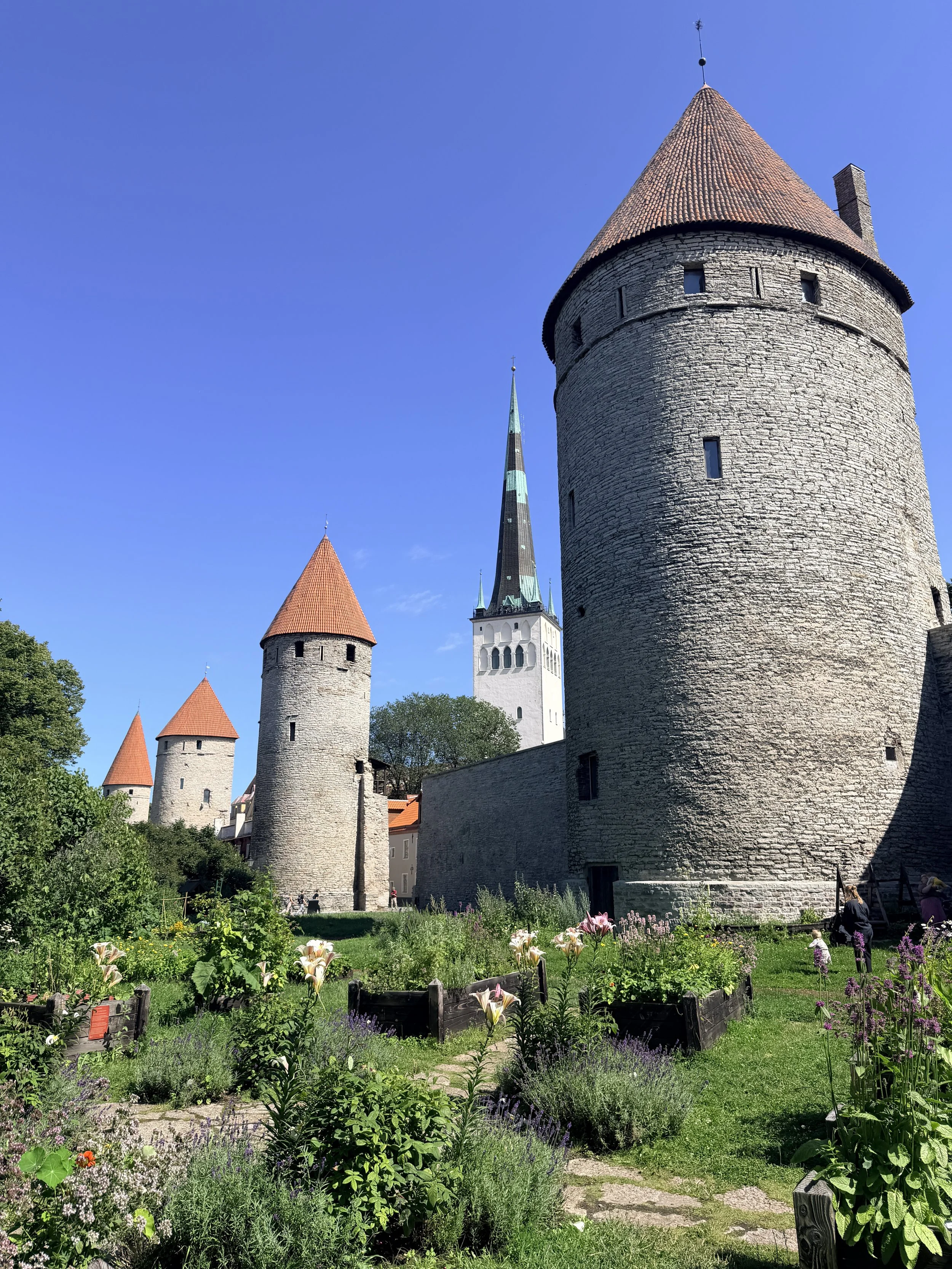
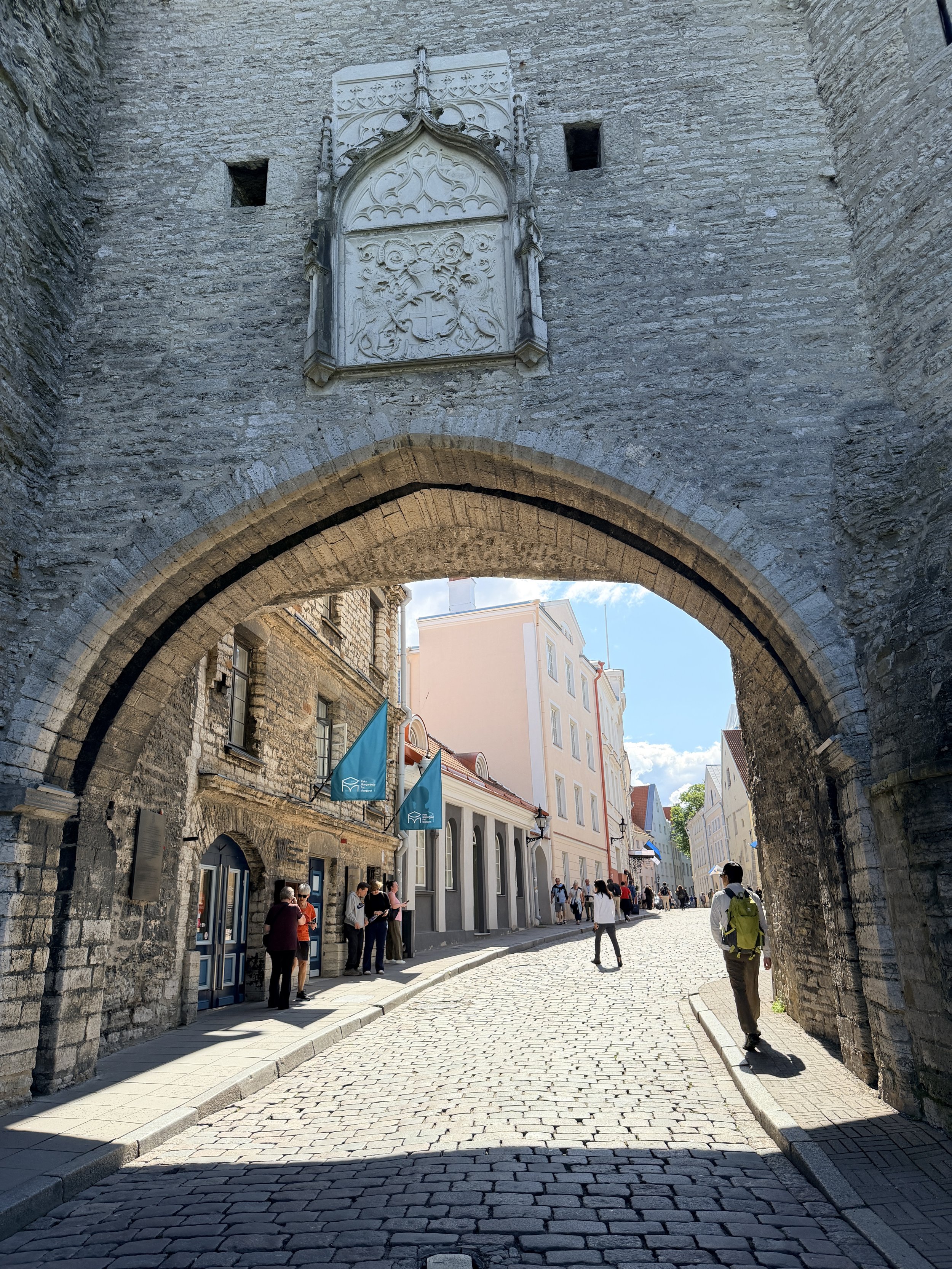
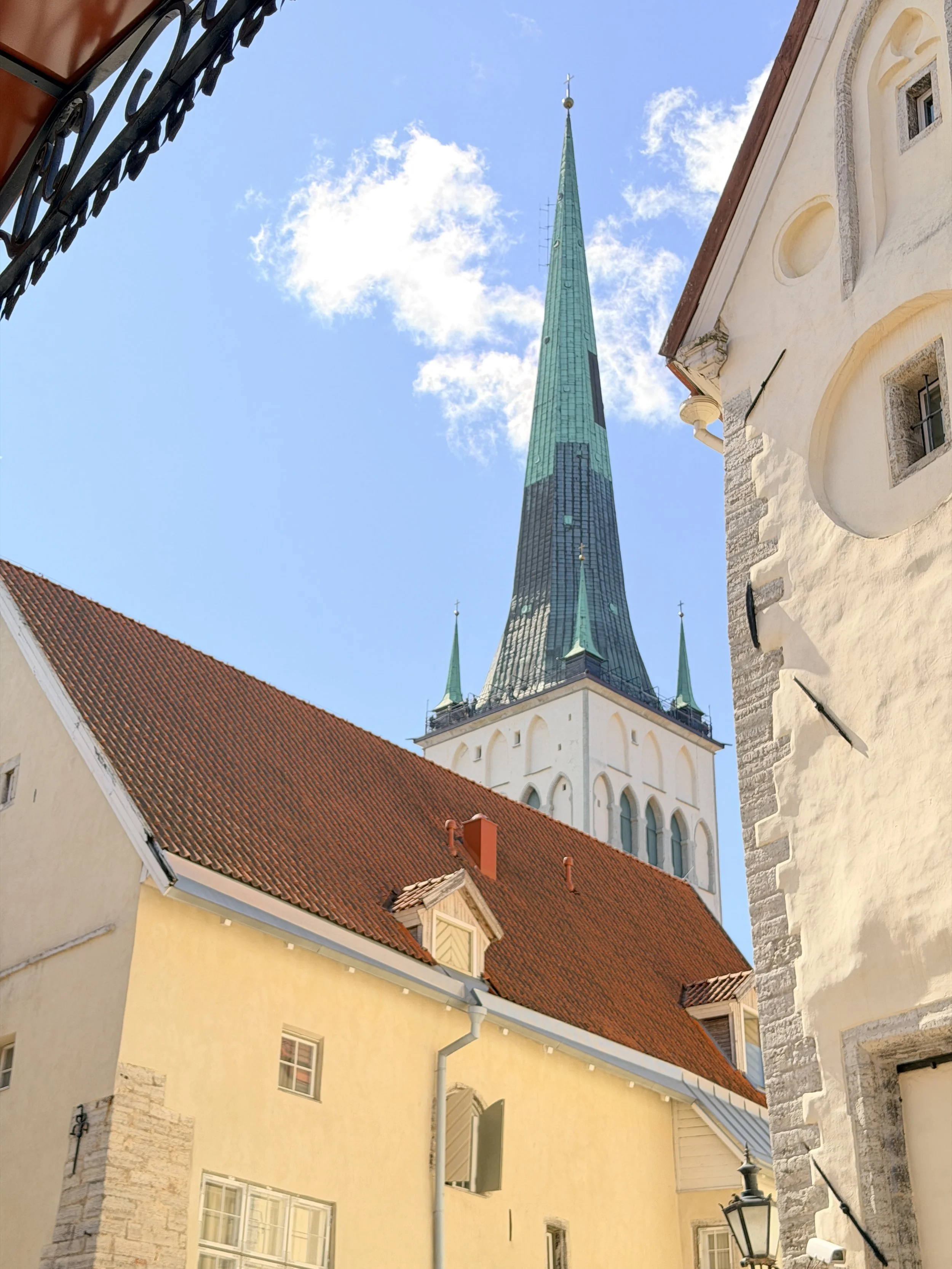
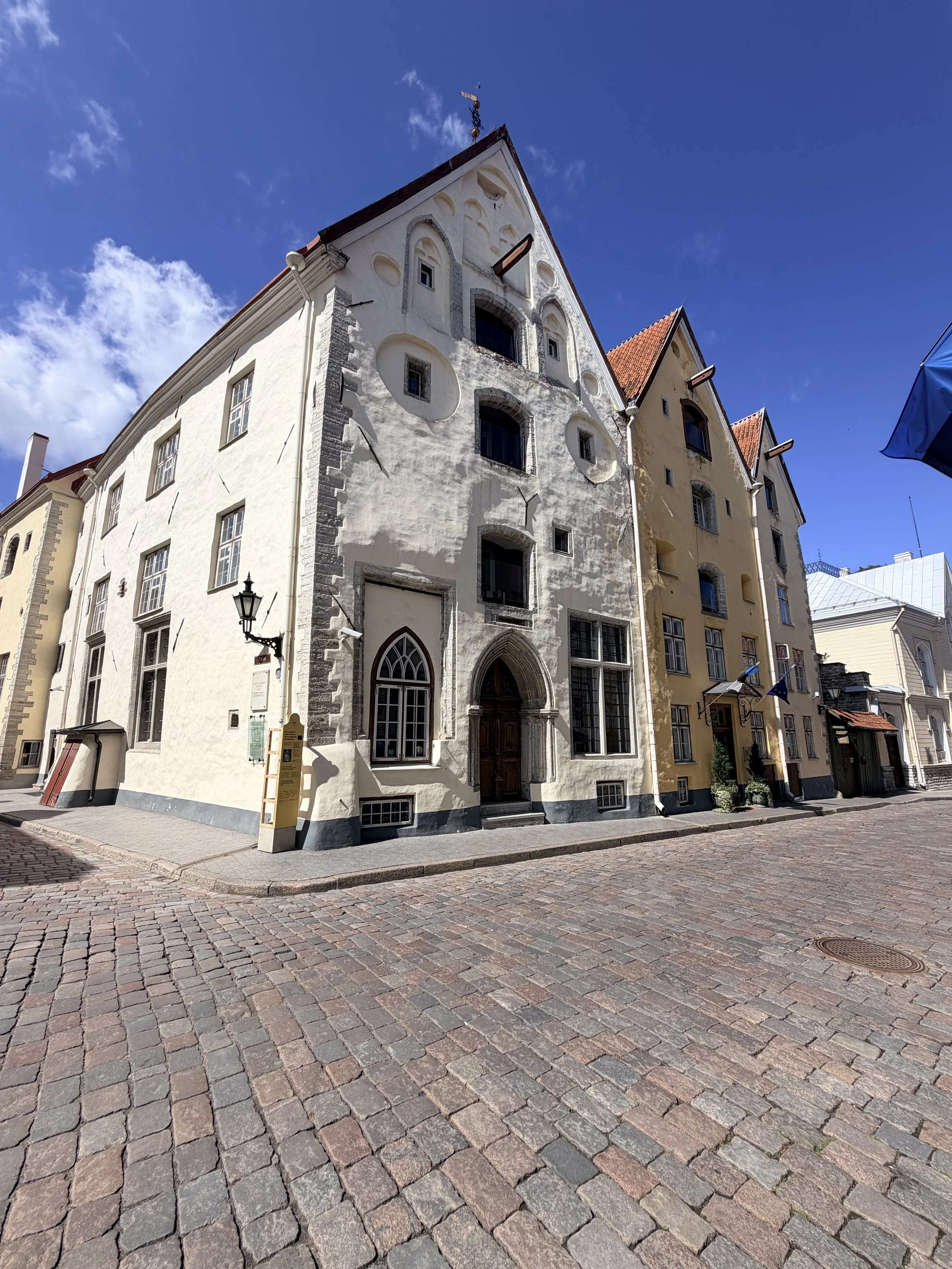
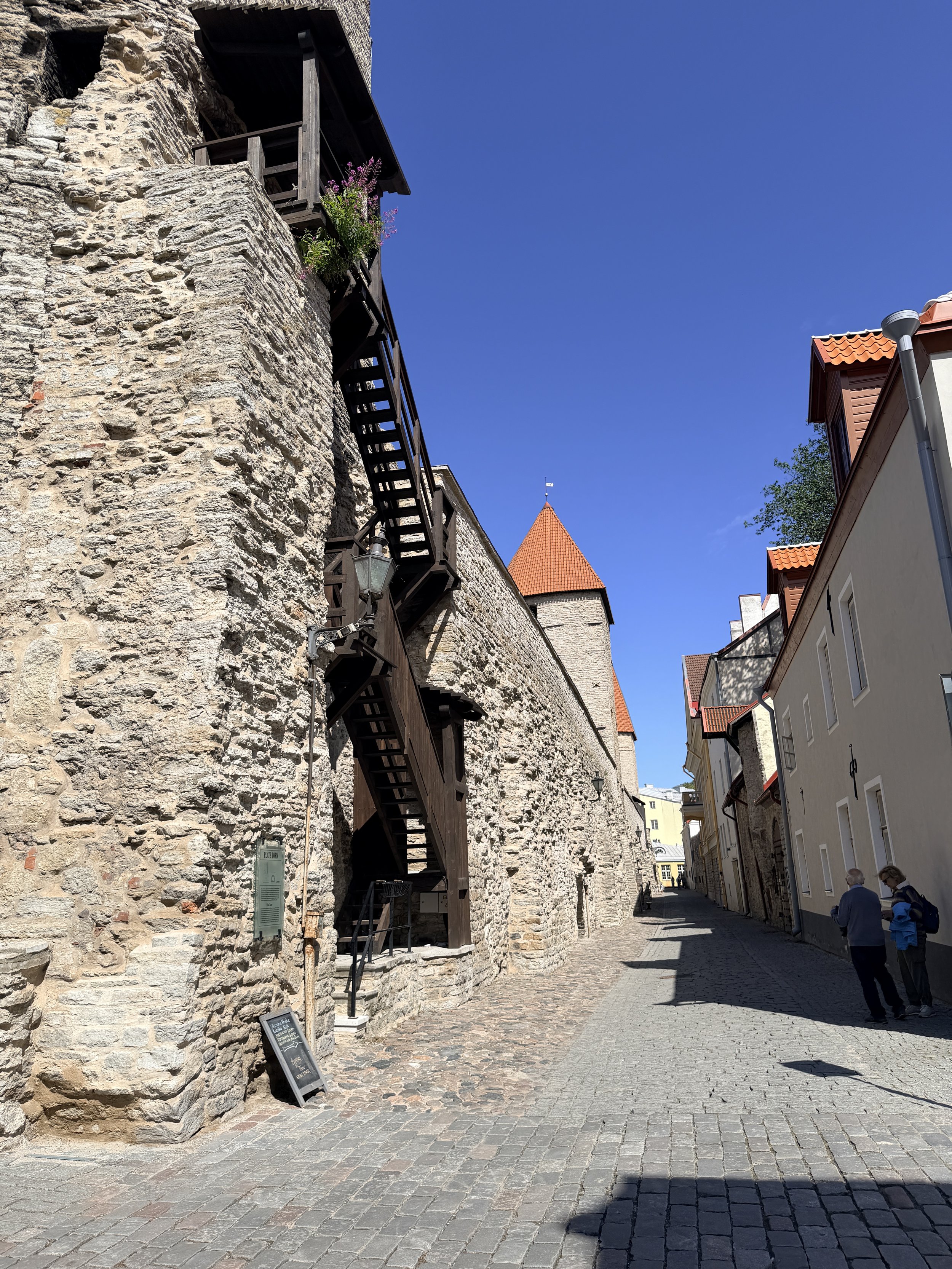
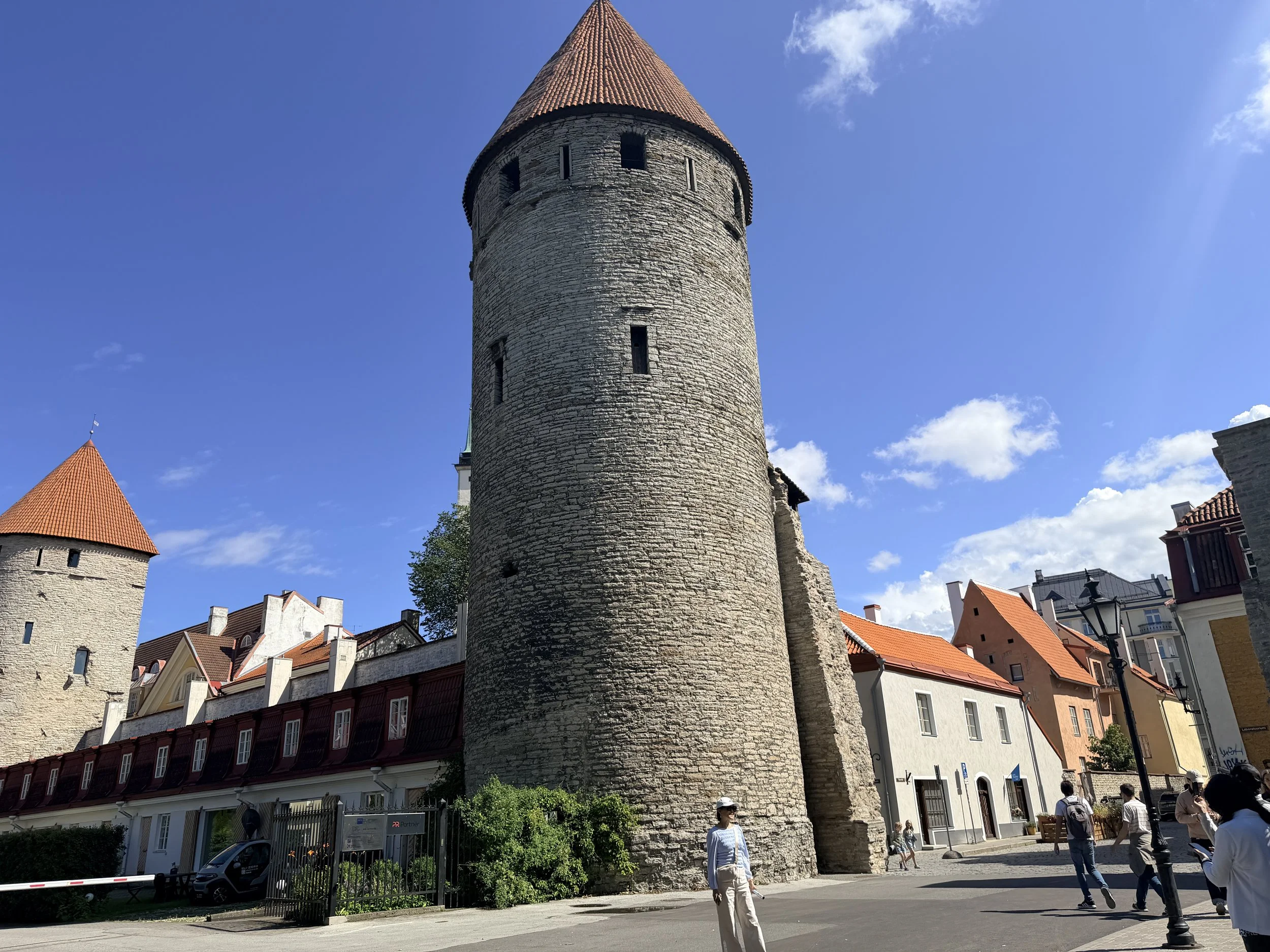
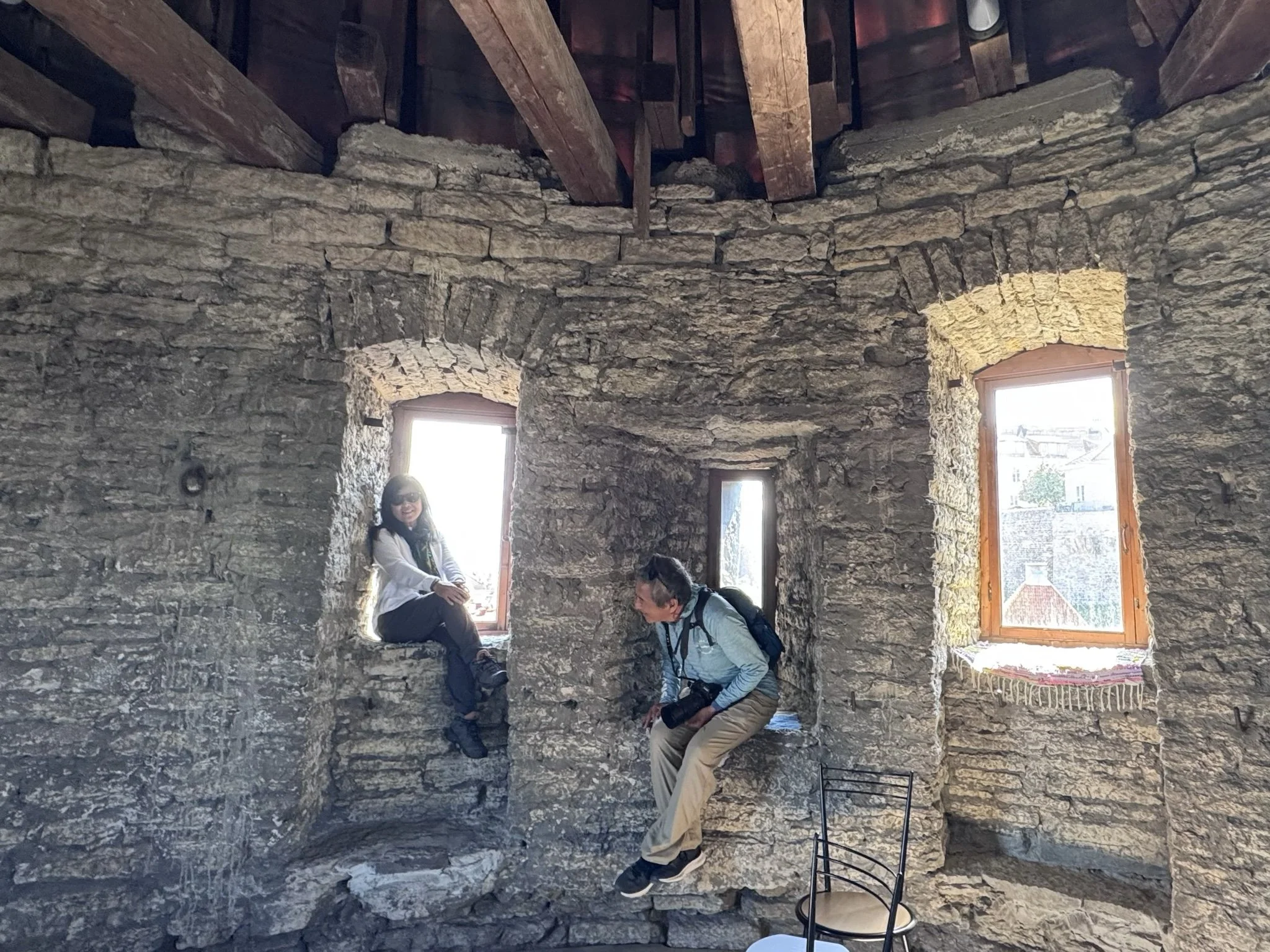
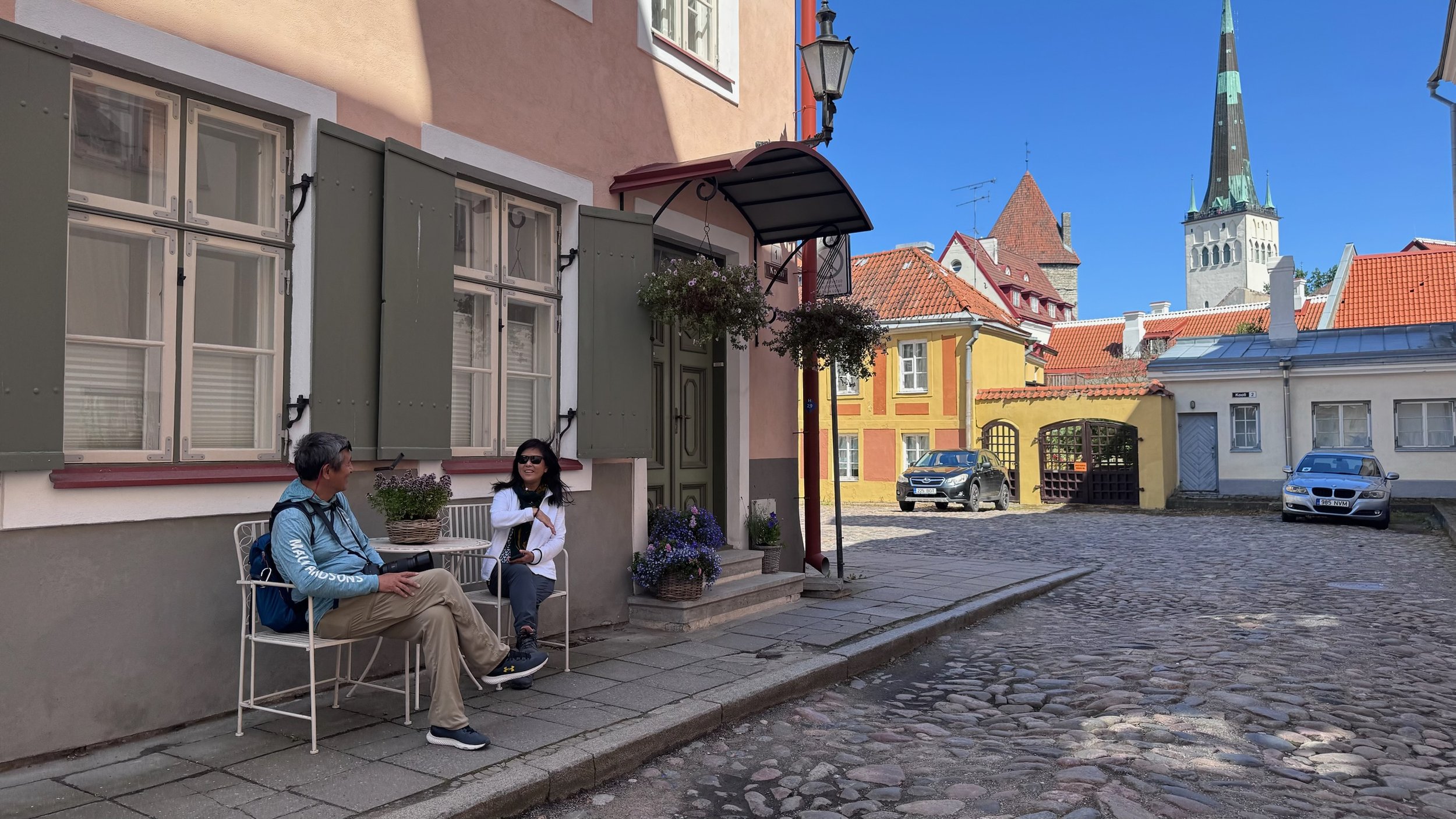
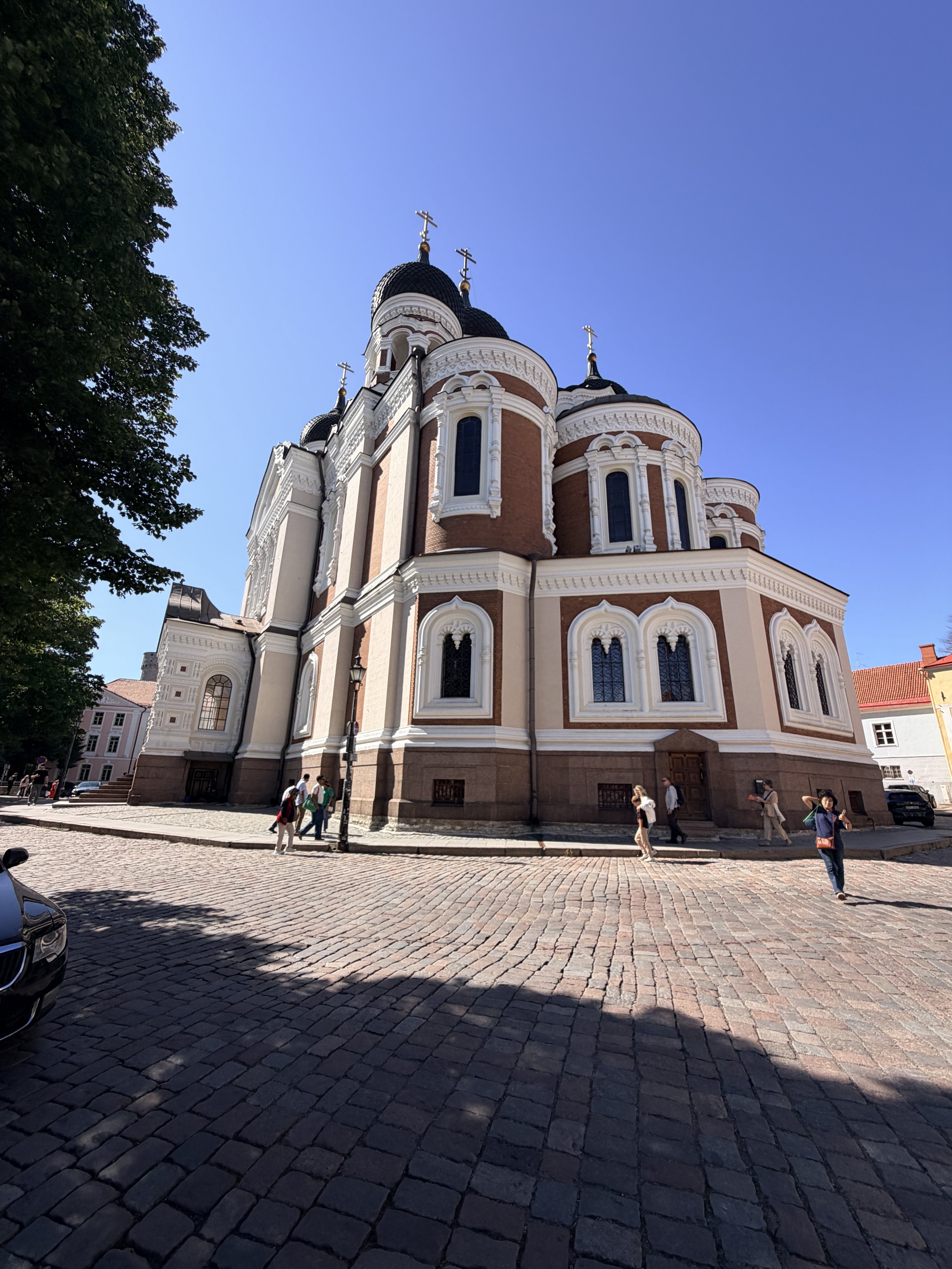
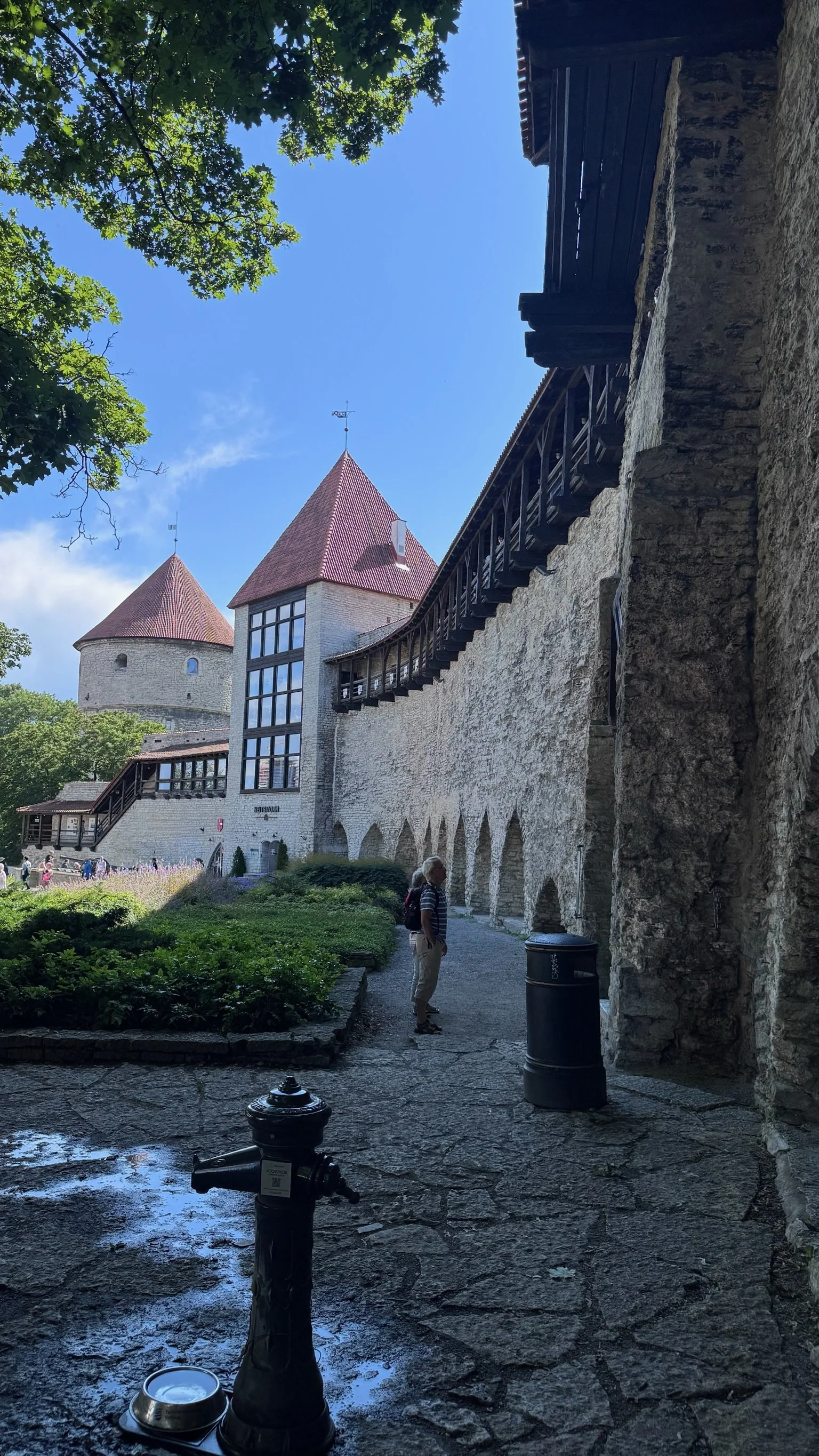
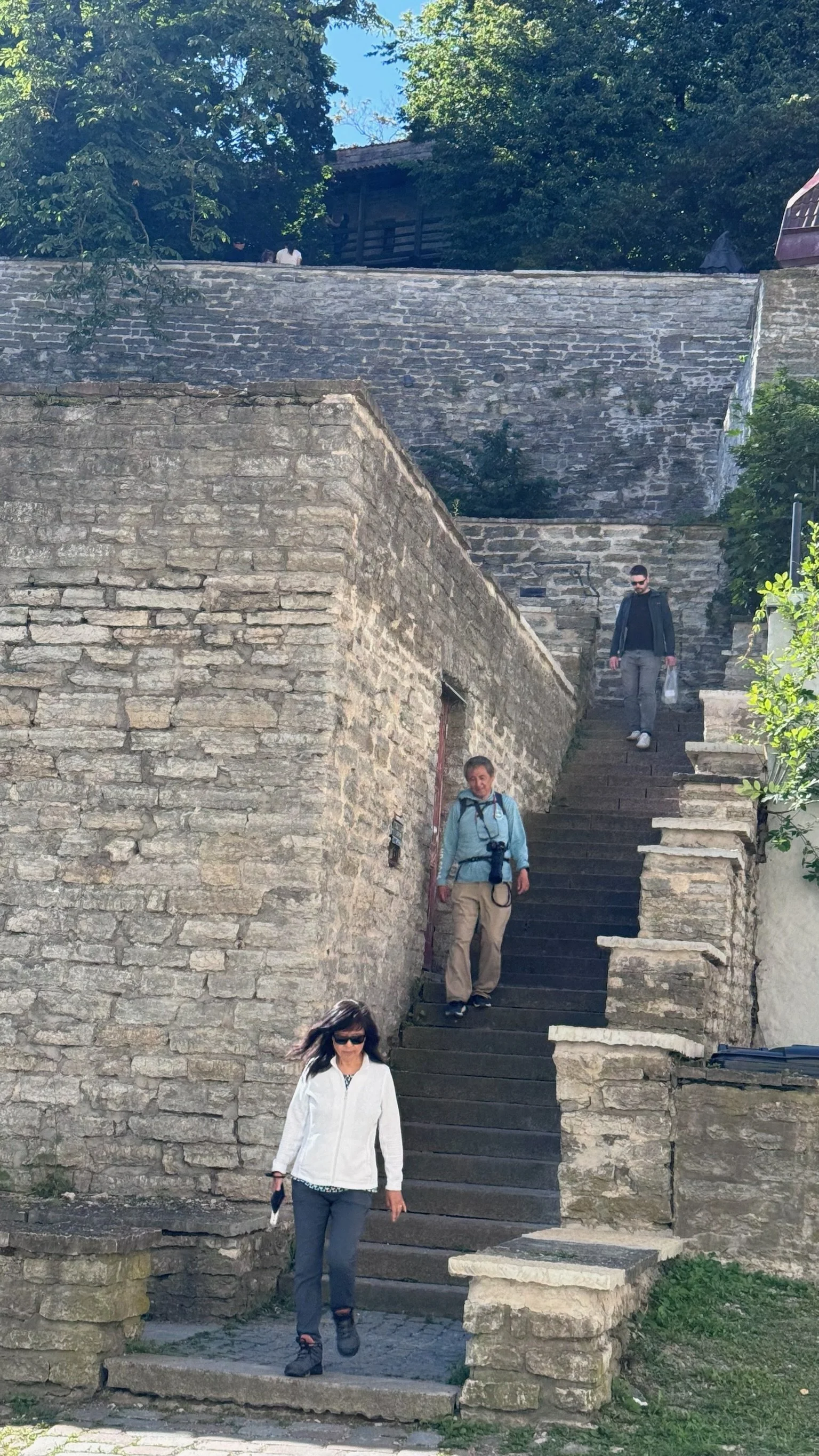
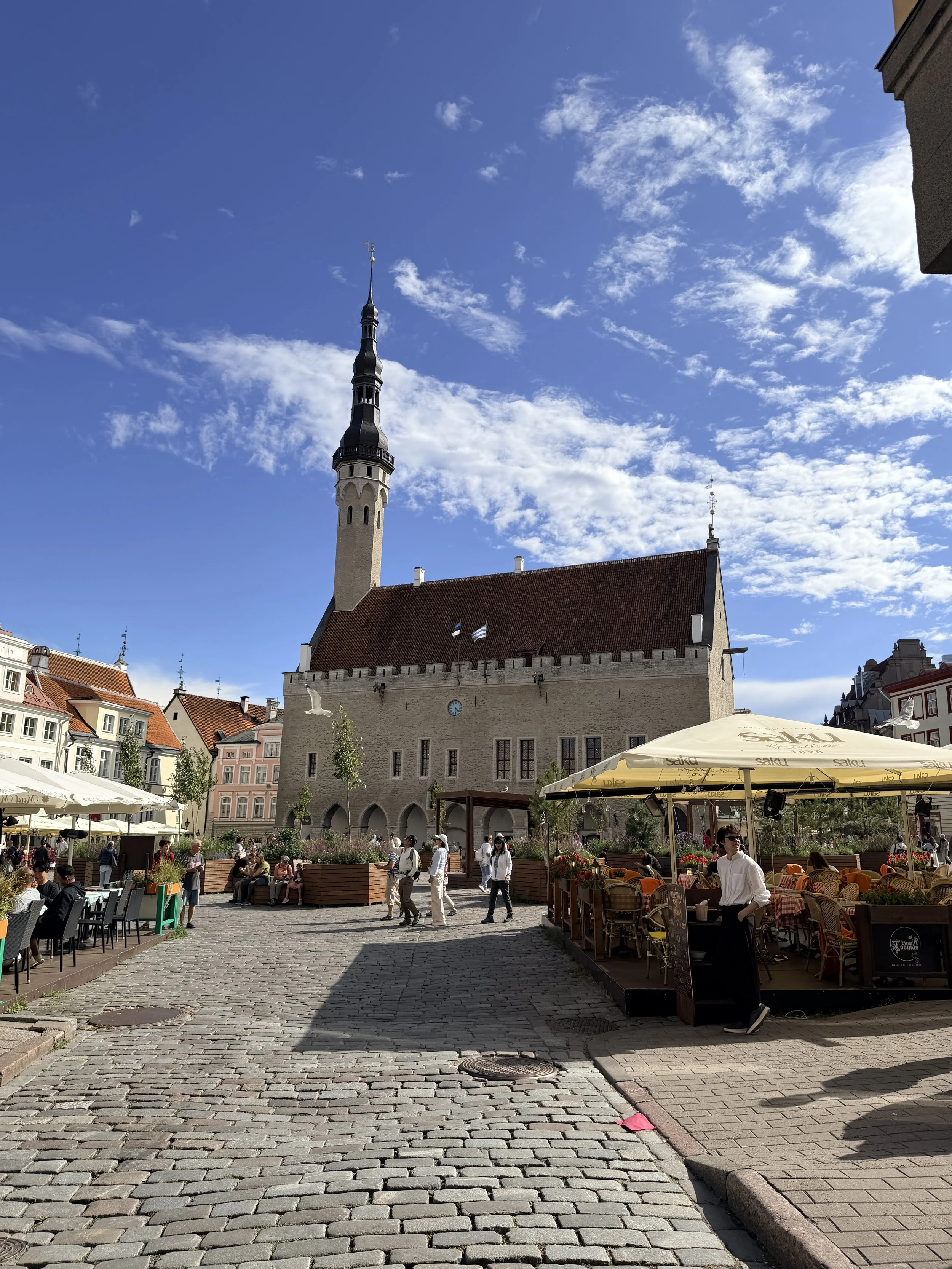
After arriving in Tallinn, we spent several hours exploring the beautifully preserved Old Town. We strolled leisurely along its narrow cobblestone streets, admired the colorful medieval buildings, and climbed one of the ancient gate towers for a panoramic view. The town was full of charm, and we thoroughly enjoyed wandering through its historic streets.
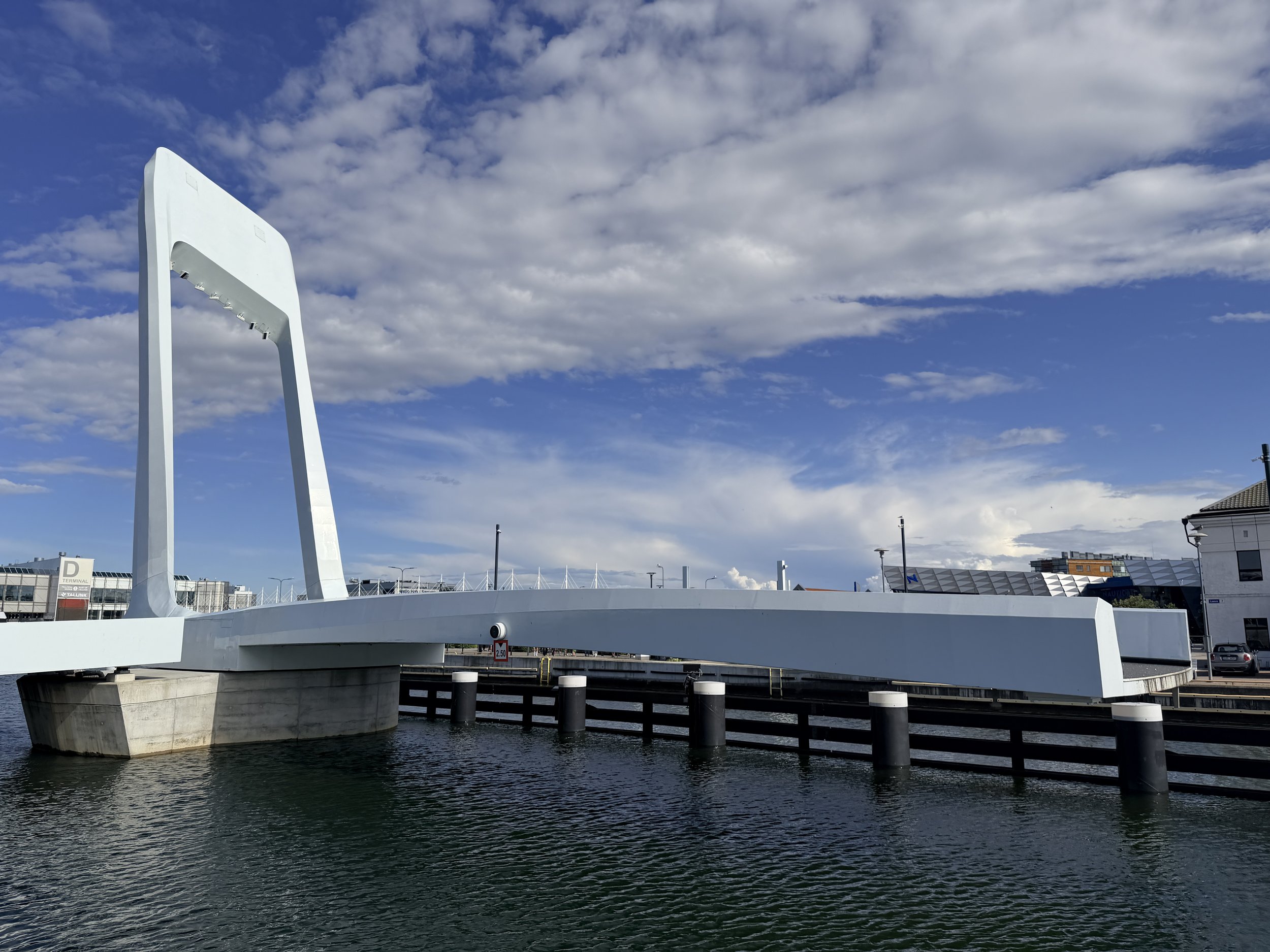
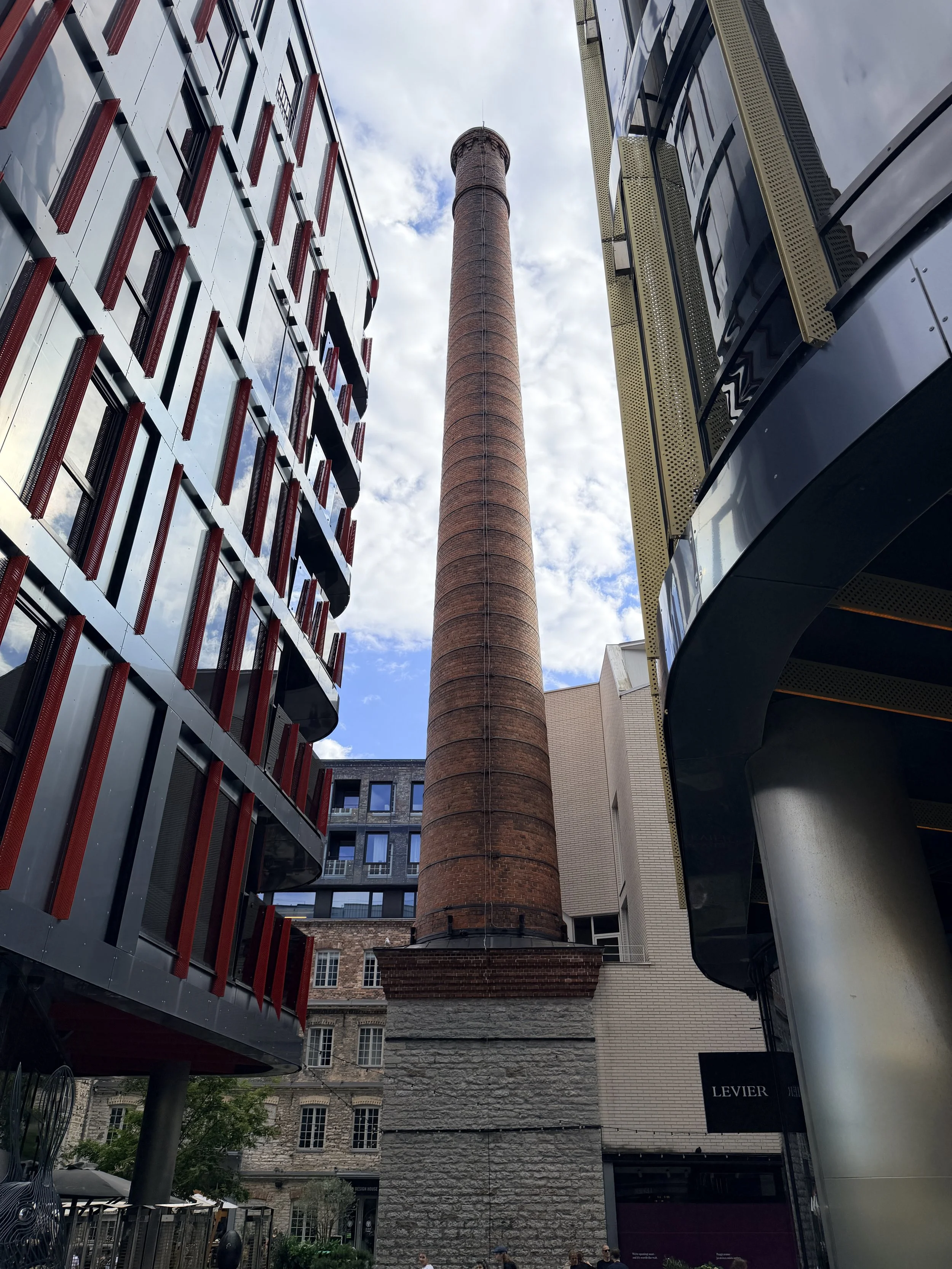
At 5:00 p.m., we boarded the 6 pm ferry back to Helsinki. Since both Estonia and Finland are members of the Schengen Area, traveling between the two countries was remarkably simple. There were no passport checks or border controls, making the journey feel much like domestic travel. We had dinner on board and returned to Helsinki after another pleasant crossing.
2026年7月28日
今天,我们搭乘维京渡轮(Viking Line Ferries)前往爱沙尼亚首都塔林。这家渡轮公司每天有几艘船,好几个班次往返在赫尔辛基和塔林之间。昨天我们在芬兰堡国王门附近看到,缓缓驶过狭窄航道的那一艘就是这家公司的船,也是我们今晚回赫尔辛基的渡轮。维京渡轮体型庞大,与其说是渡轮,更像一艘中型邮轮。
船上的乘客非常多,几乎找不到空位可以坐下,于是我们决定到自助餐厅享用午餐,每人33欧元。食物算不上特别出色,但至少让我们有了一个安静舒适的地方,一边用餐,一边悠闲地度过两个半多小时的航程。
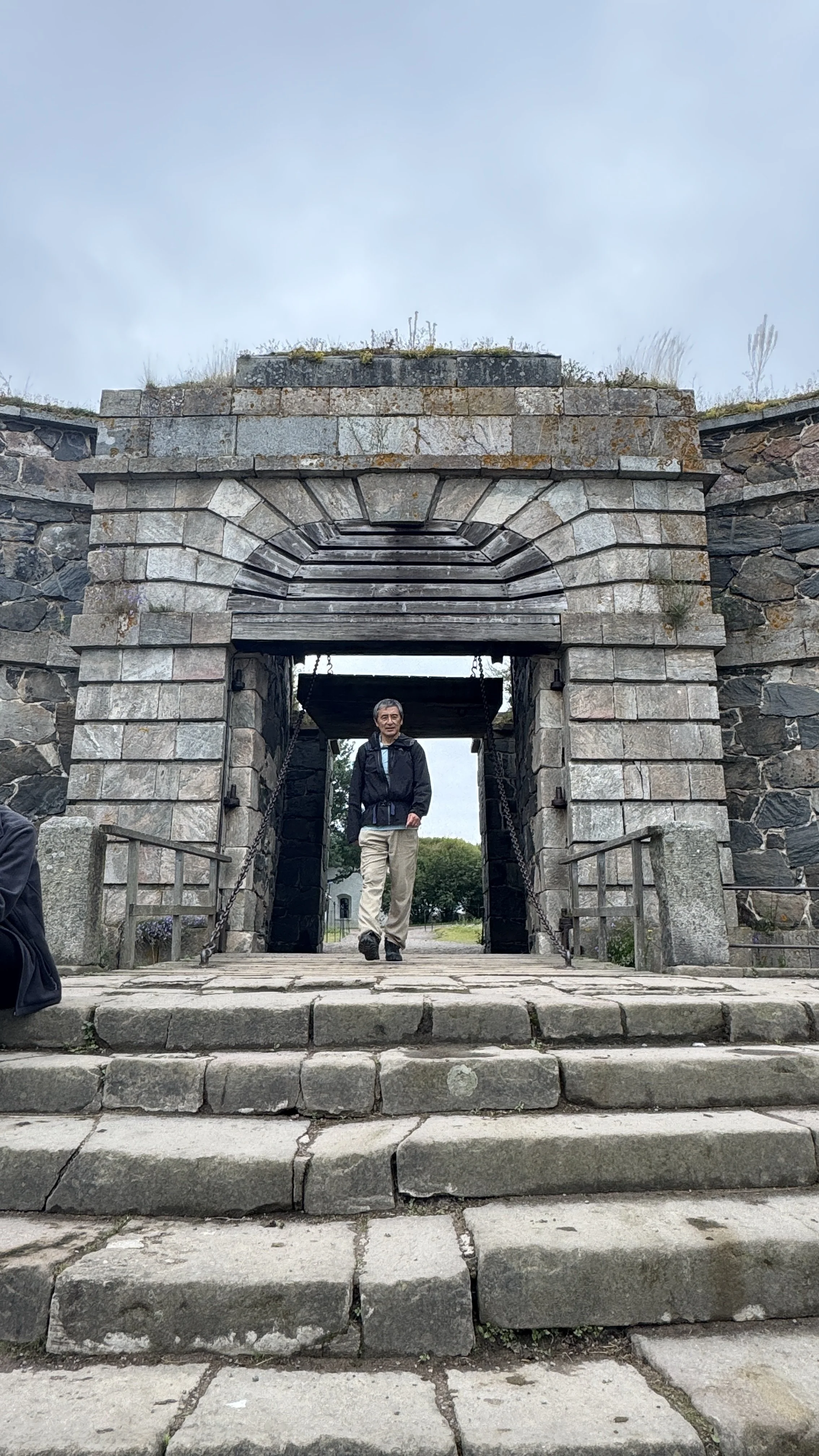
经过2小时45分钟,我们抵达塔林。同行的朋友以前来过这里,所以今天一下船就带着我们来到闻名已久的老城区。漫步在狭窄蜿蜒的鹅卵石街道上,两旁是一栋栋色彩鲜艳、保存完好的中世纪建筑,仿佛走进了一座露天历史博物馆。我们还登上了一座古老的城门塔楼,俯瞰整座古城的红瓦屋顶和教堂尖塔。塔林老城古朴典雅,充满中世纪的韵味,是我们非常喜欢的一座城市。最后我们在中央广场坐下,咖啡加冰淇淋看人来人往。
傍晚六点,我们搭乘渡轮返回赫尔辛基。由于爱沙尼亚和芬兰都属于申根区,两国之间的往来十分便利,没有例行的护照查验或边境检查,感觉就像在国内城市之间旅行一样轻松。晚上我们在船上享用了晚餐,结束了这趟轻松愉快的塔林一日游。时间虽短,但对我们俩来说又踏足了一个新的国家。
Helsinki 赫尔辛基
July 27, 2026
After breakfast at the hotel,……
在酒店用完早餐后,。。。
July 27, 2026
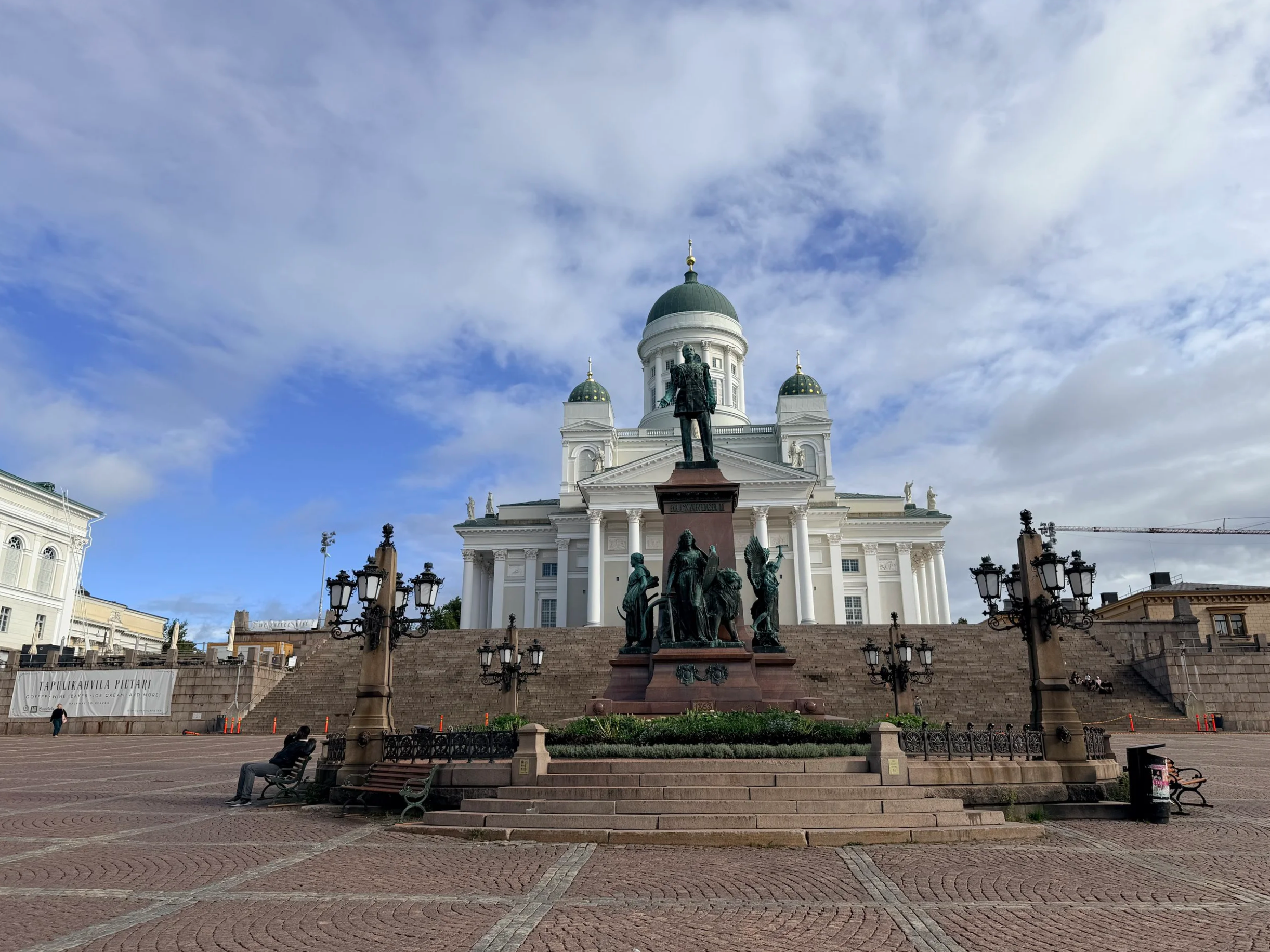
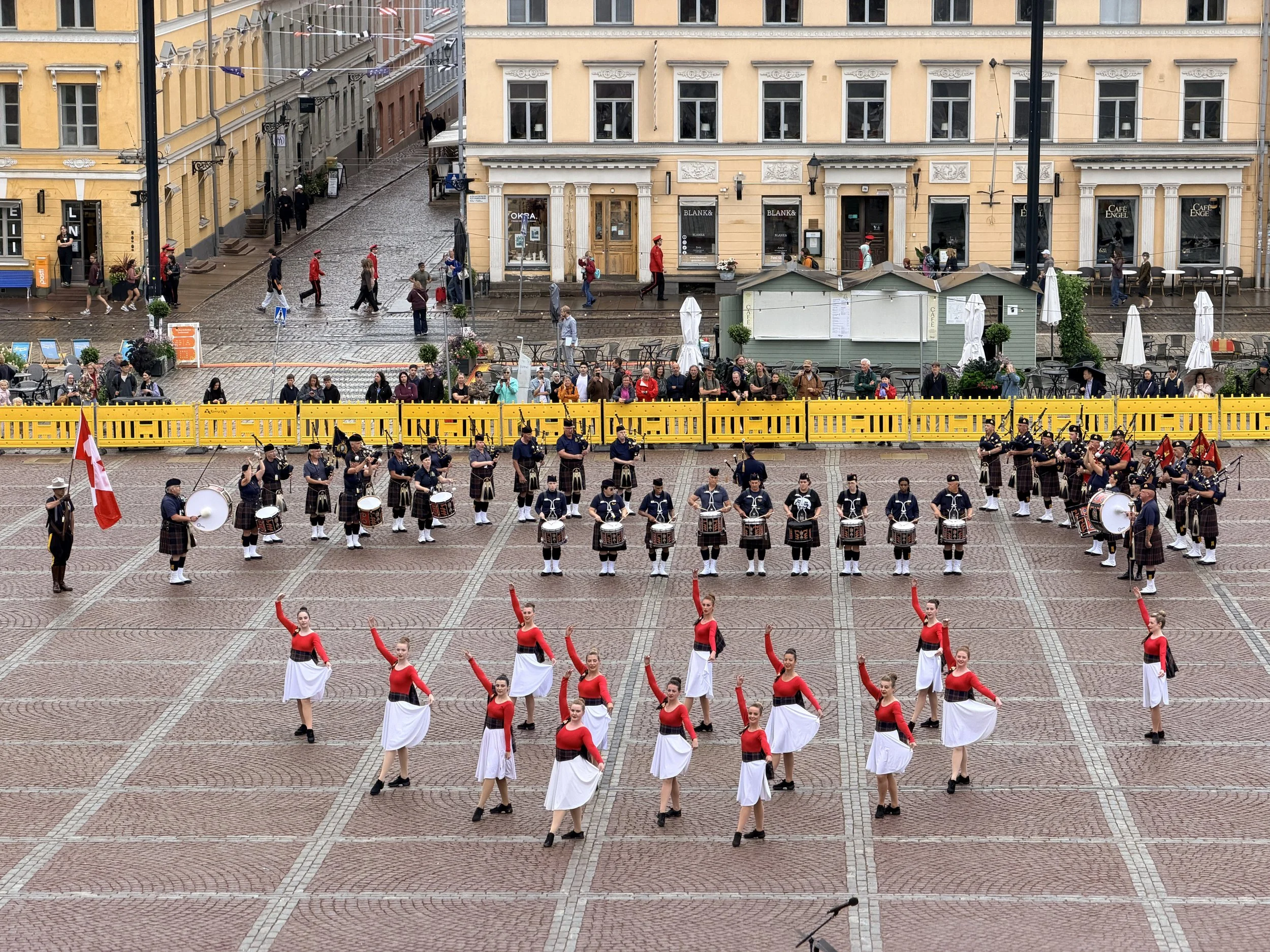
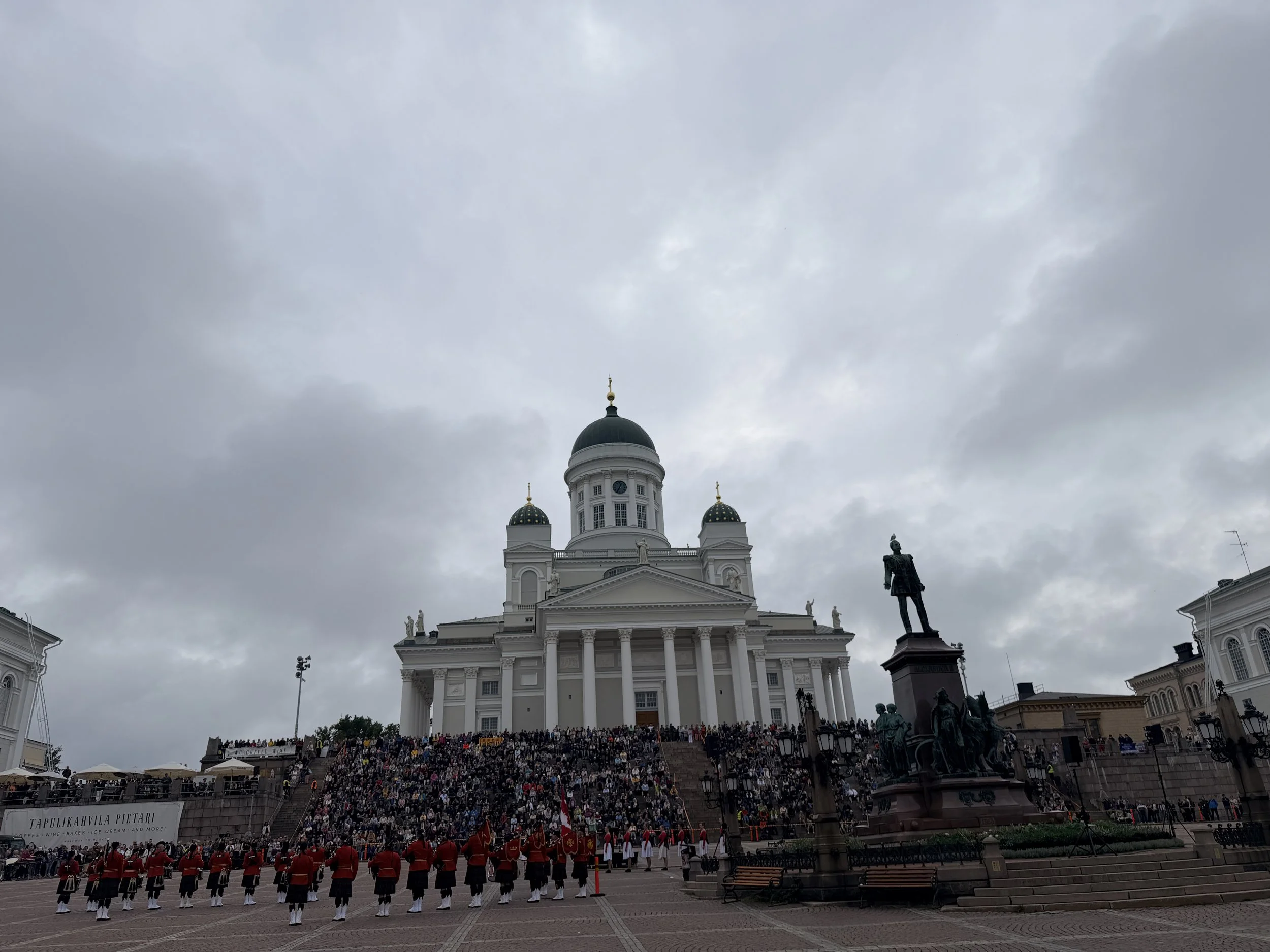
After breakfast at the hotel, we walked to the ferry terminal to catch the public ferry to Suomenlinna. On the way, we heard the sound of a military band performing near Helsinki Cathedral. Senate Square had been closed off, and a Canadian military band was rehearsing for an upcoming performance. We stopped to watch for a few minutes before continuing to the ferry.
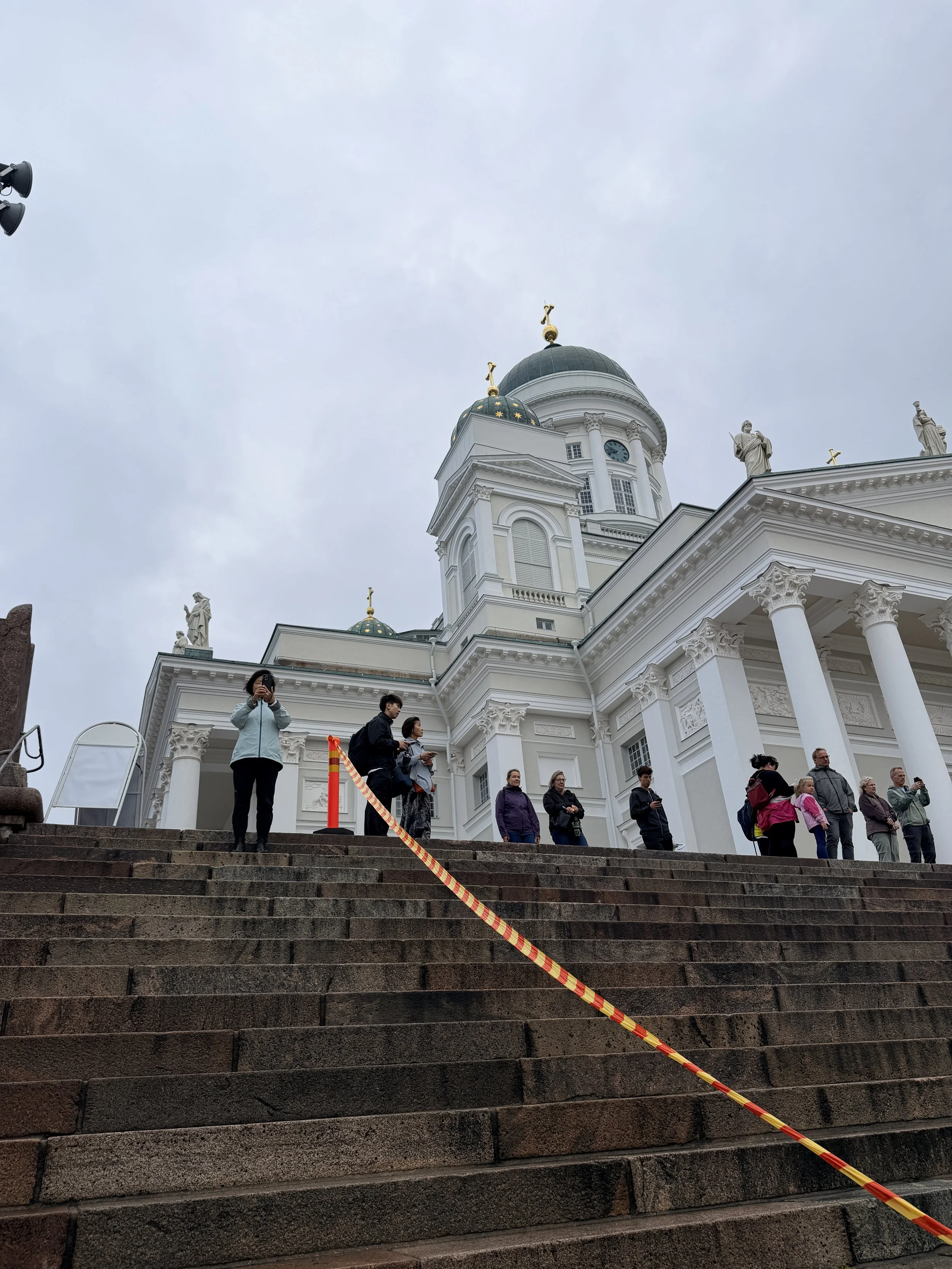
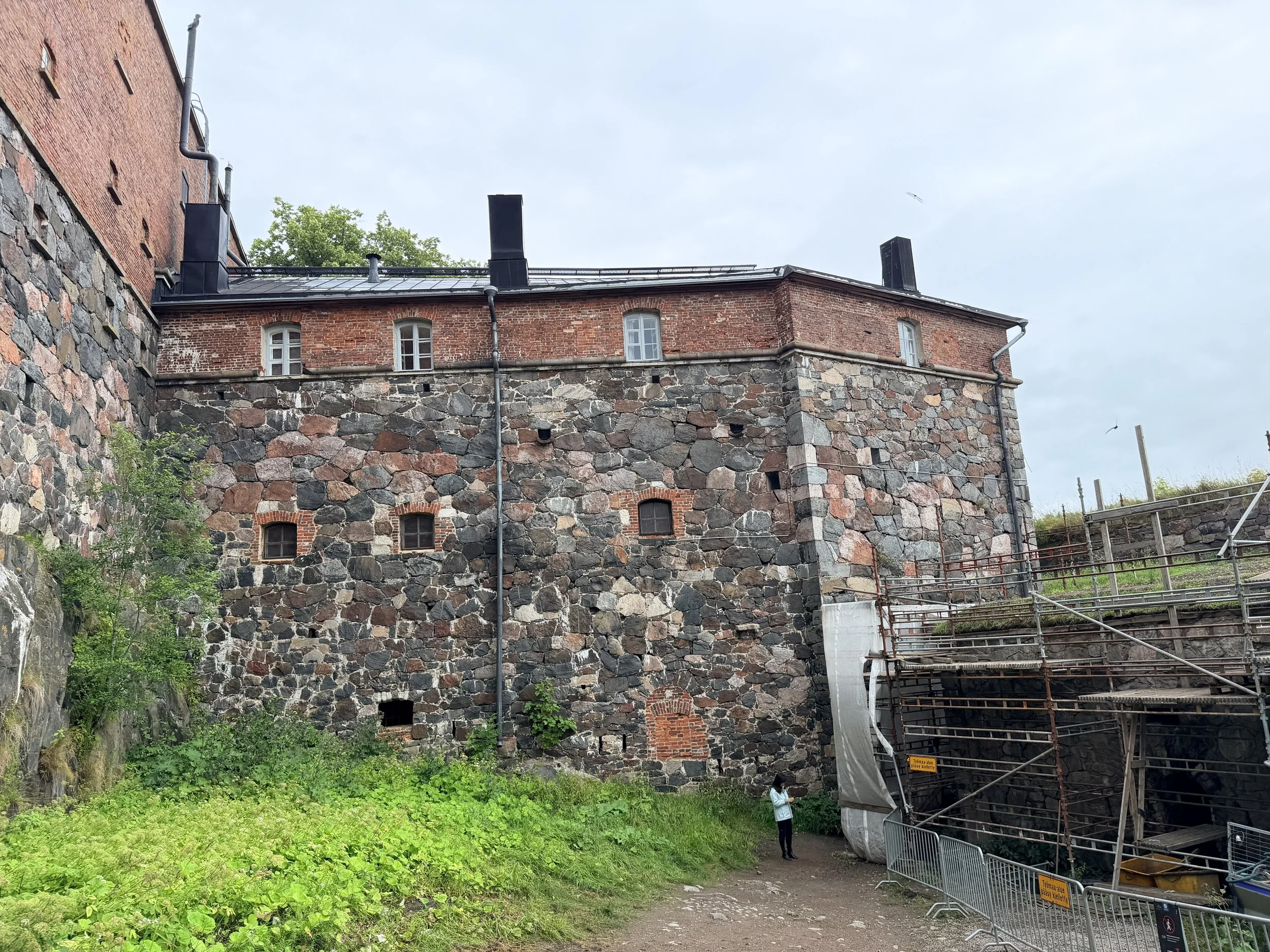
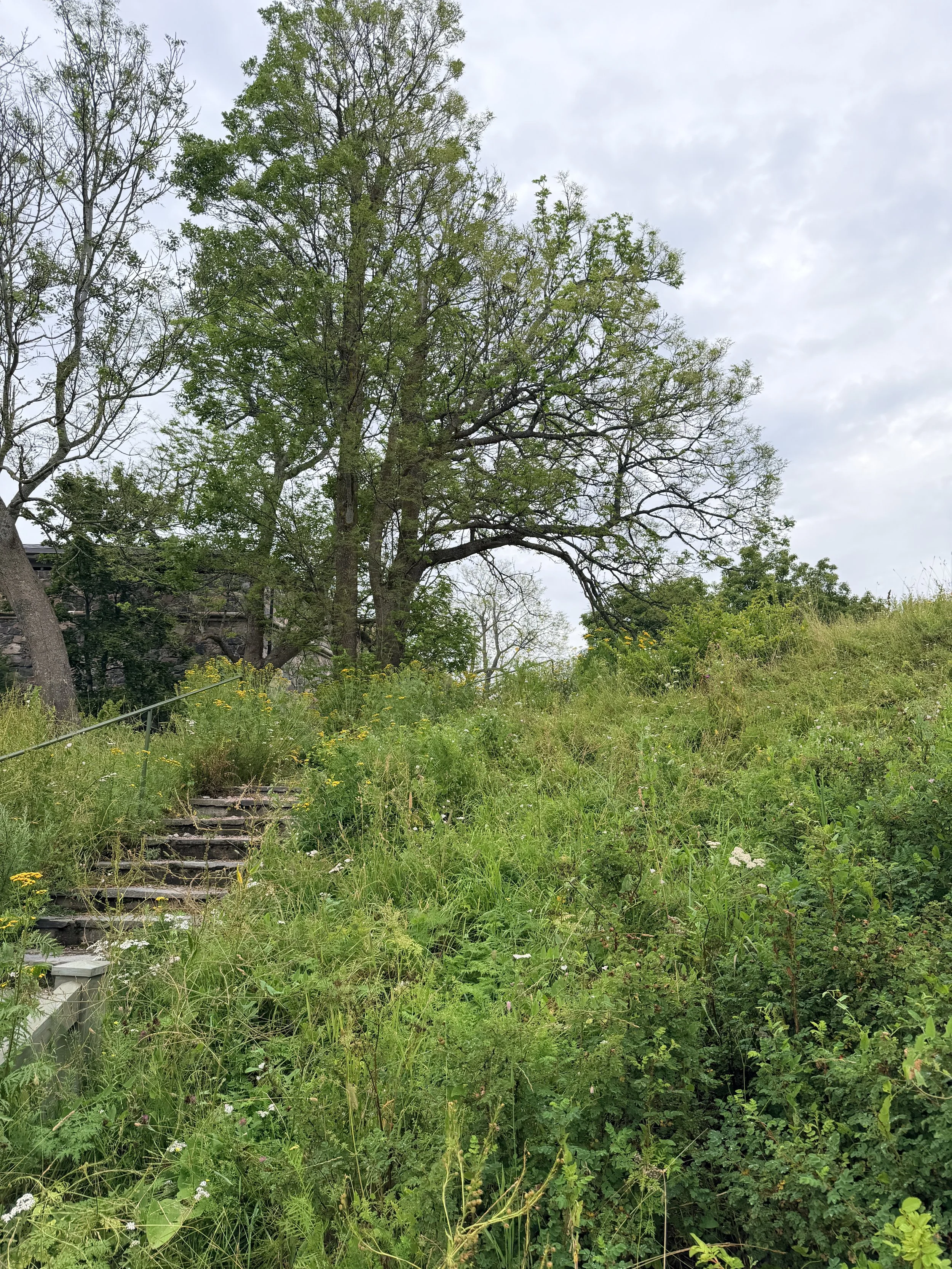
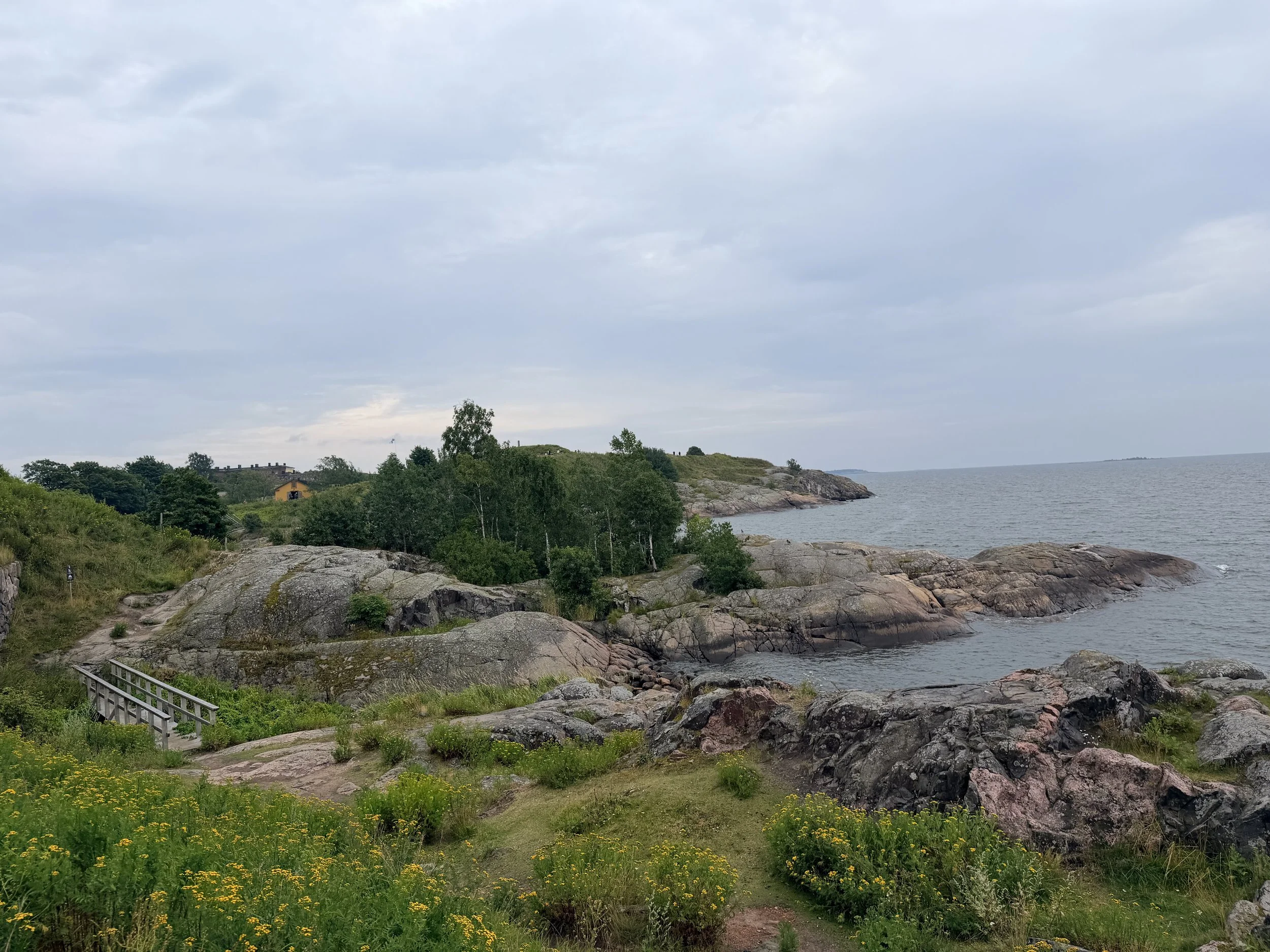
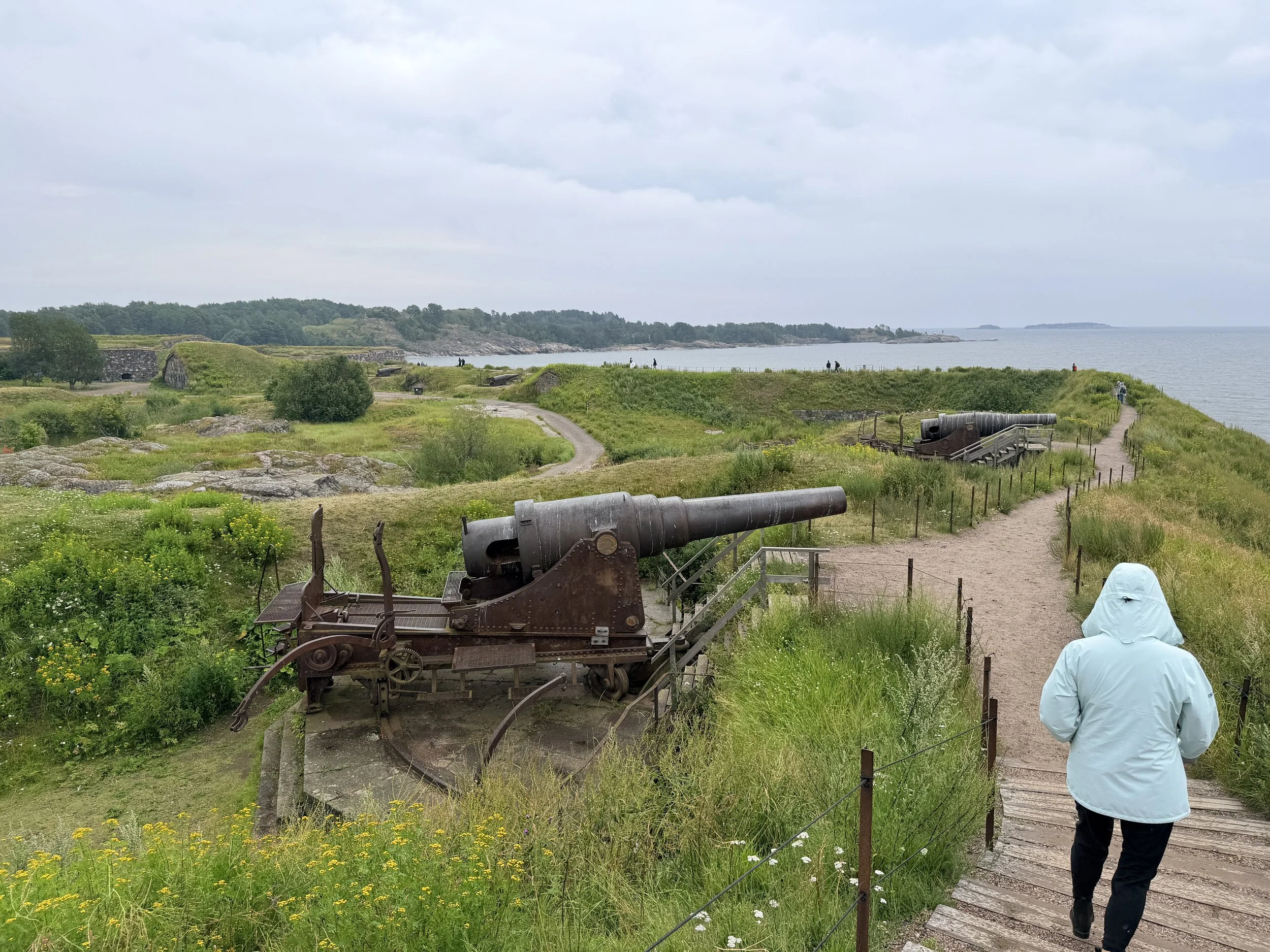
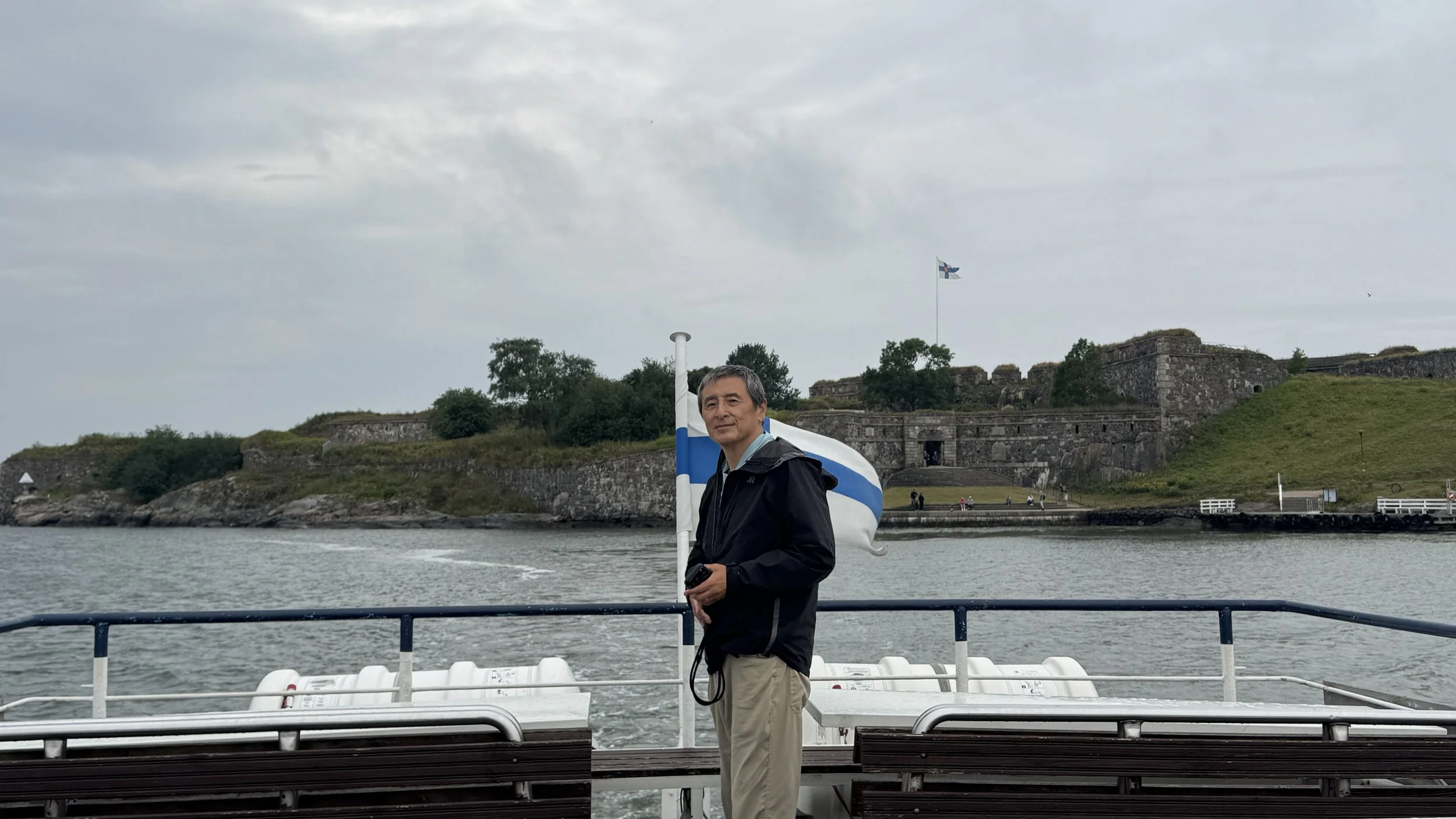
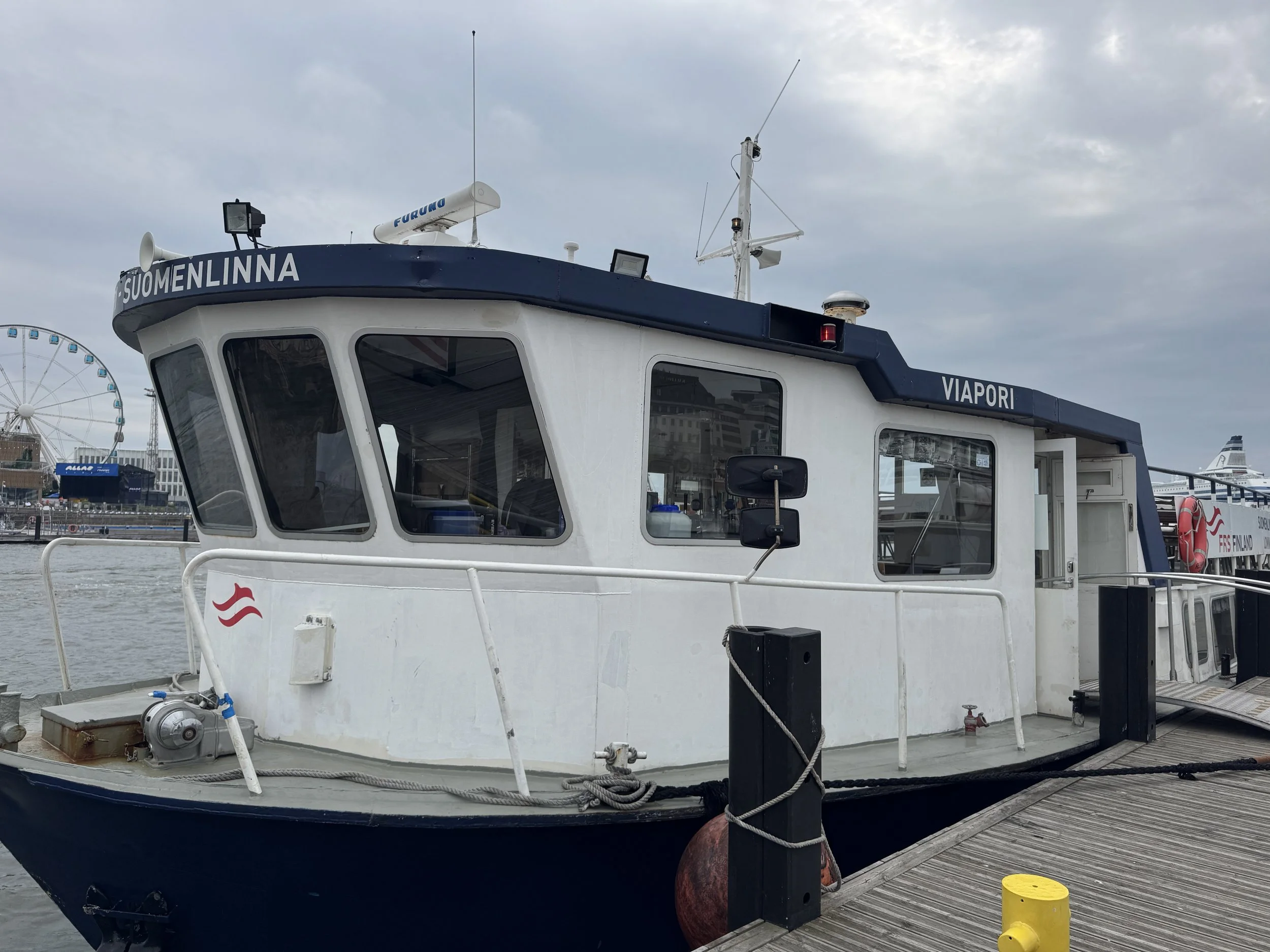
A pleasant 15-minute ride brought us to Suomenlinna, where we followed the recommended Blue Route around the island. The former sea fortress has been beautifully preserved and transformed into one of Finland's most popular attractions. The historic fortifications, scenic walking paths, and well-maintained parks made it an enjoyable place to explore. At the end of the route, we reached the iconic King's Gate. Rather than walking all the way back to the public ferry terminal, we took a private water bus directly back to the city center for a few extra euros.
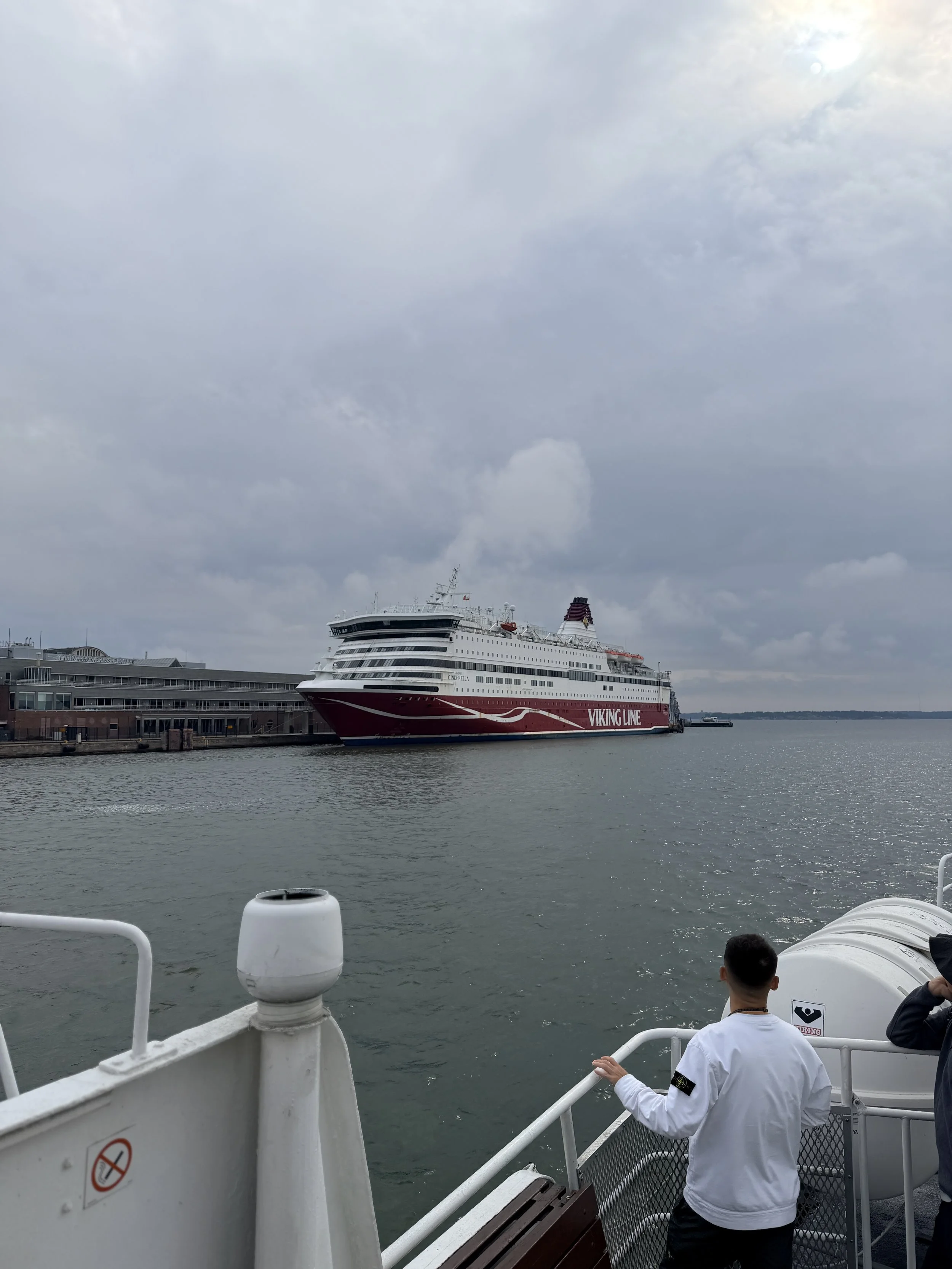
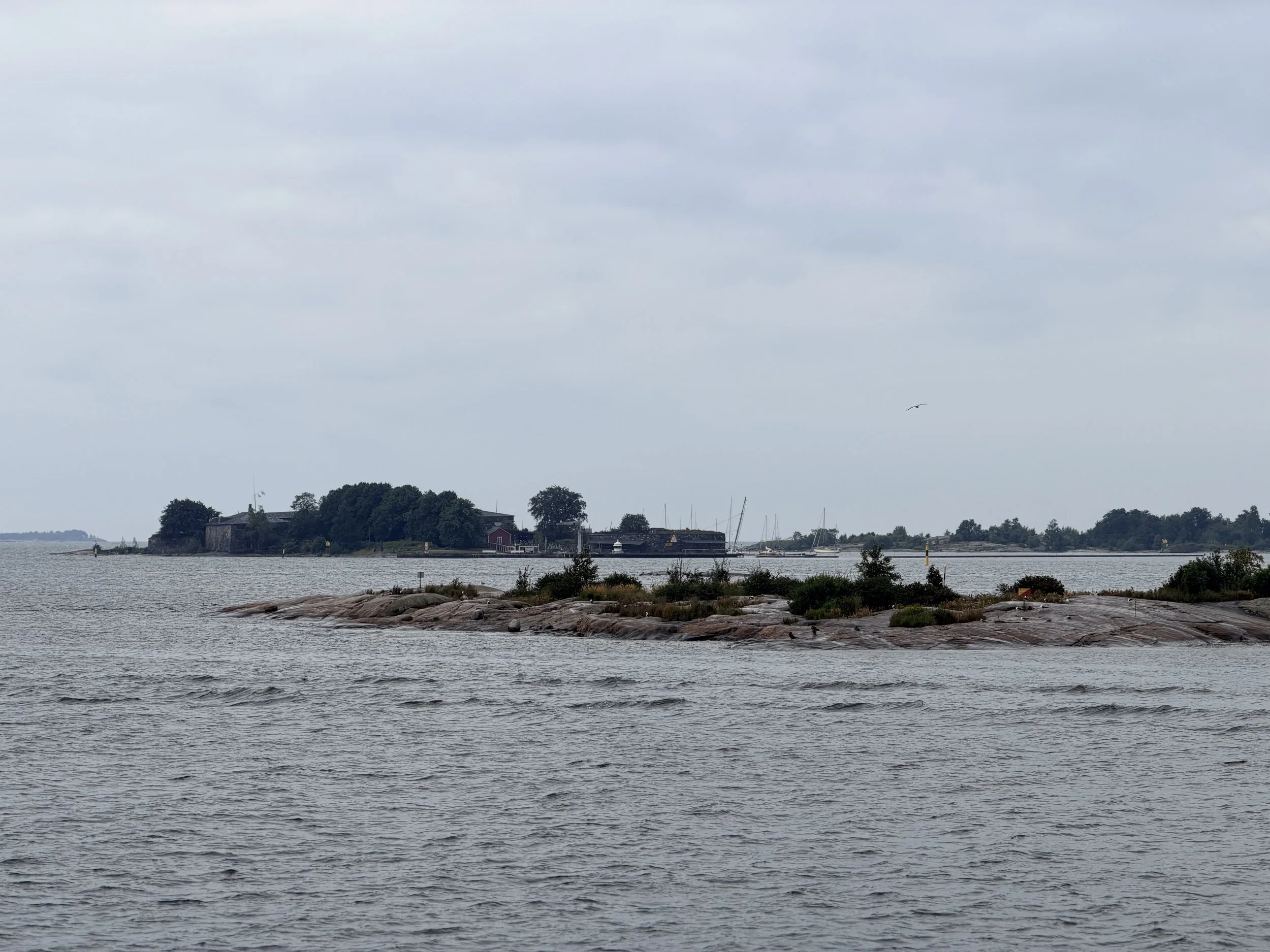
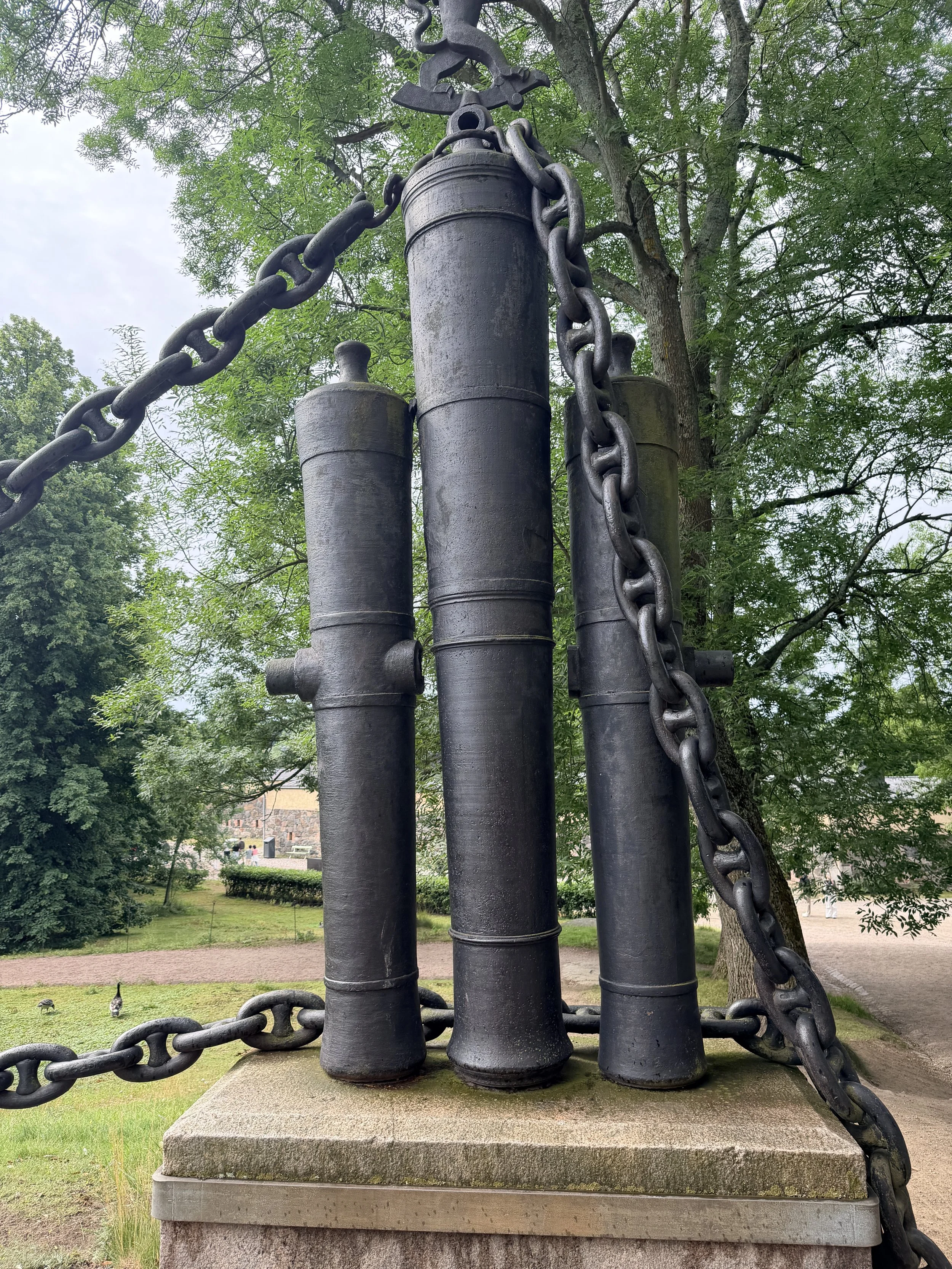
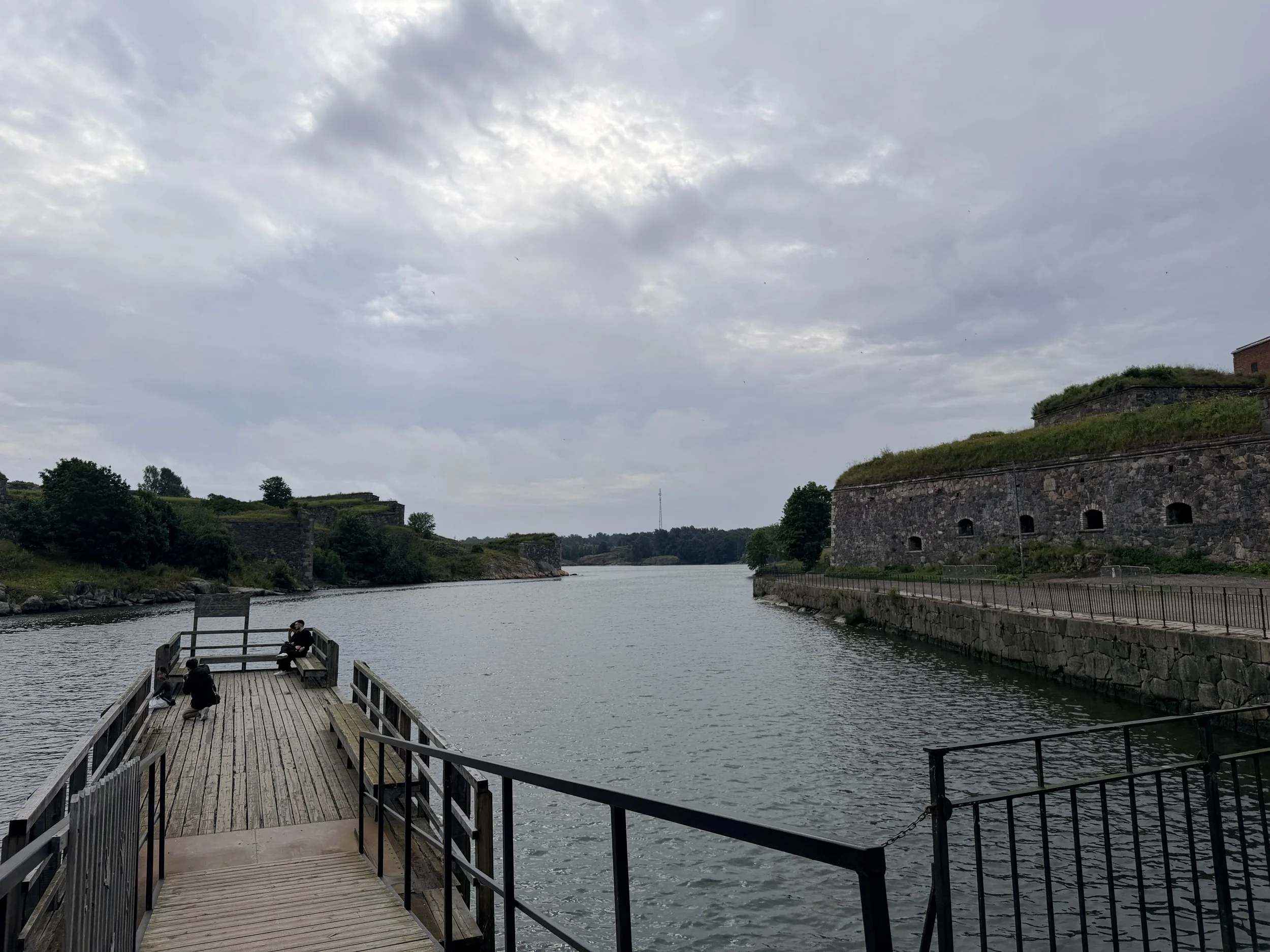
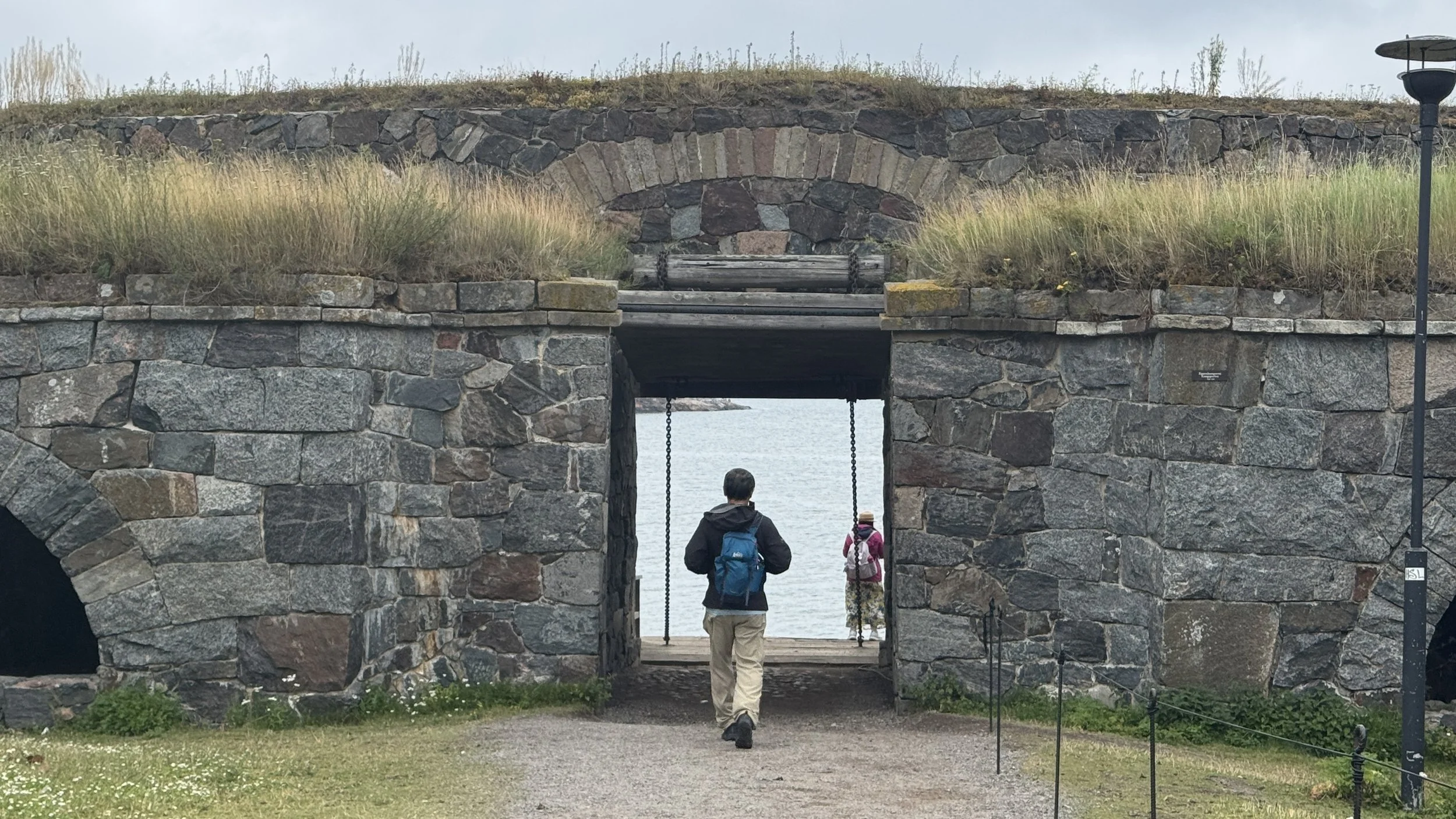
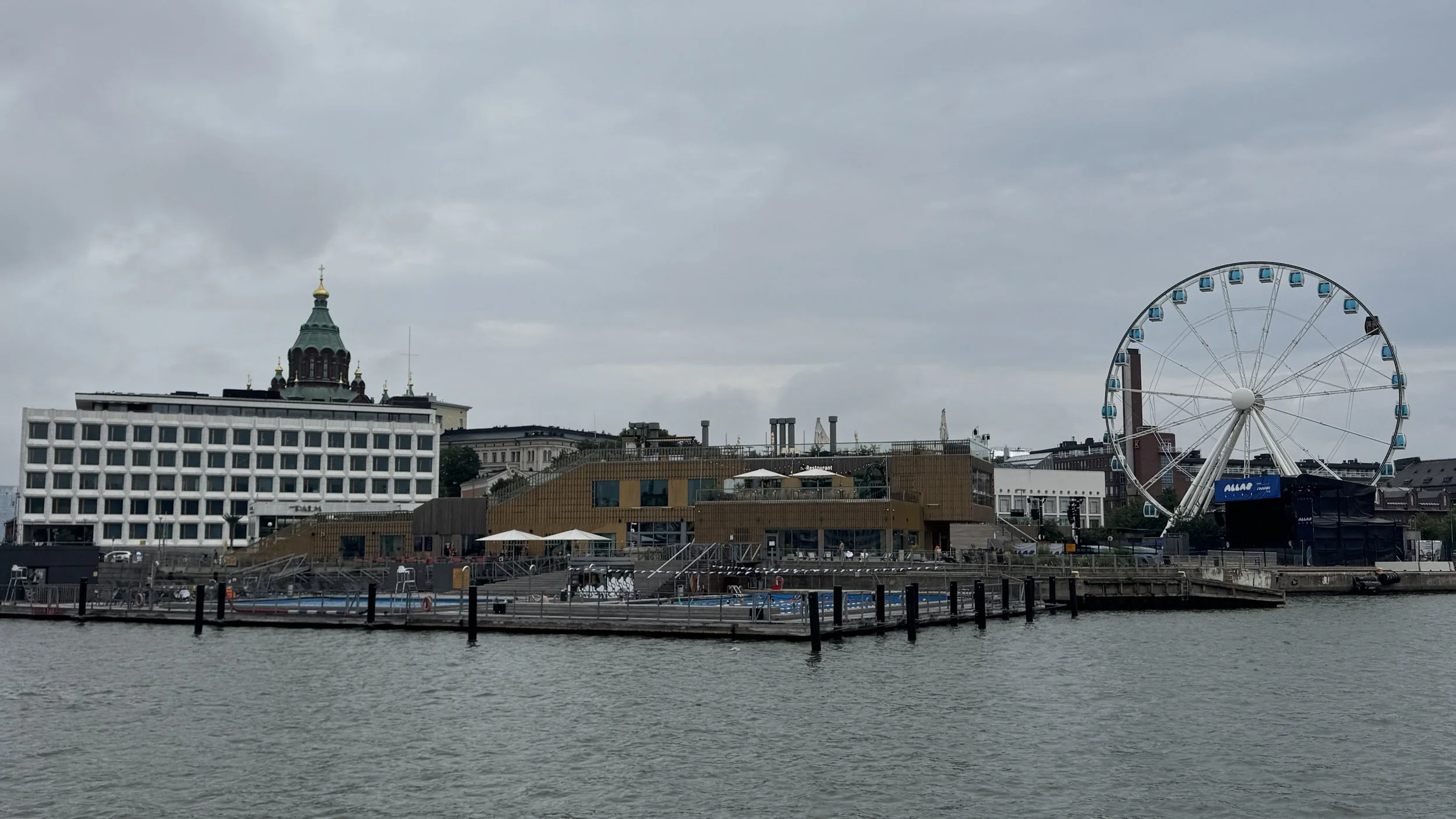
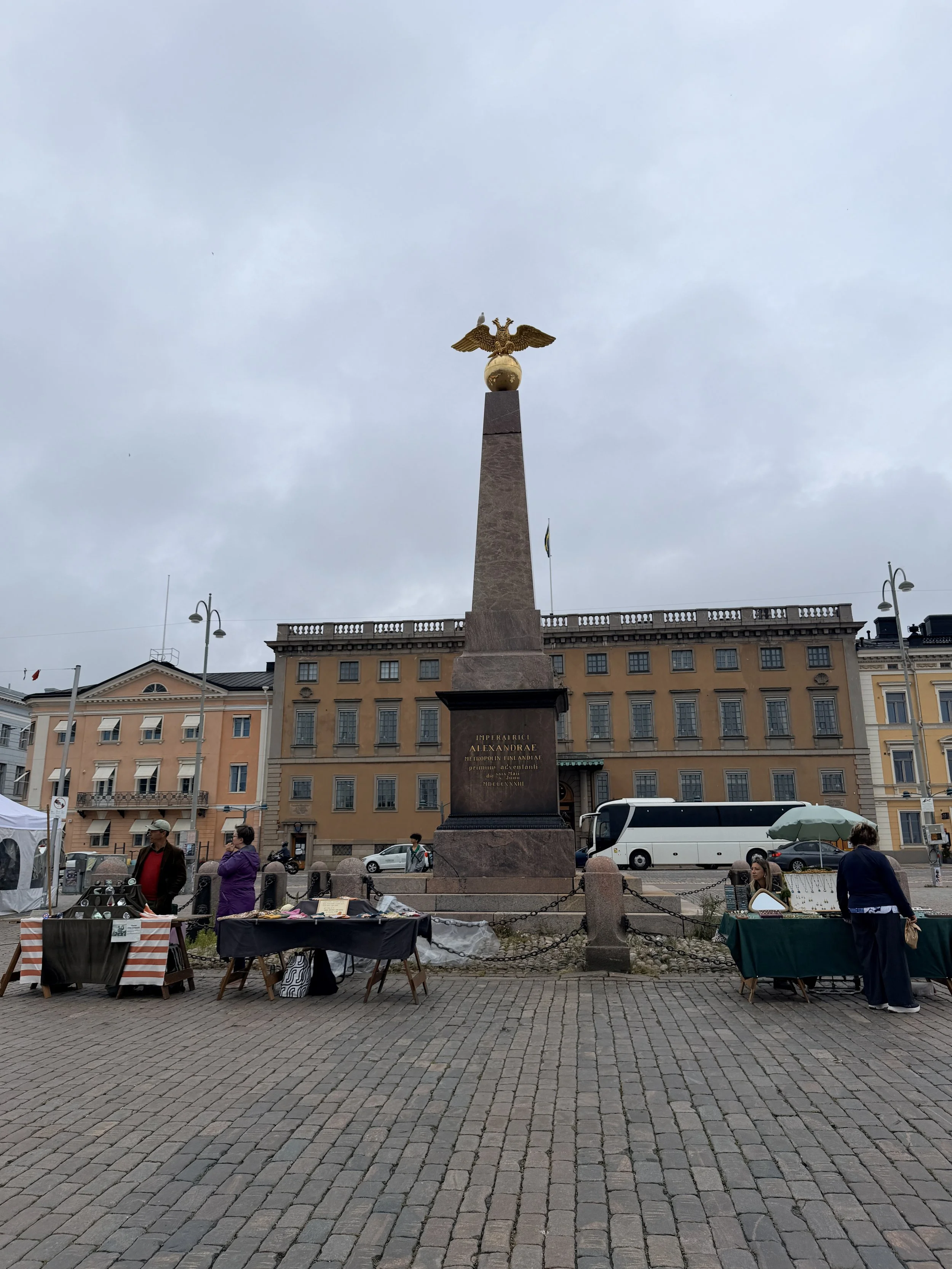
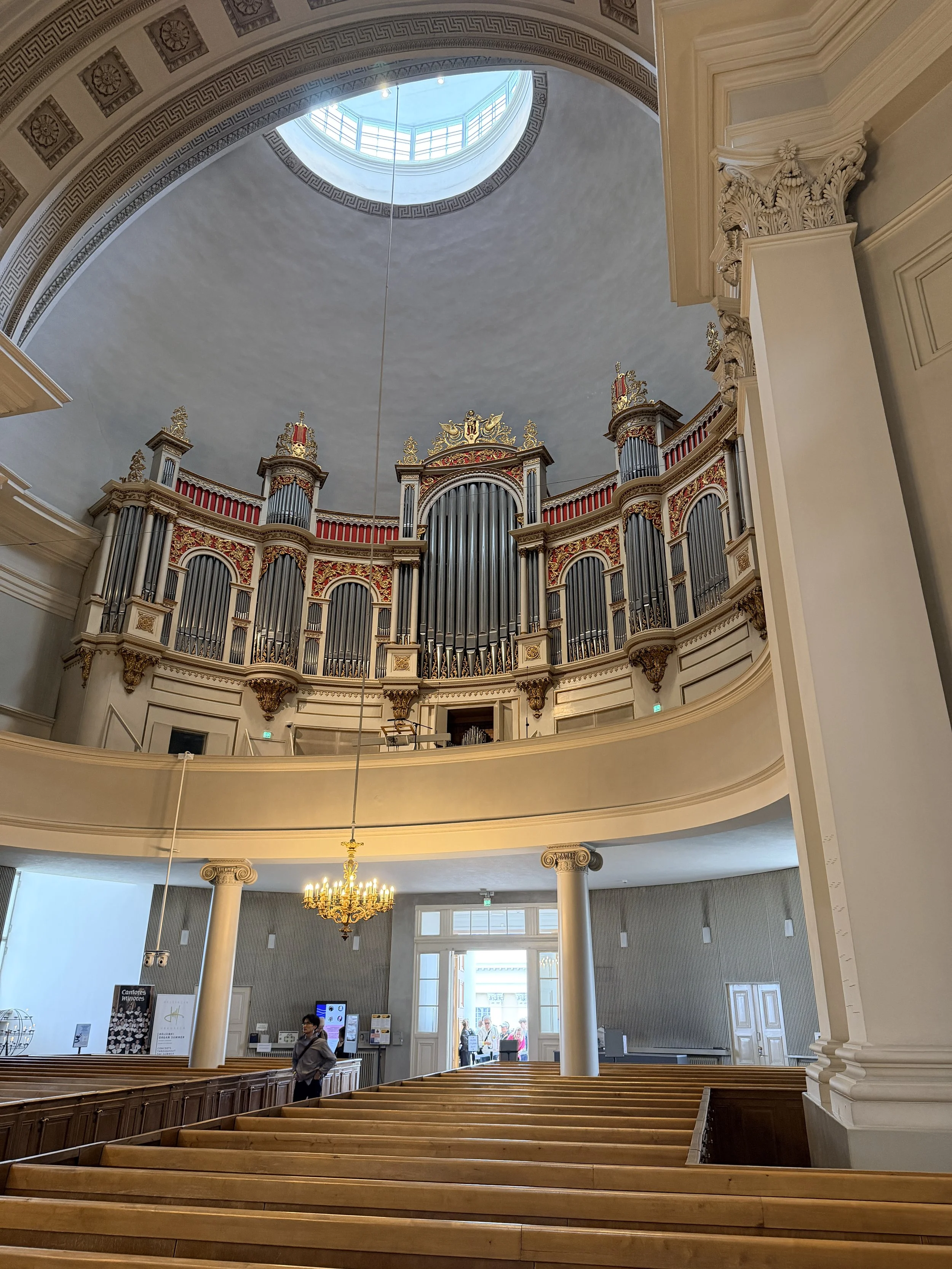
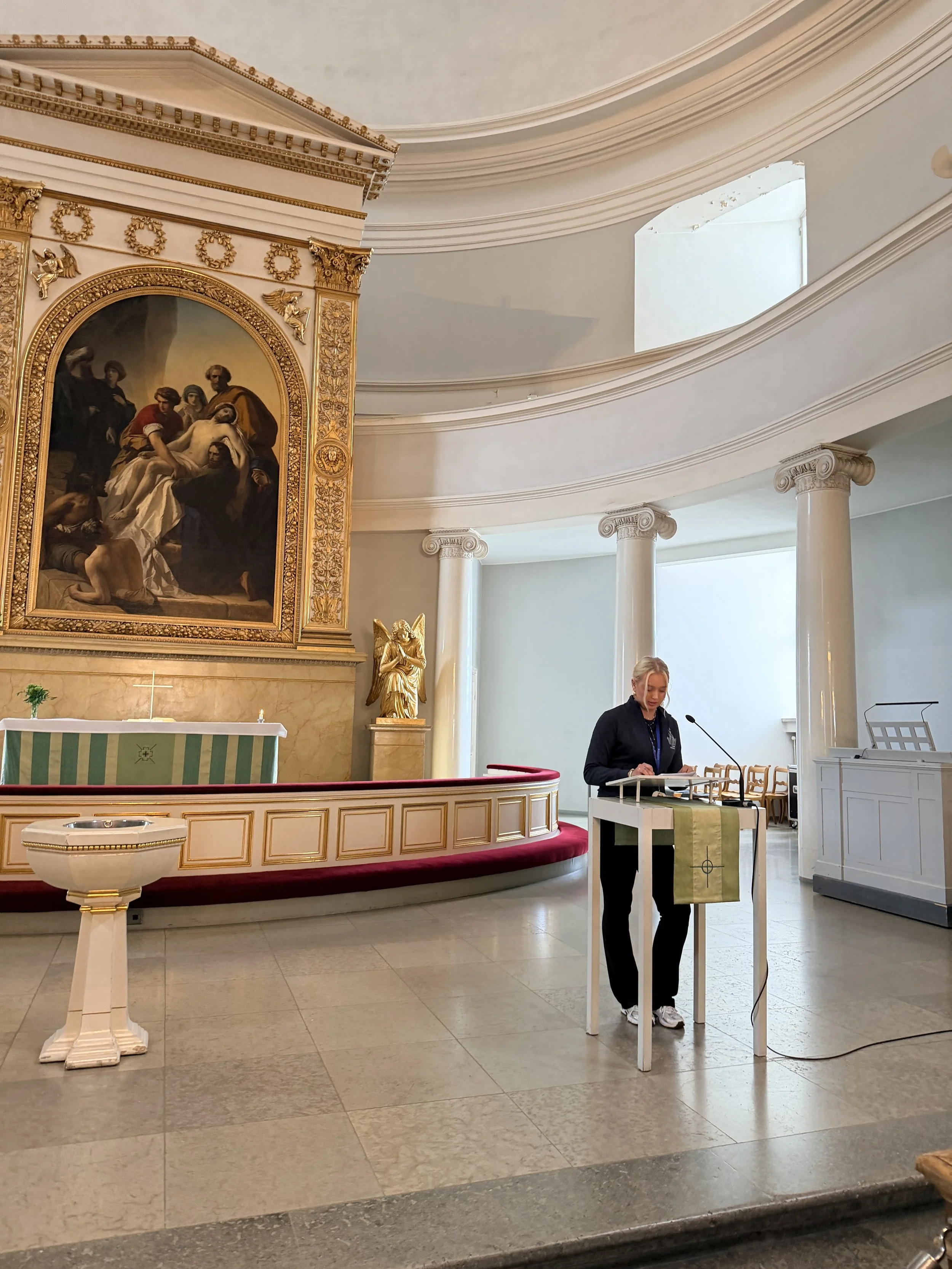
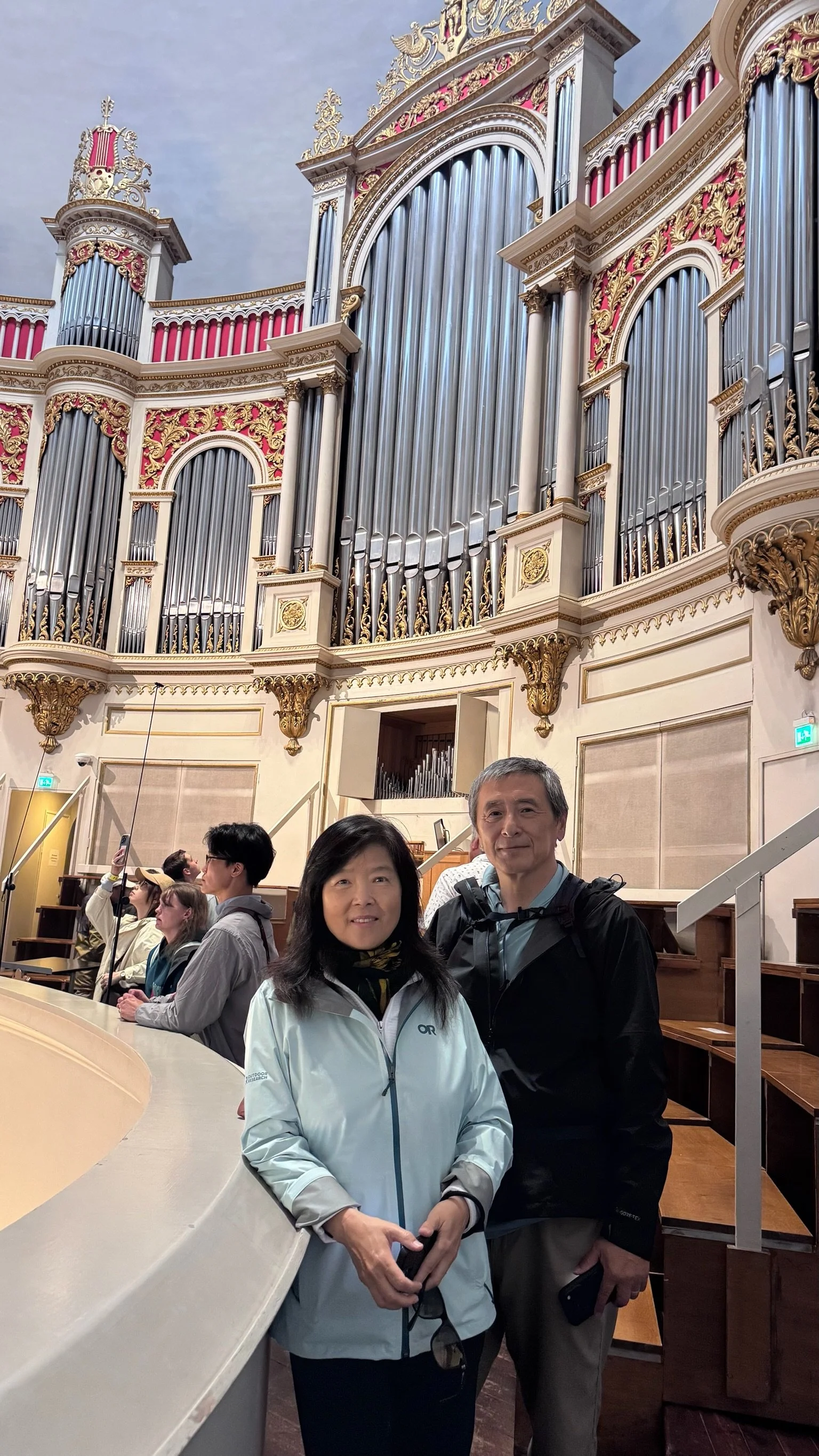
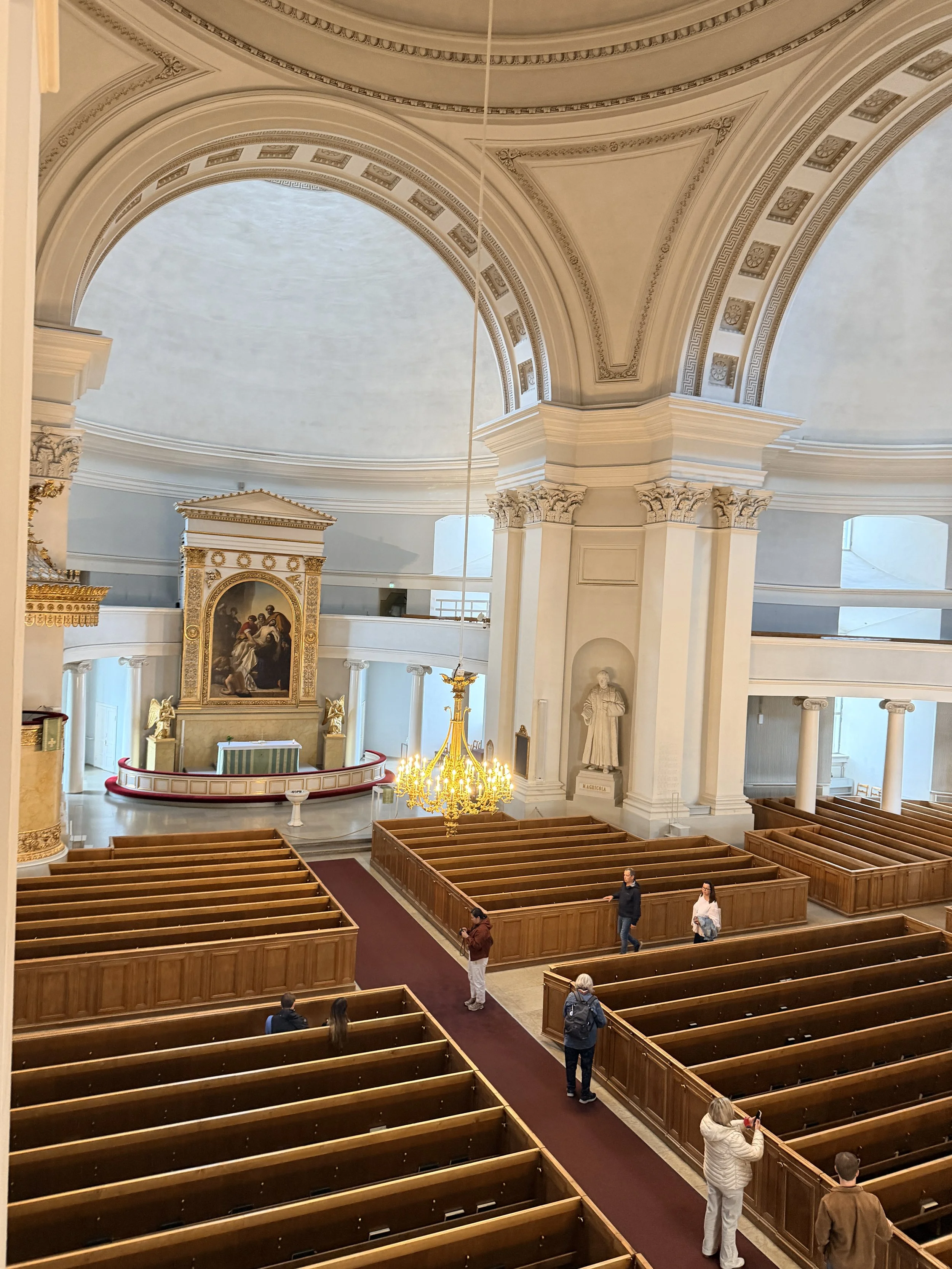
We met our friends at Market Square and walked together to Senate Square. To our surprise, the grand staircase leading up to Helsinki Cathedral was packed with spectators enjoying the music festival. We watched the performances for a while before visiting the cathedral itself. Although elegant and historically significant, the interior of the cathedral is quite simple and understated compared with many of Europe's great cathedrals.
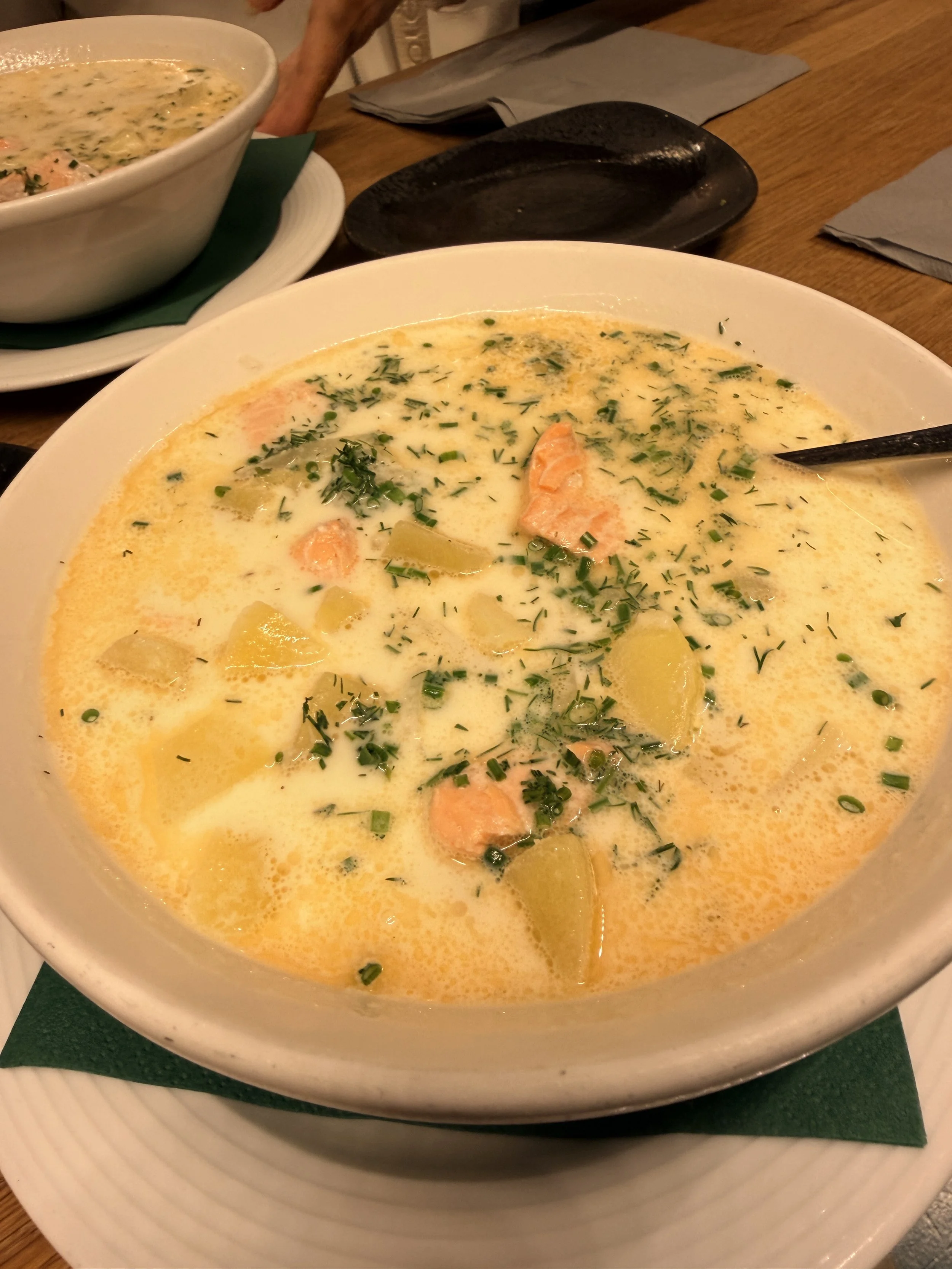
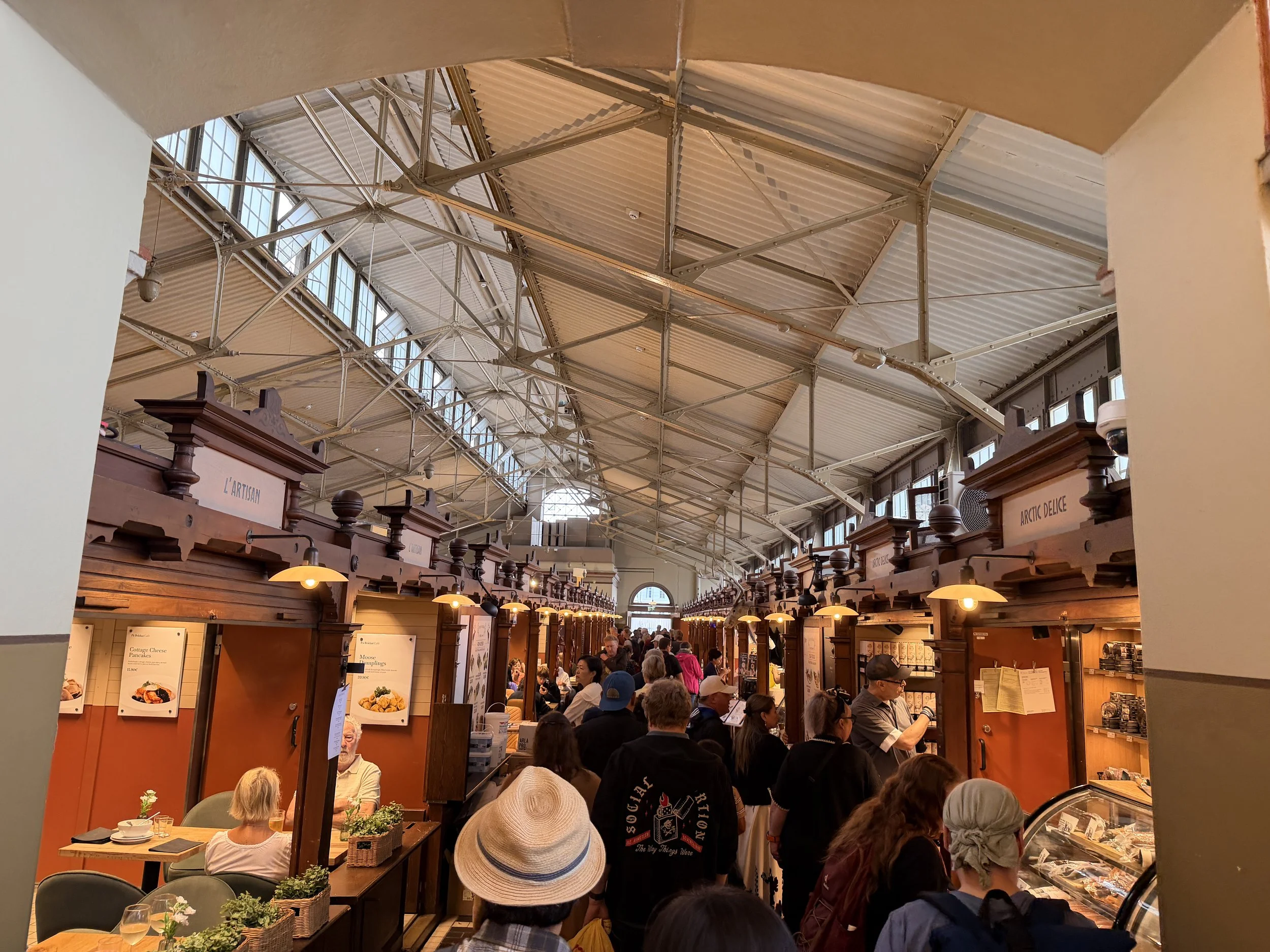
For lunch, we enjoyed salmon soup, one of Finland's most traditional dishes, at the Old Market Hall. It was good, though not quite as memorable as we had expected.
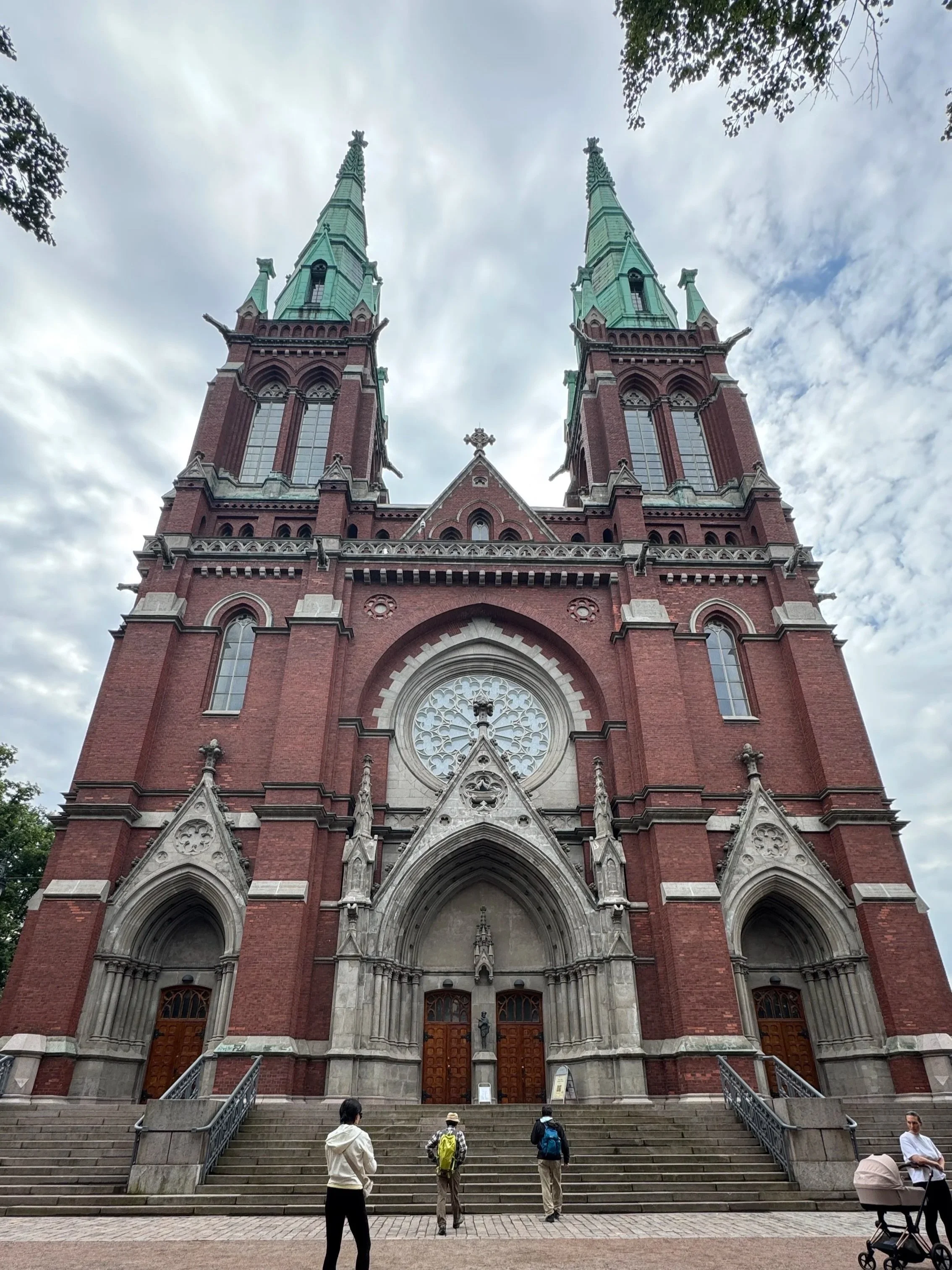
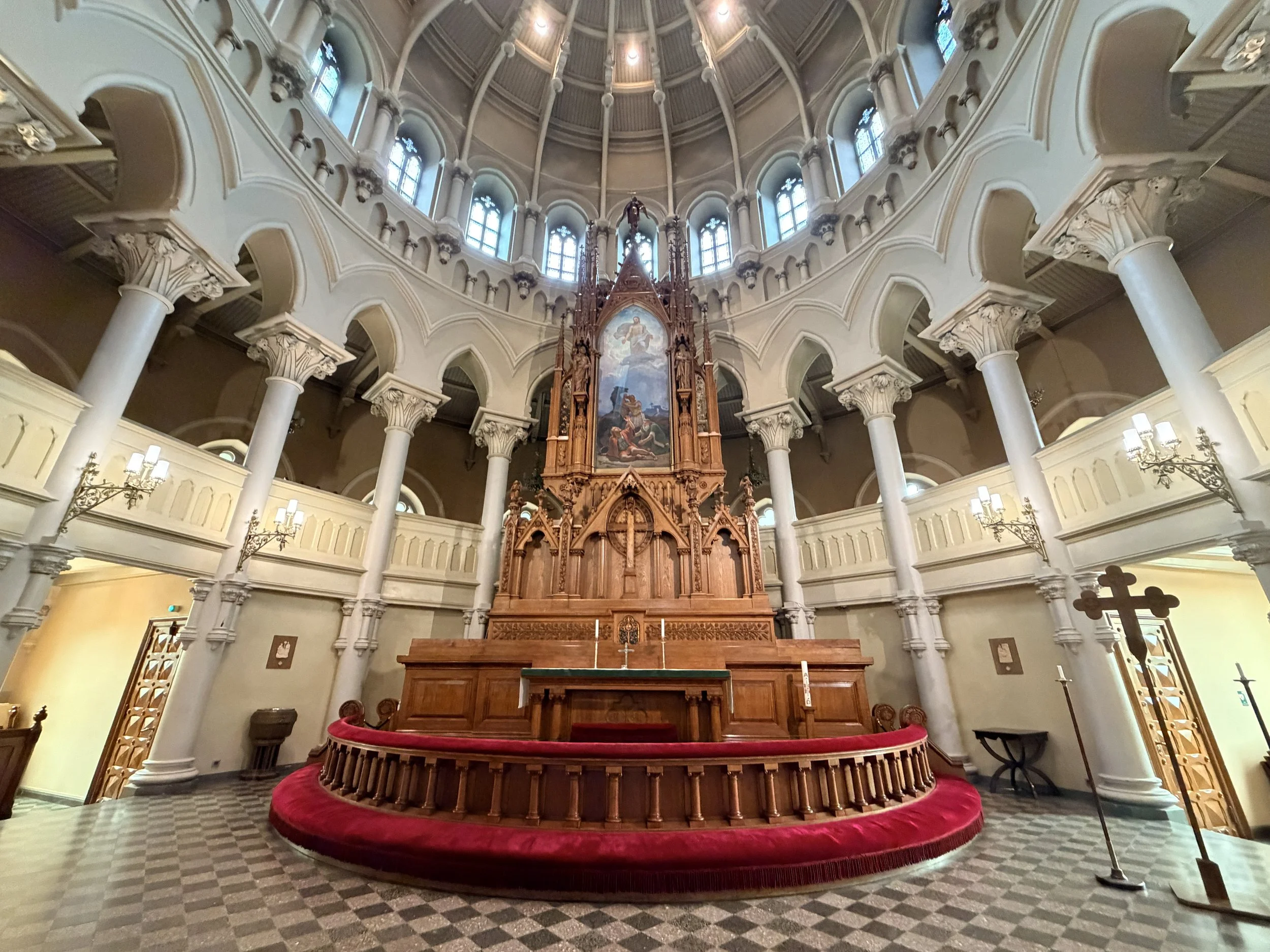
In the afternoon, we visited St. John’s Church before stopping by our friends’ “home away from home” nearby. We then returned to the hotel for a short rest before heading out again to meet them for dinner.
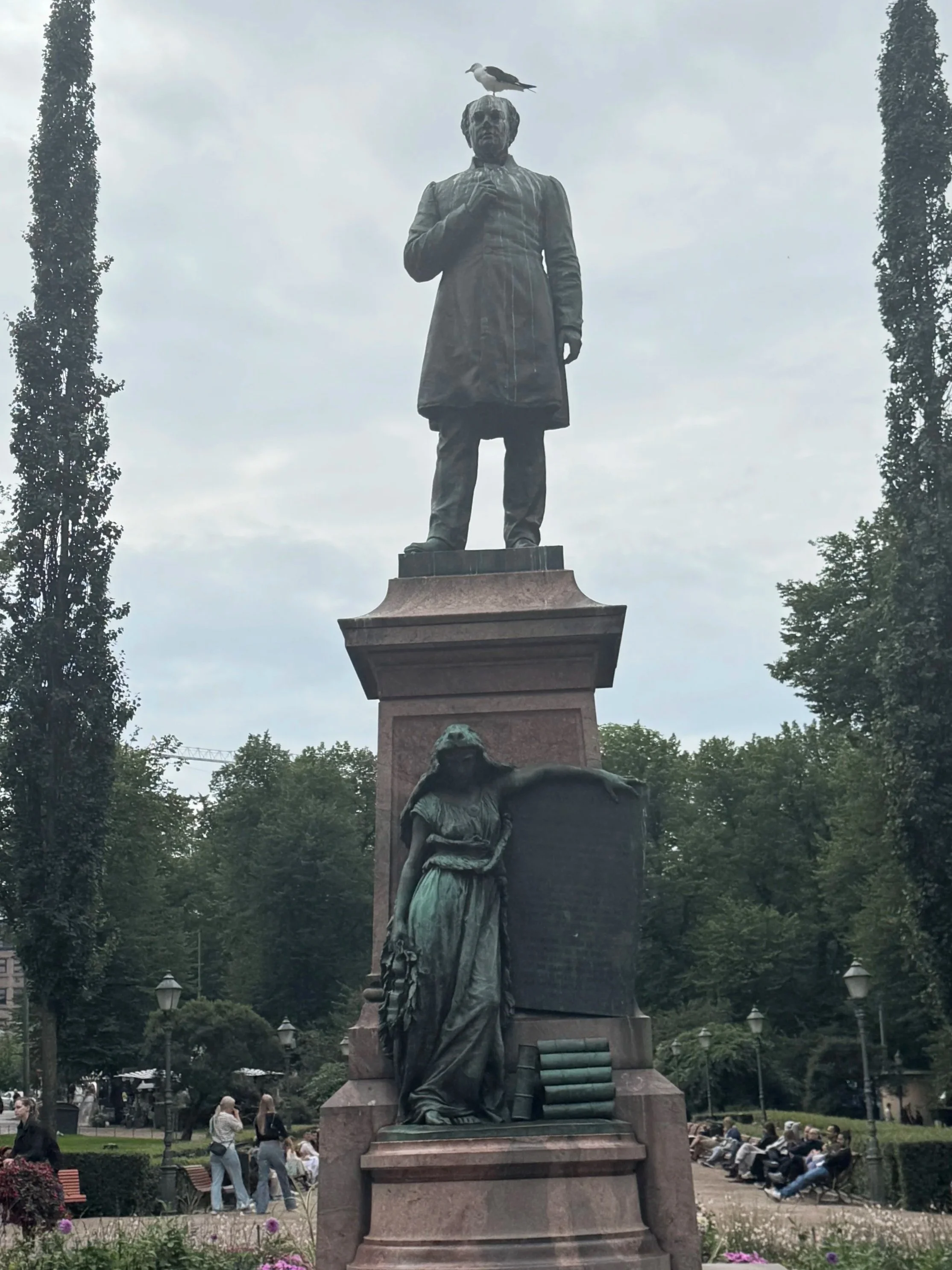
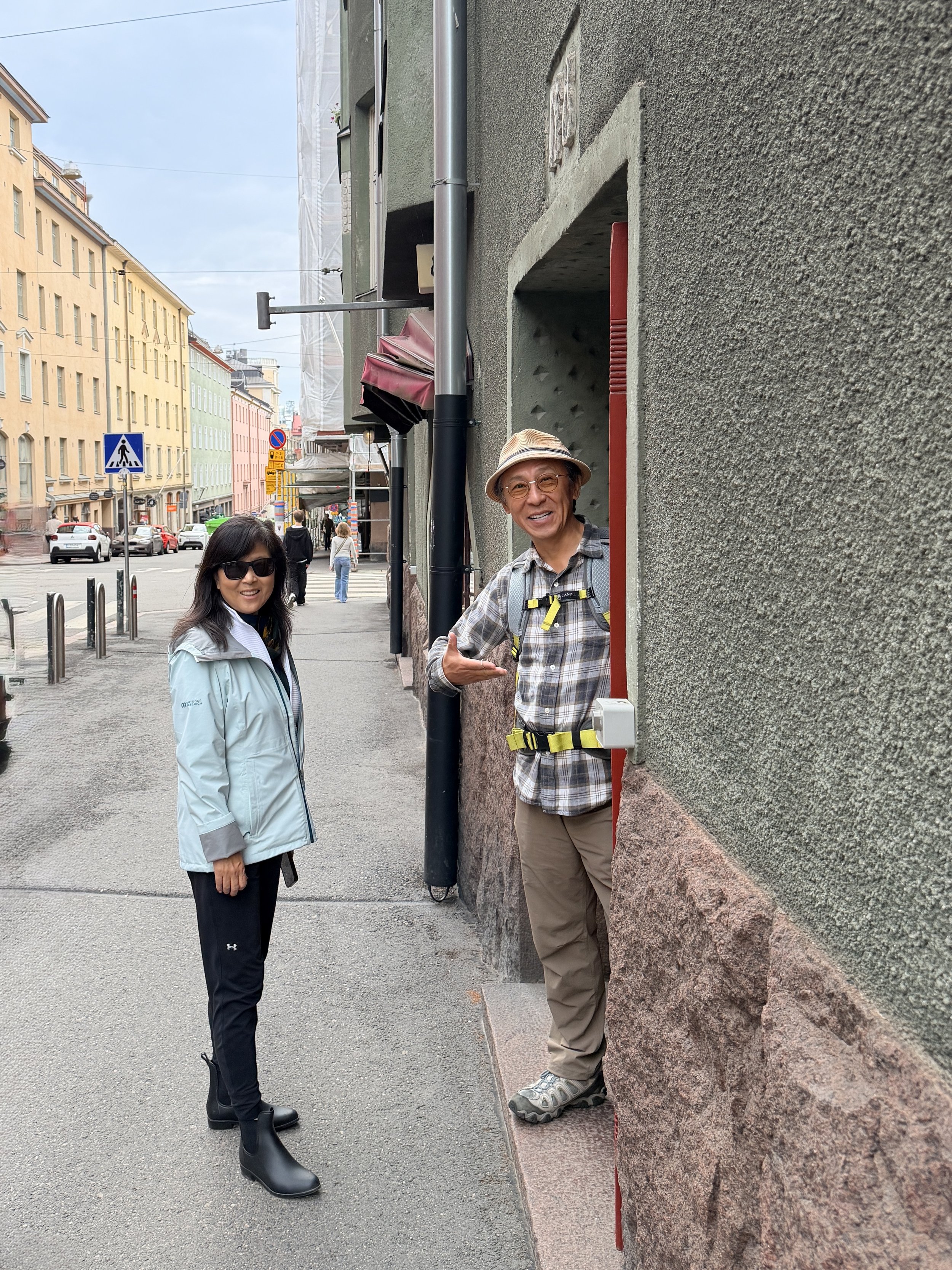
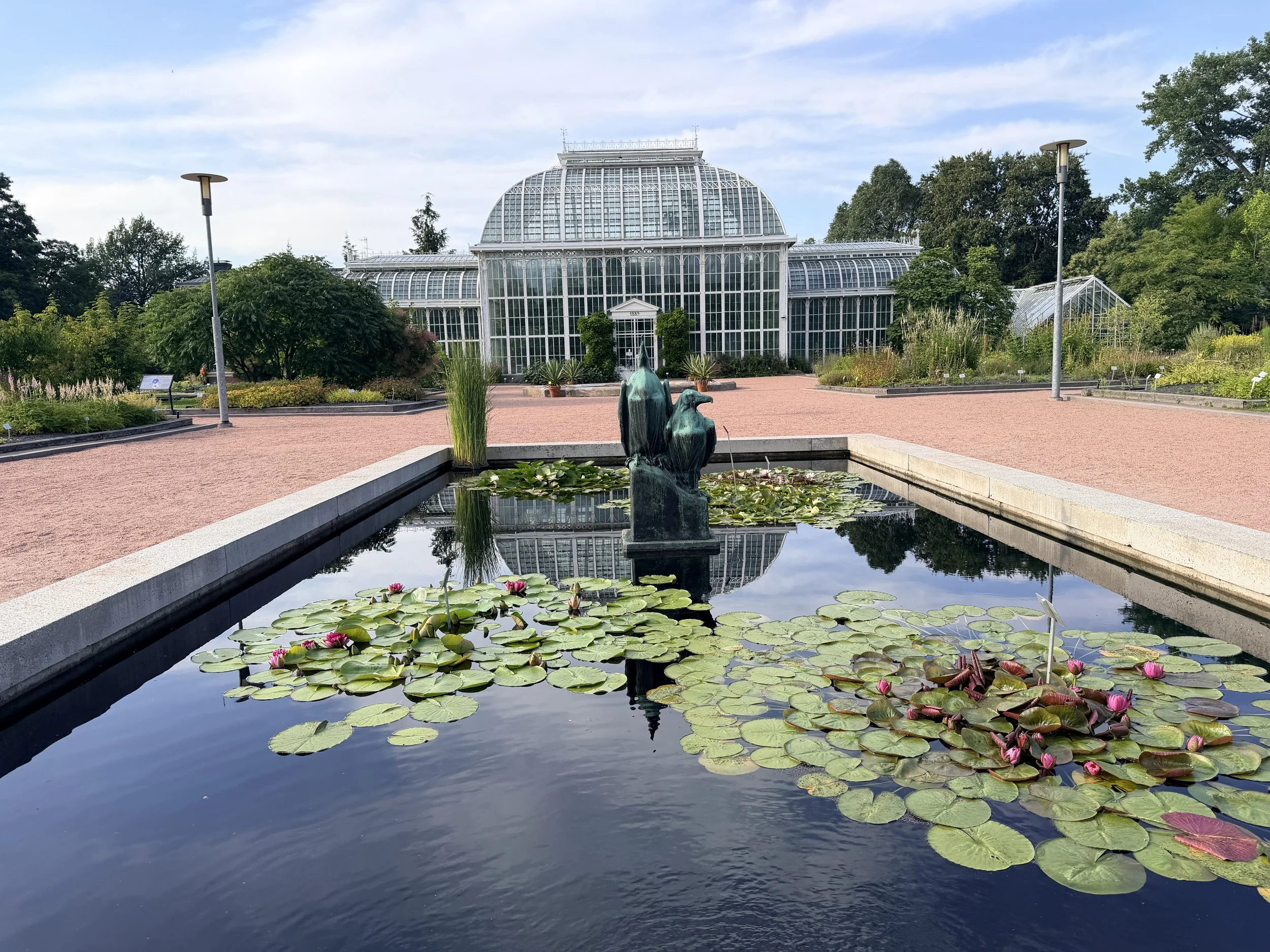
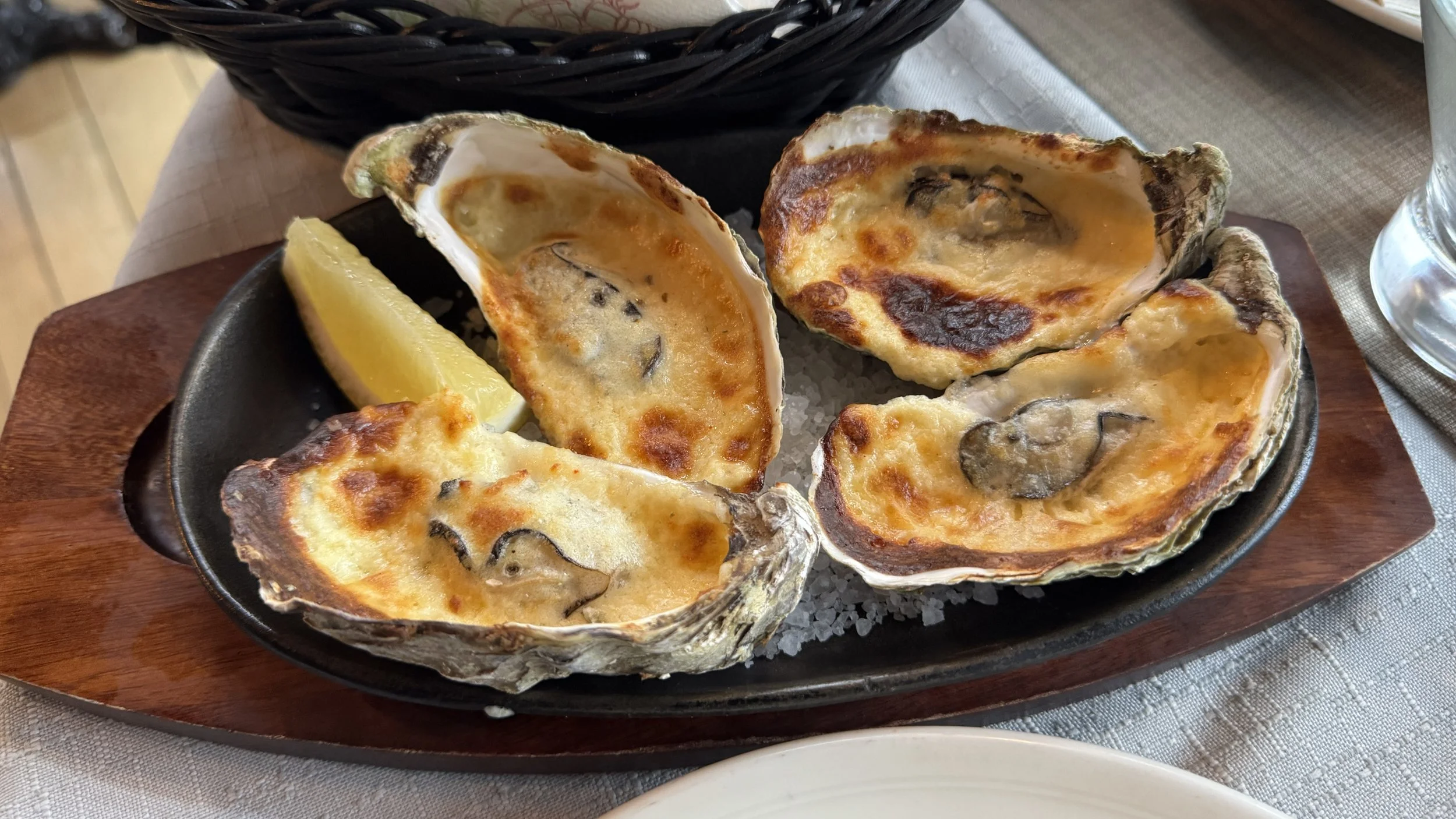
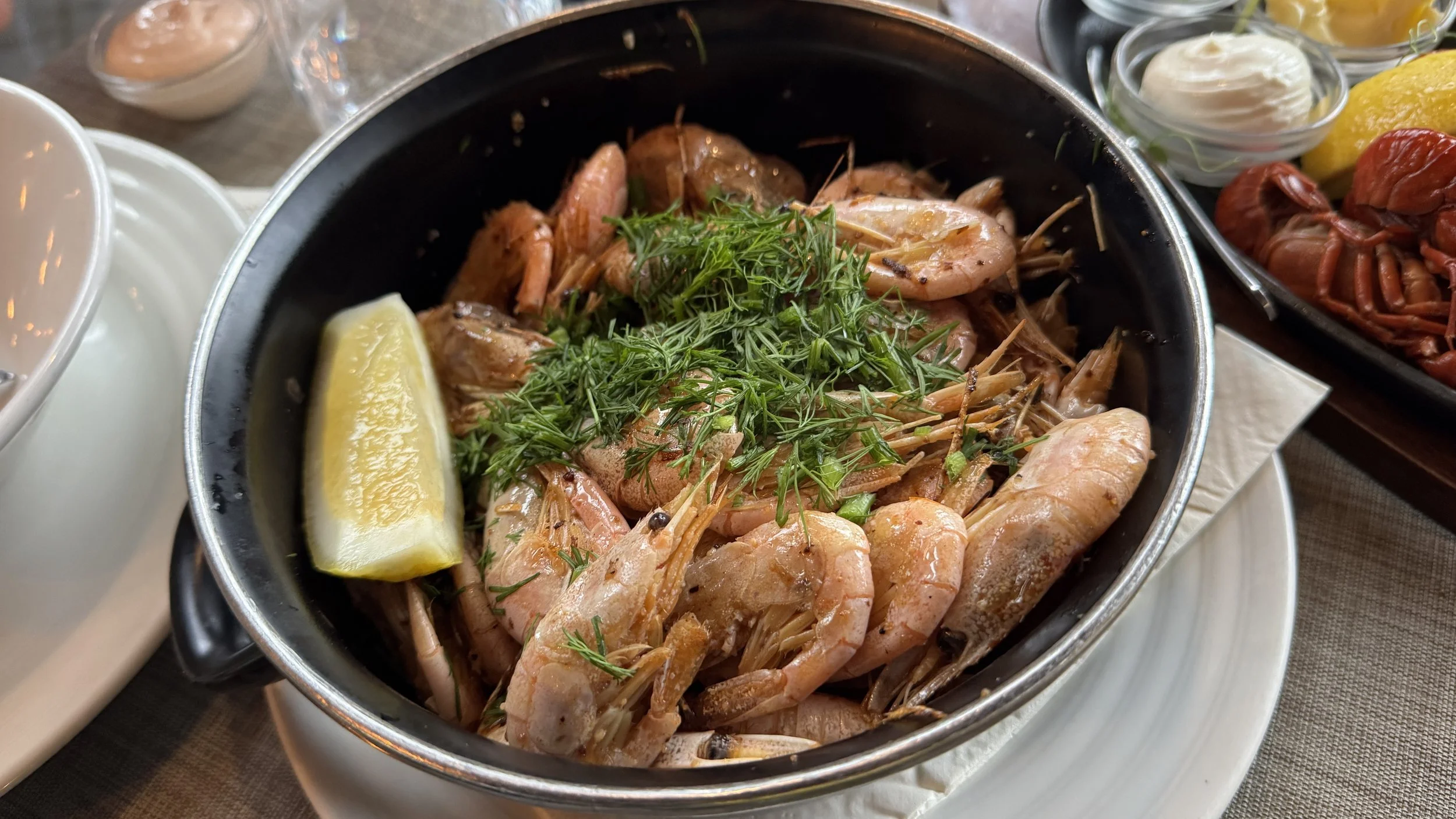
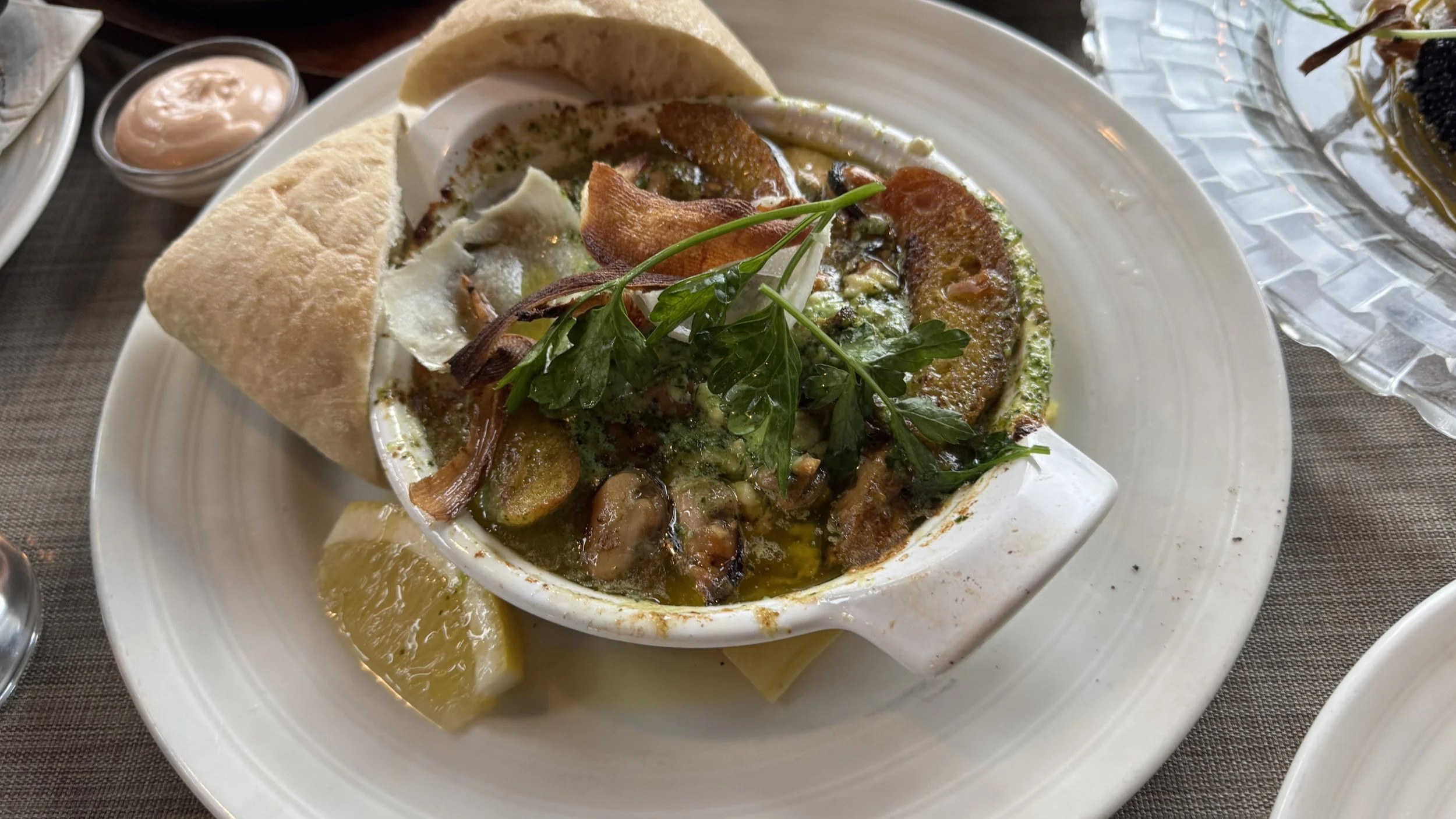
We took a pleasant walk through the botanical garden and the city on our way to the seafood restaurant. Dinner was excellent, and afterward, we ended the evening with coffee and cakes at Fazer Café, one of Helsinki’s most iconic and historic cafés. It was a relaxing and delicious way to wrap up another wonderful day in Finland’s capital.
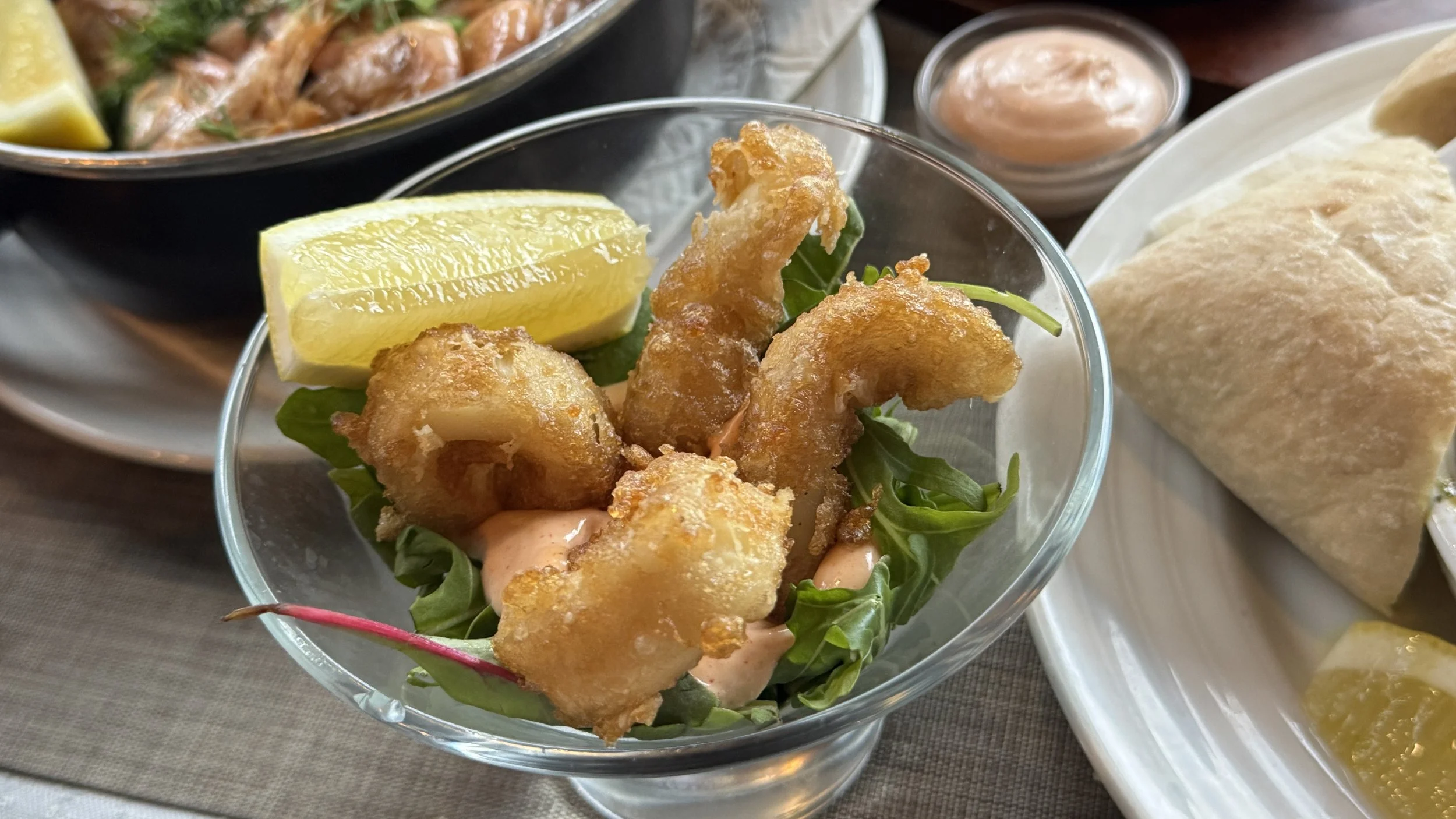
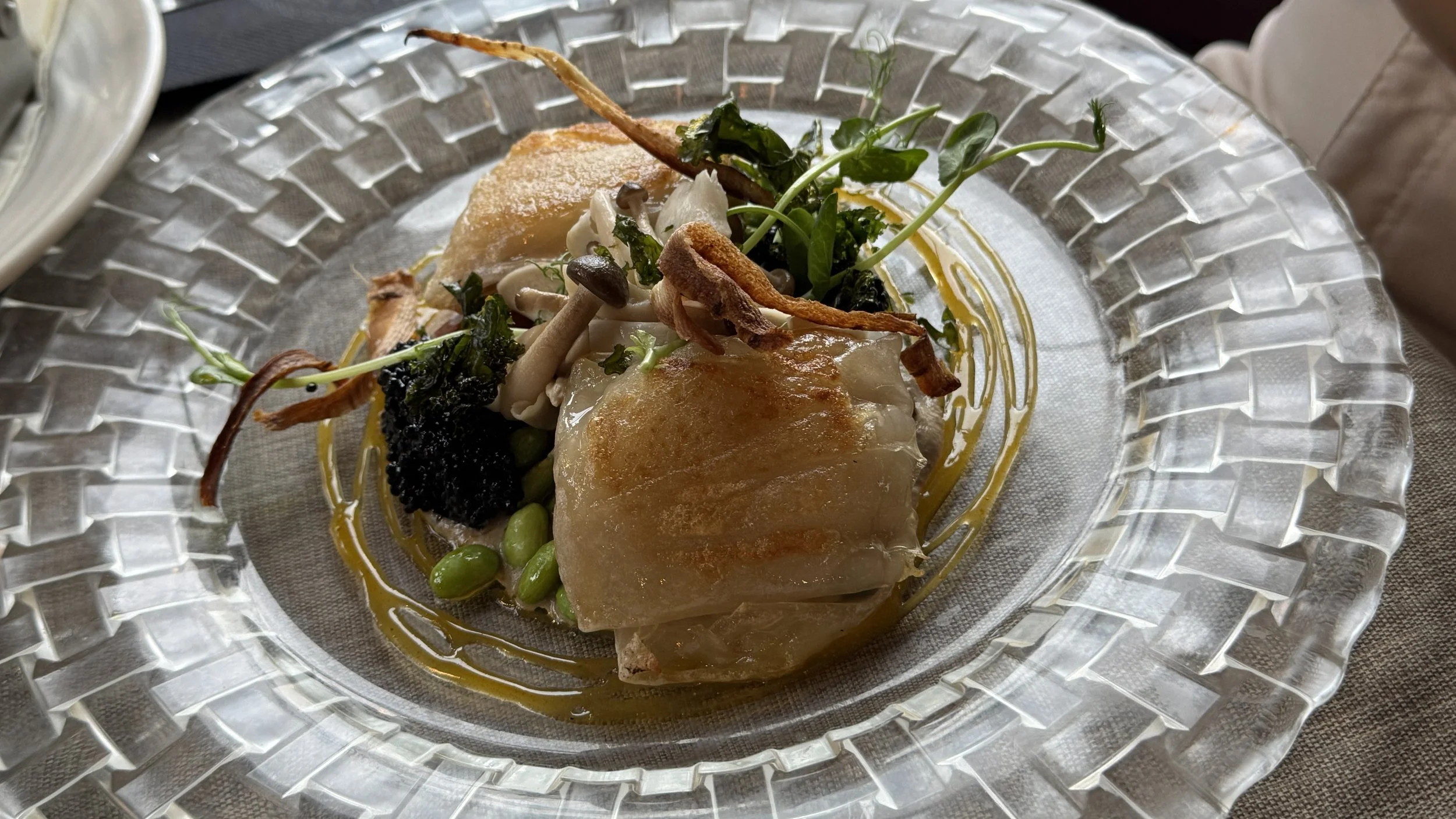
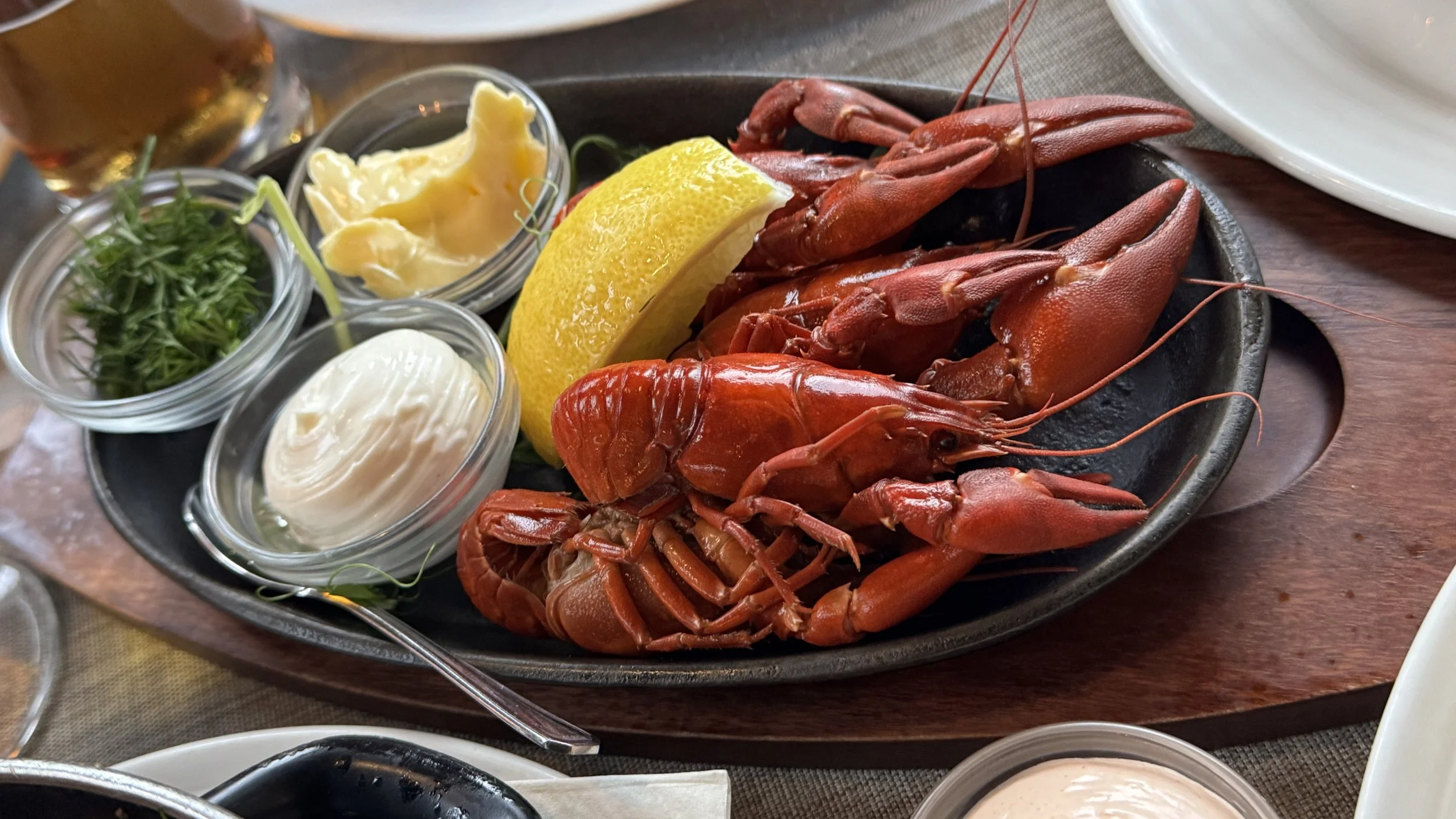
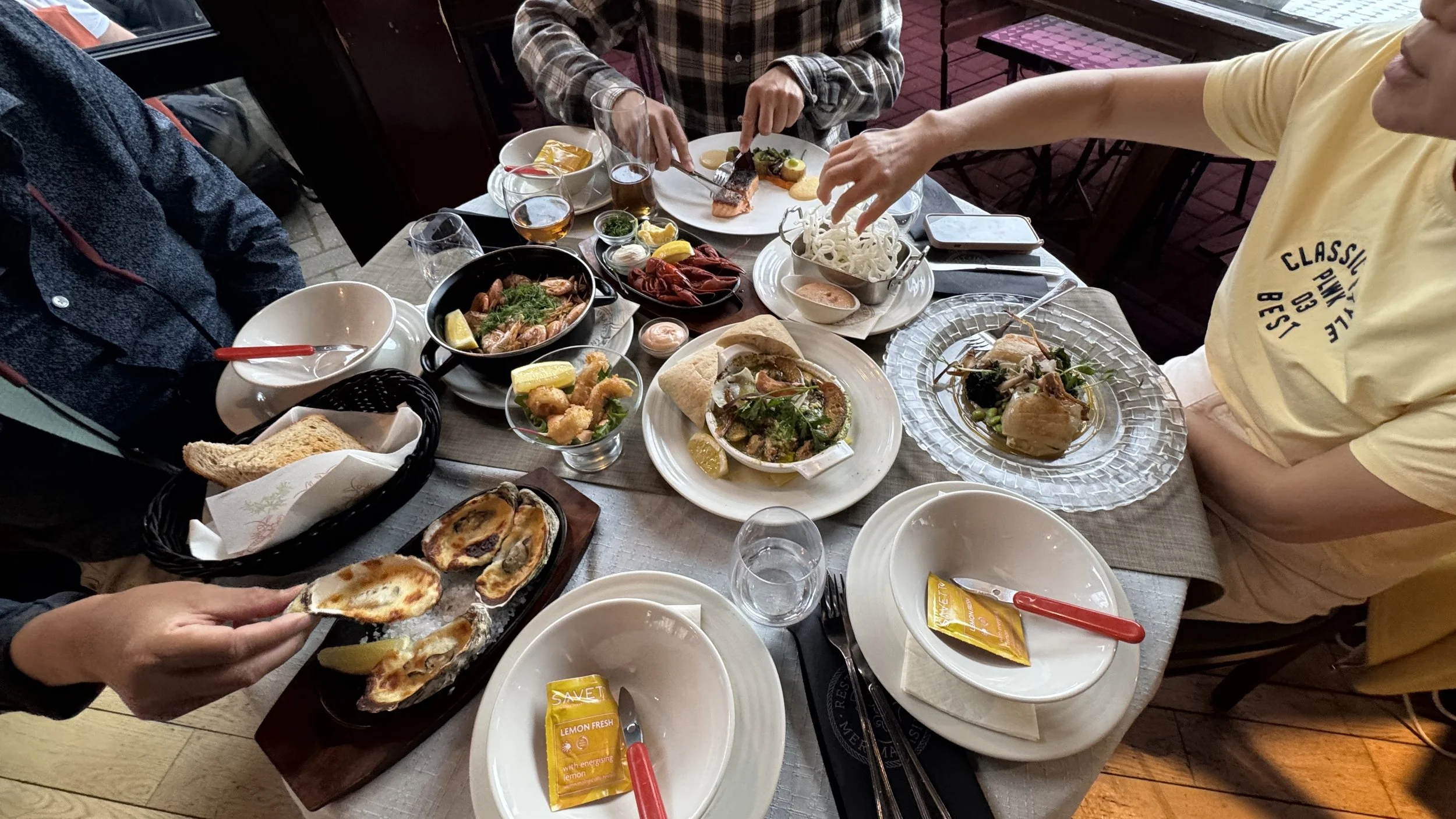
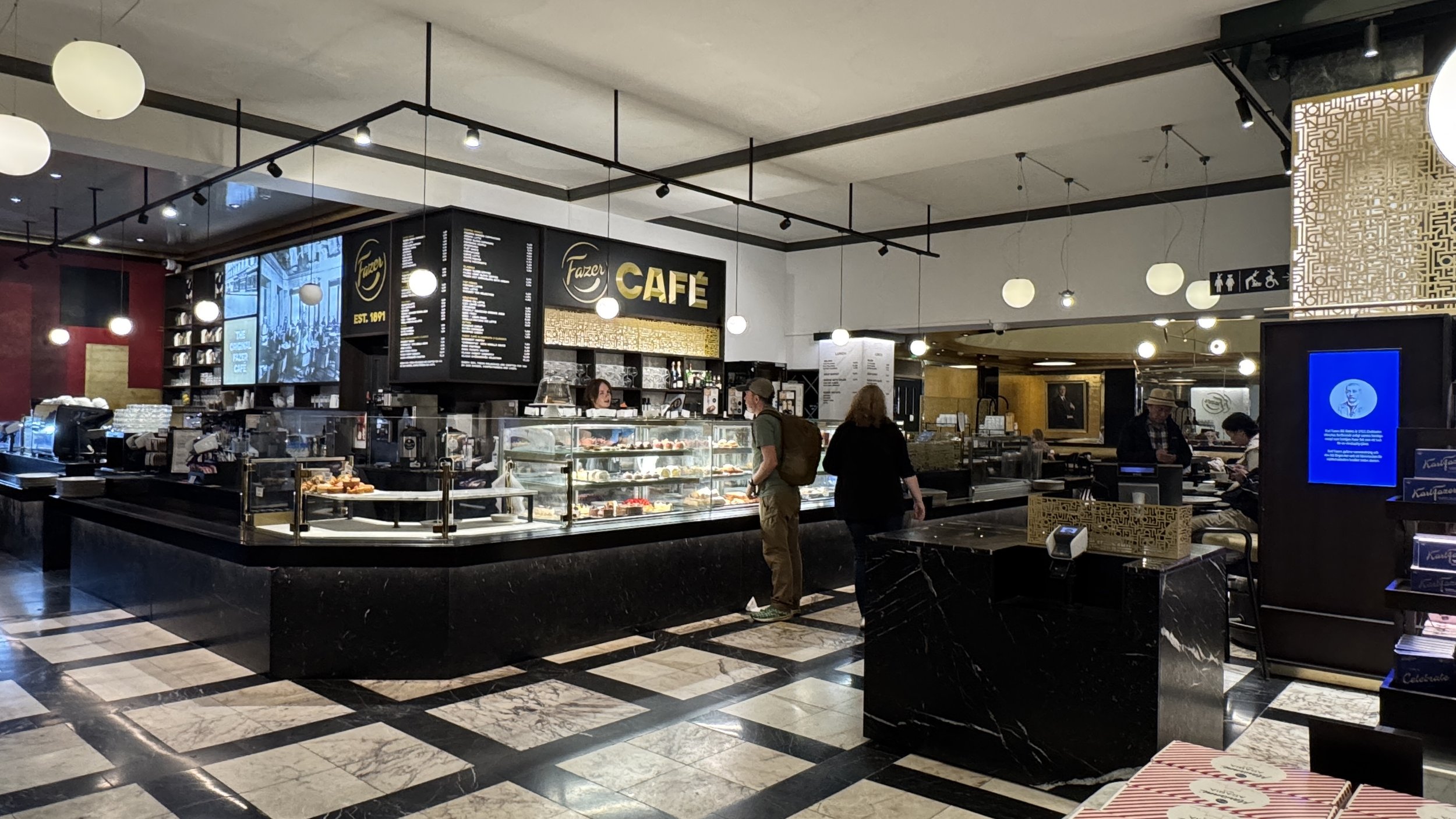
2026年7月27日
在酒店用完早餐后,我们步行前往码头,准备搭乘渡轮前往芬兰堡(Suomenlinna)。才离开酒店不远,便听到赫尔辛基大教堂附近传来阵阵嘹亮的军乐声。原来元老院广场已封闭,一支加拿大军乐队正在广场上为即将举行的演出排练。大清早广场附近空荡荡,我们驻足欣赏了一会儿,才继续前往码头。
约15分钟后,渡轮抵达芬兰堡。我们按照推荐的蓝色路线(Blue Route)游览整座岛屿。这里曾是重要的海防要塞,如今已成为芬兰最受欢迎的旅游景点之一。岛上的古老炮台和防御工事保存完好,绿地、公园和步道规划得十分完善,历史遗迹与自然景观相得益彰。沿着步道一路前行,最后来到著名的国王门(King's Gate)。由于不想再步行返回之前的渡轮码头,我们多花了几欧元,搭乘私人水上巴士直接返回市区。
回到市区后,我们与朋友在市场广场会合,一起前往元老院广场。没想到这时候通往赫尔辛基大教堂的宽阔台阶上早已密密麻麻坐满了观众,大家都在欣赏音乐节的演出。我们也停下来观看了一会儿,随后进入大教堂参观。教堂外观庄严宏伟,但内部装饰十分简洁,没有欧洲许多著名教堂那样华丽。
午餐我们来到老市场大厅(Old Market Hall),品尝了芬兰最具代表性的传统美食——三文鱼汤。味道不错,不过并没有特别令人惊艳。
下午,我们参观了圣约翰教堂(St. John's Church),之后前往朋友在附近的异乡之家坐了一会儿。回到酒店稍作休息后傍晚再与朋友相约到一家海鲜餐厅共进晚餐。
一天的行程最后在Fazer Café结束。这是一家赫尔辛基最具代表性的百年咖啡馆之一,我们点的咖啡和蛋糕为这充实而愉快的一天留下了一个温馨的结尾。
Outsider Artist and UNESCO Mill 民间艺术与世界遗产造纸厂
July 26, 2026
Today we traveled to Helsinki, the capital of Finland. Along the way,…..
今天我们前往芬兰首都赫尔辛基。。。
July 26, 2026
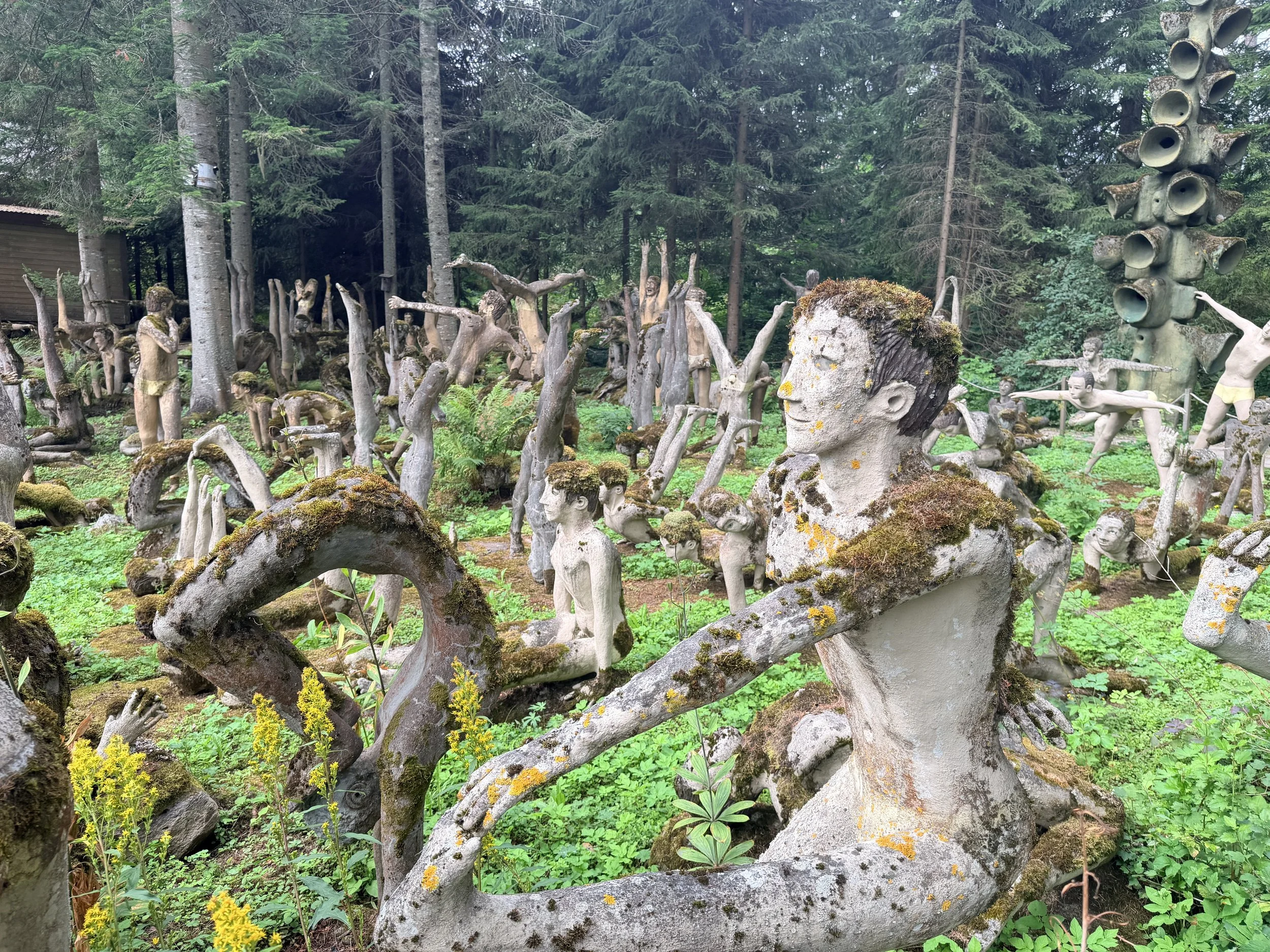
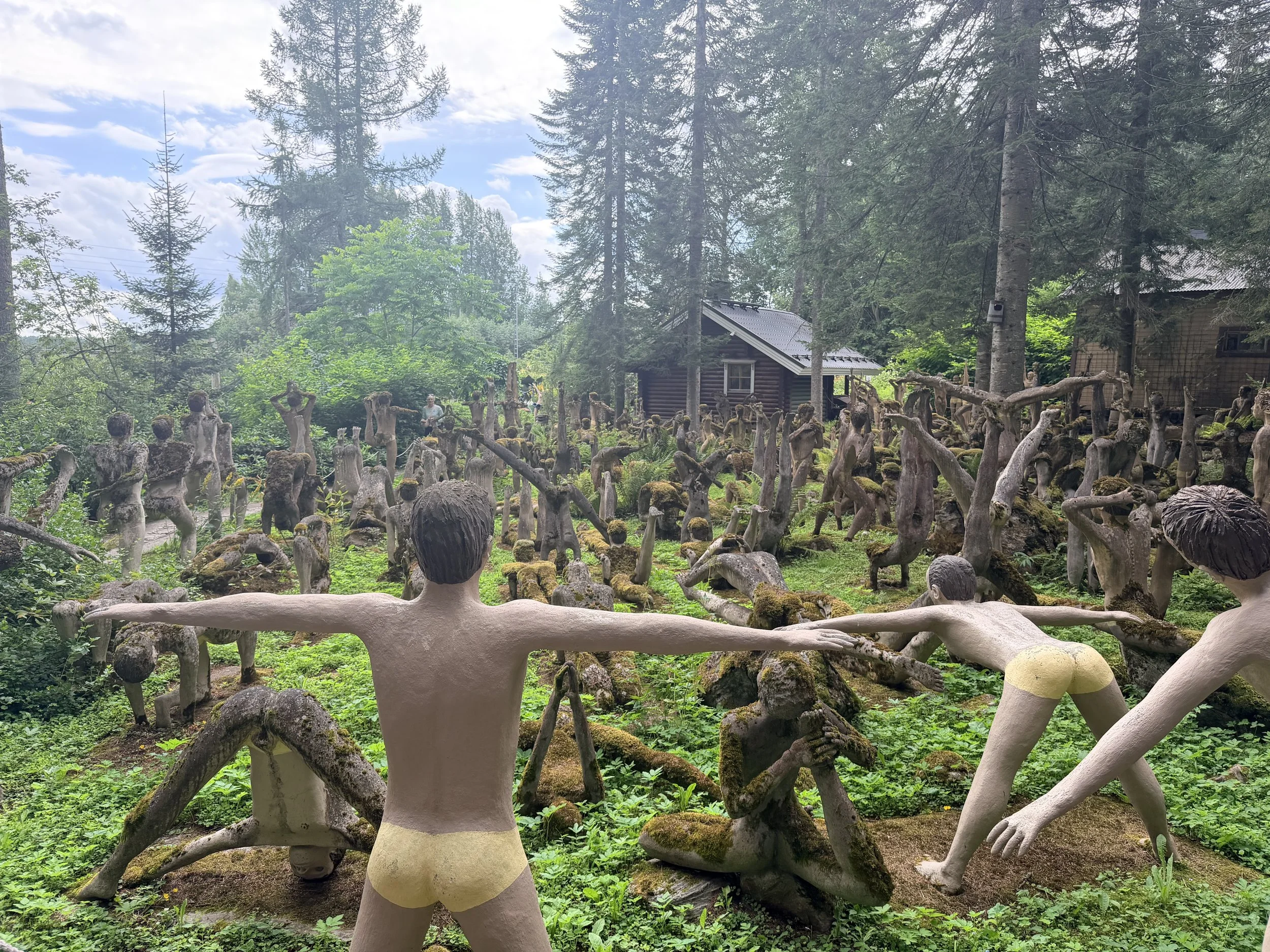
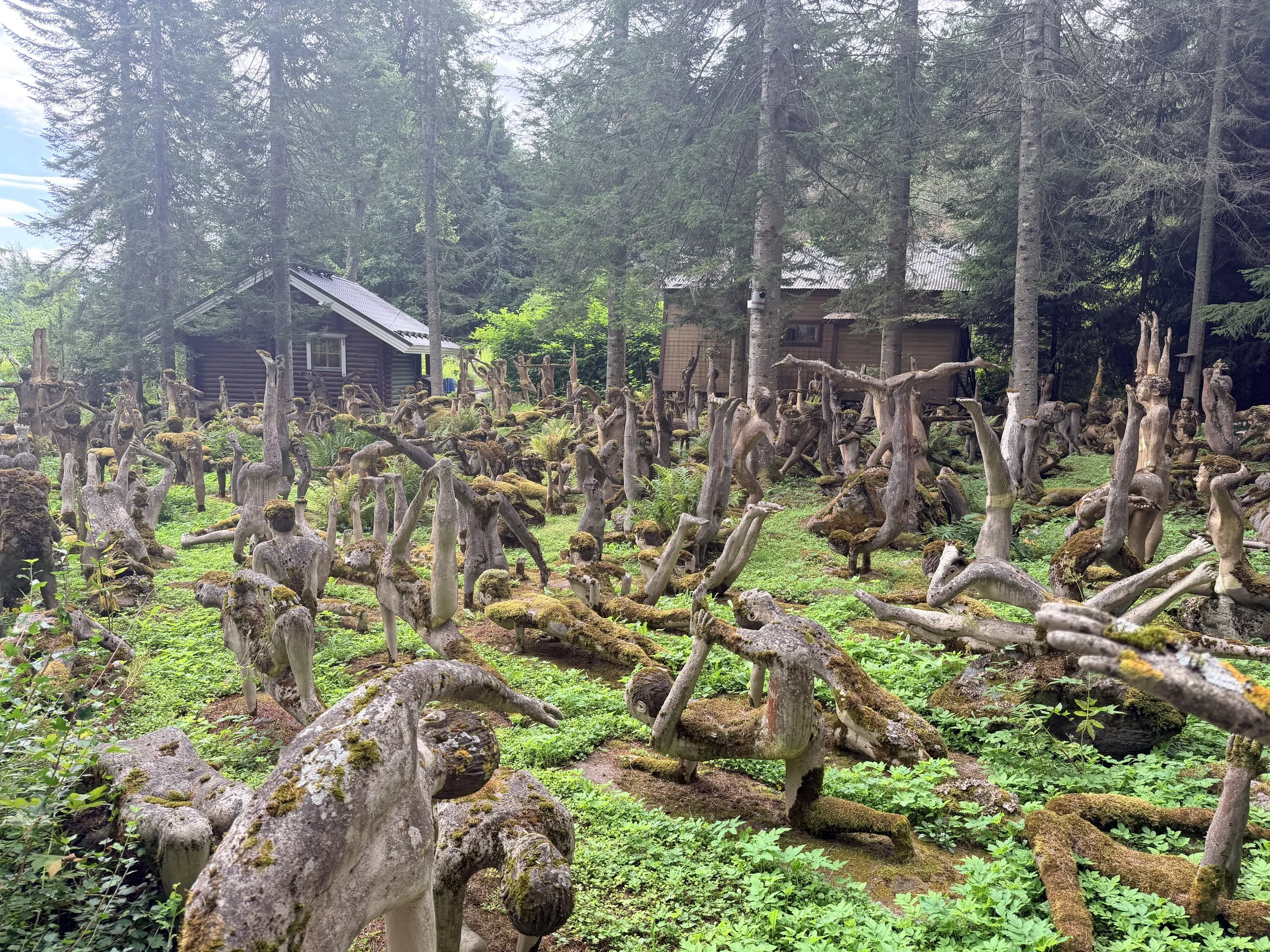
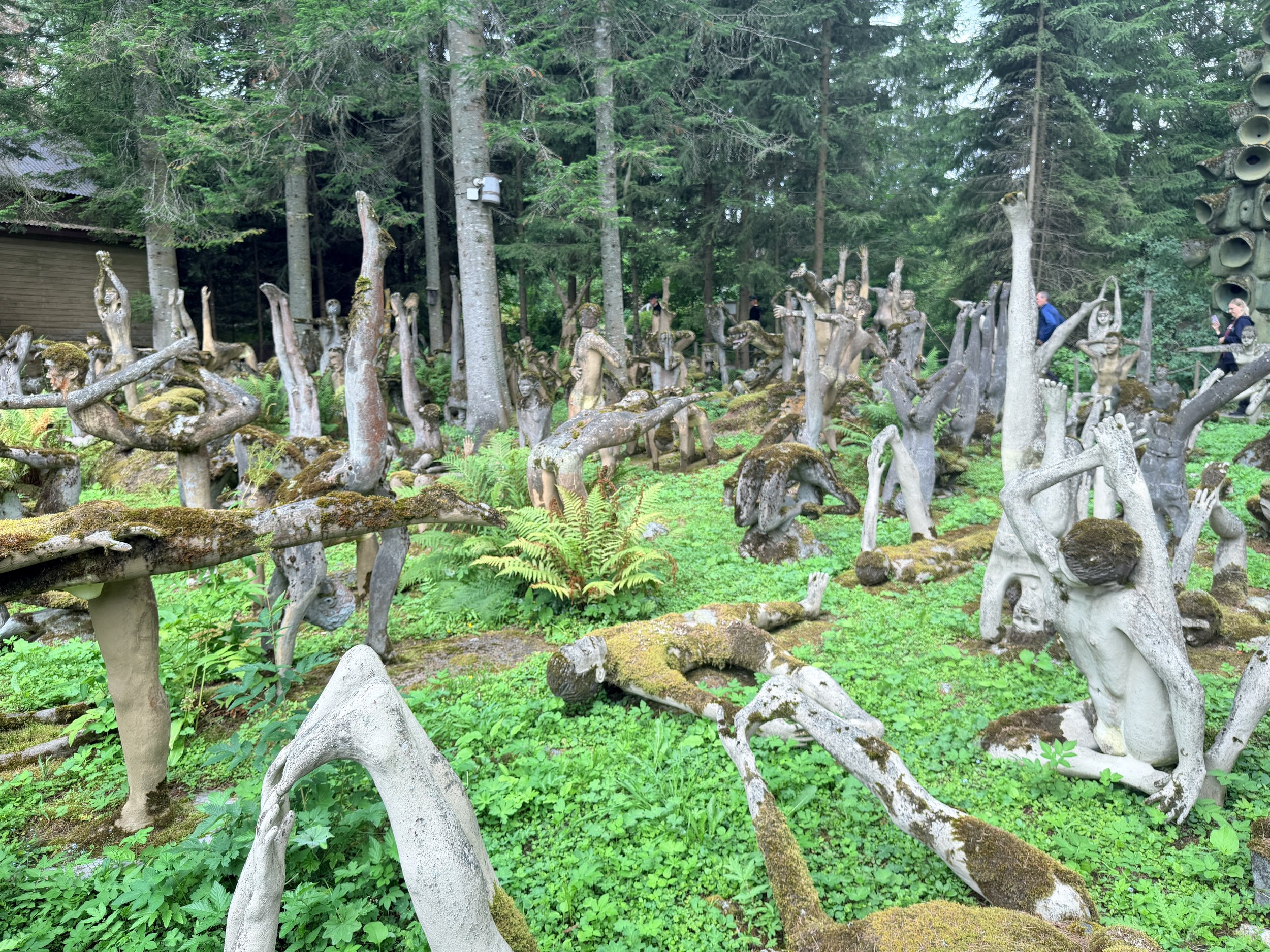
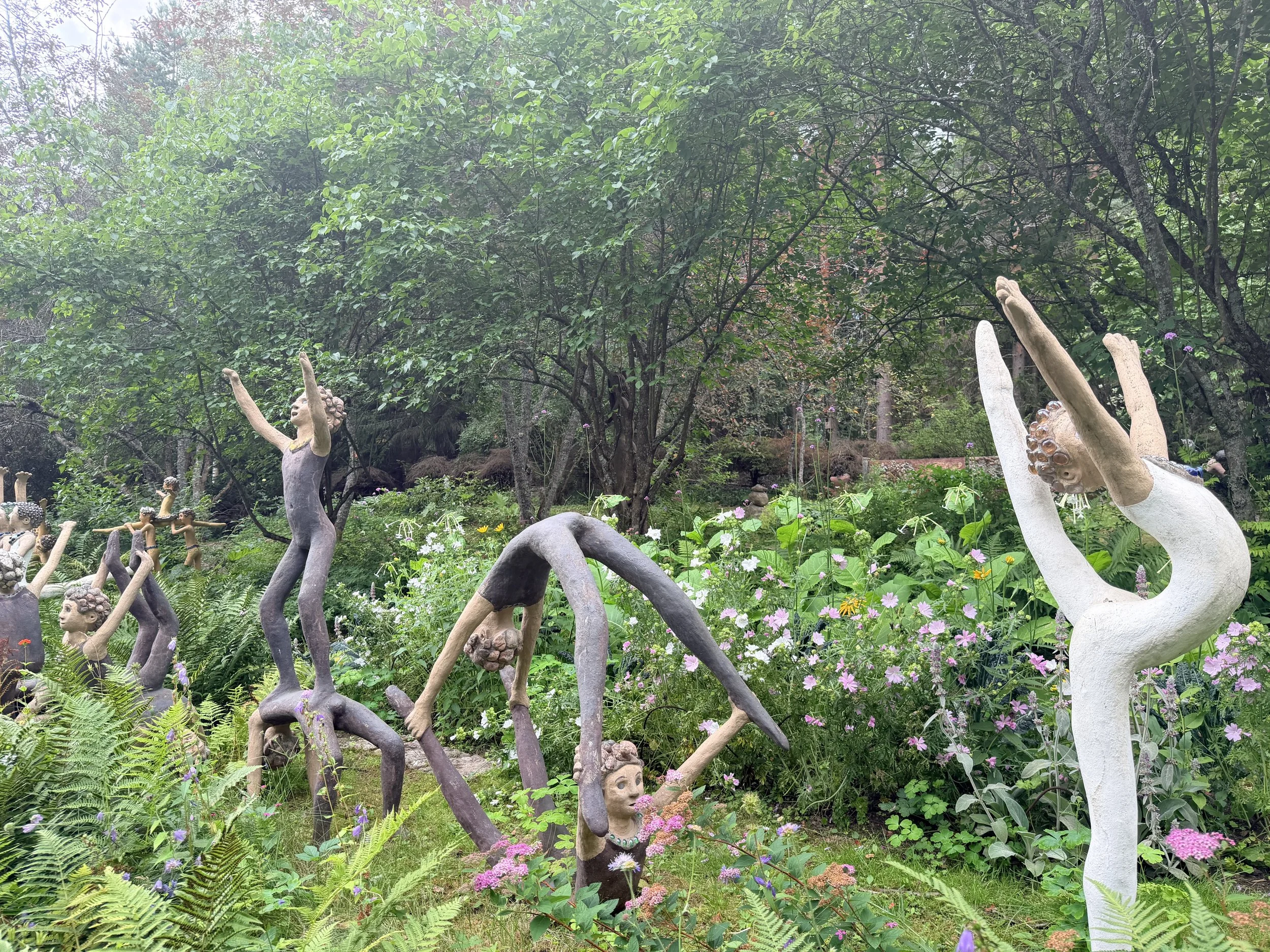
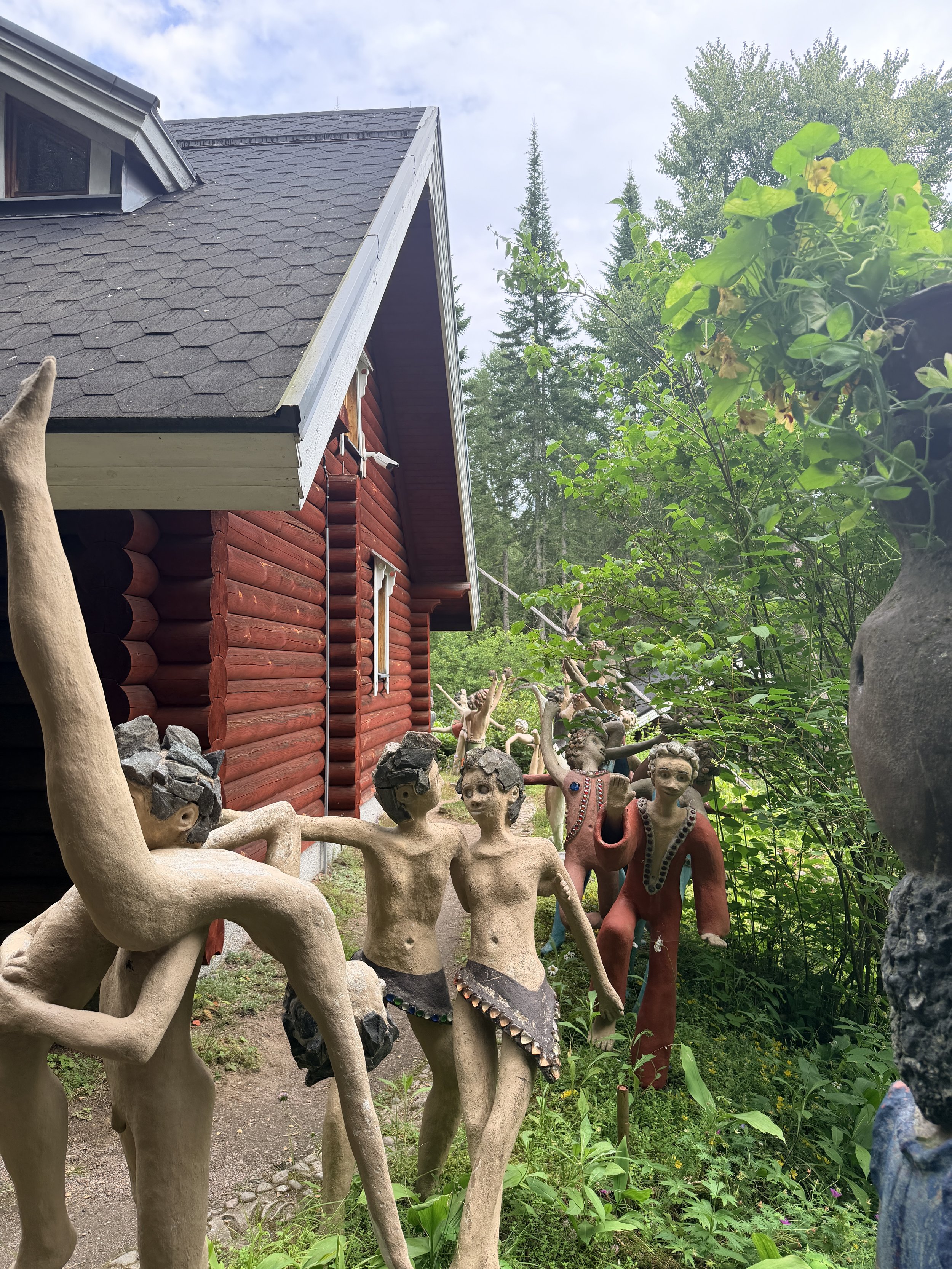
Today we traveled to Helsinki, the capital of Finland. Along the way, we made our first stop at the Parikkala Sculpture Park, located just a few kilometers from the Russian border.
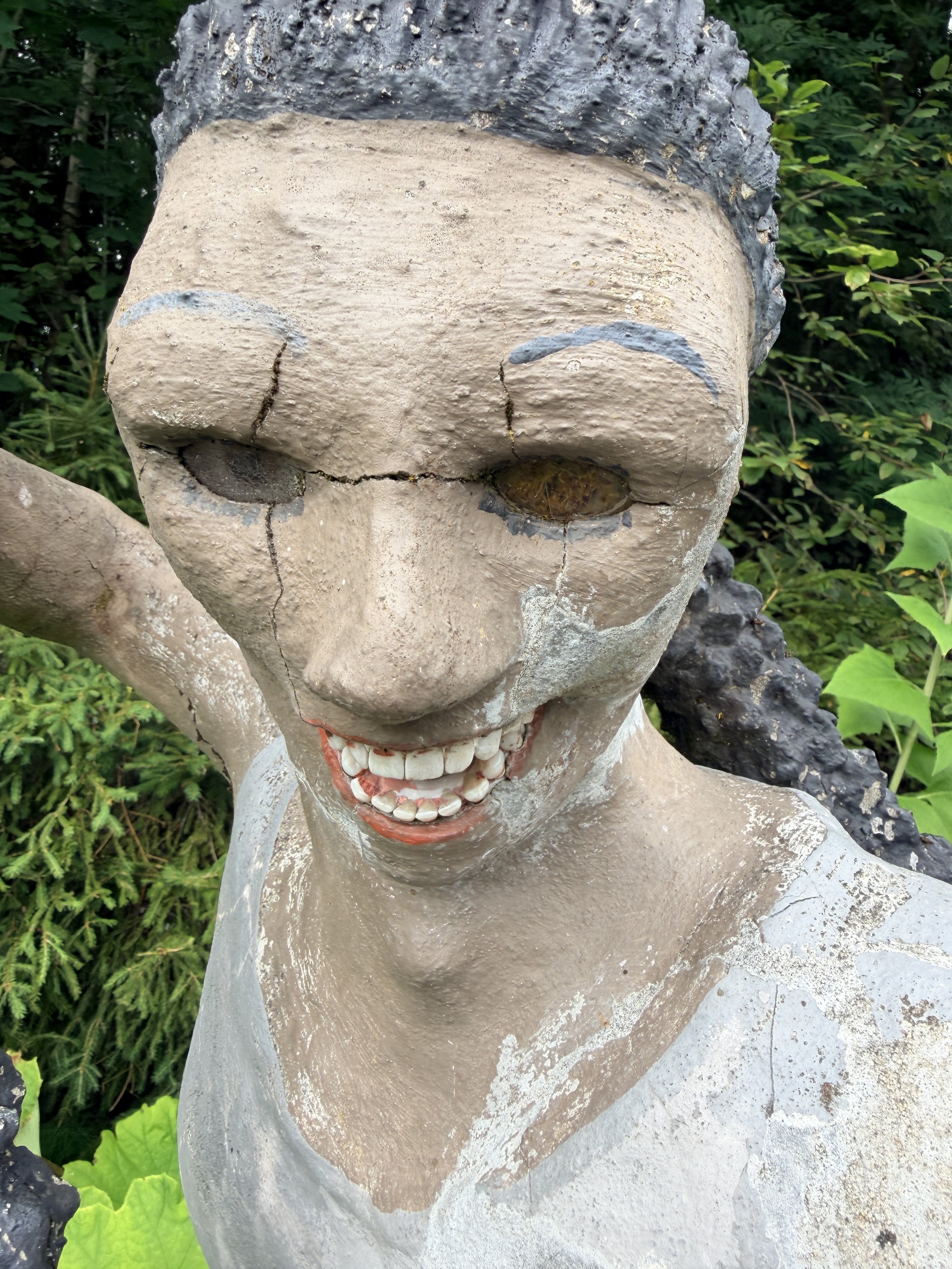
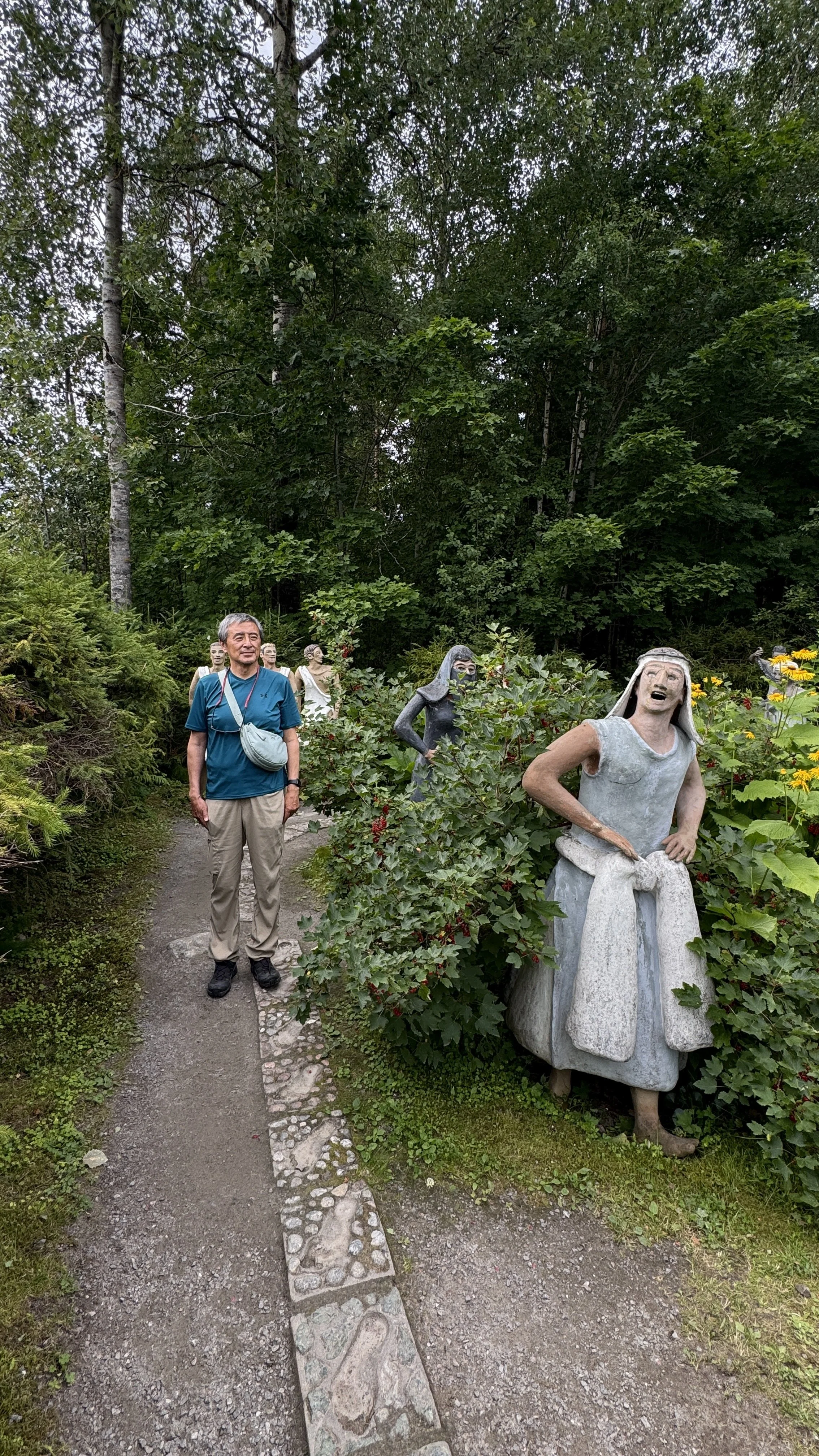
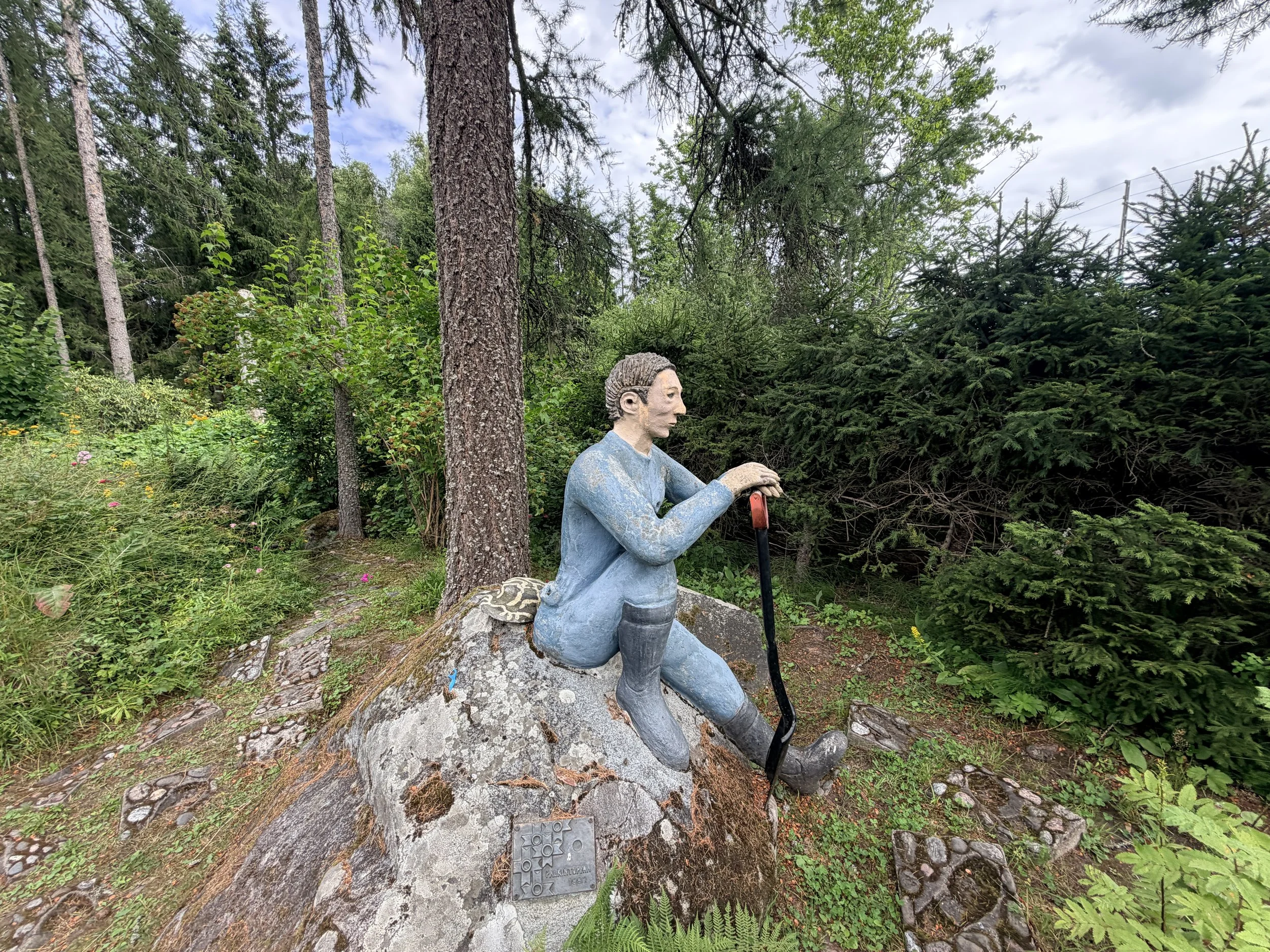
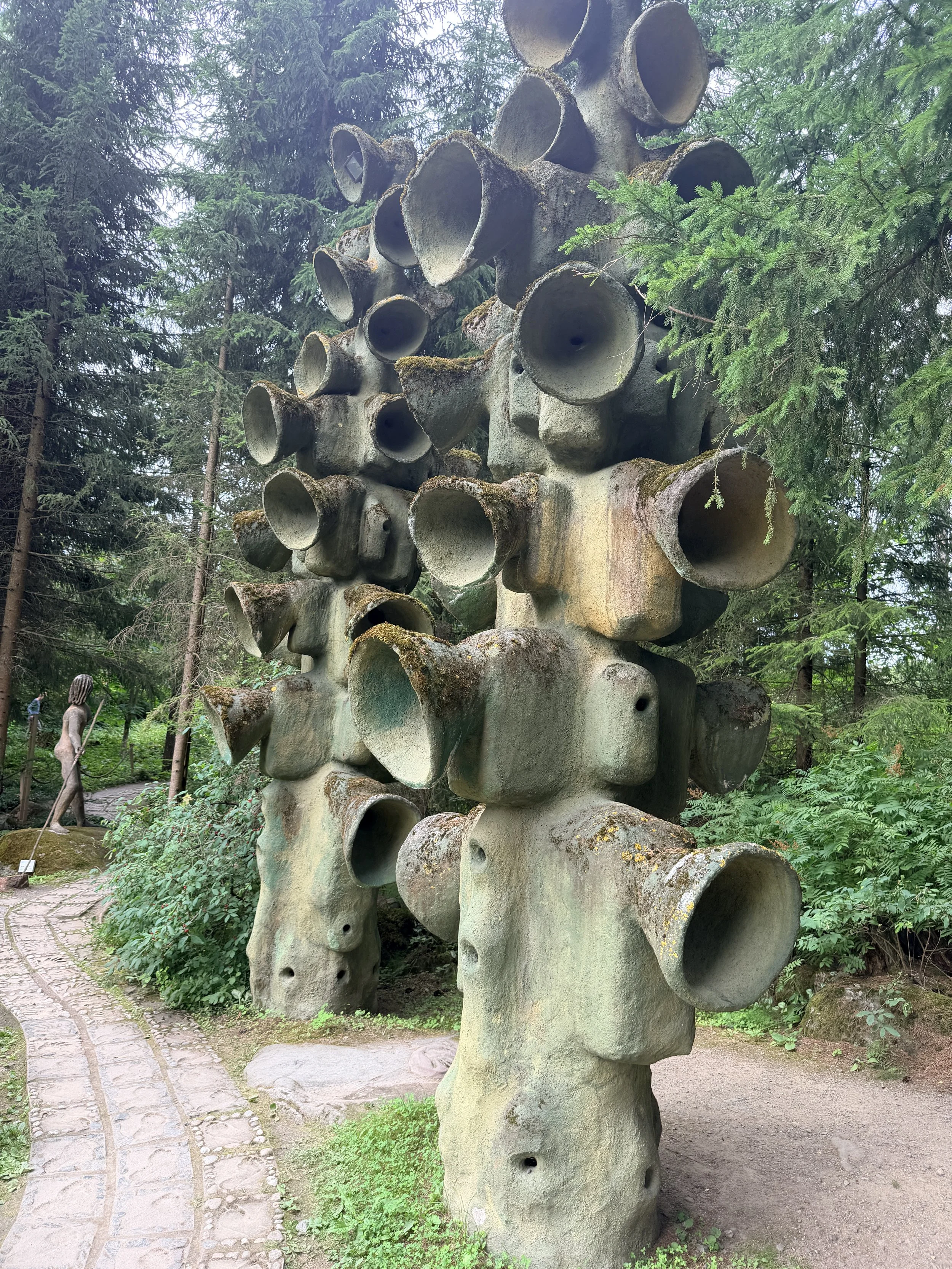
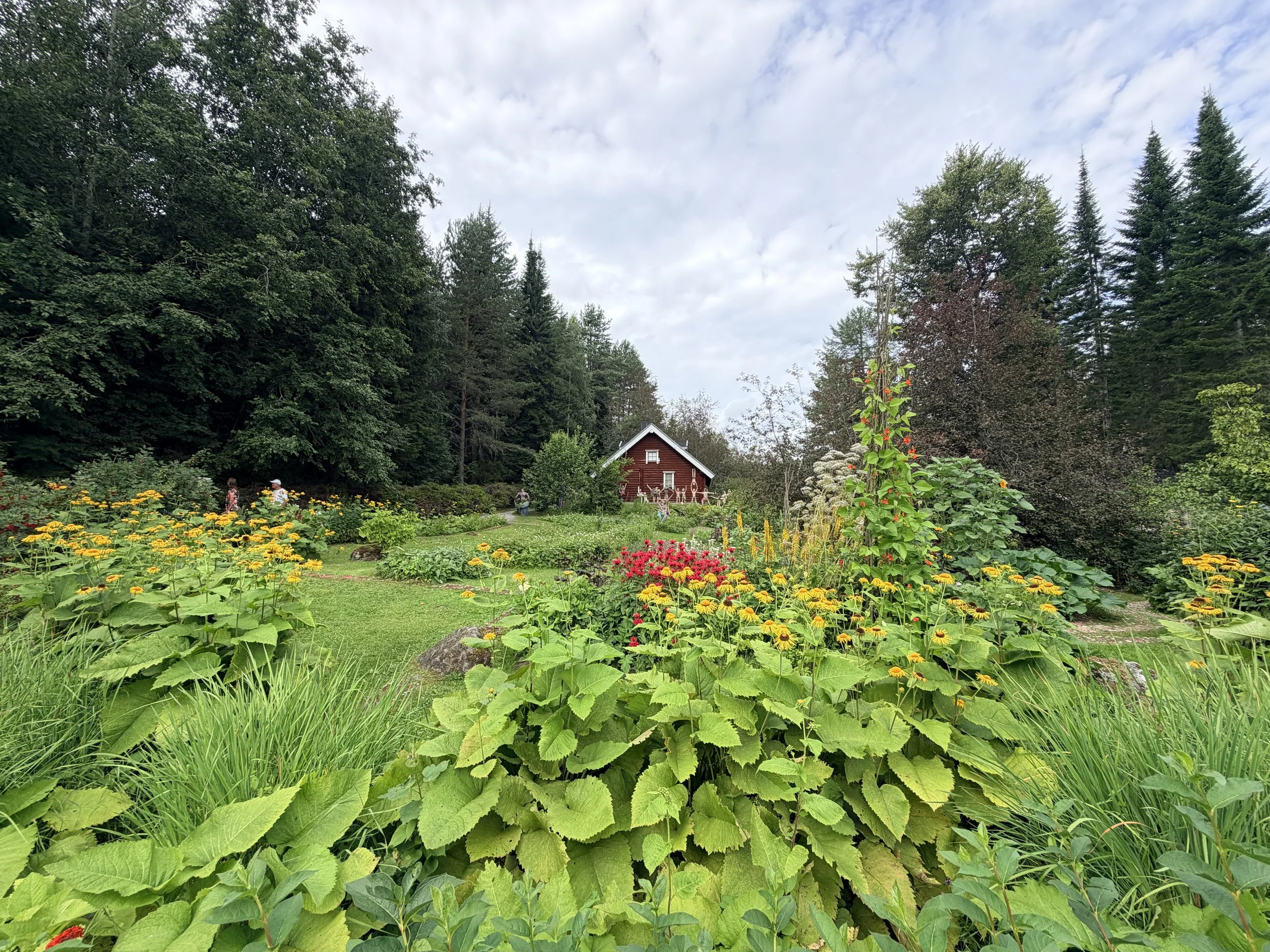
The park is the life's work of self-taught artist Veijo Rönkkönen, who spent nearly 50 years creating more than 500 concrete sculptures in his spare time while working full-time at a nearby paper mill. His sculptures depict people practicing yoga, dancers, children, and scenes from everyday life, creating an atmosphere that is both fascinating and slightly surreal. The most famous section of the park is the Yoga Garden, featuring about 250 sculptures, many of them self-portraits in different yoga poses. The gardens, colorful flowers, and small pond were beautiful, but the sculptures themselves felt strange and unsettling. Rönkkönen even used real human teeth in many of the figures, collecting them from friends and members of his local community. It is widely regarded as one of the world's finest examples of outsider art.
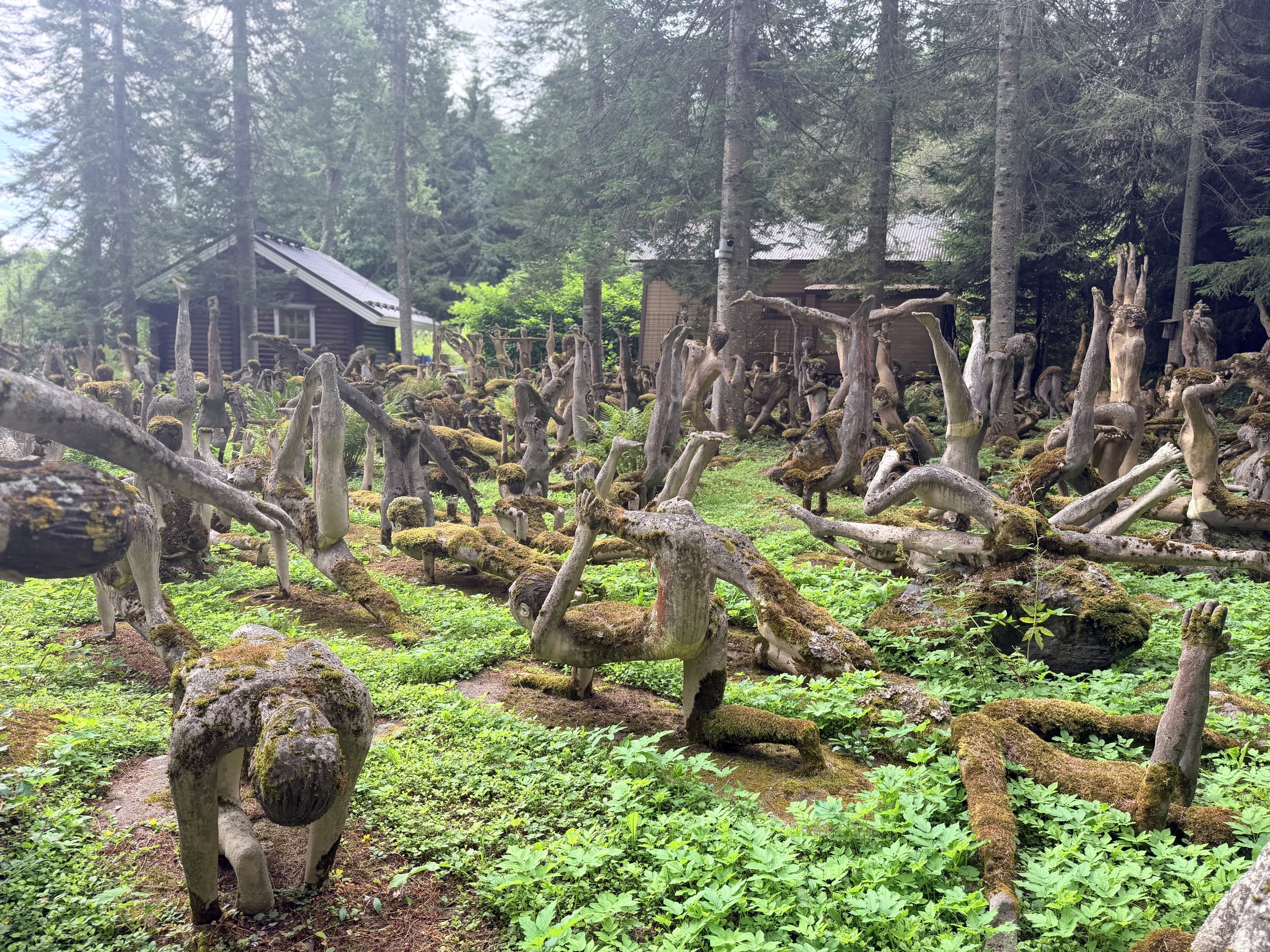
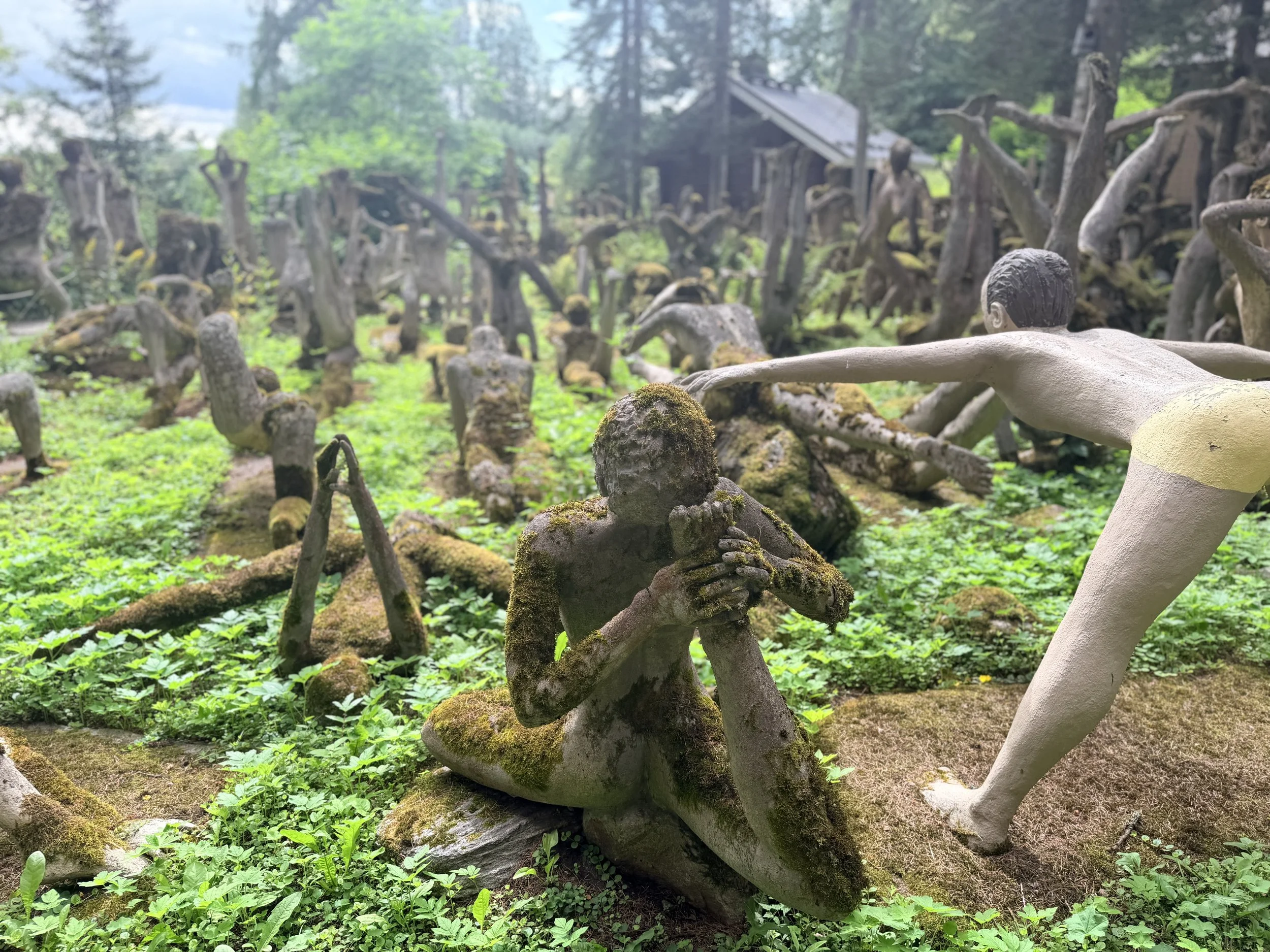
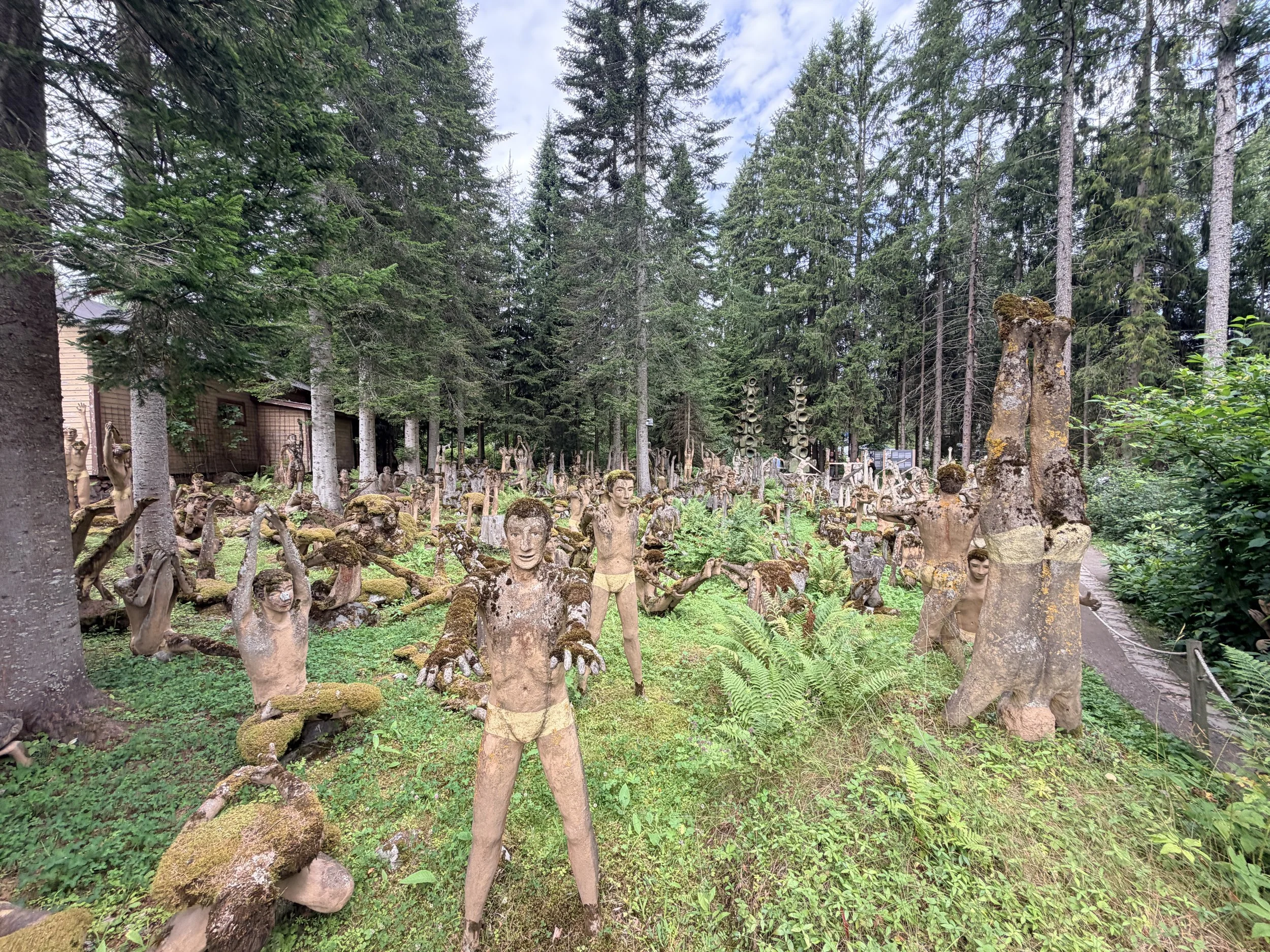
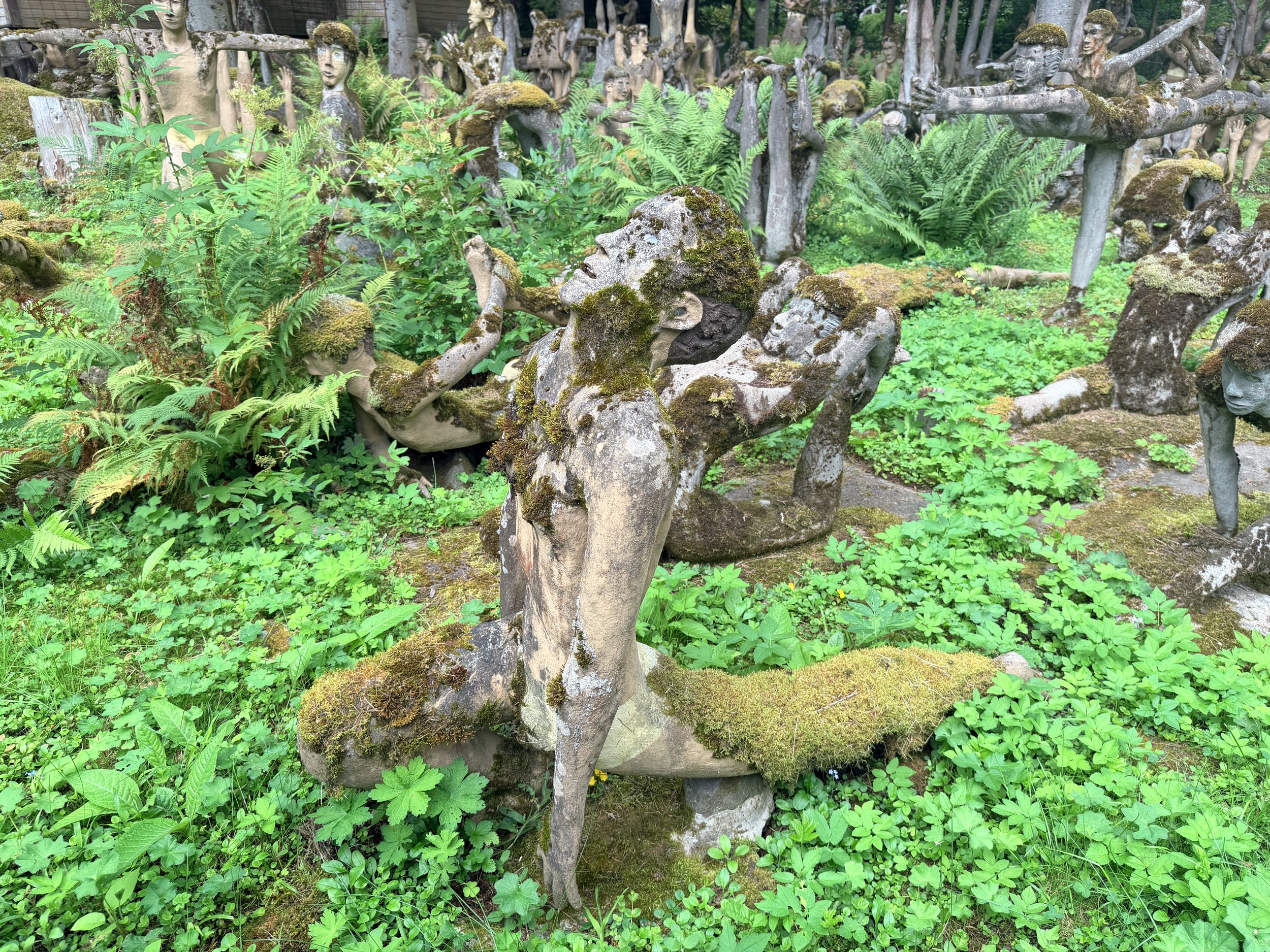
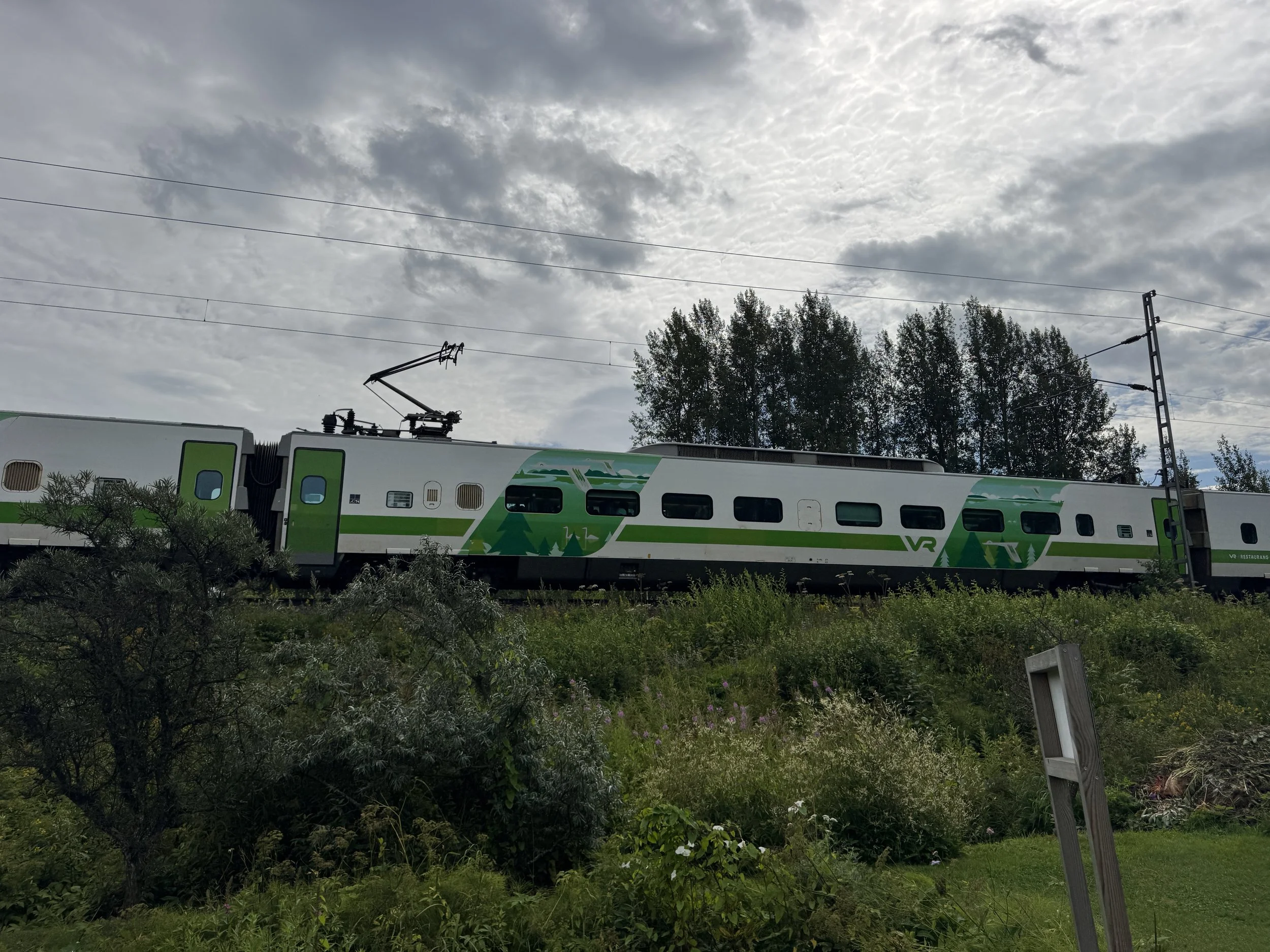
A little farther along the road, we pulled over to photograph the green border fence on the Finnish side, about 3 kilometers from the Russian border. Although we couldn't actually see Russia, it was interesting to be so close.
We stopped for a Chinese lunch in Imatra, which turned out to be quite good. By this point in the trip, we found ourselves choosing Chinese or other Asian food whenever the opportunity arose.
In the afternoon, we drove to Verla to join a guided tour of the historic paper mill. The mill operated from 1872 until 1964 and is now a UNESCO World Heritage Site. Remarkably well preserved, it offered an excellent glimpse into Finland's early industrial history and the lives of the people who worked there. The guided tour was both informative and engaging, making the detour well worthwhile.
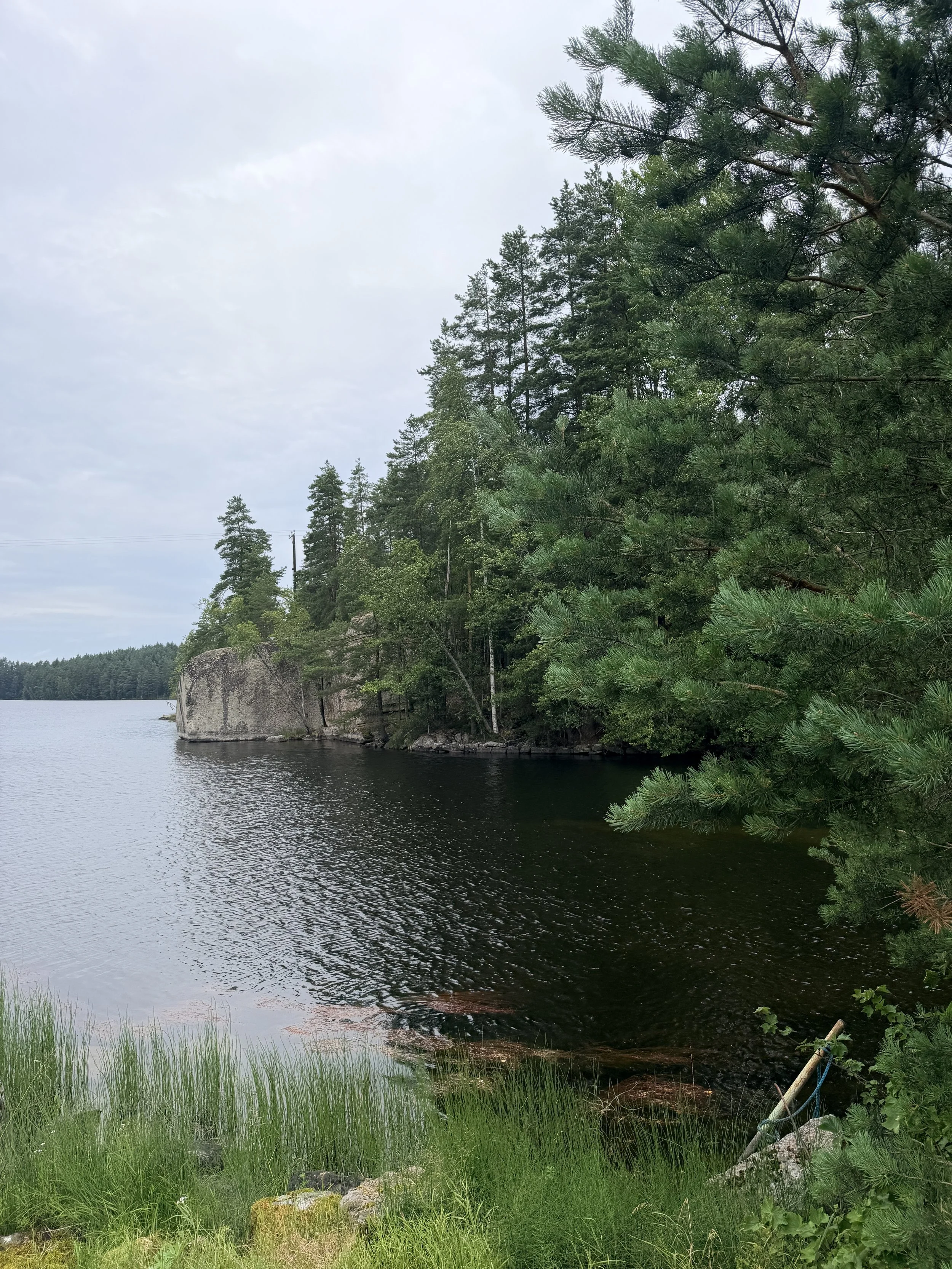
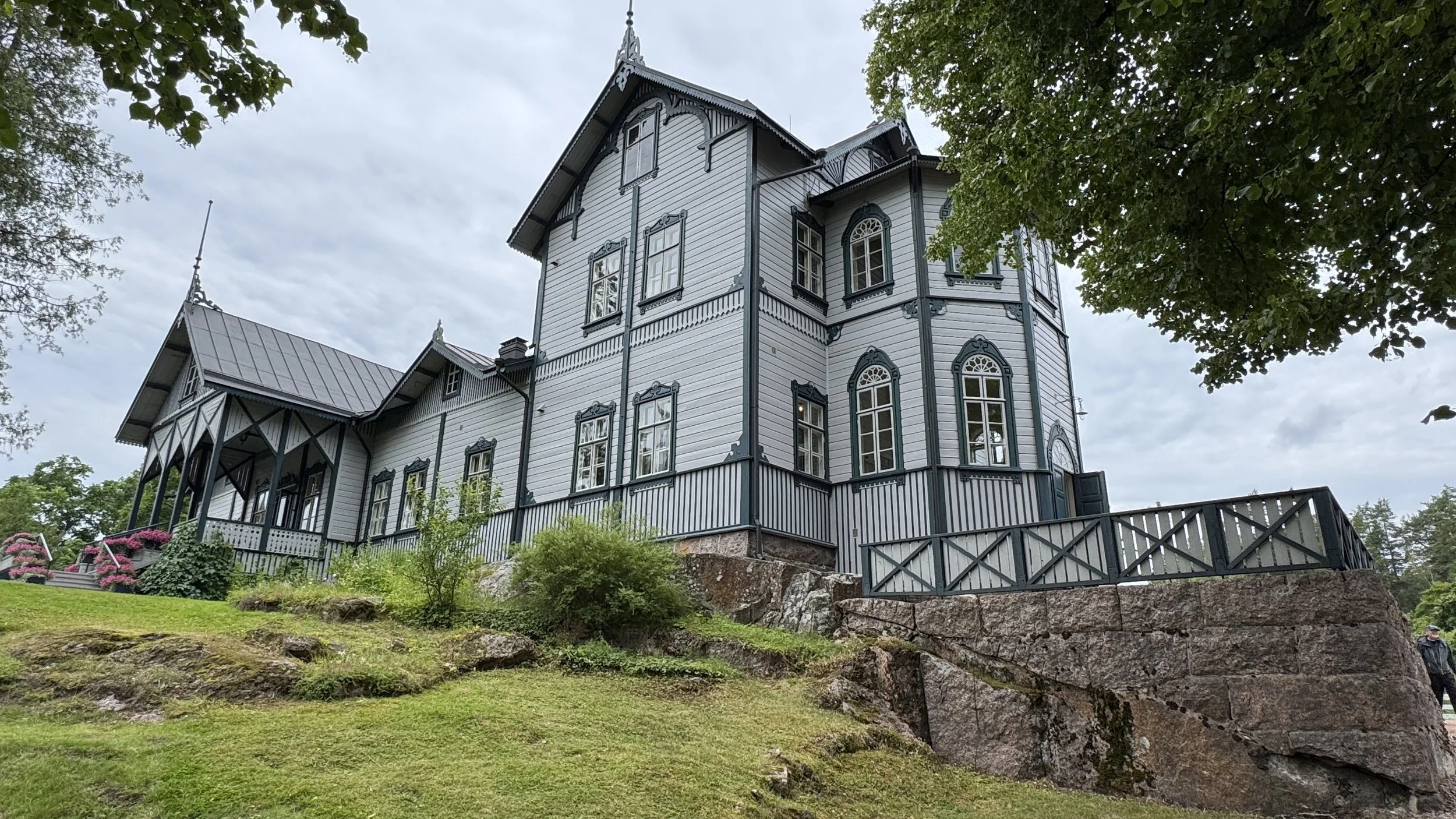
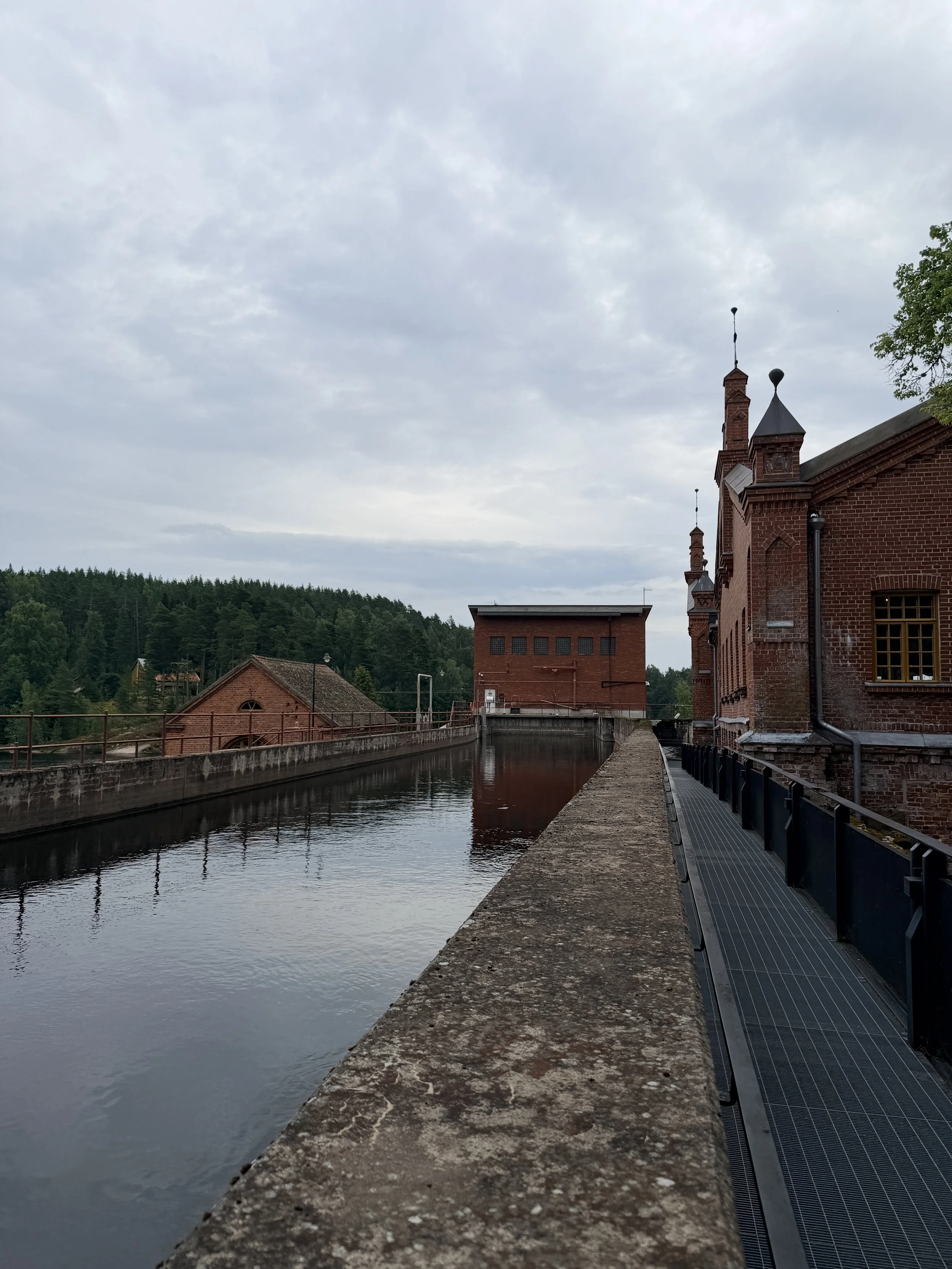
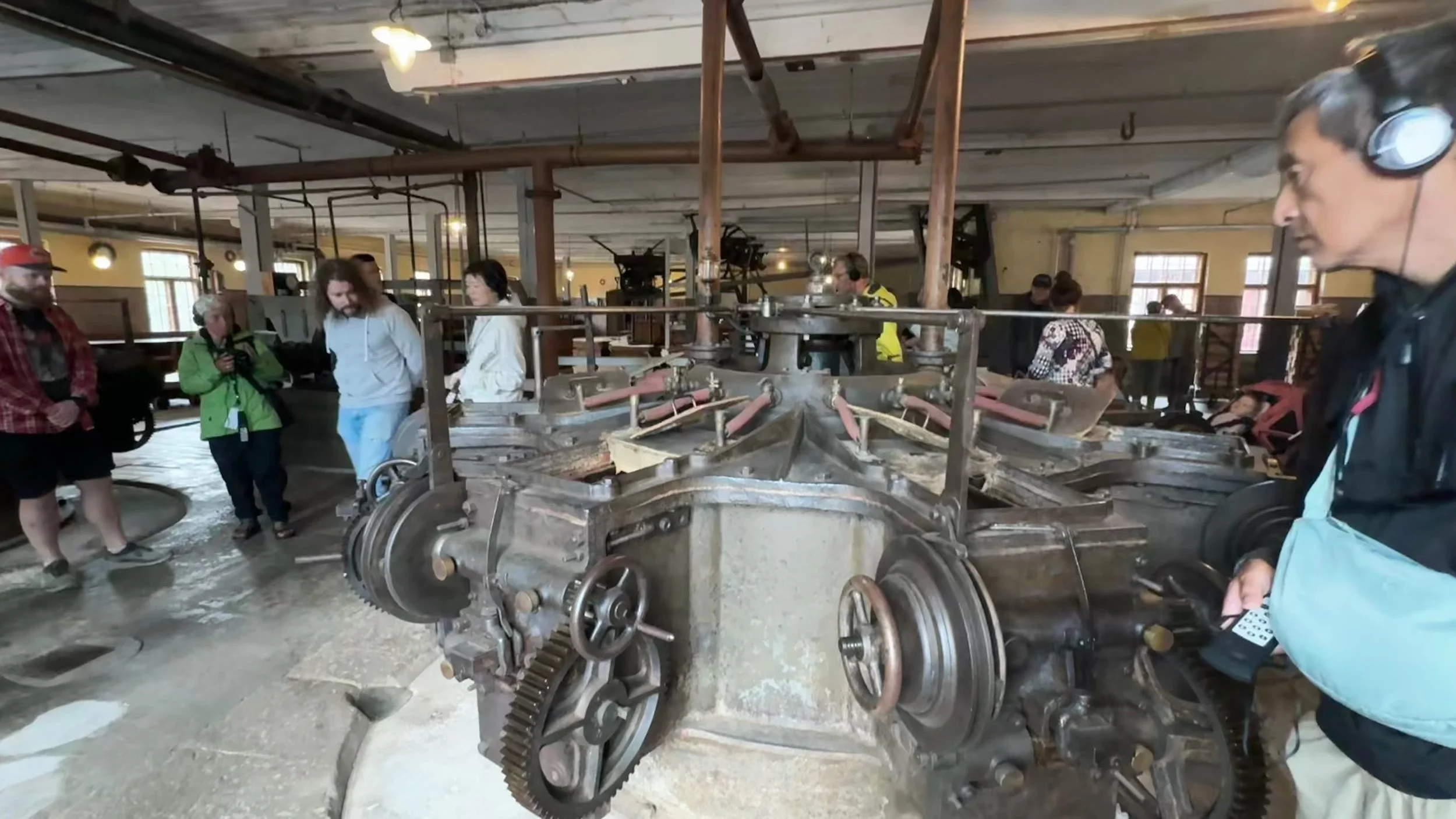
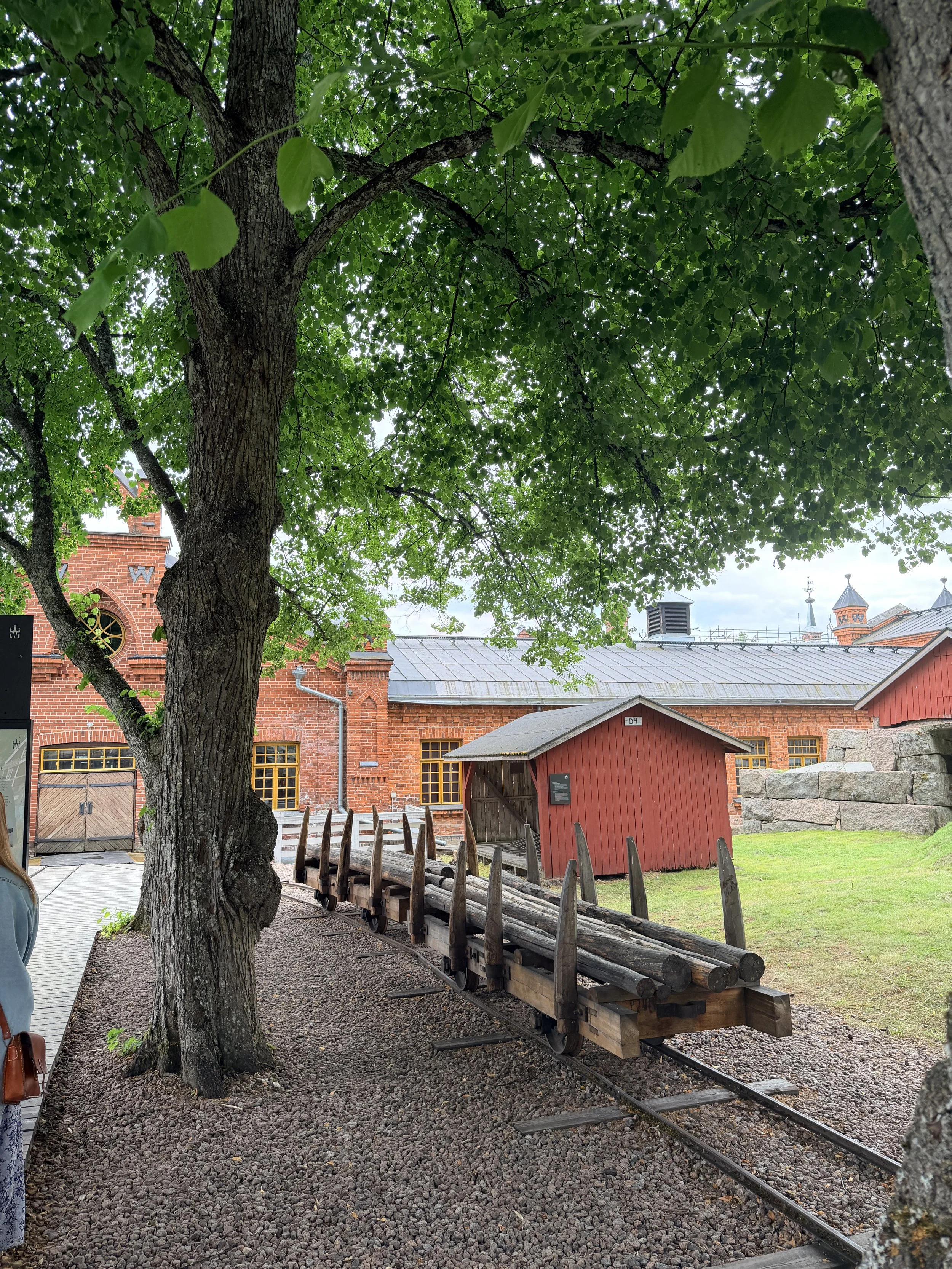
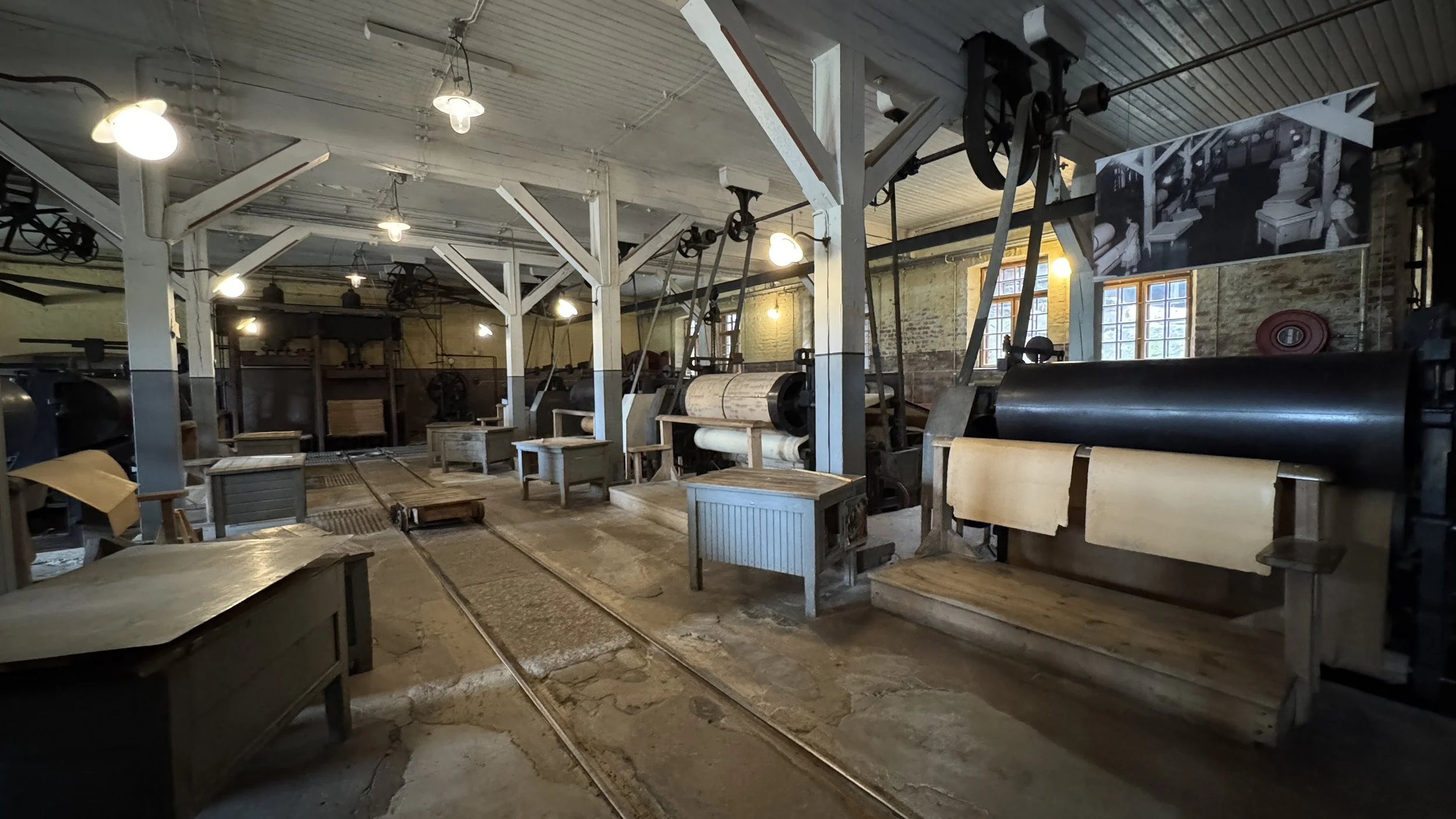
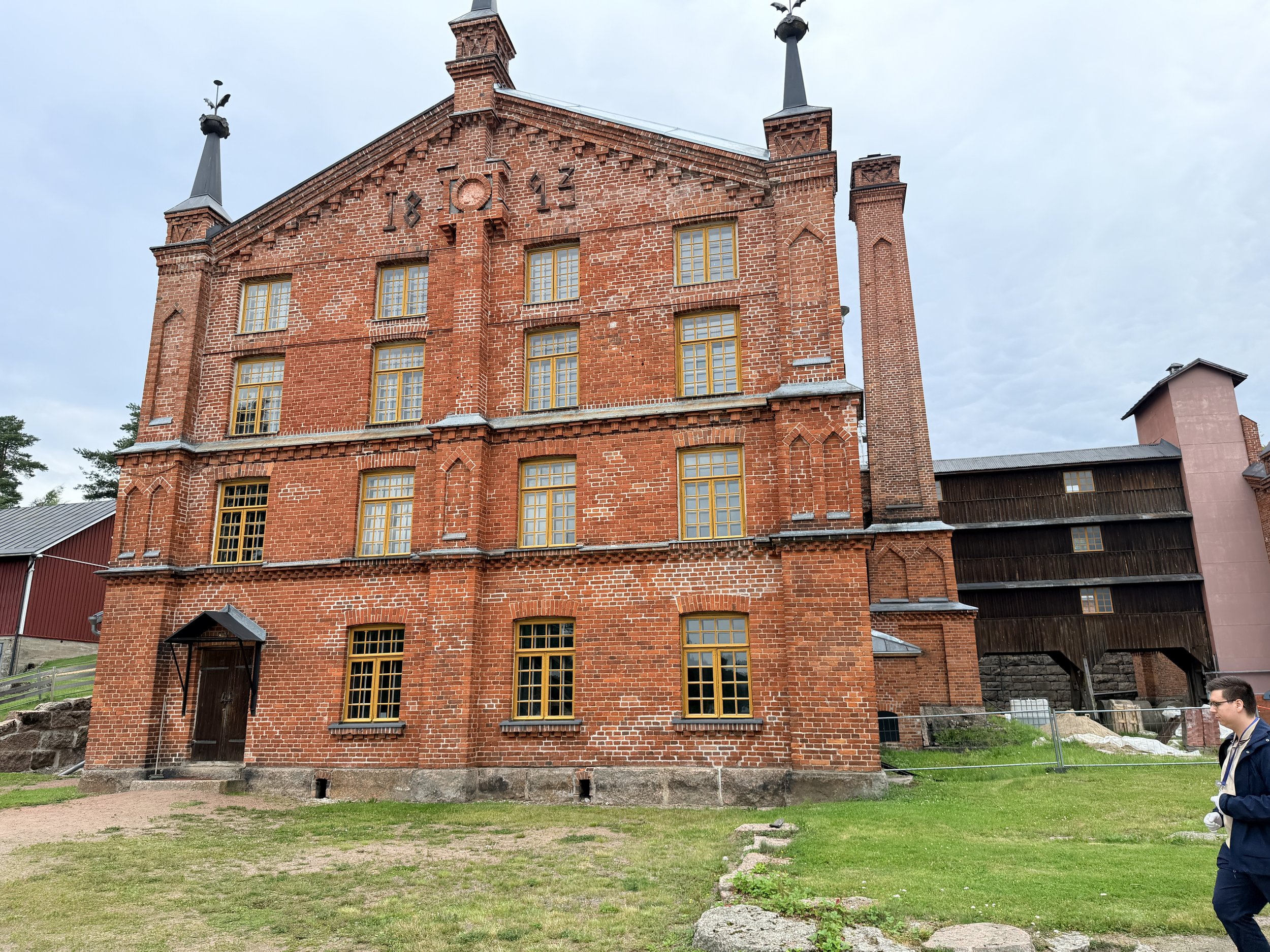
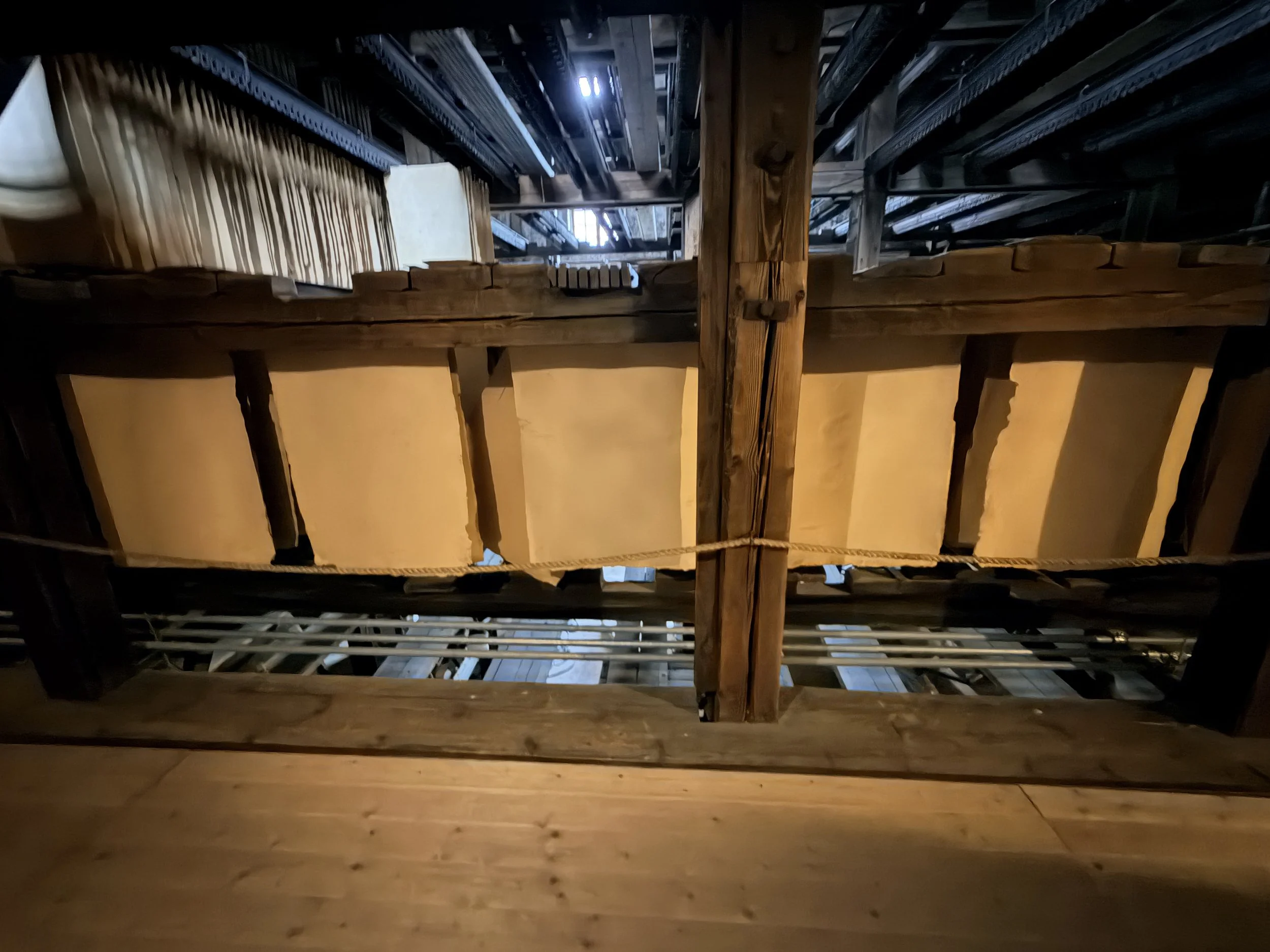
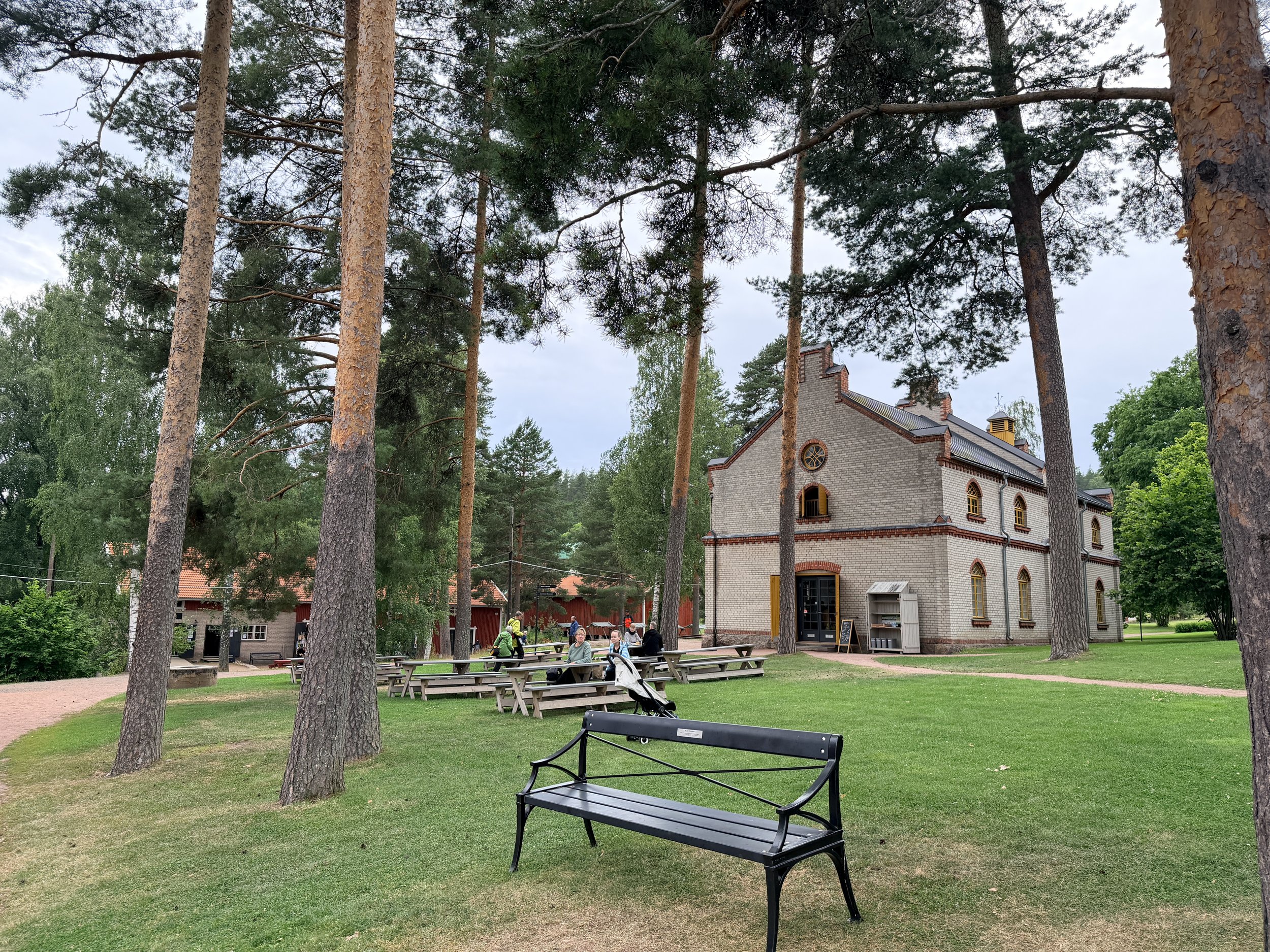
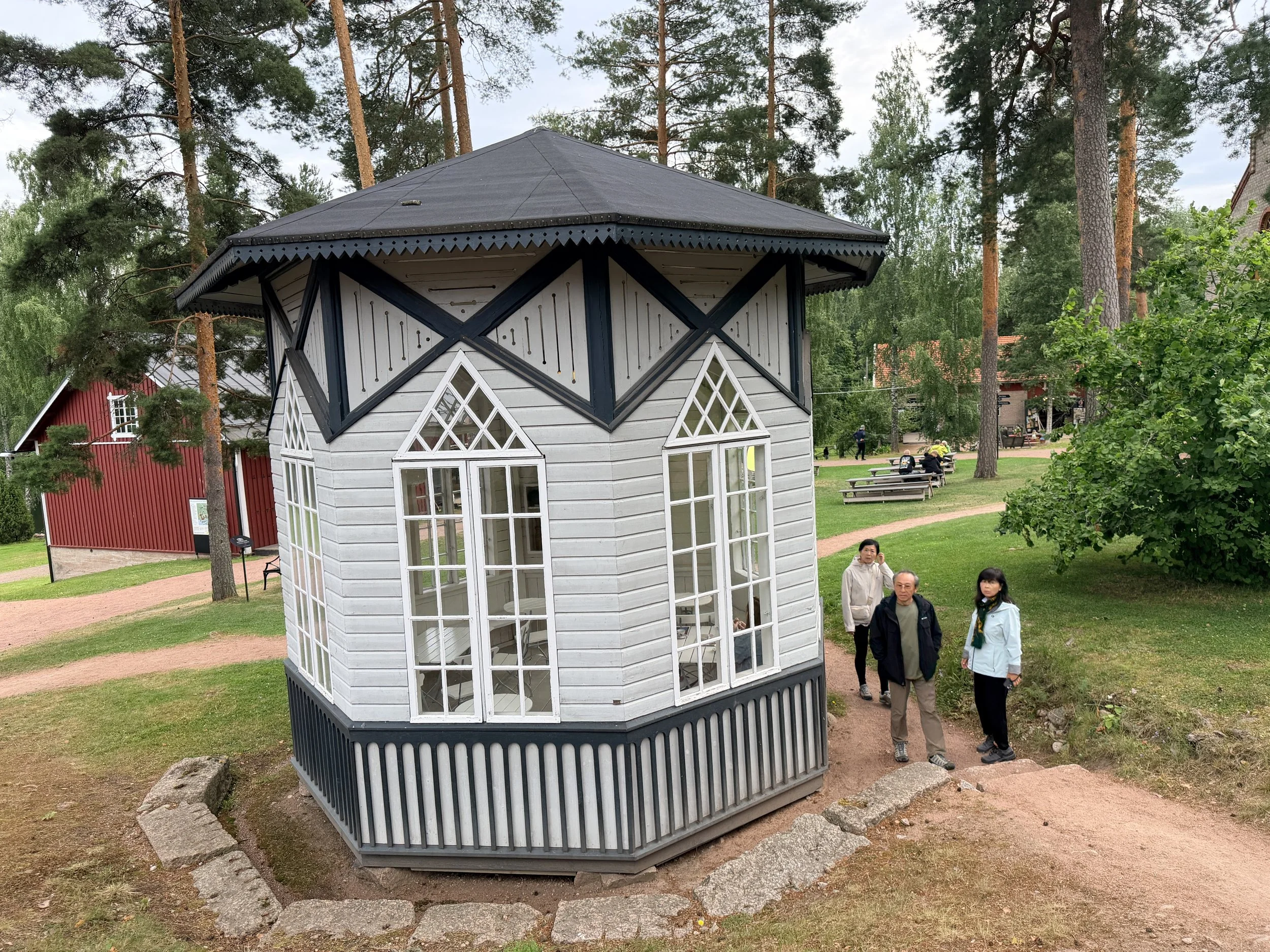
Looking back, it struck us that both stops celebrated preservation in very different ways. One protected the extraordinary vision of an unknown self-taught artist who devoted his life to creating a unique sculpture garden, while the other preserved an entire industrial complex that played an important role in Finland's development. Together, they reminded us that history is worth preserving, whether it is expressed through a single person's imagination or the collective efforts of generations of workers.
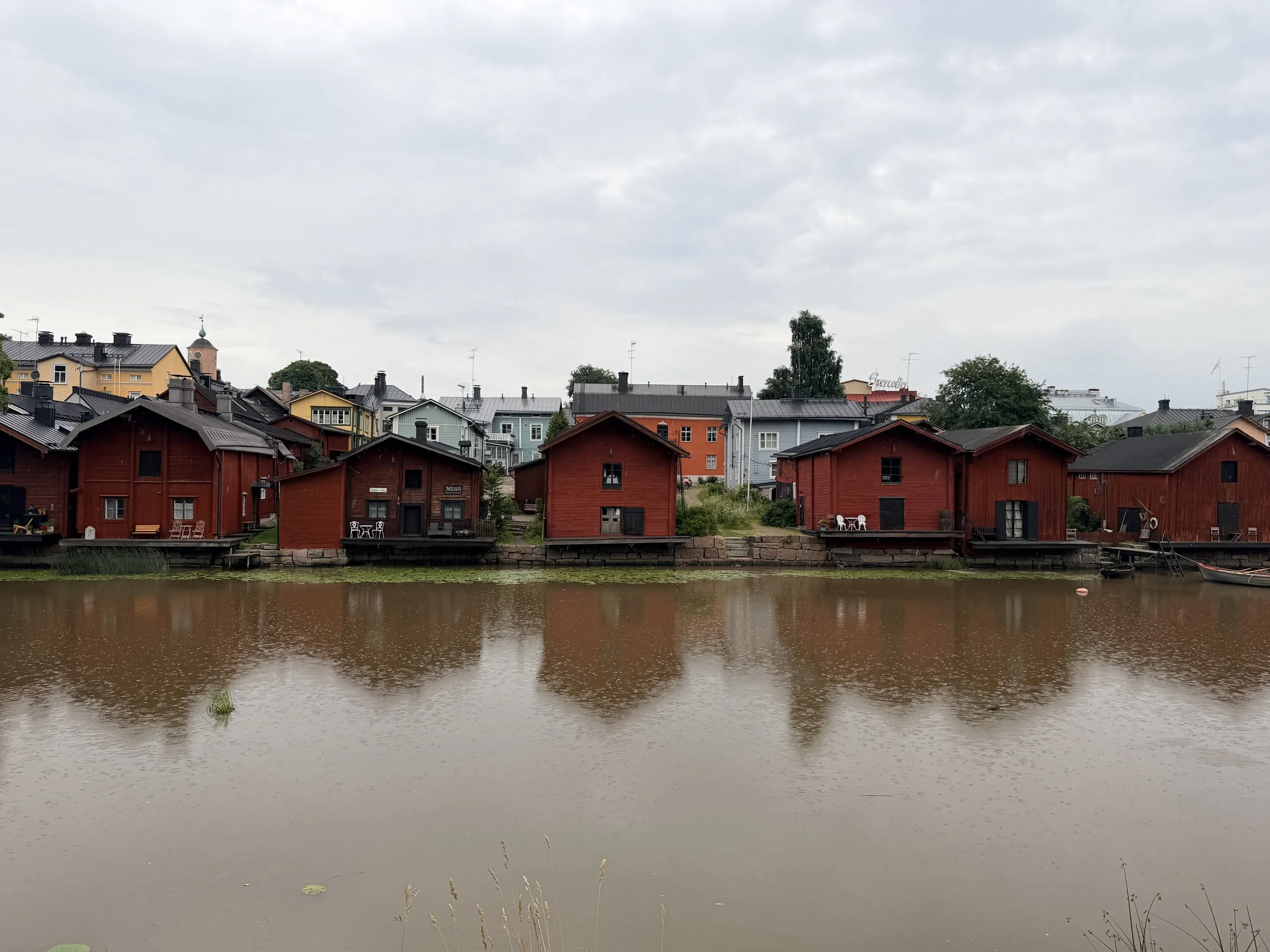
Before reaching Helsinki, we made one final stop in the charming old town of Porvoo to admire its iconic red riverside warehouses. We ended the day with dinner at a Korean restaurant run by a family from Shanghai.
2026年7月26日
今天我们前往芬兰首都赫尔辛基。途中,我们首先来到距离俄罗斯边境仅几公里的帕里卡拉雕塑公园(Parikkala Sculpture Park)。
这座雕塑公园是芬兰民间艺术家维约·伦科宁(Veijo Rönkkönen)毕生的心血。他白天在附近的一家造纸厂全职工作,利用业余时间默默创作了近50年,完成了五百多座混凝土雕塑。作品以练瑜伽的人物、舞者、儿童以及日常生活场景为主题,营造出一种既引人入胜又略带诡异的氛围。公园最著名的是“瑜伽花园”,约250座雕塑呈现出各种不同的瑜伽姿势,其中许多都是他的自画像。尽管园内小池静谧,鲜花盛开,景色优美,但这些雕塑却给人一种怪异而不安的感觉。更令人惊讶的是,他还在许多雕塑中镶嵌了真正的人牙,这些牙齿都是向朋友和当地居民收集而来的。这里被公认为世界上最具代表性的民间艺术(Outsider Art)作品之一。
继续前行不久,我们特地在路边停下,拍摄芬兰一侧距离俄罗斯边境约3公里的绿色边境围栏。虽然看不到俄罗斯境内的景象,但能够如此接近边境,仍然令人觉得十分特别。
中午,我们在伊马特拉(Imatra)享用了中餐,味道出乎意料地不错。到了旅程后半段,只要有机会,我们都会优先选择中餐或其他亚洲料理。
下午,我们来到维尔拉(Verla),参加历史造纸厂的导览。这座造纸厂建于1872年,运营至1964年,如今已被列入联合国教科文组织世界遗产。厂区保存得极为完整,让我们得以一窥芬兰早期工业发展的面貌,以及当年工人的工作与生活环境。导览内容丰富,也让这段绕道之旅变得格外值得。
回想这一天,我们发现这两个景点虽然性质截然不同,却有着共同的意义。一个保存了一位默默无闻的民间艺术家毕生的创作,另一个完整保留了一座见证芬兰工业发展的百年造纸厂。它们让我们体会到,值得被珍藏的不只是宏伟的历史事件,也包括个人的梦想、创造力,以及无数普通人共同创造的历史。
抵达赫尔辛基前,我们最后在古城波尔沃(Porvoo)停留,欣赏了沿河一排排标志性的红色木仓库。没想到想在那里找家饭店吃晚餐居然很不容易,大部分饭店晚上8点关门,并且7点就不接客了。最后在一家由上海人经营的韩式餐厅才吃上了饭。这与我们印象中的欧洲国家区别太大了。在意大利,晚上7,8点晚餐才刚开始。
一整天走走停停看看,终于来到赫尔辛基。
Salpa Line 萨尔帕防线
July 25, 2026
This morning, we visited Kerimäki to see its famous church,……
萨尔帕防线(Salpalinja) 是一条全长超过1,200公里的防御工事,。。。
July 25, 2026
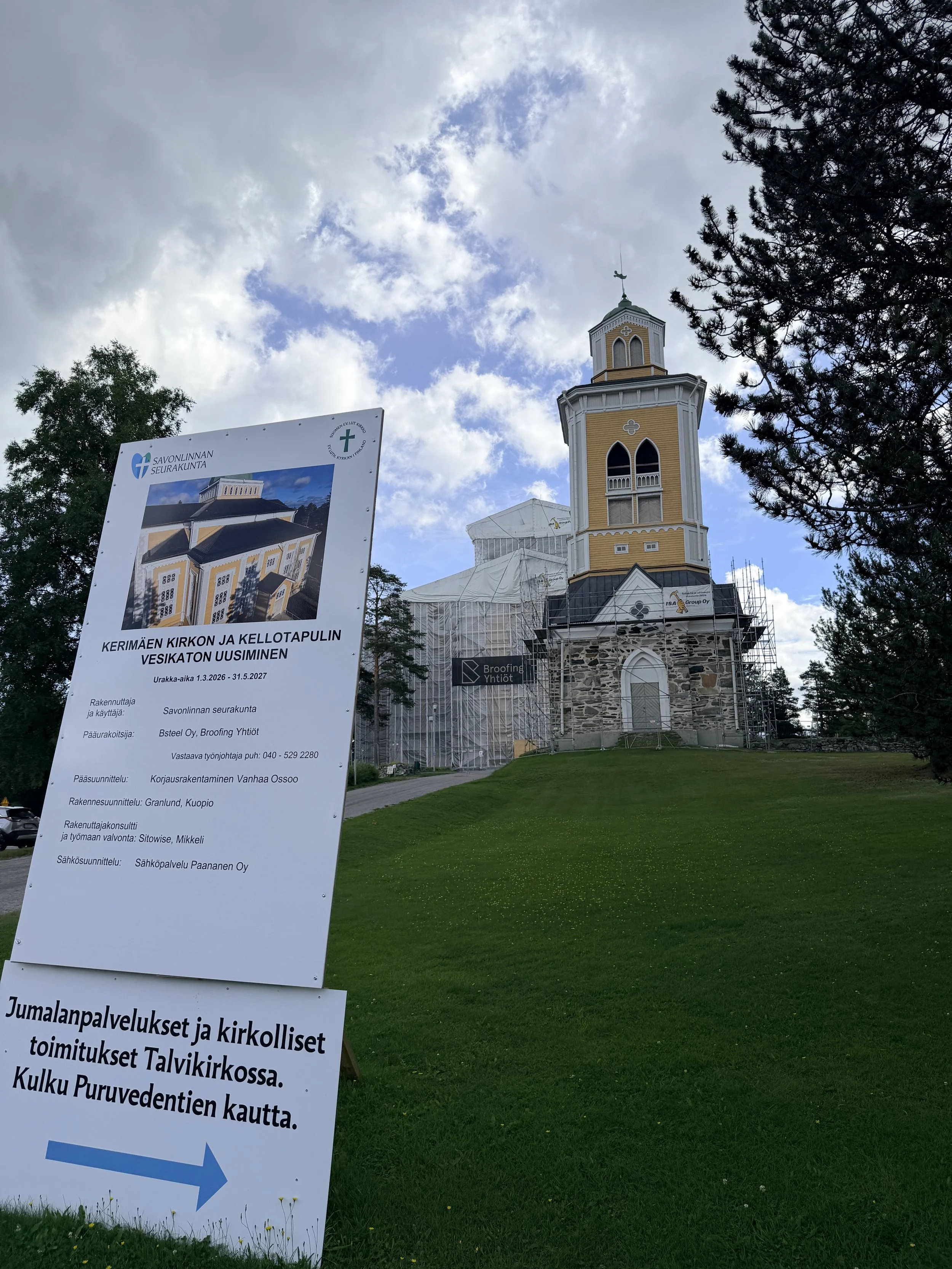
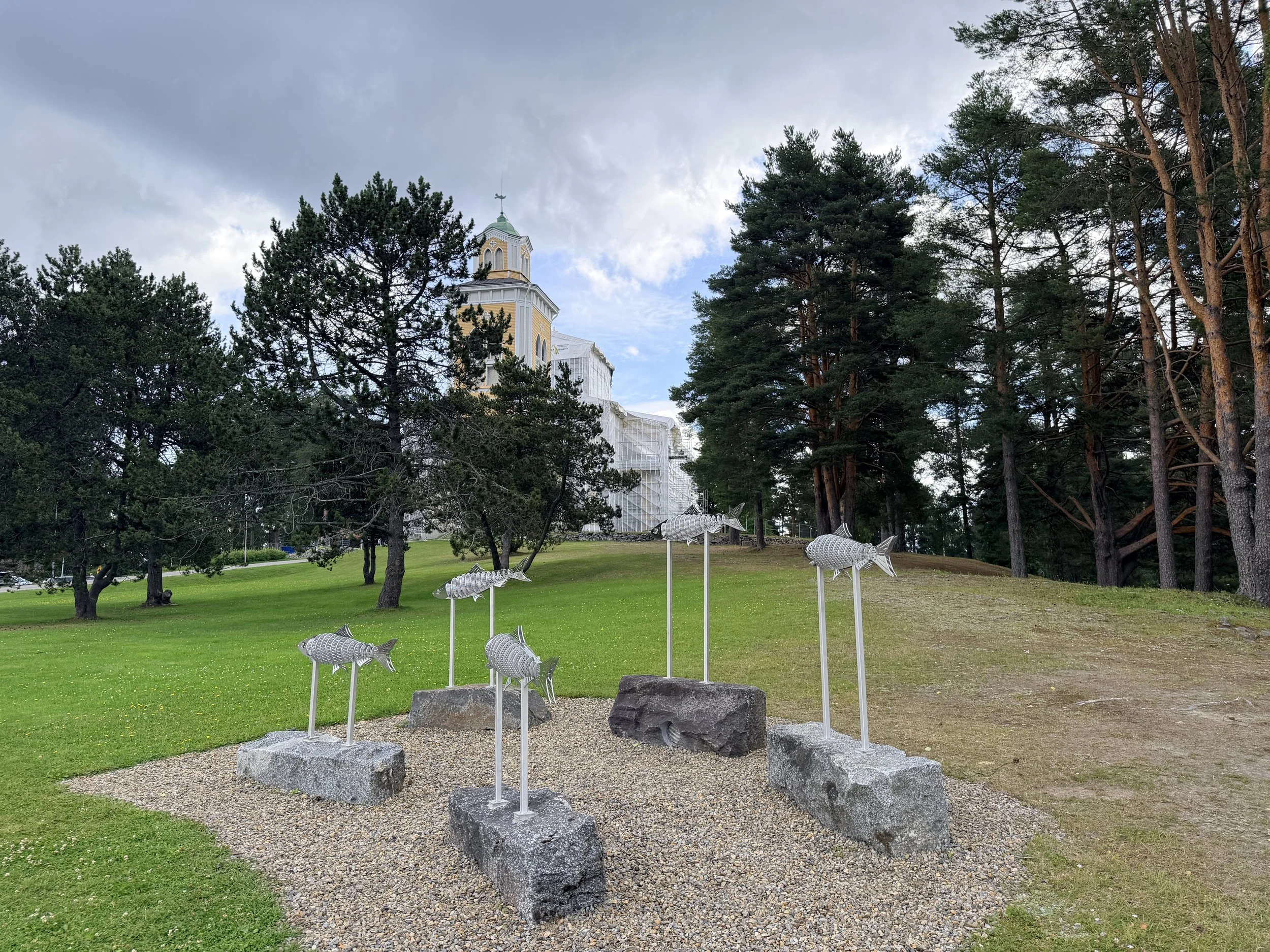
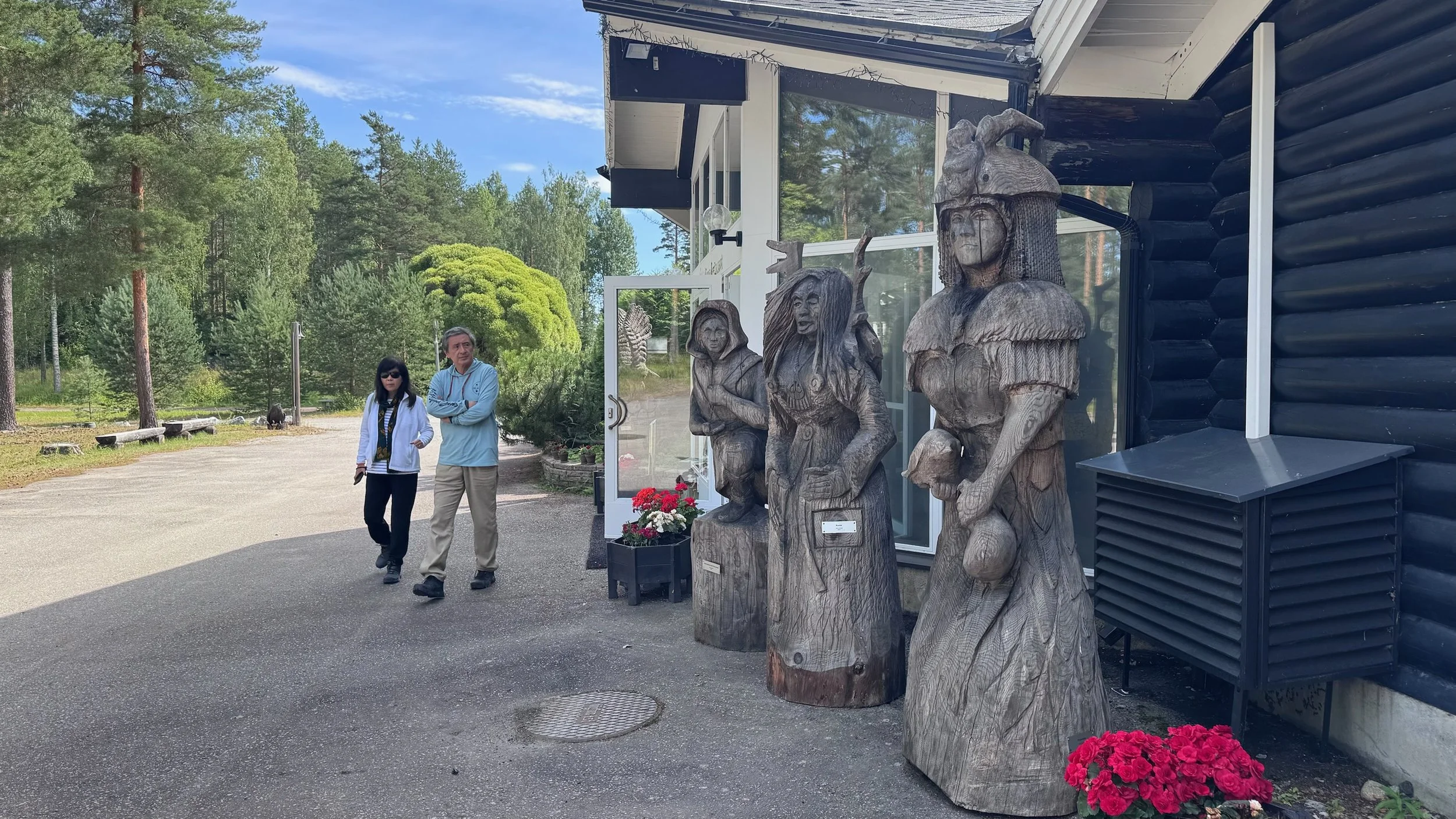
This morning, we visited Kerimäki to see its famous church, known as the largest wooden church in Europe. Unfortunately, the church was closed for renovation, so we weren’t able to see the interior. Instead, we took a leisurely stroll around town and browsed through the local flea market—a small but enjoyable glimpse into everyday life in Kerimäki.
With everything happening in the world today, we became interested in how Finland prepared to defend itself against a possible foreign invasion. The Salpa Line (Salpalinja) was a defensive fortification system stretching more than 1,200 kilometers along Finland's former border with the Soviet Union. Built between 1940 and 1944 after the Winter War, it was designed to deter or repel a possible Soviet invasion. At the time, it was the largest construction project in Finland's history and is widely regarded as one of the most formidable defensive lines built in Europe during World War II. Although the line was never tested in combat, it served as a powerful deterrent and remains a lasting symbol of Finland's determination to defend its independence.
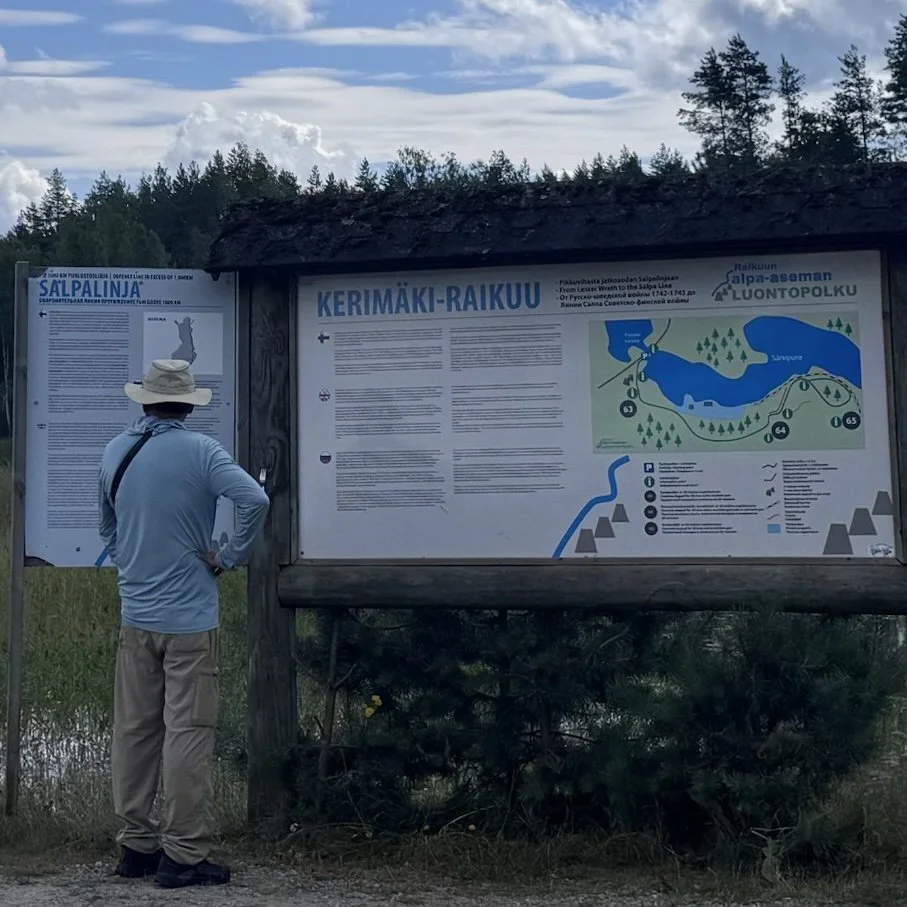
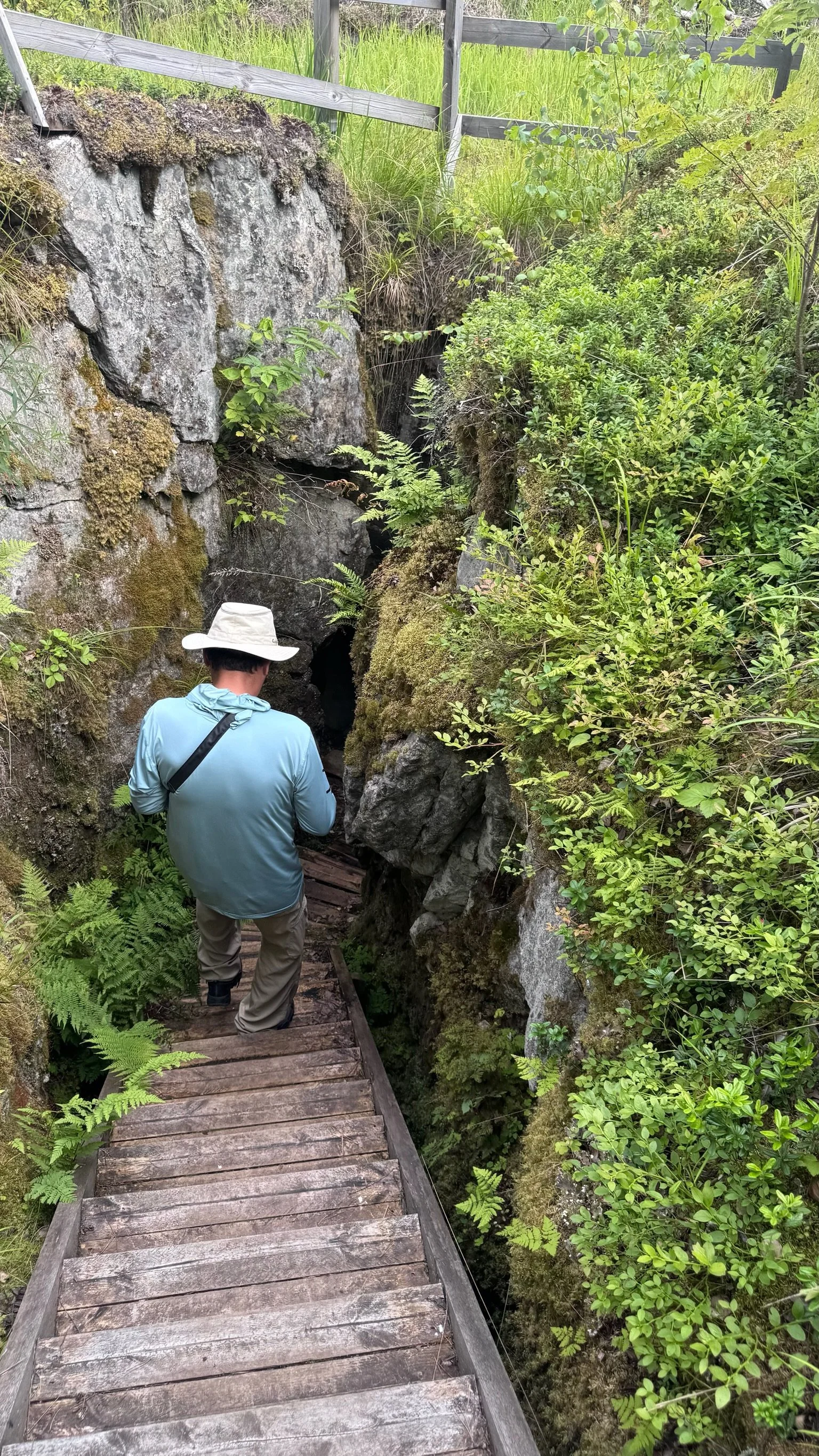
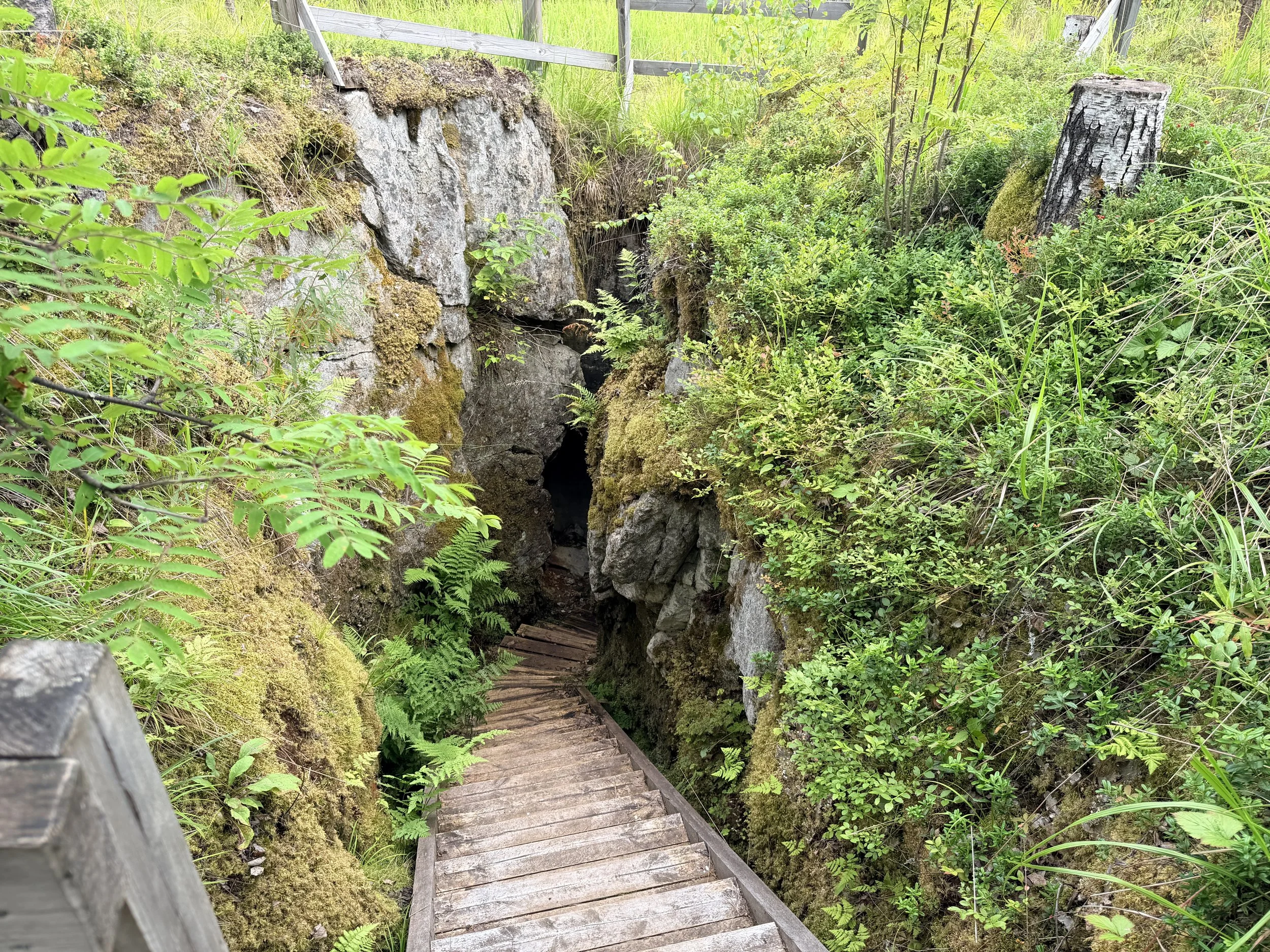
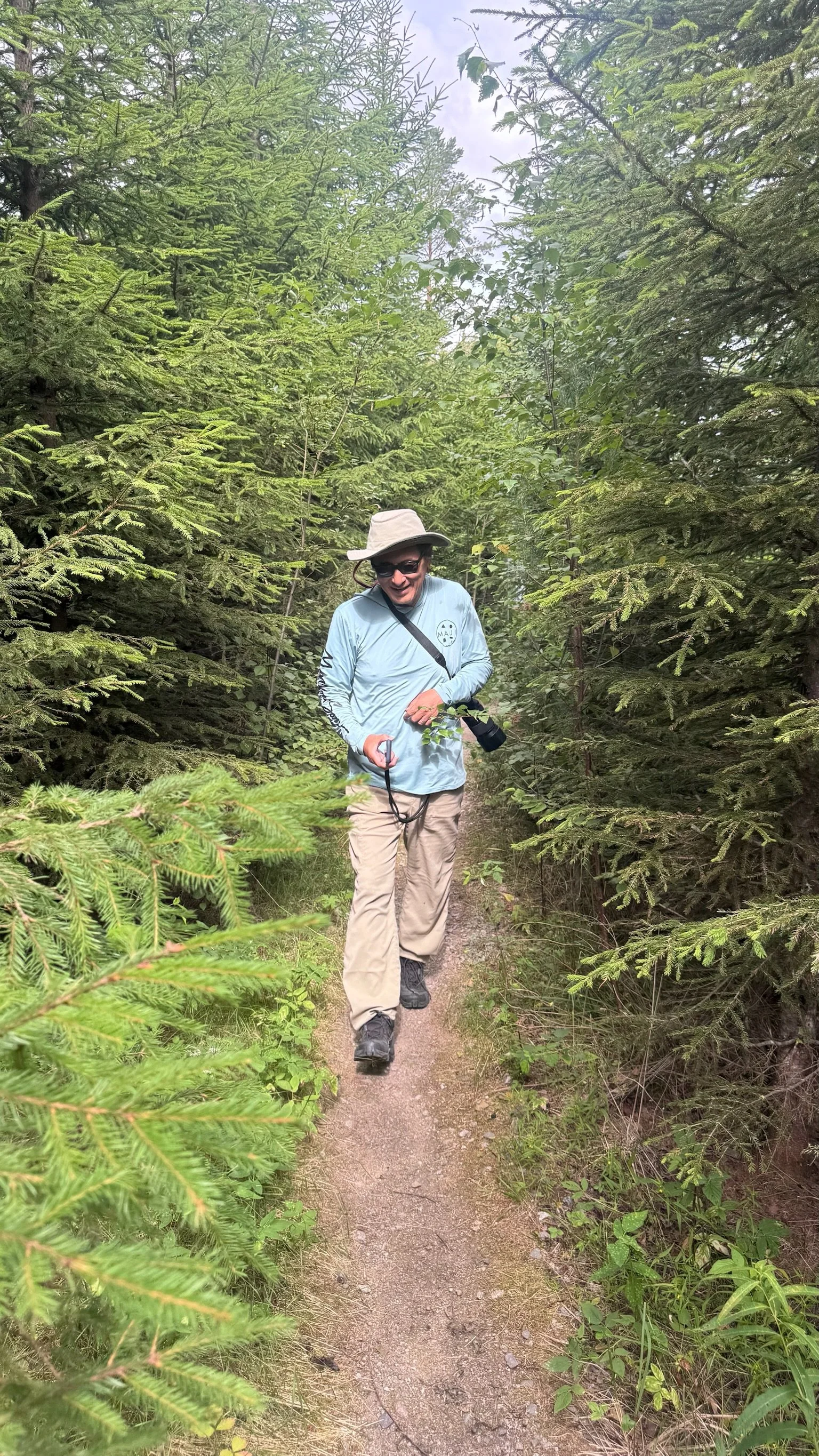
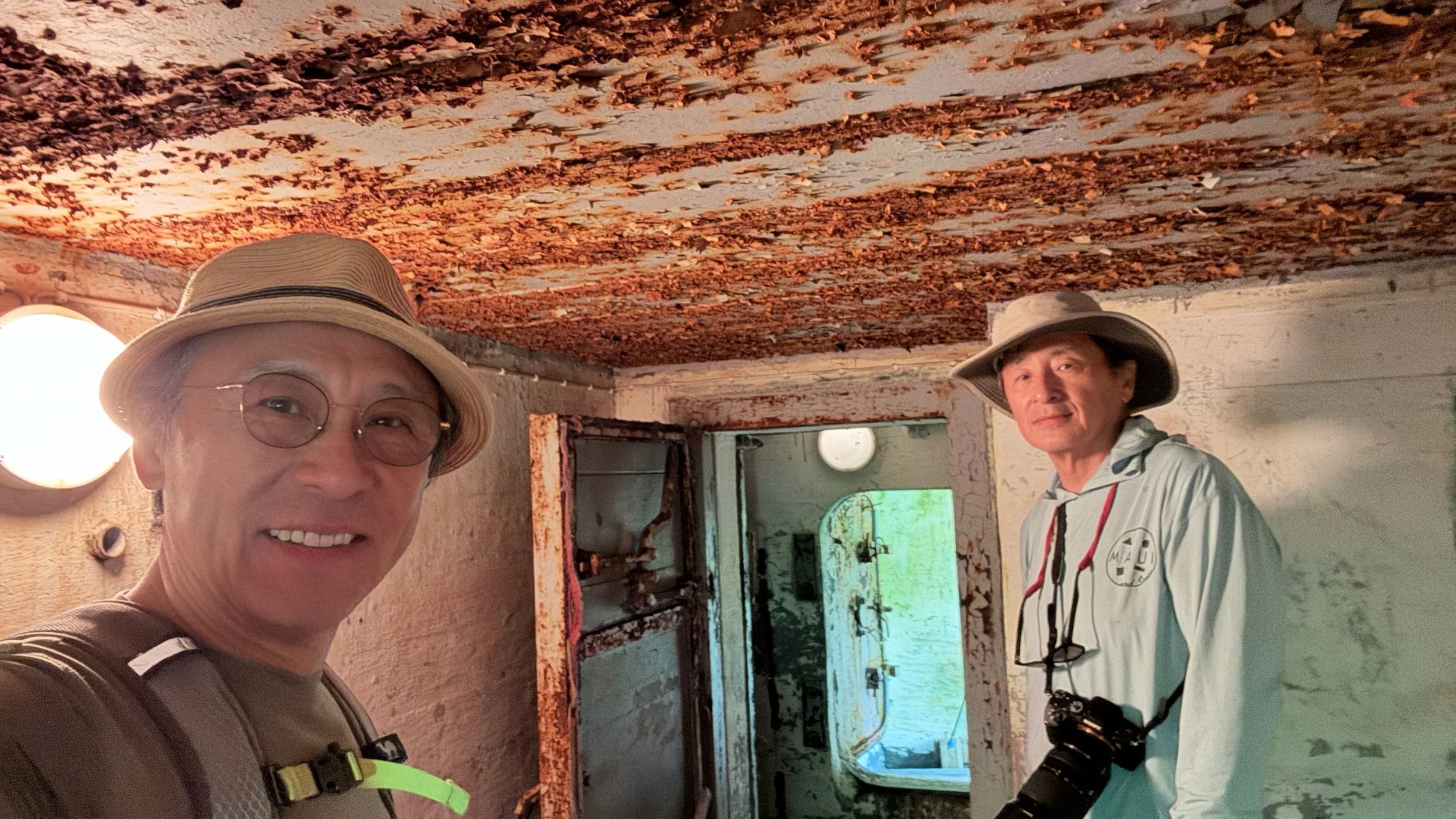
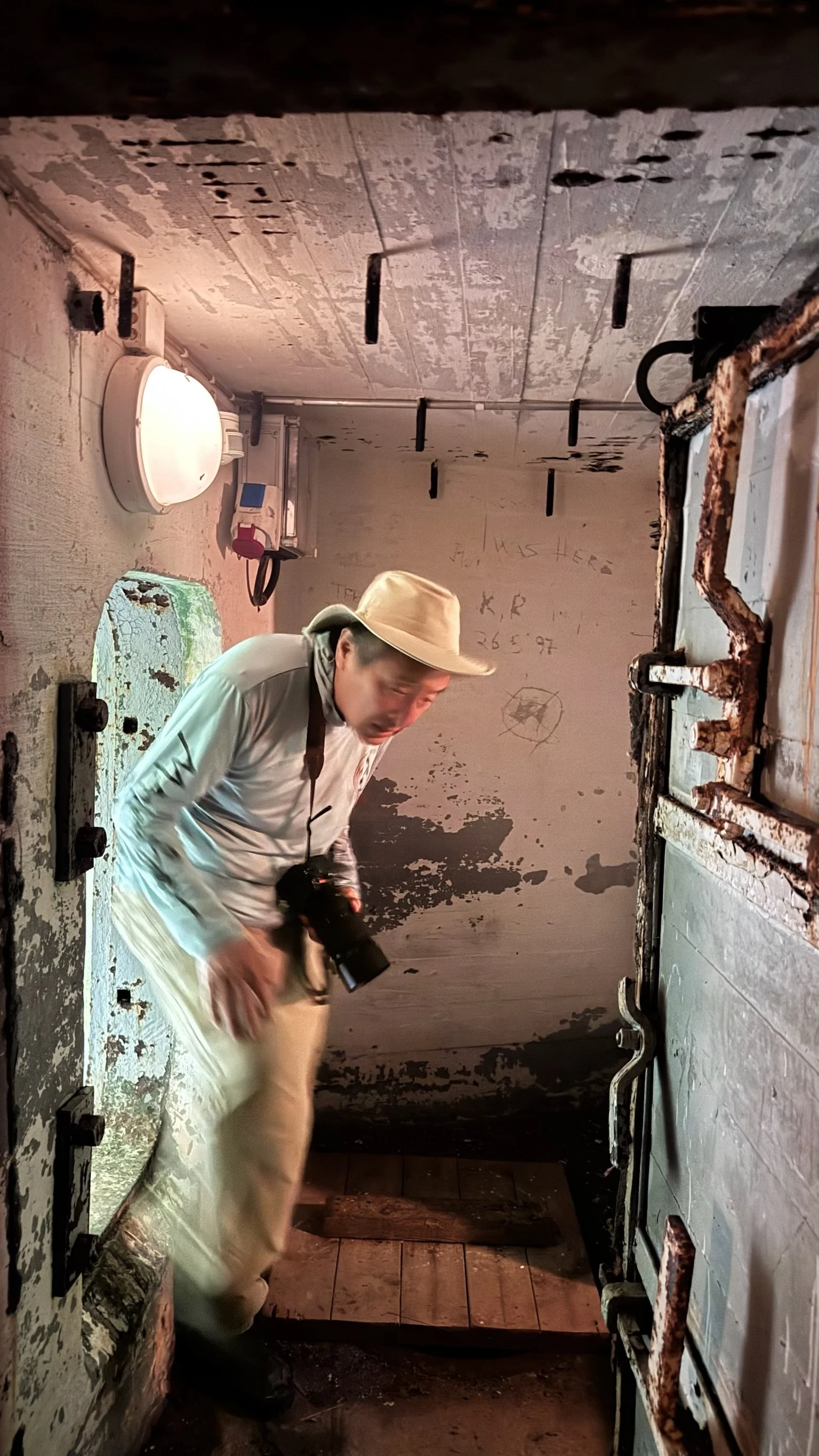
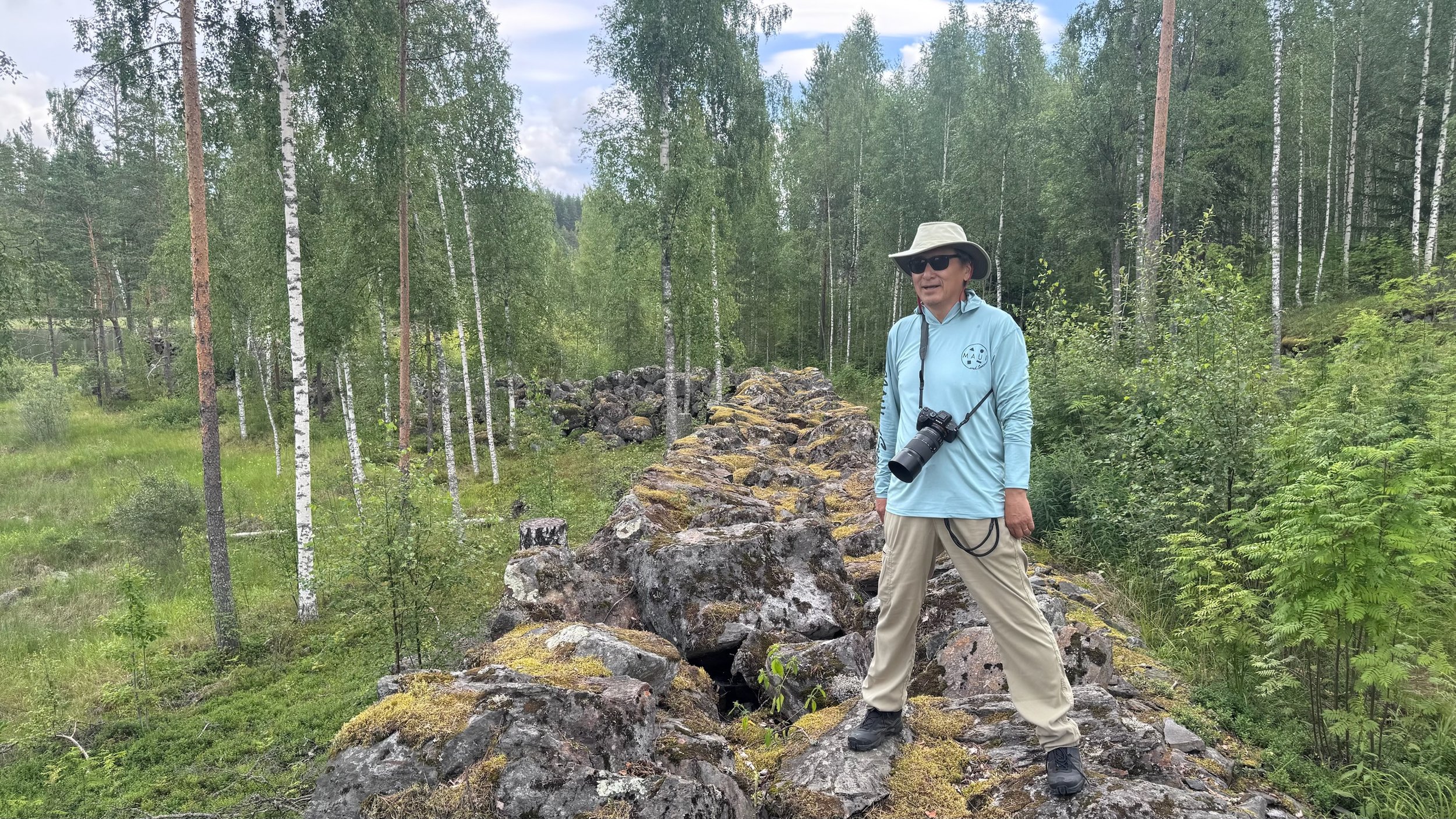
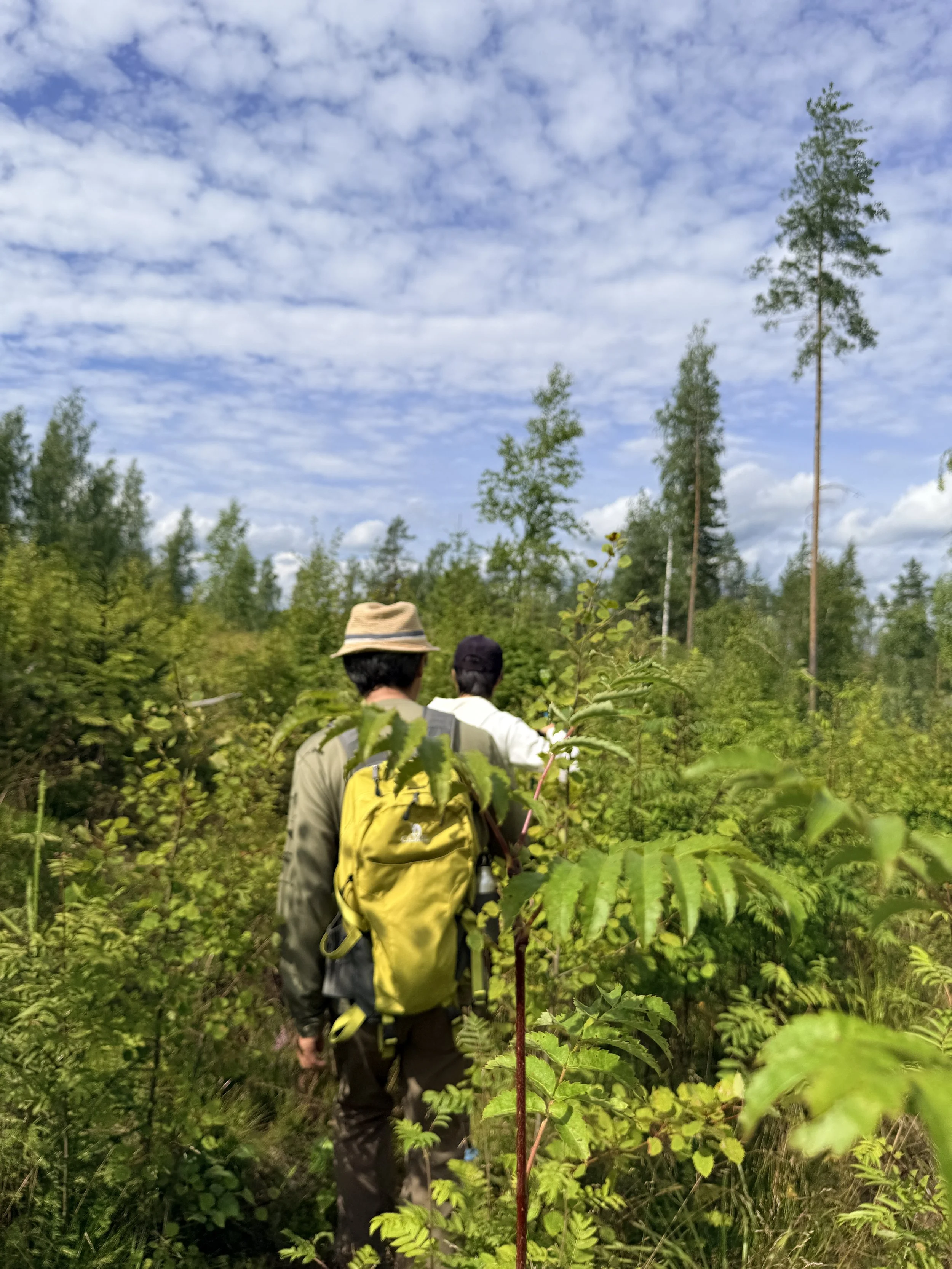
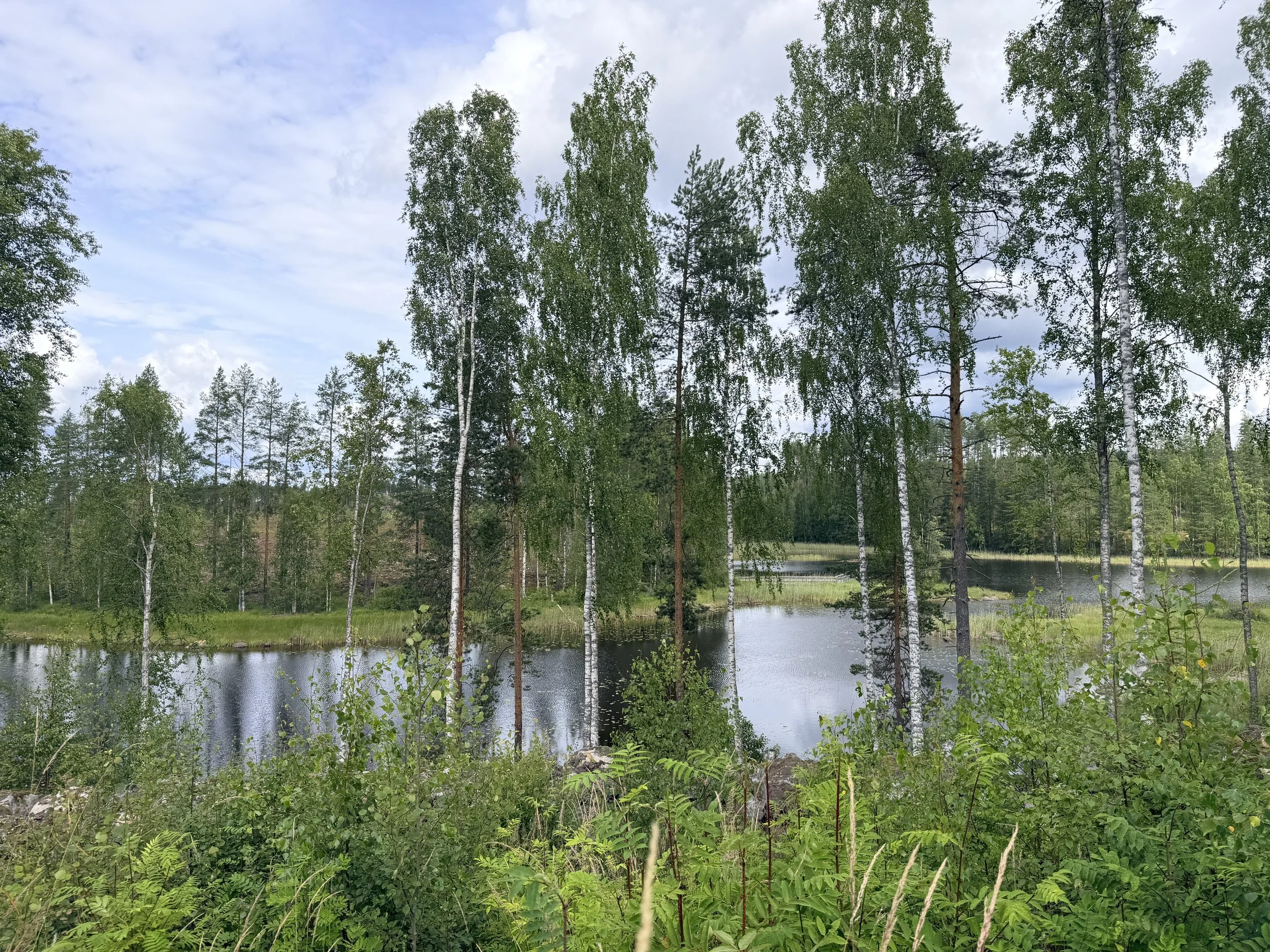
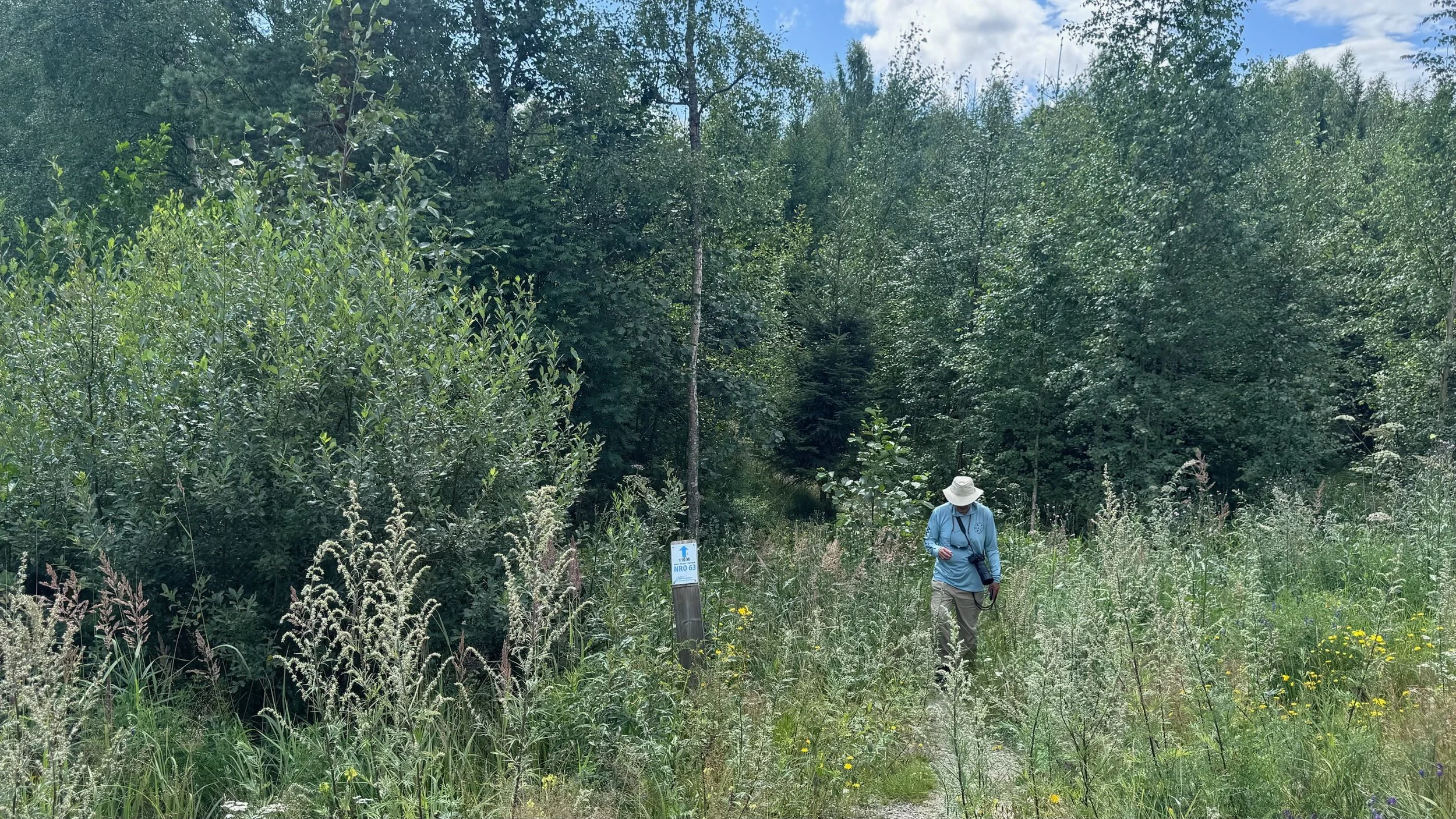
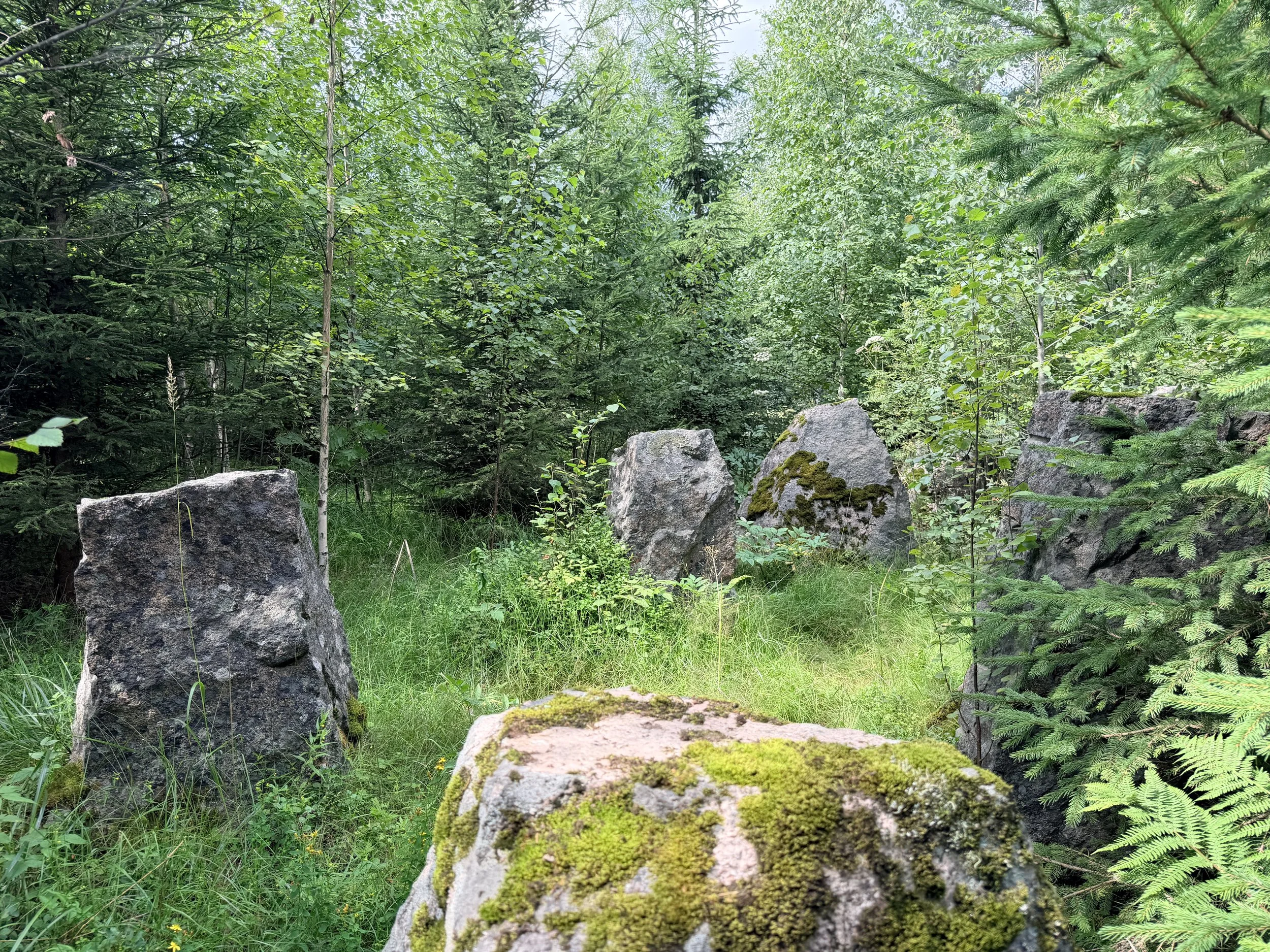
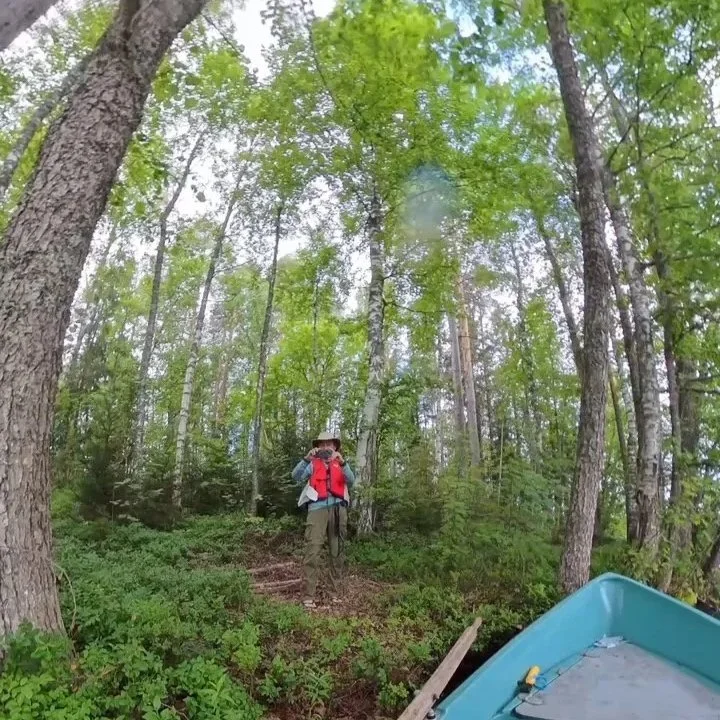
The section of the Salpa Line at Raikuu is exceptionally well preserved. We followed a short forest trail through dense, shoulder-high vegetation to explore three reinforced concrete bunkers, anti-tank stone obstacles, and other defensive structures. Walking among these fortifications offered a fascinating glimpse into Finland's determination to safeguard its independence during one of the most uncertain periods in its history.
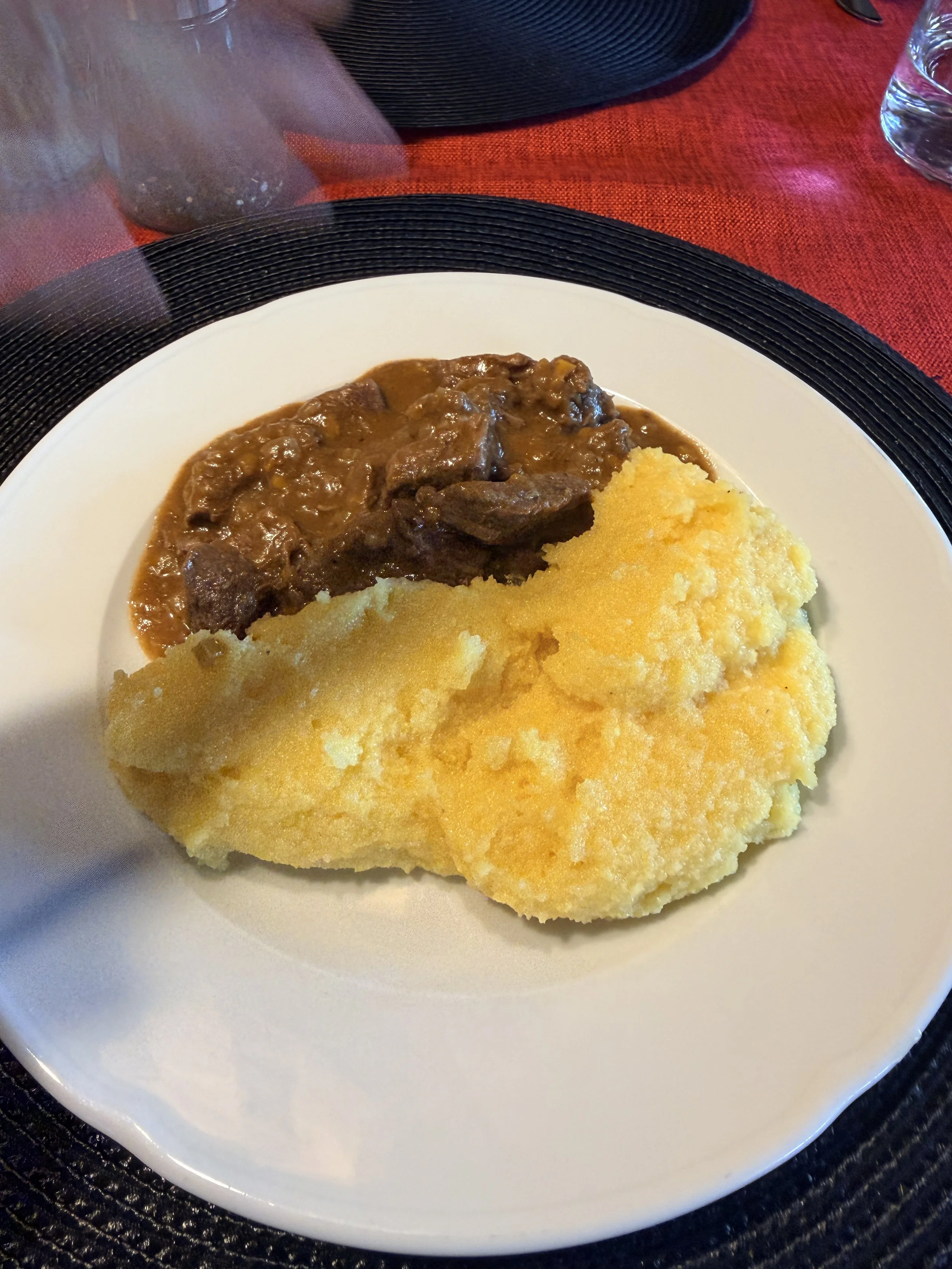
For lunch, we stopped at a nearby Italian restaurant close to our rental. The meal was simple but satisfying, and we enjoyed it more than yesterday’s lunch at the clubhouse.
Afterward, we drove to the Sulosaari Outdoor Recreation Area, a popular walking trail on a small island in Savonlinna. The easy loop wound through peaceful woodland and along the shoreline, passing charming birdhouses. It was a short but delightful hike.
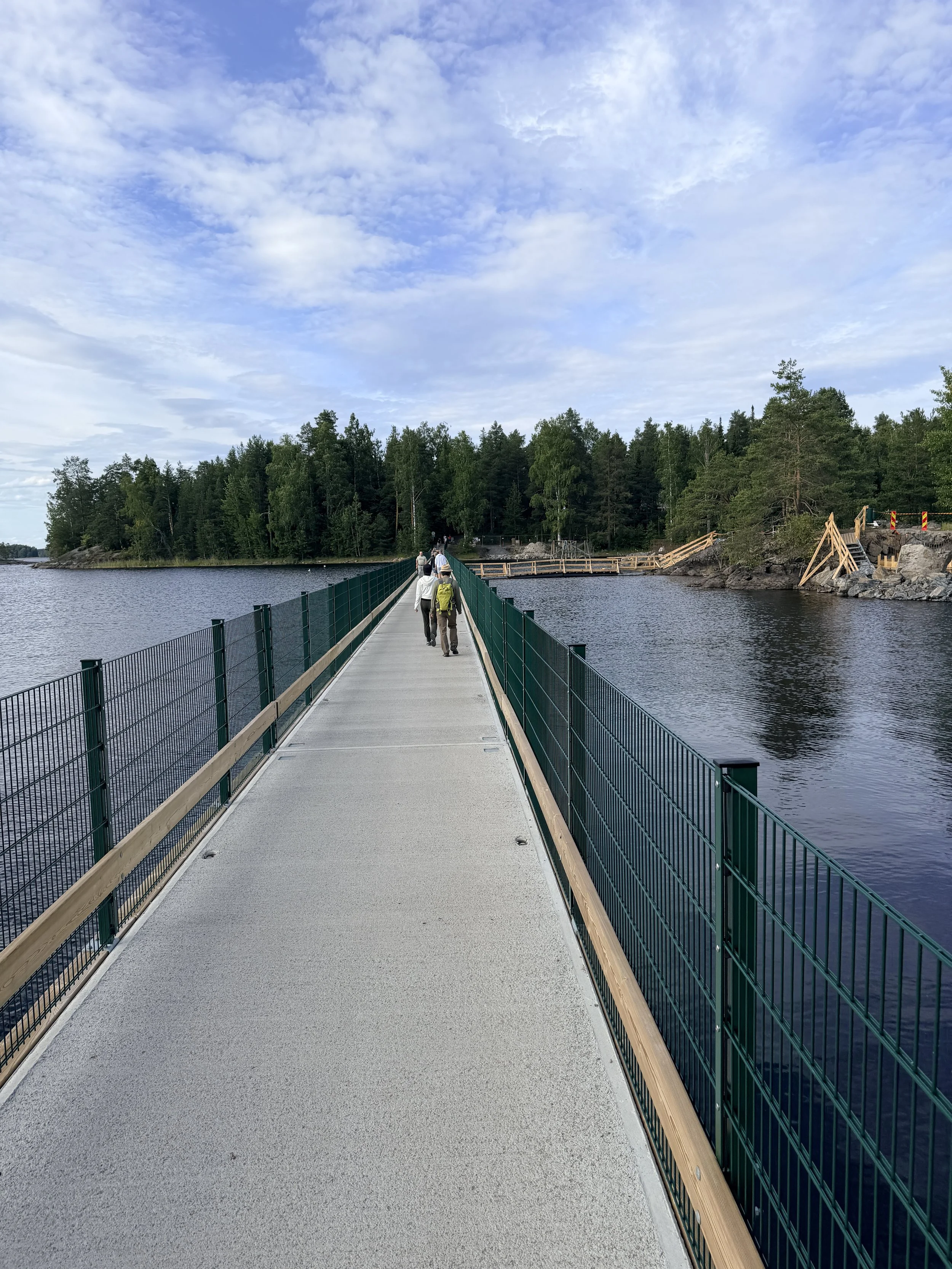
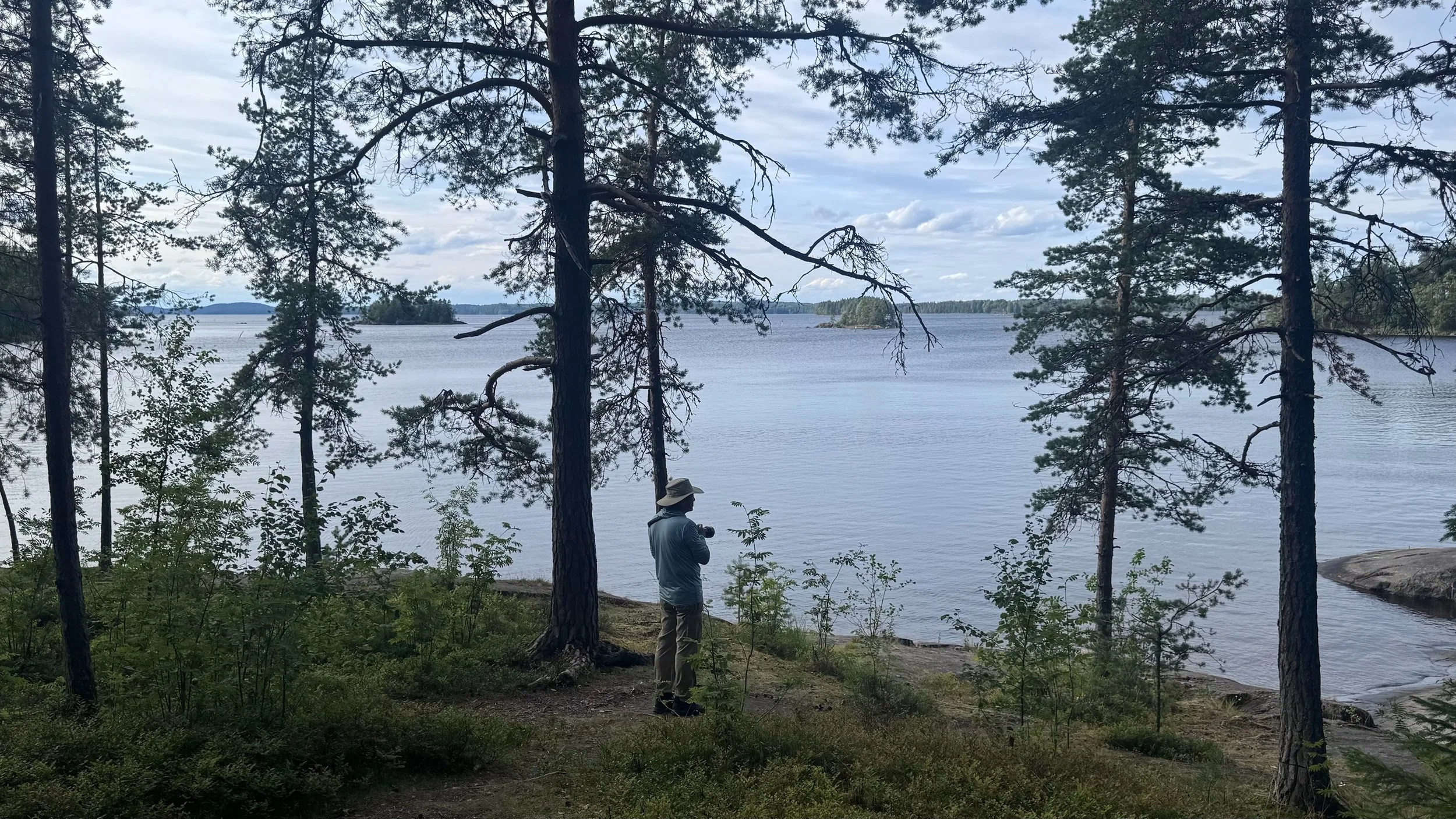
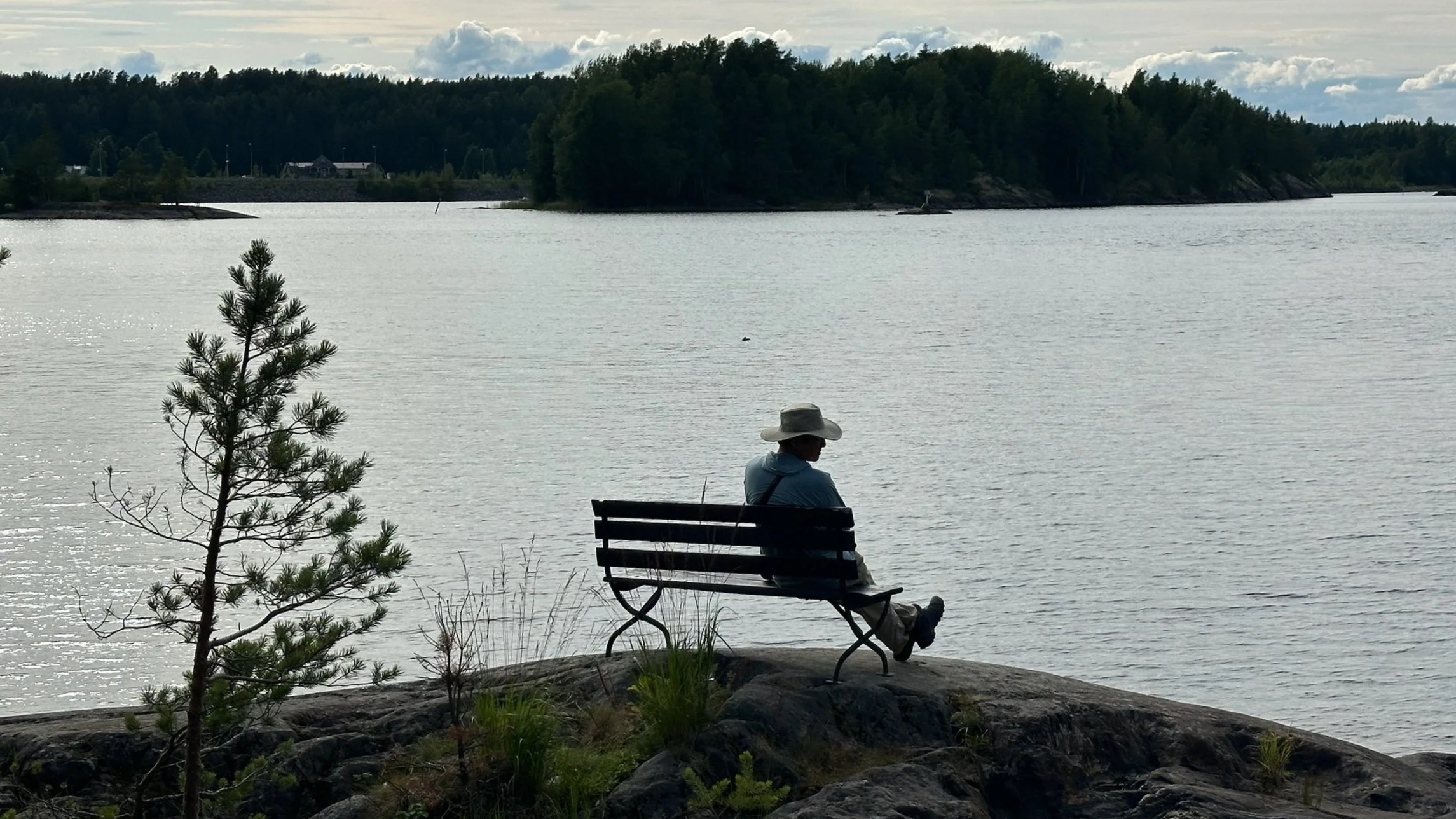
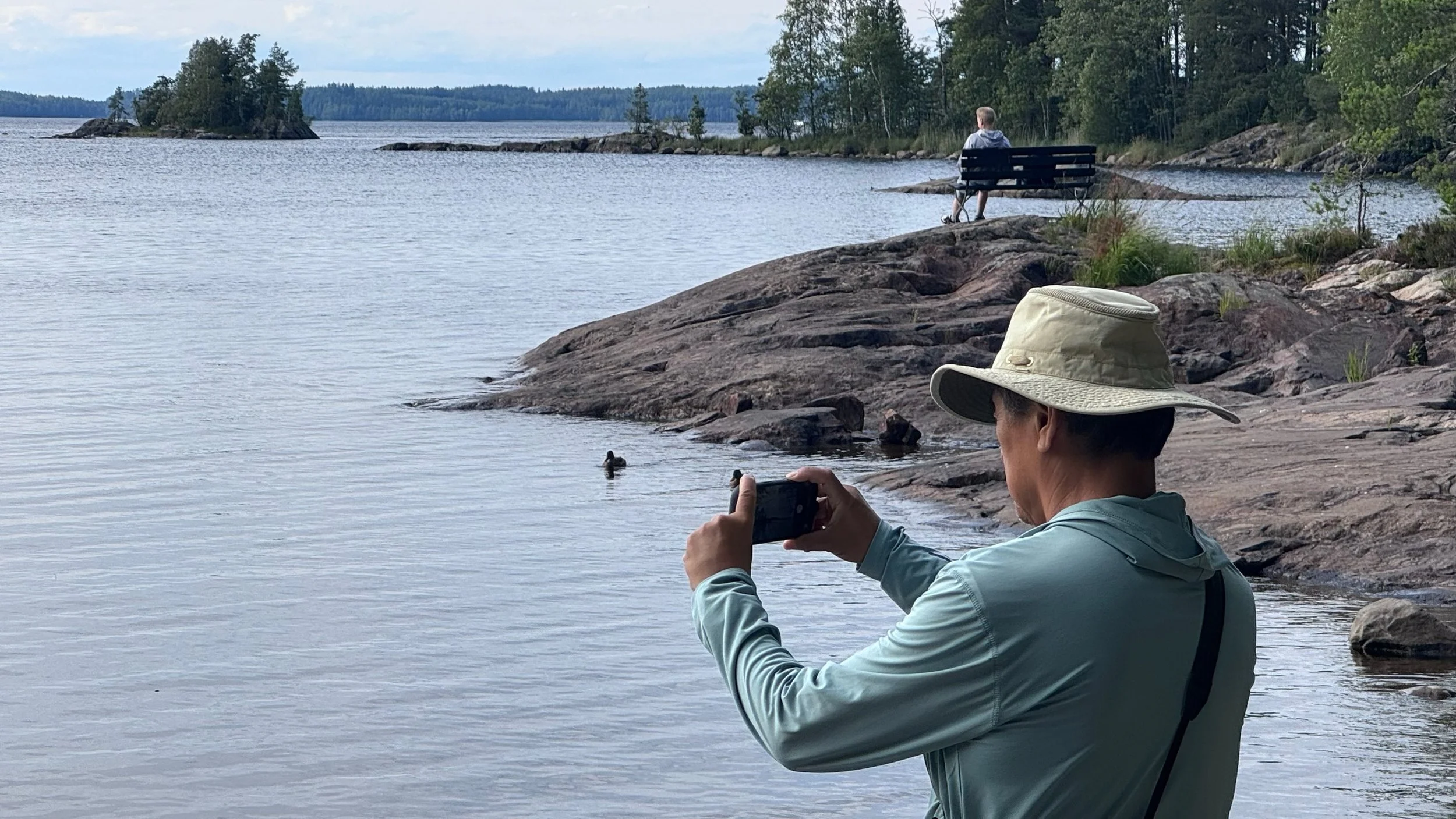
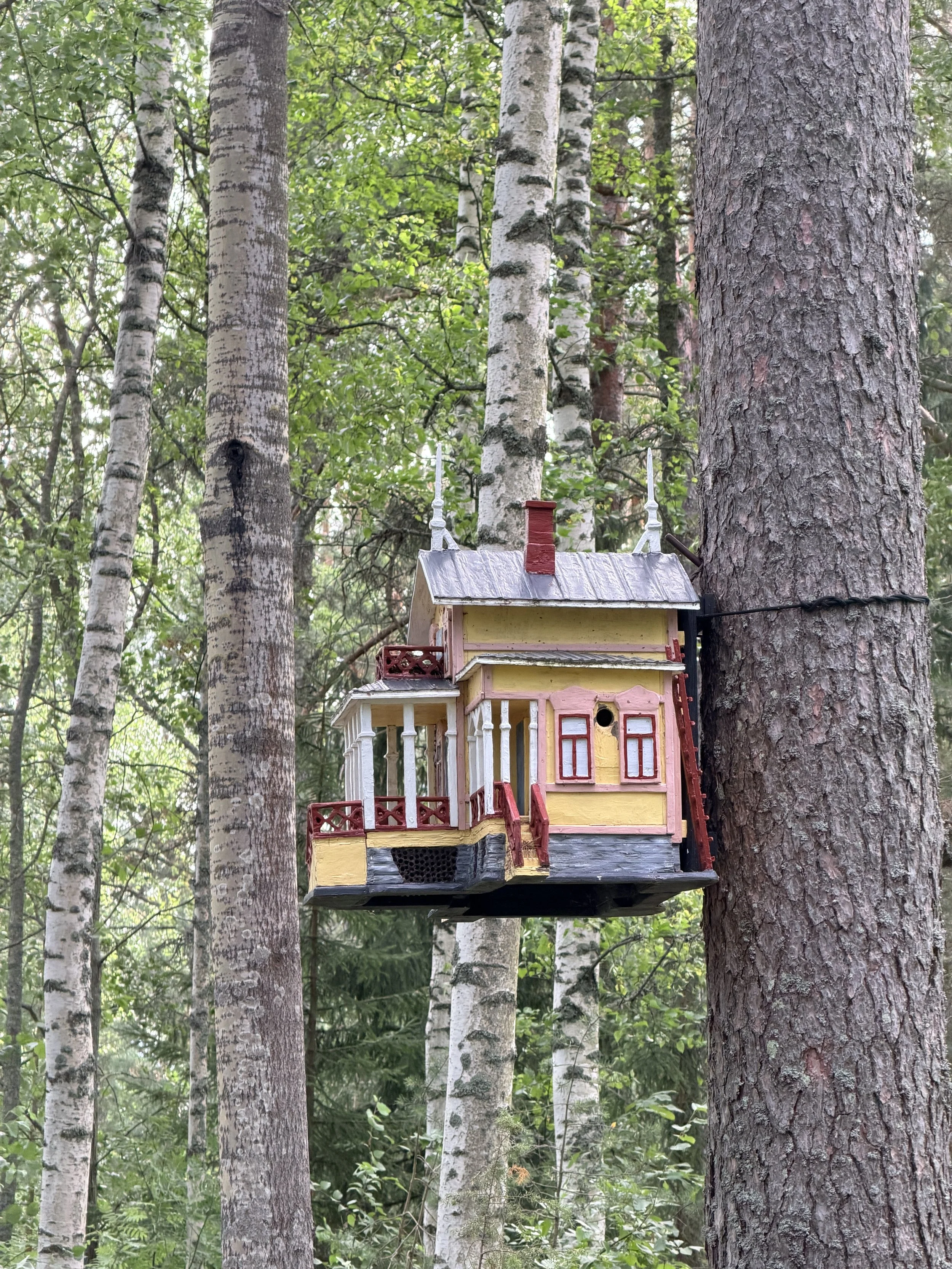
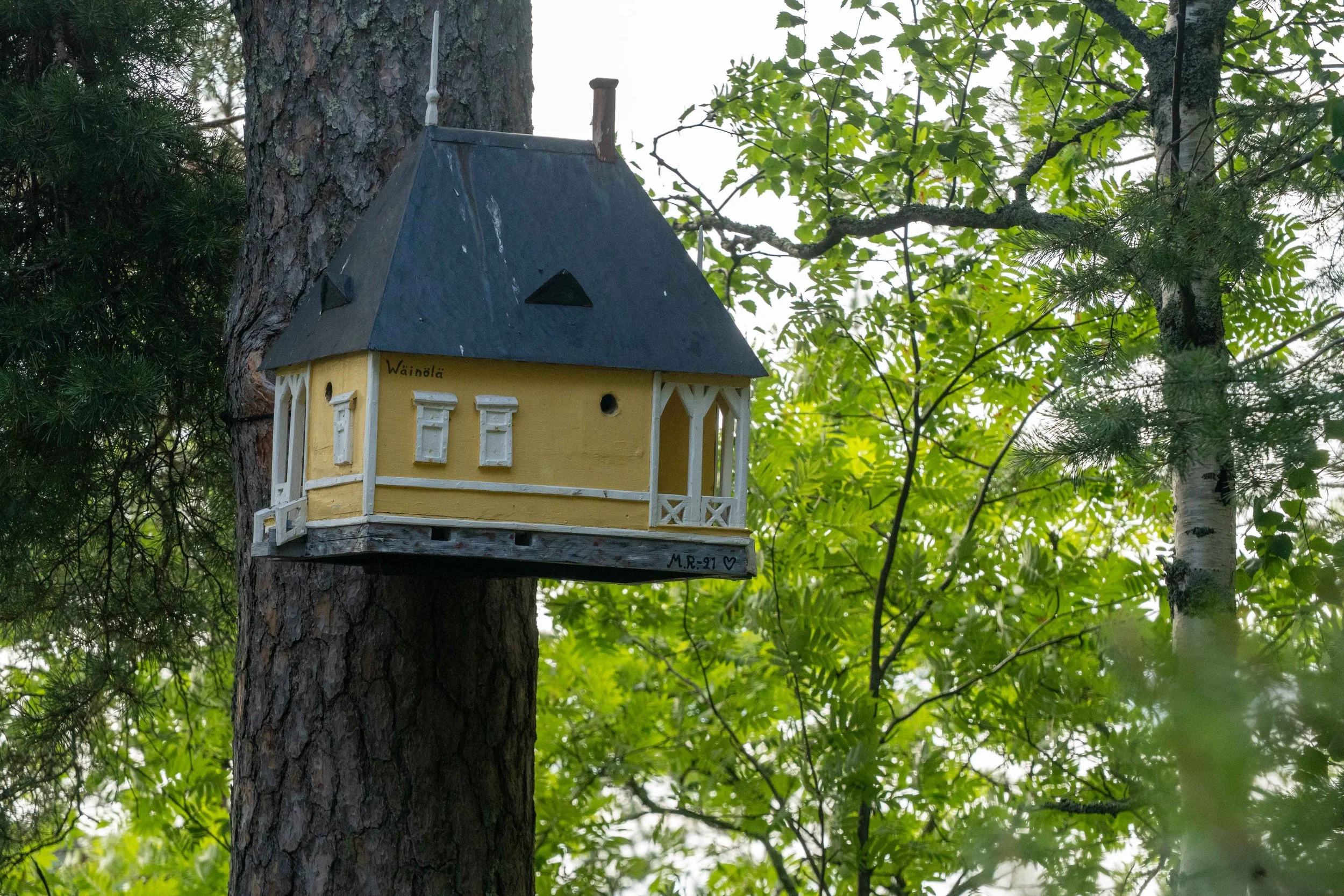
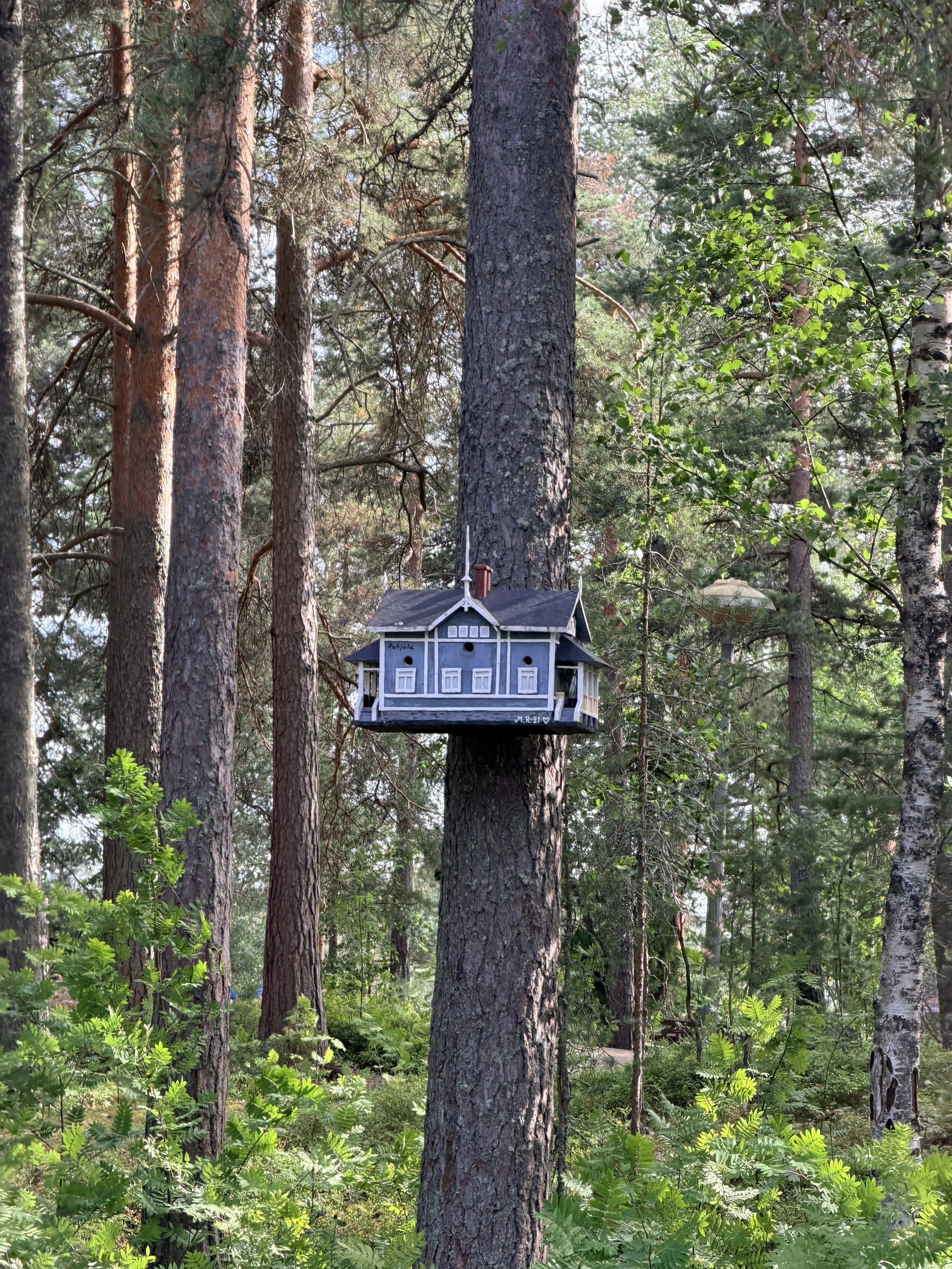
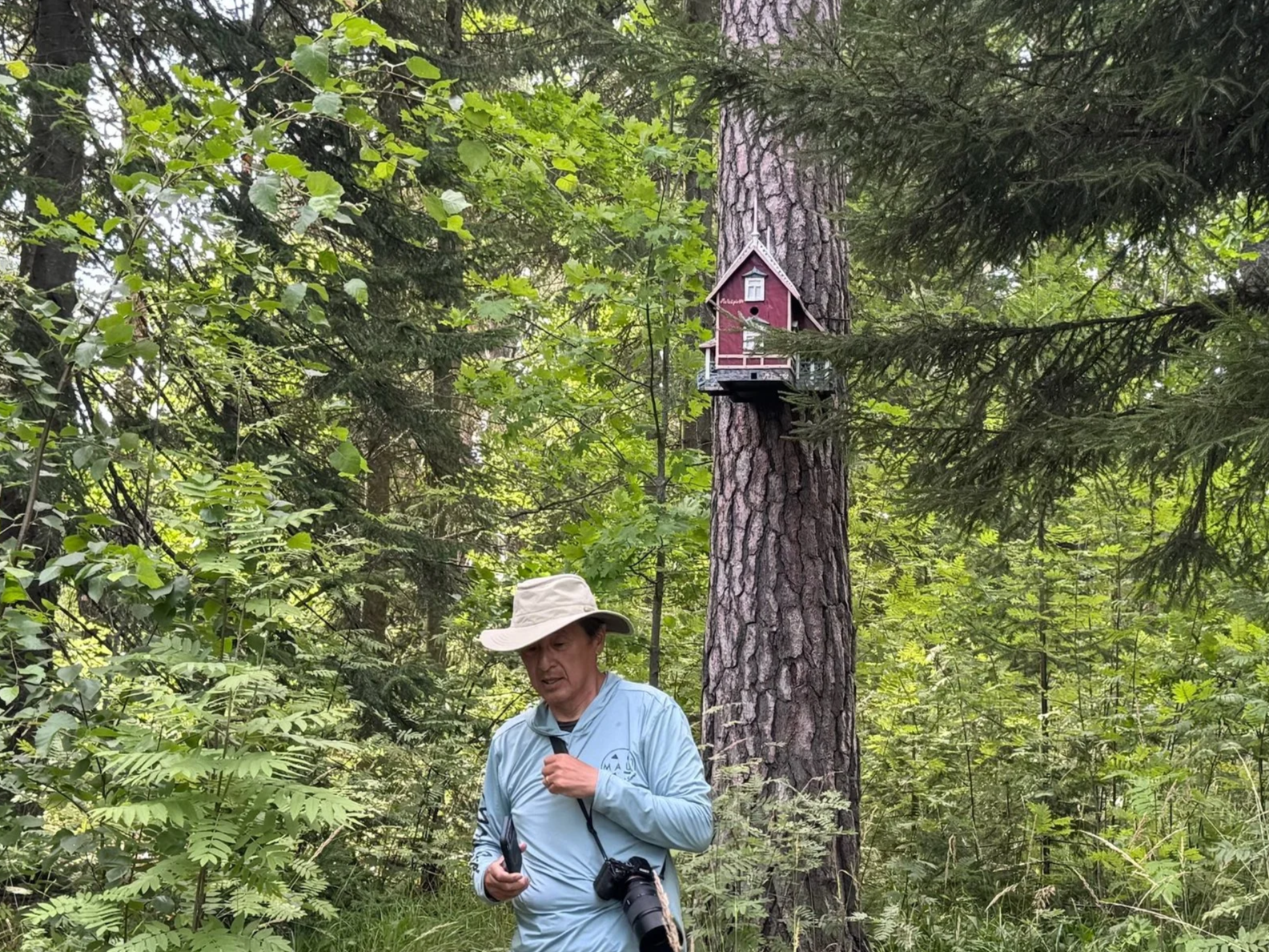
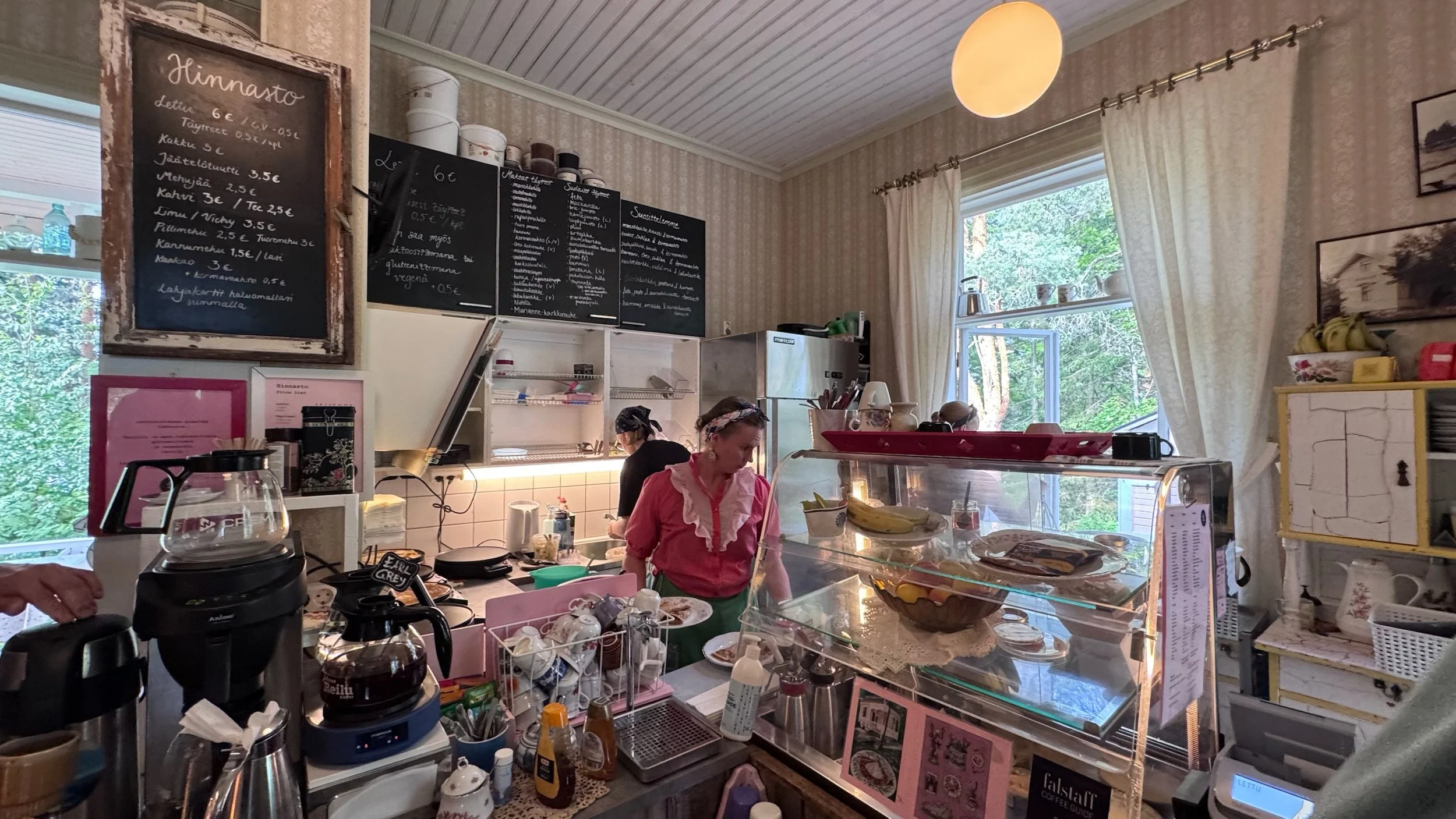
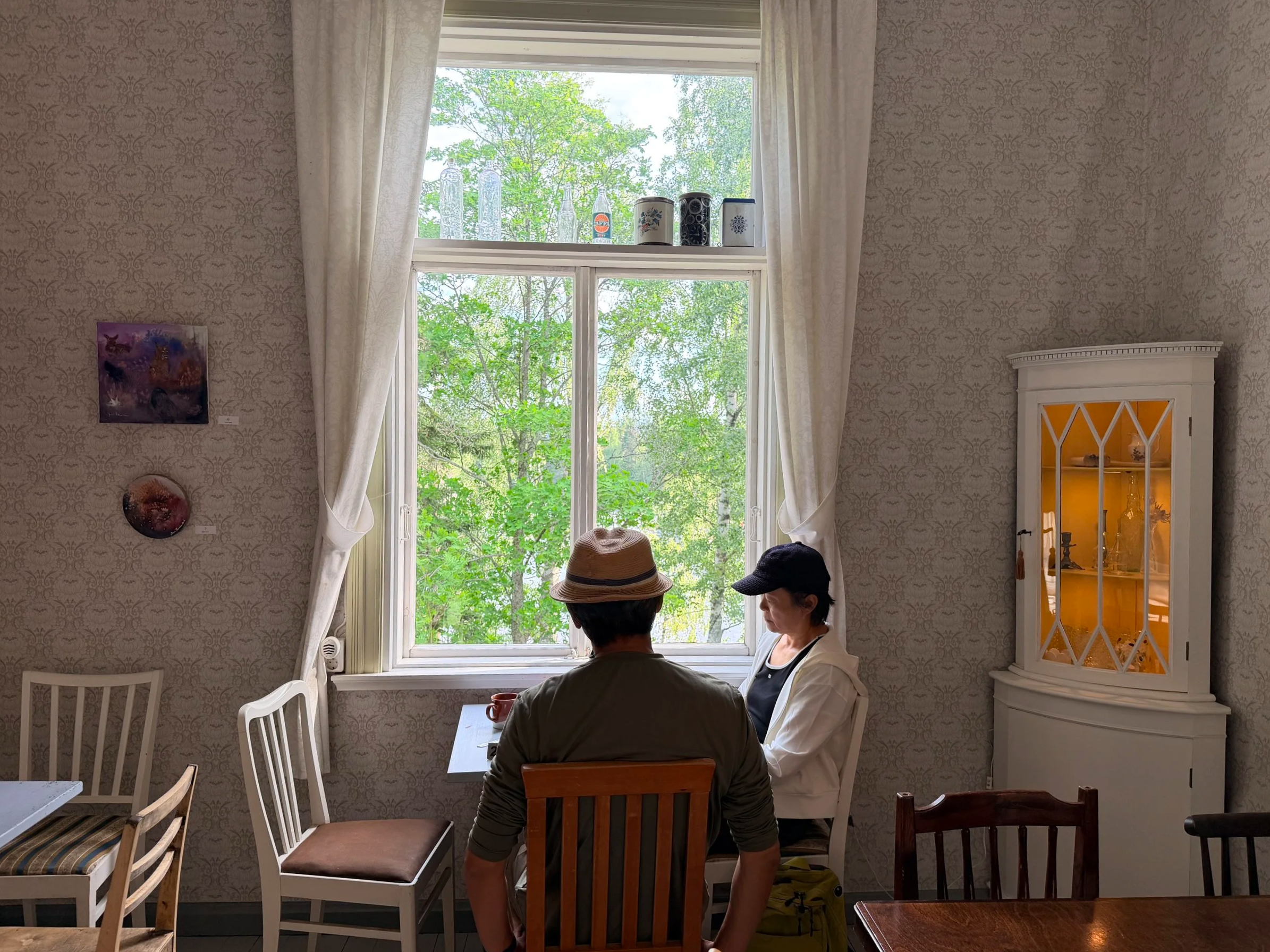
We finished the walk with coffee and crêpes at a cozy crêpe café. We ordered one crêpe to share, but it was so delicious that we immediately ordered a second. It turned out to be one of the culinary highlights of the day.
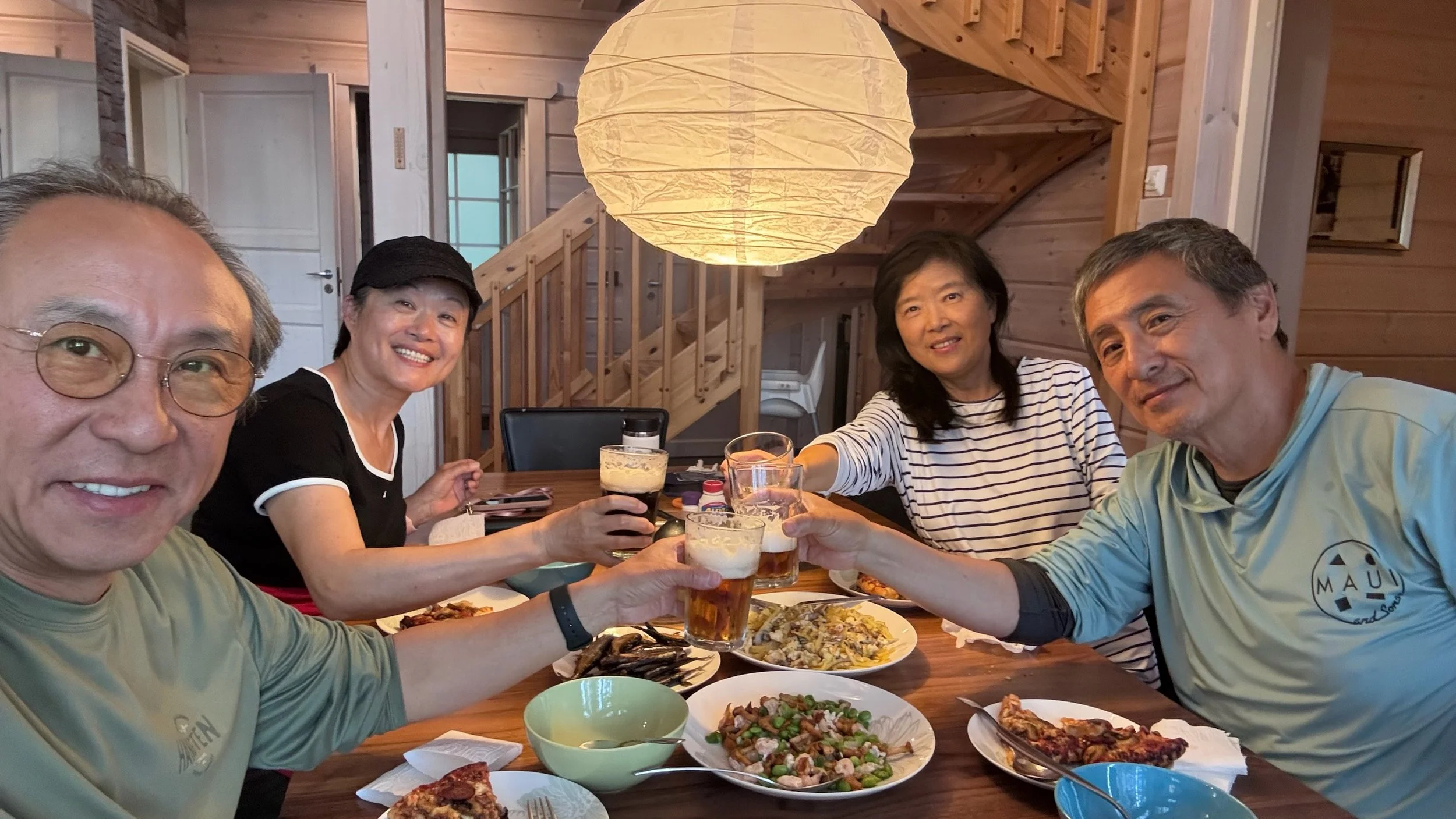
In the evening, we enjoyed another delicious homemade dinner at our rental—a relaxing and satisfying way to end the day.
2026年7月25日
萨尔帕防线(Salpalinja) 是一条全长超过1,200公里的防御工事,沿着芬兰与前苏联的旧边界修建。它始建于1940年至1944年间,也就是冬季战争结束之后,目的是阻止或抵御苏联可能发动的新一轮入侵。当时,这项工程是芬兰历史上规模最大的建设项目,也被普遍认为是第二次世界大战期间欧洲最坚固、最完善的防御工事之一。虽然萨尔帕防线最终从未经历实战考验,但它成功发挥了强大的威慑作用,至今仍是芬兰坚定捍卫国家独立精神的重要象征。
位于 Raikuu 的这一段萨尔帕防线保存得十分完好。我们沿着一条穿越茂密森林的小径前行,两旁高过肩膀的灌木几乎将步道包围。沿途参观了三座钢筋混凝土碉堡、反坦克石障以及其他防御设施。漫步于这些历经八十多年风雨的工事之间,仿佛让人回到了那个战云密布的年代,也深刻感受到芬兰人民为了守护国家独立所付出的巨大努力和坚定决心。
中午稍晚些我们回到民宿,在高尔夫球场里新开的意大利餐厅吃午餐。菜品要比昨天球场俱乐部好太多,每道菜都很美味。
下午,我们来到萨翁林纳(Savonlinna)的 Sulosaari 户外步道。这是一条位于小岛上的热门散步路线,环形步道穿梭于宁静的森林与湖岸之间,沿途还能看到许多造型可爱的鸟屋。虽然路程不长,却轻松惬意,让人充分感受到芬兰夏日森林的静谧与悠闲。
散步结束后,我们在岛上一家温馨的可丽饼店享用了咖啡和可丽饼。原本只点了一份两人分享,没想到味道出奇地好,忍不住又加点了一份,成为当天最令人回味的美食之一。
早上,我们还参观了附近的凯里迈基教堂,它是世界上最大的木制教堂。可惜教堂正在整修,我们无法入内,只能在外面欣赏这座宏伟而古朴的木建筑,也算是留下了一点遗憾。晚上我们又再一次享受了芬兰桑拿。
Rowing 划船
July 24, 2026
The weather was perfect, and the lake was perfectly calm……
我们住的高尔夫球场旁有个很漂亮的湖。。。
July 24, 2026
The weather was perfect, and the lake was perfectly calm. We rented a rowboat for €20 for the day. Since Peimin doesn't enjoy rowing, the three of us set off while she relaxed on shore and watched.
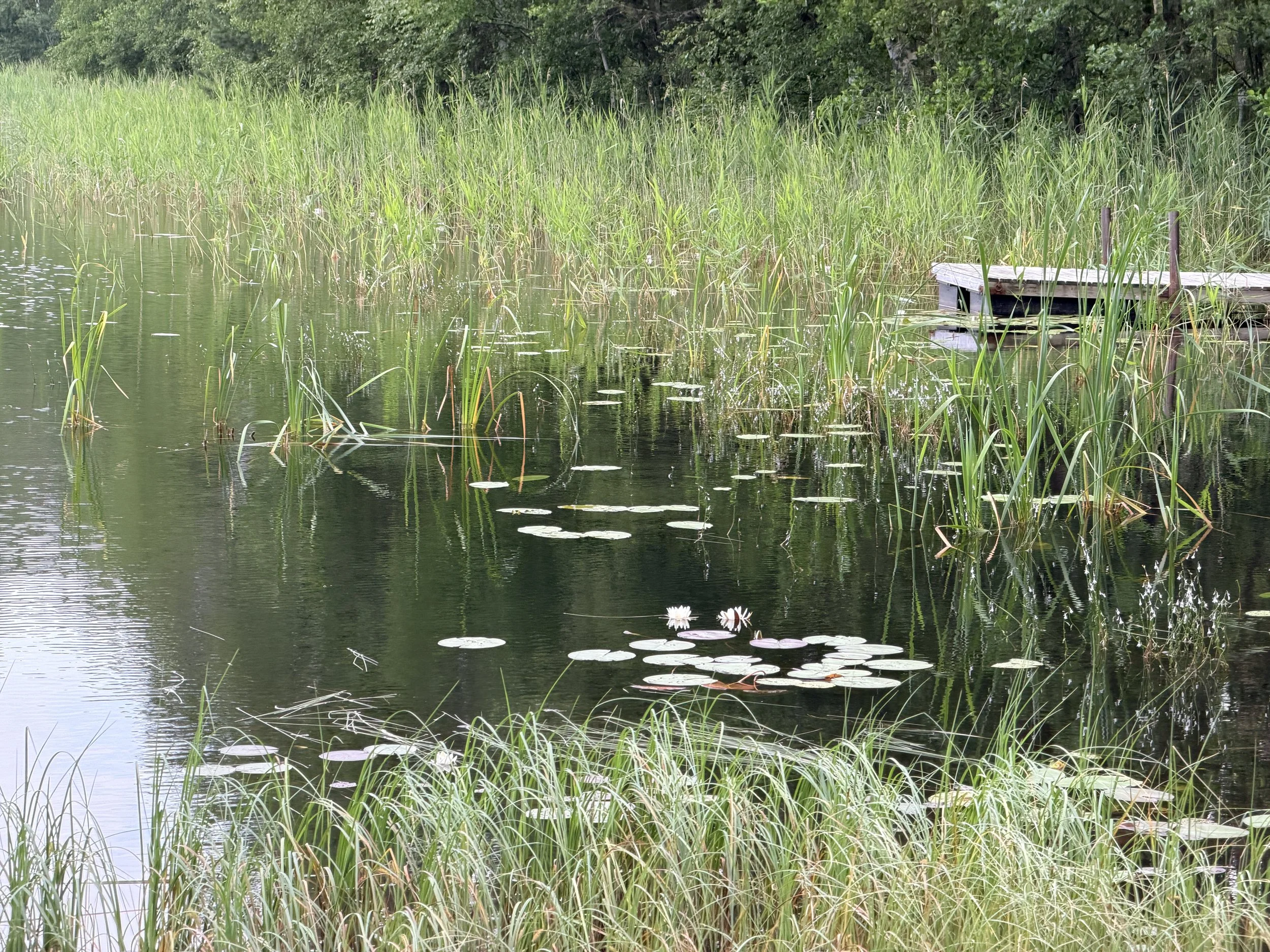
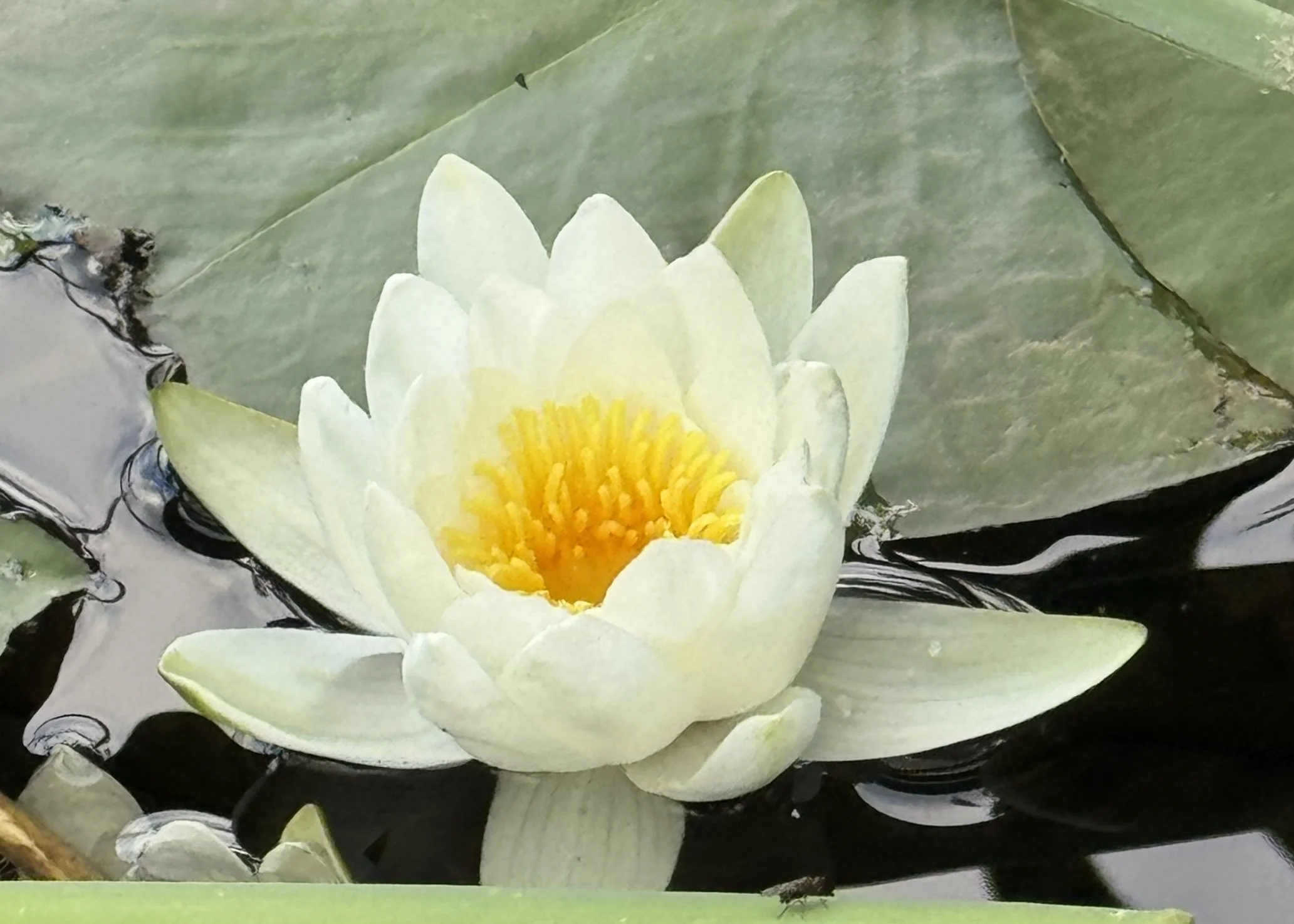
Over the next two hours, we rowed about 4 kilometers, exploring nearly every corner of the lake. White water lilies floated gracefully across the surface, while dense green forests lined the shoreline, creating a picture-perfect scene.
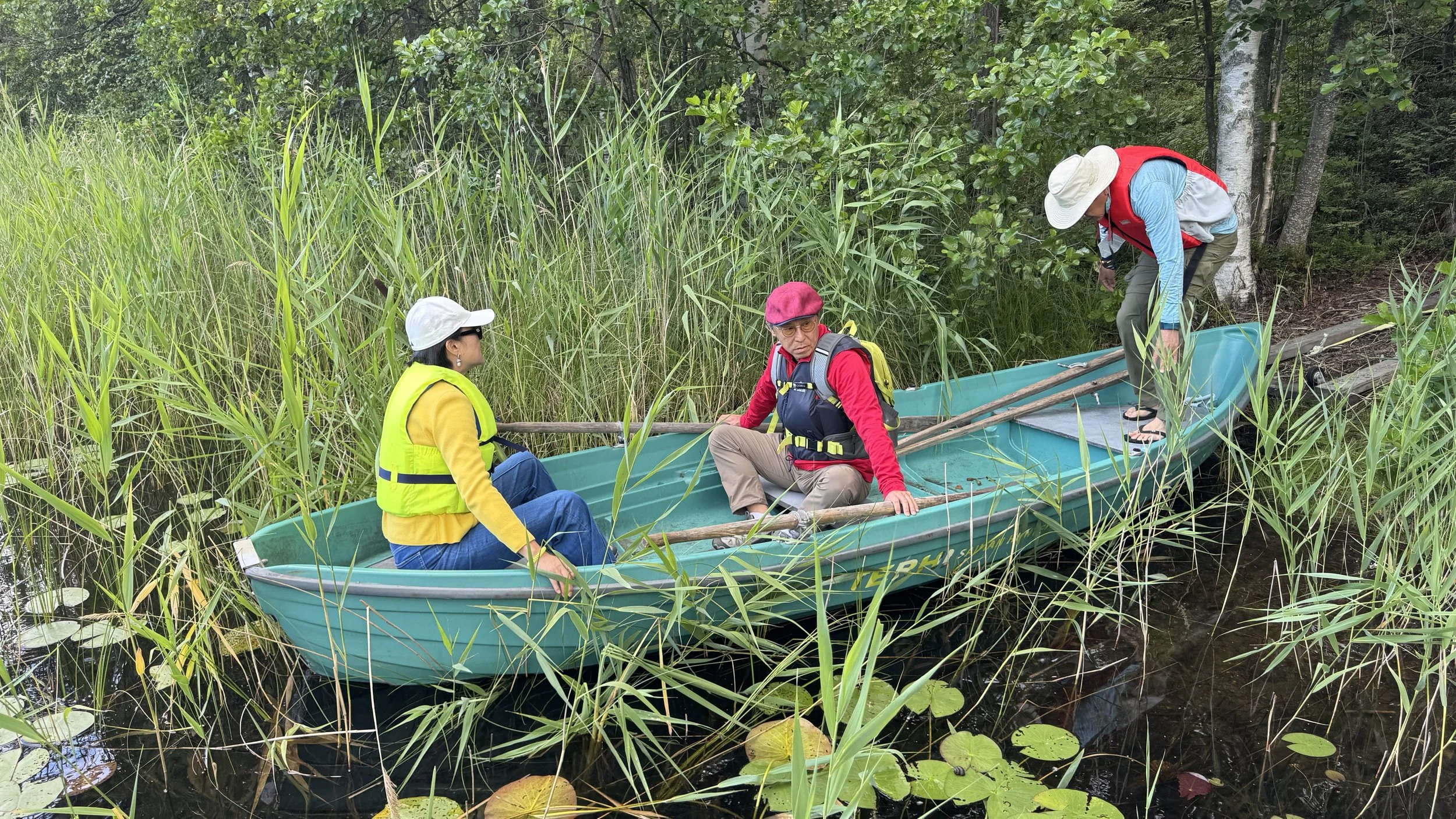
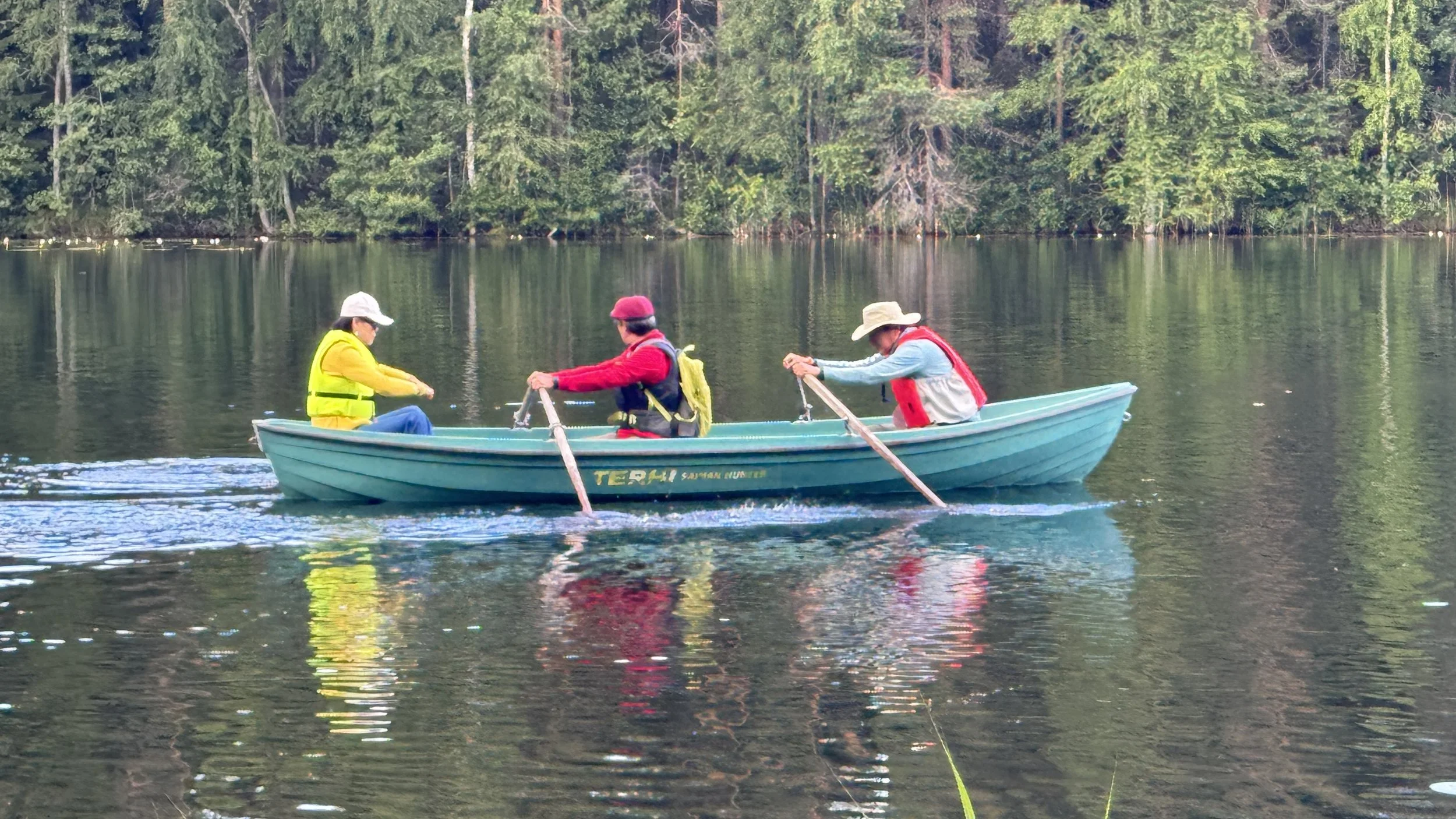
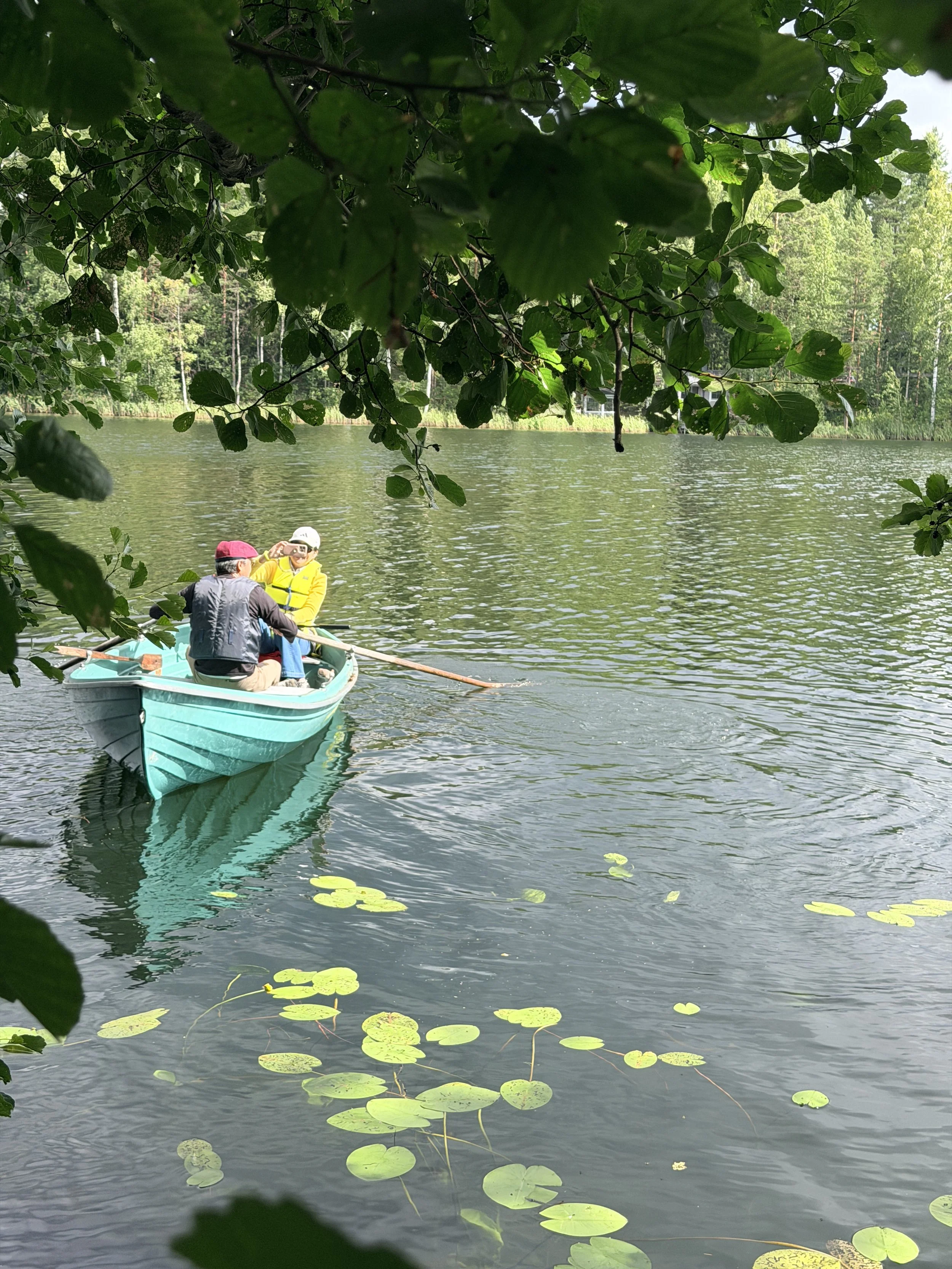
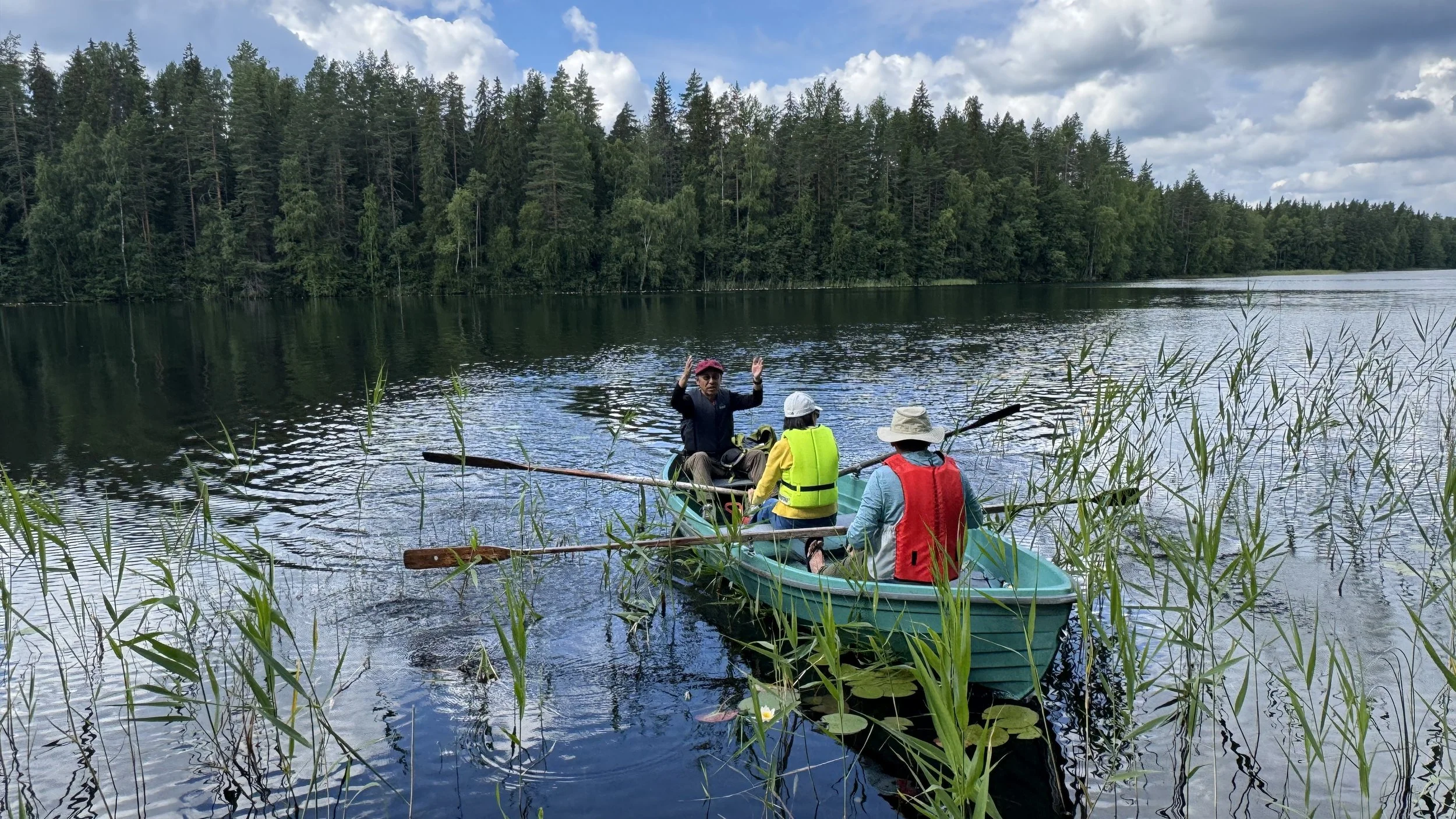
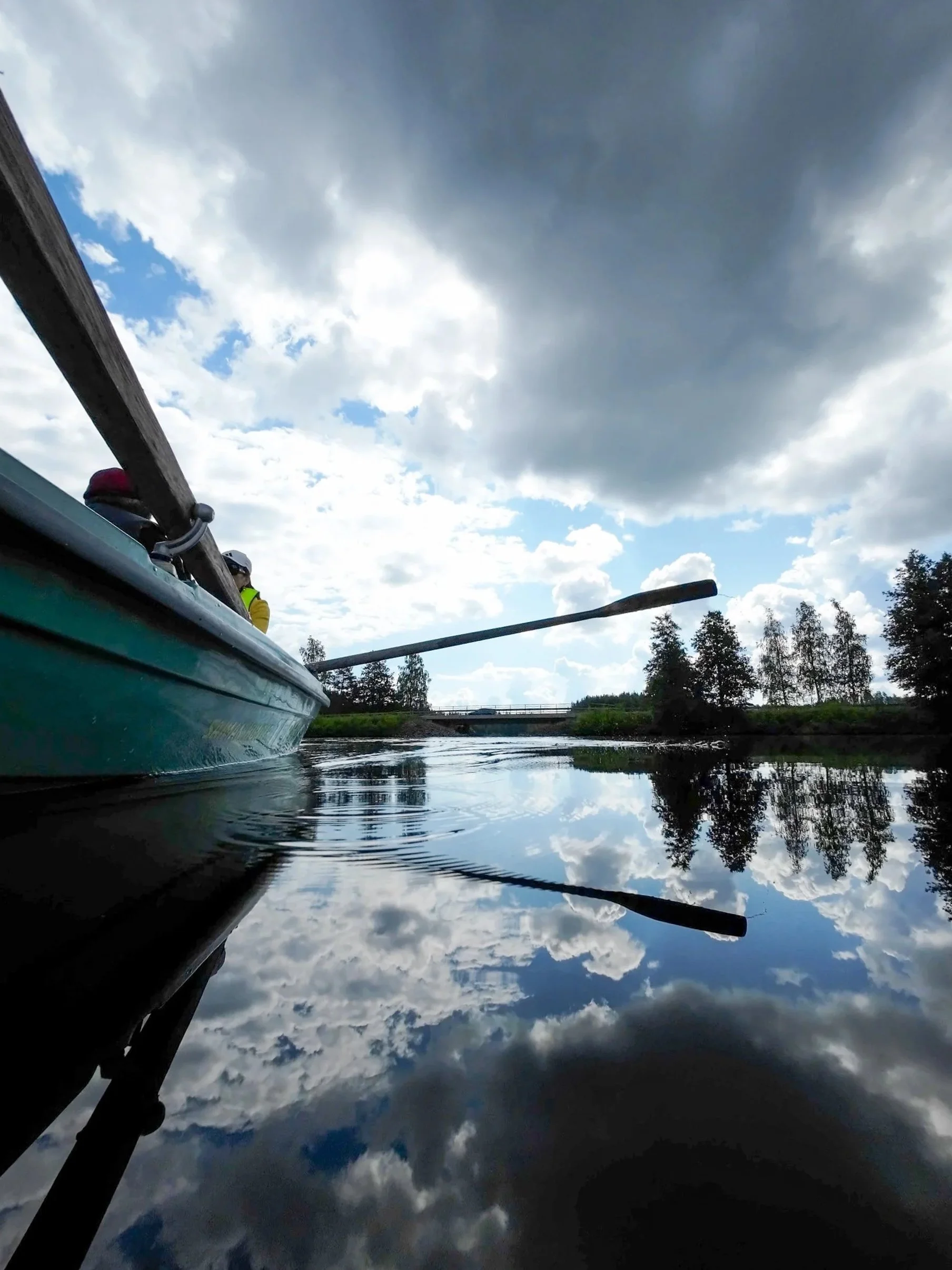
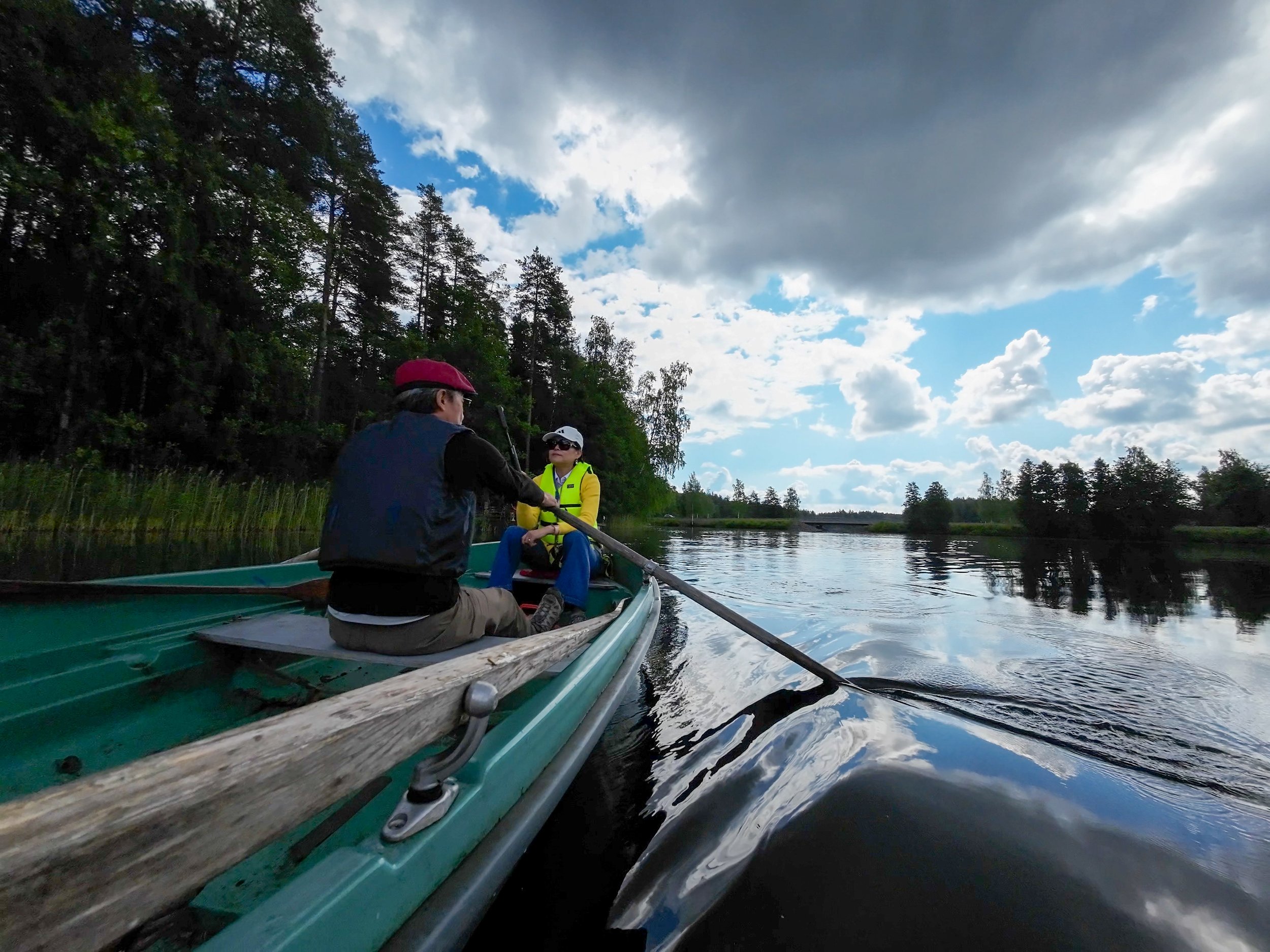
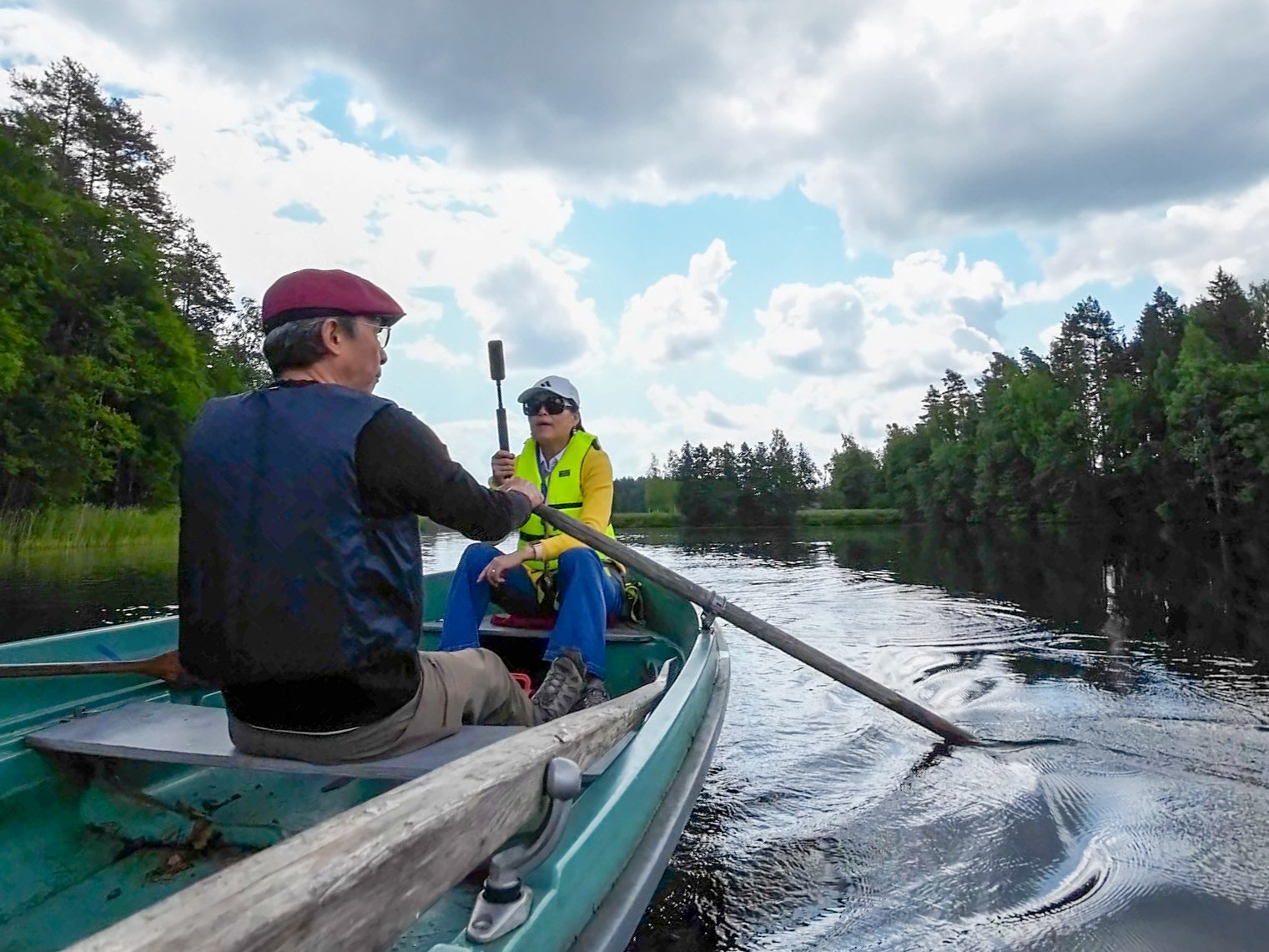
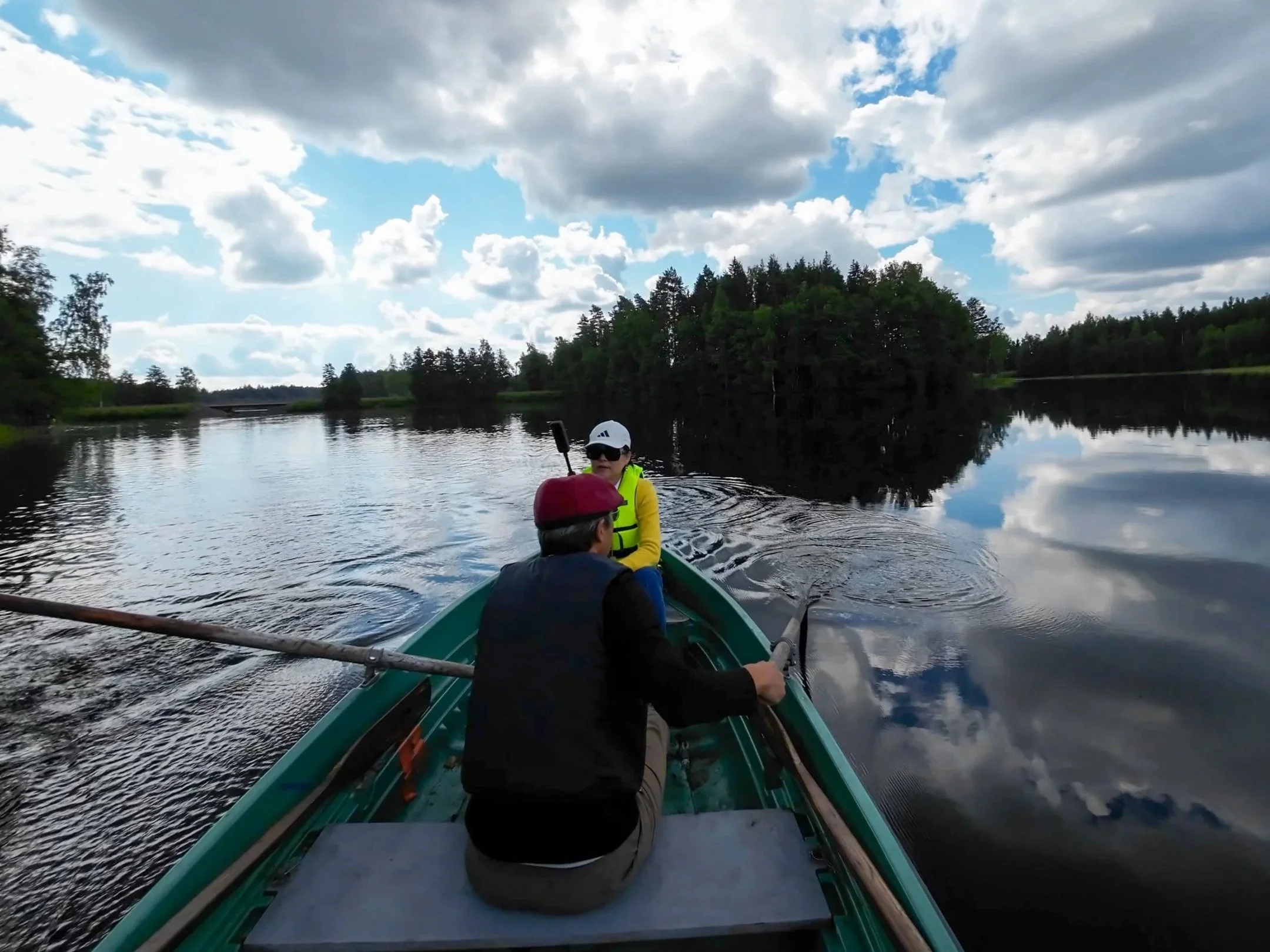
Along the way, I stepped onto two of the lake's three tiny islands, simply to experience what it felt like to stand on such secluded pieces of land. Best of all, we had the entire lake to ourselves.

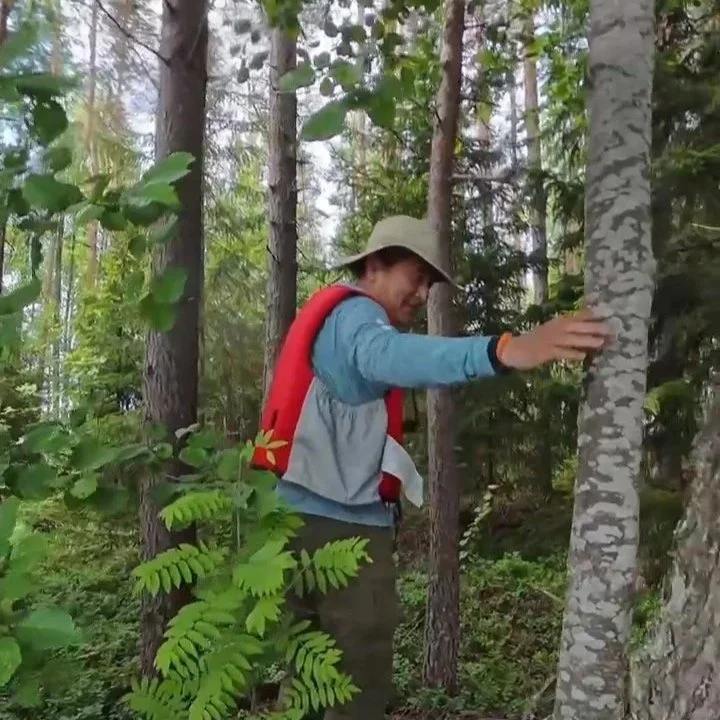
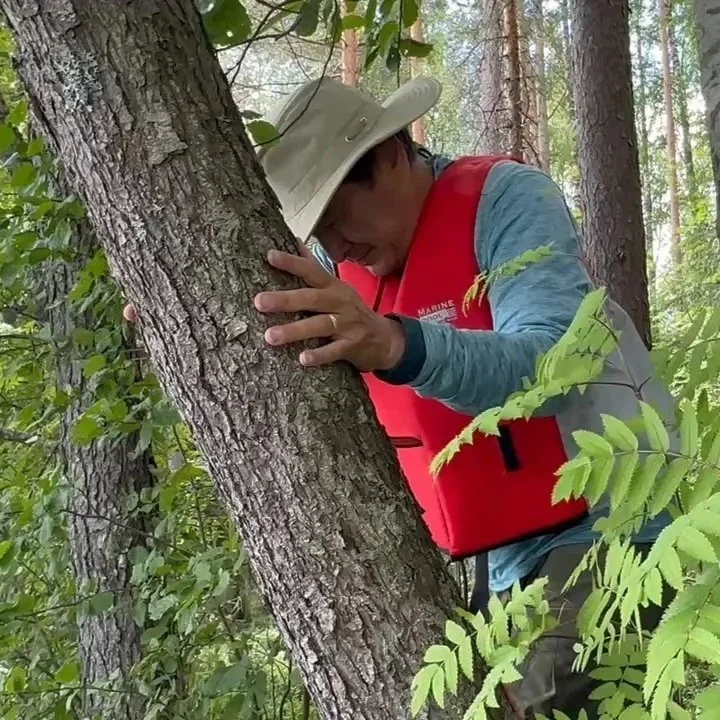
We had an incredible time. Of all the activities we have enjoyed in Finland, rowing across a tranquil lake has been one of the highlights of the trip. Surrounded by peaceful forests, crystal-clear water, and complete silence, it felt like we had stepped into another world. It was a quintessential Finnish experience.
After returning the boat, we had lunch at the café in the golf clubhouse. In the afternoon, our friends drove to Savonlinna to visit the castle, while we stayed behind at the house to relax. Today, we also decided to take a break from our daily sauna routine.
2026年7月24日
我们住的高尔夫球场旁有个很漂亮的湖。 今天天气晴朗,湖面风平浪静。我们花20 欧元租了一艘划艇。由于佩民不喜欢划船,便留在岸边休息,看着我们三人出发。
接下来的两个小时里,我们划行了约 4 公里,几乎绕遍了整座湖。湖面上盛开着洁白的睡莲,岸边是一片片郁郁葱葱的森林,湖光山色交相辉映,宛如一幅宁静的画卷。途中,我还登上了湖中三座小岛中的两座,体验一下踏足这些湖中小岛的感觉。整座湖仿佛只属于我们,没有其它船只,也没有游客,四周静谧得只剩下船桨划过水面的声音。
划船带给我们无穷的乐趣。在芬兰体验过的众多活动中,湖/海上划船无疑是此次旅程最精彩、最难忘的经历之一。置身于清澈的湖/海水、茂密的森林和宁静的天地之间,让人真正感受到芬兰大自然的纯净与悠闲,这也正是最具芬兰特色的体验。
划船结束后,我们来到高尔夫球俱乐部的餐厅享用午餐。下午,朋友们驱车前往萨翁林纳参观城堡,而我们则留在小屋休息。
Hakinkierros Loop Hike 徒步
July 23, 2026
Yesterday was primarily a travel day……
昨天主要是赶路的一天。。。
July 23, 2026
Yesterday was primarily a travel day. We left Koli and headed toward Finland's Lake District. Along the way, we stopped in Joensuu for a sushi buffet, which was surprisingly decent and satisfying. Afterwards, we wandered through the Market Square and picked up some mushrooms, strawberries, and other fresh local produce.
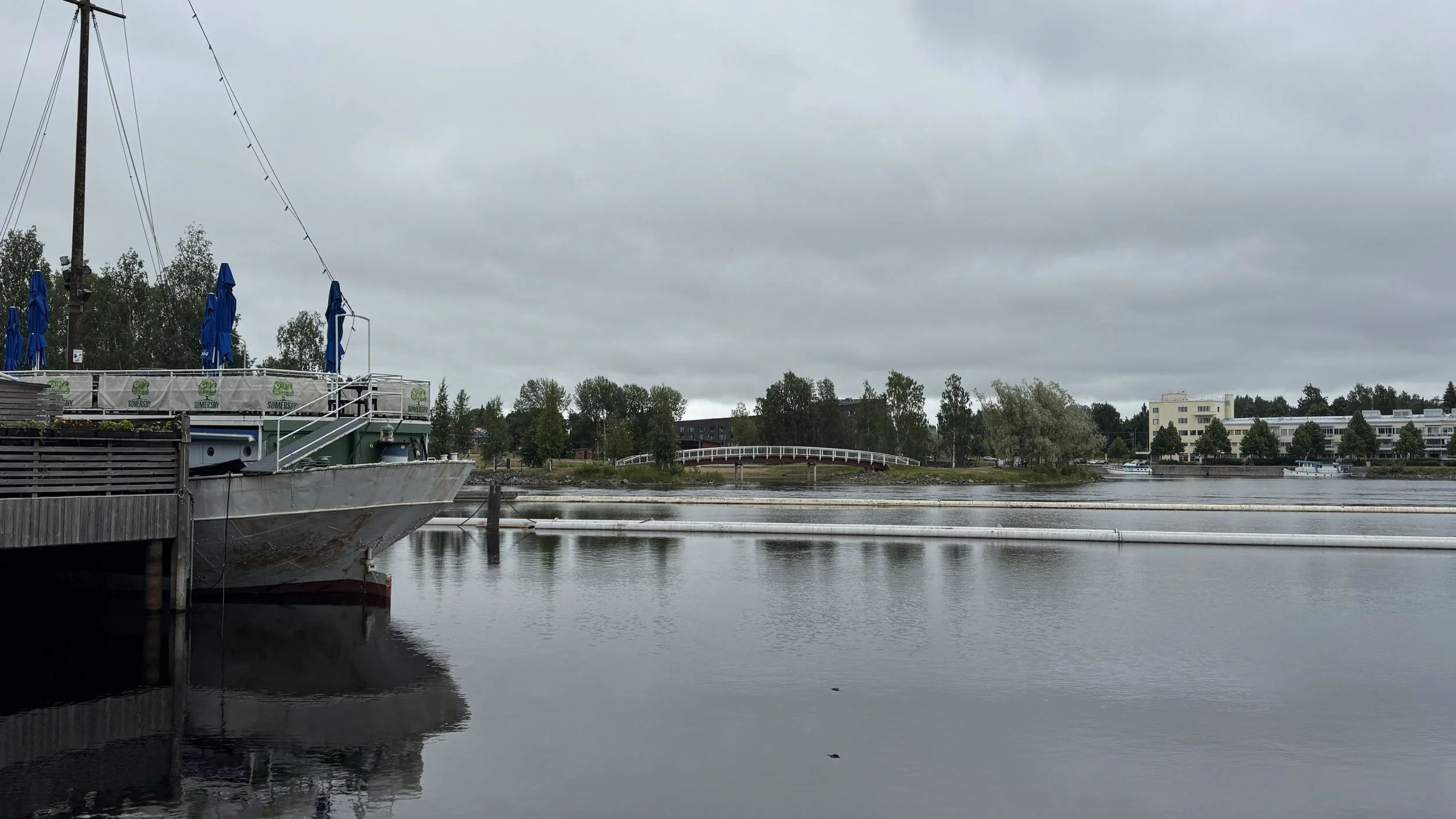
Although it was raining, the drive along the scenic Punkaharju Ridge was still spectacular. We stopped at Runeberg's Mound, the highest point on the ridge. The modest stone monument honors Finland's national poet, Johan Ludvig Runeberg. Although the monument was finally completed in 2017, the idea for it had first been proposed in 1880—a remarkable 137 years earlier. It was here that Runeberg was inspired to write the famous lines: "Yes, young man, from this shore/you see a fragment of the land/you call your fatherland."
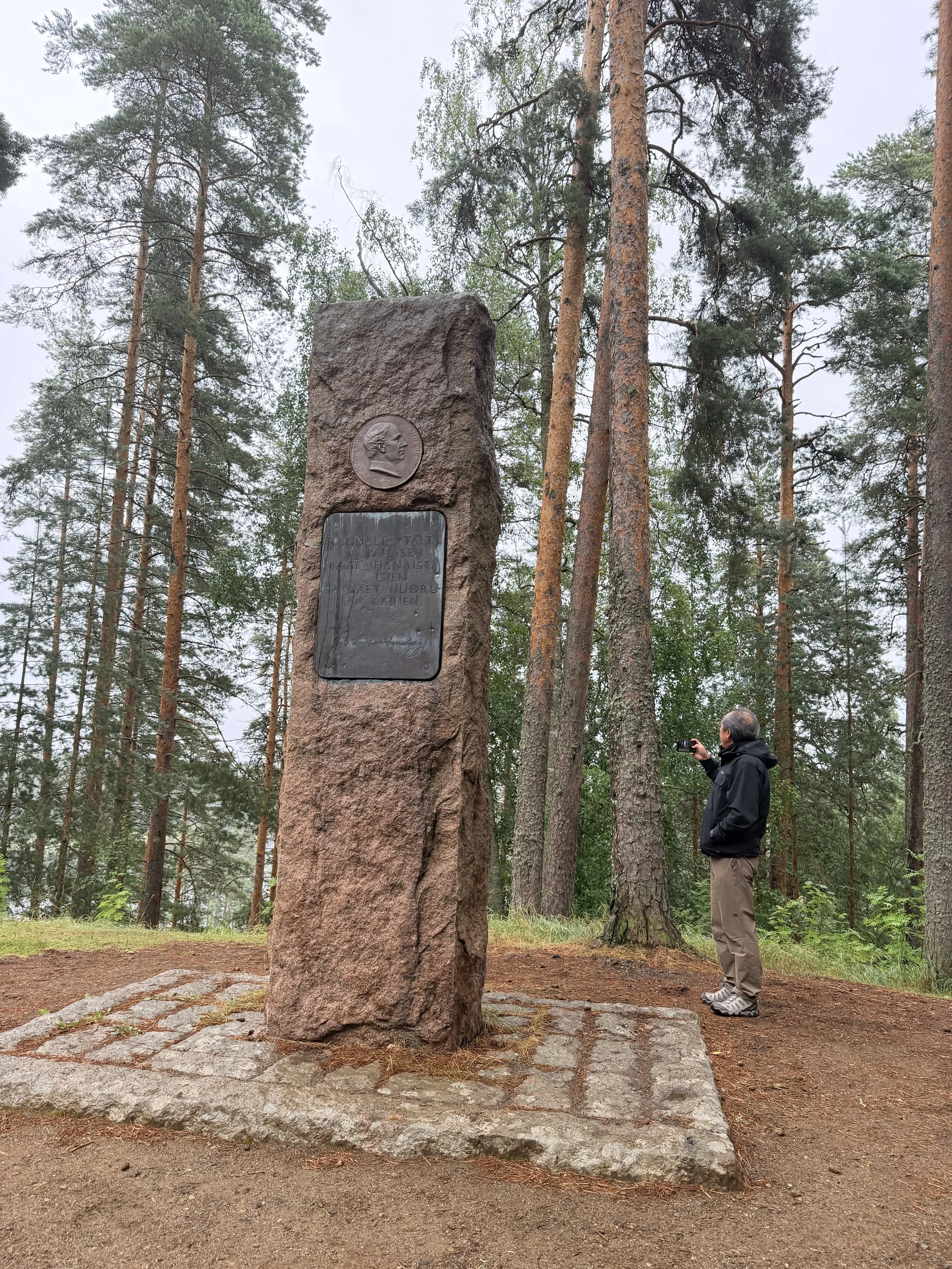
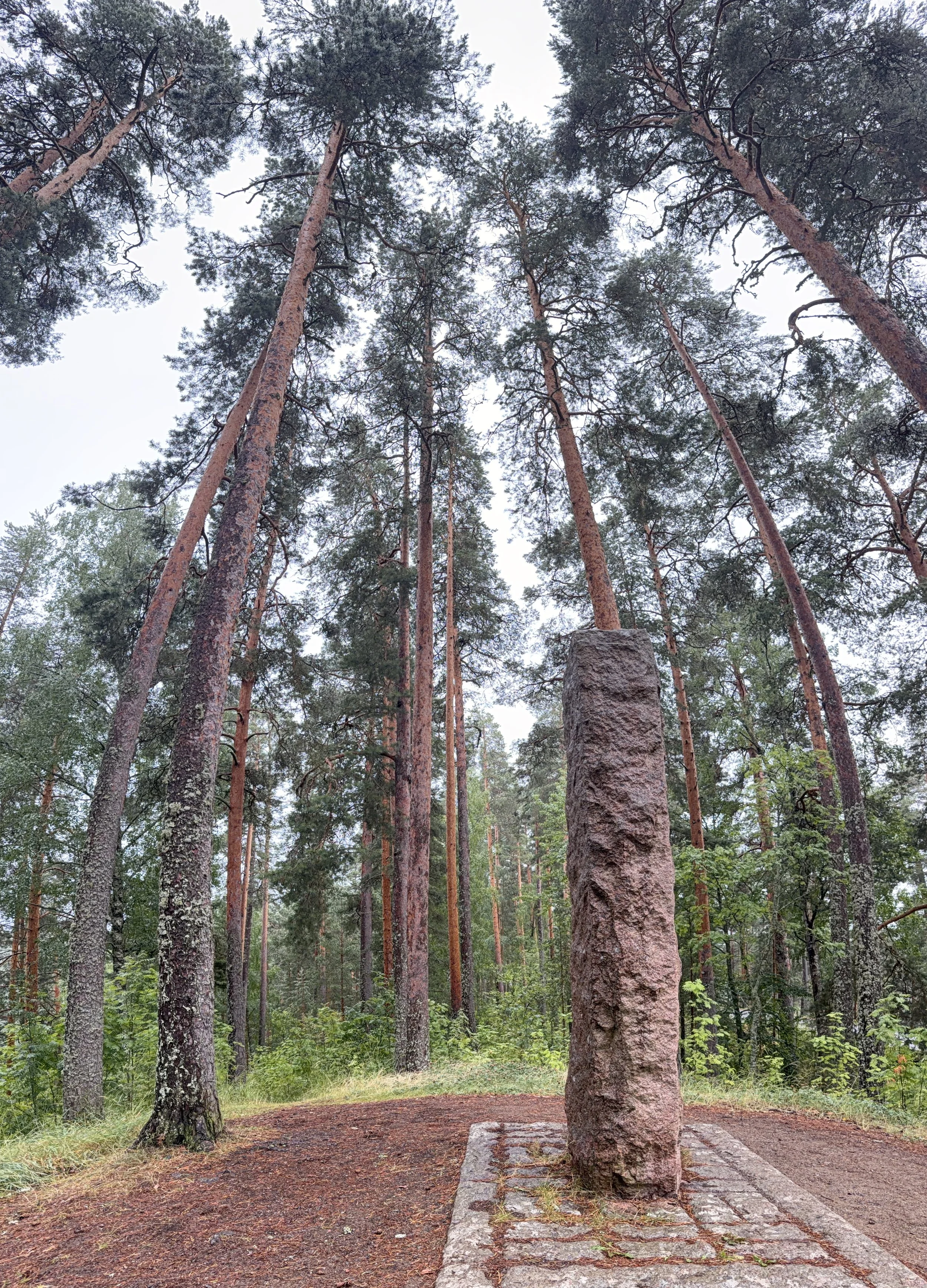
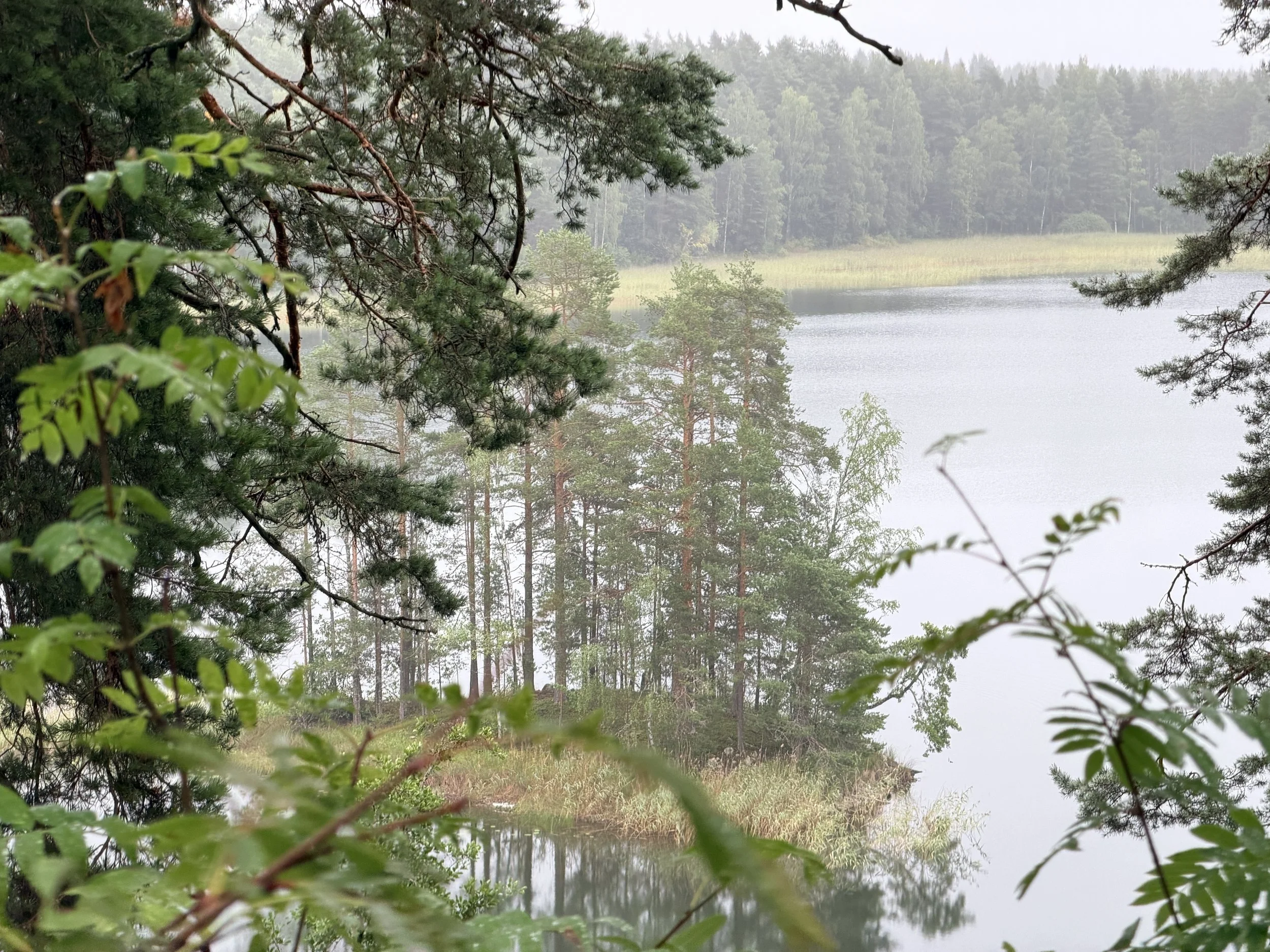
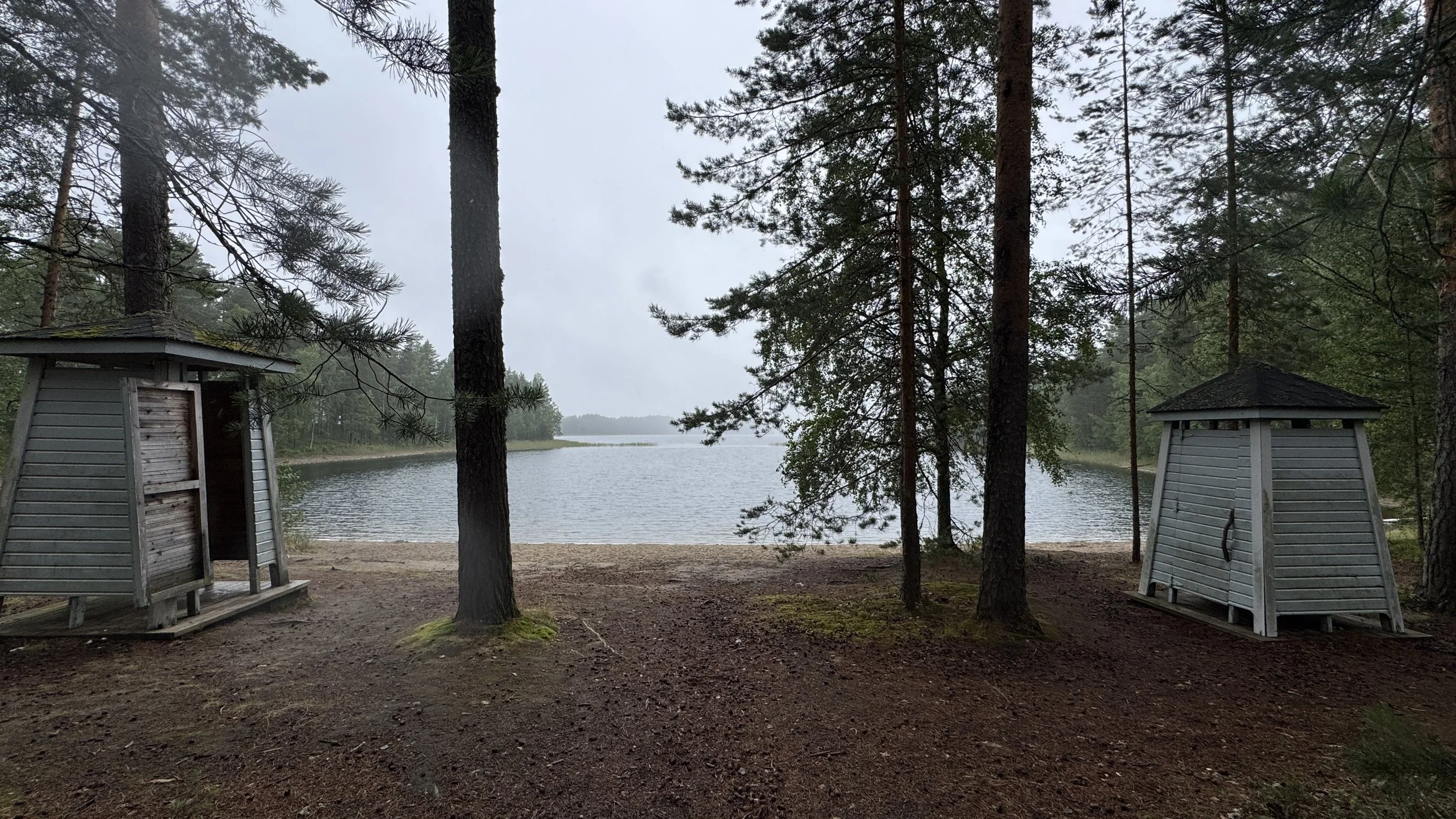
Those words helped shape Finland’s emerging national identity and became an enduring part of the nation’s cultural heritage. Throughout our journey, we repeatedly heard Finland’s national identity expressed through its magnificent forests, countless lakes, and unspoiled landscapes. Unlike many countries, whose identities are often defined by their people, history, or culture, Finland’s identity appears to be inseparable from its natural environment.
Our Airbnb was a comfortable four-bedroom house next to a golf course, complete with yet another electric sauna.
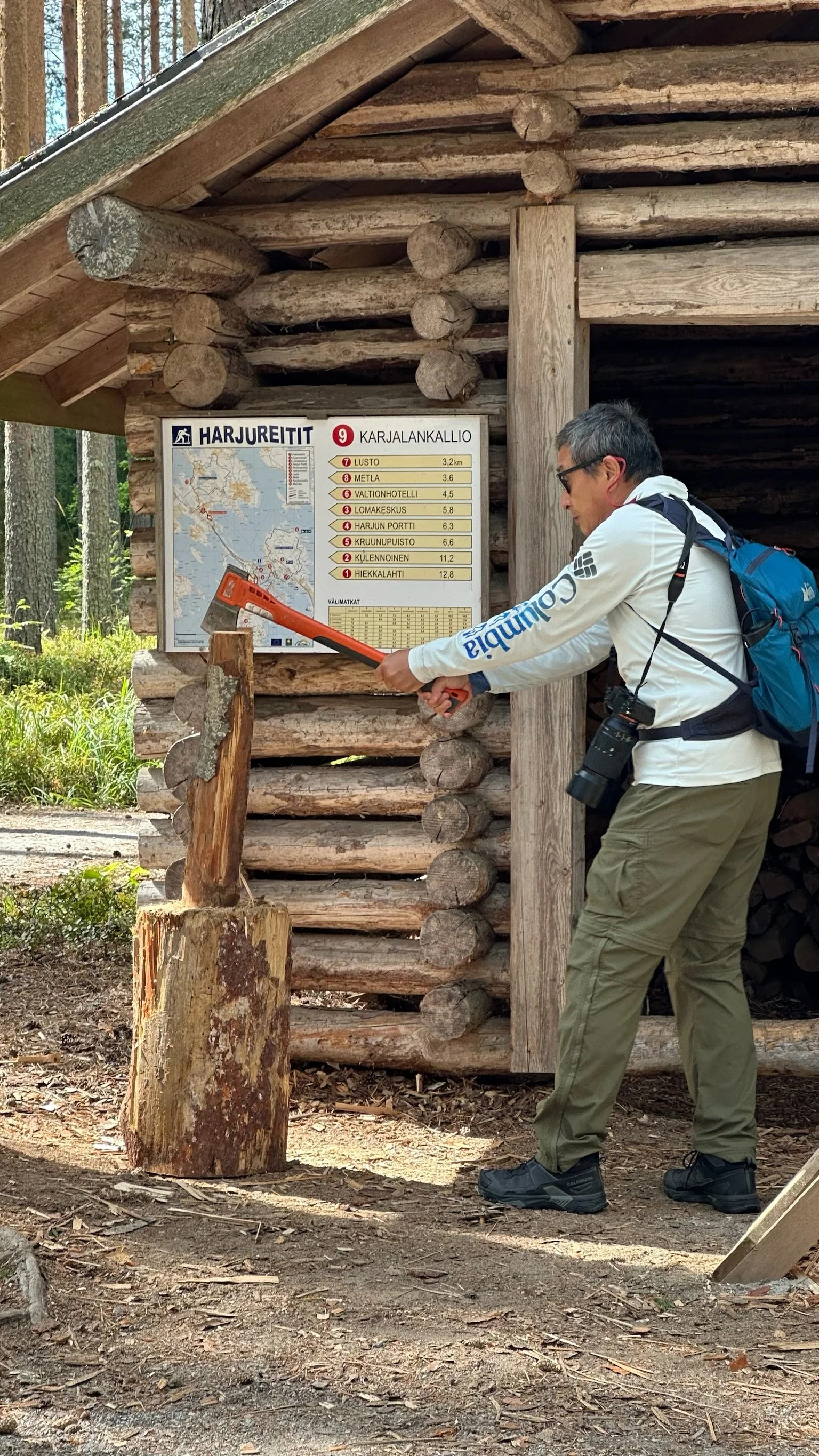
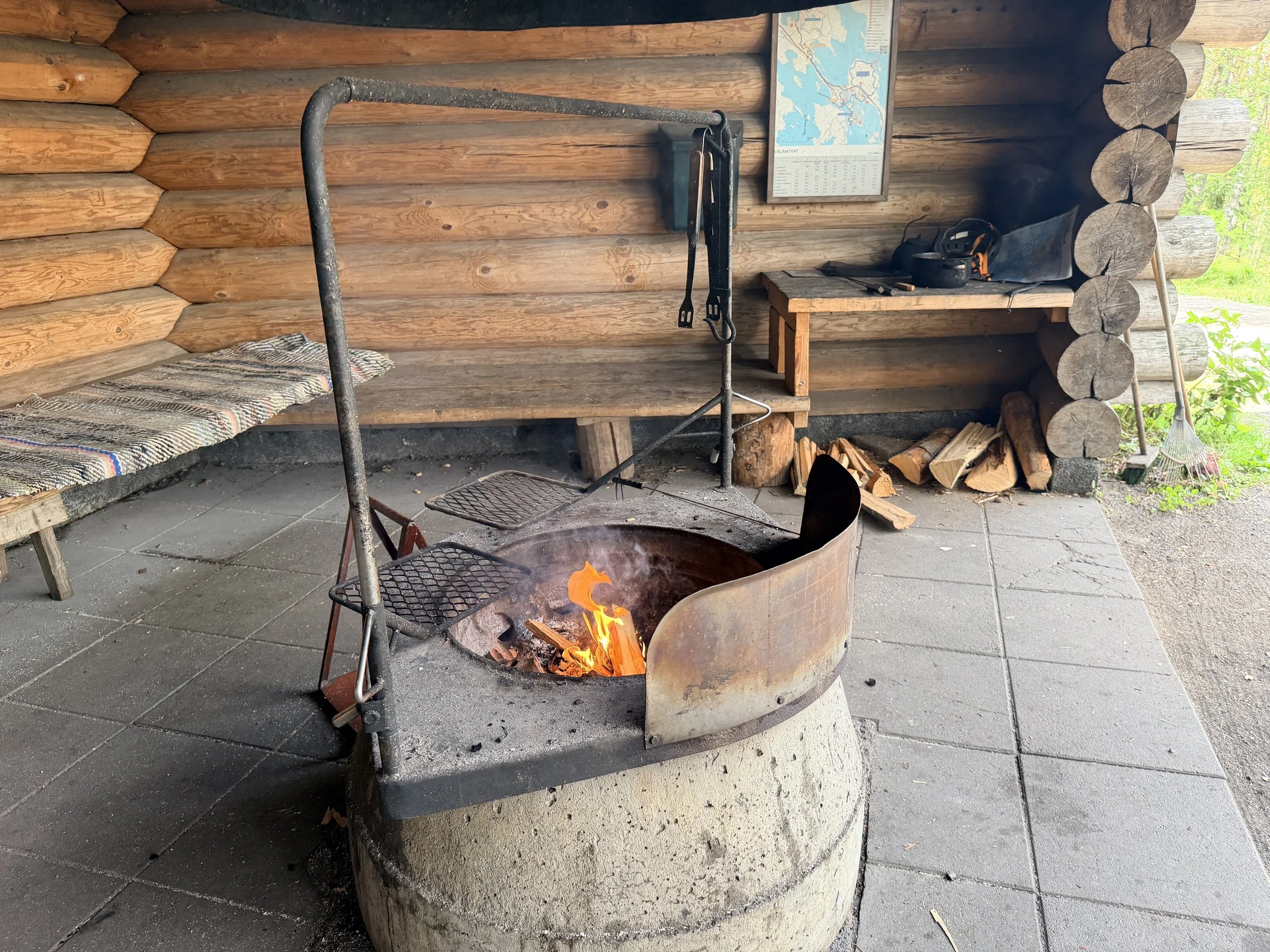
This morning, we first visited the Finnish Forest Museum Lusto, where we learned about Finland's deep connection with its forests and forestry heritage. Afterwards, we hiked the Hakinkierros Loop in the nearby Forest Research Park. Along the trail, we stopped to see Finland's tallest known tree, which stands 47 meters (154 feet) tall. For comparison, the world's tallest tree reaches 116 meters (381 feet), while China's tallest known tree stands 83 meters (273 feet).
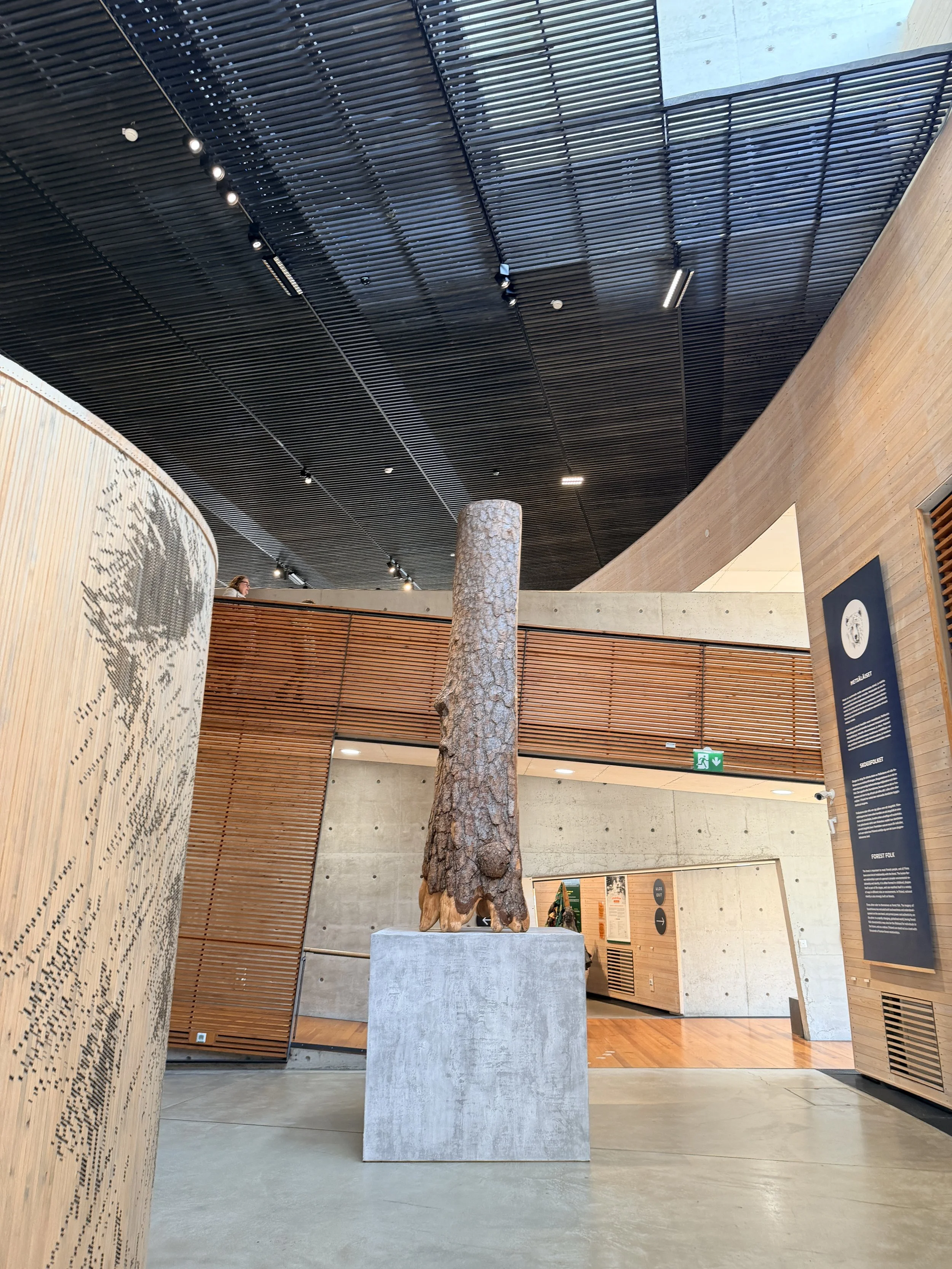
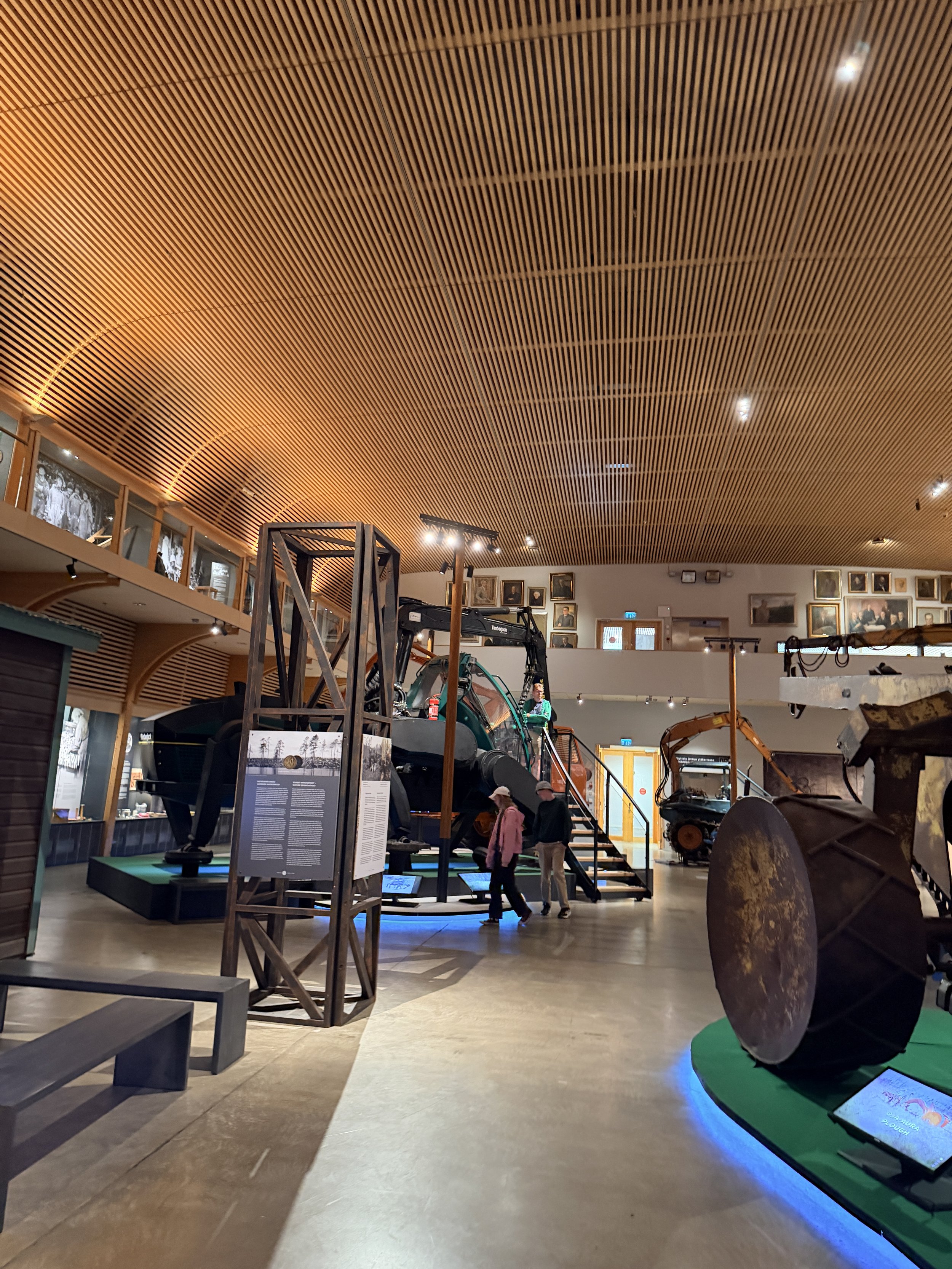
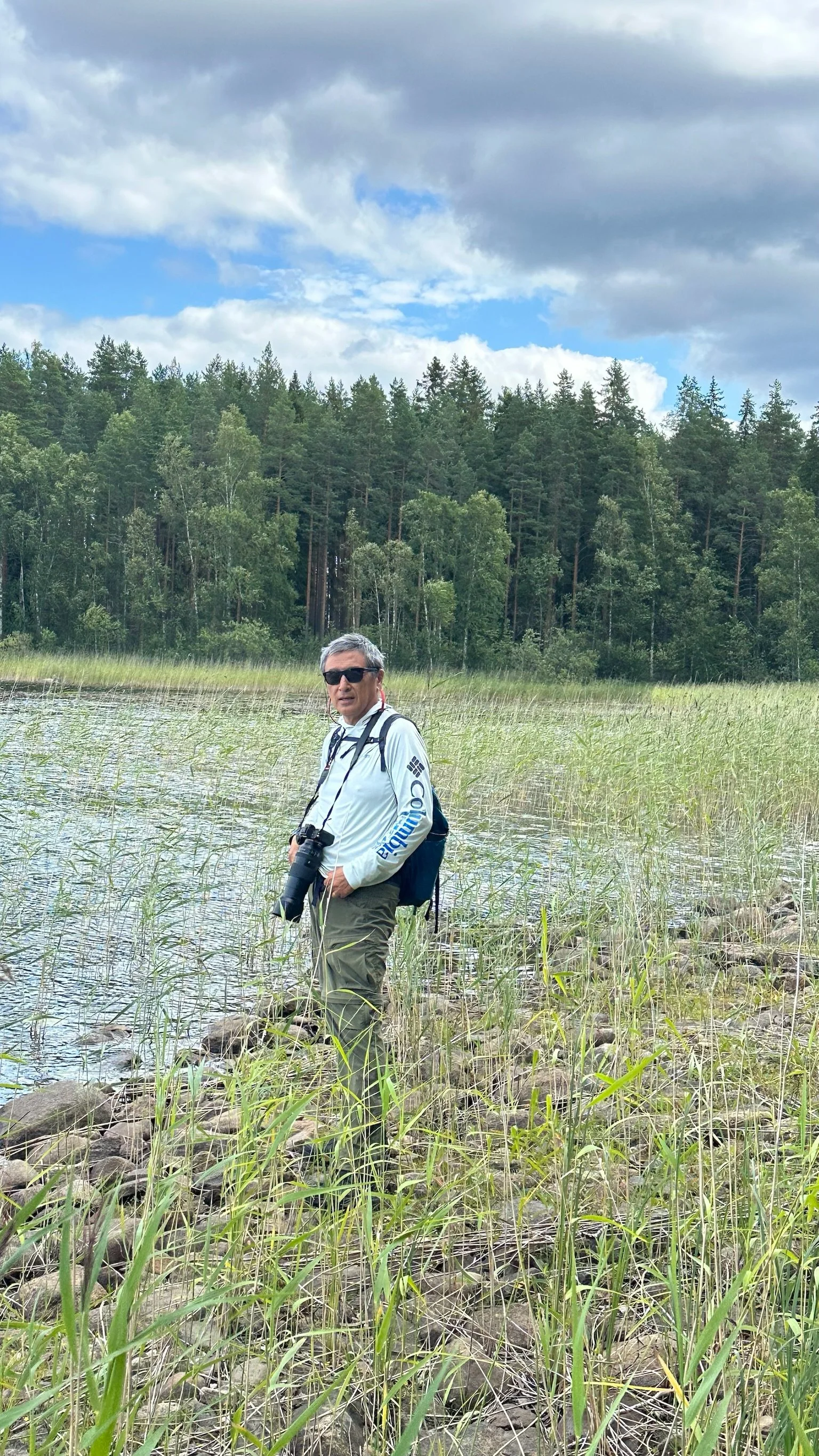
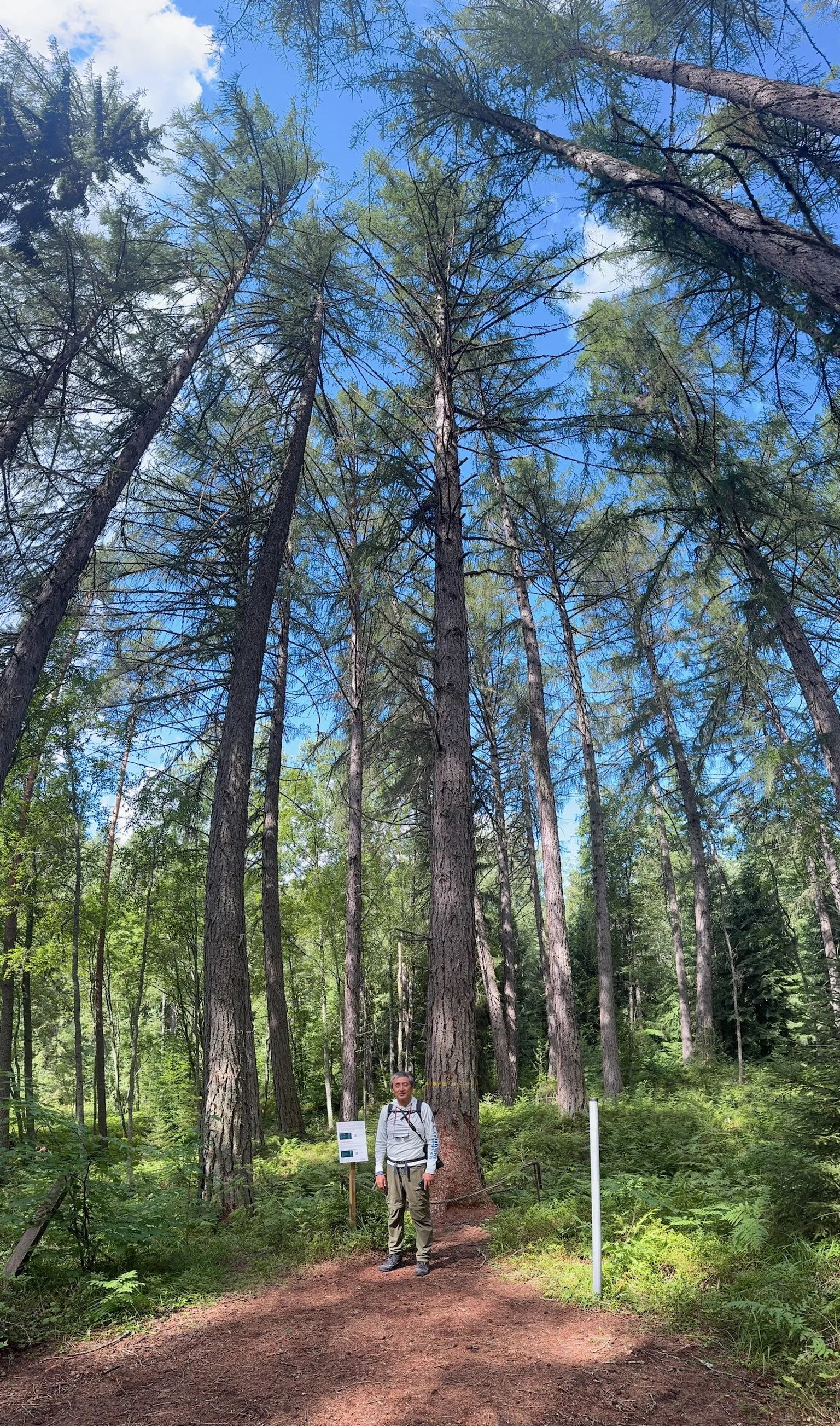
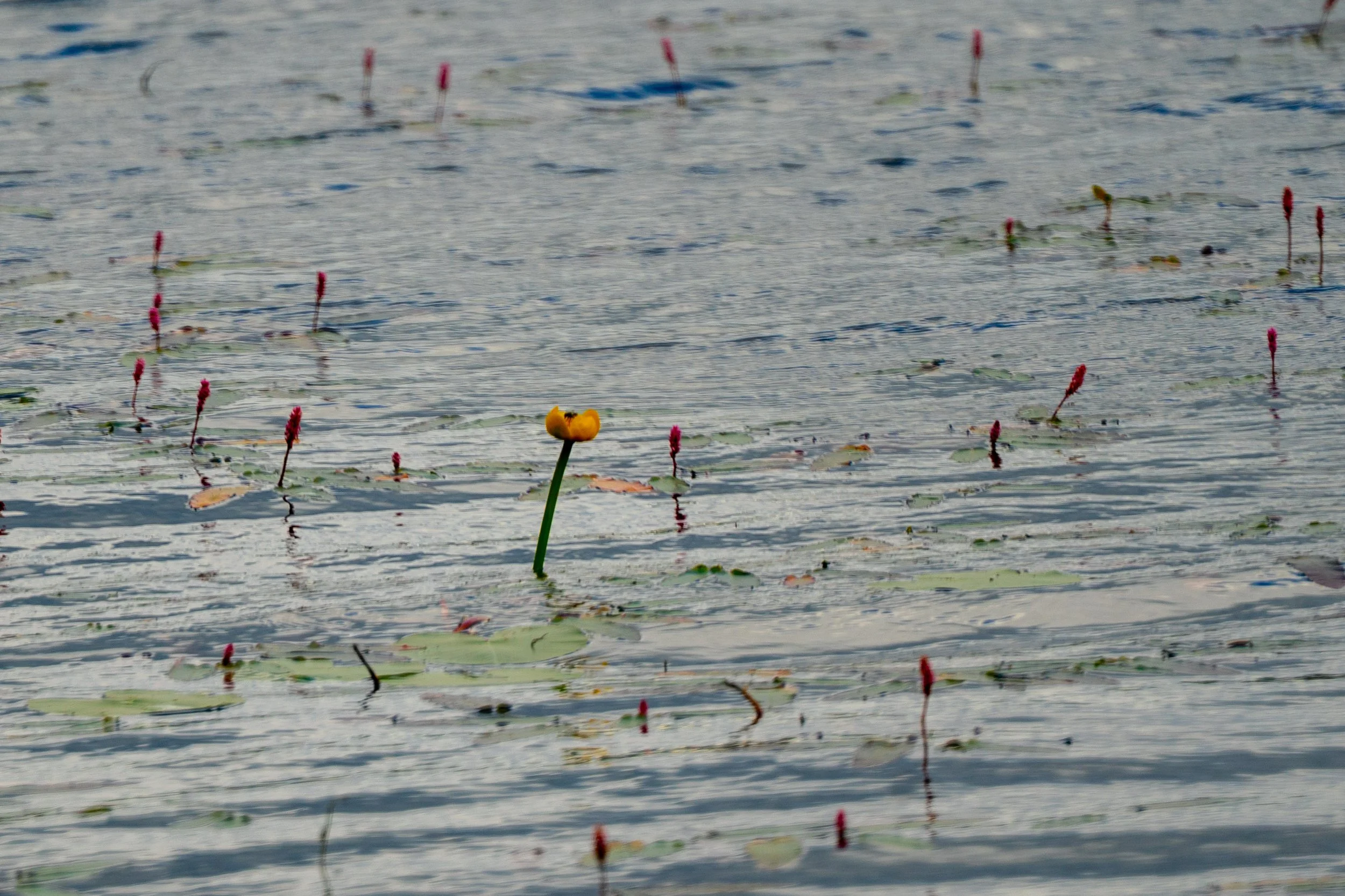
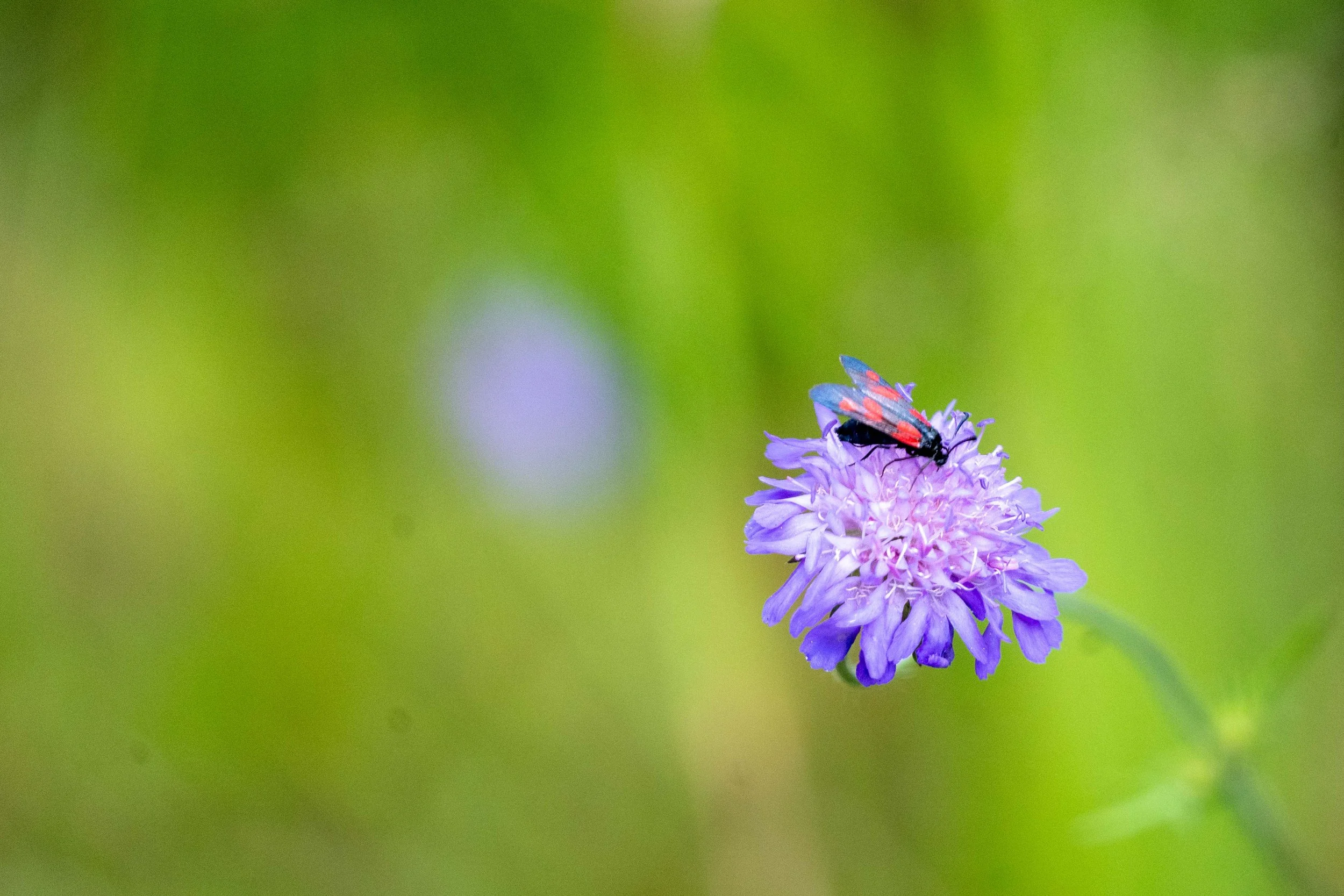
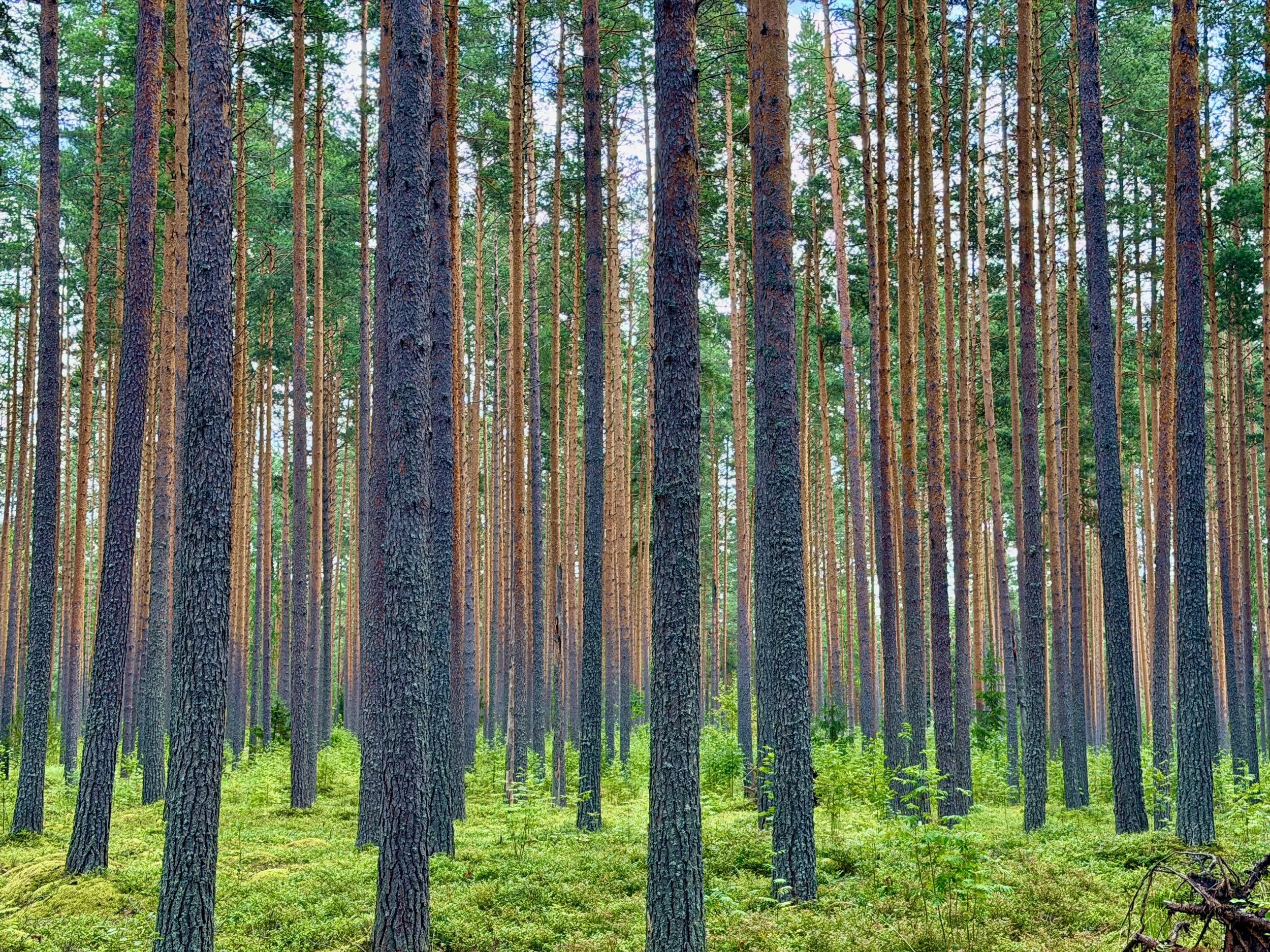
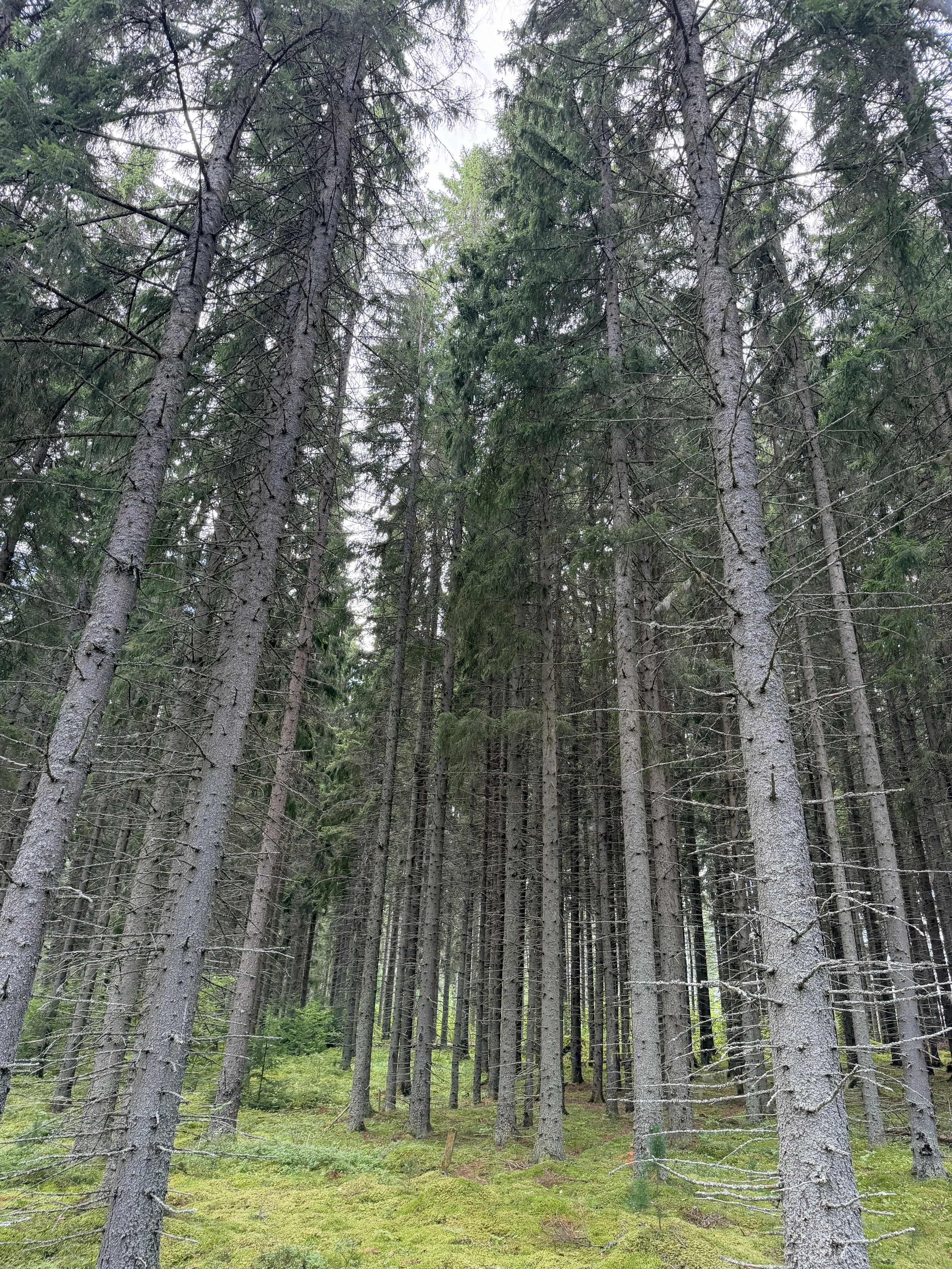
The hike covered 5.2 miles with about 866 feet of elevation gain. The trail was well maintained and generally considered easy, winding through peaceful forests and offering a pleasant walk beneath towering pines and spruces.
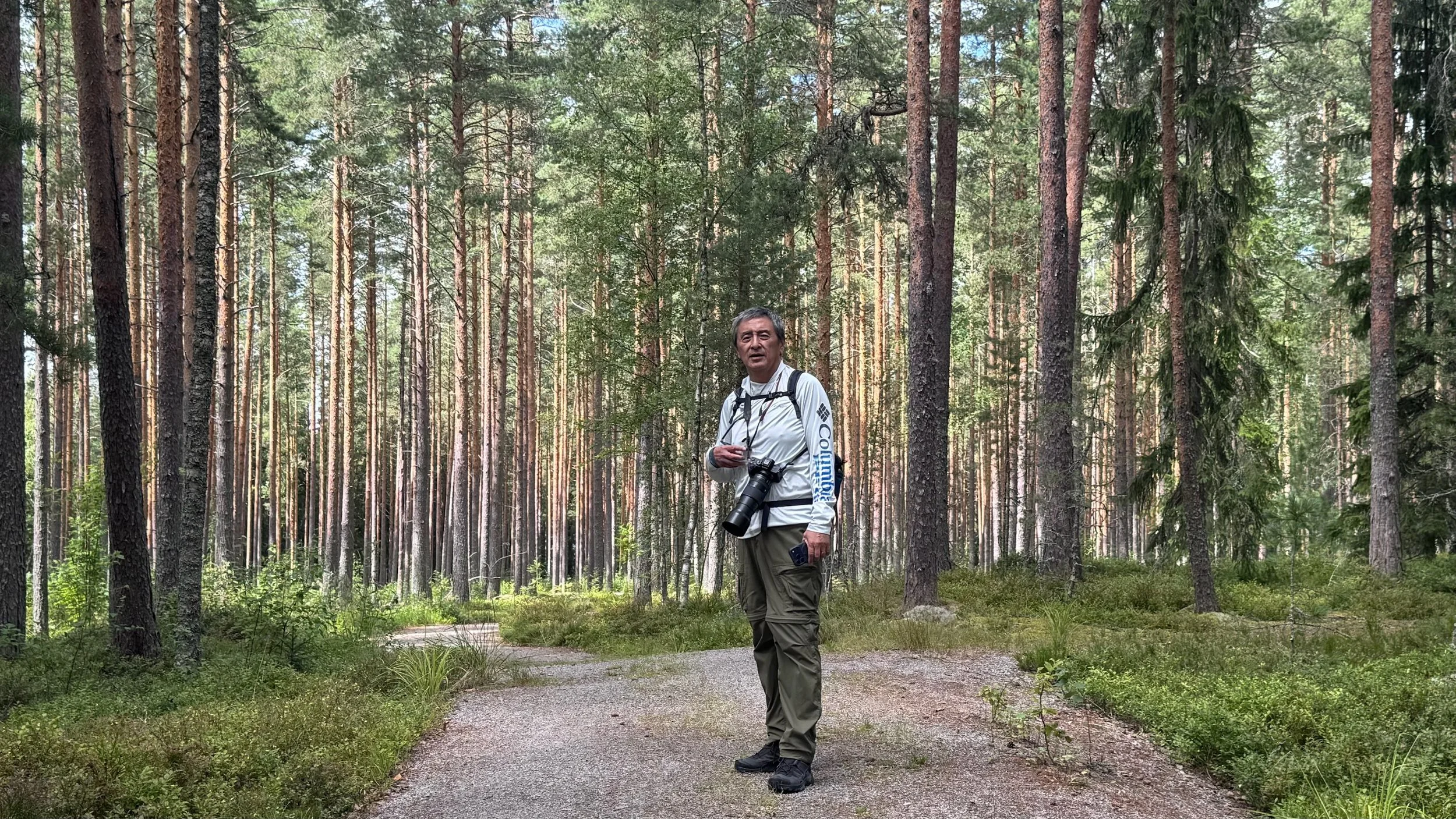
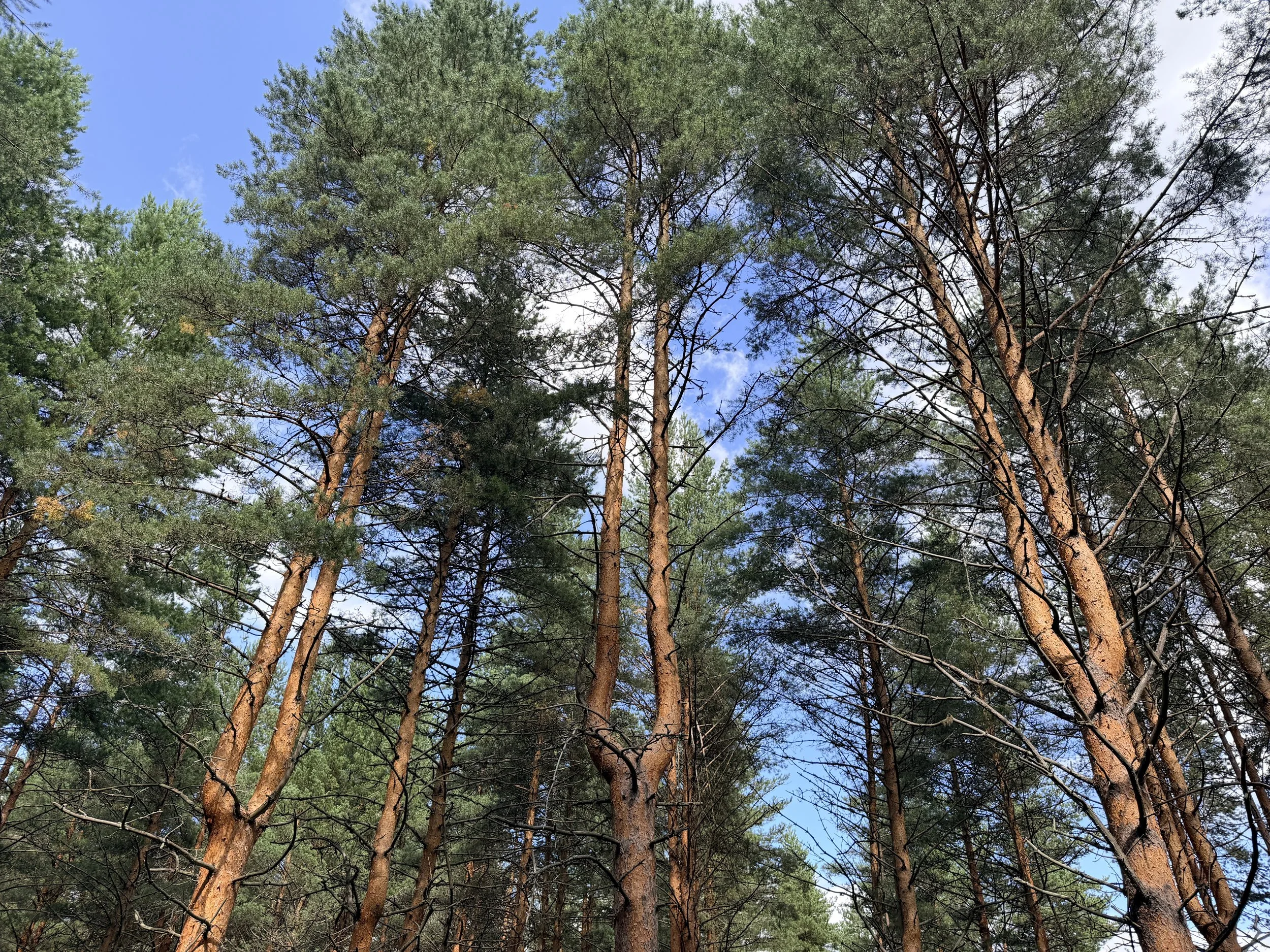
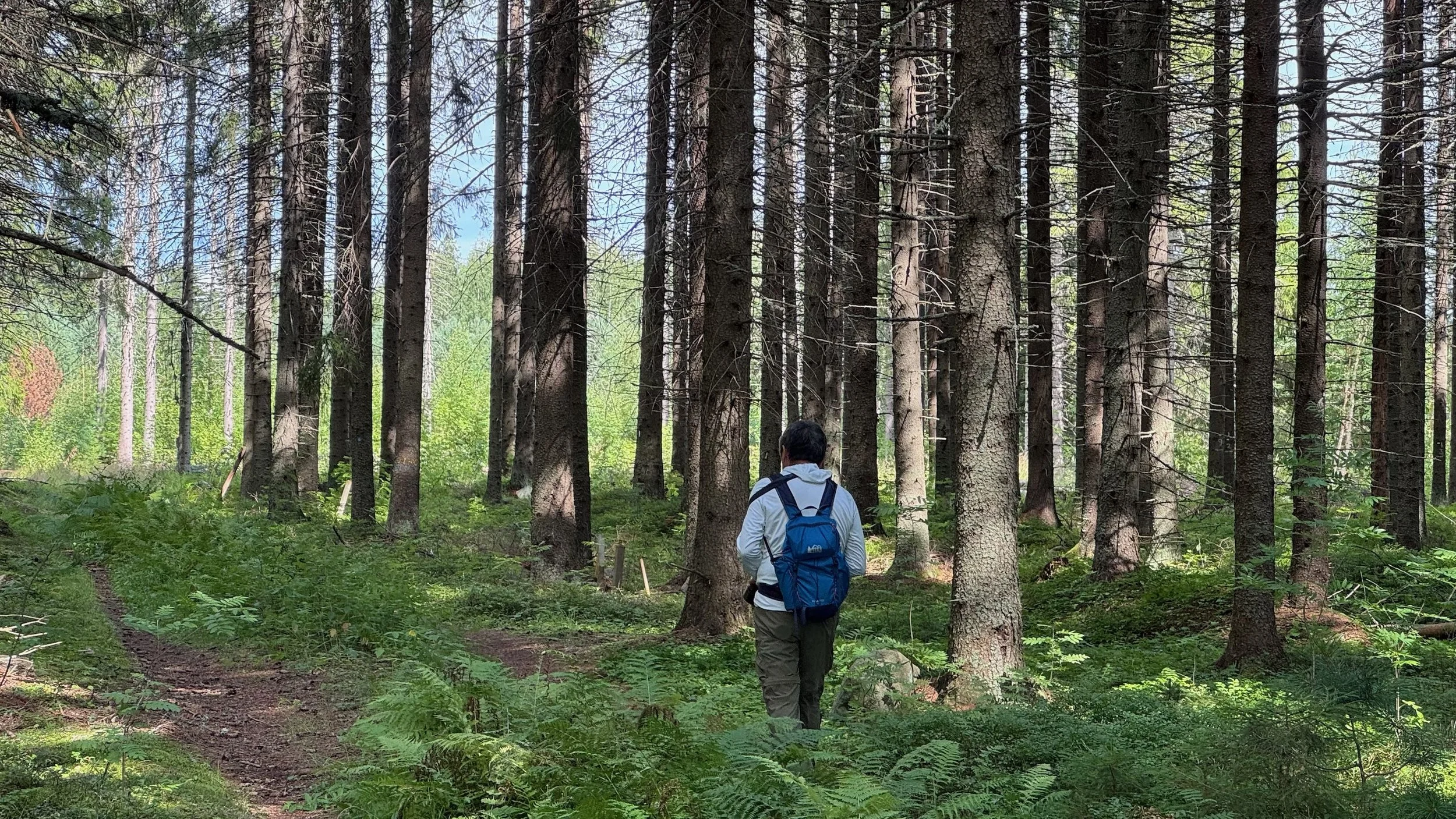
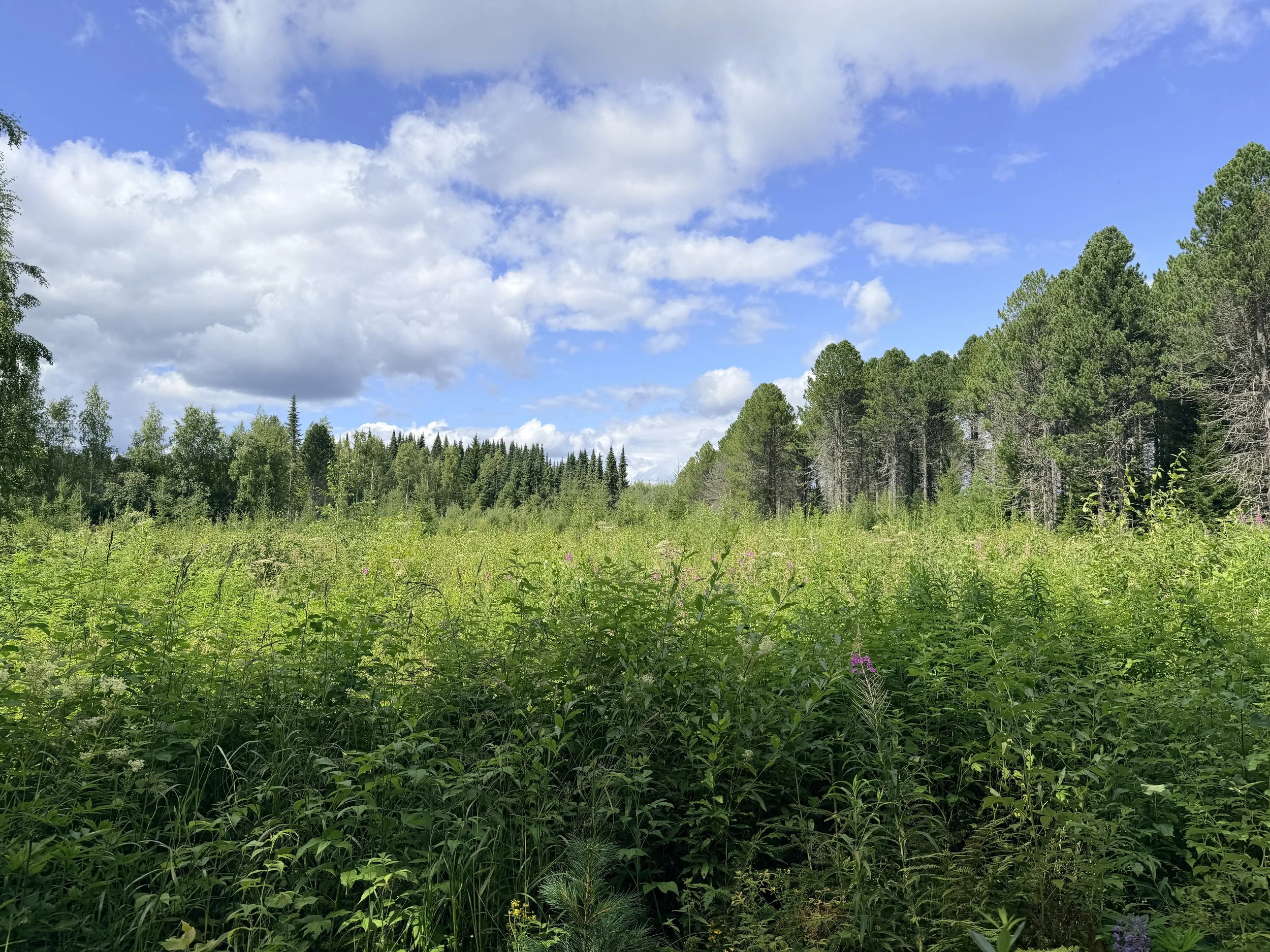
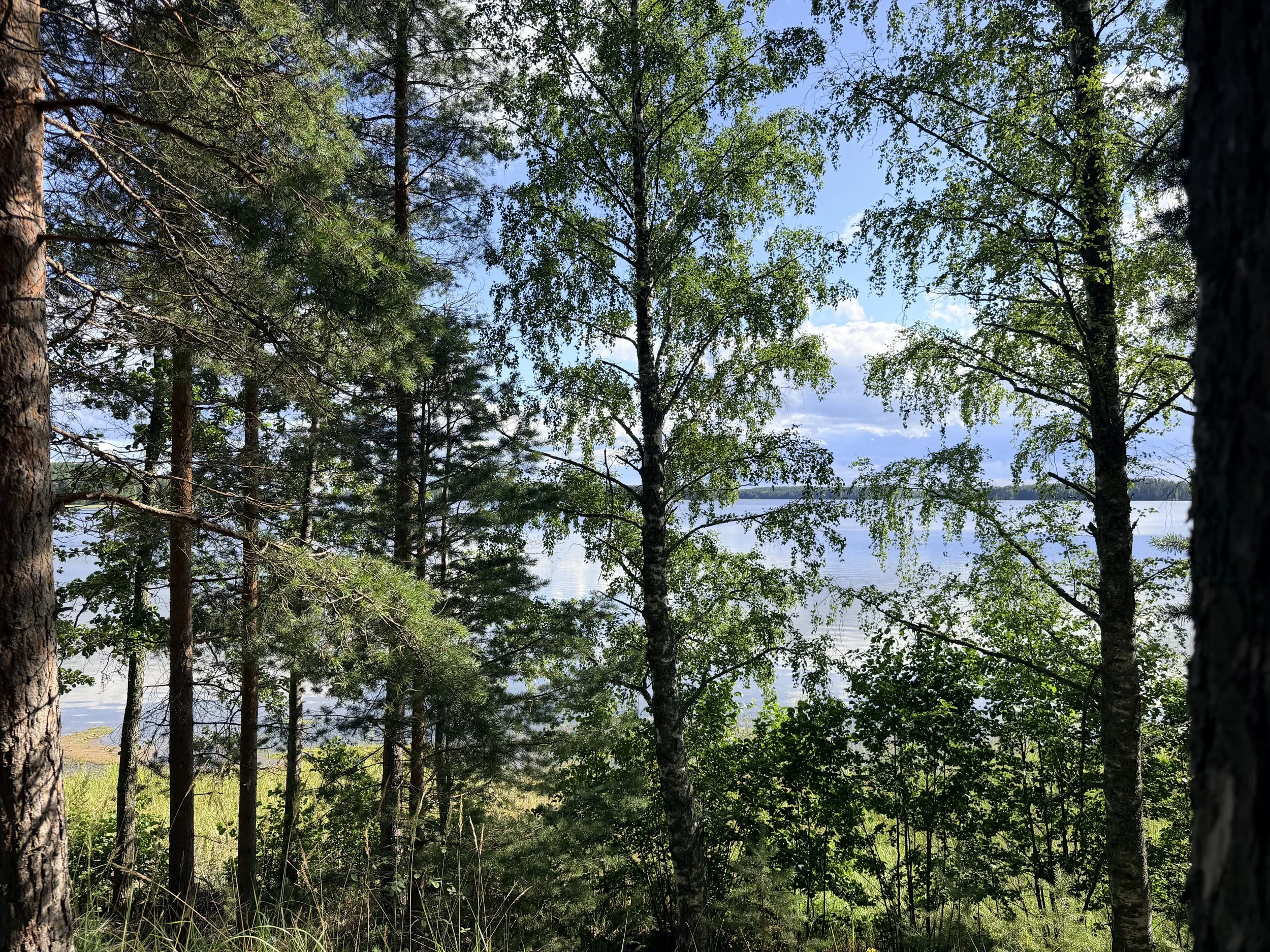
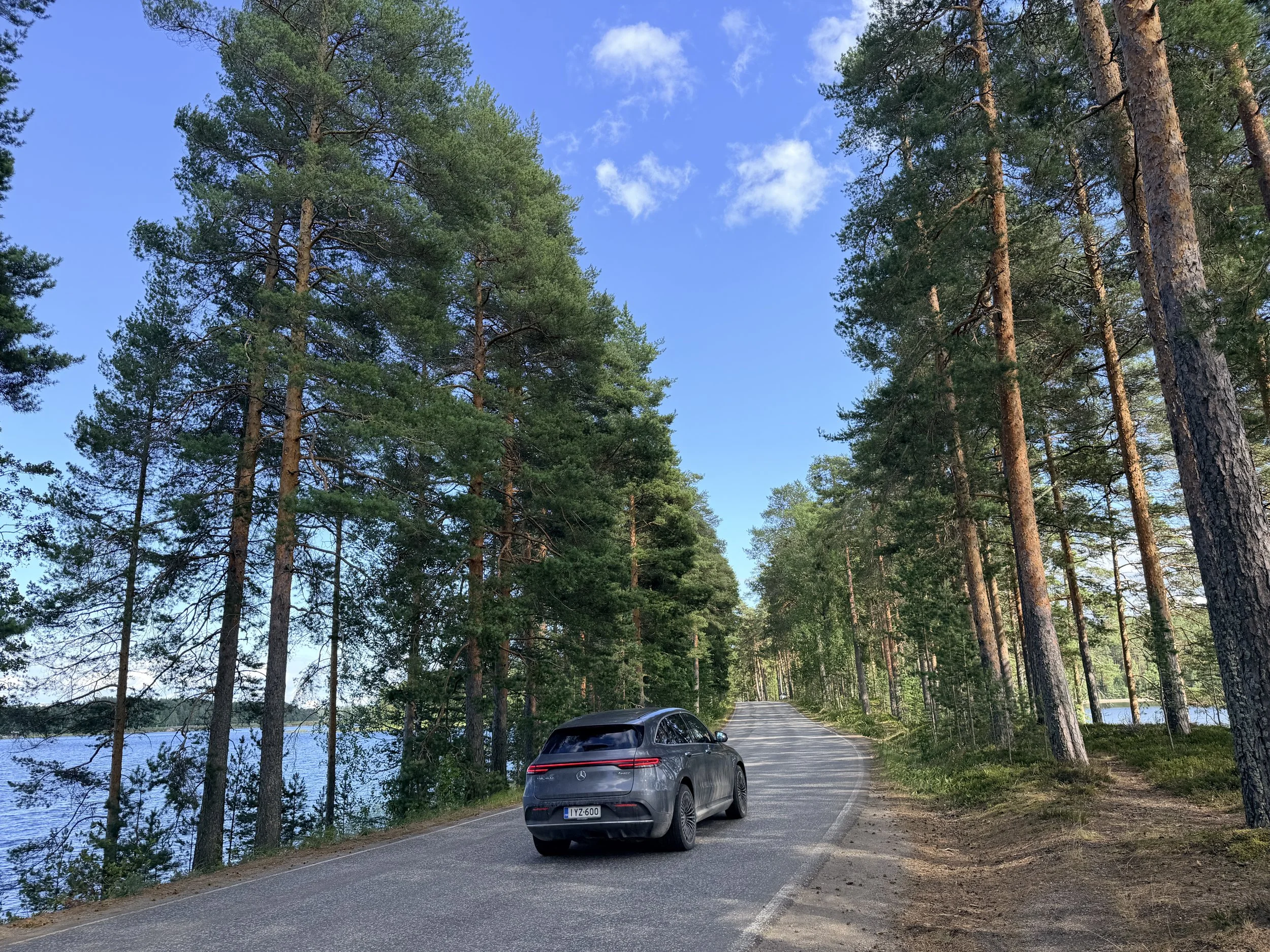
After the hike, we drove the Punkaharju Ridge Road once more. With the rain gone and the sun shining, the scenery was even more breathtaking. The long, narrow ridge, flanked by calm blue lakes on both sides, made it easy to understand why it has been considered one of Finland's most beautiful landscapes for centuries.
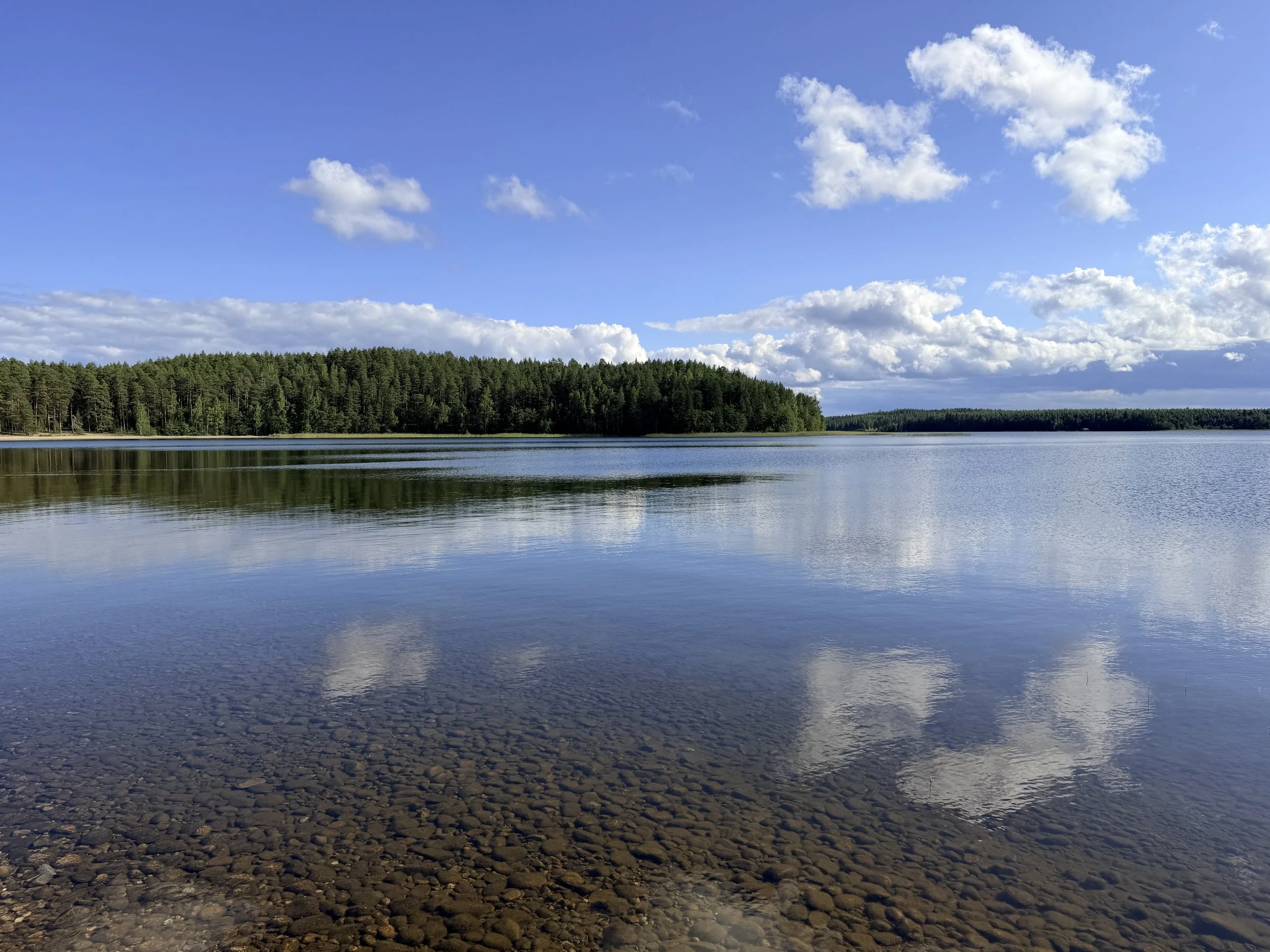
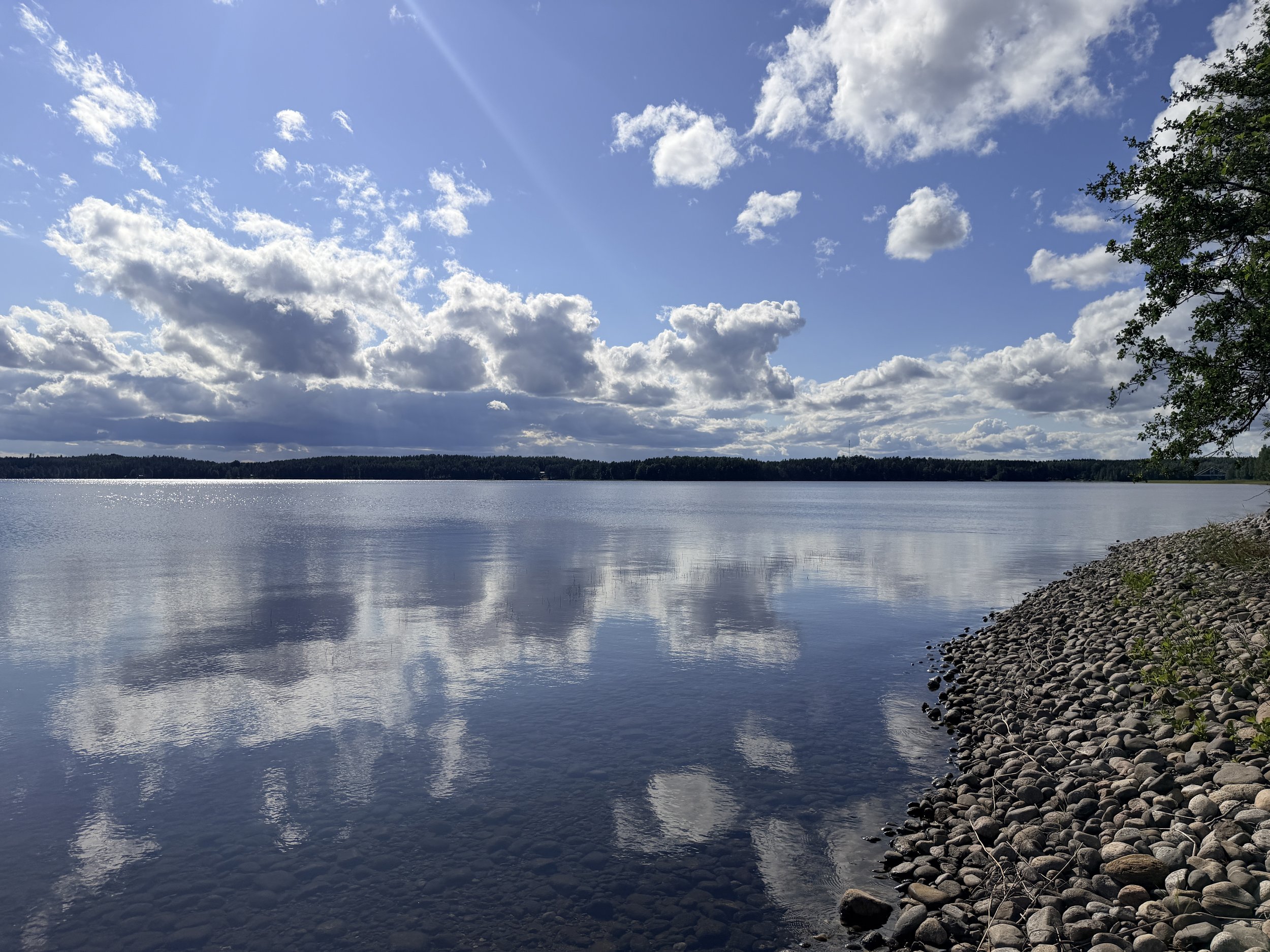
Back at our accommodation, we relaxed with another sauna. This time, I finally gathered the courage to dump a bucket of cold water over myself in the sauna room. It was quite a shock at first, but afterward I felt incredibly refreshed—a new Finnish experience to add to the trip.

2026年7月23日
昨天主要是赶路的一天。我们离开科利(Koli),前往芬兰湖区(Lake District)。途中在约恩苏(Joensuu)吃了寿司自助餐,味道出乎意料,吃得相当满足。饭后,我们在市集广场买了一些蘑菇、草莓和其他新鲜农产品。
虽然一路下着雨,但穿行于风景如画的庞卡哈尤山脊公路(Punkaharju Ridge Road)依然令人赞叹。我们在路边的一家小店喝了咖啡,吃了当地的甜品,然后来在山脊的最高点——鲁内贝里岗(Runeberg's Mound)停留。这座朴素的石碑是为了纪念芬兰民族诗人约翰·路德维希·鲁内贝里(Johan Ludvig Runeberg)而建。虽然纪念碑直到2017年才最终落成,但早在1880年就已提出建造计划,前后历时整整137年。
据说,鲁内贝里正是在这里写下了著名的诗句:“是的,年轻人,从这里望去,你所看到的这一片土地,就是你称之为祖国的地方。”这几句诗不仅塑造了芬兰逐渐形成的民族认同,也成为芬兰文化传承的重要象征。一路走来,我们不断听到人们提及芬兰的民族认同,而对年轻民族来说,最先浮现在他们脑海中的,并非人物、历史或文化,而是广袤的森林、无数的湖泊和纯净的自然景观。与许多国家不同,芬兰的民族认同仿佛深深扎根于这片土地,与大自然浑然一体。
我们入住的 Airbnb 是一栋舒适的四卧室住宅,在高尔夫球场里,窗外景色极佳,当然也少不了一间电桑拿房。
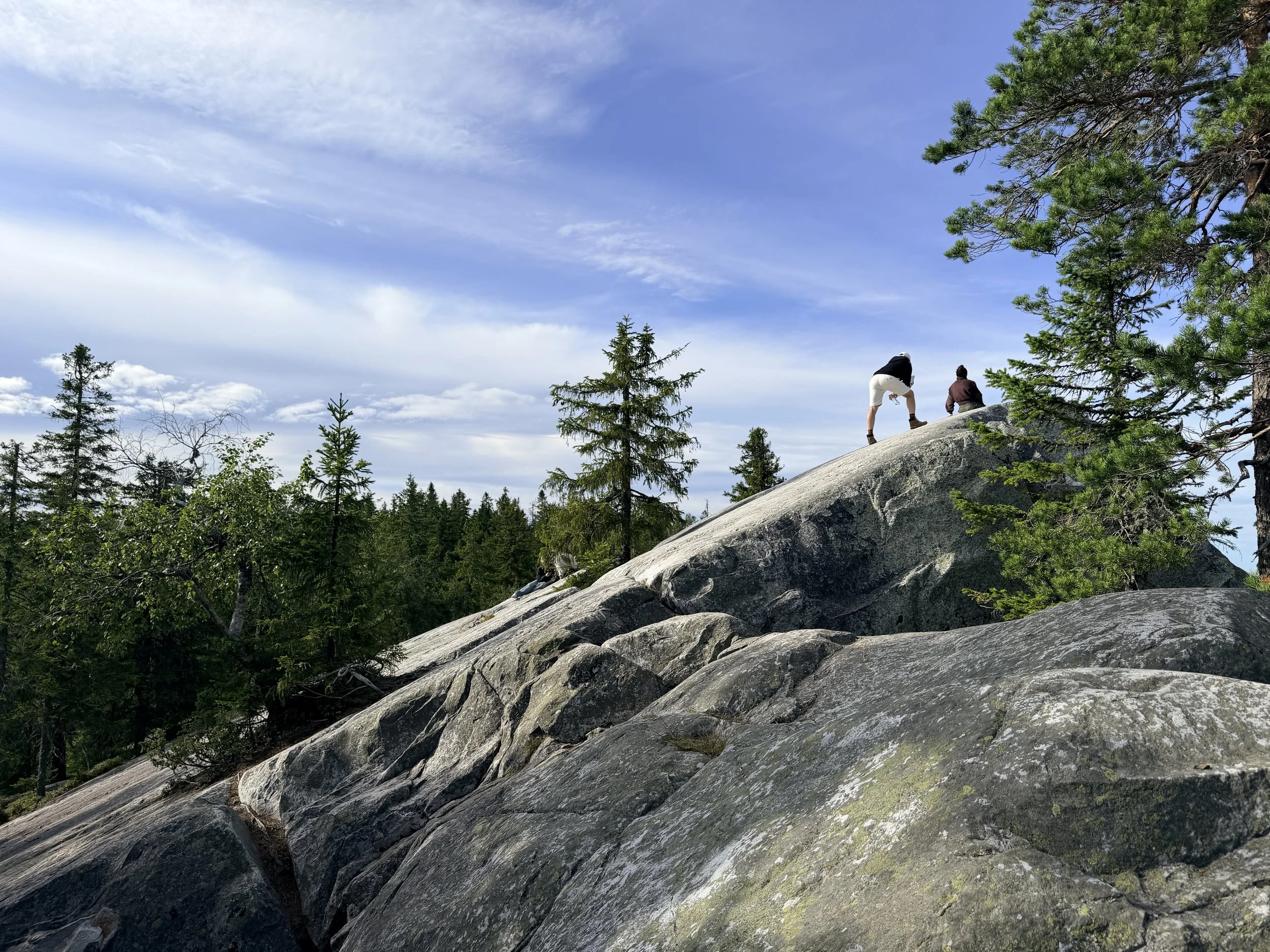
今天上午,我们首先参观了卢斯托森林博物馆(Finnish Forest Museum Lusto),了解芬兰人与森林之间密不可分的关系,以及这个国家悠久的林业历史。随后,我们来到附近森林研究公园(Forest Research Park),完成了哈金基罗斯环线(Hakinkierros Loop)徒步。
沿途,我们特地前往观赏芬兰目前已知最高的树木,高达47米(154英尺)。作为比较,世界最高的树木高达116米(381英尺),而中国目前已知最高的树木则为83米(273英尺)。
这条步道全长5.2英里,累计爬升约866英尺。步道维护得非常完善,整体难度不高,穿行在宁静的森林之间,高大的松树和云杉遮天蔽日,走起来轻松而惬意。
徒步结束后,我们再次驱车游览庞卡哈尤山脊公路。雨过天晴后,这里的景色比昨天更加迷人。狭长的山脊两侧,是平静如镜的湖泊,在阳光映照下显得格外宁静秀美,也难怪这里数百年来一直被誉为芬兰最美的自然景观之一。
回到住处后,我们照例又享受了一次桑拿。这一次,我终于鼓起勇气,在桑拿房里直接把一桶冷水从头浇下。虽然那一瞬间冷得让人打颤,但随后全身却感到无比舒畅,也算是这趟芬兰之旅又一次难忘的新体验。
Kolinuuro Loop 徒步
July 21, 2026
Today's weather was just as pleasant as yesterday's,……
今天的天气和昨天一样舒适宜人,只是湖面起了些小浪。。。
July 21, 2026
Today's weather was just as pleasant as yesterday's, although the lake was a bit rough with small waves. Our original plan was to row the boat out to one of the tiny islands, but because of the choppy water, we changed our plans and enjoyed lunch at a lakeside café near the ski lift instead.
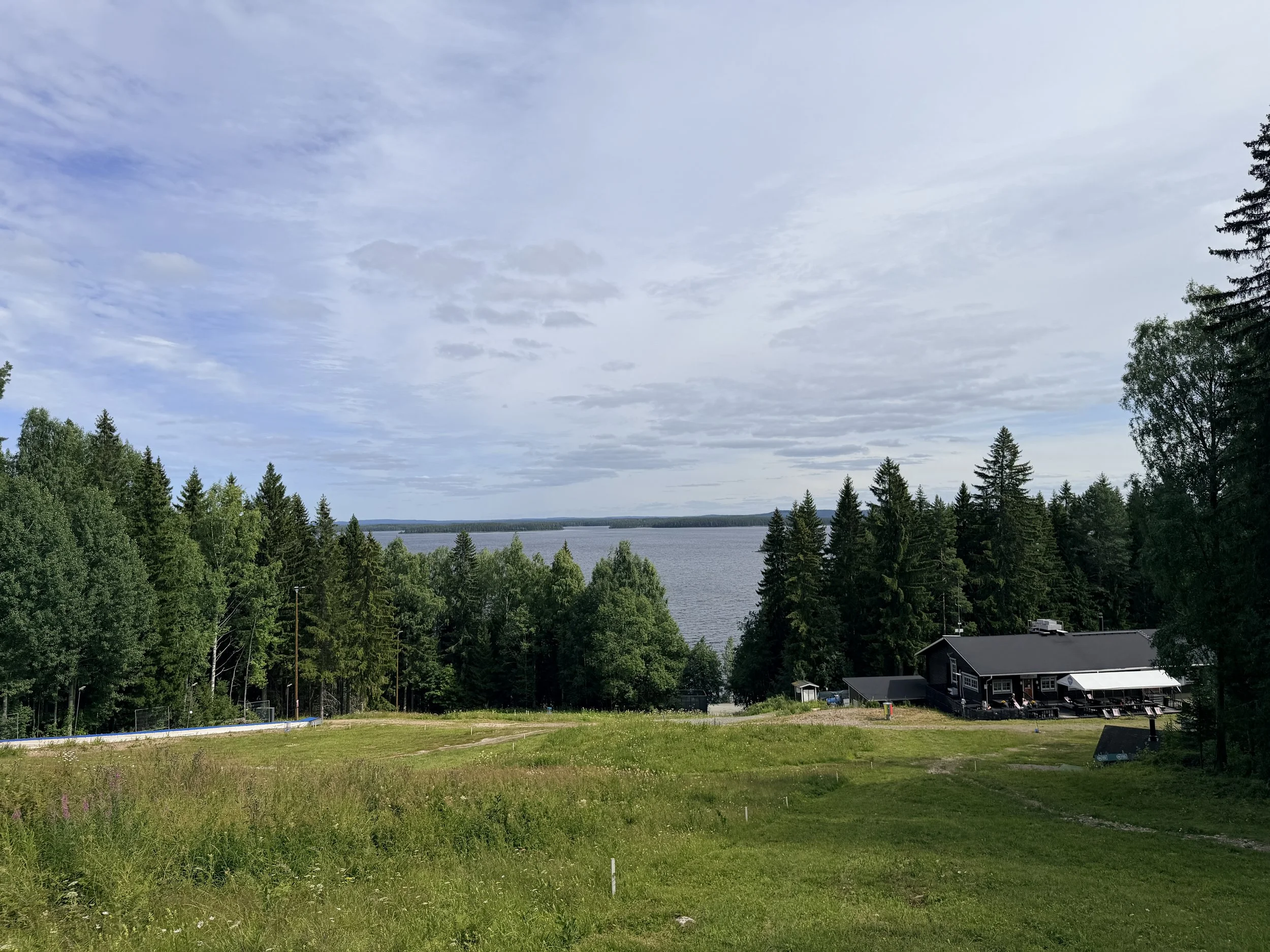
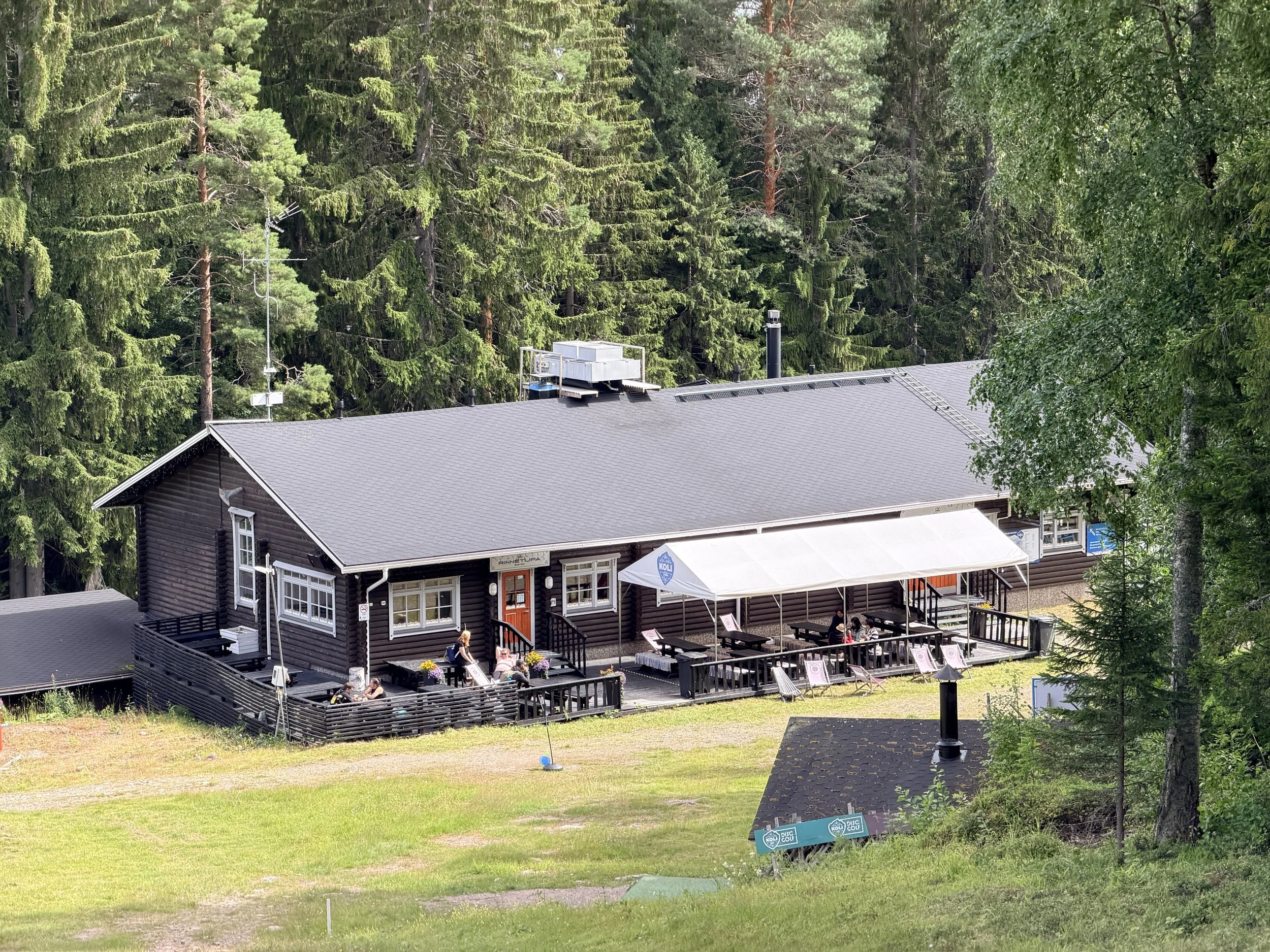
After a short afternoon nap, I returned to Koli National Park to hike the Kolinuuro Loop, a 2.2-mile trail with about 425 feet of elevation gain, marked by red trail markers. Roughly half of the route overlaps with the Mäkrän Kierto Trail, giving me another opportunity to revisit several viewpoints we had missed the previous day.
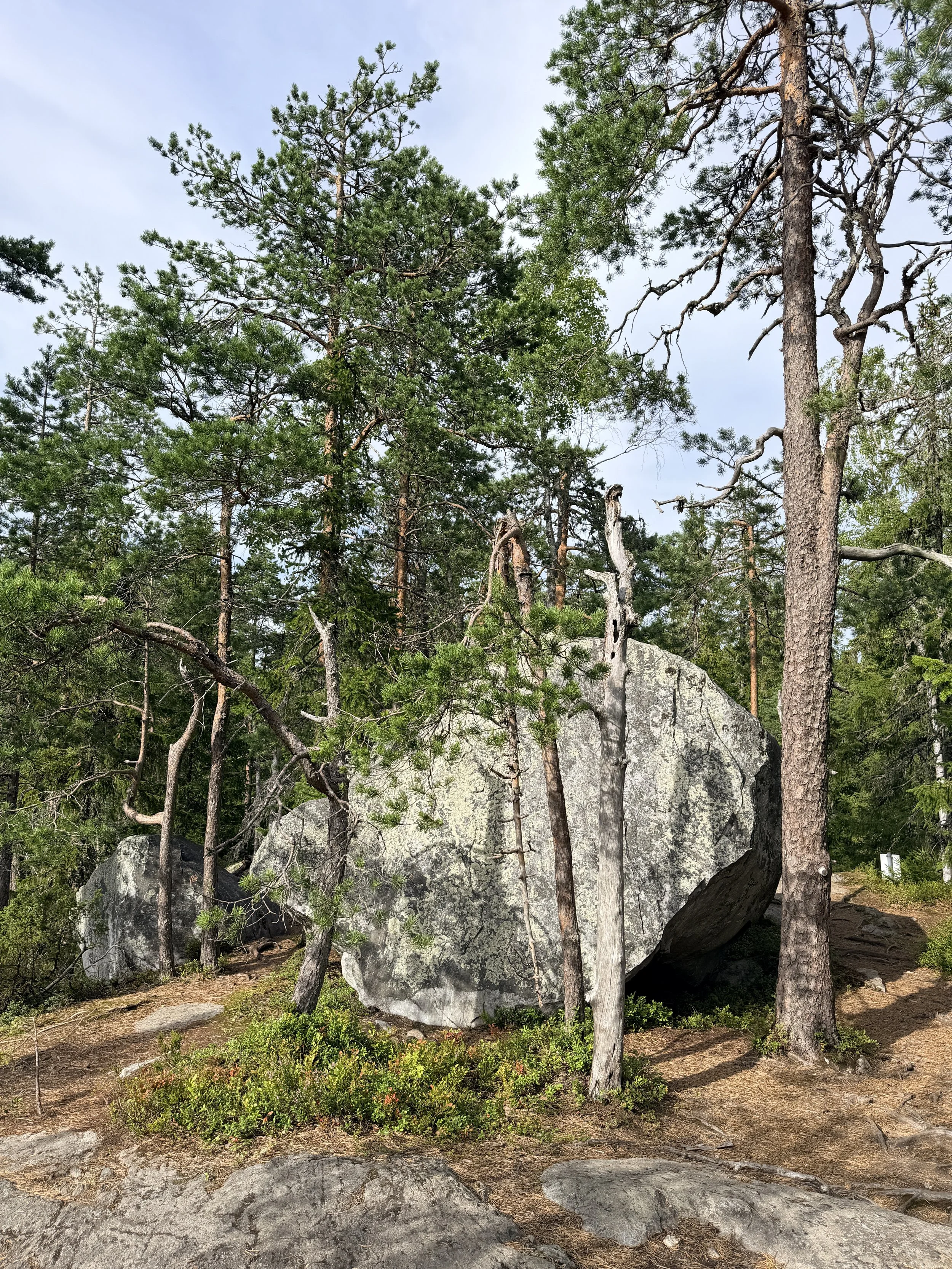
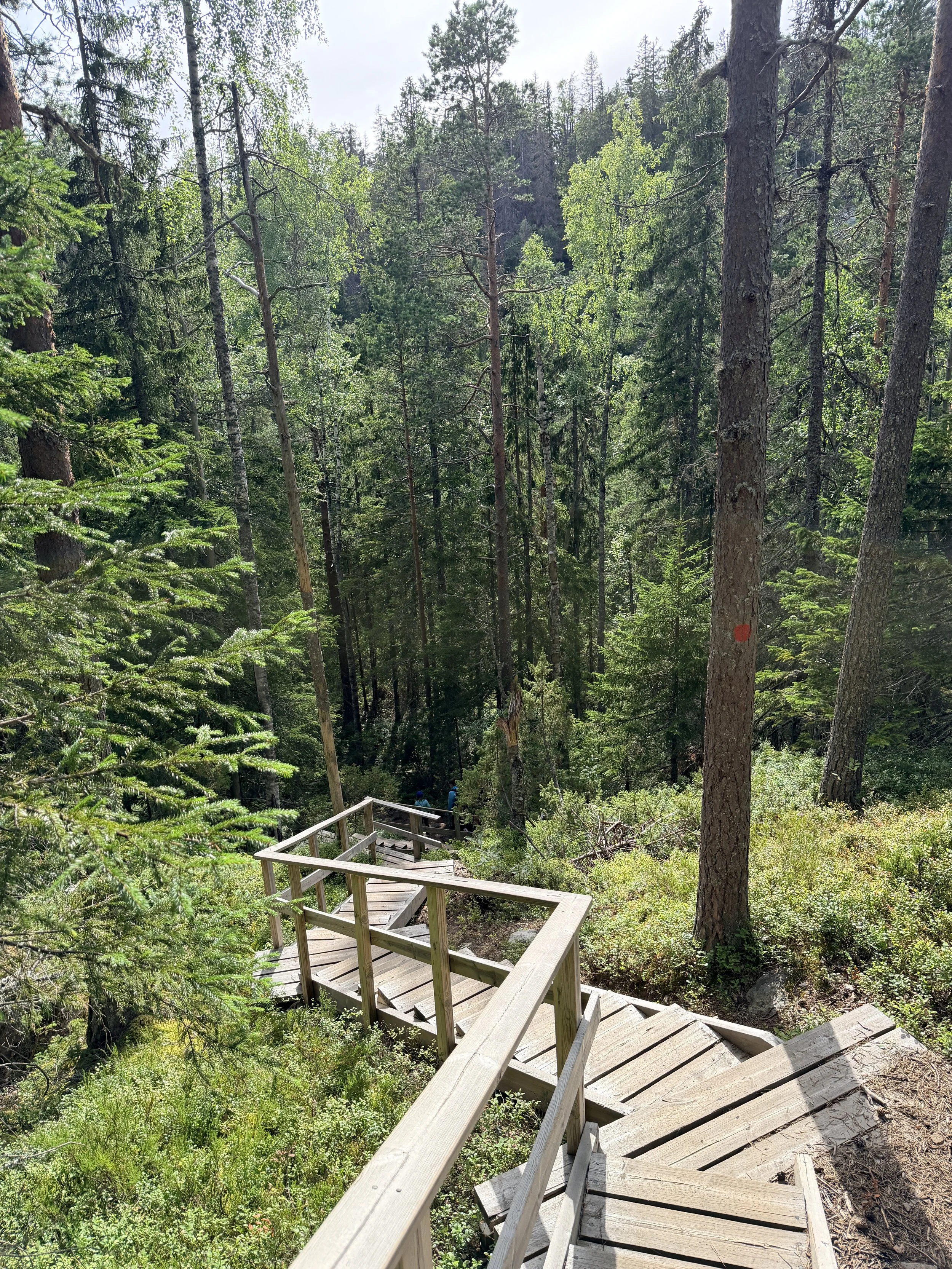
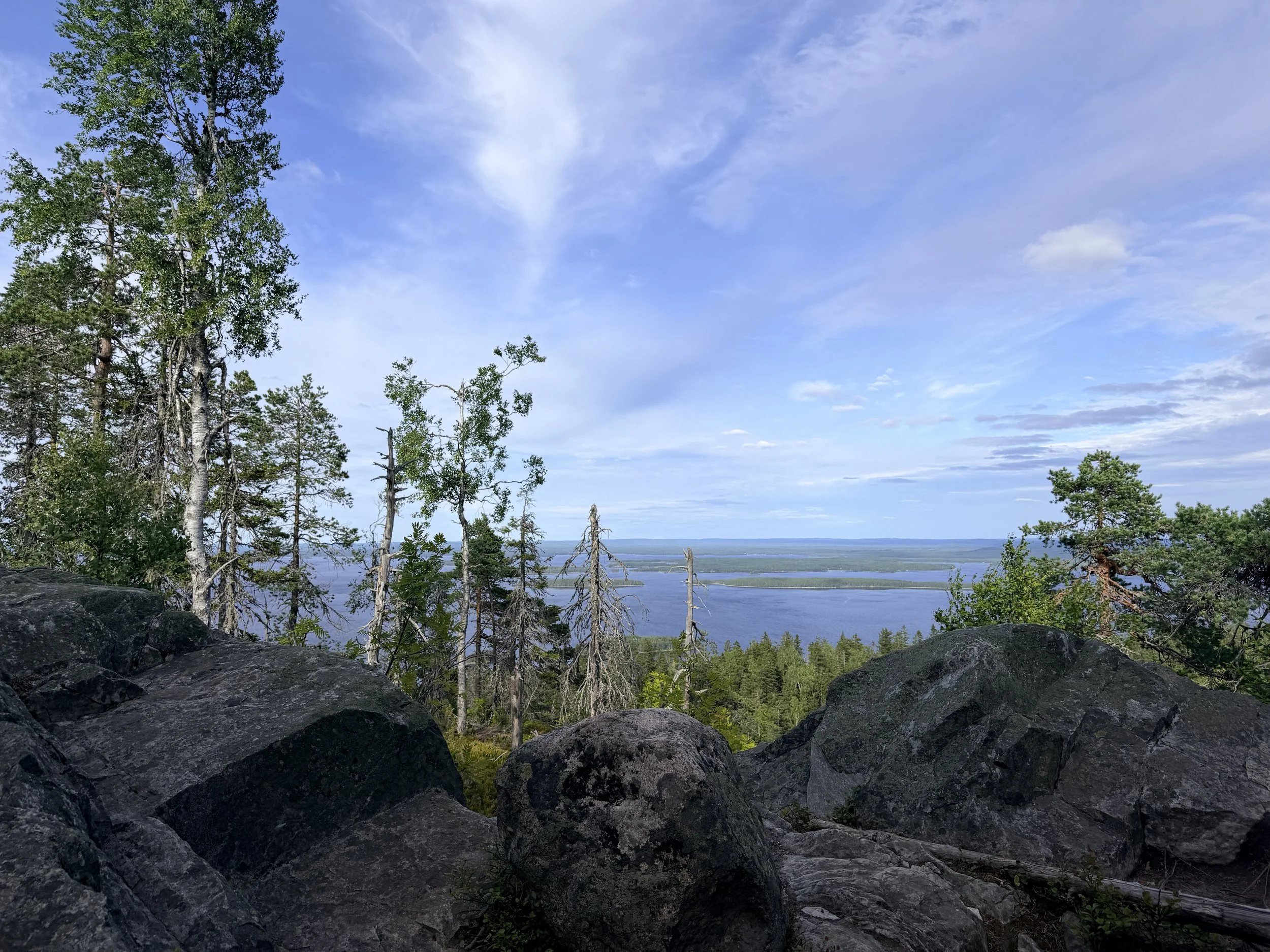
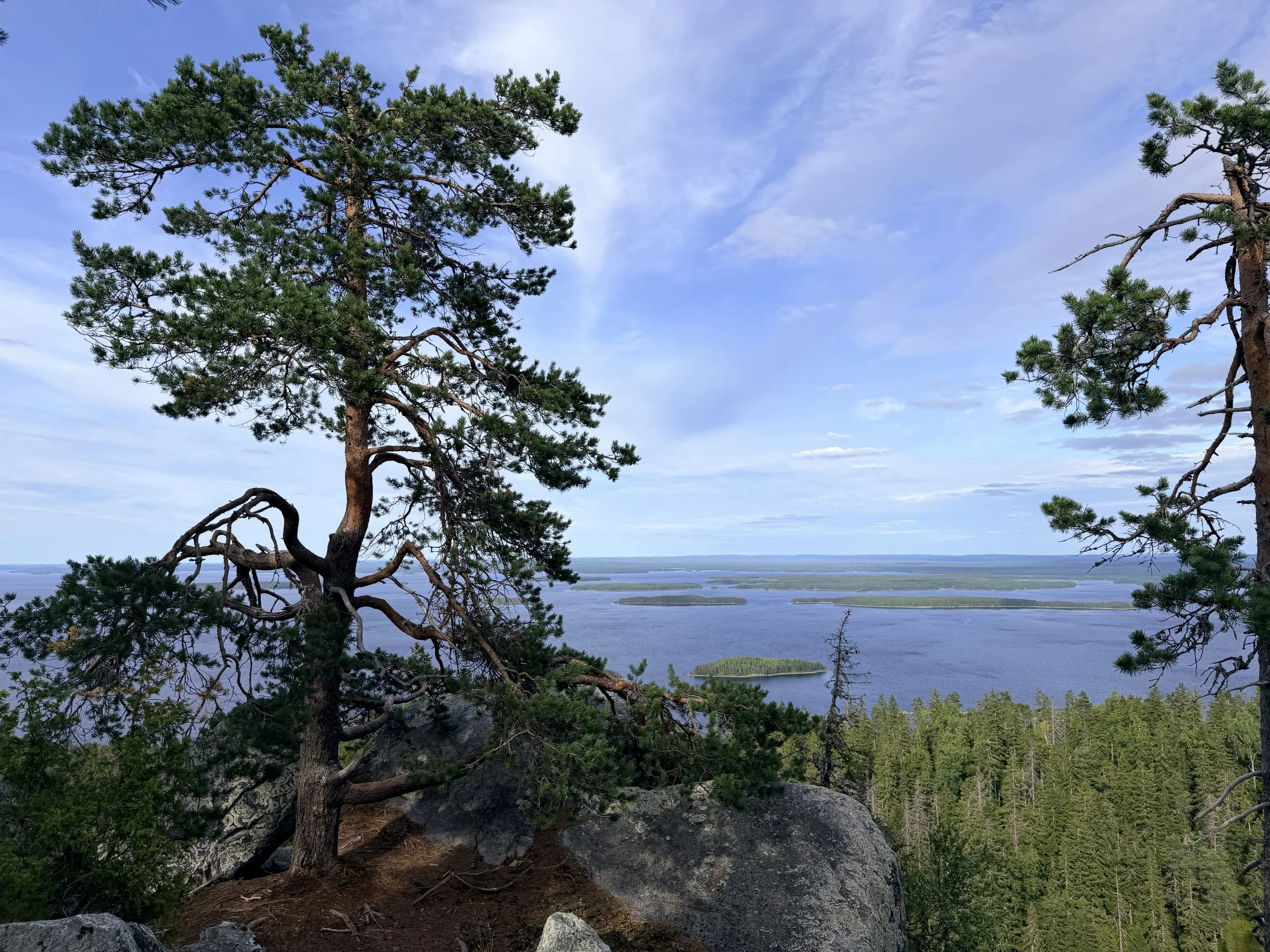
Even on my second visit, the panoramic view from Koli Ukko was every bit as breathtaking as before. I also searched for the famous pine tree featured in Eero Järnefelt’s 1928 painting Landscape from Koli. The tree had died just last month, but I couldn’t identify its exact location. Even so, it was meaningful to walk through the landscape that inspired one of Finland’s most iconic paintings.
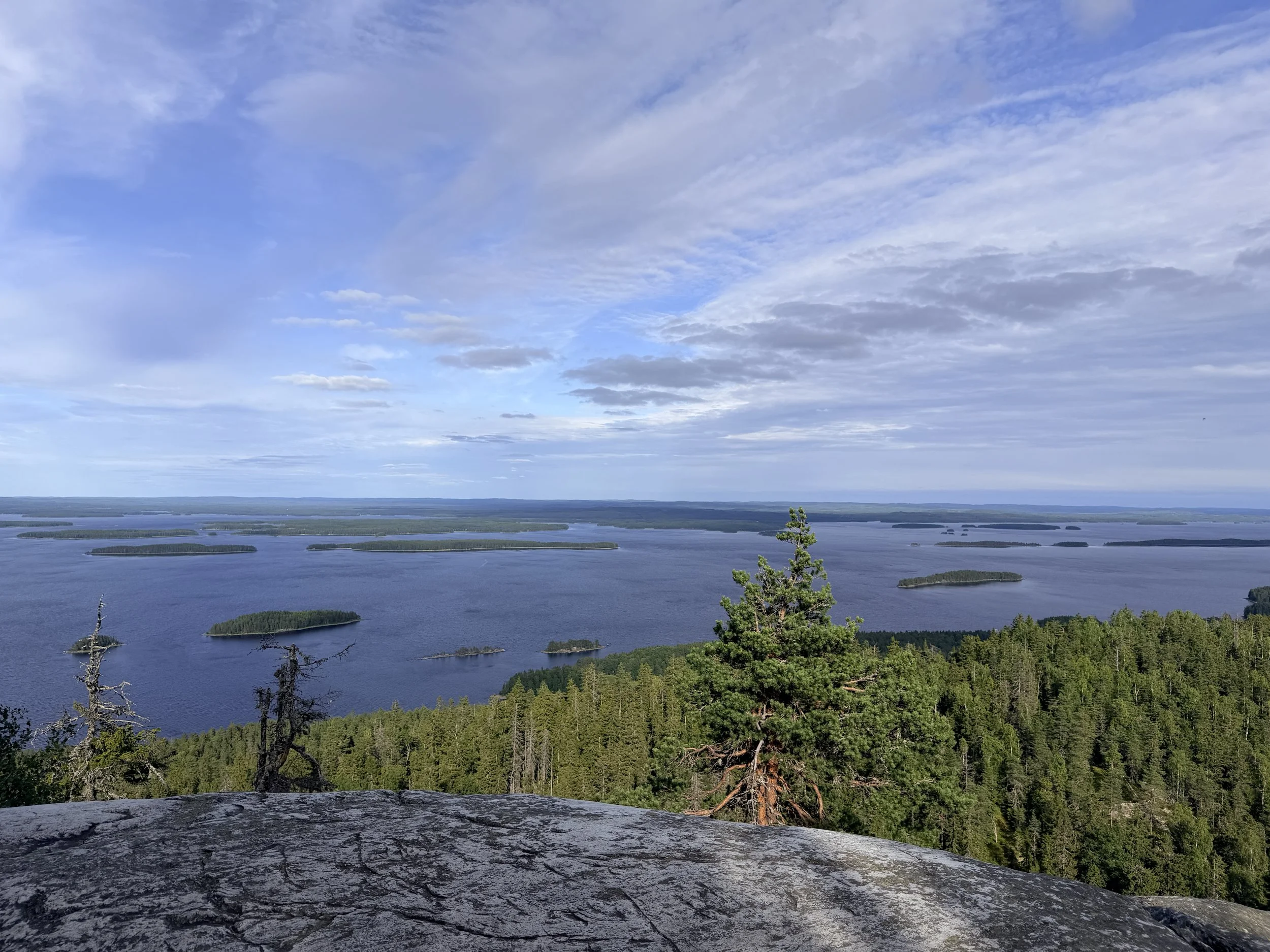
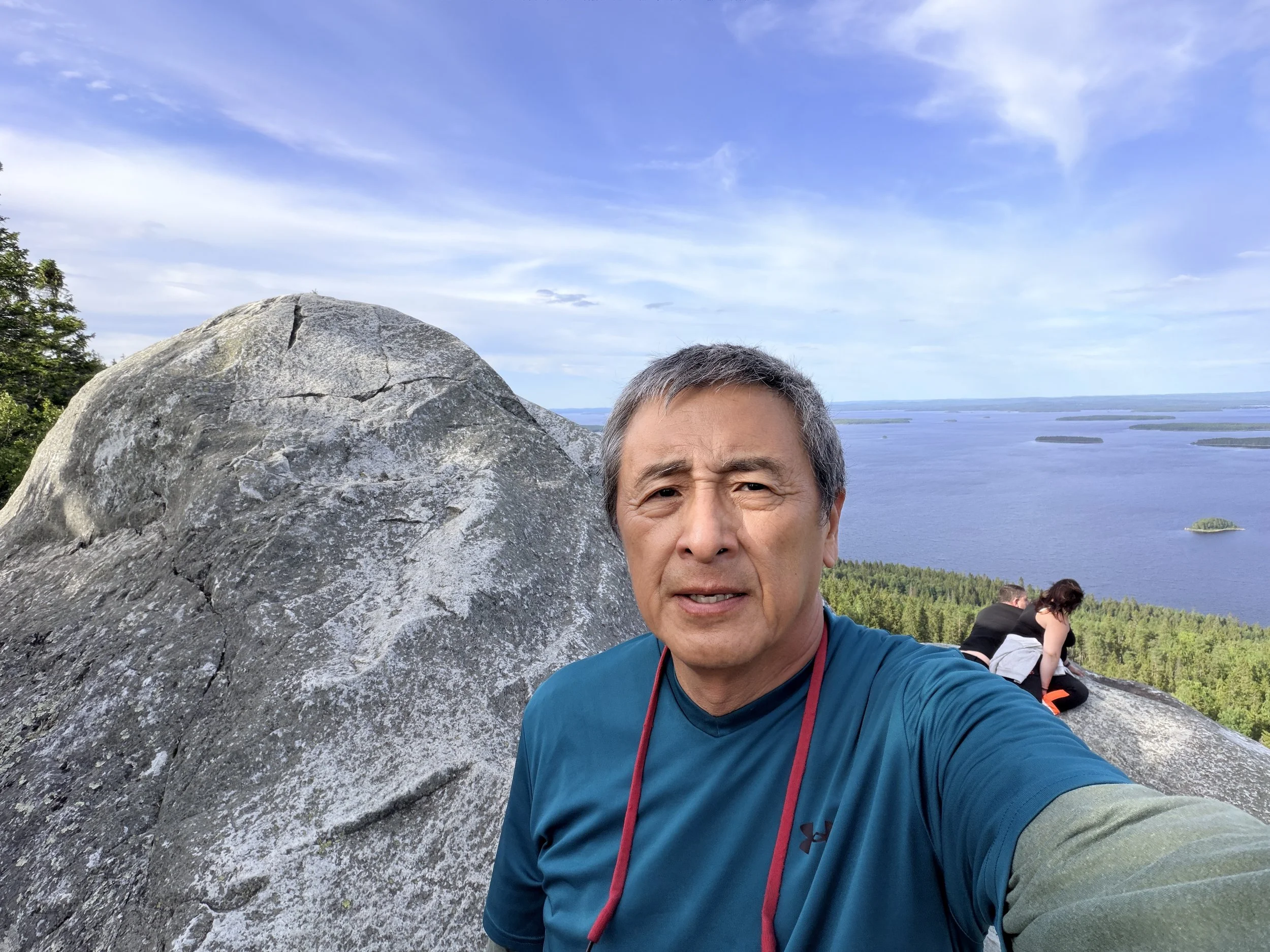
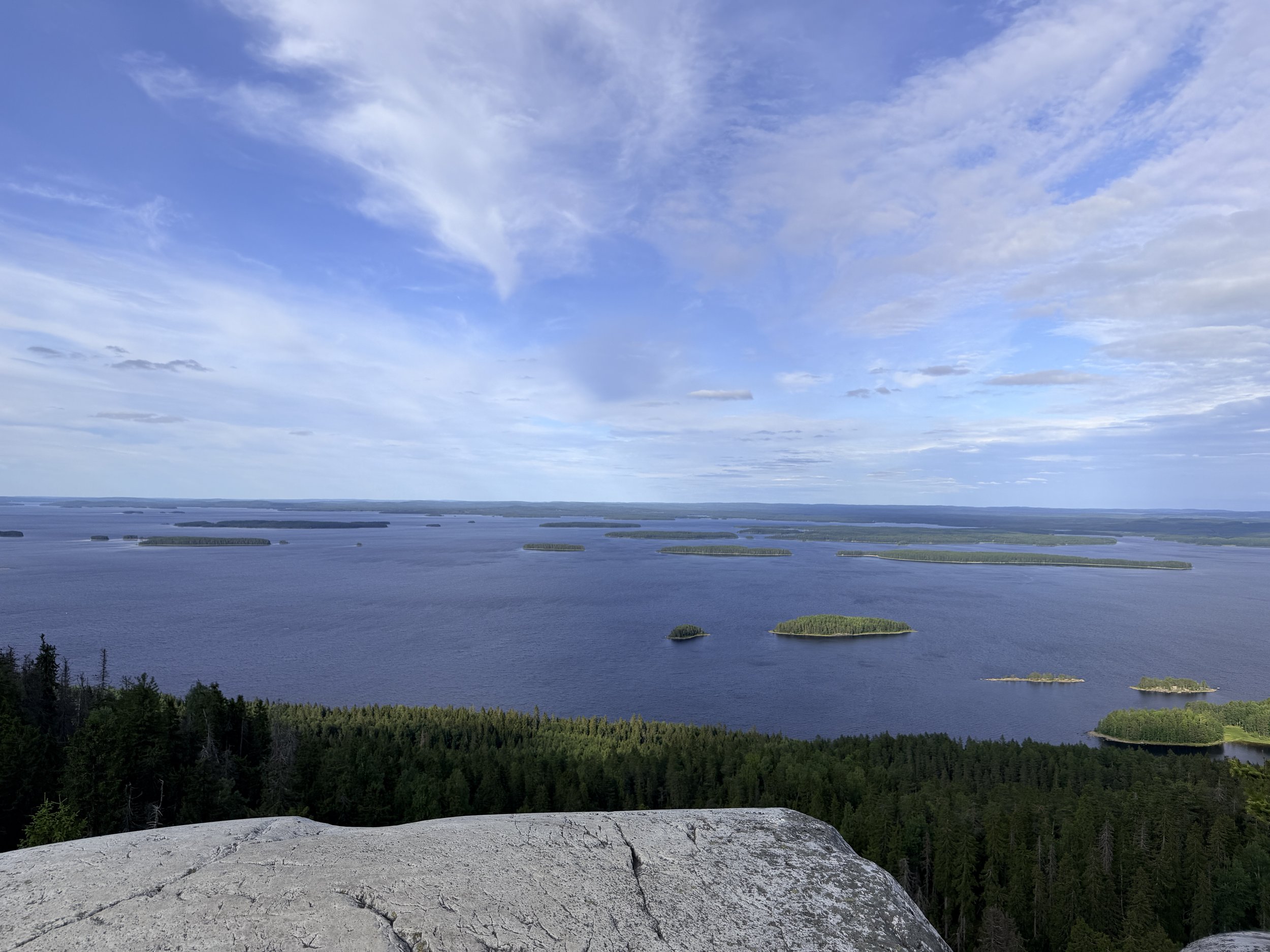
Looking back, I think we should have stayed at the hotel inside the national park. Having more time within the park would have allowed us to explore its trails and viewpoints at a much more leisurely pace.
2026年7月21日
今天的天气和昨天一样舒适宜人,只是湖面起了些小浪。我们原本打算划船前往湖中的一座小岛,但由于风浪较大,只好改变计划,到滑雪缆车旁的餐厅享用午餐。
午睡片刻后,其他人都还在休息,我一个人再次来到科利国家公园(Koli National Park),徒步 Kolinuuro 环线。这条步道全长约2.2英里(3.5公里),累计爬升约425英尺(130米),沿途以红色标记指引。大约有一半路段与昨天走过的 Mäkrän Kierto Trail 重叠,因此也让我有机会补看前一天错过的几个观景点。
即使是第二次登上乌科峰 (UKKO Koli),眼前壮阔的湖光山色依然令我流连忘返。我还特意寻找芬兰著名画家 埃罗·耶尔内费尔特(Eero Järnefelt) 于1928年创作的《科利风景》(Landscape from Koli)中那棵著名的松树。据说那棵树就在上个月枯死了,而我最终也没能确定它原来的具体位置。尽管如此,能够漫步在这片孕育了芬兰最具代表性风景画之一的山水之间,依然是一件很有意义的事情。
看来住在山上国家公园里的酒店也许会是一个不错的选择,这样就能有更充裕的时间,慢慢探索公园里的各条步道和观景点,尽情享受这里的自然风光。
Mäkrän Kierto Trail 马克兰环线步道
July 20, 2026
Yesterday it rained all day, so we decided to stay indoors……
昨天整整下了一天雨,我们决定待在小屋里休息。。。
July 20, 2026
Yesterday it rained all day, so we decided to stay indoors. The only exception was that I sneaked out for a short walk around the neighborhood to check out the boats resting along the rocky shoreline. Afterwards, we enjoyed another relaxing round of sauna.
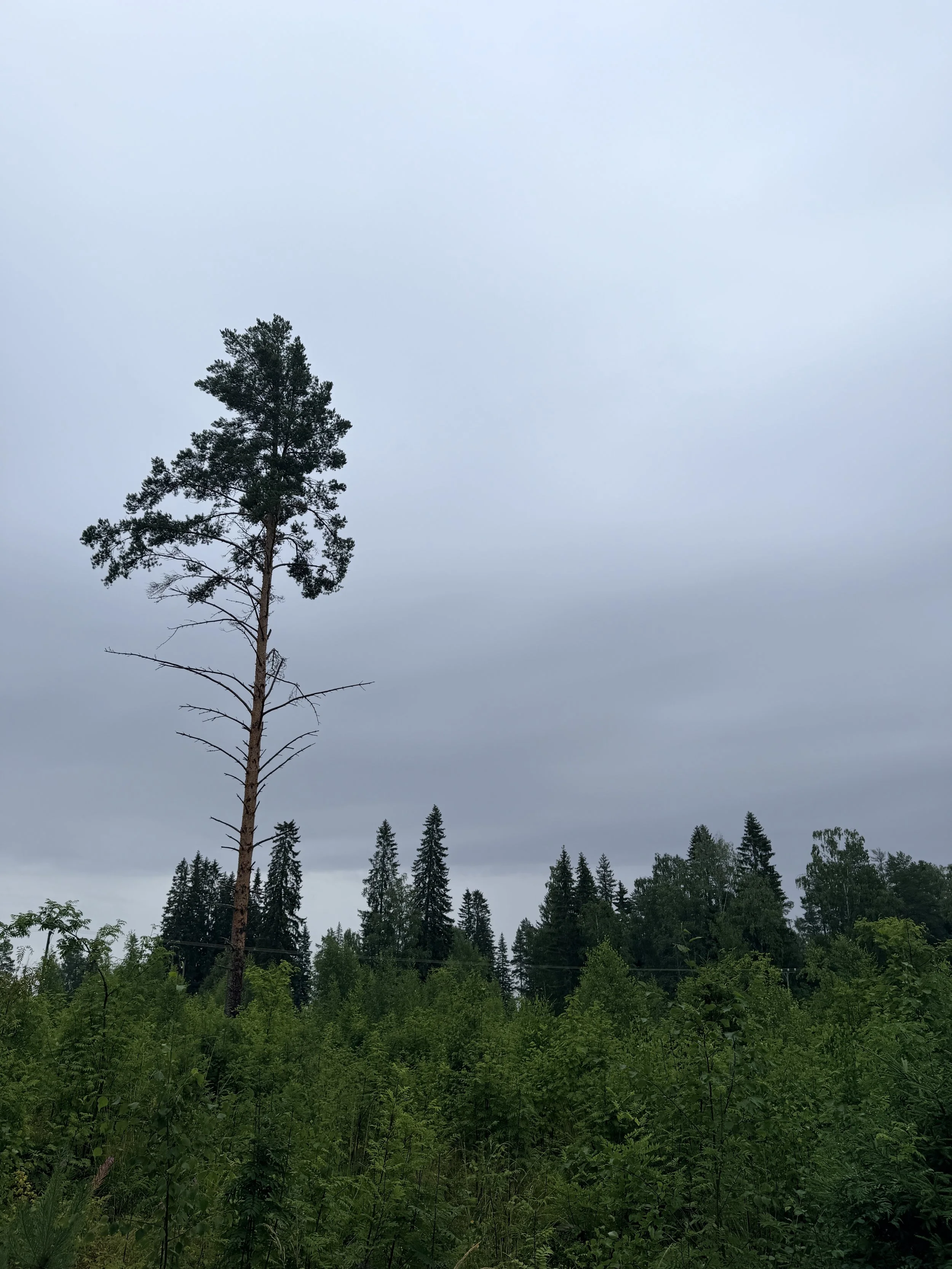
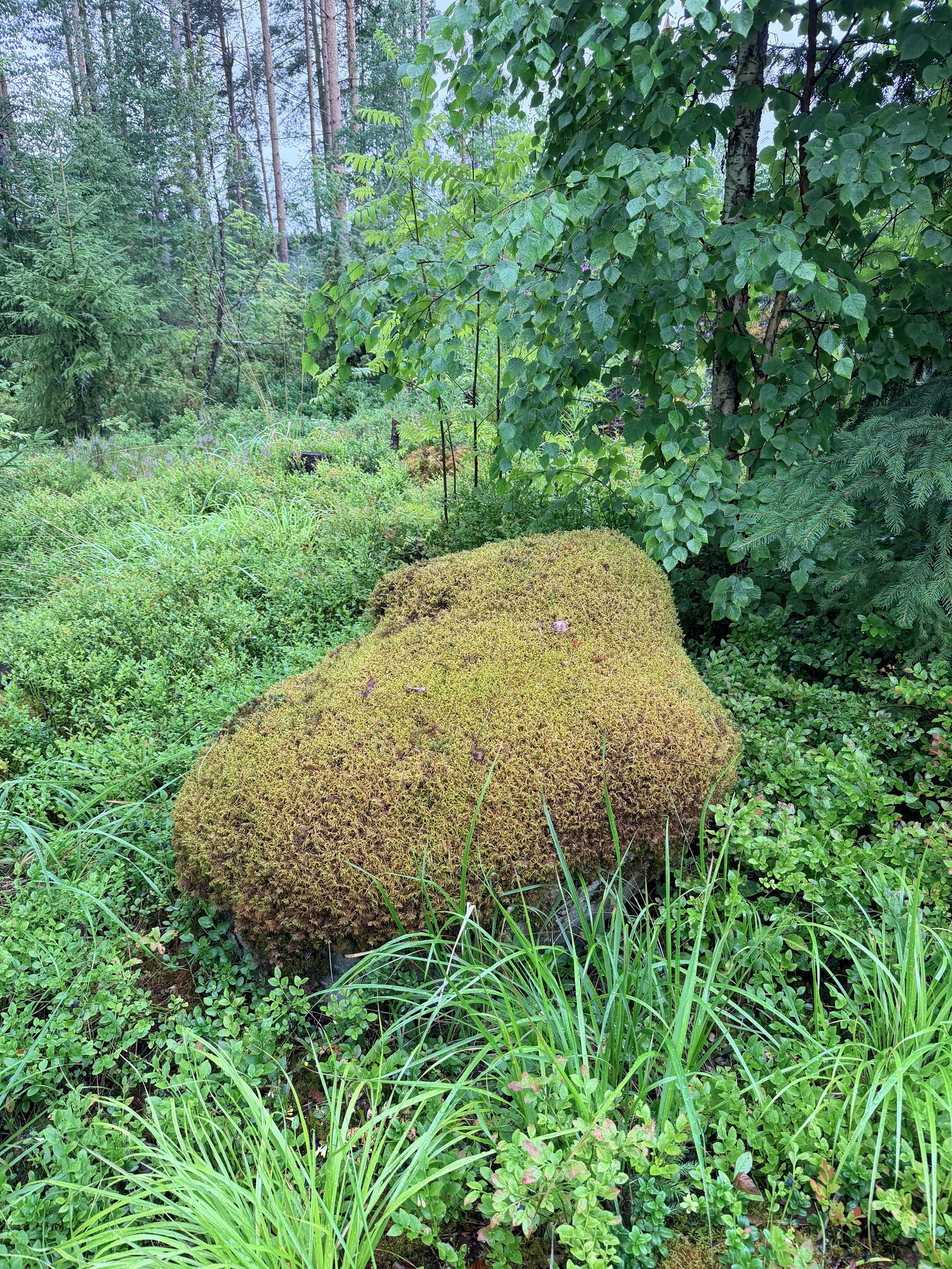
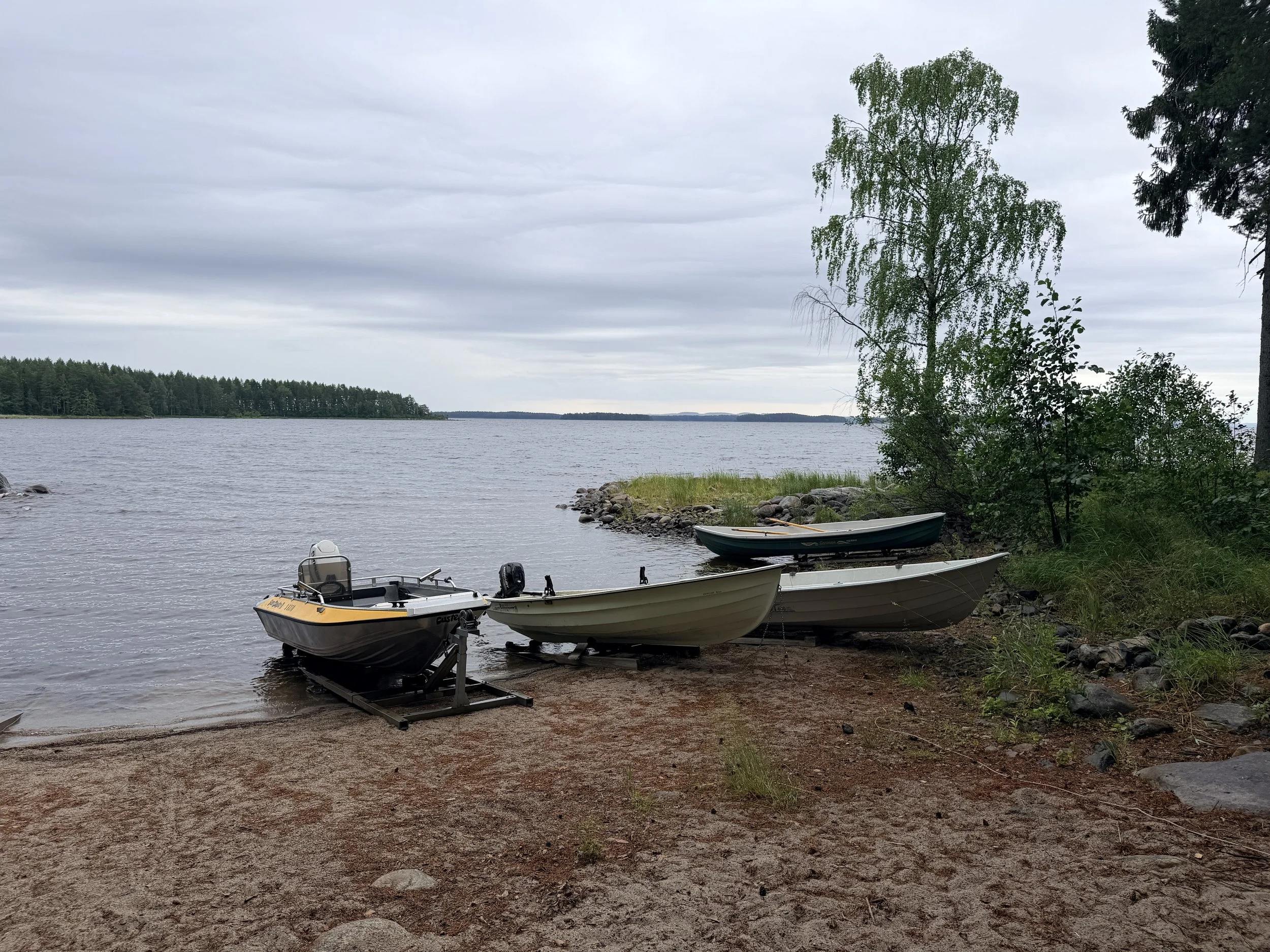
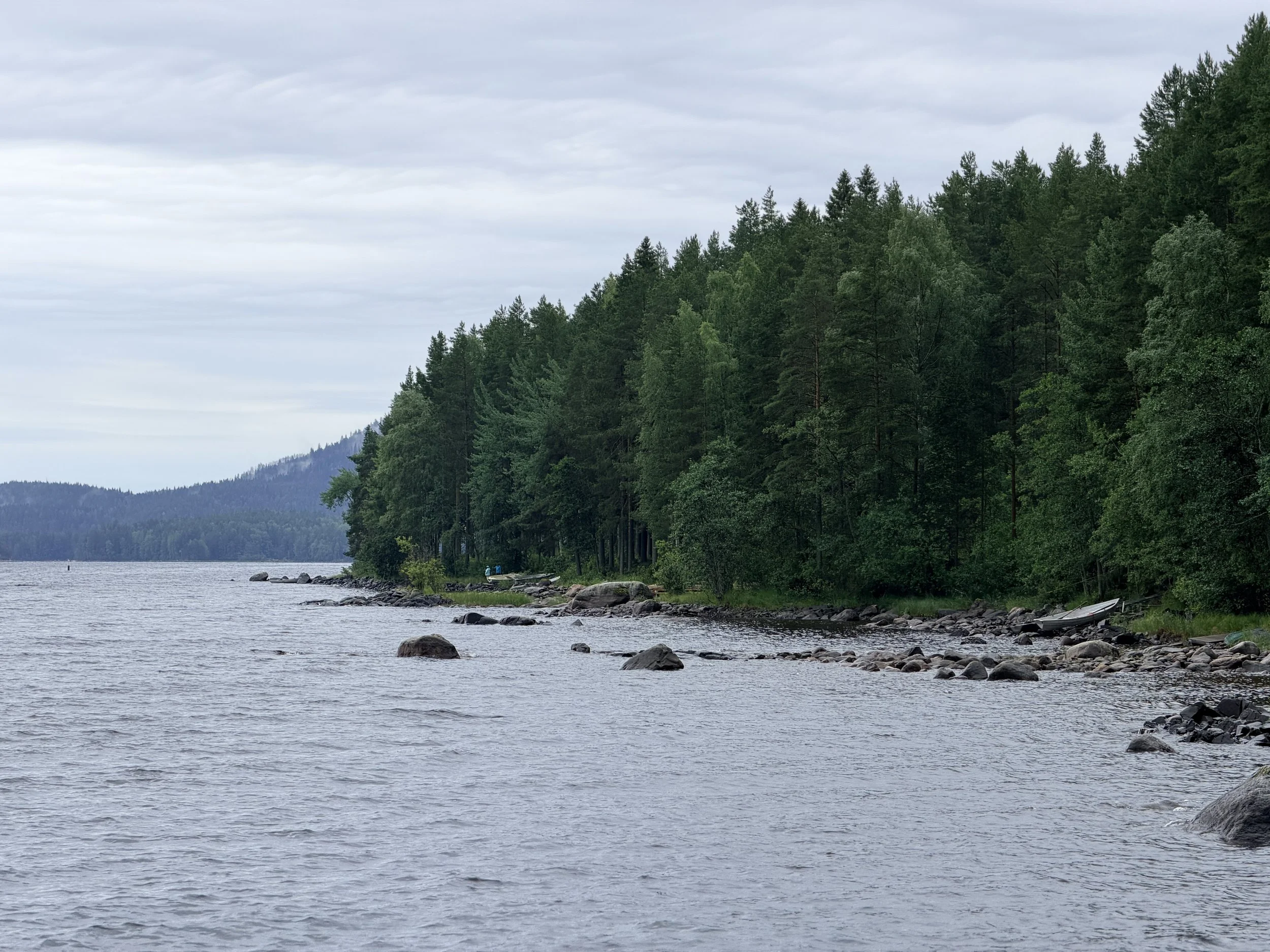
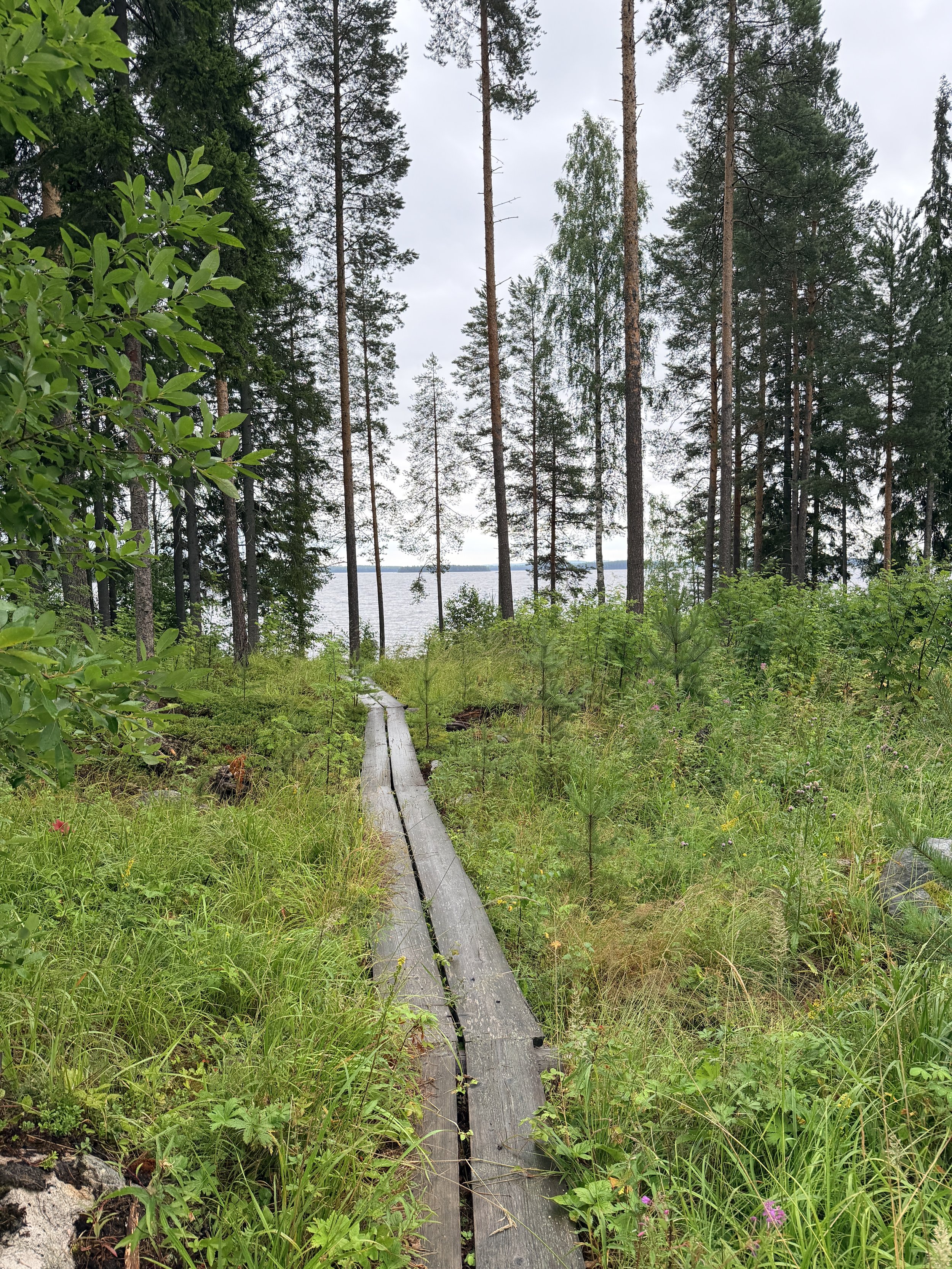
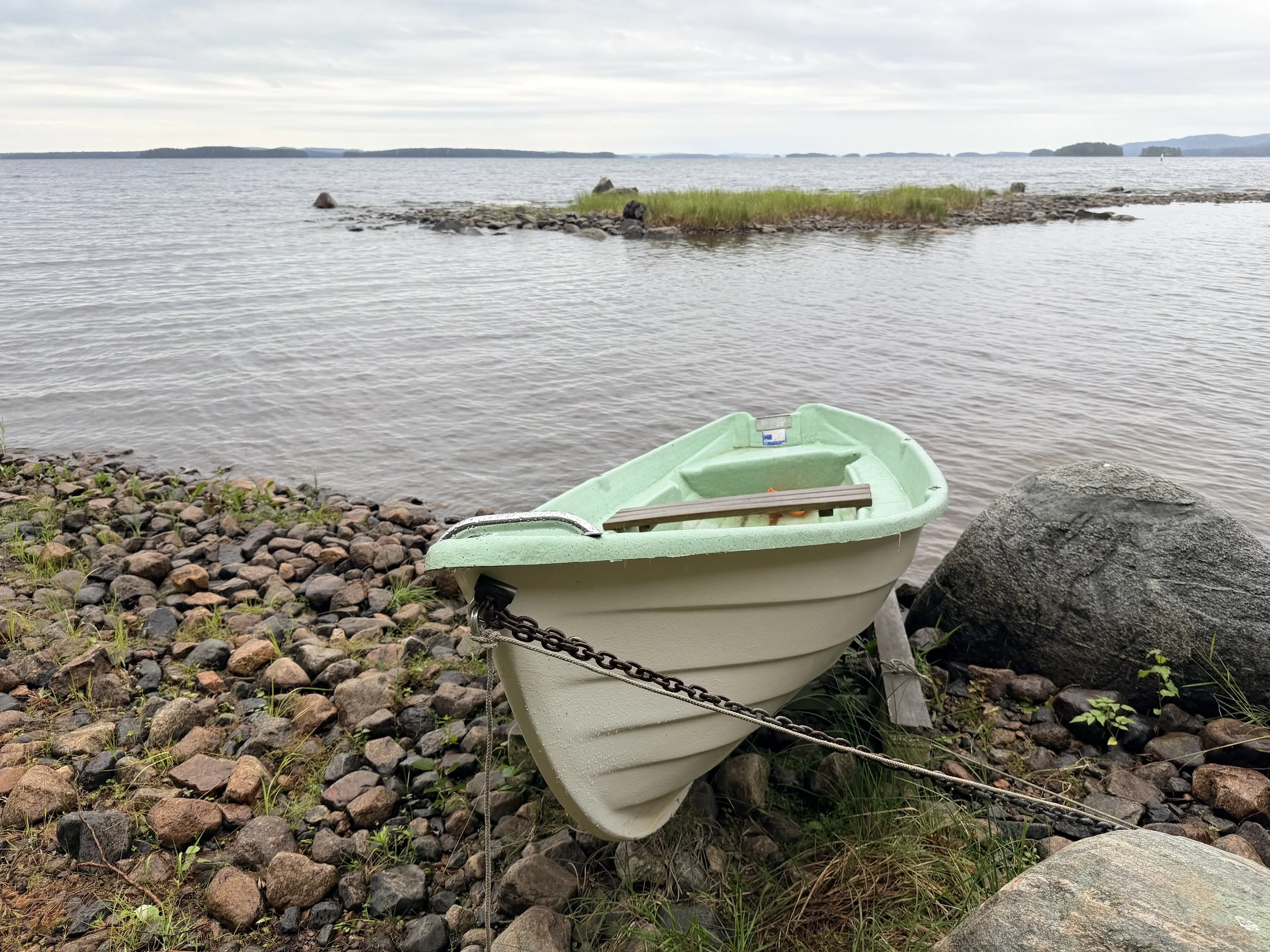
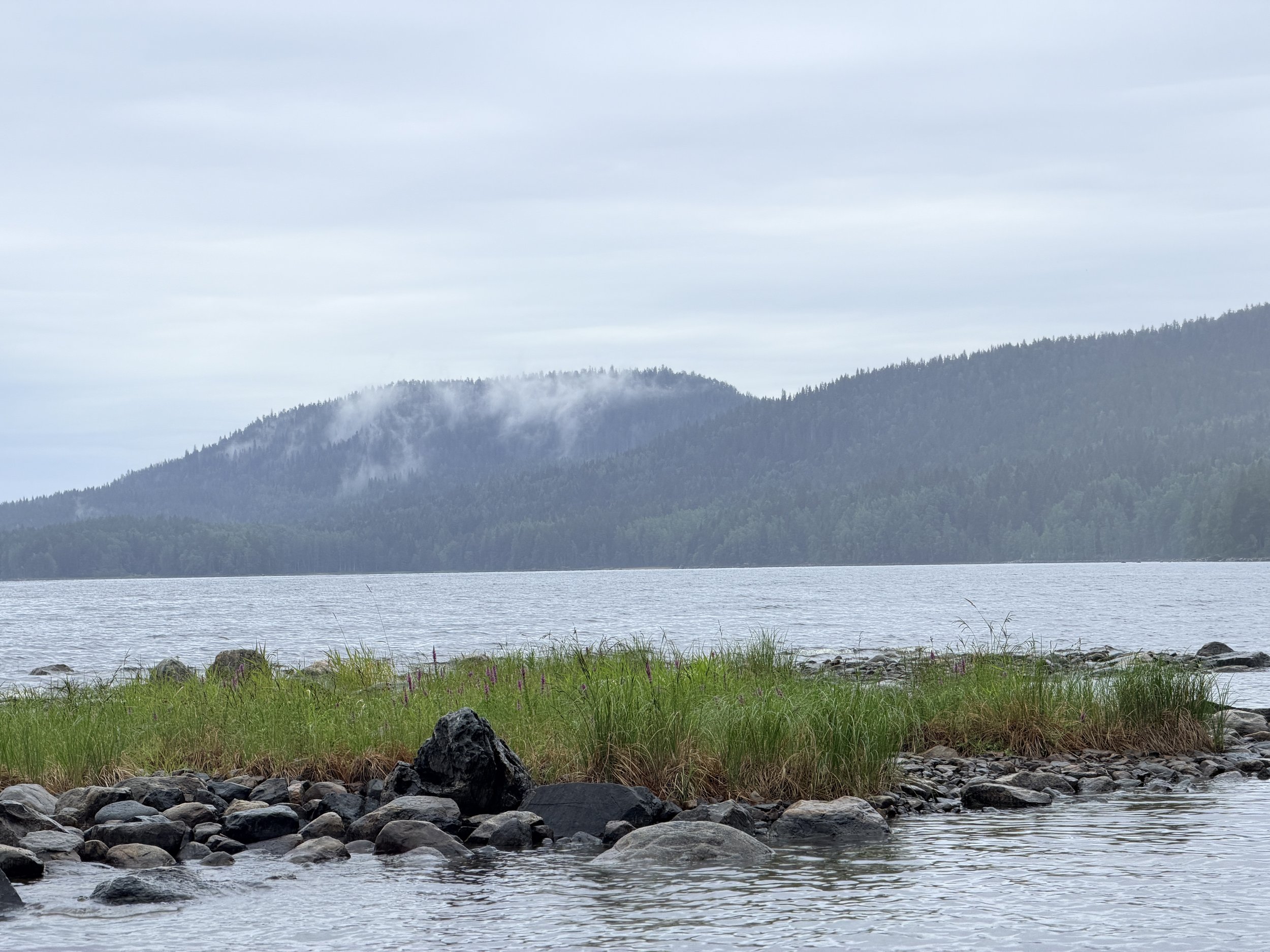
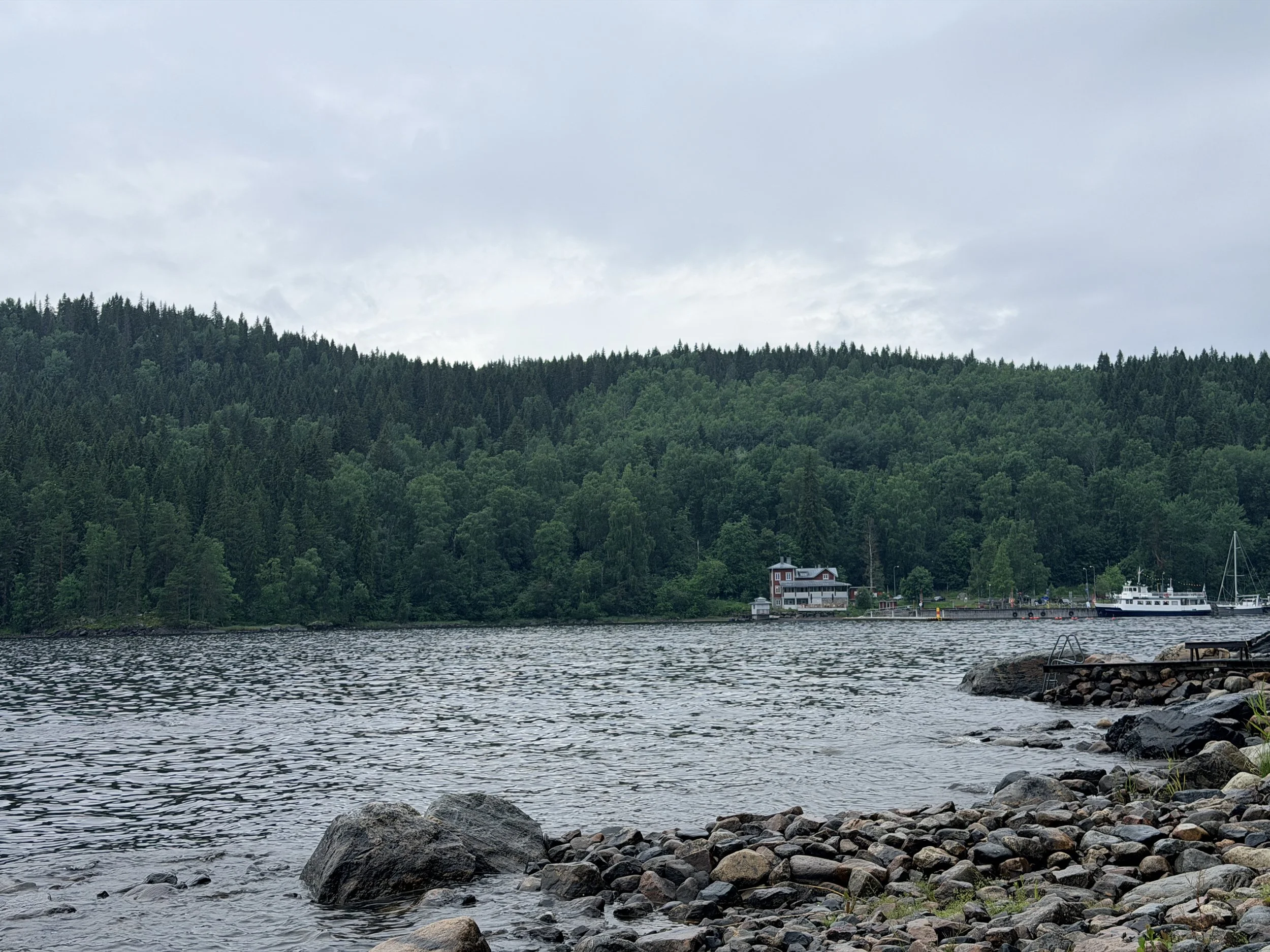
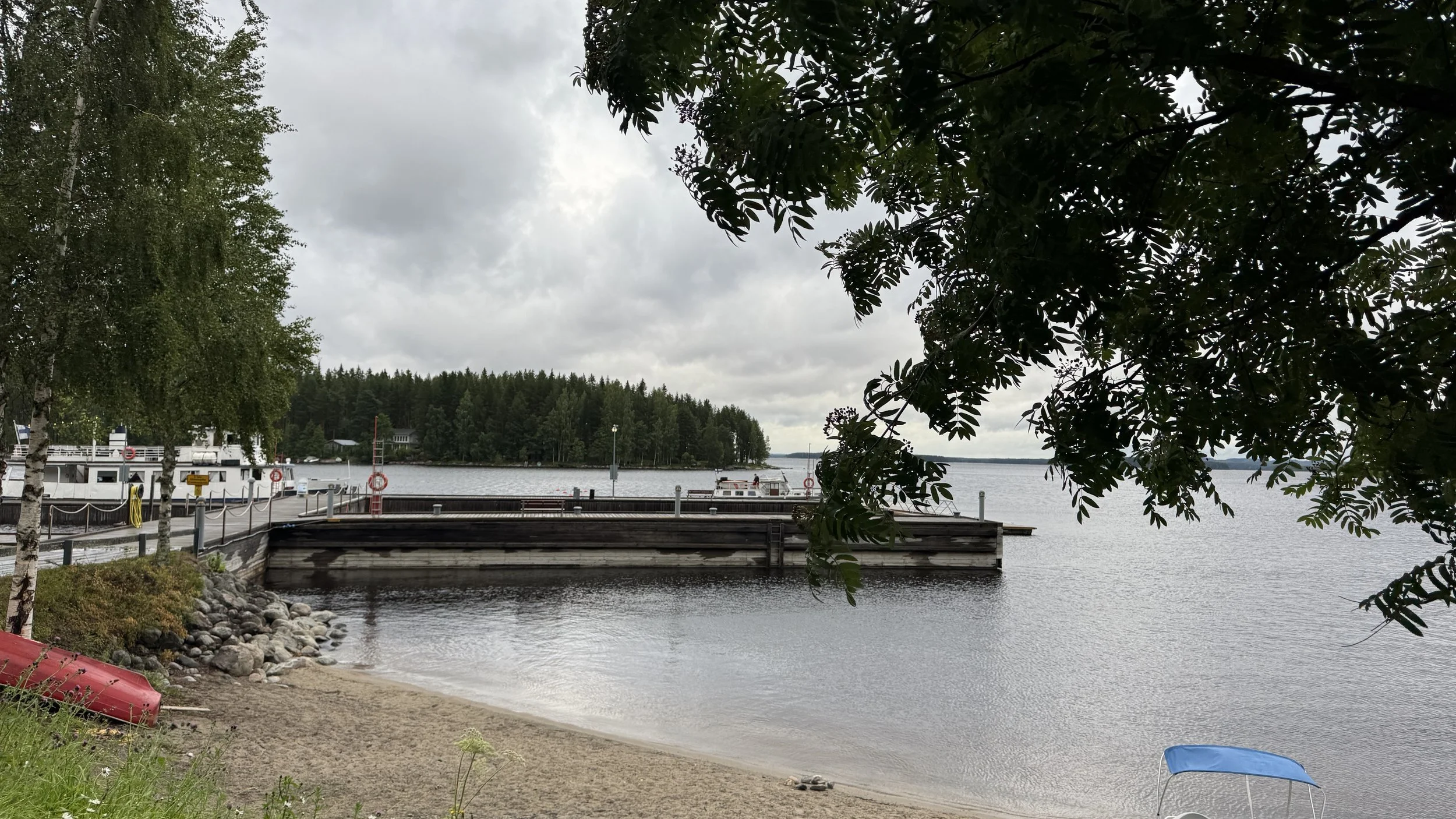
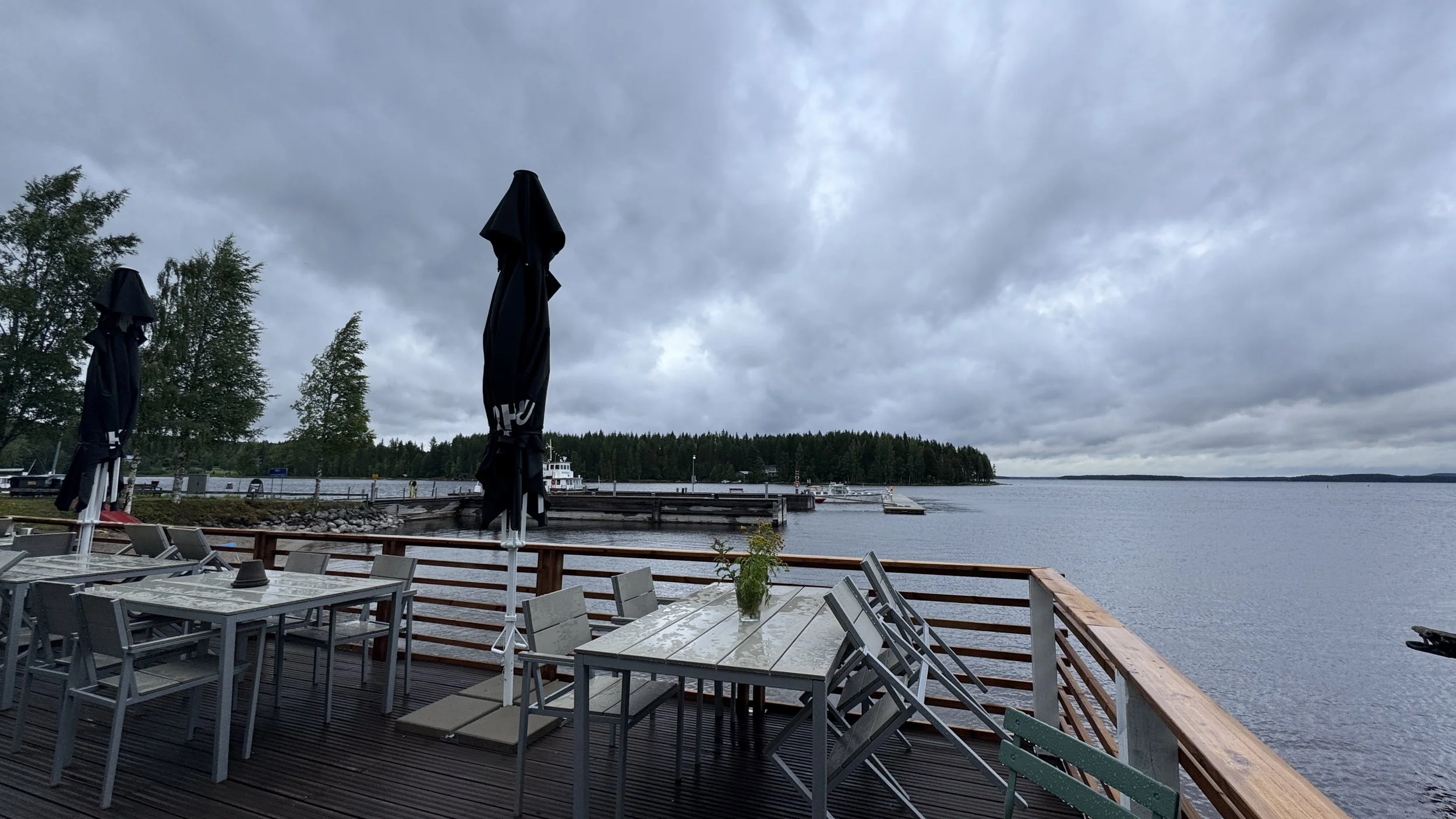
We enjoyed another delicious home-cooked dinner at our rental. After dinner, we drove to a café across the bay, where we relaxed and took in the peaceful surroundings. Looking out over the water, we started thinking about paddling our little boat across the bay to the café the next day.
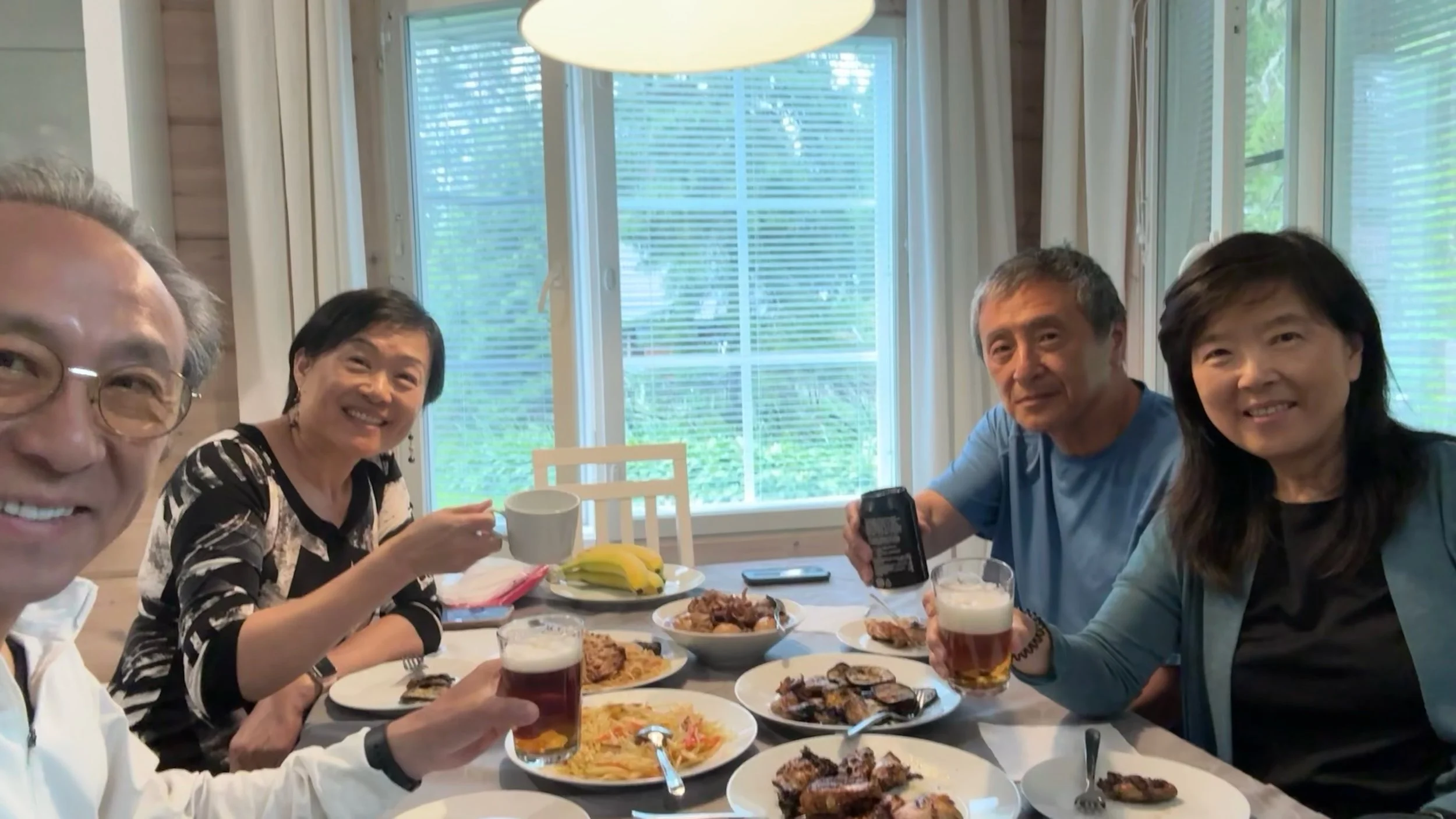
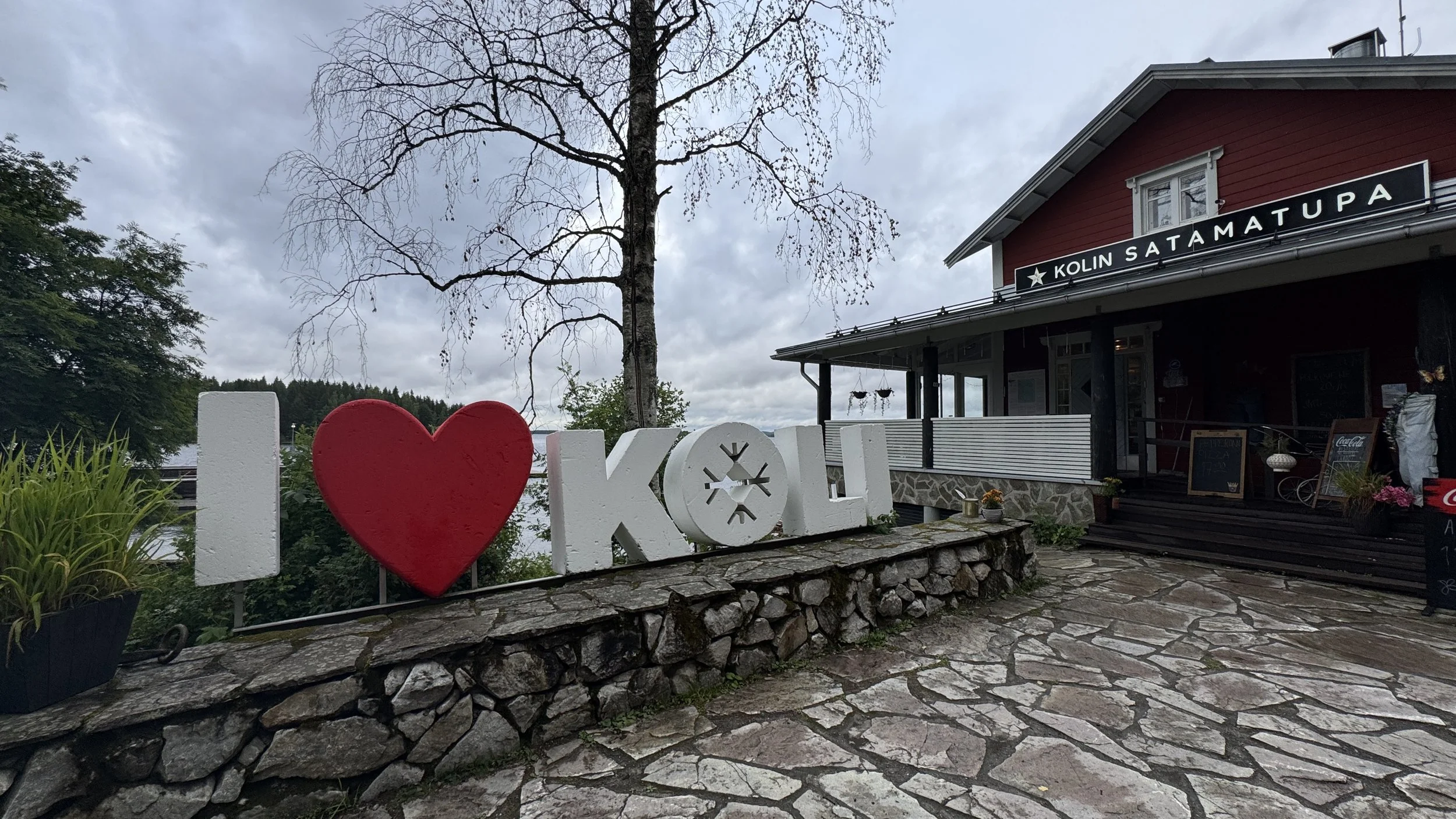
That evening, we stayed up until 1:00 a.m. to watch the FIFA World Cup final. We were disappointed that Argentina never really challenged Spain. It also occurred to us that we seem to have watched every recent World Cup final somewhere outside the United States.
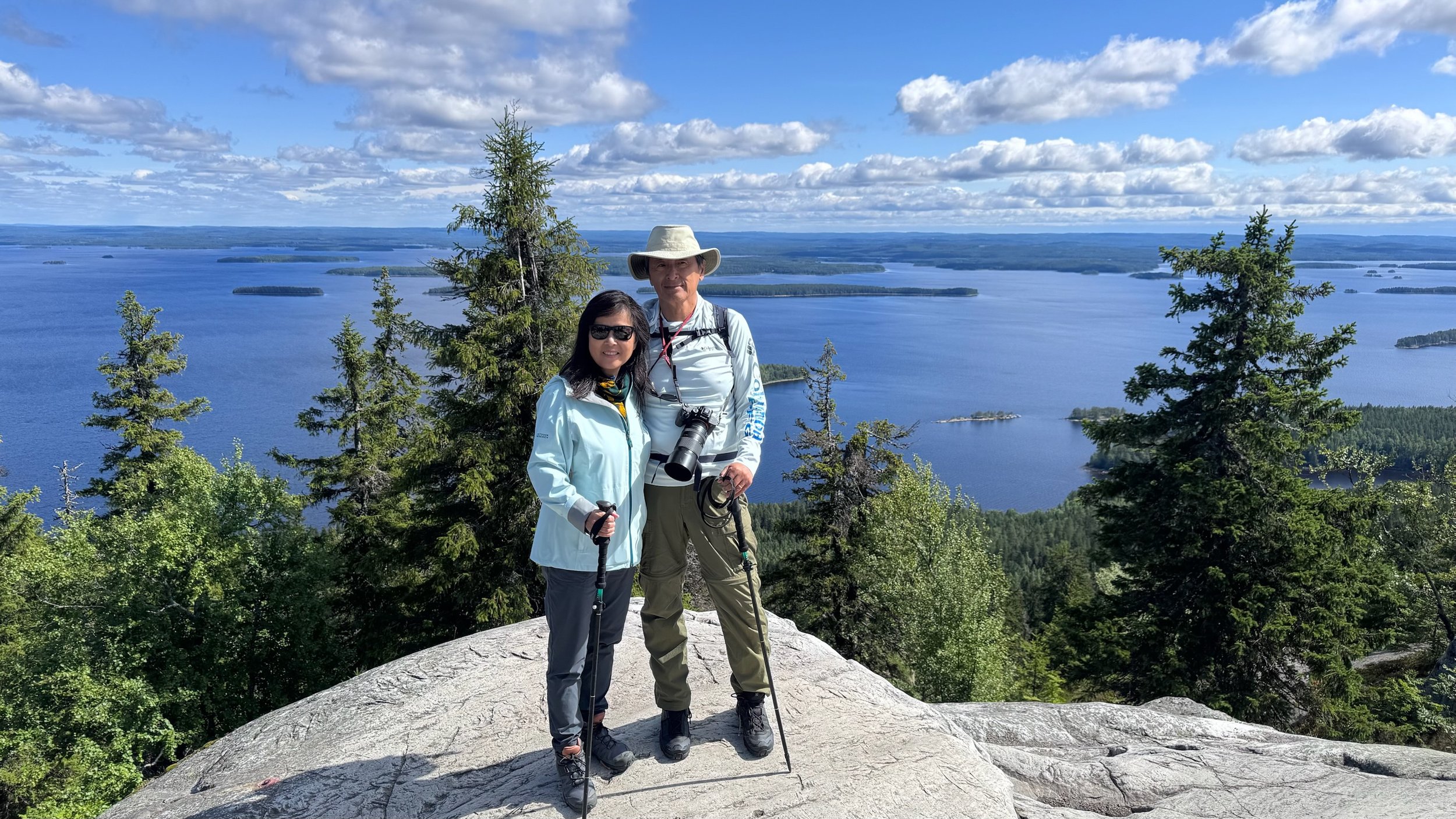
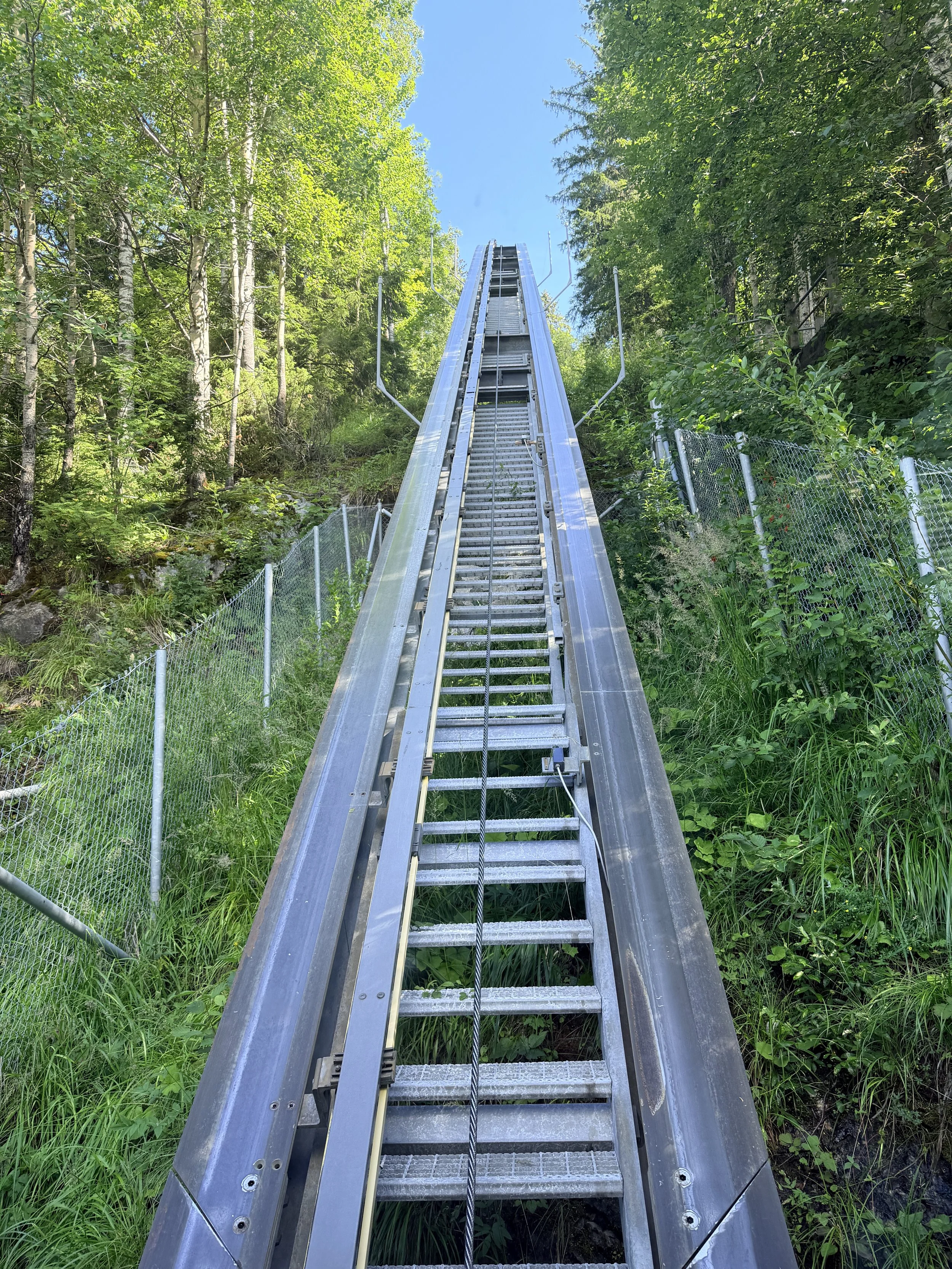
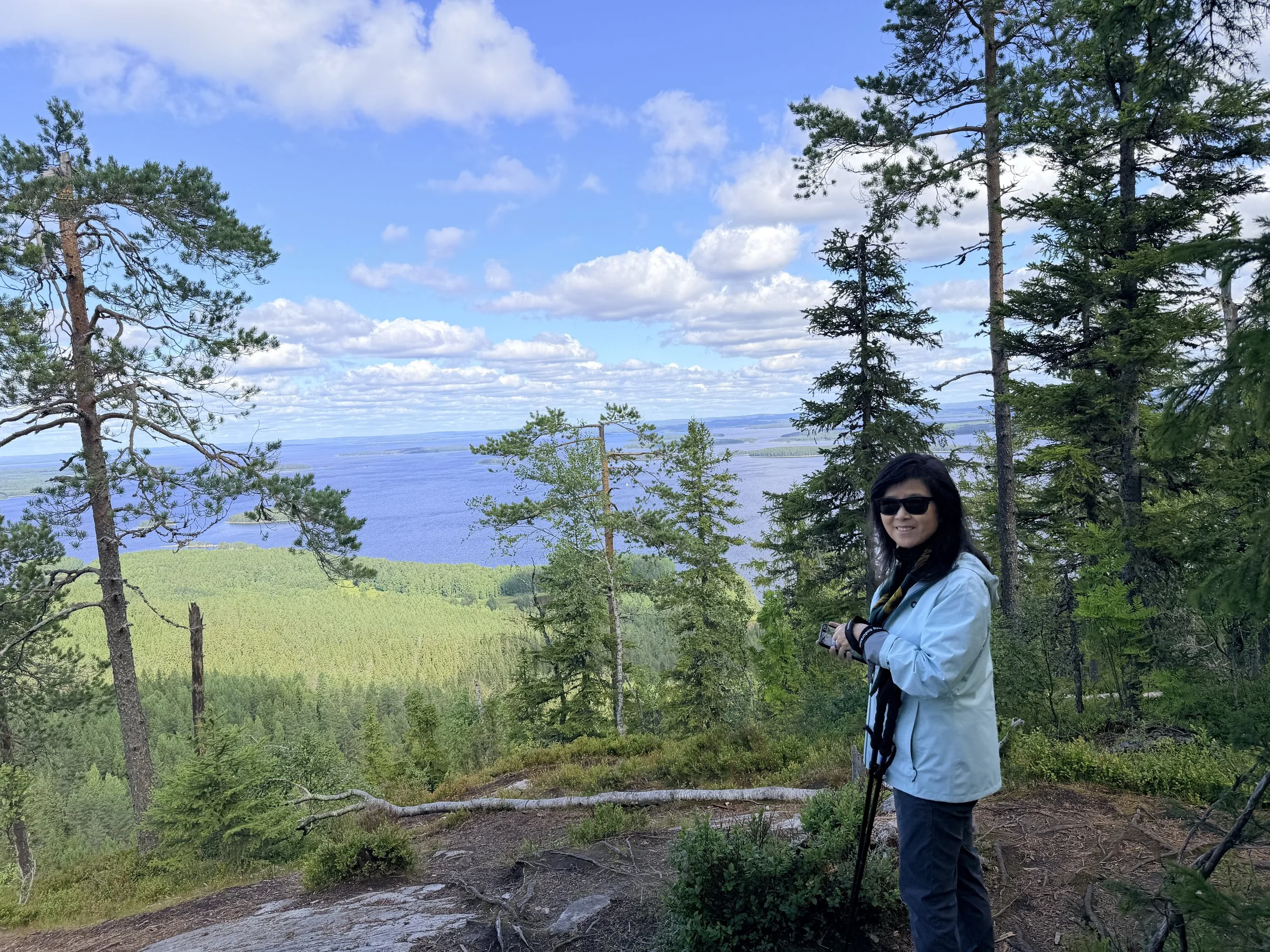
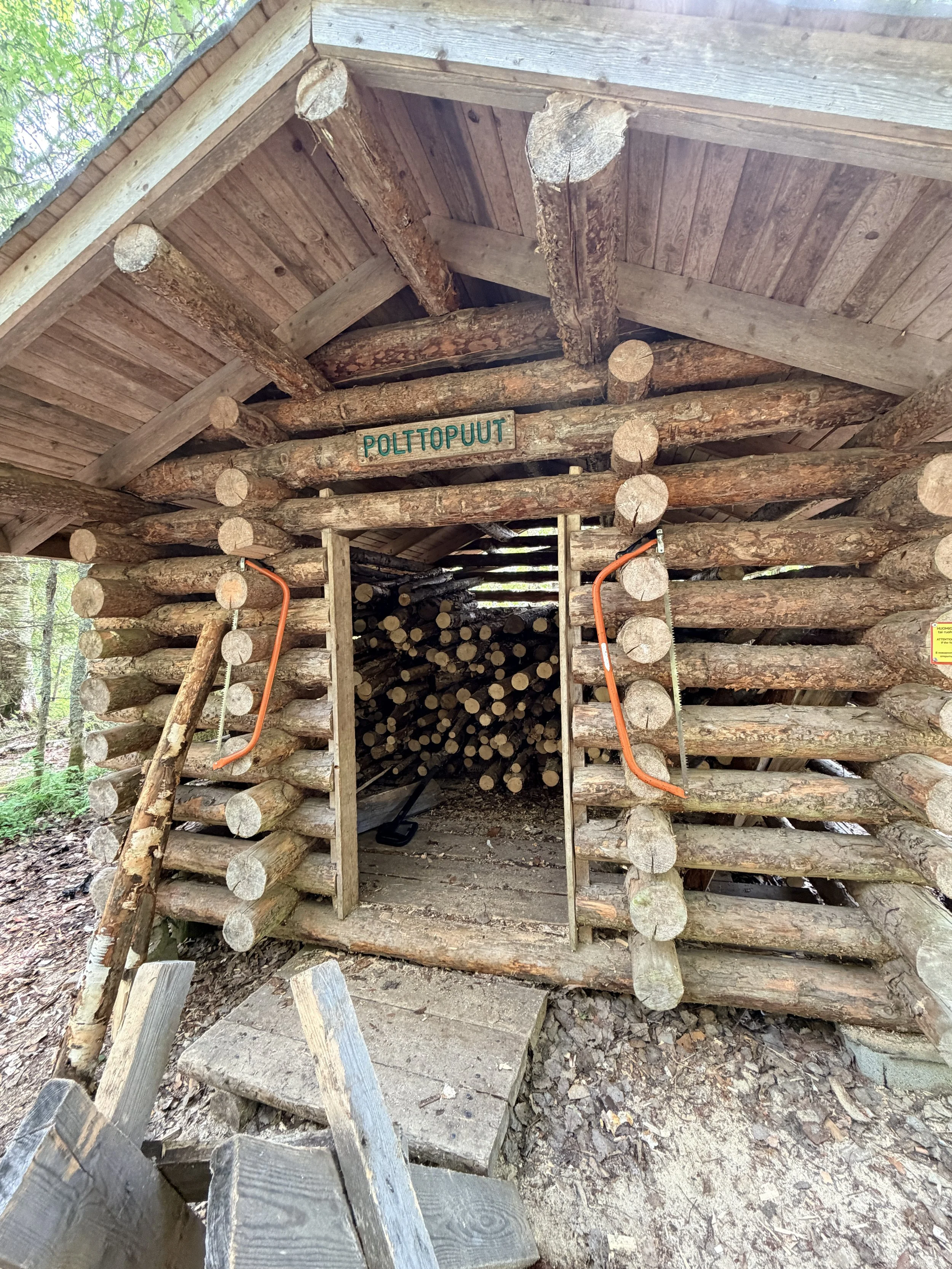
Today the weather couldn't have been better. The cool, sunny conditions were perfect for hiking. We chose the Mäkrän Kierto Trail, one of the most popular day hikes in Koli National Park. After a short ride on the funicular to the park visitor center, we began the trail with a steep climb up a long flight of concrete stairs.
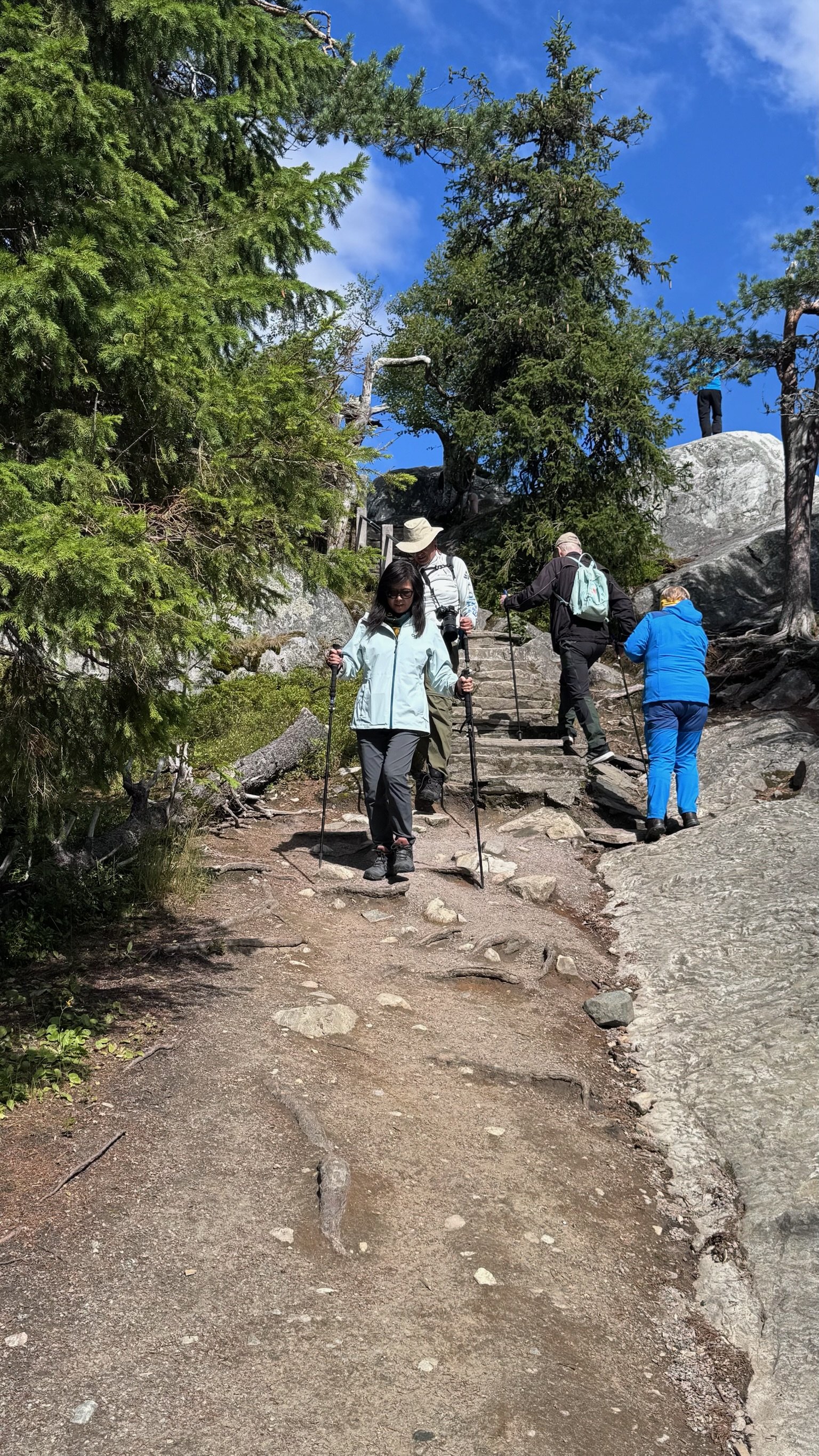
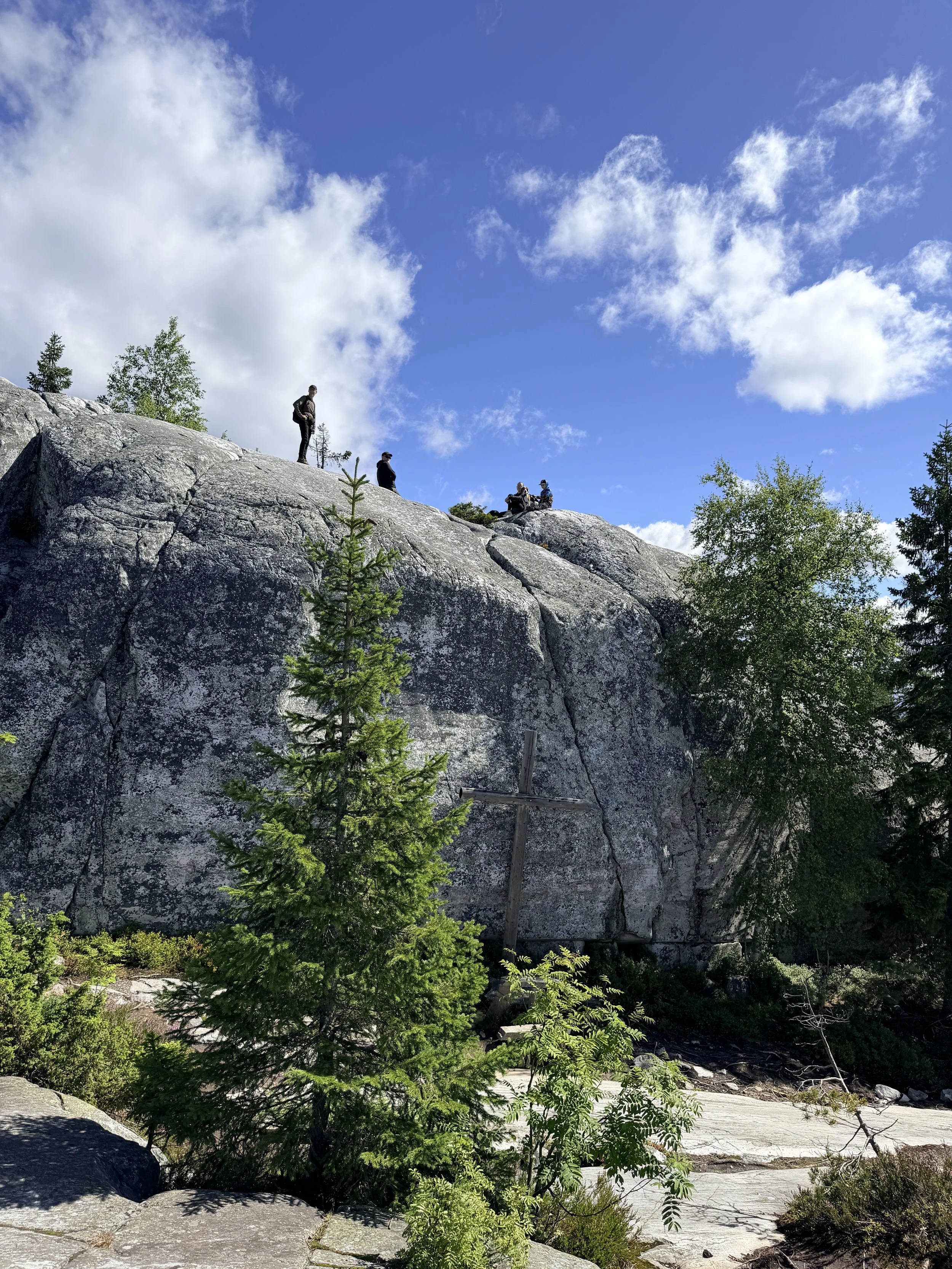
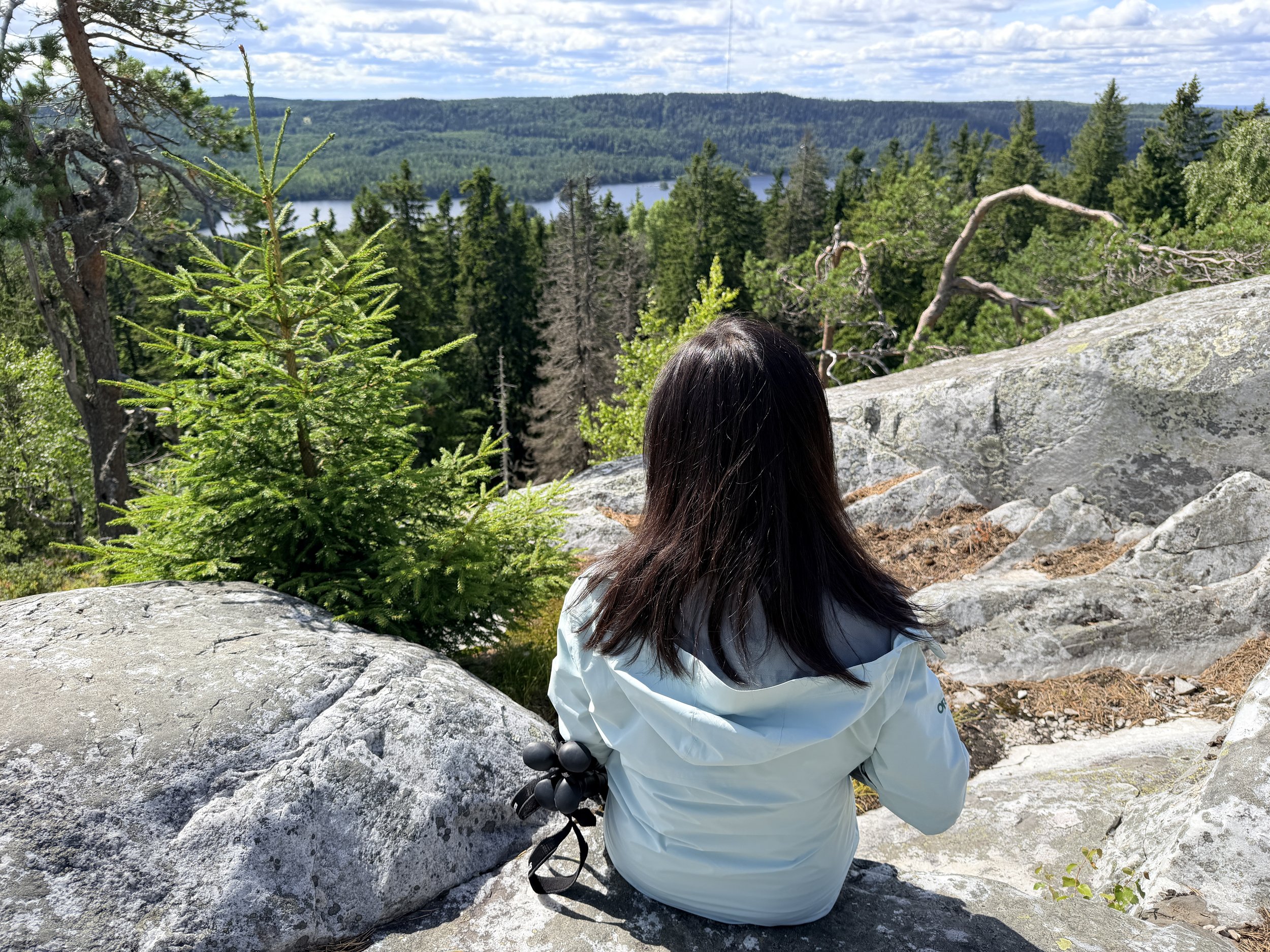
As we hiked, we were rewarded with magnificent views of Lake Pielinen, rolling forested hills, and endless stretches of woodland. The trail is exceptionally well marked and maintained. We were even impressed to find small woodsheds stocked with firewood and saws for hikers to use at designated campfire sites. Best of all, admission to the national park is completely free.
We completed the 5.1-mile hike, gaining about 925 feet of elevation, at a leisurely pace. Afterwards, we celebrated with delicious pizzas at the park café. It was the perfect ending to a perfect hike.
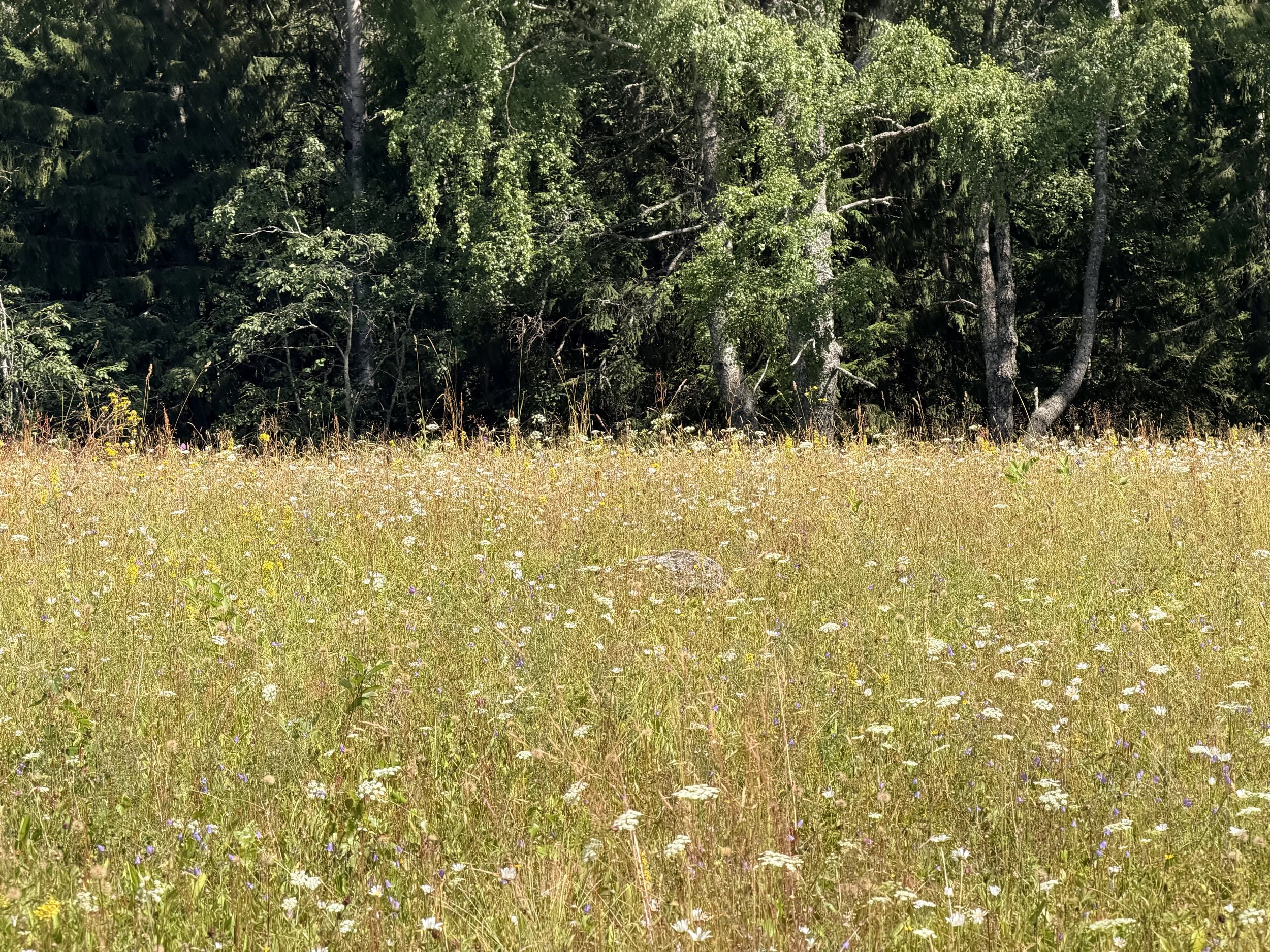
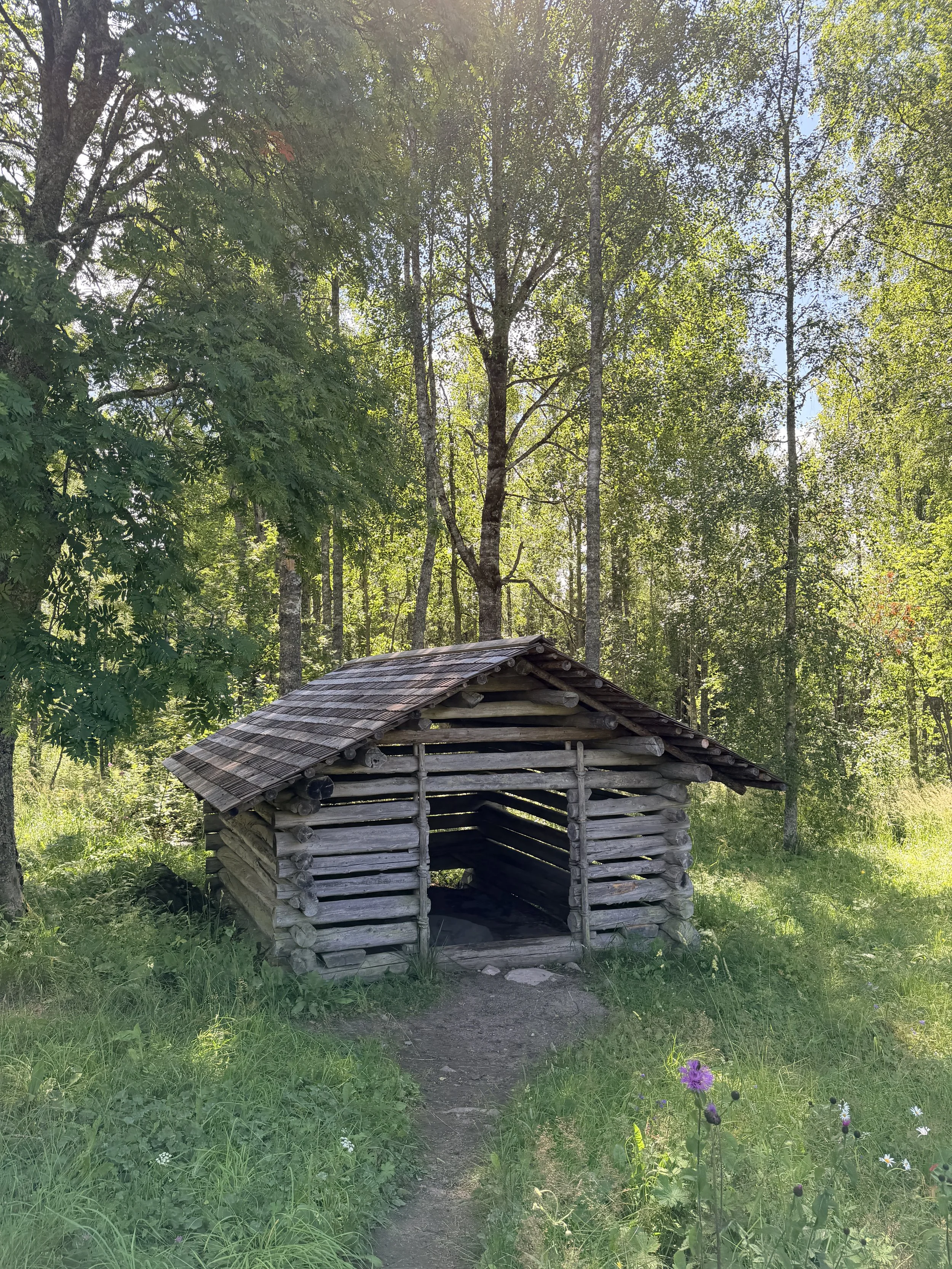

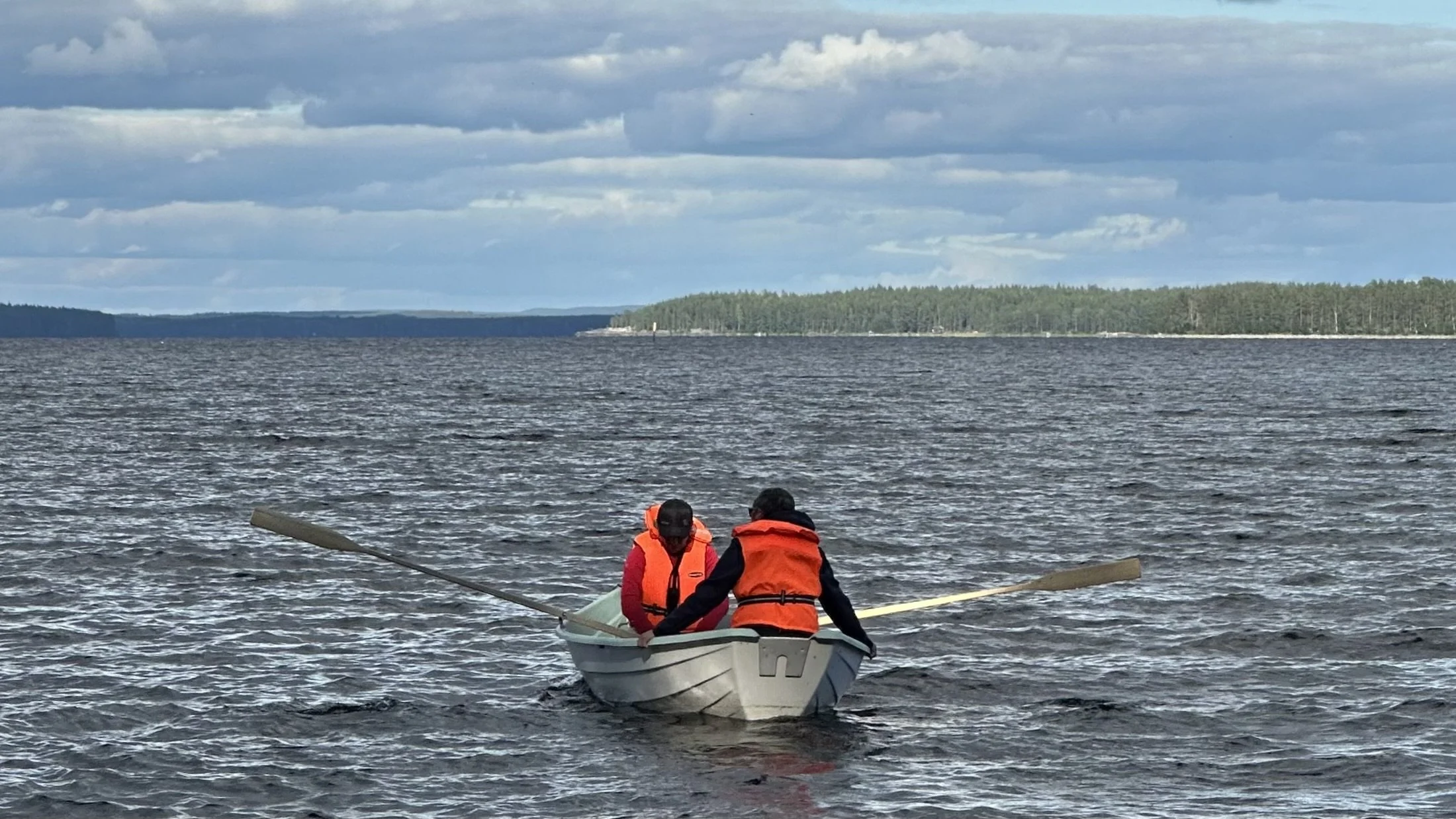
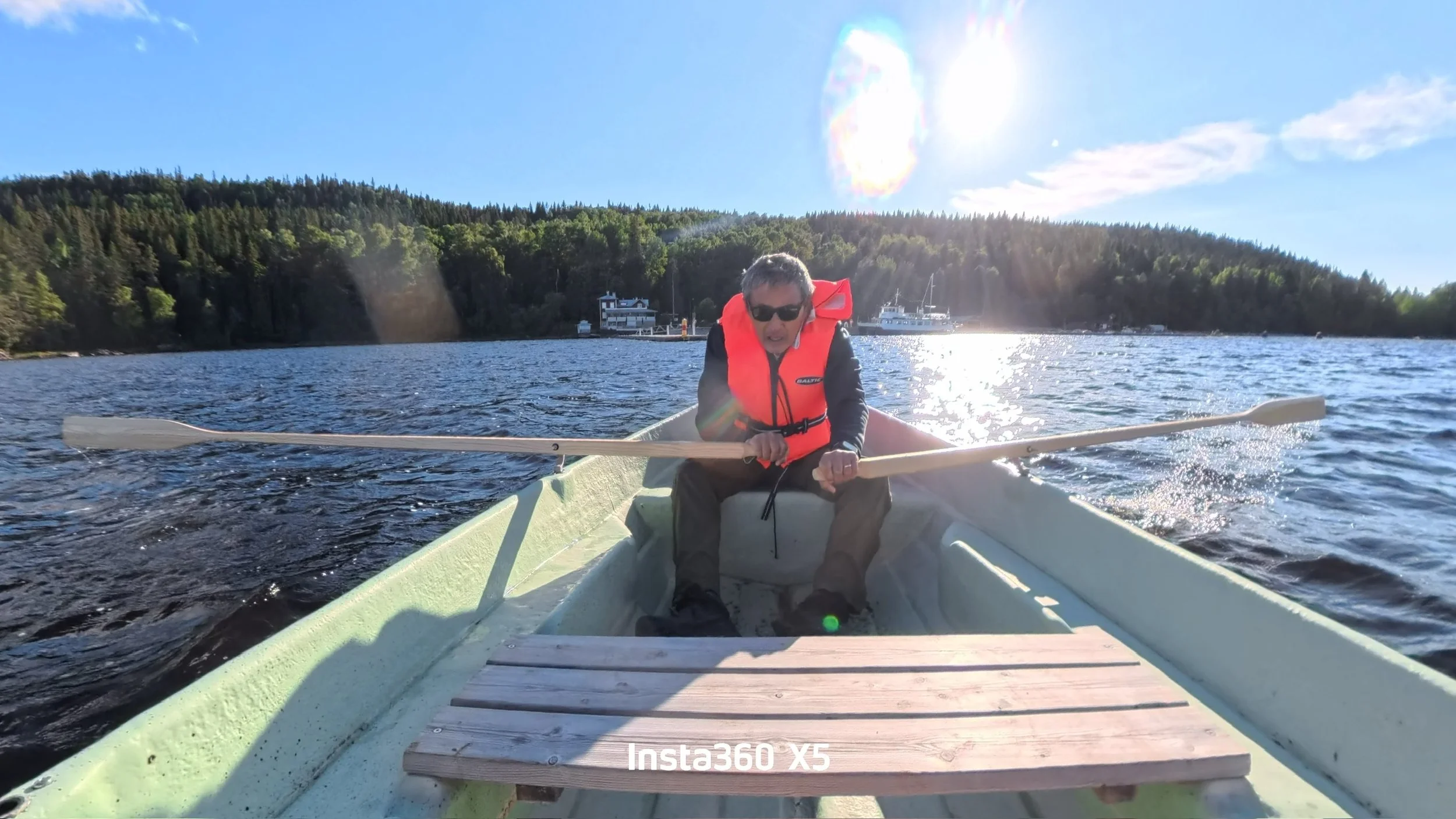
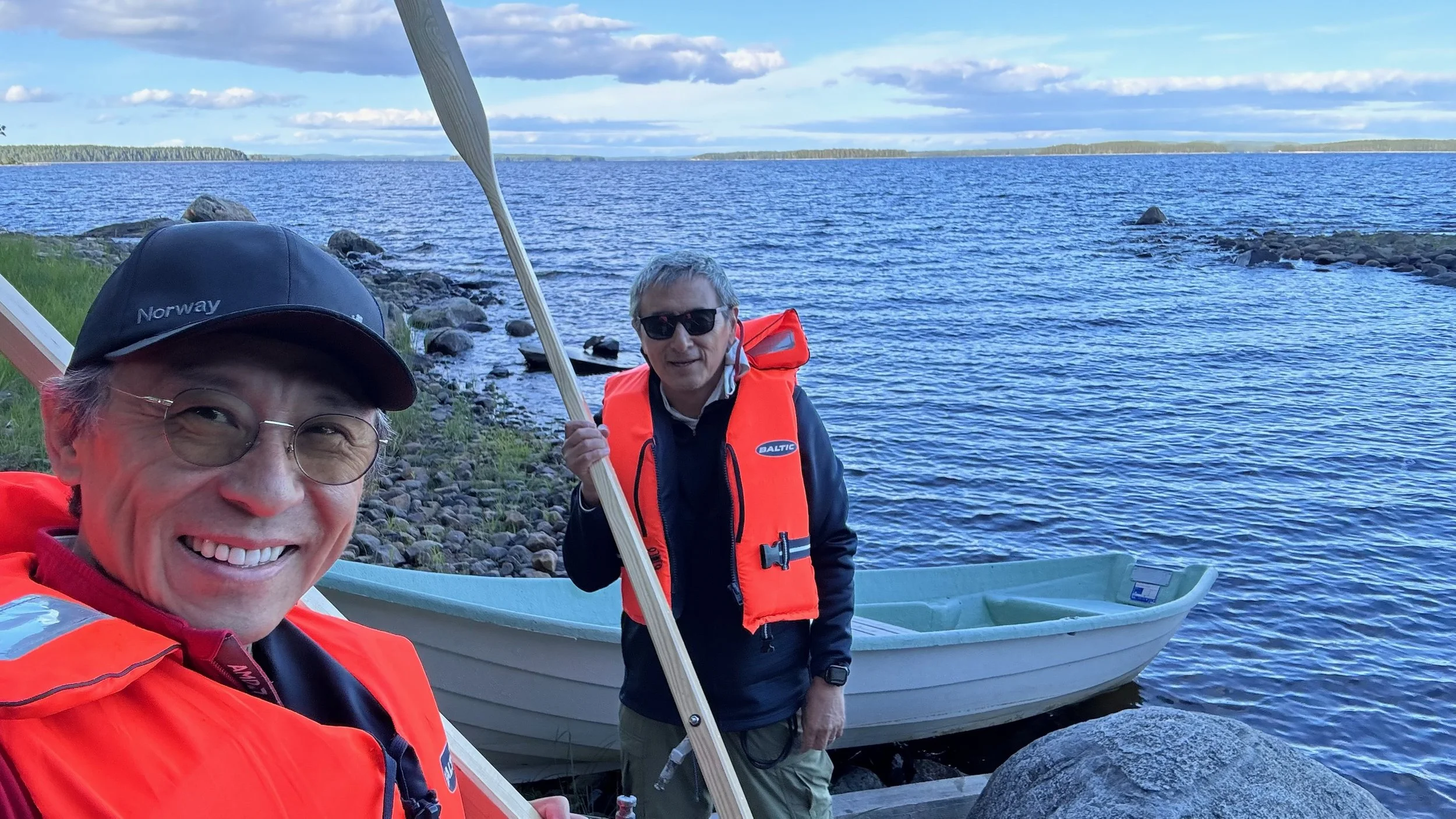
Back at the cottage, the men headed out onto Lake Pielinen in a rowboat. A steady breeze had created some small waves, making the outing more adventurous than expected. We rowed across the bay to a lakeside café for coffee and snacks before making the return trip. It turned out to be one of the most memorable experiences of the day.
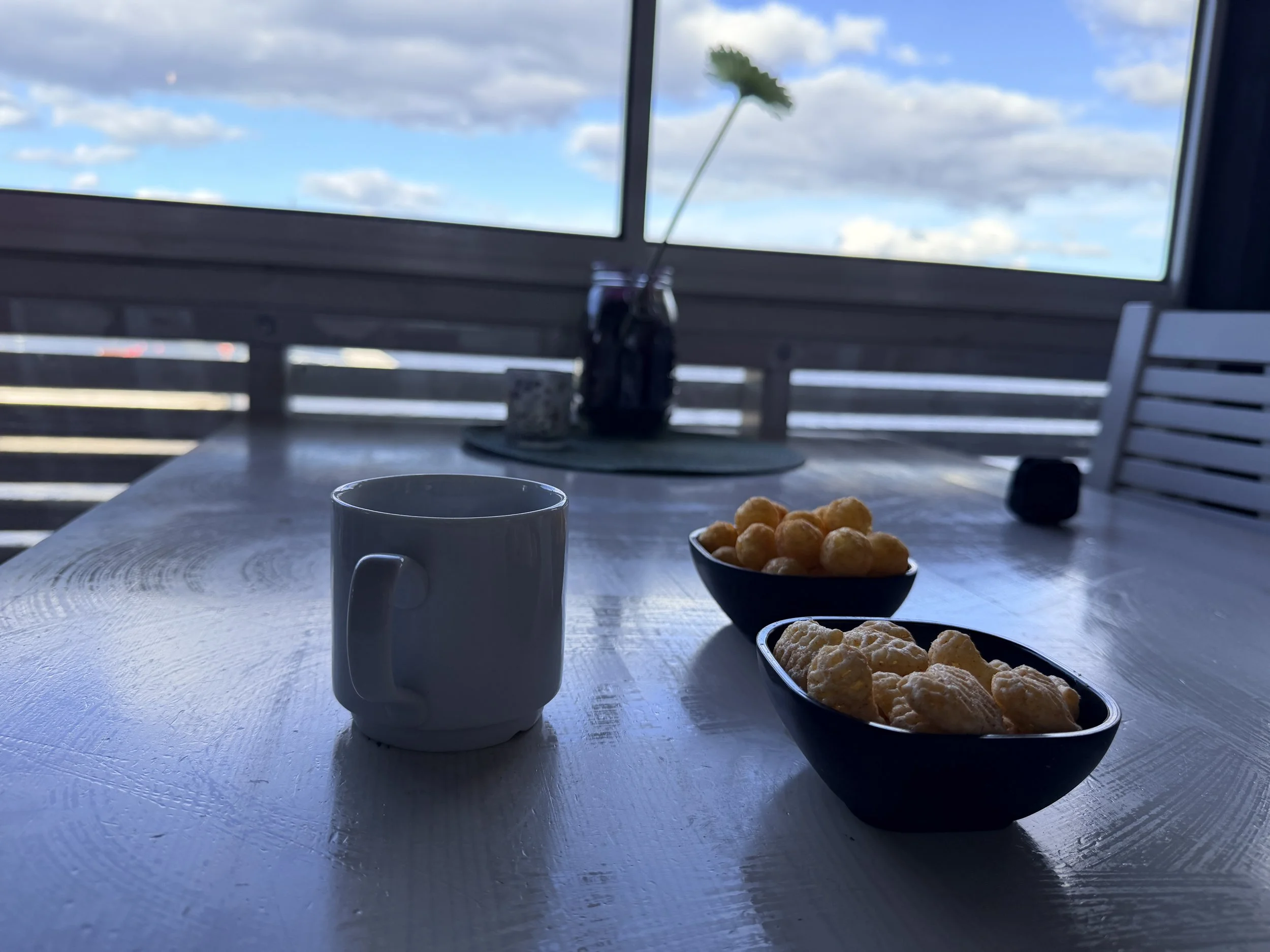
And, as has become our daily tradition in Finland, we finished the evening with another wonderfully hot sauna—the perfect way to end another unforgettable day.
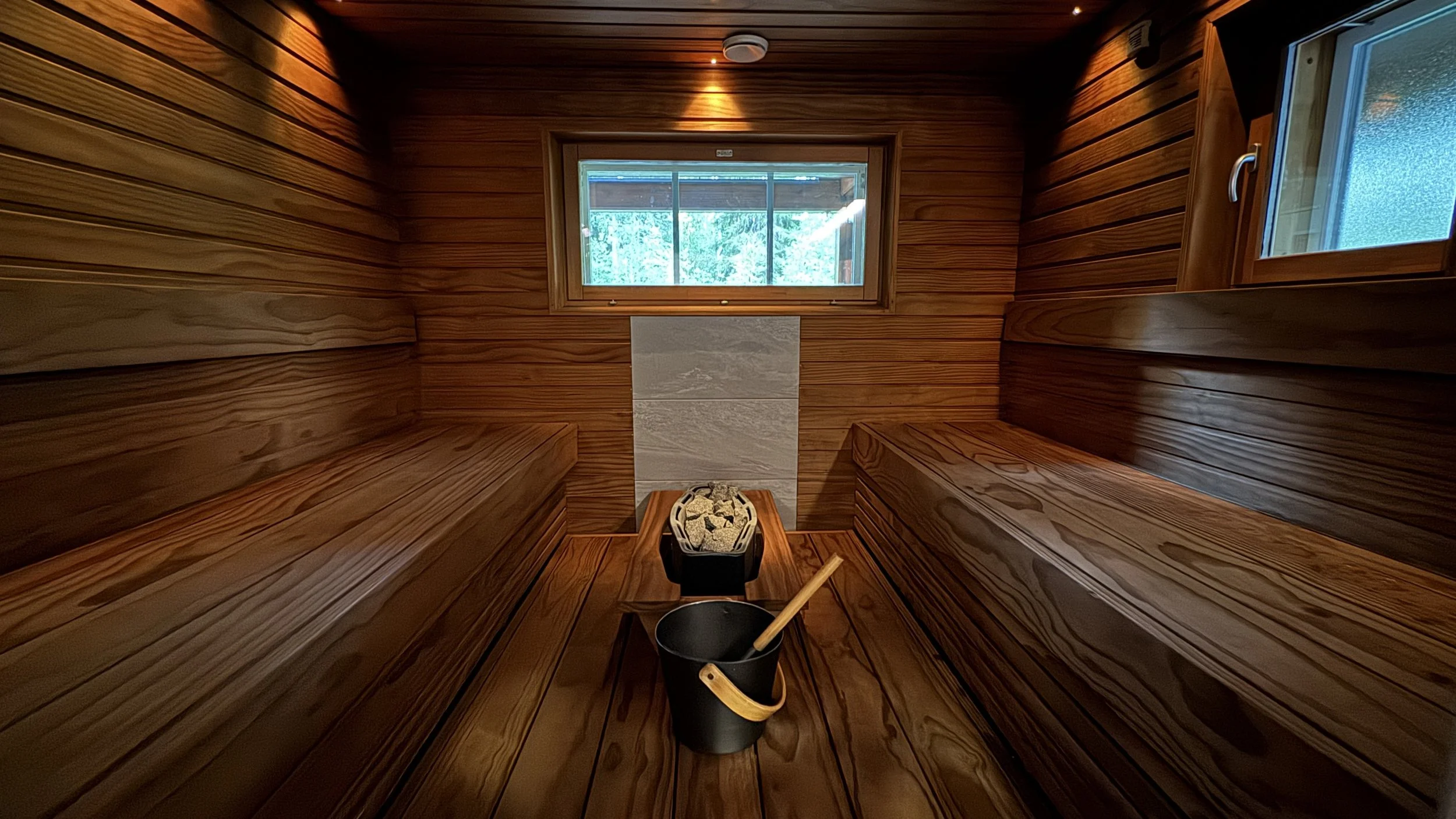
2026年7月20日
昨天整整下了一天雨,我们决定待在小屋里休息。我唯一一次外出,是到附近散步,顺便看看度假屋主人停放在岩石海岸边的小船。回来后,我们当然又享受了一轮芬兰桑拿。
晚上,我们观看世界杯决赛,一直熬到凌晨1点。令人有些失望的是,阿根廷队始终没能给西班牙队制造太大的威胁。
今天的天气好得无可挑剔,凉爽晴朗,是徒步的绝佳日子。我们选择了科利国家公园(Koli National Park)最受欢迎的一条徒步路线——Mäkrän Kierto Trail(马克兰环线步道)。搭乘短程缆车抵达游客中心后,首先迎接我们的便是一段长长的陡峭混凝土台阶。
一路上,皮耶利宁湖(Lake Pielinen)的壮阔湖景、连绵起伏的森林山丘,以及一望无际的林海尽收眼底,令人心旷神怡。步道标识清晰、维护得非常完善。沿途还设有供徒步者使用的营火点,旁边小木屋里整齐地堆放着木柴,并备有锯子,方便大家自行取用,令人印象深刻。更难得的是,整个国家公园完全免费开放。
我们慢慢地完成了全程5.1英里(约8.2公里)、累计爬升925英尺(约282米)的徒步。随后来到山上酒店的餐厅,看着窗外的美景,享用香喷喷的披萨,最后再来上一杯拿铁。来到芬兰后,我们发现普通餐厅很少提供拿铁咖啡,通常供应的都是一壶壶现煮的黑咖啡。因此,每当看到菜单上有拿铁,我们总会忍不住点上一杯,算是旅途中一个小小的享受。
回到湖边小屋后,男士们去皮耶利宁湖划船。湖面吹起阵阵微风,泛起层层波浪,也让这趟划船增添了几分挑战。我们划过海湾,到湖对岸的咖啡馆喝上杯咖啡、吃点点心,再划船返回。虽然只是一次简单的往返,却成为当天最难忘的经历之一。
夜幕降临后,我们又享受了一次热气腾腾的芬兰桑拿,为这充实而美好的一天画上了一个温暖而惬意的句号。
Koli 科利
July 18, 2026
After breakfast, we left Jyväskylä and headed toward Koli,……
早餐后,我们离开于韦斯屈莱,。。。
July 18, 2026
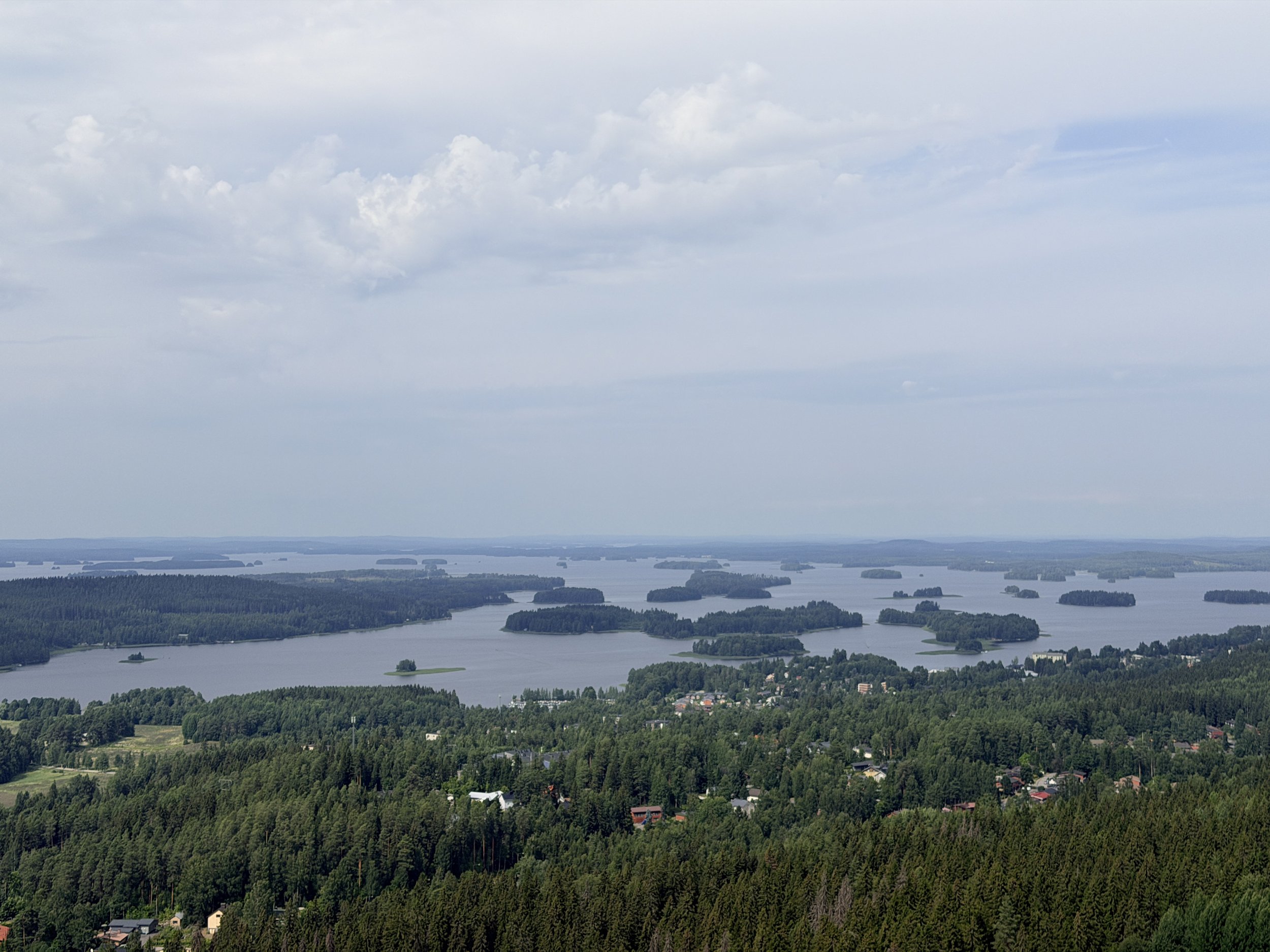
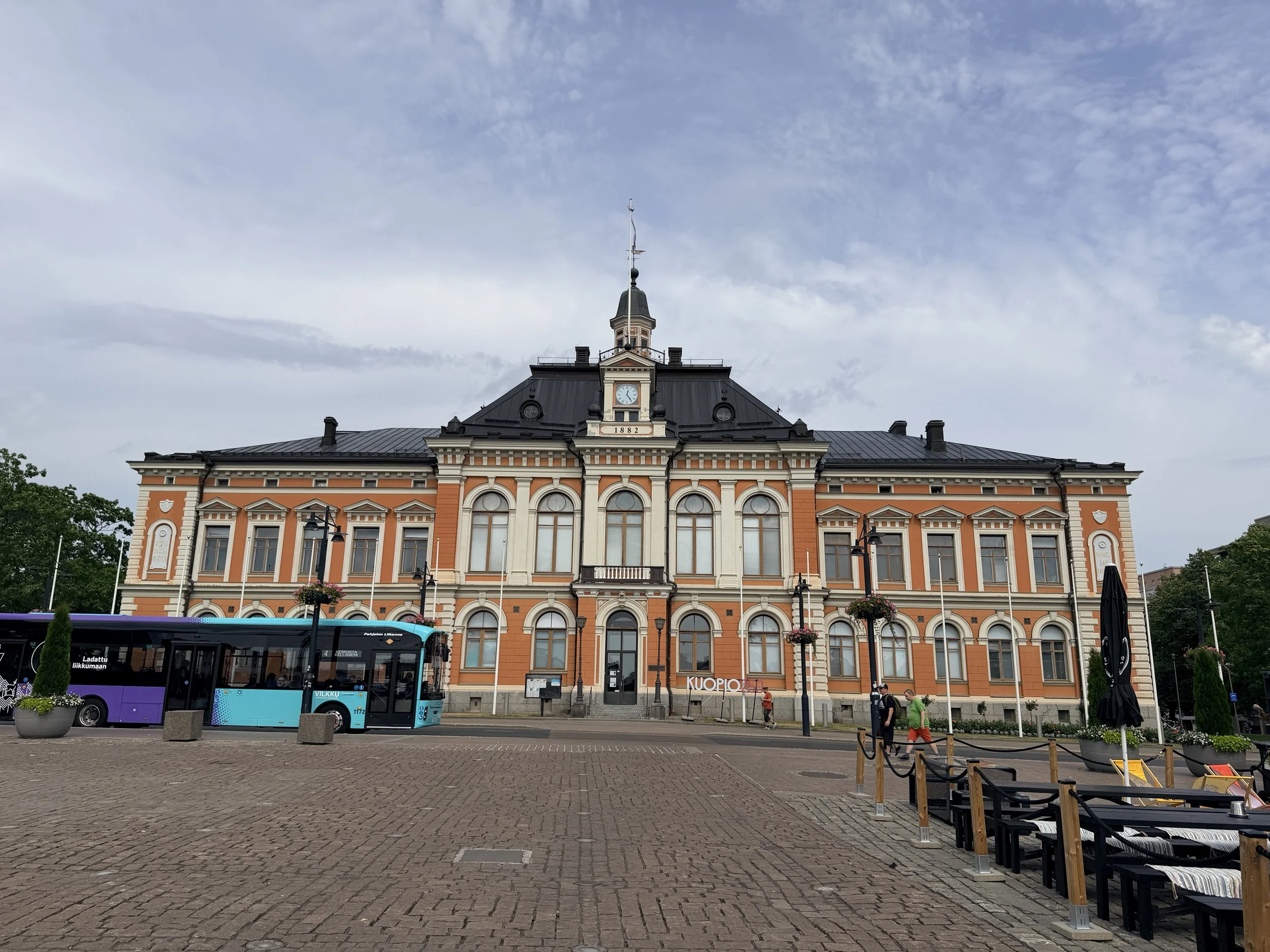
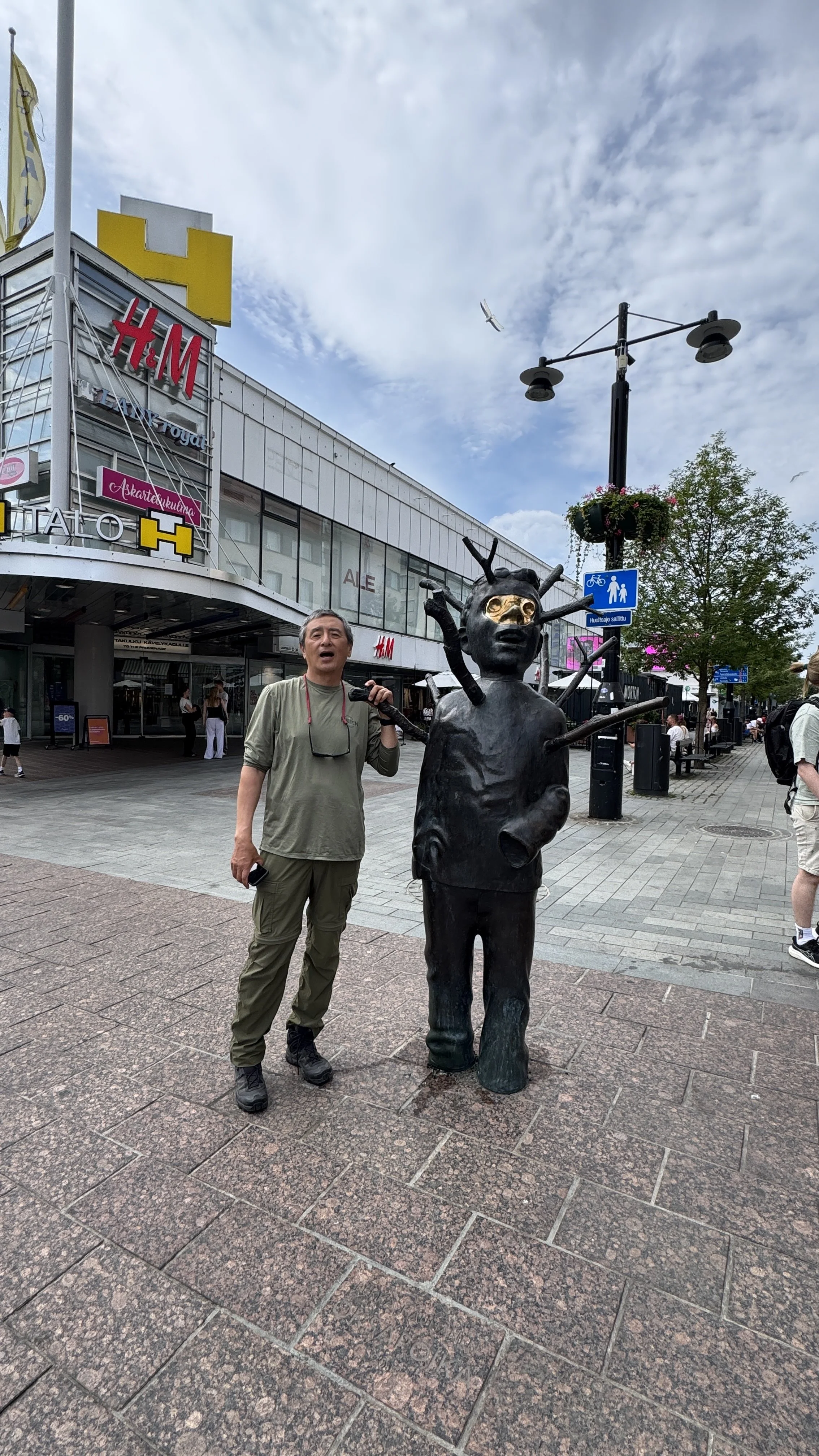
After breakfast, we left Jyväskylä and headed toward Koli, a small village on the edge of Koli National Park. Along the way, we stopped in Kuopio, often regarded as the capital of Finland's Lakeland.
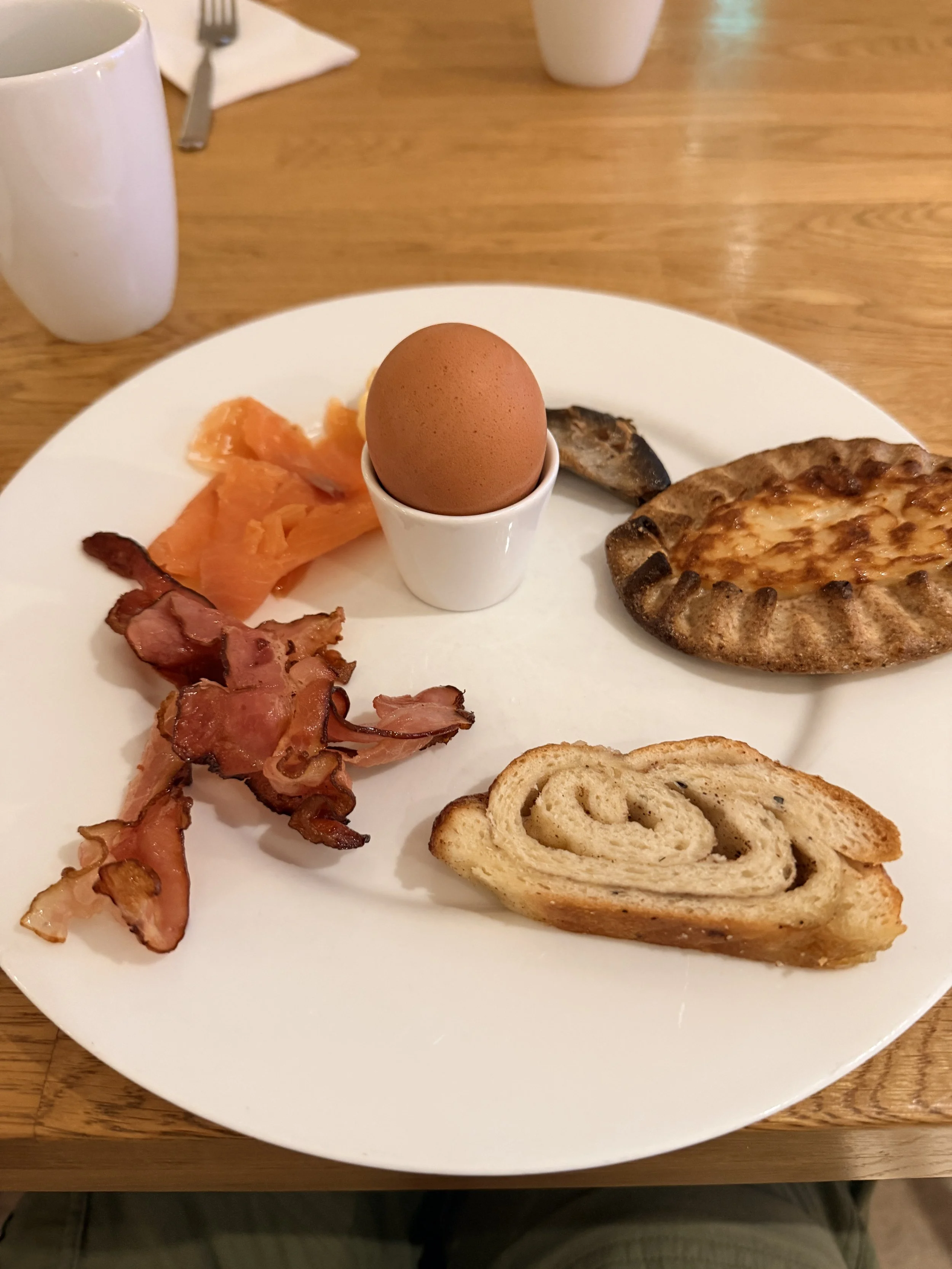
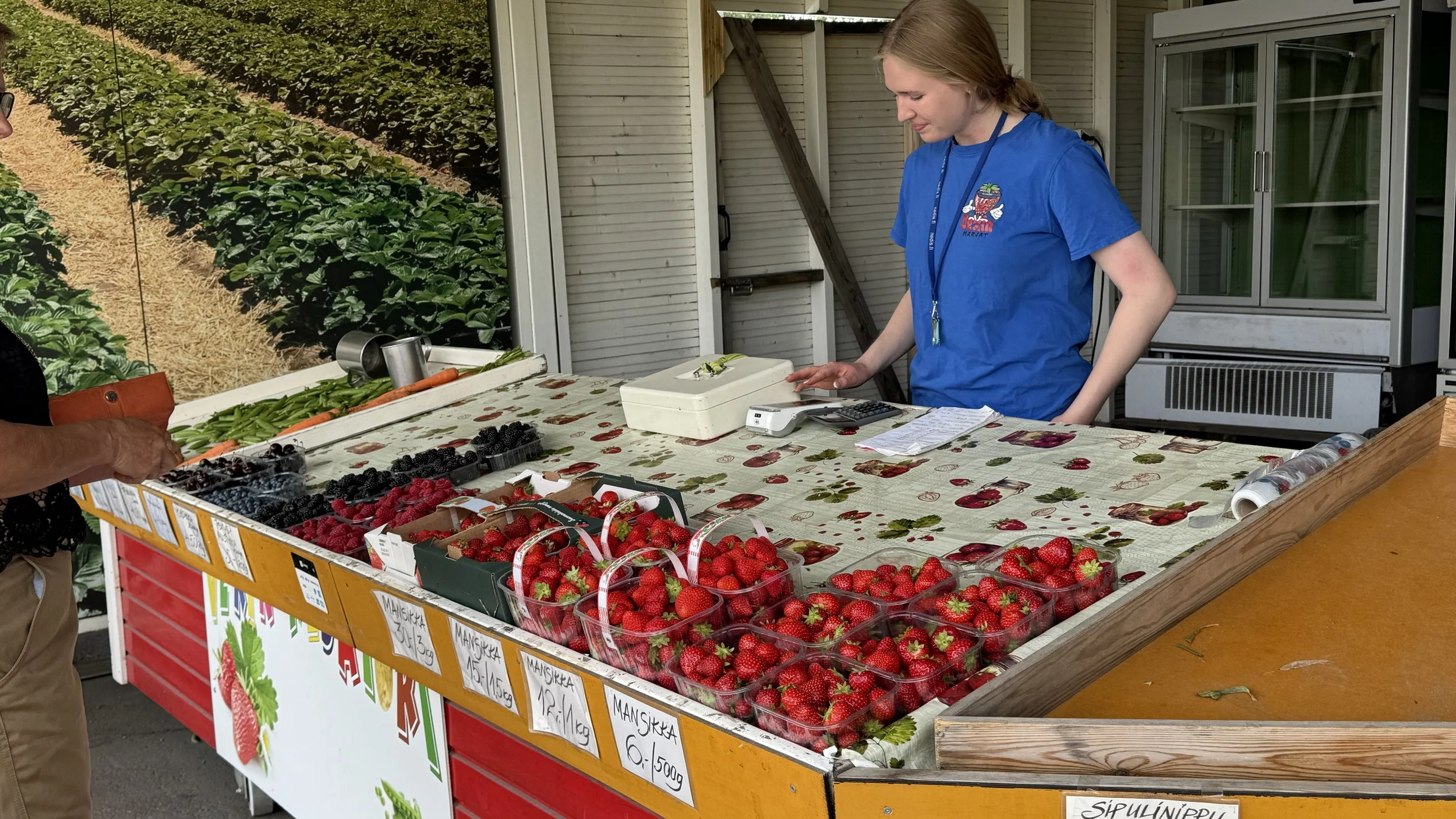
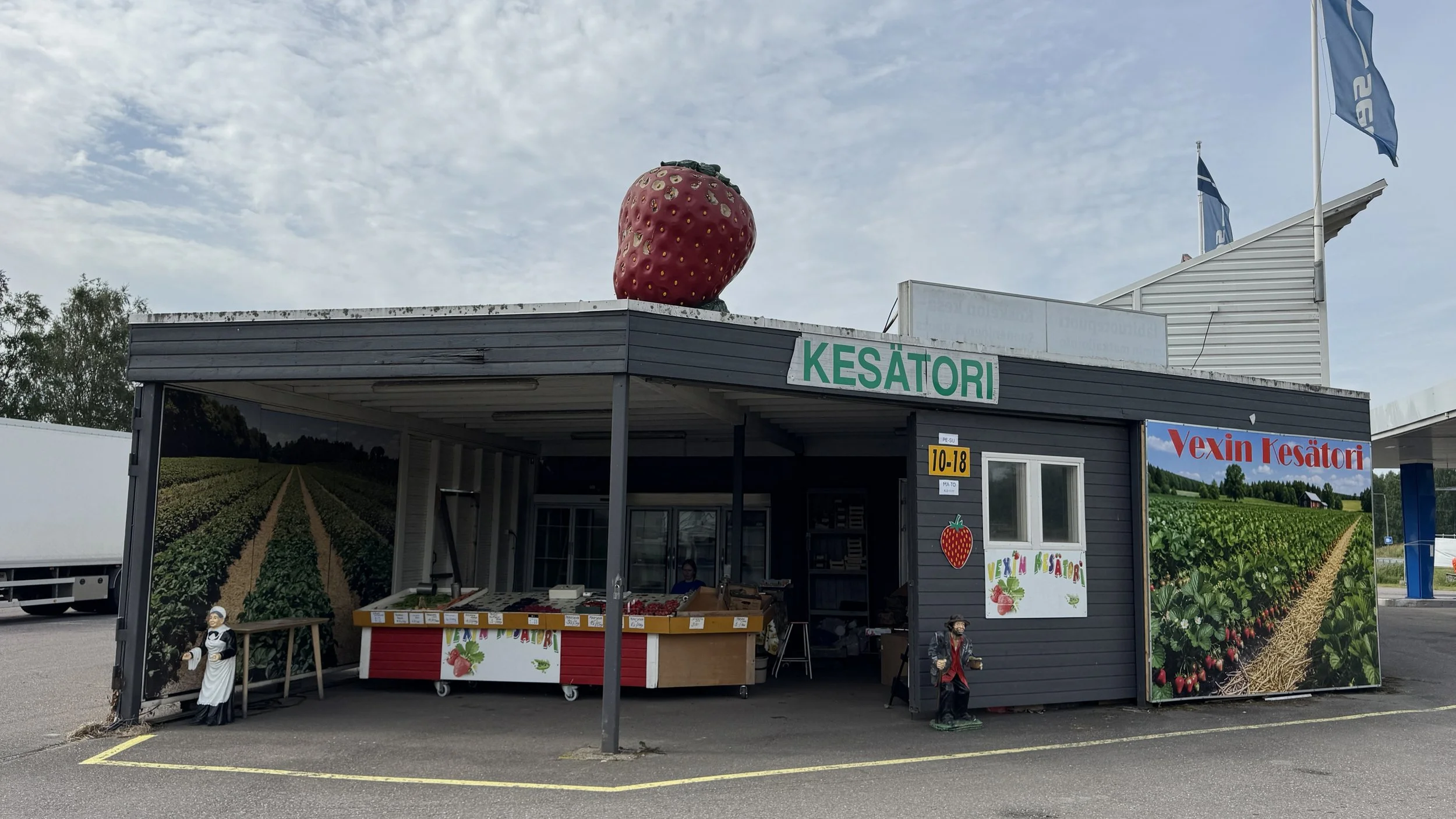
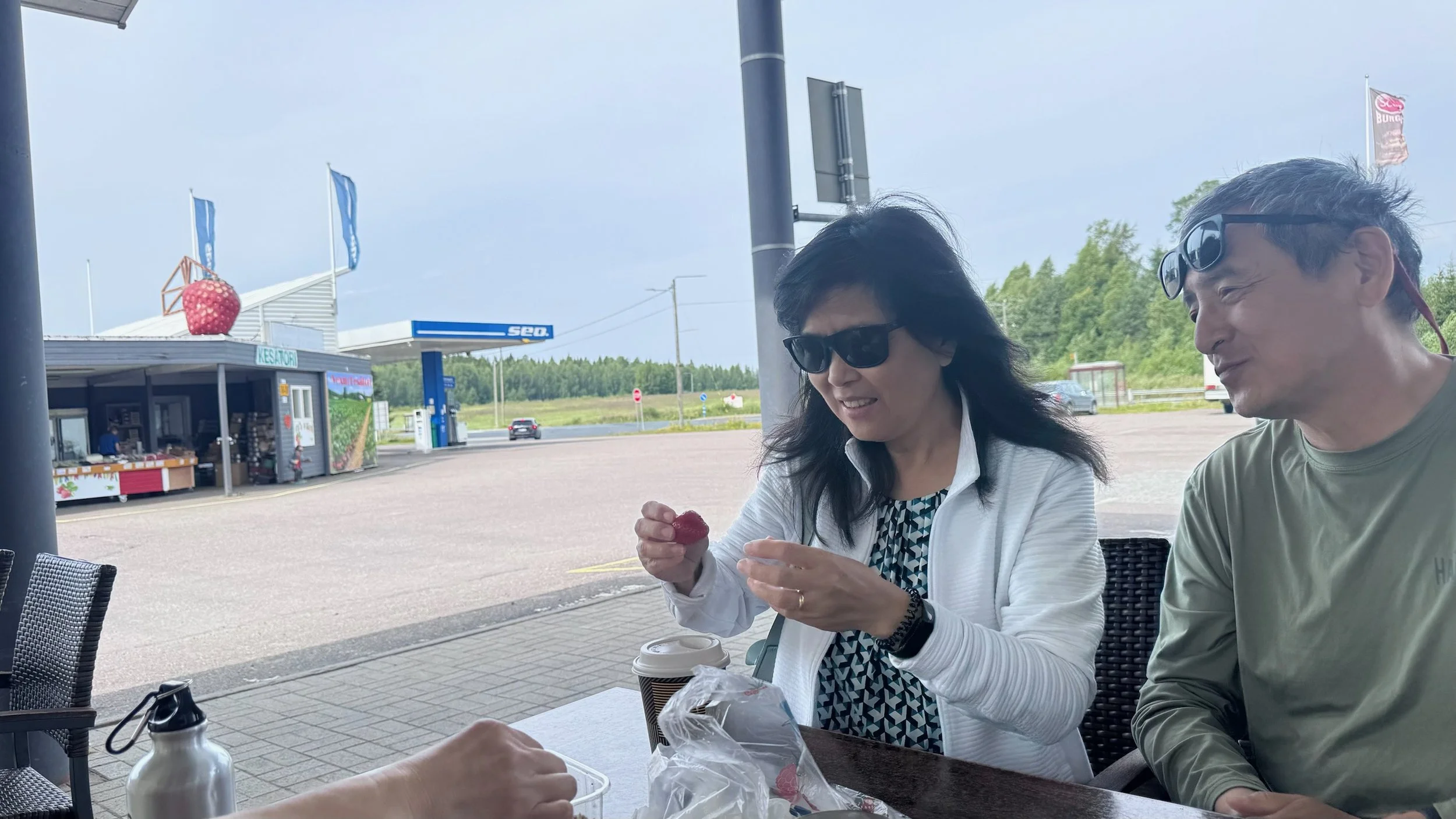
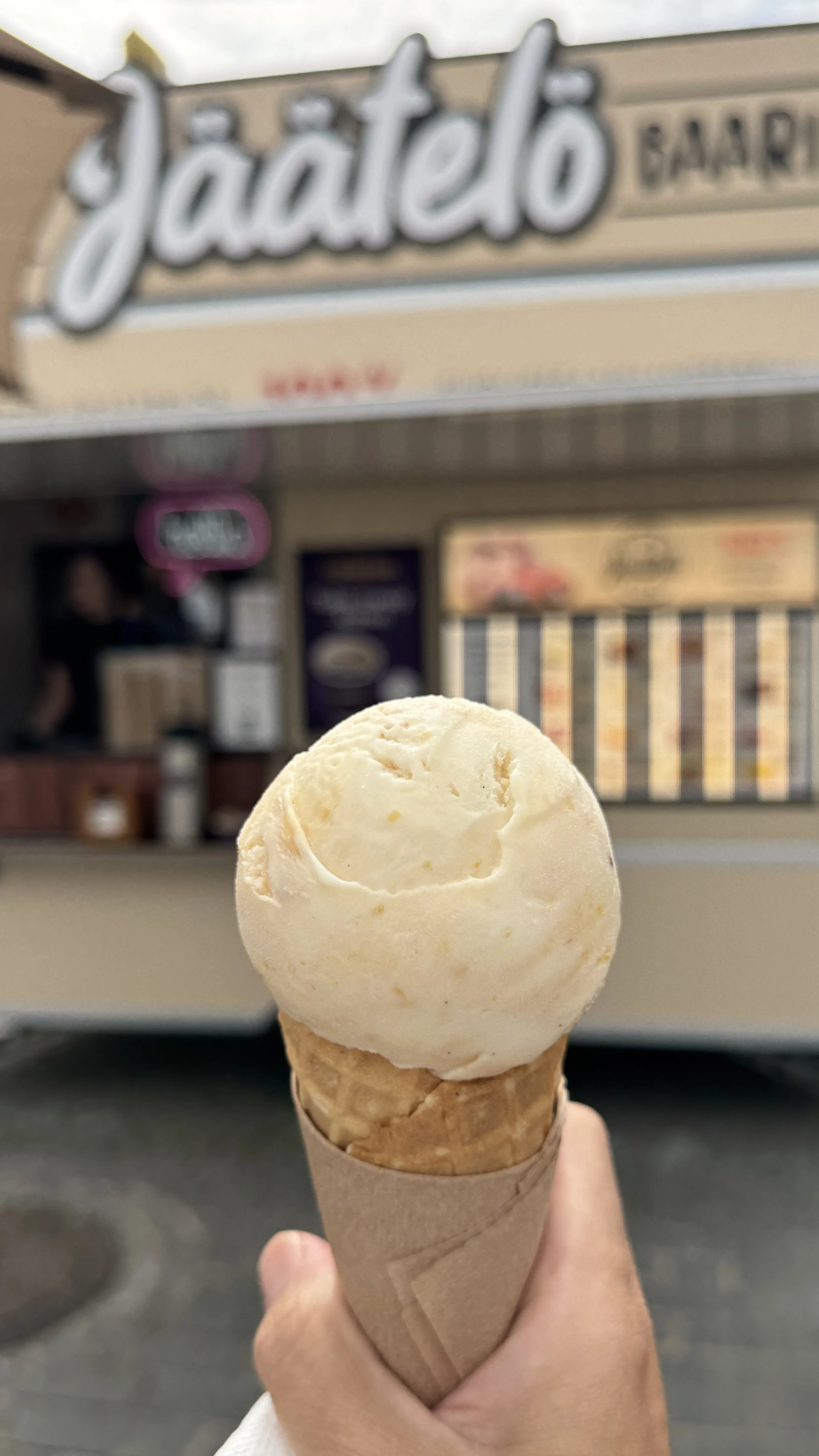
Our first stop was the lively Market Square in the city center. The fresh produce on display was incredibly tempting. We picked up blackberries, raspberries, mushrooms, leeks, and a variety of other ingredients for tonight's dinner. We also bought some freshly picked strawberries to enjoy on the drive—they were exceptionally sweet, juicy, and full of flavor.
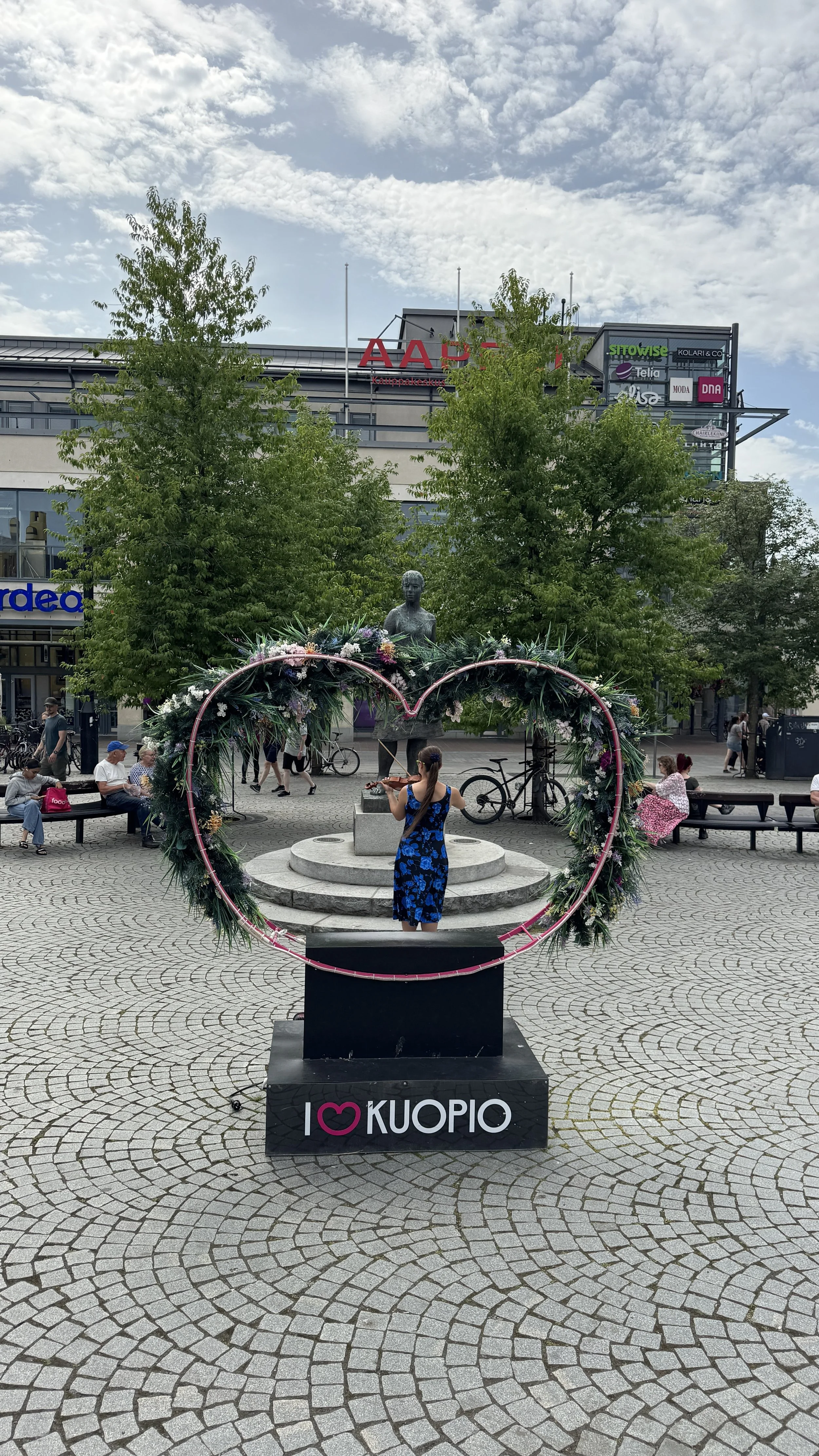
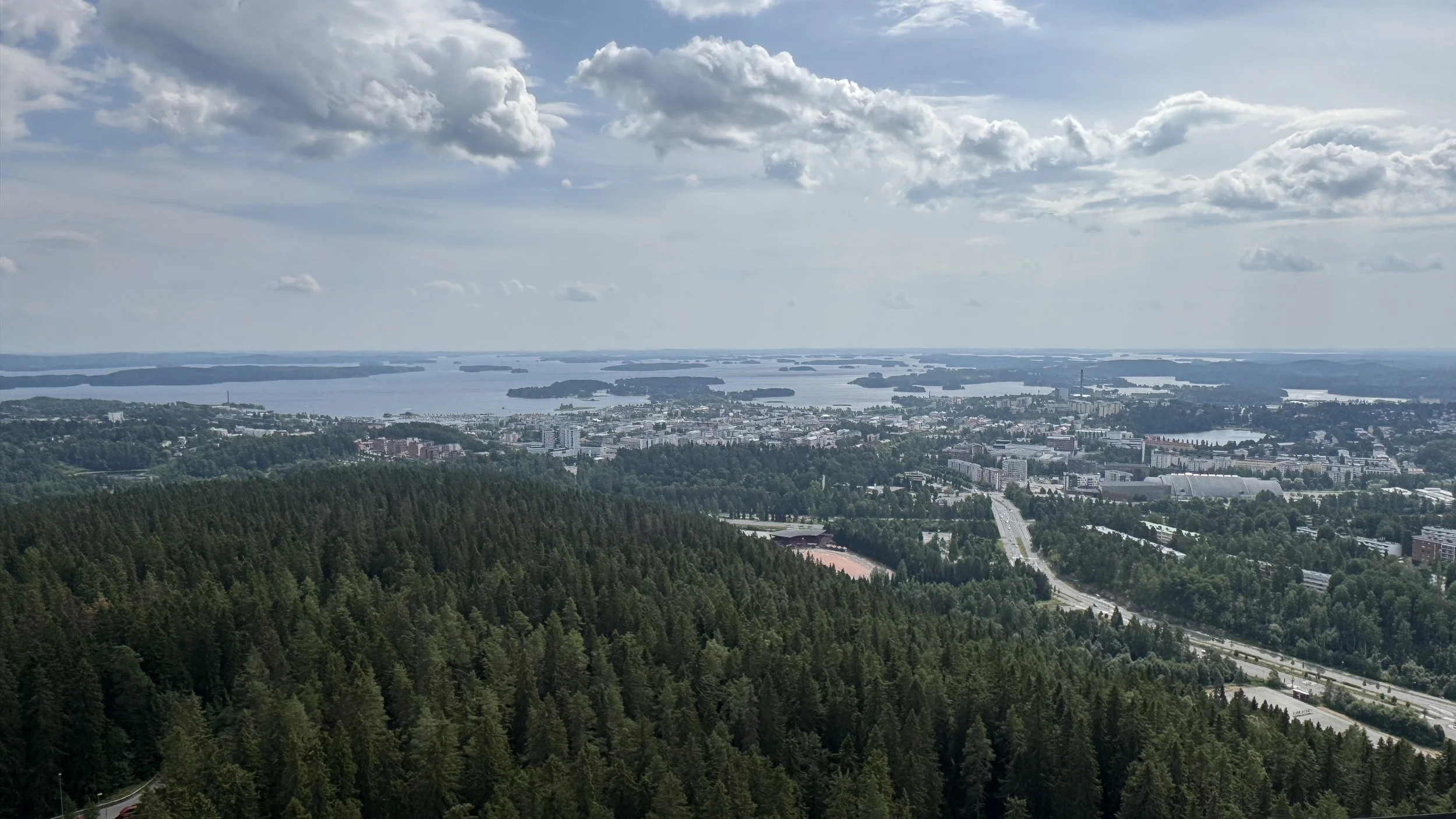
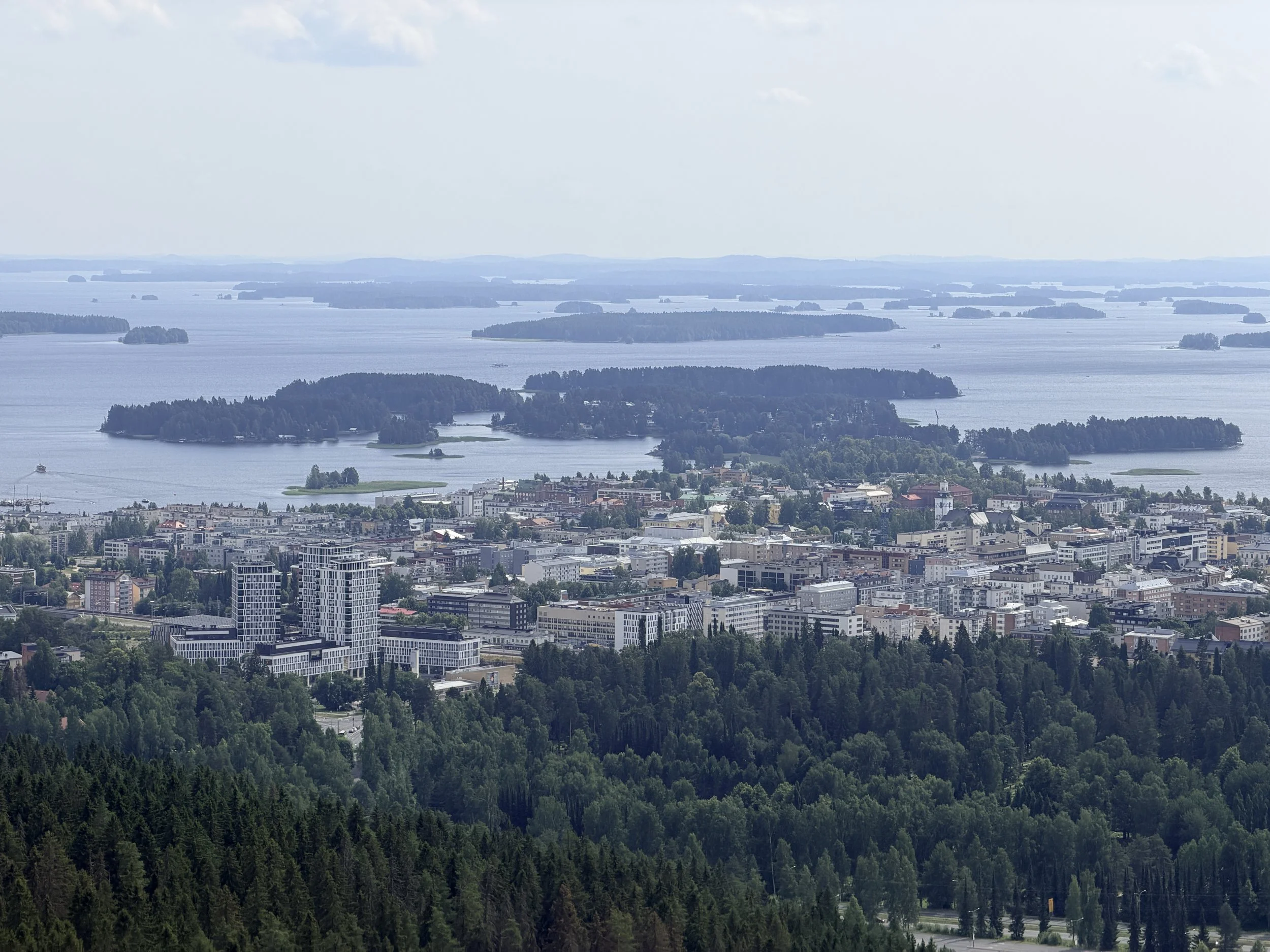
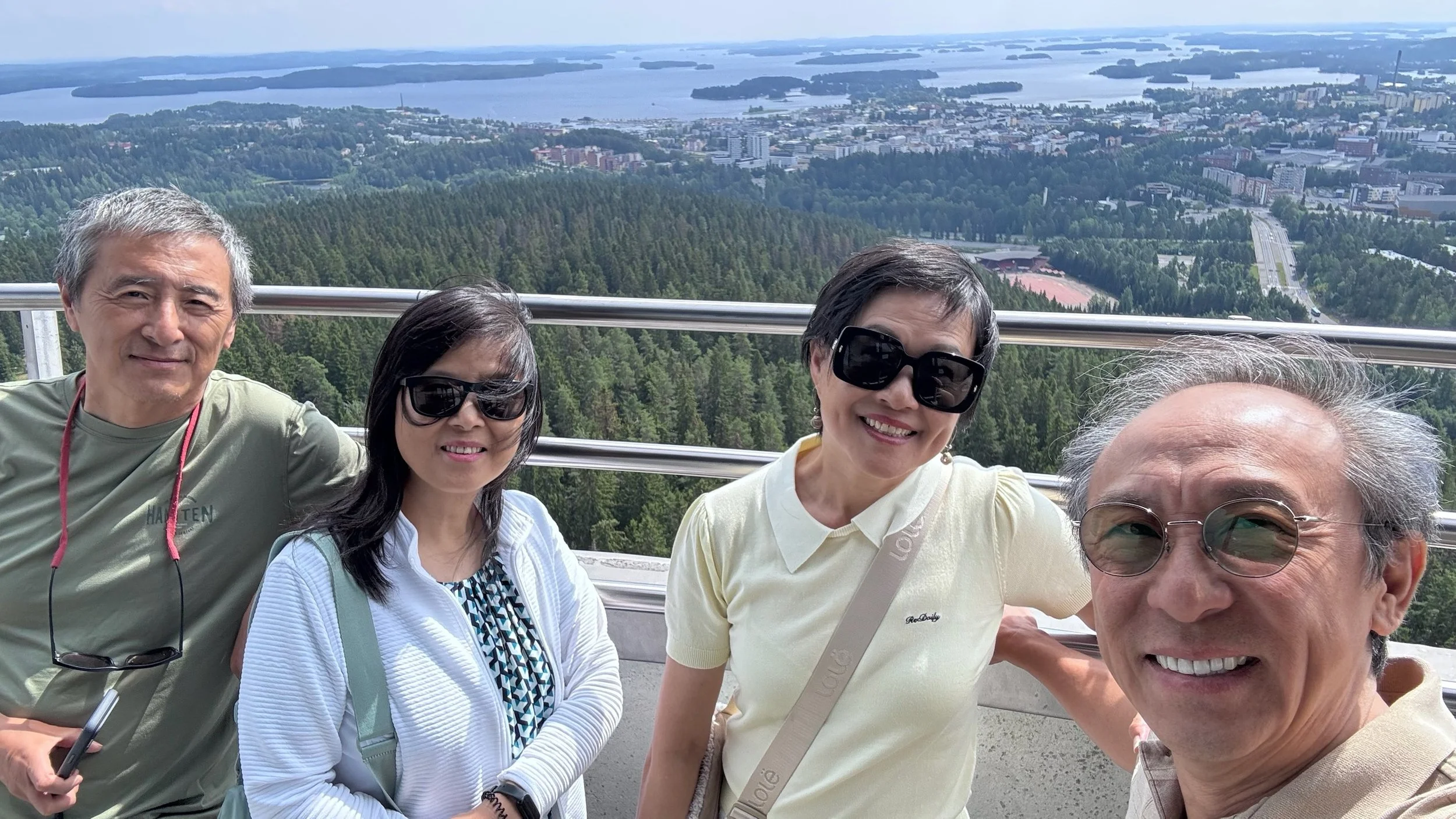
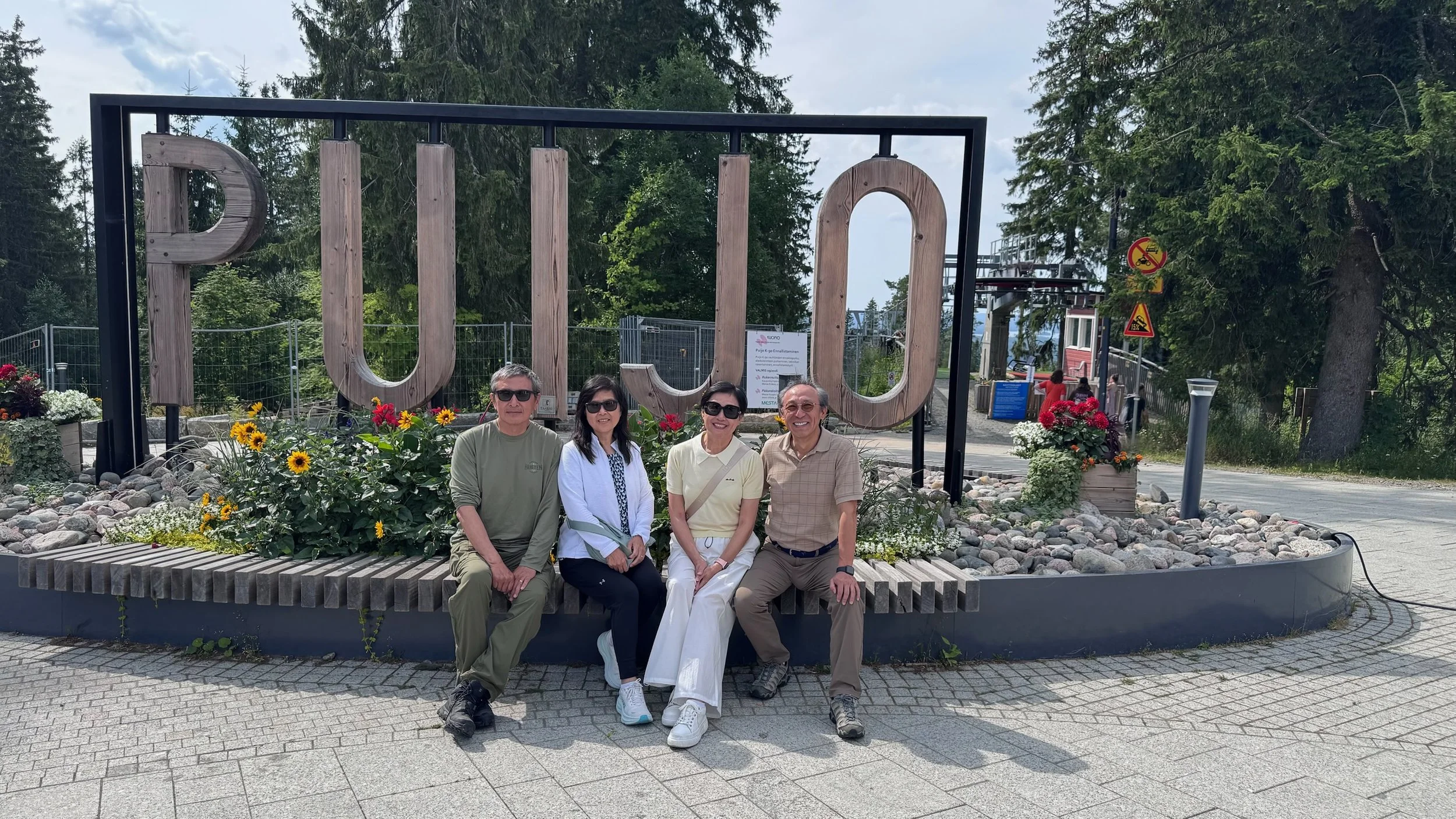
From there, we drove up Puijo Hill and took the elevator to the top of the observation tower, where we were rewarded with sweeping views of forests, lakes, and countless islands stretching to the horizon. Standing there, it was easy to understand why Finland is celebrated as the "Land of a Thousand Lakes"—even though it actually has nearly 188,000 lakes. We enjoyed lunch at the revolving restaurant atop the tower, savoring locally sourced dishes while the breathtaking landscape slowly rotated around us.
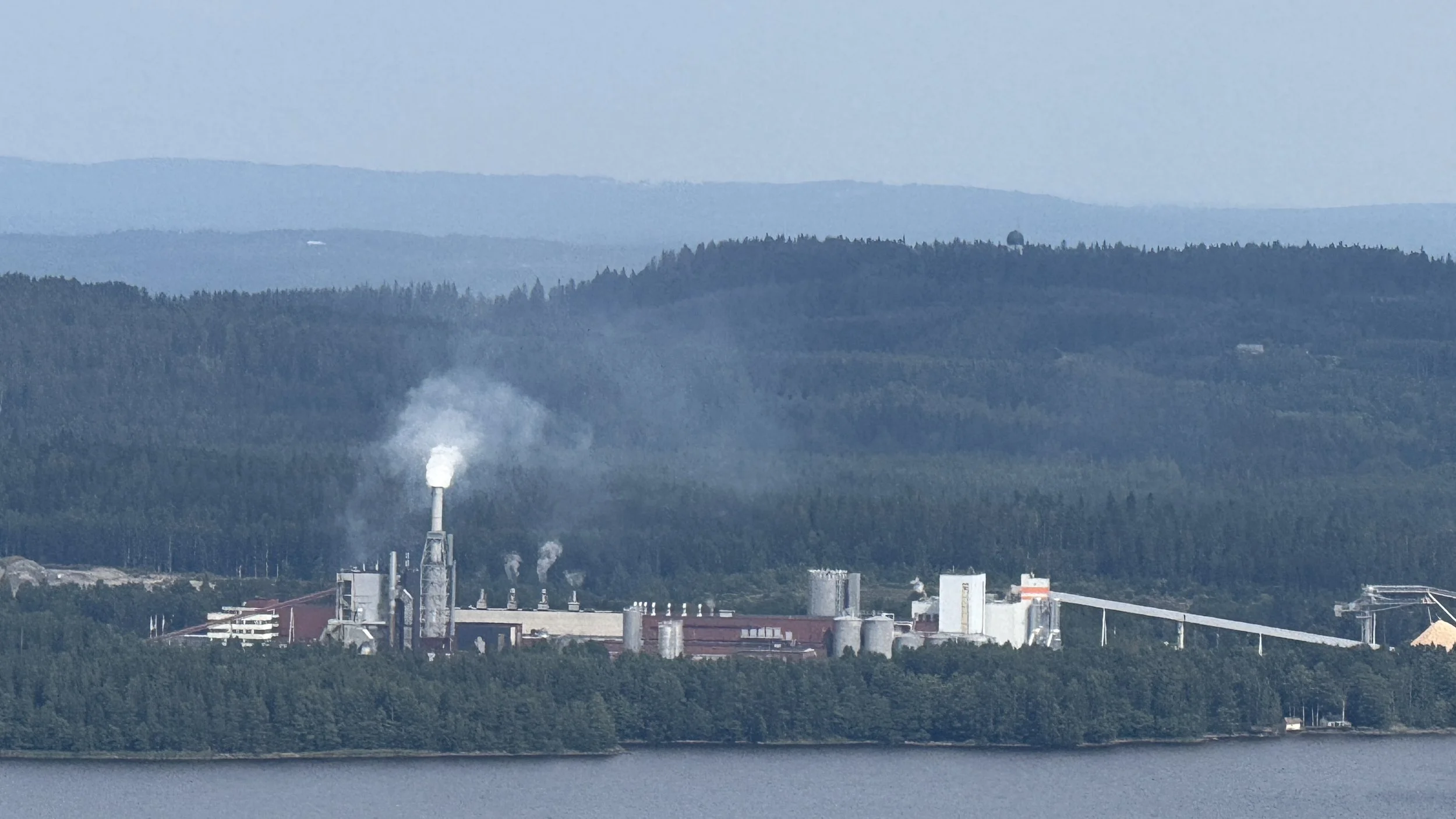
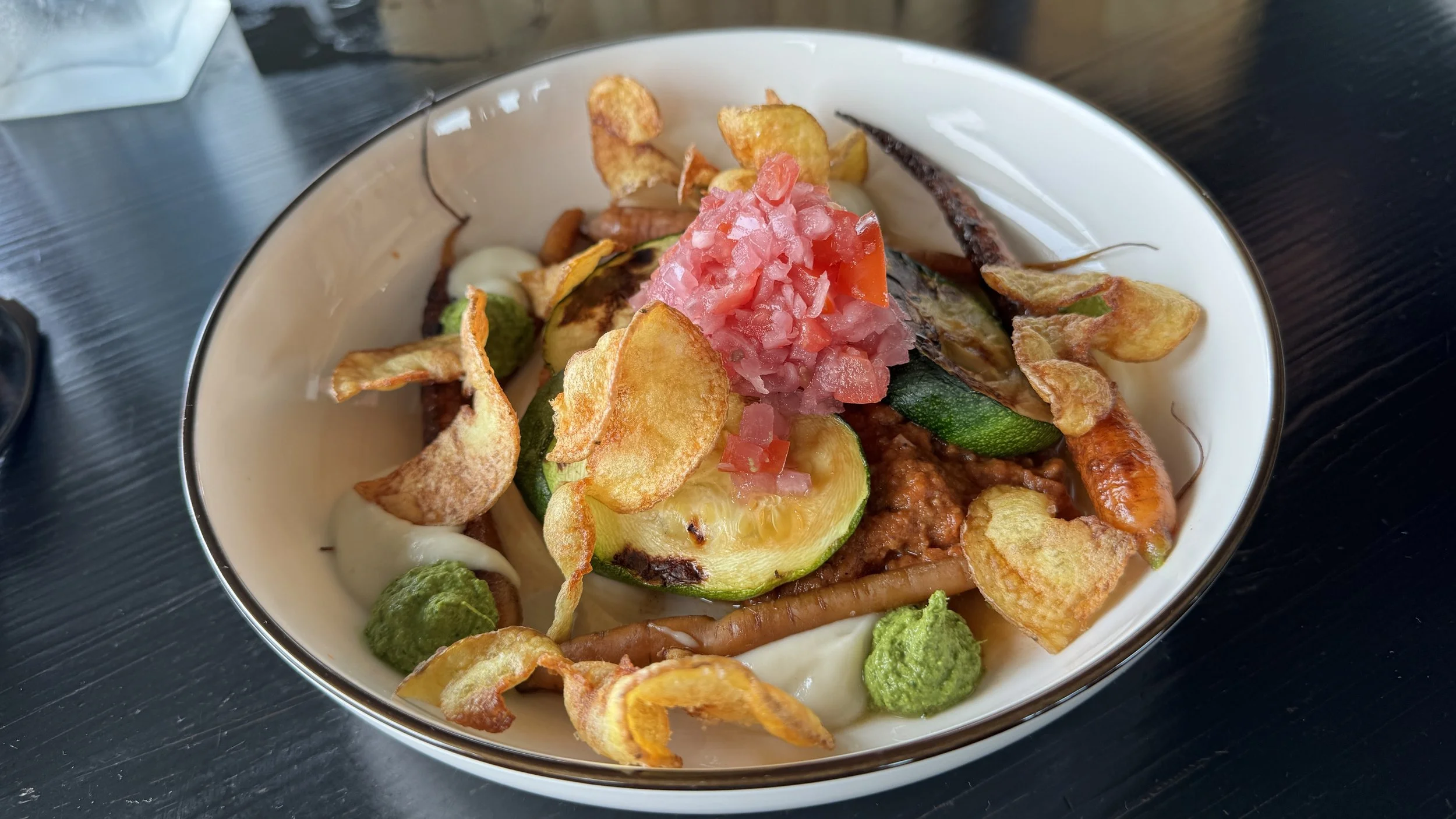
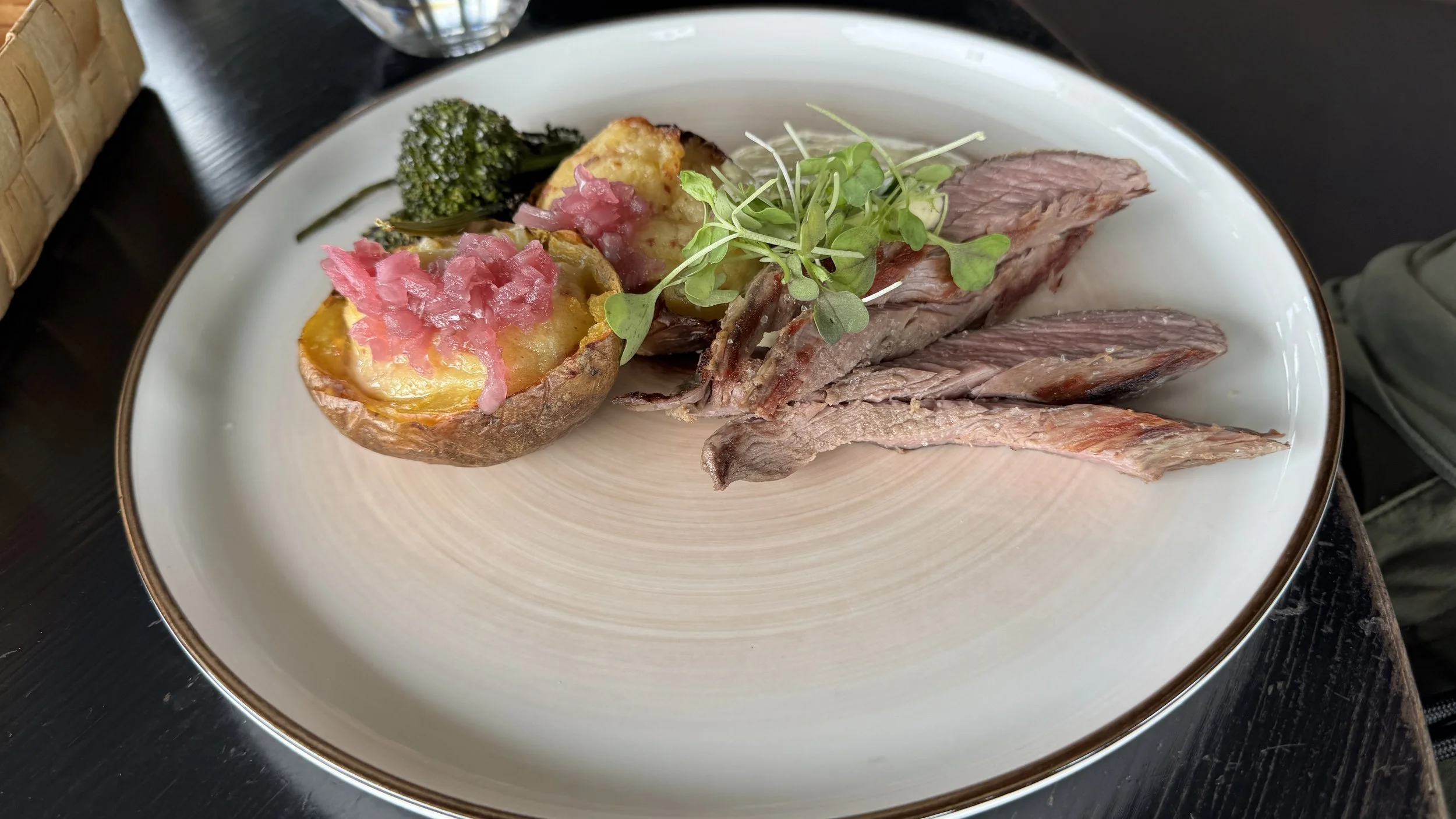
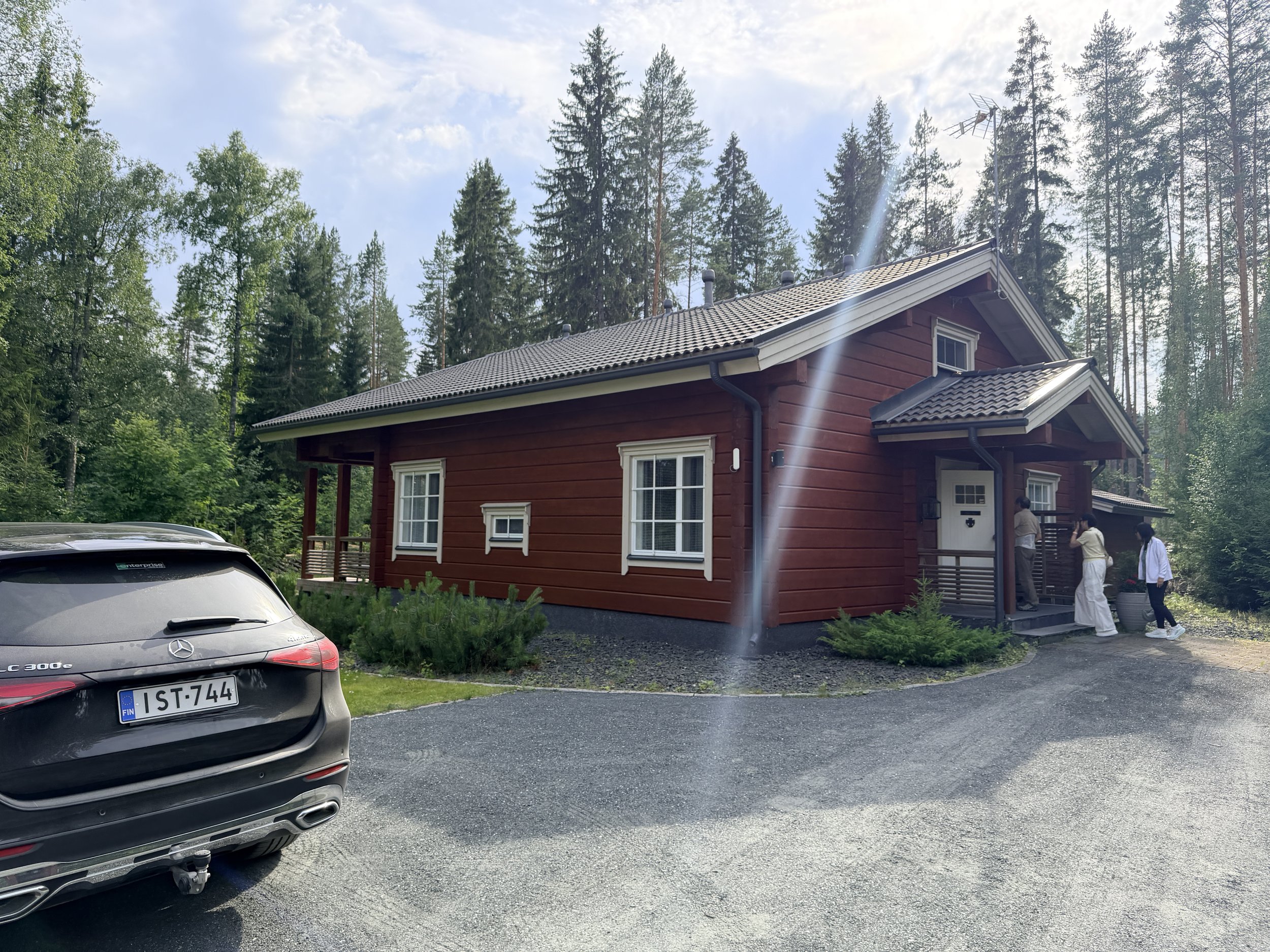
In the afternoon, we arrived at our Airbnb in Koli. The cottage has three bedrooms, an electric sauna, and a private lakeside beach complete with a rowboat. Its layout is similar to that of our previous cottage in the Turku Archipelago, but the interior is more modern and comfortable. Even so, our earlier cottage enjoyed a more spectacular setting.
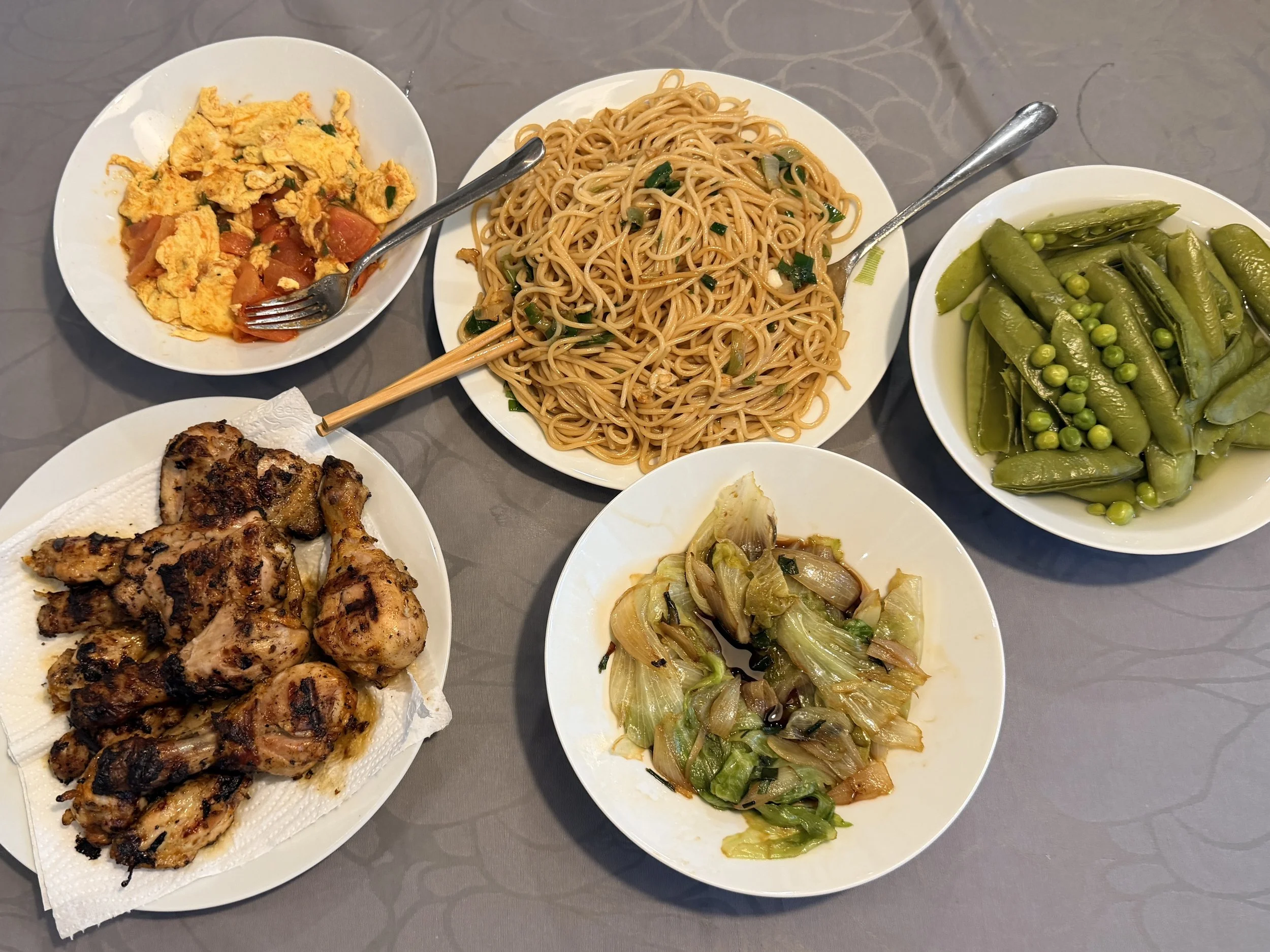
After settling in, our friends prepared yet another memorable feast. With satisfied appetites, we relaxed through three rounds of sauna before retiring for the night.
2026年7月18日
早餐后,我们离开于韦斯屈莱(Jyväskylä),驱车前往位于科利国家公园(Koli National Park)边缘的小村庄——科利(Koli)。途中,我们在库奥皮奥(Kuopio)稍作停留。这座城市素有芬兰“湖区之都”的美誉,是芬兰湖区最具代表性的城市之一。在路边,我们买了一盒刚采摘的草莓,草莓香甜多汁,味道十分鲜美。
我们的第一站是市中心热闹的集市广场(Market Square)。市场里摆满了新鲜诱人的当地农产品,我们买了黑莓、红树莓、蘑菇、大葱等食材。
随后,我们驱车登上普伊约山(Puijo Hill),乘电梯来到观景塔顶层。放眼望去,茂密的森林、星罗棋布的湖泊和无数大小岛屿尽收眼底,景色壮阔迷人。站在这里,终于真正体会到芬兰为何被誉为“千湖之国”——事实上,这个国家拥有近18.8万个湖泊。我们在塔顶的旋转餐厅享用午餐,一边品尝采用当地食材烹制的美食,一边欣赏窗外不断变换的湖光山色,十分惬意。
下午,我们抵达位于科利的 Airbnb。这栋湖边木屋有三间卧室,配备电桑拿房,离房不远还有一片私人小石滩和一艘划艇。小屋的整体布局与我们之前入住的图尔库群岛度假屋十分相似,但室内装修更加现代、舒适。不过,若论周围的自然景观,还是图尔库群岛那间小屋更胜一筹。
安顿好之后,先去附近的小超市购买食材,回来不久能干的朋友就给大家整出一桌丰盛的晚餐。饱餐之后,我们迫不及待地走进桑拿房。在温暖与放松中结束了充实而愉快的一天。
Jyväskylä, Finland 于韦斯屈莱
July 17, 2026
Yesterday, we stayed at our cottage while our friends drove to Turku for sightseeing……
昨天,我们留在群岛海边的小木屋休息,。。
July 17, 2026
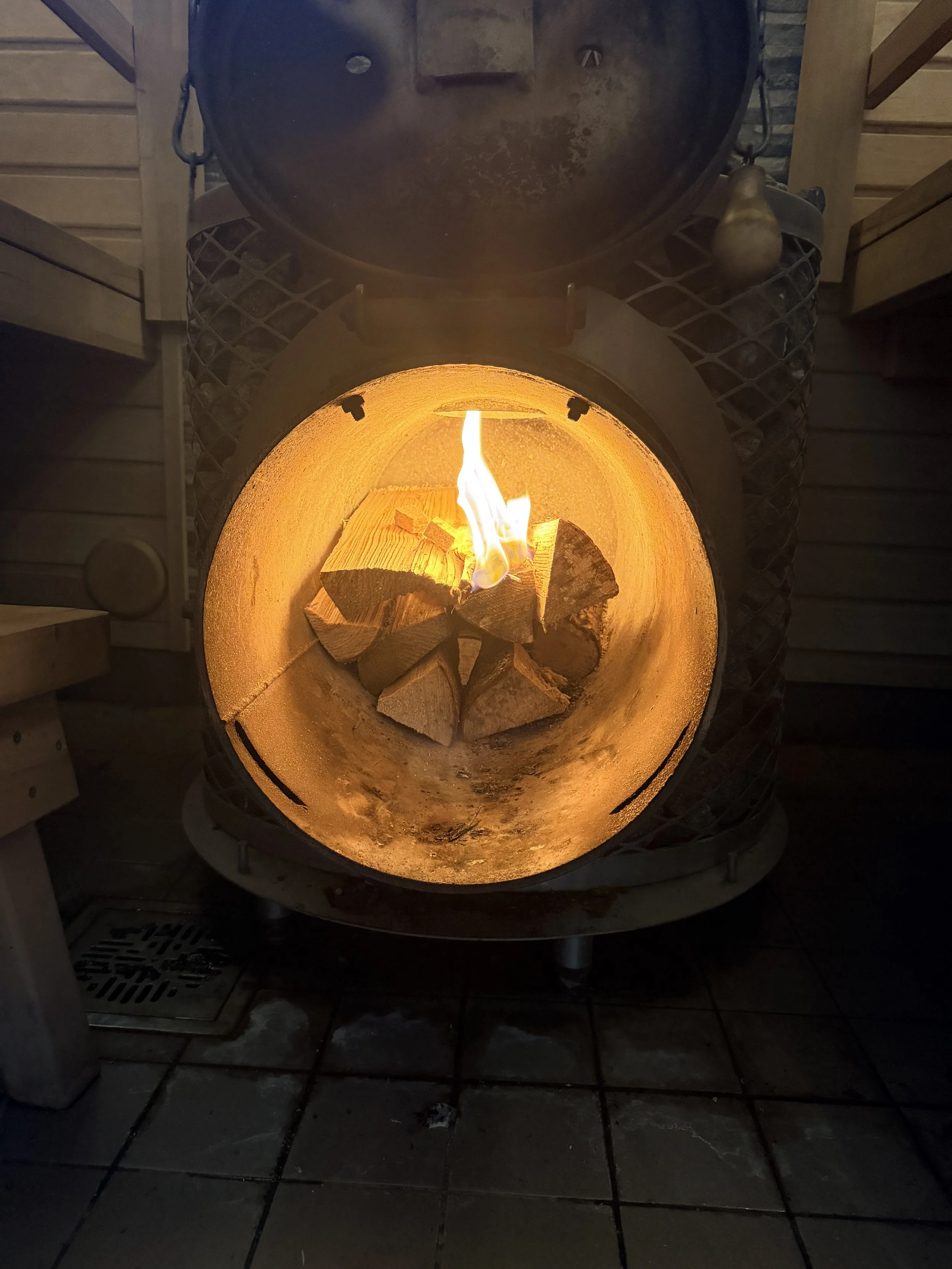
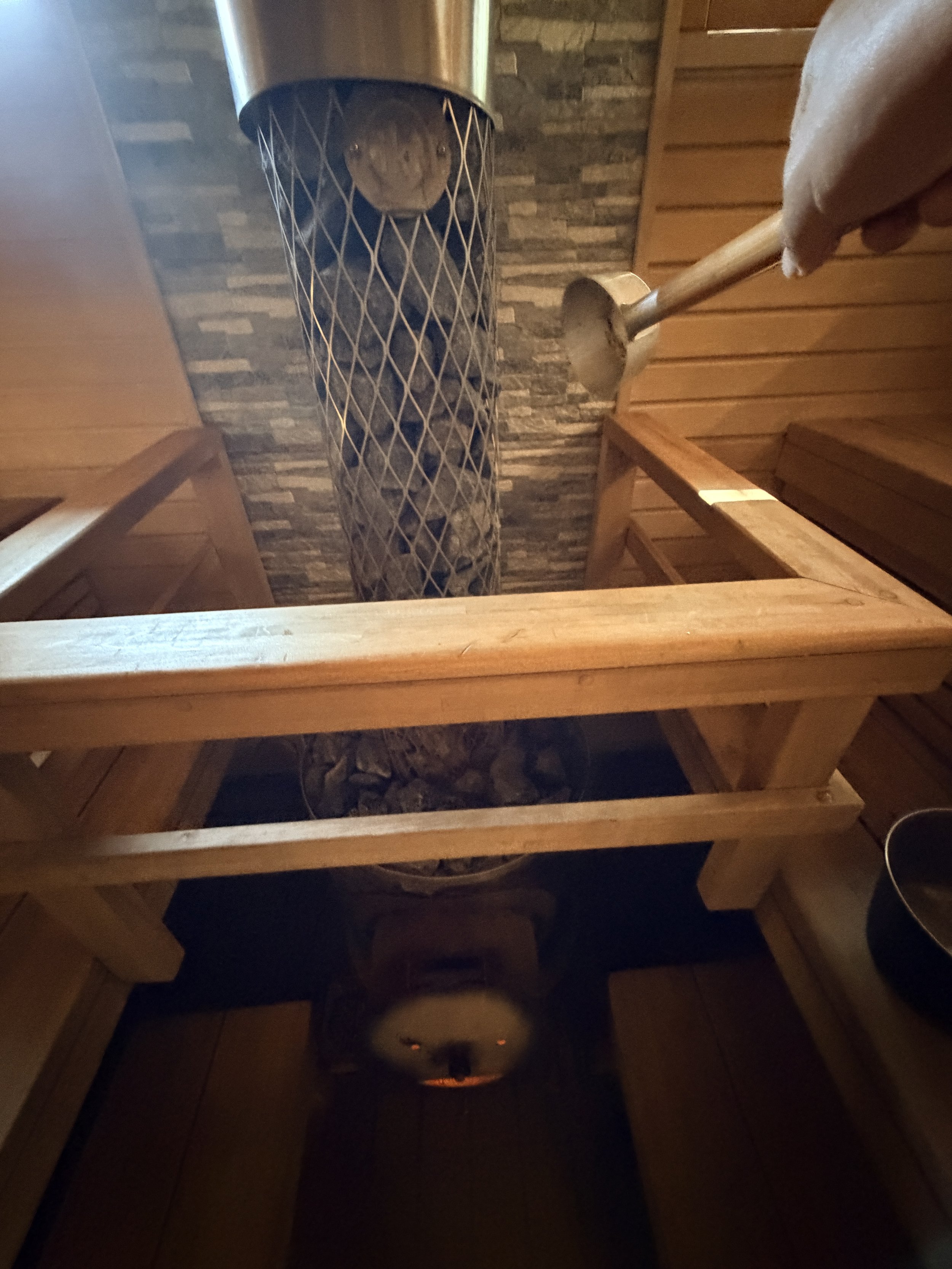
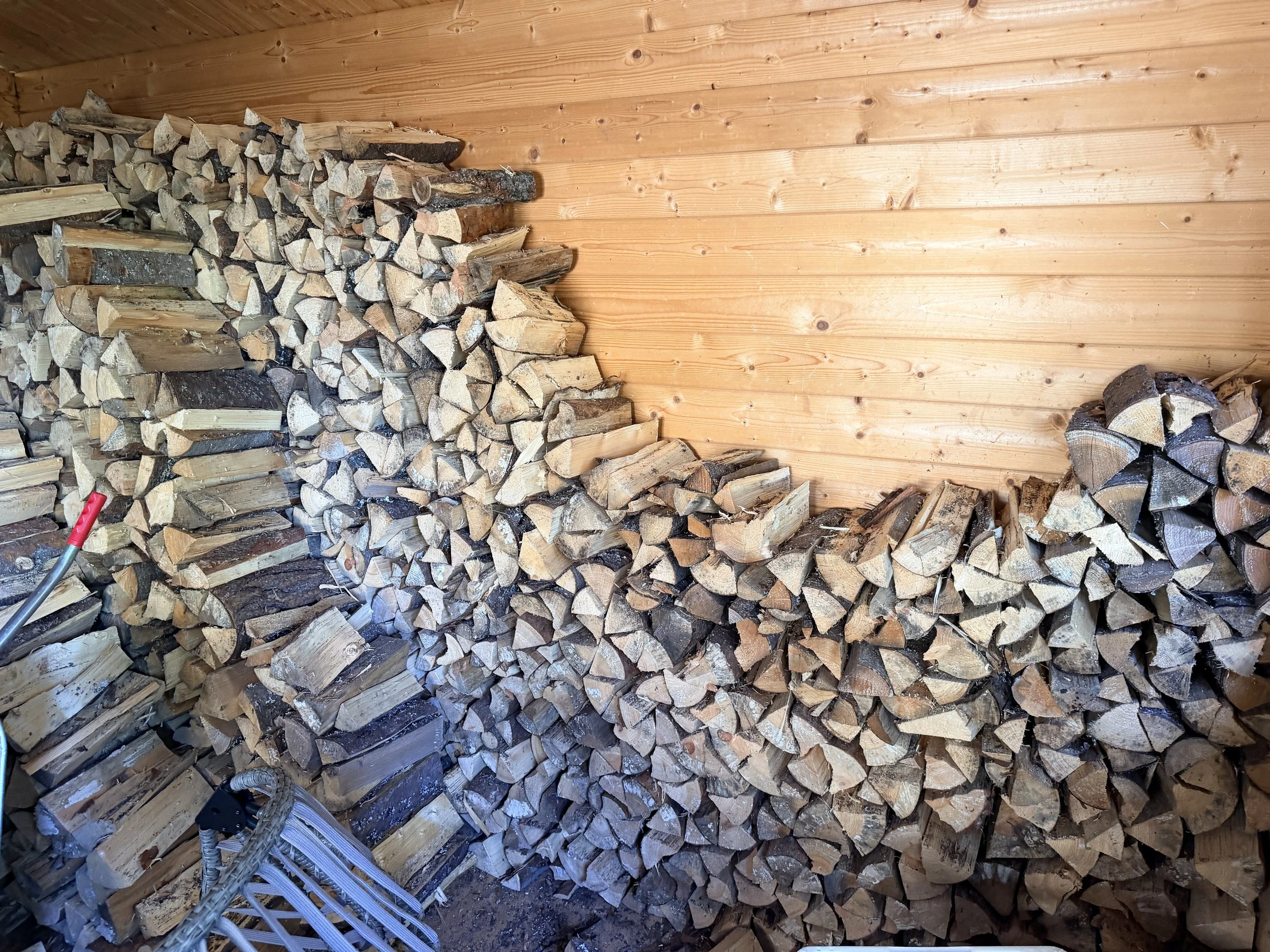
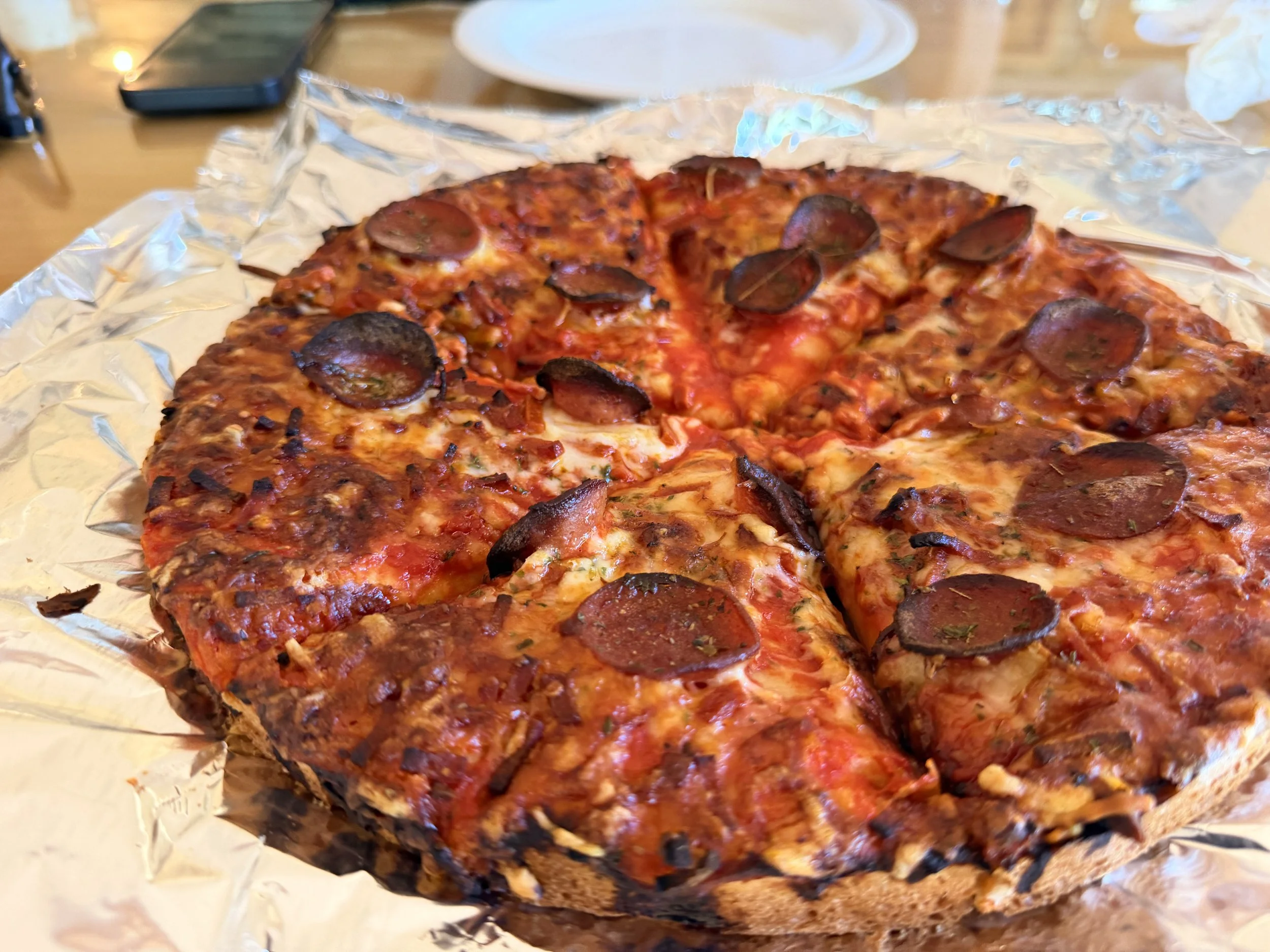
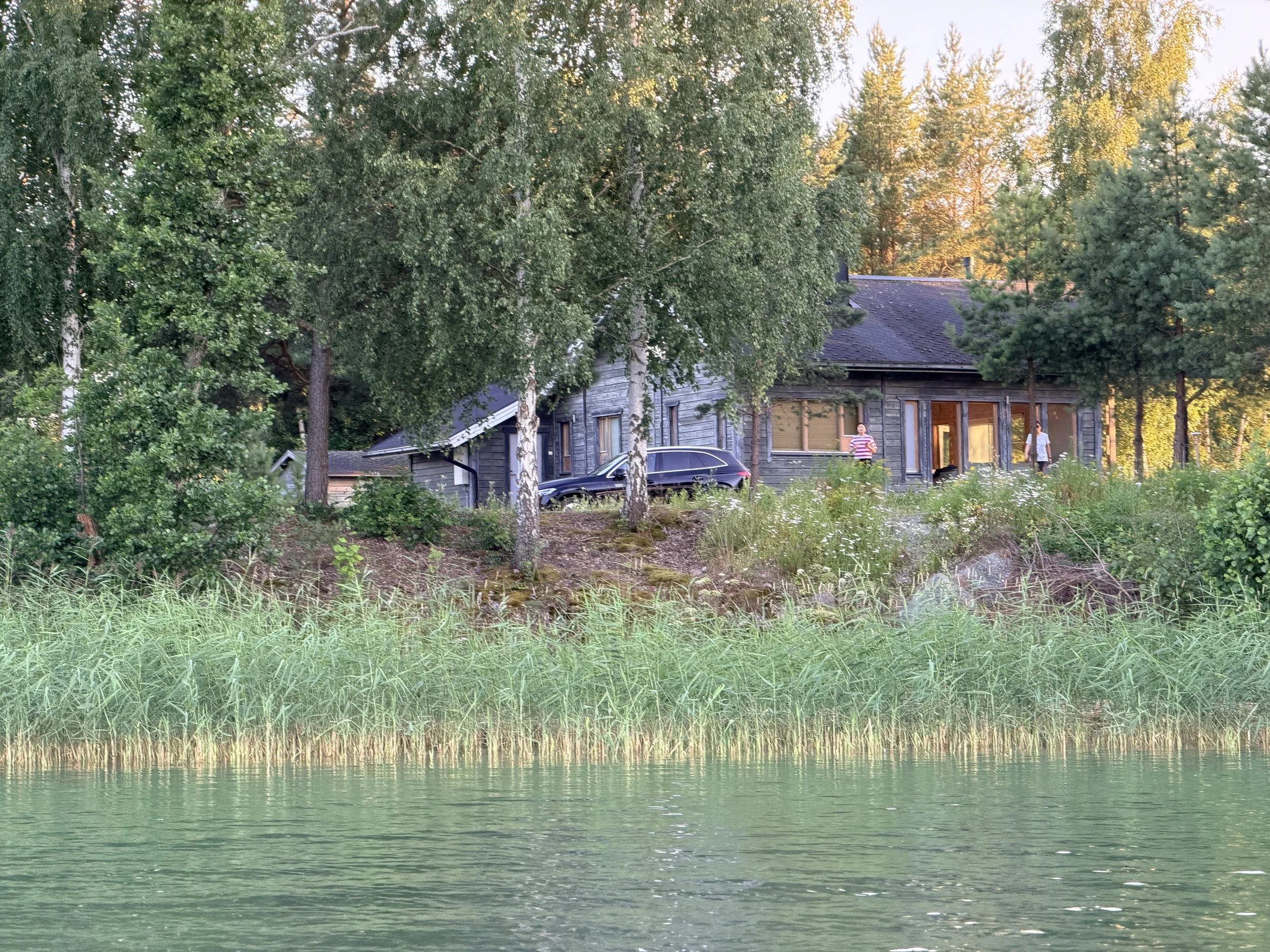
Yesterday, we stayed at our cottage while our friends drove to Turku for sightseeing. We did almost nothing—simply continued to enjoy Finland’s sauna culture, rowed our little boat around the peaceful bay, and soaked in the tranquil surroundings. For lunch, we baked a Norwegian frozen pizza, and to our surprise, it was fantastic—one of the best pizzas we had ever tasted. Considering Norway is often said to have one of the highest rates of pizza consumption per capita in the world, perhaps we shouldn’t have been so surprised! It was a wonderfully relaxing day, filled with simple pleasures and the peaceful rhythm of Finnish cottage life.
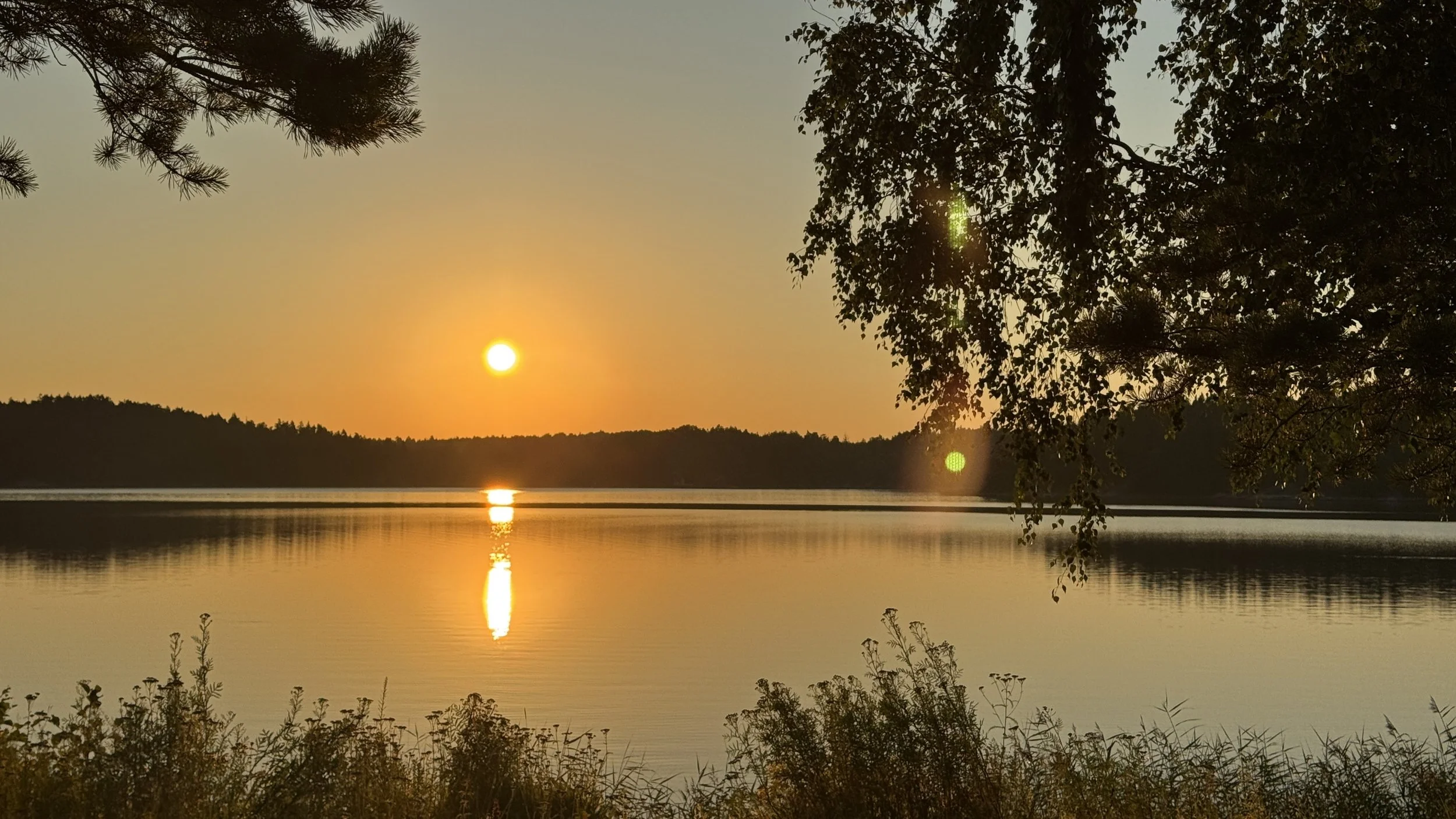
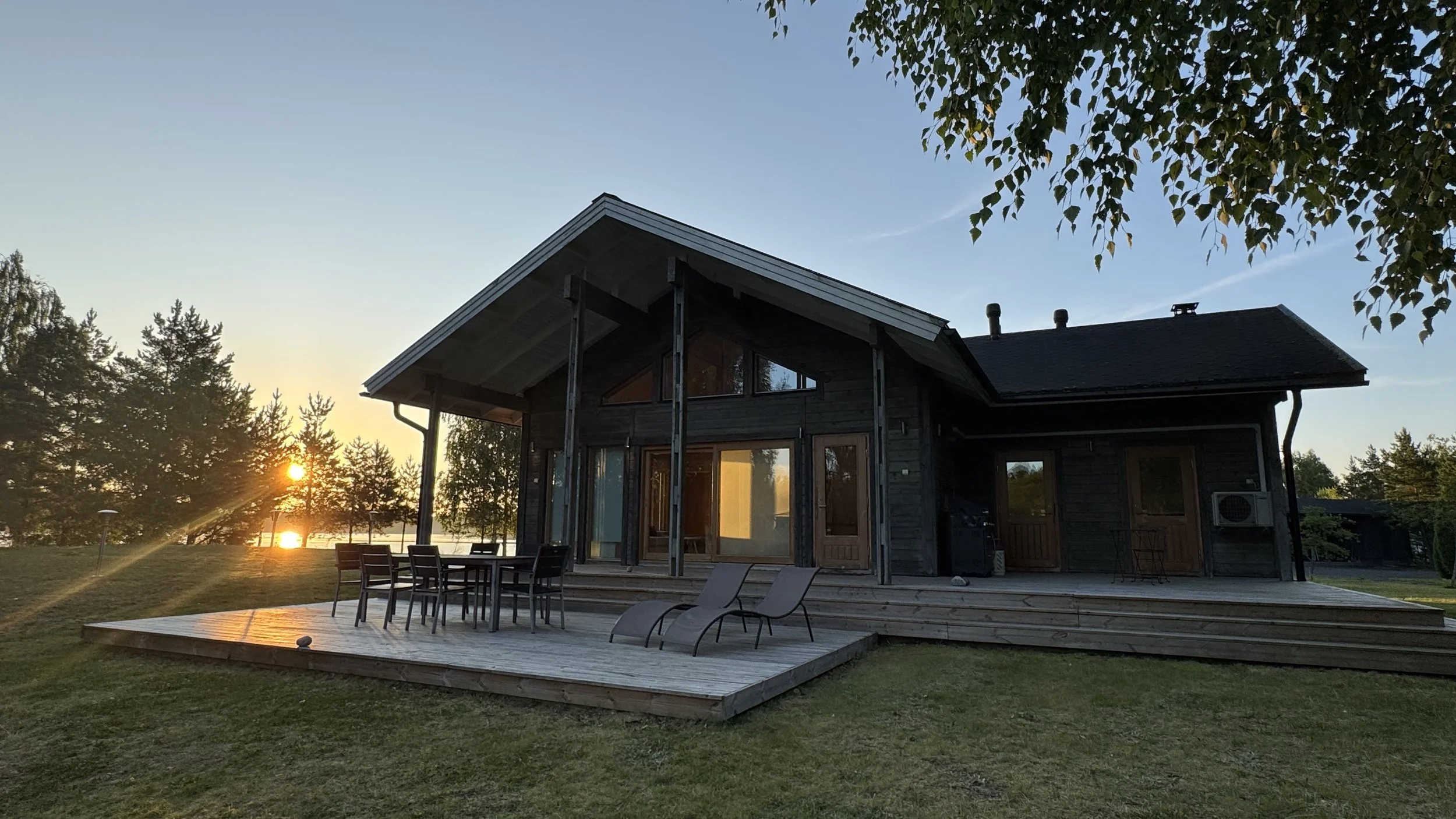
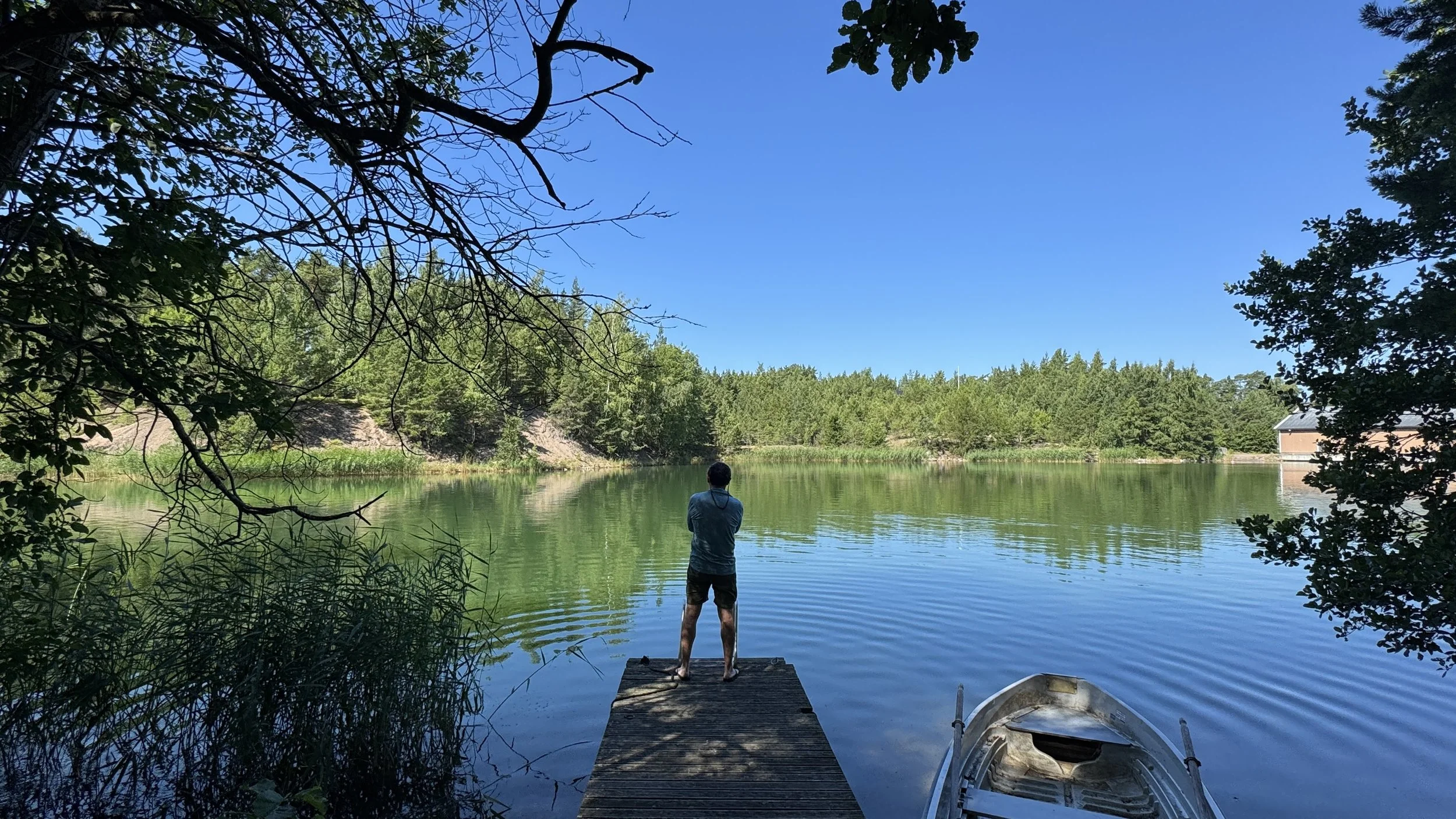
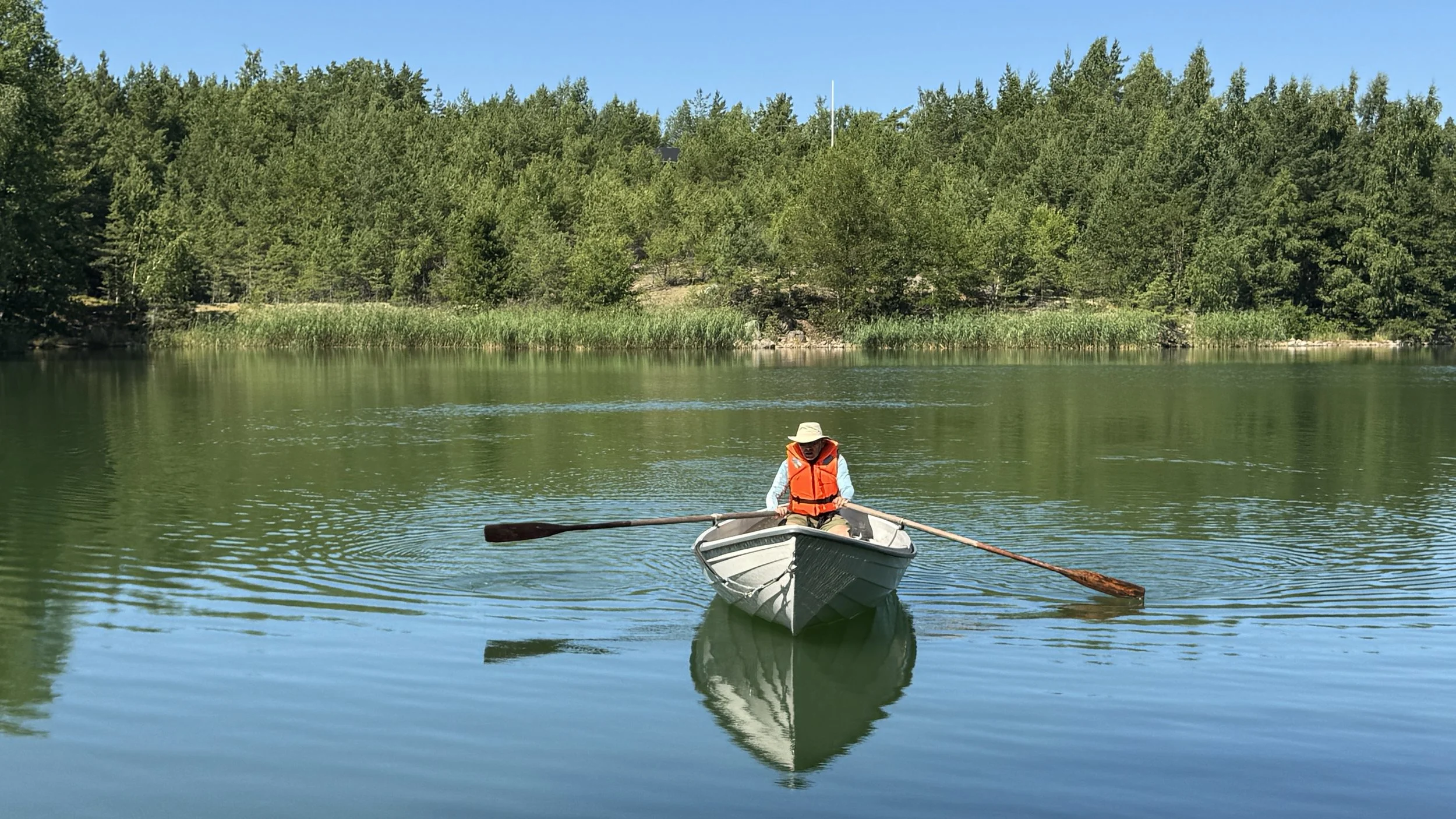
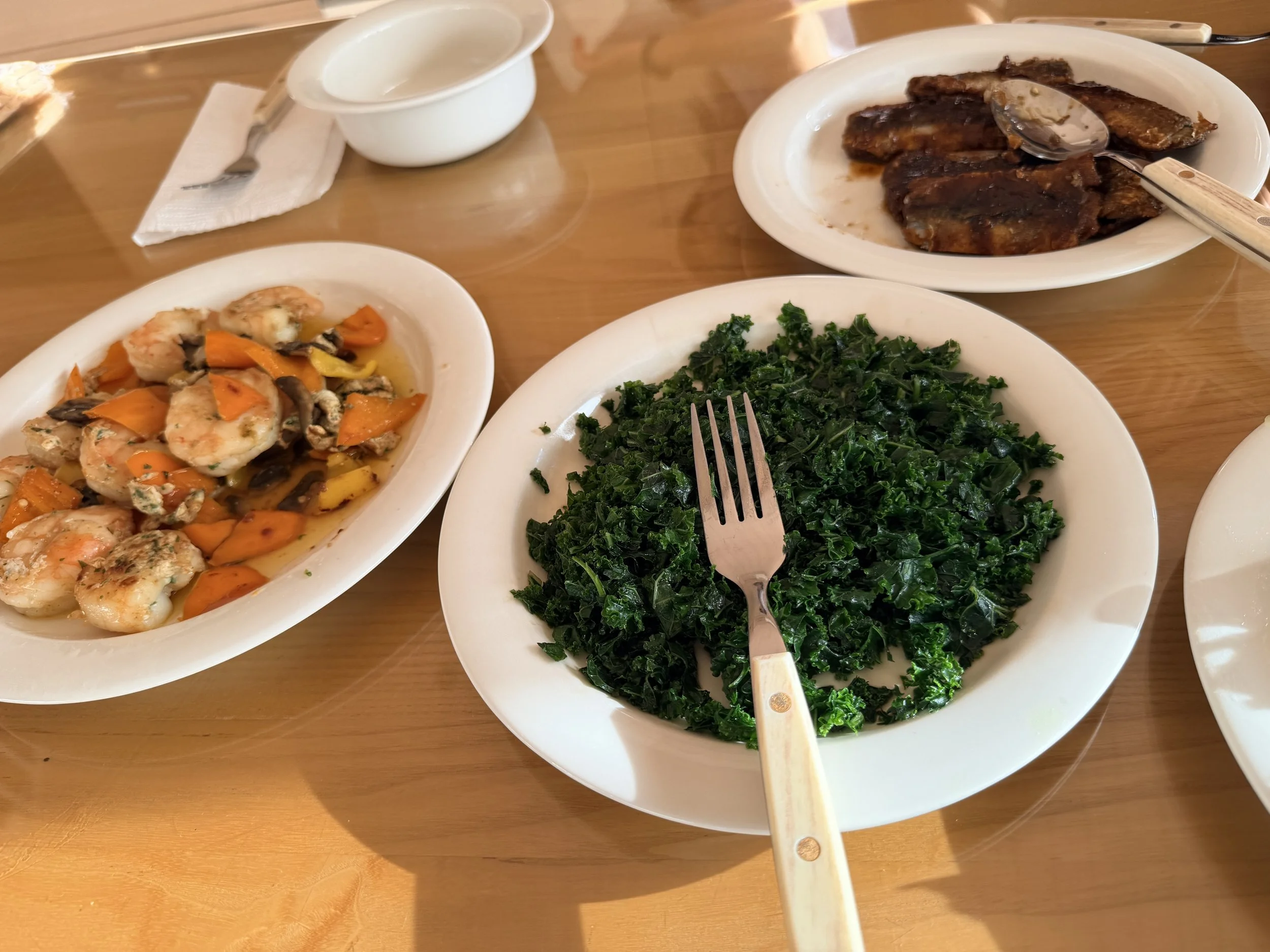
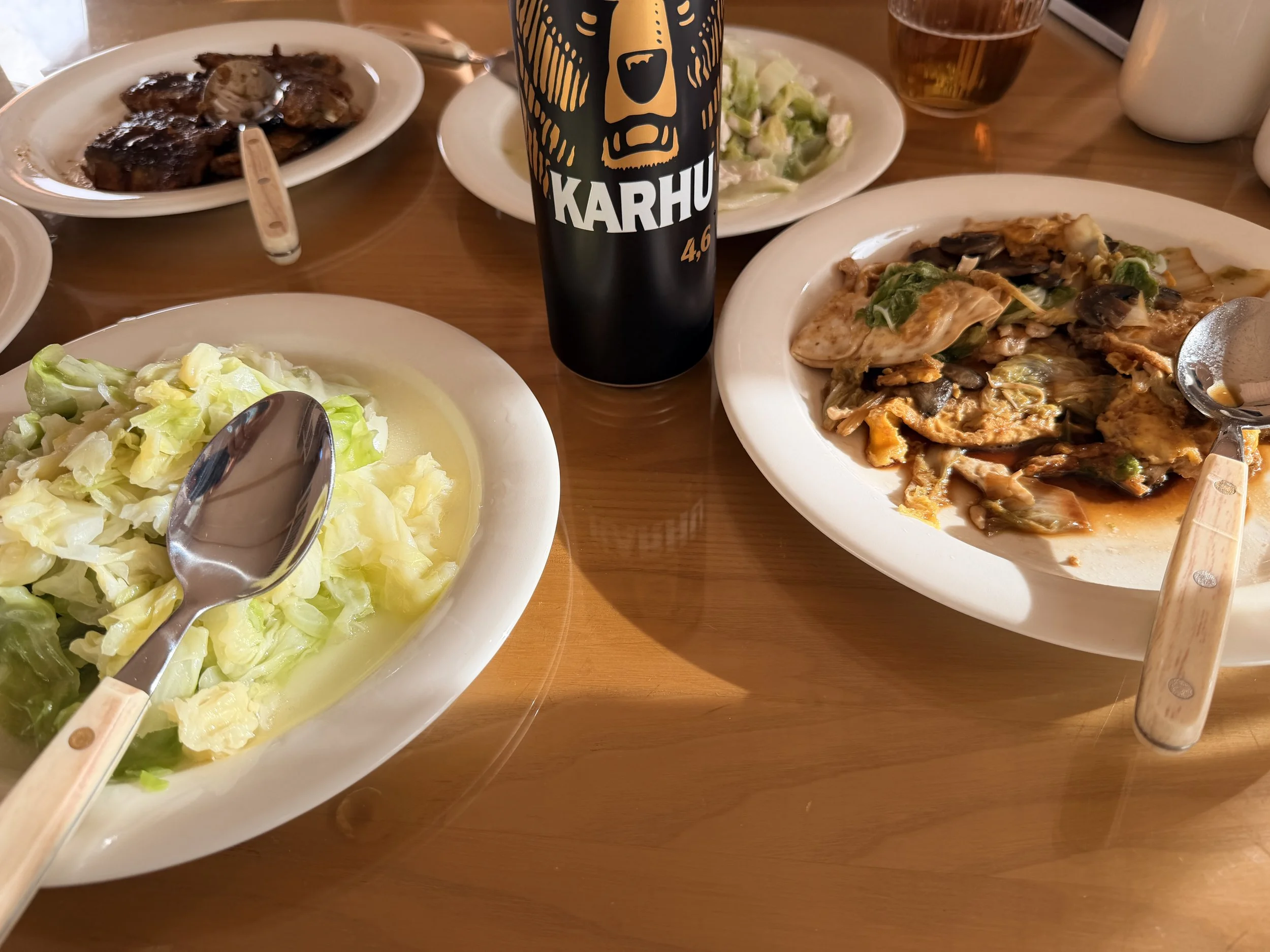
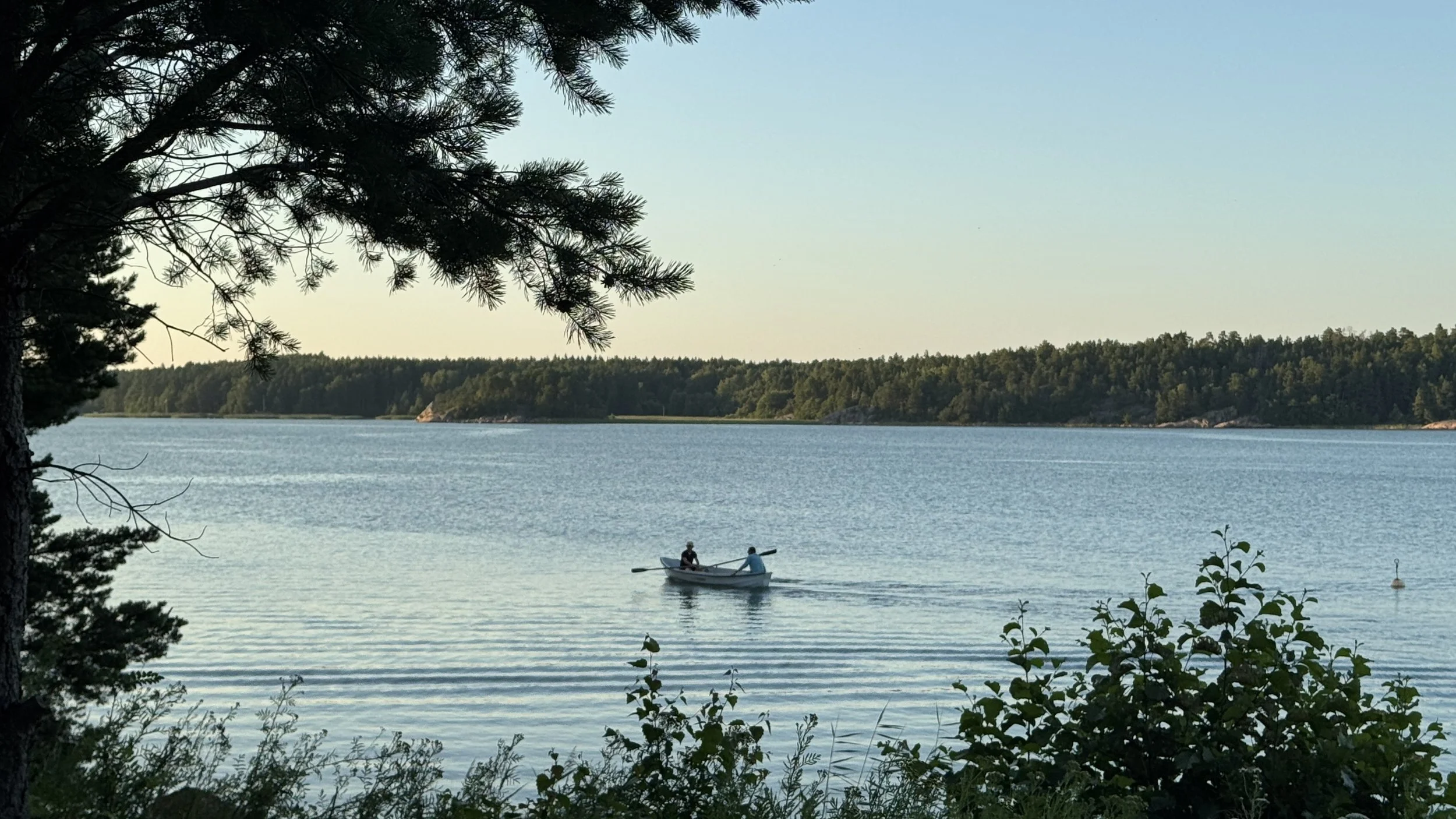
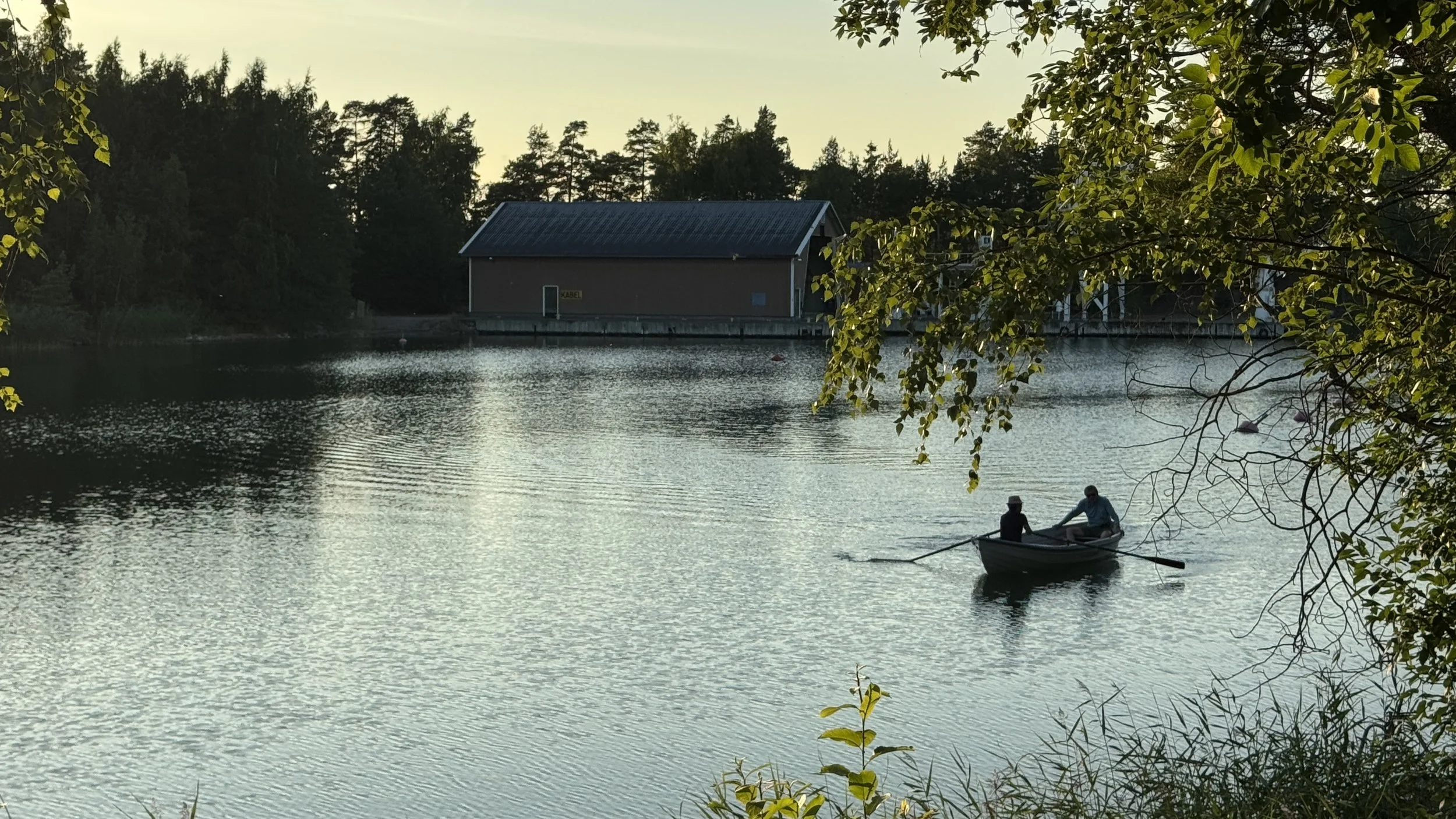
Our friends prepared a delicious, comforting home-style dinner. After dinner, the two of us guys headed out in a small boat, paddling from the quiet waters into a much larger stretch of open water. We had a wonderful time out on the sea.
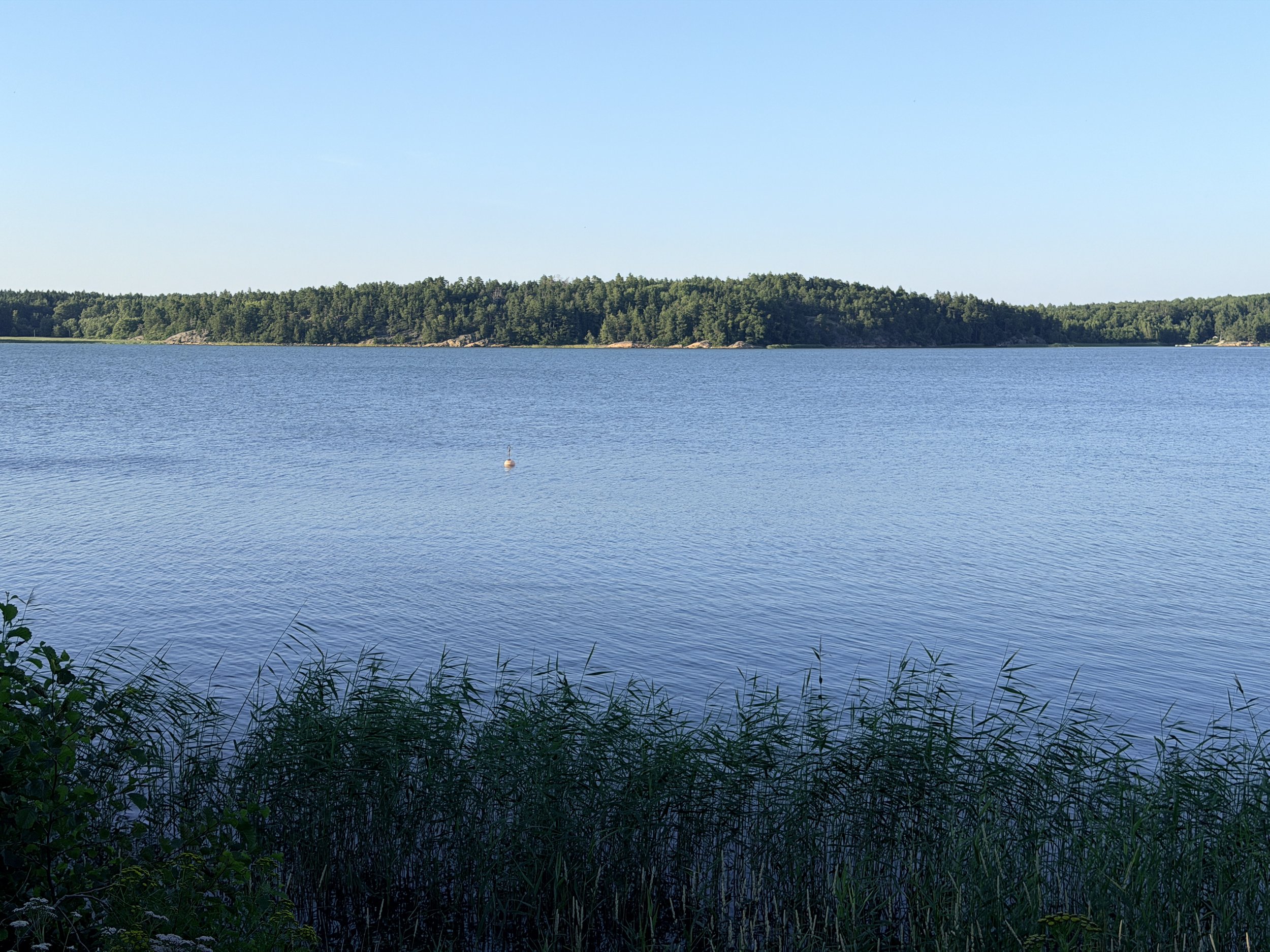
Today, we left the Turku Archipelago and began our drive toward Koli National Park, stopping overnight in Jyväskylä to keep our daily driving time to less than five hours. The journey took us through endless forests, past countless lakes, and over bridges connecting Finland's beautiful lake country. It was easy to understand why Finland is known as the "Land of a Thousand Lakes"—in reality, it has nearly 188,000 of them.
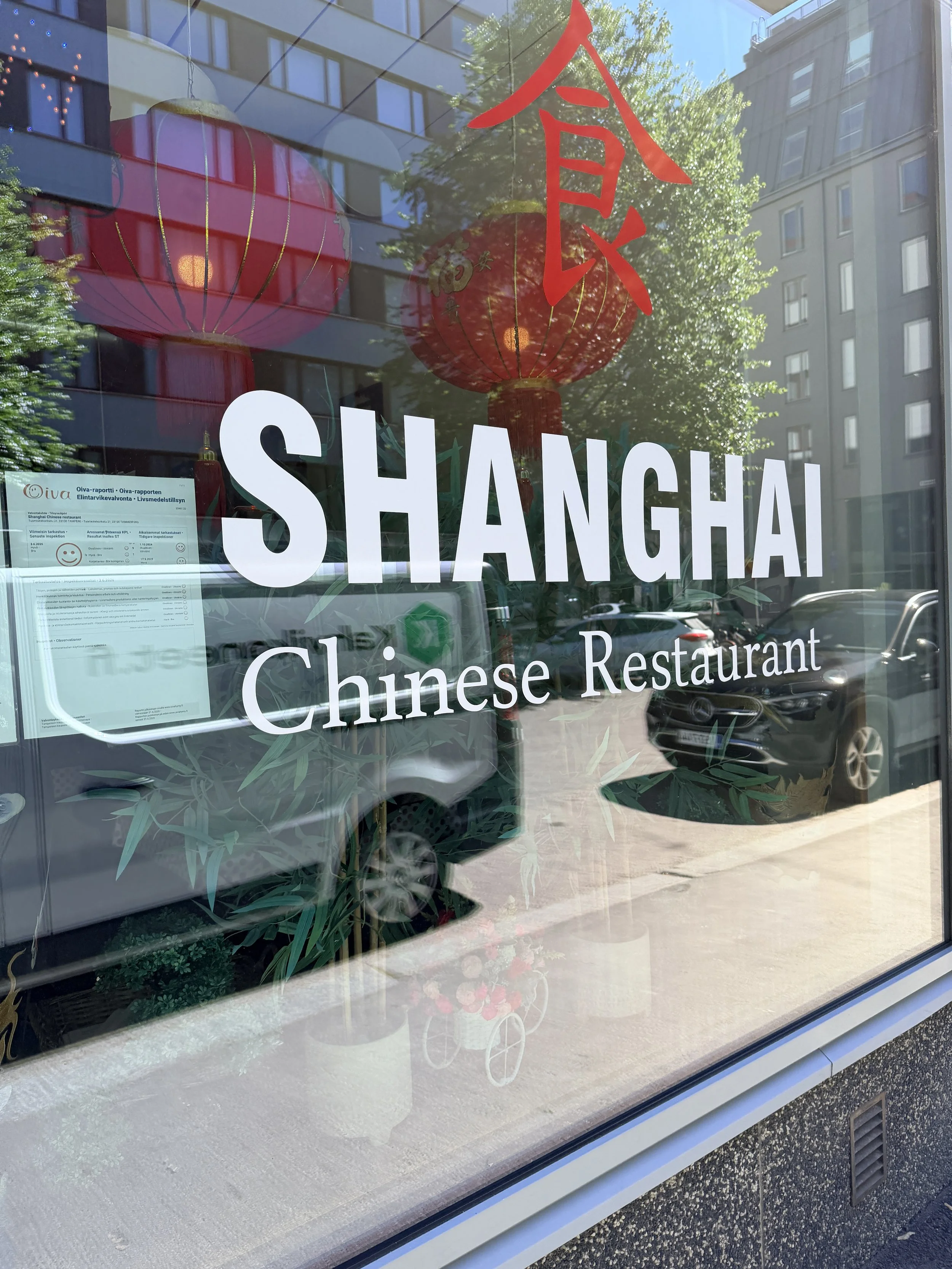
Jyväskylä is located in the heart of Finland's Lakeland region. We stopped in Tampere for lunch and found a Chinese restaurant called Shanghai Restaurant. After several days of mostly Finnish food, it was nice to enjoy familiar flavors again, and the meal exceeded our expectations. Afterwards, we wandered through the nearby market before continuing our drive to Hotel Verso in Jyväskylä.
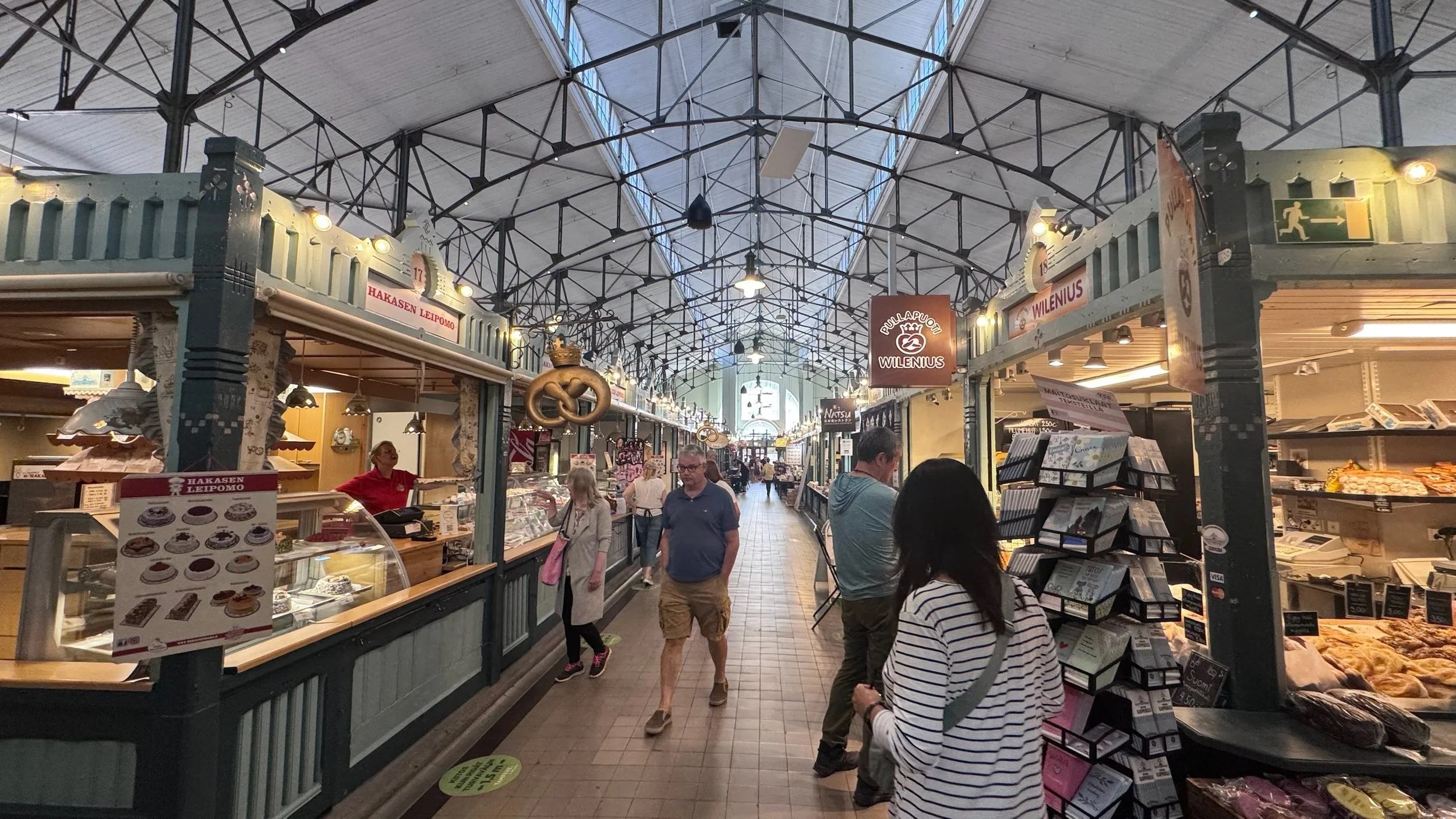
Hotel Verso is located right in the middle of the city's pedestrian district. Since cars are not allowed on the streets above, we drove through an underground parking garage and parked directly beneath the hotel.
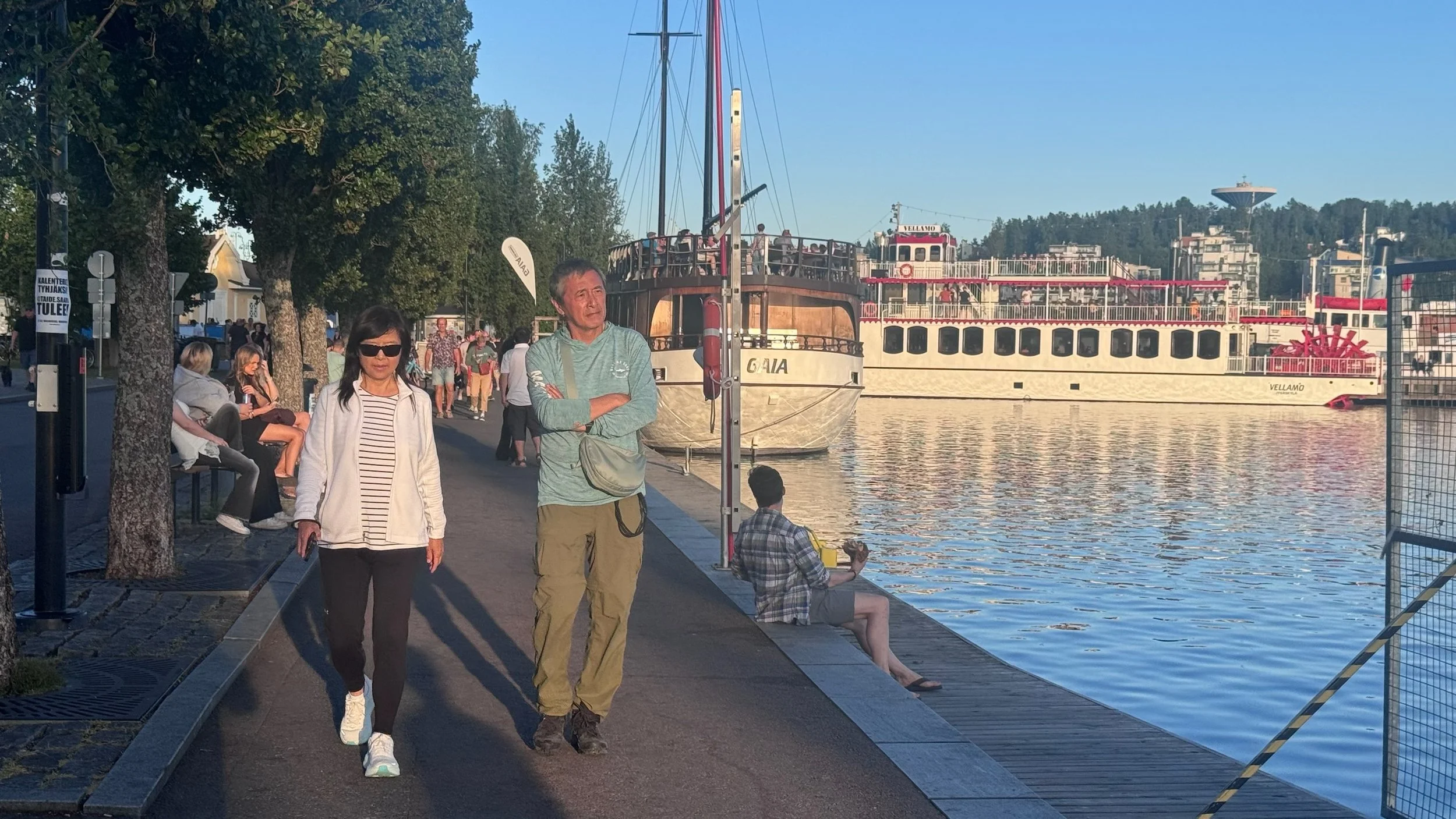
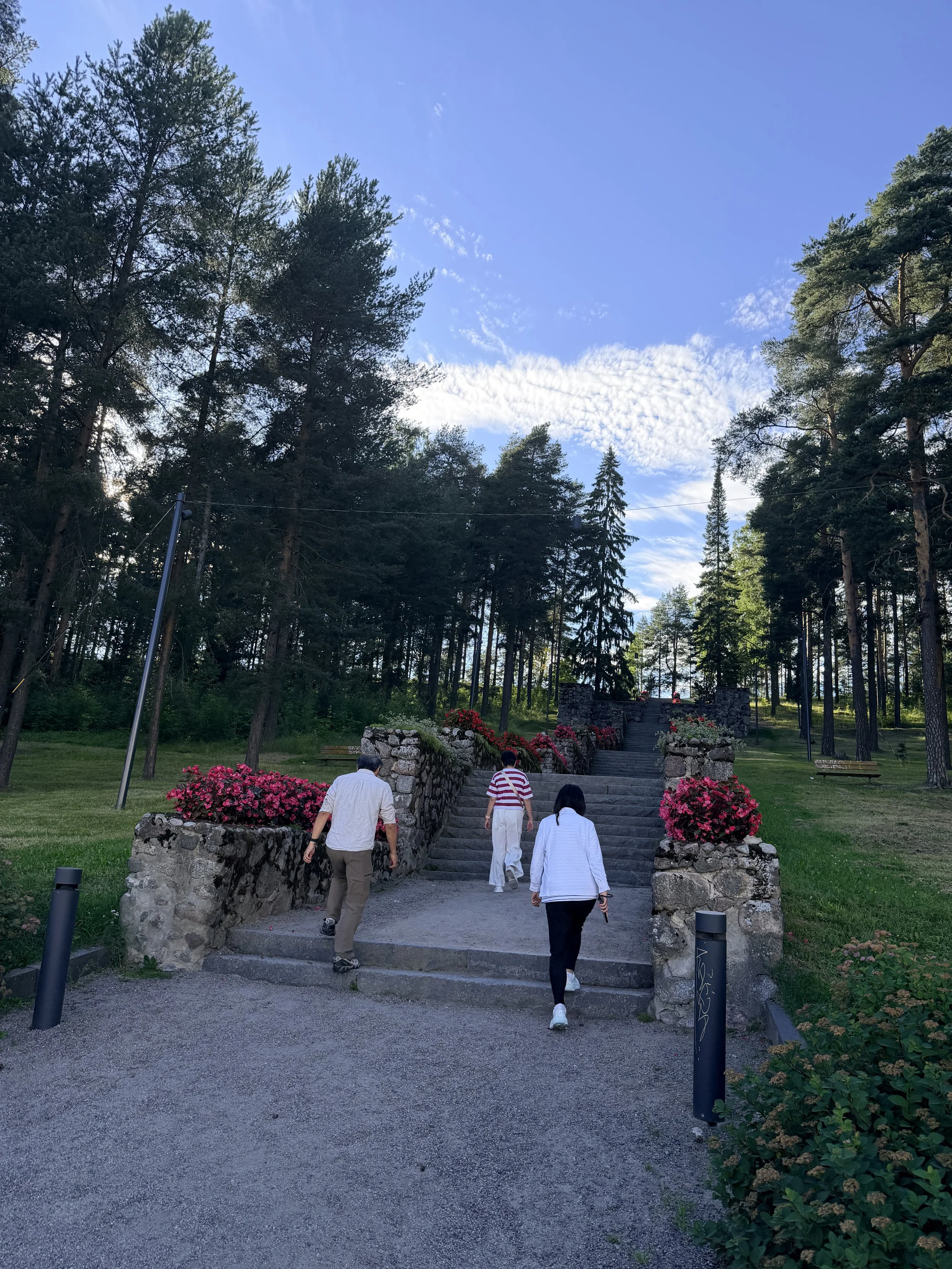
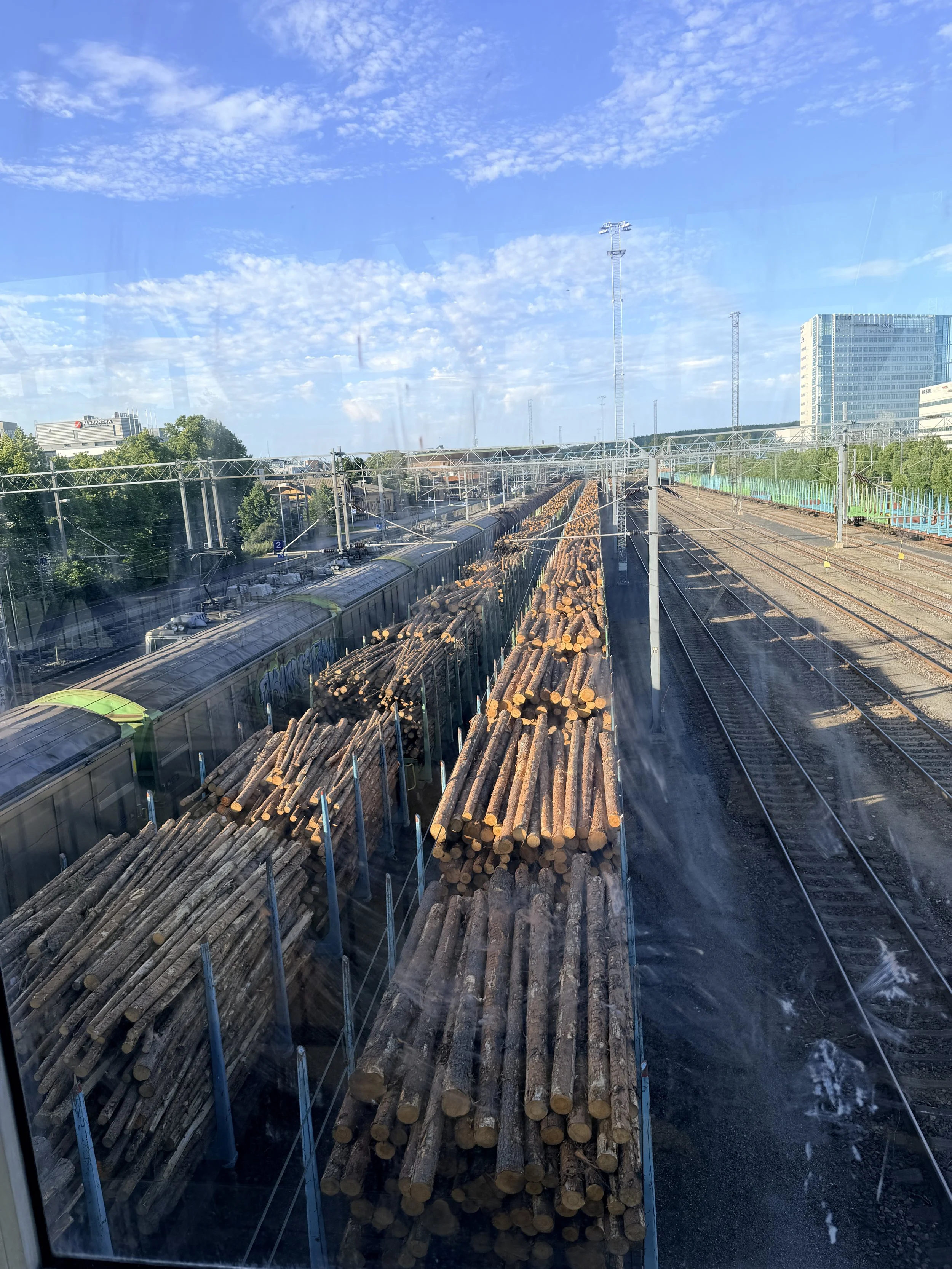
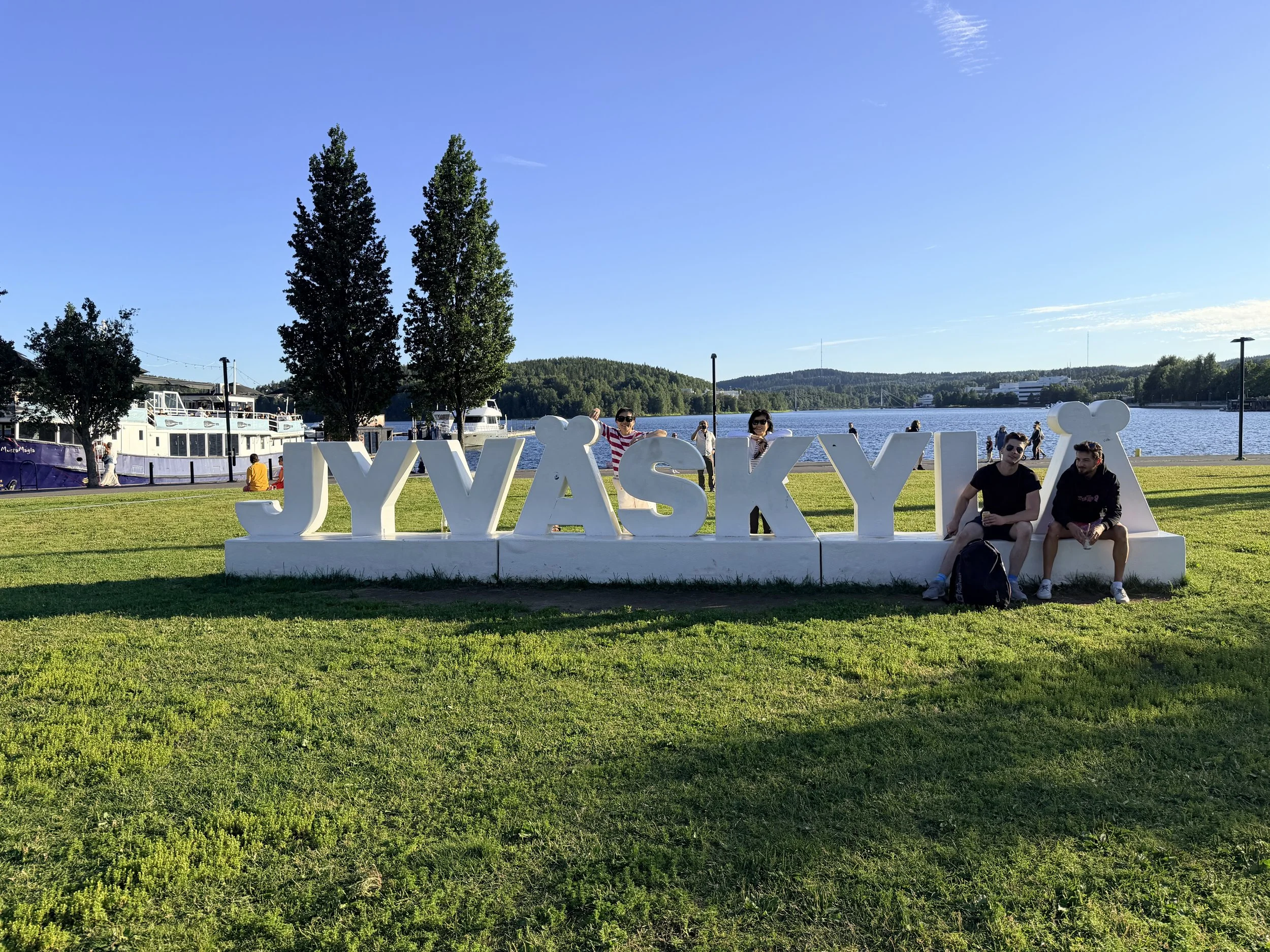
After settling in, we headed out to explore the city. We walked up Harju Hill, hoping to enjoy the panoramic view from the observation tower, only to discover that it had already closed for the day. Instead, we made our way down to the lakeside promenade and harbor, where the atmosphere was lively yet unhurried.
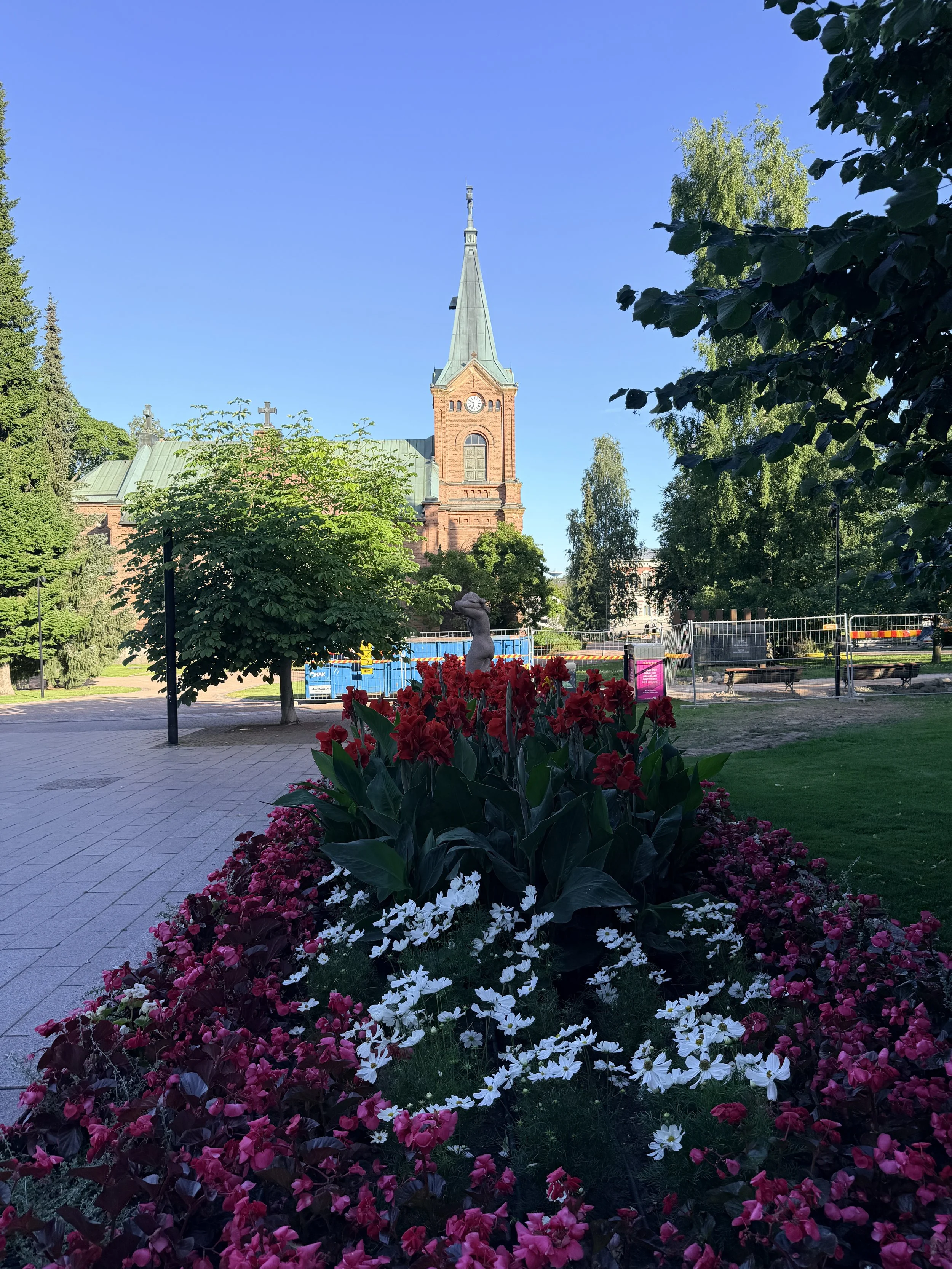
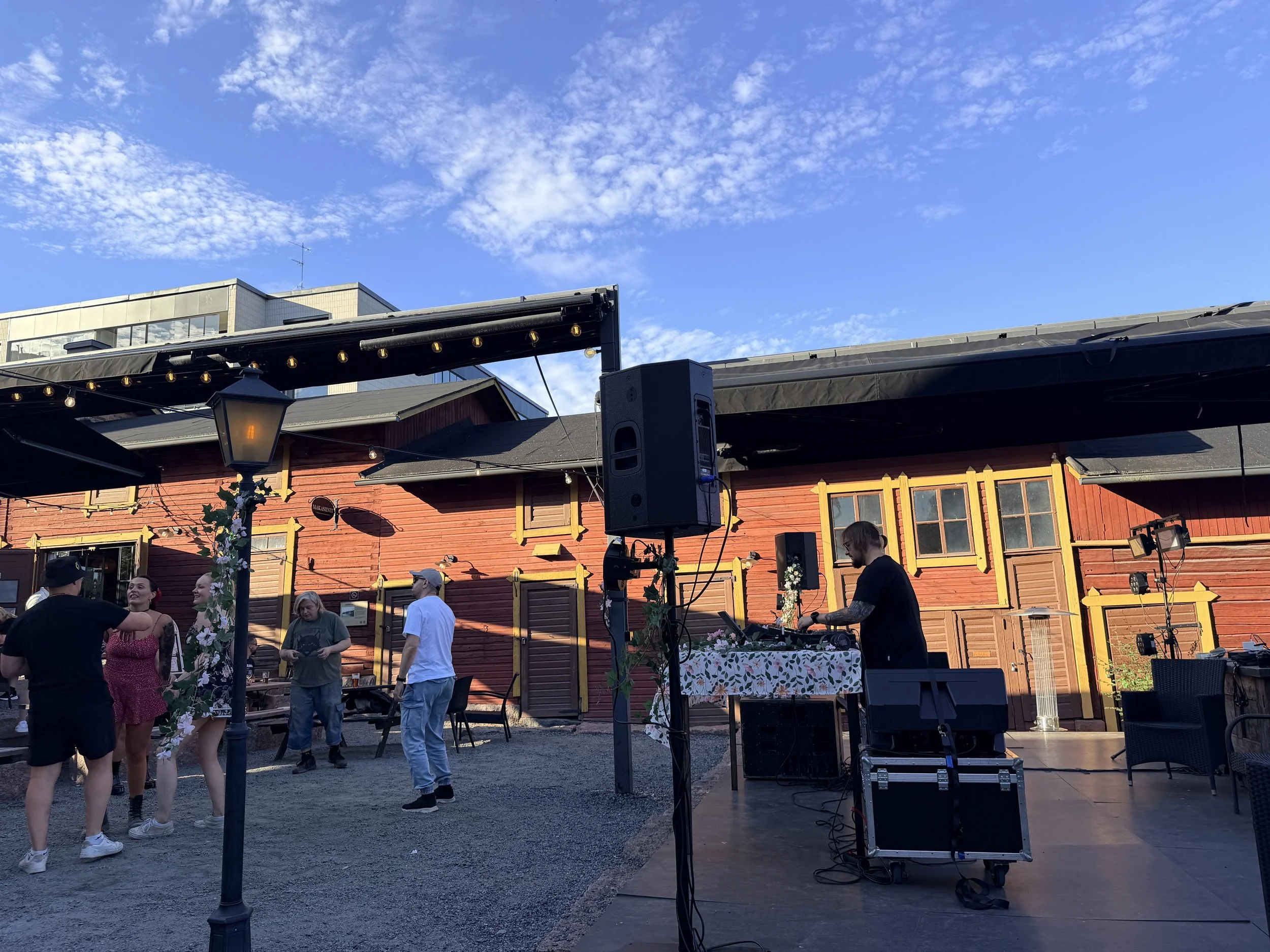
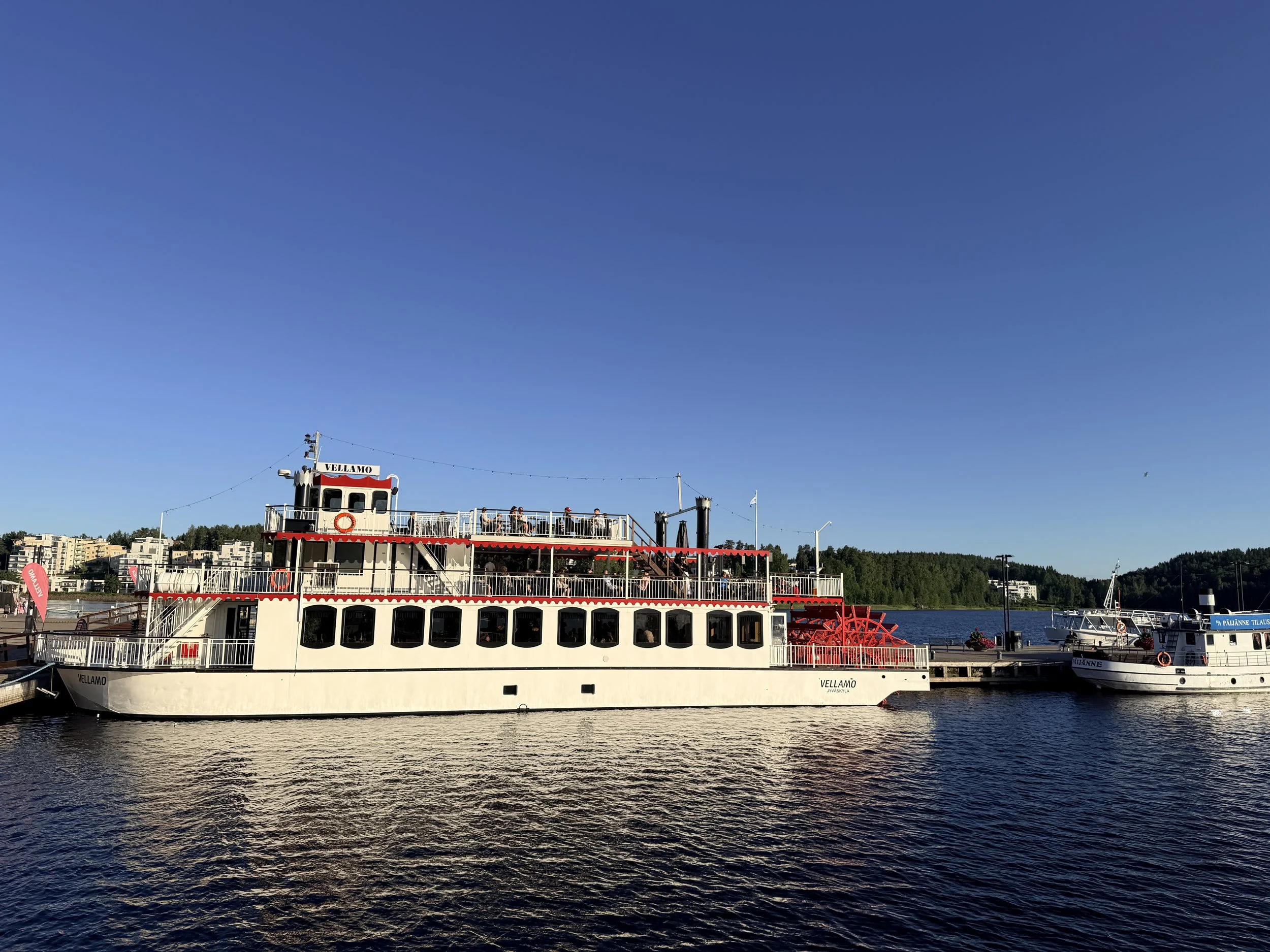
We found a restaurant aboard a boat and ordered a local beer, fish and chips, and a few appetizers while enjoying the beautiful lake view. As we relaxed, several sauna boats drifted slowly across the water, reminding us once again how deeply sauna is woven into Finnish life.
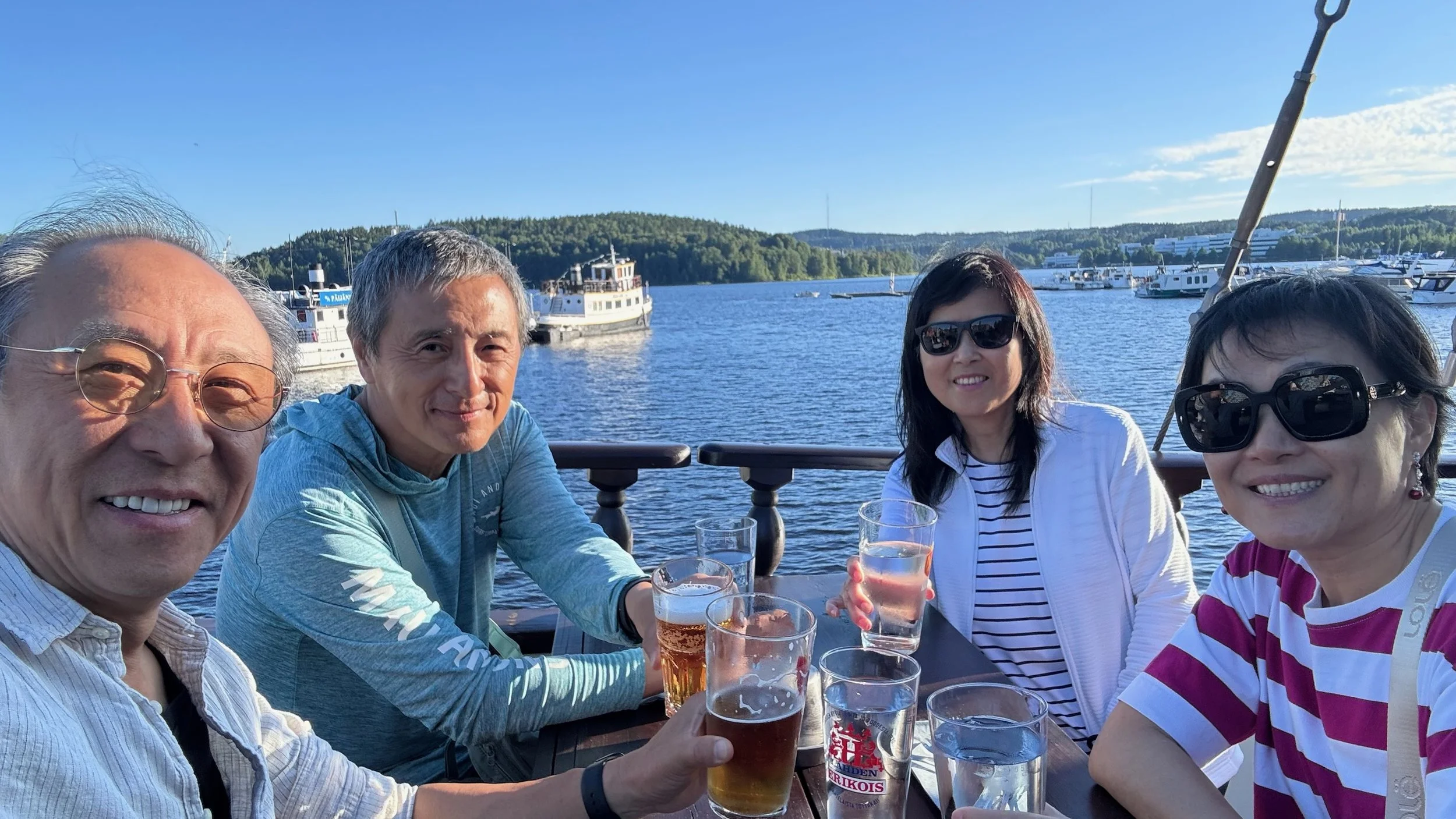
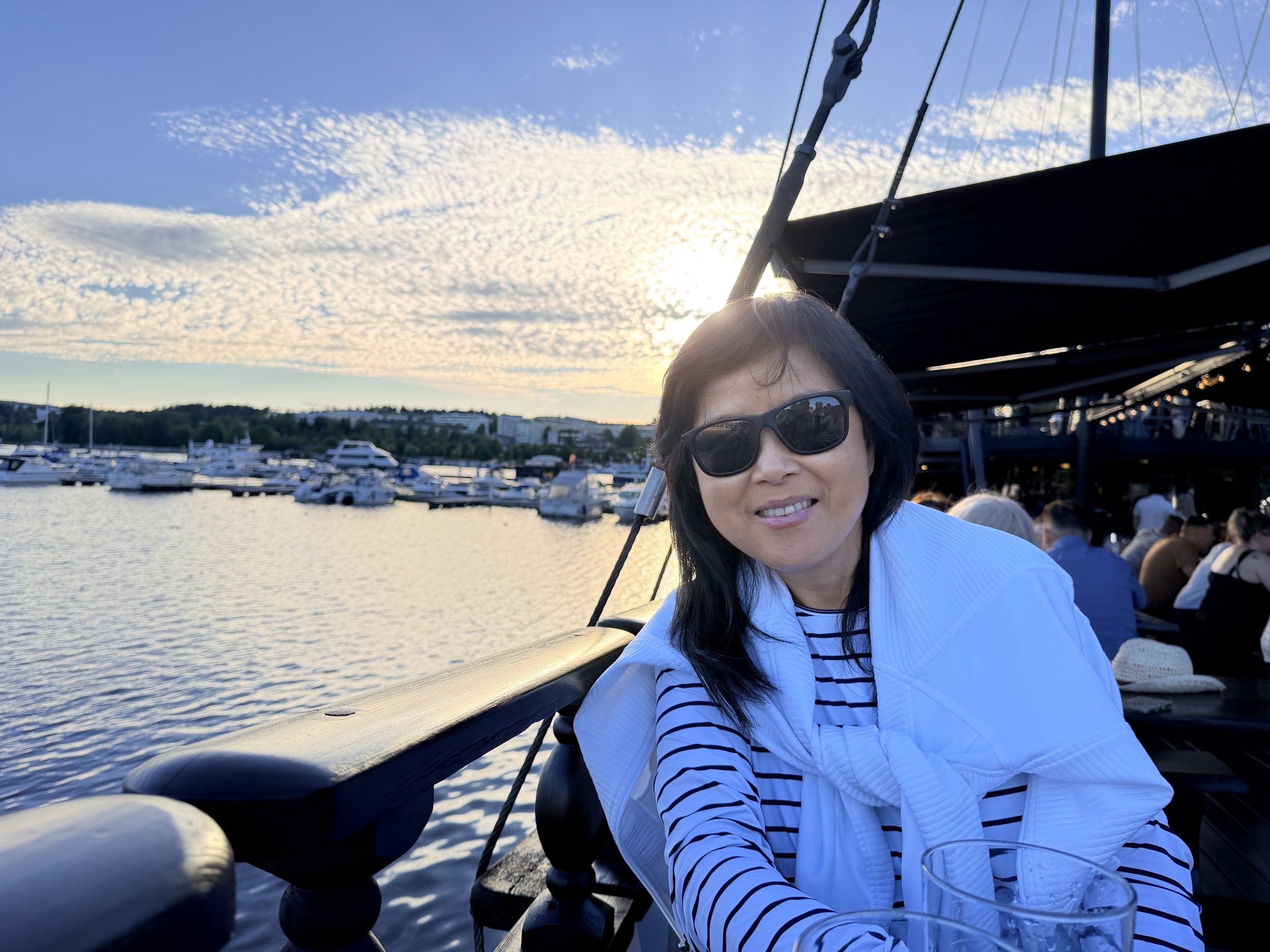
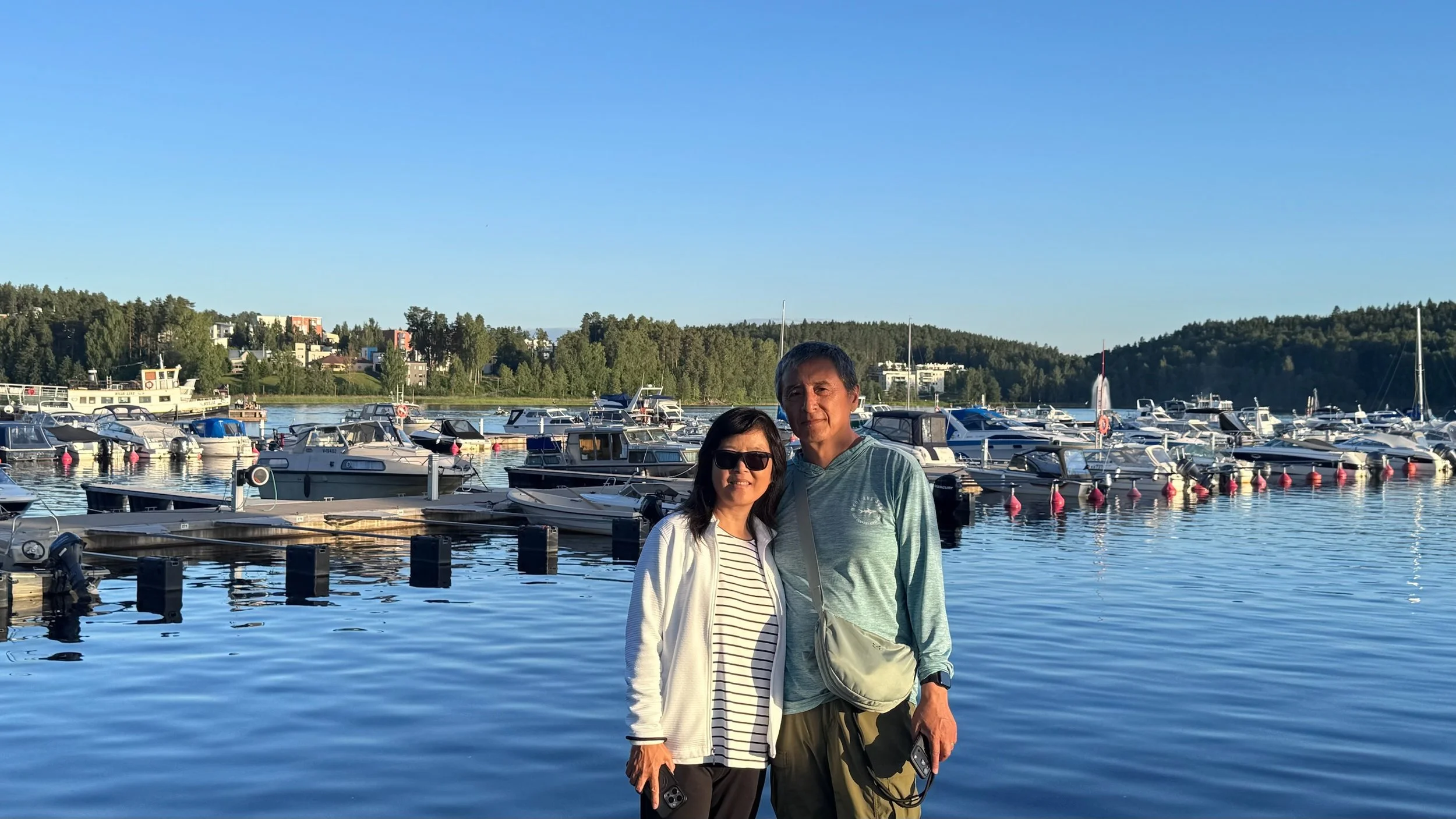
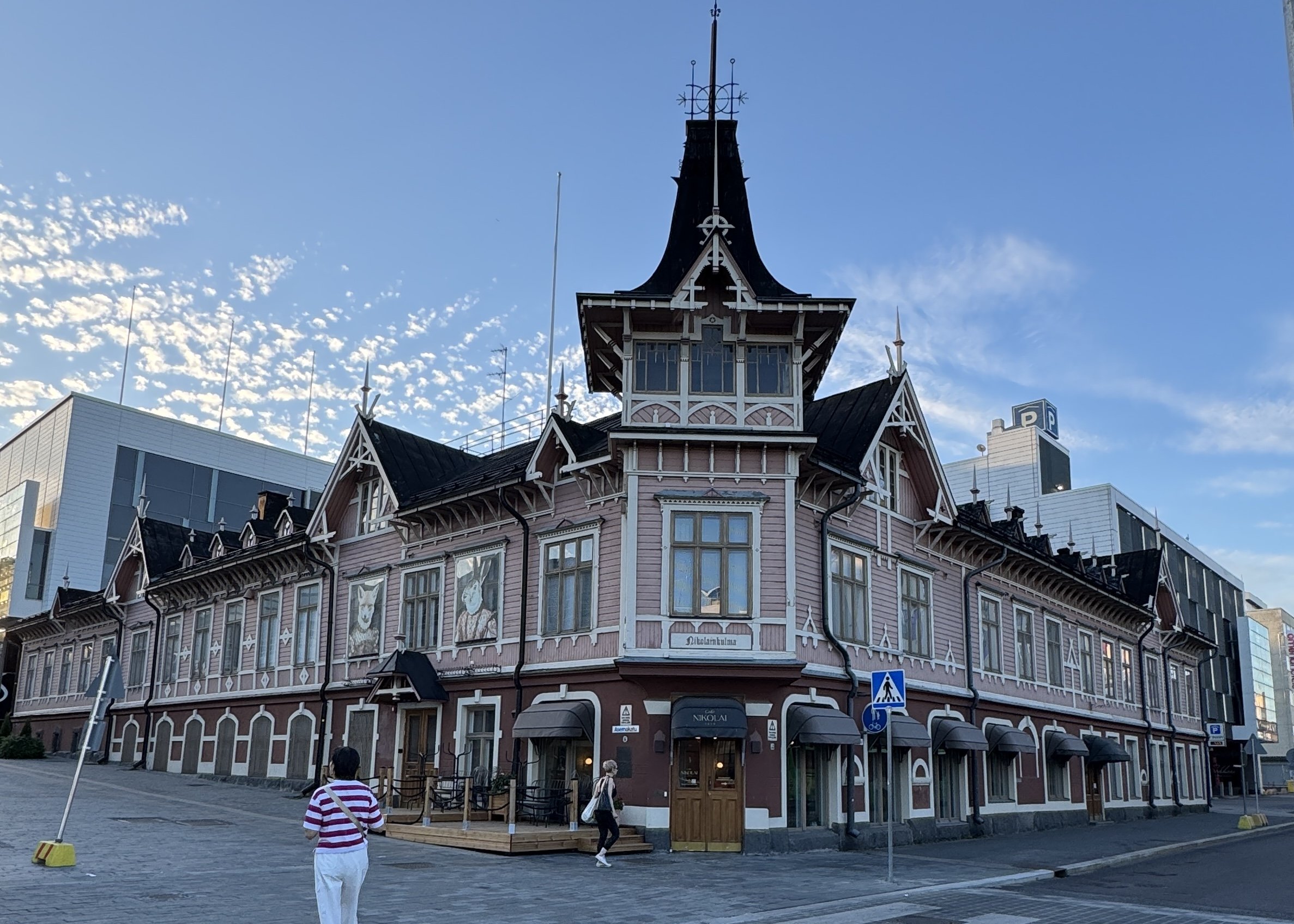
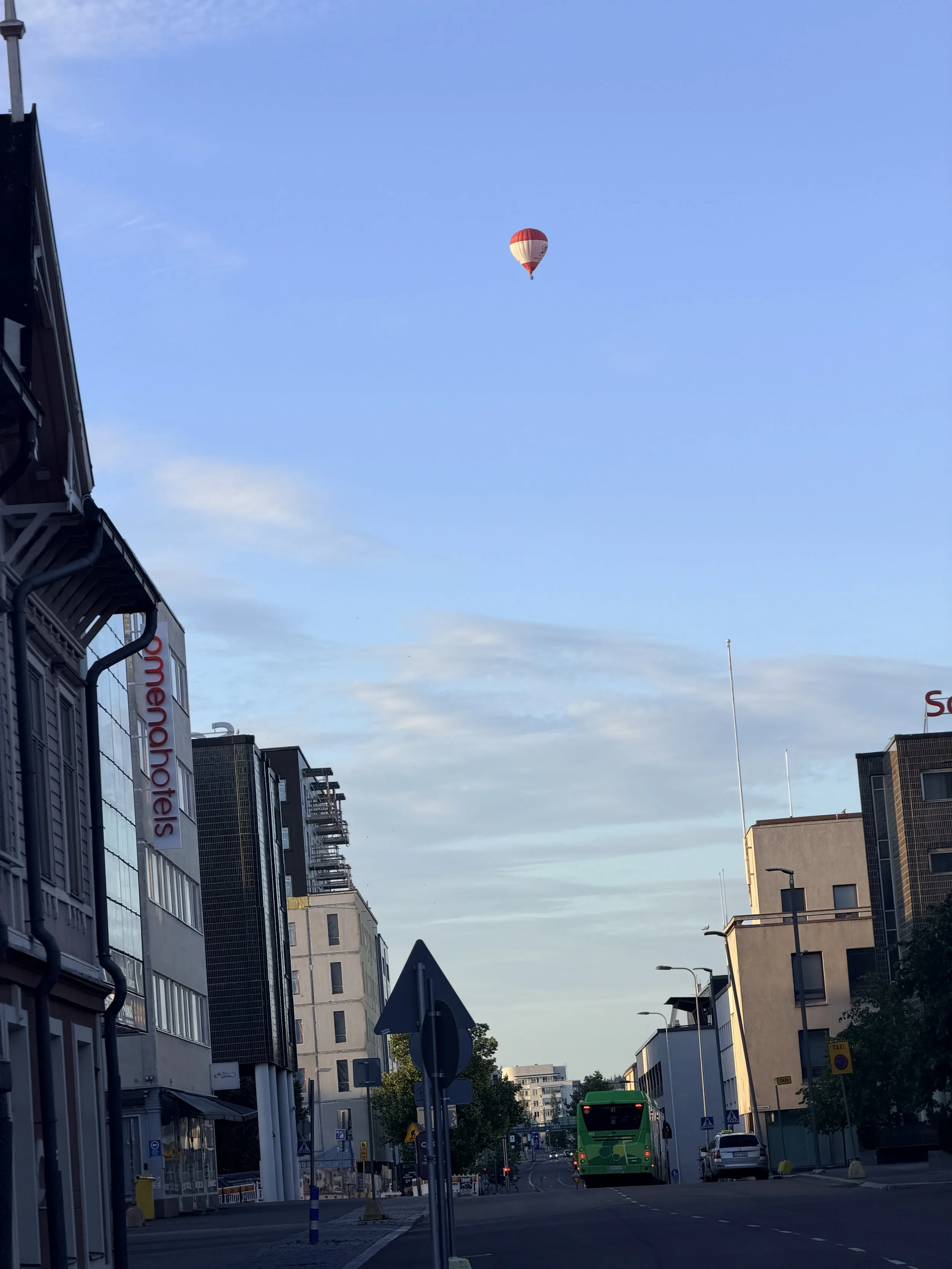
It felt like the Finnish way to travel—to slow down, relax, and savor the experience rather than rushing from one attraction to the next.
2026年7月17日
昨天,我们留在群岛海边的小木屋休息,而朋友俩则驱车前往图尔库(Turku)观光。我们几乎什么都没做,只是划着小船在宁静的海湾里悠闲漫游,在花园里呼吸着清新的空气,看天看海,尽情感受这里平和静谧的氛围。午餐烤了个挪威的冷冻披萨饼,非常好吃。下午朋友们回来后我们又一起继续享受芬兰的桑拿文化,当然还有朋友做的美味晚餐,这是轻松惬意的一天。
今天,我们离开图尔库群岛,驱车前往科利国家公园(Koli National Park)。为了尽量把每天的驾驶时间控制在五小时以内,我们计划在于中途的韦斯屈莱(Jyväskylä)停留一晚。
一路上,汽车穿梭于连绵的森林之间,经过无数湖泊,又一次次驶过跨越湖面的桥梁,充分展现了芬兰湖区(Lakeland)的迷人风光。难怪芬兰有“千湖之国”的美誉,事实上,全国拥有近18.8万个湖泊。
于韦斯屈莱位于芬兰湖区的中心地带。途中,我们在坦佩雷(Tampere)停下来吃午饭,找到了一家名叫“上海饭店”(Shanghai Restaurant)的中餐馆。连续吃了几天芬兰菜后,熟悉的中餐味道格外令人满足,而且出乎意料地不错。饭后,我们又逛了附近的集市,然后继续驱车前往于韦斯屈莱的维索酒店(Hotel Verso)。
Hotel Verso 位于市中心步行街内,地面道路禁止车辆通行,因此我们必须从地下停车场驶入,并将汽车停在酒店地下。
安顿好后,我们便出门游览这座城市。我们先登上哈留山(Harju Hill),希望能到观景塔俯瞰全城,却发现观景塔已经关闭。于是,我们慢慢走向湖边的步道和港口。那里热闹却不喧嚣,处处洋溢着悠闲自在的气息。
我们选了一家停泊在码头上的船餐厅,一边品尝当地啤酒、炸鱼薯条,炸鸡翅膀和几样小吃,一边欣赏美丽的湖景。期间,几艘桑拿船缓缓从湖面驶过,再次让我们感受到桑拿早已深深融入芬兰人的生活方式。
这或许就是世界最幸福国家芬兰人的旅行哲学——放慢脚步,放松心情,用心体验沿途的一切,而不是匆匆忙忙地赶往下一个景点。
A Day of Sauna and Sea 桑拿与海
July 15, 2026
Yesterday, we disembarked in Bergen and flew to Helsinki,……
昨天,我们在卑尔根下船后,。。。
July 15, 2026
Yesterday, we disembarked in Bergen and flew to Helsinki, the capital of Finland. After picking up our rental car, we immediately headed to a Chinese-Thai restaurant to satisfy our craving for Asian food after nearly two weeks without it.
From there, we drove to our Airbnb in the Turku Archipelago. Our summer cottage is nestled beside the Archipelago Sea, part of one of the world's largest archipelagos, with more than 40,000 islands and skerries. The calm water, mild temperature, and fresh sea air gave us a wonderful first impression of the area.
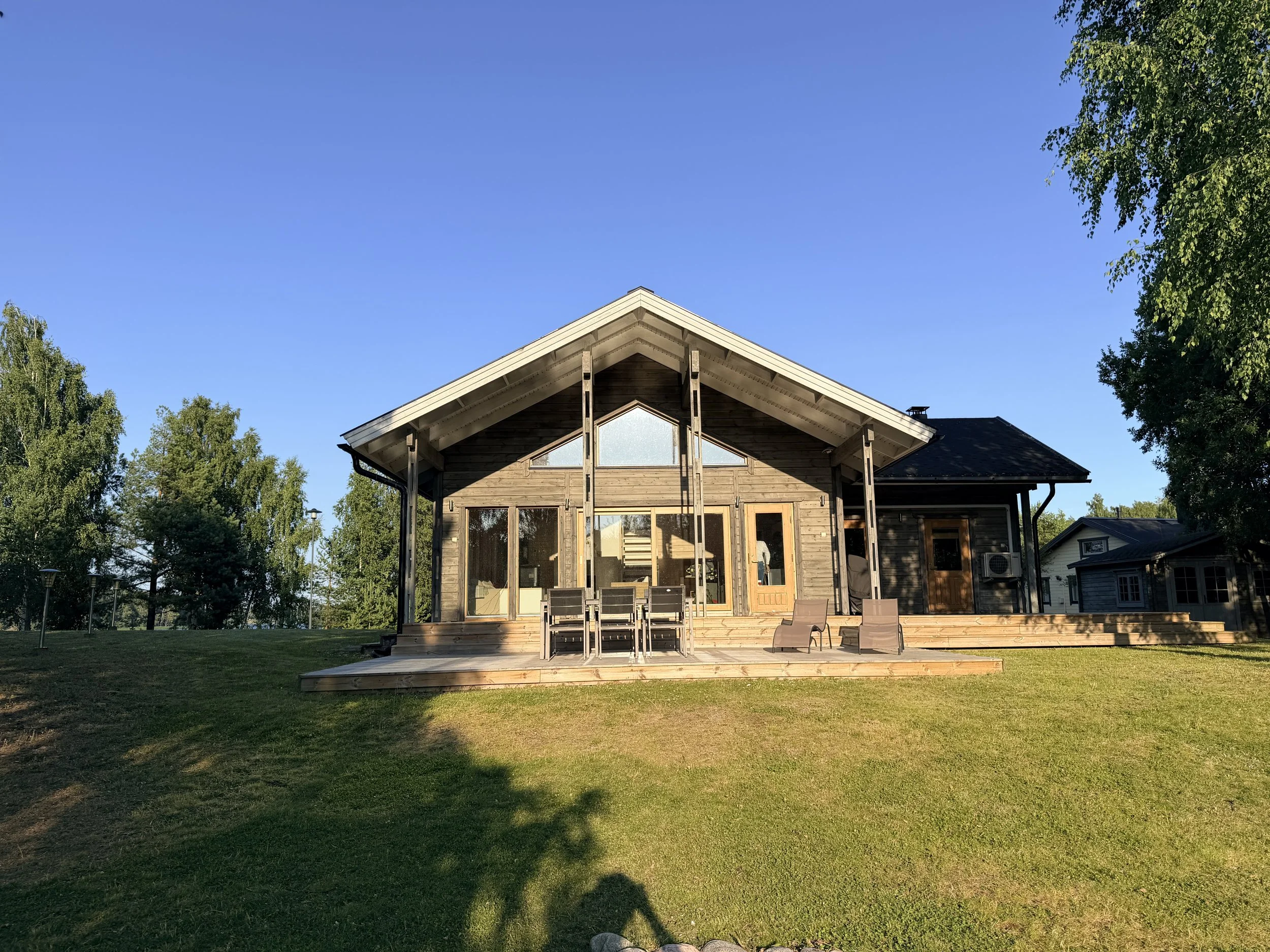
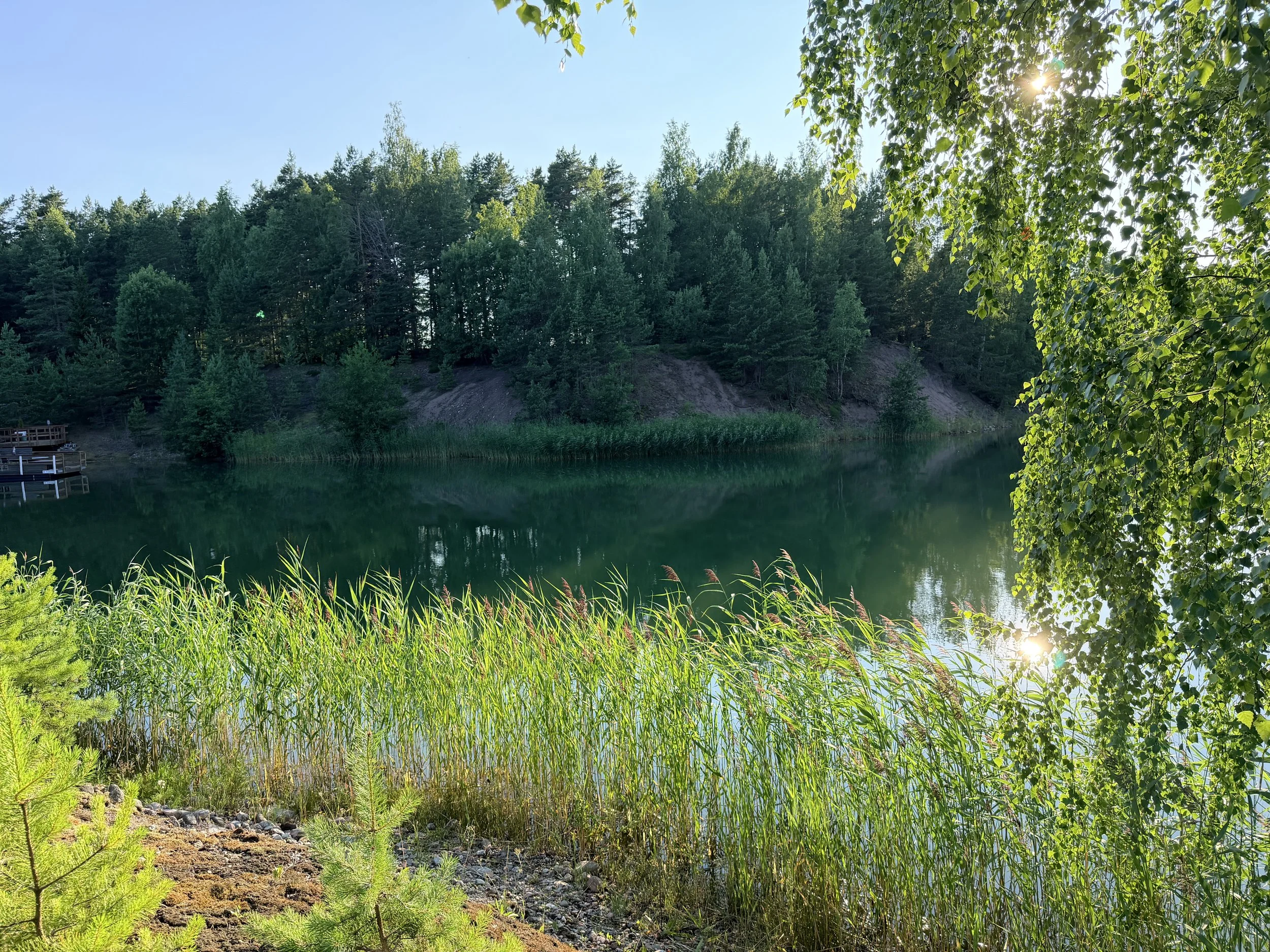
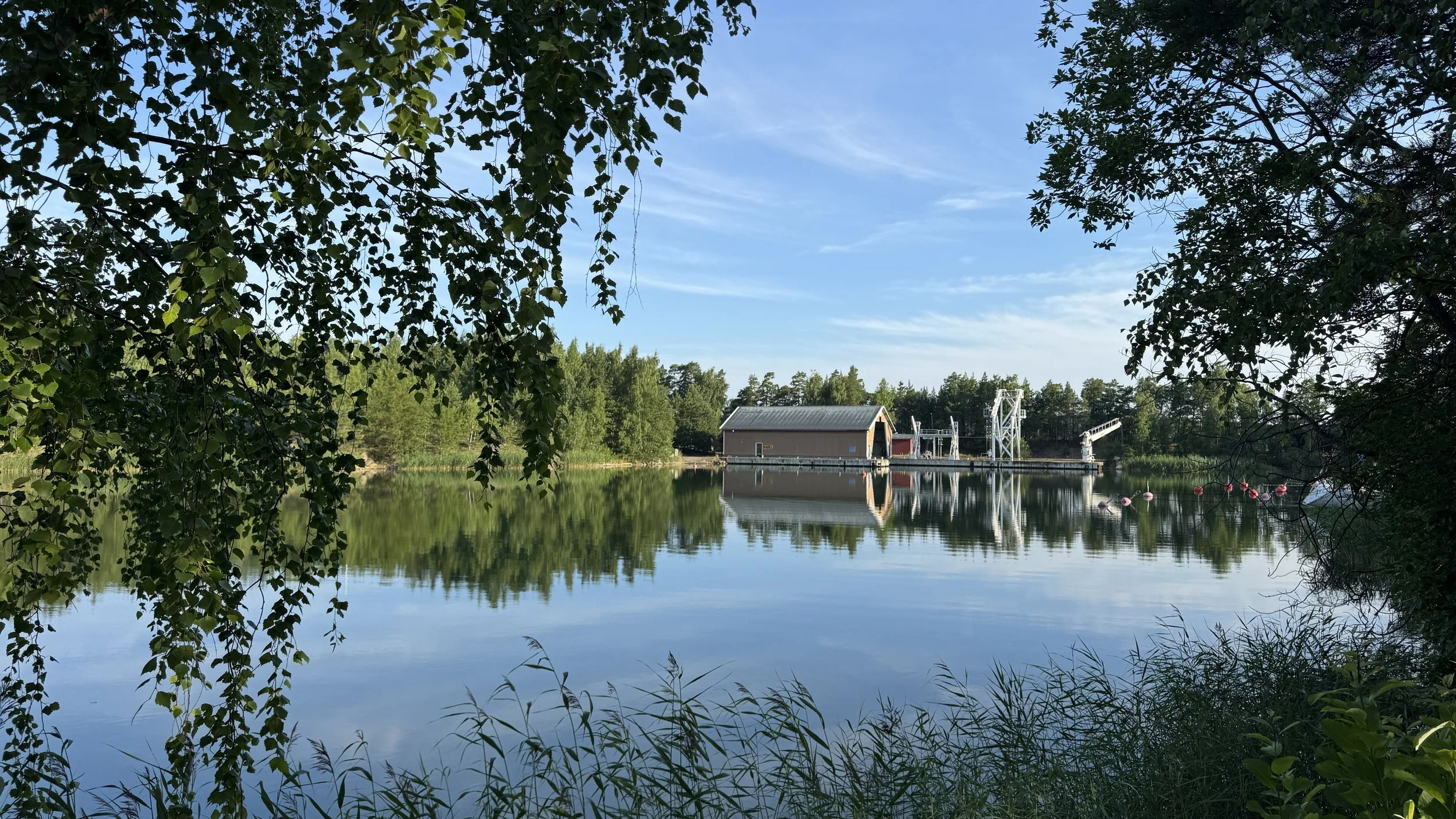
This morning, we enjoyed a simple breakfast of coffee, croissants, and boiled eggs while taking in the surreal view outside our window.
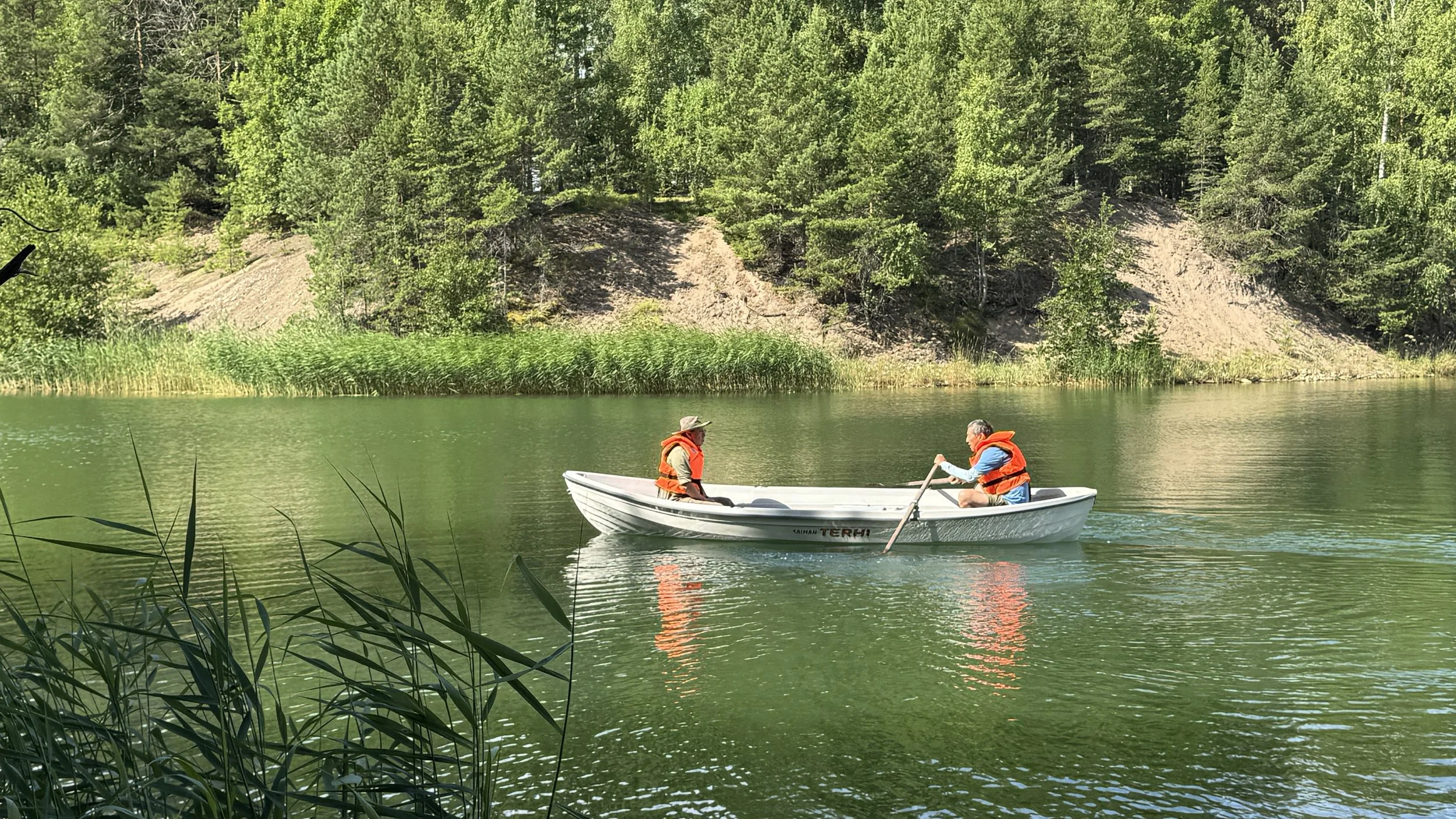
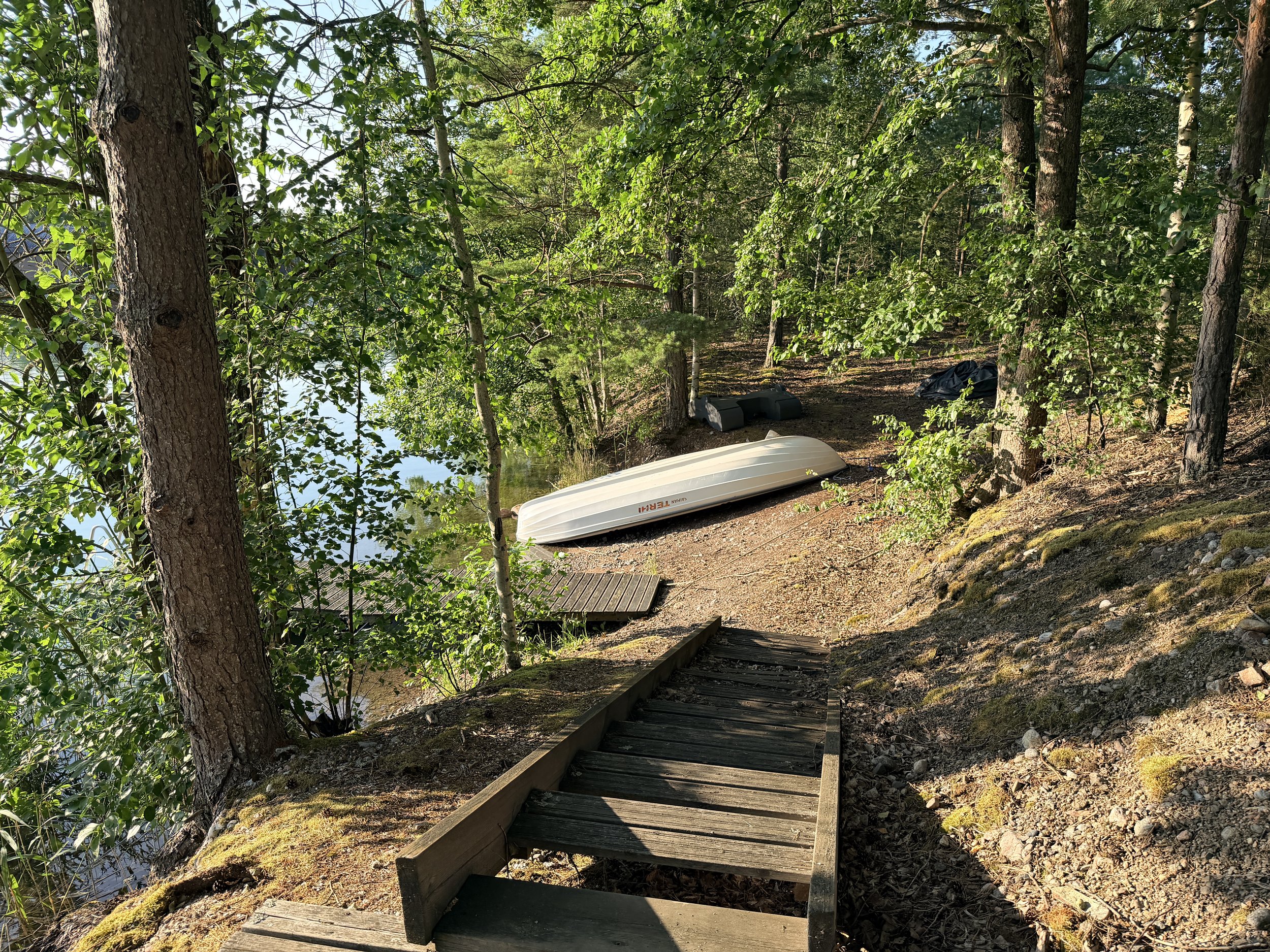
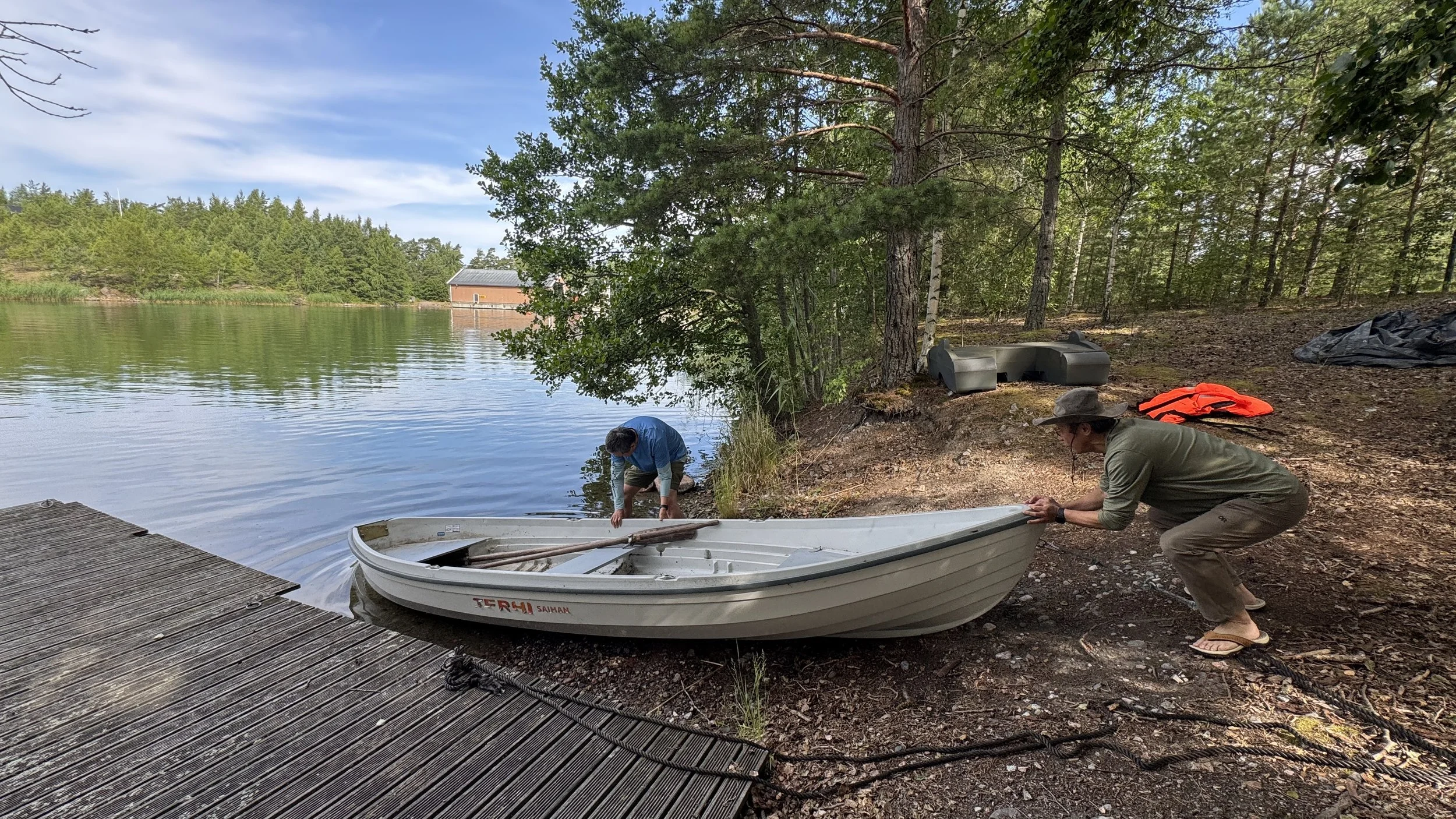
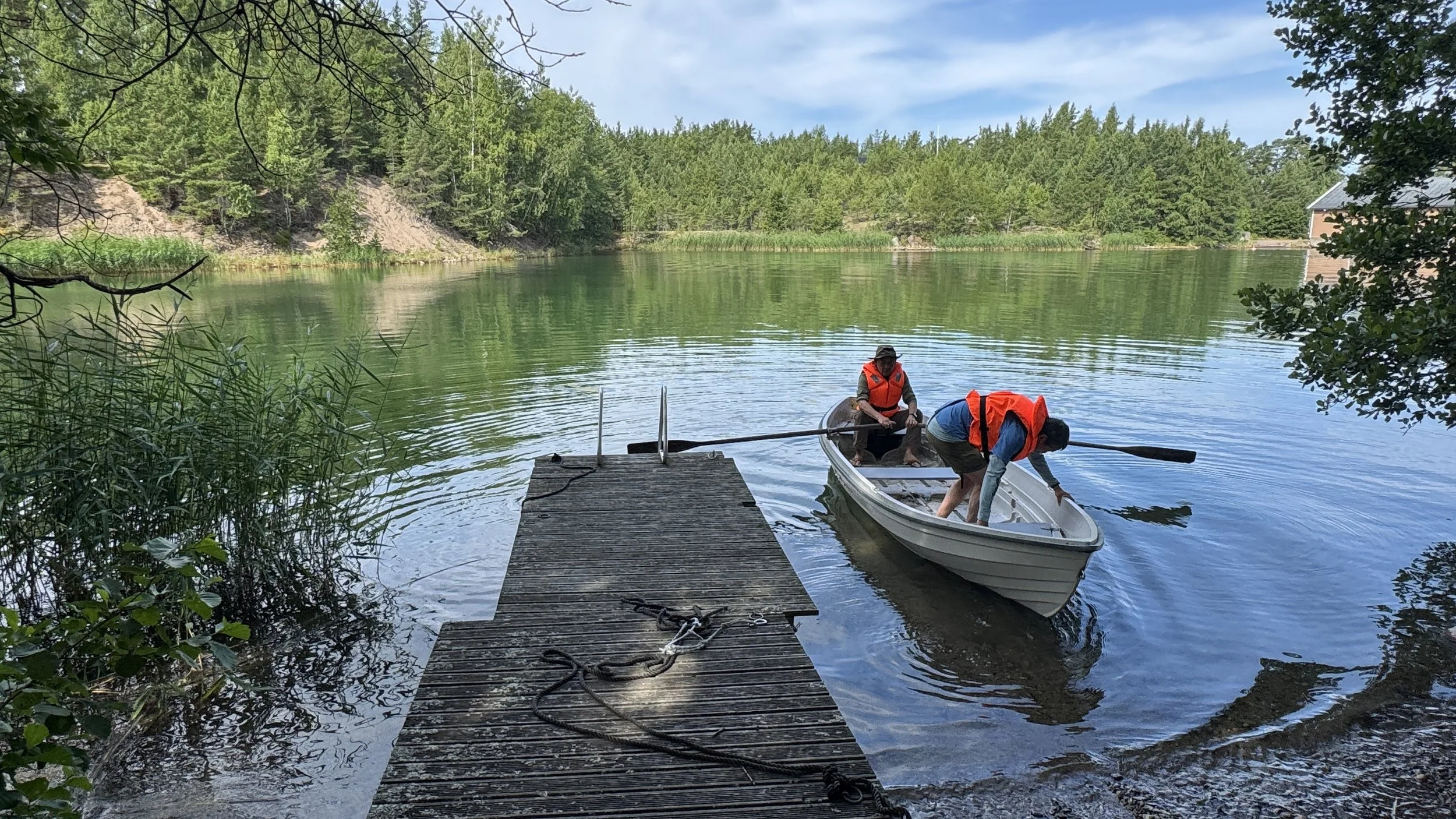
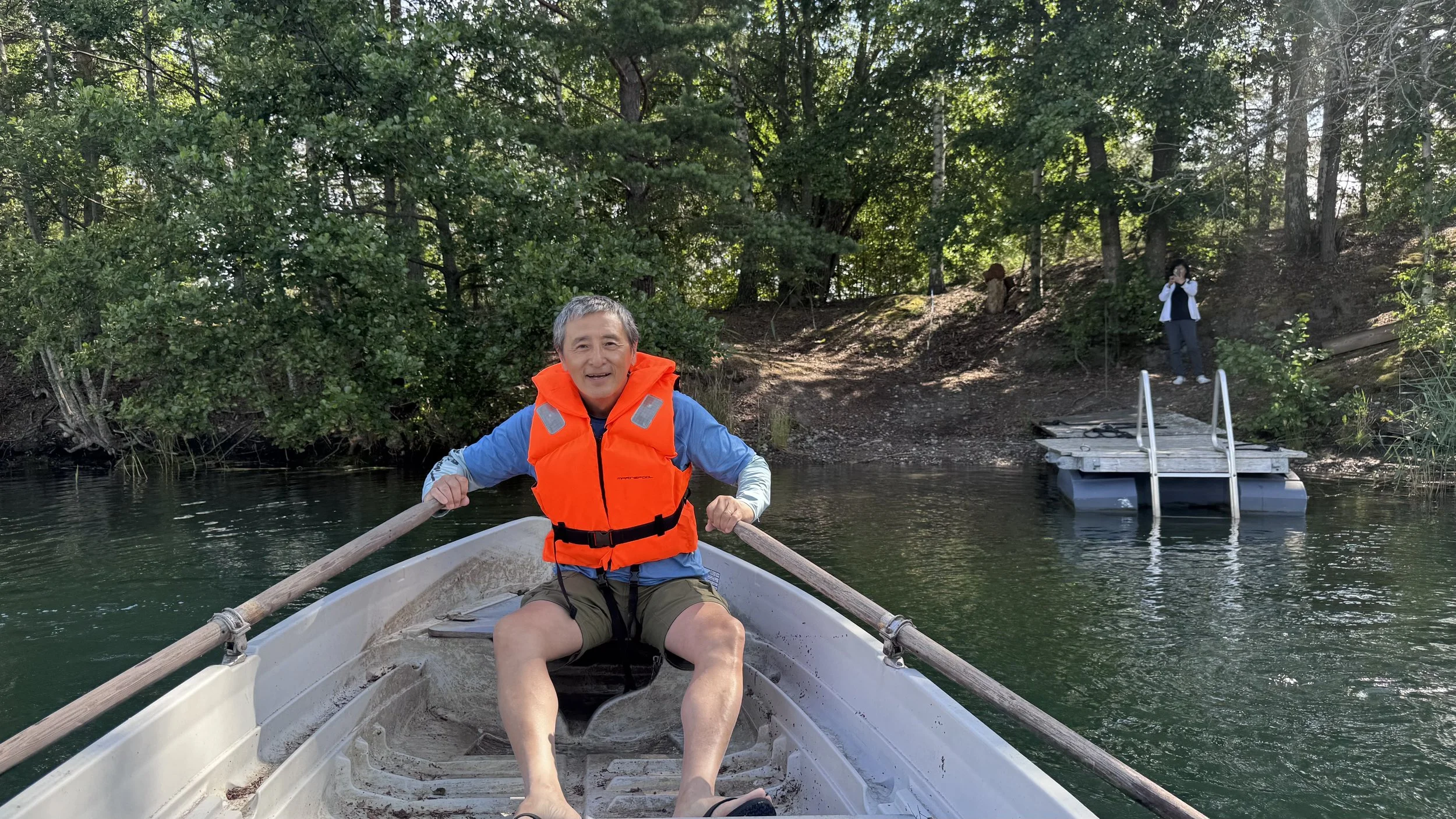
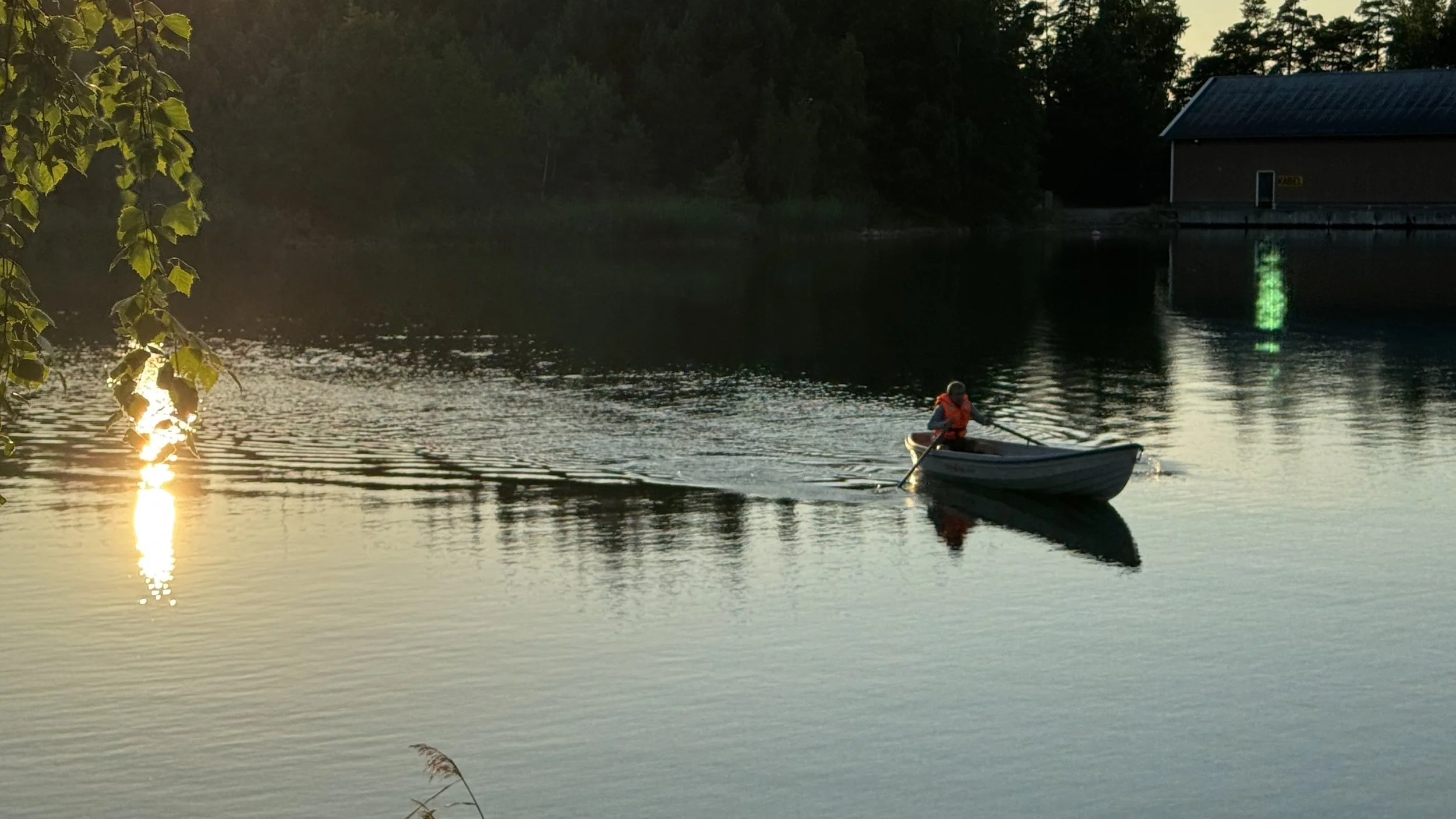
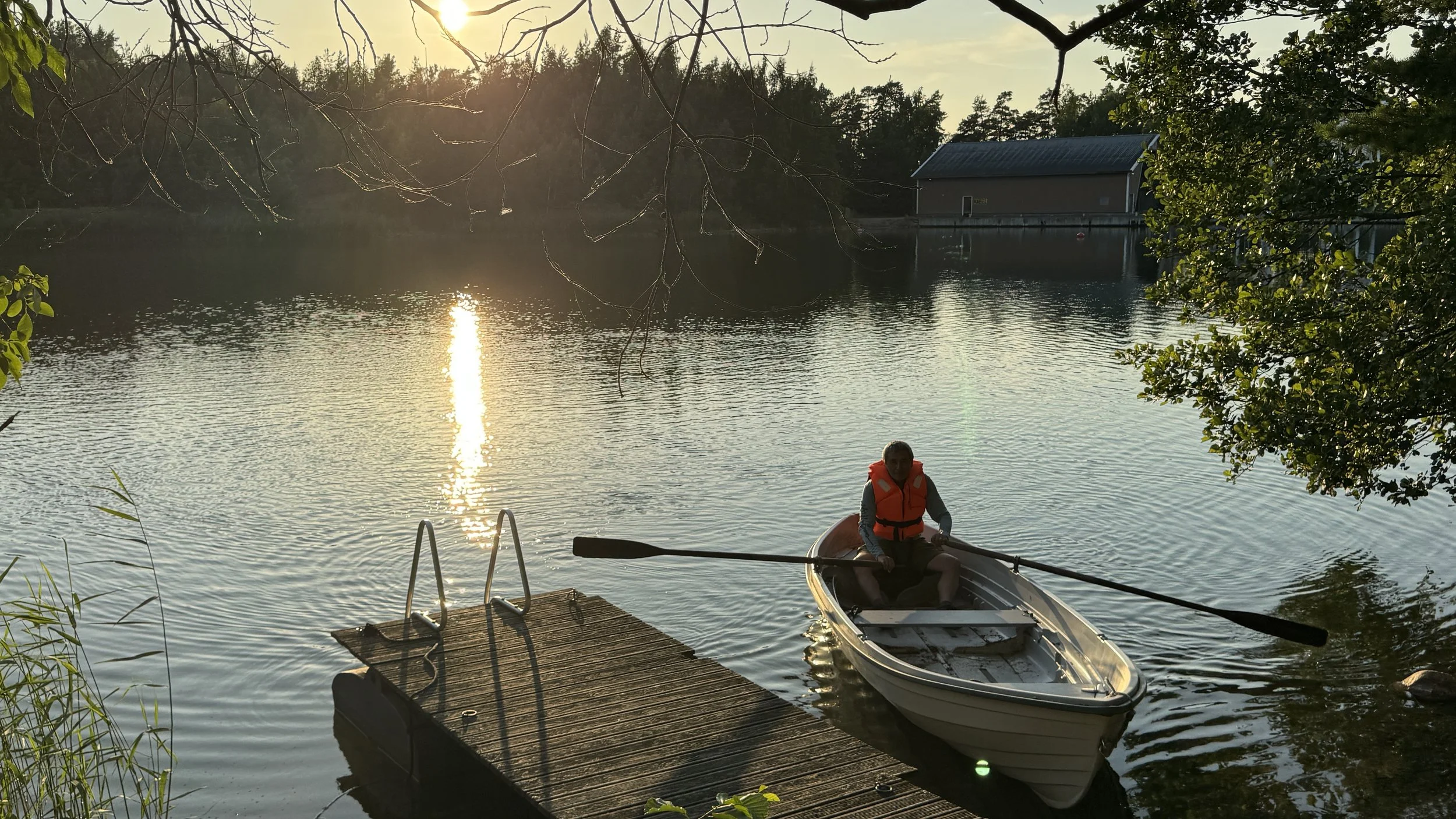
After breakfast, it was time for our first adventure. We pushed a small rowboat into the water and paddled around the quiet bay near the cottage, wearing life jackets—at our wives' insistence. Gliding across the calm water was peaceful and surprisingly enjoyable.
If Norway is a hiker's paradise, Finland is the land of saunas. There are roughly as many saunas as people in Finland—about one sauna for every two residents—so naturally our rental cottage has one as well. This morning, I met our neighbor across the road. He recommended heating the sauna to at least 80°C, enjoying the heat for 15 minutes or longer, then taking a dip in the sea before returning to the sauna—a classic Finnish tradition.
This afternoon, I decided to experience it for myself.
We first heated the wood-fired sauna, a process that took a couple of hours. Once the temperature reached about 80°C, we stepped inside and regularly poured water over the hot stones. Each splash released a burst of steam (löyly), making the sauna feel even hotter—probably close to 90°C. After about fifteen minutes, I walked down to the sea and swam for a minute or two before returning to the sauna for another round.
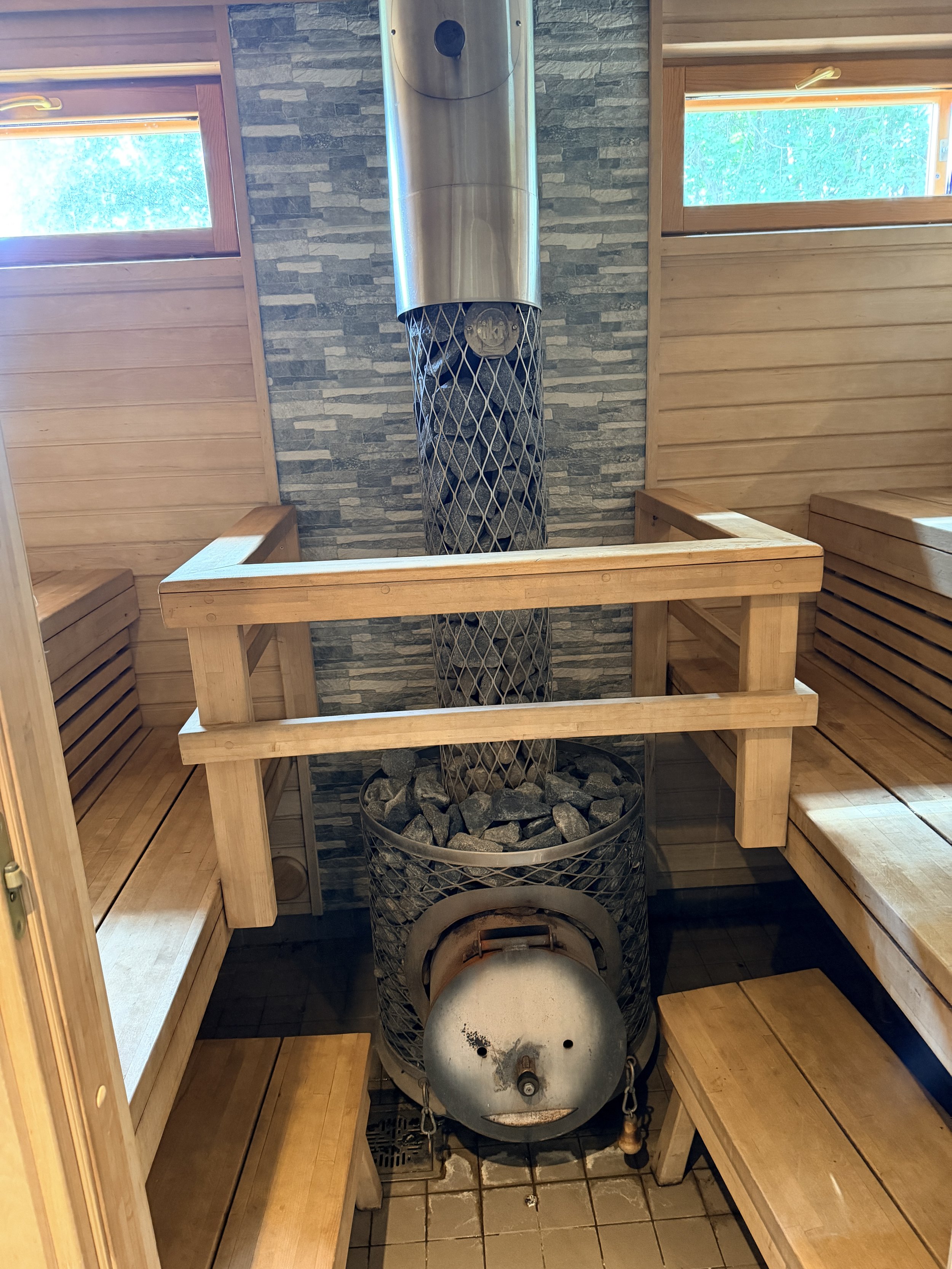
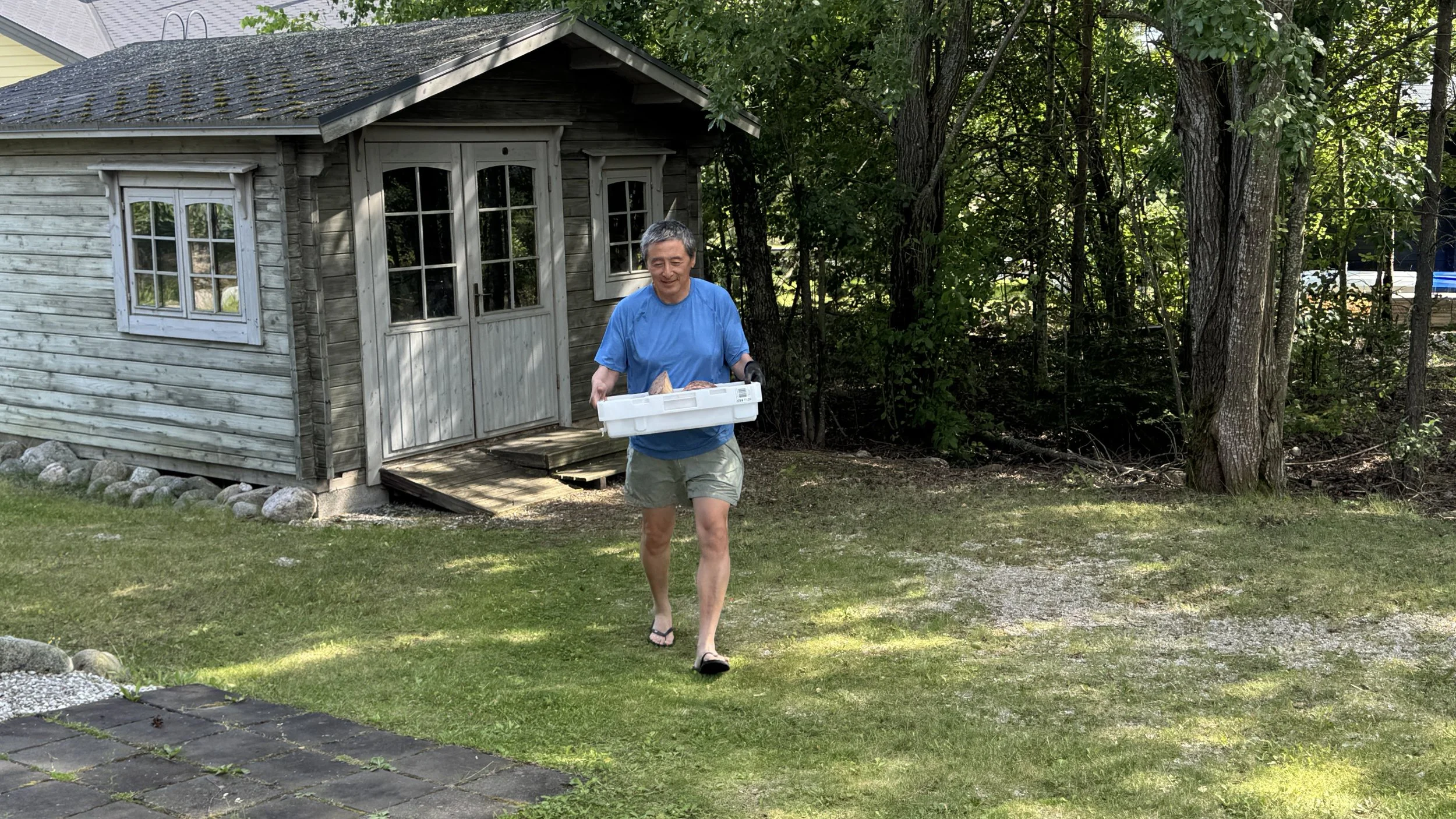
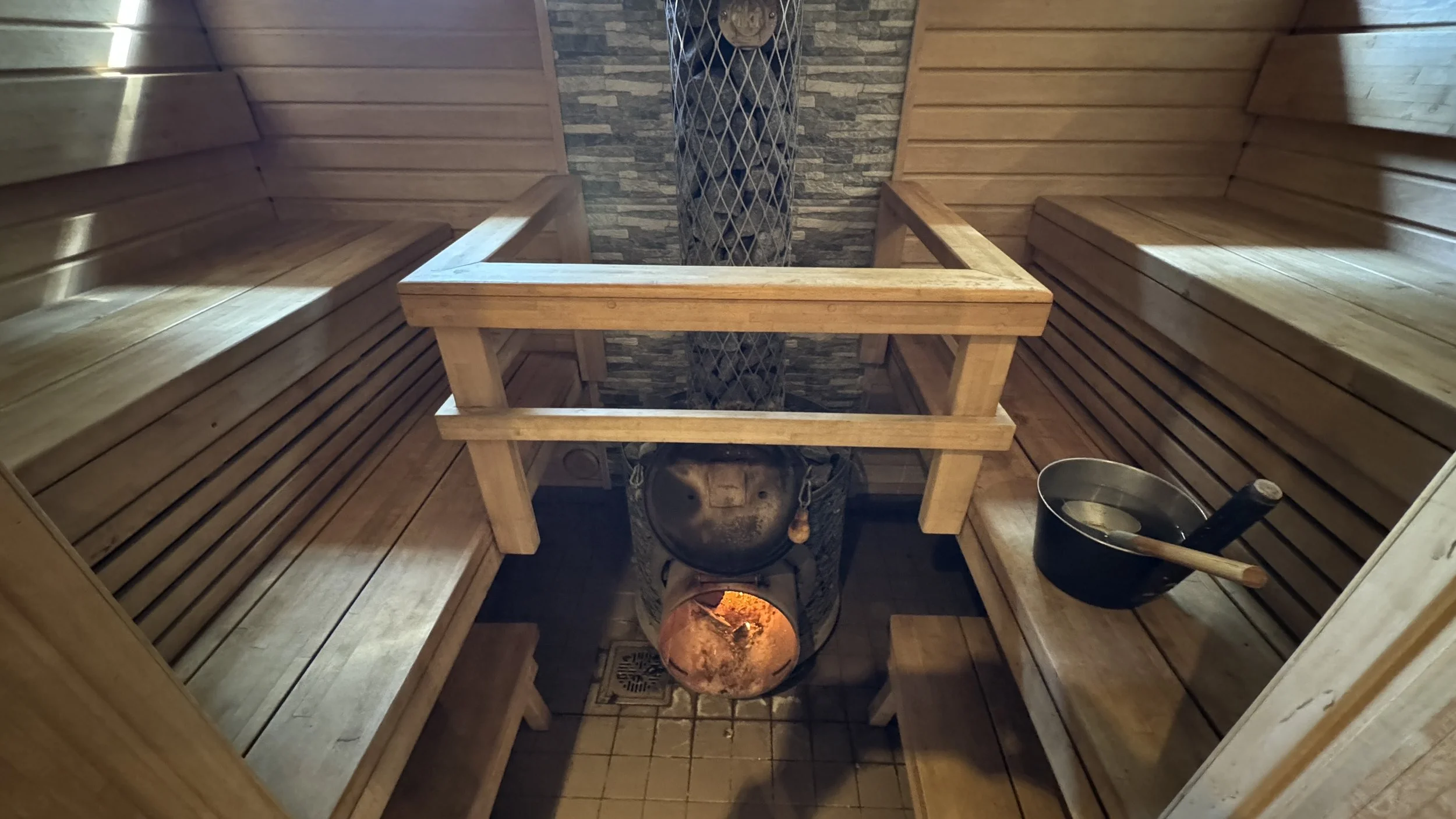
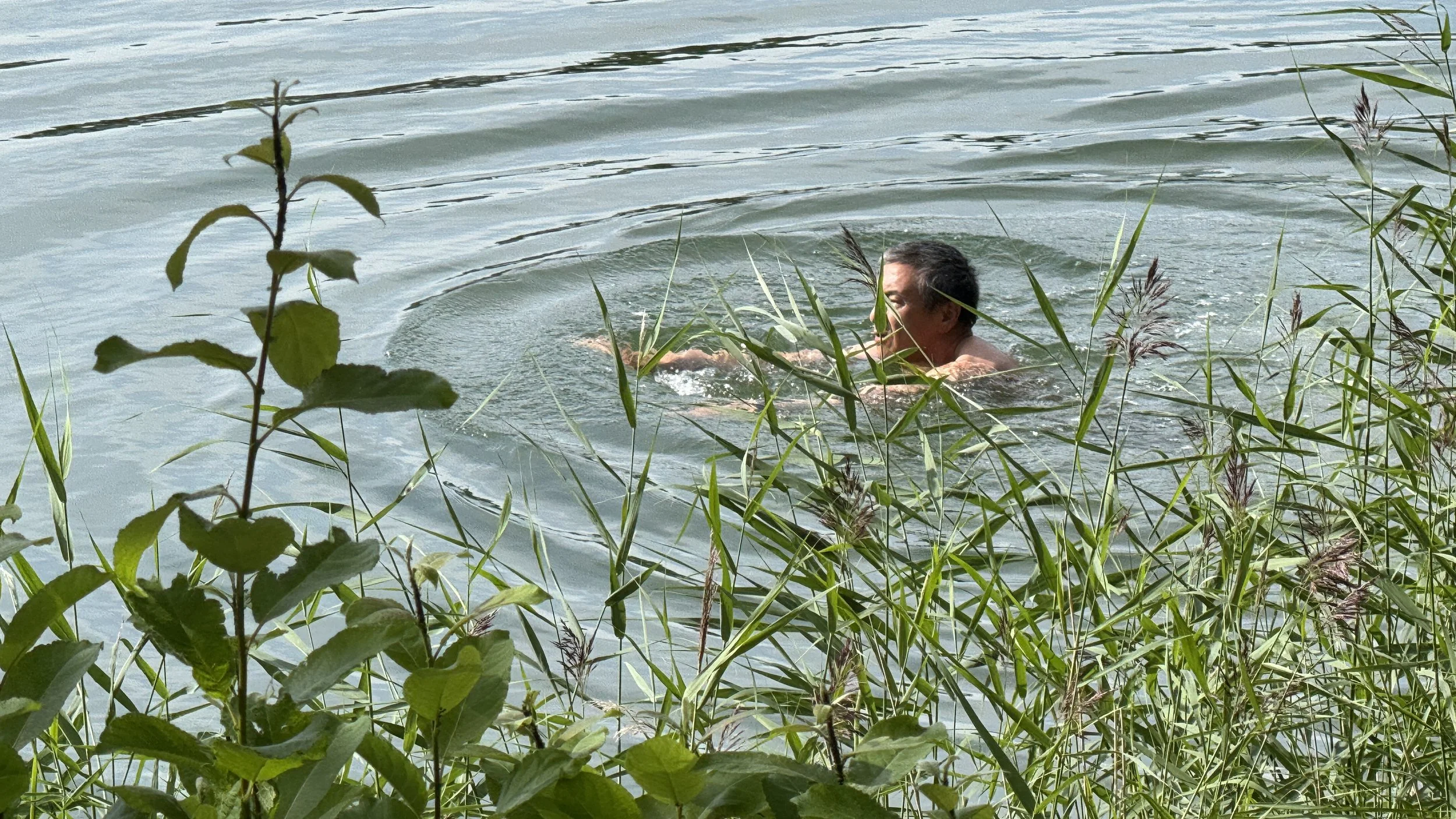
The contrast between the intense heat and the cool seawater was invigorating. By the end, I felt completely relaxed and refreshed. I can certainly understand why the sauna is such an important part of Finnish life, and I am beginning to appreciate this unique Finnish tradition.
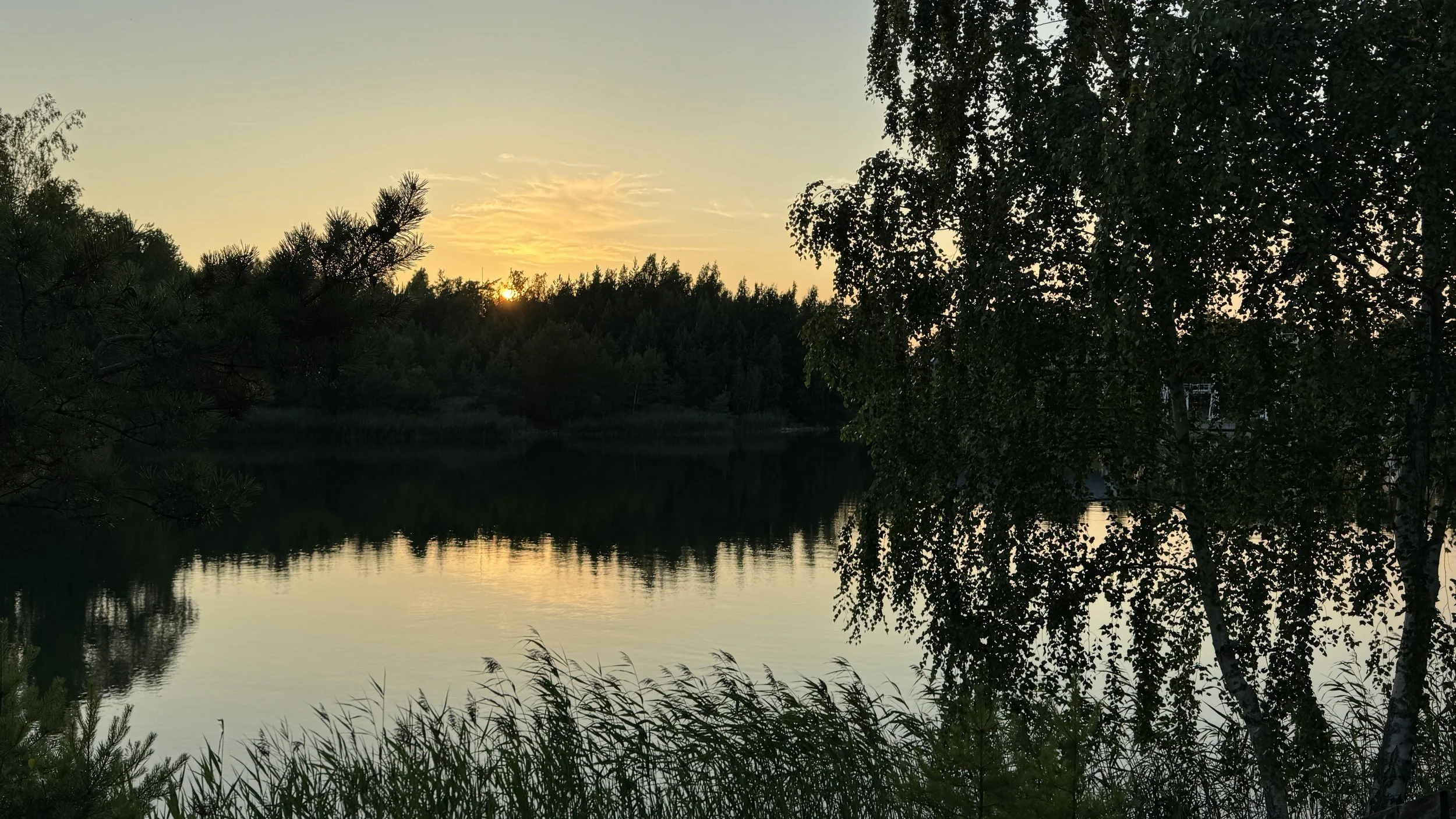
After dinner, we took a leisurely walk around the neighborhood, admiring the beautiful homes and the peaceful surroundings. As the sun began to set, I took the rowboat out once more and paddled across the tranquil bay. It was a peaceful and memorable way to end our first full day in Finland.
2026年7月15日
昨天,我们在卑尔根(Bergen)下船后,搭机飞往芬兰首都赫尔辛基(Helsinki),拿到租车后,我们第一件事就是直奔一家中国小餐厅。连续两个星期没有吃亚洲菜,终于可以好好满足一下中国胃,那怕只是泰国式的中餐,也已心满意足。
随后,我们驱车来到位于图尔库群岛(Turku Archipelago)的 Airbnb。租住的夏季度假小屋坐落在群岛海(Archipelago Sea)畔,这里拥有四万多个岛屿和礁石,是世界上最大的群岛之一。宁静的海湾、宜人的气温和清新的海风,都给我们留下了极佳的第一印象。
今天早晨,我们一边享用简单的早餐——咖啡、羊角面包和水煮蛋,一边欣赏窗外如画般梦幻的景色。
早餐后,我们开始了今天的第一项活动。我们将一艘小划艇推进海里,穿上救生衣——当然,这是在太太们的坚持下——然后划着船,在小屋附近宁静的海湾水道悠闲漫游。小船缓缓划过平静的水面,四周一片宁静,只听见船桨划水的声音,令人心旷神怡。
群岛海(Archipelago Sea)属于波罗的海(Baltic Sea)的一部分,位于波的尼亚湾(Gulf of Bothnia)和芬兰湾(Gulf of Finland)之间。由于波罗的海与外海相连,同时又有大量河流注入淡水,这里的海水呈微咸(半咸水)状态。岸边绿树成荫,星罗棋布的岛屿和礁石散布在海面上,共同构成了一幅宁静秀美的北欧夏日画卷。
如果说挪威是徒步的天堂,那么芬兰就是桑拿的国度。芬兰平均每两个人就拥有一间桑拿房,因此我们的度假小屋自然也配备了一间。今天早上,我遇到了住在对面的邻居。他建议我们把木柴桑拿加热到至少 80℃,在里面待上十五分钟以上,然后跳进海里游泳,再回到桑拿房继续享受热气。这正是最经典、最地道的芬兰桑拿文化。
下午,我终于亲身体验了一番。我们先花了两个多小时将木柴桑拿烧热。当桑拿屋室内温度升到约 80℃ 后,我们走进桑拿屋,不时将水泼在炽热的桑拿石上。随着热水瞬间化作蒸汽(芬兰语称 löyly),整个人立刻被热浪包围。不久桑拿房温度已接近 90℃,待了约十五分钟后,我走到海边,在清凉的海水中游了一两分钟,然后再回到桑拿房继续享受第二轮高温。
炙热的桑拿与冰凉的海水形成了强烈而奇妙的对比,让人精神为之一振,身体也彻底放松下来。直到这时,我才真正体会到,为什么桑拿会成为芬兰人生活中不可或缺的一部分,也开始真正欣赏这项独特的芬兰传统。
晚饭后,我们悠闲地在社区里散步,欣赏一栋栋精致漂亮的住宅和宁静的海边景色。夕阳西下时,我又独自划着小船,在金色的晚霞映照下的平静海湾中缓缓前行,度过了愉快的一天。
Ålesund and Sæbø 奥勒松与赛博
July 13, 2026
This was our final day on Hurtigruten's 14-day Svalbard Line, ……
今天是我们参加 Hurtigruten 14天北极游斯瓦尔巴航线的最后一天,。。。
July 13, 2026
This was our final day on Hurtigruten's 14-day Svalbard Line, and we visited two memorable ports.
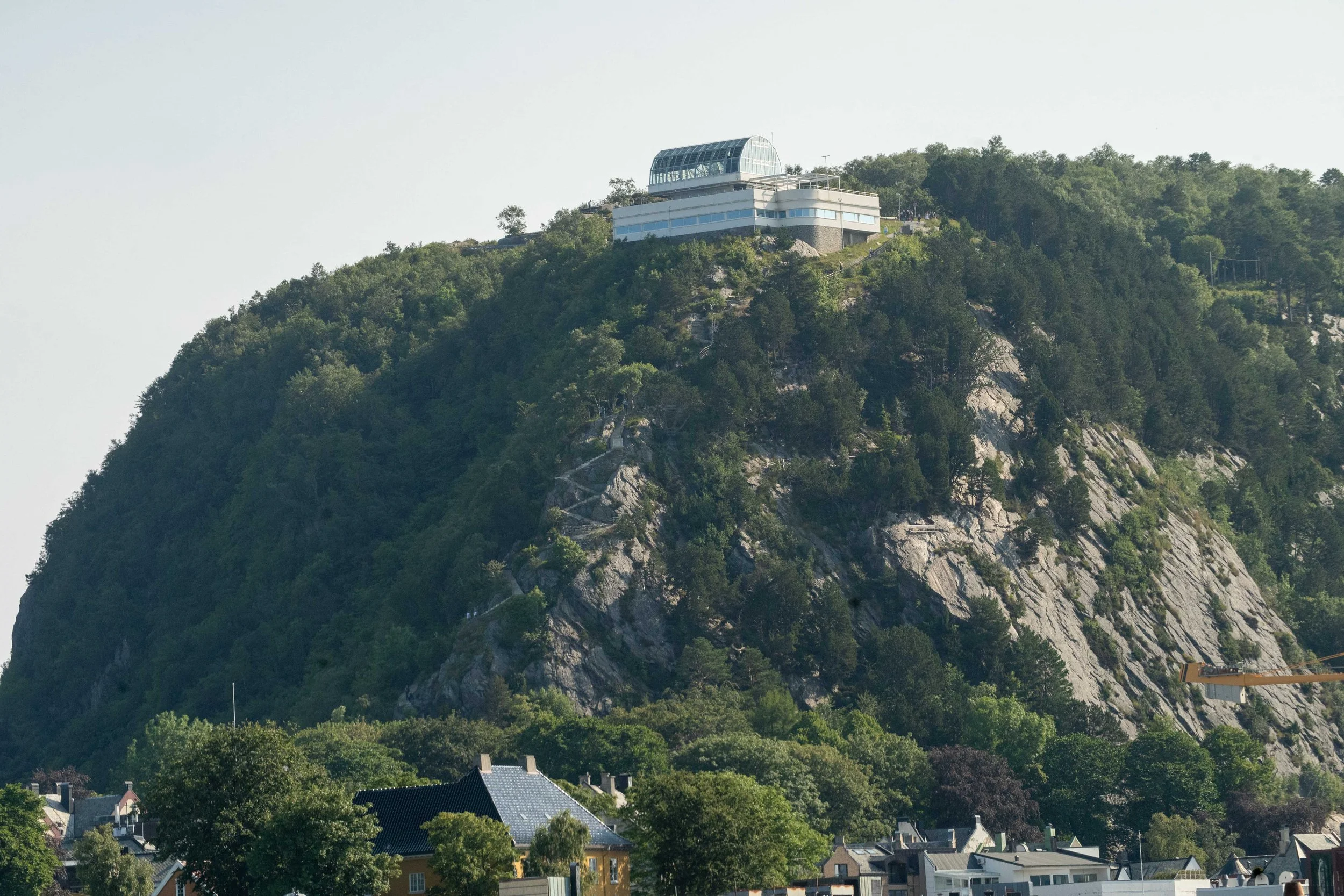
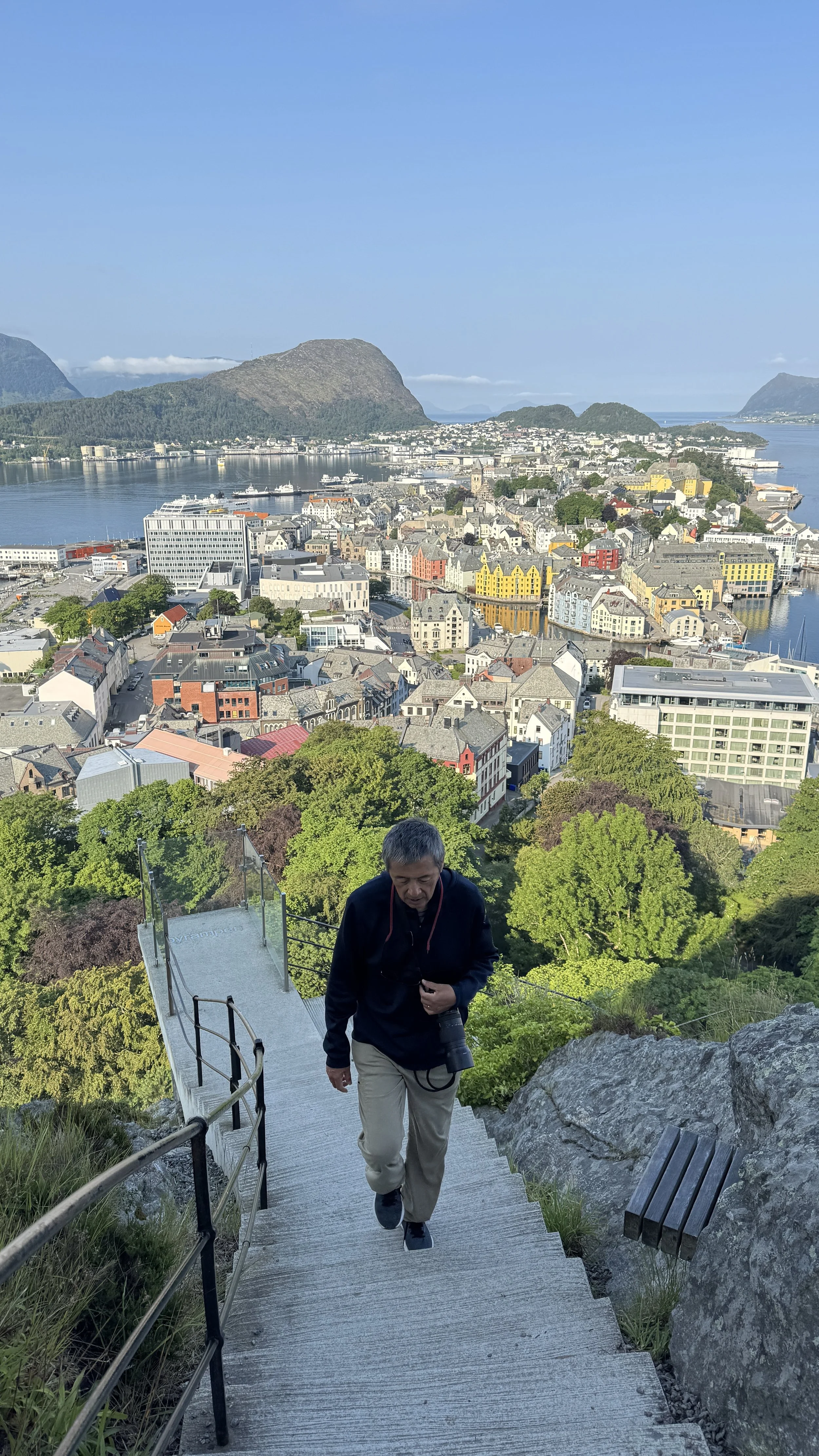
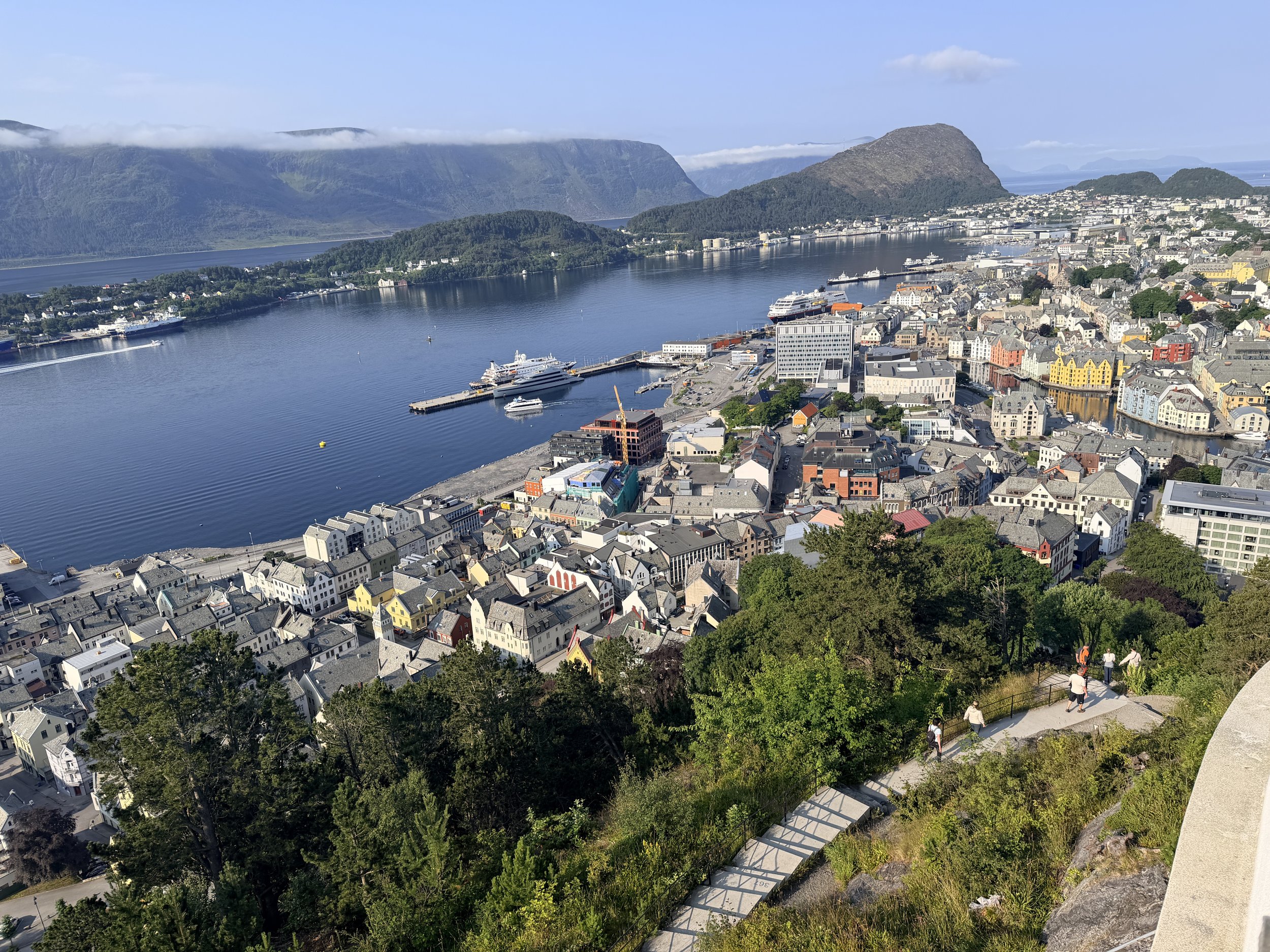
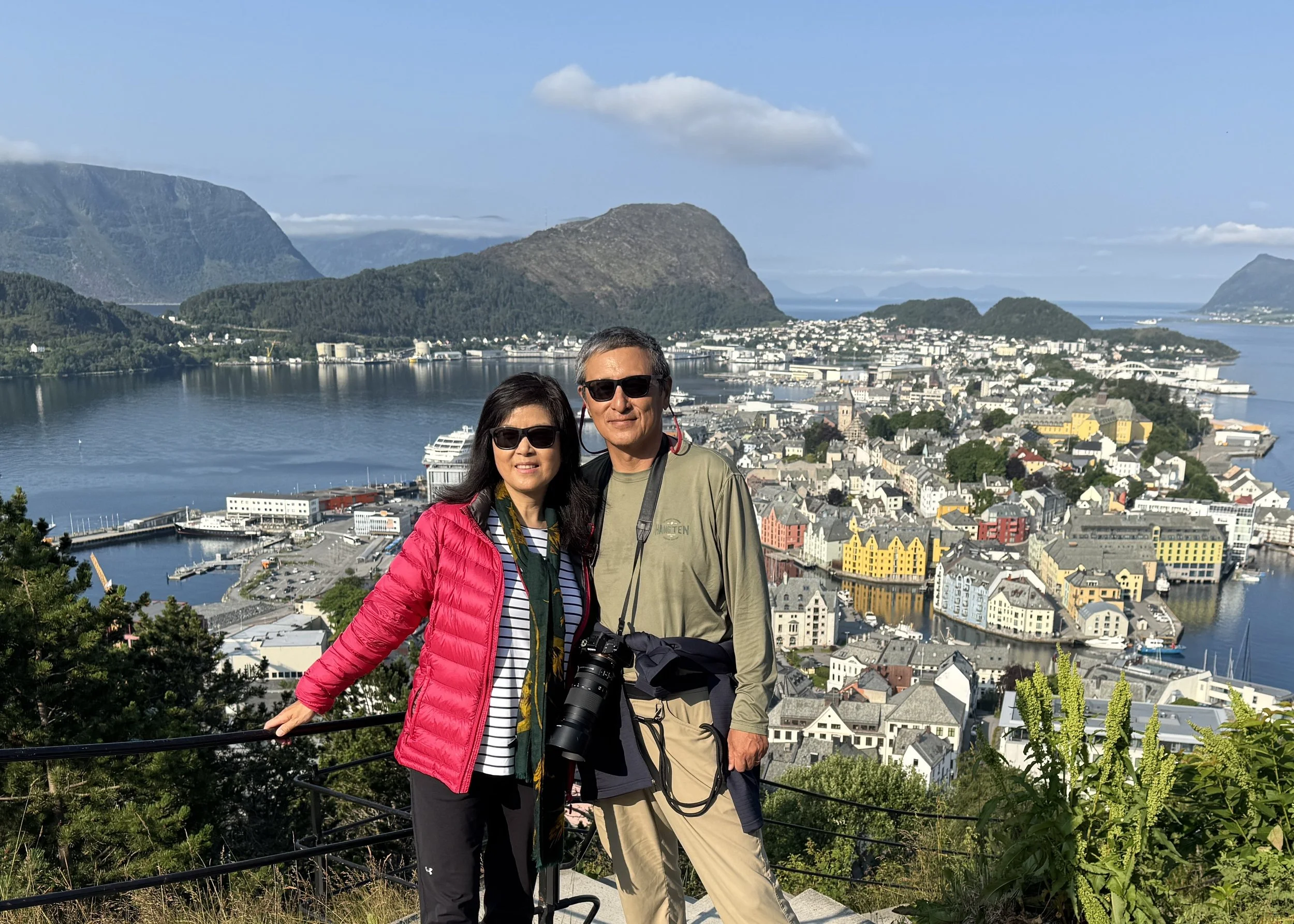
Our first stop was Ålesund, a beautiful medium-sized city. After the devastating fire of 1904, the city was rebuilt in the distinctive Art Nouveau style for which it is now famous. As soon as we disembarked, we headed straight for the 418 steps leading up to the Aksla Viewpoint. Although the staircase was steep, it was a relatively short climb. From the top, we were rewarded with the classic postcard view of the harbor, surrounding islands, and dramatic mountains.
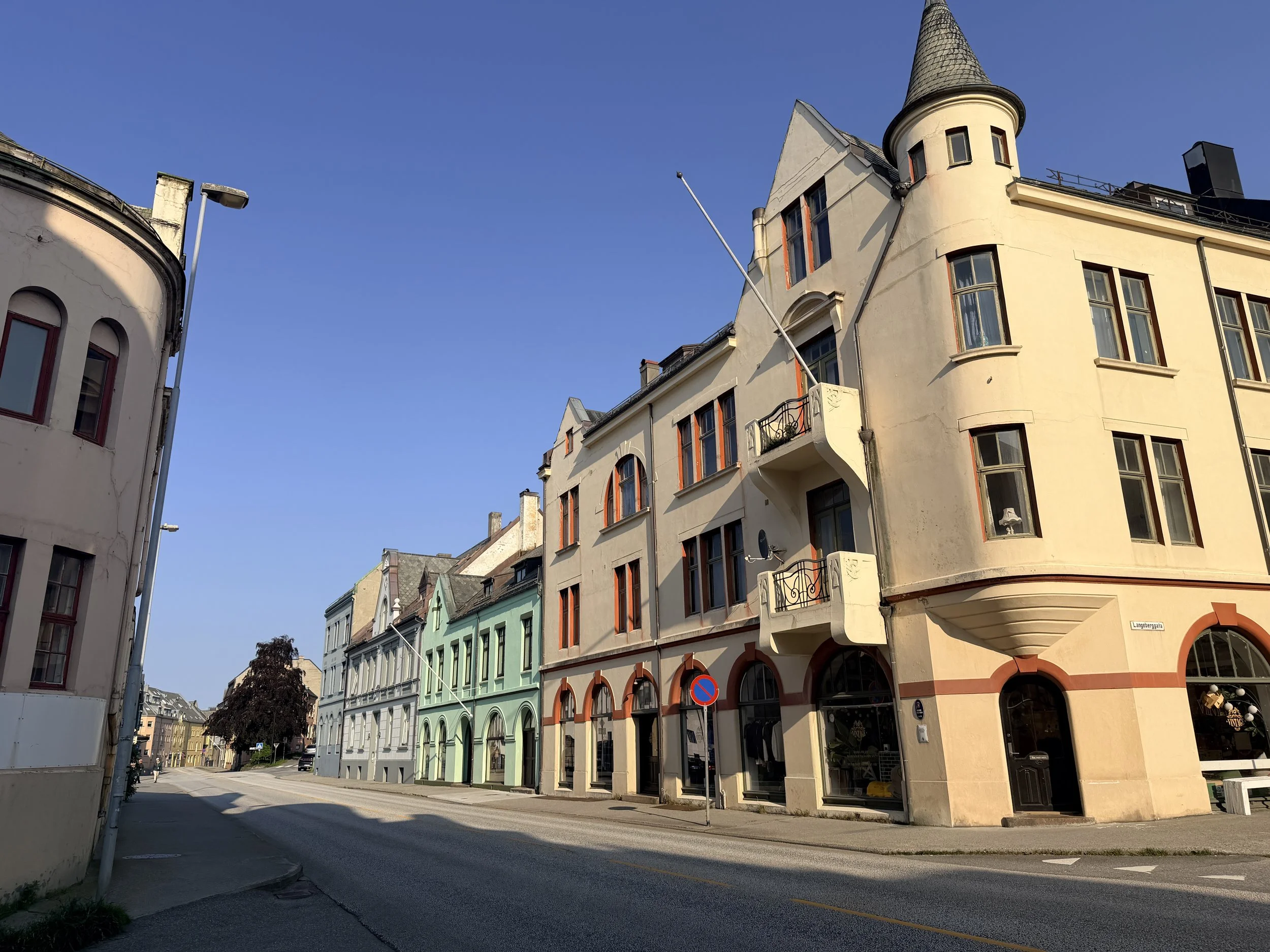
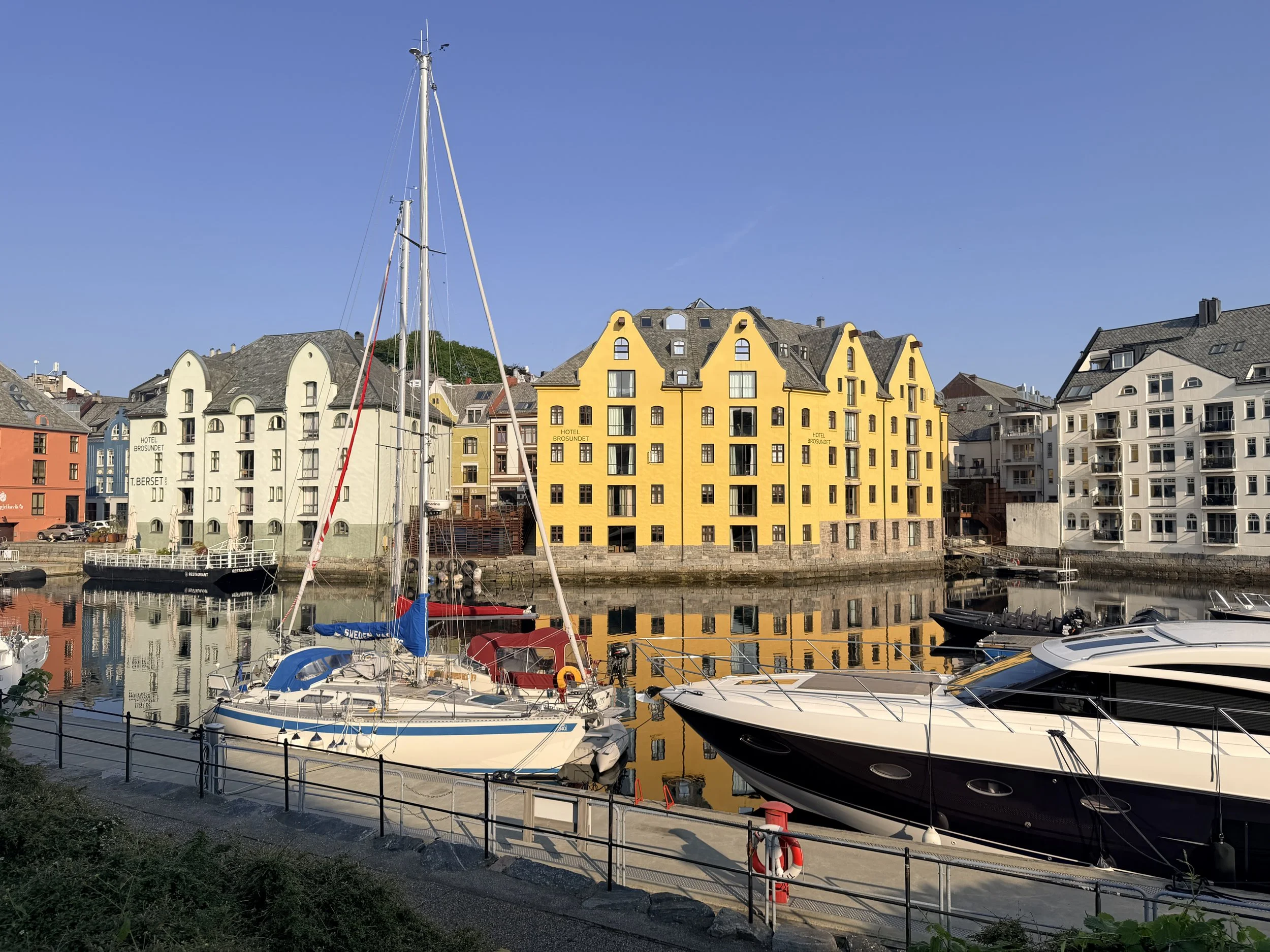
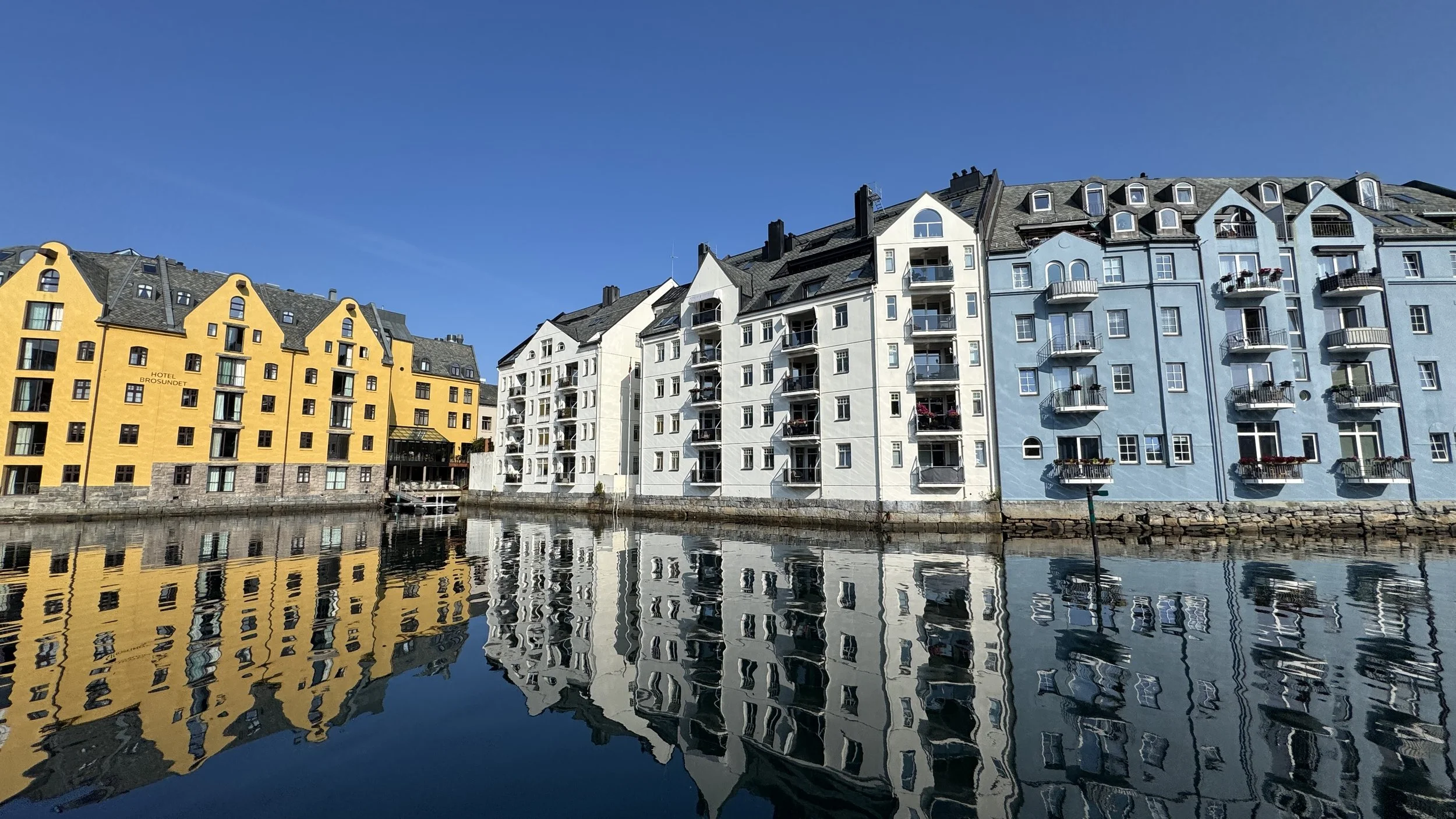
After descending, we strolled along the waterfront, admiring the colorful buildings lining the harbor. Of all the cities we visited in Norway, Ålesund was certainly one of the most beautiful.
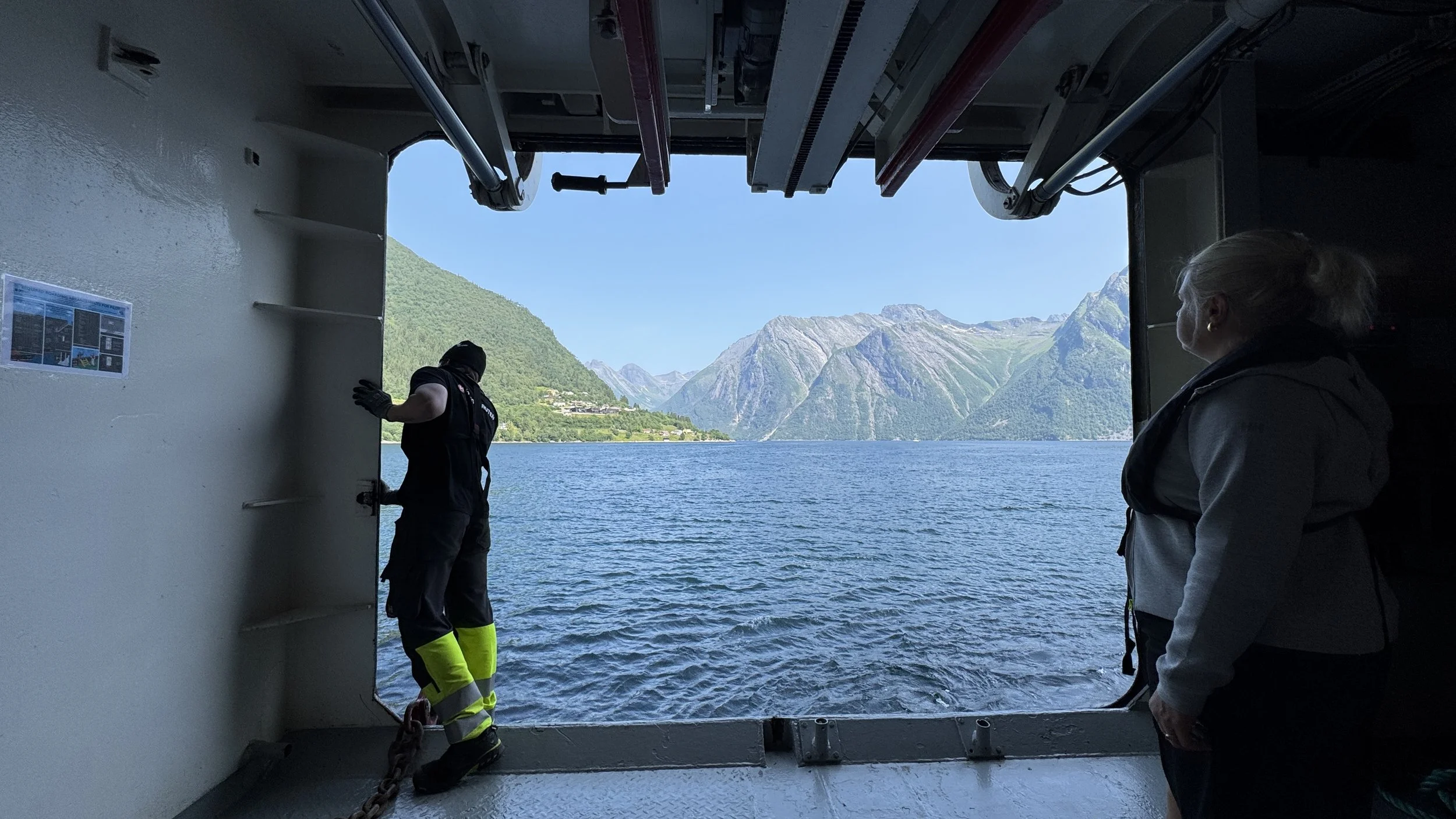
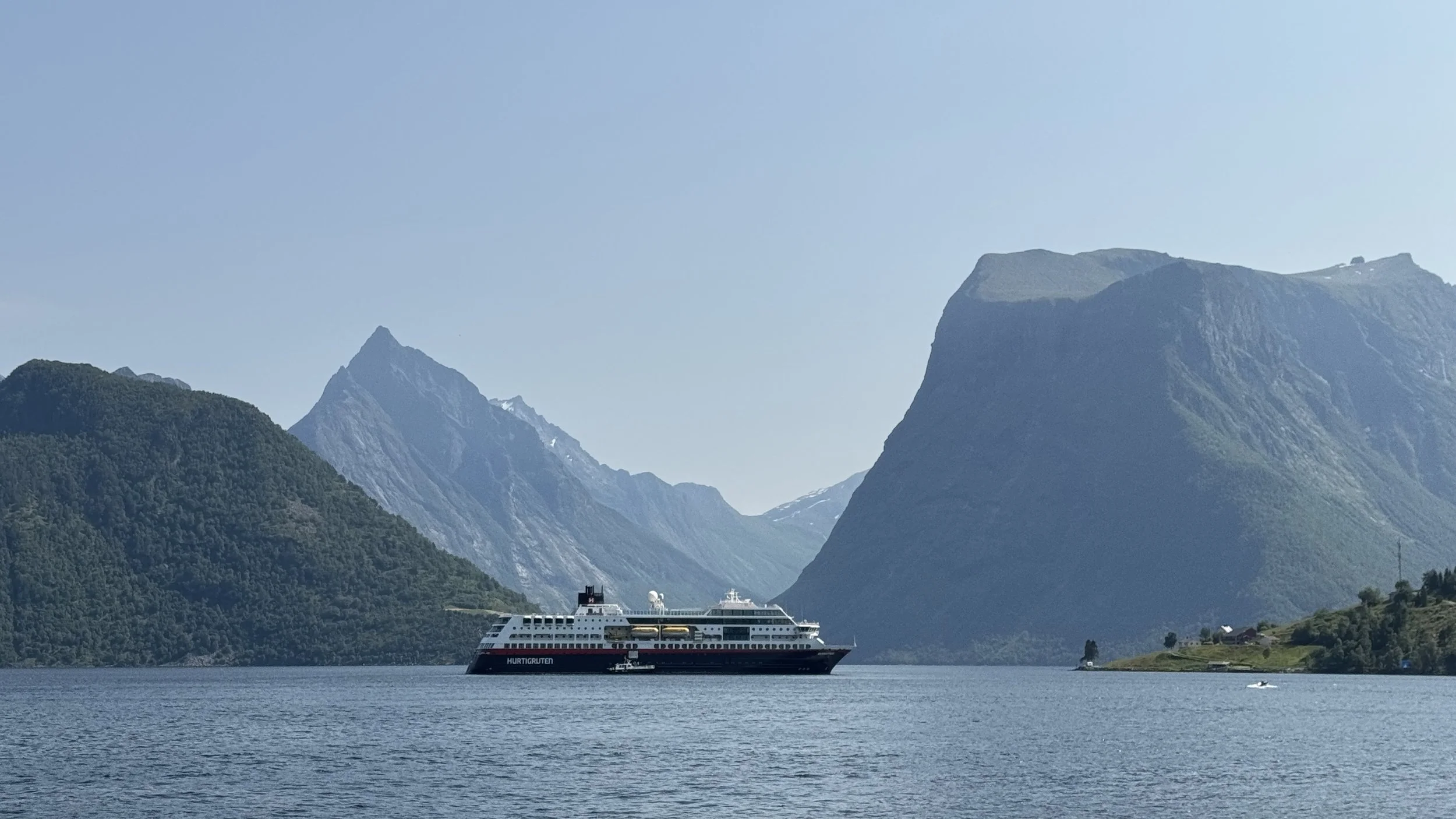
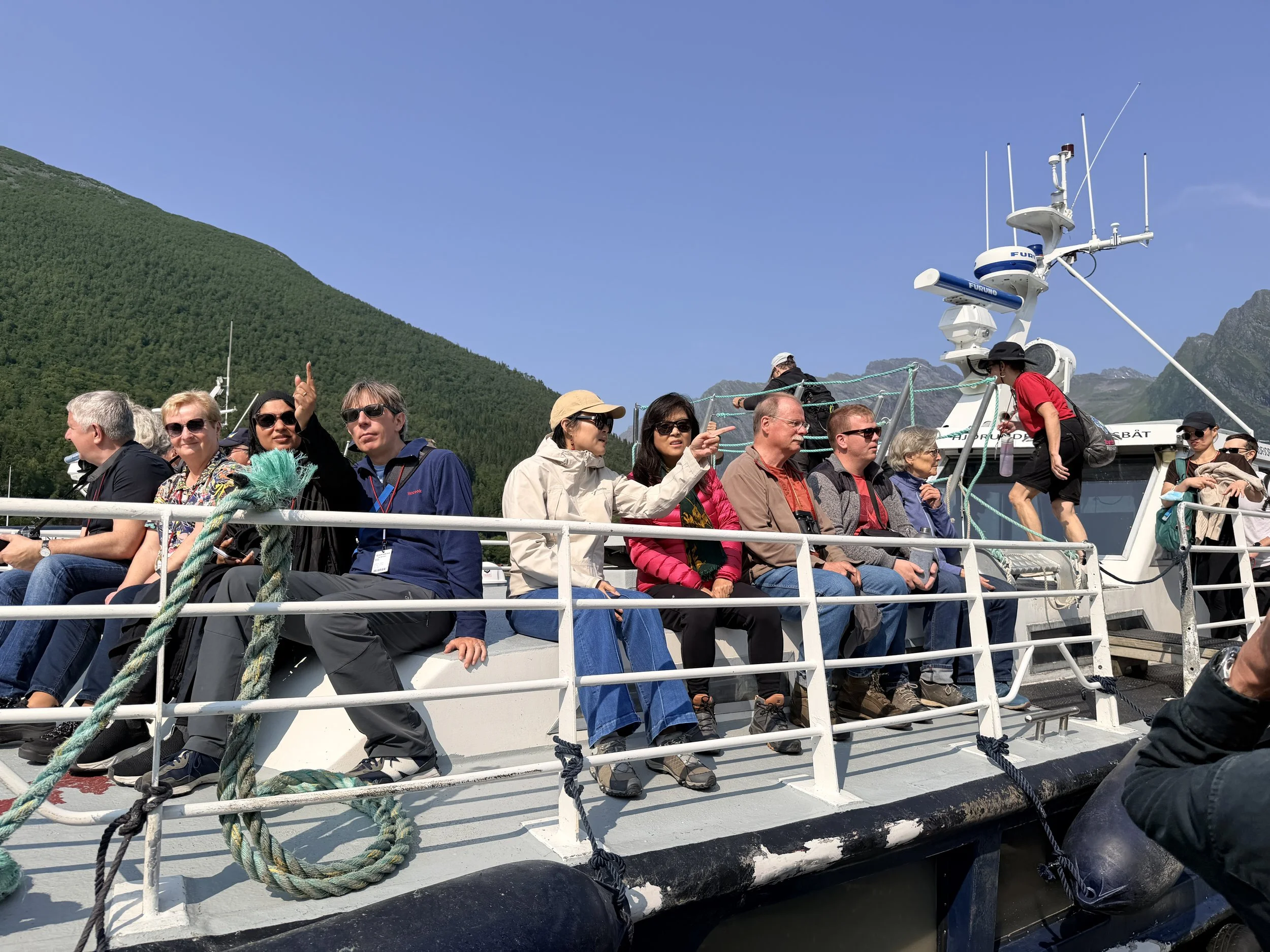
The ship then sailed into the magnificent Hjørundfjord, passing small villages nestled along the shoreline. The scenery was breathtaking.
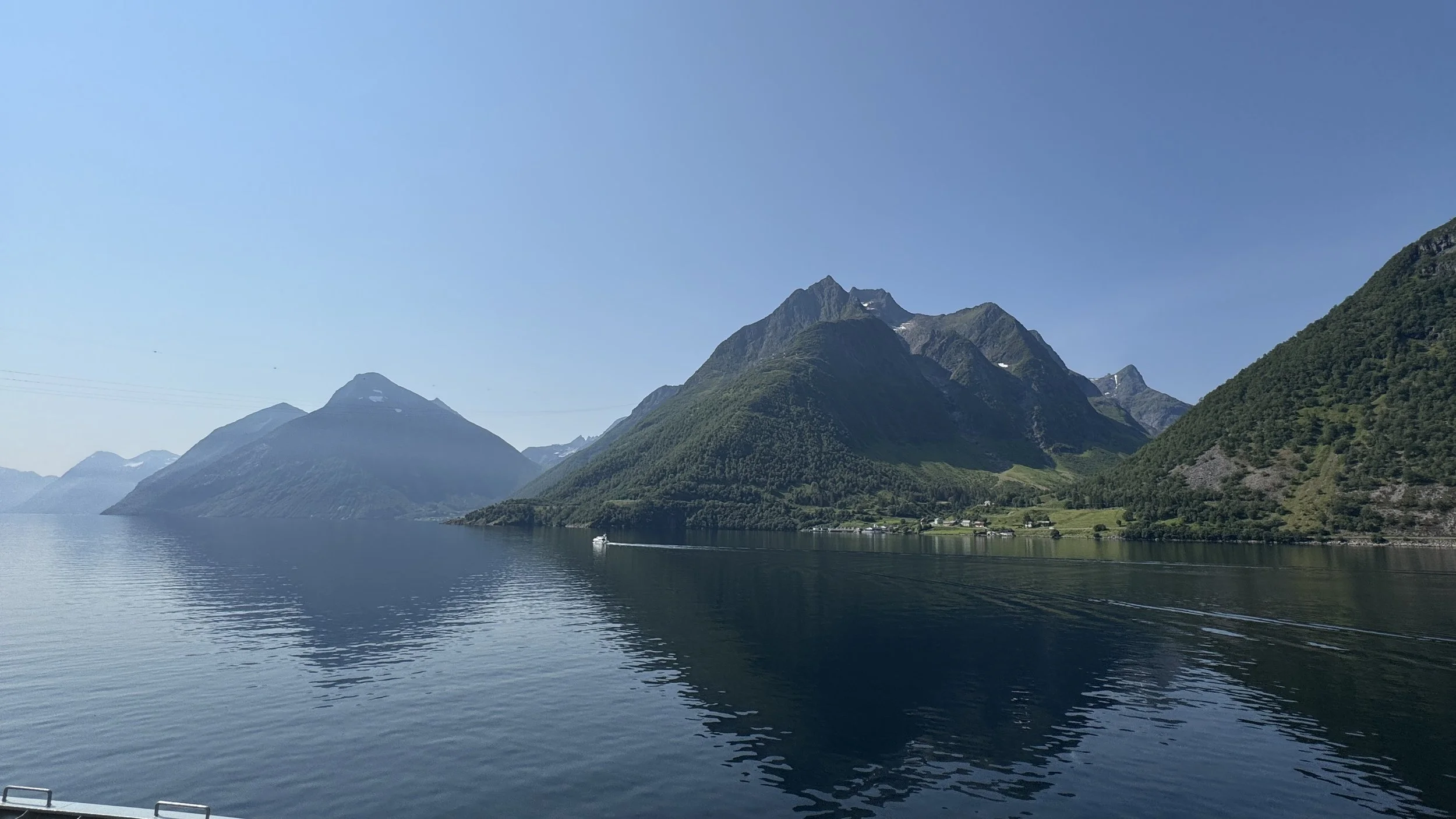
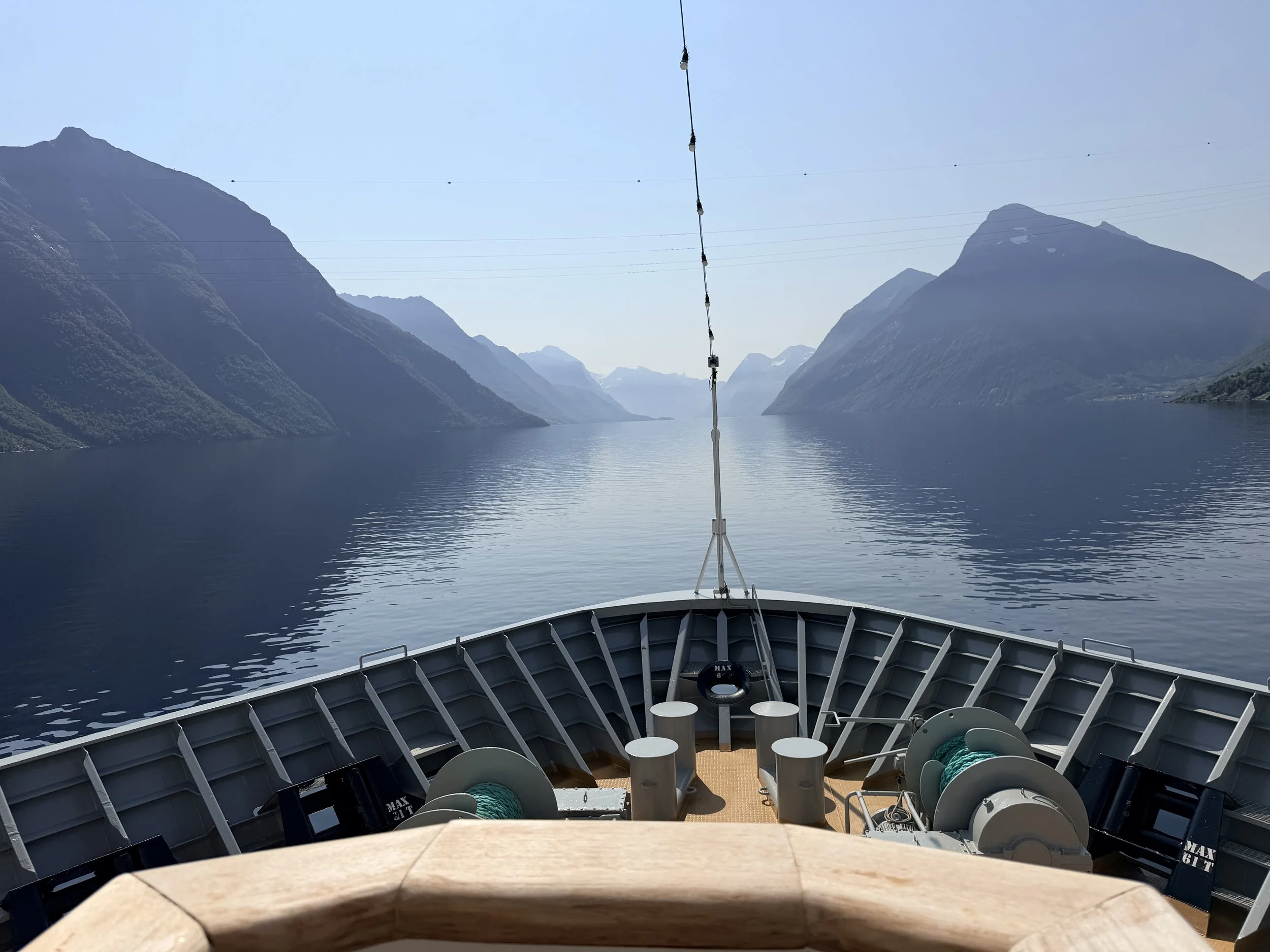
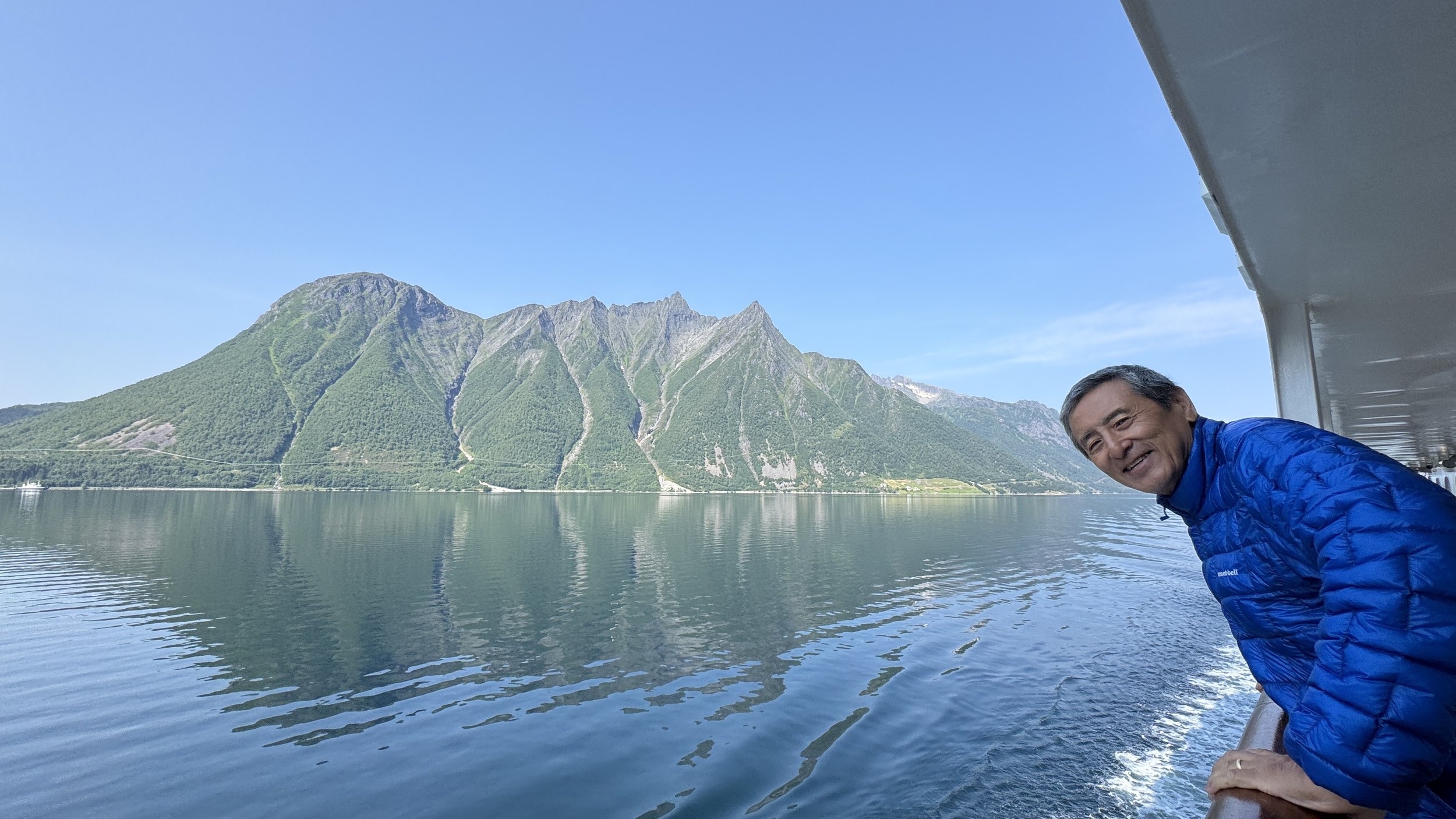
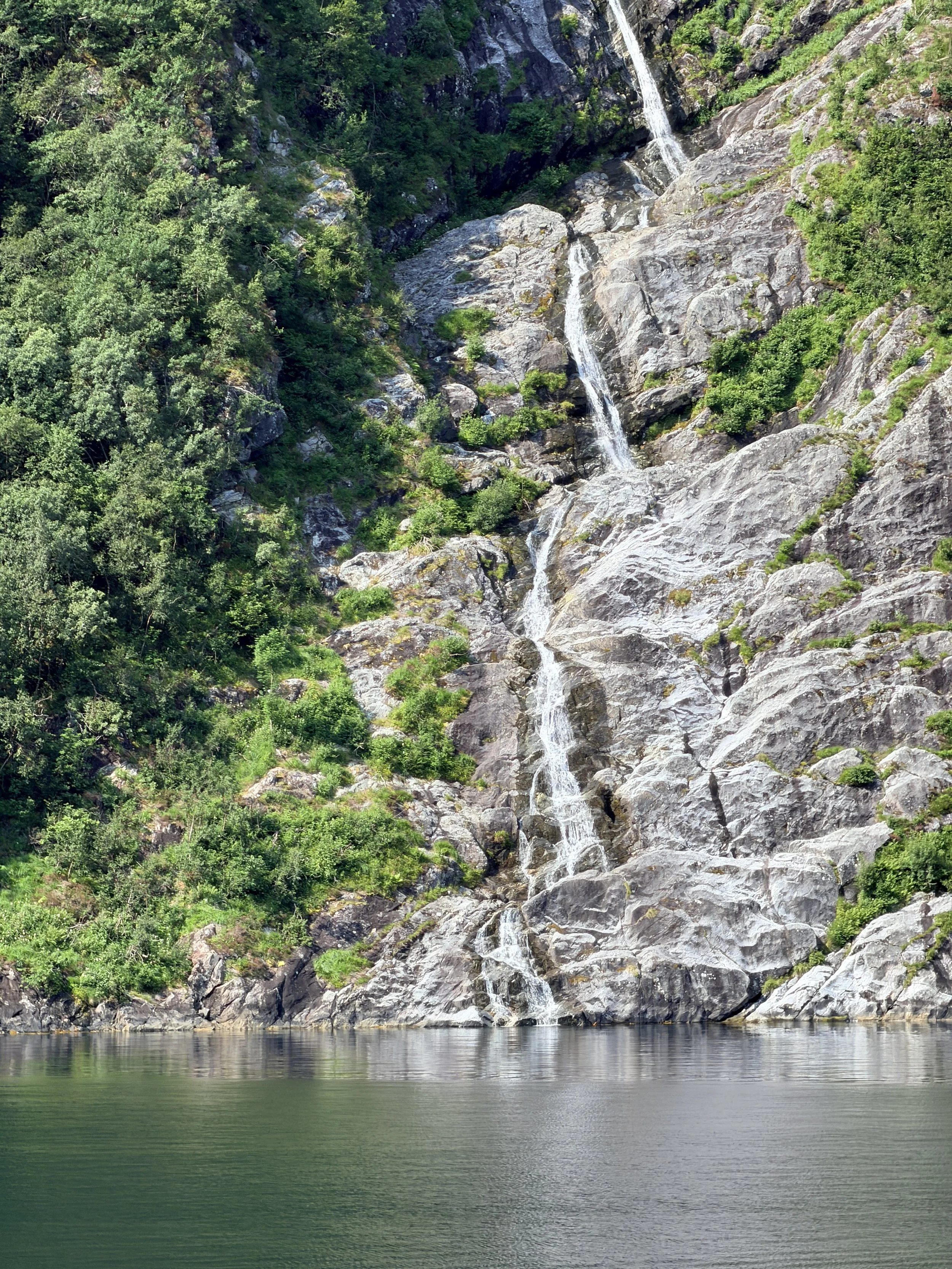
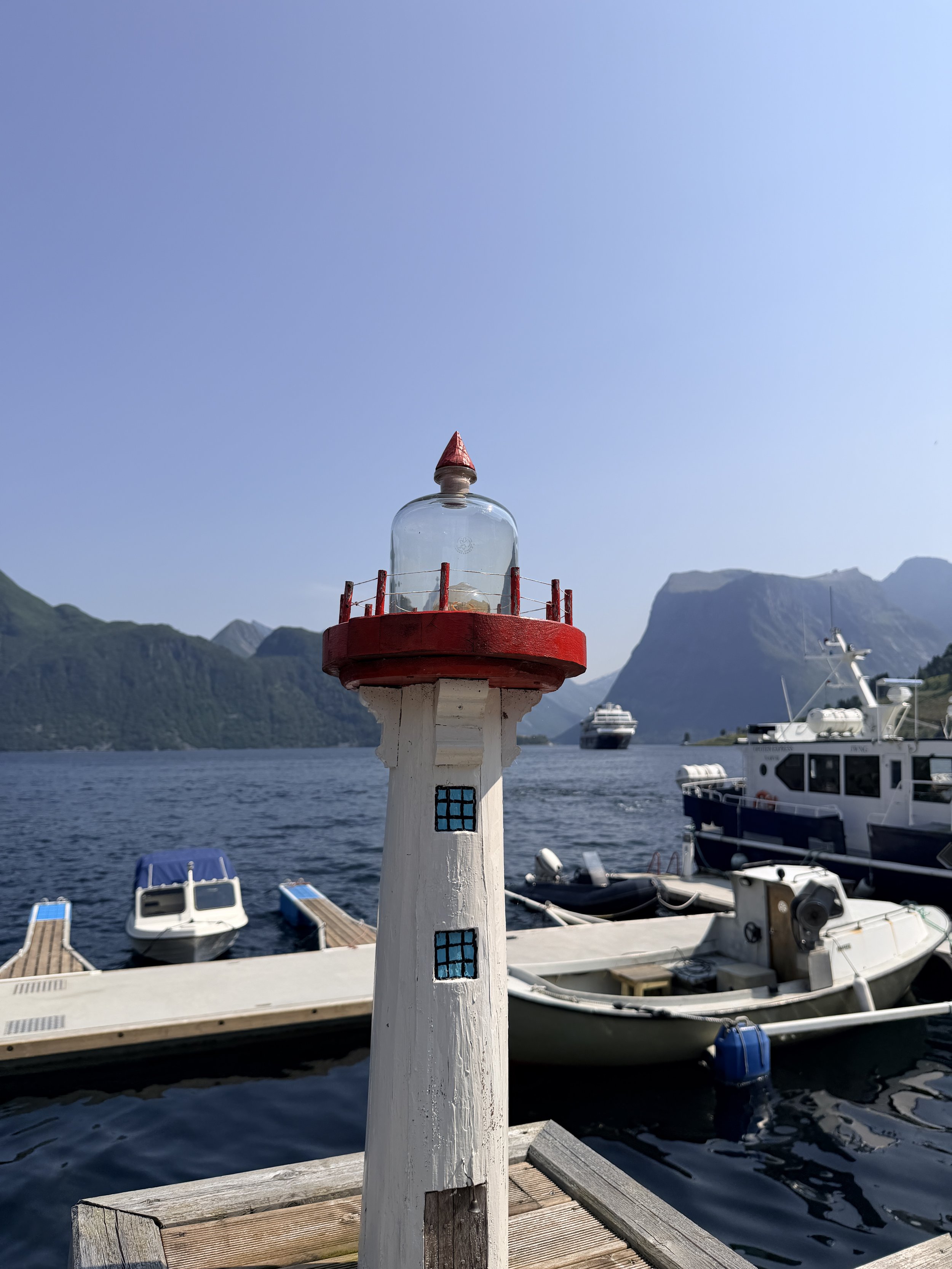
After an early lunch, the ship anchored at Sæbø, the principal village in the fjord and a popular starting point for walks and hikes.
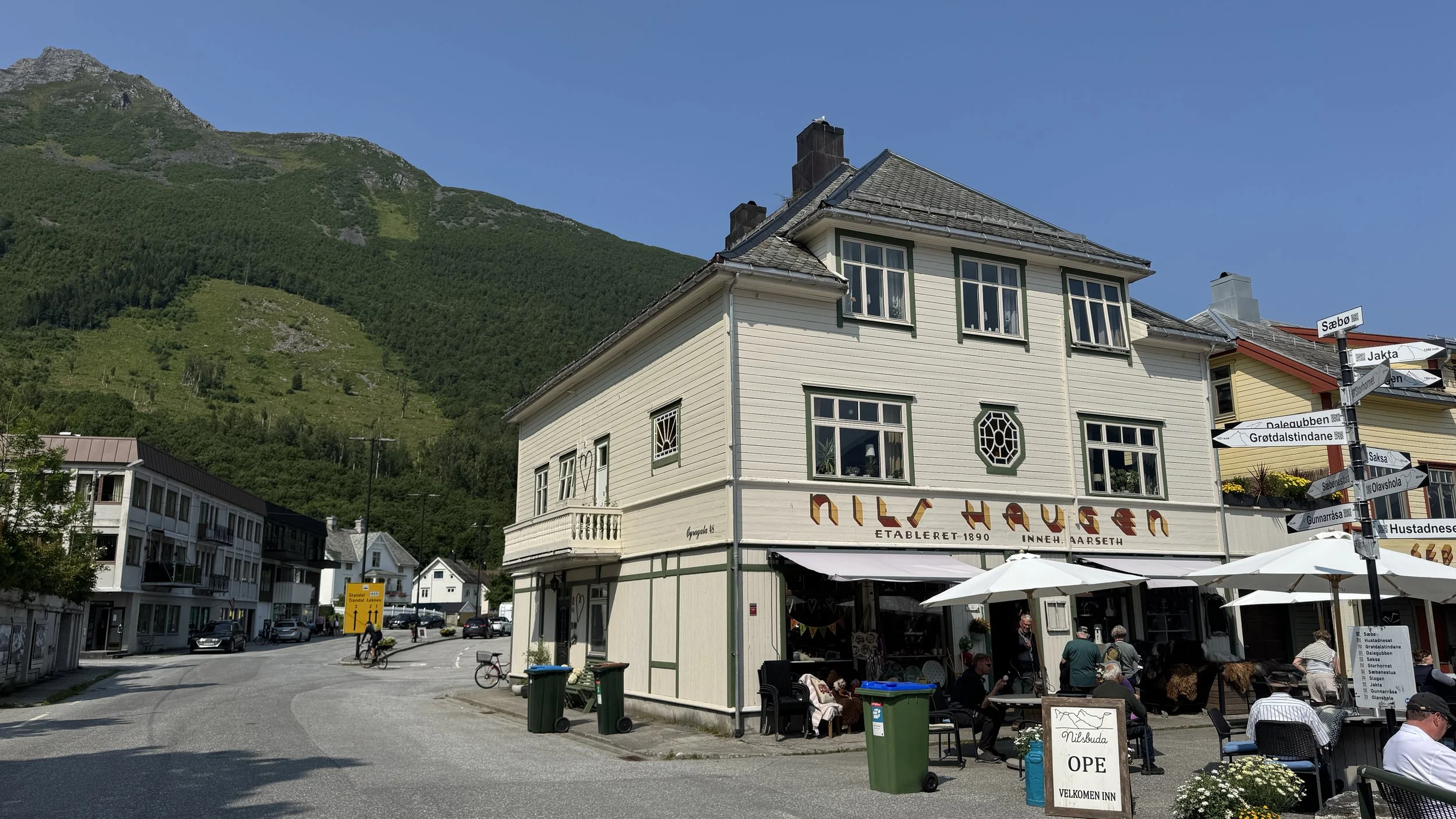
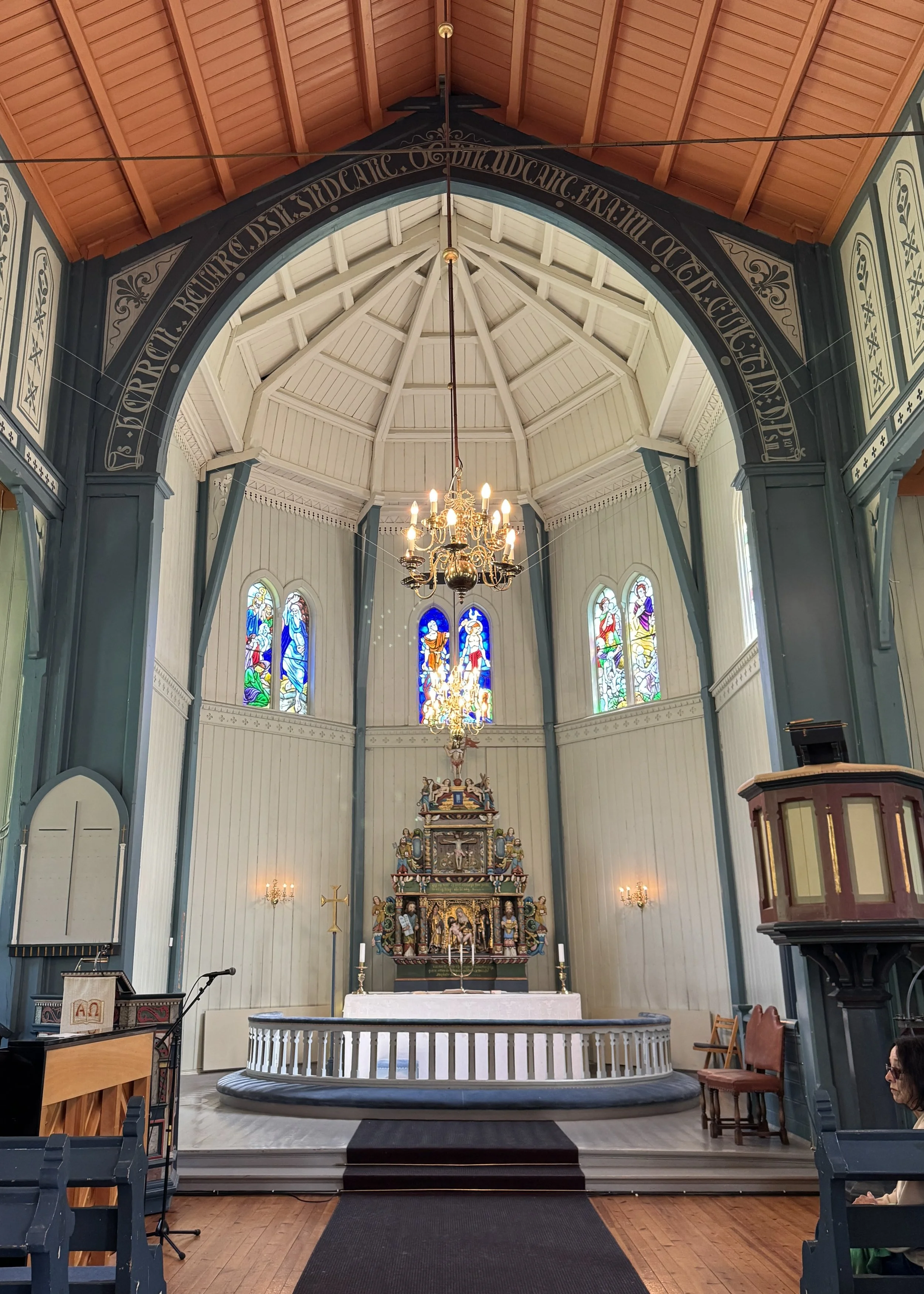
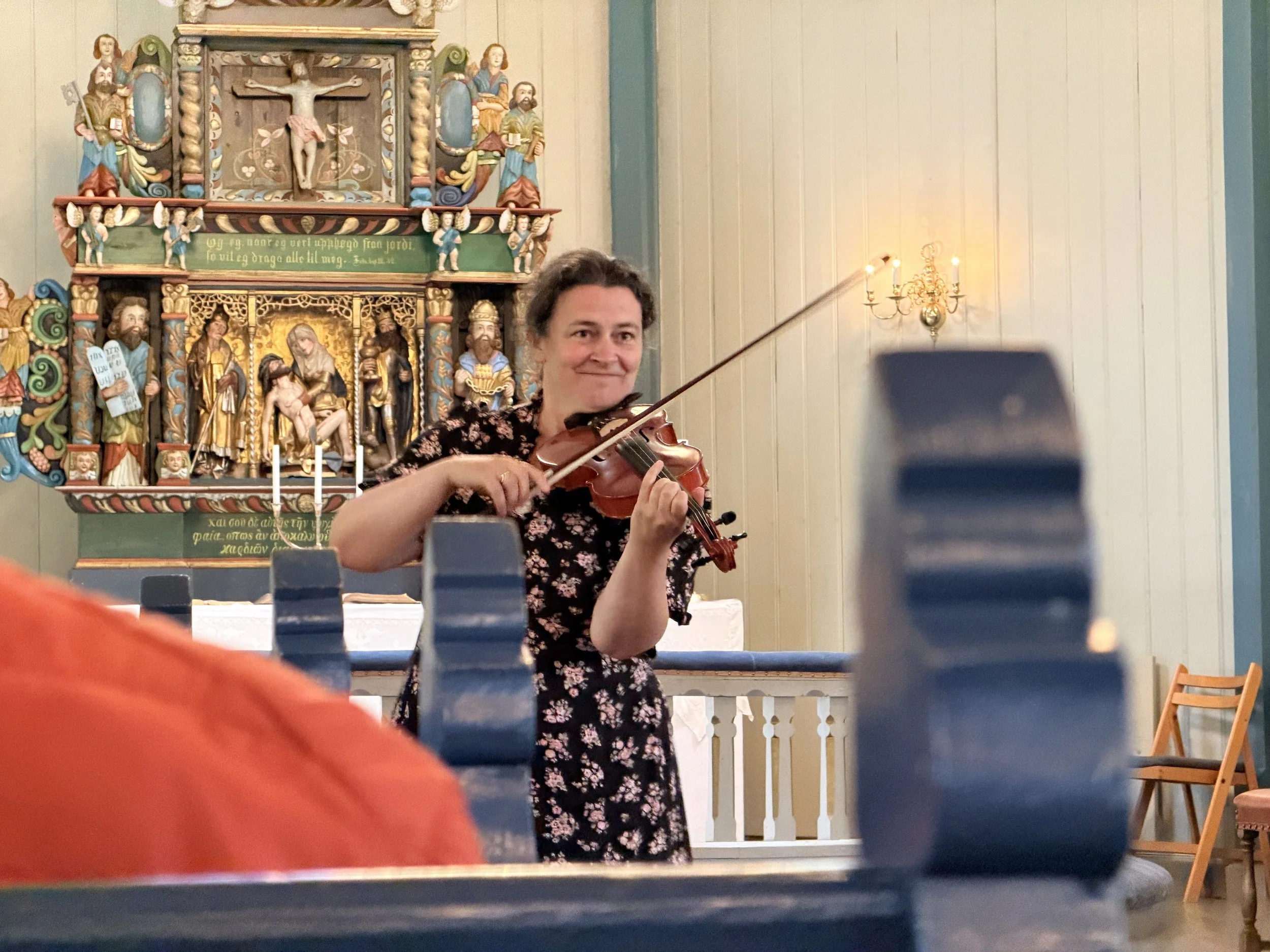
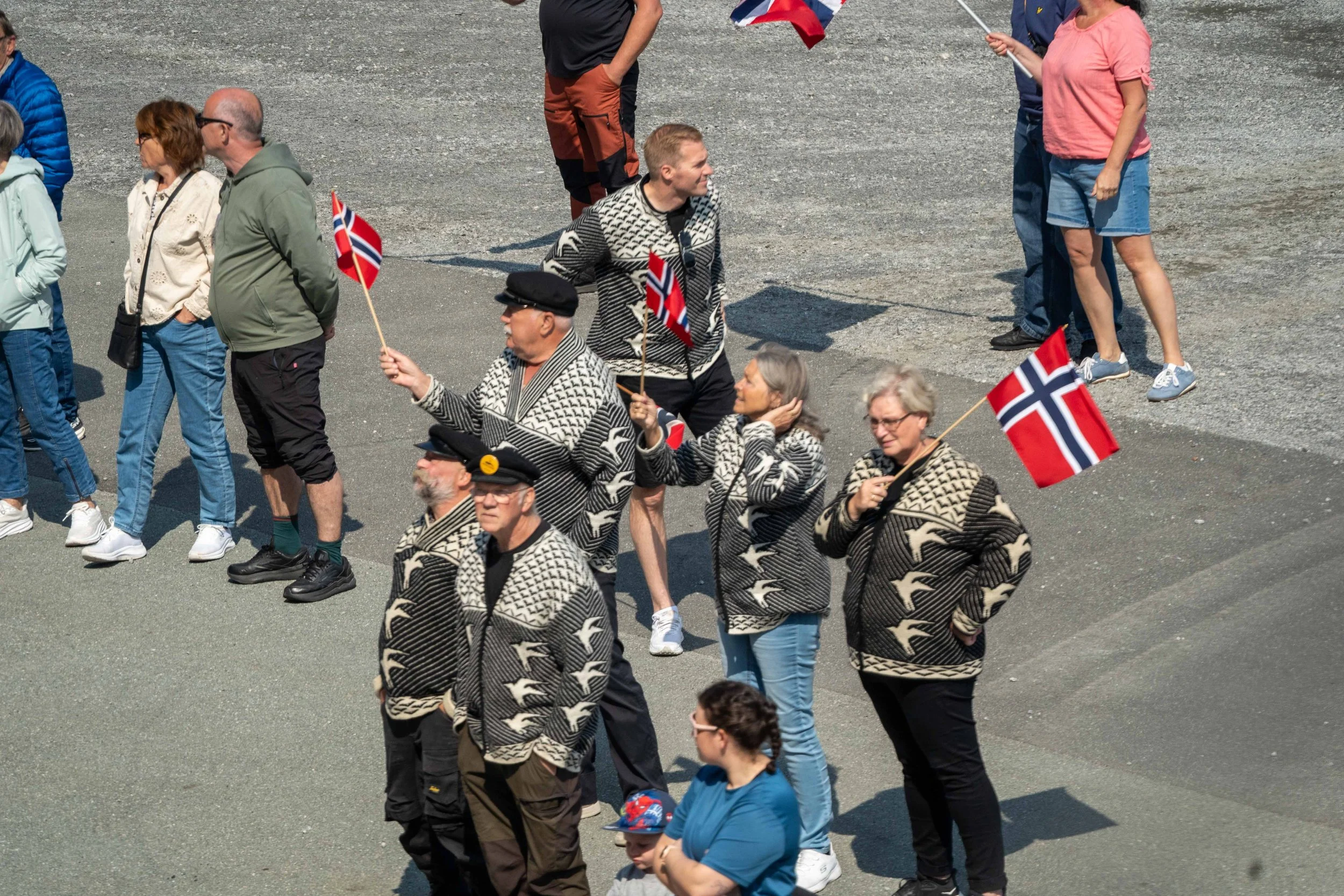
The village welcomed us with a concert in its church, which we attended. A violinist, accompanied by a pianist, performed a delightful program, and the pianist also played the church's pipe organ. The music was beautiful and moving, although the concert lasted a little longer than I had expected.
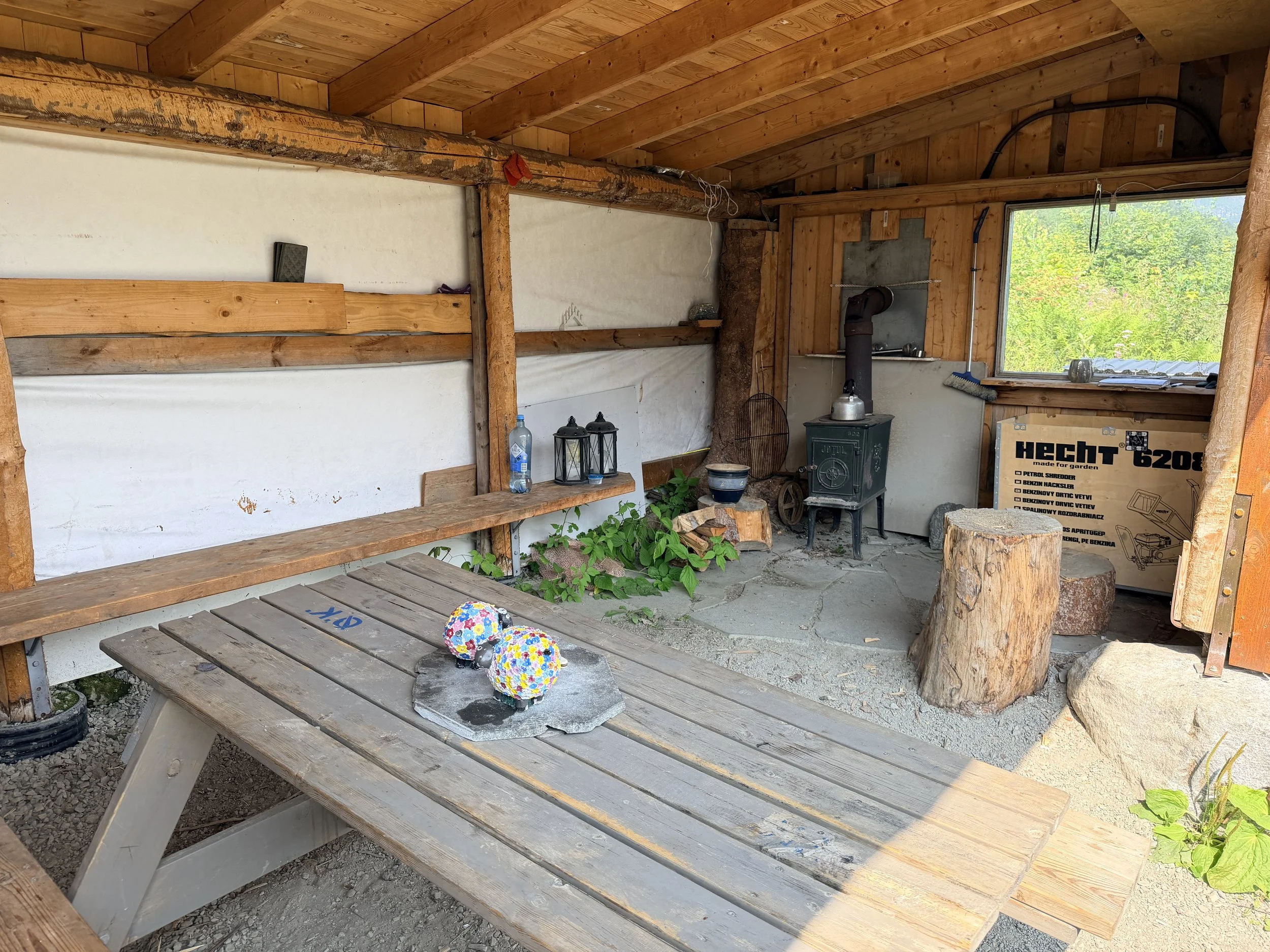
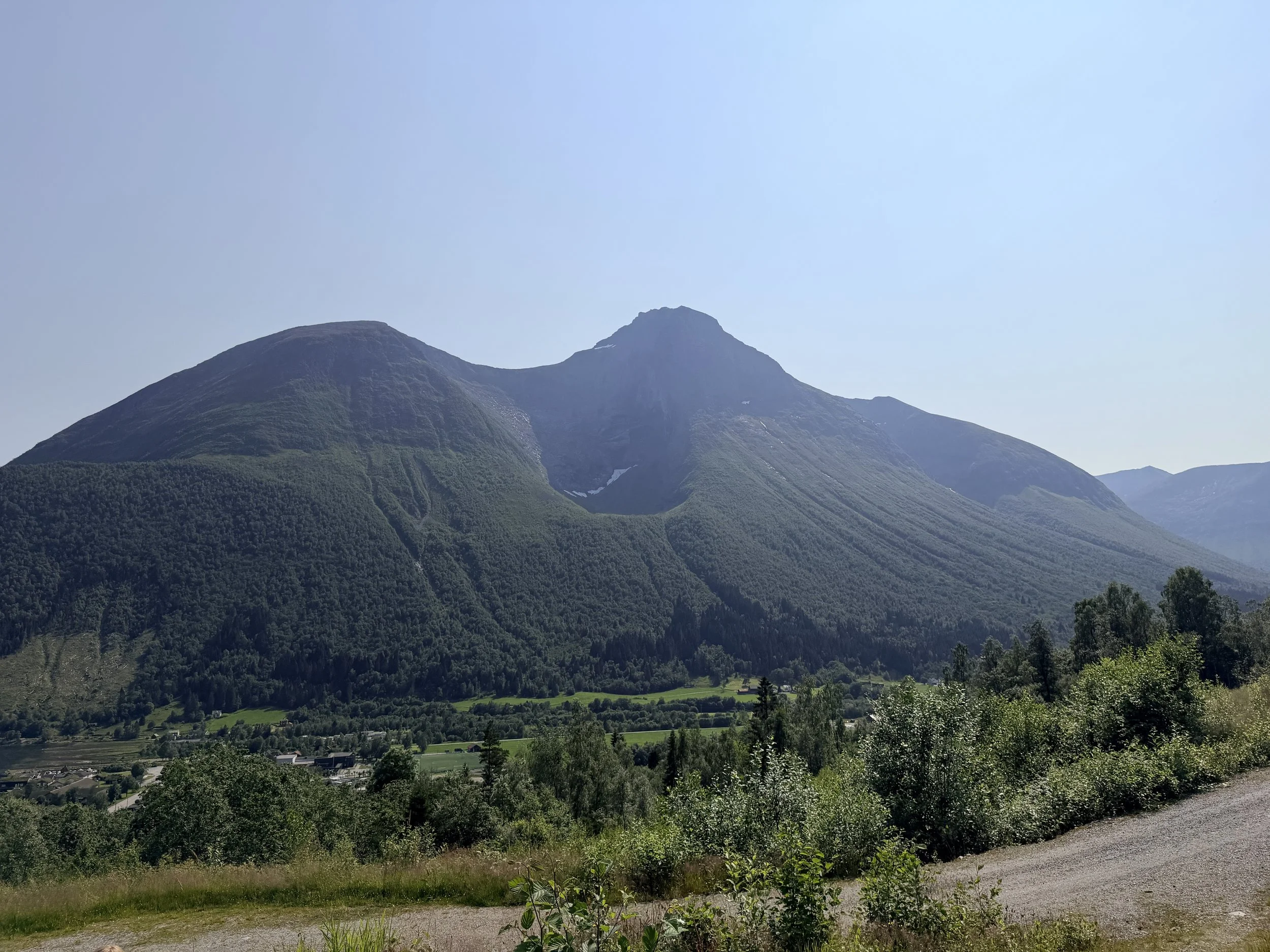
After the concert, I took a short hike to a mountainside hytta, where I enjoyed a wonderful panoramic view of the village and our ship anchored in the bay.
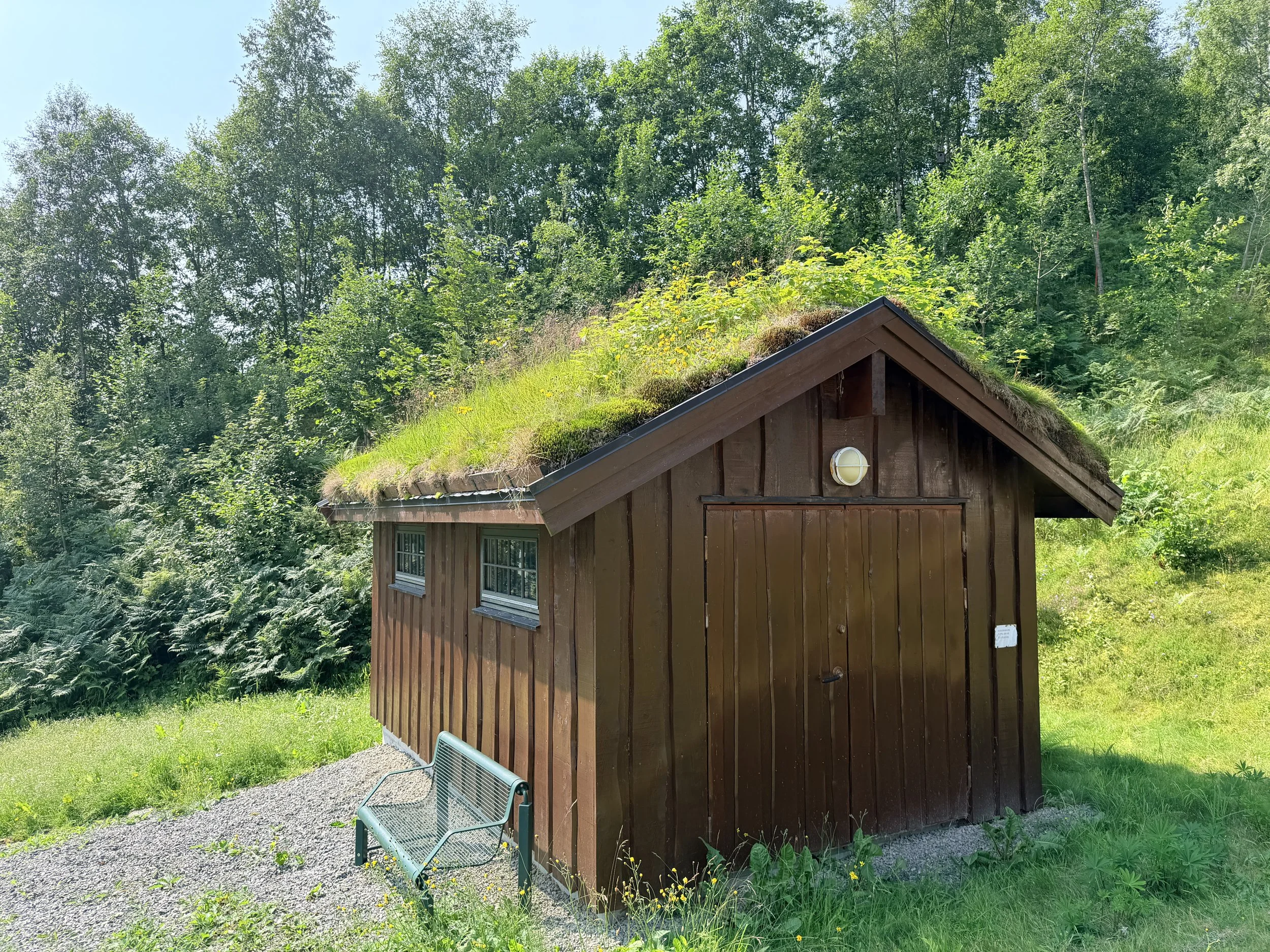
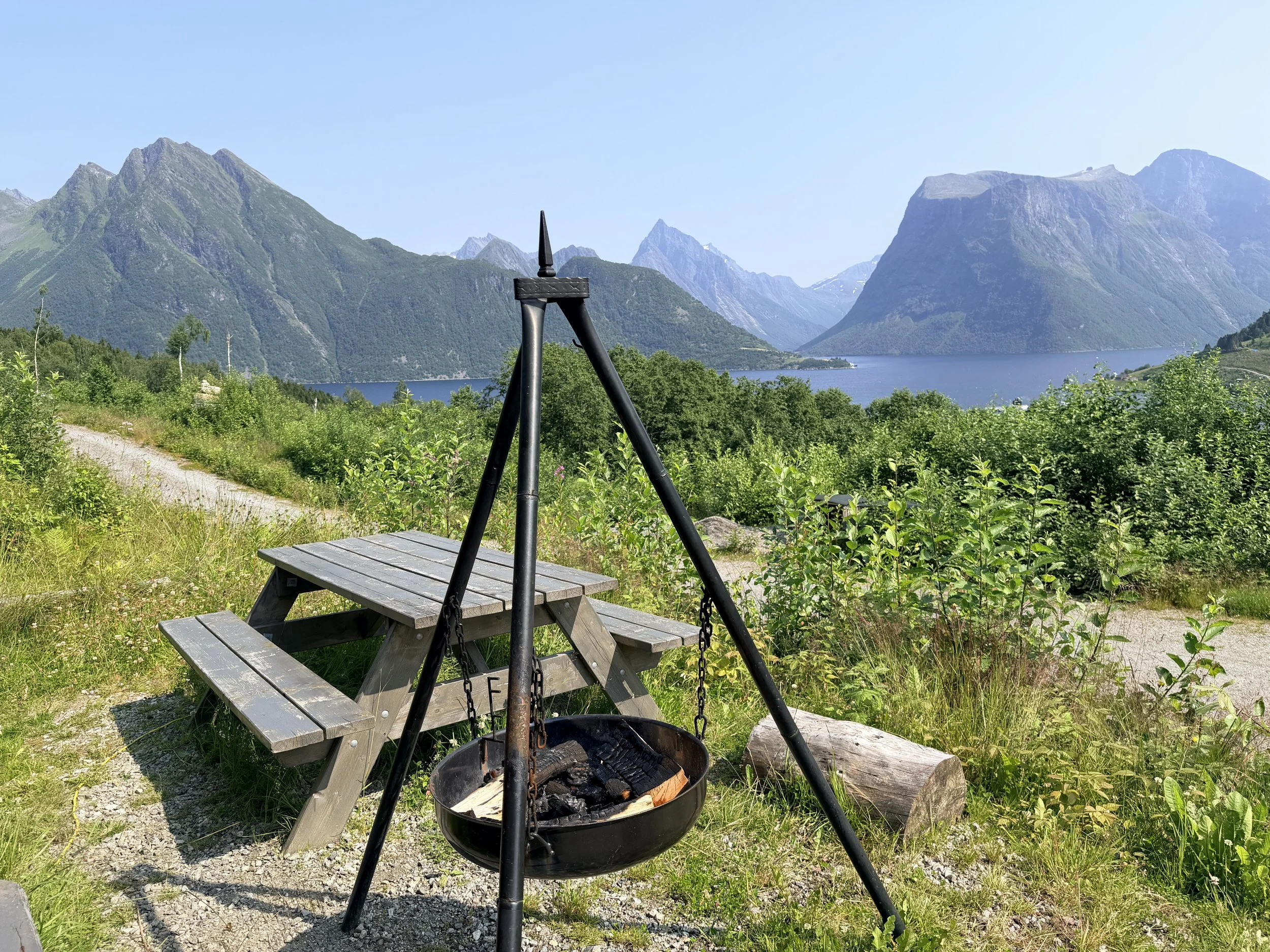
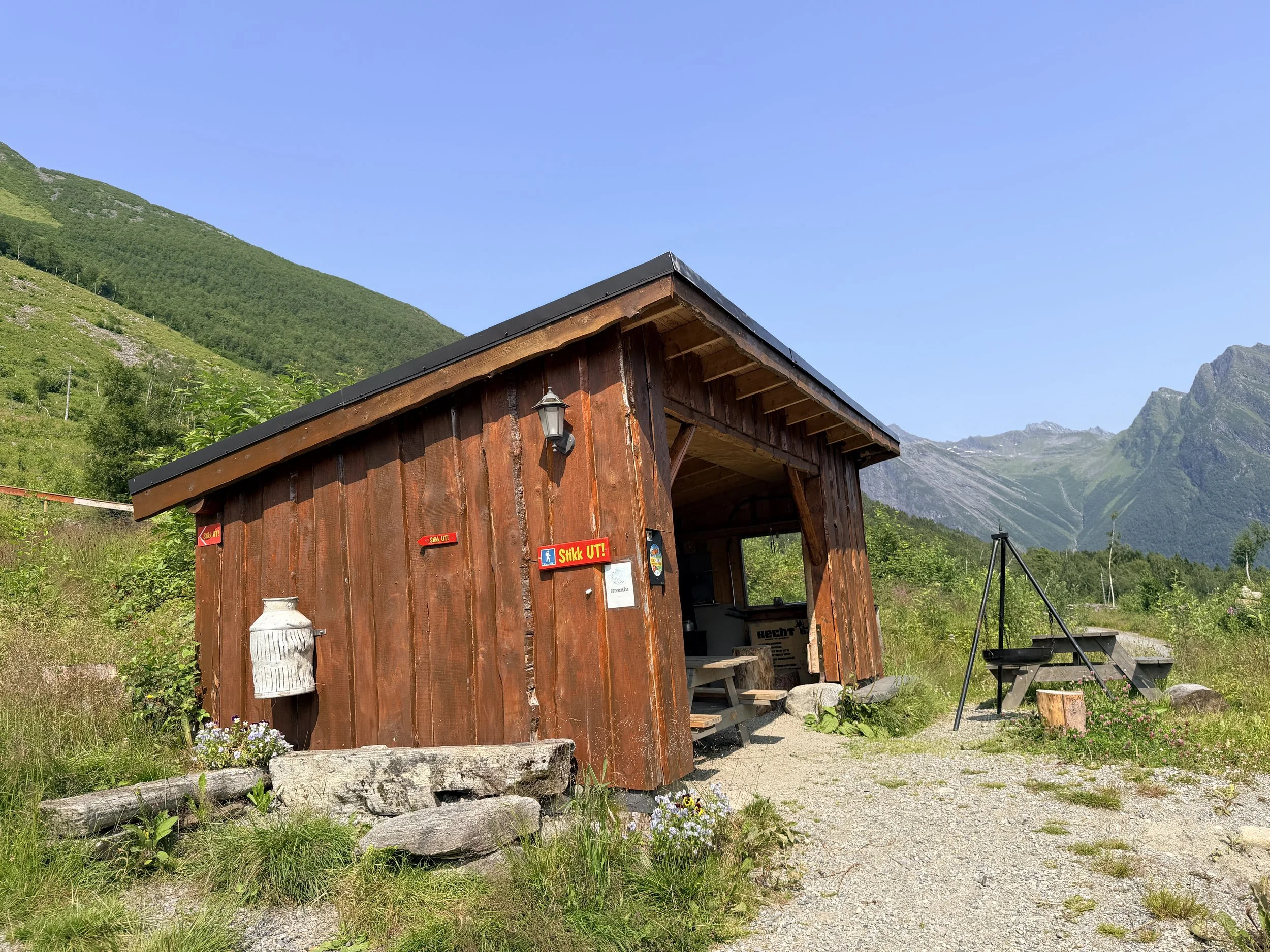
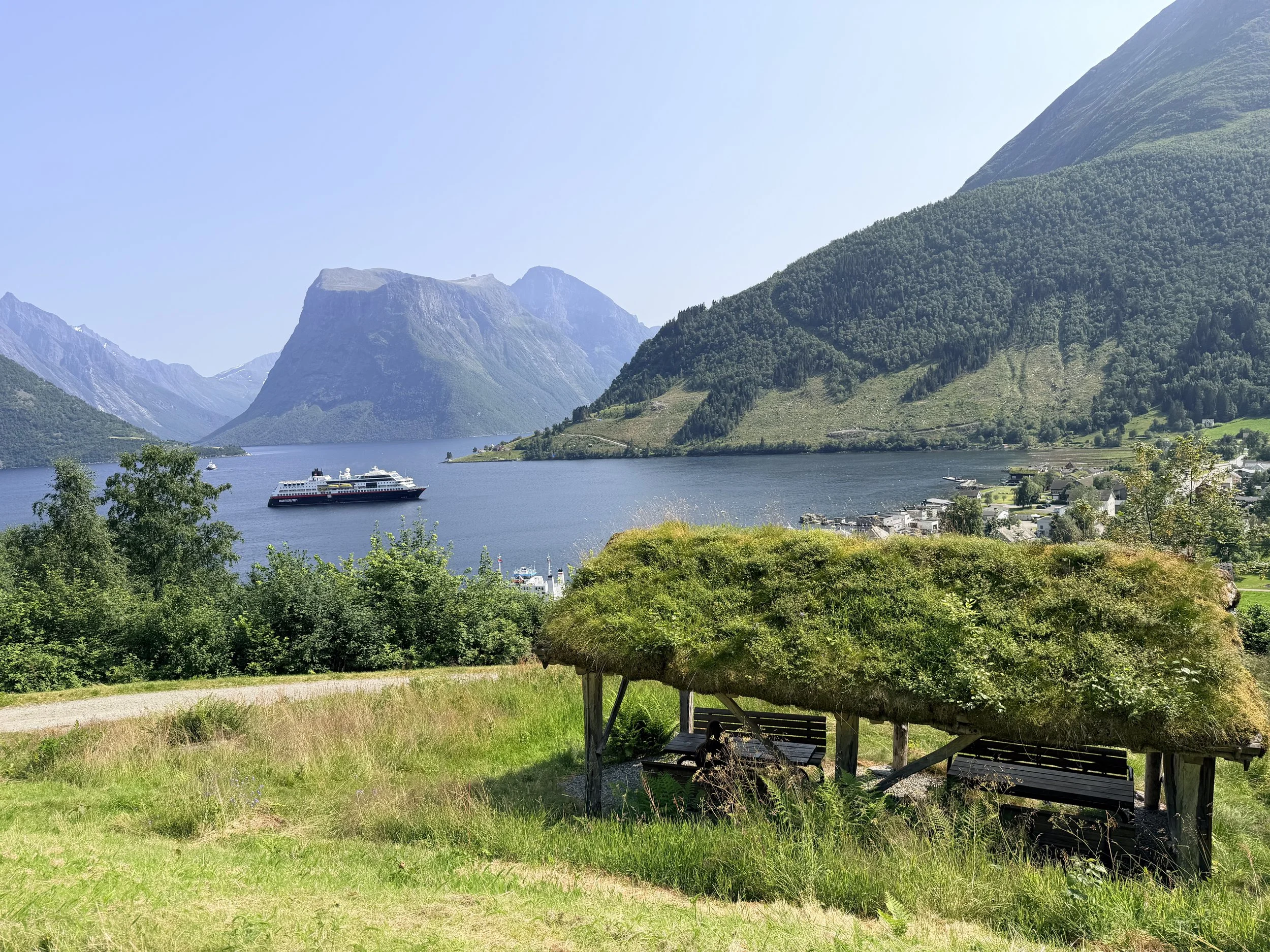
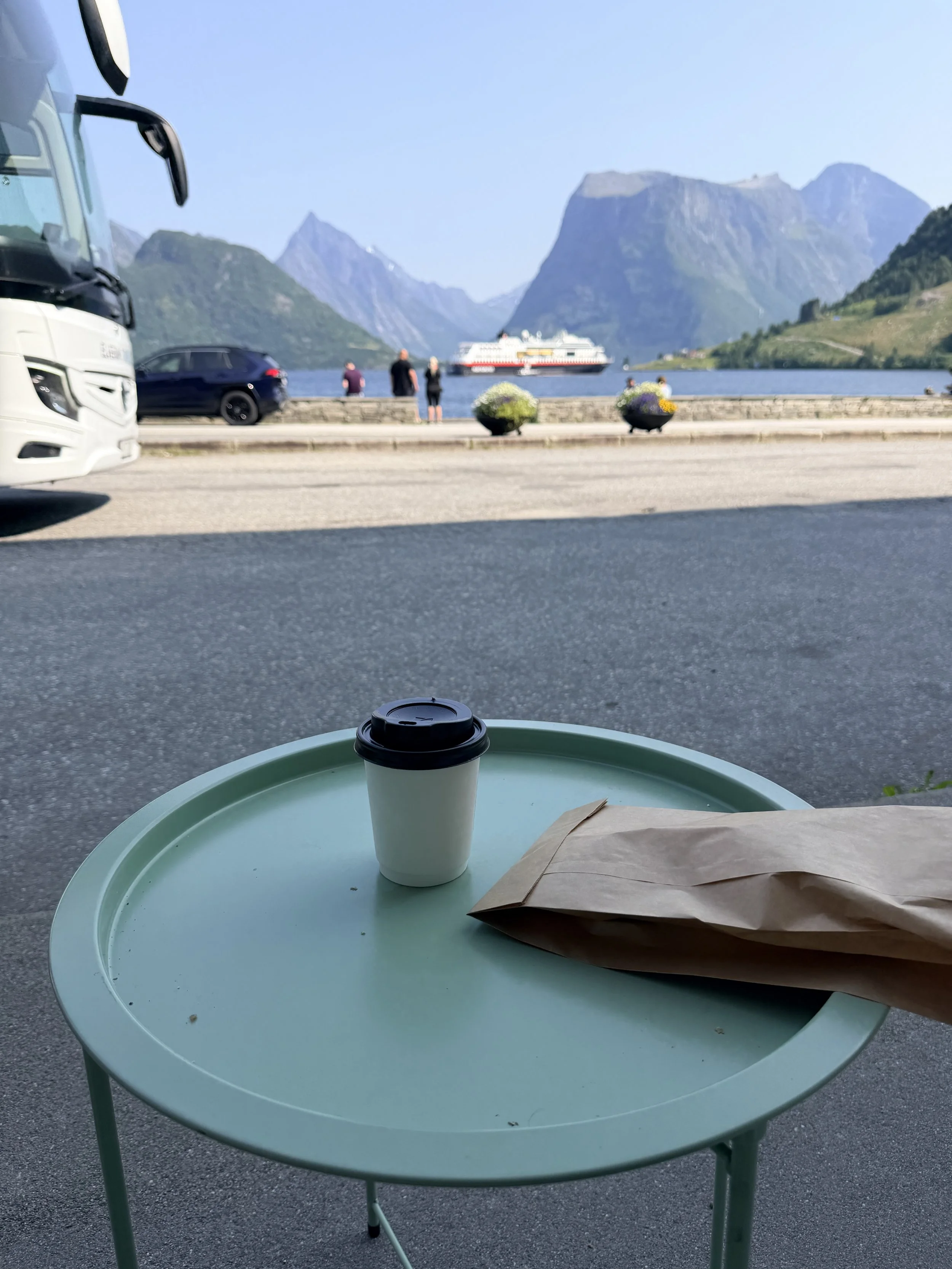
Before returning to the ship, I treated myself to a cinnamon roll and a cup of coffee while sitting by the waterfront, watching people stroll past. It was a peaceful and fitting way to bring this unforgettable journey along Norway's spectacular coastline to a close.
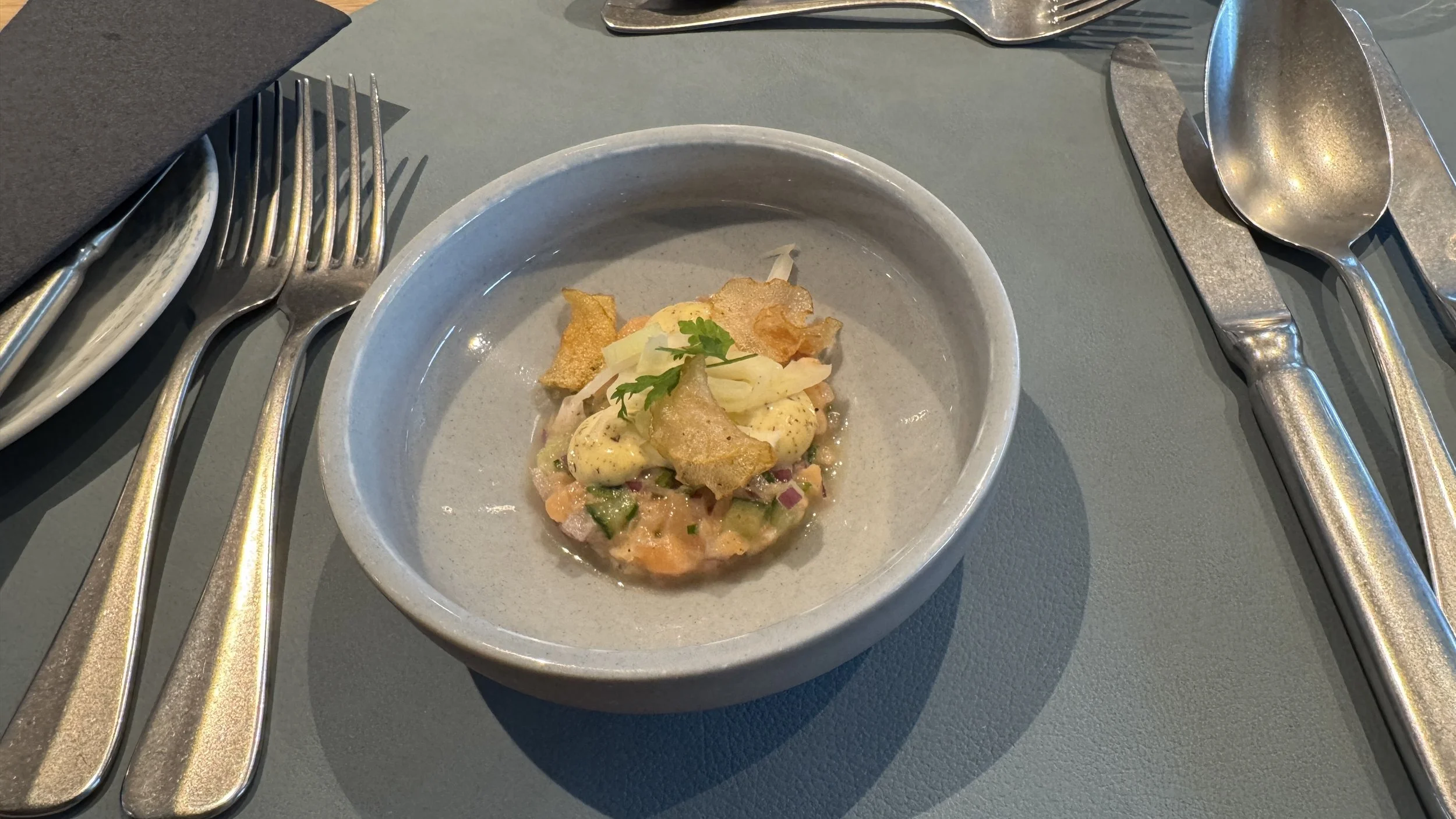
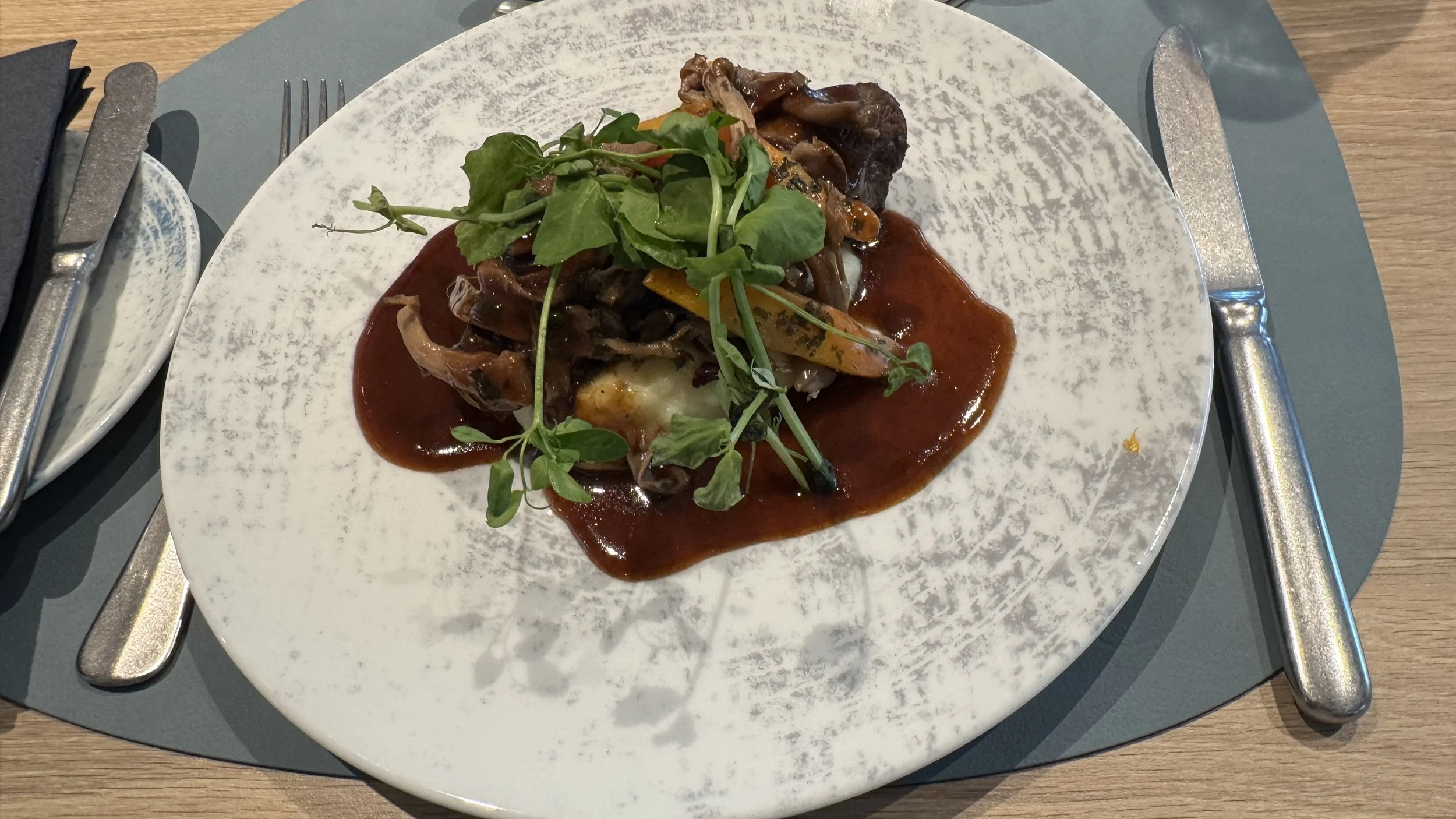
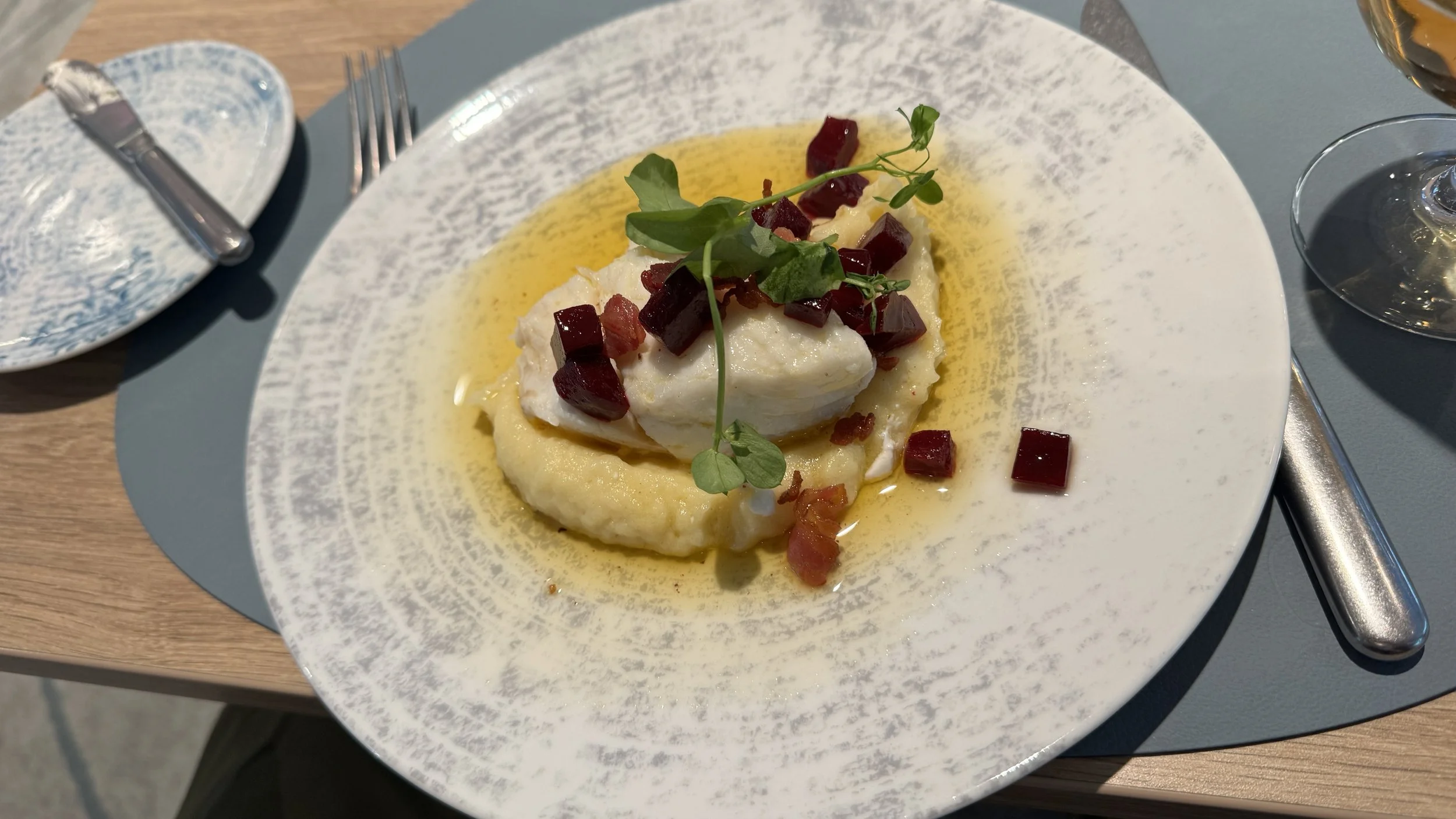
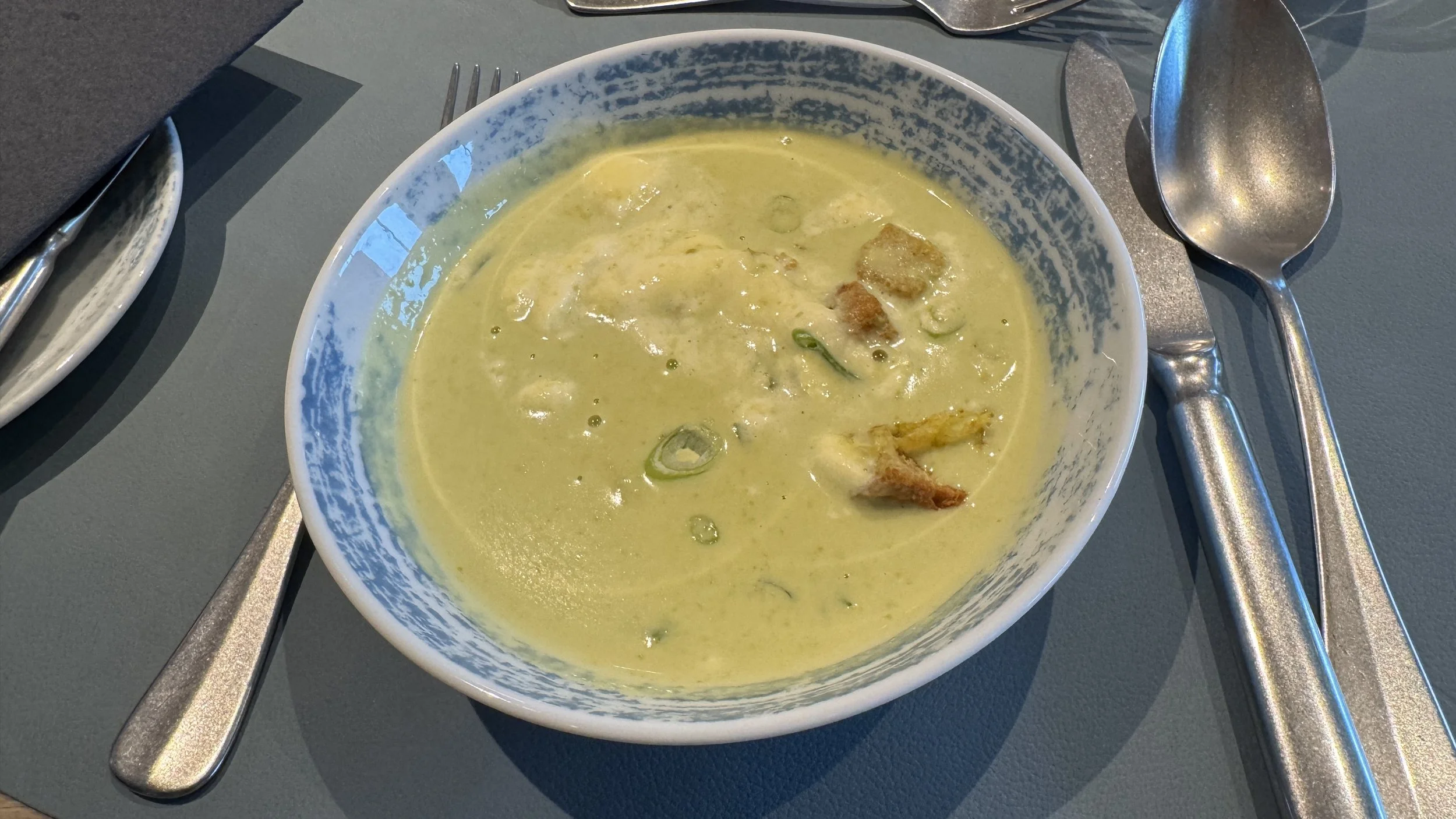
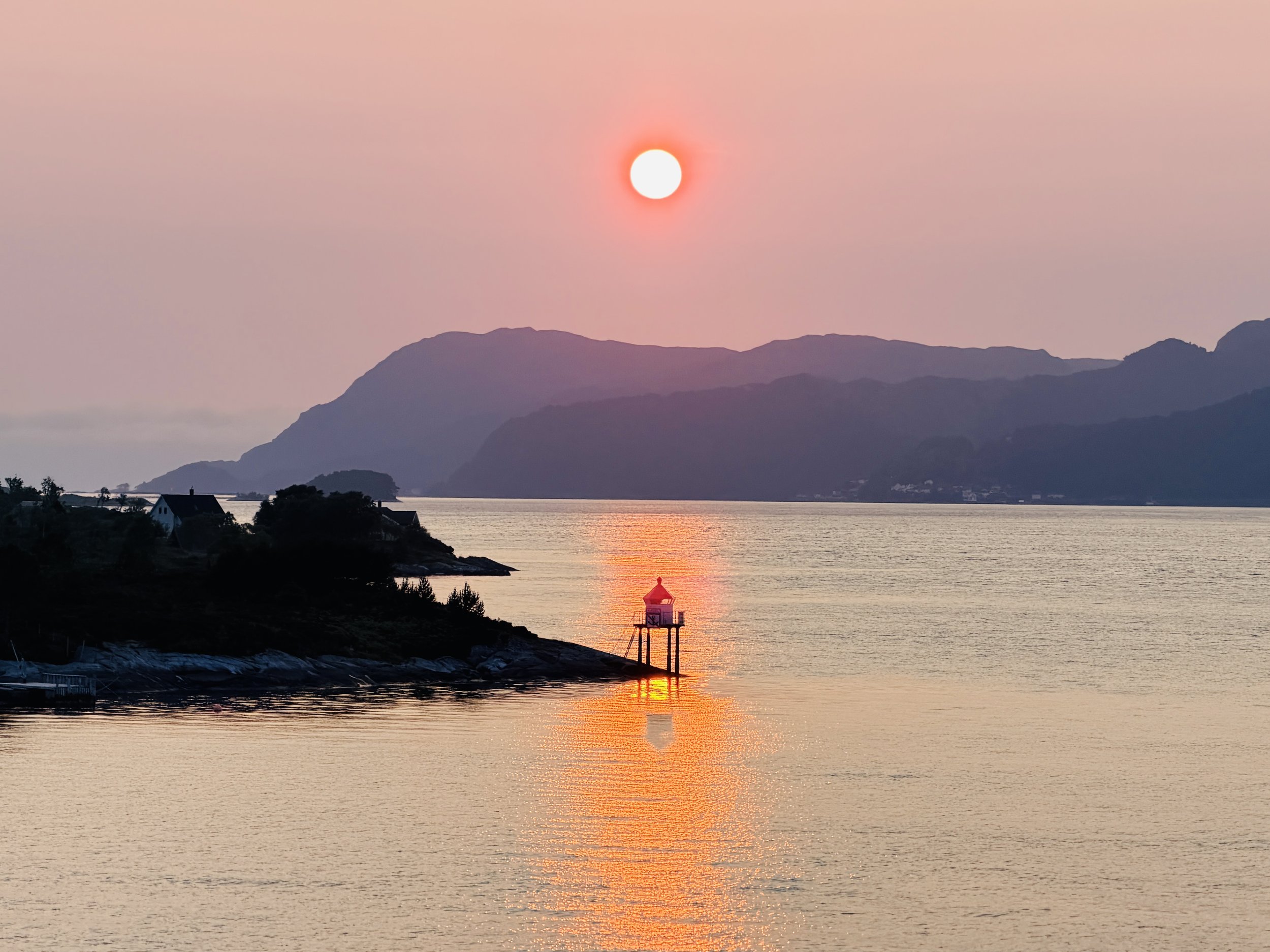
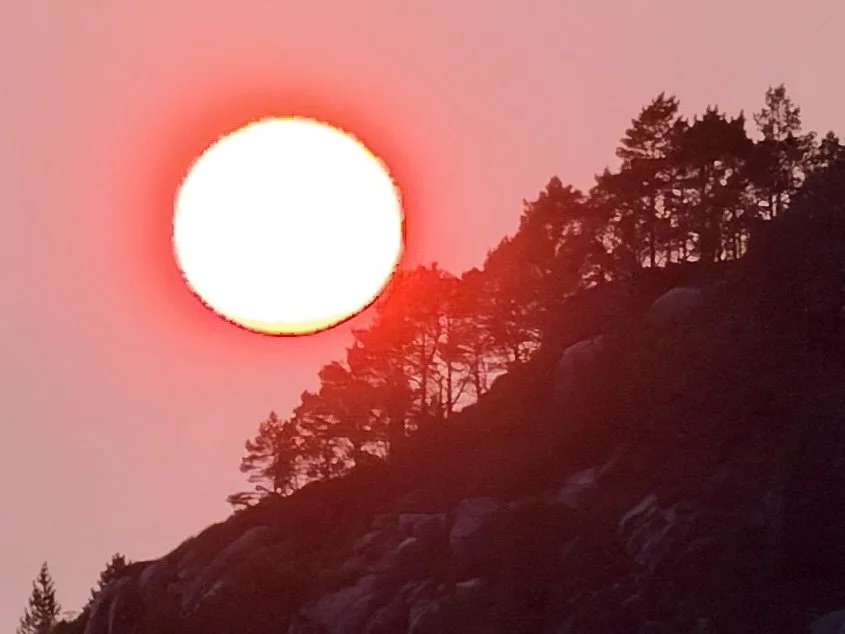
For dinner we continued to indulge in Norwegian cuisine at the Flora restaurant. Before retiring for the night, we were treated to one of the most spectacular sunsets we had seen on the entire trip.
2026年7月13日
今天是我们参加 Hurtigruten 14天北极游斯瓦尔巴航线的最后一天,也是整个挪威海岸之旅的最后一天。邮轮停靠了两个港口。
第一站是奥勒松(Ålesund),一座风景优美的中等城市。1904年,一场大火几乎烧毁了整座城市,随后重建时采用了独具特色的新艺术(Art Nouveau)建筑风格,也因此成为挪威最具代表性的建筑城市之一。
因为邮轮在这里只停留二个半小时,一下船我们便直奔通往阿克斯拉观景台(Aksla Viewpoint)的418级台阶。虽然台阶坡度不小,但距离并不长。登上观景台后,眼前便是明信片般的经典景色:港湾、岛屿、色彩缤纷的建筑,以及远处连绵的群山尽收眼底。
下山后,我们沿着海滨悠闲漫步,欣赏港口两岸五彩缤纷的建筑。奥勒松无疑是这次挪威之行中最美丽的城市之一。
邮轮重新起航驶入壮丽的赫尤伦峡湾(Hjørundfjord)。峡湾两岸点缀着一个个宁静的小村庄,景色美得令人陶醉。吃完早午餐后,邮轮已停靠在赛博(Sæbø)。这里是峡湾中的主要村庄,也是当地徒步健行的热门起点。
村里特地为我们在教堂举办了一场音乐会。演出由当地小提琴家和钢琴家共同演奏,随后钢琴家还独奏了教堂宏伟的管风琴。音乐优美动听,回荡在古老的教堂中,让人十分享受,只是演出时间稍微长了一些。
音乐会结束后,我沿着山坡步道短途徒步来到半山腰的一座登山小屋(hytta)。从那里俯瞰整个村庄,以及停泊在海湾中的邮轮,景色宁静而迷人。
返回邮轮前,在海边小面包店买了咖啡和肉桂卷。静静地坐在海滨,看着来来往往的行人,享受这段悠闲时光。邮船缓缓驶向终点——卑尔根(Bergen)。火红的夕阳渐渐隐没在挪威海岸连绵起伏的山岭之后,将天空染成一片绚丽的晚霞,也为这趟精彩而难忘的挪威之旅画上了一个圆满而完美的句号。
Warm Welcome from Bessaker 贝萨克尔的热情
July 12, 2026
We docked at Bessaker for a few hours today……
今天邮轮停靠在贝萨克尔几个小时。。。
July 12, 2026
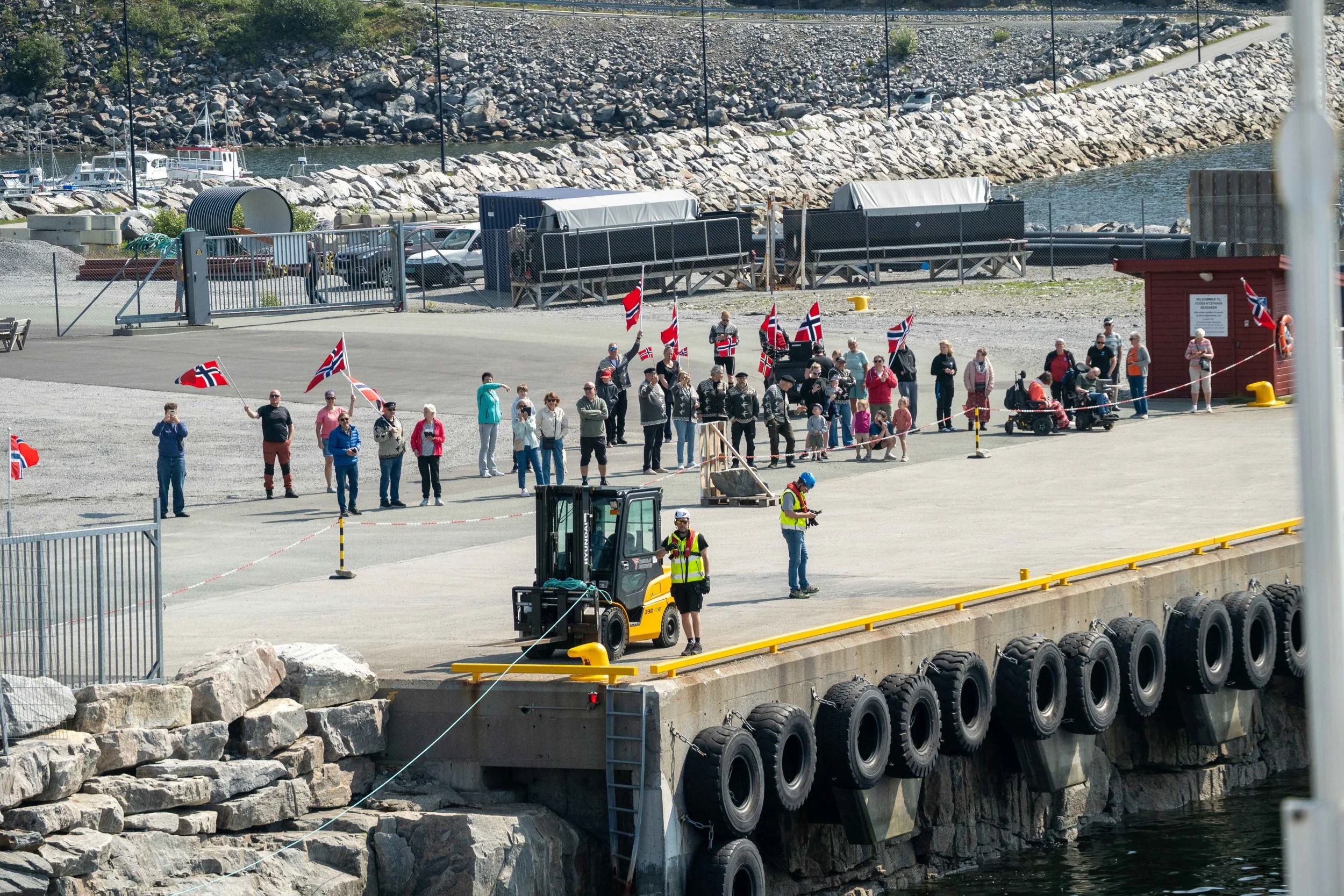
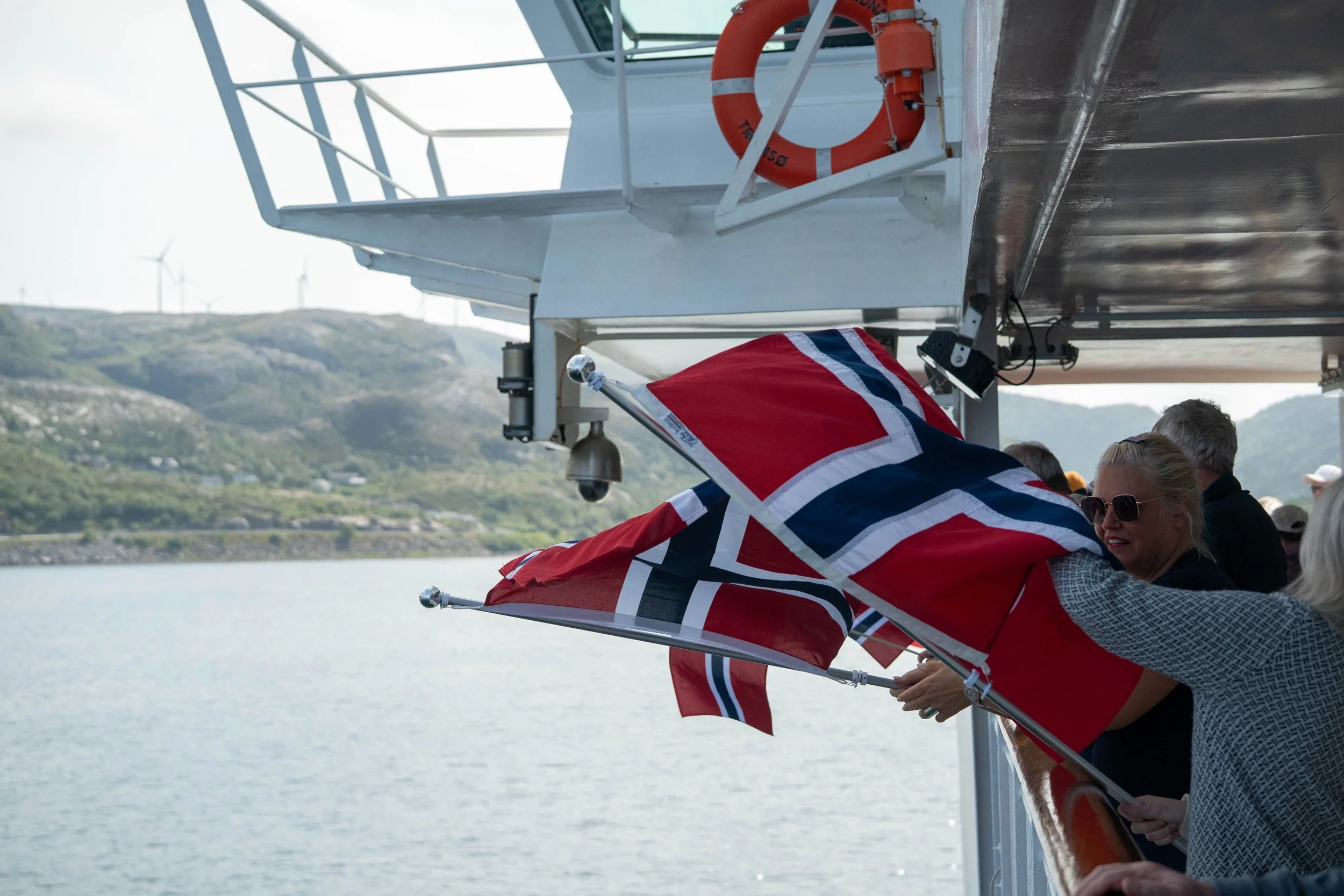
We docked at Bessaker for a few hours today. It is a tiny fishing village, but it gave us one of the warmest welcomes of the entire voyage. A group of local residents gathered on the pier, waving Norwegian flags as our ship arrived. In return, many passengers assembled on Deck 6 to wave back. It was a simple yet touching exchange that made us feel genuinely welcome.
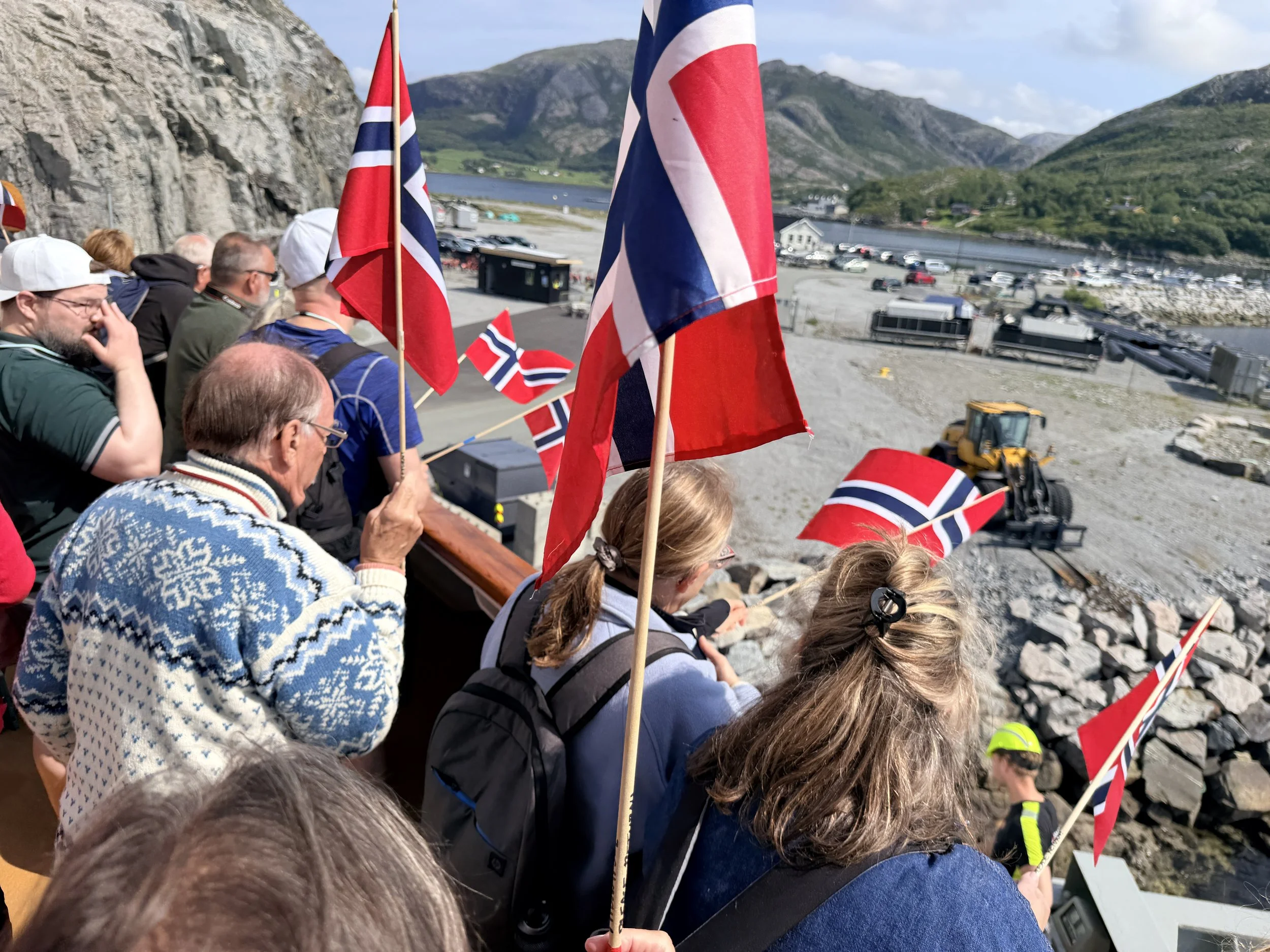
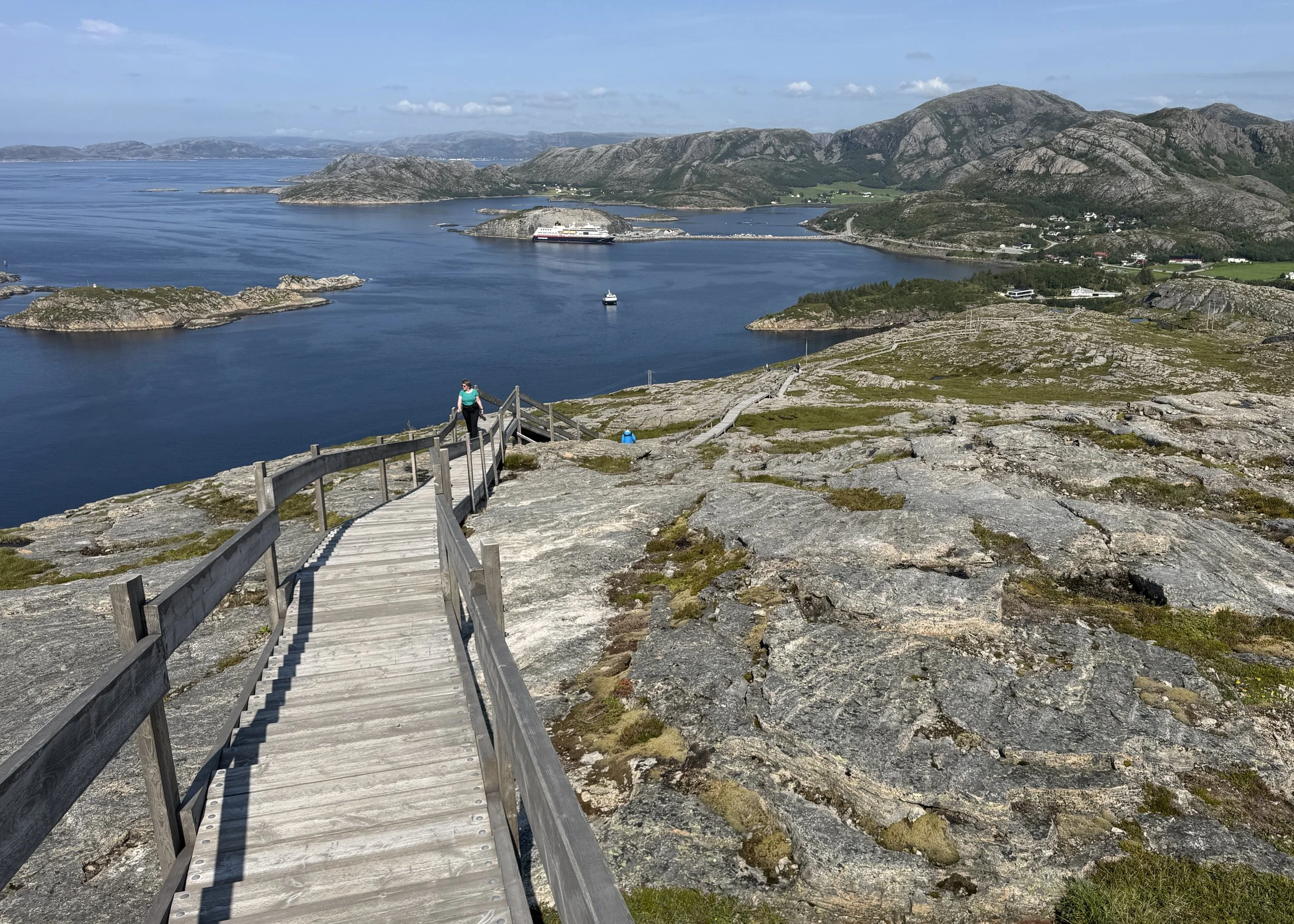
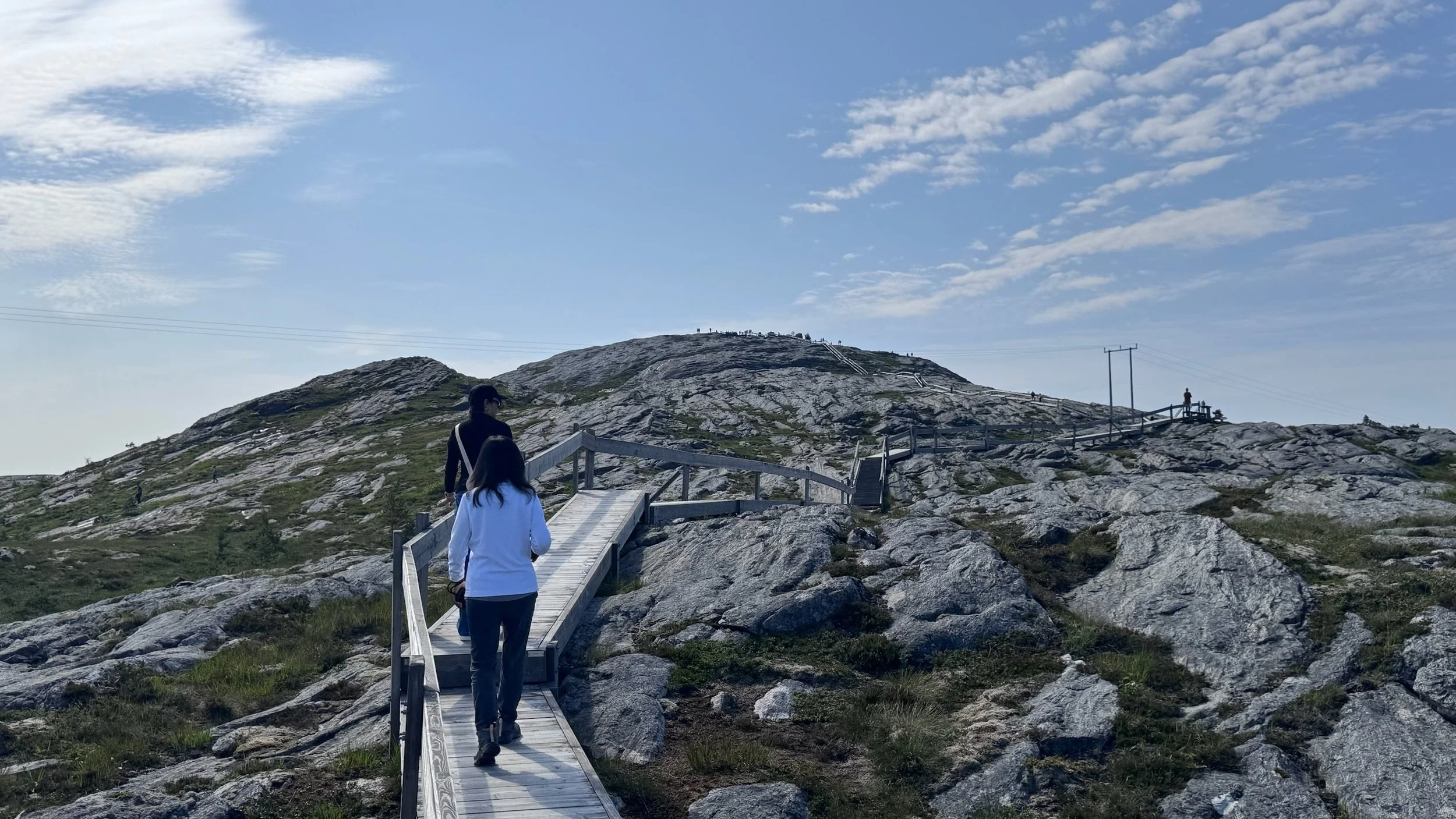
Peimin joined our friends on a walk through the village and climbed about 800 steps to the top of a nearby hill, where they enjoyed panoramic views overlooking the village and the surrounding coastline.
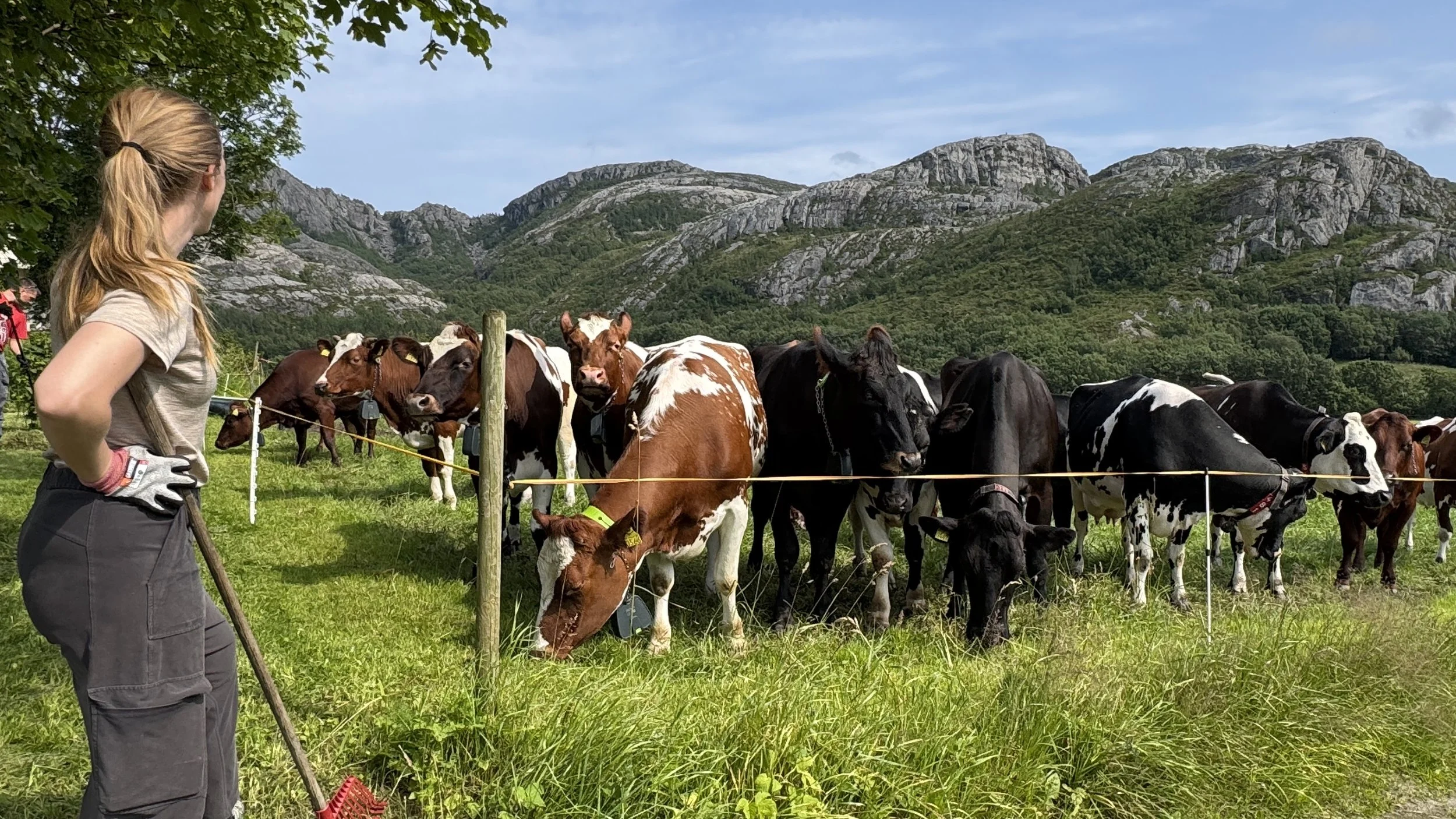
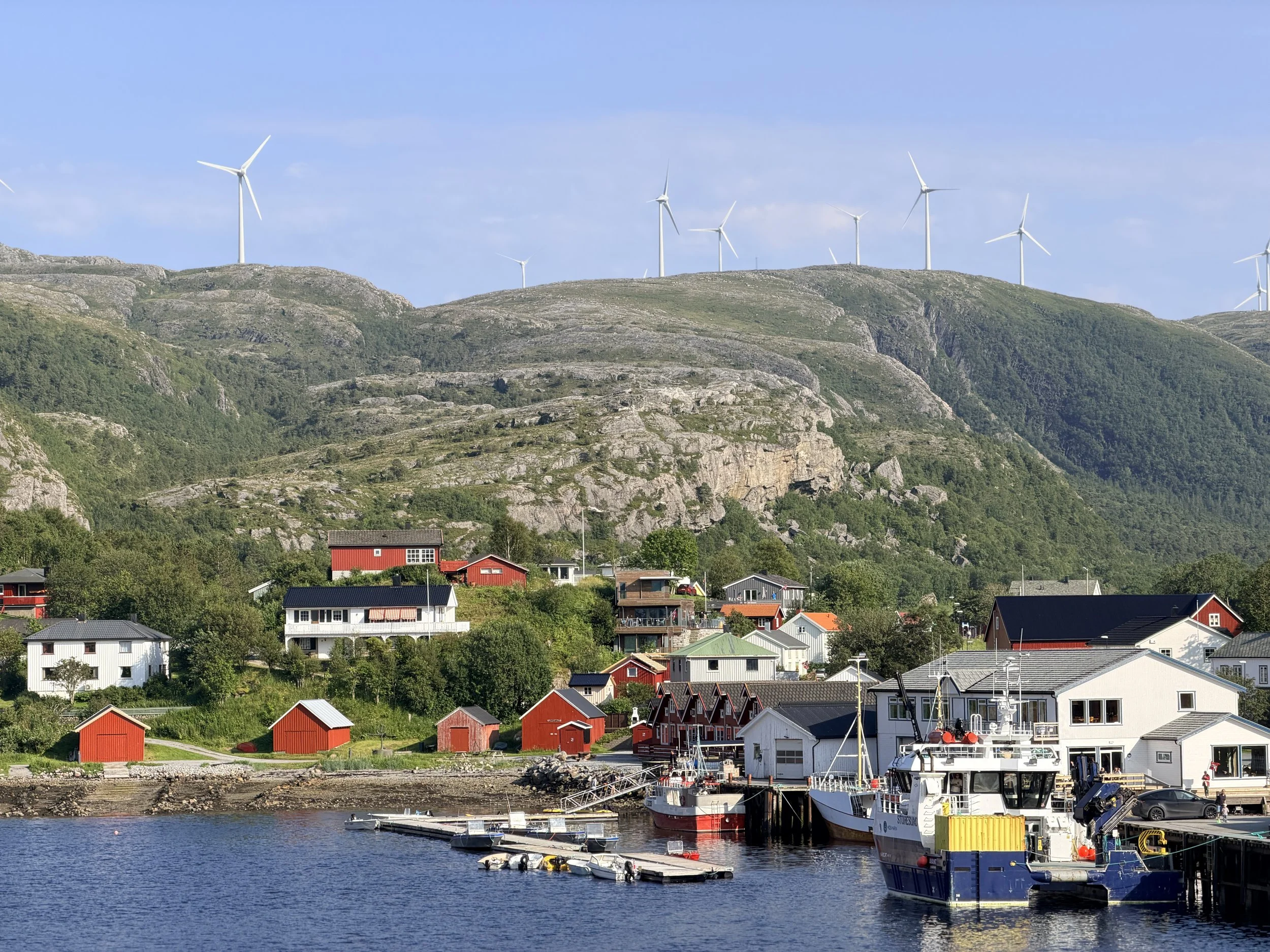
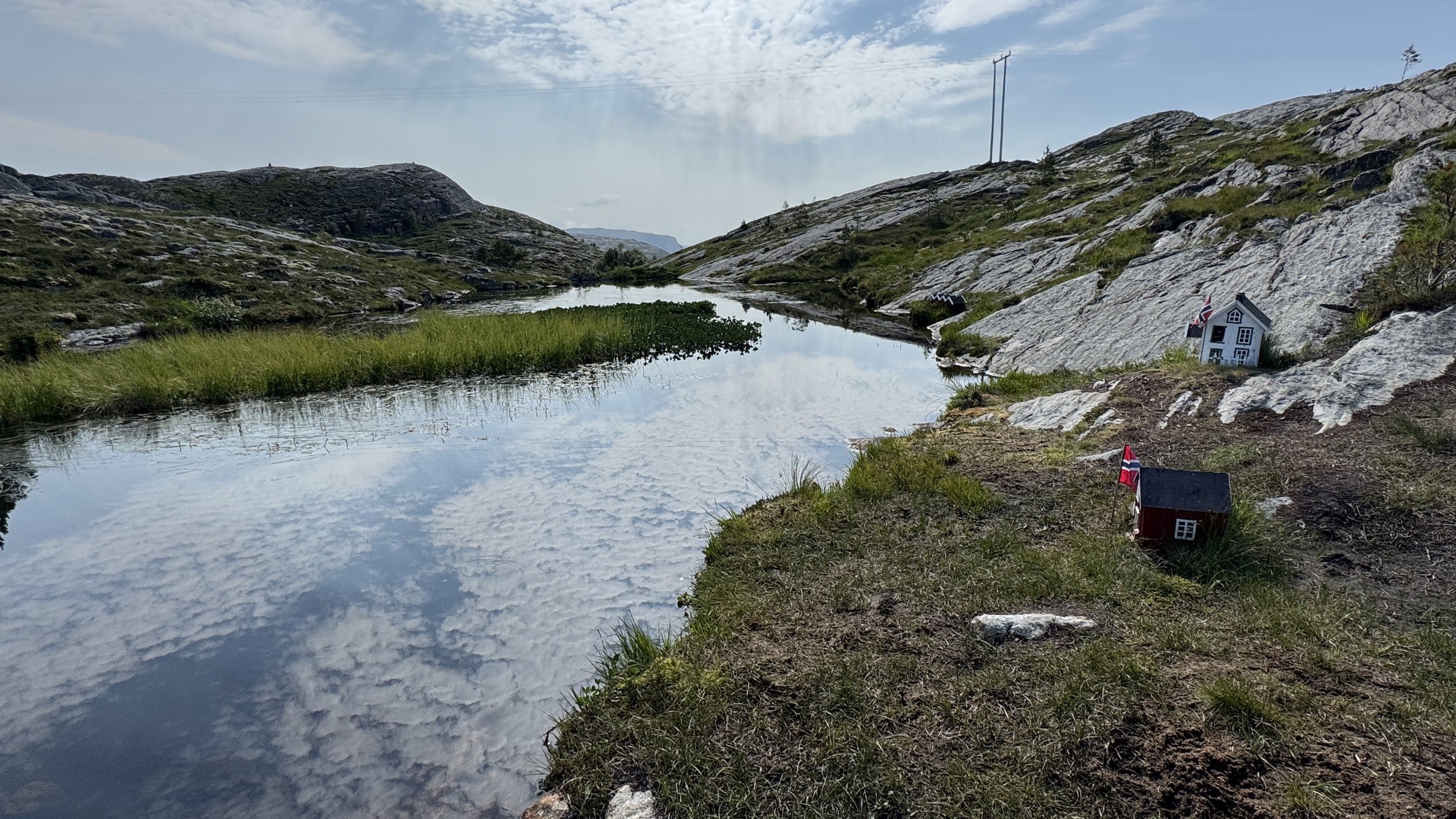
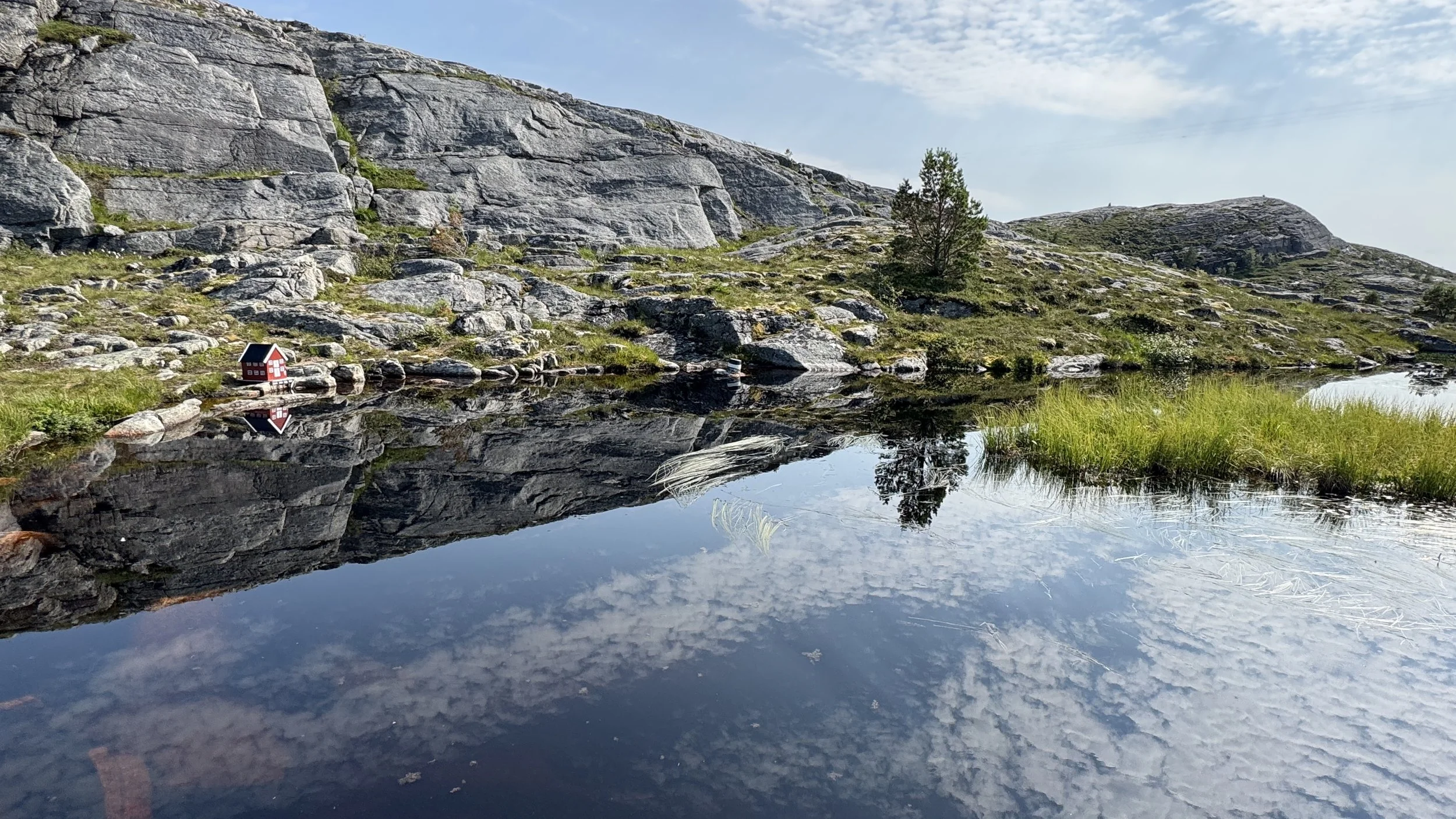
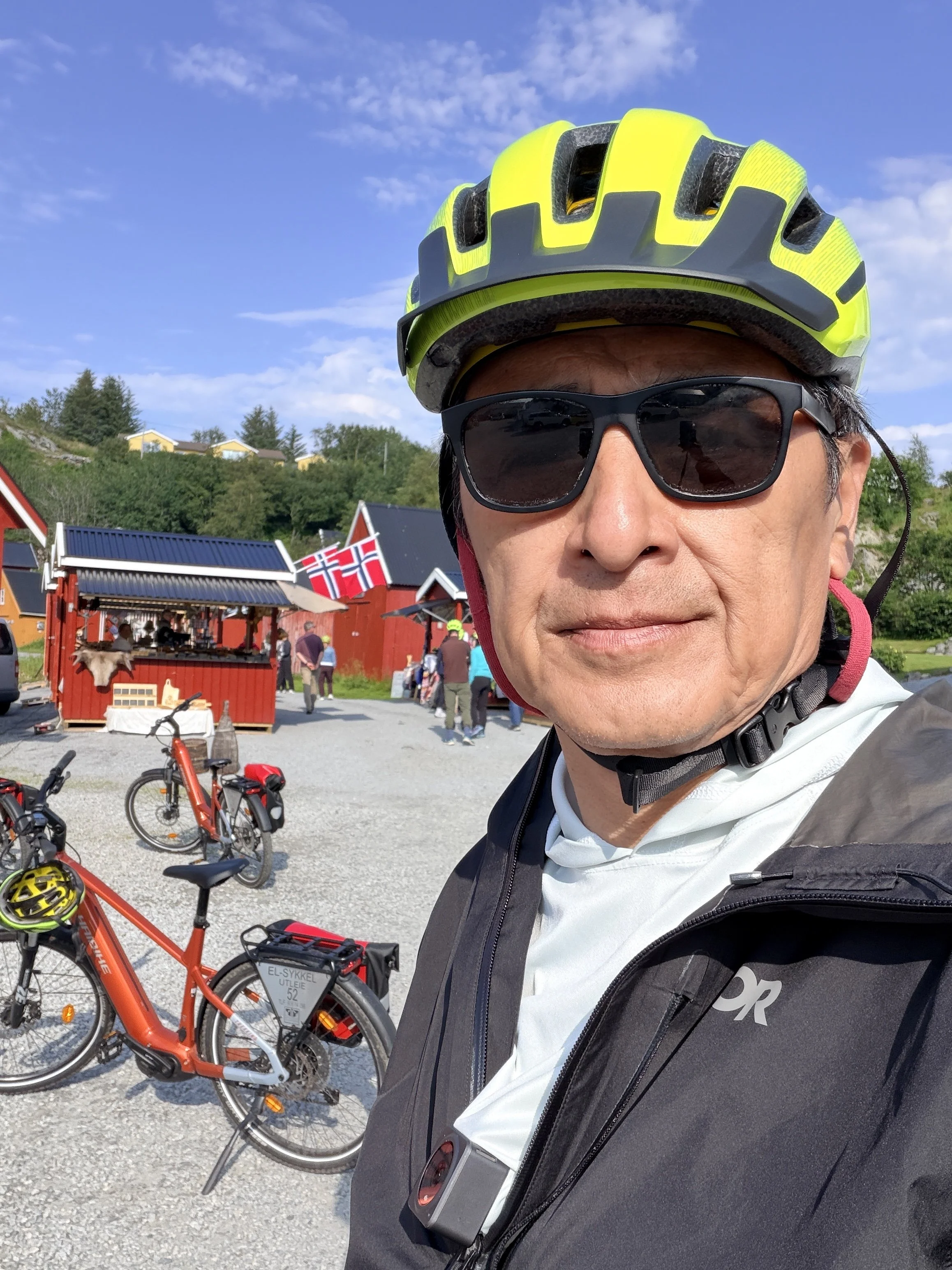
I joined another e-bike excursion. At first, our guide kept the pace slow—only about 10 to 15 km/h—which I initially found rather uneventful. However, the second half of the ride proved to be anything but easy.
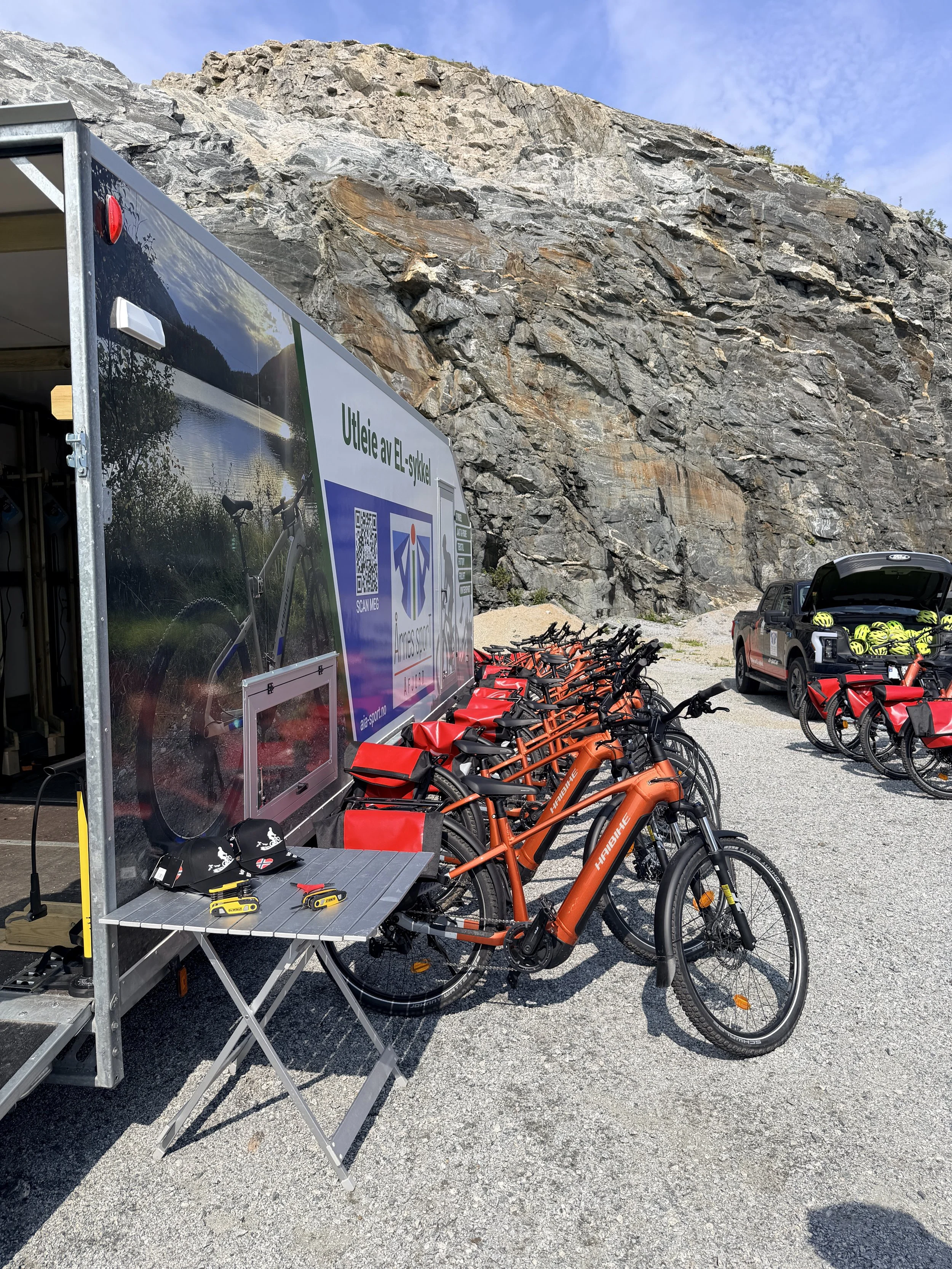
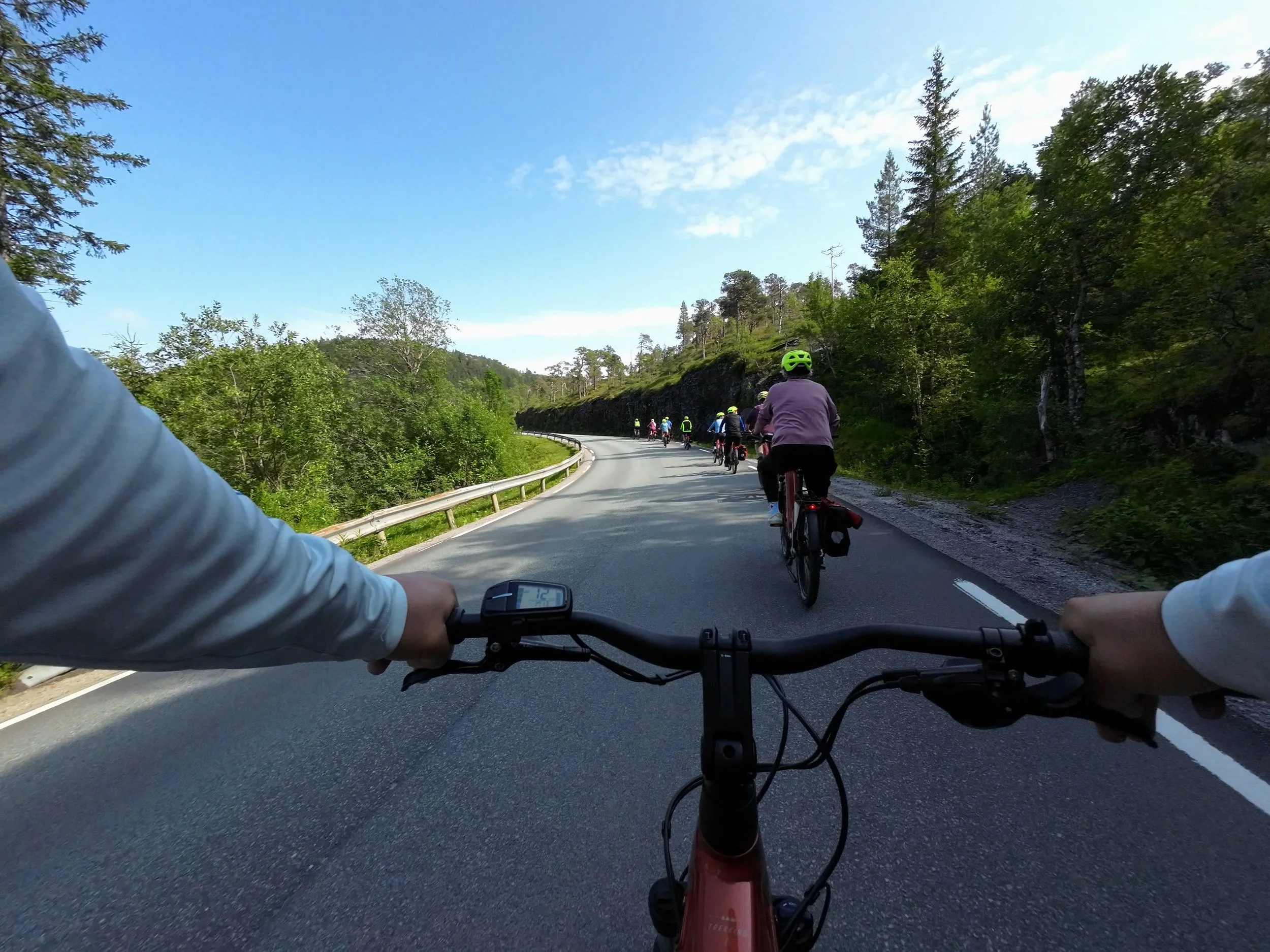
We left the paved roads and followed the gravel maintenance road leading to a wind farm high on the hills. The climb featured sustained 9–11% grades, and the loose gravel made it difficult to maintain traction and balance. One guide rode at the front of the group, while a support truck followed behind in case anyone needed assistance.
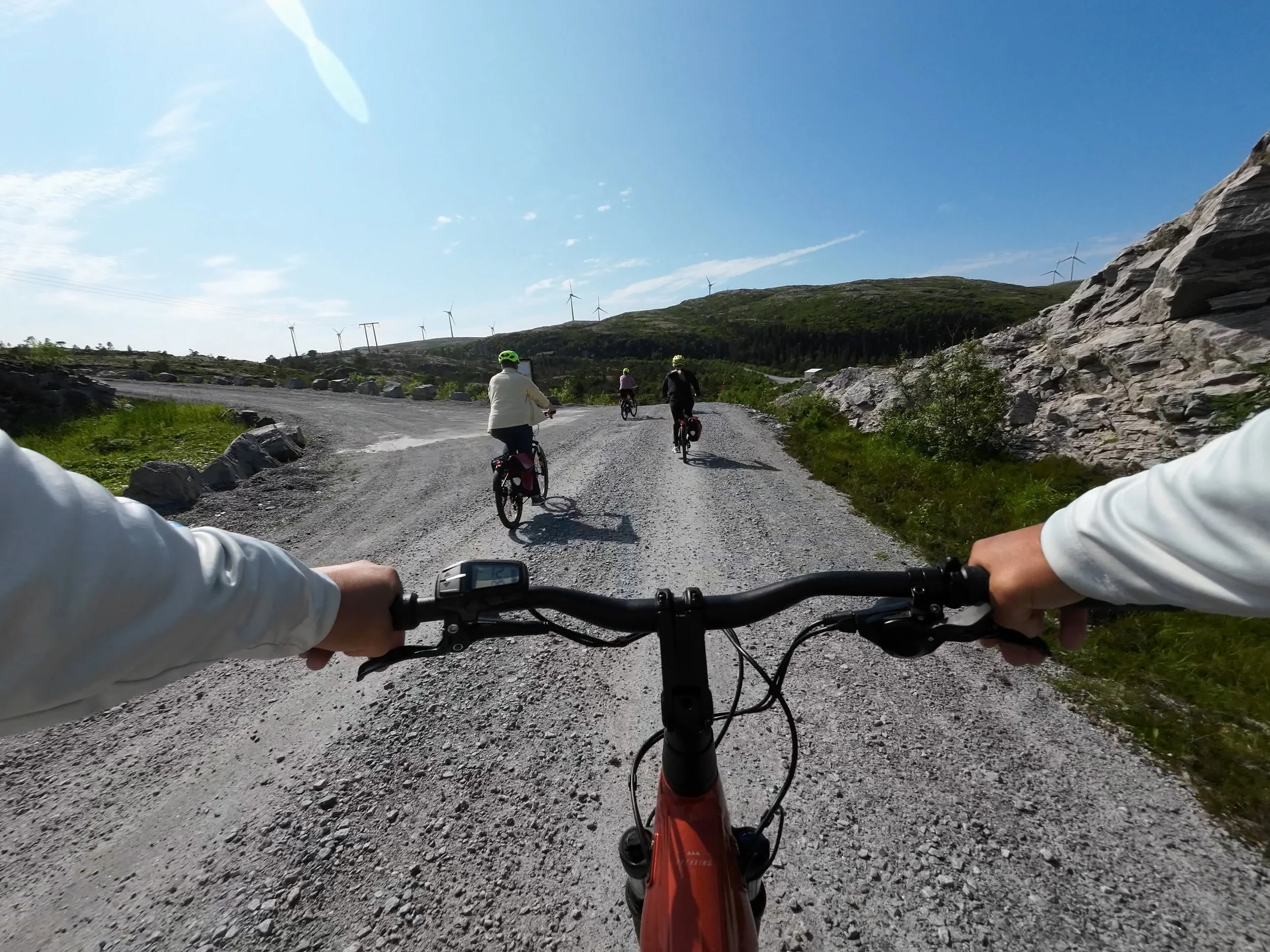
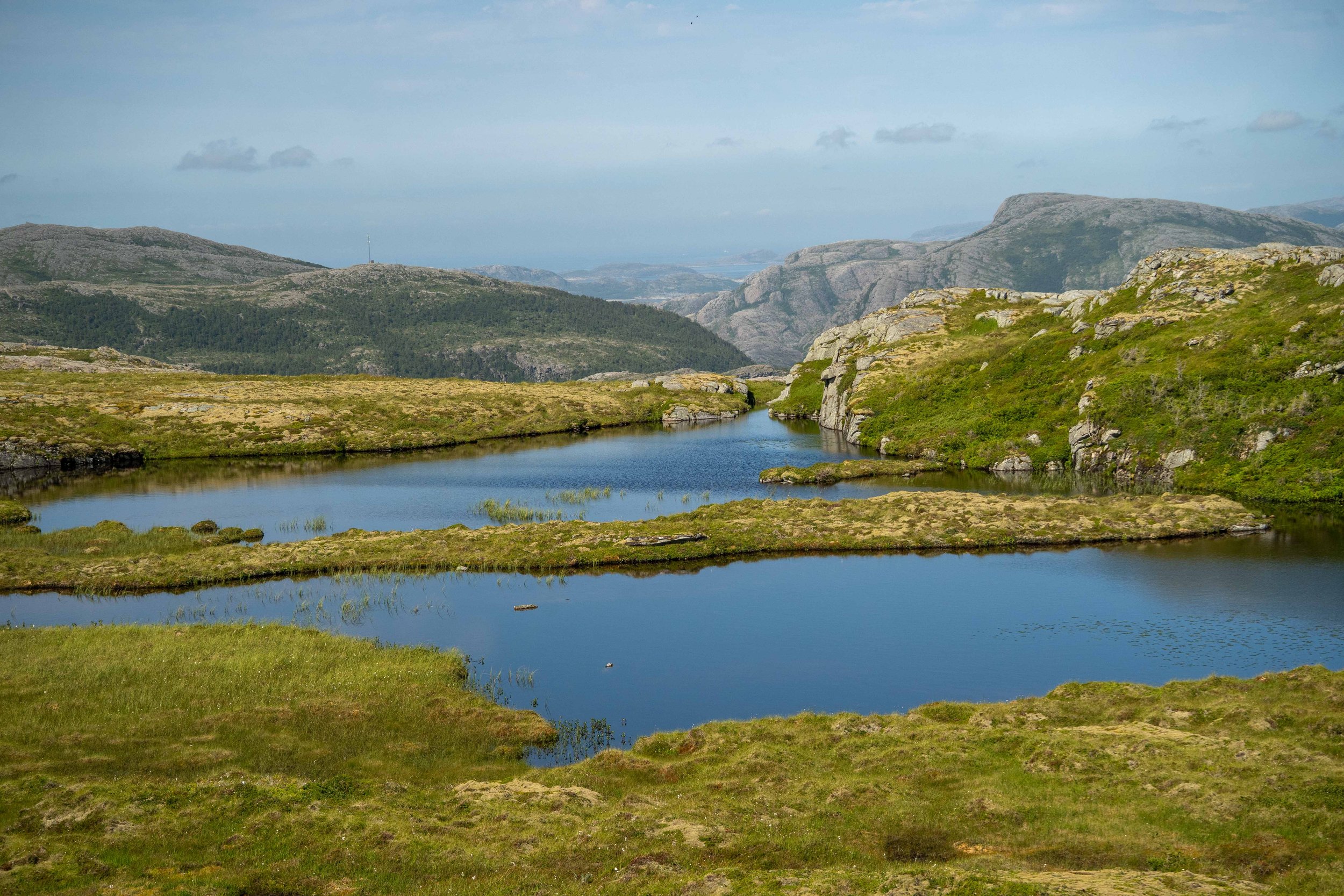
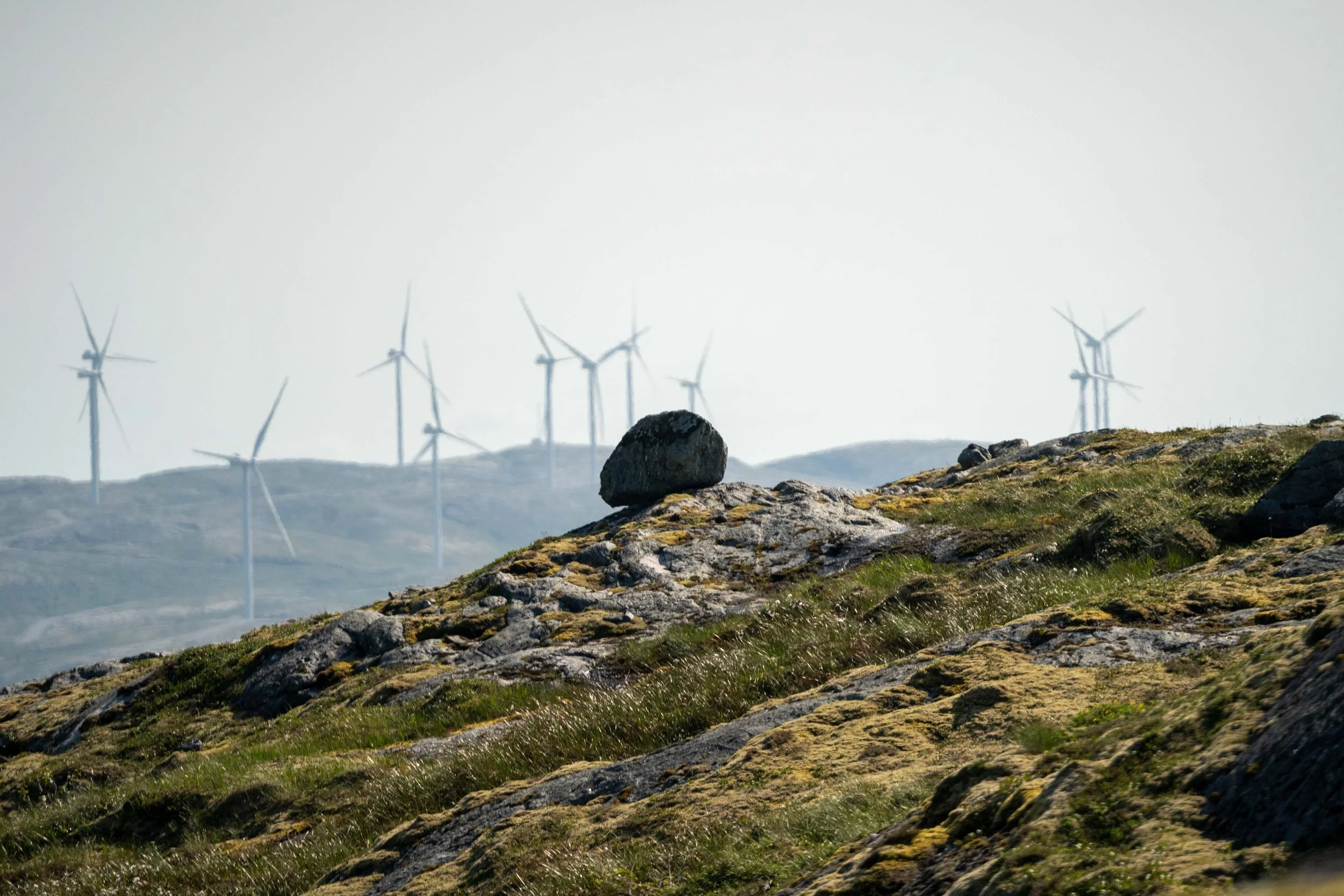
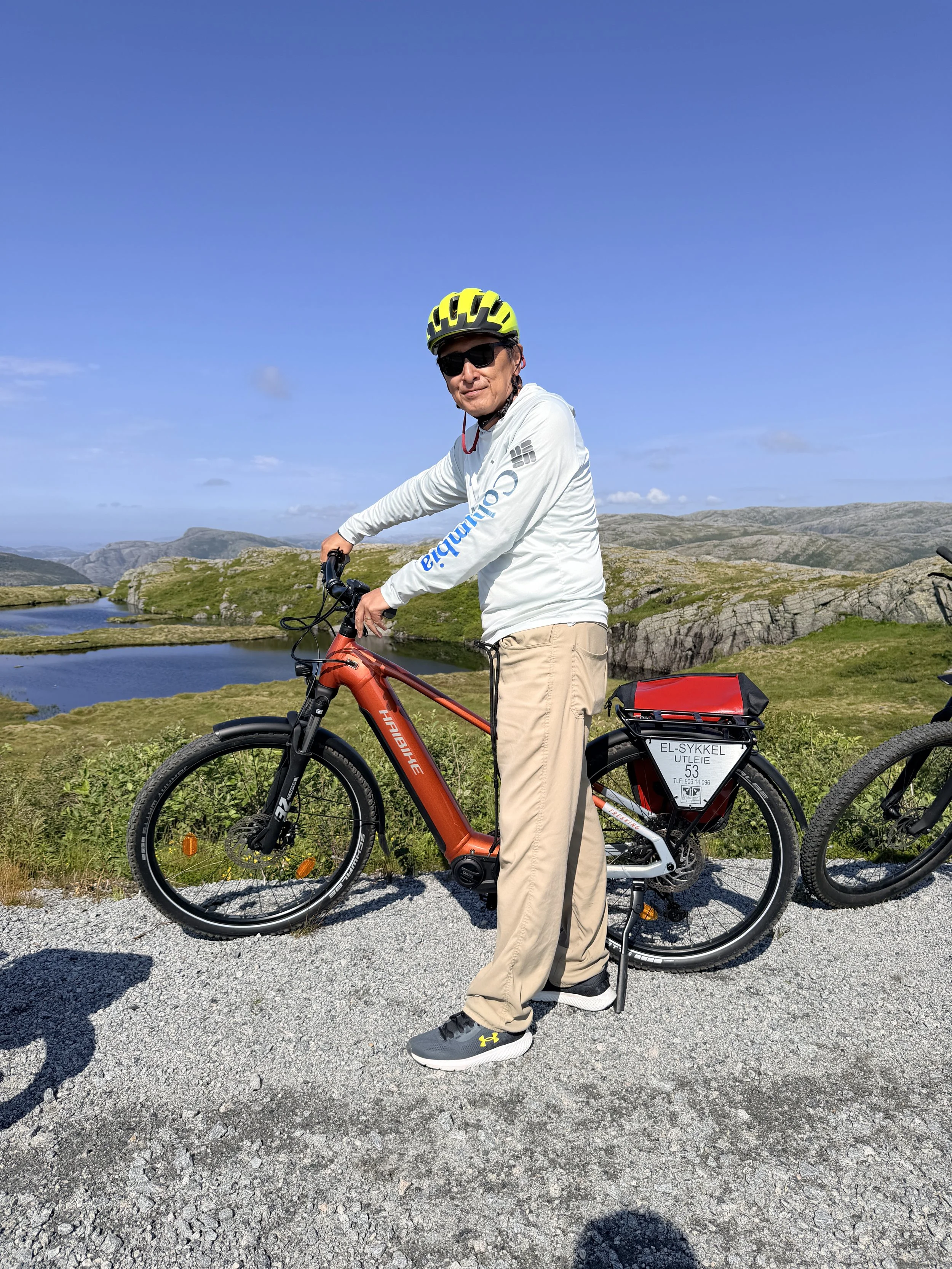
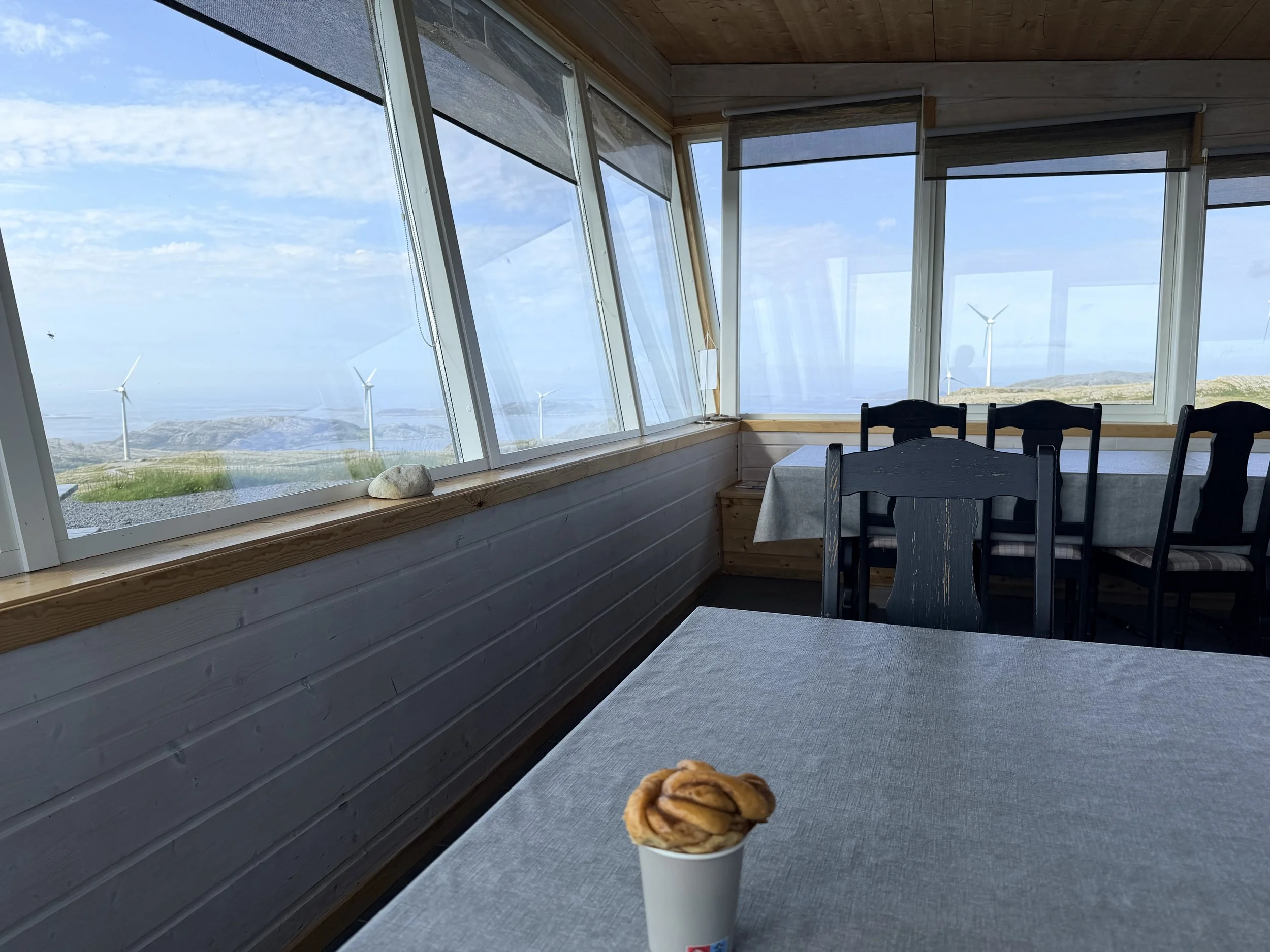
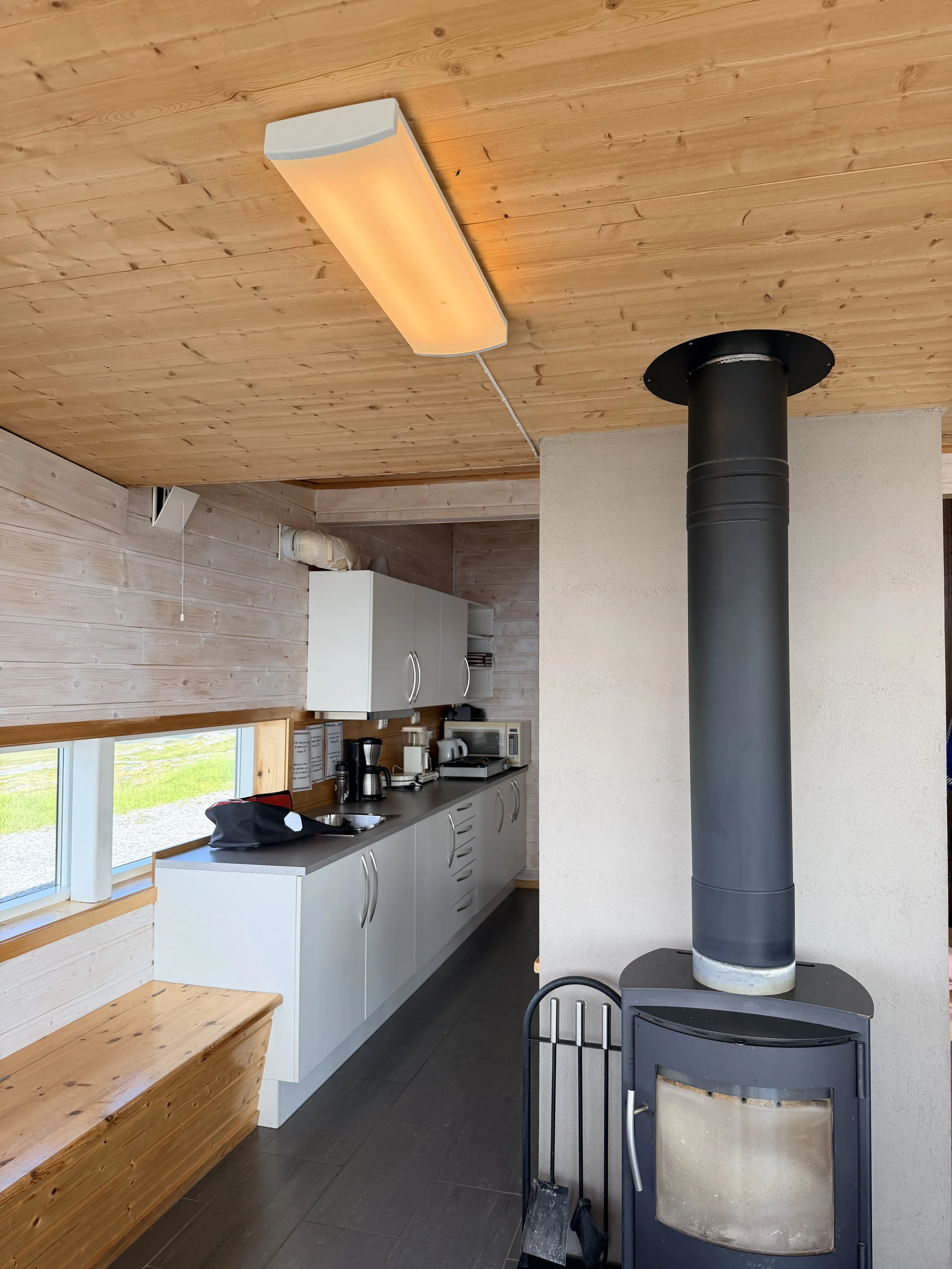
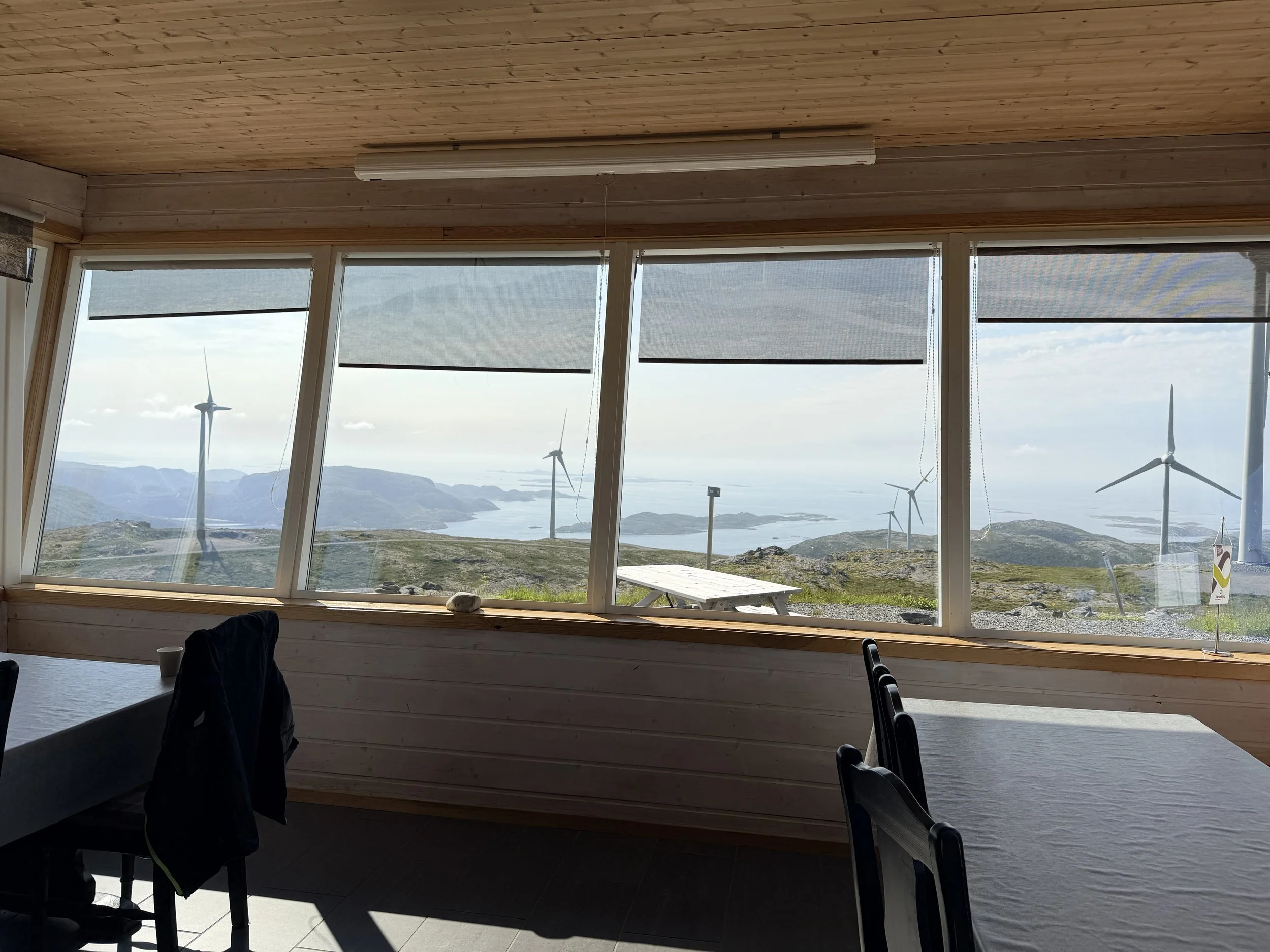
The effort was well rewarded. At the summit, we were treated to sweeping panoramic views of the wind turbines, scattered islands, and the Norwegian coastline. Like many hiking destinations in Norway, there was also a welcoming hytta at the top, complete with a full kitchen, tables, and chairs. Our guide served coffee and fresh cinnamon rolls while we took a well-earned break and admired the scenery.
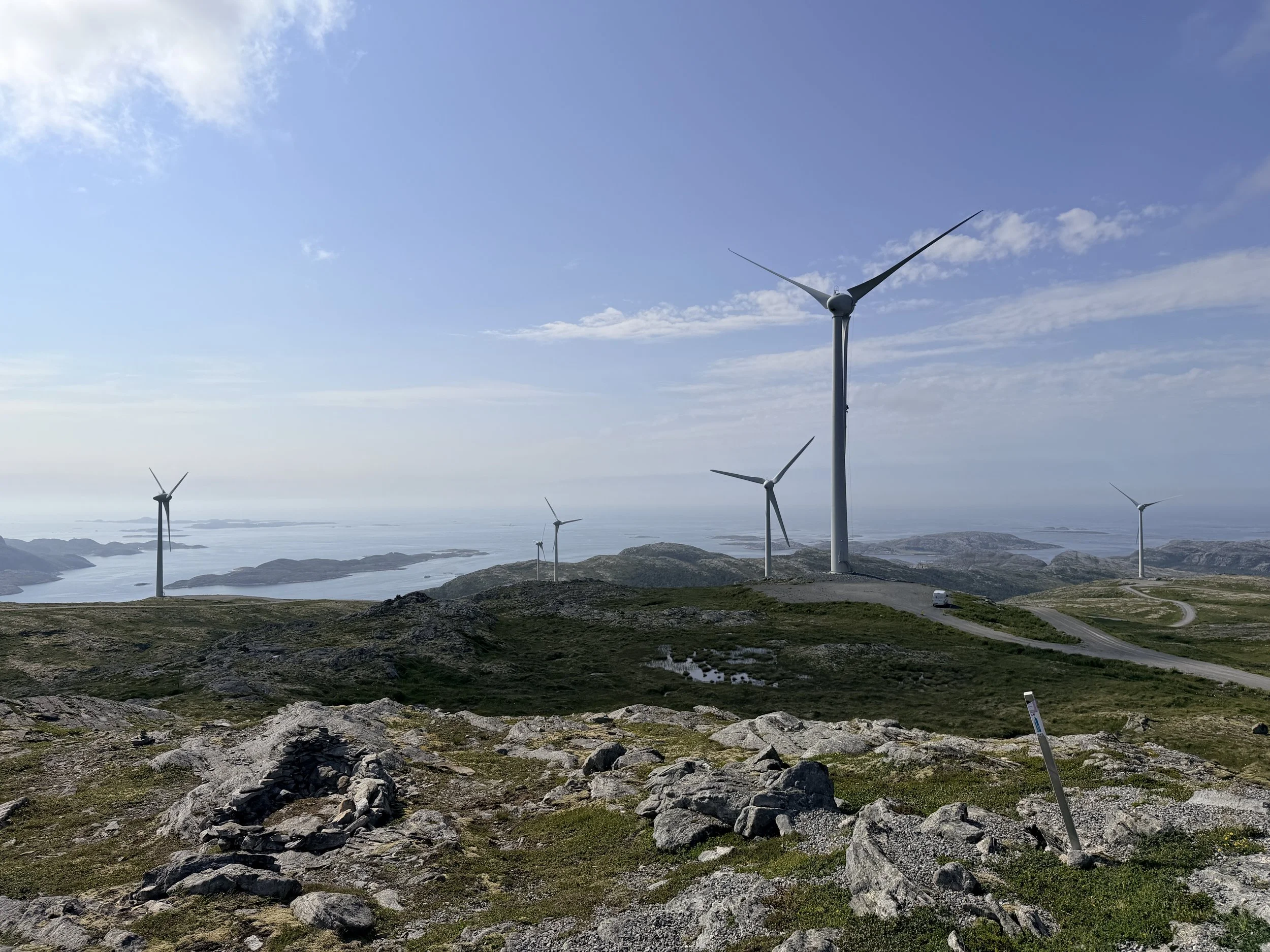
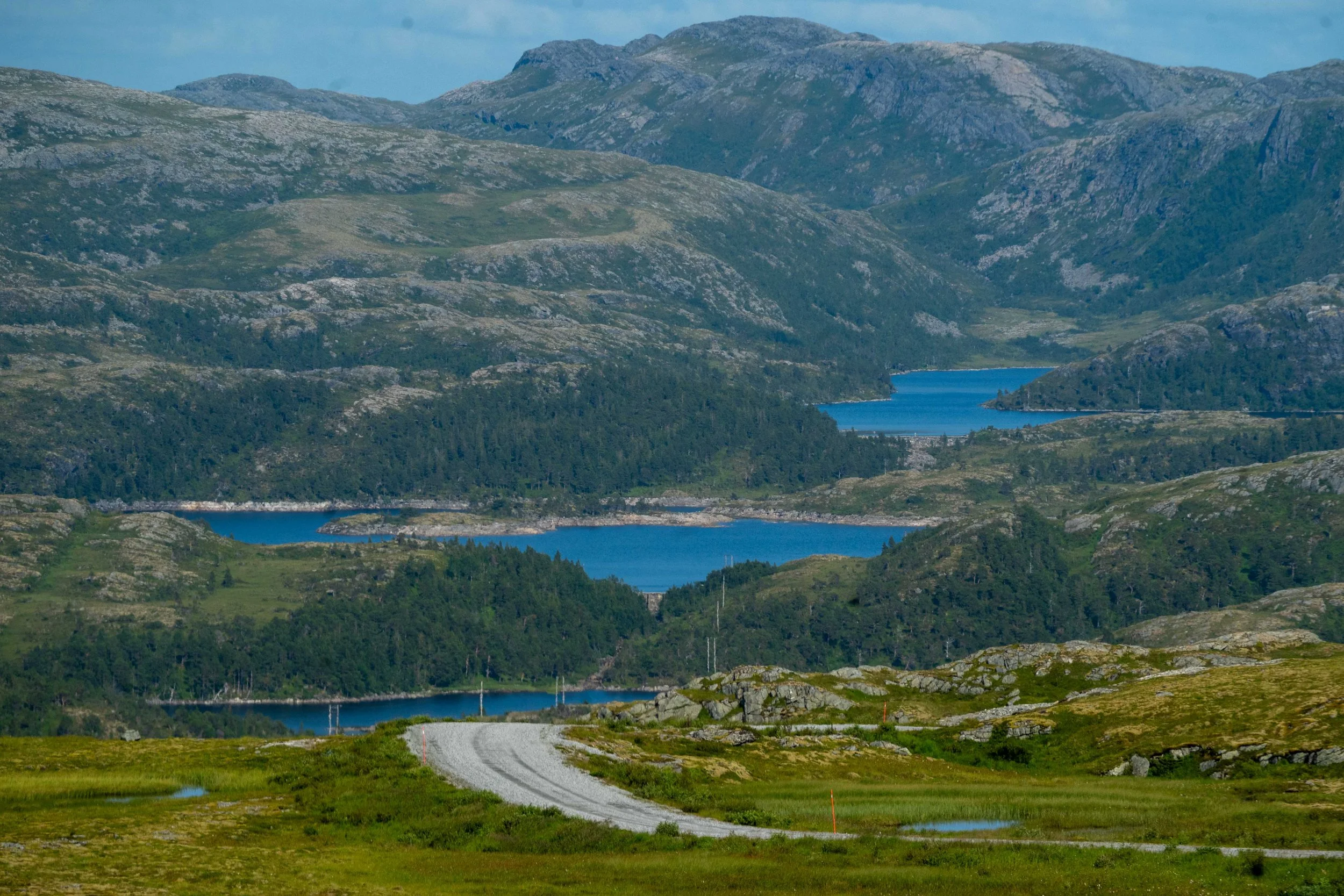
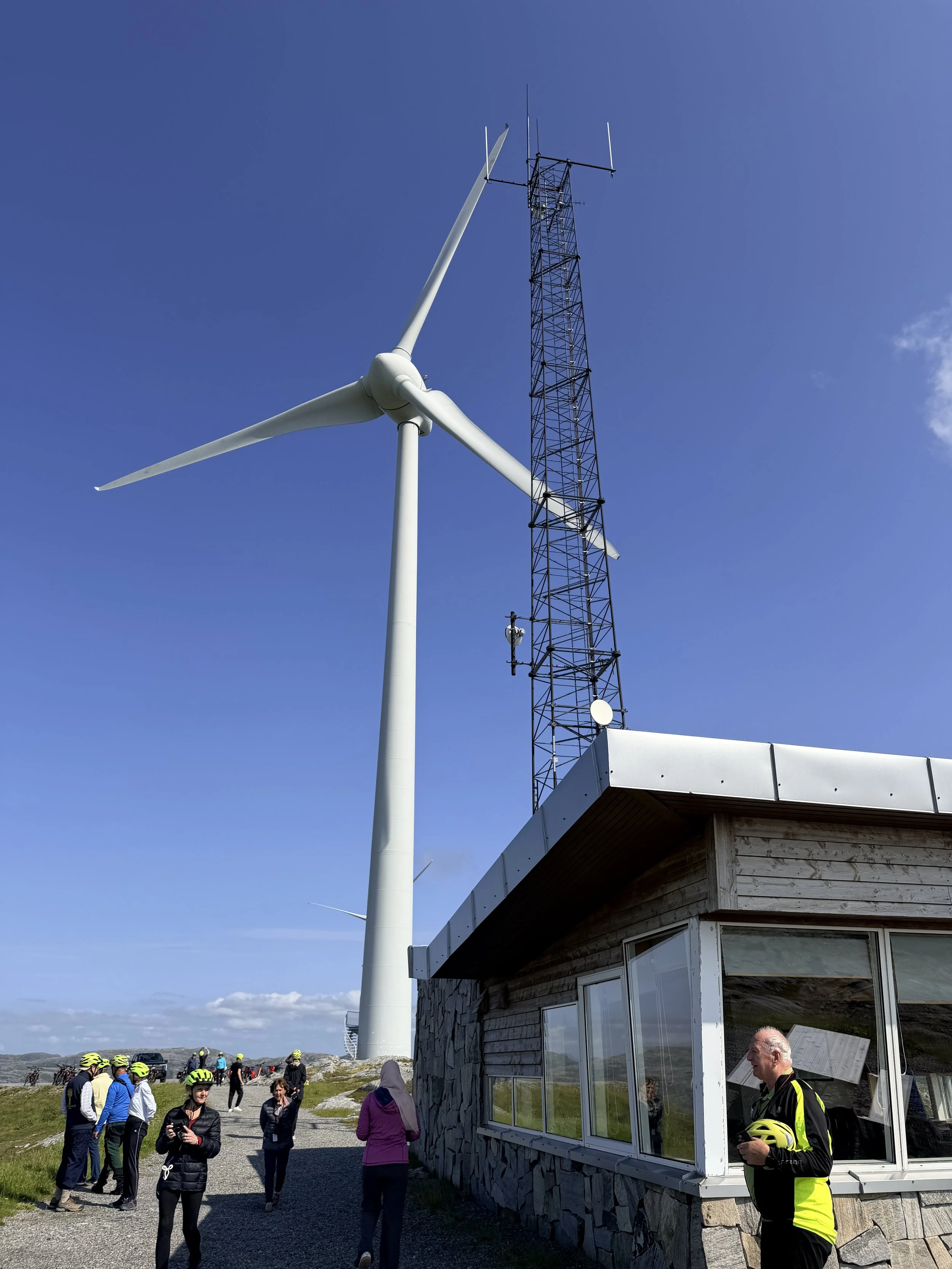
The descent turned out to be even more demanding than the climb. Riding down the steep, loose gravel required constant concentration. A couple of passengers fell, and one decided to ride back in the support truck. I focused on keeping my balance all the way down and found it to be the most technically challenging cycling I have ever done.
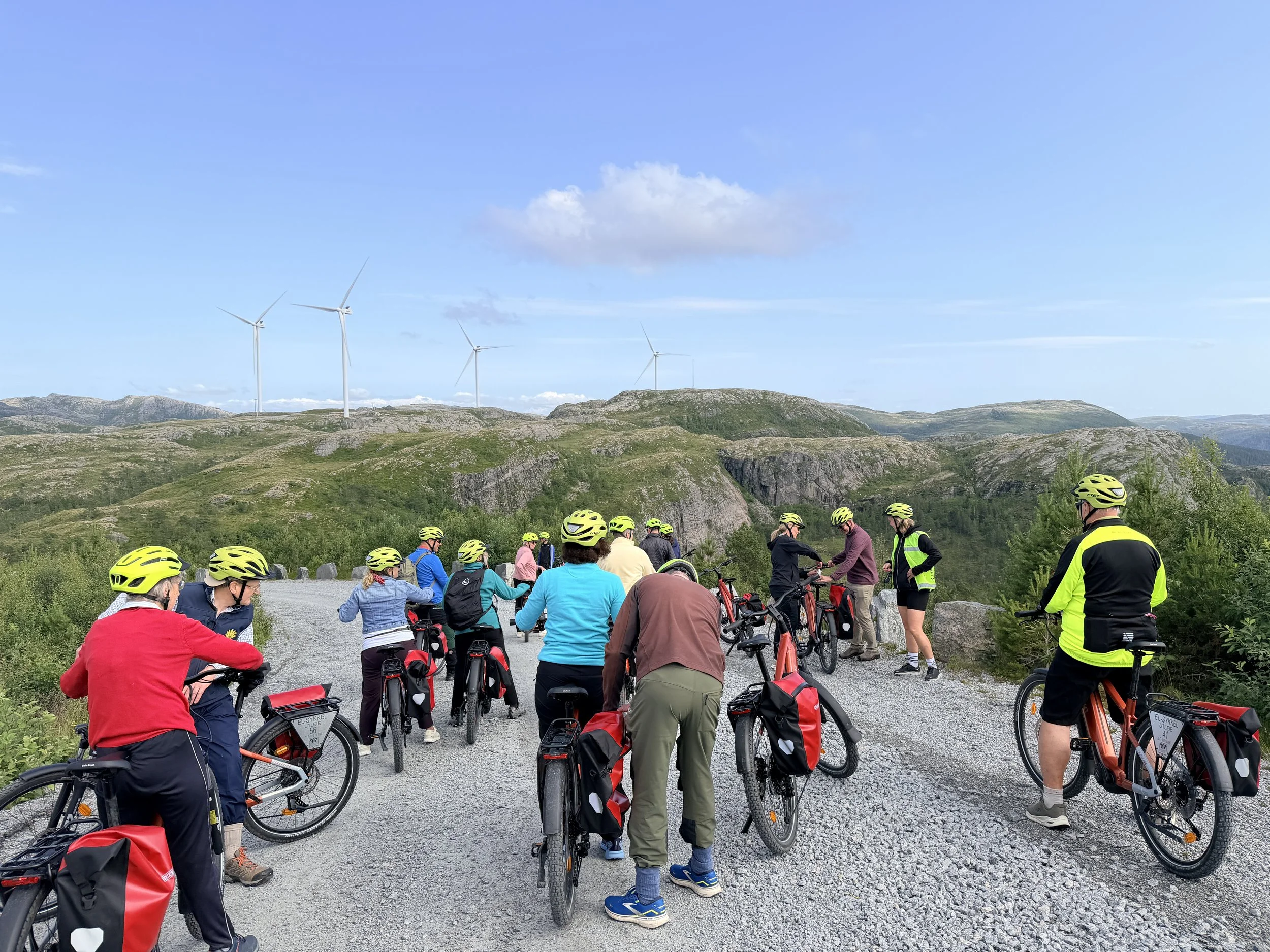
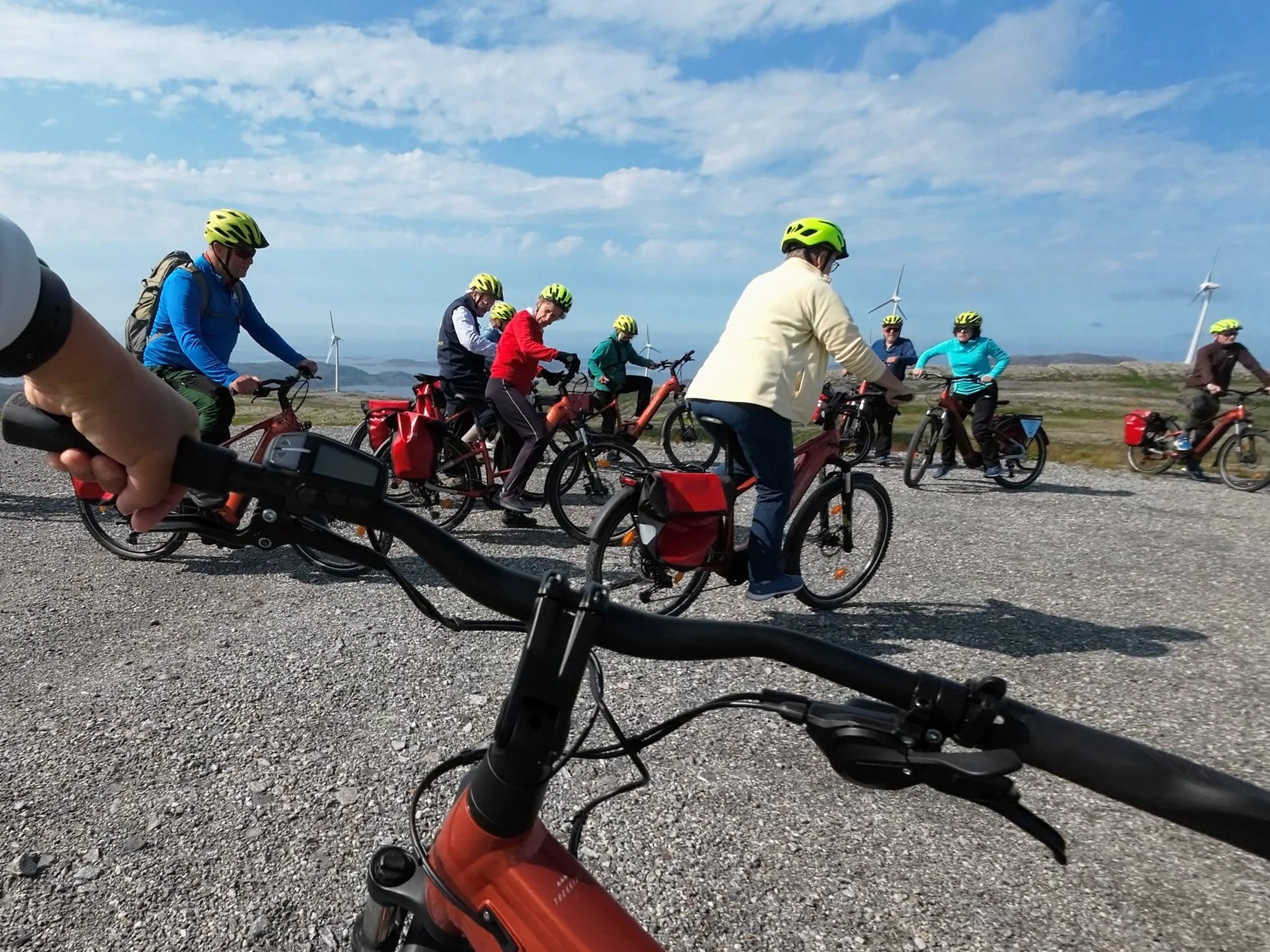
On the way back to the ship, we made a short detour through the forest before spending about ten minutes in the village center. We returned to the ship on time, tired but exhilarated. It was a demanding ride, yet one of the most rewarding excursions of the trip.
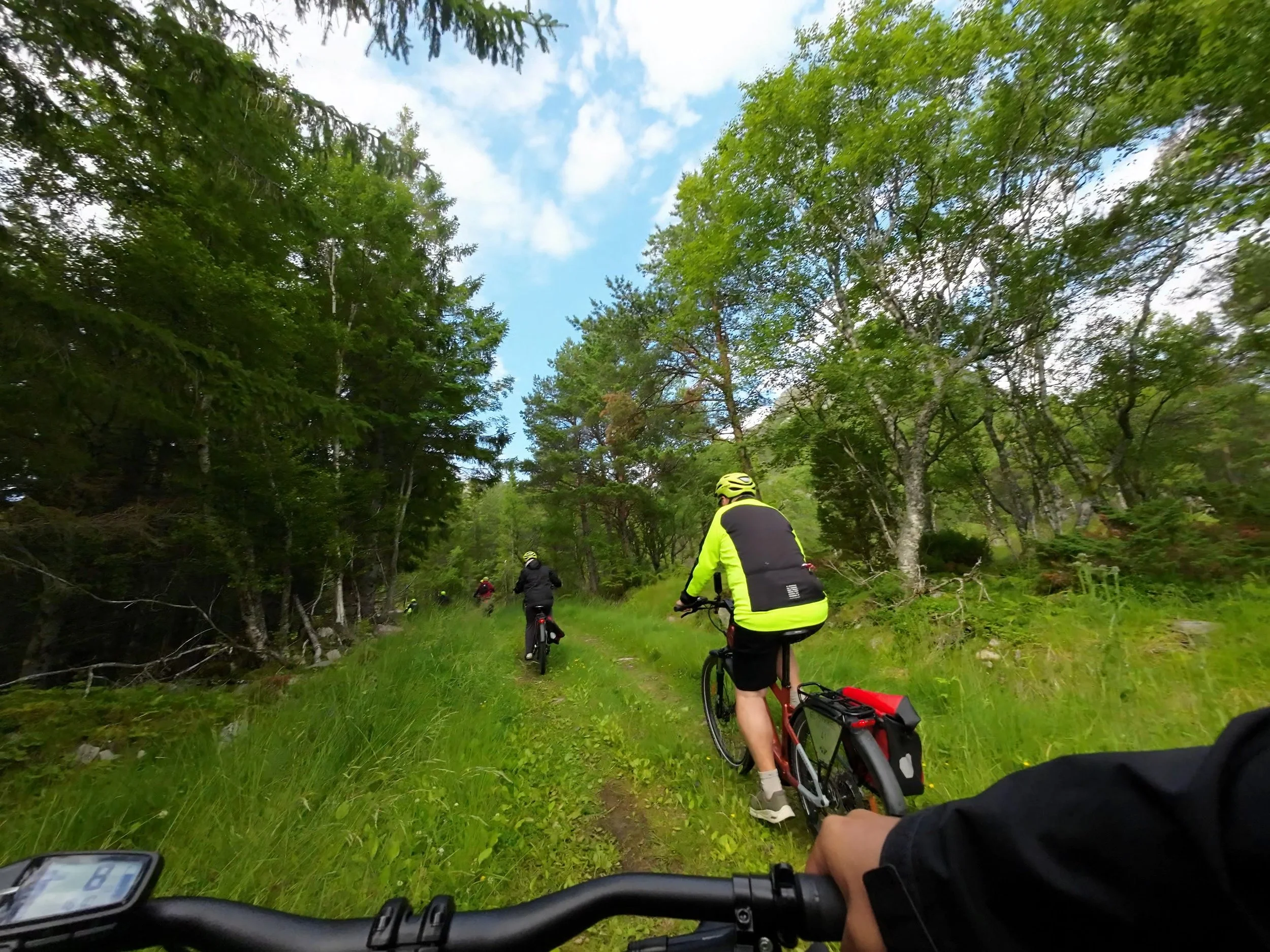
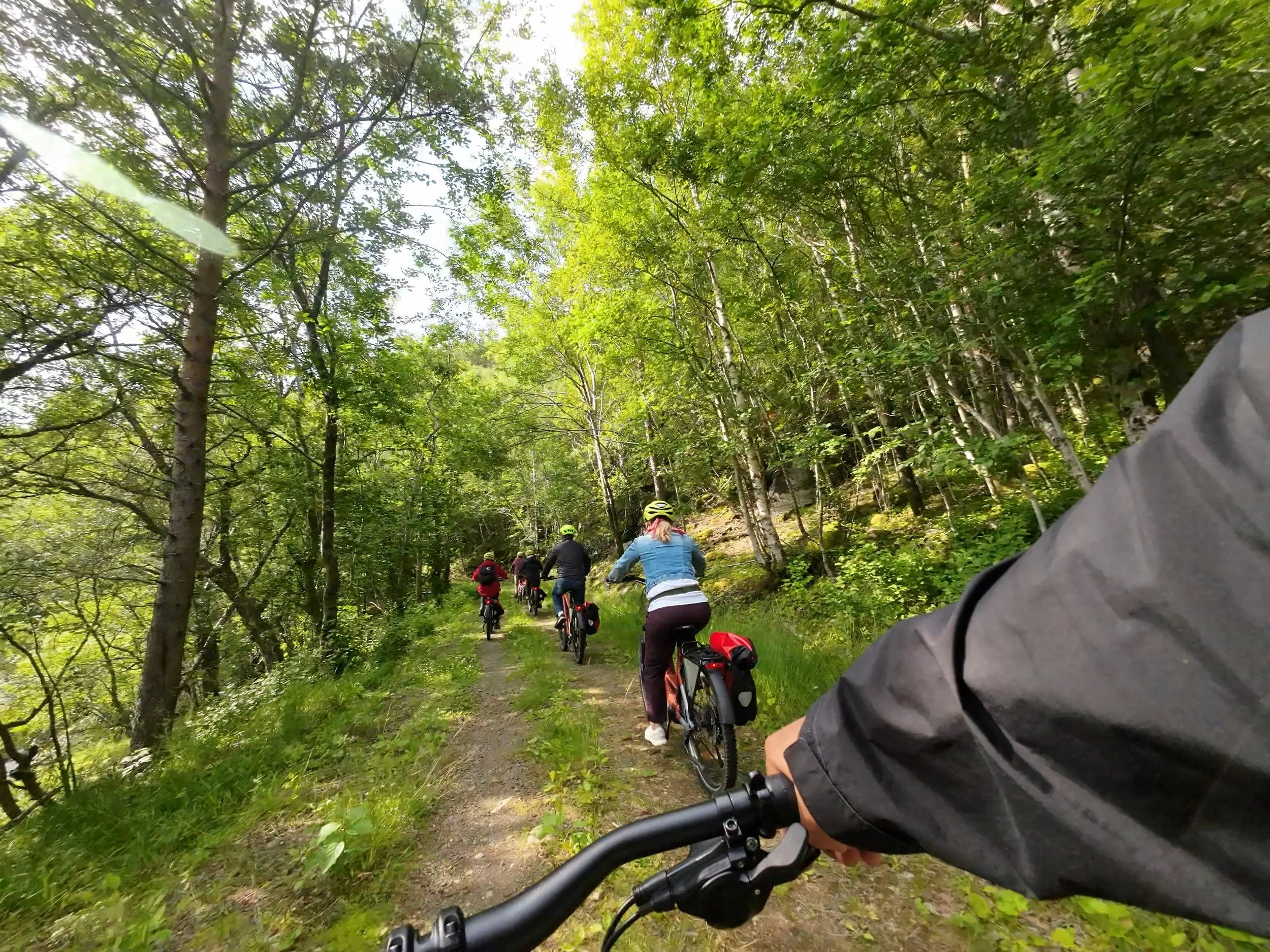
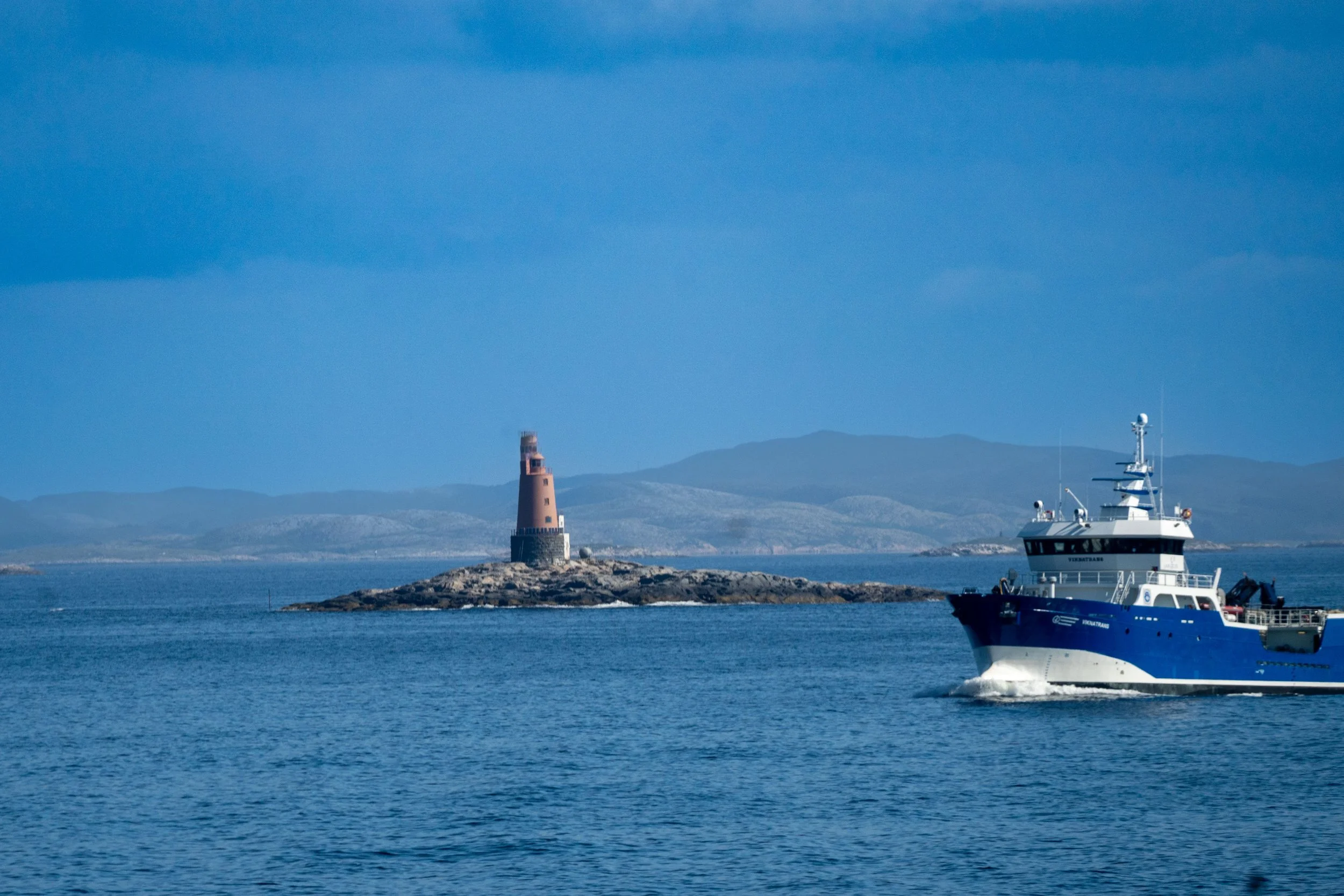
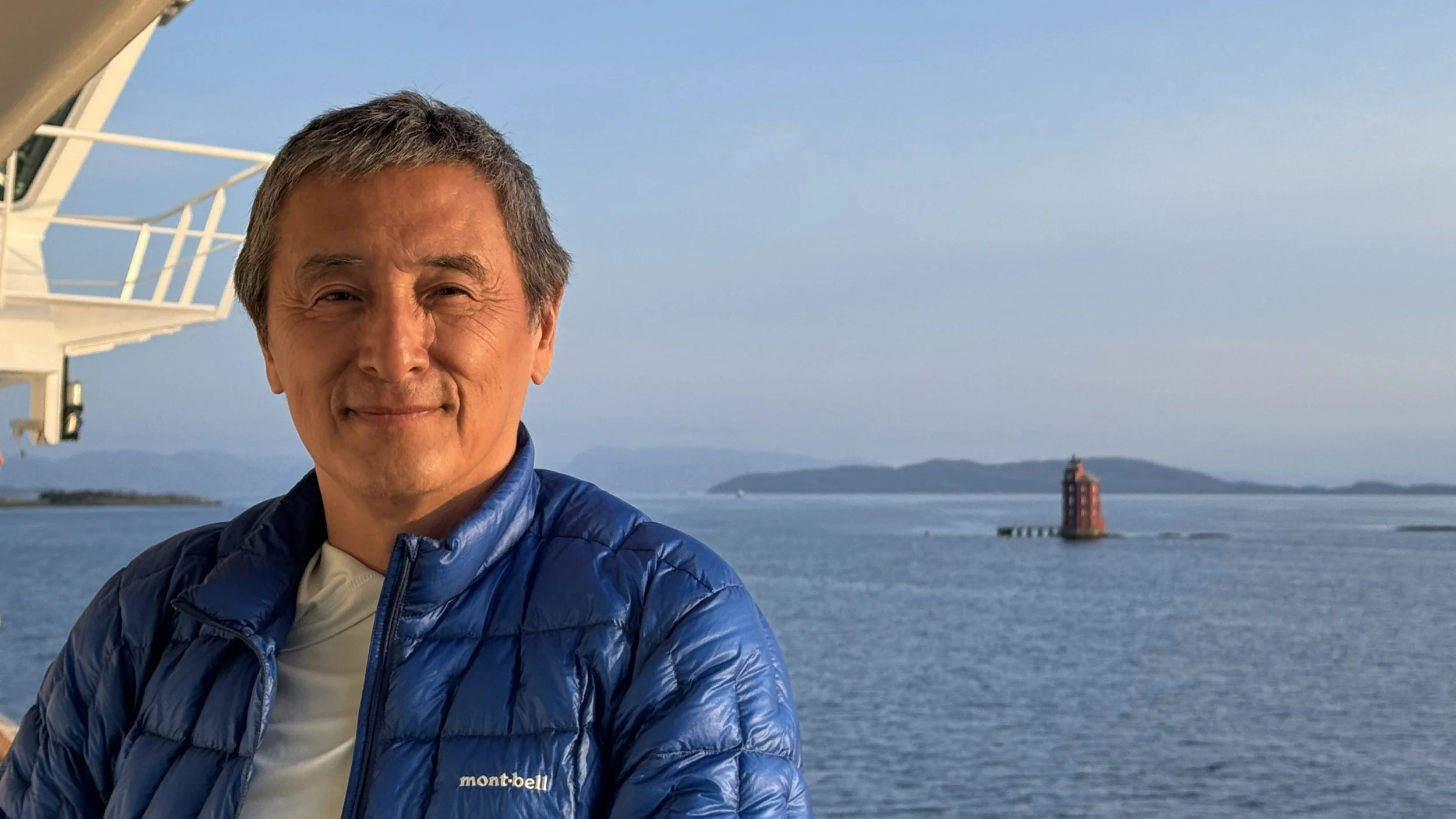
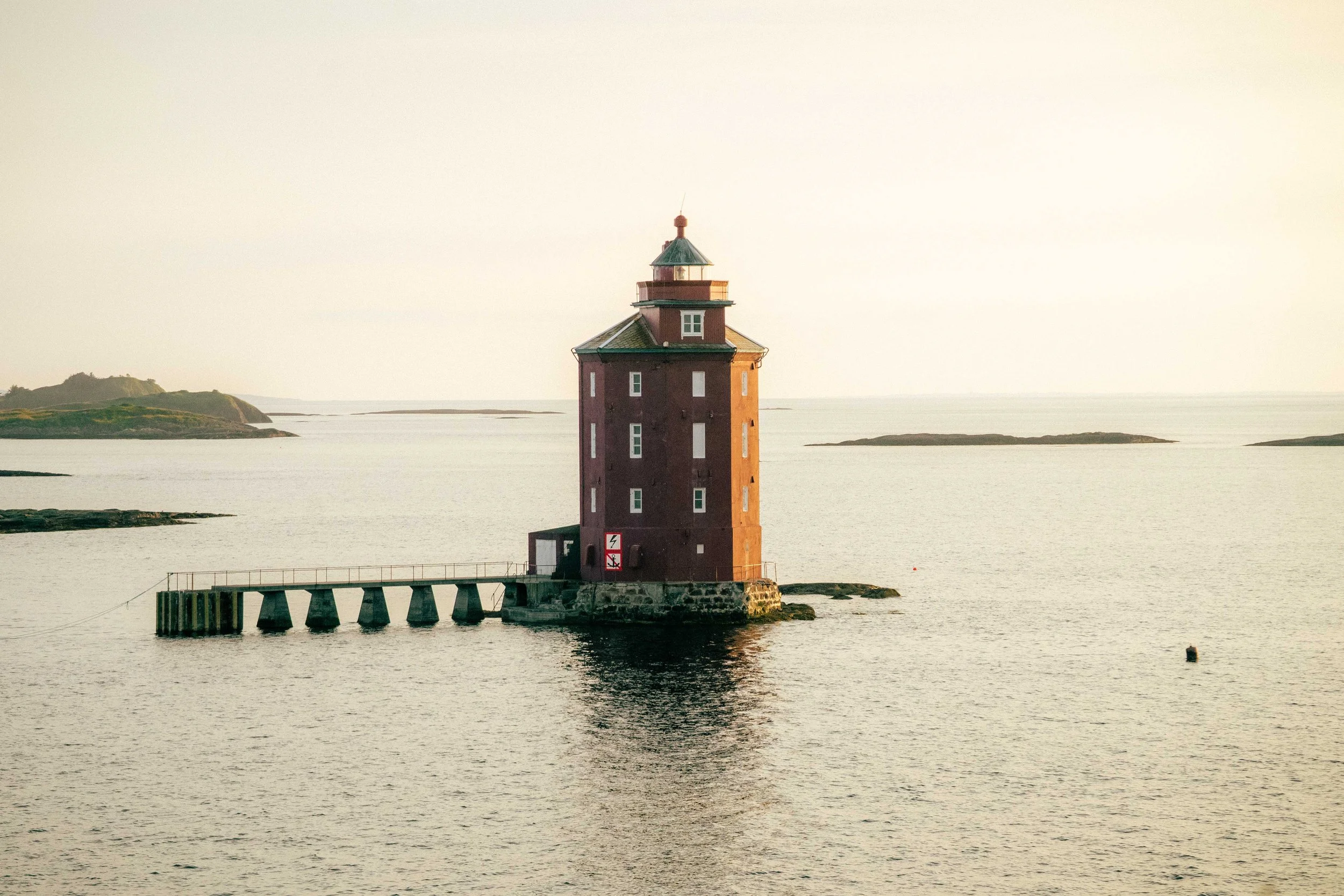
After a delicious dinner, we went outside to see Kjeungskjær Lighthouse one more time. Bathed in the soft light of the setting sun, the lighthouse stood alone on its tiny islet, as if bidding us farewell as we sailed away.
2026年7月12日
今天邮轮停靠在贝萨克尔(Bessaker)几个小时。这是一个人口不多的小渔村,却给了我们整趟旅程中最温暖的欢迎。
当邮轮缓缓靠岸时,几十位当地居民早已站在码头和山顶上,挥舞着挪威国旗迎接我们的到来。船上的游客也纷纷聚集到六层甲板,向他们挥手致意。一来一往之间,没有太多言语,却让人感受到当地居民发自内心的热情,也成为这次旅行中令人感动的一幕。
佩民和朋友们一起自由行,走去村里。沿途风景秀丽,养牛场里的奶牛们皮毛锃亮,漂亮极了,村民自豪地说这些牛非常幸福。来到村中心,虽然很简单,却有一条修的极好的木栈道,总共951级台阶登上山顶,俯瞰整个小村庄和周围的海岸风光,让人惊叹不已。
我则参加了另一场电动自行车之旅。刚开始,导游把骑行速度控制在每小时10至15公里,我还觉得有些过于悠闲。没想到真正的挑战都在后半程。
我们离开公路,沿着通往山顶风力发电场的维护碎石路一路爬升。坡度达到9%至11%,路面铺满松散的小碎石,对平衡和操控都是不小的考验。车队前方有一位导游领骑,后方还有一辆保障车随行,以便随时协助有需要的游客。
登上山顶后,眼前豁然开朗。连绵的风力发电机矗立在山脊上,与远处星罗棋布的岛屿和蔚蓝的大海构成一幅壮丽的全景。和挪威许多登山路线一样,山顶还有一座供徒步者休息的 hytta(山间小屋),里面设有厨房、桌椅等设施。导游还为大家准备了热咖啡和肉桂卷,让我们一边休息,一边欣赏眼前的美景。
然而,下山比上山更加困难。陡峭的坡度加上松散的碎石,必须格外小心。途中有两位游客摔倒,其中一位选择搭乘保障车返回。我一路都全神贯注地控制着车身平衡,感觉这是我骑自行车以来技术难度最高的一次经历。
返程途中,我们还绕道穿过一片森林,并在村中心短暂停留了十分钟,随后准时回到邮轮。虽然一路紧张又充满挑战,但也正因为如此,这次骑行成为了此次挪威之行最难忘、最有成就感的体验之一。
Super Busy Day in Lofoten 罗弗敦群岛
July 11, 2026
We docked at Stokmarknes at 8:00 a.m. for a two-hour visit,……
上午8点,我们抵达斯托克马克内斯,。。。
July 11, 2026
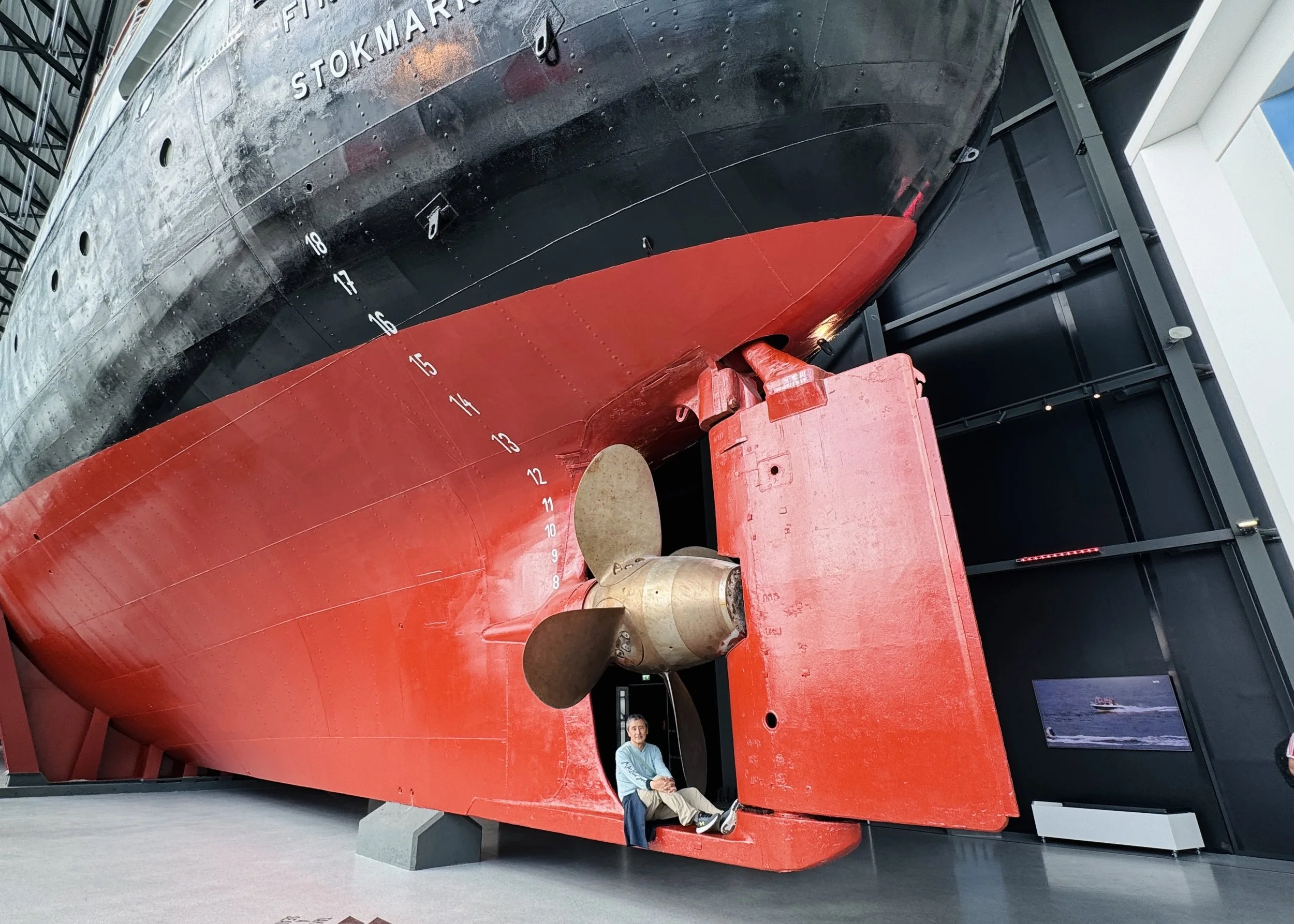
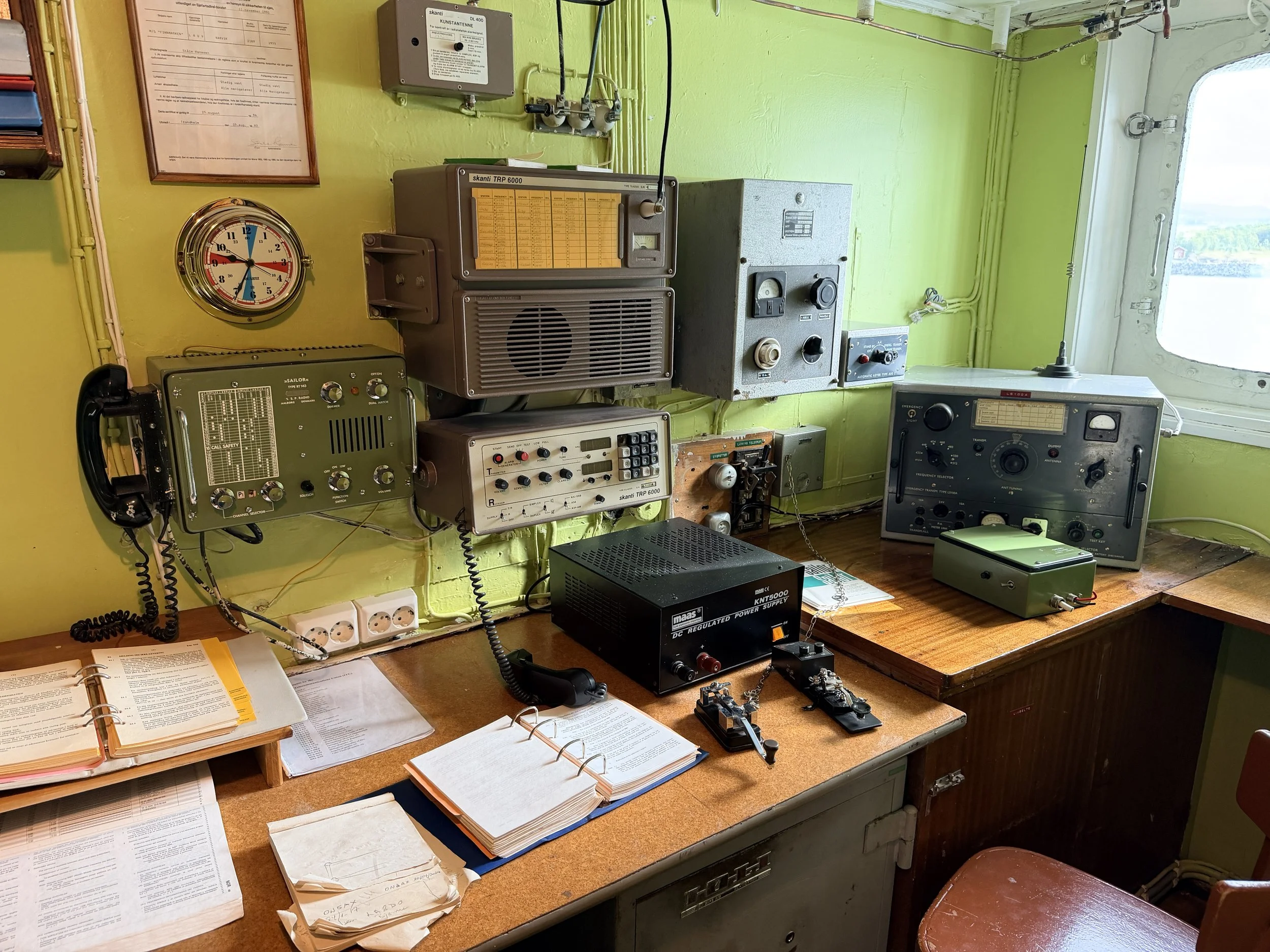
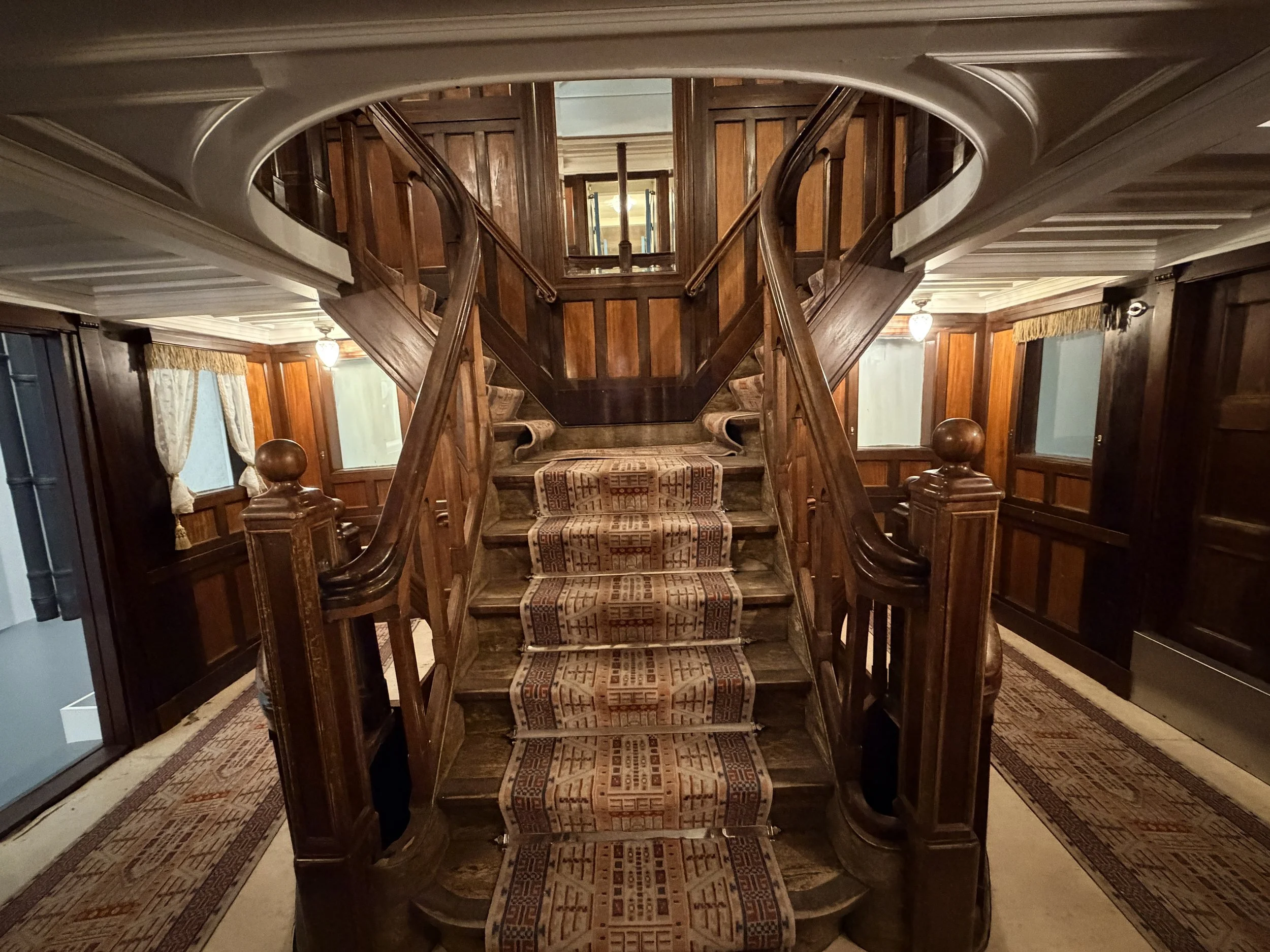
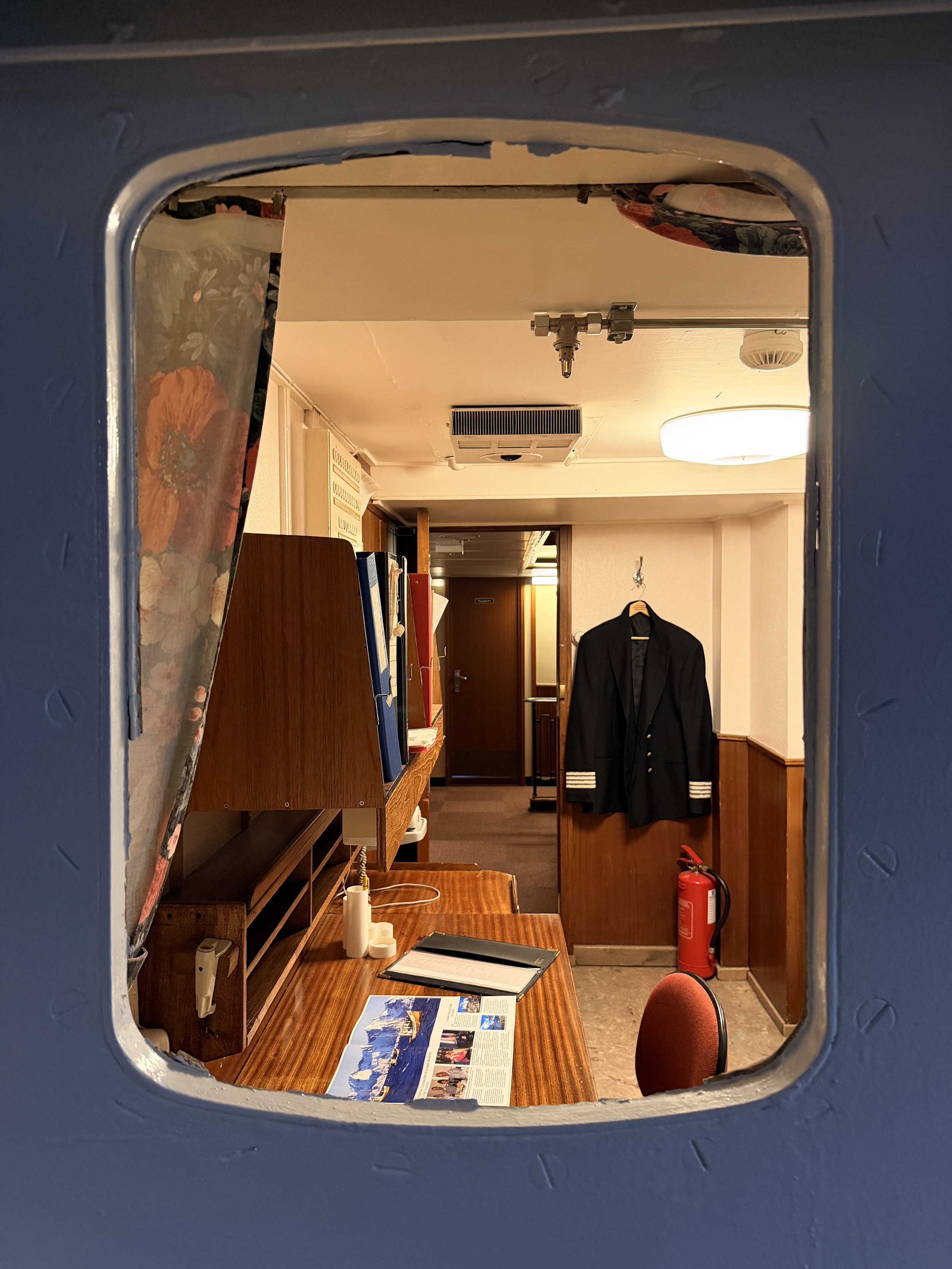
We docked at Stokmarknes at 8:00 a.m. for a two-hour visit, giving us just enough time to explore the Hurtigruten Museum. Stokmarknes is the birthplace of Hurtigruten, and the museum's centerpiece is MS Finnmarken (1956), permanently preserved inside a striking glass building like a ship in a bottle. The museum also features a restored lounge from DS Finnmarken (1912), allowing visitors to compare two generations of Hurtigruten travel. Walking through the historic ship gave us a real appreciation for how ship design, passenger comfort, and onboard standards have evolved over the decades.
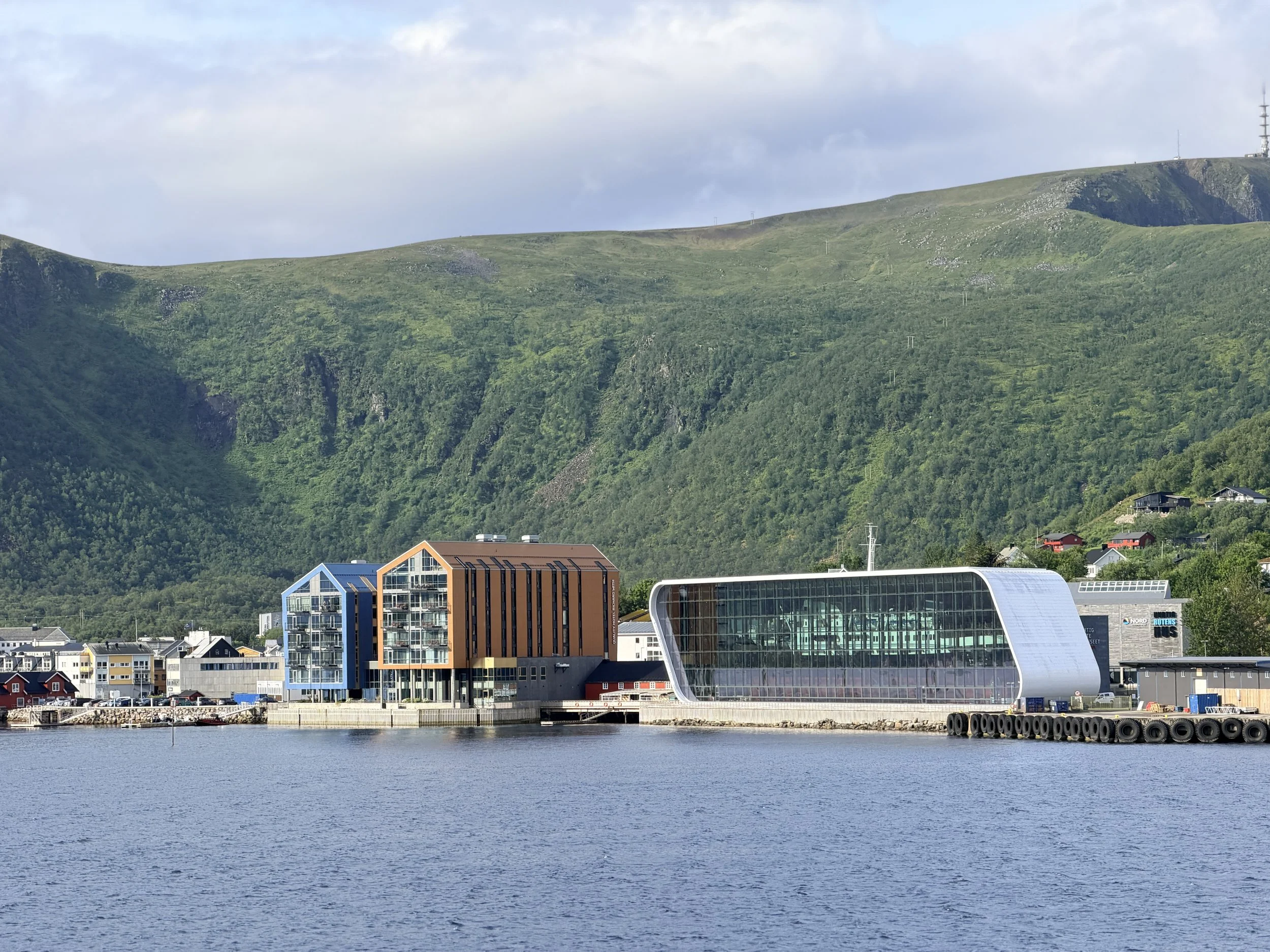
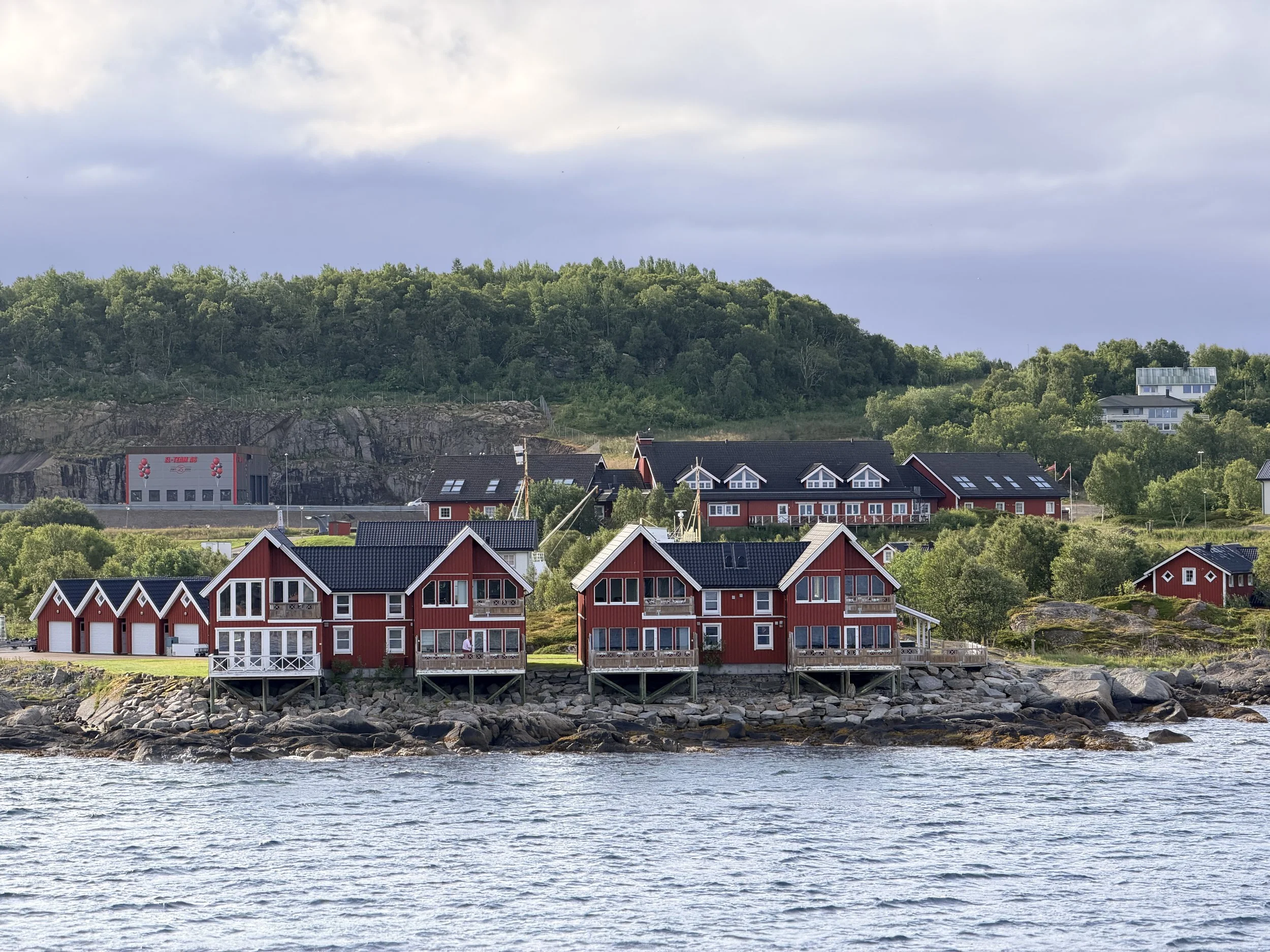
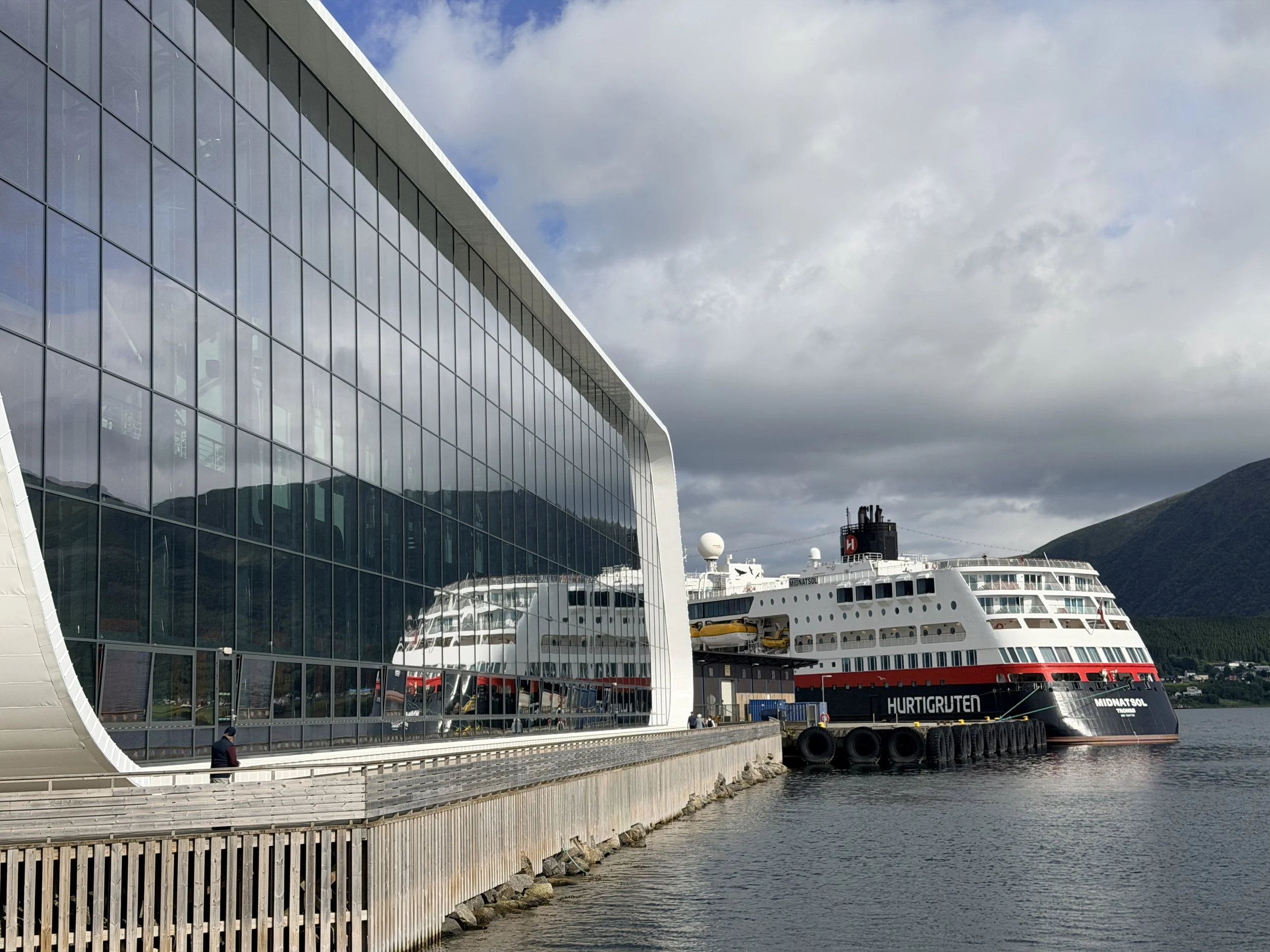
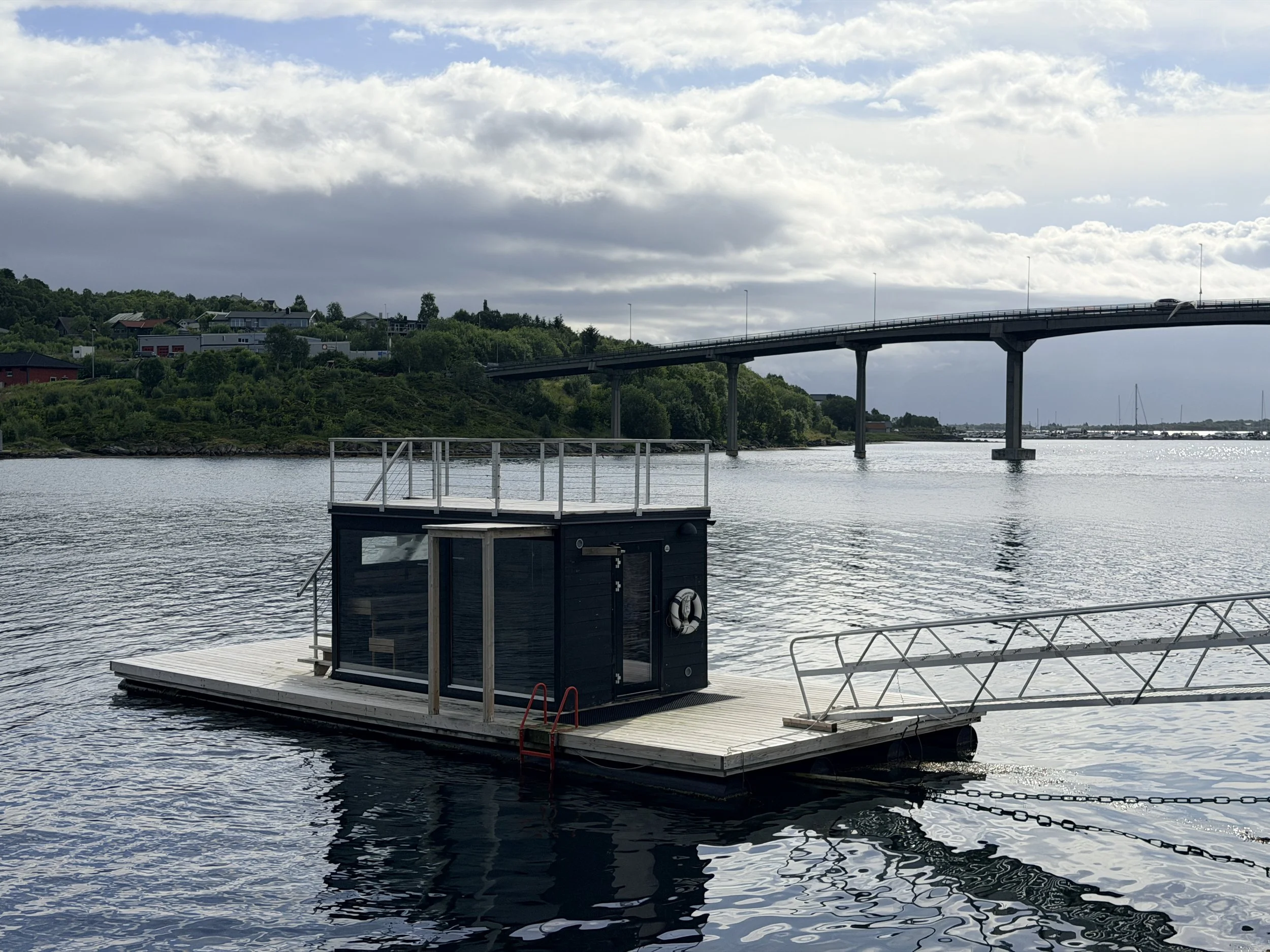
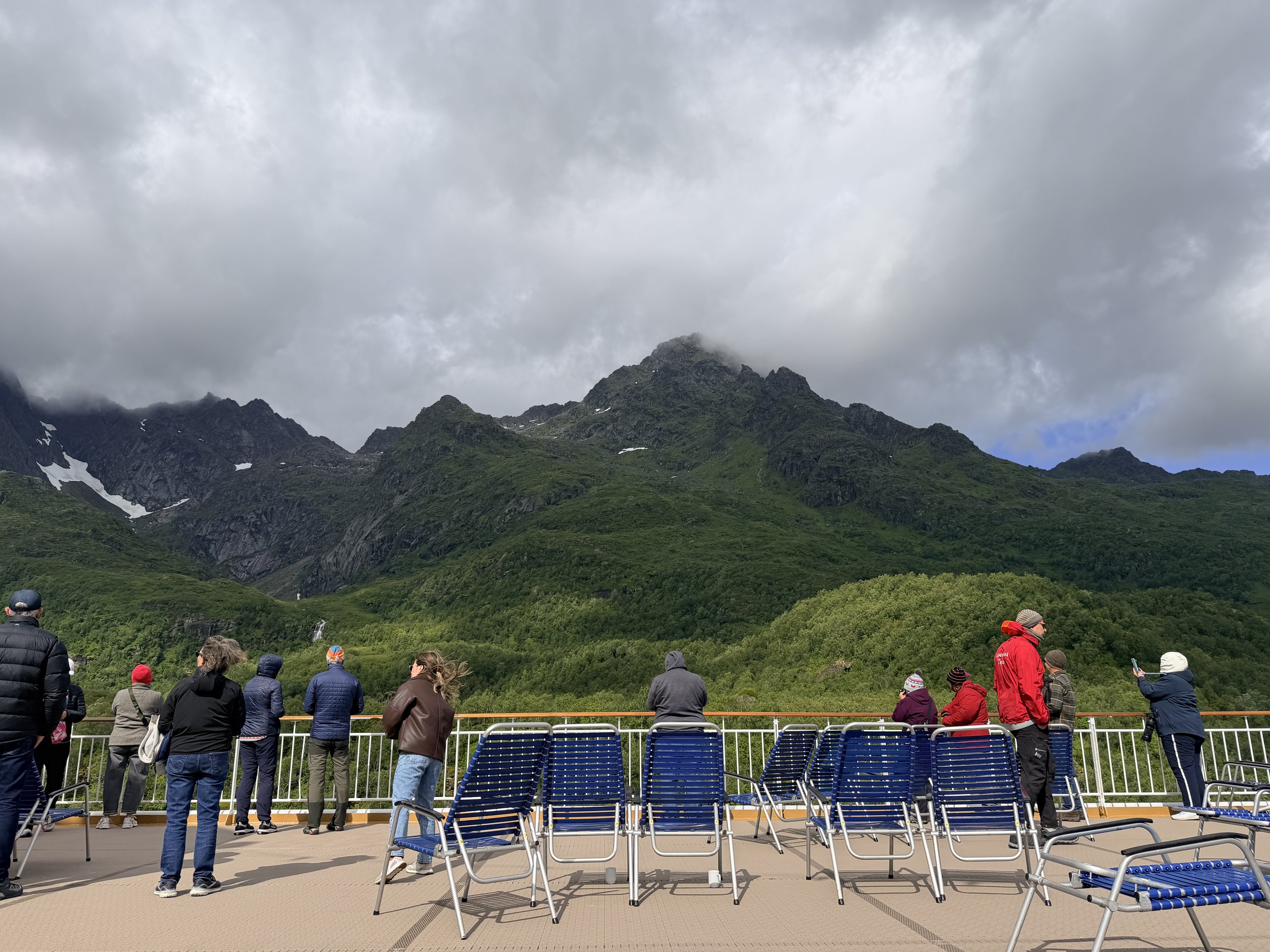
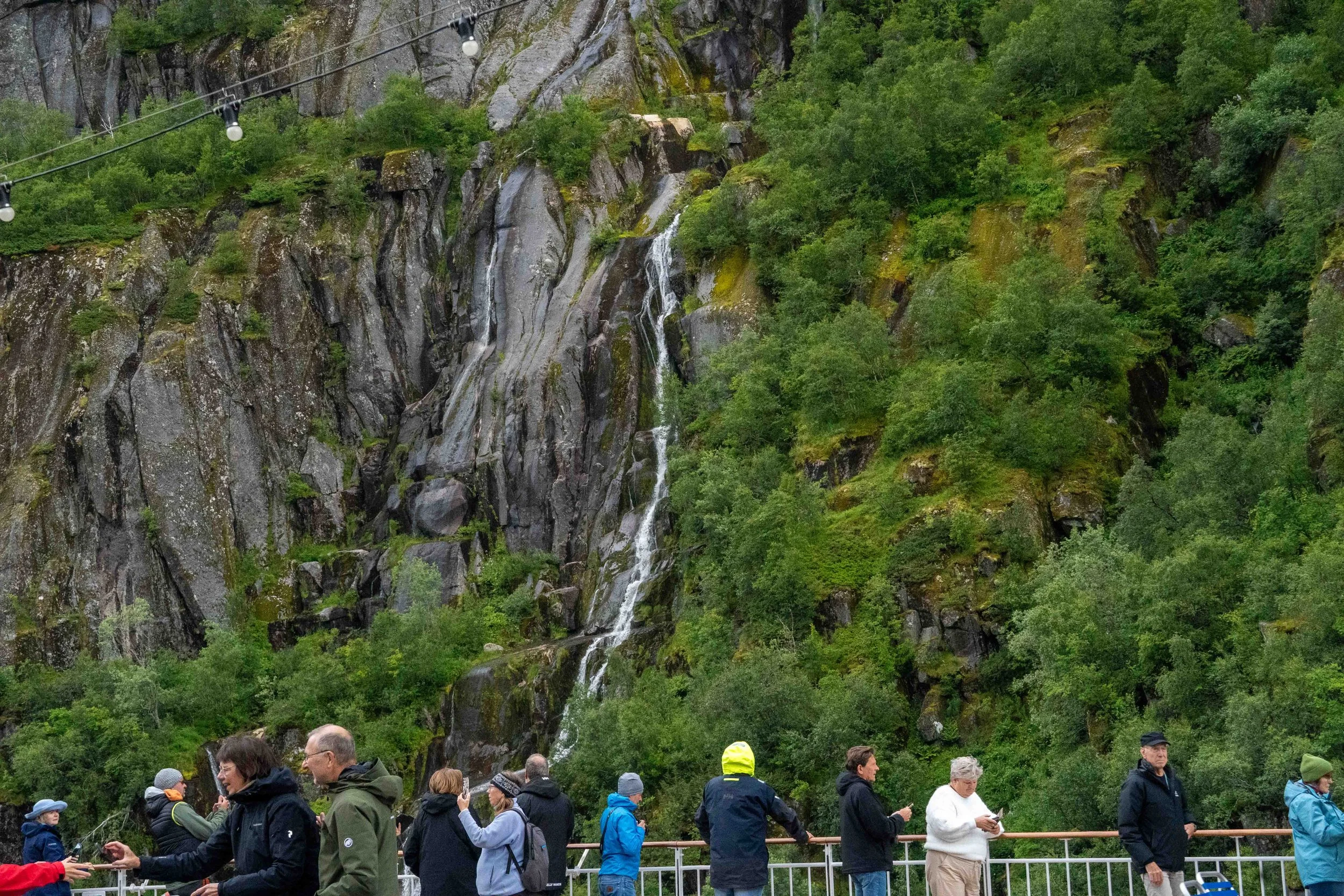
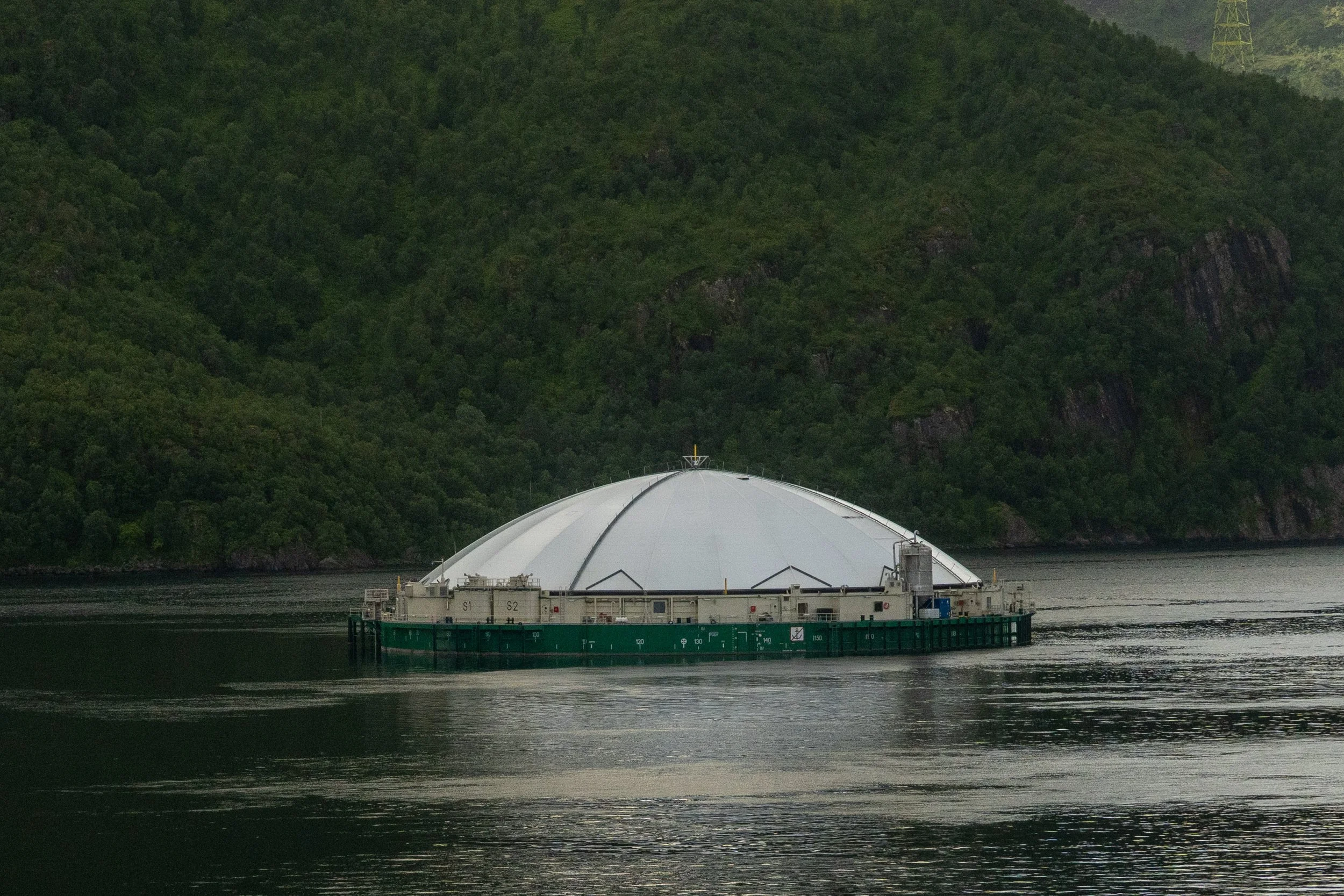
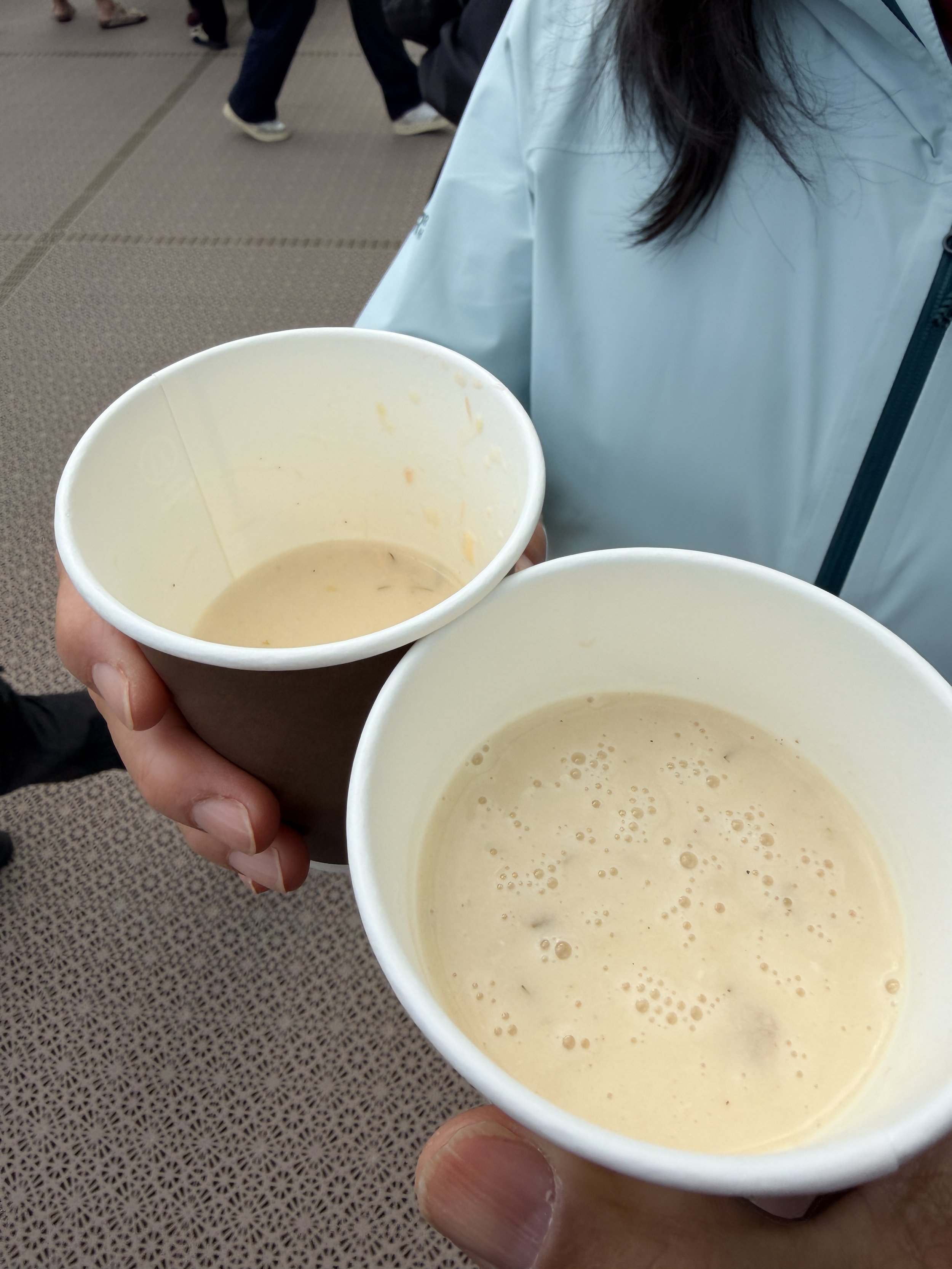
After leaving Stokmarknes, we sailed through some of northern Norway's most spectacular scenery, including the famous Trollfjord. Although the fjord is only about 2 kilometers long, its entrance is just 100 meters wide. Our ship made a special detour into the fjord before performing a graceful turnaround. At times, we passed so close to the towering cliffs that it felt as though we could reach out and touch the rock. Cruising through Trollfjord was truly one of the highlights of the voyage. The delicious fish soup was served on the deck.
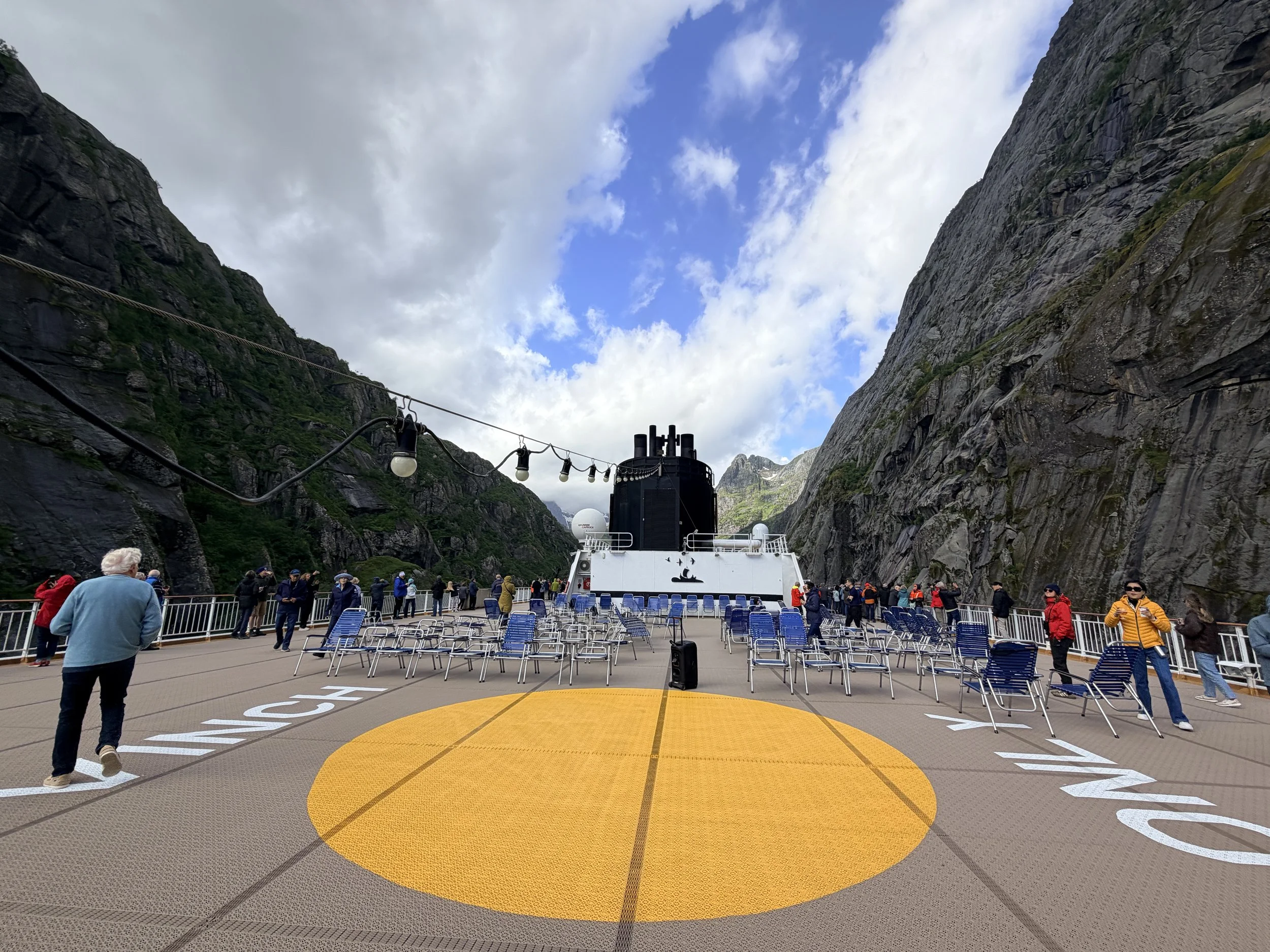
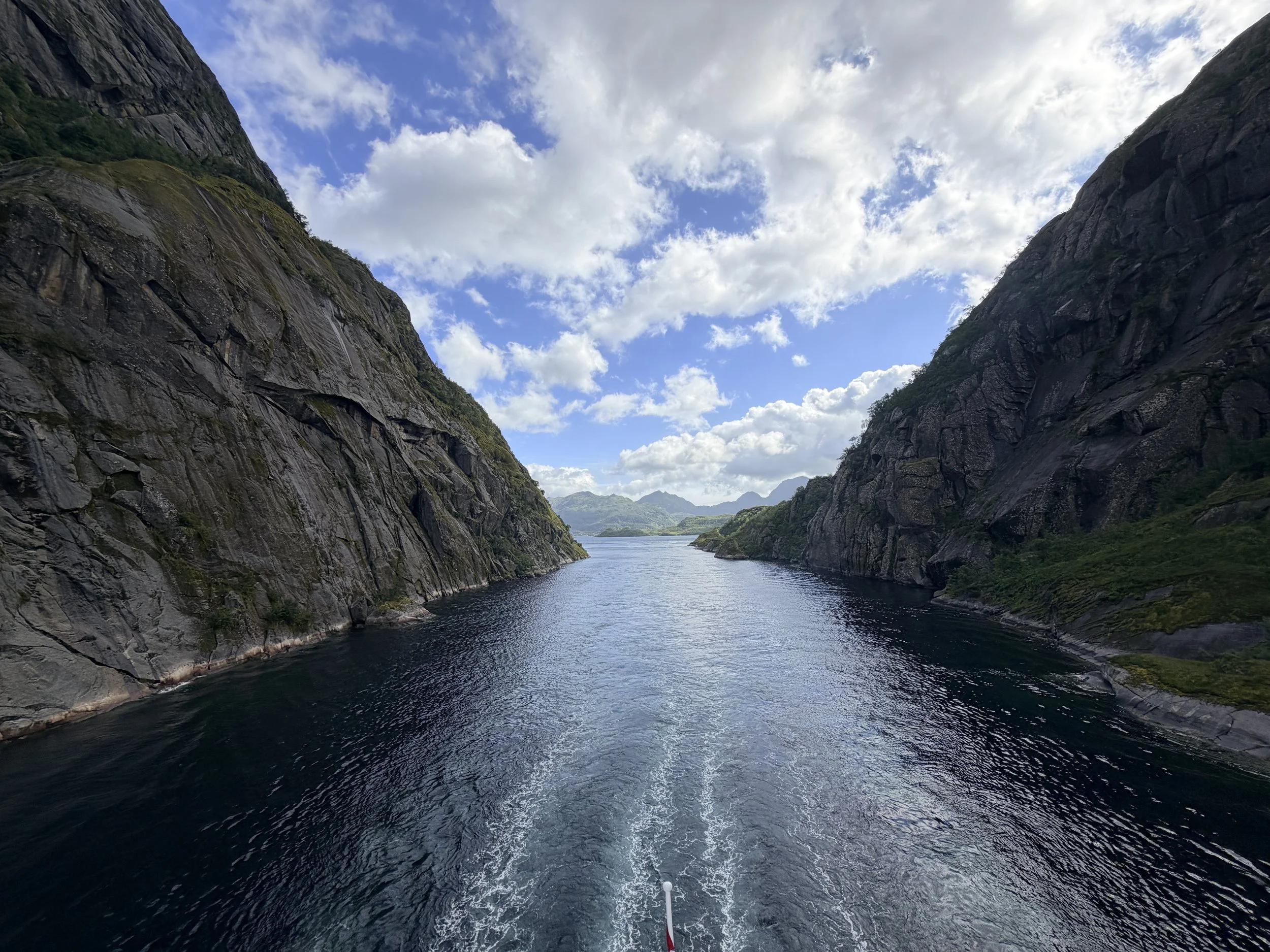
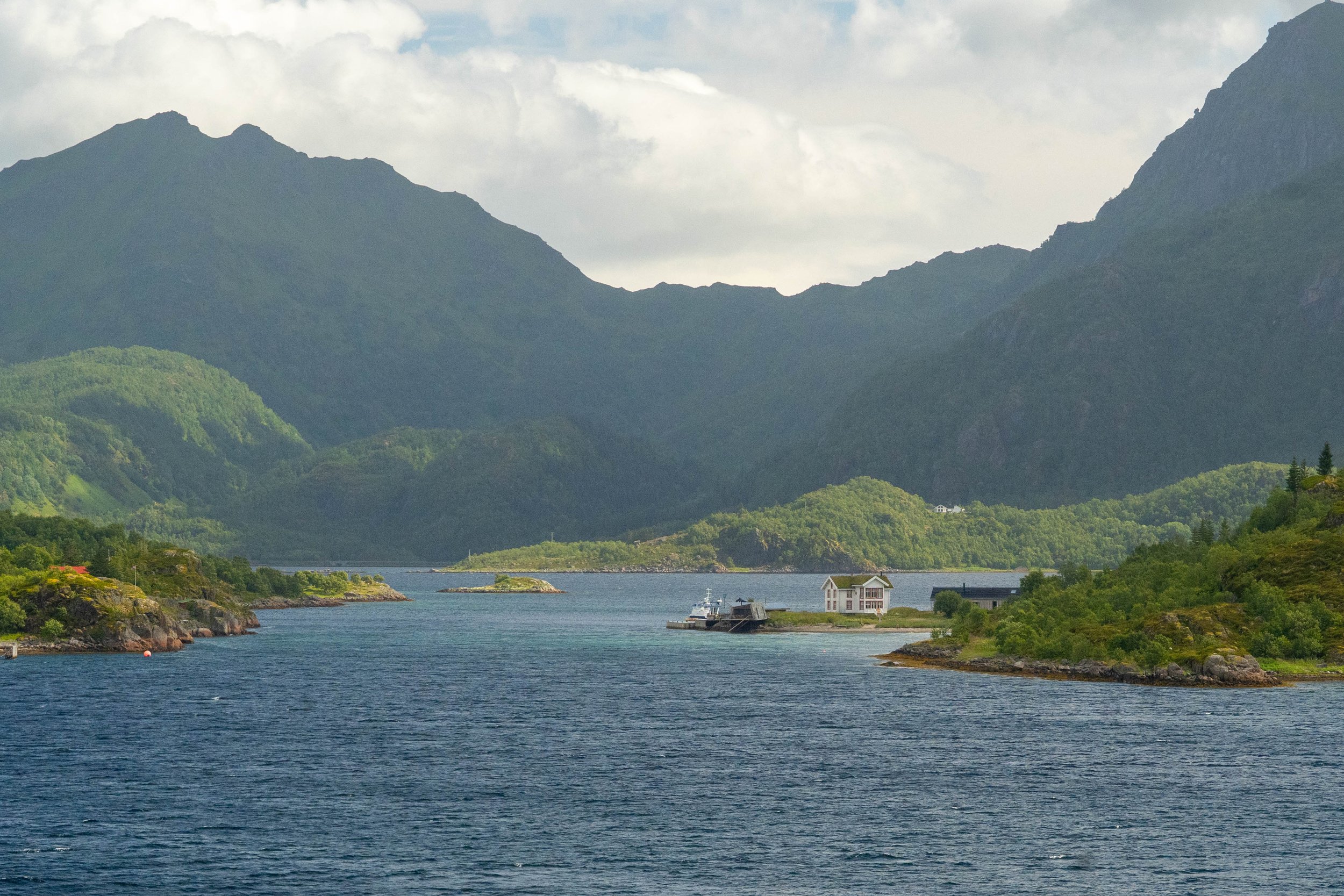
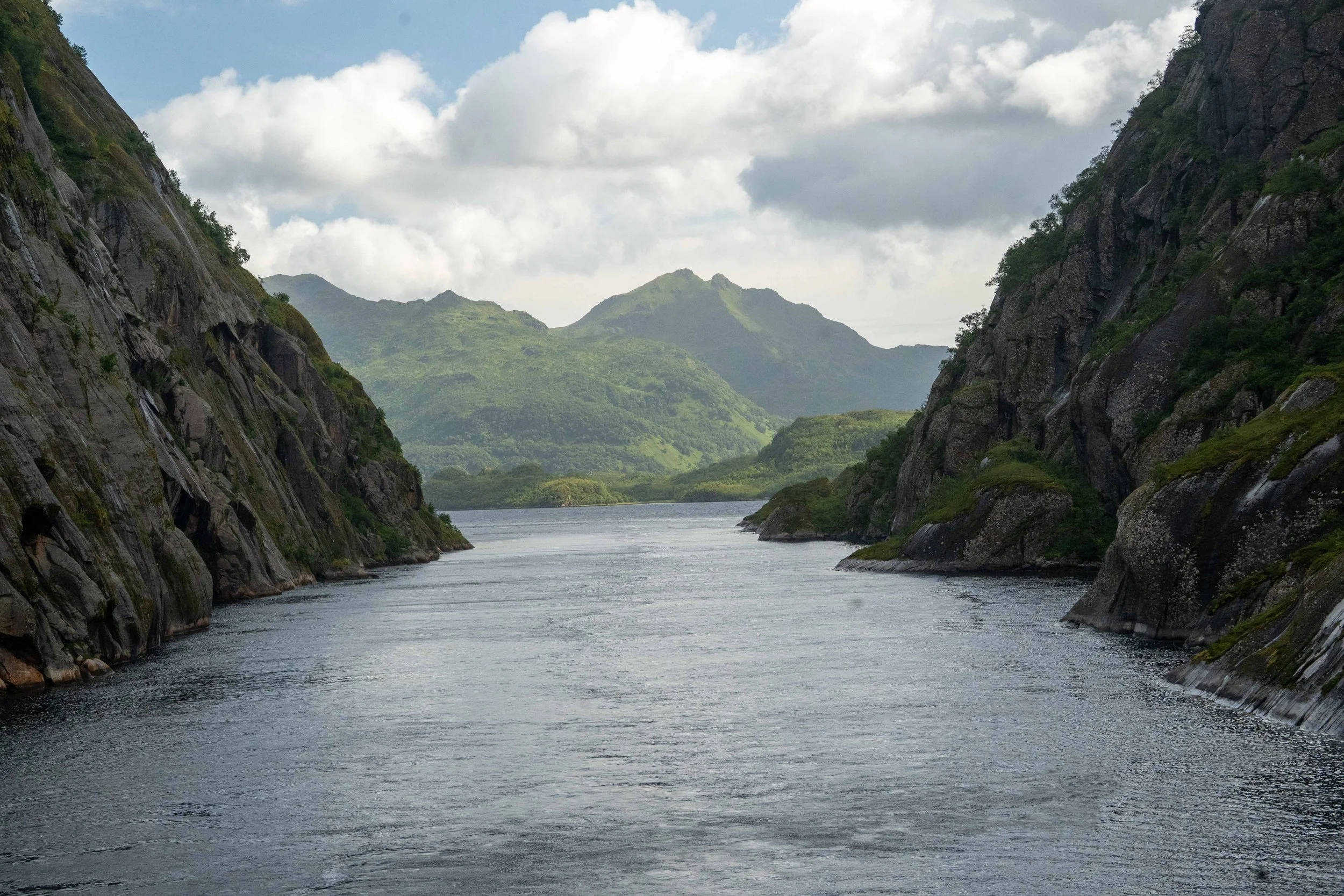
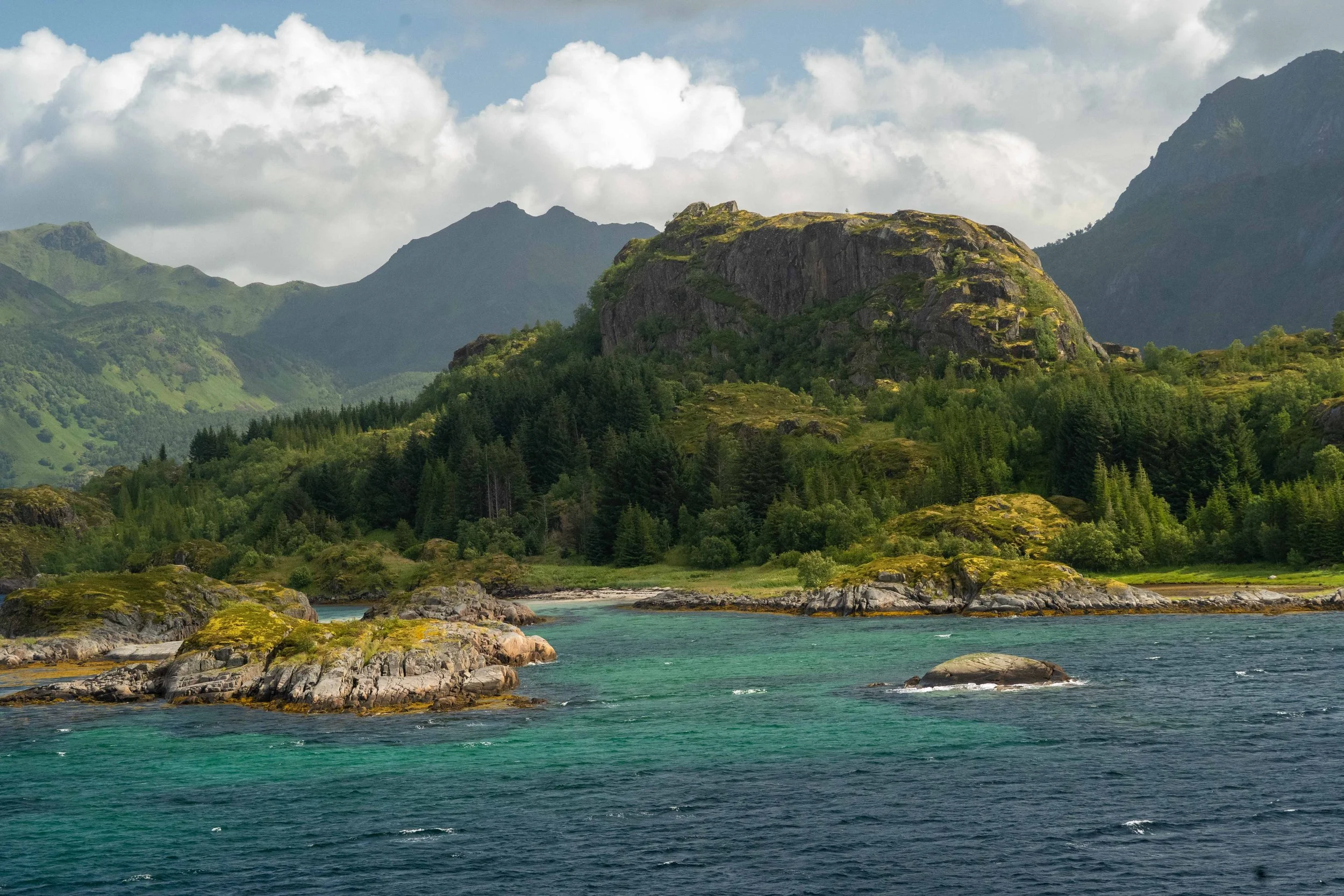
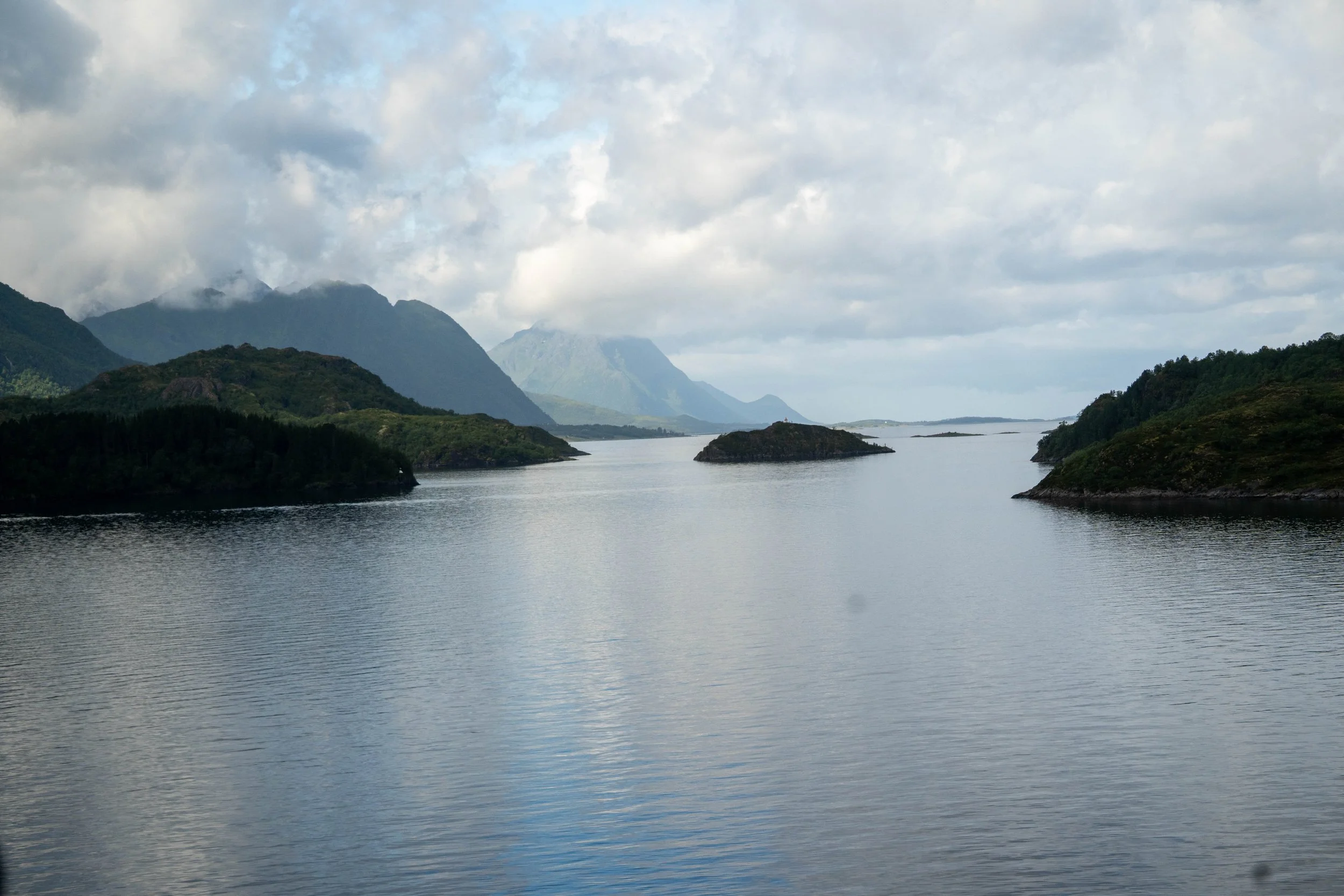
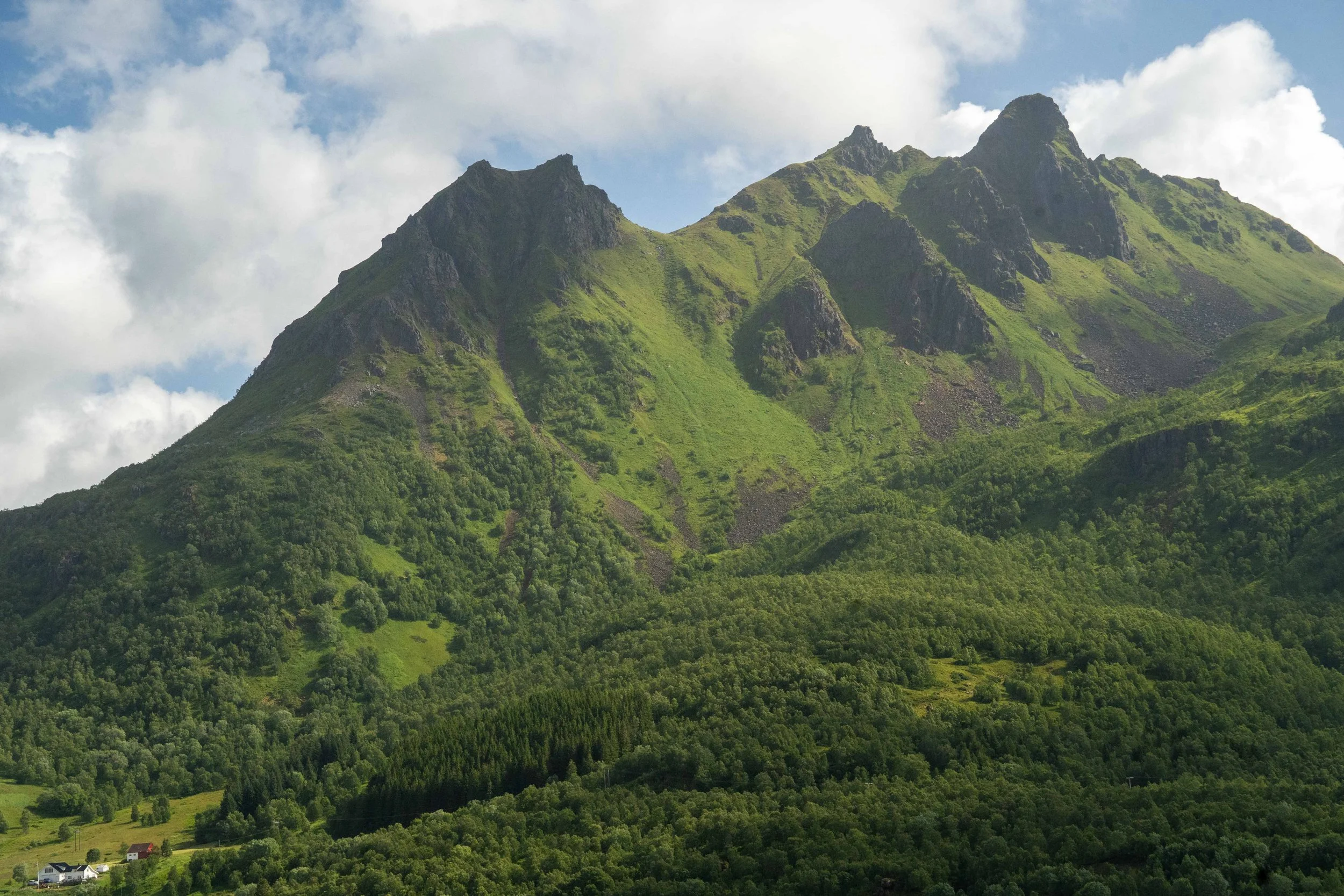
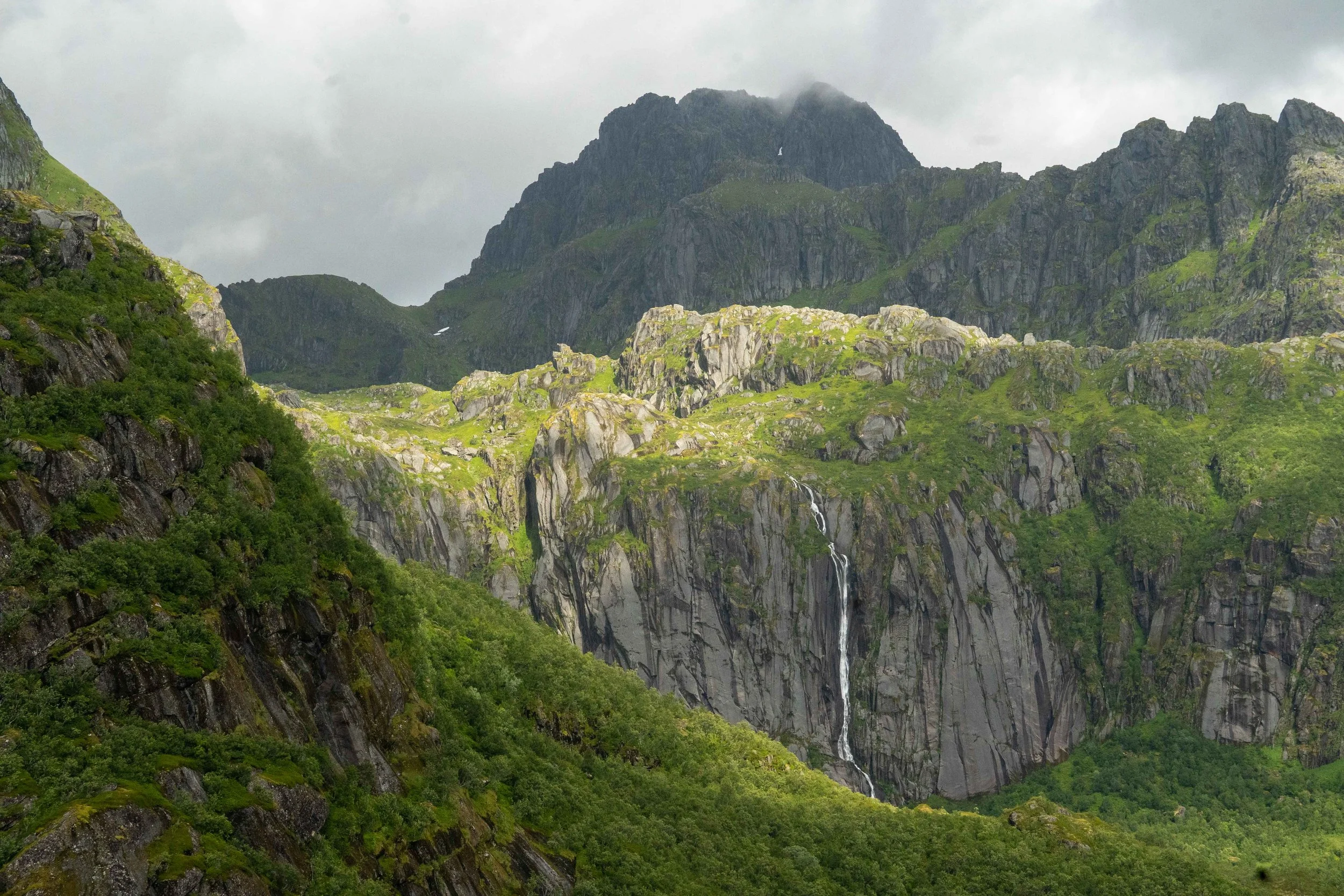
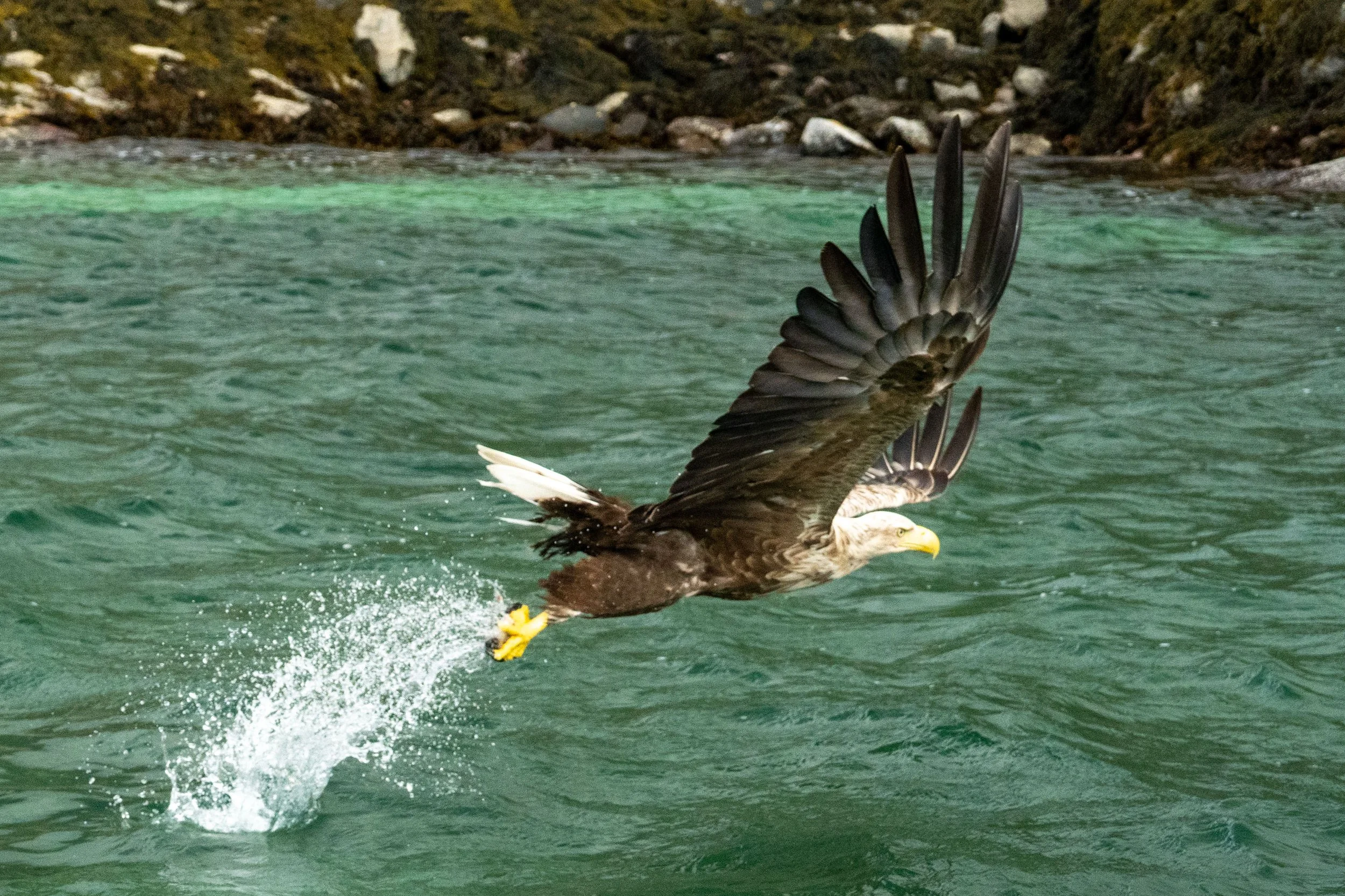
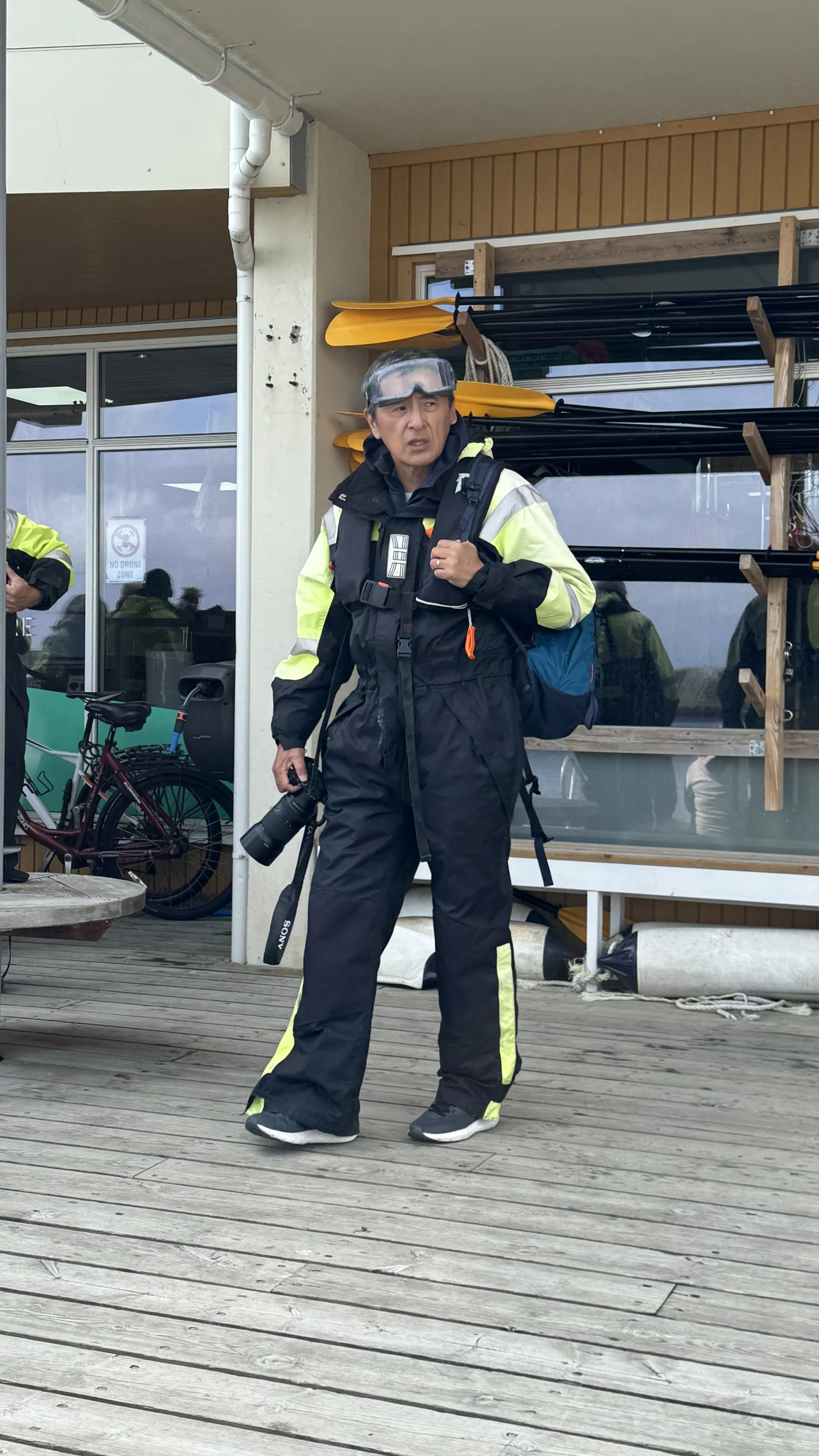
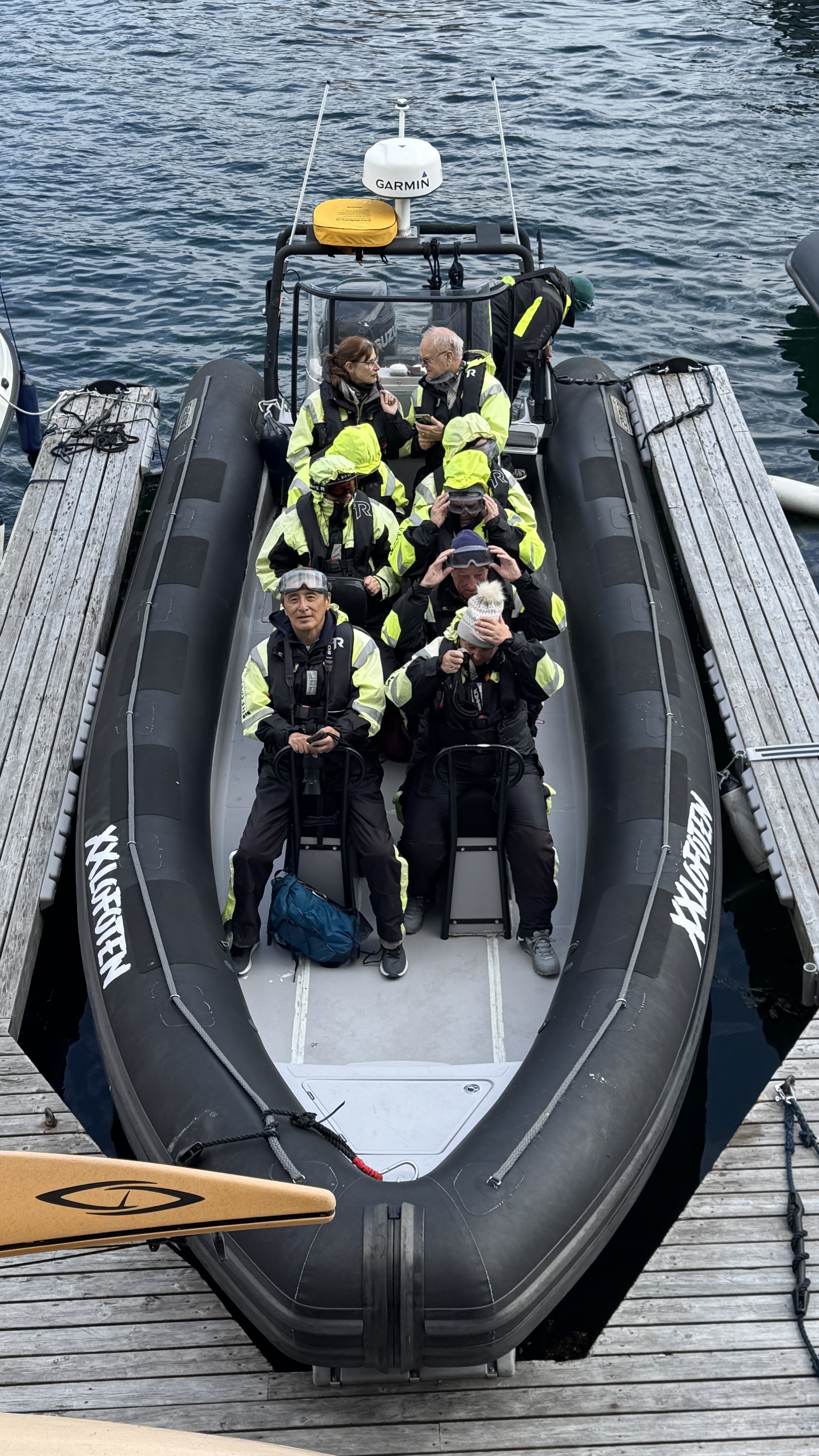
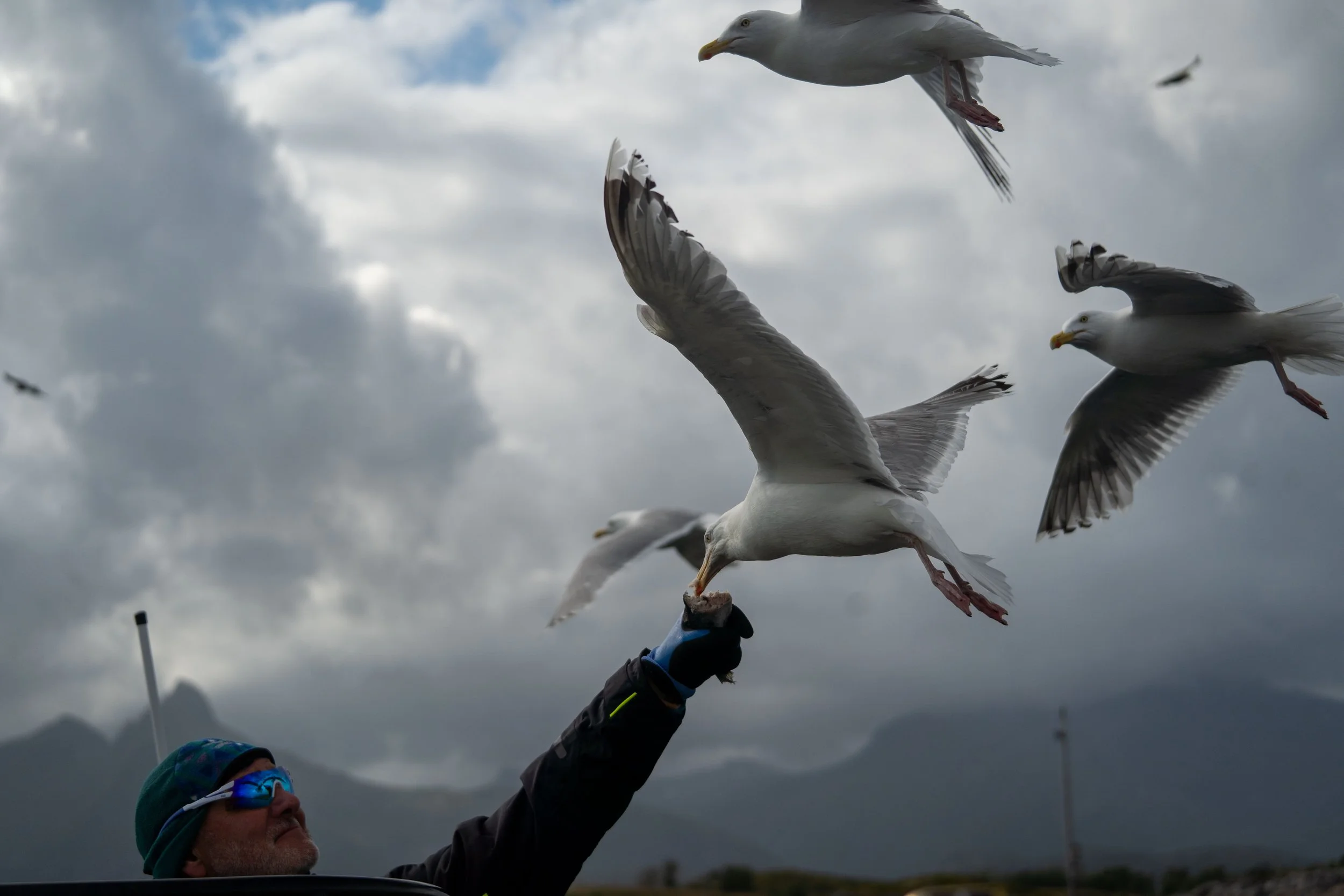
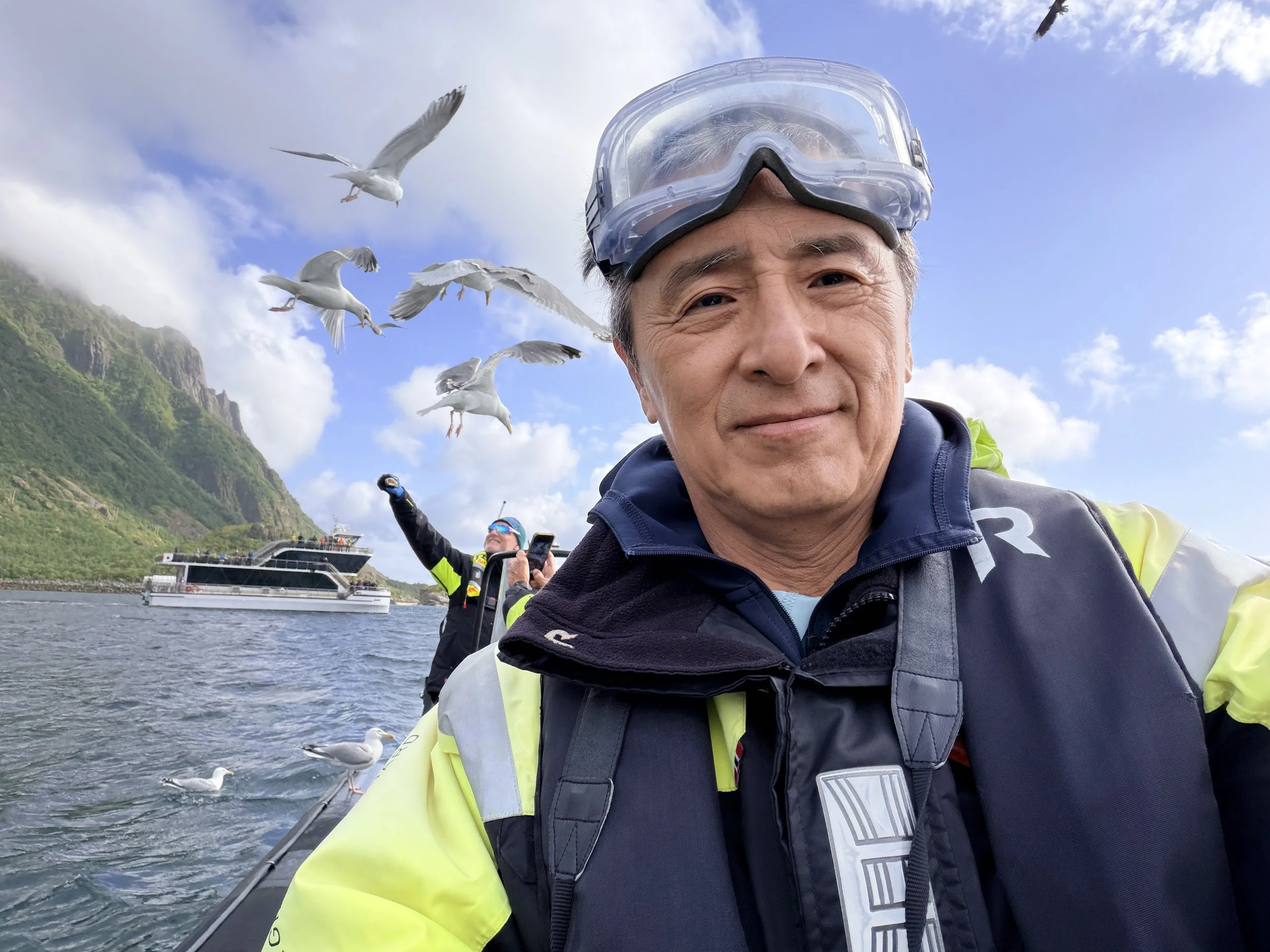
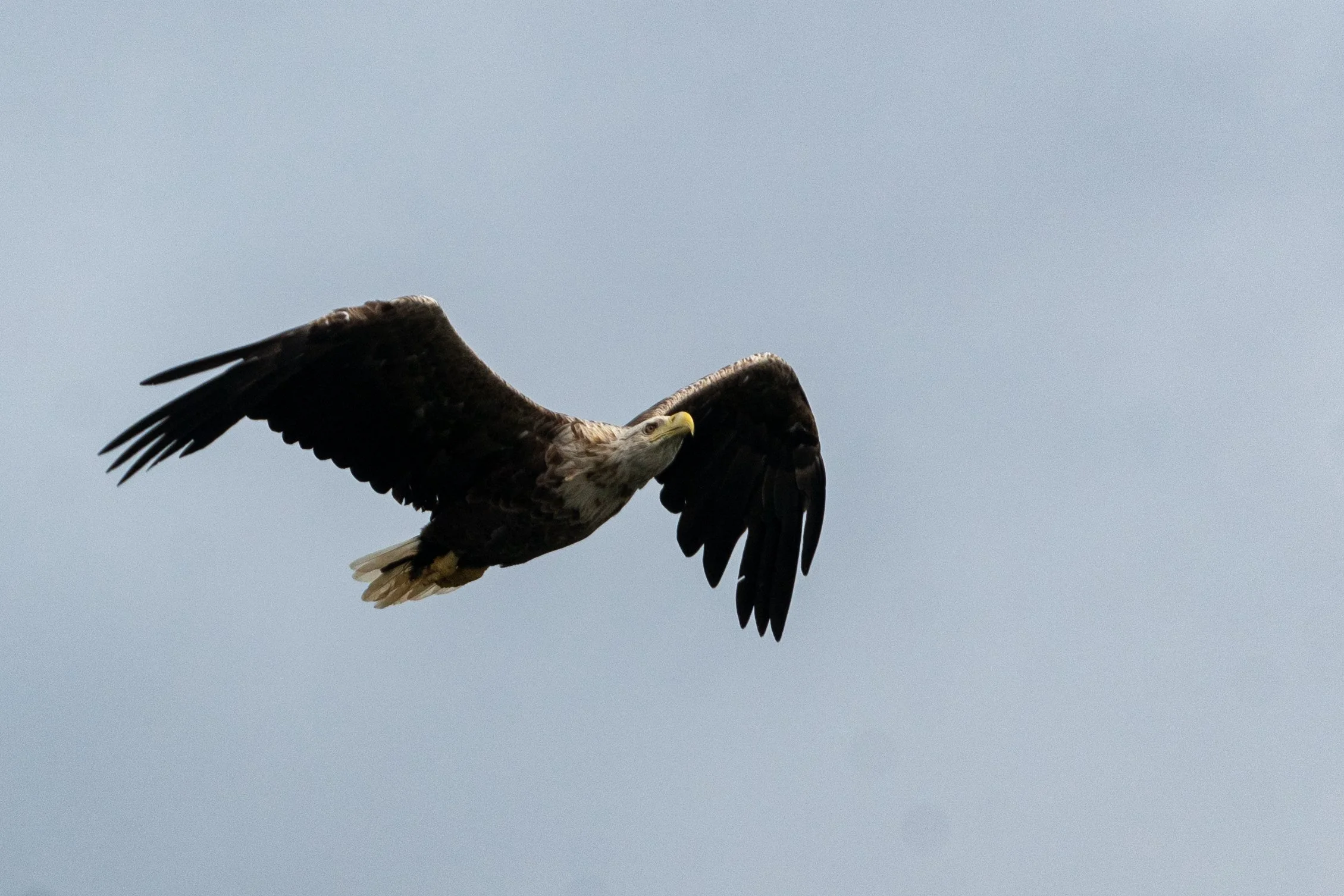
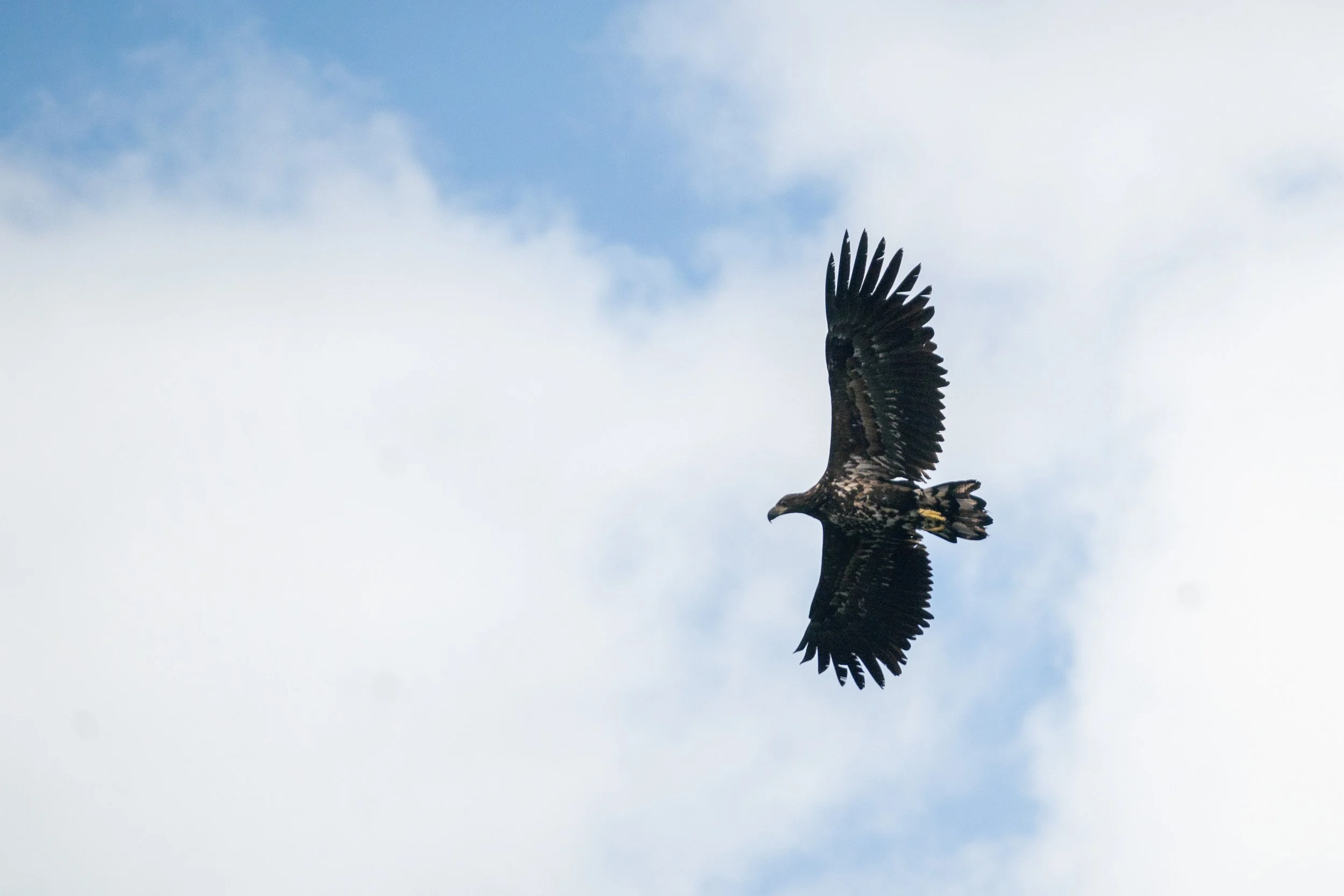
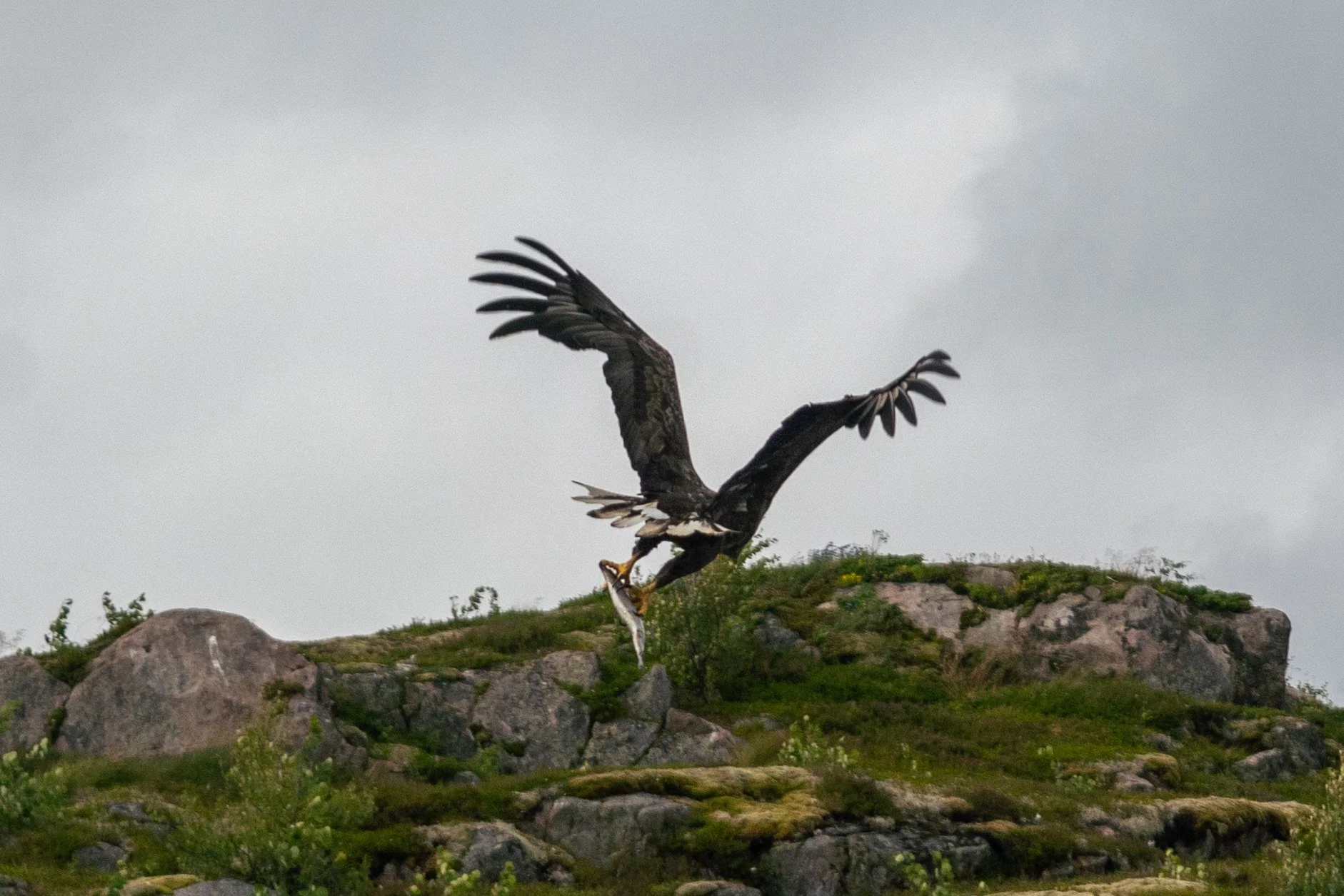
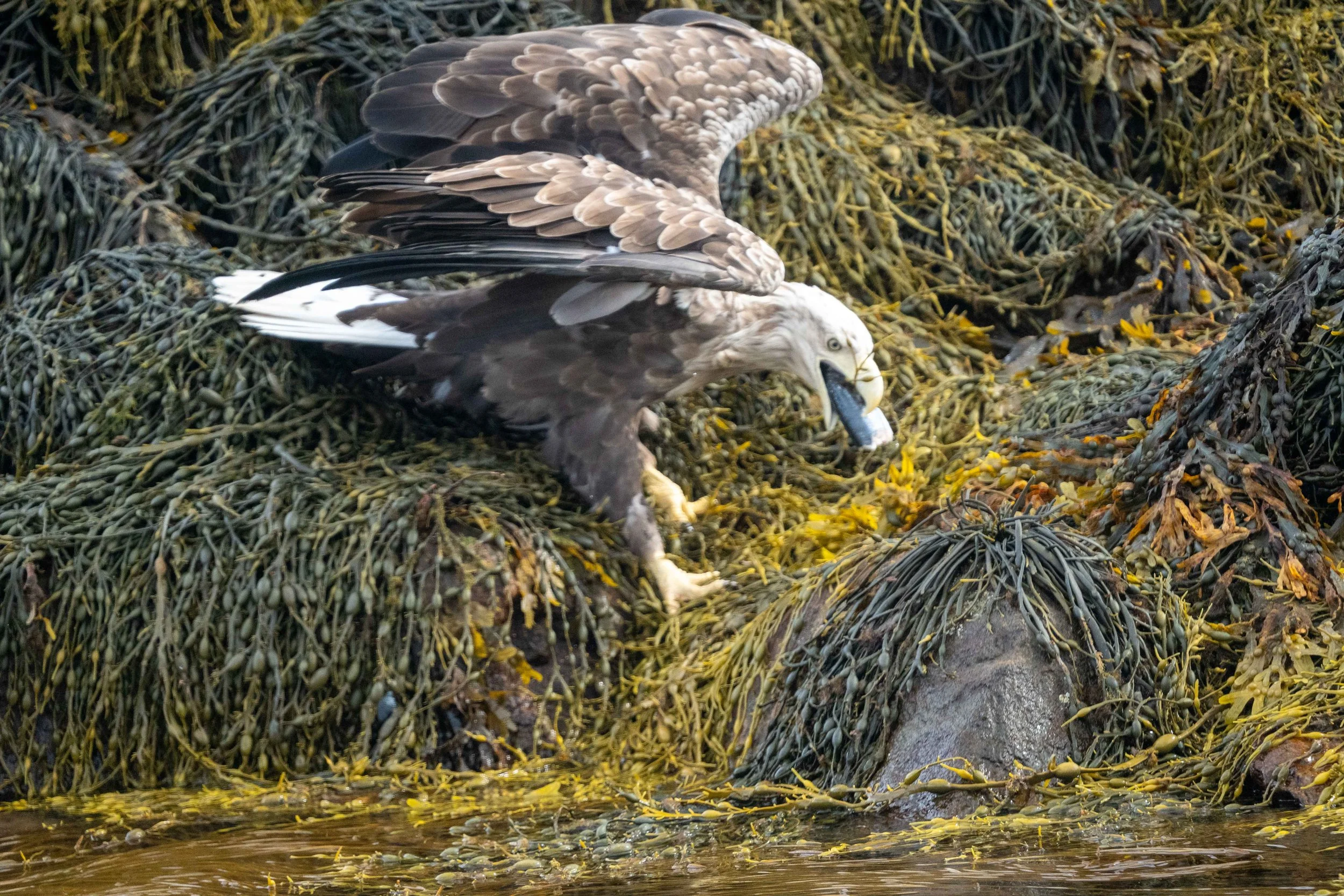
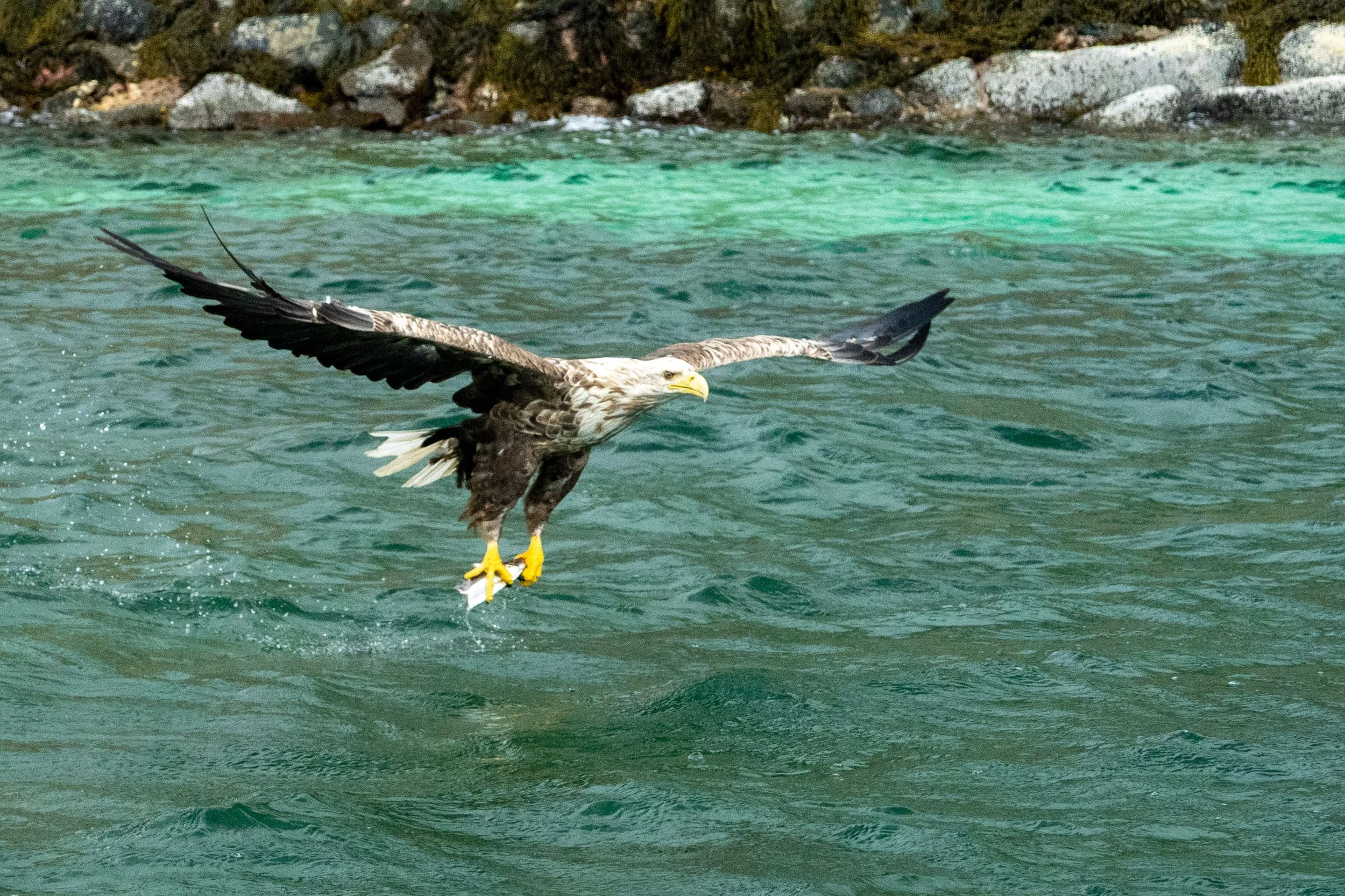
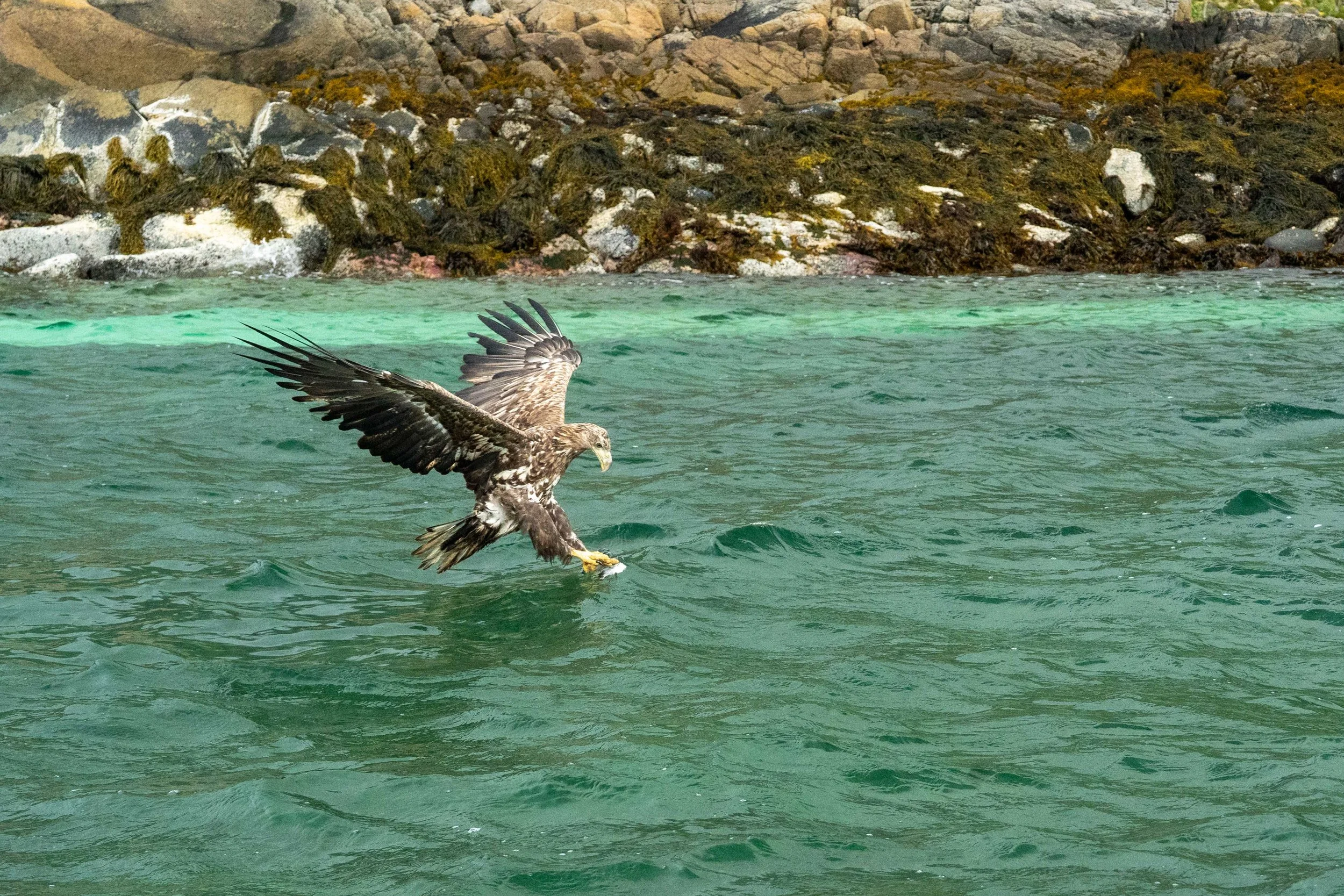
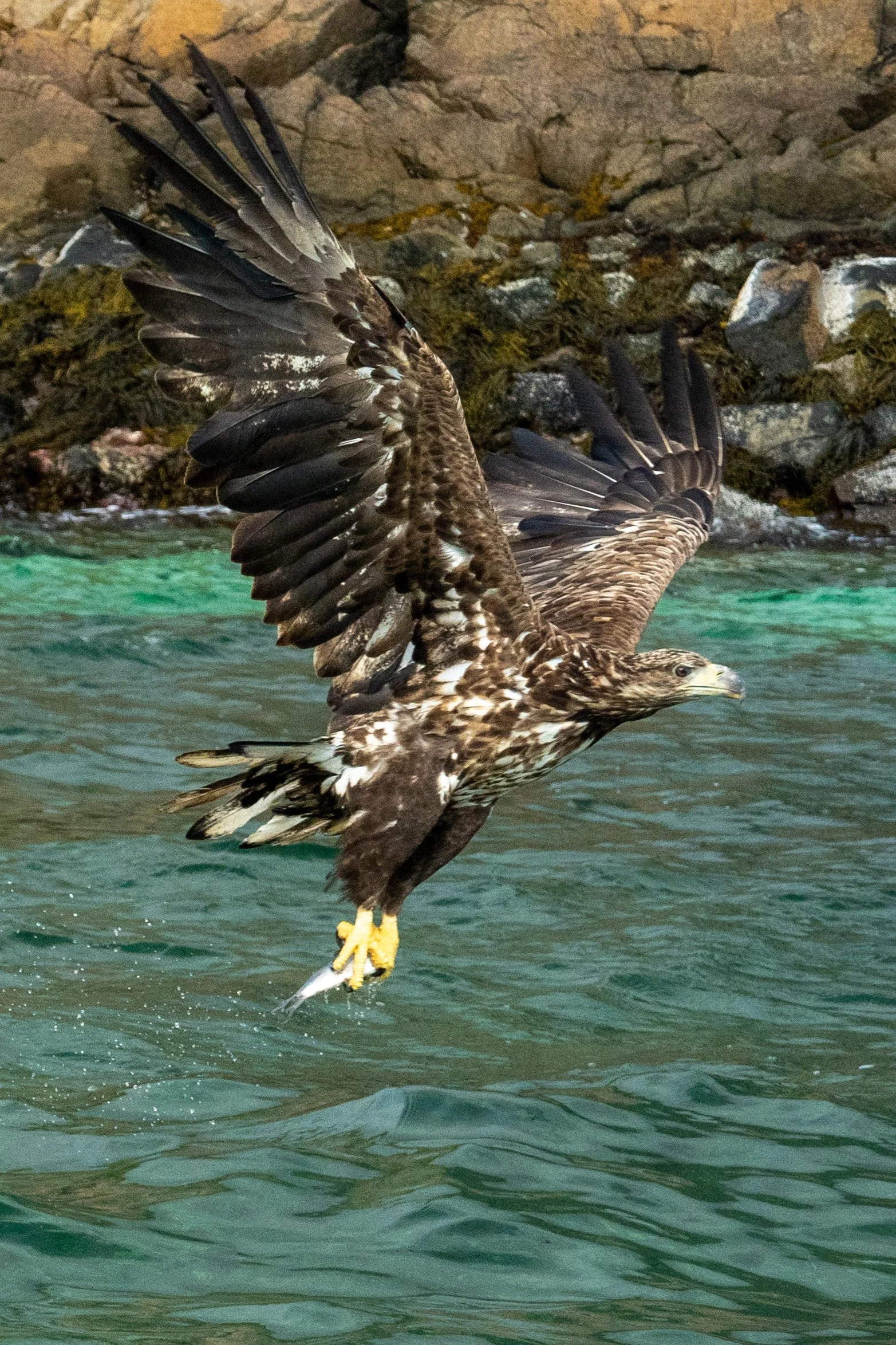
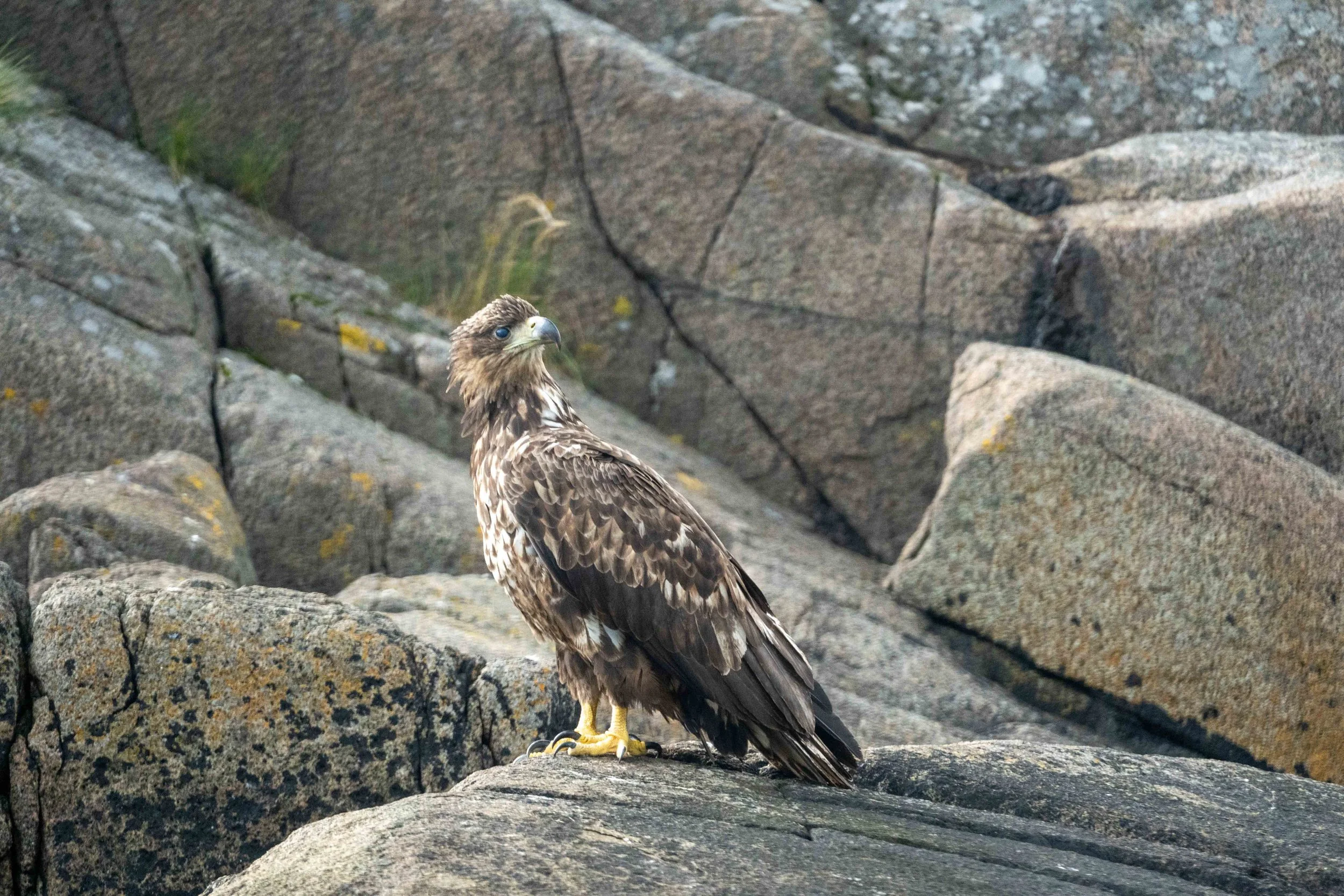
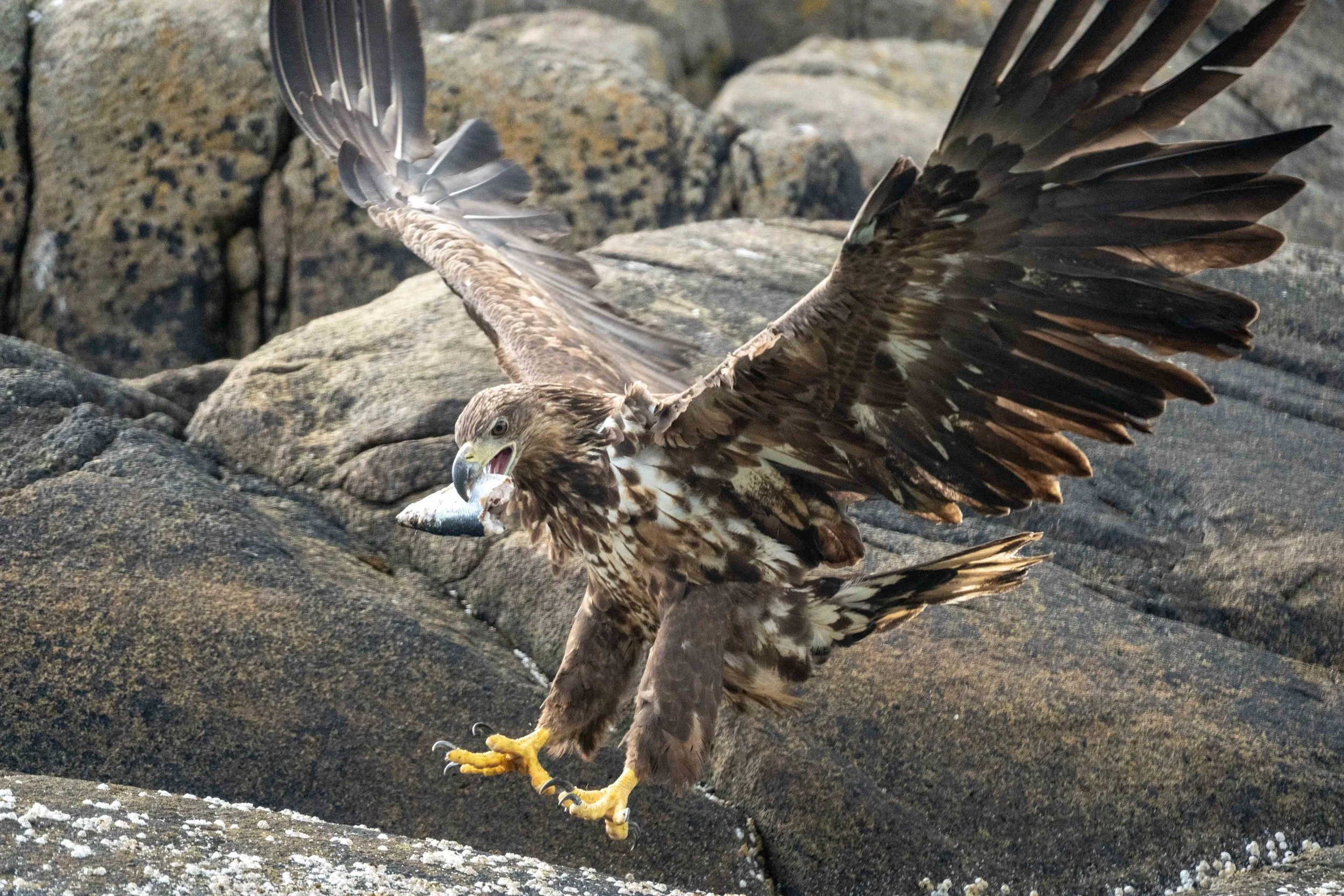
Our second stop was Svolvær, the largest town in the Lofoten Islands. I joined a RIB sea eagle safari. Riding in the front of the high-speed RIB was exhilarating—and quite bumpy at times. The boat stopped among several small islands, where we watched majestic white-tailed sea eagles soaring overhead before swooping down to snatch fish that our guide tossed into the water, while countless seagulls competed for the same meal. The combination of dramatic scenery, high-speed boating, and close encounters with wildlife made for a fantastic excursion.
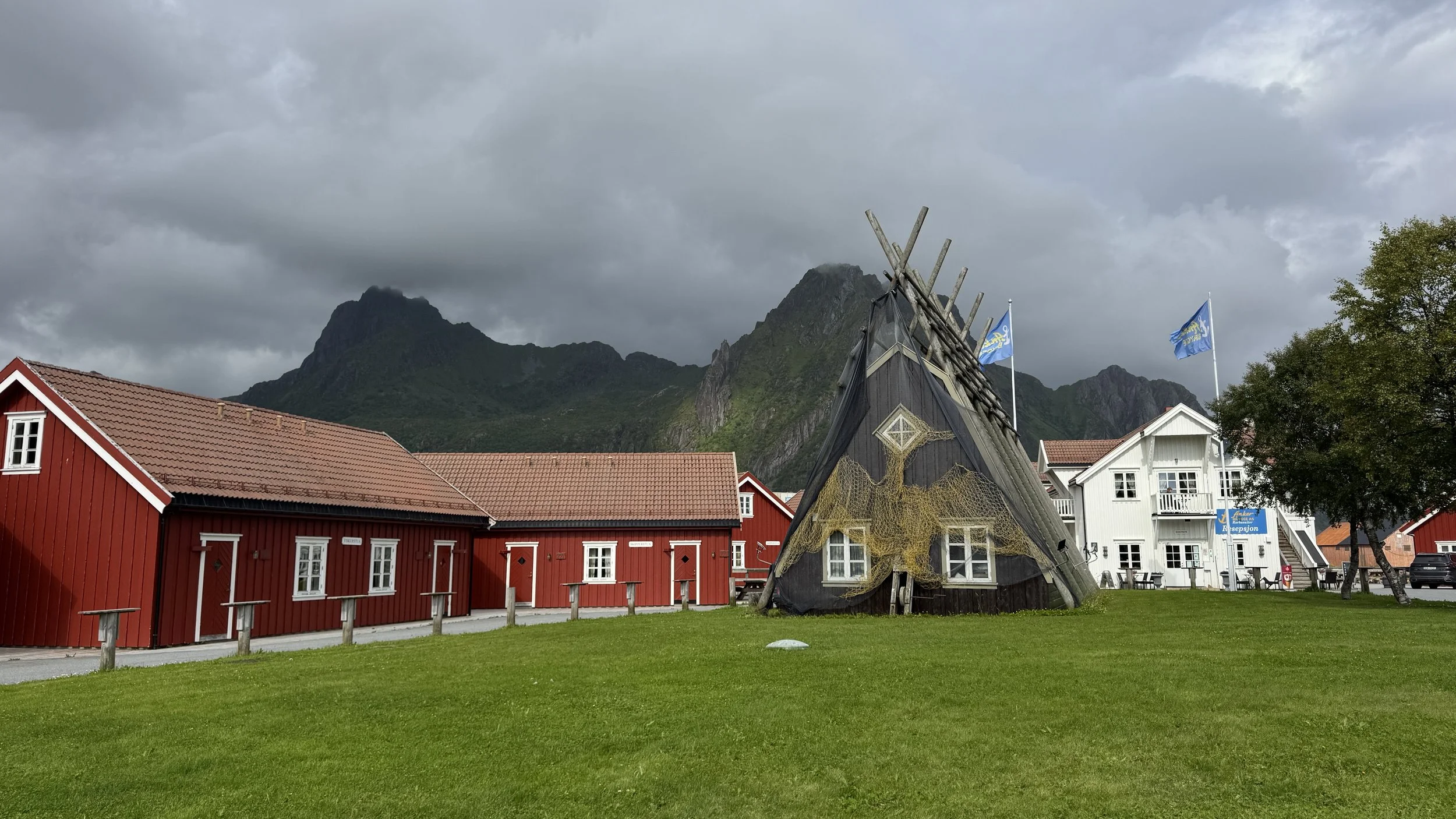
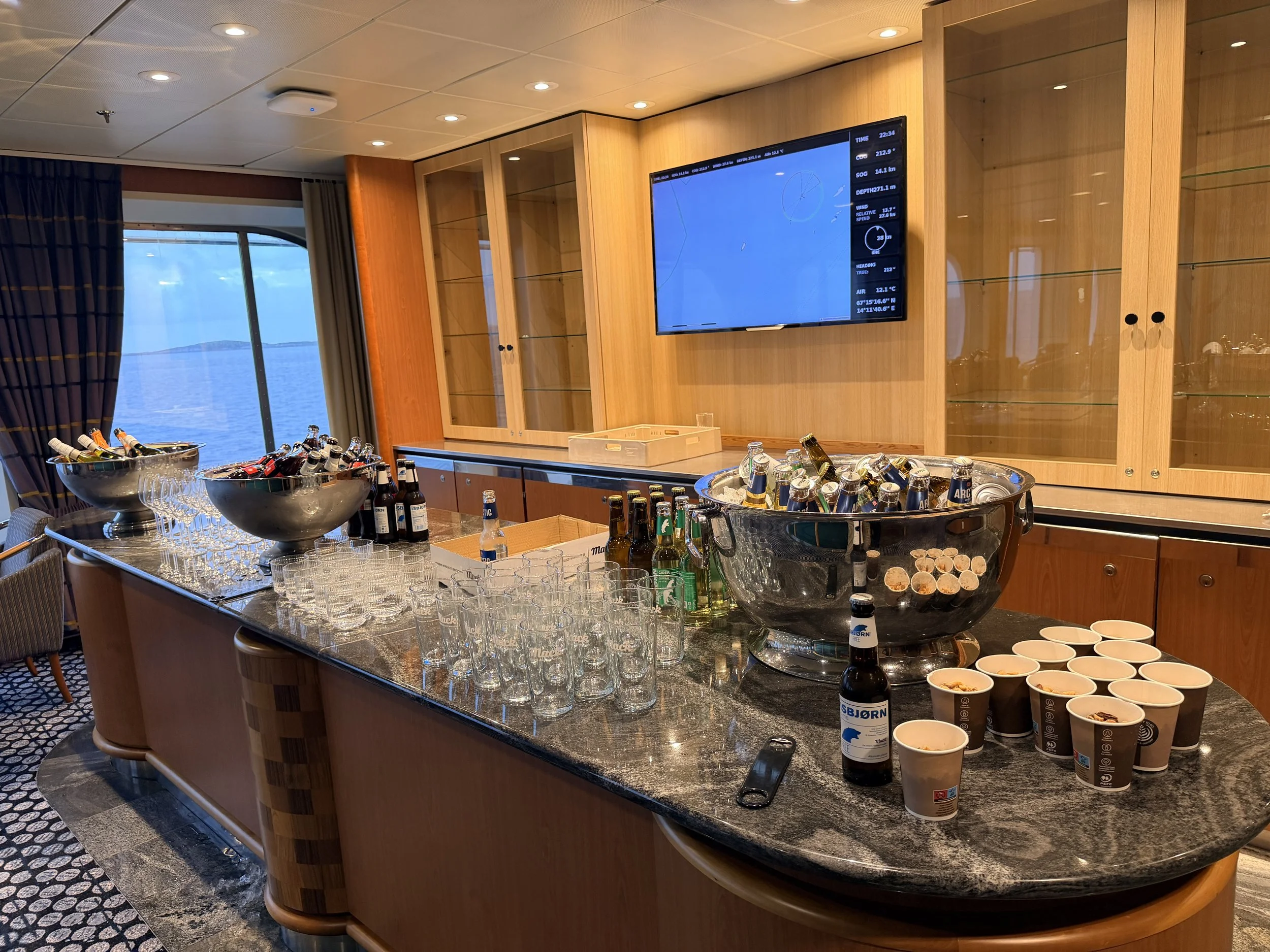
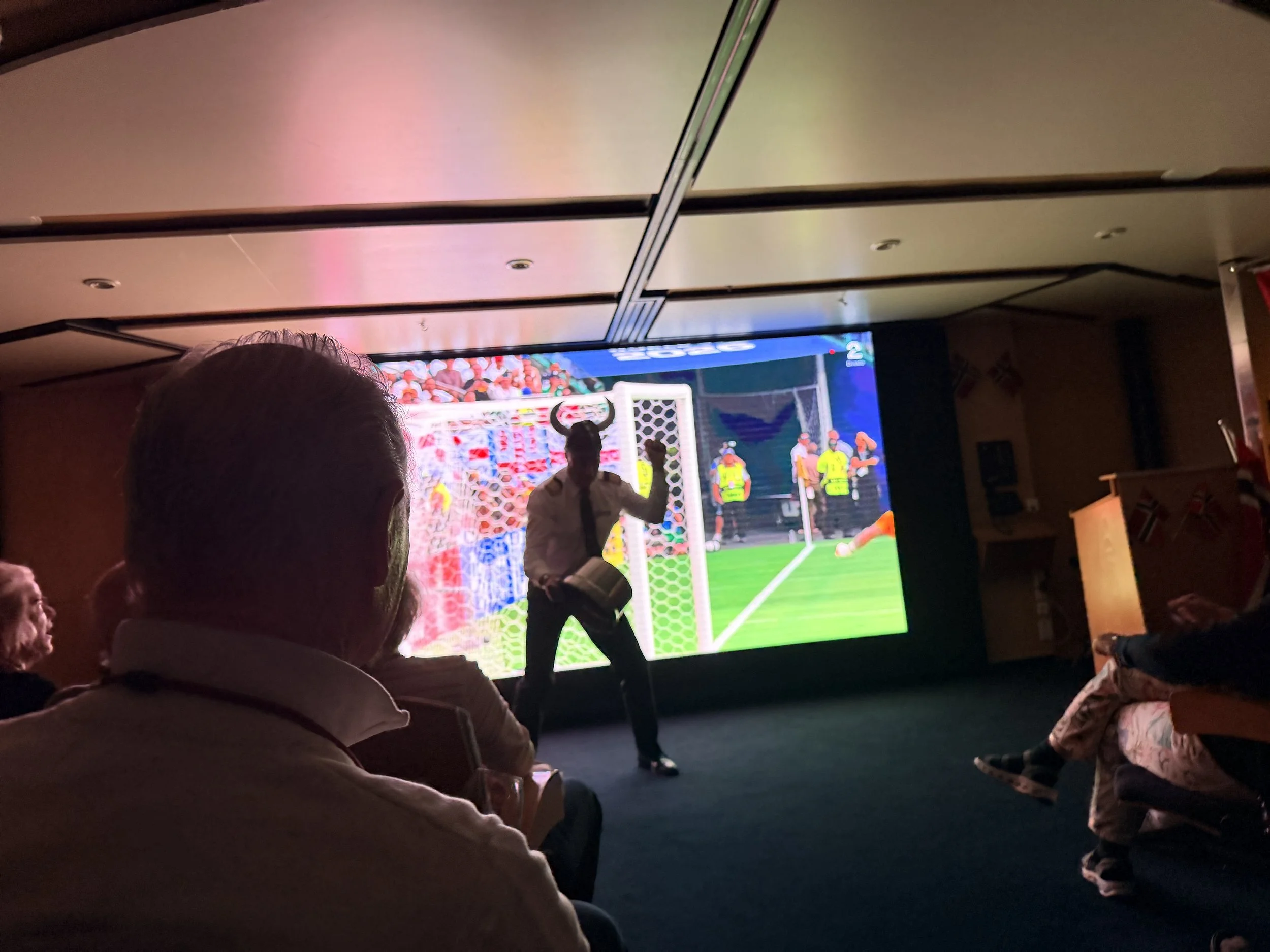
That evening, the ship hosted a watch party for the Norway–England football match. I stayed until the final whistle at 1:30 a.m. the next day. Although I was disappointed to see Norway lose, it was still a fun evening. Watching the match with fellow passengers made for a lively and memorable end to an action-packed day.
2026年7月11日
上午8点,我们抵达斯托克马克内斯(Stokmarknes),只停靠两小时,刚好足够时间参观赫蒂鲁滕博物馆(Hurtigruten Museum)。斯托克马克内斯是我们这次乘坐的赫蒂鲁滕邮轮公司的发源地,博物馆就建在码头旁边,里面最引人注目的展品,是1956年建造的MS Finnmarken号。它被永久保存于一座巨大的玻璃建筑内,宛如一艘装在玻璃瓶中的船。馆内还陈列着1912年DS Finnmarken号复原的沙龙,让游客能够比较相隔四十多年的两代赫蒂鲁滕客轮。漫步于这艘历史悠久的邮轮之中,让我们真切感受到船舶设计、旅客舒适度以及船上设施在几十年间的不断演变。
离开斯托克马克内斯后,邮轮驶入挪威北部最壮丽的峡湾风光,其中最著名的便是巨魔峡湾(Trollfjord)。这条峡湾全长仅约2公里,入口最窄处只有100米宽。邮轮特意绕道驶入峡湾深处,再优雅地调头驶出。有几次船身几乎贴着峭壁缓缓前行,近得仿佛伸手就能触摸到岩壁。在船顶层,厨房还提供热腾腾的魚汤,很好喝,每人要二杯。能够乘船深入巨魔峡湾,无疑是这趟航程最精彩、最令人难忘的体验之一。
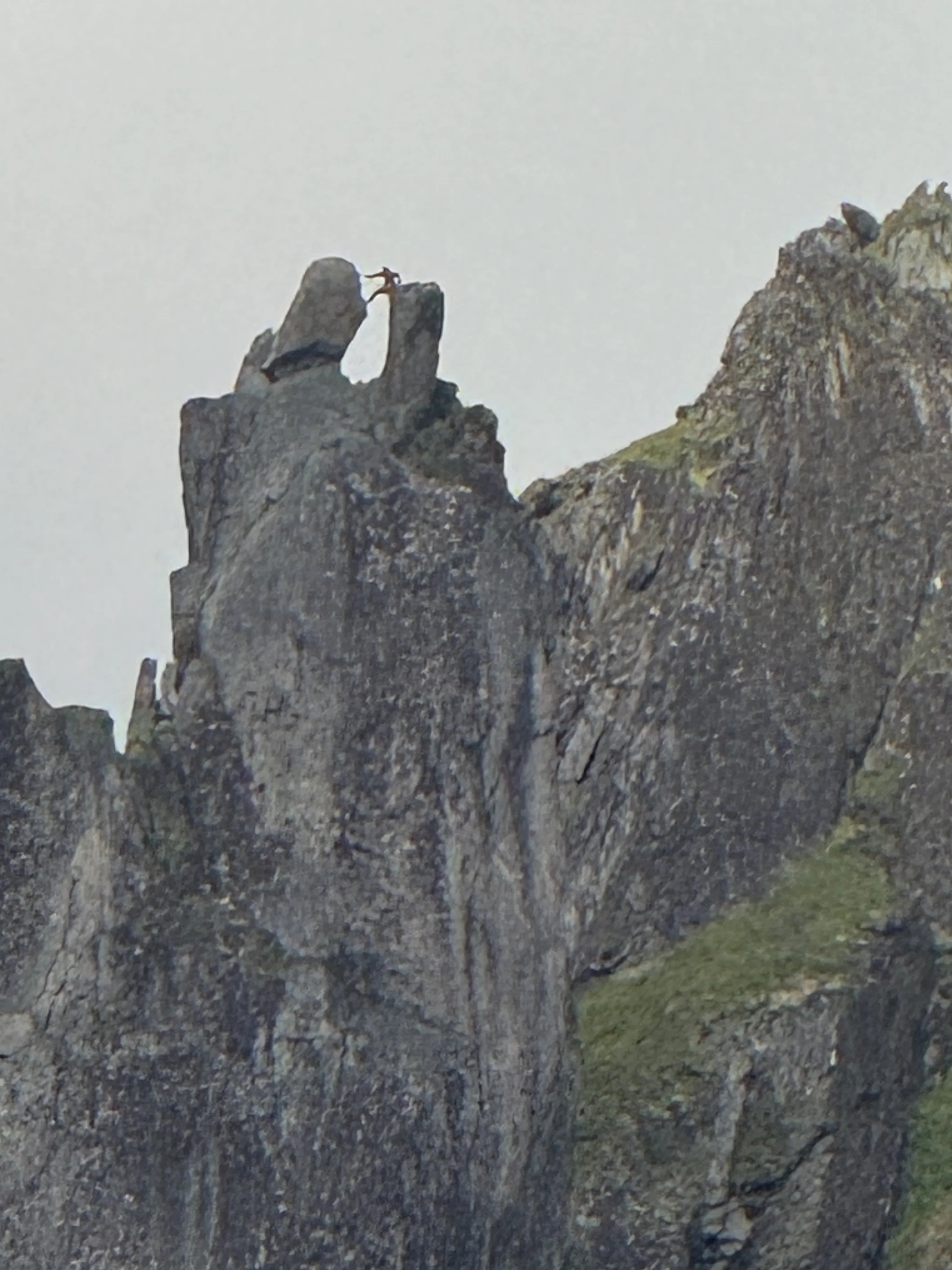
下午,我们抵达罗弗敦群岛最大的城镇——斯沃尔韦尔(Svolvær)。佩民照旧下船自由行,我则参加了高速橡皮艇(RIB)海鹰观赏之旅。坐在高速飞驰的橡皮艇前排,既刺激又十分颠簸。快艇驶入几座小岛之间停下,我们静静等待白尾海雕出现。不久,导游将鱼抛入海中,只见一只只白尾海雕从高空盘旋而下,以惊人的速度俯冲入水,精准地抓起鱼儿,而成群的海鸥也纷纷加入抢食,场面十分壮观。壮丽的海岸风光、高速驰骋的快艇,以及近距离观赏野生动物的机会,共同组成了一次精彩难忘的旅程。回到码头,佩民已在那里等我,送上一杯热拿铁,然后又一起去看了二处她已看过觉得还不错的景点。当地著名的羊角石(Svolværgeita)。远远望去,可以看到攀岩者在两座羊角之间穿梭攀爬,令人惊叹
晚上,邮轮举办了挪威对英格兰世界杯四分之一决赛的观赛活动。我一直看到第二天凌晨1点30分比赛结束。虽然挪威队最终以一球之差惜败,无缘四强,但能与船上的游客一起观赛、一起欢呼喝彩,共同感受比赛跌宕起伏的气氛,依然让我度过了一个愉快的夜晚。
E-Biking in Senja 塞尼亚岛上骑电车
July 10, 2026
After leaving Ny-Ålesund, we spent the next 48 hours sailing through rough seas……
经过48小时的风浪航行后,我们终于抵达塞尼亚岛的托尔斯肯。。。
July 10, 2026
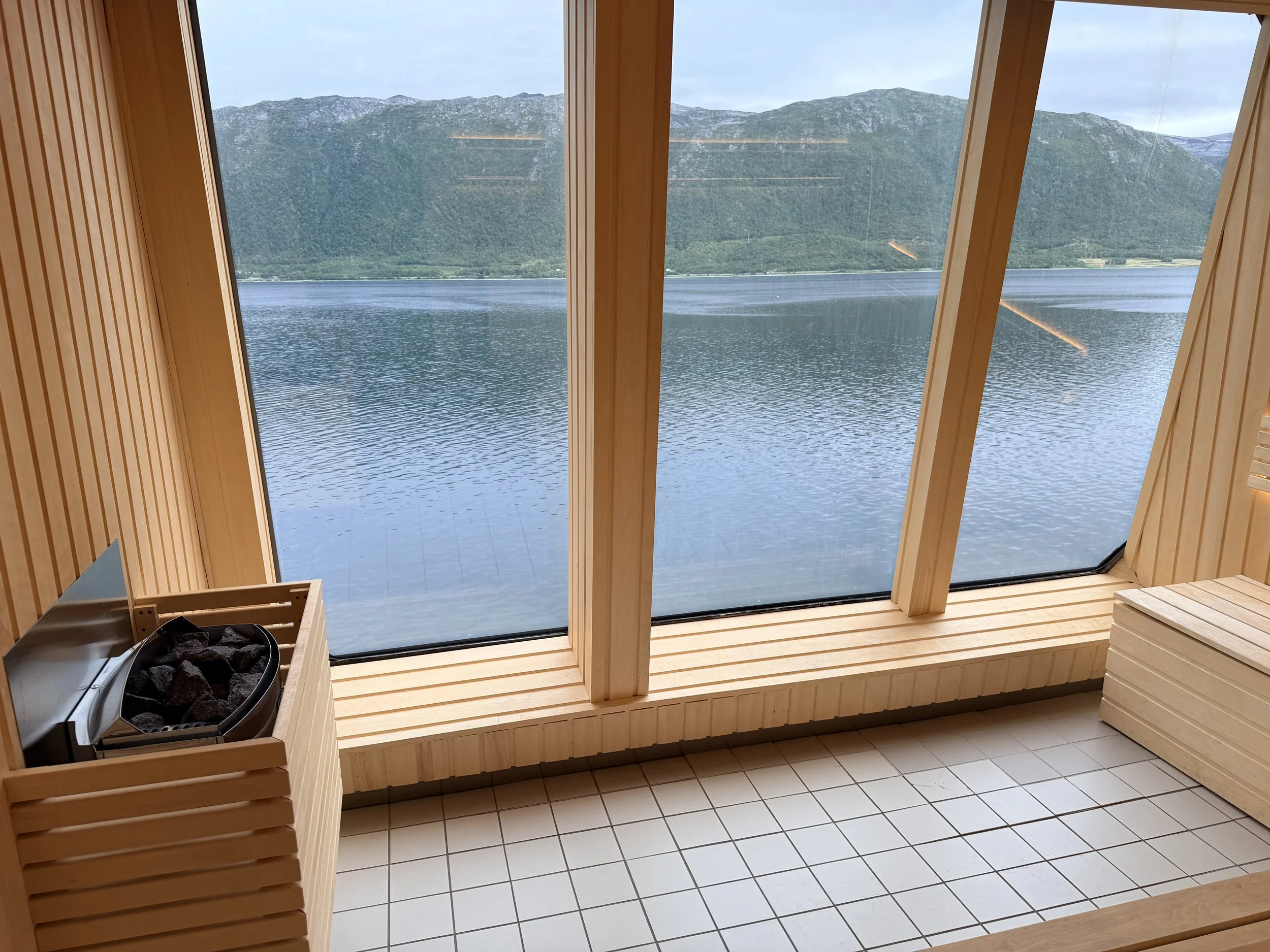
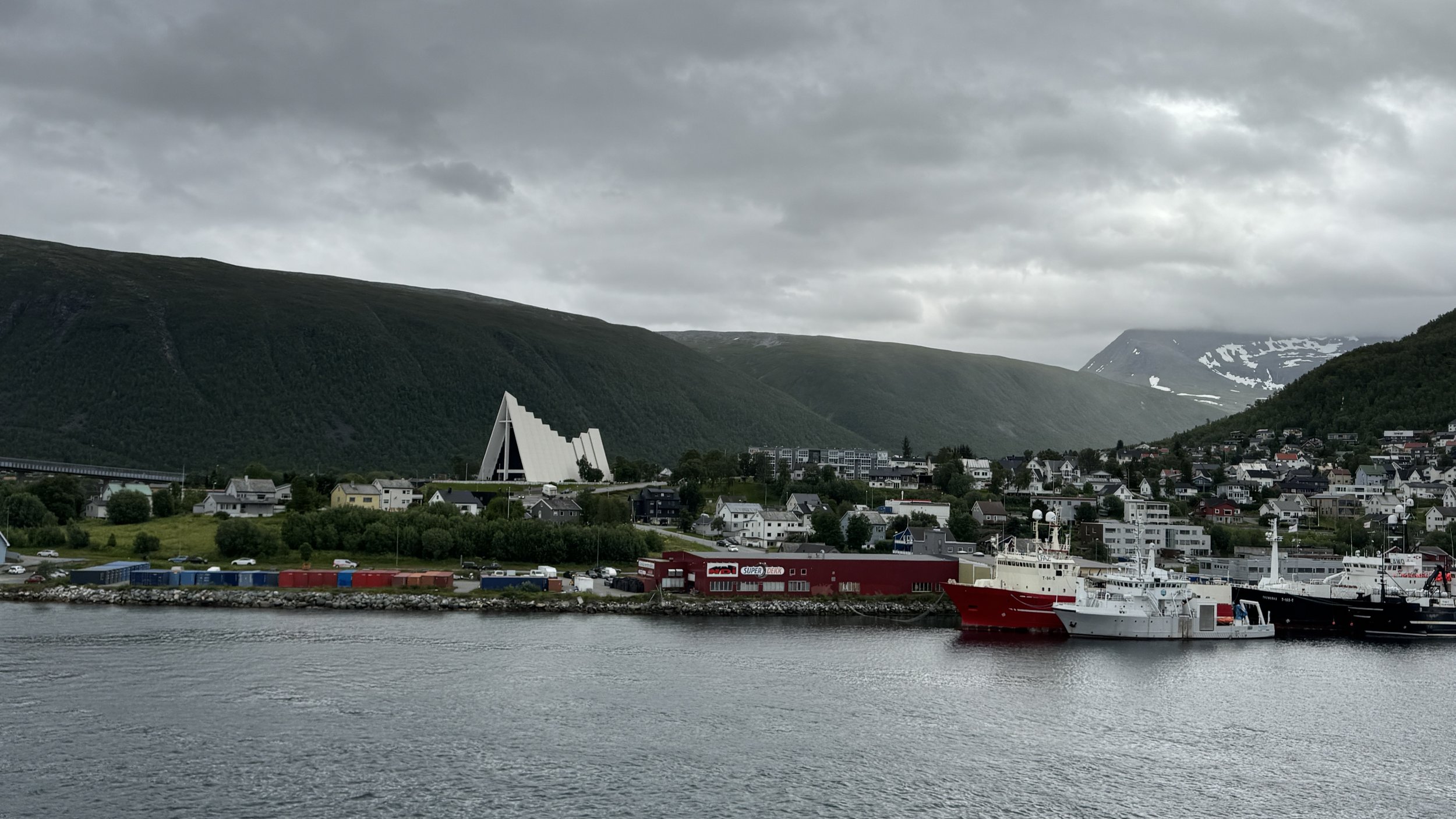
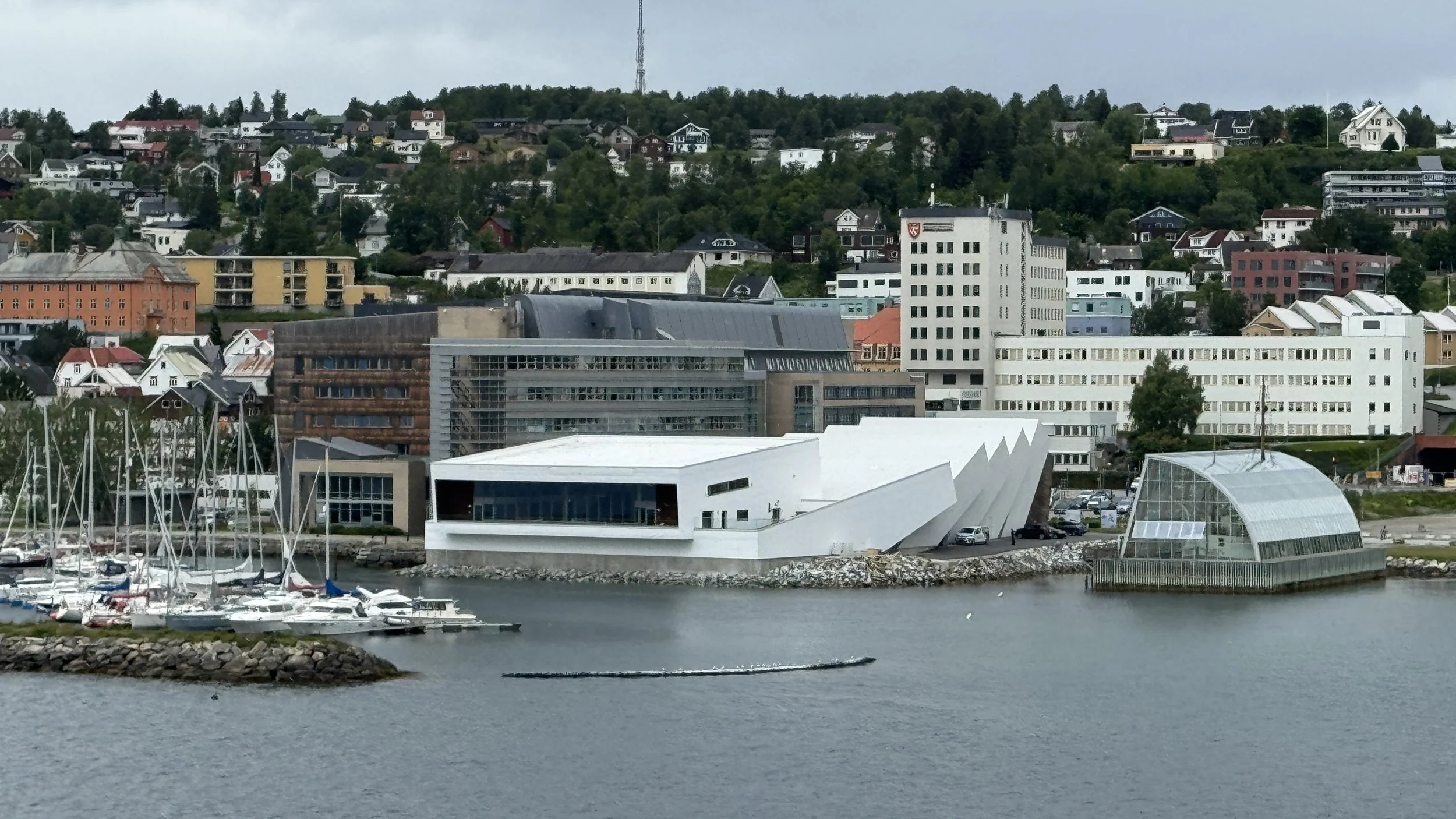
After leaving Ny-Ålesund, we spent the next 48 hours sailing through rough seas. Despite the conditions, we found time to relax in the ship’s dry sauna, where large windows offered wonderful views of sailing. Along the way, the ship made a two-hour stop in Tromsø to load and unload cargo.
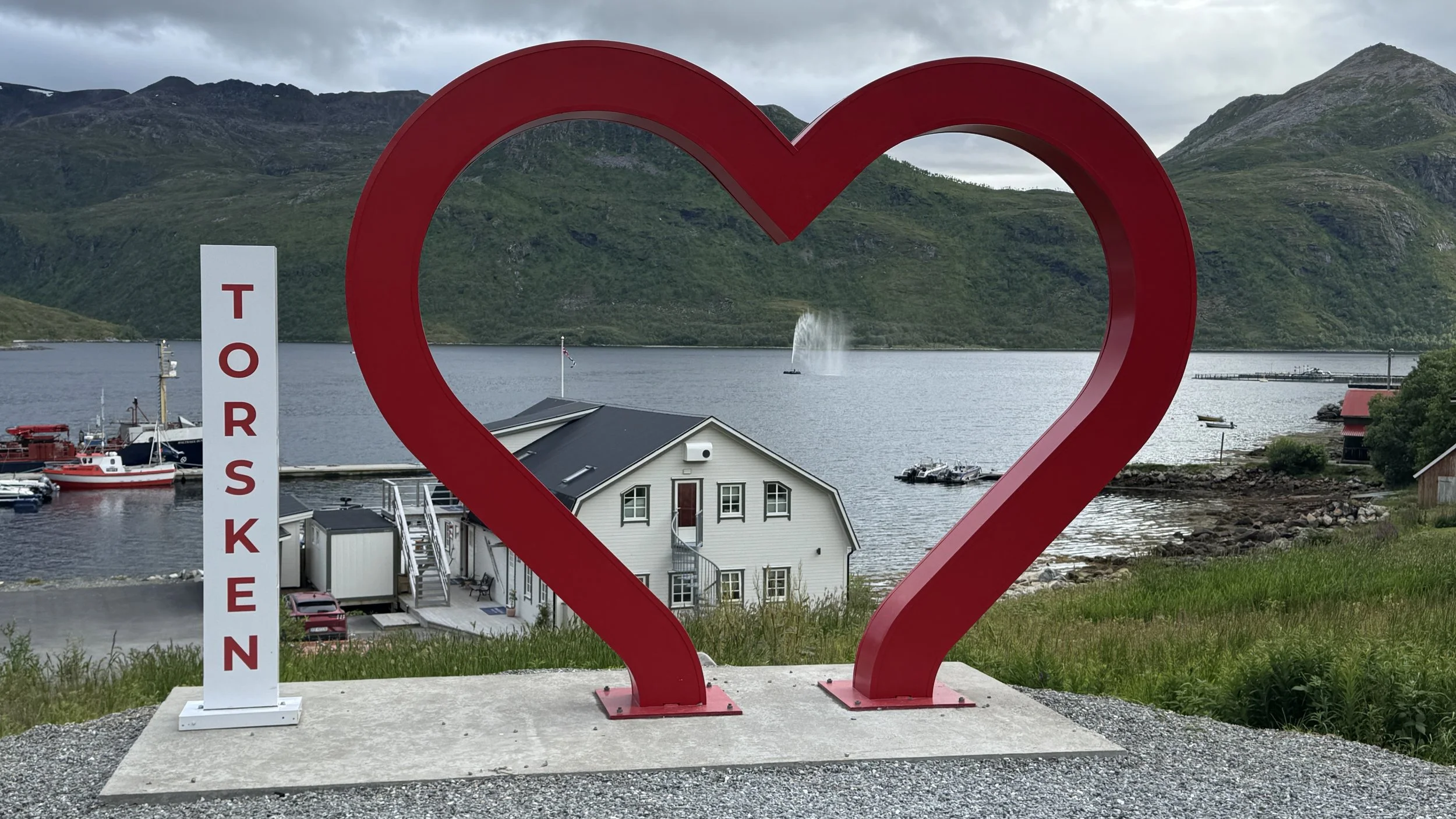
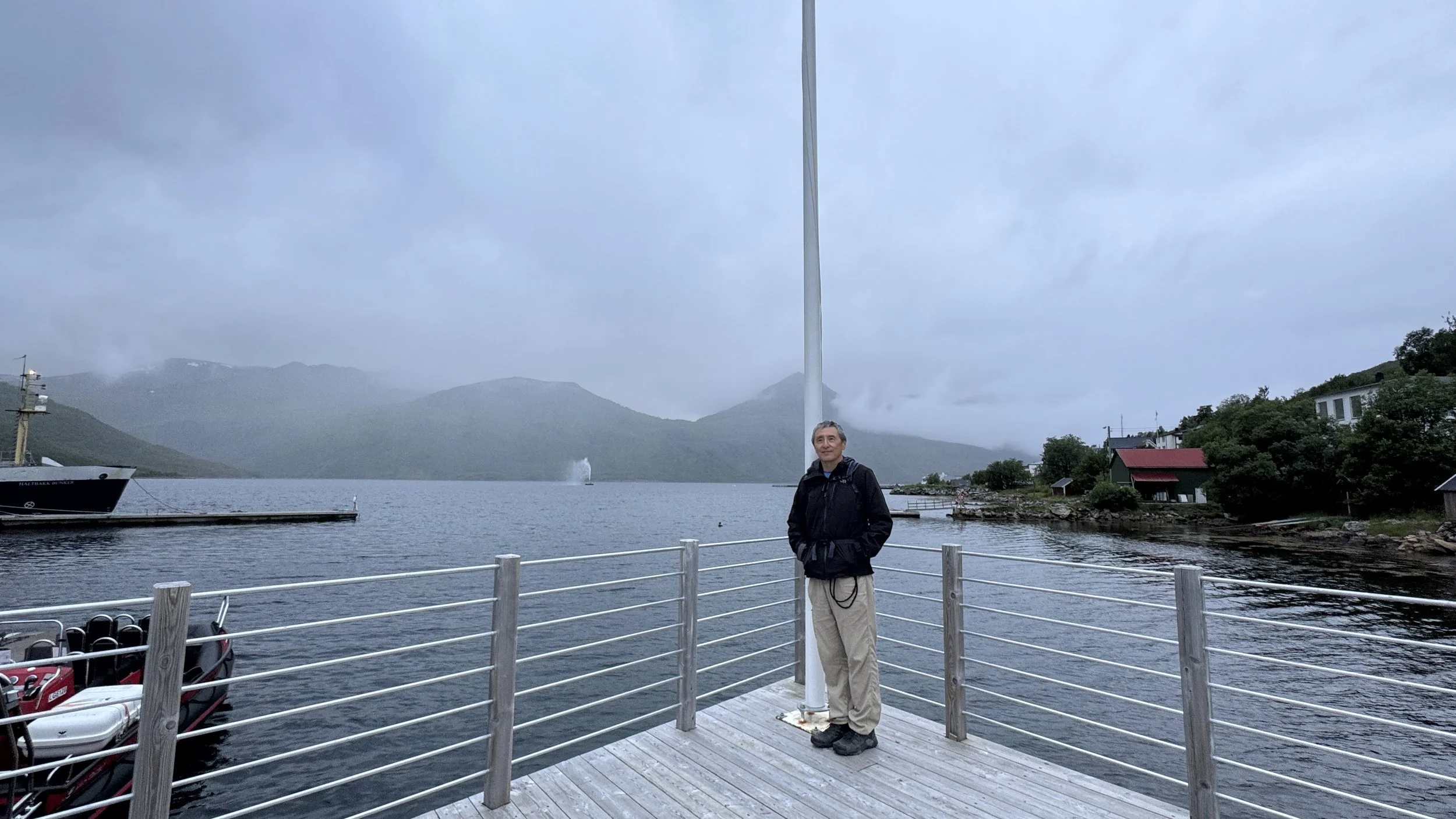
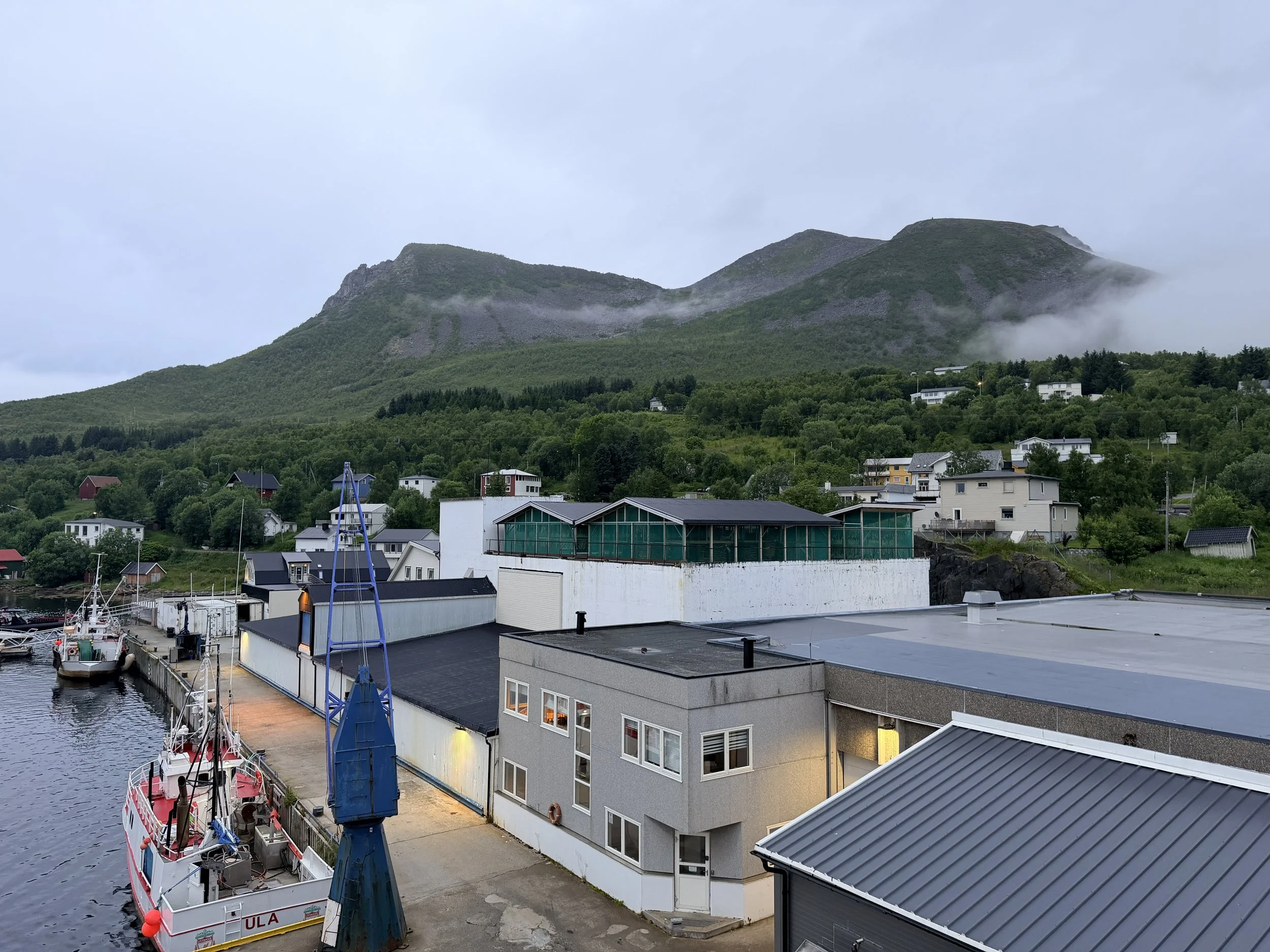
We then arrived in Torsken on Senja Island, where our ship stayed from 6:00 p.m. until midnight. Torsken is a small fishing village, though during the summer, tourism now appears to be an important part of the local economy.
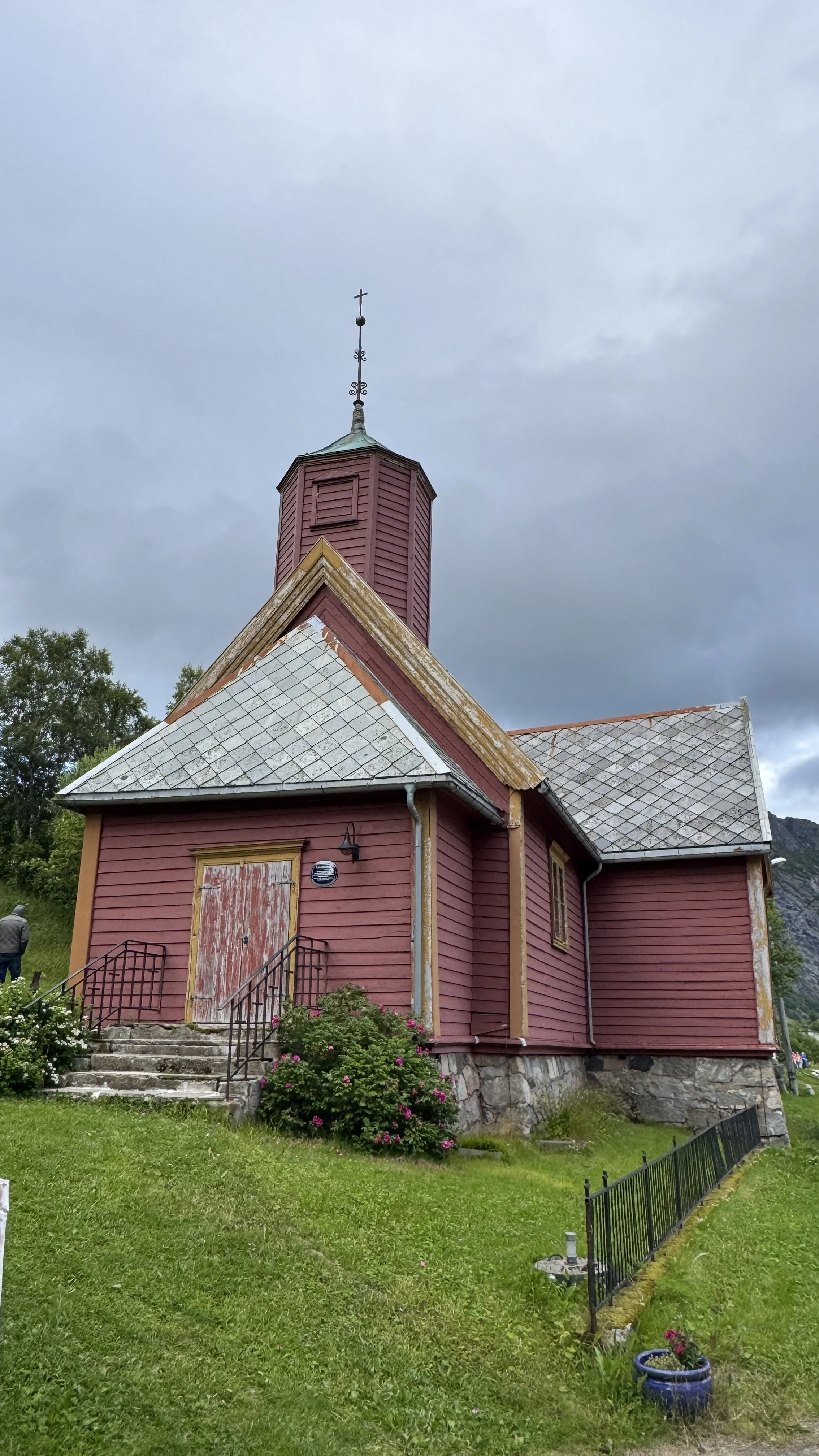
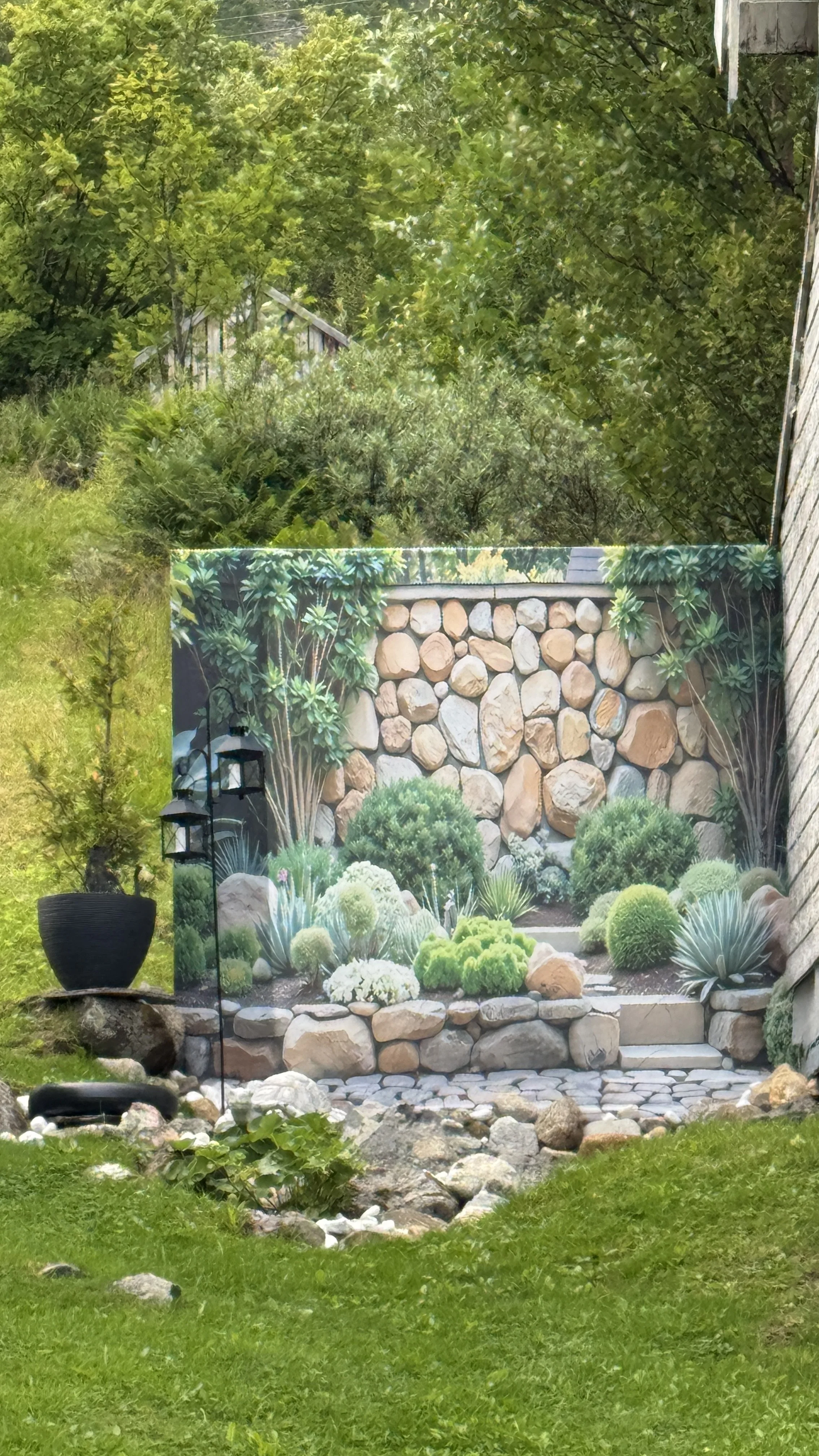
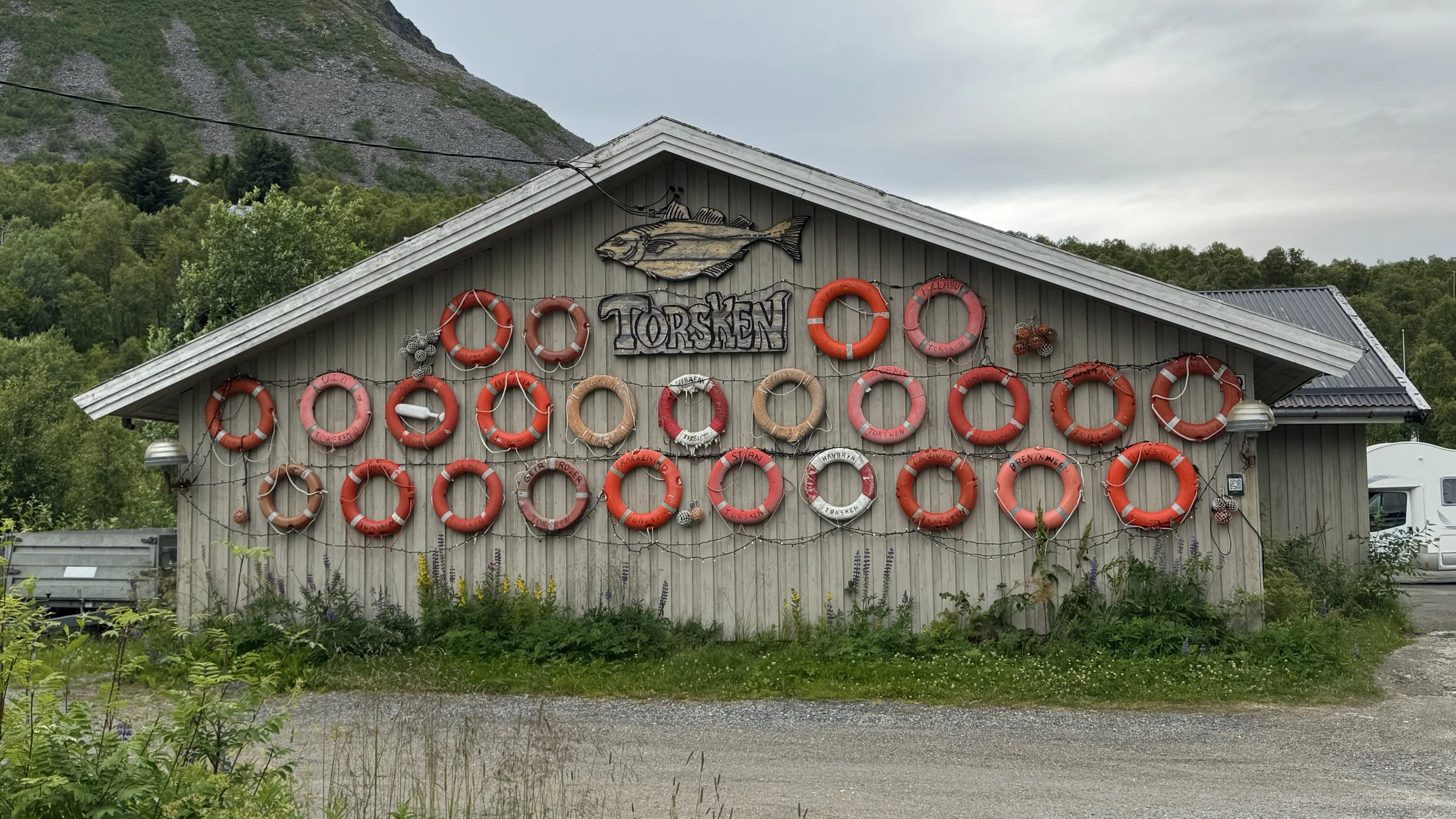
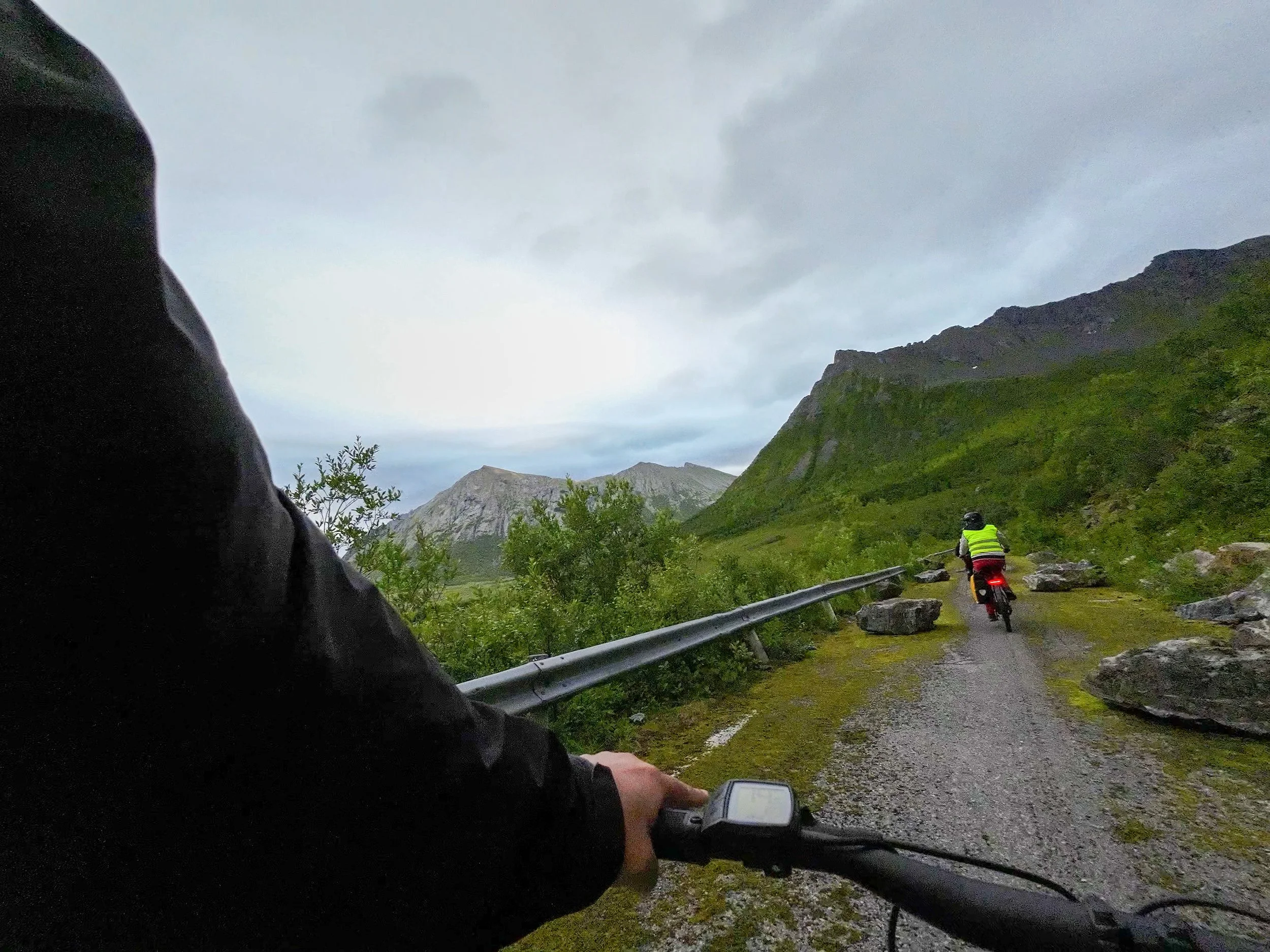
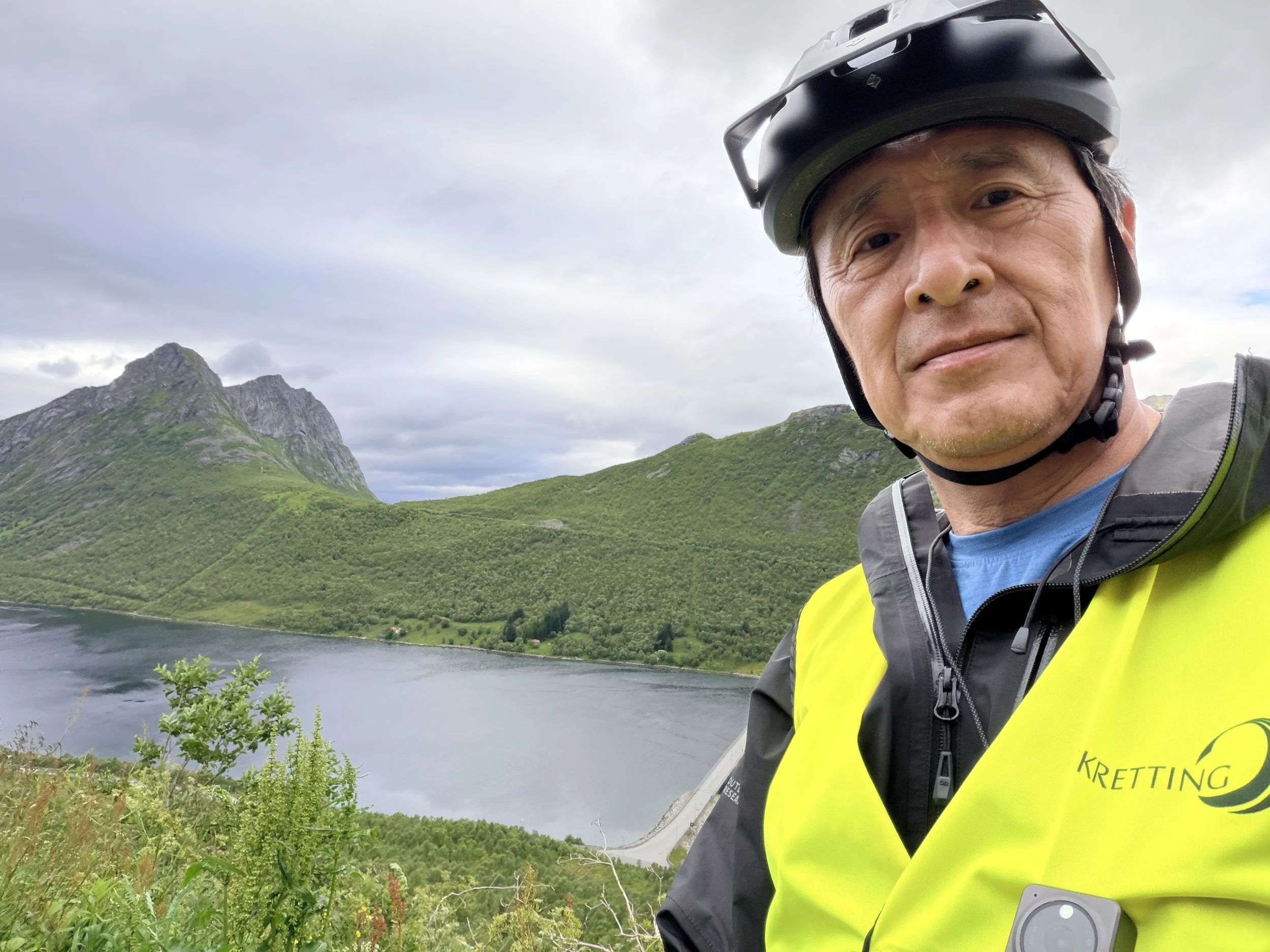
I joined a three-hour e-bike tour that took us over two mountain passes, to a beautiful white-sand beach, through an underwater tunnel, and into another small village. Our Australian fellow passengers joked that the beach looked more like one of Australia's black-sand beaches than a white-sand beach. However, the scenery was spectacular. Along one stretch of road, we even passed beneath steep cliffs where falling boulders are a real hazard.
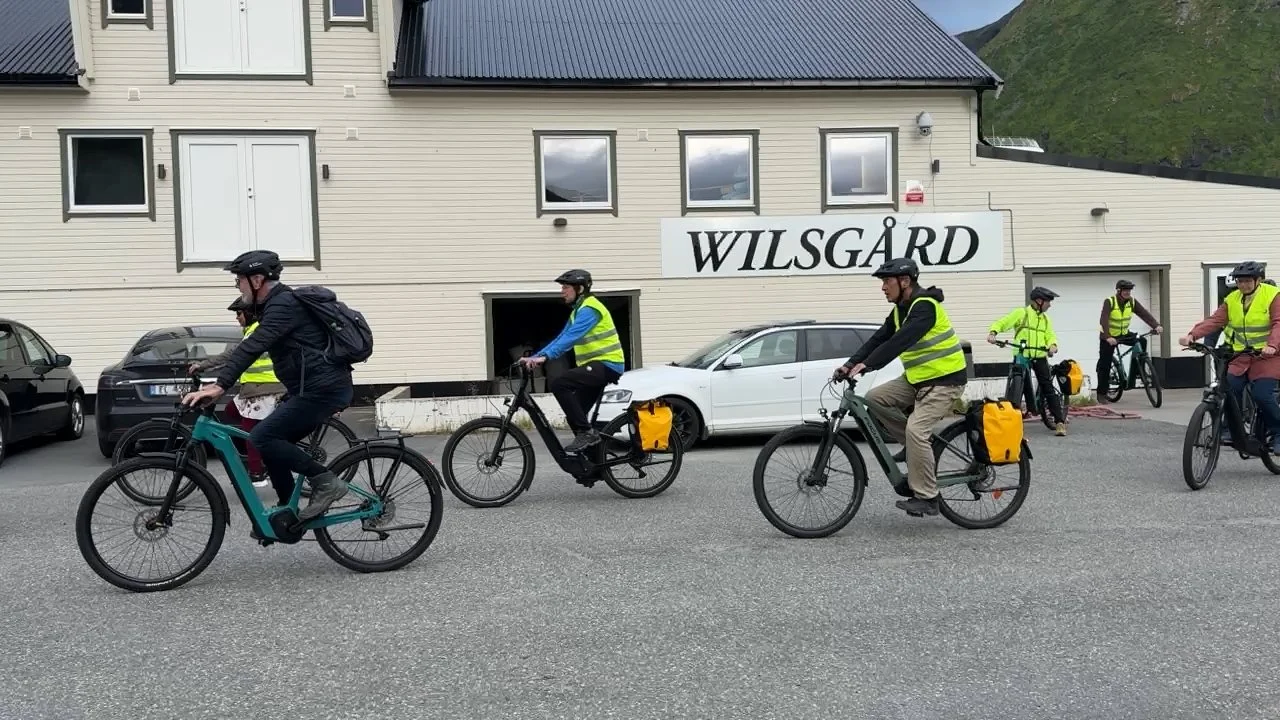
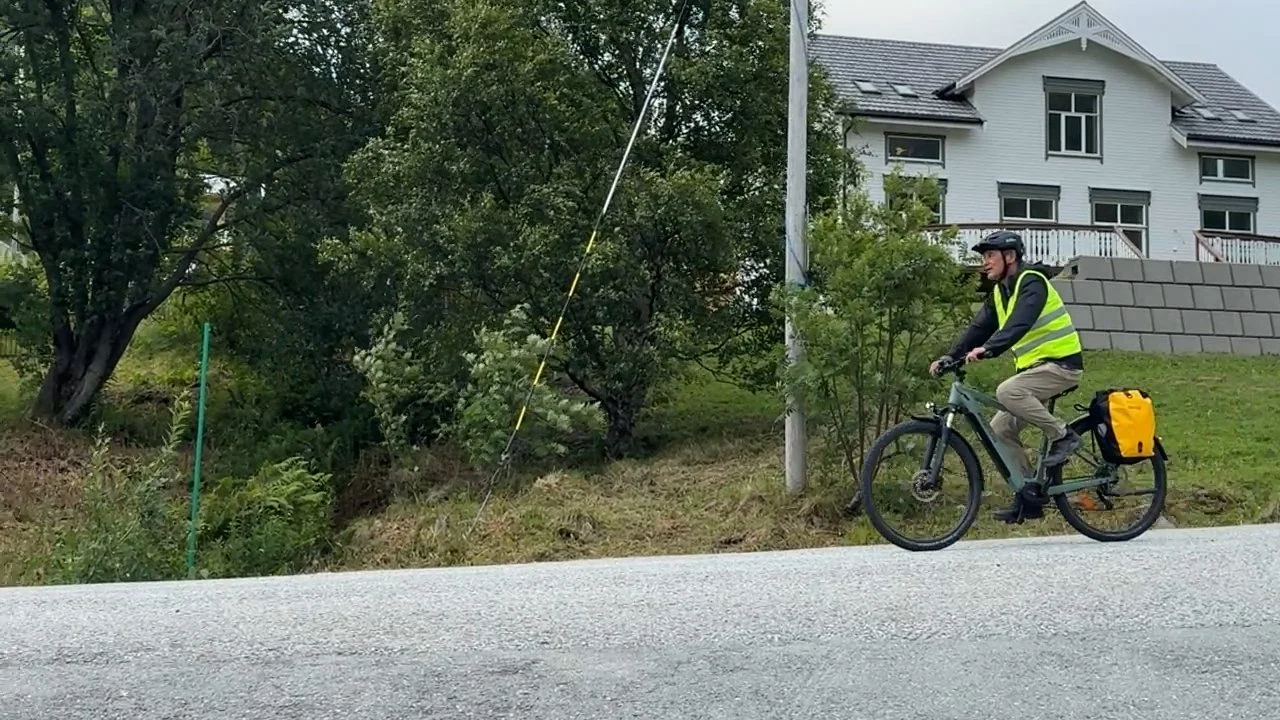
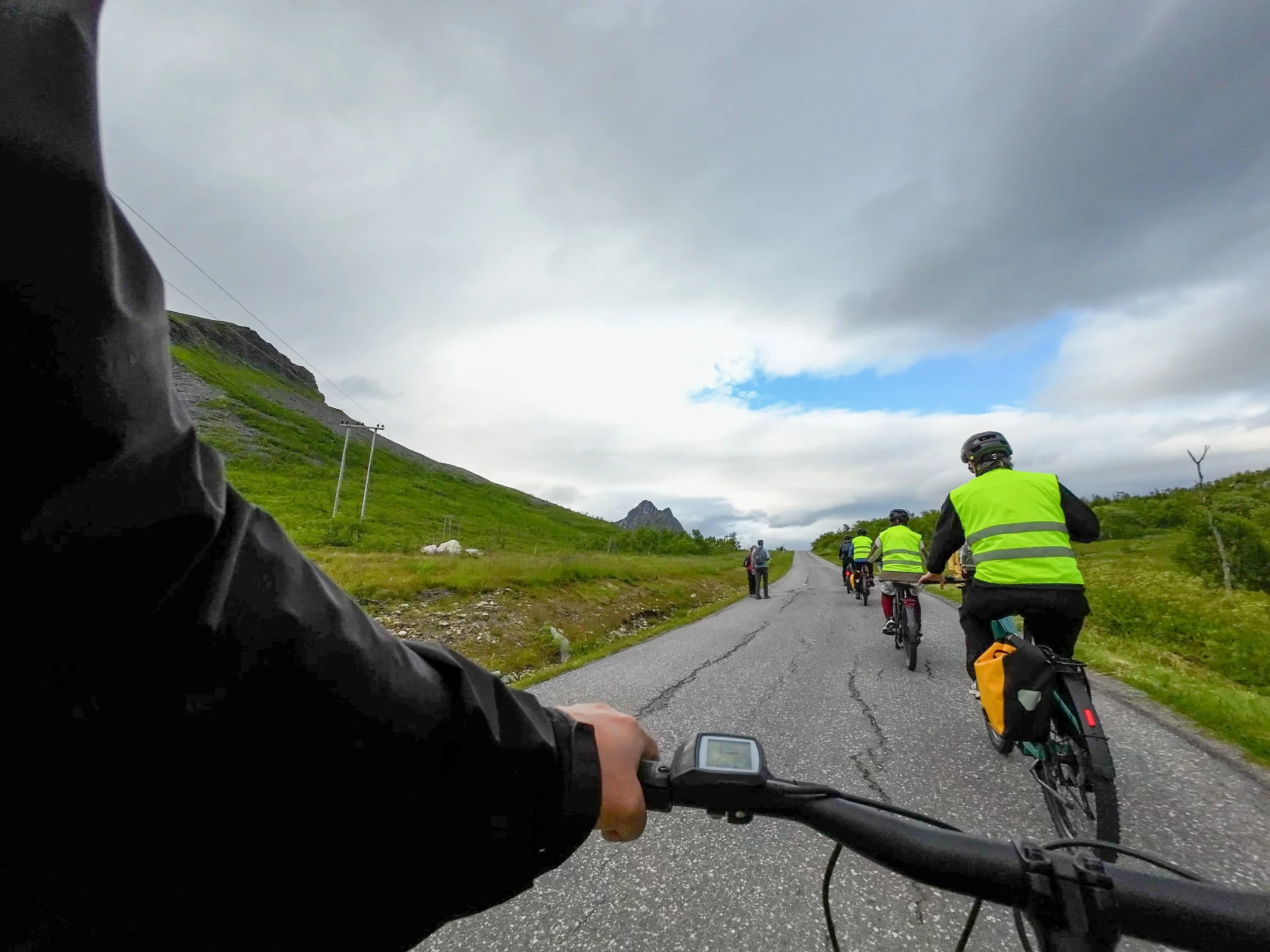
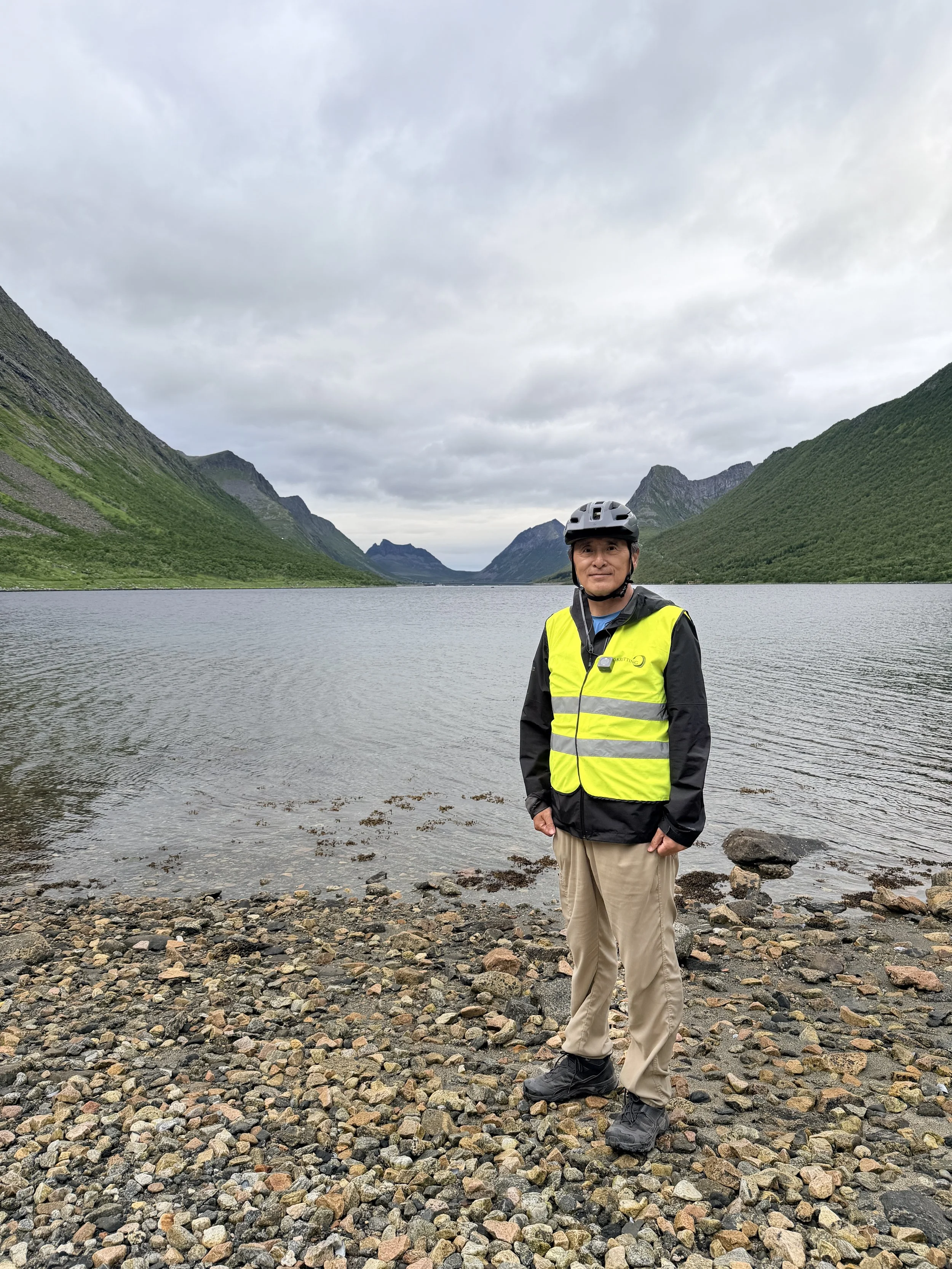
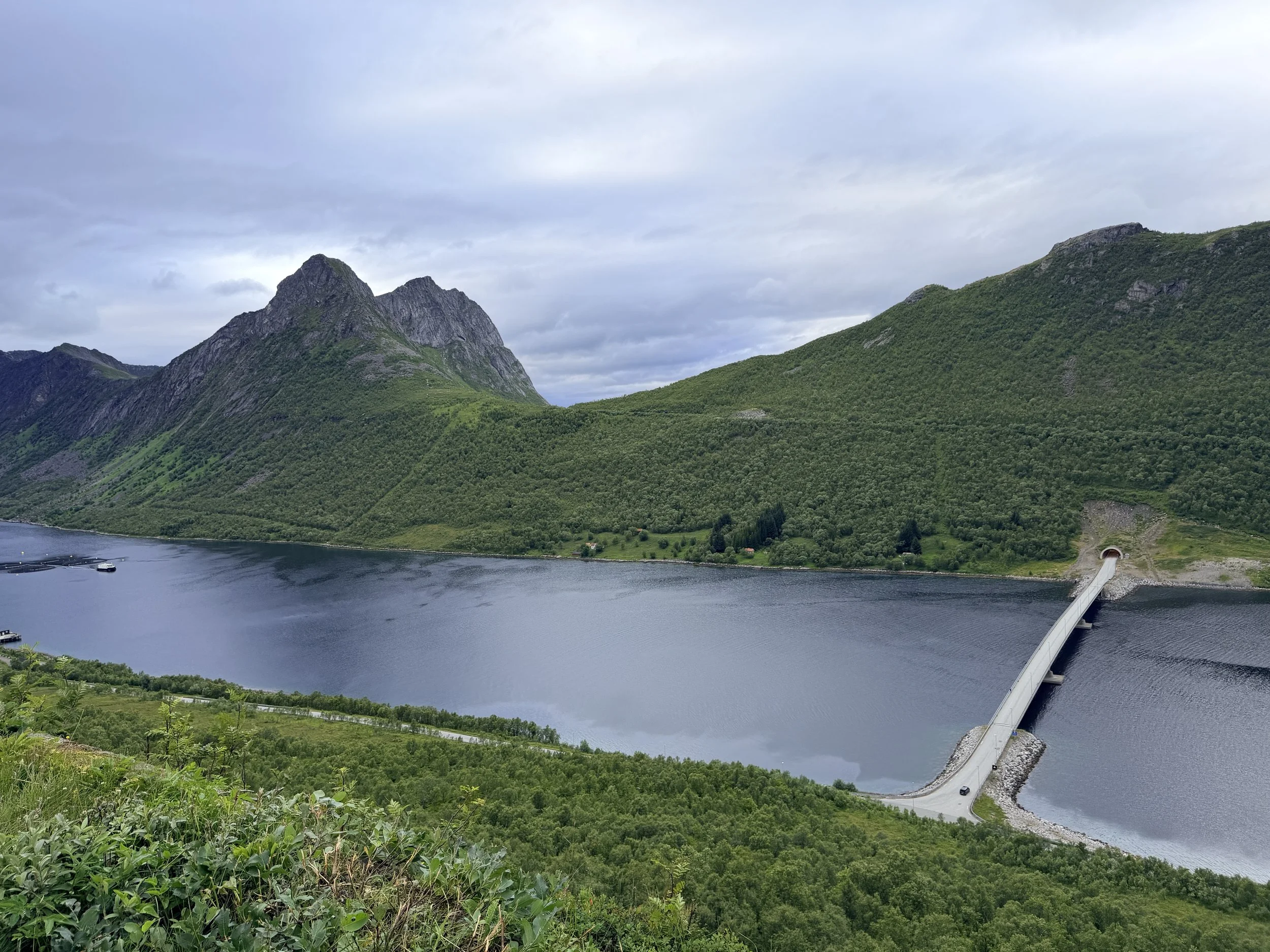
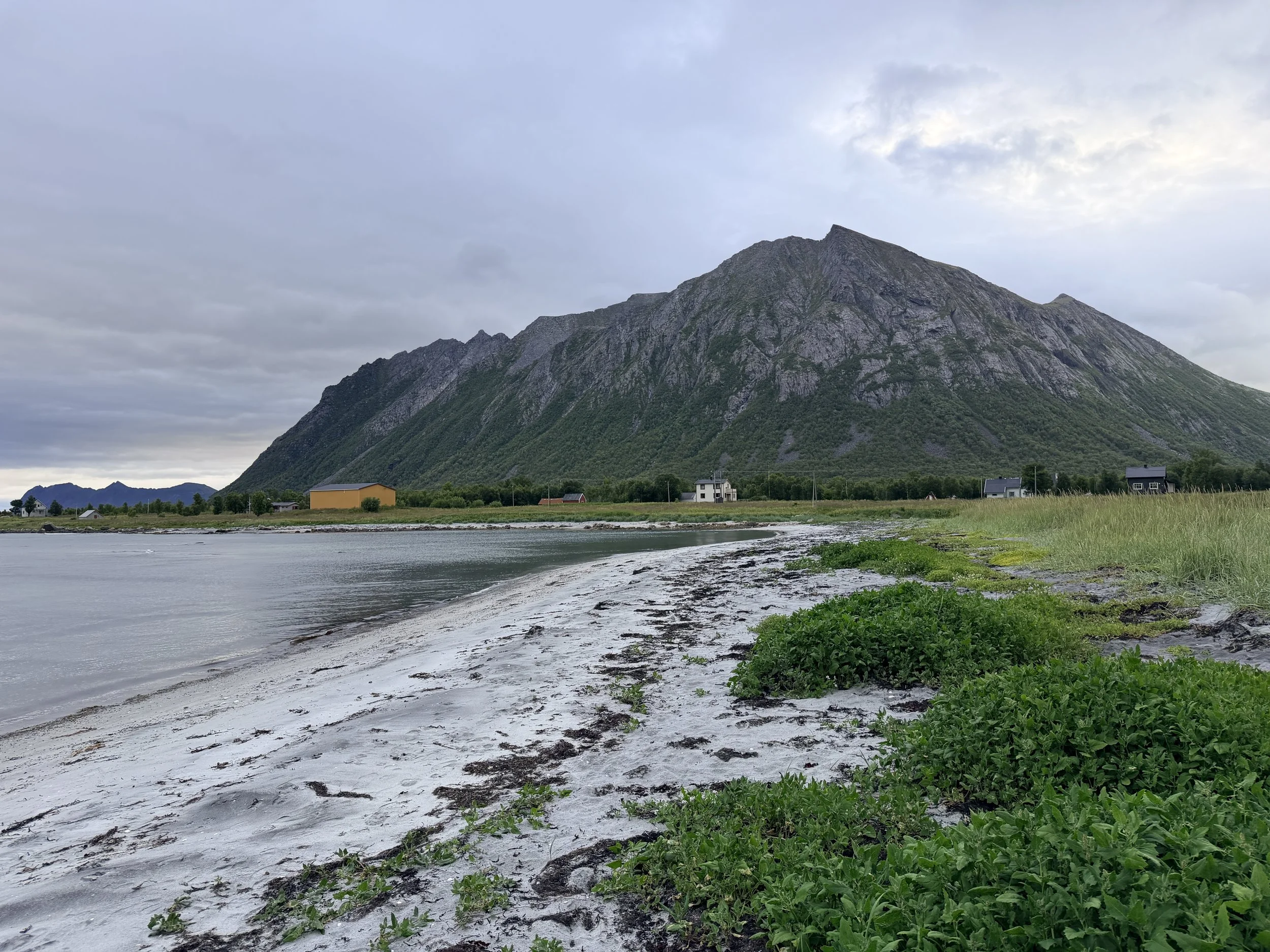
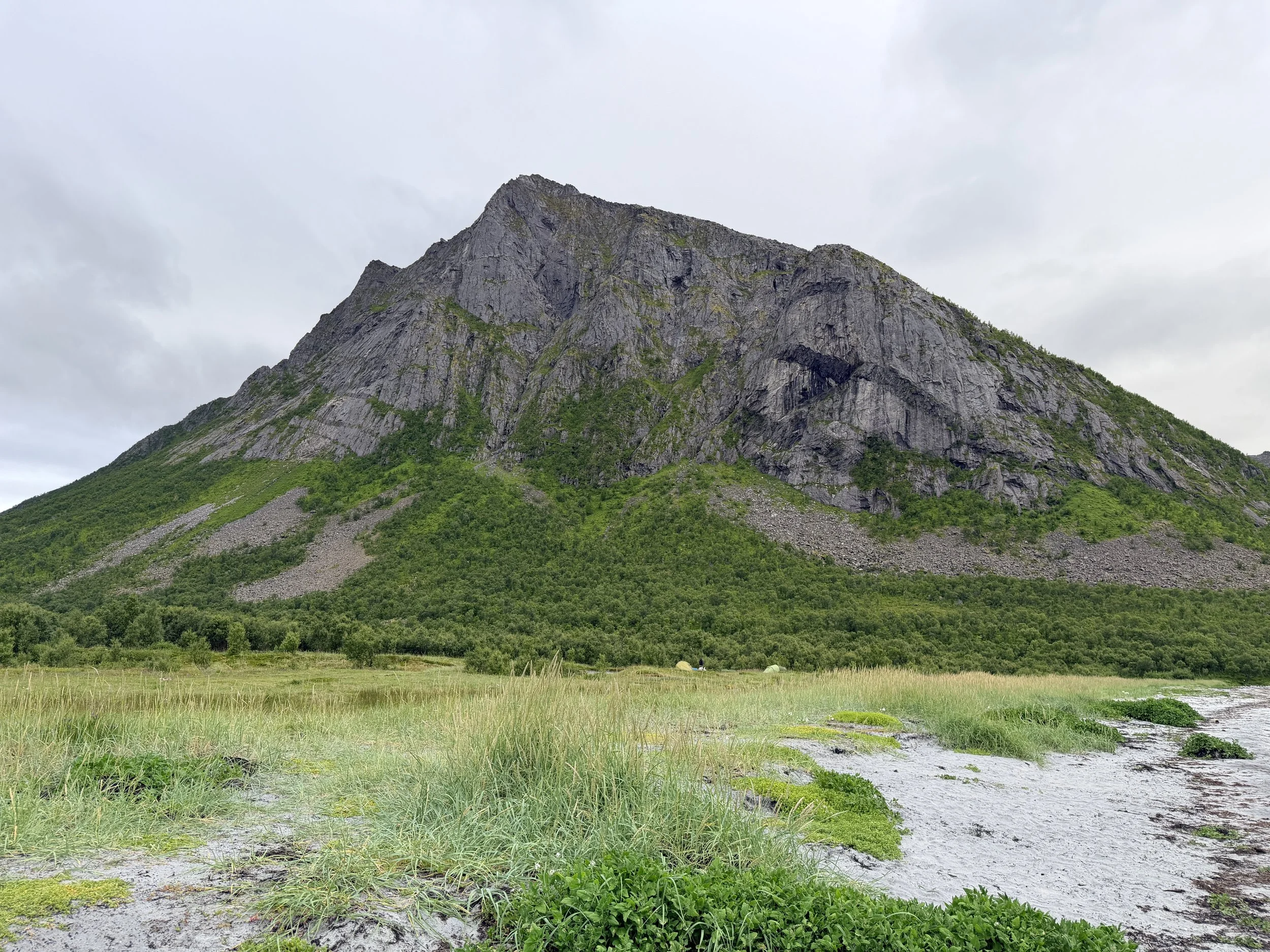
We cycled approximately 25 kilometers, making plenty of photo stops along the way. On some downhill sections, our speed reached as high as 40 kilometers per hour. I don't remember ever riding a bicycle that fast before. It was both exhilarating and a little intimidating. The tour was pleasant, exciting, and thoroughly enjoyable, and I would gladly do it again.
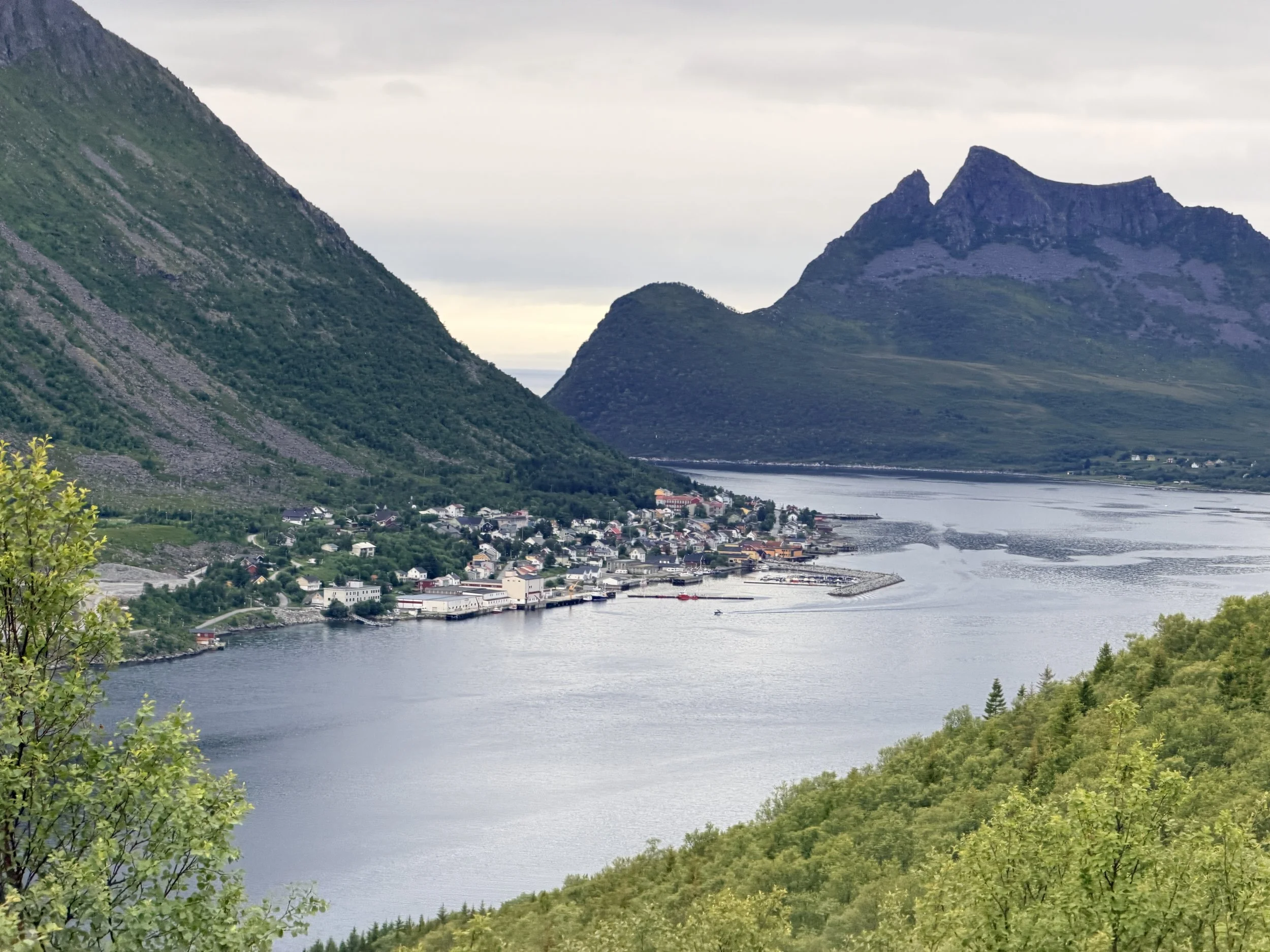
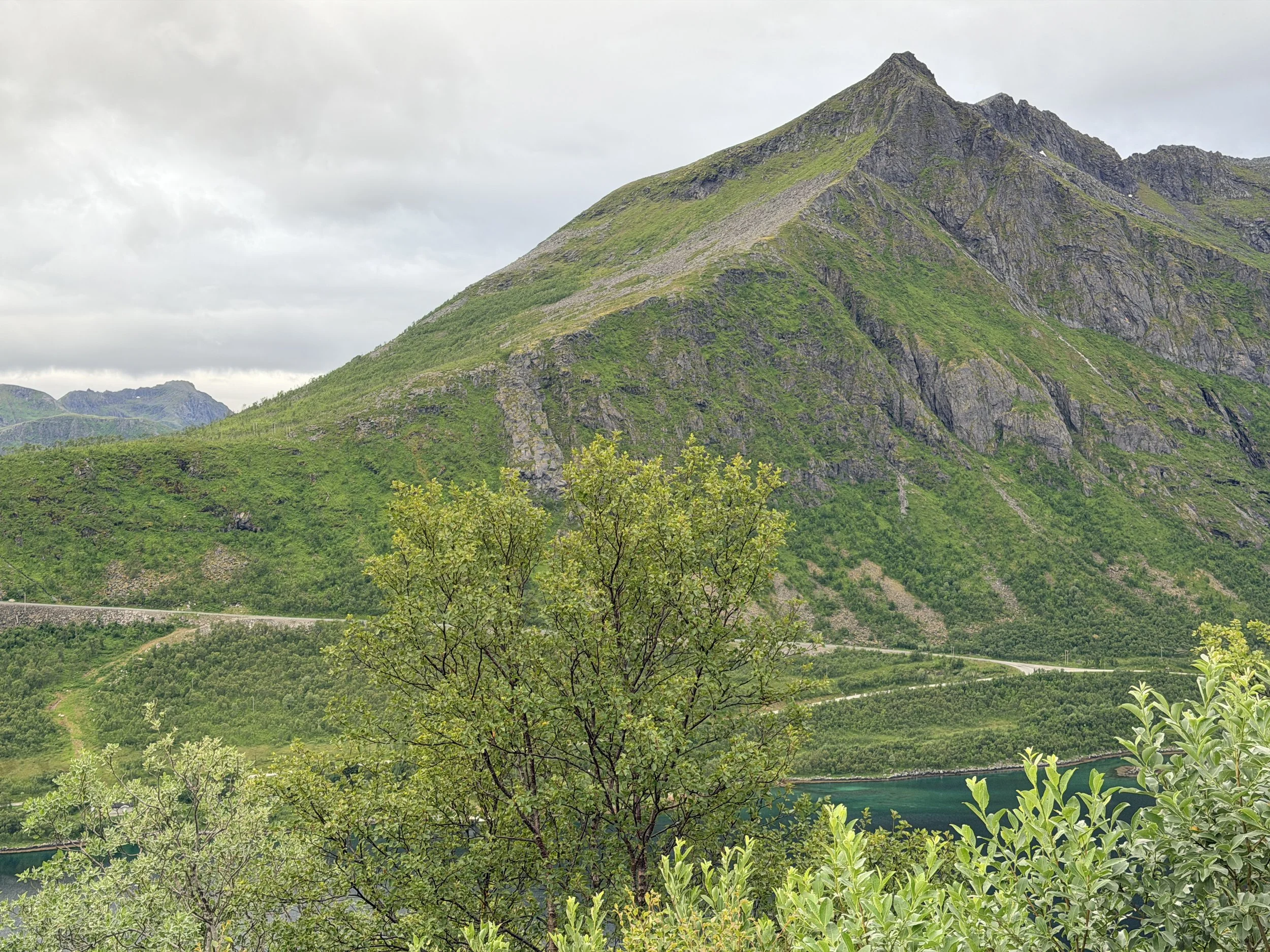
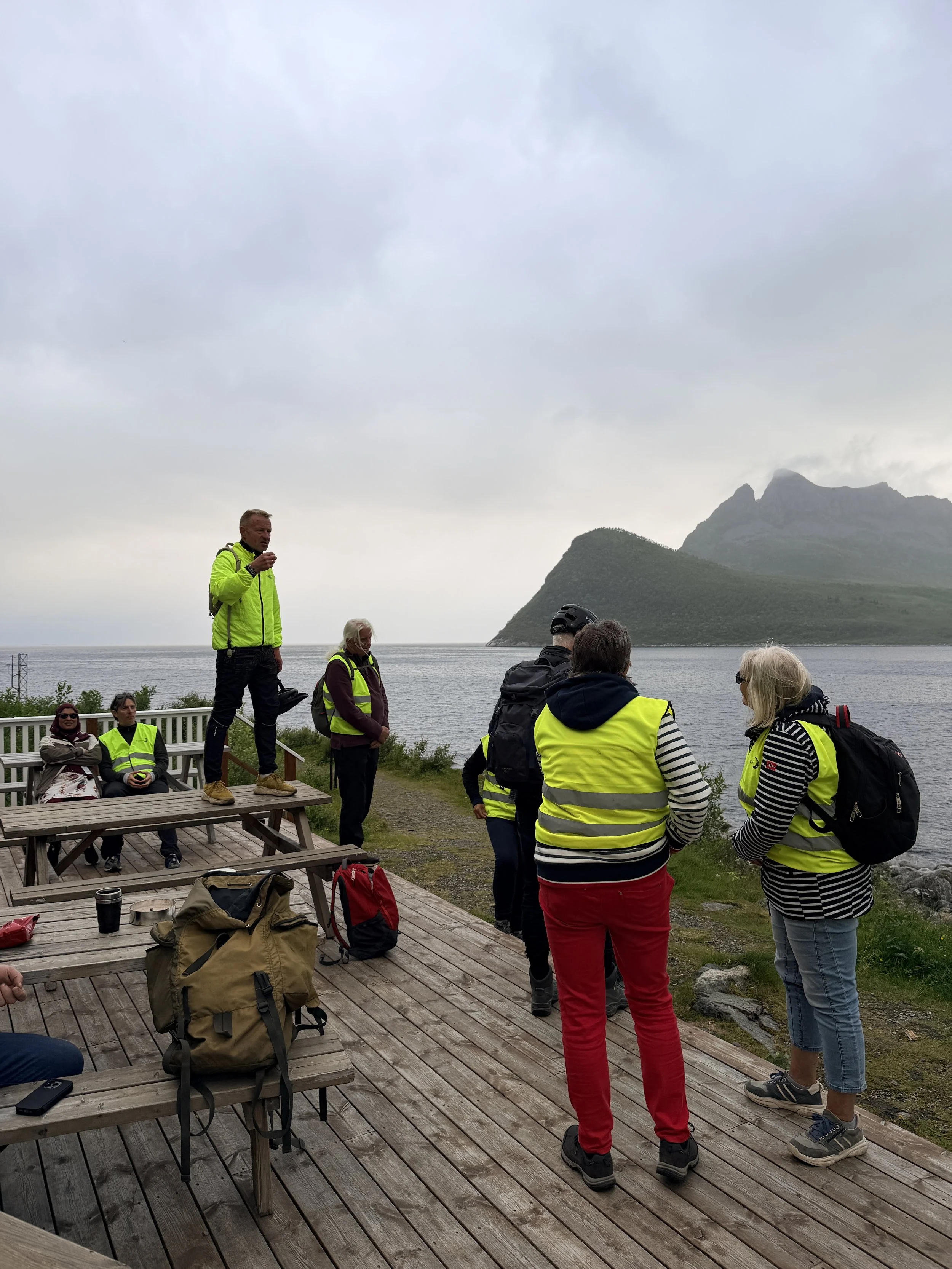
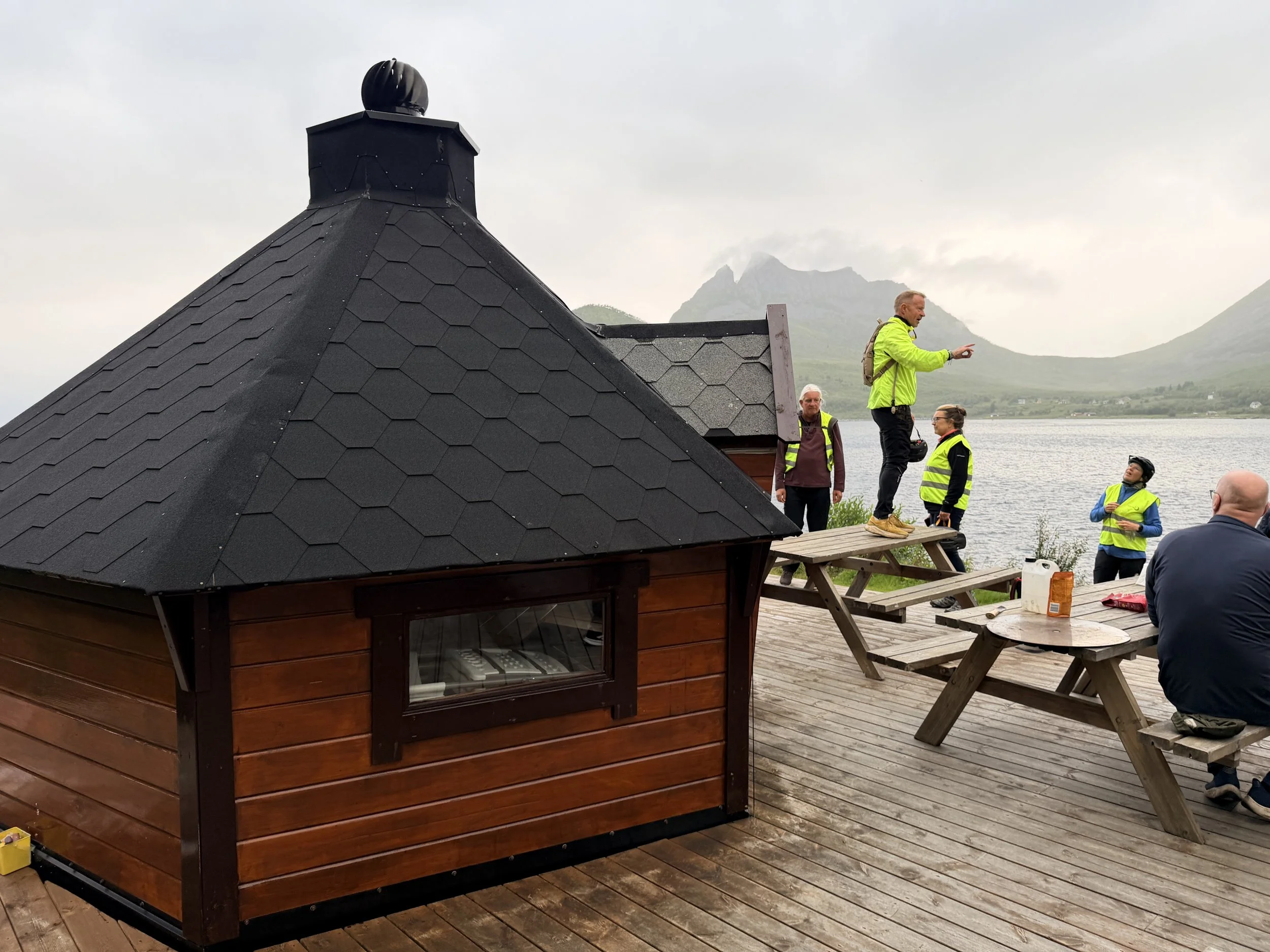
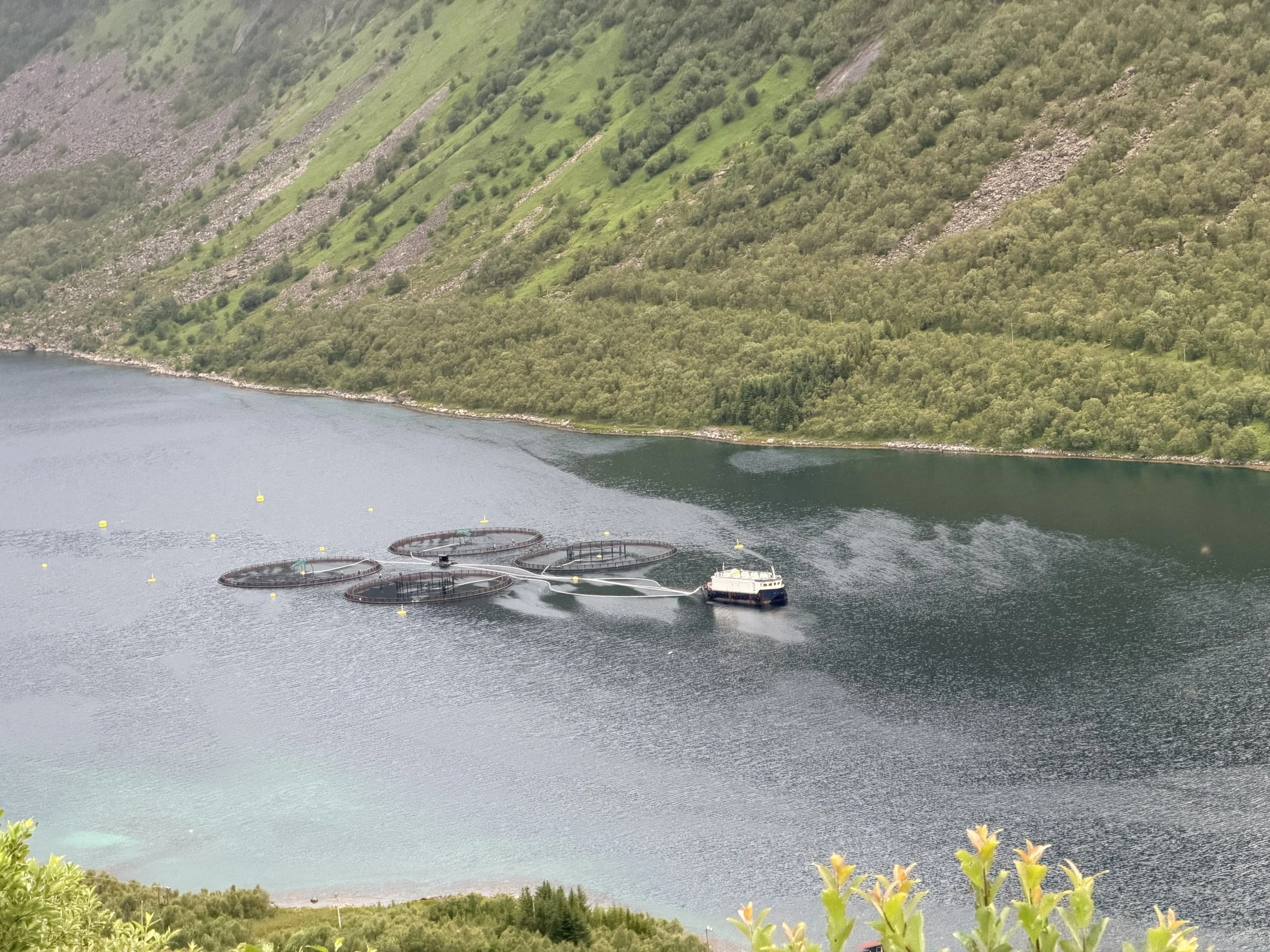
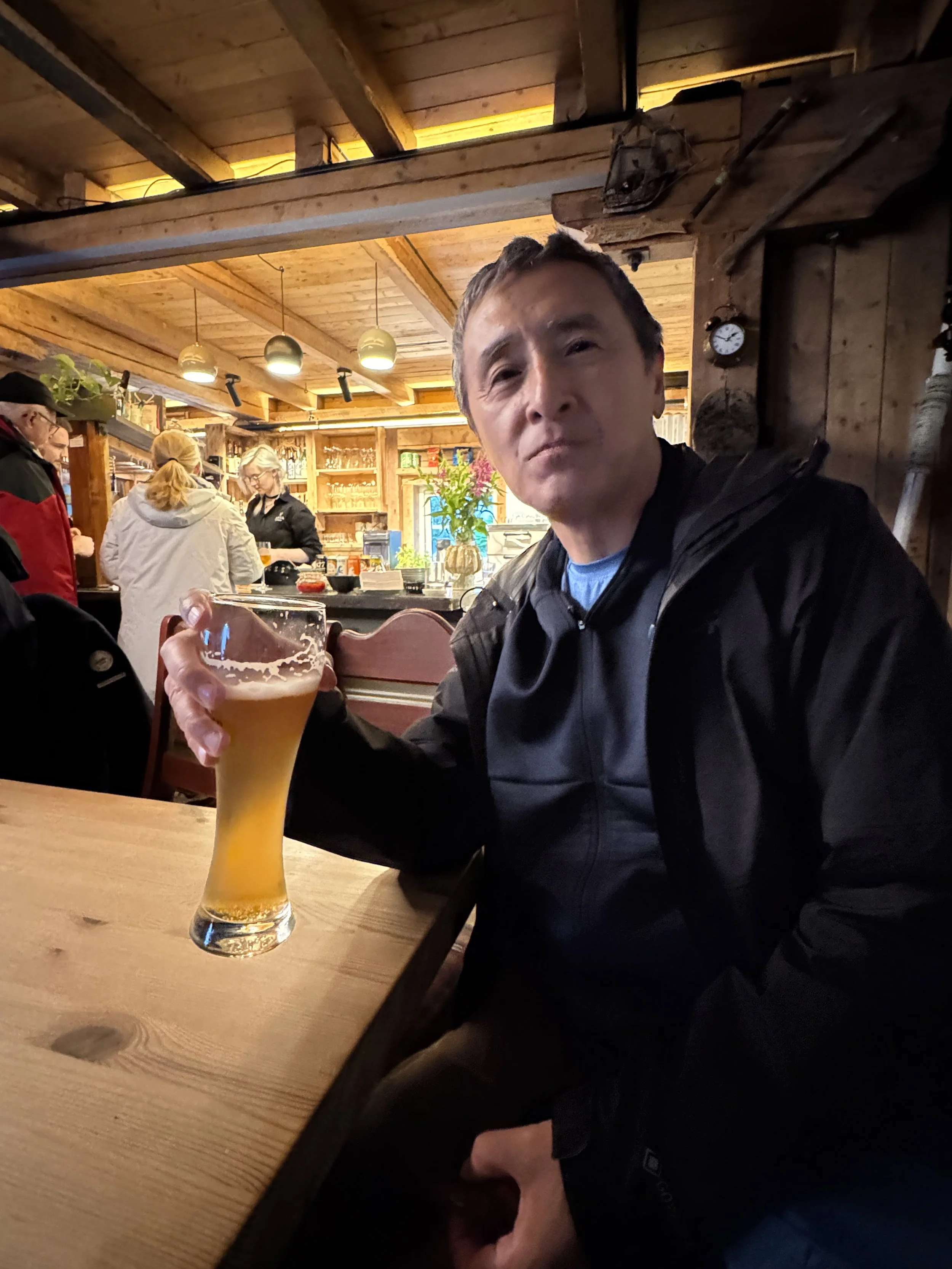
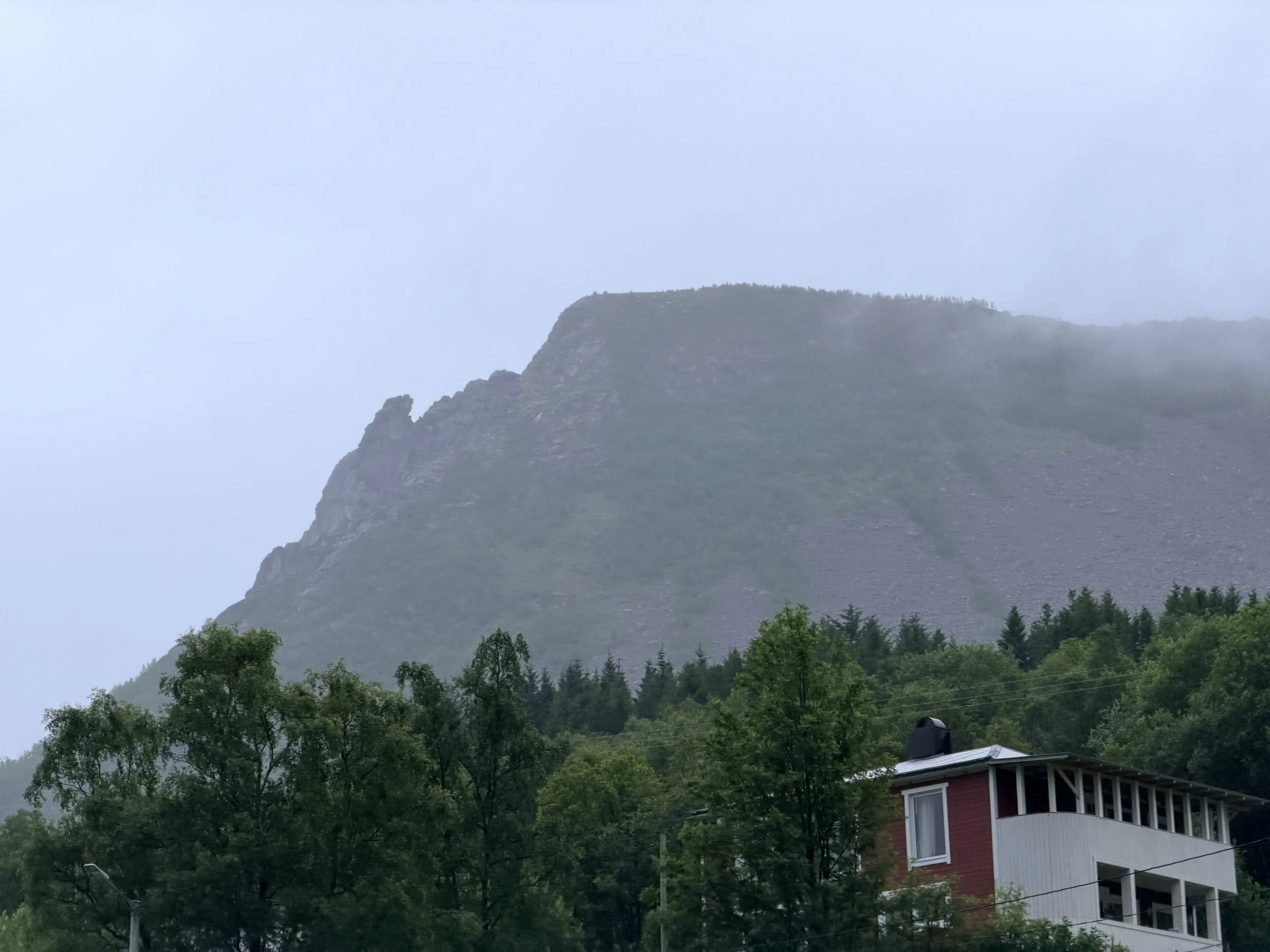
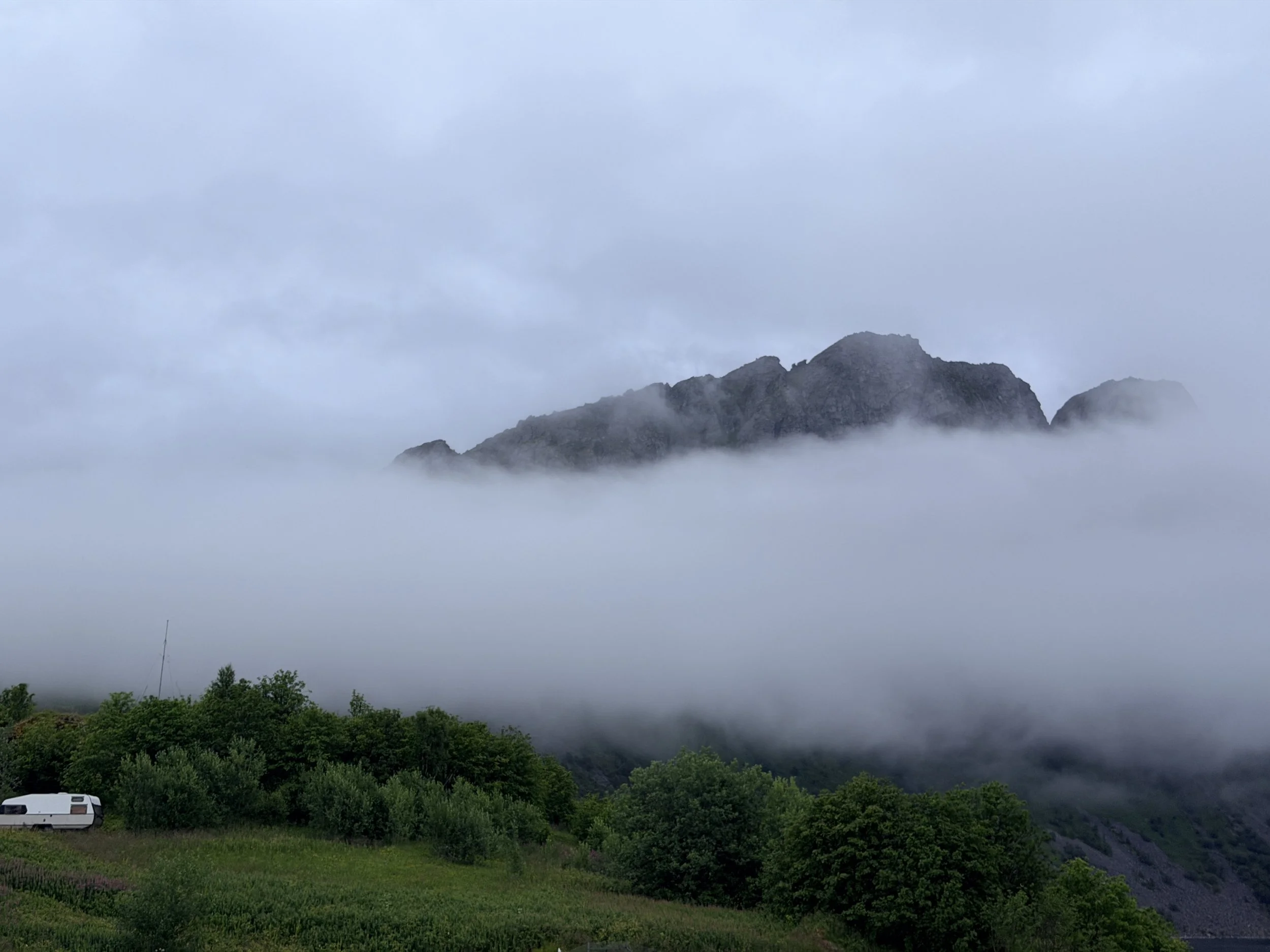
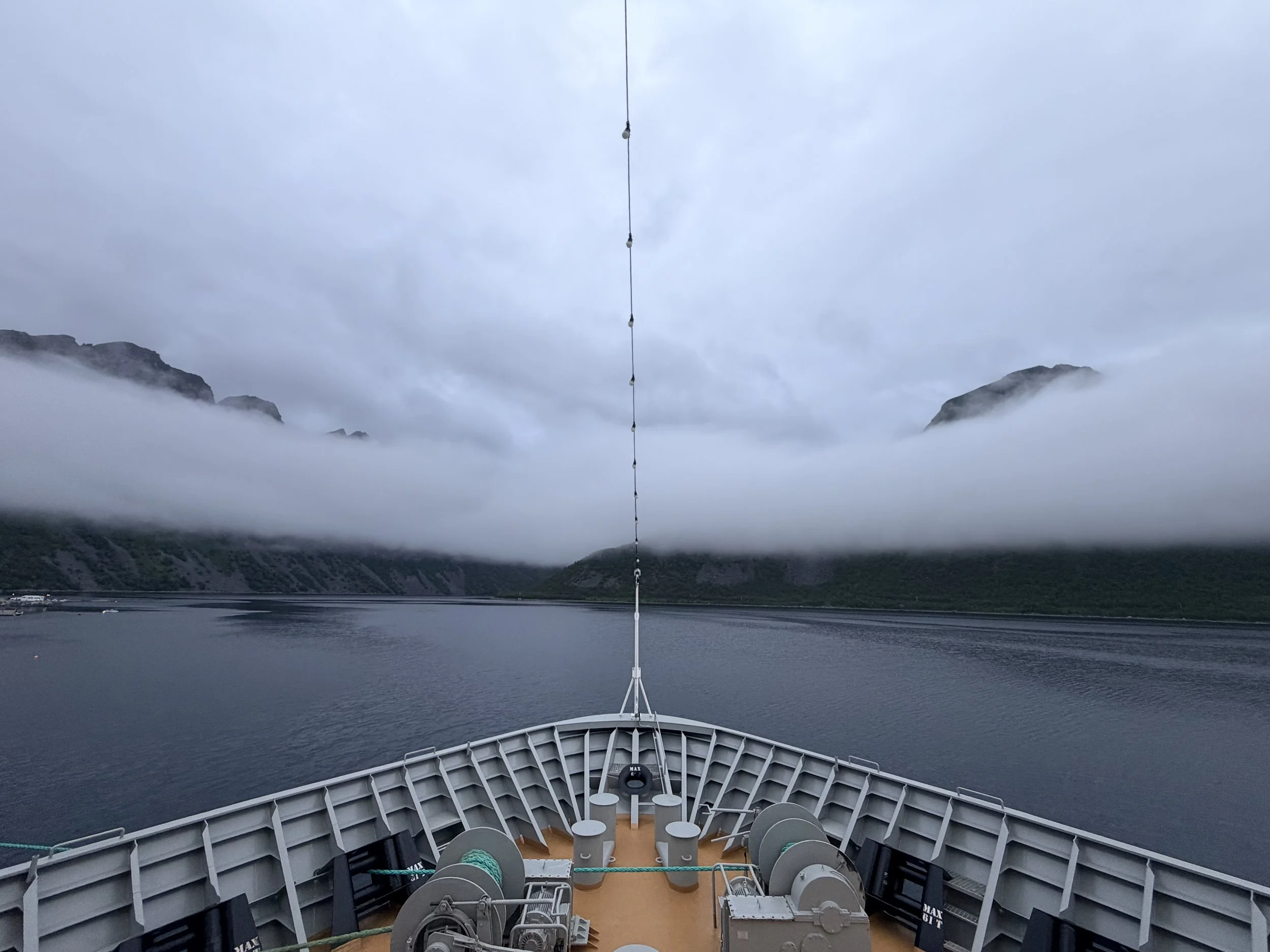
At the end of the tour, Peimin was waiting for me at the bike shop. We then went to the bar next door and celebrated with a 0.0% alcohol-free beer. About 30 minutes before midnight, we returned to the ship. As we sailed away from Torsken, low clouds began to roll in, gradually wrapping the surrounding mountains in mist.
2026年7月10日
经过48小时的风浪航行后,我们终于抵达塞尼亚岛(Senja)的托尔斯肯(Torsken)。邮轮从傍晚6点停靠到午夜12点。托尔斯肯是一个小渔村,不过到了夏季,旅游业已经成为当地最主要的产业之一。
佩民自己下船自由行,在小鱼村里走走看看。我参加了一个为时三小时的电动自行车之旅。骑行路线翻越了两座山岭,来到一片白沙滩,穿过一条海底隧道,又经过另一个小村庄。同行的几位澳大利亚游客打趣说,这片所谓的白沙滩,看起来更像澳大利亚的黑沙滩。不过,无论沙滩是什么颜色,这一路的风景都十分壮丽。途中还有一段依山而建的公路,路旁散落着许多巨大的落石,汽车不准许通行但让骑行更添几分刺激。
全程约25公里,沿途设有许多拍照停留点。在几段下坡路上,我们的最高时速达到了每小时40公里,也不知道码表是否准确。我不记得自己以前曾骑自行车骑得这么快过。当时既觉得兴奋,又有一点紧张,但电动自行车骑起来十分轻松,也让我尽情享受了速度带来的乐趣。这趟骑行既愉快又刺激,如果有机会,我一定还会再参加一次。
骑行结束时,佩民已经在自行车店等我。随后,我们与同行的车友们一起到隔壁的小酒吧,为这次精彩的骑行喝上一杯,庆祝一下。